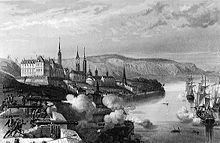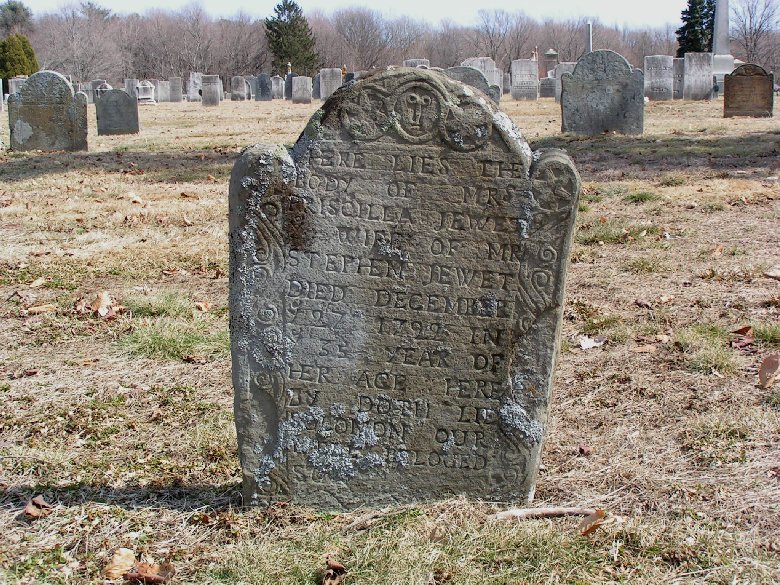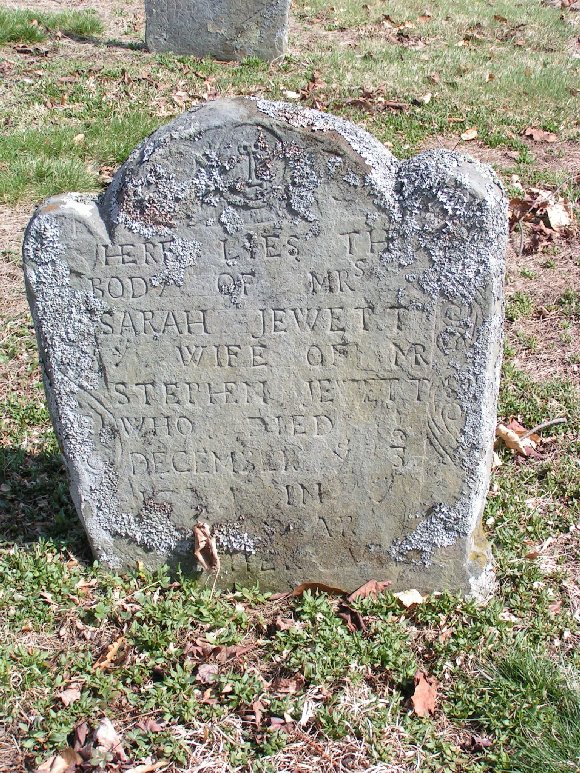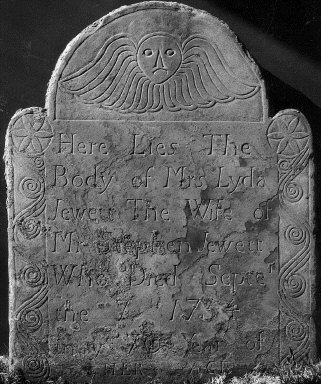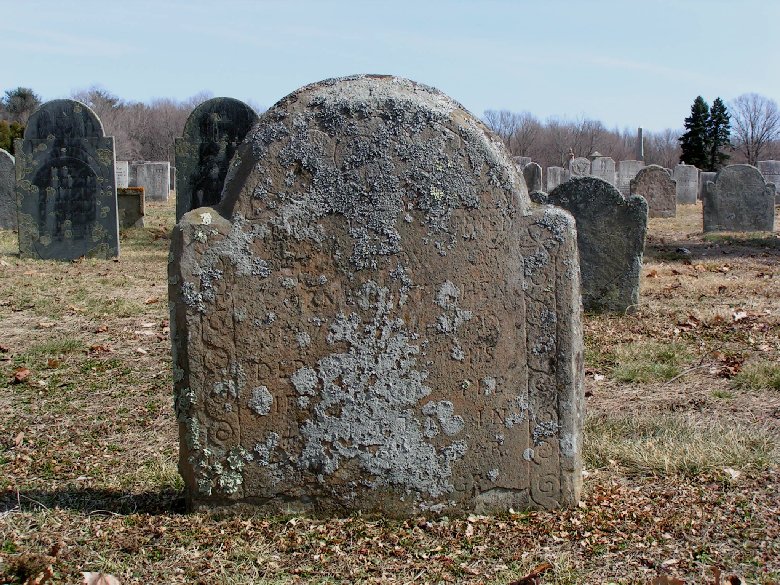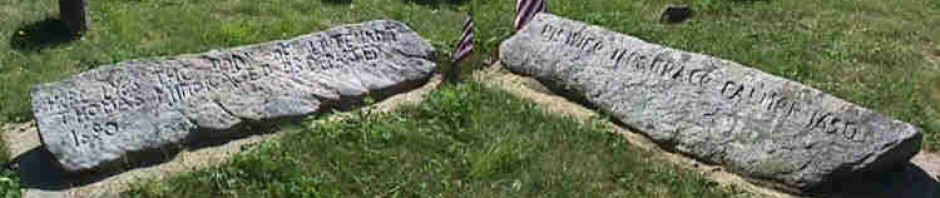
Col. Edmund Reade

Col. Edmund READE (1563 – 1623) was Alex’s 12th Great Grandfather, He is one of 4,096 in this generation of the Shaw line and one of 4,096  in the Miller line.  (See his 2nd great grandson Thomas BROWNE for details of the double ancestors)
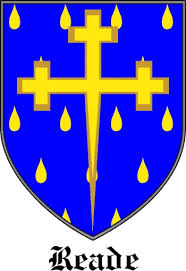
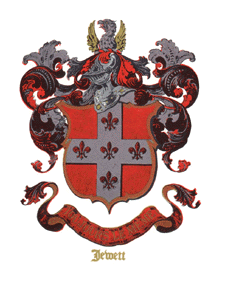
Immigrant Ancestor - Reade Coat of Arms

Immigrant Ancestor – Reade Coat of Arms

Col. Edmund Reade was baptized on 23 May 1563 at Wickford, Essex, England. His parents were William READE and Martha CHURCH. He married Thomasin Wallenger on 14 Aug 1592. After Thomasin died, he married Elizabeth COOKE in 1594 at Pebmarsh, Essex, England. Edmund died on 1 Dec 1623 at Wickford, Essex, England, at age 60.

Thomasin Wallenger was born 1563 in Pebmarsh, Essex, England. Thomasin died 7 Dec 1592 in Wickford, Essex, England.

Elizabeth Cooke was born on 2 July 1568 at Pemmersley, Essex, England. Her parents were Thomas COOKE and Susan BRAND.  After Edmund died, she married  Rev. Hugh Peters about 1625 in England.  Elizabeth died in 1637 in Wickford, Essex, England.

Rev. Hugh Peters (Wiki) was baptized on 29 June 1598 in Fowey, Cornwall, England.  His parents were Thomas Dirkwood and Martha Teffrey. Hugh was educated at Cambridge and became a devout Puritan around 1620. He was ordained into the Anglican church in June 1623. Under the patronage of the Earl of Warwick, he became curate at Rayleigh in Essex. Around 1625, Peter married Elizabeth READE, a widow much older than himself, with adult children.  Peter also preached regularly at the church of St Sepulchre in London, but had his license to preach revoked and was imprisoned for six months after leading his congregation in praying for Queen Henrietta Maria to forsake her idolatrous Catholicism. He moved to the Netherlands and in 1633 became a pastor at Rotterdam until pressure was put upon the English churches in the Netherlands to conform to the doctrines espoused by Archbishop Laud.

In July 1635, Peter and Elizabeth accompanied Sir Henry Vane to New England, along with his stepdaughter Elizabeth and her new husband John Winthrop (1606-76).  Peter became minister at Salem, Massachusetts, in December 1636. Although he became involved in religious disputes against Vane, Peter proved to be a popular minister. He was involved in the civil administration of Salem and became one of the first governors of Harvard College.  He took a leading part in the affairs of the colony, and interested himself in the founding of the new colony in Connecticut.

After Elizabeth died, he married Deliverance Sheffield on 2 Jan 1639/40.  He returned to England in 1641 as an agent of the Massachusetts government, but became active in supporting Parliament against the King in the expectation of securing a godly reformation of the English church. Peter was a chaplain in the Earl of Essex’s army and in the New Model, where his services were valued by Cromwell and Fairfax. His preaching inspired the soldiers and drew many recruits to the cause. Peter frequently acted as an Army spokesman at Westminster both in delivering reports and in requesting money or aid. Many of his reports were published, and he was a prolific writer of accounts of the actions he saw on campaign. Peter intended returning to America with the ending of the First Civil War, but he became involved in the struggle between the Army and the Presbyterians in 1647. He championed the Independents in the Army and supported the soldiers’ refusal to disband. During the Second Civil War, he accompanied Cromwell on his campaign in Wales and at the battle of Preston, after which he was present at the capture of the Duke of Hamilton.
Peter was one of the few clergymen to support the Army’s occupation of London and Pride’s Purge, which led to the trial and execution of King Charles in 1649. He fell ill and did not attend the execution but his absence resulted in a persistent rumour that he was the masked executioner who had beheaded the King. During Cromwell’s invasion of Ireland in 1649, Peter was given the honorary rank of colonel and was responsible for managing the transportation of men and supplies across the Irish Sea. After another period of illness, he was appointed governor of Milford Haven and worked closely with the Commission for the Propagation of the Gospel in Wales.

Peter remained active in public affairs throughout the Commonwealth. He was appointed chaplain to the Council of State in 1650 and had influence on various committees concerned with religious, legal and social reform. Hugh eventually became Cromwell’s chaplain.   He preached to the soldiers after Cromwell’s great victory at the battle of Worcester in 1651. Despite his misgivings regarding the establishment of the Protectorate, Peter remained loyal to Cromwell. His participation in affairs of state declined during the 1650s, partly due to ill health, though he was invited to Dunkirk after its capture in 1658 to assist in the spreading of Protestantism in Flanders. Peter’s last great public act was to preach Oliver Cromwell’s funeral sermon in November 1658 on the text Joshua 1:2, “Moses my servant is dead”.

Although he had played no direct role in the trial and execution of King Charles I, Peter’s reputation and strong association with the Cromwellian régime resulted in his arrest at the Restoration on charges of treason. Almost universally reviled, he was hanged, drawn and quartered at Charing Cross on 16 October 1660.  He behaved with great fortitude, and was undismayed by the mangling of the body of John Cook, his fellow sufferer, upon which he was forced to look.

During his final imprisonment, he wrote A Dying Father’s Last Legacy to an Onely Child to his  only child, Elizabeth, who had visited him every day in prison, in which he gave a narrative of his career.

His death was viewed with greater rejoicings than perhaps attended that of any of the regicides, which is the more surprising as Peters possessed many amiable qualities, and several acts of kindness performed by him on behalf of individual Royalists are recorded. But he had incurred great unpopularity by his unrestrained speech and extreme activity in the cause. He was a man, however, of a rough, coarse nature, without tact or refinement, of strong animal spirits, undeterred by difficulties which beset men of higher mental capacity, whose energies often outran his discretion, intent upon the realities of life and the practical side of religion. His conception of religious controversy, that all differences could be avoided if ministers could only pray together and live together, is highly characteristic, and shows the largeness of his personal sympathies and at the same time the limits of his intellectual imagination.


Hugh was the subject of a 1981 television play A Last Visitor for Mr. Hugh Peter.  It showed him the night before his execution, where he is visited by various figures from his past and the future.  Hugh was played by Peter Vaughan who at the age of 89 plays Maester Aemon in HBO’s Game of Thrones.   Read more about Hugh Peters,”the most slandered man of his time”,  here in Eccentric Preachers.

Children of Col. Edmund Reade and Elizabeth Cooke

Name Born Married Departed
1. John Reade 1593 at Salem, Essex, England 12 Oct 1629
2. Edmund Reade bapt.
6 Nov 1595 at Wickford, Essex, England
30 Mar 1600 at North Benfleet, Essex, England
3. Maria Reade 18 June 1597 at Salem, Essex, England 13 Apr 1602 at North Benfleet, Essex, England
4. Margaret Reade 11 Jul 1598 at North Benfleet, Essex, England John Lake
1616 at North Benfleet, Essex, England.
24 Sep 1672
Ipswich, Essex County, Mass
5. William Reade 28 Oct 1599
Wickford, Essex, England
Anne Alleyn 1625 3 Apr 1659 Birchanger, Essex, England
6. Martha READE 13 Jul 1602 at Wickford, Essex, England Daniel EPPS
bef. 1622  in Wickford, Essex, England
.
George Samuel Symonds (aka Samuel Symonds)
1637.
1662 at Ipswich, Essex County, Mass
7. Edmund Reade 22 July 1604 at Wickford, Essex, England 9 Nov 1613 Wickford, Essex, England
8. Thomas Reade 2 Jan 1605 at Wickford, Essex, England. 15 Sep 1607 at Wickford, Essex, England
9. Samuel Reade 23 July 1609 at Wickford, Essex, England before 1659
10. Col. Thomas Reade 15 August 1612 at Salem, Essex, England. Priscilla Bankes
11 Aug 1643 Saint Matthew, Friday St., London, Middlesex, England
1662 at Wickford, Essex, England.
11. Elizabeth Reade 17 Nov 1614 at Wickford, Essex, England. John Winthrop Jr.
12 Feb 1635 St. Matthew, Friday St., Essex, England
24 Nov 1672 at Hartford, Hartford County, CT

Reade Ancestors

Gen 1.

Edmund’s father William READ  was born 11 Mar 1538/39 in Wickford, Essex, England; William died 19 Jul 1603 in Wickford, Essex, England.  He was the son of Roger READE and  Elizabeth [__?__].  He married Martha CHURCH bef. 1563 in Wickford, Essex, England.

Edmund’s mother Martha CHURCH was born 1541 in Runwell, Essex, England; Martha died 16 Dec 1577 in Wickford, Essex, England..  She was the daughter of John CHURCH and Margaret WISEMAN.

Gen 2.

Edmund’s paternal grandfather Roger READE was born 1517 in Wickford, Essex, England; Roger died 17 Mar 1558/59 in Wickford, Essex, England. He was the son of   William READE. He married   Elizabeth [__?__].

Edmund’s paternal grandmother Elizabeth [__?__], born ~ 1512 in Wickford, Essex, England; Elizabeth died in Pebmash, Essex, England.

Edmund’s maternal grandfather  John CHURCH was born ~1520 in Runwell, Essex, England; John died 20 Apr 1577 in Runwell, Essex, England. He married Margaret WISEMAN ~1540 in Runwell, Essex, England.

Edmund’s maternal grandmother Margaret WISEMAN was born ~1525 in Runwell, Essex, England; Margaert died July 1585 in Runwell, Essex, England.

Gen 3.

Edmund’s great grandfather William READE was born about 1485 in Wickford, Essex, England

*WILL OF EDMAND REDE, SON OF WILLIAM AND
FATHER OF MADAME MARGARET LAKE.

Edmand Read’s Last Will and Testament, November ye 20th, 1623.

In ye name of God, Amen; ye 20th daye of November in ye yeare of our Lord, one thousand six hundred and twenty-three.

I, Edmand Read, &c.
Item–I give and bequeth unto ye poore of Wickford twenty shillings of lawful english money, to be payd to ym by my executors [sic.] within one month after my dicease.

Item–I give and bequeth unto John Weald, my servant, five pounds of lawfull english money to be payde to him within one yeare after my dicease.

Item–I give and bequeth unto every one of my other servants two shillings a piece to be payde to ym within one moneth after my dicease.

Item–I give and bequeth unto William Reade, my son, and to my daughter Reade, forty shillings apeece, to bye them rings.

Item–I give and bequeth unto Elizabeth, my loving wife, all those leases which I have of Mr. Edward Lyliarde and Mr. George White, and alsoe ye messages and tenements or lands thereunto belonging which I lately purchased of Mr. Cockerum, now in tenor and occupation of John Tyle or his assignes, for and during ye terme of her naturall life; and after her dicease I give and bequeth all ye said leases, messages or tenements and ye lands above spesifyed unto William Reade, my son, upon ye condition that he ye said William, my son, shall paye unto my son, Thomas Reade, within foure score dayes after ye dicease of my said loving wife, if he, ye said Thomas, be then living, ye full sum of 240 pounds of lawfull english money; and if my said son William shall refuse to enter into bond to my said son, Thomas Reade, shall presently after ye dicease of my said loving wife, enter into ye aforesaid leases and lands and allsoe into ye aforesaid messages or tenements with ye apertinances and lands theireunto belonging, to have and enjoye to him ye said Thomas Reade or ye eyres of his body lawfully begotten, and for want of such issue yn to remayne to my son William Reade and his eyres for ever.

Item–I give and bequeth unto Samuell, my second son, and to ye eyres of of his body lawfully begotten, that my message or teniment with ye appertinances and lands theireunto belonging, called or knowne by ye of name of Sopers or by whatsoever name or names ye same be called or knowne, now in tenor or occupation of George Ballard or his assignes; and if ye said Samuell, my son, shall fortune to depart ye life without eyres of his body lawfully begotten, then my minde and will is that Thomas, my aforesaid son, shall enter into ye messages and lands aforesaid to have and enjoye them, to him or ye eyres of his body lawfully begotten, and for want of such issue unto William Reade, my said son, and to his eyres forever; provided, allwayes that if ye said message or teniment and lands theirunto belonging called Sopers herein and hereby formerly given and bequethed unto Samuell, my son, shall happen to come to William, my son in maner and forme as aforesaide; yn I will yt my said son William shall within one month yn next enter into bond to my executor [sic] herein and hereby nominated (If she be yn living) or otherwise to ye overseers of this my last Will and Testament herein nominated, in ye Penall som of £600 with condition to paye £300 lawfull english money in maner and forme following (that is to saye) unto John Lake and Anna Lake, two of my Grand Children, £50 apiece; and to Daniell Epps and to Elizabeth Epps, two other of my Grand Children, £50 apieece, and to Elizabeth, my daughter, £100 of lawfull english money within one yeare next after ye sayd message or teniment and ye land theireunto belonging, called Soppers, shall happen to come to my sd son William, shall refuse to enter bond in maner and forme as aforesaide, then I will yt all those messages lands and teniments called Sopers, shall be and remayne unto my aforesaide Grand Children of all my daughters and to Elizabeth, my youngest daughter, equally, to be devided amongst ym, and if my sd Grand Children shall happen to dye before, sd Legacye shall ineur to my two daughters ye mothers, and Provided allso yt if Samuell, my son happen to depart this life without issue of his body lawfully begotten, and that Thomas, my son, enjoye ye sayd lands and teniments aforesaid and to him in and by this my last will and testament bequethed, then my minde and will is that those leases, land and messages with ye lands thereunto belonging, which is before given unto my saide son Thomas, shall presently ineur and come to my saide son William Reade, and to his eyres for ever, without paying ye foresaide son William Reade and to his eyres ye foresaid sum of £240 unto Thomas Reade, my son, or any part thereof in manner and forme as is aforesaide.

Item–I give and bequeth unto my said Loving Wife ye lease of Freame and all ye time and terme to come and unexpired for and towards ye mayntenance and education and bringing up of Thomas, my third son.

Item–I give and bequeth unto my son-in-law, John Lake, and to my Daughter Margrett Lake, forty shillings apiece to make ym rings, and to John Lake and Anna Lake, theire children, 20 shillings apiece.

Item–I give and bequeth unto Daniel Epps and Martha Epps, my daughter, 40 shillings apeece to make ym rings, and to Elizabeth Epps and Daniell Epps, theire children, 20 shillings apiece.

Item–I give and bequeth unto Elizabeth, my Daughter, £200 of lawfull money of England, to be paide unto her at her full age of 20 yeares.

Item–I give and bequeth unto my brother, John Reade, ye sum of five pounds to be payde to him within one whole year next after my dicease.

Item–I give and bequeth unto my son, William, my young graye guilding now in ye custodye of my kinsman, John Reede; all ye Resideu of my goods, chattells and moveables whatsoever I giev and bequeath unto Elizabeth, my said Loving Wife, who I make and ordayne my sole executrix of this my last will and testament; and I doe nominate and appoynt James Lawrence of Clifford’s Inn, Gentillman, and John Reade of Pilsage, my kinsman overseers, of this my last will and testament, and doe hereby give ym thre pound six shillings and eight pence, to be payde to ym by my saide executrix, Intreating ym to be ayding and assisting my said loving Wife, to se this my last Will and Testiment duly and truly executed and performed according to my intent and true meaning herein and hereby set downe and declared. In witness, &c., this 20th daye of November, in the 21st yeare of ye King’s Majestye’s raigne, that now is and in Anno Domini, 1623. EDMAND READE.

Children

4. Margaret Reade

Margaret’s husband John Lake was born 26 Sep 1590 in Normantown, Yorkshire, England. His parents were John Lake and Elizabeth Sandell. John died  between between 1657 and 1661 in England.

John’s father John Lake Sr. was born abt 1565 in England and died abt 10 Dec 1612 in North Benfleet, Essex, England. He married Elizabeth Sandell abt 1589. Elizabeth was the daughter of John Sandell. John Sr. inherited manors of Great Fanton and Bonevilles in North Benfleet. He also acquired from his wife’s nephew, John Sandell, “all that manor of Little Barnstable hall alias Basildon Hall. . . with all the lands thereunto belonging. . . also three crofts containing forty acres called Sawyers in Basildon and two other parcels of land called Hockleys and Undermunds in Vange” for the sum of L1,121. John Sr. was buried at North Benfleet 10 Dec 1612 and proved January 30, 1612. At the time of her death Elizabeth Sandell was living with her daughter Mrs. Paschall at Nevendon, and was buried at North Benfleet 4 May 1616. Her will, dated May 1, was proved June 3, 1616. She gave small sums to the poor of Basildon, North Benfleet and Nevendon. To her grandchildren and her servants Richard Woodley, Dorothy Sworder and John Wood. Larger sums went to her daughters Elizabeth Paschall and “my best gowne”, Sybil Benton, Tamsen Lake and Anna Lake, Anna’s legacy to be paid to her son john who was to care for her education between the ages of 16 and 18.

It has been widely speculated that John Lake was descended from Lancelot Lake, whose line supposedly extends back to William the Conqueror. This misconception is based upon the work of one genealogist who attempted to follow the Lake lineage back to Adam and Eve. Researchers should note that this work has been thoroughly discredited. The fact that the Lake family lived on a property in Wickford, England called “The Great Fanton Hall” might conjure images of castles or great estates. In reality, “The Great Fanton Hall” was merely a large farm, despite its impressive name. Family historians should note that to date no document has been found that connects this Lake family to lines of royalty.

John and Margaret had nine children Daniel, Thomas was baptized 18 Jan 1619 in Wickford, Essex, England, and Richard were baptized 21 May 1620 in Wickford. The next three children were born at North Benfleet, Essex, England, Hannah 3 July 1621, Elizabeth 5 June 1623 who died 31 August 1623, and Martha born and baptized 20 July 1624. Samuel Lake died 19 Mar 1630, and Elizabeth was bap 17 Feb 1631. Then John Lake III was christened 6 July 1626 in Wickford, Essex, England, however John was born in 1617.

John and Margaret’s children were baptized at adjoining parishes in Essex, Wickford and North Benfleet. It is possible that they lived in the same home or home close by each other while having their children. The Lake family farm was called Great Fanton Hall was a large farm and was very close to Wickford but part of North Benfleet in earlier times. Today, the main east/west road south of Wickford is called A127 Fanton Hall Farm/Arterial Rd.
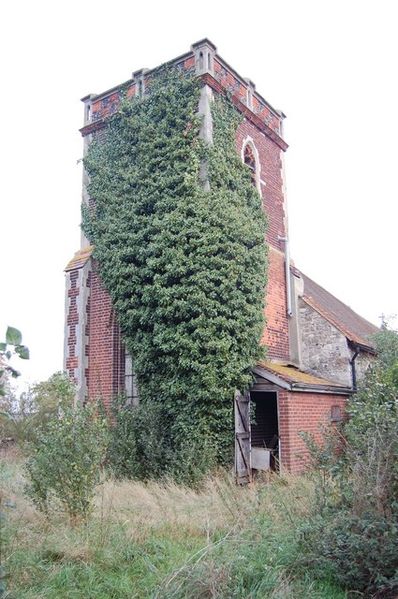
North Benfleet Church – The Church of All Saints, is to the north of the village, nearly 2 miles off the main road. However, it has fallen into a state of disrepair and is not currently in use.

John and Margaret have baffled genealogists for years. Theirs is a hard situation to understand.  Margaret left England for New England on the Abigail with her two living daughters Hannah and Martha and her sister Elizabeth Reade Winthrop and arrived in Boston Harbor on Oct 6, 1635.  Her son John Lake III came to America on the Expedition arriving a month later, 20 Nov 1635.

John Lake did not come to New England.  He may not have adhered so strongly to the Puritan ideas of reform; or, perhaps, as suggested from excerpts from Winthrop letters, his health at the time may not have been up the the arduous journey and hardships in the colony.   A letter Margaret wrote to John Winthrop when he was in England to contact her sister Breadcale of Lee, Essex. From this it was not hard to see that her husband, John Lake was a member of a family seated for several generations at Great Fanton Hall, North Benfleet, Essex. Although they held several Essex manors, the Lakes appear to have been of the rank of yeomen, or, at best, minor gentry, and there is not evidence at the College of Arms or in the Visitations of Essex that they were entitled to coat armor. Great Fanton Hall, a large farmhouse of no architectural pretension, was still standing in 1925, although threatened, on the London side, by the on-coming tide of suburban bungalows. Wickford has become a commuter town, serving the City of London through its direct connection to Liverpool Street through the Southend Victoria line, where a train to London takes approximately 40 minutes.
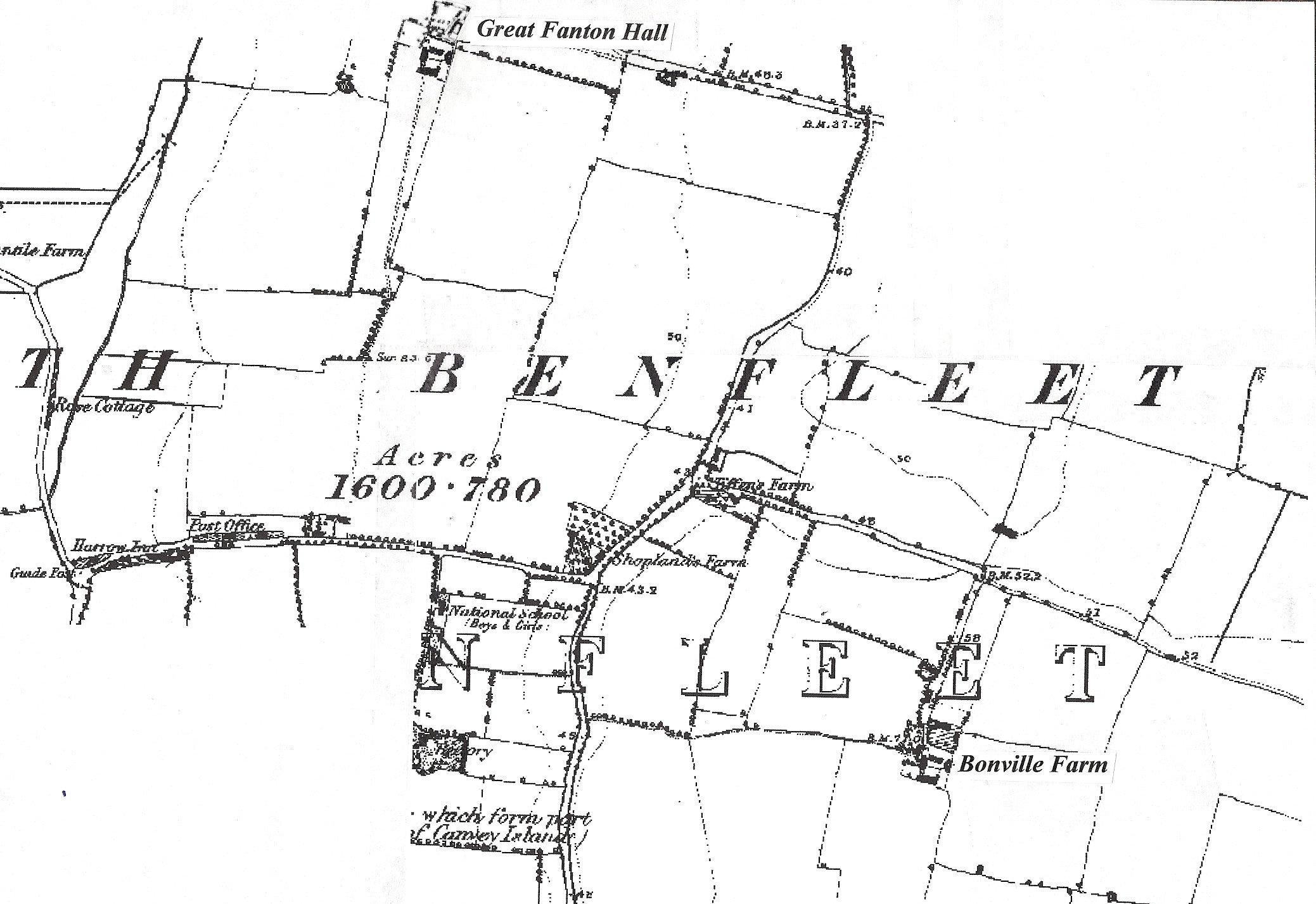
Map of Great Fanton Hall Farm and Bonville Farm in North Benfleet

In 1654 Rev. Hugh Peter, Mrs. Lake’s step-father, wrote from London to John Winthrop, Jr.; “John Lake is alive and lusty;” and in 1657 he stated to the same correspondent; “John Lake lives still.”

In 18 Jan 1661/62 Mrs. Lake wrote from Wenham, Mass. To her brother-in-law, Governor Winthrop, who was in London; “Might I not bee to troublesome to you I would have desired yors. To have done mee yt courtesy as to have inquired concerning my husbands death, & how hee ended his dayes, as also to have inquired o my cousen Thomas Cooke, whether hee knew whether their was any thing left mee or no . . . I would desire you in quire whether my sister Breadcale who dwells in Lee, in Essex, bee liveing. You may heare of her, if living, at Irongate where boats weekly come from Lee.
No will of John Lake has been found. His widow in her will, dated 30 Aug 1672, left her property to her daughters Hannah Gallop and Martha Harris, and to her grandchildren.

For many years, Margaret lived with the family of her brother-in-law, Gov. Winthrop, at New London, CT, and she is mentioned repeatedly in the Winthrop family correspondence. In the last decade of her life, she lived at Ipswich, Mass, with her daughter, Martha (Lake) Harris, and of her brother-in-law, Deputy Gov. Samuel Symonds.   Margaret died between 30 Aug 1672 and 24 Sep 1672 at Ipswich, Essex, Mass.

5. William Reade

William’s wife Anne Alleyn was born 1608 in Braughen, Hertfordshire, England. Her parents were Thomas Allyen and Jane Laventhorp. Anne died 14 Nov 1639 in England.

6. Martha READE (See Daniel EPPS‘  page)

10. Col. Thomas Reade

Thomas’ wife Priscilla Bankes was born 31 Jan 1612/13 in Kent, England. Her parents were John Banks and Mary Fisher. Priscilla died after 25 Jul 1662 in England.

Thomas immigrated in 1630 to Salem, Mass. He returned to England in 1634 (John Endicott to John Winthrop Jr., 8 Dec 1634: “I have given order to Thomas Read, who is now in England …” Thomas Read is in the list of Salem church members compiled late in 1636, with the later annotation “removed”; admission to Salem church prior to 1 April 1634 implied by freemanship.

16 Feb 1635/36 – After some considerable discussion, it was agreed that Mr. Thomas Reade should have a farm of three hundred acres. In the division of marsh and meadow on 25 Dec 1637 he had half an acre for a household of three [STR 1:102].

9 Mar 1636/37 – He was back in New England and was appointed ensign of the Salem train band

Thomas returned to England and served in Cromwell’s army.

In his will, dated 25 July 1662 and proved 6 Nov 1662, Thomas Reade of Wickford, gentleman, bequeathed to his wife Priscilla the farm known as Sopers, for life, and £750; to son Samuel, £500 and Sopers, in tail male, after the death of my wife, £2300 at twenty-one and “my farm called Wickford near Salem in New England”; to son Thomas, £250 after the death of wife, and £1450 at twenty-one; to daughter Priscilla £1000 at twenty-one or marriage, if her mother and the overseers approve “him she doth match withall,” if not, £500 only; wife Priscilla executrix; overseers Caleb Banks, Esq., Thomas Cooke of Pebmarsh, Esq., Sir John Banks, Bart., Alleyn Reade, gent. and Jacob Willett

On 28 June 1701 Waite Winthrop of Boston, attorney of Samuel Read of London, England, merchant, only son & heir of Colonel Thomas Reade formerly of Salem, sold to Daniel Epes (1649-1722) (grandson of our ancestor and Col Thomas Reade’s brother-in-law Daniel EPPS) of Salem, gentleman, Reade’s Farm, between 300 and 400 acres, which “farm in 1636 & 38 was granted by inhabitants of town of Salem unto said Thomas Reade deceased” . (The power of attorney from Samuel Reade was dated 16 August 1697\.)

11. Elizabeth Reade

Elizabeth’s husband John Winthrop Jr. (wiki) was born on 12 Feb 1606 at Groton Manor, Suffolk, England. His parents were John Winthrop Sr and Mary Forth.  He first married  8 Feb 1630/31  his cousin Martha Fones.   John died on 5 Apr 1676 at Groton, New London, Connecticut, at age 70.
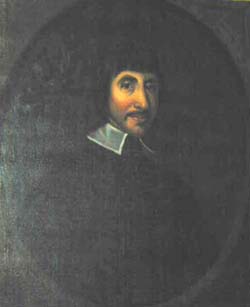
John Winthrop the Younger

John  was first educated at the Bury St Edmunds grammar school. He was sent to Trinity College in Dublin, Ireland, for a general education. Two years later, he returned to England and studied law at the Inner Temple, London until 1627, when he went to sea, first to France as a secretary to the Duke of Buckingham for the relief of the Protestants of La Rochelle,  then to Turkey, Italy, and Holland as a regular traveler. When he came home to England in August of 1629, he found that his father was preparing to leave for America as the governor of the Massachusetts Bay Colony. His father left in the spring of 1630, and John stayed behind to care for his stepmother, Margaret (Tyndal) Winthrop, and the Winthrop children, as well as his father’s businesses.

On 8 Feb 1630/31, he married his cousin Martha Fones, daughter of Thomas Fones and Anne Winthrop of London. Some of their correspondence after marriage was in code, and not deciphered until almost three centuries later.

Late in August of 1631, John, his wife, and the other Winthrops left for Boston. The group arrived in October 1631, and in December, John Winthrop, Jr. was elected as an Assistant to the Massachusetts Bay Colony. In March 1633 was the chief founder of Agawam (now Ipswich, Mass) . His wife and infant daughter died there in the summer of 1634, at which time he returned to England to visit friends. There, on July 6, 1635, he married Elizabeth Reade, daughter of Edmund READE of Wickford, Co. Essex.

The following year returned as governor of the lands granted to the Lords Say and Sele and Brooke sending out the party which built the fort at Saybrook at the mouth of the Connecticut River. He then lived for a time in Massachusetts where he devoted himself to the study of science and attempted to interest the settlers in the development of the colony’s mineral resources. He was one of the “assistants” of the Massachusetts Bay Colony in 1635, 1640 and 1641, and from 1644 to 1649..

He was again in England in 1641–1643, and on his return established iron works at Lynn and Braintree, Massachusetts.
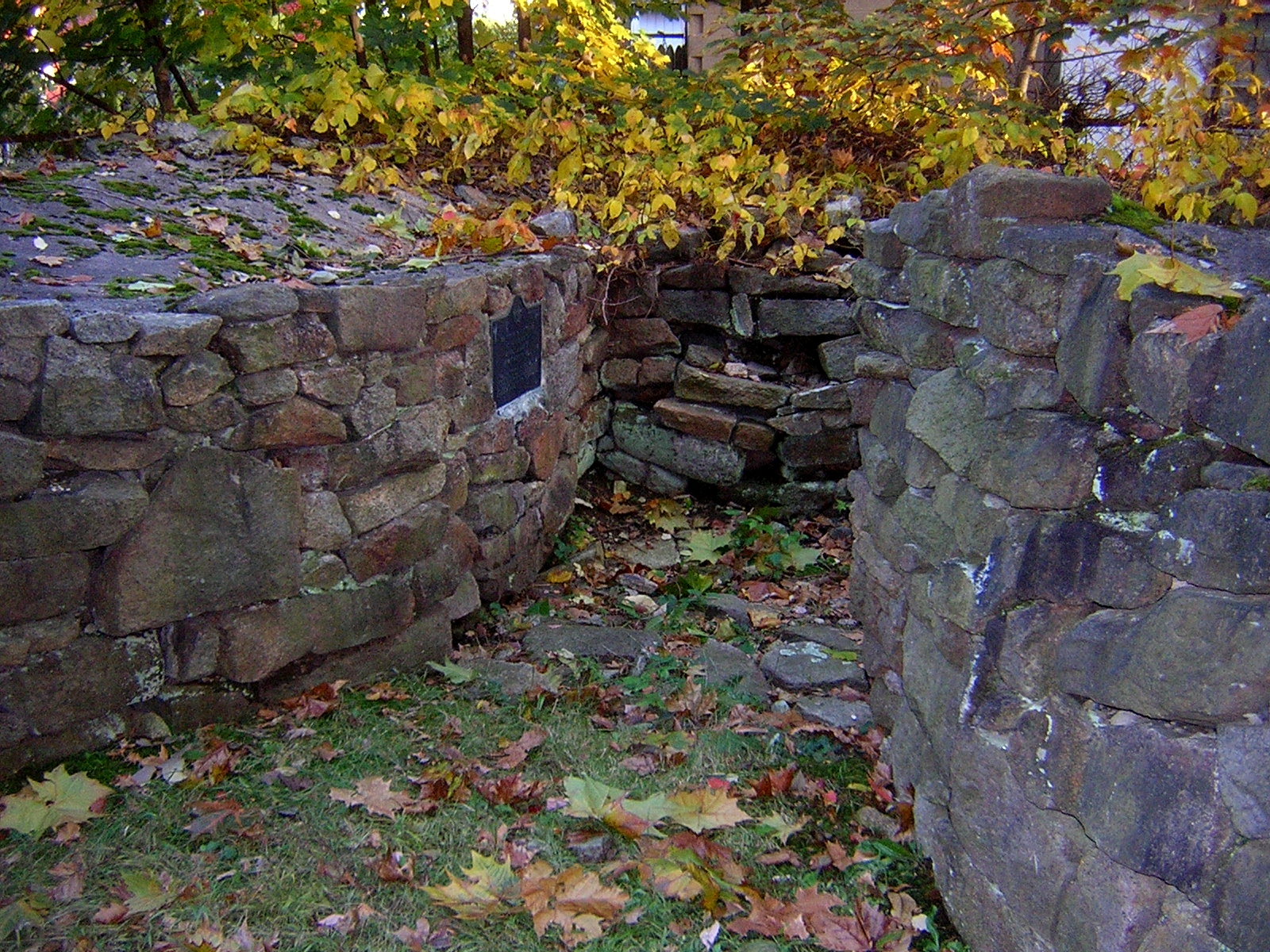
John Winthrop Jr Iron Furnace Site Quincy, Mass

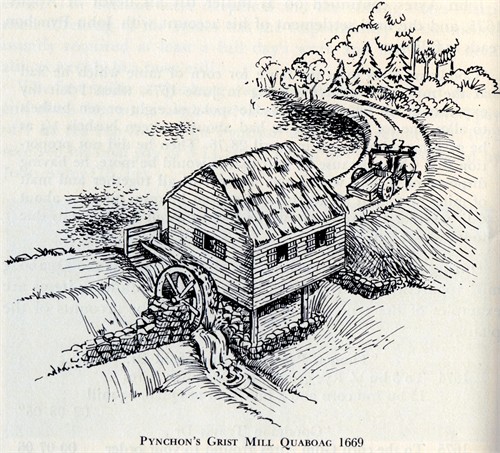
In 1645 he obtained a title to lands in southeastern Connecticut and founded there in 1646 what is now New London, whither he removed in 1650. In 1650 Winthrop built a grist mill in the town and was granted a monopoly on the trade for as long as he or his heirs maintained the mill. This was one of the first monopolies granted in New England.  He became one of the magistrates of the Connecticut Colony in 1651.

1645 – Thomas MINER joined John Winthrop Jr.’s colony of Massachusetts Puritans in the settlement of New London, CT.   During the years that Thomas lived in New London, his son Mannassah and his daughters Ann and Mary were born.  Manassah was the first white child born in New London.

May 1649 – At the session of the General Court,  the following regulations were made respecting Pequot:

1. The inhabitants were exempted from all public country charges — i.e., taxes for the support of the colonial government — for the space of three years ensuing.

2. The bounds of the plantation were restricted to four miles each side of the river, and six miles from the sea northward into the country, ” till the court shall see cause and have encouragement to add thereunto, provided they entertain none amongst them as inhabitants that shall be obnoxious to this jurisdiction, and that the aforesaid bounds be not distributed to less than forty families.”

3. John Winthrop, Esq., with Thomas MINER and Samuel LOTHROP as assistants, were to have power as a court to decide all differences among the inhabitants under the value of forty shillings.

4. Uncas and his tribe were prohibited from setting any traps, but not from hunting and fishing within the bounds of the plantation.

5. The inhabitants were not allowed to monopolize the corn trade with the Indians in the river, which trade was to be left free to all in the united colonies.

6. ” The Courte commends the name of Faire Harbour to them for to bee the name of their Towne.”

7. Thomas MINER was appointed ” Military Sergeant in the Towne of Pequett,” with power to call forth and train the inhabitants.
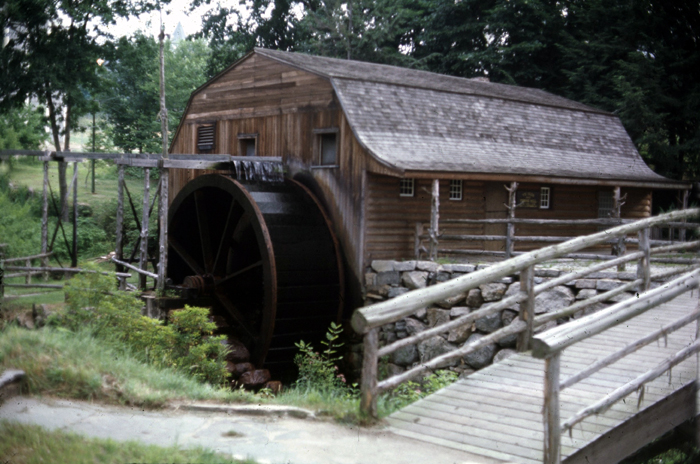
Old Town Mill New London Connecticut – Build to John Winthrop 1650, Burned down by Benedict Arnold, but restored and is open to visitors.

While in England he was elected to a Fellow of the newly organized Royal Society, to whose Philosophical Transactions he contributed two papers, “Some Natural Curiosities from New England,” and “Description, Culture and Use of Maize.” He died on 6 April 1676 in Boston, where he had gone to attend a meeting of the commissioners of the United Colonies of New England,

John Winthrop was more than a skilled leader. He was an avid chemist and practical scientist, famous for starting one of the first ironworks in Massachusetts (1633), for his interest in developing mines, and for his experiments in obtaining salt from sea water by evaporation. Trapp (2001), refers to John Winthrop, Jr. as an alchemist, who once collected an unusual rock from New London; he called this columbite. Nearly 200 years after, Charles Hatchett (1801) analyzed the specimen, to discover a new element called Columbium (Cb = #41)  John had previously acquired some mineral rights in Connecticut, but in the 1650s, he obtained even more. While the cost of exploration and development was his, the knowledge he gained about the deposits benefited the Colony of Connecticut.

Charles Hatchett named element 41 Columbium (Cb),  But in 1809, the English chemist William Hyde Wollaston wrongly concluded that columbium was identical to the element  73 tantalum, and the claims of discovery of Hattchet were refused. Heinrich Rose discovered that tantalite contained an element similar to tantalum and named it Niobium.

IUPAC officially adopted Niobium in 1950 after 100 years of controversy.  This was a compromise of sorts, the IUPAC accepted Tungsten instead of Wolfram (in deference to North American usage)  and Niobium instead of Columbium (in deference to European usage)

It is estimated that out of 44,500 metric tons of niobium mined in 2006, 90% was used in the production of high-grade structural steel, followed by its use in superalloys.The use of niobium alloys for superconductors and in electronic components account only for a small share of the production.

He was also a physician, who treated an average of twelve patients a day by traveling around the colony. It is believed that he served up to 500 families out of a population of some 5,000 persons. He was so successful as such that the people of New Haven (then a separate colony), persuaded him to move there in 1655. The real attraction for him was not the free house and other amenities that the town offered (which he refused), but that he had ironworks there that he wanted to develop.

The Reverend Cotton Mather, the great puritan preacher, was quoted by Dr T. E. Cone as saying of Winthrop, “Wherever he came, the diseased flocked about him as if the healing angel of Bethesda had appeared in the place.”

In addition to seeing patients, Winthrop corresponded through the colonial mails with patients throughout the New England colonies concerning a wide spectrum of medical problems. The most important mail route that carried Winthrop’s letters was the Boston Post Road, also called the King’s Highway, which went from New Amsterdam through costal Connecticut and through the Providence plantations to Boston. Using the colonial mails, he made diagnoses and prescribed treatments and medications. Winthrop’s papers, some of which are preserved in a special collection at Boston’s Countway Medical Library, contain mostly letters from all over New England asking for medical advice and treatment. These letters have been studied by historical scholars including Drs Oliver Wendell Holmes, W. R. Steiner, and T. E. Cone Jr, who have publications about the Winthrop papers that contain verbatim extracts from the letters. In most instances, Winthrop’s responses to these letters are not included in the papers.

In the letters are descriptions of recognizable pediatric conditions including epidemic measles, a variety of rashes, convulsions, diarrhea and dehydration, jaundice, whooping cough (chincough), failure to thrive, and anencephaly. Some of the letters are particularly relevant to pediatrics today.

Danielle Clarke of Windsor, Connecticut, sought Winthrop’s advice about his son’s dental problems:
“I have a little one who is now 4 year old that is now troubled with four of his foremost teeth on the upper part of his mouth which began to fade away in the first year of life, and continued fading away and are now rotted into his gums.”

This letter-writer obviously describes what is now called nursing-bottle caries syndrome, which is a result of prolonged bottle-feeding and putting infants to bed with a bottle of sweetened liquids in their mouths.8 Dr Cone commented, “There were no nursing bottles at that time, so this was probably caused by the use of a homemade cloth or leather pacifier soaked with honey or molasses.”

The Winthrop papers include a clear description of child abuse. Theophilus Eaton, a founder of the Quinnipiac (New Haven) Colony, sought Winthrop’s advice because his second wife had
“pinched [her stepdaughter] Mary, until she was black and blue and knocked her head against the dresser which made her nose bleed much.”

In one of the few Winthrop responses, he wrote to a Mr Richard Odell regarding his young daughter’s “palsy.” She had suddenly fallen to the floor and was then unable to speak or to stand because of profound left-sided weakness:

“This seems to be that kind of palsy which we call hemiplegia where half of the spinal marrow is affected. It may come from a mild apoplexy that strikes suddenly and leaves commonly one side of the body without sense or motion.”

Winthrop had a “sovereigne remedy” that he called “rubila,” the formulation of which he kept secret. Dr Oliver Wendell Holmes studied the Winthrop papers and found that rubila was mostly nitre (saltpeter) and lesser amounts of antimony. Rubila was colored red (rubified) to make it look different from plain salt or sugar. Winthrop believed that rubila was effective treatment for a variety of illnesses including “ measles, colics, headaches and sciatica and many other ailments.” However, he cautioned that to be effective rubila had to be given at the very beginning of an illness (or perhaps even better before the illness had begun).

New London tried to lure him back, but in May of 1657 he was elected governor of the Connecticut Colony , and moved to Hartford. He could not be re-elected in 1658, as the one-term-only rule for governors was still in effect. That law was changed as of 1659. During 1658, John Winthrop served as Deputy Governor of the Colony of Connecticut. From 1659 to 1676, John Winthrop was always re-elected as governor of Connecticut Colony. He continued to be successful in governmental life because he was an excellent diplomat and very popular. His diplomatic charm was now about to help Connecticut.
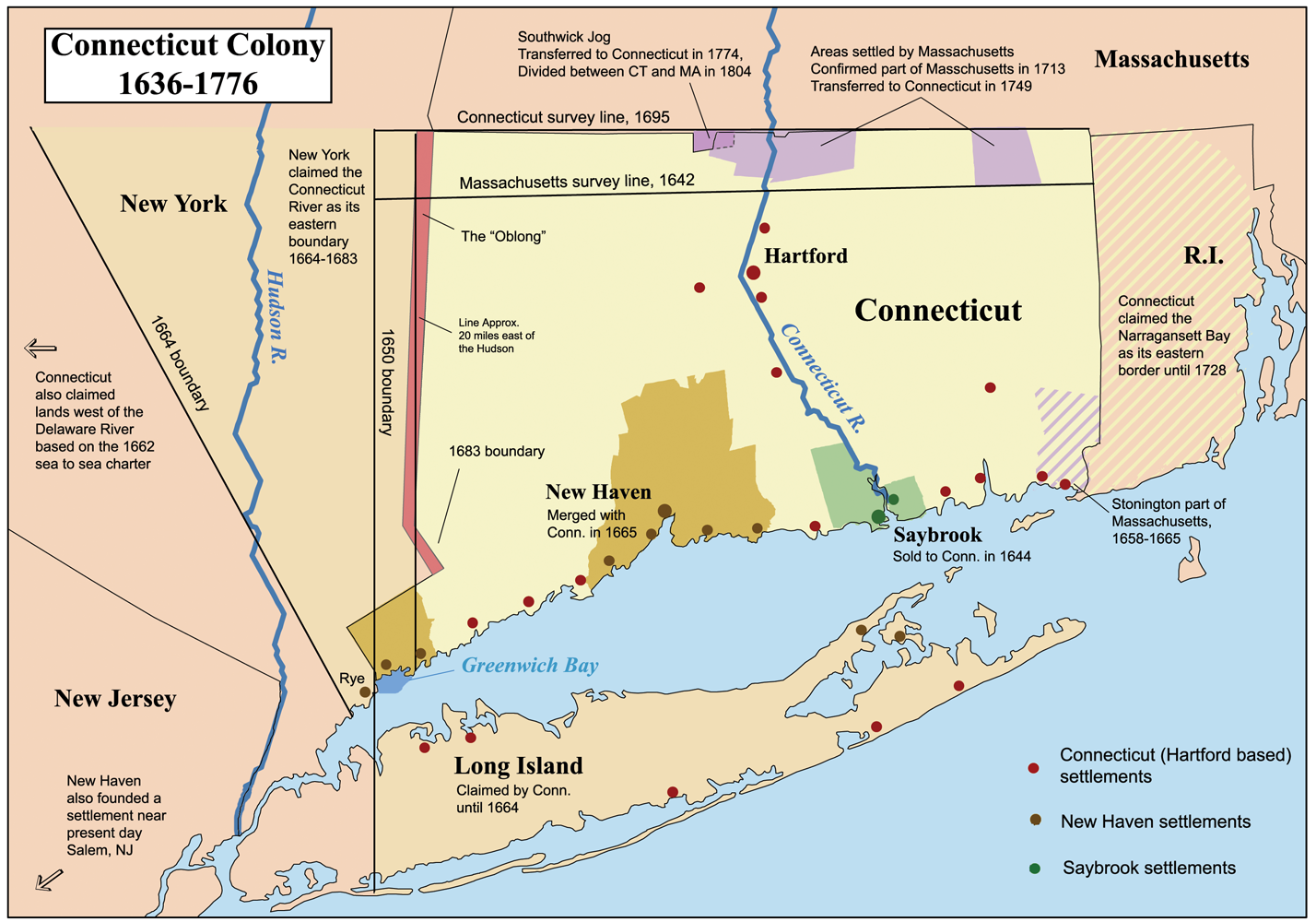
Connecticut Colony

Normally, colonies could not be started without permission from the Crown. But the Connecticut Colony had been established without an authorized charter, though with permission of the government of the Bay Colony, in answer to church differences and crowding in the Bay Colony. This was not a problem as long as the Puritans were in power, but in 1660, Charles II was restored to the throne. This placed Connecticut in an awkward position — a colony of Puritans, with no real legal status. It was completely at the mercy of the Crown.

John Winthrop Jr by Amos Doolittle after John Trumbull — Mabel Brady Garvan Collection, Yale University Art Gallery, Yale University, New Haven, Conn.

Governor John Winthrop was sent to England in 1661 as the agent of the Connecticut Colony, to obtain a charter. Lord Saye, Winthrop’s former employer and a Puritan, had friends in high Royalist circles. Winthrop was introduced to Lord Saye’s friends, and soon had made many friends for the cause of the Connecticut Colony. He gained a charter for Connecticut in 1662, one that gave it lands from the Pawcatuck River westward to the “South Sea” (i.e., Pacific Ocean). The charter also merged the New Haven Colony (which also had no legal status) with the Connecticut Colony. This came as a surprise to most citizens of the New Haven Colony, and some of them were extremely upset. Discussions were held between the two colonies, until the Colony of Connecticut officially took over the government in 1664. A number of New Haven colonists who were still unhappy with the situation left for New Jersey in 1667. Among them was Robert Treat, who ultimately returned to Connecticut and served as its governor from 1683 until 1698.

Winthrop returned to Connecticut in 1663, and in 1664, he assisted in Charles II’s surprise seizure of the Dutch New Netherlands (Manhattan Island). This act caused war between England and Holland, and Dutch harassment of shipping to the English colonies. Governor Winthrop lost at least one cargo of goods due to this, and also suffered other financial reverses. He decided in 1667 that he needed to leave the governorship and devote time to his own businesses, but the Connecticut Colony refused his resignation and exempted him from some taxes, to persuade him to stay in office. He tried to resign again in October of 1670, but the Connecticut Colony again refused to grant his request, raising his salary and giving him land as a further enticement to stay.

His second wife, Elizabeth (Reade) Winthrop, died in 1672. John Winthrop did not remarry. The couple had nine children, one of whom was Fitz-John” Winthrop, a future governor of the Colony of Connecticut.

John Winthrop was a man of many talents. He had a mind with a scientific bent, one that was curious about everything. In an age when most people had only several books, he had a library of a thousand volumes, on various subjects, in a number of languages. He corresponded with scientists in England, and during his 1661-1663 visit, was elected a fellow of the Royal Society of London for Improving of Natural Knowledge. He read papers before that Society, and over the years, sent them a number of New World natural curiosities. The items caused such a sensation on one occasion, that King Charles II himself asked to see them. The unusual plants and animals were shown to the King, who was greatly taken with “pods with silk like cotton” (milkweed), and wanted a pillow made of them. The King eventually had to be persuaded that they were too delicate for such a pillow to be practical. Winthrop later shipped milkweed pods to England, especially for the King.
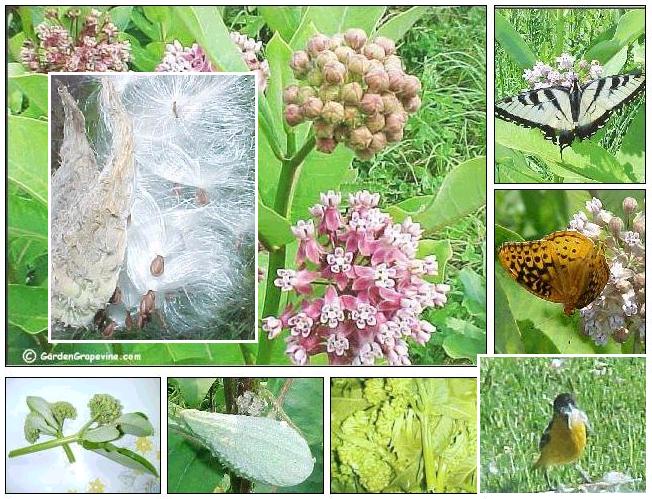
Charles II was very impressed with John Winthrop’s Milkweed samples

Winthrop’s scientific interests also extended to the heavens. He had a three-and-a-half-foot telescope, and while he lived in Hartford in 1664, he claimed he saw, or thought he saw, a fifth moon of Jupiter. He reported the sighting to the Royal Society, but there was no confirmation of it. It was not until September 1892 that Edward Barnard of the Lick Observatory definitely established the existence of such a moon.

King Phillip’s War had caused the  Besides being Governor of Connecticut, he was also in 1675 one of the commissioners of the United Colonies of New England convened in Boston in the fall of 1675, and the deliberations went into the spring of 1676. Winthrop had attended, and was preparing to leave Boston at the end of March, when he caught a bad cold. His health quickly worsened, and on April 5, 1676, he died in Boston. He was buried in the King’s Chapel Burying-ground, beside his father, John Winthrop, Senior.
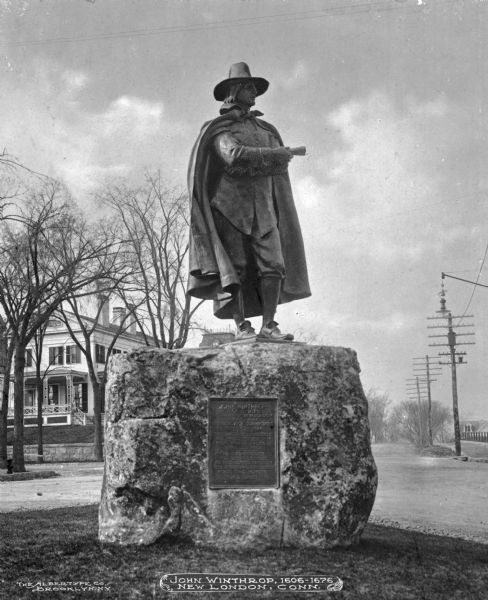
John Winthrop Jr Statue — New London, CT

There is a community called Winthrop in Deep River, CT, which also has a school named in his honor. New London also has a school named for Winthrop, located on the site where his house once stood. New London maintains a statue on Winthrop and has a street and an avenue named for him. His original mill in New London is still standing and is open to visitors.

Children of John and Elizabeth

i.Elizabeth Winthrop b. 24 Jul 1636 in Boston, Mass; d. 7 Dec 1716 Boston, Suffolk, Mass; m. Antipas Newman 12 Nov 1658 in Boston, Suffolk, Mass

ii. Fitz-John Winthrop  given the old Anglo-French patronymic (personal name) “Fitz” (“son of”) to help distinguish him from his father,  b. 14 Mar 1638 in Ipswich, Mass; d.  27 Nov 1707  Boston, Mass.; m. Elizabeth Tongue 1670 in New London, New London, CT

The governor of the Colony of Connecticut from 1698 to 1707.  He was sent to Harvard, but failed the entrance examination. In 1658 he went to England, volunteering to serve in the army of the future King Charles II. When Richard Cromwell was removed and the monarchy restored, the army was disbanded. Winthrop, however, remained in England and was still in London when his father presented his petition for the establishment of a Connecticut colony.

Fitz John Winthrop

Winthrop was buried in the King’s Chapel Burying Ground in Boston, Mass. His funeral service was conducted by Cotton Mather, who called his sermon there Winthropi justa.

Click Here for Fitz John Winthrop’s Connecticut State Library biography

iii. Lucy Winthrop b. 28 Jan 1640 in Boston, Mass.; d. 24 Nov 1676 New Haven, New Haven, CT; m. Edward Palmes 1664 in New London, New London, CT

iv. Wait Winthrop  b.   Feb 1642 in Boston, Mass. ; d. 7 Nov 1717; m1. Mary Browne 1678 in Boston, Suffolk, Mass; m2. Catharine Brattle 13 Nov 1707 in Boston, Suffolk, Mass

Wait Winthrop

Wait was a colonial magistrate, military officer, and politician of New England. Named Waitstill at birth, he preferred the shortened name “Wait”. He was chief judge of the Massachusetts superior court (the highest court in the Province of Massachusetts Bay), and was a long-time councilor and contender for the governorship of Massachusetts.  During King Philip’s War in the 1670s and King William’s War in the 1690s he led the Massachusetts provincial militia. Politically populist, he worked against royal governors, especially Joseph Dudley, and sought the restoration of the first Massachusetts charter. In 1692 he was appointed by Governor William Phips as one of the magistrates of the Court of Oyer and Terminer that heard the Salem witch trials.

The judges were John HathorneNathaniel SaltonstallBartholomew Gedney,  Peter Sergeant,  Samuel Sewall, Waitstill Winthrop and Lieutenant Governor William Stoughton..

Wait’s son John Winthrop F.R.S., (1681-1747) married Ann Dudley, daughter of his father’s enemy Joseph Dudley and granddaughter of Thomas Dudley, both governors of Massachusetts, one of a number of unions between the two families.

v. Mary Winthrop b. 6 Sep 1644 in Boston, Mass.; d. 1703 New London, New London, CT; m. Joshua Culver 1672 in New Haven, New Haven, CT

vi. Margaret Winthrop b. 1646 in Boston, Mass.; d. 30 Nov 1711 Boston

vii. Martha Winthrop b. 1648 in New London, New London, CT; d. 27 Sep 1712 Charlestown, Middlesex, Massl m. Richard Wharton 1675 in Charlestown, Middlesex, Mass.

viii. Ann Winthrop b. 1650 in New London, New London, CT; d. 27 Jun 1704
New London, New London, CT; m. John Richards 1 Sep 1692 in Boston
Sources

http://www.conovergenealogy.com/famous-p/p3200.htm#i159985

http://www.cslib.org/gov/winthropj.htm

http://trees.ancestry.com/owt/person.aspx?pid=20639319&st=1

http://turnergenealogy.com/MasterSite-o/p173.htm#i629

http://jacquesancestry.com/ancestors-histories/l/john-lake-jr-margaret-reade/

http://www.cslib.org/gov/winthropfj.htm

Posted in 14th Generation, Artistic Representation, College Graduate, Historical Monument, Historical Site, Line - Miller, Line - Shaw, Pioneer, Place Names, Public Office, Storied, Veteran, Violent Death, Wikipedia Famous, Witch Trials | 11 Comments

G. Rangel & Sons

Socorro’s maternal grandfather had a printing press.   Here are some books I found published by G. Rangel & Sons sorted in Chronological Order. (1956 – 1976) Looks like many of Rangel’s customers were Governmental, especially the judiciary.

Rangel Aunts and Uncles on Facebook

Araceli R. de Lara

Rangel cousins on Facebook

Awet Roque

Awet Roque

Noel Roque

Araceli De Lara Fernandez

Gina Rangel-Stachewicz

Gina Rangel-Stachewicz

Bianca Rangel Porras

Bianca Rangel Porras Family

Eric Lagman Rangel

Eric Rangel & Family

  • Nikki Rangel

Other Possible Cousins

Nick Roque

Eleanor Roque Redor

Cay Roque

Nina Roque Segovia

Abegail de Lara

Annabelle L. de Lara

G Rangel & Sons

Educational Legislation. By Concepcion Aguila. Manila: G. Rangel and Sons, Inc. 1956

Selected Essays and Letters of Jose Rizal [Hardcover] Jose Rizal (Author), Encarnacion Alzona (Translator) A heroic figures for his advocacy of Philippine independence in the late 19th century, Rizal is presented through 16 essays in English translation, plus a short biography prepared by the translator. Publisher: G. Rangel & Sons, Manila (1964)

Journal of Tropical Plant Pathology January 1965 Publisher: Philippine Phytopathological Society. Printer: G. Rangel & Sons

Labor and tenancy relations law By Crisólito Pascual, Philippines (Republic). Edition 3 Publisher G. Rangel, 1966 Length 779 pages Subjects Law › Labor & Employment

The Philippine Judicial System. Manila: G. Rangel & Sons, 1968. 127 p by Associate Justice Jose P. Bengzon

A Manual for Courts-martial: Armed Forces of the Philippines
Authors Philippines. Armed Forces, Philippines. President
Publisher G. Rangel & Sons, 1969
Length 352 pages
Subjects Courts-martial and courts of inquiry, Military law

Philippine Law Journal Volume 51 Dec 1976 Printer: G. Rangel & Sons .

Posted in Socorro | 1 Comment

William Johnson

William JOHNSON (1559 – 1637) was Alex’s 12th Great Grandfather, one of 4,096 8,192 in this generation of the Shaw line and one of 8,192  in the Miller line.  (See his great grandson Thomas BROWNE for details of the double ancestors)

William Johnson was born 1559 in Canterbury, Kent, England.  His parents were John JOHNSON and Joane HUMFREY. He married Susan PORREDGE 8 May  1587 in Holy Cross, Canterbury, Kent, England. William died before 27 Dec 1637 in Canterbury, Kent, England.

Susan Porredge was born was born bef. 20 Jan 1564/65 in Canterbury, Kent, England. Her parents were John PORREDGE and Katharina DEANE. Susan died 10 Apr 1604 in Canterbury, Kent, England.

Children of William and Susan:

Name Born Married Departed
1. Capt. Edward Johnson (Wiki) 16 Sep 1598
Canterbury, Kent, England
Susan Munter
Abt. 1620
23 Apr 1672
Woburn, Mass
2. John JOHNSON 1609 in Herne Hill, Kent, England, Susanna ASHERST in Herne Hill, Kent, England soon after 12 Sep 1683 in Andover, Essex, Mass.

William’s father John Johnson was born about 1531 in Canterbury, Kent, England, and died May 15, 1598 in Canterbury, Kent, England. He married Joane Humfrey May 23, 1551 in Canterbury, Kent, England. She was born Abt. 1534 in Canterbury, Kent, England, and died Abt. May 15, 1584 in Canterbury, Kent, England.

William’s grandfather William Johnson was born 1500 in Canterbury, Kent, England, and died Bef. Jun 09, 1576 in Canterbury, Kent, England. He first married Alice Forflode Abt. 1528 in St. George, Canterbury, Kent, England, daughter of John Forflode. She was born Abt. 1500 in Canterbury, Kent, England, and died in Canterbury, Kent, England. He next married Elizabeth [__?__]. She died in Canterbury, Kent, England.

William’s great grandfather Gerard Johnson was born Abt. 1466. He married [__?__] Wylmn. She was born Abt. 1474.

Children

1. Edward Johnson

Edward’s wife Susan Munter was born Oct 05, 1597 in St Mary’s, Dover, Kent, England. Her parents ere daughter of Phineas Munter and Katherine [__?__]. Susan died 7 Mar 1690 in Woburn, Middlesex, Mass.

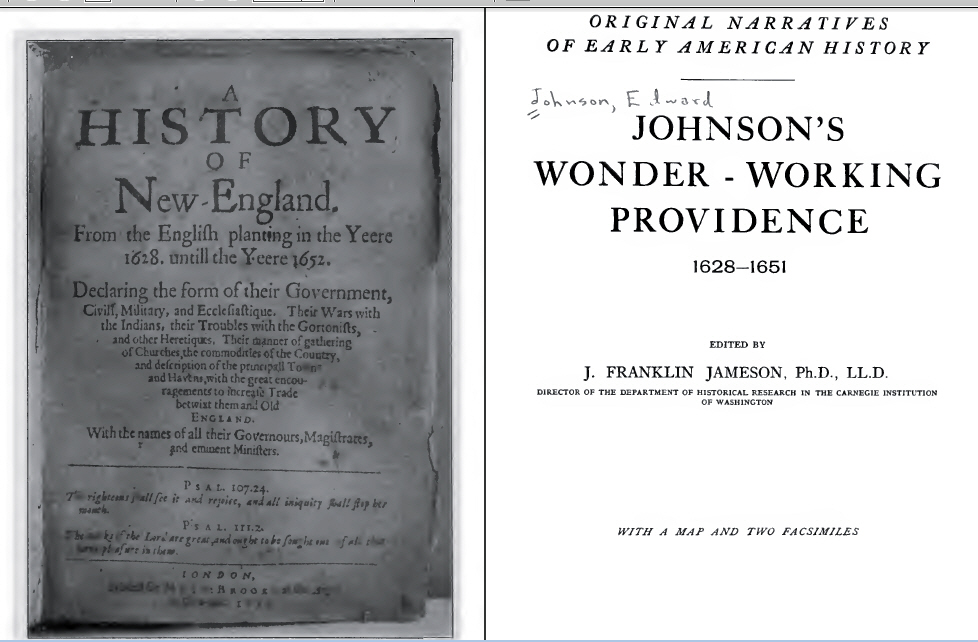
Edward is the author of Wonder Working Providence, a quaint and authentic narrative of events connected with the settlement of Massachusetts Bay. It is acknowledged to be the most important book on the Massachusetts Colony that was printed during the first hundred years after the settlement. The fraudulent use made of this work in the collection known as the Gorges Tracts for a time robbed the author of the credit due him, but the true authorship has beyond a doubt has been established by Dr. Poole, the famous librarian.”

Title Pages Johnson’s Wonder Working Providence

From the Introduction to Johnson’s Wonder Working Providence by John Franklin Jameson 1910

Late in the year 1653, but under date of 1654, Nathaniel Brooke, a London publisher, “at the Angel in Cornhill,” brought out a small octavo book of two hundred and thirty-six pages, entitled A History of New-England, from the English planting in the Yeere 1628 untill the Yeere 1652, etc. The title, inexact in any case, for the book is rather a history of Massachusetts than of all New England, was evidently affixed by the publisher. His advertisements show that at one time he thought of giving the book the title Historicall Relation of the First Planting of the English in New England in the Year 1628 to the Year 1653 and all the Materiall Passages happening there. But many reiterations in the text of the book show that the author’s own title for his production was that which appears in the running headlines of the printed book, and by which it has been generally known, The Wonder-working Providence of Sion’s Saviour in New England. The author’s name nowhere appears in the book.

Five years later the publisher took advantage of this latter fact, since the sale of the work had been so disappointing as to leave many copies on his hands, to utilize the sheets in another of his ventures. He had in hand a book entitled America Painted to the Life. Of the four parts of which he composed it, the first and fourth were apparently written by Ferdinando Gorges, Esquire, grandson of the celebrated patentee Sir Ferdinando Gorges, while the second was by that knight himself. Brooke impudently sandwiched-in the un- sold sheets of Wonder-working Providence as Part iii., “Written by Sir Ferdmando Gorges Knight” (the grandfather), and

“Publisht since his decease by his Grandchild Ferdinando Gorges Esquire, who hath much enlarged it and added severall accurate Descriptions of his owne.”

The reader who has any remembrance of the relations between Sir Ferdinando Gorges and the Massachusetts colony, and of the diametrical difference between his state of mind and that which breathes through every page of the Wonder-working Providence, will say that imposture could hardly be more shameless. The younger Gorges protested publicly. In the newspaper called Mercurius Politicus for September 13, 1660, appeared the following advertisement:

I, Ferdinando Gorges, the entituled Author of a late Book, called America Painted to the Life, am injured in that additional Part, called Sion’s Saviour in New England (as written by Sir Ferdinando Gorges;) that being none of his, and formerly printed in another name, the true owner.

The last statement is erroneous. So far as is known, no copies of the original book were issued with the author’s name. In New England it has been known for more than two hundred years that it was written by Captain Edward Johnson of Woburn, Massachusetts.

The motive for the composition of the book appears from
several passages. The author was convinced in every fibre
that there had been set up in New England an ecclesiastical
and civil polity more closely according with the Word of God
than any other which the world had seen, and that the Lord
had manifested His approval by doing marvellous things in the
wilderness for these His chosen people. Persons disaffected
to this holy experiment, lewd fellows like Morton and Gardiner,
presumptuous heretics like Gorton, had spread in England
reports injurious to the Massachusetts plantation, and these
ought to be combated by any one who cared for the material
and political welfare of the colony, or who valued intelligent
English opinion. What was perhaps still more grievous,
there had been bitter criticism even from a portion of the godly
in England, for in the recent debates, in and out of the West-
minster Assembly, on the reforming of the ecclesiastical polity
of England, the Presbyterian party, dominant in Parliament,
had hotly assailed the “New England Way,” the principles
and practices of Congregationalism. One to whom those
principles were as clear as the sun, those practices invested
with the absolute warrant of Scripture, could not rest easy
without exhibiting to all English readers the marvellous
providences, the gracious and evident mercies, by which
Jehovah had proclaimed to every attentive ear His approval
of New England methods.

So came into existence the first published history of
Massachusetts, a book which, whatever its shortcomings,
represented the honest attempt of a Puritan man of affairs to
set forth to his fellow-Englishmen the first twenty-three
years’ history of the great Puritan colony. A book on that
subject, we may be sure, met a real want in the Puritan England
of 1653 and 1654, although in the changed atmosphere
of 1659 Nathaniel Brooke might find it slow of sale. But,
printed as it was with the author three thousand miles away.

With whatever helps an editor may supply, the Wonder-
working Providence remains hard reading. Though the author
can tell plain facts in a plain way when he chooses to do so, and
gives us many valuable details respecting business matters.
his enthusiasm for the great cause of militant Puritanism
frequently leads him astray into rhetorical flights which,
though often vigorous and imaginative, are turgid, bombastic,
and tedious. Hardest of all to peruse are the
labored verses which, with excellent motives and a pathetic
patience, he has hammered out whenever he has felt that
an eminent leader in the upbuilding of his Zion calls for
especial commemoration. Yet the prose style has picturesque
imagination and a certain manly vigor, and though
the diction of the rhetorical passages is all borrowed from
the one Book the author knew well, a diction borrowed
from that source will never wholly lack beauty and elevation.
Even among the verses, one may discriminate.
There are woree verses than those in the ninth chapter of
the third book, beginning,

“From silent night, true Register of moans.”

Johnson’s habit of “dropping into poetry” has been so
much commented on by those who have in any way written of
him, that it is natural to ask the question what models he followed,
in the three varieties of metre which we see in his work.
On this point the editor has consulted his friend Professor
R. E. Neil Dodge, of the University of Wisconsin, an accomplished
student of Elizabethan verse. Of the metre of which
Johnson’s first two “poems,” those in honor of Cradock and
Endicott, are specimens, he says: “The measure as a whole,
the fourteen-syllable couplet (‘fourtecners’ or, more learnedly,
‘septenars’), would in its general swing be familiar to every
good Puritan in the metrical Psalms of Sternhold and Hopkins,

Biography of Capt. Edward Johnson

In “The Hirtory of Historical Writing in America , 1891, John Franklin Jameson said; “as an average Puritan of the middle class. He was a Kentish farmer, and probably also a shipwright, who came out in the same fleet with Governor Winthrop in 1630. A dozen years later, he was, in company with half a dozen others, one of the founders of the new town of Woburn. The stout Kentishman, having put his hand to the plough, chose to remain in the town he had helped to plant. He had always an important part in the affairs of the town, was chosen selectman nearly every year, was again and again elected to represent the town in the general court or legislature of the colony, acted as town clerk, and was captain of the train-band. He was, therefore, more or less concerned in the public affairs in the colony, but never had a leading part in them. Though he was a more prominent, a wealthier, and perhaps a more intelligent man than most of his fellow citizens, we may well enough take him as in most respects a type of the rank and file of the original settlers”.

“Captain Edward Johnson was born in 1599, and before emigrating to New England, resided at Herne Hill, near Canterbury, County of Kent, England. His Will indicates that he was possessed of a comfortable estate consisting of a farm and two other pieces of property. On embarking from England with his family he is classed as a joiner. This may have been in part of evasion, as no one above the rank of mechanic or serving man was allowed to leave without special permission. As several of his sons and grandsons were shipwrights and carpenters, it is not improbable that he carried on the business of shipbuilding at Herne Bay. However, he did not engage in any mechanical occupation after his arrival in New England.

Early in April, 1630, Capt. Johnson, without his family, embarked in one of the ships of the fleet which brought Governor Winthrop and his company to Massachusetts Bay. The records show him trading on the Merrimac River, and it is probable that he came for traffic and adventure and that he returned to England in the summer of 1631.

He returned with his family, in 1636, a zealous Puritan and in full sympathy with the religious system of the Massachusetts Colony. His ruling motive was no longer business or pleasure but in building up a Puritan Commonwealth in this western world. Embarking this time at Sandwich, the nearest seaport at which there was foreign travel, he settled temporarily at Charleston. From that time to the day of his death the Records of Charlestown, of Woburn, and the Colony are filled with his name and deeds.

He was of the committee of the Charlestown church “for the erecting of a church and town” at Woburn and was the first Recorder (town Clerk). He was generally known as the father of the town. May 10, 1643, he took his seat in the General Court as deputy from the town of Woburn, the first session of the court after the incorporation of the town. For thirty years he was not only town clerk and representative in the general court, but he usually was Chairman of the Selectmen and occupied some prominent place on commission and committees, especially legal and military committees.

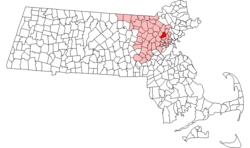
Woburn was first settled in 1640 near Horn Pond, a primary source of the Mystic River, and was officially incorporated in 1642. At that time the area included present day towns of Woburn, Winchester, Burlington, and parts of Stoneham and Wilmington.

Woburn Location in Middlesex County, Massachusetts

Woburn got its name from Woburn, Bedfordshire. Woburn played host to the first religious ordination in the Americas on Nov. 22, 1642. Rev. Thomas Carter was sworn in by many of the most prominent men of New England including John Cotton, minister of the First Church of Boston, Richard Mather minister of the First Church of Dorchester, and Capt. Edward Johnson co-founder of the church and town of Woburn. Johnson is regarded as “the father of Woburn.” He served as the first town clerk, represented the town in the Massachusetts General Court, made the first map of Massachusetts, and wrote the first history of the colony.

The first organizational Town Meeting was held on April 13, 1644 and the first town officers were chosen. Town Selectmen were Edward Johnson, Edward Converse, John Mousall, William Learned, Ezekiel Richardson, Samuel RICHARDSON and James Thompson. William Learned was also selected as Constable. Michael Bacon, Ralph Hill, Thomas Richardson were chose for Surveyors of Highways.

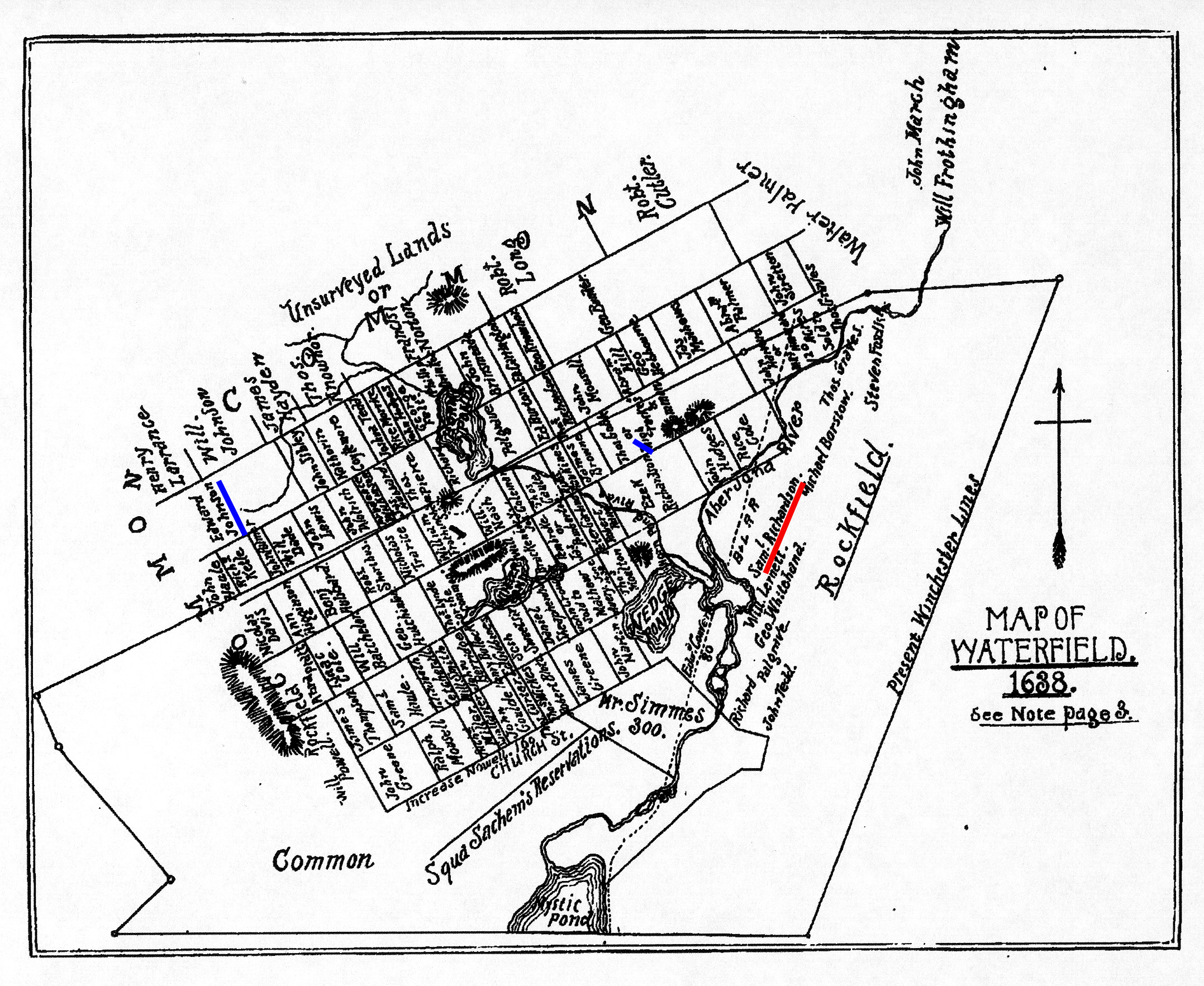
Map of Waterfield 1638 Samuel Richardson lot in red –  Edward Johnson lot in blue — This map was constructed by the late George Cooke and George T. Littlefield of Winchester and is designed to show “the approximate location in 1638” of the lots in Woburn and Winchester which had been granted to the inhabitants of Charlestown. The descriptions of the lots, from which the compilers prepared their map, were taken from the Charlestown Book of Possessions. This land is situated in the westerly part of Winchester.

Captain Johnson had evidently given considerable attention to military matters in England, and there acquired the rank by which he has since been know. Soon after his second arrival we find his name in the Charlestown Records with the prefix of Captain, a title of honor which in those days was not given at random. On becoming a deputy to the General Court, he was placed on nearly every military committee. These were intrusted with most extraordinary powers such as inspecting fortifications, levying fines, collecting arrearages, etc. He gathered and drilled a squad of militia at Woburn soon after its settlement, and always held a command in the militia of the Colony. He was often sent out on expeditions to treat with or overawe the Indians and to deal with troublesome neighbors. His name scarcely ever appears in the Massachusetts Records without his military title.

Children of Edward Johnson and Susan Munter are:

i. Edward Johnson, b. Abt. Feb 18, 1621, Canterbury, Kent, England; d. Sep 15, 1692, Charlestown, Suffolk, MA.

ii. William Johnson, b. 1622, Canterbury, Kent, England; d. Jan 26, 1622.

iii. George Johnson, b. Abt. Apr 03, 1625, Canterbury, Kent, England; d. 1681, Somerset, MD.

iv. William Johnson, b. Abt. Mar 22, 1628, England; d. May 22, 1704, Woburn, Middlesex, MA.  He came to this country with his father’s family in the general immigration to New England, became a prominent citizen of Woburn, and was its second recorder, or town clerk.  He attained to high civil office, was one of the assistants of the colony, and a military officer of several ranks, from ensign to major, and was at one time in active command against the Indians.  He was one of the resistants of the aggressive policy pursued by Governor Andros.  He died at Woburn, May 22, 1704.  He married, at Woburn, May 16, 1655, Esther, died December 27, 1707, daughter of Elder Thomas Wiswall, of Dorchester and Newton.  They left a family of children, whose descendants have been for a long period prominent in the civil and military life of Woburn..

v. Susan Johnson, b. Abt. Apr 01, 1627, Canterbury, Kent, England.

vi. Martha Johnson, b. Abt. May 01, 1631, England.

vii. Matthew Johnson, b. Bef. Mar 30, 1633, Canterbury, Kent, England; d. Jul 19, 1696, Woburn, Middlesex Co, MA.

viii. John Johnson, b. Abt. 1635, England; d. Abt. 1721, near Canterbury, Windham Co, CT.

2. John JOHNSON (See his page)

Sources:

http://www.jowest.net/genealogy/jo/sargent/Johnson.htm

http://www.yeoldewoburn.net/Johnson.htm

Johnson’s Wonder-working providence, 1628-1651; (1910)

http://www.rootsweb.ancestry.com/~usgenweb/special/history/providence/index.htm

Posted in 14th Generation, Artistic Representation, Line - Miller, Line - Shaw, Wikipedia Famous | Tagged , | 5 Comments

Siege of Brookfield – Aug 1675

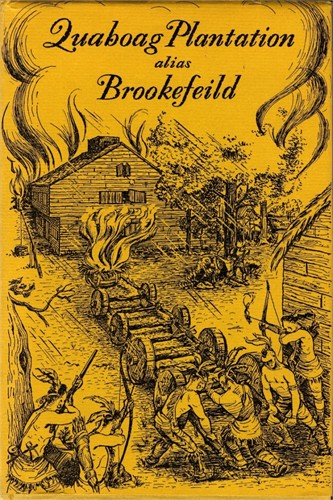
The Siege of Brookfield was a battle between Nipmuc Indians under Muttawmp, and the English of the Massachusetts Bay Colony under the command of Thomas Wheeler and Cpt. Edward Hutchinson, in August 1675 during King Phillip’s War  The battle consisted of an initial ambush, called Wheeler’s Surprise by the Nipmucs on Wheeler’s unsuspecting party, followed by an attack on Brookfield, Mass. and the consequent besieging of the remains of the colonial force.

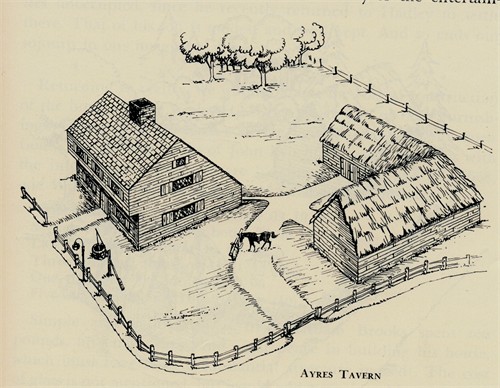
The siege part of the battle took place  at John Ayers‘ Tavern/Garrison in West Brookfield,  John was the brother of our ancestor Sarah Ayers LAMSON.  The identify of their parents is not known.

John Ayers was killed in the initial ambush, the location of which was a subject of extensive controversy among historians in the late nineteenth century.

Brookfield, Worcester, Mass.

Background

John Ayres removed to Brookfield, Mass, when the settlement of that place was commenced, and in Nov. 1672, sold all his rights at Ipswich, including those “belonging to my father-in-law Mark SYMONDS, and used by me while I was a tenant upon Mr. John Norton’s farm.”  See John Ayres’ bio at the end of this post for details of his years in Brookfield.

Simultaneous to the outbreak of war the colonists sent Ephraim Curtis to the west of Boston into Nipmuc territory to negotiate with the tribe and obtain assurances of loyalty to the English from them. However, Curtis’ expedition party found only empty Nipmuc villages which signified that something was already afoot. Eventually, Curtis managed to find the whereabouts of the Nipmuc chief sachem, Muttawmp, and agreed to a meeting at a pre-arranged spot.  However, unbeknownst to Curtis it was too late for negotiations, as the Nipmucs, under sachem Matoonas, had already attacked an English settlement at Mendon and had decided to join Metacom’s rebellion. Curtis was later joined by Captain Thomas Wheeler and Captain Edward Hutchinson (son of Anne Hutchinson).

Negotiations

On June 13, 1675, messengers were sent by the government to ascertain the disposition of the Nipmucs and Quaboags. These messengers visited the Indian towns of Hassanamesit, Manchage, Pakachooge, Maanexit, Chabonokingkomun, Quantisset, and Wabaquasset. A treaty was made with each of their rulers. When the messengers arrived at Quaboag, they received this Subscription:

“The Ruler of Quabage being examined by us, where his men were; he said that they were at home. Then we asked him whether there were none of them gone to help King Philip to fight against the English of Plymouth; he said No; and neither would he help him, for he has been false to him already, and therefore I will not help him: but I will still continue out subjection unto the English of the Massachusetts Colony; neither will I suffer any of my men to go to help him; and in confirmation of the same I do set my hand; 25. 4. 75

[June 25, 1675] Conkcaskogau alais Conkganasco”

It was assumed that they did not want to join the confederacy for the destruction of the English.

At least four of these Rulers; Black James of Chabonokongkomun, Keehood of Wabaquasset, John of Pakachooge and Conkganasco of Quaboag were found among the enemy at Menameset, the middle of July.

Curtis and his men met with the Nipmuc sachem Muttawmp on July 14, the same day that another party of Nipmuc warriors was attacking Mendon. Hence, at the meeting, Muttawmp already considered himself to be at war with the English. However, while Muttawmp’s soldiers were rude to the English emissaries, the sachem himself considered it better to feign friendship to the colonists and so told Curtis that he would show himself in Boston within seven days.

After Curtis returned to Boston and informed his superiors of the arrangement, a decision was made not to wait for Muttawmp’s arrival, but instead to sent Captain Hutchinson, along with Captain Wheeler and 30 mounted soldiers, as well as some “Natick” Praying Indian guides to negotiate with the Nipmuc sachem directly he party made their way to New Norwich where, on July 31, they found the village empty. Consequently they learned that the Nipmucs had moved their base camp to about 10 miles from Brookfield, and sent Curtis and the Naticks to talk to Muttawmp again. There, the emissaries were once again treated rudely by the Nipmuc braves, while Muttawmp continued his deception and agreed to meet Hutchinson in Brookfield on the following day.

Ambush

However, when the colonists arrived in full force at the agreed spot the next day they found nothing. At that point the Natick guides tried to persuade the English to give up and return to Brookfield. Hutchinson and Wheeler, however, decided to march on to the Nipmuc camp, where they had met them the previous day.

In order to reach Muttawmp’s camp, the English had to cross a swamp, taking a narrow path in single file. Despite more protestations from the Indian guides, Hutchinson and Wheeler decided to risk it, while at the same time aware that they might be walking into a trap.

In fact, after they proceeded for about 400 yards, Muttawmp’s braves emerged from among the tall swamp grass and attacked them with bows and rifles. When the English turned around and tried to flee along the narrow path, they encountered another group of Nipmucs blocking their retreat.  The colonial force was so completely disorganized that initially they were not even capable of returning fire. Both Hutchinson and Wheeler were seriously wounded. Eight other men were killed in the initial attack and several others were wounded.

The entire force would have most likely been annihilated there and then had it not been for the Natick guides, one of whom assumed command of the company in place of the wounded English captains, and managed to lead the rest of the English out of the trap and into the hills near the swamp. Once out of immediate danger, the group made its way to Brookfield, fully aware that Muttawmp was in pursuit.

Siege of Brookfield

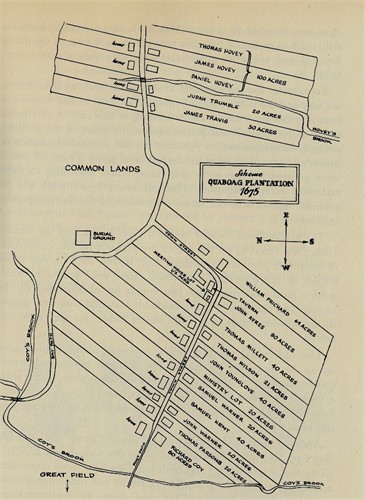
Wheeler and the rest of his men, led by the Natick guides, fled to the English settlement of Quabaug (which later was to become the town of West Brookfield). The village was relatively isolated which meant that no help was coming soon, even if the colonists in other New England towns got word of the attack.

At Brookfield, the soldiers gathered at the house of Sgt. John Ayers (who had been killed in the ambush) and there they were joined by about 70 villagers who had learned of the coming Nipmuc attack. Ayers’ garrison was the largest building in the settlement. Once inside the house, Wheeler recovered from shock and took charge of his men again, and ordered them to fortify the defenses. He tried to sent two soldiers to get help, but they did not leave before the arrival of Muttawmp and his warriors. In all about 80 persons had gathered inside the Ayers house.

Capture of Brookfield

When they arrived at the scene, some of the Nipmucs kept the garrisoned house under constant fire, while others drove off the livestock, looted other houses in the settlement, and then set them on fire. Once Muttawmp had gathered all his men and completely surrounded the house he launched three attacks on the Ayers house. All three were unsuccessful and the only English casualties that occurred on the first day were two colonists who made the mistake of stepping outside and who were quickly killed. As a result Muttawmp realized that he needed a different approach.

Attack on Ayres Tavern

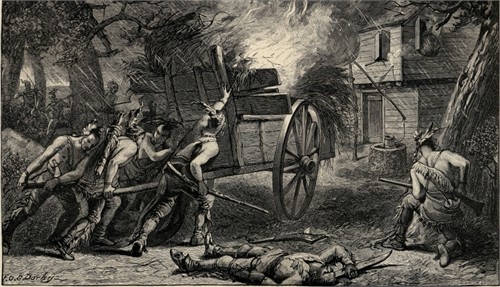
On the second day of the siege, early at dawn, Muttawmp had his men fill a village wagon with combustible material and direct it at the fortified house, hoping to set it on fire and in that way force the defenders out. However, the plan did not work because of heavy rains which began to pour while the wagon was in preparation.

Attack on Ayers Tavern

During the confusion that accompanied the execution of the plan, Ephraim Curtis managed to sneak out of the house and made a successful run for the woods. He eventually made it to Marlborough although by that time colonial soldiers had already been alerted by some travelers who had heard gunfire near Brookfield. As a result, a group of men under Major Simon Willard were already on their way to relieve the besieged.

Relief

Willard, who was the chief military officer of Middlesex County, Massachusetts, with 48 troops had been stationed at Lancaster. After being informed of the siege he hurried to Brookfield, arriving on the night of the 3rd. This forced the Indians to break off the siege. Further reinforcements continued to arrive, and Willard eventually commanded 350 English soldiers and an unknown number of Mohegan Indian allies.

The battle between the two sides continued until the middle of the night of the 4th but neither side could dislodge the other. At that point, Muttawmp, who felt he had already achieved most of what he wanted (including obtaining crucial supplies from the looting of Brookfield), decided that he did not want to risk the death of any more of his warriors and withdrew from the battlefield.

The noise of the men arriving was great and the Indians quickly set fire to the meeting house and the only other house and barn, and bolted.

Stone Marker at the site of the Meeting House at Brookfield

Epilogue

As soon as others heard of the distress, soldiers from all quarters arrived. A company under Captain Watts from Hartford, a band under Lieutenant Cooper of Springfield, and others from county of Essex under Captains Lathrop and Beers, marched together as far as Meminimesset, but found no trace of Indians.

A garrison was maintained until winter when the Court ordered the people to leave, not to return to Brookfield for twelve years.

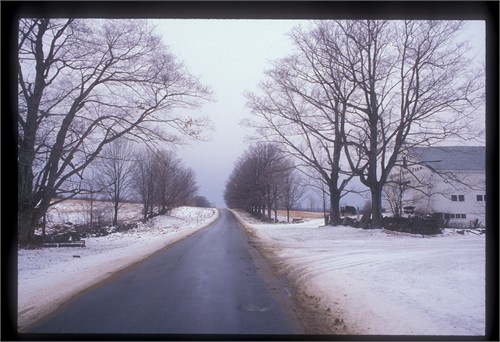
Site of John Ayres' Tavern in Brookfield

After withdrawing from Brookfield, Muttawmp led his men to a fort at Hatfield. Metacom himself, with 40 Wampanoag warriors, arrived there a short while later. King Philip, hearing of the attack, rewarded the Nipmuc sachems with unstrung wampum.

Throughout the rest of the 1675, the Native American forces had a string of victories, thanks in large part to skillful leadership of sachems like Metacomet, Muttawmp and Matoonas, who exploited their knowledge of local terrain to achieve surprise and often successfully ambushed colonial forces sent to track them down, much in the same way as happened in Wheeler’s Surprise. However, 1675 ended with a significant defeat for the Native Americans, with the defeat of the Narragansetts in the Great Swamp Fight.

While Philip and his allies managed to regain the initiative for some time in 1675, eventually the scorched earth tactics practiced by the English caused them to start running out of supplies. The supply shortage, coupled with a partial amnesty, prompted an increasing number of chiefs to leave Philip’s alliance.  . In the spring of 1676 the tide turned in favor of the English.  Muttawmp, the victor of Brookfield, tried to make peace with the English. Promises of safety were broken however, and he was executed in September 1676.

John Warner, son of William WARNER and son-in-law of Mark SYMONDS removed from Ipswich to Brookfield in 1670, was one of three men there who took the Indian deed for the town of Brookfield, December 19, 1673, and was one of the principal inhabitants there. When the town was destroyed by the Indians in 1675 he retreated with his younger children to Hadley, Massachusetts, whither Mark Warner, an elder son, and other children had gone to settle.  .

Even the death of John Ayres was not to end the contribution of this man to the welfare of the community, since it was to be his house which was to provide a haven of relative safety and to be occupied and defended by the surviving inhabitants and soldiers through those three gruesome days in August 1675.

After the Indian siege of Brookfield had been relieved by the arrival of Major Willard and his troop, the inhabitants left for scattered areas, looking for security and peace. Suzannah Ayres and her children returned to the familiar surroundings of Ipswich where still remained some of her kinship. She presented to the Court at Salem an inventory of the estate of her deceased husband amounting to £195 13s and 6p. In 1678, she is found as the owner of a house in Ipswich. Among those of the family listed as residents of Ipswich in 1678, in addition to Suzannah, we find John Jr., Joseph, Samuel Sr., Samuel Jr., and Thomas Ayres . In 1682, a former resident of Massachusetts Bay Colony, named Samuel Hall, left a bequest of £100 to be distributed among the victims of the great fire in Boston and of the Indian wars in the Colony. Suzannah received 33s of this, but died soon after on Feb 2, 1682/83.

In 1703, Samuel, John and Thomas were appointed executors of the estate of John Sr. On Jan 14, 1716, as recorded in Worcester in 1741, the land formerly possessed at Brookfield by John Ayres Sr., was conveyed to Joseph Ayres of Ipswich by Thomas, Mark, Edward, and Nathaniel, sons of Sgt. John; and by Samuel, son of Samuel and grandson of Sgt. John; and by Robert Day, son of Suzannah (Ayres) (Day) Waite and grandson of Sgt. John.

There apparently was discord, for on Oct 28, 1717, appeared the following petition to the General Court, which summarizes the situation and will be quoted in toto:

The petition is dated Jun 17, 1717, but was read in the House of Representatives on Oct26, 1717: ‘A petition of Thomas Ayres, Joseph Ayres, Mark Ayres, Nathaniel Ayres and Edward Ayres sons and heirs of John Ayres heretofore of Quaboag, alias Brookfield, deceased in testate, showing that in or about the year 1660, the petition of father with others bought and purchased of the Indian natives tract of land of about eight miles square then known and called by the name of Quaboag, after which, viz in the year 1673, the General Court erected the said land into a township by the name of Brookfield, then in the year 1675 a war broke out with the Indians, who killed the petitioners’ father and several other inhabitants, and the rest being drawn off by order of the government, the whole town was left desolate, and all the houses burned down by the enemy, after which, about 1690, the said town of Brookfield was in a likely way to be settled.

And in the year 1703, the petitioners having obtained an administration on their father’s estate lying in Brookfield aforesaid, petitioned the General Court that a committee might be appointed by make inquiry and cause a record to be made of the lots, rights, and proprieties of land within the said plantation belonging to the ancient settlers thereof, that so the petitioners might have and enjoy what belongs to them in the right of their father, which prayer of the petitioners was accordingly granted, and Samuel Partridge Esq., and others appointed a committee were ordered to make inquiry and cause a record to be made of the said lands, rights, and proprieties, but the said committee neglecting in that service, then petitioners renewed their petition to the General Court, who appointed a hearing thereon; however the petitioners withdrew their petition at the request of the said committee, and upon their promise that they would forthwith proceed to settle the petitioners in their rights which accordingly they did to the satisfaction of the petitioners, who were at the expense of £150 at least in obtaining the said settlement, but after all the committee did at last declare all their proceedings in the premises to be null and void under no other pretense, but that the said lands were not improved by the petitioners, and the very lots that the petitioners father died possessed of, and particularly his home lot which he defended against the Indians at the loss of his life, are granted by the said committee to other persons very unjustly and contrary to the order of the General Assembly, by all which the petitioners are kept out of the possession of father’s estate. Upon the whole the petitioners pray the honorable Court will confer upon them the lands which the said committee have laid out to them containing by estimation no more that 1,500-1,600 acres, although they have heard their father and many others say that he had 2,000 acres of land in Brookfield. Which lands so laid out by the said committee they shall rest satisfied and contended, unless the Court shall please to make them some further consideration: Read in the House of Representatives October 26, 1717 and ordered that the Committee of Brookfield be served with a copy of this and the petitioners former petition, and that they appear before this Court on the second Thursday of the next May session, to show reason why they declared the petitioners land to be forfeited. Sent up for concurrence. Read and concurred. Consented to: Samuel Shute’ .

Biography of John Ayers

John’s wife Susannah Symonds was born 1617 in Essex, England. Her parents were Mark SYMONDS and Joanna [__?__]. Susannah died 2 Feb 1682 in Ipswich, Essex, Mass.

John was of Ipswich in 1648, and was then a tenant of John Norton’s. His parents are not known, but it seems highly probable that he was accompanied there by two of his brothers-in-law, William Lamson and William Fellows.

The first concrete fact we were able to associate with the family, is the appearance of the name of John Ayres in the early records of Ipswich. This appears in the year 1643, which indicates the approximate date of coming to Ipswich, but not necessarily exactly, since grants were frequently recorded sometime after they had been made. He was also listed as an inhabitant of Ipswich in 1648, and married Susanna, daughter of Mark SYMONDS of who’s (Mark Symonds) estate he was appointed administrator. In such capacity, on Nov 24, 1659, he sold a house and a three acre lot to another son-in-law of the deceased, Edward Chapman . He was allowed the privilege of commonage in Feb 1667, and admitted a commoner at Ipswich in March of the same year.

Captain John, as he was known at Ipswich, came to Quaboag Plantation before May 1667. The time of his removal can be estimated fairly accurately from known facts. He was named one of a prudential committee for the new plantation in the Regrant of 1667. At the time of his removal, he has his full family, consisting of seven sons and one daughter, all of whom came with him to Quaboag. They were: John Jr., about 18; Samuel, about 17; Thomas, 15; Joseph, 12; Susanna, about 11; Edward, 9; Mark, 6; and, Nathaniel, under 3 years of age.

This father and head of family certainly had need for provisions to maintain his large dependency, and it is not long after his arrival that he begins what is to be an extensive trade with John Pynchon, son of the founder of Springfield, William Pynchon. The first entries in the Account Book on July 14, 1668 are for bacon, corn, salt, and white meal – all household necessities.

John Ayres was owner of much land within the Plantation. The amount which he paid John Pynchon for his original grant was “£5 12s 6p, or four and a half times the value of a single house lot with its usual allowance of meadow and planting ground. In addition to this, he leased a large meadow (Matchuk-19 acres) from John Pynchon from June 28, 1671, until the time of his death. Record of this appears in his account on: Jun 28, 1671; Nov 28, 1672; Oct 23, 1673; and, Aug  18, 1674. This large acquisition and usage of land indicates that he had grown sons, that he was relatively wealthy, and that he was capable of maintaining such an amount of this most precious commodity. He can certainly be classified as a substantial husbandman.

Property Plots Brookfield

Probably from the time of construction of his home and establishment of himself at Quaboag, he provided accommodations for travelers. Although his first actual license for maintaining a tavern was not granted until the Fall of 1671, the following entry leads us to believe that he offered food and shelter prior to that time. On Jun 28, 1671, the following: ‘By my expense at his house last summer and once this Spring 00 12 00’. That Ayres was a respected planter is confirmed by the following found in the Record of Hampshire County Court for Sep 26, 1671: ‘Goodman Ayres of Quabauge licensed to sell wine, etc.’  This permit was renewed on Sep 24, 1672: ‘Goodman Ely of Springfield hath his license continued for the year ensuing to keep ordinary and to sell wines and strong liquors, providing he keep good rule in his house. Also Goodman Ayres of Quaboag hath his license continued on the same terms’ . And for the last time on Sep 29, 1674: ‘John Aires of Brookfield hath his license renewed for the year ensuing’.   As we know, this tavern was still in operation at the time of the Indian assault on August 2, 1675, and being the strongest building at the Plantation, was converted into a fortified house to provide protection during the siege which followed.

Ayres Homestead Brookfield 1675

In addition to his maintaining a large farm and keeping the tavern, John Ayres found it advantageous to devote much of his time to the mill of John Pynchon. He was associated with this most essential enterprise from the very beginning of the construction of the mill. The first link with the project comes in the following account of the Plantation with John Pynchon: ‘The Towne Dr. Aug. 1669 £2  steel G Aires had for Web more £4 Steel G. Aires had Nov. 8, 1669’. Also, on Nov  8, 1669, Goodman Ayres received delivery of nails and a ‘spindle in Rine’ for the mill. On Jun 28, 1671, he was paid £2 1s 8p for his part in building the mill house, and £12 14s 7p for other matters relating to the mill, by John Pynchon. The large amount of money involved certainly indicates that Ayres either sold a considerable piece of property or rendered valuable services to Mr. Pynchon in connection with the mill.

John Ayers built and kept John Pynchon's Quaboag Grist Mill

In Nov 28, 1672, is recorded the beginning of a business arrangement with John Pynchon which was to last for the remainder of Ayres life: ‘Agreed with G. Aires, to keep my mill at Quabauge and tend it, to grind corn brought there, for one year, he to take the tole allowed, viz., one half peck out of a bushel, on all the corn that shall be ground by one and all; and for his tending the mill, he is to have one third of the tole, I am to have the rest for my part paid. He is to grind all the corn at the mill except Gdm. Pritchard’s corn. Gdm. Pritchard having liberty to grind his own corn only’. On Dec 18, 1673, this agreement was renewed ‘for the year coming or longer on the same terms as formerly’. The final determination of this contract is recorded as follows Aug 28, 1675: ‘Goodman Aires owes me more for corn of mine, which he had at the mill, as he told me being, in June 1675, when I left my expenses at his house on acot, he spoke of eight or ten bushels to allow me for, and what he had about 14 bushels 1/2 as he gave me an acot on April 28, 1675. That he did not proportion that wheat because he said it would be more, he having disposed of it, and would give me an acot of altogether; and malt of mine, he took it all, so that I acot he owes me near about £4, whereof I have received as per contra about £2 so rests due to me about £2. The account was settled by discount of £1 Li 7s 11p on Aug 28, 1675. This last was of course after the violent death of John Ayres at the hands of the Indians.

John Ayres, farmer, taverner and miller, still had time and energy left to devote to civil affairs of the infant plantation.  He was one of those appointed by the General Court in 1667 to the committee to oversee the affairs of Quaboag Plantation – a position of considerable responsibility. He continued in that capacity until the incorporation in 1673. His name appears on the ill-fated petition of Oct 9, 1670, requesting a grant of additional lands at Quaboag to provide an inducement for increased settlement. The Petition for Incorporation contains the names of John Sr., John Jr., and Samuel Ayres, indicating the importance of the family in the affairs of the community. John Sr. served as Constable for a period, as revealed by the following in the Magistrate Book on Nov 2, 1670: ‘James Hovey and Priscilla Warner of Quaboag joined in marriage. Constable John Aires attesting their legal publication’.

In a controversial court case between John Younglove and the inhabitants of Quaboag Plantation on Jun 19, 1672, John Ayres and William Prichard represented the interests of the people in a losing battle with their unstable minister. However, in an other encounter with Mr. Younglove on Mar 31, 1674, he was more successful: ‘John Ayres, Sr., of Brookfield being complained of to this Court for that he refuses to pay certain arrearages of which he has been assessed toward Mr. Younglove his maintenance. Also, he brings the fact to make his defense sayeth: It was for that the arrearages for which he is now assessed for keeping the ordinary formerly: the Court doth acot that such arrearages ought to be paid by the people therein, in general some other way, and it is belaid on him for keeping the ordinary past: And as to the question, the Court they should like that Mr. Younglove may have his due. The Court decrees that the law doth – determine it. Therefore do accordingly order that which is to be yet due him his acot, for to the selectman there to assess the inhabitants there for it, in the way which they formerly paid by hand, levy the same by the Constable according to law’.

On the same day, Mar 31, 1674, John Ayres along with Thomas Parsons were referred to by the Court as available consultants for the committee appointed to construct a bridge over Coy’s Brook, as a connecting link of the Hadley Path, then under construction . Here again we find our subject busy in the affairs of the community.

The personal affairs of the family saw changes in the years 1672 and 1673. On Aug 28, 1672, John Ayres Jr., married Abigail Hovey, as recorded in the Magistrate Book. Soon after this, in Nov 1672, John Sr., sold all his lands and rights in Ipswich. On Nov 28, 1672, he purchased a lot at Quaboag for his son Samuel for a few shillings more than the customary price for a single house lot. The entry specifies that the lot contained 30 acres. On Dec 18, 1673, John Sr., and John Jr., ‘Tooke the Oath of Fidelity to This Government’.

On Jun 18, 1675, an action in the office of Magistrate Pynchon substantiates the strength of character of the subject of this biography. This man had no intention of sitting back and allowing the Selectmen of Brookfield to force upon him what he considered to be an unjust restraint. He used a legal form of appeal for review by higher authority of the actions of town officials. Here is the record in the Magistrate Book: ‘June 18th, 1675. John Aires Sen. of Brookfield plaintiff (according to Replevy) against William Pritchard & Samuel Kent, Selectmen of Brookfield: for unlawfully distreining some pewter dishes of his, which the Constable did by occasion of their order: William Pritchard and Samuel Kent appearing & putting it upon, profess that they gave order for the distress, and plainly not owning it, and John Aires not proving it: I allowed theire charges vis., for 3 days each, which is sixe shillings apiece, in all 12s for Jo Aires to pay to William Pritchard and Samuel Kent, and likewise sixe shillings for Corporal Coy’s appearance as a witness by warrant:’

In addition to his other activities, Sergeant Ayres was commander of the small detachment of militia. Although he held the rank of captain during his residence at Ipswich, he had had to accept the lower rank at Quaboag because of the small size of the military contingent. He was assisted in his duties by Second Sergeant William Prichard and Corporal Richard Coy. John Ayres, as commander of the local detachment of militia, and his subordinate non-commissioned officers Sgt. Prichard and Corp. Coy, were the ones to accompany Captain Wheeler and Captain Hutchinson in the mission of peace to the Indians on that fateful Aug 2, 1675. All three of these valiant men were to die with others of the military troops sent from Marlboro to treat with the Indians.

Children of  John & Susannah Ayres

Order
Name
Birth
Notes
John Ayres
England
Came to Quaboag before May of 1667. His full family of 7 sons and 1 daughter came with him. Died Aug 2, 1675 @ Wheeler’s Surprise.
wife
Susannah Symonds
England
Daughter of Mark SYMONDS. Died at Ipswich Feb 1682-3
1
John Ayres, Jr.
Ipswich, 1649
Came to Quaboag with his father in 1667. On Aug 28, 1672, he married 1. Abigail Hovey, daughter of Deacon Hovey, a neighbor at Quaboag. Abigail died young, probably at Quaboag, no children. He was at Quaboag during the Siege. Took his mother and remaining family back to Ipswich.
2. Married Mary Woodman of Ipswich, 3 children, no sons that survived. Death ??? Conflicting evidence, but it seems likely John, Jr. died Aug 12, 1711, age 62, at Boston.
2
Samuel Ayres
Ipswich, 1650
Came to Quaboag with his family. Returned to Ipswich after the Siege of Brookfield. Married on Apr 16, 1677, Abigail Fellows who bore him 10 children. Died at Ipswich on Feb 7, 1696-7. Some of the children of Samuel were prominent in the affairs of the 2nd settlement at Brookfield.
3
Thomas Ayres
Ipswich, 1652
Came to Quaboag with his family. Returned to Ipswich, never returned to Brookfield. Married in March of 1677-8 Hannah Herrington. They had 7 children.
4
Joseph Ayres
Ipswich, abt 1655
Came to Quaboag with his family. Returned to Ipswich. Married on Jun 9, 1684, Sarah Caldwell, who bore his 5 children. She died on Apr 29, 1710. He married Hannah Dutch at Ipswich, who came with him to Brookfield on Oct 23, 1713. He was one of those of the family to return to Brookfield for the 2nd settlement. Lived on his farm at Brookfield until his death.
5
Edward Ayres
Ipswich, Feb 1658
Inhabitant of Kittery, Maine.
6
Mark Ayres
Ipswich, Dec 1661
Did not attempt to resettle at Brookfield. Also an inhabitant of Kittery, ME. in 1690, with his brother Edward. In 1716, he is listed as of Portsmouth, N. H. He married and had 2 sons.
7
Nathaniel Ayres
Ipswich, Jul 16, 1664
Married Amy —– and had 5 children. Was a Blacksmith by trade and lived most of his life in Boston. Died in Boston on Dec. 4, 1737.
8
Susannah Ayres
Ipswich 1656
Came to Quaboag with her family. After the siege returned with her family to Ipswich, at age 19 and single.

Sources:

http://www.westbrookfield.org/qp_family_ayres_john.htm

Posted in History, Veteran, Violent Death | 7 Comments

Twins

This page is dedicated to Janet and Ellen

We have a lot of twins in our family tree, 54 pairs to be precise, must be in the genes.   This page is dedicated to Janet and Ellen.

Welcome Twins — International Twins Association Muncie Indiana 1978

Siblings baptized the same day might appear to us, hundreds of years later, to be twins, but but I tried to weed these out.  For the most part, our Puritan ancestors were pretty strict about baptizing their children on a timely basis.

7 Pairs of Twins – Direct Ancestor – Two Adults
3 Pairs of Twins – Direct Ancestor – One Adult
18 Pairs of Twins – Two Adults
14 Pairs of Twins – One Adult
12 Pairs of Twins – Died Young

I’m not going to count all the children in our family tree, but assuming each of 700 families had about 5 children each, we have about 3500 births. With those assumptions we have had 14 twins per 1,000 births which is about average.

The twin birth rate in the United States rose 76 percent from 1980 through 2009, from 18.9 to 33.3 per 1,000 births. The Yoruba people of Central Africa have the highest rate of twinning in the world, at 45-50 twin sets (or 90-100 twins) per 1,000 live births, possibly because of high consumption of a specific type of yam containing a natural phytoestrogen which may stimulate the ovaries to release an egg from each side. In Latin-America and South Asia and South-East Asia the lowest rates are found; only 6-9 twin sets per 1,000 live births. North America and Europe have intermediate rates of 9–16 twin sets per 1,000 live births.

I noticed that many of the twins that died young came when their mothers had already had six or seven children. The incidence of twins is highest among women between 35 and 39. This increase is attributed to higher levels of gonadotropin, the hormone that stimulates the ovaries to develop and to release eggs. As a woman gets older, the level of gonadotropin increases, and she is more likely to produce two eggs during one menstrual cycle.

I was surprised that many of our twins were boy/girl pairs. It turns out that fraternal (dizygotic) are actually more common than identical (monozygotic) twins. Twins from one egg occur about once in every 250 births around the world (0.4%). Twins from two eggs occur in 1 out of every 100 births (1.0%) in white women and in 1 out of 79 births in black women. In certain areas in Africa, twins occur once in every 20 births!

Triplets are much less common; they occur only once in every 8,000 deliveries.  Most doctors never deliver a set of triplets in their entire careers. We have one possible set of triplets — Mercy, Sarah and Mary Lawrence, daughters of  George LAWRENCE and Elizabeth CRISPE all show a birth date of 4 Dec 1671 Watertown, Mass. All three grew up and married. I haven’t found any evidence to refute the birth dates, but you would think someone would comment on triplet girls.

Fertility drugs and the growing number of women who are having babies at an older age are two major reasons for the increased incidence of twins. Fertility drugs can stimulate the ovaries to release more than one egg, increasing the chance of a multiple pregnancy. In-vitro fertilization techniques are more likely to create dizygotic twins.

My favorite twin story here is Cornelius BRINK‘  twin sons Adam and Jan who enlisted in the Continental Army together. They were members of the Regiment of the Levies under the command of Colonel Albert Pawling and served in the Fifth Regiment of the Line (the Continentals) under Colonel Lewis Dubois. At a dinner given fifty years after the close of the Revolution in Kingston, NY, on Sep 10, 1832, both of these brothers were present, having come to celebrate together.  Remember that Thomas Jefferson and John Adams both died on the 50th Anniversary of the Declaration of Independence 4 Jul 1826.

Direct Twin Ancestor – Two Adult Twins

13 May 1625 England  — John & James Reynolds, sons of William REYNOLDS and Esther RUTH.   James Reynolds first married Susannah Sheldon about 1645. He next married Deborah Jordan (or Sweete)  between 1647 – 1650 in Rhode Island.  James died Aug 1700 Kingstown, Washington, Rhode Island.  John REYNOLDS married Anne HOLBROOK about 1652 in Weymouth, Mass. John died before 4 Jan 1691 in Stonington, CT.

Founders Stone, Norwich, Connecticut. Ancestors on this monument are Major John Mason, Rev James Fitch, John Reynolds and Nehemiah Smith.

22 Sep 1665 Ipswich, Mass — Elizabeth and Richard, daughter and son of John KIMBALL and Mary BRADSTREET.  Elizabeth married Jeremiah Jewett 4 JAN 1687/88 15 and died Feb 1731/32 Ipswich. Corporal Richard Kimball first married Lydia Wells 13 Feb 1688 – Ipswich, Essex, Mass and second married Sarah Waite 30 Aug 1705 Richard died 26 May 1716 – Ipswich, Essex, Mass

4 Dec 1671 Watertown, Mass — Mercy, Sarah & Mary, daughters of George LAWRENCE and Elizabeth CRISPE all show this date for their birth. I don’t really think they were triplets, maybe they were all baptized together. Mercy married Willliam BAKER about 1691 as his second wife. Mercy died 25 Nov 1753 Harwich, Mass. Sarah Lawrence married Thomas Rider 5 Apr 1689 in Roxbury, Mass. Sarah died 1714 in Roxbury. Mary Lawrence first married John Earl (Erle) 5 Apr 1687 in Watertown. She second married Michael Flagg on 27 Dec 1704 in Watertown. Mary died 1744 Groton, Mass.

17 Feb 1694/95 Rowley, Mass — Benjamin and Hepibah, son and daughter of Edward HAZEN Jr. and Jane PICKARD. Benjamin first married Elizabeth Blanchard 25 Jul 1717 in Rowley. Benjamin married second to Betty Nutting 2 Apr 1740 in Groton, Mass. Benjamin died 18 Sep 1755 Groton, Mass. Hepzibah married Nathaniel Perkins 15 Nov 1716 Boxford, Mass Hepzibah died before 1768.

20 Aug 1709 Dorchester, Mass. — Ebenezer & Robert, sons of Maj. John FOSTER and Margaret WARE.  Ebenezer FOSTER  married Desire CUSHMAN on 17 Sep 1730 Attleboro, Mass. Ebenezer died from consumption 18 Jun 1749 in Cumberland, Providence, RI.  Robert Foster married Mary [__?__]. Robert died in 1760.

Desire Cushman Foster (18 Sep 1710, Plympton, Mass — 27 Nov 1810 in Attleboro, Bristol, Mass when she was a hundred years old! – Over 60 years after Ebenezer had passed.  Headstone — Gerrould Cemetery, Wrentham, MA

17 Aug 1738 in Haverhill, Mass — John & Susannah, son and daughter of John BRADLEY Sr. and Susannah STAPLES.  John BRADLEY Jr. married Mary HEATH 21 Mar 1760 in Haverhill, Mass. John died Before 1830. Susannah Bradley married Philbrook Colby 13 Jul 1758 Haverhill, Mass. Susannah died 2 Aug 1778 in Pembroke or Weare, NH.

A Haverhill, Mass marriage was recorded between John Bradley and Mary Heath so the following is presented merely as legend and — although it is a wonderful tale — totally unverifiable.

A man named John Bradley who was born in 1753 in Vermont became the first permanent white settler in this area (Washburn). A tall strong man with a fiery temper, he joined Ethan Allen and the Green Mountain boys in Vermont. When the Revolutionary war began, Bradley was with Ethan Allen at the capture of Ft Ticonderoga.

The Flag of the Green Mountain Boys is still used by the Vermont National Guard

When Benedict Arnold started his march through Maine, Bradley was chosen as a scout and hunter. Arnold expected to find enough wild game to feed his men, but game was scarce. After hunting all day, Bradley returned with only one partridge. Arnold sent for him and called him a worthless loafer. Bradley talked back to the commander who then drew his sword, which Bradley knocked from his hand. The fighting continued and Aaron Burr came with a file of soldiers and had Bradley arrested and bound to a tree. A man had been shot that morning and Bradley had no doubt that he would also be shot. He finally managed to twist the straps free from his wrists and attempted to escape. A guard tried to stop him and he killed the guard. Bradley had no weapons and his enemies were behind him as he ran into the woods.

Vermont legend says Mary Heath’s father was Abenaki Chief Crooked Knife

He had not traveled far when he found himself surrounded by the St Francois (Abenaki) Indians, members of a scouting party watching the white men. As two of the Indians understood English, Bradley told the story and was untied and given food. The next day, two of the Indians took him and started toward the village of Washburn. When they arrived he was taken to see Chief Crooked Knife, who liked him.

The chief promised him his life if he could prove himself of greater strength than any man in the village. After he had outjumped and bested all the strongest of the braves, Chief War Knife adopted him and gave him his only daughter for a wife. The old chief was a hunchback and, also, a very intelligent temperance crank who drilled temperance in the daughters of his tribe.” (Note: from Boston Library resource)

Bradley could not return to the country he had left for he had killed a man and would surely be hanged for his crime, and he didn’t want the Indians to kill him so he was happy to become a member of the tribe. Some years later Bradley went with some Indians up river on a bear hunt and never returned. The Indians said he was killed by a bear in a trap. He left a large family of children and many of his ancestors live in Aroostook today.

14 Dec 1742, Topsfield, Mass — John & Zebulon, sons of Richard ESTEY and Ruth FISKE. John married Mary Hartt 14 Nov 1769 in Sheffield, Maugerville, New Brunswick. John died 12 Oct 1824 in Kingsclear, York Co. New Brunswick. Zebulon was one of Jacob’s sons in the Bible.   Zebulon ESTEY married Mary (Molly) BROWN Aug 1765 Newburyport, MA. Zebulon died 10 Oct 1825 in New Brunswick Canada.

Maugerville Map

The Esteys resided in Rowley, Mass until 1764 when they relocated to a settlement on the St John’s River in New Brunswick Canada called Maugerville. Zebulon made the trip the next year with his new bride and was one of the signers of the original covenant of the Congressional Church. Zebulon’s daughter Molly ESTEY married her first cousin Amos ESTEY so many of our direct ancestors made the trip.

  • Grandfather Richard ESTEY – age 58,
  • son Richard ESTEY II age 36, wife Hannah HAZEN age 37 and his son Amos ESTEY age 5
  • son Zebulon ESTEY age 22 and his new bride Molly BROWN
  • Zeb’s twin brother John and sister Sarah who married Thomas Barker also made the trip.

Maugerville Potato – Mr. Peanut’s Deranged Cousin

The River St. John” by Rev. Wm. Raymond published in 1910, pages 334-5:

“On 15 January 1765 on Captain Francis Peabody’s schooner, came Zebulon Estey to Maugerville. He paid 12 shillings passage money from Newburyport to St. John and 13s 6d for `his club of Cyder’ on the voyage. Richard Estey and Thomas Barker built a saw-mill on a small creek near Middle Island. (After 1765.) They sold it in 1779 – near Maugerville. Richard Estey signed a church covenant for a distinct church society. Many moved from Maugerville due to the annoyance of the spring freshets. [A sudden overflow of a stream resulting from a heavy rain or a thaw] Zebulon Estey moved to Gagetown. Some went across the river to the township of Burton. These included Israel Estey, Moses Estey and Amos Estey.”

Excerpt from “The Studholme Report – 1783″

“Zebulon Esty has a wife and 8 children. Has been on about 5 years; built a house and grist milland has about 3 acres of cleared land. Went on in consequence of an agreement with Mr. John Crabtree acting as attorney for Capt Jades, and was promised a lease for ever on paymeny of a small acknowlegement yearly. Said Esty is a good man, his character very loyal and we beg leave to recommend him to be confirmed in his possessions”

3 Aug 1835 Vassalboro, Maine — Ellen Celeste and Emma A., daughters of Oliver WEBBER and Abigail HAWES.   Ellen Celeste WEBBER married Guilford Dudley COLEMAN 9 Oct 1855 in Vassalboro, Maine.  Ellen died 31 Oct 1881 in Anoka, MN. Emma married Jacob Melvin Prescott bef. 1863 Emma died between 1895-1900 in Tama, Iowa.

Ellen Celeste (Webber) Coleman ca. 1870

Ellen was educated in a New England “Female Seminary” and wrote beautifully and expressed herself elegantly. Since her family disapproved of her marrying Oliver Webber, they eloped and emigrated to Minnesota. He was young and poor. In Minnesota he was a farmer and a blacksmith.  See his page for details, I don’t think she liked frontier life very much.

Ellen Celeste (Webber) Coleman. About 1880.

Emma’s husband Jacob Melvin Prescott was born 13 Jul 1839 in Maine.  His parents were Jacob Prescott and Mary Chadbourne.  Jacob died 22 Feb 1924 in Jackson, Oregon.

Emma was a student at Maine State Seminary Students  (now Bates College, a liberal arts college located in Lewiston, Maine.  Emma appears in  this 1858 list of students  from the Bates College (Maine State Seminary) Catalogue.

Emma married Jacob Melvin Prescott before 1863.  Emma was six years older than her husband. In the 1880 census Jacob was a laborer in Montour , Tama, Iowa and their two oldest sons were working in a machine shop. Emma died between 1895 when she was recorded in an Iowa census and 1900 when Jacob was living alone in Montour and working as a jeweller. By 1910, Jacob had moved in with his son Herbert in Grant’s Pass, Oregon.

Montour grew to be a thriving community with churches, a high school, hotels, general stores, gas stations and even at one point a car dealership. In the past 30 years, most of these have faded away. The high school was incorporated into the Tama County School system in the 1950s, became an elementary school in the 1980s and, with dwindling attendance, closed its doors completely in 2003.

Children of Emma and Jacob Melvin Prescott

i. Llewellyn Prescott (1863, China, Maine – 1 Jan 1938, Jackson, Oregon) In the 1900 census, Llewellyn (37), Clarence (36) and Alfred (24) were boarding together in Omaha, Nebraska. Llewellyn was working as an electrician, Clarence as a mechanical engineer and Alfred as a journalist. In 1910, Llewellyn was living with his sister Mabel and her husband Putnam in Oakland, California and working as a machinist in a planing mill where Putnam was the foreman. In the 1930 census, Llewellyn had a plumbing shop in Ashland, Jackson, Oregon and was living next to his brother’s widow Anne Prescott.

ii. Clarence Prescott (Feb 1864 in China, Kennebec, Maine – 23 Dec 1919 in Jackson, Oregon); m. Anna T Austin (abt 1874 in Iowa – 4 Sep 1958 in Ashland, Jackson, Oregon) Anna’s parents were from Norway. In the 1910 census, Clarence had a carpentry shop in East Ashland, Oregon, In the 1930 census, Anna was living with her daughter Marie, a 24 year old school teacher and her son Glen, a 19 year old newspaper typsetter.

iii. Herbert S Prescott (Jun 1867 in China, Maine – 13 Nov 1928 in Salem, Oregon); m. 1897 Alice M. Peck (Mar 1864 in Cedar Falls, Iowa – 9 Dec 1940 in Salem, Marion, Oregon) In the 1900 census, Herbert was working as a mechanic in Waterloo, Iowa. In the 1910 census, Herbert was a newspaper editor in Grants Pass, Oregon. Strangely, Herbert is listed twice in the 1920 census, as a newspaper reporter living with Alice in Salem, Oregon and as a laborer living with his sister Mabel Smith in Atascadero, California.

iv. Justine Prescott (1869 in China, Kennebec, Maine –  After 1895 Iowa Census)

v. Mabel Prescott (1 Mar 1872 in Montour, Tama, Iowa – 5 Jan 1956 in Los Angeles, California); m. Putnam David Smith (11 Aug 1857 Grant County, Wisconsin – 27 Nov 1933, Monfort, Grant, Wisconsin) Putnam was 15 years older than Mabel. In the 1910 census, Mabel was an artist (picture painter) in Brooklyn Township, Oakland, Calfornia. In the 1920 census, Putnam was now the artist living in Atascadero, California. By the 1930 census, Putnam and Mabel were retired in Los Angeles. After Putnam died, Mabel married a man named Liddle.

Emma’s son-in-law, Putnam David Smith

Putnam David Smith was born in Grant County, WI on Aug. 11, 1856. Smith settled in Los Angeles in 1910. He died there on Nov. 27, 1933. He was known for portrait painting Source: Edan Hughes, “Artists in California, 1786-1940”

Not much is known of the American Beauty Doll Company, who began making composition dolls during World War I (1914-1918), when German dolls became scarce, due to the war. It was a family run business of hand made artist dolls by Mr. Putnam David Smith, his wife Mabel Smith and their young daughter Margaret.

Dolls were sold on the west coast of California, each composition doll was hand made and unique. Most of the dolls have cloth stuffed bodies, but others used a ball jointed, German style all composition body. Very few of these artist dolls have survived, as it proved to be unprofitable to make the dolls and due to the short duration of the company.

Below is a rare composition dolls, all courtesy of doll collector, M Perkins. [See Oliver WEBBER’s page for all four]

American Beauty Doll

1963 San Diego Californa — Ellen Genevieve & Janet Eleanor, daughters of Everett MINER and Nancy BLAIR. This history of twins is dedicated to them!

.

Direct Ancestor – One Adult Twin

11 Sep 1644, Roxbury, Mass — Peter & Andrew, sons of John LEWIS and Elizabeth [__?__]. Peter LEWIS married Grace DIAMOND about 1667.  When he was 24, Peter bought a house and fishing stages on Smuttinose Island from Matthew Giles on 30 Nov. 1668.  He then bought land on Spruce Creek, Kittery, Maine from John Phoenix in 1675 and sold his property at the shoals in 1683. He was listed as a culler of fish at the shoals in 1680. Peter was on the grand jury in Maine in 1668-9, 1695, 1696, 1701 and 1702. He was on the Grand Jury in NH in 1673. Grace was listed as being a midwife in 1720. Peter died 4 Apr 1716 in the Isle of Shoals, Maine.   Andrew died young.

Peter Lewis was at Smuttynose Island in 1668, and sold his land there in 1683. Smuttynose Island   is one of the Isles of Shoals, located six miles off the coast of New Hampshire, but actually in the state of Maine. It was named by fishermen, seeing the island at sea level and noticing how the profuse seaweed at one end looked like the “smutty nose” of some vast sea animal.

10 May 1665, Salisbury, Mass. — Anthony & Sarah, son and daughter of John COLBY and Frances HOYT.  Anthony COLBY  first married Elizabeth WEST in 1678. He next married Sarah Pike 4 Feb 1685 Salisbury.   Anthony died 4 Dec 1721 Salisbury, Mass.  Sarah died in 1674 when she was nine years old.

7 Jan 1727, Boxford, Essex, Mass. — Hannah & Margaret (Peggy), daughters of   Israel HAZEN and  Hannah CHAPLIN.  Hannah married Richard ESTEY II  7 Feb 1750 in Rowley, Mass.   They resided in Rowley, Mass until 1764 when they relocated to a settlement on the St John River in Sunbury County, New Brunswick Canada called Maugerville.  Three generations of our Estey ancestors immigrated, Richard – age 58, Richard Jr. – age 36 and Amos – age 5.  Richard’s twin brothers Zebulon (also our ancestor) and John and  sister Sarah who who married Thomas Barker also made the trip Richard died on 9 Apr 1817 in Sheffield, Sunbury, New Brunswick, Canada.  Hannah died  28 Sep 1817 in Kingsclear Parish, York Co., New Brunswick.

Two Adult Twins

1458 Somerset, England — George & Arthur, sons of Lodovick MINER and Anna DYER.

Thomas MINER wrote back to England about 1683,  in investigation of his ancestory.  In return, he received this manuscript (A (False) Herauldical Essay Upon the Surname of Miner) that contains an essay that traces the ancestry of Thomas back to a Henry Bullman who lived in the 1300s. The essay is written on a colorful, six foot long scroll and was originally published in NEHGS Register of April 1859 (volume XIII, pages 161-5). It is stored in the library of the Connecticut Historical Society located in Hartford, Connecticut.

WARNING: A study titled “The Curious Pedigree of Lt. Thomas Minor” by John A. Miner and Robert F. Miner and published in the NEHGS Register of July 1984 (volume 138 pages 182-5) indicates that much of the contents of this document and the coat of arms it presents are FALSE.

Lodovick married Anna Dyer daughter of Thomas Dyer of Staughton in the Countie of Huntington and had issue Thomas[6] born 1436 and after that twins born twenty two years after the birth of the said Thomas and the twins George and Arthur who both served the house of Austria the younger married (as Philipe Comines relates) one Henreta d’La Villa Odorosa.

1578 Regis, Dorset, England —  Cicely & Joan, daughters of William Phippen  and Jane Jordaine.  Cicely married Thomas Reynolds, son of  Christopher REYNOLDS and Clarissa HUNTINGTON.  Thomas and Cicely died before 1611 when their daughter Cecily traveled to Virginia with her her mother’s twin sister and Joan Phippen and uncle Capt. William Pierce.

The younger Cecily Reynolds (wiki) first married Thomas Bailey (b. 1580 in England d. 20 Sep 1620 in Jamestown, Charles City, Virginia. Next she married Samuel Jordan (wiki) (b. 1578 in England d. 1623 in Virginia. She married third to William Farrar. She married our Peter MONTAGUE fourth around 1645. After Peter died, she married Thomas Parker (b. 1600 in Burnham, Buckinghamshire, England d. 1663 in Isle Wight, Virginia. Cicely died 12 Sep 1660 in Charles City, Virginia.

Legend says that Cecily was spoken of as a “a notorious flirt” and “the Glamour Girl” in the colony. See Peter MONTAGUE’s page for an account of her amorous adventures. Her husbands had interesting tales too, for example Samuel Jordan was a passenger on the 1609 Sea Venture which wrecked in Bermuda and inspired Shakespeare’s play The Tempest

Wreck of the Sea Venture by Christopher Grimes

Our step-mom twin, Joan Phippen  died 1650. In A Durable Fire, the following comments were made about Joan:

“Joan Pierce, brisk blackhaired young woman, who shared the house with Meg Worley and Temperance Yardley (during the Starving Time) had taken her 4 year old daughter and her servant girl to stay at another house , so as not to see Sarah’s last dying moments. Joan Pierce hated Jamestown even more than Temperance did. “There’s nothing here but sickness and laziness.”‘

“Tempers were short these days. Even the soft spoken were sharp, and those with a cantankerous nature, like Joan Pierce, were as easily provoked as hornets.”

“Joan Pierce, who lived next door to Governor Yeardley, had put on weight after the Starving Time. She took pride in her cooking and equal pleasure in eating.” She had plump hands.

Child of William Pierce and Joan Phippen

i. Jane Pierce b. 1588; d. 1625-35 Jamestown; m1. John Rolfe (Yes, that John Rolfe) m2. Roger Smith

Rolfe’s second wife was the Indian Princess, Pocahontas, daughter of the great Chief, Powhatan.

Pocahontas and John Rolfe  – John married the daughter of one of our twins

On what, in modern terms, was a “public relations trip” for the Virginia Company, Pocahontas and Rolfe traveled to England in 1616 with their baby son, where the young woman was widely received as visiting royalty. However, just as they were preparing to return to Virginia, she became ill and died. Their young son Thomas Rolfe survived, and stayed in England while his father returned to the colony.

In 1619, Rolfe married Jane Pierce. They had a daughter, Elizabeth, in 1620.  Rolfe died in 1622 after his plantation was destroyed in an Indian attack. It remains unclear whether Rolfe died in the Indian massacre or whether he died as a result of illness

10 Aug 1633, Titchfield, Hampshire England — Thomas & Hannah, son and daughter of Edmund LITTLEFIELD and Annis AUSTIN. Thomas first married Ruth [__?__] about 1667. He next married Sarah [__?__]. Thomas drowned before 5 May 1689. Thomas was a constable 1661 and 1664; had a grant of land in 1665.There was an inquest into the untimely deaths of Samuel Lord, Robert Houston, and Thomas Littlefield of Wells Maine who all drowned the same day at Berwick. The inquest, held prior to 5 Mar 1689, consisted of three constables and three coroners. Hannah married Peter Cloyes about 1663. Hannah died in 1699 in Wells, Maine,

3 Feb 1639, Sudbury, Mass. — Joseph & Nathaniel, sons of Solomon JOHNSON Sr and Elinor CRAFT. Joseph married Susannah Joslin 19 Nov 1667 Hoseph died Apr 1668. Nathaniel married Mary Plimpton in Marlborough, Mass. Nathaniel died 24 Jul 1718 in Marlborough, Mass

31 May 1640 Salem, Mass. — Zacharaih & Sarah son and daughter of Robert GOODALE and Catherine [KILHAM?] . Zachariah married Elizabeth Beauchamp 30 APR 1666 in Salem, Mass. Samuel died in 1715.  Elizabeth (Beacham) Goodale, wife of Zachariah Goodale, accused her brother-in-law John Smith of sexual assault; this case brought forth many illuminating depositions from family members and neighbors.  (See Robert GOODALE’s page for details.) Sarah Goodale married John Batchelder (son of our ancestor Joseph BATCHELLER) 4 May 1666. Sarah died 22 Mar 1729/30 in Wenham, Mass.

4 Feb 1647 Rehoboth, Mass. — Elizabeth and Mary, daughters of Sgt. Thomas WILMARTH and Elizabeth BLISS. Elizabeth married Jonathan Fuller 14 Dec 1664 in Rehoboth, Mass. Elizabeth died 4 Oct 1690 Rehoboth, Mass. Mary married first Joseph Rocket 5 Jan 1680 in Rehoboth, Mass. She married second Giles Gilbert on 28 Oct 1686 in Taunton, Mass and third to Jeremiah Wheaton 12 Jun 1723.

15 Oct 1651 Eastham, Barnstable, Mass, (tip of Cape Cod) — Apphia & Mercy Bangs, daughters of Capt. Edward BANGS and Rebecca HOBART. Apphia and Mercy were first married on the same day. Apphia married John Knowles 28 Dec 1670 in Eastham, Mass. Next she married Stephen Atwood Jun 1676 in Eastham, Mass. Apphia died 12 Jun 1722. Mercy married Stephen Merrick 28 Dec 1670 Eastham, Mass. She died after 1684 when her last child was born.

The earliest appearance of Apphia’s husband John Knowles may have been while he was still a minor. In the court held 3 Mar 1662/63 Ephraim Doane, Thomas Ridman, John Knowles, and John Wilson were tried and were fined 25s. each for trading of liquors with the Indians at Cape Cod.

In the same court Ephraim Doane and John Knowles were bound over under heavy bonds, pending investigations into the circumstances of the death of Josiah, the Indian sachem at Eastham. This matter was dropped. soon after his marriage his name appears at the head of a cattle page, the entry reading “John Knowles 1 mare colt 4 Aug. 1671.” His earmark was transferred to his grandson, Williard Knowles, 28 Jun 1737.

John Knowles was one of nineteen men Eastham furnished for the King Philip war, and was one of the slain, as appears in the action of the colony government in providing for his widow. Freeman (vol. I, p. 280) says, “and provision was especially made for Apphia widow of John Knowles, of Eastham, lately slain in the service.” From a note at the foot of p. 366, vol. II, the conclusion is drawn that he was killed near Taunton, June 3d, 1675 (i. e. 3d day, 4th month, O. S.). “ In June 1675 Taunton suffered an attack by Indians, in which the houses of James Walker and John Tisdell were burned and the latter was killed. At the same time two soldiers from Eastham, who were on duty there, were killed.Capt. John FREEMAN whose daughter Mercy Samuel

Knowles afterwards married, was in command of the Barnstable County company, and in his report to Governor Winslow, under date of Taunton, 3 Jun 1675, said:

“This morning three of our men are slain close by one of our courts of guard, (two of them, Samuel Atkins and John Knowles, of Eastham); houses are burned in our sight; our men are picked off at every bush.”

Three Indians were tried, 6 Mar. 1676/77, for the murder of John Knowles, John Tisdell, Sr., and Samuel Atkins. The jury found grounds of suspicion against two and acquitted one, but all three were sold into slavery as ‘prisoners of war.’

The sum of £10 was presented by the Colony to ‘Apthya widow of John Knowles lately slain in the service.’ In 1676 Lieut. Jonathan SPARROW and Jonathan Bangs were delegated by the Court to asssist the yound widow in settleing her husband’s affairs. “

17 Mar 1665, Rehoboth, Mass. — Joseph & Mercy, son and daughter of John TITUS and Abigail CARPENTER. Joseph married Martha Palmer, daughter of Jonah PALMER, 19 Jan. 1687/88 in Rehoboth. Joseph was living Rehoboth 16 Jun 1741, aged 76. Mercy married Dr. Richard Bowen 9 Jan 1683 in Rehoboth, Mass. Mercy died 27 Jan 1747 in Rehoboth.

2 May 1666, Watertown, Mass — Benjamin & Daniel, sons of George LAWRENCE and Elizabeth CRISPE. These twins married seven times, a record for our family. Benjamin first married Mary Clough 4 Jul 1689, Charlestown, Mass. He married 2nd to Anna Phillips 3 Feb 1695, third to Anna Coolidge 18 Nov 1716 and fourth to Elizabeth Bennett 9 Jul 1719. Benjamin died 7 Sep 1733. Daniel Lawrence first married Sarah Counce 19 Jun 1689. He married 2nd to Hannah Mason Nov 1695 and third to Maud Russell 23 Aug 1722. Daniel died 20 Oct 1743 in Watertown, Mass.

13 Jun 1671, Bradford Mass. — John & Hannah, son and daughter of John GRIFFIN and Lydia SHATSWELL. John first married Mary Green 1694 Haverhill, Essex, Mass. He next married Mary (Capen) Baker. John died 23 June 1739. Hannah married Daniel Morrison 1690 in Newbury, Mass. Hannah died 9 Oct 1700 Newbury, Mass.

Jan 1677/78, Malden Mass. — Hannah & Joseph, daughter and son of Deacon Thomas SKINNER and Mary PRATT. Hannah married John Grover. Hannah died 21 Aug 1728 in Colchester, CT. Joseph died 18 Jan 1725 in Malden, Mass.

1685, Yarmouth, Barnstable, Mass —   Samuel & William, sons of Nathaniel BASSET   and Dorcas JOYCE, Sammuel married Elizabeth Jones 1699 in Yarmouth, Mass and died Feb 1760 East Greenwich, Kent, Rhode Island.  William first marrried Martha Godfrey 23 Feb 1710 Yarmouth, Barnstable, Mass. and next married Sarah Jenkins 30 Jan 1723 Barnstable, Barnstable, Mass.

17 Apr 1715, Barnstable, Barnstable, Mass. — Isaac and Hezekiah, sons of James GORHAM Jr. and Mary JOYCE. Isaac married Mary Hallett 24 JUL 1738 in Yarmouth, Mass. He next married Mary Cobb 21 Sep 1742 in Barnstable, Mass Isaac was a sea captain and died in Scotland in Jan 1753. Hezekiah married Ann Allyn 12 MAY 1746 in Barnstable, Mass. Like his twin brother, Hezekiah was a sea captain.Hezekiah died 30 NOV 1778 in Barnstable, Mass

Isaac Gorham House Barnstable, Mass

30 May 1737, Rumbout, Dutchess, New York — Mary & Chauncy, daughter and son of John EVERY and Rachel WILLIAMS. Mary married John Wildey 26 Apr 1823 in Dutchess, NY. Chauncy died in 1789.

7 Feb 1763, Katsbaan (Saugerties), Ulster, NY — Jan & Adam, sons of Cornelius BRINK and Annetje Jannetje WINNE. Jan married Catharina Hommel 28 Apr 1782 in Kingston, Ulster, NY. Jan died 15 Jan 1843. Adam married Catharina Snyder 8 May 1783 in Katsbaan (Saugerties), Ulster, NY. He was placed on the Revolutinary War pension roll 11 Mar 1833 his pension commenced 4 Mar 1831. Adam died 30 Jun 1843, Ulster, NY.

Twin brothers Adam and Jan Brink enlisted in the Continental Army together. They were members of the Regiment of the Levies under the command of Colonel Albert Pawling and served in the Fifth Regiment of the Line (the Continentals) under Colonel Lewis Dubois. At a dinner given fifty years after the close of the Revolution in Kingston, NY, on September 10, 1832, both of these brothers were present, having come to celebrate together.

Joshua Hawes 14 Aug 1806 Vassalboro, Maine — Joshua & Joseph, sons of Isaac HAWES and Tamzin WING. Joshua first married Diana Parker 1 Jan 1836 in Waldo, Maine. He next married Mrs. Harriet M Baker Joshua died in 1876 in Corinth, Maine. Joseph married Mrs. Ellen Maria (Boody) Pride on 7 Oct 1845 Joseph died 12 Jun 1885 in Deering, Maine.

Tamzin is a short form of Thomasina (Aramaic) “twin”. This family had four sets of twins:

  • Isaac and Tamzin had twins: Joshua and Joseph
  • Isaac’s son Joseph had twins; Henry and Mary
  • Isaac’s son John had twins, Hadley and Henry.
  • Isaac’s daughter Abigail had twins Ellen and Emma. Ellen is our ancestor.
  • Isaac’s grand daughter Annie Shaw (Almira’s daughter) had twins, Sumner and Attic.

Joshua’s son Granville was a judge in New York City.   Joshua lived in Corinth, Penobscot county, Maine, His house was famous through the countryside for its ample proportions and generous hospitality; he held for many years the offices of Justice of the Peace, and Deacon.  Granville graduated from Bowdoin College in 1860. Subsequently he became professor of rhetoric and English literature in the State College of Maryland. He was also a graduate of the Columbia College Law School, and started in the practice of the law shortly after leaving the institution.  He was for four years in the military service, going all through our civil war, being on the stafif of Major- Gen. William H. Emory, commanding the Nineteenth Army Corps.   His success at the Bar led to his nomination, in 1879. for the old Marine Court judgeship. After a very exciting election he was elected judge of that court, being the only Republican elected on the entire city and county ticket.

.

One Adult Twin

13 Sep 1614, Beccles, Suffolk, England — Samuel & Nathaniel, sons of Rev. Robert PECK and Anne LAWRENCE. Samuel died young. Nathaniel married Deliverance [__?__], Nathaniel was an original purchaser in Hingham Mass in the 1635 land grants. Nathaniel’s wife Deliverance died 30 Apr 1675 in Sawnsea, Bristol, Mass. Nathaniel died 1658 in Mass

1 Jan 1641 Salisbury, Mass — Gregorie & Thomas, sons of John HOYT and Frances TEWKSBURY. Gregorie died the day he was born. Thomas married Mary Brown 17 Dec 1667 in Salisbury. Thomas died 3 Jan 1690

19 Oct 1642,  DRC New Amsterdam – Grietjen Hendrickje & Margarieet Westercamp daughters of Femmetje ALBERTSE and Hendrick Janse Westercamp. Greitjen married Pieter Jacobsen in 1658 in Kingston, NY. Next she married Jan Gerritsen Decker 23 Mar 1664 in Kingston, Ulster, New York. Greitjen died Jan 1716/17 in Port Jervis, Orange, NY

16 Apr 1649, Sandwich, Barnstable, Mass — Mary & Mercy Newland, daughters of Rose Holly ALLEN and William Newland. Mary died 4 Sep 1658, Sandwich, Mass. Mercy Newland married William Edwards in 1685 in Weymouth, Norfolk, Mass. Mercy died 16 Jun 1674 in Duxbury, Mass.

5 AUG 1652 Windsor, CT — Samuel & Joseph, sons of Elder John STRONG and Abigail FORD. Samuel first married Esther Clapp 19 JUN 1684 Mass. He next married Ruth Sheldon 28 Oct 1698 29 OCT 1732 in Northampton. Mass. Joseph died 23 DEC 1662 Windsor, CT when he was ten years old.

21 May 1656 Cambridge, Mass. — Joseph & Abiah, sons of Richard DANA and Anne (Anna) BULLARD (BULLER).  Joseph married Mary Gobel 17 Jan 1681/82 in Concord, Mass.  Joseph died 11 Feb 1700. Abiah died 8 Dec 1668 in Cambridge, Mass.

27 Feb 1659/60 Ipswich, Mass — Noe & Mary, daughters of John FRENCH Sr and Freedom KINGSLEY. Noe died young. Mary married Samuel Stebbins 4 Mar 1677/78 in Northampton, Mass. Mary died 26 Jan 1696 Northampton, Hampshire, Mass.

5 Sep 1664 Rowley, Mass  —  Elizabeth & Josiah Wood, daughter and son of Thomas WOOD and Ann HUNT.  Elizabeth died in a house fire 31 Jul 1675 Rowley.  “Early Settlers of Rowley, Massachusetts” doesn’t say if it was Josiah that Elizabeth saved:

“In the Diary of Hon. Samuel Sewall (Vol. 1, p. 10) is the following: ‘1675 July 31, at midnight, Tho. Wood, carpenter, of Rowley, had his house and goods burnt, and voe malum, a daughter of about 10 years of age, who directed her brother so that he got out, was herself consumed to ashes.’

Josiah first married Margaret Hopkins 23 DEC 1686 Rowley and next married Mary Felt. Josiah died 10 DEC 1728 Enfield, Hartford, CT

26 Jul 1665, Baptized Dutch Reformed Church, Kingston — Jan & Jacob, sons of Francois LeSUEUR and Jannatie HILDEBRAND PIETERSEN. Jan married Rachel Smedes 1 Oct 1686 in the Dutch Reformed Church, New York City, Jan died in Kingston, NY.

30 Oct 1674 Harwich Mass, Edmund, Henry & Mercy Freeman, sons and daughter of Deacon Thomas FREEMAN and Rebecca SPARROW. Edmund and Henry died young. Mercy married Paul Sears 1693 Harwich, Mass. Mercy died 30 Aug 1747 in W Brewster Mass.

6 Jan 1689, Baptized in French Church in Narragansett, Rhode Island — Pierre and Marie Magdelene, son and daughter of Marie ARNAUD and Pierre Traverrier. Pierre marriedn Mary Rezeau (Anne REZEAU‘s sister and daughter of Rene REZEAU ) Pierre died in 1749.

Marie Arnaud’s first husband, Jean Perlier was a Pilotte de Navire, a title that literally translated means a naval pilot. Back then that meant not only a navigator but the person who actually created the charts. He worked for ship owner Andre Arnaud and married his daughter 27 Nov 1667 in Temple of La Tremblade, Perche, France. During this time there was a great turmoil in France and the Huguenots (French Protestants) were under tremendous pressure. Children were taken from their parents and put into Catholic homes, parents were persecuted and frequently put to death. When the slaughter and persecution began, the Perlier family was ripped apart. Possibly Jean was at sea, for he managed to flee north to Holland. He never saw his family again and for many years believed then dead.

Andre Arnaud smuggled daughter Marie, Marie’s children, sister Jael and cousin Andre out of the country hidden in wine casks aboard one of his ships. It has been told that they hid in hogsheads which had holes bored in them and were stored with the freight in the bottom of the ship until they were out of reach of the inspectors. The first known record of Marie Arnaud in the United States is in 1687 when she appears as a widow on a list of the French Church at Narragansett, Rhode Island.

On the ship Marie met the captain, Pierre Traverrier. Marie and Pierre were married 4 Jan 1688 in the church at Frenchtown, Narragansett, Rhode Island. Their marriage was recorded on 20 Apr 1688, in the registers of the old French Church in New York City.

27 Nov 1692, Albany, NY — Alida & Catrina, daughters of Jacobus TURCK and Cathryntje Van BENTHUYSEN. Alida married Willem Van Beeck 14 Aug 1714 in New York, NY. Alida died 26 Dec 1756 in New York or Kingston, NY

3 Jun 1694, Saugerties, Ulster County, NY — Jacob & Rachel, son and daughter of Cornelis Lambertsen BRINK and Marijken Egbertse MEYNDERSE. Rachel married Arend Ploeg 30 Jun 1720 in Kingston, NY. Rachel died in 1737 in Ulster, New York.

4 Jun 1819 Upper Kent, New Brunswick — George F & John, sons of Jonathan PARKS and Sarah Hannah BRADLEY. George married Rebecca Bubar on 20 Mar 1840 Eaton Grant, Aroostook, Maine. He enlisted as a Private on 26 Jan 1864 at the age of 42 in Company G, 15th Infantry Regiment Maine. George was still enlisted in  Company G, 15th Infantry Regiment Maine when he died of disease on 7 Aug 1864 in Washington, DC.

Battle of Pleasant Hill Reenactment

George participated in the Red River Campaign,  a series of battles fought along the Red River in Louisiana  from March 10 to May 22, 1864.   The campaign was  a diversion from Lt. Gen. Ulysses S. Grant’s plan to surround the main Confederate armies by using Banks’s Army of the Gulf to capture Mobile, Alabama. It was a dismal Union failure, characterized by poor planning and mismanagement, in which not a single objective was fully accomplished.

While at Matagorda peninsula in Texas, from Jan. 17 to Feb. 28, 1864, three-fourths of the original members of the Maine 15th regiment reenlisted for another term of three years. Returning to New Orleans in March, the regiment formed a part of Gen. Banks’ Red river expedition, during which it marched more than 700 miles in two months, and participated in the battles of Sabine cross-roads [Battle of Mansfield], Battle of Pleasant Hill, Cane river crossing [Battle of Monett’s Ferry] and Mansura plains [Battle of Mansura]. In June, 1864, it was ordered to New Orleans, and on July 5 embarked on transports for Fortress Monroe, Va., where it arrived on the 17th. Six companies were then ordered to Bermuda Hundred, and the remaining companies participated in the campaign up the valley in pursuit of Early’s army. The command was reunited at Monocacy Junction, MD, Aug. 4, when the veterans of the regiment who had reenlisted received a 35 days’ furlough, returning to the field Sept. 27.

Battle of Mansfield Reenactment

.

These Twins Died Young

31 Aug 1614 Sedgeberrow, England — Joseph & Jonathan, sons of Francis NICHOLS and Frances WIMARKE. Joseph died 2 Sep 1614 and Jonathan died on 4 Sep 1614.

11 Oct 1620 Yarmouth, Norfolk, England — Mordechaus & Benjamin Goodale sons of John GOODALE and Elizabeth PARLETT. Mordechaus was living in 1625. Benjamin died before 1625.

20 June 1634 St George, Canterbury — Mary and Martha Batcheller, daughters of Joseph BATCHELLERand Elizabeth DICKENSON. Both girls died the day they were baptized.

Mary and Martha Batcheller were baptized at St. George’s Church, Canterbury, as was Christopher Marlowe. The Tower is all that survived of the church after the Baedecker Blitz in World War II.

Samuel Beamsley 24 JAN 1641 Boston, Mass. Samuel and Habakuk, sons of William BEAMSLEY and Anne [__?__] . Both boys died in Apr 1641. Habakuk means “embrace.”  The Book of Habakkuk is the eighth book of the 12 minor prophets of the Old Testament .  It is attributed to the prophet Habakkuk, and was probably composed in the late 7th century BC.  The 12 minor prophets are: Hosea, Joel, Amos, Obadiah, Jonah, Micah, Nahum, Habakkuk, Zephaniah, Haggai, Zechariah, and Malachi. Micah is the one that’s trendy right now, which one would you pick for your baby name?

5 Sep 1664 Dover, NH — Ebenezer and John Varney, sons of Humphrey Varney and Sarah STARBUCK. John died 14 Aug 1666 Dover, NH.

20 APR 1669 Newbury, Mass — Francis and Thomas, sons of Francis THURLOW and Ann MORSE. Both died young.

22 Sep 1674 Scituate, Mass. — Margaret & Sarah, daughters of Edward WANTON and Elizabeth [__?__]. Margaret died 19 Apr 1676 in Scituate, Mass. Sarah died 9 Dec 1675 in Scituate, Mass.

6 Dec 1677 Gloucester, Essex, Mass — Mary & John, daughter and son of Thomas PRINCE Jr. and Elizabeth HARRADEN. Mary died before 11 Jan 1705. Capt. John Prince first married Abigail Ellery 1705 in Gloucester, Mass. He next married Mary Wharff 7 Aug 1746 Gloucester John died 19 Apr 1767 in Gloucester, Mass.

1682 Taunton, Bristol, Mass. — Mary & Sarah, daughters of John HARVEY and Elizabeth WILLEY. The girls died a few days apart in Lyme CT when they were 23. Mary on 10 Jan 1705 and Sarah on 13 Jan 1705.

23 AUG 1713 Lyme, CT — Emphraim & Dorothy Willey, son and daughter of Isaac WILLEY II and Rose BENNETT. One source states that both Ephraim and Dorothy died in 1770. Since it is unique and provides no further details, I’m assuming they died young.

25 Jul 1737 Rumford, Merrimack, New Hampshire — John & Sarah, son and daughter of Thomas JEWELL III and Judith LANCASTER. Both John and Sarah died in 1738.

15 Feb 1769/70 East Haddam, CT — Molly & Sarah Miner, daughters of Sgt. Elihu MINER and Mrs Mary DEAN. Both Molly and Sarah died before 1790.

Posted in Fun Stuff, Storied, Twins | 2 Comments

John Ayre

John AYER (1582 – 1657) was Alex’s 11th Great Grandfather; one of 4,096 in this generation of the Miller line.

There were two unrelated Ayer families in 17th Century in the Ipswich area.  There were two Captain Johns and two Marys whose stories are often co-mingled.  We are descended from the unknown Ayres, but I thought the clearest way to present the story would be to put both families on one page.

Immigrant Ancestor - Ayers Coat of Arms

Immigrant Ancestor – Ayers Coat of Arms

John Ayer was born 2 Sep 1582 in Salisbury, Wiltshire, England. His parents were Thomas EYRE and Elizabeth ROGERS. He married once prior to 1619, but it is unclear what happened to her. He married Hannah EVERED in 1620 in Cockfield, Durhamshire, England. John died in 31 Mar 1657 in Haverhill, Essex, Mass

Hannah Evered (alias Webb) was born 2 Sep 1582 in Salisbury, Wiltshire, England. Sometimes she is called Hannah Webb. Her parents were John EVERED and Mary WEBB. Hannah died 8 Oct 1688 in Haverhill, Essex, Mass.

Hannah is said to be a sister of John Evered alias Webb (wiki) of Marlborough, Wiltshire, England, and later of Boston, Chelmsford, and Darcut, Massachusetts. In his will of February 10, 1666 he named his wife Mary and six of the children of John Ayer, calling them his niece Rebecca, wife of John Arsleby of Andover, and her brothers, John, Robert, Thomas, Peter and Nathaniel Ayres of Haverhill.   Doubt has been cast on this relationship by the fact that John Evered alias Webb did not name a sister Hannah in his will.  John Evered alias Webb did mention his cousins as the children of John Ayer: and not as the children of his sister Hannah. It’s most logical to think John Evered alias Webb knew what he was doing and not try to second guess him.

Children of John and Hannah:

Name Born Married Departed
1. Capt. John Ayer 1621
England
Sarah Williams (Daughter of John WILLIAMS)
5 May 1646
.
Mary Wooddam
26 Mar 1663
between 1694 and 1711.
2. Rebecca Ayer  1627
England
John Aslet
8 Oct 1648
6 Jun 1671
Andover, Mass
3. Sgt. Robert Ayer  1625 Elizabeth Palmer
27 Feb 1650/51
Haverhill
1711 Haverhill, Mass.
4. Thomas Ayer 1630
England
Elizabeth Hutchins (daughter of John HUTCHINS)
1 APR 1656 probably at Haverhill, Essex County, Massa
9 Nov 1686 Haverhill, Essex County, Mass
5. Cornet Peter Ayer 1632-1633 in England Hannah Allen
10 Nov 1659 Salisbury, Mass
3 Jan 1698/99
Boston
6. Mary Ayer 1634
Ipswich, Essex, Mass
Nathan Parker
1652 in Andover, Essex, Mass
22 Sep 1692
Ipswich, Essex, Mass
7. Obadiah Ayer 1 Oct 1635
Salisbury, Essex, Mass
Hannah Pike
19 Mar 1660/61 Haverhill, Mass.
14 Nov 1694 Woodbridge, Middlesex, New Jersey
8. Nathaniel Ayer 1638
Salisbury, Mass
Tamesin Turloar
10 May 1670 cHaverhill, Essex, Mass
17 Nov 1717
Haverhill, Essex, Mass
9. Hannah Ayer 21 Dec 1644
Salisbury, Mass
Stephen Webster
24 Mar 1662/63
Haverhill, Essex, Mass
 22 Jun 1676
Haverhill, Essex, Mass

.

Children of [__?__] Ayres 

Erwin W. Fellows’ research points to the possibility that Mary, was the daughter of Humphrey Eyre of Foxton, England. Humphrey Eyre was buried at Foxton, Aug 10, 1628. Records of baptism, list two children; a daughter, Goodithe, Sep 9, 1607, and a son, John, Jan 7, 1609. The name “Goodithe” was quite common and although no Mary is listed, the time and place are right. .

Name Born Married Departed
A. John Ayres About 1620
Wiltshire or Essex, England
Susannah Symonds (daughter of Mark SYMONDS)
1655
2 Aug 1675 Killed by Indians
Northfield, Franklin, Mass
B. Sarah AYRES  1621 in England. William LAMSON
1640 in Ipswich, Mass.
.
Thomas Hartshorn
10 Apr 1661 in Ipswich, Essex, Mass
 1692 in Dedham, Essex, Mass.
C. Mary Ayres William Fellows
1641
1702
Ipswich, Mass.
D. Susannah Ayres 1635 Jonathan Stanhope
16 Apr 1656 Charlestown, Mass
2 Jun 1676
Sudbury, Middlesex, Mass

On June 3, 1635, John Ayer set sail for the New World with his family, including his two brothers-in-law, John and Stephen, aboard the ship James. As they approached New England, a hurricane struck, and they were forced to ride it out just off the coast of modern-day Hampton, New Hampshire. According to the ship’s log and the journal of Increase Mather, whose father Richard Mather and family were passengers, the following was recorded;

“At this moment,… their lives were given up for lost; but then, in an instant of time, God turned the wind about, which carried them from the rocks of death before their eyes. …her sails rent in sunder, and split in pieces, as if they had been rotten ragges…”

They tried to stand down during the storm just outside the Isles of Shoals, but lost all three anchors, as no canvas or rope would hold, but on Aug 13, 1635, torn to pieces, and not one death, all one hundred plus passengers of the James managed to make it to Boston Harbor.

New World settlements

It is reported that John and Hannah first moved to Ipswich before being part of the new settlement of the “plantation at Merrimack” on September 6, 1638. A year later the plantation was named “Colchester”, then finally Salisbury in 1640. The idea was to establish a plantation-style settlement with the following criteria, as reported to the General Court in March 1638:

“At a meeting at merrimack of Mr Simone Bradstreet, Mr Samuell Dudly, Mr Danniell Dennisonn, Christopher Batt, Samuell Winsley, John Sanders: “It was ordered that there shall be 2 divisions of Meadow, the one nerrer, the other farther, the nerrest shall haue fower Acres to Each 100h(£), the other left to farther Consideration. “It was further ordered that vpland for planting lotts shall be divided so as he that hath vnder 50h shall haue 4 Acres, and he that hath aboue 50h to 150h shall haue 6 Acres, and all aboue shall haue 4 Acres to Euerie 100h. “Allso, it was ordered that all lotts granted to singlemen are on Condition that they shall inhabit here before the 6 of may next, and such as haue families that they shall inhabitt here before the last of october next.”

“The names of those yt have lotts & proportions granted pr the Toune of Colchester in the first division; Mr. Sam: Dudley, Mr. Willj Hooke, Mr Willj Worcester, Mr. Christopher Batt, Mr Sam: Winsley, Mr. Henry Biley, John Sanders, Mr Francis Doue, Jno Rolfe, Mr. Tho: Dummer, Mr Henry Monday, George Carr, Mr Tho. Bradbury, Jno Harrison, Mr John Hodges, Abra: Morrell, Jno Fullar, Phili.Challis, Luke Heard, Josiah Cobbet, Jarret Haddon, Anthony Colby, John Bayly Sen, John Stephens, John Seuerans, Robert Pike, Robt Ring, Richard Singleterry, Tho Macy, Tho. Hauxwell, Jno Clifford, John Eyres, Roger Eastman, Anthony Sadler, Fittz, Rowell, Widdow Browne. “This is A true copie of the originall list taken out of the old book of Reccords for Salisbury as Attests.2 “Vera copia Atest THO. BRADBURY rec. EDWARD RAWSON Secrety”

In the year’s end report, dated December 25, 1650, it states that “John Ayres Sen:” was assigned land grant No. 52 of the original 71 plots of the plantations, but by this time was reporting no crops.

Around 1646, Ayer and his family moved one settlement over, to the newly formed Puritan settlement of Haverhill. Haverhill, originally called Pentucket by the native Indians, was just granted by the General Court on May 13, 1640, but not official until the representatives of Passaconaway signed the purchase agreement on November 15, 1642 for 3 pounds, 10 shillings, as signed by Passaquo and Saggahew, of the local Pentucket tribe.

Today, Ayers Village is a neighborhood in Haverhill, Mass.

Ayers Villiage in Haverhill Massachusetts

John Ayers’ Will

The last will and Testament of John Eyers ye Elder of Haverhill made ye twelfe of March one thousand six hundred fifty six: fifty seaven:

ist ffirst I giue vnto my Sonne John Eyers my dwelling house and house Lott, butt my wyfe to haue the [my] house and Archyard & the psture of English grass by the barne, and the leantoo att the South end of ye barne and to haue livertie in ye Same Nue barne to lay in such hay or corne as shee shall haue occasion to make vse of duering the tyme of hir Naturall life and att hir death to returne to my Sonne Jno Eyers, and duering the tyme of my wiues life my Sonne is to haue the vse of my house Lott and barne, and to pay vnto my wife tenn shillings an acre for every acre of broken vpp land in this my house Lott, and after the end of my wyues life when this falls into my Sonne John Eyers hand then hee shal pay as followes, fiue pound the first yeare after my wyfes death to my Sonne Nathaniell . . .and that young Sowe, whose eare hangs downe and all my flaggy meadow

I giue to my Sonne Peter the other halfe of my decond division of meadow & vpland, & two Oxe comons with all privilidges belonging to two Oxe commons and three acres of land in ye upper playne which hee hath allreadie in his possession:

I giue my third division of land which is agreed on by the town to bee lay’d out, I giue vnto my Sonne John Eyers & Peter Eyers to bee equally divided beweene them. . .

I giue to my wife my best Cowe, and to my daughter Hannah my second best cowe, & my other Cowe and three yeare old heifer to my daughters rebecka & Mary: And all my other goods and Cattell and Swine and house hold stuff vndisposed of I giue vnto my wyfe Hanah Eyers whom I make my Sold Executrix and whom I appoint to discharge all my debts & to take care for my buriall: [No signature.] Proved in Hampton Court 6:8:1657 by Henry Palmer. Copy of will. Norfolk Deeds, vol. 1, leaf 58.)

Children

1. Capt. John Ayer

John’s first wife Sarah Williams was born 1628. Her parents were John WILLIAMS and Jane GOULD.. Sarah died in 25 Jul 1662 Haverhill, Essex, Mass.

John’s second wife Mary Wooddam was born 1634 in Salisbury, Essex, Mass. Mary was living in 1694 in Ipswich, Essex, Mass.

John  was a farmer. He received his fathers estate.  He lived in Haverhill, Massachusetts until 1679, when he moved to Ipswich, Massachusetts.

He took the oath of freeman in Ipswich November 4, 1645. He could write and in 1658 was constable of Haverhill, serving on the trial jury in 1652, 1657, 1664, 1665 and 1666; and on the grand jury in 1663.

John and Sarah conveyed to his brother Obadiah their interest in a dwelling, barn and 8 acres May 18, 1659.

He took the oath of Allegiance and Fidelity in Haverhill. Nov. 1677. He with his brothers Peter and Nathaniel, sons of John deceased, quit claimed land in Dec, 1692, in Salisbury, to one Abram Clements, his mother, Hannah, also signed the deed so he was living then.

2. Rebecca Ayer

Rebecca’s husband John Aslett was born 1614 in England. John died 6 Jun 1671 in Andover, Essex, Mass.

“The term ‘alias’ at that time was the joining symbol between two family names, similar to the hyphen today. John Evered alias Webb registered as from Marlborough, Wiltshire, on the passenger list of the James of London when he and Stephen Evered alias Webb embarked at Southampton about April 5, 1635 . . . In this will [dated 1665] he named as cousins the elder children of our John Ayer. Wiltshire origin is thus indicated for the Ayer family of Haverhill. Previous genealogists may well have gone astray in assuming that this interfamily relationship was through John Ayer’s wife Hannah and that her maiden name was Evered alias Webb. Research has disclosed no Hannah in that family at so early a date.

A new theory is that the relationship was through John Ayer’s sister Rebecca and that she is to be identified with John Evered Sr.’s wife Rebecca, whose maiden name is not yet known. This theory is summarized on the accompanying chart. [delineates theory that John Ayer is son of Robert Eyre, clothier of Bromham, c1564-1619 and Cicely Crosse (bur. 1619), who was baptized 1596 at Bromham – details to be entered.] . . . Robert Eyre of Bronham was a woolen manufacturer (clothier). . . . By way of summary, let’s look again at the chart. Of the two Massachusetts settlers, John Evered alias Webb’s origin and his father’s family are fully proved and we have built up a good case both for his mother’s identity as Rebecca Eyre and – through her – for the origin of John Ayer of Haverhill. To confirm this circumstantial evidence, it is hoped that baptisms of John Ayer’s children will be found and that John Evered, Sr.’s wife Rebecca will be located in Draycot or her maiden name determined by some record. Meanwhile, the existance of so many contemporary John Eyres prompts the query again: Did the Haverhill settler come from Bromham in Wiltshire?”

3. Robert Ayer

Robert’s wife Elizabeth Palmer was born 1634 in Haverhill, Essex, Mass. Her parents were Henry Palmer and Elizabeth Parker. Elizabeth died 24 Apr 1705 in Haverhill, Essex, Mass

Robert was a freeman in Haverhill May 1666. He was a constable in 1671. He was called Sergeant. He died between 1713 and 1723.

I Hannah Ayer Relict of John Ayer Senr formerly of Salisbury & Lately of Haverhill on ye north of Merrimack for & in Consideration of my love to my Son Robert Ayers of said Haverhill & In Consideration of my former Imploying of him in my Service & haveing given him by letter of atturney my full power to recover my right of lands & comons belonging to me in . . . Salisbury aforesaid, by Vertue of my Said husband, who formerly had . .. privelidges there . . . Doe . .. Confirme to my Said Son Robert all that Right . . . in. . . Lands. . . which my Said Husband had . . . in . . . Salisbury,’ 3 Feb. 1681. Wit: Daniel Lad, Jr. Recorded 4 June 1691 (Ipswich Deeds, 5:384.)”

4. Thomas Ayer

Thomas’ wife Elizabeth Hutchins was born 1636 in Haverhill, Essex, Mass. Her parents were John HUTCHINS and Frances ALCOCK. Elizabeth died 9 Nov 1686 in Haverhill, Essex, Mass.

In July, 1663, Peter Eyer witnessed a deed for a hundred and eight acres made by his brother Thomas of Haverhill.

5. Cornet Peter Ayer

Peter’s wife Hannah Allen was born 17 Jun 1642 in Haverhill, Essex, Mass. Her parents were William Allen and Ann Goodale. Hannah died 22 Dec 1729 in Haverhill, Essex, Mass.

Peter was a merchant in Boston. They lived in Haverhill. He was made a freeman in May 1666. He represented Haverhill in the general court in 1683, 1685, 1689 and 1690. He died in January 1698-1699 in Boston, but his death is recorded in his home town of Haverhill. The Haverhill records say 2 January, but his gravestone in Boston says 3 January.

6. Mary Ayer

Mary’s sister Nathan Parker was born 1622 in Andover, Essex, Mass. Nathan died 25 Jun 1685 in Andover, Essex, Mass.

Mary (Ayer) Parker of Andover, Mass., was executed September 22, 1692, with several others, for witchcraft in the Salem witch trials. She was 55 years old and a widow. Mary’s husband, Nathan, died in 1685.     Her daughter, Sarah Parker, was also accused.

In Sep 1692, Mary Ayer Parker of Andover came to trial in Salem Massachusetts, suspected of witchcraft. During her examination she was asked, “How long have ye been in the snare of the devil?” She responded, “I know nothing of it.” Many people confessed under the pressure of the court of Oyer and Terminer, but she asserted they had the wrong woman. “There is another woman of the same name in Andover,” she proclaimed. At the time, no one paid much attention. Mary Ayer Parker was convicted and hanged by the end of the month.

Mary Parker Memorial

Modern historians have let her claim fall to the wayside as well, but what if she told the truth?  Was there another Mary Parker in Andover? Could it be possible that the wrong Mary Parker was executed?

The end of her story is recorded for every generation to see, but the identity of this woman remained shrouded in mystery for over three centuries. We still don’t know why she was accused in 1692. Puritan women were not particularly noteworthy to contemporary writers and record-keepers. They appeared occasionally in the court records as witnesses and plaintiffs but their roles were restricted to the house and family. Mary Parker was a typical Puritan wife. She appeared in the records only in birth notices and the records associated with the will of her late husband Nathan Parker. Notably, the records included no legal trouble at all, for witchcraft or anything else.

John and Hannah Ayer gave birth to their daughter Mary sometime in the early to mid 1600’s. Mary and her siblings may have been born in England, and later moved to America with their parents. The Ayers moved several times during the early stages of their settlement in America but resettled for the last time in 1647 in Haverhill.

The family was apparently of some prominence. Tax records from 1646 showed that John Ayer possessed at least one hundred and sixty pounds, making him one of the wealthiest settlers in Haverhill.

Mary Ayer married Nathan Parker sometime before her father’s death in 1657. Although no marriage record survived in the hometowns of either Nathan or Mary, the wording of her father John Ayer’s will made it obvious that she was married with children when it was written.  Nathan married his first wife Susanna Short on Nov 20, 1648. Within the next three years, the couple relocated to Andover, where she soon after died on August 26, 1651. Andover’s Vital Records listed the birth of Nathan and Mary Parker’s first son John in 1653.  Nathan could have remarried and had children within the two years after the death of his first wife.

Mary and Nathan marriage was not documented but we do know Nathan and his brother Joseph settled in Newbury, Massachusetts sometime in the early 1630’s. They settled in Andover where they were amongst its first settlers. Nathan came over from England as an indentured servant, but eventually he became rather wealthy in Andover. The original size of his house lot was four acres but the Parker’s landholdings improved significantly over the years to 213.5 acres.  His brother Joseph, a founding member of the Church, possessed even more land than his brother, increasing his wealth as a tanner. By 1660, there were forty household lots in Andover, and no more were created. The early settlers, including the Parkers, would be those of importance. By 1650, Nathan began serving as a constable in Andover. By the time he married Mary Ayer, his status was on the rise. It continued to do so during the early years of their marriage as he acquired more land.

Mary and Nathan continued to have children for over twenty years after the birth of John Parker in 1653. Mary bore four more sons: James in 1655, Robert in 1665, Peter in 1676, and a son Joseph.   She and Nathan also had four daughters: Mary, born in 1660 , Hannah in 1659, Elizabeth in 1663, and Sara in 1670. James died on June 29, 1677, killed in an Indian skirmish at Black Point. Robert died in 1688 at the age of 23. Hannah married John Tyler in 1682. Nathan and Mary’s daughter Elizabeth married John Farnum in 1684.

When Nathan died on June 25, 1685, he left an ample estate to his wife and children. Mary Ayer Parker brought an inventory of the estate to court in September of the same year, totaling 463 pounds and 4 shillings. The court awarded her one-third of the house and lands, equal shares to Robert, Joseph, Peter, Hannah, Elizabeth, and Sarah, and a double share to John.  Mary Parker widow obtained an estate of over 154 pounds-a good amount of money in the late 17th  century.

Mary Parker did not appear in Essex County records after Sep 29, 1685 when she brought the inventory to court. We know little about her interaction with her neighbors and the community after her husband’s death. The Parkers were a respectable family that continued to root itself in the community. So why, less than a decade after her husband’s death, was Mary accused as a witch? There was no documented friction with any of her neighbors, any no prior accusations. The closest tie Mary had with witchcraft was a distant cousin on her father’s side, William Ayers whose his wife Judith was accused of witchcraft in 1662.  But this was not enough to justify Mary’s accusation. What really happened in 1692 to Mary Ayer Parker?

The Salem crisis had spread to Andover when William Barker Jr. named her in his confession on Sep 1, 1692. He testified that “goode Parker went with him last Night to Afflict Martha Sprague.” He elaborated that Goody Parker “rod upon a pole & was baptized at 5 Mile pond,” a common reference to a union made with the devil. The examination of Mary Parker occurred the next day. At the examination, afflicted girls from both Salem and Andover fell into fits when her name was spoken. The girls included Mary Warren, Sarah Churchill, Hannah Post, Sara Bridges, and Mercy Wardwell. The records state that when Mary came before the justices, the girls were cured of their fits by her touch-the satisfactory result of the commonly used “touch test,” signifying a witch’s guilt.

When Mary denied being the witch they were after Martha Sprague, one of her accusers, quickly responded that is was for certain this Mary Parker, who had afflicted her. Sprague and Mary Lacy effectively fell into fits. Historian Mary Beth Norton discovered that Mary Parker was related to Sprague; she was Sprague’s step-great-aunt.  Mary Parker’s son-in-law John Tyler’s father Moses Tyler had married Martha’s mother. >Martha also lived in Andover, and the Tylers and the Parkers were friendly for sometime before their families were joined in marriage.  Still, it was a distant relation and Martha was only sixteen years old at the time of the trial, so it is doubtful she knew Mary Parker personally.

Nevertheless, Mary Parker’s defense was ignored, both by the courtroom, and most historians until now. However, Mary Ayer Parker told the truth: there was another Mary Parker living in Andover. In fact there were not one, but three other Mary Parkers in Andover. One was Mary Ayer’s sister-in-law, Mary Stevens Parker, wife of Nathan’s brother Joseph. The second was Joseph and Mary’s daughter Mary. The third was the wife of Mary and Joseph’s son, Stephen. Mary Marstone Parker married Stephen in 1680. To complicate things even further, there was yet another Mary Parker living nearby in Salem Towne.

Confusion could easily have arisen from the multitude of Mary Parkers abound in Essex County. However, similarities between Mary Ayer Parker and her sister-in-law may have instigated confusion in even her accusers. The two Mary’s married the Parker brothers by the late 1640’s, and began having children in the early 1650’s. They had children of the same name including sons named Joseph and daughters Mary and Sara (Mary, daughter of Nathan and Mary may have died soon after her father). Nathan and Mary Parker’s son James, born in 1655, and Joseph and Mary Parker’s son John born in 1656, died on June 29, 1677, killed by the Indians at Black Point  In 1692, both Mary Parker Sr.’s were reasonably wealthy widows. Joseph’s wife received their house and ample land from his will, dated Nov 4, 1678. The two women shared almost fifty years of family ties. But in September of 1692, it was only Nathan Parker’s wife who was accused, tried, and found guilty of witchcraft. Why was Mary Ayer brought to trial?

On the surface, the two Mary Parkers seemed almost interchangeable but the will of Joseph Parker revealed something important about his branch of the Parker family. Joseph made some peculiar stipulations regarding the inheritance of his son Thomas. The will described Thomas as “who by god’s providence is disenabled for providing for himself or managing an estate if committed to him by reason of distemper of mind att certain seasons.” The management of his portion of the estate was given to his mother Mary until her death, after which, Thomas would choose his own guardian.

This “distemper of mind” seemed to run in the family. Stephen Parker later petitioned in Sep 1685 that his mother be barred from the management of her own affairs for the same reason. Stephen revealed that his mother was in a “distracted condition and not capable of improving any of her estate for her owne comfort.” Whether mental illness influenced the reputation of Joseph Parker’s wife cannot be ascertained, but it is likely that if she was mentally instable, it was well known in the tight-knit community of Andover.

Mental illness was often distrusted and feared. In fact, a case in 1692 involved a woman with a history of mental illness. Rebecca Fox Jacobs confessed to witchcraft in 1692 and her mother Rebecca Fox petitioned both the Court of Oyer and Terminer and Massachusetts Governor Phips for her release on the grounds of mental illness. According to her mother, it was well known that Rebecca Jacobs had long been a “Person Craz’d Distracted & Broken in mind.”  Evidently mental illness could have made someone more vulnerable to witchcraft accusations. This does not guarantee the girls intended to accuse Mary Stevens Parker but it does make the case for Mary Ayer Parker’s misidentification stronger.

A notorious figure in Salem Towne, also named Mary Parker muddled the case further. This Mary Parker appeared multiple times in the Essex courts and made a reputation for herself beginning in 1670’s. In 1669, she was sentenced for fornication.  In 1672, the court extended her indenture to Moses Gillman for bearing a child out of wedlock. A year later, she went back to court for child support from Teague Disco of Exiter.  The court sentenced her ten stripes for fornication. She came to trial two more times for fornication in 1676.  A scandalous figure indeed, Mary from Salem further sullied the name “Mary Parker.”

Mary Ayer Parker told the truth about the other Marys, but the court ignored her. William Barker Jr. came in to speak against her. He testified “looking upon Mary Parker said to her face that she was one of his company, And that the last night she afflicted Martha Sprague in company with him.” Barker Jr. pointed Mary out in court but he may have been confused himself. In his own confession, William accused a “goode Parker,” but of course, he did not specify which Goody Parker he meant.There was a good possibility that William Barker Jr. heard gossip about one Goody Parker or another and the magistrates of the court took it upon themselves to issue a warrant for the arrest of Mary Ayer Parker without making sure they had the right woman in custody.

Mary Parker’s luck plummeted when Mary Warren suffered a violent fit in which a pin ran through her hand and blood came from her mouth during her examination. Indictments followed for the torture and other evil acts against Sarah Phelps, Hanna Bigsbee, and Martha Sprague. Martha’s indictment was rejected, returned reading “ignoramus,”  but the indictments for both Hannah Bigsbee and Sarah Phelps were returned “billa vera”, and the court held Mary Parker for trial. Sara claimed that Mary tortured her on the last day of August as well as “diverse other days and times.” Hannah said that Mary tortured her on the first day of September: the indictment stated that she had been “Tortured aflicted Consumed Pined Wasted and Tormented and also for Sundry othe[r] Acts of Witchcraft.

Capt. Thomas Chandler approved both indictments. Significantly both Sarah and Hanna were members of the Chandler family, one of the founding families in Andover. The Captain’s daughter Sarah Chandler married Samuel Phelps on May 29, 1682. Their daughter Sara Jr. testified against Mary Parker in 1692.  Hannah Chandler, also the daughter of Capt. Thomas, married Daniel Bigsbee on December 2, 1974.  Capt. Thomas Chandler’s daughter Hannah and granddaughter Sarah.gave evidence that held Mary for trial. Did the Chandler family have it out for the Parkers?

Thomas and his son William settled in Andover in the 1640s.  Elinor Abbot wrote that they originally came from Hertford, England. The revelation of strong Chandler ties to Mary’s case is peculiar because until then, the relationship between the Parkers and the Chandlers seemed friendly. Public and private ties between William, Thomas, and the Parker brothers were manifest in the public records. Nathan and William Chandler held the responsibility of laying out the land lots, and probably shared other public duties as well.  Joseph Parker’s will called Ensigne Thomas Chandler  his “loving friend”, and made him overseer of his estate. Nathan Parker’s land bordered Thomas Chandler’s and there was no evidence of neighborly disputes.  It is difficult to understand where the relationship went bad.

The only hint of any fallout between the families came more than a decade before Joseph Parker’s 1678 will. On June 6, 1662, Nathan Parker testified in an apprenticeship dispute between the Tylers and the Chandlers.48 The Chandler family may have felt Nathan Parker unfairly favored the Tyler family in the incident. Bad blood between the Chandler and Tyler families could have translated into problems between the Chandler and Parker families. This discord would have been worsened by the alliance between the Tyler and Parker families through Hannah Parker and John Tyler’s marriage in 1682.

This still does not seem enough to explain the Chandlers’ involvement 1692. Perhaps after Nathan Parker’s death in 1685, neighborly tensions arose between Mary’s inherited state and the bordering Chandler estate. The existing records betray nothing further. Perhaps these speculated neighborly problems were coupled with the desire to distract attention from an internal scandal in the Chandler family.

IIn 1690 Hannah and Daniel Bigsbee testified in the trial of Elizabeth Sessions, a single woman in Andover who claimed to be pregnant with the child of Hannah’s brother Joseph. The Bigsbees refuted her claim and insisted she carried the child of another man. The Chandlers were respected people in Andover; even Elizabeth referred to them as “great men,” and they surely resented the gossip. The crisis of 1692 was a perfect opportunity for them to divert attention away from the scandal. When Mary Parker was arrested, they found the ideal candidate to take advantage of: her husband and her brother-in-law were no longer around to defend her and her young sons could not counter the power of the Chandlers.

After the initial indictments, Hannah Bigsbee and Sarah Phelps dropped from documented involvement in the case. Here, the documentation gets rather sloppy and confused. Essex Institute archivists erroneously mixed much of the testimony from Alice Parker’s case in with Mary Parker’s. When the irrelevant material is extracted, there is very little left of the actual case.

The only other testimony came from two teenage confessors: Mercy Wardwell and William Barker Jr. On Sep 16, fourteen-year-old Barker told the Grand Inquest that Mary “did in Company with him s’d Barker : afflict Martha Sprag by: witchcraft. the night before: s’d Barker Confessed: which was: the 1 of Sept’r 1692”.  Eighteen-year-old Mercy did not name Mary a witch, but did say that “she had seen: the shape of Mary Parker: When she: s’d Wardwell: afflicted: Timo Swan: also: she: s’d she saw: s’d parkers Shape: when the s’d wardwell afflicted Martha Sprage”.

Nothing else remains of Mary Parker case. It appeared that Mary’s trial was over on Sep 16, 1692. She was executed only six days later. Evidence seems lacking. In essence, Mary was convicted almost solely from the testimony from two teenage confessors. Her examination, indictment, and grand inquest all took place expediently, and within one month, Mary was accused, convicted and executed.

Her death seems irresponsible at the least, and even almost outrageous. She was convicted with such little evidence, and even that seems tainted and misconstrued. Amidst the fracas of 1692, a woman died as the result of sharing the unfortunate name “Mary Parker.”

7. Obadiah Ayer

Obadiah’s wife Hannah Pike was born 26 Apr 1643 in Haverhill, Essex, Mass. Hannah died 31 May 1689 in Woodbridge, Middlesex, New Jersey

Obadiah lived in Haverhill until 1669, when he sold his house and land and moved to Woodbridge, New Jersey.

Hannah Ayers of Haverhill in Norfolk, widow of John Ayers of same town acknowledges that she has received of her Obediah Ayers full satisfaction according to my husband’s will for what land he held for which he was to pay an annual rent to me while he had it, and do also own that since my son Obediah left ye land and sold his right to my son Nathaniel, he also has fuly satisfied me according to sd. will as he ought to do until ye date of these presents. I also agree with my son Nathaniel to take the land which he bought of my son Obediah into my own hands and in payment for the time to come during my life, convenanting also with my son Nathaniel that he shall be freed from paying nay rent according to my husband’s will during my life, allwoing the improvement of the land and its being at y disosal during my life shall be owned at all taimes for full satisfaction according to ye will as if Nathaniel or any other of my sons had kept sd. land and paid full rent according to my late husband’s will. AThe sd land mentioned being ye same lott and oarchyard that, I, ye sd Hannah now live upon. Sept 9, 1672. Ack. by Hannah (her H mark) Ayers. Wit: Nath. Saltonstall, Israell Hendrick. .

8. Nathaniel Ayer

Nathaniel’s wife Tamesin Turloar was born 1647 in Haverhill, Essex, Mass. Her parents were John Treloar and Johanna Pascoe. Tamesin died 13 Dec 1700 in Haverhill, Essex, Mass.

Nathaniel was apprenticed to a Mr. French in 1656-1657.  They lived in Haverhill, Massachusetts.

Hampton Quarterly Court, Oct. 13, 1674:
“Widow Hannah Eyer and Nathll. Eyer having been bound for said widow’s appearance at this court, and she not appearing on account of illness and inability to come to the court, the bond was remitted, and she having acknowledged the offence charged upon her acccording to Capt. Saltonstall’s return, for selling cider, was fined, which fine was also remitted.

9. Hannah Ayer

Hannah’s husband Stephen Webster was born 1637 in Ipswich, Essex, Mass. His parents were John Webster and Mary Shatswell. Stephen died 10 Aug 1694 in Haverhill, Essex, Mass.

.
A. Capt. John Ayers

John’s wife Susannah Symonds was born 1617 in Essex, England. Her parents were Mark SYMONDS and Joanna [__?__]. Susannah died 2 Feb 1682 in Ipswich, Essex, Mass.

John was of Ipswich in 1648, and was then a tenant of John Norton’s. His parents are not known, but it seems highly probable that he was accompanied there by two of his brothers-in-law, William Lamson and William Fellows.

Brookfield, Worcester, Mass.

John Ayres removed to Brookfield, Mass, when the settlement of that place was commenced, and in Nov. 1672, sold all his rights at Ipswich, including those “belonging to my father-in-law Mark Symonds, and used by me while I was a tenant upon Mr. John Norton’s farm.”

John was killed by Indians 2 Aug 1675 in Northfield, Franklin, Mass. with seven others, at the fight at Brookfield.. Though he had received large grants of land at Brookfield, some 2,000 acres, his family undoubtedly returned to Ipswich and its vicinity, the settlement having been broken up, and rendered unsafe.  His widow presented an inventory of his estate, now recorded at Salem, on which she wrote, “I have seven sons and one daughter.”

John’s parentage is unknown,  but it seems highly probable that he was accompanied to New England by two of his brothers-in-law, William Lamson and William Fellows.   The ground for the conjecture is this. William Lamson died at Ipswich in 1659, leaving eight children. His widow Sarah wished to marry one Thomas Hartshorn, but was opposed by her brothers William Fellows and John Ayres. Now as Ayres married a Symonds, and there is no record of any sisters of his wife who married Lamson and Fellows, it is fair to conclude that their wives were own sisters of John Ayres.

28 Oct 1717 – A petition, was made by Thomas, Joseph, Mark, Nathaniel, and Edward Ayres Sons & Heirs of John Ayres heretofore of Quaboag alias Brookfield, Dec’d Intestate, Shewing that in or about the Year 1669, the Petitioners Father with others bought & purchased of the Indian

Again in 1741 there was recorded at Worcester a deed dated 14 Jany 1716, from Thomas, Mark and Edward Ayres, all of Portsmouth, Nathaniel Ayres, of Boston, black-smith, Samuel Ayres, of Ipswich, son of Samuel of the same, and Robert Day, of New Roxbury, “whose mother was Susanna Ayres,”–to Joseph Ayres, of Ipswich; it conveyed the land which was formerly possessed at Brookfield by their honored father John Ayres.

Here is a more detailed  biography of Capt. John Ayres

The first concrete fact we were able to associate with the family, is the appearance of the name of John Ayres in the early records of Ipswich. This appears in the year 1643, which indicates the approximate date of coming to Ipswich, but not necessarily exactly, since grants were frequently recorded sometime after they had been made. He was also listed as an inhabitant of Ipswich in 1648, and married Susanna, daughter of Mark SYMONDS of who’s (Mark Symonds) estate he was appointed administrator. In such capacity, on Nov 24, 1659, he sold a house and a three acre lot to another son-in-law of the deceased, Edward Chapman . He was allowed the privilege of commonage in Feb 1667, and admitted a commoner at Ipswich in March of the same year.

Captain John, as he was known at Ipswich, came to Quaboag Plantation before May 1667. The time of his removal can be estimated fairly accurately from known facts. He was named one of a prudential committee for the new plantation in the Regrant of 1667. At the time of his removal, he has his full family, consisting of seven sons and one daughter, all of whom came with him to Quaboag. They were: John Jr., about 18; Samuel, about 17; Thomas, 15; Joseph, 12; Susanna, about 11; Edward, 9; Mark, 6; and, Nathaniel, under 3 years of age.

This father and head of family certainly had need for provisions to maintain his large dependency, and it is not long after his arrival that he begins what is to be an extensive trade with John Pynchon, son of the founder of Springfield, William Pynchon. The first entries in the Account Book on July 14, 1668 are for bacon, corn, salt, and white meal – all household necessities.

John Ayres was owner of much land within the Plantation. The amount which he paid John Pynchon for his original grant was “£5 12s 6p, or four and a half times the value of a single house lot with its usual allowance of meadow and planting ground. In addition to this, he leased a large meadow (Matchuk-19 acres) from John Pynchon from June 28, 1671, until the time of his death. Record of this appears in his account on: Jun 28, 1671; Nov 28, 1672; Oct 23, 1673; and, Aug  18, 1674. This large acquisition and usage of land indicates that he had grown sons, that he was relatively wealthy, and that he was capable of maintaining such an amount of this most precious commodity. He can certainly be classified as a substantial husbandman.

Property Plots Brookfield

Probably from the time of construction of his home and establishment of himself at Quaboag, he provided accommodations for travelers. Although his first actual license for maintaining a tavern was not granted until the Fall of 1671, the following entry leads us to believe that he offered food and shelter prior to that time. On Jun 28, 1671, the following: ‘By my expense at his house last summer and once this Spring 00 12 00’. That Ayres was a respected planter is confirmed by the following found in the Record of Hampshire County Court for Sep 26, 1671: ‘Goodman Ayres of Quabauge licensed to sell wine, etc.’  This permit was renewed on Sep 24, 1672: ‘Goodman Ely of Springfield hath his license continued for the year ensuing to keep ordinary and to sell wines and strong liquors, providing he keep good rule in his house. Also Goodman Ayres of Quaboag hath his license continued on the same terms’ . And for the last time on Sep 29, 1674: ‘John Aires of Brookfield hath his license renewed for the year ensuing’.   As we know, this tavern was still in operation at the time of the Indian assault on August 2, 1675, and being the strongest building at the Plantation, was converted into a fortified house to provide protection during the siege which followed.

Ayres Homestead Brookfield 1675

In addition to his maintaining a large farm and keeping the tavern, John Ayres found it advantageous to devote much of his time to the mill of John Pynchon. He was associated with this most essential enterprise from the very beginning of the construction of the mill. The first link with the project comes in the following account of the Plantation with John Pynchon: ‘The Towne Dr. Aug. 1669 £2  steel G Aires had for Web more £4 Steel G. Aires had Nov. 8, 1669’. Also, on Nov  8, 1669, Goodman Ayres received delivery of nails and a ‘spindle in Rine’ for the mill. On Jun 28, 1671, he was paid £2 1s 8p for his part in building the mill house, and £12 14s 7p for other matters relating to the mill, by John Pynchon. The large amount of money involved certainly indicates that Ayres either sold a considerable piece of property or rendered valuable services to Mr. Pynchon in connection with the mill.

John Ayers invested in and was in charge of John Pynchon’s Quaboag Grist Mill

In Nov 28, 1672, is recorded the beginning of a business arrangement with John Pynchon which was to last for the remainder of Ayres life: ‘Agreed with G. Aires, to keep my mill at Quabauge and tend it, to grind corn brought there, for one year, he to take the tole allowed, viz., one half peck out of a bushel, on all the corn that shall be ground by one and all; and for his tending the mill, he is to have one third of the tole, I am to have the rest for my part paid. He is to grind all the corn at the mill except Gdm. Pritchard’s corn. Gdm. Pritchard having liberty to grind his own corn only’. On Dec 18, 1673, this agreement was renewed ‘for the year coming or longer on the same terms as formerly’. The final determination of this contract is recorded as follows Aug 28, 1675: ‘Goodman Aires owes me more for corn of mine, which he had at the mill, as he told me being, in June 1675, when I left my expenses at his house on acot, he spoke of eight or ten bushels to allow me for, and what he had about 14 bushels 1/2 as he gave me an acot on April 28, 1675. That he did not proportion that wheat because he said it would be more, he having disposed of it, and would give me an acot of altogether; and malt of mine, he took it all, so that I acot he owes me near about £4, whereof I have received as per contra about £2 so rests due to me about £2. The account was settled by discount of £1 Li 7s 11p on Aug 28, 1675. This last was of course after the violent death of John Ayres at the hands of the Indians.

John Ayres, farmer, taverner and miller, still had time and energy left to devote to civil affairs of the infant plantation.  He was one of those appointed by the General Court in 1667 to the committee to oversee the affairs of Quaboag Plantation – a position of considerable responsibility. He continued in that capacity until the incorporation in 1673. His name appears on the ill-fated petition of Oct 9, 1670, requesting a grant of additional lands at Quaboag to provide an inducement for increased settlement. The Petition for Incorporation contains the names of John Sr., John Jr., and Samuel Ayres, indicating the importance of the family in the affairs of the community. John Sr. served as Constable for a period, as revealed by the following in the Magistrate Book on Nov 2, 1670: ‘James Hovey and Priscilla Warner of Quaboag joined in marriage. Constable John Aires attesting their legal publication’.

In a controversial court case between John Younglove and the inhabitants of Quaboag Plantation on Jun 19, 1672, John Ayres and William Prichard represented the interests of the people in a losing battle with their unstable minister. However, in an other encounter with Mr. Younglove on Mar 31, 1674, he was more successful: ‘John Ayres, Sr., of Brookfield being complained of to this Court for that he refuses to pay certain arrearages of which he has been assessed toward Mr. Younglove his maintenance. Also, he brings the fact to make his defense sayeth: It was for that the arrearages for which he is now assessed for keeping the ordinary formerly: the Court doth acot that such arrearages ought to be paid by the people therein, in general some other way, and it is belaid on him for keeping the ordinary past: And as to the question, the Court they should like that Mr. Younglove may have his due. The Court decrees that the law doth – determine it. Therefore do accordingly order that which is to be yet due him his acot, for to the selectman there to assess the inhabitants there for it, in the way which they formerly paid by hand, levy the same by the Constable according to law’.

On the same day, Mar 31, 1674, John Ayres along with Thomas Parsons were referred to by the Court as available consultants for the committee appointed to construct a bridge over Coy’s Brook, as a connecting link of the Hadley Path, then under construction . Here again we find our subject busy in the affairs of the community.

The personal affairs of the family saw changes in the years 1672 and 1673. On Aug 28, 1672, John Ayres Jr., married Abigail Hovey, as recorded in the Magistrate Book. Soon after this, in Nov 1672, John Sr., sold all his lands and rights in Ipswich. On Nov 28, 1672, he purchased a lot at Quaboag for his son Samuel for a few shillings more than the customary price for a single house lot. The entry specifies that the lot contained 30 acres. On Dec 18, 1673, John Sr., and John Jr., ‘Tooke the Oath of Fidelity to This Government’.

On Jun 18, 1675, an action in the office of Magistrate Pynchon substantiates the strength of character of the subject of this biography. This man had no intention of sitting back and allowing the Selectmen of Brookfield to force upon him what he considered to be an unjust restraint. He used a legal form of appeal for review by higher authority of the actions of town officials. Here is the record in the Magistrate Book: ‘June 18th, 1675. John Aires Sen. of Brookfield plaintiff (according to Replevy) against William Pritchard & Samuel Kent, Selectmen of Brookfield: for unlawfully distreining some pewter dishes of his, which the Constable did by occasion of their order: William Pritchard and Samuel Kent appearing & putting it upon, profess that they gave order for the distress, and plainly not owning it, and John Aires not proving it: I allowed theire charges vis., for 3 days each, which is sixe shillings apiece, in all 12s for Jo Aires to pay to William Pritchard and Samuel Kent, and likewise sixe shillings for Corporal Coy’s appearance as a witness by warrant:’

In addition to his other activities, Sergeant Ayres was commander of the small detachment of militia. Although he held the rank of captain during his residence at Ipswich, he had had to accept the lower rank at Quaboag because of the small size of the military contingent. He was assisted in his duties by Second Sergeant William Prichard and Corporal Richard Coy. John Ayres, as commander of the local detachment of militia, and his subordinate non-commissioned officers Sgt. Prichard and Corp. Coy, were the ones to accompany Captain Wheeler and Captain Hutchinson in the mission of peace to the Indians on that fateful Aug 2, 1675. All three of these valiant men were to die with others of the military troops sent from Marlboro to treat with the Indians.  See my post Siege of Brookfield for more details.

Capture of Brookfield

Attack on Brookfield

On June 13, 1675, messengers were sent by the government to ascertain the disposition of the Nipmucs and Quaboags. These messengers visited the Indian towns of Hassanamesit, Manchage, Pakachooge, Maanexit, Chabonokingkomun, Quantisset, and Wabaquasset. A treaty was made with each of their rulers. When the messengers arrived at Quaboag, they received this Subscription:

“The Ruler of Quabage being examined by us, where his men were; he said that they were at home. Then we asked him whether there were none of them gone to help King Philip to fight against the English of Plymouth; he said No; and neither would he help him, for he has been false to him already, and therefore I will not help him: but I will still continue out subjection unto the English of the Massachusetts Colony; neither will I suffer any of my men to go to help him; and in confirmation of the same I do set my hand; 25. 4. 75

[June 25, 1675] Conkcaskogau alais Conkganasco”

It was assumed that they did not want to join the confederacy for the destruction of the English.

At least four of these Rulers; Black James of Chabonokongkomun, Keehood of Wabaquasset, John of Pakachooge and Conkganasco of Quaboag were found among the enemy at Menameset, the middle of July.

The settlers confidently expected to adopt and observe this treaty. A place for the meeting was agreed upon, at the north end of Wickaboag Pond. Captain Hutchinson was appointed by the governor and council to form the treaty and arrive with twenty horsemen.

On the 2nd of August, some of the principle unarmed settlers rode with Captain Huthinson and his men, to meet the Indians, to which the Indians did not appear. They rode up the valley towards the area in which the Indians lived. As they were passing between a steep hill on one side and a swamp on the other, they were attacked by the Indians. Eight of the company were killed and three mortally wounded. Those who survived, rode back towards town by way of an alternate route. They were informed by friendly Indians not to return by which they came, as the Indians were waiting for them. Three men killed from Brookfield were, Capt John Ayres, John Coye and Joseph Pritchard.

Attack on Brookefeild

The settlers collected into the fortified house which stood on Foster’s Hill. When the Indians arrived in town, they set fire to most of the buildings. They next attached the fortified house. The Indians almost constantly attacked the house for three days. Numerous attempts were made to set it on fire. At one point they loaded a cart with hemp, flax and other combustible items, attached long poles and rolled it into the fortified house. However, just then a thunderstorm kicked up and poured rain down on the fire and extinguished it.

Attack on Ayers Tavern

Major Willard learned of the incident and with 48 horsemen hastened to their relief. Late at night on the 4th of August he arrived. The noise of the men arriving was great and the Indians quickly set fire to the meeting house and the only other house and barn, and bolted.

Stone Marker at the site of the Meeting House at Brookfield

As soon as others heard of the distress, soldiers from all quarters arrived. A company under Captain Watts from Hartford, a band under Lieutenant Cooper of Springfield, and others from county of Essex under Captains Lathrop and Beers, marched together as far as Meminimesset, but found no trace of Indians.

A garrison was maintained until winter when the Court ordered the people to leave.

John Ayres Epilogue

Site of John Ayres’ Tavern in Brookfield

Even the death of John was not to end the contribution of this man to the welfare of the community, since it was to be his house which was to provide a haven of relative safety and to be occupied and defended by the surviving inhabitants and soldiers through those three gruesome days in August 1675. After the Indian siege of Brookfield had been relieved by the arrival of Major Willard and his troop, the inhabitants left for scattered areas, looking for security and peace. Suzannah Ayres and her children returned to the familiar surroundings of Ipswich where still remained some of her kinship. She presented to the Court at Salem an inventory of the estate of her deceased husband amounting to £195 13s and 6p. In 1678, she is found as the owner of a house in Ipswich. Among those of the family listed as residents of Ipswich in 1678, in addition to Suzannah, we find John Jr., Joseph, Samuel Sr., Samuel Jr., and Thomas Ayres . In 1682, a former resident of Massachusetts Bay Colony, named Samuel Hall, left a bequest of £100 to be distributed among the victims of the great fire in Boston and of the Indian wars in the Colony. Suzannah received 33s of this, but died soon after on February 2, 1682/83.

In 1703, Samuel, John and Thomas were appointed executors of the estate of John Sr. On Jan 14, 1716, as recorded in Worcester in 1741, the land formerly possessed at Brookfield by John Ayres Sr., was conveyed to Joseph Ayres of Ipswich by Thomas, Mark, Edward, and Nathaniel, sons of Sgt. John; and by Samuel, son of Samuel and grandson of Sgt. John; and by Robert Day, son of Suzannah (Ayres) (Day) Waite and grandson of Sgt. John.

There apparently was discord, for on Oct 28, 1717, appeared the following petition to the General Court, which summarizes the situation and will be quoted in toto:

The petition is dated Jun 17, 1717, but was read in the House of Representatives on Oct26, 1717: ‘A petition of Thomas Ayres, Joseph Ayres, Mark Ayres, Nathaniel Ayres and Edward Ayres sons and heirs of John Ayres heretofore of Quaboag, alias Brookfield, deceased in testate, showing that in or about the year 1660, the petition of father with others bought and purchased of the Indian natives tract of land of about eight miles square then known and called by the name of Quaboag, after which, viz in the year 1673, the General Court erected the said land into a township by the name of Brookfield, then in the year 1675 a war broke out with the Indians, who killed the petitioners’ father and several other inhabitants, and the rest being drawn off by order of the government, the whole town was left desolate, and all the houses burned down by the enemy, after which, about 1690, the said town of Brookfield was in a likely way to be settled. And in the year 1703, the petitioners having obtained an administration on their father’s estate lying in Brookfield aforesaid, petitioned the General Court that a committee might be appointed by make inquiry and cause a record to be made of the lots, rights, and proprieties of land within the said plantation belonging to the ancient settlers thereof, that so the petitioners might have and enjoy what belongs to them in the right of their father, which prayer of the petitioners was accordingly granted, and Samuel Partridge Esq., and others appointed a committee were ordered to make inquiry and cause a record to be made of the said lands, rights, and proprieties, but the said committee neglecting in that service, then petitioners renewed their petition to the General Court, who appointed a hearing thereon; however the petitioners withdrew their petition at the request of the said committee, and upon their promise that they would forthwith proceed to settle the petitioners in their rights which accordingly they did to the satisfaction of the petitioners, who were at the expense of £150 at least in obtaining the said settlement, but after all the committee did at last declare all their proceedings in the premises to be null and void under no other pretense, but that the said lands were not improved by the petitioners, and the very lots that the petitioners father died possessed of, and particularly his home lot which he defended against the Indians at the loss of his life, are granted by the said committee to other persons very unjustly and contrary to the order of the General Assembly, by all which the petitioners are kept out of the possession of father’s estate. Upon the whole the petitioners pray the honorable Court will confer upon them the lands which the said committee have laid out to them containing by estimation no more that 1,500-1,600 acres, although they have heard their father and many others say that he had 2,000 acres of land in Brookfield. Which lands so laid out by the said committee they shall rest satisfied and contended, unless the Court shall please to make them some further consideration: Read in the House of Representatives October 26, 1717 and ordered that the Committee of Brookfield be served with a copy of this and the petitioners former petition, and that they appear before this Court on the second Thursday of the next May session, to show reason why they declared the petitioners land to be forfeited. Sent up for concurrence. Read and concurred. Consented to: Samuel Shute’ .

B. Sarah AYER (See William LAMSON‘s page)

C. Mary Ayer

Mary’s husband William Fellows was born 22 Oct 1609 in Foxton, Leicestershire England. His parents were Noble Fellows and Elizabeth [__?__]. William died 29 Nov 1676 in Ipswich, Essex, Mass.

William Fellows was possibly born either to Willyam Fellows of Foxton, Leicestershire County, England or possibly the son of Willyam also named William around the year 1609.

With a certificate from St. Albons Perish in Hertfordshire England, he is believed by many as the William Fellows who sailed from London to America aboard the ship “Planter”on March 22, 1635. Listed as a shoemaker, William’s age was recorded as 24 years. The ships’ Captain was Nicholas Travice and their arrival in Boston was on April 11, 1635. His wife, Mary Ayres and his oldest son Isaac William were not listed. William settled in Ipswich, Massachusetts, where he was to remain his entire life.

The first date that cements William in Ipswich is a Jan 26, 1639 court appointed estate sale of the late Humphrey Wisse of Ipswich where William Fellows bought “the house and house-lot of one acre and a planting lot of six acres, with appurtenances”. During the first day of the first month, 1639, William engaged in tending the Ipswich village herd of cows. His contract read;

“to drive them out to feed before sunne be half an hour high and not bring them home before half an hour before sunset”.

The contract ran from April 15th to November 15th and the pay was either in corn or money, a total of fifteen pounds. In 1640 William was associated with Mark Quilter and Simon Tompson as the Cow keeper on the North side of the river at Ipswich.

There is a list of those men taking freeman’s oath June 2, 1641. Among the names is “Willi ff_”. This may have been William Fellows.

William achieved the status of “Commoner” in October 1643. The term “Commoner” refers to an arrangement between settlers, who for purposes of protection, arranged their homes next to a “Common”, consisting of land of sufficient size to mutually protect all their livestock. He and his family became owners of considerable property in the local area. Williams’ name appeared on numerous real estate transactions including, 15 acres sold to John Pierpont on the Great Brook towards the north on November 15, 1649 and a farm conveyed to William on the south side of the river, bounded by the Mill Brook West on February 07, 1658.

Substantiation over William’s birth year is found in court records during a trial over the boundary line between the farms of Mr Richard Saltonstall and Mr Wade which began in the Mar 29, 1659 session of court at Ipswich and carried over to a September session, and on the 27th of the month William Fellows himself testified. The court recognized him as ” William Fellows, aged about fifty years, deposed that about fourteen years ago……..” This matches fairly well with the age of the William Fellows aged 24 years who sailed on the Planter in 1635.

Around the year 1660, William bought the John Andrews farm and took up residence in the ancient Candlewood neighborhood of Ipswich. Historians believe that the name “Candlewood” came from the local pine forests in the area, whose clear grain and rich pitch were use by the inhabitants to light their homes for many years.

Residents of each community had to establish their own local defenses and were required to become members of a militia, providing for the defense of the town against Indians. Each settler had to bring his own rifle, but could draw upon town supplies of gun powder and lead for use in it’s defense. In October 1643, William and 26 other townsmen were fined for not returning their gun powder supply to the town. One year later William was listed as a subscriber to a fund for Daniel Dennison as head of the town militia of Ipswich. William was admitted to the County Court as a “Freeman” of the Colony on March 28, 1654. “Freeman status” was a social position achieved through a combination of land ownership and orthodox church membership.

In 1666 William along with John PROCTOR Sr, jointly purchased a four rod lot with a house on the west corner of Green Street and the Meeting House Green. The double ownership continued during his life, but on Dec 21, 1676, Williams’ executors bought the Proctor interest from the family heirs.

An active member in town affairs, Williams’ name shows up on many documents, including selection for duty on a County Court jury September 24,1667 and as a signer of a petition in March 21, 1669 for restricting tree cutting on town lands. William and Mary’s children were as follows; Isaac, Ephraim, Abigail, Elizabeth, Samuel, Sarah and Mary.

Records show that William died on December 29, 1676 in Ipswich, with his Will being executed on November 27, 1677. He was buried at the Parish of St. Michael, Ipswich. Fellows Road , which run next to the ancient property of William and his family, still exists today in the town of Ipswich, Massachusetts.

29 Nov 1676 – The last will of William felows

I having perfit memory I commit my soull to god and my body to ye graue and bequea my earthly goods as followeth my will is yt my wif shall have one rome in my house to her self and for her uese dewring her life yt is to say ye parler and to have twelve pounds yearly paid her in merchantable pay by my three Sons /Ephram Samuel Joseph/ and likewis it is my will yt my wif should have two of my /best/ Cowes and to be kept by my sonns winter and Somer for my wifs uese and my wif shall have liberty to keep two swine and like wise my sons shall maintain her with convenient fiering winter and somer as long as she lives a widow and like wise tis my will yt my wife shall have a conveanant peice of land for a gearing and a quarter of a acker of good land yearly to sow flaxe on and it is my will yt my wif shall have all ye household goods at her dispossel tis my will yt my sonne Isack shall have my march lote at hog Iland adid to that which I have giving him already and my will is yt my other three sonns yt is Ephram Samuel and Joseph shall have ye other half of my farme and ye rest of my sault march with ye buildings and stock /and corn/ upon ye farme to be posest of it after my deseas only to fulfill to thr mother what is above menchoned and to pay all /my/ debts and legisis as foloweth tis my will yt my daughter mary shall have ten pounds paid her within two yeare after my deseas and it is my will yt my othr three daughters Elisebeth abegill Sary shall have tewenty pounds a peice one half paid them two years after my deseas ore one thr day or mariag and ye othr half two years after yt and after my debts are all paid my will is yt my daughters should be maid equale with ther three brothers Ephram Samuele Joseph only fifty pounds yt my Sonne Isack is to pay after my wifs deseas shall be devided equaly amongst my three daughters Elisebeth abigil Sary and then to be equallised with thr brothers aboue menshnd.

William Fellowes
Witness: William (his X mark) Story, Senear, Thomas Burnon, senier, Samuel Ingals, Seanir.

D. Susannah Ayre

I don’t have evidence that Susannah was the sister of John, Sarah and Mary, but I do know that she was NOT the daughter of John AYER (1582 – 1657).

Susannah’s husband Jonathan Stanhope was born 1632 in England. Jonathan died 22 Oct 1702 in Sudbury, Middlesex, Mass

Their children were born in Sudbury. According to A History of Framington Massachusetts, the Stanhope place was between Mr. Ezekiel How’s home and the How Tavern.

On April 21, 1676, Jonathan participated in the Sudbury fight of King Philip’s war where Native American warriors attacked Sudbury. The colonists living west of the Sudbury River fled to garrisons and none of them were captured. The most severe attacks were at the Haynes garrison which was set afire by rolling a wagon full of flax down a hill to it. The colonists were still able to defend it. Eventually soldiers arrived from nearby towns.

Sources:

http://en.wikipedia.org/wiki/John_Ayer

http://www.anamericanfamilyhistory.com/Stanhope%20Family/StanhopeJonathanSusannah.html

http://familytreemaker.genealogy.com/users/b/l/a/Peter-J-Blake/WEBSITE-0001/UHP-1566.html

http://www.themorrisclan.com/GENEALOGY/AYER%20John%20F15036.html

http://freepages.genealogy.rootsweb.ancestry.com/~arlene/
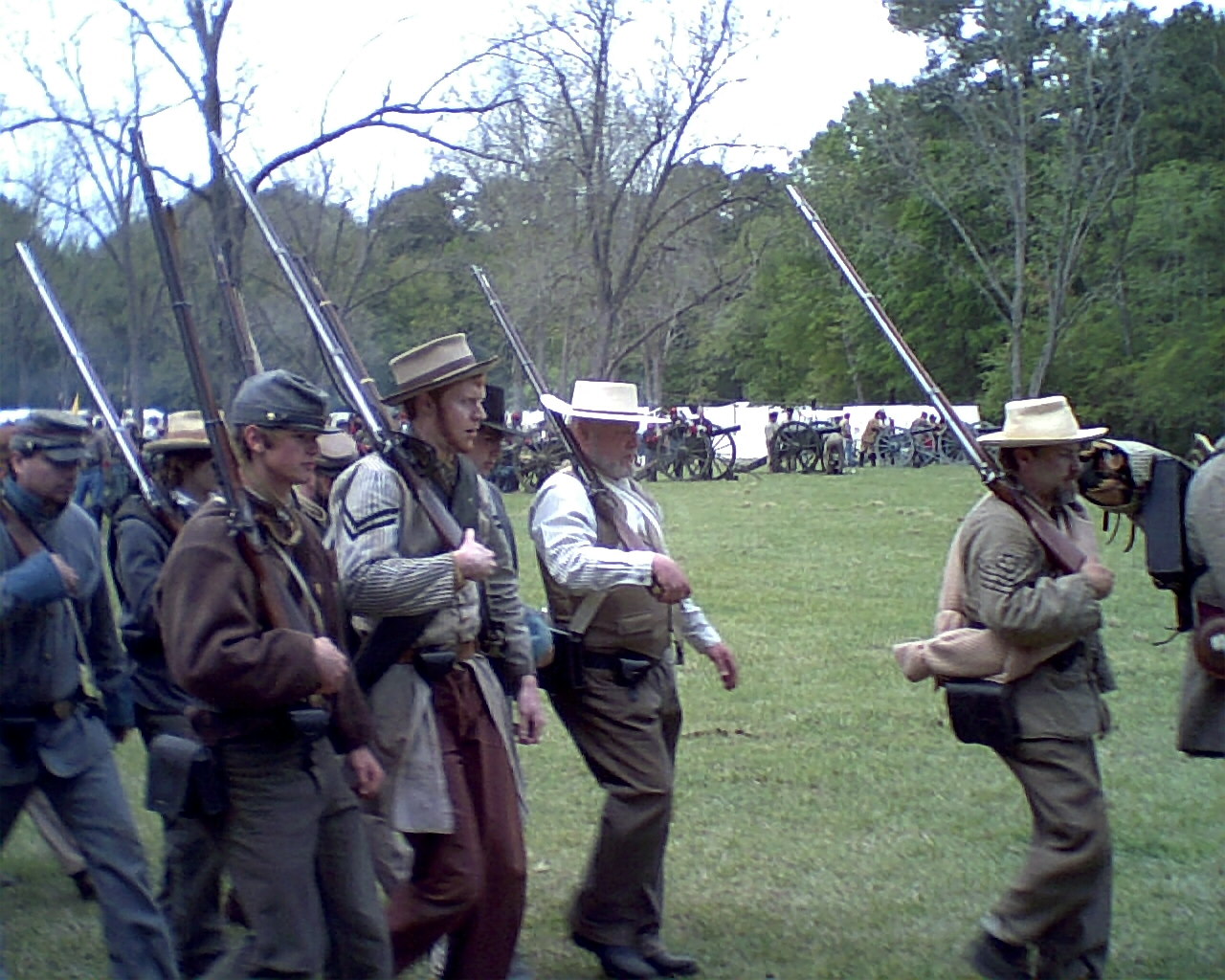
http://familytreemaker.genealogy.com/users/f/e/l/Mark-D-Fellows/GENE1-0001.html

http://freepages.genealogy.rootsweb.ancestry.com/~ayergenealogy/story.htm

http://www.cholet.us/Families/Ayres/capt_john_ayres_biography.htm

Quaboag Plantation – Alias Brookfield: A Seventeenth Century Massachusetts Town by Louis E. Roy, M. D., West Brookfield, MA; Worcester, MA: Heffernan Press, Inc., 1965.

Posted in 13th Generation, Immigrant - England, Line - Miller, Tavern Keeper, Violent Death, Witch Trials | 13 Comments

William Lamson

William LAMSON (1620 – 1659) was Alex’s 10th Great Grandfather; one of 2,048 in this generation of the Miller line.

There is no Lamson Coat of Arms, so the English Flag will stand as a symbol of William's immigration

William Lamson was born in 1620 in Essex, England. He came over from England about 1634, and first appears on a list of Freemen at Ipswich, May 17, 1637. He married Sarah AYERS in 1640 in Ipswich, Mass. William died 1 Dec 1659 in Ipswich, Essex, Mass.

Sarah Ayers was born in 1621 in England. Her parents were not John AYER and Hannah EVERED. After William died, she maried Thomas Hartshorn 10 Apr 1661 in Ipswich, Essex, Mass. When Sarah Lampson, proposed to marry Thomas Hartshorn, John Ayers refers to the aforesaid William Lamson as his brother. His wife, Sarah died in 1692 in Dedham, Essex, Mass.

John Ayres and William Fellows [husband of Mary Ayres], calling William Lamson and Sarah his widow, their brother and sister, petitioned that their brother Lamson’s children may not be cheated out of their share of the estate, stating that the children had been put out to live in other families, and that the estate of said brother Lamson had not been valued near so high as it was estimated by them. Accordingly, Thomas Hartshorn made over as security his house and homestead of fifteen acres in Reading, and bounded by lands of James Pike and Walter Fairfield and the common lands of Reading, etc., on the nth of 12 mo., 1661, which satisfied the Judge of Probate. Since John Ayres’ wife Susanna, being an only daughter it is supposed that Sarah Lamson, widow, was his own sister.” Some say that Capt John Ayers was not the son of John Ayer either.

John Ayers and William Fellowes wrote

Wheras our Brother william Lampson late of Ipswich dyed intestete and Administration granted by the Honered Court at Ipswich at his widow our Sister Sarah Lampson and devided the estate about halfe to her & halfe to the children being eight in number and whereas shee being about to change her estate to one Thomas Harteshorne of Redding

It was agreed before the marriage he should signe and seale a wrighting to give our sayd sister power & liberty to dispose of the one halfe she brought to him by way of will (of wch there is sufisient wittnes besydes our selues) but by pvidence that wrighting being neglected to be finished before mariage (though then pmised it should be done after) but it is now refused and therby the children of or Brother william Lampson like to suffer And wheras the estate in the Inventory delivered into court was underprised espeshally the Land wch now appeareth to be worth eightye pound wch was then prised but forty foure pound.” “Our Humble request to this Honered Court is that the children of our brother may Inioy a pt of the advance of there fathers estate and do humbly intreat (if this Honered Court shall thinke fitt) that the Land may be to pay the childrens portions, it being prised in the Inventory as before exprest & there portions fiftye foure pounds & soe there portions will be advanced twentye six pound & the widdow still haue about halfe the estate and that it would please the court that those children that are put out [apprenticed] may be haue there portions improved for there use & Benifitt || that || when they come to age to reciue the same, that being all (as the case now stands) that they are like to haue there Fathers estate.

Thomas Hartshorn was born in 1614 in England. He first married 25 Aug 1632 in Reading, Middlesex, Mass. to Susanna Buck (b. 1622 in Kent, England – d. 18 Mar 1660 in Reading, Middlesex, Mass). John died 18 May 1683 in Reading, Middlesex, Mass.

A tailor, Thomas was living in Reading in 1639, five years before its incorporation in 1644. “About 1640 settled on Elm Street. The old Thomas Hartshorn place remained two hundred years in the family.”

homas was recorded as freeman 10 May 1648. A member in full of First Church 29 Sep 1648, his Church rate was £1-9s-7d. Susanna was also a member, and Rev. Samuel Haugh was the pastor.

In 1650, Thomas received a grant of 10 acres; in 1655 a lot in Jeremiah Swain’s meadow; in 1665, a lot north of the Ipswich River, and in 1666, land in the Great Swamp. Some of the old land records are clear enough during the twentieth century to show the approximate location of his land.

There is an interesting account in the Ipswich Court Recordsof 28 September 1658 where a John Hakes took action against a Joseph Cooke for his questionable possession of “a mare colt.” The action had lasted over six months and the writ was served by Thomas Hartshorn who was serving as constable, an office he held in 1658 and 1672. During the period of litigation, it appears that he had custody of the colt in question. The case was eventually decided for Mr. Cooke.

Thomas was a Reading selectman in 1661 and 1667. In 1662, he was one of 20 members who paid a dog-whipper and in 1672 it was voted to hang any dog whose owner refused to pay the dog-whipper. In 1680, Reading enacted that freemen in voting should use Indian corn. In 1677, Mass. state records have a petition from Reading of which Thomas is a signer. He is listed as being a juror during the court held at Hampton on 9 October 1677.

After his first wife Susanna’s death, several of her children were put out as apprentices, as most of the Lamson children already had been. No legal record of their apprenticeship had been found, except Jonathan. He was on the rolls of the First Church on 6 Apr 1663, by letter from the church in Ipswich.

Thomas was old during the time of King Philip’s War but was a sergeant in the Reading Militia Company in 1679.

Children of William and Sarah:

Name Born Married Departed
1. John Lamson Nov 1642
Ipswich, Essex, Mass
Martha Perkins
17 Dec 1668 Topsfield, Essex, Mass
1717
Topsfield, Essex, Mass
2. Sarah LAMSON 1645 in Ipswich, Essex, Mass. Cornelius BROWN Sr.
6 Jun 1665 in Reading, Middlesex, Mass
4 Oct 1683 in Reading, Middlesex, Mass.
3. Samuel Lamson Nov 1649
Ipswich, Essex, Mass
Mary Nichols
19 May 1676 Reading, Middlesex, Mass
7 Oct 1692
Reading, Middlesex, Mass
4. Phebe Lamson 1652
Ipswich, Essex, Mass
John Towne
1670
5. Mary Lamson 1653
Ipswich, Essex, Mass
Thomas Paine
20 Aug 1689 Dedham, Suffolk, Mass
5 Apr 1718
Dedham, Norfolk, Mas
6. Hannah Lamson 1655 in Ipswich, Essex, Mass Henry Collins
3 Jan 1682 in Lynn, Essex, Mas
16 Dec 1682
Ipswich, Essex, Mass
7. Nathaniel Lamson Nov 1656 in Ipswich, Essex, Mass Mariam Savage
1681 – Ipswich, Essex, Mass
27 Aug 1722
Malden, Middlesex, Mass
8. Joseph Lamson Aug 1658 in Ipswich, Essex, Mass Elizabeth Mitchell
12 Dec 1679 Charlestown, Suffolk, Mass
.
Hannah Mousall
1704
27 Aug 1722
Charlton, Suffolk, Mass.
.
Dorothy Hett
1715  Charlestown, Suffolk, Mass

.
Child of Sarah and Thomas Hartshorn:

Name Born Married Departed
9. Timothy Hartshorn 23 Feb 1661/62 in Reading, Mass. Martha Eaton
26 Dec 1685 in Reading
16 Feb 1732
Reading, Mass

There were two other Lamsons in early New England. Whether or not they were related is not known.

Barnabas Lamson came over from Harwich, England, in the ship Defence on the l0th of August, 1635, in company with Rev. Thomas Shepard. Barnabas settled at Newtowne, now Cambridge, Mass., arriving there about the time that the Rev. Thomas Hooker left there to settle a large portion of his congregation at Hartford, Conn. In 1636 he received a grant of land on the south side of the Charles River, consisting of six acres, in lots given out by the town; and he was a Selectman of Cambridge in 1636.

Thomas Lamson appears for the first time in New Haven Conn., about 1639, when his name is on a list contammg all the “Freemen of the Courts of New Haven.” Where he came from originally, or whether he located elsewhere previously, before going to New Haven, is not known.

In May, 1634, the people of Newtown, meditating removal, “sent men to Agawam (this name was changed to Ipswich in August, 1634), and Merrimack, and gave out that they would move,” but they emigrated to Connecticut, so that there was probably some social connection between Ipswich, Cambridge and New Haven in those early days, and the first settlers perhaps radiated out along these lines.

William Lamson

5 Feb 1637 – There was “granted unto Will'” Lampson six acres of planting ground, between Paul Williamson’s meadow and Goodman Andrews ten acres near the upper end of Labour-in-vayne Creek.” In 1640, too, he received another grant of land, and in that year it was voted that “the highway to Chebaco beneath Heart Break Hill forever be repayred by the benefit of the grass yearly growing upon the same,” and John Leigh was to enjoy all the profits for “maintaining the highway from Rocky Hill to William Lampson’s lot.”

On the bank of the Ipswich River, on a point jutting out into the stream at the end of the road leading to Labour-in- Vayne meadows, William Lampson was granted a house lot “in the beginning” and it was expected that this attractive locality, called the Turkey Shore, would become a compact neighborhood; but the houses disappeared, however, and some lots were never utilized. William Lampson and William STORY, who owned adjoining lots there, sold their property, now owned by Mr. Benjamin Fewkes, prior to 1644, and the neighborhood evidently did not prove popular. He also had a grant of about one and a half acres a little further up the rwer on the Turkey Shore, bordering on Hunt’s Cove, and this was sold to Deacon Whipple. In 1649 there was also granted to “Wm. Lamson 6 acres of salt marsh neare Hog Island by John Dane his Island.”

There is a hill in Ipswich named Lamson’s Hill since 1678, and perhaps earlier. His farm is still owned by his descendants.

Thus we see that William Lamson was early a man of property, and from the extracts from the town records we find him to have been a man of considerable standing in the community and interested in town affairs. His name appears on a list of I”>eenien of Ipswich, May 17, 1637. This shows that he was a member of the church in good standing and thereby entitled, after taking the oath of allegiance, to vote for the officers of the Colony
and take part in town affairs.

In 1641 he was entered as a Commoner on the Town Book of Ipswich, which showed that, owning a house and land within the bounds of the town, he was entitled to the right of pasturage for his cattle in the wide domain beyond the Common fence. These Commoners, from the very beginning, met in Commoners’ meeting, had their own records and legislated with reference to all the duties and privileges of Commoners and voted on all questions relating to the common lands. In 1657 it was “ordered that Wm. Lamson (and others) pay 12^ y head to the cowe keeper for their cowes going on the Comon according to an order made in March last.”

One of the earlier offices which he held was that of Pounder, and the duties were to care for stray animals, shut them up in the public pounds and collect the fines due. It was ordered “that Mr. Wilson . . . and William Lamson, and they only, shall have power to impound Swyne off the Common.”

Another office held by him was that of Fence Viewer, which was of the highest importance in those early days, as any break in the fence around the Common might involve great loss in growing crops at a time when a scarce harvest was a very serious menace to the health and comfort of the little community.. So it is no wonder that men of the greatest sobriety and carefulness were chosen for the responsible duty of viewing and having charge of this rude fence. In 1640 “William Lampson was appointed to look that the Common fence on the South side be sufficient.”

The right of Commonage did not carry with it the right to cut wood in the dense forests on the Common, and the privilege of cutting down trees had to be obtained from the town, under penalty of a fine. In Sept., 1641, there is a record that “Willi Lampson hath liberty to fell 300 trees on the other side of Chebacco so it be not in the limits of any town.”

In 1648 he was again on a list of Freemen and paid tax of 2 shillings.

The military life of the early settlers was of great importance to the community and the fear of attacks by Indians was ever present. Every adult male above the age of eighteen years was liable to military service. The training of the military bands was constant and arduous, and breaches of military etiquette and neglect of training were punished by fines. Thus we find, in Oct., 1643, a “List of such as have forfeited for not returning their powder according to an order of the Towne, . . . ii-0-0.
Willm. Lampson.”

Among the early leaders of the military companies was Captain, afterwards Major Denison, who became so valuable as a commander that the people of the town in 1645 voted to pay him every year £24-7-0 for his “military helpfulness to them” in order to retain his services. This was apportioned among the townsmen, and in 1648, in a subscription list “to our leader, Major Denison,” we find that William Lamson gives two shillings.

The General Court at times assumed extraordinary authority over the private affairs of the citizens in those early days. A scarcity of materials for clothing led to statutes increasing the number of sheep in each town to relieve the lack of woolen cloth, and in 1656 it was ordered that “all hands not necessarily employ’d on other occasion, as women, girls and boyes shall & are hereby enjoined to spin according to their skill & abillitie.” The Selectmen were directed to rate each family and the amount of time that might be given to spinning. The usual amount of spinning that a spinner could do in a day was to be the standard, and each family was to be assessed so many “spiners,” or fractions thereof. Thus we find on the town records for 1656, “The Selectmen having considered the severall families of this Towne & their employment have, according to the order of the Court, assessed them spinners as is underwritten for the year ensuing. . , . Wm.
Lampson ^ spiner, — £673^.”

Sarah Lamson, the widow, had married previous to Nov., 1661 (Savage’s Gen. Diet, gives April 10, 1661), Thomas Hartshorn of Reading, Middlesex County, Mass., and at the Probate Court, Nov., 1661, John Ayres and William Fellows, calling William Lamson and Sarah his widow, their brother and sister, petitioned that their brother Lamson’s children may not be cheated out of their share of the estate, stating that the children had been put out to live in other families, and that the estate of said brother Lamson had not been valued near so high as it was estimated by them. Accordingly, Thomas Hartshorn made over as security his house and homestead of fifteen acres in Reading, and bounded by lands of James Pike and Walter Fairfield and the common lands of Reading, etc., on the nth of 12 mo., 1661, which satisfied the Judge of Probate.

Savage says that Thomas Hartshorn already had several children by his former wife, Susan, and that by Sarah, the widow of William Lamson, he had a son Timothy, born Feb. 23, 1662.

On Jan. 20, 1720, Joseph Lamson, the only surviving son of William Lamson, was appointed adm^ de Bonis non of his estate.

Children

1. John Lamson

John’s wife Martha Perkins was born in 1649 in Topsfield, Essex, Mass. Her parents were Thomas Perkins and Phebe Gould. Her grandparents were John PERKINS and Judith GATER. Martha died in 1728 in Topsfield, Essex, Mass.

John lived in Ipswich and owned a large farm there. His name appears on a list of Freemen of Ipswich, May 27, 1674, and also on “a list of those who took the oath of Alegance of Ipswich town before the worshipfull Major Gen^ Denison, Esq., the nth of December, 1678.” Again his name appears on “the list of those that by law are allowed to have there votes in Town afifairs. Voted to be recorded at the Towne meeting, December the 2th, 1679.”

2. Sarah LAMSON (See Cornelius BROWN Sr.page)

3. Samuel Lamson

Samuel’s wife Mary Nichols was born 25 Nov 1660 in Reading, Middlesex, Mass. Her parents were Richard Nichols and Agnes Kendall. Mary died 1 Dec 1717 in Reading, Middlesex, Mass.

Samuel was a bricklayer by trade, and resided in Reading, Mass., where all his children were born. He served in King Philip’s War under Capt. Davenport in 1675. In 1677 he was a member in full communion of the church at Reading. In 1686 he subscribed £4 for a new meeting house there.

Samuel Lamson died intestate and Mary Lamson was appointed adm* of his estate. Her bond of £200 was witnessed by Joseph Lamson. The real estate consisted of 40 acres of upland and swamp. His eldest son Samuel took the real estate and paid out to his brothers and sister Sarah their shares. The minor children, when Mary their mother was appointed their guardian, were Ebenezer, aged 14; John, aged 13; Sarah, aged 9, and Elizabeth, aged 7 years.

4. Phebe Lamson

Phebe’s husband John Towne was born about 1650.

5. Mary Lamson

Mary’s husband Thomas Paine was born 29 Mar 1644 in Dedham, Norfolk, Mass. He first married 25 Apr 1671 in Dedham, Norfolk, Mass. to Rebecca Peck (b. 6 Nov 1650 in Rehoboth, Mass – d. 28 Sep 1682 in Dedham). Thomas died 3 Feb 1697 in Dedham, Norfolk, Mass.

6. Hannah Lamson

Hannah’s husband Henry Collins was born 2 Oct 1651 in Lynn, Essex, Mass. His parents were Henry Collins and Mary Tolman. After Hannah died from complications in the birth of their first child, he married 24 Jun 1685 in Lynn, Essex, Mass to Sarah Ayer (b. 17 Jan 1661 in Haverhill, Mass. – d. 8 Jun 1754 in Lynn, Mass.) Henry died 1 Mar 1735 in Lynn, Essex, Mass.

7. Nathaniel Lamson

Nathaniel’s wife Mariam Savage was born 1660 in Edgecomb, Lincoln, Maine

Like many of his fellow citizens Nathaniel followed the sea for an occupation. Of his
life little is known, but he probably moved to Maiden, where his brother Joseph lived, before 1683, as the following power-of- attomey, given to his brother Joseph, shows

Know all men by these presents that I, Nathaniel Lamson of Maiden in New England, have and hereby do constitute my loving brother Joseph Lamson of Maiden aforesaid my true and lawful attorney for me and in my name and stead to ask, demand, require, receive and to use all lawful means to ( ) out of the hands of whomsoever it may concern, all such sums of money. Debts Goods or other Estate, be it gold, silver plate. Bullion, Jewels, pearls or otherwise that shall be due or coming to me upon the voyage I am now bound out upon to the wreck or wrecks or elsewhere for my share of what shall be gained or procured in said voyage, Giving and hereby granting to my said attorney full power and authority to sue, arrest, ( ) and prosecute to effect in any court or courts and in my behalf to appear and any action or actions to defend : and if need be into prison to cast and ( ) to deliver, release or other discharge upon payment to give and sign Composition if he see cause to make attorneys one or more to substitute and ( ) at pleasure to revoke and ( ) other way to act in my behalf, in as full and ample measure and degree as I might or could do if I were personally present to perform the same : all which I shall ratify and confirm at all things by these presents : and if it should come to pass that I should depart this life before I return from the voyage I am now bound out upon, then I do hereby fully bequeath to my said brother Joseph Lamson all the estate that I shall leave behind me or that shall be coming to me after my decease by him to be possessed and enjoyed as his own proper estate and to his heirs and assigns forever. In witness whereof I, the said Nath’l Lamson have hereunto set my hand and seal this eighteenth day of December Anno Dom. 1683.

Nathaniel Lamson. Seal.
Signed sealed and delivered
in presence of us.
Eleanor Fitzgerald.
Ephraim Marable. X

Nath’l Lamson acknowledged this Instrument to be his act and deed at Boston, Dec. 26, 1683, before Samuel Newel, Assis.

From this document it is clear that Nathaniel Lamson in Dec, 1683, was setting out upon some extended or perilous voyage, and as there is no further record of him in Maiden or vicinity it has been thought possible that he may have gone to the coast of Maine as others were doing at that time, and married there and settled.

There are many Lamsons along the coast of Maine who trace their ancestry back to a Nathaniel Lamson who married Miriam Savage and lived in Edgecombe, Me., and this Nathaniel of Edgecombe may have been a son or grandson of the above Nathaniel of Maiden. There is, too, a striking similarity of Christian names between this Maine branch and that of Nathaniel of Maiden, which seems to make this possibility almost a probability.

8. Joseph Lamson

Joseph’s first wife Elizabeth Mitchell was born 12 Dec 1679 in Malden, Middlesex, Mass. Her parents were David Mitchell and Sarah Wheeler. Elizabeth died 10 Jun 1703 in Malden, Middlesex, Mass.

Joseph’s second wife Hannah Mousall was born 29 Jul 1662 in Charlestown, Suffolk, Mass. Her parents were Thomas Mousall and Mary Richardson. Her grandparents were Samuel RICHARDSON and Joanna THAKE. She first married Thomas Welch. Hannah died Nov 1713 in Charlestown, Suffolk, Mass.

Joseph’s third wife Dorothy Hett was born 22 Feb 1674 in Charlestown, Suffolk, Mass. Her parents were Thomas Hett and Dorothy Edmunds. She first married 1 Jul 1691 in Charlestown, Suffolk, Mass to John Mowsall (b. 11 Mar 1666 in Charlestown, Mass. – d. 16 Jun 1713 in Charlestown) Hannah died 27 Aug 1722 in Charlestown, Suffolk, Mass.

Joseph Lamson was a stone cutter and a cordwainer, and lived in Charlestown and later Maiden, Mass. He was with Captain Turner on the Connecticut River in March, 1675/76.

In 1693/4 he was “chosen to look after yoking and runing of swine” in Charlestown. He was a Proprietor and Freeholder there in 1694/5, and was appointed a Tithing man on March 8, 1696/7.

In 1701 he was on a Committee for the boundary of County roads.

In 1709/10 he was a Sealer of Leather. In 1710 his name appears on a “list of families yt bare publique charges in Maiden.”

On Jan. 27, 1720, as “only surviving son,” he was appointed Adm”” De Bonis non of his father, William Lamson’s estate.

His will, dated on July 16, 1722, and proved Sept. 21, 1722, mentions him as a stone-cutter of Charlestown. By his will his wife Dorothy was to have what she brought with her when married and his sons Joseph, William, Nathaniel and Caleb were to have the residue and be executors of his will.

The inventory of his estate, in which his house was valued at £140, showed total valuation of £203.

9. Timothy Hartshorn

Timothy’s wife Martha Eaton was born about 1668 in Reading, Mass.

Sources

http://trees.ancestry.com/owt/person.aspx?pid=609574&st=1

Descendants of William Lamson of Ipswich, Mass. 1634-1917 (1917) By Lamson, William J. (William Judson), 1871-1931

http://www.hartshorn.us/Family/Fam-A/d21.htm#P1

Posted in 12th Generation, Immigrant - England, Line - Miller | 11 Comments

Edward Jowett

Edward JEWETT Sr. (1579 – 1615) was Alex’s 11th Great Grandfather; one of 4,096 in this generation of the Miller line.

Edward Jewett Coat of Arms

Edward Jewett was born 16 May 1579 in Bradford, West Riding Yorkshire, England. His parents were William JEWETT and Esabell SKOTT. He married Mary TAYLOR on 1 Oct 1604 in Bradford, West Riding Yorkshire, England. Edward died 12 Jul 1615 in Bradford, West Riding Yorkshire, England

Edward Jowet Family Tree

Mary Taylor was born in 1583 in Bradford, West Riding Yorkshire, England.  Her parents were William TAYLOR and Sarah ROGERS.  Mary died 12 Apr 1652 in Bradford West Riding, Yorkshire, England.

Children of Edward and Mary:

Name Born Married Departed
1. William Jewett 15 Sep 1605
Bradford, Yorkshire, England
Ann Field
22 Aug 1626 in Bradford West Riding, Yorkshire, England
12 Apr 1641
Rowley, Essex, Mass
2. Maximillian JEWETT 4 Oct 1607 in Bradford, West Riding Yorkshire, England. Ann FIELD
13 May 1653 in Rowley, Essex, Mass.
.
Eleanor PELL (Eleanor also married John BOYNTON  and Daniel WARNER 
30 Aug 1671 in Rowley, Essex, Mass
 19 Oct 1684 in Rowley, Essex, Mass.
3. Joseph Jewett 31 Dec 1609
Bradford, Yorkshire, England
Mary Mallinson
1 Oct 1634 in Bradford, Yorkshire, England
.
Ann Allen
13 May 1653 in Boston, Suffolk, Mas
26 Feb 1660
Rowley, Essex, Mass
4. Grace Jewett 4 Nov 1610
Bradford, Yorkshire, England
26 Feb 1660
Bradford, Yorkshire, England
5. Sarah Jewett 1611
Bradford, Yorkshire, England
1671
Bradford West Riding, Yorkshire
6. Josias Jewett 17 May 1612
Bradford, Yorkshire, England
4 Feb 1615
Bradford, Yorkshire, England

Jewett Origins

According to Frederic Clarke Jewett (1908), the first Henri de Juatt was a Knight of the First Crusade, 1096- 1099. Our name frequently occurs on the records of the 13th and 14th centuries, and with greater frequency in the later records. July 5, 1486, King Henry VII., of England, granted to Henry Jewet certain ofllces for life, viz., ” Forrester of Windsor Forest and Parker of Sunnyng-Hill Park within Windsor Forest,” but no reason is given in the grant for these honors.

Jewett IGI Entries pre 1600 All name variations Source: JOWETT VARIATIONS UK

There are two main schools of thought as to the origin of the surname. One is that it comes from Henri De Juatt, A Norman who lived in England during the 11th Century and is alleged to have been given lands in Bredbury in Cheshire by William the Conqueror (though there is no record of this in the Domesday book). This particular Henri probably originated in a village near Caen in Normandy named Jouette.

F C Jewett in his Genealogy of the Jewetts of America states (without source) that Henri was knighted and supposedly participated in the Pilgrimage and Assault on Jerusalem in the First Crusade, 1096-1099. Other sources suggest that the family then probably spread out to Derbyshire and, eventually Yorkshire where roots were firmly planted. Other early Jowetts, and possible descendants of Henri include William Juet who lived in Huntingdonshire in 1273 and Robert Jouet of Somerset, known to have been alive in 1327. Though there is no known Jowett population in Somerset, the Jowetts in Ivinghoe, Buckinghamshire, known to be present in the late 16th century and probably earlier than this too, are probably descendants of William.

However, there are serious doubts about the Henri theory. The crux of the argument is that in the 11th/12th centuries (i.e. the time of Henri), surnames as such simply did not exist. Henri de Juatt was known as such because that is where he came from, and it is almost certain the if he left France, his offspring would be Tom, Dick and Henri de somewhere else, and have no reason to take on the Jouet name themselves.

The other, more likely source of the name is that it is derived from a personal name – a diminutive of Juliana, variously found as Joetta, Jowet, Jouuet and Jowett which was popular in the 13th and 14th century. An example as late as 1438 is found in Jowett Barton who lived in York. As well as Jowitt/Jowett, another modern form of the name is Jewett and this is how the name was probably pronounced originally.

Though there are other theories, (e.g. “little Jew”, from the Jute tribe, or of more recent French origin), the truth as to the origin probably lies with a foot in many camps, though my own belief is that the Bradford Jowetts at least, being so pointed in distribution, are of the Juliana line. However, I would be delighted to find proof to the contrary! What is certain is that there is a comradery between Jowetts and/or Jewetts on both sides of the Atlantic and beyond which has resulted in much work on the name for over a century now.

Whatever the origin though, it is clear that the name Jowitt/Jowett and other variants did consolidate dramatically in the Bradford area of the West Riding of Yorkshire and the main concentration of the name is still in that area. More specifically, it is thought that most present day Jowitts are descended from ancestors in the village of Clayton, a township of Bradford parish. The distribution of IGI entries before 1600 confirms this distribution, though there are also significant outposts in Wilne (Derbyshire) and Ivinghoe in Buckinghamshire (the descendants of William of Huntingdonshire?). Looking at some early records of the name, the poll tax of 1379 shows nine entries for the name in the Bradford area, whilst the muster rolls of Bradford in 1539 show thirteen entries for Jowett (“Jooet”) in the area, including six “Bills”, five archers and 2 “not able”.

The two most common modern spellings of the name in Britain are Jowett and Jowitt, which were virtually interchangeable up until about 1850 (though with a general trend for Jowett in Bradford/Halifax and Jowitt in Leeds), many persons using both spellings at various stages of their lives. In contrast, medieval spellings are plenty, many have just the one “t”, sometimes followed by an “e”, e.g. Adam and John Jowete of Clayton (1379) and William Jowet of the adjoining township of Thornton (1379). An early use of the double “t” was found in 1439 in John Jouett of Thornton.

Other early variations include Jooet, Joet, Joiet, Joiett Jewet, Jowytt, Joyte and Joyet, all of which probably reflect the earlier pronunciation of the name. Indeed, as the name spread to other parts of the country, particularly East Yorkshire and the North East of England, the form Jewitt becomes increasingly more common. The American descendants of Joseph and Maximillian Jowett still use the form Jewett.

Distribution
The early distribution described above is shown in Maps 12 and 3. The next four maps show the spread of the name form its 16th century Yorkshire base, through the 17th, 18th and 19th centuries when it gradually spread out to the South and East Coasts, the West Country and most importantly up towards the North East of England. The 1881 census distribution shows this more consistantly.

The final two maps show the different distributions for the two main variants over the entire IGI period. The Jowett etc. distribution is still very much Yorkshire (and Derbyshire) based whilst the Jewitt etc. distribution (in Britain Jewitt is commoner than Jewett) is based in the area north of the county but also more widely (and thinly) spread over the whole country, notably the South East and the East Midlands.

Edward Jewett

Edward Jewett, father of Deacon Maximilian and Joseph Jewett, lived in Bradford, England, where he was a clothier. By clothier it is not to be understood that he sold clothes, but was a maker or manufacturer of cloths. In those days, in England, the designation clothier was used only in the sense of the merchant manufacturer of woolen cloth who had in his employ a larger or smaller number of families- engaged in the various manual employments connected therewith.

Edward Jewett lived long before the days of factories. In his time the making of cloth was carried on in Yorkshire in private houses, the several parts of the process being conducted by different members of the family according to their age and sex. The clothiers of Yorkshire were considered among the most industrious and frugal people of the kingdom. They were of necessity capitalists. They employed weavers, fullers, etc., and furnished them with material. In part they were accounted among the millionaires of England. Edward Jewett seems to have been a man of property, and to have left goodly portions to his children. The twenty families that accompanied Mr. Rogers to New England are described by Winthrop, ” most of them of good estate.” From the fact that the families of clothiers were trained from early life to knowledge of the different parts of the operation of making cloths, we may infer that the two sons of Edward Jewett who settled here were also clothiers. This is confirmed by the well-known fact as stated by Johnson in his ” Wonder Working Providence,” ” that the settlers of Rowley were the first people that set upon making cloth in this Western World.” He adds that many of them had been clothiers in England.

Edward’s will is on file in the archbishopric of York. Frederic Clarke Jewett invariably uses “Jewett” though there is no doubt that in the actual will it is “Jowet”. Why F C Jewett should persist with this  error is not clear. The name would have been pronounced “Jewett” regardless of the spelling and it was apparent that the spelling of the name had not been settled on at that time.

It is significant that the name, when written down in Bradford by a local person, is written as Jowett, but when written down by non local people or outside of the West Yorkshire area it becomes Jewett. Examples of this include the muster rolls of 1539, which were all written down as Jooet, and of course Joseph and Max’s American contemporaries towards the end of their lives who used the form Jewett which stuck and continues to this day.

It is a shame that we will never know exactly what a Bradford accent in 1600 really sounded like, but this all implies that the name was pronounced Jewett.

So the answer to the question Jowett or Jewett is really quite simple: write it as Jowett, pronounce it as Jewett!.

” In the name of God Amen, the second day of February in the year of our Lord God 1614 in the Xllth year of the reign sovereign Lord James by the grace of God, King of England, France and Ireland, defender of the faith etc., and of Scotland the eight and forty whereas nothing is more certain than death and nothing more uncertain than the house of death. Therefore, I Edward Jewett of Bradford within the dicos of York, Clothier, though sick and deseased in body yett sounde in minde and memorye I praise God therefore doo in this uncertainty of life knowninge that even in health we are subject to death make, publish and declare this my last will and testant in the names and form following (that is to say)

” First and principally I give up and comend my soule in the hands of Almighty God my creator and redeemer hoping and assurredly trusting to have full and free pardon and remission of all my sinnes by the precious death and burial of Christ Jesus my alone Saviour and for jestification by his righteousness and my body I yeald to earth to be decently buried at the decreation of my friends. Item, I give and bequeth two full parts of all my goods Catties Chatties & Credits (in three parts to be divided) unto William Jewett, Maximilian Jewett, Joseph Jewett and Sara Jewet my children equally to be divided amongst them after my debts be paid and funeral expense discharged. The third part and residue of all my said Catties, Chattels & Credit I give and bequeth unto Mary my wife whome I make the sole executris of this my last will and testament. And I do entreat William Taylor my father in law, Henry Taylor my brother in law, Samuel Taylor and Thurstum Ledgerd the supervisors of this my last will and test’t. Item, my will and mind is that my children shall have their porcous paide unto them at such times as they shall sevarly accomplishe their ages of XX years or othenvise lawfully demand the same. Lastly I do commit of all my said children with theire severall porcous during theire several minorities unto the said Mary my wife.

” Witnesses hereof William Smith, Jonas Watson & Lewis Watson.”

Children

Maximilian and Joseph Jewett did not come to this country as adventurers. They were men of respectability, ” of good estate,” and could probably have no hopes of improving their worldly condition by emigration. They were lovers of liberty, and men of distinct and well-marked religious views. They were non-conformists. They had too sturdy an independence, as well as too strong a sense of duty, to abandon what they held a truth even in the midst of the bitterest persecution. For this reason they left their homes and sought in the wilds of America a resting place from oppression, a spot where they and their children might enjoy freedom to worship God. They were men of thought and character.

Most of Rev. Ezekiel Roger’s company were his former parishioners, but the Jewetts lived in Bradford, one hundred miles from Rowley. Mr. Rogers may have gone to Bradford for the purpose of obtaining accessions to his company, or our ancestors may have heard of the intentions of the great minister and sought him out.

1. William Jewett

William’s wife Ann Field was born 1609 in England. Ann died 9 Nov 1667 in Rowley, Essex, Mass.

2. Maximillian JEWETT (See his page)_

3. Joseph Jewett

Joseph’s first wife Mary Mallinson was born 29 May 1606 in Bradford, Yorkshire, England. Her parents were Richard Mallinson and Sarah Waterhouse. Mary died 12 Apr 1652 in Rowley, Essex, Mass.

Joseph’s second wife Ann Allen was born 1619 in Rowley, Essex, Mass. She first married 1638 in Hingham, Plymouth, Mass to Bozoan Allen (b. 1610 in Lynn, Norfolk, England – d, 4 Sep 1652 in Hingham, Plymouth, Mass.) Ann died 4 Feb 1661 in Rowley, Essex, Mass.

Joseph Jewett with his brother Maximilian Jewett and sister-in-law Annh sailed from Hull, England in 1638 in the ship John, with a colony under the leadership of Rev. Ezekiel Rogers. They arrived at Boston about the first of December, 1638, spent the winter in Salem, and in the spring of 1639 founded the town of Rowley, Mass.

Joseph Jewett, with his wife Mary, and one or two children, came to America with his older brother, Maximilian, in the ship John in the fall of 1638, and settled in Rowley, Mass., in 1639. He was made freeman May 22,

1639. He became a large land owner and one of the leading men of the town, was representative to the General Court in 1651, 1652, 1653, 1654, and 1660, and was one of the two stewards for each of these sessions.

The following from the records of the town of Rowley :

” Bradford streete — To Joseph Jewet one Lott Containinge two Acres bounded on the South side by Thomas Dickinsons house Lott; part of it lyinge on the weast side, and part of it on the East side of the streete.”

” Bradford streete field — To Joseph Jewet foure Acres and an halfe of upland, lying upon the North side of Thomas Dickinsons planting lott: the East end butting upon his owne lott.”

” Batchelours meadow — To Joseph Jewet one Acre and a quarter, lying on the North side of Thomas Dickinsons Meadow: butting as aforesaid.”

” Salt Marsh, 1st. Division — To Joseph Jewet two Acres of salt Marsh, lying upon the East side of Thomas Dickinsons Marsh the North end butting upon a salt Creeke, the Southend upon the North side of William Bointons salt Marsh.”

” 2rd. division Salt Marsh — To Joseph Jewet two acres of salt Marsh, lying on the North side of Thomas Dickinsons Marsh: runing about 24 rod into the Marsh, the West end butting on the upland.”

” 2rd. division of fresh Marsh — To Joseph Jewet one Acre, the Southend butting on the upland, the North end on a Creeke.”

” 3rd. division of fresh Marsh — To Joseph Jewet one Acre, lying near to Thomas Dickinsons Meadow : the North end butting upon the upland, the Southend also, and West side bounded by a Creeke.”

” 2rd. division of Upland — To Joseph Jewett two Acres, part whereof ioynes to his owne salt Marsh: the rest lyeth on the North side of Thomas Dickinsons upland : butting as aforesaid.”

” 3rd. division Salt Marsh — To Joseph Jewett two Acres lying on the North side of Thomas Dickinsons Marsh : butting upon the East end of his second division of Salt Marsh.”

” Upland laid out in ffield Called Batchelours Plane — To Joseph Jewet eight lying on the East side of William Bointon.”

” To Joseph Jewet six Acres of upland being pt of that Land Called Satchells Ground bounded by a Swampe on the northeast side w^*^ is now in the possession of Joseph Jewett aforesaid & John Tod the Southeast end abutting on Thomas Mighills Lott, the South West side bounded by Mr. Ezekiell Rogers his Lott the north west end by a Cart way.”

” To Joseph Jewet seaven Acres of upland and a halfe the south side ioyning upon Ipswich line the East end abutting upon the Country way toward Ipswich the North west side bounded by the Comon.”

” To Joseph Jewet Acres of Salt Marsh at the East end of his third division of Salt Marsh, the North east side of it bounded by Maximilian Jewets Salt marsh.”

” March, 1658 — It was Agreed and voted at a General and legall towne meetinge that mr Jewet should have a thousand Acres of land in the necke, beyond the Hazeltines, and that he is to have forty acres of meadow which is to be laide out as conveniently as can be in the townes land whitch forty Acres of meadow is to be for part of the thousand in the necke, in exchange for three thousand Acres of land which is to be laide out as conveniently as can be for the towne of Rowley in the village land, about the bald hills.”

” According unto the grant of the towne ther in laid out unto mr Joseph Jewett Nine hundred and Sixty Acres of upland in that necke of land beyond the hesseltines bounded by a Runell of watter that falls into merrimack River at the east end and soe from the River it Runeth a westerly line unto a white oak Tree not very fure distant from the line betwene Andover and the towne of Rowley and soe from that white oake streigh to the River wher it tumeth, the Rest of the bounds is by merrimack River, ther is laid out also unto mr Joseph Jewett forty acres of IMeadow in three persells one persell in a meadow they call the longe meadow lying for twenty six acres lying in the village land incompassed by upland laid out to the Right of mr Thomas Nelson an other persell lying for five Acres a certaine way distant from the long meadow toward the south east ward bounding a little pond in or by it it also being bounded by the afForesaid upland of mr nelson the other persell lyeth distant from this more southerly lying for Nine acres and it is bounded partly by the afforesaid land and partly by land laid out to John dreser and Joseph Chaplin.”

In the History of Boxford, Mass., we find the following: ” Before the land in the village was laid out Abraham Redington, Robert Stiles, Joseph Bixby, John Cummings, William Foster and John Peabody, six of the early settlers, bought of Joseph Jewett, of Rowley, 3000 acres of the Village land. The right to this land was sold by Zacheus Gould to Joseph Jewett for the benefit of such as employed him to make the purchase, for which Jewett paid ninety pounds. Jewett by agreement with the town received in exchange 960 acres in the neck by Merrimack river, and 40 acres of meadow in three pieces in the village lands.”

Deed of Confirmation of land in Rowley 1650:

” Know all men by these p”sents, y^ wheras there was a deed of Sale of ye Lands at Rowley, Late in y® possession of William Bellingham Gent., bearing date, the Twenty third of July, one thousd. six hund*^ and fifty, w^^ said deed was made only in ye name of Samuel Bellingham, w*^ out y^ mentioning of Lucy Bellingham, the present wife of ye s^ Samuel Bellingham, only y® name of ye s^ Lucy BelHngham Subscribed w^*^ her own hand. This p’^sent witnesseth, that the said Lucy Bellingham doth willingly giue hir full and free Consent unto ye said deed of Sale, as y® s^ Samuel Bellingham did, as if hir name was oft therin syecified as ye name of y® s*^ Samuel ; And y® said Lucy doth herby give full possession of ye said Lands and Tenements w* euer belonging, or by apportion or other right w*^ ever due unto y® said Lucye as wife of ye said Samuel or otherwise ; all hir. Title, right and property in the said Land, shee giues unto y® w*^ named Joseph Jewet of Rowley, upon y® s^ Conditions w^^in that deed Specifyed : And hereby wee, y® f oresed Samuel and Lucy Belhngham, doe Jointly Confirme y^ fors” Henry Sandys ” Samuel Bellingham, and a seal.
” Mathew Boyer ” Lucy Bellingham, and a seal.
” This deed was acknowle*^ged by the said Samuel Bellingham and Lucy his wife, 23^^ day of y® 8^^ month 1650 before me.
” Samuel Symonds.”

Joseph Jewett was styled clothier in 1656, later merchant. He was buried Feb. 26, 1660.

” His will was proved March 26, 1661. The original, now much worn, is on file in the Probate Office in Salem. A true copy printed line by line as written is here given.” (Blodgette.)

” I Joseph Jewett of Rowley beinge weake of boddy but perfect in understandinge and memory doe make this my last will and testament in manner and form as followeth, Imprimis after my debts beinge payed I desire the rest of my goods may bee equally divided among my seaven children, as well those two that I have by my last wyfe as the five that I had before. Allwayes provided that my eldest sonne Jeremiah Jewett must have a dubbell portion, of all estate I have both in New England, and Old, whether personall or Reall further provided that one hundred pounds I have allready payed to my sonne Phillip Nellson, that shall be counted as part of what I doe now give him. Item I doe give unto my sonne Jeremiah Jewett tlie farme I bought of Joseph Muzzy I meane all such Lands bought of him or any other, that are on the Norwest side of the River called Egipt River, with all the meadow I bought of Nathaniell Stow and Robert Lord Senior, provided he accept of it at five hundred pounds and wheras in the fourth line it is saide I desire the rest of my goods to be equally divided amonst my seaven children I meane Lands as well as goods and if any of those my above saide seaven children, should depart this life, before the age of twenty one yeares, or day of Marriage then these portions, shall bee

Equally divided Amonst the rest, allwayes provided my eldest sonne Jeremiah shall have a double portion, and as for my two youngest Children, and there portion I leave to the disposinge of my brother Maximillian Jewett, and who he shall apoint when he departeth this life, and I make Exequitors of this my last will and Testament my Brother Maximillian Jewett, and my sonne Phillip Nellson, my sonne John Carleton and my sonne Jeremiah Jewett Allwayes free and willinge that they shall be satisfied out of the Estate, for all such pains and labour, that they shall be at conceminge the above premisse.

” Signed and sealed in the ” Joseph Jewett [Seal] presence of us ” Dated the 15th of february
Ezekiel Northend in the yeare 1660
Mark prime ” At the signinge and sealinge hereof I doe give my Exequitors full power to make deed and confirme any Lands I have sold to any.”
Ezekiel Northend. Mark prime.

Child of Joseph and Mary Mallinson

i. Jeremiah Jewett, born in Bradford, Eng., about 1637 ; married Sarah Dickinson.

ii. Sarah Jewett, 1639 ; married Capt. Philip Nelson.

iii. Hannah Jewett, born in Rowley, Mass., April 15, 1641; married (1st) John Carlton; (2d) Christopher Babbage.

iv. Nehemiah Jewett, born in Rowley, Mass., April 6, 1643; married Exercise Pierce.

v. Faith Jewett, born in Rowley, Mass., March 5, 1645 ; died in infancy.

vi Patience Jewett (twin) born in Rowley, Mass., March 5, 1645; married (1st) hubeal Walker; (2d) Dole.

Children of Joseph and Ann Allen :

vii. Mary Jewett, born in Rowley, Mass., Feb. 4, 1654; died in infancy.

viii. Joseph Jewett, born in Rowley, Mass., Feb. 1, 1656; married Ruth Wood

ix. Faith Jewett, born in Rowley, Mass., ; married John Pingry.

Sources:

http://trees.ancestry.com/owt/person.aspx?pid=5807555&st=1

History and genealogy of the Jewetts of America; a record of Edward Jewett, of Bradford, West Riding of Yorkshire, England, and of his two emigrant sons, Deacon Maximilian and Joseph Jewett, settlers of Rowley, Massachusetts, in 1639; also of Abraham and John Jewett, early settlers of Rowley, and of the Jewetts who have settled in the United States since the year 1800 (1908) By Frederic Clarke Jewett

http://www.jewettconnections.com/Edward/edward.html

http://www.jowitt1.org.uk/prbrad01.htm

Posted in 13th Generation, Line - Miller | 3 Comments

Maximilian Jewett Sr.

Maximilian JEWETT Sr. (1607 – 1684) was Alex’s 10th Great Grandfather; one of 2,048 in this generation of the Miller line.

Maximilian Jewett Coat of Arms

Maximillian Jewett was born 4 Oct 1607 in Bradford, West Riding Yorkshire, England. His parents were Edward JOWETT and Mary TAYLOR.  He immigrated on the John, departing from England, arriving 1638 in Massachusetts Bay Colony.1 He became a freeman on 13 May 1640 in Rowley.  He married Ann FIELD 13 May 1653 in Rowley, Essex, Mass. After Ann died, he married 30 Aug 1671 in Rowley, Essex, Mass to Eleanor Pell. Maximillian died 19 Oct 1684 in Rowley, Essex, Mass.

Ann Field was born 1609 in England. Her parents were [__?__]  FIELD and Ann PERSALL. Ann died 9 Nov 1667 in Rowley, Essex, Mass.

Elleanor (Ellen) Pell was born in 1623 in England.   Her parents were Joseph PELL and Elizabeth JAMES.  She immigrated in 1641 with her father Joseph Pell.  According to Blodgett and Jewett, Ellen Pell was a maid-servant of Atherton Haulgh (Hough), who was admitted to the Boston church, April 5, 1641, She married three of our ancestors!  She first married John BOYNTON 21 Feb 1642/43 in Boston.   She was dismissed from the church in Boston due to her marriage and moved to Rowley.   After John died, she married Maximilian JEWETT. Finally, she married Daniel WARNER on 1 Jun 1686 in Ipswich, Mass.  Elinor died 5 Aug 1689 in Rowley, Mass.

John Boynton was born in 1614 in Knapton, Wintringham, North Riding Yorkshire, England. His parents were William BOYNTON and Elizabeth Janet CHAMBERS.  He emigrated with his brother William in the summer of 1638, towards the end of the Great Migration with Rev. Ezekiel ROGERS and his followers on the ship “John of London” from Hull England.  He married Elinor PELL on 21 Feb 1643 in Boston, Mass. John died 18 Feb 1669/70 in Rowley, Mass.

Daniel Warner was born in Boxted, Essex, England about 1618.  His parents were William WARNER and Abigail BAKER.  Daniel sailed with his parents from London to America in 1635.  It is said by some Warner genealogists that they sailed on the ship,”Increase“ He came to Ipswich with his family in 1637 and became a freeman there in 1641. He married Elizabeth DENNY on 2 Jun 1641 in Ipswich Mass.  He married his second wife Faith Lord, the widow of Edward Browne on 1 Jul 1660. He married his third wife, the widow Eleanor Pell Boynton Jewett of Rowley on 1 Jun 1686. Daniel died on  9 Sep 1688 in Ipswich, Mass.

Eleanor’s daughter, Hannah Boynton married Daniel’s son, Nathaniel Warner.

Children of Maximilian and Ann:

Name Born Married Departed
1. Ezekiel JEWETT 5 Jan 1643 in Rowley, Essex, Mass. Faith PARRATT
26 Feb 1664 in Rowley, Essex, Mass.
.
Elizabeth How 23 Oct 1716.
2 Sep 1723  Rowley, Essex, Mass.
2. Anna Jewett 26 Dec 1644
Rowley, Essex, Mass
Barzilla Barker
5 Oct 1666 Rowley, Essex, Mass
12 May 1727
Rowley, Essex, Mas
3. Hannah Jewett 1645
Rowley, Essex, Mass
1646
Mass
4. Mary Jewett 18 Feb 1646
Rowley, Essex, Mass
David Haseltine
26 Sep 1668 in Bradford, Essex, Mass
1728
Bradford, Essex, Mass.
5. Elizabeth Jewett 22 May 1650
Rowley, Essex, Mass
Robert Haseltine
21 Jul 1680 Bradford, Essex, Mass
22 Nov 1708
Bradford, Essex, Mass.
6. Faith Jewett 8 Oct 1652
Rowley, Essex, Mass
Samuel Dowse
7 Jan 1677 Newbury, Essex, Mass
26 Feb 1736
Newbury, Essex, Mass
7. Joseph Jewett 1 Apr 1656
Rowley, Essex, Mass
Rebecca Law
2 Mar 1677 in Rowley, Essex, Mass
.
Widow Mary Gage
30 Jan 1731/32 Bradford, Mass.
29 Oct 1735
Rowley, Essex, Mass
8. David Jewett 1657
Rowley, Essex, Mass
9. Sarah Jewett 17 Jan 1658
Rowley, Essex, Mass
19 Jun 1660
Rowley, Mass
10. Sarah Jewett 17 Jan 1660
Rowley, Essex, Mass
Jeremiah Ellsworth
13 May 1689 Rowley, Essex, Mass
16 Aug 1746
Rowley, Essex, Mass
11. Priscilla Jewett 19 May 1664
Rowley, Essex, Mass
5 Sep 1664
Rowley, Essex, Mass

DEACON MAXIMILIAN JEWETT with his wife Ann, and his brother Joseph sailed from Hull, England in 1638 in the ship John, with a colony under the leadership of Rev. Ezekiel Rogers. They arrived at Boston about the first of December, 1638, spent the winter in Salem, and in the spring of 1639 founded the town of Rowley, Mass.

He was admitted freeman May 13, 1640. ” Was chosen Deacon of the church, Dec. 13, 1639, in which place he served forty-five years and for two hundred and twenty years a descendant of him or his younger brother, a fellow passenger has been in that office or minister, the whole time except eight years.”

On the “tenth of the eleventh Anno Dni 1643, Thomas Nelson, Edward Carlton, Humphrey Reynon & Francis Parrot made a survey of the town and a register of the several house lots of from 1 1/2 to 6 acres then laid out to the settlers.

10 of our ancestor families (underlined in red) had plots in Rowley in this 1642 map. Maximilian's lot is on Bradford Street near the corner of High Way (High Way is Summer Street today)

Here is today’s approximate location of Maximilian’s lot on Google Maps.

The following is from the records of the town of Rowley showing land granted to Maximilian Jewett at different times, viz. :

” Bradford streete — To Maximilian Jewett one Lott Containinge two Acres and bounded on the South side by Joseph Jewets house Lott : part of it lyinge on the west side, part of it on the East side of the streete.” (This is the two-acre lot on which he built his home.)

” Bradford streete field — To Maximilian Jewet foure Acres and a halfe of upland lying upon the North side of Joseph Jewets planting lott the East end butting upon his owne lott.”

” Imp. Batchelours meadow — To Maximihan Jewet one Acre and a quarter, lying on the North side of Joseph Jewets Meadow butting as aforesaid.”

” 1st. division of salt Marsh — To Maximilian Jewet two Acres of salt Marsh, lying upon the East side of Joseph Jewets Marsh: butting as aforesaid.”

” To Maximilian Jewet the Deacon there was laide out thirtie and one Acres of land, be it more or less bounded by James Dickensons on the west : by Jonathan Remmington east, by the Ministers land north, by George Killbom south being fortie rods and ahalf wide at the north end and twintie five wide at the south end.”

” Upland laid out at the ffield called Bradford streete plaine — To Maximilian Jewet six Acres lying on the West side of Leonard Harrimans upland the North end abutting ptly on John Bointons lott and ptly on a swamp the South end on a Swamp.”

” 2d. division of ffresh Marsh— To Maximilian Jewet one Acre, sixty rod wherof , lyes on the West side of Joseph Jewets Meadow : the North end butting on a Creeke, the South end on some Rough Meadow unlaid out: the other hundred rods ioynes on the aforesaid Creeke, about fourty rod distant from his aforesaid sixty.”

” To Maximilian Jewett for seven gates a percell of marsh bounded by the River on the southerly side the northwest end butting against the division line that parts this division being in length about 32 Rods the south east end buting against another streight divideing line that parts them and the next division only this lot extends with a corner by reasson of a creeke, longer next to the river and soe toward the easterly side takes that line on the east of the creeke.”

” To Maximillian Jewett a piece of marsh on the south of James Dickinsons and his mother Whiples marsh the north west and south parts of it bounded by a creeke the north east by a pond.”

” To Maximilian Jewet Acres of Salt marsh pt of it in Consideration of an high way laid out through his lott to hogg Hand, bounded on the West side by Joseph Jewetts marsh the North & North east sides of it Thomas Dickinsons Marsh and the South end by a great Creeke.”

” To Maximilian Jewet an Acre & an half e of salt Marsh lying at the Southeast end of his third Division of Salt Marsh in Consideratio of his division of fresh meadows laide in Pollepod Meadow and of a way that lyes through his Meadow to hogge Hand.”

” 2d. division salt Marsh — To Maximilian Jewet two Acres, lying on the North side of Joseph Jewets Marsh: butting as aforesaid.”

” 2d. division upland — To Maximilian Jewet two Acres part whereof ioynes to his owne salt Marsh, the rest of it lyeth on the West side of the aforesaid high way on the North side of Joseph Jewets upland: butting as above.”

” 3d. division Salt Marsh — To Maximilian Jewet two Acres, one whereof ioyning to east side of Humphrey Reyners salt Marsh: the North end Butting upon the upland. The other Acre, lying on the North side of Joseph Jewets third division of salt Marsh, the West end butting on his owne second division of salt Marsh.”

” Upland laid out in the ffield Called Batchelours Plain — To Maximilian Jewet seaven Acres lying on the East side of Joseph Jewets land abutting as aforesaid.”

” 3d. division fFreshj Marsh — To Maximilian Jewet — one Acre, lying on the East side of Joseph Jewets Meadow: the North end butting on the upland the south end on a Creeke.”

” To Maximilian Jewett one Acre & an halfe of upland lying on the north side of William Scales his Lott abutting as aforesaid.”

” 1661 — At the same Towne meeting it was also granted and voted that Deacon Jewett should have a way layed out to his land laying on the foreside of prospect hill.”

” March, 1671 — To Deacon Jewett as his right and the right of John Spofford there was laide out ninete and five Acres of land beinge the twelfth and thirtenth lots in order, and is bounded by Thomas Dickinson on the west, by Mr. Kimbals lot on the east : six hundred and twentie two pole by the river on the North: it beinge thirtie and one poles and a halfe wide by the river side: yet but twentie four poles perpendiculer, each angle by the river are bounded by stubs, at the south end it is bounded by the villedge line twentie six pole and 3-4 yet it is but twentie and five pole perpendiculer: the south west angle is a stake and stones, the south east angle is a white oak.”

In 1658 he had land granted him in Merrimac, then a part of Rowley.

In 1673 Merrimac was incorporated as Bradford,

We also find the following in the town records of Rowley:

” Towne Charges for the yeare 1654 for Maxy Jewet deputyship 12-3-0.”

” A bill of ye Charges of ye towne in ye yeer 1665. Imprimis for Deacon Jewits for his deputyship at ye severall generall Courts. fifty Day 1.6 by Day for his diat to be paid at boston for his horse pasture, feray & ye petition for his horse hire and the carying the pay for

” 1652 Deackon Jewet had ”
Cowes — 6
one 3 yearning
of 2 yearnings — 2
yearnings — 4
3 swine of a yeare
half of a 3 yer old hors
one of a 2 yer old
Ass — one
land at home 3 acres an half
at plains — 4 acres hal
meadow — 10 acres
gates — 4 one half
housing

” Jan. 9, 1664 for moderator of towne meetings deacon Jewett.”

” 1671-1672 deacon maximillian Jewett moderator.”

From Deacon Jewett’s lot the land for the burial ground was given for the use of the town.

Maximilian Jewett seems to have been one of the leading men of the town. He was representative to the General Court in 1641 ; 1642 ; 1643 ; 1648; 1651; 1652; 1654; 1655; 1656; 1658; 1659; 1660; 1662; 1663; 1664; 1665; 1672; 1673; 1674; 1675 and 1676.

He was overseer of the will of Rev. Ezekiel Rogers, signed April 17, 1660, and ” In the year 1665, five years after the death of Rev. Ezekiel Rogers, his relative Ezekiel Rogers, son of the Rev. Nathaniel Rogers, of Ipswich, brought an action against the widow of his uncle which occasioned the following: The testimony of Maximilian Jewett saith that I heard our Mr. Rogers express himself very much dissatisfied with the carriage of Ezekiel Rogers, in particularly his familiarity with John Smith, his servent, the Scotchman, & that in some times going behind the meeting house, which bred fears & jealousies in his mind. He also objected to him because he wore long haire.” He was a clothier and with his brother Joseph was about the first, if not the first, to manufacture woolen cloth in America.

His last will is filed in the Clerk of the Courts’ office at Salem, Mass., among the Essex County Papers, Vol. XLII., page 46. The following is a true copy :

” In the name of God, Amen. I Maxemillian Jewett of Rowley in the County of Essex in New England Doe make this my last will & Testament as followeth. Imp. I commit my Soul Into the hands of God who Gave me it & my body to the Grave In Comfortable hope of a blessed Resurrection through the death and Resurection of my dear Redeemer the Lord Jesus Christ: In the day of Christ. For my outward Estate which the Lord hath gratiously bestowed on me I dispose of it in manner Following.

” Imp^. To my beloved wife I give Twenty pounds which is due to her by my contract before marriage to be payd part in two Cows, the rest according to our contract. Also I give her all rents due to me from her son John Boynton : & further I give her Twenty pounds to be payd by my executor. Also a feather bed which my daughter Elizabeth Layd on; all dureing her naturall life & to be at her owne dispose at her death : Further my will is that while she remaineth my widow (if she see good) that the end of the house next the street be at her dispose to live in and Improve for her own : upward & Downward keeping it in repair, & the hemp yard before the Door & the trees which stand in it ; but if my wife see not good to live in the house then upon her leaving it the same & the yard is to the use of Joseph as in my will hereafter exprest.

” Item. To my Eldest son Ezekiell Jewet I confirme all that which I have given him already in buildings & Lands as appeareth by my deed of gift which he hath under my hand and Seal: Also I give him one half of my meadow in the meadow call’d Batchelers : & two acres of Bastard & salt marsh or ruff meadow being my whole division at the place called Sandy Bridg or neer it : & four acres & half of meadow at Crane meadow soe called. And my will is he pay out of what he now is to receive Twenty pounds to my wife in neat cattle : & that he have the Land that is yet to be laid out upon the Comon : & my highway marsh at hog Islands.

” Item. To my son Joseph Jewet I give my now dwelling house,- all at present but what part I have given my wife dureing her widowhood if she live in it & upon her marriage leaveing it then that part to be to him ; also I give him the barns, orchards, yards, swamps, & lott or field above the street being all my Lands Lying in the field called Bradford street lotts: & one comonage or freehold upon the Comons of Rowley ; Also fourteene acres of upland lying in the west end ox pasture ; also three acres of Land lying behind Hounsley hill ; also four acres lying upon the plaine called Great Meadow plaine; also I confirme to him which he hath possest that I gave him two acres of upland Lying in the farme; also one acre of marsh joyneing upon that which we call the Elders Division: also all that marsh which we call the farr division neare the place called the stackyard; also one Cowgate upon the Comons of Rowley with the Division belonging to it: & my will is that my said son Joseph pay or cause to be paid Thirty and four pounds to his sisters : namely to Anna three pounds ; to Mary five pounds ; To Sarah twelve pounds ; to Elizabeth four pounds ; To Faith Ten pounds ; all to be paid in Rowley in Corn or Catle within seaven years after my decease: But if my said son Joseph depart this life & it be not payd within the time prefixt my will is that my executor sell soe much of any land I give him as shall pay the said Legacies as are then unpayed for that end: & I hereby Impower him to Confirm such sail.

” Item. To my daughter Anna, beside the three score pounds I have already paid her : I give her all my Lands being nine acres more or less at the place called Batchelers field : Also my Land in the new plaine being about Six acres; Also that percell of my marsh which lieth betweene that which was Richard Swans formerly & the ditch, being one acre more or less: also one acre & quarter of my meadow called Batchelers meadow; All which lands & meadow I give her dureing her naturall life, & after her decease I give it to her son Jonathan Barker, if he live to the age of Twenty and one years: with my division of gate marsh in hog Islands & if he doe not, I give the said Lands & meadows amongst the rest of her children which she shall leave who live to that age or day of marriage: further I give her three pounds to be payd by my son Joseph Jewet.

” Item. I give my daughter Mary Hazeltine (beside the three score pounds I have already paid her & the twenty four acres of Land confirmed by deed of gift;) Two acres of Marsh which was Rob* Hazeltines lying betweene Thomas Tenney his marsh k a ditch in the bounds of Rowley ; Also I give her five pounds to be payed by my son Joseph Jewet.

” Item. I give to my daughter Elizabeth Hazeltine (besides what I have given her, which is about thirty pounds & the half of my ninety & six acres of land at Bradford confirmed by deed of gift) my marsh butting upon Newbury Line being about three acres which I bought of William Lyon: also four pounds to be paid by my son Joseph Jewet.

” Item. To my daughter Faith Dowse (Besides fourty pounds which I ace* I have paid her & the half of my ninety &; six acres of land at Bradford confirmed by deed of gift) I give her about two acres & half of salt & RufF marsh lying neer the place Call’d Cowbridge: & Ten pounds to be paid by my son Joseph Jewet.

” Item. To my daughter Sarah Jewet I give all my Lands beyound the hill called prospect Hill, being the remainder of my land Lying within Ipswich Line not given to my son Ezekiel. There being about Twelve acres of it; Also I give her one freehold or Comonage in Rowley Commons: Also that Land which is Laid out to me by a grant of the Towne of Rowley called sixteene acress & half: Bounded by Leonard Herrimans Land & J”° Plats Land : Also I give her twelve pounds to be paid in moveables houshould stuff or Catle by my Executor. Also my marsh at ye place neare Rich^ Wicoms Spring & the salt comers adjoyneing, & the three score. Rods parted from it by William Jacksons Marsh.

” Item. My will is That my son Ezekiel Jewet be my sole exeeuto’* to this my last will & that he receive all debts w^^ I hereby will to him, due to me by bill, bond, or other way; & that he pay all my debts due from me to any: Also my will is That when my debts & funeral charges be discharged & my executor paid for all his trouble & paines If any Estate not particularly willed & disposed of be remaineing that he shall have a double part of it to any other child of mine & each besides an equal share: In confirmation hereof, that this is my last will & testament I have hereunto sett my hand & Seal this Eighth day of January Anno Dom : 1682 & 8″^ 1684.

*’ Maxemillian M I Jewet [seal]
” his signe
” Signed Sealed & declared
” to be his Last will and testament
” In presence of us witness
Leonard HARRIMAN
” Nehemiah Jewet.”

Children

1. Ezekiel JEWETT (See his page)

2. Anna Jewett

Anna’s husband Barzilla Barker was born 1635 in Rowley, Essex, Mass. His parents were James Barker and Grace [__?__]. Barzilla died 16 Nov 1694 in Rowley, Essex, Mass.

They lived in Rowley. His real estate was divided 15 April, 1697. His widow Anna, eldest son Ebenezer, daughter Hannah (married), Ezra, aged twenty years, Esther aged eighteen years, Ruth aged fifteen years, Enoch aged twelve years, and Noah aged seven years, each received a share.” (Essex Probate 5: 138.)

” Widow Anna Barker conveyed all her right in her late husband’s estate to her son Noah Barker, in consideration of her support during life 29 April 1712.” (Essex Deeds, 4 Norfolk, 88. ) She died May 12, 1727.

4. Mary Jewett

Mary’s husband Capt. David Haseltine was born in 1644 in Rowley, Essex, Mass. His parents were Robert Hazeltine and Anna [__?__]. David died in 31 Aug 1717 in Bradford, Essex, Mass.

They lived in Bradford where he was for many years town clerk and captain of a military company .

5. Elizabeth Jewett

Elizabeth’s husband Robert Haseltine was born 7 Nov 1657 in Rowley, Essex, Mass. He was David’s brother and his parents were also Robert Hazeltine and Anna [__?__]. After Elizabeth died, he married 31 Mar 1709 in Rowley, Essex, Mass to Mary Frether (b. 1659 in Rowley – d. 13 Mar 1729 in Bradford). Robert died 8 Mar 1729 in Bradford, Essex, Mass.

6. Faith Jewett

Faith’s husband Deacon Samuel Dowse was born in Dec 1642 in Boston, Suffolk, Mass. His parents were Lawrence Dowse and Martha [__?__]. His first wife, whom he married Aug. 8, 1670, was Hannah Ludkin. She was admitted to the church June 15, 1673, and died March 26, 1676. They had one child, which died in infancy. Samuel died 26 Feb 1735 in Charlestown, Suffolk, Mass.

Samuel was a cordwainer; was admitted to the church Feb. 9, 1672-3; was deacon of the church and in 1712 was sealer of weights.”

7. Joseph Jewett

Joseph’s first wife Rebecca Law was born 1 Jun 1655 in Rowley, Essex, Mass. Her parents were William Lawes and Mary Cheney. Her grandparents were John CHENEY and Martha PARRATT. Rebecca died 26 Dec 1729 in Rowley, Essex, Mass.

Joseph’s first cousin of the same name Joseph Jewett was born 1 Apr 1656 in Rowley, Mass.  His parents were Joseph Jewett and Ann Allen.  He married  16 JAN 1679/80
Rowley, Mass. to  Ruth Wood (b.  21 MAY 1662 Rowley – d. died 29 OCT 1734 in Rowley, Mass. ).  Ruth’s parents were Thomas WOOD and Ruth LEE.  Joseph died 30 OCT 1694 and Ruth remarried 26 Oct 1696 in Rowley, Essex, Mass. to John Lunt.

Joseph’s second wife Mary Gage’s will, dated July 8, 1738; proved July 27, 1741, mentions : herself as being advanced in years to a great age : son Nathaniel Gage: son John Green of Bradford: daughters Elizabeth, wife of Samuel Palmer of Bradford: Mary, wife of Benjamin Thurston of Bradford.

Joseph Jewett lived in Rowley, was made freeman July 9, 1684, and was Representative to the General Court for the years 1718 and 1719. He was active in town affairs and was a man of energy and character.

He was a soldier in King Philip’s War, serving first in Capt. Joseph Gardiner’s Co. (of
Salem), who was killed in this war, and later in Major Appleton’s Co. Was in the list of Feb. 29, 1675/76. He was in the Narragansett Campaign and for his services received £2. 14s. and a grant of land.

10. Sarah Jewett

Sarah’s husband Jeremiah Ellsworth died 6 May 1704 in Rowley, Essex, Mass.

Sources:

http://trees.ancestry.com/owt/person.aspx?pid=8028638&st=1

History and genealogy of the Jewetts of America; a record of Edward Jewett, of Bradford, West Riding of Yorkshire, England, and of his two emigrant sons, Deacon Maximilian and Joseph Jewett, settlers of Rowley, Massachusetts, in 1639; also of Abraham and John Jewett, early settlers of Rowley, and of the Jewetts who have settled in the United States since the year 1800 (1908) By Frederic Clarke Jewett

http://www.jowitt1.org.uk/prbrad01.htm

Posted in 12th Generation, Historical Site, Immigrant - England, Line - Miller | 9 Comments

Ezekiel Jewett

Ezekiel JEWETT (1643 – 1723) was Alex’s 9th Great Grandfather; one of 1,024  in this generation of the Miller line.

Ezekiel Jewett was born 5 Jan 1643 in Rowley, Essex, Mass. His parents were Maximilian JEWETT Sr. and Ann FIELD. He married Faith PARRATT 26 Feb 1664 in Rowley, Essex, Mass. After Faith died, he married Elizabeth How 23 Oct 1716. Ezekiel died 2 Sep 1723 in Rowley, Essex, Mass.

Ezekiel Jewett Headstone -- Rowley Burial Ground Rowley Essex County Massachusetts, USA Plot: 8 Row, East 1

Inscription:
HERE LIES THE
BODY OF DEACON
EZEKIEL JEWETT
WHO DIED SEP
TEMBER Ye 2nd
1723 in Ye
81 YEAR
OF HIS AGE

Faith Parratt was born 20 Jan 1642 in Rowley, Essex, Mass. Her parents were Francis PARRATT and Elizabeth NORTHEND. Faith died 15 Oct 1715 in Rowley, Essex, Mass.

Faith Parratt Headstone -- Rowley Burial Ground Rowley, Mass. Plot: 8 Row, East 2

Inscription:

HERE LYES Ye BO-
DY OF Mrs FAITH
JEWET, WIFE TO
DECON EZEKIEL
JEWET DIED
OCTOr Ye 15 1715 &
IN Ye 74 YEARE
OF HER AGE

Elizabeth How was born xx. Her parents were Joseph How of Lynn and [__?__]. She first married Benjamin Chadwell, of Lynn. She second married John Jewett. She third marrried Ezekiel Jewett. She married fourth 2 Dec 1723 to Ensign Andrew Stickney, son of William Stickney.

Children of Ezekiel and Faith:

Name Born Married Departed
1. Francis Jewett 15 Mar 1664 in Rowley, Essex, Mass Sarah Hardy
20 Jun 1693 in Bradford, Essex, Mass
19 Sep 1751
Bradford, Essex, Mass
2. Thomas Jewett 20 Sep 1666 in Rowley, Hannah Story (Daughter of William STORY)
18 May 1692
.
Faith [__?__]
6 May 1731
Boxford, Essex, Mass.
3. Ezekiel Jewett 25 Oct 1669 in Rowley, Essex, Mass. 1690
Canadian Expedition
4. Maximilian JEWETT  5 Feb 1672 in Rowley, Essex, Mass Sarah HARDY in 1698 in Rowley, Mass.   23 Mar 1730 in Rowley, Essex, Mass.
5. Ann Jewett 29 Sep 1673 in Rowley, Essex, Mass 11 Sep 1689
Rowley, Essex, Mass
6. Sarah Jewett 24 Nov 1675
Rowley, Essex, Mass
Jonathan Bailey
30 Jan 1708 in Rowley, Essex, Mass
28 Sep 1730
Rowley, Essex, Mas
7. Elizabeth Jewett 29 Mar 1678
Rowley, Essex, Mass
Isaac Platts
30 Nov 1704 in Rowley, Essex, Mass
.
Francis Nelson
6 Jun 1716 in Rowley, Essex, Mass
8 Apr 1762
Rowley, Essex, Mass
8. Nathaniel Jewett 12 Feb 1681
Rowley, Essex, Mass
Mary Gage
5 Jan 1707 in Rowley, Essex, Mass
13 Dec 1751
Rowley, Essex, Mass.
9. Stephen Jewett 23 Feb 1683
Rowley, Essex, Mass
Priscilla [__?__]
12 Jul 1708 in Rowley, Essex, Mass
.
Sarah Trask
28 Sep 1723 in Rowley
.
Lydia Leaver
23 Nov 1725 in Rowley, Essex, Mass
14 Jan 1771
Rowley, Essex, Mass

Ezekiel was admitted freeman May 15, 1669. He succeeded his father as deacon of the Rowley church; was ordained Oct. 24, 1686, and served until Sept. 2, 1723.

He as representative to the General Court for Rowley for the years 1690, 1692, 1697, 1699, 1707, 1713, 1718, and 1719.

Ezekiel had land laid out to him in Hog Island marsh in 1667 and had two freeholds in Rowley in 1667. Also ” Dec. 10, 1670 land laid out in Merrimack lot 15 — To Ezekiell Jewett, laide out to him one hundred forty and five Acres as part of his father Parrats right, and part of Richard Thurrells
right bounded by John Tenny North east, by m” Worsters on the south west by the river North west it is twenty pole wide, and at the middle range, twenty and four pole wide, and at the upper end forty seaven pole and a halfe wide, Allso there is added a parcell of common land and meadow at the end of his lot, untill he come to land laide out to John Pallmer runninge upon a street line on the same line that m^ Danforth hath run.” (Rowley Records.)

19 Oct 1684 – Ezekiel was the sole executor of his father’s will.

Ezekiel’s will dated 16 Feb 1722/23, proved Nov. 4, 1723. Mentions ; my now wife and a marriage contract ; son Francis to have my Bradford land ; son Thomas my Boxford land ; sons Maximilian, Stephen, daughters Sarah Bailey and Elizabeth Nelson.

Children

1. Francis Jewett

Francis’ wife Sarah Hardy was born 25 Mar 1672 in Bradford, Essex, Mass. Her parents were John Hardy and Mary Jackman. Sarah died 3 Feb 1744 in Bradford, Essex, Mass.

Francis was dismissed from the Rowley Church to the Bradford Church June 19, 1692, and became deacon of that Church. He died in Bradford Sept. 19, 1751. Buried in Groveland.

His will dated Sept. 18, 1751, proved Dec. 9, 1751, mentions: sons Samuel; Nathaniel, who is executor; daughters Mary Jewett; Sarah Jewett; Ann, wife of Ephriam Pemberton.

Inscription:
Here lies buried the body of
Mr Francis Jewet who died
Sepr 19th 1751 in ye
87th year of his age

Note: From Inscriptions From the Old Cemetery in Groveland, Mass. (formerly East Bradford) by Louis A. Woodbury through archive.org/Google

Burial:
Riverview Cemetery
Groveland
Essex County
Massachusetts, USA

2. Thomas Jewett

Thomas’ first wife Hannah Story was born 19 Aug 1662 in Ipswich, Mass. Her parents were William STORY  and Sarah FOSTER.  She first married 3 Dec 1683 in Rowley, Mass. to Richard Swan.

Thomas’ second wife Faith

Thomas lived in Rowley until 1703, and then moved to Boxford, Mass., and settled on a tract of land owned by his father, but which subsequently came into his possession by will of his father dated 1723, and recorded in the Essex Probate Registry.

He was a ” tithing man,” of Boxford, 1703-4; ” fence viewer,” 1704-5; chosen for the grand jury 1706, and was town clerk 1710 and 1721.

12 Sep 1716 – The town agreed with Thomas Jewett ” to teach school for writing, reading and arithemetick to the 6 parts of ye Town, ye Town is for to give him forty shillings pur month for ye six months, and convenient diat and lodgings.” (Hist, of Boxford.)

3. Ezekiel Jewett

Ezekiel died in 1690 in the Canada Expedition.

He was in the Canada expedition 1690 and no further mention is found of him.” (Blodgette.)
The town records of Rowley of May 6, 1691 show that the town paid the following named persons, in bills of credit, the sum set against their names for military service in Canada. To Deacon Ezekiel Jewett for his son Ezekiel £5 0s. 3d.

Battle of Quebec – 1690
The Battle of Québec was fought in October 1690 between the colonies of New France and Massachusetts.

Following the capture of Port Royal in Acadia, during King William’s War, the New Englanders hoped to seize Montréal and Québec itself, the capital of New France. The loss of the Acadian fort shocked the Canadiens, and Governor-General Louis de Buade de Frontenac ordered the immediate preparation of the city for siege.

When the envoys delivered the terms of surrender, the Governor-General famously declared that his only reply would be by “the mouth of my cannons.”  Sir William Phipps led the invading army, which landed at Beauport in the Basin of Québec. However, the militia on the shore were constantly harassed by Canadian militia until their retreat, while the ships were nearly destroyed by cannon volleys from the top of the city.

Three other of our relatives also died in this Canadian Expedition.  See Veterans for details

The Batteries of Quebec bombard the New England fleet.

4. Maximilian JEWETT (See his page)

6. Sarah Jewett

Sarah’s husband Capt. Jonathan Bailey was born 31 Aug 1670 in Rowley, Essex, Mass. His parents were John Bailey and Mary Mighill. His first wife was Hannah Walker, by whom he had five children, viz., Jonathan, Shuball, John, Ann, and Benoni. Jonathan died 27 Nov 1733 in Rowley, Essex, Mass.

Jonathan lived in Rowley where he was one of the Selectmen.

Gravestone in Rowley Cemetery :
HERE LIES YE
BODY OF MRS
SARAH BAYLEY
YE WIFE OF CAPT
JONATHAN BAYLEY
WHO DIED SEPTEMR
YE 28 1730 IN
YE 55TH YEAR OF
HER AGE

The intentions of marriage of Capt. Bailey and Mrs. Mercy (Barker) Gage were published Oct. 30, 1733. He died Nov. 23, 1733, before the marriage could be performed.

Jonathan’s will, dated Nov. 15, 1733, proved Dec. 10, 1733, mentions: sons Jonathan, Shubeal, John, and Moses who has the homestead; daughters Ann Tenney, Hannah Stewart, Sarah Dickinson, and Mary Bailey; widow Mercy Gage to have £10, sister Elizabeth Tenney; children of brother John Bailey deceased, to have one-half the estate, ” which is to come to me from my uncle Ezekiel Mighill after his widow’s decease.”

7. Elizabeth Jewett

Elizabeth’s first husband Isaac Platts was born 6 Jan 1672 in Rowley, Essex, Mass. His parents were Jonathan Platts and Elizabeth Johnson. Isaac died 27 Mar 1711 in Rowley, Essex, Mass.

Elizabeth’s second husband Francis Nelson was born 9 Feb 1676 in Rowley, Essex, Mass. His parents were Thomas Nelson and Ann Lambert. He first married 14 Nov 1702 in Rowley, Essex, Mass to Mercy Roy  (b. 7 Jan 1665 in Charlestown, Mass. – d. 1715). Francis died 2 Apr 1720.

8. Nathaniel Jewett

Nathaniel’s wife Mary Gage was born 1 Nov 1685 in Beverly, Essex, Mass. Her parents were Lt. Thomas Gage and Elizabeth Northend (Mighill) Gage. After Nathaniel died, she married 10 Apr 1753 to James Barker. Mary died 10 Oct 1764 at her daughter’s Dickinson in Rowley, Essex, Mass.

Mary’s father Lieut. Gage, was killed Aug. 13, 1707, on the expedition against Port Royal, Nova Scotia.

9. Cornet Stephen Jewett

Stephen’s first wife Priscilla Jewett was born 9 Aug 1687 in Rowley, Essex, Mass. She was Stephen’s first cousin and her parents were Ensign Joseph Jewett and Rebecca Law. Priscilla died 27 Dec 1722 in Rindge, Cheshire, New Hampshire.

Priscilla Jewet Gravestone -- Rowley Burial Ground Rowley, Essex County, Mass, Plot: 13 Row, East 7

Inscription:
HERE LIES THE
BODY OF MRs
PRISCILLA JEWET
ye WIFE OF MR
STEPHEN JEWET
DIED DECEMBER
ye 27th 1722 IN
ye 35 YEAR OF
HER AGE HERE
BY DOTH LIE
SOLOMON OUR
WELL BELOVED
SON

Stephen’s second wife Sarah Trask was born in 1685 in Beverly, Essex, Mass. Sarah died 3 Dec 1724 in Rowley, Essex, Mass.

Sarah Trask Jewett Headstone -- Rowley Burial Ground Rowley, Essex County, Mass, Plot: 13 Row, East 8

Inscription:
HERE LIES THE
BODY OF MRs
SARAH JEWETT
ye WIFE OF MR
STEPHEN JEWETT
WHO DIED
DECEMBER ye 3d
1724 IN Ye
49 YEAR
OF HER AGE

Stephen’s third wife Lydia Leaver was born 5 Dec 1684 in Rowley, Essex, Mass. Her parents were Thomas Leaver and Damaris Bailey. She first married 14 Nov 1715 in Rowley, Essex, Mass to Daniel Thurston (b. 26 Jun 1690 in Newbury, Mass. – d. 10 Mar 1719 in Rowley). Second she married 11 Mar 1723 in Rowley, Essex, Mass to Robert Rogers (b. 20 Feb 1682 in Ipswich, Mass – d. 18 Apr 1723 in Rowley). Finally, she married 23 Nov 1725 in Rowley, Essex, Mass to Stephen Jewett. Lydia died 7 Sep 1754 in Rowley, Essex, Mass.

Lyda Leaver Jewett Headstone -- Rowley Burial Ground
Rowley, Essex County, Mass. Plot: 13 Row, East 10

Carver: Jonathan Leighton
Inscription:
Here Lies The
Body of Mrs Lyda
Jewett The Wife of
Mr Stephen Jewett
Who Died Septre
the 7 1754
in ye 70 Year of
HER AGE

Stephen Jewett Headstone -- Rowley Burial Ground Rowley, Essex County, Mass, Plot: 13 Row, East 9

Inscription:
HERE LIES BURIED
THE BODY OF
CORNET STEPHEN
JEWETT WHO
DEPARTED THIS
LIFE JANUr THE
14h 1771 IN
THE 88h YEAR
OF HIS AGE

Sources

http://trees.ancestry.com/owt/person.aspx?pid=16699039&st=1

History and genealogy of the Jewetts of America; a record of Edward Jewett, of Bradford, West Riding of Yorkshire, England, and of his two emigrant sons, Deacon Maximilian and Joseph Jewett, settlers of Rowley, Massachusetts, in 1639; also of Abraham and John Jewett, early settlers of Rowley, and of the Jewetts who have settled in the United States since the year 1800 (1908) By Frederic Clarke Jewett

Posted in 11th Generation, Historical Monument, Line - Miller | Tagged | 8 Comments