Crimes and Misdemeanors

It seems that the early New England settlers were in court every other year either serving on a jury or being called before one.  There were many, many civil cases, but this post focuses on ancestors who were punished for violating the social norms of the time.  There are also a few examples of the first glimmers of freedom of speech and freedom of religion.

Maybe it seems that way because legal records are those that survive, but it seems to me that justice was local, personal and vindictive in those days. Quakers, Sabbath workers, Church skippers and Silk hat wearers were all persecuted   Justice was also swift; lashes on the back or brand on the forehead and you were done.

It’s ironic that after the Dissenters were persecuted in England, they became even worse persecutors in America.  We criticize Islamic fundamentalists for imposing their religious views, but it’s interesting to see similar dynamics playing out in 17th Century New England.  The cases in this post exclude the many witchcraft persecutions our ancestors were involved, which can be found in the Witch Trials Posts.

Summer 1621 – Plymouth’s first criminal act was committed by Stephen HOPKINS‘  (wiki) indentured servants, Edward Dotey and Edward Leister. While Stephen was off on one of his expeditions that first summer in Plymouth, the two men began to compete for the affections of his daughter, Constance,   After an open quarrel, they went into the woods with swords and daggers and returned with wounds in the hand and thigh.
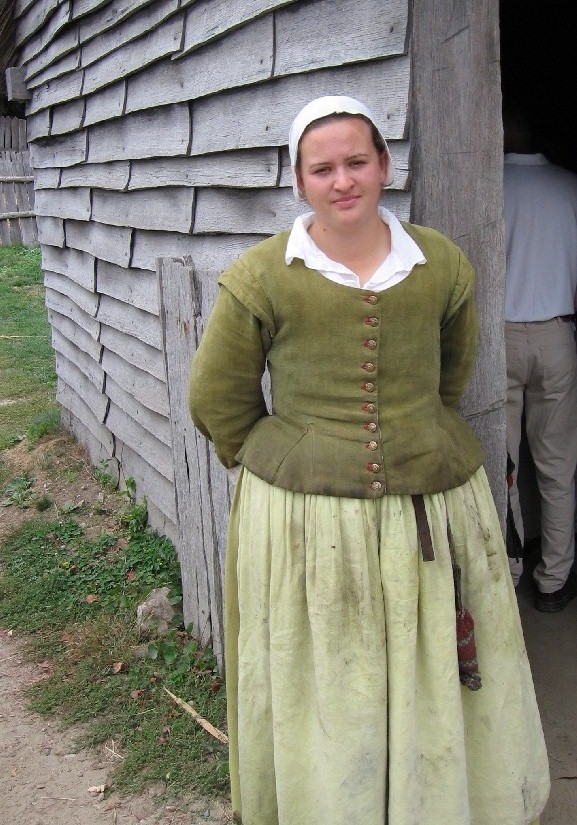
Constance Hopkins Snow Reenactor

Constance Hopkins Snow Reenactor

Dueling was illegal, and Stephen returned home to find his servants in handcuffs and awaiting trial. After finding the men guilty, Governor Bradford consulted William Brewster’s book of English law which prescribed that the men have their necks tied to their feet and remain in that agonizing position for twenty-four hours in the town square.

Stephen couldn’t bear their suffering and implored Governor Bradford and Captain Standish to set the men free. “Within an hour,” says an early record, “because of their great pains, at their own and their master’s humble request, they were released by the Governor.”

Constance married Nicholas SNOW about  1 Jun 1627 in Plymouth, Plymouth Colony

30 Sep 1630 – John Billington was the first person to be hanged for any crime in New England.  Our family relationship isn’t especially close, he was Richard MARTIN‘s daughter-in-law’s grandfather, but the first Englishman to be convicted of murder in what would become the United States is worthy of the lead on our Crimes and Misdemeanors Page.   Billington was also a signer of the Mayflower Compact.

John Billington Reinactor Plymouth Living History Museum

Billington came to the Plymouth Colony on the famous voyage of the Mayflower in 1620 with his wife and two sons. He soon made enemies with many aboard the ship. He was known as a “foul mouthed miscreant” and “knave”.  He was not a member of the separatist Brownist congregation that dominated the colony’s life, but had fled England to escape creditors. His sons were also seen as troublemakers.

In March 1621, Billington was convicted of contempt for insulting Captain Myles Standish. His punishment was to have his heels tied to his neck. Billington apologized profusely and was spared from the penalty.

In 1624, Billington became a follower of the Reverend John Lyford, who was banished from Plymouth Colony in 1625 for being a danger to the community. Though Billington was nearly convicted as Lyford’s accomplice, he was permitted to remain in Plymouth Colony.

In Sep 1630, after a heated argument over hunting rights, Billington fatally shot fellow colonist John Newcomen in the shoulder with a blunderbuss. After counseling with Governor John Winthrop, Governor William Bradford concluded that capital punishment was the necessary penalty. Billington was convicted of murder and hanged at Plymouth, Massachusetts.

1630 – Walter Palmer was tried for the death of Austen Bratcher “at Mr. Craddock’s plantation,” it being alleged that “the strokes given by Walter Palmer were occasionally the means of death of Austen Bratcher & so to be manslaughter.” Palmer was found not guilty of manslaughter by the trial jury.   The details of this affair are not known; possibly Bratcher was a servant who had been sentenced to a whipping and Walter Palmer, a huge man who stood over 6′ 4 “by all accounts, had been delegated to administer “the strokes.”

The official record reads “Jury called on September 28, 1630 to hold an inquest on the body of Austine Bratcher.” It found “that the strokes given by Walter Palmer, were occasionally the means of the death of Austin Bratcher, and so to be manslaughter. Mr. Palmer made his psonall appearance this day (October 19, 1630) ; stands bound, hee & his sureties, till the nexte court.” At a court session of “a court of assistants, holden att Boston, November 9th 1630″ numerous matters were taken up and disposed of, including the trial of Walter Palmer and one other item of interest: ” it is ordered, that Rich. Diffy, servt. To Sr. Richard Saltonstall, shal be whipped for his misdemeanr toward his maister.” “A Jury impannell for the tryall of Walter Palmer, concerning the death of Austin Bratcher: Mr. Edmond Lockwood, Rich: Morris, Willm Rockewell, Willm Balston, Christopher Conant, Willm Cheesebrough, Willm Phelpes, John Page, Willm Gallard, John Balshe, John Hoskins, Laurence Leach, /The jury findes Walter Palmer not quilty of manslaughter, whereof hee stoode indicted, & soe the court acquitts him.”

It is interesting to note that one of the jurors, William Chesebrough was one of Walter Palmer’s closest friends. These proceedings did not affect the great esteem in which his fellow citizens always held Walter Palmer. Palmer and Chesebrough took the Oath of a Freeman on May 18, 1631.

Walter was Thomas MINER’s father-in-law and from the famous Diary of Thomas Minor we know that Chesebrough was Thomas’ enemy.  It’s curious to think that we’ll never know how the family dynamics worked.

22 Apr 1632- The Rev. John LATHROP was arrested in London, prosecuted for failure to take the oath of loyalty to the established church  and  jailed in The Clink prison.  While he was in prison, Hannah  became ill and died.   His six surviving children were according to tradition left to fend for themselves begging for bread on the streets of London. Friends being unable to care for his children brought them to the Bishop who had charge of Lothropp. The Bishop of London ultimately released him on bond in May of 1634 with the understanding that he would immediately remove to the New World.  With his group, John sailed on the Griffin and arrived in Boston on September 18, 1634.

18 Aug 1636 – Thomas BAYES was a signer of the Covenant of Durham and an original Selectman of the town.  The Covenant itself reads like a Puritan Mission statement and Durham’s original town meeting rules shows that not much as changed in 375 years.

It was often the case that even after ” meetings [had] been agreed upon and times appointed accordingly” many townsmen would still arrive late to the meeting and those who arrived promptly “wasted much time to their great damage.”To discourage tardiness the town set fines in 1636 of one shilling for arriving more than half an hour after the “beating of the drum” and two sixpence shilling if a member was completely absent.

In 1637 those fines increased to twelve pence for being late and three shillings and four pence for not arriving at all.

1637 –  Keeping in mind the delicate balance in Plymouth between (Saints and Strangers) “covenant” and “noncovenant” colonists, it is reasonable to assume that Stephen HOPKINS (1580 – 1644) (wiki) must have been a leader of the non-Separatist settlers, and in his career at Plymouth can be seen some of the ambiguity that attached to the non-Separatists living in a Separatist colony. Even though he was an Assistant Governor from 1633 to 1636 he often found himself in conflict with the Plymouth authorities over his tavern.

2 Oct 1637 – He was presented twice, first for suffering men to drink in his house on the Lord’s day before meeting ended, and for allowing servants and others to drink more than proper for ordinary refreshing, and second for suffering servants and others to sit drinking in his house (contrary to orders of the court), and to play at shovel board and like misdemeanors is therefore fined fourty shillings.”

2 Jan 1637/38 – Hopkins was presented for suffering excessive drinking in his house “as old Palmer, James Coale, & William Renolds”

Jan 2 1637 : “Presentment by the Grand Jury.
“1. William Reynolds is psented for being drunck at Mr Hopkins his house, that he lay vnder the table, vomitting in a beastly manner, and was taken vp betweene two. The witness hereof is Abraham Warr, als Hoop, als Pottle, and sayth that there was in company Francis Sprague, Samuell Nash, & Georg Partrich.
2. Mr Hopkins is psented for sufferinge excessiue drinking in his house, as old Palmer, James Coale, & William Renolds, John Winslow, Widdow Palmers man, Widdow Palmer, Thomas Little, witnesss & Stepheen Travy

5 Jun 1638 – Stephen Hopkins was presented for selling beer for two pence a quart which was not worth a penny a quart, and for selling wine at excessive rates “to the oppressing & impovishing of the colony”; he was fined £5 for some of these offenses, including selling strong waters and nutmegs at excessive rates

5 June 1638 : “Presentments by the Grand Jury…
“Mr Steephen Hopkins is prsented for selling beere for ij d the quart, not worth j d a quart. Witness, Kenelme Winslow.
“Item, for selling wine at such excessiue rates, to the opressing & impouishing of the colony. Kenelme Winslow & John Winslow, witnesses.”

3 Dec 1639 – Stephen Hopkins was presented for selling a looking glass for sixteen pence which could be bought in the Bay Colony for nine pence, and he was also fined £3 for selling strong water without license” (PCR 1:137).

3 December 1639 : “Mr Steephen Hopkins, vpon his psentment for selling a lookeing glasse for 16d, the like whereof was bought in the Bay for ix d is referred to further informacon.
“Mr Steephen Hopkins, for selling strong water wthout lycense, proued & confesed in Court, is fyned iiij li.”(probably to the sucker who bought the mirror!)

1 Aug 1639; Hartford, CT. Matthew BECKWITH, centured & fined 10 s. for unreasonable & imoderatt drinking att the pinnace (small schooner).  Matthew may have been a trader, as these vessels were commonly used to bring supplies to the Colony and return with beaver skins. He owned a boat, which he kept at Beckwith Cove in Lyme, CT.

7 Oct 1639  – “Edward Morrell, being sworn, deposeth & sayeth, that Wm [William] CHASE (at his return home from the court when Mr. Mathewes & he were here together) did report that Mr. Mathewes had nothing to say for himself, & that he marvelled how any durst join with him in the fast, & further said that some being then in presence with the magistrates, did hold up his hand, & cried, Fye fye! for shame!” .

1639 – Thomas CLARK fined 30 shillings for selling a pair of boots and spurs for 158 shillings that he bought for 10 shillings.

1 Sep 1640 “William CHASE, of Yarmouth, is censured “for his miscarriages against Mr. Mathewes, and disturbance of the proceedings of the church, court, & country”, to find sureties for his good behavior during the time of his abode there, which is six months, and then to depart the place.” “Will[ia]m Chase, of Yarmouth, planter” posted bond of £40, and his sureties were Thomas Starr of Yarmouth, chirurgeon, and Andrew Hellott of Plymouth, gentleman the bond was renewed, at £20, on 2 March 1640/1

24 Apr 1649 – Hartford, Hartford, CT  Mathew Marven plt Contra Mathew BECKWITH defendt in an action of defamation damages £50 In the action … the defendt making his public penitent confession of his evill in Slaundering the said plt was remitted by the Court and Plt

28 Jul 1652 –  Humphrey BRADSTREET’S son John  probably suffered from mental illness. John Winthrop mentioned in his journal that John Bradstreet was accused of bewitching a dog. The dog was hung as a witch. John was whipped.  He was tried in Ipswich  on a charge of “familiarity with the devil.” John said that he had read a magic book and heard a voice telling him.

Go make a bridge of sand over the sea; go make a ladder of sand up to heaven, and go to God and come down no more.

The court found that he had told a lie. This was his second conviction. He was sentenced to be whipped or to pay a fine of twenty schillings. He died, childless, in 1660 when he was only 29 years old. Shortly after his death, his widow Hannah married William Waters on June 4, 1660.

17 Sep 1653 – Frances Alcock HUTCHINS was arrested on  for wearing a silk hood in violation of a law prohibiting the display of finery by persons “of meane condition”, but “upon testimony of her being brought up above the ordinary way,” she was acquitted.

1653 – George MARTIN was one of the fifteen “humble immortals” who, in 1653, stoutly and successfully maintained for the first time the right of petition for the subjects of the English crown.  Lt. Robert Pike (son-in-law of Joseph MOYCE), of Salisbury, an influential citizen, had denounced a law passed by the General Court, for which he was convicted, fined and disfranchised by the General Court.  Lt. Pike, a prominent town official and later a member of the General Court, denounced the law forbidding to preach if not Ordained. Which law was aimed at Joseph PEASLEE and Thomas Macy, believers in the Baptist Doctrine, with Quaker tendencies. The autocratic General Court resented this and Lieutenant Pike was fined over thirteen pounds and bound to good behavior.   This punishment caused many citizens of Salisbury and the surrounding towns to petition for a revocation of the sentence.  This offended the Court still more, and the signers were called upon to give “a reason for their unjust request”.  Out of the seventy-five who signed, the above mentioned fifteen alone refused to recede or apologize, and they were required to give bonds and to “answer for their offense before the County Court”.  Their cases were never called to trial, and they thus, by their firm stand, laid the foundation for these rights, which are now granted in all the civilized world.

1654 – William WOODCOCK’s brother John  held Indian rights in very low estimation. On one occasion he took the liberty of paying himself a debt due to him from a neighboring Indian, without the consent of the debtor or the intervention of judge, jury, or sheriff, — for which achievement he received the following sentence from the Court, — an example of the rigid justice of the Puritans:

” 1654 John Woodcock of Rehoboth, for going into an Indian house and taking away an Indian child and some goods in lien of a debt the Indian owed him, was sentenced to set in the stocks at Rehoboth an hour on a Training day, and to pay a fine of forty shillings.”—Old Col. Rec, Court Orders, Book 3d.

4 Oct 1655 – David O’KELLY was implicated in charges of fornication with his future wife Jane Powell, of Sandwich, a Welsh servant of one William Swift.  David is shown as the servant of Edward STURGIS who was also our ancestor.

And att this Court, Jane Powell, seruant to William Swift, of Sandwidge, appeered, haueing been presented for fornication, whoe, being examined, saith that it was committed with one David Ogillior, and Irish man, seruant to Edward Sturgis; shee saith shee was alured thervnto by him goeing for water one euening, hopeing to haue married him, beeing shee was in a sadd and miserable condition by hard seruice, wanting clothes and liuing discontentedly; and expressing great sorrow for her euell, shee was cleared for the present, and ordered to goe home againe

1657 –  Arthur HOWLAND’S son Arthur Jr., an ardent Quaker, was brought before the court.  Elizabeth Prence, daughter of Gov. Thomas PRENCE (also our ancestor)  and Arthur Howland Jr., fell in love. The relationship blossomed and matrimony seemed inevitable. However, it was illegal and punishable by court sanction for couples to marry without parental consent. Thomas Prence urged Elizabeth to break off the relationship, but to no avail. He then used powers available to him as Governor. Arthur Howland, Jr., was brought before the General Court and fined five pounds for

inveigling of Mistris Elizabeth Prence and making motion of marriage to her, and prosecuting the same contrary to her parents likeing, and without theire mind and will…[and] in speciall that hee desist from the use of any meanes to obtaine or retaine her affections as aforesaid.”

1659 – ‘The daughter of Humphrey GRIFFIN wore a silk hood in for which evidence of undue pride her father was fined 10s. Only the wealthy could wear silk with impunity.’

30 Jun 1660 – William DANFORTH (Age 19) accompanied another young man, daniel Black, to the neighboring town of Rowley and carrying a message from Black to the daughter of Edmund Bridges.  The girl came to a neighbor’s house where Blace tried to persuade her to become his wife, or, as the father phrased it, “made love to her.”  The General Court had passed stringent laws to cover such cases; so Mr. Bridges prosecuted the bold suitor for seeking his daughter’s hand without his permission; and the magistrates compelled Black to pay a fine of five pounds for his conduct.  William had to pay one of ten shillings for helping his friend.

Sep 1662 – When the  court ruled that James Sanders should be whipped or pay a fine for striking John Lynde in the meeting house on Sunday, Henry BENNETT paid his fine.

2 Jul 1667 – Arthur Howland, Jr., was brought before the General Court again where he “did sollemly and seriously engage before the Court, that he will wholly desist and never apply himself for the future as formerly he hath done, to Mistris Elizabeth Prence in reference unto marriage.” Guess what happened! They were married on December 9, 1667 and in time had a daughter and four sons. Thus a reluctant Thomas Prence acquired a Quaker son-in-law, Quaker grandchildren and innumerable Quaker in-laws of Henry Howland.

22 Dec 1657 – Arthur, his brother Henry and Henry’s son Zoeth were called before the Plymouth court to answer for entertaining a Quaker, and suffering and inviting sundry to hear said Quaker.  They were fined for using thier homes for Quaker meetings.’   The families of Arthur Howland and his brother  Henry, were two Plymouth families most identified as practicing Quakers. The families ceased attending Plymouth religious services and allowed their homes for the conduct of Quaker meetings.  Throughout his life, Arthur’s brother John HOWLAND (also our ancestor)  remained faithful to Separatist belief and practice, but his compassion for Quakers is not known

1660 –  Ralph SMYTH was appointed to superintending the cutting of drift whales in Eastham. At some point he had a “problem” with the town for not reporting whales that had washed ashore.

6 Jun 1660 – Named Eastham constable

7 May 1661  – “Ralph Smith, for lying in and about the neglect of his duty, about a warrant directed to him, and concerning the seeing or not seeing a whale, and other misorderly carriages tending to disturbance in the town of Eastham, was fined twenty shillings”

3 Mar 1662 – Fined 10 shillings for striking William Walker during a dispute over a whale. His son Samuel was also fined for saying he could find it in his heart to stick a pen into William Walker.

May 1665 – “Ralph Smith, of Eastham, was fined, for telling of a lie, 10s.”

5 March 1667  –  ”In reference vnto the complaint made against Ralph SMITH, of Eastham, concerning oppression and hard dealing with a carpenter named Crispen Wadlen, whoe was one of Captaine Allins companie, which said Wadlen kept about three weekes att the said Smithes house, the Court haue ordered, that a certaine psell of tooles which the said Smith had of the said carpenters shalbe deliuered vnto Nicholas SNOW, to be sent to the said Wadlen; and that the said Snowes receipt of them shalbe the said Smithes discharge; and that a certaine psell of cotton woole, which the said Smith had of the said Crispin Wadlen, shalbe by him, the said Smith, kept, if hee please, for full satisfaction for the time & charge hee was att when att his house as aforesaid.”

27 May 1661 – The houses of “old Warren and goodman [William] HAMMOND” were ordered to be searched for Quakers, for whom they were known to have considerable sympathy.   On occasion there were fines “for an offense against the laws concerning baptism,” and “for neglect of publick worship” 14 Sabbaths at 5 shillings each. Warnings were given “for not attending publick worship”.  It is probable that William Hammond and his intimate friend, Warren, were both inclined toward the religious teaching of Roger Williams, but were too conservative to subject themselves to the persecution that his more radical followers were compelled to endure.

3 May 1665 – Whereas, Peter TOLLMAN presented a petition to this Assembly, wherein hee desires this Court to grant him a divorse vpon grownds in his said petition alleaged; vpon which the Court called for Ann Tollman before them, and the aforesaid petition being read before her, and the question being asked what she did say to that which was said concearning her in the said petition; her answer was, part therof I owne, and part thereof I disowne. Being farther asked whether she did owne herselfe to be an adulteress she said she had given it under her hand that the child was none of his, and the writing vnder her hand to that purpose being read, and she being asked whether she did now owne what she had owned in that writtng she did in open Court confesse, that it was the truth that the child was none of his begetting, and that it was begotten by another man. So the court considering her confession, voted that she is an adulteress. And so they order her to receive the prescribed penalty, whipping and fine, under the law passed on 22 May 1655. She is to be whipped at Portsmouth 15 lashes, then after another week, to be whipped at Newport. She is to pay a fine of £10 to the treasurer. And he is to have his divorce.

They order that she be whipped first on the next Monday, 22 May 1665, at Portsmouth; and then at Newport the following Monday, May 29; and she is to be held in prison until this is completed and until the fine is paid. She petitions the court for mercy and they call her before them. “And questioned whether she did intend in her petition to returne to her husband, to which her answer was, that she would rather cast herselfe on the mercy of God if he take away her life, rather than to returne.” So the court decided the verdict should stand.

1667 – Robert CROSS’ son  Robert Jr. (age 25),  his cousin John Andrews Jr., and a few other young men, probably under the influence of too much “sack,” or aqua-vitae, committed what the court with some justice termed a “barbarous and inhuman act.” They opened the grave of the Indian Sagamore of Agawam, who had been a constant friend of the first settlers of Ipswich, scattered his bones and carried his skull on a pole. Cross was apparently the ring-leader, and he was sentenced to jail until the next lecture day when he was to sit in the stocks for an hour after meeting, then to be taken back to prison to remain until he had paid a fine of L6: 13:4. After his release he was bound to good behavior and obliged to bury the sagamore’s bones and erect a cover of stones two feet high on the grave. The case caused a great sensation, the mildest comment being that the fines and imprisonment punished the culprits’ parents, who had to find the money and replace their labor, more than it did them.

1667 – Goodwife Isaac WILLEY was presented before the court ” for not attending public worship and bringing her children thither,” and fined 5 shillings.

1668 – Thomas CLARK‘s son James brought suit  for defamation against Sarah Barlow and Mary Bartlett for reporting that they saw him kisse his mayd on the Lord’s day.’ They were fined ten shillings each. ”

1668 – Jacob Perkins He was a sergeant in the Ipswich train-band and a very frequent choice as juryman.  Early in an August afternoon in 1668 Mehitable Brabrook, the sixteen-year old servant of Elizabeth Perkins, her master and mistress having gone to town, was alone in the house and was smoking a pipe.  Going outside she climbed to the top of the oven which projected from the back of the house “to looke if there were any hogs in the corn,” and knocked out her pipe on the thatch of the eaves.  This was the end of the house build by old John PERKINS and left by him to his son Jacob.  The efforts of the neighbors to save it were futile and it burned to the ground.  Mehitable was convicted of extreme carelessness, “if not willfully burning the house,” was severely whipped and ordered to pay £40 to her master.  By October a new house was being built.  This house was struck by lightning on a Sunday in 1671  ”while many people were gathered there to repeat [discuss?] the sermon, when he and many others were struck down.  Jacob and the house survived, however.

1670 – John PERKINS‘ son Thomas and daughter-in-law Phebe were among the guests at a Sunday dinner at the house of an earlier parson, Mr. Gilbert, in 1670.  Mr. Gilbert was a sick manm, as good old Joanna Towne charitably realized,  But others believed him to have drunk too much wine.  The matter was aired in court and Phebe Perkins testified as follows: there was a cup with wine in it which was offered to Mr. Gilbert. He refused to take it at first, but afterward put the cup to his mouth.” but she did not know whether he drank or not.  Three more had the cup beside himself and after he had dined he drank what was left in the cup.  Immediately after dinner he sang a psalm and in reading it she thought his voice was lower than it used to be.  As evidence of drunkenness this would seem to be negligible.

Phebe Perkin’s sister-in-law Sarah Gould, wife of Capt. John Gould, went farther, however.  She testified that she and Phebe went into another room after dinner, where Phebe said “I wonder my Husban would ask him to drinke for I think hee had noe need of it.  The first time hee toke the Cope I saw him drinke a good draft.”  In spite of his wife’s testimony that Mr. Gilbert was a sick man, the court admonished him.

Sarah Gould continued to gossip and Mr. Gilbert eventually sued her for slander.  In court he asked the judges to “compare her [Sarah’s] Oath with the Oath of Goodie Perkins taken at the same tym, and if they do not clash with one another, I am much mistaken. “

29 March 1670 – At Ipswich Quarterly Court, George Hadley, in behalf of his son Samuel Hadley, sued Joseph Pike for non-performance of indentures.  The files reveal that on 22 Feb 1664/5, Samuel Hadley of Rowley was apprenticed for five years to Joseph Pike of Rowley (and of Newbury) to learn the trade of weaver as well as to learn to read and write.  At the end of the time he was to have a good loom with tackling and a shuttle. Testimony indicates that Samuel had not achieved notable success in either weaving or literacy, though he bragged about his skill with a loom.  When the five years were up, Pike offered Samuel’s father an old loom that appeared to be rotten.  The court found for the plaintiff and ordered Pike to provide ” A good loom with all things fitting for it..”   He was a nephew of John Proctor, who was executed for alleged witchcraft, Salem 19 Aug 1692

1673 – Nicholas NORTON joined in the ” Dutch Rebellion ” with others of his townsmen, and when it had collapsed he was tried, convicted and forced to pay a fine of £51. Through a maze of conflicting land grants, changing political allegiances, and settler unrest, Thomas Mayhew. (self-styled “Governour Mayhew”) began to rule his island with an iron hand. The attempt of the Mayhews to create a hereditary aristocracy on the Vineyard met with increasing opposition as more and more colonists arrived. When the Dutch temporarily recaptured New York in 1673, open rebellion broke out and lasted until the English re-won New York and restored the authority of the Mayhews on the island. An appeal to both the Governor and to the council of the Massachusetts Bay to return to the form of government originally intended in the Lord Stirling grant met with no success, Governor Mayhew refusing to the petitioners, who represented over half of the landowners on the island. Failing any concern from the Massachusetts Bay council over the matter, the ‘rebels’ attempted to form their own independent government, succeeding with the dual government for little over a year. During this time, Governor Mayhew “…was quietly putting the screws on individuals where he could, fining them so heavily that it amounted to a sequestration of their property.

Sep 1673 – Colonial laws regulated the subject of extravagant dressing. The court recorded:

“Diverse women at Springfeild (sic) presentd at ye Courte in March last for that being of meane estate they did weare Silkes contrary to Law vixt Goodwife Labden (,) Goody Colton (,) Goody Morgan (,) Goody Barnard (,) Mercy & Hephzibod Jones (,) Hunters wife & Daughter & Abell WRIGHTS wife, & warned to this Courte the six former app’ring in Courte they were admonisht of their extyravagancyes & dismist.”

Sep 1675 – Benjamin Crispe’s son Zechariah was aquitted in Boston Court of the  murder of Edward Lewis.  Lewis was hit over the head with a quart pot & died 24 hours later.  Zechariah was found over the Lewis’ unconscious body.   Dorothy Jones and Maurice Bret were also charged and acquitted.   See Benjamin Crispe’s page for details of the testimony.  Here’s a few highlights;

Rachel Codner (age 26) sometime in hard weather this winter, Dorothy Jones brought her some “exceedingly” bloody linen to wash: sheets, aprons, handkerchiefs, & several napkins. “upon sight of which” wit. asked DJ’s maid about it. DJ’s maid (HH) said “her masters nose bleed; butt ye deponent replied shee could not think itt could bee so.” Addendum: Hannah Hinckman, DJ’s maid, owned that she had carried the linen to RC, & that RC had asked her how it had become so bloody.

Dorothy Jones: says she did not know that Edward Lewis was killed in her house, but she knew about the sheets, & claims that “shee is troubled wdith convulsion fitts & doth often bleed.” Only she & her husband were in the house, to her knowledge. Admits that she and Maurice Betts “had words severall times together but never said that Shee could tell which would touch said Morris his life, but that hee hath done many things which did not please her at about cleering the house in Season. She doth not know but that Folber [?] might report that her house was as bad as Goodwife Thomas’s.” Says she has not washed for 18 yrs. without bloody linen.

Samuel Mosby: about 10 weeks ago, witness was in company with Edward Lewis, Maurice Betts, & Mr. Sedwick and Capt. Weaver at night at the coffee house. Witness fell asleep. “when he awaked he saw Morris Breck and Ed: Lewis quarreling they having bin at card playing and ___ he parted them, and took uip Lewis his quarrell.” Zachary Crispe told witness the week following that EL “was gone to ____.” Saw EL Friday about 4 o’clock: says that MB “took up a pot or candlestick” and struck EL.

MB: says they were playing cards for money. Denies that he had a quarrel with EL or that he was in company with him on the night in question.

Richard Knight (50): March last, as he was about to go away fr. Dorothy Jones’ house, heard DJ make “a bitter exclamation & complaint against Marrice Brett for gameing & disorder in her house & said that shed knew enough by him to hang him or bring him to the Gallows.” She repeated the same in his & MB’s presence in April.

1678 – John PERKINS’ son Thomas was made a Freeman in 1664 and was a grand juror in 1666 and 1667 and a sekectman in 1668, 1676 and 1682.  He became a deacon in 1677 and was a tythingman that year and in 1678 he hauled Thomas Baker into court for laughing in church!

1680 – John PERKINS’grandson Zacheus must have been the cause of much sorrow.   According to his own confession, on an election day at Wenham he fell in with a Frenchman, one Nicholas Jennings (surely a much distorted version of a French name) whom he had known at Narragansett.  Jennings invited him to go to Salem to drink and they rode over in the evening and tied their horses to a tree in an orchard.  Jennings told Zacheus to remain there to look after the animals and went away, returning after gtwo hours when they went to the shop of Mr. Thomas Maule.  The door was open and Jennings went in and brought out a bundle of goods which he gave to Zecheus , then going in again, he came out with a sak of goods which he laid on his horse.  ”Soon they parted as they heard the watch coming.”  Zacheus reading to Topsfield and Jennings to Marblehead.

This was not Zacheus’ only offense.  He had stolen a silver cup from Mr. Joseph Whitting, a gold ring from Goodman Robinson of Topsfield, and goods and money from Mr. Batten.  Found guilty at his trail on May 4, 1680 he was sentenced to be branded on the forehead with the letter “B” and publically whipped whidh was crried out on May 6 “immediately after lecture.”  He was to pay Mr. Maule £250 and Mr. Batten £24 which presumably his father had to assume.

3 Jan 1715 –  Samuel WEBBER’s son Benjamin and daughter-in-law Mehitable Allen were punished for premarital sex.

In the York County, Province of Maine Court of General Sessions on 3 Jan 1715, “Wee present Benjamin Webber & Mehittable Allen now his wife both of york for fornication….they owing the fact. Its Considered by the Court that they recieve Seven Stripes apiece on their naked backs at the post & pay fees of Court 7 Shillings or pay a fine of Thirty Shillings apiece to his Majesty & fees of Court as aforesd & Stand Committed” (Province and Court Records of Maine, volume 5, p. 173). [Compiler’s note: I can not determine if they took the seven lashes or paid the thirty shillings].

“Young married persons, whose courtship had been carried on under the convenient and comfortable New England `bundling’ device, and had anticipated events unwisely, found themselves in the hands of the law, when their first child appeared in advance of the physiological period of gestation. After labor was safely over both of them were hauled into Court and ordered to the whipping post to receive a dozen stripes each at the hands of the public executioner. It is probable that many cases of premature delivery were unjustly punished” (Charles Edward Banks. History of York, Maine, Volume II, page 239).

From an article “The Truth about Bundling,” Yankee Magazine, September 1991, page 12: “Bundling, an old custom permitting unmarried men and women to court, fully clothed, in bed. What is the use of sitting up all night and burning out fire and lights, when you could just as well get under cover and keep warm. It was respectable enough in the early history of New England when religion was an all-powerful influence on behavior. But in succeeding generations, the innocent practice was corrupted producing an amazing number of sturdy brats. About 1785, unmarried women blushed to read lines like these:

She’ll sometimes say when she lies down,
She can’t be cumbered with a gown,
And that the weather is so warm,
To take it off can be no harm…

The result was such a general storm of banter and ridicule that no girl had the courage to stand against it and as the ministers continued to thunder against bundling, the practice finally was killed off.

17 Jan 1717/18 – Samuel WEBBER’s daughter Deborah was punished for having a child out of wedlock.

In the York, Maine court session of 7 Jan 1717/18, one Jacob Perkins was accused of being the father of “a bastard Child begotten on the body of Deberah Webber, She not being yet Delivered.” In the court session 01 July 1718, Jacob Perkins denies the fatherhood of Deberoh Webber’s child. “Joseph Sayward….Appeared And Acknowledged himself bound & Obliged in a bond of fifty pounds that the Town of York shall not be Charged with the Maintainance of said Child, Its therefore Considerd by the Court that the said Jacob Perkins be Acquitted paying fees of Court 20 shillings.” [Compiler’s note: Joseph Sayward is the husband of Mary Webber, oldest sister of Deborah]. In the same court session, “Deberoh Webber Junior Appearing to answer her presentment for haveing a bastard child, Its Considered by the Court that She recieve Ten Stripes on her naked back at the post & pay fees of Court shillings, or pay a fine of Thirty Shillings to the King & fees as aforesd & to Stand Comitted.” [Compiler’s note: I can not determine if Deborah took the ten stripes or the Thirty Shilling fine].

Jacob Perkins was married first in 1708 to Lydia Stover.  He married second in Hampton 17 Oct 1717 to Anna Littlefield, only three months after the trial.  Deborah named her son Joseph Perkins,  b. 8 Feb 1717/18 York, Maine.  Twelve years later, Deborah married Andrew Wescott about Apr 1729.

2 July 1717 –  Deberoh Webber Senior was charged with being drunk in this court session.

“Whereas Deberoh Webber Senior was presented to the Last Court for being Drunk, And Thomas Webber for not frequenting the Publick Worship of God, And being all apprehended by the Constable, but not Appearing….Answer for their Contempt as the Severall Crimes for which they Stand presented….” [Compilers note: I can not determine the final outcome of these cases].

Posted in Fun Stuff, Storied | 4 Comments

Untimely Deaths

1620/21 – The first winter after the arrival of the Mayflower was extremely difficult and a number of the settlers died. Amongst these were John Tilley, wife Joan, brother Edward, and sister-in-law Ann.  This left daughter Elizabeth the only surviving member of the Tilley family in America. The orphan was taken in by John Carver but he and his wife both died that spring. Elizabeth married John Howland, Carver’s former servant, in 1623/24 and left many descendants including us!

1634 – Edward Bosworth, who with his wife Mary….had with them their sons…a daughter Mary, and her husband William Buckland… came to the new World in the ship Elizabeth Dorcas.  The ship was detained at Gravesend, Eng., from 22 Feb 1634, until early spring, while it was ascertained that all passengers had secured the necessary paper work for immigration.  The Elizabeth Dorcas lost sixty passengers and many animals before docking. Many of the bodies were buried at sea.   Edward survived the trip was Edward, but he died in Boston Harbor on arrival. From the Diary of Samuel Sewall (Vol. 3, page 396):

Edward Bosworth, the Father, being ready to dye ask’d to be carried upon Deck, that he might see Canaan. When he had seen the Land he resigned his Soul and dyed: was carried ashoar and buried at Boston.

26 May 1637 –Captain William Hedge participated in the Mystic Massacre. During the Pequot War, English settlers under Captain John Mason, and Narragansett and Mohegan allies set fire to a fortified Pequot village near the Mystic River. They shot any people who tried to escape the wooden palisade fortress and killed the entire village, in retaliation for previous Pequot attacks. The only Pequot survivors were warriors who had been with their sachem Sassacus in a raiding party outside the village.

A Brief History of the Pequot War Page 9 –

The Fire was kindled on the North East Side to windward; which did swiftly over-run the Fort, to the extream Amazement of the Enemy, and great Rejoycing of our selves. Some of them climbing to the Top of the Palizado; others of them running into the very Flames; many of them gathering to windward, lay pelting at us with their Arrows; and we repayed them with our small Shot: Others of the Stoutest issued forth, as we did guess, to the Number of Forty, who perished by the Sword.

In reference to Captain Underhill and his Parties acting in this Assault, I can only intimate as we were informed by some of themselves immediately after the Fight, Thus They Marching up to the Entrance on the South West Side, there made some Pause; a valiant, resolute Gentleman, one Mr. HEDGE, stepping towards the Gate, saying, If we may not Enter, wherefore came we hear; and immediately endeavoured to Enter; but was opposed by a sturdy Indian which did impede his Entrance: but the Indian being slain by himself and Serjeant Davis, Mr. Hedge Entred the Fort with some others; but the Fort being on Fire, the Smoak and Flames were so violent that they were constrained to desert the Fort.

24 Apr 1639 – Robert Bullard died  at Watertown, Mass. His death was accidental, the result of “the overthrow of a cart,” according to the early records of Medfield.

21 Oct 1650 – “Benjamin Coleman, son of Thomas Coleman, drowned in Hampton New Hampshire. His brother drowned nine years later, water safety was not a family virtue.

20 Oct 1657 – John Brown (Hampton) built the first ‘barque’ (small boat) ever built in Hampton, New Hampshire in 1641 or 1642 at the river near Perkins Mill.  It would seem that this barque was the one that John Greenleaf Whittier features in his poem, ‘The Wreck of River Mouth’.”    This poem expands on the true story of a Hampton shipwreck (click for original report) from 1657, when a group of eight were killed in a sudden storm.   Whittier also includes the character of  another of our ancestors Rev. Stephen BATCHELDERthe founder of Hampton, NH in this poem. The Browns River is named after John.  It is a 2.9 miles long river, primarily tidal, in southeastern New Hampshire in the United States. It is part of the largest salt marsh in New Hampshire, covering over 3,800 acres.

Sep 1659 – “Isaac Coleman, son of Thomas Coleman, accompanied Thomas Macy in Autumn of 1659, in the boat, he being a ‘boy of 12 or 13. By town record of births and deaths, John Barnard and “Bethia his wife, and Isaac Coleman, ended their days ye 6th mo., 1659, “being drowned out of a canoe between Nantucket and the vineyard, At the same time Eleazar Folger was preserved. “This Bethia Barnard was a daughter of Peter Folger and Sister of “Abigail Franklin, the mother of Benjamin Franklin. In other word’s Benajmin Franklin’s aunt died in this canoe accident. *N. E. Hist, and Gen. Register.

1675 – Richard Scott’s son Richard Jr. was killed in Rhode Island in King Phillip’s War

18 Sep 1675 – Leonard Harriman’s son John was killed at the Battle of Bloody Brook with Captain Lathrop. At a given signal, hundreds of warriors, who were lying concealed all around the spot, opened fire on the convoy. Chaos followed, bullets and arrows flew from every direction. Captain Lathrop immediately fell. Of the 80 soldiers, only 7 or 8 escaped.

19 Dec 1675 – Joseph Batcheller’s son Mark was killed.as a soldier in the company of Capt. Joseph Gardner of Salem,  in King Philip’s War, in the Great Swap Fight with the indians. The colonists lost many of their officers in this assault: about 70 of their men were killed and nearly 150 more wounded.  Mark’s estate was valued at £131.

5 Feb 1675/76 – Capt. John Gorham died  after being wounded 15 Nov 1675 in the  Great Swamp Fight in King Phillip’s War.  He was wounded by having his powder horn shot which split against his side, and he was severely weakened further from exposure. He died of the resulting fever. John was Captain in the 2nd Barnstable Company, Plymouth Regiment.  As a reward for service in the war with King Phillip, soldiers were given lands in Maine and the town of  Gorham, Maine was named in John’s honor.

10 Feb 1675/76 –  Jonathan Fairbanks’ son Joshua and grandson Joshua were killed during a raid in King Philip’s war. Several hundred Indians attacked Lancaster, setting many homes on fire.  More than 50 English were killed, and twenty four taken captive with the Indians, who roamed about with their prisoners for the next few months. Our ancestors John Houghton and Jonas Houghton were made homeless  in this same attack and they fled  to Charlestown under escort. (See John Houghton’s page for the story of Indian captive Mary Rowlandson.)

26 Mar 1676 – John Low died  at Nine Men’s Misery a battle in King Philip’s War.

the English and their few Indian Friends were quite surrounded, and beset on every Side. Yet they made a brave Resistance, for about two Hours: during all that Time they did great Execution upon the Enemy, whom they kept at a Distance, and themselves in Order. For Captain Pierce cast his 63 English and 20 Indians into a Ring, and fought Back to Back, and were double-double Distance, all in a Ring, whilst the Indians were as thick as they could stand, thirty deep. Overpowered with those numbers, the said Captain, and 55 of his English and ten of their Indian Friends were slain upon the Place.

1676 –  Robert Goodale’s son Jacob was killed at age 34 by Giles Cory, for whom he worked.  He was beaten and died soon afterwards.  The coroner’s jury said “The man was bruised to death, having clusters of blood about the heart.” Giles Cory was fined for the offense.   Longfellow wrote a poem about the death and trail but used the name “Robert” instead of “Jacob” the son.  Giles Cory was pressed to death at age 80 in Salem Mass., a victim of the witchcraft trails of 1692.

When Corey was accused of witchcraft with five other men years later, the murder of Jacob came back to haunt him during his trial. Refusing to plead, Corey was crushed to death when the tribunal ordered heavy stones be laid on his body.

Legend has it that the ghost of Jacob Goodale appeared to Corey from time to time, crying out about his murder. In his play “The New-England Tragedies,” Henry Wadsworth Longfellow refers to the lore: “Look! Look! It is the ghost of Jacob Goodale . . . Whom fifteen years ago this man did murder, By stomping on his body! In his shroud. . . . He comes here to bear witness to this crime.”

3 May 1676 – In Nov of 1666 Richard Kimball’s son Thomas exchanged his Ipswich farm with George HADLEY and immediately removed  there.  The Kimball farm was in the westerly part of Ipswich known as the Line Brook Parish near Topsfield.  On May 3, 1676, the house Thomas Kimball received of George Hadley was burned by the Indians, Kimball was killed and his wife and 5 children carried into captivity.

19 May 1677 – Richard Kimball’s daughter Martha killed by the Indians near Deerfield, Mass.

1 Jun 1677 – John SCOTT Sr. (1640 – 1677 )  was shot by an Indian on his own doorstep and died a few days later,  in Providence, RI.   In Bodge’s “Soldier’s in King Philip’s War”, it appears that John served from June 1675 to August 1676. As neither John nor his father are in “A List of the inhabitants who Tarried in Providence during Philip’s War—1675,” it appears probable that the entire Moshasuck quaker settlement went to Newport during that struggle, and that John Scott and his family returned too soon for safety.

9 Nov 1679 – Thomas Huckins and his son Joseph were cast away in hs vessel and perished in a gale.

21 Oct 1680 – As recorded in the journal of Simeon Bradford: “Octob. 21. Matthew Brecket Sen. (Matthew Beckwith) about 70, missing his way in a very dark night, fell from a Ledge of rocks about 20 or 30 foot high and beat out his brains against a stone he fell vpon. Another man yt was wth him was wthin a yard of ye place but by gods Providee came not to such an end. Let him and all nearly concerned, ye every one, make good vse of such an awfull & Solemne Providee.”

In the course of New Hampshire’s history, perhaps the unluckiest family was that of Bradley. Were their untimely deaths the result of a curse, or did they simply have the bad luck of being in the wrong place at the wrong time?

It started with the progenitor of this prolific New England family–Daniel Bradley. He immigrated to the New World on 8 Apr 1635 on the ship, “Elizabeth,” of London first settling in Rowley and later in Haverhill, Massachusetts. On 13 Aug 1689 a small party of Indians appeared in the northerly part of this town, and killed him. But not before he married and his wife gave birth to his nine children.

13 Aug 1689 – A small party of Indians made their appearance in the northerly part of Haverhill Mass and killed Daniel Broadley.

They then went to the field of Nathaniel Singletary, nearby, where he and his oldest son were at work. They approached in their slow and serpent-like manner, until they came within a few rods, when they shot Singletary, who fell and died on the spot; his son attempted to escape, but was quickly overtaken and made prisoner. The Indians then Scalped Singletary, and commenced a hasty retreat; but their prisoner soon eluded their vigilance, and returned to his home, on the same day, to make glad the hearts of his afflicted relatives. Nathaniel Singletary was a “squatter” on the parsonage lands. The marks of the cellar of his house are still to be seen, on the land now owned by Benjamin Kimball, on the Parsonage Road -a short distance northwest from the gate. Bradley was killed on the “Parsonage Road,” not far from the present Atkinson Depot”

1695: His eighth child, Isaac (b 1679/80 in Haverhill MA) was abducted by Indians in 1695 but escaped. He married and had ten children.

1 Dec 1690 – Edmund Greenleaf’s son Captain Stephen Greenleaf drowned off Cape Breton, Nova Scotia, Canada, at age 62 .   In the French and Indian War, Captain Stephen Greenleaf, Lieutenant James Smith, Ensign William Longfellow, Sergeant Increase Pillsbury, William Mitchell and Jabez Musgrave were cast away and lost on an expedition against Cape Breton.

“The expedition under Sir William Phips, consisting of thirty or forty vessels, carrying about two thousand men, sailed from Nantasket on the ninth day of August, 1690, but did not arrive at Quebec until the fifth day of October. Several attempts were made to capture the town, without success; and, tempestuous weather having nearly disabled the vessels and driven some of them ashore, it was considered advisable to re-embark the troops and abandon the enterprise. On their way back to Boston, they encountered head winds and violent storms. Some vessels were blown off the coast, and ultimately arrived in the West Indies. One was lost upon the island of Anticosti, and several were never heard from. Capt. John March, Capt. Stephen Greenleaf, Lieut. James Smith, Ensign William Longfellow, and Ensign Lawrence Hart, of Newbury, Capt. Philip Nelson, of Rowley, and Capt. Daniel King, of Salem, were among the officers commissioned for service in the expedition to Canada, under the command of Sir William Phips.”

1692 – John Diamond’s son John Jr.  

“At the brave defence of Wells by Captain Converse…, one John Diamond was taken prisoner by the Indians, and dragged away by his hair into the thickets. After their humiliating defeat, in their ‘nefandous rage,’ the savages put their captive to the most dreadful tortures. “They stripped him,” writes Cotton Mather, ‘they scalped him alive; they slit him with knives between his fingers and toes; they made cruel gashes in the most fleshy parts of his body, and stuck the gashes with firebrands, which were after found sticking in the wounds.'”

During King William’s War, , when Wells contained about 80 houses and log cabins strung along the Post Road, the town was attacked on June 9, 1691 by about 200 Native Americans commanded by the sachem Moxus. But Captain James Converse and his militia successfully defended Lieutenant Joseph Storer’s garrison, which was surrounded by a gated palisade. Another sachem, Madockawando, threatened to return the next year “and have the dog Converse out of his hole”

A year passed when cattle, frightened and some wounded, suddenly ran into the town from their pastures. It was a recognized sign that a Native American attack was imminent, so residents sought refuge. On June 10, 1692, a force of 400 Native Americans and some French troops commanded by La Brognerie marched into Wells, knowing that Converse would be in Storer’s garrison. But with a 15 soldier militia and an approximate number of townsfolk, Converse resisted assaults during a 2–3 day siege. The attackers alternated between attacks on the village and the narrow harbor, where Captain Samuel Storer, James Gooch and 14 soldiers, sent as reinforcements, were aboard two sloops and a shallop. Native Americans shot flaming arrows onto the boats, but the crews extinguished the fires. The attackers fastened a wall of vertical planks to the back of a cart, then pushed it toward the vessels at low tide. La Brognerie and 26 French and Native Americans huddled behind the shield, but the cart got stuck in mudflats within 50 feet of the nearest boat. When La Brognerie struggled to lift the wheel, he was shot through the head. The remainder ran, some dropping in the hail of bullets. Next they towed downstream a raft of about 18–20 feet square and covered with combustible material, expecting the ebbing tide to carry it ablaze to the boats. But the wind shifted and the raft drifted to the opposite shore.

 Running out of ammunition, the attackers retreated, although not before burning the church and a few empty houses, shooting all the cattle they could find, and torturing to death John Diamond, who had been captured at the outset trying to escape the boats for the fort. They left behind some of their dead, including La Brognerie. The victory of so few against so many brought Converse fame and advancement. A granite monument in Storer Park now marks the site of Lieutenant Storer’s garrison.

Storer Tablet, Wells, ME.jpg

Storer Tablet, which marks the Storer garrison site, Wells, Maine

15 Mar 1697 – Daniel Bradley’s son Daniel Jr. was killed by Indians in the Dustin Massacre in Haverhill, Mass.  Twenty-seven persons were slaughtered in the raid.  Included in the  list of the killed: Daniel Bradley, his wife, Hannah, and two children, Mary and Hannah.After the attack on Duston’s house, the Indians dispersed themselves in small par ties, and attacked the houses in the vicinity. Nine houses were plundered and reduced to ashes  and in every case their owners were slain while defending them.

– 1718: His fifth child, Mary BRADLEY HEATH  (b. Apr 1671 in Haverhill MA) was killed 3 Sep 1718 by Indians. She was married twice, her first husband, Bartholomew Heath, being killed by Indians in 1704. She had 6 children. The Haverhill chapter of C. F. Jewett’s 1878 “History of Essex County, Massachusetts”

“On the 4th of August, in the same year [1704, the year Mrs. Joseph Bradley was captured], another attack was made by the Indians, but the details of the struggle were never recorded, except that Joseph Page and Bartholomew Heath were killed, and a young lad in company with them narrowly escaped the same fate.”

– 1727: His second son, Joseph (b. 1664 in Rowley) died Oct 1727. Joseph’s wife Hannah (Heath) Bradley was captured not once, but twice by Indians and abducted to Canada. During one of these captivities her newborn child was killed by the abductors. Three other of their children were killed by Indians.

8 Feb 1705 – Daniel Bradley’s son Joseph  had a garrison at his home in Haverhill where he  was surprised 8 Feb 1705, when his wife for the second time was taken by the Indians and carried away.  Her infant child was born after her captivity dying of want.

Chase, History of Haverhill, 210-212

8 Feb 1705,  about 3 or 4 o’clock in the afternoon, a party of six Indians attacked the garrison of Joseph Bradley, which was unhappily in an unguarded state-even the sentries had left their stations, and the gates were open. The Indians approached cautiously, and were rushing into the open gates, before they were discovered.  Jonathan Johnson, a sentinel, who was standing in the house, shot at and wounded the foremost, and Mrs. Bradley, who had a kettle of boiling soap over the fire, seized her ladle, and filling it with the steaming liquid, discharged it on his tawny pate -a soaporific that almost instantly brought on a sleep, from which he has never since awoke. The rest of the party immediately rushed forward, killed Johnson,; made prisoner of the intrepid woman, and of some others.  Pike in his Journal says four. Three persons escaped from the garrison. The Indians, then fearing lest they should soon be attacked by a stronger party, commenced a hasty retreat, aiming for Canada, which was their place of resort when they had been so successful as to take a number of prisoners.

Mrs. Bradley was in delicate circumstances, and in slender health ; still she received no kindness from her savage conquerors. No situation of woman would ever protect her from their  cruelties. The weather was cold; the wind blew keenly over the hills, and the ground was covered with a deep snow, -yet they obliged her to travel on foot, and carry a heavy burden, too large even for the strength of man. In this manner they proceeded through the wild wilderness ; and Mrs. Bradley informed her family, after she returned, that for many days in succession, she subsisted on nothing but bits of skin, ground-nuts, the bark of trees, wild onions, and lily roots.

While in this situation, with none but savages for her assistants and protectors, and in the midst of a thick forest, she gave birth to a child. The Indians then, as if they were not satisfied with persecuting the mother, extended their cruelties to the innocent and almost friendless babe. For the want of proper attention, it was sickly, and probably troublesome; and when it cried, these remorseless fiends showed their pity, by throwing embers into its mouth. ‘ They told the mother that if she would permit them to baptize it in their manner, they would suffer it to live. Unwilling to deny their request, lest it should enrage their fierce passions, and hoping that the little innocent would receive kindness at their hands, she complied with their request. They took it from her, and baptized it by gashing its forehead with their knives. The feelings of the mother, when the child was returned to her with its smooth and white forehead gashed with the knife, and its warm blood coursing down its cheeks, can be better imagined than described.

Soon as Mrs. Bradley had regained sufficient strength to travel, the Indians again took up their march for Canada. But before they arrived at their place of rendezvous, she had occasion to go a little distance from the party, and when she returned, she beheld a sight shocking to a mother, and to every feeling of humanity. Her child, which was born in sorrow, and nursed in the lap of affliction, and on which she doted with maternal fondness, was piked upon a pole. Its excrutiating agonies were over it could no more feel the tortures of the merciless savages – and its mother could only weep over its memory. Soon after, they proceeded to Canada, where Mrs. Bradley was sold to the French for eighty livres. She informed her friends, after her return, that she was treated kindly by the family in which she lived. It was her custom, morning and evening, when she milked her master’s cow, to take with her a crust of bread, soak it with milk, and eat it; with this, and with the rations allowed her by her master, she eked out a comfortable subsistence.

In March, 1705, her husband, hearing that she was in the possession of the French, started for Canada with the intention of redeeming her. He travelled on foot, accompanied only by a dog that drew a small sled, in which he carried a bag of snuff, as a present from the Governor of this Province to the Governor of Canada. When he arrived, he immediately redeemed her, and set sail from Montreal for Boston, which they reached in safety; and from there returned to Haverhill.

Penhallow mentions this as her second captivity, and Hutchinson says the same ; but Penhallow is, without doubt, his authority. Diligent search has been made to learn the history of her first ; but, thus far it has been unsuccessful. Very accurate traditions of the captivities of the other members of the family, have been transmitted to their descendants, but they have never heard their fathers tell that this person was taken at any other time ; at least, they can give no account of such a fact. We extract the following, from Rev. Abiel Abbot’s MS., taken by him from Judith Whiting:-”Destitute of nurses and necessaries, the child was sickly, and apt to cry, and they would put hot embers in its mouth. Being obliged to leave it a short time, on her return, she found it piked on a pole. “‘ Having been brought home by her husband, she was taken a second time, but not before she had finished and wounded an In dian, by pouring boiling soap into his mouth.” From this, it appears that she was twice captivated; but of the truth of the statement, in this par ticular, we will not undertake to judge. It certainly does not agree with Penhallow’s, and if we rely on one, we must throw up the other, at least, in part.”

Mrs. Bradley’s deposition,  is conclusive evidence that the above was her second captivity. As we have it from one of her descendants, Mrs. Bradley was engaged in boiling soap, when she was startled by the appearance of Indians at her very door, one of whom exclaimed, exultingly, -” Now, Hannah, me got you.” Instead, however, of quietly allowing herself to be captured a second time, Hannah saluted the savage with such vigorous applications of “soft soap,” that he quickly gave up the ghost. After a desperate resistance, she was at last made a prisoner. Revenge for the death of their comrade, was doubtless the principal cause of the subsequent tortures of the child by the savages. Their extreme barbarity, in this particular instance, can only be accounted for upon some such supposition.

On the 29th of the same month in which the attack was made on the garrison of Mr. Bradley, Hertel de Rouville, with two hundred French, and one hundred and forty-two Indians, fell upon the town of Deerfield, Mass., killed forty-seven, and made prisoners of one hundred and twelve of its inhabitants”

– 1746: His grandson (by Abraham) Lieut. Jonathan (b 1713 in Haverhill MA) died 11 August 1746 in Concord NH killed by Indians. He had married and had four children previously.

– 1746: His grandson (by Abraham) Samuel Bradley (b 1721 in Haverhill MA) was killed on the same day as his brother Jonathan, in Concord NH on 11 August 1746. He had married and had three children.

–His grandson (by Abraham) Lieut. Timothy Bradley (b. 1711 in Haverhill MA) married Abiah Stevens and had twelve children. Timothy and his wife died of normal causes. But such was not the fate for their children.

–1759: His great-grandson, (by gr-son Timothy, and son Abraham) Benjamin Bradley (b 1739 in Concord NH). He was one of Roger’s Rangers who perished after the St. Francis flight of Oct 1759. [SEE upcoming article about New Hampshire’s Lost Treasure: The Silver Madonna].
2 Apr 1690 – Richard Dana died from a fall from a scaffold in his barn on, Cambridge, Mass.

18 Jul 1694 – During King William’s War,”Oyster River” Durham, Stratford, NH was attacked in the Oyster River Massacre by French career soldier Sebastien de Villieu with about 250 Abenaki Indians under command of their sagamore, Bomazeen.  In all, 45 inhabitants were killed and 49 taken captive, with half the dwellings, including 5 garrisons, burned to the ground. Crops were destroyed and livestock killed, causing famine and destitution for survivors.

Ens. John Davis’ daughter Sarah,  John’s son John Jr., John Jr.’s wife  and two other members of his family were killed in this attack.  Two of Sarah’s sons, Two of Sarah’s daughters and two of John Jr.’s daughters were carried as captives to Canada.   Another sister, Judith Davis, wife of Captain Samuel Emerson, was also taken by the Indians and remained in captivity five years.  One of John Jr’s girls, Mary Anne,  became a nun at the Hotel Dieu, Quebec, in 1710, under the name of Sister St. Cecilia. She was taken to Canada by the Rev. Father Vincent Bigot, S.J., who had ransomed her from the Indians at St. Francis. She is mentioned as leading ” a holy life ” for more than fifty years in the religious state. She died in 1761, at the age of seventy-three.

27 Jul 1694Groton, Mass – Benjamin Crispe’s daughter Deliverance,  her husband and five of her children were massacred by Indians. Three other children, Lydia, John and Betty, were taken into captivity, and carried to Canada.   Lydia was sold to the French and placed in the Congregation ofNotre Dame, a convent in Montreal, where she embraced the RomanCatholic faith, and died July 20, 1758. Betty died soon after hercapture from hunger and exposure.  John remained with the Indiansmore than 4 years, when he was ransomed and brought away. At one timeduring his captivity he was on the verge of starvation, when an Indiankindly gave him a dog’s foot to gnaw, which for the time appeased his hunger.

7 Oct 1695 – In the afternoon, a party of Indians, not more than five or six in number, secreted themselves near John Brown’s house; and, after the male members of the family had departed with a load of farm produce, the Indians left their place of concealment, and, stealthily approaching the house, tomahawked a girl standing at the front door, seized such articles of household furniture and wearing apparel as they could conveniently take away, and hastily departed with nine captives, all women and children.  John Brown lived with his father on the farm on the southwesterly side of Turkey Hill.   Here’s today’s street view of Turkey Hill Road in Newburyport from Google Maps, less than half a mile from I95. View Google Map   The names and ages of the children of John and Ruth Brown at this time were as follows:

John, born Oct. 27. 1683, twelve years old.

Isaac, born Feb. 4. 1685, ten years, eight months old. (died on that date)

Thomas, born Jan. 1, 1689, five years, ten months old.

Joseph, born Nov. 5, 1690, nearly five years old.

Abel, born April 4, 1693, two years, six months old.

Ruth, born July, 1695, three months old.

Only one inmate of the house, a girl, escaped capture; and, after the departure of the Indians, she gave the alarm. Colonel Daniel Pierce, of Newbury, immediately notified Colonel Appleton and Colonel Wade, of Ipswich, that assistance was needed, and requested that men be sent to range the woods toward Bradford and Andover, to prevent the escape of the Indians, if possible.

According to tradition, the captives were recovered on the northwesterly side of Pipe Stave Hill, near a small stream that empties into the Merrimack, now known as Indian River. The number killed or seriously injured is somewhat uncertain, as the reports of the attack and pursuit are contradictory and confusing.  See John Brown’s page for details of these reports.

9 May 1698, – Enoch HUTCHINS (1645 – 1698) was killed by Indians in his own door in Oyster River , Kittery, Maine. He was killed by Indians at Spruce Creek,   as he was at work in his field, and 3 of his sons carried away. The same day Joseph Pray of York was wounded.” Tradition says the wife of Hutchins was also taken, but she was back in time to show his estate to appraisers on 7 June 1698. Enoch’s son Samuel was captured by Indians on 9 May 1698 and taken to Canada. He was returned 24 Jan. 1699.  On 6 Feb. 1703 Samuel received 29 pairs of snowshoes, 20 of which were to go to the soldiers at Piscataqua. In 1720 he was a field officer in Kittery his house being made into a garrison.

29 Feb 1704 – John FRENCH’s (1622 – 1697) infant grandson John French was killed in the Raid on Deerfield.  His daughter-in-law Mary Caitlin French was killed on the trip to Canada on 9 March 1703/04.  His son Thomas, grandson Thomas and granddaughter Mary were returned in 1706, but his granddaughters Freedom and Martha stayed with the French in Montreal and his granddaughter Abigail lived as a Mohawk  Indian, in  Caughnawaga.

26 Jul 1708 – Martha Kitchrell WRIGHT (1645 – 1708) was scalped by the Indians.  She lived until October 19 of that year. On 26 July 1708, seven or eight Indians rushed into the house of Lt Abel Wright of Skipmuch (Skepmuck, later to become the present town of Westfield) in Springfield, and killed two soldiers, Aaron Parsons of Northampton and Benjah Hulbert of Enfield; scalped the wife of Lt Wright.  After they had gone, Martha was found lying unconscious in the yard beside their ransacked house and she died Oct 19.  They took Hannah, the wife of Lt.Wright’s son Henry, who died soon after; killed her infant son Henry in a cradle and knocked in the head of her daughter Hannah, aged 2 years, in the same cradle; the latter recovered.  Henry and Hannah had been married only three years.

4 May 1705: “Many persons surprised by the Indians at Spruce Creek and York. John Brown, H. Bams, a child of Dodavah Curtis  and a Joseph Hutchins child of Enoch HUTCHINS slain,—rest carried captive by ten or a dozen Indians. Also Mrs. Hoit [Hoel it should be], running up the hill to discern the outcry, fell into their hands and was slain.”

4 Jul 1706 – John Prowse’s son Barnes is presumed to have died 4 July 1706 when Indians attacked the town of Amesbury, Mass. About eight other Amesbury citizens were killed in that battle. Barnes was missing from that date and his body never found. Finally in 1715, he was declared dead and his estate was settled

26 July 1708 – Seven or eight Indians rushed into the house of Lt Abel Wright of Skipmuch in Springfield, and killed two soldiers, Aaron Parsons of Northampton and Benjah Hulbert of Enfield; scalped Martha Kitcherel Wright, the wife of Lt Wright, who died Oct 19; took Hannah, the wife of Lt.Wright’s son Henry, and probably slew her; killed her infant son Henry in a cradle and knocked in the head of her daughter Hannah, aged 2 years, in the same cradle; the latter recovered.

1714 – Thomas son of  Thomas Huckins lost at sea.

24 May 1724 – Tobias Coleman’s son Jabez killed in an Indian raid, perhaps Abenaki, at Kingston, NH at the age of 55.

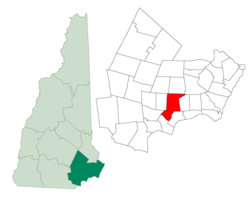
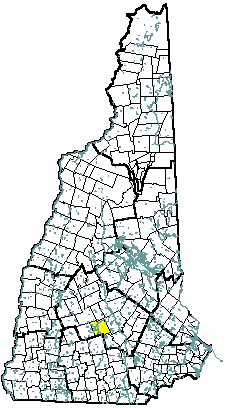
Kingston Location in Rockingham County, New Hampshire

Kingston was one of the frontier towns, the buffer settlement between the towns along or near the coast and the great interior wilderness, and for more than 50 years the people suffered severely from French and Indian attacks. The Indians, supplied with ammunition, and incited by the French in Maine and Canada, kept the settlers in a state of continued anxiety and fear. Farmers, travelers and worshippers on Sunday could not count on a single day ahead. Although scouts patrolled a line of frontier for 50 miles at great expense of money and life, it was impossible to prevent small bodies of lndians from passing, by day or night. People were much discouraged in their efforts to clear land and secure homes for themselves and their families. Many settlers left their lands and returned to safer localities in the older settlement. Some who remained were obliged to send back their wives and children to the homes of their friends. These were perilous times when their cattle were killed, crops destroyed, buildings burned and lives in constant danger.

10 Jun 1724 – John Davis’ son Moses was another victim. He escaped the massacre of 1694 and accompanied his brother James in some of the expeditions to Maine and Port Royal. He lived in a clearing of the forest about a mile from Oyster river falls, where, 10 Jun 1724, he and his son Moses Jr. were killed by a party of Indians, who lay in ambush to attack the settlement. He was then sixty-seven years of age. A negro slave of his avenged their murder by pursuing the Indians and shooting one of the leaders. Love Davis, daughter of Moses, in view of the fidelity of this slave, gave orders that at his death he should be buried at her feet. This was done, and their graves are still pointed out at a short distance from Durham village.

The Indian thus slain by the servant of Moses Davis is now generally supposed to have been a son of the Baron de St. Castin, who had married the daughter of an Indian sagamore of Maine. Dr. Belknap, whose account of the affair was derived from the Rev. Hugh Adams * —a man of extreme malevolence— His equipment, moreover, proves that he held the rank of a chief. Dr. Belknap thus describes him : ” The slain Indian was a person of distinction, and wore a kind of coronet of scarlet-dyed fur, with an appendage of four small bells, by the sound of which the others might follow him through the thickets. His hair was remarkably soft and fine, and he had about him a devotional book and a muster-roll of one hundred and eighty Indians.”  The scalp of this young chief was presented to the New Hampshire General Assembly at Portsmouth June 12, 1724, by Robert Burnham, son of Jeremiah before-mentioned, and a bounty of one hundred pounds was ordered to be paid to the slayer.

A few weeks later Father Rale himself, the deliverer of Mary Anne Davis from the Indians, was slain at the foot of his mission-cross in the attack on Norridgewock by the Massachusetts forces, August 12, 1724, and his chapel pillaged and burnt to the ground.

5 Sep 1724 – John Burbean’s son John Jr. was one of eight men slain by the Indians at Thorton’s Ferry near Dunstable, Mass.  (Fox’s Hist., p. 108) Lt. Ebenezer French was also killed at Naticook.  14 men were in pursuit of a party of Indians who had captured two men the night before

15 Aug 1754 –  During the French and Indian War, Indians made a successful attack on  the house of Phillip Call III, in Stevenstown, New Hampshire.  This town was subsequently known as Salisbury and the attack was made in that part of Salisbury, west of, and upon the Merrimack, now included in the town of, Franklin.  Mrs. Call [Sarah Trussell Call], her daughter-in-law, wife of Philip CALL IV. and an infant of the latter, were alone in the house, while the Calls, father and son, and Timothy Cook their hired man, were at work in the field.

Upon the approach of the Indians, Mrs. Call the elder, met them at the door, and was immediately killed with a blow from a tomahawk, her body falling near the door, and her blood drenching her own threashold! [sic]  The younger Mrs. Call, with her infant in her arms, crawled into a hole behind the chimney, where she succeeded in keeping her child quiet, and thus escaped from sure destruction.

The Calls, father and son, and Cook, saw the Indians, and attempted to get into the house before them, but could not succeed. They were so near the house, as to hear the blow with which Mrs. Call was killed.  Seeing however the number of the Indians, they fled to the woods and the Calls escaped.  Cook ran to the river and plunged in, but was pursued, shot in the water, and his scalp taken. The Indians, some thirty in number, rifled the house, took Mrs. Call’s scalp, and then retreated up the river.  The Calls soon notified the garrison at Contoocook of the attack, and a party of eight men followed in pursuit.

The Indians waited in ambush for them, but showed themselves too soon, and the English party taking to the woods escaped, with the exception of Enos Bishop, who after firing upon the Indians several times was at length taken and carried to Canada as a captive.

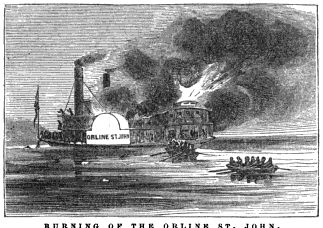
5 Mar 1850 –  Thomas Gibson CARSON’s grandson Thomas Brantley Carson ( b. 1 Sep 1818 Jones, Georgia; d. 5 Mar 1850) was killed on the Steamboat, Orline St. John, along with his son George on the Alabama River.

The Sinking of the Orline St John

The Orline St. John was a side-wheel steamboat built in 1847 at Louisville, Kentucky. The packet boat ended its short life in 1850 on the banks of the Alabama River.The Orline St. John set out from Mobile to Montgomery when fire broke out about 20 miles above Camden.  The boat burned and sank with some forty lives lost, including all the women and children on board. Some of the bodies were found downstream as far as seventy miles. Here is an account of the disaster from a maritime newspaper of the time.

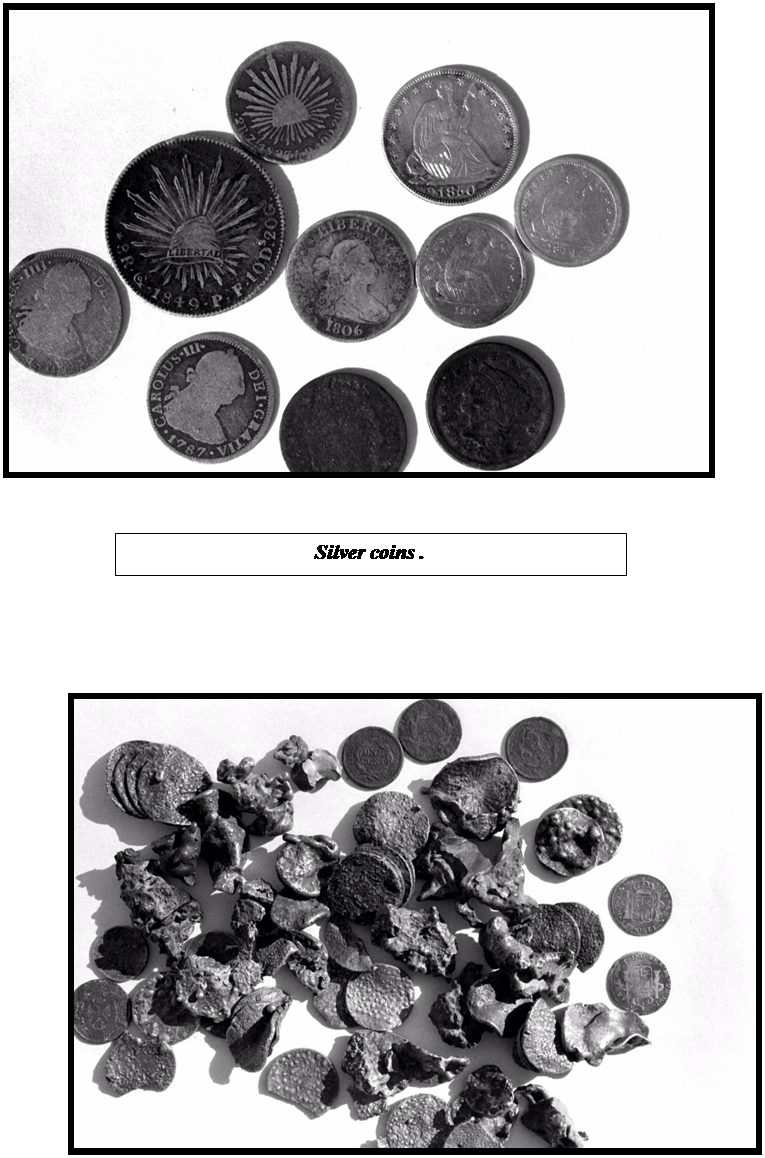
The wreck of the steamboat was found by two fishermen in 1955. They brought in diving gear and explored the wreck. The list of artifacts recovered is very impressive and sheds a bit of light on the lives of the people of that time. Though it is thought that millions in gold may have gone down with the steamer, more than one salvage operation has failed to produce many valuables.

Silver Coins from the Wreck of the Orline St. John

1852 – William L Latta’s grandsons John and Thomas went to Oregon.    During the latter part of the trip Thomas with others rode forward for help, as provisions were low.  He was 48 hours in the saddle without food.  Died shortly after from exhaustion and mountain fever. John had a cattle ranch near Prineville OR and was a prominent man there.

10 Aug 1862 – Hermon S. Webber  (Son of Oliver Webber) dies of his wounds received 4 June 1862 at Fair Oaks.  The Battle of Fair Oaks, also known as the Battle of Seven Pines or Fair Oaks Station  took place on May 31 and June 1, 1862, in Henrico County, Virginia, as part of the Peninsula Campaign.  It was the culmination of an offensive up the Virginia Peninsula by Union Maj. Gen. George B. McClellan, in which the Army of the Potomac reached the outskirts of Richmond.  Both sides claimed victory with roughly equal casualties, but neither side’s accomplishment was impressive. George B. McClellan’s advance on Richmond was halted and the Army of Northern Virginia fell back into the Richmond defensive works. Union casualties were 5,031 (790 killed, 3,594 wounded, 647 captured or missing), Confederate 6,134 (980 killed, 4,749 wounded, 405 captured or missing).

1 Jul 1863 – Virgil Webber (Son of Oliver Webber) was killed at the first day of the Battle of Gettysburg.  While further research revealed that Virgil served in Company E of the 16th Maine Regiment at Gettysburg.  Virgil and his brother Gustavus (also wounded in this action) arrived around 11: 30 on the morning of July 1, 1863, as part of two divisions of the 1st Corps, Army of the Potomac to join a fight that had been raging all morning, as the Confederates advanced on Gettysburg from the west and from the north.  The 16th Maine along with the rest of the army, had been marching since June 12 up from Virginia.

16th Maine fought bitterly for approximately three hours in the fields north of the Chambersburg Pike; but by mid-afternoon, it was evident that, even with the addition of the rest of the 1st Corps and the entire 11th Corps, the position of the Union forces could not be held. They began to fall back toward the town of Gettysburg.

The 16th Maine was then ordered to withdraw to a new position to the east of where they had been fighting. “Take that position and hold it at any cost!” was the command. This meant that those of the 275 officers and men of the regiment who had not already become casualties had to sacrifice themselves to allow some 16,000 other men to retreat. This they valiantly did, but they were soon overwhelmed and forced to surrender to the Confederates.

By sunset on July 1, 11 officers and men of the 16th Maine had been killed, 62 had been wounded, and 159 had been taken prisoner.  Company E suffered heavy losses 3 killed, 8 wounded including Capt,William A. Stevens and Lt. Aubrey  Leavitt and 14 taken prisoner including Capt. Leavitt.   Only 38 men of the Regiment managed to evade being captured and report for duty at 1st Corps headquarters. But the 16th Maine had bought precious time for the Union Army. Those whose retreat they had covered were able to establish a very strong position just east and south of the center of the town of Gettysburg along Cemetery Ridge. During the night and into July 2 the 1st and 11th Corps were reinforced by the rest of the Army of the Potomac. For the next two days they would withstand successive assaults by the Confederates until the final repulse of Pickett’s Charge, on July 3.

Sources:

Maine Gettysburg Commission – Maine at Gettysburg -Google Books

Posted in Fun Stuff | 3 Comments

Western Pioneers

Crawford County, Pennsylvania

9 Oct 1799 – Jane McConahey was the first white child born in South Shenango township, Crawford County.

SHENANGO was one of the original townships of Crawford County formed in 1800.  It was then about eight miles square and occupied the southwest corner of the county. A division into North and South Shenango occurred in 1830, and  the territory of the latter was reduced in 1863 by the erection of West Shenango. South Shenango now contains 17,258 acres. Its population in 1850 was 1,664; in 1860, 1,393; in 1870, 1,042, and in 1880, 991. The surface is almost level. The low lands were wet and marshy in pioneer times, but are now productive farms. On the higher land the soil is clay; it is a sandy loam along the streams. Shenango Creek, the boundary line between South and West Shenango, is the only stream of importance. It is enlarged by numerous little tributaries. Poplar was the principal timber, with a considerable sprinkling of white oak, chestnut and pine along the creek.

The township lies mostly within the Pennsylvania Population Land District, and the following persons agreed at the time mentioned to settle the various tracts within a few days from the date of contract, and were to receive the following amounts of land: Tract 794, Robert STORY, 1 May  1798, 200 acres, deed delivered August 17, 1808 Tract  795, Robert McCONAHEY , 1 May 1798, 200 acres, settled under contract.

For years after the first settlers arrived Indians encamped in great numbers on the banks of the Shenango, where they engaged in hunting and sugar-making. One Indian, known as Jake Kashandy, was a general favorite with the pioneers. He was accustomed to visit a cabin and complain of sickness. When asked what would relieve him he quickly responded, “cup tea,” and usual1y obtained it. He afterward repaid the kindness, usually with a haunch of venison, or other wild game. Kashandy was killed in a drunken Indian brawl about 1804, while encamped on the creek, and the perpetrators of the deed were never apprehended.

The first organization of the Associate Reformed, later United

Presbyterian denomination, in Crawford County, was effected with ten members in Shenango Township in 1801, by Rev. Daniel MeLean, who, in 1802, was installed its pastor in connection with Sandy and Salem Churches, Mercer County. This pastorate was continued fifty-four years, and was terminated in April, 1854, only three months previous to Rev. McLeans death, in his eighty-fourth year. He possessed unquestioned devotion to the ministry and strong mental and physical powers. The first services of this congregation were held under a tent near the graveyard, and about 1805 a log building was erected in which to worship. In 1818 a second house was built. It was the first frame building in the township. Its furniture consisted of a high narrow pulpit and large square pews with straight backs. The walls and ceiling were unplastered and the interior undefiled by the painters brush. It was occupied until 1879 when a handsome frame edifice, 35×60, was erected on the same site, near the center of Tract 797.

CONNEAUT TOWNSHIP of Crawford County was organized 9 Jul 1800, with the following boundaries: “Beginning at the northeast corner of Shenango Township; thence northwardly the breadth of eleven full tracts; thence westwardly the length of eight tracts, together with the breadth of one tract, to the western boundary of the State; thence by the same northwardly to the northwest corner of Shenango Township, thence by the same to the place of beginning.” As thus constituted it was the middle one of the three original western townships of Crawford County. and included the south half of present Conneaut, the southwest corner of Summerhill, the western part of Summit and Sadsbury, all of Pine and most of North Shenango. By a re-formation of township lines, in 1829, Conneaut was reduced to its present limits. It is situated on the western line of the county, and is bounded on the north by Beaver and Spring Townships, on the east by Summerhill and Summit, and on the south by Pine and North Shenango.

Conneaut was the Indian term applied to the lake in Sadsbury Towaship. It signifies “The Snow Place,” and was so called, it is supposed, from the fact that the snow on the frozen lake lingered long after it had disappeared from the surrounding land. Though the lake was not within the original bounds of Conneaut Township, the latter doubtless received its name from this body of water, or from Conneaut Creek.

The surface is level or gently rolling. Paden Creek flows southward through the western part, and Mill Creek through the eastern part, both entering Shenango Creek in Pine Township. Along the streams the soil is a gravelly loam, and beyond it is generally a clay. It produces good grass and grain; and dairving and stock-raising form the chief vocations of the people. Red and white oak, beech, hickory and other varieties of timber densely coy. ered the surface. Hemlock grew in the southwest part.

Its area is 24,492 acres. The population in 1850 was 1,807; in 1860, 1,867; in 1870, 1,729, and in 1880, 1,601. The population of the original township in 1820 was 562.

Except a narrow strip along the western line, which was owned by the American Land Company, the township was included within the domain of the Pennsylvania  Population Company. The agent of this latter company was Jabez Colt, who, in order to stimulate immigration to these lands, in the summer of 1797, or earlier, engaged the services of a half dozen or more sturdy, young, unmarried immigrants and made an improvement called Colt’s Station, in the eastern part of the township, and probably at the south end of the dividing line, between Tracts 710 and 711, or in Tract 715. For several years they remained here, but the place did not flourish and the land agent abandoned the settlement and made another improvement in what is now Pine Township.

Conneault Township Map

The following statement shows the condition of the Population tracts in 1812, when the company closed its business-the number of the tract, name of settler, date of contract, number of acres, contracted for and its final disposition. Each tract contains an area slightly exceeding 400 acres.  Tracts 706 and 707, William L LATTA, April 27, 1805, 100 acres each, settled under contract.

The following were tax-paying residents of the township in 1810: Alexander JOHNSTON, William and Samuel LATTA, Robert Martin, John Parr, Samuel Potter, William and Samuel Rankin, Samuel Brooks, Thomas Crockett, Henry Frey, Obed Garwood, William Hill, Thomas McGuire and Rebecca Paden. Alexander Johnson was a native of Ireland, and settled on Tract 687, in the northeast corner of the township, where he remained till death, leaving five children: William, John, Mary (Lopeman), Jane (McDowell) and Esther (Crockett). William Latta, also a native of the Emerald Isle, was a hatter, settled near Penn Line and after a few years removed from the township. His brothers, Samuel, John and Thomas, were also here, and made improvements, then departed

Shenango River Watershed originates in a large wetland area in Conneaut Township, Crawford County

The large number of abandonments and assignments are particularly noticeable in this township. Pioneer privations were severe and continuous. The labor of clearing the timber was extremely arduous, and the soil was often found too low and wet to produce crops. In consequence, most of those who settled here either sold their claims for the small price they would command or abandoned them entirely and left the country. Difficulties with the Land Company also arose, and increased the discontent and emigration. Many were without means, but did not remove until they were literally starved out. In more than one instance planted potatoes were dug up and greedily devoured by these primitive settlers.

Rock Bluff City, Cass County , Nebraska

Rock Bluff was a pioneer crossing on the Missouri River. Settled in 1854 by a German named Benedict Spires, Rock Bluffs became a leading point for equipping freighting outfits to cross the plains during the 1850s. By 1877 it had almost 200 residents, as well as a Methodist Church, a post office, a mayor, the county fair, a common lodge hall for Masons and Odd Fellows, and a variety of businesses including three stores, two blacksmith shops, two saloons and a billiard hall. There was a race track near the steamboat landing, and a coal mine south of town.  Rock Bluff once competed with Plattsmouth the be the county seat of Cass County.

1854 – The area had been settled.  The village was located in Cass County on the Missouri River about four miles east and one mile north of Murray, Nebraska, in section 9, township 10N, range 14E. Its growth was dependent on steamboat travel along the river and developed along with the river trade. Rock Bluffs was a leading point for equipping freighting outfits to cross the plains during the 1850s.

Plattsmouth and Cass County Nebraska

In 1854, fifty one towns were organized in Cass County which were later abandoned. Rock Bluff City was one of these towns; its post office was discontinued in 1904. One theory for Rock Bluff’s demise is that the town was adversely affected when Plattsmouth secured the Burlington railroad.

10 Jun 1856 – Organized as a village.  So named because of the rocky character of the banks of the Missouri River there,  On November 3, 1858, Rock Bluffs and North Rock Bluff were incorporated by the Nebraska legislature as Rock Bluff City. A newspaper, the Cass County Sentinel, was begun at Rock Bluff City but was moved to Plattsmouth in 1859. Rock Bluff vied with Plattsmouth for county seat in the 1860s. By 1877 it had 175 inhabitants, two trading houses, a mill, a blacksmith shop, a methodist church, and a post office which had been established March 12, 1857. The Naomi Institute was organized here in 1870 and ran for three years. The building was later occupied by a local school district.

1866 – Perhaps the most notable incident in the town’s history was that involving a ballot box that “went to dinner.” During the referendum of 1866 Nebraska voters were deciding whether the territory should become a state, and if statehood was achieved, whether the first officers would be Republicans or Democrats. David Butler headed the Republican ticket and J. Sterling Morton the Democratic one.

The political parties were almost evenly divided in Nebraska Territory, and the election was close. In the precinct of Rock Bluff, Cass County, 107 votes were cast for the Democrats, more that twice as many as for the Republicans, and enough to put Cass County in the Democratic column. However, the county canvassers decided that because the ballot box had been taken to the home of one of the election officials over the noon hour, when the polls were declared closed, all Rock Bluff precinct votes would have to be thrown out. The same hour recess was taken that evening. The reasons alleged by the county board for suppressing the vote of Rock Bluffs were “fraud, irregularity in adjourning the polls at noon and evening, and the fact that the poll book and tally sheet were not separately certified.”

The result was that Cass County went Republican, and its representatives furnished the edge in the legislature that enabled the Republicans to elect Nebraska’s first two United States senators, John W. Thayer and Thomas W. Tipton. Democrats protested in vain that the two adjournments by the election board were technical irregularities only, and did not justify disallowing the Rock Bluff Precinct votes.

Because of this celebrated case, Rock Bluff achieved a permanent place in Nebraska’s political history. However, when the railroad came through Omaha, Rock Bluff went into a serious decline. Today it is a ghost town.

1870 – Naomi Institute also known as the Rock Bluff School, is located in the ghost town of Rock Bluff, Nebraska, three miles east of Murray. It was one of the earliest higher education institutions in Nebraska, founded in 1870 as a pioneer college. The building was listed on the National Register of Historic Places in 1977.

Rock Bluff School, Nebraska

Originally a two-story structure in Rock Bluff, Nebraska, today the one-story brick school is all that remains of a ghost town. Rock Bluff was a popular crossing on the Missouri River, and had a post office, a mayor, the county fair, a common lodge hall for Masons and Odd Fellows, and a variety of businesses including three stores, two blacksmith shops, two saloons and a billiard hall. There was a race track near the steamboat landing, and a coal mine south of town.

Joseph Diven Patterson secured a lot overlooking the Rock and Squaw creeks of the Missouri River bluffs in order to establish a school in 1870. He built a two-story building that was 25 feet by 50 feet in size for $3,500. On 1 Sep, 1870 the Naomi Institute opened. Advertisements for the Institute reported that “the morals of the place are the very best there is, not a dramshop in the village, and the pupil will be free from the surroundings of vice that are usually found in larger and ‘faster’ towns in the West.” The Naomi Institute was regarded as one of the leading educational institutions in Nebraska, and was the first higher education institution in Cass County.

After opening successfully, the school’s debt forced Patterson to sell the building in 1872. It later served as the Rock Bluffs School.

After a railroad bridge was built in Omaha in the 1870s the town of Rock Bluff lost its importance, which was only exacerbated when the closest railroad tracks were built ten miles west.  The town was completely abandoned by the 1940s.

Red Bluff, Montana

Josiah Harvey FOSTER’s daughter Jeanette was born 14 Apr 1832
in New York.

In the 1860 census, Jeanette and her husband Charles Bradley were farming in Arlington, Columbia, Wisconsin.

They moved to Montana Territory where their  son John J. Bradley was born about 1866. In the 1870 census, Charles and Jeanette were farming near Virginia City, Montana.

In 1863, the area around Virginia City was part of the Dakota Territory until March, when it became part of the newly formed Idaho Territory. On May 26, 1864, the Territory of Montana was formed, with Bannack briefly becoming the territorial capital, Virginia City would quickly take that title from Bannack.

In May 1863, a group of prospectors were headed towards the Yellowstone River and instead came upon a party of the Crow tribe and were forced to return to Bannack. Gold was discovered on the retreat trip when Bill Fairweather stuck a pick near Alder Creek joking he might find something to fund some tobacco.

The prospectors could not keep the site a secret. They were followed on their return to the gold bearing site and set up the town in order to formulate rules about individual gold claims. On June 16, 1863 under the name of “Verina” the township was formed a mile south of the gold fields. The name was meant to honor Varina Howell Davis, first and only First Lady of the Confederate States of America during the American Civil War. Verina, although in Union territory, was founded by men whose loyalties were thoroughly Confederate. Upon registration of the name, a Connecticut judge, G. G. Bissell, objected to their choice and recorded it as Virginia City.

Within weeks Virginia City was a veritable boomtown of thousands in the midst of a gold rush with no law enforcement whatsoever, except for vigilantism. Most of Montana became under the rule of a Vigilance committee, the infamous Montana Vigilantes, which operated on both sides of the law. Their secret motto, 3-7-77 is still on the badges, patches, and car door insignia of the Montana Highway Patrol.

In 1864, the Montana Territory was carved out of Idaho Territory. Virginia City, claiming 10,000 citizens, was made the capital of the new territory in 1865. The first public school was built in 1866, but already the most easily accessible gold from placer mining had been exploited and development and population in the territory was moving towards Helena.

In the 1880 census, Jeanette was widowed and keeping a hotel in Red Bluff, Madison, Montana. (About 30 miles north of Virginia City and 30 miles south of Bozeman on Montana State Route 84.)

Red Bluff was settled in 1864 as a mining town and stage stop on the Bozeman road.  During it’s hey day, Red Bluff had two gold mills, various stores, businesses and 12 saloons. The town existed with it’s school and post office until 1890 when the railroad came to the Alex Norris Ranch three miles to the west.

Red Bluff Montana Historic Sign

Red Bluff Tanners Hotel & Livery stable

Could this have been Jeannette’s hotel?  I haven’t found out, but a clue is  Bradley Creek Road is the main highway running south from Red Bluff. The  Tanner brother initials were A.W. and C.E.

The Red Bluff Tanners Hotel & Livery stable was destroyed by Fire in 2006

Red Bluff Cemetery – Notice the “green” countryside of May & June compared to the “yellow-wheat” color of the other ten months of the year.

Today Red Bluff is a Montana State University Research Ranch located near Norris in Madison County, Montana, along the west side of the Madison River.

Gilt Edge, Montana

When Howard Irwin SHAW’s father died, the family moved to Bozeman, Montana where Howard was a member of the first class at Montana State College.  After his education as a mining engineer, he went to work at the mines in Gilt Edge where he met Nellie who was visiting her sister Eleanor.  They drove in a blizzard to Lewistown to be married on 4 Mar 1899.

Gilt Edge, Montana, is not just another mining camp, ghost town. It is an abandoned mining camp with a history unlike any other. To start with, the name can be spelled two different ways. Some spell it as one word: Giltedge; while others use two words: Gilt Edge. Both spellings were correct and used during the life of the camp.

Gilt Edge Poverty Hollow 1900

Gilt Edge Today

But the spelling issue is not the main historic significance of Gilt Edge, Montana. Two other facts are. First, Gilt Edge was the first place in the entire USA to use the cyanide leeching process in gold mining. Some disagree and say that Gilt Edge was the 2nd, next to Mercer Utah, but most agree the Gilt Edge was the first.

The Cyanide Mill of the Gilt Edge Company

The new Gilt Edge Cyanide Mill 1899

The second fact is, while the new Gilt Edge Cyanide Mill produced gold in abundance-instantly and regularly-it was a financial flop for the first six years. And the new and adjacent mining camp of Gilt Edge paid the price. Rather than boom, it was up and down and bust for the first six years! The Gilt Edge Mill and the adjacent town started in 1893, just when the United States was at the depths of a very severe economic depression. As such, all eyes in the national financial and international mining world turned to Gilt Edge, in Fergus County Montana, and observed! For if Gilt Edge produced successfully, investors could easily be persuaded to invest in cyanide plants in other mining areas-and that would help end the depression.

Gilt Edge Whorehouse

Things were so economically strapped in Fergus County in 1893 that in Lewistown, the new county seat, few if any could afford the price of a theatre ticket. A group of community players was thus formed to provide free entertainment at the Culver Opera House. Indeed, the people of Fergus County also watched the week by week reports of the new Gilt Edge Cyanide plant-as published by the FERGUS COUNTY ARGUS-for with its success, better times would be seen in central Montana.

The saga of Robert A. “Honest Bob” Ammon, the New York lawyer who moved to Fergus Coun ty and became the “resident manager” of the new Gilt Edge Mine and Mill, explains why Gilt Edge produced gold bricks in abundance, yet was a financial flop for the first six years. It took six years to get rid of “Honest Bob”. After Ammon hoarded the gold, and finally ran off with it in 1894, the mill eventually reopened under new management. Optimism prevailed-but again, Ammon somehow gained control. This process repeated itself several times, until in 1898, when the courts gave total control to new management. Then the mill produced, the bills were paid, stockholders made money, and the town of Gilt Edge prospered and grew.

Howard Irwin Shaw,  Alex’s great-great grandfather was hired to get the Cyanide Mill running (an early defiler of the environment.)

Gilt Edge, Montana, is not just another mining camp, ghost town. It is an abandoned mining camp with a history unlike any other. To start with, the name can be spelled two different ways. Some spell it as one word: Giltedge; while others use two words: Gilt Edge. Both spellings were correct and used during the life of the camp. But the spelling issue is not the main historic significance of Gilt Edge, Montana. Two other facts are. First, Gilt Edge was the first place in the entire USA to use the cyanide leeching process in gold mining. Some disagree and say that Gilt Edge was the 2nd, next to Mercer Utah, but most agree the Gilt Edge was the first. The second fact is, while the new Gilt Edge Cyanide Mill produced gold in abundance-instantly and regularly-it was a financial flop for the first six years. And the new and adjacent mining camp of Gilt Edge paid the price. Rather than boom, it was up and down and bust for the first six years! The Gilt Edge Mill and the adjacent town started in 1893, just when the United States was at the depths of a very severe economic depression. As such, all eyes in the national financial and international mining world turned to Gilt Edge, in Fergus County Montana, and observed! For if Gilt Edge produced successfully, investors could easily be persuaded to invest in cyanide plants in other mining areas-and that would help end the depression.

Gilt Edge Map

Things were so economically strapped in Fergus County in 1893 that in Lewistown, the new county seat, few if any could afford the price of a theatre ticket. A group of community players was thus formed to provide free entertainment at the Culver Opera House. Indeed, the people of Fergus County also watched the week by week reports of the new Gilt Edge Cyanide plant-as published by the FERGUS COUNTY ARGUS-for with its success, better times would be seen in central Montana.

Sources:

http://history.rays-place.com/pa/conneaut-pa.htm

http://ancestortracks.com/Crawford_Co_Atlas.html

http://www.angelfire.com/ia2/flybee3/

Posted in Fun Stuff | 9 Comments

William Blair

Willliam BLAIR (1781 – 1875) was Alex’s 4th Great Grandfather; one of 32 in this generation and the founder of our Blair line in North America. There are still BLAIRs in Franklin, Quebec who operate a Sugar Bush. I’ve heard their maple syrup is delicious!!!

Map highlighting County Armagh

William Blair was born about 1781 in County Armagh, Ireland.  His parents may have been William BLAIR Sr and Mary [__?__].

William Blair (1)

William Blair

He told people he was from Armagh – no town, no parish, no townland – there are over 500 parishes in Armagh so it’s hard to find the correct one.  The local Gleaner Newspaper  stated that 07-31-1875 William Blair Sr., died at Franklin Que., on 31 July 1875 Aged 95 attesting to the early date of birth is correct.  If the early date is correct, he was 42 when he married, 49 when he immigrated and 62 when his last child was born. William was recorded to be 65 years old in the 1852 census giving a birth date of about 1787.

According to Sher Leetooze, William first married Betsey Grimshaw in about 1803 in upper New York State. According to a couple ancestry.com family trees, William and Betsy were married 5 Oct 1800 in Haverhill, New Hampshire.  Betsy’s parents were William GRIMSHAW (1765 England – ) and Elizabeth Zephaniah (1765 – ).  Members of both Blair and Grimshaw families kept moving back and forth across the border between Quebec and New York all down through the years that followed.   Sher thinks William Blair went home to Ireland and theorizes he had already been on the land at an early date, then gave it to his brother when he went back to Ireland.   The lot that his brother Thomas Blair settled on with his young family was one lot over from William Blair’s father-in-law!   Sher thinks William’s wife died and he went back to Ireland. He did eventually return with a new wife and five children, but not until the 1830’s.

William married Mary HUESTON Sep 1822 in Ireland.   He came with wife and four small children from Armagh County, Ireland, in the spring of 1830. Mary was only a few weeks old. They visited with relatives before moving to Frontier, New York, just across the border from Canada. In 1837 they moved to Franklin Township, Quebec and got a farm of 200 aces, most all it it well timbered, clears a piece and built a home for themselves. William died  31 July 1875 at Franklin Center Quebec in his 96th year.

William Blair Death 1875 Franklin

William Blair Mary Houston Gravestone — Hillside Cemetery

Mary Hueston (Huston) was born about 1796 in Armagh County, Ireland.  Mary remained in the home until the house was destroyed by fire in April 1883.  She then went to live with her youngest son Joseph.  Mary died 6 Oct 1887 in Jamestown, Quebec aged 91. Mary was recorded to be 52 years old in the 1852 census giving her a birth date of about 1799.

Mary Hueston Blair Death & Burial – 1887 Franklin

There are many Blairs still living around Franklin Center today.

Jeff Blair (1)

In front of the Blair sign, in Franklin are the present Blair family members who run an apple/maple syrup operation.

The people in the photo are all descendants of Lewis Blair.  The Lewis Blair Farm and the Clarence Blair farm are side by side and all their sons built homes right across from the original farms and continued on in the family business.

It is on the original Blair farm since the 1800s and they are all our cousins.  The raise beef cattle, have thousands of apple trees and maple trees, dairy cows and have an excellent business.    The cows are always there, with the syrup in the month of March and the apples in August thru til November.  That was and still is the whole business of the Blair family. .

Blair Sign (1)

They make 500 pies, of every variety (mostly apple) every week and are baking on Sunday as the 500 pies are all gone.  They make bread, buns, donuts, etc. and have a tea room which opens in August and closes on 31 October.  It is all family run by all the sons, daughters, cousins, etc.  A great Blair family business!  A cousin also runs a trucking company – Blair Transport —  out to Vancouver with apples and stop in Calgary to pick up meat for Steinberg’s Grocery Store on the way back.  They are on the road all week out to Vancouver and down through the States, another side of the same Blair family.

Children of  William and Mary:

Name Born Married Departed
1. John Blair 14 Aug 1823
County Armagh, Ireland
Betsy McEvoy (McAvoy)
24 Apr 1849
Russeltown
.
Mary Jane Smith
14 Dec 1857
Franklin, Huntingdon, Quebec
21 May 1892
Franklin Center, Quebec
2. William Blair 20 May 1825
County Armagh, Ireland
Hannah Adelia Morrison
3 Jan 1857
19 May 1904
Franklin Center
3. Jane Blair 25 Oct 1827
Ireland
Benjamin Johnston
30 Apr 1855
30 Jan 1891
Franklin Center
4. Mary Blair 5 Mar 1830
Ireland or At Sea?
William Smith
.
Prentice Jenkins
1902
Congregational Church at Franklin Centre, Québec
22 Jan 1917
5. Thomas BLAIR 8 Apr 1832
Frontier, New York?
Baptized
10 Jun 1832 Presbyterian Church of Hemmingford, Quebec
Rebecca Tryphosa HORTON
5 July 1859.
7 Aug 1909
Franklin Center Cemeterey.
6. James Blair 26 Apr 1834
Franklin Center
Samantha Anna Grimshaw
27 Sep 1863
Cape Vincent, NY
29 Sep 1876
Wolfe Island, Ontario
7. Alexander Blair 20 Mar 1837
Baptism date:
27 Sep 1845
Lizzie Anthony
18 Sep 1867
Congregational Church in Franklin and Places Adjacent
15 Jul 1912
Franklin Center
8. Robert Blair 23 Feb 1841
Jamestown
Baptism date:
27 Sep 1845
Emily Augusta Woodman 1867 3 Jul 1920
Haverhill, Massachusetts
9. Joseph Blair 17 Nov 1843
Baptism date:
27 Sep 1845
Mary Jane Cowan
15 May 1878
St. Paul’s Church, Ormstown, of the Presbyterian Church in Canada
24 Dec 1932
Franklin Center

AS WRITTEN BY: CLARA A. BLAIR HANNA (William’s grand daughter 1861 – 1937)

William Blair and Mary Hueston were married September 1822. He was born in 1781 and died July 31, 1875. Mary Hueston Blair was born in April 1796 and died October 6, 1887. They left their native land, Armagh Co. Ireland, with their small children, have heard the fourth child, Mary was born on their way out to this country. They left the old land very early in the year and after a hard trip of a number of weeks, ( I think 10), arrived in Montreal, Canada in the Spring of 1830.

After a short visit with relatives (his brother and 3 children, I think, who lived in what is called now Hinchinbrook), he moved his family to Frontier, N.Y. just across the border.

He was a weaver by trade in his homeland and of the Quaker belief, also was left-handed.

In Spring of 1837, they moved to Russelltown, Township, now known as Franklin Township, Huntingdon County, Quebec. He got a farm of 200 acres, most of it well timbered, cleared a piece of ground and built a home for themselves.

The early pioneers had a great many hardships that we of our day know nothing about. He made a success of farming and spent the rest of his life on the farm, and died in his ninety-fifth year.

His wife was a faithful companion and did her part faithfully. She remained in the home until the house was destroyed by fire in April, 1883. She then went to live with her youngest son and died in her ninety- second year. Their family of seven sons were all farmers and their two daughters married farmers. Seven of the family married and settled in Franklin Township, Quebec. One son in the Province of Ontario and one in Mass., U.S.A.

They were a strong and healthy family, the last one passing away on December 24, 1932 to the Great Beyond. The Grandchildren are scattered far and near, some in th Province of Onatario, Province of Quebec, and several in the United States, also in the North West. All are busy and enjoying life in such a different way from that of their Grandparents. We are unable to imagine what this world will be like in another 100 years, if it changes half as much as it has in the last.

Sher Leetooze, Bowmanville, Ontario, Canada wrote in 2008

I believe I have found [our Blairs in] the Richhill/Kilmore Parish area of Armagh, but can’t be sure. Is there anyone on the list who has access to Mullaghbrack BMDs? And/or the townlands in the same area? Looking for the birth of William Blair
1780-81, possibly son of William and Mary Blair. This William married late in life – Sept 1822 to Mary HUESTON. Possibly at
or near Richhill, though if they married in her family parish I haven’t a clue where that would have been – I can’t find her anywhere. Hopefully, the Banns were read in both parishes and I can find her through his parish (if it is indeed Richhill/Kilmore).
Hopefully someone has access to records and can assist me to prove my suspicions. Many thanks for any help anyone can offer.

Richhill, Ireland

Richhill, County Armagh, Ireland

Sher continues

Now, as long as the list members don’t mind – here is what I know…  William BLAIR, born 1780, Armagh, Ireland. married Mary HUESTON, Sept. 1822
William BLAIR was a Quaker, a weaver and was left handed (this bit shows  up in every other generation)

This is what I thought I knew…..
Assumed William and Mary BLAIR, died at Richhill Parish 1822 to be his parents – right place, right age….. because he was both a weaver and a Quaker it was a nice neat package to place him at Richhill where the Richardson’s had built a Quaker meeting house in about 1803 and where they owned many townlands and rented cottages to weavers, and had a linen agent who collected from them. On the 1796 Spinning Wheel Premium List, William  and Mary Sr. are listed as weavers at Mullabrack, just the right age, then  by the time the Richardson’s had built their meeting house these same two  people were a few miles away at Richhill and are buried there.

What I now know….
There was a naming pattern in those days for children:
> 1st son – named for father’s father….so, their first son was born in 1823 and named John – that puts the above information to rest, doesn’t it!!!
> 2nd son – named for mother’s father … according to records, the second son was William, born 1825
> 3rd son named for father – well, the father was William, so the second son of our records must be, in actual fact, the third son – I need to find a death in 1824 or 1825 of a child.
> 4th son is named for eldest brother of father – this fits – the next son is indeed Thomas, and William’s elder brother Thomas did indeed emigrate to Quebec as well. Thomas’s eldest son was called John, just like William’s,  so I guess I have to look for a John?!
> Also, on the Tithe Applottments for 1825, there is a William Blair at three townlands in Keady Parish – Lagan, Iskemeadow and Tullynamaloge. I knew there were BLAIRs at Keady for a long time, but could never find a weaver William among them – there was a shoemaker, William, however, and I assumed
it to be a distant relative. Unfortunately, the Tithe Applottment index does not give an occupation.
> As far as being a Quaker, the Lisburn Meeting says he never paid subscription – that he likely attended meetings in sympathy for the Friends. He and his wife were Methodists once they arrived in Quebec, Canada.
> None of the records here in Canada say what part of Armagh they came from, simply Armagh, or just Ireland.
> Also, John Hayes, on his website, has transcribed the 1848-63 Griffith’s Valuation and there is a James BLAIR at both Iskemeadow and Tullynamaloge townlands – could be a brother who never came to Canada.

Does anyone know if the 1825 has occupation, or any other information? Would it be worthwhile to spend the $6 to order the film into my local LDS FHC??

Any suggestions as to how I should proceed would be welcomed

William was a weaver by trade, and a Quaker,  Alternatively, he was a farmer, and all the children also became farmers.

1852 Census Canada East / Beauharnois (county) / Subdistrict # 16, St. Malachy parish [St. Malachie]
In the 1852 census, all William and Mary’s children were recorded as living at home, except the eldest, John, recorded one household away with his wife Betsy McAvoy and daughter Jane.

Blair, William Farmer Ireland Presbyterian 1786
Huston, Mary Ireland Presbyterian 1799
Blair, John Ireland Presbyterian 1823
Blair, William Ireland Presbyterian 1825
Blair, Jane Ireland Presbyterian 1827
Blair, Mary Ireland Presbyterian 1830
Blair, Thomas Canada Presbyterian 1832
Blair, James Canada Presbyterian 1834
Blair, Alexander Canada Presbyterian 1836
Blair, Robert Canada Presbyterian 1840
Blair, Joseph Canada Presbyterian 1843

Blair, Thomas Canada Presbyterian 1833
Blair, James Canada Presbyterian 1835
Blair, Alexander Canada Presbyterian 1837
Blair, Robert Canada Presbyterian 1841
Blair, Joseph Canada Presbyterian 1844

07-31-1875 William Blair Sr., died at Franklin Que., Aged 95 years. Deceased was a native of the County Armagh, Ireland.

10-06-1887 Mary Hueston, relict of the late William Blair, died at Jamestown Quebec, age 91 years 06 months. Deceased was a native of County, Armagh Ireland.

Children and Grandchildren

William Blair of Jamestown baptized Alexander, Robert, and Joseph all on the same day, 27 Sep 1845 in the Hemmingford Presbyterian Church.  The day before, his  cousin  William of Hinchinbrooke  baptized his son Daniel and his cousin John of Hinchinbrooke baptized  his daughter Samantha Jane at the same church 26 Sep 1845.

1. John Blair 

John’s first wife Betsy McEvoy (McAvoy) was born about 1826. Betsy died 10 Oct 1856 in Russelltown (Methodist Church and Presbyterian Church), Québec.

In the 1852 census, all William and Mary’s children were recorded as living at home, except the eldest, John, recorded one household away with his wife Betsy McAvoy and daughter Jane.

John’s second wife Mary Jane Smith was born about 1828 in Tallington, Lincolnshire, England.  Her parents were William Smith and Mary [__?__]. After John died 21 May 1892, after a very brief illness at Franklin Center Quebec, age 69 years, Mary Jane married Daniel Parham Sr 16 Nov 1895 at Franklin Center PQ, at the bride’s residence, by Rev. J. L. Brown. Mary Jane died 5 Aug 1924 in Franklin Center, Quebec, Canada.

John Blair Gravestone

Children of John and Betsy McEvoy

i. Mary Ann Jane Blair (10 Jun 1850 – 17 Feb 1929) m. 3 Apr 1872 in Farmingham, Middlesex, Massachusetts to Otis Quincy Claflin (29 Feb 1848 in Farmingham, Middlesex, Massachusetts – 10 Jul 1930) .  x

Otis enlisted in Company A, Massachusetts 3rd Cavalry Regiment on 25 Feb 1864. He was promoted to Full Hospital Steward on 26 Jul 1864. Mustered out on 28 Sep 1864.  According to Civil War records, he was 18 when he enlisted, meaning he was born in 1846 instead of 1848.  Maybe he was only 16.

In the 1900 census, Otis, Mary J and their son Oliver were living in Kansas City Ward 6, Wyandotte, Kansas where Otis was a druggist.

1912 Kansas Cyclopedia – Oliver Quincy Claflin of Kansas City, Kan., is a young lawyer of fine ability who entered the profession well equipped for advancement. He is a native Kansan, having been born at Chanute, Neosho county, July 4, 1881, a son of Otis Claflin, who is now a druggist in Kansas City, Kan. The father was born at Haverhill, Mass., Feb. 29, 1848, and gave his services to the Union during the latter part of the great civil war. At the close of the war he came to Kansas and first located at Kiowa, later removed to Chanute, Girard, Ottawa and thence to Kansas City, Kan., in 1887. He married Mary Jane Blair, who was born in the Province of Quebec, Canada. She too is living. The Claflin family is an old and prominent one in Massachusetts history, one of its members having been Governor Claflin of that state, known as the war governor, who held that office during the Civil war. It is a Revolutionary family, also.

Oliver Q. Claflin was six years old when his parents removed to Kansas City, Kan., from Ottawa. He completed the sophomore year in the Kansas City, Kan., schools and in 1900 graduated from the high school of Kansas City, Mo. In the fall of 1900 he entered the University of Kansas in which he spent four years pursuing the study of pharmacy and law in addition to the regular course. He was graduated in the law department in 1904 with the degree of Doctor of Laws and won the Edward Thompson prize. He at once began the practice of his profession in Kansas City, Kan., where he has since continued. For one year he was the partner of T. A. Pollock after which for two years he was associated with the law firm of McFadden & Morris. Upon the death of Mr. Morris, in 1907, he became the partner of J. E. McFadden, with whom he is still associated.

ii. William H. Blair (24 May 1853 – 1930) m. 3 Apr 1876 to Sarah Nelson (24 Mar 1859 – )

Children of John and Mary Jane Smith

iii. George Blair ( 26 Oct 1860 – 2 Feb 1930 at Franklin Center, PQ) m. 24 Apr 1880 to Hattie Eliza Frier (10 Nov 1867 – 18 Aug 1944 in Franklin Center, PQ) at Franklin Center at the residence of the brides father, by Rev. James O’Hara

iv. Nancy Blair (11 Mar 1864 – 2 May 1886 at Franklin Center, PQ ); m. 11 Jun 1885 to Robert M. Tannahill (17 Feb 1857 – )  at the residence of the bride’s father, in Franklin Quebec, by Rev. Mr. Wilkinson.

v. Albert Blair ( 1 Feb 1866 Franklin Center, PQ- 9 Nov 1931 at Montreal, PQ, Interred at Franklin Center PQ.)  m.   9 Jul 1890 to Idia Towns (1861 – 13 Jan 1949, Franklin Center PQ).   Albert leaves to mourn his loss, his wife, one brother, Mr. Henry Blair, one sister, Mrs. George Brooks, 10 nephews and four nieces. Funeral service was conducted at Black’s United Church, by Rev. T. F. Duncan. Interred in Black’s Cemetery.

07-09-1890 Albert Blair, son of John Blair, married Ida M. Towns, eldest daughter of Hiram Towns,. At Franklin Center, at the residence of the bride’s father, by the Rev. W. Wat

vi. Henry Blair (23 Mar 1868 – 1952) m.  3 Jun 1891 at Hinchinbrook to Minnie Blair (1871-1953) at the residence of the bride’s father, by the Rev. James O’Hara, Ormstown..  Minnie was the  daughter of William Isaac Blair.

06-26-1918 Isabelle Jennie, married Mr. James G. Lamb, at the home of Mr. and Mrs. Henry Blair, Sunnyside Farm, Franklin Center PQ, by Rev. H. Allenby, officiating.

vii. Martha Emma Blair (4 Jan 1870 – 1964 Dunn Cemetery, Franklin, Quebec) m. George Brooks (1872 – 1948)

viii. Adda Blair (26 Sep 1877 – 26 Nov 1892 Addie Blair, youngest daughter of the late John Blair, died at Franklin Center, aged 15 years 02 months.)

2. William Blair

William’s wife Hannah Adelia Morrison was born about 1835 in Wells, Hamilton, New York . Her parents were Isaiah Morrison (1817-1873) and Clara (Clarissa) Brown (1804-1865). Adelia died 10 Apr 1931.

05-19-1904 William Blair, died at Franklin Center PQ, aged 79 years. Deceased was a native of Armagh, Ireland, and came to this country when he was 04 years old.

04-10-1931 Adelia Morrison, Widow of the late William Blair, died at Franklin Center PQ, age 96 years. Interred at Franklin Center Cemetery. She was the daughter of Isaiah Morrison and Clara Brown, she was born in Wells New York, and married William Blair of Franklin center PQ, in 1857. Predeceased by her husband 27 years ago. She leaves to mourn her loss three daughters, Clara, Mrs. T. A. Hanna of Ormstown PQ, Mary Emma, Mrs. William Hanna and Hettie, Mrs. Alexander Blair, both of Franklin Center, three grandchildren 11 great grandchildren, and one great great grandson. Funeral service set Franklin United Church by Rev. T. F. Duncan.

Children of William and Adelia

i. Isaiah Morrison Blair b. 19 Jun 1859, d. 31 Mar 1861

ii. Clarissa (Clara) A Blair (Jun 1861 in Franklin Center, Quebec, – 11 Dec 1937 in Ormstown, , Quebec) m.  1 Jan 1885 to Thomas Andrew Hanna (1 Dec 1861 – 24 Apr 1925)  at the residence of the bride’s father, in Franklin PQ, by Rev. Mr. Wilkinson.

iii. Mary Emma Blair (10 Feb 1864 Franklin Center, PQ –  11 Dec 1948  Valleyfield (Greffe de Valleyfield)  Québec)  m.  William Hanna 8 Jul 1885  at the residence of the bride’s father, in Franklin Center, by Rev. Isaac Wilkinson.

Charlotte Olive McMillan The Child, Mildred Mae Mcmillan standing up in back Emma Blair Hanna sitting on Left side Adelia Blair seated on Rt. side.

iv. Hettie Blair  (8 Feb 1867 – 12 Jul 1942 )  m. her first cousin, Alexander Blair son of Thomas BLAIR. by Rev James O’Hana

Hettie and Alexander were the family  that took in my grandfather Horace Horton BLAIR and his sister Beulah when William Lewis BLAIR first moved the rest of the family west to Lake County, California

They had a son Roy J Blair b. 5 Jul 1889; m. 17 Sep 1919 to Nellie May Grimes (b. 4 Apr 1893) who lived in the original Blair family home built in 1840.  Still living there when my grandparents visited them in their post-retirement trip.

Hettie Blair, widow of Alexander Blair, died at Springdale Farm, Franklin PQ, on July 12, Interred July 14, 1942 age 76 yr

v. Charry Blair, b. 2 Apr 1869  youngest daughter William Blair, died at Franklin Center, Aged 17 years 12 Apr 1886

3. Jane Blair

Jane’s husband Benjamin Johnston was born Mar 1822. Benjamin died 30 Oct 1905 in Franklin Centre, Quebec.

Jane married 30 Apr 1855 at the Congregational Church in Russelltown Canada East to Benjamin Johnston Witnesses: Benjamin Johnston, Jane Johnston, Jane Johnston, and Alexander Blair. Jane witnessed the birth of her son Thomas with an “x”.

01-30-1891 Jane Blair, wife of Benjamin Johnson [Johnston], died at Franklin Quebec, age 64 years.

Jane Blair Johnston –

Children of Jane and Benjamin:

i. Mary Elizabeth Johnston b. 8 Sep 1854 – 3 May 1943); m. 12 May 1886 to John Francis Angell (22 Jun 1858 – 9 Jan 1899) of Valleyfield Québec.

ii. Eliza Jane Johnston b. 29 Jan 1859; m. 22 Nov 1882 to Henry Franklin Rowe (b. 27 Sep 1858; d. 26 Aug 1900)

iii. Benjamin Millar Johnston b. 24 Oct 1861; m. 21 Jun 1893 to Bertha Elizabeth Gilmore (b. 2 Aug 1873)

iv. William Edward Johnston b. 15 Dec 1863; d. 29 Aug 1865

v. Thomas Fergus Johnston (15 Nov 1865 Franklin, County of Huntingdon – 3 Aug 1867 Franklin, Quebec)

vi. Jemima Emeline Johnston b. 1 Nov 1865; m1. Alexander Gamble ( 25 Jun 1863 – 16 Aug 1892);  m2. 25 Jun 1890 to William Hyole ( 4 Mar 1854v – 9 Jul 1919)

She was predeceased by her husband, the late John Francis Angell, in 1899, and by a son, Harry, who drowned in Valleyfield in 1896. died at her residence, 4620 Esplande Avenue, Montreal Québec, she is survived by one son, John B. Angelle of Montreal, and by a daughter, Mrs. Alice Baskin of Ormstown Québec, also by four grandchildren, Mr. B. M. Johnson of Franklin Center is a brother. Funeral service from the Chapel of D.A. Collins, on Sherbrooke Street West in Montreal, service conducted by the Rev. C. Richie Bell. Interment in Valleyfield Québec.

iii. Benjamin M. Johnston (? – Aft 1943 of Franklin Center); m. 21 Jun 1893 to Bertha Elizabeth Gilmore, of Russeltown PQ. At the residence of the bride’s father, by that Rev. N. Waddell, B.D. of Lachute.

iv. Eliza Jane Johnston (2nd daughter of of Benjamin Johnston, Esq., of Rockburn PQ – After 1891 ) m. 22 Nov 1882 to Henry Franklin Rowe (1858 Canada – After 1930) of Franklin at the residence of the bride’s father, by Rev. William A. Johnston, of Rockburn. In 1904, Henry of Valleyfield, married Mrs. Sadie Woods, of Ellenburgh New York. They immigrated to the United States in Oct 1919. In the 1920 and 1930 census, Henry was a general carpenter in Malone, Franklin, New York. He was married to Sadie Woolds who was 14 years younger and probably Henry’s second wife.

4. Mary Blair

Mary’s first husband William Smith was born in 1814 or 1815. William died 16 May 1901) Aged 86 years and 11 months; died at his home; Buried at Franklin Witnesses: Gentle, William; Parham, D. N.Church: Congregational Church at Franklin Centre, Québec.

Mary’s second husband Prentice L. Jenkins was born in 1830. Prentice died 25 Sep 1902, shortly after his marriage to Mary in 1902. Aged: Groom, 73; Bride, 73; At home of bride’s brother Congregational Church at Franklin Centre, Québec.

Children of Mary and William

i. Ellen Smith b. 1860; m. William Hatten;  d 1922

ii. Lavina Smith b.10 Aug 1862; m 5 Apr 1882 to William Fitzsimonds ( 17 Dec 1856 – 25 May 1926)

iii. Joshua James Smith (26 Oct 1864; m 8 Apr 1888 to Lois Hill (b. 28 Oct 1863)

iv. Alfred Smith b. 26 Apr 1867; m. 6 Feb 1889 to Georgina Hannah Davidson (12 May 1869 – 19 Aug 1922)

v. William Smith b. Jun 1869; d. 23 Jul 1878

vi. Edward Smith b. Jun 1871; d. 22 Jul 1878
.

5. Thomas BLAIR and Rebecca Tryphosa HORTON (see their page)

6. James Blair

James’ wife Samantha Ann Grimshaw was born 29 Oct 1839, Wolfe Island, Frontenac, Ontario Samantha was probably James 2nd cousin, see above. Her parents were William Grimshaw (Abt 1812 – 07 Dec1897) and Mary Ann Blair (Abt 1813 – 06 Nov 1883) Samantha died 26 Apr 1883, Pittsburg Township, Frontenac, Ontario.

James married 27 Sep 1863 in Cape Vincent, Jefferson Co., NY, St. John’s Episcopal Church to Samantha Ann Grimshaw Cape Viincent Protestant Episcopal Church – 1863

That Arni Merchant Lewis, on the 27th day of September, 1863, in the State of New York, county of Jefferson, township of Cape Vincent, joined together, in the Holy Estate of Matrimony, James Blair & S. Ann Grimshw according to the custom of the Protestant Episcopal Church, in the United States of America.
Rev. A. M. Lewis,
-Minister of St. John’s Parish, Cape Vincent, Jeff Co., N. Rf.
Dated, Cape Vincent, Sept. 27, 1863.

Thomas Grimshaw —} Witnesses.
William Grimshaw —}

Children of James and Samantha:

i. Helen Mary Blair (25 Nov 1864, Wolfe Island, Frontenac, ON – 16 May 1905 Kingston, Frontenac, ON); m. 13 May 1886 in Kingston, Frontenac, Ontario to John Francis Reynolds (07 Dec 1864 Kingston, Ontario – 02 Aug 1935 Kingston, Ontario) His parents were Samuel Reynolds and Ann Clayton.

ii. William John Blair (20 Nov 1866 , Wolfe Island, Frontenac, ON – 07 Feb 1952 Toronto); m. 07 May 1889 in Kingston, Frontenac Co., ON to Mary “Minnie” Waddingham (30 Jul 1873 in Kingston, Ontario – 19 April 1925 in Oshawa, Durham. Ontario) Her parents were Thomas Waddingham and Elizabeth Reynolds.

iii. Ida Jane Blair (14 Apr 1869 , Wolfe Island, Frontenac, ON – 14 May 1956, Groton, New London, CT); m1. 24 Nov 1886 in Kingston St. Andrew’s Presby Ch. to Neil Fletcher (23 Nov 1860 Scotland- 30 Sep 1921 Groton, Connecticut); m2. 03 Dec 1923 to George Henry Vassar (16 Dec 1862 – )

Ida immigrated in 1892.  In the 1910 census Ida J and Neil lived in Groton, Connecticut where Neil worked in a quarry.

iv. Jerusha Anna Blair (16 Aug 1876, Wolfe Island, Frontenac, ON – 19 Oct 1954, Belleville, Hastings, ON.); m. 22 Feb 1913 at Kingston, Ontario to James Augustus Robinson (1876 in Glasgow, Scotland – 26 Feb 1954 in Belleville, Hastings, Ontario) James Augustus Robinson , 37, labourer, Glassco (Glasgow?) Scotland, Kingston, s/o Henry Robinson & Unknown, married Jerusha Anna BLAIR, 36, Wolf Island, Kingston, d/o James Blair & S Ann Grimshaw , wit Thomas H Lloyd of 214 Earl St Kingston & Eva Grimshaw of 17 Ellis St Kingston

.

7. Alexander Blair

Alexander’s wife Lizzie Anthony was born 04 Aug 1843 – Huntingdon, Quebec. Her parents were Francis Anthony and Mary Stewart. Elizabeth died 6 Jun 1919 at Franklin Center PQ, age 75 years 10 months.

Alexander Blair, Esq., married Lizzie Anthony, daughter of Francis Anthony, J.P., Franklin Quebec, at Covey Hill, by Rev. A Sim. on  18 Sep 1867

07-15-1912 Alexander Blair Sr., died at Franklin Center PQ, aged 75 years 03 months.

Alexander Blair Headstone Franklin Center, Quebec

Children of Alexander and Lizzie:

i. Francis Anthony Blair (1869 – )

ii. Cora Gregg Blair (4 Sept 1875 in Franklin, Huntington, Quebec – ) Cora was a nurse

iii. Archibald A Blair (22 Apr 1880 in Franklin, Quebec – 16 Feb 1946 in Ayer’s Cliff, Quebec); m. Lila Carter

iv. Aaron Alexander Harold Blair (1 Mar 1882 in Franklin, Quebec – 28 Dec 1911 in Franklin, Quebec); m. Ruby Ida Augusta Sadler 10 Jun 1908

.
8. Robert Blair

Robert’s wife Emily Augusta Woodman was born 16 Aug 1839 in Raymond, Rockingham, NH. Her parents were Levi S Woodman and Joanne C Nute. Emily died between the 1910 and 1920 census.

Robert immigrated to the United States in 1860. He became a naturalized citizen on 28 Oct 1892.  He probably served in the Civil War, but I haven’t been able to narrow down his exact record,  Here is a possibility

A Robert M Blair, age 21, enlisted as a Seaman in the US Navy on 11 May 1862 in Boston, Mass.  Service Record: Enlisted in the UN Navy on 05 Nov 1862. He mustered out on 31 Dec 1863.

He married Emily Augusta Woodman in 1867.  Emily and both her parents were all born in New Hampshire.

In the 1870 census, Robert was a lumberman in Randolph, Coos, New Hampshire  His real estate was valued at $5000.  Robert Blair 28, Emily A Blair 27, Alura E Blair 10 months, Albion Hunt 28 (working at the saw mill)

In the 1880 census,  Robert was a farmer living with his mother-in-law in Newton, Rockingham, New Hampshire.  Robert always stated that his parents were born in Scotland on his 1880, 1900, 1910 and 1920 census forms.    Emily was enumerated with HOH widowed mother Joann C Woodman; husband Robert Blair & children Alvira & Athol; sister, Lilla and her husband and son, Morris & Carl Moore.

Joann C. Woodman 62 (Mother-in-law)
Robert Blair 39
Emily A. Blair 40 (Wife)
Alma E. Blair 10 (Daughter)
Athel Glenwood. Blair 9 (Son)
Morris W. Moore 26 (Brother-in-law)
Lilla V. Moore 26 (Niece)
Carl G. Moore 3 (Nephew)
Thomas Addison 34 (Servant)

In the 1900 census Robert R Blair was a farmer living in Haverhill Ward 5, Essex, Massachusetts.  He stated he immigrated in 1860 and was a naturalized US citizen
Robert Blair 60, Emily A Blair 60, Herbert Sanford 24 (Boarder), James A Rowe 18 (Boarder)

In the 1910 census, Robert and Emily were still farming in Haverhill, Mass. This time he wrote that he immigrated in 1859.  Robert Blair 69, Emily S Blair 70

In the 1920 census, Robert was a widower living with his son in Haverhill. His immigration is back to 1860.
Athol G Blair 49  (Head of Household, Robert’s son)
Mary L Blair 39 (Robert’s daughter-in-law)
Erdine B Blair 1 11/12 (Grand daughter)
Andria M Blair 20 (Grand daughter)
Robert Blair 78

Children of Robert and Emily

i. Alvira (Alma) E Blair b. Jul 1869 in New Hampshire<

ii. Athol Glenwood Blair b. Jun 1870 in New Hampshire; d. Bef. 1940 Census; m. Marie Louise Tessier Blair (b. abt 1881 in Montana – d. Aft 1940 Census ) Children Andria M Blair (1899 – ) and Erdine B Blair (1918 – 1996)

In the 1910 census, Athol was a shoemaker in Haverhill Ward 5, Essex, Mass.

9.Joseph Blair 

Joseph’s wife Mary Cowan was born 23 Feb 1858. Mary, formerly of Franklin Center PQ, died in Montreal on 16 Feb 1942 Interred Feb 19, 1942 age 85 years.

Joseph Blair, died  24 Dec 1932 at Franklin Center PQ, age 89 years. He was the last surviving son of the late William Blair, a native of Ireland. Funeral was held in the Franklin United Church and conducted by Rev. W. Ross, assisted by Rev. Mr. Duncan. Remains were taken to the Rennie United Church, and burial to place in Hillside Cemetery.

Child of Joseph Blair and Mary Cowan

i. Alice Mary Blair ( 2 Mar 1882 Jamestown, PQ  – ) m. 1905 Clyde R, McCarty (2 Nov 1882 – )

Source:

Here is a search engine for Irish Townlands.  There are over 1,000 townlands in County Armagh alone. http://www.seanruad.com/

http://www.wescotts.org/genealogyBlair.html

http://familytreemaker.genealogy.com/users/o/h/a/William-F-Ohalloran/GENE3-0005.html

http://www.rootsweb.ancestry.com/~qchuntin/gleaner/

http://www.grimshaworigin.org/WmElizGwByBonner.htm

http://www.rootsweb.ancestry.com/~qchuntin/cemetery/hillside/pix/index.htm

Posted in -6th Generation, 90+, Dissenter, Immigrant - North America, Immigrant - Scot-Irish, Line - Blair, Storied | Tagged , | 4 Comments

William Danforth

William DANFORTH (1641 – 1721) was Alex’s 9th Great Grandfather, one of 1,024 in this generation of the Shaw line.

William Danforth was born around 1641 probably in Ireland.   By 1660, he was living in Ipswich, Mass. in the employ of William Pritchett.  We don’t know for sure how he arrived, but his associates were also teenage Irishman servants such as Philip Welch who was known to have come on the Goodfellow, He married his first wife, Hannah Kinsman 20 Mar 1669/70 in Ipswich, MA.     After Hannah died, he married Sarah THURLOW. William died after Mar 1721 in Ipswich, MA.

Hannah Kinsman was born in 1644. William and Hannah had one child, Mary born  19 SEP 1673 in  Ipswich, MA.  Mary married George Thurlow (1670 – 1712)  in Newbury, Mass.   George was Sarah’s first cousin.  His parents were Sarah’s uncle and aunt Thomas Thurlow and Judith March.   Hannah died 18 Oct 1678.

Sarah Thurlow was born 20 Jul 1663 in Newbury MA. Her parents were Francis THURLOW and Ann MORSE. At the time, the family name was spelled Thurloe.

Children of William and Sarah

Name Born Married Departed
1. Richard Danforth 31 Jan 1679/80
Newbury
Mary White (Dorcas’ Sister)
30 Jun 1702
Newbury
Before 1704
Maine or NH
2. John DANFORTH 8 Dec 1681
Newbury
Dorcas WHITE
(Mary’s sister)
24 Nov 1713
Newbury
26 Mar 1778
Newbury
3. Willliam Danforth c. 1683
Newbury
4. Jonathan Danforth 18 May 1685
Newbury
Mary White (Dorcas’ sister)
21 Jan 1704
Newbury, Mass
After 1733
Canterbury NH?
5. Thomas Danforth 11 Sep 1688
Newbury
24 Feb 1723
Adminstration of his estated granted to his brother Joseph
6. Francis Danforth 15 MAR 1690/91
Newbury
Sarah Chase
17 NOV 1714
Lived in Kennebunkport Maine
7. Joseph Danforth 12 MAY 1694
Newbury
Bethia Noyes
13 DEC 1717
Newbury
2 May 1753

William was commonly called Danford

William was most likely an Irish servant to William Pritchett. Irish servants were shipped to the colonies during the English civil war when Cromwell was depopulating Ireland. His known friends and associates can be found from court records and they are from Ireland. An Irishman William Dorton left them some money and called the group of them including William “my countrymen”.

William Pritchard born about 1617 in England. There was a William before the court in Salem on 9 July 1645, Timothy Tomlins deposed of William Prichett that “my wife and I were out of the house, and he drew more wine himself and drank to much”.

William Pritchett/Pritchard/Prichard removed from Lynn to Ipswich, Mass. He was one of the founders of Brookfield, Mass. , along with Daniel Hovey, Judah Trumble, Samuel Kent, & John Younglove, all of these families and/or their children ended up in Suffield.

On Aug 2, 1675 William was killed at the ambush in New Braintree, known as “Wheeler’s Surprise”. Later that day his son Samuel also died at Brookfield at the very beginning of the King Philip’s War. After this all the families of Brookfield left, most never to return.’ Brookfield was not occupied again until 12 years later.

Capture of Brookfield

John Ayre, sister of our our ancestor Sarah Ayre LAMSON was also killed in this ambush.  70 villagers took refuge in John Ayre’s tavern.  See my post Siege of Brookfield for details.

The constable’s writ in 1660 (see below) called him “Irish”.  Mr. Symonds and other Ipswich people had Irish servants and any young workman not connected with town families might naturally be associated with them.  Danford (Danforth) is definitely an English name.  William’s parents might have gone across the channel in a former generation, or he might have spent a few years in Northern Ireland.  Danford was a common spelling of the Danforth in Framlingham, the birthplace of  Nicholas, the Cambridge pioneer.  William too was a name well known in that clan, so it is possible unlikely that this youth was a kinsman of Nicholas Danforth of Cambridge.

30 Jun 1660 – (Age 19) William accompanied another young man, Daniel Black, to the neighboring town of Rowley and carrying a message from Black to the daughter of Edmund Bridges.  The girl came to a neighbor’s house where Black tried to persuade her to become his wife, or, as the father phrased it, “made love to her.”  The General Court had passed stringent laws to cover such cases; so Mr. Bridges prosecuted the bold suitor for seeking his daughter’s hand without his permission; and the magistrates compelled Black to pay a fine of five pounds for his conduct.  William had to pay a fine of ten shillings for helping his friend.

ca. 1675 Removed to village of Byfield, where Newbury, Rowley and Bradford meet.  While many of his descendants moved to New Hampshire and Maine, our ancestors, his son John and grandson Samuel lived in Newbury for the next 125 years.

9 Jan 1675 – William received 2 shilling and six pence from the town of Newbury for killing a wolf.

9 Jun  1677 – Samuel Ladd,  son-in-law of George CORLISS  “was fined for misdemeanors.”  See George’s page for more of his nefarious misadventures.

Frances Thurla, aged about forty-five years, and Ane Thurla, his wife, testified that in the evening after Mr. Longfelow’s vessel was launched, about nine or ten o’clock, and after he and his family were in bed, having shut the door and bolted it, Sameull Lad of Haverhill and Thomas Thurla’s man, Edward Baghott, came to their house. One or both of them went into the leanto where their daughter Sarah lay, and having awakened her urged her to rise and go to her aunt’s, telling her that she was very sick. Whereupon deponent arose and seeing one at the door reproved him for being there, and mistrusting that there was one with his daughter, as he went to light a candle, Samuell Lad leaped out of the house. Sworn in court.”

For this Samuel Ladd was found guilty of a misdemeanor. What was he doing at Frances Thurla’s house after all had retired to bed? Why had he tried to get Sarah to leave the house and go to her aunt’s? And if her aunt were, in fact, sick, why did he not tell Sarah’s parents, as the aunt presumably would have been sister to one of them? Was Samuel Ladd bent upon the seduction of young [age 14 at the time] Sarah Thurla ? At the time of the incident Samuel had been married for three years.  Sarah THURLOW would later William DANFORTH.

Jun 1678 – William with Edmund Dear and Philip Welch, petitioned to have possession of certain money left by William Dorton in the hands of John Ring.  They claimed that Dorton “willed that if he came not to Ipswich in the space of three years, the money should be given to the three petitioners and Ring.  The court agreed.

1678 – Took the oath of allegiance in Newbury

15 Jul 1679 – William and his wife Sarah sold land in Newbury

Mar 1681 – Called to Court with William Longfellow (ancestor of Henry Wadsworth Longfellow) for slaughtering an “oxe” and some “piggs” which were claimed by Joseph Plummer and Robin Robinson,  “the Scotchman”.  The court ruled in favor of Plumer and Robinson, so William and his associates paid them the value of the animals in question.

1 Jan 1696 – Sarah and William deeded land from Sarah’s father Francis Thurlow.  They sold this tract in 1698.

15 Jul 1709 – William sold land that had been granted him by the proriators

27 Mar 1721 – Sold a wood lot, the last known mention of William in Newbury records

Savage, Genealogical Dictionary of the First Settlers of New England, vol 2, p 9

WILLIAM, Newbury 1667, b. only 14 yrs. bef. at London; perhpas was soldier in Dec. 1675, of Johnson’s comp.; by first w. wh. d. 18 Oct. 1678, had no ch.; by sec. w. Sarah Thurlo had William; Mary; Richard, b. 31 Jan. 1680; john, 8 Dec. 1681, d. 1 Oct. 1772; Jonathan, 18 May 1685; Thomas, 11 Sept. 1688; Francis, 15 Mar. 1691; and Joseph, 12 May 1694. Descend. says Farmer are in New Hampsh. and some of them spell their name Danford.

Children

1. Richard Danforth

Richard’s wife Mary White was born in 1684 in Maine. She was Dorcas’ sister. Her parents were Nathaniel WHITE and [__?__] After Richard died, she married his brother Jonathan 21 Jan 1704 in Newbury, Mass.

No particulars, other than their 1702 marriage record, of this couple have been found. Richard died before 1704 which explains the entire absence of their names from the documents in which we find references to the other children of William of Newbury.

2. John DANFORTH (See his page)

4. Jonathan Danforth

Jonathan’s wife Mary White (Dorcas’ sister) was born in 1684 in Maine. She was Dorcas’ sister. Her parents were Nathaniel WHITE and [__?__] She first married Jonathan’s brother Richard.

It may be that he is the Jonathan Danford who became an early settler at Pennecook, N. H. , along with other Newbury men. “Jonathan Danford, of Pennecook, carpenter,” bought land in Canterbury, N. H., Sept. 3 1733. “Jonathan Danford, of Canterbury, carpenter,” sold land in Canterbury, formerly the home lot of William Bussell, June 2, 1738.

5. Thomas Danforth

Joseph Danford signed his bond as administrator of his brother Thomas’ estate in 1723

6. Francis Danforth

Francis’ wife Sarah Chase was born 18 Jul 1686 in Newbury, Essex, Mass. Her parents were Daniel Chase and Martha Kimball. Sarah died in 1758 in Arundel, York, Maine, United States

Francis removed to Arundel, otherwise called Cape Porpoise and Kennebunkport, Me.
“Lived near the present dwelling of Asaph Smith”; [Hist. Kennebunkport, 1837]. Was a resident from 1732, at least, till 1758, when his wife died. His children, Enoch, Isaac, Anna, ” and perhaps others,” are mentioned in the history. An elevation in the town bore the name of ” Danforth’s Hill ” till recent times, but the locality is not now known. Enoch is said to have ” removed to Topsham,” Of the latter part of Francis’ life and of the time of his death, nothing has been learned by us.

7. Joseph Danforth

Joseph’s wife Bethia Noyes was born 20 Oct 1691 in Newbury, Essex, Mass. Her parents were Thomas Noyes and Sarah Knigh. Bethiah died 16 Jul 1768 in Newbury, Essex, Mass.

Joseph and Bethiah joined with other heirs (not children) of Rev. Nicholas Noyes in a quitclaim deed 14 April, 1718. He bought land in Rowley in 1720, and removed thither. He signed his bond as administrator of his brother Thomas’ estate in 1723 “Joseph Danford.” ”

Joseph Danforth of Newbury,” cordwainer (shoemaker), with his wife, Bethiah, sold land in Rowley in 1724; Joseph and Bethiah Danforth were members of the Byfield church in 1744; Sept. 9, 1748, still residing in Rowley, he bought land in Bradford, and soon removed thither. Bethiah, widow of Joseph late of Bradford, requested the appointment of “her only son Eliphalet,” of Bradford, as administrator of the estate of her husband, 2 May, 1753 “; and “Eliphalet Danforth,” as he signed himself, gave bonds for the performance of the trust, five days later. ” Mr. John Sari [Searle] and Mrs. Bethiah Danford of Bradford” filed marriage intention in Rowley May 15, 1756. Bethiah Danforth married at Byfield 6 Nov. 1756, Joseph Flood, jr. ” Joseph Danforth wife,” died ” April, ’98.”

Sources:

http://www.genealogyofnewengland.com/b_d.htm

Danforth Genealogy – Nicholas Danforth of Framington England (1539 – 1648) and Cambrige NE  and William Danforth of Newbury Mass (1640 – 1721_ and their descendents –1902

http://newbury.essexcountyma.net/danforth.htm

http://trees.ancestry.com/owt/person.aspx?pid=42732854&st=1

“They Die in Youth And Their Life is Among the Unclean” The Life and Death of Elizabeth Emerson By Peg Goggin Kearney May 6, 1994 University of Southern Maine  (Story of Samuel Ladd)

Posted in 11th Generation, Immigrant - Scot-Irish, Line - Shaw, Storied | Tagged , , , , , | 7 Comments

John Danforth

John DANFORTH (1681 – 1778) was Alex’s 8th Great Grandfather, one of 512 in this generation in the Shaw line.

John Danforth was born 8 Dec 1681 in Newbury, Essex, Mass.  His parents were William DANFORTH and Sarah THURLOW. The name of his first wife is not known.  He married Dorcas WHITE on 24 Nov 1713 in Newbury Mass.  John died 26 Mar 1778 in Newbury, in his 93rd year.

Almost all of John Danforth’s children, except our ancestor Samuel removed to the Contoocook, New Hampshire area.  Here’s the Contoocook River rom the railroad covered bridge

Dorcas White was born about 1687 in Newbury, Mass.  Her father may have been Nathaniel WHITE.   Dorcas died 26 Mar 1778 in Newbury in her 91st year.

Children of John and Dorcas

Name Born Married Departed
1. Nathaniel Danforth ca. 1703  Newbury Priscilla Wycom (Wicom)
18 Oct 1724 Boxford, MA
1799
Andover, NH
2. Thomas Danforth ca. 1705 [__?__] After 1762
Canterbury, New Hampshire
3. William Danforth c. 1708 Newbury Ann Flood
17 Jan 1733/34 Concord, NH
New Hampshire
4. Samuel DANFORTH 11 Dec 1715 Newbury Mehitable BROWN
13 Jan 1737 Newbury, Mass
26 Aug 1800 Newbury
5. John Danforth 7 Feb 1719/20 Newbury Abigail Fitts
20 Sep 1735 Newbury
26 Aug 1800 Canterbury, NH
6. Oliver Danforth bapt. 24 Dec 1720 when he, Samuel and John were baptized
Newbury
Ann Stickney
14 Oct 1756
1800
Newbury
7. Moses Danforth c. 1728 Newbury Mary “Molly” Flood
c. 1751
New Hampshire
1779
Sanbornton, NH
8. Sarah Danforth? James Head
13 Jan 1733 Rumford, (now Concord), Merrimack, New Hampshire,
9. Mary Danforth? James Gibson
10. Elizabeth Danforth?

John  spent most or all of his life in Newbury, near the Byfield meeting house.

John lived in that part of Newbury now called Byfield. He died in 1772 “in his 93d year, he had been very helpless for a year past”.

Children

6 May 1753 – The following deed supplies information about the children.  It looks like almost everyone except for our ancestor Samuel moved to New Hampshire.

Nathaniel Danford of Contoocook NH, husbandman
John Danforth of Contoocook, housewright
William Danforth of Contoocook
Thomas  Danforth of Canterbury, NH
Mary, wife of James Gibson and
Elizabeth, singlewoman joined in a deed of land in Canterbury to their their brother Moses Danforth of Canterbury

William and Nathaniel Danforth are known to have been at Contoocook (Boscawen), as early as 1733. The native Pennacook tribe called the area Contoocook, meaning “place of the river near pines.” On June 6, 1733, Governor Jonathan Belcher granted it to John Coffin and 90 others, most from Newbury, Massachusetts. Settled in 1734, it soon had a meetinghouse, sawmill, gristmill and ferry across the Merrimack River.

During the year 1734 thirty-three settlers came to Contocook [sic] to begin, as it were, life anew in the wilderness. Rev. Mr. Price has handed down the names of twenty-seven only; but from a deposition made by Moses Burbank in 1792 the number is stated as being thirty-three as follows: David Barker, Sinkler Bean, John Bowen, Josiah Bishop, Andrew Bohonnon, Moses Burbank [future father-in-law of Nathaniel Danforth’s daughter Sarah]  Philip CALL, Thomas Cook, John Corser, William Dagodon, William DanforthNathaniel Danforth [Stephen Call’s future father-in-law] Joseph Eastman, Edward Emery, Edward Fitzgerald, Jacob Flanders, Richard Flood, [William Danforth’s brother-in-law], John Fowler, Stephen Gerrish, Ambrose Gould, Richard Jackman [Martha Call’s future father-in-law], George Jackman [Moses Call’s future father-in-law], Joel Manuel, Nathaniel Meloon, William Peters, Nathaniel Rix,  and Daniel Rolfe. It is not probable that many of the settlers’ families came in the spring, but most, if not all, were there before the close of the year.

8 Nov 1734 – A meeting of the proprietors was held at the house of Archelaus Adams, in Newbury. It was voted that a saw-mill should be built at the charge of the proprietors, and Daniel hale, Joseph Gerrish and Thomas Thoria were chosen a committee to attend to the matter. The same committee was empowered to rectify a mistake made in the laying out of lots, and John Brown, the surveyor, was engaged to go to Contoocook to show the proprietors the locations of the lots.

Five of the proprietors–Joseph Lunt, John Coffin, Thomas Thorla, Benjamin Lunt, Benjamin Coker, and Edward Emery–entered their dissent in regard to the power of the committee.

18 Dec 1734 – Another meeting was held. It was voted that the intervale should be fenced by the 15th of May the following year, at the expense of the owners of the lots, and any proprietor neglecting to build his proportion should make satisfaction. It was also voted that Joseph Tappan should obtain a grindstone for the common use of the proprietors. At this meeting further action was taken towards building a sawmill.

The year opened auspiciously to the settlers, for, on January 7th, a daughter was born to Nathaniel Danforth, the first birth in the plantation. The infant was named Abigail, grew to womanhood and married Thomas Foss, whose name frequently appears in the records of the town.

From the action taken in regard to the discharge of the bond given by the fifteen who obligated themselves to build the saw-mill, the evidence is conclusive that the mill had been created. “Voted that the bonds of the men, which have built the saw mill will be delivered & to lay out the bonds for building said mill according to vote as by record.”

It was a pioneer mill of this section of the Merrimack Valley. The saw-mills of that period were such as any carpenter might construct. This mill had no “nigger” wheel to move the “carriage” back after the saw had passed through the log; that labor was done by a man treading upon the cogs of the “ratchet-wheel,”–labor exceedingly fatiguing. For many years it was the only saw-mill in the town, and several of the houses now standing on King Street are covered with boards which were sawn in this first mill.

THE FIRST FORT–It was voted that a fort should be erected at the expense of the proprietors, the inclosure to be one hundred feet square, built of hewn logs, seven feet high and eight inches thick when hewn, “to be built three feet above the logs with such stuff as shall be agreed upon by the committee.”

From this record it may be inferred that there was an upper work,–a chevaux-de-frise of pointed, projecting timbers, designed to prevent the enemy from climbing over the wooden walls, which undoubtedly were loop-holed for the use of musketry.

It was voted to locate the fortification on the “school lot.” The probabilities are that it was erected a few feet south of that lot, near the spot upon which the first framed house was subsequently erected by Rev. Robie Morrill.

It being found that the inclosure was not large enough to accomodate the entire community, another fortification was erected during the winter. No record has been preserved in regard to the dimension of the garrison, but it probably was somewhat smaller, and designed as a retreat for the settlers on Queen Street in case of sudden surprise.

1. Nathaniel Danforth

Nathaniel’s wife Priscilla Wycom (Wicom) was born 9 Apr 1706 in Rowley, Essex, Mass. Her parents were Daniel Wicom (1665-1724) and Sarah Hazen (1673-1705). Her maternal grandparents were Edward HAZEN Sr. and Hannah GRANT. Priscilla died in Andover, New Hampshire.

Nathaniel moved to Contoocook, NH before 1741. On April 22, 1760, Contoocook Plantation was incorporated as a town by Governor Benning Wentworth, who named it for Edward Boscawen, the British admiral who distinguished himself at the 1758 Siege of Louisbourg. With a generally level surface, the town provided good farmland, and became noted for its apple, pear and cherry orchards. Bounded by the Merrimack and Contoocook rivers, it had abundant sources of water power for mills..

Hopkinton, Merrimack, NH

This area was first granted by the Massachusetts government in 1735 as New Hampshire Number 5, one in a line of settlements between the Merrimack and Connecticut Rivers. The settlers, who were from Hopkinton, Massachusetts, renamed the town New Hopkinton. The town was incorporated as Hopkinton by the New Hampshire governor and council in 1765. Setting the pattern for future towns, settlers were required to build homes, fence in their acreage, plant it with English grass, and provide a home for a minister, all within seven years. Contoocook village, a substantial portion of the town, was named for a tribe of Penacook Indians who once lived there, as was the Contoocook River which flows through the town.

Nathaniel was baptized, “an adult person,” — in Rowley, Dec. 3, 1727, and his children Eunice and Nathaniel were baptized the same day. He removed, as we learn from land transfers, to Contoocook, N. H., before 1741.  He was a farmer. He was one of the Contoocook soldiers who petitioned for John Rollin to be commissioned as a captain Nov. 29, 1743. Also one of the petitioners for protection from Indians, March 20, 1755. Removed to Boscawen before 1766.

Children of Nathaniel and Priscilla:

i. Eunice Danforth (twin) bapt. 3 Dec 1727

ii. Nathaniel Danforth (twin) bapt. 3 Dec 1727 Rowley; d. 1821 Salisbury, New Hampshire at the age of 96; m. Mary Emery (b. 6 Aug 1727 Gloucester, Mass. –  d. 8 Jul 1809 – Andover, New Hampshire)  Mary’s parents were Edward Emery (1694 – 1743) and Sarah Sibley (1699 – ) Nathaniel and Mary had at least two children: Edward (b. 1760) and Nathaniel (b. 1768).

Nathaniel  settled with his father at Contoocook, N. H. Removed to “New Britton in the county of Hillsborough,” N. H. (since called Andover), before March 10, 1779, when he signed a petition of the inhabitants for incorporation. [N. H. State Papers, vol. XI.] He married Mary, daughter of Edward and Sarah Emery, of Contoocook, N. H., as we learn from a deed in which they joined with their brother William Emery Oct. 12, 1761.

iii. Stephen Danforth bapt. 5 Oct 1729 Rowley, Essex, Mass

Mary Hibbert married 9 Dec 1754 in Beverly, Essex Mass. to Stephen Danforth “of Ipswich” Mary’s parents were Joseph Hibbard (1692 – ) and Mary Stone (1689 – ) Mary first married 9 Dec 1749 in Beverly to Solomon Cole (b. 4 Aug 1732 in Beverly) The identity of this Stephen Danforth isn’t clear, but at least one genealogist thinks he was the son of Nathaniel and Priscilla.

iv. Abigail Danforth b. 7 Jan 1735 Boscowen, Merrimack, New Hampshire; m. 1756 to Thomas Foss (b. 1740 in Greenland, Rockingham, New Hampshire – ) Thomas’ parents were John Foss (1717 – 1745) and Sarah Folsom (1698 – 1761). Abigail and Thomas had eight children born between 1757 and 1774.

Abigail was the first white child born in the plantation became the town of Boscawen. The original grant of this town was made to John Coffin and eighty others by the government of Massachusetts Bay, June 6, 1733. It was named Contoocook, and bore that name until it was incorporated as a town, April 22, 1760.

Boscowen Town Officers 1763–John Fowler, moderator; Joseph Hoit, Ephraim Plummer, Thomas Foss, selectmen.

Item from the Boscowen Selectmen’s Account – 1766

“Paid Mr. Thomas Foss the Sum of Saving shilling for his Service toward Laying out highways & perambulating between Boscawen & hopkinton

v. Sarah Danforth b. 16 May 1738 Boscowen, Merrimack, New Hampshire; d. 1800 New Hampshire; m. 1760 in Boscawan to Moses Burbank (b. 26 Jun 1741 in Boscawen – d. 1800 in Barnet, Merrimack, New Hampshire) Moses’ parents were Moses Burbank (1717 – 1804) and Sarah Emery (1720 – ), Sarah and Moses had eight children born between 1761 and 1781.

Moses’ name appears on the pay roll of Capt. Joshua Abbott’s Co., in Col. John Stark‘s regiment to Aug 6, 1775. He enlisted May 6, 1775, served 3 months 3 days. His name appears in Capt. Benjamin Emery’s company, Colonel Loammi Baldwin‘s regiment which was raised to reinforce the Continental Army at New York Sep 20, 1776. Also on the payroll of Capt. John Hall’s company which marched from Hopkinton and towns adjacent Sept. 1777 to join the army at Saratoga, he enlisted Sep 28, 1777, served 28 days. He was on the pay roll of Capt. Ebenezer Webster’s company [Daniel Webster‘s father] in the expedition to Rhode Island Aug 1778 as a sergeant, served 25 days; was appointed a sergeant in Capt. William Tarlton’s company, Col. Timothy Bedel’s regiment Jan 21, 1778 for an expedition against Canada; also in the siege of Boston during the winter of 1775, and at the Battle of Bunker Hill.

ROLL OF HONOR AT BUNKER HILL–Those engaged in the battle of Bunker Hill from Boscawen were,–
Officers.–Lieut. Samuel Atkinson, Lieut. Moses Call, Corp. Samuel Corser, Corp. Nathan Davis.
Privates.–David Burbank, Nathaniel Burbank, Moses Burbank Jr., John Bowley, Edmund Chadwick, William Corser, Asa Corser, Isaac Davis, Joshua Danforth, John Eliot, John Flanders, David Flanders, Deacon Jesse Flanders.

Moses Burbank Revolutionary Service

Moses Burbank Revolutionary Service

vi.  John Danforth b. 14 Jan 1744 Boxford (Georgetown), Essex, Mass; bapt. 3 Feb 1744; d. 14 Feb 1744 Boxford,

vii. Hephzibah Danforth, bapt.  22  Feb 1746/47

2. Thomas Danforth

Thomas had a child, Thomas Jr, but the name of his wife is not known.

Thomas moved to Canterbury, NH. He was one of the “inhabitants of Rumford (Concord), Canterbury and Contoocook (Boscawn),” who petitioned for a guard against the Indians Jan. 2, 1747. [N. H. State Papers.]

The town of Canterbury was originally a fort or trading post where the Penacook Indians came to trade. Canterbury Shaker Village was first established in 1792, a self-contained community of the United Society of Believers, known as the Shaking Quakers or Shakers, because of their use of dance in worship. Today, the Canterbury Shaker Village is an outdoor museum and designated National Historic Landmark..

Canterbury, Merrimack, New Hampshire

With his brothers and sisters, he deeded land to his brother Moses on  6 May, 1753. He, of Canterbury, bought forty acres of land in Canterbury Nov. 16, 1756 ; sold land there Sept. 27, 1758 : and June 10, 1761, bought land in New Holderness, N. H., and sold land in Canterbury April 8, 1762, ” which Capt. Josiah Miles purchased of Capt. Jeremiah Clough.”

Child of Thomas and [__?__]

i. Thomas Danforth Jr.,  b. about 1757 probably Canterbury, Merrimack, New Hampshire;

A Thomas Danforth married Martha Colby on 23 Oct 1781 in Conway, Carroll, New Hampshire. Colby orientated genealogies say Thomas was born about 1760, but provide no further information. I’m not sure it was this Thomas, but we know he married and had a son. Evidence either way is appreciated.

There is Danforth Pond  on Ossipee Lake and near Conway.    See  Danforth Bay Camping and RV Resort.   I wonder if the names are related?

Sanbornton where Thomas enlisted is about 15 miles north of  Canterbury where he was born. Conway is 56 miles northeast of Sanbornton and was first settled in 1765 when Colonial Governor Benning Wentworth chartered sixty-five men to establish the town.   Conway is named for Henry Seymour Conway, Commander in Chief of the British Army.   To keep his land, a settler had to plant 5 acres for every fifty in his share, and to do it within five years. The first roads were built in 1766. Construction of the first meetinghouse began at Redstone. Never completed, it could only be used in summer, with services held whenever a minister visited. Eventually, the partly finished meetinghouse was moved to Center Conway. In 1775, the town raised small sums to build two schoolhouses, one in North Conway.

Martha Colby was born 9 Mar 1763 in Hopkinton, Merrimack County, New Hampshire. Her parents were Abraham Colby (twin) (1714 – 1806) and Phebe Coleman (1721 – )

5 Mar 1776 – Thomas Danford, Jr. was a soldier in Col. Timothy Bedel’s regiment, He marched in Capt. Chase Taylor’s company of Col. Thomas Stickney’s regiment, from Sanbornton, Belknap NH

22 Jul 1777 Thomas enlisted in Col. Timothy Bedel’s regiment from Sanbornton, Belknap NH.

1793 – He was one of the selectmen of Eaton, NH.

1828 – Thomas Danford ” of Stafford co., N. H. aged 77,” was receiving a pension of $96 per annum

3. William Danforth

William’s wife Ann Flood was born about 1710 some say in Boscawen, Merrimack, New Hampshire, but more likely in Newbury, Maas. Her parents may have been Phillip Flood (1657 Guernsey – 1717 Newbury, Mass) and Mary [__?__] (1672 – 1742) She was a sister of Richard Flood who was one of the thirty-three original settlers who came to Contocook (later Boscawen, NH) in 1734. William and Anne married 17 Jan 1733/34 Concord, NH right before the migration. Anna died in Hillsborough, New Hampshire.

William was a settler at Boscawen, N. H., as early as 1733 ; aided in the erection of the first saw-mill. Owned at one time the mill at the head of King Street. He married a sister of Richard Flood, one of the first settlers of the town. [History of Boscawen.] He was one of the ” Contoocook ” soldiers who petitioned Governor Wentworth, Nov 29, 1743, to give John Rollins a captain’s commission. [N. H. Town Papers X.]

Children of William and Anna:

i. Mary Danforth b. 1745 Boscawen, Merrimack, New Hampshire; m. John Jackman (Jackson) (b. 24 Aug 1743 – d. Mar 1813 in Boscawen) John’s parents were Richard Jackman (1709 – 1761) and Martha Call (1718 – ). John’s maternal grandparents were our ancestors Philip CALL and Sarah TRESSEL. Mary and John had ten children born between 1764 and 1787.

ii. Susan Danforth b. Boscawen, Merrimack, New Hampshire; m. Nathan Corser (~1720 – ~1800) Nathan’s parents were John Corser (1678 – 1776) and Tabitha Keeney (Kinne) (1678 – ). Susan and Nathan had no children.

In 1736, Nathan’s father John tended a saw-mill situated on Mill-Brook near King Street in Boscawen. In 1745, John Corser, tending a saw-mill alone at the head of King street, while using a crow-bar about a mill log, in an unaccountable manner, the end of the bar struck his head, cut off his nose-took out his right eye-raised the fore half of the skull-bone, and left the brain bare, but not injured. In this situation he was soon found by William Emery. Surgical aid was administered, and his wounds healed. He however shortly after lost the sight of his other eye; but lived and enjoyed good health for more than thirty years.

iii. William Danforth b. 18 Aug 1748 Boscawen, Merrimack, New Hampshire; d. 13 Oct 1838 aged 92; Burial: Riverdale Cemetery, Webster, Merrimack, New Hampshire; m. 8 Jan 1772 to Olive Elliot (b. 24 Aug 1750 in Durham, Strafford, New Hampshire – d. 11 Nov 1841 ae 92 Boscawen, Merrimack, New Hampshire) Olive’s parents were John Elliot (1722 – 1775) and Ruth Flanders (1720 – 1756) William and Olive had seven children born between 1772 and 1791.

1 Dec 1776 – William was a corporal in Capt Samuel Atkins’ company at Coos in Haverhill, New Hampshire

Men were called for to go to Coos and six men sent as the town’s quota,–Captain Samuel Atkinson, Jeremiah Hidden, Moses Morse, William Danforth, William’s brother Jedidiah Danforth, George Jackman.

A full company consisted of sixty men. Captain Kimball marched from Boscawen with twenty-two, but four others joined him, making twenty-six from Boscawen. The Concord soldiers, under Lieutenant Richard Hebert, joined him on the march. The company was thus organized,– Captain Peter Kimball, Boscawen; Lieut Richard Hebert, Concord; Ensign Andrew Pettengill, Salisbury; Sergeant Jesse Abbot and Sergeant Abner Flanders, Concord; Sergeant William Danforth and Sergeant Nathan Davis, Boscawen; Corporal Richard Flood [William Danforth’s brother-in-law], Concord; Corporal Richard Burbank, Boscawen; Corporal John Abbot, Corporal Theodore Farnum and Fifer Elias Abbot, Concord; Drummer Asa Corser, Boscawen.

PRIVATES:–Stephen Abbot, Ezra Abbot, Benjamin Ambrose, Jonathan Ambrose and Peter Blanchard, Concord; Wells Burbank and Thomas Beedle, Boscawen; Philbrick Bradley, Concord; Jonathan Corser, David Corser, Daniel Carter, Nathan Carter and Abner Chase, Boscawen; Simeon Danforth, Concord; Elknah Danforth and Timothy Danforth, Boscawen; Reuben Diamond and Benjamin Elliot, Concord; James French and Jesse Flanders, Boscawen; Ephraim Fisk Jr., Israel Glines, Solomon Gage and David George, Concord; Charles Greenfield and John Hutchins, Boscawen; Samuel Hickson and Abial Hall, Concord; Jedidiah Hoit, Timothy Jackman, William Jackman and William’s brother-in-law John Jackman , Boscawen; Timothy Johnson, Concord; Benjamin Little, Friend Little, Samuel Morse, and Isaac Pearson, Boscawen; John Peters, Anthony Potter, Phineas Stevens, William Symonds and Simon Trumbull, Concord; Daniel Uran, Boscawen; Gilman West, Concord,–fifty-seven.

20 Jul 1777 – William was a sergeant in Capt. Peter Kimble’s company, Col. Thomas Stickney’s regiment in Gen. Stark’s brigade made out of the 13th Regiment New Hampshire Militia which joined the Continental Army at Bennington and Stillwater.

For his services, William received a pension and was reported on the 1834 Pension rolls “of Merrimac county, N. H.  aged 86 years old”

iv. Jedediah Danforth b. ~1750 Boscawen, Merrimack, New Hampshire;d. ~ 1840 – Stanstead, Memphrémagog, Quebec, Canada;  m1. 5 Oct 1771 (int) in Boscawen to Sarah Rix (b.1750 – d. 1791 in Boscawen) Sarah’s parents were Nathaniel Rix (1714 – 1731) and Mary Peters (1721 – 1766). Jedediah and Sarah had eight children born between 1772 and 1791,

m2. 4 Apr 1792 in Boscawen to Lydia Chase (b. 26 Apr 1767 in Bradford, Essex, Mass – ) Jedediah and Lydia had two more children in 1794 and 1796.

3 Jun 1776 – Every citizen of Boscawen, including Jedediah Danforth, with one exception, signed what was known as the Association Test. From this document, we have the name of every male adult in town in the spring of 1776, not including those who were doing military service.

2 Jul 1777 –  Give a receipt at Boscawen for bounty and advance pay in Capt. James Sheppard’s company in the Continental Army.

1 Dec 1776 – Jedediah was a private in Capt Samuel Atkins’ company at Coos in Haverhill, New Hampshire

17 Dec 1793 – Sold land in Canterbury, New Hampshire

1834 – Reported in the census as of Grafton County, 76 years old and receiving a pension of $20 per annum.

Removed to Stanstead, Canada and died there.

4. Samuel DANFORTH (See his page)

5. John Danforth

John’s wife Abigail Fitts was born 26 Feb 1721 in Newberry, Essex, Mass. Her parents were Nathaniel Fitts (1699 – 1784) and Abigail Hayes (1702 – 1738). Abigail died 10 Sep 1781 in Byfield, Essex, Mass.

Moved to Canterbury, NH.

Marriage intention 20 Sept. 1735, with “Abigail Fitts, of Newbury”; marriage recorded 11 Nov. 1735, with “Elizabeth Fitts of Newbury.” This was a slip of the clerk’s pen, for the record shows that “Abigail Danforth, widow of John Danforth, who belonged to Canterbury, N. H.,” died in Byfield, Sept. 10, 1781, ” aged 58 years.”

Loudon, Merrimack, New Hampshire

Loudon, Merrimack, New Hampshire

John lived in Newbury at the signing of the family deed , in 1753; but afterward removed to Canterbury, N. H.   He was a signer with Samuel and others of Canterbury, of a petition for the incorporation of the north-east part of the town, afterward called Loudon.

Children of John and Abigail:

i. Bethya Danforth bapt. 17 Oct 1736 Byfield, Essex, Mass; m. 01 Jul 1756 Newbury(port), Essex, Mass. to Joseph Flood Jr.  Joseph’s parents were Joseph Flood and [__?__]

A Joseph Jr. was born to Joseph Flood and Abigail [__?__] on 5 Jun 1736 – Boston, Mass.

Joseph probably is a descendant of FLOOD, PHILIP came from Guernsey to New Jersey, thence to Newbury about 1680. He m. Mary . Ch.— Joseph b. 12 May 1084, Hester b. 15 May 1686, Mary, b. 18 Jul loss, Henry b. 14 Aug 1689,  John b. 11 Nov 1693, Richard b. 25 Feb 1696, Rachel b. 18 Mar 1698, Philip b. 24 Apr 1700, Benjamin b. 2 May 1705.

ii. Samuel Danforth bapt. 19 Mar 1737/38 Byfield, Essex, Mass; d. 11 Jun 1819 Tamworth, Carroll, New Hampshire; m1. 21 Mar 1767 (int.) in Boscawen, NH to Mercy Flanders (b. 27 May 1745 in Kingston, Rockingham County, New Hampshire – ) Mercy’s parents were Jacob Flanders (1715 – 1763) and Naomi Darling (1719 – 1761) ; m2. 29 Sep 1782 (int.) to Mary Blaisdell.

4 Apr 1767  – Bought land in Canterbury, New Hampshire

5 Jan 1773 – He was one of the inhabitants of the Northeast part of the town who petitioned for separate incorporation  and were set off as the parish of Loudon Jan. 23, 1773.

Samuel was a carpenter by trade and was a member of the First New Hampshire Regiment from 1775 – Dec 1783.

The 1st New Hampshire Regiment was authorized on 22 May 1775.  . John Stark was the regiment’s first commander. The unit fought at Chelsea Creek and Bunker Hill in 1775. On 1 Jan 1776, while engaged in the Siege of Boston, the unit was renamed the 5th Continental Regiment. In the spring it was sent to Canada where the New Hampshire soldiers fought at Trois-Rivières and later helped defend the area around Lake Champlain. Late in the year, the 5th Continental Regiment was transferred south to George Washington‘s main army where it fought at Trenton.

On Jan 1 1777 the unit was renamed the 1st New Hampshire Regiment and it saw action at Princeton before being sent back to the Northern Department. The regiment fought at Saratoga in the fall of 1777. That winter it was transferred to Washington’s army and fought at Monmouth in the summer of 1778. The troops participated in Sullivan’s Expedition in the summer of 1779. The unit stayed with the main army until August 1781 when it was left to defend the Hudson Highlands. The regiment rejoined the main army in late 1782 and was renamed the New Hampshire Regiment in early 1783. After first being reduced to a battalion, the unit was disbanded on 1 Jan 1784.

23  Apr 1776 – ” Samuel Danforth, carpenter, of Boscawen,” sold land in the parish of Loudon, town of Canterbury .  Elkanah Danforth being one of the witnesses.

18 Sep 1776 –  Samuel enlisted as a “”Continental soldier” , in Capt. Frye’s company.

1781 – He was fifer in Col. Joseph Cilley‘s regiment and enrolled for extra pay on account of the depreciation of the currency.

iii. Mary Danforth bapt. 26 Oct 1740 Byfield, Essex, Mass;

iv. Jane Danforth bapt. 17 Jan 1741/42 Byfield, Essex, Mass;

v. Mary Danforth bapt. 6. Jul 1746 “the last child in the old meeting house ” [Byfield Church Records],

v. Dorcas Danforth b. 26 Mar 1748 Newbury, Essex, Mass; bapt. 2 Mary 1749;  d. 23 Feb 1832 t Second Congregational Church, now Merrimac, by Rev. Paine Wingate, Canterbury, Merrimack, New Hampshire, Shaker Settlement; m. 1770 in Canterbury, New Hampshire to Jacob Tucker (bapt. 22 May 1746 Sandown, Rockingham, New Hampshire – d. 1816 in Starkesboro, Addison, Vermont) Jacob’s parents were Jacob Tucker (1717 – 1804) and Lydia Hoyt (1717 – 1795). Dorcas and Jacob had six children born between 1772 and 1780.

Family tradition says Jacob  was wounded by a bayonet in the hip and he returned to the Shaker settlement in Enfield, NH. He removed to Starkesboro, Vt. where he died in a flour mill accident in 1814. The mill was owned by John Ferguson, father of Cleo Ferguson who married his son Jacob . His wife Dorcas returned to the Shaker settlement at Canterbury, NH. where she died. No date given in the Shaker Manuscript when Dorcas joined their group.

Jacob was chosen collector on March 25, 1772 and in 1773 for the Church of Rev. William Kelly, who was ordained on Feb. 05, 1772 at New Amesbury New Hampshire. He lived on Tory Hill road, residence of the early Shakers.

He came from Amsbury, Massachusetts. to New Amsbury, New Hampshire later known as Warner, Merrimack Co. New Hampshire.

He enlisted April 15, 1776 in Col. David Gilman’s Regt.,in Capt. Timothy Clement’s Company and mustered out July 1776. From July 16, 1776 to Dec. 01, 1776 he and Benjamin Tucker were in Capt. William Stilson’s County and Col. Isaac Wyman’s Regt. of Hopkinton, New Hampshire. On July 5, 177 to July 12,177 he was at Ticonderoga and served in the defense of Rhode Island., in Col. Thomas Stickney’s Regt., Under Lt. Col. Henry Gerish and Maj. Nathan Batchelder, Capt. Ebenezer Webster’s Company of militia of Concord, New Hampshire, and towns adjacent. On Dec. 15, 1777 to Feb. 18,1778 he was in Col. Timothy Bedel Esq.’s Regt., Capt. William Tarlton’s Company of volunteers commissioned by congress against Canada. From March 16-31, 1778 he mustered out from Newbury, Vermont. On Aug.7, 1778 to Aug. 27, 1778 he was in Col. Moses Kelly’s Reg., Gen Whipple’s Brigade, Capt. Joshua Bayley’s Company of Volunteers in the expedition to Rhode Island.

Jacob sold 80 acres on Oct.1, 1785 in Warner, Merrimack County, New Hampshire to Joseph B. Hoyt of New Salisbury, New Hampshire. Witnesses were Jabez Hoit. J.P. in 1793  John Hoyt in 1785. Other land rec. between 1791-1808. Canterbury, New Hampshire Jacob was taxed there in 1798 with 2 poles, 2 cows, 2-4 yearlings, 2-3 yearlings and 3-2 yearlings for $4.44. In 1799 Jacob is listed as having 1 poll taxed at $1.34 and Jacob III is listed as having 1 poll taxed at $1.24. Jacob Jr. bought 100 acres from Asa Lewis on Jan. 2, 1801. He sold 100 acres, Oct. 25, 1805 to John Ferguson, for $600.00 being the 2nd division lot to the right of Samuel Safford, Witnesses were Jacob III and Tammy Ferguson. On Jan 19, 1818 Tammy Ferguson deposed that Jacob was the signer and now deceased.

Jacob Tucker Revolutionary Service

Jacob Tucker Revolutionary Service

The Town Clerk of Canterbury, NH has said that no vital records pertaining to the Shaker community were recorded by the town.

General View of Canterbury Shaker Village 1920

General View of Canterbury Shaker Village 1920

Canterbury Shaker Village, a National Historic Landmark, is located at 288 Shaker Road, in Canterbury, New Hampshire. It is one of the most intact and authentic surviving Shaker community sites, and was declared a National Historic Landmark in 1993.  The Village is open daily from May to October.  The outdoor museum features guided tours, craft demonstrations and restored organic gardens. Among the buildings open for tours are the Meeting House, Laundry, Ministry, Sisters’ Shop, School, Dwelling House, School House and North Shop.

Canterbury Map

Canterbury Map

During the early 1780s, New Hampshire was subject to the revivalist revolution that would sweep the Nation over the following decades, inspiring and invoking change in a number of American communities. Caught up in this religious whirlwind, Benjamin Whitcher, a Shaker convert himself, chose to harbor and protect local followers of the United Society of Believers from persecution. In 1792, he donated the large tract of land upon which the Canterbury Shaker Village now stands. Canterbury was formally called to order the summer of 1792 with the construction of the community’s Meeting House.* The Canterbury Shaker Village prospered over the following century due to solid endeavors in the fields of farming, livestock breeding, water-powered mills, and the production of seeds and herbal medicines. In addition, Elder Blinn established and headed a small print shop, effectively making Canterbury the publishing center for all the Shaker communities of the North.

Canterbury Garden

Canterbury Garden

The Canterbury site resembled most other contemporary Shaker villages. With its full complement of three Families, the village had all of the principle buildings required of a strictly utilitarian communal society: dwelling houses, shops, stables, a laundry, a school, and an infirmary. Also similar to most other societies, the Meeting House, designed by Moses Johnson,  played a primary role in the day-to-day functioning of the community. The simple elegance of the three-story Main Dwelling, built in 1793, dominates its surrounding area. Today, the Canterbury Shaker Village includes 25 exceptionally well-preserved buildings surrounded by approximately 700 breathtakingly beautiful acres of gardens, fields, ponds, and forest.

vi. Elkanah Danforth,  bapt. 5 May 1751 Byfield, Essex, Mass; d. 1830; m. 12 Jan 1777 to Mary “Molly” Flanders (b. 13 May 1755 in New Hampshire Molly’s parents were Jacob Flanders (1715 – 1761) and Naomi Darling (1719 – 1719)

Elkanah removed to New Hampshire, making his home in Tamworth, where he was living, a “husbandman ” in 1775. He there enlisted, in May, ” aged 25 years,” in Capt. Jeremiah Clough’s company of Col. Enoch Poor’s regiment. ; received three months’ pay Sept. 18, 1775.

He re-enlisted at that time in Capt. Henry Dearborn’s company of Col. Benedict Arnold’s regiment., and served 12 months.  Capt. Dearborn reported him among others Oct. 30, 1776, as “men who went to Quebec last fall under command of Col. Arnold, who have not Received their pay for the month of June, 1775.”.

He enlisted again in July, 1777, in Capt. Peter Kimball’s company, Col. Thomas Stickney’s regiment., and served 2 months and 6 days ” in the Northern Continental army at Bennington and Stillwater.”

Residing at Haverhill, Grafton co., N. H., March 30, 1818, he applied for a pension, giving his age as “66 years.”  The pension was granted—$95 a year. He died in the year 1830.

vii. Lydia Danforth bapt. 3 Dec 1752 Newbury, Essex, Mass;

6. Oliver Danforth

Oliver’s wife Ann Stickney was born about 1735. Her parents were Amos Stickney (1699 – ) and Hepzibah Wicom (1701 – ). Ann died in Nov 1800.

Children of Oliver and Ann:

i. Moses Danforth b. 6 Nov 1757 Newbury, Essex, Mass

ii. Enoch Danforth bapt. 17 May 1761 Byfield, Essex, Mass; m1. 3 Feb 1782 in Newburyport to Anna Newton (b. – d. 4 Jan 1798); m2. 15 Feb 1810 Newburyport to Mrs. Martha Morrill.

4 Oct 1802 – Enoch  sold land which had been ” left him by his father Oliver Danford, late of Newbury,” as stated in the deed.

iii. Paul Danforth bapt. 25 Nov 1764 Byfield, Essex, Mass; d. 22 Oct 1765 Byfield of “canker humour”

iv.  Paul Danforth bapt. 5 Oct 1766 Byfield, Essex, Mass

7. Moses Danforth

Moses’ wife Mary “Molly”  Flood was born 27 Jul 1736 in Newbury, Mass. Her parents were Daniel Flood (2 Jan 1710/11 Newbury, Mass. – 1810) and Sarah Laborie (1720 – 1820). Molly died Dec 1815 in Sanbornton, New Hampshire.

I’m not sure what this item from The History of Boscawen means: ITEMS FROM CONSTABLE THOMAS CARTER’S ACCOUNT. “Credit to warning moses Danford’s wife out of Town & returning ye warrant.”

Moses removed to New Hampshire as a child, with his parents. Made his home in Canterbury ; was one of “the inhabitants of Rumford, Canterbury and Contoocook ” who petitioned for a guard against the Indians Jan. 2, 1747.

He was enrolled as one of Capt. Daniel Ladd’s company of scouts  sent in the summer of 1746 to protect the inhabitants of the  frontier towns.

Moses Danforth French and Indian War 1

Moses Danforth French and Indian War 2

Extract from the 1746 diary of Abner Clough clerk of Daniel Ladd’s company of scouts. – Source: History of the town of Canterbury, New Hampshire, 1727-1912, Volume 1
By James Otis Lyford

He received in 1753 a deed of land from his brothers and sisters, which gives much information about the family ; (See John Danforth’s section above).

Moses sold land in Canterbury which had formerly belonged to William Bussell May 18, 1753. He sold other lands there in 1763 and 1770, his wife Mary signing the latter with him. Moses Danforth of Boscawen, husbandman, with Mary, his wife, sold land in B. July 28, 1763. The same persons, of” Sanbornton,” sold land in S., “laid out to the original right of Josiah Sanborn,” May 8, 1770.

Moses and Molly settled on Lot No. 80, 2d Div. (Site 1), on the Plains near the present Bay Road and the Danforth Brook in Sanbornton. Their log-house, among the original Danforth apple trees, is well remembered to have been standing as late as 1840.

Signed  a town petition in 1764. Either he or his son of the same name was a petitioner among Sanbornton people in 1786, for relief from burdensome taxation. At all events it is he who, “of Sanbornton,” bought land there Sept. 28, 1767.

Children of Moses and Molly:

i. Jane “Jenny” Danforth b. 26 Oct 1751; d. 17 Oct 1829 Warner, Merrimack, NH; m. 20 Jul 1776 in Hopkinton, Merrimack County, New Hampshire to Richard Straw (b. 8 Mar 1755, Rumford, Merrimack, New Hampshire – d. 19 Aug 1840 at age 85 Buried: Parade Ground Cemetery, Warner, New Hampshire) Richard’s parents were Capt Jonathan Straw and Mary Carr.

“Ancestors and Descendents of Robert Clements Volume I”:
Richard Straw, of Merrimack Co., NH “aged 83 on March 8th last (1838) lived with his father Jonathan Straw, in Hopkinton from the time he was 3 yrs old until the 2nd year of the Rev. War and enlisted for 8 months, in May 1775 in Hopkinton, NH and marched directly to Medford, MA near Boston and from there to Bunker Hill, under Capt Baldwin who was killed at Bunker Hill; Col Stark’s Regt. After his death John Hale, his Lt. was made Capt of the Co to which I belonged….we were , the first of the 8 months stationed at Medford, (MA) where we stayed until the day before the Battle of Bunker Hill. The day of the battle we marched into Charlestown, and were in the whole of the engagement that day.” From Bunker Hill went to Winter Hill…honorably dismissed, signed the Pay Roll but did not take a “written discharge.” Richard said he was born in Concord County, NH and moved by his father when very young to Hopkinton, NH – lived there about 20 yrs and since that time in Warner where he now resided.

Per Lord’s History of Hopkinton he married Jane Danforth July of 1776 and was a signer of the Association Test for Hopkinton.

Per Rev war pension files he was born Concord, NH 1755 and lived in Hopkinton 20 years and then moved to Warner, NH. per Vol 4 of Graves of Rev Patriots Col Richard Straw was burried Parade Cemetery, Warner, NH.

Colonel Richard Straw, who lived in that section of the town called Schoodach, was for many years one of the most prominent citizens of Warner, one of the largest landholders, selectman for several years, colonel in the State militia, prosperous yeoman and farmer, also kept a hotel, and was a “licensed taverner.” His large mansion-house and inn still stands and is owned and occupied by John Jones. (edited from the original text written in 1885 by Fred Myron Colby; Also segments were edited and updated from the “Warner, N.H. History 1880-1974.”)

History of NH by Chandler E. Potter; Volume I gives his rank as Lt Col Commandant and says he served out of Warner, NH. He was on the Pensioners List for Rev War at age 85y.

ii. Moses Danforth b. 1754 in Canterbury or Sanbornton, NH; d. Northfield, NH; m. Mehitable Stevens, of Northfield, N. H.  Moses and Mehitable had five children.

Moses served in the Revolutionary war, and lived and died in Northfield. He was a noted driver of oxen, ” always appearing with a goad stick” ; and the “stealing of his remains,” by certain vicious young medical students, immediately after his burial, occasioned great excitement through all
this community.

1775 – “Moses Danford, aged 21, of Sanbornton, Stafford co., N. H., husbandman,” was enrolled in Capt. Gordon Hutchins’s company, Col. John Stark’s regiment, in 1775; and in “the detachment of Col. Thomas  Stickney’s regt. that marched to the relief of Ticonderoga July 8, 1777 ”

Given as of Sanbornton in Capt. Jeremiah Clough’s company  17 Jun 1780 – Enlisted   from Loudon, NH for 3 months service in the Continental army,”

1819 – “Moses Danforth, of Rockingham county, N. H.,” received a pension of $96 per annum.

He spent his last days in Northfield, NH.

iii. Phinehas Danforth Resided in Warner, Merrimack, NH

iv. Jeremiah Danforth b. 1765 in Canterbury, New Hampshire; d. 1820 Derby, Vermont; m. 30 Jan 1797 in Boscawan to Priscilla Burbank (1773 – 1825) Priscilla’s parents were Jeremiah’s first cousins Sarah Danforth (1738  – 1800) and Moses Burbank (1741 – 1800) (see above.) Jeremiah and Priscilla had three children born between 1796 and 1812.

1777 – Jeremiah was a soldier in the train band of Canterbury, New Hampshire

Jeremiah owned a farm in Orange, Grafton, New Hampshire

v. Ezekiel Danforth

2 Jul 1776 – Ezekiel Danforth was receipted at Boscawen NH for bounty and advanced pay in  Capt. James Shepherd’s company in the Continental army;

23 Jul 1776 – Ezekiel was “reported by Col. Joseph Badger of Gilmantown  to go to Crown Point.”

He was killed in the Canadian campaign, probably at Bemis’ Heights during the Second Battle of Saratoga Oct 7, 1777; his widow was a pensioner in 1845, aged 97 years

She died three years later at West Plymouth, Mass., where she had been living with her only son.” [Hist. Sanbornton.]

vi. Henry Danforth b. ~ 1763 Sanbornton, NH; d. 27 Feb 1830 “aged 67” Franklin Falls, NH; m. Betsey Hancock of Northfield NH (b. – d. 24 Oct 1854);  Henry and Betsey had eight children born betwen 1784 and 1804.

Henry enlisted April 19, 1781, being reported as “17 years old ; 5 feet 5 inches high ; of light complexion ” ; was mustered for three years or the war. Even before this he had seen desperate service with Whitcomb’s Rangers. He received a ball in his breast, which first struck the guard of his gun, then glanced and embedded itself in his breast-bone. 24 years after his death, at the death of his wife, his remains were disinterred for reburial, in the Hodgdon cemetery, the ball of which he used to complain was found embedded in his collar-bone. It first “hit the guard of his gun ” (as he always claimed), while fighting in a Revolutionary battle, and hence was found “grazed, flattened, and nearly half worn off.”

Henry received a pension of $96.00 (originally $30.00). He resided at Sanbornton and Northfield, NH., some time; removed to Franklin Falls, NH, now probably under the Franklin Falls Reservoir

vii. Lois Danforth m. [__?__] Rand of Warner

viii. Eunice Danforth m. Walker (?), of Warner (though which of the two
latter was the wife of either, is uncertain).

ix. Susan Danforth m. William Ash, of Andover, settling near the head of Chance Pond, in what is now Franklin. I’m guessing Chance Pond was later renamed Webster Lake in honor of Franklin’s famous son Daniel Webster.

8. Sarah Danforth

Sarah’s husband James Head was born in Oyster River.  He first married Sarah White.

Child of Sarah and James

i. Moses Head b. 1738 – Canterbury, Merrimack, New Hampshire; d. 1778 Canterbury; m. 1760 – Canterbury to [__?__] Moses and [__?__] had five children.

9. Mary Danforth

Mary’s husband James Gibson

On 6 May 1753 “Nathaniel Danford of Contoocook, husbandman, John Danford Jr. of Newbury, housewright, William Danford of Contoocook, Thomas Danford of Canterbury, Sarah, wife of James Head, Mary, wife of James Gibson, and Elizabeth Danford, singlewoman” joined in a deed to land in Canterbury to their brother Moses Danford of Canterbury.

10. Elizabeeth Danforth

.

Sources:

http://www.genealogyofnewengland.com/b_d.htm

http://freepages.genealogy.rootsweb.ancestry.com/~weston/thurlow/d0001/f0000146.html#I07953

History of Merrimack and Belknap Counties, New Hampshire, Philadelphia: J.W. Lewis & Co., 1885. [History of Boscawen]

http://trees.ancestry.com/owt/person.aspx?pid=43693928

Danforth Genealogy – Nicholas Danforth of Framington England (1539 – 1648) and Cambrige NE  and William Danforth of Newbury Mass (1640 – 1721_ and their descendents –1902

RootsWeb’s WorldConnect Project – 22 Databases with John Danforth/Dorcas White

History of Sanbornton, New Hampshire (1882) By: Runnels, M. T. (Moses Thurston), 1830-1902
Volume: 2

http://www.straw.ws/jao/pub/jao/1321.htm

Posted in 10th Generation, 90+, Line - Shaw | Tagged , , , , , , , , , , , , , , | 8 Comments

Samuel Danforth

Samuel  DANFORTH (1715 – 1800) was Alex’s 7th Great Grandfather, one of 256 in this generation of the Shaw line.

Samuel Danforth was born 11 Dec 1715 in Newbury, Essex, Mass.  His parents were John DANFORTH and Dorcas WHITE.  Samuel married Mehitable BROWN on 13 Jan 1737.  Samuel died 26 Aug 1800 in Newbury, Mass.

Mehitable Brown was born in 1715.   Her parents were Joseph BROWN and Abigail PEARSON. Mehitable died in Oct 1794 in Newbury, Mass.

Children of Samuel and Mehitable:

Name Born Married Departed
1. and 2. Twin Daughters 1737 Newbury 1737 Newbury
3. Lt. Joseph Danforth 1 Oct 1738 Newbury Rebecca Brown
Jun 1767
.
Anna Quimby
22 May 1800
9 Aug 1807
4. Eunice Danforth 6 Mar 1740/41 Stephen Brown
5 Dec 1757 South Hampton, New Hampshire
9 May 1763
5. Lois DANFORTH 19 Jun 1743 Newbury John COLEMAN
16 Jul 1765 Newbury
3 Oct 1823 Vassalboro, Maine
6. Ruth Danforth 30 Apr 1745 Newbury Abner Woodman 11 Apr 1769 Newbury 6 Feb 1811 Newbury
7. Anna (Nanny) Danforth 7 Jun 1751 Newbury 12 Nov 1754 Newbury of fever
8. Anna Danforth 25 Sep 1755 Newbury Joseph Downer
23 May 1779 (drowned on Newbury bar)
.
Josiah Carr
11 Mar 1792 Newbury
29 Aug 1849
9. Elizabeth Danforth 25 Sep 1755 Newbury Unmarried 3 Apr 1843

Samuel was a millwright and farmer and resided in Rowley.

7 Aug 1765 – Sold half his homestead to his son Joseph

4 Jul 1786 – Gave certain lands to his daughter Elizabeth placing them in care of his son Joseph who secured the same to her by bond the same day.

Children

3. Lt. Joseph Danforth

Joseph’s first wife Rebecca Brown was born 22 Feb 1739. According to 19th Century sources, her parents were Deacon William Brown and [__?__]. Rebecca died 20 Apr 1798. There was a Rebecca Brown born 16 Feb 1740 Newbury to William Brown (1708-1786) and Ann Poore (1708-1792) Could this be the same person?

Joseph’s second wife Anna Quimby was born in 1738. Could Quimby have been her married name?

Joseph was a carpenter and resided in Newbury (Byfield).  During the Revolution, he was an officer in the army.

19 Apr 1775 – Joseph was a Sergeant in Capt. Jacob Gerriah’s company wich marched on the alarm to Cambridge.  Service 6 days. See my post Minutemen – April 19, 1775 for details

18 Mar 1777 – Joseph was Lieutenant in Capt Caleb Kimball’s company, Col. Jacob Gerriah’s regiment receiving wages for 4 mos. 20 days service at Winter Hill. Guard of Burgoyne’s Army Regiment detatched from militia of Suffolk and Essex counties to reinforce army under Gen. Washington.

During the Saratoga campaign General John Burgoyne surrendered his army of 5,000 men to the American troops on October 17, 1777. The terms were titled the Convention of Saratoga, and specified that the troops would be sent back to Europe after giving a parole that they would not fight again in the conflict.

Under guard by John Glover’s troops [including Lt. Danforth’s], they were marched to Cambridge, Massachusetts, where they arrived on November 8. The rank and file were quartered in crude barracks that had been constructed during the 1775 siege of Boston, while most of the officers were billeted in houses. The army ended up spending about one year in Cambridge, while negotiations concerning its status took place in military and diplomatic channels. During this year, about 1,300 prisoners escaped, often because they became involved with local women while working on farms in the area.

The Continental Congress ordered Burgoyne to provide a list and description of all officers to ensure that they would not return. When he refused, Congress revoked the terms of the Convention, resolving in January 1778 to hold the army until King George ratified the convention, an act they believed unlikely to happen, as it represented an acknowledgment of American independence.

13 Nov 1777 – Danforth’s company detached from militia to guard Lieut. Gen. Burgoyne’s army.

A 1789 etching depicting the encampment of the Convention Army at Charlottesville, Virginia

After remaining in Boston for the winter, the decision was made to relocate the prisoners to Charlottesville, Virginia, where they could be more closely watched and better supplied. It was not until November 1, 1778, that General William Philips marched the prisoners southward. Many of the British officers had their wives and children with them, and wagons were provided for their transportation but the men had to march on foot. They traveled through Lancaster and York, Pennsylvania in December of the same year, and finally reached Charlottesville, 700 miles from Boston, in January 1779.

14 Oct 1779 – Joseph was 1st Lieutenant in Capt. Stephen Jenkin’s company, Col. Jacob Gerriah’s regiment.

22  Nov 1779 – Discharged

3 May 1805 – Joseph sold all his real estate in Newbury to his sons Friend and Samuel

Joseph “died in a fit” before Sept. 10, 1807, when administration of his estate was granted to his son Samuel ; the widow was mentioned in the probate account.

Children of Joseph and Rebecca:

i. Friend Danforth (Male) b. 2 May 1769 Newbury, Mass.; d. 21 Nov 1850 – Newbury, Mass.

In the 1840 census, Friend was living alone in Newbury.

ii. Samuel Danforth b. 14 Jul 1772 Newbury, Mass.; d. 5 Jun 1818 Newbury, Mass.; m. 10 Nov 1803 in Newbury, Mass. to Ednah Plummer (b. 14 Sep 1781 in Newbury – d. 22 Dec 1824 in Newbury) Edna’s parents were Simeon Plummer and Sarah Jewett. Samuel and Edna had seven children born between 1804 and 1818 in Newbury, Simeon died young.

Samuuel was a blacksmith; resided in Newbury. On the first of September after his death administration of his estate was granted to Samuel Newman at the widow’s request. Guardians were appointed for the six children surviving.

iii. Rebeckah Danforth b. 12 Sep 1779 Newbury, Mass; m1. 30 Sep 1800 in Newbury, Mass. to John Buckley (b. 1779 in Haverhill, Mass. – d. 13 May 1807); m2. 9 Dec 1809 Beverly, Essex, Mass to John Chapman ( – d. 17 Apr 1838)

iv. Joseph Danforth b. 25 Mar 1782 Newbury, Mass; d. 26 Jan 1840; m1. Phebe Kimball (b. 28 Apr 1788 Bradford, Mass. – d. 11 Oct 1835); Phebe’s parents were cousins John Kimball (1767 – 1795) and Phebe Kimball (1769 – )

m2. 12 Jan 1836 to Mrs. Mary Russell.

Joseph was a housewright and ship-joiner. He removed to Salem. He sold land in Newbury to his brother Friend in 1805, and conveyed a tract to him for life-use in 1819. With wife Phebe, he sold land in Salem Feb. 9, 1816, and other tracts without her at later dates.

Administration of his estate was granted Feb. 18, 1840, to his son ” John K. Danforth, of Boston, tailor”; guardians were appointed for George F., aged 18, and Edward Francis, aged 7 years. Joseph A. and Willam H., of Salem, housewrights, were sureties on the bond, and Samuel G., of Salem, housewright, on the bond for sale of real estate in 1852.

4. Eunice Danforth

Eunice’s husband Stephen Brown’s origins are unknown, but his 5 Dec 1757 marriage to Eunice Danforth in the South Hampton Church is recorded in the New England Historical and Genealogical Register, Volume 52. Other Browns marrying in that church that year: Jan 11: Isaac Eastman and Ann Brown, Mar 3: Ephraim Brown and Mehitable Flandes, Jun 14: John Eastman and Lydia Brown.

5. Lois DANFORTH (See John COLEMAN‘s page)

6. Ruth Danforth

Ruth’s husband Abner Woodman was born 1 Aug 1742 in Newbury, Mass. His parents were Moses Woodman and Dorothy Hale. Abner died 15 Jan 1813 in Newbury, Mass.

Children of Ruth and Abner:

i. Sewell Woodman b. 16 Dec 1771 Newbury, Essex, Mass; d. 29 Nov 1845 Newbury; m. 23 Mar 1798 in Newbury to Lydia Thurlow (b. 27 Jul 1769 in Newbury – d. 27 Oct 1845 in Newbury) Lydia’s parents were Abraham Thurlow and Lydia Boynton. Sewell and Lydia had three children born between 1798 and 1804 in Newbury.

ii. Bathsheba Woodman b. 22 Apr 1783 Newbury, Mass

iii. Ebenezer Woodman b. 3 May 1784 Newbury, Essex, Mass.; d. 19 Oct 1845 Newbury; m. 21 Nov 1815 in Newbury to Apphia Jackmon (b. 1798 in Boscawen, Merrimack, New Hampshire) Ebenezer and Apphia had four children born between 1816 and 1826 in Boxford, Essex, Mass.

iv. Isaac Woodman b. 17 Aug 1789 Newbury, Mass

v. Paul Woodman b. 29 Oct 1792 Newbury, Essex, Mass; d. 11 Mar 1859 Newbury; m. 7 Sep 1814 in Newbury to Judith Kent (b. 12 Jun 1792 in Newbury – d. 19 Jan 1884) Judith parents were Richard Kent and Eunice Keazar. Paul and Judith had four children born between 1814 and 1829 in Newbury.

vi. Samuel Woodman

vii. Stephen Woodman b. Newbury, Mass; d. Sep 1825

8.  Anna Danforth

Anna’s first husband Joseph Downer was born 30 Nov 1756 in Newbury, Essex, Mass. His parents were Andrew Downer and Sarah Pike. Joseph drowned on the Newbury bar before 1792 when Anna remarried.

Anna’s second husband Josiah Carr was born 9 Sep 1765 in Newbury, Mass. His parents were Samuel Carr and Emma Chase. Josiah died 13 Apr 1830 West Newbury, Mass.

Capt. Josiah Carr appears in the 1810 Newbury census with a large household of 10, but in the 1820 census, Anna is gone and Josiah living only with a boy under 10 and a girl between 10 and 15. On the other hand, Carr family records show Anna’s death as 29 Aug 1849.

Children of Anna and Joseph

i. Samuel Downer b. 9 Oct 1779 Newbury, Essex, Mass; m. int. 16 Apr 1808 Newbury to Sarah Moody (b. 12 May 1787 Newbury ) Some believe Sarah to be the daughter of Ebenezer Moody and Lydia Bartlet. However, Ebenezer and Lydia’s Sarah married 5 Jun 1805 to Colonel John Emery Adams (1780-1840) and had nine children between 1805 and 1828.

In the 1850 census, Samuel Downer was living in Boscawen, Merrimack, New Hampshire with daughters Ann (b. 15 Feb 1811 Boscawen, NH – d. 25 May 1882 Hopkinton, New Hampshire) and Elizabeth (b. 1820 NH) In the 1860 census, the two daughters were living on their own.

Ann’s 1882 death and burial record shows her parents were Samuel Downer and Sarah Moody

ii. Anna Downer b. 8 Mar 1781 Newbury, Essex, Mass; d. 2 May 1813 in Newbury; m. 1799 Newbury Falls, Essex, Mass to Nathan Longfellow (b. 26 Dec 1773 Newbury Falls – d. 26 Oct 1840 in Newbury) Nathan’s parents were Samuel Longfellow (1724 – 1800) and Rebecca Chase (1739 – 1788) Nathan’s Uncle Stephen Longfellow (1723 – 1790) was Henry Wadsworth Longfellow‘s (1807-1882) great grandfather. Anna and Nathan had six children born between 1800 and 1810.

iii. Mary “Polly” Downer b. 23 Mar 1783 Newbury, Essex, Mass.

iv. Elizabeth “Betsey” Downer b. 15 May 1786 Newbury, Essex, Mass; m.23 Jun 1805 to John Dow; m2. Joshua Sheldon (b. 1782 – d. Wenham, Mass.) Joshua’s parents were John Sheldon (1759 – 1844) and Sarah Pierce (1760 – 1834). Elizabeth and Joshua had nine children between 1808 and 1829.

Sources:

http://www.genealogyofnewengland.com/b_d.htm

http://trees.ancestry.com/owt/person.aspx?pid=111419359

Danforth Genealogy – Nicholas Danforth of Framington England (1539 – 1648) and Cambrige NE  and William Danforth of Newbury Mass (1640 – 1721_ and their descendents – Google Books 1902

Posted in -9th Generation, Line - Shaw, Twins | Tagged , , , | 4 Comments

John Pearson

John PEARSON (1610 – 1693) was Alex’s 10th Great Grandfather twice, two of 2,048 in this generation of the Shaw line.

John Pearson - Coat of Arms

John Pearson was born 17 Feb 1609/10 in Bradford, West Riding, Yorkshire, England.   His father was Nicholas PEARSON and Elizabeth BRETT.  He married Dorcas PICKARD c. 1643 in, Rowley MA.  John was in Rowley, MA, as early as 1643. He then set up the earliest fulling mill in America. Fulling is a step in woollen clothmaking which involves the cleansing of cloth  to eliminate oils, dirt, and other impurities, and making it thicker.  In the Colonial record the name of the representative is more commonly given Peirson, but the descendants have spelled the name as Pearson.  John died 22 Dec 1693 in Rowley.

John Pearson - First Fulling Mill

Dorcas Pickard was born c. 1621  in Holme-On-Spaulding Moor, Yorkshire.  Dorcas’s parents were  John PICKARD and Ann LUME.    Dorcas died 12 Jan 1701/02 in Rowley MA.

Children of John and Dorcas:

Name Born Married Departed
1. Mary Pearson 26 May 1643 Rowley, Mass Before 1652
2. John Pearson 27 MAY 1644 Rowley Mary Pickard
(Daughter of John PICKARD Jr.)
12 MAR 1721/22 Rowley
3. Elizabeth Pearson 17 OCT 1646 Rowley John Hopkinson
8 JUN 1670 Rowley, Mass
.
Daniel Wood
15 Nov 1715,
Rowley, Mass.
9 MAR 1714/15 Rowley
4. Samuel Pearson 29 JUL 1648 Rowley Mary Poore
6 DEC 1670 Newbury
.
Dorcas Johnson,
16 Apr 1672
Haverhill, Mass.
4 DEC 1721 Lyme, CT
5. Dorcas Pearson 25 APR 1650 Rowley John Eaton
26 Nov 1674 Reading MA
.
Abraham Bryant
28 Dec 1693
Reading, MA
8 Dec 1728
Wakefield, MA
6. Mary Pearson 17 Dec 1651 Rowley Deacon Samuel Palmer
20 DEC 1671 Rowley
7 Jul 1716
Rowley
7. Jeremiah Pearson 25 Oct 1653 Rowley Priscilla Hazen
(daughter of Edward HAZEN)
21 Jul 1681
Rowley
23 Feb 1736/37 Newbury
9. Joseph Pearson 21 Aug 1656 Rowley 25 Aug 1675
10. Benjamin PEARSON 6 Apr 1658 Rowley Hannah THURSTON
20 Jan 1679/80 in Rowley
16 Jun 1731 Newbury
11. Phebe Pearson 13 APR 1660 Rowley Deacon Timothy Harris
24 AUG 1682 Rowley
15 OCT 1732 Rowley
12. Stephen Pearson ca 1662 in Rowley, MA Mary French
11 Nov 1684
25 Jan 1705/6 in Rowley
13. Sarah Pearson 6 MAY 1666 Rowley 16 NOV 1666 Rowley

Dea. John Pearson and wife Dorcas came from England to Ipswich, then to Rowley, Mass., in 1643, bringing witli him machinery for a fulling mill, which was the first in this country. Supposing America had no wood that would stand water, he brought cedar posts also. Some of those posts were taken up about 1800, and found in a good state of preservation. He leased a grist mill of P. Nelson, which his son John subsequently bought.

John Pearson’s mill did not supersede the wheel and loom at home. It was simply a mill to which the homespun cloth was brought to be rudely finished. The mill added compactness to the cloth, making it warmer, more durable, and finer in appearance. Johnson’s “Wonder-Working Providence” says of Mr. Pearson and his neighbor: “These….were the first people that set upon making of cloth in this western world.”

He  was sent to the general court in 1678, and eight times after; was also selectman. In 1660 his  tax was £1, 5s., 7d., and in 1691 it was £7, 15s., the highest but one in Rowley. He died 1693; Dorcas died 1703

Fulling Mill

1643 – Fulling-mill was built  by John Pearson, in the parish of Byfield, which then belonged to Rowley.

1644 – On the “tenth of the eleventh Anno Dni 1643, Thomas Nelson, Edward Carlton, Humphrey Reynon & Francis Parrot made a survey of the town and a register of the several house lots of from 1 1/2 to 6 acres then laid out to the settlers including John Pearson.

10 of our ancestor families (underlined in red) had plots in Rowley in this 1642 map. John Pearson's lot is on Holme Street near Nicholas Jackson

Here is today’s approximate location of John’s lot on Google Maps.

1647 – John becomes freeman

1648 – After the death of Mr. Nelson, John Pearson made improvements in the mill. The first grist-mill in town was erected by Thomas Nelson, anterior to 1645, on Mill River. Ten acres of land were granted to him the preceding year, “for encouragement towards building the mill.”

In accordance with an order made in the year 1650, the fences of the common fields of the town of Rowley were divided according to the proportion of land held by individual proprietors, and a number was assigned to each man’s portion; the comparative length of
the fence to be maintained by Edward Hazen and some of his neighbors who became ancestors of many Hazen descendants is of interest as indicating their relative holdings at this time: “the hundred and fort Rod of the feild fence which they who have gats in the ox pastur are to make and mainetaine its thus numbered as followeth

VI frances Parrat six rale Length
VII Mr Shewell Twelue rale Length
VIII William Asee six rale Lengths
VIII Mr Carlton six Rale Lengths
X Thomas Teney six rale Length
XI Thomas Crosbee six rale Length
XII Richard Swane nine rale Length
XIIII Edward HASEN three Rale Length
XV Mr Ezekiell Rogers nineteene rale Lengths
XVIII Mr Thomas Nellson Thirty one rale Lengths

The fence between the ox pasture and the medow which is a two Rale fence at further sid of the ox pasture to ye mill ward thos are the severall proportions as folleth every ox gate Two rale lengths and euer aker of medow foure and a half–
II frances Parrat foure rale Lengths
XVI Mr Ezekiell Rogers twelue rail Length
XVII Edward HASEN Twol rale Lengths
XVIII John Smith foure rale Lengths
XVIIII John PEARSON [also our ancestor] eighteen rale Lengths
XX Mr Edward Carlton Thirty rale Lengths
XXI Robert Swane foure rale Length & halfe and Richard Swane suenteene and half of length
XXII William BOYNTON [also our ancestor] nine rale Lengths
XXIII Will Teny and Thomas Teny nine Lengths

1653 – The earliest mention of a meeting-house bell is in 1653. It was hung in a frame, as it was called, near the meeting-house. During the ministry of Mr. Phillips, Samuel Brocklebank, William Tenney, John Pearson, and Ezekiel Jewett were appointed deacons.

1678 – Representative

1680 – The number of families in the town was 129, and to oversee these families, eleven tithingmen were appointed; viz., John Palmer, Abel Longley, Thomas Tenney, Thomas Wood, Daniel Wicom, John Dresser, Joseph Chaplin, Ivory Kilborn, and John Pearson.

24 Oct 1686 – Becomes Deacon after the overthrow of Andros and the anxious ones before his command.

Who was Andros?

Sir Edmund Andros (pronounced Andrews) was a tough, take-charge kind of man. When he arrived in Boston in 1686, he was determined to make big changes.

At that time, Massachusetts was one of 6 separate colonies in the region of New England. The other five were Maine, New Hampshire, Plymouth, Rhode Island, and Connecticut. Andros’s boss, King James II, believed that these colonies were far too independent of the king’s control. Both Andros and James wanted New England colonists to pay more attention to the king’s laws. They also worried that unless the six colonies were united under one government, they would not be able to defend themselves if an enemy attacked them.

Andros had orders from James II to get rid of the 6 different governments and replace them with one new government called the “Dominion of New England.” To do that, he had to take away each colony’s individual charter, the legal document that gave each colony its borders and specified how it would be governed.

King James revoked, or took back, the charters of Massachusetts,  Plymouth, New Hampshire, and Maine before Andros left England. James gave the new governor authority to set up a united government. Connecticut and Rhode Island still held their charters, but Andros and one of his officials, Edward Randolph, tried to carry out the king’s orders by demanding that the colonies hand them over. Both colonies eventually joined the Dominion of New England, but Connecticut managed to do so without giving up its charter.

Andros took harsh measures to carry out King James’s new laws. He imposed new taxes. He tried to take away from property owners the documents called titles that gave them a right to their land. Those who turned over their titles could not receive new ones unless they promised to pay a fee called a quitrent to King James each year. Andros refused to allow leaders of towns to meet more than once a year to take care of important business. He arrested and fined many leaders who tried to oppose him.

Colonists all over New England hated Sir Edmund Andros. They looked for an opportunity to get rid of him. In 1689, they finally got their chance. News came from England that leaders in Parliament had forced Andros’s boss, James II, to leave the throne. They invited James’s Protestant daughter Mary and her Dutch husband William to become rulers in James’s place.

Andros tried to prevent colonists from spreading the news and rising up against him. He failed. On April 18, 1689, colonists in Boston grabbed their guns and took to the streets to demand Andros’s resignation. A prominent preacher, Cotton Mather, read the crowd a statement that called Andros a tyrant, or oppressive ruler. Mather also said that Andros was a traitor to the new rulers, William and Mary, and warned that he might try to get French colonists from Canada to attack Massachusetts.

Andros had no intention to betray New England to the French. He planned to serve William and Mary as faithfully as he believed he had served James II. In fact, Andros had been a boyhood companion of King William. He believed that the changes he had made were good for the new rulers and for New England. William and Mary even intended to send letters ordering the colonists to accept Andros’s government, but those orders were delayed.

Still, Andros knew that the angry mob would not listen to him. He had little choice but to wait in Boston’s fort while rebellious colonial leaders went about the city arresting the officials he had appointed. An old legend says that he eventually disguised himself as a woman and tried sneak out of town, but was arrested when a colonist spotted the heavy boots he was wearing. In fact, Andros acted much more bravely. On the afternoon of the April 18 he left the fort and walked through streets lined with armed colonists to Boston’s Town Hall, where colonial leaders arrested him.

The New England colonists soon shipped Andros back to England. There he tried to convince William and Mary and the English authorities that he had done nothing wrong. He only partly succeeded. William and Mary gave Massachusetts a new charter that restored many of the colonists’ rights. But the king and queen continued to insist on appointing governors for the colony.

Andros did persuade the rulers that he was a loyal subject. King William eventually rewarded his old boyhood playmate by sending him back to America as governor of Virginia.

Children

2. John Pearson

John’s wife Mary Pickard was born 1651 Rowley, Mass.  She was John’s first cousin.  Her parents were John PICKARD Jr. and Jane CROSBY.  Mary died 13 APR 1728 Rowley.

John was a Miller, Clothdresser, and Farmer.

3. Elizabeth Pearson

Elizabeth’s first husband John Hopkinson was born 7 Nov 1646 in Rowley, Essex, Mass. His parents were Michael Hopkinson and Ann [__?__]. John died 29 May 1704 in Rowley, Essex, Mass.

Elizabeth’s second husband John Wood was born 1646 in Mass.  On 15 Nov 1715 when Elizabeth was 69, she second married Daniel Wood in Rowley, Mass.

4. Samuel Pearson

Samuel’s first wife Mary Poore was born on 12 Dec 1654 in Newbury, MA. Mary died in Rowley, MA, on 27 Oct 1671; she was 16 from the birth of her first child Mary.

Samuel’s second wife Dorcas Johnson was born 1645 in Hampton, Rockingham, New Hampshire. Her parents were Edmund Johnson and Mary [__?__]. Dorcas died 12 Jan 1703 in Hampton, Rockingham, New Hampshire

Samuel removed from Haverhill to Newbury after the Indians destroyed the town.

5. Dorcas Pearson

Dorcas’ first husband John Eaton was born 10 Oct 1645 in Reading, Mass. His parents were Jonas Eaton and Grace Eaton. John died in Reading, MA, on 25 May 1691; he was 45.

Dorcas’ second husband Abraham Bryant was born about 1640 in England. Abraham died on 6 Jul 1720 in Reading, Mass. Abraham was a blacksmith. He lived on Elm Street. He married 2nd Ruth (who d. 1693), widow of Samuel Frothingham, of Charlestown.

6. Mary Pearson

Mary’s husband Deacon Samuel Palmer was born 20 Aug 1644 in Rowley, Essex, Mass. His parents were Thomas Palmer and Ann [__?__]. Samuel died 21 Jun 1719 in Rowley, Essex, Mass

7. Jeremiah Pearson

Jeremiah’s wife Priscilla Hazen was born 25 NOV 1664 Rowley.  Her parents were Edward HAZEN  and Hannah GRANT.  Priscilla died 25 Apr 1752 in Newbury, Mass.

Jeremiah and Priscilla were dismissed 15 Jan 1710 from the Rowley Church to the Newbury Church. Priscilla returned to Rowley sometime after Jeremiah’s death.

10. Benjamin PEARSON (See his page)

11. Phebe Pearson

Phebe’s husband Deacon Timothy Harris was born 1 Nov 1657 in Rowley, Essex, Mass. His parents were John Harris and Bridget Angier. Timothy died 24 Mar 1723 in Rowley, Essex, Mass

12. Stephen Pearson

Stephen’s wife Mary French was born 1664 in Topsfield, Essex, Mass. Her parents were John French and Phebe Keyes. Mary died 27 Sep 1730 in Rowley, Essex, Mass.

Sources:

http://trees.ancestry.com/owt/person.aspx?pid=115757978&st=1

http://www.genealogyofnewengland.com/b-_p.htm

http://homepages.rootsweb.ancestry.com/~kwc/boynton/rowley_hist.html

http://aleph0.clarku.edu/~djoyce/gen/report/rr_idx/idx157.html#PEARSON

http://www.ebooksread.com/authors-eng/brown-thurston/thurston-genealogies-ruh/page-3-thurston-genealogies-ruh.shtml

Posted in 12th Generation, Historical Site, Immigrant - England, Line - Shaw, Pioneer, Public Office, Storied | Tagged , | 13 Comments

Benjamin Pearson

Benjamin PEARSON (1658 – 1731) was Alex’s 9th Great Grandfather,  Since both Phebe and Abigail are our ancestors, he is two of 1,024 in this generation of the Shaw line.

Benjamin Pearson was born 6 Apr 1658 in Rowley Mass.  His parents were John PEARSON and Dorcas PICKARD.  He married Hannah THURSTON 20 Jan 1679/80 in Rowley Mass. Benjamin died 16 Jun 1731 in Newbury Mass.

Hannah Thurston was born 20 Jan 1658/59 in Newbury MA.  Her parents were Daniel THURSTON and Ann PELL. Hannah died 26 Jun 1731,  in Newbury MA, just ten days after Benjamin.

Benjamin and Hannah had eleven children.

Name Born Married Departed
1. Hannah Pearson 10 Jul 1680 Rowley, Mass. John Holmes 12 Jul 1708 Newbury, MA 19 Feb 1772
Rowley, Mass
2. Phebe PEARSON 14 Jul 1682 in Rowley or Newbury MA Thomas COLEMAN II
6 Jan 1701 Rowley or Newbury, MA
28 Jun 1754 in Byfield or Rowley, MA
3. Daniel Pearson 5 Dec 1684 Newbury Mary Wood (Widow of James Dickerson)
16 Jul 1701 Rowley
8 Jun 1759
4. Ruth Pearson 2 Aug 1687 Newbury Ens. Thomas Plummer
18 Dec 1707 Newbury
16 Nov 1736 Rowley
5. Abigail PEARSON 1 Mar 1687/88 Newbury Joseph BROWN
11 Nov 1714 Newbury
.
John Wheeler
26 Dec 1730
Rowley, MA
11 Nov 1763
6. Capt. Benjamin Pearson 12 Aug  1690 Byfield, Newbury Judith Getchel
2 Nov 1717 in Newbury, Essex, Mass
.
Jane Somerby
23 Jun 1720 Newbury
5 Apr 1774 Newbury
7. Sarah Pearson 10 Dec 1691 Newbury John Adams
17 Nov 1713 in Newbury
11 Sep 1781 Rowley, Essex, Mass
8. Jedediah Pearson 8 Apr 1694 Newbury Sarah Wood
13 Feb 1715/16 Boxford, Essex, MA
16 Nov 1761 Newbury
9. Mehitable Pearson 18 May 1695 Newbury William Tenney
3 Sep 1720 Newbury
1 Mar 1774 Newbury
10. Bartholomew Pearson c. Jun 1697 Rowley Sarah Hovey
9 Dec 1726 Newbury
.
Love Hutchins
25 May 1737 Newbury
.
Lydia Randall
3 Nov 1763
Winchendon, MA
20 Mar 1766
11. Jonathan Pearson 4 Dec 1699 Rowley Abigail Knight
24 Jan 1722/23 Newbury
21 Mar 1767 Newbury
12. David Pearson 28 Jan 1701/02 Rowley Jane Noyes
31 Oct 1722 Newbury
1 Aug 1778 Newbury

Occupation: Carpenter, Clothdresser, Farmer.

In 1704 he removed to Newbury, Mass where he purchased a sawmill and a yard from Francis Wainwright on 2 Apr 1705

1 Aug 1709 – Eldad Cheney and others sold to Benjamin Pearson of Newbury “carpenters” for 46 pounds and ten shillings, 24 acres of land on “ye southerly side of the Falls River”  He erected a fulling mill which was in operation for many years and a house which was still standing in 1908.

Aug. 13, 1709. Eldad Cheney, Martha Worcester of Bradford, Ichabod Cheney, Huldah Worcester, Jemima Pettingall, Hannah Chute [daughter of  & Lydia Poor of Rowley, all children of Peter Cheney late of Newbury, for £46, 10s, sold to Benjamin PEARSON, 24 acres in Newbury, south side of Fall., River, &c. in the presence of Anthony Morse , Thos. Noyes, jun., Rich ye mart and Brown Cler. James CHUTE, John Cheney, Mary an Cheney, Eldad Cheney, Huldah Worcester & Jemima Pettingall, with the consent of Richard Pettiugall her husband, Aug. 10, 1709.

Attest

Joseph Woodbridge, J. P.

Witnesses Ichabod Cheney, Martha Worcester, Anna (Hannah) Chute,

with ye consent of Lionel Chute & Lydia Poor with ye consent of Jer. Poor, &c.

The women all made their marks.

Benjamin Pearson Homestead

John Pearson’s mill remained in Mr. Pearson’s family and name for six generations, and his son Benjamin became a miller on the main stream of the Parker, where his descendants of the same surname and given name have continued to the final decade of the twentieth century.

Benjamin’s homestead was in Byfield Parish, Newbury.

Genealogical and family history of the state of Maine, Volume 4 By Henry Sweetser Burrage, Albert Roscoe Stubbs

Benjamin Pearson, was born in Rowley, April 1, 1658, and died in Newbury, June 16, 1731. He settled at Byfield, 1682, and a deed for land conveyed to him is extant bearing that date. In 1704 he removed to Newbury, where he bought, April 2, 1705, of Francis Wainwright, a saw mill and yard on the Falls river. August 10, 1709, Eldad Cheney and others sold to Benjamin Pearson, of Newbury, “carpenter,” for forty-six pounds and ten shillings, twenty-four acres of land “on ye southerly side of the Falls river.” He erected a fulling mill which was in operation for many years, and soon afterward a house, which is still standing, and was recently owned and occupied by Benjamin Pearson, a descendant of the original Benjamin, who erected the house and succeeded the Cheneys two hundred years ago. Benjamin.Pearson married, January 20, 1680, Hannah, daughter of Daniel Thurston, and they were the parents of: Hannah, Phebe, Daniel, Ruth, Abigail, Benjamin, Sarah, Jedediah, Mehitable, Jonathan, David, Oliver and Bartholomew, of whom all but two were born in Rowley. Hannah (Thurston) Pearson died within ten weeks after her husband.

Children

1. Hannah Pearson

Hannah’s husband John Holmes was born 8 Jan 1679 in Newbury, Essex, Mass. His parents were Sanuel Holmes and Ann Roden. John died 2 Jun 1766 in Rowley, Essex, Mass

2. Phebe PEARSON (See Thomas COLEMAN II‘s page)

3. Daniel Pearson

Daniel’s wifed Mary Wood was born 29 Aug 1684 in Rowley, Essex, Mass. Her parents were Thomas Wood and Mary Hunt. She first married 16 Jul 1701 in Rowley, Essex, Mass to James Dickinson (30 Jun 1678 in Rowley – d. 5 Jan 1705 in Rowley). Mary died 12 Dec 1774 in Londonderry, Rockingham, New Hampshire.

Daniel was one of the 30 persons who purchased land and agreed to settle in Oxford, MA, on 8 Jul 1713. He drew Lot 8 containing 60 acres in the first division of lands 18 Jan 1715.

4. Ruth Pearson

Ruth’s husband Ens. Thomas Plummer was born 15 Apr 1684 in Rowley, Essex, Mass. His parents wer Benjamin Plumer and Mary Wood. After Ruth died, he married 12 May 1737 in Rowley Vrx, Essex, Mass. to Lydia Poore (b. 1690 in Newbury – d. 1 May 1773 in Rowley). Thomas died 16 Nov 1762 in Rowley, Essex, Mass

5. Abigail PEARSON (See Joseph BROWN‘s page)

6. Capt. Benjamin Pearson

Benjamin’s first wife Judith Getchel was born 1690 in Newbury, Essex, Mass

Benjamin’s second wife Jane Somerby was born 8 Dec 1698 in Newbury, Essex, Mass. Jane died 2 Mar 1782 in Newbury, Essex, Mass

Captain Benjamin Pearson  inherited the homestead and mill of his father in Byfield, was a member of the church in that parish and captain of the military company. Captain Pearson was twice married, but the nine children were all by the second wife. On November 2, 1717, he married Judith Getchel, of Newbury, who must have died young, as on June 23, 1720, he married Jane Noyes, of Newbury. The Byfield church records contain this statement: “The widow Jane Pearson, Relict of Capt. Benj. Pearson died March 2, 1782, of a languishing and painful disorder. In her 84th year.” The births of the nine children of Captain Benjamin (2) and Jane (Noyes) Pearson are taken from the Newbury record, and their baptisms are found in the Byfield church record. 1. Benjamin (3), mentioned below. 2. Jane, born July 23, 1723. 3. Isaac, July 25, 1725, died at Newbury, February 25, 1727. 4. Isaac, Newbury, October 21, 1728, married Sarah Gerrish, of that town, November 28, 1751; he was a clothier and miller and moved to Boscawen, New Hampshire, about 1767, and died there March 8, 1805. 5. Oliver, May 14, 1731, married, in Newbury, December 2, 1755. Hannah Pearson, of Rowley. 6. Judith, September 22, 1733. 7. Mehitable, June 8, 1736. 8. Enoch, January 1, 1738, married Betty Whitten, February 26, 1761. 9. Jane, July 1, 1741, died May 13, 1751, “aged abt. 10 years, of a fever” (Byfield church records).

7. Sarah Pearson

Sarah’s husband John Adams was born 7 Mar 1684 in Newbury, Essex, Mass. His parents were Abraham Adams (1639 -1714) and Mary Pettengill (1652 – 1705).  John first married 22 Jan 1707 in Newbury to Elizabeth Noyes (b. 15 Nov 1684 in Newbury – d. 23 Dec 1708 in Newbury) John died 8 May 1750 in Newbury, Essex, Mass.

Children of Sarah and John:

i. Sarah Adams b. 11 Oct 1714 Rowley, Essex, Mass;

ii. Elizabeth Adams b. 18 Jun 1717 Rowley, Essex, Mass;

iii. Mehitable Adams b. 21 Jun 1719 Rowley, Essex, Mass;

iv. John Adams b. 12 Apr 1721 Rowley, Essex, Mass; d. 28 Sep 1803 in New London, Sullivan, New Hampshire; m. 10 Jun 1755 in Ipswich, Essex, Mass to Elizabeth Kilbourne (b. 16 May 1732 Rowley, Essex, Mass. – d. 1827) Elizabeth’s parents were Jedediah Kilbourne and Susannah Fiske. Her maternal grandparents were our ancestors Joseph FISKE and Susannah WARNER.

v. Mary Adams b. 11 Feb 1723 Rowley, Essex, Mass;

vi. Benjamin Adams b. 8 Dec 1724 Rowley, Essex, Mass;

vii. Hannah Adams b. 11 Aug 1727 Rowley, Essex, Mass;

viii. Moses Adams b. 7 Nov 1730 Rowley, Essex, Mass;

ix. Jane Adams b. 25 May 1733 Rowley, Essex, Mass;

8. Jedediah Pearson

Jedediah’s wife Sarah Wood was born 16 Apr 1698 in Boxford, Essex, Mass.  Her parents were Daniel Wood and Sarah Andrews. Sarah died in Rowley, Mass on 1 Jul 1771; she was 73.

9. Mehitable Pearson

Mehitable’s husband William Tenney was born 23 Oct 1698 in Rowley, Essex, Mass. His parents were Daniel Tenney and Mary Hardy. William died 25 Sep 1784 in Rowley, Essex, Mass

10. Bartholomew Pearson

Bartholomew’s first wife Sarah Hovey was born 9 Jun 1706 in Ipswich, Essex, Mass. Her parents were John Hovey and Mehitable Safford. Sarah died 1736 in Newbury, Essex, Mass

Bartholomew’s second wife Love Hutchins was born ca 1708 in Bradford, Mass. Her parents were John Hutchins and Elizabeth Hazeltine. She was the widow of David Boynton. Love died bef Nov 1763.

Bartholomew’s third wife Lydia Randall was of Lunenburg, Mass.

Bartholomew’s home was in the Byfield Parish, Newbury, until about 1747, when he moved to Shrewsbury, where he built a mill. in 1759 he moved to Winchendon, and built the first mill on Miller’s River.

Bartholomew’s home was in the Byfield Parish, Newbury, until about 1747, when he moved to Shrewsbury, where he built a mill. in 1759 he moved to Winchendon, and built the first mill on Miller’s River

11. Jonathan Pearson

Jonathan’s wife Abigail Knight was born 15 Apr 1697 in Newbury, Essex, Mass. Her parents were Benjamin Knight and Abigail Jaques. Abigail died 10 Oct 1774 in Newbury, Essex, Mass.

12. David Pearson

David’s wife Jane Noyes was born 21 Sep 1704 in Newbury, Essex, Mass. Her parents were John Noyes and Mary [__?__]. Jane died 8 Jul 1773 in Newbury, Essex, Mass.

Davis was a Blacksmith and Miller.

Sources:

http://www.genealogyofnewengland.com/f_45e.htm#66

http://aleph0.clarku.edu/~djoyce/gen/report/rr03/rr03_423.htm#P10364

Genealogical and family history of the state of New Hampshire: a …, Volume 2 By Lewis publishing company, Chicago 1908

http://www.byfieldparish.org/Tercentenary/Benjam_Pearson.htm

Posted in 11th Generation, Be Fruitful and Multiply, Double Ancestors, Line - Shaw | Tagged | 5 Comments

Samuel Richardson

Samuel RICHARDSON (1602 – 1658) was Alex’s 10th Great Grandfather, one of 2.048 in this generation of the Shaw line.

Samuel Richardson Coat of Arms

Samuel Richardson was born 22 Dec 1602 in Westmill, Hertsfordshire, England and was christened at St. Mary, Virgin, Westmill, Hertfordshire, England. His parents were Thomas RICHARDSON  and Katherine DUXFORD.  He married Joanna THAKE 18 Oct 1632 in Great Mead Hertfordshire, England.

Samuel is one of three brothers who united in the settlement of Woburn, MA.   We do not know in what year he came to this country, but 1636 is the most likely.  Samuel’s nephews Francis WYMAN and his brother John were seventeen and fourteen in 1636 when they immigrated and so probably came with their older uncles.   Samuel died 23 Mar 1657/58 in Woburn, Mass.

Woburn Location in Middlesex County, Massachusetts

Joanna Thake was born on 2 Feb 1606 in of, Westmill, Hertfordshire, England. She was baptized on 2 Feb 1606 in Barkway, Hertfordshire, England.  Her father, William THAKE was born c. 1571 in England.  Her mother, Johan WOOD was born c. 1574 in England was baptized on 27 Sep 1574 in Therfield, Hertsfordshire,  England and  buried on 14 May 1621 in Barkway , Hertfordshire, England. Joanna died on 20 Jun 1666 in Woburn, Mass.

Children of Samuel and Joanna:

Name Born Married Departed
1. Samuel Richardson 3 Jul 1633
West Mill, Hertfordshire, England
Died Young
2. Elizabeth Richardson 22 May 1635
West Mill, Herts, England
John Mousall
c. 1659
16 Aug 1685
3. Mary Richardson 25 Feb 1637/38
Charlestown, Mass.
Thomas Mousall 13 Sep 1677
4. Lt. John Richardson 12 Nov 1639
Charlestown, Mass
Elizabeth Bacon
22 Oct 1658
.
Mary Pierson
28 Oct 1672
Cambridge, Mass
.
Margaret Willing
1 Jan 1696/97
Woburn, Mass
5. Hannah Richardson 8 Mar 1641/42
Woburn, Mass
8 Apr 1642
Woburn, Mass
6. Joseph Richardson 27 Jul 1643
Woburn, Mass
Hannah Green
5 Nov 1666 Woburn, Mass.
5 Mar 1717/18
Woburn, Mass.
7 Samuel Richardson 22 May 1646
Woburn, Mass.
Martha [_?_]
.
Hannah Kingbury
20 Sep 1674
.
Phebe Baldwin
7 Nov 1676 Woburn, Mass.
.
Sarah Hayward
8 Sep 1680
29 Apr 1712
Woburn, Mass
8. Stephen RICHARDSON 15 Aug 1649
Woburn MA.
Abigail WYMAN
31 Dec 1674 in Billerica MA.
22 Mar 1716/17 Woburn MA
9. Thomas Richardson 31 Dec 1651
Woburn
27 Sep 1657

Samuel Richard’s three brothers also immigrated from Westmill England and settled in Woburn, MA.

Woburn was first settled in 1640 near Horn Pond, a primary source of the Mystic River, and was officially incorporated in 1642. At that time the area included present day towns of Woburn, Winchester, Burlington, and parts of Stoneham and Wilmington. In 1730 Wilmington separated from Woburn. In 1799 Burlington separated from Woburn; in 1850 Winchester did so, too.

Woburn got its name from Woburn, Bedfordshire. Woburn played host to the first religious ordination in the Americas on Nov. 22, 1642. Rev. Thomas Carter was sworn in by many of the most prominent men of New England including John Cotton, minister of the First Church of Boston, Richard Mather minister of the First Church of Dorchester, and Capt. Edward Johnson [son of William JOHNSON] co-founder of the church and town of Woburn. Johnson is regarded as “the father of Woburn.” He served as the first town clerk, represented the town in the Massachusetts General Court, made the first map of Massachusetts, and wrote the first history of the colony.

Map of Waterfield 1638 Riichardson-Johnson — This map was constructed by the late George Cooke and George T. Littlefield of Winchester and is designed to show “the approximate location in 1638” of the lots in Woburn and Winchester which had been granted to the inhabitants of Charlestown. The descriptions of the lots, from which the compilers prepared their map, were taken from the Charlestown Book of Possessions. This land is situated in the westerly part of Winchester.

The first organizational Town Meeting was held on April 13, 1644 and the first town officers were chosen. Town Selectmen were Edward Johnson, Edward Converse, John Mousall, William Learned, Ezekiel Richardson, Samuel Richardson and James Thompson. William Learned was also selected as Constable. Michael Bacon, Ralph Hill, Thomas Richardson were chose for Surveyors of Highways.

Deacon Edward Convers was also one of the founders of Woburn. He was one of its first selectmen, and built the first house and first mill in Woburn. He was very active in town affairs and was a large landowner, miller and surveyor.

The Richardson Memorial by John Adams Vinton, 1876 printed by Brown Thurston & Co., Portland, Maine (1876), pg. 183 – 184:

SAMUEL RICHARDSON, the 2nd of the three brothers of that name, who united in the settlement of Woburn, was born in England, not far from the year 1610. We do not know in what year he came to this country. Possibly he came with his elder brother, Ezekiel, in 1630, though this is not at all probable. A list of fifty-eight men, inhabitants of Charlestown, dated Jan. 9, 1633/34, is found on the records of that town. Among them is the name of Ezekiel Richardson, but not Samuel or of Thomas, his brothers. A similar list was made out, Jan. 1635/36, in which Ezekiel appears, but neither of his brothers.  Putting all these things together, it amounts to a certainty that while Ezekiel arrived in June or July, 1630, his younger brothers did not come till 1636. Ezekiel may have been twenty-five or thirty on his coming. Samuel was probably four or five years younger

31 Jul 1634 – Executor of his father’s estate  at Hutchins, England

1 Jul 1636 – The first notice we find of Samuel  when he and his brother Thomas Richardson, with others, were on a committee to lay out lots of land for hay.

17 Mar 1636/37 -Samuel was chosen surveyor of the highways,

1637 -The names of Samuel and Thomas Richardson first appear in a list of inhabitants of Charlestown. The same year the town of Charlestown granted to each of them a “houseplot,” clearly indicating that they had recently become residents in the place. These two brothers were admitted members of the church there, Feb.. 18, 1637/38, in consequence of which they were made freemen of the colony,

2 May 1638. –  Samuel becomes a freeman

20 Apr 1638 –  The three brothers had lots assigned them, , on “Misticke side above the Ponds,” that is, in Malden, and their names, among others, appear as persons having the privilege of pasturing cows upon the Common, Dec. 30, 1638.

9 Sep 1639 – Joanna  united with the church in Charlestown

5 Nov., 1640. – the three brothers and four others, Edward Convers, Edward Johnson, John Mousall, and Thomas Graves, were chosen by the church of Charlestown as commissioners or agents for the settlement of a church and town, within what were then the limits of Charlestown, but soon after erected into a separate town, and called Woburn. That whole territory was then a wide, uncultivated waste. In the February following, the commissioners built a bridge over the Aberjona River, as the Mystic River is called, north of Mystic Pond. This bridge was known in after times as Convers’ Bridge, from Edward Convers, the proprietor of the adjacent mill. He lived in the immediate vicinity, in the first house built in Woburn. His descendants lived there, or in that vicinity, and the entire locality is now in the heart of the town of Winchester.

14 Aug 1642 – When the church was constituted in Woburn, O.S., Samuel Richardson and his two brothers, with John Mousall, Edward Johnson, Edward Convers, and William Leonard, solemnly stood forth, as the nucleus around which the church was to be gathered.

1644-1646 and 1649-51 Samuel Richardson was selectman of Woburn

Richardsons Row Woburn, Mass

1647 – The three brothers lived near to each other, on the same street, which has ever since been known as “Richardson’s Row.” It was by the town laid out as a street in 1647, and the three Richardsons are in the town book represented as then living upon it.  Since Woburn was first settled near Horn Pond, this  Google Map Street View of Richardson Street in Woburn is probably the same place.

Samuel Richardson – Horn Pond Woburn Mass

In 1645, Samuel paid the highest tax of any man in Woburn; Capt. Edward Johnson the next.

23 Mar 1658 – Samuel died, intestate, The inventory is dated March 29, 1658. His widow Joanna and eldest son, John, were appointed administrators.

25 Jun 1658 – Lieut. John Wyman, of Woburn, was appointed guardian of his sons, John and Joseph,

Children

2. Elizabeth Richardson

Elizabeth’s husband John Mousall was born 1631 in Charlestown, Suffolk, Mass. He was Thomas’ brother and his parents were Ralph Mousall and Alice [__?__]. John died 16 Aug 1685 in Woburn, Middlesex, Mass.

When Edward WOOD and Ruth LEE both died in 1642,  Ralph and Alice Mousall took their six year old daughter Ruth in, and raised her.

3. Mary Richardson

Mary’s husband Thomas Mousall was born 25 Mar 1633 in Charlestown, Middlesex, Mass. He was John’s brother and his parents were Ralph Mousall and Alice [__?__]. Thomas died 16 Apr 1713 in Charlestown, Middlesex, Mass.

4. Lt. John Richardson

His father died in 1658 when John was 19 years old and his cousin Lt. John Wyman was appointed guardian on 25 Jun 1658.

John’s first wife Elizabeth Bacon was born 4 Jan 1642 in Woburn, Middlesex, Mass. Her parents were Michael Bacon and Mary Jobs. Elizabeth died 1673 in Woburn, Middlesex, Mass

John’s second wife Mary Pierson was born 4 Jan 1642 in Woburn, Middlesex, Mass. Her parents were Bartholomew Pierson and Ursula [__?__]. Mary died Jun 1689 in Watertown, Middlesex, Mas

John’s third wife Margaret Willing was born 1668 in Woburn, Middlesex, Mass. Margaret died 28 Oct 1726 in Woburn, Middlesex, Mass

John was constable 1675, a soldier in King Philip’s war 1675-6, freeman 1678, and selectman 1690 and 1692.

Lt John Richardson Gravestone — Here lies the body of Lieutenant John Richardson aged 58 years died the 1 of January 1696. (there is a 7 engraved after the second 6 in the year and some of the letters are joined to each other, such as the letters n and t in Lieutenant) — First Burial Ground , Woburn, Middlesex, Mass

6. Joseph Richardson

His father died in 1658 when Joseph was 15 years old and his cousin Lt. John Wyman was appointed guardian on 25 Jun 1658.

Joseph’s wife Hannah Green was born 7 Feb 1647 in Woburn, Middlesex, Mass. Her parents were Thomas Green and Elizabeth Lynde. Hannah died 24 Oct 1708 in Norwich, New London, CT.

Although it is sometimes said that Hannah Green, wife of Joseph Richardson, was the daughter of William Green of Woburn, she was actually the daughter of Thomas Green of Malden. The other Hannah Green married Thomas Knowlton.

Joseph was admitted freeman 15 May 1672.  He was one of Major Samuel Appleton’s soldiers, and was engaged in the Great Swamp Fight  on 19 Dec 1675. He was a selectman of Woburn, 1693, 1694, and 1702.

7. Samuel Richardson

Samuel had fifteen children in all, four by his first wife, one by his second wife, one by his third wife, and nine by his last wife.  The story of his family can be found in “Genealogical and Family History of the State of Maine,” Volume 4, Lewis Historical Publishing Company, New York, 1909

Samuel’s first wife Martha [_?_] was born 1650 in Woburn, Middlesex, Mass. Martha died 20 Dec 1673 in Woburn, Middlesex, Mass

Samuel’s second wife Hannah Kingbury was born 27 May 1656 in Braintree, Norfolk, Mass. Her parents were Samuel Kingsley, of Billerica. and Hannah Brackett. She was slain, with her only child, scarce a week old, by Indians, 10 Apr 1676 in Woburn, Mass.  Hannah, her daughter Hannah, and her step-son Thomas, were slain on the same day by the Indians.

Samuel’s third wife Phebe Baldwin was born 7 Sep 1654 in Woburn, Mass. Her parents were Deacon Henry Baldwin, of Woburn, and Phebe Richardson, dau. of Ezekiel and Susanna Richardson. Phebe died Oct. 20, 1679 in Woburn, Mass, aged 25.

Samuel’s fourth wife Sarah Hayward was born 1655 in Malden, Mass. Her parents were Nathaniel Hayward and Hannah Willis.  Alternatively, her parents were Samuel Hayward and Sarah Stowers. She survived her husband and died 14 Oct 1717 in Woburn, Mass, aged 62. The name was sometimes pronounced and written Howard.

Sarah Hayward Richardson Gravestone — First Burial Ground, Woburn, Middlesex, Mass

Samuel Richardson lived upon what has recently been called the Miller Farm, on Richardson’s Row, less than a mile north of the present village of Winchester. He was a soldier in “Philip’s War,” 1675.

In the afternoon of April 10, 1676, he was employed in carting manure into his field, accompanied by his son Samuel, a boy between five and six years old. Looking toward his house he was surprised at seeing feathers flying about it and other tokens of mischief within. He also heard the screams of his wife. Apprehending that Indians might be there, he hastened home with his gun, and there found two of his family murdered, viz., his wife Hannah, who had lately been confined, and his son Thomas, twin brother to him who had been with him in the field. On further search, it was found that the infant, only a week old, had been slain by the same ruthless hands. The nurse, it appeared, had snatched it up in her arms upon the alarm of danger and was making her escape to a garrison house in the vicinity; could not save herself and the babe too, she let the babe drop, and the Indians dispatched it at once. Mr. Richardson now rallied some of his neighbors, who went with him in pursuit of the enemy. Following them some time, they espied three Indians sitting on a rock, fired at them, killed one, and drove the others away. [Sewall’s Hist. of Woburn, p. 119.]

“His will is dated Feb. 23, 1709-10; proved May 19, 1712; recorded Midd. Prob. Rec., xiii. 68.  He mentions wife Sarah, eldest son Samuel, daughter Elizabeth Wyman, wife of Jacob Wyman, son Zachariah, daughter Sarah Richardson, daughter Hannah Pratt, sons Ebenezer, Eleazar, David, Thomas, and Jonathan, the last being a minor.  He speaks of his brother Stephen and of John Vinton, their land as bordering on his own; of Joseph Richardson, jr., also, and Stephen Richardson, Jr., as his cousins, that is, nephews.”

Samuel Richardson Jr Gravestone — First Burial Ground, Woburn, Middlesex, Mass

8. Stephen RICHARDSON (See his page)

Sources:

http://www.genealogyofnewengland.com/b_r.htm

http://worldconnect.genealogy.rootsweb.ancestry.com/cgi-bin/igm.cgi?op=AHN&db=redfish&id=I30972

http://www.ida.net/users/lamar/WEB/challiskd/pafg38.htm

http://familytreemaker.genealogy.com/users/k/a/h/John-B-Kaherl/GENE19-0001.html

http://www.yeoldewoburn.net/Map.htm

Posted in 12th Generation, Immigrant - England, Line - Shaw, Pioneer, Place Names, Public Office | Tagged | 18 Comments