Anthony PAYNE (1536 – 1606) was Alex’s 13th Great Grandfather; the Shaw line.
The Arms of Payne of Hengrave, William’s grandfather: “Argent on a fess engrailed Gules between three martlets Sable, as many mascles or, within a bordure engrailed of the second, charged with fourteen bezants. Crest : a Wolf’s head erased bezantee.”
At first I couldn’t find a picture that matches this description and made this close approximation
Payne Coat of Arms Sussex, not exact, but pretty close. Instead of these three roses, it should have three golden diamond-shaped charges, with diamond shaped holes. It’s also missing a bordure engrailed of the second, charged with fourteen bezants.
(I finally found from a 1912 book “The Paynes of Hamilton” from Open Library.org )
Anthony Payne was born 1536 in Bury St Edmunds, Suffolk, England. His parents were William PAYNE Sr. and Margery ASH, He married Mary CASTELL in 1564 Newton, Suffolk, England. He lived at Bury St. Edmunds, gentleman, and had the Manor of Nowton, settled upon him by his brother Henry. Anthony died 3 Mar 1606 in Bury St Edmunds, Suffolk, England and is buried in the chancel of Nowton church, near his late wife
Martha Castell was born 1539 in Hengrave, Suffolk, England, Her parents were Robert CASTELL (1503 – 1603) and Constance HAWARD. Mary died 28 Jun 1603 in Levenham, Suffolk, England
Children of Anthony and Martha:
Name
Born
Married
Departed
1.
John Payne
Lavenham, Suffolk, England
Francis Spring
2.
Thomas Payne
25 Jan 1559
bapt.
16 Jan 1563 Lavenham, Suffolk, England
Agnes NEVES
28 Dec 1584 Lavenham, Suffolk, England
21 Nov 1648 in Lavenham, Suffolk, England
4.
Anne Payne
bapt.
13 Jan 1560 Lavenham, Suffolk, England
William Weston
Anthony Paine lived at Bury St. Edmunds, gentleman, and had the Manor of Nowton, settled upon him by his brother Henry. He left a will dated Feb 16, 1606 , in which he directed his body to be buried in the chancel of Nowton church, near his late wife — gave his house to his son William, also his nest of ” bolls with cover all gilt ” having the arms of the Countess of Oxford upon it,” etc. His wife’s wedding ring he gave to Mary, daughter of Walter Paine,, all the remainder of his estate he gave to his son William, whom he appointed sole executor The Manor of Nowton which Anthony had received by devise from his brother Henry, was by him left to his grandson Anthony , son of John , who had died before his father. This, young Anthony conveyed to his uncle William, who thereby became as he is described in the Visitation ” Lord of the Manor-of Nowton.”
Will of Anthony Payne — The Visitation of Suffolke,
Children
1. John Payne
John’s wife Francis Spring was baptized Jan 1558. Her father was Robert Spring. Francis was buried 28 Oct 1597 at Nowton, John was son and heir apparent of his father Anthony, but having died before his father, the descent of property to which he was heir passed to his son Anthony (39), who thus inherited the estate which was devised by Henry (6), to his brother Anthony (12). This included Children of John and Francis
i. Anthony Payne
2. Thomas Paine
Thomas Paine, was bapt. at St. Mary’s Bury, 16 Jan 1568, but was not named in his father’s will, executed Feb 16, 1606, and hence the conclusion that he had died without issue.
3. William PAYNE(See his page) I have been told that it has been proven that William Paine of Lavenham was not the son of Anthony Paine of Nowton in both the 1915 Register article as well as the 1925 Register article on the family. The William son of Antony married Elizabeth Sparrow and in 1612 they had only one child, a daughter Ann.
William PAYNE (1565 – 1648) was Alex’s 12th Great Grandfather; one of 8,192 in this generation in the Shaw line.
The Arms of Payne of Hengrave, William’s grandfather: “Argent on a fess engrailed Gules between three martlets Sable, as many mascles or, within a bordure engrailed of the second, charged with fourteen bezants. Crest : a Wolf’s head erased bezantee.”
At first I couldn’t find a picture that matches this description and made this close approximation
Payne Coat of Arms Sussex, not exact, but pretty close. Instead of these three roses, the arms of Payne of Hen grave should have three golden mascles ( diamond-shaped charges, with diamond shaped holes.) It’s also missing a bordure engrailed of the second, charged with fourteen bezants (yellow circles or gold coins).
(I finally found from a 1912 book “The Paynes of Hamilton” from Open Library.org )
William Payne was born 2 Dec 1565 in Lavenham, Suffolk, England. Some say his parents were Anthony PAYNE and Martha CASTELL,but I have been told it has been proven that William Paine of Lavenham was not the son of Anthony Paine of Nowton in both the 1915 Register article as well as the 1925 Register article on the family. The William son of Antony married Elizabeth Sparrow and in 1612 they had only one child, a daughter Ann. Our William married Agnes NEVES 28 Dec 1584 in Lavenham, Suffolk, England. William died 21 Nov 1648 in Lavenham, Suffolk, England .
William was Lord of the Manor of Nowton from 1606 to 1625 having purchased it from his nephew for 3000. He buried inside St James Nowton, a church dating from late Norman times
Agnes Neves was born 1563 in Lavenham, Suffolk, England. Her parents were William NEVES and Agnas [__?__]. Agnes died 8 Oct 1645 in Lavenham, Suffolk, England.
Children of William and Agnes:
Name
Born
Married
Departed
1.
Elizabeth PAYNE
11 Sep 1586 Nowton Parish Lavenham, Suffolk, England
1 Jan 1591 or 9 Apr 1592 Lavenham, Suffolk, England
9 Oct 1591
5.
Jane Payne
1593
Lavenham, Suffolk, England
26 Jul 1594 Lavenham, Suffolk, England
6.
Phebe Paine
1 Apr 1594 Lavenham, Suffolk, England
John Page
5 Jun 1621 Lavenham, Suffolk, England
25 Sep 1677 Watertown, Middlesex, Mass
7.
Richard Payne
20 Feb 1596 Lavenham, Suffolk, England
Ann [__?__]
1615 England
1635
Watertown, Middlesex, Mass
8.
Dorothy Payne
1598 Lavenham, Suffolk, England
Simon Eyre
30 Sep 1615 Lavenham, Suffolk, England
9.
William Paine
1598 Nowton, Suffolk, England
Anna North
1624 in England
10 Oct 1660 Boston, Mass
10.
Frances Payne
20 Jul 1600 Lavenham, Suffolk, England
11.
Robert Payne
1601 Lavenham, Suffolk, England
Ann Whiting
1625
Hadleigh, Suffolk, England
.
Dorcas [__?__]
1684
Ipswich, Essex, Mass.
William Payne Lord of the Manor
William Payne was for many years “lord of the manor” of Nowton, Parish Suffolk County, England. and was a descendant of Sir Thomas Paine, Knight, who lived in Leicester in 1400. The Paine family used the same coat of arms after coming to America as the family of William Paine “Lord of the Manor” of Nowton which he bought from his nephew Anthony Paine in 1607 for three thousand pounds.
William Payne, son of Anthony, was baptized at St. Mary’s , Nowton, Bury St. Edmund’s, Suffolk, Eng., 2 Dec 1565. By the will of his father he was devisee of a part of his estate, but being a younger son, he was not heir.
His oldest brother, John, having died previous to his father, his oldest son, Anthony, was heir to his grandfather. As such heir, he inherited from his grand father the Manor of Nowton. This made him “Lord of the Manor,” and such, owner of the advowson of that church, having the right of presentation belonging to that office. Anthony having his estate in 1607, sold the manor and advowson to his uncle William Payne for 3000 pounds, he being then resident William then became “Lord of the Manor”, and as such held his first court there on 6 October 1609, and his last court in 1621, having thus held the manorship 12 years, when he sold out to Sir Daniel de Ligne.
A manorial courtwas the lowest court of law in England during the feudal period. It dealt with matters over which the lord of the manor had jurisdiction, and its powers extended only to those living in the manor or who held land there. Historians have divided manorial courts into those that were primarily seignorial – based on feudal responsibilities – and those based on the delegation of authority from the monarch. There were three types of seignorial court: the court of the honour; the court baron; and the court customary, also known as the halmote court.
Each manor had its own laws promulgated in a document called the custumal, and anyone in breach of those laws could be tried in a manorial court. The earlier Saxon method of trial by ordeal or of compurgation was modified by the Normans into trial by a jury made up of 12 local freemen. The lord or his steward would be the chairman, whilst the parish clerk would write the record on the court rolls.
Periodically all the tenants met at a ‘manorial court’, with the lord of the manor (or squire), or a steward, as chairman. These courts, known as courts baron, dealt with the tenants’ rights and duties, changes of occupancy, and disputes between tenants. Some manorial courts also had the status of a court leet, and so they elected constables and other officials and were effectively Magistrates Courts for minor offences.
An advowson is the right to nominate a person to be parish priest (subject to episcopal approval), and such right was often originally held by the lord of the manor of the principal manor within the parish. An advowson was regarded as real property and could be bought, sold, or bequeathed; but following reforms of parish administration in the late 19th century it had little commercial value.
Advowsons were valuable assets for a number of reasons, principally as a means for the patron to exert moral influence on the parishioners, who were his manorial tenants, through the teaching and sermons of the parish priest. The manor was a business enterprise, and it was important for its commercial success that all who lived there should live and work in harmony for a common purpose, and should obey the law of the land and of the manorial court. Such a law-abiding attitude could be fostered by a suitable parish priest, and clearly the appointment of a priest who preached against this would be a disaster for the interests of the lord of the manor. An appointment could also be used as a reward for past services rendered to the patron by the appointee. A benefice generally included use of a house, i.e. a vicarage, parsonage or rectory, as well as the income from the glebe and tithes, which would provide for the living expenses of the incumbent, and the value of the advowson would thus vary according to how richly endowed the glebe had been out of the lord of the manor‘s manorial lands. Advowsons were frequently exercised by lords as a means of providing a career and income for a younger son who, due to the custom of primogeniture, would not inherit any of the paternal lands. If the father did not already own a suitable advowson, he might purchase one for this purpose. Appointments however were subject to the approval of the Ordinary (usually the bishop of the diocese) who could refuse for good reason although since the Reformation the refusal could be tested in the civil court.
St Peter’s church, with a good collection of late medieval Flemish glass windows, the Hall and most of the village to the south.
“Of the 150 persons who emigrated at the time William and Phebe Payne, son and daughter of William of Nowton, scarce half a dozen claimed the title of gentleman, or had the prefix, “Mr.” a title which he was readily accorded as the son and heir of one who had been “Lord of the Manor”.
The history and antiquities of Suffolk: Thingoe hundred By John Gage, 1832
Lavenham, where William Payn and his children were born, is a village and civil parish in Suffolk 7 miles north of Newton. It is noted for its 15th century church, half-timbered medieval cottages and circular walk. In the medieval period it was among the 20 wealthiest settlements in England
Before the Norman Conquest, the manor of Lavenham had been held by the thegn Ulwin or Wulwine. In 1086 the estate was in the possession of Aubrey de Vere I, ancestor of theEarls of Oxford. He had already had a vineyardplanted there. The Vere family continued to hold the estate until 1604, when it was sold to Sir Thomas Skinner.
Lavenham prospered from the wool trade in the 15th and 16th century, with the town’s blue broadcloth being an export of note. During the 16th century Lavenham industry was badly affected by Dutchrefugees settled in Colchester who produced cloth that was cheaper and lighter than Lavenham’s, and also more fashionable, ]The most successful of the cloth making families were the Springs.
The town’s wealth can be seen in the lavishly constructed parish church of St Peter and St Paul which stands on a hill top at the end of the main high street. The church is excessively large for the size of the village and with a tower standing 141 ft high it lays claim to being the highest village church tower in Britain. The church is renowned for its Late-Gothicchantries and screens.
During the reign of Henry VIII, Lavenham was the scene of serious resistance to Wolsey’s ‘Amicable Grant’, a tax being raised in England to pay for war with France. However, it was being done so without the consent of parliament. In 1525, 10,000 men from Lavenham and the surrounding villages took part in a serious uprising which threatened to spread to the nearby counties of Essex and Cambridgeshire. However, the revolt was suppressed for the King by the Dukes of Norfolk and Suffolk, with the aid of local families.
The Guildhall of the wool guild of Corpus Christi stands in the center of the village overlooking the market square. Established in 1529, most of the timber framed building seen today was constructed in the 17th century and is now maintained by The National Trust.
Anne’s husband Richard Neves (Nevel, Reve) was born 1587 in Lavenham, Suffolk, England.
6. Phebe Payne
Phebe’s husband John Page was baptized 25 Sep 1586 in Boxted, Essex, England. His parents may have been Richard or Robert Page and Frances Mudge or Robert Page and Susanna Syckerling. John died 18 Dec 1676 in Watertown, Mass.
At 44 years of age, John Page was living in Dedham, Essex, England, with his wife Phoebe Paine (Payne) and their three children, William, Phoebe, and Daniel. He, considering the conditions in England and fired by the thought of freedom and opportunity for himself and his growing family, closed his affairs in the mother country , embarked with his wife and children upon the ship “Jewel“, one of the fleet under the leadership of Gov. John Winthrop. They left the port of Yarmouth, Eng., on April 8, 1630 and landed at Salem, MA. Shortly after, they moved to the peninsula which is now occupied by the city of Boston. The colonists were dissatisfied with the soil there for farming purposes and many members of the colony moved to Watertown, seven miles west of Boston, where he was a well-to-do yeoman. He was constable of that town in 1630. In those days, in order to start a fire in one’s own fire place, one would watch a neighbor’s chimney, and where there was smoke, to that place he would go for a hot coal. Perhaps it was one of the children who had been sent on this errand, but whoever it may have been, he dropped the coal in the dry leaves and the house was burned on April 21, 1631, whereby John suffered severely.
In 1662 he was one of a group of Watertown men who settled the town of Groton, where he was one of the early selectmen. After the burning of Groton in Philip’s War of 1675, he returned to Watertown. Here John lived until his death December 18, 1676, at the age of 90 years. His inventory included a “Bible and two other small books” valued at 12s. His wife Phoebe died at Watertown, MA, Sept. 25, 1677, aged 87 years.
19 Oct 1630 – Requested to be Freeman of Watertown
19 Oct 1630 – Chosen constable for Watertown
9 Nov 1630 – Member of Trial Jury where our ancestor Walter PALMER was acquitted of murder.
Nov 1630 – In a letter to John Winthrop Jr., John Rogers, vicar of Dedham, Essex, reports that
“this day I have received so lamentable a letter from one John Page late of Dedham that hath his wife and 2 children there and he certifies me that unless God stirring some friends to send him some provision he is like to starve”;
As a result, Rogers donated 20s. to buy meal for the family. Dedham, Essex, is a parish adjacent to Boxted where records of this Page family are found. The two children who came to New England with John Page are apparently Phebe and John.
21 Apr 1631 – “The house of John Page of Watertown was burnt by carrying a few coals from one house to another: a coal fell by the way and kindled in the leaves”
18 May 1631 – Admitted Freeman of Watertown
25 July 1636 – Granted fifty acres in the Great Dividend in Watertown
28 Feb 1636/37 – Granted thirteen acres in the Beaverbrook Plowland
26 Jun 1637 – Granted thirteen acres in the Remote Meadows
4 Dec 1638 – “Isack Sternes & John Page were fined 5s. for turning the way about, & day was given till the next Court”
In the Watertown Inventory of Grants John Page was credited with five parcels of land: three acre homestall; thirteen acres plowland in the Further Plain [Beaverbrook Plowlands]; thirteen acres in the Remote Meadows; fifty acres in the Great Dividend; and three acres meadow
In the Inventory of Possessions he held six parcels, and in the Composite Inventory the same six parcels: forty acre homestall (originally a Great Dividend lot, purchased of Edward Howe); twenty acres upland (part of a Great Dividend lot, purchased of John Coolidge); eighteen acres of meadow in Plain Meadow (eight acres purchased of Edward Howe, six of Robert Feake and four of Simon Stone); four acres meadow at Beaver Brook (purchased of William Jennison); seventy acres of upland, being a Great Dividend Lot (purchased of Simon Stone); and thirty-five acres of upland, being a Great Dividend lot (purchased of John Smith)
John Page took an unusual approach to the Watertown land granting process. As shown by the Inventory of Grants, he received the usual sequence of land grants down to 1637, when he had his share of the Remote Meadows, but he did not share in any later grants. About 1637 or 1638 he apparently sold off all these parcels which came directly to him from the town, for in the various inventories of Watertown land three of the five parcels appear in the hands of John Biscoe and one in the hands of Michael Barstow. The fate of the homestall is unknown, but this was certainly sold as well, and as this parcel carried with it the proprietary rights in future divisions, John Page did not receive a Farm in 1642.
In the Composite Inventory, which showed landholding as of about 1644, Page held only parcels of land that he had bought from others, and these were almost all in the Great Dividend, close to one another but some way from the center of town. Since Page received thirteen acres in the Beaverbrook Plowlands and in the Remote Meadows, and since his family had at most five members at this time, he must have had considerable wealth in cattle. Combine this with his virtual absence from town affairs, and the occasional rebuke for antisocial behavior, and one has the picture of a man of some substance who was attempting to withdraw from society, build his own little empire, and interact as little as possible with authority.
4 Nov 1646 – With others, he pled poverty to be excused from paying a 14s. 5d. fine, but the court, understanding that some of those pleading were “of good ability,” considered the matter closely
6 Apr 1658 – John Page of Watertown and Phebe his wife sold to Isaac Mixture of Watertown seventy acres of land, being a dividend, lying in Watertown, also seven acres of remote meadow in the third lot.
26 Feb 1652/53 – John Page of Watertown and Phebe his wife sold to Joseph Child of Watertown “one small tenement” in Watertown containing one dwelling house and four acres of land
May 1665 – The Watertown selectmen ordered several persons, including “old Goodman Page & his wife,” to attend the next selectmen’s meeting “to answer for not attending their seats in the meetinghouse appointed them by the town”
16 Feb 1676/77 – The inventory of the estate of John Page of Watertown “who died about the 19th December 1676” was taken and was untotalled but included real estate valued at £50: “half a dwelling house with about twelve acres of plain and four acres of meadow £50
The settlement of the estate witnessed a bitter dispute pitting John, the eldest son, against Samuel Page and James Cutler. Cutler (husband of daughter Phebe Page) and Samuel Page claimed that John kept the estate entirely to himself and refused to make a division. The court ruled in favor of John, finding the estate to be his.
Children of Phebe and John of Laverham
Page vs. Page 167\8 — Divided We Stand: Watertown, Massachusetts, 1630-1680 By Roger Thompson
…
i. William Page? b. 1619 Dedham Dedham, Essex, England; d. 9 Dec 1664 in Watertown, Middlesex,Mass.; m. Hannah [__?__]
ii. Susanna Page b. 1622 Lavenham, Suffolk, England; d. 24 Jan 1680/81 in Boston, Mass.; m. Apr 1636 to Thomas Gleason ( b. ~1620 – )
iii. Hannah Page b. 1623 Lavenham, Suffolk, England; d. 20 Jun 1633 Watertown, Mass.
iv. Phoebe Page b. 1624 Dedham, Essex, England; d. 17 May 1694 Watertown, Middlesex, Mass; m. ~1661 Watertown as his third wife to the much older James Cutler (b. 21 May 1605 in Sprowston, Suffolk, England – d. 17 Jul 1694 in Lexington, Middlesex, Mass)
2 Apr 1650 – At the court Phebe Page sued John Flemming and his wife for slanderously saying that she was with child. This case illustrated a family at odds with itself; with the depositions of over twenty neighbors, it seemed that the entire town was talking about them [Pulsifer 1:6-8].
Flemming defended himself and said that his words were based on “the common practice of Phebe Page, & the report of her own friends.” “John Spring being on the watch on Saturday night after midnight testified that he met John Poole & Phebe Page together, and he asking them why they were so late, she answered because she could dispatch her business no sooner & he said he went with her because he lived with her father.”
Anthony White also witnessed that “Phebe Page said she must either marry within a month or run the country or lose her wits,” and also that “Phebe Page said my mother I can love and respect, but my father I cannot love.”
William Parker deposed that, having “much discourse with Phebe’s mother, she wished her daughter had never seen Poole for she was afraid she was with child.”
White advised her to return to her father’s house again and “she answered no, before I will do so I will go into wilderness as far as I can & lie down and die.”
Perce witnessed that “Goodman Page coming to his house said thus that what with his wife and daughter, he was afraid they would kill him, and constantly affirmed the same.”
Goody Mixture testified that “old Page said if she knew as much as he, Phebe deserved to be hanged.”
Parker again testified “he living at Long Island & Phebe Page there also, she would not keep the house one night, but kept a young man company, and they were both whipped for it by the magistrates’ order there, also that she confessed” and both were censured.
Joseph Tainter said “he was informed by one that lived at Long Island that Phebe Page confessed herself she had carnal copulation with a young man at the Island.”
Phebe withdrew her action, and the Court granted the defendant costs £2 4s. 6d. John Page Senior confessed a judgment of the costs of Court against his daughter.
v. Daniel Page b. 1626 Lavenham, England; d. 1 Aug 1634 in Watertown, MA ( The county copy of this record reports this as a birth rather than a burial creating some confusion)
vi. John Page b. 1 Jan 1630 Watertown, Middlesex, Mass.; d. 1711 in Watertown, Mass; m1. 12 May 1664 in Groton, Middlesex, Mass. to Faith Dunster (b. 7 Mar 1640/41 in Bury, Lancaster Co, England – d. 3 Apr 1699); m2. 3 Sep 1699 to Emory Lamb
John Page Jr. removed to Groton in 1662 and returned to Watertown in 1675 after the burning of Groton, as shown by the births of his children in Groton in the late 1660s and early 1670s.
James Knapp deposed in 1678 about working with John Page Jr. at Piscataqua, as many Watertown men of the second generation did, and how young John redeemed a mortgaged piece of John Sr.’s land. John Hammond deposed that “being at my Uncle Page’s house my Aunt Page was very importunate with my Uncle to give Samuel Page a piece of land and my Uncle Page’s answer was `Thou knowest it was mortgaged and my son John Page hath redeemed it and it is his'”.
John Page Jr. submitted his account of things he had done for his father when the younger John was a single man, having managed his estate for ten years except about five months when he was in Long Island, and about a fortnight “to help James Cutler when his house was burnt”
vi. Samuel Page, b. 20 Aug 1633 in Watertown, MA; d. 1691 in Watertown, MA; m. ~1668 Watertown to Hannah Dane (b. 8 Mar 1645/46 in Concord, Middlesex, Mass. – ) Hannah’s father was John Dane of Concord.
viii Roger Page? b. 1635 Watertown, Middlesex, Mass; d. ~1691 Watertown; m. Hannah [__?_]
ix. Edward Page b. 1637 Watertown, Middlesex, Mass
x. Robert Page b. 1638 Watertown, Middlesex, Mass
xi. Joseph Page b. 1639 Watertown, Middlesex, Mass
xii. David Page b. 1641 Watertown, Middlesex, Mass
xiii. Elizabeth Page? b. 1643 Watertown, Middlesex, Mass
xiv Mary Page? b. 1645 Watertown, Middlesex, Mass
Some sources claim that John Page had daughters Elizabeth and Mary living in 1660, but the evidence for this is not seen [NEHGR 101:242, 245, 105:26].
8. Dorothy Payne
Dorothy’s husband Simon Eyre was born 1587 in Lavenham, Suffolk, England. His parents were Simon Aires (1557 – 1637) and Susan Vale (1559 – 1637) Simon died 10 Nov 1658 in Boston, Mass.
TheIncrease left London, England April 1635 with her master, Robert Lea, arriving in Massachusetts Bay. The families of Simon Ayres and William Payne sailed together with 17 family members in all.
April 15, 1635 – Certificate source not given.
#32 Ayres Symon 48, chirurgion [(archaic) a surgeon]
#94 (From Laverham, Suffolk, bound for Watertown. Ref: NEGR 69/250 36 pg 157) Ayres Dorothy 38, wife of Symon
#95 Ayres Marie 15, child of Symon
#96 Ayres Thomas 13, child of Symon
#97 Ayres Symon 11, child of Symon
#98 Ayres Rebecca 9, child of Symon
#99 Ayres Christian 7, child of Symon
#108 Ayres Anna 5, child of Symon
#109 Ayres Benjamin 3, child of Symon
#110 Ayres Sara 3 mos, child of Symon
Children of Dorothy and Simon
i. Mary Ayers b. 1620 in England;
The Mary Ayres (b. 16200) that married William Fellows (b. 22 Oct 1609 in London, England – d. 29 Nov 1676 in Ipswich, Mass) had unknown parents. (See John AYRES‘ page)
ii. Thomas Ayers b. 1622 in England
iii. Simon Eyre b. 1624 in England; d. 10 Aug 1653 Boston; m. Lydia Starr (b. 22 Mar 1634 in Ashford, Kent, England – d. 10 Jun 1653 in Boston) Simon and Lydia had one child Simon (b. 1652).
iv. Rebecca Ayers b. 1626 in England; d. Watertown, Mass.; m. 1647 in Watertown to Christopher Clark (b. 1628 in England – d. Boston. Mass.) Rebecca and Christopher had five children born between 1650 and 1667.
v. Christian Eyre b. 1628 in England; d. 1669 in Boston, Mass.; m. 1655 Boston to Anthony Stoddard (b. 1600 in Edinborough, Scotland – d. 16 Mar 1686 in Boston) Anthony’s parents were
Anthony Stoddard (1572 – 1637) and Alice Martin (1582 – 1604). Anthony first married 16 Jul 1639 in Boston to Mary Downing. (b. 1619 in London, England. – d. 16 Jun 1647 Boston, from birth complications of her third child Simeon). Mary’s parents were Emanuel Downing and Anne Ware and her grandparents were George DOWNINGand Dorcas BELLAMY. Not wasting any time, he next married 24 Aug 1647 in Boston to Barbara, widow of Capt. Joseph Weld ( – 15 Apr 1655) and had two more children.
Christian and Anthony had ten children born between 1656 and 1669. Christian may have died in the birth of her last child.
Some of his descendants were: Rev. Solomon Stoddard, over forty years pastor of historic North Hampton Congregational Church and first librarian of Harvard. Made sea voyage to Barbadoes. Aaron Burr, Vice President of the United States, whose daughter Theodosia married Mr. Alston and was lost off the coast of the Carolinas; Amos Stoddard, acting governor of Louisiana; Jonathan Edwards, famous theologian.
vi. Anna Ayers b. 1630 in England; d. 1685 in Boston,
vii. Benjamin Ayers b. 1632 in England; d. 14 Nov 1714
viii. Sarah Ayers b. Jan 1635 in England; d. 1685 in Boston The Sarah Ayers that married William LAMSONin 1640 in Ipswich, Mass. was born about 1621 in England. I’m still trying to find out who her parents were.
ix. Jonathan Ayers b. 27 Mar 1637 Watertown, Middlesex, Mass.
x. Dorothy Ayers b. 4 Jun 1640 Watertown, Middlesex, Mass.
9. William Payne
William’s wife Anna North was born in 1595 in England. Anna’s parents may have been Henry North (1581 – 1654) and Sarah Jennor (1582 – ). Anna died 1660 in Ipswich, Essex, Mass.
TheIncrease left London, England April 1635 with her master, Robert Lea, arriving in Massachusetts Bay. The families of William Payne and Simon Ayres sailed together with 17 family members in all.
April 15, 1635 – Certificate source not given.
#69 Payne William 22, husbandman (should be age 42, Anna’s age is right)
70 Payne Anna 40, wife of William
71 Payne William 10, child of William
72 Payne Anna 5, child of William
73 Payne Jo. 3, child of William
74 Payne Daniel 8 wks, child of William
75 Bitton James 27
76 Potter William 25
77 Wood Elizabeth 38
78 Beardes Elizabeth 24
79 Payne Susan 11
William Paine, with his wife, Anna, and five children, left London in April, 1635, for New England, sailing in the ship “Increase.” He landed at Boston, Mass., and set out at once for Watertown, where we find his name recorded as early as July 25, 1636.
Within a few years he removed to Ipswich, and was admitted a freeman, May 13, 1640. He resided there about fifteen years, and then removed to Boston, where he died, October 10, 1660.
Mr. Paine was one of the leading men of his time in New England. He was on terms of intimate acquaintance with the Winthrops, and other distinguished men both in his own Colony and Connecticut. A man of wide experience, and excellent judgment, he was frequently selected to serve on important committees, and to settle disputes concerning boundary lines between several towns in Massachusetts. He was an active merchant, and one of the earliest of the colonists to recognize the importance of home manufactures.
While at Watertown, he had acquired a controlling interest in Governor Dudley’s Mill on the Charles River. This he operated as a “fulling mill” until his death. In 1641, the town of Ipswich granted him permission to build a wharf for his warehouse. He assisted in establishing the iron works at Lynn, Beverly, and Newbury, and gave them his financial support. He was proprietor of the Saugus Ironworks at Lynn. He also operated the lead mines at Sturbridge.
He was deeply interested in extending the settlements of the English in Western Massachusetts, and was a member of a company incorporated in 1645 for this purpose, and known as the “Free Adventurers.”
Mr. Paine, after his removal to Boston, continued a prosperous mercantile business, possessing extensive headquarters there and at Piscatauqua.
Both William Paine, and his brother, Robert, were men of public spirit. While at Ipswich, they aided in establishing the free school there, and in their wills, made pecuniary provisions for its support, as well as gifts of land. In all his business ventures, William Paine seems to have been successful. He acquired a fortune for the times in which he lived, and died leaving an estate of more than £4,200.
Nation’s Oldest Charitable Trust
Huffington Post Feb 12 2012 – With only eight days to live, a wealthy, ailing Massachusetts merchant wrote in his will 351 years ago that he was leaving a spectacular 35-acre seafront property for the benefit of public school children, decreeing the land should never be sold or wasted.
The dying wish of William Payne, one of the state’s earliest settlers, created the nation’s oldest charitable trust and eventually led tenants to build 167 cottages — most of them used by summer vacationers — on the land he left for the seaside city of Ipswich. The rent money has generated some $2.4 million to help fund public schools over the last 25 years.
Now, the trustees want to tear up the will, convert the property into condominiums and sell them to the tenants to settle a 2006 lawsuit filed by the tenants over rent increases. But hundreds of Ipswich residents have gone to court to block the settlement, saying it violates the sacred intent of Payne’s will and shortchanges the schools.
The Massachusetts Appeals Court is considering whether to nullify the settlement and is scheduled to hear arguments in the case March 2.
The residents contend that while independent appraisals show the value of the land is an average of about $41 million, the agreement sets a sale price of nearly $32 million. They also say that the settlement also denies public schools the benefit of rising land value that occurs over the long term and that could help them collect higher rents.
Attorney General Martha Coakley, whose office enforces laws governing public charities, is supporting the settlement approved by a probate court judge in December, saying that the trust is no longer able to carry out Payne’s wishes.
Mark Swirbalus, who represents opponents of the settlement, said the case sends a “troubling message” because it shows the intent of someone setting up a trust could be trampled and the rights of beneficiaries could easily be compromised in decisions that do not protect their best interest.
“In short, the agreement to sell the land, and the court’s approval of this agreement, seem to have been done for the sake of expedience, regardless of William Payne’s intent and Massachusetts law,” Swirbalus said.
Residents seeking to block the deal have accused trustees of mismanagement, operating in secrecy and making sporadic and small payments to public schools for years long before the tenants sued over the rent. Disputes over wastewater and other necessary improvement to the land also fueled complaints against the trustees, formally known as Feoffees of the Ipswich Grammar School.
“The fundamental problem in all this is there are a lot of different opinions in town as to whether the trustees are sort of willfully evil or just incompetent,” said Douglas DeAngelis, an Ipswich parent and one of the 14 people seeking to join the lawsuit. “But, at the end of the day, you have a $40 million asset that’s never been professionally managed.”
Payne’s land gift was intended to help Ipswich comply with a 1647 colonial law that required communities with more than 100 families to set up a grammar school to prepare students for admission to “the College at Cambridge” — a reference in his will to Harvard College, founded in 1636 with a mission to prepare young men for the ministry.
The second paragraph of Payne’s handwritten will declares in flourishing script: “I giue vnto the free scoole of lpswitch, the little neck of land alt Ipswitch, commonly knowne by the name of Jeferrys neeck. The which is to bee, and remaine, to the benifitt of the said scoole of Ipswitch, for euer, as I haue formerly Intended, and therefore the sayd land not to bee sould nor wasted.”
Ed Cafasso, a spokesman for the sale opponents, said the plaintiffs are not only contesting the probate court ruling, but also contend that Coakley “failed to investigate evidence of the charity’s mismanagement,” including the fact that so little money has been distributed to the schools over the years as well as previous instances in which trustees rented cottages they were managing — leaving them with little incentive to set rents at market value.
The attorney general’s office, however, on Friday defended its decision to support the land sale, saying the trust had become ineffective in serving its stated purpose of aiding Ipswich schools.
“The settlement terms … comply with charities law and achieve two important goals: First, they restore a much needed revenue stream for the Ipswich schools consistent with William Payne’s wishes and ensure the long-term viability and sustainability of his gift in the future,” Brad Puffer, spokesman for Coakley, said in a statement.
“Second, they provide for a publicly appointed board to govern the trust that will be created with proceeds from the sale of the Little Neck land,” Puffer said. “This change will enhance public accountability and transparency for the trust going forward.”
Trustee Peter Foote, who manages affairs on behalf of other trustees, declined to comment.
Attorney William Sheehan, who represents the trustees, said the settlement represents the best option in efforts to ensure that Ipswich schools continue to receive funding from Payne’s dying wish.
Suggestions that the trustees have mismanaged the land “and this notion of ‘no, we are better off if the property is rented'” ignores the fact that the settlement shifts to condo owners the burden of about $1 million required to fix significant erosion problem that occurred on the land in 2007, Sheehan said.
The settlement also eliminates the uncertainty created by a potential liability from the 2006 lawsuit that tenants filed to block the trustees from evicting them from their cottages for refusing to pay higher rents, Sheehan said.
167 Cottages on Little Neck, Ipswich, Mass were built on land William Payne left to a charitable trust to help fund public schools
Salem News Aug 16 2012 – The trustees known as the Feoffees have sold Little Neck to the peninsula’s tenants for $31.4 million, the latest move in a controversy that has divided the town. The sale, which closed Friday, officially dissolved the country’s oldest community land trust and created a new trust that starts with an endowment of $24.9 million.
The money will be used to benefit the Ipswich public schools, which was the intention of the original land trust created by William Payne upon his death in 1660. “Twenty-five million dollars — that’s a lot of reasons to be very pleased that this will turn out well for the kids,” School Committee Chairman Hugh O’Flynn said.
But residents opposed to the sale say the 351-year-old trust should never have been broken and that the land was sold for less than it’s worth. Their group, Ipswich Citizens for Public Trust, plans to file a request with the Massachusetts Supreme Judicial Court to take the case, member Douglas DeAngelis said.
DeAngelis said the sale of the land “blatantly disregards” the intent of William Payne. The proceeds from the sale of about $25 million are far less than its assessed value of $40.6 million, he said. And costs to the town could go up because more residents will now be allowed to live year-round on Little Neck, resulting in higher school costs.
“It’s a triple whammy,” he said. The schools will receive $800,000 per year for the first three years under the terms of the sale, with future payments to be determined by a new governing board, known as the New Feoffees.
The schools had not been receiving any money from the Feoffees since 2006, when a legal dispute between the trustees and the Little Neck tenants over rent increases set in motion the circumstances that led to Friday’s land sale.
DeAngelis said the land could’ve produced much more income for the schools through the tenants’ rent money if the trust proceeds were managed professionally. The tenants own their cottages but were paying rent for the land. “In 351 years of the trust, we’ve never had professionals managing the land asset,” he said. “Let’s give it a try before we go and stick a stake through the heart of the trust.”
The Feoffees went to court in 2009 to seek permission to break the trust and sell 35-acre Little Neck to the tenants in order to settle a lawsuit over rent increases. Last December, the School Committee voted 4-3 to authorize a sale.
O’Flynn said the School Committee will not spend any of the trust money until a spending policy has been established and all legal proceedings are finished. “We’re going to be very serious and deliberate about any use of those funds,” he said.
The deal that closed on Friday transfers ownership of 166 land parcels on Little Neck to the peninsula’s tenants and converts the cottages and land to condominium units.
The governing board known as the New Feoffees has seven members, including two each appointed by the School Committee, Finance Committee and Board of Selectmen and one appointed by the old Feoffees.
The settlement calls for the trust to pay off nearly $6 million in outstanding debts that were borrowed by the old Feoffees for a wastewater treatment facility. The trust must also pay $575,000 in legal fees incurred by the School Committee in the dispute over the matter, and about $225,000 for legal and accounting costs incurred by the New Feoffees in its oversight of the sale process. The sale agreement also deducted $8.3 million in Feoffees-financed mortgages that buyers had the option to take out. The monthly interest payments from borrowers will be incorporated into the trust assets to benefit the schools.
“We did our best to do the due diligence and help the sale go through properly, and we’re looking forward to working as the new trust and doing as much as we can to benefit the schools of Ipswich,” said Tracy Filosa, one of the New Feoffees.
The new trust fund has committed to paying the schools $800,000 per year for the next three years. Filosa said the trustees will determine future payments based on market returns and other factors. “It’s a bit of a moving target at the moment,” she said. “It won’t be as high as $800,000. Over the next few weeks, we’ll be working on a projection.”
Filosa said the New Feoffees will be “as transparent as possible.” The old Feoffees were criticized for operating in secret and a lack of accountability.
Staff writer Paul Leighton can be reached at 978-338-2675 or pleighton@salemnews.com..
William hoped his land trust would last forever. “Forever” is written across the bottom of the picture in William Paine’s handwriting.
Children of William and Anna:
i. Susan Paine b. 1624 in Suffolk, England; d. 1660 Mass.
ii. William Payne b. 1625 in Suffolk, England; d. 11 Jan 1683 New Haven, New Haven, CT; m. 1645 in New Haven to Mary Edwards (b. 1615 in Postslade, Sussex, England – d. 7 Dec 1693 in Connecticut) Mary’s parents were John Edwards (1584 – 1654) and Elizebeth Whitffeld (1588 – 1658) William and Mary had three children born between 1645 and 1648.
iii. Hannah Paine b. 1627 in Nowton, Suffolk, England; d. 1656 Ipswich, Essex, Mass; m. 2 Apr 1651 in Boston to Maj. Samuel Appleton (b. 1625 in Little Waldingfield, Suffolk, England – d. 15 May 1696 in Ipswich, Essex, Mass.) His parents were Samuel Appleton (b. 13 Aug 1586 Little Waldingfield, Suffolk, England – d. Jun 1670 Rowley, Mass) and Judith Everard (1587 – 1629) The Appletons probably came to New England in 1636 with the Nathaniel Rogers Company. Samuel was frequently a judge for the Essex Co. Quarterly Court.
Hannah and Samuel had three children born between 1652 and 1654. After Hannah died, Samuel married 8 Dec 1656 in Newbury, Essex, Mass to Mary Oliver (b. 7 Jun 1640 in Newbury, Essex, Mass. – d. 15 Feb 1698 in Ipswich) Samuel and Mary had five more children born between 1660 and 1677.
Records and Files of the Quarterly Courts of Essex County, Massachusetts … By Massachusetts. County Court (Essex County), George Francis Dow
Samuel was a man of the highest reputation in civilian and military service. Representative in 1668 and often after to 1681, when he was made an Assistant by an annual election, continued in that rank until the time of the overthrow of the charter government 1686. In 1675, he had command of all the Mass. forces on the Connecticut River, and late in the season when succeeded by Major Savage in that quarter, was transferred to the expedition against Narraganset for the bloody and decisive action of 19 December (See my post Great Swamp Fight – Regiments). Resolute in the support of the liberties of the people of unlawful taxation in 1687, he was imprisoned by Andros and hardly released. In the new charter of William and Mary 1691, he was made one of the Council, though by the popular vote left out the following year.
In early September 1675 Captain Appleton was given command of a foot company totaling 100 men. He marched to Hadley, Mass. arriving around September 6th.On October 5, 1675 the Indians attacked Springfield destroying about 30 houses and other property including Major Pynchon’s, the army commander, mills and several of his houses and barns. After the destruction of his property and not feeling that he could properly maintain command, Major Pynchon asked to resign his post. This request was granted and on October 12th and Captain Appleton assumed command of all the forces in the Connecticut River area. He held this command until he was ordered home with his men on November 24. When the troops mustered on Dedham Plain on December 9, 1675 for the start of the Naragansett campaign, Major Samuel Appleton was given command of the Massachusetts regiment while also commanding the First Foot Troop. Soon after the battle of Narragansett Major Appleton retired from his protracted and arduous service from the field. On the 19th of October, 1676, the Court appointed him to command an expedition to Pascataqua; but he probably declined, as the order was rescinded on October 23rd.
He was reelected deputy in 1676, and subsequently, except 1678, until 1681, when he was chosen Assistant, and remained in that office till the coming in of the Andros government in 1686. He was proscribed by Sir Edmund’s officer, Randolph, as one of the ‘factious.’ He was arrested on the general complaint of being ‘evil disposed and seditious,’ October 19th 1687, and refusing to submit and give bonds for his good behavior, was committed to Boston jail, where he kept many months till his age and increasing infirmities forced a reluctant submission, and he was set at liberty, March 7, 1688.
iv. John Paine b. 1632 in England; d. 1675 Mass; m. Mar 1659 in Boston to Sarah Parker (b. 8 Jul 1641 in Boston, Mass. – d. 1675) Her parents were Richard Parker (1617 – 1673) and Ann [__?__] (1620 – 1651) John and Sarah had four children born between 1660 and 1664.
John was three years old when he accompanied his parents to America. He resided many years in Boston, and carried forward the enterprise begun by his father. He was active in promoting commerce, and received large grants of land for his service in seeking open navigation of the Hudson river and for other public services. These lands were on the Hudson river.
Fort Amsterdam is the large quadrangular structure towards the tip of the island.
John’s service to the English government in rebuilding Fort James, at the foot of Manhattan Island, secured him great favor with the local governor and the powers at home, in expression of which he was made sole owner and governor for life of Prudence Island, in Naragansett Bay, with courts and other machinery of a free state, in which religion was made free.
Fort Amsterdam (subsequently named Fort James, Fort Willem Hendrick, Fort James (again), Fort William, Fort Anne and Fort George) was a fort on the southern tip of Manhattan that was the administrative headquarters for the Dutch and then British rule of New York from 1625 until being torn down in 1790 after the Revolution. Guns at the fort formed the original battery that is today called Battery Park (New York).
Prudence Island, shown in red, in the inner part of Narragansett Bay
This grant was alleged to conflict with previous Indian grants, and he was arrested by the Rhode Island authorities and convicted of setting up a foreign government, but was allowed his liberty on giving up his claim. He died at sea in 1675. It is probable that he lost his property in litigation, as no record of an estate is found.
The Narragansetts originally offered Prudence Island for sale to John Oldham if he would settle there and set up a trading post. Oldham failed to meet the condition, so in 1637 the Narragansetts sold the island to Roger Williams and John Winthrop with each man retaining a one-half interest. Williams and Winthrop hoped to farm pigs on the island. Williams named the island “Prudence” and shortly afterwards purchased and named nearby Patience Island and Hope Island. Williams sold his half interest in Prudence Island while in England on behalf of the colony, and Winthrop willed his land to his son Stephen.
v. Daniel Paine b. 1635 in Suffolk, England; d. 10 Oct 1660 Mass
11. Robert Payne
Robert’s wife Ann Whiting was born in 1603 in Hadleigh, Suffolk, England. Her parents were John Whiting (1577 – ) and Ruby Jolly (1581 – ) Anne died in 1641 in Ipswich, Essex, Mass.
Robert Payne emigrated to America with his wife, Ann, in 1640. He settled in Ipswich, and was one of the persons to whom the Legislature made a grant of land “with leave to settle a village there.” He was admitted freeman 2 June 1641, and continued to live there until his death. His wife Ann having died, he married a second wife, Dorcas______, whom he survived two or three years.
He was a man of much usefulness and importance in his day, and one who was almost constantly called to the performance of public and private trusts. Being a man of good estate, he was liberal in its use, and thus made himself to be regarded as a public benefactor as well as a useful citizen. To such an extent was this the case, that the local historial of the time wrote of him as a “right Godly man, and one whose estate hath helpen on well the work of this little Commonwealth.” He sustained the principal offices of the town, was one of its original corporators, and feoffee of the Free or Grammer school, towards the establishment and endowment of which he was a most liberal and active party. He was the ruling elder in the first church of the place, and as the historian of Ipswich relates, “his profession and office were adorned by a life of active, exemplary usefulness.”
In 1647, 48 and 49, he was deputy to the General Court, was on the committee of trade in 1655, and held the office of county treasurer from 1665 until he resigned just before his death in 1683
Children of Robert and Ann:
i. Robert Paine b. 1627 in Newton, Suffolk, England; d. Dec 1693 in Ipswich, Essex, Mass; m. 10 Jun 1666 to Elizabeth Reiner (b .1646 in Ipswich, Essex, Mass – ) Elizabeth’s parents were William Rayner (1615 – 1672) and Elizabeth Gilbert (1617 – 1676) Robert and Elizabeth had five children born between 1660 and 1684.
Robert Payne, Jr., graduated at Harvard University in the class of 1656, and studied for the ministry. Whether or not he actually practiced his profession does not certainly appear, but Felt speaks of him as “a preacher.”
Many genealogies state Mr. Payne was he foreman of the Grand Jury that found all the indictments for witchcraft at Salem, but as far as I can tell, he became foreman in Jan 1693 and only returned findings of “Ignoramus [The legal definition of this word is uninformed. It is written on a bill by a grand jury, when they find that there is not sufficient evidence to authorize their finding it a true bill. Sometimes, instead of using this word, the grand jury endorse on the bill, “Not found.”] (See my post Witch Trials – Jury)
Robert Payne’s finding of Ignoramus and Signature to Sarah Cloyes 1st indictment
Thee is reason to believe that he was not an active prosecutor of the accused, or if at any time he was so, he changed his mind before his death and took measures to allay the delusion.
An Aug 9 1692 letter to Jonathan Corwin, one of the trial judges, signaled the end of the Salem hysteria. Most historians think the letter was written by Robert Pike, son-in-law of our ancestor Joseph MOYCE(See my post Witch Trial Supporters)
Robert Pike had a long history of opposing religious tyranny, for example, denouncing the law forbidding to preach if not Ordained in 1655, but the actual letter just contains the initials “RP” and the name Robert Payne was added later in a different hand, so an early record keeper thought this Robert wrote it. Here is a detailed discussion of who wrote the letter and here is another.
The letter is a tightly reasoned attack upon the use of spectral evidence and the testimony of the ‘afflicted girls’ in general. While the author, like all Puritans, believed witches and witchcraft existed and were the work of Satan, he was questioning the current methods of the court in determining credibility and guilt. The letter makes several points:
Citing 1st Samuel xxviii 13, 14: Any person, virtuous or not, may be in truth a witch.
A poor reputation does not suggest or substantiate guilt (as with Sarah Good).
Satan is capable of presenting anyone’s specter to a tormented person (not only a witch’s specter).
How can it be known if Satan acts with or without the permission of any specific (accused) person.
It is completely contrary to a witch’s well-being for them to practice witchcraft within a courtroom.
It is likewise contrary for witches to accuse others of witchcraft (as was the case), as “they are all part of Satan’s kingdom, which would fall, if divided against itself”.
It is not known just how the letter was received, since there is no written response, but with it he became one of the first of several prominent men to question the handling of the witchcraft crisis. Within a few weeks Thomas Brattle and Samuel Willard of Boston wrote their own manuscripts, using some of the same arguments Pike had documented. By October of 1692 the activity of the courts was greatly diminished, the executions had ended, and the witchcraft crisis was effectively over.
Payne House
1694 – Robert Jr. constructed a farm house along the salt marshes of Jeffery’s Neck on land his father received in a land grant in 1640. Today, the house is a a First Period museum, part of Greenwood Farm – an historic property and nature reserve located in Ipswich, Massachusetts, which is owned by The Trustees of Reservations and features the Paine House. It’s one of 21 houses owned by our 1600’s relatives still in existance. For details, see my post 17th Century Houses.
ii. John Payne b. 1629 Suffolk, England; d. 13 Jul 1677 in Nantasket, Mass; m. 21 Sep 1657 to Elizabeth Cogswell (b. 1633)
Rev. John HOWSE (1570 – 1630) was Alex’s 11th Great Grandfather; one of 4,096 in this generation in the Shaw line through his grandson Barnabas Lothrop. He was also Alex’s 10th Great Grandfather; one of 2,048 in this generation of the Miller line through his grandson Samuel Lothrop.
Howse Coat of Arms
Rev, John Howse may have been born about 1570 Eastwell, Kent, England. His parents may have been Thomas HOWSE and Alice HINTON. He married Alice LLOYD 30 Aug 1593 at Lavenham in County Suffolk. John died 30 Aug 1630 – Eastwell Parish, Kent, England and was buried 2 Sep 1630.
Some researchers have associated Rev. John Howse with a minor noble family of the same name having estates at Besthorpe near Attleborough and Morningthorpe Manor near Long Stratton in County Norfolk. This geography would be favorable in support of his education at Cambridge, his marriage in nearby Suffolk, and his probable Puritan sympathies, since the general region of East Anglia was a stronghold of Puritan sentiment
Rev. John Howse served as rector of the parish at Eastwell from 1603, until his death in 1630.
Alice Lloyd’s origins are unknown. We only know for sure is that John named his wife “Alice” in his will. Alice was born about 1572 in Kent, England. Alice died 8 Nov 1653 in Kent, England.
Simon Player
1623 or
17 Apr 1637
Eastwell Parish, Kent, England
1634
England
5.
John Howse
bapt.
19 Jun 1603 Eastwell Parish, Kent, England
Mary Osborne
18 Sep 1623 Eastwell Parish
1634
Eastwell Parish, Kent, England
6.
Priscilla Howse
bapt.
25 Aug 1605 Eastwell Parish
28 Nov 1618
Eastwell Parish, Kent, England
7.
Thomas Howse
bapt.
21 Aug 1607
Eastwell Parish, Kent, England
Elizabeth Osborne
23 Dec 1644 London, England
8.
Samuel Howse
bapt.
10 Jun 1610 Eastwell Parish, Kent, England
Elizabeth Hammond (daughter of William HAMMOND)
Apr 1636
Watertown, Mass Bay Colony
1661 Scituate, New Pymouth Colony
9.
Henry Howse
bapt.
28 Jun 1612 Eastwell Parish, Kent, England
[__?__]
1631
England
1643
England
Eastwell Parish
Rev. John Howse served as rector of the parish at Eastwell from 1603, until his death in 1630.
St Mary’s Church, Eastwell, consists of the ruins of a former Anglican parish church in the hamlet of Eastwell, Kent, England. It has been designated by English Heritage as a Grade II listed building,and has been under the care of the charity, the Friends of Friendless Churches, since 1980, The charity holds the freehold with effect from 20 March 1980. The ruins are a Scheduled Monument
Eastwell St Mary Church, Kent
In 1951 the roof of the nave collapsed, and the remaining shell of the church was demolished in 1956, leaving only the footings, the tower, and the 19th-century mortuary chapel.
All that now remains are the tower and the wall of the south aisle, dating from the 15th century, and a mortuary chapel from the 19th century. The ruins of the tower and aisle wall are constructed in flint and plaster with stone quoins. The tower is supported by three-stage buttresses and it has a doorway with a string course above. In the tower is a two-light Perpendicular window. The bell openings date from the 18th century and they also have two lights. The summit of the tower is battlemented. On the lower stage of the tower is a mutilated consecration cross in knapped flint. The blocked arch to the former nave has octagonal piers. In the aisle wall are two two-light windows. The chapel is constructed in chalk with a tiled roof. It has lancet windows and its interior is vaulted.
Eastwell St Mary Church, Kent
The internal fittings and monuments have all been removed. Most of the monuments are in the care of the Victoria and Albert Museum. These include two chest tombs, one to the memory of Sir Thomas Finch who died in 1580, and the other to Sir Moyle Finch who died in 1614. Another memorial moved to the Victoria and Albert Museum is his wife Elizabeth Finch, 1st Countess of Winchilsea (1556 – 1634).
Monument to the Countess of Winchilsea sculpted by Nicolas Stone ca 1630
In the churchyard is a memorial to Richard Plantagenet (1469 – 1550), who is rumored to have been the son of Richard III. According to Francis Peck‘s Desiderata Curiosa, Richard boarded with a Latin schoolmaster until he was 15 or 16. He did not know who his real parents were, but was visited four times a year by a mysterious gentleman who paid for his upkeep. This person once took him to a “fine, great house” where Richard met a man in a “star and garter” who treated him kindly.
At the age of 16, the gentleman took the boy to see King Richard III at his encampment just before the battle of Bosworth. The King informed the boy that he was his son, and told him to watch the battle from a safe vantage point. The king told the boy that, if he won, he would acknowledge him as his son. If he lost, he told the boy to forever conceal his identity. King Richard was killed in the battle, and the boy fled to London. He was apprenticed to a bricklayer, but kept up the Latin he had learned by reading during his work.
Around 1546 the bricklayer, by then a very old man, was working on Eastwell Place for Sir Thomas Moyle. Moyle discovered Richard reading and, having been told his story, offered him stewardship of the house’s kitchens. Richard was used to seclusion and declined the offer. Instead, he asked to build a one-room house on Moyle’s estate and live there until he died. This request was granted. A building called “Plantagenet Cottage” just east of the church – now long since gone.
Tomb of Richard Plantagenet
Howse Origins
The origin of the surname Howse is problematical at best and, moreover, its spelling was quite variable in English and colonial records in which it was commonly rendered Howse, Howes, or House. Indeed, the latter spelling seems to have become more predominant in later generations, perhaps, owing to its convergence with the common English noun house, which descends from the Old English form hús. Accordingly, one might suppose that the surname and the common noun share the same etymology, but this is probably not so, at least for this family.
Alternatively, the name may be derived from the antique word howe, denoting a hill or high place and remaining in current use only as an element of relatively few place names in the north of England. In this case, one might suppose that the surname descends from a grammatical construction such as so-and-so of the howes (hills) or something similar, which became fixed as a family name, perhaps, at the beginning of the fifteenth century when patrilineal surnames became adopted in England as common custom.
Rev. John Howes
It is commonly asserted that John Howse was born at Eastwell in County Kent and was the son of Thomas and Alice Hinton Howse. Although, this could be correct, there does not seem to be any documentary evidence in support of such a presumption. After 1603, he was, indeed, the rector of the parish church at Eastwell (St. Mary’s), but it may be reasonably supposed that like many clergymen of local parishes, he had originated somewhere else.
Reverend John Howes matriculated at St. John’s College,Cambridge in 1590. He is listed in the Alumni Cantabrigienes as such with the further note that he was rector at Eastwell, Kent in 1610.
It may be reasonably inferred that if he was rector at Eastwell, he had likely served previously as a lower ranking clergyman, e.g., a curate, in some other parish, which remains unknown. In support of this presumption, it appears that he had married and had several children prior to his service at Eastwell. Therefore, as a matter of chronology one may reasonably suppose that John Howse was born, perhaps, about 1570 and that he attended university in the late 1580’s.
Within this context, it has also been asserted without significant substantiation that John Howse and Alice Lloyd married August 30, 1593, at Lavenham in County Suffolk. Again, no documentary source affirming this date or his wife’s identity is known (although, her given name as Alice can be established from John’s will).
Some researchers have associated Rev. John Howse with a minor noble family of the same name having estates at Besthorpe near Attleborough and Morningthorpe Manor near Long Stratton in County Norfolk. This geography would be favorable in support of his education at Cambridge, his marriage in nearby Suffolk, and his probable Puritan sympathies, since the general region of East Anglia was a stronghold of Puritan sentiment. Moreover, due to the custom of primogenture it was common for younger sons of country gentlemen to enter the service of the Church, since they did not inherit land. Nevertheless, although these coincidences are suggestive, they remain entirely unsubstantiated and the origin of John Howse and his wife must be properly regarded as unknown.
While three of his children emigrated to New England, suggesting Puritan sentiments, it does not seem that Rev. Howse ever broke completely with the Church of England. St. Mary’s Church at Eastwell appears to have been an important parish to which curacies of smaller neighboring parishes, e.g., St. James’ at Egerton and St. Mary’s at Little Chart, were likely attached. Unfortunately, the historic church building at Eastwell collapsed due to decay in 1951 (and is now a ruin) and the church at Little Chart was destroyed by a in 1944 V-1 flying bomb in World War II (The new church, now within the village, was completed about ten years later). Only, St. James’ Church at Egerton remains intact. In the Bishop’s Transcripts for Canterbury John HAWSE is given as Curate for Egerton, 1592-96.
John Howse was curate at St James Church, Egerton, Kent from 1592 to 1596.
Dominating its sandstone ridge when viewed from the north, St James Church must always have attracted visitors. Its tower is fifteenth century but this is attached to an earlier building which may probably have been thirteenth century. There are some windows of this date but the stonework has been so renewed that it is impossible to tell if they are copies of the originals.
The Nuncupative [ Declared orally as opposed to in writing.] Will of John House, Clarke, parson of Eastwell [co. Kent], made a week before his death, which was 30 August 1630. To my wife Alice all my goods, and I make her my sole executrix. Witnesses: Elizabeth Champion, one of the testator’s daughters, Drusilla Howes, and Mris Joane Wallis. Proved 8 September 1630 by the executrix named. (Consistory Court of Canterbury, vol. 49, fo. 306)
Court of the High Commission
In 1632, Rev. John LOTHROP was arrested in the house of one of his congregants along with 42 of his congregation including three of John HAWSE children, Samuel Hawse, Perninnah Hawse and Hannah LATHROP. They were brought before the Court of the High Commission and were charged with sedition and holding conventicles. The political nature of the charge of sedition , and the antique language of “conventicle’ [ a private meeting to hear illegal preaching] renders the charges unclear to modern ears. The charges were, however, deadly serious and the court proceedings unimaginable. The accused had none of the rights of modern citizens. The court was an inquisition, where the accused were forced to testify against themselves, with our counsel. The process was so intimidating that many people were driven to flee. It was one of the driving forces in the Great Migration to New England. It was no dispute over prayer books and vestments. It was about life, death, and salvation.
First, what was the Court of the High Commission? It, along with the Court of the Star Chamber, was a Royal Prerogative Court [King’s Rights], originally created in the time of Henry VII [1485-1509]. These courts were separate from the Civil Courts, or Common Law Courts, which operated on the basis of precedent, and the rights of English people under the Common Law. Originally, these courts were established under the King’s right to protect individuals from abuse in Common Law Courts. Under the Elizabeth I and the Stuart Kings [James I and Charles I], these courts were used by the Church of England to suppress those who sought to reform the church, or to seek a different path to salvation, using court rules that were in clear violation with the Common Law. They came down, with extreme severity, on Separatists in particular. Because of their covenant relationship, Separatists believed that every congregation could be a church unto itself, and could elect it’s own Ministers, by vote of it’s elders, based upon the model of the early Christian church [pre-Constantine]. To do so meant they had no need of the Church of England, and did not accept the authority of the Bishops. This was unacceptable to the Crown. As famously said by King James I, “ No Bishop, no King”. Since the King was the head of the Church of England, and appointed the Archbishop, he wanted one church with order and conformity. To the King, the Separatists position implied anarchy and chaos, and must be stopped. As James I said further, “ I will harry them out of the land”.
Under Charles I and his Archbishop, William Laud, the screws were tightened much more. Laud was the Chief Judge of the High Commission. In his zeal to suppress nonconformists, he scrapped several principles of English Common Law, including:
protection against self incrimination,
the right to confront one’s accusers,
the right to produce witnesses in one’s own defense,
the right to a prompt hearing in court, so one did not languish in a dangerous jail without a trial, and
protection from cruel and unusual punishments.
All of these rights were suspended for those, such as the members of Rev. Lothrop’s congregation, who were brought before the Court of the High Commission in May 1632.
The Ministers and there flock faced brutal treatment. For the high crime of publishing tracts critical of the Bishops many ministers had their ears cut off, their faces branded and were confined to prison for life, which meant death within a few months or a few years at most. When one was brought before the court, the requirement was to sign an oath of Allegiance to the Church of England, to forswear any contrary belief or practice and to answer any question posed by the judges,consisting of Laud and five other Bishops. To do so meant to abandon their right to choose their own Minister, to hear preaching and to attend Bible study with a Minister of their choice. They believed their own souls to be at stake. They were not allowed any of the basics of a fair trial, and certainly faced cruel punishment. So what did they do? They refused to swear the oath and were jailed. Some died in prison, some were released and fled to America, and some fought for Parliament in the English Civil War.
William Laud (1573–1645), Archbishop of Canterbury by Anthony van Dyck — Laud imprisoned members of the Lathrop and the Hawse families for their separatist faith
Now, hear the voices of Archbishop Laud, of Rev. John Lothrop and of the Howse and their friends [from the Proceedings of the Court of the High Commission]:
“ 5 May, 1632. This day were brought to the court out of prison diverse persons whixh were taken on Sunday last at a conventicler met at the House of Barnet, a brewer’s clerk, dwelling in the precinct of Black Friars: By name, John Lothrop, their Minister, Humphrey Barnard, Henry Dod, Samuel Eaton, William Granger, Sara Jones, Sara Jacob, Peninah Howes, Sara Barbon, Susan Wilson and diverse others”—
Statement by the Archbishop— “ You show your selves to be unthankful to God, to the King and to the Church of England, that when, God be praised, through his Majesties care and ours that you have preaching in every church, and men have liberty to join in prayer and participation in the sacrements and have catechizing to enlighten you, you in an unthankful manner cast off all this yoke, and in private unlawfully assemble yourselves together making rents and divisions in the church.—You are unlearned men that seek to make up a religion of your own heads!”—“you are desperately heretical”
“Then came in Mr. Lothrop, who is asked by what authority he had to preach and keep this conventicler.”
Laud,–“How many women sat cross legged upon the bed, while you sat on one side and preached and prayed most devoutly?”
Lothrop. “I keep no such evil company”
Laud,– “Will you lay your hand upon the book and take your oath?’
Lothrop. “I refuse the oath.”
Peninah Howse “ I dare not swear this oath till I am better informed of it, for which I desire time”;;;”I will give an answer of my faith, if I be demanded, but not willingly forswear myself”
Sara Barbon “ I dare not swear, I do not understand it. I will tell the truth without swearing”
Then they were then all taken to the New Prison.
“8 May, 1632. Laud to Sara Jones—“ This you are commanded to do of God who says you must obey your superiors.”
Sara Jones “That which is of God is according to God’s Word and the Lord will not hold him guiltless that takes His name in vain”
‘Lothrop. I do not know that that I have done anything which might cause me justly to be brought before the judgement seat of man, and for this oath, I do not know the nature of it”
Laud – “You are accused of Schism”
Laud To Samuel Howse ‘Will you take your oath?’
Howse I am a young man and do not know what this oath is”
Peninah Howse is then asked to take the oath, but she refused.
Laud – “Will you trust Mr Lothrop and believe him rather than the Church of England?
Samuel Howse – “I have served the King both by sea & by land, and I had been at sea if this restraint had not been made upon me. My conversation I thank God none can tax.”
They were jailed in The Clink prison. All were released on bail by the spring of 1634 except Lothrop, who was deemed too dangerous to be set at liberty. While he was in prison, his wife Hannah Howse became ill and died. His six surviving children were according to tradition left to fend for themselves begging for bread on the streets of London. Friends being unable to care for his children brought them to the Bishop who had charge of Lothrop. The bishop ultimately released him on bond in May of 1634 with the understanding that he would immediately remove to the New World.
Children
Six children of Rev. John and Alice Howse can be confirmed from baptismal records of Eastwell and it seems evident that John Howse remained in this parish for the rest of his life.
1. Elizabeth Howse
Elizabeth’s husband John Champion was born about 1585.
John Howse performed the marriage ceremony for his daughter Hannah, in her marriage to Rev. John Lothrop in Eastwell, 16 Oct 1610.
3. Peninnah (Jemima) Howse
Peninnah was second wife of Elkanah; bore him ten sons. She would frequently annoy her rival wife,Hannah, badgering her about her childlessness.
Peninnah was less favored than Elkanah’s other wife, Hannah; although she bore him more children, Peninnah also brought grief and disharmony to the household by her insolent mocking of infertile Hannah. “And because the Lord had closed her womb, her rival kept provoking her in order to irritate her. This went on year after year. Whenever Hannah went up to the house of the Lord, her rival provoked her till she wept and would not eat.”Every year, when Elkanah offered up a sacrifice at Shiloh, he would share out the portions of meat and give Hannah a double portion, which further incited the jealousy of Peninnah. Eventually, in answer to her desperate prayer, Hannah’s womb was opened, and she bore Samuel, and later another three sons and two daughters.
I was wondering why John would name his daughter after such a b****, but then I read that some commentators suggest that Peninnah’s actions were in fact noble, and that Peninnah “mocked” the barren Hannah in order to further drive Hannah to pray even harder to God to give her children.
Peninnah’s brother-in-law Rev. John Lothrop led a congregation in London had refused to accept the King as head of the Church. This conflict had resulted in the imprisonment of the Rev. John Lothrop for two years. Upon his release, many members of the congregation made their move to America with him to be able to worship as they chose. Penninah was still single when she was questioned by the Ecclesiastical Court along with others in the congregation in 1632. There she stated that only God was Lord of her beliefs. [In the High Commission proceedings she is given as Peninah Howes].
Peninnah’s husband Robert Linnell was born in 1584 in London, England. The name of his first wife is unknown. They had five children born between 1622 and 1631. He married Peniiah in London between her 1632 deposition and their immigration in 1638. Robert died 23 Jan 1661 in Barnstable, Barnstable, Mass
There has been great confusion in the American record to the effect that Robert Linnell’s first wife was a Jemimah Howes, presumably another daughter to Rev. John Howes. This has been compounded by an LDS record of the supposed marriage of a Jemimah Howes to Robert Linnell in 1621 in Ashford, Kent. Others say Robert married Perninnah 10 Aug 1610 – London, Middlesex. There are no records to support this.
The First Independent Church of London, which was originally under the leadership of Henry Jacob, was taken over by John LOTHROP in 1623. This church was in Southwark, “situated on Union Street”. Rev. Lothrop came to Scituate Massachusetts in 1634, gathering together other immigrants “as had been in congregation with us before”. Why Robert did not leave London with the remainder of the congregation is not known. There may have been a connection with the death of his first wife. In 1638, Lathrop wrote in his journal, ” My brother Robert Linnell and his wife, came to us with a letter of dismission from our church in London”. The reunion of the Linnells with the Rev. John Lothrop and his flock in Scituate must indeed have been joyous, especially for Peninnah Linnell with her sister, Hannah Lothrop.
Robert Linnell was one of those who petitioned to be granted land in another area of the colony. They wanted to develop their own close knit group, observing their religious practices according to their interpretation. Land was granted to this group first at Sippican; but there seem to have been problems connected to this location and a new grant was given for removal to Mattacheese. On “June 26, 1639, a fast for the presence of God in mercy to go with us to Mattacheese” was held with a Thanksgiving celebration when they had all arrived in that place now known as Barnstable
By the time Robert Linnell move to Barnstable with John Lothrop there was already a saw mill in operation in Scituate and sawed lumber for building could be shipped from Scituate to Barnstable. This allowed for the design of building to which the people had been accustomed in England. And these homes, weathered by the blowing salt sand, were built to last for generations.
The list of 45 townsmen and voters in 1640 included Robert Linnet, and in 1643 those able to bear arms also included David Linnet, by this time 16 years old. Capt. Miles Standish was placed in charge of this militia. They were expecting trouble with the Indians.
At the town meeting in 1641 “Mr. Thomas Lothrop and Bernard Lombard were appointed measurers of land,” and authorized “to lay out all the lands that the several inhabitants are to have laid out, and to bound them with stakes.” The land thus measured to Mr.Linnell ranked him one of those with large holdings. “His house lot, Lot #9 of the original town plan, contained ten acres and was bounded northerly by the harbor, easterly by the lot of Thomas Lumbard, southerly by the highway, and westerly by the home lots of William and John Casely. He also owned three acres of planting land in the Common Field, three acres of meadow at Sandy Neck, nine at Scorton, a great lot containing sixty acres, and rights of commonage
From another of Mr. Otis’ articles on Barnstable families [we learn that Robert and Peninah’s original house lot was the thrid lot east of present day Rendezvous Lane. This lot, today, contains a red colonial house (2006) at 2984 Main Street [Route 6A], known as Salt Acres
The current house was built around 1717 by the Davis Family. The original Linnell house on the property would have been built around 1640. It was probably torn down to build this one. To get an idea of what the original house might have been like, visit the Lothrop Room in the Sturgis Library, down the street. This room is a preserved section of Reverend John Lothrop’s [Robert Linnell’s brother-in-law] original house, so you can imagine the Linnell family standing in that very room.
Robert Linnell’s will reads as follows:
“The last Will of Robert Linell Deceased the 23 of January 1662 I give to my wife my house and home lott soe long as shee lives a widdow; alsoe…all my household stuffe and plow and Cart and two Cowes and a calfe for ever; I give my house and home lott to David and his heires after my wife either Dieth or marrieth alsoe my mersh att sandy necke I give to David and his heirs for ever and my lot by John Casleyes; I give my ground and mersh att the lower end of the pond att Mattakeessett to Abigail; I give to John Davis my two oxen to find my wife wood and to mow my marsh and plow my ground for her for two yeare if she Remaine a widdow so longe; if she marryeth before the two yeares bee out then to bee free; I give to Bethya one Cow to have it when my Will; It is my will that the swamp I bought of Thomas Lewis to goe with my house lott; Robert Linell” “The tearme; and a Calfe in the third line in the originall was put in since the man Deceased.
Thomas Laythrop
Trustrum Hull “
The widow Peninnah petitioned the Court Oct 29 1669, to recover the house her husband had left her from the hands of their son David.
Robert Linnell Bio Source: Genealogical notes of Barnstable Families (1888) by Amos Otis
‘[Actually Sarah Learned was the daughter of William Learned ( – 1645) and Goodith Gillman (1581 – 1640)]
Children of Robert and [__?__]
i. Sarah Linnell b. 1622 in Bermondsey, Surrey, England; d. 1652 in Barnstable, Barnstable, Massa
ii. Hannah Linnell b. 17 Apr 1625 in London, England; d. 1701 in Barnstable, Barnstable, Mass; m. 15 Mar 1648 in Barnstable to John Davis (b. 1626 in Kent, England – d. 1703 in Barnstable) John’s parents were Dolor Davis (Wiki) (b. 1593 Kent, England – d. 2 Jun 1673 Barnstable, Mass.) and Margery Willard (b. 6 Nov 1602 in Horsmonden, Kent, England – d.1656 in Barnstable, Mass.) Hannah and John had twelve children born between 1650 and 1673.
John immigrated with his parents on the Elizabeth, arriving April 17, 1635, and first living in Cambridge. The family moved to Duxbury in 1638 and Barnstable in 1643.
John was a farmer and house carpenter. His name appears frequently in the Barnstable town records in real estate transactions and transactions with the Indians. He owned considerable real estate at various locations and settled portions on his sons during his own lifetime. His will is dated 10 May, 1701, and mentions his still living wife along with his sons and daughters. The will was approved 09 April, 1703.
iii David Linnell b. 1627 in London, England; d. 14 Nov 1688 in Barnstable, Barnstable, Mass; m. 9 Mar 1653 in Barnstable to Hannah Shelley (b. 2 Jul 1637 in Scituate, Plymouth, Mass. – d. 1709 in Barnstable) Hannnah’s parents were Robert Shelley (b. 1612 England – d. 6 Sep 1692 Barnstable) and Judith Garnett (b. 1608 England – d. 1668 in Barnstable). David and Hannah had ten children born between 1655 and 1673.
“David Linnell & Hannah Shelley beeing questioned by the church uppon apublique ffame toutching carnall & uncleane carriages betwixt them tow, beeing in ye congregation confessed by them, they were both by the sentence & joynt consent of the church, pronounced to bee cutt off from that relation wch they hadd formerlye to the church, by virtue of their parents covenaunt, acted & done by ye church, May 30, 1652.”
David and Hannah had violated the law enacted by the Pilgrim fathers, “That if any shall make any motion of marriage to any man’s daughter, or maydeservant, not haveing first obtayned leave and consent of the parents or master so to doe, shall be punished either by fine of corporal punishment or both at the discretions of the bench.”
Under this law “They both were for their ffaults punished with Scourges [i.e., whips] here in Bernestable by the Sentence of Magestracye Jun. 8, 1652.”
David and Hannah were married a year later 9 Mar 1653 by Thomas Hinckley.
David and Hannah were whipped because they had no friends to take an active interest in their welfare. Perhaps the punishment was retribution for Hannah’s mother Judith refusal to admit fault and subsequent excommunicatation in 1649. (See Amos Otis account below for the full story of this miscarriage of justice). Six years afterward, a similar complaint was made against our ancestors Barnabas LOTHROP Esq. and Susanna CLARKE, afterwards his wife. Mr. Lothrop had influential friends and was able to defend himself. The compliant was dismissed and no record made.
David delayed joining the church until Jul 1, 1688, just months before his death, and 36 years after his whipping. Hannah never joined and died at 71 years and 7 months, never reconciling with the authorities or the church.
The Story of David and Hannah from Amos Otis’ Genealogical Notes of Barnstable Families 1888
David Linnel and Hannah Shelley were “children of the Barnstable Church.” In consequence of some miscarriages between them, the particulars whereof are stated in the church records, they were cut off from the privileges of that relation May 30, 1652, and for the same offence, by order of the Conrt at Plymouth, both were “punished with scourges here in Barnstable June 8, 1062.” The town had then been settled thirteen years, and this was only the fourth case that had required the interposition of the authority of the magistrates. All of them were offences against good morals, but no magistrate at the present day would feel called upon to interpose his authority in similar cases. To judge rightly we must bear in mind that our ancestors allowed nothing that had the appearance of evil to pass unnoticed and unrebuked.
Mr. Robert Linnel was aged and had taken a second wife that “knew not David,” and cared little for his well-being. Robert Shelley was an easy, good-natured man, and cared little how the world moved. He was however an honest man, a good neighbor, and a sincere christian. His wife Judith Garnet was, before her marriage, a Boston woman — a member of the church there, proud, tenacious of her own opinions, and had very little control over her tongue, which ran like a whip-saw, cutting everything it came in contact with.
In 1648 some of the sisters of the church held a private meeting. Mrs. Judith was not called — she took umbrage, and vented her spite in slandering the members of the church. She said “Mrs. Dimmock was proud, and went about telling lies ;” that Mrs. Wells had done the same, that Mr. Lothrop and Elder Cobb “did talk of her” on a day when they went to visit Mr. Huckins, who was then sick at Mrs. Well’s house. She continued to affirm these things “as confidently as if she had a spirit of Revelation.” Mr. Lothrop in his record adds, “Wee had long patience towards her, and used all courteous intreatyes and persuations ; but the longer wee waited, the worse she was.”
Nothing like it had before happened in the settlement. The story was soon known to the old and the young — it was discussed in every circle — it was the standing topic of conversation for six months. The messengers of the church waited on Mrs. Judith — they could not persuade her to acknowledge her fault — she denounced Mr. Lothrop and all who were sent to her, in the most severe terms of abuse. She could find no one to sustain her — never could prove anything, and Mr. Lothrop adds, “was wondrous perremtorye in all her carriages.” She was excommunicated June 4, 1649.
Hannah was then only twelve years of age, a time of life when the sayings of the mother make a deep impression on the mind. She had heard her mother in a loud and peremptory tone of voice slander the best men and women in the settlement. The father was a good natured, easy man, and did not reprove his wife for speaking ill of her neighbors. Brought up under such influences, is it surprising that the daughter should sometimes speak inconsiderately, loosely, lasciviously? I think not. I think the mother more blameworthy, better meriting the scourges than the daughter.
David and Hannah were summoned to appear at a meeting of the church. They attended May 30, 1652, and there in the presence of the whole congregation confessed their fault. “They were both, by the sentence and joint consent of the church, pronounced to be cutt off from that relation which they hadd formerlye to the church by virtue of their parents covenaunt.” The action of the church was not objectionable ; but mark the date. May 30, 1652.
The Court was held in Plymouth June 3, 1652, only four days afterwards. Mr. Thomas DEXTER Sr. and John CHIPMAN were the grand jurors from Barnstable, and it was their duty’ to complain of every violation of law or of good morals that came to their knowledge. The facts were notorious for it is called “a publique fame” on the church records. They were probably present when the confession was made. There were also several others beside the jurors who knew the facts. Thus far the proceedings were in accordance with the customs of the times.
In the list of presentments made by the “Grand Enquest” dated June 2, 1652, neither David Linnel nor Hannah Shelley are indicted ; yet, on the next day, June 3, 1652, the Court condemn “both of them to be publicly whipt at Barnstable, where they live,” and the sentence was executed at Barnstable five days afterwards, that is on the 8th day of Juue, 1652.
These proceedings were in violation of the form of law ; the accused were not indicted by the grand jury — they were not heard in their defense, do not appear to have been at Court, and were condemned and punished for a crime of which they had not confessed themselves guilty.
The conduct of John Alden and Priscilla Mullins technically was not in violation of the law ; but it was a violation of its spirit and meaning. That they should be glorified and their praises sung by the poet, and that David and Hannah should be whipped at the post, seems not to be meting out equal and even handed justice to all. If the Court had ordered Mrs. Judith to have been scourged in public she would have enlisted but little sympathy in her behalf.
David Linnel inherited, the homestead of his father. That portion of it that adjoined the public highway he does not appear to have owned in 1686. He may have owned the north part of it, and the description of it in his will favors that presumption, and there he built his two story single house, with a leanto. He was not a prominent man, and little is known of him. He delayed joining the qhurch till July 1, 1688, the year before his death. His wife did not join. His will is dated Nov. 14, 1688, and was proved March 9th following. To his sons Samuel and Elisha, and his daughters Hannah Davis, Mary, Experience, Susanna and Abigail, he gives one shilling each. To his sons Jonathan and John his dwelling-house and housing and all his lands, both upland and marsh, the upland to be divided lengthwise, and his son Jonathan to have his house and to pay his brother John one-half as much as said house shall be judged to be worth by indifferent men ; and both upland and marsh to be equally divided for quantity and quality between them, and to be unto them, and their heirs forever.” He gave to his wife Hannah the improvement of one-third of his lands and the leanto room of his house during her widowhood, and appoints her sole executrix. His personal estate was apprised at £28,6,6. In the apprisement corn and barley are rated at 1 shilling 6 pence, or 25 cents per bushel.
The will of Wid. Hannah Linnel is dated 2 Feb 1708/09, and was proved on the 5 Apr 1709. She names her daughters Abigail Linnel, Mary Sergeant, wife of John, Experience, wife of Jabez Davis, Susanna, wife of Eben. Phinney, and her grand-daughter Hannah Davis, daughter of Dollar. She signs with her mark, and appoints John Phinney, Jr., her executor.
iv. Abigail Linnell b. 1630 in London, England; d. 1662 Barnstable, Barnstable, Mass; m. 27 May 1651 in Barnstable to Joshua Lombard (b 15 Oct 1620 in Thorncombe, Dorset, England – d. 1691 in Barnstable, Barnstable, Mass.) Joshua’s parents were our ancestors Thomas LUMBERT and [__?__]. Abigail and Joshua had five children born between 1652 and 1663.
Joshua immigrated with his family: Lombard, Thomas 49 Thorncombe, Dorset Lombard wife 47 Lombard, Barnard son a. 22 Lombard, Thomas Jr. son 12 Lombard, Joshua son 9 Lombard, Margaret daughter 6. “The Mary & John” left Plymouth, England March 20, 1630 with her unknown Master, arriving in Nantasket Point, now Dorchester, Mass., at the entrance of Boston Harbor on March 20, 1630, two weeks before the Winthrop Fleet arrived.
v. Mary Linnell b. 1631 in London, England; d 1662 in Barnstable, Barnstable, Mass; m. 15 Oct 1649 Barnstable to Richard Childs (b. 14 Jun 1624 in Wesminster, Middlesex, England – d. 15 Sep 1691 in Marshfield, Plymouth, Mass) Richard’s parents were Nathaniel Childe (1591 – 1627) and Isabell Tredway (1591 – 1649) Mary and Richard had three children born between 1651 and 1655.
Children of Robert and Peninnah
vi Shubael Linnell b. 1637 in London, England; killed 26 Mar 1676 ambushed in what is now Central Falls, Rhode Island.
Respecting Shubael Linnel little is known. He is named in 1667 as a guardian of the children of the second Thomas Ewer. A Samuel Linael of Barnstable was killed at the battle of Rehobeth, and as the only Samuel Linnel of Barnstable in 1776 was Samuel, son of David, and as he is named as living in 1688 he could not have been the man killed in 1676. To reconcile these conflicting statements Amos Otis supposed that there is an error in the records, that Shubael, the guardian, is the same person who is called Samuel in the returns of the killed March 26, 1676 during King Philip’s War. See my post Nine Men’s Misery – 1676.
vii. Bethia Linnell b. 7 Feb 1640 in Barnstable, Barnstable, Mass.; m1. 25 Mar 1664 in Sandwich, Barnstable, Mass. to Henry Atkins (b. 1640 in Eastham, Barnstable, Mass. – d. 24 Aug 1700 in Chatham, Dukes, Mass) His parents were Abraham Atkins and [__?__]. Henry’s first wife was Elizabeth Wells (1621 – 1661)
m2. 7 Apr 1701 in Eastham to Stephen Hopkins (b. Sep 1642 in Yarmouth, Barnstable, Mass – d. 10 Oct 1718 in Harwich, Barnstable, Mass.) His parents were Gyles Hopkins and Katherine Whelden. All four of his grandparents were our ancestors: Stephen HOPKINS & Mary [__?__] and Gabriel WHELDEN & Jane [__?__]. Stephen first married 23 May 1667 Eastham to Mary Merrick (1650 – 1692); Stephen and Abigail Hopkins married Mary and William Merrick on the same day. The Merrick parents were William Merrick (1602 – 1688) and Rebecca Tracy (1625 – 1686) Stephen and Mary had tenchildren born between 1667 and 1692. Mary may well have died after giving birth;
m2. 7 Apr 1701 Eastham to Bethiah Linnell (b: 7 Feb 1641 in Barnstable – d.25 Mar 1726 Harwich) Bethiah’s parents were Robert Linnell and Penninah Howse. She first married 25 Mar 1664 Eastham to Henry Atkins (b. 1617, England – d. 24 Aug 1700 Eastham)
3. Drusilla Howse
Drusilla’s husband Simon Player was born about 1601 in Eastwell, Kent, England
4. John Howse
John’s wife Mary Osborne was born about 1603 in Ashford, Kent, England. Her parents were Edward Osborne and [__?__].
“Canterbury Marriage License. John House, of Lenham, saddler, bachelor, about 21, at his own government, and Mary Osborne, of Ashford, maiden, about 20, daughter of Edward Osborne late of the same place, yeoman, deceased, and now under the government of her mother, ____ Osborne of the same place, widow, who consents. To be married at Eastwell by reason that Mr. John House [rector and] parson there, father of the said John House, intendeth to give them their wedding dinner. Dated 18 September 1623.”
Child of John and Mary
i. William House b. bef. 1636; d. 1699 Virginia; Immigrated to immigrated to Charles City CO.,Virginia in 1652 or 1657 I’ve seen both dates; Living in 1661 Surrey County, Virginia when he witnessed a wedding; m. Alice Nelms (b. 1746 Westmoreland, Virginia – d. 1705 Virginia) William and Alice had five children born between 1683 and 1695.
Many genealogies repeat that while William was the son of John and Mary, he was born in Germany. Many genealogies say William had a son Rev. Thomas House (b. ~1657 Brunswick, Virginia – d. 05 Jun 1735 Brunswick, Virginia who in 1679 married Hannah Lawrence. If so, William must have had a first wife because Alice was only 11 years old in 1657.
6. Thomas Howse
Thomas’ wife Elizabeth Osborne was born about 1600 in Ashford, Kent, England.
The will of Thomas Howse of St. Stephen in Coleman street, London, a Citizen and Brownbaker of London, was dated 18 Oct 1643.
St. Stephen’s Church, Coleman Street was a church in the City of London, at the corner of Coleman Street and what is now Gresham Street, first mentioned in the 13th century. Destroyed in the Great Fire of London of 1666, it was rebuilt by the office of Sir Christopher Wren. The church was destroyed again, by bombing in 1940, and was never rebuilt.
Early in the 17th century, St. Stephen’s became a Puritan stronghold. John Davenport, the vicar appointed in 1624, later resigned to become a Nonconformist pastor. His successor, John Goodwin, was also a prominent Puritan preacher. Goodwin was ejected from St Stepehn’s in 1645 for setting up a covenanted community within his parish and was briefly imprisoned after the Restoration for his political views. The five Members of Parliament impeached by Charles I repaired to Coleman Street in early 1642 when his troops were searching for them, and during the Commonwealth, communion was only allowed to those passed by a committee comprising the vicar and 13 parishioners – 2 of whom had signed the death warrant of Charles I.
Thomas lists his wife Elizabeth, his brother Samuel [of Scituate and Barnstable, Mass., his sister “Pininna” Lynell, his sister Druscilla Player. He also lists as administrators, the famous Puritan Praise-God Barebon [Speaker of Parliament during the Commonwealth period, known as “Barebones Parliamant”, and William Granger, who was brought up before the High Commission along with Barebon’s wife Sara. All were members of Rev. Lothrop’s congregation in London]
Thomas made a specific bequest in his will to Mr. John Goodwine, minister at St. Stephen’s Church in Coleman Street in London. A previous pastor of this church had been Rev. John Davenport, a prominent Puritan clergyman who had been persecuted by Archbishop Laud and emigrated to New Haven.
His will mentions wife Elizabeth; one third to son Samuel Howse; one third to “the child my wife now goeth withal;” and the other third to pay legacies to brother John Howes £20 and to each child he shall have living at my death 50s; to brother Samuell Howse £20 and to each child he shall have living at my death 50s apiece; to sister Pininna Lynnell £10, and to every child she shall have living at my death 50s; £10 to the needy poor at the discretion of my friends Praise Baron and William Grainter the elder; to Mr. John Goodwine, minister of the word of God in the parish of St. Stephens, Coleman Street, 50s. And if I die in London and he make my funeral sermon, 20s more…. Will proved 23 Dec 1644 by Elizabeth Howes, relict of the deceased
7. Samuel Howse
Samuel’s wife Elizabeth Hammond was baptized 28 Oct 1620 in Lavenham, Suffolk, England. Her parents were William HAMMONDand Elizabeth PAYNE. Elizabeth died 1 Jul 1662 in Scituate, Plymouth, Mass.
Samuel was a ship carpenter which accounts for his frequent removals. Neither the records nor tradition furnish any evidence that any vessels were built in Barnstable before 1675. John Davis had a large boat, or small vessel, at the time of the settlement, which was used in the transporting of articles from Scituate and other places to Barnstable. The bark “Desire,” Capt. Samuel Mayo, appears to have been the first vessel of any considerable size that hailed from Barnstable. She is named in
1650. None appear to have been built at that early period, though there was an abundance of material, and many of the first settlers were mechanics
1632 – Samuel was imprisoned in London because of his participation in Separatist activities. See above for his interrogation at a Court of High Commission on May 8 1632.
Samuel emigrated to America in 1634, joined Rev Lothrop’s church in Scituate then Barnstable, and returned to Scituate.
Samuel Howes, as he generally wrote his name, or House, as it is generally written on the records, and as his descendants spell their name, probably came over in 1634 with the Rev. John Lothrop. He first settled in Scituate, was a freeman Jan. 1, 1634/35, and was one of the founders of the church there Jan 8 1634/35. He built the 12th house in Scituate, situate between the houses of Richard Foxwell and Mr. Lothrop. This he afterwards sold to Nicholas Simpkins.
He was one of the first settlers in Barnstable, and probably came with his brother-in-law Rev. Mr. Lothrop in 1639. In regard to his residence in Barnstable, He did not remain long, for in 1642 he
was a resident in Cambridge.
13 Nov 1643 – In a deed dated at Cambridge, Mass. in which he conveys to Joseph Tilden fifty acres of upland and nine acres of marsh land situate near the North River in Scituate, he styles himself a shipcarpenter, and also in another deed to Thomas Rawlins, dated Jan. 22, 1646-7.
18 Oct 1643 – In his will “Thomas Howse of the parish of St Stephen in Coleman Street, London, a citizen and brownbaker,” included bequests to “my brother Samuell Howse” and “my sister Pininna Lynnell.”
18 Nov 1645 – “Samuel Howse of Barnstable” made a letter of attorney to “Hezekiah Usher of Boston to receive twenty pounds of the executor of Thomas [blank] given him by the last will of the said Thomas [blank].”
20 Jul 1649 – “Samuel Howse of Scituat shipwright” made a letter of attorney to “Tho[mas] Tarte of the same merchant … to ask &c. of the executor &c. of the last will & testament of Thomas House late of Lond[on] watchmaker, all such legacies as due unto the children of the said appearer by virtue of the said last will.”
In 1646 he had returned to Scituate, and was that year appointed to gather the excise in that town.
In 1652 and 3 he was a grand juryman, and though appointed to note the short comings of his neighbors, the following record shows that he, like many others, did not note his own.
“1659, June, Samuel House is enjoyned by the Court to take some speedy course with a dogg, that is troublesome and dangerous in biting folks as they go by the highwaies.”
Samuel House died in Scituate in 1661, leaving four children. Samuel and Elizabeth were appointed Oct. 1, administrators on their father’s estate. His estate in Scituate was apprised at £241,14, and in Barnstable, by John CHIPMAN and Tristram Hull at £249,17, a large estate in those times. William Paine, of Boston, a man of great wealth, who died in 1660, bequeathed “to my kinswoman Elizabeth, daughter of Samuel House, £10.” She was his grandniece
Children of Samuel and Elizabeth:
i. Elizabeth House b. 23 Oct 1636 Scituate, Plymouth, Mass.; d. 1679 Scituate, Plymouth, Mass; m. 1 Jan 1661 in Scituate to John Sutton (b. 1642 in Scituate, Plymouth, Mass. – d. 12 Nov 1691 in Scituate, Plymouth, Mass.) John’s parents were George Sutton (b. 12 Apr 1613 Sandwich, Kent, England – d. 12 Apr 1669 Perquimans, North Carolina) and Sarah Tilden (b. 13 Jun 1613 in Tenderden, Kent, England – d. 20 Mar 1677 in Perquimans, Perquimans, North Carolina) Elizabeth and John had four children born between 1662 and 1679.
Alternatively, John’s parents were John Sutton (b. 1593 in Attleborough, Norfolk, England – d. 01 Jun 1672 in Rehoboth, Bristol, Mass) and Lianna Little (1595 in England -1678 in Rehoboth) His grandparents were Henry Sutton (1567 – 1599) and Sarah Tilden (1589 – ). This version doesn’t require an explanation on how the Suttons got from Massachusetts to North Carolina which would be a unique trip among the thousands of 17th Century people I’ve researched.
ii. Samuel House b. ~1638 Scituate, Plymouth, Mass there is no record of his birth or baptism.; d 15 Jul 1702 Scituate, Plymouth, Mass; m. 15 Mar 1664 in Scituate to Rebecca Nichols (b. 1641 in Hingham, Plymouth, Mass. – d. 1709) Her parents were Thomas Nichols (b. 1616 in England – d. 8 Nov 1696 in Hingham, Mass.) and Rebecca Josselyn (b. 1617 in Lancaster, Lancasterhire, England – d. 22 Sep 1675 in Hingham). Samuel and Rebecca had eight children born between 1665 and 1685.
Samuel Jr. was also a ship carpenter. His ship yard, probably his father’s, was near Hobart’s Landing in Scituate
iii. Sarah House bapt. 1 Aug 1641 Barnstable, Barnstable, Mass.
iv. John House b. 6 Dec 1642 Cambridge, Mass; bapt. 18 May 1645 Barnstable,,
All these children it appears by the will of the grandfather Hammond, dated July 1, 1642, one year after the death of Samuel House, were then living and the widow Elizabeth.
According to the usages in the Old Colony, the widow Elizabeth was entitled to letters of administration, but for some reason that does not appear, administration was granted to the two elder children, Elizabeth and Samuel. The final settlement I do not find on record. It seems that some trouble arose ; for Aug. 4, 1663, the Court summoned John Sutton and Mr. Tilden, to give an account of the division and disposed of the estate before the next October term of the Court, if they “doe not end it in the interem,” as do record appears, the presumption is, that it was ended “in the interem.”
Sources:
Thomas HAWES Sr (1500 – 1574) was Alex’s 13th Great Grandfather in the Shaw line.
I found it! Hayes of Little Leigh — Arms: Sable, a chevron Argent between three leopards’ faces Or (Harl 1424) (In Harl 1505 the leopards’ faces are Argent)
Thomas Hawes was born about 1500 Solihull, Warwickshire. His parents were Thomas HAWES (b. ~1450) and Ann GREANWOLD or Johanna RENSFORD. He married Elizabeth BROME in 1527 in Lichfield, Staffordshire, England. Thomas died 1574 in Solihull.
Thomas Hawes Pedigree (Browne is a 19th C error, should be Brome)
Elizabeth Brome was born 1501 in Baddesley Clinton, Warwickshire. Her parents were Nicholas BROME ( ~ 1450 at Baddesley Clinton, Warwick – 1516). and Katherine LAMPECK ( – aft. 1508) Nicholas’ parents were He was the son of Lord John Brome and Beatrix Shirley. Elizabeth died 1566 in Baddesley Clinton.
Baddesley Clinton Manor (Wiki) was Elizabeth Brome’s childhood home. It is a moatedmanor house, located just north of the historic town of Warwick; the house was probably established in the 13th century when large areas of the Forest of Arden were cleared and eventually converted to farmland. The site is a Scheduled Ancient Monument and the Hall is a Grade I listed building.
Baddesley Clinton
In 1438, Elizabeth’s grandfather John Brome, the Under-Treasurer of England, bought the manor. It then passed to Elizabeth’s father Nicholas, who is thought to have built the east range, which is the main entrance. Nicholas is also responsible for the extensive rebuilding of the nearby parish church dedicated to St. Michael, done as penance for killing the parish priest, a murder reputed to have taken place in the great house itself.
The house from this period was equipped with gun-ports, and possibly a drawbridge. When Nicholas Brome died in 1517, the house passed to Elizabeth’s sister, who married Sir Edward Ferrers (High Sheriff of Warwickshire) in 1500. The house remained in the ownership of the Ferrers family until 1940 when it was purchased by Thomas Walker, a relative of the family who changed his name to Ferrers. His son, who inherited it in 1970, sold the estate in 1980 to the National Trust, who now manage it.
Elizabeth’s great nephew Henry Ferrers (Wiki) “The Antiquary” (1549–1633) made many additions to Baddesley Clinton, including starting the tradition of stained glass representing the family’s coat of arms. Such glass now appears in many of the public rooms in the house. It is thought that he was responsible for building the great hall. In the 18th century the great hall was rebuilt in brick, and the east range was extended, though with great care to continue the style of the original building.
Baddesley Clinton Stained Glass
The house was inhabited in the 1860s by the novelists Lady Chatterton (1806-1876) and her second husband Edward Heneage Dering(b. 1827), both of whom converted to Catholicism. The house’s Catholic chapel was rebuilt, along with a general refurbishment of the house. Major interior changes took place up until the 1940s, with the first floor outside the chapel being completely altered.
Baddesley Clinton Plan
The Great Irish Famine in 1845–1851 deprived Laday Chatterton’s first husband of his rents. They retired to a small house at Bloxworth, Dorset, until 1852, when they moved to Rolls Park, Essex. and Sir William died there on 5 Aug 1855. On 1 Jun 1859 the widow married a fellow novelist Edward Heneage Dering, youngest son of John Dering, rector of Pluckley, Kent, and prebendary of St Paul’s Cathedral, who had retired from the army in 1851. They took up residence in Baddesley Clinton Hall, where Dering took to wearing 17th-century costume. Twenty years her junior, he was the author of the novels Lethelier and A Great Sensation (1862).Within six years of their marriage Dering entered the Roman Catholic Church. She herself wavered, but after a correspondence with William Bernard Ullathorne, bishop of Birmingham, she also converted in August 1875.
The house as it now exists has extensive formal gardens and ponds, with many of the farm buildings dating back to the 18th century. St. Michael’s church, which shares much history with the house is just a few hundred yards up a lane. Inside the house are a beautiful great hall, parlor and library, among other rooms, and there is a great deal of 16th century carving and furniture, as well as the 19th century accessories the later inhabitants used.
The Ferrers remained Catholic Recusants after the Reformation, along with many other members of the Warwickshire gentry. They sheltered Catholic priests, who were under the threat of a death sentence if discovered, and made special provision to hide and protect them. Several priest holes were built, secret passages to hide people in the event of a search. One hole is off the Moat Room, and is simply a small room with a door hidden in the wood paneling. A second leads into the ceiling, and though not visible to visitors, is reputed to hold six people. A third is hidden in an old toilet. Fugitives could slide down a rope from the first floor through the old garderobe shaft into the house’s former sewers, which run the length of the building, and could thus probably hold at least a dozen people.
These priest holes are said to have been built by Saint Nicholas Owen, a lay-brother of the Jesuits who made many masterful hides, notably at nearby Harvington Hall. He was eventually caught and tortured to death by the Protestant English government. The hides came into use at least once, in 1591 when a conference of Jesuit priests was raided by local authorities. They did their job, as no-one was caught.
Thomas Hawes
Thomas Hawes Bio – From Edmond Hawes of Yarmouth, Massachusetts 1914
Constance’s husband Thomas Shepherd was born 1515 in Stewkley, Buckinghamshire, England. Thomas died 1563 in Hockliffe, Bedfordshire, England
Children of Constance and William
i. William Shepherd b. 1546 in Hockliffe, Bedfordshire, England’; d. 4 May 1623 Great Rollright, Oxfordshire, England; m. Ann Moore (b. Whitechurch) William and Anne had seven children
ii. Thomas Shepherd b. 1557 in Normand-On-Soar, Nottinghamshire, England; d. 17 Dec 1607 Maulden, Bedfordshire, England
William HAWES (1531 – 1611) was Alex’s 12th Great Grandfather; one of 8,192 in this generation of the Shaw line.
I found it! Hayes of Little Leigh — Arms: Sable, a chevron Argent between three leopards’ faces Or (Harl 1424) (In Harl 1505 the leopards’ faces are Argent)
William Hawes was born 1531 in Solehull, Warwickshire, England. His parents were Thomas HAWES and Elizabeth BROME. He married Ursula COLLES in 1562 in Leigh, Worcester, England. William died 29 Oct 1611 Solihull.
Copy of William Hawes Brass from a copy in the Solihull library that was easier to read, primarily because we could get closer to it!
Ursula Colles was born 1545 in Leigh, Worcestershire, England. Her parents were William COLLES (b. 1500 Leigh – d. 1558 Leigh) and Margaret HITCH (b.1505 in Leigh – d. 1511 in Leigh) Ursula died 26 Oct 1611 in Solihull, Warwickshire, England
Edmund was baptized in St. Alphege Church, Solihull
St. Alphege Church is medieval. The previous spire was 59m and collapsed in 1757: the current spire is 57.34m The Church, dedicated to St. Alphege, is a large cruciform structure. The tracery mouldings and corbels in the interior are extremely elegant; there are also some fine specimens of screen work: it consists of nave, chancel, side aisles, and an embattled tower, surmounted by an octagonal spire, and contains a peal of thirteen good bells.
Children of William and Ursula Given in Order of the Visitation of Warwickshire:
Hillfield Hall was built for William and Ursula Hawes in 1576. It remained in the family until the 1660s, at which time it was owned first by the Feildings, and later by the Greswolds.
More recently, it became a nightclub (1964) and then a restaurant (1974), and now it has been converted into apartments. The main house was divided into 3 units with a total asking price of 2 million pounds. To the left, with a side entrance, is The Tower.
Above the main doorway remains the Latin inscription Hic Hospites in Caelo Cives (Here we are guests, in Heaven citizens), along with the initials of William and Ursula Hawes, and 1576.
Perpendicular to the main house, these existing buildings were also converted into 3 residences. Back when the house was a restaurant, at least some of this property was a bar called The Stable, so you can probably guess its original use.
New housing was built on the rest of the land, for a grand total of 19 units. It would be fun to live there now, but it would be even more exciting to go back in time and see Hillfield Hall in 1576!
William HAWES
Hillfield Hall in 1904
The present house was built by William Hawes in 1576 and descended through the Hawes Family to the Fieldings and then the Greswoldes. The south front of the Hall was destroyed by fire in 1867 but was rebuilt. The Hall became a restaurant in 1974 and was recently converted into three apartments.
Hillfield Hall
Hillfield Hall 1911
Martydom of St Thomas Becket, Solihull
St Alphege Church – Between the north porch (right) and the north transept (left), you can see 2 nave windows. The one on the left looks into St Thomas a Becket’s Chapel (below). This used to be the location of the Hawes’ family pew. It was not the ideal place to view a service – the stained glass panel on the right was formerly a small opening through which to look. However, it was the ideal place – in front of all the other pews – to emphasize your wealth and status.
Above the stained glass panel is a Jacobean monument containing a brass, dated 1610, to William and Ursula Hawes. It was restored in the 1990s by American relatives.
Copy of William Hawes Ursual Colles Brass from the Solihull library. The Hawes’ coat of arms is on the left, and the Colles’ coat of arms is on the right.
William Hawes Will
Ursula Colles’ Ancestors
Ursula’a great grandfather 1. Richard COLLES( – 1440) of Powick m. Margaret, daughter of Thomas HALL, Esq. of Suckley
Ursula’s grandfather 2. William COLLES of Bransford in Leigh m1. Isabell, duaghter of Richard TUBERVILLE; m2. Alice, daughter of William Romney
Ursula’s father 3. William COLLES (1500 Leigh – 1558 Leigh) m, Margaret HITCH (b.1505 in Leigh – d. 1511 in Leigh) sister and co-heiress of John Hitch of Gloustershire.
Ursual (Coles) Hawes Will
Children Given in Order of the Visitation of Warwickshire
1. Thomas Hawes
Died without issue before his father
2. William Hawes
Died without issue before his father
3. Edmund HAWES Sr. (See his page)
5. Elizabeth Hawes
Elizabeth’s husband William Sheldon was born in Bromsgrove, Warwickshire
6. Ursula Hawes
Ursula’s husband Raphael Hunt was born in Stoke Green, Hambury Parish, Warwickshire
7. Constance Hawes
Constance’s husband George Dalby was born in Milcombe, Boxham Parish, Oxford
Sources:
Edmond Hawes of Yarmouth, Massachusetts: an emigrant to America in 1635, his ancestors, including the allied families of Brome, Colles, Greswold, Porter, Rody, Shirley and Whitfield; and some of his descendants By James William Hawes 1914 —
A genealogy of this immigrant and his descendants, with extensive information on the English origin, including the apprenticeship in London, and with full transcripts of many important documents
Edmund HAWES Sr. (1567 – 1653) was Alex’s 11th Great Grandfather; one of 4,096 in this generation of the Shaw line.
I found it! Hayes of Little Leigh — Arms: Sable, a chevron Argent between three leopards’ faces Or (Harl 1424) (In Harl 1505 the leopards’ faces are Argent)
Edmond Hawes was born in 1567 in Hillfield Solihull, Warwickshire, England. His parents were William HAWES and Ursula COLLES. He married Jane PORTER 1599 in Bayham, Sussex, England. Edmund died 1653 in Solihull, Warwickshire, England.
Edmund Hawes Sr Signature
Jane Porter was born 1582 in Bayham, Sussex, England. Her parents were Richard PORTER and Jane WHITFIELD Jane died 1643 in Solihull, Warwickshire, England
Edmund was baptized in St. Alphege Church, Solihull
St. Alphege Church is medieval. The previous spire was 59m and collapsed in 1757: the current spire is 57.34m The Church, dedicated to St. Alphege, is a large cruciform structure. The tracery mouldings and corbels in the interior are extremely elegant; there are also some fine specimens of screen work: it consists of nave, chancel, side aisles, and an embattled tower, surmounted by an octagonal spire, and contains a peal of thirteen good bells.
Children of Edmund and Jane:
Name
Born
Married
Departed
1.
Jane Hawes
bapt.
5 Oct 1600
Hillfield
2.
Lucy Hawes
bapt.
12 Jan 1602/03
Hillfield
3.
Ursula Hawes
bapt.
19 Jan 1601/02
Hillfield
16 Apr 1602
4.
William Hawes
bapt.
30 Dec 1604
Hillfield
5.
Ursula Hawes
bapt.
26 Oct 1606
Hillfield
Unmarried
1643
6.
Mary Hawes
bapt.
25 Oct 1607
Shelly, Solihull, Warwick, England
bapt.
15 Oct 1612
Hillfield, Solihull, Warwick, England
Lucy PENECOT
10 Jun 1693 in Yarmouth, Barnstable, Mass.
10.
Elizabeth Hawes
bapt.
18 Aug 1616
Hillfield
11.
Ruth Hawes
bapt.
28 Jun 1618
Hillfield
Unmarried
1643
12.
Thomas Hawes
died without issue
Jane Porter’s Ancestors
Jane’s 3rd great grandfather 1 William PORTER was of Markham, Nottingham
Jane’s 2nd great grandfather 2. Stephen PORTER lived in Sussex
Jane’s great grandfather 3. Richard PORTER m. Joane, daughter of John WILDEGOSE
Jane’s grandfather 4. John PORTER ( – 1574) of Bayham in Sussex married Anne, daughter of Richard ISTED, of Moat House in Mayfield, Sussex.
Jane’s father 5. Richard PORTER ( – 1584) m. Jane, daughter of Robert WHITFIELD of Wadhurst in Sussex. Richard had ironworks
Edmund Hawes Sr.
Edmund Hawes Sr Bio – From Edmond Hawes of Yarmouth, Massachusett 1914
Children of Edmund and Jane:
Hawes English Origins
The Hawes family in Solihull goes back 700 years to a 1313 deed in which Robert Hawes agrees with his brother Richard to dig, enclose and maintain two hedges and ditches for the manner of Solihull and in which mention is made of land which Richard had bought of Dame Ela de Odingsells, widow of Sir. William de Odingsells, Lord of the Manor
Sir William de Odingsells was knighted in 1283. Like his father he was an active soldier, He was Sheriff of Shropshire and achieved the high position of Chief Justiciar of Ireland.
He married Ela, daughter of the Earl of Salisbury and great grand-daughter of Henry II.
The extensions which he made to his moated home, set within the medieval park, witnessed to his rank and status. So too did his great scheme to rebuild St Alphege church. First to be built c. 1277 were the fine chancel and the chantry chapels but progress was interrupted by Sir William’s death in 1295. The manor was sold and the rebuilding continued slowly, not reaching its completion until 1535.
Historically part of Warwickshire, Solihull is one of the most prosperous towns in the English Midlands.Residents of Solihull and those born in the town are referred to as Silhillians The motto of Solihull is Urbs in Rure (Town in Country)
Solihull’s name is commonly thought to have derived from the position of its parish church, St Alphege, on a ‘soily’ hill. The church was built on a hill of stiff red marl, which turned to sticky mud in wet weather.
Solihull probably came into being about a thousand years ago, as a clearing in the forest to which people would come to trade. The town is noted for its historic architecture, which includes surviving examples of timber framedTudor style houses and shops. The historic Solihull School dates from 1560 (although not on its present site). The red sandstoneparish church of St. Alphege dates from a similar period and is a large and handsome example of English Gothic church architecture, with a traditional spire 168 feet high, making it visible from a great distance. It was founded in about 1220 by Hugh de Oddingsell. A chantry chapel was also founded there by Sir William de Oddingsell in 1277 and the upper chapel in St Alphege was built for a chantry.
For the biographies of Edmund’s grandparents (7. Thomas Hawes & Elizabeth Brome), and parents (8. William Hawes & Ursula Colles) see the page of Edmund’s father William HAWES.
Sources:
Edmond Hawes of Yarmouth, Massachusetts: an emigrant to America in 1635, his ancestors, including the allied families of Brome, Colles, Greswold, Porter, Rody, Shirley and Whitfield; and some of his descendants By James William Hawes 1914 –
A genealogy of this immigrant and his descendants, with extensive information on the English origin, including the apprenticeship in London, and with full transcripts of many important documents
Steve Condarcure’s New England Genealogy Index – The purpose of these pages is to help beginners gather raw data for their genealogy project. This database does NOT have any sources on the names here. Steve guesses that 98% of the information here is accurate, but there is some that he has put here with the idea that questionable data is better than nothing.
Gravestone Records from the 15 Towns of Cape Cod A major goal is to photograph and display the most interesting old gravestones in Barnstable County before they are lost to the ravages of time. A related goal is to provide reasonably complete gravestone records from the earliest in 1683 up to 1900 for all Barnstable County cemeteries. The web site is complete to 1880 for most cemeteries and many cemeteries are complete to 1900. Work continues for the time period 1880 – 1900.
Since the earliest days of settlement, the town clerk of the community has been responsible for vital records. He or she is usually the best person to approach for advice about how to access the records.
GenForum – Genealogy Message Board organized by surname
PlymouthColony.net – holds a variety of resources for those whose research involves families of New Plymouth Colony (1620-1685) and the Massachusetts counties that sprang from it – Plymouth, Barnstable and Bristol. That includes sites for Plymouth and Barnstable Counties, twenty-eight sites for cities and towns in the Old Colony, and one for Town Records of Barnstable County. It also hosts three sites for towns in other Massachusetts counties, a set of forums for online genealogical and historical discussions, and four sites holding other genealogical resources
RootsWeb.com – Resources to connect people so that they can help each other and share genealogical research.
USGenWeb Project – A group of volunteers working together to provide free genealogy websites for genealogical research in every county and every state of the United States. This Project is non-commercial and fully committed to free genealogy access for everyone.
Organization is by county and state, and this website provides you with links to all the state genealogy websites which, in turn, provide gateways to the counties. The USGenWeb Project also sponsors important Special Projects at the national level and this website provides an entry point to all of those pages, as well.
World Connect Project – The WorldConnect Project is a set of tools, which allow users to upload, modify, link, and display their family trees as a means to share their genealogy with other researchers. More than 640 millionnames on file
At first sight, the heralds’ visitations are an ideal source of information for the medieval genealogist. The visitations produced a collection of pedigrees of families with the right to bear arms, recorded between the early 16th and the late 17th century, but in many cases extending much further back. Though they are indeed a valuable source, they must be used with great care, and confirmed from contemporary records wherever possible.
From the early 16th century to the late 17th century the heralds carried out visitations, county by county, in order to regulate the use of arms. Most counties were visited several times during this period. Those who were allowed arms had them recorded, including the quarterings to which they were entitled. Most importantly to the genealogist, supporting pedigrees were recorded. These could include, in addition to the main line of descent, offshoots giving the ancestry of wives who were heraldic heirs, in order to illustrate the route by which the quartered arms had been acquired. In these pedigrees, dates are given only occasionally, and presumably reflect the dates of documents which mention the people concerned. Often the ages of those in the final generation are given, which can allow the chronology of the later part of the pedigree to be estimated.
Sometimes the heralds also recorded some of the evidence on which the pedigree was based, such as transcripts of medieval charters, drawings of seals, coats of arms copied from churches or private houses and so on. Other information may also have been recorded at visitations, such as lists of those using arms to which they could not prove any right. This may sound too good to be true and sadly, in many cases, it is not true. While some of the heralds were pioneers in the systematic application of record evidence to genealogy, others were far less skilful and far less scrupulous.
Most genealogies say Ensign John DAVIS(1621 – 1686) was killed at the Oyster River Massacre, he actually died a few years earlier, but the actual toll to his family is bad enough; daughter Sarah, son John Jr, daughter-in-law Elizabeth, grandson James and grandson Samuel all killed, two to four grandchildren carried off to Canada, one to live for fifty years as a French nun. Another son and grandson were killed by Indians in 1720 and 1724.
Yesterday, I found out that one of his granddaughters, Mary Smith, later married Thomas Freeman Jr, , son of our ancestor Deacon Thomas FREEMAN(1653 – 1716) who lived 150 miles away in Cape Cod. Did Mary escape or was she captured and taken to Canada? How did she get from New Hampshire to Harwich? Was the attack a treacherous massacre or justified act of war? I decided to make this post to share what I found out.
The Oyster River Massacre (known to the French and Indians as the Raid on Oyster River) happened during King William’s War, on July 18, 1694 at present-day Durham, New Hampshire.
Durham, Strafford, New Hampshire
Strictly speaking, this place formed part of the township of Dover until the year 1732, but it was five or six miles, from Dover proper, and was always a distinct settlement, and had a separate history from the first.
Oyster River Detail — Circa 1667 Map of The Piscataqua by John Scott (See full map below)
The name of “Oyster river” was given by the early pioneers to the Indian Shankhassick, a branch of the Piscataqua, on the banks of which they had found a bed of oysters. This stream has a channel broad and deep enough for shipping as far as the head of tide-water—that is, to the falls in Durham village, which is about two miles from its mouth and ten miles from Portsmouth harbor. There was no village here, however, in 1694. At that time there was a cordon of twelve garrisons along both sides of the river below, in which, at the least signal of danger from the Indians, those scattered settlers took refuge whose houses were without means of defense. But the meeting-house, the parsonage, the licensed tavern, and the center of local affairs were then on the south side of the river, more than a mile below the falls, on the tongue of land between the Oyster and Piscataqua rivers, now known as Durham Point.
151 Durham Point Road
This point is a rough, hilly tract of land, whose heights afford some delightful views across the tidal streams that enclose it. At that time Durham Point was alive with the activity of the early colonists, who were engaged in fisheries and in supplying lumber for a foreign market, as well as in agriculture.
View from 151 Durham Point Road
A force of about 250 Indians under command of the French soldier, Claude-Sébastien de Villieu, and “the fighting priest” Fr. Louis-Pierre Thury attacked settlements in this area on both sides of the Oyster River, killing or capturing approximately 100 settlers, destroying five garrison houses and numerous dwellings. It was the most devastating French and Indian raid on New England during King William’s war.
I’ve seen different estimates on the casualties
Reverend John Pike wrote in his diary:
The Indians fell suddenly & unexpectedly upon Oyster River about break of Day. Took 3 Garrisons (being deserted or not defended) killed & Carried away 94 persons, & burnt 13 houses- this was the f[i]r[st] act of hostility Committed by [them] after ye peace Concluded at Pemmaqd.
Wikipedia based on Acadia at the End of the Seventeenth Century by John Clarence Webster, Saint John, NB, The New Brunswick Museum, 1979 says
In all, 104 inhabitants were killed and 27 taken captive,[2] with half the dwellings, including the garrisons, pillaged and burned to the ground. Crops were destroyed and livestock killed, causing famine and destitution for survivors.
Jeremy Belknap, The History of New Hampshire, ed. John Farmer (Dover, N.H.: S.C. Stevens and Ela & Wadleigh, 1831)
94 killed and carried away
Another account says
In all, 45 inhabitants were killed and 49 taken captive, with half the dwellings, including 5 garrisons, burned to the ground. Crops were destroyed and livestock killed, causing famine and destitution for survivors.
2. Background – King William’s War
King William’s War was the North American theater of the Nine Years’ War (1688–97). It was the first of six colonial wars fought between New France and New England along with their respective Native allies before Britain eventually defeated France in North America in 1763.
England’s Catholic King James II was deposed at the end of 1688 in the Glorious Revolution, after which Protestants William and Mary took the throne. William joined the League of Augsburg in its war against France where James had fled.
In North America, there was significant tension between New France and the northern English colonies, which had in 1686 been united in the Dominion of New England. New England and the Iroquois Confederacy fought New France and the Wabanaki Confederacy,
The Wabanaki Confederacy was created by the five Indian tribes in the Acadia region in response to King Philip’s War. It was a political and military alliance with New France to stop the New England expansion.
The Iroquois dominated the economically important Great Lakes fur trade and had been in conflict with New France since 1680. At the urging of New England, the Iroquois interrupted the trade between New France and the western tribes. In retaliation, New France raided Seneca lands of western New York. In turn, New England supported the Iroquois in attacking New France, which they did by raiding Lachine.
There were similar tensions on the border between New England and Acadia, which New France defined as the Kennebec River in southern Maine. English settlers from Massachusetts (whose charter included the Maine area) had expanded their settlements into Acadia. To secure New France’s claim to present-day Maine, New France established Catholic missions among the three largest native villages in the region: one on the Kennebec River (Norridgewock); one further north on the Penobscot River (Penobscot) and one on the St. John River (Medoctec)
King William’s War
Supplies were in short supply. For King William’s War, neither England nor France considered weakening their position in Europe to support the war effort in North America.
Many of our ancestors were involved in other parts of King William’s War: 1689 attacks of Dover NH, Saco ME, and the Siege of Pemaquid; Benjamin Church‘s raids on Acadia; the 1690 Battle of Fort Loyal; the 1690 Battle of Port Royal.; the 1690Battle of Quebec; and the 1691 attack on Wells, Me. It was a dangerous time t live in Maine and New Hampshire. I’ll have to make a post tying all these actions together.
3. French Perspective
In 1688 Sir Edmund Andros, Governor of the Dominion of New England, sailed the H.M.S. Rose into the harbor at the mouth of the Penobscot River. Once anchored, Andros sent his lieutenant ashore at Pentagoet to summon the Baron de St. Castin. St. Castin was a French army officer, who had established a trading post at Pentagoet near the mouth of the Penobscot. While he became the third Baron de Saint-Castin on the death of his elder brother in 1675, he appears to have devoted his time to becoming an Abenaki. He married a daughter of Madockawando, the highly respected principal chief of the Indians living along the Penobscot River. As the son-in-law of Madokawando. St. Castin enjoyed considerable influence among the Indians. The English, not wholly without merit, blamed the current Indian troubles on St. Castin. When the lieutenant returned with word that St. Castin had fled, Andros promptly seized the trading post. All movable goods were conveyed to the Rose, leaving behind only the vestments in St. Castin’s chapel. Many historians point to this raid as the beginning of King William’s War in the colonies.
Baron De St Castin 1881 by Will H Lowe
During King William’s War, after Benjamin Church successfully defended a group of English settlers at Falmouth, Maine in the fall of 1689, Castin returned to the village in May 1690 with over 400 soldiers and destroyed the village. xxx
News of The Treaty of Pemaquid stunned the French command. From his base of operations at Fort Nashwaak on the St. John’s River, Joseph Robineau de Villebon understood full well the implications of this treaty. Except for a few regulars and Canadian militia, the Abenaki warriors constituted his entire military force. Their neutrality, or worse yet, their allegiance to the English, put all of Acadia in a very vulnerable position. Villebon moved immediately to counter the effects of the treaty. On September 6, 1693, he dispatched Manidoubtik, a St. John’s chief, to see the Penobscot chief, Taxous, on his behalf. Madockawando’s chief rival, Taxous refused to take part in the peace talks and opposed any accommodation with the English. Manidoubtik was to implore Taxous to raise a faction to end the peace pact.
On September 11, Father Louis-Pierre Thury, Jesuit missionary and the orchestrator of a 1692 raid on York (Maine), arrived at Fort Nashwaak. In this man of God, the English encountered their most dangerous enemy. Thury had established himself at Pentagoet in 1687 at the invitation of St. Castin. Thury regarded the English as heretics and accompanied the Indians on many of their raids. He had lately been at Quebec, but left for the fort at St. John’s as soon as news of the treaty became known. Thury reported to Villebon and the two agreed on a plan of action. Two days later, Thury departed for Pentagoet with the intention of fostering disapproval of Madockawando’s treaty.
Governor General Frontenac of New France sent Claude-Sébastien de Villieu in the fall of 1693 into present-day Maine, with orders to “place himself at the head of the Acadian Indians and lead them against the English.” Villieu spent the winter at Fort Nashwaak. The Indian bands of the region were in general disagreement whether to attack the English or not, but after discussions by Villieu and cajoling by the Indians’ priest Fr. Thury (and with support from Fr. Bigot), they went on the offensive.
Louis de Buade de Frontenac (1622 – 1698)
Claude-Sébastien de Villieu (1674–1705) was a French military officer best known for his service in New France. In addition to service during King William’s War, he served for a time as military governor of Acadia.
Villieu was a career soldier, having entered the French army in 1648 at the age of fifteen. Villieu fought well against the Iroquois in 1666 and was granted a tract of land on the St. Lawrence River. Despite having done little to develop his grant, Villieu sought loftier appointments. In 1690, he had command of a company of volunteers and acquitted himself favorably during Phips’ siege of Quebec. However, Villieu possessed little real experience in dealing with the problems of a frontier command. He was used to the harsh discipline and regimentation of the regular army. Except for the 1666 campaign, Villieu had spent little time away from the European settlements. At the age of sixty, he was completely unprepared for the undisciplined rigors of frontier life.
According to his own statement, he served for fifteen years on the battlefields of Europe, beginning in 1674, before coming to New France. He participated in the defense of Quebec when it was attacked by New England colonists in 1690. In 1692 he married Judith Leneuf, the daughter of Michel Leneuf de La Vallière de Beaubassin.
Villieu was n opportunist. Once out of Frontenac’s sight, Villieu sought to better his position in life. Neglecting his duties to Fort Nashwaak, he began a profitable business at the expense of the soldiers he was supposed to be commanding. He began appropriating supplies intended for his men to use in illegal trade with the Indians. Frontenac later commended Villieu for his efforts; at the same time, however, he summoned him to answer charges related to this trading.
Desiring nothing less than the governorship of Acadia, Villieu took advantage of every opportunity to discredit his commanding officer, Villebon. Villieu detested having to answer to a man twenty-two years his junior. He acted with insubordination and disregard for Villebon’s authority. It was clear upon Villieu’s arrival at Fort Nashwaak in November 1693 that he had no intention of carrying out his orders with regard to the treaty.Villieu’s arrival on the fifteenth coincided with the loss of a shipment of provisions intended for Villebon’s winter use. This contributed to the overall supply shortage, rendering many of the troops at the fort unfit for duty. This shortage of supplies remained a source of contention between the two men.
After the Raid on Oyster River he was rewarded with command of Fort Nashwaak (at present-day Fredericton, New Brunswick). He participated with Jean-Vincent d’Abbadie de Saint-Castin in Pierre Le Moyne d’Iberville‘s successful Siege of Pemaquid in 1696. The ship carrying him from Pemaquid (in present-day Bristol, Maine) was captured, and he was imprisoned in Boston. Eventually released back to France, he returned to Acadia, where he served as the temporary governor from July 1700 to December 1701 after the death of governor Robineau de Villebon.
Little is known of the rest of his life. He was known to have difficult relations with his superiors, but was popular with the people in Acadia.
Louis-Pierre Thury (c. 1644, Notre Dame de Breuil, Normandy, France- 3 Jun 1699, Halifax, Nova Scotia), known to the English as “The Fighting Priest” was a French missionary who was a liaison between the French and their native American allies during King William’s War.
Thury had probably begun his theological studies in France. He arrived in Canada about 1675, where he finished his theological studies, and was ordained by Bishop Laval 21 Dec. 1677. He first served some parishes on both shores of the St. Lawrence and became busar of the seminary of Quebec.
In 1684, as the institution was planning to found a mission in Acadia, Bishop François de Laval sent Fr. Thury on an observation tour from Percé to Port-Royal (Annapolis Royal, N.S.). The missionary sent the bishop a long account and chose to settle at Miramichi, where Richard Denys offered a piece of ground for a mission. He remained there three years, receiving the visit of Bishop Saint- Valllier La Croix, and occasionally went to the Saint John River and Port-Royal.
On Abbé Petit’s advice, he then went to settle at Pentagouet (Castine, Maine), near Jean-Vincent d’Abbadie de Saint-Castin, where he remained eight years. He acquired great influence over the Abenakis and took part in their expeditions. In 1689 he accompanied Saint-Castin on the raid which resulted in the destruction of Pemaquid,; of this he left a detailed account. In 1692 he went along with a war party against York (Maine). Two years later he applied himself to thwarting the endeavors of Phips, who wanted to keep the Abenakis neutral; Thury played an important role in retaining them under French influence. He took part in the attack against Oyster Bay, and was present with Joseph Robineau de Villebon and a party of Abenakis at the capture of Pemaquid by Pierre Le Moyne d’Iberville in 1696.
The bishop of Quebec made him his vicar general in 1698 and appointed him to be the superior of the missions in Acadia. About the same time Fr. Thury founded a new mission at Pigiguit (on Minas Basin) and planned to group the Micmac people, in one huge settlement between Shubenacadie and Chibouctou. The court looked with favor upon this plan and granted him a sum of 2,000 livres. His death prevented him from carrying out this undertaking.
Fr. Thury died 3 June 1699 at Chibouctou and was buried by the Indians under a stone monument. Dièreville saw this monument and heard the hymns which the missionary had translated into Micmac.
Fr. Thury had a full career and was a successful missionary. His political role is more open to discussion and has been variously judged. The French officers praised his activity and Charlevoix represented him as a “true apostle,” whereas Parkman considered him merely an “apostle of carnage.”
In 1668, Father Bigot erected a chapel at Narantsouac, now Norridgewock, restoring the mission.
Where were theses Catholic missionaries during the carnage at Oyster River? Belknap only speaks of one; but according to the Durham tradition there were two priests in the expedition. They are said to have taken refuge in the meeting-house, and, without doubt, saved that building from destruction when the neighboring houses, including the parsonage, were burnt to the ground. No credit has been given them for this protection, and a poor return was made when our troops afterward pillaged and then burnt more than one Catholic church among the Indian missions of Maine. In view of this the priests in the Oyster River meeting-house may certainly be pardoned for the trifling act that has been made almost a matter of accusation against them. The local accounts say that while there they “amused themselves” in writing on the pulpit.
The Catholic missionaries seem to have done their utmost to rescue the women and children, at least, from the hands of the savages and place them in good families in Canada, where they were treated with invariable kindness and Christian charity, as is manifest from the accounts given at their return, several of which have been published. Most of the children, at least the girls, were sent to the schools at Quebec and Montreal to be educated, and some of these it is difficult to identify, for they generally received new Christian names in baptism, instead of the Old Testament names in vogue among the Puritans, and their surnames, uncouth to French ears, were phonetically recorded, and thereby transformed almost beyond recognition. Otis, for instance, was written Autes, Hotesse, and even Thys; Hubbard was changed to Ouabard; Willey to Ouilli, Houellet, and Willis; Wheeler to Huiller; Bracket to Bracquil, etc. These are all Oyster River or Dover names. One pupil was registered at Quebec as “Nimbe II.” Her real name was Naomi Hill. Many of the surnames were dropped in despair, and “Auglaise” substituted. Among tle captives at the Ursuline school in Quebec, about the year 1700, were Marie Elisabeth Anglaise, Marie Francoise Anglaise, Anne Marie Anglaise, and so on, to the number of eight or more, with no other -surname.
4. Indian Perspective
In western Maine, the years of 1687 and 1688 brought with them a heightening of tensions between the Abenaki and their English neighbors. Increased settlement, especially near the mouth of the Saco River, triggered a series of conflicts over fishing rights, livestock, and land ownership. The English placed nets across the Saco River, blocking migrating fish, a major Abenaki food source in the spring. English cattle continually damaged the local tribe’s unfenced corn fields. The leaders of the Saco Indians approached the English complaining, “that the corn, [the English had]promised by the last treaty, had not been paid, and yet their own was destroyed by the cattle of the English; and that they, being deprived of their hunting and fishing berths, and their lands, were liable to perish of hunger.”
The Abenaki complaints fell on deaf ears. English failure to address these complaints violated a 1685 treaty that established mechanisms for resolving such difficulties. Frustrated in their attempts at diplomacy, the Saco killed the offending cattle during the summer of 1688. In August, a dispute between settlers and Indians at North Yarmouth ended violently with casualties on both sides. Prompted by this Indian uprising, Benjamin Blackman, justice of the peace at Saco, ordered the seizure of twenty Indians that he suspected of causing the unrest. The Abenaki responded in kind, capturing several settlers during a raid on New Dartmouth in September 1688.
The Abenaki enjoyed considerable success at the start of the war. In June of 1689, several of the Eastern Indians joined with Kancamagus’ Pennacooks in an attack on Cocheco (Dover). That August, the English fort at Pemaquid Point (Maine) was destroyed. Later that same month, a party of sixty Indians returned to New Hampshire, burning the Huckins garrison at Oyster River.
After initial successes in King William’s War (1689-98), French and Native aggression waned. Little more that a side show in the Nine Year War, supplies to Canada, especially to Acadia, were often low. Native groups desiring trade goods in exchange for furs (and needing guns, powder, and lead) were at times forced to deal with the treacherously undependable English. With French supply shortages, a desire for trade goods, and the continued gains by the English military, some Penobscot and Kennebec factions felt compelled to sign a treaty with the Governor of Massachusetts, William Phips, at the newly rebuilt Fort William Henry at Pemaquid, Maine in 1693.
Replica of Fort William Henry in 1909
The reverses of 1692 and 1693 eroded the Abenaki willingness to continue the war. During the summer of 1693, a group of ten to thirteen chiefs, led by Madockawando, began to explore the possibility of peace. The humiliating failures at Wells and Pemaquid exposed the ineffectiveness of the French military alliance. The Abenaki found themselves deceived in the expectation of receiving assistance from the French. The cost of the war and lack of French support crippled the Abenaki economy. Continual war-parties interrupted traditional patterns of food gathering and fur production.
Late in July, Madockawando and his peace envoy approached the commander at Fort William Henry. Lamenting “the distress they have been reduced unto,” they expressed “their desires to be at peace with the English.” The chiefs sought to reopen their trade with the English, Boston being their nearest and best market. The English traded at rates that were much more advantageous than the French would agree to. The chiefs hoped that with improved relations they would be able to recover kinsmen captured by the English since the outbreak of King William’s War. The two parties entered into council and by August 11 th, reached an agreement. As proof of their fidelity, the sagamores gave four of their number into Governor Phips’ custody to be held as hostages.
The Treaty of Pemaquid was a one-sided document, reflecting English pretensions of innocence. The English either ignored or failed to see how their own actions contributed to the opening hostilities at Saco in 1687 and 1688. The treaty made the Abenaki the sole aggressors stating, “whereas a bloody war has for some years now past been made and carried on by the Indians.” [ The English wrongly attributed the war to the “instigation and influences of the French.”
While the English gained Madockawandoconsent to a treaty of peace, he was unable to persuade the chiefs who were under the influence of French Jesuit emissaries, and was compelled to recommence hostilities.
The English assumed that the thirteen signers of the treaty represented all the Indians “from the Merrimack River unto the most easterly bounds of said Province. ” This belief reflected a dangerous lack of understanding of Indian politics and social structure. While each tribe had a principal chief, there were several minor chiefs at the head of each village group. Abenaki politics relied on the “vagaries of social consensus.” Those chiefs who had not signed the treaty would not necessarily feel themselves bound by it. Not understanding this subtlety, the English assumed that the Indian peace envoy’s promises to “forbear all acts of hostility” and to “abandon the French interest” applied to all the Indians.
The treaty imposed humiliating conditions on the Indians, who conceded perhaps more than they realized. The very trade they were so desirous of now came under the strict control of the Governor and General Assembly of Massachusetts. They gave up their very freedom, “herby submitting ourselves to be ruled and governed by their Majesties’ laws.” ]In doing so, their only recourse in the event of a dispute lay in the English courts, which allowed the Indians no representation. In all likelihood, the Abenaki resented the treaty’s terms. Even the notoriously pro-French historian Charlevoix concluded that “these Indians often beheld themselves abandoned by the French, who counted a little too much on their attachment, and the influence of those who had gained their confidence.” ]Yet the Abenaki could not bear the cost of the war alone.
After being tipped off that Madockawando (a Penobscot), Edjeuemit (a Kennebec) and approximately ten others had signed this treaty, Villebon, Governor of Acadia, considered the 1694 spring war declarations of Taxous ( Madockawando’s Penobscot rival) all the more urgent and important.
Chief Madockawando
As an international war party organized at the usual French and Native staging area of Pentegoet (Castine, Maine) French imperial interests were represented by Marine Captain Villeu, and the “Fighting Priest,” Thury.
Other parties from Nari Comagou (Canton Point, Maine) Ameseconti (Farmington Falls, Maine), and Norridgewock (Madison, Maine) started forming at Panawamske (the largest Penobscot village now in Old Town, Maine), and deliberated on a military target.
The name Old Town derives from “Indian Old Town”, which was the English name for the largest Penobscot Indian village, now known as Indian Island. Located within the city limits but on its own island, the reservation is the current and historical home of the Penobscot Nation
Oyster River Raid War Party Route Map
Now also joined by Maliseets from Meductic (Woodstock, New Brunswick) and Penobscots, the mobilized parties finally convinced the neutral “Madockawando faction” to take up the hatchet against the English. Fearing for the safety of clan relatives taken hostage by the English in Boston, the treaty group resisted until at last convinced by Madockawando’s son (recently returned from meeting Louis XIV in France), admonitions from Taxous, and arguments from Thury and Villeu. The French also claimed that past English “lies and betrayals” sealed the fate of the hostages and were said to now be slaves in England. Now on board, the peace faction joined the invasion force; all they needed was a target.
Maliseet Territory
After an almost botched probe at Pemaquid, Villeu, who engaged in illicit fur trading throughout this part of the campaign, embezzled almost half of the French supplies. Therefore, as the army moved west towards the English settlements, through the river and portage routes, shortages started causing distress on the war trail. Picking up more warriors along the way, the group crossed over to the Merrimac River to Penacook (Concord, NH) by canoe, over the Ossippee/ Winnepesauke/ Merrimac River route. Now apparently near starvation, largely because of Villeu’s corruption, the war party decided upon Oyster River Plantation as a destination. A lucrative and easy enough target, it was also close, with a quick escape.
Bomazeen, a young, minor chief of the Kennebecs, played a significant role in the formation of the war-party and in the attack itself. Bomazeen had signed the Treaty of Pemaquid in 1693. Acting as an emissary of goodwill, he had traveled to Boston several times during the winter of 1693 to 1694. In late November, Bomazeen was thrown in prison by the order of the Lt. Governor of Massachusetts, where he stayed until midDecember. He was eventually released, but was committed twice more in January and March. Angered by this treatment, Bomazeen became a major proponent of an attack on the English. During the feast at Amasaquonte, the young chief was honored by being given command of a contingent of warriors for the coming attack.
Leaving the canoes at Penacook, and walking overland to Oyster River, the war party divided into smaller groups and moved down both sides of the river. The plan was to surround all the dwellings and garrisons and attack simultaneously by an agreed signal near dawn. Not completely in position, shooting broke out prematurely. Even in the chaos, the invaders “harvested” 104 dead and 27 prisoners.
From the start, the Indians were acting independently and not under the direction of Villieu. Although Villieu accompanied them and provided input, he did not lead them. Secondly, the Indians discussed among themselves where exactly to attack. It seems that Villieu’s only real contribution to the attack was to apprise his companions of the possible danger that they would be in if they stayed much longer. Villieu was leery of being surprised by a pursuing force bent on revenge. Thury conducted a brief mass, asking God to reward his charges for their valiant efforts. The war-party then withdrew to a nearby hill where they could safely sleep until the next day.
The following morning, fearing pursuit from the militia, the group returned to Penacook. Not at all satisfied with their uneven winning, the Penobscots under Taxous and Madockawando, along with some other of the “bravest”Kennebecs under Bomazeen, continued on the war trail down the Merrimac River to Groton, perhaps intending to attack Col. Johnathin Tyng in Dunstable, MA, taking an additional 22 dead and 13 more prisoners.
The Indian war continued for more than a year after the Peace of Ryswick had been concluded between France and England, until by the Treaty of Casco of 7 January 1699 the Penobscots acknowledged subjection to the crown of England. In the later operations Castin was their leader, Madockawando having been, perhaps, one of the chiefs treacherously slain by Capt. Pascho Chubb at a conference at Pemaquid in February 1696.
The Wabanaki peoples — are located in the area generally known to European settlers as Acadia. It is now most of Maine, Nova Scotia and New Brunswick, plus some of Quebec south of the St. Lawrence River. The Western Abenaki are located in New Hampshire, Vermont, and into Massachusetts
The Wabanaki ancestral homeland stretches from Newfoundland, Canada, to the Merrimack Rivervalley in New Hampshire and Massachusetts. Following the European invasion in the early 17th century, this became a hotly contested borderland between colonial New England and French Acadia. Beginning with King William’s War in 1688, members of the Wabanaki Confederacy of Acadia participated in six major wars before the British defeated the French in North America:
During this period, their population was not only radically decimated due to many decades of warfare, but also because of famines and devastating epidemics.
Wabanaki people freely intermarried with French Catholics in Acadia starting in 1610 after the conversion of Membertou. After 1783 Black settlers, refugees from the US, began to settle in the historical territory and many intermarriages between these peoples occurred, especially in southwest Nova Scotia from Yarmouth to Halifax. Suppression of Acadian, Black, Mi’kmaq and Irish people under British rule tended to force these peoples together as allies of necessity. Mixed-race children were commonly abandoned on reserves to be raised in Wabanaki tradition, as late as the 1970s.
The Wabanaki Confederacy was forcibly disbanded in 1862, but the five Wabanaki nations still exist, and they remain friends and allies – in part because all peoples claiming Wabanaki heritage have forebears from multiple Wabanaki and colonial ancestries.
1667 Map of The Piscataqua by John Scott (See Oyster River Detail above)
Good Hearts, Stout Men – “The war party of 250 Abenaki Indians that moved through the darkness of the night, concealed within forests, was out for blood. Besides their own chiefs, at the head of the party was Sebastien de Villieu, a 60-year-old French military career officer, and Father Louis-Pierre Thury, a Jesuit priest. Father Thury had previously incited other Abenaki massacres of English Protestants whom he had hatefully considered to be heretics. The Abenakis were determined to slaughter or capture all the English colonists of the New Hampshire Oyster River Plantation, then butcher their livestock and set all their dwellings on fire.
When thirteen of the Abenaki chiefs signed the 1693 Treaty of Pemaquid the previous year, the French were alarmed that they might be losing their native allies for further prosecution of their war against the English. Father Thury and other Frenchmen insidiously influenced the younger chiefs to reject what the thirteen older chiefs had decided, suggesting that they were weak-willed cowards who planned to sell tribal land to the encroaching English. The best way to insure future Abenaki loyalty, the French knew, was to induce the disaffected chiefs to mount a treaty-breaking raid against an English settlement. After that, there could be no turning back until the French made peace with the English. Initial war councils of the young chiefs in 1694 had favored Boston as the target of their intended terror, but the Abenakis changed the site of battle to the Oyster River Plantation.
[For the English, the Treaty of Pemaquid was a master stroke. Many of the frontier settlements lay in ruins. Settlers confined to garrisons could not harvest crops. Food shortages were common. Commerce and trade were at a standstill. But now, with the Eastern Tribes under control, New England was free to muster her forces for a second attempt on Quebec. Flushed with success, Phips sent runners to the frontier settlements to proclaim the peace. To a war-weary region this was welcome news indeed. As fall gave way to winter, and no new outbreaks occurred, the settlers began to leave the garrisons, returning to their homes. ]
Only two days before the slaughter, the Oyster River settlers had gathered to belatedly hear — and to cheer — news of the Treaty of Pemaquid. Feeling safe from attack, the neighbors let their guard down, ending the long-held night watches along both sides of the Oyster River.”
The Indian war party approached from the west after sunset, and divided their forces into two divisions, one attacking along the river’s south side and the other on the north side. Detachments of eight to ten Indians were then tasked to strike each of the 12 fortified garrisons and other strong-houses. The Indians believed that settlers in unfortified houses would rush to the garrisons for protection, only to find the Indians waiting to kill them down outside the already-besieged garrisons.”
Jeremy Belknap, continues the story in The History of New Hampshire, ed. John Farmer (Dover, N.H.: S.C. Stevens and Ela & Wadleigh, 1831)
The towns of Dover and Exeter being more exposed than Portsmouth or Hampton, suffered the greatest share in the common calamity.
The engagements made by the Indians in the treaty of Pemaquid, might have been performed if they had been left to their own choice. But the French missionaries had been for some years very assiduous in propagating their tenets among them, one of which was ‘ that to break faith with heretics was no sin.’ The Sieur de Villieu, who had distinguished himself in the defence of Quebec when Phips was before it, and had contracted a strong antipathy to the New-Englanders, being then in command at Penobscot, he with M. Thury, the missionary, diverted Madokawando and the other Sachems from complying with their engagements; so that pretences were found for detaining the English captives, who were more in number, and of more consequence than the hostages whom the Indians had given.
The settlement at Oyster river, within the town of Dover, was pitched upon as the most likely place; and it is said that the design of surprising it was publicly talked of at Quebec two months before it was put in execution.
Rumors of Indians lurking in the woods thereabout made some of the people apprehend danger; but no mischief being attempted, they imagined them to be hunting parties, and returned to their security. At length, the necessary preparations being made, Villieu, with a body of two hundred and fifty Indians, collected from the tribes of St. John, Penobscot and Norridgewog, attended by a French Priest, marched for the devoted place.
The enemy approached the place undiscovered, and halted near the falls on Tuesday evening, the seventeenth of July. Here they formed two divisions, one of which was to go on each side of the river and plant themselves in ambush, in small parties, near every house, so as to be ready for the attack at the rising of the sun; and the first gun was to be the signal.
John Dean, whose house stood by the saw-mill at the falls, intending to go from home very early, arose before the dawn of day, and was shot as he came out of his door. This firing, in part, disconcerted their plan; several parties who had some distance to go, had not then arrived at their stations; the people in general were immediately alarmed, some of them had time to make their escape, and others to prepare for their defence. The signal being given, the attack began in all parts where the enemy was ready.
Map of Dover Garrison Houses
Of the twelve garrisoned houses five were destroyed, viz. (11.) Adams’s, Drew’s, (13.) Edgerly’s, (1.) Medar’s and (6.) Beard’s. They entered (11.) Adams’s without resistance, where they killed fourteen persons ; one of them, being a woman with child, they ripped open. The grave is still to be seen in which they were all buried. Drew surrendered his garrison on the promise of security, but was murdered when he fell into their hands. One of his children, a boy of nine years old, was made to run through a lane of Indians as a mark for them to throw their hatchets at, till they had dispatched him. Edgerly’s was evacuated. The people took to their boat, and one of them was mortally wounded before they got out of reach of the enemy’s shot. Beard’s and Medar’s were also evacuated and the people escaped.
The defenceless houses were nearly all set on fire, the inhabitants being either lulled or taken in them, or else in endeavoring to fly to the garrisons. Some escaped by hiding in the bushes and other secret places. Thomas Edgerly, by concealing himself in his cellar, preserved his house, though twice set on fire. The house of John Buss, the minister, was destroyed, with a valuable library. He was absent; his wife and family fled to the woods and escaped. The wife of John Dean, at whom the first gun was fired, was taken with her daughter, and carried about two miles up the river, where they were left under the care of an old Indian, while the others returned to their bloody work. The Indian complained of a pain in his head, and asked the woman what would be a proper remedy : she answered, occapee, which is the Indian word for rum, of which she knew he had taken a bottle from her house. The remedy being agreeable, he took a large dose and fell asleep ; and she took that opportunity to make her escape, with her child, into the woods, and kept herself concealed till they were gone.
James Bunker built a fortified home in 1652 known as Bunker’s Garrison (4. on map above) in the Oyster River Plantation area. Two soldiers were assigned to his garrison and he was paid £5/6/0 for their upkeep between 25 Jul 1693 and 24 Nov 1694.
The other seven garrisons, viz. (9.) Burnham’s, (12.) Bickford’s, (3.) Smith’s, (4.) Bunker’s, (2.) Davis’s, (5.) Jones’s and (7.) Woodman’s were resolutely and successfully defended. At Burnham’s, the gate was left open : The Indians, ten in number, who were appointed to surprise it, were asleep under the bank of the river, at the time that the alarm was given. A man within, who had been kept awake by the toothache, hearing the first gun, roused the people and secured the gate, just as the Indians, who were awakened by the same noise, were entering. Finding themselves disappointed, they ran to Pitman’s defenceless house, and forced the door at the moment, that he had burst a way through that end of the house which was next to the garrison, to which he with his family, taking advantage of the shade of some trees, it being moonlight, happily escaped.
Bunker Garrison Plan — The walls, except the gable ends, were of hewn hemlock logs, nine inches in thickness. There were loopholes for defence which were afterward enlarged into windows.
Still defeated, they attacked the house of John Davis, which after some resistance, he surrendered on terms; but the terms were violated, and the whole family was either killed or made captives.
Thomas Bickford preserved his house (12.) in a singular manner. It was situated near the river, and surrounded with a palisade. Being alarmed before the enemy had reached the house, he sent off his family in a boat, and then shutting his gate, betook himself alone to the defense of his fortress. Despising alike the promises and threats by which the Indians would have persuaded him to surrender, he kept up a constant fire at them, changing his dress as often as he could, shewing himself with a different cap, hat or coat, and sometimes without either, and giving directions aloud as if he had a number of men with him. Finding their attempt vain, the enemy withdrew, and left him sole master of the house, which he had defended with such admirable address.
Davis-Smith Garrison – The drawing of the Davis-Smith garrison in what today is Newmarket is shown in its latter days just before being torn down in 1880. Probably built ca. 1694 by David Davis, it was taken over (and perhaps rebuilt) by John Smith around 1701, after Davis had been killed by Indians.
Smith’s, Bunker’s and Davis’s garrisons, being seasonably apprised of the danger, were resolutely defended. One Indian was supposed to be killed and another wounded by a shot from Davis’s. Jones’s garrison was beset before day; Captain Jones hearing his dogs bark, and imagining wolves might be near, went out to secure some swine and returned unmolested. He then went up into the flankart and sat on the wall. Discerning the flash of a gun, he dropped backward; the ball entered the place from whence he had withdrawn his legs. The enemy from behind a rock kept firing on the house for some time, and then quitted it. During these transactions, the French priest took possession of the meeting-house, and employed himself in writing on the pulpit with chalk; but the house received no damage.
Those parties of the enemy who were on the south side of the river having completed their destructive work, collected in a field adjoining to Burnham’s garrison, where they insultingly showed their prisoners, and derided the people, thinking themselves out of reach of their shot. A young man from the sentry-box fired at one who was making some indecent signs of defiance, and wounded him in the heel: Him they placed on a horse and carried away. Both divisions then met at the falls, where they had parted the evening before, and proceeded together to Capt. Woodman’s garrison. The ground being uneven, they approached without danger, and from behind a hill kept up a long and severe fire at the hats and caps which the people within held up on sticks above the walls, without any other damage than galling the roof of the house.
At length, apprehending it was time for the people in the neighboring settlements to be collected in pursuit of them, they finally withdrew; having killed and captivated between ninety and an hundred persons, and burned about twenty houses, of which five were garrisons. The main body of them retreated over Winnipiseogee lake, where they divided their prisoners separating those in particular who were most intimately related.
6. Family Perspective
Mary Smith Freeman
Mary Smith was born 24 May 1685 in Oyster River, Stafford, New Hampshire. Her parents were James Smith and Sarah Davis. Her parents were killed in King William’s War, her father in 1690 and her mother and two brothers in the Oyster River Massacre 18 Jul 1694 in Durham, New Hampshire. Her grandparents were our ancestors Ensign John DAVIS and Jane PEASLEE.
She married 13 Nov 1707 Eastham, Barnstable, Mass to Thomas Freeman Jr. (b. 12 Oct 1676 Harwich, Barnstable, Mass – d. 22 Mar 1715/16 Orleans, Barnstable, Mass) His parents were our ancestors Thomas FREEMAN and Rebecca SPARROW. Thomas had married first Bathsheba Mayo, but she died four months after their marriage. After Thomas died, Mary married again aft. Mar 1717 in Eastham, Barnstable, Mass. to Hezekiah Doane (1672 – 1752) Mary died in 1732 in Eastham, Barnstable, Mass.
I wonder how Mary came the 150 miles from New Hampshire to marry and live in Eastham on Cape Cod. Around 1700, most marriages were within the same towns.
Here’s a romanticized version I found where Thomas was a mariner who had business at Oyster River where he met Mary, fell in love and brought her home to the Cape to be married. I’m not sure of the author,but, I’ve updated a little of the florid 19th Century language and omitted incorrect details like their mother scooping babes Samuel and James into her arms since they were actually 11 and 13 years old.
In the days of the French and Indian Wars, the town of Durham, [today home to the University of New Hampshire], was called Oyster River. The scattered farmhouses were guarded by six or eight garrison houses. Nothing lay between the settlements and Quebec, but the unbroken wilderness known only to the Indians, the fur traders and the marauding war parties which were sent out against each other by Catholic Canada and Protestant New England.
Mary Smith lived at the Inn which was kept by her father James Smith and her mother Sarah Davis in Oyster River N.H. The people lived in constant terror of attack. Mary’s father was killed by the Indians, and Mary’s mother took her five children and moved into the garrison house near by with her brother Ensign John Davis.
July 18, 1694 some 200 Indians led by 20 French Canadians and 2 Catholic Priests burst, without warning, on the sleeping village. The garrison house of Ensign Davis, Mary’s Uncle, was quickly surrounded. One of the French leaders and a Catholic priest promised safety for him and his household if he surrendered. He took them at their word, realizing all too well, that alone he could not hold out long. The instant he unbolted the door, he was rushed upon by the Indians, tomahawked and scalped, together with is wife and two of their children while the two older girls were seized as captives. When Mary’s mother saw what was happening, she shouted for her children to run for their lives out the back door. Somehow, Mary, her sister Sarah, and brother John made their escape and hid in the woods. [Mary’s brothers James (1681 – 1694) and Samuel (1683 – 1694) were not so lucky.]
Twenty-eight of Mary’s closest relatives met death that morning. In all, 104 inhabitants were killed and 27 taken captive, with half the dwellings, including the garrisons, pillaged and burned to the ground. But Mary was not to be taken captive. In a few days Captain Tom Freeman from Cape Cod was heading his lumber schooner in toward Oyster River for a load of sawn boards. He found several frightened, bewildered people who told him of the massacre. He loaded no lumber that trip but began to search along the bank and in the woods for all those he could possibly save.
Among this group was our ancestor Mary Smith. She was taken to Tom Freeman’s father’s home which was in Harwich, Mass. Mary was reared and educated by those fine people and when she grew up she married the youthful sea captain who had rescued her – Captain John Freeman _ Mary Smith Freeman.
From the family Bible – we read in Mary’s own precise handwriting –
Mary Smith born May 24, 1685 Md Tom Freeman November 13, 1707
In a short ten years her husband was dead and she a widow at thirty-three with four little children. The final line of the record reads – My husband Thomas Freeman deceased March 22, 1718.
Mary’s sister Sarah came to Eastham to marry Joshua Harding in 1702. So a more likely scenario is that Mary came to visit, or even live, with Sarah and met Thomas then.
Judith Davis
Ensign John DAVIS‘ daughter Judith, wife of Captain Samuel Emerson, was also taken by the Indians and remained in captivity five years.
Judah Emerson — From – New England Captives Carried to Canada Between 1677 and 1760 By Emma Lewis Coleman
Mary Ann Davis
Ensign John DAVIS”s granddaughter, daughter of John Davis is one the most interesting of the captives taken at Oyster River, July 18, 1694. According to a constant tradition in Durham, became a nun in Canada and refused to return home at the redemption of captives in 1699. This was Sister St. Benedict, of the Ursuline convent, Quebec, the first native of New Hampshire, if not of New England, to embrace the conventional life.
Mary Anne Davis was seven years old when the Indians, on the above-mentioned day, burnt her father’s house and killed him and his wife and several children, as well as his widowed sister and two of her sons. They spared, however, his two young daughters,- whom they carried into captivity, but who, unfortunately, were separated.
One of them, named Sarah, was afterwards redeemed, and was living at Oyster River October 16, 1702, on which day her maternal uncle, Jeremiah Burnham, was appointed her guardian and the administrator of her father’s estate. She afterwards married Peter Mason, but was left a widow before 1747. Sarah inherited her father’s land at Turtle Pond and also his homestead on the south side of the Oyster River. With true Davis tenacity to life she was still living in 1771, when she sold part of her homestead lands to John Sullivan (afterwards General in the Revolutionary army, delegate in the Continental Congress, Federal judge, and Governor of New Hampshire). How much longer she lived does not appear. She left one daughter, at least, whose descendants can still be traced.
Though John Davis was killed in 1694 no attempt was made to administer on his estate till after his daughter Mary Anne’s religious profession, September 25, 1701, when all hope of her return home was renounced.
But to return to her sister, who chose the better part. Mary Anne was carried away by the Abenaki Indians, but was rescued not long after by Father Rale, who instructed and baptized her and conveyed her to Canada. In 1698 she entered the boarding-school at the Ursuline convent, Quebec. At her entrance into this “Maison des Vierges” of which she had heard among the Abenakis, she was transported with joy. “This is the house of the Lord,” she cried; “it is here I will henceforth live; it is here I will die.” She entered the novitiate of that house on St. Joseph’s day, March 19, 1699; and received the religious habit and white veil, with the name of Sister St. Benedict, the fourteenth of September following—the feast of the Exaltation of the Holy Cross. She took the black veil and made her vows September 25, 1701. Mademoiselle de Varennes, whose father was governor of Trois Rivieres for twenty-two years, took the white veil with her and made her vows at the same time. The latter was only fourteen years of age when she entered the novitiate.
Sister St. Benedict is said not to have known her own age, but was supposed to be a few years older. The trials she had undergone, however, must have given her an air of maturity beyond her years The Durham tradition does not mention her age, but speaks of her as “young” when taken captive. She died March 2, 1749. Her death is entered in the convent records as follows:
“The Lord has just taken from us our dear Mother Marie Anne Davis de St. Benoit after five months’ illness, during which she manifested great patience. She was of English origin and carried away by a band of savages, who killed her father before her very eyes. Fortunately she fell into the hands of the chief of a village who was a good Christian, and did not allow her to be treated as a slave, according to the usual practice of the savages towards their captives. She was about fifteen years old when redeemed by the French, and lived in several good families successively in order to acquire the habits of civilized life and the use of the French language. She everywhere manifested excellent traits of character, and appreciated so fully the gift of Faith that she would never listen to any proposal of returning to her own country, and constantly refused the solicitations of the English commissioners, who at different times came to treat for the exchange of prisoners. Her desire to enter our boarding-school in order to be more fully instructed in our holy religion was granted, and she soon formed the resolution to consecrate herself wholly to Him who had so mercifully led her out of the darkness of heresy. Several charitable persons aided in paying the expenses of her entrance, but the greater part of her dowry was given by the community [i.e., by the Ursulines themselves] in view of her decided vocation and the sacrifice she made of her country in order to preserve her faith.
Her monastic obligations she perfectly fulfilled, and she acquitted herself with exactness of the employments assigned her by holy obedience. Her zeal for the decoration of the altar made her particularly partial to the office of sacristan. Her love of industry, her ability, her spirit of order and economy, rendered her still very useful to the community, though she was at least seventy years of age.
“She had great devotion to the Blessed Virgin and daily said the rosary. Her confidence in St. Joseph made her desire his special protection at the hour of death—a desire that was granted, for she died on the second of March of this year 1749, after receiving the sacraments with great fervor, in the fiftieth year of her religious life.”
New England Captives Carried to Canada Between 1677 and 1760 During the … By Emma Lewis Coleman 1926
There was another Mary Ann Davis who became a nun in Canada in early times. She was, likewise, a captive from New England. She became a nun at the Hotel Dieu, Quebec, in 1710, under the name of Sister St. Cecilia. She was taken to Canada by the Rev. Father Vincent Bigot, S.J., who had ransomed her from the Indians at St. Francis. She is mentioned as leading ” a holy life” for more than fifty years in the religious state. She died in 1761, at the age of seventy-three. There is no record of her birthplace or parentage. She may have been the daughter mentioned by the Rev. John Pike, of Dover, N. H., in his journal:
“August 9, 1704, The wife, son, and daughter of John Davis, of Jemaico, taken by ye Indians in yr house or in yr field.” [Jemaico was part of Scarborough, Maine.]
7. Aftermath
The people of Oyster River Plantation were not sacrificed on the altar of fate. Their deaths reflected the accomplishment of a very real strategic objective. The Abenaki went to war in order to protect their land and their way of life. The signing of the Treaty of Pemaquid, by a small group of disaffected chiefs, demanded action from both the French and Native Americans. The attack on Oyster River was the successful culmination of their joint action.
Immediately following the 1694 massacre, the British assigned 20 soldiers to protect
the remaining Oyster River residents. Records show that at least three soldiers were
posted “at Bunker’s” and note payments “James Buncker” made to the soldiers before the first inter-colonial war ended in 1697 — which is also the year that James Bunker died.
The sacrifice and valor of the Oyster River settlers was eloquently heralded by the leading Puritan intellectual and firebrand preacher Cotton Mather in his 1699 history, Decennium Luctuosum, or “Sorrowful Decade.”
New France and the Wabanaki Confederacy were able to thwart New England expansion into Acadia, whose border New France defined as the Kennebec River in southern Maine.
In the North American theatre the French had been on the ascendant; all the English assaults on French possessions had been repulsed; Fort Penobscot on the border of Acadia had been destroyed; the frontiers of both New England and New York had been ravaged and forced back; the English outposts in Newfoundland had been destroyed and the island virtually conquered. In addition, throughout the war England’s claims to the Hudson Bay had been severely contested in a series of French expeditions culminating in Pierre Le Moyne d’Iberville‘s capture of York Factory shortly before the signing of the treaty.
In spite of this the Treaty of Ryswick,signed on Sep 1697 returned the territorial borders to where they had been before the war (status quo ante bellum). The Iroquois nation, deserted by their English allies, continued to make war on the French colonies until the Great Peace of Montreal of 1701.
Site of Oyster River Massacre
The Oyster River Environs Archaeology Project (OREAP) is a multidisciplinary study bringing professionals from the fields of archaeology, history, geology, geography, and the environmental sciences together with interested members of the public to reconstruct the cultural history and land use patterns of the prehistoric and historic peoples who have lived within the Oyster River and Lamprey River watersheds.
Field-Bickford Garrison Site.2008
Goals of the OREAP:
1. Site Chronology and Settlement Patterns – Radio carbon dating, the historical record, and artifact typology will be used to establish occupational sequences and settlement layouts. This will provide a framework for studying cultural change/ continuity and land use patterns.
2. Reconstruction of Economies – Economies of subsistence, manufacture, and trade will be reconstructed as a means to understanding how people made their living and interacted with other cultural groups.
3. Social Hierarchies, Politics, and Religion – The above provides a framework for assessing social structure within the community, relations with other communities, and the role of religion in everyday life.
4. Cultural Continuity/ Change – All of the above will provide a framework for the reconstruction of a cultural history for the region. Change and continuity will be assessed in relation to the larger Piscataqua Region and New England as a whole.
Henry DILLINGHAM (1624 – 1705) was Alex’s 9th Great Grandfather; one of 1,024 in this generation of the Shaw line.
Dillingham – Coat of Arms
Henry Dillingham was born 13 Oct 1624 in Cottesbach, Leicestershire, England. His parents were Edward DILLINGHAM and Ursula CARTER. Henry died 26 July 1705 in Sandwich, Barnstable, Mass.
Hannah Perry was born in 1623 in Devonshire, England. Her parents were Edmund PERRY and Sarah BETTS. Hannah died 9 Jan 1672/73 Sandwich, Barnstable Co. Mass
Henry was baptized at Cottesbach, Leicestershire, England on Oct 13, 1624. He was mentioned in his grandfather’s will of that year. He came to America in 1632 on the William Francis to Boston with his father. He removed with him from Lynn to Sandwich in 1637, where he passed the remainder of his life. His name first appears on the records in the list of men able to bear arms in 1643.
Both Henry and his sister Elizabeth , wife of John WING IIearly adopted the Quaker faith and suffered persecution in common with others of that sect. The trouble seems to have begun about 1656. In 1657 neither he nor his father appears on a list of those subscribing to support the minister.
Sandwich was the site of an early Quaker settlement. However, the settlement was not well-received, as their beliefs clashed with those of the Puritans who founded the town. Many Quakers left the town, either for further settlements along the Cape, or elsewhere.
7 June 1659 – Henry was fines 50 shillings “for refusing to serve in the office of constable, being chosen by the town of Sandwich”In the same year he was again fined 2 pounds,10 shillings.
In 1659 he was fined 15 Shillings ” for refusing to aid the Marshall in the execution of his office” (relating to Quakers) and in the same year his wife was fined 10 shillings for being at a Quaker’s meeting.
Protesting the fines for being at a Quaker meeting.
He seems later to have modified his views, or possibly the authorities had grown more tolerant, as in 1666 he served a constable.
In 1654 he contributed to build the mill: in 1655 signed a petition to the minster of the church at Sandwich;in 1658 appears as a landowner;in 1662 took the oath of fidelity;in 1667,with his brother John, settled his father estate; in 1670 was on the Grand Jury;in 1675 appears on the list of “townsmen of Sandwich,and was “voted to become one of the council of War from that time”
15 Jul 1678 – He was on a list of those who had taken the oath of fidelity, and in 1681 is again on the list of “townsmen. In June 1689, he was admitted freeman. As it was necessary for this that he should have complied with all the civil and religions requirements,it indicates that he had made his peace with the authorities and also that the persecution of the Quakers had been modified or abandoned. Although he was certainly a Quaker, his name does not appear in the first volume of records of the Sandwich Monthly Meeting, covering the period from 1672-1755.
His name is found in the list of freeman of the town in 1701 and 1702.
It is believed that Henry is Buried in the Backyard of the home still standing in Sandwich Mass. How ever he also could be buried close to his father, Edward, but the stone is no longer there.
Edward’s home is still in use in Sandwich, Mass as a B&B and it is said to be haunted!!! Lights go off and on and doors have been known to open and close when no one is around them….. According to the Sandwich Historical Society, the Dillinghams are still is watching over their beloved home.
John’s wife Lydia Hatch was born 5 Dec 1669 in Scituate, Plymouth, Mass. Her parents were eremiah Hatch (1626 – 1712) and Mary Hewes(1633 – 1716). Lydia died 1710 in Scituate, Mass.
Alternatively, John’s wife was Sarah Bourne. Sarah was born 6 Jul 1681 in Scituate, Plymouth, Mass. Her parents were Shearjashub Bourne (1643 – 1718) and Bathsheba Skiff (1648 – 1714) Sarah died 7 Sep 1733 in Scituate.
Very little has been found in the public records about this John, reason unknown unless it is due to the fact that he was a Quaker. The public records do not give a date for his marriage or record his children, nor the orthodox church: the Quakers were not recorded.
John Dillingham was on the list of those who took the oath of fidelity in Sandwich, Jul 4, 1678. He was admitted townsman Jan 27, 1681.
Here Lyes buried the body of Mr John Dillingham who departed this life SEPth 11th Anno Domni 1746 in ye 83d year of his age
ii. Jeremiah Dillingham b. 1696 Sandwich, Barnstable, Mass.
iii. Melatiah Dillingham b. 1700 Hanover, Plymouth, Mass.
iv. Patience Dillingham b. 1701 Sandwich, Barnstable, Mass.
v. Mary Dillingham b. 1702 Sandwich, Barnstable, Mass.
vi. Edward Dillingham b. 1704 in Harwich, Mass,
3. Deborah Hannah Dillingham
Deborah’s husband Daniel Wing was born 28 Jan 1664 in Sandwich, Barnstable, Mass. His parents were Daniel Wing and Hannah Swift. His grandparents Rev. John WINGE and Deborah BACHILER. Daniel died Mar 1740 in Sandwich
Children of Deborah and Daniel:
i. Edward Wing b. 10 Jul 1687 in Sandwich, Barnstable, Mass; d. 1734 in Dartmouth, Bristol, Mass; m. 1 Jun 1717 Dartmouth to Sarah Tucker (b. 23 Apr 1693 Dartmouth – d. 2 May 1727 Dartmouth)
ii. Samuel Wing b. 12 Aug 1690 in Sandwich, Barnstable, Mass; d. 12 Feb 1732 in Sandwich
iii. Jemima Wing b. 14 Oct 1692 Sandwich, Barnstable, Mass
iv. Jeremiah Wing b. 6 Jan 1693/94 Sandwich, Barnstable, Mass
v. Daniel Wing b. 6 Oct 1695 Sandwich, Barnstable, Mass; d. 1759
vi. Dorcas Wing b. 6 Oct 1695 Sandwich, Barnstable, Mass.; d. 22 Mar 1737 in Dartmouth, Bristol, Mass
vii. Rebecca Wing b. 1 Jul 1700 Sandwich, Barnstable, Mass.; d. 1721 in Sandwich
viii. Zaccheus Wing b. 3 Apr 1703 Sandwich, Barnstable, Mass.; d. 15 Mar 1784 in Sandwich
ix. Hannah Wing b. 29 Oct 1706 Sandwich, Barnstable, Mass.; d. 3 Mar 1778 in Dartmouth, Plymouth, Mass
4. Dorcas Dillingham
Dorcas’ husband Ralph Earle was born 1664 in Portsmouth, Newport, Rhode Island. His parents were Ralph Earle Sr. (1632 – 1716) and Dorcas Sprague (1632 – 1702) Ralph died 14 Apr 1718 in Dartmouth, Bristol, Mass.
Children of Dorcas and Ralph:
i. Deborah Earle b. 2 Sep 1693
ii. Barnabas Earle b. 3 Feb 1698 Dartmouth, Bristol, Mass.;
iii. Hannah Earle b. 21 Dec 1701 Dartmouth, Bristol, Mass.;
iv. Meribah Earl b. 29 Jan 1703 Dartmouth, Bristol, Mass.;
5. Edward Dillingham
Edward’s wife Abigail Nye was born 18 Apr 1678 in Sandwich, Barnstable, Mass. Her parents were John Nye (1644 – ) and Esther Shedd ( – 1724) Abigail died Jul 1720 in Sandwich.
Children of Edward and Abigail:
i. Hannah Dillingham b. 12 Jul 1696 Sandwich, Barnstable, Mass.;
ii. Abigail Dillingham b. 26 Feb 1697 Sandwich, Barnstable, Mass.;
iii. Simeon Dillingham b. 24 Sep 1700 Sandwich, Barnstable, Mass.;
iv. Edward Dillingham b. 12 Mar 1704 Sandwich, Barnstable, Mass.;
v. Mary Dillingham b. 22 Oct 1705 Sandwich, Barnstable, Mass.;
vi. Experience Dillingham b. 9 Mar 1707 Sandwich, Barnstable, Mass.;
vii. John Dillingham b. 14 Nov 1710 Sandwich, Barnstable, Mass.;
viii. Deborah Dillingham b. 7 Jun 1716 Sandwich, Barnstable, Mass.;
Stephen “Don Esteban” Minor (1760 – 1815) was just a second cousin of our Miner line, but his family story is too unique not to include. His children and grandchildren owned hundreds of slaves and some of the grandest plantations in Louisiana and Mississippi, yet most remained loyal to the Union.
His son-in-law Willliam Butler Kenner received a franchise from the United States Congress to dig a large canal across New Orleans. The canal was never started, but Canal Street received its name from the aborted project.
His grandson Minor Kenner founded Kenner, Louisiana, population 66,702 at the 2010 census.
His son-in-law Henry Chatard was aide-de-camp to Major General Andrew Jackson and Assistant Adjutant General at the Battle of New Orleans
His son-in-law James Campbell Wilkins was a Natchez, Mississippi, cotton planter, merchant, cotton factor, financier, and banker. As Captain of the Natchez Militia, he helped hold the endangered West side of the Mississippi during the Battle of New Orleans.
His grandson Duncan Kenner (wiki), the richest of them all, tried to get England and France to recognize the Confederacy in exchange for emancipation.
His son William John Minor was nationally recognized in the breeding and racing of horses. Under the pseudonym, “A Young Turfman,” Minor authored more than seventy articles on horse racing for the Spirit of the Times, a New York sporting-life newspaper aimed for an upper-class readership made up largely of sportsmen.William John acquired Hollywood Plantation (1,400 acres) and Southdown Plantation (6,000 acres) in Terrebonne Parish and Waterloo Plantation (1,900 acres) in Ascension Parish. His net worth, including hundreds of slaves, was estimated to be more than one million dollars in 1860.
Active in Whig politics in the years before the Civil War, William John Minor lobbied against secession throughout the South. When war did come, Minor remained loyal to the Union despite the social ostracism and economic losses that his family would suffer during and after the war.Today, Each fall, Southdown Plantation hosts the Voice of the Wetlands Festival showcasing dozens upon dozens of world class musical artists
William John’s daughter-in-law Kate Surget Minor was also a Unionist. She filed a petition with the Southern Claims Commission in 1871. The commission was to determine the validity of monetary claims of loyal southern Unionists whose property had been confiscated by the Union army during the Civil War. Kate’s claim for losses on Carthage and Palo Alto plantations totaled $64,155. However, after nearly a decade of litigation, and thousands of pages of testimony, the commission disallowed the majority of her claim and awarded only $13,072. Kate’s case is covered in detail in The Case of the Minors, A Unionist Family in the Confederacy by Frank Wysor Klingberg The Journal of Southern History Vol. 13, No. 1, Feb., 1947
Stephen Minor was born 8 Feb 1760 Greene County, Pennsylvania. His great grandparents were our ancestors William MINER and Francis BURCHAM. His grandparents were Stephen Minor and Athaliah Updyke. His parents were Capt. William Minor and Frances Ellen Phillips. (See William MINER‘s page for their stories)
Detail of Stephen Minor Portrait – By William Edward West (1809)
Stephen first ventured to New Orleans, Louisiana, in 1779. He first married Martha Ellis 1790 in Louisiana. After Martha died, he married Katherine Lintot 4 Aug 1792 in Natchez, Adams, Mississippi. Stephen died 29 Nov 1815 in Natchez, Mississippi and is buried at Concord, the historic residence of the early Spanish governors at Natchez, Mississippi. For his story, see my post Stepehen Minor – Last Governor of Natchez
Children
Child of Stephen and Martha:
Name
Born
Married
Departed
1.
Mary Minor
4 Jul 1787 Natchez, Adams, Mississippi
William Kenner
19 Nov 1801
5 Oct 1814 Oakland Plantation, Louisiana
.
Children of Stephen and Katherine:
Name
Born
Married
Departed
2.
Martha Minor
~1793
Natches, Adams, Mississippi
Bef. 1795
Natches, Adams, Mississippi
3.
Frances Minor
27 Mar 1795 Natchez, Adams, Mississippi
Major Henry Chotard
27 May 1819 Adams, Mississippi
The wealthy in 19th Century Natchez: What did they contribute to economy? by Stanley Nelson “On the eve of the Civil War Natchez boasted one of the largest concentrations of men of great wealth of any town in the south. The notion of ‘wealthy Natchez’ was created largely by the presence of this plantation owners. The aristocrats’ contributions to the local economy, however, are debatable, for in many instances their principal holdings lay outside the town and country. Some paid almost all of their taxes to the Louisiana government (where their large plantations were located), few seem to have added much to the tax coffers of Natchez and Adams County.
Natchez Mississippi in 1850
A local newspaper, The Natchez Free-Trader, said the small farmer contributed much more to the local economy than the large plantation owner. In 1842, the paper reported:
“They (small farmers) would crowd our streets with fresh and healthy supplies of home productions, and the proceeds would be expended here among our merchants, grocers and artisans. The large planters –- the one-thousand-bale planters — do not contribute most to the prosperity of Natchez. They, for the most part, sell their cotton in Liverpool; buy their wines in London or Havre; their Negro clothing in Boston; their plantation implements and supplies in Cincinnati; and their groceries and fancy articles in New Orleans.
In 1854, Frederick Law Olmsted was a journalist working for the New York Times when he visited Natchez. In the days before he became famous for designing Central Park in New York, he strolled about the region and was overwhelmed by its beauty. Olmstead, however, was turned off by the attitude of the rich and described their “marble-like” behavior as they looked at others “stealthily from the corner of their eyes without turning their heads…” A man interviewed by Olmsted warned him of the “young swell-heads (rich)…Why, you can tell them by their walk…They sort o’ throw their legs as if they hadn’t got the strength enough to lift ’em and put them down in any particular place. They do want so bad to look as if they weren’t made of the same clay as the rest of God’s creation.”
1. Mary Minor
Mary Minor was the daughter of Martha Ellis and was said to have had a twin sister who died in infancy. Mary was married at such an early age to William Kenner that it has been theorized that Katherine might have wanted her step daughter out of the house. Mary had her first of 6 children at 14 and was dead by age 28. William was left with a very young family and did not remarry. It is thought that some of the children were sent to Natchez to be “taken in” for extended periods by family there. William was in the transporting business, had met Mary through his business with Stephen, and would have been able to get to Natchez on one of his boats to visit them.
Mary’s husband William Butler Kenner was born 4 Jul 1776 in Northumberland, Virginia. His parents were Rodham Kenner (1752 – 1819) and Sarah Carter (1754 – ) or Sarah Kennedy (1740 – 1820). William died 10 May 1824 in New Orleans, Louisiana.
William Butler Kenner (1776 – 1824)
William was a New Orleans businessman, planter, and politician. He arrived at Cannes Brulees at the turn of the century. The population of New Orleans at that time was just a little over 8,000 people. But the city was on the verge of an economic boom. Kenner established a very successful mercantile and commission business.
In 1803 the Louisiana territory became part of the United States. William Kenner became a member of the legislative council and later helped organize a militia to repel the British in the Battle of New Orleans. The Governor of Louisiana, William C. C. Claiborne referred to Kenner as “An honest man, a respectable merchant, a man of sense and property.” According to Kenner’s descendants, the first steamboat to leave New Orleans carried a consignment from Kenner and Company.
Kenner played an important role in organizing a company which received a franchise from the United States Congress to dig a large canal across New Orleans. The canal was never started, but Canal Street received its name from the aborted project.
In 1810 Kenner purchased a sugar plantation in Ascension Parish. The growth of the sugar industry made this a very profitable investment, the income from which far exceeded Kenner’s mercantile business.
Kenner had married Mary Minor, the 14 year old daughter of a an officer with the Spanish troops stationed at Natchez. She gave birth to four sons and died at the age 27 in 1814, a year after giving birth to Duncan. William Kenner’s tragedies were made worse six years later when a trusted business partner absconded with most of his company’s assets. William Kenner died three years later at the age of 47.
Kenner Bio – Source: Old Families of Louisiana By Stanley C. Arthur, George Campbell Huchet de Kernion 1999
Children of Mary and William:
The Kenner brothers were orphaned at the ages of 10, 11, 13 and 15. A Creole lawyer and family friend, Etienne Masareau, salvaged enough of from the embezzlement disaster to provide each boy with an inheritance. These young men were destined to own all of Cannes Brulees.
William and Mary’s descendants lived on Oakland Plantation, Jefferson Parish, Louisiana, and on Roseland Plantation, St. Charles Parish, Louisiana, both sugar and rice plantations. The Jefferson Parish city of Kenner is sited on the family’s lands.
i. Patsy Kenner b. 1802 Louisiana; d. young
ii. Maria Kenner b. 18 May 1803 in Louisiana; d. 19 Oct 1806
iii. Martha Kenner b. 28 Sep 1804 Louisiana; d. 25 Apr 1873 Fayette, Fayette, Kentucky; m1. John Brown Humphreys (b. 1789 in Staunton, Virginia – d. 30 Jul 1835 in Lexington, Fayette, Kentucky) John’s parents were Alexander Humphreys (1757 -1802) and Mary Brown (1763 – 1836) John was nephew of James Brown, Louisiana’s third US Senator; m2. ~1838 to Robert Bruce; m3. Charles Oxley (b. 1805 Liverpool, England – d. 13 Apr 1854 Louisiana) Charles was a cotton broker. Martha left eight children.
Martha and Charles Oxley resided at Roseland Plantation in St. Charles Parish.
In the 1850 census, Charles and Martha were planters in St. Charles Louisiana with real estate valued at $90,000. They were living with four Humphreys children ages 16 to 24 and two Bruce children ages 10 and 12.
In the 1860 census, Martha’s real estate was valued at $250,000 and she was living with two adult daughters Fanny Humphreys (age 34) and Ella Humphreys (age 26)
iv. Frances Ann Kenner b. 20 Apr 1806 d. 12 Aug 1875 Christenburg, Virginia, leaving no descendants; m1. when she was quite young to John Dick ( – d. 1824); m2. 20 Jul 1826 to George Currie Duncan ( ~1799 Lancashire, England – 4 Mar 1870, Louisiana) George’s parents were William Macmurdo Duncan and Marianne [__?__]. George arrived in New York from Liverpool on the Hercules on 21 Nov 1822. He became a naturalized citizen 2 Mar 1855 in Louisiana.
G.C. Duncan to F. Anne Kinner, Marriage Contract. In City of New Orleans, LA, 19 July 1826, appeared George Currie Duncan Esquire aged 25 years, born in England, formerly of the City of Liverpool and now residing in this state where he has established his domicile, the legitimate son of William Macmurdo Duncan and Marianne Duncan, his father and mother both living in the City of Liverool; the said George Currie Duncan stipulating for himself and in his name, AND Mrs. Francis Anne Kenner aged 19 years, the minor widow of the late John Dick Esquire, emancipated by marriage, and the legitimate daughter of William Kenner and Mary Minor, her father and mother, both of MS, deceased, the said Mrs. widow Dick here stipulating for herself and in her name. Which said parties have settled the civil clauses and conditions of the marriage intended shortly to be had between them … (1) no community or partnership of acquits or gains between the parties who hereby expressly renounce the benefit of the law establishing in the State of LA said community or partnership … George Currie Duncan gives Francis Anne Kenner, widow of John Dick, the full administration and disposal of all her property. (2) Debts shall be paid by the party who contracted them. (3) Property of Francis Anne Kenner, widow of John Dick, consists of house, furniture, (etc.) and one undivided sixth part of one sixth of the whole estate of Stephen Minor her maternal grandfather deceased, one undivided sixth of the property of William Kenner and Mary Miner her deceased father and mother, her right as wife of the late John Dick deceased (money), and in one undivided sixth part of one fourth of a certain unsettled claim lately made by the heirs of the late Richard Ellis Senior, the deceased maternal ancestor of the said Widow Dick, of a large tract of land lying in the Attakapa. (4) Property of said George Currie Duncan is invested in commercial concerns, part of said property in State of England and elsewhere. (5) If they move, she retains the rights over her property. (6) She has no say in the property of George Currie Duncan. (7) and later. Mention of the laws of the State of LA. (FHL film 892,057)
11 Feb. 1829, George Currie Duncan and wife Frances Ann Duncan of City of New Orleans, LA, but now in the City of Natchez, to Nathaniel Dick and James Dick of said City of New Orleans and Christopher Todd and wife Sarah of State of TN; for $20,000 paid Frances A., sell the life estate of the said Frances Ann Duncan “(acquired by her the widow of the late John Dick deceased)” to one undivided moiety of all that plantation called Poplar Grove Plantation lying southerly of second creek in Adams Co. MS containing 11 arpens or French acres, being the same tract conveyed by Isaac Johnson to the late Benjamin Farrar decd. by deed 2 Dec. 1800 and conveyed by said Benjamin in his lifetime to said John Dick decd. by deed 29 Jan. 1820, together with the houses
Also the one undivided moiety of the following slaves, being upon the said Poplar Grove plantation, to wit, Joe, Class, Phil (right margin too faint) -dir, Billy, Anthony, Jack, Richard, Alick, Pier, Chester, B…, Cambridge, Less, Henry, Delozier, Supe?, Obadiah, Pane, Toby, Will, Isaac, Frank, Carolina, Adams, Old Jack, Little D..?, Jeffery, Dinah, Alley, Hetty, Bettie?, Vicy, Nancy, Judy, Candis Bets, Seyll?, Greser?, Sealy, Kathy, Affy, Harriet, Patience, Anna, Little R?? (too dark), Delphy, Eliza, Lotty, Ann, Sangar, Darkey, (MAD many more not copied).
Also the one undivided moiety of all the horses, mules, farming utensils, belonging to the said Poplar Grove Plantation, being the undivided moiety of … the life estate of the said Frances Ann Duncan as the widow of said John Dick deceased, and being secured in and to the said Frances Ann in her own right by a marriage contract entered into and executed by the said parties of the first part in the city of New Orleans on 19 July 1826, recorded in Book P, pg.492, 493 of the records of deeds of Adams Co.; also all the estate, etc., of said George Currie Duncan and Francis Ann Duncan or either of them in the same. /s/ Frances Ann Duncan, G. Currie Duncan. Ack. 11 Feb. 1829, no wit.
1 Feb. 1829, Nathaniel Dick and James Dick and Christopher Todd & wife Sarah by their attorney said Nathaniel Dick, to Mrs. Frances Ann Duncan of City of New Orleans, mortgage the life estate during the lifetime of said ?? to one undivided moiety of the plantation called Poplar Grove Plantation, slaves, etc., they to pay $23,000. /s/ Nathl. Dick, James Dick, Christopher Todd, Sarah Todd. Ack. 11 Feb. 1829.
v. Stephen Minor Kenner b. 18 Feb 1808 Louisiana; d. 10 Feb 1862; m. Eliza Davis (b. 1811 in Louisiana – d. 1862 in Louisiana) Minor and Eliza had three children born between 1830 and 1841.
Down river from Oakland was Belle Grove Plantation, located about where the Louis Armstrong Intl Airport is today. Minor Kennedy acquired this property from through his wife, Eliza, who was heir to the property through her widowed mother Maria Holliday.
The Kenners acquired Pasture Plantation in parcels. By 1845 the Pasture Plantation property was owned entirely by Minor Kenner.
Around 1853 Railroad Fever struck the Delta region. A coalition of New Orleans business owners had put up 3 million dollars toward a railroad that would run to Jackson, Mississippi. They purchased some of the Kenner’s property and began laying 55 miles of trackbed from Manchac to Osyka.
Minor Kenner was possessed by the idea that Cannes Brulees could become a city. First, there was the proximity to New Orleans. Second, was the presence of the railroad. He hired a surveyor, W.T. Thompason to lay out a plan for the development of Oakland and Belle Grove. The plan was completed on Mar 2 1855, a date generally considered the city’s birthday. Kenner and Thompson’s vision would take time to develop, but today the basic layout of Old Kenner is very similar to the plan layed out in 1855.
The city of Kenner near New Orleans is on land that consisted of three plantation properties that had been purchased by the Kenner family. At the time, all land north of what is now Airline Highway was swampland.
vi. William Butler Kenner b. 11 Mar 1810 in Virginia; d. 24 Sep 1853; m. 12 Sep 1832 in Cincinnati, Ohio to Rumahah A. Riske (b. 1811 in Ludlow Station, Ohio – d. 24 Feb 1885) Rumahah’s parents were David Riske ( – 1818) and Charlotte Chambers (1768 – 1821) William and Rumahah had seven children born between 1833 and 1846.
The area now called Kenner consisted of three large plantation properties known by the names Oakland, Belle Grove and Pasture. Farthest upriver, bordering St. Charles Parish, was the Oakland tract, owned by Louis Trudeau. After a decade of persistent effort the Kenner brothers acquired the entire Trudeau property. The Oakland Plantation was acquired by William Butler Kenner in 1841.
Despite New Orleans economic and cultural success, it was not a healthy city to live in. Much of the sewer system was open and provided a breeding ground for mosquitoes. Yellow fever outbreaks were common. Flooding was frequent and the threat of hurricanes hung over the city for six months out of the year. On May 3, 1849 a 100 foot breach in the levee near Little Farms in Jefferson Parish sent flood waters six feet deep surging from the Mississippi toward the lake. Metairie Ridge deflected the water and steered it into New Orleans. Streets became rivers and 12,000 people were left homeless.
As a cultural and economic hub New Orleans had earned the nickname “Queen City of the South.” Living conditions in the city had earned it another nickname: “The Watery Grave.” Many residents of New Orleans were making an effort to spend as much time away from the “Queen City” as possible. The north shore of Lake Ponchartrain, the Gulf Coast and the northern parts of the state provided temporary escape. But these areas were too far from the city’s commercial operations to provided a permanent residence. Cannes Brulees was not.
By this time tragedy had again visited the Kenner family. William Butler Kenner had become involved in a failed business venture which left him in such debt that he had to heavily mortage the Oakland Plantation. In 1853 a Yellow Fever epidemic struck New Orleans and the surrounding area. 11,000 died, including William Butler and his 12 year old son. Minor Kenner became the executor of William Butler’s estate.
Their children included Philip Minor Kenner (1833-circa 1890), Josephine, Charlotte “Lottie” K. Harding, Butler, Mary Minor, Sarah Belle, and Fredrick Butler Kenner. Philip Kenner served as a lieutenant during the Civil War; he married Ella Humphreys.
vii. George Rappele Kenner b. 1812; d. 25 Sep 1852 in Craney, Texas; m. 11 Mar 1840 to Charlotte Chambers or Charlotte Jones
viii. Duncan Farrar Kenner (wiki) b. 1 Feb 1813 in Bienville St, New Orleans, Louisiana; d. 3 Jul 1887 Carondelet St, New Orleans; m. Jun 1839 to Anne Guillelmine Bringier (b. 1815; bapt 24 Aug 1823 in Hermitage, Ascencion Parish, Louisiana – d. 6 Nov 1911 in New Orleans, Louisiana) Anne’s parents were Michel Douradou Bringier (1789 – 1847) and Elizabeth Aglae Du Bourg (1798 – ) a prominent French Creole family. Duncan and Anne had two children.
In the 1850 census, when Duncan’was 35 his real estate was valued at $300,000. In the 1860 census, real estate was $190,000 and personal property (slaves) was $250,000.
Ashland Plantation House
As a wedding present, Duncan commissioned construction of the great house at Ashland. Construction began in 1840, and the project was completed by 1842. The Greek Revival great house at Ashland is considered an architectural masterpiece. The quarters and the sugarhouse were built at about the same time the great house was erected. It is likely that the great house, the sugarhouse, and the quarters were all built by the plantation’s slaves.
Ashland Plantation House
Ashland is representative of the massiveness, simplicity, and dignity which are generally held to epitomize the Classical Revival style of architecture. Free of service attachments and with a loggia on all four facades, it is a more complete classical statement than the vast majority of Louisiana plantation houses. With its broad spread of eight giant pillars across each facade and its heavy entablature, Ashland is among the grandest and largest plantation houses ever built in the state.
The walls of Ashland (as the Kenner plantation was then known) were adorned with paintings of horses, and the grounds included a racetrack.
Duncan Kenner bought his brother’s interest in the plantation in 1844. He named his property “Ashland” after U.S. statesman Henry Clay’s plantation in Kentucky. Kenner eventually expanded his land holdings to over 2,200 acres. His estate included the neighboring Bowden Plantation, complete with its own sugarhouse, which he bought in 1858.
After Duncan’s death, Kenner’s estate was sold in March 1889 to George B. Reuss, an Ascension Parish planter. The Reuss family moved into the Ashland great house. Reuss renamed the plantation “Belle Helene” in honor of his recently born daughter, Helene. Belle Helene remained a major sugar plantation into the second decade of the twentieth century. The cabins continued to be used by the plantation workers.
Helene Reuss moved from the Ashland-Belle Helene great house soon after her marriage in 1908. However, other members of the Reuss family lived there until sometime in the 1920s. The house had deteriorated significantly by the time a restoration effort began in 1946. Although it subsequently fell victim to further decay and haphazard renovation, the house is being stabilized by its present owners, Shell Chemical Company.
As was the case with almost all the other great Louisiana plantations, Ashland passed into anonymity along the banks of the Mississippi. The quarters fell silent, the sugarhouse collapsed, and the land was divided and sold. Much of the former Ashland-Belle Helene Plantation tract currently serves as the site for major chemical production facilities owned by Shell Chemical Company and the Vulcan Materials Corporation.
Duncan Farrar Kenner (1813 – 1887) Artist Unknown — Done from life. ca. 1884-1887 – Could have been painted in New York or New Orleans
Duncan Kenner was a CSA diplomat, legislator, and millionaire planter.
Although a large slave owner, [the US census reported that Kenner had 117 slaves in 1840 and 169 slaves in 1850.] early in the war he had become convinced that the emancipation of slaves was the only way to gain independence for the Confederacy. Kenner first broached the idea to Davis and the cabinet in early 1863.
In 1865, he was sent by Jefferson Davis as special commissioner and minister plenipotenitaryto Englandand France to secure the recognition of the Confederate States of America. Davis, through Kenner, offered the emancipationof the Confederate slaves in exchange for recognition of the Confederacy by Britain and France. But it was too late, the European powers knew that Confederate resources were rapidly dwindling and defeat was near. Kenner believed [Papers of Jefferson Davis]: “Had I gone to Europe in 1863 instead of 1865 I have no doubt that I would have been successful … Slavery was the bone of contention.” He also believed that he might have been successful in securing the $15 million loan. “It is nearer to being accomplished than the political mission.”
Duncan Kenner’s European Diplomacy Source: Confederate Goliath: The Battle of Fort Fisher By Rod Gragg, Edward G. LongacreFort Fisher kept North Carolina’s port of Wilmington open to blockade-runners supplying necessary goods to Confederate armies inland. By 1865, the supply line through Wilmington was the last remaining supply route open to Robert E. Lee’s Army of Northern Virginia. When Ft. Fisher fell after a massive Federal amphibious assault on Jan 15, 1865, its defeat helped seal the fate of the Confederacy
Here’s another account of Kenner’s European adventurein Retrospectaions of an Active Life, published in 1909, authored by John Bigelow, former Union envoy in Paris:
“Kenner was a member of the Confederate Congress. He had long been satisfied that it was impossible to prosecute the war to a successful issue without a recognition of the Confederacy by at least one of the maritime powers of western Europe, into the ports of which the Southern States might carry their prizes, make repairs, and get supplies. He was also satisfied that they would never secure recognition or any substantial aid so long as the foundations of their projected new empire rested on slavery. He communicated these views to President Davis. The President asked what he had to propose in the premises. He said he wanted the President to authorize a special envoy to offer to the governments of England and France to put an end to slavery in the Confederacy if they would recognize the South as a sovereign power. The President consented to submit the suggestion to several of the leading members of the Congress, by some of whom it was roughly handled.
They protested that the emancipation of the slaves would ruin them, etc. Mr. Kenner told them that he and his family owned more slaves, probably, than all the other members of the Congress put together, and that he was asking no one to make sacrifices which he was not ready to make himself. The result of the consultations was that Kenner himself was sent abroad by President Davis, either with or without the confirmation of the Senate, with full powers to negotiate for recognition on the basis of emancipation. As soon as he received his commission he took a special train to Wilmington, North Carolina. On his arrival there he found either that the blockade was too strict, or that there was no suitable transportation available from that port, and returned at once to Richmond, determined to go by the way of the Potomac and New York. When he mentioned his purpose to Davis, “Why, :Kenner,” he exclaimed, “there is not a gambler in the country who won’t know you. You will certainly be captured.” Kenner had been one of the leading turfmen in the South for a generation. “I am not afraid of that,” said Kenner. “There is not a gambler who knows me who would betray me. I am going to New York.”
Being a very bald man, Kenner provided himself with a brown wig as his chief if not only disguise, and proceeded on his journey. By hook and by crook he finally reached New York and drove to the Metropolitan Hotel. Discovering that the waiters were colored, and that there were too many chances of some of them knowing him, also that ex-Senator Foote of Mississippi, who had deserted the Confederates, was residing at this hotel, he succeeded in getting a note to Mr. Hildreth, then managing the New York Hotel, and an old and trusty friend, asking that a certain room on the lower floor and north side of the hotel be made ready for him, and named the hour that he might be expected, adding that he could not sign the letter, but was a friend. At the time named he went to the hotel and directly to the room he had ordered. The fireman was preparing a fire. While at his work at the grate the door opened, and in walked Hildreth to see who his ‘friend,’ and new lodger might be. Upon recognizing Kenner, he exclaimed, “Good God!” He was checked from continuing by observing Kenner’s fingers on his lips.
They talked upon indifferent matters until the fireman left, and then Hildreth asked Kenner, what could have brought him to New York at such a time. “Do you know,” said he, “that it is as much as your life is worth to be found here?”
“I am going to sail in the English steamer on Saturday, ” said Kenner, and I wish to stay quietly with you until then. You can denounce me to the government if you choose, but I know you won’t.”
Kenner did not leave his room till he left it in a cab for the steamer. His meals were served in his room by Hildreth’s personal attendant. As soon as Kenner arrived in London he sought an interview with Palmerston, to whom he unfolded his mission. Palmerston said that his proposition could not be entertained without the concurrence of the Emperor of France.
“With the Emperor’s concurrence would you give us recognition?” asked Kenner.
“That,” replied Palmerston, “would be a subject for consideration when the case presents itself, and may depend upon circumstances which cannot be foreseen.” Kenner went to Paris and had an interview with the Emperor, who told him he would do whatever England was willing to do in the premises, and would do nothing without her.
Kenner then returned to Palmerston to report the Emperor’s answer. During his absence, the news of Sherman’s successful march through the South had reached London.
Palmerston’s answer to him was, “It is too late.”
Duncan was a CSA Congressman. Served in many posts including, Member of Lousiana State House of Representatives in 1836, Member of Louisiana State Senate, Delegate to Louisiana State Constitutional Convention (1844, 1852), Delegate from Louisiana to the Confederate Provisional Congress (1861-1862), Representative from Louisiana in the Confederate Congress (1862-1865) and Candidate for United States Senator from Louisiana in 1878
Duncan, the youngest brother, eventually took over William’s sugar plantation in Ascension. On this property he built a splendid mansion surrounded on all four sides by a magnificent white colonnade. The building was designed by James Gallier, the most famous Southern architect of the day. Duncan named it Ashland after the home of Henry Clay.
Kenner became a wealthy sugar planter. He used scientific techniques and was said to be the first man in Louisiana to use a railroad to bring sugar cane from the fields to the mill.
By 1845 New Orleans had a population of about 110,000, making it the nation’s fourth largest city. New Orleans had become a major economic hub with dozens of steamboats departing daily carrying sugar, cotton, grain and other goods. Norbert Rillieux had perfected the “multiple effect” process for refining sugar, revolutionizing the industry and providing for significant financial rewards to those who held lands able to grow the cane. Duncan Kenner prospered, listing sales of 1.5 million pounds of sugar in 1850.
Duncan of Ashland Plantation and his Uncle William John Minor each had a private track for training purposes and took many honors on the turf, racing their fine horses at Baton Rouge, New Orleans, Natchez, and Mobile.
Kenner served for several terms in the Louisiana House of Representatives and was a member of the state constitutional conventions of 1845 and 1852, having presided over the latter conclave.
Kenner was a member of the Confederate Congress and chairman of its Ways and Means Committee. In 1862, he proposed a national income tax of 20%, including a schedule of exemptions. His tax bill went nowhere, but in April 1863, Congress passed another act calling for a tax “in kind”, payable with goods and agricultural produce rather than money, and based not on property but on agricultural produce and income it generated.
In July 1863, while visiting his family at his Ashland Plantation during a recess in the legislature, Kenner narrowly avoided capture by the Union army, making his escape after being warned by one of his slaves of the advance of Federal troops.
Much of Kenner’s property was confiscated and his slaves were freed, All of Kenner’s prized racehorses, one of the largest stock farms in the United Statesmost of his wine and liquor, and the Kenner family silver were captured by the Federal troops..
By this time he had become convinced that the emancipation of slaves was the only way to gain independence for the Confederacy.
In 1865, he convinced Jefferson Davis to send him as special commissioner to England and France to secure the recognition of the Confederate States of America. Davis, through Kenner, offered the emancipation of the Confederate slaves in exchange for recognition of the Confederacy by Britain and France.
Even though Ashland had been captured by the Union army, sugar was still produced by the estate. The sugarhouse and its machinery were left undamaged. The overseer maintained control of the plantation and its labor force throughout the war. During the last two years of the war, Ashland was rented, and then confiscated by the Freedmen’s Bureau, a Federal agency formed to assist the freed slaves. In 1866, Kenner returned from Europe, swore an oath of allegiance to the Union and was repatriated, thereby recovering the ownership of Ashland.
Not long after the Civil War, Duncan Kenner moved to New Orleans to pursue his law practice. The workers on Ashland Plantation, probably including Kenner’s freed slaves, continued to live in the antebellum quarters. Continued residence in the quarters is partly explained by the nature of labor on sugar plantations in the post-Civil War period. Following Emancipation, working for wages replaced slavery on sugar plantations. As was the custom on sugar plantations before the Civil War, sugar laborers were organized into groups of workers who performed specific jobs directed by an overseer. On many plantations, the antebellum quarters were used to house these workers. The laborers were paid either in cash or in credits for use at the plantation store. A store was probably established soon after the war.
At his death Duncan Kenner was again a millionaire.
3. Frances Minor
Frances’ husband Major Henry Chotard was born 3 Mar 1787 in Santo Domingo. His parents were Jean Marie Joseph Chotard ( – 1810) and Henrietta Lofont. Henry died 7 Jul 1870 in Natchez, Adams, Mississippi.
During the War of 1812, Major Henry E. Chotard was aide-de-camp to Major General Andrew Jackson and Assistant Adjutant General New Orleans. An adjutant general is a military chief administrative officer. LSU archives contain 1810-1818 Papers pertaining to Chotard’s service include recruiting reports, a letter from an officer at Mobile regarding reinforcements, prospects for victory, and Indian involvement.
The Battle of New Orleans on Jan 8 1815 was the final major battle of the War of 1812.American forces defeated an invading British Army intent on seizing New Orleans and the vast territory the United States had acquired with the Louisiana Purchase. The Treaty of Ghent, having been signed on Dec 24, 1814, was ratified by the Prince Regent on Dec 30, 1814 and the United States Senate on Feb 16, 1815. Hostilities continued until late February when official dispatches announcing the peace reached the combatants in Louisiana, finally putting an end to the war. The Battle of New Orleans is widely regarded as the greatest American land victory of the war and for many years January 8 was celebrated as a holiday on equal footing with the 4th of July.
In his report of the battle of December 23 Jackson wrote: “Colonels Butler and Piatt and Major Chotard, by their intrepidity, saved the artillery.”
On the morning of December 23, British General John Keane and a vanguard of 1,800 British soldiers reached the east bank of the Mississippi River, 9 miles south of New Orleans. Keane could have attacked the city by advancing for a few hours up the river road, which was undefended all the way to New Orleans, but he made the fateful decision to encamp at Lacoste’s Plantation and wait for the arrival of reinforcements.
During the afternoon of December 23, after he had learned of the position of the British encampment, Andrew Jackson reportedly said, “By the Eternal they shall not sleep on our soil..” That evening, attacking from the north, Jackson led 2,131 men in a brief three-pronged assault on the unsuspecting British troops, who were resting in their camp. Then Jackson pulled his forces back to the Rodriguez Canal, about 4 miles south of the city. The Americans suffered 24 killed, 115 wounded, and 74 missing, while the British reported their losses as 46 killed, 167 wounded, and 64 missing.
Historian Robert Quimby says, “the British certainly did win a tactical victory, which enabled them to maintain their position”. However, Quimby goes on to say, “It is not too much to say that it was the battle of December 23 that saved New Orleans. The British were disabused of their expectation of an easy conquest. The unexpected and severe attack made Keane even more cautious…he made no effort to advance on the twenty-fourth or twenty-fifth”. As a consequence, the Americans were given time to begin the transformation of the canal into a heavily fortified earthwork.
Major Henry Chotard, a gallant Mississippian of the Third U.S. Infantry, Adjutant-General on the staff of General Jackson, was wounded by a shell in the British bombardment of the Chalmette plantation buildings January 8 1815. (Latour.)
In the Battle of New Orleans on January 8, 1815, Jackson’s 5,000 soldiers won a decisive victory over 7,500 British. At the end of the battle, the British had 2,037 casualties: 291 dead (including three senior generals), 1,262 wounded, and 484 captured or missing. The Americans had 71 casualties: 13 dead, 39 wounded, and 19 missing.
The battlefield at Chalmette Plantation on January 8, 1815
Chotard’s Jan 17 1815 letter conveys Jackson’s very detailed orders for Brigadier General David Bannister Morgan to march 600 men down river, cross behind the retreating British troops, and make preparations to attack them.
Given that the units involved were veterans of the Napoleonic Wars, it’s unlikely the British ran through the briars and ran through the brambles
And ran through the bushes where a rabbit couldn’t go.
And ran so fast that the hounds couldn’t catch ’em
Down the Mississippi to the Gulf of Mexico.
Henry, Frances and their four young children returned to New Orleans from Sicily via Le Havre on the Mary Howland arriving on 30 Dec 1826
The Chotard family lived at Somerset Plantation in south Louisiana. According to Reader’s Digest, “Henry Chotard of Natchez, for example, built stables for his horses with hand-carved mahogany stalls and marble troughs, and commissioned a silver nameplate for each horse.”
In the 1850 census, Henry and Frances were planters in Adams, Mississippi with real estate valued at $30,000. The 1850 slave schedule shows they had 100 slaves.
Children of Frances and Henry:
i. Catherine Chotard b. 2 Jan 1820 Natchez, Adams, Mississippi; d. 12 Feb 1877 New Orleans; Burial: Natchez City Cemetery; m. Horatio Sprague Eustis (b. 25 De 1811 Newport, Newport, Rhode Island – d. 4 Sep 1858 Issaquena County, Mississippi) Horatio’s parents were Gen. Abraham Eustis (wiki) (1786 – 1843) and Rebecca Sprague. Eustis, Florida and Fort Eustis Virginia each named in Abraham’s honor. Catherine and Horatio had twelve children between 1840 and 1860.
Horatio (Harvard 1830) was fitted for college at Round Hill School, Northampton, Mass., under the superintendence of Joseph Green Cogswell (H.C. 1806) and George Bancorft (H.C. 1817). After leaving college, he studied law; went to the West; and finally settled, as a lawyer, in Natchez, where he continued in the practice of his profession, with the exception of an interval of a year of two, until his death.
All four of Horatio’s sons were sponsored at Harvard by their uncle Henry Lawrence Eustis (wiki) (1819 – 1885) who organized the engineering department when it opened in 1849 and was appointed first professor of engineering. Two of the brothers served in the CSA and were killed in action.
Two of Horatio’s sons Horatio Jr. and Richard were killed in action fighting for the CSA. Lt. Horatio Eustis (Harvard 1861) died after his leg was blown off Sep 19 1864 at the Third Battle of Winchester, Virginia
Horatio’s brother Henry graduated from Harvard University in 1838 and then attended West Point. After graduating first in his class, Eustis was assigned to engineering roles, including working on several improvements to the unfinished Fort Warren in Boston Harbor. Eustis taught engineering at West Point from 1847 to 1849. He resigned on November 30, 1849, and took an appointment teaching engineering at Harvard. Henry served as a general in the Union Army during the Civil War, later returning to Harvard becoming the dean of the Lawrence Scientific School, later the Harvard School of Engineering and Applied Sciences
ii. Henry Chotard. b. ~1820 Mississippi
iii. Amenaide Chotard b. 5 Feb 1822; d. 16 Feb 1895; m. 29 Mar 1843 to Edward Kemp Chaplain (b. 12 Nov 1814 – d. 14 Oct 1853. Amenaide and Edward had five children born between 1844 and 1851.
iv. Frances “Fanny” Chotard b. ~1823 Natchez, Adams, Mississippi; d. 1892
In the 1870 census, Fanny (age 45) and Maria (age 33) Chotard were farming in Natchez. Their real estate was valued at $25,000 and their personal estate at $1,450 each.
v. John Charles Chotard b. ~1823 Natchez, Adams, Mississippi; m. 28 Jun 1859 Natchez to Mary A. Barnard.
In 1850 J C Chotard of Natchez was a freshman at Yale University living at 4 St. John’s Place. In 1852 he was studying applied chemistry and living in Analyt. Lab. J. C. Chotard was a private in Capt. Bauck’s Company, Mississippi Cavalry. John Charles Chotard Solider of CSA was buried in 1863 in Bethsalem Cemetery, Boligee
Greene, Alabama
vi. Richard D Chotard b. Oct 1825 in Adams, Mississippi; d. Sep 1887 in Natchez, Adams, Mississippi; m. ~1846 to Elizabeth J. Bernard (b. 2 Nov 1830 – d. 9 Jun 1905) Richard and Elizabeth had six children born between 1847 and 1866.
vii. Henry Chotard b. 29 Nov 1827 Natchez, Adams, Mississippi; d. Jan 1895 in Mississippi
In the 1860 census, H Chotard and his wife S. M. [__?__] (b. ~1830 Mississippi) were farming in Wards 4 and 5, Concordia, Louisiana. His real estate was valued at $245,000 and personal estate at $3000
viii. Henrietta Chotard b. 5 Dec 1829 Natchez, Adams, Mississippi; d. 10 Oct 1910
In the 1880 census, Henrietta Chotard (44) was living with her sisters Mariah Chotard (35), Amenaid Chaplain (38) and Fannie Chotard (34) and her nephew Henry Chotard (18)
and niece Mary E. Chaplain (27) in Court House, Adams, Mississippi
ix. William Minor Chotard b. 27 Jan 1835; d. 25 May 1836.
x. Mariah “Maria” Marshall Chotard b. 27 Nov 1837 in Natchez, Adams, Mississippi; d. 6 Dec 1912 in Natchez, Adams, Mississippi; m. 10 Dec 1889 Somerset Plantation, Adams, Mississippi to Farrar B. Conner (b. 19 Feb 1834 in Clifford Plantation, Natchez – d. 25 Mar 1904 at Somerset Plantation, Natchez) Farrar’s parents were William C. Conner (1798 – 1843) and Jane Elizabeth Boyd Gustine Conner (1803 – 1896) Farrar had first married Mary Elizabeth Louise McMurran (1835 – 1864) and had three children. He owned and/or managed Rifle Point plantation near Waco in McClennan County, Texas.
Maria (age 50) and Farrar (age 55) married late in life
In Jun 1861 Farrar joined Adams Troop cavalry company under William T. Martin, CSA
LSU Archives include a series of letters (1866-1867) to Lemuel, Sr., from his brother Farar B. Conner, concerning the management of his plantation Rifle Point, in Waco, Texas, in the postbellum days, and describing labor shortages, relations with freedmen and the Freedmen’s Bureau, cotton production and sales, problems with boll weevil infestations, and financial difficulties.
In the 1870 census, Fanny (age 45) and Maria (age 33) Chotard were farming in Natchez. Their real estate was valued at $25,000 and their personal estate at $1,450 each.
4. Katherine Lintot Minor
Katherine’s husband Capt. James Campbell Wilkins was born 27 Oct 1786 in Carlisle, Cumberland, Pennsylvania. His parents were John Wilkins Jr . (wiki) (1761 – 1816)and Catherine Stevenson. His grandparents were John Wilkins and Catherine Rowan. James first married about 1810 to Charlotte Frances Bingaman (b. 10 May 1794 Kentucky – d. 10 Oct 1820 in Bay of St Louis), and had three daughters including Charlotte Catharine Wilkins who married Samuel Stillman Boyd. James died 9 Apr 1849 in Louisville, Jefferson, Kentucky.
Katherine’s father-in-law John Wilkins Jr. (1761 -1816) served as Quartermaster General of the United States Army from 1796 to 1802.
President George Washington appointed Wilkins as Quartermaster General of the United States Army in June, 1796. In October Wilkins attempted to resign, pleading the necessity of personal business. His resignation was not accepted and he continued to serve, overseeing the supplying and equipping of an expanded Army in anticipation of war with France. The dispute with France was resolved without fighting, and Wilkins served until his position was abolished in March, 1802 as part of a downsizing of the Army. After leaving the Army, Wilkins returned to his business interests in Pennsylvania, including serving as President of the Pittsburgh branch of the Bank of Pennsylvania
James Campbell Wilkins
James was a Natchez, Mississippi, cotton planter, merchant, cotton factor, financier, and banker. Born in Pennsylvania in 1786, he came to Adams County around 1805. He participated in the Battle of New Orleans, the last general assembly of the Mississippi Territory, and the constitutional convention for the new state. Between 1828 and 1835 he attempted an unsuccessful political career. He was associated prominently with four banks at Natchez (1824-1840), but lost most of his fortune in 1841 and died at Lexington, Kentucky, in 1849.
The James Campbell Wilkins Papers (1801-1852) are stored at the University of Texas. The papers include correspondence, financial records, and legal documents relate to the lives and careers of Wilkins, his family, and business associates and concern the cotton trade; business of commission merchants in Natchez, Mississippi, and New Orleans, Louisiana; plantation life and economy; slavery; and the planter elite of the Natchez and Adams County area.
Included is material concerning James Campbell Wilkins’s uncle, Charles Wilkins, Lexington, Kentucky, merchant and provisioner of the U. S. Army’s work on the Natchez Trace road (1801-1807); James Campbell Wilkins’s work as a commission merchant in Natchez; his partnership (1816-1834) with John Linton in New Orleans; his business as a planter; activities of individuals and families, including George Adams, Adam Lewis Bingaman, Stephen Duncan, Levin R. Marshall, and the Minor family; and the 1836 sale and transportation to the South of a group of 50 slaves.
Capt. James Campbell Wilkins and the Battle of New Orleans
At the Battle of New Orleans, General Edward Pakenham ordered a two-pronged assault against Jackson’s position. Colonel William Thornton (of the 85th Regiment) was to cross the Mississippi during the night with his 780-strong brigade, move rapidly upriver and storm the batteries commanded by Commodore Daniel Patterson on the flank of the main American entrenchments and then open an enfilading fire on Jackson’s line with howitzers and rockets. Then, the main attack, directly against the earthworks manned by the vast majority of American troops
The only British success at was on the west bank of the Mississippi River, where William Thornton‘s brigade, comprising the 85th Regiment and detachments from the Royal Navy and Royal Marines, attacked and overwhelmed the American line. General Lambert ordered his Chief of Artillery, Colonel Alexander Dickson, to assess the position. Dickson reported back that no fewer than 2,000 men would be needed to hold the position. General Lambert issued orders to withdraw after the defeat of their main army on the east bank and retreated, taking a few American prisoners and cannon with them.
The Natchez Volunteer Riflemen, under Captain James C. Wilkins, “by the most strenuous efforts reached New Orleans on Jan 8 1815, at an early hour in the morning. They were hurrying to the battlefield when they perceived the American forces on the opposite bank of the river in great confusion retreating before a British regiment. Having received no orders it occurred to Captain Wilkins that the best service he could render would be to cross over and reinforce our defeated party. A couple of plantation ferry boats enabled him to cross, and he immediately took a strong position behind a ditch and sent Lieutenant Bingaman to report to General David B. Morgan. A number of fugitives joined him here. While calmly waiting, determined there to check the enemy or to die, Colonel Thornton, who had been driving our disorganized forces before him, suddenly fell back. He had just been apprised of the disasters on the other side and ordered to recross the river.” (Claiborne’s Mississippi.) This company of volunteers returned to Natchez February 14.
Children of Katherine and James. I’m curious why information on these children of a prominent family has been so hard to find. Maybe they didn’t have offspring themselves.
i Frances Chotard Wilkins was born on 25 Dec 1823; d. 6 Oct 1853; m. 12 Oct 1836 Lowndes, Mississippi to Robert Lindsey Ellis (b. 1820 Lowndes County, MS) Frances and Robert had one daughter Isabella J Ellis (1842 – 1917)
ii. Charles Minor Wilkins b. 2 May 1825; d. 14 Aug 1835.
iii. Rachel Rebecca Wilkins b. 27 Aug 1827; d. 25 Apr 1876
In the 1870 census, Rebecca and her sister Louisa were living with the widow J C. Roleswart in New Orleans Ward 4, Orleans, Louisiana
iv. Louisa Wilkins b. ~1830 Mississippi; d. 27 Feb 1910.
In the 1880 census, Louisa was living with her sister widow Catherine Boyd (b. 1813 Mississppi in Natchez, Adams, Mississippi. Also in the household included:
Catherine Boyd (67) Louisa’s half-sister
Errol Boyd (34) Catherine’s son
Saml S. Boyd (32) Catherine’s son
Ann Boyd (21) Catherine’s daughter
Louisa Wilkins (50) sister
W. H. Wilkins (40) brother Deputy Assessor
Julia Wilkins (32) Black, Servant
Margaret Wilkins (13) Black, daughter
Georgiana Wilkins (11) Black, daughter
Julia Wilkins (8) Black, daughter
Louisa Wilkins (6) Black, daughter
Thomas Wilkins (1) Black, son
Jane Brevington (67) Black, mother
v. Stephen Minor Wilkins b. 28 Jul 1835 Mississippi; d. 25 Nov 1871.
In the 1870 census, Stephen may have been living in Natchez without occupation.
S T Wilkins (34)
Ella Wilkins (24) 2nd Wife?
R E Wilkins 11 (male)
Andrew Wilkins 1 (male)
Strangely, there was another family in 1870 Natchez with almost the same information
Henry J. Wilkins (34) Printer
Ella Wilkins (24)
Roberta L. Wilkins (4)
Andrew G. Wilkins (1)
vi. W H Wilkens b. 1840 Mississippi; Deputy Assessor in Natchez, Mississippi in 1880 census.
Wilkins, W.H.(Tip) Washington artillery.
Wilkins, H.J. Lieut. Co. 48th Miss. Regt..
5. Stephen Minor
Stephen’s wife Charlotte Walker was born about 1805 in Greene Co., Pennsylvania.
6. William John Minor
Upon the death of his father Stephen in 1815, his uncle Col. John Minor (See William MINER‘s page) managed the family affairs until William J. Minor became of age. (21 in 1829)
William’s wife Rebecca Ann Gustine was born 17 May 1813 in Carlisle, Cumberland, Pennsylvania. Her parents were James Parker Gustine (1781 – 1818) and Mary Ann Duncan Gustine (1790 – 1863). She was the niece of wealthy Natchez planter and investor Stephen Duncan. Rebecca Ann Gustine’s sisters, Margaret and Matilda, were married to brothers Charles and Henry Leverich, who were successful cotton factors and commission merchants in New York and New Orleans. Rebecca Ann died 14 Jul 1887 in Cayuga Lake, New York.
William John Minor was educated by private tutors until he entered the University of Pennsylvania in Philadelphia in the 1820s. There, he became acquainted with Rebecca Ann Gustine. William John Minor and Rebecca Ann Gustine were married in Philadelphia on July 7, 1829.They returned to Natchez in the 1830s, living at Concord. The Minors had eight children: Duncan, Francis, Henry, James, John, Katherine, Stephen, and William.
He was the second president of the Agricultural Bank at Natchez, and much of his early correspondence deals with the bank’s affairs.
About 1828, Minor acquired land in Terrebonne Parish. From 1839 to 1842, he was in dispute with the U. S. Treasury Department because of a debt the bank owed. He was one of the wealthiest planters of the Natchez area and owner of at least three plantations in Louisiana (Southdown, Hollywood and Waterloo) in addition to Concord Plantation, the family home
Although his homestead was in Adams county, Miss., he opened up land in Terre Bonne parish, La., as early as 1828, and soon became the owner of large tracts in that, Ascension and Concordia parishes. In 1864 he came to Terre Bonne parish and settled on the property now known as Southdown.
Mr. Minor was deeply interested in education and religious matters and was a strict member of the Episcopal church.
As a hedge against declining cotton prices, Minor sought to diversify his holdings by investing in sugar-cane production in Louisiana. He acquired Hollywood Plantation (1,400 acres) and Southdown Plantation (6,000 acres) in Terrebonne Parish and Waterloo Plantation (1,900 acres) in Ascension Parish. Prior to the Civil War, these three plantations were producing an average of more than twelve hundred hogsheads of sugar annually. Although Minor was largely an absentee owner, entrusting the management of his plantations and slaves in Louisiana to overseers, he was meticulous in the administration of his holdings. His net worth, including hundreds of slaves, was estimated to be more than one million dollars in 1860. Minor also found time to serve as a captain in the Natchez Hussars, a local militia unit, and as president of the Agricultural Bank in Natchez.
Nationally recognized in the breeding and racing of horses, William John Minor owned at least sixty thoroughbreds during his lifetime. Under the pseudonym, “A Young Turfman,” Minor authored more than seventy articles on horse racing for the Spirit of the Times, a New York sporting-life newspaper, between 1837 and 1860. The paper aimed for an upper-class readership made up largely of sportsmen.
Under the pseudonym, “A Young Turfman,” William John Minor authored more than seventy articles on horse racing
The Spirit relied on amateur correspondents to cover sporting events across the United States. By the end of the 1830s, these writers had begun to submit fiction as well, including horse-racing fiction, hunting fiction, and tall tales. The paper thus served as an early outlet for many American authors. Among the Spirit’s correspondents who would go on to literary careers were George Washington Harris (who used the pseudonyms ‘Sugartail’ and ‘Mr. Free’), Johnson Jones Hooper,Henry Clay Lewis, Alexander McNutt, and Thomas Bangs Thorpe. Many contributed anonymously, as writing was not always seen as a respectable profession.
As these humor segments grew more popular, Porter sought out new writers. Among the humorists he published were Joseph Glover Baldwin, Augustus Baldwin Longstreet, and William Tappan Thompson. Many of these writers concentrated on Southwestern humor, that is, humor relating to Alabama, Arkansas, Georgia, Louisiana, Mississippi, Missouri, and Tennessee.
Minor also published a pamphlet entitled Short Rules for Training Two Year Olds, which was published by The Picayune in New Orleans in 1854. Minor was also instrumental in founding local cricket and jockey clubs in Natchez.
William J. Minor, who managed the plantation business, was very well known for his high living and lavish entertaining. He liked racing and built large stables for the fine horses he purchased for the sport of kings. Minor and his nephew, Duncan Kenner , of Ashland Plantation, each had a private track for training purposes and took many honors on the turf, racing their fine horses at Baton Rouge, New Orleans, Natchez, and Mobile.
In 1846-47. Minor’s race horse winnings totaled $4,225. Among the horses from his stables winning races in these two years were: “Warwick,” “Verifier,” “Jenny Lind,” “Black Deck,” and “S. Maggie.” The horse named “Verifier” was kept in Baton Rouge in 1850-51. All these horses were raced at Baton Rouge, New Orleans and Natchez. They and others belonging to W. J. Minor (“Post Oak”, sold in 1840; “Britannia”, referred to in 1842; and “Lecompte,” raced in 1855) undoubtedly raced at Mobile, Alabama, also. During the years from 1848 through 1852, Minor employed Thomas Alderson as horse trainer. The costly stables built in 1858 burned in 1861, but were re-built sometime after the Civil War
Active in Whig politics in the years before the Civil War, William John Minor lobbied against secession throughout the South. He was convinced that secession and war would lead to economic ruin for the planter class. Capt. Minor wrote the governors of all the southern states, before the articles of secession were voted on, and used his influence to prevent their passage.
When war did come, Minor remained loyal to the Union despite the social ostracism and economic losses that his family would suffer during and after the war. General Benjamin Franklin Butler at New Orleans consulted him frequently, but William Minor refused a commission to visit President Lincoln and discuss the state of affairs in the occupied portions of Mississippi and Louisiana, fearing it would bring further damage to his family.
Maj. Gen. Benjamin Franklin Butler (1818 – 1893), later Governor of Massachusetts would frequently confirm with William John Minor when he was General in occupied New Orleans
Maj. Gen. Franklin Butler showed great firmness and political subtlety in the administration of New Orleans. He devised a plan for poor relief, imposed strict quarantines and introduced a rigid program of garbage disposal to stem the spread of Yellow Fever, demanded oaths of allegiance from anyone who sought any privilege from government, and confiscated weapons.
Many of his acts, however, gave great offense. Most notorious was Butler’s General Order No. 28 of May 15, 1862, that if any woman should insult or show contempt for any officer or soldier of the United States, she shall be regarded and shall be held liable to be treated as a “woman of the town plying her avocation”, i.e., a prostitute. This was in response to women in the town who were pouring buckets of their own urine on Union soldiers, and who at the time could get away with anything as respectable women. Butler’s order had no sexual connotation; rather, it permitted soldiers to not treat women performing such acts as ladies. If a woman punched a soldier, he could punch her back.
The order stopped all of their behavior, without arresting anyone or firing a bullet, but provoked protests both in the North and the South, and also abroad, particularly in England and France. He was nicknamed “‘Beast’ Butler” or alternatively “‘Spoons’ Butler,” the latter nickname derived for his alleged habit of pilfering the silverware of Southern homes in which he stayed. While no proof exists that Butler was corrupt it is possible that he knew of the illegal activities of his brother Andrew, also in the army in New Orleans.
On June 7 Butler executed William B. Mumford, who had torn down a United States flag placed by Admiral Farragut on the United States Mint in New Orleans. Most, including Mumford and his family, expected Butler to pardon him; the general refused, but promised to care for his family if necessary. (After the war Butler fulfilled his promise, paying off a mortgage on Mumford’s widow’s house and helping her find government employment.) For the execution and General Order No. 28 he was denounced (December 1862) by Confederate President Jefferson Davis in General Order 111 as a felon deserving capital punishment, who if captured should be reserved for execution.
William’s wife Rebecca was a Philadelphian, and she too, was a staunch Unionist. Union officers protected Concord Plantation on two separate occasions, Sep 29, 1863 and Mar 10, 1864. William moved to Southdown in Terrebonne Parish in 1864. In May 1864 Adjutant General of the United States, Lorenzo Thomas gave Rebecca Minor a pass allowing her to pass with her servants and baggage to any point in the North without molestation or hinderance, and in a like manner to return, when so disposed to any parts of the Southern states within the lines of the U.S. Army.” It was the type of pass, unlimited in time and place, that only known Unionists could obtain.
U.S. Adjutant General Lorenzo Thomas (1804-1875) gave Rebecca Minor an unlimited travel pass in May 1864.
Although the majority of William John Minor’s sons remained loyal to the Union, one son was conscripted and another enlisted under public pressure in the Confederate army against his father’s wishes.
During and after the Civil War, W. J. Minor’s problems were felt most acutely because his properties were in three separate locations in Louisiana and in one in Mississippi, and because he and his wife strongly opposed the war. Politically, Minor was a Whig. His 1859 Diary (entry for January 22,) reveals that he owned 399 slaves: 176 at Southdown, 165 at Waterloo, and 58 at Hollywood. His wife was opposed to slavery, but often remarked that she did not know how to resolve the economic and social problems which were an inevitable part of emancipation
William John Minor died in Terrebonne Parish on September 18, 1869. Rebecca Ann Gustine Minor died in Cayuga Lake, New York, on July 14, 1887.
Southdown Plantation
Southdown located in Houma, Terrebonne Parish, Louisiana, approximately 60 miles southwest of New Orleans, was built on part of a Spanish land grant to Jose Llano and Miguel Saturino, who were engaged in growing indigo. In 1790 and 1798 respectively, two more tracts were given to them by Charles IV, King of Spain.
In the 1920’s Southdown’s sugarcane played a dramatic role in rescuing the Louisiana sugar industry. Mosaic disease was causing severe crop losses. A heartier subspecies of sugarcane was developed, grown on the fields of Southdown, and distributed to the rest Louisiana’s sugarcane planters.
Terrebonne Parish, Louisiana
Subsequently, the property was owned by the noted adventurer and soldier, Jim Bowie , renowned for the knife named after him and for his exploits at the Alamo.
In 1828, William John Minor purchased the plantation. In 1858, he built the house with brick made in his own kilns and with cypress from his own swamps. It is now the Southdown Museum and home to the Terrebonne Historical & Cultural Society.
William John Minor’s 1858 Southdown Plantation home during Voice of the Wetlands Festival
Each fall, Southdown Plantation hosts the Voice of the Wetlands Festival, showcasing dozens upon dozens of world class musical artists kicking off the weekend on a serious musical note in the traditional “Friday Night Guitar Fights” with performances from the likes of Joe Bonamassa, Tab Benoit, Sonny Landredth, Paul Barrere, Camille Baudoin, Mike Zito and Joe Stark. Continuing through the weekend, we have listened to the extraordinary sounds of Dr. John, Beausoliel, The Radiators, Susan Cowsill, The Producers, Zebra, Amanda Shaw, Chubby Carrier and especially Louisiana LaRoux, whose appearances at the Festival have become a true South Louisiana must see tradition. And completing the perfect weekend, a performance by the acclaimed Voice of the Wetlands All Stars, recognized by rave reviews and sold out performances across the nation as a truly talented cultural and blues musical ensemble.
Southdown appears very different in design from the homes normally seen on plantations of the Old South. Gothic Revival architecture was slightly less popular than Greek Revival at that time, but the Minors nevertheless chose the former. Instead of the familiar white columns, Minor erected a smallish, simple entrance gallery. The original house, begun in 1858 and completed in 1862, consisted of what is now Southdown’s main floor, which includes the twin front turrets and the rear center turret. The top floor and the turrets were added in 1893 by William’s son, Henry C. Minor.
This brick home has twenty rooms; the brick and plaster walls range between twelve and twenty inches of thickness. The center hall doorways are flanked by beautiful stained glass in a sugarcane design. Second-floor side galleries face up and down Little Bayou Black, and a balcony opens from the rear. Just behind Southdown stands a two-story brick structure that served as a kitchen for the manor and as a home for the house servants – a two story slave dwelling is an unusual sight in Louisiana outside of the Vieux Carre. A covered walkway once connected this building with the “big house”.
The first floor of the present Southdown house was built between 1858 and 1862 of brick made in the brick kiln constructed at Southdown in 1858. William Minor, Jr., to W. J. Minor, April 13, 1860, wrote his father: “We will have by Saturday night two 100 thousand brick (sic) made so you see that we are making youse (sic) of the dry weather. The tower (bagasse tower) is getting on but slow. Mr. D (J.B. Dunn, the brick mason) has to (sic) many irons in the fire.” In her narrative, “The Federal Raid Upon Ashland Plantation in July 1862,” Rosella Kenner Brent, the daughter of Duncan Kenner who was first cousin to W. J. Minor, states that in the Kenner family’s flight from the Union troops in early August, 1862: “…when we reached the town of Houma, we were met by William Minor, Jr., who was then living on Southdown Plantation. He took us to his house which was newly built, large & comfortable & gave us a hearty & cousinly welcome.”
The timber used in the construction of Southdown is cypress. It was cut from the native cypress which grows on Southdown property. The mill work on the wood used in building the first floor was in all probability done by Charles Minty, who was employed as carpenter and overseer at Southdown from December, 1846, into the year 1866, and/or Andrew Douglas, the carpenter who operated the sawmill which W. J. Minor had built at Southdown in 1857
The first crop grown at Southdown was indigo but various factors made sugarcane more rewarding.
What sparked the switch from indigo to sugar cane was the market demand for sugar and acceptance, of the domesticated purple and blue striped “ribbon” cane introduced from Java about 1820. This very hardy variety of cane replaced the old “Malabar” or “Creole”, variety introduced from Santo Domingo in 1751 (or 1733?) and the “Tahiti” variety introduced in 1797. The growth of sugar cane in south Louisiana was further encouraged after 1830 by the introduction of steam driven mills and by improvements in the manufacture of granulated sugar made commercially feasible by Etienne de Bore’ in 1795
Southdown was named after a variety of English sheep, Southdowns, that the Minor family imported to eat the weeds and grass between the rows of sugarcane.
Despite the great contribution that Southdown owners had made to the sugar industry, they could not weather the many setbacks that occurred during the early 1920’s. During the economic crash of October, 1929, and the severe Depression of the 1930’s, all their property was lost to the creditors.
Sadly, the family legacy of Southdown House, where so many notables were entertained at gala affairs, was ended when a new owner took possession in 1932. For more than four decades, the home was utilized by the new owners to house various plantation personnel.
Southdown House gradually fell into a state of disrepair, but the Terrebonne Historical and Cultural Society, Inc. had the foresight to start a movement to save the great mansion. On July 31, 1975, that dream was realized when the owners donated the home, servant quarters, and four and a half acres of land to the society for the purpose of historical preservation, cultural activities, and a museum of arts and crafts of Terrebonne Parish.
Children of William John and Rebecca Ann:
i. John Duncan Minor b. 8 Aug 1831 Concordia, Natchez, Adams, Mississippi; d. 26 Jun 1869 New York City. Interred at Oakland Plantation. He was later reinterred in the Natchez City Cemetery; m. 6 Mar 1855 at Cherry Grove, her father’s plantation to Katherine “Kate” Surget (b. 27 Apr 1834 in Natchez, Adams, Mississippi – d. 17 Feb 1926) Kate first married John Duncan’s brother James Gustin and divorced. Kate’s parents were James Surget Sr. and [__?__] John and Kate had five children born between 1855 and 1868. James Surget (1855-1864); Mary Grace (1858-ca. 1859); Katherine Surget (b. 1860); Duncan Gustine (b. 1862); and Jeanne Marie (b. 1868).
John was privately educated by private tutors until he entered the College of New Jersey (now Princeton University) in 1848. Although frequently ill at school, Minor completed his education and returned to Natchez in the early 1850s. He soon became involved in local equestrian life, including fox hunting and high-stakes racehorse gambling, and attending rounds of social gatherings such as dinner parties and fancy-dress balls. Minor also began a courtship with Kate Surget, . They were married at Surget’s plantation, Cherry Grove, on March 6, 1855.
Following a severe bout of yellow fever, James Surget, Sr., died intestate on August 27, 1855. His children, James Surget, Jr., and Kate Surget Minor, divided the elder Surget’s estate, which was estimated at around three million dollars. Kate Surget Minor’s inheritance included Carthage Plantation (2,095 acres) in Adams County and Palo Alto Plantation (2,560 acres) in Concordia Parish, as well as hundreds of slaves and considerable agricultural stores and livestock.
At the time of John Minor’s marriage to Kate Surget Minor, his father gave him $10,000 for the purchase of Oakland, an estate near Natchez. His wife supplied an additional $5,000 to complete the purchase of this property in 1857.
Today, Oakland Plantation is a hotel at 1124 Lower, Woodville Rd. Natchez, MS. They say ~1785. Andrew Jackson courted his future wife, Rachel Robards, at this gracious 18th-century home. The guest rooms are located in the old servants’ quarters building, just steps from the main house. This working cattle plantation includes fishing ponds, a tennis court and canoeing. Rooms are filled with antiques, and the innkeepers provide guests with a tour of the main home and plantation. They also will arrange tours of Natchez.
Oakland Guest Room
Kate Surget Minor also acquired Wannacutt Plantation (1,217 acres) in Concordia Parish in 1857. The deed to this plantation was recorded in the name of John Minor, and the income from it was apparently intended for his personal use. John Minor acquired no additional real property with his own funds during the course of his fourteen-year marriage to Kate Surget Minor.
Although the Minors shared the burden of plantation management during the early years of their marriage, it became increasingly necessary for Kate Surget Minor to shoulder more of this responsibility on the eve of the Civil War. In her role as plantation mistress, Kate Surget Minor was also responsible for supervising many aspects of domestic life at Oakland and on the working plantations.
As the threat of secession and war became imminent, John Minor enlisted as a first lieutenant in the Adams Troop, a local cavalry company organized by attorney William T. Martin in 1860. Its recruits were mainly from wealthy families in Adams County. The cavalry company was intended to counter potential lawlessness in the county. However, when Mississippi ratified the Confederate constitution in March of 1861, the Adams Troop also began to prepare for war. When war came in April of 1861, John Minor resigned his commission and publicly declared his support for the Union.
Fearing forced conscription in the Confederate army, John Minor eventually paid a man $5,000 to serve in his place. His decision to support the Union cause would also have social and economic consequences that would adversely affect his family during and after the war. Many of Minor’s friends and acquaintances considered his behavior to be dishonorable and therefore openly censured him. His wife was also spurned by many of her friends and acquaintances, including her best friend, Margaret Conner Martin. The Minors further alienated themselves by entertaining Union officers at Oakland after Natchez was occupied in July of 1863.
The Unionist sympathies of the Minors initially made them more vulnerable to the expropriation of cotton, horses, livestock, stores, and supplies on their Louisiana and Mississippi plantations by Confederate officers. However, their Unionist position would not shield them from later expropriations by Union officers, which were far more severe in terms of economic loss. Emancipated slaves and itinerant whites later plundered what the Confederate and Union armies failed to take.
The Minors survived the Civil War with their plantation holdings essentially intact. They soon applied for pardons from President Andrew Johnson in 1865, since amnesty ensured that they would have full control over the management of their plantations. The Minors gradually adjusted to a wage-based labor system supervised by the Freedmen’s Bureau, which approved labor contracts between planters and black workers. It was necessary to mortgage Carthage and Palo Alto plantations in order to raise sufficient capital to rebuild, make necessary repairs, pay wages, and harvest a marketable cotton crop. It was also necessary to sell the heavily mortgaged Wannacutt Plantation to the Louisiana State Bank. Declining cotton prices, family illness, flooding, insect damage, labor problems, and yellow-fever epidemics often confounded the Minors’ attempts to produce a successful cotton crop during Reconstruction.
The health of John Minor worsened in the late spring of 1869. Hoping to recover, he traveled to New York for the summer. However, a short time after arriving at his New York hotel, he sustained a serious head injury in a fall. Minor died the following day on June 26, 1869. Survived by his wife, Kate, and three young children, Katherine Surget, Duncan Gustine, and Jeanne Marie, John Minor was interred at Oakland. He was later reinterred in the Natchez City Cemetery.
The finances of Kate Surget Minor began to improve toward the end of Reconstruction. After the 1869 death of wealthy uncle Jacob Surget, she inherited several plantations jointly with her brother, James Surget, Jr., and $26,000 in securities. Kate Surget Minor and her brother also formed a partnership to administer their properties, which lasted until the death of James Surget, Jr., on May 1, 1920. During the post-war years, revenue from her plantation holdings was primarily generated from annual leasing or sharecropping agreements with tenants. Initially, James Surget, Jr., assisted her in the management of the jointly held plantations, but in later years her son, Duncan Gustine Minor, would assume full responsibility for the management of her properties.
Kate Surget Minor filed a petition with the Southern Claims Commission in the summer of 1871. The mandate of this commission, which was created by Congress in March of 1871, was to determine the validity of monetary claims of loyal southern Unionists whose property had been confiscated by the Union army during the Civil War. Her claim for losses on Carthage and Palo Alto plantations totaled $64,155. However, after nearly a decade of litigation, the commission disallowed the majority of her claim and awarded only $13,072.
Kate Surget Minor had regained much of her former wealth and status by the 1880s. At the time of her death on February 17, 1926, she owned the estate, Oakland; Blackburn, Carthage, Magnolia Place, and Palo Alto plantations; and a half-interest in Brighton Woods, Cole Hill, Fatherland, Hunters Hall, Hurricane, Jane Surget White, and Mount Hope plantations, which were jointly held with her brother, James Surget, Jr. Kate Surget Minor died intestate, and her estate was equally divided among her three surviving children. Duncan Gustine Minor served as administrator of the estate. However, litigation among the three heirs delayed the final settlement of the estate until 1941.
Katherine (Tassie) Surget Minor married Frederick Schuchardt, a grandson of the Leveriches, at a lavish wedding and reception at Oakland in 1882. The Schuchardts had three children: Frederick, Jr., Katherine, and Mary Ann, and they lived in New York. Frederick Schuchardt, Sr., died in 1894, and Katherine Surget Minor Schuchardt died in 1934.
Duncan Gustine Minor continued to live at Oakland. He remained a bachelor but had a close relationship with Jennie Surget Merrill for many years, apparently in defiance of his disapproving family. Minor would later become linked to scandal when Merrill was murdered in the woods behind her home, Glenburnie, on August 4, 1932. The eccentric and impoverished Richard Dana and Octavia Dockery, who lived in squalor next door at Glenwood (Goat Castle), were initially implicated in the murder, which received considerable local and national press coverage of a highly sensational nature. However, a deceased black itinerant worker, George Pearls, was ultimately blamed for the murder, and Dana and Dockery were cleared of suspicion. Merrill bequeathed her entire estate to Duncan Gustine Minor. The legacy included Glenburnie, two plantations in Louisiana, and $250,000 in cash. Minor died at Glenburnie in 1939. His inheritance from Merrill reverted to the Merrill family, and the remainder of his estate was equally divided among Jeanne Marie Minor McDowell, Frederick Schuchardt, Jr., Katherine Schuchardt Robertson, and Mary Ann Schuchardt Scott.
Jeanne Marie Minor McDowell was married to Seaborn McDowell but had no children. Spending the majority of her life at Oakland, McDowell died there in 1949. Frederick Schuchardt, Jr., inherited her estate.
The Case of the Minors, A Unionist Family in the Confederacy by Frank Wysor Klingberg The Journal of Southern History Vol. 13, No. 1, Feb., 1947
ii. Stephen Minor b. 18 Aug 1833 Natchez, Adams, Mississippi; d. 1834
iii. William Minor b. 31 Jul 1834 Natchez, Adams, Mississippi; d. 19 Dec 1913. He was buried in Lafayette Cem, New Orleans, Louisiana.; m. 12 Jan 1870 to first cousin once removed Amenaide Chotard Chaplain (b. 25 Jan 1846 Natchez – d. 3 Dec 1911 in New Orleans; buried in Lafayette Cemetery.) Amenaide’s parents were Edward Kemp Chaplain and Amenaide Chotard (William’s 1st cousin). William and Amenaide had nine children born between 1871 and 1887
iv. Stephen Minor b. 6 Nov 1836 in Natchez, Adams, Mississippi; d. 28 Jul 1878.
Stephen’s health was so badly impaired by the typhoid fever he contacted while in the Confederate camp at Bowling Green, Kentucky, that he died in young manhood.
iv. James Gustine Minor b. 31 Mar 1839 Natchez, Adams, Mississippi; d. 6 Feb 1860 in New Orleans, Orleans, Louisiana; buried in Natchez Cememtary); m. ~1853 to Katherine Surget (b. 27 Apr 1834 in Natchez, Adams, Mississippi – d. 17 Feb 1926) The marriage ended in divorce. James and Katherine had one child James Surget Minor (1855 – 1864) Kate married James’ brother John Duncan 6 Mar 1855 at Cherry Grove, her father’s plantation.
v. Henry Chotard Minor b. 29 Sep 1841 Natchez, Adams, Mississippi;d. 13 Mar 1898 Houma, Terrebonne Parish, Louisiana buried in Magnolia Cemetary, Houma; m. 28 Apr 1875 to Louisa Ann “Annie” Stirling Butler (b. 6 Dec 1843 St. Francisville, West Feliciana Parish, LA – d. 15 Aug 1906 in Houma) Henry and Annie had six children born between 1876 and 1886.
Henry was “had no superior, if an equal, in the state as a sugar planter” In the years following Reconstruction, he superseded his father, William J. Minor as head of Southdown and the later correspondence is addressed to him as the head of the family. Henry was a Congressional candidate in 1889.
The Minors and Gustines are both of English descent. H. C. Minor was educated in the private schools of Mississippi and subsequently engaged in planting with his father, suceeding him in the plantation. He selected as his companion in life Miss Anna Butler, and their nuptials were celebrated in 1875. Mr. Minor has enlarged and greatly improved his plantation, and during the year 1890 he made 3,500,000 pounds of sugar, mostly yellow clarified. He has two sugar-mills, one six and the other five-roller, and the capacity about 150,000 pounds per day. He has two vacuum pens, one eight and the other ten feet, double and triple effect, and these have a capacity of 250,000 pounds per day. He has two bagasse burners and all other modern improvements. Mr. Minor affiliates with the republican party in his political views and is looked upon as the coming man. In 1889 he was a candidate for congress. He has been a member of the Episcopal church since 1859 and takes an active interest in religious works.
vi. Duncan Minor b. 20 May 1844 Natchez, Adams, Mississippi; d. 17 Feb 1862 fighting for the Confederacy in Virginia.
vii. Francis Octave Minor b. 30 May 1847 Natchez, Adams, Mississippi; d. 9 Dec 1915 in New Orleans; m. 25 May 1871 in Adams, Mississippi to Odile Louise Larue (b. 8 Sep 1852 – d. 16 Feb 1930 in New Orleans, Louisiana. Francis and Odile had eight children born between 1872 and 1895.
viii. Katherine Lintot Minor b. 4 Dec 1849 Natchez, Adams, Mississippi; d. 1 Dec 1923 Southdown Plantation, Houma, Louisiana
Following the death of W. J. Minor on Sep 18, 1869, Henry Chotard Minor and Katherine Lintot Minor bought the interest of the other heirs in Southdown and operated the plantation as a partnership. Henry was the active manager of the property, but family and local tradition establish that Katherine, took a keen interest in every phase of the sugar business. Henry often said that he would rather consult with his sister than almost any other planter in the state.
Katherine is described as combining the sweetness and charm characteristic of Southern women with an able, analytical mind which was masculine in its approach to business problems. Miss Kate, as she was affectionately known, was born at Waterloo on December 5, 1849, and died in New Orleans on December 1, 1923. Her brother Henry pre-deceased her in 1898.
After the death of Henry C. Minor, Southdown was run under the name of H.C. Minor Estate Partnership. Katherine retained her interest in the property with the three children of H. C. Minor and Ann Louisa Butler. The children were John D., Mary and Margaret. The active administration of affairs was under Mr. Walter Suthon and Miss Kate Minor. About 1904, John D. Minor assumed management of Southdown and operated it until 1912. In that year, John sold his interest to his sisters, who had by then married: Mary to David W. Pipes, Jr., and Margaret to Charles Conrad Krumbhaar. Thereafter, Pipes and Krumbhaar were associate managers of Southdown. In 1920, they began acquiring an interest in the property in lieu of salary.
For the story on how Southdown saved the Louisiana sugar industry from mosaic disease in the 1920’s click here.
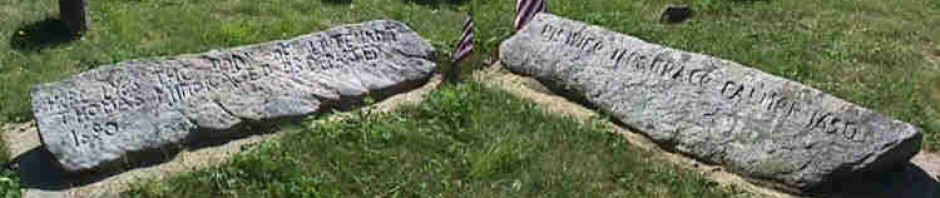

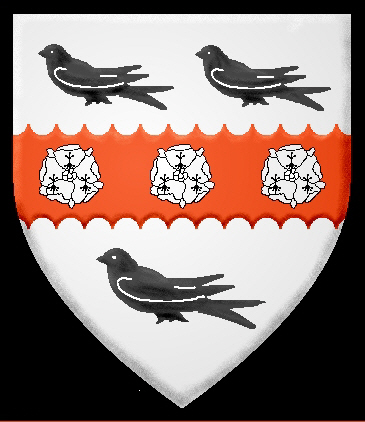
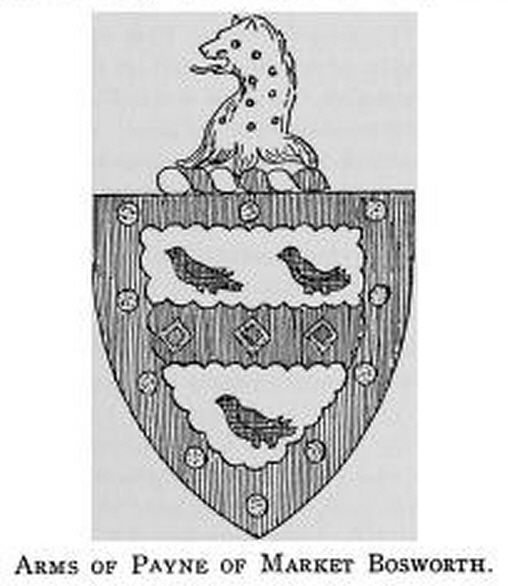
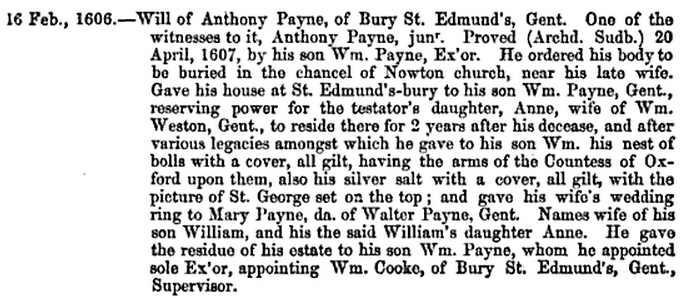


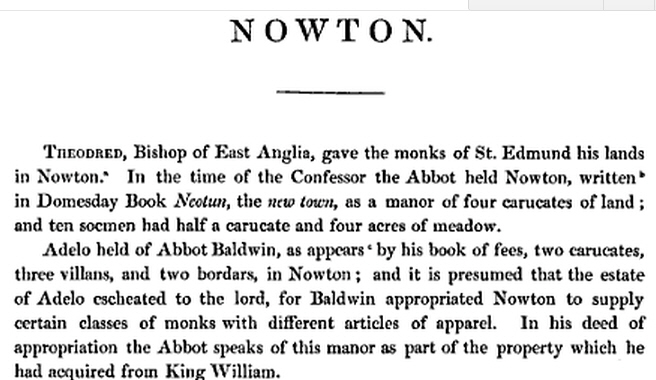

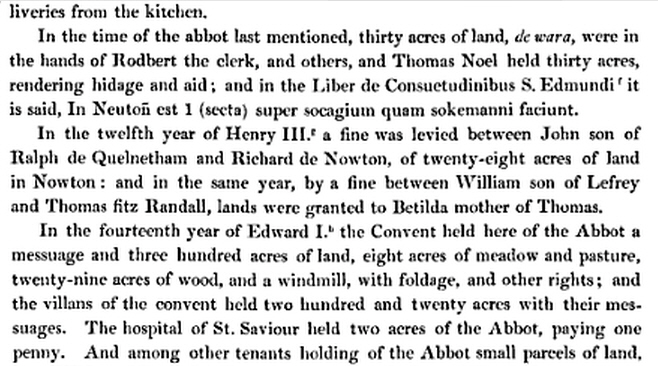

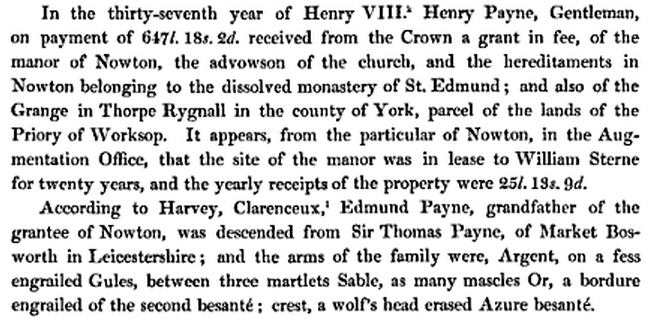
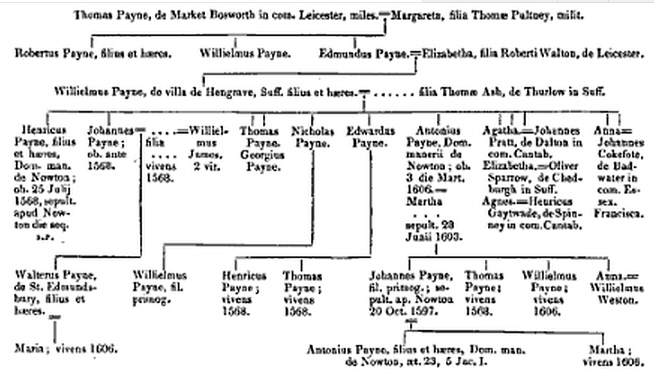

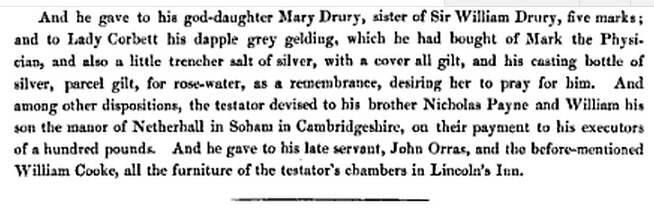

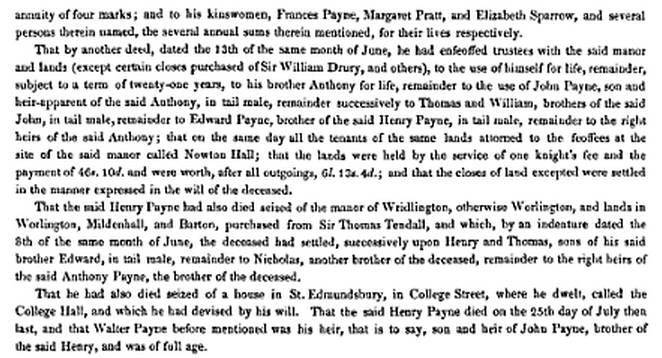
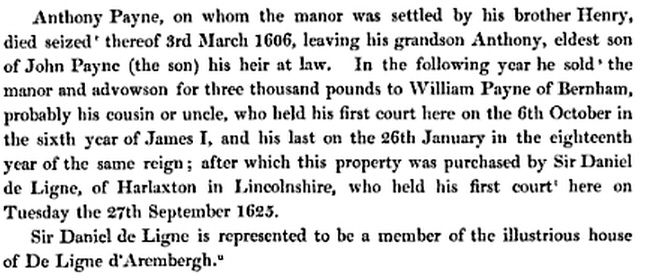
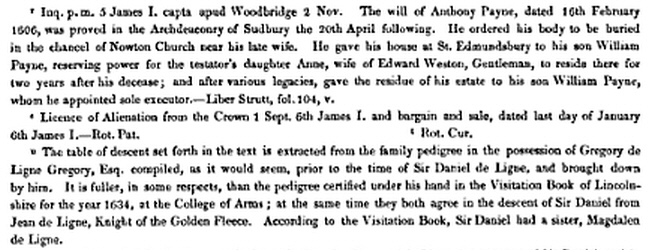
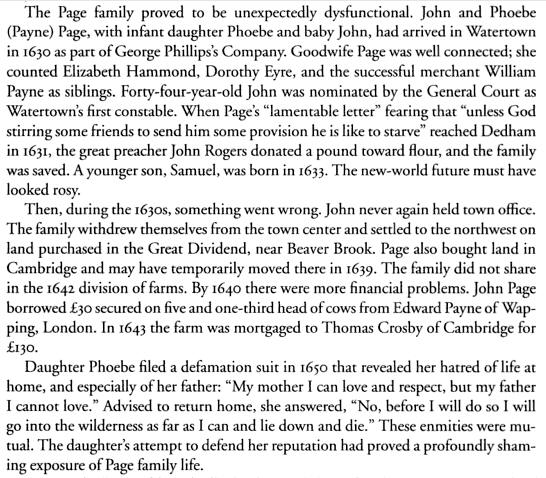

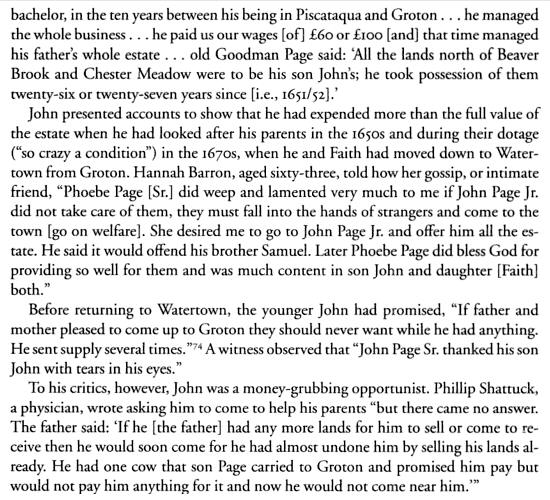
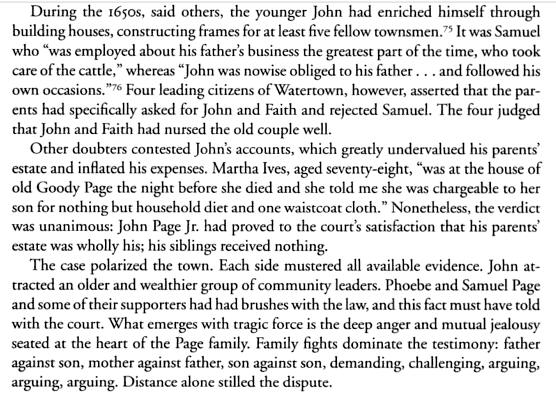
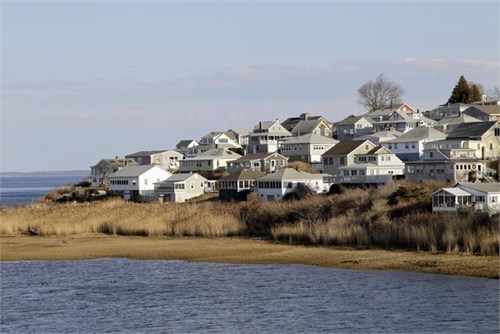

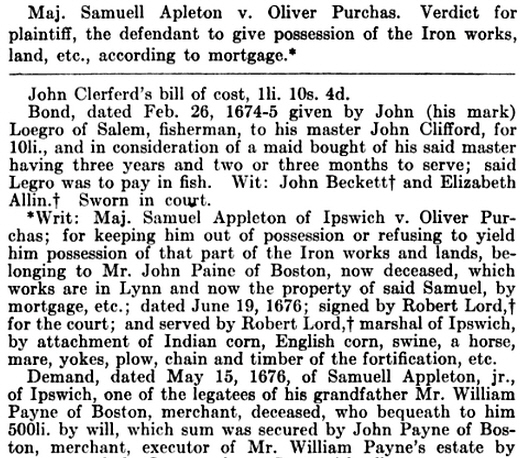
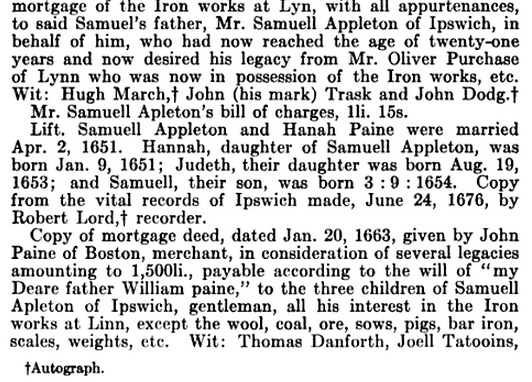
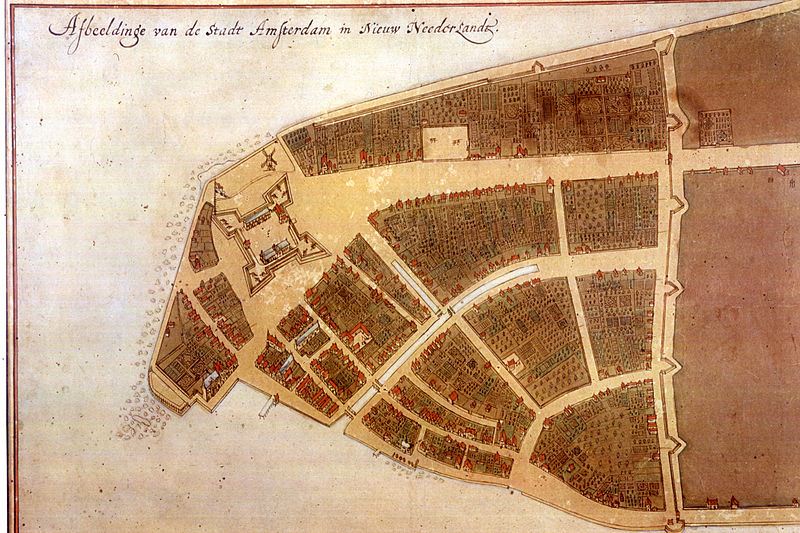


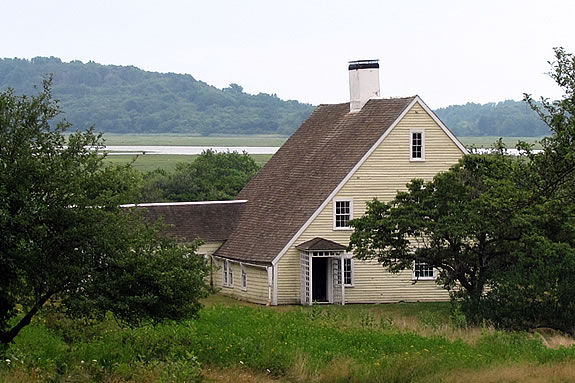
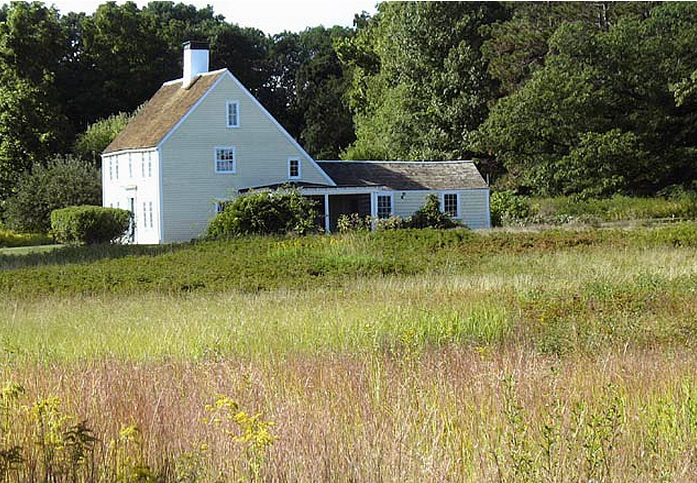
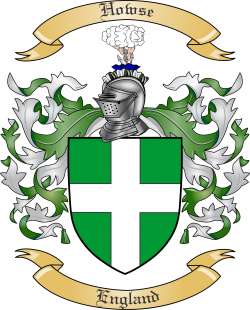
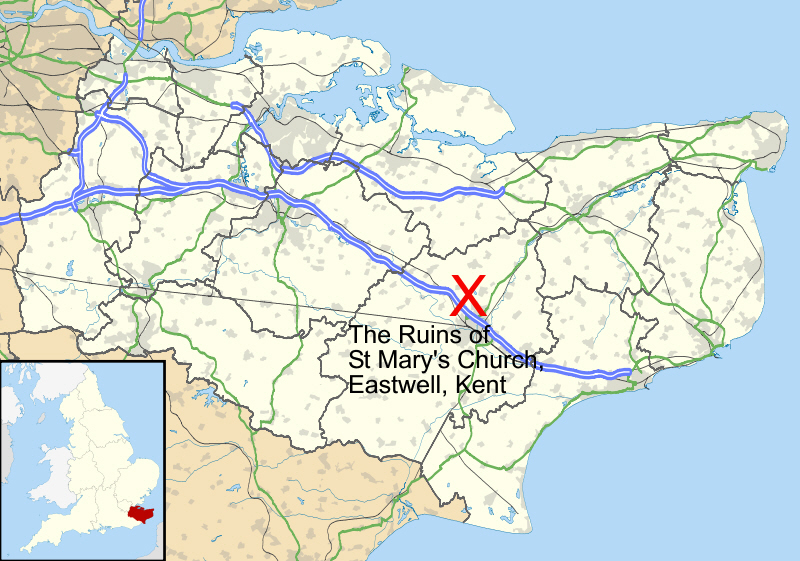
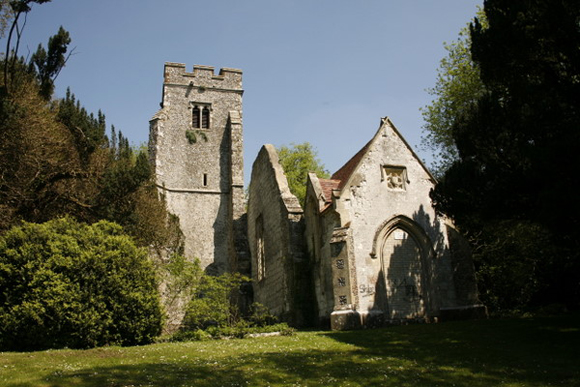
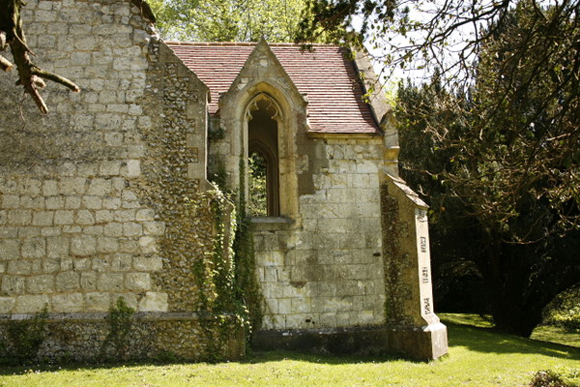
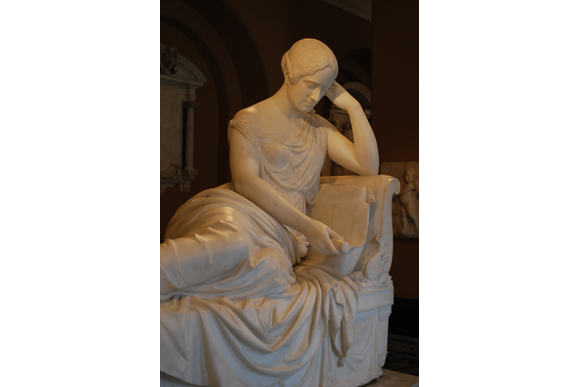
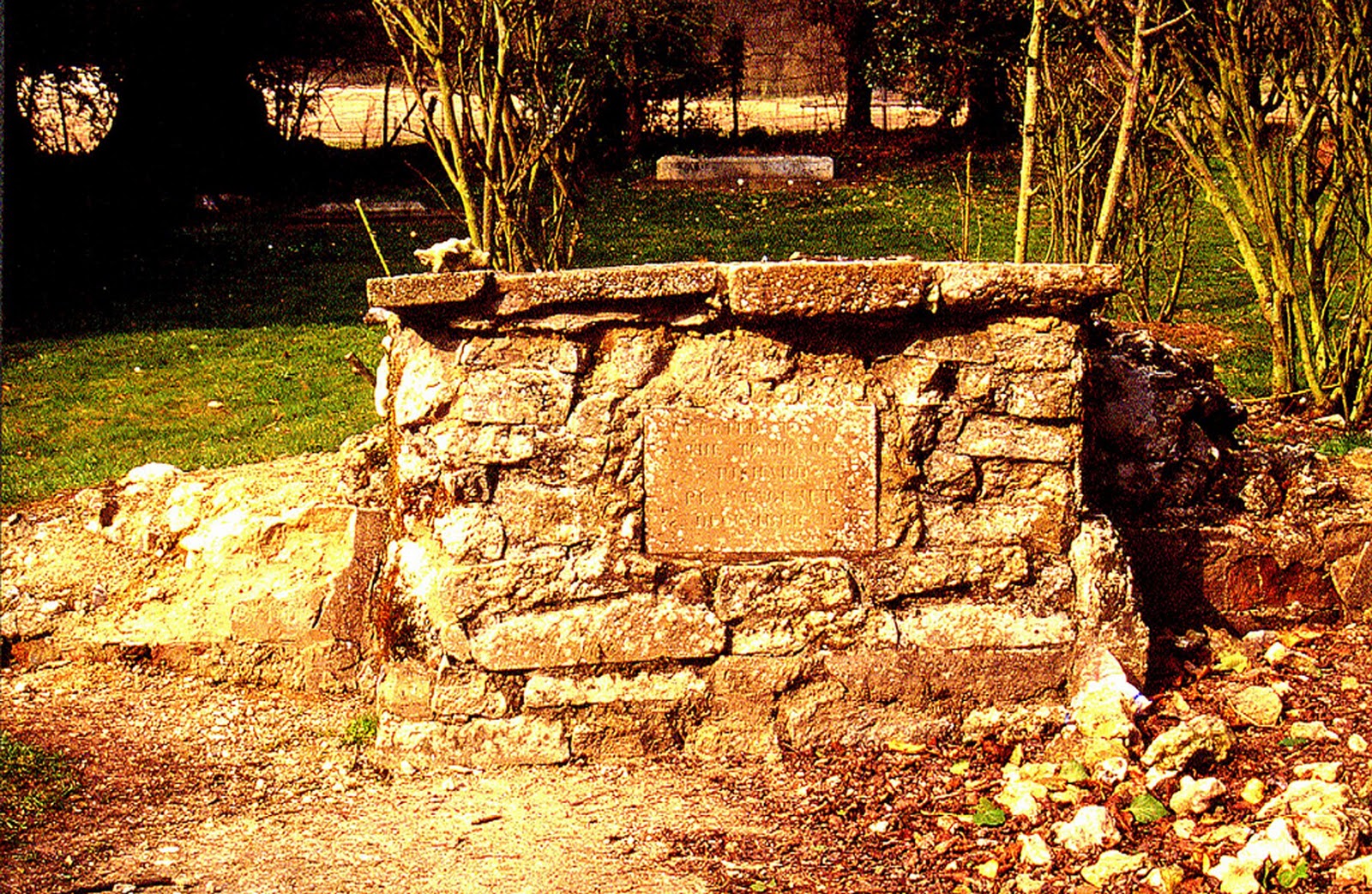
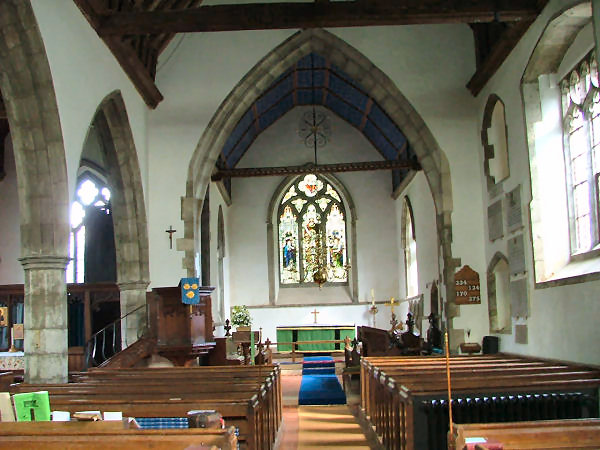
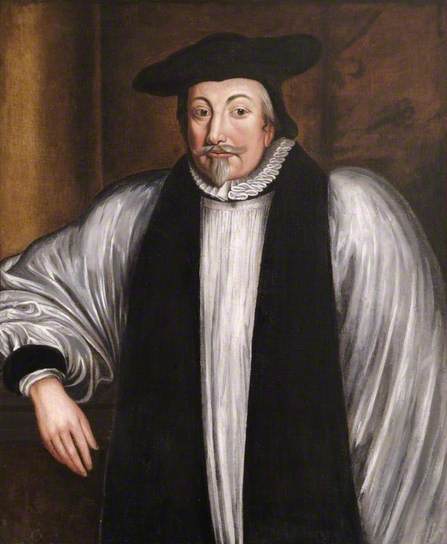
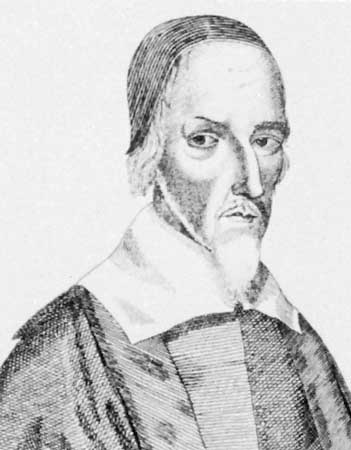






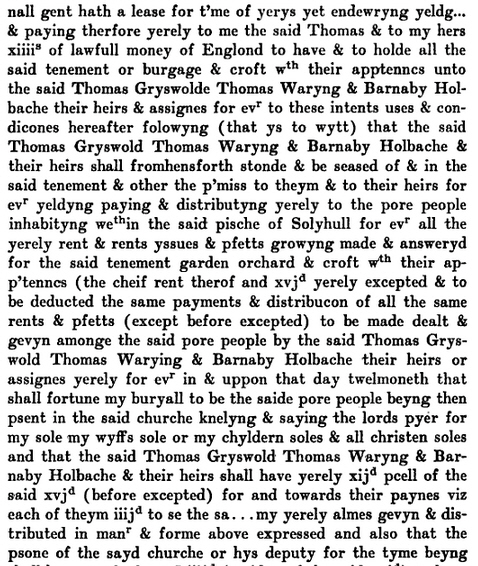




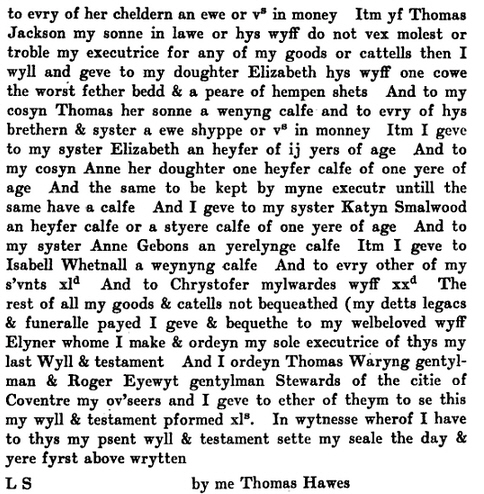


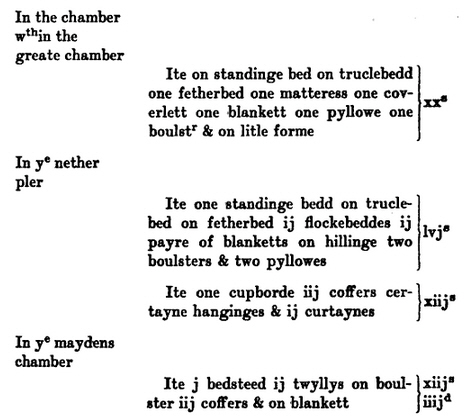
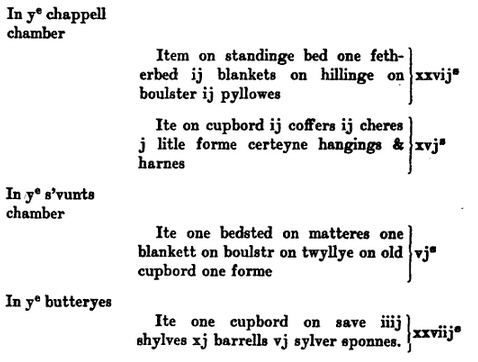


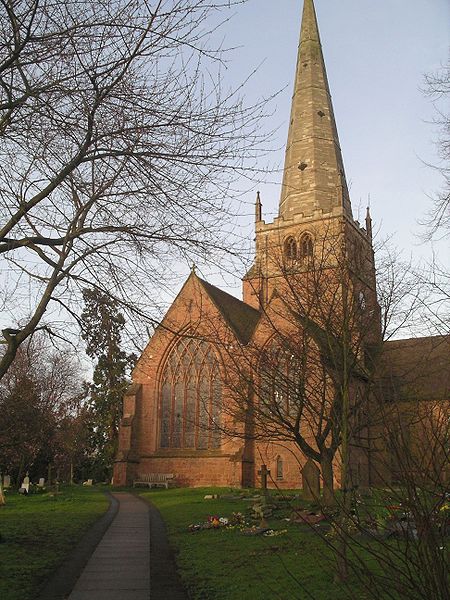
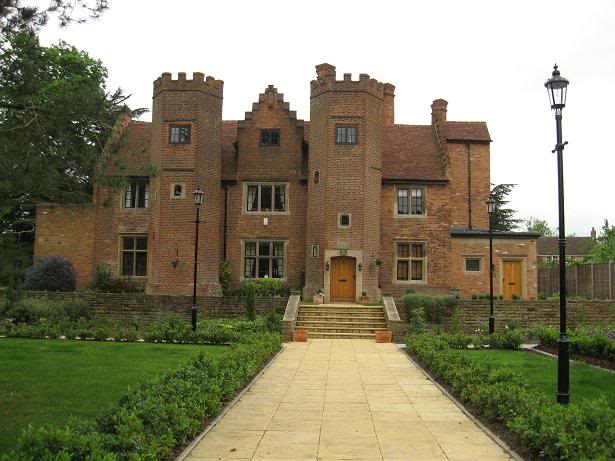
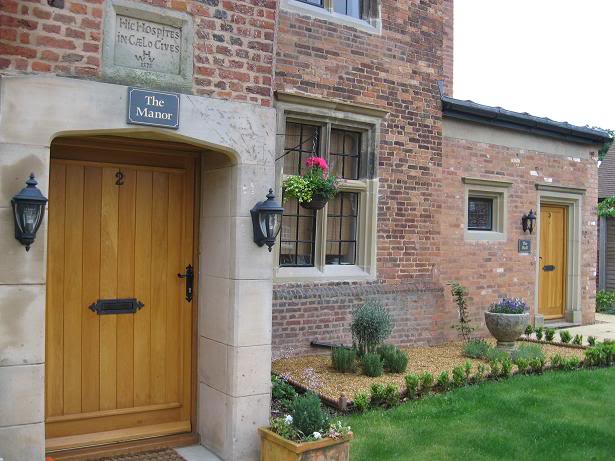
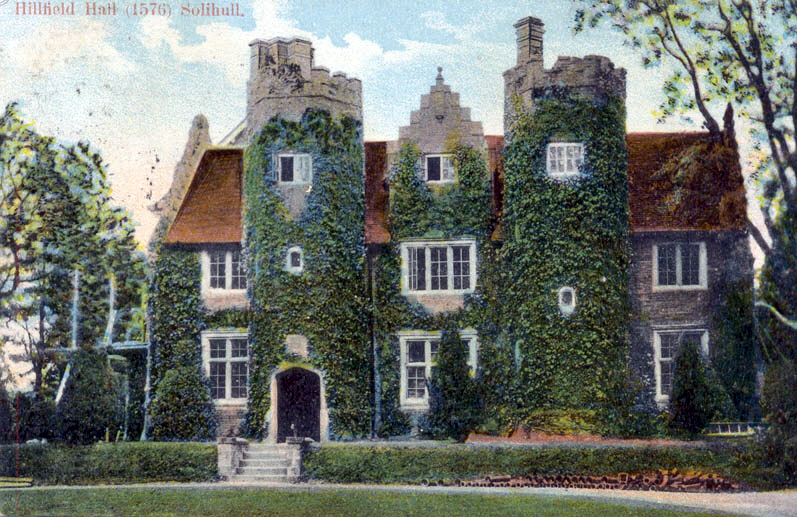







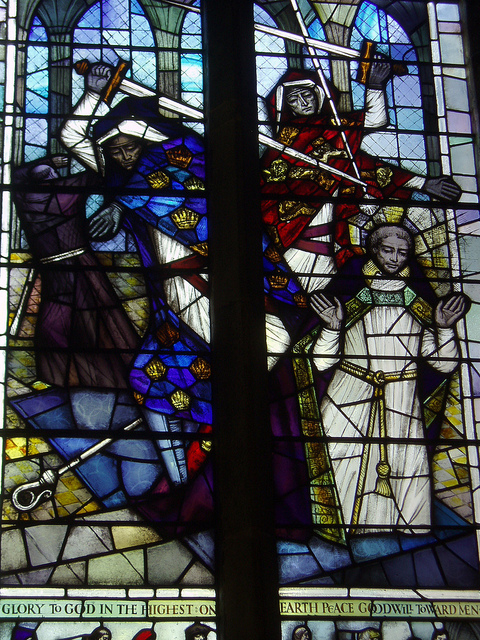
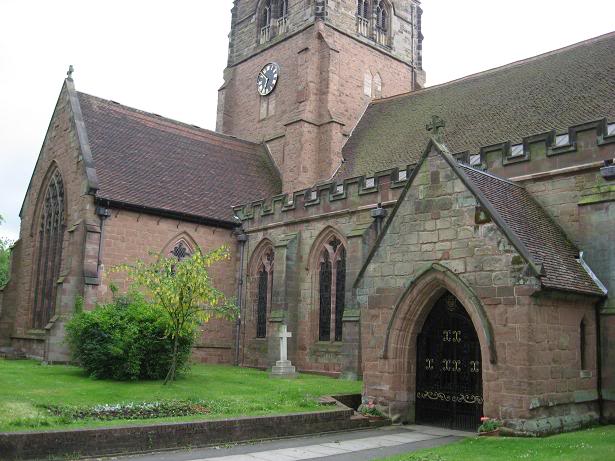



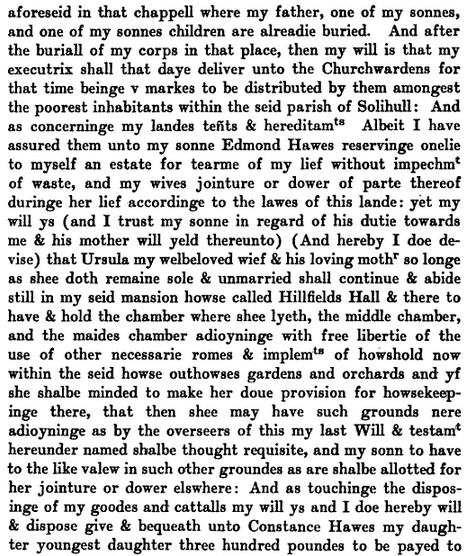
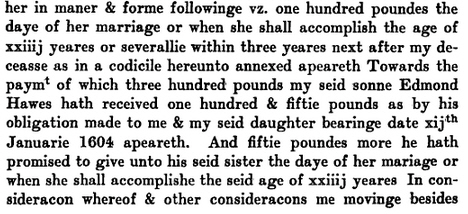
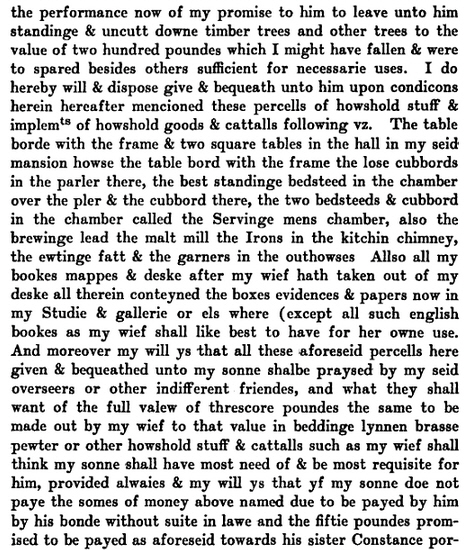

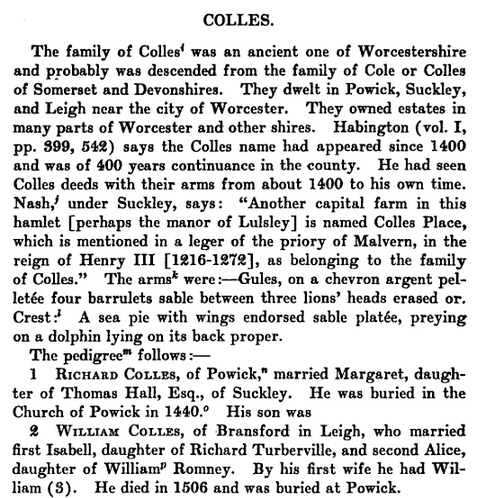
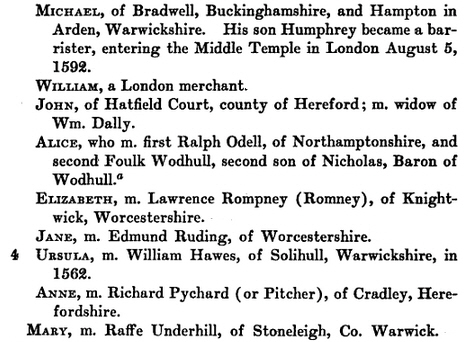



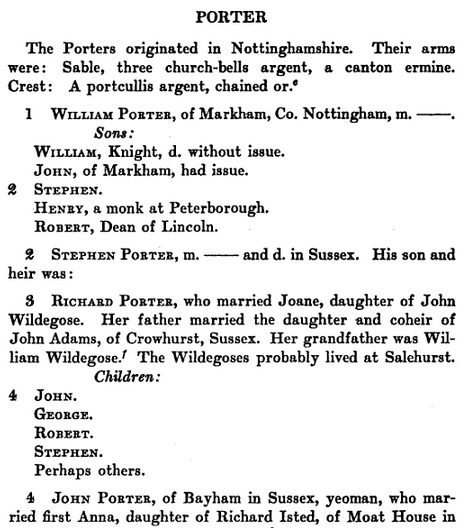

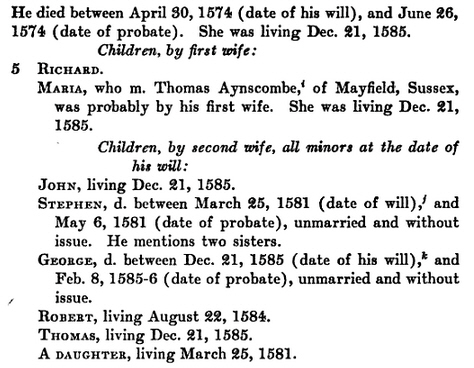
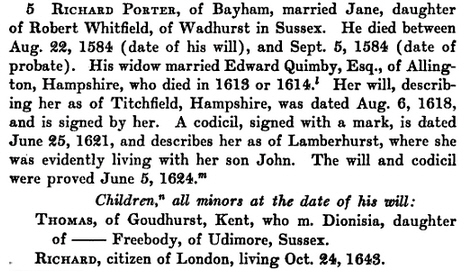
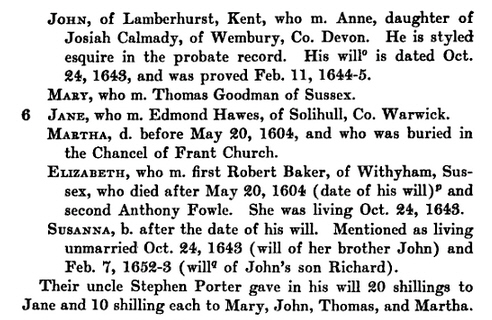
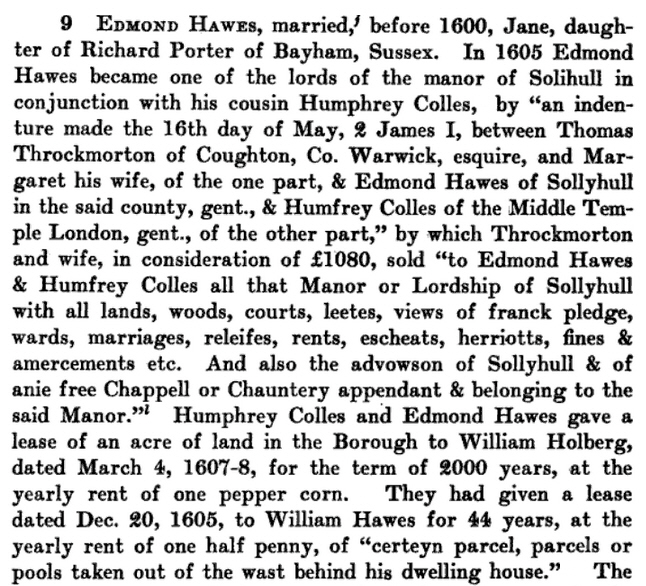
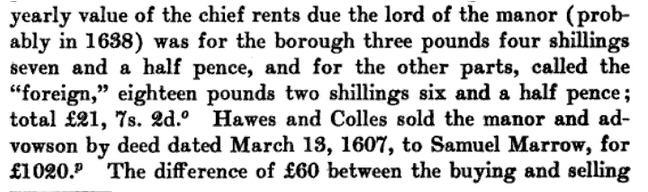







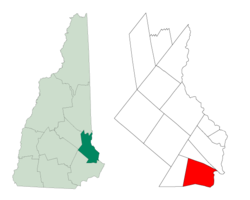
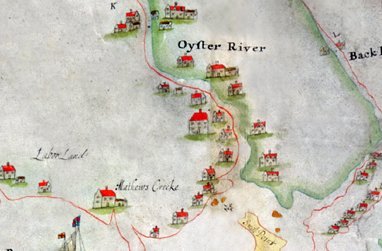
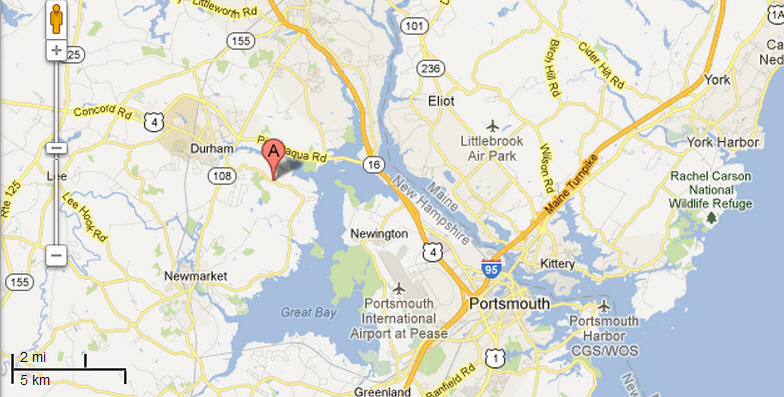
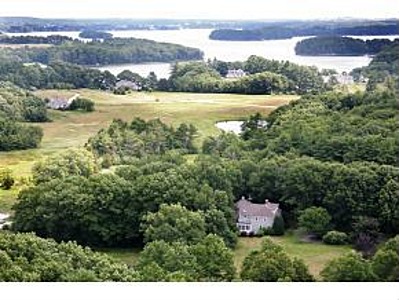

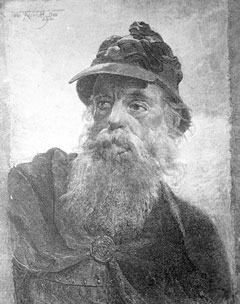
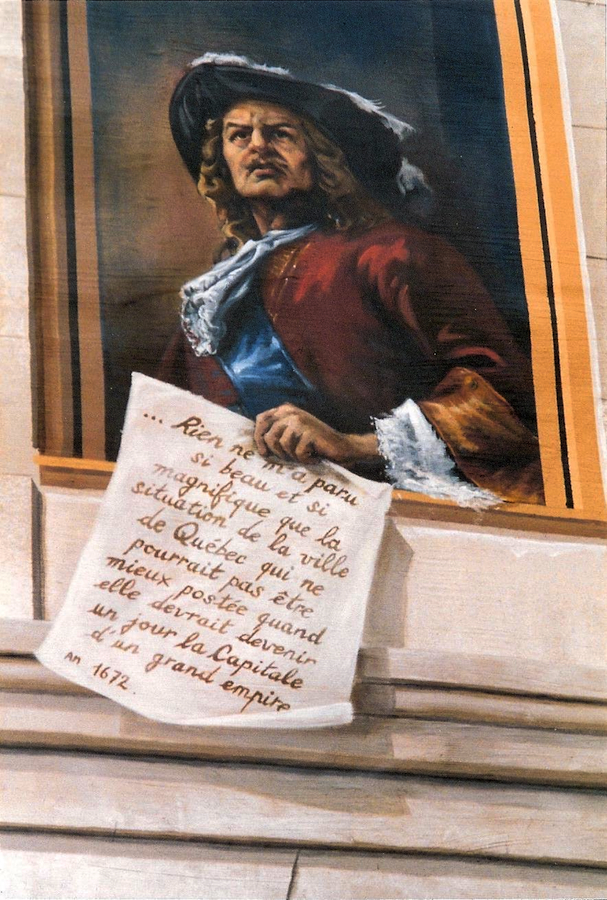
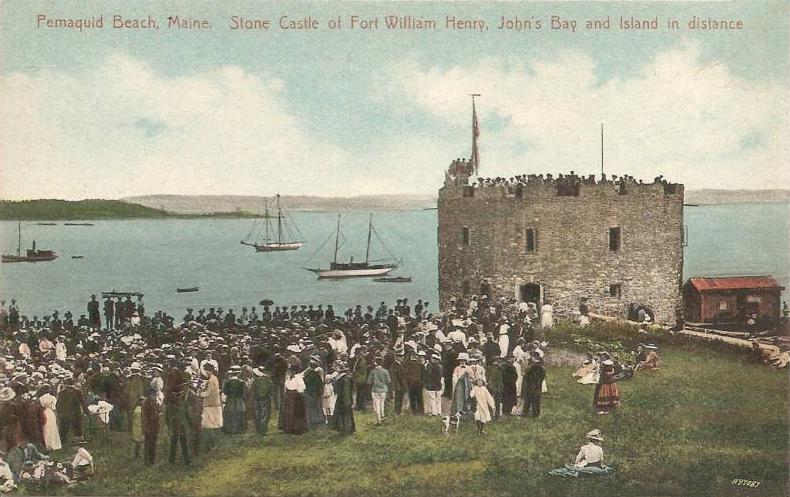
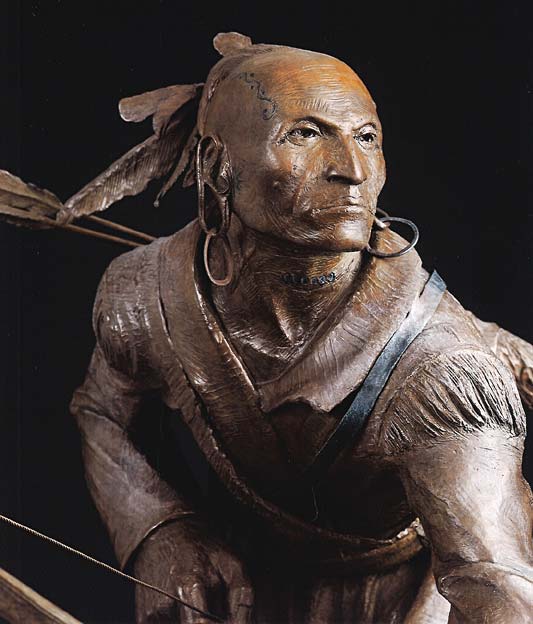
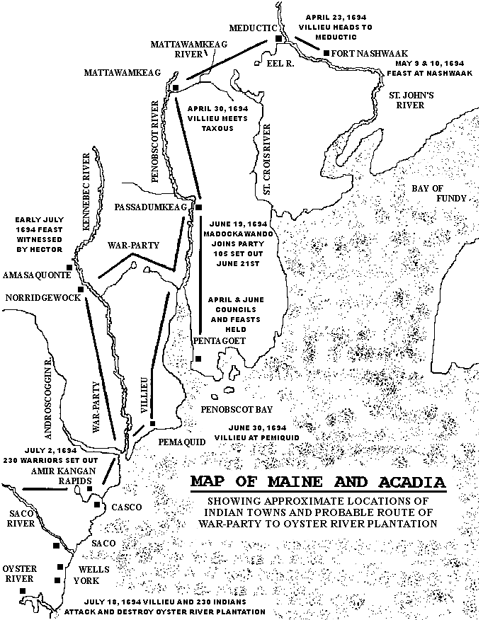
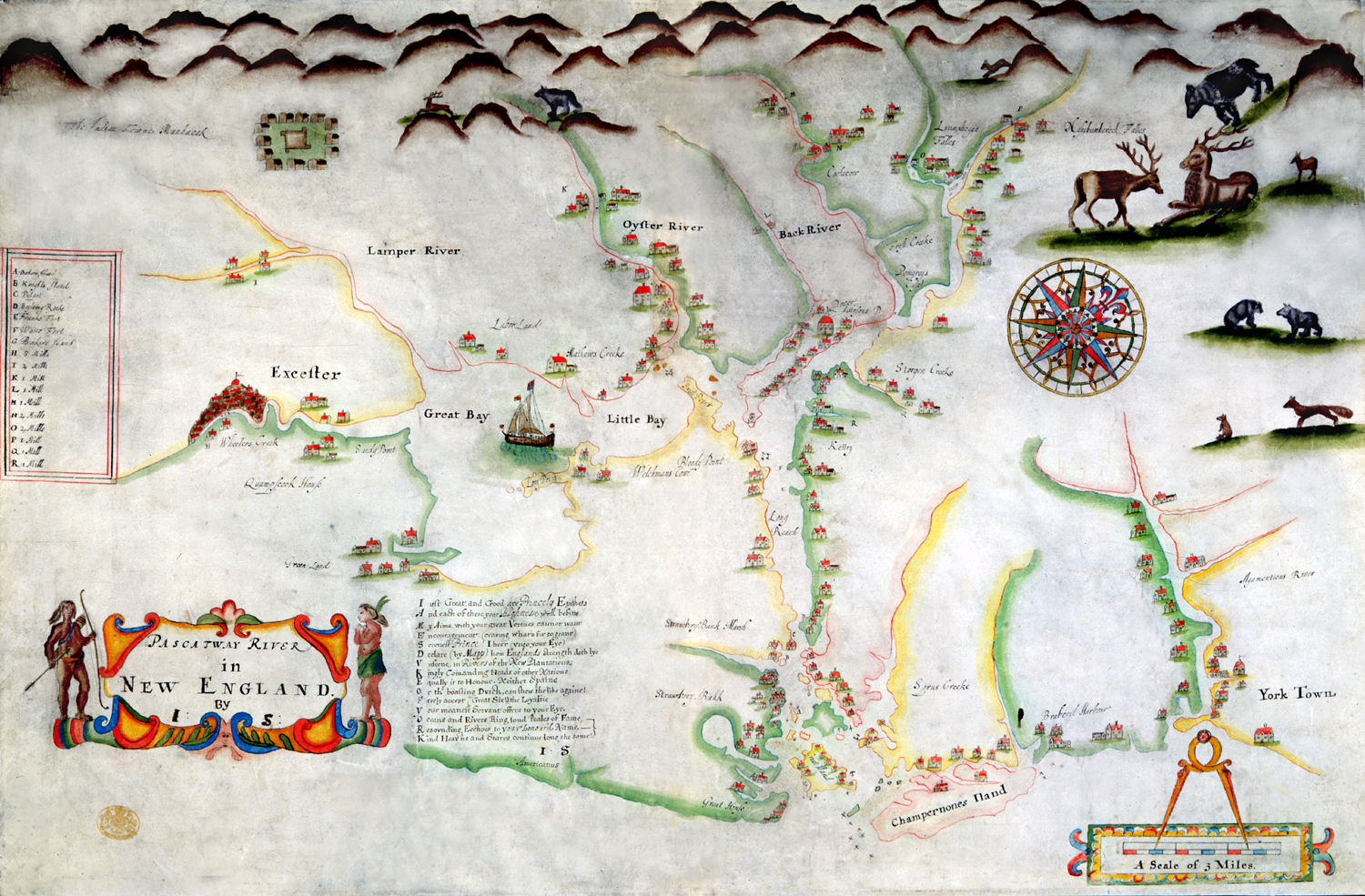
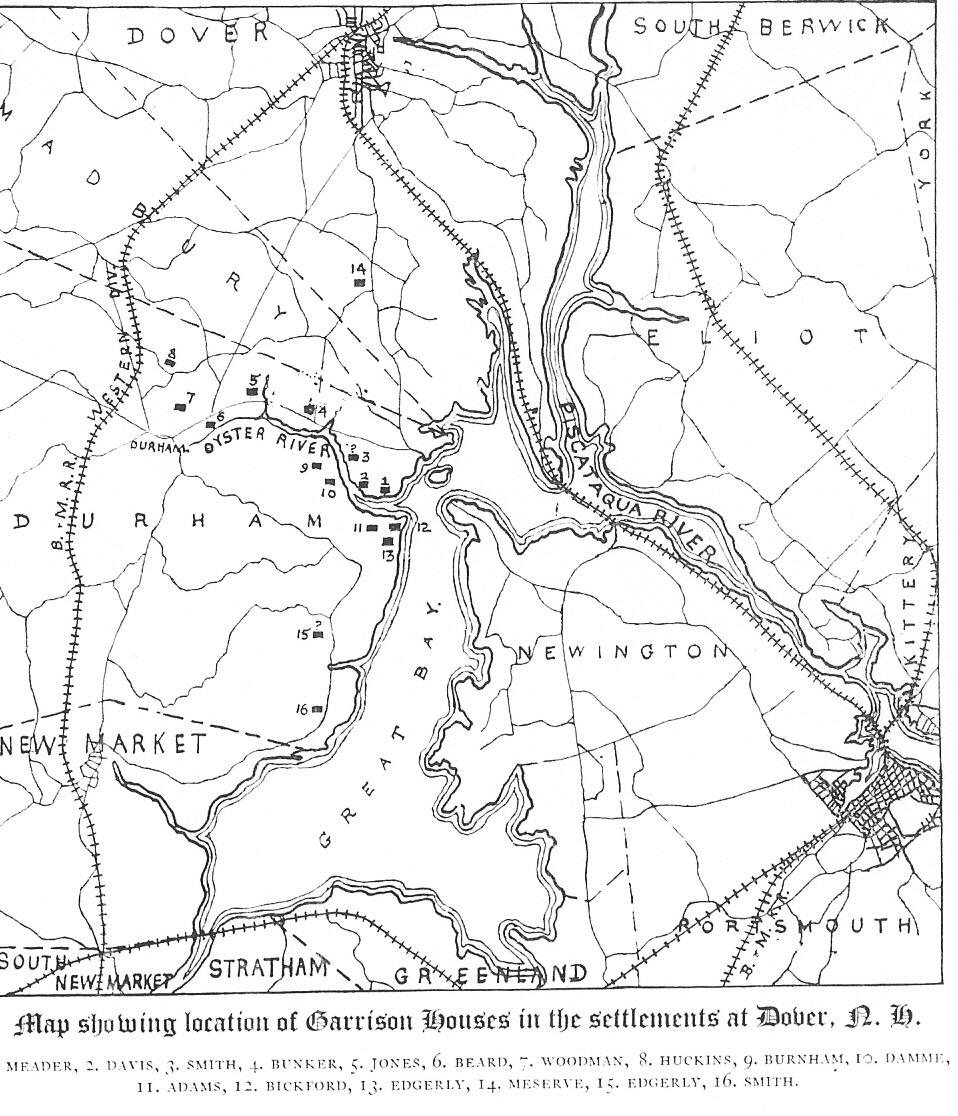

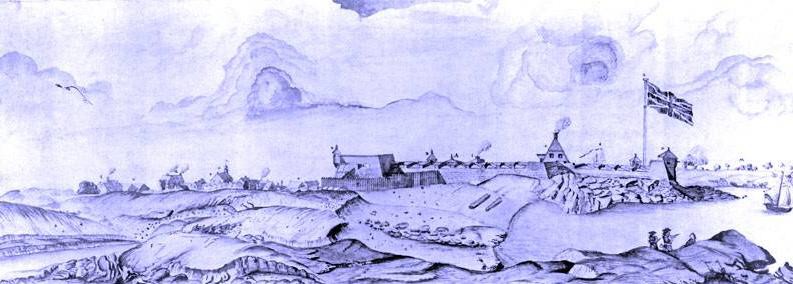

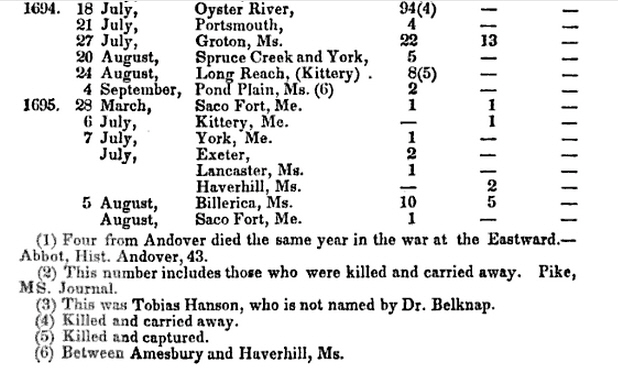
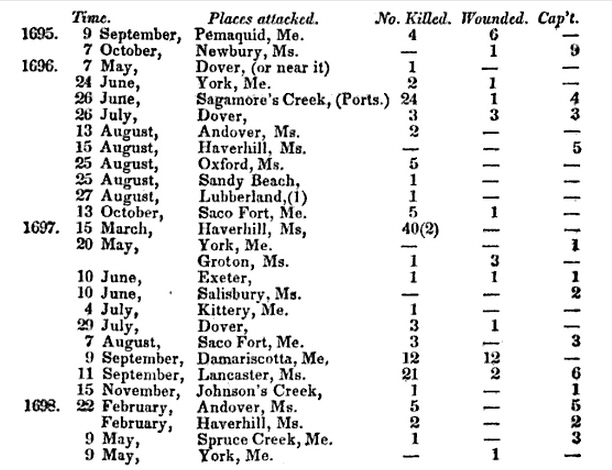





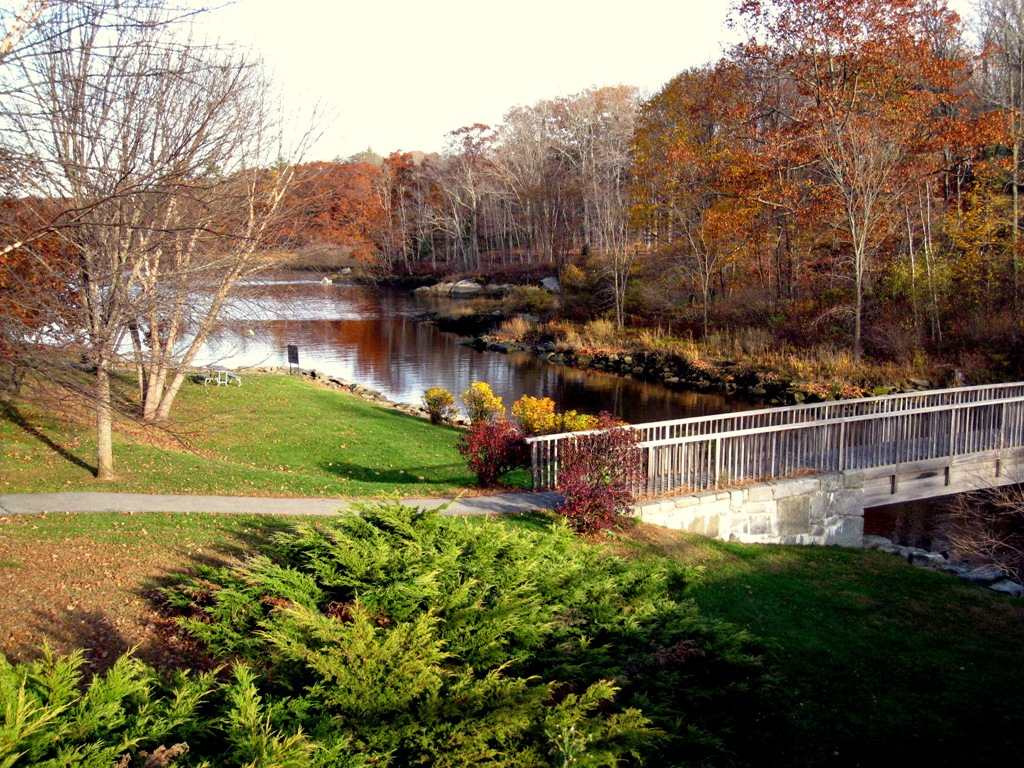
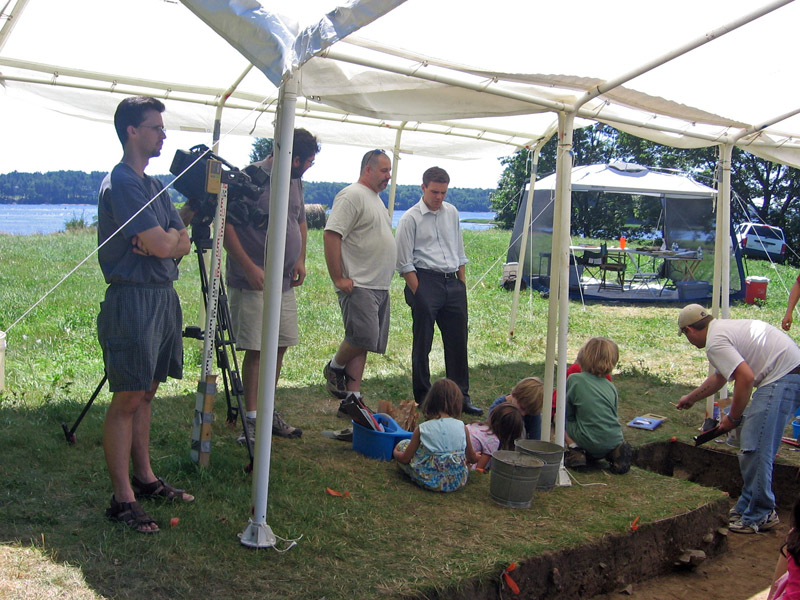


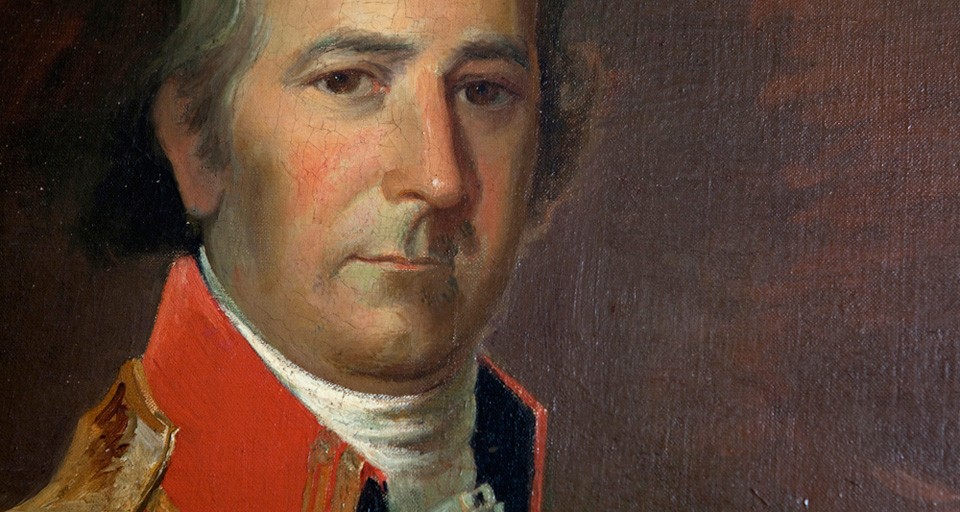
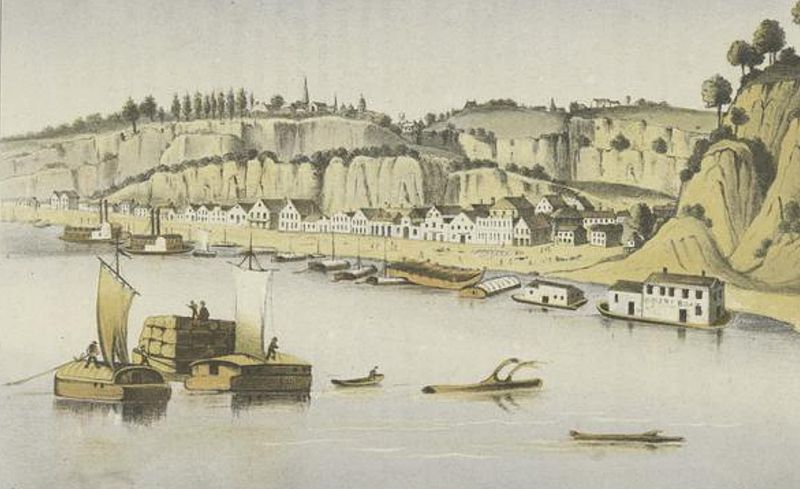
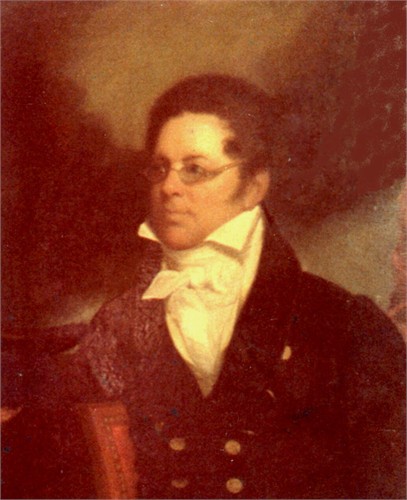
























 Miner Descent