William Woodcock

William WOODCOCK (1620 – 1703 ) was Alex’s 9th Great Grandfather, one of 1,024 in this generation of the Shaw line.

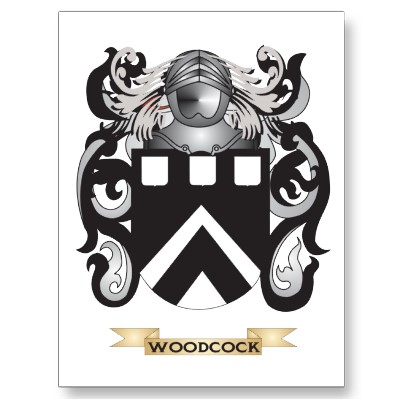
William Woodcock – Coat of Arms

William Woodcock  was born about 1620 in London, England.   His parents were William WOODCOCK Sr. and Alice WASHBURNE.  He first married Sarah Cooper Oct 1648 in Hingham, Norfolk, Mass.  After Sarah died, he married Mary  [__?__] 10 Dec 1663, Rehoboth, Bristol, Mass.   William died 17 Oct 1703 in Attleboro, Mass.

Sarah Cooper was born in 1628 in Hingham, Norfolk, England. Her parents were Anthony COOPER and Margaret CLARK. She immigrated from Hingham England to Hingham, Massachusetts in 1636.  Sarah died 27 Nov 1652 in Hingham, Norfolk, Mass.

Mary [__?__] was born about 1646 in Bristol, Mass.  Mary died after 1709 in Attleborough, Mass.

Children of William and Mary:

Name Born Married Departed
1. Mary Woodcock 17 Aug 1664, Hingham, Norfolk, MA Jonathan Freeman
1 Jul 1689
Attleboro, Mass
4 Mar 1762
2. Sarah WOODCOCK 2 Aug 1667 Hingham, Plymouth, MA Alexander BOLKCOM Jr.
c. 1690 Rehoboth, Bristol, MA.
29 Nov 1726 – Attleboro, Mass
3. Alice Woodcock 25 Nov 1669, Hingham, Norfolk, MA Barak (Baruch, Baruck ) Bucklin
9 Apr 1689
14 Dec 1732 Rehoboth, Bristol, MA
4. Anne Woodcock 31 Mar 1672, Hingham, Norfolk, MA Thomas Fuller
abt. 1703
Rehoboth, Mass.
5. Miriam Woodcock 14 Aug 1677, Hingham, Norfolk, MA Peter Hairs
8 Oct 1720, Rehoboth, Bristol, MA

Sarah’s father Anthony Cooper was born 1584 in Hingham, Norfolk, England. He married Margaret Clark 25 Jul 1609. Anthony died 26 Feb 1636, Hingham, Mass. Sarah’s mother, Margaret Clark was born 1588 in Hingham, Norfolk, England.

Anthony immigrated in 1635 with his wife, four sons, four daughters and four servants was granted a house lot. The names of only 5 children known. John, Anthony, Jeremy, Deborah and Sarah. These were all born in England, but only the first four were baptised in Hingham, Norfolk. Anthony died very early, for his inventory was taken 26 Feb 1636.

William’s brother John was a much more interesting character and there are many more records about John in Roxbury, Springfield and Attleboro than there are about William in Hingham.

Children

1. Mary Woodcock

Mary’s husband Jonathan Freeman was born 03 Jan 1653/54 at: Dedham, Norfolk Co., Mass. His parents were Ralph Freeman and Katherine Lyon. Jonathan died 18 Apr 1718 at: Atteboro, Bristol Co., Mass.

2. Sarah WOODCOCK (See Alexander BOLKCOM Jr.‘s page)

3. Alice Woodcock

Alice’s husband Barak (Baruch) Bucklin was born on 1 Aug 1666 in Rehoboth, Massachusetts. His parents were Joseph Bucklin Sr. and Deborah Allen. He on a list of inhabitants of Rehoboth belonging to Mr. Greenwood’s church on 17 October 1711 in Rehoboth, Bristol County, Massachusetts. He died either on 13 Dec 1732 at the age of 66 or on 7 Feb 1737/38 at the age of 71 in Attleboro, Bristol, Mass.410 He was buried in Newman Cemetery, Rumford, Rhode Island. Headstone in Newman Cemetery is among Carpenter graves, rather than among Bucklin graves, and reads: “Here lies ye Body of Barah Bucklen, Decd Feby 7th, 1738/9 in ye 73rd year of his Age.”

Query whether this is the same Barak Bucklin shown in the records of the Patriots and Founders roll which is the alternative source shown on Barak’s death. There are a number of Barak Bucklins born in about the same time and about the same place. Several are repported to have been buried in Newman Cemetary in Pawtucket, RI. There is confusion among the reporters caused by this number of Baraks. Hopefully, someone will take the time to investigate the cemetary stones and help to eliminate confusion,

4. Anne Woodcock

Anne’s husband Thomas Fuller was born 28 Jun 1671 in Rehoboth, Bristol, Mass. His parents were Jonathan Fuller and Elizabeth Wilmarth. His grandparents were our ancestors Sgt. Thomas WILMARTH and Elizabeth BLISS.  He first married Elizabeth Cobley on 8 Jan 1692/93 in Rehoboth, Bristol, MA. He next married Ann Woodcock about 1703. He finally married Mary White on 15 Nov 1722. Thomas died 23 Oct 1742.

5. Miriam Woodcock

It appears a Miriam Woodcock married a Peter Hairs (Harris?) 8 Oct 1720, Rehoboth, Bristol, Mass.  Some sources state that Peter was born in 1698 in Rehoboth, making an unlikely combination of a 22 year old groom and a 43 year old bride. Other than this scant information, I don’t see anything more about this couple.

Sources:

http://www.pbalkcom.com/gwb/Jerry-o/p4.htm#i554

http://www.angelfire.com/fl/Sumter/pafg190.htm

http://home.earthlink.net/~awoodc/

http://www.hingham.org.uk/?page_id=162

Posted in 11th Generation, Line - Shaw, Missing Parents | Tagged | 6 Comments

Nathanael Greene

General Nathanael GREENE (1742 – 1786) (wiki) A major general of the Continental Army in the American Revolutionary War.  George Washington’s most gifted and dependable officer, his friend and comrade-in-arms.  Nathanael’s first two children were named George Washington Greene and Martha Washington Greene.

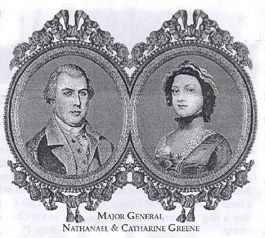
Major General Nathanael & Catharine Littlefield

Family legend  says Josiah Harvey FOSTER’S wife, Mary Ann Turk (1811 – ?), was  related to General Greene of the Revolution.  My grandmother’s second cousin Lydia Smith Townsend (1869 – 1946)  remembered seeing a family silver tray that had belonged to him.  She didn’t know what had become of it.  I have worked Nathanial Greene’s family tree up to grandparents and down to grandchildren and have lately even added his siblings, nephews and nieces, all to no avail.

Lydia Smith (1869 – 1946) who remembered the Greene Silver Tray-  My grandmother wrote on the back of this photo “Popa’s Cousin 27th Wedding Anniversary”

So far, I have only found that our ancestor Edmund LITTLEFIELD was Caty Littlefield Greene’s 3rd great grandfather. While this is surely not the relationship  Lydia Smith Townsend was talking about, I’ve included the relevant Littlefield family tree.

I’m still looking for the silver tray owner. Our ancestor Jonah PALMERs daughter Mary married Dr. Joseph Doggett in 1668.  Their home, the Daggett House is an historic house in Slater Park in Pawtucket, Rhode Island. The house is the oldest house in Pawtucket, and one of the oldest surviving buildings in the state. It opened as a museum in 1905. Furnished with unusual period antiques, including Colonial pewter used in Revolutionary War and china owned by Gen. and Mrs. Nathanael GREENE and the Daggett Family.  Built 1685. House may be rented for small parties. So we know where to find the china, still working on the silver.

Nathanael Greene was born in 27 Jul 1742 in Warwick, Rhode Island.   His parents were Nathaniel GREENE  and Mary MOTT. He married  20 July  1774 Greene Farm, East Greenwich, Rhode Island to Catherine LITTLEFIELD.  Nathanael died of sunstroke 19 Jul 1786  in Savannah, Georgia.

http://www.schooltube.com/embed/4a4ac438c6ba39aba713

Catherine  (Caty) Littlefield was born in 17 Dec 1753 in Block Island, Newport, Rhode Island.  Her parents were John LITTLEFIELD and  Phebe RAY.  Caty,” as she was known by friends, had been living in East Greenwich with her aunt and uncle (William and Catharine [Ray] Greene of Greene Farm, East Greenwich, R.I.) since her mother died when she was ten years old. Her uncle was a Whig Party leader and governor of Rhode Island. Her aunt and namesake, Catherine Ray, was a close friend and correspondent of Benjamin Franklin from 1751-1784.

Nathanael Greene and Catherine Littlefield were married in the “best parlor” at Greene Farm, East Greenwich, R.I. After Nathanael died, she married Phineas Miller on June 13, 1796 in Philadelphia’s First Presbyterian Church.  President and Mrs. Washington served as witnesses to the wedding. While operating Mulberry Grove, she hired another tutor, Eli Whitney. While in her employ he invented the Cotton Gin which was to revolutionize the cotton industry. Phineas and Eli went into business manufacturing the machines. However, it appears they over invested in the venture and shortly thereafter, Caty was forced to sell Mulberry Grove. Catherine died 2 Sep 1814 in Cumberland Island, Dungeness, Georgia.

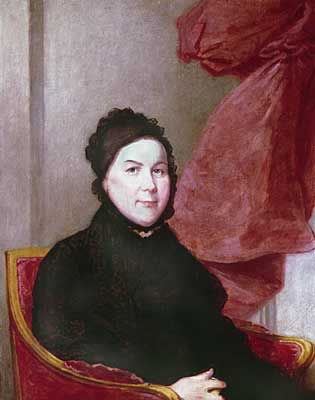
Catherine Littlefield Greene

Phineas Miller was born 22 Jan 1764 in Middlefield, Middlesex, CT. His parents were Isaac, Miller Esqr(1737 – 1817) and Hannah Coe (1743 – 1833). Phineas died 7 Dec 1803 in Dungeness, Georgia.

Children of Nathanael and Catherine:

Name Born Married Departed
1. George Washington Greene Feb 1776,
Coventry, Kent, Rhode Island
28 Mar 1793 Mulbery Grove, Dungeness, Georgia
2. Martha Washington Greene 14 Mar 1777 Warwick, Kent, Rhode Island John Nightingale
12 May 1795 Mulberry Grove, Harris, GA
.
Henry Edmund Turner
15 Oct 1810
1802
3. Cornelia Lott Greene 23 Sep 1779 Coventry, Kent, Rhode Island Peyton Skipwith
22 Apr 1802
Cumberland Island, Dungeness, GA
.
Edward Brinley Littlefield (Catherine’s Nephew)
May 1810
Cumberland Island, Dungeness, GA
1865 Potowomut, Kent, Rhode Island
4. Nathaniel Ray Greene 29 Jan 1780 Warwick, Kent, Rhode Island Anna Marie Clarke
9 Sep 1808
East Greenwich, Kent County, RI
11 Jun 1859 Middletown, Newport, RI
5. Louisa Catherine Greene 1782
Warwick, Kent, Rhode Island
James Shaw
Mar 1814
24 Apr 1831 Cumberland Island, Camden, Georgia
6. Kate Greene 1786
Warwick
1786

Caty was instrumental in the invention of the cotton gin, an invention that changed the face of the South forever. Without the cotton gin, slavery would have been nowhere near as profitable.

In an 1883 article in The North American Review titled “Woman as Inventor”, the early feminist and abolitionist Matilda Joslyn Gage claimed that Greene suggested to Whitney the use of a brush-like component instrumental in separating out the seeds and cotton.  ]To date there has been no independent verification of Greene’s role in the invention of the gin. However, many believe that Eli Whitney received the patent for the gin and the sole credit in history textbooks for its invention only because social norms inhibited women from registering for patents.

Neither Whitney nor Greene made much money. Despite previous success and their best efforts, Mulberry Grove fell upon hard times by 1798. Catharine and Phineas, in financing the cotton gin firm of Whitney and Miller, had lost a great deal of money in a land scam. Caty was forced to sell the plantation along with many of Mulberry Grove‘s slaves, moving her family to Cumberland Island. There she and Phineas established a new home on land that had been given to Nathanael. The plantation, called “Dungeness,” thrived. They held a total of 210 slaves to work the plantation. In 1803 Phineas died. Catharine stayed at the plantation until she died in 1814 and is buried there..

Here’s the story from the Eli Whitney Museum

Sea Island cotton, so named because it grew only in very sandy soil along the coast, was a recent crop and within a short time was being cultivated wherever it found favorable conditions. Tobacco was a land waster, depleting the soil within very few years. Land was so cheap that tobacco planters never bothered to reclaim the soil by crop rotation — they simply found new land farther west. The other crops — rice, indigo, corn, and some wheat — made for no great wealth. Slaves cost something, not only to buy but to maintain; and some Southern planters thought that conditions had reached a point where a slave’s labor no longer paid for his maintenance.

In his early twenties, Whitney determined to attend Yale College, so unusual a step for anyone not preparing for either the law or theology that his parents objected. He was twenty-three before he got away from home and twenty-seven when he received his degree, almost middle-aged in the eyes of his classmates. Again the most serious drawback facing him was that no profession existed suited to a man of his talents. Whitney settled for teaching (he had taught while attending Yale), and accepted a position as a tutor in South Carolina that promised a salary of one hundred guineas a year.

He sailed on a coasting packet that took a few passengers, among whom was the widow of the Revolutionary general, Nathaniel Greene. The Greenes had settled in Savannah after the war. When Whitney arrived, he found to his disgust that the promised salary was going to be halved. He not only refused to take the post, but decided to give up teaching as well. Mrs. Greene invited him to accompany her to her plantation and read law. In the meantime, he could make himself useful in one way or another helping the plantation manager, Phineas Miller, whom she intended to marry. Miller was a Yale alumnus, a few years older than Whitney. Whitney accepted the offer.

Shortly after he settled down, some neighbors visited the plantation and, as usual, fell to discussing the bad times. There was no money crop; the only variety of cotton that would grow in that neighborhood was the practically useless green seed variety. Ten hours of handwork was needed to separate one point of lint from three pounds of the small tough seeds. Until some kind of machine could be devised to do the work, the green seed cotton was little better than a weed.

“Gentlemen,” said Mrs. Greene, “apply to my young friend, Mr. Whitney. He can make anything.”

At the urging of Mrs. Green and Phineas Miller, Whitney watched the cotton cleaning and studied the hand movements. One hand held the seed while the other hand teased out the short strands of lint. The machine he designed simply duplicated this.

To take the place of a hand holding the seed, he made a sort of sieve of wires stretched lengthwise. More time was consumed in making the wire than stringing it because the proper kind of wire was nonexistent.

To do the work of the fingers, which pulled out the lint, Whitney had a drum rotate past the sieve, almost touching it. On the surface of the drum, fine, hook-shaped wires projected which caught at the lint from the seed. The restraining wires of the sieve held the seeds back while the lint was pulled away. A rotating brush, which turned four times as fast as the hook-covered drum cleaned the lint off the hooks. Originally Whitney planned to use small circular saws instead of the hooks, but the saws were unobtainable. That was all there was to Whitney’s cotton gin; and it never became any more complicated.

Whitney gave a demonstration of his first model before a few friends. In one hour, he turned out the full day’s work of several workers. With no more than the promise that Whitney would patent the machine and make a few more, the men who had witnessed the demonstration immediately ordered whole fields to be planted with green seed cotton. Word got around the district so rapidly that Whitney’s workshop was broken open and his machine examined. Within a few weeks, more cotton was planted than Whitney could possible have ginned in a year of making new machines.

The Cotton Avalanche

The usual complaint of an inventor was that people were reluctant to give his machine a chance. Whitney’s complaint was just the opposite. Before he had a chance to complete his patent model, or to secure protection, the prematurely planted cotton came to growth. With harvests pressing on them, the planters had no time for the fine points of law or ethics. Whitney’s machine was pirated without a qualm.

Whitney had gone into partnership with Miller. The agreement was that Whitney was to go north to New Haven, secure his patent, and begin manufacturing machines, while Miller was to remain in the South and see that the machines were placed. Having no precedent of royalty arrangement to go on, the partners’ first plan was that no machine was to be sold, but simply installed for a percentage of the profit earned. Since they had no idea that cotton planting would take place in epidemic proportions, they did not know that they were asking for an agreement that would have earned them millions of dollars a year. It had been Miller’s idea to take one pound of every three of cotton, and the planters were furious. Cotton, one of the easiest growing crops, was coming up out of the ground in white floods that threatened to drown everyone.

By the time Whitney and Miller were willing to settle for outright sale or even a modest royalty on every machine made by someone else, the amount of money due them was astronomical. He and Miller were now deeply in debt and their only recourse was to go to court; but every court they entered was in cotton country. At length in 1801, eight years after the holocaust started, Miller and Whitney were willing to settle for outright grants from cotton-growing states in return for which the cotton gin would be public property within the boundaries. Even at that, only one state made a counter offer of half the asking price. Whitney accepted the price of $50,000 for which he received a down payment of $20,000 and no more.

The following year, North Carolina followed along in a slightly different fashion, levying a tax on every gin in the state. This sum, less 6 per cent for collection, went to Whitney and Miller; it came to another $20,000. Tennessee paid about $10,000, and there was another $10,000 from other states. The gross income was $90,000, most of which was owed for legal costs and other expenses. In 1803, the states repudiated their agreements and sued Whitney for all the money paid to him and his partner. That year alone the cotton crop earned close to ten million dollars for the planters. The price of slaves had doubled, and men’s consciences no longer troubled them. Manumission was a forgotten word.

The following year, 1804, Whitney applied to the federal Congress for relief and, by one vote, was saved from total ruin. He was penniless, and his patent worthless, he was thirty-nine years old, and most of the past ten years had been wasted either in courtrooms or in traveling from one court to another.

He turned his back on cotton, the cotton gin, and the South forever. He went on to invent interchangeable gun part which changed the face of the North forever.

Back to genealogy ….

Children and Grand Children

1. George Washington Greene 

George received his education in Paris, all expenses paid by the Marquis de LaFayette. He returned to Georgia and was enjoying the life of a Southern gentleman, when he drowned in the Savannah River on 28 Mar 1793. It is said that Caty never recovered from that loss.

2. Martha Washington Greene

Martha’s first husband John Nightingale was born 28 Jan 1771 in Providence, Providence, RI. His parents were Joseph Nightingale and Elizabeth Corliss.  John  died 1805.

Children of Martha and John:

i. Catherine Greene Nightingale b. 1796 Cumberland Island, GA, d. 13 Jun 1833, Maury County, TN ; m.  Dr. John Littlefield on New Years Day, 1823 at Dungeness (“Caty’s” former estate) Catherine was 1st cousin once removed to John. He was born  6 Jul 1800, Mulberry Grove, Georgia; d. 21 Feb 1848, Mt Pleasant, Maury County, TN. His parents were Capt Littlefield and Elizabeth Brinley. He prospered, had an office in Columbia and lived all his life in Maury Ct., TN. His second wife, Elizabeth Kercheval, was 21 years his junior; she bore him a son William John

ii. Joseph Corlis Nightingale, b. 1798 Cumberland Island, GA;  d. 1798 Cumberland Island, GA

iii. Ebenezer Nightingale, b. 1800 Cumberland Island, GA d. 1801  Cumberland Island, GA

iv. Phineas Miller Nightingale, born 1803 in Cumberland Island, GA  d. Bef. 28 Jun 1880 Georgia m. Mary King 1836

Martha’s second husband Dr. Henry E. Turner was born 1787 in E Greenwich, Kent, RI and died 1861 in Savannah, Chatham, GA,

Children of Martha and Henry:

i. Martha Washington Turner, b. 1811; d. 1861.

ii. Jula B Turner, b. 1813; d. 1861.

iii. Emily Greene Turner, b. 1815  m. George Houstoune Johnston 1840

iv. Louisa Shaw Turner, b. 1817 in TN  m. Bryan McQueen Morell 1837

3. Cornelia Lott Green

Cornelia’s first husband Peyton Skipwith was born in 1780 in Prestwould, Mechlenburg Co, Virginia. His parents were Peyton Skipwith Sr. (1740 – 1805) and Anne Miller (1742 – 1779) Peyton died Sep 1808 in Maury, Tennessee.

Children of Cornelia and Peyton

i. George Greene Skipwith b. 24 Jan 1803 – VA  d. 24 Dec 1852 – Hinds, MS m.  Mary Ann Newsum

ii. Peyton H. Skipwith b. 6 Dec 1805 – Maury, TN d. 13 Mar 1898 – Lafayette, MS  m1. Kate Anderson 27 Jul 1843  – Maury, TN  m2. Frances Devereux Polk 27 Nov 1866  – Maury, TN

iii. Grey Skipwith b. 20 May 1807 – Newport, RI d. 1841  m. Virginia Randolph Cary 5 Oct 1836

Cornelia’s second husband Edward Brinley Littlefield was born in 1785. His parents were Capt. William Littlefield (1753 – ) and Elizabeth Brinley (1763 – 1822). Capt. William Littlefield was Catherine’s brother and was also the son of John Littlefield and Phebe Ray. Edward died in 1836.

Bitterness Between Mother and Daughter – Since her marriage in 1810, a conflict existed between Cornelia and her mother Catharine.  Cornelia and Edward wanted Catharine to give Cornelia her share of the Estate from her father General Nathaniel Greene.  Catharine finally stopped all communication with Cornelia.  In 1813 Edward and Cornelia secretly planned to emigrate from Savannah to Tennessee, taking with them plantation equipment, furniture, and negroes.  In 1810 Cornelia had voluntarily signed an agreement with Catharine regarding her share of the slaves from General Greene’s Estate. Cornelia was to receive twenty-nine slaves.  The 1810 Agreement stated all the children would not take their slaves until all debts from the Estate were paid.  Taking the slaves would have been a violation of that agreement.  Catharine happened unexpectedly to pass through Savannah, where she saw and talked with certain slaves from Dungeness.  Realizing what was happening, Catharine called the sheriff and had her daughter Cornelia arrested.  Before going any futher with their plans, the Littlefields were required to sign bonds guaranteeing payment for the slaves, whom they had hand picked for relocation to Tennessee.  Catharine died in 1814.  When her will was read in 1815 Catharine had left Cornelia only $50.00.

Children of Cornelia and Edward Brinley

i. William Littlefield b. 12 Dec 1812 – Savannah; d. Young

iii. Elizabeth Littlefield b. 1810, Rhode Island; d. Young

iv. Francis Brinley Littlefield b. 2 Jun 1811 d. Tennessee

v. Cornelia Littlefield b. 27 Apr 1818 – Maury City, TN  d. 25 Mar 1873 – New Madrid, MO  m. Wilson Cary Newsum 27 Apr 1837 – Maury County

vi. Edward Brinley Littlefield b. 1820

vii. Martha Phillips Littlefield  b. 27 Jan 1822  d. 16 Feb 1847  m. C M Newman

4. Nathaniel Greene

Nathaniel’s wife Anna Marie Clarke was born on 8 Nov 1783 in Rhode Island. Her parents were Ethan Clarke (1745 – ) and Anna Ward (1750 – 1789) Anna Marie died 17 Jan 1886 in Middletown, Newport County, RI.

Children of Nathaniel Ray and Anna Marie

i. Dr. Nathaniel S. Greene (22 Jun 1809, Dungeness Cumberland Island, GA – 8 Jul 1899, Greenedale Middletown, RI)  m 17 Dec 1827 in Rhode Island, Mary Jane Moore (1810 – 1897) Parents William Moore (1780 – ) and Harriet Gibbs (1782 – 1872)

ii. Polly Greene  b. 1809 Georgia

iii. George Washington Greene  (8 Apr 1811, East Greenwich, Kent, RI – 2 Feb 1883, Greenedale Middletown, RI) m. Catharine Van Buren Porter (1823 – ) parents John Addison Porter and Anne [__?__]

iv. Alexander Greene

5. Louisa Catherine Greene

Louisa’s husband, James Shaw, was born in 1780 and  died in Georgia.  I haven’t been able to identify any children.

.

Nathanael’s Siblings, Nephews and Nieces

Children of Nathaniel and Phebe Greene

1. Benjamin Greene b. 7 Jul 1734 in Kingstown, Rhode Island; d. 16 Sep 1762
Warwick, Kent, Rhode Island; m. 1752 to Freelove Tillinghast (b. 1733 in Rhode Island – d. 8 Nov 1787 in Newport, Rhode Island) No Children

2. Thomas Greene b. 11 Nov 1735 in Old Warwick, Kent, Rhode Island; d. 14 Feb 1760 Old Warwick, Kent, Rhode Island; m1. 1765 to Susannah Harris (1735 – 1765); m2. Hannah Tompkins; No Children

Children of Nathaniel and Mary Mott:

3. Jacob Greene b. 7 Mar 1740 in Warwick, Kent, Rhode Island; d. 1809
Coventry, Kent, Rhode Island; m. 26 Mar 1761 in Warwick to Margaret Greene (b. 28 Apr 1740 in Potowomut, Warwick, Rhode Island – d. 13 Dec 1802 in Coventry, Kent, Rhode Island) Her parents were Jabez Greene and Susannah Arnold.

Children of Jacob and Margaret

i. Polly Greene b. 1762 in Coventry, Kent, Rhode Island; d. 7 Aug 1832 Coventry; m. 27 Dec 1787 to Benjamin Summer (b. Oct 1763 in Boston – d. 31 Jan 1811 in Coventry)

ii. Thomas Greene b. 27 May 1767 in Coventry, Kent, Rhode Island; d. 7 Aug 1832 Dalton, Berkshire, Mass.; m. 27 Sep 1792 in Dalton, Berkshire, Mass to Jane Dean (b. 1774 in Taunton, Bristol, Mass. – d. 19 Aug 1854 in Dalton, Berkshire, Mass.) Her parents were Josiah Greene and [__?__].

iii. Jabez Greene b. 1770 in Coventry, Kent, Rhode Island; d. 7 Feb 1808 Coventry

iv. Margaret Greene b. 1772 in Coventry, Kent, Rhode Island; d. 1786 Coventry

v. Jacob Varnum Greene b. 1773 in Coventry, Rhode Island; d. 5 Jul 1815 Coventry; m. 1814 to Patience Cox (b. 13 Apr 1779 in Dorchester, Suffolk, Mass. – d. 29 Sep 1866 in Coventry, Rhode Island) Her parents were Samuel Cox and Elizabeth Bird.

vi. Julia Greene b. 1775 in Coventry, Kent, Rhode Island; d. 1830 Dalton, Berkshire, Mass; m. 12 Dec 1804 in Providence, Providence, Rhode Island to Theodore A Foster (b. 22 Mar 1778 in Brookfield, Worcester, Mass. – d. 1820) His parents were Theophilus Foster and Susanna Packard. (No relation to our Fosters)
.

4. Phebe Greene b. 20 Mar 1741 in Warwick, Kent, Rhode Island; d. Oct 1741 Warwick

5. Nathaniel Greene b. 27 Jul 1742 (See this page)

6. William Greene b. 1 Nov 1743 in Warwick, Kent, Rhode Island; d. 26 Sep 1828
East Greenwich, Kent, Rhode Island; DID NOT marry Catherine Ray (1730-1777) Her husband was the Gov. William Greene (wiki) born on 6 Aug 1731 in Warwick Rhode Island to William Greene and Catherine Greene.

7. Elihu Greene b. 10 Dec 1746 in Potowomut, Rhode Island; d. 1 Aug 1827
Warwick, Kent, Rhode Island; m. 5 Dec 1775 in Rhode Island to Jane Flagg (b. 22 Jan 1757 in Boston – d. 6 Apr 1782 in Potowomut, Rhode Island) Her parents were William Flagg and Sarah Mecom.

Children of Elihu and Jane:

i. Celia Greene b. 27 Jan 1777 in Potowomut, Rhode Island; d. 26 Mar 1777 Potowomut, Rhode Island

ii. Sarah Greene b. 16 Mar 1778 in Potowomut, Rhode Island; d. 10 Oct 1795 Potowomut

iii. Franklin Greene b. 3 Sep 1780 in Warwick, Kent, Rhode Island; d. 2 Oct 1864 Providence, Providence, Rhode Island; m1. 29 Jun 1806 in Rhode Island to Emily Greene (10 Oct 1787 in Warwick, Kent, Rhode Island – d. 22 Aug 1814 in Warwick) Her parents were Christopher Greene and Deborah Ward; m2. Dec 1817 in Warwick to Elizabeth Bowen (d. 1797 in Providence, Providence, Rhode Island – d. 1889 in East Greenwich, Kent, Rhode Island) Her parents were Pardon Ward and Pardon Bowen and Elizabeth Ward.

iv. Jane Greene b. 24 Dec 1781 in Potowomut, Rhode Island; d. 27 Apr 1783 Potowomut

.

8. Christopher Greene b. 3 Jul 1748 in Warwick, Kent, Rhode Island; d. 22 Dec 1830
Potowomut, Warwick, Rhode Island; m1. 23 Dec 1773 in Warwick to Catherine Ward (b. 21 Oct 1752 in Westerly, Kent, Rhode Island – d. 1781 in Warwick) Her parents were Samuel Ward and Anna Ray ; m2. 12 May 1782 in Warwick to Catherine’s sister Deborah Ward (b. 12 Oct 1758 in Newport, Newport, Rhode Island – d. 1835 in Warwick)

Children of Christopher and Catherine Ward:

i. Anne Greene b. 1 Apr 1776 in Warwick, Kent, Rhode Island; d. 14 Nov 1857 North Kingston, Washington, Rhode Island; m. 1800 to William Peter Maxwell (b. Charleston, Charleston, South Carolina – d. North Kingstown, Washington, Rhode Island)

ii. Catherine Greene b. 3 Oct 1780 in Warwick, Kent, Rhode Island ; d. 1840 Warwick, Kent, Rhode Island

Children of Christopher and Deborah Ward:

iii. Christopher Greene b. 8 Dec 1783 in Warwick, Kent, Rhode Island; d. 1814

iv. Celia Greene b. 10 Jan 1786 in Warwick, Kent, Rhode Island; d. 9 Aug 1829 East Greenwich, Rhode Island; m. 12 Jan 1804 by Elder Samuel Littlefield to Ray Clarke (b.13 Feb 1782 in Newport, Newport, Rhode Island – d. 1847 in Oxford, New York) His parents were Ethan Clarke and Anna Ward.

v. Emily Greene b. 10 Oct 1787 in Warwick, Kent, Rhode Island; d. 22 Aug 1814 Warwick; m. 29 Jun 1806 in Rhode Island to her cousin Franklin Greene (b. 3 Sep 1780 in Warwick – d. 2 Oct 1864 in Providence, Providence, Rhode Island) His parents were Elihu Greene and Jane Flagg.

vi. Nathaniel Greene b. 9 Oct 1789 in Warwick, Kent, Rhode Island; d. 1841; m. 14 Jun 1814 to Abby Sophia Casey (b. 1794 in East Greenwich, Rhode Island – d. 1838 )

vii. Richard Ward Greene b. 21 Jan 1792 in Warwick, Kent, Rhode Island; d. 14 Mar 1875 Providence, Providence, Rhode Island; m. his cousin Catharine Celia Greene (b. 25 May 1816 East Greenwich, Kent, Rhode Island – d. 26 Oct 1887 Providence) Her parents were Albert Collins Greene and Catherine Celia Greene. She first married 1 Oct 1837 to Samuel Larned (b. 22 Jun 1788 in Providence – d. 10 Dec 1846)

viii. Samuel Ward Greene b. 18 Jan 1794 in Warwick, Kent, Rhode Island; d. 21 Apr 1872 Chile, South America

Samuel never married and spent most of his time in Chile. He operated flour mills and was successful in his various mercantile pursuits.

Samuel and his first cousin, Franklin Greene, formed the partnership of F. & S. W. Greene in December 1815. They were commission merchants using harbors at Providence and East Greenwich, Rhode Island, and New York City, New York. They conducted their business locally, as well as up and down the east coast. Among their accounts of significance to Rhode Island were the Potowomut Manufacturing Company, a family-owned cotton manufactory in Rhode Island; the Kent Manufacturing Company; the Union Dyeing Company; Hope Manufacturing Company; and the Georgia Cotton Manufacturing Company.

The personal bankruptcy of Franklin Greene may have been the cause for the dissolution of the partnership in 1817. Samuel Ward Greene continued to take personal responsibility for the liabilities of the company, which seem to have been satisfied by 1819.

ix. John Ward Greene b. 8 Dec 1795 in Warwick, Kent, Rhode Island; d. 1820 Georgia; m. 1820 in Dungeness, Cumberland Island, Georgia, to Margaret Clarke (b. 13 Apr 1798 in Dunhaven, Inverness-Shire, Scotland – d. 28 May 1861 in NYC)

x. Elihu Greene b. 12 Oct 1802 in Warwick, Kent, Rhode Island; d. 15 Dec 1878 Cincinnati, Hamilton, Ohio; m. 9 Nov 1830 in Brookline, Mass. to Matilda Ray Sumner (b. 2 Dec 1810 in Brookline, Suffolk, Mass.)

.

9. Perry Greene b. 9 Nov 1749 in Warwick, Kent, Rhode Island; d. 1791 Warwick; m. 1783 in Rhode Island to Elizabeth Belcher (b. 1758 in Newport, Rhode Island – d. 15 Apr 1791) Her parents were Joseph Belcher and Hannah Gladding.

Children of Perry and Elizabeth

i. William Perry Greene b. 10 Jun 1784 in Newport, Newport, Rhode Island; d. 24 Apr 1855 Philadelphia; m1. 1804 in New Orleans to Mary Olney (d. 1804); m2. 5 Oct 1818 to Susan Elizabeth Mumford (b. 13 Dec 1792 in East Greenwich, Kent, Rhode Island – d. 24 Mar 1834 in Providence, Providence, Rhode Island) Her parents were John Fry Mumford and Abby Brenton.

ii. Albert Collins Greene (wiki) b. 15 Apr 1791 in East Greenwich, Kent, Rhode Island; d. 8 Jan 1863; m. 16 May 1814 to his cousin Catherine Celia Greene (01 May 1794 – 09 Jan 1826). Her parents were Col. William Greene and Celia Greene.

Albert was a was a United States Senator and Attorney General from Rhode Island. He graduated from Kent Academy, studied law, was admitted to the bar in 1812, and commenced practice in East Greenwich. He was a member of the Rhode Island House of Representatives from 1815 to 1825, serving as speaker from 1821- to 1825. He was brigadier general, and then major general, of the Fourth Brigade of State Militia from 1816 to 1823 and was attorney general of Rhode Island from 1825 to 1843.

Greene was a member of the Rhode Island Senate in 1843-1844, and was elected as a Whig to the U.S. Senate, serving from March 4, 1845 to March 4, 1851; he was not a candidate for reelection, and was elected to the Rhode Island Senate in 1851 and 1852. In 1857 he was again a member of the Rhode Island House of Representatives. He retired from public life, and died in Providence; interment was in Grace Church Cemetery.

Caty’s Siblings, Nephews and Nieces

Children of John Litchfield and Phebe Ray

1. Lt. Simon Ray Littlefield b. 19 Dec 1751 in New Shoreham, Block Island, Rhode Island; d. 31 Mar 1780 New Shoreham, Rhode Island; m. Margaret Paine (b. 21 Feb 1750 in New Shoreham, Block Island, Rhode Island)

Child of Simon and Margaret Paine:

i. William Littlefield; b. Abt. 1776, New Shoreham, Block Island, Washington Co., Rhode Island; d. April 13, 1842, East Lyme, New London, CT; m. Mary Clarke

2. William Littlefield b. 8 Dec 1753 in New Shoreham, Block Island, Rhode Island; d. 1 Nov 1822 Newport, Rhode Island; m1. 10 Mar 1785 in Newport, Rhode Island to Elizabeth Brinley (b. 11 Jun 1763 in Newport, Rhode Island – d. 19 Aug 1822 in Newport)

Children of William and Elizabeth Brinley:

i. Simon Ray Littlefield b. 1780;

ii. Edward Brinley Littlefield b. 1 Feb 1785 in New Shoreham, Block Island, Rhode Island; d. 18 Feb 1836 Nashville, Tennessee; m. May 1810 in Cumberland, Island, Georgia to his cousin Cornelia Lott Greene (b. 23 Sep 1779 in New Shoreham, Block Island, Rhode Island – d. 1865) Her parents were Nathanael Greene and Catherine Littlefield. See above for her story.

iii. William Littlefield b. 27 Dec 1792 in Newport, Rhode Island; d. 12 Apr 1866 Newport, Rhode Island; m. 3 Oct 1825 to Martha Fowler (b.1805)

iv. Nathanael Greene Littlefield b. 1789; d. 20 Aug 1797

v. John Littlefield b. 6 Jul 1800 in Mulberry Grove, Georgia; d. 21 Feb 1848 Mt Pleasant, Maury, Tennessee; m1. 1 Jan 1823 in Dungeness, Georgia to his cousin Children Nightingale (b. 1802 – d. 13 Jun 1833 in Maury, Tennessee) Her parents were John C. Nightingale and Martha Washington Greene; m2. Elizabeth Kercheval (b.1821)
.

3. Catherine Littlefield b. 17 Dec 1753 (See this page)

4. Phebe Littlefield b. 29 Jan 1757 in New Shoreham, Block Island, Rhode Island; d. 27 Mar 1848 New Shoreham; m. 12 Jan 1775 New Shoreham, Block Island, Washington Co., Rhode Island. to John Sands (b. Abt. 1756)

Child of Phebe and John Sands:

i. Nathaniel Green Sands b. 28 Jul 1778 in New Shoreham, Rhode Island; d. 9 Apr 1857; m. Frances M Hunting (b . 1779 – d. 1806 in New Shoreham).

ii. Phoebe Ray Sands b. 22 Jul 1780 in New Shoreham, Rhode Island; d. Jul 1796 New Shoreham

iii. Catherine Sands b. 11 Oct 1782 in New Shoreham, Rhode Island; m. 27 Aug 1807 to William Pitt Sands (b. 28 Aug 1774 – d. 18 Dec 1846) His parents were Edward Sands and Deborah Niles.
.

5. Nancy Littlefield b. 26 May 1760 in New Shoreham, Block Island, Rhode Island; m. 16 Sep 1779 in New Shoreham to John Paine (b. 22 Jan 1751 in New Shoreham, Block Island, Rhode Island – d. 13 Oct 1832 in New Shoreham, Block Island, Rhode Island) His parents were John Paine and Bathsheba Rathbone.

Children of Nancy and John Paine:

i. Phebe Ray Paine b. 1782; d. Apr 1816; m. James Carruthers

ii. Nancy Paine b. 31 Jan 1785; d. 7 Oct 1835 Block Island, Rhode Island; m. 1808 to John E Sands (b. 25 May 1785 – d.23 Apr 1855 in Block Island, Rhode Island) His parents were Col. Ray Sands and Anna Niles.
.

Children of John Litchfield and Sarah Gardiner

6. Hannah Littlefield b. 1773 in New Shoreham, Rhode Island; d. 10 Feb 1859 South Kingstown, Rhode Island; m. 19 Dec 1793 in New Shoreham to Robert Hull (b. 1771 – d. 29 Dec 1854) His parents were Captain Edward Hull and Mary Weeden

Children of Hannah and Robert:

i. Edward Hull
ii. Alice Hull

iii. Wager Hull
iv. William Hull
v. John Hull
vi. Sarah Hull
vii. Joseph Hull

7. Deliverance Littlefield b. 1775 in New Shoreham, Rhode Island; d. 1802 Stamford, Connecticut

Parents

Nathanael’s father Nathaniel Greene Sr. was born 4 Nov 1707 Potowomut, Kent, Rhode Island.  His parents were Jabez GREENE and Mary BARTON He first married 13 Sep 1733 in Warwick, Kent, Rhode Island to Phebe Greene (b. 1710 in Old Warwick, Kent, Rhode Island – d. 3 May 1737 in Old Warwick, Kent, Rhode Island). Phebe’s parents were Benjamin Greene and Phebe Arnold.  After Phebe died, he married  18 Feb 1739 in Providence, Providence, Rhode Island to Mary Mott.   After Mary Mott died, he married 28 Nov 1754 in Rhode Island to Mary Collins (b. 29 Jul 1713 Newport, Newport, Rhode Island). Her parents were Samuel Collins and Elizabeth Thurston. Nathaniel died Oct 1768 East Greenwich, Rhode Island.

Nathanael’s  mother Mary Mott was born 25 Apr 1708 in New Shoreham, Washington, Rhode Island.  Her parents were Jacob MOTT and Rest PERRY. Mary died 7 Mar 1753 in Warwick, Kent, Rhode Island.

Caty’s father John Littlefield was born in 1 Mar 1718 in New Shoreham, Block Island, Rhode Island. His parents were Caleb LITTLEFIELD and Mercy MOTT. John died on 13 Jun 1795 in New Shoreham, Newport, Rhode Island.

Caty’s mother Phebe Ray was born 10 Sep 1733 in New Shoreham, Block Island, Rhode Island.  Her parents were SIMON RAY and Deborah GREENE. Phebe died 30 Apr 1761 in New Shoreham, Block Island, Rhode Island.

Caty’s second father-in-law, Isaac, Miller Esqr. was born 31 Jan 1737 in Middlefield, Middlesex, CT. Isaac died on 27 Jul 1817 in Middlefield, CT.

Caty’s second mother-in-law Hannah Coe  was born 9 May 1743 in Middletown, Middlesex, CT. Hannah died 16 Dec 1833 in Middlefield, Middlesex, CT.

Grandparents

Nathanael’s paternal grandfather Jabez  Greene was born 17 May 1673 in Warwick, Kent, Rhode Island. He married 17 Mar 1698 in Warwick, Kent, Rhode Island to Mary Barton. Jabez died 1 Oct 1741 in E Greenwich, Kent, Rhode Island.

Nathanael’s paternal grandmother Mary Barton was born 1 May 1678 in Warwick, Kent, Rhode Island; Mary died 6 Mar 1712 in Warwick, Kent, Rhode Island

Nathanael’s maternal grandfather Jacob Mott was born in 1661.  Jacob died in 1737

Nathanael’s maternal grandmother Rest Perry was born in 1675.  Rest died in 1709

Caty’s paternal grandfather Caleb Littlefield Jr  was Edmund LITTLEFIELDs  great grandson.

Edmund LITTLEFIELD was baptized on 27 Jun 1592 in Titchfield, Hampshire, England.   His parents were Francis LITTLEFIELD and Mary E. FRENCH.  He married Annis (Anne or Agnes) AUSTIN on 16 Oct 1614 in Titchfield, England.  He emigrated in 1637 with his oldest son still living Francis and, settled at Exeter, NH and later was one of the first settlers in Wells, Maine. His wife Annis and six other children came a year later.  Edmund died 12 Dec 1677 in Wells, Maine

Child of Edmund and Annis

  • Anthony Littlefield bapt. 7 Oct 1621 Litchfield, England d. 11 Dec 1661; m. Mary Page 1648 Wells, Maine;

Child of Anthony Littlefield and Mary Page: (Edmund Littlefield’s grandson)

  • Caleb Littlefield Sr., b. 4 Sep 1659, Braintree, Suffolk, Mass, d. 1741, Block Island, Rhode Island.; m. Lydia Mott on Abt. 1690 in Braintree, Norfolk, Mass, daughter of Nathaniel Mott and Hanna Shooter. Lydia died in 1705.

Child of Caleb Littlefield Sr. and Lydia Mott (Edmund Littlefield’s great grandson)

  • Caleb Littlefield Jr. b. Jul 1692 in Braintree, Norfolk, Mass. d. 18 Dec 1769 in New Shoreham, Block Island, Rhode Island; m. Mercy Mott

Child of Caleb Littlefield Jr and Mercy Mott (Edmund Littlefield’s 2nd great grandson)

  • John Littlefield b. 1 Mar 1718 in New Shoreham, Block Island, Rhode Island; d. 13 Jun 1795 in New Shoreham, Newport, Rhode Island; m. Phebe Ray

Child of John Littlefield and Phebe Ray (Edmund Littlefield’s 3rd great granddaughter)

  • Catherine (Caty) Littlefield b. 17 Dec 1753 in Block Island, Newport, Rhode Island. d. 2 Sep 1814 in Cumberland Island, Dungeness, Georgia; m1. Nathanael GREENE (1707 – 1768); m2. Phineas Miller on June 13, 1796 in Philadelphia’s First Presbyterian Church

Caty’s paternal grandmother Mercy Mott was born 1695, of New Shoreham, Newport, RI, Her parents were John Mott (1659-1688) and Mercy Tosh. Mercy died 3 Apr 1761 New Shoreham, Rhode Island.

Caty’s maternal grandfather Simon Ray was born 09 Apr 1672 in New Shoreham, Block Island, RI. His parents were Simon Ray (1638 – 1737) and Mary Thomas (1645 – 1737) Simon died 19 Mar 1755 in New Shoreham, Block Island, RI.

Caty’s maternal grandmother Deborah Greene was born 28 Feb 1689 in Warwick, Kent, RI. Her parents were Job Greene (1656 – 1745) and Phebe Sayles (1658 – 1744) Deborah died in 1745 in Newport, RI.

Sources:

http://www.revolutionarywararchives.org/greenecaty.html

http://familytreemaker.genealogy.com/users/v/i/n/Linda-J-Vindick/GENE14-0048.html

http://www.eliwhitney.org/new/museum/about-eli-whitney/inventor

Posted in Line - Shaw, Research | Tagged | 47 Comments

Edward Wanton

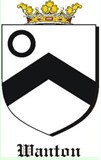
Edward Wanton – Coat of Arms

Edward WANTON (1632 – 1716) was Alex’s 9th great grandfather, one of 1,024 in this generation of the Miner line.  He was a prominent Boston shipbuilder who converted to Quakerism and moved to Scituate, Massachusetts in 1661. The Wanton family, known as the Fighting Quakers was among the most prominent and public minded of colonial families, and includes numerous governors and public officials.

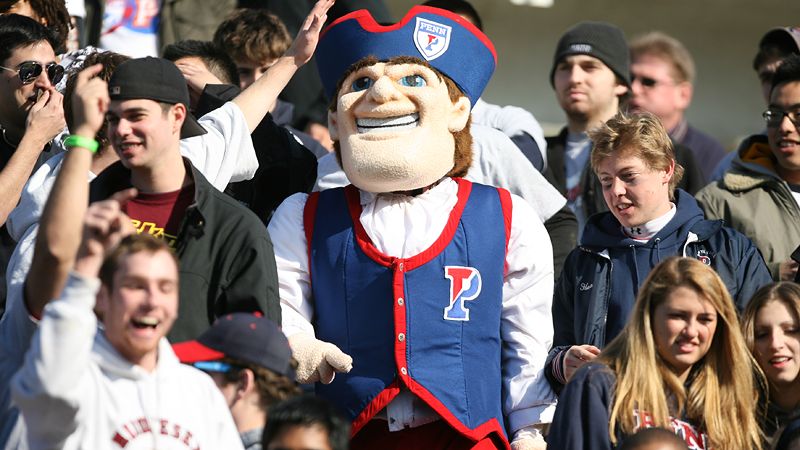
The Wanton family were known as the Fighting Quakers, Here’s another Fighting Quaker – Penn’s Mascot

Edward Wanton was born about 1632 in England.  His parents may have been Valentine WANTON and Margaret CROMWELL. He emigrated from London to Boston about the year 1658. He  was probably married in England and his first wife died in 1660 or 1661.  He married second  Elizabeth [__?__] in 1663 in Scituate, Mass.  He married Margaret [__?__] in 1677.  Two of his sons, one nephew and one grandson become Governors of Rhode Island. Edward died 16 Dec 1716 in Sciuate, Mass.

Little information is known about Elizabeth and Margaret.

Children of Edward and Elizabeth:

Name Born Married Departed
1. Edward Wanton 13 Sep 1658 Mary Phillips Mar 1694/95
2. Joseph Wanton 1 May 1664 Scituate, Mass Sarah Freeborn
29 Jan 1689/90
8 Mar 1754 Scituate, Mass.
3. George Wanton 1666 Scituate, Mass. 1684
4. Elizabeth WANTON 16 Sep 1668 in Scituate John SCOTT Jr.
16 Sep 1688
5. Capt. William Wanton (wiki) 15 SEP 1670 Scituate Ruth Bryant
1 Jun 1691 Plymouth, Mass.
.
Mary Godfrey
1717
DEC 1733 Newport, RI
6. Gov. John Wanton (wiki) 24 Dec 1672 Scituate, Mass. Mary Stover
c. 1696
5 July 1740 Newport, RI.
7. Margaret Wanton 22 Sep 1674 Scituate 19 Apr 1676 Scituate
8. Sarah Wanton 22 Sep 1674 Scituate 9 Dec 1675 Scituate
9. Hannah Wanton 25 Jul 1677 Scituate Robert Barker
1 Apr 1697
16 Aug 1726
10. Michael Wanton 9 Apr 1679 Scituate Mary Mew 15 Jan 1703/04 Scituate
.
Mrs. Abigail Baker Kean 11 Apr 1717 Duxbury, Mass.
13 Jun 1741 Scituate
11. Catherine Wanton 1681 Scituate
12. Stephen Wanton 5 Mar 1681/82 Scituate Hannah Allen
10 Sep 1705 Sandwich, Mass.
13. Philip Wanton 9 May 1686 Scituate Hannah Rodman
31 Oct 1711 Newport, RI
1 Apr 1735 Newport, RI

Edward was in Boston before 1658 : tradition says he came from London ; and further, that his mother came with him; but of his father we have neither record nor tradition.

Richard SCOTT’s future son in law, Christopher Holder landed in Boston,  aboard the Speedwell.. He and seven other passengers were listed with a “Q” (for Quaker) beside their names, because at that time, the Puritans in England and in the English colonies were persecuting Quakers, members of the Religious Society of Friends.  While they were still in the jail, Mary Dyer and Anne Burden, two other Friends, arrived in another ship and were arrested on the spot.
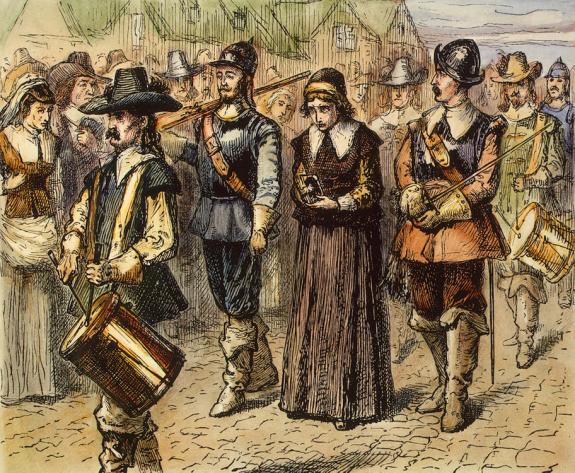
Mary Dyer

Mary bravely went forward and was hung; her neck snapped and her lifeless body dangled in the wind. Dyer’s dress billowed with the breeze. A weeping bystander remarked: “She hangs there as a flag for others to take example by.”And yet, amidst the persecution and death, a new life flourished.  Edward WANTON, an officer placed under the gallows to protect the structure was “so affected at the sight” of Mary’s courageous sacrifice “he became a convert to the cause of the Friends [Quakers].” Three years later Wanton was arrested in Boston for holding a Quaker meeting in his home.
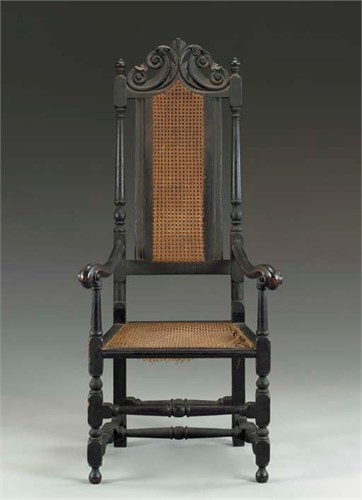
This chair was passed down through families of Fisher, Wharton and Smith. It is believed this chair and three other side chairs were purchased by Edward Wanton in the Boston/Scituate area in the late 17th or early 18th century. It is possible they were imported from overseas. The woods used to make the chairs, soft maple and birch, are indigenous to both continents and do not provide a basis for firm attribution. This chair sold through Christie’s in 2005 for $31,200

He was probably married before he left England. In Boston were born to him Edward 1658, Margaret 1660, and their mother also deceased 1660-1. After his removal to Scituate, one of the Ministers, of his sect visited him, having recently came from England, and took an opportunity to recommend to him a woman of his acquaintance in England for a second wife. Proposals were accordingly sent in writing, and she came in compliance therewith. Her name was Elizabeth. They were married 1663, and had children, Joseph born 1664, George 1666, Elizabeth 1668, William 1670, John 1672, Sarah and Margaret 1674, Hannah 1677, Michael 1679, Stephen 1682, Philip 1686.

He appears in Scituate as a resident in 1661, and had lands 1660. Before he left Boston, he became a Quaker convert.   The severity of the Massachusetts Government towards this new sect, having been carried to the extent of executing three of them in 1659, 1660 and 1661. Edward Wanton, as an officer of the guard, participated in these executions on one or more of these occasions.  He became deeply sensible of the cruelty, injustice and impolicy of these measures: he was greatly moved by the firmness with which they submitted to death, and won entirely by their addresses before their execution. He returned to his house, saying,

“Alas, Mother! we have been murdering the Lord’s people,” and taking off his sword, put it by, with a solemn vow never to wear it again.

From this time he conversed, on every opportunity, with the Friends, and soon resolved to become a public teacher of their faith.

In Scituate 1661, he purchased a farm of 80 acres, of William Parker, at the well known shipyard, a little below Dwelley’s creek in Scituate, Mass. He had also extensive lands on Cordwood hill: and also south-west of Hooppole hill, which latter were sold to Nathaniel Brooks 1723. The house of Edward Wanton stood near the bank of the river, on the land that is now improved as a shipyard, and on the spot occupied by the smaller Workhouse. Here he conducted the business of shipbuilding with great success.

Today, there is a small street called Wanton Shipyard next to the North River in Norwell, Massachusetts, See this Google Satellite View

Wanton Yard was on the old Wanton estate, located on the Scituate side of North River. The old  yard was later divided by a wall, thus making two yards, which  were used separately during the 1700’s and the early part  of the 1800’s. . Edward Wanton began ship-building here, probably,  as early as 1670, and vessels have been recorded as having been built  by him as late as 1707.

In 1661, he purchased a farm of eighty acres of  William Parker, in Scituate, a little below Till’s, or Dwelley’s Creek, where the river sweeps so grandly through the upland. Here lie conducted the business of ship-building. His house  stood near the bank of the river, on land afterward improved  as part of the ship-yard, and where was located one of the workhouses  in 1830.

As a teacher of Quakerism he was quite successful,  and soon gathered a large congregation, and won many  followers from the prominent families of the town. He had  nothing to fear now, except the minor persecutions, as corporal punishment, in this connection, was forbidden by King Charles.  In 1676, the Society became so numerous as to necessitate the building of a house of public worship, and a small piece of land was purchased that year, of Henry Ewclly and a house erected. This was located on the site of the garden of the late Judge William Gushing. Later, another house of worship was erected on the Wanton estate. This house is now in Pembroke, part of it having been removed, and now occupied as a residence by Charles Collamorc. The remainder is still used by the Society of Friends, who worship there, having at the present day between twenty and thirty mcmbers.  Tradition says the house was moved from the old Wanton estate to its present location, via North Rivcr, on “gundalows.”

Tradition says the Pembroke Meeting House was moved from the old Wanton estate to its present location, via North Rivcr, on “gundalows.”

The Pembroke Friends Meetinghouse is an historic Quaker church at Washington Street and Schoosett Street in Pembroke, Massachusetts.   The meeting house was built in 1706 by Robert Barker with later 19th-century additions. It is the oldest Quaker meetinghouse in Massachusetts and the third oldest in the United States. This meetinghouse was used by local Quakers from 1706 until 1874 when the meetinghouse was closed and the Quaker meeting was moved to the Sandwich Meeting. Today the Meetinghouse is owned by the Pembroke Historical Society and is used during the summer months by area Quakers.

One of the many persecutions Wanton and his followers were subjected to, was, in ” 1678 Edward Wanton (of Scituate) for disorderly joining himself to his now wife in marriage in a way contrary to the order of Government is fined £10;”

Edward Wanton died Oct. 16, 1716, aged 85, and was buried on his own plantation, on a rise of ground below the shipyard. Some of his and several of the Rogers family were buried here later, and the land probably belongs to their descendants ; and though it has been trespassed upon by vandals, in times past, we hope some action may be taken by the town, ere long, to protect it hereafter. Members of the Wanton family are also buried in the “Old First Parish Cemetery,” opposite Schoolhouse, District No. G.

Edward Wanton was a very successful ship builder. he built many vessels for Benjamin Gallop of Boston. For three years, at least, 1700-01-02, Robert Barker was in company

with him. Robert Barker was son of Robert and ancestor of tho Pembroke family of Barkers.

The first record of any particular vessel being built here was for Benjamin Gallop in

  • 1692, sloop. “BLACKTHORNS,” 30 tons, Capt. Holland; owner, Benjamin Gallop.
  • 1694, sloop. “HOPEWELL,”40 tons, Capt, Joseph Vickars; owner, Benjamin Gallop, Boston.
  • 1694, bark “MARTHA & ELIZABETH,” 70 tons. Owners, Robert Howard, Giles Dyer, Merchants, William Evcrton, Benjamin Gallop, William Wai I is and Florence Maccarty, of Boston.
  • Also in 1694 brig’t’n “MARTHA nnd ELIZABETH,” 70 tons, Copt. Jobn Ilnlscy. Owners, Robert Howard, William Everton, Benjamin Gallop, William Wallis, Giles Dyer and Florence Maccarty, Boston.
  • In 1698, sip., afterwards brig’t’n “BENJAMIN,” 20 tons, Capt. William Cole. Owner Benjamin Gallop of Boston.
  • In 1699 sloop. “UNITY,” 30 tons, built at Scituate, Benjamin Gallop of Boston, owner.
  • Also the same year, 1699), sloop “DOVE,” 100 tons. Owners, Capt. John Ptillen, John Foster, Robert Howard, William Kvcrton, John Hobby and Benjamin Gallop, all of Boston.
  • Also the same year 1699, sloop. “HOPEWELL,” 30 tons, built at Scituate. Owners, Richard Claton of St. Christopher, merchant, Richard Shute, Andrew Belcher, and Mary Edward, widow, of Boston, James Sawyer, Gloucester, and Edward Wanton of Scituate. Capt. Richard Shnie.
  • Robert Barker built in company with Edward Wanton, commencing about 1700, when they built tho brig’t’n ” SARAH & ISABELLA,” 50 tons. Owners, Capt. Thomas Tomlin, Robert Wing, William Tilly of Boston, Edward Wanton and Robert Barker of Scituate.
  • Also in 1700 brig’t’n “HANNAH,” GOLIOITH. Owner, Benjamin Gallop,
  • The same year, 1700, sloop.. ” MARY,” 20 tons, Capt. Joshua Cornish. Owners, Benjamin Gallop, Thomas Thornton, Boston, and Edward Wanton and  See Scituate Harbor Yards. Robert Barker of Scituate.
  • In 1701 sloop. “MARGARET,” 20 tons, Capt. Benjamin Thaxter. Owner, Benjamin Gallop.
  • Also the same year 1701, sloop. “HOPEWELL,” 30 tons, Capt. Jonathan Ilender. Owners, Benjamin Gallop, Benjamin Alford, Adam Winthrop, Florence MacCarty and .lamos Barry, all of Boston.
  • In 1702 the brig’t’n ” ADVENTURE,” CO tons, Capt. John Ilalsey. Owners, Benjamin Gallop and John Devine.
  • Also the same year, 1702, brig’t’n “ADVENTURE,” 40 tons, built at Scituate. Owners, Henry Franklin, Benjamin Gallop, Florence Maccarty and John Devin, Boston,
  • also the same year, 1702, sloop. “EXPENDITURE,” 40 tons, Capt. Edward Lloyd. Owners, Thomas Peterson and Daniel Zachary, of Boston, and Edward Wanton and Robert Barker of Scituate.
  • In 1705 brig’t’n “ENDEAVOR,” 80 tons, built at Scituate. Owner, Benjamin Gallop of Boston.
  • In 1706 sloop. “HOPEWELL,” 20 tons, built at Scituate. Owner, Benj. Gallop of Boston.
  • In 1707 brig’t’n “ADVENTURE,” 50 tons, built at Scitunte. Owner, Benj. Gallop, of Boston. Also the same year 1707, sip. “MARY,” 20 tons, built at Soilitate. Owners,  Tobias Oakman and Joseph Tilden of Marshliold and Edward Wanton of Scituate.

Many of these vessels were built for privateers and used as such during the French War. Nothing has been found relative to the vessels built later by the Wantons as most of the records of ship building for over sixty years following are missing. The above therefore is only a partial list of vessels built at this yard during the early times.

Edward Wanton like many well-to-do citizens of his day kept slaves and in following the history of Wanton, them is found one slave that gave him much trouble, by continually running away. First, in an old paper there appears the following: ” Ran away from his master Edward Wanton of Scituate ship carpenter the 2nd of this inst. September. A mulatto man Servant named Daniel Servant 19 years of age pretty tall, speaks good English, thick curled Hair, with bush behind, if not. lately cut off’, Black hat, cotton and linen shirt.  He had with him two coals onu a homespun dyed coat, thu other a great, coat dy’d and muddy color, striped homespun jacket Kersey Breeches, gray stockings, French fall shoes. Who so ever shall take up said Runaway servant and him safely convey to his above said Master at Scituate or give any true intelligence of him so as his Master shall have him again, shall have satisfaction to Content beside all necessary charges paid.”—Boston News Letter, Sept. 22. 1712.

From the following, it appears that he ran away two years later from Edward Wanton’s son-in-law, John Scott: Ran away from his Master, John Scott, the 17th of this instant August. A mulatto man named Daniel formerly belonging to Edward Wanton of Scituate ; he is indifferent, tall and slender, by trade a shipwright but ’tis thought designs for Sea. Who so over shall stop, take etc., and bring him or give notice of him to his master at Newport, R. I. shall bo well rewarded and reasonable charges paid.”— Boston News Letter, August 23rd, 1714.

He held a distinguished place amongst the enterprising settlers of the Town. Of his success as a religious teacher we have spoken elsewhere, (see Ecclesiastical History). He remained firm and active to an advanced age. His last visit to Newport as a representative from the quarterly to the yearly meeting was in 1716, when he was fourscore and five years old, and he deceased soon after his return, Oct. 16th, 1716, and was buried on his own plantation, a few rods north-east of his house.

The will of Edward Wanton, dated 1716, gives

” To daughter Elizabeth Scot a mulatto boy called Daniel, if he be found, he being now run away.

To sons Joseph, William and John, all my lands at Pennsylvania, with all my money in the hands of Edward Shipin.

To grandson William, (son of William) one third of the sloop that Tobias Oakman goeth master of.

To son Philip, (lands, &c.) To daughter Hannah Barker £5.* To grand-daughter Mary Wanton (daughter of Stephen) £450, when nineteen years of age, and the like sum to her sister Lydia. To grandson John (son of John) lands, he. To Nathaniel Chamberlain of Pembroke, all my wearing apparel, and to Chamberlain’s two daughters, Abigail and Joanna, £5 each. Item to repair our meeting-house near Ichabod Ewell’s. To son Michael, all the residue of my estate. Michael Executor.”

Children and Grandchildren

Deano gives some interesting and amusing anecdotes about the Wanton’s, in his “History of Scituate,” to which the reader is referred. Edward left quite a family. William and John were invited to Court, in England, in 1702, and Queen Anne granted an addition to their coat-of-arms, and presented to each ti silver punch-bowl and salver for their daring and meaningful capture of pirate and French vessels in 1714—17. Undoubtedly, the vessels the Wantons used in their captures were built by their father, on the North River.

The Wanton family furnished four Governors for Rhode Island:

1. Edward Wanton

Edward’s wife Mary Phillips origins are not known.

2. Joseph Wanton

Joseph’s wife Sarah Freeborn was born 14 Jan 1666 in Newport, Newport, Rhode Island. Her parents were Gideon Freeborn and Sarah Brownell. Sarah grandfather William Freeborn signed the Portsmouth Compact, becoming a founder of Portsmouth in the Rhode Island colony. Sarah died 10 Jul 1759 in Tiverton, Newport, Rhode Island.

Joseph Wanton was a shipbuilder in Tiverton. Both Joseph and Sarah were Quakers and both were public speakers within the denomination and tradition speaks of their benevolence and charities..

Joseph removed to Tiverton in 1688, and was a shipbuilder at “the narrows, or gut.” The ministers who came later to Scituate undid much of the teaching of Edward Wanton, and few, if any of the Quaker sect are now left, there.   He married Sarah 9 Nov 1689. He deceased March 3d. 1754, at the age of 90. He had several children, of whom we will name Mary, the wife of Thomas Richardson, many years Treasurer and Receiver General of Rhode Island. Her daughter, Sarah Richardson, was wife of Thomas Robinson of Newport, and remembered for great accomplishments of person and mind.

Children of Joseph and Sarah:

i. Elizabeth Wanton b. 1690

ii. Edward Wanton b. 1692

iii. Gideon Wanton b. 1693

iv. Sarah Wanton b. 1696

v. Joseph Wanton b. 1698

vi. Mary Wanton b. 1700 m. Thomas Richardson

Joseph’s third son Gideon Wanton (wiki) (20 Oct 1693 – 12 Sep 1767) was a governor of the Colony of Rhode Island and Providence Plantations who served for two separate one-year terms.

Gideon was admitted as a freeman to Newport in 1718, and had an active business life. Being fiscally minded, he was elected to the office of general treasurer in 1733, to which office he continued until 1744. While he was treasurer, his uncle William Wanton was the governor of the colony and his uncle John Wanton was the deputy governor. A big controversy existed in the colony at the time on whether to use paper currency or hard currency (coin). Wanton was an advocate of paper currency, and as treasurer he issued 264,000 pounds in bills of credit.

In 1745 and again in 1747, Wanton was elected as the governor of the colony, each time for a one-year term. During his two short terms the British were fighting the French, and a good part of the war was being carried out in the American colonies. The Wantons were Quakers, who generally abrogated war, but John Bartlett, the editor of the Rhode Island Colonial Records wrote, “although Mr. Wanton was a Quaker, he was a belligerent one, and fully equal to the emergency…” Most of the dealings of his two administrations concerned military and naval affairs such as raising troops, equipping privateers, and supplying war materiel.

Following his terms in office, Wanton kept active mostly in his dealings within the Friends (Quaker) society. He died on 12 Sep 1767, and was buried in the Friends’ Burial Ground, sometimes called Governor’s Cemetery, on Tilden Street in Newport.
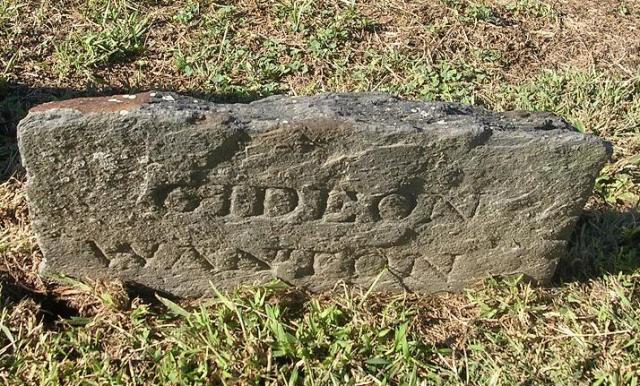
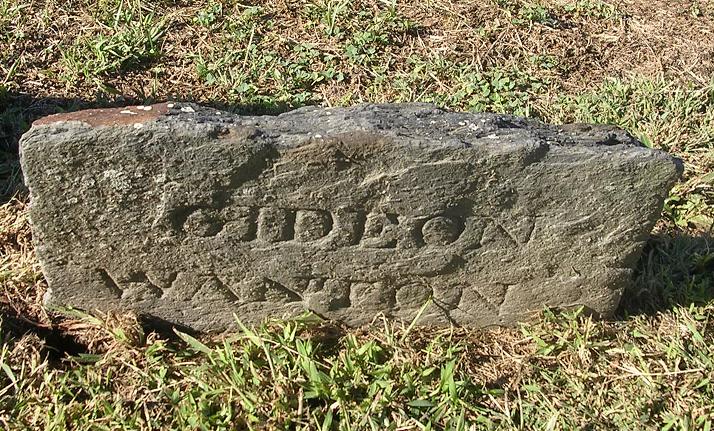
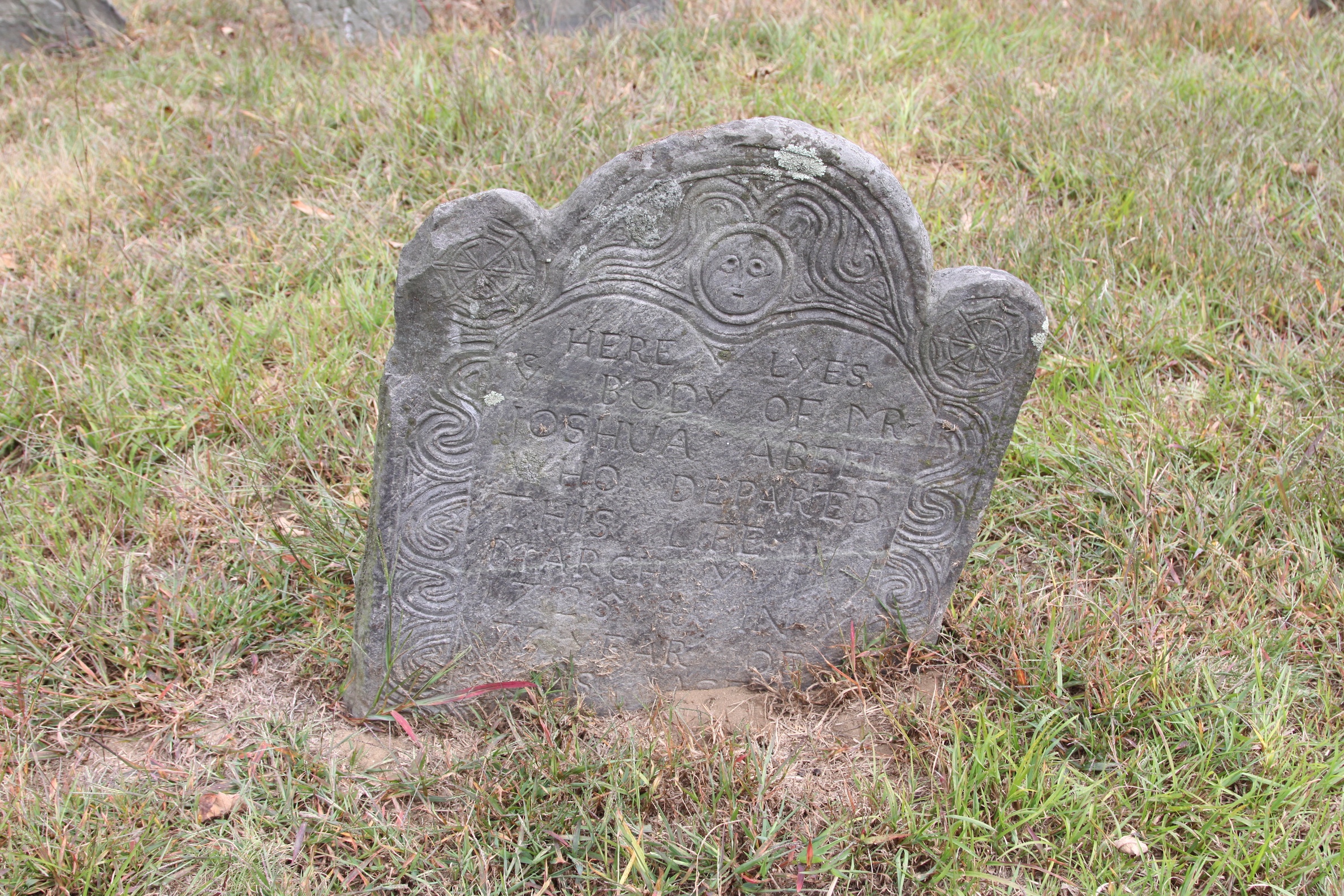
Gideon Wanton Headstone

4. Elizabeth WANTON (See John SCOTT Jr.‘s page)

5. Captain William Wanton

William’s first wife Ruth Bryant was born 16 Aug 1673 in Scituate, Plymouth, Massachusetts. Her parents were John Bryant and Mary Hiland. Ruth died 10 Apr 1717 in Newport, Newport, Rhode Island.

In 1717, at the age of 46, he married a second time to 15-year old Mary Godfrey (b. 23 March 1702), the daughter of John Godfrey and Elizabeth Carr, and granddaughter of Governor Caleb Carr. There were no known children by this marriage.  Long after his death, his widow married in 1745 Daniel Updike.

The manner of William becoming an Episcopalian is a tradition, one that is generally received as correct. The son of a Quaker preacher, Edward Wanton, he was himself a Quaker. He fell in love with Ruth Bryant, the beautiful and accomplished daughter of Deacon John Bryant, of Scituate, Mass., an uncompromising Presbyterian, who would not listen to such a connection. When out spake William Wanton, and said : ” Ruth, I am sure we were made for each other; let us break away from this unreasonable bondage. I will give up my religion and thou shall give up thine, and we will go to the Church of England and the devil together.”

William was a  wealthy merchant  who served as Rhode Island Governor under the Royal Charter in 1732-1733.  William began his distinguished course by stepping out of the rules of his religious sect, and performing some distinguished military exploits with his brother John.  In 1694, when William was at the age of 24, and John at 22, a pirate ship having committed several robberies in the Bay, in which the family property had suffered losses, these two young men headed a party of volunteers, and captured the pirates, and carried them into Newport, where they were executed. Again in 1697, just before the peace of Ryswick, during the troubles with Count Frontenac, Governor of Canada, a French armed ship had taken several prizes in the Bay: and again William and fitted out each a vessel from Boston, well manned with high spirited volunteers, and admirably accomplished their design. It is said that William ran under the stern of the French ship and wedged her rudder, while John and his party boarded. Whether this method of embarrassing the Frenchman were practicable or not, we do not know: we only state that this is a part of the fireside narrative, that has been handed down. It is also said, that the venerable Edward endeavoured to dissuade his sons from this enterprize as unlawful, according to the rules of their church ; but on finding their determination fixed, he thus addressed them. “It would be a grief to my spirit to hear that ye had fallen in a military enterprize, but if ye will go, remember that it would be a greater grief to hear that ye were cowards.”

The fame of this exploit reached England, and when the two Wantons went to England in 1702, they were invited to Court, and Queen Anne granted an addition to their family coat of arms, and presented each with two pieces of plate, with proper devices, viz. a silver punch bowl and salver. These pieces of plate are said to have been stolen from their houses at Newport, during the raging of the mobs in the political contest of Hopkins and Ward.

William left Scituate 1704, and settled in Newport. He had previously married Ruth, the daughter of Dea. John Bryant. To this match, there had been several objections : the Quakers disapproved of his marrying out of the Society, and the Congregationalists of his marrying into theirs, and moreover Ruth was very young ; however, the sanguine temper of Wanton was not to be foiled, and he is said to have addressed the young woman in the presence of her family in the following words :

” Ruth, let us break away from this unreasonable bondage. I will give up my religion, and thou shall give up thine, and we will go to the Church of England and go the the Devil together.”

In all but two years from 1705 to 1732, Wanton was either a deputy or an assistant, and for many of those years he was the Speaker of the House of Deputies. From 1705 to 1709 he was the Major for the island of Aquidneck, and from 1719 to 1720 he was Colonel of the island’s militia regiment.  Wanton commanded a sloop that he used to chase privateers, and in 1709 the General Assembly voted to buy his new sloop Diamond for 400 pounds, and also buy another sloop of which he was partial owner.  In 1726 he was one of four commissioners from the Rhode Island colony selected to meet with commissioners from Connecticut to settle the boundary line between the two colonies.

Wanton was elected governor of the Rhode Island colony in 1732, but only served one full term, dying in office during his second term. He was buried in the Clifton Burying Ground in Newport.,

Children of William and Ruth

i. Edward Wanton b. 11 Apr 1702 in Newport, Rhode Island

ii. Ruth Wanton b. 12 Jul 1701 in Newport, Rhode Island

iii. Margaret Wanton b. 24 Oct 1692 in Newport, Rhode Island

iv. George Wanton b. 24 Aug 1694 in Scituate, Plymouth, Mass.

v. William Wanton b. 26 Oct 1696 in Newport, Rhode Island

vi. Peter Wanton b. 22 Mar 1698 in Newport, Rhode Island

vii. Joseph Wanton b. 15 Aug 1705 in Newport, Rhode Island

viii. Benjamin Wanton b. 9 Jun 1707 in Newport, Rhode Island

ix. Elizabeth Wanton b. 4 Oct 1709 in Newport, Rhode Island

William ‘s seventh child  Joseph Wanton (1705-1780) was a merchant from Newport, Rhode Island and Governor of Rhode Island from 1769 to 1775 and a Loyalist.  Though William was of a Quaker background, Ruth was a Presbyterian, and as a compromise, her children were raised in the Anglican faith. Not wanting to go to war with Britain, he has been branded as a Loyalist, but he remained neutral during the war, and he and his property were not disturbed.
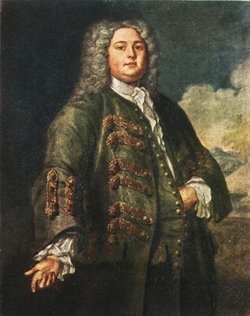
Edward’s son Gov. Joseph Wanton (1769-1775)

Joseph graduated from Harvard in 1751 and then, following his family interests, he also became a successful merchant of the area.  Joseph Wanton was the master aboard the King of Prussia, a privateer during the French and Indian War, that was captured by the French in 1758 with a cargo gold dust, rum, and 54 slaves, Many such privateers out of Newport were actually running in the slave trade.  Wanton served as Governor of Rhode Island from 1769 to 1775 when he was removed for his failure to swear a loyalty oath to the patriot cause.   As governor, he oversaw the prosecution of the 1772 Gaspee Affair. Wanton was buried in the Golden Hill Cemetery in 1780. Wanton’s son, Joseph Wanton, Jr. served as deputy governor of Rhode Island in 1764 and 1767.
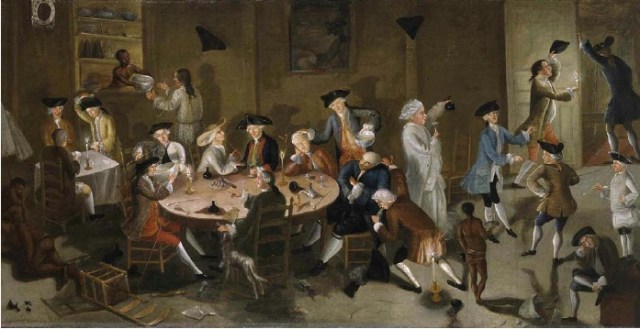
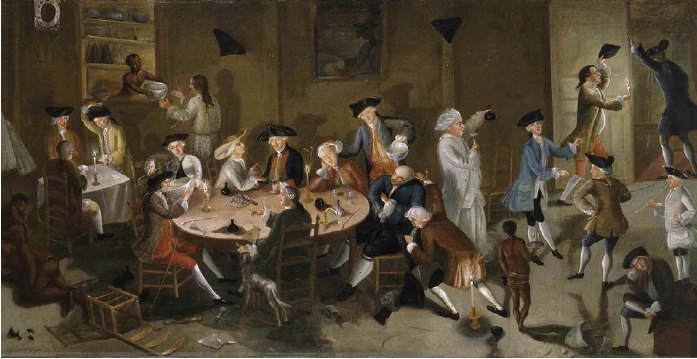
Joseph Wanton is the one at the table who has gone to sleep from liquor being doused with punch and vomit  in the satirical painting Sea Captains Carousing in Surinam 1775 by John Greenwood

Joseph Wanton is pictured in the 1755 painting by John Greenwood, “Sea Captains Carousing in Surinam” along with Stephen Hopkins. Joseph Wanton (being doused with  punch and vomit) and other Rhode Island merchants  The artist included various notable Rhode Islanders, including Nicholas CookeEsek HopkinsStephen Hopkins,  (all seated at the table): in “Sea Captains Carousing in Surinam,” a 1755 painting, the oringinal of “Dogs Playing Poker” genre. Surinam (Suriname) was a Dutch colony on the North coast of South America known for its slave plantations. It was a predominant trading destination for Rhode Island merchants during the 18th century who exchanged lumber, horses, rum, and African slaves for sugar, coffee, and cocoa in what is known as the Triangular Trade.

Wikipedia says In the mid 1750s, the Boston portraitist, John Greenwood, followed a group of sea captains and merchants to Surinam on the northeast coast of South America. The trading usually took time, so the men often waited in pubs.   Being commissioned by the merchants to create a satirical painting, Greenwood concocted a 22-figure tavern scene, showing himself among the affluent traders, all subject to the “intoxicating effects of alcohol and economic ambition.”  Most accounts agree that Wanton is the bald man slumped in a chair by the table, being doused with a pitcher of rum, by one account,  or of punch and vomit, by other accounts.

As a merchant, Wanton was involved in the maritime trade of a variety of goods. During the first half of the 18th century the slave trade was booming in Newport, and from 1708 to 1755 the population of black slaves in the colony burgeoned from 220 to nearly 4700. In 1758 Wanton declared that he had sailed the Snow King of Prussia with a cargo of 124 hogsheads of rum and 54 slaves. While at anchor along the African coast, he and his cargo were captured by a French cruiser.

In 1765 Wanton became one of the founders of the new college in Rhode Island, called the College in the English Colony of Rhode Island and Providence Plantations, and later named Brown University. He is named as an original “corporator,” and as an original trustee of the college.

With no known civic background, Wanton was elected as governor of the colony in 1769, and served for six years. With the Revolutionary War on the horizon, he was involved with a large array of issues and incidents, most notably the Gaspee Affair in 1772, where he played an important role in thwarting the crown from finding the members of the group of colonists that boarded and burned the royal schooner Gaspee. The formation of the Continental Congress took place during his administration, and he was in continuous communication with governors of other colonies. He also became a founder and trustee of the new college in the Rhode Island colony, eventually named Brown University.

As the Revolutionary War approached, members of the General Assembly were getting very hawkish, and when Wanton was elected for the seventh time in 1775, he refused to agree to the raising of an army of 1500 men, and would not commission new officers. He also would not immediately take the oath of office, and for these reasons the Assembly refused to seat him as Governor, and formally removed him from office a few months later, with Nicholas Cooke taking his place. While he was not overtly Loyalist, he did not see a war with Great Britain to be in the interest of the colony. He retired to his home in Newport where he was undisturbed during the war, and died before its conclusion, in 1780.

Gaspee Affair
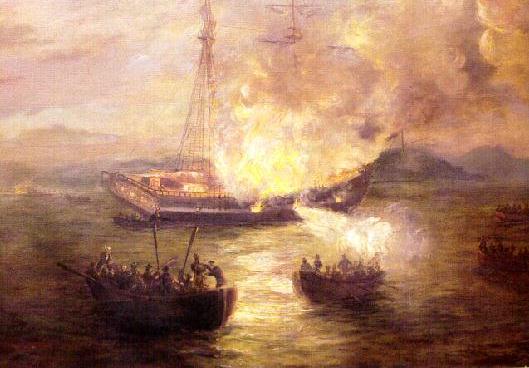
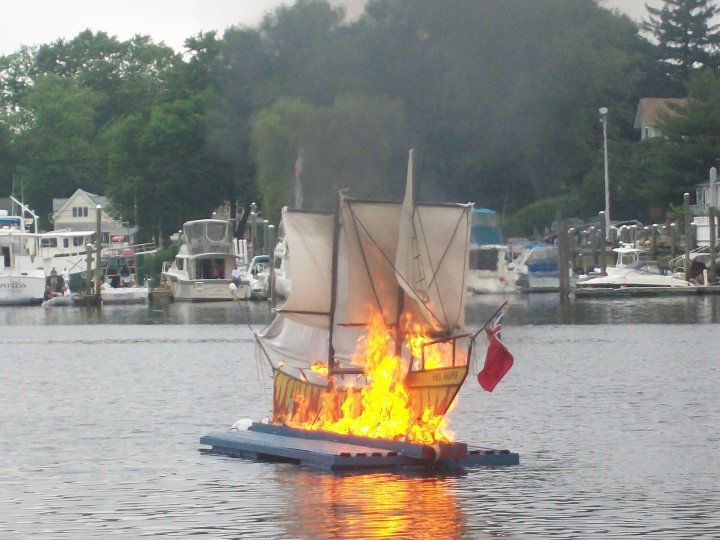
Burning of the Gaspée

In March 1772, the people of the colony were harassed by his Majesty’s schooner Gaspee, with eight guns, stationed in the Narragansett Bay to enforce the revenue acts.  The commander, Lieutenant William Dudingston, had engaged in a number of annoyances upon vessels in the bay, detaining them without pretext, stopping market boats, and sometimes plundering the people ashore. He violated the charter of the colony by acting without showing his commission.  The inhabitants of Providence complained to Deputy Governor Darius Sessions, who consulted with Chief Justice Stephen Hopkins, who offered the opinion “that no commander of any vessel has a right to use any authority in the body of the colony, without previously applying to the governor, and showing his warrant for so doing, and also being sworn to a due exercise of his office.”.

Sessions then communicated the complaints, with Hopkins’ opinion, to Wanton, who immediately sent a letter to the commanding officer requiring him to produce his commission and instructions.   The next day, Dudingston sent an arrogant reply, to which Wanton replied directly, repeating his demand, and assuring Dudingston of safety in coming to shore.  Dudingston then enclosed the correspondence in a letter to his superior officer, Admiral Montagu, in Boston, who sided with the lieutenant, addressing an extremely insolent letter to Wanton, defending the commander and ridiculing the governor, suggesting that those interfering with the crown’s activities could “hang as pirates.”  Wanton then informed Montagu “that I do not receive instructions for the administration of my government from the King’s Admiral stationed in America.”  He then presented the chain of correspondence to the General Assembly, and directed that copies of the correspondence be sent to England.  Wanton also wrote Lord Hillsborough, complaining of Montagu’s insolence, and detailing the conduct of the Gaspee.

On 8 June 1672 the sloop Hannah, coming from New York, arrived in Newport, reported to the custom house, and the next day proceeded up the river. The Gaspee, in its customary fashion, gave chase, but ran aground on Namquit (later called Gaspee Point), near Pawtuxet, and the Hannah escaped to Providence. That evening, by beat of drum, men were called to the house of James Sabin to organize an attack on the Gaspee.  John Brown provided eight long-boats of five oars each, and shortly after 10 p.m., the party headed towards the Gaspee, commanded by Captain Abraham Whipple. Well after midnight the party approached the vessel, and when hailed, did not answer the ship’s sentinel.   This prompted Dudingston himself to hail, again without answer. A second hail by the commander was then answered with profanity by Whipple, who ordered his men to spring to their oars. Shots were fired in both directions, and a musket ball fired by Joseph Bucklin hit Dudingston in the groin, and as he fell, the attackers boarded the schooner, and took over the vessel.  The crew of the schooner was overtaken, bound, and put on shore, while Dudingston was attended to by Dr. John Mawney.   A milestone had been reached; this was the first British blood shed in the American War for Independence.   After removing the crew, the captors set fire to the vessel, and then returned to Providence.
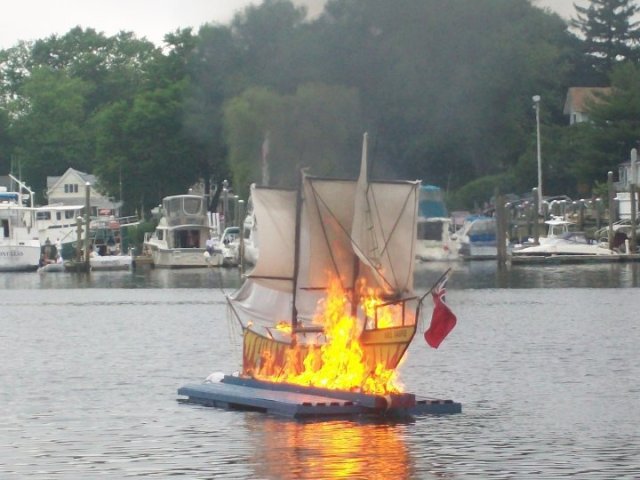
The Burning of the Gaspée is commemorated every year.

A report was sent by a crew member to Montagu, who then forwarded a copy to Wanton with the request to apprehend the offenders. Wanton then issued his proclamation, offering 100 pounds reward for evidence sufficient for conviction of the guilty parties.  An active correspondence then ensued between Wanton, the Admiral, and Lieutenant Dudingston, with an account of the event sent to Lord Hillsborough.  An escaped slave who was with the expedition gave names of some of the men involved to Admiral Montagu, who then forwarded this deposition to Wanton, requesting that the instigators be questioned. Wanton, instead of obeying the request, took depositions invalidating the testimony of the slave. When news reached England, the King issued a proclamation offering a reward of 1000 pounds each for either of the leaders of the expedition, and 500 pounds for each of the other involved parties. Wanton, along with others from neighboring colonies, was commissioned to inquire into the report upon the facts.

The perpetrators of the Gaspee incident were well known, and among the most prominent citizens of the colony. Some of the younger and more rash of the accomplices had openly boasted of the events, while the ship still smoldered off the shore.  Wanton and the other Rhode Island leaders were successful in subtly hampering the progress of the investigations, and amid all of the communications, commissions, claims, and counter claims, the court could not obtain enough direct evidence to indict a single person.

The American Department consulted the Solicitor and Attorneys General, who investigated and advised the Privy Council on the legal and constitutional options available. The Crown turned to a centuries-old institution of investigation, the Royal Commission of Inquiry. This commission would be made up of the chiefs of the supreme courts of Massachusetts, New York, and New Jersey, the judge of the vice-admiralty of Boston, and the governor of Rhode Island, Joseph Wanton. The Dockyard Act, passed three months earlier in April, allowed those suspected of burning His Majesty’s vessels to be tried in England. But this was not the law that would be used against theGaspée raiders; they would be charged with treason.   The task of the commission was to determine against which colonists there was sufficient evidence for their trial in England. The Commission was unable to obtain sufficient evidence and declared their inability to deal with the case.

Colonial Whigs were alarmed at the prospect of Americans being sent to England for trial. A Committee of Correspondence was formed in Boston to consult on the crisis. In Virginia, the House of Burgesses was so alarmed that they also formed an inter-colonial committee of correspondence to consult in the crisis with other committees.

In Boston, a little-known visiting minister, John Allen, preached a sermon at the Second Baptist Church that utilized the Gaspée affair to warn listeners about greedy monarchs, corrupt judges and conspiracies at high levels in the London government. This sermon was printed seven different times in four colonial cities, becoming one of the most popular pamphlets of Colonial British America.  This pamphlet, along with the incendiary rhetoric of numerous colonial newspaper editors, awoke colonial Whigs from a lull of inactivity in 1772, thus inaugurating a series of conflicts that would culminate in the Battles of Lexington and Concord.

The city of Warwick, Rhode Island commemorates the Gaspée Affair with Gaspée Days. This festival includes arts and crafts and races, but the highlight is the Gaspée Days parade. The parade features burning the Gaspée in effigy, a Revolutionary War battle reenactment, Revolutionary War-era fife-and-drum bands, a marching band dressed as period sailors, and local marching bands.

6. Gov. John Wanton

John’s wife Mary Stover (Stafford) was born 1664 in York, York, Maine. Her parents were Sylvester Stover and Elizabeth Norton. Mary died 6 Apr 1736 in Scituate, Plymouth, Mass.
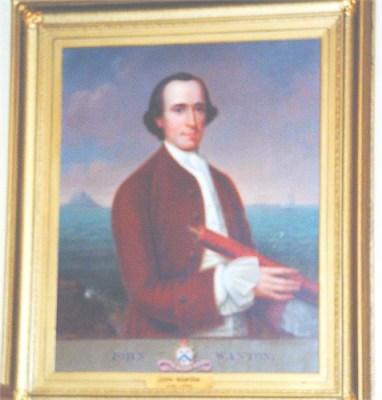
Gov John Wanton Portrait

John  was likewise a successful Newport merchant and succeeded William Jr. as Governor from 1734 through 1740.   After the death of his brother William, when strong political parties began to agitate the Colony, John was persuaded by his friends to permit himself to be voted for as Governor, with the expectation that he might unite the factions through the influence of his fame for personal bravery, and his credit as the most wealthy citizen of the Colony, for he had been eminently successful in trade. He had indeed renounced his military fame, and embraced the faith of the Quakers as early as 1712, and travelled much as a religious teacher. It was however thought to be a conjuncture, when it became his duty to heal the divisions of the times ; and success attended the plan. He was chosen first in 1734, and re-elected for seven successive years. He died in office, May 5th, 1740, and was laid in the Coddington burying ground, where a marble monument was erected.

In one of the years of his administration, there were certain conflicting Indian claims to be settled within the Colony of Connecticut, and the cause was referred to the three Governors of Massachusetts, Connecticut and Rhode Island. At this trial, a question was agitated whether the Sachems should be permitted to speak in their own cause : Counsel contended that they should not, and two of the Board inclining to that opinion, Governor Wanton remarked, that as they had already agreed to admit the testimony of some of the natives, it would be but proper, that their chiefs should be allowed to speak.

” I have (says he) been accounted a man of courage in my day, but I think I shall turn coward and flee, if you bring in a body without a head.”

This sally carried the point; the Sachems were allowed to speak, and the Governor was often heard to express his admiration of the powers of oratory of the Indians.

John  is described as of middling stature, thin features and fair complexion — remarkable for his gentle attentions to children, many of whom would gather round him to catch his smile in the street, or collect at his door, as he sat in his portico. He resided in a house which he purchased, opposite to that of his brother William.

9. Hannah Wanton

Hannah’s husband Robert Barker was born 1673 in Duxbury, Plymouth, Mass. His parents were Isaac Barker and Judith Prence. His grandparents were Gov. Thomas PRENCE and Appia Quicke. Robert died 6 Sept 1765 in Pembroke, Plymouth, Mass.

10. Michael Wanton

Michael’s first wife Mary Mew was born 15 Aug 1689. Her parents were Noel Mew and Mary [__?__]. Mary died 22 Jul 1711.

Michael’s second wife Abigail Baker was born 24 Aug 1682 in Duxbury, Plymouth, Mass. Her parents were Robert Parker and Alice Snow. She first married 8 Feb 1709 in Jamestown, Newport, Rhode Island to William Carr (b. 16 Oct 1681 in Jamestown, Newport, Rhode Island – d. Mar 1711 in Jamestown, Newport, Rhode Island) She married Michael 2 Jan 1717 in Pembroke, Plymouth, Mass. Finally 4 Aug 1742 in Pembroke, Plymouth, Mass she married Thomas Rodman (b. 11 Nov 1683 Newport, Newport – d. 1775 Rhode Island). Abigail died 4 Jan 1762 in Pembroke, Plymouth, Mass

Michael settled on his father’s estate in Scituate. His marriage is on the Town Records, “to Mary New of Scituate 1704,” but she was born in Newport. His second wife was Abigail Baker Kean of Pembroke 1716. He succeeded his father as the religious teacher of the Society of Friends, and was a successful propagator of the sect. He was a cotemporary with Rev. Nathaniel Eells of the South Parish in Scituate, and they are said to have lived in more harmony with each other than could be expected from the circumstances, Wanton being fired with the zeal of a new sect, and Eells entertaining contempt for an uneducated ministry. He is said to have been a man of so much meekness and gentleness, that all contention with the Congregationalists was laid aside ; a circumstance which, if it did not contribute to promote at least disarmed opposition and persecution.

Michael was contemporary with Thomas Turner, a lawyer of facetious memory, whose scarcasms were often aimed at Wanton, and always received with such undisturbed good humor, that at length they became sincerely attached to each other, though of different temper and different sects. On one occasion, Wanton had been successful in a fishing excursion, and loaded his boat with fine hallibut, and calling, on his return, at the tavern at White’s ferry, and finding an assemblage of gentlemen attending a trial by reference, he caused an entertainment to be prepared of his fish, and invited the whole company to dine. This was done in consequence of a sarcasm of lawyer Turner, who had thus addressed him, ” Friend Wanton, you are like the Apostle Peter. In the first place he was a fisherman, and so are you—he was a preacher, and so are you—he denied his Lord, and so do you.” It was agreed by the company that Wanton had the advantage on this occasion.

12. Stephen Wanton

Stephen’s wife Hannah Allen was born 2 Jun 1688 in Sandwich, Barnstable, Mass. Her parents were Daniel Allen (1663 – 1717) and Bathshua Hoxie (1665 – ).

13. Philip Wanton

Philip’s wife Hannah Rodman was born 29 Nov 1694 in Newport, Newport, Rhode Island. Her parents were Thomas Rodman (1640 – 1728) and Hannah Clarke (1667 – 1732). Hannah died 10 Jul 1753 in Newport, Newport, Rhode Island.

Sources:

http://www.genealogyofnewengland.com/f_4ea.htm#5

History of Scituate, Massachusetts: from its first settlement to 1831 By Samuel Deane

http://www.gaspee.org/WantonBio.htm

http://familytreemaker.genealogy.com/users/f/r/e/Betsy-Hayes-Fredell/WEBSITE-0001/UHP-0101.html

http://trees.ancestry.com/owt/person.aspx?pid=44207410
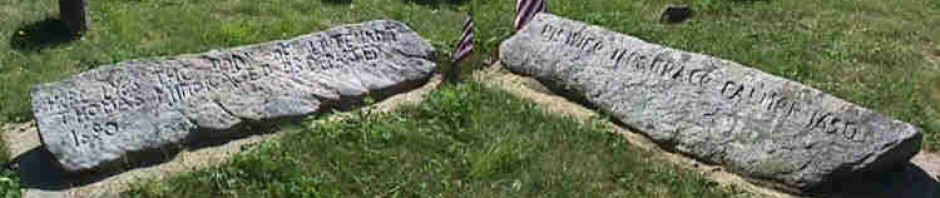
Posted in 11th Generation, Artistic Representation, Dissenter, Immigrant - England, Line - Miner, Sea Captain, Twins, Wikipedia Famous | Tagged , , , | 20 Comments

Richard Scott

Richard SCOTT Sr. (1605 – 1680) was Alex’s 10th great grandfather, one of 2,048 in this generation of the Miner line.

Immigrant Ancestor

Richard Scott was born 9 Sep 1605 probably in Glemsford, Suffolk, England. His parents were Edward SCOTT and Sarah CARTER. He married Katherine MARBURY on 7 Jun 1632 in England.  He emigrated in 1634 on the “Griffin” and was admitted to the church at Boston, 28 Aug1634. There is no record known of Richard Scott’s death, but from collateral evidence he is supposed to have died quite suddenly in the latter part of 1680 or early in 1681, leaving his affairs in considerable confusion.

Katherine Marbury was born about 1610 or 1617 in  Alford, Lincolnshire, England.  Her parents were Rev. Francis MARBURY and Bridget DRYDEN. Katherine died on 2 May 1687 in Newport, Rhode Island.

Children of Richard and Katherine:

Name Born Married Departed
1. Mary Scott c. 1637 Providence, Rhode Island Christopher Holder (Wikipedia)
12 Jun 1660 England
17 Oct 1665 Providence
2. Patience Scott 1638 Providence Henry Beere
20 Sep 1663 or
28 Sep 1668
Newport, RI
12 Sep 1713 Newport, RI
3. John SCOTT Sr. 1640 Providence Rebecca BROWN
c. 1659 in Smithfield, Providence County, RI.
1 Jun 1677 Providence,
Shot by an Indian on his doorstep and died a few days later
4. Richard Scott 1641 Providence 1675
Rhode Island
King Philip’s War
5. Hannah Scott c. 1642 Providence Walter Clark
Feb 1665/66 Newport, RI
24 Jul 1681 Newport, RI
6. Deliverance Scott 1649 Providence William Richardson
30 AUG 1670 Providence
10 Feb 1675/76 Newport, RI

Richard Scott was one of the first Quakers in the Rhode Island colony.  He received a bequest from his brother, George Scott, of London, merchant, in his will dated September 9, 1640, and proved April 22, 1642, in which reference is made to their father, Edward Scott, of Clemsford, county Suffolk, England. (See New England Genealogical Register, page 254, Vol. LI).

Richard was a shoemaker by trade. He came over in 1634 on the ship “Griffin” and was admitted to the church at Boston, 28 Aug 1634.

Katherine Marbury ‘s mother Bridget Dryden was sister of Sir Erasmus Dryden,1st Baronet (1553–1632) grandfather of the poet John Dryden.  If I count my relatives correctly that makes them second cousins once removed.  John Dryden was also a second cousin once removed of Jonathan Swift.  Katherine’s father was a London clergyman, Rev. Francis Marbury.   However, Katherine’s most relevant famous relative was her sister Anne Hutchinson, who also run afoul of the Puritan leaders in Massachusetts.  Anne Hutchinson figures prominently in an excellent book I just finished, The Wordy Shipmates by Sarah Vowell.

Anne Hutchinson

Anne Hutchinson (15911643) was a pioneer settler in Massachusetts, Rhode Island and New Netherlands and the unauthorized minister of a dissident church discussion group. Hutchinson held Bible meetings for women that soon appealed to men as well. Eventually, she went beyond Bible study to proclaim her own theological interpretations of sermons, some, such as antinomianism, offended the colony leadership. A major controversy ensued, and after a trial before a jury of officials and clergy, she was banished from the Massachusetts Bay Colony.  Anne is a key figure in the study of the development of religious freedom in England’s American colonies and the history of women in ministry. The State of Massachusetts honors her with a State House monument calling her a “courageous exponent of civil liberty and religious toleration.”

Anne Hutchinson Preaching

Back to the Scotts;  Governor John Winthrop relates:

“One Scott and Eliot of Ipswich were lost in their way homewards and wandered up and down six days and ate nothing. At length thoy were found by an Indian, being almost senseless for want of food.”

Richard removed in 1634 to Ipswich and before 1637 to Providence, Rhode Island.

20 Aug 1637 – Richard signed the famous Providence Compact.  Roger Williams established a settlement with twelve “loving friends.” He called it “Providence” because he felt that God’s Providence had brought him there.  He said that his settlement was to be a haven for those “distressed of conscience,” and it soon attracted quite a collection of dissenters and otherwise-minded individuals. From the beginning, the settlement was governed by a majority vote of the heads of households, but “only in civil things,” and newcomers could be admitted to full citizenship by a majority vote. In August of 1637 they drew up a town agreement, which again restricted the government to “civil things.” In 1640, another agreement was signed by thirty-nine freemen, which declared their determination “still to hold forth liberty of conscience.” Thus, Williams had founded the first place in modern history where citizenship and religion were separated, a place where there was religious liberty and separation of church and state.

Richard Scott – Signature on Providence Charter

16 Jan 1639 – Governor Winthrop says of Mrs. Scott:

“At Providence things grew still worse, for a sister of Mrs. Hutchinson, the wife of one Scott, being affected with Anabaptistery and going to live at Providence, Mr. Williams, was taken (or rather emboldened) by her to make open profession thereof and accordingly was re-baptised by one Holyman, a poor man late of Salem. Then Mr. Williams re-baptized him and some ten more. They also denied the baptism of infants and would have no magistrates.”

1655 – Scott was admitted a freeman. He and his family were constantly subjected to religious persecution.

27 Jul 1656 – Richard’s future son in law, Christopher Holder landed in Boston,  aboard the Speedwell.. He and seven other passengers were listed with a “Q” (for Quaker) beside their names, because at that time, the Puritans in England and in the English colonies were persecuting Quakers, members of the Religious Society of Friends. The port authorities were alerted to the presence of the Quakers and searched the ship before anyone disembarked. Governor John Endicott ordered that they be brought directly to court. Holder and another member of the group, John Copeland, displayed a thorough knowledge of the Bible and the law as they testified in court.

Holder was put in jail to await the next available ship to take them back to England. While they were still in the jail, Mary Dyer and Anne Burden, two other Friends, arrived in another ship and were arrested on the spot. The authorities in the Massachusetts Bay Colony considered the teachings of the Quakers both heretical and blasphemous. They apparently wanted to put Quakers on alert that they were not welcome there. Eventually Holder and the seven who had come with him were deported to England.

When Mary Dyer returned to Boston, protesting the harsh laws against the Quakers, she was arrested again. Once more, she was sentenced to hang.

Mary bravely went forward and was hung; her neck snapped and her lifeless body dangled in the wind. Dyer’s dress billowed with the breeze. A weeping bystander remarked: “She hangs there as a flag for others to take example by.”11And yet, amidst the persecution and death, a new life flourished.  our ancestor Edward WANTON, an officer placed under the gallows to protect the structure was “so affected at the sight” of Mary’s courageous sacrifice “he became a convert to the cause of the Friends [Quakers].” Three years later Wanton was arrested in Boston for holding a Quaker meeting in his home.

Holder was determined to return to New England and went to George Fox, one of the leaders of the Friends, for help in securing passage on another ship. Holder and Copeland traveled back to Massachusetts together.

This time around, Holder was actually able to preach to people, and many responded favorably. In the town of Sandwich several people became convinced of the truth of the Quaker message and adopted those beliefs and practices themselves. A small band of Friends had already been meeting for a few months when Holder arrived, under the ministry of Nicholas Upsall, a new Friend who was in exile from Boston. Holder and Copeland were jailed for their activities in Sandwich, and the Friends began meeting secretly in a place that was called “Christopher’s Hollow” in Holder’s honor. The hollow is still known by that name.

Holder and Copeland made their way throughout several towns in Massachusetts. Wherever they preached, some people were convinced.

Holder then made his way to Salem and attended a service at the Salem Congregational Church, the very church where Governor Endicott worshiped. Endicott’s men seized Holder and stuffed a glove and a handkerchief down his throat. Another member of the church, Samuel Shattuck, rescued Holder from this treatment. Holder and he were friends from that point on. Holder, Copeland, and Shattuck were put in prison. Shattuck was released on bond. The two visitors were given thirty lashes. After several months in prison, they were released.

Holder’s hosts, Lawrence and Cassandra Burnell Southwick, were put in jail for associating with him. Lawrence was released, because he was a member of the church. Cassandra remained for a few weeks and was then fined for possessing a paper written by the Friends.

16  Apr 1658 – Holder and Copeland returned to Sandwich, but were arrested by a delegation sent by Endicott. This time they were given 33 lashes.

3 Jun 1658 – The two Friends went to Boston, where they were immediately arrested. This time, Holder’s right ear was cut off to punish his “heretical” preaching. Katherine Scott, the sister of Anne Hutchinson and future mother-in-law of Holder, protested. Because she stood up for Holder and his companion, she was put in prison for two months and given 10 lashes.

16 Sep 1658 – Richard’s  future son-inlaw, Christopher Holder, had his right ear cut off at Boston, for the crime of being a Quaker. Mrs. Scott protested

“that it was evident they were going to act the work of darkness or else they would have brought them forth publicly and have declared them offences, that all may hear and fear.”

For this utterance the Puritan Fathers of Boston

“committed her to prison and they gave her ten cruel stripes with a three-fold corded knotted whip” shortly after “though ye confessed when ye had her before you that for ought ye knew she had been of unblamable character and though some of you knew her father and called him Mr. Marbury and that she had been well bred (as among men and had so lived) and that she was the mother of many children. Yet ye whipped her for all that, and moreover told her that ye were likely to have a law to hang her if she came thither again.”

To which she answered:

“If God calls us, woe be unto us if we come not, and I question not but he whom we love will make us not to count our lives dear unto ourselves for the sake of his name.”

To which vow, Governor John Endicott, replied:

“And we shall be as ready to take any of your lives as ye shall be to lay them down.”

Scott’s daughter Patience, in June, 1659, a girl of about eleven vears, having gone to Boston as a witness against ‘the persecution of the Quakers, was sent to prison; others older being banished,

June 1659 – Two Friends, William Robinson and Marmaduke Stephenson, felt called to go to Massachusetts, although a new law imposed the death penalty on Friends.  Richard’s daughter,  Patience , only eleven years old at the time, went to Boston as a witness againt the persecution of the Quakers, and was sent to prison; others older being banished.

“and some of ye confest ye had many children and that they had been well educated and it were well if they could say half as much for God as she could for the Devil.”

This prompted Mary Dyer to return and protest their treatment. For this action, she was put back in jail. Dyer was released after her husband wrote a letter to Endicott.

12 Sep 1659 – All of the Quakers were released from prison and banished, under pain of death. Robison and Stephenson stayed and continued to preach. They and Holder were put back in prison, prompting three women—Mary Dyer, Hope Clifton, and Holder’s future wife, Mary Scott—to come and visit them and plead for their release. Dyer was arrested yet again for speaking to Holder through the bars of his cell. Abd Mary was herself made a prisoner and detained a month.

While Richard Scott was the first Quaker resident of Providence. His wife seems to have changed her views after a time. Roger Williams said, September 8, 1660, in a letter to Governor John Winthrop, of Connecticut:

“What whipping at Boston could not do, conversation with friends in England and their arguments have in great measure drawn her from the Quakers and wholly from their meetings.” .

Scott was a deputy to the general assembly in 1666. He was an earnest Quaker. In a letter published in 1678 in George Fox’s book, A New hugland Firebrand Quenched,” in answer to Roger Williams’ “George Fox Digged Out ot His Burrow,” Scott arraigns the petty vanities of Williams.

In Bodge’s ” Soldiers in King Philip’s War,” the name of Richard Scott appears in such manner as to make quite certain the presence of two persons bearing that name. In those accounts, Richard Scott, cornet, and Richard Scott, private, were both paid for services, Aug. 24, 1676. The services extended from December, 1675, to Aug., 1676. , 1676. Richard Scott, the younger, who is mentioned, but not named, in his father’s letter to George Fox,  perished, unmarried, in the war.

Children

1. Mary Scott

Mary’s husband Christopher Holder (Wikipedia) was born 1631 in Gloucestershire, England. After Mary died, he married 30 Dec 1665 in Newport, Newport, Rhode Island to Hope Clifton (b. 1644 in Rhode Island – d. 16 Jan 1681). Christopher died 13 Jun 1688 in Portsmouth, Newport, Rhode Island.

(See his story above)

In 1909, Holder descendant Olivia Slocum Sage (the widow of Russell Sage) donated a dormitory at Princeton University, which was named in honor of Christopher Holder. The building is a Gothic-style quadrangle located on Nassau Street at the extreme northwest corner of the campus. A tablet notes the memorial to Holder; it is embedded in the building’s facade..

2. Patience Scott

Patience’s husband Henry Beere was born 1648 in Newport, Newport, Rhode Island. His parents were Edward Beere and [__?__]. Henry died 11 Jun 1691

3. John SCOTT Sr. (See his page)

4. Richard Scott

In Bodge’s “Soldiers in King Philip’s War,” the name of Richard Scott appears in such manner as to make quite certain the presence of two persons bearing that name. In those accounts, Richard Scott, cornet, and Richard Scott, private, were both paid for services, Aug. 24, 1676. The services extended from December, 1675, to Aug., 1676. From these accounts it also appears that John8 Scott served from June, 1675, to Aug., 1676. Richard’ Scott, the younger, who is mentioned, but not named, in his father’s letter to George Fox, no doubt perished, unmarried, in that terrible struggle.

5. Hannah Scott

Hannah’s husband Walter Clark was born 1640 in Newport, Newport, Rhode Island. Walter died 23 May 1714 in Newport, Newport, Rhode Island.

6. Deliverance Scott

Deliverance’s husband William Richardson was born 1650 in Newport, Rhode Island. William died 1684 in Flushing, Livingston, New York

Sources:

http://familytreemaker.genealogy.com/users/j/o/n/Frances-J-Joneslory/GENE4-0024.html

http://www.genealogyofnewengland.com/b_s.htm

http://users.ece.utexas.edu/~perry/fun/genealogy/mell/scott.html

http://member.tripod.com/~rturnblo/d0000/f0000022.html#I3336

http://familytreemaker.genealogy.com/users/l/y/n/William-T-Lynch/GENE3-0001.html

The New England historical and genealogical register, Volume 60 By Henry Fitz-Gilbert Waters, New England Historic Genealogical Society Pub.  1906

Historic homes and institutions and genealogical and personal memoirs of Worcester County Mass  Volume 4 By Ellery Bicknell Crane Pub 1907

http://trees.ancestry.com/owt/person.aspx?pid=19744869&st=1

Posted in 12th Generation, Dissenter, Immigrant - England, Immigrant Coat of Arms, Line - Miner, Storied, Violent Death, Wikipedia Famous | Tagged , , , , , | 25 Comments

John Scott Sr.

John SCOTT Sr. (1640 – 1677 ) was Alex’s 9th great grandfather, one of 1,024 in this generation of the Miner line.

John Scott Sr. was born in 1640 in Providence, Rhode Island.  His parents were Richard SCOTT and Katherine MARBURY. He married Rebecca BROWN about 1659 in Smithfield, Providence County, RI.  In Bodge’s “Soldier’s in King Philip’s War”, it appears that John served from June 1675 to August 1676.  John was shot by an Indian at the time of King Phillip’s War, being wounded in his own house door at Pawtucket Ferry and lingering on, dying about 1 June 1677  in Providence, RI.  As neither John nor his father are in ” A List of the inhabitants who Tarried in Providence during Philip’s War—1675,” it appears probable that the entire Moshasuck quaker settlement went to Newport during that struggle, and that John Scott and his family returned too soon for safety.

John Scott was shot by an Indian at the time of King Phillip’s War, being wounded in his own house door at Pawtucket Ferry and lingering on, dying about 1 June 1677  in Providence, RI.

Rebecca BROWN was born in 1640.  Most genealogies state that Rebecca was born in Providence, RI.  However, her family lived up north in Hampton, New Hampshire.  Either the birthplace is wrong or Rebecca had different parents.  Her parents may have been John BROWN and Sarah WALKER.    After John died, the widow Rebecca remained in Providence, and took up the task of straightening out her late husband’s affairs, a task to which was soon added the tangled affairs of her father-in-law, Richard Scott.  There she married, 15 Apr 1678, John Whipple, Jr., who was one of the prominent men in the Providence colony, and had held nearly every office in the gift of the town, from constable to town clerk and moderator of the Town Meeting. He became blind, and several years thereafter, Dec. 15, 1700, he died.

Jan. 7, 1701, the widow Rebecca Whipple presented a will to the Town Council for probate, and was appointed administrator of her husband’s estate, but delayed the settlement for nearly a year, until she and John Whipple’s daughters and their husbands, on the one part, forced a deed of partition with young John Whipple, on the other part.

Children of John and Rebecca all born in Providence, probably at Moshasuck:

Name Born Married Departed
1. Sarah Scott 29 Sep 1662 Providence, Rhode Island Robert Westgate
c. 1684 Newport, RI.
23 SEP 1723
Providence, RI
2. John SCOTT Jr. 14 Mar 1663/64 in Providence Elizabeth WANTON
16 Sep 1688
Newport, RI
1725 Newport, Rhode Island
3. Mary Scott 1 FEB 1665/66 Providence Joshua Davis
1686 Newport, RI
1734
East Greenwich, RI
4. Catherine Scott 20 MAY 1668 Providence 1715
5. Rebecca Deborah Scott 20 DEC 1669 Providence bef. 1684
6. Major Sylvanus Scott 10 NOV 1672 Providence Joanna Jenckes (Jonckes)
c. 1692
Providence, RI
13 JAN 1741/42
Providence

.
Children of Rebecca and John Whipple:

Name Born Married Departed
7. Deliverance Whipple 11 Feb 1678/79 Providence, RI William Arnold
1705
Warwick, RI
5 Jan 1765/66
8. Dorthy Whipple  c. 1680 19 Sep 1728

While it is tradition that his parents Richard and Catherine Scott became Quakers, there is no evidence that John Scott converted.

8 Feb 1665 – John bought a house and four acres of land of George Palmer in Providence

1666 – Chosen deputy

30 May 1667 – Took the oath of allegience

3 Nov 1668 – Bought of Robert Williams, school master, a dwelling in Providence, including a home share, orchard and other lands. Again, he bought twenty acres of land of Thomas Clemence

27 Apr 1668- Juryman

1668 – Complained of a neighbor for “entering” upon a portion of his land.

1671 – At his request, the town voted “to lay out a highway to Mr. Blackstone’s river, where it may be most convenient.”

1671 – Paid taxes of 1-0-0

1 Jan 1671 – Bought, January 1, 1671, of Thomas Wilmot, of Rehoboth, forty-one and a half acres, half the tract called Reynolds Valley.

13 Oct 1671 Sold a house to Leonard Smith

1675 – The tradition seems to be well established that John Scott met his death by being shot by an Indian in the doorway of his own house. Roger Williams, in a letter to John Winthrop, Jr., dated June 27, 1675, referred to his death as follows: “Some say John Scot at Pawtucket Ferry is slain.” The effect of the shot seems not to have proved immediately fatal, for it is thought he afterwards made his will. At a court martial held at Newport, August 25, 1676, an Indian, charged with the crime, proved an alibi and that he “was not at the wounding of John Scot.”

2 Feb 1677 – Land granted to him in 1668 was laid out to his heirs. His widow Rebecca bought land of John Fitch at Providence.

There have been three printed names for the last name of Rebecca wife of John Scott.  There are holes in all three stories:

    [NYGBR 2:174-179] says that there is strong circumstantial evidence that she was the daughter of Sylvanus White, son of Pergrine White. As Peregrine White was born 1620 and married 1648, Sylvanus White could not be the father of Rebecca who was born about 1640 (see NEHGR 47:482).
    [NEHGR 60:173] says there is very good reason for believing her to have been the daughter of John and Sarah Browne of Old Swansea. But there are no reasons given and John 1 Brown of Swansea had a wife named Dorothy, and John 2 Brown of Swansea was born in 1636 and could not have been the father of Rebecca.
    [Wilkenson and Kindred Families, Wilkinson, 1950]. In several places calls the wife of JS Rebecca Davis. Mr Wilkenson died in 1958 and all his research for his book was burned in a fire earlier. Can find nothing anywhere to substantiate this claim. No Davis families have a Rebecca and probably were not connected to the RI Wilkinson family at all, but it does say that Rebecca Davis was of RI.
    [Scott] While it is tradition that Richard and Catherine Scott became Quakers, there is no evidence that John Scott converted. In Bodge’s “Soldier’s in King Philip’s War”, it appears that JS served from June 1675 to August 1676. He took the oath of allegience 30 May 1667 and was a juryman 27 April 1668. He paid taxes of 1-0-0 in 1671. Acquired property and became a prosperous citizen. Shot by an Indian on his own doorstep and died a few days later, about 1 June 1677. As neither RS nor JS are listed in the list of inhabitants that remained in Providence, it is probable that the entire Moshasuck settlement went to Newport during the struggle. JS seems to have returned too soon. Widow RBS remained in Providence, where she married 2nd, 15 April 1678,m John Whipple Jr (who eventually became blind and died 15 December 1700).[Scott2] There have been three printed names for the last name of Rebecca wife of JS. I believe all are probably wrong.[Scott 1955] There are reasons for thinking that Rebecca had close connections with the Browns of Swansea; or with the Willetts who had married into the Browns there.

Children

1. Sarah Scott

Sarah’s husband Robert Westgate was born 1 Jul 1647 in Salem, Bristol, Mass. His parents were Adam Westgate (1620 – 1685) and Mary [__?__] (1626 – 1680). Robert died 23 Dec 1717 in Warwick, Providence, Rhode Island

2. John SCOTT Jr. (See his page)

3. Mary Scott

Mary’s husband Joshua Davis was born 1666 in Newport, Newport, Rhode Island. His parents were Aaron Davis and Mary [__?__]. Joshua died 8 Jan 1736 in East Greenwich, Kent, Rhode Island

6. Major Silvanus Scott

Silvanus’ wife Joanna Jenckes was born 1672 in Providence, Providence, Rhode Island. His parents ere Joseph Jenckes and Esther Ballard. Joanna died 12 Mar 1756 in Providence, Providence, Rhode Island

Silvanus,  who was about six years old when his father died, lived with his mother in John Whipple’s house. He became Major Silvanus Scott, and early in life entered into the politics of the town, becoming nearly as prominent in his generation as his step-father had been before him.  He was deputy to the general assembly in 1709 and until 1717. He was a member of the town council 1713-14-15-16-17-18.  He was a fisherman by trade and June 1, 1716, he and two others were given liberty by the general assembly “to use and improve so much of Starve Goat Island as needful in making, drying and securing fish.”

He married, about 1692, Joanna, daughter of Joseph and Esther (Ballard) Jenckes. His wife was a sister of the Governor Jenckes so noted in R. I. annals in the first half of the 18th century.  It has not been proven that  Silvanus or Joanna Scott were Quakers; but many of their descendants were, and still are, of that faith. Their great-grandson Job Scott was, in the latter half of the 18th century, one of the most noted Friends’ ministers then living.

7. Deliverance Whipple

Deliverance’s husband William Arnold was born 1681 in Warwick, Kent, Rhode Island. His parents were Israel Arnold and Mary Barker. William died 15 Jun 1759 in Coweset, Kent, Rhode Island

Sources:

http://familytreemaker.genealogy.com/users/j/o/n/Frances-J-Joneslory/GENE4-0024.html

http://www.genealogyofnewengland.com/b_s.htm

http://users.ece.utexas.edu/~perry/fun/genealogy/mell/scott.html

http://member.tripod.com/~rturnblo/d0000/f0000022.html#I3336

http://familytreemaker.genealogy.com/users/l/y/n/William-T-Lynch/GENE3-0001.html

The New England historical and genealogical register, Volume 60 By Henry Fitz-Gilbert Waters, New England Historic Genealogical Society Pub.  1906

Historic homes and institutions and genealogical and personal memoirs of Worcester County Mass  Volume 4 By Ellery Bicknell Crane Pub 1907

http://trees.ancestry.com/owt/person.aspx?pid=19744745&st=1

Posted in 11th Generation, Dissenter, Line - Miner, Veteran, Violent Death | Tagged , | 8 Comments

John Scott Jr.

John SCOTT Jr. (1664 – 1725) was Alex’s 8th great grandfather, one of 512 in this generation of the Miner line.

John Scott Jr. was born on 14 Mar 1663/64 in Providence, Rhode Island.  His parents were John SCOTT Sr. and Rebecca BROWNE.  He married Elizabeth WANTON on 16 Sep 1688.  John died about 1725 in Newport, Rhode Island.

Elizabeth Wanton was born on 16 Sep 1668 in Scituate, Mass.  Her parents were Edward WANTON and Elizabeth [__?__].  Elizabeth died about 1725 in Newport, Rhode Island.

Children of John and Elizabeth:

Name Born Married Departed
1. Catherine Scott c. 1700 Providence, RI Col. Godfrey Malbone
18 OCT 1719 Newport, RI
2. Elizabeth Scott c. 1700
Providence, RI
Thomas Rodman
1 Jan 1718
Newport, RI
1760
Flushing, Lewis, New York,
3. Edward Scott 13 Jun 1703
Providence, RI
30 Jun 1768
4. William Scott 1705
Newport, RI
Margaret Lytton
1728
Bucks, PA
5. George Scott 25 May 1706
Providence, RI
Mary Neargrass
10 Aug 1732
Newport, RI
1740
6. Joseph Scott 14 Mar 1709
Newport, RI
Elizabeth Bennett
1739
1764
7. Hannah SCOTT c. 1714 John FITCH
5 Nov 1734 Lebanon, CT

After his father was killed by Indians, John lived in Newport, with his grandmother and aunts, became a merchant and carpenter, and marrying Elizabeth, daughter of Edward and Elizabeth Wanton.  This Wanton family furnished five colonial governors, and are known as the “Fighting Quakers.”

From the following, it appears that Daniel ran away two years later from Edward Wanton’s son-in-law, John Scott: Ran away from his Master, John Scott, the 17th of this instant August. A mulatto man named Daniel formerly belonging to Edward WANTON of Scituate ; he is indifferent, tall and slender, by trade a shipwright but ’tis thought designs for Sea. Who so over shall stop, take etc., and bring him or give notice of him to his master at Newport, R. I. shall be well rewarded and reasonable charges paid.”— Boston News Letter, August 23rd, 1714.

    [Scott] JS lived in Newport with his grandmother and aunts, became a merchant and carpenter, and married EW, daughter of Edward and Elizabeth Wanton.[TorreyCD] SCOTT, John (1664-1725) & Elizabeth [WANTON] (1668-); ca 1690?; Newport/Scituate {Reg. 60:174, 96:10, 11; Scituate 373; Austin’s Dict. 84, 215, 373; Bos. Trans. 27 Dec 1926, 4733; NYGBR 47:254}

Children

1. Catherine Scott

Catherine’s husband Col. Godfrey Malbone was born 18 Jan 1694 in Newport, Newport, Rhode Island. His parents were Peter Malbone and Sarah Burgess. Godrey died 22 Feb 1768 in Newport.

Malbone Castle and Estate Malbone, a Gothic-style castle and National Historic Place originally built in 1741 (although the current house dates largely from 1848). The estate is one of the oldest privately owned estates in Newport, Rhode Island. The estate once served as the country residence of Colonel Godfrey Malbone (1695–1768) of Virginia and Connecticut. Colonel Malbone made his fortune as a shipping merchant and became one of the wealthiest men in Newport during the 1740s through privateering and the triangle trade.

Malbone Estate

Malbone Estate had some of the foremost gardens in North America during the 18th and 19th centuries. Situated on 17 acres and designed between 1848–1850 by the architectural theorist Andrew Jackson Downing, a prominent advocate of the Gothic revival style, the gardens consist of gravel and brick pathways with borders of boxwoods, and artificial fish, duck and stone lined reflection ponds. The grounds also include the largest private collection of beech trees in the northeast, terraces displaying marble and bronze sculpture, a park of fine specimen trees and a lavish lower garden featuring marble pavilions, fountains, a sunken garden, and carriage house and garage.

During his historic visit to Newport’s Tuoro Synagogue in 1766, President George Washington dined at Malbone. In the course of a gala dinner party, a chimney fire reduced the house to a pile of sandstone rubble in 1766. In 1848 the house was rebuilt as the summer “villa in the country” for Mr. & Mrs. Jonathan Prescott Hall. Mr. Hall was an eminent New York Lawyer and descendent of two signors of the Declaration of Independence. In 1978 the L.G. Morris family descendents of Malbone bequeathed this landmark to the Preservation Society of Newport County. The J. H. Leach Family now enjoys the same distinction 150 years later of inhabiting this private paradise.

History of Windham County, Connecticut, Volume I, 1600-1760, and Volume II, 1760-1880

Colonel Malbone was a man of varied experience and accomplishments. He was educated at King’s College, Oxford, had traveled much and moved in the first circles of Europe and America. Inheriting a large estate from his father, he had lived in a style of princely luxury and magnificence. His country-house, a mile from Newport state-house, was called “the most splendid edifice in all the Colonies.” Completed at great cost after long delay, it was destroyed by fire in the midst of housewarming festivities. Colonel Malbone’s financial affairs had become seriously embarrassed. His commercial enterprises had been thwarted by the insubordination of the Colonies. His ships had been taken by privateers, and his property destroyed by Newport mobs, and now that his elegant edifice was consumed, he refused to battle longer with fate and opposing elements, and, early in 1766, buried himself in the wilds of Pomfret. Some three thousand acres of land, bought from Belcher, Williams and others, had been made over to him at the decease of his father, well stocked with cows, horses, sheep, swine, goats and negroes. These slaves according to common report were a part of a cargo brought from Holland who helped repel a piratical assault, and were retained for life and comfortably supported. Amid such rude, uncongenial surroundings, Malbone made his home, exchanging his palatial residence for a common tenant-house, and renouncing all business interests but the cultivation of his land and the utilization of his negro forces.

With the town’s people he held as little intercourse as possible. They belonged to a class and world of which he had a very imperfect conception. Such gentlemen as called upon him were received with politeness; poor people asking aid were relieved; town and church rates were paid without demur or question, but all without the slightest personal interest. Of their schools and churches, their town government and projected improvements, he knew or cared nothing. Their political aspirations and declamations he looked upon with scorn beyond expression. It was not till he discovered that these insignificant country people were concerting a project very detrimental to his own interests that Colonel Malbone was roused from his lofty indifference.

Brooklyn Society was bent upon a new meeting house. Putnam’s removal to the village had given a new impetus to the movement. With such a famous tavern and troops of fine company, how could the people condescend to attend religious worship in an old shaky house, with patched roof and boarded windows. Again, in the autumn of 1768, a meeting was called to consider this important question. Great efforts were made to secure a full vote, and as an argument for a new building it was currently whispered that the Malbone estate, now rising in value, would pay a large percentage of the outlay. So ignorant was Colonel Malbone of neighborhood affairs that he did not even know that such a question was pending. “A strange sort of notification” affixed to the public sign-post had for him no significance. He paid no heed to town or society meetings, and the vote might have been carried without his participation or knowledge had not one of his tenants thought it his duty to apprize him on the very day preceding the meeting. Alarmed by the tidings he at once waited upon Mr. Whitney, whom he had ever treated with the respect due to his position and character, and represented to him the imprudence as well as inexpediency of such a step at a juncture when every one complained of the great hardships of the time and extreme scarceness of money. To convince him of its necessity Mr. Whitney took him to the meeting-house, which he had never before deigned to enter, but though joined “by an Esquire, Colonel and farmer,” (probably Holland, Putnam and Williams), all their arguments were ineffectual. The primitive meeting-house seemed to him quite good enough for the congregation, a few trifling repairs were all that was needed, and if really too small its enlargement was practicable.

So much uneasiness was manifested at the latter suggestion, and such determined resolution to build at all events that Colonel Malbone saw clearly that the measure was likely to be carried, and without returning home galloped over to Plainfield to consult with the only churchman of any note in the vicinity-John Aplin, Esq., a lawyer lately removed from Providence, a staunch loyalist, greatly embittered against the colonists. He assured Malbone that as the laws stood he could not possibly help himself; that if those people had a mind to erect a square building this year and pull it down and build a round one the next, he must submit to the expense unless they had a church of their own, or got relief from England. Convinced of the necessity of vigorous opposition, Colonel Malbone next day attended the society meeting, “debated the question with the Esquire in very regular fashion,” and had the satisfaction of seeing it thoroughly defeated-“the odds against building being very great when put to vote.” Opposition only made the minority more determined. They continued to agitate the matter both in public and private, and were “so extremely industrious and indefatigable, promising to pay the rates for those who could not afford it,” that they gained many adherents. In September, 1769, another society meeting was called, when Colonel Malbone again appeared with the following protest:-

“1. I deem the present house with a very few trifling repairs altogether sufficient and proper to answer the purpose designed, it being no way antiquated, and with small expense may be made equal to when it was first finished and full as decent as the situation of the parish will allow of, and certaiuly much more sultable to our circumstances than the superb edifice proposed to be crected-God Almighty not being so much delighted with temples made with hands as with meek, humble and upright hearts.

2. If the building had been really necessary it would be prudent to postpone it rather than to burden the inhabitants at this distressful season, when there is scarce a farthing of money circulated among us, and the most wealthy obliged to send the produce of their lands to markets for distress to raise a sufficiency for payment of taxes for the support of the ministry only, and the generallty scarce able, though we pay no province tax, to live a poor, wretched, miserable life.

3. I was born and educated in the principles and profession of the Established National Church, and determine to persevere in those principles to the day of my death; therefore, decline from entering into so great an expense-a full eighth of the whole charge-wherefore, in presence of this meeting, I do publicly repent my dissent and absolutely protest.”

Upon putting the question to vote a majority of one declared against building; but as three of the prominent advocates were absent at a funeral the point was virtually carried. Elated with the prospect of success, the friends of the new house now indulged in some natural expressions of triumph. That Malbone’s opposition had increased their spirit and determination is quite probable. While he esteemed his country neighbors as boors and clowns, characterized by “cant, cunning, hypocrisy and lowness of manners,” they had sufficient acuteness to detect and reciprocate his ill opinion, and resent his attempt to thwart them in their dearest legal and local privilege. His scornful contempt was now repaid by downright insolence, and these canting clowns did not hesitate to say in the most public manner, “that as churchmen had made them pay in other places, they had the right and would make use of it to make churchmen pay here,” and “that by selling off a few of his negroes to pay his building rate, the damage would not be very great.” These “insults” added to the “intended oppression” roused the high spirited Malbone to immediate resolution and action. For nearly thirty years his estate had paid for the support.

Children of Godfrey and Sarah

i. Peter Malbone 1720 – 1738
ii. Godfrey Malbone 1722 – 1723
iii. Godfrey Jr Malbone 1724 – 1785
iv. Aleph Malbone 1728 – 1800
v. Elizabeth Malbone 1732 – 1763
vi. Thomas Malbone 1733 – 1766
vii. John Malbone 1735 – 1795
viii. Catherine Malbone 1737 –
ix. Deborah Malbone 1744 – 1813
x. Audrey Molbone 1757 – 1788

2. Elizabeth Scott

Elizabeth’s husband Thomas Rodman was born 9 Jan 1698 in Flushing, Long Island, New York. His parents were John Rodman and Mary Scammon. Thomas died 8 Nov 1764 in Flushing Queens, New York.

Will of Thomas Rodman of Flushing

I, THOMAS RODMAN, of Flushing, in Queens County, yeoman, this 14 day of 3d month, called March, 1762, being but weak in body. After all debts are paid I leave to my wife Elizabeth £400 and 1/3 of all household furniture, “and my riding chair and brown mare, which commonly goes with the chair.” My executors are also to put £400 at interest and pay her the interest yearly. And after her decease the £400 are to go to my four daughters, Ann Field, wife of Caleb Field, Hannah, wife of Charles Hicks, Caroline and Penelope. I leave to my sons, John and Thomas, 2/3 of the household goods, and all my dwelling house, lands, tenements, and meadows, in Flushing, and all my salt meadow in several parcels on Throggs Neck, in Westchester, with all the appurtenances; Also all my stock of creatures, and all grain, growing or in the house. I leave to my son Thomas a certain lot of land in New York near Ellison’s Dock, at the North river.

“My wife and I have before given to my son John 500 acres of land lying in the Jerseys.” I leave to my daughters, Ann Field and Hannah Hicks, each £300. I leave to my younger daughters, Caroline and Penelope, each £400. “Whereas Benjamin Hicks gave me £10 a piece for his two daughters, Margaret and Elizabeth, my will is, and I do make Margaret’s £10 up to the sum of £100, and I make Elizabeth’s £10 up to £200.” And my executors are to take the gains, so left to my granddaughters, and put them to interest, and pay them the interest until they are married, when they are to have the principal. I leave to my loving grandson, Rodman Field, £300, when 21. If my bonds and monies should fall short, each legatee is to lose in proportion. I make my sons, John and Thomas, and Charles Hicks and Caleb Field, executors.
Witnesses, John Field, Jr., Benjamin Field, Gilbert Field. Proved, December 11, 1773.

4. William Scott

William’s wife Margaret Lytton was born 1706 in Rhode Island. Margaret died in Bucks, Pennsylvania,

5. George Scott

George’s wife Mary Neargrass was born 1716 in Newport, Newport, Rhode Islan. Mary died 1 May 1760 in Newport, Rhode Island.

6. Joseph Scott

Joseph’s wife Elizabeth Bennett was born in 1712.

7. Hannah SCOTT (See John FITCH‘s page)

Sources:

http://www.genealogyofnewengland.com/f_4ea.htm#6

http://users.ece.utexas.edu/~perry/fun/genealogy/mell/scott.html

http://member.tripod.com/~rturnblo/d0010/f0000071.html

http://trees.ancestry.com/owt/person.aspx?pid=19791198

http://www.malboneestate.com/

History of Windham County, Connecticut: 1760-1880

Posted in 10th Generation, Dissenter, Line - Miner | Tagged , | 7 Comments

Thomas Bourne

Thomas BOURNE (1581 – 1664) was Alex’s 11th great grandfather, one of 4,096 in this generation of the Miner line.

Immigrant Ancestor

Thomas Bourne was born in 1581 in Matlock, Derbyshire, England.  His parents were Bartholomew BOURNE and [__?__]. He first married Martha Holmes about 1598.  After Martha died, he married Elizabeth [ROUSE?] about 1610.  He emigrated from Tenderden, Kent, England and was at Plymouth MA with his family in 1637. Thomas died on 11 May 1664 in Marshfield, Mass.

Martha Holmes was born in 1581 in Berkampsted, Suffolk, England. She died in 1613 in England.

Elizabeth Rouse was born about 1590 in Kent, England.  Her parents were John ROUSE (1558 – 1590) and Anice PEABODY. Elizabeth died 18 Jul 1660 in Marshfield, Mass.

Children of Thomas and Martha:

Name Born Married Departed
1. Richard Bourne? baptized
13 Jan 1609/10.
Kempsey, Worcestershire England
Hannah [__?__]
1638
Marshfield, Mass.
1642
2. Martha Bourne Bapt
8 Dec 1611 Gloucestershire, England
John Bradford
(Son of Governor William Bradford)
1640 Plymouth, Mass.
.
Thomas Tracey
1678
Norwich, CT
1678 Norwich, New London, CT.

Children of Thomas and Elizabeth

Name Born Married Departed
3. Sarah Ann BOURNE 18 Jan 1615 Tenterden, Kent, England Rev. Nehemiah SMITH
21 Jan 1639/40
Marchfield, Mass
12 Jan 1683/84 Norwich, CT
4. Margaret Bourne c. 1616 Kempsey, Worcestershire, England Josiah Winslow (Brother of Governor Edward Winslow)
1636 Marshfield, Mass.
28 Sep 1683
Marshfield, Mass
5. Elizabeth Bourne c. 1618
Tenderdon, Kent, England
Robert Waterman
11 Dec 1638 Marshfield, Mass
.
Thomas Tilden
12 Dec 1663 Scituate or Marshfield, Mass.
6. John Bourne c. 1619 Kempsey, England Alice Bisbee
18 JUL 1645 Marshfield, Plymouth, Mass
DEC 1684 Marshfield, Mass
7. Lydia Bourne 1624 Nathaniel Tilden
1644 Norwich, CT
1644
Scituate

Bourne is a place name from Bourne, Lincolnshire, England. It is derived from old English meaning a small river or Springwell.

Thomas Bourne of Tenderten, Kent, was from the same family as Rear-Admiral Nehemiah Bourne, who commanded the Parliamentary forces.

4 Dec 1637 – Granted 100 acres at Green Harbor, with the understanding that the farms
were to be part of the town of Plymouth. However, by 1640, the area was organized as a separate town, first by the name of Rexham, and finally by the name of Marshfield.

2 Jan 1637/38 – Made freeman of Plymouth Colony.

Jun 1641, Jun 1642, and Oct 1645 – Deputy for Marshfield to the Plymouth General Court

1642 – Co-executor with Robert Waterman of a will; as being entrusted to distribute ten pounds willed by Edward Winslow to the poor of the town

Aug 1645, Thomas Bourne was one of a dozen men of Marshfield, to offer to pay ten shillings a year toward the schoolteacher’s salary, over and above the regular charges for their children

1643 – On guard duty at his garrison home. Bourne’s garrison in Swansea, Mass is not related.  It was built by Jared Bourne prior to King Philip’s War

1642 to 1646 –  Assistant to Governor Winslow,

Jun 1647 – Supervisor of Highways at Marshfield

1648 – On the Grand Jury in 1648.

8 Jun 1649 –  “Mr. Edmund HAWES of Yarmouth” sold to “Mr. Thomas Burne [probably our ancestor Thomas BOURNE] of Marshfield a certain parcel of upland being in Marshfeild aforesaid lying on the north side of the South River estimated at about thirty acres”

Thomas Bourne – Marshfield Settlers Monument

[Wells3 42-46]

TB was an early settler at Plymouth and then one of the original grantees at Marshfield. TB was listed as a freeman on 7 March 1636-7, tho not sworn in as one until 2 January 1637-8. Consistently referred to as “Mr.” and in one record is referred to as “gentleman”. TB was in his 50s when he came to NE. Of his wife, little is known. She died at the age of 70 and was buried on 18 July 1660 in Marshfield.  TB granted 100 acres on 4 December 1637 and a garden place in Plymouth. He served as juror several times: once indicting Edward Shaw for stealing and having him whipped and branded and once for indicting Alice Bishop for murdering her child. By 1640, the Greens Harbor group had established themselves as a separate group and organised a town under the name of Rexham, later Marshfield. TB served as deputy for Rexham at the General Court.  TB’s made his will on 2 May 1664 at the age of 83 and describe himself as a draper. To his daughter Bradford he left 20 pounds and his wife’s gold ring; to his daughter Smith 9 pounds; to his daughter Winslow, two cows; to his son Tilden, 5 schillings; …. The inventory of his estate amounted to 138:14:02 and was exhibited on 9 June 1664.

Genealogical Dictionary of the First Settlers of New England, Vol I page 219

THOMAS, early at Marshfield, may prob. have come from Co. Kent, bring. fam. hav. been at Plymouth 1637, freem. of that colony. 2 Jan. 1638, had w. Eliz. bur. 18 July 1660, aged 70, was a man of substance and repute, d. a. 1664, aged 83, leav. wid. Martha, ch. prob. all by w. Eliz. John, above ment.; Martha, wh. m. 1. John Bradford, s. of the Gov. 2. Thomas Tracey, d. at Norwich 1689; Eliz. m. 9 Dec. 1638, Robert Waterman; Ann, m. 21 June 1640, Nehemiah Smith; Margaret m. Josiah Winslow, br. of Gov. Edward; and Lydia m. Nathaniel Tilden. His will of 2 May 1664, made s. John excor. names ea. d. and Lydia, d. of Lydia, beside John, Thomas, Joseph, and Robert Waterman, and Mr. Arnold, his min. THOMAS, Marshfield, prob. s. of John, m. 18 Apr. 1681, Eliz. d. of John Rouse, had Eliz. wh. d. 14 Apr. 168

The New England Ancestry of Dana Converse Backus page 57

THOMAS BOURNE was a man in his fifties when with his wife and family he arrived at Plymouth in New England, not later than 1636 since his daughter Margaret married there and her first child was born in September 1637. He became a freeman of the Colony January 2, 1636/7 according to one authority, or a year later according to another, and he was an early proprietor of the region adjoining the town of Plymouth. This was known first as Greens Harbor, then as Rexham, and was finally incorporated under the name Marshfield. He was one of the deputies who first represented the town in the Colonial government. Savage calls him “a man of substance and repute.”TB and E had John, Martha, Elizabeth, Ann, Margaret and Lydia.

Pope’s “Pioneers of Massachusetts” Page 60

“Mr. Thomas, Plymouth, land gr. to his son Richard for him Jan. 2, 1636; frm. 7 Feb. 1636 -7. He rem. to Marshfield. Propr. 1643. Wife Elizabeth was bur. July 18, 1660, ae. 70.  He was bur. May 11, 1664, ae. 83. Will dated May 2, prob. June 9, 1664, made son John right heir and exec., and beq. to him, to daus. [Martha] Bradford, [Anne] Smith, [Margaret] Winslow, [Lydia] Tilden; to son [Nathaniel] Tilden; to John, Thomas, Joseph and Robert Waterman ; and to Mr. Arnold.”

Children

1. Martha Bourne

Martha’s husband John Bradford was born 1617 in Leiden, Leiden, Zuid-Holland, Netherlands. His parents were William Bradford (wiki) (1590 – 1657) the 2nd, 5th, 7th, 9th & 11th Governor of Plymouth Colony and Dorothy May (1597 – 1620).  The Mayflower’s departure was emotional.  Many families were split as some Separatists stayed behind in the Netherlands, planning to make the voyage to the New World after the colony had been established. William and Dorothy Bradford left their three year old son John with Dorothy’s parents in Amsterdam, possibly because he was too frail to make the voyage.

During the third exploration from the Mayflower, which departed on December 6, 1620, a group of men including Bradford located present day Plymouth Bay, explored the bay and found a suitable place for settlement, now the site of downtown Plymouth, Massachusetts.

The exploring party made their way back to the Mayflower to share the good news that a place for settlement had been found. When Bradford arrived back onboard, he learned of the death of his wife, Dorothy. The day after he had embarked with the exploring party, Dorothy slipped over the side of the Mayflower and drowned.

“Dorothy Bradford comes to America”  Japanese woodblock (moku hanga)By Annie Bissett

Many historians, including Nathaniel Philbrick and Gary Schmidt, suggest that Dorothy may have committed suicide due to despair over her separation from her only son John and fear of settling in a dangerous wilderness.  Bradford did not write about her death in his journal, and there are no evidence that Bradford ever spoke of her again.   Some, including historian Kieran Doherty, suggest that Bradford’s silence on the subject is an indication of his purported shame over her suicide.  There are no contemporary accounts to indicate whether her death was an accident or a suicide.

In 1627 John came to Plymouth and found his father’s household full. He moved to Duxbury sometime before 1645. He finally settled among the earliest proprietors of Norwich CT in about 1652. He served as Lt. Deputy to the General Court in Norwich CT in that year, and was married in Marshfield in 1653.  John and Martha had no children.  He gave house and home lot to nephew, Thomas.  John died 1678 in Norwich, New London, CT.

Martha’s second husband Lt. Thomas Tracy was born 7 Nov 1610 in Lessington, Norfolk, England. He was christened on 13 Jan 1613 in Lessington, England. His parents were Paul Tracy and Anne Shakerly. He first married Mary Mason in 1641. After Martha died, he married Mary Foote in 1683.  Thomas died 7 Nov 1685 in Norwich,New London, CT. He was employed in ship building.  His estate was prized at 560 pounds; he had about 5000 acres of land.

Thomas was John and Martha’s closest neighbor.  Thomas Tracy’s home-lot lay east of Simon Huntington’s on the south side of the street, which here runs nearly east and west. It consisted of nine acres, measuring thirty-four rods on the street. John Bradford, four acres, opposite Tracy, with the street and highways on all sides. “Mr. John Bradford’s corner,” was quoted as a landmark. This was at the east end of his lot, where what was then called “the road to Shetucket” began.

Bradford Huntington House – 16 Huntington Ln, Norwich, New London, Connecticut 06360

The Bradford-Huntington House is a home built during 1691-1719 in the Norwichtown section of Norwich, Connecticut. Its 3-acre (1.2 ha) property was listed on the National Register of Historic Places in 1970, and it is also a contributing property in the Norwichtown Historic District (which was listed on the National Register in 1973).

The house is a timber house on a stone foundation, with a large brick fireplace and chimney in the middle of each of two gambrel-roofed wings


Bradford Huntington House Interior

2. Richard Bourne

I’m thinking Richard died soon after his marriage to Hannah in 1638.  A different Richard Bourne was an early resident of Massachusetts.  He was the son of William Bourne and Ursula Day. Rev. Richard married Bathsheba Hallett in 1637 in New England.  Richard came to Scituate, Mass. via the Barbados in 1630 and soon moved to Lynn, MA. In 1637 he was one of about 50 persons who left Lynn to settle Sandwich. A Richard Bourne was the first instructor of the Indians at Mashpee, beginning in 1658, ordained in 1670 by Eliot and Cotton.

3. Sarah Ann BOURNE (See Rev. Nehemiah SMITH‘s page)

4. Margaret Bourne

Margaret’s husband Josiah Winslow was born 11 Feb 1606 in Droitwich, Worcestershire, England. His parents were Edward Winslow and Magdalen Olyver. He was one of five brothers (Edward, John, Gilbert, Kenelm, and Josiah) who came to New England. His brother Edward Winslow (1595 – 1655) served as the governor of Plymouth Colony in 1633, 1636, and finally in 1644. Edward’s testimony in Mourt’s Relation is one of only two primary sources of the “first thanksgiving” in existence.  Josiah settled in Marshfield, MA., and was a deputy to the General Court at Plymouth in 1643.  Josiah died Nov 1674 in Plymouth, Plymouth, Mass.

Josiah and Margaret (Bourne) Winslow are listed on the Marshfield founder’s monument.

Josiah Winslow came to New England with his brother Kenelm, on the ship “White Angel“.   Jan 18, 1628/29 The White Angel, of Bristol, departed Barnstaple, England, for Plymouth, Massachusetts. Passengers to Plymouth: (per Bradford, II, 33) Christopher Burkett, Master, Isaac ALLERTON, Rev John Rogers, Cargo consisted of goods being shipped by Isaac Allerton.

Allerton was sent to England several times to negotiate with investors, and would return to England.  Unfortunately for the others, Allerton began to use his “free” trips to England to engage in some private gains, purchasing goods and selling them in the Massachusetts Bay and Plymouth.  He also used his capacity as Plymouth’s designated negotiator to engage the Colony in a number of unapproved money-making schemes: he went so far as to purchase ships (which he partially used for his own private trading), and to attempt to negotiate grants and patents for trade–all at great cost to the company and none of it approved by the others back at Plymouth.  When his trading schemes failed, the Company found itself in far greater debt than it ever started out with.

Josiah Winslow arrived in Plymouth, sent by the colony’s investors to keep accounts. The investors accepted him initially for the sake of his brother, Edward Winslow, Mayflower passenger and Assistant Governor.

William Bradford, wrote about 1631,

 “Mr. Sherley would needs send them…. He had made mention of such a thing the year before, but they write him word, that their charge was great already…. Yet he now sent one, which they did not refuse, being a younger brother of Mr. Winslows, whom they had been at charge to instruct at London before he came. He came over in the White Angell with Mr. Allerton, and there began his first employment.” Bradford continued that the arrangements by Mr. Sherley and Mr. Allerton to send goods were much more costly than need be, “And if Josias Winslow had not been there, it had been worse, for he had the invoyce, and order to send them to the trading houses” (Ford 2:135-36).

Unfortunately, Josiah proved to be incompetent. William Bradford wrote

the new accountant, which they in England would needs press upon them, did wholly fail them, and could never give them any account; but trusting to his memorie, and lose papers, let things rune into shuch confusion, that neither he, nor any with him, could bring things to rights” (Ford 2:230),

And still later, in a document of 1641 between Mr. Atwood, in Mr. Sherley’s behalf, and the colony, it was stated that

“the accounts of the said partnership are found to be confused, and cannot orderley appeare (through the defaulte of Josias Winslow, the booke keeper)” (Ford 2:297).

He was admitted a freeman of Plymouth on 1 Jan 1633/4, but moved to Marshfield by 1643.

He later moved to Marshfield, where he was a constable on March 2, 1640/41 (PCR 2:9). He served in other public positions, such as juror, deputy, and highway surveyor, and on committees to regulate land, to decide the Kennebec trade, and to set tax revenues. On June 4, 1645, he was chosen as a member of a committee to revise the colony’s laws (PCR 2:85). On 5 Jun 1671 Mr. Josias Winslow, Sr. was a member of the Council of War (PCR 5:64).

Josiah was buried 1 Dec 1674 in his sixty-ninth year (he had been baptized at Droitwich, Worcestershire, on 16 Feb 1605/06). He dated his will 12 Apr 1673, inventory 17 Dec 1674, and he named his wife Margaret, his son Jonathan, his four daughters, his granddaughter Hannah Miller, his grandchildren, and his loving friend Mr. Samuel Arnold, and he appointed Captain William Bradford and his loving nephew  Maj. Josiah Winslow as overseers. (MD 34:33).  Maj. Josiah,  son of his brother Edward, served as governor of Plymouth Colony from 1673 to 1680.

Josiah’s confusion over financial matters apparently held to the last, and the court made void his conditional bequest of house and land to his son Jonathan, as he had already given the property to him at his marriage.   On 1 Mar 1674/75 the court ruled that because he had during his life already given his lands in Marshfield without restriction to his son Jonathan on the latter’s marriage to Ruth, the daughter of Mr. William Sergeant, but in his will left the same lands to Jonathan in fee tail (which basically meant that he could not sell them), that part of the will was void, but the rest would stand (PCR 5:159-60).

Children of Josiah and Martha

i. Elizabeth Bradford b. 24 Sep 1637, in Marshfield. She

was apparently accidentally shot and killed by her eight-yearold brother, Jonathan, in 1646.

ii. Jonathan Bradford b. 8 Aug 1639, in Marshfield; m. Ruth Sargent by 1664 and had six children.

iii. Margaret Bradford b. 15 or 16 Jul 1640, in Marshfield. m. John Miller 24 Dec 1659, in Marshfield and had eight children.

iv. Rebecca Bradford b. 15 Jul 1643, in Marshfield. m. John Thatcher by 1665 and had eight children.

v. Hannah Bradford b. 30 Nov 1644, in Marshfield. m1. William Crow 4 Apr 1664, in Plymouth; m2. John Sturtevant by 1687 and had two children.

vi. Mary Bradford b. ca. 1646; m. John Tracy 10 Jun 1670, in Marshfield and had one daughter

5. Elizabeth Bourne

Elizabeth’s husband Robert Waterman was born about 1608, in Norwich, Norfolk, England. His father was Thomas Waterman.

He arrived in New England from Norwich, England in 1636. He located a pleasant place near Green’s Harbor in what in now Marshfield. Here he resided until his death in Dec 12, 1652, and served efficiently in numerous town offices.

He bought land in Plymouth 7 May  1639, but he removed to Marshfield, and was a freeman 7 Mar 1642.  He was fifth and last of the original settlers on Marshfield Neck at Rexhame and settled north of his brother-in-law Josiah Winslow and east of his father-in-law, Thomas Bourne. His house was located opposite today’s Old Colony Lane, but is no longer standing. He served the town as a deputy to the Plymouth Colony Court. When he died 10 Dec 1652 in Marshfield, age 44, his four sons were put under the guardianship of his neighbors Josiah Winslow and Anthony Snow. His son Joseph, born in 1639 or 1640, inherited the home and, not unexpectedly, married Sarah Snow, daughter of his guardian. Perhaps the isolation of the Neck contributed to the closeness and mutual support of the families there. The farm remained in the Waterman family for six generations and was sold eventually to Captain Otis Baker, whose widow, Mary, died there in 1900 at the age of 102.

Elizabeth’s second husband Thomas Tilden was baptized 19 Jan 1618/19 Tenterden, Kent, England.

Children of Robert and Elizabeth:

i. Joseph Waterman b. 1639/40 died young

ii. Deacon John Waterman b. 19 Apr 1642 Marshfield, Plymouth, MA d. 14 Sept 1718 age 77 yrs Plympton, Plymouth, MA m. 7 Dec 1665 at Plymouth, Plymouth, MA to Anna Sturtevant Both buried in the Ye Olde Burial Grounds, Plympton, MA.

iii. Thomas Waterman b. 30 Nov 1644 Marshfield, Plymouth, MA; d. 19 Jun 1708 Norwich, New London, CT buried Norwich Town Burying Ground; m. Nov 1668 at Norwich, New London, CT to Miriam Tracy

iv. Joseph Waterman b. ca 1649/50 Marshfield, Plymouth, MA (at Neck End); d. 3 Jan 1712 Marshfield, Plymouth, MA age 62 and buried in the Winslow Cemetery at Marshfield, MA; m. 1673 to Sarah Snow

v. Robert Waterman b. 1652 Marshfield, Plymouth, MA; d. 18 May 1741 Marshfield, Plymouth, MA age 89; m. Oct 1675 at Hingham, Plymouth, MA to Susanna Lincoln; m2. 20 Feb 1699 to Sarah Lewis Lincoln

vi. Elizabeth Waterman

6. John Bourne

John’s wife Alice Bisbee was born ABT 1624 in Biddenden, Kent, England.  Her parents were Thomas “Bisbee” Besbeche and Ann Basenden.  Alice died 07 May 1686 in Marshfield, Plymouth, MA.

Child of John and Alice:

i.  Elizabeth Bourne May 31 1646 in Marshfield, Plymouth, Mass.; m. Joseph Bent.

ii. Thomas Bourne b. 22 Oct 1647 in Marshfield, Plymouth, Mass.’ m. Elizabeth Rowse on Apr 18 1681 in Marshfield, Plymouth, Mass.

iii. Martha Bourne b. 4 Apr 1653 in Marshfield, Plymouth, Mass.; d. 25 Aug 1724 in Marshfield, Plymouth, Mass. m. Valentine Decro on Feb 26 1678 in Marshfield, Plymouth, Mass.

iv. Alice Bourne

v. Ann Bourne

vi. Mary Bourne,

vii. Sarah Bourne .

7. Lydia Bourne

Lydia’s husband Nathaniel Tilden was born 28 Jul 1583 in Tenterden, Kent, England. His parents were Thomas Tilden and Alice Bigge/Biggs. He was first married to Lydia Hatche Huckstepe. They had at least 12 children. He married Lydia in 1641 and died the same year. In his will dated May 20, 1641, Nathaniel Tilden of Scituate mentions his wife, Lydia; sons, Joseph, Thomas, Steven; daughters, Sara, Mary, Judith. Nathaniel died 31 Jul 1641 in Scituate, Plymouth, Mass.

Sources:

  1. Author: Torrey, Clarence Almon
    Title: New England Marriages Prior to 1700
    Publication: Name: Genealogical Publishing Co. Inc., Baltimore, MD 1995;
    Note:
    Source Medium: Book
    (Genealogical Publishing Co. Inc., Baltimore, MD 1995). Cited by Patrick McDonald at http://awt.ancestry.com/cgi-bin/igm.cgi?op=GET&db=pjmpjm&id=I13031, accessed 10 Aug 2005.
  2. Author: Torrey, Clarence Almon
    Title: New England Marriages Prior to 1700
    Publication: Name: Genealogical Publishing Co. Inc., Baltimore, MD 1995;
    Note:
    Source Medium: Book
    (Genealogical Publishing Co. Inc., Baltimore, MD 1995). Cited by Patrick McDonald at http://awt.ancestry.com/cgi-bin/igm.cgi?op=GET&db=pjmpjm&id=I13031, accessed 10 Aug 2005.
  3. Author: Compiled by Robert M. Sherman
    Title: Vital Records of Marshfield, Plymouth, MA – to about the year 1850
    Publication: Name: Picton Press, Camden, Me. (1969;
    Note:
    Source Medium: BookPage: P. 10MA – to about the year 1850, (Picton Press, Camden, Me. (1969), P. 10. Cited by Craig Bryant at http://awt.ancestry.com/cgi-bin/igm.cgi?op=GET&db=peru1812&id=I19124, accessed 10 Aug 2005.
  4. Author: Torrey, Clarence Almon
    Title: New England Marriages Prior to 1700
    Publication: Name: Genealogical Publishing Co. Inc., Baltimore, MD 1995;
    Page: p. 86

http://www.genealogyofnewengland.com/f_123.htm#35

http://users.ece.utexas.edu/~perry/fun/genealogy/mell/bourne.html

http://wc.rootsweb.ancestry.com/cgi-bin/igm.cgi?op=GET&db=:3174631&id=I1494

http://aleph0.clarku.edu/~djoyce/gen/report/rr01/rr01_354.htm#P9982

http://woodblockdreams.blogspot.com/2009_04_01_archive.html

http://www.plimoth.org/media/pdf/winslow_josiah.pdf

http://freepages.genealogy.rootsweb.ancestry.com/~whosefamilyisit/waterman.htm

http://www.loc.gov/pictures/item/ct0088/

Posted in 13th Generation, Historical Monument, Immigrant - England, Line - Miner, Pioneer, Public Office, Storied | Tagged , , | 16 Comments

Nehemiah Smith

Rev. Nehemiah SMITH (1605 – 1686) was Alex’s 10th great grandfather, one of 2,048 in this generation of the Miner line.

Rev Nehemiah Smith was born in 1605 in New Castle, Stafford, England.   He married Sarah Ann BOURNE on 21 Jan 1639/40 in Marchfield, Mass.  Nehemiah died in 1686 in Norwich, CT. Both Nehemiah and Sarah Ann were both buried in the Post and Gager burying-ground, in Norwich, in the oldest part of the cemetery.

Founders Stone, Norwich, Connecticut.

Founder’s Stone Norwich CT – Ancestors on this monument are Major John Mason, Rev James Fitch, John Reynolds and Nehemiah Smith.

Founder’s Stone Norwich CT – Nehemiah Smith Panel

Sarah Ann Bourne was born on 18 Jan 1614/15 in Tenterden, Kent, England.  Alternatively, she was born in Kempsey, Worchester, England. Her parents were Thomas BOURNE and Elizabeth ROUSE.  Sarah Ann died 12 Jan 1683/84 in Norwich, CT.

Children of Nehemiah and Sarah Ann:

Name Born Married Departed
1. Elizabeth Smith 1641
(baptized
22 Feb 1645
New Haven, CT)
Joshua Raymond
10 Dec 1659 New London, CT
.
George Dennis
26 Jan 1681 New London, CT
1 May 1712
New London, CT or
Thetford, Orange, Vermont
2. Sarah Smith c. 1642
Marshfield, Mass
(baptized in the First Church, New Haven,
14 Dec 1645 when about three years old. )
John Clark (Son of Thomas CLARK)
1 Feb 1660/61
25 Jul 1674 New Haven, CT
3. Mary Smith c. 1642
New Haven, CT
(Baptized
14 Dec 1645
with Sarah)
Samuel Raymond
4. Hannah Smith? 1642
New Haven, New Haven, CT.
(Baptized
14 Dec 1645
with Sarah and Mary)
Stephen Bradley (Son of Major Danyell BROADLEY de West Morton)
1 Nov 1663
New Haven, CT
1676 in Guilford, New Haven, CT
5. Mercy Smith c.1645
baptized
22 Feb 1645/46.
1681
New Haven, CT
6. Nehemiah Smith baptized
24 Oct 1646
New Haven, CT
Lydia Winchester
24 OCT 1669
.
Elizabeth Stark
7 Sep 1724 Groton, CT
8 Aug 1727
Groton, CT
7. Lydia Smith? 1647 Groton, New London, CT (This might be Lydia Winchester) 24 Oct 1723
Groton, New London, CT
8. Experience Smith c. 1653 14 Mar 1685
Norwich, CT
9. Edward Smith c. 1654
10. Mehitable SMITH 4 Jul 1655 Marshfield, Mass. Joshua ABELL
1 Nov 1677 Norwich, CT
14 Mar 1684/85 Norwich, CT

Nehmiah Smith came to America and  made application to be a freeman on 6 Mar 1637/38 in Plymouth MA. He lived for a time in Marshfield or Greens Harbor as it was then called and is believed to have been the first religious teacher there. Though spoken of as a minister, he does not appear to have been ordained. He is more often spoken of as Goodman, Sheperd or Weaver Smith.

Marshfield, Plymouth, Mass

7 May 1638 – He was one of those who wished for land “towards Six-Mile Brook.”

5 Mar 1638/39 – With twenty others he proposed taking up his “freedom next court.”

3 Mar 1639/40 – The court ordered that land between Marshfield and Duxborough be set aside for the use of the ministers of the two places, in order to settle the dispute of the towns as to which owned the property, and Nehemiah Smith was named as the Marshfield minister.


5 May 1640 – “John Winslow, Nicholas SNOWENehemiah  SMYTH, Georg Soule, Josuah Pratt, are appoynted to view all the meddowes at Greens Harbour, wch are not graunted forth, & to measure them, and to make report thereof the next Court.”

From Marshfield, he sailed to Stratford, CT, taking with him a flock of sheep. He pastured them on Long Island, then controlled by New Haven. CT.

Nehemiah Smith was a Religious Teacher, Shepherd and Weaver

23 Apr 1641 – He made an agreement with Mrs. Bridget Fuller, widow, to keep her sheep on shares.

1 Jun 1641 – The court ordered that he sell his sheep to anyone who desired to buy them, as he intended to leave town to move to Connecticut, and it was against the law to carry sheep out of the colonies; a certain price was set on them, and he was permitted to take those which were not sold.

1644 – He was living in Stratford, Connecticut and the baptisms of some of his children are found there, but as the early records of that town were destroyed by fire, not much about him has been found there.

He moved to New Haven, possibly about 1645, although it was more likely later. He was called “Shepherd” because of his keeping sheep. He kept his flock on the west side of the Oyster river, on a hill later called Shepherd’s Hill, where he built a sheep pen as early as 1645.

1644 – He was granted land in New Haven. Connecticut, for the keeping of his sheep, and in 1645 the grant was confirmed, on June 16, but on December 8, 1645, it was revoked by the court, as Smith refused to promise to keep other sheep than his own on the land. On August 16, 1646, land was again granted him on Shepherd’s Hill. On July 5, 1647, the court decided to allow him to keep his sheep on the neck, as it had been learned that he was talking of moving away, and they desired “that the sheepe with himselfe might bee kept in this towne, for thereby much good may redound to the publicque.” It was also ordered that those who owned land on the neck should clear it for that purpose.

11 July 1649 He was granted twenty acres of upland on Shepherd’s Hill and ten acres in Oyster Meadow, as he desired to live in New Haven, though he stated in his petition for land that “because of some weakness he finds upon himselfe” that he could not keep the town’s sheep any longer.

1651 – It was ordered that the land granted to him for keeping sheep be returned to the town.

Oct 1679 – Nehemiah Smith, aged about seventy-four, and Ann, his wife, testified in an attempt to break his brother’s will that “about seven and twenty years ago they lived on Long Island.” This would be about 1652, and as he was in New Haven after May 13, 1650, he doubtless moved in the spring of 1651, very likely settling in Southold.

29  Aug 1652 – He was living in New London, Connecticut, and was granted eight acres of upland. In the town records of New London he is called a weaver, and various parcels of land were given him there. He lived in that town probably until after 1655, but owing to trouble with the Indians he moved to Smith Lake, Poquonock.

Jun 1659 – He was one of the original proprietors of Norwich, Connecticut, which was bought in June, 1659, of the Indian Chief Uncas and his sons. His home lot was laid out in November, 1659. He had the largest tract of any of the first settlers, and received other grants at later times. His house was about fifty-seven feet north of the oldest burying ground, known as the Post and Gager burying ground.

1666 – He and his brother John were freed from training because of their age.

1684 – He and wife Ann deeded their homestead and other property to their son-in-law, Joshua Abell, on condition that he take care of them in their old age. He died about 1686, aged about eighty-one years, and was buried in the Post and Gager burying ground. Nehemiah Smith, his son, was administrator of his will, which was proved September 22, 1686.

Father: NOT “Rev. (William) Smith, Bishop of Lichfield & Coventry”

From Genealogical & Family History of the State of Conn:

Rev. Nehemiah Smith, immigrant, was born in England about 1605 and settled at Plymouth in New England before March 6, 1637-38, when he and others applied to be made freemen of the colony. He married, January 21, 1639-40, Anne Bourne, of Marshfield, daughter of Thomas and Elizabeth Bourne.  Her sister Martha married John Bradford, son of Governor William Bradford. Nehemiah Smith lived for a time at Marshfield and is believed to have been the first religious teacher there. He was appointed May 5, 1640,on a committee of five to view all the meadows of Green Harbor (Marshfield) which were not granted and report their measurements to the general court.

From Marshfield Smith sailed to Stratford, Connecticut, as early as 1644. He belonged to the church and some of his children were baptized there. The records show that he raised sheep extensively and was called “Shepherd” Smith. He owned land in the New Haven jurisdiction. He removed to Long Island about 1652,but returned in a year or two, and located at New London, Connecticut, where he was granted land in 1652.  He appears to have been a weaver by trade and doubtless spun the wool from his own sheep and made it into cloth.   About 1655 he settled on a farm at Smith Lake, Poquonock. Smith was one of the original proprietors of Norwich, Connecticut, and had the largest tract of land.   His house stood about fifty-seven feet north of the oldest burying ground. He had grants in 1661 and afterward. He conveyed some land to his nephew, Edward Smith, November 18, 1668, and he and wife Ann conveyed their homestead to their son-in-law, June 12, 1684, in consideration of maintenance for the remainder of their lives.   He died about 1686.  He left a will, but the records including the will have been destroyed. The records sometimes refer to him as “Mr.” in recognition of the fact that in early life he was a preacher. Children: 1. Sarah,baptized in the First Church, New Haven, December 14, 1645, when about three years old. 2. Mary, baptized December 14, 1645, at New Haven.3. Hannah, baptized with Sarah and Mary.4. Mercy, baptized February 22, 1645-46.5. Elizabeth.6. Nehemiah, mentioned below. 7. Lydia, born 1647. 8. Ann (perhaps same as Sarah, for the mother was called Sarah in the church records). 9. Mehitable

    [Abell1 52] Of New London, Stratford, New Haven and Norwich.[NHTR 1:23] 20 acres granted to to be laid out on Shepherds Hill, but by an error it was laid out in another place. (May 1650)[NHTR 1:80] (Aug 1651) NS ordered to “meddle no more to breakup or any way improve the land formerly granted for sheep on the west side, the grant being void and the land returned to the towns use and dispose”[TAG 8:1664] NS of Plymouth Mass 1638 and of New Haven 1644. Had at New Haven Elizabeth, baptized 22 February 1645, and Nehemiah, baptized 24 October 1646. Later removed to New London and Norwich. Married AB, daughter of Thomas Bourne.[Norwich1 19] NS of Stratford 1646, removed to New Haven, and obtained a grant of land upon Oyster River for keeping sheep. Occasionally, he is referred to as “shepherd” Smith. He was in New London in 1652 where his brother John had previously settled. From thence he came to Norwich in 1660 or soon afterwards. In 1663, he was styled `now of New Norridge’. Appears to have had 6-7 daughters and only one son. His wife Sarah at New Haven was a member of the church; at Norwich in his old age, had a wife Ann. In 1666 he declared himself 60 years old and died in 1686.

NORWICH, MASSACHUSETTS
Norwich was settled in 1660. Most of these original proprietors of Norwich came from Saybrook, and East Saybrook (now Lyme). The 35 original proprietors of that town were:

Reverend James FITCH, the first minister
Major John MASON, afterwards Lieut. Gov. of Connecticut
Lieut. Thomas Leflingwell
Lieut. Thomas Tracy and
his eldest son John Tracy
Deacon Thomas Adgate
Christopher Huntington and
his brother, Deacon Simon Huntington
Ensign Thomas Waterman
William Hyde and
his son Samuel Hyde, and
his son-in-law John Post
Thomas Post
Lieut. William Backus and
his brother Stephen Backus
Deacon Hugh Calkins (from New London, CT, and
his son John Calkins (from New London, CT) and
his son-in-law Jonathan Royce (from New London, CT)
John REYNOLDS
Thomas Bliss (Grandson of John BLISS)
Francis Griswold (possibly FRANCIS GRISWOLD‘s nephew
John Birchard
Robert Wade
Morgan Bowers
John Gager (from New London, CT)
Thomas Howard
Dr. John Olmstead
Nehemiah SMITH (from New London, CT)
Richard Edgerton
John Elderkin
John Bradford (from Marshfield, MA)
Thomas Bingham
Robert Allen (from New London, CT)
John Baldwin
John Pease (Son of  Robert PEASE Sr.) (from New London, CT and Edgartown)
Thomas Smith (from Marshfield, MA)

Children

1. Elizabeth Smith

Elizabeth’s husband Deacon Joshua Raymond was born 13 Mar 1638/39 Salem, Essex, Mass. Joshua died 24 Apr 1676 New London, New London, CT. Killed in the “Great Swamp Fight

Joshua went to New London, Ct., 1658, where he purchased land. 1662, a small grant of the water front,south of the “Fort land,” was made him. In 1668, by the payment  of £15 to Uncas, a settlement of the town bounds was effected. The payment of this gratuity was assumed by James Avery, Daniel Wetherell, and Joshua Raymond, who were indemnified by the town with 200 acres of land each. He was perhaps the second person who built on the Indian lands. He was one of the Committee who laid out the road between Norwich and New London through the Indian Reservation, and for this service he received a farm on the route, which became the nucleus of 1,000 acres lying together about eight miles from New London, which was owned by his descendants. In 1672 he was Cornet of Capt. Palmer’s Co. of Troopers. In 1675 his land, now the corner of Parade and Bank Streets, was fortified against the Indians, the town raising 70 men, beside Pequot and Mohegan Indians, of these troops he was Commissary.

10 Oct 1678 –  The General Assembly empowered the widow to “pass over” to Oliver Manwaring a house and land which her husband had bought for him, and for which he had received payment, though he had not completed the transaction at the time of his death. Manwaring was his brother-in-law.

Children of Elizabeth and Joshua

i. Joshua Raymond b. 18 Sep 1660 New London, New London, CT; d. 1704 Block Island, Newport, RI; m. 29 Apr 1683 Block Island, Newport, RI. to Mercy Sands

ii. Elizabeth Raymond b. 24 May 1662 New London, New London, CT; m. 14 Dec 1698 to David Richards

iii. Martha Raymond b. Abt. 1663 New London, New London, CT; m. ABT. 1685 to Jonathan Rainsford

iv. Ann Smith Raymond b. 12 May 1664 New London, New London, CT; d. Bef. 8 May 1705 Norwich, New London, CT; m. abt. 1691 to Thomas Bradford

v. Hannah Raymond b. 8 Aug 1668 New London, New London, CT; d. 28 Jan 1741/42 Norwich, CT; m. Charles Bulkeley

vi. Richard Raymond b. 7 Apr 1670 New London, New London, CT; d. 1 Sep 1670 New London, New London, CT.

vii. Mary Raymond b. 12 Mar 1671/72 New London, New London, CT; d. 8 Apr 1711 Woodstock, Windham, CT; m. 10 Nov 1692 New London, CT. to John Chandler

viii. Experience Raymond b. 20 Jan 1673/74 New London, New London, CT; d. 26 Jun 1689

ix. Mehitable Raymond b. 19 Dec 1675 New London, New London, CT; d. 15 Aug 1677 New London, New London, CT.

Elizabeth’s second husband George Dennison was born ca 1640 in Long Island, NY. George died bef 1708 in New London, CT.

Children of Elizabeth and George

x. Ebenezer Dennis b. 23 Oct 1682 New London, CT’; m. 1704 New London, CT. to Sarah Hough

2. Sarah Smith

Sarah’s husband John Clark was born 1637 in New Haven, New Haven, Connecticut, United States His parents were our ancestors Thomas CLARKE and Susanna RING. After Sarah died, John married Mary Walker (1641 – 1711). John died 22 Mar 1718 in New Haven, New Haven, Connecticut.

Children of Sarah and John:

i. Sarah Clark b. 4 Oct 1671 in New Haven, New Haven, CT; d. 17 Jun 1718 in New Haven, New Haven, CT; m. John Wilmot (1667 – 1731)

3. Mary Smith

Mary’s husband Samuel Raymond was born before 13 Jul 1644 Salem, Essex, Mass. His parents were Richard Raymond and Judith [__?___]. Samuel died after 1700.

4. Hannah Smith

Hannah’s parents may have been George Smith and Sarah [__?__].

Hannah’s husband Stephen Bradley was born about 1642.  His parents were Major Danyell BROADLEY de West Morton and Elizabeth Sheaffe:   Stephen died 20 Jun 1702 Guilford CT.

Children of Hannah and Stephen:

i. Hannah Bradley b. 1 Sep 1664; d. 16 Dec 1692 at Guilford, CT; m. Daniel Bishop

ii. Sarah Bradley b. 17 Feb 1666; d. 7 Oct 1667

iii. Stephen Bradley b. 1 Oct 1668

iv. Daniel Bradley b. 21 Oct 1670; d. 27 Jun 1703

v. Elizabeth Bradley b. 31 Dec 1671; d. 31 Oct 1732; m. William Wellman

vi. Abraham Bradley b. 13 May 1674; d. 20 Apr 1721 at New Haven, New Haven County, CT

vii. Sarah Bradley b. 17 Oct 1676; m. Thomas Griswold

6. Nehemiah Smith

Nehemiah’s wife Lydia Winchester was born 1646 Rehoboth, Bristol, Mass. Her father was Alexander Winchester.   Lydia died 24 Oct 1723

Lydia Winchester Smith – Here lyes the body of Mrs Lydia Smith Wife of Hehemiah Smith ese who dy’d …… 1720″ Avery-Morgan Burial Ground , Groton, New London, Connecticut

Children of Nehemiah and Lydia:

i. Nehemiah Smith b. 14 Nov 1673 in New London CT; d. 21 Nov 1724 in Groton CT

ii. Samuel Smith b. 2 Jun 1676 in Groton,New London, CT; d. Oct 1708 in Norwich,New London County, CT; m. 11 May 1696 Norwich, New London, CT to Sarah Armstrong.

iii. Daniel Smith b. 29 Nov 1680 New London, CT. d. 7 JAN 1729/30

iv. Margaret Smith b. 1680 Poquonock Bridge, New London, CT; d. Jun 1727 Stonington, New London, CT; m. Daniel Palmer (1672 – 1762)

10. Mehitable SMITH (See Joshua ABELL‘s page)

Sources:

http://www.newenglandgenealogy.pcplayground.com/f_1.htm#6

http://users.ece.utexas.edu/~perry/fun/genealogy/mell/smith.html

http://www.pcez.com/~bigshoe/du/Elli/freegen.html

http://wc.rootsweb.ancestry.com/cgi-bin/igm.cgi?op=GET&db=:3174631&id=I4256

http://aleph0.clarku.edu/~djoyce/gen/report/rr01/rr01_355.html#P9982

http://trees.ancestry.com/owt/person.aspx?pid=19128653&st=1

http://www.caskey-family.com/genealogy/NehemiahSmith.htm

Posted in 12th Generation, Historical Monument, Immigrant - England, Line - Miner, Pioneer | Tagged , , | 19 Comments

Robert Abell

Robert ABELL (c. 1605 – 1663) was Alex’s 10th great grandfather, one of 2,048 in this generation of the Miner line.

The Abells were exceptional among our ancestors having a coat of arms at the time of their immigration

Robert Abell was born about 1605 in Stapenhill, Derby,  England. His parents were George ABELL and Frances COTTON. He emigrated from London in 1630. He married Joanna [__?__] about 1639.  Robert died 20 Jun 1663 in Rehoboth, Mass.

Joanna [__?__] was born about 1610 in England.   After Robert died, she married William Hyde of New Norwich at Rehoboth 4 June 1667 where she removed to Norwich and outlived him. Joanna died 19 Sep 1672 in Norwich, CT.

Children of Robert and Joanna:

Name Born Married Departed
1. Abraham Abell c. 1638 Weymouth, Mass. Nov 1639 Weymouth, Mass
2. Mary Abell 11 Apr 1642 Weymouth, Mass Samuel Luther
25 Oct 1662 Rehoboth, Mass
1663
Swansea, Mass
3. Preserved Abell 1644 Rehoboth, Mass Martha Redway
27 Sep 1667 Rehoboth, Mass
.
Sarah Bowen
27 Dec 1686 Rehoboth, Mass
.
Anne West
30 Dec 1706
Rehoboth
18 Aug 1724 Rehoboth, Mass
4. Caleb Abell 1646 Rehoboth, Mass Margaret Post
Jul 1669 Norwich, CT
.
Mary Miller
25 Jun 1701
7 Aug 1731 Norwich, CT
5. Joshua ABELL c. 1649 in Rehoboth, Mass. Mehitable SMITH
1 Nov 1677 Norwich, CT
17 Mar 1724/25 Norwich, CT
6. Benjamin Abell c. 1650 Rehoboth, Mass Hannah Baldwin
1678
Rehoboth
6 Jun 1699 Norwich, CT
7. Experience Abell c. 1660 Rehoboth, Mass John Baldwin
Dec 1680 Guilford, CT
Jan 1706
Lebanon, CT

After his request for and admission to freemanship in the winter of 1630/31 (which tells us nothing about where he might have been residing in Massachusetts Bay at the time), Robert Abell disappeared from the records until 4 December 1638, when he appeared before the General Court [ MBCR 1:247], where his record immediately precedes two others relating to Weymouth. Where was Robert Abell during these seven-and-a-half years? Would an adult of substantial social status have resided in Weymouth for this entire period without creating a single record? Did he perhaps return to England for part of this time? Further evidence for this period of Robert Abell’s life would be welcome.
One record which may be relevant here comes from the records of the Providence Island Company. On 6 April 1638 “John Arrat, his wife and child, Robert Abell, John Clerke, Edmund Fole and Peter Talbot, sawyer, who were going to New England, say they are willing to go to Providence” [ Coldham 194]. If this is the Robert Abell of Weymouth it is consistent with his reappearance in New England records late in 1638, but it still leaves unexplained the gap from 1631 to 1638.

Robert sailed with the initial expedition in 1630 known as the Winthrop Fleet, which consisted of 11 ships carrying around 700 immigrants.   He was “related to the Cotton family and probably emigrated under influence of Rev. John Cotton [1585–1652] or Rev. Arthur Hildersham [1563-1632] of Ashby-de-la-Zouch, who lived a few miles from the home of Abell. Derby, the home of the Cotton family, was only five miles distant.

Robert was the second son of George Abell (1561–1630) and Frances Cotton (b. abt. 1573-d. by 1646).On his mother’s side, he was descended from a long line of English, Norman and French aristocrats and royalty.  His maternal grandfather, “Rt. Hon. Sir George Cotton,” was “Vice-Chamberlain of the Household to the Prince of Wales, (later King Edward VI) . . . a Privy Counsellor . . . [and] Esquire of the Body to King Henry VIII.” Henry knighted him before or in 1542.

Robert’s father, George Abell, at the age of 17 enrolled in Oxford University’s Brasenose College (8 Dec 1578). By Nov of 1580, he had become a barrister and a member of the Inner Temple. Before June 1630, he arranged an apprenticeship in London for his son, but Robert decided to try his luck in the New World, instead. This was a move that his father disapproved of, but, nevertheless, financed.

In his will, dated 8 Sep 1630, George Abell states (original spelling retained), “I bequeath unto my second sonne Robert Abell onelie a Twentie shilling peece for his childs parte in regard of ye charges I have beene at in placeing him in a good trade in London wch hee hath made noe use of and since in furnishing him for newe England where I hope he now is.”

Robert Abell’s first recorded act in America (19 October 1630) was to apply to be a freeman in the recently founded village of Weymouth. On 18 May 1631, he took the freeman’s oath. “This act endowed him with full privileges and responsibilities of citizenship in the new colony, including ownership of lands, in the exercise of which he continued to acquire holdings.”

During his time as a resident of Weymouth (1630–1643), his civic duties included serving on various types of juries (grand, petit and coroner’s), and records indicate that he accumulated a small amount of land (about 7 acres).  Like many immigrants, Robert Abell did not stay indefinitely in the first place he landed. In 1643, when the opportunity to join a newly founded town presented itself, he followed Reverend Samuel Newman (and the majority of his congregation) to a place the local Wampanoag tribe called Seekonk (a portion of which was later renamed “Rehoboth”).  Some of Abell’s activities while living there can be found in the following extracts from the minutes of various Rehoboth town meetings and Plymouth colonial records:

  • 18 Feb 1646: “At a meeting of the towne it was agreed to draw lots for the new meadow, and to be divided according to person and estate, only those that were under £150 estate to be made up 150. They were drawn as followeth: [Robert Abell was number 41 on a list of 46 people].”
  • 26 Feb 1651: “It was agreed that Robert Abell and Richard Bullock should burn the commons round about, from the Indian fence, all the neck, to the new meadow near, and so far about the fresh meadows as may be convenient; and they are to have 20s. for their pains.”
  • 28 Mar 1653: “It was concluded and agreed upon, that Robert Abell should have three acres of meadow on the north side of the line, next the town, next the line that parteth the land of the purchasers and the town of Rehoboth. This meadow was given by Mr. Prince, Captain Standish and Mr. Winslow.”
  • 1 Feb 1654: “Robert Abell was ordered to keep the Ordinary.”An “ordinary” is variously defined as a tavern or an inn. An establishment of this type was an important social institution in a small New England community and vital to the town’s economy.
  • 3 July 1656 (Plymouth): “Robert Abell is allowed to keep an ordinary at Rehoboth.” [Bliss, Leonard]
  • 1657: Abell’s name appears in a list of persons who “have taken oath of fidelities
  • 22 Feb 1658: “At a town meeting lawfully warned, lots were drawn for the meadows that lie on the north side of the town, in order as followeth, according to person and estate: [Abell’s name is third on the list of 49 people]”

At the time of his death, Abell’s estate “amounted to £354 17s. 9d. of which ‘an house and land’ accounted for £130.

    [TGMB 1:3-6] Robert Abell came from London in 1630 and resided first at Weymouth and then moved to Rehoboth in 1643. In 3 July 1656 Robert Abell was allowed by the court to keep an ordinary in Rehoboth. Admitted as a freeman 18 May 1631 and was on the list of those in Rehoboth who took the oath of fidelity in 1657. Son of GA and FC. Probably married by 1639. Joanna married 2) William Hyde of New Norwich at Rehoboth 4 June 1667 where she removed to Norwich and outlived him.
    Inventory was taken 9 August 1663 and amounted to 354p 17s 9d of which the house and land accounted for 130p. Distribution of the estate was made on 3 March 1663/4.Children were Abraham; Mary, 11 April 1642, Weymouth – the rest in Rehoboth; Preserved, c1644; Caleb, c1647; Joshua, C1649; Benjamin, c1651; Experience, c1660; probably one other.[TorreyCD] ABELL, Robert1 (-Jun 1663) & Joanna _____ (-1682+), m/2 William HYDE of Norwich, CT, 1667; by 1639; Weymouth/Rehoboth {MD 15:239; Reg. 6:96, 98:173; Granberry 142; Cook-Cooper 21; Booth (1910) 21, 192; Whipple-Hill 90; Abell 2; Coxe Anc. (1915) 16, 20; Pope’s Pioneers 9}[Abell1 43] Robert Abell probably buried in Norwich’s first burying ground. Robert Abell mentioned in his father’s will in 1630 as living in America.
      In His Will of 8 September 1630, George Abell of Hemington, Leicestershire, Made A Small Bequest To His Second Son Robert Abell “in Regard of The Charges I Have Been At in Placing Him in A Good Trade in London Which He Hath Made No Use of and Since in Furnishing Him For New England Where I Hope He Now Is” [Abell Gen 42, Citing 10 St. John]
    Made a freeman in Weymouth 19 October 1630; oath taken 18 May 1631. He is mentioned at the Quarterly Court, Boston, 4 December 1638 and 2 June 1640 at Weymouth. In 1643, he removed from Weymouth, probably following Rev Samuel Newman, the founder of Rehoboth (called by the Indians, Seekonk). Bought Job Lanes part of the settlement. In 1651, it was agreed that Robert Abell and Richard Bullock should burn the commons…. 28 March 1653, RA got 3 acres of meadow on the north side of the line, next the town; 1 February, he was ordered to keep and ordinary; and in Plymouth 3 July 1656, he was allowed to keep an ordinary at Rehoboth. Took oath of fidelity in 1657. RA’s widow married William Hyde (Hide) of Norwich, 4 June 1667, at Rehoboth.
    [NEHGR 6:96] Robert Abell, Rehoboth, Inventory dated 9 Aug 1663 valued at 354:17:9 by S Pain, T Cooper and Peter Hunt. In connection are named his “eldest son, his widow, his daughter Mary, and his 5 children”.

Line from CHARLEMAGNE
Charlemagne (Charles I), King of Franks and Roman Emporer. Married the Schwabian Princess, Hildegaard of Savoy.
Louis I “le Debonnaire”, Roman Emporer. married Lady Judith, the fair maid of Bavaria, daughter of Guelph I, Duke of Bavaria.
Charles II “the Bald”, King of France. Married Hermintrudis, daughter of Odo Count of Orleans.
Louis II “le Beque”, King of France. Married Adelheida.
Charles III “le Simple”, King of France. Married Edgina, daughter of Edward the Elder, King of England, son of Alfred the Great, King of the West Saxons in England.
Louis IV “d’Outre Mer”, King of France. Married Princess Gerberger, daughter of Henry I, Auceps, the Emporer.
Gerberger, Princess of France. married Albert I, Count of Vermandois, son of Herbert II, Count of Vermandois.
Herbert III, Count of Vermandois. Married Ermengarde de Bourgones
Ortho, Count of Vermandois. Married Princess Patra.
Herbert IV Count of Vermandois. married Lady Adelaide of Valois.
Adelherd, Countess of Vermandois. Married Prince Hugh Magnus, Count of Vermandois, son of Henry I, King of France.
Lady Isabel de Vermandois, Countess of Vermandois. Married Sir Robert de Beaumont, Count of Muellent, Earl of Leicester, Lord of Belloment.
Sir Robert de Beaumont II “le Bossu”, Second Earl of Leicester, Lord of Bretuil and Poci. Married Lady Amica, daughter of Ralph de Gande (Waer) II, Lord of Breteine, Earl of Norfolk.
Sir Robert de Beaumont III, Third Earl of Leicester, Knight, Steward of England. Married Lady Petronilla, daughter of Hugh de Grantmesnil.
Lady Margeret de Beaumont. Married Saire de Quincy, Magna Charta Surety, Earl of Winchester.
Robert de Quincy. Married Helen, daughter of Llewellyn.
Margaret de Quincy. Married John de Lacie, Magna Charta Surety, Earl of Lincoln, Baron of Halton, Lord Pontefract and Blackburnshire.
Maud de Lacie. Married Richard de Clare, Eighth Earl of Clare, MGS, son of Richard de Clare.
Gilbert de Clare, Ninth Earl of Clare and Gloucester. Married Princess Joan de Acre, daughter of Edward I, King of England.
Margaret de Clare. married Hugh d’Audley, Earl of Gloucester.
Margaret d’Audley. Married Ralph de Stafford, Baron of Stafford, original Knight of Garter.
Joan de Stafford. Married John de Cherlton, Baron of Cherlton, Lord Chamberlain to King.
Lady Isabel de Cherlton. married John de Sutton, Baron Sutton of Dudley.
John de Sutton, Baron Sutton of Dudley. Married Lady Joan Clinton.
John de Sutton, Baron Sutton of Dudley. Married Constance Blount, daughter of Walter Blount.
John de Sutton, Baron Sutton of Dudley, Knight of the Garter. Married Lady Elizabeth Berkeley, daughter of Sir John Berkeley of Beverstone.
Jane de Sutton. Married Thomas Mainwaring of Ightfield, Shropshire, son of William Mainwaring and his wife Margaret, daughter of John Warren.
Cicely Mainwaring. Married John Cotton, Shropshire, Esquire, 1500, son of William Cotton and his wife Agnes, daughter of Philip Young.
Sir George Cotton, Knight and Esquire of the Body to King Henry VIII, Grantee of Combermere, Cheshire, 1541. Married mary Onley, sister of John Onley of Catesby, Northampton.
Richard Cotton, Esquire of Combermere, Cheshire. married Jane Seylyard, daughter of William Seylyard of London, and his wife Jane, daughter of Sylvester Todd.
Frances Cotton. Married George Abell, Esquire of Stapenhill, Derby and of Hemington, Leisestershire, son of Robert Abell of Stapenhill, Derby.
Robert Abell of Stapenhill, Derby and of Rehoboth, Mass. Emigrated to New England in 1630.

Children

All of the Abell brothers had sizable families (seven to ten children each), helping to perpetuate the family name in New England. Writing in 1940, genealogist Horace Abell claimed that “probably all the present day Abells of New England stock are descended from Robert’s three sons, Preserved, Caleb and Benjamin Abell. His fourth son, Joshua, did not leave any male descendants.”

2. Mary Abell

Mary’s husband Reverend Samuel Luther was born in 1636 in Boston.  He was the son of an adventurous mariner named Captain John Luther (d.1645), “a focal figure in the colonies mentioned several times in Winthrop’s Journal and other colonial accounts.”Robert Abell’s new son-in-law was already famous in New England for having survived a massacre and kidnapping by a small group of Lenape tribesmen when he was only nine years old (1645) and went on to become (1685) the highly respected “settled pastor” of the First Baptist Church (still extant) of Swansea, Massachusetts for 31 years.  Samuel died in 1716 in Rhode Island.

Children of Mary and Samuel

i. Samuel Luther b. 25 OCT 1663 Rehoboth, Mass.; d. 23 JUL 1714; m. Sarah [__?__]

ii. Theophilus Luther b. 9 OCT 1665 Rehoboth, Mass.; d. 3 OCT 1728 Swansea, Bristol, Mass.;m. 24 NOV 1686 to Lydia Kinnicutt

iii. Mary Luther b. 25 JUL 1668 Rehoboth, Mass.; m. Thomas Estabrook

iv. Joshua Luther b. 25 NOV 1670 Swansea, Mass.; d. 1747; m. 1 Jan 1699/00 to Experience Braman

v. Elizabeth Luther b. 2 FEB 1671/72 Swansea, Mass.

vi. Experience Luther b. 3 MAR 1673/74 Swansea, Mass.

vii. Mehitable Luther b. 26 AUG 1676 Swansea, Mass.; m. Ebenezer Cole

viii. Ebenezer Luther b. 27 DEC 1678 Swansea, Mass.; d. 19 NOV 1754; m. 26 APR 1716 to Bethia Cole

ix. Martha Luther b. 9 DEC 1681 Swansea, Mass.; m. Hugh Cole

x. Susanna Luther b. ABT. 1683 Swansea, Mass.; d. 1777; m. David Hilliard

xi. Joanna Luther b. ABT. 1685 Swansea, Mass.; d. 21 MAY 1706; m. 27 May 1704 to Nathaniel Wilmarth; His parents were John Wilmarth and Ruth Kendrick and his grandparents were Sgt. Thomas WILMARTH and Elizabeth BLISS.  Joanna died after the birth of their first child, Nathaniel then married He married Mary Perry 5 SEP 1706 in Scituate, Plymouth, MA,

3. Preserved Abell

Preserved’s first wife Martha Redway was born 15 MAR 1647/48 Rehoboth, Mass. Martha died FEB 1685/86 Rehoboth, Mass.

Preserved’s second wife Sarah Bowen was born 7 FEB 1655/56 Rehoboth, Mass. Sarah died 14 MAY 1704 Rehoboth, Mass.

Preserved’s third wife Anne West died 11 DEC 1723 Rehoboth, Mass.

Lieutenant Preserved Abell (d. 1724) was among those soldiers listed as having not only “served under Major [William] Bradford (1624-1703)” in King Philip’s War, but also “advanced money to sustain it.” (£7, 15s, 1d.)

Private Soldiers – The History of Rehoboth by Leonard Bliss, page 117, says, “The names of the Rehoboth soldiers who served in Philip’s war have been preserved, and are as follows:” Those engaged in the Narraganset expedition were, John Fitch, Jonathan Wilmarth, Jasiel Perry, Thomas Kendrick, Jonathan Sabin, John Carpenter, John Redeway, John Martin, John Hall, John Miller, Jun., John Ide, Joseph Doggett, Sampson Mason, Jun. “Those who served under Major Bradford were, Preserved Abell, Samuell Perry, Stephen Paine, Jun., Samuel Miller, Silas T. Alin, Samuel Palmer, James Redeway, Enoch Hunt, Samuel Walker, Nicholas Ide, Noah Mason, Samuel Sabin, Thomas Read, Israel Read, George Robinson, Nathaniel Wilmarth.”  See my article Great Swamp Fight for details

Preserved Abell Headstone – Newman Cemetery East Providence, Providence, Rhode Island

Preserved Abell Bio 1

Preserved Abell Bio 2

Children of Preserved and Martha

i. Mehitable Abell b. 28 AUG 1672 Rehoboth, Mass.; d. 19 SEP 1672

ii. Dorothy Abell b. 18 NOV 1677 Rehoboth, Mass.; d. 1 AUG 1741 Rehoboth, Mass.; m. 11 OCT 1703 to Ebenezer Walker.

iii. Joanna Abell b. 11 JAN 1680/81 Rehoboth, Mass.; d. 20 FEB 1702/03 Rehoboth, Mass.

Children of Preserved and Sarah

iv. Martha Abell b. 20 NOV 1687 Rehoboth, Mass.; d. 30 AUG 1709

v. Robert Abell b. 25 APR 1689 Rehoboth, Mass.; d. 1 MAY 1715 Rehoboth, Mass.

vi. Levi Abell b. 10 JAN 1690/91 Rehoboth, Mass.

vii. Sarah Abell b. ABT. 1692 Rehoboth, Mass.; d. 14 FEB 1702/03 Rehoboth, Mass.

viii. Experience Abell b. 10 MAR 1692/93 Rehoboth, Mass.; m. 1 Jan 1717/18 Rehoboth, Mass. to Abiah Carpenter.

ix. Joshua Abell b. 8 JUN 1695 Rehoboth, Mass.; d. 16 MAR 1731/32 Rehoboth, Mass.; m. 16 Jun 1720 to Rebecca Carpenter

x. Mary Abell b. 18 MAY 1697 Rehoboth, Mass.; d. 22 JUL 1747 Rehoboth, Mass.; m. 9 May 1717 Rehoboth, Mass to Ephraim Walker

4. Caleb Abell

 Sergeant Caleb Abell (d. 1731) moved to Norwich, Connecticut in 1668 and was a selectman in 1682, constable in 1684 and 1706, townsman in 1689 and was Sergeant of the Norwich Train Band in 1701. “In the book of Grants in Norwich, there are 38 or more items to Caleb Abell.”

Caleb’s first wife Mary Miller was born 1662 Groton, CT. She had previously married : ABT. 1680 to John Loomer and had five children by him. Mary died AUG 1731 New London, CT.

Caleb’s second wife Margaret Post was born 21 Feb 1652/53. Her parents were John Post and Hester Hyde. Margaret died in Nov 1700 in Norwich, CT..

Sgt. Caleb Abell is first mentioned in the Colonial records at Dedham in 1665, petitioned for Freeman in Dedham, May 3, 1665; in 1668 moved to Norwich, Conn. In the original purchase of land when Norwich was settled, six acres having 16 rods front was assigned to Robert Wade, this he sold to Caleb Abell in 1677 and it was afterwards known as the Abell homestead. This property abutted on Town Street 16 rods, on the home lot of Morgan Bowers 72 rods, on the river 18 rods and on John Birchard land 74 rods. The location may be seen in a map on page 67 of “Caulkins’ Norwich.” On December 18, 1694 Caleb was appointed to keep his house as “an ordinari or of entertayment” for the year, or until another be chosen.

In 1697 Caleb and ten others were allowed to build a seat on the east side of the meeting house on the Leanto beams for their convenient sitting on the Lord’s Days. Rev. Huntington’s book of “Old Houses of the Ancient Town of Norwich” names 36 men whom he supposes to have been original proprietors; but one of these was Richard Wallis and another was Caleb Abell, who in 1660 was only 14 years of age. On May 2, 1728 Caleb deeded 12 1/4 acres of land to his daughter, Esperience Hide. On January 12, 1727/28 Caleb deeded to his son Noah his home lot, dwelling house and barn, all lands adjoining his home lot and lands over the river (Yantic) his pasture land lying northerly and northeasterly of William Hide dwelling house (which house was on the other side of Town Street and a little to the east) lying in two parcels, together with land on both sides of Bradford brook on north side of road leading to Lebanon, except 1 1/2 acres on south east of brook and land near Benjamin Abell’s dwelling house which he gave to his son Samuel, reserving to himself and his wife Marey the dwelling house during his life and for hers after his decease, also liberty to his daughter Hannah to dwell in said house so long as she remains unmarried and a passageway across home lot to his son Samuel to Samuel’s own land.

Caleb joined the first church of Norwich before 1701. He was Sergeant of the Norwich Train Band in 1701 and Selectman in 1682, Constable in 1684 and 1706 and Townsman in 1689. In the book of Grants in Norwich, there are 38 or more items to Caleb Abell.

Child of Caleb and Mary

i. Noah Abell, b. 25 Dec  1706; d. 1783; m. 23 MAY 1729 Norwich, CT. to Ann Marshall

Children of Caleb and Margaret

ii. Samuel Abell, b. October 1672; d. 26 NOV 1761 Norwich, CT; m. 3 NOV 1696 to Elizabeth Sluman

iii. Experience Abell, b. 24 Dec 1674, Norwich, New London, CT; d. 24 Oct 1763, Norwich, New London, CT.; m. 3 MAR 1697/98 to John Hyde

iv. Caleb Abell,b. APR 1677 Norwich, CT.; d. AFT. 1746 Lebanon, CT; m. 20 FEB 1704/05 to Abigail Sluman

ABIGAIL SLUMAN: Grave inscription: “Here lies the body of Abigail Abel, wife of Mr. Caleb Abel, a prudent and virtuous woman, who after short illness departed this life in hope of life eternal, Nov. 11, 1748 in the 70th year of her age.”

v. John Abell, b. b. DEC 1678 Norwich, CT; d. AFT. OCT 1769; m. 2 JUN 1703 Norwich, CT to Rebecca Sluman

vi. Theophilus Abell, b. NOV 1680 Norwich, CT.; d. 31 AUG 1724 Norwich, CT; m. 27 JUN 1716 Norwich, CT to Ann Calkins

vii. Joanna Abell, b. NOV 1683 Norwich, CT; d. 25 NOV 1759; m. 1707 to Zechariah Loomis.

viii. Margaret Abell, b. ABT. 1685 Norwich, New London, CT; d. 18 APR 1752 New London, CT; m. 7 DEC 1704 New London, CT to Richard Douglas.

ix. Abigail Abell, b. 16 Mar 1688/89; d. 2 JUN 1736 Norwich, CT; m1. 12 JAN 1709/10 to Barnabas Lathrop. b. 4 Feb 1685/86 Norwich, CT; d. 25 May 1710 Norwich, CT. His parents were Joseph Lathrop and Mary Scudder. His grandparents were Samuel LATHROP and Elizabeth SCUDDER. m2. 4 FEB 1717/18 to Christopher Huntington.

x. Hannah Abell , b. October 12, 1692.,  d 1735

5. Joshua ABELL (See his Page)

Joshua was constable in Dedham, Massachusetts and frequently chosen townsman there. He moved to Norwich, Connecticut in 1667 and became a ‘considerable landowner,’ with 44 grants listed in his name.”

6. Benjamin Abell

Benjamin’s wife Hannah Baldwin was born 6 Oct 1656 Norwich, CT. Her parents were John Baldwin and Ann Birchard. Hannah died Nov 1717.

Children of Benjamin and Hannah

i. Hannah Abell b. 15 JAN 1678/79 Norwich, CT; d. 17 JUN 1756; m. 28 Apr 1702 Norwich, CT to Ebenezer Metcalf

ii. Mary Abell b. 1680 Norwich, CT; d. 16 JAN 1750/51; m. 31 to Joseph Tracy

iii. Lydia Abell b. 1683 Norwich, CT; m. 19 JUN 1711 to Daniel Williams (b. 9 SEP 1683 Killingworth, Middlesex, CT – d. 2 Dec 1732 Lebanon, New London, CT) His parents were our ancestors  Augustine WILLIAMS and Hannah NORTON

iv. Benjamin Abell b. 1687; d. 28 MAY 1769 Norwich, CT.; m. 17 MAR 1712/13 to Lydia Hazen

v. Mehitable Abell b. 1689 in Norwich ,New London, CY; d. 1749 in Windhan, Windhan, T.; m. 13 Dec 1716 Lebanon, New London, CT to William Brewster

Mehitable Abell’s husband William Brewster was born 11 Aug 1695 in Norwich, New London Conn. After William married Hannah  in 1716 they moved to “the Oblong”   The Oblong was a strip of land 2 and 1/2 half miles along the Connecticut Border which had been ceded by the State of Connecticut to New York in 1731 in exchange for lands along Long Island Sound.

Williiam and his brother Ebenezer both deserted their wifes.  Ebenezer’s wifes name was Elizabeth.  After their divorces, Ebenezer and William went to Virginia. Mehitable filed for divorce 10 years after William deserted her.

Petition for Divorce-“To the Honorable Superior Court, Now setting at Windham Within and for the County on the 3rd Tuesday of March 1749.  The Petition of Mehitable Bruster of Windham in Said Coynty With Whome Your Petitioner Lived in the Due Discharge of all the Duties of a Wife to him of Said William til Sum time In the Month of March In the Year 1733, at which time he the Petitioner Ever since the Year 1733 Whereupon Your Petitioner Given Willfully Deserted and Left Your Petitioner With the Total Neglect of all Duties of a Husband Toward Your Petitioner be Single and unMarried is by Law You are Inabled to Do and Your Petitioner as is Duty bound Shall Ever pray.  Dated in Windham March 20th 1749.

Mehitable Bruster”

vi. Jemima Abell b. ABT. 1692 Norwich, CT; d. 12 FEB 1740/41 Lebanon, CT; m. 28 NOV 1719 Lebanon, CT. to Gershom Mattoon

vii. Experience Abell b. ABT. 1693 Norwich, CT; m. 26 JAN 1719/20 Franklin, CT to Thomas Wood

Benjamin also held substantial property adjacent to or near his older brothers in Norwich.

7. Experience Abel

 Experience’s husband Deacon John Baldwin was born 5 Dec 1654 in Guilford, CT. John died 5 Jan 1704/05 in Lebanon, CT. He was an early settler of Lebanon, Connecticut, settling there with his father in 1660, was one of the nine original members embodied in Church State, November 27, 1700, at Lebanon. He was chosen with Josiah Dewey one of the Deacons; was a Selectman in 1717.

Children of Experience and John:

i. Experience Baldwin, b. 3  Aug 1684; m. 2 JUN 1703 to John Woodward.

ii. Tabitha Baldwin, b. 2 Apr 1699; m. .30 NOV 1726 to Samuel Brewster

Sources:

http://www.genealogyofnewengland.com/f_204.htm#45

http://home.earthlink.net/~herblst/abell_family.htm

http://fabpedigree.com/s044/f583730.htm

http://users.ece.utexas.edu/~perry/fun/genealogy/mell/abell.html

http://www.newenglandancestors.org/research/database/GreatMigrations/?f=research\database\GreatMigrations\content017.htm&page=&anchor=

http://en.wikipedia.org/wiki/Robert_Abell

Posted in 12th Generation, Immigrant - England, Immigrant Coat of Arms, Line - Miner, Storied, Tavern Keeper, Wikipedia Famous | Tagged , , , , , | 18 Comments

Joshua Abell

Joshua ABELL (c. 1649 – 1724) was Alex’s 9th great grandfather, one of 1,024 in this generation of the Miner line.

Joshua Abell was born about 1649 in Rehoboth, Mass.  His parents were Robert ABELL and Joanna [__?__].  He married Mehitable SMITH on 1 Nov 1677 in Norwich, CT.   After Mehitable died, he married Bethiah Gager in Nov 1685.  Joshua died 17 Mar 1724/25 in Norwich, CT.

Joshua Abell is buried in the Old Norwich Burying Ground. The inscription on his Headstone reads- Here Lies Ye Body of Mr. Joshua Abell Who Departed This Life March Ye 1, 1725 & in Ye 76 year of His Age.

Mehitable Smith was born 4 Jul 1655 in Marshfield, Mass.  Her parents wereRev. Nehemiah SMITH and Sarah Ann BOURNE.  Mehitable died 14 Mar 1684/85 in Norwich, CT.

Bathiah Gager was born in 1660.  Her parents, John Gager and Elizabeth Gore were original settlers of Norwich, CT. Bathiah died 31 Mar 1723.

Children of Joshua and Mehitable:

Name Born Married Departed
1. Nehemiah Abell 1 Jan 1677/78
Norwich, New London, CT
6 Jan 1677/78
Norwich
2. Anne ABELL 2 Apr 1681 Norwich CT Capt. Nathaniel FITCH
10 Dec 1701
Lebanon, CT
3 Jul 1728 Lebanon CT
3. Martha Abell 13 Feb 1682/83 Norwich, CT Obadiah Smith
8 FEB 1699/00 Preston, New London, CT.
.
William Buell
23 Apr 1730
25 May 1751
Lebanon, CT

Children of Joshua and Bethiah Gager

Name Born Married Departed
4. Lydia Abell May 1688 Norwich, New London, CT Thomas Lathrop
24 FEB 1708/09
Norwich, CT
22 Mar 1751/52
5. Mehitable Abell Dec 1686
Norwich, CT
Jan 1693
Norwich, New London, CT
6. Sarah Abell Feb 1690
Norwich, CT
Capt. John Leffingwell
1710
Norwich, CT
 9 May 1730
Old Burying Ground, Norwich, CT
7. Phebe Abell 1 May 1693
Norwich, CT
Hugh Calkins
9 NOV 1714 in Norwich, New London, CT,
8. Elizabeth Abell Oct 1695
Norwich, CT
John Lathrop
07 Apr 1715
Norwich, CT
 25 Oct 1759
Norwich, CT
9. Bathiah Abell Aug 1697
Norwich, CT
6 Nov 1722

[Mason1] Of Norwich. [Abell1 52-53]

Joshua Abel was constable in Dedham Mass and frequently chosen Townsman. He moved to Norwich in 1677 and became a considerable landowner.  44 land grants are listed to him for a total of about 1,000 acres and he was buying others.

1691 – Joshua exchanged his lands by the river for the Norwich Town Homestead and other previlages of John Allyn son of Robert Allyn.

24 Feb 1720 – He presented the West Church Society of Norwich the lot in which it erected its first meeting house.

They lived near what is now Franklin. Joshua Abell  joined the church in 1724.

[Abell1 53] gives his will.[TorreyCD] ABELL, Joshua (-1725) & 1/wf [Mehitable] SMITH (1655-1685); 1 Nov 1677; Norwich, CT {Frame-Dana 293; Beckwith Notes (1956) 18; McCormick-Hamilton 900; Cook-Cooper 21; NYGBR 43:92; Snow-Estes 1:432; Waterman (1939) 623, 654; Reg. 15:120; Hyde 1:46; Booth (1910) 23; Avery Anc. (1925) 80; New London Hist. 323; Abell 3; TAG 11:12, 14:247; Granberry 142, 317}

[Mason1] Of Norwich. [Abell1 52-53] Married 2nd in November 1685, Bathiah Gager (born 1660, died 31 March 1723) the daughter of John and Elizabeth Gager (JG was the son of Dr William Gager)

Children

2. Anne Abell (See Capt. Nathaniel FITCH‘s page)

3. Martha Abell

Martha’s husband Obadiah Smith his born 5 Feb 1675/76 New London, CT. His parents were Edward Smith and Elizabeth Bliss. Obadiah died 11 May 1727 Norwich, CT.

Children of Martha and Obadiah

i. Joshua Smith b. 11 SEP 1705 Preston, CT.; d. 28 SEP 1741; m. 21 OCT 1724 Norwich, CT. to Edna Hazen.  Her parents were Lt. Thomas Hazen and Mary Howlett.  Her grandparents were Edward HAZEN and Hannah GRANT.

ii. Daniel Smith b. 4 DEC 1707 Preston, CT.

iii. Martha Smith b. 26 NOV 1710 Norwich, New London, CT.; m. 3 JUL 1728 Norwich, CT. to Ephraim Kingsbury

iv. Mehitable Smith b. 1713 Norwich, CT.; d. 28 APR 1792; m. 28 OCT 1734 to Abner Hyde

v. John Smith b. 15 NOV 1715 Norwich, CT.

vi. Abner Smith b. 22 SEP 1722 Norwich, CT.; d. 4 OCT 1729 Norwich, CT.

vii. James Smith b. 30 JUN 1725 Norwich, CT.; d. 1 OCT 1729 Norwich, CT.

4. Lydia Abell

Lydia’s husband Thomas Lathrop was born 25 AUG 1681 Norwich, CT.  His parents were Samuel Lathrop and Hannah Adgate.  His grandparents were Samuel LATHROP and Elizabeth SCUDDER

Children of Lydia and Thomas:

i. Daniel Lathrop b. 1 MAY 1712 Norwich, CT.; d. 9 JAN 1782; m. 13 DEC 1744 to Jerusha Talcott

ii. Lydia Lathrop b. 10 APR 1718 Norwich, CT.; m. 1 Jan 1739/40 to Joseph Coit

iii. Joshua Lathrop b. 8 MAY 1723 Norwich, CT.; d. 29 OCT 1807; m1. 21 MAY 1748 to Hannah Gardner’ m2. 5 NOV 1761 to Mercy Eells.

6. Sarah Abell

Sarah’s husband Capt. John Leffingwell was born 2 Feb 1688/89 in Norwich, CT.  His parents were Thomas Leffingwell and Mary Bushnell.  After Sarah died, he married Mary Hart of Farmington. John died 16 Aug 1773, Old Burying Ground, Norwich, New London Co., Connecticut.

Sarah is commemorated in the following epitaph:

Here lyes ye Body of
that Worthy, Virtuous
and most injeneous and
jenteel Woman, Mrs.
Sara Leffingwell,
who Dyed May ye
9th, 1730. Aged
39 years.

Children of Sarah and John

i. Elizabeth Leffingwell b.12 Dec 1713, Norwich, CT; d. aft 1755; m. 30 Mar 1730 to Ezra Hyde; m2. 16 OCT 1749 Norwich CT to Ebenezer Walbridge

ii. Sarah Leffingwell b. 1718

ii. John Leffingwell b. 1721; m. Hannah Edgerton

iv. Mary Leffingwell b. 1723

v. Abigail Leffingwall b. 3 Nov 1725; d. 2 Feb 1768 ‎(Age 42)‎

7. Phebe Abell

Phebe’s husband Hugh Calkins was born 29 Jun 1689 in Norwich, New London, CT. His parents were Hugh Calkins and Sarah Sluman.

Child of Phebe Abell and Hugh Calkins is:

i. Sarah Calkins b. 6 MAY 1716 in Norwich, New London, C; d. JAN 1802; m. Gideon Fitch 4 NOV 1736 in Norwich, New London Co., CT, son of Jeremiah Fitch and Ruth Gifford and grandchild of Rev. James FITCH and Priscilla MASON. Gideon was born ABT 1705 in Lebanon, New London, CT, and died BEF 14 DEC 1796

ii. Bethia Calkins, b. 22 Jul 1718; d. 7 JUN 1727 Norwich, CT

iii. Phebe Calkins, b. 27 Jun 1720; d. 01 Mar 1755 Norwich, CT; m. 14 Dec 1743 Norwich, CT to Samuel Backus

iv. Lois Calkins, b. 4 Oct 1723; d. 13 Nov 1739

v. Abell Calkins, b. 5 Feb 1726; d. 1813 – Norwich, New London, Connecticut;  m. 1 May 1746 – Norwich, CT to Anne Hyde

vi. Elisha Calkins, b. 7 Jun 1727; d. 1806; m. 03 Mar 1757 Norwich, CT to Mary Swaddell

vii. Simon Calkins, b. 6 Oct 1730; d. ca. 1806; m. 28 Nov 1751 to Sarah Swaddell

viii. Hugh Calkins, b. 15 Mar 1733; d. 05 Feb 1808 Norwich, 18 Jan 1759 – Norwich,CT; m. 18 Jan 1759 – Norwich, to Elizabeth Johnson

ix. Andrew Calkins, b. 15 Jun 1735.; d. ca. 1801; m. 11 Sep 1760 – Norwich, CT to Lydia Hewitt

8. Elizabeth Abell

Elizabeth’s husband John Lathrop was born b. 2 Oct 1690.  His parents were Israel Lathrop and Rebecca Bliss.  His grandparents were Samuel LATHROP and Elizabeth SCUDDER.

Children of Elizabeth and John

i. Zebulon Lathrop b. 10 Jan 1717 in Norwich, CT d. 13 Jan 1781
Norwich, CT; m. 4 Sep 1740 in Norwich, CT to Lois Rogers.

ii. Azubah Lathrop b.3 Mar 1719 in Norwich, CT; d. 23 Apr 1719 Norwich, CT

iii. Bethiah Lothrop b. 26 Jul 1723 in Bozrah, CT; d. 12 Sep 1808
Franklin, CT; m. 6 Apr 1743 in Norwich, CT to Joseph Sanford

iv. Rebecca Lathrop b. 15 Dec 1728 in Norwich, CT; d. 1789; m.  8 Jun 1752 in Norwich, CT to Abiel Squier.

v. Sarah Lathrop b. 23 Sep 1731 in Norwich, CT; d. 17 Apr 1744 Norwich, CT

vi. Anne Lathrop b. 23 Mar 1734 in Norwich, CT; d. 15 Dec 1764 Norwich, CT; m. 17 Nov 1754 in Norwich to her second cousin Elijiah Abell.  Elijiah’s parents were Benjamin Abell and Lydia Hazen.  His grandparents were Benjamin Abell and Hannah Baldwion and His great grandparents were Robert ABELL and Joanna [__?__]  

Their sons Abel and Elijah established a saw and grist
mill at the foot of Chestnut Hill, continued after their deaths by Jabez Lathrop Abell who later emoved to Illinois.  They established a reputation for enterprise, integrity and worthy citizenship.

vii. Rhoda Lathrop b. 8 Mar 1737 in Norwich, CT; d. 10 Feb 1821
Franklin, CT; m. 28 May 1760 in Norwich, CT to Eli Hyde

viii. John Lathrop b. 2 Jun 1740 in Norwich, CT; d. 8 Oct 1803
Franklin, CT; m. 1765 in Franklin, CT to Lydia Hyde

ix. Azel Lathrop b. 1742 in Norwich, CT; d. 1785; m. 1775 to Elizabeth Hyde

Sources:

http://www.genealogyofnewengland.com/b_a.htm

http://www.newenglandgenealogy.pcplayground.com/f_1e.htm#84

http://users.ece.utexas.edu/~perry/fun/genealogy/mell/abell.html

http://aleph0.clarku.edu/~djoyce/gen/report/rr02/rr02_258.htm

http://fabpedigree.com/s022/f791865.htm

Posted in 11th Generation, Historical Monument, Line - Miner, Public Office | Tagged | 8 Comments