Daniel Baker

Daniel BAKER (1650 – 1713) was Alex’s 9th Great Grandfather; one of 1,024 in this generation of the Shaw line.

Daniel Baker was born 2 Sep 1650 in Yarmouth, Mass.  His parents were Francis BAKER and Isabel TWINING. He married Elizabeth CHASE on 27 May 1674 in Yarmouth, Mass.   Daniel died 20 Jul 1713 in Yarmouth

Elizabeth Chase was born c. 1650 in Yarmouth, Mass. Her parents were William CHASE and Elizabeth HOLDER. Elizabeth died on 7 Oct 1716 in Swansea, MA.

Children of Daniel and Elizabeth.

Name Born Married Departed
1. Daniel Baker 15 Nov 1675 Yarmouth Mary Sherman
1693
Portsmouth, Newport, RI.
1689 or Mar 1743/44
2. Samuel Baker 15 Oct 1676 Yarmouth Elizabeth Berry
30 Jul 1702
Yarmouth
.
Patience [__?__]
1755
Yarmouth
3. Joseph Baker 1679
Yarmouth
Isabel Sherman
20 Apr 1711
1729
Swansea, Mass
4. Abraham Baker 8 Aug 1681 Yarmouth Mehitable Sherman
~1705
~1750
5. Elisha Baker 1683
Yarmouth
Mary Earle
31 Jan 1710/11
10 Mar 1759 Newport, RI
6. Elizabeth Baker 1686 Yarmouth Nathaniel Baker
8 Nov 1705 Barnstable, Mass.
7. Hannah Baker 1696
Yarmouth
Joshua Wixon
Mar 1714/15
Yarmouth
27 Nov 1730 Yarmouth
8. Thankful Baker  1698 Jabez Snow Jr
5 Jan 1727/28
.
Jesse Cable
1735
9. Tabitha BAKER Oct 1700 Joseph O’KELLY
19 Dec 1717 Yarmouth
1787
Yarmouth
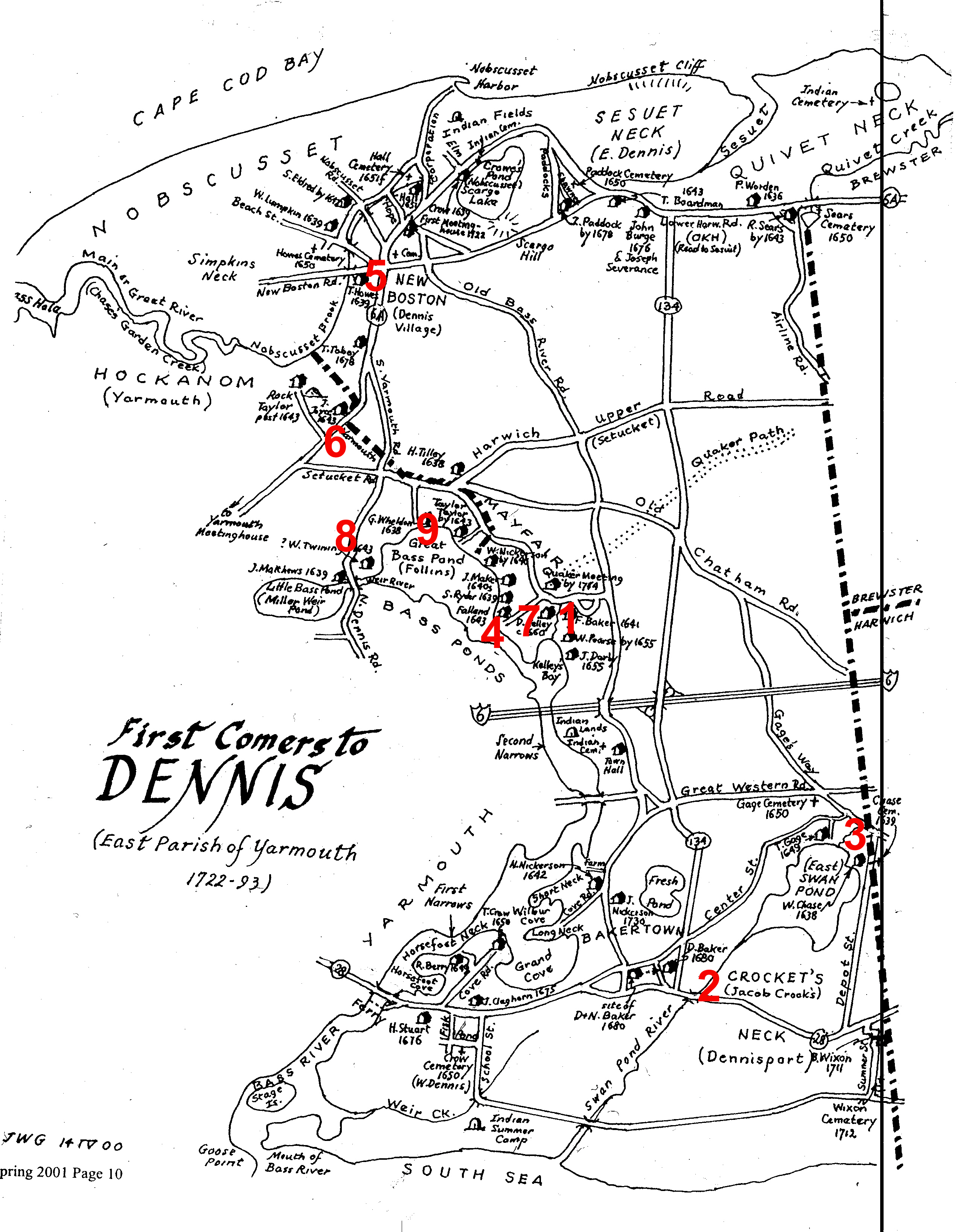
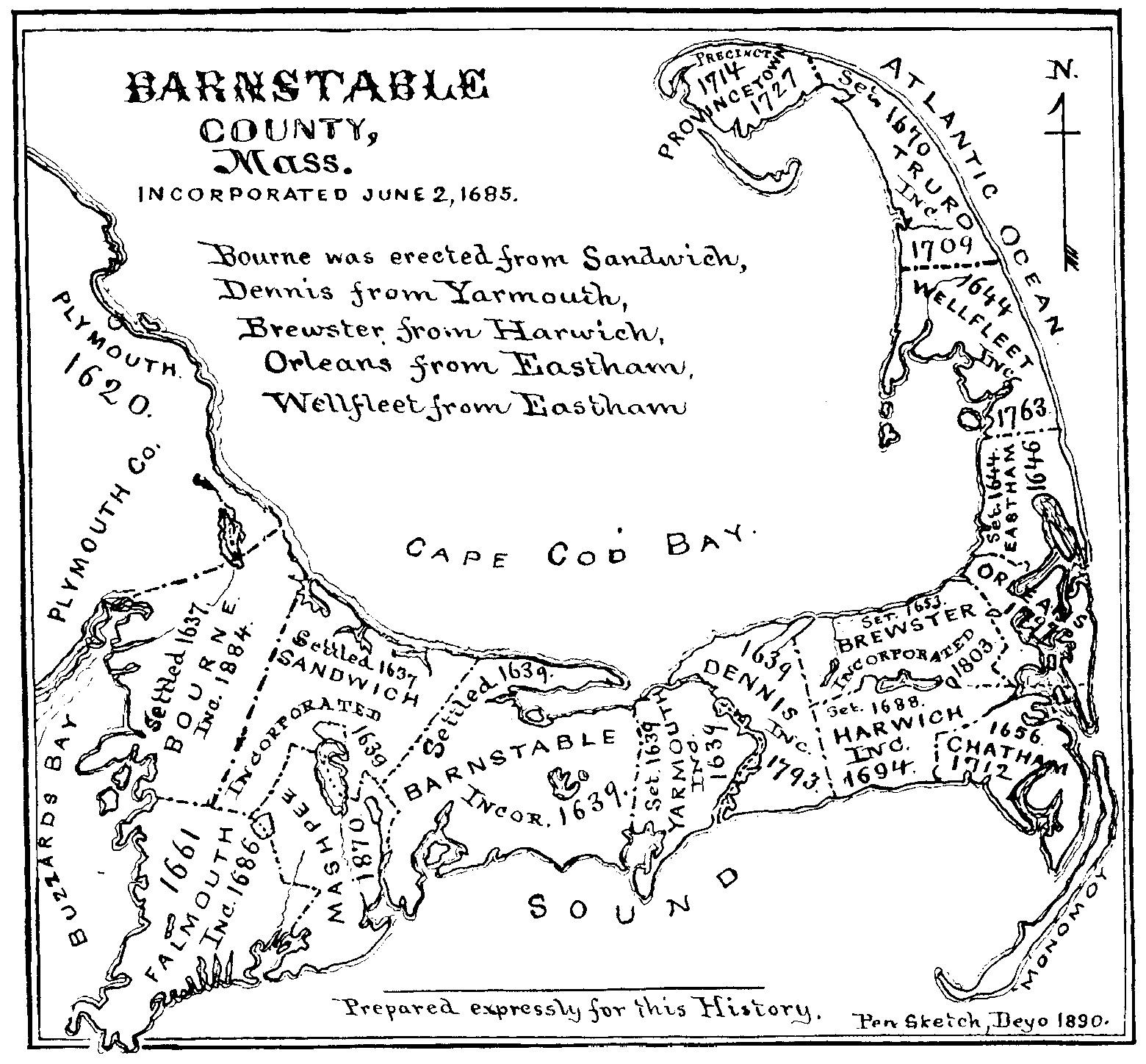
Nine of our ancestral families were first comers in Dennis:  1 . Francis Baker, 2.  Daniel, Baker, 3. William Chase,  4. Thomas Folland, 5. Thomas Howes, 6. John Joyce, 7. David O'Kelley, 8. William Twining, 9. Gabriel Weldon.  Map courtesy of Lynn Keller and Cape Cod Genealogical Society

Nine of our ancestral families were first comers in Dennis: 1 . Francis Baker, 2. Daniel, Baker, 3. William Chase, 4. Thomas Folland, 5. Thomas Howes, 6. John Joyce, 7. David O’Kelley, 8. William Twining, 9. Gabriel Weldon. Map courtesy of Lynn Keller and Cape Cod Genealogical Society

Fence viewer at Bass River—”daniel” Baker, March 19, 1696/97; March 22, 1697/98; April, 1699, first Tuesday; March 7, 1700, with Benjamin “gray;” March 19, 1701, with Benjamin “gaige;” April 1, 1702) March 10, 1703, and March 16, 1704, with John Nickerson; March 27, 1707, March 18, 1707-8, March 15, 1708/09, March 14, 1709/10, with John Crow; March 14, 1711, with Thomas Whilden and Ebenezer Rider.

Sept. 26, 1704, Daniel Baker and Nathaniel House serve upon jury of trials.

Daniel Baker’s name was on a List of the Soldiers of Yarmouth that were pressed into the country’s service, and that went to Mount Hope under Capt. John GORHAM against the Indians in 1675, and took their first march upon the 24th June, ’75. The sum of his wages was £3 03 00.

He served in King Philip’s war and in 1736 he received a land grand in Naragansett Number 7, Gorham, Maine ; tax list, 1676, for oyd.; townsman, 1694; proprietor common lands, 1711.

Children

1. Daniel Baker

Daniel’s wife Mary Sherman was born 1 Dec 1683 in Portsmouth, Newport, Rhode Island.  Her parents were Samuel Sherman and Martha Tripp. Mary’s sister Martha married Daniel’s brother Abraham. The Shermans were Quakers.

2. Samuel Baker

Samuel’s first wife Elizabeth Berry was born 21 Dec 1684 in Yarmouth, Barnstable, Mass. Her parents were John Berry and Susannah Crowell. Elizabeth died 1755 in Yarmouth, Mass.

Samuel’s second wife Patience Berry was born 22 Jun 1687 in Yarmouth, Mass. Her parents were Samuel Berry and Elizabeth Bell. Patience died in 1750 in Crooky Neck, Mass.

3. Joseph Baker

Joseph’s wife Isabel Sherman was born 1686 in Portsmouth, Newport, Rhode Island. Her parents were Samson Sherman and Mary Tripp. Isabel died 19 Jul 1742 in Portsmouth, Newport, Rhode Island.

4. Abraham Baker

Abraham’s wife Mehitabel Sherman was born 8 Aug 1685 in Portsmouth, Newport, Rhode Island. Her parents were Samuel Sherman and Martha Tripp. The Shermans were Quakers. Martha’s sister Mary married Abraham’s brother Daniel.

Abraham’s name appears many times in the land records at Fall River and at Taunton; and the Quaker records with Newport Historical Society and with the Moses Brown School in Providence show that he was often appointed to serve on committees for the Friends. Abraham wrote his will on 18 Feb 1749. It was signed by his mark and was proved 7 Aug 1750.

5. Elisha Baker

Elisha’s wife Mary Earle was born in 1690. Her parents were Thomas Earle and Sarah Taber.  Mary died 11 Aug 1758 – Cranston, Rhode Island.

6. Elizabeth Baker

Elizabeth’s husband Nathaniel Baker was born 27 Jan 1672 in Yarmouth, Barnstable, Mass. He was Elizabeth’s first cousin. His parents were Nathaniel Baker and Desire Gray. His grandparents were  Francis BAKER and Isabel TWINING.. Nathaniel died 1757 in Yarmouth, Barnstable, Mass

7. Hannah Baker

Hannah’s husband Joshua Wixam as born 14 Mar 1695 at Eastham, Barnstable, Mass., the settlement then called Cape Cod. His parents were Barnabas Wixam and [__?__] The date and place of his death are unknown. He was married 9 Mar 1715, at Yarmouth, to Hannah Baker who died 27 Nov 1730. After Hannah died, he married Elizabeth Chase 18 Dec 1731 Yarmouth, Mass.

The Bakers and the Chases are very intertwined in my lineage. Hannah’s parents were Daniel BAKER and Elizabeth CHASE. Daniel’s sister, Elizabeth BAKER, married John CHASE who was Elizabeth’s brother. It hurts my head, but I think Joshua first married Hannah and then married her cousin, so no special permission needed.

He was then married about December 1731 to Elizabeth Chase of Harwich (born 6 Oct 1718), daughter of William Chase and Dorcas Baker. From the first marriage two children were born, Reuben and Hannah. The son, Reuben, married a younger sister of his step-mother, which made him a brother-in-law of his father, and the older sister became the mother-in-law of the younger. The situation was a little novel, to be sure, but quite proper. Here is the beginning of the use of four Christian names not previously found in the family, and found later only among the descendants of Joshua. They are the names Joshua, Reuben, Solomon, and Dorcas. Here may be given an amusing local law or ordinance found among the early records of Barnstable County, which provides that: ‘Every single man must kill three crows and six blackbirds each year. None shall be permitted to marry until he complies with this requisition.’ In the annals of Dennis, Barnstable County, Massachusetts, appears the name of Joshua Wixam in the year 1749. He was then a representative for two years and a selectman for five years. Many Wixams held public offices in those early days.

8. Thankful Baker

Thankful’s first husband Jabez Snow Jr was born 1703 in Harwich, Barnstable, Mass. His parents were Edward Snow and Sarah Freeman.   His grandparents were our ancestors Jabez SNOW and Elizabeth SMITH.  Jabez died 8 Apr 1754 in Harwich, Barnstable, Mass.

Thankful’s second husband Jesse Cable was born about 1698.

9. Tabitha BAKER (See Joseph O’KELLY‘s page)

Source:

http://capecodhistory.us/genealogy/us/Names3.htm#BAKER

http://www.genealogyofnewengland.com/b_b.htm

The Connecticut magazine, Volumes 3-4 By William Farrand Felch, George C. Atwell, H. Phelps Arms, Frances Trevelyan Miller

http://trees.ancestry.com/owt/person.aspx?pid=4952913

http://familytreemaker.genealogy.com/users/t/o/o/Terry-Tooemy/WEBSITE-0001/UHP-0294.html

Posted in 11th Generation, Line - Shaw, Veteran | Tagged , | 7 Comments

William Chase Sr.

William CHASE Sr. (1607 – 1659 ) was Alex’s 12th Great Grandfather; one of 8,192 in this generation of the Shaw line.

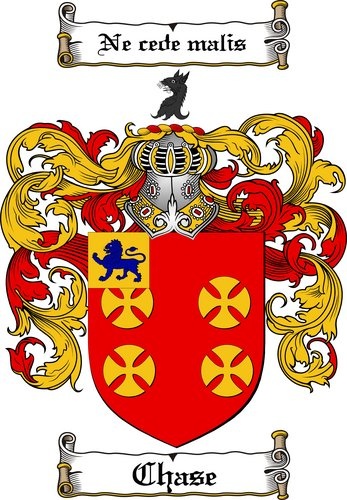
Chase Family Coat of Arms

William Chase was born about 1600 in England He married Mary TOWNLEY before 1621 in England. William, Mary and William Jr. emigrated in 1630 in the Great Migration with Gov Winthrop. William died in May 1659 in Yarmouth, Plymouth Colony.

The surname Chase is derived from the French “chasser” to hunt, and the family has been prominent in England since the first use of surnames. The seat of the family in England was at Chesham, in Buckinghamshire, through which runs a rapidly flowing river called the Chess, whence the name of the town and perhaps also of the family.

One theory is that William Chase was born on 4 Jan 1607 in Hundrick Parish, Chesham, Buckingham, England  His parents may have been Aquila CHASE and Sarah JELLIMAN.    However, Aquila’s immigrant sons Thomas and Aquila Chase,whose English ancestry is traced to remote antiquity, are believed to be cousins of William Chase, the immigrant ancestor not brothers. Aquila married Martha (Sarah?) Jelliman on 11 Jun 1606 in Chesham, Buckinghamshire which squares with a 1607 birth for William, but leaves him too young to be William II’s father in 1621.

Another theory is that William was born in 1595 in Chesham, Buckinghamshire, England  and his parents were Aquila’s brother and sister-in-law, Robert CHASE (1565 – 1601) and Jean TOKEFIELD (1565 – 1591). However, that cousin William died in 1639 in Yarmouth, Mass.

A fourth idea is William was born 19 Feb 1605 Rogate, Sussex, England and his parents were Benjamin CHASE (1570 – 1643) and Helen  HARVIE (1570 – 1618). However, Benjamin and Helen married 11 Jun 1606 Wivenhoe, Essex, England and in either case William would have been to young to be William CHASE II’s father in 1621.

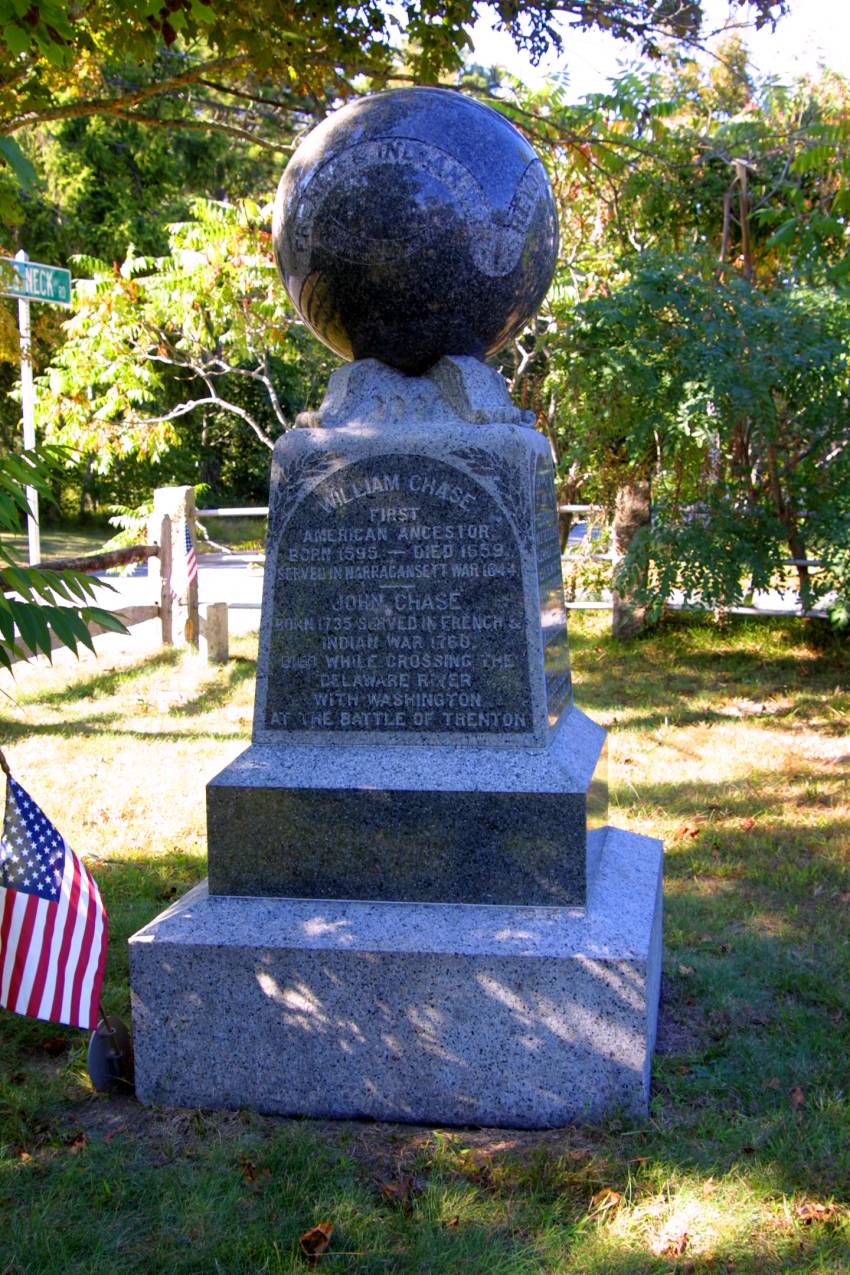
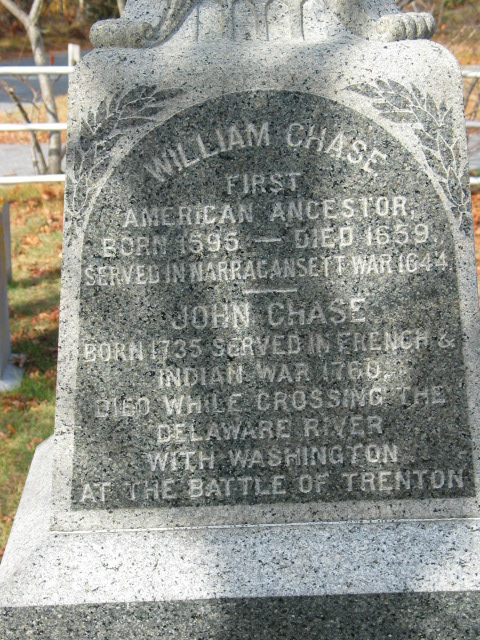
William Chase – Monument – Baptist Church Cemetery, West Harwich, Barnstable County, Massachusetts

William Chase – Inscription

Barnstable County

Mary Townley was born on 5 Mar 1603 in Norfolk, England.  Her parents were John TOWNLEY. and Mary (Marjerie) [__?__].    There was a sixteen year gap between the births of her children William and Mary because she was “much afflicted by a long and tedious affliction.  She had a paralytic humor which fell into her backbone, so that she could not stir her body, but as she was lifted, and filled her with great torture, & caused her backbone to go out of joint, & bunch out from the beginning to the end of which infirmity she lay 4 years & a half, & a great part of the time a sad spectacle of misery. But it pleased God to raise her again, & she bore children after it”.  Mary died on 6 Oct 1659 in Yarmouth, Barnstable, MA

In October 1659 a coroner’s jury including John JOYCE “having made search and inquiry, according to our best light and understanding, into the cause of the death of Mary Chase, viz: of our town of Yarmouth, do with joint consent present, the day and year abovesaid, that we can find no other but that she died a natural death through inward sickness, as is evident to all men naturally.”

Children of William and Elizabeth:

Name Born Married Departed
1. William  CHASE II 15 Jun 1621
Chesam, Buckinghamshire, England
Elizabeth HOLDER
1640 Yarmouth
27 Feb 1685 in Yarmouth, Mass
2. Mary Chase 15 May 1637
Roxbury
28 Oct 1652
Barnstable Mass
3. Benjamin Chase c. 1640
Roxbury
Philippa Sherman
1673
Freetown, Mass
27 Feb 1686

Mary’s father, John TOWNLEY was born about 1576 in Norfolk, Eng.. He died in England.  John married Mary (Marjerie)  [__?__] in 1556 in Buckingham, England.

Mary’s mother, Mary (Marjerie) [__?__] was born about 1580 in Norfolk, England.

William was a carpenter-housewright

(On 25 November 1639 Thomas Starr of Duxbury sold to Andrew Hellot of Plymouth a house and land in Yarmouth, and as part of the agreement stated that “The frame of the said house is to be made & set up with a chimney and to be thatched, studded and lathed (daubing excepted) by Will[ia]m Chase” )

1630 Resident Roxbury, Suffolk Co., Mass
14 May 1634 Elected freeman Roxbury, Suffolk Co., Mass
1638  Resident Yarmouth, Barnstable, Mass
5 Mar 1639 Elected Constable Yarmouth, Barnstable Mass
1645  Military

William Chase was one of Rev. Stephen BACHILER’s  company, who spent the winter of 1638, at Mattacheese, and the only one who remained after that unfortunate enterprise was abandoned. He fenced in a portion of the lands in “Old Town,” (as that part of Barnstable, then Yarmouth, was called,) and claimed it, when the settlement of the town was made. He mortgaged this land to Stephen Hopkins in 1642, and disposed of it in 1648. He was appointed a Constable in 1639, serving but six months, being involved in difficulties growing out of his opposition to Mr. Matthews. In 1640 he was censured by the Court, for his language against the minister, and ordered to depart the colony in six months, but the order, for some reason, was not enforced. His name appeared again in the Court records, in a civil case, connected with a difference with Mr. Nicholas Simpkins, and he was presented by the Grand Jury in 1654, for driving a yoke of oxen five miles on the Lord’s day, during time of service. In 1645, he enlisted as a drummer in the expedition against the Narragansetts, and received 5 shillings extra pay.

Nine of our ancestral families were first comers in Dennis:  1 . Francis Baker, 2.  Daniel, Baker, 3. William Chase,  4. Thomas Folland, 5. Thomas Howes, 6. John Joyce, 7. David O'Kelley, 8. William Twining, 9. Gabriel Weldon.  Map courtesy of Lynn Keller and Cape Cod Genealogical Society

Nine of our ancestral families were first comers in Dennis: 1 . Francis Baker, 2. Daniel, Baker, 3. William Chase, 4. Thomas Folland, 5. Thomas Howes, 6. John Joyce, 7. David O’Kelley, 8. William Twining, 9. Gabriel Weldon. Map courtesy of Lynn Keller and Cape Cod Genealogical Society

William was carpenter by trade, and his agreement to build a house for Dr. Thomas Starr for £5, which was afterwards sold to Mr. Andrew HALLETT (our ancestor), is preserved. Mr. Chase was not in accord with the body of the settlers, being more latitudinarian in his notions than accorded with the sentiment of the times. His numerous descendants in this section of Massachusetts are derived from John, second son of William, Jr., who came with him from England.

CHURCH MEMBERSHIP: Admitted to Roxbury church as member #13: “William Chase, he came with the first company, 1630. He brought one child his son William, a child of ill qualities, & a sore affliction to his parents. He was much afflicted by the long and tedious affliction of his wife; after his wife’s recovery she bare him a daughter, which they named Mary, borne about the middle of the 3rd month 1637. He did after that remove (intending) to Situate, but after went with a company who made a new plantation at Yarmouth”

EDUCATION: Signed his will by mark.

OFFICES:  first Yarmouth constable, 5 March 1637/38, 4 June 1639
Yarmouth surveyor of highways, 3 June 1657
In Yarmouth section of 1643 Plymouth list of men able to bear arms

ESTATE: On 8 June 1642, William Chase, in consideration of a debt of £5 which he owed to Mr. Stephen HOPKINS (our ancestor), mortgaged to Hopkins “all that his house and lands in Yarmouth containing eight acres of upland and six acres more lying at the Stony Cove”

As part of the settlement of disputes over Yarmouth land, made on 14 May 1648, it was ordered that “Mr. Hawes (our ancestor Edmund HAWES) shall enjoy 8 acres of upland or thereabouts, in the West Field, which he bought of Goodman Chase” and “there was granted also to John Darby to have six acres of meadow in the Easteren Swan Pond Meadowe, in lieu of 4 acres due to William Chase, for a debt the town owed him”

MARRIAGE: By about 1620 Mary Townley.  She was admitted to Roxbury church as member #29: “Mary Chase, the wife of William Chase.

In October 1659 a coroner’s jury “having made search and inquiry, according to our best light and understanding, into the cause of the death of Mary Chase, viz: of our town of Yarmouth, do with joint consent present, the day and year abovesaid, that we can find no other but that she died a natural death through inward sickness, as is evident to all men naturally”

ASSOCIATIONS: Late in his life William Chase was frequently associated with Robert Dennis and his wife Mary. On 3 October 1654 Robert Dennis acted “in the behalf of William Chase” in settling a debt. Mary Dennis witnessed the will of William Chase, Robert Dennis was one of the appraisers of the estate, and Robert Dennis was ordered to divide the estate. This is merely suggestive, and may only reflect a friendship developed after having resided for several years in Yarmouth.

COMMENTS: Banks derives this William Chase from Wivenhoe, Essex, citing only “Banks Mss.”; this is certainly the right area for an early Roxbury resident, but it should not be accepted without further research.

William Chase’s appearance as constable of Yarmouth on 5 March 1638/9 implies that he had settled there in 1638 as one of the earliest inhabitants. Eliot’s use of the word “intending” to describe the move to Scituate suggests that he was joining with Reverend John LOTRHOP and his party, who were at that same time making the move to Barnstable, as further evidenced by the burial of his daughter Mary at Barnstable, entered in Lothrop’s records.

7 Oct 1639 – The settlement of the town had hardly commenced before difficulties sprung up in the church. As early as Oct. 1639, the court record says, “Edward Morrell being sworn, deposeth and saith, that -William Chase- -(at his return home from the court, when Mr. Matthews and he were together) did report that Mr. Matthews had nothing to say for himself, and that he marvelled how any durst join with him in the fast ; and further said that some being in presence with the magistrate, did hold up his hand and cried, ‘ Fie ! for shame! ‘ ” Mr. Chase had been appointed Constable in June preceding, and superseded in September, presumably for opposition to Mr. Matthews. He was subsequently arraigned for his language towards the minister, was censured by the court, ordered to find sureties, and to depart the place in six months. Dr. Thomas Starr and Mr. Andrew Hallet became his sureties, but the sentence of the court was never carried out.

There are other reports that Mr. Mathews was an incompetent Minister.  Rev. Marmaduke Matthews was born in Swansey, Glamonshire, Wales, in 1605, matriculated at All Souls College, Oxford, Feb. 20, 1623, and came to New England in Sept., 1628. He is spoken of by Gov. Winthrop as a “goodly minister,” and is enumerated by Morton in the list of “those godly and able gospel preachers with which the Lord was pleased to accomplish and adorn the colony.” He was by some regarded as able and devoted, but by all as lacking in discretion. It is said that he lost at one time the approbation of some able, understanding men, among both magistrates and ministers, by “weak and unsafe” expressions in his teachings. This was followed by a thorough scrutiny of his preaching, by the General Court, which resulted in his being admonished. “But,” says Rev. Mr. Dodge, “no one can read his petition for re-instatement, without the conviction that whatever expressions he may have uttered, that might not have appeared to his serious contemporaries, as becoming the gravity of the clerical charcter, he was not wanting in the essential qualities of a good minister.” He fell upon troublous times. After a stormy ministry, Mr. Matthews left this town for Hull, about 1645, and was afterwards in Maiden, where he was cited to appear in Court, for “uttering unsafe and unsound expressions,” and fined j[, 10, and the Maiden church was cited for settling him without the approbation of the magistrates. When the marshal endeavored to satisfy the judgment against Mr. Matthews he “found nothing but his library.” He afterwards returned to England, and died in his native place in 1683.

The trouble did not end there. Rev. Joseph Hull, who had exercised the office of minister at Barnstable before Mr. Lothrop came to the place, was invited to preach in Yarmouth, by those who were dissatisfied with Mr. Matthews’s ministry, with which invitation he complied. Mr. Hull was thereupon excommunicated by the Barnstable church, ” for wilfully breaking his communion with us and joining himself with a company at Yarmouth to be their pastor, contrary to the advice and counsel of our church. ” The court ordered that a warrant be issued to some constable at Yarmouth to apprehend Mr. Hull, if he should attempt to exercise the ministry or administer the seals, and to bring him before the court ; but Mr. Hull desisted, acknowledged his error, and was received again into fellowship with the church.

The pioneers of the town of Yarmouth were soon joined by others, and before the close of 1640 not far from twenty-five families were established here. The region around ” Stony Cove,” now the ” Mill Pond,” was occupied by Andrew Hallet, Thomas Starr, William Chase, Gyles Hopkins, Robert Dennis and Joshua Barnes.

1 Sep  1640 – “William Chase, of Yarmouth, is censured (for his miscarriages against Mr. Mathewes, and disturbance of the proceedings of the church, court, & country), to find sureties for his good behavior during the time of his abode there, which is six months, and then to depart the place.” “Will[ia]m Chase, of Yarmouth, planter” posted bond of £40, and his sureties were Thomas Starr of Yarmouth, chirurgeon, and Andrew Halott of Plymouth, gentleman the bond was renewed, at £20, on 2 March 1640/1

2 Jun 1640 – “Nicholas Sympkins, Peter Worden, and Will[ia]m Chase are granted a warrant to attach and divide the goods of one Phillips Woodall, left in the said Nicholas Sympkins hands, who is departed the government some time since, being severally indebted to them & others, and to make satisfaction so far as the said goods will extend, to themselves and others”

17 Jun 1641  – In the year 1641, an inferior tribunal was established for the convenience of the three towns of Sandwich, Yarmouth and Barnstable. Mr. Thomas Dimmock of Barnstable, Mr. John Crowe of Yarmouth, joined with Edmund FREEMAN of Sandwich, who was one of the Assistants of the Governor, were appointed to hear and determine all causes and controversies within the three townships, not exceeding xx shillings.  A special term of the colony court was held in Yarmouth June 17, 1641, the following being a full report of the proceedings:

At a court held at Yarmouth, the 17th day of June, in the 17th year of the reign of our Sovereign Lord, Charles, by the grace of God of England, Scotland, France and Ireland, King, &c. before Edward Winslow, Miles Standish, and Edmund FREEMAN, gentlemen, three of the Assistants of the government aforesaid, by virtue of the order of the General Court of the first of June last past, whereby the said Winslow, Miles Standish, Edmund Freeman and John Browne, or any two or three of them, were authorized to set the bounds of Yarmouth and Barnstable, and to hear and determine all causes and controversies amongst the inhabitants of Yarmouth, Barnstable and Sandwich which shall come before them, &c.

The differences betwixt Nicholas Sympkins and William CHASE, by consent of both parties are referred to the arbitrament of Mr. Mayo and Mr. Thorn. Dimmack, and have entered into an assumpsit of £5 to each other to abide their award, and it’s to be ended within a month next coming.

It is ordered by the Court that Mr. Andrew Hellot shall pay Massatumpaine one fadome of beads within two moons, besides the nett he alledgeth the said Massatumpaine sold him, for the deer that Mr. Hellot’s son bought of him about two years since.

It is ordered by the Court that Walter Devile shall pay to Massatumpaine for mending of the hole in his kettle, which the said Devile shot with his gun ; it’s to be paid within one moon next ensuing.

Whereas there was complaint made by William Chase, that Nicholas Symkins had so set his fence that he hath taken in some small part of the lands of the said William Chase, which upon view appeared to be so — it is now ordered and concluded by the Court that notwithstanding the fence shall stand as it is now set, and that Mr. Anthony Thacher, for peace sake, will allow the said William Chase as much land out of his own lands, of those lands which lie next to the said Chase’s lands, and the land so taken by Nicholas Symkins aforesaid shall be his owne. And the said Nicholas Symkins is to allow the said Chase a little parcel of meadow lying next to the said Chase, from the end of his fence by a straight line to a creek easterly, provided that the said William Chase do fence in the same by March next ensuing.

6 Jun 1654 – The grand jury presented “Will[i]am Chase, Seni[or], of Yarmouth, for driving one pair of oxen in the yoke upon the Lord’s day, in time of exercise, about five miles”

4 May 1659 Will

William Chase, of Yarmouth, the elder, being aged and sick in body, but of perfect memory, thanks be to the Lord, do make my last will and testament, as followeth: First, I give and bequeath unto my son Benjamin, after my decease, on heifer claf and two steer calves, of a year old and upwards; also I give to my son William, who hath had of me already a good portion, the sum of five shillings, to be paid in any good pay, if he demand it. All the rest of my goods, cattle and chattels, I give and bequeath unto Mary, my wife, together with this my dwelling house, the land and all the appurtenances thereunto belonging: as also half of my lot of land at the Bass pond, which I bought of William Palmer, a middle line made, and that half part next to Darbey’s I give unto her, Mary, my wife aforesaid, as also my orchard and land I bought of Goodman White, now in my possession, all unto her use and disposing during her natural life, if she continue a widow, and when she dies, to dispose oa third part of that estate God shall leave her, as she shall thing good; the other two parts to our son Benjamin’s part; but if it shall please God that she shall marry, my will is that she shall have a third part of that estate, and the other two parts to be to our son Benjamin aforesaid. Also I do make my wife Mary aforesaid, the executrix of this my last will and testament, and do appoint my neighbors Robert Dennis and Richard Taylor, tailor, overseers of this my last Will and Testament and have hereunto subscribed my hand this 4th day of May, 1659.

The Connecticut magazine, Volumes 3-4 By William Farrand Felch, George C. Atwell, H. Phelps Arms, Frances Trevelyan Miller Jan – Dec 1897

1. “William Chase, he came wth the first company, 1630 he brought one child his son william, a child of ill qualitys, & a sore affliction to his parents: he was much afflicted by the long & tedious affliction of his wife; after his wives recovery she bare him a daughter, wch they named mary borne aboute the middle of the 3rd month, 1637. he did after yl remove intending to Situate, but after went wth a company who made a new plantation at Yarmouth.” “Mary Chase, the wife of William Chase, she had a paralitik humor wch fell into her back bone so y* she could not stir her body, but as she was lifted, and filled her wth great torture, & caused her back bone to goe out of joynt, & bunch out from the beginning to the end of wch infirmity she lay 4 years & ahalfe, & a great Pt of the time a sad spectakle of misery: But it pleased God to raise her againe, & she bore children after it.” (N. E. H. G. R., 1881). Such is the quaint language of the first church in Roxbury,. now Boston Highlands, Mass., of which the Rev. John Eliot, “the Apostle to the Indians,” was pastor.

William1 Chase died between May 4 and 13, 1659, in Yarmouth. Mary, his wife, was found dead in October, 1659, and a coroner’s inquest being held, it was decided she died a natural death. Dr. O. W. Holmes described, in one of his characteristic letters, her restoration to health from the singular malady mentioned on the above church records. William1 came over in the fleet which brought Governor Winthrop and his colony. October 9, 1630, he applied for admission as a freeman, and on May 14, 1634, he took the freeman’s oath. He was one of Mr. Stephen Bachilor’s company, who spent the winter of 1638 at Mattacheese (Yarmouth),and the only one who remained after that unfortunate enterprise was abandoned. He fenced in a portion of the lands in “Old Town” (as that portion of Barnstable, then Yarmouth, was called), and claimed it when the settlement of the town was made. In 1639, he was made constable in Yarmouth, where he resided until his death. He was constable but six months, being involved in difficulties growing out of his opposition to Marmaduke Matthews, the pastor. In 1640, he was censured by the court for his language against the minister, and ordered to depart the colony in six months; but the order, for some reason, was not enforced.

Mr. Theodore R. Chase, of Detroit, Mich., says: ” William was at first a staunch Puritan. Later he evidently became much unsettled in his religious beliefs from association with Quakers, and the constant efforts of the Pilgrims at Plymouth to make trouble for him in various ways. He evidently, at home, in Yarmouth, was a man much esteemed, as he filled minor public offices and was the head of the military organization for defense against Indians. It is very probable that he either named Yarmouth, or it was so named out of compliment to him and others from Yarmouth, England.”

In 1642, he mortgaged his land to Stephen Hopkins, and disposed of it in 1648. “The difference between Nicholas Sympkins & William Chase by consent of both parties are referred to the arbitrament of Mr. Mayo & Mr. Thom. Dimmack, & have entered into an assumpsit of £5 to each other to abide their award, and it’s to be ended within a month next coming—June 17, 17th year of Charles” (1642).

He was presented by the Grand Jury, in 1654, for driving a pair of oxen in yoke on the Lord’s Day, in time of service, about 5 miles.

In 1645, he enlisted as a drummer in the Narragansett expedition, and received 5 shillings extra pay. He was able to bear arms in August, 1643. He was a carpenter by trade, and his agreement to build a house for Dr. Thomas Starr for £5, which was afterwards sold to Andrew Hallet, is preserved. In 1657, he was one of two surveyors of highways. His “farm fence ” is designated as a boundary in several deeds and other documents. He was not in accord with the body of settlers, being more latitudinarian in his notions than accorded with the sentiment of the times. He resided near Stony Cove, Yarmouth. The Yarmouth Register for July 15, 1847, says: “Jonn Crow, William Chase, William Nicholson, Thomas Howes, Yelverton Crow, Nicholas Simpkins, Thomas Starr, John Hall, William Hedge and Edward Sturges sustained excellent characters as men and citizens, and at any and all times such men would command respect. Of such men the first church in Yarmouth was composed, and their posterity may well feel an honest pride that they are the descendants of so worthy an ancestry.”

October 28, 1645, Yarmouth sent out for thirteen days to the ” Narrohigganset” expedition William Northcoate, William Twyneing, Teague Joanes, Henry Wheildon and William Chase, drummer. (Plym. Col. Rec.)

Children

1. William  CHASE II (See his page)

3. Benjamin Chase (b.1640)

Benjamin’s wife Philippa Sherman was born 1 Oct 1652 in Portsmouth, Rhode Island, Rhode Island. Her parents were Philip Sherman and Sarah Odding. Her sister Hannah (b. 1647) married Benjamin’s nephew William Chase (b. 1645). Philippa died 1731 in Yarmouth, Barnstable, Mass.

Sources:

http://capecodhistory.us/genealogy/us/Names6.htm#CHASE

http://www.noffsinger.org/genealogy/aqpages/aqwg54.htm#7708

http://genealogyofnewengland.com/b_c.htm

http://trees.ancestry.com/owt/person.aspx?pid=131638670&st=1

Posted in 14th Generation, Dissenter, Historical Monument, Immigrant - England, Line - Shaw, Pioneer, Public Office, Veteran | Tagged , | 20 Comments

William Chase II

William CHASE II (1621 – 1685 ) was Alex’s 11th Great Grandfather twice; two of 4,096 in this generation of the Shaw line. Two children in this family, John and Elizabeth, are our ancestors

William Chase  was born in 15 Jun 1621 in Chesam, Buckinghamshire, England. He emigrated to Massachusetts with his parents William CHASE Sr. and Mary TOWNLEY.  He married Elizabeth HOLDER about 1644.  William died 27 Feb 1685 in Yarmouth, Mass.

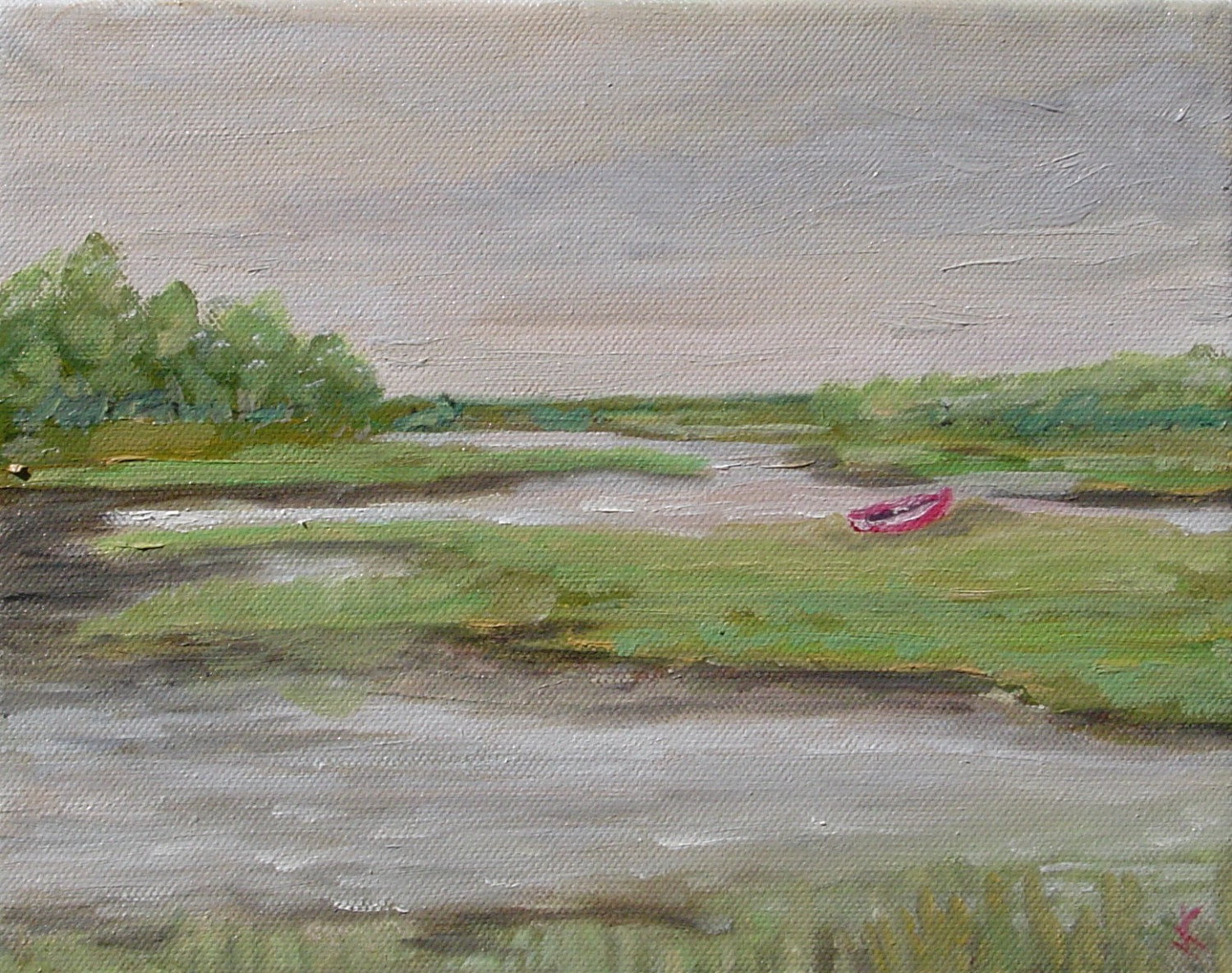
Crocker Neck Conservation Area - William Chase probably lived at Crocker's Neck, Harwich.

Elizabeth Holder was born about 1625 in Winterbourne,,Gloucestershire, England. Her parents were  Christopher HOLDER and [__?__].   Elizabeth died about 1678 in Yarmouth, Mass.

Children of William and Elizabeth:

Name Born Married Departed
1. William  Chase c. 1645
Yarmouth
Hannah Sherman
21 Sep 1676 Portsmouth, RI
.
Priscilla Berry (Perry)
6 Dec 1732 Portsmouth, RI
16 Aug 1737
2. Jacob Chase 1647
Yarmouth
Mary Hall
1688
Yarmouth
16 Apr 1734
Swansea, Mass
3. John CHASE 16 Apr 1649
Yarmouth
Elizabeth BAKER
6 Aug 1675 in Yarmouth.
27 Feb 1684 in Yarmouth
4. Abraham  Chase 6 Oct 1652
Yarmouth
Elizabeth Henry
1676 in Yarmouth
17 Oct 1738
Tiverton, RI
5. Benjamin Chase c. 1654 Yarmouth Amy Borden Jul 1731
Portsmouth, RI
6. Elizabeth CHASE 1656
Swansea, Bristol, Mass
Daniel BAKER
(Elizabeth’s brother)
27 MAY 1674 Yarmouth
7 Oct 1716 in Swansea, MA
7. Joseph Chase 1673
Yarmouth
Sarah Sherman
28 Feb 1693/94
19 Jan 1725
Swansea, Mass
8. Samuel  Chase ~1677 Yarmouth Sarah Sherman
(a different family) 1699
Portsmouth, RI
Before 4 Apr 1758 Swansea, Mass.

William came with his parents with the first company in 1630. The Great Migration Begins says he was a child of ill qualities, & a sore affliction to his parents.

William was a residence of Swansea, Bristol, Mass.

Legend says there is Indian blood in the Chase family line. Which of the wives was the Indian is unknown at this point.

“All of the dates for the William Chase are rough estimates and largely unsupported by contemporary evidence. This William’s apparent eldest child, another William, was married by the early 1670s, and would therefore have been born about 1645, which roughly dates the first marriage of William Chase, the son of the immigrant, and also suggests a year of birth for the son of the immigrant. In his article of 1933 John Carroll Chase stated that “it has been claimed that the four youngest children of William Chase were born of his second wife,” but no evidence other than this is offerred [ NEHGR 87:50]. The evidence for the list of children for this William is itself slim, and so all dates for this William are subject to alteration.”

Burt Derrick – Wixon/Chase descendant and Cape expert:

“William Chase was also a Quaker. We don’t know if his joining the Quakers was the reason he “was a sore affliction to his father”, or for other reasons. But William Chase lived on the northern side of the Wixon land in Dennisport, on land that was “acquired from Old Quason (an Indian sachem of Harwich)”, according to historian Josiah Paine. Just how did William acquire this land? At that time, the Pilgrim fathers had strict rules that no land could be bought of the Indians except with their permission, and no such permission exists for William in the records. Did he get that land through his wife? Who knows? No record exists.”

Children

1. William Chase

William’s first wife Hannah Sherman was born 11 Feb 1647 in Portsmouth, Newport, Rhode Island. Her parents were Philip Sherman and Sarah Odding. Hannah died 9 Oct 1717 in Dartmouth, Bristol, Mass.

William’s second wife Priscilla Berry (Perry) was born 1638 in Yarmouth, Barnstable, Mass. Her parents were Aaron Perry and [__?__].

For the hire of horses, the loss of arms, ammunition and money, loss in saddles and bridles in the Second expedition to Narragansett (Great Swamp Fight Dec 19, 1675)— William Chase (not sure if the father or son) was paid £3 16 00.

2. Jacob Chase

Jacob’s wife Mary Hall was born 1650 in Westerly, Newport, Rhode Island. Her parents were Isaac Hall and [__?__]. Mary died 1734 in Swansea, Bristol, Mass.

3. John CHASE (See his page)

4. Abraham Chase

Abraham’s wife Elizabeth Henry was born 1657 in Yarmouth, Barnstable, Mass. Her parents were Phineas Henry and Elizabeth Baker. Elizabeth died in 1714

Abraham was a weaver and a Quaker. He had land east of Coy’s Brook and house 24 SEP 1695 Harwich, Barnstable Co., Mass which he sold for 18 pounds to William Cahoon of Chatham/Manomoy.

5. Benjamin Chase

Benjamin’s wife Amy Borden was born 30 May 1678 Portsmouth, RI. Her parents were John Borden and Mary Earle. Amy died 1716 Freetown, Bristol, Mass.

6. Elizabeth CHASE (See Daniel BAKER‘s page)

7. Joseph Chase

Joseph’s wife Sarah Sherman was born 24 Sep 1667 in Portsmouth, Newport, RI. She was the other Sarah Sherman’s first cousin. Her parents were Samson Sherman and Isabel Tripp. Sarah’s aunt Hannah Sherman married Joseph’s oldest brother William. Sarah died 19 SEP 1748.

8. Samuel Chase

Samuel’s wife Sarah Sherman was born 10 Apr 1682 in Portsmouth, Newport, Rhode Island. She was the other Sarah Sherman’s first cousin. Her parents were Benjamin Sherman, Hannah Mowrey. Sarah’s aunt Hannah Sherman married Samuel’s oldest brother William. Sarah died 4 Apr 1758 in Swansea, Bristol, Mass

Sources:

The Connecticut magazine, Volumes 3-4 By William Farrand Felch, George C. Atwell, H. Phelps Arms, Frances Trevelyan Miller Jan – Dec 1897

2. William Chase d. Feb. 27, 1684/85, at Harwich, Cape Cod. The record of his marriage and dates of birth of his children were probably destroyed when the Yarmouth Town Records were destroyed (see testimony of John, No. 6). He probably lived at Crocker’s Neck, Harwich.

Crocker Neck Topo Map

another account says his family lived near Herring River, on the east side of Bass River, in Yarmouth, now Dennis or Harwich. His children, b. probably 1645-1670, were connected with the Society of Friends in the neighborhood, and undoubtedly attended meeting at Friends’ Meeting, established in second month, 1681, at the house of Ivory Jones and John Dillingham, at or near Bound Brook. All his children, except John and Elizabeth, are found in Rhode Island, from 1680-1701. Abraham, the last one to change his residence, sold land in Harwich in 1695, and in 1701 was a member of Rhode Island Friends’ Meeting. They were all named in R. I. Monthly Meeting Records, except Jacob. About 1700, William, Jacob, Joseph and Samuel went to Swanzy and were there members of the Society of Friends until their death. He paid ^3,7s. 2d., in 1676, toward the expenses of King Philip’s war. He was ancestor of the Swanzy and Somerset branches. He did not serve in King Philip’s war, because the William Chase who served in that war was alive in 1735, whereas this William d. 1684-5. “was evidently his son William who died 1737. He was on the tax list for 3s., 6d., in 1676, and a townsman, 1679. William Chase, Jr., March 6, 1654 5, was presented for entering the house of Richard Berry and taking by violence a parcel of flax and a small parcel of house yarn; sentenced to sit one hour in the stocks on training day. Estate settled June, 1685, by John Thatcher and Barnabas LOTHROP.

http://genealogyofnewengland.com/b_c.htm

http://wc.rootsweb.ancestry.com/cgi-bin/igm.cgi?op=GET&db=cwixgo&id=I1836

http://capecodhistory.us/genealogy/us/Names6.htm#CHASE

http://www.noffsinger.org/genealogy/aqpages/aqwg46.htm#7656

http://trees.ancestry.com/owt/person.aspx?pid=9848663

Posted in 13th Generation, Dissenter, Double Ancestors, Immigrant - England, Line - Shaw | Tagged | 7 Comments

John Chase

John CHASE (1649 -1684 )  was Alex’s 10th Great Grandfather; one of 2,048 in this generation of the Shaw line.

John Chase was born 6 Apr 1649 in Yarmouth, Mass.  His parents were Wiliam CHASE II and Elizabeth HOLDER. He married Elizabeth BAKER 6 Aug 1675 in Yarmouth.   John died 27 FEB 1684 in Yarmouth.

Herring River - On the 3rd of June, 1700, the Committee of the town of Yarmouth bounded the land of John Chase at the Herring River, and in their record they say that it was “for many years past granted unto John Chase.”

Elizabeth Baker was born 6 Apr 1649 in Yarmouth, Mass.  Her parents were Francis BAKER and Isabel Twining.  Elizabeth died 16 May 1706 in Swansea, Mass. Two of their children,  Sarah and William, are our ancestors.

Children of John and Elizabeth:

Name Born Married Departed
1. Isaac Chase 1685 Yarmouth Mary Berry
23 MAY 1705 Yarmouth
.
Charity (Pease) O’Kelley (Widow of Jeremiah O’KELLY’S son Jeremiah Jr.)
28 Jun 1727 at Yarmouth
22 May 1759 Yarmouth
2. Sarah CHASE c. 1672 Yarmouth, Jeremiah O’KELLY 1689 1727 in West Dennis, Barnstable, MA
3. John Chase 16 Apr 1675 Yarmouth Sarah Hills 26 NOV 1755 Yarmouth
4. Thomas Chase 20 AUG 1679 Yarmouth, Sarah Gowell (Guell)
c. 1703 Yarmouth
20 NOV 1767 Dennis Mass.
5. Jeremiah Chase 1683 Yarmouth Hannah Baker
11 SEP 1719 Yarmouth
Harwich, Mass
6. William CHASE III 8 JUL 1688 YarmouthOr 8 Jul 1680 Dorcas BAKER
20 SEP 1715 Yarmouth, Mass.
.
Patience Walker
Sep 1771 in Harwich, MA.
7. Jonathan Chase c. 1690 Yarmouth Sarah Green
6 JUL 1709 Yarmouth
20 JUL 1743 Newport., RI
8. Desire Chase 1692 in Yarmouth
9. Judah Chase 1698

John Chase was a Quaker.

The Connecticut magazine, Volumes 3-4 By William Farrand Felch, George C. Atwell, H. Phelps Arms, Frances Trevelyan Miller.   Jan – Dec 1897

6. John3 Chase (William,8 William1), d. prob. in Yarmouth, Mass. (where he had lived), before April 18, 1735, when the Narragansett grants were made; m. Elizabeth (b. about 1656), dau. of Francis1 and Isabel (Twining) Baker. On p. 455 of Amos Otis Papers on Barnstable Families it is stated that John Chase m. Mercy (b. about 1670) Hall, dau. of Gersham (John Sr.) and Bethia (Bangs) Hall. It is well known that John8 Chase m. Elizabeth Baker. Mercy Hall may have married John4 Chase (John*).

He served in King Philip’s war; was on tax list, 1676, for o7d.; townsman, 1694; proprietor of common lands, 1711. One of his children was 4 years old Aug. 6, 1679 (prob. son John). He paid us. 4d., in 1676, toward expenses of King Philip’s war. “Given and granted to John Chaise, his heirs and assigns forever, twenty acres of upland convenient to his house, so that it hinder not the cart way that leads to Thomas Gages; June, 1678.”

Herring River Harwich, Mass

“The same time was given to John Chase the nooks and slips on the west side of Herring River, from William Griffith his meadow downward toward the sea, unless we could elswhere accommode him better.” On the 3rd of June, 1700, the Committee of the town of Yarmouth bounded the land of John Chase at the Herring River, and in their record they say that it was “for many years past granted unto John Chase.”

Waiting to Fish Herring River

John Chase’s name was on a List of the Soldiers of Yarmouth that were pressed into the country’s service, and that went to Mount Hope under Capt. John GORHAM against the Indians in 1675, and took their first march upon the 24th June, ’75. The sum of his wages was £1 04 00.

John Berry and John Chase were among others in an expedition, June, 1675, to repel an expected attack on Swansey. He received, 1713, twenty-two shares in common lands (p. 139 or 130, Yar. Rec). To him and his six sons is due the credit of prolonging the name on Cape Cod. All the rest of his brothers and uncles lived to the west away from the Cape. Up to 1800, there was hardly a Chase on Cape Cod who could not trace his descent from this John.

John Chase and Daniel Baker, two of six fence viewers, elected Mar. 14,1693 (vol. 1, p. 19, Yar. Town Records): John Hall jun., John Chase and John Rider, sen., elected March 7, 1700, grand jurymen.

“John Chase of full age Testifyeth and Saith I do know upon my certain knowledge That Teague Jones lived in a Field where Nathaniel Baker now lives, about eight or nine and forty years ago, and he then possessed both Land and meadow on the westward Side of the Bass River, and the Stage Island, which was so Called then, and is called by the Same name now, he Improved by mowing, and was a liver there before the Records was burned at Old Mr. Howes, and in the Eastward End of the Sd Island there was a piece of Thatch Grew, from which grew this marsh, which is now in Controversy. Apr. 8,1715 Then John Chase in Open Court did affirm that as he was in the presence of God this Evidence was truth, etc.” (Barn. Court Records, 1737.)

Children

1. Isaac Chase

Isaac’s first wife Mary Berry was born 1685 in Yarmouth, Barnstable, Mass. Her parents were John Berry and Sussanah [__?__]. Mary died 5 Apr 1727 in Yarmouth, Barnstable, Mass

Isaac’s second wife Charity O’Kelley was born 9 Dec 1696 in Yarmouth, Barnstable, Mass. Her parents were David O Killey and Anna Bills. She first married 8 Aug 1716 in Yarmouth, Barnstable, Mass to Jeremiah O’KELLY‘s son Jeremiah Jr.(b. 6 Jun 1691 in Yarmouth, Mass – d. bef. 28 Jun 1727 in Yarmouth) Charity died 1768 in Yarmouth, Barnstable, Mass

2. Sarah CHASE (See Jeremiah O’KELLY‘s page)

3. John Chase

John’s wife Sarah Hills was born 1675 in Malden, Middlesex, Mass. Her parents were Gershom Hills and Elizabeth Chadwick. Sarah died 7 Apr 1735 in Woodstock, Windham, CT.

4. Thomas Chase

Thomas’ wife Sarah Gowell (Guell) was born 1682 in Kittery, York, Maine. Her parents were Richard Gowell and Hannah Remick. Sarah died in 1726 in Mass

Thomas was a deacon and  had 11 children,

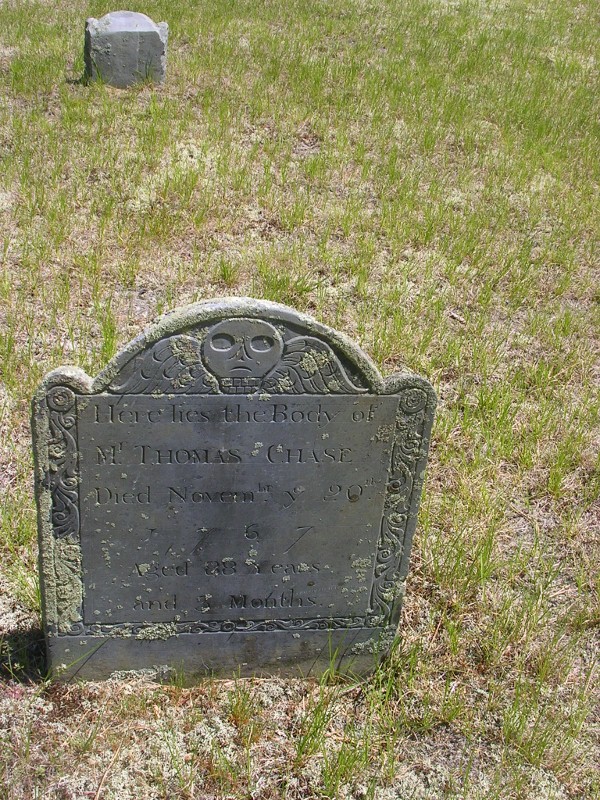
Thomas Chase Headstone -- Ancient Cemetery , South Dennis, Barnstable County, Mass, Plot: Near Middle of Grave Yard

5. Jeremiah Chase

Jeremiah’s wife Hannah Baker was born 20 Jan 1699 in Yarmouth, Barnstable, Mass. Her parents were John Baker and Hannah Jones. Hannah died in Yarmouth, Barnstable, Mass

6. William CHASE III (See his page)

7. Jonathan Chase

Jonathan’s wife Sarah Green was born 1688 in Yarmouth, Barnstable, Mass. Sarah died in Newbury, Essex, Mass

Sources:

http://trees.ancestry.com/owt/person.aspx?pid=2665826

http://genealogyofnewengland.com/b_c.htm

http://wc.rootsweb.ancestry.com/cgi-bin/igm.cgi?op=GET&db=cwixgo&id=I1823

History of old Yarmouth. Comprising the present towns of Yarmouth and Dennis. From the settlement to the division in 1794 with the history of both towns to these times (1884) Author: Swift, Charles Francis

http://wc.rootsweb.ancestry.com/cgi-bin/igm.cgi?op=GET&db=cwixgo&id=I1823

Posted in 12th Generation, Dissenter, Double Ancestors, Line - Shaw, Veteran | Tagged , | 8 Comments

David O’Kelly

David O’KELLY (~1636 – 1697)  was Alex’s 10th Great Grandfather; one of 2,048 in this generation of the Shaw line.

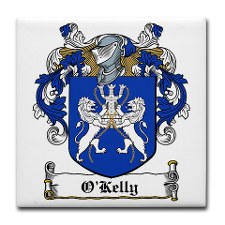
David O’Kelly – Coat of Arms

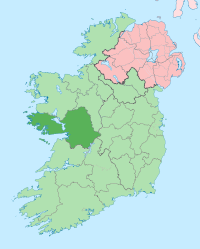
David O’Kelly was born about 1636 in Gallagh, County Galway, Ireland.  His  parents were Teige O’KILLIA and Ann DALY. Details regarding David’s voyage from Ireland to the colonies are not known, however the English subjugation of Ireland had taken place between 1641-1654 and many Irishmen had been captured in the process and sent to the colonies to be indentured servants.  The earliest know record of David in the colonies appears in Plymouth Colony Records, Oct 4, 1655 when he is called “David Ogillior an Irishman”. In that record David was implicated in charges of fornication with his future wife Jane POWELL, of Sandwich, a Welsh servant of one William Swift. David is shown as the servant of Edward STURGIS [another of our ancestors] He married Jane POWELL in 1670 in Yarmouth, Mass.  The children’s birth order seems to be inferred from the will. David died in 1697 in Yarmouth, Mass.

County Galway Ireland

Jane Powell was born c. 1638 in Wales.  On 4 Oct 1655 Jane Powell, servant to William Swift, of Sandwidge, appeared at court,

“haueing been presented for fornication, whoe, being examined, saith that it was committed with one David Ogillior [O’Kelley, spelling was in its infancy in those days], an Irish man, seruant to Edward STURGIS ; shee saith shee was alured thervnto by him goeing for water one euening, hopeing to haue married him, beeing shee was in a sadd and miserable condition by hard seruice, wanting clothes and liuing discontentedly; and expressing great sorrow for her euell, shee was cleared for the present, and ordered to goe home againe. “

Jane was only about 17 and David about 19 in 1655.  She and David wouldn’t be married for fifteen more years.  Jane died in 17 October 1711 in Yarmouth.

Children of David and Jane

Name Born Married Departed
1. Jeremiah O’KELLY 8 May 1670 Yarmouth, Barnstable, Mass Sarah CHASE
1689
20 Aug 1728
Yarmouth
2. Joseph O’Kelly c. 1672
Yarmouth
Mentioned in his father’s 1697 will but not in the 1715 settlement of Sarah’s estate.
3. John O’Kelly 1673
Yarmouth
Bashrua (Bethia, Bathsheba) Lewis
10 Aug 1690
26 Oct 1693
Yarmouth
4. David O’Kelly c. 1674
Yarmouth
Anna Bills
10 Mar 1692
Yarmouth
1697
Yarmouth
5. Sarah O’Kelly 1675
Yarmouth
John Crowell
1689
24 Jul 1715
Yarmouth
6. Elizabeth O’Kelly 1686
Yarmouth
Silas Sears
1 May 1707 Yarmouth, Barnstable, Mas
1732
7. Benjamin O’Kelly c. 1685
Yarmouth
Mary Lombard
2 Aug 1709
Barnstable, Mass
 1825
Yarmouth

The family name is spelled many different ways the Yarmouth Vital Records including O’Kelley, O’Killey, Okilley, Ogillior and O’Killea.

No one knows with certainty how David O’Killia/O’Kelley (the surname Kelley was spelled fourteen different ways in the Yarmouth Vital Records) ended up in Plymouth Colony in the 1600s. Most of the colonists were of English descent, so where’d the Irish guy come from? It was so unusual for someone to be from Ireland that he was sometimes called “David the Irishman” in records.

Nine of our ancestral families were first comers in Dennis:  1 . Francis Baker, 2.  Daniel, Baker, 3. William Chase,  4. Thomas Folland, 5. Thomas Howes, 6. John Joyce, 7. David O'Kelley, 8. William Twining, 9. Gabriel Weldon.  Map courtesy of Lynn Keller and Cape Cod Genealogical Society

Nine of our ancestral families were first comers in Dennis: 1 . Francis Baker, 2. Daniel, Baker, 3. William Chase, 4. Thomas Folland, 5. Thomas Howes, 6. John Joyce, 7. David O’Kelley, 8. William Twining, 9. Gabriel Weldon. Map courtesy of Lynn Keller and Cape Cod Genealogical Society

From The American ancestors and descendants of Seth Kelly, 1762-1850, of Blackstone, Mass.’

David, according to legend, came to America with his parents who died during the crossing. The captain robbed him, and left him (only 10 or 12 years old) in Yarmouth about 1637.

According to the references in New England Irish Pioneers, family tradition says:When a mere boy in Ireland, David OKelley and other youths were captured and placed on board a vessel for transportation to Virginia, but David was put ashore on Cape Cod by the heartless captain. The date is unknown but circumstances indicate it was about the year 1652. He was first indentured as a servant to John Darby of Yarmouth…The unexpired indenture seems to have been transferred to Edward STURGIS…That period of service expired in or before 1657…because in that year David OKillia, Irishman, was recorded in a list of Yarmouth men who tooke the oath of fidelitie, and in the same year he was admitted inhabitant at Yarmouth, with the right to vote in town affairs…

It is possible David was a prisoner of war by the English and sold in America as an indentured servant. England’s subjugation of Ireland, which occurred 1641-1654, caused hardships among the Irish and many prisoners of war, orphans and the destitute were seized by English authorities and sold as indentured servants. One 1661 entry in Plymouth Colony Records mentions William Hifreny, an Irishman and servant who had been “stolen from his own country.”

There are approximately 50,000 Kellys and O’Kellys in Ireland today. It is the second most common Irish surname, not far behind Murphy in numerical strength. This name presents a remarkable example of the extent to which the prefixes O and Mac, so widely dropped during the period of Gaelic submergence, have been resumed. In the year 1890 there were 1,242 births registered as Kelly (distributed all over the country), while only nine were registered as O’Kelly. Today the proportion has risen from one in 130 to approximately one in twenty. The second President of Ireland (1945–1959). Sean T. O’Kelly, was a case in point.

The Kelley family of Cape Cod is descended from David O’Killea, who established a homestead at Kelly’s Bay in South Dennis, Massachusetts, during the second half of the seventeenth century.

6 Jun 1655 (GC Presentments by Grand Enquest, PCR 3:82): Item, wee present Jane, the seruant of William Swift, for an acte of fornication, by her owne confession vpon examination.

4 Oct 1655 – The earliest know record of David in the colonies appears in Plymouth Colony Records when he is called “David Ogillior an Irishman”. In that record David was implicated in charges of fornication with his future wife Jane Powell, of Sandwich, a Welsh servant of one William Swift. David is shown as the servant of Edward Sturgis.

“And att this Court, Jane Powell, servant to William Swift, of Sandwidge, appeered, haveing been psented for fornication, whoe, being examined, saith that it was committed with one David Ogillior, an Irish man, servant to Edward Sturgis; shee saith shee was alured therunto by him goeing for water one evening, hoping to have married him, beeing shee was in a sadd and miserable condition by hard service, wanting clothes and living discontentedly; and expressing great sorrow for her evell, shee was cleared for the psent, and ordered to goe home againe.”

Burt Derick wrote in Gaelic Love on Cape Cod: David, the Irishman, and Jane, the Welsh Maid, Dennis Historical Society Newsletter, Feb/March 2008, that David and Jane’s story is one of loneliness and love. The Separatists realized they needed to bring in willing workers, which was easy given the strife in Great Britain from wars, ravages of plague and religious persecution. Nearly all were young and unmarried, at the bottom of the social class.

David and Jane were poor bondservants, in their teens, forced to endure great hardship. Jane was likely originally from Wales. It is possible, but unlikely, that she is related to the Powells of Boston as William Swift Sr. lived there. William Swift Jr. resided on the present Standish Road in North Sagamore, now the town of Bourne, and owned Jane’s indenture. She would have had a busy time caring for Swift’s 10 children. The distance between Swift and Sturgis’ homes is 24 miles, quite a distance in those days. Perhaps they met on the same ship from England to America.

David and Jane were poor, lonely, scared, moving to an uncertain future and they were Gaelic, sharing a common language others on the ship may not have had. They would have been immediately separated and endured a hard life, as Jane’s plea in court shows. Many of the colonists were religious fanatics, ruling with an iron hand, punishing people for minor infractions. Somehow, in a time when roads were less than cartways and transportation was slow, David found Jane. Perhaps he had an errand to do for his master, attending the only gristmill in the area to get the corn ground to flour. It is unlikely it was a chance encounter–not a single encounter in the woods of Sagamore, but one of many. There was certainly a background relationship between these people that resulted in the encounter for which they were charged. The fornication charge likely means she was pregnant, rather than caught in the act.

Despite Jane’s guilt, the magistrates could not bring themselves to levy the typical punishment of public whipping and they sent her home. They also didn’t charge David with seducing the girl. They leave the two to work out the problem. It’s also remarkable the Clerk took time to record so many details of Jane’s predicament

After securing freedom for both of them, David did the honorable thing and married Jane and they moved to a 100 acre farm that was eventually named Kelley’s Point, at the head of Bass River on the banks of what is today called Kelley’s Bay. The area is now called Mayfair in current day South Dennis, Massachusetts.

1657 – David O’Kelly, Irishman included in a list of men taking the oath of fidelity in Yarmouth

1676 – A rate charged for King Philip’s War £ 2:6:9
1679 – Appears in a list of townsmen of Yarmouth
28 Feb 1689/90 – Land grant (10-12 acres + 2 acres swamp)

The Mayflower Descendant, Volume XXXII, Abstracts of Barnstable County, Mass., Probate: The Will of David Okillia, Sr.

On 10 February, 1696/7, “David Ocillia of yarmouth” made his will,
and signed it by a mark. Bequests were as follows:
To “my Son Jeremiah Okillia” 2 shillings.
To “my Son Joseph Ocillia” 2 shillings.
To “my Son David Okillia” 2 shillings.
To “my Grand Child John Okillia” 2 shillings
To “my Daughter Elisabeth Okillia my little chest and my great Iron kittle after my wifes Decease”
To “my Daughter Sarah Okillia my Box and my too lesser Iron kittils affter my wifs Decease”
To “my Son Benjamin Okillia my gun and my sourd and my Great Chest”
To “my loving wife Jane and to my Son Benjamin Okillia my hors and my two oxen & my cow and heifer and all my Sheep and Swine equally between them”
To “my loving wife Jane my Bed and Beding and Bedstead and Curtins and all the moveables that are not above mentioned”
To “my son Benjamin Okillia my now Dwelling house and all my lands and meadows…After my wifs decease or after her marriage if that my wife marry againe, all plow Irons chains and all Iron Tools that are left”
“My loving wife Jane Okillia to be my Sole Executrix”
“I the Sd David Okillia Senr” signed the will 10 February, 1696/7. The witnesses were Thomas FOLLAND, William BAKER, Sr. (by mark), and Isaac Perse, by a mark.
On 19 July, 1697 the three witnesses made oath to the will, “the two former according to the coustom and the latter William Baker as he was in the presence of God”, and the will was probated, and administration granted to Jane Okillia, the widow, on 28 July, 1697.
On 16 July, 1697, the inventory was taken by Thomas Folland and Benjamin Mathews.
The real estate was: “house lands and meadows” £1696, 2, 10. Will, proved 1697, 7, 19. Ex., wife Jane.
Witnesses, Thomas Holland, Wm, BAKER,, Hoar Perse.
To son Jeremiah, 2 shillings,
and like amount to sons Joseph and David, and grandson John.
To daughter Elizabeth, a little chest and great iron kettle, after wife’s decease.
To daughter Sarah, a box and 2 lesser iron kettles, after decease of wife.
To son Benjamin, gun, sword and great chest.
To wife Jane and son Benjamin, horse, 2 oxen, cow, heifer, sheep and swine, equally between them. To wife Jane, bed, bedding and all movables not above mentioned.
To son Benjamin the dwelling house, lands and meadows, after wife’s decease or marriage.

Inventory, £97, 6s. 3d. House, meadows and other lands 40. 2 oxen, 3 cows, and 1 horse 21. 3 sheep, 1 lamb and a half, 18s. 6d. Swine, gun, sword, powder, bullets, looms, spit, pewter and earthen ware, etc.40.
“Benjamin Okillia Son of David Okillia….deceased” made oath to the inventory, 19 July, 1697.

He signed his will by mark, witnessed by Thomas Folland, William BAKER, Sen (his mark) and Isaac Perse (his mark):

In the 1960s the old cellar and a pit, as well as a few pear trees, remained at the site of David’s homestead.

The first records of Friends’ (Quaker) meetings held in Yarmouth begin in 1681. The simple meeting place in what is now Dennis was built about 1714 near the Kelley homestead, on land owned by David. It stood near the old cemetery, which has been marked with a plaque by the Dennis Historical Commission. The building was used until 1809 when a new meeting house was built across Bass River in South Yarmouth.

The O’Kelley family was the third Quaker family in the area, joining John WING and Henry DILLINGHAM.   Apparently Quakers around Cape Cod  weren’t persecuted as much as they were in other parts of Massachusetts.

Children

1. Jeremiah O’KELLY (See his page)

3. John O’Kelly

John’s wife Bashrua (Bersua, Bethia or Bathsheba) Lewis was born Oct 1667 in Barnstable, Barnstable, Mass. Her parents were George Lewis and Mary Lombard. John died in 1693 after only 3 years of marriage and in 1699, she married again to Thomas Baker (b. 1654 in Yarmouth – d. 1703 in Yarmouth). Thomas’ parents were Francis BAKER and Isabel TWINING.

4. David O’Kelly

David’s wife Anna Bills was born 28 Jun 1673 in Eastham, Barnstable, Mass. Her parents were Thomas Bills and Anne Twining. Anna died 17 Sep 1737 in Middletown, Monmouth, New Jersey.

5. Sarah O’Kelly

Sarah’s husband John Crowell was born 1652 in Yarmouth, Barnstable, Mass. His parents were Thomas Crowell and Agness [__?__]. John died in 1715 in Sandwich, Barnstable, Mass.

6. Elizabeth O’Kelly

Elizabeth’s husband Silas Sears was borin in 1661 in Yarmouth, Barnstable, Mass. His parents were Silas Sears and Anna Bursell. He first married 1692 in Yarmouth, Barnstable, Mass to Sarah Crosby (b. 24 Mar 1667 in Eastham, Barnstable, Mass. – d. 20 Mar 1706 in Yarmouth). Silas died in 1732 in Yarmouth.

7. Benjamin O’Kelly

Benjamin’s wife Mary Lombard was born 17 Jun 1688 in Barnstable, Barnstable, Mass. Her parents were Benjamin Lombard and Sarah Walker. Mary died 1 May 1772 in Barnstable, Barnstable, Mass.

Benjamin as the youngest son inherited the dwelling house, lands and meadows after mother’s decease, real estate inventoried at £1696, 2, 10, while the older sons had to make due with 2 shillings apiece. I guess that was Benjamin’s reward for taking care of his mother during her widowhood.

Benjamin and Mary had a son Reuben. He served in Queen Anne’s War on the sloop Coronation and deserted his wife and son and later married Hopestill Smith. He may have died at Swansea, MA.

Source:

http://trees.ancestry.com/owt/person.aspx?pid=31143642&st=1

http://capecodhistory.us/genealogy/us/Names23.htm#O’KELLEY

http://freepages.genealogy.rootsweb.ancestry.com/~whynacht/names11.html#O’KILLEY

http://freepages.genealogy.rootsweb.ancestry.com/~whynacht/b242.html#P16932

http://massandmoregenealogy.blogspot.com/2011/08/david-kelley-born-1630s-and-jane-powell.html

Posted in 12th Generation, Immigrant - Scot-Irish, Line - Shaw | Tagged , , , | 7 Comments

Jeremiah O’Kelly

Jeremiah O’KELLY (1670 -1728 )  was Alex’s 9th Great Grandfather; one of 1,024 in this generation of the Shaw line.

Jeremiah O’Kelly (O’Killea) was born 8 May 1670 in Yarmouth, Barnstable, Mass. His parents were David O’KELLEY and Jane POWELL. He married Sarah CHASE in 1689.   Jeremiah died 20 Aug 1728 in Yarmouth.

Sarah Chase was born c. 1672 in Yarmouth, Mass.  Her parents were John CHASE and Elizabeth BAKER. Sarah died in 1727 in West Denis, Mass.

Children of Jeremiah and Sarah:

Name Born Married Departed
1. Sarah O’Kelly 17 Sep 1689
Yarmouth
[__?__] Carpenter
2. Jeremiah O’Kelly 6 Jun 1691 Yarmouth Charity Pease
8 Aug 1716 Yarmouth
28 Jun 1727
3. Joseph O’KELLY 4 Apr 1693 Yarmouth Tabitha BAKER
19 Dec 1717 Yarmouth
26 Jun 1761 Yarmouth
4. John O’Kelly 15 May 1695 Yarmouth Hannah Eldredge
18 FEB 1718/19 Yarmouth
30 Apr 1775 Yarmouth
5. Eleazer O’Kelly Mar 1696/97 Yarmouth Sarah Browning
6 Oct 1721
1775 Yarmouth
6. Seth O’Kelly Jun 1700 Yarmouth Mehitable Wing
2 NOV 1726 Yarmouth
13 Aug 1758
7. Amos O’Kelly 31 Mar 1703 Yarmouth Abigail [__?__]
.
Ruth Crowell
26 Nov 1747 Yarmouth, Barnstable, Mass.
1744 Yarmouth
8. Hannah O’Kelly Mar 1704/05 Yarmouth Elnathan Eldredge 1744
9. Deliverance O’Kelly 3 Jul 1707 Yarmouth Silas Baker
14 MAY 1723 Yarmouth, Barnstable, Mass.

x

David O’Killea of Yarmouth, Massachusetts and some of his Descendants by R. Dudley Kelley states

” He marrried at Yarmouth 8 August 1716 (by Peter Thacher, J.P..), CHARITY PEESE, (92) who was born at Yarmouth
9 December 1696, daughter of Matthew Peese and Hannah Marchant, single parents(93).” This information is from the Yarmouth VRs, 1:14. according to the footnotes. “Charity married, second, at Yarmouth 3 August 1727 (by Peter Thacher, J.P.), Isaac Chase. (95) Yarmouth VRs 1:145. Jeremiah was the oldest son of Jeremiah and Sarah and was born at Yarmouth 6 June 1691 and died there about 1726/27, intestate. (91)” Barnstable County Probate, 4:367.
Isaac Chase was the sixth son of John Chase and Elizabeth Baker and brother to Sarah Chase, the wife of Jeremiah O’ Kelley. He married, first, Mary Berry on May 23, 1706.

Probate 1: Eleazer and Seth executors.
Probate 2: inventory £1,447., 5s, 10d; homestead £400  & another farm £400; meadow £100
Property: Man of considerable standing in Yarmouth; owned much of land between Bass River and West Pond River, including almost all of the village of West Dennis.
Will: October 23, 1728, will proved.

Dennis on the bank of Bass River

“O” in O’Kelly was continued in some branches of the family for five generations, the OKelly name had a terrible struggle for existence. Eventually it succumbed, and its last appearance in Massachusetts public records was on December 3, 1793, when Ruth O’Kelley, daughter-in-law of Benjamin and Susanna O’Kelley, was married to Benjamin Bunker of Charlestown.

I think O’Kelly is a cool name, especially when combined with Puritan virtues like Deliverance and Temperance, or maybe Freelove and I’m sorry it died out.

Children

1. Sarah O’Kelly

Sarah’s husband Oliver Carpenter was born xx

2. Jeremiah O’Kelly

Jeremiah’s wife Charity O’Kelley was born 9 Dec 1696 in Yarmouth, Barnstable, Mass. Her parents were David O Killey and Anna Bills. After Jerememiah died, she married 28 Jun 1727 in Yarmouth, Barnstable, Mass to his nephew Isaac Chase (b. 1685 in Yarmouth 0 d. 22 May 1759 in Yarmouth) Charity died 1768 in Yarmouth, Barnstable, Mass

After Jeremiah Jr died in 1727, Charity Pease  married Isaac Chase,  John CHASE’s son and Sarah’s brother.  In other words, Isaac married his nephew’s widow.

3. Joseph O’KELLY (See his page)

4. John O’Kelly

John’s wife Hannah Eldredge was born 1700 in Yarmouth, Barnstable, Mass. Her parents were William Eldredge and Rebecca Nickerson. Hannah died in Yarmouth, Barnstable, Mass.

Sons John and Seth were known to be members of the Society of Friends (Quakers) and the entire family is likely to have been members

5. Eleazer O’Kelly

Elezer’s wife Sarah Browning was born in Apr 1695 North Kingston, Rhode Island. Her parents were William Browning and Rebecca Wilbore. Sarah died 20 MAR 1740/41.

6. Seth O’Kelly

Seth’s wife Mehitable Wing was born 4 Aug 1705 in Rochester, Plymouth, Mass. Her parents were Elisha Wing and Mehitable Butler. Mehitable died 3 Feb 1767 in Rochester, Plymouth, Mass.

Sons Seth and John were known to be members of the Society of Friends (Quakers) and the entire family is likely to have been members

7. Amos O’Kelly

Amos’ wife Abigail [__?__] was born

Amos’ second wife Ruth Crowell was born 18 Oct 1722 in Yarmouth, Barnstable, Mass. Her parents were John Crowell and Experience Higgins. Ruth died 23 Mar 1776 in Bath, Maine.

8. Hannah O’Kelly

Hannah’s husband Elnathan Eldredge was born 1694 in Chatham, Mass. His parents were Jehosaphat Eldredge and Elizabeth Covell. Elnathan died 26 Dec 1746 in Dartmouth, New Hampshire

9. Deliverance O’Kelly

Deliverance’s husband Silas Baker was born 1674 in Yarmouth, Mass. Silas died in 1752 in Dennis, Mass.

Source:

http://capecodhistory.us/genealogy/us/A1.htm#i13153

http://www.genealogyofnewengland.com/b_o.htm

http://familytreemaker.genealogy.com/users/k/e/l/Kevin-Kelly-1/WEBSITE-0001/UHP-0019.html

Hudson-Mohawk genealogical and family memoirs: a record of … – Google Books Result Cuyler Reynolds – 1911 – New York (State)

Posted in 11th Generation, Line - Shaw | Tagged , | 6 Comments

Joseph O’Kelly

Joseph O’KELLY (1693 – 1761) was Alex’s 8th Great Grandfather; one of 512 in this generation of the Shaw line.

Joseph O’Kelly was born 4 Apr 1693 in Yarmouth, Mass.  His parents were Jeremiah O’KELLY and Sarah CHASE.  He married Tabitha BAKER 19 Dec 1717  in Yarmouth, Mass.  Joseph died 26 Jun 1761 in Yarmouth Mass.

Tabitha Baker was born about 1700 in Yarmouth, Mass.  Her parents were Daniel BAKER and Eliabeth CHASE. Tabitha died in 1787.

Children of Joseph and Tabitha: The part of Yarmouth where the children of Joseph and Tabitha was born was officially separated and incorporated as the town of Dennis in 1793.

Name Born Married Departed
1. Stephen O’KELLY 22 Sep 1718 Yarmouth, Barnstable, Mas Thankful CHASE
20 Feb 1741/42 Yarmouth, Barnstable, Mass.
2. Anna O’Kelly 28 Apr 1720 Yarmouth William Smith
19 Aug 1743 Yarmouth, Barnstable, Mass.
Harwich, Barnstable, Mass
3. Sarah O’Kelly 21 Feb 1721/22 Yarmouth Joseph Chase
19 Jan 1743/44 Yarmouth
4. Joseph O’Kelly 20 Mar 1728 Yarmouth, Barnstable, Mass. Elizabeth Chase
27 Jan 1750 Yarmouth, Barnstable, Mas
5. Jeremiah O’Kelly 8 May 1730 Yarmouth, Barnstable, Mass Temperance Downs
3 Mar 1753
6. Bathsheba O’Killey 6 Dec 1732 Dennis, Barnstable, Mass 12 Dec 1786

Children

1. Stephen O’KELLY (See his page)

2. Anna O’Kelly

Ann’s husband William Smith was born 1 Jan 1723 in Harwich, Barnstable, Mass. His parents were Samuel Smith (1691 – 1765) and Mercy Baker (1692 – 1724). His maternal grandparents were our ancestors William BAKER and Mercy LAWRENCE. William died 12 Mar 1773 in Harwich, Barnstable, Mass.

Children of Anna and William:

i. Jane Smith b: ~1744 Harwich, Barnstable, Mass.; d. Sep 1830 in Yarmouth, Barnstable, Mass; m. 8 Apr 1775 Yarmouth to Daniel White (b. 06 Oct 1738 in Yarmouth – d. 23 Dec 1801 in Yarmouth) Daniel’s parents were Ebenezer White (1698 – 1772) and Mercy Smith (1699 – 1769). Jane and Daniel had five children born between 1778 and 1792.

ii. Tabitha Doane Smith b: ~1747 Harwich, Barnstable, Mass.; m. 28 Jul 1768 Harwich to Nathaniel Downes (b. 17 Jul 1734 in Harwich – d. 1826 in Freetown, Bristol, Mass.) Nathaniel’s parents were Samuel Downes (1705 – 1748) and Temperance Baxter (1712 – 1789)

iii. Sarah Ryder Smith b: ~1749 Harwich, Barnstable, Mass.; d. 03 OCT 1809 in Harwich; m. 28 Oct 1770 Harwich to Osborne Snow (b. 30 Aug 1741 in Eastham, Barnstable, Mass – d. 22 Nov 1806 in Harwich ) Osborne’s parents were Elisha Snow (1716 – 1770) and Abigail Doane (1710 – 1782). Sarah and Osborne had eight children born between 1771 and 1786.

iv. Elizabeth Smith b: ~1751 Harwich, Barnstable, Mass.

v. Obed Edom Smith b: 30 Aug 1755 Harwich, Barnstable, Mass.; d. 1842; m. 11 Dec 1777 Harwich to Abigail Paine (b. 16 Jan 1754 in Harwich – d. 06 Dec 1842 in Harwich) Abigail’s parents were Ebenezer Paine (1722 – 1795) and Mary Allen (1731 – 1756) Obed and Abigail had nine children born between 1779 and 1801

vi. Samuel Smith b: 1761 Harwich, Barnstable, Mass.; d. 10 Aug 1834 Harwich; m. ~1783 to Bethia Eldredge (b. 18 Dec 1762 in Chatham, Barnstable, Mass. – d. aft. 1804 in Barrington, Shelburne, Nova Scotia) Bethia’s parents were Ebenezer Eldredge (1707 – 1797) and Deliverance Nickerson (1726 – 1808) Samuel and Bethia had four children born between 1784 and 1799.

vii. Mercy Smith b: ~1763 Harwich, Barnstable, Mass.; m. 1785 to Sylvanus Chase (b. 17 Sep 1761 in Harwich, Barnstable, Mass – d. 1793) Sylvanus’ parents were Sylvanus Chase (1732 – 1815) and Charity Chase (1736 – 1819) Sylvanus’ paternal grandparents were William CHASE and Dorcas BAKER. Mercy and Sylvanus had four children born between 1786 to 1792.

3. Sarah O’Kelly

Sarah’s husband Joseph Chase was born 17 Mar 1718 in Yarmouth, Barnstable, Mass. His parents were Thomas Chase and Sarah Gowell. Joseph died in Dennis, Barnstable, Mass

Children of Sarah and Joseph:

i. Joseph Chase b. 17 Nov 1744 Yarmouth, Barnstable, Mass.; d. 1819 Dennis, Barnstable, Mass.; m1. 1767 in Harwich, Mass to Hannah Chase (b. 1743/1746 – )  Hannah’s parents were Ebenezer Chase  (1722 – ) and Susannah Berry (1725 – aft. 1760).

m2. 16 Mar 1766 in Chatham, Mass to Phebe Bassett (b. 17 Mar 1745 in Chatham, Barnstable, Mass. – d. 1767 in Yarmouth, Barnstable, Mass.) Phebe’s parents were Nathaniel Bassett (1720 – 1781) and Sarah Chase (1722 – 1802)

ii. Daniel Chase b. 13 Apr 1746 Yarmouth, Barnstable, Mass.; m. 18 Nov 1773 in Harwich, Barnstable, Mass to Hannah Broadbrook (b. 1748 – ) Hannah’s parents were Ebenezer Broadbrooks (1717 – 1802) and Lydia Small (1725 – )

iii. Lot Chase b. 30 Jun 1750 Yarmouth, Barnstable, Mass.; d. 1797 Hyannis, Barnstable, Mass; m. 25 Jan 1770 in Yarmouth, Mass to Lydia Chase (b. 16 May 1752 in Yarmouth, Barnstable, Mass – ) Lydia’s parents were Abner Chase (1729 – 1790) and Deborah Baker (1729 – ). Lot and Lydia had eight children born between 1771 and 1792.

iv. Hannah Chase b. 29 Oct 1766 Yarmouth, Barnstable, Mass.;

4. Joseph O’Kelly

Joseph’s wife Elizabeth Chase was born 14 Jul 1731 in Yarmouth, Barnstable, Mass. Her parents were Jeremiah Chase (1683 – ) and Hannah Baker (1699 – )

Children of Joseph and Elizabeth:

i. David Kelly b. 19 Dec 1750; d. 1818; m. 28 Sep 1775 to Salome Chase (b. ~1753 – d. 26 Dec 1847 Yarmouth) David and Salome had six children born between 1777 and 1792.

It looks like David simplified his last name to Kelly.

ii. Joseph Kelley b. ~1753 in Yarmouth, Barnstable, MA; d. 2 Jan 1818; burial: Swan Lake Cemetery , Dennis Port, Barnstable, Mass.; m. 9 Apr 1776 to Sarah Doane (b. 17 May 1757 – d. 02 Sep 1848 Dennis) Joseph and Sarah had eight children born between 1778 and 1801.

Inscription on Sarah’s Gravestone:
91y 3m 16 d

iii. Tabitha Kelley b. ~1754; m. 8 Dec 1776 Yarmouth to Abner Crowell (b. 24 Jan 1754 in Yarmouth – d. 3 Nov  1841 in Yarmouth) Abner’s parents were Abner Crowell (1726 – 1778) and Sarah O’Killey (1732 – 1775) Tabitha and Abner had nine children born between 1780 and 1800.

iv. Reuben O’Kelley b. ~1756

v. Hannah O’Kelley b. ~1755

vi. Elizabeth O’Killey b. 1770; m. James Kelley?

5. Jeremiah O’Kelly

Jeremiah’s wife Temperance Downs was born 1736 in Harwich, Barnstable, Mass. Temperance’s parents were Samuel Downs (1705 – 1748) and Temperance Baxter (1712 – 1789)

Children of Jeremiah and Temperance

i. Asa Kelley b. 25 Feb 1782 in Sandwich, Barnstable, Mass.; d. 13 May 1857 in Dennis, Barnstable, Mass; m. 23 Feb 1804 Dennis to Hannah Kelley (b. 06 Jan 1785 in Yarmouth (now Dennis), Barnstable, Mass. – d. 16 Nov 1866 in Dennis) Hannah’s parents Joseph Kelley ( – 1830) and Sarah Doane ( – 1821) were Asa’s cousins (see above) Asa and Hannah had ten children born between 1804 and 1828.

Source:

http://trees.ancestry.com/owt/person.aspx?pid=31133739&st=1

http://capecodhistory.us/genealogy/us/A1.htm#i29267

http://www.genealogyofnewengland.com/b_o.htm

http://www.wikitree.com/wiki/O’Kelley-5

The April and July, 1997, issues of the NEHGR (New England Historical and Genealogical Register) have two great articles about the descendants of David OKillia. The article corrects some errors in the massive 1962 Eunice Randall Kelley book).

http://www.capecodhistory.us/genealogy/us/i199.htm#i29267

Posted in 10th Generation, Line - Shaw | Tagged , | 5 Comments

Unusual Names

BOLD CAPITAL means direct ancestor

Biblical Names
Name Father Source
Asa Elihu Miner The third king of the Kingdom of Judah and the fifth king of the House of David. He was the son of Abijam, grandson of Rehoboam, and great-grandson of Solomon. Popular Puritan name in the 17th C.
Asenath Samuel Foster Asenath (in modern times sometimes transliterated as Osnat) is a figure in the Book of Genesis  An Egyptian woman whom Pharaoh gave to Joseph son of Jacob to be his wife. The daughter of Potipherah, a priest of On, she bore Joseph two sons, Manasseh and Ephraim, who became the patriarchs of the Israelite tribes of Manasseh and Ephraim..
AZUBAH John FITCH Meaning “deserted”, is the name of two women in the Bible:

  • Azubah the wife of Caleb
  • Azubah daughter of Shilhi, and mother of Jehoshaphat, King of Judah
BARNABAS Rev. John Lothrop Saint Barnabas was an Early Christian convert, one of the earliest Christian disciples in Jerusalem.  Named an apostle in Acts 14:14, he and Saint Paul undertook missionary journeys together and defended Gentile converts against the demands of stricter church leaders.
Baruch (Baruck Barak)
Alexander Balcom Jr. “Blessed” Except for its use as a name, this is also related to berakhah or bracha (Hebrew: ברכה; plural ברכות, berakhot), which is a Jewish blessing.The root B-R-K meaning “blessing” is also present in other Semitic languages. The most common Arabic form is the passive form Mubarak, but the form Barack is also used.
One Baruch was Jeremiah’s scribe-secretary
Benoni Capt. William Clark Sr. “Son of my sorrow”
Rachel, mother of Benyamin, knew she was dying after his birth and called him Benoni, but Jacob, his father, changed the name to Benyamin.
Beulah William Lewis Blair A name symbolically applied to Israel: “Thy land (shall be called) Beulah …. thy land shall be married. …. so shall thy sons marry thee” (Isaiah 62:4) Hebrew – “Married or Bride”
DORCAS William Baker Dorcas (also known as Tabitha) was a disciple who lived in Joppa, referenced in the Book of Acts 9:36–42 of the Bible. Acts recounts that when she died, she was mourned by “all the widows … crying and showing (Peter) the robes and other clothing that Dorcas had made while she was still with them.”
EBENEZER Capt. Ebenezer Hawes Sr.
.
James Gorham I
.
Maj. John Foster
.
Samuel Perkins
Hebrew origin meaning “Stone of the help” Derived from the phrase “Eben ha-Ezer a place mentioned as the site of two battles in the Books of Samuel in the Hebrew Bible and a stone raised by Samuel.
Elad Capt. Ebenezer Hawes
.
James Gorham I
.
John Kingsley
Eldad is mentioned in the Book of Numbers, and are described as having prophesied among the Israelites, despite the fact that they had remained in the camp, while 70 elders had gone to the tabernacle outside the camp to receive the ability to prophecy from God, Joshua asked Moses to forbid Eldad and Medad from prophecy, but Moses argued that it was a good thing that others could prophesy, and that ideally all the Israelites would prophesize
Eleazer Jeremiah O’Kelly
.
Benjamin Crispe
The second  High Priest -succeeding his father Aaron.
Eliab Joseph Webber Jr. The eldest son of Jesse, and thus the older brother of King David. He was apparently tall and had fair features, but not the proper heart to be king of Israel (1 Samuel 16:7). “Do not consider his appearance or his height…the Lord looks at the heart.” Some commentators have suggested that it was due to his temper, as he argued with David before David went to fight Goliath.
ELIPHALET Samuel Foster A son of David
ELIHU William Miner
.
Elihu Miner
A friend of Job.  The speeches of Elihu  contradict the fundamental opinions expressed by the ‘friendly accusers’ in the central body of the text, that it is impossible that the righteous should suffer, all pain being a punishment for some sin.  Elihu means “my God is Yaweh.Elihu named our ancestor Elihu too, so we have two in our tree.
ELISHA Captain William Hedge My God is salvation”, A prophet mentioned in the Hebrew Bible and the Qur’an. To Eastern Orthodox he is known as Saint Eliseus; to some Roman Catholics as Eliseus, however, the standard English form of the name has been “Elisha,” at least since the introduction of the Authorized King James Version. He is also a prophet in Islam and is usually known under his Arabic name Alyasa.
EPHRAIM Ephraim Kempton Sr. (Original Immigrant and his son Ephraim Jr.)
.
George Morton
The Tribe of Ephraim (Hebrew -“double fruitfulness”) was one of the Tribes of Israel. The Tribe of Manasseh together with Ephraim also formed the House of Joseph.
Habakuk William Beamsley “Embrace.”  The Book of Habakkuk is the eighth book of the 12 minor prophets of the Old Testament .  It is attributed to the prophet Habakkuk.  The 12 minor prophets are: Hosea, Joel, Amos, Obadiah, Jonah, Micah, Nahum, Habakkuk, Zephaniah, Haggai, Zechariah, and Malachi.
HANNIEL Bosworth
(Original Immigrant) Prince of the tribe of Manasseh; one of those appointed by Moses to superintend the division of Canaan amongst the tribe (Num. 34:23).
Hephzibah Thomas Ford
.
Edward Hazen Sr.
.
Edward Hazen Jr.
.
Isreal Hazen
God-fearing Hezekiah called his wife Hephzibah. In II Kings 21.” And Hezekiah could say concerning his wife, “My delight is in her.”God calls His people Hephzibah in Isaiah 62:4. God has said that He would take away our rightful name which is “Forsaken,” and would call us by a new name, a name which He would choose. That name will be “Hephzibah.”
Hezekiah James Gorham II
.
Simon Newcomb
King of Judah during the invasion and siege of Jerusalem bySennacherib in 701 BC. The siege was lifted by a miraculous plague that afflicted Sennacherib’s army.
Huldah Ebenezer Foster
.
Nathaniel PEASE II
A prophetess mentioned briefly in 2 Kings 22, and 2 Chronicles 34.According to Rabbinic interpretation, Huldah and Deborah were the principal professed prophetesses in the Nevi’im (Prophets) portion of the Hebrew Bible.
Jabez Elihu Miner
.
James Gorham I
.
John Howland
In the I Book of Chronicles Jabez is a well-respected man (ancestor in the lineage of the kings’ tribe of Judah) whose prayer to God for blessing was answered. Moreover the author paused in this long list to give Jabez a place of honor in the long list of Kings and lineage.
JASIEL Samuel Perry (whom God made ), the last named on the list of David’s heroes in (1 Chronicles 11:47)
Jerijah Elder John Strong 1 Chronicles 26:31- Among the Hebronites was Jerijah the chief, even among the Hebronites, according to the generations of his fathers. In the fortieth year of the reign of David they were sought for, and there were found among them mighty men of valour at Jazer of Gilead.
Jerusha Abraham Estey The wife of King Uzziah. Used by the Puritans and revived somewhat in the 19th century. Means married or a possession in Hebrew.
JOSIAH John LITTLEFIELD
.
Eliphalet Foster
King of Judah (641–609 BC) who instituted major reforms. Josiah is credited by most historians with having established or compiled important Jewish scriptures during the Deuteronomic reform that occurred during his rule
KEZIAH John Willey
.
Roger Parks
The second of the three daughters born to Job after his sufferings.  The name has been taken to symbolize female equality, since all of Job’s three daughters received an inheritance from their father, an unusual circumstance in a time period when women and men were not treated equally.  The Hebrew meaning of Keziah is “cassia tree”.It’s interesting that Keziah married Elihu Miner, another character out of the Book of Job.
Lemuel Ebenezer Perkins he opening verse of Proverbs 31 reads: “The words of king Lemuel. The vision wherewith his mother instructed him.” The name occurs again in verse 4: “Give not to kings, O Lemuel, give not wine to kings …” The discourse, which is an exhortation to chastityjusticemercy and temperance
Lot Austin Kilham The son of Abraham’s brother Haran.
Mehetable Elihu Miner
.
James Gorham I
Modern spelling is Mehetabel (“Whom God benefits” or “God causes good”) was the wife of Hadad, one of the kings of Edom (Genesis 36:39)
Manassah
.
.
MANASSAH
Thomas Miner
.
George MORTON
The Tribe of Manasseh (Hebrew – “who makes to forget”) was one of the Tribes of Israel. Together with the Tribe of Ephraim, Manasseh also formed the House of Joseph.
Ozias Jonah Parks Latin.  Modern form is Uzziah.  A king of the ancient Kingdom of Judah, and one of Amaziah’s sons, whom the people appointed to replace his father (2 Kings 14:21; 2 Chronicles 26:1)
Shubael Capt John Gorham A descendant of Gershom son of Moses, was the officer in charge of the treasuries
Zaccheus Hanniel Bosworth Pure and righteous one., A tax collector  at Jericho (Luke 19:1-10).  He arrived before the crowd who were later to meet with Jesus, who was passing through Jericho on his way to Jerusalem.  Zacchaeus climbed up a sycamore fig tree so that he might be able to see Jesus. When Jesus reached the spot he looked up into the branches, addressed Zacchaeus by name, and told him to come down, for he intended to visit his house. The crowd was shocked that Jesus, a Jew, would sully himself by being a guest of a tax collector, who saw them as traitors for working for the Roman Empire.
ZEBULON Richard Estey According to the Books of Genesis and Numbers,the sixth son of Jacob and Leah, and the founder of the Israelite Tribe of Zebulun.
ZERVIA(H) Daniel Johnson
She was one of David’s sister’s. The name means “perfumed” or “balm”

x

Virtues
Name Parents Source
Deliverance Elihu Miner
.
Jeremiah O’Kelly
DESIRE James Gorham I
.
Ebenezer Hawes
.
Capt. John Hawes
.
John Howland
Experience James Gorham I
.
William Baker
Lt. William Clarke

Elder John Strong

Puritans encouraged direct religious experience.
FEAR William BREWSTER
.
John CORSER

Fear Brewster was named because at the time of her birth, the Puritans were holding secret meetings and were under constant threat of arrest.
FREEDOM John Kingsley
GRACE Walter Palmer
Hope (female
.
HOPE (male)
John Howland
.
Robert Williams
Increase (female) Lt. William Clarke
Mercy Edward Bangs
.
Capt John Gorham
PATIENCE WAKEFIELD Original Immigrant
PRUDENCE Oliver Perkins
Remember Isaac Allerton
Renewed John Kingsley
Return Elder John Strong
TEMPERANCE Stephen O’Kelly
.
Capt John Gorham
Temperance O’Kelly is my favorite ancestor name,  It could be an Irish bar operating during prohibition
THANKFUL James Gorham II
.
Ebenezer Hawes
Elder John Strong
.
William Chase III
THEOPHILUS
.
.
.
.
.
Theophilus
Hanniel Bosworth
.
John Shatswell
.
John Griffin
Lover of God
Submit Capt William Clark Jr.
.
Benjamin Newcomb

x

(Original Immigrant)

Our Family Names in History
Name Parents Source
Edward Everett Miner Selden Miner
Nancy Joshua Polley Derives from the Hebrew name Anna, which means “grace”. It was originally used as a nickname, but began to be used as a proper name from the 18th century onwards
Mark
.
.
.
.
MARK BATCHELDER
(Original Immigrant)
.
MARK SYMONDS
(Original Immigrant)
Joseph Batcheller
.
Joseph Fiske

Apostle
Derived from old Latin “Mart-kos”, which means “consecrated to the god Mars”. Marcus was one of the three most common given names in Ancient Rome
Janet
.
JANNETJE ARENTE (Original Immigrant)
.
JANNETJE
.
.
Jannetje
.
.
.
.
.
.
.
Hendrick Gerritse Van Wie
.
Adrianus Franciscusz De LANGET
.
Jonas DeLANGE
A female name meaning “Little Joan”. It is a variation of the French proper noun Jeannette, Spanish proper noun Juanita, Russian Жанет (Zhanet) and Hungarian Zsanett and is the diminutive of Jeanne or Jane.
ELLEN Oliver Webber Can be traced back to Ancient Greece, where it translates as “sun-ray, lightness.” Ellen is the 555th most popular name in the U.S. and the 17th in Sweden (2004)
ALEXANDER JOHNSTON
.
ALEXANDER
Original Immigrant
.
Alexander BALCOM Sr
(Original Immigrant)

Alexander the Great
Etymologically, the name is derived from the Greek “Αλέξανδρος” (Aléxandros), meaning “defending men”  or “protector of men”, a compound of the verb “ἀλέξω” (alexō), “to ward off, to avert, to defend”and the noun “ἀνδρός” (andros), genitive of “ἀνήρ” (anēr), “man”

x

Other Unusual Names
Name Father Source
EVERETT
.
.
.
EVART
.
.
.
Evert
Everton Harvey Miner
.
Evart PELS
(Original Immigrant)
.
Jacob AERTSON (Van Wagenen)
It is of Old English origin, and its meaning is “brave, strong boar”
EVERTON Fay Everett Miner Everton is a very uncommon first name, but a fairly common last name (#17,781 out of 88,799). (1990 U.S. Census)
FAY Harvey Latta Miner Fay is an uncommon first name for men, but common for women. It is of Old French origin. Short form of Faith
HORACE William Lewis Blair Latin origin. From Horatius, a Roman family clan name. Late 19th-century use may have been inspired by Roman poet Horace.
ORLANDO Orlando Bagley Sr., (Original Immigrant) Famous land
PHILO Selden Miner Greek origin, and its meaning is “love”. Root of words like “bibliophile” and “philanthropist”, which means “loving others”. Inventor of television, Philo T. Farnsworth.Philo named his son Philo too, but the historical record shows he used his middle name, Sidney.
Royal Lewis B Horton Royal seems to be a family name of Hortons as I have found two other Royal Hortons born about 1800.  However, I still have not made a connection or found Lewis’ father
SELDEN Elihu Miner Selden \s(e)-ldenselden\is a variant of Seldon (Old English), and the meaning of Selden is “willow valley”
Sylvanus James Gorham I
.
William Chase III
A variant of Silvanus(Latin), and the meaning of Sylvanus is “woods“.
 TAMZIN  David WING English origin. Short form of Thomasina (Aramaic) “twin”. See also Tammy. Tamzin has 8 variant forms: Tamasin, Tamasine, Tamsen, Tamsine, Tamsinne, Tamsyn, Tamzen and Tamzin.

.
Sources:
http://www.thinkbabynames.com/

Posted in Fun Stuff | 2 Comments

Stephen Dow

Stephen DOW – bc – (1642 – 1717) was Alex’s 8th Great Grandfather; one of 512 in this generation of the Miller line.

The Book of Dow, Genealogical Memoirs of the Descendants of Henry Dow 1637, Thomas Dow 1639 and Others of the Name, Immigrants to America During Colonial Times.is the Bible of Dow researchers and Charles Percy Dow’s alpha system for recording Dows is important to know

Stephen Dow was born 29 Mar 1642 in Newbury  Mass.  His parents were Thomas DOW and Phebe LATLY.  He married Ann STORY 16 Sep 1663.  Although this marriag is recorded at the Haverhill First Church, it is improbable that it took place there.  He married his second wife Joanna Corliss 7 Feb 1715/16 when he was 73 years old.   Stephen died 3 Jul 1717 in Haverhill, Mass.

Ann Story was born ca. 1646 Ipswich. Ann’s father was  William STORY and many genealogies say that her mother was  Sarah STARBUCK.  However, William and Sarah married late in life and her mother was probably Sarah FOSTER.  Ann died 3 Feb 1714/15 in Haverhill Mass.

Joanna Corliss was born 28 Apr 1650 in Haverhill, Mass.  Her parents were George CORLISS and Joanna DAVIS.  She married first on  29 Dec 1669 in Haverhill, Mass. to [our ancestor]  Joseph HUTCHINS.   Many years after Joseph died 19 Apr 1689 in Haverhill, Joanna married Stephen.  Joanna was Stephen Jr’s mother-in-law and then she became his step mother.  Joanna died 29 Oct 1734 in Haverhill. Mass

Name Born Married Departed
1.
bca.
Ruhamah Dow 24 Jan 1663/64 Haverhill, Mass Moses Davis
(son of John DAVIS)
16 Jan 1680/81 Haverhill, Mass.
Aft. 1717
2.
bcb.
Samuel Dow 22 Jan 1665/66
Haverhill, Mass
Ruth Johnson
5 May 1691 Haverhill, Mass.
3.
bcc.
Hannah Dow 1 Jul 1668
Haverhill, Mass
Daniel Bradley
(son of Daniel BRADLEY)
5 Jan 1686/87
Haverhill
15 Mar 1696/97 Haverhill, Mass
Killed in Dustin Massacre
4.
bcd.
Stephen DOW 10 Sep 1670 in Haverhill, Essex Co, Mass Mary HUTCHINS
14 Dec 1697 in Haverhill, Essex Co., Mass
17 Jun 1743. in Haverhill, Essex Co. Mass.
5.
bce.
Martha Dow 1 Apr 1673 Haverhill, Mass. Josiah Gage
17 May 1696 Haverhill, Mass
15 Mar 1697
Haverhill, Mass
Killed by Indians in the Dustin massacre.
6.
bcf.
John Dow 13 Jul 1675
Haverhill, Mass
Sarah Brown
23 May 1696 Haverhill, Mass.

1651 – His parents being very poor, Stephen was apprenticed at age 9.  He was later bound out to [our ancestor] Thomas DAVIS and wife Christian COFFIN , who agreed to teach him the stone mason’s trade, to read and write.

1657 – When he was 15,  An interesting lawsuit throws more light than all other records on the status of this family.  The testimony of his mother showed that this was a verbal agreement and that finding a home for Stephen was a great relief to herself and her husband. A neighbor, she testified had previously promised to take the boy, but was dissuaded by his wife who pointed out that the boy was weak, undersized and sickly, sure to become a burden. Kemp, the defendant to the suite, was charged with taking the boy away from Davis and attempting to justify his action by alleging that the boy was not properly treated.  The neighbors all agreed that the boy was unpromising, was unable to take off or put on his own clothes, and gave little promise of growing to manhood.  THe boy’s own testimony is ingenuous and illuminative.   Stephen testified he had run away a number of times but for no definite reason, except possibly once to see his mother, and always intended to come back. He admitted that his master and mistress were good and kind, but he did ‘acknowledge that it was a good while before he could eat his master’s food viz. Meate and milk or drink beer, saying he did not know it was good, because he was not used to eat such victuall, but to eate bread and water porridge and to drink water.’

While the food of the Haverhill pioneers was simple in the extreme, even bean porridge not to be freely used, an exclusive diet of bread and water was not the usual fare.  It is not unlikely that the death of Stephen’s father Thomas DOW at 39 was due to this undernourishment, coupled with hard work and other privation.  The symptoms of little Stephen, unable to put on his own clothes, indicate conclusively an undernourished, rickety condition, and surely the future Indian fighter owed his life to the victualla, viz: Meate, milk and beer furnished by master and goodwife DAVIS, who seem to be worthy people.

The jury took this view and there was no further complaint of Kemp’s intervention or Stephen’s runaways.  Shortly afterwards, Stephen’s  mother Phoebe DOW married John Eaton and moved to Salisbury.  Stephen’s apprenticeship was to last until he was 18, and it probably did. Nothing more appears about him until he was 22, a healthy, vigorous man. Stephen’s daughter Ruhamah would later marry Thomas Davis’ nephew Moses, so it looks like strong life long bonds were formed.

Admitted freeman in 1668, in Haverhill, Mass.  where he lived and died.  Selectman 1682, 1685, 1690 and 1697  Grand Juror 1692

Stephen soon came to own a goodly piece of land, his neighbor to the southeast being Capt. John White.  Its exact site has not been determined, but it was over the border into what is now Plaistow.  It faced the commons, and when that land was fenced in, he was ordered by the selectmen to erect a gate thereto by the side of his house.

The Dow family lived in the North Parish area of Haverhill, now called Plaistow. they may have been buried in the North Parish cemetery that lies partly in Haverhill and partly in Plaistow…sometimes called State Line Cemetery.

From 1690 to 1697, Stephen was a minor officer in the 6th garrison on what is now Mill Street, its captain being John White.  The blockhouse still stands. Stephen and his son were in the Sixth garrison in 1697 when his daughters Martha and Hannah were killed by Indians in Haverhill 15 Mar 1696/97. Eight of our ancestors closest relatives were killed in this attack and at least two were carried off

Twenty-seven persons were slaughtered, (fifteen of them children) and thirteen captured. The following is a list of the killed:- John Keezar, his father, and son, George; John Kimball and his mother, Hannah ; Sarah Eastman; Thomas Eaton ; Thomas Emerson, his wife, Elizabeth, and two children, Timothy and Sarah ; Daniel BRADLEY’s son Daniel Bradley, his wife, Hannah (she was also Stephen DOW’s daughter), and two children, Mary and Hannah ; Martha Dow, daughter of Stephen DOW; Joseph, Martha, and Sarah Bradley, children of Joseph Bradley, another son of Daniel BRADLEY ; Thomas and Mehitable Kingsbury ; Thomas Wood and his daughter, Susannah ; John Woodman and his daughter, Susannah; Zechariah White ; and Martha, the infant daughter of Mr. Duston.”

Hannah Dustin’s nurse Mary Neff, daughter of our ancestor GEORGE CORLISS, was carried away and helped in the escape by hatcheting her captors.   Another captive who later wrote about the adventure and was kidnapped a second time ten years later was Hannah Heath Bradley, wife of Daniel BRADLEY’s son Joseph, daughter of John Heath and Sarah Partridge, and grand daughter of our ancestor Bartholomew HEATH.

The ordeal of Hannah Dustin (also Duston) is among the most horrific in New England colonial history. According to an early account by Cotton Mather, Dustin was captured on 15 Mar 1697 by a group of about 20 Indians and pulled from her bed one week after giving birth to her eighth child. Her husband managed to get the others to safety. The infant was killed when a member of the raiding party smashed it against a tree. Dustin and small group of hostages were marched about 60 miles from her home in Haverhill, MA to an island in the Merrimack River near Concord. Enlisting the help of others, including her nurse and an English boy previously captured, the group managed, amazingly, to kill 10 of their captors. Dustin sold the scalps to the local province for 50 pounds in reparation.

Hannah Duston by Stearns

A monument to Dustin can be seen in Haverhill and the site of her escape with companions Mary Corliss Neff and Samuel Lennardeen can be seen in Boscowen, NH. The Hannah Dustin Trail in Pennacook leads to another monument on the island on the Contoocook River. John Greenleaf Whittier popularized the incident in poetry. A symbol or heroism and independence in the 19th century, the Hannah Dustin story has suffered a case of political incorrectness of late. Her name has been used to sell every conceivable product including liquor and horse racing and still remains extremely attractive to people seeking to prove a genealogical connection. Her ordeal during the Indian raids (incited by the French and English) of King Williams war also included the Coccecho Massacre in Dover, the Oyster River Raid in Durham and the Bracket Lane attack in Rye, NH.

Hannah Dustin one of the first woman in the United States to have a statue erected in her honor

Children

1. Ruhamah Dow – bca –

Ruhamah’s husband Moses Davis was born 30 Dec 1657,  Dover, Strafford, NH.  His parents were our ancestors Capt.  John DAVIS and Jane PEASLEE  Moses died  10 Jun 1724, Dover,  NH.

Ruhamah as still living in 1717 in Haverhill, not listed as killed in Dustin massacre as is often repeated; married  16 Jan 1680/81 in Haverhill to  Moses Davis     They moved about 1686 to Dover where his father had been a pioneer about 1652.  Moses died 10 Jun 1724 in an Indian massacre along with his son Moses Jr. in Dover New Hampshire. Ruhamah is spelled in 7 different ways in as many records.

Children of Ruhamah and Moses 1682-1702: John, Moses, James, Joseph, Joshua, Solomon, Jabez, Ebenezer, Abigail, Samuel, Timothy, Jeremiah.

i. John Davis – bcaa –  b 4 Jan 1682 Haverhill; d. Nov 1749 in Oyster River, Strafford, New Hampshire; m. 1703 Haverhill, Essex, Mass to Abigail Mender (b. 1681 in Strafford, Strafford, New Hampshire – d. 1736 in Oyster River, Strafford, New Hampshire) Abigail’s parents were John Meader (1660 – 1736) and Sarah Follett (1654 – 1725) John and Abigail had seven children born between 1697 and 1725.

ii. Moses Davis Jr. – bcab – b. 2 Nov 1684; killed with his father 10 Jun 1724 Dover, NH

iii. Joseph Davis – bcac – bapt,. 8 Mar 1685/83 “grandson of Stephen Dow sen.” probably died young

iv. James Davis – bcad -b. ~1687; bapt. 27 Jan 1722/23′ d. 1728 – Haverhill, Essex, Mass; m. 19 May 1719 Dover, Strafford, New Hampshire to Mary Stevenson (b. 21 Sep 1681 in Essex, Essex, Mass. – d. 4 Oct 1728 in Dover, Strafford, New Hampshire) Mary’s parents were Bartholomew Stevenson (1660 – 1718) and Mary Clark (1660 – 1724); m2. 4 Oct 1728 Durham, Strafford, New Hampshire to Elizabeth Dunn (1683 – 1718).

He may be the fighting militia captain of 1712.

v. Joshua David – not in Book of Dow – (bap 8 Mar 1695/96, Haverhill – bef 29 Nov 1752, Rochester, Strafford, NH); m1, m. bef. 1717 Esther Bunker, both liv. 1735; m2. bef 7 Mar 1742, Rochester, Strafford, NH to Jane Hussey (27 Jun 1708, Dover, Strafford, NH – bef 1750) Her parents were Richard Hussey (~1670-<1729) and Jane Canney (1671-<1733)

In 1737 he sued Ichabod Chesley for 9 mos. work ‘done by my son Joseph.’ In 1744 he bought in Rochester and by 1746 had moved there and m. Jane (Hussey) who as Jane Lane 7 Mar. 1742 had her 3 ch. by former husband bap. at Dover. Adm. on his estate was granted to her 29 Nov. 1752, mentioned a son. 4 yrs. old.

v. Jabez Davis – bcae – living 1726; built and commanded a small garrison in Durham.

vi. Solomon Davis – bcaf – b. 1690 – 1695;  bapt. 26 Apr 1722 m. 4 Feb 1724 Oyster River, Essex Co., Mass. to Elizabeth Davis

vii. Ebenezer Davis – bcag – bapt. 26 Nov 1727 b. 10 Jun 1702; presumably the Ebenezer who died 7 May 1755 in Durham.

viii. Abigail Davis – bcah – bapt. 26 Nov 1727

ix. Samuel Davis – bcai – bapt. 29 Jun 1729; grew up and married

 2. Samuel – bcb – 

Samuel was a lifelong resident of east parish, Haverhill, presumably  inheriting the homestead

Samuel’s wife Ruth Johnson was born 13 Jul 1666, Hampton, Rockingham, New Hampshire and  Her parents were Peter Johnson and Ruth Moulton.  Alternatively, her parents were John Johnson and Eliza Maverick.  Ruth first married Timothy Ayer and had three children by her first husban, two of whom lived with their stepfather.  Ruth died 25 Jul 1751, Haverhill, Essex, Mass.

Samuel was a substantial citizen, but does not appear in public life.

Samuel was a member of a large company of soldiers, under the command of Lieutenant-Colonel Saltonstall, were also kept constantly armed and equipped, and exercised in the town; and, that these soldiers might be the better prepared for every emergency, the General Court (June 19. 1710,) ordered them to be supplied with snow shoes. Snow shoes were also supplied to the whole of the North Regiment of Essex. Anthony COLBY II and Josiah HEATH were also company members.

Children of Samuel and Ruth

i. Ruth Dow – bcba – b. 21 Apr 1692 Haverhill; m. 10 Nov 1715 to Jonathan Haseltine (b. 12 Apr 1694 in Bradford, Mass. – )  His parents were Abraham Haseltine (1648 – 1711) and Elizabeth Longhorn (1649 – 1704).  She must be the widow Ruth Haseltine who married 27 Nov 1759 in Haverhill to Cornelius Page (20 May 1696, Haverhill – 14 Apr 1764, Haverhill). Cornelius’ first wife was Mary Cooper.  Seven children all born in Haverhill.

ii. Abigail Dow – bcbb – b. 1 Mar 1694/95 Both Ruth and Abigail were among the 11 petitioners for a woman’s pew to be built in the meeting house.  m. 24 Dec 1719 – Haverhill, Essex, Mass. to John Hobbs (b. 12 Dec 1688 in Haverhill, Essex, Mass. – d. 17 Mar 1783 in Northampton, Mass)  His parents were Morris Hobbs (1652 – 1740) and Sarah Swett (1650 – 1717). They lived in North Hill.  This family intermarried with the (ab) and (ae) Dows.

iii. Samuel Dow – bcbc – b. 19 Apr 1696 Haverhill, Essex, Mass; d. 28 May 1722 Haverhill; m. Mary Page (b. 13 Dec 1695 Pelham, Hillsborough, New Hampshire – d. 10 Mar 1760 Pelham); Mary’s parents were Christopher Page (1670 – 1750) and Abigail Tilton (1670 – 1769)

The Book of Dow hypothesizes that Samuel and his wife moved to Pelham, leaving the homestead to be inherited by his brother Timothy.  Two children,

iv. Hannah Dow – bcbd – b. 20 Oct 1698 in Haverhill; d. 29 Aug 1721 Haverhill, Essex, Mass

v. Timothy Dow – bcbe – b. 10 May 1700 Haverhill;  d. 22 Jul 1777; m. 13 Jun 1723 to  Judith Worthen (7 Feb 1703/04 – )  Her parents were Samuel Worthen (1676 – 1760) and Deliverance Heath (1680 – 1714). Timothy and Judith had eight children born between 1724 and 1749.

 Had a farm on Sweet hill a pleasant spot with a wide outlook of the east parish, Haverhill.  Transferred to Plaistow by the relocation of the state boundary

vi. Hepezibah Dow – bcbf – b. 16 Oct 1701

vii. Ann Dow – bcbg – b. 21 Mar 1705/06 d. 19 May 1706

viii. Peter Dow – bcbh – b. 27 Jan 1708/09 Haverhill; d. 1790 – Jefferson, Lincoln, Maine; m.  12 Nov 1730 in Haverhill to Susannah Page (b. 10 Jan 1709/10  Haverhill – d. 1790 – Haverhill, Essex, Mass).  Her parents were Benjamin Page (1681 – 1724) and Elizabeth Lewis (1684 – 1747).  Peter and Susannah had thirteen children born between 1729 and 1754.

Peter was a farmer in Plaistow.

3. Hannah Dow –  bcc –

Hannah’s husband Daniel Bradley Jr was born 14 Feb 1663 Haverhill, Essex, Mass. His parents were our ancestors Daniel BRADLEY and Mary WILLIAMS. In the Dustin massacre 15 Mar 1697, Daniel’s house was burned, he, his wife Hannah and two children, Mary and Hannah, were killed and two children taken captive.

Children of Daniel Jr and Hannah:

i. Ruth Bradley – bcca – b. 15 May 1688 in Haverhill, Mass; d. 29 Aug 1708 in Haverhill, Mass. killed by Indians. She was buried in Pentucket Cemetery, Haverhill; m. 13 Nov 1706 in Haverhill to Thomas Johnson (b. 4 Dec 1685 in Haverhill – d. 22 Jul 1754 in Haverhill killed by Indians). Thomas’ parents were Lt. John Johnson Jr. and Mary Mousall.  

Ruth’s daughter Lydia born 23 Aug 1707 is the great granddaughter cared for by Stephen DOW (bc) and his mentioned in his will.  Lydia married Ebenezer Gile on 6 Jan 1731

ii. Daniel Bradley – bccb – b. 28 Oct 1690 in Haverhill.  Captive in the 15 Mar 1696/97  attack, never returned.

iii. Mary Bradley – bccc – b. 6 May 1693 in Haverhill; d. 15 Mar 1696/97 in Haverhill, killed by Indians.

iv. Martha Bradley – bccx – b. 3 Sep 1695 in Haverhill, (Not included in the Book of Dow)

v. Hannah Bradley – bccd – b. 6 Jun 1696 in Haverhill; d. 15 Mar 1696/97 in Haverhill killed by Indians

4. Stephen DOW – bcd – (See his page)

5. Martha Dow – bce –

Martha’s husband Josiah Gage was born about 1648 in Ipswich, Mass.  His parents were John Gage and Amy Wilford.  He first married  Lydia Ladd, daughter of Daniel Ladd and Lydia Singletary.  Lydia died childless 14 Aug 1796.  He married Martha  17 May 1697.  Josiah died 05 Jul 1717.

First edition History of Haverhill says Martha was killed in Dustin massacre; this is an error, she died a natural death in Haverhill 10 Feb 1716/17.  Josiah died 1717, mentioned in will that his wife was dead and he childless.

6. John Dow – bcf – 

John’s wife Sarah Brown (almost always spelled Browne) was born 25 Nov* 1676 Salisbury Essex (*11th month = Jan?) Her parents were Abraham Browne (1649 – 1733) and Elizabeth Shepard ( – 1710).

John was with his father in garrison 6  at the time of the Dustin massacre and subsequently served with distinction in Indian fights.  He was one time selectman and for many years a magistrate of Haverhill.

Children of John and Sarah

i. [__?__] – bcfa – b and d 29 Dec 1696

ii. John Dow – bcfb – b. 21 Apr 1697; d. 9 Jun 1698

iii. Joseph Dow – bcfc – b. 21 Apr 1699  d. 10 Aug 1699

iv. Mehitable Dow – bcfd – b. 2 Jun 1700

v. Judith Dow – bcfe – b. 11 Aug 1701; d. 26 Jul 1799 in Haverhill; m. 20 Aug 1723 to John Whiting of Haverhill

vi. Abraham Dow – bcff – b. 18 Mar 1703/04; d. 11 Apr 1718

vii. Sarah Browne Dow – bcfg – b. 31 Mar 1705/06; d. “old age” Jan 1793

viii. Elizabeth Dow – bcfh -b. 31 Mar 1706/07

ix. John Dow – bcfi – b. 19 Aug 1709; d. 20 Jan 1780 in Haverhill;  m. 3 Jun 1728 to Mehitable Haines (b. 25 Jan 1700 – d. 23 Oct 1783 Atkinson) Her parents were Thomas Haines (1679 – 1771) and Hannah Harriman (1677 – 1761).  

John was many years magistrate of Haverhill, was an original grantee of Goffstown, NH, but does not appear to have ever lived there himself, the property going to his son Job. He had four sons and five daughters all of whom married men named John (Johnson, Morrill, Webster, Dow and Gage)

x. Abiah Dow – bcfj – b. 17 Sep 1710; m. 27 Dec 1730 to John Cooper of Hampton

xi. Ann Dow – bcfk – b. 7 May 1715; m. 27 Feb 1733/34 to John Maxfield (b. 27 Dec 1709 in Salisbury, Mass. – d. 1738) John’s parents were John Maxfield (1680 – 1752) and Sarah Ordaway (1681 – 1730)

Sources:

http://familytreemaker.genealogy.com/users/k/r/a/Dorothy-Kratzer-CO/GENE1-0010.html

http://www.genealogyofnewengland.com/b_d.htm

http://news.rootsweb.com/th/read/NHROCKIN/2004-12/1103656663

http://www.seacoastnh.com/Famous_People/Link_Free_or_Die/Hannah_Dustin/

The Book of Dow, Genealogical Memoirs of the Descendants of Henry Dow 1637, Thomas Dow 1639 and Others of the Name, Immigrants to America During Colonial Times. by Robert Percy Dow 1929

Dedicated to all Dows Everywhere

Posted in 10th Generation, Line - Miller, Public Office, Storied | Tagged , , , | 16 Comments

Stephen Dow II

Stephen DOW II – bcd –  (1670 – 1743) was Alex’s 7th Great Grandfather; one of 256 in this generation of the Miller line.
The Book of Dow, Genealogical Memoirs of the Descendants of Henry Dow 1637, Thomas Dow 1639 and Others of the Name, Immigrants to America During Colonial Times.is the Bible of Dow researchers and Charles Percy Dow’s alpha system for recording Dows is important to know

Stephen Dow was born 10 Sep 1670 in Haverhill, Essex Co, Mass.  His parents were Stephen DOW I and Ann STACY.  He was with his father in the Haverhill garrison 15 Mar 1697 when two of his sisters and twenty-five others were slain by Indians. He married Mary HUTCHINS on 14 Dec 1697 in Haverhill, Essex Co., Mass.  Mary became his step-sister many years later in 1715 when his father married Mary’s mother.  Stephen died 17 Jun 1743. in Haverhill, Essex Co. Mass.

Mary Hutchins was born 09 Mar 1679 in Haverhill, Essex Co. Mass.  Her parents were  Joseph HUTCHINS and  Joanna CORLISS. Mary died 29 Oct 1734 in Haverhill, Mass.  After the deaths of Stephen’s mother and Mary’s father, her mother Johannah (Corliss) Hutchins married 17 Feb 1717 [the elder] Stephen Dow.

Children of Stephen and Mary:

Name Born Married Departed
1.
bcda.
Timothy Dow 4 Sep 1698 Haverhill, Essex Co. Ma 1698 Haverhill
2.
bcdb.
Nathaniel Dow 11 Aug 1699 Haverhill Essex, Ma Mary Hendrick
4 Oct 1726 Haverhill
.
Susanna [_?_]
1778
1787
Salem, Rockingham, NH
3.
bcdc.
Mary Dow 18 Apr 1701 Haverhill, Essex, Ma David Roberts
24 Mar 1717/18 Haverhill
.
Nathaniel Marble
5 Nov 1724 Haverhill
1750
Haverhill
4.
bcdd.
Elizabeth Dow 29 Feb 1704 Haverhill, Essex Mass William Heath
c. 1726
Haverhill
18 Jun 1730
5.
bcde.
Richard Dow 15 Feb 1706 Haverhill Phoebe Heath
28 Nov 1728 Haverhill
17 Nov 1786 Salem, NH
6.
bcdf.
Johanna Dow 26 Sep 1709 Haverhill, Essex Mass Moses Tucker
Salisbury
7.
bcdg.
David DOW 25 Dec 1714 in Haverhill Abigail Kelly
28 Jan 1736/37 Salem NH
.
Mary BROWN
10 Apr 1744 in Salem NH
1794 in Oromoeto, New Brunswick, Canada.
8.
bcdh.
Jonathan Dow 11 Sep 1718 Haverhill Mary Haseltine
8 Jul 1745 Haverhill
16 Feb 1769 Plaistow, Mass. a copyist error gives 1769
9.
bcdi.
Stephen Dow 13 Oct 1722 in Haverhill Hannah Sheppard
1744 in Haverhill

Stephen was a carpenter and lifelong resident of Haverhill. He was 27 when the Dustin Massacre occurred and he was with his father in garrison. The Indians had a peculiar call, known to the colonists as “their whistle”; it was made by placing both hands over ther mouth. Stephen was the only man in Haverhill who learned to imitate it.  He used it to set up ambuscades, but whether successfully or not does not appear in history. He took part in a number of Indian fights, some away from Haverhill.
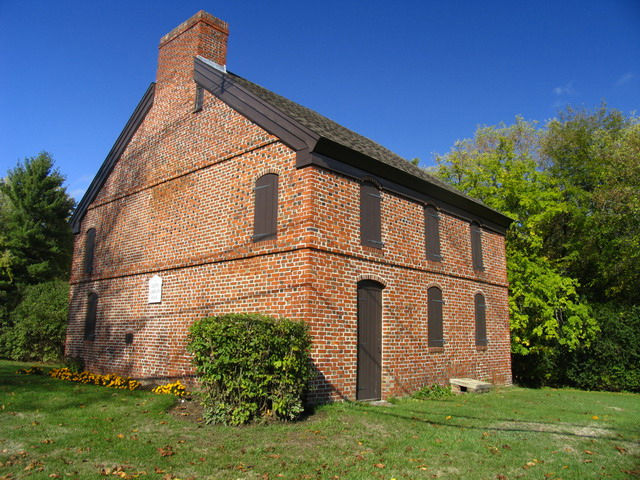
Stephen was in the Duston Garrison House with his father during the 15 Mar 1696/97 Indians attack. His sisters, Martha and Hannah, and six other close relatives were killed. Built by Thomas Duston by order of the court. Operated as a museum in the summer months today.

The exact site of Stephen’s house has not been determined, but it must have been near, perhaps part of, his father’s homestead as 5 Dec 1723, he filed a petition for five additional acres “beyond Nicholas White’s”  This in 1720 was the extreme northeast edge of the settlement, land afterwards included in Salem, NH.

The area was first settled in 1652. As early as 1736, Salem was the “North Parish” of Methuen, Massachusetts, or “Methuen District.” In 1741, when the boundary line between Massachusetts and New Hampshire was re-established, the “North Parish” became part of New Hampshire, and was given the name “Salem,” taken from nearby Salem, Massachusetts.
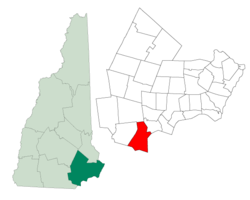
Salem, Rockingham, New Hampshire

Children

2.  Nathaniel Dow – bcdb –  (11 Aug 1699 Haverhill – 1787 Salem, NH)

Nathaniel’s wife  Mary Hendrick was born 31 Mar 1696 in Haverhilll, Mass.  Her parents were Israel Hendrick and Sarah Gutterson.  Mary died  20 Sep 1770 or 20 Sep 1776

After Mary died, he married at age 78 to Susannah [__?__] (1710-1794)

Nathaniel was a cooper in Salem, NH.  30 May 1750 elected Salem Town Clerk; selectman; “Seeler of Waits”

He was at Crown Point in 1762 and won a Lieutenant’s commission from the King.  Fort Crown Point, was a British fort built by the combined efforts of both British and Provincial troops (from New York and the New England Colonies) in North America in 1759 at narrows on Lake Champlain on the border between modern New York State and Vermont. Erected to secure the region against the French, the Fort is located near the town of Crown Point, New York and was the largest earthen fortress built in the United States. The site is now administered as Crown Point State Historic Site.

Ruins of Fort Crown Point

Nathaniel and his family anticipated the Revolution long before it came and were prepared for it.  Nathaniel used his own funds to prepare the troops and in 1775 was serving as a volunteer under Capt. Henry Elikins in the hurried plans for the defense of Piscataway.  His commission as Lieut. from the Continental Congress soon arrived, and he was later commissioned as Captian.  All three commissions are preserved as family heirlooms.

In spite of his age, he took the field under Capt. Dearborn, Col. John Stark, and was Lieut under Col Welch at the Battle of Bennington;
The Battle of Bennington by Don Troiani Rensselaer County, New York, August 17, 1777

The Battle of Bennington took place on August 16, 1777, in Walloomsac, New York, about 10 miles from its namesake Bennington, Vermont. A rebel force of 2,000 men, primarily composed of New Hampshire and Massachusetts militiamen, led by General John Stark, and reinforced by men led by Colonel Seth Warner and members of the Green Mountain Boys, decisively defeated a detachment of General John Burgoyne’s army led by Lieutenant Colonel Friedrich Baum, and supported by additional men under Lieutenant Colonel Heinrich von Breymann.

Baum’s detachment was a mixed force of 700 composed of dismounted Brunswick dragoons, Canadians, Loyalists, and Indians. He was sent by Burgoyne to raid Bennington in the disputed New Hampshire Grants area for horses, draft animals, and other supplies. Believing the town to be only lightly defended, Burgoyne and Baum were unaware that Stark and 1,500 militiamen were stationed there.

With the enemy force positioned on and around a large hill, General Stark decided to use his 2,000 militiamen to surround them. “Yonder are the Redcoats,” Stark is supposed to have said. “We will defeat them or Molly Stark will sleep a widow tonight.”..Small bands of militiamen, pretending to be loyal Tories, worked their way behind enemy positions. When firing began, these men turned on the Hessians and Tories around them. Those not killed fled into the woods, pursued by the militiamen. Other Americans surged up the hill to the Hessian breastworks, and for two hours the battle raged. The Hessian commander was mortally wounded when, ammunition exhausted, he and his Dragoons attempted to hack their way off the hill with their swords…When the battle was at its height, reinforcements arrived from Burgoyne. Luckily, the Vermont militia came up at about the same time to reinforce Stark, and again the fighting raged. American victory was assured when the militiamen drove off the Hessian reinforcements.

The battle was an important victory for the rebel cause, as it reduced Burgoyne’s army in size by almost 1,000 men, led his Indian support to largely abandon him, and deprived him of needed supplies, all factors that contributed to Burgoyne’s eventual surrender at Saratoga. The victory also galvanized colonial support for the independence movement, and played a role in bringing France into the war on the rebel side. The battle anniversary is celebrated in the state of Vermont as Bennington Battle Day.

Unknown to Burgoyne, the citizens of the New Hampshire Grants territory (which was then disputed between New York and the Vermont Republic) had appealed to the states of New Hampshire and Massachusetts for protection from the invading army following the British capture of Ticonderoga. New Hampshire responded on July 18 by authorizing John Stark to raise a militia for the defense of the people “or the annoyance of the enemy”. Using funds provided by John Langdon, Stark raised 1,500 New Hampshire militiamen in the space of six days, more than ten percent of New Hampshire’s male population over the age of sixteen. They were first marched to the Fort at Number 4 (modern Charlestown, New Hampshire), then crossed the river border into the Grants and stopped at Manchester, where Stark conferred with Warner. While in Manchester, General Benjamin Lincoln, whose promotion in preference to Stark had been the cause for Stark’s resignation from the Continental Army, attempted to assert Army authority over Stark and his men. Stark refused, stating that he was solely responsible to the New Hampshire authorities. Stark then went on to Bennington with Warner as a guide, while Warner’s men remained in Manchester. Lincoln returned to the American camp at Stillwater, where he and General Philip Schuyler hatched a plan for Lincoln, with 500 men, to join with Stark and Warner in actions to harass Burgoyne’s communications and supply lines at Skenesboro. Baum’s movements significantly altered these plans.

Nathaniel was present at the surrender of General Burgoyne.  During the Saratoga campaign he surrendered his army of 5,000 men to the American troops on October 17, 1777. Appointed to command a force designated to capture Albany and end the rebellion, Burgoyne advanced from Canada but soon found himself surrounded and outnumbered. He fought two battles at Saratoga, but was forced to open negotiations with Horatio Gates. Although he agreed to a convention, on 17 October 1777, which would allow his troops to return home, this was subsequently revoked and his men were made prisoners. Burgoyne faced criticism when he returned to Britain, and never held another active command.

Apparently, Nathaniel sold what land grant he received under the act of 1783, for no descendant appears as having such land.  He died in 1787.

Children of Nathaniel and Mary born at Haverhill:

i. Daniel Nathaniel Dow – bcdba – b.  28 Jun 1728 Haverhill; d. Feb 1758; m, 16 Nov 1748 to Rebeckah Peaslee (bapt 19 Nov 1727 Haverhill – 2 Jun 1757 Salem, NH)  Her parents were Daniel Peaslee and Rebecca Kelly.  Both Daniel and Rebecca died young and presumably their four orphan children (children 1750-54: Phineas, Olif, Zillah(Lydia?), Percy) grew up with their grandfather Stephen DOW.  At all events both boys learned the cooper’s trade.

ii. Mary Dow – bcdbb – bapt. 26 Apr 1720

iii. James Dow – bcdbc – b. 2 Sep 1731; d. 3 Feb 1737/38

iv. Amos Dow – bcdbd – b. 12 Mar  1734/35; Selectman of Salem 1776; Agent of militia in Newbury 1777; in 1790 census; d. 20 Jan 1820 Salem, Rockingham, NH; Burial: Salem Center Burying Ground ; m. Elizabeth [__?__] (1739 – 9 Nov 1825 Salem, NH); No children

v.  Jeremiah Dow – bcdbe – b. 14 Mar 1737/38 Haverhill, Mass.; d. 10 Sep 1826 in Salem, Rockingham, New Hampshire; m. 1 May 1766 Bradford, Mass. to Lydia Kimball,(b. 8 Mar 1749 Bradford, Mass – d. 12 Mar 1826 Salem, Rockingham, NH). Lydia’s parents were Isaac Kimball and Elizabeth Jewett. She was a descendant of Richard Kimball, the pioneer. Jeremiah and Lydia had seven children.

Jeremiah lived at what is now Salem, New Hampshire. He was first in the Provincial service at Crown Point in 1762 in the French and Indian war; An early paper shows that he was in the Provencial Service at Crown Point and sick at No. 4 for 33 days and not able to go from Crown Point to No. 4 on foot.  (Charlestown, NH was called No. 4 before 1753 and the name was sometimes used until long after that date) Afterward he was in Captain Dearborn’s company, Colonel Stark’s regiment, and in Captain Henry Elkin’s company, enlisted for the defense of Piscataqua harbor in the revolution,November, 1775.  He was captain of a company in 1776, and in Lieutenant-Colonel Welsh’s regiment at the battle of Bennington and at the surrender of General Burgoyne. The family possesses papers relating to Captain Dow, dated 1758, a lieutenant’s commission under George III, and a captain’s commission granted for some act of bravery by the Continental Congress during the revolution were preserved, together with a stirring letter from his commanding officer in the revolution urging him to enlist more men, but were lost or stolen from the Polytechnic Institute of Louisville, Kentucky, where they were deposited by one of the Dow family for safe-keeping while he was living at Louisville.

 3. Mary Dow – bcdc –  

Mary’s first husband David Roberts was born 23 Sep 1696 in Haverhill.  His parents were Ephraim Roberts and Dorothy Hendrick.  David had a twin Jonathan who died at birth.   David died in Sep 1722.  ‘

Mary married second 5 Nov 1724 to Nathaniel Marble .   Nathaniel was born 19 Apr 1691, in Haverhill. His parents were Samuel Marble (~1665-) and Rebecca Williams (1666-)

She married third to Obadiah Belknap whose first wife Sarah Mitchel died 27 Oct 1742.

Children of Mary and David  All born and married in Haverhill.

i. Anna Roberts – bcdca – bapt. 20 Jul 1721; m. 31 Nov 1739 William Bailey of Haverhill

ii. Sarah Roberts – bcdcb – b. 19 Apr 1722 Haverhill; d.  12 Dec 1812 Londonderry ; m. 1 Sep 1741 to James Graves (22 Apr 1714 Londonderry or Chelmsford – 7 May 1765 Southampton)  His parents were Samuel Graves and Sarah Perkins. He was great grandson of Abraham Perkins father of Hampton.   He bought in 1761 a large farm in South Hampton and was an inn keeper.

Children of Mary and Nathaniel All born and married in Haverhill.

iii. Rachel Marble – bcdcc – b. 13 Jul 1727; d. 1785 in Mass; m. 3 Oct 1751 James Davis (b. 1726 in Methuen, Essex, Mass. – d. 27 Aug 1778 in Mass.) James’ parents were James Davis (1695 – 174o) and Sarah Bayley (1694 – 1741). Rachel and James had five children born between 1753 and 1777.

iv. Abigail Marble – bcdce – b. 1 Feb 1731/32

v. Nathaniel Marble – bcdcf – b. 19 Mar 1741/42; m. 28 Dec 1762 Bradford, Essex, Mass to Ruth Hardey (b. 16 Apr 1744 in Bradford, Mass) Ruth had a twin named Samuel. Ruth’s parents were Nathan Hardy (1714 – 1744) and Dorcas [__?__] (1716 – 1764). Nathaniel and Ruth had five children born between 1764 and 1781

4. Elizabeth Dow  – bcdd – 

Elizabeth’s husband William Heath was born 19 Jan 1701/02 in Haverhill.  His parents were John Heath and Francis Hutchins.  His maternal grandparents were Joseph HUTCHINS and Joanna CORLISS.  His paternal great grandfather was our ancestor Bartholomew HEATH. William may have died 1781 in Craven County, North Carolina

Children of Elizabeth and William:

i. Elizabeth Heath – bcdda –  b. 05 May 1726 in Haverill, Essex County, Mass; 09 July 1728 in Haverill

ii. Mary Heath – bcddb – b. 10 Sep 1729 Haverhill, Mass.; d. 5 Jun 1795 – Chester, Windsor, Vermont; m. 1748 to Moses Gile (b. 15 Feb 1720 in Haverhill – d. 1786 in Chester Windsor VT) Moses’ parents were Joseph Gile (1691 – ) and Mary Heath (1700 –). Mary and Moses had eight children born between 1756 and 1769.

iii. Ann Heath bapt.2 Nov 1732 in Haverhill, Essex, Mass.; d, 2 Nov 1732 Haverhill

iv. Jeremiah Heath – bcddc – b, 19 Dec 1736 in Haverhill, Essex , Mass.; d 09 April 1737 in Haverhill,

v. Deliverance Heath bapt. 25 Sep 1737 Haverhill, Essex, Mass.

vi. Green Heath bapt. 25 Sep 1737 Haverhill, Essex, Mass.

vii. Hannah Heath bapt. 25 Sep 1737

viii. William Heath bapt. 30 Aug 1741 Haverhill, Essex, Mass.

Green, Hannah, Deliverance,, children of William Heath, baptized 1737 may or may not belong here.

5. Richard Dow – bcde –

Richard was of Salem, NH, his home close to that of his brother Nathaniel, a locality first chosen by his grandfather Stephen.

Joseph’s wife Phoebe Heath  was born 25 Jun 1705.  She was his second cousin, daughter of Joseph Heath and Hannah Bradley.  Joseph and was wife, both bereft by the Dustin massacre had 9 childrn born in Haverhill from 1698 to 1718.  Richard and Phoebe shared great-grandparents.  Phoebe was the granddaughter of  Joseph Heath (son of Bartholomew HEATHand Martha Dow (bc.) (daughter of Thomas DOW (b))

Richard and his grandsons were in the military. Richard was 1st in service in the Indian campaign of 1746 under Capt. John Goffe at Dover; 1758 enlisted as private, Capt. John Hazzens, against Ticonderoga and distinguished himself at Crown Point. He gained a Lieut’s commission from the Crown.

Ruins of Fort Crown Point

Crown Point, was a British fort built by the combined efforts of both British and Provincial troops (from New York and the New England Colonies) in North America in 1759 at narrows on Lake Champlain on the border between modern New York State and Vermont. Erected to secure the region against the French, the Fort is located near the town of Crown Point, New York and was the largest earthen fortress built in the United States.

Richard was one of the many who expected the Revolution and prepared for it financially and otherwise.  Three of his sons were at Lexington.  He himself took Captaincy, serving and instructing recruits at Great Island from Nov 5, 1775. In this company were ensign Jeremiah Dow, his own son Asa as Sgt, Percy Dow (bcdbad) , fifer, and Isaac Dow private.  The identity of Isaac is uncertain. Although 70 yrs of age Richard advanced all his money to the town to pay soldier bounties and equip troops, and was appointed to raise a new company for service in N.Y. State.  His oldest son had been crippled at Bunker Hill, his second already held a Lieutenancy.  His third son, Richard was elected captain of the new company and his commission confirmed by the Continental Congress.  The 4th son served through the war as agent.   This company was assigned to the regiment of Col. Nathan Hale of Coventry, Conn. Richard himself retired to his Salem home; where he died.

Unequal fortunes attended Richard’s four sons.  At the beginning of the war he had been a comparatively well to do man.  He had advanced all his money and used his credit to support the town military measures.  When this money came back to him, it must have been in terms of Continental currency, soon dwindling to nothing. All four sons elected other permanent homes, although the second returned to the old homestead three years after his father’s death

Children of Richard and Phoebe:

i. Capt. Reuben Dow – bcdea – b. 7 Sep 1729; bapt. 25 Oct 1730; d. 9 Feb 1811 in Hollis, Hillsborough, New Hampshire;   m. 8 Feb 1749 Salem, Rockingham, New Hampshire to Alidia, Ledea, Leadeah, or Eleda Jones (22 Apr 1733 Methuen, Essex, Mass – 17 Jul 1825 Hollis, Hillsborough, NH)  Her parents were James Jr. Jones and Tirzah Titcomb. Alternatively, her parents were Evan Jones (1691 – 1764) and Lydia Ordaway (1693 –  ). The Jones family descends from Evan Jones, immigrant from London, age 19 on 21 May 1631 of Amesbury and Salisbury. Reuben and Alidia had six children born between 1754 and 1773.

Rueben was a First Lieutenant in the Hollis, NH Militia before 07 November 1774. Acting Captain at Lexington, and commissioned permanently as Captain a monthlater. Wounded (right ankle) in the Battle of Bunker Hill. His company arrived at Bunker Hill on 16 June 1775 and dug 16 trenches. In 1783, permanently granted a disability pension for the remainder of his life.
Capt. Reuben Dow”s company dug 16 trenches at Bunker Hill before he was shot in the ankle.

Reuben and Alidia moved in 1761 twenty miles west from Salem, Rockingham, NH to Hollis, Hillsborough, NH, two years later buying the homestead still owned [1927] by his posterity.  This home beautifully located in as beautiful a village as there is in New Hampshire now contains all his Revolutionary relics.

He entered at once the local militia and was its 1st Lieut. when Lexington was fought.  The captain was temporarily incapacitated so  Reuben marched to Lexington as acting Captain.

A month later, he was commissioned Captain, the commission to Reuben Dow, gentleman, signed by Gen Joseph Warren, president pro tem of the Mass Provincial Congress. Warren had been commissioned a Major General in the colony’s militia shortly before the June 17, 1775 Battle of Bunker Hill. Rather than exercising his rank, Warren served in the battle as a private soldier, and was killed in combat when British troops stormed the redoubt atop Breed’s Hill,
Rueben’s commission was signed by Joseph Warren (Portrait by by John Singleton Copley, c. 1765)

Hollis had been wide awake long in advance and the ordinarily peaceful militia had been carefully drilled for service. 7 Nov 1774, Deacon Stephen Jewett, Ensign Stephen Ames and Lieut. Reuben Dow were a committee to attend a county congress to arrange defense action.  The town then adopted a resolution “that we will at all times endeavor to maintain our liberty and priviledges both civil and sacred, even at the risque of our lives and fortunes, etc.”

Dow’s Co. began as the Hollis, NH Militia Company. After receiving word of the Lexington Alarm on the afternoon of April 19, 1775 a total of 92 men marched to Cambridge before dawn the following day. Being a typical New England unit, they opted to elect new officers and NCO’s before they left. In this election, Reuben Dow was elected Captain, John Goss as 1st Lieut., and John Cummings as 2nd Lieut. Four Sergeants and four Corporals were also chosen.

According to town legend, the march to Cambridge was not only long but hot, and they stopped to quench their thirst at a tavern in the Billerica area, where they may have stayed for a few days.  The march to Lexington was made on foot and after a few days the Hollis company returned home to prepare further for the next fight and await the call.  Thirty-Nine of the privates returned home in the next few weeks, however Fifty-Three of them volunteered in various units to serve for Eight months. Most of them re-enlisted in a new company under Captain Dow and the same Lieutenants. Shortly after the commencement of the Siege of Boston they were incorporated into Prescott’s Massachusetts Regiment as part of the Grand Massachusetts Army.  . Prescott owned land in Hollis and knew most of the men very well, so it must have seemed a natural choice for them to fall under his command, rather than one of the unknown Colonels from New Hampshire.

The call came quickly, so unexpectedly that Reuben’s little son Daniel was left to unyoke the oxen from the plough.  Mrs. Dow made an equal division of the blankets in her store room and her mess pork,one half going to the soldiers.  The company marched 69 strong all Hollis men, assigned to Col. Prescott’s regiment.   It was the second to arrive on the field at Bunker Hill and spent the night of June 16 digging trenches.  Next day, they were on the firing line    The regiment served throughout the Siege of Boston and was present at the Battle of Bunker Hill. The company made up roughly one-sixth of the men under Col. Prescott on the 16th of June, 1775, who made their way to Breed’s Hill and began building the redoubt. The ensuing battle has, of course, gone down in history. Six men from the Company were killed in the battle, including the 1st Sgt, and eight men were wounded. The regiment, as a whole, recorded Forty-Two killed and Twenty-Eight wounded.

By year’s end the enlistments of Captain Dow’s men ran out. Some returned home, many were signed on in other units, and some were discharged with pensions due to wounds. Captain Dow was in this last category. He returned to Hollis and served as Chairman of the Committee of Safety.

Captain Reuben Dow, of Hollis, after the Battle of Lexington, raised a company of soldiers from Hollis and Pepperill, marked to Bunker Hill.  Rueben was struck in the right ankle by a bullet which shattered the bone.  Nevertheless, he made the retreat in good order with his troops.   The bullet, which was extracted, is still preserved; but the effects of the wound are said to have eventually caused or hastened his demise.

On account of his disability he was continued for a short time on half pay, later reduced to quarter.  In 1783 he was cited to appear before the State authorities to show cause whey his pension should not be discontinued.  A large number of witnesses were examined concerning Reuben’s ability to care for himself and the verdict confirmed his pension for life.  He died 9 Feb 1811; he and his wife buried in Hollis churchyard.  In 1927, the homestead with all its Revolutionary reliecs was owned by Charles Jeremiah Bell (bcdeabeaa).

For more on Reuben’s military career, see my post Minutemen – April 19, 1775

Reuben had three sons, Daniel, Stephen and Evan.  Evan was a private under his father at Bunker Hill. There are four instances of a Dow grandfather, father and son being in Revolutionary service at the same time.

ii. Lt. Oliver Dow – bcdeb – b. 28 Jul 1736 Salem, Rockingham, NH; d. 18 Dec 1824, Waterville, Kennebec, Maine; m. 1757 to Hannah Pattee (7 Dec 1737 Haverhill – 11 Mar 1820)  Her parents were Seth Pattee (1706 – 1776) and Dorcas Savory (1712 – 1784). Oliver and Hannah had nine children born between 1758 and 1779.

Oliver held a Lieutenancy in the Revolutionary War and was a saddler

15 May – 18 Dec 1756 private in Capt. Samuel Watt company Col Nathaniel Meserve (Wiki) regiment.    During the French and Indian War Colonel Meserve led the New Hampshire Provincial Regiment in 1756 to Fort Edward New York. In the spring of 1756 two New Hampshire battalions were raised with Col. Nathaniel Meserve in command. The 1st battalion was sent to Nova Scotia and the 2nd to the newly built Fort William Henry.

Oliver moved in 1773 40 miles north west from Salem to Hopkinton Merrimack, New Hampshire.  That he was in Salem, NH early in 1775 was due either to a visit or in the expectation of hostilities.  He was a Bunker Hill and 9 Jul 1776 was a 2nd Lieut, Lieut. Col. Thomas Stickney (wiki).  It would be remarkable for a commissioned officer to re-enlist as a privte, but some Oliver Dow served 21 days in the RI campaign, Capt. Daniel Emerson, Col. Moses, Nichols, mustered out Aug 1778 and we know of no other Oliver.

About 1790 the family moved back from Hopkinton to Salem, NH.  Ill health pursued him,  In 1804 the town voted to abate his taxes until his health was better.  He finally retired to his son’s home in Waterville, Maine d. 18 Dec 1824.

iii. Capt. Richard Dow – bcdec – b. 1 Oct 1730 Salem, NH; d. 1798; m. Mary Saunders record not found and probably not in Salem.   Richard and Mary had six children born between 1766 and 1783.

Richard was elected captain of the new company and his commission confirmed by the Continental Congress.  He left four young children to march to Lexington; enlisted 1776 in Col. Joshua Wingate’s regiment for Canadian service.  Next year he was elected captain of the Salem, NH company organized by his father and was attached to Col. Nathan Hale’s regiment. [Col. Nathan Hale was a different officer from Captain Nathan Hale, the spy of “one life for my country fame”, but ironically he was also captured, taken prisoner by the British at the Battle of Hubbarton (now Vermont) on July 7, 1777. Col. Hale exchanged on limited paroled for “an officer to be named later”, but when none materialized, after two years he returned to British Prison on Jun 14, 1779. Col Hale died on Sep 23, 1780 in New Utrecht, Brooklyn while in prison.]

After the war he settled in Bow, Merrimack NH near his brother Oliver.  An abler man of business than his brothers he accumulated considerable property.

iv. Asa Dow – bcded – b. 5 Apr 1743; Rockingham, New Hampshire; d. 1825 Windham, Rockingham, NH; m. 1769 to Mary Wheeler (b. 21 Sep 1750 in Salem, NH – d. ~1835)  Mary’s parents were Benjamin Wheeler and Rebecca Pingue (Pengrye). Asa and Mary had thirteen children born between 1770 and 1792.

Asa served in the Revolutionary War as a Sergeant.  Asa was at the very outset of the war a sergeant in his father’s company and in the regiment of Colonel Nathan Hale (of Coventry, CT)..  When the new Salem, NH company was organized in 1777 Asa continued as sergeant under his brother Capt. Richard and fought in this rank until the war ended.  At its conclusion he returned to Salem, NH.

In 1785 they bought the old Isaac Cochran farm in Windham and moved thither.  Here Asa was at one time selectman.  He died in 1825.

v. Stephen Dow – bcdee – b. 26 Aug 1745 Salem, NH; d. 24 Sep 1753

6. Joanna Dow’s – bcdf – 

Joanna’s husband Moses Tucker was born 28 Mar 1704 Salisbury, Mass.  He was a pioneer of New Ipswich as early as 1747 and was its first selectman.  Moses’ parents were Joseph Tucker and Phoebe Page of Kingston.  He was a saddler in Kingston, NH .  He served as captain in the French War.  Moses died 6 Jan 1769 Sandown, Rockingham, NH.

Children of Joanna and Moses 1728-51:

i. Mary Tucker – bcdfa – (3 Jan 1728/29, Salisbury, Mass – 10 Jun 1748, Hampstead, Rockingham, NH); m. 24 Nov 1744, Hampstead, Rockingham, NH to William Stevens.  His parents were Samuel Stevens (1677- bef. 1751) and Rachel Heath (1682- bef. 1751)

ii. Rebecca Tucker bcdfb

iii. Parker Tucker – bcdfc – b. 11 Jan 1730 Kingston, Rockingham, NH; d. 07 May 1736

iv. Phebe Tucker – bcdfd – b. 06 Mar 1735 Kingston, Rockingham, NH; d. 17 May 1775 Newbury, Orange, VT; m. 21 Dec 1752 to Ephraim Webster (b. 13 May 1730 Bradford, Essex, Mass – d. 18 Aug 1803 Hill, Merrimack, NH ) Ephraim’s parents were Samuel Webster (1688 – 1769) and Mary Kimball (1693 – 1770)

v. Moses Tucker – bcdfe – b. 06 Mar 1736 New Ipswich, Hillsborough, NH; d. 1792; m. Susanna [__?__] (b. ~1738)?) Moses and Susanna’s first child Moses Tucker Jr. was born 09 Jun 1764 in New Ipswich, Hillsborough, NH, USA and died at age: 89 in 1854 in Bibb County, Georgia

vi. Sarah Tucker – bcdff – b. 13 Mar 1739 New Ipswich, Hillsborough, NH; d. 1834 – Dublin, Cheshire, New Hampshire; m. 5 Jun 1755 – Temple, Hillsborough, New Hampshire to Ichabod Rowell (b. 2 Nov 1729 in Salisbury, Essex, Mass. – d. 25 Jun 1802 in Dublin, Cheshire, New Hampshire) Ichabod’s parents were Philip Rowell and Sarah Davis. Sarah and Ichabod had nine children born between 1750 and 1783.
History of Dublin, NH-Ichabod Rowell

vii. Elizabeth Tucker – bcdfg – b. 08 Apr 1741 Kingston, Rockingham, New Hampshire,viii. Hannah Tucker – bcdfh – b. 22 Sep 1743 Hampton Falls, Rockingham, New Hampshire, ; d. 11 Jan 1817 – Sandown, Rockingham, New Hampshire

ix. Ruben Tucker – bcdfi – b. 19 Jun 1747 Kingston, Rockingham, New Hampshire

x. Joseph Tucker – bcdfj – b. 22 Oct 1748 Kingston, Rockingham, New Hampshire; d. 1791 ; m. 6 Jun 1775 – Reading, Middlesex, Mass. to Abigail Emerson (b. 1756 in New Hampshire = d. 11 Feb 1795 in South Ipswich, New Hampshire) Abigail’s parents were James Emerson (1720 – 1808) and Mary Farrar (1725 – 1785).

xi. Mary Tucker – bcdfk – b. 10 May 1751 Topsfield, Essex, Mass; d. 1812 NY; m. George Start (b. 16 Dec 1748 Boxford, Essex, Mass. – d. 1824 Lysander, Onondaga, NY) George’s parents were George Start (1719 – 1784) and Sarah Wildes (1723 – 1758)

Lysander is now a northwest suburb of Syracuse. The town was part of the former Central New York Military Tract. It was first settled by outsiders around 1797.The Town of Lysander was formed in 1794 from the northern townships of the Military Tract. Lysander was later reduced by the creation of the Towns of Hannibal (1806) and Cicero (1807). Lysander was reduced again on the formation of Oswego County in 1816.

I’ve always wondered why there were so many classical names in Central New York. Here’s why.

The Military Tract of Central New York, also called the New Military Tract, consisted of nearly two million acres of bounty land set aside to compensate New York’s soldiers after their participation in the Revolutionary War.

The United States Congress had already guaranteed each soldier at least 100 acres at the end of the war (depending on rank), but by 1781, New York had enlisted only about half of the quota set by the U.S. congress and needed a stronger incentive. The state legislature authorized an additional 500 acres per soldier, using land from 25 Military Tract Townships to be established in central New York State. [Pretty sweet deal]

Each of the townships was to comprise 100 lots of 600 acres each. Three more such townships were later added to accommodate additional claims at the end of the war.

Townships were as far as geographically feasible made up of a 10×10 square of mile-square (640 acre) lots; 40 acre were used for boundary roads, leaving 600 acres to be deeded in each lot. 94 lots in each Township were to be deeded, with the other 6 reserved for public purposes such as churches and schools.

The townships were at first numbered (1 through 28), but were later given classical Greek and Roman names, along with a few honoring English authors:
1. Lysander
2. Hannibal
3. Cato
4. Brutus
5. Camillus
6. Cicero
7. Manlius
8. Aurelius
9. Marcellus
10. Pompey
11. Romulus
12. Scipio
13. Sempronius
14. Tully
15. Fabius
16. Ovid
17. Milton
18. Locke
19. Homer
20. Solon
21. Hector
22. Ulysses
23. Dryden
24. Virgil
25. Cincinnatus
26. Junius
27. Galen
28. Sterling

7. David DOW– bcdg – (See his page)

8. Jonathan Dow – bcdh –

Jonathan’s wife Mary Haseltine was born 16 Feb 1723/24.   Her parents were Jonathan Haseltine Jr and Mary Simons. Mary died in 1759.

Jonathan was a yeoman of Plaistow.

Plaistow records of his death gives 1769, a copyist error for 1759.  Jonathan deeded land 12 Apr 1759, administration papers granted 25 Dec 1759, to Samuel Kimball of Plaistow, a kinsman who was appointed guardian of his children.  Widow Mary received her thirds 22 Jan 1762.

Plaistow records give all the children of Jonathan and Mary.  There is no proof regarding the lives of the four half orphaned children of Jonathan.  No marriages of the two girls are found in the well kept Haverhill records.

i. Mary Dow – bcdha – b. 6 Jan 1746 Plaistow, Rockingham, NH

ii. Phoebe Dow – bcdhb – b. 5 Feb 1749 or 28 Jan 1748 Plaistow, Rockingham, NH

iii. Nathan Dow – bcdhc – b. 20 Oct 1751 Plaistow, Rockingham, NH – Some Nathan Dow enlisted at Woburn in the 7th company, Col Thomas Nixon, receipted for pay 14 Feb 1777 to 4 May 1778 and was in service 3 Mar 1779.  Some Nathan Dow enlisted at Danvers age 28, 5 feet 8 ruddy and receipted for pay 9 Jul 1780 to 6 Jan 1781.  Nathan Dow enlisted at Danvers, but was 4 years younger.  This might be a minor error.  No dates conflict and the three may be identical.  The pension list shows a Nathan Dow of NH in 1820, no particulars,  NH vital statistics has a Nathan Dow of Hebron with wife Susanna, also two children.  As Nathan was over 50 at this time, there might have been older children and Susanna might be a second wife.

iv. William Dow – bcdhd – b. 18 Feb 1755 Plaistow, Rockingham, NH – No room for doubt of the identity of the William Dow, pioneer of Majorfield [Maugerville] NB, grantee of land 1793.   William was a lumberman and was in business with his uncle David DOW and cousins Enoch DOW and Nith Dow The family narrative is clear that, after the disastrous freshet of 1802, William and his cousins Nith settled in Maine and may have posterity.  Many disconnected Dow were in Maine from 1761 onward.

9. Stephen Dow – bcdhi

Stephen’s wife Hannah Sheppard was born about 1723 in Amesbury, Essex, Mass. Her parents were Lieut. Samuel Sheppard and Judith Currier of Amesbury. Hannah died Died:after 1761 in Plaistow, Rockingham, NH.

Presumably their whole lives were spent in Plaistow, but they get no mention except in birth records of their children. Stephen was a corporal under Captain John Hazzens, was at Crown Point 1758 in same company as brothers Nathaniel and Richard.

Children of Stephen and Hannah:

i. Hannah Dow – bcdia – b. 21 Apr 1745 Plaistow, Rockingham, NH

ii. Ruth Dow – bcdib – b. 8 Jan 1747; bapt. 11 Jan 1746/47 Plaistow, Rockingham, NH; d. 16 Jul 1786 in Windham, Rockingham, New Hampshire; m. 7 Jun 1768 Windham to William Simpson (b. 22 Mar 1745; bapt. 5 Feb 1748 in Windham, NH – d. 15 Oct 1830 in Windham, NH) William’s parents were Alexander Nutfield Simpson (1721 – 1788) and Janet “Jennat” Templetonn(1719 – 1787). Ruth and William had ten children born between 1769 and 1786. After Ruth died, William married Mrs. Grissal Wilson (1750 – 1810) and had four more children between 1787 and 1792. Lots of mouths to feed!

Jul 8 1775 – William Simpson was in the first company of Windham, NH

Sep 20 1776 – William Simpson was in Capt. Nathan Sanborn’s company, Col. Thomas Tash‘s Regiment raised to reinforce the Continental Army at New York.

iii. Moses Dow – bcdic – b. 30 Jan 1749 Plaistow, Rockingham, NH; bapt. 5 Feb 1749; d. 10 Mar 1749 Plaistow, Rockingham, NH

iv. Stephen Dow – bcdid – b. 27 May 1750 Plaistow, Rockingham, NH; bapt. 3 Jun 1750; d. 21 Nov 1750 Plaistow, Rockingham, NH

v. Susanna Dow – bcdie – b. 28 Oct 1751 Plaistow, Rockingham, NH; bapt 3 Nov 1751

vi. Abigail “Nabby” Dow – bcdif – bapt 10 Mar 1754 Plaistow, Rockingham, NH

vii. Thomas Dow – bcdig – bapt. 14 Mar 1756 Plaistow, Rockingham, NH.  Some Thomas Dow of Plaistow enlisted 1777; d. same year.  Some Thomas Dow of Plaistow, corporal under Capt. Ezekiel Gile, Col. Stephen Peabody died in RI 30 Dec 1778, service 10 mos, 24 days. Perhaps death record is in error and the two are identical

viii. Daniel Dow – bcdih – bapt. 26 Feb 1758 Plaistow, Rockingham, NH; unmentioned surely not in Revolutionary rolls or 1790 census.

ix. Mary Dow – bcdii – b. 26 Apr 1761 Plaistow, Rockingham, NH; bapt. 11 May 1760.  They say Mormons have a practice of baptizing folks after they are dead.  This unique instance of baptizing an infant eleven months before birth is to be credited to a town clerk of Plaistow who has long since gone to his reward,

Sources:

http://familytreemaker.genealogy.com/users/k/r/a/Dorothy-Kratzer-CO/GENE1-0008.html

http://www.genealogyofnewengland.com/b_d.htm

The Book of Dow, Genealogical Memoirs of the Descendants of Henry Dow 1637, Thomas Dow 1639 and Others of the Name, Immigrants to America During Colonial Times. by Robert Percy Dow 1929
Dedicated to all Dows Everywhere

http://www.snarked.org/~kd6lvw/genealogy/data/f4263.html
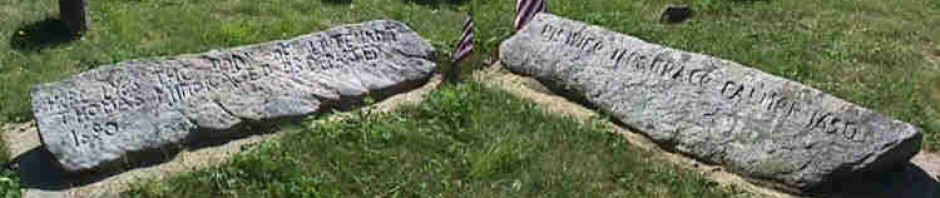
Posted in -9th Generation, Line - Miller, Veteran | Tagged , , , , , | 8 Comments