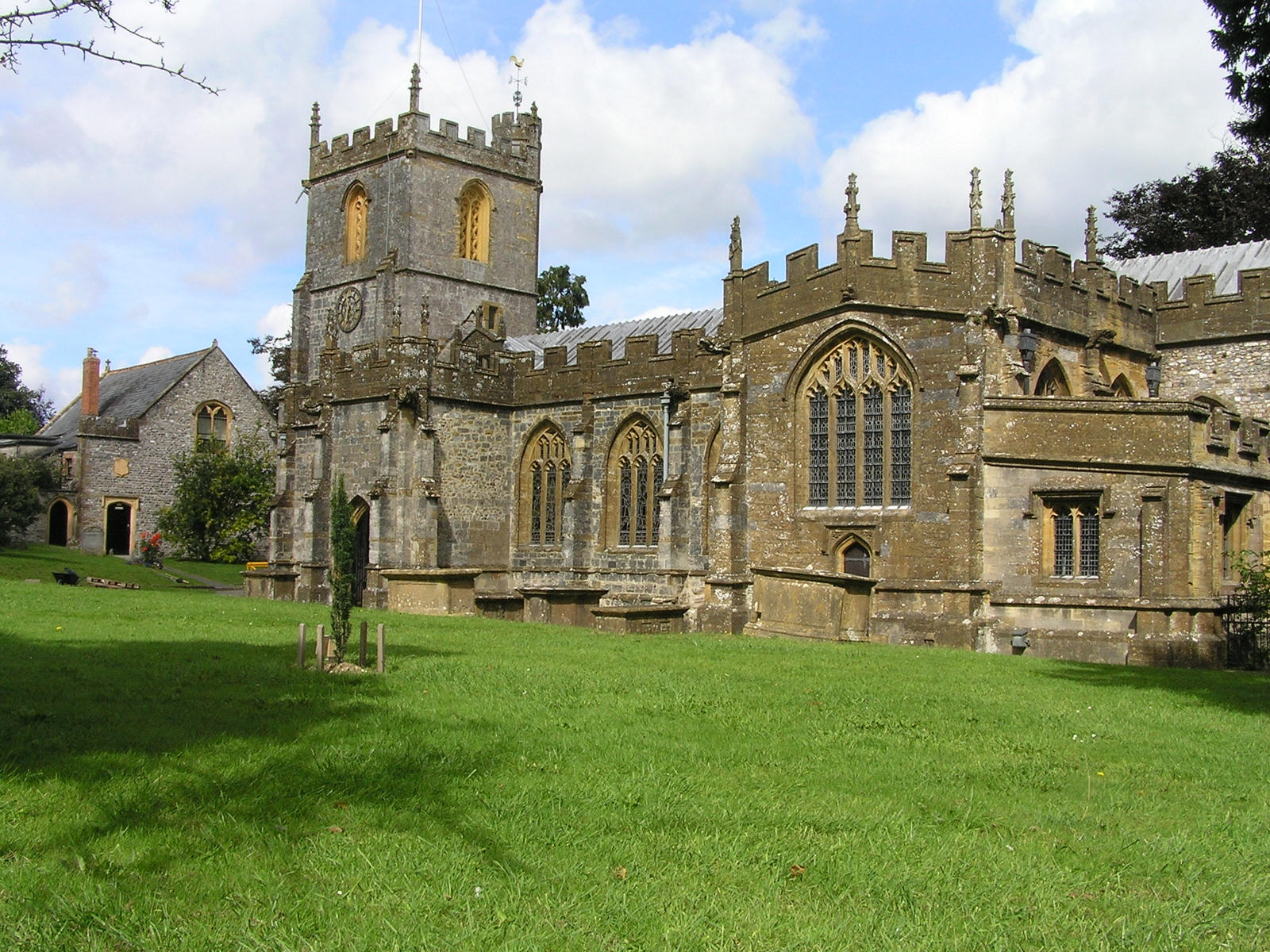
Jeremiah Webber

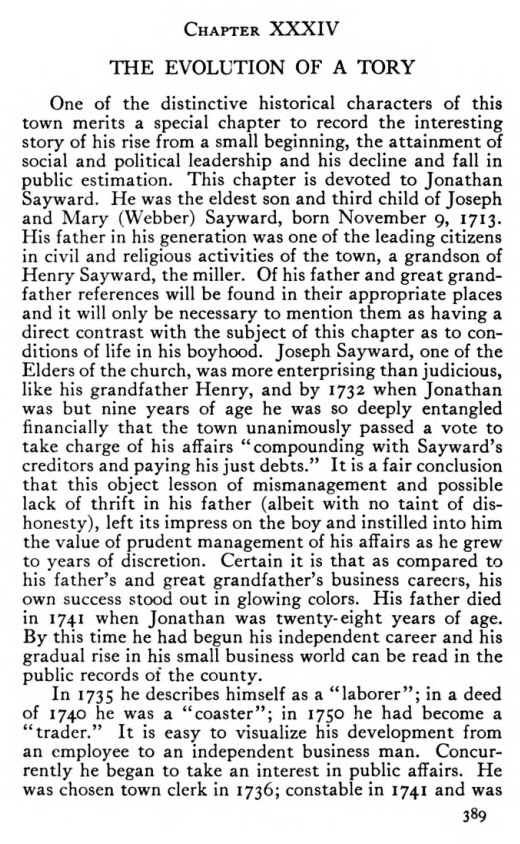
Jeremiah WEBBER (1786 – 1820) was not a direct ancestor in the Shaw line, but he holds clues to the ancestry of Oliver A. WEBBER  because Oliver was appointed guardian of some of his grandchildren when his son Horatio Nelson Webber died.  Jeremiah was Oliver’s uncle.

Jeremiah Webber was born 17 Jul 1786 in Vassalboro, Maine.  His parents were Charles B. WEBBER and Sarah SMILEY.  He married Belsora Horn on 1 Jun 1805 in Vassalboro, Maine.  Jeremiah died in 20 Apr 1820 in Vassalboro, Maine.

Belsora Horn was born 30 Mar 1789 in Dover, Strafford, NH.  Her parents were William Horne and Elizabeth Roberts.  Belsora died after 1830 in Vassalboro Maine

Jeremiah and Belsora  had the following children, all born in Vassalboro:

Name Born Married Departed
1. William Jerome Webber Jul 1806 18 Aug. 1828
Webber Cemetery
2. Horatio Nelson Webber Aug 1808 Dolly (Dorothy) F. Harlow
18 Feb. 1830
25 Sept. 1838,
Hallowell Village Cemetery
3. Elizabeth Farwell Webber 5 Nov 1809 Charles Elmer Hixon
29 Aug 1830
Vassalboro, ME
.
William Hume
19 Jan 1836  -Augusta, Kennebec, Maine
25 Sep 1889
4. Belsora Horn Webber Jan 1811
5. Charles Jarvis Webber 24 Mar 1810
or Mar 1813
Harriett H. Harlow
6 Feb. 1834
11 May 1863
Augusta, Kennebec, Maine
6. Laura Smiley Webber Nov 1814
7. Jeremiah Decatur Webber 10 Feb 1816 Lois Bean Brown
3 Jul 1847 Chester, Maine
24 Nov 1894 – Oakfield, Maine
8. Sarah Smiley Webber Sep 1818 Otis Taylor
8 Dec 1839 – Vassalboro
14 Mar 1852 – Vassalboro,

The settlement of town of Vassalboro commenced in 1760. for ten years only eight families had become residents including those in what is now Sidney that was first included in the limits of Vassalboro. Four families settled on the river front below what is now called riverside. Charles Webber came in 1765, soon after his brother Joseph came. Charles Webber was first town treasurer of Vassalboro 1771, was selectman in 1773, Joseph Webber was selectman of Vassalboro in 1778.  Jeremiah Webber was selectman in  1817.

Children

2. Horatio Nelson Webber (See his page)

Our ancester Oliver WEBBER was appointed guardian when Horatio Nelson Webber died in 1838.   Horatio’s wife was Dolly Harlow, b. 16 Oct. 1812; d. 1921. M. at Vassalboro 18 Feb. 1830 as Dorothy F. Harlow, Horatio Nelson Webber of Vassalboro (VR Vassalboro, p. 24)b. 1809, son of Jeremiah Webber; d. 25 Sept. 1838, age 29 (VR Vassalboro, p. 42). Both are buried in the Hallowell Village Cemetery (MOCA 3:2665 or 1665). Kennebec County Probate Records named Dorothy Webber of Hallowell the widow of Horatio Nelson Webber, who died 25 December 1839

Children (named in probate records): Mary Webber, Susan B. Webber (also  Susan B. Lowell), Sarah H. Webber, all minors. Oliver A. Webber was appointed  their guardian. Charles E. Webber was “heir of age.”

3. Elizabeth Farwell Webber

Elizabeth’s first husband Charles Elmer Hixon was born 27 Nov 1809 in Hallowell, Kennebec, Maine. Charles died before 1836.

Elizabeth’s second husband William Hume was born 1794 in Waterville, Kennebec, Maine. William died in 1868 in Augusta, Kennebec, Maine.

In the 1850 census, William was a fisherman in Augusta, Maine.

Elizabeth divorced William Mar 1865 in Kennebec, Maine.

5. Charles Jarvis Webber 

Charles’ wife Harriet H Harlow was born 3 Aug 1811 in Sidney, Kennebec, Maine. Her parents were Jabez Harlow and Catherine Hastings. Harriet died 7 Jun 1881 in Augusta, Kennebec, Maine.

In the 1850 census, Charles was a carpenter in Vassalboro, Maine.

Children of Charles and Harriet:

i. Chester Harlow Webber (1835 –

ii. John Chandler Webber (1836 –

iii. Harriet M Webber (1838 – 1839)

iv. Horatio Nelson Webber (1840 – 1847

v. Helen M Webber (1842 –

vi. Martha L Webber (1845 – 1847)

vii. Adaline M Webber (1846 –

viii. Emma H Webber (1848 – 1874)

ix. Lottie E Webber (1853 – 1873)

7. Jeremiah Decatur Webber

Jeremiah’s wife Lois Bean Brown was born 5 Sep 1829 in Albion, Maine. Her parents were Samuel Gilman Brown (1796 – 1872) and Mary Warren Coombs (1799 – 1870).  They were married in Chester, ME on 3 July 1847 by Lois’s brother, Samuel Warren Coombs.  Lois died 18 Oct 1885 in Astoria, Oregon.

In the 1850 census, Jeremiah was farming in Township 4 Range 3, Penobscot, Maine

Jeremiah and Lois divorced prior to 1880.

Children of Jeremiah and Lois:

i. Clarissa Webber b. 1848 Maine

ii. Willard Webber b. 1849 Maine

iii. Laura Webber b. 1851 Maine

iv. Abram Brown Webber b. 21 Feb 1853 in Bangor, Maine; d. 2 June 1892 in Alaska; m. 4 Oct 1875 Monticello, Washington Territory to  Martha Eleanor Towner (b. 29 May 1858 in Montana – d. 1947 Castle Rock Washington).

She was the daughter of Abram Brown Webber (b. Feb 21, 1853 in Bangor, Maine and d. 2 June 1892 in Alaska)and Martha Elinor Towner b. May 29, 1858 in Montana, buried at Castle Rock, Washington). They were married in Monticello. Washington Territory on 4 October 1875.   Abram Webber went to start a Canning Company in Alaska in 1888 (salmon canning).

v. Mary Webber b. 1855 Maine

vi. Nichols Webber b. 1856 Maine

vii. Abbe Webber b. 1857 Maine

vii. Lydia Webber b. 1859 Maine d. before 1870 census

vii. Jerome (Nicholas) Webber b. 1861 in Winn, Penobscot, Maine; d. 30 Apr 1940 in Clatsop, Oregon

viii. Ablen Webber b. 1865 Maine (M)

ix. Alvine Webber b. 1869 Maine (M)

8. Sarah Smiley Webber

Sarah’s husband Otis Taylor was born 15 Jan 1814 in Winslow, Kennebec, Maine. His parents were John Taylor and Abigail Pillsbury. After Sarah died, he married Oct 1852 to Harriet N Patterson (1828 – 1899). Otis died 25 Jul 1899 in Fairfield, Somerset, Maine.

In the 1850 census, Otis was a millman in Vassalboro, Maine.

Sarah and at least two of her children died in 1852.

Children of Otis and Sarah

i. Abbey S Taylor b. 25 Feb 1845 in Vassalboro, Kennebec, Maine; d. 31 Dec 1922 in Boston, Suffolk, Mass; m. 3 Jul 1864 to Michael Queeney (1840 – 1922)

ii. Orrin P Taylor b. 1847 in Vassalboro, Kennebec, Maine; d. 29 Feb 1852 in Vassalboro

iii. John W Taylor b. 1848 Vassalboro, Maine

iv. Charles O Taylor b. 1849 in Vassalboro, Kennebec, Maine; d. 10 Apr 1852 in Vassalboro, Kennebec, Maine

v. Charles P Taylor b. Mar 1852 in Vassalboro, Kennebec, Maine; d. 22 Jan 1904 in Hyde Park, Norfolk, Mass. m. 1888 to Mary Frances Chamberlain (1858 – )

Sources:

http://www.genealogyofnewengland.com/b_w.htm

http://familytreemaker.genealogy.com/users/r/o/b/Stephen-L-Robbins/FILE/0055page.html

http://genforum.genealogy.com/webber/messages/2114.html

Posted in Missing Parents | Tagged , | 5 Comments

Joseph Webber Jr.

Joseph WEBBER Jr. (1727 – 1796 ) was Alex’s 6th Great Uncle in the Shaw line.

Joseph Webber was born on 24 Jul 1727 in York, Maine.  His parents were Joseph WEBBER Sr. and Mary LEWIS.  He married Sarah Sedgeley on 10 Jan 1754 intentions filed 19 Oct 1753  in  York, Maine. Joseph died 9 Sep 1796 in Vassalboro, Maine.

Alternatively, Joseph’s parents were Samuel Webber Jr and Elizabeth Young.   Samuel was Joseph Sr.’s older brother.  However, this lineage would make it very difficult for Charles to be Joseph’s brother.   That Joseph Webber married Elizabeth Johnson 21 Mar 1748 York, Maine.  Based on verbal family history,  Karen Eilola-Miller believes that Samuel’s Joseph Webber – and his wife moved to Nova Scotia right around 1760 and there was a rift in the New England Webbers and several of the Webbers migrated as loyalists to the Crown during the revolutionary war. Virginia Smith and Kurt Webber have done extensive research on Webbers in New England and Nova Scotia – but no ties have been made as of this date.

Sarah Sedgeley was born 29 Apr 1731 in York, Maine.  Her parents were John Sedeley and Elizabeth Adams.  

Children of  Joseph and Sarah:

Name Born Married Departed
1. Joseph Webber III c. 1755
Jones Plantation (Harlem & China), Lincoln Co. Maine
Susannah Carswell listed in the 1790 Cs., (1-1-5), at “Jones Plantation”, (later Harlem & China).
2. Lewis Webber 4 Dec 1756
China, Kennebec, Maine
Keziah Hatch
3 May 1782 Vassalboro, Kennebec, ME.
5 Jan 1838 China, Kennebec, ME.
3. Eliab (Elias) Webber Molly Sedgeley
Bowdoinham,
8 Mar 1798
4. Asa Webber 1770
Vassalboro
Ruth Foss
1 Oct 1804
Clinton, Maine
.
Sarah Patten (Potter)
29 Dec 1806
Maine
5. John Webber .
6. Joel Webber 1774 Winslow, Kennebec, Maine Rhoda(Rebecca) Foss
6 May 1802
Clinton, Kennebec, Maine
After 1850 Census, Vassalboro, Maine
7. Sarah Webber 1765 David Newcomb
8. Hannah Webber Moody Brown
Int recorded
28 Dec 1800
Clinton, ME

Joseph was one of the incorporators of Bowdoinham in 1762, but seems to have been linked more closely with Vassalboro, Harlem and China. Vassalboro is about 40 miles north of Bowdoinham up the Kennebec River.

His 1790 household at Vassalboro consisted of four males 16/over, none under, three females. He died there by Sept. 9, 1796, when wid. Sarah Webber and Asa Webber (both of V.) were appointed adm’rs, sons Joseph and Lewis Webber giving bond as sureties, (EPW 100).

The settlement of town of Vassalboro commenced in 1760. for ten years only eight families had become residents including those in what is now Sidney that was first included in the limits of Vassalboro. Four families settled on the river front below what is now called riverside. Charles Webber came in 1765, soon after his brother Joseph came. Charles Webber was first town treasurer of Vassalboro 1771, was selectman in 1773, Joseph Webber was selectman of Vassalboro in 1778.

Lewis Webber served in the Revolutionary War.

Children

In 1807 (EPW 97), Joseph & Lewis Webber of Harlem, Eliab Webber of Vassalboro., Joel Webber of New Waterford, David & Sarah Newcomb of Vassalboro. And Moody & Hannah Brown , of Clinton, all conv. Claims to land in Bowdoinham, to Asa Webber, (John not mentioned)

1. Joseph Webber III

Joseph’s wife Susanah Carswell was born about 1780.

i. Wealtha R. Webber b. 23 May 1808 Maine; d. 14 Feb 1829 Etna, Penobscot, Maine; m. John B Turner 1823 Etna, Penobscot, Maine

2. Lewis Webber

Joseph’s wife Keziah Hatch was born 14 Feb 1759 in Falmouth, Barnstable, Mass. Her parents were Sylvanus Hatch (1725 – 1764) and his cousin Abigail Hatch (1727 – 1800). She married Joseph  3 May  1782 Vassalboro. Keziah died 22 Mar 1840 in China, Kennebec, Maine.

He followed his brother Joseph in the 1790 census listing at “Jones Plantation”

Children of Joseph and Keziah:

i. Rebecca R. Webber , b. 14 Feb 1783, m. Ephraim Clark, 10 Sep 1805 in Harlem, Lincoln, Maine (now China, Kennebec, Maine), d. 17 March 1851, buried in Morril/Bragg Cemetery, China Kennebec, Maine; 11 grandchildren

ii. John Webber, b. 4 Nov 1784 in China, Kennebec, Maine, m. Meribah Weeks (1789-1856), 11 Oct 1811 in Harlem, Lincoln, Maine (now China, Kennebec, Maine), d. 6 Oct 1867, buried in South China Cemetery, China, Kennebec, Maine; In the 1850 census, John was farming in China, Kennebec, Maine next to his brothers Sylvanus and Ephraim.  7 grandchildren

Children of John and Meribah in the 1850 census:

a. Daniel Webber b. 17 Apr 1812 – China, Maine; d. 30 Jul 1896 Wayne County, Michigan;   m1. Mary Wyman; In the 1850 census, Daniel was farming in China, Maine;  Divorced from Mary Ann Wyman, 1868; Mary Ann lived with her son William R Webber in the 1870 and 1880 census and died 9 Feb 1890 in China, Maine.   m2. 30 May 1868 in Monroe, Monroe, Michigan to Mary Elizabeth Archibald (27 May 1845 England – 19 Dec 1926 New Boston, Wayne, Michigan)

b. Mary H. Webber b. 1819 d. 7 Feb 1888, Chadwick Hill Cemetery, China, Maine; m. Jonathan Bassett (1805 – 1894)

c. John Webber  b. 28 Mar 1822, South China, Kennebec, Maine; d. 16 Jun 1878 South China Village Cemetery, Maine; m.  Melinda Chadwick (1831 – 1918)

d. Delia Webber b. 1824 China, Kennebe, Maine; d. 1884 South China Village Cemetery,Maine  In 1880 Delia was living with her niece Eliza Hatch

e. Laurilla Webber b. 1826 China, Kennebe, Maine; d. 1893 South China Village Cemetery,Maine

f. Sarepta Webber b. 1834 China, Kennebe, Maine; d. 1859 South China Village Cemetery, Maine

iii. Lucinda Webber, b. 12 Aug 1786 in Harlem, Lincoln, Maine (now China, Kennebec, Maine), m. John Weeks, 5 Aug 1810 in Vassalboro, Kennebec, Maine; d. 25 Sep 1862, buried in Weeks Mills Cemetery, South China, Kennebec, Maine; 5 grandchildren

iv. Eunice Webber, b. 14 August 1788, m. Sylvanus Chadwick, 19 May 1809 in China, Kennebec, Maine;  d. 19 Nov 1864,  buried in Chadwick Hill Cemetery, South China, Kennebec, Maine; 4 grandchildren

v.  Sylvanus Webber, b. 8 May 1790 in Harlem, Lincoln, Maine (now China, Kennebec, Maine), m. Patience Pullen (1795-1873) 9 Oct 1817 in Vassalboro, Kennebec, Maine, d. 1873, buried 1873 in South China Cemetery, China, Kennebec, Maine; In the 1850 census, Sylvanus was farming in China, Kennebec, Maine next to his brothers John and Ephraim.  9 grandchildren

vi.  Ephraim Webber , b. 12 May 1794, m. Esther Chadwick (1794-1865). , 5 Jan 1816 in China, Kennebec, Maine, d. 23 Sep 1857, buried in South China Cemetery, China, Kennebec, Maine; In the 1850 census, Ephraim was farming in China, Kennebec, Maine next to his brothers John and Sylvanus.  4 grandchildren

vii.  Mahala Webber, b. 4 May 1799 in Maine, m. Benjamin D. Young , 24 Feb 1822 in China, Kennebec, Maine, d. 24 Nov 1886, buried in South China Cemetery, China, Kennebec, Maine; 3 grandchildren

viii.  Abigail Webber, b. 1 Aug 1801, m. Elias Tyler, 4 March 1823 in China, Kennebec, Maine; 1 grandchild

3. Eliab Webber

Eliab’s wife Molly Sedgeley was born in Bowdoinham, Sagadahoc, Maine

In the 1800 census, Eliab had only one child, a girl under 10,

4. Asa Webber

Asa’s first wife Ruth Foss was born Clinton, Kennebec, Maine. She married Asa 1 Oct 1804 in Clinton, Maine

Asa’s married hissecond wife Sarah Patten (Potter) 29 Dec 1806

6. Joel Webber

Joel’s wife Rhoda(Rebecca) Foss  was born 1783 in Clinton, Kennebec County, Maine. She married Joel 6 May 1802 Clinton, Maine.

In the 1850 census, Joel and Rhoda were farming in Winslow, Maine next to their son Isaac, 42, with wife Henrietta, 45, & family. In the same town were Thomas, 42, with wife Rachel, 30, & family.

Children of Joel and Rhoda

i. Isaac Webber b: Sep 1807 in Winslow, Kennebec, Maine; d. 8 Apr 1883 in  Winslow, Kennebec, Maine; d. 8 Apr 1883 Albion, Kennebec, Maine;  m. 28 Feb 1835 – Lincoln, Penobscot, Maine to Annarietta (Etta) Conner (1815 – 1893) In the 1850 census, Isaac was a farmer in Winslow, Kennebec, Maine

ii. Thomas Webber b: 1808 in Winslow, Kennebec, Maine; m. Rachel Eastman 15 Apr 1836 – Clinton, Kennebec, Maine In the 1850 census, Thomas was a farmer in Winslow, Kennebec, Maine.

iii. Emeline R. Webber b. 12 Sep 1814; d. 21 Jul 1881, China, Maine; m.  Henry Clark (1814 – 1881) a deacon  Alternatively, Emeline was the daughter of Joel’s nephew John Webber and his wife Meribah Weeks.

7. Sarah Webber

Sarah’s husband David Newcomb’s origins are not known.

8. Hannah Webber

Hannah’s husband Moody Brown was born about 1771 in Clinton, Kennebec, Maine. His parents were Simon Brown and Jane Patterson. He married Hannah 28 Dec 1800 Clinton, Maine.

Prob. Related to the above group, —found in Clinton VR:
Lydia Webber of Vass. Rec. 2/8/1802 int. To m. Nathanjiel Brown of Clinton.
Henry Webber d. Clinton 9/16/1878, ae. 80 Henry, 52, and Sazrah A., 34, with h.h. of
6 chn., 16 to 1, and “Hannah Hues”, 69, were there in 1850 Cs. (EPW 203);
also in Clinton Cs. Were Loren Webber , 40, wife Olive, 34, & 5 children.

Sources:

http://genforum.genealogy.com/webber/messages/1691.html

http://www.genealogyofnewengland.com/b_w.htm

http://genforum.genealogy.com/hatch/messages/2292.html

http://genforum.genealogy.com/webber/messages/509.html

For more on Lewis Webber contact Marilyn Webber

Posted in Missing Parents | Tagged | 14 Comments

Charles Webber

Charles B. WEBBER (1741 – 1819) was Alex’s  6th Great Grandfather; one of 128 in this generation of the Shaw line.

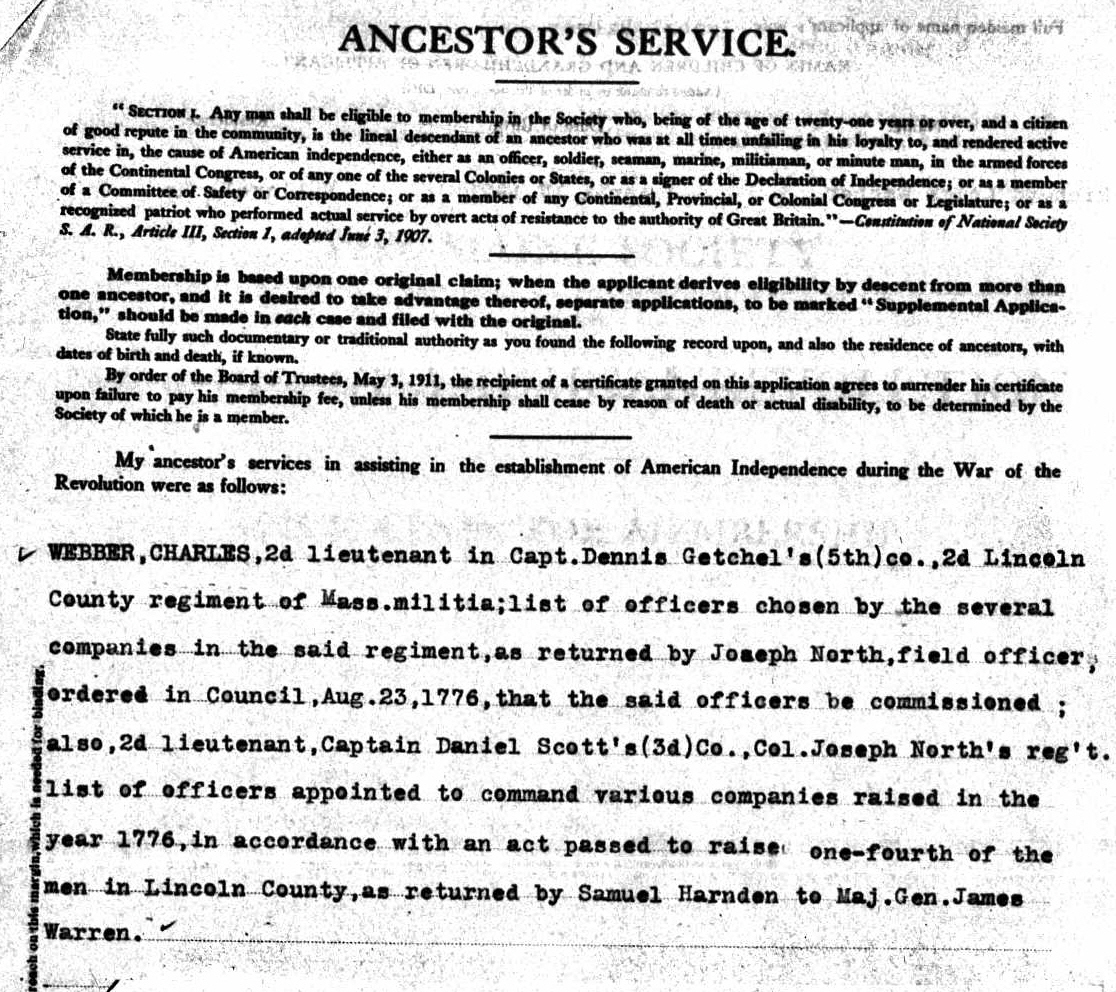
Charles B Webber was born in Old York, Maine January 1741.  His parents were Joseph WEBBER and Mary LEWIS.  Charles served in the French and Indian War in 1757 and 1759 and was a 2nd Lt in the Revolutionary War in 2nd Lincoln County, Regiment of Mass. Militia in 1776.  He first married  Hannah CALL in 1761 in Dresden, Maine.  He came to Vassalboro, Maine in 1765 and his  daughter, Sarah, was the first white child born in town.  After Hannah died in 1782, he married Sarah Smiley.  Charles died 20 Nov 1819, age 79y (g.s. Webber Cemetery, Vassalboro, Maine).

On Jan 7, 1820,  Charles’ sons George and Jeremiah were administrator’s of their father’s estate.   In court Feb 8, 1820,. letters taken out in 1819 at the time of his death he was seized of certain real estate, dated March 25 1825, William H. Webber, minor son of Charles.
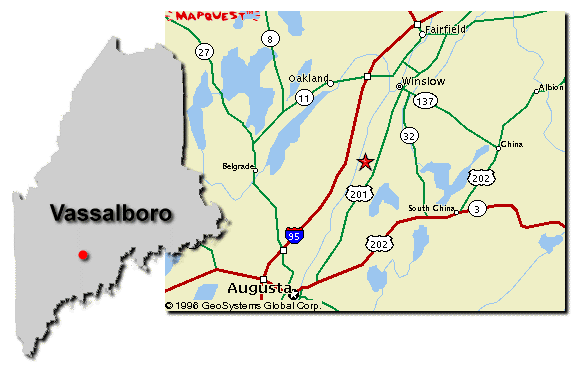
Vassalboro Map

Another source says the father of Charles was John Webber, b 1715 in York, ME, the son of John Webber Sr. and Magdalene Hilton.  However, additional sources don’t show a Charles among his children.

Hannah Call was born in 20 Dec 1744 in Amesbury, Mass.  Alternatively, she was born in Dresden, Sagadahoc, Maine.  Her parents were Philips CALL Jr. and Dorothy HADLEY.  Hannah died about 1782 in Vassalboro, ME.

Sarah Smiley was born on 26 Sep 1747 at Windham, NH.  Her parents were Hugh Smiley and Mary Park.  Sarah lived in Sidney ME.  Benjamine and Jeremiah are hers.  Sarah died in 1842 in Vassalboro, Kennebec, Maine.

Children of  Samuel and Hannah:

Name Born Married Departed
1. Charles WEBBER Jr. 1764
Dresden, Maine
Ruth THATCHER?
2 Apr 1792
Yarmouth
.
Mary STURGIS?
.
Judith Chadwick?
Before 1820 Census?
Winslow, Maine
2 Sarah “Sally” Webber 1766
Vassalboro, (First White Child born in town)
Judah Chadwick
11 Dec 1796
Harlem (China) ME
25 Feb 1854
Vassalboro,
3 Mary (Polly) Webber 1769
Vassalboro
John Gaslin (Goslin, Gazlin, Gogins)
10 May 1791
21 Apr 1837
Cross Hill Cemetery Vassalboro, ME
or Main, Columbia County, Pennsylvania
4. James Webber 20 Oct 1771
Vassalboro, Kennebec, Maine
Susanna Woodman
23 Oct 1795
1823
Sandusky, Erie, OH
5. John Webber 1773
Vassalboro, Maine
Lucy Ballard
1 Dec 1793
Vassalboro, Kennebec, Maine
1847
Plymouth, Huron,  OH
6. William Webber? c. 1774
Vassalboro
Mary Sturgis?
7. Nancy Webber c. 1777
8. Joseph Webber 2 Apr 1783 or 1775 Mary Brown
25 May 1800
Salisbury, Mass.
1817
Newburyport, Mass
9. Samuel Webber 28 Feb 1779
Vassalboro
Jerusha Lambert Capen
14 May 1801
Vassalboro
About 1871 (age 92)
Cuba, Caneadea, Alleghany, NY
10. Hannah Webber 1780
Vassalboro,
Amos Childs
1 Feb 1801
14 Mar 1860
North Vassalboro Village, ME
11. George M. Webber c. 1782
or 1776
Sybil Webber
7 Nov 1800
.
Temperance Emery
11 Dec 1820 Vassalboro
1831
12. Benjamin Webber 27 Feb 1786
Vassalboro
Lydia Hannah Bailey
27 Jun 1805
Pittston, ME
.
Lacina [__?__]
1834
13. Jeremiah Webber 17 Jul 1786
Vassalboro
Balsova Horn
1 Jun 1805
Vassalboro, ME
24 Apr 1820
Webber Cemetery

Webber Pond is about 2 miles square.  It was been plagued by algae blooms.
View Google Map    

Seven-mile brook,the outlet of Webber pond, has been from the first a useful water power.  The following petition relating to this mill site was dated October 20, 1766;

“To the Honorable Committee of the Kennebec Company in Boston. The most of us are able to raise a great part of our bread and expect soon to raise it all, but we greatly need a grist mill, there being none nearer than Cobbossecontee, which costs us tou shillings a bushel. Grant us a grist mill on seven mile brook by building the same or granting the lot to some settler—or the inhabitants will build the mill themselves, if in your great wisdom and goodness be meet to grant us the Privilege. Signed—Matthew Hastings, Moses Hastings, John Taylor, John Marsh, James Hill, Aaron Healy, James Bacon, Jonathan Dyer, David Spencer, Bennett Woods, John Stone, Beriar Door, Isaac Spencer. Richard Burke, Nat. Mary, John Huston, Moses Spencer, Noah Kidder, Denes Getchell, John Getchell, Nemier Getchell, James Hutchinson, Thomas Clark, Joseph Clark, Daniel Bragg, John Sympson, David Strandley, Josiah Butterfield, Samuel Getchell, Charles Brann, Lewis Fairbrother, Manuell Smith, Philip Foot, Frederick Foot, Antony Foot, Isaac Farewell, Bunker Farewell, Isaac Farewell, Jr., Ebenezer Farewell, Nathan Moor, Collins Moor, Uriah Clark, David Clark, David Hancock, James Clark, Samuel Bradock, CharlesWebber. Joseph Carter, James Huston, Seth Greele, Ezekiel Pattee, John White, Charles Jackson, Moses Bickford, and Daniel Townsend.”
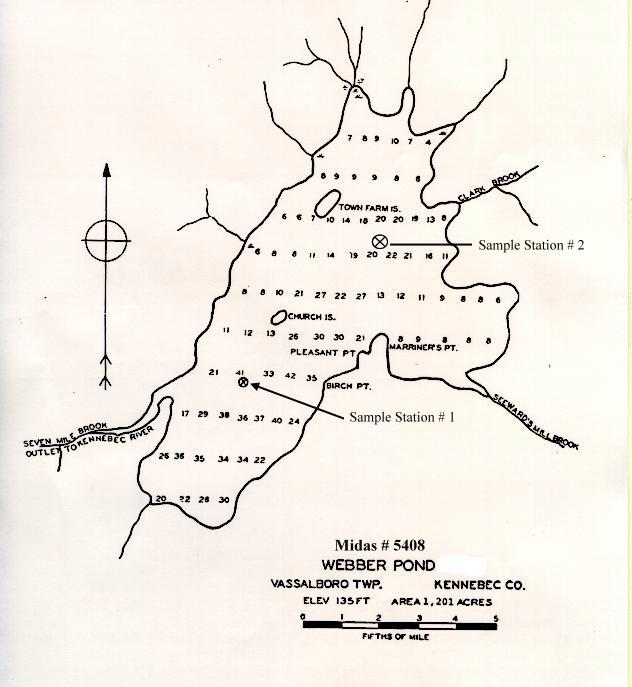
Webber Pond, Vassalboro, Maine

The settlement of town of Vassalboro commenced in 1760. for ten years only eight families had become residents including those in what is now Sidney that was first included in the limits of Vassalboro. Four families settled on the river front below what is now called riverside. Charles Webber came in 1765, soon after his brother Joseph came. Charles Webber was the first town treasurer of Vassalboro in 1771 and again in 1776; selectman in 1773 and 1792-1796; and the third town clerk in 1776.
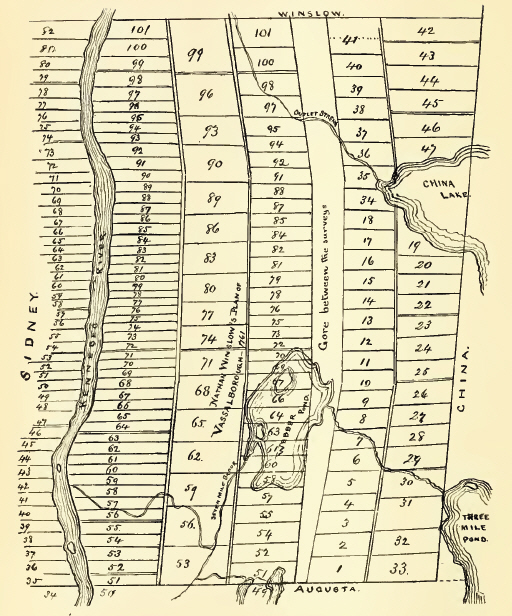
Vassalboro Town Plan

The fertile, farming town of Vassalboro, next north of Augusta, has the Kennebec river for its western boundary, China for its eastern and Winslow for its northern. Settlements here commenced as early as 1760; but for eight years only ten families had become residents, including all in the present town of Sidney, which was incorporated within Vassalboro’s first limits. April 26, 1771, it was first recognized as a corporate body, and January 30, 1792, Sidney, the part west of the river, was incorporated a town by itself, leaving the present Vassalboro.

The three ranges of lots between the river and the gore were surveyed and numbered by Nathan Winslow in 1761. The lots east of it, shown on this map were surveyed and plotted by John Jones in 1774, and designated as the fourth and fifth ranges. These numbers are still generally referred to in deeds. East of the third range Jones established a new line for the western boundary of the fourth range, leaving a strip of land of unequal and irregular width extending across through the town, and referred to in deeds as the Gore. The principal inlet to Webber pond is in this gore, which extends over Cross hill to the southward. Northeast of the town house it is included in the farms of Z. Goddard, Elijah and James Pope and Frank H. Lewis.

Residence: 04 Sep 1764, Vassalboro (then Port Western), Kennebec, ME

1766 – His daughter, Sarah was the first white child born in the town of Vassalboro, Maine

1778 – Joseph Webber was selectman of Vassalboro.

30 Jun 1789 – Jonathan Ballard , late of Vassalborough. Alice Ballard, of Vassalborough, widow, Adm’x, 21 Sep., 1778 . [II, 84.] Thomas Town, of Vassalborough, and Ephraim Ballard, of Hallowell, sureties. Inventory by Abiel Lovejoy, Nehemiah Gatchel and Levi Moore, all of Vassalborough, 9 Dec., 1778 . [II, 148.] Darius and Calvin, minor sons, and Alice, minor daughter, chose Charles Webber, of Vassalborough, to be their guardian, June, 1789. [IV, 54-55.] Account of Alice Williams, Adm’x, filed 30 June, 1789 . [IV, 56.]

1790 – Charles Webber was helped to lay out the first nine school districts on the east side of the river.

From the Vassalboro Register 1904, “Schools”

The town of Vassalboro has ever stood out boldly and faithfully for the support and maintenance of her schools. In 1790 the town was divided into nine districts.  The committee making this division was composed of Reuben Fairfield, Charles Webber, Nehemiah Getchell, Daniel McFadden, Joseph Fellows and John Taber. Alterations were made in the bounds of districts as the convenience of the inhabitants demanded. In 1799 $1,000.00 was raised to build 10 school houses.

Military service: 09 Apr 1757, French & Indian Wars – Nathaniel Donnell’s Co.; Jan 1759 – Capt. Goodwin’s Co., Col. Prebble’s Regiment
Military service 1: Revolutionary War – 2nd Lt. in Capt. Dennis Getchell’s 2nd Lincoln County, Regiment of Mass. Militia; Served at Riverton, RI 1777.
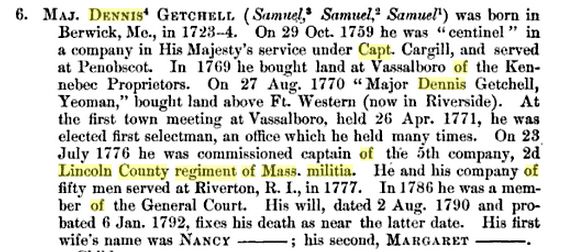
Maj. Dennis Getchell – The New England historical and genealogical register, Volume 63 By Henry Fitz-Gilbert Waters, New England Historic Genealogical Society 1909

also 2nd Lt. in Capt. Daniel Scott’s Co., Col. Joseph North’s 2nd Lincoln County Regiment raised in 1776.
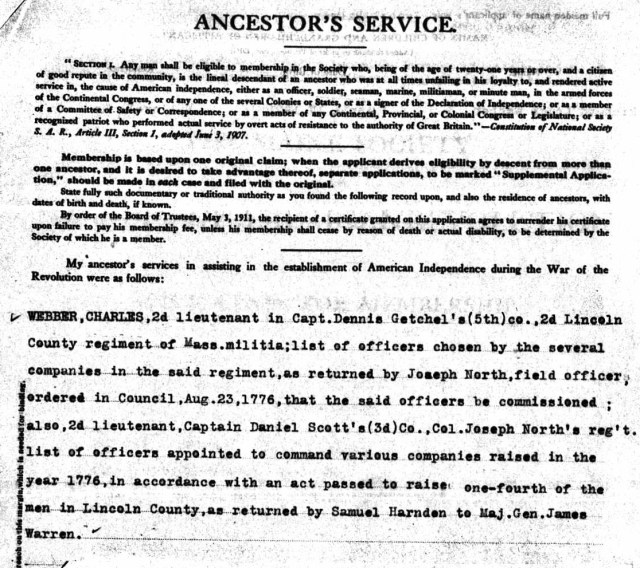
Leigh Webber Sons of American Revolution Application

Leigh Webber, the great grandson of Horatio Nelson Webber and Charles’ 3rd Great Grandson filed this application in 1921.

Charles Webber Pension Papers

I wonder what this fuss was about? Charles Webber had 91 grandchildren of whom I’ve identified 52.  I’m pretty sure Caroline would not have been entitled to any of her grandfather’s pension or land grant.  Not only that, but she was only one of Charles’ 91 grandchildren.

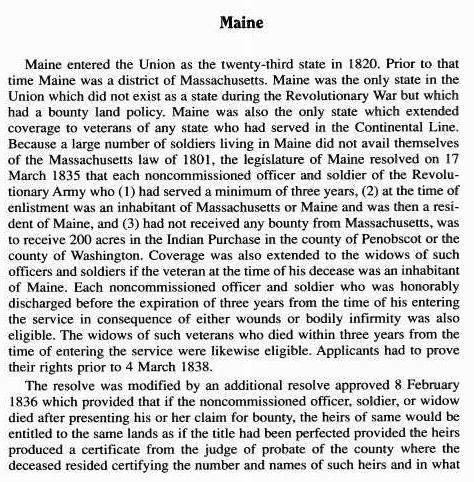
The first pension law in 1776 granted half-pay for life to soldiers disabled in the service and unable to earn a living. The first pension law based on service was passed in 1818, but it was later amended to make eligible only those soldiers unable to earn a living. The pension act of 1832 allowed pensions again based on service and made widows of veterans also eligible to receive pension benefits. Fires in 1800 destroyed the earliest Revolutionary War pension application records. As a result, pension application papers on file at the National Archives begin after 1800.  In Maine, claims had to be proved before 1840.

Maine Pensions
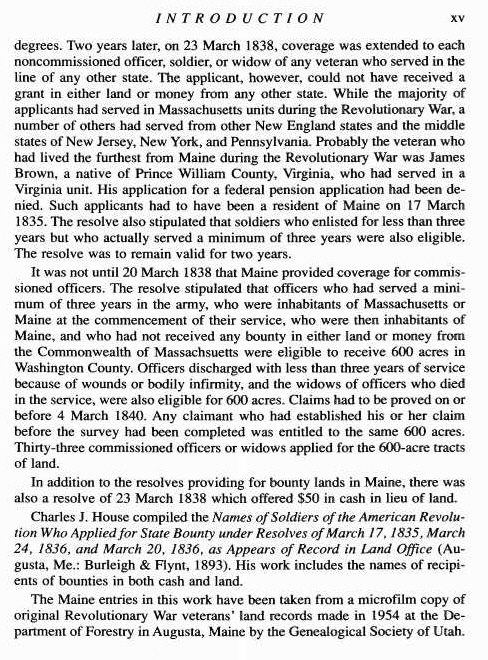
Maine Pension 2

Undated application for Certificate of Revolutionary Services file by Caroline Webber of Buffalo, NY, granddaughter of Charles Webber.  She says “He was a native of France and was brought to this country during his infancy.”    [Charles seems to have been a leader in the community at a young age, not something you would expect from a French immigrant.  On the other hand, the fact that Joseph was his father in unproven.   Charles Webber came to Vassalboro in 1765 at the age of 24, soon after his brother Joseph came. Charles Webber was the first town treasurer of Vassalboro in 1771 and again in 1776; selectman in 1773 and 1792-1796; and the third town clerk in 1776.]

[Caroline was born in 1808  Her parents were Samuel Webber & Jerusha  Capen. She never married and in  the 1870 census, living in Cuba, Allegany, New York with her nephew Albert, sister Meletaih and father Samuel (age 91).]

19 Dec 1859 – the certificate was issued from the Commonwealth of Massachusetts.

21 Feb 1860 – City of Allegeny, State of New York —  Affidavit of Samuel Webber in which he mentions “my father” and says “his widow Sarah Webber died Nov 1848.”  “I further declare that I Samuel Webber of the age of 81 Feb.  26, 1860 and Hannah Childs of the town of Vassalboro of the age of 78 March 6, 1860 are the only surviving heirs of the aforesaid Charles Webber.”   [This matches my info.  Hannah died only days later, 14 Mar 1860 in North Vassalboro Village, Maine]

A “Statement of Facts” undated, says Sarah died in 1842 (aff. this accompanied the aforsaid affidavit)

23 Jan 1860 –  An affidavit signed by Joseph Hastings of Sidney gives Sarah’s name as Sarah Smiley and says he attended her funeral in 1841 or 1842. [I previously had Sarah’s death as  1 Feb 1804  or 10 Apr 1813 in Vassalboro.  Sarah Smiley was born on 26 Sep 1747 at Windham, NH so she would have been 95 years old in 1842]

21 Feb 1860 – There is another brief affidavit signed by Charles J[arvis] Webber [son of Jeremiah Webber and Belsora Horn] who says he is a grandson of Charles Webber.

22 Feb 1860 – Another affidavit signed by Oliver A. WEBBER who says he is a grandson of Charles Webber.

Martha Ballard made several entries on the Webber family in her diary. She mentions that Charles Webber buried his child on 6 December 1787; Joseph Webber of Vassalborough drown, 16 November 1795 (p. 351); that she was informed of the death of “widow Smiley of Vassalborough,” 1 February 1804 (p. 628). Charles Webber is probably the “Webber ___*” enumerated in 1790 in Lincoln County, Vassalborough with 1 male over age 16, 6 white males under age 16, and 5 white females (1790 Census of Maine Annotated Editions [1995], p. 47), Children: “The Webber Records” (Maine State Library). Burials at Cross Hill Cemetery,Vassalboro; Village Cemetery, North Vassalboro; and Webber Cemetery, Vassalboro, respectively ( MOCA 4:2655 and 2684). Marriages/intentions in VR Vassalboro.

Our Charles Webber lived on the river road, but his wives names were Hannah and Sarah, not Mary which is the root of “Polly.”  On the other hand, there is no evidence of any other elderly Charles Webbers living in the area in the 1790’s.  Illustrated history of Kennebec County, Maine; 1625-1799-1892;. page 1119

One other place and kind of worship will not be forgotten so long as the links of tradition can touch each other — the church and teachings of Charles Webber, who resided on the river road near Riverside, in the house now occupied by Wallace W. Gilbert. Across the road, on what is known as the James S. Emery place, Mr. Webber erected a small edifice in the last few years of the last century. Here he had preaching of his own, and constituted himself the pastor. What was more conspicuous in this arrangement was the fact that said Webber could not read, and depended upon his wife for that important attribute. He could readily grasp the scripture reading of his wife and give wholesome explanation thereon; and only once was his knowledge clouded, when his wife read “log” for “lodge” in the wilderness. His manner of announcing a text was: ” If Polly tells me aright you will find my text, etc.” He urged sinners to repent, often saying that it was as impossible for one to enter heaven as it was for a shad to climb a tree. His eccentricities and goodness survive him, as does the old church, which, on another site, is the residence of Freeman Sturgis.

Isaiah Hawes, born in 1827, is the only son in a family of twelve children of Isaiah and Desire (Collins) Hawes. Isaiah, sen. (1777- 1852), was the son of Eben Hawes, of Yarmouth, Mass., and came to Vassalboro in 1809. His brother. Prince Hawes, father of Rev.’ Josiah T. Hawes, of Litchfield, came from Yarmouth, Cape Cod, in 1802. The present Isaiah Hawes married Lucy T. Hatch and has five children: Edwin A., Delia C, William I. (now in California), Harry P. and Alice M. Their residence was built by Dea. James Thacher, on the farm where the original Charles WEBBER first settled.

Riverside. — This poetical name applies to the southwest portion of the town [of Vassalboro], embracing one of the prettiest farming districts of the county. In allusion to Benjamin Brown, the first postmaster and a prominent citizen, the community and post office was long known as Brown’s Corners. The early settlers on the river front lots from the Augusta line to Isaiah Hawes’ present residence were: William Brown, Jeremiah and William Farwell, Charles WEBBER (who came in 1765 and whose daughter, Sarah, was the first white child born in town), Benjamin Brown, Jacob Faught, Thaddeus and William Snell, Mr. Fallonsbee, James, Jonathan and Heman Sturgis and their father, Edward, from Barnstable, Mass., about 1780; James Thatcher, from Cape Cod, and Isaiah Hawes, also from the Cape. These people lived on the river road and from south to north in substantially this order, beginning with William Brown on lot 51 of the first range, where Wallace Weeks now lives.

Children and Grandchildren

Oliver A. WEBBER had 84 first cousins, 42 of whom I’ve identified so far.

1. Charles WEBBER Jr.  (See his page)

2. Sarah  (Sally) Webber

She also was the first white child born in Vassalboro.

Sally’s husband Judah Chadwick was born 9 Dec 1765 in New Bedford, Bristol, Mass. and went to Maine with the rest of the family.  His parents were James Chadwick (1725 – 1786) and Ruth Hatch (1729 – 1796). Judah first married Deborah Ward in 1783. Deborah died in 1795. He married 11 Dec 1796 Harlem (China) Maine to Sally Webber. Judah died 9 Aug 1816 in China, Kennebec, Maine and is buried in the Chadwick Hill Cemetery.
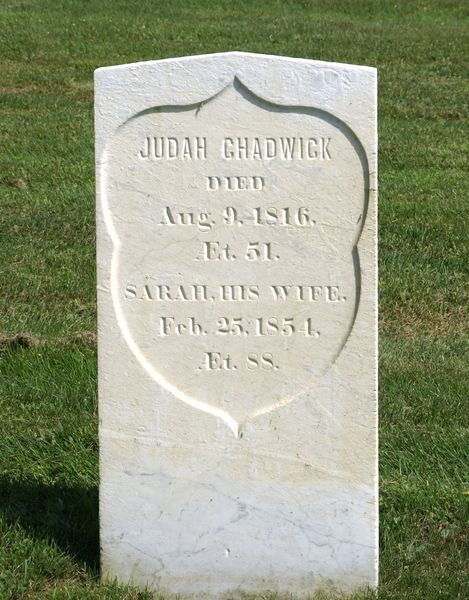
Judah and Sarah Chadwick Gravestone – Chadwick Hill Cemetery, China, Kennebec County, Maine,

Story of Jones Plantation

In 1774, when only Indians were inhabitants of all the lands east of the Kennebec, one John Jones, a surveyor, and withal a man of great daring and perseverance – familiarly known as “Black Jones” laid out a new township to the east of the Kennebec, embracing most of the land now known as China, and called it Jones’ Plantation. In the summer of that year Jones had induced 4 brothers – Edmund, Jonathan, Ephriam and Andrew Clark to come from Nantucket and settle as pioneers on his plantation. They settled on the west side of the pond near the narrows. They were soon followed by other families, the Fishes, Burrells, Ward and others. These latter settled towards the head of the lake. When the Chadwicks settled in Jones’ Plantation the 4 Clark families were the only inhabitants of the town. The part of the town to the south of the narrows was as yet unoccupied.

In 1782 several families moved from the towns in the southern part of Massachusetts, notably from the cape towns – Falmouth, Barnstable, Dartmouth and Scituate all furnished their quotas.

It was at this time in the spring of 1782 that James and Ruth Chadwick with their then unmarried children, Job, Ichabod, Elizabeth, and Judah moved to the new settlements on the extreme end of Jones’ Plantation. But the married sons John and James with their families followed the year after their parents departed taking with them their youngest brother Lot, who, being too young to endure the hardships of pioneer life, had been left with his grandmother, Elizabeth, when the parents went to the new settlement.

About the time James and Ruth moved to Maine other families went from Falmouth to Jones’ Plantation, either with them, or soon after; among them the Hatches, Weeks, Hamlins and others. These families were all closely related to the Chadwicks by marriage. James married a Hatch, two of his sons married Weeks and one a Hamlin.

How these settlers removed to their new fields we are not told; but they probably went by sailing vessels to and up the Kennebec as far as it was then navigable. It is said that when James, Jr. moved his family in 1783 he transported his earthly all in an emigrant’s wagon drawn by oxen.

One tradition says the Chadwick family first settled in Vassalboro, at what was known as Gatchell’s Corner; but it is more likely that only a temporary stop was made at this place, till the head of the family could decide where to locate permanently. At any rate we find James and his family established in the spring of 1782, in Jones’ Plantation, on the southerly side of the road, which subsequently was built from what came to be known as Chadwick’s corner to Wentworth’s corner – once quite familiar locations; but alas, today nothing remains of their famous glory but the corners. (See The Chadwick Family of Jones’ Plantation in Maine. Compiled by Lillian Rich (McLaughlin) Gilligan, 1931. for more about the Chadwick’s pioneer adventures)

Children of Judah and Deborah Ward

i. Lucinda Chadwick b. 1794, Palermo, Waldo County, Maine; d. 12 Sep 1861 Palermo, Waldo, Maine; m. Samuel C. Tucker (1795 – 13 Jun 1857 Greeley Corner Cemetery Old, Greely Corner, Waldo County, Maine). A grandson of Mrs. Tucker’s is Maj. Tucker, of the U. S. Army, who married the only daughter of Gen. John A. Logan, of Illinois.

In the 1860 census, Samuel and Lucinda Tucker were farming in Palermo, Waldo, Maine with daughters Malinda (b. 1832) and Ellen (b. 1837) so perhaps the 1857 Samuel C. Tucker headstone belongs to someone else.

Children of Sarah and Judah:

ii. David Chadwick b. 1796, Maine; d. 17 Jun 1829 Kennebec County, Maine; m1. 17 June 1819 to Mary V. Chapman (b. 1792 – d. 4 Jan 1824); m2. 14 Dec 1828 to Caroline Bolton (b. 1804 Maine – d. 1876 Presque Isle, Aroostook, Maine) Her parents were Savage Bolton and Mary Shaw.

In the 1850 census, Caroline was living in Augusta, Kennebec, Maine with three daughters, (including twins Martha N and Mary W b. 1842) and her mother Mary Bolton (b. 1766), and her brothers Elijah (b. 1786) and John (b. 1808)

iii. Jason Chadwick b. 2 Mar 1799 in China, Kennebec, Maine; d. 22 Mar 1865 in Weeks Mills, Kennebec, Maine; m. 13 Nov 1822 China, Kennebec, Maine to Bethania (Bethany) Hamlin (b. 1 Dec 1800 China, Kennebec County, Maine – d. 12 Jul 1883 Weeks Mills, Kennebec County, Maine; Burial Chadwick Hill Cemetery)

Jason was a farmer, later hotel keeper, trader, dealer in cattle, sheep, wool, furs, eggs, etc., an active, successful business man; held several town offices; selectman, collector, etc; Whig and Republican; member of Maine Legislature. In the 1860 census, Jason and Bethany were farming in China, Kennebec, Maine. Their was Gustavus (b. 1833) was listed as a “speculator”

iv. Melinda Chadwick b. 1800, Maine; d. 23 Apr 1828, Chadwick Hill Cemetery, China, Kennebec, Maine; unmarried

v. Abel Chadwick b. 03 Feb 1802; d. 05 Jul 1885; m. 1828 to Elizabeth Starnett (b. 6 Jul 1807 Francestown, Hillsborough County, New Hampshire – d. 20 Apr 1900 Malden, Middlesex County, Massachusetts Burial: Chadwick Hill Cemetery) Her parents were Abner Starrett (1776 – 1819) and Elizabeth Dane (1779 – 1865)

In the 1850 census, Abel and Elizabeth were farming in China, Kennebec, Maine

vi. Saphronia Chadwick m. Nathan Freeman.

vii. Corydon Chadwick b. 5 Mar 1805 in Maine; d. 1 Jun 1876 in China, Kennebec, Maine; m. Cyrene Hamlin (26 Oct 1803, China, Kennebec, Maine – d. 12 Apr 1891 Augusta, Kennebec, Maine) Corydon held town offices many years; Representative two years; State Senator two terms; Methodists.

In the 1860 census, Corydon and Cyrena were farming in China, Kennebec, Maine.

viii. Caroline Chadwick b. 10 Dec 1806 Maine; d. 27 Oct 1883 Chadwick Hill Cemetery, China, Kennebec, Maine; m. Abram Long (Feb 1808 – 14 Nov 1882 Chadwick Hill Cemetery, China) In the 1850 census, Abel and Caroline were farming in China, Kennebec, Maine. Caroline’s mother Sarah (age 84) was living with the family.

ix. Joseph W Chadwick b. Oct 1808 Maine; d. 10 Jul 1836 Chadwick Hill Cemetery, China, Kennebec, Maine Aged 27ys 9ms;  Betrothed to Susan Starrett sister of Elizabeth, wife of Abel.

3. Mary (Polly) Webber

Polly’s husband John Gaslin (Goslin, Gazlin) was born 19 Jul 1766 in Vassalboro, Kennebec, Maine. He married Polly 10 May 1791. After Polly died, John married Hannah Leeman 23 Aug 1851 in Vassalboro.  John died 25 Apr 1857 in Vassalboro.

Mary had 12 children according to Concerning the Cortright and Webber families in America 1925, I’ve only found record of 8. Polly was buried at Cross Hill Cemetery, Vassalboro.

Children of Polly and John:

i. William Gaslin b. 6 Mar 1793 in Vassalboro, Kennebec, Maine; d. 6 Jun 1883 in Augusta, Kennebec, Maine; Burial: Forest Grove Cemetery; m. Jerusha Nason (b. 1800
Maine – d. 6 Apr 1889 in Augusta, Kennebec, Maine; Burial: Forest Grove Cemetery)

In the 1850 census, William and Jerusha were farming in Augusta, Kennebec, Maine.

ii. Thomas Gaslin b. 24 Jan 1795 in Vassalboro, Kennebec, Maine; d. 26 Jun 1877 in Oak Grove, Anoka, Minnesota; m. 1 Aug 1813 Vassalboro, Maine to Hannah M Nickels In the 1850 census, Thomas was a farmer in Readfield, Kennebec, Maine.  By the 1860 census, Thomas was farming in Oak Grove, Anoka, Minnesota next to his 23 year old son Joseph.

iii. Aaron Gaslin b. 1796 – Vassalboro, Maine; d. 1858; m. Sarah “Sally” Hedge (b. Cape Cod, Mass. – d. 1846)

In 1814 the British fleet hovered on the coast of Maine. Vassalboro raised companies by enlistment. A small company was raised for Lieutenant Colonel Moore’s regiment,  and the captain was Jeremiah Farwell; lieutenant, Aaron Gaslin [Charles’ cousin]. Charles WEBBER, Eli French, John G. Hall and Elijah Morse were sergeants; Benjamin Bassett, Nathaniel Merchant and Heman Sturges, corporals; John Lovejoy, musician; and the file of privates numbered thirty men.

In the 1830 and 1840 censuses, Aaron was farming in Vassalboro with 9 in his household..

iv. Webber Call Gaslin b. 26 Oct 1797 in Vassalboro, Kennebec, Maine; d. 3 Apr 1830 in Main, Columbia, Pennsylvania; m. 12 Dec 1823 in Vassalboro to Lucy Percival (b. Abt. 1803 – d. Aft. 1850 in Vassalboro, Kennebec, Maine)

v. Benjamin Gaslin b. 31 Aug 1799 in Vassalboro, Kennebec, Maine; d. 10 Feb 1873 in Augusta, Kennebec, Maine; m1. in 26 Dec 1823 to Bathsheba Fuller (1785 Mass. or 1790 Maine – 2 Jan 1861 Augusta, Kennebec County, Maine; Burial Mount Pleasant Cemetery); m2. in 1861 to Nancy S. Miller (1818 Maine – 20 Mar 1872 Augusta, Maine; Burial: Mount Pleasant Cemetery).  Notice that Bathseba was much older and Nancy much younger than Benjamin.  In the 1850 census Benjamin and Bathskeba were living in Augusta, Maine where Benjamin was working as a trader.

vi. Jacob Gaslin b. 7 Jun 1803 in Vassalboro, Kennebec, Maine; d. 04 Jul 1848 in Vassalboro; m. 16 Jun 1826 Windsor, Kennebec, Maine to Anna Palmer (b. 07 Mar 1804 in Windsor, Kennebec, Maine – d. Sep 1873 – Waukon, Allamakee, Iowa) Anna’s parents were Simon Palmer and Phebe Barnes. In the 1850 census, Ann was a widow in Hallowell, Kennebec, Maine with five childen ages 5 to 19. By the 1860 census, Ann’s daughter Pheobia had married Chester Cayton and her daughter Angeline had married John Beaty and they were all farming together in Makee, Allamakee, Iowa

vii. Joshua Gaslin b. 1807 in Vassalboro, Kennebec, Maine; d. 25 Jul 1852 in Chicago, Illinois; m1. 10 Jan 1828 in China, Kennebec, Maine to Pamela Cleaves (1806 – 1833); m2. 1835 in Jackson Plantation, Franklin, Maine to Lydia Keene (1817 – 1876) In the 1850 census, Joshua and Lydia were living in Jackson Plantation, Maine where Joshua was a laborer with seven children ages 3 to 14 at home.

viii. Mary W Gaslin b. 1809 in Vassalboro, Kennebec, Maine; d. 7 Nov 1890 in Windsor, Kennebec, Maine; Burial: North Windsor Cemetery; m. 6 Nov 1831 in Windsor, Kennebec, Maine to Leonard Hallowell (11 Nov 1811 Windsor, Kennebec, Maine – 9 Feb 1895  Windsor, Kennebec, Maine; Burial: North Windsor Cemetery); nine children.  In the 1850 census, Leonard and Mary were farming in Windsor.

4. James Webber

James wife Susanna Woodman was born 26 Oct 1778 in New Gloucester, Cumberland, Maine.  Her parents were Joseph Woodman and Susanna Stubbs. She married James 23 Oct 1795.   Susanna died in 28 April 1806 in Vassalboro, Kennebec County, Maine, at age 27 years, 6 months and 2 days.

James died in 1823 in Sandusky, Erie, Ohio. James had 8 children.

There is a 1820 census record for a James Webber in New Haven, Huron, Ohio, about 30 miles south of Sandusky.   This household had a male over 45 and a female age 16-25.

Woodman, J.H.. A List of the Descendants of Mr. Joshua Woodman, who settled at Kingston, N.H., about 1736. Brunswick, Maine: J. Griffin, 1856. states that Susanna had four children. I wonder if James married a second time and had four more.

Sandusky , the county seat of Erie, is one of Ohio’s most popular tourist destinations. The city is home to the Cedar Fair Entertainment Company, a regional leader in amusement parks and entertainment, as well as its flagship amusement park, Cedar Point. Cedar Point features the second largest collection of roller coasters in the world as well as many current and former record holders. The generally accepted theory is that the name “Sandusky” is an Anglicization of the phrase San Too Chee, meaning “cold water.” A less accepted theory is that the city was named after a Polish fur trader by the name of Antoni Sadowski or Jacob Sodowsky. The Greater Sandusky area was a safe haven and a new start for refugees of the Firelands, from the battlefields of the Revolutionary War in Connecticut.  Established as Portland in 1816,  the name was changed two years later to Sandusky.

Children of James and Susanna:

i. James S. Webber, b. 1799 in Belfast, Waldo, Maine;   James was living in Oakland Michigan in the 1840 census; d. 9 Jul 1882 in East Saginaw, Saginaw, Michigan;  m1. 1819 Phebe Smith ( – 1845); m2. in 1846 to Adelia (Delia) Melissa Harroun (14 Mar 1809 in New York – 22 Nov 1896 in Saginaw) In the 1850 census, J S and Dilia were living in Milford, Oakland, Michigan where James was a merchant. In the 1889 city directory, Delia was a widow living at 424 S. Warren, East Saginaw, Michigan.

ii. William B. Webber b. 1804 in New Gloucester, Cumberland, Maine;  m. 1826 to Ann Haskell and moved to Bangor, Maine In the 1860 census, William B and Ann W were living in Bangor Maine with four children. By the 1870 census, William had married Susan [__?__] (b. 1812 Maine). William and Susan Webber were still living in Bangor in the 1880 census where William was still working as a city cryer at age 78.

iii. Solomon R. Webber b. 1808, Maine; d. 17 Aug 1891 Melrose, Mass; m. 21 Sep 1831 in Hallowell, Maine to  Eliza Ring (b. 1811 Edgecomb, Maine – d. Aft 1880 census ) Her father was  Aaron Ring of Edgecomb” (VR H 6:114); g.s. Hallowell Village Cemetery; In the 1850 census, Solomon was a tailor in Portland, Maine.  In the 1880 census, Solomon was a retired merchant living with Eliza and two daughters in their twenties in Melrose, Middlesex, Mass.

5. John Webber

John’s wife Lucy Ballard was born 22 Oct 1775 in Vassalboro, Kennebec Maine. Her parents were Jonathan Ballard and Alice Moore. She married John 1 Dec 1793 Vassalboro, Kennebec, Maine.   Lucy died 30 Oct 1861 in Plymouth, Huron, Ohio.

In the 1860 census, Lucy (age 84) was living with her son David’s family in Plymouth, Richland, Ohio.

30 Jun 1789 – Jonathan Ballard, late of Vassalborough. Alice Ballard, of Vassalborough, widow, Adm’x, 21 Sep., 1778 . [II, 84.] Thomas Town, of Vassalborough, and Ephraim Ballard, of Hallowell, sureties. Inventory by Abiel Lovejoy, Nehemiah Gatchel and Levi Moore, all of Vassalborough, 9 Dec., 1778 . [II, 148.] Darius and Calvin, minor sons, and Alice, minor daughter, chose Charles Webber, of Vassalborough, to be their guardian, June, 1789. [IV, 54-55.] Account of Alice Williams, Adm’x, filed 30 June, 1789 . [IV, 56.]. http://sonic.net/~prouty/prouty/b394.htm.

John died 1847 in Plymouth, Huron,  OH. John has 12 children

Huron county is the center of the Firelands or Sufferers’ Lands tract was located at the western end of the Connecticut Western Reserve in what is now the U.S. state of Ohio. The land was set aside for residents of the Connecticut towns of Danbury, Fairfield, Greenwich, Groton, New Haven, New London, Norwalk, and Ridgefield who lost their homes in 1779 and 1781 due to fires set by British forces during the American Revolutionary War.

In 1792, the Connecticut legislature set aside 500,000 acres (2,000 km²) for the Sufferers at the western end of the Western Reserve.  About 30 towns, cities and villages ended up being situated in the Firelands near the southern shore of Lake Erie.

However, very few of the original “Sufferers” ever settled in the Firelands, as the land was not given for settlement until many years after the war. Even then, the land was not readily hospitable due to Indian hostilities prior to and during the War of 1812 and the necessity of clearing dense forests from most of the land so that it could be used for farming purposes.

On April 15, 1803, the Sufferers, or their heirs, legal agents, and purchasers of their deeds, formed a corporation to manage the lands to which they were entitled in the newly formed state of Ohio. The land was divided into 30 five mile square survey townships, which were further subdivided into 120 quarters, each containing 4,000 acres. A drawing was held to determine the land received by each individual. Many of the local communities and townships in the Firelands are named for locations in Connecticut.

In 1809, Huron County was formed from the entire Firelands. For the next 30 years, all of the Firelands would lie within  Huron County.

Children of John and Lucy:

i. David Ballard Webber b. 13 Sep 1799 in Vassalboro, Kennebec, Maine d. 5 Nov 1874 in Plymouth, Richland, Ohio ; m. 1824 in Plymouth, Ohio to  Lucy Conkling (22 Feb 1806 New York – 23 Jun 1897)  Her parents were Isaac Conkling and Elizabeth Davis; Eleven children.  In the 1850 census, David was a farmer in Plymouth with a large household including his mother Lucy. He was a farmer and also taught school.  Held the office of justice of the peace for many years was a man of influence in his own locality.  13 children including Sumner Mack Webber, mayor of Oakland, California March 1, 1875-March 12, 1876
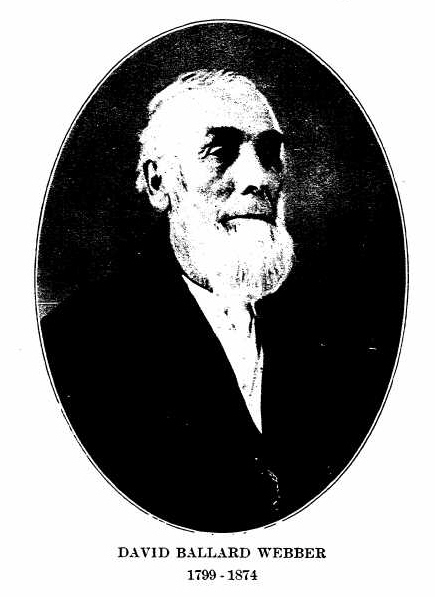
From Concerning the Cortright and Webber families in America 1925
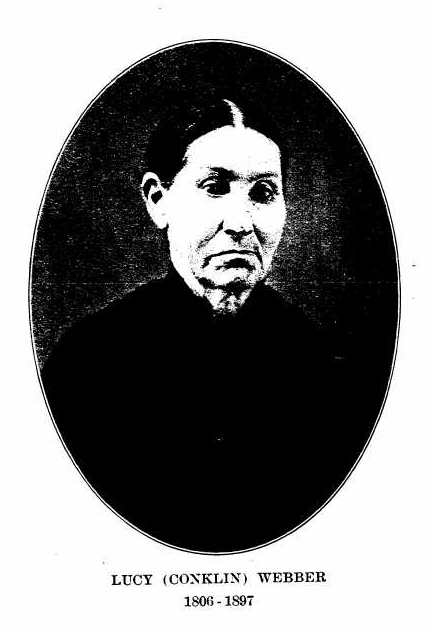
From Concerning the Cortright and Webber families in America 1925

ii. Belzora Webber b. c. 1800
iii. Charles Webber b. c. 1800
iv. Betsy Ann Webber b. c. 1800 m. Chame Webb.

v. Stephen Webber b. 1801 Maine; m. Harriet G. Clay (b. 1814 Maine – d. Aft 1880 census Gardiner, Maine) In the 1850 census, Stephen and Harriett were farming in Gardiner, Kennebec, Maine where they continued to live through the 1870 census.

vi. Mahala Webber b. 30 Jan 1802, Maine d. 6 Sep 1880 in La Salle, Monroe, Michigan;  m. 23 Dec 1819 in Richland, OH to Joseph Lanning Skinner  (1800 in New Jersey – 11 Jan 1840 in Sandusky, Sandusky, Ohio) Seven children In the 1870 and 1880 census, Mahala was living with her daughter Ellen Morse’s family in La Salle, Monroe, Michigan

vii. John Webber b. c. 1810; unmarried

viii. Louisa C. Webber  b. 17 Feb 1811 in York, Maine;  d. 28 Feb 1881 Rock Elm, Pierce, WI ;  m. 3 Apr 1828 in Huron, Ohio to Asaph Cooke (1806 Granville, Washington, NY – 28 Dec 1869 Rock, Pierce, Wisconsin) ; Eleven children;  In the 1850 census, Asaph and Louisa were farming in District 37, Rock Island, Illinois.  By the 1860 census, they had moved to Frankfort, Pepin, Wisconsin

ix. Rhoda  (Rhedi) R. Webber, b. c. 1810

x. Sumner P. Webber b. c. 1810, Maine; d. 3 Oct 1877 in Charlotte, Eaton, Michigan; m. Almeda Mann (b. Mar 1818 Ohio – d. Aft 1900 census, Denver, Colorado at the home of her daughter Caroline Green); In the 1850 census, Sumner was a merchant in New Haven, Huron, Ohio. In the 1860 census, Sumner was a prosperous miller in Eaton, Eaton, Michigan.

xi. Dyer Foat Webber b. c. 1817 New York; d. 14 Apr 1900 Charlotte, Eaton, Michigan; m. Cynthia J. Ames (b. 1824 Ohio – d. 8 Jun 1912 Petoskey, Emmet, Michigan)

In the 1850 census, Dyer was a merchant in New Haven, Huron, Ohio.  In the 1860 census, Dyer was a teacher at the union school in Carmel, Eaton, Michigan.  In the 1870 census, Dyer was a store clerk in Charlotte. In the 1880 census, Dyer was a Justice of the Peace in Charlotte, Eaton, Michigan.

6. William Webber and  Mary Sturgis? William had no children.

7. Nancy Webber Had 1 child

8. Joseph Webber

Joseph’s wife Mary Brown birth is not known.  They married 25 May 1800 in Salisbury, Essex, Mass.

Joseph had three children

Children of Joseph and Mary:

i. William Webber

ii. Mary Webber

iii. James Webber.

9. Samuel Webber

Samuel’s wife Jerusha Lambert Capen was born 14 Oct 1785 in Bath, Sagadahoc, Maine.  Her parents were Theophilus Capen (1760 – 1842) and Rachel Lambert (1766 – 1842) She married Samuel 14 May 1801 Vassalboro, Maine.  Jerusha died in 1864 in Caneadea, Alleghany, New York. Samuel had twelve children

In Jun 1802, Samuel was charged with assault in  Kennebec County Supreme Judicial Court.

In 1831, at the age of 52, Samuel Webber moved his family as far west as Angelica in Allegany County then came to the Tuna Valley, buying land on lot 41, just north of his son-in-law Aaron Kellogg. Samuel Webber made the first substantial improvements in town, his family coming as soon as he had provided a home. This was first a rude shanty, but the following year was replaced by the first frame house in town.

In the 1850 census, Samuel and Jerusha were living in New Hudson, Allegany, New York next to their widowed daughter Meletiah Arnold. Samuel age 81 and Jerusha were still farming in Caneadea, Allegany, New York in the 1860 census.

Children of Samuel and Jerusha:

i. Charlotte Webber b. 7 Aug 1810 in Whitefield, Lincoln, Maine; d. 7 Sep 1890 in Allen, Dixon, Nebraska; m. 1831 in Limestone, Cattaraugus, New York to Aaron Kellogg (18 Jun 1802 in Hamilton, Madison, NY – 13 May 1882 in Limestone, Cattaraugus, NY);

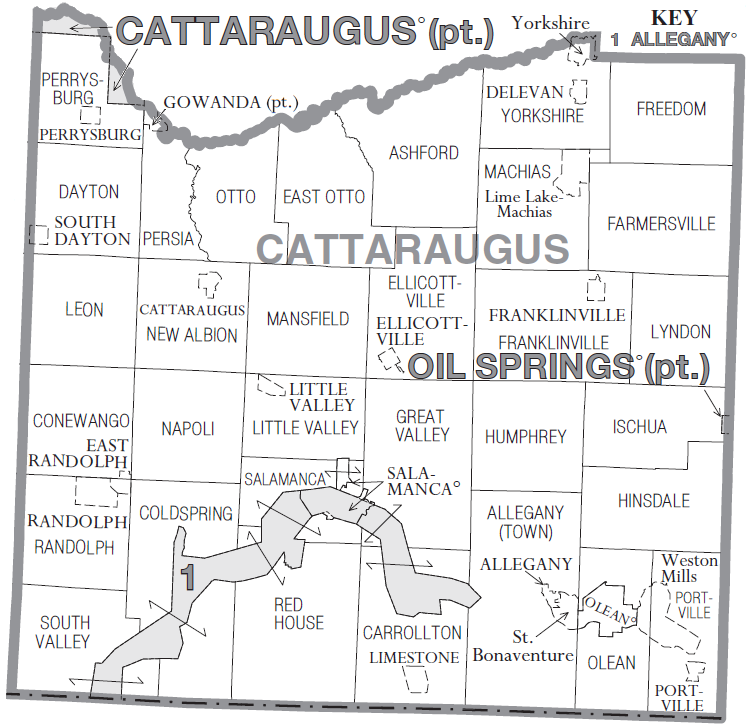
Map of New York highlighting Cattaraugus County

Cattaraugus County, New York

In 1828, Aaron Kellogg moved to his lot on Tunagawant Creek in Limestone, Cattaraugus, New York. That’s a Seneca term for either “crooked creek” or “frog,” depending on whom you talk to. Everyone calls it Tuna Creek for short.”
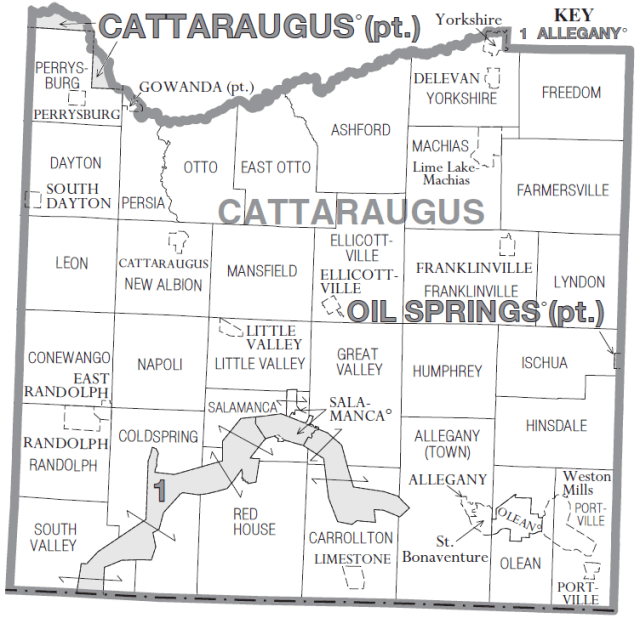
Towns in Cattaraugus County, New York

Aaron’s eldest son, Franklin Augustus Kellogg was the first child born in town according to the History of Cattaraugus County and the author’s source was Aaron Kellogg himself.

In 1831, the first religious meeting in Carrolton was held at the house of Aaron Kellogg, that b eing the most roomy house in town at that time. No further church activity existed in town after that until 1843 when a class of Methodists was formed.

In 1842 Aaron Kellogg was appointed one of three assessors.

After the death of her husband in 1883, Charlotte left Limestone and removed to Nebraska. There she lived with her son, John Jay Kellogg, and also bought forty acres from her son Guy Irvin Kellogg Feb 14, 1885.

In the 1850 census, Aaron and Charlotte were farming in Carrollton, Cattaraugus, New York. twelve children

ii.Meletiah Webber b. 1816 in Maine; m. [__?__] Arnold;  In the 1870 census, Meletiah was living with her son Albert Arnold in Cuba, Allegany, New York. Albert was born in Illinois.  Also living in the household were Meletiah’s father Samuel Webber, age 94 (b. 1779) and her sister Caroline Webber age 64 (b. 1809)

iii. Caroline Webber b. c. 1809; d. Aft 1870 census;  Unmarried

iv. Jeremiah Webber
v. Charles Webber
vi. Mary Webber

10. Hannah Webber

Hannah’s husband Amos Childes was born in 1764 in Hallowell, Kennebec, Maine.  His parents were David Child and Mehitable Damon or Jonas Childs and Peggy [__?__].  He first married Esther Alexander and had five children. He married Hannah 1 Feb 1801.  Amos died in 19 Feb 1847 age 83 years.

Amos was fifteen years older than Hannah and qualified for a a land grant from the state of Maine for Revolutionary War service. In 1841, Amos was one of twelve Revolutionary War pensioners in Vassalboro.

In Jun 1805 Amos was a defendant in Kennebec County Supreme Judicial for illegal drink sales.  Court  In the 1820 census, Amos was living in Wilton, Kennebec, Maine with a wife, two boys and two girls. By 1830, the family had grown to seven children.

Children of Amos Childs and Esther Alexander

i. John Childs (11 Sep 1790 Vassalboro –

ii. Rebecca Childs  b. 11 Nov 1792 Vassalboro ; d. 3 Oct 1874 – Fairfield, Somerset, Maine; m. 31 Jan 1811 – Vassalboro, Maine to Lemuel Tobey (b. 20 Jul 1784 in Fairfield, Somerset, Maine;
d. 6 Feb 1821 in Fairfield, Somerset, Maine)’

iii. Mary Sophia Childs b. 22 Nov 1794 Vassalboro; d. 5 Aug 1877 Newcastle, Northumberland, New Brunswick; m. William Fish  (b. 1789 in Sandwich, Barnstable, Mass – d. Newcastle, Northumberland, New Brunswick) His parents were Eliab Fish and Abigail Swift.

iv. Jonas Childs (7 Aug 1801 Vassalboro –

Children of Hannah and Amos

v. Paulina Childs b. 20 Aug 1802 in Vassalboro, Kennebec, Maine; d. 25 Mar 1875 in Vassalboro; m. Sep 1822 in Vassalboro to Enoch Plummer (1794 NH – 1883 Vassalboro, Maine) In the 1850 census, Enoch and Paulina were farming in Vassalboro.

vi.Caroline Childs (1803 – ) m. 1823 to Herbert Getchell (1800 – 1831)

11. George Webber

George’s second wife Temperance Emery was born in 1779 in Maine.  In the 1850 census, she was living with Thaddeus Snell and his wife Melinda Emery in Vassalboro.

In 1814 the British fleet hovered on the coast of Maine. Vassalboro raised companies by enlistment. One was raised for Lieutenant Colonel Moore’s regiment, and the commissioned officers were: Daniel Wyman, captain; Alexander Jackson, lieutenant; William Tarbell, ensign. Thomas Hawes, Daniel Whitehouse, Zenas Percival and Roland Frye were sergeants; John Clay, Gersham Clark, Thomas Whitehouse and Jonathan Smart, corporals; George Webber, musician. There were twenty-nine privates.

George married Sybil Webber 7 Nov 1800 and Temperance Emery 11 Dec. 1820 Vassalboro, Kennebec, Maine. In the 1820 census, a George Webber was living in Vassalboro with a wife, three daughters and one son.  In the 1830 census, a George Webber about the right age was living in Vassalboro with a wife and three daughters. George had 4 children.

Children of George and Sybil:

i. William W. Webber was born in 1805 in Maine; An ancestry.com family tree says his parents were Capt. George Webber (1776 – 1833) and Sybil [__?__] (1780 – 1828), but this genealogy says he was born in Monmouth, New Jersey in 1800.   m.  Rozilla L. Rollins.   In the 1850 census, he was a farmer in Augusta, Kennebec, Maine.

Rosilla M. Rollins was born 13 Jan  1804.  Her  parents were Ichabod Rollins and Mary Rawlins.

Children of William and Rozilla:

a. Caroline Sarah Webber b 1829 in Vassalboro, ME; d 29 Dec 1892 & buried in Bolton Hill Cem. in Augusta, ME. She was married 17 Sep 1848 to Joseph Andrew Shaw.

ii.

12. Benjamin Webber

Benjamin’s first wife Lydia Hannah Bailey was born 27 Feb 1788 in Pittston, Kennebec, Maine. Her parents were Nathaniel Bailey and Sarah Goodwin. She married Benjamin 27 Jun 1805 Pittston, Maine. Lydia died 1834 in Maine.

Benjamin married his second wife Lacina [__?__] in 1834.

Benjamin had three children

Children of Benjamin and Lydia:

i. Pamela (Parmelia) Webber   b. abt 1810 in Maine d. 7 Jun 1881 in China, Kennebec, Maine; m. 27 Nov 1827 in Vassalboro, Maine to Levi Jackson (1801 in Sidney, Kennebec, Maine – 3 May 1881 in China, Kennebec, Maine);  11 children  In the 1850 census Levi and Pamela were farming in China, Maine. By the 1880 census, Levi and Parmelia were retired and living with Levi Jr. in China.

ii. Lavina Webber b. 1808 –  Marguerite Webber Witter communicated with a descendant at the Webber forum who said she was related to Parmelia Webber daughter of Benjamin Webber and Lydia Bailey…She said that Lavina Webber died the same year that Benjamin Webber and Elvira Hussey Webber had their first daughter in April 1851…So they named their first daughter Sarah Lavina Webber. (See comment below)

iii.  Benjamin F. Webber b. 15 Apr 1817 Vassalboro, Kennebec, Maine; d. 24 Nov 1882 China or Vassalboro, Kennebec, Maine buried: Chadwick Hill Cemetery, So. China, Kennebec, Maine; m. 19 Nov 1843 Kennebec County, Maine to Elvira Hussey; In the 1850 census, Benjamin and Elvira were farming in China, Kennebec, Maine.  In the 1860 census, Benjamin and Elvira were farming in China with their children Orrin Prescott Webber (age 15), Sarah Webber (9), and Herbert Webber (5)

13. Jeremiah Webber married Balsova Horn 1 Jun 1805 (See his page)

Sources:

Illustrated history of Kennebec County, Maine; 1625-1799-1892, Part 2 By Henry D. Kingsbury, Simeon L. Deyo

http://www.genealogyofnewengland.com/b-_f.htm

http://familytreemaker.genealogy.com/users/r/o/b/Stephen-L-Robbins/FILE/0055page.html

http://www.hadleygenealogy.net/gp6076.html

http://trees.ancestry.com/owt/person.aspx?pid=202195365 

 http://ia600308.us.archive.org/10/items/illustratedhisto00king/illustratedhisto00king.pdf

http://trees.ancestry.com/owt/person.aspx?pid=202195365&st=1

http://www.genealogy.theroyfamily.com/p14126.htm

http://wc.rootsweb.ancestry.com/cgi-bin/igm.cgi?op=GET&db=gene1941&id=I19978

The Chadwick Family of Jones’ Plantation in Maine. Compiled by Lillian Rich (McLaughlin) Gilligan, 1931.
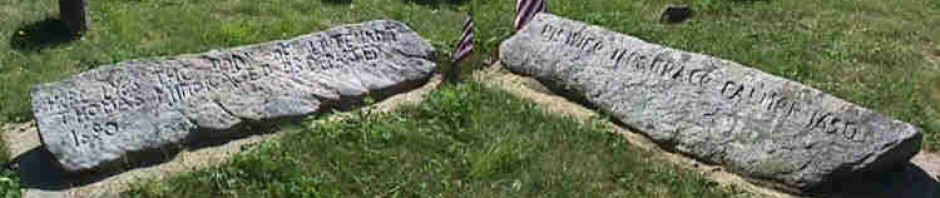
Posted in -8th Generation, 90+, Line - Shaw, Place Names, Veteran | Tagged , | 23 Comments

Andrew Lewis

Andrew LEWIS (1673 – 1760) was Alex’s 8th Great Grandfather; one of 512 in this generation of the Shaw line.

Andrew Lewis was born between 1672 – 1673 in Kittery, Maine.  His parents were Peter LEWIS and Grace DIAMOND.  He married Mary HUTCHINS 29 Nov 1701 in Kittery, York, Maine.  Andrew died between  27 Jul 1758 when he wrote his will and 31 Mar 1760 when it was proved..

Mary Hutchins was born 1686 in Kittery, York County, Maine.  Her parents were Enoch HUTCHINS and  Mary STEVENSON.  Mary died 1760.

Children of Andrew Lewis and Mary Hutchins are:

Name Born Married Departed
1. Andrew Lewis Jr. 2 Apr 1703
Kittery, Maine
Mrs. Mary Ingersoll Low
Aft. 25 Apr 1724
Kittery
2. Rachel Lewis 3 Jul 1704
Kittery, ME
3. Mary LEWIS 29 Jan 1705/06 Joseph WEBBER
13 Apr 1726
York, Maine
.
Elias Weare
29 Jun 1753
4. Grace Lewis Samuel Haley
21 Nov 1733
5. Dorothy Lewis bapt.
1 Jun 1718
John Main
Aft. 12 Aug 1738
6. Thomas Lewis bapt.
5 Jun 1720
Susanna Hutchins
intentions published
23 Nov 1741
Between
28 Mar  –
3 Oct 1776

Andrew Lewis grants of land 1694 and 1699, forty acres.

Andrew Lewis Def. 1715 cause not listed; Plt 1739 Debt; PLT 1741 Debt.

Children: Andrew, born April 2, 1703, married, 1724, Mary Low; Rachel, born July 3, 1704; Mary, born January 29, 1705, married Elias Weare; Grace, married, November 21, 1733, Samuel Haley; Dorothy, baptized June 1, 1718. married John Main, of York, ‘Maine, 1738; Thomas. Thomas, son of Andrew Lewis, was baptized June 5, 1720. He married Susanna Hutchins, the intentions being published November 23, 1741.

Andrew Lewis’ will was dated July 27, 1758, and proved March 31, 1760.

Children

1. Andrew Lewis

Andrew’s wife Mary Ingersoll was born 1686 in Kittery, York, Maine. Her parents were John Ingersoll (1645 – 1716) and Deborah Gunnison (1642 – 1728). She first married 1 Oct 1707 in Wells, Maine to Daniel Low (1678 – 1723). Mary died 28 Apr 1755 in York, York, Maine

Andrew  probably lived and died in Kittery. He married, in 1724. Mary Low, and had children: William, Joanna and Joseph.

Children of Andrew and Mary:

i. Joanna Lewis b. 7 Apr 1743; m. 22 Nov 1769 to John Barnes (b. 25 Jan 1744 in Kittery, Maine) His parents were Joseph Barnes and [__?__].

ii. Jospeh Lewis b. ~ 1745/46; bapt. 12 Jul 1747;  d. 3 Nov 1823  Fryeburg, Oxford, Maine; m.  Olive Thompson,  (b. 17 Mar 1747 York, York, Maine – d. 11 Oct 1831 Fryeburg); Her parents were John Thompson (1704 – 1758) and Priscilla Davis.   Removed with the family to Sanford;  Joseph and Olive had seven children born between 1764 and 1794.

According to family tradition, Joseph  was the immigrant ancestor according to family tradition, but the evidence seems to place him in the Kittery family, though no record of his birth has been found. He married a native of York, and lived in Sanford and York, in the same locality as Major Morgan  Lewis, who evidently was closely related.

A search of more than twenty-five years by the late Alonzo F. Lewis, of Fryeburg, who gathered a vast amount of family records, shows that it is hardly to be doubted that he was son of Andrew (2), and grandson of Andrew (1). Nathaniel Lewis, of York, quitclaimed to Andrew Lewis Jr., cordwainer. and Peter Lewis Jr., of Kittery, rights in sixteen acres adjoining land of William Lewis, January 26, 1726.

He went from York or Kittery. Maine, to Sanford, and thence about 1774 to Fryeburg. where he resided on the shore of Lovewell’s Pond. He deeded this land to his son Joseph, and went to live in his later years with his son Jesse on the Guptill place, as it is still called. Joseph and Olive deeded land at Lovewell’s Pond to son John Apr 9, 1817.

The only public record of Joseph at Sanford is as witness to a document dated Jan 30, 1771. He was a chairmaker by trade and bought land of Samuel Emerson Cross, of Fryeburg.

Joseph Lewis enlisted Jul 10, 1775, in Captain John Shapleigh’s company, and was stationed at Kittery defending the coast. He was also in the service in the same company from Nov 1 to Dec 31, 1775, at Kittery Point, under Colonel Edward Cutts. Part of this service seems to have been performed by John Haynes. There was another Joseph Lewis, of Arundel, in Captain Cook’s company, Third artillery, in 1778, when his age was given as forty-five years, height five feet five inches, complexion fair.

Among the baptisms in Kittery was Joseph Lewis, July 12, 1747, son of an abbreviated name that has been read “Axia jun.” The name was probably Andrew Jr., (“And.”), who had children born about this time and, if this reading is correct, the line to the immigrant is established. Joseph may have been two or three years old at the time of his baptism on the shore of Lovewell’s pond. He died in Fryeburg, Nov 3, 1823, aged seventy-nine years. His death was the result of a shock and he was buried in the family burial ground of his son, Jesse.

3. Mary LEWIS (See Joseph WEBBER‘s page)

4. Grace Lewis

Grace’s husband Samuel Haley was born 17 Feb 1706 in Kittery, York, Maine. His parents were Andrew Haley and Elizabeth Scammon.

5. Dorothy Lewis

Dorothy’s husband John Main was born 1716 in York, Maine. His parents were Josiah Main and Dorothy Trafton. John died in 26 May 1802 in York, Maine.

6. Thomas Lewis

Thomas’ wife Susanna Hutchins was born 22 Dec 1721 in Kittery, York, Maine. Her parents were Thomas Hutchins and Hannah Hill.

Sources:

http://familytreemaker.genealogy.com/users/a/s/h/William-Ashbey/GENE5-0024.html

Genealogical and family history of the state of Maine, Volume 4 John Cutter

Joseph WEBBER

http://trees.ancestry.com/owt/person.aspx?pid=28419762&st=1

Posted in 10th Generation, Line - Shaw | Tagged | 4 Comments

John Webber

John Webber (1683 – 1740)  As it turn’s out John is not a direct ancestor and is not in the Shaw line. Some sources say that John’s son John Jr was the father of Charles WEBBER (1741 – 1819) and John Jr was the one who married Mary Lewis.

John Webber was born in 1683 in York, Maine.  His parents were Samuel WEBBER and Deborah LITTLEFIELD.  John married Magdalene Hilton on 1 Mar 1709 in York ME.  After Magdalene died, he married  Elizabeth Boothby , on 21 May 1726/27 in York, York. Maine.  John died in 1748 in Wells, Maine.

Magdalene Hilton was born Apr 1695 in York, Maine. Her parents were Mainwaring Hilton and Mary Moulton. She first married 1691 in York, York, Maine to Nathaniel Adams (b. 1660 in York – d. 1692 in York) On 24 Jan 1691/92 Nathaniel was killed and Magdalene was captured by Indians. She was redeemed in 1695, and next married Apr 1697 in York, York, Maine. to Elias Weare (b. 5 Apr 1672 in York – d. 10 Aug 1707 in York) The next attack occurred about two years later, August 10, 1707, was a Sabbath evening. Sergeant Smith and Elias Weare, returning from evening service together with Mrs. Elizabeth (Hilton) Littlefield and her young son, were slain by the Indians between York Harbor and Cape Neddick. Joshua Hilton, brother of Mrs. Littlefield was taken captive. John Webber was her third husband. Magdalene died on 4 Feb 1725/26 in York, Maine.

Elizabeth Gypson was born 1687 in York, York, Maine. Elizabeth died 20 Jun 1775 – Wells, York, Maine.

Children of John and Magdalene:

Name Born Married Departed
1. Edmund Webber 1710 York, Maine Deborah Parcher
12 Jan 1732
Portsmouth, NH
1792
2. Hannah Webber 18 Sep 1711
York
George Colesworthy
1732
Boston
North Yarmouth, Cumberland Maine
3. Josiah Webber 4 Aug 1713
York
Hannah Harmon
19 Jan 1737 York
4. John Webber 1715
York
Maine
5. Mary (Molly) Webber Abt 1722 York Lazarus Rowe
1743
York
27 Jun 1829 Limington, York, ME

Elizabeth Boothby was born ca. 1700 in Mog-Water, Ireland. Her parents were Henry Boothby and [__?__].    Elizabeth died ca. 1776 in York, Maine. Alternatively, Elizabeth’s maiden name was  Gypson.

Children of John and Elizabeth:

Name Born Married Departed
6. Deborah Webber c. 1726/ 1727 in York Abraham Stover
2 Jan 1749
York
20 May 1740
York, Maine
7. Lydia Webber 9 Dec 1729 York John McLucas
1 Oct 1748 at the First Congregational Church in Biddeford, York Co. ME
29 May 1814
Buxton, York, Maine
8. Elizabeth Webber ca. 1731 in York Richard Banks
7 Nov 1755
York
9. Thankful Webber Ephraim Blaisdell
3 May 1742 York,

John Webber was a housewright.

History of York by Banks; page 302

[list of people captured by Indians] Adams, Magdalen Daughter of Mainwaring and Mary (Moulton) Hilton and wife of Nathaniel Adams who was killed at the massacre. She was redeemed in 1695, and after her return married twice (1)Elias We 316: The next attack occurred about two years later, August 10, 1707, was a Sabbath evening. Sergeant Smith and Elias Weare, returning from evening service together with Mrs. Elizabeth (Hilton) Littlefield and her young son, were slain by the Indians between York Harbor and Cape Neddick. Joshua Hilton, brother of Mrs. Littlefield was taken captive…eare; (2)John Webber. The author [Banks] is one of her descendants.

Page 316: The next attack occurred about two years later, August 10, 1707, was a Sabbath evening. Sergeant Smith and Elias Weare, returning from evening service together with Mrs. Elizabeth (Hilton) Littlefield and her young son, were slain by the Indians between York Harbor and Cape Neddick. Joshua Hilton, brother of Mrs. Littlefield was taken captive…

Children

1. Edmund Webber

Edmund’s wife Deborah Parcher was born 1717 in New Hampshire. Her parents were Elias Parcher and Grace Allard. Deborah died in 1790

2. Hannah Webber

Hannah’s husband George Colesworthhy was born 1709 in North Yarmouth, Maine. He first married 8 Dec 1726 to Judith Hunt (b. 29 Dec 1707 in Boston, Mass -d. 23 Apr 1729)

3. Josiah Webber

Josiah’s wife Hannah Harmon was born 19 Feb 1716 in York, Maine. Her parents were Johnson Harmon and Mary Moulton. Hannah died 1 Mar 1747 in York, York, Maine.

4. John Webber Jr.

John was born 1715 York, ME. (Spouse Unknown).

5. Mary (Molly) Webber

Molly’s husband Lazarus Rowe was born Jan 1725 in Greenland, Rockingham, New Hampshire. His parents were Anthony Rowe and Joanna Rouse. Lazarus died 14 Sep 1829 in Nlimington, Maine.

6. Deborah Webber

Deborah’s husband Abraham Stover was born 30 May 1718 in Cape Neddick, Maine. His parents were George Stover (1668 – 1748) and Abigail Elwell (1676 – 1741). Abraham died in 1802 in York, Maine.

7. Lydia Webber

Lydia’s husband John McLucas was born 20 Mar 1727 in York, York, Maine. His parents were John McLucas and Mary Cole. John died in 1795 in York, Maine.

8. Elizabeth Webber

Elizabeth’s husabnd Richard Banks was born 9 Sep 1731 in York, Maine. His parents were Job Banks and Elizabeth Winchester Card. Richard died 11 Jan 1819 – Hartford, Oxford, Maine.

9. Thankful Webber

Thankful’s husband Ephraim Blaisdell was born 23 Sep 1717. His parents were Ebenezer Blaisdell and Abigail Ingersoll. Ephraim died 11 Jul 1802 – Lebanon, York, Maine.

Sources:

http://www.genealogyofnewengland.com/f_119.htm#99

http://homepages.wmich.edu/~rudged/gen/webber.html#ten

For additional information on Mainwaring Hilton based on primary sources see: Noyes, S., Libby, C. and Davis, W. (1972) Genealogical Dictionary of Maine and New Hampshire, Baltimore, MD: Genealogical Publishing Co. Inc., p. 333.

Edmund Webber

http://genforum.genealogy.com/cgi-bin/pageload.cgi?mary,sturgis::webber::1328.html

http://trees.ancestry.com/owt/person.aspx?pid=2052512

Posted in Violent Death | Tagged | 4 Comments

Samuel Webber

Samuel WEBBER (1658 – 1716) was Alex’s 8th Great Grandfather; one of 512 in this generation of the Shaw line.

Samuel Webber was born 12 Apr 1658 in Eraschohegan Island, York, Maine. [Note: the name Eraschohegan can only be found in references to Samuel’s birth!]  His parents were Thomas WEBBER and Mary PARKER.  He married Deborah LITTLEFIELD in 1680 in Essex, Mass.   He was attacked 21 Apr 1712 while riding from the town of Cape Neddick, and his horse was shot in three places under him, but he escaped, apparently, although when the report was made he was missing.  Samuel died 16 May 1716 in York,  Maine.

Cape Neddick River, Maine. Samuel sold an interest in a saw mill on this river in 1699.

Deborah Littlefield was born in 1663 in Wells, York, Maine.  Her parents were John LITTLEFIELD and Patience WAKEFIELD.  In the court session of 2 Jul 1717 , Deberoh Webber Senior was charged with being drunk. She died in 1747 York, Maine.

Children of  Samuel and Deborah:

Name Born Married Departed
1. Deacon Samuel Webber 1681 Falmouth, Cumberland, Maine Elizabeth Young
c. 1703
25 Mar1736
York, Maine
2. John Webber 1683
York, York, ME.
Magadelene Hilton
1709
.
Elizabeth Gypson (Boothby)
May 1726
1740
Wells, York, Maine
3. Thomas Webber 2 Feb 1684/85
Parker’s Island, York, Maine
Mary Cooper
1739 Georgetown, York, Maine
bef. 1749
Kennebec, Maine
4. Joseph WEBBER 1689
York,  Maine
Mary LEWIS
13 Apr 1726
York, Maine
1744
5. Benjamin Webber 2 Jun 1690
Wells, Maine
bapt?.
18 Jan 1697/98
Mehitable Allen
1 Oct 1714 York, Maine
.
Martha Day
3 Feb 1738
York
York, Maine
6. Mary Webber 18 Jan 1691
York, York, ME.
Joseph Sayforth
~ 1707
1 Aug 1759
York, Maine
7. Dorcas Webber 1693
York, York, Maine
John Baker
5 Feb 1724/25
York, Maine
1762
8. Deborah Webber 2 Jun 1695
Gloucester, Essex, Mass.
Andrew Wescott (Westcoat)
~ Apr 1729
6 Jul 1798
Gloucester, Essex, Mass.
9. Waitstill Webber 18 Jan 1697/98
Gloucester, Essex, Mass.
Meribah Hutchins
1722
1775
Harpswell, Cumberland, Maine
10. Patience Webber 18 Jan 1697/98
Gloucester, Mass.
6 Feb 1697/98
Gloucester, Mass.
11. Bathsheba Webber 1702
York
bapt.
17 Feb 1714 Canada
Joseph Saleur
11 Mar 1720
Saint-Martin, Quebec
1741
Quebec

Samuel was a millwright; sawmill owner.  History of York, Maine, Vol. II, Cape Neddick, Page 10-11 describes how Samuel Sr. Set up a mill where his sons Samuel and John also worked. (1693)

Samuel Webber, son of Thomas Webber, was born about 1645, the only one of the children to return to the old home on the Kennebec River.  He lived in Falmouth in 1681; was witness to the witchcraft trial of Rev. George Burroughs of Salem where he went to escape the Indian raids.  In 1690 he commanded the Cape Neddick, Maine garrison. He was at Gloucester in 1695 before returning to Maine. He died at York about 1717

2 Aug 1692 Salem Witch Trial  -Samuel testified about Rev. George Burroughs’ great strength.  His mother also testified.  See her page for details about the Burroughs Witch Trial

Samuel Webber aged about 36 years Testifieth and sayth that  aboute seaven or eight Yeares agoe I Lived at Casco Bay and George Burroughs was then Minester there, and haveing heard much of the great strength of him s’d Burroughs; he Coming to our house wee ware in discourse about the same and he then told mee that he had  put his fingers into the Bung of a Barrell of Malasses and lifted it up, and carryed it Round him and sett it downe againe.

12 Apr 1699 – He and his wife sold a quarter interest in a saw mill at Cape Neddick river to Nathaniel Harris.

21 Oct 1701 – He and his wife sold  property to Dependence Stover; and twenty acres of land at York,  to Nathaniel Harris.

29 Feb 1703/04 – Webber sold land to Daniel Black.

4 Mar 1709 – John Smith gave a bond  jointly to Samuel Webber, Sr. and Samuel Webber, Jr. to secure possession of land.

21 Apr 1712  – Samuel Webber was attacked while riding from the town of Cape Neddick, and his horse was shot in three places under him.  Apparently he escaped although when the report was made he was missing. He died at home four years after this experience at the age of 58.

18 Apr 1714 – Just before his death Samuel and wife deeded to their sons Thomas and Benjamin land on the northeast side of the Cape Neddick river at York,  and a quarter interest in the saw mill to Richard Milbury, 01 Apr 1714. The agreement of his heirs to divide the estate is dated 21 May 1719. and signed by his widow Deborah, sons Samuel, Wayte, and Joseph, then a minor.

5 May  1716 –  The will of Samuel Webber

“Being very sick & weak of body & the time drawing near, gives to wife Deborah all my estate real & personal after my decease to her own proper use benifit & then during her widdowhood, & if after my decease she doth not marry then during her Natural life and after her death to be equally divided among his children.” All children are named except Bathseba (Maine Wills, p. 191-2).

2 July 1717 –  Deberoh Webber Senior was charged with being drunk in this court session.

“Whereas Deberoh Webber Senior was presented to the Last Court for being Drunk, And Thomas Webber for not frequenting the Publick Worship of God, And being all apprehended by the Constable, but not Appearing….Answer for their Contempt as the Severall Crimes for which they Stand presented….” [Compilers note: I can not determine the final outcome of these cases].

23 Apr 1737 – The will of Deborah Webber

 In the Name of God Amen. The twenty third Day of April Anno Domini 1737. I Deborah Webber of York in the County of York in New England Widow being old and weak and infirm in Body but of perfect Mind and Memory, Thanks be given unto God. Therefore calling unto Mind the Mortality of my Body, and knowing that it is appointed for all men once to die, Do make and ordain this my last Will and Testament that is to Say, principally and first of all, I give and recommend my Soul into the Hands of God that gave it, and my Body I recomend to the Earth to be buried in decent Christian burial at the Discretion of my Executor, Nothing doubting but at the General Resurrection I Shall receive the Same again by the mighty Power of God;

And as touching Such Worldly Estate wherewith it hath pleased God to bless me in this Life, I give demise and dispose of the Same in the following Manner and Form.Imprimis. I give and bequeath to my well beloved Children vizt Iohn Webber Benjamin Webber Waitstil Webber, Joseph Webber, Deborah Westcoat Wife of Andrew Westcoat (Barsheba who is now in Canada) Dorcas Baker Wife of John Baker all of York aforesd to each of them Five Shilling in Money.

Item I give to my well beloved Daughter Mary Sayward Wife of Joseph Sayward of York aforesd Gentn all my Household Goods Chattels Debts ready Money Plate Jewels Rings Utensils Brass Pewter Copper Bedding Houses Cows Oxen Sheep Hoggs and all other things to me belonging and which I may claim as in Right my own of what kind Nature quality and Condition ye Same may be or are and in what place or Places soeuer the Same may be Shall or may be found as well in my own Custody or Possession as in the Possession Hands Power and Custody of any other Person or persons whatsoever.

Item. I do Constitute make and ordain my trusty & well beloved Grandson Jonathan Sayward of York in the County aforesd Gentn to be my Sole Executor of this my last Will and Testament. And I do hereby utterly disallow revoke and disannul all and every other former Testaments Wills Legacys and Bequests and Executors by me in any Ways before named Willed and bequeathed, ratifying and confirming this and no other to be my last Will & Testament In Witness whereof I have hereunto Set my Hand and Seal ye Day and Year herein before written.Signed Sealed published pronounced & declared by the Sd Debo Webber as her last Will & Testament in ye Presence of us ye Subscribers Joseph Plaisted, Abraham Nowell, Sarah Sayward, Deborah Webber (Seal) her mark Probated 19 May 1747.   (Maine Wills, p. 545-6.)

Children

1. Samuel Webber

Samuel’s wife Elizabeth Young was born in 1682 in York, Maine. Her parents were Rowland Young (1649 – 1721) and Susanna Matthews (1650 – 1738). After Samuel died, she married 29 Aug 1741 to George Stover (b. Apr 1668 in Gloucester, Mass. – d. Apr 1748 in Cape Neddick, York, Maine). After George died, she married 18 Mar 1754 in York, York, Maine to Samuel Came (b. 1673 in York, Maine – d. 26 Dec 1768 in York, York, Maine). Elizabeth died 8 Jul 1778 in Kittery, York, Maine.

Samuel was a successful mill wright. His estate was appraised at over a thousand pounds.

Samuel deeded twenty acres of land to his brother Benjamin, December 9, 1720, granted to him by the town 17 Mar 1707/08; John Smith deeded a house and seventy-five acres of land on Cape Neddick river to Deborah, his mother, Wait or Wayte, his brother, and himself October 30. 1718; he and his wife Eliza C. mortgaged their property at York in 1718; Samuel bought land 14 Feb 1721/22, of Abraham Preble; he had fulling mill at York, 17 Jul  1732, in partnership with Alexander Woods.

History of York Page 357:

A JOURNAL OF OCCURRENCES March 25, 1735: Samuel Webber the Miller of Cape Neddick is mortally sick and made his will today. Elias Weare, his neighbour, informs this and saith Doctor Bulman attends him but gives no encouragement. May 29, 1735: Samuel Webber’s will allowed in Court today. He gave all his property to his five sons and six daughters. His sister Bathsheba captivated by the Indians many years ago is yet in Canada and married there to a Frenchman. Sept. 19, 1735: Samuel Webber left a large Estate the Appraisors brought in £1124-3-01. He came here form Gloucester many years ago with his father and has been a prudent manager of his Mills.

Children of Samuel and Elizabeth:

i. Elizabeth Webber b. 12 Oct 1705 York, Maine; d. 27 Sep 1721 York

ii. Samuel Webber b. 9 Jul 1708 York, Maine; d.  1782 York, York, Maine; m. 21 May 1736 to Sarah Bouden (b. 1708 in York, York, Maine)  Her parents were Abraham Bowden (1683 – 1751) and Martha Wormwood (1688 – 1751).

iii. Dorcas Webber b. 15 Apr 1710 York, Maine; m. George Brown (b. Berwick, York, Maine)

iv. Mary Webber b. 15 Apr 1710 in York, York, Maine; d. 21 Aug 1778 York, York, Maine; m. 1728 in York, York, Maine to Joseph Weare (b. 17 Mar 1705 in York, York, Maine – d. 18 Oct 1791 in York, York, Maine)  Joseph’s parents were Elias Weare (1672 -1707) and Magdalene Hilton (1671 -1726). Magdalene would later marry Mary’s uncle John Webber (See below).  Mary and Joseph had ten children born between 1732 and 1748.

v. Gershom Webber b. 21 Mar 1712 York, Maine; d. 4 May 1797 York, York, Maine; m. 14 Jul 1736 in York to Mercy Young (b. 25 Jan 1714 in York, York, Maine – d. 1794 in Penobscot, Hancock, Maine)  Her parents were Matthews Young (1674 -1751) and Eleanor Haines ( 1673 – 1750).  Gershom and Mercy had eight children born between 1736 and 1757.

vi. Barsheba Webber b. 15 Apr 1714 York, Maine; d. 1788

vii. Mercy Webber b. 2 Mar 1717 York, Maine; m. 16 Feb 1738 to Joseph Milbury (b. 25 Dec 1702 in York, York, Maine – d. 1747 in York) His parents were Richard Milbury (1674 – 1754) and Mary Winchester.  Mercy and Joseph had one child; Joseph (b. 1740)

Jan 1731 – Joseph was a plaintiff for debt in the York Court of Common Pleas

Apr 1733 – Joseph was a plaintiff for ejectment in the York Court of Common Pleas

m2. 1 Feb 1755 York, York,, Maine to Josiah Beal (b. 17 Apr 1710 in York, York, Maine) His parents were Edward Beale (1677 – 1711) and Elizabeth Littlefield (1678 – 1747) Josiah first married
Esther Sayward (1715 – )

viii. Abigail Webber b. 31 Jan 1718 York, Maine; d. 3 Apr 1776 York,; m. 14 Jul 1737 in York to Capt. John McIntire (b. 25 Feb 1711 in York, York, Maine – d. 19 Feb 1785 in York)  His parents were John McIntire (1677 – 1771) and Susanna Young (1678 – 1748).  Abigail and John had eight children born between 1738 and 1750.

Captain McIntire, a merchant and ship builder, received in 1732 shares of land in York.  In his will dated July 25, 1776, and probated Mar. 19, 1785, he made bequests to his daughter Elizabeth and to the children of his deceased daughters Susanna and Abigail, gave to his daughter Dorcas “seventy pounds, a good feather bed, bedding, furniture, and one good cow”, and divided the remainder of his estate among his four sons.  He directed that his “servant woman named Dinah, who hath been a faithful servant, shall be at liberty and be free from any further servitude.”

George Lincoln Came, town clerk of Alfred, Maine, and an employee in the office of the registry of Probate in York County, wrote that the brothers Joseph, Samuel, Theodore and Phineas (sons of John and Abigail) each weighed considerably over three hundred pounds while a sister Lucy (Dorcas) Rogers “was nearly if not quite their equal in avoirdupois.”  A week later Josiah Stover McIntire, a grandson of Phineas, deemed it “unnecessary to descant on the avoirdupois of my ancestors having the advantage of Mr. Came in that I have seen most of them and have a vivid collection of how they looked.”

ix. Sarah Webber b. 31 Jan 1720 York, York, Maine; m. 2 Jan 1741 in Penobscot, Hancock, Maine to Josiah Stover (b. 9 Mar 1716 in York, York, Maine)  His parents were George Stover ( 1668 – 1748) and Abigail Elwell (1676 – 1712).  Sarah and Josiah had at least two children: Daniel (b. 1743) and Josiah (b. 1745)

x. Nathaniel Webber b. 9 Sep 1722; d. 11 Jun 1791 York; m. 1 Sep 1744 in York to his first cousin once removed Lucy Bradbury (b. 18 Jan 1725 in Pro York, Maine – d. 6 Oct 1782)  Her parents were John Bradbury (1697 – 1778) and Abigail Young (1699 – 1787).    Lucy’s mother was his first cousin.  Nathaniel’s mother, and Lucy Grandfather, Lt.  Joseph were brother and sister. Nathaniel and Lucy had ten children born between 1746 and 1769.

xi. Joseph Webber b. 24 Jul 1727 York, Maine; m. 19 Oct 1753 in York to Sarah Sedgely.  Joseph and Sarah had seven children born between 1754 and 1774.

xii. Paul Webber b. 7 Oct 1729 York, Maine; d. 1762 York; m. 5 Nov 1753 in York to Mary Johnson (b. ~ 1733)  Paul and Mary had four children born between 1754 and 1760.

2. John Webber (See his page)

John’s first wife Magdalene Hilton was born Apr 1695 in York, Maine. Her parents were Mainwaring Hilton (1627 – 1671) and Mary Moulton (1652 – 1694). She first married 1691 in York, York, Maine to Nathaniel Adams (b. 1660 in York – d. 1692 in York)  On 24 Jan 1691/92 Nathaniel was killed and Magdalene was captured by Indians. She was redeemed in 1695, and next married Apr 1697 in York, York, Maine. to Elias Weare (b. 5 Apr 1672 in York – d. 10 Aug 1707 in York)

The next attack occurred about two years later, Aug 10, 1707, was a Sabbath evening. Sergeant Smith and Elias Weare, returning from evening service together with Mrs. Elizabeth (Hilton) Littlefield and her young son, were slain by the Indians between York Harbor and Cape Neddick. Joshua Hilton, brother of Mrs. Littlefield was taken captive. John Webber was her third husband. Magdalene died on 4 Feb 1725/26 in York, Maine.

John’s second wife Elizabeth Gypson was born 1687 in York, York, Maine. Elizabeth died 20 Jun 1775 – Wells, York, Maine.

John sold land on Cape Neddick river, 21 Aug 1720; quitclaimed to Elias Ware and Jeremiah Ware, stepsons, all interest in the estate of the late Elias Ware, of York; deeded to son-inlaw, George Colesworthy, twenty-six acres at York,  5 May 1732; sold land at Bald Head, York, 11 Jul 1728, to Peter Nowell.

Children of John Webber and Magdelene (See his page)

Children of John Webber and Elizabeth (See his page)

3. Thomas Webber

Thomas’ wife Mary Cooper was born 10 Nov 1693 in Rowley, Essex, Mass. Her parents were Thomas Cooper and Mehitable Minot. She first married 25 Dec 1712 in Boston, Suffolk, Mass to Christian Snowman (b. 1690 in London, England – d. 1739 in Georgetown, York, Maine). Mary died Oct 1749 in Georgetown, York, Maine,

Christian Snowman arrived from London on the “Peter and Phillip” in 1712; he and Mary Cooper married in 25 Dec. 1712 at Boston, Mass. before the Rev. Benjamin Colman, a Presbyterian. Christian and Mary’s first son John was born  20 Nov 1713 in Boston. Their second son John was born about 1728 in  York, York, Maine.  Christian was at Arrowsic, Maine by 1726.

In the court session of 1 Oct 1717, Thomas Webber was charged with “not frequenting the publick Worship of God.”

4. Joseph WEBBER (See his page)

Joseph, was given lands by his mother, 3 Jan 1726; bought land of his brother John and sold it to Aaron Banks, July 6, 1730; sold land to Andrew Westcott, July 22, 1730

5. Benjamin Webber

Benjamin’s first wife Mehitable Allen was born in 1695 in York, York, Maine. Her parents were James Allen (1674 – 1734) and Dorothy Barsham (1674 – 1761). Mehitable died in 4 Feb 1737/38 in York, York, Maine.

Benjamin’s second wife Martha Day was born 1700 in Wells, Maine. Her parents were Joseph Day and Patience Hilton. Martha died in 1743.

Benjamin was a millman.  Benjamin Webber recorded marriage intentions for his second marriage at York, Maine , 3 Feb 1738, “to satisfie such person as are dissatisfied and think he is not married”

In the York County, Province of Maine Court of General Sessions on 3 Jan 1715, “Wee present Benjamin Webber & Mehittable Allen now his wife both of york for fornication….they owing the fact. Its Considered by the Court that they recieve Seven Stripes apiece on their naked backs at the post & pay fees of Court 7 Shillings or pay a fine of Thirty Shillings apiece to his Majesty & fees of Court as aforesd & Stand Committed” (Province and Court Records of Maine, volume 5, p. 173). [Compiler’s note: I can not determine if they took the seven lashes or paid the thirty shillings].

“Young married persons, whose courtship had been carried on under the convenient and comfortable New England `bundling’ device, and had anticipated events unwisely, found themselves in the hands of the law, when their first child appeared in advance of the physiological period of gestation. After labor was safely over both of them were hauled into Court and ordered to the whipping post to receive a dozen stripes each at the hands of the public executioner. It is probable that many cases of premature delivery were unjustly punished” (Charles Edward Banks. History of York, Maine, Volume II, page 239).

From an article “The Truth about Bundling,” Yankee Magazine, September 1991, page 12: “Bundling, an old custom permitting unmarried men and women to court, fully clothed, in bed. What is the use of sitting up all night and burning out fire and lights, when you could just as well get under cover and keep warm. It was respectable enough in the early history of New England when religion was an all-powerful influence on behavior. But in succeeding generations, the innocent practice was corrupted producing an amazing number of sturdy brats. About 1785, unmarried women blushed to read lines like these:

She’ll sometimes say when she lies down,
She can’t be cumbered with a gown,
And that the weather is so warm,
To take it off can be no harm…

The result was such a general storm of banter and ridicule that no girl had the courage to stand against it and as the ministers continued to thunder against bundling, the practice finally was killed off.

Children of Benjamin and Mehitable:

i. Mehitable Webber b. 13 Aug 1715 York, York, Maine; d. 1750; m. 25 Sep 1734 in York to Joseph Farnham (b. 20 Jun 1713 in York – d. 6 Nov 1779 in Lebanon, York, Maine)  His parents were Ralph Farnum (1689 – 1759) and Elizabeth Austin (1689 – 1758).  Mehitable and Joseph had eight children born between 1735 and 1750.

ii. Lydia Webber b. 23 Jan 1718 York, York, Maine; d. 26 Feb 1784 Lebanon, York, Maine; m. 20 Jul 1739 in York, Maine to Deacon Ebenezer Blaisdell (b. 9 Apr 1715 in York, York, Maine – d. 1799 in York, York, Maine)  Ebenezer’s brother Ephraim married Lydia’s sister Thankful.  Their parents were Ebenezer Blaisdell (1686 – 1764) and Abigail Ingersoll (1680 – 1755).  Lydia and Ebenezer had ten children born between 1740 and 1759.

1777 – Ebenezer served as private in Lt. William Nickels company,  Col. Foster’s Lincoln County regiment – DAR Anc. #A010897;

iii. Thankful Webber b. 23 Jan 1718 York, York, Maine; d. 26 Feb 1784 Lebanon, York, Maine; m. 3 May 1742 in York, York, Maine to Ephraim Blaisdell (b. 23 Sep 1717 in York, York, Maine – d. 1808 in Shapleigh, York, Maine)  Ephraim’s brother Ebenezer married Thankful’s sister Lydia.  Their parents were parents were Ebenezer Blaisdell (1686 – 1764) and Abigail Ingersoll (1680 – 1755).   Thankful and Ephraim had twelve children born between 1742 and 1765.

Ephraim  was one of the original 60 Proprietors for the Town of Lebanon, York, Maine, when it was formed as a township in 1735 by the General Court of Massachusetts. The proprietors erected the first public buildings in 1762: a 40’ x 30’ two-story Meeting House and a 36’ x 24’ one-story

The first church in Lebanon, an Orthodox Congregational Church, was constituted in Ephraim’s home June 24, 1765. He was one of six charter members, having transferred his membership from the Congregational Church in York, ME. He was elected as one of the first two Deacons for the congregation August 8, 1765. His wife, Thankful  was admitted to the church in 1767.

The church records of April 17, 1767 charge Ephraim of stealing and killing a steer. He was dismissed from the office of Deacon and suspended from communion. On Sept. 13, 1767 he made public confession of his sin, was restored to communion, but not to the office of Deacon.

By 1770 he stopped worshipping at the church and by 1772 began to hold worship in homes around town, which became the basis for the Free Will Baptist Society in Lebanon.

His wife continued to worship at the Orthodox Congregational Church. One day after refusing to attend her husband’s church, Ephraim “seizing a new pair of shoes belonging to his wife, which had been procured by her only a few days previous, took his knife and cut one of them asunder crosswise through the vamps so she could not wear them, in order to deprive her from attending meeting that day.”

Ephraim believed these tenets: The only Scriptural mode of baptism was immersion. The ministry should not be educated and should not receive any pecuniary compensation for preaching. There is to be no established order in conducting worship on the Sabbath; both preacher and hearer should act as they be moved by the Holy Spirit.

Ephraim’s son, John Blaisdell, was the first Free Will Baptist minister in Lebanon. David and Edward Blaisdell, sons of Ebenezer Blaisdell, Jr.,Ephraim’s brother, also became Free Will Baptist ministers.

iv. Dorothy Webber b. 11 Feb 1720 York, York, Maine; d. 1791
Brooksville, Hancock, Maine; m1. 31 Mar 1739 in York, York, Maine to Matthew Farnham (b. 4 Aug 1719 in York, York, Maine – d. 11 Nov 1757 in York, York, Maine)  His parents were Ralph Farnum (1689 – 1759) and Elizabeth Austin (1689 – 1758).  Dorothy and Matthew had five children born between 1742 and 1757.

Matthew enlisted March 5, 1757 during the French-Indian War. He died in the Crown point Expedition.

m2. 19 Jan 1762 in Lebanon, York, Maine to John Grindle (b. 1 Aug 1714 in Portsmouth, New Hampshire – d. 1794 in Penobscot, Maine)  His parents were John Grindle (1690 – 1739) and Sarah Sevil (1695 – ).   Dorothy and John had one more child: Mary (b. 1765)

Nov 1762 – Removed to Penobscot, Maine

v. Bathsheba Webber b. 17 Jan 1722 York, York, Maine

vi. Anna Webber b. 17 Jan 1724 York, York, Maine; m. Job Hutchins?

vii. Benjamin Webber b. 30 Apr 1731 York, York, Maine; d. 20 Feb 1817 in Shapleigh, York, Maine; m. Mary Beedle (b. aft. 1755 in York, Maine – d. 20 Feb 1817 in Shapleigh)

viii. Patience Webber b. 12 Nov 1732 York, York, Maine

ix. Mercy Webber b. 4 Feb 1736 York, York, Maine; d. 1775 Harpswell, Cumberland, Maine; m. Oct 1767 York, Maine to  Isaac Stover

Child of Benjamin and Martha:

x. Martha Webber b. 17 Oct 1739 York, Maine; m. 1760 to Joseph Trask (b. 1741 in Readfield, Lincoln, Maine – d. 22 May 1823 in Jefferson, Lincoln, Maine).   His parents were Samuel Trask (1703 – 1789) and Hannah Stewart (1705 – 1790).  Martha and Joseph had at least three children born between 1768 and 1790.

6. Mary Webber

Mary’s husband Joseph Sayward was born Dec 1684 in York, York, Maine. His parents were Jonathan Sayward (1660 – 1689)  & Mary Austin (1665 – 1723). Joseph died 25 Dec 1741  in York, York, Maine,

Their son Jonathan Sayward b.Nov. 9, 1713 has an entire chapter of History of York by Banks devoted to him titled: THE EVOLUTION OF A TORY.

Joseph Sayward Headstone Here lyes buried the body of Elder Joseph Sayward, aged 57 years, Dec’d Dec. ye 25th , 1741. Old York Cemetery York Village, York, Maine

Children of Mary and Joseph:

i. Mary Sayward b. 24 Nov 1709 York, York, Maine; d.  19 Nov 1789 York, York, Maine; m1. 29 Jan 1730 in York to James Donnell (b. 11 Apr 1704 in York, York, Maine – d. 14 Jan 1746) His parents were Samuel Donnell (1645 – 1718) and Alice Chadbourne (1661 – 1744).  Mary and James had three children born between 1731 and 1736.

m2. 6 Mar 1746 in Biddeford, York, Maine to James Berry (b. 1705 in Greenland, Rockingham, New Hampshire – d. 13 Oct 1783 in York, York, Maine) His parents were James Berry (1676 – 1762) and Eleanor Jenness (1681 – 1762).  He first married 1739 in Biddeford to Mary Philbrick (b. 1716 in Greenland, Rockingham, New Hampshire – d. 1745)

ii. Susannah Sayward b. 2 Oct 1711 York, York, Maine; m. 16 Jan 1729 in York, Maine to John Milbury (b. 1710 in York, York, Maine – d. 1759 in York, York, Maine). His parents were Richard Milbury (1674 – 1747) and Mary Winchester (1675 – 1727) Susannah and James had at least three children born between 1729 and 1751.

iii. Jonathan Sayward b. 9 Nov 1713 York, York, Maine; d. 8 May 1797 York, York, Maine; m. 20 Nov 1736 in York, York, Maine to Sarah Mitchell (b. 9 Sep 1718 in Kittery, York, Maine – d. 12 Sep 1775 in Kittery). Her parents were Roger Mitchell (1694 – 1762) and Sarah Cutts (1695 – 1718) Jonathan and Sarah had at least one child: Sarah (b. 1738)

Apr 7, 1774 – Jonathan Sayward was appointed judge York County to take the place of Daniel Moulton.

Evolution of a Tory  - History of York, Maine, successively known as Bristol ... v.1. Banks, Charles Edward, (1854-1931)

Evolution of a Tory – History of York, Maine, successively known as Bristol … v.1. Banks, Charles Edward, (1854-1931)

Evolution of a Tory 2
Evolution of a Tory 3
Evolution of a Tory 4
Evolution of a Tory 5
Evolution of a Tory 6
Evolution of a Tory 7
Evolution of a Tory 8
Evolution of a Tory 9
Evolution of a Tory 9 Evolution of a Tory 10
Evolution of a Tory 11
Evolution of a Tory 12
Evolution of a Tory 13
Evolution of a Tory 14

iv. Hannah Sayward b. 1715 York, York, Maine;

Note: the Hannah Sayward that married  . Col Jeremiah Moulton Jr (b. 17 Jan 1714 in York, York, Maine – d. 16 Jul 1777 in York, York, Maine) was the daughter of John Sayward and Mary Bane.

v. Joseph Sayward b. 5 Jan 1717 York, York, Maine; d. 26 Jan 1747 York, Maine; m. Elizabeth Young (b. 1725 in York, Maine – d. York) Her parents were Benaiah Young (1692 – 1779) and Ruth Johnson (1694 – )

vi. Henry Sayward b. 1 Mar 1719 York, York, Maine; d. 24 May 1748 York, York, Maine,

vii. Jeremiah Sayward b. Aug 1721 York, York, Maine; m. 1742 to Elizabeth Weare (b. 8 Feb 1726 in York, Maine) Her parents were Elias Weare (1699 – 1788) and Elizabeth Sayward (1692 – . ) Her grandfather Elias Weare Sr, (1672 – 1707). was the first husband of Jeremiah’s aunt Magdelene Hilton (See above), Jeremiah and Elizabeth had five children born between 1744 and 1752.

viii. Miriam Sayward b. 7 Mar 1724 York, York, Maine; m. 26 Nov 1743 in York, York, Maine to Samuel Harris (b. 1722 in York, Maine) Meriam and Samuel had four children born between 1744 and 1752.

ix. Nathaniel Sayward b. 1 Mar 1726 York, York, Maine; d. 30 Jan 1728 York,

7. Dorcas Webber

Other sources say Dorcas was born later, about 1701 or 1705.

Dorcas’ husband John Baker was born 11 Apr 1699 in York, Maine. His parents were Thomas Baker (1674 – 1745) and Hannah Adams (1676 – 1729)

Children of Dorcas and John

i. John Baker b. 23 Dec 1725

ii. Deborah Baker b. 25 Dec 1727 in York, Maine

iii. Mary Baker b. 21 Mar 1730 in York, Maine

8. Deborah Webber

Deborah’s husband Andrew Westcott was born in about 1688 in York, York, Maine. His parents were Richard Wescott and Hannah Haley. Andrew died 12 Oct 1767 – Castine, Hancock, Maine.

On 1 Jul 1712, Deberah Webber was witness against Acquilla Hains “for Cursing &
Swareing & blaspheming the name of God”

In the court session of 7 Jan 1717/18, one Jacob Perkins was accused of being the father of “a bastard Child begotten on the body of Deberah Webber, She not being yet Delivered.” In the court session 01 July 1718, Jacob Perkins denies the fatherhood of Deberoh Webber’s child. “Joseph Sayward….Appeared And Acknowledged himself bound & Obliged in a bond of fifty pounds that the Town of York shall not be Charged with the Maintainance of said Child, Its therefore Considerd by the Court that the said Jacob Perkins be Acquitted paying fees of Court 20 shillings.” [Compiler’s note: Joseph Sayward is the husband of Mary Webber, oldest sister of Deborah]. In the same court session, “Deberoh Webber Junior Appearing to answer her presentment for haveing a bastard child, Its Considered by the Court that She recieve Ten Stripes on her naked back at the post & pay fees of Court shillings, or pay a fine of Thirty Shillings to the King & fees as aforesd & to Stand Comitted.” [Compiler’s note: I can not determine if Deborah took the ten stripes or the Thirty Shilling fine].

Jacob Perkins was married first in 1708 to Lydia Stover.  He married second in Hampton 17 Oct 1717 to Anna Littlefield.

Child born out of wedlock of Deborah Webber and Joseph Perkins

i. Joseph Perkins,  b. 8 Feb 1717/18 York, York, Maine, d. 4 Feb 1747, York, York, Maine. m. 22 Dec 1739 York, Maine to Abigail Wardwell, (b. 27 Jun 1714 Andover, Essex, Mass. – d. Bef 13 Mar 1760).  Her parents were Eliakim Wardwell,(1687 – 1753) and Ruth Bragdon, (1691 – aft. 1754).  Joseph and Abigail had four children born between 1740 and 1746.

Children of Deborah and Andrew:

ii. Alice Wescott b. 1731; d. 8 Mar 1816 Cape Elizabeth, Maine’ m. Robert Elder; Alice and Robert had at least one child: Deborah (b. 1751)

iii. Anna Wescott b. 1749 in York, Maine; d. 1794 Deer Isle, Hancock, Maine; m. 1767 to Capt. Ebenezer Webster (b. 22 Oct 1749 in Hampton Falls, Rockingham, New Hampshire – d. 9 Oct 1833 in Deer Isle, Hancock, Maine) His parents were Andrew Webster (1710 – 1742) and Mercy Clough (1711 – 1742) Anna and Ebenezer had nine children born between 1769 and 1784. After Anna died, he married 7 Sep 1794 in Cape Elizabeth, Maine, to her niece, Deborah Elder (b. ~1751 – d. 9 Apr 1824 Cape Elizabeth) Her parents were Robert Elder and Alice Wescott (See above)

Residence 1: Cape Elizabeth, Maine
Residence 2: Bet. 1767 – 1789, Cape Rosier (Brooksville) Lot # 50
Residence 3: Bet. 1789 – 1795, Deer Isle, Maine (Sunset)
Residence 4: Bet. 1795 – 1833, Cape Elizabeth, Maine

9. Waitstill Webber

Waitstill’s wife Meribah Hutchins was born in 1703 in Kittery, York, Maine. Her parents were Benjamin Hutchins (1683 – 1721) and Joanna Ball (1688 – 1719). Benjamin was captured by Indians 9 May 1698 and returned before 29 May 1701. Her grandparents were our ancestors Enoch HUTCHINS and Mary STEVENSON. Meribah died in 1763

Waitstill or Wayte (also spelled Waitt and Wait), born about 1698, removed in 1738 to Harpswell, Maine. settled on Merriconeag Neck in Harpswell m.Meribah Hutchins, d/o Benjamin Hutchins.  Harpswell Neck peninsula (originally ” Merriconeag “,  a native american word referring to the portage place , ” quick carrying place “)

Children of Wait and Meribah

i.  Jonathan Webber b. 26 Apr 1723 York, York, Maine; d. 27 Jan 1725 York or d. 1794 at Chebeague Island, Cumberland, Maine and m. Margery Coombs Her parents were Peter Coombs and Thankful Strout. Jonathan and Margery had four children born between 1752 and 1760.

ii. Joanna Webber b. 19 Jun 1724 York, York, Maine

iii. Jane Webber b. 19 Jun 1724 York, York, Maine; d. 18 Feb 1803 Harpswell, Cumberland, Maine; m. 21 Oct 1759 in Harpswell to John Blake (b. 5 Apr 1736 in Milton, Norfolk, Mass. – d. 1789) His parents were William Blake (1696 – 1736) and [__?__]. Jane and John had ten children born between 1761 and 1783.

iv. Benjamin Webber b. 1725 York, York, Maine; d. 1785 North Yarmouth, Cumberland, Maine; m1. 2 Jul 1748 in North Yarmouth to Sarah Strout (b. 2 Aug 1731 in Provincetown, Barnstable, Mass. – d. 1753 in Harpswell, Maine) Her parents were Joseph Strout (1692 – 1748) and Rachel Doane (1701 – 1752). Benjamin and Sarah had five children born between 1750 and 1763.

Alternatively, m. 31 Aug 1753 in North Yarmouth to Mary Newcomb (b. 12 Mar 1727 in Truro, Barnstable, Mass – ) Her parents were Andrew Newcomb (1680 – 1748) and Mercy Oldham (1689 – 1730) Her grandparents were Simeon (not Simon) Newcomb and [__?__] and her great grandparents were our ancestors Andrew NEWCOMB and Sarah YOUNG. Benjamin and Mary had four children born between 1753 and 1765.

v. Josiah Webber b. 16 Nov 1726 York, York, Maine

vi. Hannah Webber b. 1730 Harpswell, Cumberland, Maine; m. Seth Toothaker (b. 5 Mar 1714 in York, York, Maine – d. Harpswell) His parents were Andrew Toothaker (1679 – 1760) and Abigail White (1680 – 1760) Hannah and Seth had nine children born between 1747 and 1764.

vii. Mary Webber b. 1730 Harpswell, Cumberland, Maine; d. 1761; m. 1750 in Harpswell to John Rodick (b. 21 Jan 1726 in York, Maine – d. 1802) His parents were George Rodick (1697 – ) and Abigail Stover (1704 – ). Mary and John had eleven children born between 1751 and 1776.

viii. Miriam Webber b. 1735 in York, Maine; m. Edward Cunningham Miriam and Edward had twins: Daniel and Miriam (b. 1757)

ix. Daniel Webber b. 27 Dec 1736 in York, Maine; d. 27 Oct 1825 Burial Graveyard Point Cemetery , Harpswell Center, Cumberland, Maine; m. 11 Mar 1762 in Harpswell to Hannah Rideout (b. 1740 in Falmouth, Cumberland, Maine) Daniel and Hannah had eight children born between 1763 and 1776.

m2. 18 Jul 1778 in Harpswell to Anna Bibber (b. 25 Jan 1754 in Harpswell – d. 30 Jul 1830 in Harpswell) Her parents were James Bibber (1706 Isle Jersey, England -1773) and Abigail Drew (1714 – 1783) Daniel and Anna had seven more children born between 1779 and 1795.

x. Mercy Webber b. 1738 Harpswell, Cumberland, Maine; m. 26 Jun 1755 in Harpswell to Jacob Blake (b. 1 Aug 1731 in Milton, Norfolk, Mass) His parents were William Blake (1696 – 1736) and Hannah Moseley (1702 – ) Mercy and Jacob had five children born between 1757 and 1774.

xi. David Webber b. 1739 Harpswell, Cumberland, Maine; d. 21 Feb 1823 Harpswell; m. 20 Oct 1768 in Harpswell to Eleanor Hayes (b. Gloucester, Essex, Mass. – d. 1802) Her parents were Richard Hayes and Mary Hutchins. David and Eleanor had eleven children born between 1769 and 1793.

xii. Abigail Webber b. 1747 in Maine; m. 9 Sep 1779 in Harpswell, Cumberland, Maine to Stephen Pinkham ( – 1825 in Freeport, Cumberland, Maine) His parents were Ebenezer Pinkham (1712 – 1762) and Sarah Austin (1719 – 1802) Abigail and Stephen had at least one child: Ebenezer (b. 1790)

xiii. Deborah Webber b. 8 Apr 1749 in York, Maine; d. 23 May 1834 Harpswell, Maine; m. 5 Jul 1772 in Harpswell to Paul Curtis (b. 25 May 1737 in Hanover, Plymouth, Mass. – d. 13 Mar 1826 in Harpswell) His parents were David Curtis (1708 – 1799) and Bethia Sprague (1707 – 1759). Deborah and Paul had nine children born between 1772 and 1793, the first Asenath was born 83 days after their marriage

11. Bathsheba Webber

Bathsheba’s husband Joseph Saleur, bourgeois, son of Claude and Marie-Madeleine Henry, of St-Martin, ville de Metz, Lorraine. m. 11 May 1720, in Quebec, Marie Wabert [French spelling and pronunciation of Webber], daughter of Samuel.

FROM History of York by Banks; page 316-317…a girl that was captured at Cape Neddick, about this period [1707]…This was Bathsheba, dau. of Samuel and Deborah (Littlefield) Webber of Cape Neddick. She was taken to Quebec, where she was baptized, 1714, as “Marie,” and called twelve years of age. She remained in Canada and married March 11, 1720 Joseph Saleur of Saint-Martin, province of Quebec. Northing further is known of her, except the recorded baptisms of her Saleur children.

Children of Bathsheba (now known as “Marie”) and Joseph

i.  Marie-Joseph Saleur, b. 8 Dec 1720,

ii. Marie-Jacques Saleur, b. 28th and buried 31st July 1723,

iii. Joseph-Louis Saleur, b. 26th August and buried 3rd Oct 1724,

iv. Joseph Saleur, b. 14 Mar and d. 26 May 1726,

v. Marie-Francoise Saleur, b. 6 May 1728

vi. Jean-Baptiste-Joseph Saleur b. 14 May d. 28 July 1730, at Charlesbourg.

Sources:

http://www.genealogyofnewengland.com/b_w.htm

http://homepages.wmich.edu/~rudged/gen/webber.html#five

http://helenesgenes.com/Webber.html

History of York by Banks; page 316-318.

http://www.one-barton-family.us/genealogy/getperson.php?personID=I410&tree=db

http://buildingthetree.angelfire.com/n_9.html

http://trees.ancestry.com/owt/person.aspx?pid=2039468

http://genforum.genealogy.com/canada/messages/60523.html

Posted in 10th Generation, Line - Shaw, Witch Trials | Tagged , , , | 11 Comments

Thomas Webber

Thomas WEBBER (1629 – 1686) was Alex’s 9th Great Grandfather; one of 1,024 in this generation of the Shaw line

Thomas Webber was baptized 17 May 1629 in Bideford, Devon, England.  His parents were Thomas WEBBER and Philipa JUNSEN (Johnson) He settled in or near Falmouth, Maine, as early as 1649. Legends give him Dutch ancestry and Manhattan riches.  He married Mary PARKER about 1655 in Charlestown, Mass.  Thomas died in  Feb 1686/87 in Casco Bay,  Falmouth, Maine.

Mary Parker was born in 1639, Bideford, Devon, England. Her parents were John PARKER Jr. and Mary CROCOMBE.   She was about  53 years old when she testified in the Burrough’s Witch Trial in Salem 2 Aug 1692.  Mary died in 1700 in Georgetown, Parker Isle, Maine.  Alternatively, she died shortly before 14 Feb 1715/16 when her probate was settled.

Children of Thomas and Mary:
Name Born Married Departed
1. John Webber c. 1656
Maine
Mary [__?__] 1684
Boston
2. Samuel WEBBER 12 APR 1658 Maine Deborah LITTLEFIELD
1680
1716
York, ME.
3. James Webber c. 1664
Wells, York, Maine
Patience Littlefield (Deborah’s sister)
1694
Charlestown, Penobscot, Maine
19 Mar 1729 Medford, Mass.
4. Joseph Webber c. 1665
Island Erascohegan, Maine
Mary [__?__] 1716
Yarmouth, Barnstable, Mass
5. Sarah Webber 10 Jul 1666
Charlestown, Mass.
8 Aug 1666
Charlestown
6. Lydia Webber c. 1668
Island Erascohegan, Maine
John Snowman
7. Thomas Webber c. 1668
8. Nathaniel Webber c. 1671
York, York, Maine,
Elizabeth [_?_] Mar 1731/32 Charlestown, Mass
9. Mary Webber 1671
Island Erascohegan, Maine
Unmarried 1742
Falmouth, Mass.

Thomas’s Grandfather William WEBBER (1567 – ) married Joan WYNSLADE (1571 -) on 18 Sep 1601 in Exeter, Devonshire, England.  They had at least two children:

i. Christopher Webber
ii. THOMAS  WEBBER b. 5 Dec 1604 Biddeford, Devonshire, England; m. Philipa JUNSEN 12 Jul 1626 Exeter, Devonshire, England.

Thomas’ father was a mariner. It is widely believed that Thomas and Philipa nee Junsen/Johnson Webber had the following children, although actual proof of this connection has not been established.

i. Peter Webber. b. 16 Dec 1627 in Biddeford, Devon England.
ii. Thomas WEBBER (Our Immigrant father)
iii. Joane Webber.
iv. John Webber.  b.  ca. 1634 and buried on 4 Nov 1635.
v. William Webber. b. ca. 1636.
vi. Ruth Webber. b.  ca. 1640.
vii. Robert Webber. b.  ca. 1642.

Prentiss Glazier “The Webber Families”

“From the above, it would seem that the Maine settler was the son of Thomas and Phillippe (Junson/Johnson) Webber, the grandson of William and Joan/Johan (Wynslade) Webber…….[but many of the] probate records were lost in the massive World War II bombing…”

Another Thomas Webber

A Thomas Webber may have landed in Maine as early as 1616.

SPENCER, WILBUR D. Pioneers on Maine Rivers with Lists to 1651. Portland, Maine: Lakeside Printing Co., 1930. 414p. Reprinted by Genealogical Publishing Co., Baltimore, 1973.  a list of pioneers, often with the names of ships in which they arrived. Mostly British settlers. Other settlements mentioned.

1616 — WEBBER, Thomas on the Ship “Nachen” from London, a  quartermaster at Monhegan Island.

“A Brief Historical Perspective by Carolyn F. “Billie” Todd” on the Georgetown Maine Historical Society Site states that John Webber and his brother-in-law John Parker arrived in 1616, but I think she may have her facts mixed up.

In 1616 Captain John Webber, with mate and brother-in-law, John Parker, sailed in the Mayflower (not the Pilgrim ship) and established a trading post with the Indians. He must have discovered Roscohegan early in his travels and found it fair, for the Plymouth Colony was trading here no later than 1625. Parker himself came annually. The Indian name for the mouth of the Kennebec was “Sagadahoc”, descriptive of the turbulent tidal water. Stage Island was known as “Sagadahoc Island”.

The name Monhegan derives from Monchiggon, Algonquian for “out-to-sea island.” European explorers Martin Pring visited in 1603, Samuel de Champlain in 1604, George Weymouth in 1605 and Captain John Smith in 1614. The island got its start as a British fishing camp prior to settlement of the Plymouth Colony. Cod was harvested from the rich fishing grounds of the Gulf of Maine, then dried on fish flakes before shipment to Europe. A trading post was built to conduct business with the Indians, particularly in the lucrative fur trade. It was Monhegan traders who taught English to Samoset, the sagamore who in 1621 startled the Pilgrims by boldly walking into their new village at Plymouth and saying: “Welcome, Englishmen.”

In 1630, the Plymouth Company granted the land south of the River Swanckadocke to Dr. Vines and John Oldham. In 1653, the town included both sides of the river, and was incorporated by the Massachusetts General Court as Saco.

Our Thomas’ father-in-law was John Parker Jr.  John PARKER Sr.  also may have been on a 1616 voyage to Maine.  In 1616, Sir Ferdinando Gorges (1565–1647) sent out Richard Vines, with orders to stay in the country near the failed Popham Colony all winter with his companions, and thus practically test the rigor of the climate.  It is possible that John Parker was a member of that company.   John had been on Gorges vessels in 1607, and possibly in 1608, but there are no clues to what he did following that aborted expedition.

Vines spent the winter of 1616-1617 in the sheltered basin now called Biddeford Pool from which circumstance it received the name of Winter Harbor.  This 1616 landing by a European predates the Mayflower landing in Plymouth, Massachusetts, (located 100 miles to the south) by approximately four years, a fact that is overlooked in much of New England lore.

A third Thomas Webber?

It’s possible this Thomas is the same as the one above who visited in 1616.  It is also possible that Savage was correct and after his wife Sarah died, he moved to Maine and married Mary Parker.  If the second history is true, he had to be born prior to 1629 and have different parents than those cited above.  My thought is that he is the same Thomas who visited in 1616 and is not our ancestor.

Thomas Webber, older than the ours, and confused with him by Savage’s General Dictionary of New England, was master and part-owner of the “Mayflower”, (not the original). He and wife Sarah had children at Boston, Mass., 1644–1652. (According To Savage); Putnam’s History Magazine shows that he was called “mariner of St. Katherine’s and deceased by 1657, when his widow, then the wife of John [__?__]  of Stepney, (adjacent to London, England), administered his estate. A John Webber, (surely related), witnessed a conveyance by this Thomas in 1652, (Suffolk Deeds at Boston).

“A Genealogical Dictionary of The First Settlers of New England,” Savage 1860 pg. 447.

7 Apr 1644 — WEBBER, Thomas, Boston, mariner, join our church by wife Sarah, had Sarah b. 1643, says the base copy of the town record but the church record says bapt. 8 Dec 1644, a. 3 days old; Bathsheba, bapt. 24 Sept 1648, a. 3 days old; Thomas, 2 Feb 1651; but these two are not found on the town record; and Mehitable, b. 10, bapt. 13 June 1652, which is call. s. on town record of its death. at three mos. was master of the ship Mayflower, and sold here 7-32 parts of that vessell of 200 tons, as our reg. of deeds in 1652 shows; perhaps removed to Kennebeck, there had other wife Mary sis. of John PARKER , the great propr. and probably more children.

“The May-Flower and Her Log”, 1901, has this to say:

“October 6, 1652, Thomas Webber, Mr. of the good shipp called the Mayflower of the hurden of Two hundred Tuns or there abouts***** Riding at Anchor in the Harbor of Boston, sold one-sixteenth of the ship fro good valuable Consideracons to Mr. John Pinchon of Springfield Mrchant.

The next day, October 7, 1652, the same “Thomas Webber, Mr. of the good Shipp called the MayFlower of Boston in New England now bound for the barbados and thence to London,” acknowledges and indebtedness to Theodore Atkinson, a wealthy hatter, felt-maker, and merchant of Boston, and the same day, (October 7, 1652), the said “Thomas Webber, Mar. of the good shipp called the May-Flower of the burthen of Two hundred tunds or there abouts, sold unto Theodore Atkinson felt maker one-sixteenth part as well of asis Shipp as of all singular of her masts Sails Sailyards Anchors Cables Ropes Cords Guns Gunpowder Shott Artillery Tackle Munition apparrell boate skiffe and furniture to the same belonging.”

“It is of course possible, that this was the historic ship, though, if so, reappearing twenty-two years after her last know voyage to New England. If the same, she was apparently under both new master and owner. From the facts that she is called ‘of Boston in New England’ and was trading between that port, ‘Barbados,’ and London, it is not impossible that she may have been built at Boston–a sort of namesake descendant of the historic ship–and was that May-Flower mentioned as belonging, in 1657, to Mr. Samuel Vassall, as he had large interests alike in Boston, Barbados and London. Masters of vessels were often empowered to sell their ships or shares in them.”

By 1660 there were approximately 8 known ships bearing the name ‘Mayflower.’ His ship is not the same ‘Mayflower‘ of 1620.

1654 — WEBBER, Thomas, of “The Mayflower,” Captain at the Town of St. Mary’s, MD.Ref: “The Founding of Maryland.”

“We, the Governor and Secretary of the Province of Maryland are hereunto subscribed, do declare and certify to all persons whom it may concern that in January last Capt. Tho: Webber, master of the ship called the Mayflower of London, then trading or intending to trade in the said Province, did with the assistance of his said ship, men, and ammunition thereunto belonging, forcibly take as prize a certain ship called the Maid of Gaunt, then riding or run on shore in St. George’s River within the said Province which had traded in Virginia the last year, having (as appeared to us ) the Governor of Virginia’s warrant for so doing, in regard as it seems the owner and merchants thereof were inhabitants of the king of Spain’s Dominion, as by Commission produced to that purpose appeared to our understanding.

And that with and in the said ship, the Maid of Gaunt, the said Capt. Webber likewise took as prize (as we are very credibly informed) 46 hhds. of Tobacco with divers goods and household stuff belonging to Mr. Symon Oversey, merchant and inhabitant of the said Province of Maryland, and that the said Capt. Webber refusing either to submit to a trial touching the premises before the Governor and Council of the said Province, or to make or give other satisfaction therein, hath carried away the said ship, tackle, furniture, tobacco, and goods out of the said Province as prize, intending, as we conceive, for the port of London, all which we declare and certify as aforesaid.

Given at St. Maries in the said Province of Maryland under our hands this 12th day of June, Anno Domini, 1654.
William Stone: Tho: Hatton”

Children of the other Thomas Webber and Sarah

i. Sarah Webber b. 1643; d. 5 AUG 1644 Boston, Mass

ii. Barthsheba Webber b.  24 Sep 1648  Boston, Mass

iii. Thomas Webber  b.  02 Feb 1651 removed to Falmouth, Maine

iv. Mehitable Webber b.  10 Jan 1652 in  Boston; d. 7 SEP 1652

 Myth of Anneke Jans

At one time, some unscrupulous individuals attempted to make some fast money from the descendants of Thomas Webber, Sr. They claimed, he once held a deed to land in Manhattan when it was still New Amsterdam. He may have taken land land deeds in payment for goods that had been shipped into the New World.  At any rate, some sly genius calculated that this land was now in the heart of New York City and persuaded the descendants to band together to claim 1 foot of land on Wall Street. However, this story belonged to a Dutch Webber and that claim wasn’t even real.  Needless to say, many descendants lost a great deal of money in legal and investigation fees.  So all descendants of Thomas Webber should be aware of this scheme to get rich quick does exist, and you are their targets, even today.”

My GRANDMOTHER wrote:

I wish I remembered more about Oliver WEBBER [her great-grandfather (1797–1862)].  He had merchant ships, my mother referred to him as “merchant prince” wich was a typical Maine expression.  He was of Dutch descent and his family were early citizens of Manhattan Island when it was Dutch.  The Webber family throughout the country had a long and involved lawsuit over property in that area.  My Uncle Dana COLEMAN gave money to that for years (Unsuccessful)

Thomas, our real Webber immigrant, may not have had merchant ships, was not Dutch and was not related to Wolfort Webber or Anneke Webber Jans.   On the other hand, Wolfort and Anneke were real people.

We have a Dutch connection to this story as well.  Some genealogies say that Anneke Webber Jans was the mother our our ancestor Jaepe JANS, but I don’t think so because Anneke’s husband died about eight years before Jaepe was born.  See Jaepe’s page for a description of Anneke’s real background.

Not only are the blood lines sketchy at best, but the stories of riches from William the Silent and title to hundreds of millions of dollars of prime Manhattan real estate are all false legends anyway.  I wonder how much money Uncle Dana put into this scheme.

Legend of William the Silent’s Morganatic Wife

A popular misconception is that an ancestor of the Webber family in the United States was the ruling monarch of the Netherlands: William the Silent. He is said to have had a morganatic wife, Annetgen Coch, by whom two children were born whom he named Sara and Wolfert Webber. Then, supposedly, Wolfert married Tryntje Roelofs and had three or four children: Wolfert (b. 1602), Marritje (b. 1603), Anneke (b. 1605), and perhaps Ariaentje.   Records have proven that Marritje was a sister of Anneke but there is no evidence to prove that she had a brother Wolfert or a sister Ariaentje.   Even further, claims have been made that there is a long-lost bank account with a vast balance that was created for Sara and Wolfert, now simply awaiting discovery by their heirs.

A morganatic wife was a woman of inferior social status who married a man of royalty or nobility with the understanding that any children would be legitimate and acknowledged as his, but that neither she nor they would have any claim to his rank or property. It was common and acceptable for at least high royalty to have morganatic wives.

It is then claimed that Anneke Webber married Roelof Jansen and thereafter was known as Anneke Jans. Numerous published items have unwittingly and without proof thus woven an intricate and detailed family relationship among early Webber-Sybrant-Selyns-Cocks-Wallis families to conveniently strengthen the legendary, yet spurious, descent of Anneke Jans from the Royal Line of William the Silent.

This is an appealing genealogy: most people would like to be descended from royalty. However, there is no evidence to support it. In fact, the Central Bureau of Genealogy in The Netherlands, which is regularly pestered by Americans seeking information about their “royal” ancestor, Anneke Jans, attributes the origin of the myth to a book written in 1894 by Charles H. Browning: Americans of Royal Descent. Some people regard this book as a valuable genealogical tool while others claim that some of the lineages were purposely concocted mislead people, supporting such scams as the Trinity Church/Anneke Jans land claim which lined the pockets of several generations of unscrupulous lawyers.

62 acres of land that Anneke Jans owned on Manhattan Island, New York.

The second controversy concerns 62 acres of land that Anneke Jans owned on Manhattan Island, New York. For this, it is best to begin at the beginning. Roelof (Ralph) Jansen and Anneke (Annie) Jans were among the first immigrants to New Amsterdam (now New York City). He was commissioned (or indentured) to farm in the new colony for $72 a year. They arrived in 1630 with their two daughters and soon went to Rensselaerwyck (now the Albany, New York, area); their last two children were born on de Laets Burg Farm there. In 1636 he obtained a grant from Governor Van Twiller for a farm or Bowerie of 31 morgens (about 62 acres) on Manhattan Island. He died shortly thereafter and Anneke inherited the land.

Two years later she married Rev. Bogardus and the land eventually become known as “the Domine’s Bouwerie” [see a copy of an early engraved picture of the farm looking south, from Harper’s New Monthly Magazine; see link to article, below.] He was the head of the Dutch Church in New Netherland and they lived at what is now 23 Whitehall Street in New York City.

After the death of Anneke Jans Bogardus in 1663, the Manhattan property was supposedly willed to Anneke’s children, however, the Trinity Church claimed legal title. For generations, the descendants of Anneke Jans and Wolfert Webber argued the property had illegally been taken from the family by Trinity Church. Anneke Jans Bogardus Associations were formed, membership fees and donations collected, and with a considerable war chest, the Trinity Church was taken to court. The court ruled that the Church did indeed hold legal title to the property.

Bogardus was born Evert Willemsz. in the little Dutch market town of Woerden. His parents are unknown, but perhaps they died in the plague of 1617–18 since Evert, his brother Pieter, and two half-brothers were placed in the town orphanage. He and his brother, Cornelis, adopted the name of Bogaert in early adulthood. He was a tailor’s apprentice until September, 1622, when he was permitted to attend Latin School. On June 13, 1622, a sudden illness left him deaf, dumb, and sporatically blind. He miraculously regained his faculties on September 17, 1622, during the singing of Psalms. He entered Leiden University on July 17, 1627, and on June 29, 1629, was award a scholarship to attend Theological College there. On September 9, 1630, he was sent to the Coast of Guinea (now Ghana) in Africa as Comforter of the Sick. On June 14, 1632, he attained his goal of being ordained a minister. He Latinized his name to Everhardus Boghaerdus (which we anglicize to Everardus Bogardus).

Bogardus arrived in New Amsterdam aboard de Soutberg in April, 1633, to be the Domine of the church. He was at odds with both Director Generals (Wouter Van Twiller and William Kieft) of the time, and in a final effort to settle the matter, he and Kieft were lost at sea on their way back to The Netherlands for a hearing.

After Bogardus died in 1647, Anneke returned to Beverwyck where her house was on the east corner of State and James Streets, adjacent to land owned by two of her sons, Jonas and Pieter. She died in 1663, one year before the English took over the Dutch colonies, renaming New Amsterdam to New York, Beverwyck to Albany, etc. The date of her death is taken from the date that her son, Jan Roelofszen, paid the church for a funeral pall rental: February 23, 1663. Her will is presented here (on a separate Web page) in a side by side translation with the original Dutch. Note that it was signed with an X, indicating that Anneke could not read and write.

It is interesting that her house and land—only about 3700 ft², less than a tenth of an acre—was sold on June 21, 1663, by her heirs to Dirck Wessels Ten Broeck.  In An Account of Anneke Jans and Her Family is a copy of this land transfer, which includes “… the same lot which she occupied to the day of her death; …”, thereby establishing that Anneke truly owned the land and lived there. The price was “the sum of one thousand guilders, payable in good whole merchantable beaver skins, at eight guilders a piece, in three installments; …”.

Anneke’s will mentions the 62 acres on Manhattan. Eight years later, 1671, land records show that this land was transfered by her heirs (living children; her son, Cornelius, had died by that time) to Governor Lovelace for a “valuable consideration”.

Anno 1670-71, March 9th, Heere Johannes Van Brugh, in right of Catrina Roeloff his wife, and attorney of Pieter Hartgers, William Bogardus for himself and his brothers Jan Roeloffsen and Jonas Bogardus, and Cornelius Van Borsum, in right of Sara Roeloff his wife, and by assignment of Peter Bogardus, all children and lawful heirs of Annetie Roeloff, late widow of Dome Bogardus deceased, for a valuable consideration, transported and made over unto the Right Honble Colonel Francis Lovelace, his heirs and assigns, their farm or bouwery, commonly called or known by the name of Domine’s bouwery, lying and being on Manhattan’s island, towards the North River, the quantity of ye land amounting to about sixty-two acres, as in the former grond brief from Governor Stuyvesant, bearing the date the 4th of July, 1651, and the confirmation thereupon from Governor R. Nicolls, bearing date ye 27th of March, 1667, in more particularly set forth — which transport was signed by them and acknowledged before the alderman, Mr. Oloff-Stevensen Van Cortlandt and Mr. John Laurence.

After this transfer, this land and an adjacent piece called Domine’s hook became part of the Duke’s farm (which adjoined to the south), later called the King’s farm, and finally the Queen’s farm. In 1705, long after the lives of the heirs, this land was granted to Trinity church by Queen Anne (the church itself was at the southernmost tip of Manhattan).

In 1705, the Webber land was granted to Trinity Church

About 80 years later, after the American Revolution, Cornelius Bogardus, a great-grandson of Anneke’s son, Cornelius, laid claim to one sixth of the church farm as it was then called. His grounds were that his great-grandfather, Cornelius, had not agreed to the sale of the 62 acres to Gov. Lovelace; therefore, one sixth of it should belong to his heirs. (Cornelius was dead when this sale took place.) He took possession of a house on the farm and built a fence around it. The church hired men to remove and burn the fence. Bogardus then burned some of the church’s fence. The church soon won this skirmish and Bogardus moved from the area.

This feeling that Cornelius, though dead, had been sold out by his siblings must have formed a festering wound in the lore of his family, and the more the land appreciated in value, the more painful the wound must have become. In 1830, 140 years after the land had been sold to Lovelace, a John Bogardus, mounted a significant legal attack to recover part of the 62 acres. He failed; but the case occupies 130 pages in the 4th volume of Sandford’s Chancery Reports. The chancellor’s opinion was, in effect, that there was no case, and were it not for the magnatude of the case and the zeal with which it was pursued, there would have been no written judgement. Plus, if people could attack property rights that had stood for 150 years in the uncertain development of the young nation, then no property would be secure.

A vast amount has been written on the attempts over the next 100 years to unsuccessfully claim part of the 62 acres. Generations of unscrupulous lawyers bilked descendants of Anneke—not just via Cornelius—out of large sums of money. Add to this the claim that Anneke was descended from Dutch royalty (William the Silent, Ninth Prince of Orange) and that there was a royal inheritance in a European bank somewhere, and the allure became overpowering.

In 1929, the Director of the Anneke Jans Bogardus Association, Mr. Willis Timothy Gridley, a New York attorney was indicted, convicted and sentenced for mail fraud. While in jail Gridley wrote a book about the Webber-Jabs-Bogardus claim entitled “Trinity! Break Ye My Commandments”.

In 1973, George Olin Zabriskie published an article in the New York Genealogical and Biographical Record, volume 104, p.p. 65-72 and 157-160 entitled ANNEKE JANS FACT AND FICTION. By the use of church records, Mr. Zabriskie proved that Anneke Jans was not a member of the Webber family, but was born in Flekkeroy Norway rather than Amsterdam Holland.

Back to our real Thomas Webber
Thomas was living at Reskeagan [now Georgetown], an island near the mouth of the Kennebec, as early as 1649. He married Mary, daughter of the proprietor, John Parker, and owned immense tracts of land reaching from Kennebec river to Casco Bay. Thomas and Mary (Parker) Webber had five sons, who settled about Falmouth and Harpswell, and it is probable from these sons that most of the Maine Webbers are descended. The Indian wars, beginning in 1688 and lasting about ten years, drove the Webbers into Massachusetts, where they lived at Charlestown and Gloucester.

Thomas Webber purchased land in the Kennebec area from Robinhood (shown here at Robinhood Marina, Georgetown, Maine) in 1660

Thomas Webber settled in or near Falmouth, Maine, as early as 1649.   He had a deed of land from the Indians dated 10 Mar 1660. in the Kennebec area.

Deed: Robin Hood, alias Rawmegon, Terrumpquine, Wesomonascoe, Sagamores of Scawque, and Abumhamen Indians, sell to Thomas Webber land on the westerly side of the Kennebeck River [copy] and memorandum by Charles Cushing Paine, 29 May 1660

Our ancestor Thomas ATKINS (from the Miller line and hence more than 300 years removed from the Webbers) also  purchased land from the sachem Mowhotiwormet, commonly called Chief Robinhood,  at the southern end of Phippsburg.  Atkins Bay is named for him,

On account of the Indian attacks in the war of 1690 Thomas Webber returned to Massachusetts with big family. His wife Mary was living at Charlestown in 1692. He died before 1695. He married Mary Parker, sister of John Parker, both of whom owned land on the Kennebec by deeds from the Indians dated 3 Jun 1661.  Michael Weber, of Falmouth, could possibly be his brother.

Burrough’s Witch Trial

Mary Parker Webber was about  53 years old when she testified in the  Burrough’s Witch Trial in Salem 2 Aug 1692.  She repeated accusations she heard from Burrough’s deceased wife.  Her son Samuel WEBBER also testifed about Burroughs’ unnatural strength, see his page for details.

Salem – 2 Aug 1692 Mary Webber wid aged aboute 53 years Testifieth and sayth that she liveing at Casco Bay aboute six or seaven years agoe, when George Burroughs was Minester at s’d place, and liveing anner — Neighbour to s’d Burroughs, was well acquainted with his wife w’ch was dauter to mr John Ruck of Salem she hath heard her tell much of her husband unkindness to her and that she dare not wright to her father to acquaint [him] how it was with her, and soe desired mee to wright to her father that he would be pleased to send for her and told mee she had beene much affrighted, and that something in the night made anoise in the chamber where she lay as if one Went aboute the Chamber, and she calling up the negro. to come to her the negro not Comeing sayd that she could not Come some thing stopt her, then her husband being called he came up. some thing Jumped down from between the Chimney & the side of the house and Run down the stairs and s’d Burroughs followed it down, and the negro then s’d it was something like a white calfe: another tyme lyeing with her husband some thing came into the house and stood by her bed side and breathed on her, and she being much affrighted at it, would have awakened her husband but could not for a considerable tyme, but as soone as he did awake it went away., but this I heard her say. and know nothing of it myselfe otherwise Except by common report of others also concerning such things.

George Burroughs Fact Sheet

  • He was the second Salem Village minister, but quarreled over his salary and left.
  • He had five children.
  • He was widowed three times.
  • His second wife died about a year after their arrival in Salem Village.
  • After his second wife’s death, he remarried and moved to Maine.
  • He was rumored to have mistreated his wives.
  • One of his children was not baptized; a fact that was brought up in his trial.
  • He was well known for his physical strength.
  • Upon his arrest for witchcraft, his wife took everything that was valuable in the house, sold his books and loaned the money for interest. She then took her own daughter and left George’s children to fend for themselves.
  • During his trial, witnesses testified that his two dead wives came to them in their dreams explaining that he had killed them.
  • He was also identified by the afflicted girls as the “Black Minister” and leader of the Salem Coven.
  • At his execution, he repeated the Lord’s Prayer flawlessly.

George Burroughs By Amy Nichols

The story of the Rev. George Burroughs is important because of its differences from the other accusations. Burroughs was one of the few men executed during the trails, and he was the only clergyman accused of witchcraft. He has often been portrayed in popular accounts of the trials, because some of his accusers claimed him to be the “ring leader” of the witches and because of the especially dramatic nature of his execution in the presence of the Rev. Cotton Mather.

George Burroughs was born to a rather well to do family in Suffolk, England in about 1652. At a young age he left England for Massachusetts By Colony and was raised by his mother in the town of Roxbury. He later attended Harvard College and graduated in 1670. After graduating, he moved to Maine and started preaching in Falmouth (Portland, Maine) until the town was attacked by Indians in 1676 forcing him to leave. He was a minister in Salisbury for a few years and eventually in 1680 was called to Salem Village to be the new minister.

The issues leading up to his accusation as a witch are rooted in the events that happened in his two-year stay in Salem Village. One of the major complaints seems to have been Burroughs’ unconventional religious beliefs. In the book Salem Story, Bernard Rosenthal, stresses the significance of the fact that the Rev. Increase Mather and his son Cotton Mather, both prominent ministers in Boston, did not agree with Burroughs’ religious convictions. Rosenthal suggests Cotton Mather may have suspected him of being a Baptist. When on trial questions put forward to Burroughs dealt with his religious practices, especially the baptism of his children and his lack of attendance at the Lord’s Supper, in an attempt to expose his deviance from Puritan doctrines.

Burroughs, as minister of the Salem Town in 1680-1683, also became involved in village quarrels. In once instance, Thomas Putnam lent Burroughs some money, and when he was unable to pay the money back, the town reacted strongly and he was pushed out of Salem. In 1683 he returned to Maine.

On April 30, 1692, Burroughs, together with several others, was accused of witchcraft. The original document stating the charges was signed by Thomas Putnam and Jonathan Walcott. Burroughs was charged with “high suspicion of sundry acts of witchcraft done or committed by then upon the bodies of Mary Walcot Marcy Lewis Abigail Williams Ann Putnam and Eliz. Hubbard and Susan Sheldon.” On May 4, 1692, he was forcefully taken from his home in Wells, Maine, to Salem, and put in jail.

One man fueling the attacks on Burroughs was Cotton Mather. Cotton Mather was at this time known for his cautionary writings on how spectral evidence in the trials should be used. However, as Rosenthal suggests, in Burroughs’ case Mather put aside his views on the unreliability of spectral evidence, further suggesting that Mather’s hatred of Burroughs was based on Burroughs’ role as a religious dissident.

For this reason, Burroughs can be viewed as the one person executed for witchcraft for his religious beliefs. As Puritan dissenter Burroughs was attacked by the Puritans and seen as harmful to their society. The first question asked of Burroughs at his trail was whether his children were all baptized. He said only one of them was. On August 3, 1692, many testified against Burroughs. Young girls such as Elizabeth Hubbard, Mercy Lewis, Susannah Sheldon, Mary Walcott and Ann Putnam all claimed that he had come to them and tried to force them to sign his book which Elizabeth said was written in words “as red as blood”. Mercy Lewis claimed that Burroughs “carried me up to an exceeding high mountain and shewed me all the kingdoms of the earth and told me that he would give them all to me if I would writ in his book”(Salem Witchcraft Papers). Accused witches such as Abigail Hobbs and Mary Warren charged him with bringing them into the world of Satan. He was the “ring leader of them all” holding the meetings in Salem and trying to force many away from God and to Satan.

Another factor working against Burroughs was the fact that his first two wives had died. Ann Putnam claimed that the two wives came to her as visions and told her that Burroughs had killed them and that he was indeed working for the Devil. John and Rebecca Putnam claimed he was “sharp with his wife”.

Burroughs was also known for his superhuman strength. Men [including our ancestor Samuel WEBBER] at the trial testified that they had seen him “put his fingers into the Bung Barrall and lifted it up, and carried it round him and set it downe again”(SWP). Others claimed that he was able to lift up a six-foot gun using one hand with no difficulty. His brut strength was more proof of his allegiance with the devil.

All this testimony lead the court to conclude that Burroughs was indeed a sorcerer and was in fact the leader of the witchcraft related events. As Boyer and Nissenbaum seem to suggest, Burroughs was in a way used as a scapegoat. By attributing to him the role of the ringleader, the witchcraft problem was no longer associated with the community of Salem Village but was put upon the shoulders of one man, George Burroughs.

From the actual documents, one can conclude that Burroughs was a man with powerful enemies in Salem Village. The fact that he was a minister did little to soften the accusations against him. The other key player was Cotton Mather. Rosenthal’s theory that Burroughs was a religious dissenter is highly plausible. Mather was after Burroughs because he believed him to be a Baptist as well as a witch.

Burroughs’ trial was the only one attended by Increase Mather. Mather believed that if someone could perfectly recite the Lord’s Prayer then he or she was not a witch. However, as Robert Calef writes in his book More Wonders of the Invisible World “Mr. Burroughs was carried, through the streets of Salem to Execution; when he was upon the Ladder, he made a Speech for the clearing of his Innocency, with such Solemn and Serious Expressions, as were to the Admiration of all present; his Prayer (which he concluded by repeating the Lord’s Prayer) was so well worded, and uttered with such composedness, and such (at least seeming) fervency of Spirit, as was very affecting, and drew Tears from many ( so that is seemed to some that the Spectators would hinder the Execution)”.

Nathaniel Hawthorne describes this scene in his powerful story Main Street and refers to Burroughs as going to a “martyr’s death”. Hawthorne depicts Burroughs as an innocent victim of the terrible trials. He writes “Who would not say, while we see him offering comfort to the weak and aged partners of his horrible crime, – while we hear his ejaculations of prayer, that seem to bubble up out of the depths of his heart, and fly heavenward, unawares, – while we behold a radiance brightening on his features as from the other world, which is but a few steps off, – who would not say, that over the dusty track of the Mainstreet, a Christian saint in now going to a martyr’s death?” When the crowed calls for the execution to be stopped Hawthorne continues “Ah no; for listen to the wise Cotton Mather, who. As he sits there on his horse, speaks comfortable to the perplexed multitude , and tells them that all had been religiously and justly done, and that Satan’s power shall this day receive its death-blow in New England”. Calef recorded that, “Mr. Cotton Mather, being mounted upon a Horse, addressed himself to the People, partly to declare, that he [George Burroughs] was no ordained minister, and partly to possess the People of his guilt; saying, That the Devil has often been transformed into an Angel of Light.” In doing this he reassured the crowd of Burroughs’ guilt and the execution proceeded.

Children and Grandchildren:

1. John Webber

John was a  mariner of Boston and left an only son Nathan, who deeded two rights as heirs of the eldest son in the Kennebec property of his grandfather to John Wentworth, of Portsmouth, New Hampshire, and his sister Abigail also quitclaimed her share. Captain John Webber, sailed from Boston to Barbadoes on 6 Dec 1664.

2. Samuel WEBBER (See his page)

3. James Webber

James’ wife Patience Littlefield was born 1674 in Wells, York, Maine.  Her parents were John LITTLEFIELD and Patience WAKEFIELD.  Patience died 1748 in Medford, Middlesex, Mass

James was a mariner, of Charlestown, where all his children were born except Nathaniel, born at Gloucester, June 20, 1707; children: James, Joseph, Benjamin, Jonathan, Nathaniel, Elizabeth, Elizabeth, 2nd, and Josiah.

4. Joseph Webber

Joseph’s wife Mary [__?__] was born about 1665 in Kittery, Maine. Mary died in 1700.

Joseph, of Yarmouth, Cape Cod, received by deed from his mother July 16, 1700, then of Charlestown, land given her by her brother, John Parker, along the west side of the Kennebec river where she formerly lived, between the Kennebec and Winnegance; Joseph sold this one-seventh interest to Thomas Sturgis, 11 Sep 1700, together with other land, evidently inherited from his father, situated at Kennebec.

8. Nathaniel Webber

Nathaniel was a sawyer, of Boston.

9. Mary Webber

Deeds in York County record Mary Webber selling her “Uncle John Parker’s lands,” James Webber selling his share, each receiving ten pounds.

Sources:

Genealogical and personal memoirs relating to the families of …, Volume 2 edited by William Richard Cutter 1908 A standard Webber source , but lots of incorrect info.  For example, it shows Michael Webber b. 1639 as a son of Thomas. Michael’s wife and six children were killed in 1703, by report, but at least four children were captured.  Joseph-Philippe Ouabard married Marie-Charlotte Guillet 20 August 1725 at Cap St Ignace in the wooden chapel. Note how Webber has been translated into French with the final silent “d”

http://www.genealogyofnewengland.com/b_w.htm

Noyes, S., Libby, C. and Davis, W. (1972) Genealogical Dictionary of Maine and New Hampshire, Baltimore, MD: Genealogical Publishing Co. Inc., p. 730.

http://www.archive.org/stream/vassalbororegist00mitc/vassalbororegist00mitc_djvu.txt

See a copy of “Anneke Jans Bogardus and Her Farm”, a 14-page article—with pictures—which appeared in the May, 1885, issue of Harper’s New Monthly Magazine. In particular, page 837 shows a picture of Anneke’s farm looking south, page 842 shows the farm superimposed on a 1890s map of Manhattan.

Genealogical and family history of the state of Maine, Volume 4 By Henry Sweetser Burrage, Albert Roscoe Stubbs

From Directory of the Ancestral Heads of New England Families 1620-1700, by Holmes: THOMAS, mariner, master of the ship Mayflower; joined church boston, Mass., 1644, removed to Kennebeck, Maine 1649, later to Charlestown, Mass.

http://helenesgenes.com/Webber.html

http://otal.umd.edu/~walt/gen/misc-htm/AnnekeFarm-p842.htm

http://www2.iath.virginia.edu/salem/people/burroughs.html

http://www.salemwitchtrials.com/george-burroughs.htm

George Burroughs Transcripts – Executed, August 19, 1692

http://trees.ancestry.com/owt/person.aspx?pid=2051947

Posted in 11th Generation, Immigrant - England, Line - Shaw, Sea Captain, Storied, Witch Trials | Tagged , , , | 14 Comments

Augustine Williams

Augustine WILLIAMS. (1650 – 1692) was Alex’s 8th Great Grandfather; one of 512 in this generation of the Miller line.

Immigrant Ancestor - Williams Coat of Arms

Immigrant Ancestor – Williams Coat of Arms

Augustine Williams may have been born about 1650 or 1653 in Stonington CT or as according to LDS, he was born in 1644 in Martha’s Vineyard, Massachusetts.  But in reality, his origins remain a mystery and very little is known about him.  He married the Hannah NORTON about 1678 in Stonington, CT.  Augustine died before Jun 1692 in Killingworth, CT.   

Hannah Norton was born about 1657 in Edgartown, Dukes, [Martha’s Vineyard], Mass. Her parents were Nicholas NORTON and Elizabeth ISAAC. After Augustine died, she married John Brown and had one child, Samuel Brown.  Samuel Brown was born about 1700 and died in 1745 in Waterbury CT.   Hannah died on 18 Jan 1710 in Lebanon, New London, CT.

John Brown was born in 1646 in Milford, New Haven, Connecticut. His parents were John Brown and Mary Burwell.  John died 29 Apr 1708 Killingworth, CT.

Children of Augustine and Hannah:

Name Born Married Departed
1. Thomas Williams 1678
Stonington, CT or Edgartown, Martha’s Vineyard, Mass.
Experience Hayden
28 Sep 1704 Killingworth, CT
17 Sep 1722
Killingworth, Middlesex, CT
2. Hannah Williams 10 Jan 1680
Killingworth, Middlesex, CT
John Rose
9 Dec 1702 in Branford, New Haven, CT
1728
Branford, New Haven, CT
3. Daniel Williams 9 Sep 1683 Killingworth, Middlesex, CT Lydia Abell
19 Jun 1711 Norwich, New London, Connecticut
2 Dec 1737 or
2 Dec 1732
Lebanon, New London, CT
4. Bethia WILLIAMS 5 May 1686 Killingworth, Middlesex, CT William CLARK Jr.
5 Jan 1709/10 Lebanon, CT
19  Oct 1758 Lebanon, CT

*Dukes Deeds, I, 322, 331. The Diary of Thomas MINER  of Stonington speaks. of delivering corn to Augustine Williams in 1680 (p. 16o), indicating residence in Connecticut at that date
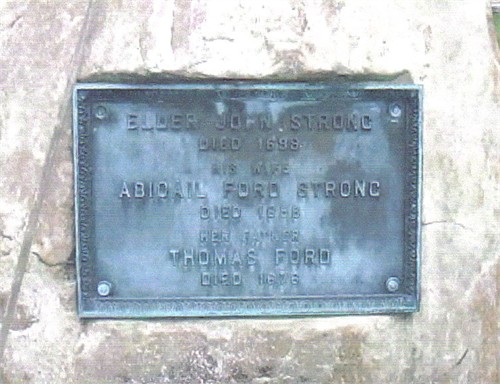
1680 – Thomas Miner Diary account of Augustine Williams (I couldn’t find what happened on 16 June)

The earliest mention found of an Augustine Williams in CT is in THE  HISTORY OF MIDDLESEX COUNTY 1635-1885; J.H.BEERS & Co., 26 Vesey Street,NY, 1884,  pp 417-434  by Hon. William H. Buell  (transcribed by Janece Streig, found at Rootsweb.com)

In describing an early boundary conflict between the towns of  Killingworth and neigboring Saybrook which was settled by Killingworth voting on  16 Mar 1687 to pay Saybrook for clear title. “it appears from page 138, vol I, that  the following persons ‘Did Disburse money for Saybrook purchase …’Augustine Williams 0…5’ ” (Pounds, shillings, pence)

His marriage to Hannah Norton in 1678-80, prob. in Martha’s Vineyard
(Augustine is noted as being of Stonington, New London, CT) is found in The
History of Martha’s Vineyard by Dr. Charles Banks, Vol. 3 Family Genealogies, pp
341-382 “The Norton Family of Martha’s Vineyard” and New England Marriages
Prior to 1700 by Clarence Almon Torrey, 1987 Baltimore, Genealogical Publishing
Co., Inc.

The history of Martha’s Vineyard, Dukes County, Massachusetts

Augustine Williams was a transient resident of Martha’s Vineyard. He is first found here in 1679, as a witness, and again in 1684 and 1687 in the same connection.  The town records have an entry relating to him in 1681, and it may be inferred that he was a constant resident here between the earlier and later dates. Of his antecedents nothing is definitely known, but he was probably a resident of Stonington, Conn., (1663), and possibly a mariner. He married Hannah Norton, and had Thomas [1678], Hannah, 1680, Daniel, 1683, Bethiah, 1686, and Matthew, 1688, all recorded at Killingworth, Conn., whither he removed about the last named date. He died shortly after this, as in 1692 his widow Hannah was empowered by the General Court to sell certain property, according to a verbal bargain made by her deceased husband.   She was here on Aug. 17, 1692, as witness to a deed, probably on a visit.  She married a second time, before 1699, elder John Brown of Killingworth.’^

^Dukes County Court Records, Vol. I; comp.. Deeds, I, 398. Thomas Harlock was appointed one of the administrators of his estate.

‘Killingworth Town Records. Thomas Williams, natural son and heir to Augustine Williams, deceased, deeds to his natural mother, Hannah Brown, administratrix of estate of his father, March 12, 1699. Elder Brown died in 1708, but whether she survived is not known to the author.

Children

1. Thomas Williams
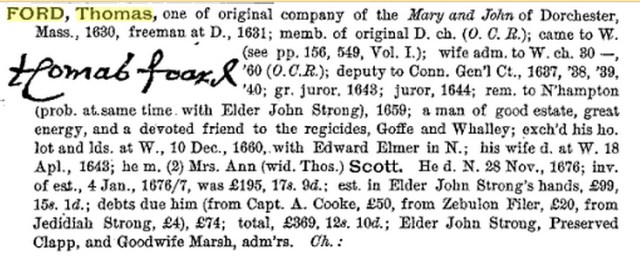
Thomas’ wife Experience Hayden was born 15 May 1679 in Killingworth, Middlesex, CT. Her parents were Nathaniel Hayden and Sarah French. Experience died 20 Apr 1706 in Killingworth, Middlesex, CT.
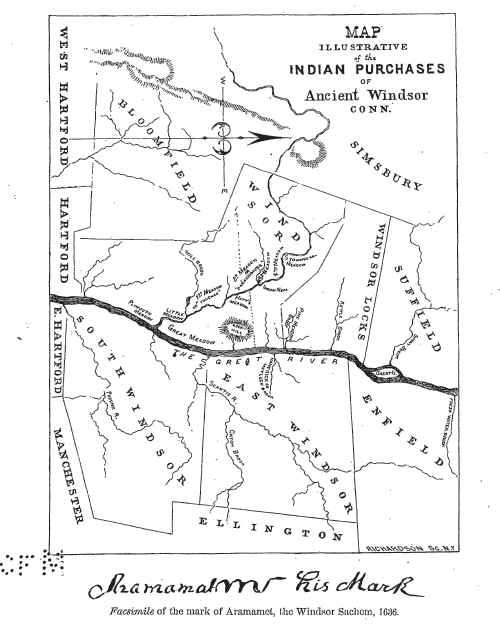
Children of Thomas and Experience:

i. Hannah Williams b. 13 Jun 1705  Killingworth, Middlesex, CT

ii. Nathaniel Williams b. 8 Feb 1707  Killingworth, Middlesex, CT; m. Dec 1730 in Killingworth to Elizabeth Lane (b. 17 Mar 1712 in Killingworth – d. 3 Jan 1766 in Killingworth)  His parents were Jonathan Lane (1685 – 1759) and Mercy Wellman (1692 – 1727).  Nathaniel and Elizabeth had six children born  between 1732 and 1750.

iii. Daniel Williams b. 2 Jan 1709  Killingworth, Middlesex, CT

iv. Experience Williams b. 3 Aug 1710  Killingworth, Middlesex, CT; d. 9 Jun 1790 Killingsworth; m. 30 Jun 1732 in Killingworth to Jonathan Wilcox (b. 22 Sep 1705 in Killingworth – d. 18 Dec 1761) His parents were Nathaniel Wilcox (1668 – 1712) and Hannah Lane (1668 – 1727)Experience and Jonathan had eight children born between 1732 and 1751.

v. Abraham Williams b. 10 Oct 1710 Killingworth, Middlesex, CT

vi. Sarah Williams b. 7 May 1715  Killingworth, Middlesex, CT

vii. John Williams b. 6 Jul 1717  Killingworth, Middlesex, CT; d. 1804 Ernestown, Ontario, Canada; m. 17 Dec 1755 to Sybil Rathbun (b. 24 Nov 1727 in New Shoreham, Newport, Rhode Island – d. 1827) Her parents were Thomas Rathbone (1695 – 1756) and Lydia Mott (1697 – 1797).    John and Sybil had at least one child Jonathan (b. 1757)

Alternatively, John married 26 Jan 1757 New York to Catharine Van Winkler (b. 1728 in New York City – d. 07 Oct 1795 in Lennox Ontario, Canada) John and Catherine had at least one child: Ruth (b. 1774)

John was a loyalist.  1783 — Age: 66 Ernesttown, Lennox & Addington, Ontario War Office Records: Returns of Detachments and Companies of the Kings Rangers and Loyal Rangers stationed in Lower Canada.

viii. Mary Williams b. 1 Feb 1720  Killingworth, Middlesex, CT; d. 16 Feb 1721 Killingworth

2. Hannah Williams

Hannah’s husband John Rose was born 28 Oct 1679 in Branford, New Haven, CT. His parents were Jonathan Rose and Deliverance Charles. John died 17 Apr 1712 in Branford, New Haven, CT.

See this discussion for confusion over the Hannah Williams that married John Pratt. http://www.geni.com/discussions/90019?msg=674496

Children of Hannah and John:

i. Bethia Rose b. 2 Oct 1705 Branford, New Haven, CT; m. 3 May 1727 in Branford to Samuel Penfield (b. 19 Jul 1700 in Bristol, Bristol, Rhode Island – d. 2 Nov 1747 in Branford, New Haven, CT.  His parents were Samuel Penfield (1676 – 1714) and Hannah Shepard (1677 – 1771).  Bethia and Samuel had five children born between 1728 and 1743.

ii. Hannah Rose b. 1706 Killingworth, Middlesex, CT; m. 3 Feb 1726 in Killingworth to Henry Earle (b. 1702 in Killingworth).;  Hannah and Henry had at least one child: Hannah (b. 1728)

iii. John Rose b. 9 Sep 1707; m. 15 Mar 1739 to Elizabeth Luddington (b. 1709 in Branford, New Haven, CT)  Her parents were John Luddington and Elizabeth Potter.

3. Daniel Williams

Daniel’s wife Lydia Abell was born 1683 in Norwich, New London, CT. Her parents were Benjamin Abell (1651 – 1699) and Hannah Baldwin (1656 – 1717). Her grandparents were our ancestors Robert ABELL and Joanna [__?__]. Lydia died 2 Oct 1731

Child of Daniel and Lydia:

i. Daniel Williams b. 14 Aug 1712 Lebanon, New London, CT; m. 1735 to Elizabeth Toogood (b.  14 Apr 1710 or 1715 – d. 26 Feb 1786 in Lebanon)  Daniel and Elizabeth had ten children born between 1732 and 1750.

4. Bethia WILLIAMS (See William CLARK Jr.‘s page)

Sources:

http://www.genealogyofnewengland.com/b-_w.htm

http://www.geni.com/genealogy/people/Hannah-Norton/6000000002073514371

http://archiver.rootsweb.ancestry.com/th/read/CTMIDDLE/2007-03/1174509095

Charles Edward Banks,The History of Martha’a Vineyard, Dukes County, Massachusetts. in three volumes (Edgartown Massachusetts: Dukes County Historical Society. 1966).

http://trees.ancestry.com/owt/person.aspx?pid=38838879

Posted in 10th Generation, Line - Miller, Missing Parents, Sea Captain | Tagged | 5 Comments

Thomas Ford

Thomas FORD (1590 – 1676) was Alex’s 10th Great Grandfather; one of 2,048 in this generation of the Miller line.

Immigrant Ancestor

Thomas Ford was born on 6 Jan 1589/90 in Dorchester, Dorset, England.  Alternatively, he was baptized 6 Jan 1590 in Powerstock, Westmilton, Dorsetshire, England. [It was originally known as ‘Poorstock’ but this was changed to ‘Powerstock’ when the Bridport Railway was built in 1857, possibly to avoid connotations of  poor (rolling) stock]  The two towns are 13 miles apart.  His parents were John FORD and Joan BECK.   He married Joanne Way in England.  After Joanne died, he married Elizabeth CHARD Cooke on 19 Jun 1616 in Bridport, Dorset, England.  He emigrated in 1630 on the Mary & John and founded, with the rest of the company, the new Dorchester.  After Elizabeth died, he married Mrs. Ann Scott on 7 Nov 1644  in Windsor, Hartford, Connecticut.  Thomas died 9 Nov 1676 in Northampton, Mass.

Thomas Ford Memorial – Bridge Steet Cemetery, Northampton, Hampshire, Massachusetts

Joanne Way was born in England.  Her parents were George Way and [__?__].   Joanne died 10 May 1615 in England.

Elizabeth Chard was born in Dorset, England. Her parents were Thomas CHARD and Elizabeth BUNCKHOM.  Her first marriage was to Aaron Cook on 2 Sep 1610 in Thornecombe, Dorset, England. She had one child, Major Aaron Cook Jr from this marriage. Elizabeth died 18 Apr 1642 in Windsor, CT.

Ann [__?__] Scott was the widow of Thomas Scott.  Thomas and Ann had one child, Ann born about 1657, who married Thomas Newbury on 12 Mar 1676/77 in Windsor CT.  Ann died on 5 May 1675 in Northampton, Mass.

Children of Aaron and Elizabeth:

Name Born Married Departed
a. Elizabeth COOKE baptized
8 Sep 1611 in Bridport, Dorset, England
or
9 Dec 1610 in Wisset Norwich, Suffolk, England
John LAWRENCE 
1635 in Watertown, Mass
29 Aug 1663 Groton, Mass.
b. Major Aaron Cooke bapt.
20 Mar 1613/14
Bridport, Dorset, England
Mary Ford?
1637
Dorchester, Norfolk, Mass
.
Doanna Denslow
c. 1650
Windsor, Hartford, CT
.
Elizabeth Nash
2 Dec 1676
New Haven, CT
.
Rebecca Foote
2 Oct 1688
Hadley, Hampshire, Mass.
5 Sep 1690
Northampton, Hampshire, Mass

.

Children of Thomas and Elizabeth:

Name Born Married Departed
1. Joanna Ford 8 Jun 1617 Bridport, Dorset, England Capt. Roger Clapp
6 NOV 1633 Dorchester, Mass.
29 Jun 1695
Boston, Mass.
2. Abigail FORD 8 Oct 1619 Bridport, Dorset, England. Elder John STRONG
Dec 1635 Dorchester, Mass.
6 Jul 1688 Northampton, Mass.
3. Thomas Ford 21 Seo 1623
Dorchester, Dorset, England
6 Oct 1623
Dorchester
4. Hephzibah Ford 15 May 1625 Dorchester, England Richard Lyman
1640
.
John March
7 Oct 1664
Northampton, Mass
11 Apr 1683 Northampton, Mass
5. Hannah Ford 1 Feb 1628/29
Holy Trinity, Dorchester
28 March 1629
Dorchester

Thomas Ford Signature

Thomas was one of the early settlers of Windsor, CT. He was deputy to the General court in 1637, 1638, 1639 and 1640, and grand juror in 1643.   He removed to Northampton, and probably at the same time with John STRONG in 1659. He exchanged, Dec 10, 1660, his home-lot and lands in Windsor with Edward Elmer, in Northampton.

Fords, Chards and Cookes in England

Powerstock is six miles northeast of Bridport. Many Fords lived at Powerstock, some of whom were known as “Ford alias Symes.”  There were two Thomas Fords married at Powerstock during this time frame. One Thomas Ford married 29 Jan 1607/08 Julian Dun. Florence, baptized in 1608; Thomas, 1610 and Julian, 1615 are probably children of this Thomas Ford.

Our Thomas Ford married 13 Dec 1610, Joane Way; this is probably the Thomas Ford who emigrated to Dorchester MA. Two daughters of Thomas Ford are baptized within a few months in 1612/13: Mary on 18 Aug 1612, and Sarah on 6 Jan 1612/13. Presumably one was the daughter of each couple, but there is nothing in the parish registers to tell which is which. After 1613 apparently only one Thomas Ford had children baptized. The burial of “Joane Ford” is recorded on 10 May 1615.

Meanwhile at Thornecombe, Dorset, England, Aaron Cooke married Elizabeth Charde on 2 Sep 1610; Aaron Cooke was buried 28 December at Bridport, Dorset, and the widow, Elizabeth (Charde) Cooke, married Thomas Ford at Bridport 19 June 1616. Thomas and Elizabeth had two children baptized at Bridport, and three more at Holy Trinity, Dorchester, Dorset. If Thomas Ford of Powerstock is the Thomas Ford who married Elizabeth, he had a daughter Mary or Sarah from his first marriage. Thomas and Elizabeth Ford of Bridport named their first daughter Joan, a compliment often paid a deceased wife. It is tempting to believe the young widower of Powerstock was the one who married the young widow of Bridport.

Major Aaron Cooke was the son of Aaron and Elizabeth (Charde) Cooke; he now became the step-son, or son-in-law in the terminology of that day, of Thomas Ford. It was commonly believed that Major Aaron Cooke’s wife was Mary Ford, based upon Thomas Ford calling Aaron son-in-law; now we see there was an alternative explanation for the use of the term. Also Banks lists a daughter Mary Ford on the passenger list of the “Mary and John,” but Banks’ list is compiled after the fact and is partially hypothetical, and he may have included Mary Ford out of the common belief that Aaron Cooke married the daughter of Thomas Ford, and Aaron’s wife was Mary. Aaron Cooke may well have married his step-sister, a frequent occurrence in those times, and that is the view taken in this genealogy, but alternative hypotheses as to the identity of Aaron Cooke’s wife are possible based upon these facts. Dawes-Gates did not believe Mary was a child of Thomas Ford, as she was not included among his heirs. Colony records do not give the name of Aaron Cooke’s wife, and some sources have called her Miriam rather than Mary.

Some have taken the immigrant Thomas Ford to be the son of Nycholas Ford and Jelyn Long, who were married in Symondsbury 14 Oct 1588. There was a Thomas Ford, son of Nicholas Forde, baptized 6 Jan 1590 in nearby Powerstock. But if he were the Thomas Ford who married Joan Way 13 Dec 1610, he would have been only 20 and she would have been 27. It seems more likely that Thomas Ford the immigrant is the son of John Ford, and the one mentioned in the will of Thomas Forde of Dorchester in 1610/1611.

Immigration to America

Rev. John White, rector of Holy Trinity, was so deeply interested in the early emigration to New England that he has been called the “Founder of Massachusetts.” In the summer of 1629, White wrote to Gov. Endicott at Salem Mass. to appoint places of habitation for 60 families of Dorsetshire which were to arrive the following spring. Great care was taken to enlist in this company the elements of a well-balanced community. There were two devoted ministers: Messrs. Maverick and Warham, two stockholders of the London financing company: Messrs. Rossiter and Ludlow, three men with military experience, and “several men past middle life with adult families and good estates” — which included [our ancestor] Maj. John MASONThomas FORD, in addition to many “active, well-trained young men” — such as Thomas’ son-in-law, Roger Clapp.  Also aboard the ship who founded the town were William PhelpsRoger LudloweJohn MasonSamuel MaverickNicholas Upsall, Henry Wolcott and other men who would become prominent in the founding of a new nation.

In mid-March 1629/30 a company of about 140 persons met at Plymouth, Devonshire, where the “Mary and John“, a ship of 400 tons, had been chartered and fitted out. They spent their last day in England at the New Hospital keeping a solemn day of fasting and prayer. They formed their church organization and bound their ministers to them, this being the first church body to be transferred to the Bay Colony. Thomas and Elizabeth were doubtless members.

On 20 Mar 1629/30 the company sailed from Plymouth, England. The voyage lasted 70 days. At the time they immigrated, passage cost £5 for an adult, £10 for a horse, and £3 for a ton of freight. Captain Squeb, master of the vessel, was supposed to land the travelers on the Charles River, where Rev. White had requested their colony to be placed. Instead he dropped them, their cattle and goods ashore at the barren, uninhabited Nantasket Point on May 30, 1630. An exploration party was sent out, and the group decided to place their settlement at a narrow peninsula known as Mattapan or Mattaponnock, and today is known as Columbia Point (more popularly since 1984 as Harbor Point). The site could accommodate the colonists’ cattle safely with a minimum of fence building, and there was forage and numerous springs in the area. So with considerable inconvenience and additional expense, the group moved their cattle and baggage to the new settlement early in June 1630. The name of this settlement was officially changed to Dorchester on 7 Sep 1630.

Dorchester is a dissolved municipality and current neighborhood of Boston, Massachusetts, United States. It is named after the town of Dorchester in the English county of Dorset, from which Puritans emigrated and is today endearingly nicknamed “Dot” by its residents. Dorchester, including a large portion of today’s Boston, was separately incorporated in 1630. It was still a primarily rural town and had a population of 12,000 when annexed to Boston in 1870. Railroad and streetcar lines brought rapid growth, increasing the population to 150,000 by 1920. It is now a large working class community with many African Americans, European Americans (and is still a center of Irish American immigration), Caribbean Americans, Latinos, and East and Southeast Asian Americans. Recently, there has been an influx of young professionals, gay men, and working artists to the neighborhood, adding to its diversity.

The original settlement was founded at what is now the intersection of Columbia Road and Massachusetts Avenue.  This founding is still celebrated every year on Dorchester Day, which includes festivities and a parade down Dorchester Avenue

On the basis of his prior church membership, Thomas requested admission as freeman of the Bay Colony 19 Oct 1630, and took the oath of freeman 18 May 1631. The very earliest Dorchester records have been lost, but the records of 1633 tell of the election of 12 townsmen, later selectmen, two of whom were Thomas Ford and George Hull. January 6, 1633/34 Thomas Ford and Roger Clapp were placed in charge of collecting a tax to build a fort upon the Rock. Ford also was charged with viewing fences, surveying land and caring for three of the bulls of the town herd during his time at Dorchester.

Dorchester was first centered around the First Parish Church of Dorchester, which still exists as the Unitarian-Universalist church on Meetinghouse Hill and is the oldest religious organization in present-day Boston.

On October 8, 1633 the first Town Meeting in America was held in Dorchester. Today, each October 8 is celebrated as Town Meeting Day in Massachusetts. Dorchester is the birthplace of the first public elementary school in America, the Mather School, established in 1639.  The school still stands as the oldest elementary school in America.

Thomas Ford is last on record at Dorchester July 5, 1636, and probably removed to Windsor CT soon after that, although the first record of him there is in 1637 when he was granted a house lot in Windsor, 268 wide, backed to the Great Meadow. He sold this lot before 1648 and in 1656 bought the original homestead of William Hosford from Stephen Taylor, Hosford’s son-in-law. Thomas lived here until he moved to Northampton MA. That is the lot later left to Zerubbabel Fyler [who married son-in-law Elder John Strong’s daughter Elizabeth].

In 1637 Thomas was one of four men who purchased for Windsor, from sachem Tehano or Nehano, a large tract of land covering the present town of Windsor Locks, the northern third of Windsor and the southern part of Suffield.

Map of Indian Purchases Windsor, Connecticut

In a deed of confirmation given May 19, 1687, by his daughter, Quashabuck, widow of Coggerynosset of Poquonock, deceased, she testifies that “her father received full satisfaction therefor/’ and as she is his only child she makes over her right and title to Capt. Benjamin Newbury, Capt. Daniel Clark, Mr. Simon Wolcott, Mr. Henry Wolcott, and. Return Strong, as representatives of the town of Windsor. Aushqua, her son (by Coggerynosset), also confirms the same. This land is more fully described in the deed as “between Gunn’s Brook down to Connecticut River, which brook falls into the river at a place called New Brook [present Hay den’s Station], at upper end of land formerly William Hay den’s, deceased, and since to his son Daniel, and from the brook it runs north to the Stony Brook (which enters Connecticut River opposite the great island on the falls), and bounds easterly on the Connecticut River, and thence runs west to the westward side of the mountains, and continues all along the same breadth as at the east end.”

In 1640 he was granted nearly half of Pine Meadow (now Windsor Locks), near the Connecticut River and Kelle Brook. This he used for cultivation and timber.

Windsor Locks, Hartford, CT

In 1656 he sold 30 acres to William Gaylord Jr., and in 1663 he sold land with 8,700 ft. width to Henry Denslow.  The latter was killed there by Indians in 1676.

Thomas was active in civic affairs, serving as deputy to the General Court from Windsor, and on numerous juries between 1641 and 1662, and he was a plaintiff and defendant in various suits. He was part of a committee of six appointed by the General Court to plan the best land use for the adjoining communities of Windsor, Hartford and Wethersfield. In 1655 he was made Constable of Windsor. He was chosen again the next year, with his son-in-law, John Strong. While he lived in Hartford he continued to hold large properties in Windsor.

In the will of George Way of Dorchester, co. Dorset, merchant, dated 30 Sep 1641, signed 1 Oct 1641, proved 3 Dec 1641 (P.C.C. 155 Evelyn) there is a clause which reads “And whereas there is of my estate four and thirty pounds in money in Thomas Ford’s hands in New England and in the hands of Roger Clap and Stephen Taylor in New England”.

In June 1644, the General Court voted that each of the three River towns should arrange that some responsible inhabitant “keepe an Ordinary” as accommodation for strangers passing through. Soon after his marriage to Ann, Thomas Ford moved to Hartford and established the first tavern there, in the home of her former husband Thomas Scott, standing at the corner of State and Front streets. John Winthrop Jr. visited the inn on 17 November 1645 and noted it in his journal. Soon after his marriage Thomas purchased a house and two acres of land in Hartford from Samson Shore. Thomas maintained the inn until 1648.  Although he  kept his lands at Windsor, on 9 March 1652 he sold the tavern to Thomas Cadwell.  Today, the Arch Street Tavern, located around the corner the tavern Thomas established 367 years before was just voted best happy hour in the state by Connecticut magazine.

The Front Street District is the final phase of Adriaen’s Landing, a state and privately-funded master planned development intended to attract activity to downtown by way of residents, retail, and other commercial activity. The plan includes the existing Connecticut Convention Center, Connecticut Science Center (opening spring 2009), and the 409 room Marriott Hartford Hotel.

The Front Street District is a major development project in downtown Hartford. is located directly across Columbus Boulevard from the Connecticut Convention Center and the Marriott Hotel. When completed, the project will include 150,000 square feet  of building area that will be occupied by restaurant, entertainment and retail spaces.  In total, over $1 billion of public and private capital has been invested in new development projects in downtown Hartford including the Adriaen’s Landing master plan area.

About 1647 Thomas Thornton sold his Windsor property to Thomas Ford and Ford’s son-in-law, John Strong and removed to Stratford, CT.

Thomas Ford was sued by Magistrate [Major?] William Whiting for slander in 1646/47; Thomas was fined more than £4 and costs of court.  I can’t find what the slander was about, but I did find the William Whiting was very wealth and he died the next year.  Money and power can’t buy you everything.

Major William Whiting (1600-1647) was at Hartford in 1636, a wealthy merchant who had been engaged in a patent for lands at Swamscot with Lord Say and Lord Brook.  He was an early member of First Church, and his name is on the Founders Monument of Hartford. In 1637 Whiting was one of the first representatives; in 1641, Assistant; and he served as Treasurer of the Colony from 1643 to his death in 1647, when he was called Major .  William made several voyages, making his will 20 March 1643 in anticipation of one. A codicil drawn 2 April 1646 also mentioned a voyage, but it may have been only to the Delaware river, where he maintained a trading house, as also at Westfield. An addition to that will was declared 24 July 1647, and he died soon after, for his widow was granted administration on 2 Sep  1647.

Thomas may have lived for a time in the wilderness on the land granted him at Massaco, but by February 1654/55 he had returned to Windsor, where he was chosen constable. In 1659/60 Thomas paid 6 shillings for his seat in Windsor church, and in 1660 his wife Ann joined that church. John Winthrop’s Medical Journal refers to him as “Old Thomas Ford of Windsor” in 1668, and he was listed as one of the freemen of Windsor in October 1669.

1 Mar 1654 – Walter Fyler, baving charged [Rev.] Mr. Stone [of Hartford] with the breach of a fundamental law, and upon the Elders in general sin and wickedness, opportunity given [to prove his charges] but he could not make it out, but did multiply offences in open Court, fined £5, bound with David Wilton and Thos. Ford in £20 to appear at next court: next year was freed from his recognizance.

Thomas Ford and his step-son Aaron Cooke were loyal friends to the regicides Goffe and Whalley.

Edward Whalley (c. 1607 – c. 1675) was an English military leader during the English Civil War, and was one of the regicides who signed the death warrant of King Charles I of England.  At the Restoration, Whalley, with his son-in-law, General William Goffe, escaped to North America, and landed at Boston on July 27, 1660, where they were well-received by Governor John Endecott and visited by the principal persons of the town. They went about quite openly, and chose to live in Cambridge, just across the river.

By February 1661, the Governor seems to have had second thoughts about welcoming the regicides so warmly and on the 22nd summoned a court of assistants to discuss their arrest, but the court would not agree to such action. Whalley and Goffe decided they were no longer safe in Cambridge and left on the 26th. Within a few days, orders arrived from England for their arrest.

The two fled for New Haven, Connecticut when their safety was compromised, where John Dixwell, also condemned as a regicide, was living under an assumed name. They were housed by Rev. John Davenport. After a reward was offered for their arrest, they pretended to flee to New York, but instead returned by a roundabout way to New Haven. In May, the Royal order for their arrest reached Boston, and was sent by the Governor to William Leete, Governor of the New Haven Colony, residing at Guilford. Leete delayed the King’s messengers, allowing Goffe and Whalley to disappear. They spent much of the summer in Judges’ Cave at West Rock. Whalley left New Haven for Hadley, Massachusetts. In Hadley he (some sources say both men journeyed to Hadley) found shelter in the home of Reverend John Russell, who had grown up in Cambridge and graduated from Harvard College in 1645. Every attempt by the English government to procure his arrest failed. He was alive, but in poor health, in 1674, and probably did not live long afterwards.

Thomas obtained land in Northampton MA as early as 1660, when he made an exchange with Edward Elmer.

In 1668 Thomas Ford gave a conditional bond for deeding the homestead, after the death of he and his wife, to Zerubabel Filer, if he should marry Thomas’ granddaughter Experience Strong. These two married 27 May 1669 and Experience received the deed 23 August 1672.

Between 1670 and 1672 Thomas and Ann removed to Northampton, where they lived the remainder of their lives.

Thomas left no will, but the inventory of his estate taken January 4, 1676/77 showed property worth over £369. Administrators were his son-in-law John STRONG, grandson Preserved Clapp, and daughter Hepzibah (“good wife Marsh.”) Ford was called “a man of energy and influence who made his impress on posterity through three or four daughters’ of excellent worth”.

FIRST RESIDENCE: Dorchester
REMOVES: Windsor 1637, Northampton 1672
FREEMAN: Requested 19 October 1630 and admitted 18 May 1631
In list of Windsor freemen, 11 October 1669

OFFICES:
Chosen Dorchester selectman, 8 October 1633, 27 June 1636
Dorchester fenceviewer, 24 May 1635, 10 February 1634/5
Ccommittee to collect rate for fort, 6 January 1633/4
Committee to lay out land, 2 November 1635
Deputy to Connecticut General Court from Windsor, 8 March 1637/8, 5 April 1638, 11 April 1639, 9 April 1640, 9 April 1641 (marked absent), Apr 1644, 18 May 1654
Connecticut committee on livestock, 8 Feb 1640/41
Grand jury, 15 May 1662

ESTATE:
Ordered to build forty feet of fence (as his proportion for two cows), 3 April 1633
Granted two acres of land, 17 April 1635
granted six acres fresh marsh, 17 Dec 1635 ;
Granted two acres marsh, 27 Jun 1636
Granted “50 acres at Massacoe, whereof four & forty hath been improved by him by plowing & mowing,” 8 September 1653

On 14 May 1663 the “Court in answer to the request of Thomas Forde, which was to have some allowance in respect of his land sold to Mr. Fitch, which the said Forde forfeited to the country by mortgage, they granted him the sum of thirty pounds”

16 Oct 1663 – The “Court having considered the request of Tho[mas] Forde, by their vote d[eclare] that they see no cause to give Goodman Forde the six pounds odd, that he d[esires] in reference to his land at Podunck, now in Mr. Jos[eph] Fitche’s hand”
The inventory of the estate of Thomas Ford was taken 4 Jan 1676/7 and totalled £195 17s. 9d., with no real estate included [HamPR 1:187].

ASSOCIATIONS: Through his first marriage Thomas Ford became stepfather of Aaron Cooke

COMMENTS: Thomas Scott’s daughters all married in the early 1640s, so their mother must have been born very early in the century (if not before 1600), and all these daughters were probably born in the 1620s. But the widow of Thomas Scott, after her marriage with Thomas Ford, is supposed to have had a daughter who married in 1676/7, and so may have been born about 1657. For all this to happen, the widow of Thomas Scott must have been a second wife, and not the mother of his daughters.

Children

a. Elizabeth COOKE (See John LAWRENCE ‘s page)

b. Major Aaron Cooke  

Aaron’s first wife Mary Ford was born 18 Aug 1612 in Powerstock, Dorset, England. Mary and Aaron were step-siblings, but not related by blood. Her parents were Thomas FORD and Joan Way. Mary died in 1645.

Aaron’s second wife Doanna Denslow was born 1622 in Netherbury, Dorset, England. Her parents were Nicholas Denslow and Elizabeth Doling. Doanna died Apr 1676 in Windsor, Hartford, CT.

Aaron’s third wife Elizabeth Nash was born 3 Jan 1647 in New Haven, New Haven, CT. Her parents were John Nash and Elizabeth Tapp. Elizabeth died 3 Sep 1687 in Northampton, Hampshire, Mass.

Aaron’s fourth wife Rebecca Foote was born in 1634 in Wethersfield, Hartford, CT. Her parents were Nathaniel Foote and Elizabeth Deming. Rebecca died 6 Apr 1701 in Hadley, Hampshire, Mass.

Aaron immigrated on 30 May 1630 to Nantasket Bay, Plymouth, Mass on the the ship Mary & John. He served in the military between 1653 and 1687 in CT. Aaron served in the King Philip’s War.

Aaron first married Mary Ford in 1637 in Dorchester, Norfolk Co., MA. Children were: Joanna Cooke, Aaron Cooke, Moses Cooke.

He was married to Joanna Denslow about 1650 in Windsor, Hartford Co., CT. Children were: Samuel Cooke, Elizabeth Cooke, Noah Cooke.

1. Joanna Ford

Joanna’s husband Roger Clapp was born 6 Apr 1609 in Salcombe Regis, Devon, England. His parents were William Clapp and Johan Channon. Roger died 2 Feb 1691 in Boston, Suffolk, Mass.

Roger came on the ship Mary and John which arrived at Nantasket, Massachusetts on May 30 1630. His future wife Joanna Ford and family was on the same ship. He was one of the first settlers at Dorchester,in 1630. He was admitted into the church fellowship at the first beginning in Dorchester in the Year 1630. He was a Proprietor of Dorchester. A Freeman May 14 1634,and Selectman 1637, which he held 14 times. He took command of the Fort in Aug 1665 and was appointed Captain of the Castle (the island fortifications to protect Boston). He continued in that office for 21 years. He later moved to Boston in 1686. Roger married Joanna Ford on November 06, 1633 in Dorchester, Massachusetts
He was the father of fourteen children:
Samuel, William, Elizabeth, Experience (born Aug 23, 1640), Waitstill,Preserved, Experience (born Dec 1645), Hopestill, Wait, Thanks, Desire, Thomas, Unite and Supply Clapp

MIGRATION: 1630 on the Mary & John
FIRST RESIDENCE: Dorchester
REMOVES: Boston (Castle Island)
OCCUPATION: Soldier.
CHURCH MEMBERSHIP: Admission to Dorchester church prior to 14 May 1634 implied by freemanship. Roger himself stated that he was “admitted into the church fellowship at our first beginning in Dorchester in the year 1630” [Clap 24]. (After the departure of Warham and Maverick, Roger Clap and his wife did not join the second church at Dorchester.)
FREEMAN: 14 May 1634 [MBCR 1:368].
EDUCATION: Both Roger and Joan signed their 1680 deed [SLR 12:227]. Roger presumably penned his Memoirs, showing considerable education.

OFFICES: Deputy for Dorchester to Massachusetts Bay General Court, 26 May 1647, 27 May 1652, 18 May 1653, 3 May 1654, 23 May 1655, 14 May 1656, 6 May 1657, 11 May 1659, 30 May 1660, 19 Dec 1660, 22 May 1661, 7 Aug 1661, 7 May 1662, 27 May 1663, 18 May 1664, 3 Aug 1664, 3 May 1665, 31 May 1671

Commissioner to end small causes, 31 Dec 1661, 11 Mar 1663/34
Committee to consider Dedham petitions, 2 Jun 1653
Committee to regulate workmen’s wages, 13 Nov 1655
Committee to lay out the highway through Roxbury (in place of Mr. Glover, deceased), 19 May 1658 Committee to lay the bounds to Natick, 19 Oct 1658
Committee to examine the complaint of Concord, 12 Nov 1659
Committee to lay the south line of the colony, 31 May 1660
Committee to grant liberty to settle a new plantation (Mendon), 16 Oct 1660
Committee to consider changes in the militia, 27 May 1663
Paid £4 for laying out the southern bounds of the colony, 19 Oct 1664
Committee to investigate the tanning of leather, 3 May 1665
Committee to oversee the rebuilding of the Castle after its destruction by fire, 7 May 1673

Dorchester selectman, 10 Sep 1637, 1 Feb 1641/42, 24 Dec 1645, 2 Dec 1650, 28 Nov 1653, 4 Dec 1654, 7 Oct 1657, 6 Dec 1658, 5 Dec 1659, 2 Dec 1661, 1 Dec 1662, 7 Dec 1663, 5 Dec 1664, 12 Dec 1664, 11 Dec 1665 (“Captain Clap, if he can be obtained”)
Committee to locate a farm in lieu of Thompson’s Island, 1 Dec 1662
Committee to determine the line between Dorchester and Roxbury, 8 Mar 1668/9
Committee on highways, 23 Apr 1638, 1 Oct 1656
Rater, 30 Oct 1638, 14 Mar 1645/46
Recorder of cattle, 13 Feb 1638/39
Fenceviewer, 20 May 1639

Appointed Lieutenant of the Dorchester company, 6 May 1646. Admitted to the Ancient and Honorable Artillery Company in 1646 .

ESTATE: Granted sixteen acres in the Great Lots in Dorchester, 4 Jan 1635/36
1 Feb 1635/36 Roger Clap was granted two acres in the second marsh
Roger Clap was granted half an acre adjoining to the meadow at Powow point in lieu of calves pasture for Mr. Witchfield’s house, 2 Jan 1637/38
Roger Clap received four acres in the division of the Neck and four acres in the division of other land, 18 Mar 1637/38
9 Sep 1680 – “Roger Clapp of Castle Island … and Joane his wife” having sold to Capt. Samuel Wadsworth of Milton, housewright, deceased, in his lifetime,” a twenty-one acre lot in the first three divisions, also all their land in Milton in the six divisions being more than forty-three acres, now confirm the same to Abigail Wadsworth, his relict

In his will, dated 19 Nov 1690 and proved 5 Mar 1690/91,

Roger Clap “in the time of my health” bequeathed to “my dear and loving wife” my house and land in Boston with all the priviledges and appurtenances, also six acres of upland and five acres of meadow in Dorchester Neck, also three acres of meadow in Dorchester, during her natural life, also household goods and £40 in money or goods as she pleases;

residue to be divided equally among my children, only “Samuel my eldest” to have a double portion in all except in that which my dear wife is to have for her life;

also anything that any other of my children have had in my lifetime is to be reckoned as part of their portions (receipts for which “you shall find in my little Forril book”);

to “my son Samuel” all my land both upland and meadow at Powow Point in Dorchester Neck and two small lots in the little neck and my lot called the Eight Acre lot, and half my farm at Ponkapoage; “Preserved” having had land of me already at Northampton, as by my little book do appear, he shall have a fifth part of my farm at Pacasuck in Westfield;

to “my son Hopestill” that part of the home that is beyond the fence and all the meadow at the end of the home lot and at the tide mill and at the end of Cornelius’ lot as far as the salt creek, and two small lots in Little neck the land at the mouth of the great creek and the first and second division in the cow walk and half my farm at Ponkapoage and half the woodlot that was “Hases” by the fresh marsh;

if the lands my sons have were not appraised by me and “set down in my Forrile book, it must be appraised so those that have had more than their portion may pay to those that want to make their portions equal”;

to “my son Desire” my third division of woodland and twenty acres of land on the north side of Nabonsett River and three acres of meadow on the south side of Nabonset which was William Meekies out of my farm at Pacasuck in Westfield;

to the inhabitants of the town [Westfield] towards the maintenance of an able minister on condition that they pay two bushels of good wheat to my dear wife in Boston yearly during her natural life; residue of land to make my children’s portions equal;

to “my daughters Elizabeth and Waite” small gifts;

to “my grandchildren then living”, together with “my cousin Esther Bessesk and Constant Dewery” 10s. each;

“my sons and daughters” shall pay their mother yearly for her more comfortable living 20s. each;
also I give my wife what falls to her by “her Father Ford at Windsor or elsewhere”;

“my dear wife and son Samuel” executors;

“my dear and loving friends Elder James Blake and cousin Thomas Swift” overseers, 10s. each

Roger Clapp Gravestone — Kings Chapel Burying Ground , Boston, Suffolk County, Mass.

Joanna Ford Clapp Gravestone — Kings Chapel Burying Ground, Boston, Mass

2. Abigail FORD (See Elder John STRONG‘s page)

4. Hepzibah Ford

Hepzibah’s first husband Richard Lyman was born 24 Feb 1618 in High Ongar, Essex, England. His parents were Richard Lyman and Sarah Osborne. Richard died 3 Jun 1662 in Windsor, Hartford, CT.

Henry Ward Beecher, Harriet Beecher Stowe, Samuel Colt (Colt Revolver) and Charlotte Perkins Gilman are Descendants.

Richard and Hepzibah removed to Northampton in 1655 ; he d. June 3, 1662 ; his widow m. John Marsh, of Northampton, who soon after removed to Hartford.

Hepzibah’s second husband John March was born Apr 1618 in Braintree, Essex, England.  His parents were John Marsh and Grace Baldwin.  He first married1642 in Hartford, Hartford, CT to Anne Webster (b. 29 Jul 1621 in Cossington, Leicestershire, England – d. 9 Jun 1662 in Hadley, Hartford, CT). John died 28 Sep 1688 in Windsor, Hartford, CT.

Sources:

http://www.genealogyofnewengland.com/b_f.htm

http://www.lymanites.org/lyman/archives/colonialhistory/thomasford-elizabethchardcooke.asp

BIBLIOGRAPHIC NOTE: As with other families which quickly daughtered out, the best treatments of Thomas Ford appear in various “all-my-ancestor” books. One excellent account by DeForest is replete with biographical data and other information which places Ford in historical context [Moore Anc 248-63]; unfortunately, however, DeForest pads his account with an overlong extract from Roger Clap’s memoirs, which is perhaps justifed because a daughter of Thomas Ford married Roger Clap, but which does not really have much to say about Ford. A more concise, but more genealogically informative version is that prepared by Mary Holman [Stevens-Miller Anc 1:354-56].
The basic research on the English records for Thomas Ford was published by Jacobus and Torrey in 1939 [TAG 16:41-43]. In this article are some records for a Thomas Ford of Powerstock, Dorsetshire, which may or may not be relevant to our Thomas Ford. Torrey had earlier presented evidence on AARON COOKE which showed that he was stepson rather than son-in-law of Thomas Ford [TAG 11:179-80].

http://trees.ancestry.com/owt/person.aspx?pid=22195769&st=1

http://trees.ancestry.com/owt/person.aspx?pid=504333

http://freepages.genealogy.rootsweb.ancestry.com/~steeles/Steele/d46.htm#P2039

The history and genealogies of ancient Windsor, Connecticut… By Henry Reed Stiles 1891 (Google Books)

Posted in 12th Generation, Double Ancestors, Immigrant - England, Line - Miller, Pioneer, Public Office, Tavern Keeper | Tagged , , , , , | 12 Comments

John Richard Strong

John Richard STRONG (1561 – 1613) was Alex’s 10th Great Grandfather; one of 2,048 in this generation of the Miller line.

John Richard Strong  was born about 1575 in Chard, Somerset, England.  Some genealogies  say his name was John, others Richard.  For clarity, I’ll include both.   His parents were George STRONG and [__?__].  He married Eleanor [DEAN?] in 1609 in Chard, Somerset, England.  John Richard died on 14 Jun 1613 in Chard, Somerset, England.

St Mary’s Church, Chard, Somerset, England – John Richard was born, married and died in Chard.

Eleanor [Dean?] was born about 1586 in South Chard, Somerset, England.  Many genealogies state her parents were Walter DEAN (1545 – 1585) and Johanna WALSELY (1547 – 1597). However, other sources say that Walter and Johanna’s Eleanor was born before 1568;  buried 6 Jul 1628, Broadwindsor, Dorset and married about 1588 Sylvester Balstone, son of John Balstone and Edith of Hawkchurch, Dorset. Children: Humphrey.  

Margery Dean married Eleanor’s son, Elder John Strong.  Walter and Joanna Dean are Margery’s grandparents.  William Dean, son of Walter Deane and Joan Walsele. – died. about 1634, South Chard, Somerset, will dated Jul. 22, 1634 names his children and his grandson Elder John STRONG. Maybe that relationship started the confusion.

After John Richard died, Eleanor married William Coggin about 1615. Eleanor died on 24 Apr 1654 in Taunton, Bristol, Mass.

William Coggin (Cogan) was born about 1584 in Hampshire, England and died 20 Apr 1654 in Chard, Somerset, England.  Some say he died in Taunton, Bristol Mass., but I doubt it.

Children of Richard and Eleanor:

Name Born Married Departed
1. John STRONG 1605 in Chard, Somerset, England. Margerie Dean
1625 Somerset, England
.
Abigail FORD

Dec 1635 Dorchester, Mass.
14 Apr 1699 Northampton, Mass.
2. Eleanor Strong Cogan 1612 Taunton, Somershire, England Deacon Walter Dean
1635
Taunton, Mass.
1693 Taunton, Mass.

“Dwight’s History of the Strong Family”, Volume I, originally published in 1871 (republished in 1975 by Gateway Press, Baltimore, Maryland)

“The Strong Family of England was originally located in the county of Shropshire. One of the family married an heiress of Griffith, of the county of Caervernon, Wales, and went thither to reside in 1545. Richard Strong was of this branch of the family, and was born in the county of Caervernon in 1561. In 1590 he removed to Taunton, Somersetshire, England, where he died in 1613, leaving a son John then eight years of age, and a daughter Eleanor. The name is stated in one record, on what authority the writer knows not, to have been originally McStrachan and to have gone through the following changes, McStrachan, Strachan, Strachn, Strong.” (p 15)

According to family tradition, Elder John STRONG was born and lived at Taunton in Somersetshire, but no record of his birth nor residence there has ever been found. Nor has any record been found of a Richard Strong, said to be John’s father. About twelve mile from Taunton lies the village of Chard, and here is found the record of the burial of John Strong of Chard, July 14, 1613. In the will of this John Strong is named a son John and an unborn child. Mr. Albert Strong, author of The Strongs of Strongsville, believes this posthumous child to have been the daugther, Eleanor.

Eleanor’s mother Margerie was carrying her second child, Eleanor, when her husband died. Margerie married second, William Coggin (Cogan) , who raised his wife’s child as his own. Her name is sometimes cited as Eleanor Coggin, and sometimes Eleanor Strong.

The Coggin, Dean, and Strong families were close in both England and America. They were based in Somersetshire, in and around the town of South Chard, in the west of England. A lot of source material is available about these families and their relationships both in England and in America, which they settled in the 1600’s

Below is given a part of the will of William Cogan dated 1654:

“I give, devise and bequeath the cottage house in Southchard, aforesaid, whein I now dwell with the backside garden and close of land thereunto belongings with their appurtenances (after the death of my daughter Eleanor Deane, wife of Walter Deane in New England) unto Eleanor Cogan, my daughter and to the heires males of her body lawfully to be begotten forever. And for default of such issue then to the hires males of thesaid Eleanor Deane of her body lawfully begotten.”

“William Cogan, who died after 1654, plainly states that Eleanor Deane is in New England and yet bequeaths to his daughter Eleanor’s sons should she have any. By this time Eleanor Deane had at least one son, James born 1648. Nora E Snow explains: “Governor Strong’s tradition says that the father of John Strong died while his son was young 1613. Please note the peculiar wording of the William Cogan will and the peculiar right that the daughter Eleanor Deane seems to hold to the homestead estate; also note the fact that William Cogan had two daughters named Eleanor. It has been my belief that William Cogan had married the mother of John Strong and that Eleanor Deane was really the sister of John Strong and step-daughter of William Cogan.”

Mary Lovering Holman, Ancestry of Col. John H. Stevens…, (Concord, N.H., 1948), pp. 348-49, gives a verbatim excerpt from the will of this William Cogan, who may have been the Cogam witness of the William Deane will, above, and identifies Eleanor, the wife of Walter Deane, as a daughter of John Strong of Chard, Somerset, and sister of the John Strong of Northampton, Massachusetts. However, Mrs. Holman also shows the younger John Strong had for his first wife Margery Deane, the sister of Walter Deane, and thus the “beloved brother” relationship between Walter Deane and John Strong may be a “brother-in-law” relationship. No Eleanor appears in the will of the older John Strong. The will of William Cogan actually left his house and land “(after the death of my daughter Eleanor Deane wife of Walter Deane in New England) unto Eleanor Cogan my daughter and to the heires male of her bodie,” and for default of male issue to “Joane Cogan my daughter and to the heires males of her bodie,” and for default of male issue to Joane then to “the heires male of the said Eleanor Deane of her bodie.” This peculiar set of conditional inheritances suggests that Eleanor Deane had a lifetime interest in the house and lands, perhaps because she had been married earlier to William Cogan’s son, but without having male issue by him. If she had also been a cousin to William Cogan’s son (not a rare occurrence at the time), this could be a possible explanation as to why the sequence of inheritance would be first to her [p.280] for life, then to the male issue of two daughters of William Cogan in turn, and finally, if they had no male issue, then to the male issue of Eleanor Deane. It is significant that female issue are excluded, and the facts seem to indicate that Eleanor Deane was of the Cogan male line, but was not a blood daughter of William Cogan (even though he called her “daughter.” Since she had been a blood daughter, then the male issue of the other Eleanor Cogan and her sister Joane Cogan, would not have been intermediate in the line of succession between the lifetime possession by Eleanor Deane and the final conditional inheritance by her own male issue with any husband). It is an interesting problem that obviously requires more research.

Children

1. John STRONG (See his page)

2. Eleanor Strong

Eleanor’s husband Deacon Walter Deane was born 13 May 1612 in Chard, Somerset, England. He was her first cousin. His parents were William Deane and [__?__]. His grandparents were Walter DEANE and Johanna WASELE. Walter died Apr 1693 in Taunton, Bristol, Mass.

Walter emmigrated on the “Speedwell” to Boston 1637 w/ brother John. Resided at Dorchester 1 yr, and took Freeman’s oath Taunton 4 Dec 1638. Tanner

“Representative Men and Old Families of Southeaster MA” pg 1487, published by J.H. Beers and Co., Chicago, IL 1912.

Walter Dean, son of William Dean, of the parish of Chard, Somersetshire, England, with his wife, his brother John and the latter’s wife Alice, came to New England, tarried perhaps for a time at Dorchester, and in 1637 went to Cohannet, now Taunton, of wich town the brothers were both original purchasers, taking up farms on the west bank of Taunton Great River. Both became men of prominence. Walter was selectman for some twenty years, representative in the General Court, and a deacon in the church.

NEHGR 139: (Oct 1985), p. 324 Threlfall, John B. of Madison, Wisc. Additions to the Deane Ancestry in England.”Walter Deane of South Chard, Somersetshire, England, is the earliest proven ancestor of John and Walter Deane who settled at Taunton, Mass., in the 1630’s. He was their grandfather. However, he was probably the grandson of John and Joan (Selwood) Deane mentioned in the will of Joan’s father Nicholas. Note the mention of William Cogan in this will. Walter Deane of Taunton, MA, married Eleanor Cogan, daughter of Wiliam of South Chard, no doubt a descendant of the William named in the will.

NEHGR Jan 1861 p. 42 “On the 28th of September, 1672, Philip and his head men ‘Nuncompahoonet, Umnathum (or Nimrod), Cheemaughton and Annawam,’ for £143, ‘sell a tract of land to William Brenton, James Walker, Wm. Harvey, Walter Deane, Richd Williams and John Richmond.’ This tract included Taunton, of which the purchasers were already in possession.” On the 1st of October of the same year another sale beins thus:–“I Phillip, alias Matacome, cheife Sachem of Pakanokit: haue engaged and morgaged four miles square of land sourthwardly of Taunton bounds to Mr. Constant Southworth, Treasurer; and having already given a deed of three miles in breadth and four in length of the sayd land vnto sum of Taunton,” know, &c., “that I Philip,” &c., sell unto the said Southworth, “the other mile in breadth and four miles in length, adjoining that” already sold to Taunton men. the consideration was £47. It was witnessed by Thomas Leonard, Hugh Cole, Nimrod, Akkpompoin and Annawon. The acknowledgment is dated the same day, and was before Constant Southworth and John Alden, and Nath. Morton’s name appears as recorder. Southworth assigned the deed to Wm. Brenton, Wm. Harvey, James Walker, Richd Williams, Walter Deane, Leif. George Macey and John Richmond, Committee and inhabiltants of the town of Taunton. To the assignment Nathhl. Morton and Benj. Church were witnesses–Original deed.

Bowen, Richard LeBaron. Early Rehoboth: Documented Historical Studies of Families and Events in This Plymouth Colony Township, Privately Printed, Rehoboth 1950, Vol. I,

Appears on the list of “The names of the heads of families in Taunton, anno domini 1675, when Philip’s war began”.  “The names of those inhabitants within the township of Taunton who are to have their division of land now agreed upon, 28 Dec 1659, whose proportion is to be according to the rate here following, together with the quantity of land, lots, and heads, at two acres to the head, two acres to the shilling, and two acres to the lot”: Walter Deane Rate 13 shillings, 1 d 8 heads, 44 acres.

9 July 1689 Maj. William Bradford’s quitclaim deed of Taunton, MA The National Genealogical Society Quarterly 71(1983): 176 gives a newly discovered ship list for a ship leving Weymouth, England, in April 1637, John Driver the master, bound for New England. On this list is Walter Deane and 6 servants.

Deane, Willaim Reed. Brief Memoirs of John and Walter Deane. Boston 1949 Cooledge and Wiley

The above discussion of the “sale” of land in 1672 by Philip to Walter Deane et al is worthy of note. Philip was the son of the great Chief, Massasoit. After the death of Massasoit in 1661, and his brother Wamsutta in 1662, Philip became chief. He had some limited success in trying to unify the numerous small tribes against the increasing encrouchment of the white men on their native lands. The long shaky peace was unravelling. While Walter’s success in dealing with this chief may have been commonplace at the time, Philip was a major figure in that era, and certainly a critical figure in Native American history. This was Philip! Better known as King Philip. Three years after Walter’s deal, “King Philip’s War” broke out!

Sources:

http://www.genealogyofnewengland.com/b_s.htm

http://www.jedh.com/src/genealogy/Full07a-p/p19.htm#i930

http://www.geni.com/people/Eleanor-Deane-Cogan-or-Strong/6000000004574981857

http://trees.ancestry.com/owt/person.aspx?pid=161605

Posted in 12th Generation, Historical Church, Immigrant - England, Line - Miller | 4 Comments