Joseph Peck

Joseph PECK (1587 – 1663) was Alex’s 11th Great Grandfather, one of 4,096 in this generation of the Shaw line.
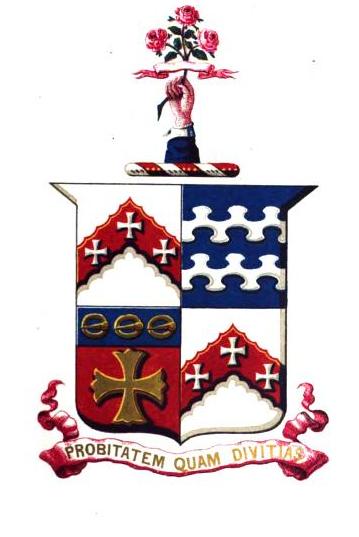
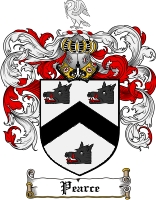
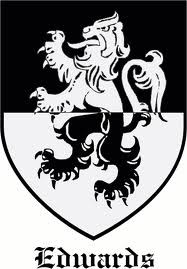
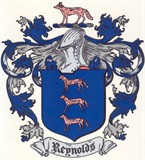
The Pecks were exceptional among our ancestors having a coat of arms at the time of their immigration
Eric Peck says “The crest is almost correct. I believe the center rose is actually white to represent the house of York. This is on my hand painted crest that I have”

Joseph Peck was baptized 30 Apr 1587 in Hingham, Norfolk, England. His parents were Robert PECK and Helen BABBS. He married Rebecca CLARK 21 May 1617 in Hingham, Norfolk, England.  After Rebecca died, he remarried.   In 1638 Joseph Peck, together with his brother Rev. Robert PECK (also our ancestor) and other Puritans, fled from persecution in England and came to New England in the ship “Diligent,” of Ipswich. The entry on Hingham records, showing him to be a man of quality, is “Mr. Joseph Peck and his wife, with three sons and daughters and two men-servants, came from Old Hingham, and settled in New Hingham.”   Joseph died 23 Dec 1663 in Rehoboth, Britsol, Plymouth Colony.

Rebecca Clark was born 2 May 1585 in Guildford, Surrey, England. Her parents were John CLARK and Elizabeth HOBSON. Rebecca died 24 Oct 1637 in Hingham, Suffolk, Mass.

Children of Joseph and Rebecca

Name Born Married Departed
1. Anne Peck bapt.
12 Mar 1618
Hingham, Norfolk, England
27 Jul 1636 England
2. Rebecca Peck bapt.
25 May 1620
Hingham, England
Peter Hobart (son of Edmund HOBART)
3 Jul 1646
Hingham, Plymouth, Mass
9 Sep 1693
Hingham, Plymouth, Mass
3. Joseph Peck bapt.
23 Aug 1623
Hingham, England
Hannah Playford
1648
Seekonk Plain, Bristol, Mass
.
Sarah Hunt
21 Nov 1677 Rehoboth, Mass
6 Feb 1708
Rehoboth, Mass
4. John PECK bapt.
Aug 1626 Hingham, England
Elizabeth HUNTING
30 Dec 1658 Rehoboth, Mass.
Dec 1667
Rehoboth, Mass.
5. Capt. Nicholas Peck bapt.
9 Apr 1630
Hingham, England
Mary Winchester
1656
Rehoboth, Bristol, Mass
.
Rebecca Bosworth
15 Jul 1670  Rehoboth, Bristol, Mass
27 May 1710
Seekonk, Mass
6. Simon Peck 1635
Hingham, England
Hannah Farnsworth
1658
.
Prudence Clapp
13 Feb 1660
Dorchester, Suffolk, Mass
27 Mar 1688
Mendon, Mass
7. Deliverance Peck 21 Jun 1637
Hingham, England
William Cahoon
26 Jun 1662 Block Island, Newport, Rhode Island
.
Caleb Lumbert (Son of Thomas LUMBERT)
1681
9 Dec 1727
Newport, Rhode Island

Children of Joseph and Unknown Wife

Name Born Married Departed
8. Samuel Peck Bef. 3 Feb 1639  Hingham, Massachusetts Bay Rebecca Paine
21 Nov 1677
Rehoboth, Bristol, Mass
6 Feb 1708 Hingham, Plymouth, Mass
9. Nathaniel Peck Bef.
31 Oct 1641
Hingham, Massachusetts Bay
Deliverance Bosworth 1669 in Rehoboth, Bristol, Mass 19 Aug 1718 Rehoboth, Mass
10. Israel Peck Bef. 4 Mar 1644
Hingham, Massachusetts Bay
Bethiah Bosworth
15 Jul 1670
Swansea, Bristol, Mass
2 Sep 1723
Providence, RI

Joseph remained at Hingham seven years and was deputy to the general court of Massachusetts for Hingham, 1639-40-41-42; selectman, justice of the peace, assessor, etc. He moved to Seekonk Plain near the junction of the present Pawtucket with the old Boston and Providence railroad in the old town of Rehoboth. He died 23 Nov 1663.

The Peck family was among the earliest purchasers of the land that is now Seekonk.  They came from nearby Hingham initially. Joseph Peck, the brother of Rev. Robert Peck the disaffected Puritan who had fled his Hingham, England, church after the crackdown by Archbishop Laud, had purchased sizeable tracts of lands from the Native Americans.

Seekonk, Bristol, Mass.

In 1641, the local Native Americans had granted a large part of modern-day Seekonk to purchasers from Hingham, including Edward Gilman Sr., Joseph PECK, John Leavitt and others.   In 1653 Ossamequin and his son Wamsetto, also known as Alexander to the English, signed a deed granting the land that is now Seekonk and the surrounding communities to Thomas Willitt, Myles Standish and Josiah Winslow.  The town of Seekonk was incorporated in 1812 from the western half of Rehoboth.

The Wampanoags were paid 35 pounds sterling by the English settlers, for instance, for the sale to Willitt, Standish and Winslow.

Three of the earliest English men to settle in the area now known as Seekonk and Providence were William BlackstoneRoger Williams and Samuel Newman. These men and their followers proved it was possible to provide a living away from the coastal areas. This allowed groups of individuals to separate themselves from Puritan control. In turn this led to a greater diversity of culture and religious and philosophical freedom. It was only by forming alliances with the Native Americans in both the Wampanoag and Narragansett tribes that these early settlements were able to flourish.

These tracts of land Peck willed to his son Samuel, who served as Deputy to the General Court at Plymouth, as well as the first representative from the town of Rehoboth after Plymouth Colony and Massachusetts were united. The family continued to live in the area through the twentieth century.  Wikipedia and other sites say that today’s Peck Corner in Rehoboth is named for this early Puritan family, but when I looked Peck Corner up on Google Maps, it appeared to be in Barrington, Rhode Island, 5 miles south of Seekonk. Further investigation showed the towns of Bristol, Barrington, and Warren were awarded to Rhode Island in 1746 as part of a long-running boundary dispute with Massachusetts forming Bristol County, Rhode Island.
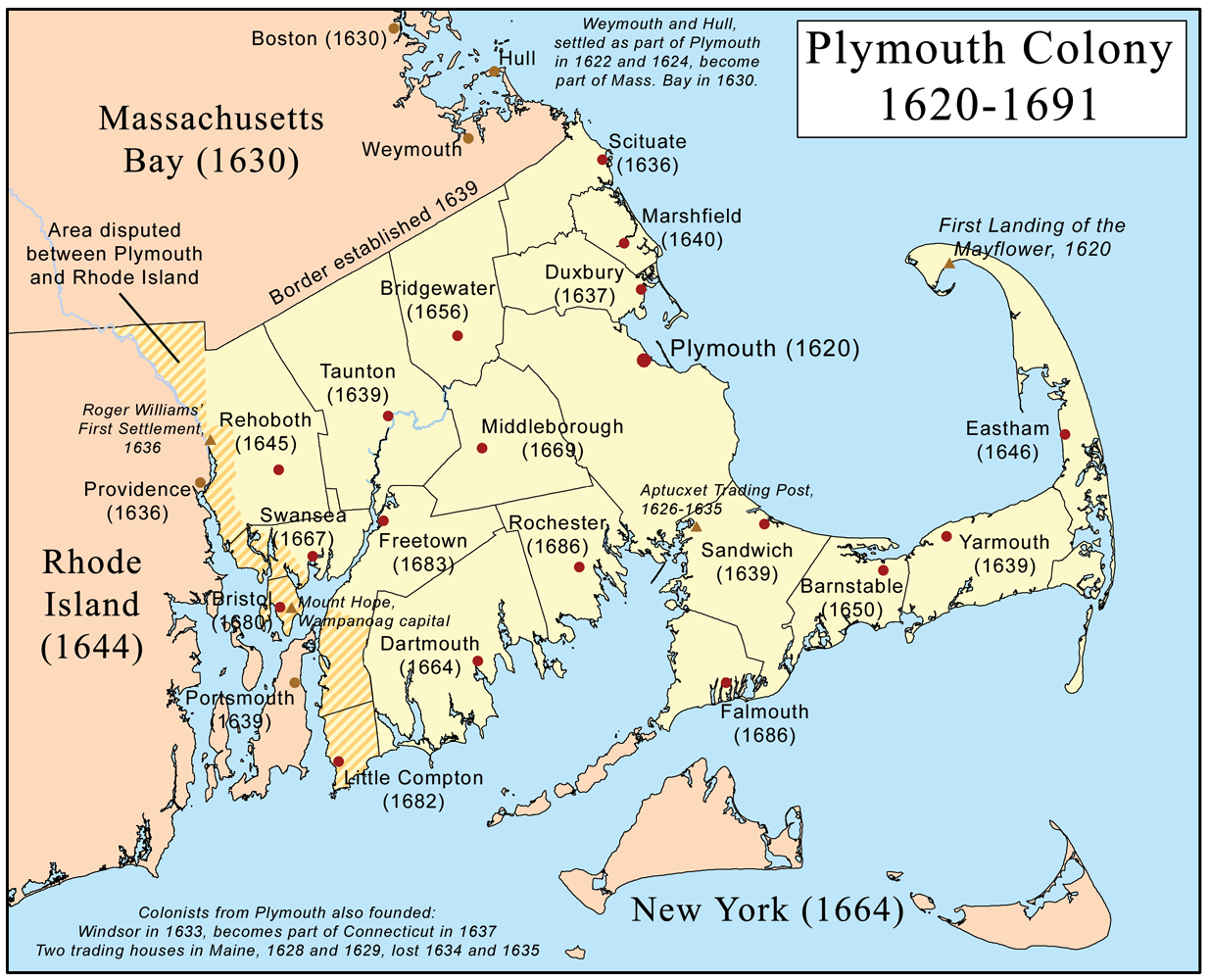
File:Plymouthcolonymap.png

Plymouth Colony Map

1641 – Mr. Peck and others from Hingham bought Secunke (Seekonk);

1643 – Drew lots for woodland

1645 – Register of lands

1645 – Plain lots drawn

1646 – Lots in the New Meadow

1647 and 1648, Mr. Peck chosen townsman

1648 – Chosen assistant to Mr. Brown in suit at court

1650 – Mr. Peck chosen townsman or selectman

1651 – Townsman or selectman

1652 – Chosen rator or assessor

1653 – Grand juryman

1654 – Constable

1655 – Tax assessor

1655 – Townsman or selectman

1656 – To administer marriages

1656 – Judge of cases not, above £3

1660 – Examine town records

1661 – To settle damages to Indians’ corn on Kickemuit and Consumpsit Necks.

Children

2. Rebecca Peck

Rebecca’s husband Rev. Peter Hobart was baptized in Hingham, Norfolk England on 13 Oct 1604. His parents were Edmund HOBART and Margaret DEWEY. Peter died on 20 Jan 1679 in Hingham, MA. Education: Magdalen Coll, Cambridge, Eng: BA 1625, MA 1629.

Peter’s first wife Elizabeth Ibrook was baptized on 31 Aug 1608 in Southwold, Suffolk, England  Her parents were Richard Ibrook and Margaret Clark.  She immigrated with husand, children  JoshuaJeremiahElizabeth and Josiah , parents and sisters, Margaret and Helen arriving 8 June 1635. Elizabeth died in childbirth in Dec 1645 in Hingham, Massachusetts Bay Colony, now Plymouth County.

Peter attended the heavily Puritan Cambridge University. He was the first minister of the Hingham congregation who built Old Ship Church.  Assisting Hobart in the foundation of the congregation was [our ancestor] Rev. Robert PECK, Hobart’s senior and formerly rector of St Andrew’s Church in Hingham, Norfolk. [See Robert’s page for the story of their dissent in England.]  He was married in England. and came to New England with his wife and four children arriving at Charlestown in June, 1635. On the first page of a journal which he kept, giving a record of the baptisms, marriages, and deaths, which came under his notice during his ministry of nearly 44 years in out Hingham is the following.:

‘I with my wife and four children came safely to New Englane June ye 8: 1635: for ever praysed be the god of Heaven my god and king.’

Hobart, born in Hingham,Norfolk, in 1604 and, like Peck, a graduate of Magdalene College, Cambridge, sought shelter from the prevailing discipline of the high church among his fellow Puritans.  The cost to those who emigrated was steep. They “sold their possessions for half their value”, noted a contemporary account, “and named the place of their settlement after their natal town.” (The cost to the place they left behind was also high: Hingham was forced to petition Parliament for aid, claiming that the departure of its most well-to-do citizens had left it hamstrung.)

In Sept. following he settled in Hingham, and on the 18th of that month received a grant of a house-lot on Town (North) St. He also had other grants of land for planting purposes. Rev. Peter Hobart also left a will, in which his fifteen children. then living are mentioned. The date of his death, and the years of his ministry are recorded on a memorial tablet standing near Central Ave., in the Hing. cemetery as foll.: —

In memory of Revd. Peter Hobart who died January 20th 1679 in the 75th year of his age and 53rd of his ministery 9 years of which he spent in Hingham Great Britain & 44 in Hingham, Massachusetts.

Check out Peter Hobart’s journal, published in NEHGR 121(1967):3-25, 102-127, 191-216, 269-294.

Peter was the minister of the Old Ship Church of Hingham.  History has Peter “as an independent and spirited clergyman … which occasionally brought him up before the general court [of the Massachusetts Bay Colony]  to answer for his outspoken opinions.

Before the Rev Peter Hobart arrived in New England, with his flock from his church in Hingham, England, the place he came to was settled, but known as Barecove.  By petition to the general court of the Massachusetts Bay Company, Hobart got the name of ” Barecove is changed and hereafter to be called Hingham.” After 44 years of service, minister Peter Hobart died on Jan. 20, 1679, on the eve of the building of the new house of worship.

Hobart’s diary of events in Hingham, begun in the year 1635, was continued on his death by his son David. By the time Old Ship was built, Harvard-educated Rev. John Norton, who had been ordained by Peter Hobart, had assumed Hobart’s ministry. (Rev. John Norton was the great-grandfather of Abigail Adams, wife of President John Adams.
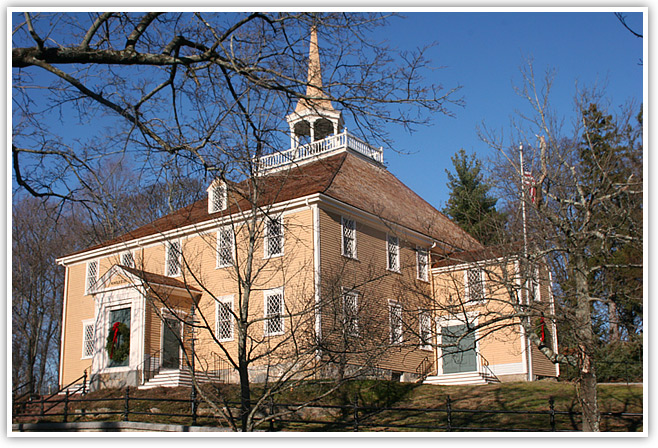
Old Ship Church – Oldest continuous house of worship in the United States

Old Ship Church deacon John Leavitt, whose son John married Rev. Hobart’s daughter Bathsheba, was deacon when Old Ship was constructed and he argued forcefully for the construction of a new meetinghouse. The matter of replacing the old thatched log meeting house stirred intense emotion in Hingham, and it took two heated town meetings to settle on a site for the new edifice, which was built on land donated by Capt. Joshua Hobart, twin brother of Rev. Peter Hobart. Ultimately, the town appropriated £430 for the new building, said to be the equal of any in the Massachusetts Bay Colo The modern frame edifice, devoid of ornamentation, was raised in 1681, and accommodated its first worship service the following year.
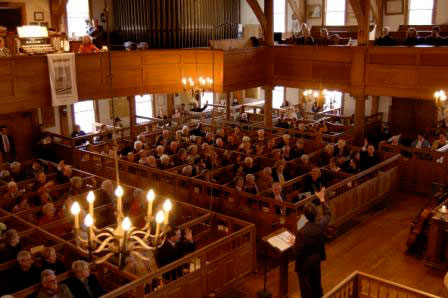
Old Ship Church Interior

The Old Ship  in Hingham, Massachusetts, is the oldest surviving meetinghouse. It is the oldest church in continuous ecclesiastical use in the United States. It is the only remaining 17th century Puritan meetinghouse in America. and the only surviving example in this country of the English Gothic style of the 17th century.   The most distinctive feature of the structure is its Hammerbeam roof, a Gothic open timber construction, the most well-known example that of Westminster Hall. Some of those working on the soaring structure were no doubt ship carpenters; others were East Anglians familiar with the method of constructing a hammerbeam roof.  The more familiar delicately spired white Colonial churches of New England would not be built for more than half a century.”
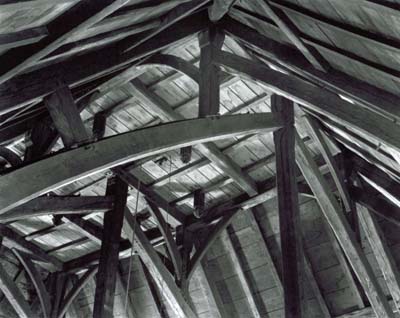
Old Ship Church Beams resemble the construction of a ship

Within the church, “the ceiling, made of great oak beams, looks like the inverted frame of a ship,   Old Ship Church, Hingham Architecturally, the Old Ship is quite a bit different from the Meetinghouses that were built in the 1700s. Its layout is essentially square, with a hip roof. As with later meetinghouses, the main entrance faces south, and the interior layout consists of a high pulpit on the north wall, and galleries on the other three walls. Box pews occupy both the ground floor and the galleries. When it was originally built, there would probably have been entrances on the east and west walls for women and men, respectively. However, additions to the east and west sides of the building have removed these earlier entrances.

3. Joseph Peck

Joseph’s first wife Hannah Playford was born in 1628 Hingham, Norfolk, England. Her parents were Thomas Playford and Dorothy White. Hannah died in 1695 in Seekonk, Mass.

Joseph’s second wife Sarah Hunt

Joseph is believed to have married a Hannah Playford who was born in 1625. He had 8 children and lived to 74 years of age

Children of Joseph and Hannah:

i. Rebecca Peck b. 6 Nov 1650 in Rehoboth; d. 28 Sep 1682 Dedham, Norfolk, Mass; m. 25 Apr 1671 in Dedham, Norfolk, Mass. to Thomas Paine

ii. Hannah Peck b. 25 Mar 1653 in Rehoboth

iii. Elizabeth Peck Mason (1657 – _)  m.  Maj. Samuel Mason son of Maj. John MASON  held the office of major of the militia, and was an assistant of the colony, besides holding other positions of trust.

Samuel’s first wife Judith Smith was born about 1650.  Her parents were Capt. John Smith of Hingham, Mass.

Samuel’s second wife Elizabeth Peck was 30 years younger than Samuel, born 29 Dec 1673 Wallingford, New Haven, CT. Elizaabeth died 1709 ‎(Age 35) Wallingford, New Haven, CT.  She survived him, and m. Gershom Palmer of Stonington, son of our ancestor Walter PALMER.

iv.  Jathniel Peck (1660 – 1742)

v. Mary Peck b. 17 Nov 1662 in Rehoboth

vi. Ichabod Peck b. 13 Sep 1666 in Rehoboth

vii.  Samuel Peck (1672 – 1736)

4. John PECK (See his page)

5. Capt. Nicholas Peck

Nicholas’ first wife Mary Winchester was born 19 Nov 1637 in Plymouth, Plymouth, Mass. Her parents were Alexander Winchester and xx.  Mary died 6 Nov 1657 in Seekonk, Bristol, Mass.

Nicholas’ second wife Rebecah Bosworth was born Feb 1641 in Seakonk, Bristol, Mass.  Her parents were Jonathan Bosworth and Elizabeth [__?__].  Rebecah died 2 Nov 1704 in Rehoboth, Bristol, Mass

He had 7 children and his will is at Taunton, Mass.

6. Simon Peck

Simon’s first wife Hannah Farnsworth was born 14 Dec 1638 in Dorchester, Suffolk, Mass.  Her parents were Joseph Farnsworth and Elizabeth Mason.Hannah died 16 Apr 1659 in Hingham, Plymouth, Mass.

Simon’s second wife Prudence Clapp was born 28 Dec 1637 in Dorchester, Suffolk, Mass.  Her parents were Edward Clapp and Prudence [__?__].  Prudence died 24 Mar 1687 in Dorchester, Mass

7. Deliverance Peck

Deliverance’s first husband  William Cahoon was born in 1633 in Tullichewan, Scotland.  His parents were Alexander Colquhoun and Marian Stirling.  William was killed in King Philip’s War on  22 Jun 1675 in Rehoboth, Mass.

William Colquhoun fought the English in the brutal battles of Dunbar and Worcester in Scotland, and was captured by the Army of Parliament. He was indentured to the iron mines in Braintree, Massachusetts. Upon achieving his freedom, he sailed on the “Shallop” to Rhode Island and bought a share of Block Island there. In 1664 he went to Swansea RI and successfully petitioned the General Assembly to make him a freeman with full rights as a citizen.

“William Cahoon in America soon about 1652 (possibly aboard the Unity). He worked for a number of years at Saugus (Lynn, Mass.). He spent six months at Taunton before assisting in the construction of a shallop at Braintree. In April of 1661, he was one of the fifteen men who sailed from Taunton to Cow Cove and became the first settlers of Black Island, Mass. (now Rhode Island).

The entire state of Rhode Island is shown in this satellite image. Block Island lies within Long Island Sound about 12 miles south of Naragansett Bay.

His period of servidtude presumably espired before the end of 1662, and on 13 Jan 1662/63 William Cahoune bought from Thomas Terry 40 acres on the ‘hieway’ that then divided Block Island. On 4 May 1664 he was a freeman at New Shoreham, in 1665 he served on a Newport grand jury, and on 20 Feb 1669/70 he became a freeman and permanent resident of Swansea, Mass.

On 13 Nov 1670 William Cohoun sold his 38 acres on Block Island to Samuel Hagbourne. At the coming of King Philip’s War, William Cahoone was killed by the Indians near East Rehoboth on 22 June 1675 and was buried at Swansea two days later.

On Sunday, June 24, 1675, the colonists held a day of prayer concerning the unrest. Upon returning to their homes after church services, numerous residents of Swansea were killed.  Others, including the family of William and Deliverance, sought refuge in the garrison home of  Rev. John Myles. During the night, one of their sentries was attacked and injured. They decided  to send two men to the neighboring town of Rehoboth to retrieve the doctor. One of these was William. Along the way, both men were killed by the Indians. William was 42 and had a wife and  seven children.

In 1681 Joseph Kent and Caleb Lambert were appointed guardians of Joseph Cahoon (son of William & Deliverance).

Deliverance’s second husband Caleb Lumbert was born about 1635 in Dorchester, Mass.  His parents were our ancestors Thomas LUMBERT and [__?__].  He first married Mary Prout. Caleb died 7 Jun 1691 in Barnstable, Barnstable, Mass.

More about William Cahoon

The William Cahoone (Colquhoun) Society Founded on the 325th anniversary of his death, June 24, 2000, by The Descendants Of William, The First American Cahoone.

*********
What does Block Island have to do with William Cahoone? LOTS!!!

In 1661, under the leadership of Dr. John Alcock of Boston, Mass. (one of the first graduates of Harvard), a group of men (some with their families), wishing to leave what they perceived as the “unfree” atmosphere of the Puritans, landed on Block Island. These free-thinkers defiantly believed that the State should have no power over people’s religious conviction nor their right to vote. They held to their opinion that no onehad the right to tell them what to charge for their own goods and services rendered nor what clothes to wear. They even dared to support the basic rights of Native Americans, including their being”paid” for their land, rather than having it just taken away from them “in God’s name”.

It was this group’s goal to found a new settlement where they could “breathe the air of freedom”. To this end, Wiliam Cahoone, along with a few other indentured Scotsmen, was returned from the Leonard Iron Works back to Quincy where he worked on the construction of a shallop (a 22+’ 2-masted shipdesigned for transport of people and goods along the shallower waters near the coast). William and this boat were returned to the Leonard Iron Works, on what today is the Raynham/Taunton line. In April of 1661, these “new pilgrims”, who included William Cahoone, then traveled down the Taunton River, the Warren River, out into Mt. Hope Bay, Narragansett Bay, and out to Block Island at Cow Cove.As the settlers’ boat came close to the shore, an unforseen problem presented itself: -how to unload the cattle?!

After some deliberation, it was decided that the easiest way to accomplish this necessary task would be simply to push the cows overboard! The bewildered beasts were compelled to swim, much to the delight of the curious and excited Native Americans gathered there.

Even til today, this stretch of beach is still known as “Cow Cove”. WILLIAM CAHOONE WAS FIRST LISTED AS A FREEMAN HERE ON MAY 4, 1664! In 1911, a lasting tribute to these stalwart souls was erected on Block Island in the form of “Settlers’ Rock” on which a commemorative plaque lists the settlers’ names.

Officially made Swansea’s first town brickmaker, Dec. 24, 1673 William Cahoone finally met with “success” as a Freeman in Swansea, Massachusetts, when he was officially appointed as the sole brickmaker for that town. There is still in existence, in the Swansea Town Offices, the original bound volume entitled: “Proprietors Book of Grants and Meetings, 1668-1769”. It includes the following entry: “At A Town Meeting of the Towns Men, Dec 24, 1673, It was Agreed upon by and Between the townsmen In the behalf of the town and William Cohoone (Cohoune/Cohowne?) brickmaker that for and In Consideration of a Lot and other Accommodations or Grantes And Given by him from the town unto him the said William Cohoun. It was therefore Agreed and Concluded upon by the Parties Above so that the saidWilliam Cohoon Shall Supply all the Inhabitants of the Town with Bricks at a Price not Exceeding Twenty Shillings a Thousand in Current Pay Putting between Man and Man.”

In each instance where William’s name is written, his last name is spelled differently! This is a sign that perhaps William Cahoone was illiterate, not that uncommon for his times and circumstances. Is it any wonder, therefore, that even today this name is spelled in so many different ways?

On June 24, 2000, William Cahoone’s direct descendants donated a Commemorative Plaque to the Swansea Historical Society. It will be affixed to a rock and erected near the site of the Cahoone Brickworks, close to the location of the Myles Garrisoned House along the Palmer River in Swansea, Mass

*********
The Providence Journal newspaper sent a reporter to cover the William Cahoone Memorial Service on June 25, 2000. The following is the article which subsequently appeared on July 10, 2000. It was accompanied by four photographs

A settler’s sacrifice. Descendants gather to honor a Swansea founder. by Meredith Goldstein REHOBOTH – Deborah Cahoon Didick knows the story by heart. It was June 24, 1675. Native Americans and settlers were about to begin fighting in what came to be known as King Philip’s War, a bloody battle over land and identity. William Cahoone, a Scottish immigrant, gathered with a group of local residents at the Baptist Meeting House in Swansea for a day of prayer. They prayed for peace, hoping that the growing tension would subside. That night, however, as they left the church, the settlers were ambushed by Native Americans who had become vengeful for their stolen homeland. Some of the settlers were killed, others badly wounded. The survivors ran to the pastor’s house to hide.

William Cahoone was a family man. He had come to the New Plymouth Colony as an indentured servant and became one of the first residents of Swansea (founded in 1668), where he and his wife raised seven children. He was the town’s official brickmaker.

That night, as his companions lay injured and dying, Cahoone volunteered to travel through what he knew was hostile territory to get medical help. He set off through Swansea toward Rehoboth to get a doctor. Cahoone was never seen alive again. His remains were found in Rehoboth near Providence and Lake Streets, the original Native American footpaths. He was never given a proper Baptist burial. Three-hundred twenty-five years and one day later, a group of about 30 of Cahoone’s descendants gathered at the Lake Street Cemetery in Rehoboth to lay their patriarch to rest. They wore pink name tags which said how they are related to Cahoone (now spelled Cahoon), and laid fresh flowers in honor of the anniversary of his death. “You can cry”, said Didick, an 11th -generation Cahoon who organized the memorial service. “You’re family. You’re my cousins.” Didick spent the last year finding Cahoons in Rhode Island, Massachusetts and all around the country, some of whom did not know their ancestor’s history in Rehoboth and Swansea. She invitedthem all to the area to meet one another and learn about “Grampa Will”, the man who sacrificed his own life for those who needed medical attention. After more than three centuries, Didick wanted to gather with her family together to put Cahoone’s spirit to rest. During a memorial weekend, they toured Cahoone’s past. They stopped at the Leonard Iron Works in Raynham where Cahoone worked before moving to Block Island in 1661. They followed the Taunton River, the same route he would have traveled to get to the island, where he was first listed as a Freeman. They went to the Luther Museum in Swansea to see his brickmaking handiwork, and stopped at the site of the Myles Garrison House in Swansea where Cahoone was last seen alive by his friends and neighbors.

The group celebrated their heritage at a testimonial dinner where newly-acquainted family members spoke about their ever-present connection to Grampa Will. And on Sunday, June 25, they had a proper funeral. To the cries of bagpipes played by Charles Neil Cahoon, they placed flowers on a small gravesite. The Rev. Edgar Farley of the Hornbine Historic Baptist Church led the service. He thanked Cahoone for making a journey of mercy, and sacrificing his life to help other people. ”

Richard (Cahoon) Didick June 25th, 2000

Deliverance Peck and William Cahoon were married. William Cahoon was captured by the English, along with his brother John, and they were sold as an indentured servants and sent to America. On 11 Nov 1650 William was taken to Liverpool and was transported from there to Boston, Massachusetts aboard the ship “Unity,” commanded by Captain Augustine Walker of Charlestown, Massachusetts. Bex & Company, a London Merchant company, purchased several Scotch prisoners for indentured servants to exploit bog iron at Saugus, Braintree, and Taunton.

William’s brother John was shipped from London aboard the ship “John & Sarah” on 11 Nov 1652, but he died either on the voyage or shortly after arriving in Massachusetts.

After working in Saugus, Massachusetts for several years, William worked in Taunton for 6 months. He then assisted in the construction of a shallop at Braintree, Massachusetts. He learned the brick making trade from James Leonard.

In 1660, with sixteen others, he purchased Block Island, Rhode Island,and became one of the first settlers there, and settled at Cow Cove on Block Island.  They sailed from Taunton to Cow Cove in 1661 and became the first settlers on Block Island. Apparently his term of servitude had ended by this time.

On 13 Jan 1663 he purchased 40 acres from Thomas Terry, which were on the ‘hiway’ that divided Block Island. On 4 May 1664 he was a freeman in New Shoreham. In 1665 he served on a Newport Grand Jury. On 13 Nov 1670 he sold 38 acres on Block Island to Samuel Hogbourne.

William worked as a brickmaker in Braintree, Massachusetts, according to a contract dated 23 Dec 1673.

In “Hubbard’s Narrative of Indian Wars” we find this record: “On the 24th of June, 1675, the alarm was sounded in Plymouth Colony, when eight or nine of the English were slain in and about Swansea, they being the first to fall in King Philip’s War.” William Cahoon was one of these nine. He was killed by Indians during the King Philips War, on 22 Jun 1675 near East Rehoboth, Bristol County, Massachusetts. He was buried two days later, on 24 Jun 1675, at Swansea, Massachusetts. We find in the records of this event the Americanized spelling of the name from Colquhoun to Cahoon.

8. Samuel Peck

Samuel’s first wife Sarah [__?__]

Samuel’s second wife Rebecca Paine was born 1655 in Rehoboth, Mass. Rebecca died 23 Feb 1718 in Rehoboth, Bristol, Mass.

He moved with his father to Seekonk, and remained upon the homestead after his father’s decease. He was one of the deacons of the church. He also held various town offices. He was a Deputy to the general court at Plymouth, in 1689 and 1692. He was the first representative from the town after the Colony of Plymouth and Massachusetts were united in 1692. He married twice and had 6 children 3 of whom died young. He first married Sarah, who was buried 27 Nov 1673. He then married Rebecca Paine Hunt 27 Nov 1677, widow of Peter Hunt and daughter of Stephen Paine. She died 12 Jun 1699.

9. Nathaniel Peck

Nathaniel’s wife Deliverance Bosworth was born was born 4 Aug 1650 in Rehoboth, Bristol, Mass.  Her parents were Jonathan Bosworth and Elizabeth [__?__]. Deliverance died 30 Apr 1675 in Swansea, Bristol, Mass.

Nathaniel was a major land owner around Barrington, RI. He and his wife died young at around 35 years. It appears he had 3 children but only one, Nathaniel, survived to have children.

10. Israel Peck

Israel’s wife Bethiah Bosworth was born Jan 1644 in Rehoboth, Bristol, Mass. Her parents were Jonathan Bosworth and Elizabeth [__?__].  Bethiah died 5 Apr 1718 in Swansea, Bristol, Mass

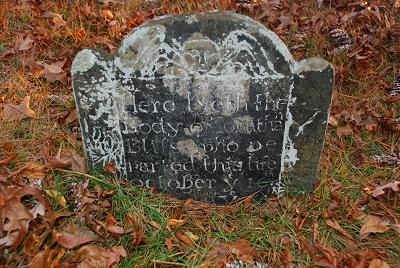
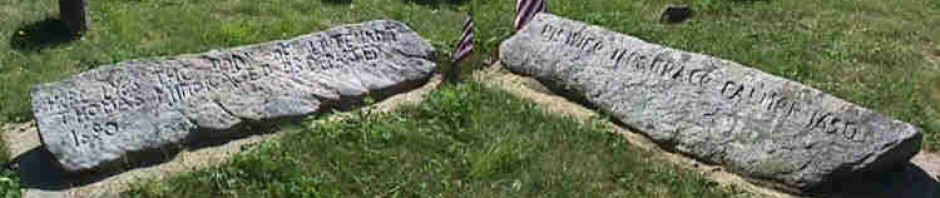
Israel died at 80 years of age. He was married July 15, 1670 to Bethiah Bosworth whose stone is nearby. She lived to be 75, dying April 4, 1718. Israel held various public offices and his will is recorded at Taunton, Mass.,
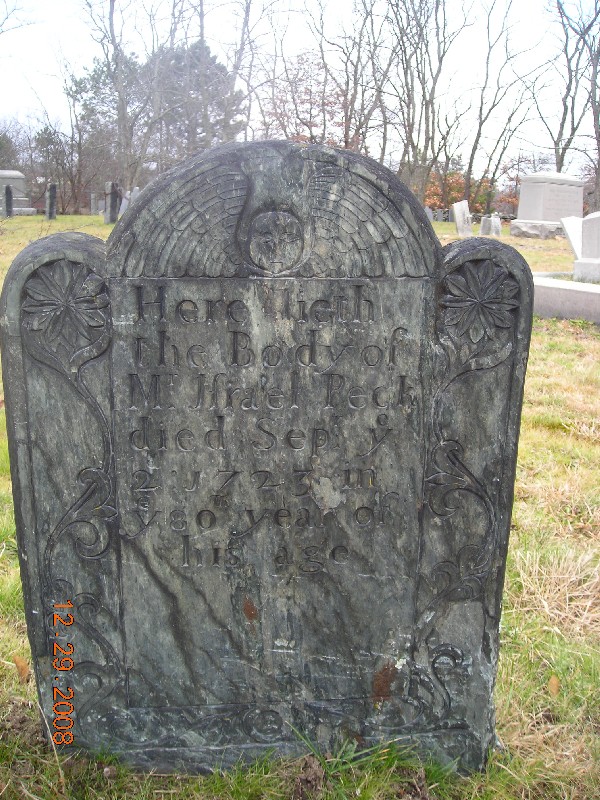
Israel Peck Here lieth the body of Mr Israel Peck died Septr ye 2d 1723 in ye 80th year of his age. Burial: Newman Cemetery East Providence Providence, Rhode Island

Sources:

http://wc.rootsweb.ancestry.com/cgi-bin/igm.cgi?op=GET&db=jhmjr&id=I06433

http://trees.ancestry.com/owt/person.aspx?pid=12877881

New England Families Genealogical and Memorial: Third Series, Volume IV
Author: William Richard Cutter
Publication: New York, 1915, (reprinted Genealogical Publishing Co., Baltimore, Maryland, 1967)
Repository:
Media: Book
Page: Page 1693

http://www.geni.com/people/William-Cahoon/6000000006741670009
Posted in 13th Generation, College Graduate, Immigrant - England, Immigrant Coat of Arms, Line - Shaw, Pioneer, Place Names, Public Office | Tagged , , , , , , | 15 Comments

William Reynolds

William REYNOLDS (1560 – 1648) was Alex’s 10th great grandfather, one of 2,048 in this generation of the Miner line through his son John.  He was also Alex’s 11th great grandfather, one of 4,096 in this generation of the Miller line through his daughter Catherine.

William Reynolds - Coat of Arms (Note the foxes)

William Reynolds was born in 1560 in London, England. His parents were Christopher REYNOLDS  and Clarissa HUNTINGTON (1533 – 1575). He married Esther RUTH on 2 Feb 1580 in Kent, England.  He came from England to Bermuda between 1600-1635.  He departed Bermuda for New England about 1625 and settled in Providence, Rhode Island. He suppposedly returned to Bermuda in 1646/47 and died there.  Many sources state he died in Bermuda in 1625.

There was another William Reynolds who lived in Bermuda who married Mary Smith.  From Julie E. Mercer’s book: Bermuda Settlers of the 17th Century.
REYNOLDS/REIGNOLDS – page 157
Port Royal Records – Baptisms:

1629, June; Mary dau. of William Reynolds.
1631, Feb: Elizabeth dau. William Reynolds.
1637, April: William son William & Mary Reynolds.
1639, Nov: Ursula dau. William & Mary Reynolds.
……: Ann dau. William & May Reynolds.
1678: Sarah dau. Ezra & Sarah (nee Darrel) Reynolds.

Esther Ruth (Roth) was born in 1560 in England. Esther died in 1655 in Bermuda.

Children of William and Esther:

Name Born Married Departed
1. Stephen Reynolds 1601 Sarah Bradford 1696
Connecticut
2. Jonathan Reynolds (Runnells) 1605
3. Catharine Eunice REYNOLDS
1609
Wales
Edward STARBUCK
c. 1630
Derbyshire, England.
.
Joseph Austin
4 Feb 1691 Dover, Strafford, New Hampshire
4. William Reynolds 1613 Alice Kitson
30 Aug 1638
Plymouth, Plymouth, Colony
1675
Dover, Strafford, New Hampshire
5. Christopher Reynolds (Runnells) 1617
6. James Reynolds 13 May 1625 Susannah Sheldon
c. 1645
.
Deborah Jordan (or Sweete)
c. 1647 – 1650
Rhode Island
Aug 1700 Kingstown, Washington, Rhode Island
7. John REYNOLDS 13 May 1625 probably England Anne HOLBROOK
Weymouth, Mass
c. 1652
bef. 14 Jan 1691 in Stonington, CT.

William Reynolds, the immigrant ancestor, settled in Providence, Rhode Island.

20 Aug 1637 – He and certain others were to pay two shillings six pence apiece for ground that they had granted to them, and he and twelve others signed the following compact:

“We whose names are hereunder, desirous to inhabit in the town of Providence, do promise to subject ourselves in active and passive obedience to all such orders or agreements as shall be made for public good of the body in an orderly way, by the major consent of the present inhabitants, masters of families, incorporated together in Town fellowship, and others whom they admit unto them only in civil things.”

27 Jul 1640 – He was one of thirty-nine who signed an agreement for a form of government.

17 Nov 1641 – He with twelve others complained in a letter to Massachusetts of the “insolent and riotous carriage of Samuel Gorton and his company,” and therefore the petitioners desired Massachusetts to “lend us a neighborlike helping hand,” etc.

Samuel Gorton (1593–1677), was an early settler and civic leader of the Colony of Rhode Island and Providence Plantations and President of the towns of Providence and Warwick for one term. Having strong religious beliefs that were contrary to the established Puritan dogma and being very outspoken, he was frequently in trouble with the civil and church authorities in the New England colonies.

30 Jan 1644 – He was one of the Providence settlers who testified as to the outrage on Warwick settlers by Massachusetts.

27 Jan 1645 – He sold to Robert Williams all his houses and home share and three small pieces of meadow, and on the same date he sold to William Field a share of six acres on Fox’s Hill.

27 Apr 1646 – He sold to Thomas Lawton his valley of eighty acres, and three acres of meadow.

Timeline for the Reynolds/Runnels Family

28 July 1687 – John Sanders, aged about 20, testifies that the land he has was granted his grandfather and given to his father and then to him and that his mother is now the wife of John Cleag of Pemaquid. (Documentary History of the State of Maine IV:366-7).

14 Oct 1687 – John Sanders, John Cleg, and William Ranalds all taxed at Pemaquid, Maine (NEHGR 32:312).

23 Dec 1718 – John Runnels marries Hannah Clark at Durham, NH (Marriages by the Rev. Hugh Adams, NEHGR 23 (1869):179)

15 Jul 1720 – Samuel Renalds of Bradford, Massachusetts, husbandman for forty pounds sells to Thomas Perkins “all my right and interest in all ye lands which did formerly belong to my honored grandfather William Renalds lying at Cape Porpoise” (York Deeds X:130) [note that he does mention his father by name in this deed or in his will]

30 July 1720: John Renolds of Oyster River sells to Stephen Harding all rights to 200 acres which was my fathers and grandfathers. (York Deeds X:57)

2 Sep1721 – Thomas Perkins and Stephen Harding agree to arbitration over the 200 acres of land that did belong to John Raynolds of the aforesaid place deceased. (York Deeds X:268)

21 Feb 1721/2 –  John Wheelwright, Abraham Preble, Joseph Hill, arbitrators decide that Thomas Perkins gets 14/15 of the land and Stephen Harding gets 1/15. (York Deeds X:269)

15 May 1721: John Reynolds of Oyster River sells to Thomas Perkins all his rights in 200 acres that “I have to the premises by my grandfather William Reynolds or my father Job Reynolds late of the aforesaid place” (York Deeds XIV:168)

28 March 1722: Thomas Perkins is bound and indebted to Stephen Harding for 200 pounds since a difference contest and dispute between the two relating to a certain tract of land formerly sold and conveyed by Peter Turbet unto William Runalds containing 200 acres and a difference and dispute relating to settlement and division of another tract of land containing 200 acres that was arbitrated on 21 February 1721/2. (York Deeds XI:31)

9 April 1722: The arbitrators reaffirms their decision dated 21 February 1721/2 that Thomas Perkins hall have 14/15 of the land and Stephen Harding 1/15 (York Deeds XI:52)

11 July 1722: John Buss and Alice Buss, my wife and Richard Blanchard and Sarah my wife, all of Dover, for ten pounds sell to Stephen Harding all rights to one sixth part of all the land and marsh that formerly belonged to our Uncle John Runalds deceased and since descended to us ye heirs of ye said John Runalds (York Deeds XI:31)

14 December 1725: Eli Demerit and my wife Hope Demerit and William Wormwood all of Dover, for 10 pounds sells to Stephen Harding all right and title to land and marsh formerly the right and inheritance of our Uncle John Renolds deceased. (York Deeds XI:249)

14 June 1726: Thomas Perkins quitclaims to Stephen Harding land purchased of Samuel Runalls it being 3 1/2 acres where the said Hardings now dwelling house now stands (York Deeds XII:110)

24 June 1726: Stephen Harding quitclaims to Thomas Perkins all land by purchase or deed from the heirs of William or John Runalls late deceased excepting about 60 or 70 acres (York Deeds XII:46)

Children

1. Stephen Reynolds

Stephen’s wife Sarah Bradford was born about 1603 in England.  The date of her death is not known.

3. Catharine Eunice REYNOLDS (see Edward STARBUCK‘s page)

Reynolds Family Association -Edward Starbuck and his wife Katherine came to New England about 1635, and settled in Dover, NH. Although there is no documented evidence to date, Edward’s wife is traditionally known as Katherine Reynolds. As early as 1862, James Savage, in A Genealogical Dictionary of the First Settlers of New England, wrote that Edward Starbuck “m. Eunice or Catherine Reynolds, said to be from Wales.” Early Settlers of Nantucket, compiled by Lydia S. Hinchman and published is 1901, states that Edward’s wife was “Katharine (Reynolds), of Wales.” A footnote states “Some authorities give Eunice.” George Edward McConnell and David Ross McConnell, in Our Family’s Starbuck Ancestry, published 1963, state “his wife, Katherine Reynolds, daughter of Robert, is thought to have been Welch.” This Reynolds connection was also acknowledged in the Genealogical Dictionary of Maine and New Hampshire, by Sybil Noyes, Charles Thornton Libbey and Walter Goodwin Davis in 1939. They stated that “his wife Katherine is repeatedly called Katherine Reynolds, but no documented evidence of the ‘Reynolds’ has been seen.” Such long-standing tradition should not be taken lightly, despite the current lack of extant evidence, and until research proves otherwise, we will consider that Katherine and her descendants constitute a branch of the Reynolds family in America.

It has been written in the above stated sources that Edward was from Derbyshire, England. The Starbuck genealogy adds that he was from Derbyshire or from Attenborough, Nottinghamshire. Noyes, Libbey and Davis state that Edward was of Draycut, Co. Derby and Attenboro, Co. Notts. There has apparently been no success to date with research in English records for the ancestry of either Edward or Katherine, though further study has been started by the RFA.

4. William Reynolds

William first appeared at Kennebec, Maine with our ancestor John HOWLAND in 1634. (See John Howland’s page for the story of William’s  participation in the Hocking Affair.) If it’s too much work to click —

 A group of traders from Piscataqua (present day Portsmouth, NH) led by a man named John Hocking, encroached on the trading ground granted to Plymouth by a patent, by sailing their bark up the river beyond their post. Howland warned Hocking to depart, but Hocking, brandishing a pistol and using foul language, refused. Howland ordered his men [including William Rennoles] to approach the bark in a canoe and cut its cables setting it adrift. The Plymouth men managed to cut one cable when Hocking put his pistol to the head of Moses Talbot, one of Howland’s men, and shot and killed him. Another of the Howland group shot Hocking to death in response.

6 Feb 1637 – William was granted land in Duxbury, Plymouth Colony

3 Aug 1638: William Reynolds marries Alice Kitson at Plymouth, Mass. [Lee D. van Antwerp and Ruth Wilder Sherman, Vital Records of Plymouth, Massachusetts to the year 1850 (Camden, ME: Picton Press, 1993), p. 653.

ca. 1647 -William Reynolds was granted about 200 acres on the Kennebunk River from which to operate a ferry, charging about three pence a passenger.  He lived on the Cape Porpoise side of the river near its mouth.  The 200 acres embraced the village of Kennebunkport.

1653 – He took the oath of allegiance in 1653 in Cape Porpoise (aka Kennebunk) . where he may have removed as early as 1640,

7 April 1654 – George Cleaves grants to William Reynolds 200 acres at Kennebunk. ((York Deeds XI:52)

1657 – A William Reynolds takes the Oath of Fidelity at Duxbury, MA (Shurtleff’s Records of Plymouth Colony, p. 182).

2 Jul 1657 – William Renalds bought Peter Turbat’s house and 200 acres on the East side of the Kennebunk river in 1657 and kept the ferry there, being licensed as late as 1673.  (York Deeds III:57)

13 Feb 1666: Deposition of William Renolds being at Boston in the fall of 1665 regarding land John Batson sold Peter Oliver (York Deeds II:146)

27 Jun 1671 – William Renolds of Kennebunk mortgages to Francis Johnson of Boston, “all my land bounding on the land of my father William Renolds,” it being 200 acres of upland and 5 acres of marsh. (York Deeds II:99)

12 Feb 1674/75 – William Renalds Senior deeds to my son John Renalds with the consent of my wife Alice Renalds all his land in return for care for the rest of their lives. Also it certifies that William pays to his son William 10 shillings and his son Job Renalds 5 shillings before the sealing of the deed. (York Deeds III:57).

1675 – William settled his whole property on his son John in return for life support for his aged parents, John giving money to his brothers William and Job before signing the deed.

18 Nov 1679 – Turbet deed of 1657 filed with the 1674 deed. [probably indicating the death of both William and Alice Reynolds].

Children of William and Alice:

i. Jane Reynolds (Runnels); m. William Wormwood

ii. Samuel Reynolds

iii. William Reynolds Jr.

iv. Job Reynolds (1645 – 1721

Job Reynolds dies between 1689 (listed at Cape Elizabeth, ME) and 28 May 1692 (widow at Portsmouth, NH, NH Provincial Deeds 17:115). (GDMNH, p. 582).

13 Apr 1696: Widow of Job Renouls at Newcastle, NH with “several children.” (Newcastle Town Records 1:14)

21 June 1718: Job Renalds of Dover, husbandman, John Renalds of same place, hubandman and James Langley of ye aforesaid Dover, husbandman and Mary my wife for 20 pounds sell to Thomas Perkins “all right and interest to one certain tract of land containing 200 acres in Arundell.” Note that John Renalds did not sign this deed. (York Deeds X:131).

v. Hope Reynolds b. 1650 – m. 23 Oct 1664 at Saco, Maine to Thomas Sanders (GDMNH, p. 606)

vi. John Runnels b. 1651; d. Before 1722 in Portsmouth, Rockingham, NH; m. 1674 in Portsmouth, NH to Sarah Crawford

13 Oct 1681 –  John Renolds Deposition as being aged about 30 (York Deeds III:104)

4 Nov 1684 – John Renalds of Kennebunk, fisherman sells to Peter Rendle, mariner, land that late in the possession of my father William Renalds, about 100 acres. (York Deeds IV:29).

2 Jan  1687 – John Rennalls of Cape Porpoise, fisherman, sells to Nicholas Morey. (York Deeds VI:49)

14 Dec 1687 – John Reynolds licensed as a ferryman (Province and Court Records of ME, III:267.

6. James Reynolds

James’ first wife Susannah Sheldon

James’ second wife Deborah Jordan (or Sweete or Potter)  was born 1628 in North Kingstown, Washington, Rhode Island. Deborah died 15 Oct 1692 in North Kingstown, Rhode Island.

A Genealogy of James and Deborah Reynolds of North Kingstown, Rhode Island, and Descendants. 1st ed. Stephen C. Roth, compiler and editor. In 2 vols., 1785 pp plus 486-page annotated index. Salem MA: Higginson Book Co. For information about price and shipping, please contact Higginson Books at http://www.higginsonbooks.com/

Steve Roth, a descendant of James and Deborah Reynolds, has been compiling this genealogy for many years, before and after the time he served as Registrar for the Reynolds Family Association.

James Reynolds was born in 1625, probably in England, and died in 1700 in North Kingstown, Rhode Island. Various theories as to the possible ancestry of James Reynolds are presented and discussed. James Reynolds was an early settler in New England, known to be living in Plymouth, Massachusetts, in 1643, and later obtaining land and establishing himself and his family in the Quidnessett region (now North Kingstown) of Rhode Island prior to 1669.

Deborah died prior to October 1692, also in North Kingstown. James and Deborah had seven children (John, James, Joseph, Henry, Deborah, Francis, and Mercy), and this book traces the generations forward through these seven offspring. In some cases, information is presented on descendants who are more than 15 generations removed from James and Deborah.

7. John REYNOLDS (See his page)

Sources:

http://trees.ancestry.com/tree/13449189/person/41628860

http://www.geni.com/discussions/85512

http://www.reynoldsfamily.org/progen.html

http://lythgoes.net/genealogy/familygroup.php?familyID=F5159&tree=

http://www.reynoldsfamily.org/line24/index.html

Posted in 12th Generation, Double Ancestors, Immigrant - North America, Line - Miner, Twins | Tagged | 8 Comments

Thomas Wells (Colchester)

Thomas WELLS (Colchester) (1566 – 1620) was Alex’s 11th great grandfather, one of 1,028 in this generation of the Miner line.

Immigrant Ancestor

Thomas Wells was born in 1566 in Essex or Lancashire, England. His parents were John WELLS (1539 – 1572) and Alice [__?__] (1544 – 1588). He married Elizabeth KEMBALL in 1585.  Alternatively, his wife’s maiden name was HUNT. Thomas died 26 May 1620 in Colchester, Essex, England.

Elizabeth Kemball was born in 1568 in Colchester, Essex, England. Her parents were Henry KEMBALL (1538 – 1581) and Margaret MUNNING (1544 – 1582).  Alternatively, her maiden name was Hunt and her parents were Thomas HUNT (1545 – ) and Elizabeth [__?__] (1550 – ). Some sources say Elizabeth immigrated to America late in life and died in 1646 in Wethersfield, Hartford, Connecticut.

Colchester, Essex, England

Children of Thomas and Ann Elizabeth:

Name Born Married Departed
1. Jane Wells 1587
Colchester, Essex, England
2. Cornelius Wells 1589
Colchester, England
3. Daniel Wells 1589
Colchester, England
4. Hugh Thomas Wells 1590
Colchester, England
1672 or
1637 at Evansham, Worcestershire, England.
5. Mary Wells 1591
Colchester, England
6. Anne Wells 1592
Colchester, England
7. John Wells 1592
Colchester, England
1637
Colchester, England
8. Elizabeth Wells 1593
Colchester, England
9. George Wells 1595
Colchester, England
Colchester, England
10. Joseph Wells 1595
Colchester, England
1681
Colchester, England
11. Jonathan Wells 1597
Colchester, England
12. Isaac Wells 1598
Colchester, England
Margaret Luce
1620
28 Nov 1671 Barnstable, Barnstable, Mass
13. William Wells 1598
Colchester, England
Prob Colchester, England
14. Nathaniel WELLS 29 Oct 1600 Colchester, England Unknown 1681 Wellstown, Washington County,  Rhode Island.
15. Abraham Wells 1603
16. Deacon Thomas Wells 11 Dec 1605
Colchester, England
Abigail Warner (daughter of our ancestor William WARNER)
23 Jul 1630
at St. Betelph’s, Colchester, Essex, England
26 Oct 1666 Ipswich, Essex, Mass
17. Richard Wells 1609
Colchester, England
12 Jul 1672 in Prob Colchester, England,

Children

12. Isaac  Wells

Children of Isaac and Margaret Luce

i. Lydia Willis, b. 1618, England; d. 28 Nov 1671, Marshfield, Plymouth, Mass. m.  Ralph Chapman on 23 Nov 1642 in Marshfield, Plymouth, Mass, son of John Chapman.

ii. Abigail Welles, b. 1621, England d. 01 Mar 1687, Newbury, Essex, Mass.

iii. Mary Wells, b. 1621, England, d. 28 Jul 1648, Barnstable, Barnstable, Mass

iv. Elizabeth Wells, b. 1621, England d. 17 Mar 1662, Eastham, Barnstable, Mass.

16. Thomas Wells

Thomas’ wife Abigail Warner was born about 1613 in Boxted, Essex England. Her parents were William WARNER and Abigail BAKER. Abigail died 22 JUL 1671 in Massachusetts.

Ipswich in the Massachusetts Bay Colony … By Thomas Franklin Waters, Sarah Goodhue, John Wise, Ipswich Historical Society 1927

By grant of the Town, Thomas Wells had a house lot of an acre and a half on the further side of the river “near the foot-bridge” with the house lot of John Proctor, north, and that of Samuel Younglove, south, on the east and west compassed in by the Town River. This was recorded in 1635. At that time there was no cart-bridge over the river. All wheeled vehicles and horses forded the stream. There was no privilege of approach to the river apparently near the old Choate Bridge. If the foot-bridge were located on the site of the present Damon’s Mill, where the little island in the river would have made a very favorable location, approach to it from the south would have been by the two rod way by the side of the Cove, which was always open to the public. The original grant to Proctor and Wells, bounded by the river east and west, would not have prevented this right of approach. But the road from the corner where the Meeting-House of the South Church stands, to the river-bank near the saw-mill, was opened in a few years. Examination of early deeds of conveyance of the Proctor, Wells and Younglove lots, reveals plainly that they had their frontage on County St. and the houses were near this thoroughfare

.

Our Wells ancestors, original immigrant Nathaniel, son Thomas, and grandson Joseph and were all ship builders

 On the Coldham passenger list for the “Susan and Ellen,” Thomas Wells is said to be aged 30 which  places his birth between 15 April 1604 and 09 May 1605. A baptismal date for “Thomas Wells, the son of Thos. Wells, the 11th of December, 1605” was reported as being in “the Register of St. Botolph’s, in Colchester” [co. Essex, England] in “Genealogy of the Wells Family and Families Related,” by Gertrude W. Wells-Cushing (Mrs. William Tileston Cushing) [pub. 1903]. Mrs. Cushing also claimed that “St. Botolph’s Register, page 53, Colchester, Essex, Co., England has the following marriage record: ‘Thomas Wells of —–, single, and Abygall Warner of —–, single, the 23rd July, 1630.'” and adds “the parishes or places to which they belong are illegible.” The baptismal date reported by Mrs. Cushing is not necessarily inconsistent with the date range extrapolated from the passenger list, as baptism did not always occur within days or weeks of birth.

There is a much more serious problem with Mrs. Cushing’s statements, however There is, in fact, some controversy as to whether these St. Botolph’s records actually exist or if they were fabrications. In a private email message of 18 June 1997 from Orin Wells of the Wells Family Research Association, he stated: “I would submit that there is not a shred of evidence to substantiate that Thomas was from Colchester. I did some ‘on the ground’ research in Colchester because Prof. Albert Welles in his work in 1876 claimed that not only did Thomas come from Colchester, but so did the alleged 6 brothers he listed in his book. Turns out that with the possible exception of Thomas and Nathaniel, not a one of them is related to the others. We now know for certain where two of the others came from and the third did not even exist. Someone invented a name for him when they could not explain the “Widow Frances Welles’ in Wethersfield, CT. In fact, the searching of the Colchester records we have done so far has yielded precious few Wells and only one can be traced to the colonies. “Further, one author wrote that the marriage of Thomas and Abigail Warner was shown in the parish record of St. Botolphs on 23 July 1630.  However, a later check and recheck of this parish record and the Bishop’s Transcript for that parish showed that no such record occurred within 25 years of that.

Thomas’s left a will on 1 Jul 1666 at Ipswich, Essex County, Massachusetts.

“Know all men by these presents, that I Thomas Wells of Ipswich in the County of Essex, being weake of body, yet of perfect memorye blessed be god, doe make this my last will & testament, in manner followeinge, viz.: I comend my soule into the hands of my Blessed Redeemer, in hope of a Joyefull resurrection, vnto Eternall life, att the last daye; and my body to be decently buried.

Item. I giue and bequeath vnto Abigaile my wife, eight pounds, yearely to be paide vnto her, out of my lands where I now dwell, dureinge her life, in lewe of her Dowrye; and this is to be paide yearely, in wheate, malte, porke, & Indian corne, in equall proportion, and to be good & marchentable, and paide att ye current marchentable price, as such is then paide at here in Ipswich: Alsoe I giue vnto her to haue one of the best roumes in my house, viz: eyther the Hall, or the Parloure (att her choyce) and to enjoye the same dureing her widdowhoode, And to haue free liberty, to bake, brewe, & washe, &c., in the kitchen, & free liberty to laye her corne, meale & malte, &c., in the Hall chamber, and free vse of garden grounde, where she liketh best, & to haue it well fenced in, and to have lande duely tilled &c to sow flaxe seed on, and that yearely as she shall see cause; & freedome in both the sellars, as she needeth, and shall haue suffitiencye, of firewood provided & seasonably lay’d in, & that yearely att the cost of my executor, & free libty to keepe thre, or fower henns, & a pigg or hogg in the grounde & yards, and shall haue the sixte parte of the fruite, that shall yearely grow in the orcharde, & shall haue the free vse & libty of all these
dureinge her widdowehoode.

Ite. I giue vnto my saide wife the old baye mare (she uses to ride on) and the bridle, pillion seate, and pannell, and two cowes, (att her choyce) and to haue the keeping of a horse or mare and of two cowes for her vse, both summer and winter, & a good house roume for them in winters, & these to be well kept, att the cost of my executor, during her widdowehoode. Also, I giue vnto her the bible she uses, & the booke called the Soule’s preperation for christ, & that of Perkins upon the Creede, and the bedsteed we lye on, & the bedinge, curtans, & vallans, therevnto belongeing, (excepting the blewe rugg) and to have the best greene rugge in lewe thereof And I giue vnto her the “best chist and the” inlayd boxe wth T: W: vpon the lidd; and to haue one halfe of the lynen & lynen clothe, & the thirds of the wollan clothe that is in the house, or in yarne or clothe at the weavers, and the thirds of the woole in the house, at my disease, and one halfe of the putter [pewter] that was her owne fathers, and the putter pinte pott (or tanker), and a brass, or iron pott (att her choyce) saue onely the great Iron pott and I giue vnto her the iron skellet, & foure of the best spounes, & a good porrenger, & a couple of sauscers (att her choyce) and the best lowe chaire, & her little chaire, & a good Cushen, & one of the greate wheeles, & a little spinninge wheele, and the warmeing pan, as legacies

Ite. My will is that my saide wife, shall haue the free vse of any kettle (of mine now in the house) or milke vessells, &c., she needeth, & of anye other smale thinge in the house (that’s mine) as though they were her owne, and that wthout controule, & to haue freedome att the well for watter, and libty for her cloths, or anye thinge els to be spreade, &c., where she pleaseth, and these dureing her widdowhoode

IIte. Whereas John Wells, (my second son) hath receiued of mee, a deed of gifte, of all the lands I had att the Towne of Wells, in the province of Maine, beinge the quantity of three hundred & fifty acres (more or less) arrable, meadowe, & pasture, togeather wth two cowes, and ten pounds, fifteene shillings, yt I have paid (att his request) vnto Stephen Kent of Haverhill in cattle, vpon a bill due from ffrancis Littlefielde, Senr. (his father in lawe) wth severall other things, all wch he hath receiued of mee, in lewe of his portion, & accordeingly my will is, that the same shall soe stande.

Ite. I giue vnto my son John Wells, ten pounds, to be paide vnto him, or to his assignes, wthin three yeares next after my decease, five pounds thereof in cattle neate, & in good condition, & the other five pounds, in wheate, malte, & Indian corne, in equall proportion, & all good & mrchantable, & att the currante marchantable price, as it then goes here in Ipswich, & to be deliurd [delivered] att my now dwellinge house provided that my son John Wells be then liueinge. And I giue vnto him my cloke, & one of the greate putter candlesticks wth the topp thereof, & two great sauscers and two little sauscers more. And I giue vnto Sarah Wells, his wife, (my Daughter in lawe) one five shillings peece of gould, as legacies.

Ite. whereas my two Eldest Daughters, viz: Sarah Massie of Salem, and Abigaile Tredwell of this Towne, hath each of them thirty pounds in lewe of theire portions, my will is that the said Sarah Massie, or her assignes, shall haue a good cowe, or to the value of foure pounds ten shillings, in other cattle neate, & in good condition, (bulls onely excepted) & not to exceed eight yeares of age, & to haue the same deliuered here, where I now dwell, wthin one yeare, & a halfe, next after my decease, and also, to haue the benifitt of the grase of a litle parcell of salte marshe grounde, adjoyneing, to the north: west end of Mr. Wades, neare vnto hogge Iland, and my Daughter Sarah to enjoye the vse of this, vntill the decease of my Bro: Massie, her father in lawe, & then to return vnto my executor. Alsoe I giue vnto Abigaile Tredwell my Daughter, my sixe acre lott of salte marsh, &c., that lies in Plum Ilande, to her, & her heires of male, or a good cowe, to be deliuered vnto her in good condition wthin one yeare, & a halfe, next after my decease.

Ite. I giue and bequeath vnto Thomas Wells my youngest son, two hundred and fifty pounds sterl. in lewe of his portion, to be paide vnto him, his heires or assignes, out of my houssen, and lands where now I dwell, wthin seauen yeares, foure months, & nine; or ten dayes, next after the saide Thomas Wells my son, doe come to the full age of one & twenty yeares, viz: one hundred pounds, to be paide at, or before, the twenteth or one and twenteth day, of the third month, commonly called may, next come twelue months, after that the saide Thomas Wells my son, doe come to the age of one & twenteth yeares. (whose birth day was vpon the eleventh day of the eleventh mo: Anno Dom: one thousand sixe hundred forty sixe) Fortye pounds thereof to be paide in cattle neate, & in good condition, (bulls onely excepted) and in horss kinde, viz, in geldings, & the horss kinde not to exceede, the sume of eight pounds, and for age, not to exceede, aboue sixe yeares olde. And allways provided that the leane cattle, & horss kinde be paide & deliuered in the third mo. called may. And thirty-sixe pounds thereof to be paide in wheate, and barly malte, in equall proportion, and all to be good & marchantable, both sweete, drye, & well dressed. And twenty foure pounds thereof to be paide in Indian corne, pease, porke and sheepe, & all to be good & marchantable, as aforesaid, the Indian corne, not to exceed the sume of twelue pounds, nor the sheepe not to exceed ye sume of foure pounds: And the other hundred pounds, to be duely and faithfully paide vnto the saide Thomas Wells, my youngest son, his heires or assignes, wthin three yeares, next after, the time, & daye, or dayes of payemt of the foremer hundred pounds, & all to be payeable, & well and faithfully paide vnto the said Thomas Wells my son, his heires, or assignes, accordeinge vnto the foremr hundred pounds, both for Kinde, quallity & quantity. And the remaineinge fifty pounds, to be duely, & faithfully paide, vnto the saide Thomas Wells my youngest son, his heires, or assignes, wthin (the premenconed) seaven yeares, foure month’s & nine, or ten dayes, next after, that the saide Thomas, my son, doe come to the age of one and twenty yeares; twenty pounds thereof, to be paide in wheate, and barly malte, both good & marchantable, being sweet, drye & well dressed, & in equall proportion. And fifteen pounds thereof, to be paide in cattle neate, & in good condition, (bulls & bull saggs onely excepted) And fifteene pounds thereof, to be paide in Indian corne, porke, & pease, & all to be good & mrchantable, the Indian corne, not to exceed the sume of seaven pounds ten shillings; and all the cattle, horss kinde & sheep to be duely paide, & dld. [delivered] att my now dwelling house, here in Ipswich, & all the rest, to be likewise delivered here, att my house, where now I dwell, or att anye other house, malte-kilne & wharfe, in Ipswich where the said Thomas, the son, or his assignes shall appointe the same.

Ite. My will is, that if my executor (whom I shall name & appointe) doe not duely, & faithfully pay & dischardge, this two hundred, & fifty pounds as before mentioned, accordeinge to my true intente, (as before expressed) eyther in whole, or in parte. Then, the saide Thomas Wells, my youngest son, his executors, or assignes, shall enter upon and take possession of the houssen, and lands, where now I dwell, both of arrable, meadowe and pasture, & quietly, to possese, & enjoye the same, vntill the whole be dischardged, anye thinge herein contained to the contrarye notwthstandinge.

Ite. my will is, that if the saide Thomas, my youngest son, shall dye & cease this life, before he come to the full age of one & twenty yeares, then the executor, of this my last will, shall pay vnto the rest of my children, the full sum of one hundred, and forty pounds, viz. vnto John Wells, or.

Thomas died on 26 Oct 1666 at Salisbury, Essex County, Massachusetts, at age 60. Thomas’s estate was proved on 15 Nov 1666 at Ipswich, Essex County, Massachusetts.

Children of Thomas and Abigail

i. Nathaniel Wells b. 1636 in Salisbury, Essex, Mass.;  m.  He married 29 OCT 1661 Liedia Thurley, daughter of our ancestor Richard Thurley (THURLOW)   Nathaniel died (15 DEC 1675)(15 DEC 1681) at Ipswich, Essex, Massachusetts.


ii. John Wells  b. 1637 at Ipswich, Essex County, Massachusetts. He married Sarah Littlefield.  Sarah’s parents were Francis Littlefield and Rebecca Rust and her grandparents were our ancestors Edmund LITTLEFIELD and Annis AUSTIN.  He settled in Maine. He died 11 APR 1677 at Wells, York, Maine.

iii. Sarah Wells (1640 – 1703) m. John Massey of Salem, Essex County, Massachusetts.

iv. Abigail Wells b. 1641-1642 at Ipswich, Essex, Mass. She married 19 JUN 1661 to Nathaniel Treadwell, son of Thomas and Mary Treadwell. She died 16 JUN 1677 at Ipswich, Essex, Mass. Nathaniel married (2) Rebekah Titcomb.

v. Peter Wells (1645 – 1715

vi. Rev Thomas Wells b. 11 JAN. 1646/7 at: Ipswich, MAl m. 10 Jan 1669 at: Ipswich, Mass. to Mary Perkins; d. 10 JULY 1734  He was given a “Legacy to be paid him at 22 yrs Going to College.”  was a student at Harvard College under a provision of the will of his father…

vii. Elizabeth Wells b. 2 JUL 1646 at Ipswich, Essex County, Massachusetts. She married 9 JUN 1669 to John Burnham. She died 9 JUN 1731 at Ipswich, Essex, Massachusetts.

viii. Hannah Wells (1648 – 1682) m1.  [__?__] Rogers. She m2.  Richard Symonds on 16 Aug 1679 in Salam, Essex, MA.

ix. Lydia Wells (1651– ) m. John Ropes

Sources:

[Wells3 253] Nathaniel Wells had 6 brothers  who came to America settling in various parts of New England: Hugh 1590, Joseph c1595, William c1598, Thomas 1605, Richard 1609, and George 1611.

[http://www.conovergenealogy.com/ancestor-p/p189.htm#i233535

http://trees.ancestry.com/tree/12361017/person/35230193

http://www.themorrisclan.com/GENEALOGY/WELLS%20Thomas%20F7832.html

Posted in 13th Generation, Immigrant - England, Line - Miner | Tagged | 11 Comments

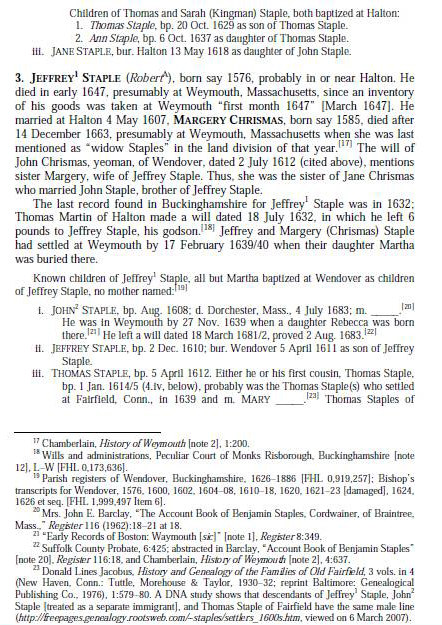
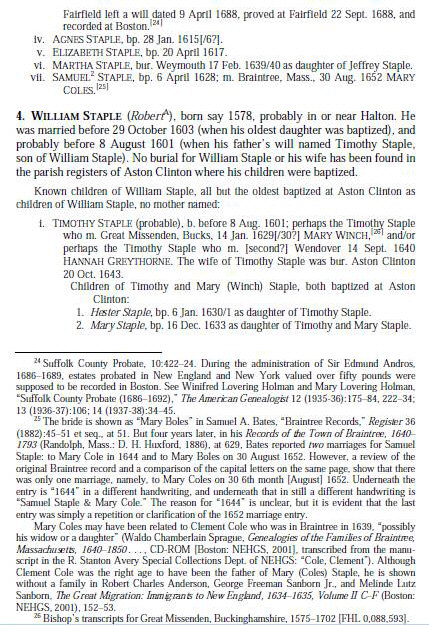
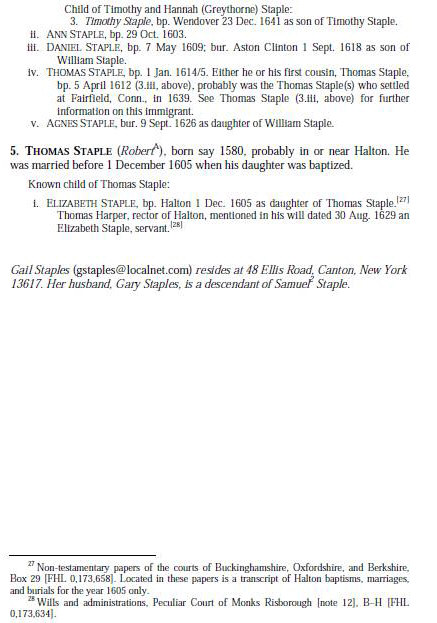
Jeffery Staples

Jeffery STAPLES (1576 – 1647) was Alex’s 11th Great Grandfather; one of 4,096  in this generation of the Shaw line.  He was also Alex’s 12th Great Grandfather; one of 8,192 in this generation of the Miller line.

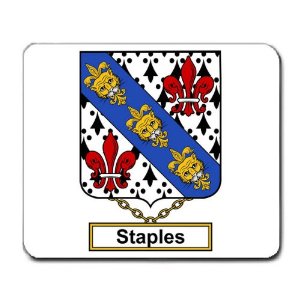
Immigrant Ancestor - Staples Coat of Arms

Immigrant Ancestor – Staples Coat of Arms

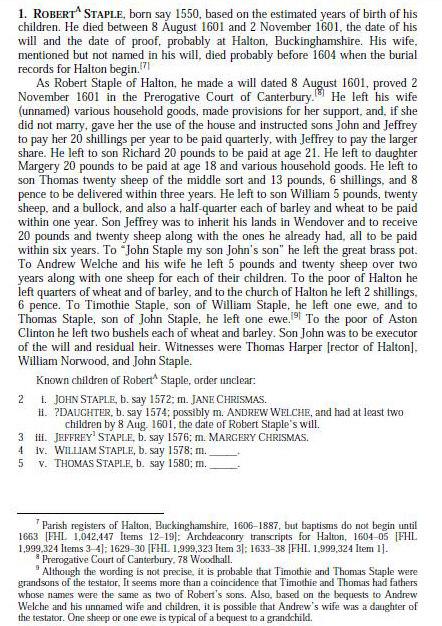
Jeffery Staples was born about 1576 in Halton, Buckinghamshire, England. His father was Robert STAPLES (1550 – 1601). He married Margery CHRISMAS 4 May 1607 in Halton, Buckinghamshire, England.  Jeffery died in Mar 1647 in Weymouth, Norfolk, Massachusetts.

Margery Chrismas was born in 1585 in Halton, Buckinghamshire, England. We know her maiden name because the will of John Chrismas, yeoman of Wendover dated 2 Jul 1612 mentions sister Margery, wife of Jeffery Staples.  Margery died 14 Dec 1663 in Weymouth, Norfolk, Massachusetts.

Children of Jeffery and Margery:

Name Born Married Departed
1. Thomas Staples 27 Dec 1607 – Wendover, Bucks, England Mary Royce
1625
England
22 Sep 1688
Fairfield, Connecticut
2. John STAPLES Sr. Aug 1608
Wendover, Bucks, or Chard, Somerset, England.
Rebecca [__?__] in 1636. 4 Jul 1683 Dorchester Mass
3. Jeffery Staples baptized
2 DEC 1610 in , Wendover, Bucks., England
5 APR 1611 Bucks., England
4. Agnes Staples 28 JAN 1615/16
Wendover, England
Aft 1683
Dorchester, Norfolk, Mass.
5. Elizabeth Staples 20 APR 1617
Wendover, England
Aft 1683
Dorchester, Norfolk, Mass
6. Martha Staples c. 1620
Wendover, England
17 FEB 1639/40
Weymouth, Norfolk, Mass
7. Samuel Staples 6 APR 1628
Wendover, England
Mary Cole
30 Aug 1652 Braintree, Norfolk, Mass

The Staples family name is of considerable antiquity in England. The name has been variously written Staple, Stapel, Stapelle and Stapul. A number of persons are mentioned of this surname among the nobility of England and the coats-of-arms they have borne are described in various works on heraldry. The Irish family carries on its coat-of-arms a representation of an iron staple, showing perhaps the supposed origin of the name and two English branches carry similar designs on their armor. However, it is more likely that  the surname of this family was taken from the trade, stapler, meaning wool dealer.

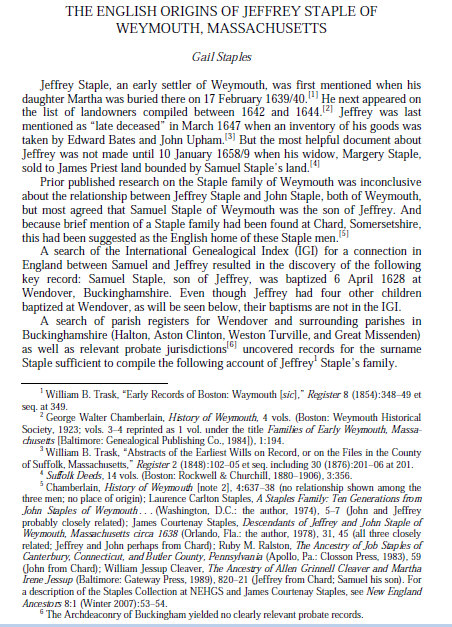
Jeffrey and wife Margery had settled at Weymouth by 17 Feb 1639/40 when their daughter Martha was buried there

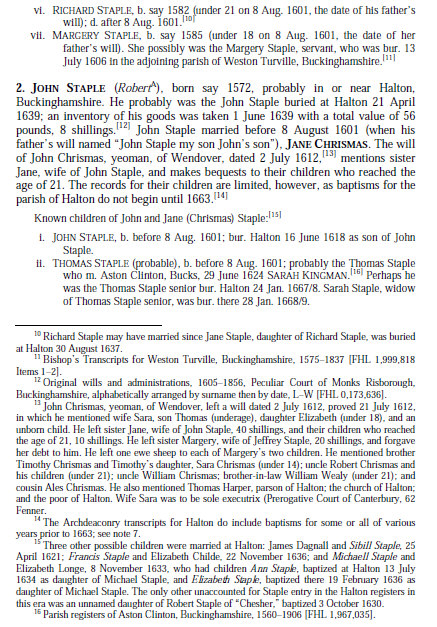
A NEHGR article on Jeffrey Staple of Weymouth, includes, as son of Jeffery, a John Staple, baptized Aug 1608, died in Dorchester, Mass., 4 July 1683, m. ____ at age 18, had dau. Rebecca born 27 Nov 1639 in Weymouth. He left a will dated 18 Mar 1681/82 proved 2 Aug 1683.

In a meeting of the Select men (of Weymouth, 14 Dec 1663) John and the “widdow Staple” (probably Jeffery’s widow) are given land (along with others)

Children

1. Thomas Staples

Thomas’ wife Mary Royce was born in 1603 in England. Her parents were Robert Royce (1562 – 1676) and Mary Hamlin (1562 – ). Mary died 12 Sep 1696 in Fairfield, Fairfield, Connecticut.

Thomas was a Deputy to the Connecticut Legislature

In 1655 Thomas Staples sued Roger Ludlow in Fairfield, Conn. for accusing his wife of Witchcraft.   Roger Ludlow (1590–1664) was one of the founders of the Colony of Connecticut.  He matriculated at Balliol College, Oxford in 1609 or 1610, and was admitted to the Honourable Society of the Inner Temple in 1612.

Ludlow sailed to America in May 1630 aboard the ship Mary & John with his wife Mary Cogan, a sister-in-law of Governor John Endicott of Massachusetts. They settled at Dorchester, Massachusetts, where they remained for five years. During that period he was chosen magistrate in the Court of Assistants for the Massachusetts Bay Colony. He was elected as Deputy Governor in 1634. During this time Ludlow successfully negotiated the first treaty between the English and the Pequot.  In 1635 he was defeated by John Haynes for Governor.

In 1635 Roger Ludlow joined with other Puritans and Congregationalists who were dissatisfied with the rate of Anglican reforms, and sought to establish an ecclesiastical society subject to their own rules and regulations. The Massachusetts General Court granted them permission to settle the cities of WindsorWethersfield, and Hartford in the area now known as Connecticut. The Ludlows settled into Windsor.  However, ownership of the lands for the new towns along the Connecticut River was called into dispute by the English holders of the Warwick Patent of 1631 that had been granted by Robert Rich, 2nd Earl of Warwick.  The Massachusetts General Court established the March Commission to mediate the dispute between the Connecticut colony and the Saybrook Colony, and named Roger Ludlow as its head.

Roger Ludlow Monument

In early 1639 Ludlow’s political rival from Massachusetts John Haynes who had since settled in Connecticut was elected Governor of Connecticut. Ludlow then chose to take leave from Hartford and Windsor and obtained a charter from the General Court to begin a settlement at “Pequannocke” (present day Bridgeport). He left with a group of like minded settlers from Windsor, Watertown, and Concord to purchase property along the coast of Long Island Sound west of the New Haven Colony. While on this task Ludlow recalled the attraction of the salt marshes west of the Pequonnock River near “Unquowa” and purchased land there from the native Sachem and founded the town of Fairfield, Connecticut. Ludlow settled his family in the new town of Fairfield, but returned to Hartford in the fall of 1639. In a session of the General Court held October 10, 1639 Ludlow was censured and fined by the Court for having exceeded the terms of the charter granted to settle areas that were to have been east of Fairfield. Governor Haynes and Thomas Wells visited Fairfield to investigate the settlement and apparently found that it was acceptable.

In 1646 Ludlow was asked by the Connecticut General Court to draft a comprehensive set of laws “grounded in precedent and authority and fitted to the necessities of the new civilization.” The result was “The Code of Laws of 1650”, or Ludlow Code, which is archived in the Connecticut Colonial Records.

Having been tried for slandering Mrs. Thomas Staples of Fairfield (the accusation was that Ludlow had said that she was a witch) and lost as well as being appointed commander of a militia to defend Fairfield against invasion by the Dutch, Ludlow had grown weary of colonial life.

He left Fairfield in April or May 1654.  He first sailed to Virginia Colony to visit his brother George who had settled there. Then Ludlow left Virginia to return to England and made it to Ireland by September 1654. Ludlow settled at Dublin and in November 1654 was appointed to serve the Council as an adjudicator of matters relating to property law. The appointment may have been made at the request of Oliver Cromwell.  He served on the commission from 1654 to 1658. Ludlow died in Dublin about 1664.

Goodwife Knapp’s Hanging and Goodwife Staples Slander Suit

Roger Knapp was born about 1618 in England and came to New England in the early 1640s. He eventually settled in Fairfield in the colony of New Haven in 1644 (now Connecticut). Not much is known about Roger Knapp except that he is listed as a farmer and an Indian trader.

In 1653 his wife, known only as “Goodwife” Knapp, was accused and convicted of witchcraft and executed by hanging in Try’s field outside the village of Fairfield.   Nothing is known of the trial of Goodwife Knapp or what she was accused of.

The remarkable thing about the Goodwife Knapp execution is not the trial itself but the aftermath. Roger Ludlow, the Deputy Governor of Connecticut, had been fighting on and off for several years with his neighbor Mary Staples (wife of Thomas Staples, also known as Staplies). In 1651 Ludlow won a suit against Mary Staples for slander but this did not put and end to their dispute.

During the trial and imprisonment of Goodwife Knapp, Roger Ludlow and his supporters tried to get her to affirm that Mary Staples was a witch but Knapp refused. Just before the execution, Ludlow claimed that Goodwife Knapp came down the ladder and whispered in his ear that Mary Staples was, indeed, a witch.

Ludlow told this story to his friends, Rev. John Davenport and his wife, and it soon spread to the entire village of Fairfield. Accusing someone of witchcraft was a very serious charge—especially just after Goodwife Knapp had been hanged. When Thomas Staples heard that Ludlow was making these accusations against his wife he filed a defamation suit against Roger Ludlow.

John Davenport 1670

Mary Staples had the support of Rev. John Davenport, the leading minister of the New Haven Colony who testified on her behalf.  The magistrates decided in favor of her husband’s suite and find Roger Ludlow £15.  Yet a reputation for witchcraft lingered about Mrs. Staples for in 1692 she was indicted for the crime along with a daughter and granddaughter.  Those cases ended in acquittal.

The trial took place in May, 1654. There are several on-line accounts from books that have recently been scanned. The best and most readable is from The Witchcraft Delusion in Colonial Connecticut by John M. Taylor. This is from the trial records and some of the descriptions are quite graphic, particularly the account of Goodwife Staples’ examination of Goodwife Knapp’s body for witch’s teates.

Here’s some excerpts

“May the thirteenth, 1654.”Hester Ward, wife of Andrew Ward, being sworne deposeth, that aboute a day after that goodwife Knapp was condemned for a witch, she goeing to ye prison house where the said Knapp was kept, she, ye said Knapp, voluntarily, wthout any occasion giuen her, said that goodwife Staplyes told her, the said Knapp, that an Indian brought vnto her, the said Staplyes, two litle things brighter then the light of the day, and told the said goodwife Staplyes they were Indian gods, as the Indian called ym; and the Indian wthall told her, the said Staplyes, if she would keepe them, she would be so big rich, all one god, and that the said Staplyes told the said Knapp, she gaue them again to the said Indian, but she could not tell whether she did so or no.

“Elizabeth Brewster being sworne, deposeth and saith, that after goodwife Knap was executed, as soone as she was cut downe, she, the said Knapp, being caried to the graue side, goodwife Staplyes wth some other women went to search the said Knapp, concerning findeing out teats, and goodwife Staplyes handled her verey much, and called to goodwife Lockwood, and said, these were no witches teates, but such as she herselfe had, and other women might haue the same, wringing her hands and takeing ye Lords name in her mouth, and said, will you say these were witches teates, they were not, and called vpon goodwife Lockwood to come & see them; then this deponent desired goodwife Odell to come & see, for she had bine vpon her oath when she found the teates, and she, this depont, desired the said Odill to come and clere it to goodwife Staplies; goodwife Odill would not come; then the said Staplies still called vpon goodwife Lockwood to come, will you say these are witches
teates, I, sayes the said Staplies, haue such myselfe, and so haue you if you search yorselfe; goodwife Lockwood replyed, if I had such, she would be hanged; would you, sayes Staplies, yes, saith Lockwood, and deserve it; and the said Staplies handeled the said teates very much, and pulled them wth her fingers, and then goodwife Odill came neere, and she, the said Staplies, still questioning, the said Odill told her no honest woman had such, and then all the women rebuking her and said they were witches teates, and the said Staplies yeilded it.

It is evident from the testimonies that Staplies was on both sides as to the guilt of goodwife Knapp, and when rumor and suspicion began to point to herself as a mischief-maker and busybody in witchcraft matters, to divert attention from his wife and set a backfire to the sweep of public opinion, Thomas sued Ludlow, and despite his strong and clear defense as shown on the record evidence, the court in his absence awarded damages against him for defamation and for charging Staplies’ wife with going on “in a tract of lying,” “in reparation of his wife’s name” as the judgment reads. Mistress Staplies did not grow in grace, or in the graces of her neighbors, since some years later she was indicted for witchcraft, tried, and acquitted with others, at Fairfield, in 1692

Staplies’ wife was a character. She was “a light woman” from the night of her memorable ride with Tom Tash, to Jemeaco, Long Island, to the suspicion of herself as a witch, and the “repairing” of her name by Thomas’ lawsuit, and her own indictment for familiarity with Satan some years later. That she had many of the traditional witch qualities, and was something of a gymnast and hypnotist, is written in the vivid recollections of Tash’s experience with her. This was his account of it on oath thirty years after:

[some spelling corrected for readability] “John Tash aged about sixty four or thereabouts saith he being at Master Laueridges at Newtown on Long Island about thirty year since Goodman Owen and Goody Owin desired me to goe with Thomas Staples wife of Fairfield to Jemeaco on Long Island to the house of George Woolsy and as we were going along we came to a durty slow and thar the horse blundered in the slow and I mistrusted that she the said Goody Staples was off the horse and I was troubled in my mind very much soe as I came back I thought I would take better notice how it was and when I cam to the slow abovesaid I put on the horse prity sharp and then I put my hand behind me and felt for her and she was not upon the horse and as soon as we were out of the slow she was on the horse behind me both going and coming and when I came home I told these words to Master Leveredge that she was a light woman as I judged and I am ready to give oath to this when legally called tharunto as witness my hand.
his “John+Tash mark
“Grenwich July 12, 1692.

MARY STAPLIES. Fairfield, 1692. Jury found no bill.

2. John STAPLES Sr. (See his page)

4. Agnes Staples

Agnes settled in Weymouth, Norfolk, Mass by 17 Feb 1639/40

5. Elizabeth Staples

Elizabeth settled in Weymouth, Norfolk, Mass by 17 Feb 1639/40

7. Samuel Staples

Samuel’s wife Mary Coles was born about 1631 in Dedham, Norfolk, England. Alternatively, her maiden name was Bowle or Bowles. Mary died in 1669.

English Origins of Jeffrey Staples 1

English Origins of Jeffrey Staples 2

English Origins of Jeffrey Staples 3

English Origins of Jeffrey Staples 4

English Origins of Jeffrey Staples 5

English Origins of Jeffrey Staples 6

Sources:

http://wc.rootsweb.ancestry.com/cgi-bin/igm.cgi?op=GET&db=jbbullock&id=I52843

http://www.americanancestors.org/uploadedFiles/American_Ancestors/Content/Publications/Journals/Register_PDFs/NEHGR_April_2007_Vol_161.pdf

http://sandwalk.blogspot.com/2009/09/hanging-of-goodwife-knapp-in-1653.html

Witch-Hunting in Seventeenth-Century New England: A Documentary History 1638 … by David D. Hall

Posted in 13th Generation, 14th Generation, Immigrant - England, Line - Miller, Line - Shaw, Storied, Witch Trials | Tagged , | 6 Comments

Thomas Bliss

Thomas BLISS (1588 – 1647) was Alex’s 11th Great Grandfather, one of 4,096 in this generation of the Shaw line.

Immigrant Ancestor

Thomas Bliss brother of George and cousin of Thomas, was born about 1588 probably in the village of Preston Parva, Daventry, Northamptonshire, England in England. His parents were John BLISS of Daventry, and later of Preston Parva, Northamptonshire and  Alice SMITH. He married Dorothy WHEATLEY on 22 Nov 1614 in Holy Cross Church, in Daventry, Northampton, England. After Dorothy died, he married Abigail Southam in Feb 1632/33 in Daventry. England.  Thomas, a blacksmith, and his children by Dorothy emigrated to Massachusetts in about 1638.  Some researchers think he married, the widow Hyde (Ide), see discussion below.  Thomas died after 7 Oct 1647 in Rehoboth, Mass.

Holy Cross Church, in Daventry, Northampton, England

Dorothy Wheatley was baptized 22 Aug 1591, Maiden Newton, Dorsetshire, England.  Her parents were  Frank WHEATLEY and Mary FIENNES of Tingsboro, Somerset, England.  The register of Holy Cross church Daventry records the burial of Dorothy Blisse 10 May 1631.  The record does not identify her as Thomas’ wife; it simply reports the burial of Dorothy Bliss and the date. In that year Thomas was churchwarden at Holy Cross, therefore a man of some repute in the town. In Feb 1632/33 Thomas Blisse married Abigail Southam. Two children were born to them but  their son Thomas was buried in 1635/36 and their daughter Amity was buried in 1637, the year before Thomas Blisse and children by Dorothy are believed to have emigrated. I believe no documentary evidence of Abigail Bliss has been found in America. But in England an Abigail Bliss was buried at Daventry 6th Oct 1681.

If the 1681 burial were Thomas’ wife, then  the traditional explanation that Thomas Bliss married the widow Ide in New England and her son Nicholas was accepted by him as a foster son who inherited a child’s portion in Thomas’s will of 1647 would be in serious question.

True no wife was metioned in the will, so it is doubtful that Abigail was present in New England at that time (if, in fact, she ever went to America with her husband). However she was alive and continued to live for many years after Thomas’s death. Her existence weakens the long-accepted suppostion (for that is all it is) that Thomas Bliss took up with the widow Ide and adopted her son as his own.  Alternatively, Dorothy died 1646 in Rehoboth, Bristol, Mass.

Children of Thomas and Dorothy:

Name Born Married Departed
1. Elizabeth BLISS 09 Feb 1614/15
Daventry, Northampton, England.
Thomas WILMARTH
8 Jun 1645 Rehoboth, Mass.
Feb 1675/76
Rehoboth, Bristol, Mass.
2. Mary Bliss 16 Mar 1615/16
Daventry, England
Nathaniel Harmon
1638
Braintree, Norfolk, Mass.
29 Jan 1712
Springfield, Hampden, Mass
3. Jane Bliss 14 Jan 1618
Daventry, England
16 Sep 1621
Daventry, England
4. John Bliss 12 Nov 1620
Daventry, England
1635
Daventry, England
5. Martha Bliss
(See discussion below)
08 Dec 1622
Daventry, England
Nicholas Ide (Actually step-son)
16 May 1647 Springfield, Hampden, Mass
Possibly died Young .
Daughter-in-law possibly died
3 Nov 1676
Rehoboth, Mass
6. Thomas Bliss 19 Nov 1624 14 Aug 1628
7. Sgt. Jonathan Bliss 11 Mar 1625/26
Daventry, England
Miriam Harmon
1648 in Rehoboth, Bristol, Mass
11 Jun 1687
Rehoboth, Mass

Thomas and Dorothy settled in Braintree where, according to the first book of the Boston town records, they were granted 36 acres of land in 1639. Thomas took the freeman’s oath in May of 1642 in Cambridge, and the family moved to Rehoboth in 1643. One of the original proprietors of Rehoboth, Thomas received a home lot of eight acres in the northwest end of town. They both died by 1647, owning 45 acres

Thomas was a blacksmith, farmer and surveyor, of Rehoboth, MA.   He learned the
blacksmithing trade and practiced it at Daventry.

Dorothy’s father Frank Wheatley was born in about 1562 (son of Capt. John and Mary Wheatley). He was married to Mary Fienes of Maiden Newton, Dorset, England and had seven children:

i. Dorothy WHEATLEY (baptized August 22, 1591 at
Maiden Newton and married Thomas BLISSE),

ii. John Wheatley (born 1593 at Maiden Newton and married
Leah Sanders),

iii. Richard Wheatley (baptized 4 Jan 1595 at Maiden Newton and married),

iv. Edward Wheatley (born about 1598, resided at Maiden Newton and married Elizabeth Piper),

v. Precilla Wheatley (born about 1600, married Alden Mervin and resided at East Knoyle, Wiltshire, England),

vi. Zachariah  Wheatley (born about 1602, married and resided at East Knoyle)

vii. Magdalen Wheatley (born about 1604, married Charles Polden and resided at Hastings, Sussex, England.

Thomas Bliss Home Front – Preston Parva, Noramptonshire, England

Thomas Bliss Home Rear- Preston Parva, Northamptonshire, England

Seven children were born to Thomas and Dorothy prior to their immigration to America in about 1638, of whom only three are known to have come to America with their parents. At that time Thomas was by no means a poor man. He was “wealthier” than his cousin, Thomas of Hartford, but it appears that the cost of transporting his family to the New World took the greater part of his means.

And yet Thomas was a skilled worker, not wholly dependent on the fortunes of a harvest. Though he farmed consistently, his blacksmithing expertise proved to be the foremost of the assets he was able to bring from England.

The family landed at Boston, settled at Braintree, MA, and then removed to Rehoboth. 1647 –

The last Will and Testament of Thomas Blise

Being sick in body but in perfect memory made the seventh Day of the eighth month; 1647 the said will allso Exhibbited unto the Court holden at new Plymouth the eighth of June 1649, upon the oathes of Steven Payne Edward Smith

Imprimus I give in the name of the father sonn and holy Goste my soule into the hands of god yt gave it and my body to the earth

It I give unto my soon Jonathan my house and home lot Conditionally yt hee shall give unto my sonninlaw Thomas Willmore his lot wh hee now hath and allso the one half of my broken up ground for two yeares and shall healp him to build him an house and let him peacably and quietly live in the house with him untell they shall bee able to set up a house for him

It I give unto Jonathan two of my oxen Called Spark and Swad and my heifer wh is Called traveler and my heifer Calfe at the Iland and all my beding and all my tooles Conditionly yt hee shall use them in my trade or els they shalbee Devided to my fouer Children

It I give unto my eldest Daughter and her husband Thomas Willmore my other two oxen Called quick and benbo an my broad headed heifer and my Cow Called Damson and all my wearing aparrell

It I give to my Daughter Mary and her husband Nathaneill harmon my three two yeare ould steers and ten bushells of wheat

It I give unto Nathaneell the sonn of my sonninlaw Nicolas Ide my browne heifer and my two steere Calves wh are at the Iland

It I give unto Nicolas Ide ten bushells of Rye

It I give unto my sonn Jonathan and my sonninlaw Thomas Willmore the Resedew of my Corn and allso the Rye now sowne on the ground and my Coult and all my tackling and Implements as plowes Cart and Chaines all these to be equally Devided between them allso my pot and ketell; and I Doe make them exequters Joyntly of this my will and Testament; and I Doe Intreat my trusty and wellbeloved frends Richard Wright and Steven Payne to bee overseers of this my Will yt it bee Dewly and Justly performed in Wittness heerof I have set to my hand the Day and yeare first above written; I give unto my fouer Children my hide of leather which is in William ffeilds hand to be equalli Devided between them; and if any of my Children shall seeck to Defraude the others of any pt of theire Right or shall bee any wayes troublesom and it bee Justly proved hee shall forfeite all his part heer menssioned to be equally Devided between the Rest

In the prsence of Thomas Blise
Steven Payne
Edward Smith

An Inventary of the goods and chattells of the late deseassed Thomas blise takein The 21 of the eight month [October] 1647.
Item £ s d
Impri his wearing aparell 3 0 0
It one fether bede 2 bolsters one blanked and one
coverlid and 2 sheets
4 0 0
It one Iron pot one brasse kittle 0 10 0
It 3 payls one tube 0 6 0
It in bookes 0 5 0
It 3 axsses one throw one hatchet one adds one wimble 0 12 0
It 2 sithes one how 0 6 0
It one ould muskate one pistoll one pistollbarell and
one barell of a peece and 2 ould swords
1 10 0
It 3 pitchforks one mukeforke . 0 5 0
It Iron and Steelle 0 9 0
It 2 beetleRings one wedge one mortising axe 0 6 0
It one warming pan one pot crooke one paire of pot
hooks one frying pan
0 10 0
It one payer of stillyards 0 3 0
It one horse harnesse one Sadle tree 0 7 0
It 2 meale troughs tow old hoggsheads 0 6 0
It one ould bagg 0 10
It in oattes pilcorn and peasen 0 12 0
It all the tooles belonging unto the Smiths trade 22 0 0
It one hyde of soallether 1 4 0
It 2 sives 0 1
It 2 oxen 12 0 0
It one Cow 5 5 0
It 2 oxen 22 0 0
It one Cow 5 0 0
It one heaifer 4 15 0
It 3 young Steers 8 0 0
It one Cow 5 5 0
It one court 7 0 0
It 3 calves 4 0 0
It 2 swyne 2 10 0
It haye 8 0 0
It wheat 6 15 0
It Rye 1 0 0
It in chaynes 0 12 0
It 2 plows and plow Irons 1 0 0
It one cartrope 0 4 0
It 2 yookes 0 5 0
It one cart 1 0 0
It Indian corn 1 6 0
It hempe 0 1 0
It one ould Sawe and other ould lumber 0 10 0
Sum 117 16 4

Aprised by Steven payne and Richard Bowin at a generall court holden at neu plimouth the 7th of March 1647 Johnathan Blise and Thomas willmore testified Upon oath before the said court yt this is a true Inventory of the goods and chattels of thomas Blise above written

Children

1. Elizabeth BLISS (See Thomas WILMARTH‘s page)

2. Mary Bliss

Mary’s husband Nathaniel Harmon was born 1616 in England. His parents were Francis Harmon and Sarah Martin.  His sister Miriam married Mary’s brother Jonathan. Nathaniel died 1693 in Milton, Norfolk Co., Mass.

5. Martha Bliss?

According to researcher Tom B., Thomas was married a second time in England. According to this theory, Thomas did not have a daughter Martha and Nicholas Ide was his step-son, not his son-in-law.

That a marriage between Nicholas Ide and Martha Bliss occurred at Springfield in 1647 is a fabrication and a confused one at that. There were two, contemporary Thomas Blisses, one of Rehoboth (d. there between 7 Oct. 1647 [will] and 21 Oct. 1647 [estate inventory]), the other of Hartford, Conn. (d. there shortly before 14 Feb. 1650/51; his wife was Margaret Hulins [TAG 52(1976): 193-97, 60(1984): 202]). At least one of Hartford Thomas’s children was living at Springfield by 1646, and others followed. Thomas of Rehoboth and his children, on the other hand, never resided at Springfield.  No daughter Martha is recorded for either man. While a baptismal date of 8 December 1622 is often attributed to Martha, supposed daughter of Rehoboth Thomas Bliss, it was his son Nathaniel who was baptized at Daventry, Northamptonshire, England, on that date.

Who can the fourth child mentioned in Thomas’ will be, if not Nicholas Ide? He is mentioned in relation to “Nathaneell the son of my sonninlaw Nicolas Ide,” not “my grandson Nathaneell” or “Nathaneell, the son of my daughter Martha.”

The reference in Thomas Bliss’s will to “my sonninlaw Nicolas Ide,” seems to indicate that Ide had married Bliss’s daughter. This, however, is not the case. With his first wife, Dorothy Wheatlie, Bliss had seven known children (baptized 1615-1626), of whom none was named Martha (BLISS FAMILY, 1:36). Bliss’s will, dated “the seventh day of the eighth month [October] 1647,” names only three of these seven; it nevertheless speaks of “my fouer Children” (Plymouth Colony Wills, 1:67 [will], 68 [inventory, dated “the 21 of the eighth month (Oct.) 1647”]). The will refers to Bliss’s surviving daughters’ husbands in association with their respective wives: “my eldest Daughter [Elizabeth] and her husband Thomas Willmore [i.e., Wilmarth]” and “my Daughter Mary and her husband Nathaneell Harmon.” “[S]onninlaw” Nicholas Ide, by contrast, is mentioned only in relation to Ide’s son “Nathaneell.” While these facts are significant in their own right, they become all the more so when it is understood that the term SON-IN-LAW was commonly used at this time to mean STEPSON.

The conclusion is inescapable: Nicholas Ide, by virtue of his widowed mother’s having become Thomas Bliss’s second wife, was Bliss’s stepson and NOT the husband of a Bliss daughter. That Ide was the fourth of Bliss’s “fouer Children” is confirmed by the petition of “Nicolas Hyde” to the Plymouth Colony General Court, 7 June 1648, “for a childs portion of the estat[e] of Thomas Blisse, desseased”

Die-hards who might argue that Nicholas could have married his stepsister should recall that there is no record of Thomas Bliss’s having had a daughter Martha. New England colonists, moreover, would have considered such a marriage as bordering on incest.

If Nicholas Ide’s son Nathaniel had been Thomas Bliss’s natural grandson (Bliss’s will refers to him only as Ide’s son), Ide’s petition for a full, child’s share of Bliss’s estate would have been made on behalf of Nathaniel; it wasn’t. Of course, if the petition were on behalf of Nathaniel, it would indicate that his mother (a Bliss daughter in this scenario) had died. But Martha Ide (bur. Rehoboth, 3 Nov. 1676) was alive when both the will and the petition were made (8 Oct. 1747 and 7 June 1648, respectively). That being so, if she had been Thomas Bliss’s daughter, Nicholas Ide would have had absolutely no grounds for his petition

Finally, here’s an explanation which requires two assumptions, but does fit all the facts:  Thomas Bliss’ daughter Martha born in 1622 died young.  Nicholas Ide, Thomas’ step-son also married a woman named Martha, but she was a different woman.

7. Sgt. Jonathan Bliss

Jonathan’s wife Rachel Pfuffer was born about 1626 in England.  Her parents were George Puffer b: ABT 1600 in England and Elizabeth Sedley b: ABT 1605. Rachel died 21 MAY 1676 in Rehoboth, Bristol, Mass.

“Jonathan Bliss probably married Rachel Puffer, according to Eugene Cole Zubrinsky’s ‘To Say It Doesn’t Make It So: Clues to the Probable Identity of the Wife of Jonathan Bliss of Rehoboth, MA,’ in ‘NEHGR’, 151 (1997), 31-37.” [Ancestral Lines]

Miriam Harmon was born in England.  Her parents were Francis Harmon and Sarah Martin.

According New England Hist and Gen Register vol 151 (Jan 1997) 31-37  Jonathan’s did not marry Miriam Harmon. The entire article is about the wife of Jonathan Bliss, with conclusion that the conventional Miriam idea is certainly wrong, but the most probable is that she was the daughter of George Puffer of Braintree, posibly a Rachel?

Early in the eighteenth century the first settlers of Rehoboth who had come from Weymouth with Samuel Newman in 1643, had passed away and their descendants had spread out from the “ring of the town” which is now East Providence Center. Some of the more enterprising had moved as far east as Palmer’s River and were settled along the borders of that stream. Following the river up from the Swansea line, we find the Thurbers the Smiths, the Burrs, the Palmers, the Bullocks, the Aliens, the Millers, the Martins and the Millards; then the Lakes, the Pecks, the Fullers and the Blisses; still farther up, the Blandings, the Hunts, the Wilmarths, the Carpenters and the Read ways; then the Wheatons, the Perrys and the Blisses again.

These sturdy and devout men and women, prizing the ministrations of the Sanctuary, found it difficult to attend worship at the Newman Church so far away, and petitioned the General Court in 1711 to have the town divided into two separate precincts for the support of the ministry. This the people in the older part of the town opposed by a counter petition. Thus arose a sort of distrust and rivalry between the east and west sections of the town, which increased until it culminated in 1759 in two distinct precincts; and in 1812, the year after the ”fighting town meeting,” in two separate towns.

In May, 1713, the General Court recommended to Rehoboth to raise one hundred and twenty pounds for the support of two ministers, — one at Palmer’s River.

In 1717 the people at Palmer’s River, by the consent of the Court, began to build a meeting-house in their part of the town, which was finished and occupied in 1721.

It stood half a mile north of the Orleans factory, on Lake Street, on the spot now marked by the remains of the old burying-ground. The lot includes three acres of land given by the brothers Nathniel and Samuel Peck and Jonathan Bliss, each giving one acre.

The parent church had been granted two hundred and fifty pounds for building a new meeting-house; of this they relinquished fifty pounds to aid the church at Palmer’s River, receiving a written release from any further payments. They also gave the facing of the galleries and the pulpit of their old meeting-house.

The Church was organized Nov. 29, 1721, consisting of ten members, David Turner (pastor), Elisha May, Thomas Ormsbee (deacons), Jathniel Peck, Samuel Peck, Benjamin Wilson, Solomon Millard, Samuel Fuller, William Blanding, Joseph Wilson. The worshippers were to be seated with discrimination, according to dignity, age and liberality toward the building and supporting of the church.

The business of the two churches and societies was “managed by the town as the affairs of one church,” and the expenses of both were to be borne by the whole town, an arrangement which,
according to the precinct record, “occasioned great difficulties.” They continued to be thus managed until the year 1759, each voter paying a yearly town rate and a ministerial rate collected by constables.

Children of Jonathan and Rachel:

i. Experience Bliss b: 5 FEB 1649 in Rehoboth, MA

ii. Rachel Bliss b: 1 DEC 1651 in Rehoboth, MA

iii. Jonathan Bliss b: 4 MAR 1653

iv. Mary Bliss b: 30 SEP 1655 in Rehoboth, MA

v. Elizabeth Bliss b: 29 JAN 1657 in Rehoboth, MA

vi. Samuel Bliss b: 24 JUN 1660 in Rehoboth, MA

vii. Martha Bliss b: APR 1663

viii. Jonathan Bliss b: 17 SEP 1666 in Rehoboth, Bristol, MA [Rehoboth vital records] sometimes rec. as Timothy He first married Miriam Carpenter 3 Jun  1691 at Rehoboth, MA.

After Miriam died, he married 10 APR 1711 Rehoboth to Mary French, daughter of John FRENCH Jr. and Hannah PALMER. Jonathan died 16 Oct 1719 in Rehoboth, Mass.

Jonathan Bliss Headstone – Palmer River Churchyard Cemetery Rehoboth, Bristol, Massachusetts, – Note that The double “S” is written the archaic way, the first “s” looks like an “f”

ix. Dorothy Bliss b: 27 JAN 1668 in Rehoboth, MA; m.  m. 26 JUN 1690 Rehoboth, Bristol, Mass. to James Carpenter b. 12 APR 1668 Rehoboth, Bristol, Mass.; d. 27 APR 1738 Rehoboth, Bristol, Mass. His parents were Samuel Carpenter and Sarah Redway and his grandparents were William CARPENTER Jr. and Abigail BRIANT.

x. Bethia Bliss b: AUG 1671 in Rehoboth, MA

Sources:

http://members.cox.net/spartanshope/Tree/famf204.html

http://www.usgennet.org/family/bliss/rehoboth/tbliss/tblisswill.htm

http://www.usgennet.org/family/bliss/index.html

http://rickster.org/ancestry/b27018.htm#P52032

Two of the more reliable secondary sources pertaining to these men and their families are Donald L. Jacobus and Edgar R. Waterman, HALE, HOUSE AND RELATED FAMILIES [1952], pp. 476-80, and Aaron T. Bliss, GENEALOGY OF THE BLISS FAMILY IN AMERICA, 3 vols. [1982]

New England families, genealogical and memorial: a record of the …, Volume 4 edited by William Richard Cutter 1915  (Story of Nicholas Ide)

http://genforum.genealogy.com/ide/messages/275.html (See message string for detailed arguments about history of Nicholas Ide and Martha Bliss.

A History of Rehoboth, Massachusetts: Its History for 275 Years, 1643-1918 (1918) By George Henry Tilton , Leonard Bliss 1918

Posted in 13th Generation, Historical Church, Historical Site, Immigrant - England, Line - Shaw, Pioneer | Tagged , | 21 Comments

Edward I

24th GenerationEDWARD I of England (1239 – 1307), also known as Edward Longshanks and the Hammer of the Scots, was King of England from 1272 to 1307.    He married ELEANOR of Castile.

Portrait in Westminster Abbey, thought to be of Edward I

The first son of Henry III, Edward was involved early in the political intrigues of his father’s reign, which included an outright rebellion by the English barons. In 1259, he briefly sided with a baronial reform movement, supporting the Provisions of Oxford. After reconciliation with his father, however, he remained loyal throughout the subsequent armed conflict, known as the Second Barons’ War. After the Battle of Lewes, Edward was hostage to the rebellious barons, but escaped after a few months and joined the fight against Simon de Montfort. Montfort was defeated at the Battle of Evesham in 1265, and within two years the rebellion was extinguished. With England pacified, Edward left on a crusade to the Holy Land. The crusade accomplished little, and Edward was on his way home in 1272 when he was informed that his father had died. Making a slow return, he reached England in 1274 and he was crowned king at Westminster on 19 August.

Edward’s reign had two main phases. He spent the first years reforming royal administration. Through an extensive legal inquiry, Edward investigated the tenure of various feudal liberties, while the law was reformed through a series of statutes regulating criminal and property law. Increasingly, however, Edward’s attention was drawn towards military affairs. After suppressing a minor rebellion in Wales in 1276–77, Edward responded to a second rebellion in 1282–83 with a full-scale war of conquest. After a successful campaign, Edward subjected Wales to English rule, built a series of castles and towns in the countryside and settled them with Englishmen. Next, his efforts were directed towards Scotland. Initially invited to arbitrate a succession dispute, Edward claimed feudal suzerainty over the kingdom. In the war that followed, the Scots persevered, even though the English seemed victorious at several points. At the same time there were problems at home. In the mid-1290s, extensive military campaigns required high levels of taxation, and Edward met with both lay and ecclesiastical opposition. These crises were initially averted, but issues remained unsettled. When the king died in 1307, he left behind a number of financial and political problems to his son Edward II, as well as an ongoing war with Scotland.

Edward I was a tall man for his era, hence the nickname “Longshanks”. He was also temperamental, and this, along with his height, made him an intimidating man, and he often instilled fear in his contemporaries. Nevertheless, he held the respect of his subjects for the way in which he embodied the medieval ideal of kingship, as a soldier, an administrator and a man of faith. Modern historians have been more divided on their assessment of the king; while some have praised him for his contribution to the law and administration, others have criticised him for his uncompromising attitude to his nobility. Currently, Edward I is credited with many accomplishments during his reign, including restoring royal authority after the reign of Henry III, establishing parliament as a permanent institution and thereby also a functional system for raising taxes, and reforming the law through statutes. At the same time, he is also often criticised for other actions, such as his brutal conduct towards the Scots, and issuing the Edict of Expulsion in 1290, by which the Jews were expelled from England.

Edward and Eleanor had at least fourteen children, perhaps as many as sixteen. Of these, five daughters survived into adulthood, but only one boy outlived Edward – the future King Edward II. Edward I was reportedly concerned with his son’s failure to live up the expectations of an heir to the crown, and at one point decided to exile the prince’s favourite Piers Gaveston.Edward may have been aware of his son’s bisexual orientation even though he did not throw the prince’s favorite from the castle battlements as depicted in Braveheart.

23rd G. Elizabeth of RHUDDLAN (she was closest to her younger brother Edward II of England, as they were only two years apart in age.) m. Humphrey de BOHUN, 4th Earl of HerefordLord Constable of England

Elizabeth of Rhuddlan

At the Battle of Bannockburn (23–24 June 1314) [a significant Scottish victory and the decisive battle in the First War of Scottish Independence], Humphrey de Bohun should have been given command of the army because that was his responsibility as Constable of England. However, since the execution of Piers Gaveston in 1312 Humphrey had been out of favour with Edward II, who gave the Constableship for the 1314 campaign to the youthful and inexperienced Earl of Gloucester, Gilbert de Clare. Nevertheless, on the first day of the battle, de Bohun insisted on being one of the first to lead the cavalry charge. In the melee and cavalry rout between the Bannock Burn and the Scots’ camp he was not injured although his rash young nephew Henry de Bohun, who could have been no older than about 22, charged alone at Robert Bruce and was killed by Bruce’s axe.

19th century drawing of Humphrey de Bohun, 4th Earl of Hereford

On the second day Gloucester was killed at the start of battle. Hereford fought throughout the day, leading a large company of Welsh and English knights and archers. The archers had success at breaking up the Scots schiltrons until they were overrun by the Scots cavalry. When the battle was lost Bohun retreated with the Earl of Angus and several other barons, knights and men to Bothwell Castle, seeking a safe haven. However, all the refugees who entered the castle were taken prisoner by its formerly pro-English governor Walter fitz Gilbert who, like many Lowland knights, declared for Bruce as soon as word came of the Scottish King’s victory. Humphrey de Bohun was ransomed by Edward II, his brother-in-law, on the pleading of his wife Elizabeth. This was one of the most interesting ransoms in English history. The Earl was traded for Bruce’s queen, Elizabeth de Burgh and daughter, Marjorie Bruce, two bishops amongst other important Scots captives in England.   Isabella MacDuff, Countess of Buchan, who had crowned Robert Bruce in 1306 and for years had been locked in a cage outside Berwick, was not included; presumably she had died in captivity.

This depiction of a battle from the Holkham Bible (1327-35) gives a good idea of the appearance of the armies at Bannockburn

Final scene of Braveheart – In 1314, nine years after Wallace’s death, Robert the Bruce, now a king but still guilt-ridden over his betrayal of Wallace, leads a strong Scottish army and faces a ceremonial line of English troops at the fields of Bannockburn where the English are to accept him as the rightful ruler of Scotland. Just as he is about to ride to accept the English endorsement, the Bruce turns back to his troops. Invoking Wallace’s memory, he urges his charges to fight with him as they did with Wallace. Robert’s army then charges the English, who were not expecting a struggle. The film ends with Mel Gibson’s voice intoning that the Scottish won their freedom in this battle.

22nd G. Margaret de BOHUN 2nd Countess of Devon (1311-1391) Unlike most women of her day, she had received a classical education, and as a result was a lifelong scholar and collector of books m. Hugh de COURTENAY 2nd Earl of Devon.

Exeter Cathedral – Hugh Courtenay (1303 – 1377)

A soldier in the Hundred years war in service of King Edward III. On 11 Aug 1327, still only 23 years old he was made knight banneret, and joined the elite group of knights who protected the King’s body. He was made a founding and 12th Knight of the Order of the Garter in 1348 on its investiture at Windsor Castle.  Membership in the order is limited to the sovereign, the Prince of Wales, and no more than twenty-four members, or Companions; the order also comprises Supernumerary knights and ladies

Prince William in his Order of the Garter Garb

Courtenay fought with the heroes of Crecy on 26 August 1346 in the famous of the encounters in France. The victory formed the basis for Courtenay’s inclusion as a Knight of the Garter in 1348, by personal invitation of the King himself.

Exeter Cathedral, the burial place of Margaret de Bohun

21st G. šElizabeth COURTENAY (1333-1395) m. Sir Andrew LUTTRELL (1330 – 1395)

Andrew Luttrell 1390 – Irnham St Andrew

Married Elizabeth, relict of Sir John de Vere, son of the Earl of Oxford. She was the second daughter of Hugh, Earl of Devon. Through her sisters, she was closely connected with the Lords Cobham and Harington. On the occasion of the marriage, in the summer of 1359, Edward III gave them an annuity of 200£ for their lives, in aid of the maintenance of their social position. In 1361, Sir Andrew Luttrell and his wife went on pilgrimage to the famous shrine of Santiago de Compostella, with a retinue of twenty-four men and women and as many horses.

Dunster Castle is the historical home of the Luttrell family located in the small town of Dunster, Somerset, England.. Colonel Sir Walter Luttrell gave Dunster Castle and the greater part of its contents to the National Trust in 1976.  During 2009 it received 134,502 visitors.
There has been a castle at the top of the hill at Dunster for more than 1,000 years. The Domesday Book records one on this location before 1066.

The castle was granted by William the Conqueror to William de Moyon, whose family lived there until the castle was sold in 1376 by Lady Joan de Mohun to Lady Elizabeth Luttrell. Lady Elizabeth’s descendants owned Dunster Castle until 1976.

The castle dominates a steep hill overlooking the picturesque village of Dunster. The hill has been fortified since Saxon times, although nothing now remains of these early defences. During the early medieval period the sea reached the base of the hill offering a natural defence, and strong walls, towers, ramparts and outworks protected the other sides

20th G. šSir Hugh LUTTRELL (1364-1428) m. Katherineš BEAUMONT

Alabaster effigy of Sir Hugh Luttrell (1364- 1428), the first Luttrell to occupy Dunster Castle)

Served in France with Richard II and Henry IV and held a spectrum of appointments.

He was, in succession, Lieut. of Calais, Mayor of Bordeaux 1404, Govenor of Marfluer, and Great Sentinal of Normandy. He was Member of Parliament for Somerset in the reign of Richard II and subsequently for Devon. Esquire to the Household of John of Gaunt, Duke of Lancaster. Keeper of the Forest of Gillingham to Henry IV. Ambassador to a Treaty with France and Burgundy 1403.

On the death of his cousin, John, he inherited East Quantoxhead and when Lady de Mohun died in 1404 hastened to pursue his claim to Dunster. He began by dispatching the tenants and moving into the Castle in time to celebrate Christmas 1405. This stung the de Mohuns into action and there followed a scramble for the deeds of title of the Castle entrusted to the Prior of Christ Church, Canterbury. Sir Hugh took the Prior to court and eventually obtained the documents which proved his right to the Castle.

The de Mohun coheirs, Edward Plantagenet, Duke of York, the Countess of Salisbury and Lord Strange of Knockin – a formidable trio – argued the validity of the transaction. Sir Hugh was not easily panicked, he won Parliament onto his side and so arranged arbitration by two peers and all the justices. When this failed Parliament insisted the claim should be heard in the ordinary courts before an impartial jury. By this time the de Mohun’s case was wearing thin and they resorted to arguing legal technicalities. It is nevertheless disappointing to find the the story lacks a climax: the case was adjourned in 1407 after the first hearing and was never recommenced. Henceforth, Sir Hugh’s right to Dunster was unchallenged. He worked hard to make his new home habitable and one of his first acts was to install windows in the neat hall and his private quarters. In 1420 work began on the gatehouse, a symbol of property of the newowner of the Castle.

Dunster Castle Somerset

Steward of the Household of Queen Joan c1410. Constable of Bristol Castle and Keeper of the Forests of Kingwood and Fulwood c1412. He was afterwards ranger of Blackmore forest in Dorset, a privy councilor to Henry V and on of the commanders under that monarch at the reduction of Harfleur in Normandy in 1415 and at the siege of Rouen. He died while on a visit to his daughter Joan who was a nun at Shaftesbury, Dorset.

19th. G. Sir John LUTTRELL (1394-1430) m. Margaret TUCHET

18th G. šSir James LUTTRELL (1426-1461) m. Elizabeth COURTENAY

In Feb 1449 James Luttrell obtained royal license to convey the castle and borough of Dunster, the manors of Minehead, Carhampton and Kilton and the hundred of Carhampton to Feoffees in order they they should be settled on himself and the heirs of his body with remainder to his cousin Richard Luttrell and the heirs of his body and ultimate remainder to his own heirs general.

James Luttrell fought against the Duke of York at Wakefield at the end of Dec 1460 and was knighted by the Duke of Somerset on the field of battle. Seven weeks later he again served under the victorious banner of Queen Margaret at the second battle of St. Albans but he there received a wound of which he died on the fifth day.

The triumph of the House of York was disastrous to the Luttrells who had been attached to the House of Lancaster ever since the days of John of Gaunt. Within a week of his accession to the throne, Edward IV ordered the sheriff and escheator in Somerset and Dorset to seize all the possessions of the Dukes of Exeter and Somerset, the Earls of Devon, Wilts and Northumberland, Sir James LUTTRELL and Sir Alexander Hody, in those counties.

Two months later a somewhat wider commission was issued to Sir William Herbert, Thomas Herbert, John Herbert and Hugh Huntley to take possession of the lands of the Earls of Pembroke and Shrewsbury and Sir James LUTTRELL who were specifically described as rebels. For some unknown reason this commission was repeated in Aug. In the meantime the King had granted to Sir William Bourchier the wardship and marriage of Alexander Luttrell, the infant heir, as if it had fallen to the Crown in the ordinary course.

The Parliament, however, which sat in Nov 1461 passed a sweeping ordinance against all the chief supporters of Henry VI. Sir James LUTTRELL was therein named amongst those who ‘with grete despite and curell violence, horrible and unmanly tyrannye’ murdered the late Duke of York at Wakefield and who were consequently to ‘stand and be convycted and attainted of high treason, and forfett to the King and his heires all the castles, maners’ and other lands of which they were or had been possessed.

Lady Luttrell had, in the earlier months of her widowhood, been tacitly allowed to receive the issues of the lands settled on her in jointure and when the king’s officers took possession of these lands she lodged a complaint against them protesting that she was a loyal subject of the reigning monarch. A commission of enquiry was accordingly issued in Sep 1462 but it does not appear that she got much satisfaction.

17th G. šSir Hugh LUTTRELL  (1447-1521) m. Margaret HILL (or Welthian Yarde)  daughter of Robert HILL, and half-sister (maternally) of Lord Daubeney, K.G., and secondly, Walthera, widow of Thomas Drelne..

Mentioned by Hollingshed and other historians amongst the persons of note in the west, who joined the Earl of Richmond at his landing, and were afterwards instrumental in quelling the Devonshire insurrection.

When the successful issue of Bosworth placed the crown upon Richmond’s head, as Henry VII, Hugh presented a petition to the King in Parliament setting forth that his father had been attainted ‘for the true faith and allegiaunce which he owid unto the right famous prince of moost blessed memory, then his soveraine lord, Henry late King of England the sixth‘, and praying that the act of attainder should be repealed, and consequent letters patent made void. His petition was readily granted and the agents of the Earl of Huntingdon made way for the rightful lord of Dunster.

He was also created a Knight of the Bath at the Coronation of Elizabeth of York, wife of Henry VII, in Nov 1487. When Catalina of Aragon came to England to marryArthur, Prince of Wales, Sir Hugh Luttrell was one of the seven knights who were selected to accompany her.

16th G. šEleanor LUTTRELL  (1495-1531) m. Roger YORKE  (1490 – 1535)
Roger was  Bencher of Gray’s Inn.  He was a Serjeant-at-Law.   The Serjeants-at-Law (postnominal SL) was an order of barristers at the English bar. The position of Serjeant-at-Law (servientes ad legem), or Sergeant-Counter, was centuries old; there are writs dating to 1300 which identify them as descended from figures in France prior to the Norman Conquest. The Serjeants were the oldest formally created order in England, having been brought into existence as a body by Henry II. The order rose during the 16th century as a small, elite group of lawyers who took much of the work in the central common law courts.

With the creation of Queen’s Counsel (or “Queen’s Counsel Extraordinary”) during the reign of Elizabeth I, the order gradually began to decline, with each monarch opting to create more Queen’s Counsel. The Serjeants’ exclusive jurisdictions were ended during the 19th century, and with the Judicature Act 1873 coming into force in 1875, it was felt that there was no need to have such figures, and no more were created. The last Serjeant-at-Law was Lord Lindley; on his death in 1921 the order ceased to exist.

15th G. Elizabeth YORKE (1515-1601) m. Edmund PERCIVAL
14th G. šChristianna PERCIVAL (1549-1577) m. Richard LOWELL(1547 – ?)
13th G . šPercival LOWELL, Massachusetts Colonist (1571 – 1665)  m.  Rebecca [_?_]
12th G John LOWELL (1595 – 1647) m. Elizabeth GOODALE (1614 -1651)
11th G Sgt. Benjamin LOWELL (1642 – 1714) m. Ruth  WOODMAN (1646 – 1724)
10th G. Joseph LOWELL (1680 – 1736) m. Mary HARDY (1692 – )
9th G. Mercy LOWELL (1718 – ) m. Francis BROWN II (1716 – )
8th G. Mary (Molly) BROWN (1743 – 1835) m.  Zebulon ESTEY (1742 – 1825)
7th G. Mary (Molly) ESTEY (1767 – 1844) m. Amos ESTEY (1759 – 1833)
6th G. Abraham ESTEY (1790 -1876) m. Ruth DOW (1787 – 1864)
5th G. Mary ESTEY (1820 – 1889) m. George MILLER (1817 – 1860)
4th G. Frank Nelson MILLER (1858 – 1903) m. Agnes HENRY (1863 – 1931)
3rd G. Genevieve MILLER (1899 – 1965) m. Horace Horton BLAIR (1894 – 1965)
2nd G. Nancy BLAIR m. Everton Harvey MINER 
1st G.  Mark MINER m. Guadalupe VILLA VELAZQUEZ
ALEX! 

Let’s Do It Again!

Here’s our descent from Edward I another way, this time counting backwards!

  • 1. EDWARD I (Longshanks) King of England (1239-1307) m(1) ELEANOR de Castile (1244-1290)
    .
  • 2. Joan of_Acre PLANTAGENET (1272-1307) m(1) Sir Gilbert “the Red” de CLARE  7th Earl of Gloucester, 6th Earl of Hertford 9th Earl of Clare Kt. (1243-1295)The name “Acre” derives from her birthplace in the Holy Land while her parents were on a crusade.She was married twice; her first husband was Gilbert de Clare, 7th Earl of Gloucester, one of the most powerful nobles in her father’s kingdom; her second husband was Ralph de Monthermer, a squire in her household whom she married in secrecy.Joan is most notable for the claim that miracles have allegedly taken place at her grave, and for the multiple references of her in literature.3. Margaret de CLARE (1292-1342) m(2) Hugh de AUDLEY 8th Earl of Gloucester (1289-1347) Margaret was first married to Piers Gaveston, the favourite (and possible lover) of her uncle Edward II, in October 1307 around the time of her 14th birthday. According to the Vita Edwardi Secundi, this marriage was arranged by the King “to strengthen Piers and surround him with friends.” Gaveston celebrated the marriage with a lavish tournament at Wallingford Castle. The marriage of such a high-born heiress to a foreigner did not please the English nobility and engendered a great deal of unpopularity.They had one child: Joan Gaveston, born probably 12/18 January 1312, at York. King Edward arranged a lavish celebration after the birth of this little girl, complete with minstrels. However, Piers Gaveston was executed only six months later, leaving Margaret a widow with a small child. Her dower rights as Countess of Cornwall were disputed, and so King Edward instead assigned her Oakham Castle and other lands. She joined the Royal household and in 1316 accompanied the King in his journey from London to York.Following the death of their brother, Gilbert de Clare, 7th Earl of Hertford, at the Battle of Bannockburn in 1314, Margaret and her sisters, Elizabeth and Eleanor de Clare received a share of the inheritance. Margaret was now one of the co-heiresses to the vast Gloucester estate, and King Edward arranged a second marriage for her to another favourite, Hugh de Audley, 1st Earl of Gloucester. She was High Sheriff of Rutland from 1313 to 1319.

    On April 28, 1317 Margaret de Clare wed Hugh de Audley, 1st Earl of Gloucester at Windsor Castle.

    Hugh and Margaret were among the victims of their brother-in-law, Hugh the younger Despenser. In his rashness and greed for the Clare lands, he robbed Margaret of much of her rightful inheritance. In 1321, Hugh de Audley joined the other Marcher Barons in looting, burning, and causing general devastation to Despenser’s lands which subsequently became the Despenser War.

    Hugh was captured at the Battle of Boroughbridge in 1322, and was saved from a hanging thanks to the pleas of his wife. He was imprisoned, and two months later Margaret was sent to Sempringham priory. She remained there until 1326, when Hugh escaped prison and she was released from Sempringham.

  • 4. Margaret AUDLEY Baroness Audley (1325-1348) m. Sir Ralph de STAFFORD K.G. 1st Earl of Stafford (1301-1372)  Margaret was abducted by her future husband, Ralph de Stafford, 1st Earl of Stafford. Her worth was at least £2314 a year, which was more than ten times Stafford’s own estates. After the abduction, her parents filed a complaint with King Edward III, but the King supported Stafford’s actions. In compensation, the King appeased Hugh and Margaret by creating Hugh the 1st Earl of Gloucester. Margaret de Audley and Stafford married before 6 July 1336 and they subsequently had two sons and four daughters
    .
  • 5. Elizabeth de STAFFORD (-1375) m. Sir John de FERRERS Lord Ferrers (1333-1367) John inherited the title of Baron Ferrers of Chartley upon his father’s death in 1350 but was never summoned to parliament.  Despite his youth, John fought in Gascony for Edward III in 1345
    .
  • 6. Sir Robert de FERRERS 4th Baron Ferrers of Chartley (ca. 1358 – 1413)  m. Margaret DESPENSER (-1415) Robert inherited the title of Baron Ferrers of Chartley upon his father’s death at the Battle of Nájera on 3 April 1367 but was never summoned to parliament.
  • 7. Phillippa FERRERS m. Sir Thomas GREENE V (1399-1461) Philippa and Sir Thomas were 2nd Great Grandparents to Queen consort Catherine Parr, the last wife of King Henry VIII.Maud Green, Lady Parr (1492–1531), the mother of Catherine Parr was a close friend and lady-in-waiting to Catherine of Aragon.   Maud’s father Sir Thomas Green VII (1461–1506) was Lord of Greens Norton, Northamptonshire, England.  He was the son of Sir Thomas Greene (VI), Lord of Greens Norton, and Matilda Throckmorton who in turn was the son of Sir Thomas V and Phillipa.Thomas VII received BoughtonGreens Norton, and large monetary grants through his inheritance upon the death of his father in 1462. The Green family descended from Alfred the Great, King of Wessex.  Thomas was the leading family name making Sir Thomas the seventh in a row to receive the name. The line of Thomas’ started with Sir Thomas de Green, born about 1343.  Sir Thomas VII was conservative in religion, quarrelsome, conniving, and was one to take the law into his own hands. Sir Thomas was sent to the Tower of London due to trumped up charges of treason and died there in 1506. The last of his line, Thomas left two motherless daughters who would share the inheritance of their father.
  • 8. Elizabeth GREENE m. William RALEIGH Esq. (-1460)
  • 9. Sir Edward RALEIGH Kt. (1441-1509) m. Margaret VERNEY
  • 10. Sir Edward RALEIGH Kt. (1470-1517) m. Anne CHAMBERLAYNE
  • 11. Bridget RALEIGH m. Sir John COPE Kt.
  • 12. Elizabeth COPE (1529-1584) m. John DRYDEN Esq. (1525-1584)
  • 13. Bridget DRYDEN (1584-1645) m. Rev. Francis MARBURY (1555-1611)
  • 14. Katherine MARBURY (1610-1687) m. Richard SCOTT Sr. (1605 – 1680)
  • 15. John SCOTT Sr. (1640 – 1677 )  m. Rebecca BROWN (1640 – aft. 1701)
  • 16. John SCOTT Jr. (1664 – 1725) m. Elizabeth WANTON  (1668-1725)
  • 17. Hannah SCOTT (1714 – ) m. John FITCH (1712 – 1742)
  • 18. Azuba (Azubah) FITCH (1742-1814) m. Oliver WELLS (1732 – 1810)
  • 19. Annie C WELLS (1774-1844) m. Joshua POLLEY (1771 – 1853)
  • 20. Sophia L POLLEY (1811-1839) m. Philo Sidney MINER Sr. (1811 – 1890)
  • 21. Philo Sidney MINER Jr. (1838 – 1911)  m. Calista Jane LATTA (1849- aft. 1910)
  • 22. Harvey Latta MINER (1873 – 1958) m.  Cora Lorena McCAW (1871 –
  • 23. Fay Everett MINER (1900 – 1982) m. Eleanor Coleman SHAW (1900 – 1982)
  • 24. Everton Harvey MINER m. Nancy BLAIR
  • 25. Mark Everett MINER m. Guadalupe VILLA VELASQUEZ
  •  Alex!  (Taking one more generation than the first way)
Posted in Fun Stuff, Line - Miller, Royal Ancestors, Storied | Tagged , | 8 Comments

John Pearce

John PEARCE (1588 – 1661) was Alex’s  11th Great Grandfather, one of 4,096 in this generation of the Shaw line. His name has been spelled Pearce, Pierce, Peirce, and Pers.

John Pearce – Coat of Arms

John Pierce was born 8 Apr 1588 in Norwich, Norfolk, England. His parents were Richard PIERCE (1540 – 1641) and Marguerite CONEY (1550 – ???). He married Elizabeth TRULL on 22 Apr 1610 in Norwich, Norfolk, England. He was among the passengers on either the John & Dorothy of Ipswich with William Andrews the Master or the Rose of Yarmouth with William Andrews, Jr. the Master. These two vessels sailed from Ipswich, England and arrived in Boston 8 June 1637. Listed as passengers were “John Pers”, aged 49, weaver of Norwich, wife Elizabeth, aged 36, children John, Barbre (Barbara), Elizabeth, and Judith, and a servant, John Gednay (Gedney), aged 19.  John died 19 Aug 1661 in Watertown, Middlesex, Mass.

Elizabeth Trull was born 1591 in Norwich, England.  Elizabeth died 12 Mar 1666/67 in Watertown, Mass. at age 80.  Alternatively, her maiden name was Hart or Stoker.

Children of John and Elizabeth:

Name Born Married Departed
1. Robert PEARCE c. 1612  Norwich, Norfolk, England Abigail SYMONDS about 164 21 Mar 1678/79 Ipswich, Mass
2. Anthony Pearce 1611
Norwich, England
Mary [__?__]
England
.
Ann [__?__]
1633
Watertown, Mass
9 MAY 1678
Watertown, Middlesex, Mass
3. Esther Pearce 6 Aug 1612
Norwich, England
Joseph Morse
1636
Watertown, Mass
4 May 1694
Watertown, Mass
4. John Pearce 19 Mar 1617
Norwich, England
Elizabeth Smith
5. Barbara Pearce 1621
Norwich, England
After 1637 trip to New England
6. Elizabeth Pearce 11 Apr 1624
Norwich, England
John Ball
1643
Mass.
1664
Watertown, Mass
7. Judith Pearce 8 Feb 1627
Norwich, England
Francis WYMAN
(our ancestor thru his 2nd wife)
30 Jan 1644/45
Watertown or Woburn, Mass
Before 1650
8. Mary Pearce 1625
Norwich, England
Clement Coldman 26 Jan 1704/05
Gloucester, Mass.

John Pierce was a weaver.

John Pierce was a man of very good estate. He settled at Watertown, where he was the grantee of one lot and purchaser before 1644 of three lots, one of which was his homestead of 12 acres. He was a freeman at Watertown in March 1638.

His will of March 4, 1658 was probated October 1, 1659. In it he provides for his wife, Elizabeth, his eldest son, Anthony, and his other children without naming them. His widow, in her will made March 15, 1667, names her children: Anthony; John; Robert; Esther Morse, wife of Joseph Morse; and Mary Coldham; and her grandchildren: Mary Ball, another Ball, Esther Morse, and the children of Anthony and Robert Ball.

John Peirce, a weaver, of Wat., Admitted. freeman, Mar., 1637-8. His will, not naming his children., was dated Mar. 4, 1667-8 and he d. Aug 19, 1661.

His Widow, Elizabeth, d. Mar 12, 1666/67. Her will, dated Mar 5, approved Apr , 1667, mentions son Anthony (sole Executor), son Robert (Admitted. freeman, May 13, 1642), son John, daughter Esther Morse (wife of first Joseph Morse, of Wat.), daughter Mary Coldman, grand Daughters. Mary and Esther Ball, children. of her daughter Elizabeth. It is probable that her son Robert settled in Woburn. Perhaps her son John was the one Admitted. freeman, 1652, and the one who, by wife Elizabeth, had John, b. in Boston, June 16, 1643. It is however more probable that he was an early settler of Westhersfield, Connecticut. Among the gleanings of Judge Savage for new England History (Mass. Hist. Coll., 4th Series, Vol. I., p. 96), is the following extract from an ancient document, lately found in the English Exchequer. “April th 8th, 1637. The examination of John Pers of Norwich in Noff (Norwich in Norfolk) weaver aged 49 years and Elizabeth his wife aged 36 years with four children John, Barbre, Elizabeth and Judeth and one servant John Gedney aged 19 years are desirous to passe to Boston in New England to inhabit.” The name, age, occupation, and date of the embarkation of the father of this family, favour the idea that he was the John Peirce, who settled in Watertown If so, either Elizabeth was his 2d wife, or there was a mistake in her age; and he must have come to America some years after the arrival of his son Anthony.

Will of John Pearc 4 Mar 1657/8:

In the name of God amen the fourth day of the i mo Anno Dom 1657/8 I John Perse of Watertowne in the County of Midlesex in New England weaver, being through the Lords mercy in good health, Sound mind and of good understanding. do make and ordaine this my last will & Testamt. My poore mortall Soule I do Desire freely and humbly to leave it in the everlasting Armes of the mercies of God the father in Christ Jesus My body I comitt to the earth to be decently buried at the Discreation of my Executrix, And as for my outward estate wch the Lord hath been pleased of his goodness to blesse me with all, and for a short time to make me Steward of, My Will is that (my funeral expences and all other my just debts being first payd and fully Sattisfied) My loveing wife Elizabeth Perse shall freely have and enjoy the same i.e. my dwelling house outhouses and all my lands Cattle, corne, & all other my goods and Chattlells Debts and Dues of what wr or kind soever, out of wch, my will is that shee the said Elizabeth with in one yeare next comeing after my decesae shall pay or cause to be payd unto my Eldest sonne Anthony Perse Twenty shillings and to the rest of my Children ten shillings a peece, to be payd in Country pay, also I Do hereby nominate & Appoynt the above said Elizabeth Sole Executrix of this my last will and Testamt In witness whereof I the said John Perse have here unto put my hand & seale the Day and yeare first above written
John Pers

It was proved 1 Oct 1661, and the inventory amounted to £271-07-00, consisting of real and personal property including a homestall, dwelling house, two barns and 12 acres; also meadow and 24 acres upland, 3 acres plowland, the stock etc

Children

1. Robert PEARCE (See his page)

2. Anthony Pearce

Anthony’s wife Mary [__?__] was born about 1611 in Norwich, England died before 1633.

Anthony’s second wife  Ann [__?__] died 20 Jan 1682 in Watertown, Middlesex., Massachusetts

3. Esther Pearce

Esther was not listed on the ship’s manifest with her parents and married Joseph Morse in 1637, the year they arrived.

Esther’s husband Joseph Morse was born about 1610 in England. His parents were Joseph Morse b: Abt 1587 and Dorothy Barbour. Joseph died 4 MAR 1690/91 in Watertown, Middlesex, Mass.

Joseph Morse emigrated in 1634 from Ipswich, England, embarking on the ship “Elizabeth” – ship master William Andrews. He settles in Watertown, Massachusetts and is one of the proprietors. He was admitted freeman 6 May 1635.

4. John Pearce

John’s wife Elizabeth [__?__]

6. Elizabeth Pearce

Elizabeth’s husband John Ball was born about 1620 in Norwich, Norfolk, England. His parents were John Ball and Joanna King. John Ball married as his first wife Elizabeth Pierce before 1644. John Ball married as his second wife Elizabeth Fox, daughter of Thomas Fox and Rebecca [__?__], on 3 August 1665. John Ball died on 10 Feb 1675/76 in Lancaster, Massachusetts Bay Colony, now Worcester County. He was killed in the Lancaster Indian massacre.

On Oct 21, 1665, he sold his farm in Watertown and removed to Lancaster, where he was one of the earliest settlers. In the attack on the town by Indians, Feb. 20, 1676, he, his wife, and son Joseph were slain and two other children taken into captivity.

John Ball was a tailor. His first wife, Elizabeth Peirce, by whom he had four children, was insane in 1660 and probably had been for some time. In March of 1660/1661 John Ball resigned his three children to his father and mother “Peirse” as their own and gave them two oxen and two cows. He also yielded his wife to his in-laws and the use of his house and lands as long as she continued there, and if God took her before she returned to him, the said was property to be his children’s by his said wife, Elizabeth. The deed wasn’t recorded until 31 October 1664, which makes it likely that Elizabeth probably died shortly before that date.

Selectmen’s records show that John and Elizabeth were still together in 1657, as evidenced by Abigail’s birth in 1658, but were unable to care for the children:

8 Dec 1656 – “Ordered yt John Baall be warned to the next towne meeting to make known his condicion”.

11 Dec 1656 Selectmen’s meeting — “John Baall appearing, it is ordered yt Capt Masan is to Joyne wth Brother Baall in putting forth two of his children to Brother Pearce, as allso one other child to such as may be thought fitt to take the same”.

3 Jan 1656/57 – “Richard Gale, have covenanted to take, the daughter of John Baall, Saraih Baall abought the age of 2 yeares, in consideration thearof, the sd Gale is to have the child for fower yeares, & the sd Ball is to find the sd Sarah necessary cloathing for 3 yeares of the sd 4 …”.

3 Jan 1656/57 – “These are to testifye, yt John Baall wth the consent of the selct men, hath putt two of his children as apprentices unto John pearce Senior untill ye come to the age as the law pvides, yt is to say, John the son of John Baall, untill he come, to the age of 21 yeares, in wch time the sd John pearce, is to find him sufficiency of meate drinke & cloathes, & the above named John Baall is to obey all those lawfull comands given by the sd John pearce & his wife, at the end of his tearme, John pearce is to give John Baall, a Loome fitted to fall to worke, and double apparrell, wth the trade of weaving, he is all to instruct him, & to learne him to read the English tongue, & to teach him & instruct him in the knowledge of God, & concerning the other child wch is a maide child of the age of 5 yeares, she is to be as an apprentice, untill she come to the age of eighteene yeares, except the sd John pearce & his wife dept this world before the time pfixed, that then the sd Marie shall be free, but if they all live then the sd Marie is to rece of the sd John pearce her granfather or grandmother, a bible & double apparrell, & in the time of her appentishipe she is to be brought up to reade the english tongue, & instructed in the knowleg of God”.

3 Feb 1656/1657 – “It is ordered yt Capt. Masan wth our Brother Bearsto doe goe to Sister Baall, and there to acquaint her yt it is the mind of the Select men, yt she sett her selfe to the Carding of two Skaines of Cotton or sheeps wooll & her daughter to spin it, wth other Business of the family & this to be her daily taske, the wch is she refuse, she must expect, to be sent to the howse of corection”. There is no explanation of the order or what is to become of the wool, but it seems a bit harsh to send her to jail if she ignored the order. While this “Sister Baall” could be John’s mother, it was probably his wife. Perhaps the work was to be done to help pay for the care of her children placed in other families.

20 Sep 1658 – It was agreed that Joseph Morse would take the three year old child of John Ball for a term of two years, Esther Ball, neice of Joseph Morse who had married Esther Peirce, the sister of John Ball’s wife. John signed the agreement by mark and Joseph signed his name. At the same time another child, Abigail, one half year of age, was placed with Anthony White for one year.

John Ball’s second marriage was on 3 Oct 1665 to Elizabeth Fox, possibly the daughter of Thomas Fox of Concord. On 21 Oct 1665 John sold to William Perry his farm in Watertown, which he had purchased from John Lawrence, and went to Lancaster. It is not known if the children lived with their father after his second marriage or not. Their grandfather John Peirce had died in 1661 and thier grandmother died shortly after. In any event, they luckily were not at John’s house in Lancaster in 1676.

The town of Lancaster was destroyed by Indian attack on 10 Feb 1675/76 at the height of King Phillip’s War. Sholan had invited the English to the area and was their staunch friend. After his death, his nephew Matthew continued the friendship, but Matthew’s successor Shosanin apparently saw things a little differnetly. He was enlisted in Phillip’s cause to exterminate the colonists.

As a frontier town, Lancaster had no settlement between it and the Connecticut River. Groton was 15 miles to the north and Stow and Marlborough were on the east and south, respectively, making it a good candidate for attack. The townspeople had made some preparations for trouble during the Indian War. Four or five of the houses had been designated as garrisons. These were centrally located buildings that had been fortified. One of these garrisons was the house of Rev. Joseph Rowlandson, the minister of the town. The town was clearly fearful of the Indians and on the 10th of February, Rev. Rowlandson and two others were in Boston trying to get the General Court to send soldiers for the defense of the town.

On the morning of February 10th, 1500 Indians are said to have attacked the town in five different places at once. The Rowlandson garrison came under strong attack and was the only garrison overrun. Mary Rowlandson, wife of the minister, was taken prisoner and some weeks later ransomed back to her family.

Mary Rowlandson Mary Rowlandson from A Narrative of the Captivity, Sufferings and Removes of Mrs. Mary Rowlandson, Boston: Nathaniel Coverly, 1770

Mary (White) Rowlandson (c. 1637 –  1711) was  held for 11 weeks before being ransomed. After her release, she wrote a book about her experience, The Sovereignty and Goodness of God: Being a Narrative of the Captivity and Restoration of Mrs. Mary Rowlandson, which is considered a seminal American work in the literary genre of captivity narratives. It went through four printings in a short amount of time and garnered widespread readership, making it in effect the first American “bestseller.”

In it she writes, “Quickly it was the dolefullest day that ever mine eyes saw.” After some hours and several attempts, the garrison was finally set on fire with forty-two people inside. Many were shot or tomahawked as they tried to escape the flames. Those women and children who got out alive were herded off into the woods to be later sold for ransom if they did not die from their wounds or were killed for traveling too slowly.

Very early in the attack a house was overrun by the Indians before the inhabitants could escape to the garrison. “There were five persons taken in one house. The father and the mother and a sucking child they knocked on the head; the other two they took and carried away alive.” This was the family of a tailor named John Ball. John Ball’s estate was administered by his son John of Watertown 1 Feb 1677/78. The Ball homestead and the Rowlandson garrison were in the south part of Lancaster. John’s lands were never described in the town’s Book of Lands although he was one of the first inhabitants. His lands were sold in 1682 to Thomas Harris.

Children of John Ball and Elizabeth Peirce:

i. John Ball b. 1644 in Watertown, Mass; d. 8 May 1722 in Watertown, Mass; m. 17 Oct 1665 Sarah Bullard
ii. Mary Ball  b. 1650 Watertown, Mass, d. Aug 1691 Cambridge, Mass; m. 1672 William Munroe (1625, Scotland – 27 Jan 1717 Lexington, Middlesex, Mass.)

William and Mary Munroe Headstones — Old Burying Ground Lexington, Middlesex, Mass

William Munroe, son of Robert of Aldie, is the 18th in direct descent from that first Donald who, in the eleventh century, founded the Clan Munro. William and his brothers Robert, George and Benedict all fought at the Battle of Worcester.   Charles II escaped after many adventures, including one famous incident where he hid from a Parliamentarian patrol in an oak tree in the grounds of Boscobel House. Around 8,000 Scottish prisoners were deported to New England, Bermuda, and the West Indies to work for landowners as indentured labourers.

Battle of Worchester Reenactors

William was sent to the American colonies as a prisoner of war. They were listed on 13 May 1652 on a list of the banished as Munroes: Robert, Hugh, John and a name obliterated by time, supposedly William. They were shipped to London on 11 Nov 1651 by Je. Rex, Robert Rich and William Green in the “John and Sarah.”

If William was an apprentice, it was for a short time. He was on his own by 1657. He is first referred to in the Cambridge, Massachusetts records of 1657 when he and Thomas Rose were fined for not having rings in the noses of their pigs. In 1660 he settled in Cambridge Farms, now known as Lexington, near the Woburn line. This part of town became known as “Scotland.” He was a freeman in 1690 and in 1699 received communion into the church. [almost 50 years after his arrival I would note.]

Five-year-old Mary ended up in the Watertown home of John and Elizabeth Pierce, parents of her crazy mother.

Evidence suggests that Mary’s mother may have inherited some of her instability from her own mother, but no record that I’ve seen gives any insight on the eleven years that Mary spent in the grandparental household. Except that John Pierce died in 1661, half-way through those years, leaving Elizabeth Pierce alone to care for young Mary and her older brother John. By the time Widow Grandma Elizabeth died in 1667, Mary had sprouted into an apparently-attractive 16-year-old, and John was just attaining his majority. Under the circumstances, the Selectmen, apparently with at least the concurrence of the absent father, John Ball, thought it best to place unattached teenager Mary as a servant in the household of the prominent Bacon family of neighboring Woburn.

Michael Bacon (1639-1707 is the principal villain in this piece. He married Sarah Richardson (another prominent Woburn name) in 1661, about age 20. Abigail, their third daughter, arrived in the household in the same year that Mary became a servant there.

In 1670, after a miserable and painful childhood, nineteen-year-old Mary Ball found herself pregnant by her beloved master, Woburn householder Michael Bacon, who abandoned her and sent her away to Rhode Island. Mary’s father complained to the court. Arrested, Bacon broke jail and was recaptured in a classic hue-and-cry operation.

Having received a heartbreaking letter from Mary, begging for clemency for herself and Bacon, the court forced Bacon to promise to raise the child. Meanwhile, Mary’s home town, Watertown, sent two Selectmen to warn her “to depart the Town forthwith.” Neighbors, kinsfolk and friends who had harbored Mary during pregnancy and delivery started submitting bills to the Court. As her precarious support network crumbled around her, Mary wrote a second letter, this time to Bacon, urging him to act like a man.

Which, on the evidence, he made no effort to do. In concert with the sanctimonious society of Puritan Massachusetts, Michael Bacon and his cronies seem to have taken every opportunity to leave Mary twisting in the proverbial wind. It remained to neighbors William and Martha Munroe to breast the current of public opinion, official and otherwise, and to offer Mary her first secure home. For which I honor their memory and invite you, dear reader, to join me.

The next year, Martha Munroe died, leaving William with four small children (kinfolk, incidentally, of the Lexington Militia who earned our reverence by facing the Redcoats on the 19th of April, 1775). Grandpa William did not languish in his widowhood: within the year, Mary Ball, half his age, had become the second Mrs William Munroe. Over the next twenty years, she presented William with a child every other year, dying at age 41, apparently in or near childbirth with the last little Munroe. William married once more and lived to 92, serving as a Selectman of Cambridge and otherwise transcending his humble beginnings and exemplifying solid citizenship. He had no children with Elizabeth: maybe 14 (with 13 reaching maturity) was a large enough family to suit him.

That’s a triumphant-enough ending, but I suppose I should mention that Michael Bacon entered the picture yet again, before the year was out, in a pathetic story of barratry and bad-neighborliness. Seems he knocked on the Munroes’ door one snowy evening to complain that they had a pig of his. Having indeed a stray in their sty, they helped him separate his from theirs and saw him on his way. Soon, however, the stray returned, followed by a furious Bacon accusing them of stealing her. Bacon then led a mixed grill of his and theirs through three miles of snow to his house, losing a pregnant sow of theirs along the way. The consequent legal contention led to two hearings and a jury trial, each ending in a verdict in the Munroes’ favor.

William and Mary Munroe Headstones — Don’t they look like they’re cuddling together?

Inscription:
HERE LYES Ye
BODY OF MARY
MUNROO WIFE
TO WILLIAM
MUNROO AGED
41 YEARS
DIED AUGUST
1692

iii. Sarah, b. 1654, m. 5 June 1677 Benjamin Chamberlain
iv. Esther, b. 1655
v. Abigail, b. 20 April 1658 in Watertown, Mass.

Children of John Ball and Elizabeth Fox:

vi. Joseph, b. 12 March 1669/70 in Watertown, Mass; captured by Indians
vii. child, captured by Indians
viii. child, died 10 Feb 1675/76 in Lancaster, Massachusetts

7. Judith Pearce

Judith’s husband Francis WYMAN was baptized 24 Feb 1618/19 in West Mill, Hertfordshire, England..  His parents were Francis WYMAN(T)  and Elizabeth RICHARDSON.  Francis and Judith did not have any children.

After Judith died, he married  he married our ancestor Abigail Justice REED on 2 Oct 1650 in Woburn, Mass.  He owned a tannery  at the present Main and Wyman Streets near Central Square. Francis’ house has not been recorded, but his brother John’s house was a two story frame house 34 by 26 feet with 13 windows having 40 rods of land adjoining.   By 1666 they had also built country farms in what is now Burlington, a few miles north, on what became the Billerica boundry.  He lived to testify at the Salem Witch trials.   Francis died 30 Nov 1699 in Woburn, Mass. and was buried in the Old Burial Ground.

8. Mary Pearce

Mary’s husband Clement Coldman was born 1623 in Deal, Kent, England. His parents were Thomas Coldham and Jonnah [__?__]. Clement died 18 Dec 1703 in Gloucester, Mass.

Sources:

http://familytreemaker.genealogy.com/users/t/r/a/David-Traill/WEBSITE-0001/UHP-1681.html

http://trees.ancestry.com/owt/person.aspx?pid=130499868

http://wc.rootsweb.ancestry.com/cgi-bin/igm.cgi?op=GET&db=sdmp1&id=I915

http://wc.rootsweb.ancestry.com/cgi-bin/igm.cgi?op=GET&db=rckline-shattuck&id=I79

http://freepages.genealogy.rootsweb.ancestry.com/~sunnyann/chronology-ma.html

http://homepages.rootsweb.ancestry.com/~legends/ball.html

http://freepages.history.rootsweb.ancestry.com/~timbaloo/William%20and%20Mary/pages/ShortVersion.htm

Posted in 13th Generation, Immigrant - England, Line - Shaw, Storied, Violent Death | Tagged , , , , , | 7 Comments

Stephen Jordan

Stephen JORDAN (1589 – 1670) was Alex’s  11th Great Grandfather, one of 4,096 in this generation of the Shaw line.

Stephen Jordan - Coat of Arms

Stephen Jordan was born around 1589 in Denham, Suffolk, England.  He married Susannah PEACOCK or PEABODY around 1614 in Denham, Suffolk, England.  He sailed with his family sailed for America on the ship “Mary and John“.  Stephen took the oath of supremacy and allegiance on 24 Mar 1633/34, a necessary act in order to sail.  He settled in Ipswich.  After 1655 he married Susanna Wolterton, the widow of Nathaniel Merrill and moved to Newbury.  Stephen died 8 Feb 1669/70 in Newbury.

Passenger lists only had the names of adult males who took the requried oaths before sailing, but presumably Stephen was accompanied by his wife (there is not record of her in New England, nor is there record of her death in England) and daughters.

Susannah Peabody was born in 1585 in Wherstead, Suffolk, England.

Susannah Wolterton was born in 1610 Wherstead, Suffolk, England. Her parents may have been Stephen Wolterton and Susannah [__?__]. She first married 16 Mar 1635 in Wherstead, Suffolk, England to Nathaniel Merrill (b. 4 May 1601 in Wherstead, Suffolk, England – d. 16 Mar 1655 in Newbury, Essex, Mass.).  Mary Lovering Holman believed that she was a sister of Gregory Wolteron, but in 1993 Sanborn, Anderson and Smith demonstrated that this could not be, and her maiden surname might remain unknown.   Susannah died on 25 Jan 1672/73 in Newbury.

Children of Stephen and Unknown:

Name Born Married Departed
1. Ann JORDAN c. 1617
Wherstead, Denham, Suffolk, England
Robert CROSS
20 Aug 1635
Ipswich, Mass
29 Oct 1669 Ipswich, Mass
2. Jane Jordan c. 1622
Denham, England
Lt. John Andrews
c. 1646
Aft. 13 Mar 1705/06

Stephen’s first residence was in Ipswich, Mass.

1636 – Granted a house lot, three rods of ground lying in Stony Street leading to the river, first granted to [our ancestor] Humphrey BRADSTREET,  next door to one owned by his son-in-law Thomas CROSS.

5 Mar 1639 – The town of Ipswich recorded a grant to “Stephen Jordaine” of “a houselot, about three rods of ground, more or less, lying in the Stony Street …, also a planting lot of six acres of ground, lying on the south side the Town River …, also twenty acres of meadow and upland at the West Meadows, this meadow six acres … the upland fourteen acres”

26 Mar 1650 – One of four men excused from militia training, probably because he was over 60 years old.

20 Dec 1653 -“Steven Jordan of Ipswich” sold to “Jno. Pickard of Rowley … twenty-five acres of land, which is in length one hundred rod & in breadth forty rod” .

1653 – Stephen, [our ancestor] Robert CROSS, and William Whites agreed to tend 30 sheep owned by Simon Bradstreet, with provisions for the division of the wool and meat at the end of the season. They were turned over to Cross’ two boys, Robert and Stephen.  The boys were possibly careless – they said that many of the sheep were killed by a great bear – and Bradstreet sued their father and grandfather in 1657.

26 Mar 1659 – “Stephen Jordon of Ipswich” sold to “Samuell Younglove Junior of the same town & county all that his now dwelling house, with the land about it, being two acres more or less, with the barns, yards, orchards, gardens and all the appurtenances & privileges thereunto belonging … in Ipswich aforesaid on the south side the river, … also six acres of meadow at the West Meadows”

c. 1660 – Removed to Newbury  (when he married his second wife).

1669 – Stephen was in a very weak physical and was not able to support himself and his wife and was in debt.  His sons-in-laws Cross and Andrews came to his aid with “Indian corn, wheat, sugar currants, veal, ‘a Largd Red Wastcoat’, all valued at £2:80:00, and cattle worth £20.  These last Susanna Jordan sold without making an accounting.”

29 Mar 1670 – Stephen’s will was proven

In his will, dated 5 April 1667 “Stiven Jorden of Newbery” bequeathed to “my daughter Croose of Ipswege fifteen pounds which is in her husband’s hand already”; to “my daughter Androse of Ipswich fifteen pounds which is in her husband’s hand already”; “for my house and land in Newbery I give it to my wife during her natural life and after her decease I give it to Stiven Croose the son of Robort Crose of Ipsweg my son-in-law”; to “my wife” two cows and half the household goods; to “my sons Robart Crose and John Andros” the other half of the household goods equally divided between them; “Stiven Crose shall give to his kinswoman and my grandchild Elezabeth Androse out of the land given unto him the sum of five pounds”.

The inventory “of the estate of Stephen Jordan, who deceased Feb. 8, 1669,” totalled £39 4s. 6d. (against which were debts of £9 19s. 6d.), of which £14 was real estate: “the house & 8 acres of barren land,” £14 [EPR 2:187-88]. Included in the debts was £3 13s. owed to Abel Merrill for chores such as mowing and cutting wood, “besides attendance upon him both night & day for these 3 last years which if it be made up £10 he would be a loser.”

28 Mar 1671 – “Robert Crose Senior and John Andrews Senior” successfully sued “Susana Jordan, widow of Stephen Jordan, for withholding one-half of the goods the late Stephen Jordan bequeathed to them in his will, also some other legacies from said Jordan, under color of an order of Ipswich court and surreptitiously obtained for want of true information is plaintiffs’ absence, dated Nov. 29, 1670”.

4 Feb 1672/73 – Inventory taken of “the estate of Susanna Jordan, deceased Jan. 25 1672,” taken totalled £15 12s. 4d., with no real estate included.  On 25 March 1673, administration on the “estate of Susan Jordan, intestate,” was granted to “Abell Merrill, her youngest son”

EDUCATION: Signed his deeds. Signed a deposition of 11 August 1667 and his will by mark. His inventory included “one great Bible” valued at 10s.

Children 

1. Ann Jordan (See Robert CROSS‘s page)

2. Jane Jordan

Jane’s husband Lieut. John Andrews was born Abt. 1621 in England. John died 17 April 1708 in Chebacco Parish, Ipswich, Essex, Massachusetts.

He married Jane Jordan Bef. 1646 in Ipswich, Essex County Massachusetts4, daughter of Stephen Jordan. She was born Abt. 16224, and died Aft. 13 March 1705/06.

Lieutenant Andrews lived in both Salem and Ipswich. His will, dated 13 March 1705 and proved 17 May 1708 is the only record we have of his children. He served in the Pequot War.  Will: 17 May 1708, Essex Probate

Sources:

From Phoebe Tilton by Walter Goodwin Davis

Jordan 2

http://familytreesurnames.blogspot.com/2010/08/jordan.html

http://www.theharmons.us/harmon_t/b1052.htm

http://trees.ancestry.com/owt/person.aspx?pid=2840806

http://www.wainwrightfamily.org/andrewsfhr.htm

Posted in 13th Generation, Immigrant - England, Line - Shaw | Tagged , | 4 Comments

Robert Edwards

Robert EDWARDS (1612 – bef. 1641) was Alex’s 10th great grandfather, one of 2,048 in this generation of the Miner line.

Robert Edwards – Coat of Arms

Robert Edwards was born in 1613 in England.  He married Frances FAIRFIELD.  Robert Edwards, aged about 22, who came on tho “Hopewell” from London in 1635. Robert died before 1641 when his wife remarried.

Frances Fairfield was born in England,  Her parents were Daniel FAIRFIELD and Mary SHAW.  She was most likely John Fairfield’s sister, as her child Matthew Edwards (from her first marriage) later refers to John as “Uncle.” An additional sibling relationship to Frances (and thus to John, as well) is inferred by the reference in her will to “Elin Hilles, her sister in owlde England.”   After Robert died, she married Robert Hawes.  Frances died in 1645 in Salem, Mass and her will was probated 10th 7th mo., 1645.

Robert Hawes was  born 12 May 1611 in Ashford, Kent, England.

John Fairfield was  born in 1612 in England.  He married Elizabeth Knight 7 Jun 1632 in England.  John died 22 Dec 1646 ‎(Age 34)‎ Wenham, Essex  Mass.  Elizabeth Knight Fairfield married again after John Fairfield’s death. Her second husband was Peter Palfrey. There was some litigation between the children of John and Elizabeth and Peter Palfey over John’s estate after the death of their mother Elizabeth.

10 Sep 1645: “brother Fairfield” presented nuncupative will of Frances, then wife of Robert Hawes. Frances was almost certainly John’s sister, as her child Robert Edwards (from her first marriage) later refers to John as “Uncle.” An additional sibling relationship to Frances (and thus to John, as well) is inferred by the reference in her will to “Elin Hilles, her sister in owlde England.”

Children of Matthew and Mary:

Name Born Married Departed
1. Robert Edwards
2. Matthew EDWARDS c. 1631 in England Mary POOLE
2 Dec 1657 in Reading, MA.
23 Dec 1683 in Reading, Mass

.
Children of Frances and Robert Hawes

Name Born Married Departed
3. Thomas Hawes

Savage

ROBERT EDWARDS, Concord, came from London in the Hopewell, Capt. Babb, in the autumn of 1635, aged 22, or he may be the same wh. seven days earlier than his entry for Babb’s sh. is, at the London custom ho. certif. to have tak. the oath of allegiance being aged 27, and to pass. to Virg. Possib. only one man so nam. was in London. He by w. Christian, had at C. Sarah, b. 12 Sept. 1640, d. in 2 wks.; Christian, 15 Mar. 1646, and sev. others, prob. bef. as well as after. He was freem. 18 May 1642, d. early, for his inv. was tak. 18 Dec. 1646. ROBERT, Salem, br. of Matthew, s. of that wid. wh. m. Robert Hawes, and d. 1645, as in her will of 12 June in that yr. is seen.

Frances Hawes 1 Will

Frances Hawes 2 Will

Historical collections of the Essex institute By Salem Mass, Essex institute 1859

Robert Hawes’ Wife, 1th mo., 1645. Will of Robert Hawes’ wife, testified to by witnesses William Gooses, Katherine Darlin, Sarah Bartlett, who heard her on her death bed, on the 12th June, 1645, dictate her will, mentions the young child Thomas she had by Robt. Hawes, £20, her three sons, Robert Edwards and Matthew Edwards .Robert Hawes daughter, Alise, his sons, Robert and Matthew, her sister, Ellen Hibbert, in Old England, two maids who tended in her sickness, viz: Kathrin Darlin aud Sarah Bartlett.—’ Probate 10th 7th mo., 1645.

http://familytreemaker.genealogy.com/users/r/o/j/Heather-W-Rojo/GENE25-0125.html

In 1641 “brother <John> Fairfield” presented to the Court the nuncupative will of his Francis, then wife of Robert Hawes. In the proceedings there is mention of her children Robert and Matthew Edwards, Thomas Hawes, and a “sister Ellin Hilles in Old England”.

He prepared his will December 11, 1646 and made bequeaths to wife Elizabeth; to sons Walter, ae. 8 years, and Benjamin, ae. 2 years; cousin Matthew Edward’s land within my farm had from Salem; Henry Bartholomew and Robert Hawes of Salem, supervisors of will. His estate was inventoried December 23, 1646 and probated July 6, 1647. Peter Palfrey, Elizabeth’s second husband, gave bonds to pay the portions of the three children, Walter, John and Benjamin. In 1658 Peter Pelfrey stated in a lease that Benjamin Fairfield would be twenty years old on July 21, 1666. In February 1659 Matthew Edwards conveys a deed of property inherited from “Uncle John Fairfield deceased”.

Genealogical Dictionary of The First Settlers of New England, Before 1692 by James Savage

EDWARDS, MATTHEW, Reading, came in the Speedwell 1656, from London, but he had come near 20 yrs. bef. with wid. mo. wh. m. Robert Hawes, and in her will of 12 June 1645, ment. him and his br. Robert; m. 2 Dec. 1657, Mary, d. of John Poole, had Mary, b. 25 Mar. 1659; Sarah, 26 Jan. 1661; Matthew, 24 Oct. 1662, d. young; and Elizabeth; the ds. are nam. in their gr.f.’s will of 1667. He was freem. 1669; d. 23 Dec. 1683, aged 52

John Fairfield had land in Charlestown in 1638 by which others (including George Bunker) bounded their property in the Charlestown Book of possessions (Boston Record Commissioners* Report, Volume III, pp. 3-4, -26, 28, and 40), although his own land was not recorded, probably because before the registration was completed in 1639 he had moved to Salem and sold the Charlestown property to some one else who registered it in his own name. Had liberty from the town to buy John Baker’s house, 1638, Tradition in some branches of the family says that he came over-to Massa­chusetts in 1635; this is so far undocumented. Salem Court Record of July 16, 1639, says: “John FFairefeild desires accommodation” and on Dec. . 23t 1639, he was granted land, 80 acres for a farm, “10 acres of which to be meadow”. He later bought 18 acres from William Fisk, and had “house (and) ground” in co-partnership with [our ancestor] Joseph BATCHELDER. Admitted to Salem Church, August 25, 1639; freeman, May 13, 1640.- the Enon area in which his land was situated was set apart as the town of Wenham on “ye tenth day of ‘ ye third month anno 1643” (May 10, 1643 old style); On a later survey, part of his eighty acres proved to be in the part of Ipswich known as Ipswich Hamlet, now called Hamilton.

Fairfield, John

1638: Fairfield property in Charleston, MA, referred to as boundary of George Bunker property and others.

1638: John Fairfield granted liberty to buy John Baker’s house in Salem.
July 16, 1639: “John ffairefield desires accommodation” at Salem, MA
August 25, 1639: John Fairefeild admitted to Salem church (source: The Records of the First Church in Salem)
December 23, 1639: John Fairfield granted 80 acres for a farm
May 13, 1640: John ffairefeild admitted as freeman in Salem, MA
November 16, 1640 (referenced June 1678) Land agreement in Salem with Samuel Smith
April 2, 1641: “John Fairfeld” land agreement with Thomas Smyth
March 27, 1643 (March 1670 court record): John Fairefield’s house boundary in Ipswich, MA, referenced.
December 26, 1643: John Fayrfield fined 30s for “attempting the chastity of wife of Goodman Goldsmith.” According to Lisa Lauria of the University of Virginia in section VII. of her interesting article on Sexual Misconduct in the Plymouth Colony, this wording indicated an attempted act or proposition of adultery.
September 10, 1645: “brother Fairfield” presented nuncupative will of Frances, then wife of Robert Hawes. Frances was almost certainly John’s sister, as her child Robert Edwards (from her first marriage) later refers to John as “Uncle.” An additional sibling relationship to Frances (and thus to John, as well) is inferred by the reference in her will to “Elin Hilles, her sister in owlde England.”
September 9, 1646: “John Fairefilde” presents inventory of widow Mary Hersome of Wenham. Only known autograph of John appears on this original document, according to Wynn Cowan Fairfield.
December 11, 1646: John Fairfield writes will in Wenham, MA. He dies between then and December 23, 1646, when inventory of his estate was taken. The will was proven in court July 6, 1647, by Robert Hawes & William Fiske and sworn to in court July 7, 1647 by widow Elizabeth Fairfield. Click here for text version and image of will.

Robert Hawes witnessed John Fairfield’s will

John Fairfield Will

To god be the prayse, I John ffayrefeild being in perfect mimory though weake in Boddy doe make this my last will and Testament in manner and forme as followeth, first I commit my soul into the hands of my faythful Redeemer, through a liuely hope that when this frayle body of mine shall be laid in the dust I shall be preserved safe through his merrits and worthyness alone unto the great day of the resurrection at what time my soule and Boddy being reunited togither by the power of his grace and the efficac y of that his Alsufficyent mediation, I shall be glorifyed togither with him in his eternell kingdome: And as touc hinge the outwarde goods of this life which God of his good ness haue giv n me my Will and Pleasure is that they be dispposed in such sort as here followeth:

Imprimis I doe Give and Bequeath unto Elizabeth my beloued wife my pte of house and ground which I have in Coptner shipe with Joseph Batchelder to her and to her Heires for ever. Item: I doe giue unto my wife all my moueables withi n dores and without as namely my Cowes Cattle Swine Corne Housall Implyments and utensels Bed bedinge Linine Wooling e Brass Peuter mony Debts and whatsoever is mine eyther i n Possesion or accruinge or belonginge to me for her the sa id Elizabeth to have and injoy the same as her owne fee Simple to disposs of at her pleasure without Interruption or m olestation from any other, and also my will is that my said wife shall have the use and occupation of the house I now live in and the ground Appertayninge there unto and of my fear me had from Salem; until such time as Benjamen my youngest sonne shall Come to twenty yeeres of Age; and then m y minde and will is that this house and Land and my moveabl e Goods, then remaining, shall all be equally in the propor tion devided, betwine my wife, and three Children, soe man y of them as shall then survive. And further this is my will that my wife shall see the bringinge up of my Childre n Christian Like and Honestly and alsoe the due disposall o f them unto such honest occupations or lawefull Callings o r Conditions of life as she in her wisedome with the ad ice of the Supvisors of this my will shall esteem most me ete, this her said] care of them to extend towards my sai d Children untill my yongest son Benjamine Comes ot twent y yeeres of Age; And Likewise my will and pleasure is my sonne Walter shall rest himself satisyed with what I heere ha ve done as concerninge him and take it as my minde and advice that he would approve himselfe dutifull unto his Mother upon whose Curtisy he shall depend for ought elce he migh t expect: Alsoe my minde is my said wife shall make no estr ipp or wast of Timber fensings, and shall keepe my said hou ses in good and sufficient Reperrations and my ground sutab ly fenced and inclosed accordinge as she finds the same dur inge the said space of Tearme, and in Cause she shall dispo se her selfe in marryage that then she shall before the sol emninginge of the same enter into sufficyent bond and secur ity for the fulfullinge of this my will unto the Supvisors , further my minde and will is that my gunes and swordes: m y Chrildene shall have the use of them as need requre. Item : I give unto Mathew Edwards my Cossen Twenty Acres of upla nd lyinge within my fearme had from Salem wth two acres o f meddow to be laid out mos indifferently by my supvisors t o injoy it at one and twenty yeeres of Age. Item. I Constitute And ordayne Elizabeht my wife sole Executrix And my Lovinge and well approved friends Mr. Henery Bartholomew of Salem and Robertt Hawes of Salem these two Supvisars to thi s my last will and Testament.”

John (his mark) Fairefild.

Wit: Jo. Fiske, William Fiske, Robert Hawes.

Sources: Records and Files of the Quarterly Courts of Essex Co., MA, edited by George Francis Dow, Vol. 1, pp. 116- 117; Court held at Salem, 6: 5: 1647:

25 Jan 1641 Robert Hawes brought civil action against William Pester for an incurred debt (Source: Court Records: Massachusetts Colony: Salem.).

12 Jul 1642 – Samuel Eaborne brought civil action against Robert Hawes; Robert Hawes brought civil action against Charles Glover for an incurred debt, and Robert Hawes brought civil action against Robert Lewes for an incurred debt (Source: Court Records: Massachusetts Colony: Salem.). On July 10, 1644 Thomas Smith brought civil action against Robert Hawes (Source: Court Records: Massachusetts Colony: Salem.). On September 9, 1645, by Adjournment, the will of Frances, wife of Robert Hawes, sworn to by Mr. Wm. Goose July 24, 1641. On September 10, 1645, Return received from brother Fairfield. She died June 12, 1641. She bequeathed to the little Child wch she had by Robt Hawes twentie pownd and to her two sons Robert Edwards & mathew Edwards, & her young Child Thomas Hawes to being them up in lerning her sayd Husband Robert Hawes is to pay into the Hands of sume honest man ten pownds to see them brought up in lerninge & to his daughter she did will to be given (Alis Haws) her worst Philip & Cheny gown & two petticoat & a wast coat & two Aporns wth all smale linnin sutable to it & a silver bodkine & a payre of pillowbeers & to Robert & mathew Hawes she Did will to be given to each of them a payre of sheets & each of them a payre of pillowbeers & each of them half a duson of napkins & town silver spoons & a gould ring to thomas Hawes & to Elin Hilles her sister in owld England she wiled to be sent two yerde of lawn and a bible. Alsoe to the two mayds that kept her in her sichnes she did will to be given to them namly Kathrin Dorlow & Sarah bartlett each of them a new handkerchor a Coyf & Crocloth & to Katurne Dorlow half an ell of lase; morover in the presens of Katrin Dorlow & Sarah Barltett she Did will fowre pound wch her husband pmised to send to owld England to a Child ther & a pewter dish. Wit: Wm. Goose, Katerin (her mark) Dorlow, Sarah Barttlet (Source: Court Records: Massachusetts Colony: Salem.). On February 23, 1648 Robert Hawes was fined for want of scales and weights in his mill (Source: Court Records: Massachusetts Colony: Salem.). On November 24, 1657 Robert Knight brought civil action against Robert Hawes for an incurred debt (Source: Court Records: Massachusetts Colony: Salem.). On March 30, 1658 Mathew Edwards, aged twenty-five years, deposed that he had often seen the colt of John Hakes, sometimes four days in the week, and in his conscience this was the colt (Source: Court Records: Massachusetts Colony: Ipswich.).

Sources:

http://trees.ancestry.com/owt/person.aspx?pid=99633408

http://trees.ancestry.com/tree/2492322/person/-1367896849/story/1ae061cc-22cc-49df-9600-12c732424755?src=search

http://trees.ancestry.com/tree/2492322/person/-1367896849/story/f2189107-47cb-481d-bf7f-ca2f25ef19a2?src=search 

http://www.fairfieldfamily.com/records/court%20documents/court_index.html

Posted in 12th Generation, Immigrant - England, Line - Miner | Tagged , | 1 Comment

Favorite Posts 2010

Fun Stuff

1. Passages More stats 700
2. Origins More stats 556
3. Vassalboro More stats 443
4. Famous Cousins More stats 252
5. Lyon’s Whelp More stats 198
6. Charlemagne More stats 198
7. Veterans More stats 175
8. Tavern Keepers More stats 82
9. Wikipedia Famous More stats 71
10. Societies More stats 69
11. New England Pioneers More stats 65
12. Crimes and Misdemeanors More stats 58
13. 2010 in Review More stats 56
14. Untimely Deaths More stats 46
15. A (False) Herauldical Essay Upon the Surname of Miner More stats 46
16. Sea Captains More stats 36
17. Unusual Names More stats 17
18. Western Pioneers More stats 16

People

1. Thomas West 3rd Baron de la Warr More stats 474
2. John Proctor More stats 434
3. Nathanael Greene More stats 331
4. George Martin More stats 285
5. Capt. Matthew Beckwith More stats 252
6. Howard Irwin Shaw More stats 251
7. Roger Parke Sr. More stats 239
8. Mathijs Jansen Van Keulen More stats 196
9. John Browne Sr. (Swansea) More stats 182
10. George Morton (Pilgrim Father) More stats 173
11. Bartholomew Heath More stats 172
12. John Tuttle More stats 162
13. Lt. William Clarke More stats 159
14. William Chase Sr. More stats 140
15. (Johann) Friedrich Merkle More stats 140
16. Peter Tallman More stats 140
17. William Twining More stats 133
18. Hendrick Thomasse Van Dyke More stats 133
19. Rev. James Fitch More stats 130
20. Humphrey Bradstreet More stats 130
21. Nathaniel Parks More stats 129
22. Ens. John Davis More stats 128
23. Robert Ring More stats 126
24. Capt John Cutting More stats 126
25. Guilford Dudley Coleman More stats 123
26. George Allen the Elder More stats 123
27. Maj. John Mason More stats 120
28. Simon Hoyt More stats 119
29. Orlando Bagley Jr. More stats 118
30. Samuell Broadley More stats 116
31. Giles Cromwell More stats 115
32. Charles Webber More stats 114
33. Paulus Jurckse More stats 111
34. Samuel Patterson Jr. More stats 110
35. George Miller More stats 106
36. William Ring More stats 105
37. Abell Huse More stats 104
38. John Kingsley More stats 102
39. Philip Taber More stats 102
40. Thomas Miner More stats 94
41. Gov. Thomas Prence More stats 94
42. Walter Palmer More stats 94
43. William Hilton Jr. More stats 93
44. George Polley More stats 92
45. Theophilus Shatswell More stats 91
46. John Scott Sr. More stats 91
47. Hendrick Gerritse Van Wie More stats 89
48. Mark Everett Miner More stats 88
49. Simon Newcomb More stats 85
50. Thomas Brown Sr More stats 85

Hit count as of 2 Mar 2011

Posted in Fun Stuff | 4 Comments