Thomas Prince – Gloucestershire

Thomas PRINCE (1582 –  )  was Alex’s 11th Great Grandfather; one of 4,096 in this generation of the Miller line.

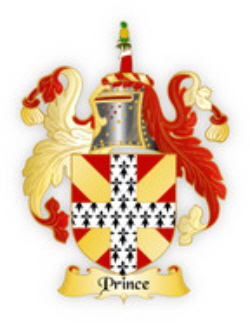
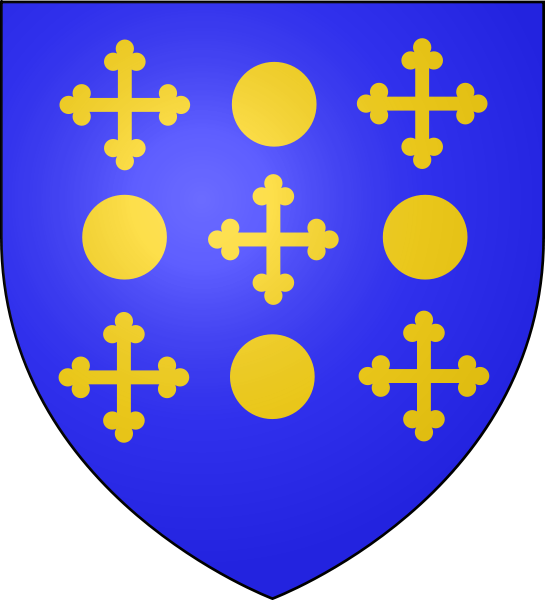
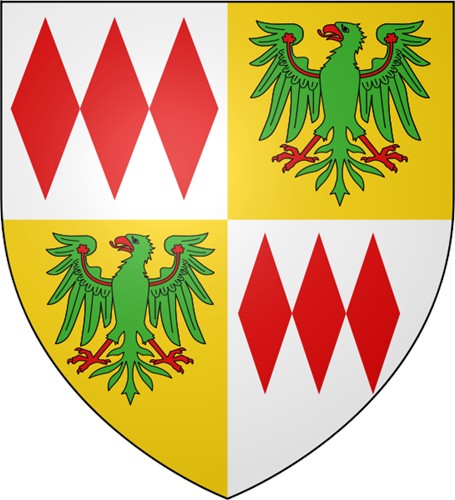
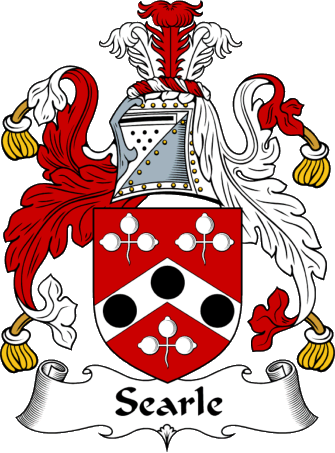
Father of Immigrant  Ancestor - Prince Coat of Arms

Immigrant Ancestor – Prince Coat of Arms

Thomas Prince was baptized about 1582, All Hallows Barking By The Tower, London, England or in Gloucestershire.  His parents were Thomas PRINCE and Elizabeth TOLDERBY. He married Mary PATCH on 7 Aug 1616 South Petherton, Somerset, England

All Hallows-by-the-Tower, also previously dedicated to St. Mary the Virgin and sometimes known as All Hallows Barking, is an ancient Anglican church on Byward Street in the City of London, overlooking the Tower of London. Founded in 675, it is the oldest church in London, and contains inside a 7th-century Saxon arch with recycled Roman tiles, the oldest surviving piece of church fabric in the city.   The heart of Richard I is said to be buried somewhere in the north part of All Hallows’ churchyard where a chapel once stood that had been built by Richard in the 12th century.

The church was badly damaged by an explosion in 1650 caused when some barrels of gunpowder being stored in the churchyard exploded; its west tower and some 50 nearby houses were destroyed, and there were many fatalities. The tower was rebuilt in 1658, the only example of work carried out on a church during the Commonwealth era of 1649-1660. It only narrowly survived the Great Fire of London in 1666 and owes its survival to Admiral William Penn, father of William Penn of Pennsylvania fame, who had his men from a nearby naval yard demolish the surrounding buildings to create firebreaks. During the Great Fire, Samuel Pepys climbed the church’s spire to watch the progress of the blaze and what he described as “the saddest sight of desolation”.

Thomas was baptized in All Hallows by the Tower Church, London

Mary Patch was baptized 16 May 1586, South Petherton, Somerset, England. Her parents were Richard PATCHE and Joan LAVOR.

Mary was baptized in the Church of St Peter and St Paul in South Petherton. Note the octagonal tower

Children of Thomas and Mary:

Name Born Married Departed
1. Thomas PRINCE Sr. c. 1618
South Pertherton, Somerset, England.
or
Lechlade-on-Thames, Gloucestershire, England.
Margaret SKILLINGS
1649 in Gloucester, Essex, Massachusetts
17 Jan 1690 in Gloucester, Essex, Massachusetts.
2. Deborah Prince c. 1622
England
Thomas Skilling
1642
Salem, Mass
.
George HADLEY
29 Jun 1668  in  Ipswich, Mass.
After 1692
Ipswich, Mass.

Joan’s father Richard PATCH was born 1552 in South Petherton, Somerset, England. He married Joan LAVOR on 1578 in South Petherton, Somerset, England. He died Apr 1595 in South Petherton, Somerset, England and was buried 22 Apr 1595 in South Petherton, Somerset, England.

Joan’s grandfather William PATCH was born 1527 in South Petherton, Somerset, England. He married [__?__] on 1551 in South Pertherton, Somerset, England.  William died Jun 1575 in South Petherton, Somerset, England and was buried 15 Jun 1575 in South Petherton, Somerset, England.

Sources:

http://helenesgenes.com/Prince.html

http://freepages.genealogy.rootsweb.ancestry.com/~hwbradley/aqwg23.htm

http://www.geni.com/people/Thomas-Prince/6000000002766511737

Posted in 13th Generation, Line - Miller | 5 Comments

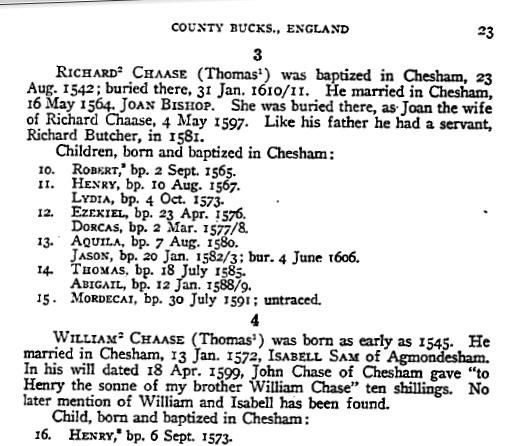
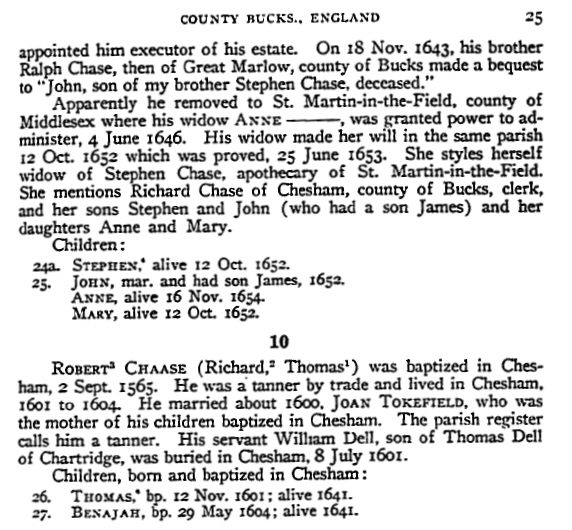
Richard Chase

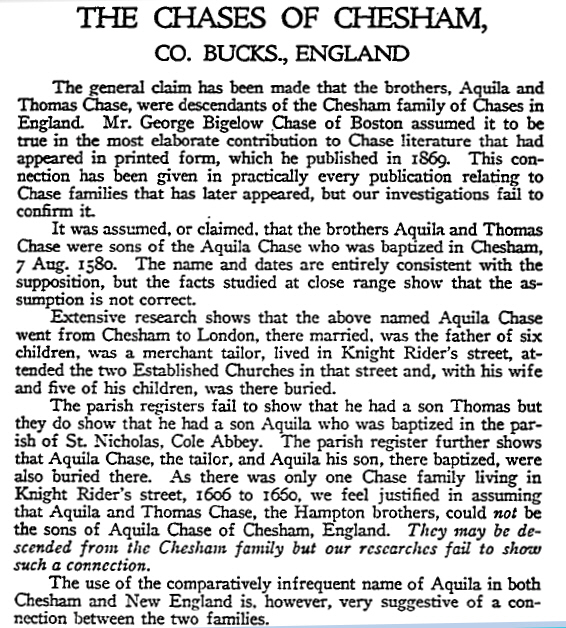
Richard CHASE  (1542 – 1611) was Alex’s 14th Great Grandfather; in the Shaw line.  I usually don’t take this record past the immigrant ancestor or his parents in the case of immigrating siblings, but in this case, William CHASE, Aquila Chase and Thomas Chase might have been cousins with Richard as their common grandfather.  We don’t know  for sure which have Richard’s sons might have been their father.

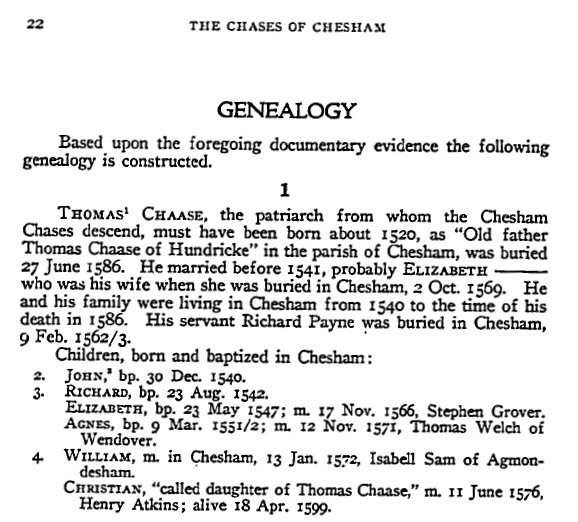
Richard Chase was born 26 Jul 1542 in Hundridge, Buckinghamshire, England. His parents were Thomas CHASE and Elizabeth BOWCHIEW. He married Joan BISHOP 16 Apr 1564 in Hundrick Parish Chesham, Buckinghamshire, England . Richard died 31 Jan 1611 in Chesham, Buckinghamshire, England.

Joan Bishop was born in 1543 in Hundridge, Buckinghamshire, England. Her parents were Simon BYSHOPPE and Joan [__?__]. Joan died 4 May 1597 in Hendrick Chesham, Buckinghamshire, England

Children of William and Elizabeth:

Name Born Married Departed
1. Robert Chase 16 Sep 1565
Hundridge Chesham, Bucks., England
Jean Tokefield May 1582 Chesham, Bucks, England  8 Jul 1601
Chesham, Bucks., England
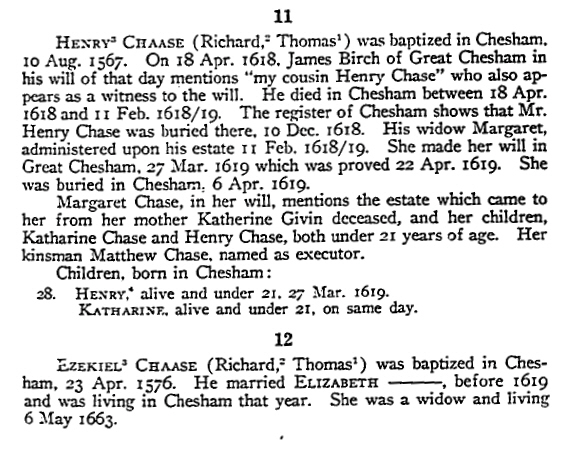
2. Henry Chase 10 Aug 1567
Hundridge, England
Margaret Given
1592
Hundridge Parish Chesham, Bucks, England
1618
Chesham, Bucks, England
3. Lydia Chase 4 Oct 1573
Hundridge, England
4 Oct 1573
Hundridge, England
4. Ezekiel Chase 23 Mar 1576
Hundridge, England
Mary Roberts 1596
Chesham, Bucks., England
.
Elizabeth [__?__] 1618
Chesham, Bucks., England
6 May 1663
Chesham, Bucks., England
5. Dorcas Chase 2 Mar 1578
Hundridge, England
1587 Chesham, Bucks., England
6. Aquila CHASE 14 Aug 1580 in Hundrich, Chesham, Bucks, England Martha (Sarah?) JELLIMAN
11 Jun 1606 in Chesham, Bucks., England.
9 Feb 1643
in St Nicholas Cole, Abby, London, England.
7. Jason Chase 13 Jan 1583
Hundridge, England
4 Jun 1606
Chesham, Bucks., England
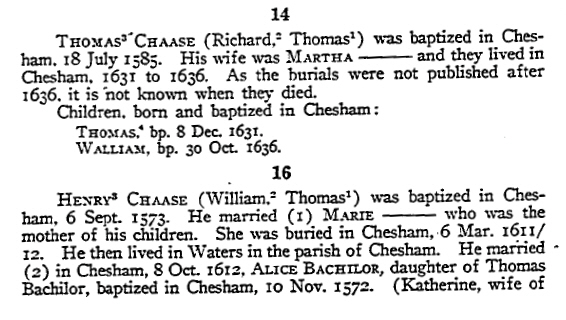
8. Thomas Chase 18 Jul 1585
Hundridge, England
 Martha [__?__]
5 Oct 1642 Hampton, Rockingham, New Hampshire
5 Oct 1652
Hampton, Rockingham, New Hampshire
9. Abigail Chase 12 Jan 1588
Hundridge, England
Eliphalet Chapman 1609
Headcorn, Kent, England
 England
10. Mordecai Chase  31 Jul 1591
Hundridge, England
 Elizabeth [__?__] 1635 Chesham, England

It hasn’t been proven that Aquila was the father of immigrants Aquila, Thomas and William Chase.  Even if it their descent can’t be proven, I think it’s likely they were related.  Perhaps the immigrants were Aquila’s nephews rather than sons.

Like his father, Richard had a servant Richard Butcher in 1581..

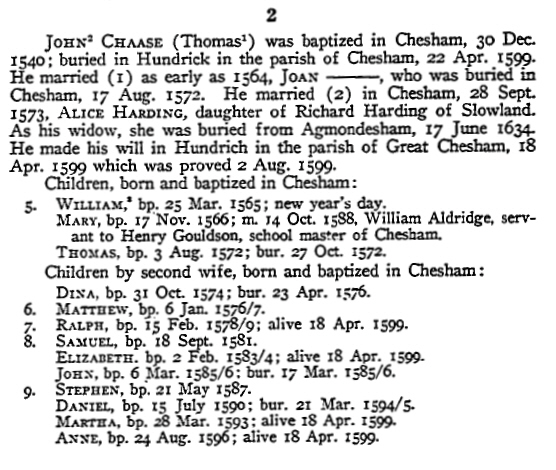
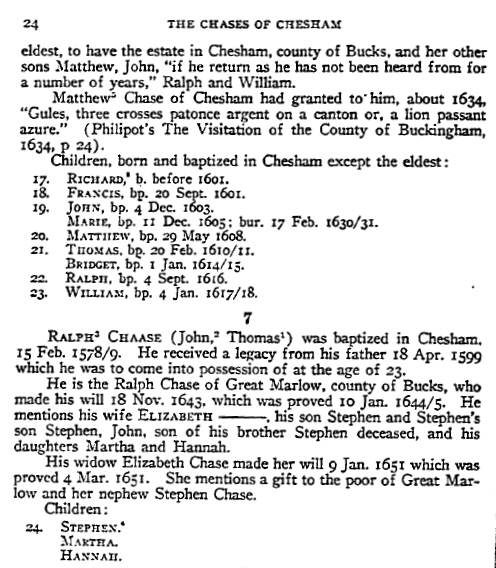
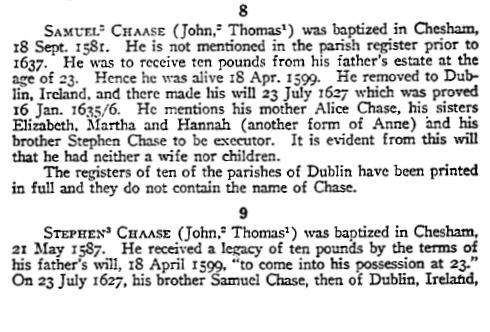
The Chases of Chesham

Chase Generation 1

Chase Generation 2a

Chase Generation 2b and 2c

Chase Generation 3a, 3b

Chase Generation3b cont.  3c

Chase Generation 3d and 3e

Chase Generation 3e cont and 3f

Chase Generation 3g and 3h

Aquila CHASE (See his page 3i)

Chase Generation 3j and 3k

Chase Generation 3k continued


Children

1. Robert Chase

Robert’s wife Jean Tokefield was born 1565 in Chasham, Buckinghamshire, England. Her father was Richard Tookefield.

Robert was a tanner by trade.

2. Henry Chase

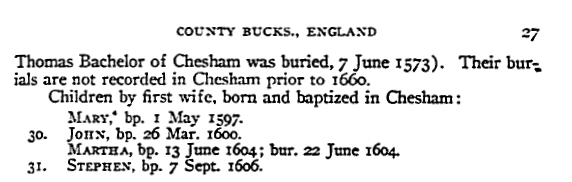
Henry’s wife Margaret (Marie) Given was born 1592 in Hundridge Parish Chesham, Buckinghamshire, England   Marie died 6 Mar 1611/12 in Chesham.

Alice Bachilor  was probably the wife of Henry’s cousin of the same name.  Alice was born 1569 in Hundridge Chesham, Buckinghamshire, England.  Her parents were Thomas Bachelor and Katherine [__?__].

4. Ezekiel Chase

Ezekiel’s first wife Mary Roberts was born

Ezekiel’s second wife Elizabeth [__?__] was born 1580 in Chesham, Buckinghamshire, England.  She was a widow and living 6 May 1663.

6. Aquila CHASE (See his page)

8. Thomas Chase

Thomas’ wife Martha [__?__] was born in 1590 in England.

They lived in Chesham from 1631 to 1636.

9. Abigail Chase

Abigail’s husband Eliphalet Chapman was born 1587 in Hundridge Chesham, Buckinghamshire, England

10. Mordecai Chase

Mordecai’s wife Elizabeth was born

Sources:

http://trees.ancestry.com/owt/person.aspx?pid=9870216&st=1

Posted in Line - Shaw | 4 Comments

Aquila Chase

Aquila CHASE  (1580 – 1670 ) was Alex’s 13th Great Grandfather; one of 16,384 in this generation of the Shaw line.

Aquila Chase was born 14 Aug 1580 in Hundrich, Chesham, Buckinghamshire, England. His parents were Richard CHASE and Joan BISHOP.  He married Martha (Sarah?) JELLIMAN 11 Jun 1606 in Chesham, Buckinghamshire, England. Aquila  was buried on 9 Feb 1643 in St Nicholas Cole, Abby, London, England.

Martha Jelliman was born 10 Nov 1588 in Hundrich Chesham, Buckinghamshire, England.  Her parents were John JELLIMAN and Margerie [__?__]. Martha died 15 Aug 1643 in Chesham, Buckinghamshire, England.  She was buried on 15 Aug 1643 in St.Nicholas, Coleabby, Chesham, Bucks, England.

Children of William and Elizabeth:

Name Born Married Departed
1. William CHASE ? 4 Jan 1607 Hundrick Parish, Chesham, Buckingham, England Mary TOWNLEY before 1621 in England. May 1659 Yarmouth, Plymouth Colony.
2. Anne Chase 26 Feb 1607/08
London, England
19 Jul 1609
London, England
3. Martha Chase 11 Mar 1610
St Thomas, London, England
11 Mar 1610
London, England
4. Sarah Chase 9 Feb 1611
London, England
2 May 1624
London, Middlesex, England
5. Elizabeth Chase 14 May 1615
London, England
17 Aug 1624
London, Middlesex, England
6. Thomas Chase 25 Jul 1616
Chesham, Bucks, England
Elizabeth Philbrick 5 Oct 1652
Hampton, Rockingham, New Hampshire
7. Aquila Chase 9 Apr 1618
Chesham, Bucks, England
Ann Wheeler 1641
Hampton, Rockingham, New Hampshire
27 Dec 1670
Newbury, Essex, Mass.
8. Joane Chase 30 Mar 1623
St. Nicholas Chesam, Bucks, England
17 Aug 1624
London, England

It hasn’t been proven that Aquila was the father of immigrants Aquila, Thomas and William Chase.  Even if it their descent can’t be proven, I think it’s likely they were related.  Perhaps the immigrants were Aquila’s nephews rather than sons.

The Chases of Chesham

Aquila and Martha lived in St. Thomas-the Apostle until 1611, when they moved to the parish of St. Nicholas, Cole Abbey, in London, where Aquila was known as a merchant and tailor.  Their children, born on Knight Rider’s street in London were, Anne, Martha, Sara, Elizabeth, Joane, and Aquila Jr.. Martha was buried in St. Nicholas on August 15, 1643 and Aquila was buried February 9, 1643, also in the parish of St. Nicholas, Cole Abbey, London.

With The exception of Aquila II, all of Aquila and Martha’s children died at a young age. Martha was born and died on 11 March 1610, presumably stillborn. Anne lived for only 2 years, from 26 Feb 1607 until 19 July 1609. Jane, born in 1623 (no month or day known) and Sara, born 9 Feb 1611 Both died on 17 Aug 1624. The cause of their deaths are unknown.

Children

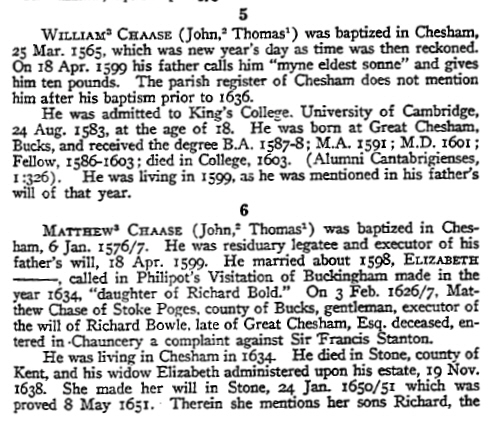
1.  William CHASE  (See his page)

In reviewing the evidence, I don’t think William Chase’s English birth or parents is really known. I’ve updated to show four competing theories, none of which really has strong evidence.

6. Thomas Chase

Thomas’ wife Elizabeth Philbrick was born 1618 in England. Her parents were Thomas Philbrick and Elizabeth Knapp.  After Thomas died, she married John Garland. She finally married Henry Robie 19 Jan 1674 in Hampton, New Hampshire.Elizabeth died 11 Feb 1677 in Hampton, New Hampshire.

John Garland was born in 1622. His parents were Peter Garland and Elizabeth [__?__] John died 4 Jan 1672 in Hampton, Rockingham, New Hampshire.

Henry Robie was born in 12 Feb 1618 in Castle Donington, Leicestershire, England.  His parents were Thomas Robye and Mary Coxon. He first married 1645 in Hampton, Rockingham, New Hampshire to Ruth Gilman ( b. 1621 in Newmarket Rockingham, New Hampshire; d. 5 May 1673 in Hampton, Rockingham, New Hampshire) Henry died 22 Apr 1688 in Hampton, Rockingham, New Hampshire.

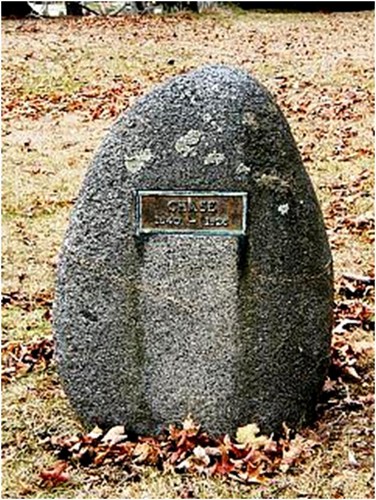
Thomas Chase Founder’s Stone

Thomas was one of the first founders of Hampstead, Province of New Hampshire, now Rockingham County in 1639 with his brother Aquila.

Hampton, NH Founders Park

Thomas Chase was born possibly in Willesden Parish, Londonor Cromwell Parish, Nottingham. He died intestate in 1652. Early genealogical histories of the family indicate that Thomas and Aquila came from Cornwall, England. It is believed that they were employed by an uncle named Thomas Chase, who was part owner of a ship named “John & Francis” and that they learned to become navigators. Thomas’ brother, Aquila, was granted land in Hamptonon the condition that he go to sea and service the town for four years. This would tend to verify the above theory and would explain why they were found on the coast rather than in their original area of birth.

The settlement of Hampton, New Hampshire Began on October 14, 1638, under the leadership of Rev. Stephen BACHILLER. By the first part of 1639 another group arrived with Timothy DALTON, who became the associate pastor of the Hampton Church. It is probable that Thomas and Aquila were with this second group, as by 1640 immigrations had slowed considerably. We know that Thomas, at least, was in the second group as he is mentioned in a list of families that came to Hampton that second summer. In June of 1640 small grants were made to a number of people including Aquila and Thomas Chase. These grants were for six-acre house lots. Aquila later acquired six acres of upland meadow and swamp, which was sold to his brother, Thomas, when he moved to Newbury, now located in the present state of Massachusetts. In fact, it was his acknowledgement in court of the sale of all his land in Hampton, except a dwelling and one and one-half acre, to his brother, Thomas Chase of Hampton.

Our ancestos’ lots are underlined in red. Thomas Chase’s lot was on the southeast corner of this map on  today’s Winnacunnet Road next to the words “To The Sea”. — Map of the homes of the original settlers of Hampton, NH, recreated from published maps and ancient records in 1892

  • Lafayette Road, and Winnacunnet Road, Hampton, NH on Google Maps
  • The main road going horizontally across the top of the map then, at right, angling down to the right corner, is today’s Winnacunnet Road. At the bottom right corner it leads “To The Sea”.
  • Today’s Lafayette Road/Route One starts in the top left and goes vertically down (south) into the thicker road, then about 2/3 of the way down angles sharply off to the left corner in the small road reading “To Salisbury”. That road today is pretty much straight as an arrow north to south.
  • Midway down that same road a small road angles off to the left that reads “To Drake Side”. That is today’s Drakeside Road.
  • The fat road leading from the point where Route One angles off “To Salisbury” to the right and its meeting with Winnacunnet Road, is today’s Park Ave.
  • The two roads leading off the bottom of the map both say “To the Landing”, and at the time were both ends of a single road that went in a loop. Today they are still there, called Landing Road, but are cut off in the middle by a new highway.
  • Lastly the small road in the top right is Mill Road.

On February 23, 1645/46 sixty owners of house lots were given one or more shares in the “Common” Aquila received one and Thomas two. Thomas’ signature on a deed of sale to John Shilbrick shows that he was a literate man. His purchase of land which abutted the river was probably to facilitate his livelihood. He was a seaman who paid for the building
of a vessel by freighting boards from Exeter to Boston. The large trees along the coast were much in demand for the building of dwellings. The Thomas Chase homestead was a short way from “The Meeting House Green” and opposite that of his father-in-law, Thomas Philbrick. The site selected for the erection of a house of worship was on the northerly side of the salt marsh, about one-fourth mile distant from it. A large tract
of land near it was called The Meeting House Green and included all of what ws later know as the Ring Swamp, along the road around it. A common-way was laid along the eastern edge and later became the main road to the seashore. Around the green and along the common-way many homes were built, some of which are still inhabitated by descendants of the original owners.

7. Aquila Chase

Aquila’s wife Ann Wheeler was born 20 Dec 1629 in Salisbury, Wiltshire, England. Her parents were John Wheeler and Agnes Yeoman. Ann died 21 Apr 1687 in Newbury, Essex, Mass.

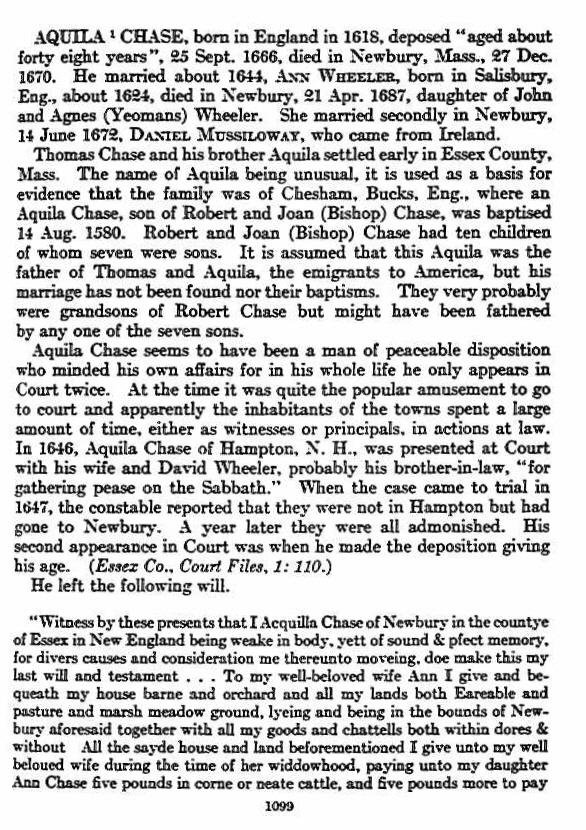
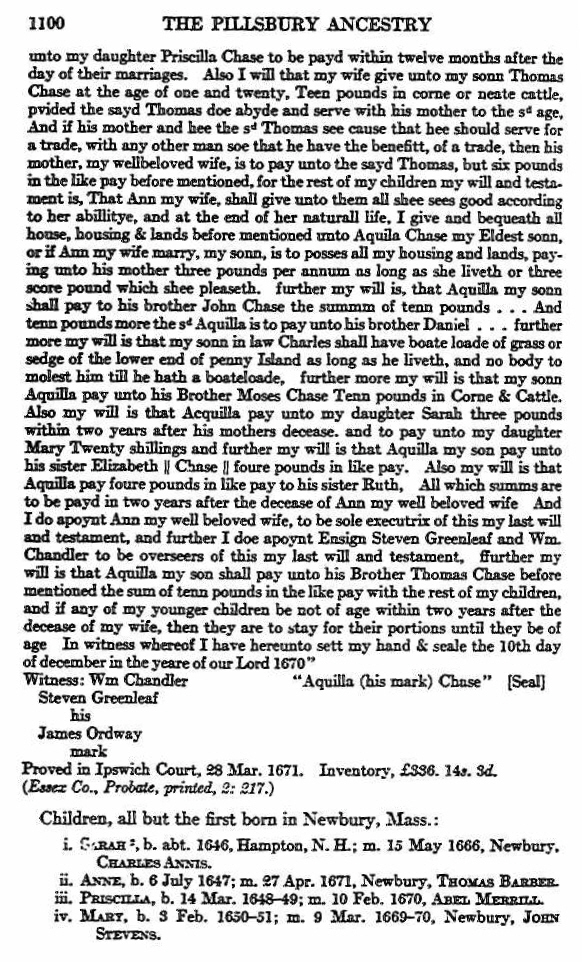
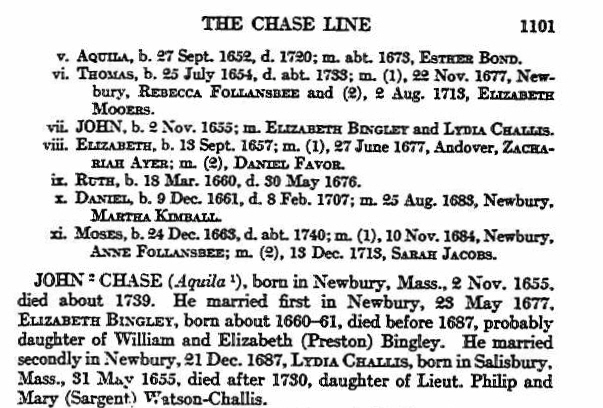
Aquila Chase first appears at Hampton, New Hampshire.    A company under the leadership of Rev. Stephen BACHILER is supposed to have commenced the Settlement on 14 Oct. 1638.(Dow’s History of Hampton).Early in the year of 1639,a new band of settlers came with Rev. Timothy DALTON, who became associate pastor of the Hampton church.  The town was incorporated by the General Court of the Massachusetts Bay Colony 22 May 1639.  It is probable that Aquila and Thomas Chase came with the second company as it appears that emigration was greatly diminished by the year 1640.

The Hampton records show that in the year 1640, there was granted to Aquila Chase six acres for a house lot.  In 1644 an additional grant was recorded of six acres of “upland meadow and swamp”, which he sold to his brother, Thomas, on his removal to Newbury.  Before he removed to Newbury, he was seen gathering peas on the first day of the week and at the Quarterly Court held at Ipswich, 29 Sept. 1646, he and his wife, and David Wheeler, his brother-in- law, all of Hampton,were presented for gathering peas on the Sabbath.  One handed down tradition states that Aquila and David were returning home from a bountiful fishing day, upon their arrival, Ann proceded to the garden and prepare a meal celebrating their catch.  It came to pass that they were caught and were supposed to be punished for their act.

Other records recently found state that Aquila Chase came over from England on the Mary and John in 1630 but fails to mention his brother on that specific voyage.

Aquila was one of the first founders of Hampstead, Province of New Hampshire, now Rockingham County in 1639 with his brother Thomas.

Aquila Chase 1 — Source: Ancestry of Charles Stinson Pillsbury and John Sargent Pillsbury  1938

Aquila Chase 2

Aquila Chase 3

Sources:

http://trees.ancestry.com/owt/person.aspx?pid=131638614

Ancestry of Charles Stinson Pillsbury and John Sargent Pillsbury (1938) By Holman, Mary Lovering, 1868-1947; Pillsbury, Helen Pendleton Winston, 1878-1957

http://www.hamptonhistoricalsociety.org/foundpk.htm#list

Posted in Line - Shaw | Tagged , | 6 Comments

Nantucket Founders

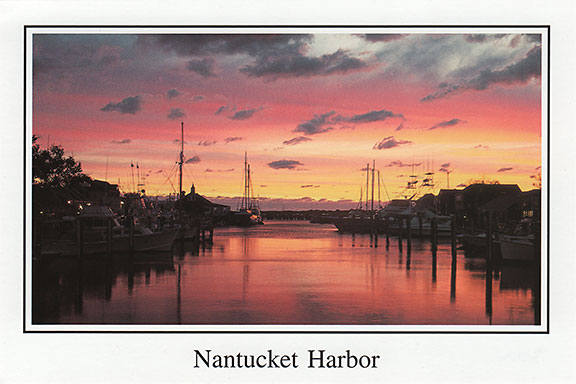
Our ancestors and their close relatives participated in half of the original 10 partnerships of Nantucket Island.  Many were Quakers, Baptists and other dissents looking to escape harsh Puritan rule in New England.
Navigate this Report

I. Overview
II. Fun with Nantucket

III. Nantucket Partners
1. Thomas Mayhew and John Smith
2. Tristram Coffin Sr. and Nathaniel Starbuck
3. Thomas Macy and Edward STARBUCK
4. Richard Swain and Thomas Look
5. Thomas Barnard and Robert Barnard.
6. Peter Coffin and James Coffin
7. Stephen Greenleaf and Tristam Coffin Jr.
8.John Swain and Thomas COLEMAN
9. William Pile
10.Christopher Hussey and Major Robert Pike
Half-Share Men

IV. The Half-Share Revolt

Nantucket Settlers Monument

1. Overview

The First Purchasers of Nantucket included ten men.   The ten needed to raise additional capital, and in 1659 at a meeting at Salisbury, Massachusetts it was agreed that each of the ten could invite in a partner.  It was agreed at the meeting that Major Pike would keep the Salisbury records of the First Purchasers and that Thomas Macy would keep the Nantucket records.

Town of Nantucket, Dukes County, Mass.

Purchaser Partner
1. * Thomas Mayhew John Smith
2. Tristram Coffin Sr.
(Son of Peter COFFIN)
Nathaniel Starbuck
(Son of Edward STARBUCK)
3. Thomas Macy (Deeded his Amesbury house to Anthony COLBY when he fled to Nantucket) Edward STARBUCK
4. Richard Swain Thomas Look
5. * Thomas Barnard Robert Barnard
6. Peter Coffin
(Grandson of Peter COFFIN)
James Coffin
7. * Stephen Greenleaf
(Son of Edmund GREENLEAF)
* Tristram Coffin Jr.
(Grandson of Peter COFFIN)
8. John Swain Thomas COLEMAN
9. * William Pile
(Sold his interest to Richard Swain )
Didn’t choose a partner, share eventually divided between John Bishop and the children of George Bunker
10. Christopher Hussey (Son-in-law of Rev. Stephen BACHILER) Major Robert Pike
(Son-in-law of Joseph MOYCE)

* Never moved to Nantucket

x

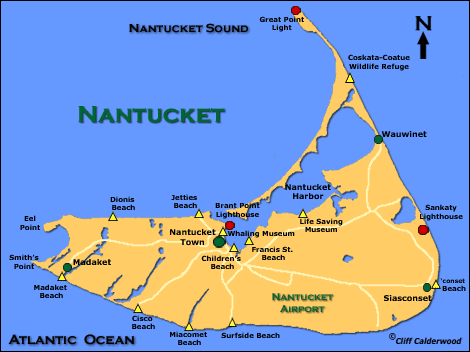
Nantucket Map — 2010  year-round population 10,172

Anxious to add to their number and to induce tradesmen to come to the island, the total number of shares were increased to twenty-seven. The original purchasers needed the assistance of tradesmen who were skilled in the arts of weaving, milling, building and other pursuits and selected men who were given half a share provided that they lived on Nantucket and carried on their trade for at least three years.

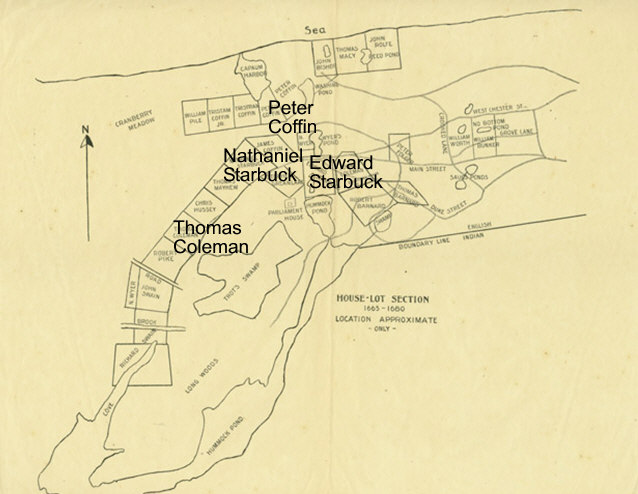
Nantucket House Lots of the original purchasers

These half share allotments were made at various times from 1659 to 1667, and their owners came to be known as “half-share men.” The original ten shares (including the one Mayhew held for himself), with the ten shares granted to the respective partners of the original ten proprietors, and the fourteen half or seven whole shares issued later, as above stated, together constituted what have since been known as the twenty-seven original shares, under which all the land of the island, except Quaise or Masquetuck (reserved by Mayhew) and the houselots assigned to each settler, was held in common for many years; and some of it is undivided even to this day. Each whole share carried ownership of one undivided twenty-seventh

By 1667, twenty-seven shares had been divided between 31 owners.

The Indian deed of 1671 was to “Tristram Coffin, Thomas Macy, Richard Swayne, Thomas Bernard, John Swayne, Mr. Thomas Mayhew, Edward Starbuck, Peter Coffin, James Coffin, Stephen Greenleafe, Tristram Coffin, Jr., Thomas Coleman, Robert Bernard, Christopher Hussey, Robert Pyke, John Symth, and John Bishop.

Half Share Men

Half-share men Occupation
John Bishop
Nathaniel Wier
Joseph Coleman
(Son of Thomas COLEMAN)
Seaman
Eleazar Folger Shoemaker & Blacksmith
Peter Folger
(Grandfather of Benjamin Franklin)
Interpreter
John Gardner Seaman
Joseph Gardner Shoemaker
Richard Gardner Seaman
Nathaniel Holland Seaman
Thomas Macy Weaver
Samuel Streeter Tailor
William Worth Seaman

II. Fun with Nantucket

The ease of rhyming Nantucket with certain vulgar phrases has embedded the opening line “There once was a man from Nantucket” in our collective imagination.

The earliest published version appeared in 1902 in the Princeton Tiger:

There once was a man from Nantucket
Who kept all his cash in a bucket.
But his daughter, named Nan,
Ran away with a man
And as for the bucket, Nantucket.

Other publications seized upon the “Nantucket” motif, spawning many sequels. Of these, perhaps the two most famous appeared, respectively, in the Chicago Tribune and the New York Press:

But he followed the pair to Pawtucket,
The man and the girl with the bucket;
And he said to the man,
He was welcome to Nan,
But as for the bucket, Pawtucket.
Then the pair followed Pa to Manhasset,
Where he still held the cash as an asset;
But Nan and the man
Stole the money and ran,
And as for the bucket, Manhasset.

This ribald version was published in 1927

There once was a man from Nantucket
Whose dick was so long he could suck it.
And he said with a grin
As he wiped off his chin,
“If my ear were a cunt, I would fuck it.”

While explaining a joke kills the humor, The poem has an iconic example off fine art, whose vulgarity and simple form provides an unexpected contrast to an expected refinement.

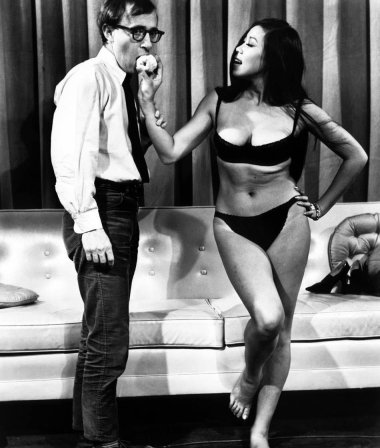
Woody Allen and China Lee in What’s Up, Tiger Lily? (1966)

In Woody Allen’s 1966 film What’s Up, Tiger Lily?, the protagonist Phil Moskowitz reads the opening line of “ancient erotic poetry”: “There once was a man from Nantucket”. In Steven Soderbergh’s 2002 film Solaris, the male protagonist tries to impress his girlfriend with his knowledge of poet Dylan Thomas, but when she asks him for his favorite poem he comes up with “the one he is most famous for, which starts, um, ‘There once was a young man from Nantucket'”. On the television show Laverne and Shirley, Laverne often started the poem, but was always stopped after the first line.

In his Below the Beltway column of July 11, 2010 for the Washington Post Magazine, humor writer Gene Weingarten recast this limerick as an Elizabethan Sonnet.

SpongeBob Reading a Limerick

In SpongeBob SquarePants season 8 episode 157, SpongeBob is preparing for an opera and pulls out a note with “There once was a man from Nantucket…” written on it. He proceeds to read it to a crowd who gasps before he corrects his error.
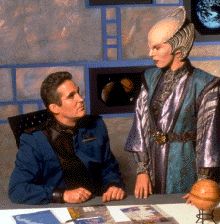
Sinclair and Delenn discussing poetry

In the pilot episode of the TV series Babylon 5The GatheringCommander Jeffrey Sinclair notes to Ambassador Delenn about his like for poetry. She asks “Poetry?”. Sinclair describes it as a metrical verse. She responds, “Ah. There Once was a Man from Nantucket.”

Nantucket Partners

1. Thomas Mayhew and John Smith

Thomas Mayhew, Sr. (1593 – 1682)   In 1641, Thomas secured Martha’s Vineyard , Nantucket, the Elizabeth Islands, and other islands as a proprietorship from Sir Ferdinando Gorges and Lord Sterling.  He bought the County for 40 pounds and two beaverskin hats from William Alexander, the 2nd Earl of Sterling. To resolve a conflicting ownership claim, he also paid off Sir Ferdinando Gorges, thereby acquiring a clear title.

In 1659, he  sold his interest in Nantucket to a group of investors, led by Tristram Coffin, while retaining one share and Quaise/ Masquetuck “for the sum of thirty Pounds…and also two beaver hats, one for myself, and one for my wife”.

Thomas was born in Tisbury, Wiltshire, England. He married Anna (also called Hanna and Abigail) Parkhurst.  In 1621 they had a son, Thomas, Jr., in Hanna’s home town of Southampton. Two years later they had another child, Robert Parkhurst Mayhew, in Tisbury, Wilts, England.

The family left England in 1631 during the Great Migration. Thomas had been accepted with the agency of Matthew Cradock of London to manage properties in Medford, Mass, and to engage in trade and shipbuilding. In or around 1633, Anna Parkhurst died. In about 1634, Thomas returned to England for a business meeting with Cradock. While in England, he married Jane Gallion (1602–1666), and brought her back to New England with him. Hannah Mayhew was born in 1635. Three more children – Mary Mayhew (1639), Martha Mayhew (1642), and Bethiah Mayhew – followed.

Thomas’ 1641 purchase of  Martha’s Vineyard enabled him to transfer his business operations there. With the help of son Thomas, a settlement was established. Farming and whaling enterprises began.

Thomas established himself as governor of Martha’s Vineyard in 1642 and sent his son, Thomas Jr., with about 40 English families to settle there. He followed four years later. Together he and Thomas Jr. established Martha’s Vineyard’s first settlement and called it Great Harbor, now Edgartown.

Mayhew and his fellow settlers found a large and economically stable native population of about 3,000 living in permanent villages, led by four sachems. Relations between the first settlers and their Wampanoag neighbors were peaceful and courteous. Under the leadership of his son, a minister, they instituted a policy of respect and fair dealing with the Wampanoag natives that was unequaled anywhere. One of the first Mayhew rulings was that no land be taken from the native island people, the Wampanoags, without consent and fair payment. From this time forward, the colonial settlers and Indians lived without the bloodshed that marked American history elsewhere.

From the beginning the elder Mayhew had worked to preserve the original political institutions of the Indians. Religion and government are distinct matters, he told the Indian chiefs. When one of your subjects becomes a Christian, he is still under your jurisdiction. Indian land was guarded against further encroachment by white settlers. So successful were these policies that during the bloody battles of King Philip’s War, in 1675-1676, the Vineyard Indians never stirred, although they outnumbered the English on the island twenty to one.

In the fall of 1657, Thomas Mayhew, Jr., sailed for England on a trip combining an appeal for missionary funds with personal business. After leaving Boston Harbor, the ship was never seen again.  The death of his only son at thirty-six was a heavy blow to the father and greatly increased the burdens he carried in old age. He made repeated efforts to find a replacement to continue his son’s ministry to the Indians, but no minister who knew the language or was willing to learn could be induced to settle permanently on the island. So Thomas Mayhew, who had started as a merchant, then turned landed proprietor, became at age sixty a missionary in his son’s place.  For the next twenty-five years he traveled on foot as far as twenty miles to preach once a week at the Indian assembly or to visit the native camps.

By 1660 there were about 85 white people on Martha’s Vineyard living peaceably among the natives, earning their living by farming and fishing.

Change was in the air though, for the world outside this small island was unsettled. There were more visitors from off island and some stayed, challenging the Mayhew government, while Baptists and Methodists arrived to make converts from the established Congregational Church.

Through a maze of conflicting land grants, changing political allegiances, and settler unrest, Thomas Mayhew (self-styled “Governour Mayhew”) began to rule his island with an iron hand. The most serious threat to his control came in 1665 when Martha’s Vineyard was included in the lands placed under the Duke of York. After much delay a settlement, worked out in 1671, confirmed the Mayhew patent and named Thomas Mayhew “Governour and Chiefe Magistrate” for life. At the same time a patent was issued erecting the Manor of Tisbury in the southwestern part of the island. The Governour and his grandson were made “joint Lords of the Manor of Tisbury,” and the inhabitants became manorial tenants subject to the feudal political jurisdiction of the Mayhews. This full-fledged feudal manor appears to have been the only such institution actually established in New England.

The attempt of the Mayhews to create a hereditary aristocracy on the Vineyard met with increasing opposition as more and more colonists arrived. When the Dutch temporarily recaptured New York in 1673, open rebellion broke out and lasted until the English re-won New York and restored the authority of the Mayhews on the island.

Several of our ancestors including Thomas BAYES, Robert PEASE Sr., Philip TABER, Lt. Andrew NEWCOMB Jr.,  Nicholas NORTON, and Isaac NORTON were Mayhew’s “subjects”  See  Nicholas NORTON’s and  Robert PEASE’s pages, for details about the 1673 Dutch Rebellion on Martha’s Vineyard.

The old patriarch died in 1682 at eight-nine. Nine years later the political rule of the family ended when Martha’s Vineyard was annexed by Massachusetts after the Glorious Revolution in England, but the problem of manorial tenancy remained. Although some of the Mayhews clung to the “pleasant fiction” of their manorial rights almost until the American Revolution and received token quit rents as late as 1732, feudalism on Martha’s Vineyard died the same slow, lingering but certain death it did elsewhere in the colonies.

2. Tristram Coffin Sr. and Nathaniel Starbuck

Tristram Coffin was born in 1609 Plymouth Brixton Parish, Devon, England. His parents were Peter COFFIN and Joane KEMBER. He married Dionis Stevens 1630 Brixton, Devon, England. Tristram died2 Oct 1681 Nantucket, Mass

Nathaniel Starbuck was born 20 Feb 1633/34 in Dover, NH. His parents were Edward STARBUCK and Katherine REYNOLDS. He married Tristram’s daughter Mary Coffin in 1663 in Nantucket, Mass. Nathaniel died 6 JUN 1719 in Nantucket, Mass.

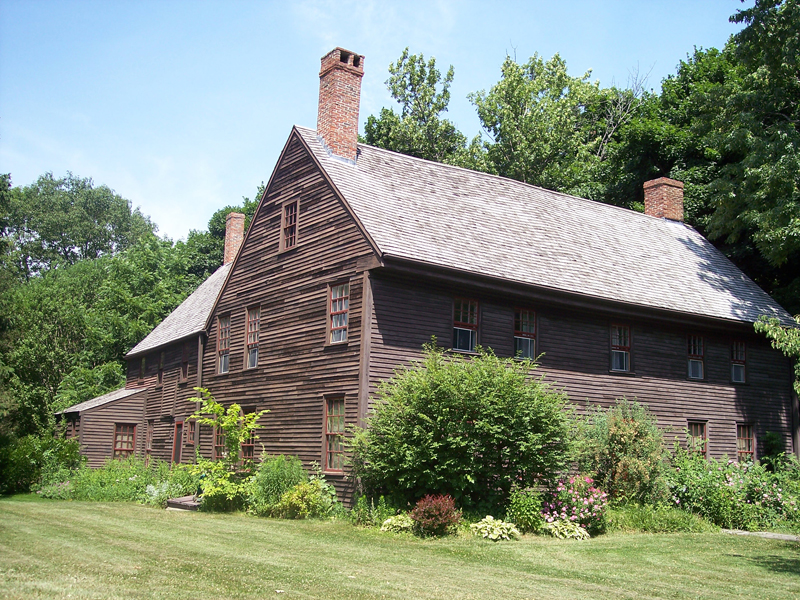
The Tristram Coffin House is the oldest structure in the Newbury Historic District. Built in 1654 by one of Newbury’s first settlers, Tristram Coffin, the House represents one of the outstanding examples of First Period architecture in New England.
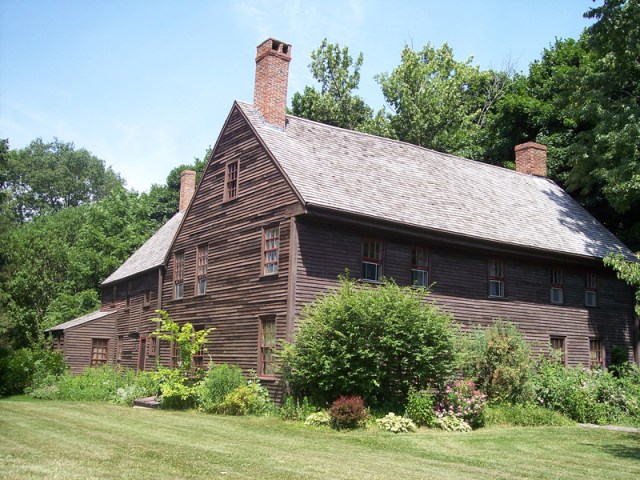
Coffin House

The House was continuously occupied by the Coffin family from 1654. The seven succeeding generations of occupants participated actively in the socio-economic, political and educational life of the town. The Coffin House has a number of outstanding features including the original kitchen, a rare 18th-19th century built-in dresser, 18th century chamber with plaster of clay and straw with exposed boards, a buttery with pine woodwork preserved in its original state, and a collection of Coffin family furniture.

Tristram Coffin moved to Nantucket Island in 1659 with his wife, his mother, and some of his children.  In 1671, he was appointed as Chief Magistrate of Nantucket.  Tristram Coffin Sr. was  a Royalist by education and environment.

Tristram Coffin sailed to America from Devon, England in 1642. He became one of the original purchasers of Nantucket Island in 1659. At one time, with his sons, he owned one quarter of the island. He became Chief Magistrate and was viewed by the other settlers as the patriarch of the island. The historian Benjamin Franklin Folger said of his service as Chief Magistrate that he always exhibited a fair Christian character “in all the varied circumstances and conditions of that infant colony,” both to Indians and white settlers.

One of these sons was the famous Tristram Coffyn, the ancestor of the numerous families of the name now in this country.  Nearly all his descendants are enabled, by means of the accurate genealogical records in existence, to trace their linage back to him, although nearly two centuries have elapsed since his death.  He was born at Brixton, near Plymouth, in the County of Devonshire, England in the year 1605 (another account say 1609), married Dionis Stephens, and in 1642 came to New England, bringing with him his wife, mother, two sisters and five children.  The names of these children were Peter, Tristram, Elizabeth, James and John.

He first settled at Salisbury, Mass, thence moved the same year to Haverhill, where his name appears on the Indian Deed of that town, Nov 16, 1642, and where his children Mary Starbuck and John (the first John having died at the same place in 1642) were born.

In 1648 he removed to Newbury, where his youngest son, Stephen was born.  After residing there several years (during which time he was licensed to keep an inn and a ferry over the Merrimac River), he returned to Salisbury, where he became a county magistrate, and in 1660 or 1661 he abandoned New England, and with his wife, four children and his aged mother settled upon the island of Nantucket.

Prior to his last removal (and early in the year 1659), he made a voyage of inquiry and observation to the group of islands off the Massachusetts coast, with a view to this change of residence.  He first visited Matha’s Vineyeard, and taking from there Peter Folger, the grandfather of Benjamin Franklin, as an interpreter of the Indian language, proceeded to Nantucket.  It has been supposed that religious persecution was the cause of these frequent changes and of his final departure from the main land.

He was one of a company of ten who first purchased Nantucket from the Indians, which factg appears in a conveyance from the Sachems, Wanackmamack and Nickanoose, dated May 10, 1660.  The original manuscript of this instrument is still extant, bearing the signature of Peter Folger as one of the witnesses to its execution.

Tristram Coffin and his sons at one time owned about one-fourth of Nantucket, and the whole of the little island adjacent to it on the west, called Tuckermuck, containing 1,000 acres, which he purchased of the old Sachem Potonet at the time of his visit in 1659.

He appears to have been a leading spirt among the first settlers, and was frequently selected by the inhabitants to transact important public business.  His letters to the Colonial Government of New York (Nantucket was at that time a dependency of New York), are preserved in the Archives of the Department of State at Albany.

“At a Court of Sessions held the 29th of November 1681 there granted administration unto me Jamews Coffin, John Coffin and Stephen Coffin on the estate of Mr. Tristram Coffin deceased the 3rd Oct 1681 they having given security according to law.”

The body of the Oath was evidently written by Peter Coffin (son of Tristram), the signature is an autograph.  It will be observed that Tristram used the letter ‘y’ instead of ‘i’ in writing the family name.  It is said, whether truthfully I do not know, that his ancestors spelled it in the same manner.  The letter of administration appended to the bond fixes the date of his death (Oct 3, 1681) beyond question.
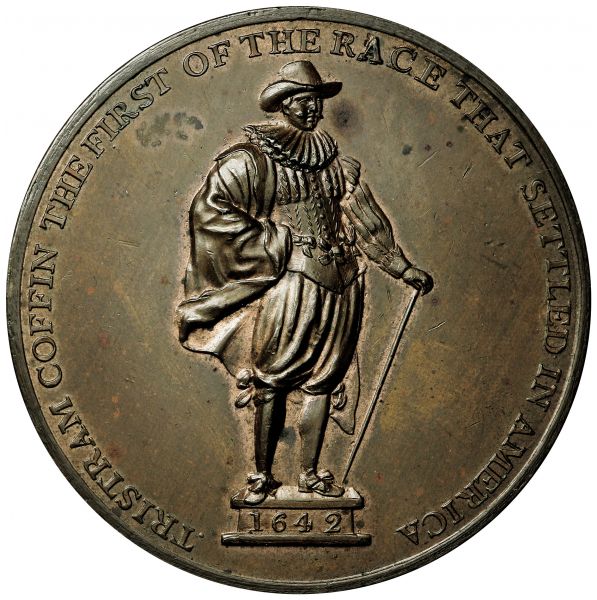
Tristram Coffin Medal – 1827 – Copper. 54.2 mm. 1,206.6 gns. Coffin’s standing figure, date on pedestal; four hands clasped in unity forming a cross manua
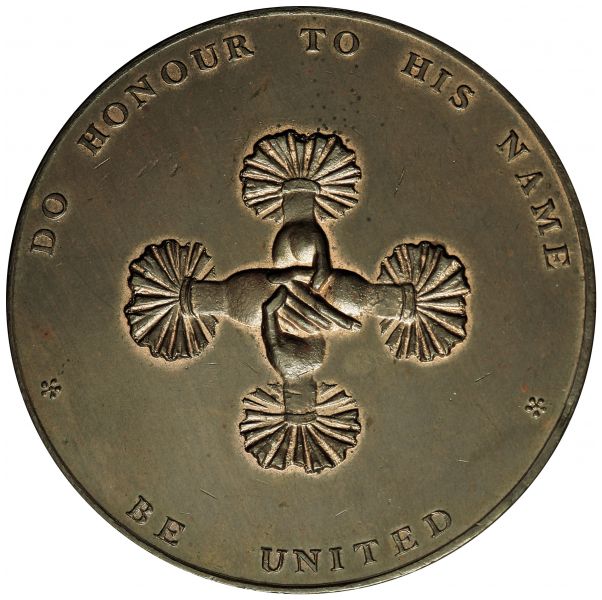
Tristram Coffin Medal Reverse

The original pieces were struck by Sir Isaac Coffin, a Boston-born British Navy captain who founded a sailing school on Nantucket in 1826, long after he followed his Loyalist leanings to England. The medals were struck to mark the school’s founding and were distributed on Nantucket. One is known brightly gilt in its original presentation case — it was in Lucien LaRiviere’s collection and is now at Colonial Williamsburg. After the original struck medals were produced in 1826, the medal was cast and recast for family reunions on Nantucket, perhaps even as late as the first few decades of the 20th century.

In the year 1826, Sir Isaac Coffin, a native of Boston (who went to England in early life and became a Baronet, and an Admiral in the British Navy), visited Nantucket and founded the ‘Coffin School’, which is still flourishing.  The Act of Incorporation provides for the establishment of a school by the name of Admiral Sir Isaac Coffin’s Lancasterian School, for the purpose of promoting decency, good order and morality, and for giving a good English education to youth who are descendants of the late Tristram Coffin who emigrated from England” etc.  The act further provides that the Trustees shall all be the descendants of the above mention Tristram Coffin in the male or female line.

3. Thomas Macy and Edward STARBUCK

Thomas Macy was born about 1608 and is believed to have originated from Chilmark, Wiltshire, England. Acccording to Hoyt, he was a planter, clothier, and merchant. Thomas married Sarah Hopcot 9th 6 month 1639 in Chilmark, Wiltshire, England.  Thomas died 19 April 1682 on Nantucket, Massachusetts.

Thomas was one of the first settlers in Newbury, Mass and was admitted freeman 6 Sep 1639. The Macys settled in Salisbury, Mass by the end of 1640.

The Macy-Colby house in nearby Amesbury, which Thomas built, still stands. Here, he was a representative in 1664, according to Savage. Austin states that he was one of those given “full powers to order all the affairs of the town” in 1643, 1647, and 1653 and served as a juryman in 1648 and deputy in 1654.  According to Silvanus J. Macy, Thomas was a merchant, planter, selectman, juryman, and a Baptist. That he was a Baptist, however, has been questioned by Hoyt.

Thomas was brought before court for “entertaining Quakers”. Four men had stopped at the Macy home to ask directions on rainy morning, staying about three-quarters of an hour. Because Thomas was ill and unable to get a horse on the day of the trial, he wrote a letter to the court to explain the circumstances. Nonetheless, Thomas was fined.

He sheltered Edward Wharton, William Robinson, merchant of London, and Marmaduke Stephenson, of Yorkshire, England.  The two last named were among the Boston Martyrs hanged 27 Oct 1669.

Thomas Macy was one of the original purchasers of Nantucket in 1659. Tradition states that he fled to Nantucket from persecution as a result of the case against him concerning the Quakers. John Greenleaf Whittier wrote a romanticized version of the legend in his poemThe Exiles”. The voyage by ship with his family and several others to the island was said to have been stormy. On 10 May 1661, Thomas was one the men chosen to lay out and measure the land on Nantucket.

In the ” Macy Genealogy” it is related that ” in 1659 he embarked at Salisburv in a small boat with his wife and children and such household goods as he could conveniently carry, and in company with Thomas COLEMAN’s son Isaac Coleman age 12 and Edward STARBUCK age 55 set sail for Nantucket. Isaac drowned when he was 22 on 6 Jun 1669 with John Barnard and Bethiah (Folger) Barnard out of a large freight canoe between Martha’s Vinyard and Nantucket while returning from a supply trip. Bethia’a older brother Eleazer Folger survived by clinging to the drifting canoe. It is assumed that the Nantucket Indians who were crewing the large canoe also drowned. Bethiah was Benjamin Franklin’s aunt.

Thomas was again at Salisbury in 1664 but then sold his house and moved to Nantucket permanently.   The Macy/Colby house was acquired by prominent Amesbury citizen Anthony COLBY I or his widow Susannah.   Susannah had to defend her homestead against the claim of Thomas Macy from whom it had been purchased. At about the time of the sale, Macy had fled to Nantucket,  but later he denied the sale and tried to expel the widow and her family by legal process.  He was unsuccessful and the premises were in the possession of Susannah’s descendants as late as 1895. In 1678, the son of Thomas Macy was deeded half of all the lands remaining in consideration of services rendered to the widow, and in 1682 the homestead was deeded to Susannah’s son, Samuel Colby, who cared for her during the infirmities of old age.
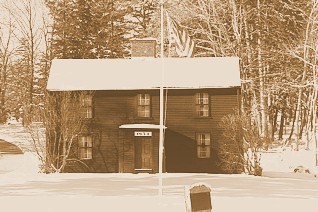
259 Main Street, Amesbury, MA The Macy-Colby house is open on Saturdays from 10:00 am to 4:00 pm during the summer. Other times are available by appointment. To arrange an appointment contact: Kathy Colby 978-388-3054 colbykathleen@verizon.net

x

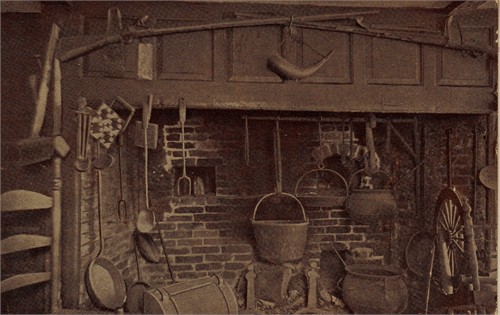
Hearth of the Colby House from an old postcard “Macy Colby House Fireplace, Amesbury, Massachusetts”

The house remained in the Colby family for nine generations, and was used as a private residence by Colby’s descendants until 1958, after which time it was acquired by the Daughters of the Revolution, which owned it up until 2000.  The Friends of the Macy-Colby House have maintained the house as a museum since 2000.

Macy was Nantucket’s second chief magistrate in 1676. There seems to have been a controversy a year later when his commission was up. The governor did not appoint a new chief magistrate, so Thomas continued to serve. Peter Folger rebelled, witholding records as the clerk. Macy won a vote in his favor and Folger was later arrested for refusing to comply.

Captains Of Industry Or Men Of Business Who Did Something Besides Making Money – James Parton 1884 – 1891

In August 1659 in Salisbury, Mass, Thomas Macy was caught in a violent storm of rain, and hurried home drenched to the skin. He found in his house four wayfarers, who had also come in for shelter. His wife being sick in bed, no one had seen or spoken to them. They asked him how far it was to Casco Bay [Maine]. From their dress and demeanor he thought they might be Quakers, and, as it was unlawful to harbor persons of that sect, he asked them to go on their way, since he feared to give offense in entertaining them. As soon as the worst of the storm was over, they left, and he never saw them again. They were in his house about three quarters of an hour, during which he said very little to them, having himself come home wet, and found his wife sick.

He was summoned to Boston, forty miles distant, to answer for this offense. Being unable to walk, and not rich enough to buy a horse, he wrote to the General Court, relating the circumstances, and explaining his non-appearance. He was fined thirty shillings, and ordered to be admonished by the governor. He paid his fine, received his reprimand, and removed to the island of Nantucket, of which he was the first settler, and for some time the only white inhabitant.

Edward STARBUCK  was born about 1604 in Draycot, Derbyshire, England. His father was also Edward STARBUCK.  He married Katherine REYNOLDS about 1630 in Derbyshire, England.  He migrated to America about 1635, settling at Dover NH.  Edward died  4 Dec 1690, at Nantucket Island, MA age 86.

Edward settled at Dover, now in New Hampshire but then a part of the Province of Massachusetts Bay. The first mention made of him on the record is in 1643 when he is recorded to have received “a grant of forty acres of land on each side of the Fresh River at Cutchechoe.”

On the 20th, 2 mo. 1644 it was ordered that Mr. Edward Starbuck, Richard Walderne & Wm. Furber be wearesmen for Cotcheco fall & river during their lives or so long as inhabitants. Various other grants were made to him, two of those being one of the Mill privilege at Cutchechoe 2nd Falls and one of timber to ‘accomodate’ in 1650. In “Landmarks in Ancient Dover” mention is made of Starbuck’s Brook in 1701 as a boundary of property which Peter Coffin (Edward’s son-in-law) conveyed to John Ham.

Starbuck’s Marsh was granted to Edward August 30, 1643, and Starbuck’s Point and Marsh, now called Fabyan’s Point, were granted to Edward in 1643. He is recorded several times as called on to be one of the “lot-layers.” He was Representative in the General Court in 1643 and 1646, was an Elder in the church and in other ways enjoyed the respect and esteem of his fellow-citizens. In 1640, Edward was an agent for Mr. Valentine Hill and Partner with Richard Waldron in lumbering on the Me. side in 1648. In 1653 he sold 1/2 his sawmill gr. To Peter Coffin, in 1657 sold to Thomas Broughton 1/4 the mill above Capt. Waldron’s mill at Cochecho.

In 1644 an act was passed by the General Court of Massachusetts Bay banishing from the Colony all who should either openly or privately oppose the baptism of infants. While the punishment meted out to some of the offenders was severe, banishment was not always inflicted. Edward Starbuck was one of those who subscribed to the proscribed doctrine and the record of the General Court, under the date of 18 October 1648, says:

“This Court, being informed of great misdemener committed by Edward Starbucke, of Douer, with p’fession of Anabaptisme, for which he is to be p’ceeded agaynst at the next Court of Assistants, if evidence can be p’pared by that time, & it beinge very farre for wittnesses to travill to Boston at that season of the yeare, it is therefore ordered by this Court that the secritary shall give commission to Capt. Thomas Wiggan & Mr. Edw. Smith to send for such p’rsons as they shall haue notice of which are able to testifie in the s’d cause & to take theire testimonie uppon oath & certifie the same to the secritary so soone as may be, that further p’ceedings may be therein if the cause shall so require.”

There seems to be no indication from the record that the complaint was prosecuted, notwithstanding the severe penalty contemplated by the law. The action of the Court did not seem to affect his standing in his community for he continued to be called upon to lay out land.

He accompanied Tristram Coffin on his voyage of discovery and Thomas Macy on his voyage of settlement. He deeded his Cochecho house, goods, cattle, etc. to his son-in-law Coffin on 9 Mar. 1659/60 and moved to Nantucket where he died. Dover lost a good citizen and Nantucket gained a much respected one; He was a leading man on the Island and at one time a Magistrate. He is described as courageous and persevering. When he came to the Island he occupied a house which he built at Madeket. His house lot as laid out was about 1000 feet square, extending northward from the head of Hummock Pond to Macy’s Pond.

Edward’s influence over the Indians was so great that if at any time a suspicion or alarm arose among the early settlers, he was always in requisition to explain the apparent cause thereof, and to suggest a palliation for their rude and inexplicable action, which served to allay the fears of the more timid. That he was well esteemed among the Indians is evidenced by the deeding of Coatue to him by Wannackmamack and Nicanoos (of the Sachem Indians) “of our free and voluntary willes.”

4. Richard Swain and Thomas Look

Richard Swain and John Swain had the southern most area of the land.

5. Thomas Barnard and Robert Barnard.

Thomas, a planter and husbandman, was born ca 1608 in Lowestoft, Suffolk, England. With his brother Robert, he came to New England and first settled in Salisbury. Thomas was one of the founders of the town, Amesbury. He bought land on the west side of Powow river, now in Amesbury, and lived there. His wife’s name was Eleanor, but her maiden name and ancestry is unknown.

Thomas was selected as a partner by his brother, Robert, who was among the first ten purchasers of Nantucket. Thomas himself never lived at Nantucket. He was one of the signatories to articles of agreement between the inhabitants of the “old Town” and the “New Town” in May 1654 in company with Thomas Macy, John Severance and others. He transferred one-half of his share to his brother, Robert, and his son Nathaniel represented him on the Island in the other half share.

Regarding his home, “East of the Elihu Coleman house is the Mill-Brook, and a short distance further east, on the south side of the road near a cluster of willow trees, was once a house which was the homestead of Thomas Barnard. Directly across the road lived Nathaniel Barnard. The present road was merely a path for many years. The house lot of Thomas Barnard on which the house of Nathaniel was located, was about 1000 feet square, and southwest of it was the lot of Robert Barnard. These lots extended northeast and southwest, and comprised twenty acres each. The house of Robert cannot be exactly located, neither can the bounds of the lots be identified. But the high land between the Mill-Brook swamp and the Indian boundary line was substantially comprised within the two Barnard lots.”

Thomas was killed by Indians on July 7, 1677 and Eleanor was appointed administratrix of his estate.

6. Peter Coffin and James Coffin

James Coffin was born 12 Aug 1640 in Brixton, Devon, England to Tristram Coffin and Dionis Stevens. He was one of the first white settlers on Nantucket, arriving after a stormy journey by boat with the Macy family and others in 1659. James was the partner of his brother, Peter Coffin, in the ownership of a share of Nantucket. He, however, settled in Dover, Strafford, New Hampshire in 1662, where he was a freeman in 1671. James married Mary Severance 3rd 12 month (3 Dec) 1663 in Salisbury, Essex, Massachusetts. In 1673, James was a merchant on the Ketch Neptune and was captured by the Dutch. James returned to Nantucket, where he was one of a number of men purchasing land on Nantucket from Wanackmemack in 1671. James served as the first judge of probate on Nantucket. He was also elected selectman numerous times and assessor twice. He was an assistant Magistrate and representative to the General Court. His lot was on a hill west of the Maxey’s Pond. James died 28th 7 month (28 July) 1720 in Nantucket, Mass.

7. Stephen Greenleaf and Tristam Coffin Jr.

Capt. Stephen Greenleaf was born 10 Aug 1628 St. Margaret’s parish, Ipswich, England. His parents were Capt. Edmund GREENLEAF and Sarah MOORE. He first married Elizabeth Coffin 13 Nov 1651 Newbury, Mass. He next married Mrs, Esther (Weare) Sweet 31 Mar 1679 Newbury. Stephen died 1 Dec 1690, drowned off Cape Breton, Nova Scotia

Stephen was a representative to the General Court from Newbury, 1676 – 1686. He was appointed Ensign in 1670, Lieutenant in 1685, and Captain of the Militia in 1686. “As a Captain of the Militia, he went with the disastrous Phips expedition against Port Royal, 1690, to Cape Breton, and was there wrecked in a vessel and drowned in company with nine others.”

21 Nov , 1686, ” Deacon Nicolas Noyes, deacon Robert Long and deacon Tristram Coffin were at the request of the select men chosen standing overseers of the poore for the town of Newbury.”

1 Dec 1686 , “Captain Daniel Pierce and Captain Stephen Greenleaf were added to the deacons as overseers of the poore,” and any three of them had power to act.

In 1686, and in 1689 was appointed as a consultant “for the conservation of the peace of the Country.”

Stephen died on 1 Dec 1690 in Drowned off Cape Breton, Nova Scotia, Canada, at age 62 . In the French and Indian War, Captain Stephen Greenleaf, Lieutenant James Smith, Ensign William Longfellow, Sergeant Increase Pillsbury, William Mitchell and Jabez Musgrave were cast away and lost on an expedition against Cape Breton.

“The expedition under Sir William Phips, consisting of thirty or forty vessels, carrying about two thousand men, sailed from Nantasket on the ninth day of August, 1690, but did not arrive at Quebec until the fifth day of October. Several attempts were made to capture the town, without success; and, tempestuous weather having nearly disabled the vessels and driven some of them ashore, it was considered advisable to re-embark the troops and abandon the enterprise. On their way back to Boston, they encountered head winds and violent storms. Some vessels were blown off the coast, and ultimately arrived in the West Indies. One was lost upon the island of Anticosti, and several were never heard from. Capt. John March, Capt. Stephen Greenleaf, Lieut. James Smith, Ensign William Longfellow, and Ensign Lawrence Hart, of Newbury, Capt. Philip Nelson, of Rowley, and Capt. Daniel King, of Salem, were among the officers commissioned for service in the expedition to Canada, under the command of Sir William Phips.”

8.John Swain and Thomas COLEMAN

John Swain and Richard Swain had the southern most area of the land.

John Swain moved his family from the swampy lands in Madaket to Polpis harbor. There he owned a great deal of land as well as many homes (which may have been built after his death). The John Swain house was the oldest standing home on the island until it burnt from a lightning strike in 1902. A recreation has been built elsewhere on the island, and the John Swain property in now personally owned.

Thomas COLEMAN was born about 1602 in Marlboro, Wiltshire, England. His father was also Thomas COLEMAN. He married  Susanna RAULINES on 24 Nov 1623 in Wootton Rivers, Wiltshire, England. Thomas Colman was one of fifty-three men (plus women and children) who shipped at Southampton on 6 April 1635, on the brig “James” and landed at Boston on 3 Jun 1635.   The year after Susanna died, he married Mrs. Mary Johnson 11 Jul 1651 in Hampton, NH. He married (3) Margery Fowler about 1655.   Thomas was one of the original Nantucket partners and removed to the island before 1663 where he died 14 Aug 1685..

Thomas  first settled in Newbury. According to the records of the town of Newbury he was engaged by Richard Saltonstall and others in England and America in November 1635, “for the keeping of horses and sheep in a general place for the space of three years.” His work proved unsatisfactory, and each of the contractors was authorized to provide for his own. In the original purchase of the island of Nantucket, Thomas Coleman was chosen by John Swain as his partner. At what time he removed to the Island is not clear but evidently it was very early. It may be assumed that he was a resident as early as 1664.

Thomas Coleman’s house lot” was 1,000 feet square, bounded on the north by the lot of Christopher Hussey, on the east by the Long Woods and on the south by the lot of Capt. Pyke.” On his decease, the house and lot descended to Tobias COLEMAN, his son.

It is Thomas’ son, John Coleman, who is named on the Settlers’ monument above.

10 May 1660. Thomas was chosen by John Swain as his partner.

1661 – Thomas was an original signer at Hadley Mass

29 Jan 1671 – Thomas’ name appears among the grantees of a deed of the Island of Nantucket made by the Wanackmanak Chief, Sachem of the Island

30 Oct 1673 – Thomas is recorded as “drawn on jury” in Nantucket..

9. William Pile

William Pile sold his whole tenth to Richard Swain in 1663.

10.Christopher Hussey and Major Robert Pike

Christopher Hussey was born 18 Feb 1599 in Dorking, Surrey, England. His parents were John Hussey and Mary Wood. He was perhaps a relative of the mayor of Winchester of the same name who married a daughter of the Hampshire Puritan Renniger.  He married 15 Jan 1628 in England to Theodate Bachiller, daughter of our ancestor Rev. Stephen BACHILLER. Christopher died 6 Mar 1686 in Hampton, Rockingham, New Hampshire.

Christopher Hussey was one of the original settlers of Hampton, New Hampshire ; in 1636 he was ” chosen by as one of the ” seven men,” as they were first called, then “townesmen,” then “townesmen select,” and finally ” select men,” as at present. In 1639, Christopher Hussey was made Justice of the Peace, which office he held several years ; he was also town clerk and one of the first deacons of the church.

Christopher was lieutenant and then captain of the train band in Hampton. A copy of the book of abatements for Hampton was brought to court in Nov 1679, indicating that Christopher Hussey of Hampton had been granted one hundred and fifty acres of upland, meadow and marsh, for a farm.

In 1659 he became one of the purchasers of Nantucket ; subsequently he was a sea-captain.

Orders were received from the king, September 18, 1679, ” to erect New Hampshire into a separate government,” under jurisdiction of a president and council to be appointed by himself; John Cutts was appointed president and Christopher Hussey, of Hampton, one of six councillors.

In 1671 sold his land in Nantucket to his sons John and Stephen. On 6 Dec 1681 Christopher Hussey confirmed a deed of 23 Oct 1671 in which he had sold all his lands and rights on the island of Nantucket to his sons Stephen Hussey and John Hussey.

On 8 April 1673, Edward Colcord, aged about fifty-six and William Fifield deposed that “when Mr. Steven Batcheller of Hampton was upon his voyage to England they heard him say to his son-in-law Mr. Christopher Hussey that as Hussey had no dowry with Batcheller’s daughter when he married her, and that he had given to said Hussey all his estate”

On 2 April 1681 Christopher Hussey of Hampton granted to his son John Hussey of Hampton one half acre of land of “my farm in Hampton” in a place convenient for the setting up of a grist mill.

Maj. Robert Pike was born 16 Mar 1615/16, Langford, Wiltshire, England. His parents were John Pike and Dorothy Day. He married first 3 Apr 1641, Salisbury, Essex, Mass. to Sarah Saunders (b. 20 Aug 1615, Weeks, Downton parish, Wiltshire, England; d. 1 Nov 1679, Salisbury, Essex, Mass.) He married second 30 Oct 1684 Salisbury, Essex, Mass to Martha Moyce, daughter of our ancestor Joseph MOYCE. Robert died 12 Dec 1706, Salisbury, Essex, Mass.

This is Robert Pike, not Major Robert Pike (I leerned on August 13, 2018 that is is a common mistake so I will leave incorrect portrait for reference)

Robert took the oath of free. May 17, 1637; rep. 1648 and several years following; Assistant 1682 down to 1692; member of the Council many years down to 1696, and justice of the peace many more.

He was very decided in his opinions, which were liberal in advance of his time, and had difficulties with other members of the Salisbury Church. as early as 1675 and as late as 1700. He has been called “the moral and fearless hero of New England.;” “the first and strongest representative of the right of petition;” the “power which squelched the witchcraft delusion,” etc.?

17 May 1637 – Admitted Freeman.  Robert Pike, we learn from the historian, Coffin, took great interest in Governor Winthrop’s campaign for the governorship against Sir Harry Vane, as the close of the latter’s term drew near. So Mr. Pike, with nine others including John CHENEY,  Thomas COLEMAN, Henry Sewall Jr, Nicholas Noyes [Cheney’s future father-in-law], Archelaus Woodman [Edward WOODMAN‘s half-brother], Thomas Smith, James BROWNE, Nicholas Holt [future son-in-law of Humphrey BRADSTREET, and John Bartlett, .walked forty miles from Newbury to Cambridge on foot to take the “freeman’s oath” and qualify themselves to vote in the election which was soon to take place.  It was by such prompt movements that Winthrop was elected and the conservative party triumphed.

Vane lost his position to the elder John Winthrop  in the 1637 election.  The contentious election was marked by a sharp disagreement over the treatment of John Wheelwright, a supporter of Anne Hutchinson [daughter of our ancestor Francis MARBURY  (1555–1611) (wikipedia)] Winthrop won in part because the location of the vote was moved to Cambridge, reducing the power of Vane’s Boston support.  In the aftermath of the election Anne Hutchinson was put on trial, and eventually banished from the colony.

Many of her followers seriously considered leaving after the election. At the urging of  Roger Williams, some of these people, including Hutchinson, founded the settlement of Portsmouth on Aquidneck Island in the Narragansett Bay (later named Rhode Island and joined to Providence to form the Colony of Rhode Island and Providence Plantations).

Vane decided to return to England, apparently with the notion that he would acquire a royal governorship to trump the colonial administration.  Before his departure, he published A Brief Answer to a Certain Declaration, a response to Winthrop’s defense of the Act of Exclusion; this act was passed after the election to restrict the immigration of people with views not conforming to the colony’s religious orthodoxy.

In 1653 he denounced the law passed by the General Court designed to restrain Joseph PEASLEE and Thomas Macy of Amesbury from preaching in the absence of a minister. He declared “that those members who had voted for it had violated their oaths as freemen; that their act was against the liberty of the country, both civil and ecclesiastical, and that he stood ready to make his declaration good.” For this he was tried, convicted, fined, and disfranchised, by the General Court.

The punishment inflicted on Lieut. Pike caused petitions to be signed by many persons in the surrounding towns, asking that the sentence be revoked. This offended the Court still more, and the signers were called upon to give “a reason of their unjust request.” In Oct 1654, out of the whole number of signers, about one-fifth, or fifteen persons, only, were reported “who have not given satisfaction,” and therefore insisted upon the right of petition. Robert Pike’s fine was paid, and in Oct 1657, his disfranchisement was removed.  In 1658 he was again elected to the General Court.

In 1675 Robert Pike resisted the authority assumed by his pastor, Rev. John Wheelwright, and was excommunicated from the S. chh.; but was reinstated the next year. In 1692 he appeared in the third great controversy of his life, in opposition to the witchcraft delusion.

At the age of thirty-two he was chosen a member of the General Court, and had a much longer service in that capacity and as councilor and assistant, than any of his contemporaries. He had a good education and wrote a fine, flowing hand. He was an easy, eloquent and forceful speaker. He was engaged in at least three conspicuous controversies during his life. The first was his arraignment by the General Court in 1653, for his hostility to the persecution of the Quakers. The second was his resistance of the dogmatic authority of some of the clergy, in the person of his pastor, Rev. John Wheelwright. The third was his bitter opposition to the witchcraft prosecutions in 1692.

In all these controversies, Robert Pike stood practically alone. He was a century in advance of his time, and a century has more than vindicated his advanced positions. The historian of the Salem witchcraft delusion says that “not a voice comes down to us of deliberate and effective hostility to the movement, except that of Robert Pike in his cool, close and powerful argumentative appeals to the judges who were trying the witchcraft cases. It stands out against the deep blackness of those proceedings like a pillar of light upon a starless Midnight sky.” Confronting the judges stood this sturdy old man, his head whitened with the frosts of seventy-six winters and protested that there was no legal way of convicting a witch, even according to the laws and beliefs of those times. It required no small amount of courage for him to take the stand he did against the opinions of the highest judicial tribunal in the province when no one was safe from the charge of having ddealings with the evil one, and he himself might be the very next one accused of being a witch!

But having the courage of his convictions he rose to the demands of the situation and proclaimed his opposition by a formal and thorough exposition: The great merit of this position, so far as it has come down to us, belongs entirely to him, and no man of his time is entitled to greater honor. It is a marvel how he breasted the storm when any resistance to the popular demamd was deemed evidence of complicity with the witches, imps and all the powers of darkness, to overthrow the true church on earth. He defended and plead the cause of several of the accused, among whom were Mrs. Mary Bradbury  (daughter of John PERKINS), who was condemned but not executed, and Susanna Martin (wife of George MARTIN), whose memory is perpetuated by John Greenleaf Whittier, the poet.

[Whittier wrote: “From all that I have read, and from the traditions of the valley of the Merrimac, I have been accustomed to regard Robert Pike as one of the wisest and worthiest of the early settlers of that region. . . . He was by all odds the most remarkable personage of the place and time.”]

May 1, 1691, he was at Wells, Me., and at the old garrison house of Lt. Joseph Storer made treaty with the Indian chiefs, Jonathan Remington, Wesombonet, William Partridge, Nonunkte, Tentomegan, Samson Hegan, Kenowonit, Rob Dony, Old Dony, and Sabadis.

He was on the Governor’s Council many years ending his public career in 1696, when he resigned and devoted the last ten years of his life to disposing of his valuable property among his children.

The Humble Immortals and Lt. Robert Pike

1653 – George MARTIN and Theophilus SHATSWELL were two of the fifteen “humble immortals” who, in 1653, stoutly and successfully maintained for the first time the right of petition for the subjects of the English crown.  Lt. Robert Pike, of Salisbury, an influential citizen, had denounced a law passed by the General Court, for which he was convicted, fined and disfranchised by the General Court.  Lt. Pike, a prominent town official and later a member of the General Court, denounced the law forbidding to preach if not Ordained. Which law was aimed at Joseph PEASLEE and Thomas Macy, believers in the Baptist Doctrine, with Quaker tendencies.

The autocratic General Court resented this and Lieutenant Pike was fined over thirteen pounds and bound to good behavior.   This punishment caused many citizens of Salisbury and the surrounding towns to petition for a revocation of the sentence.  This offended the Court still more, and the signers were called upon to give “a reason for their unjust request”.  Out of the seventy-five who signed, the above mentioned fifteen alone refused to recede or apologize, and they were required to give bonds and to “answer for their offense before the County Court”.  Their cases were never called to trial, and they thus, by their firm stand, laid the foundation for these rights, which are now granted in all the civilized world.

Joseph PEASLEE  was a lay preacher as well as a farmer, and was reputed to have some skill in the practice of medicine. In the recognition of these natural gifts, he was, undoubtedly, made a citizen of Salisbury “Newtown.”

Later this gift of preaching made trouble in the new settlement and history for Joseph.  Soon after he removed to “Newtown,” the inhabitants neglected to attend the meetings for worship in the old town and did not contribute to the support of the minister. They held meetings for-worship at private houses, and in the absence of a minister, Joseph Peaslee and Thomas Macy officiated.The general court, which had jurisdiction over territory from Salem, Massachusetts, to Portsmouth, New Hampshire (was called Norfolk county), soon fined the inhabitants of “Newtown” five shillings each for every neglect of attending meetings in the old town and an additional fine of five shillings each to Joseph and Macy if they exhorted the people in the absence of a minister. This decree was not heeded. Meetings were held and Joseph and his friend continued to preach. The general court made additional decrees and fines, which also were not heeded.

Nantucket Flag

Half-Share Men

Peter Folger – The Town Clerk (1617–1690) was a poet and is more commonly known as the maternal Grandfather of Benjamin Franklin, and was instrumental in the colonization of Nantucket Island in the Massachusetts colony.

Peter Folger was born in Norfolk, England, son of John Folger, in 1617. He came to America in 1635 with his father, settling initially in Watertown, Massachusetts, and later moving to Martha’s Vineyard, where he worked as a teacher and surveyor. In 1644 He married Mary Morrill, whom he may have met on the voyage from England. At the Vineyard Folger supported himself by teaching school and surveying land. He also worked with Thomas Mayhew to convert the native American population to Christianity, during which time he learned to speak the native language.

From time to time between 1659 and 1662, Folger journeyed to Nancucket in order to survey it for the proprietors. In 1663 Folger moved to Nantucket full time, having been granted a half a share of land by the proprietors, where he was a surveyor, an Indian interpretor, and clerk in the courts. Shortly thereafter, Folger’s daughter, Abiah, was born, later to become the mother of Benjamin Franklin.

A Baptist missionary, teacher, and surveyor his dealings with the native population promoted harmony between the Native Americans and European settlers. His grandson, Founding Father Benjamin Franklin, son of Peter’s daughter Abiah, referred to him fondly in his autobiography.

John Gardner was a resident of Salem before moving to Nantucket. He was given a grant of land on the island in 1667-1668, but does not appear otherwise in the records until 1672-1673. In 1673, he was appointed “Captain and Chief Military Officer of the Ffoot Company.” Here is a copy this document from the Secretary of State, Albany, New York, Deeds book III, p 88:

He was magistrate at Nantucket in 1680, and judge of probate from 1699 until his death. Cotton Mather described him as being “well acquainted with the Indians, having divers years assisted them in their government, by instructing them in the laws of England and deciding difficult cases among them.”

Richard Gardner lived at Salem from 1643 to 1666; he and his wife were persecuted for attending Quaker a Meeting, and went to live in Nantucket. In 1673, Governor Lovelace commissioned him as chief magistrate of Nantucket.

IV. The Half-Share Revolt


The first settlers had bought their rights to Nantucket with the intent of using the land for their own benefit. But, as more and more people came to Nantucket to live and work in the late seventeenth century, the newcomers began to resent their limited power and representation in the island’s government.

Led by ambitious newcomer John Gardner, many of the “half-share men” staged a peaceful revolt against the proprietary government led by Tristram Coffin. Through several appeals to the provincial government in New York, the half-share men eventually succeeded in having the original proprietary transformed in favor of a more democratic, town-meeting-based government, where all men who held property had equal voting rights.

At first Tristram Coffin was the leading spirit politically and little was done without his approval and sanction. And he also had the backing of the Mayhews who still retain their interest. After John Gardner arrived in 1672, who was also of strong and forceful personality, there was trouble. He soon became prominent in the affairs of the Island and was appointed Captain of the Fort Company by Governor Lovelace. Tristnam and John Gardner soon locked horns. Here are the two sides:

 Full Share Men  Half Share Men
Tristram COFFIN John Gardiner
Thomas Mayhew Peter Folger
John Swain Thomas Macy
Christopher Hussey William Worth
STARBUCKS COLEMANS
Richard Swain Bunkers
Meyers and Others

In 1673 the freeholders were required to name two men for Chief Magistrate and Edward Starbuck and Richard Gardner were submitted The governor chose the latter and named his brother Jim for Captain of the military company. This did not please the Coffins as it made their rivals hold two of the principal offices and so began the long fight whenever there was a meeting held.

It was noted on the records, Mr. Tristram Coffin enters his dissent whereupon all the other members of his party followed suit but Tristram has been well called the great dissenter. The Coffins believed that the whole share men should have two votes and the half -share men one vote while the Gardners stood firm for equal power.

Each faction were soon appealing to the authorities in New York and the first round was won by the Coffins. In 1674 the Gardner faction still being in control fined Stephen Hussey for contempt for telling Captain John to “meddle with his own business”.

In 1676 Thomas Macy, then Chief Magistrate and William Worth sided with the Coffins and they regained control of affairs. William Worth was chosen clerk and Gardner and Folger were arbitrarily disfranchised and refused any participation in the affairs of the town.

On Feb 10, 1677, Peter Folger was arrested for contempt of His Majesty’s authority. He was bound over for 20 pounds to appear in Court and in default was committed to jail where he remained in “durance vile coery vile” according to Peter for the greater part of a year. Tobias COLEMAN,and Eleazer Folger and his wife Sarah..(Richard Gardner’s daughter) were arrested and fined for criticizing the Court.

Peter Folger refused to deliver up the Courts books. So things went on till August 1677 when Governor Andros took a hand and ordered a suspension of all further proceedings and later decided that Gardner and Folger’s disfranchisement was null and void.

Mayhew and Coffin were furious but Captain Gardner had won and the hatchet was soon after buried.

Finally, in June of 1678, everyone gets tired of the in-fighting and a settlement is reached. The Full-Share men will allow other parts of the island to be bought from the Natives and developed while the half-share men agree that it will all involve the town. Coffin and Gardner still hate each other, but everyone else is willing to live and let live.

Then, in September of that year, Tristram Coffin finds himself in very hot water. A French ship wrecked itself on the shoals and Coffin had supervised the salvage operation. After all the gear was grabbed from the boat, it needed to be stored and guarded. Coffin botched the job and was brought before the Admiralty Court. Faced with possible jail time and a steep fine, Coffin appealed to John Gardner to help him. Gardner weighed in on the Coffin side and Tristram was set free. One year later, Tristram died.

Without Coffin, the compromise began in earnest. The half-share and full-share men began talking and working again. Moreover, the Natives were granted grazing rights for their own horses and all three parties were at peace.

The final symbolic closure came in 1686 when Peter Coffin’s son Jethro married John Gardner’s daughter, Mary. John Gardner gave the new couple land for a new house and Peter Coffin supplied the lumber. They built, atop Sunset Hill, a house now known as the oldest house on Nantucket.
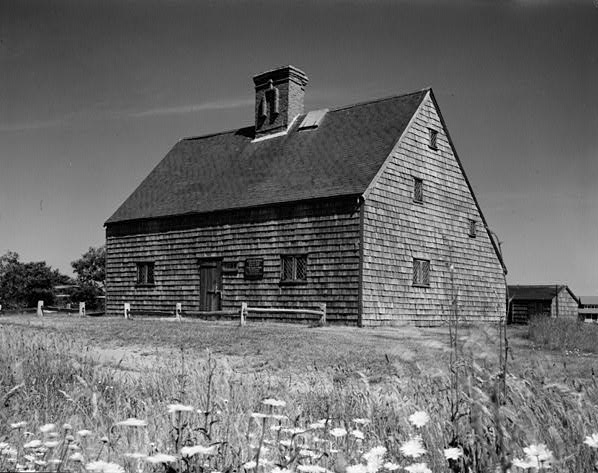
Jethro Coffin House

Jethro Coffin House,  also know as the Oldest House,  is the oldest house on Nantucket in its original location and is the only surviving structure from the island’s 17th Century English settlement. It is a U.S. National Historic Landmark. Because of the brick design on its chimney, it is also called the Horseshoe Housd

Sources:

Early settlers of Nantucket: their associates and descendants by Lydia Swain 1896

http://en.wikipedia.org/wiki/Nantucket

http://donahuefamilytree.homestead.com/NantucketFounders.html

http://en.wikipedia.org/wiki/There_once_was_a_man_from_Nantucket

http://www.nha.org/history/hn/HNnutshell.htm

http://www.faubourgmontmartre.com/nant.html

http://www.visit-historic-nantucket.com/history.html

The story of old Nantucket; a brief history of the island and its people from its discovery down to the present day. by Macy, William Francis, 1867-   1915

http://search.ancestry.com/cgi-bin/sse.dll?db=greatmigrationindex&f3=jumptoCHRISTOPHERHUSSEY

http://www.boydhouse.com/michelle/bird/thomasmacy.html

http://www.boydhouse.com/michelle/coffin/jamescoffin.html
Posted in History | 18 Comments

Peter Coffin

Peter COFFIN (1580 – 1627) may have been Alex’s 11th Great Grandfather; one of 4,096 in this generation of the Miller line.

Coffin Coat of Arms

Peter Coffin  was born about 1580 in Brixton, Devonshire, England. He married Joane KEMBER in Brixton.  His parents were Nicholas COFFIN and Joan AVENT. Peter died in 13 Mar 1628 in Brixton, Devonshire, England.

Joane Kember (Tember) was born born in 1584. Her parents were Robert KEMBER and Anna [__?__].   Joanna came to America in 1642 on the Hector with her son Tristram, his wife Dionis Stevens and their five children and her daughters Eunice and Mary.  Two other daughters remained in England where they married and lived out their lives.

The Coffins were of Haverhill in 1642, of Salisbury, MA about 1644/45, of Newbury 1648, and then to Nantucket in 1659.  The Coffin family in England were of the “Landed gentry”. They were not Puritans. Joan died in May 1661 in Boston, Mass.

Children of  Peter and Joane:

Name Born Married Departed
0. NOT Christian COFFIN  1607
Butlers, Devon, England
Thomas DAVIS
14 Nov 1622
Chipping, Gloucester, Engalnd
17 Apr 1688
Essex County, Mass
1. Tristram Coffin 1609 Plymouth Brixton Parish, Devon, England Dionis Stevens
1630
Brixton, Devon, England7
2 Oct 1681 Nantucket, Mass
2. Joane Coffin ca. 1611?
Brixton, Devon, England
Joseph Hull
1618, Crewkerne, Somerset, England
2 Oct 1681
England
3. Peter Coffin bapt.
20 Feb 1613/14
 Died Young
4. Deborah Coffin  c. 1616 William Stephen
25 Jun 1640
5. Eunice Coffin bapt.
22 Mar 1618
William Butler
1642
Salisbury, Mass.
1648
Hartford, Hartford, CT
6. Mary Coffin Feb 1621
Brixton, Devon, England
Alexander Adams
1644
Boston, Mass.
18 Sep 1691
Boston, Suffolk, Mass.
7. Ruth Coffin bapt,
10 Sep 1623
11 Nov 1623
8. John Coffin ca. 1625 Died 1642 Plymouth Fort in the Parliamentary War
9. Child Coffin Aft. 21 Dec 1627 Died Young

*Joane Coffin
John Coffin
Christian Coffin
*Tristram Coffin
Deborah Coffin
Eunice Coffin
Mary Coffin
At her funeral, the Rev. Wilson described Joanne as “a woman of remarkable character”. In 1615, Peter was a churchwarden in Brixton.

Will of Peter Coffin  From Archdeaconry of Totnes (Exeter), 1627.

” In the name of God, Amen, ye 21st day of December in ye third yeare of the raigne of our Sovraigne Lord Charles… I peter Coffyn of the Parish of Brixton in ye County of Devon being sick of body but in perfect minde and memory (thanks be to God) doe make and ordaine this my last Will and Testament…

Item I give and bequeath unto Tristram Coffyn my Sonne one feather bedd… my best brasen panne and my best brasen crocke

Item I give and bequeath unto Johan Coffyn my Wife ye issues pfitts and comodities of all my lands tenements & hereditaments wth in ye sayd Parish of Brixton dureing her widdowhood she yeelding and payinge therefor yearly unto the sayd Tristram my Sonne his heirs and assignes the summe of Fifty shillings of lawfull English money at ye four most usual feasts of the year and also sufficient meat drink & clothes and convenient lodgings unto ye sayd Tristram according to his degree and callinge dureing her Widdowhood onely And if it happen ye sayd yearly rent of Fifty shillings or any part thereof to be behinde and unpayd that then and from thenceforth itt may and shall be lawfull to and for the sayd Tristram Coffyn his heirs and assignes unto all and singular the said prmises to enter and distraine and the distress so there taken from thence to lead drive carry away & empound and impound to detaine and keepe untill ye sayd rent of Fifty shillings with the arrearages of the same (if any bee) shall bee to him or them fully answered and payd. And further it is my Will that if the sayd Johan my Wife shall happen to marry that she shall immediately thereupon loose all ye pfitts commodities and right of that one tenement called Silferhey lying in Butlers in ye parish of Brixton aforesayd which duringe her Widdowhood by my Will she is to have and ye same to redound & be immediately in the possession of my Sonne Tristriam his heirs and assignes

Item I doe give and bequeath unto my Sonne Tristriam All my lands rents reversions services & hereditamts with the appurtenances whatsoever sett lying & being wthin ye sayd County of Devon To have and to hold ye same and every part and parcel thereof to ye sayd Tristriam Coffyn his heirs and assignes forever to ye only pfitt & behoof of the said Tristriam Coffyn his heirs and assignes to be holden of the chiefe Lord and Lords of the Fee thereof by the rents and services therefor yearly due and payable and my Will farther is that if the said Tristriam my Sonne shall chance to dy without an heir male lawfully begotten or to be begotten of his body that then all the prmisses last mentioned I given to him shall redound unto John Coffyn my Sonne his heirs and assignes accordingly and in ye same manner that it should to ye said Tristriam my Sonne

Item I doe give and bequeath unto Johan Coffyn Deborah Coffyn Eunice Coffyn and Mary Coffyn my four Daughters to each of them severally Thirty pounds in money that is to say amongst them CXX£ to be payd when they or each of them severally shall be of the full age of twentie years

Itm I give and bequeath unto John Coffyn my Sonne Fourty pounds in money to be payd him when hee shall be of the age of twenty years.

Item I give & bequeath unto the child wc my Wife now goeth withal the sume of Thirty pounds in money to be payd when he or she shall be of the age of twentie years. Provided always & my mind & will is that if either Johan Coffyn Deborah Coffyn Eunice Coffyn Mary Coffyn John Coffyn of ye child my Wife goeth withal happen to dy before he she or they doe come to ye age of twenty years that then his her or their portion or portions shall be equally divided amongst the survivors

Item All ye rest of the goods chattels and cattells not before given nor bequeathed I doe give and bequeath unto Johan Coffyn my Wife whome I make constitute and ordaine my full and whole Executrix…I doe intreat… my brother in law Phillip Avent and my Brother Niclas Coffyn to ye Overseers…”

The inventory amounted to £236/5/17.

x

Children

1. Tristram Coffin

Tristram’s wife Dionis Stevens was born 4 Mar 1609 in Plymouth Brixton Parish, Devon, England.  Her parents were Robert Stevens and Dionis [__?__]. Dionis died 16 Sep 1676 in Nantucket, Nantucket, Mass.

The Tristram Coffin House is the oldest structure in the Newbury Historic District. Built in 1654 by one of Newbury’s first settlers, Tristram Coffin, the House represents one of the outstanding examples of First Period architecture in New England.

Coffin House

The House was continuously occupied by the Coffin family from 1654. The seven succeeding generations of occupants participated actively in the socio-economic, political and educational life of the town. The Coffin House has a number of outstanding features including the original kitchen, a rare 18th-19th century built-in dresser, 18th century chamber with plaster of clay and straw with exposed boards, a buttery with pine woodwork preserved in its original state, and a collection of Coffin family furniture.

Tristram Coffin moved to Nantucket Island in 1659 with his wife, his mother, and some of his children.  In 1671, he was appointed as Chief Magistrate of Nantucket.  Tristram Coffin Sr. was  a Royalist by education and environment.

Tristram Coffin sailed to America from Devon, England in 1642. He became one of the original purchasers of Nantucket Island in 1659. At one time, with his sons, he owned one quarter of the island. He became Chief Magistrate and was viewed by the other settlers as the patriarch of the island. The historian Benjamin Franklin Folger said of his service as Chief Magistrate that he always exhibited a fair Christian character “in all the varied circumstances and conditions of that infant colony,” both to Indians and white settlers.

One of these sons was the famous Tristram Coffyn, the ancestor of the numerous families of the name now in this country.  Nearly all his descendants are enabled, by means of the accurate genealogical records in existence, to trace their linage back to him, although nearly two centuries have elapsed since his death.  He was born at Brixton, near Plymouth, in the County of Devonshire, England in the year 1605 (another account say 1609), married Dionis Stephens, and in 1642 came to New England, bringing with him his wife, mother, two sisters and five children.  The names of these children were Peter, Tristram, Elizabeth, James and John.  He first settled at Salisbury, Mass, thence moved the same year to Haverhill, where his name appears on the Indian Deed of that town, November 16, 1642, and where his children Mary Starbuck and John (the first John having died at the same place in 1642) were born.  In 1648 he removed to Newbury, where his youngest son, Stephen was born.  After residing there several years (during which time he was licensed to keep an inn and a ferry over the Merrimac River), he returned to Salisbury, where he became a county magistrate, and in 1660 or 1661 he abandoned New England, and with his wife, four children and his aged mother settled upon the island of Nantucket.  Prior to his last removal (and early in the year 1659), he made a voyage of inquiry and observation to the group of islands off the Massachusetts coast, with a view to this change of residence.  He first visited Matha’s Vineyeard, and taking from there Peter Folger, the grandfather of Benjamin Franklin, as an interpreter of the Indian language, proceeded to Nantucket.  It has been supposed that religious persecution was the cause of these frequent changes and of his final departure from the main land.

He was one of a company of ten who first purchased Nantucket from the Indians, which factg appears in a conveyance from the Sachems, Wanackmamack and Nickanoose, dated May 10, 1660.  The original manuscript of this instrument is still extant, bearing the signature of Peter Folger as one of the witnesses to its execution.  Prior to this purchase from the natives, the English title to the greater portion of the island had been obtained from Thomas Mayhew, who held the same under a conveyance from Lord Stirling.  The deed from Mayhew is dated July 2, 1659, and runs to the grantees in the following order, viz: Tristram Coffin, Thomas Macy, Christopher Ilussey, Richard Swaine, Thomas Barnard, Peter Coffin, Stephen Greenleaf, John Swaine and William Pike.

Tristram Coffin and his sons at one time owned about one-fourth of Nantucket, and the whole of the little island adjacent to it on the west, called Tuckermuck, containing 1,000 acres, which he purchased of the old Sachem Potonet at the time of his visit in 1659.

He appears to have been a leading spirt among the first settlers, and was frequently selected by the inhabitants to transact important public business.  His letters to the Colonial Government of New York (Nantucket was at that time a dependency of New York), are preserved in the Archives of the Department of State at Albany.

“At a Court of Sessions held the 29th of November 1681 there granted administration unto me Jamews Coffin, John Coffin and Stephen Coffin on the estate of Mr. Tristram Coffin deceased the 3rd Oct 1681 they having given security according to law.”

The body of the Oath was evidently written by Peter Coffin (son of Tristram), the signature is an autograph.  It will be observed that Tristram used the letter ‘y’ instead of ‘i’ in writing the family name.  It is said, whether truthfully I do not know, that his ancestors spelled it in the same manner.  The letter of administration appended to the bond fixes the date of his death (Oct 3, 1681) beyond question.

Tristram Coffin Medal - 1827 - Copper. 54.2 mm. 1,206.6 gns. Coffin's standing figure, date on pedestal; four hands clasped in unity forming a cross manua

Tristram Coffin Medal Reverse

The original pieces were struck by Sir Isaac Coffin, a Boston-born British Navy captain who founded a sailing school on Nantucket in 1826, long after he followed his Loyalist leanings to England. The medals were struck to mark the school’s founding and were distributed on Nantucket. One is known brightly gilt in its original presentation case — it was in Lucien LaRiviere’s collection and is now at Colonial Williamsburg. After the original struck medals were produced in 1826, the medal was cast and recast for family reunions on Nantucket, perhaps even as late as the first few decades of the 20th century.

In the year 1826, Sir Isaac Coffin, a native of Boston (who went to England in early life and became a Baronet, and an Admiral in the British Navy), visited Nantucket and founded the ‘Coffin School’, which is still flourishing.  The Act of Incorporation provides for the establishment of a school by the name of Admiral Sir Isaac Coffin’s Lancasterian School, for the purpose of promoting decency, good order and morality, and for giving a good English education to youth who are descendants of the late Tristram Coffin who emigrated from England” etc.  The act further provides that the Trustees shall all be the descendants of the above mention Tristram Coffin in the male or female line.

Children of Tristram and Dionis:

i. Captain Peter Coffin b. 1631, Devon, England; d. 21 March 1714/15, Exeter, Rockingham, New Hampshire; m. about 1656, Dover, Strafford, New Hampshire to Abigail Starbuck.

Abigail Starbuck was born 1641 in Dover, NH. Her parents were Edward STARBUCK and Katherine REYNOLDS. Abigail died 20 Oct 1657, Nantucket, Mass.

ii. Tristram Coffin b. 1 Feb 1631/32, Brixton, Devon, England; d. 4 Feb 1703/04, Newbury, Essex, Mass.; m. 2 Mar 1651/52 Newbury, Mass to Judith Greenleaf.

Judith Greenleaf was baptized 2 Sep 1625 St. Margaret’s parish, Ipswich, England./ Her parents were Edmund GREENLEAF and Sarah MOORE. Judith died 15 Dec 1705 in Newbury, Mass.

iii. Elizabeth Coffin b. c. 1634, Brixton, Devon, England; d. 19 Nov 1678, Newbury, Essex, Mass.; m. 13 Nov 1651 in Newbury, Mass to Capt. Stephen Greenleaf.

Capt. Stephen Greenleaf was baptized 10 Aug 1628 St. Margaret’s parish, Ipswich, England. His parents were Edmund GREENLEAF and Sarah MOORE. Stephen drowned off Cape Breton, Nova Scotia on 1 Dec 1690.

In the French and Indian War, Captain Stephen Greenleaf, Lieutenant James Smith, Ensign William Longfellow, Sergeant Increase Pillsbury, William Mitchell and Jabez Musgrave were cast away and lost on an expedition against Cape Breton.

“The expedition under Sir William Phips, consisting of thirty or forty vessels, carrying about two thousand men, sailed from Nantasket on the ninth day of August, 1690, but did not arrive at Quebec until the fifth day of October. Several attempts were made to capture the town, without success; and, tempestuous weather having nearly disabled the vessels and driven some of them ashore, it was considered advisable to re-embark the troops and abandon the enterprise. On their way back to Boston, they encountered head winds and violent storms. Some vessels were blown off the coast, and ultimately arrived in the West Indies. One was lost upon the island of Anticosti, and several were never heard from. Capt. John March, Capt. Stephen Greenleaf, Lieut. James Smith, Ensign William Longfellow, and Ensign Lawrence Hart, of Newbury, Capt. Philip Nelson, of Rowley, and Capt. Daniel King, of Salem, were among the officers commissioned for service in the expedition to Canada, under the command of Sir William Phips.”

iv. James Coffin b. 12 Aug 1640, Devon, England; d. 28 Jul 1720, Nantucket, Nantucket, Mass.; m. 3 Dec 1663 Nantucket, Nantucket, Massachusetts to Mary Severance.

v. Mary Coffin b. 20 Feb 1645, Haverhill, Essex, Mass; d. 13 Sep 1717, Nantucket, age 74; converted by Quakers from Providence, Rhode Island; held first Meeting of Friends in her home in 1702; m. Nathaniel Starbuck, son of Edward STARBUCK,  and Katherine  REYNOLDS, 1662

Became known as “The Great Mary” of Nantucket. She is said to be a most extrordinary woman who participated in public gatherings, Town Meetings which were frequently held in her home. For several years meetings for workshops were held in the “great fore-room” of her home known as ‘Parliament House’ situated on what is now known as Island View farm between the Macy’s and the North Head of the Hummock ponds. She was a Quaker leader and helped establish a Meeting on the island in 1701. The first Friends Society was formed in 1704 and the first meeting house was built in 1711. The Nantucket Monthy Meeting was established on May 16, 1780. She was a minister in the Society as were her children and her grandsons, Elihu COLEMAN (published one of the earliest protests against slavery) and Nathaniel Coleman, and her granddaughter, Priscilla BUNKER.

vi. John Coffin b. 30 Oct 1647, Haverhill, Essex, Mass. d 5 Sep 1711, Edgartown, Martha’s Vineyard, Mass. m. 1668, Nantucket, Nantucket, Massachusetts to Deborah Austin.

Deborah Austin was born about 1650.  Her parents were Joseph Austin and Sarah STARBUCK.

vi. Steven Coffin b. 11 May 1652, Newbury, Essex, Mass.; d. 18 May 1734, Nantucket, Nantucket, Mass.; m. 8 Oct 1668 in Nantucket, Nantucket, Massachusetts to Mary Bunker

4. Deborah Coffin

Deborah’s husband William Stephen was born about 1603, Brixton Parish, Plymouth, Devon, England. William died in 1647, England

5. Eunice Coffin

Eunice’s husband William Butler was born 1602 in Braintree, Essex, England. Her parents were Steven Butler and [__?___]. William died 1648 in Hartford, Hartford, CT.

6. Mary Coffin

Mary’s husband Alexander Adams was born 1615 in Brixton, Devon, England. His parents were Henry Adams and [__?__]. Alexander died 15 Jan 1677 in Boston, Suffolk, Mass.

Alexander Adams was a shipwright

Sources:

http://trees.ancestry.com/owt/person.aspx?pid=1570679

http://trees.ancestry.com/owt/person.aspx?pid=1585163

http://www.bdhhfamily.com/peter_coffin.htm

http://www.family2remember.com/famtree/b612.htm

http://en.wikipedia.org/wiki/Coffin_House

http://donahuefamilytree.homestead.com/NantucketFounders.html
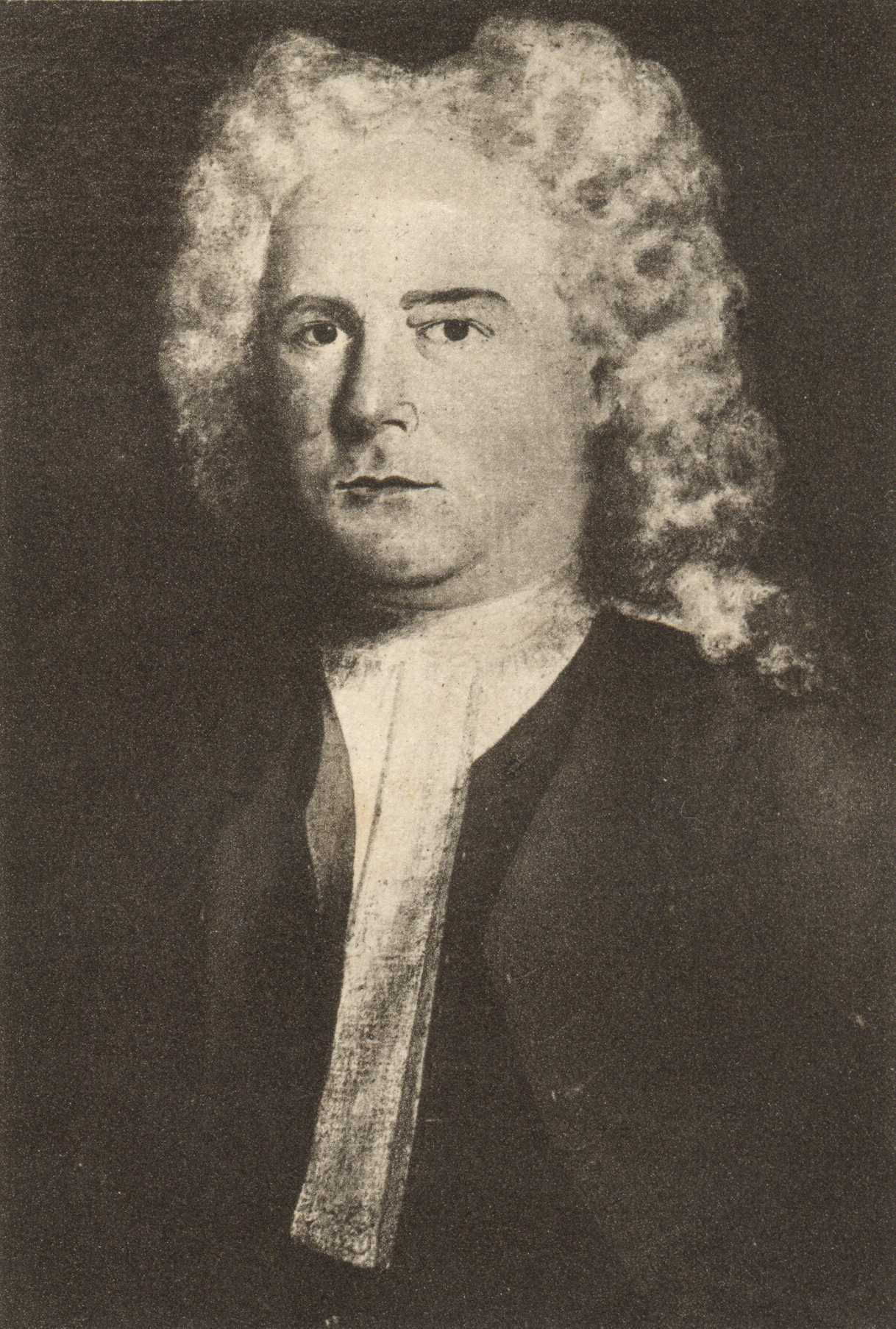
http://www.jacksonsweb.org/coffinnotes.htm

http://forums.collectors.com/messageview.cfm?catid=26&threadid=589856

http://karetom.com/Coffin.htm#PeterCoffin1580

http://www.bdhhfamily.com/peter_coffin.htm

Posted in Research | Tagged | 11 Comments

Captain (Mark) Roger Hilton

Mark (Roger) HILTON Sr. (1560- 1605) was Alex’s 13th Great Grandfather, one of 16,384  in this generation of the Shaw line and one of 16,384   in the Miller line.  (See his 3rd great grandson Thomas BROWNE for details of the double ancestors)

Captain (Mark) Roger Hilton was born between 1550 and 1560 at Biddick, Durham, England.   While many genealogies mentioned Yorkshire, or Northwich, Cheshire, as his birthplace, it would seem logical that he was born in Biddick, Durham since his father was Lord Biddick of Hylton Castle. His parents were  William HILTON of Biddick and Margaret METCALFE.   He married Ellen MAINWARRING circa 1585 at Wearmouth, Sunderland, County Durham, England.  No firm citations for this wife/marriage have been found, but her name has appeared on numerous genealogy databases. The marriage date is based upon the estimated birthdate of Roger and 1590s birthdates of his sons. Roger died in 1604/05 in Wearmouth, Sunderland, County Durham, England.

Ellen Mainwarring was born was born in 1552 in Wearmouth, County Durham, England Her parents were John MAINWARRING and [__?__].

Children of (Mark) Roger and Ellen:

Name Born Married Departed
1. William HILTON ~ 1591 in Northwich, Cheshire, England. Mary [__?__]
.
Frances [__?__]
30 Jun 1656
2. Edward Hilton 5 Jun 1595/96
Biddick, Durham, England.
Katherine Shapleigh
1625
Dover, NH
btw. between Oct 1670 and 6 Mar 1670/71 in Dover, Strafford, New Hampshire
3. Rebecca Hilton ~ 1602
Waremouth, Durham, England
Thomas Roberts
~1627
Strattford New Hampshire
27 Sep 1673
Boston, Suffolk, Mass.

Ancestors

15th great-grandson of William I King of England.
13th great-grandson of Romanus de Helton.
12th great-grandson of Eleanor of Aquitaine Queen of England.
2nd Great Grandson of Edward IV

From British records, this family can trace their genealogy from about 1200 to William DeHilton, born in 1516 in Yorkshire, England and died in 1562 in Durhamshire. His wife was Margaret Metcalfe and they had several children, one of whom may have been Mark Hilton. The key here is that Mark Hilton’s grandfather was Sir William De Hilton, husband of Sybil Lumley, and Sybil was the granddaughter of King Edward IV. Edward was the Plantagenet member of the House of York, who reigned from 1461-1483 and was succeeded by his son, Edward V, who within the year disappeared into the Tower of London, presumably banished by his uncle who subsequently was crowned King Richard III, made even more famous by the Shakespearean play.

As was typical of that day, British kings often had mistresses, and these women bore them children.  In those days these illegitimate children, while not in line for the throne, were known to be descended from the King and were often given titles.  It was in this way that Sybil Lumley’s mother, Elizabeth Plantagenet, born about 1464, came to be accepted as the daughter of King Edward IV and his mistress Elizabeth Wayte. While there is some confusion about her mother’s name, it appears well established that Elizabeth Plantagenet was the King’s daughter, and that she married Sir Thomas Lumley. (ref. 10, 12).  Elizabeth Wayte’s other royal bastard was Arthur Plantagenet, 1st Viscount Lisle. In this way, subsequent Hiltons are known to be descendants of King Edward.

A missing link still remained, however. Were William DeHilton and his alleged son, Mark/Roger, ancestors of the Hiltons who settled in New England in the 1620’s? To find an answer to this question, in 1885 Nathan Hilton, a magistrate of Yarmouth, Nova Scotia, hired a woman in London to search for his roots and determine if the American Hiltons were related to Mark Hilton and the DeHiltons, and of course through them, to King Edward IV.

According to the “Genealogical Dictionary of Maine and NH”, “This woman, identity unknown, in order to connect the Durham County family with the two brothers in London and America, must have invented probate records of two estates, ‘Ralph Hilton, 1602’ and ‘Roger Hilton 1619’ [since later] exhaustive searches …failed to find any trace of ‘Ralph’ and ‘Roger’. They did, however, find over thirty contemporary records supporting the origin of the American emigrant brothers in Northwich, Chester County. [Nonetheless], the baronial pedigree was published in the Yarmouth Herald, Mar. 22-29, Apr 5-12, 1898, and will doubtless charm the credulous for years to come.”

Apparently based on this 19th Century research, many amateur genealogists have connected the two brothers, Edward and William Hilton, who settled in Dover, NH, and were known to be the sons of William Hilton from Chester County, England, to the Durham County Hilton family and made them sons of Mark, or sometimes Mark Roger, Hilton. In this way the royal connection was made.

Royal Pedigree

With the above caveats in mind ….

Mark’s father Sir William HILTON (de jure 10th Baron Hylton) was born in 1516 in Wensleydale, Yorkshire, England. His parents were Sir William HILTON (1488 – 1536) and Lady Sibill LUMLEY (1485 – 1518). He married Margaret METCALFE in 1543 in Wensleydale, England.  He  nherited the family estate and Hylton Castle from his brother Sir Thomas Hylton who died childless after 4 marriages; this was probably about 1560/61 Sir William died 1562 in Wensleydale, Yorkshire, England

Mark’s mother Margaret Metcalfe was born 4 Jul 1520 in Nappa, Yorkshire, England. Her parents were Sir James METCALFE (1480 – 1539) and Margaret PIGOTT (1492 – 1531). Margaret died 4 Jun 1566 in North Biddick, Durham, England She was buried at Holy Trinity Church, Durham, England.

Margaret Metcalfe left a will on 4 June 1566 at North Biddick, County Durham, England. Will of Margaret Hilton of North Biddick, Widow: “To be buried at Washington. Her three daughters Elizabeth, Dorothy and Helen; her son William and his wife Ann. Her executors to be Robert, Roger, Ralph, Sibill and Margaret Hilton. Supervisors her son William, her brother Sir Christopher Metcalfe, Mr. Robert Bowes, Mr. Thomas Layton, her brother Oswold Metcalf, and her sons-in-law Michael Constable and Marmaduke Thirkeld, and her nephew Anthony Thomlinson.”

Children of Margaret Metcalfe and William Hilton of Biddick

i. Dorothy Hilton b.aft.1543
ii. Ellen (Helen) Hilton b.abt.1543
iii. Katherine Hilton b.abt.1543
iv. Sibyl Hilton b.abt.1543
v. William Hilton b.abt.1545
vi. Robert Hilton b.abt.1547
vii. Ralph Hilton b.abt.1551
viii. Margery Hilton b.abt.1555
ix. (Mark) Roger HILTON b.~1560 d. ~1605 Wearmouth, Durham, England
x. Elizabeth Hilton b.abt.1561
xi. Anne Hilton b.abt.1565 d.bef.June 10, 1566

Mark’s grandfather Sir William Hilton (de jure 8th Baron Hylton) was born 1488 in Yorkshire, England. His parents were William HILTON and Margery BOWES. He married Lady Sibill LUMLEY. Sir William died 1536 in Yorkshire, England.

Mark’s grandmother Lady Sibill Lumley was born 1485 in Lumley, Durham, England. Her parents were Sir Thomas LUMLEY (1460 – 1487) and Elizabeth PLANTAGENET (1463 – 1503). Lady Sibill died in 1518 in Newcastle, Yorkshire, England

In his will of (probably) 5 October 1518, Sir William conveyed his manors of Hilton, Ford, Usworth, Folanceby (Follonsby?), Grindon, Bermeton (Barmston?), Biddicke (Biddick?) Co. Durham; Carnaby and Wharram-Percy, co. Ebor; Aldstone, Kirkhaughe, Elryngton and Woodhall, Northumberland; to Sir William Bulmer, Sir Ralph Hedworth [his son-in-law, married to Anne], Robert Bowes of Cowton, George Bowes of Dalden, Robert Bowes of Aske, John Hedworth and John Lambton on trust for himself for life, with remainder intail male respectively to: Sir Thomas Hilton, his son and heir; William Hilton, his second son; Cuthbert, son of Thomas Hilton, late of Hedworth; Roger, son of George Hilton, late of Wylome, co. York; William Hilton, brother of Roger; John Hilton, Citizen and Merchant-Taylor of London; Adam Hilton of Parke in Lancashire; Thomas Hilton, Citizen and Skinner of London.

Children of Sir William and Sibill

i. Thomas Hilton (b. ABT 1514)
ii. William HILTON (b. ABT 1516 – d. ABT 1562)
iii. Anne Hilton (b. ABT 1518)
iv. Joan Hilton (b. ABT 1518)

Mark/Roger’s great grandfather Thomas LUMLEY (Sir)  was born about 1460, Lumley, Durham, England.  His parents were George LUMLEY (3° B. Lumley)  and Elizabeth THORNTON.  He married Elizabeth PLANTAGENET.  Sir Thomas died about 1487

Notes: died before his father, consequently the estates were inherited by his son, Richard, Lord Lumley, who, coming into these possessions in 1509, lived but two years to enjoy them.  Fought on Richard III‘s side at the Battle of Bosworth.

Mark’s great grandmother Elizabeth Plantagenet was born 11 Feb 1463 in England. Her parents were EDWARD IV “King of England” Plantagenet (1442 – 1483) and Elizabeth WAYTE (1444 – 1492).  Elizabeth died 11 Feb 1503 in Lumley, Durham, England.

Additional evidence of Elizabeth’s parentage may be seen in the papal dispensation granted in 1489 for Elizabeth’s son, Richard Lumley, to marry Anne Conyers, they being related in the [3rd and] 4th degree of kindred. A dispensation was needed for this marriage, as the two parties were both descended from Ralph Neville, K.G., 1st Earl of Westmorland, and his wife, Joan Beaufort

Children of Sir Thomas and Elizabeth

i. Richard Lumley (4º B. Lumley)

ii. John Lumley (b. ~ 1479 – d. Aft. 1483)

iii. Anne Lumley (B. Ogle)

iv. Elizabeth Lumley

v. George Lumley

vi. Roger Lumley

7. Sybilla LUMLEY

File:Edward IV Plantagenet.jpg

Edward IV c.1520, posthumous portrait from original c. 1470-75

Baron Hylton

  • Robert Hylton, 1st Baron Hylton (d. 1322)
  • Alexander Hylton, 2nd Baron Hylton (d. 1360)
  • Robert Hylton, de jure 3rd Baron Hylton (1340–1377)
  • Sir William Hylton, de jure 4th Baron Hylton (1356–1435)
  • Sir Robert Hylton, de jure 5th Baron Hylton (1385–1447)
  • William Hylton, de jure 6th Baron Hylton (d. 1457)
  • Sir William Hylton, de jure 7th Baron Hylton (1451–1500)
  • Sir William HYLTONde jure 8th Baron Hylton (d. 1535) (Mark’s grandfather)
  • Sir Thomas Hylton, de jure 9th Baron Hylton (d. 1560)
  • Sir William HYLTONde jure 10th Baron Hylton (c. 1510–1565) (Mark’s father) Sir William inherited the family estate and Hylton Castle from his brother Sir Thomas Hylton who died childless after 4 marriages; this was probably about 1560/61
  • Sir William Hylton, de jure 11th Baron Hylton (d. 1600)
  • Henry Hylton, de jure 12th Baron Hylton (1586–1641)
  • Robert Hylton, de jure 13th Baron Hylton (d. 1641)
  • John Hylton, de jure 14th Baron Hylton (d. 1655)
  • John Hylton, de jure 15th Baron Hylton (1628–1670)
  • Henry Hylton, de jure 16th Baron Hylton (1637–1712)
  • Richard Hylton, de jure 17th Baron Hylton (d. 1722)
  • John Hylton, de jure 18th Baron Hylton (1699–1746) (abeyant)

Baron Hylton is a title that has been created twice, once in the Peerage of England and once in the Peerage of the United Kingdom. The first creation came in the Peerage of England 1295 when Robert Hylton was summoned to the Model Parliament as Lord Hylton by writ. His son, Alexander, was called to Parliament in 1332 and 1335, but no further summons were sent for his descendants. Therefore, the title has only been held de jure after the death of the second baron.  Indeed, the last baron was Member of Parliament for Carlisle after “inheriting” the title, due to this anomaly. Despite this, the creation is deemed to have fallen into abeyance on the death of the eighteenth baron with male heirs in 1746.

Henry Hylton

Henry Hylton, de jure 12th Baron Hylton (1586 – 30 March 1641) was an English nobleman, considered eccentric and sometimes given the name the Mad Baron.

Hylton was the eldest son of Thomas Hylton (himself the son of William Hylton, de jure 11th Baron Hylton) and his wife, Anne née Bowes (daughter of Sir George Bowes of Streatlam Castle). In 1600, Hylton inherited the right to the barony of Hylton from his grandfather (his father having died in  c. 1598. However, no Barons Hylton had been called to Parliament since the second baron in the 14th century, therefore Hylton was not technically a peer.

As Hylton was only thirteen years old when he inherited the Hylton estates in County Durham, he became a royal ward. He was placed in the care of Henry Robinson, Bishop of Carlisle and later married off to Mary Wortley, the daughter of Sir Richard Wortley, who managed the Hylton estates during Hylton’s minority. The marriage was probably never consummated as he lived apart from his wife for nearly 30 years, choosing instead to live with his cousin, Nathaniel Hylton, who was vicar of Billingshurst in Sussex, and later with Lady Shelley at her home of Michelgrove, near Petworth.

When Scotland invaded County Durham and the Hylton estates in 1641 as part of the Bishops’ Wars, Hylton made his will that year and appointed Lady Shelley as his executrix. Not knowing how long the Scots would occupy his abandoned estates, he confirmed in his will that he had no children or male heirs and also left the bulk of his estate to the Corporation of London for a lease of ninety-nine years. He also requested that he be buried in St Paul’s Cathedral “under a faire tumbe like in fashion to the tumbe of Dr. Dunne”, however this was not carried out. His wife later married Sir Thomas Smith, the “title” passed to his brother, Robert and the estate was later reclaimed by Hylton’s nephew, John Hylton, de jure 15th Baron Hylton.

Hylton Castle Map

Hylton Castle

Hylton Castle is a ruined stone castle in the North Hylton area of SunderlandTyne and Wear, England. Originally built from wood by the Hilton (later Hylton) family shortly after the Norman Conquest in 1066, it was later rebuilt in stone in the late 14th to early 15th century. The castle underwent major changes to its interior and exterior in the 18th century and it remained the principal seat of the Hylton family until the death of the last “baron” in 1746.  It was then Gothicized but neglected until 1812, when it was revitalised by a new owner. Standing empty again until the 1840s, it was briefly used as a school until it was purchased again in 1862. The site passed to a local coal company in the early 20th century and was taken over by the state in 1950.

West façade of Hylton Castle,

One of the castle’s main features, is the heraldic devices found mainly on the west façade, which have been retained from the castle’s original construction. They depict the coats of arms belonging to local gentry and peers of the late 14th to early 15th centuries and provide an approximate date of the castle’s reconstruction from wood to stone.

The first castle on the site, built by Henry de Hilton in about 1072, was likely to have been built of wood. It was subsequently re-built in stone by Sir William Hylton (1376–1435) as a four storey, gatehouse-style, fortified manor house, similar in design to Lumley and Raby. Although called a gatehouse, it belongs to a type of small, late 14th century castle, similar to Old WardourBywell andNunney castles. The castle was first mentioned in a household inventory taken in 1448, as “a gatehouse constructed of stone” and although no construction details survive, it is believed the stone castle was built sometime between 1390 and the early 15th century, due to the coat of arms featured above the west entrance  It has been suggested that Sir William intended to erect a larger castle in addition to the gatehouse, but abandoned his plan.

Heraldry on Hylton Castle

In relation to the photograph, the shields are:

  1. England and France quarterly – The banner of Henry IV of England
  2. Quarterly 1 and 4: Or a Lion rampant Azure (Percy); 2 and 3:Gules, three luces haurientArgent (Lucy) – Henry Percy, 1st Earl of Northumberland
  3. Percy (unquartered) – Sir Henry “Hotspur” Percy (son of the above)
  4. Lion rampant debruised by a bend – Sir Peter Tilliol
  5. Within a bordure two Lions passant – Felton of Edlington
  6. Azure, three herons Argent – Sir William Heron
  7. A Lion rampant – believed to be the Royal coat of arms of Scotland
  8. Quarterly, Argent, two bars Azure and Or six annulets Gules (Hylton quartering Hylton of Swine) – The Westmoreland branch of the Hyltons.
  9. Argent, a fess Gules inter three popinjays Vert – Sir Ralph Lumley(later Baron Lumley)
  10. A Lion within a bordure engrailed – Sir Thomas Grey (or his son)
  11. Or and Gules quarterly, over all on a bend three scallops – Sir Ralph Evers (Eure)
  12. Azure, a chief dancette Or – FitzRanulph of Middleham
  13. Argent, two bars, and three mullets in chief – Sir William Washington (ancestor of George Washington)
  14. Argent, a fess inter three crescents Gules – Sir Robert Ogle
  15. William de Ros, 7th Baron de Ros
  16. Ermine, on a canton Gules anorle Or – Sir Thomas Surtees
  17. Ermine, three bows Gules – Sir Robert Bowes (ancestor of Elizabeth Bowes-Lyon)
  18. Thomas Weston, chancellor to Bishop Skirlaw
  19. Walter Skirlaw (Bishop of Durham 1388–1406)
  20. Argent, two bars Azure – Sir William HYLTON

The household inventory taken on Sir William’s death in 1435 mentions, in addition to the castle, a hall, four chambers, two barns, a kitchen, and the chapel, indicating the existence of other buildings on the site at that time. Apart from the castle and chapel, the other buildings were probably all of timber.  In 1559, the gatehouse featured in another household inventory as the “Tower”, when floors and galleries were inserted to subdivide the great hall. 

The eccentric Henry Hylton, de jure 12th Baron Hylton left the castle to the City of London Corporation on his death in 1641, to be used for charitable purposes for ninety-nine years. It was returned to the family after the Restoration, to Henry’s nephew, John Hylton, de jure 15th Baron Hylton.

Cauld Lad of Hylton

The ruins of Hylton Castle (in Sunderland, Northern England) are reputed to be haunted by the ghost of a murdered stable boy Robert Skelton, known locally as the Cauld Lad of Hylton.  The events are said to have taken place in the 16th or 17th century and there are several legends concerning the ghost’s origins.

One story states that the stable boy was caught courting Baron Hylton’s daughter, and was killed.

Another version says that the baron ordered that his horse be prepared for an important journey, but Skelton had overslept. There are several versions of what happened next. The enraged baron was said to have either

  • decapitated the boy
  • hit the boy on the back of the head with a riding crop, striking a spot that had been injured (and weakened) the day before, causing a fatal blow
  • stabbed him with a nearby pitchfork.

He was then reported to have disposed of the body in a deep pond, or an unused well.  Several months later, the body was recovered. The baron was tried for Skelton’s murder, but had an alibi. An old farm worker stated that the baron had ordered the boy to remove a tool from the top shelf in the barn, and the boy had fallen, seriously wounding himself in the process. The baron had tended to the wounds, but the boy had died. It is on record that Robert Hylton, 13th Baron Hylton was pardoned in 1609.

Soon afterwards, strange events began to occur in the castle. The kitchen would be tidied at night if left in a mess, or messed up if left tidy. An unseen person would take hot ashes from the fires, and lie on them, leaving an imprint of a body. Chamber pots were emptied on the floor.

After a while, a cook stayed up until midnight to see who was causing the mischief. He saw the ghost of a naked boy, and heard him crying “I’m cauld” (“I’m cold”). The cook and his wife left a warm cloak for the ghost, and the next night they heard, “Here’s a cloak and here’s a hood, the Cauld Lad of Hylton will do no more good.” The ghost disappeared and the strange occurrences ceased, though even now people claim to have heard the ghostly cries of the Cauld Lad.

The behaviour of the ghost suggests a poltergeist. Other versions of the tale describe the Cauld Lad as an elfbarghest  or brownie who is under a spell from which he can only be released by being given a gift. His mischief is intended to draw attention to himself in the hope that he will be saved. He sings the following song, which indicates how long he expects to be enchanted:

“Wae’s me, wae’s me, (= Woe is me, woe is me,)
The acorn’s not yet fallen from the tree,
That’s to grow the wood,
That’s to make the cradle,
That’s to rock the bairn (= That will rock the baby),
That’s to grow to the man
That’s to lay me!” (= That will exorcise me!)

According to Robert Surtees, a local antiquarian, as well as haunting the castle, the Cauld Lad also appeared as a ferryman on the North Hylton side of the River Wear and would take passengers halfway across before disappearing and leaving them stranded. Even as late as the 1970s, long after the ghost was supposed to have been laid, local people claimed to have seen mysterious lights high up in the castle. This is despite the fact the upper floors in the castle had gone.

Joseph Jacobs included this tale in English Fairy Tales; he noted that the ghost’s behavior is similar to that of the elves in The Elves and the Shoemaker, collected by the Brothers Grimm.  There is a fairy tale titled The Cauld Lad of Hilton in the anthology Old Witch Boneyleg by Ruth Manning-Sanders. A play recounting the tale The Cauld Lad O’Hylton by James Roland MacLaren was performed in Sunderland in the 1870s.

John Mainwaring

Many genealogies say that Mark (Roger) Hilton’s father-in-law was John Mainwaring, but according to the Mainwaring geneology online at Ancestry.com (A Short History of the Mainwarings, Chapter II, page 31), John Mainwaring (1500-1577), son of Katherine Honford and John Mainwaring of Over Peover, died without issue. The only male heir of Katherine Honford and John Mainwaring of Over Peover that had issue was Randle Mainwaring. There are 66 trees on line at Ancestry.com that claim that the John Mainwaring (who died without issue) had a son named John Mainwaring born in 1530 by an unknown wife, who in turn had a daughter who married a Hilton. This woman named Mainwaring was not descended from the Mainwarings who can trace their roots back to Harry Hotspur. The Mainwaring geneology is correct, not what’s on Ancestry.com.

If you think you have Plantagenet or English Royal ancestry and are an American, you should consult “Plantagenet Ancestry of 17th Century American Colonists” online at Ancestry.com. There are only about 190 people who emigrated to America in the 1600’s with plantagenet or royal ancestry, among them the Cottons [true Mainwaring descendants], the Saltonstalls, the Randolphs of Virginia and some people you never heard of. Also, there are even more people listed in Ancestral Roots of Certain Americans who came to America before 1700, by Frederick Lewis Weis, also online at Ancestry.com. Virtually all of my ancestors were ordinary Puritans who came over to America before 1650 from England. So far I have found 6 (out of a thousand or so) who are descended from the Plantagenets, Charlemagne, Welsh Princes, Scottish Kings, etc. I would guess that a lot of people with “old” ancestry are similarly descended, so I urge you to look at these books. These are both well respected authorities in the genealogical community.

Children

1. William HILTON (See his page)

2. Edward Hilton

Edward’s wife Katherine Shapleigh was born 1600 in Kingsweare, Devonshire, England. Her parents were Nicholas SHAPLEIGH and [__?__]. Katherine died before 1650 in Exeter, Rockingham, New Hampshire.

Edward Hilton Plaque — Hilton Park, Dover, NH

Further up the river Piscataqua at a location called “Dover Point”….a settlement had been started in 1623 by the Edward Hilton, member of the fisherman’s guild in England…

Hilton’s Point

.and one of David Thomson’s compatriots after his admission to the Fishmonger’s Guild, 9 April 1621…an apprentice of Marie Hilton…..at London, England. Edward Hilton was baptized at Northwich, Chester County, England at Witton Chapelry on 9 Jun. 1596, the son of William Hilton…..and he had a brother William Hilton, who, with his wife and three children arrived on the ship “Fortune” with Capt. William Trevore, at Plymouth Plantation ….the youngest child baptized by the Rev. John Lyford there in 1624……but they sought out the services of David Thomson at Boston Bay to transport them to the Piscataqua river settlement of Edward Hilton….and they settled first at land on the Maine side of the river across from Edward Hilton’s settlement on Dover Point …..later removing to Kittery, Maine and later still to land on the York River in York, Maine.

Edward Hilton Marker

Edward Hilton had received his patent to this land…and received livery of seisin of his Swampscot patent, 12 Mar 1629/30. However, he was in control at Dover Point, 4 Dec 1632, when Governor Winthrop Received a letter from Captain Neale and William Hilton that they had sent four (4) vessels and forty (40) men to protect Pemaquid from Dixie Bull….. and did not remove to live at “Newfields” (a part of Exeter, NH) until he had sold this Dover Point Patent to the Bristol Men….who sold it to the Lords Say and Brooke…..and they sold to the men of Shrewsbury….and Governor Thomas Wiggin had been sent to govern the Dover land.

With Edward Hilton had come Thomas Roberts, who married Edward Hilton’s daughter Rebecca. Thomas Roberts remained at Dover Point with Rebecca …and is buried there……Edward Hilton and his family were buried at Newfield, NH ….. a site which was marked by the “Piscataqua Pioneers” after sufficient excavation to locate the old homestead on August 31, 1933.

There is no record of any transactions or business agreements between Edward Hilton and David Thomson; nor has there been found any statement showing why Mr. Hilton settled on a part of Mr. Thomson’s grant of six thousand acres in 1623, in nearly the same month; but these facts are known, and give a reasonable explanation of how the arrangement came about.

Mr. Leonard Pomeroy, as has already been shown by the “Indenture,” had a one-fourth interest in the land venture; Mr. Pomeroy owned the ship “Providence” in which Hilton’s party came over; a cove at Hilton’s Point where the “Providence” landed, was named Pomeroy’s Cove; and probably Mr. Pomeroy was a passenger on the “Providence” in its pioneer voyage up the Pascataqua River. So it is a fair inference to draw from this that the Hilton Point territory was Mr. Pomeroy’s portion of the six thousand acres, and the Hiltons settled there under his management or at his request. Mr. Hilton must have known before he sailed from Plymouth that the Pascataqua River was in the section of New England where Mr. Thomson designed to locate his grant, otherwise he would not have come here, immediately following the ship “Jonathan.” One thing is certain: he came, and he remained here. Mr. Thomson came, and soon went away to Thomson Island in Boston Harbor.

At this time Edward Hilton was a young man of twenty-two or twenty-three years, and when he commenced the settlement on the Pascataqua River, which later developed into Dover, he was twenty-six or twenty-seven. His brother William was a few years older. Mr. Pomeroy, his coadjutor in the venture, was about fifty years of age. He was member of the local Council of Plymouth in 1612 and later and mayor of that city in 1623, and was a wealthy and active man of business. It appears that he was the financial manager of the founding of Dover as Capt. John Mason was of Portsmouth seven years later, in 1630.

Edward Hilton was no common fisherman as some might erroneously infer from the statement made by all the New Hampshire historians, that he was “a fishmonger of London.” While in England in 1873-74 Mr. John T. Hassam visited Fishmongers’ Hall in London, which is the headquarters of one of the oldest and wealthiest guilds, or great companies, in that ancient city; its records date far back of the beginning of settlements in New England when the fishing business was very profitable for those who owned ships and had the means to employ men to come over here and catch fish for the English market; that was what the Fishmongers’ Guild did; and admiission to membership was a very rigid and exclusive operation; none but well-to-do men could get in. Mr. Hassam asked permission to examine the records from 1600 to 1623, with the purpose in view of ascertaining when Edward and William Hilton became members of the guild. The clerk in charge of the old records would not permit him, at first, to look at them, but said he would make an examination and report what he might find. A short time after, Mr. Hassam called again and the official informed him that Edward Hilton was admitted as a Freeman in the year 1621, and what appeared to be “Pawl Hilton” in 1616. Mr. Hassam then asked permission to look at the word “Pawl”; the clerk courteously consented for him to do so; on careful examination, he came to the conclusion that the man who made the record intended it for “William Hilton.” There was no question about Edward Hilton’s name. This shows the social and business standing of Edward Hilton in London, in 1621.

On November 7, 1629, Captain John Mason received his grant or patent from the Council of Plymouth, which is known as the “New Hampshire Patent” from which the State finally received its name. Its coast boundary was from the Merrimack to the Pascataqua River; and back into the country to Milton Three Ponds, and thence northwestward till three score miles be finished. The other line was the Merrimack River to its source (The Weirs of Winnepesaukee Lake). And then in a direct line to head of the easterly boundary. This, of course, covered every part of Mr. Edward Hilton’s grant. So to protect his property he had the Council of Plymouth grant him what is known as the Squamscot Patent, defining his territory, against any claims Capt. Mason or his heirs might set up. This Patent bears date of March 12, 1629-30, only four months after Mason’s date of November, 1629.

THE HILTON OR SQUAMSCOT PATENT.

Know ye that said President and Council by virtue and authority of his Majesty’s said Letters Patent, and for and in consideration that Ed Hilton and his Associates hath already at his and their own proper cost and charge transported sundry servants to plant in New England aforesaid, at a place there called by the natives Wecanne-cohunt, otherwise Hilton’s Point, lying some two leagues from the mouth of the River Paskataquack, in New England aforesaid, where they have already “built some houses and planted Come. And for that he doth further intend by God’s Divine Assistance to transport thither more people and cattle, to the good increase and advancement, and for the better settling and strengthening of their plantation, as also that they may be better encouraged to proceed in so pious a work which may espeoially tend to the propagation of Religion, and the great increase of trade, to his Majesty’s Realms and Dominions, and the advancement of public plantations—

Have given, granted and Engrossed and confirmed, and by this their present writing, doe fully, clearly and absolutely give, grant, Enfeoffe and Confirme unto the said Edward Hilton, his heirs and Assigns forever: All that part of the River Pascataquack, called or known by the name of Wecanacohunt, or Hilton’s Point, with the south side of said River, up to the fall of the River, and three miles into the main land by all the breadth aforesaid; Together with all the shores, creeks, bays, harbors, and coasts alongst the sea, within the limits and bounds aforesaid, with woods and islands next adjoining to the land not being already granted by said Council unto any other person or persons, together also with all the lands, rivers, mines, minerals of what kind or nature soe ever, etc. etc.;
To have and to hold all and singular the said lands and premises, etc. etc. unto said Edward Hilton, his heirs and assigns, etc. they paying unto our sovereign Lord the King, one fifth part of gold or silver ores, and another fifth part to the Council aforesaid and their successors, by the rent hereafter in these presents reserved, yielding and paying therefor yearly forever, unto said Council, their successors or assigns, for every one hundred acres of said land in use, the sum of twelve pence of Lawful money of England into the hands of the Rent gatherer for the time being, of the said Council, for all services whatsoever:— And the said Council for the affairs of England, in America aforesaid, do by these presents nominate, depute, authorize, appoint, and in their place and stead put William Blackston, of New England, in America, aforesaid, Clerk: William Jeffries and Thomas Lewis, of the same place, Gents, and either or any of them jointly or separately, to be their (the Council’s), true and lawful Attorney or Attorneys, and in their name and stead to enter into each part or portion of land and other premises with the appointments by these presents given and granted, or into some part thereof in the name of the whole, and peacable and quiet possession and seisin thereof for them to take, and the same so had and taken in their name and stead, to deliver possession & seisin thereof unto Edward Hilton, the said Edward Hilton, his heirs, associates and assigns, according to the tenor, forme and effect of these presents, Ratifying, Conforming and allowing all & whatsoever the said Attorney, or Attorneys, or either of them, shall doe in and about the Premises by virtue hereof.

In witness whereof the said Council for the affairs of New England in America aforesaid, have hereunto caused their Common Seal to be put, the twelfth day of March, Anno: Domi: 1629. (1630, N. S.)

Ro. Warwick.

Memo: That upon the seventh day of July, Anno : Domi: Annoq; R’s Caroli pri. Septimo : By Virtue of a warrant of Attorney within mentioned from the Council of the affairs in New England, under their common Seal unto Thomas Lewis, he the said Thomas Lewis had taken quiet possession of the within mentioned premises and livery and seisin thereof, hath given to the within named Edward Hilton in the presence of us:

Thomas Wiggin,
Wm. Hilton.
Sam’l Shabpe.
James Downe.

Vera copia efficit per nos.
Tim: Nicholas.
Pet. Coppur.

Vera Copia, Attest, Rich: Partridge, Cleric.

The administration of Edward Hilton was granted 6 April 1671 to Edward Hilton, William Hilton, Samuel Hilton and Charles Hilton, and they were enjoined to bring in an inventory. On petition of “Mrs. Katherin Hilton” it was ordered that her thirds be set out at the July 1671 court. The inventory of Edward Hilton was taken 9 and 10 March 1670/71 and totalled £2204;, it was brought into court on 29 June 1671, at which time a claim was made to part of the estate by Christopher Palmer on behalf of two of the administrator’s sisters. The inventory included £1810 in real estate: “the manor and appurtenances,” £600; “marsh & meadows and appurtenances,” £600; “the sawmill & privileges & appurtenances,” £600; and “ten acres on the south side of the brook, towards Exeter,” £10. On 1 July 1671 it was ordered that “all the land, meadows & sawmills shall stand & do stand bound until the creditors be satisfied” “Mis Katterine Hilton, executrix [sic] to Mr. Edw: Hilton deceased,” sued George Norton, but withdrew the case at York court, 19 Sep 1671.

3. Rebecca Hilton

Rebecca’s husband Thomas Roberts was born circa 1600 at Woolaston, Gloucestershire, England. His parents were Thomas Roberts and Frances James. Thomas died on 27 Sep 1673 at Hilton Point River, Dover, Strafford, NH.

Thomas Roberts along with Edward and William Hilton were the first settlers in Dover in 1623, just three years after the Pilgrims landed at Plymouth.

Thomas Roberts’ wife was named Rebecca and it has often been suggested that she was a sister of Edward and William Hilton. For examples Scales says, “…it is a tradition that Mr. Roberts’ wife was a Hilton, sister to Edward and William. There is no record in regard to this matter of matrimony but various corroborating data indicate that such was probably the fact in the relationship of these three men.” . However, others say that this is only a hypothesis and cannot be firmly established.. Nonetheless, many descendants of this line, seem to readily accept this possibility as fact.

Sources:

Edward Hilton 1 Source: Ancestry of Charles Stinson Pillsbury and John Sargent Pillsbury (1938)

Edward Hilton 2

Edward Hilton 3

http://kerrysdavis.home.comcast.net/~kerrysdavis/p18.htm#i179

http://www.ancestryuk.com/henryhyltonb1585A.htm

http://www.ancestryuk.com/HiltonWilliamNHFoundingFather.htm

http://our-royal-titled-noble-and-commoner-ancestors.com/p3972.htm#i119291

http://trees.ancestry.com/tree/1416126/person/498924262

  1. Laforest, Thomas J., “Our French-Canadian Ancestors”, Vol X (1990, LISI Press, Palm Harbor, Fla), pp. 75-84
  2. Cholette, J.L, “Jack and Bonnie Cholette’s Family Home Page”,     www.familtytreemaker.com/users/c/h/o/John-L-Cholette
  3. Tanguay, Cyprien, “Dictionnaire Genealogique des Familles Canadiennes”, (Montreal, 1887) Vol 1, p 9; Vol 3, p. 67
  4. Noyes, S., Libby, C.T., Davis, W.G., “Genealogical  Dictionary of Maine and New Hampshire”, (Baltimore, 1879) p321
  5. Coleman, Emma Lewis, “New England Captives Carried to Canada, (Portland, Maine, 1925), Vol 1, pp. 92, 123, 126, 143, 227, 233-234, 254.
  6. Scales, John, “History of Dover, N.H.”, (now available on-line at http://www.heritagebooks.com), p1, 302
  7. Smith, Daniel J., “Rambles about the Dover Area, 1623-1973”, Ch VIII, p25-26
  8. Clark, Harman, P.O. Box 311, Sheffield, VT 05866, hclark@plainfield.bypass.com, personal communication with numerous references (e.g. “Thomas Roberts of Dover, N.H. and Some of His Descendants”, by Henry Winthrop Hardon; 4 vol. typescript, written in 1920, located at N.H. Historical Society; also on microfilm at FHL, Salt Lake City [Microfilm #015533 and #015534]. “Randolph Genealogy”, page 57, “Is Daniel Roberts of Lebanon, Maine the son of Benjamin 4 Roberts”, by Barbara Roberts Baylis, NHGR 38:20 (1994)).
  9. Various web sites at http://worldconnect.genealogy.rootsweb.com (e.g.  Susan Gagnon Wilson hw3@worldnet.att.net ; Jean-Louis Ranger Jlranger@videotron.ca ; D. B. Robinson harpuspex@pobox.com ; Sue Collins, Collins30038@aol.com
  10. Burke, Sir Bernard, LL. D., “A Genealogical History of the Dormant, Abeyant

      and Forfeited and extinct Peerages of the British Empire”, (London, 1866) pp.

      277-278, 337-339

  1. Pinches, J.H. & R.V. “The Royal Heraldry of England, (Charles Tuttle Co,

      Rutland, VT. 1974) p.115

http://wc.rootsweb.ancestry.com/cgi-bin/igm.cgi?op=GET&db=danhi&id=I5501

http://our-royal-titled-noble-and-commoner-ancestors.com/p3972.htm#i119291

http://en.wikipedia.org/wiki/Hylton_Castle

http://en.wikipedia.org/wiki/Cauld_Lad_of_Hylton

Ancestry of Charles Stinson Pillsbury and John Sargent Pillsbury (1938) By Holman, Mary Lovering, 1868-1947; Pillsbury, Helen Pendleton Winston, 1878-1957

Posted in Historical Site, Line - Miller, Line - Shaw, Place Names, Royal Ancestors | Tagged , , | 12 Comments

Robert Smith Sr.

Robert SMITH Sr. (1730 – 1787) was Alex’s 6th Great Grandfather, one of 128 in this generation of the Miner line.

Robert Smith was born in 1727 in  County Tyrone, Northern Ireland.. His parents were James SMITH Sr. (b. 1694) and Janet DAVISON (b. 1704).  He married Catherine WALLACE in 1753 in Montgomery Township, Franklin County, Pennsylvania. Robert died in 22 May 1787 in Montgomery, Franklin, Pennsylvania.

County Tyrone, Northern Ireland

Sources state Catherine Wallace was born in 1731 Montgomery, Fayette, Pennsylvania. It seems more likely to me that she was born in Franklin County Pennsylvania or in Ireland. Catherine died in 1811 in Ohio. In Antrim Township, which embraced the territory now in Antrim, Washington and Quincy Townships, Franklin County, the taxables’ names in 1751/52 include John WALLACE.

Children of Robert and Catherine:

Alternatively, the children were all more in Londonerry, County Londonderry, Ulster, Ireland.

Name Born Married Departed
1. Samuel Smith 4 Nov 1758 Montgomery, Franklin, Pennsylvania Elizabeth Gordon (Alexander’s and Sarah’s sister)
1786 Franklin, Pennsylvania
.
Alternatively Martha Howard
1785 in Montgomerey, Fayette, Pennsylvania
1853
Cross Creek, Jefferson, Ohio
2. Robert Smith abt. 1761 Londonderry, Ulster Stayed in Ireland
3. Margaret Smith 10 May 1764 Shady Grove, Franklin, Pennsylvania Alexander Gordon (Elizabeth’s and Sarah’s brother)
1789 Franklin County, Pennsylvania
3 Nov 1826 or
10 May 1826 Greencastle Antrim Township, Franklin, Pennsylvania
4. Oliver Smith? 1765
Welsh Run, Montgomery, Franklin, Pennsylvania
5. Elizabeth Smith? 1764
Montgomery, Franklin, Pennsylvania
6. William Jeremiah Smith 1766
Montgomery, Franklin, Pennsylvania
Sarah Gordon (Alexander’s and Sarah’s sister)
7. Isaac Smith? 1766
Montgomery, Franklin, Pennsylvania
8. Sarah Smith abt. 1766 Londonderry, Ulster Stayed in Ireland
9. Ann SMITH 18 Mar 1768 Montgomery, Franklin, Pennsylvania James SMITH
bef. 1791
13 Jan 1844 Preble, Ohio.
10. John Smith abt. 1768 Londonderry, Ulster Stayed in Ireland

Many genealogies state that Robert and Catherine’s children were born in Montgomery, Fayette, Pennsylvania, but I can find no such place or township in Fayette County. My suspicion is that error came from one place and has been repeated many times over. I think it more likely that this family started in Franklin County, Pennsylvania, then moved west to Fayette County Pennsylvania and adjacent Jefferson County Ohio by about 1800.

Fayette County was on the dangerous frontier during the time Robert’s Smith family was supposed to live there.  In 1754, when ownership the area was still in dispute, 22-year-old George Washington fought against the French at Jumonville Glen and Fort Necessity. British forces under Washington and General Edward Braddock improved roads throughout the region, making the future Fayette County an important supply route. During the American Revolution, Fayette County was pllagued by attacks from British-allied Indians and remained an isolated frontier region. Also retarding settlement was a border dispute with Virginia; Virginia’s District of West Augusta and Pennsylvania’s Westmoreland County both claim the area. The dispute was not settled until  1780 in favor of Pennsylvania, and Fayette County was formed from Westmoreland County in 1783.

Map of Pennsylvania highlighting Fayette County

Fayette County, Pennsylvania

There is a Montgomery township in Franklin County, Pennsylvania however.

Map of Pennsylvania highlighting Franklin County

Montgomery County, Pennsylvania

Montgomery Township is on the southwest corner of Franklin County, Pennsylvania along the Maryland border.

Welch Run where Oliver Smith is said to be born is in Montgomery Township, Franklin County.

Shady Grove where Margaret Smith is said to be born is in neighboring Antrim Township, Franklin County.

Greencastle where Margaret Smith died is in neighboring Antrim Township, Franklin, Pennsylvania.  Greencastle was founded in 1782 by John Allison. The town was named after a small town in County Donegal, Ireland. It was originally composed of 246 lots. By 1790 there were about sixty houses in Greencastle, homes to approximately 400 people.

There is a Fayetteville CDP in Franklin County.

It’s possible there were two couples named Robert Smith and Catherine Wallace in 18th Century Pennsylvania and it’s also possible some of the children belong to different parents, but for the sake of a theory that meets the available facts, I’m going with Franklin County.

Franklin County lies to a large extent within the Cumberland Valley. Originally part of Lancaster County (1729), then Cumberland County (1750), Franklin County became an independent jurisdiction on September 9, 1784, named in honor of Founding Father Benjamin Franklin.

In 1741, the Lancaster Court of Quarter Sessions authorized the formation of Antrim Township, then part of Lancaster County. Early Antrim included most of the land in Franklin County, however, its original size was decreased as more Boroughs and Townships were formed. This land was part of Penns Woods, acquired in 1681 from the King of England. Ownership of this land was in dispute between Lord Baltimore and Penns Woods. The Court of England eventually hired Charles Mason and Jeremiah Dixon to survey the disputed area now known as the Mason-Dixon line. The area was a hunting and fishing grounds for various Indian tribes.

The region was then settled by Scotch-Irish (from Northern Ireland and Scotland) and German immigrants. Thereby the name “Antrim” is derived from a County in Ireland.

In the mid 1700s, several Indian attacks saw citizens massacred by raiding parties. One of the most well-documented incidents occurred in 1764 when teacher Enoch Brown and ten of his scholars were killed by three Indians during the Pontiac Rebellion following the French and Indian War. One Scholar, Archie McCullough, was scalped and left for dead. He regained consciousness and survived. Enoch Brown Park is now owned by the Township and houses a monument at the common grave of Mr. Brown and his pupils.

History of Franklin County – 1887

In the succeeding reign of Charles I (1625-49), a spirit of bitter retaliation was engendered, on the part of the native Irish, against this foreign element, resulting in a most deplorable condition of affairs. Incited by two ambitious and unscrupulous leaders, Roger More and Philim O’Neale, the Irish Catholics began, October 27, 1741, a massacre which continued until more than 40,000 victims were slaughtered.

Owing to these persecutions and others of similar nature during the succeeding century, owing to the want of religious toleration by the reigning powers, owing to their inability to renew their land rents with satisfactory terms and owing to the general freedom offered them by William Penn in his new American colony-free lands, free speech, free worship and free government–these Scotch settlers left the north of Ireland and came to America by thousands, where they are known as Scotch-Irish.

According to Watson, these “immigrants did not come to Pennsylvania as soon as the Germans,” few, if any arriving prior to 1719. The first arrivals usually settled near the disputed line between Maryland and Pennsylvania. James Logan (an intelligent and influential representative of the Penn government, and though of Irish extraction thoroughly in sympathy with the Quaker principles) complains, in 1724, to the proprietaries of these people as ‘bold and indigent strangers” because they had taken up lands near the disputed line without securing proper authority from him as the representative of the Government.

In 1725 he stated that at least 100,000 acres of land were possessed “by persons (including Germans) who resolutely set down and improved it without any right to it,” and that he was “much at a loss to determine how to dispossess them.” In 1728, 4,500 persons, chiefly from Ireland, arrived in New Castle. In 1729, Logan expressed his gratification that parliament was “about to take measures to prevent the too free emigration to this country,” intimating that the prospects were that Ireland was about “to send all her inhabitants hither, for last week not less than six ships arrived.” “It is strange,” continued he, “that they thus crowd where they are not wanted. The common fear is that if they continue to come, they will make themselves proprietors of the province.” In 1730 he again complains of them as “audacious and disorderly” for having, by force, taken possession of the Conestoga Manor, containing 15,000 acres of the “best land in the country.” Of this they were, by the sheriff, subsequently dispossessed and their cabins burned. About the same time, he says, in another letter, “I must own, from my own experience in the land office, that the settlement of five families from Ireland gives me more trouble than fifty of any other people.”

The captious spirit manifested by Logan against both German and Scotch-Irish settlers, and especially the latter, and which was subsequently shared, to some extent, by Peters, Dickinson and Franklin, is readily accounted for by his fear of losing his position in the Government, should any other than the Quaker influence prevail.

From 1730 to 1740 the influx was great. Settlements were commenced in Cumberland (then Lancaster) County in 1730 and 1731, the Chambers brothers having crossed west of the Susquehanna about that time. After 1736, during the month of September, in which year alone 1,000 families are said to have sailed from Belfast, the influx into the Kittochtinny Valley, west of the Susquehanna, increased rapidly; for in 1748, the number of taxables, not counting the fifty Germans, was about 800.

Soon after the erection of Cumberland County (1750), “in consequence of the frequent disturbances between the governor and Irish settlers, the proprietaries gave orders to their agents to sell no lands in either York or Lancaster counties to the Irish; and also to make to the Irish settlers in Paxton, Swatara, and Donegal Townships advantageous offers of removal to Cumberland County, which offers being liberal were accepted by many.”

Injustice has been done to the Scotch-Irish settlers of these early days by two classes of writers: first, those who were actuated by jealousy, as was Logan, in his inability to see good in any classes not directly connected with the original Friend or Penn element; secondly, those who have failed to study carefully the circumstances which surrounded the Scotch-Irish immigrants in their settlements and conduct toward the Indians. Under these circumstances we are not surprised to hear Mr. Sherman Day, in his Historical Collections of Pennsylvania, call them “a pertinacious and pugnacious race,” “pushing their settlements upon unpurchased lands about the Juniata, producing fresh exasperation among the Indians.” “As the result of this,” he continues, “massacres ensued, the settlers were driven below the mountains, and the whole province was alive with the alarms and excitements of war.”

Franklin County, the then southwestern part of Cumberland, and known as the “Conococheague Settlement,” was established September 9, 1784. To understand the early history of this country, the reader will need therefore, to bear in mind two facts:

1. Prior to January 27, 1750, its territory (with the exception of Warren township) was found in the county of Lancaster.

2. From January 27, 1750 to September 9, 1784, it belonged to Cumberland County. Since the latter date (September 9, 1784) it has had a distinct organization of its own.

The first settlement, in what is now Franklin County, was made in 1730, at Falling Spring, (now Chambersburg)-the confluence of the two streams, Falling Spring and Conococheague-by Col. Benjamin Chambers and his older brother, Joseph. Between 1726 and 1730, four brothers, James, Robert, Joseph and Benjamin Chambers, emigrated from the country of Antrim, Ireland, to the province of Pennsylvania. They settled and built a mill shortly after their arrival, at the mouth of Fishing Creek, in what is now Dauphin County, where they occupied a tract of fine land. These brothers were among the first to explore and settle the valley. James made a settlement at the head of Great Spring, near Newville; Robert, at the head of Middle Spring, near Shippensburg, and Joseph and Benjamin at Falling Spring, where Chambersburg now stands.

In what is Antrim Township there must have been settlers as early as 1734. In the Johnston Graveyard [Margaret Smith Gordon is buried there] , near Shady Grove, is a tablet bearing the name of JAMES JOHNSON [Margaret’s husband’s Grandfather], who died in 1765. “From documents still extant,” says the inscription “he settled on the land on which he died as early as 1735 and was probably the first white settler in what is now Antrim Township, Franklin County.” He had two sons, JAMES and THOMAS, both of whom were colonels in the Revolutionary war.

About the same time settlements were made near the present site of Greencastle, by JOSEPH CRUNKLETON, JACOB SNIVELY, AND JAMES RODY. Snively was the progenitor of a large and respectable family, many of whom still live in the township, concerning whom much will be said in the township and biographical sketches. (Footnote: Some of the earliest warrants found in the surveyor’s office bear date as follows: 1737, JOHN MITCHELL. DAVID McGAW; 1738, DAVID SCOTT, GEORGE REYNOLDS; 1740-42, DAVID KENNEDY, HUMPHREY JONES; 1743-50, JOHN POTTER, SAMUEL MCPHERREN, JOHN BROTHERTON, ROBERT WALLACE [Catherine WALLACE’s father?], WILLIAM MAGAW, THOMAS POE, GEORGE GIBSON, WILLIAM SMITH, JACOB SNIVELY, WILLIAM ALLISON, ABRAHAM GABLE, and JOHN DAVISON [a relative of Robert SMITH’s grandfather?.

In MONTGOMERY, as it now exists, was PHILIP DAVIS in 1737; JAMES HARLAND and JOHN DAVYRICH were his neighbors; in 1749 THOMAS EVANS, with DAVID ALEXANDER, JOHN DAVIS and AARON ALEXANDER as neighbors; in 1743, WILLIAM MAXWELL, with JOHN McLELLAND and ROBERT McCOY as neighbors; and in same year, ROBERT CULBERSON, with WILLIAM and THOMAS DINWIDDY and JAMES GARDNER as neighbors. About the same time, also, ALEXANDER BROWN, THOMAS SELLERS, JOHN McCLELLAN, WALTER BEATTY, ALEX WHITE, WILSON HALLIDAY and MARTHA HOWRY were settlers. In the present SOUTHAMPTON, REV. JOHN BLAIN and THOMAS EDMUNDSON had warrants as early as 1743.

Children

Three children of Henry Gordon and Sarah Johnston (1736 – 1819), Elizabeth, Alexander, and Sarah married Smith children, Samuel, Margaret and William Jeremiah respectively. Henry Gordon was born 08 Jan 1733 in Antrim, Franklin, Pennsylvania. His parents were George Gordon (b. 1698 in Brechin, Angus, Scotland – d. 08 Mar 1759 in Antrim, Franklin, Pennsylvania)  [Oral tradition in the family of Kim William Gordon places George’s birth in 1697 on board ship enroute to the new world] and Sarah [__?__] (1712-1762). He married in 1757 Cumberland, Pennsylvania, to Sarah Johnston. In the Revolution, Henry served as a private from Antrim Township in 1779 and 1780 under Captain John Jack and Lt Richard McLent. Henry died 10 Aug 1809 in Shady Grove, Franklin, Pennsylvania.

Historical Sketch of Franklin County, Penn. 1878 pg 309 –

… Henry Gordon was of Scotch descent, his father George Gordon, who was born in this country, was killed by the Indians in the year 1755, near where the town of “Shady Grove” now stands, his wife with small babe, a few days old, in her arms, made her escape on foot, wading the Monocacy River and reached the Fort where Frederick City, MD now stands.

The Indian death and escape may be a fable – “Seilhamer Volune IV” pg 70-124 “Gordons” by George A Seilhamer, abt 1900:

“Henry Gordon, brother of Ruth, was born Jun 3, 1734, and died Aug 10, 1809. His will dated Feb 18, 1802 and proved Aug 16, 1809. He was a farmer near Shady Grove in what is now Antrim twp, Franklin Co, PA. He obtained a warrant for 67 acres of land adjoining other lands owned by him and land of James Bones, Jacob Snively and Thomas Johnston. No date is given for this warrant but it was probably after 1763, in which year he obtained possession of the lands in partition in the Orphan’s Court of Cumberland Co. The absence of the warrant indicated that it was one of those destroyed by fire when the office of Col John Armstrong the Deputy-surveyor, at Carlisle, was burned. He enlisted as a private soldier in the company of Capt William Rippey of the Sixth Pennsylvania Battalion in 1776, and served in the second Canada Expedition. The name of his wife was SARAH. She was born Jul 11, 1736 and died in 1812. Their children were George, William, Susanna, Jeremiah, Elizabeth, Alexander, Sarah and Mary.

From “American Revolutionary Soldiers” provided by Perry Adams:

“Deeds at Chambersburg, Penna., show George Gordon of Atrium Twp., dying intestate, Orphens’ Court at Shippensburg, March 8, 1763, Son Henry to hold plantation&c. Heirs:”

From Chambersburg, PA Deed Book 5, Page 535-

George Gordon of Antrim Township, died intestate. Eldest son Henry petitioned the Orphans Court at Shippensburg March 8, 1763: Henry to plantation paying younger children..

11 May 1767 Antrim Township, Franklin, Pennsylvania, USA
Land Office –

Henry Gordon enters a Caveat against the acceptance of a Survey on Samuel Finley Warrant dated 8 June 1762 for 100 as of Land in Antrim Twp Cumberland Cty Alledging that his Father George Gordon had Warrant for 25 as thereof in the year 1762

Sarah Johnston was born 10 Jul 1736 in Antrim, Franklin, Pennsylvania. Her parents were James Johnston (b. 1697 in Antrim, Antrim, Ireland – d. 1765 in Greencastle, Franklin, Pennsylvania) and Nancy Anne Walpole (b. 16 Oct 1681 in Houghton, Norfolk, England – d. Franklin, Pennsylvania) James Johnston was the first settler in Antrim Township. Sarah died 18 Jun 1819 in Franklin, Pennsylvania.

History of Franklin County – 1887  – In what is Antrim Township there must have been settlers as early as 1734. In the Johnston Graveyard [Margaret Smith Gordon is buried there] , near Shady Grove, is a tablet bearing the name of JAMES JOHNSON, who died in 1765. “From documents still extant,” says the inscription “he settled on the land on which he died as early as 1735 and was probably the first white settler in what is now Antrim Township,  Franklin County.” He had two sons, JAMES [1743 – 1814] and THOMAS [1744-1819], both of whom were colonels in the Revolutionary war.

1. Samuel Smith

Samuel’s wife Elizabeth Gordon was born 04 Dec 1765 in Antrim, Franklin, Pennsylvania. Her parents were Henry Gordon and Sarah Johnston. Elizabeth died 17 Nov 1829 in Antrim Township, Franklin, Pennsylvania.

The Samuel Smith that married Elizabeth Gordon from Satterfield, pg 1 of corrections,

“Dr Samuel Smith came from Ireland, not far from Derry. He sailed from Donegal, came to Penn, where he married Elizabeth Gordon about 1786. They later moved to VA were they lived for about four years. They came from VA to MO in 1798 and settled in St Louis Co near Bon Homme Church on County Road. Elizabeth was a member of Bon Homme Church organized in 1816. Dr Samuel Smith had two sisters and a brother here and two brothers, John Smith and Robert Smith, in Ireland. His brother here married Sarah Gordon. One sister married Alexander Gordon, brother to Elizabeth, and the other sister married a Summerson. The Old Smith Home was of logs and they moved into it in 1812. Dr Samuel Smith was educated in Edinburg University, Scotland. He practiced his profession as long as he lived. Alexander Gordon was born in 1768 and had a son Jeremiah Gordon born 1806.”.

Alternatively, Samuel’s wife Martha Howard was born 1765 in Montgomery, Fayette, Pennsylvania. Martha died in 1863 in Cross Creek, Jefferson, Ohio,

These children appear to those of Samuel and Martha

i. Samuel Smith b. 1783 in Montgomery, Fayette, Pennsylvania;

ii. John Smith b. 1785 in Fayette, Pennsylvania; d. 1851 Cross Creek, Jefferson, Ohio; m. 1810 in Cross Creek, Jefferson, Ohio to Sarah Smith (b. 1787; d. 1851 in Bloomingdale, Cross Creek, Jefferson, Ohio)

In the 1850 census, John and Sarah were farming in Wayne, Jefferson, Ohio.

iii. Alexander Smith b. 1790 in Redstone, Fayette, Pennsylvania; d. 12 Feb 1878 New Alexandria, Cross Creek, Jefferson, Ohio; m. 16 Sep 1819 in Cross Creek, Jefferson, Ohio to Cassiah Davis (b. 1798 in Jefferson, Pennsylvania)

In the 1870 census, Alexander and Martha were farming in Cross Creek, Jefferson, Ohio.

iv. William G. Smith b. 11 Dec 1790 in Metal, Franklin, Pennsylvania; d. 25 Apr 1857 in Tuscarawas, Tuscarawas, Ohio; m. Lucy Ann (Lusannah) Kreidler  (b. 16 Feb 1796 in Maryland – d. 1875/1890 in Mattoon, Coles, Illinois) Her parents were Frederick Kreidler and Elizabeth Weter.

The evidence is derived from: William Smith’s family Bible whose ink is faded and had to be read with a reading glass; and the Catalog of the Sharon Moravian Church, the largest church in Mill Twp., Tuscarawas County, Ohio.  Information from the family bible was copied by the grandchild of William and Lucy Ann Kridler Smith, Viola Smith Elmore, in 1956.  Viola’s younger brother had the Bible at that time in Rozel, Kansas.The Family Record in the Bible records the birth of William Smith as 11 December 1790 and of Lucy Ann Kridler as 15 February 1775.  The ink of Lucy Ann’s birth was so faded that the year of birth could be 1795/1796.  The Bible recorded the dates of birth, death and marriages of the William Smith family.  IGI gave Lucy Ann’s DOB as 15 February 1795.  The only part of the family Bible’s record of marriage that was legible was 26 August.  The year was probably 1812/1813, based upon date of birth of first child.  The Register of the Sharon Moravian Church noted that Lucy Ann had “moved West,” probably after the death of William (1857?).  This could have been a move to Sandusky Co.  Sharon Moravian Church Register reported that Lucy Ann Bibler (sic!), born 16 February 1796 in Maryland was baptised in infancy as a Methodist.  Her reception into the Moravian Church was 4 June 1854.

They had 14 children. Their son Thomas was born in Virginia in 1829, Benjamin Franklin in Brooke, Stafford, Virginia in 1835 and William in Ohio about 1840.

Lucy Ann Kreidler Smith (1796 – 1890 )

Lusannah Kridler aka Lucy Ann Kridler aka Mrs. William G. Smith

In the 1850 census, William and Lucy A were farming in Warwick, Tuscarawas, Ohio.

v. Nancy Smith b. 1791 in Fayette, Pennsylvania or Jefferson, Ohio; d. 4 Feb 1883 Cross Creek, Jefferson, Ohio; m. 12 Dec 1816 in Jefferson, Ohio to Henry Welty (Welday) (b. 1792 in York, York, Pennsylvania – d. 4 Jan 1875 in Cross Creek, Jefferson, Ohio) His parents were Johann Jacob Welty and Mary Ruble

In the 1850 census Henry and Nancy were farming in Cross Creek, Jefferson, Ohio

vi. Oliver Smith b. 1792 in Fayette, Pennsylvania;

vii. Mary (Polly) Smith b. 1795 in Fayette, Pennsylvania or Jefferson, Ohio; d. Aft 1870 census, Central, Franklin, Missouri; m. 21 Oct 1819 in Cross Creek, Jefferson, Ohio to Isaac Welty (Welday) (b. 1784 in York, York, Pennsylvania – d. Aft 1870 census, Central, Franklin, Missouri)

In the 1850 census, Isaac and Mary were farming in Cross Creek, Jefferson, Ohio

viii. Elizabeth Smith b. 1798 in Cross Creek, Jefferson, Ohio; m. 11 Nov 1819 in Jefferson, Ohio to Joseph Butler (b. 1795 in Jefferson, Ohio)

ix. Hannah H Smith b. 22 Mar 1803 in Pennsylvania; d. 2 Mar 1890 in Bloomfield, Jefferson, Ohio; m. 9 May 1820 in Jefferson, Ohio to David Howard Welday (b. 22 Oct 1798 in York, York, Pennsylvania – d. 20 Nov 1883 in Cross Creek, Jefferson, Ohio)

Hannah H Smith 1803-1890

In the 1850 census, David and Hannah were farming in Wayne, Jefferson, Ohio with nine children at home.

David Howard Welday

x

David Welday family. David is 2nd from left, first row, son Samuel, back row, second from right. Samuel was father of Jessie Matilda Welday, mother of Mary George.

x. Margaret Smith b. 1805 in Cross Creek, Jefferson, Ohio;

2. Margaret Smith

Margaret’s husband Alexander Gordon was born 10 Mar 1768 in four miles east of Greencastle in Antrim, Franklin, Pennsylvania. His parents were Henry Gordon and Sarah Johnston (see above).

After Mary died, he married 9 Dec 1828 in Franklin County, Pennsylvania to Hannah Dome (b. 12 Mar 1790 Pennsylvania –  19 Feb 1880 Fountaindale Union Cemetery, Fountain Dale, Adams County, Pennsylvania  89 years 11 months 7 days). Alexander died 10 Apr 1855 in Antrim, Franklin, Pennsylvania,  in the same house in which he was born.

Based on Henry’s will, Alexander inherited the family homestead provided he take care of his mother?s needs, including residence in the family house, for the remainder of her life. He also was to pay his brother George 450 pounds and his sisters 150 pounds each in accordance with the terms of Henry’s will. In 1808 when Henry’s will was written, George, Elizabeth and Mary were all in St. Louis, MO.

A file from the Lilian S. Besore Memorial Library states: “The bequests contained in his will bear evidence that Alexander Gordon aquired considerable real estate during his lifetime, and that he died posessed of three farms and three smaller properties, in addition to personal property and securities, including what appears to have been a substantial investment in turnpike stocks.”

An Alex. Gordon is listed on the 1786 Taxables list for Franklin County, PA – Antrim Township.

In the 1850 census, Alexander and Hannah were living in Antrim, Franklin, Pennsylvania.

Alexander Gordon Headstone — Cedar Hill Cemetery Greencastle Franklin County Pennsylvania

Margaret is buried in the Old Johnston Cemetery Shady Grove Antrim Township, Franklin, Pennsylvania. Shady Grove is near Greencastle. I am guessing this is the cemetery in question.

Source: George Gordon, 1698 – 1759, of Cumberland Valley, Pennsylvania and His Descendants by Marian Otis. Kevin Gordon and Marion Otis both show Margaret was born in Ireland. Above per Mike Lysell

Children of Margaret and Alexander

i Sarah Gordon b. 13 Jan 1790 Franklin, Pennsylvania; d. 30 Jul 1883; m. 16 Oct 1810 to William Lawrence (1790 in Shadygrove, Franklin, Pennsylvania – d. 19 Jun 1862)

ii. Nancy Agnes Gordon b: 11 Oct 1791 in Franklin County, Pennsylvania; d. 21 Jul 1870 Randolph, Illinois; m. 2 Jan 1812  in Washington County, MD to her cousin George Gordon (b. 22 Mar 1791 in Franklin, Pennsylvania – d. 26 Jun 1863 in Percy, Randolph County, IL.) His parents were George Gordon  and Mary Prather .

John McCullough writes: “George Gordon marries his first-cousin Nancy Gordon in the nearby county in Maryland. One wonders if this marriage was sanctioned by the families, since it did not occur at home (Antrim Twp. Franklin Co. PA).”

“After his father was murdered in the Louisiana Territory, District of St. Louis in 1809, George (about 19 yrs old) returned to family in Franklin Co., Pennsylvania. When he arrived, he found that his grandfather, Henry, had died in August of the same year. He probably lived with his Uncle Alexander Gordon until he married his cousin Nancy Gordon, Alexander’s daughter, and started a family, beginning with Henry Smith Gordon. Sometime after 1820, George returned to the new state of Missouri to his father’s dream of a future. He built a grist-mill in the northwestern part of Central Township (1.5 miles east of my family home). ?It had a run of rock and another of burr stones. It was burned after about 12 years.? He gave his son, Henry Smith Gordon, some land when Henry married Rebecca Young in 1834. In 1835 George bought 121 acres in Randolph Co. Illinois and an additonal 80 acres in 1837 moving there that year. His sons Henry Smith Gordon and Alexander Gordon joined him in 1837-38 and all continued to buy land near each other.”

John McCullough writes: “George Gordon Sr., a Revolutionary War veteran, was murdered by his stepson, John Long, in a dispute over property. [George had moved to St. Louis with his children after his wife’s death in 1805. There he met and married a widow named Rachel Long. She had inherited property including slaves from her first husband, John Long. When she married George, ownership passed to him. Her son, John, Jr., resented this and on June 26, 1809 he shot him, though Long’s descendants continue to believe to this day that Gordon was shot by a slave.]

The District of St. Louis in the Louisiana Territory was a rough land just beginning settlement. As he lay dying on a buffalo skin in front of his log cabin, as described in the trial records, one neighbor heard him say, “I don’t know who would have done me so.” In fact, records show that George and his stepson had period of threats and heated arguments. Long was arrested for the murder, tried, convicted and hung becoming the first person legally hung west of the Mississippi River. We have the trial records, witness testimony, and newspaper report of the happenings. George Gordon Jr. could have commuted the sentence under Territorial law, but didn’t. He went back to the Gordon clan in Pennsylvania to mature and start a family, returning to the new State of Missouri, circa 1825, to settle in the area where he had lived with George Sr.”

iii. Mary (Molley) Gordon b:2 Jan 1794 in , Franklin County, Pennsylvania; d. 19 Jul 1873 Randolph, Illinois; m. Mar 1821 to Dr. Thomas Legget (b. 1790 in Shadygrove, Franklin, Pennsylvania – d. 14 Apr 1851 in Randolph County, IL)

iv. George Gordon b: 9 Aug 1796 in , Franklin County, Pennsylvania; d. 17 Mar 1843; m. Martha Houston (Huston) (b. 1800 York, Penns)

Martha was still living in the 1870 census with her son Matthew Smith Gordon in Greencastle, Fraklin Co., PA and in 1880 census in the same spot.

v. Henry Gordon b: 20 Nov 1798 in Greencastle, Franklin County, Pennsylvania; d. 15 Jan 1886 Ohio; m1. 3 Apr 1828 to Matilda Bowman (b. 1800 in Shadygrove, Franklin, Pennsylvania – d. 10 Nov 1857); m2. 1840 to Hannah F Cone (b. 14 Feb 1818 in Pennsylvania)

The 1880 census lists Henry Gordon as 81 yrs., retired farmer, born in P A, father born in IRE and mother born in PA. It lists a wife as H. F. Gordon, 61 yrs old, born in NY. While the Ireland birth is a deviation, the rest of the listing is fairly solid for this Henry. The H.R. probably is Hannah R. Cone, his second wife.?.

vi. Elizabeth Gordon b: 26 Jan 1801 in , Franklin County, Pennsylvania d. 2 Dec 1884, Franklin County, Pennsylvania; m. 14 Mar 1822 to  James McCrea (b. 1797 in Greencastle, Franklin, Pennsylvania – d. 28 Oct 1875 Franklin County, Pennsylvania)

James is listed in 1850 Census for Atrium Township, Franklin County, PA with wife, Elizabeth.

vii. Alexander Gordon , Jr. b: 6 May 1803 in Shady Grove, Franklin County, Pennsylvania; d. 12 Jun, 1886, Shady Grove, Franklin County, Pennsylvania; m1. 24 Feb 1825 to Joanna Fullerton (b. 23 Jun 1799 at Greencastle, Franklin County, Penn. – d. 3 Apr 1849 in Franklin, Pennsylvania); m2 Aft 1850 to Nancy Rankin Waddell (b: 6 Nov 1809 in Pennsylvania)

Alexander was a life long farmer and Presbyterian Elder for many years.

viii. Jeremiah Gordon b: 22 Jan 1806 in , Franklin County, Pennsylvania; d. 24 Sep 1882, Franklin County, Pennsylvania; m.  30 Sep 1830 to Susannah Snively (b. 15 Feb 1812 in Antrim, Franklin, Pennsylvania – d. 25 Apr 1888 in Franklin, Pennsylvania) Her parents were Henry Snively (b. 3 Dec 1775 Antrim Township – d. 7 Mar 1845 Antrim Township) and his cousin Elizabeth Snively (b. 25 Dec 1784 in Washington, Maryland – d. 24 Jun 1844 in Antrim Township.

History of Franklin County – 1887 About the same time [1735] settlements were made near the present site of Greencastle, by JOSEPH CRUNKLETON, JACOB SNIVELY [Susannah’s great grandfather Johann Jacob Schnebele (b. 21 Dec 1694 Boesenbiesen, Alsace, France – d. 24 Aug 1766 Greencastle, Franklin, Pennsylvania) or her 2nd great grandfather of the same name] AND JAMES RODY. Snively was the progenitor of a large and respectable family, many of whom still live in the township, concerning whom much will be said in the township and biographical sketches.

The 1870 Census shows Jeremiah as a ?Retired Farmer? with Real Estate valued at $18100 and Personal Property at $1250 living in Antrim Township, Franklin County, PA. His son Jeremiah Clinton and his family are listed next on the Census. His newphew, Humphrey Fullerton Gordon, is listed just before Jeremiah.

In 1880, Jeremiah and his wife Susan are still living in Antrim Township, Franklin County, PA. Living with them are their daughter Arianna and two grandchildren, Ella and Clarence whose parents were Alexander Davidson Gordon and Alice Stoner.

A file from the Lilian S. Besore Memorial Libray states: “Of their fourteen children, we find that two died as children, that six others migrated westward, and that only two sons and four daughters remained in Franklin county. Of the two sons who remained in the area, neither perpetuated the family tradition of tilling the soil, and after four successive generations of ownership and occupancy, we note that at Jeremiah?s death, his farm was sold to Melchi Snively and that it later became known as the Ezra Royer farm. The old homestead farm of his brother Alexander appears to have passed from family ownership at about the same time. We have evidence that after raising a large family, Jeremiah experienced some financial reverses, which, following the panic of 1873, appear to have been rather acute. An examination of his carefully kept day book covering those years is most revealing. His personal needs appear to have been simple and few, yet with each passing year he was able to maintain a balance between his receipts and disbursments only by the increased use of credit. He executed many demand notes of small amounts, mostly in favor of merchants and relatives. Despite evidence of some financial stringency, we find that with each appeal from those of his distant children who suffered misfortune or want, and they would appear to have been rather frequent, his parental blessing and his financial assistance was always forthcoming.”

ix. Margaret Gordon b: 22 Mar 1809 Greencastle Antrim Township, Franklin, Pennsylvania; d. 1850 Randolph, Illinois; m. 1 Jan 1825 to Henry Beck (b. 1 Oct 1807 in Maryland – d.  1871 in Randolph County, IL)

Henry resigned from Company E of the Thirtieth Infantry on February 14, 1863 as a Second Lieutenant..

Children of Alexander and Hannah:

x. Keziah Gordon b.  26 Mar 1830 in Shady Grove, Franklin, Pennsylvania; d. 25 Aug 1898 in Fountaindale, Adams, Pennsylvania;  m. 16 Feb 1854 Greencastle, Franklin, Pennsylvania to Sydenham (Sydneyham) Coskery Walker (b.10 Dec 1826 in Waynesboro, Adams, PA – d.  26 Sep 1902 in Foutaindale, Adams, PA.) His parents were Thomas Walker and Harriett Coskery.

In the 1880 census, Sydenham was a physician in Liberty, Adams, Pennsylvania.

xi. Brig. General David Stuart Gordon b.  23 May 1832 in Franklin County, PA.; d.  28 Jan 1930 in Chevy Chase, Montgomery County, MD;   m1. 27 Apr 1859 to Nannie Hues (b: Abt 1835 in Maryland);  m2 Bell Vedder (b. abt.  1835 in Maryland)

NY Times – GEN. GORDON WEDS AFTER OLD ROMANCE; Retired Veteran of Famous Sixth Cavalry, 78, Marries Mrs. Bell V. Fleming, Widow, 58. Met bride 40 years ago Both Married and Did Not Meet Again Until 1892, When Old Acquaintance Was Renewed.

U. S. Army, won promotion to rank of general.  A file from the Lilian S. Besore Memorial Library states: “David Stuart Gordon, in his youth, moved to Hagerstown, Maryland, and clerked in Armstrong’s Drygoods Store. An article by General John R. King tells us that David was one of the most popular young men of the town. Possessedof a beautiful tenor voice, he belonged to a group of singers who gave many charity concerts in the old Lyceum Hall.  About 1850, when the Missouri-Kansas border trouble became acute, David, moved by a spirit of adventure, quit the mercantile business and located in Kansas. It was not long before he was commissioned a Lieutenant in the Second Dragoons, later the Second U. S. Cavalry.

His complete military career from Crossed Sabres:

Prior to the war, he moved to Leavenworth, Kansas, where he worked as a merchant and the city auditor.

After Lincoln was elected president, Senator James H. Lane of Kansas offered him a bodyguard of men from Kansas to protect him during his trip to Washington. Lincoln declined the offer, but Lane sent the men to Washington anyway. They organized themselves as a company known as the “Frontier Guard,” and established their headquarters at the Willard Hotel. Senator Lane was the company’s captain, and David S. Gordon was its first sergeant. Four days after the surrender of Fort Sumter, the company was asked by the Secretary of War to secure the White House. The company remained on duty there for several weeks before they were honorably discharged.

It is not surprising, then, that Gordon was in the first round of civilian appointments of officers to replace resignations in the regular army’s regiments. Senator Lane likely had something to do with this, since he was appointed to the Army from Kansas and not his native Pennsylvania. He was appointed second lieutenant in the 2nd U.S. Cavalry on April 26, 1861, and accepted the appointment the next day. Companies from the regiment were at that time arriving at Carlisle Barracks, PA from their evacuation of Texas. As soon as the first companies were refitted, they were dispatched to Washington, D.C. to defend the capitol. Gordon joined them when they reached Washington. He does not appear on the regiment’s muster rolls in April, May or June 1861.

On May 31, 1861, he accompanied Lt. Charles Tompkins and his company on a raid to Fairfax Courthouse (see here for details). Following the raid, and probably as a result of the hubbub surrounding it, Lt. Gordon was appointed an aide de camp to General Keyes. He was captured while serving in this position on July 21, 1861, during the battle of Bull Run.

Gordon was quite well-travelled as a prisoner, as the Confederate government struggled to establish a system for handling prisoners of war. Initially sent to Libby Prison in Richmond, he was subsequently incarcerated at Castle Pinckney, Charleston, SC; Columbia jail, SC; and Salisbury, NC. He was not exchanged until August 1862.

In the meantime, the U.S. cavalry regiments were redesignated the month after Bull Run. The 2nd Cavalry became the 5th Cavalry, and the 2nd Dragoons became the 2nd Cavalry. So Gordon emerged from captivity to service in a new regiment of the same name. Such was the confusion over which regiment Gordon was assigned to that he appears in George Price’s Across the Continent With the Fifth Cavalryonly in Charles Tompkins’ entry. He served for several months as the inspector of the U.S. Army’s Parole Camp at Annapolis, MD before joining the regiment just before the battle of Fredericksburg.

Following the battle of Fredericksburg, Lt. Gordon was assigned to the staff of General Schenk, commander of the Middle Department at Baltimore, MD. He served as an acting assistant adjutant general to General Schenk through the Gettysburg campaign. On April 25, 1863, he was promoted to captain in the 2nd US Cavalry, and on paper assigned to Company D, though still listed on detached service. He received a brevet to major, U.S. Army for gallant and meritorious service at the battle of Gettysburg.

He rejoined his regiment during the pursuit from Gettysburg, seeing action at Manassas Gap, Rappahannock Station, and Culpeper Courthouse.

In 1864 he served with regiment during the Wilderness campaign and Sheridan’s two raids. He commanded the regiment on the second day of the battle of Trevillian Station when Capt. T.F. Rodenbough was seriously wounded on June 11. He commanded the regiment through the battle of Deep Bottom on July 27-28, 1864, and during the majority of the Shenandoah campaign from August to October 1864.

In late October he was assigned to Carlisle Barracks for recruiting duty, as were officers from all the regular cavalry regiments. He was further assigned to Cincinnati, OH, where he recruited for his regiment from October 1864 to January 1865.

His regiment did not participate in the Appomattox campaign, and as the senior officer present he assumed command when he rejoined it at Point of Rocks, MD from March to November 1865.

At that point the majority of the brevetted officers returned from duty with volunteer regiments, and Gordon made the long slide down to once again commanding his Company D. The regiment was assigned to duty on the frontier In November, and began the long march to Fort Leavenworth, KS. Once the regiment reached Kansas, Gordon and Company D were further assigned to Fort Lyon, CO, where they remained until October 1866.

The 2nd US Cavalry was reassigned to the Department of the Platte under pre-war commander Philip St. George Cooke at the end of the year, and the regiment’s companies were reassigned to forts in what is today Wyoming, South Dakota and Nebraska.

Capt. Gordon and his company spent only a few weeks at their new post of Fort Laramie, Dakota Territory when they once again received marching orders. Following news of the Fetterman massacre, a column of infantry and cavalry was dispatched to the relief of Fort Kearney in January 1867. Gordon commanded a squadron of his own company and Company L in support of four companies of the 10th Infantry. An impromptu winter march across Nebraska must have been a challenging mission. Once they reached the fort, the majority of the column returned to Fort Laramie, but Gordon and his company garrisoned the fort until it was closed the following July.
Gordon’s next post was Fort D.A. Russell, Wyoming Territory, where he and his company served from August 1868 to May 1869. During this period his service is described as “engaged with hostile Indians and escorting mail and government trains.” Gordon later published an account of this expedition in the Journal of the Military Service Institution of the United States in 1911.

Gordon’s company conducted an extended scouting expedition of the Wind River valley from May to September 1869, engaged multiple times with hostile Indians before moving to Fort Bridger, Wyoming Territory in October. They were engaged in the affair at Miner’s Delight, WT on May 4, 1870, but I could not locate any information on said affair. They were then assigned to Camp Douglass, WT, where they spent the next five years.

At this point Gordon’s career becomes very cloudy. He was steadily promoted, so it’s unlikely any seriously untoward happened at Miner’s Delight, but there is no mention of further postings. He was promoted in the regiment to major on June 25, 1877 and lieutenant colonel on November 20, 1889.

In 1892, he was assigned to command Fort Myer, Washington, D.C. He finally left his regiment on July 28, 1896, when he was promoted to colonel and command of the 6th U.S. Cavalry. Gordon was promoted to brigadier general upon his retirement on May 23, 1896.

Brigadier General David S. Gordon died on January 30, 1930, and is buried in Arlington National Cemetery..

6. William Jeremiah Smith

William’s wife Sarah Gordon was born 28 Mar 1770 in Antrim, Franklin, Pennsylvania. Her parents were Henry Gordon and Sarah Johnston (See Above). Sarah died 1809 in Harrison, Virginia.

Children of William and Sarah

i. Ann Smith b. 24 Sep 1783; d. 31 Aug 1865 Browersville, Ohio, m. 22 Oct 1811 – Harrison County to Andrew Stephens (27 Nov 1789 in Harrison, Virginia – d. 30 Dec 1858 in Silvercreek, Greene, Ohio) His parents were George W Stephens (b. 1764 Harrison, Virginia – d. 1795 Harrison, Virginia) and Nancy Ann Wolfe (b. 1765 in Frederick, Maryland – d. 5 May 1853 in Bowersville, Ohio)

ii. Henry Smith

iii. Jeremiah Smith

iv. John Smith

v. Margaret Smith m.  24 Oct 1822 Greene, Ohio to  Philip Stevens

Caesar’s Creek Church was organized on the fourth Saturday in April, 1813. It was located a few miles southwest of Jamestown, Greene County, Ohio. Because of the distance Abraham Lucas and his neighbors living on Anderson’s Fork had to travel to attend meetings at the Caesars Creek Church, agitation began to form a new Baptist congregation closer to home. Indian Run Church was organized by members dismissed from Caesars Creek, on the 4th Lord’s day in July 1822.

The 26 members of Caesars Creek Church dismissed in 1822 to form a church on Anderson’s Fork were: (men) Abraham Lucas, Michael Mann, Philip Stevens, Solomon Wood, Lewis Chance, John Turner, Ebenezer Perry, James William Wilson, Peter P. Lucas, Joseph Lucas, Thomas Lucas, Samuel Nives, and William Copeland; (women) Sarah Lucas Copeland, Elizabeth Chance, Massy Lucas, Sarah Lucas, Rachel Perry, Mary Lee, Elizabeth Mann, Margaret Smith, Mary Turner, Sarah Lucas, Sarah Lucas, Phebe Lucas Wood, and Elizabeth Stanberry. The new church was organized as the Regular Baptist Church of Indian Run. On 1 Aug 1822 John Hamer and wife Christena deeded one acre of land to Joseph Lucas, Michael Mann, and William Copeland as trustees of the church. The new church was located in Jefferson Twp., Greene, Ohio, at the present location of the Cline Cemetery about 3 miles west of Bowersville.

Following mass migration of its members to Illinois in the mid 1820’s, the Indian Run Church was disbanded, and the following 10 remaining members were accepted back into Caesars Creek Church: William Copeland and wife, John Hoblit and wife, Thomas Lucas and wife, John Copeland and wife, Joel Rely, and Rachel Perry. Several of these persons also departed shortly for Illinois. See Logan County, Illinois.

The Lake Fork Church of the Predestinarian Baptists, a strict, fundamentalist group, was organized Jan 20, 1827 at the house of James Turley by William Kenner, Hiram Bowman and Phillip Stephens.  The church was the first organized religion in south Logan County and perhaps in all of  Logan County, Illinios.

Logan County, Illinois

Meanwhile, in Greene County, Ohio, the Regular Baptist Church of Indian Run, for reasons unclear, decided to migrate en masse to Illinois. Most of them ended up in south Logan County and became part of the Lake Fork Predestinarian Baptist Church, soon to become the Regular Baptist Church of Lake Fork (1833)

vi. Mary Smith m. Robert Marshall

vii. Sarah Smith F

viii. William Smith M

Sources

http://trees.ancestry.com/owt/person.aspx?pid=18825495&st=1

http://trees.ancestry.com/tree/83669/person/-2129592578?ssrc=

http://trees.ancestry.com/tree/17066592/person/463264129?ssrc=

http://trees.ancestry.com/tree/16161525/person/523042916?ssrc=

http://usgwarchives.net/pa/franklin/wbeerstoc.htm (History of Franklin County – 1887)

http://trees.ancestry.com/owt/person.aspx?pid=18825495&st=1

http://trees.ancestry.com/tree/9174244/person/-837650258

http://trees.ancestry.com/tree/31373114/person/12437407015

http://wc.rootsweb.ancestry.com/cgi-bin/igm.cgi?op=GET&db=mlysell&id=I12183

Posted in -8th Generation, Immigrant - Scot-Irish, Line - Miner | 5 Comments

Peter Montague

Peter MONTAGUE (1580 – 1638) was Alex’s 12th Great Grandfather;  one of 8,193 in this generation of the Miner line. I like genealogy for the stories. This this one may be more of a story than most. See comments below.

The Montagues were exceptional among our ancestors having a coat of arms at the time of their immigration

Peter Montague was born 11 Dec 1580 in BoveneyBurnham Parish, Buckinghamshire, England.  It is a small Hamlet, picturesquely situated upon the river Thames, 7 miles from Windsor, 23 from London.   His parents were William MONTAGUE and Margaret MALTHOUSE. He married Eleanor ALLEN. Peter died 16 Mar 1638 in Warfield, Berkshire, England.

Eleanor Allen was born 7 Feb 1579 in Burnham, Buckinghamshire, England. Her parents were William ALLEN and Ellen [__?__]. Eleanor died Jan 1656 in Berkshire, England

Children of Peter and Eleanor:

Name Born Married Departed
1. Peter Montague 21 Jan 1603 Boveney, Burnham, Buckingham-shire, England Hannah [__?__]
1629
Virginia
.
Cicely Reynolds
1645
Virginia
25 May 1659 Lancaster, Lancaster, Virginia
2. Ann Montague 1609
Boveney, England
 John Wheatlie
1630
Warfield, Berkshire, England.
1655
England
3. William Montague 1610
Boveney, England
1681
Boveney, Buckinghamshire, England
4. Robert Montague 1612
Boveney, England
1656
England or
14 Dec 1781 Virginia
5. Richard MONTAGUE 1614
Boveney, England
Abigail DOWNING
about 1640, probably in Wells, Maine.
14 Dec 1681
Hadley, Hampshire, Mass.
6. Elizabeth Montague 1618
Boveney, England
Jefferson Melvin Warriner
7. Margaret Montague 1622
Boveney, England
 [__?__] Tayler  1659

Much of the info on this post is based on the work of  Robert Montague III,  He has  just completed a 13 year comprehensive research effort and published a new two-volume, 3200 page, “History and Genealogy of Peter Montague of Jamestowne Virginia (1607-2007), Quadricentennial Edition.   The new HGPM will be released by Christmas 2012. Prepaid orders made by 15 Dec get a 10% discount from the retail $295. 312 of 1,000 copies are already reserved. If interested, email him, at houseofmontague@bellsouth.net. (The website is not yet ready for orders)

You can also check out The House of Montague On-line

Ancestry

Peter’s father William Montague was born in 1536 or 1548 in Boveney Burnham, Buckinghamshire, England, He married Margaret Malthouse. William died 20 Mar 1594 in Boveney, Berkshire, England.

Peter’s mother Margaret Malthouse was born 15 Feb 1559 in Binfield, Berkshire, England. Her parents were John Malthouse and Margaret Bullock. Margaret died 1594 in Binfield, Berkshire, England

Peter’s grandfather Robert Montague was born between 1505 and 1528 in Boveney, Berkshire, England, His parents were William Montague and Joan Grow.  He married Margaret Cotton.  Robert died 10 Jan 1575 in Boveney, Berkshire, England.

Peter’s grandmother Margaret Cotton was born 1528 in Wardville, Berkshire, England.  Her parents were Roger Cotton and [__?__].  Margaret died in 1575 in Boveney, Berkshire, England.

Peter’s great grandfather William Montague was born in 1485 in Buckingham, Berkshire, England.  He married Joan Grow. William died 21 Mar 1555 in Boveney, Buckinghamshire, England.

Joan Grow was born in 1489 in Wardville, Berkshire, England.  Joan died in 1540 in Boveney, Buckinghamshire, England.

The starting point for documentation of the Montagues of Boveney is the Visitation of the County of Buckingham made in 1634, referred to hereinafter as “the Visitation”. The Visitation begins with Robert who married Margaret Catton of Wardville Berks. producing two children, Laurence and William.

Montague of Boveney Visitation of 1634

The lineage continues through William who married Margaret Malthaus of Pynfield Bucks (Berks) from which issued five children. The youngest of these five, Peter, married Ellen Allen of Burnham, to become the parents of Richard Montague of Massachusetts and Peter Montague of Virginia. Except for the statement “Peter now in Virginia 1634”, there are no other dates recorded on the Visitation. As an aside, it should be noted that the Visitation pedigree shows a line drawn from “Peter now in Virginia 1634”, up to Peter’s Uncle George. Subsequent research to supply dates to the pedigree has determined that the visitation scribe, or perhaps the printer, drew the line to the wrong father for that group of children.

HGPM, p. 27, asserts that from 1500 to 1550, two brothers (William and John) lived in the County of Buckingham and Parish of Burnham, England. William, the eldest of the two, had four children–one of them named Robert. Without offering any evidence, the author, Mr. Montague “anoints” this Robert as the Robert described in the Visitation. While he states that William’s will was proved March 21, 1550, he does not provide its contents. Here, reprinted with permission from The New England Historical and Genealogical Register, Vol. 142, p. 152, of Ms. Hydes’ article are the contents of that will:

“A photocopy of the original has been procured (Buckingham Record Office, Archdeaconry of Buckinghamshire Wills, March 1550/51). Dated 16 March 1550/51 and probated 21 March 1550/51, it calls him “Will’m Mountaguewe the Elder of Boveney in the p’r’she of Burnh’m, Fyssherman.” “Will’m Mountaguewe of Bray my eldyst sonne” was to receive the messuage at Bray where he was living, over the river northwestward in Berkshire. “Jone my wyffe duringe her lyffe” was to have the family dwelling in Boveney with ten acres and another lease of land. “Robt’e Mountagewe my yongist Sonne” was eventually to have Jone’s legacy and also a messuage called “Durdants w’t syxtene akers of arable lande medowe & pasture” that William had purchased. William additionally named daughters Alice and Katherine. Executors were to be his wife Jone and “Robt’ Mountague my youngiste sonne, Robt’e noneage [a minor].” Overseers were to be Thomas Grow and “Robt’e Mountagewe of Bovney.” As William’s son Robert was a minor in 1551, he cannot be the Robert born about 1505. Probably the overseer Robert Montague of Boveney was the Robert born about 1505. Possibly he was William’s brother.”

The de facto authority on the pre-colonial ancestry of Peter Montague of Boveney, England is History and Genealogy of Peter Montague of Nansemond and Lancaster Counties, Virginia, and His Descendants, 1621-1894 by George William Montague (1894) (HGPM).  This authority has remained mostly unchallenged since publication, but more recent researchers have questioned some of its assumptions and conclusions.

For example, HGPM presents a careful, detailed review of the lineage of Drogo de Montagu, the forefather of all English Montagues – famous, royal, and commoner alike.  Against this backdrop, HGPMhypothesizes, but does not prove, that the “pedigree [of the Montagues of Boveney] is clear and perfect from the American branch (1634) back to A.D. 1500 and lacks (from there) two generations, possibly three, to make a perfect record back to the conquest of England, A.D. 1066.”

Over the past ten decades, this hypothesis quietly became a “well-known” fact as those missing “two generations, possibly three” got found (WARNING: speculative material posted here — > Montague Proposed Noble and Royal Lines).  However, some contrary conclusions of more recent research have been compiled and published by Robert Vaughan Montague III on the website of House of Montague, an organization which he created to be a centralized, authoritative repository for the Montague families that immigrated to and colonized America before the 20th century.  English, French, German, Irish and Scottish branches of the family are examined.  The thesis of House of Montague is that the Montagues of Boveney “appeared” on the scene circa 1505 without portfolio or, if one prefers, pedigree.  While the pre-1500 “roots” of the Montagues of Boveney may ultimately prove to be royal, it is as likely to prove otherwise.  The earliest ancestor of the Virginia immigrant who can be positively identified is a Robert Montague who was probably born about 1505.

Children

1. Peter Montague

Peter Montague came to Virginia in 1621, when sixteen years of age.  He settled first on the plantation of Samuel Matthews.

The elder Samuel Mathews was the first of the Mathews family to emigrate from England to Virginia, arriving at Jamestown by 1619. He eventually had several other land holdings, including one near Henricus and another at Old Point Comfort. Known as Colonel Mathews, the elder Samuel became one of the most prominent men in the colony. He was a member of the Governor’s Council and was actively involved in conflicts with the Native Americans. In 1635, he was one of the leaders of the popular mutiny that ousted Royal Governor Sir John Harvey. Upon returning to England, the elder Mathews was eventually cleared of any charges; upon returning to Virginia, he resumed service on the Governor’s Council until 1644

Peter Montague afterwards removed to Upper Norfolk (Nansemond), which he represented in the House of Burgesses in 1652 and 1653. About 1654, probably, he removed to Lancaster (then including Middlesex), and represented that county also from 1651 to 1658.

In the “Adventures of Purse and Person, pg 40, Peter Montaque he is listed as a servant, age 21,  on the Charles in 1621.

From the narrative by George W. Montague in 1894, “There is a tradition in one branch of Peter’s descendents which can be traced back as far as 1730, to the effect that ‘Peter was rather wild, that he ran away from home, went to America, and not being in funds had not the cash to pay for his passage and was sold for his passage money.  The first half-day’s work he did ruin his hands so that he had to rest.  To pass the time he began to read his master’s books, who caught him reading Latin, and soon obtained for him the position of a school teacher.

He was a large landowner and a leading citizen, and was styled “Col. Peter Montague,” from his rank in the militia. His will, proved May 27, 1659, is on record in Lancaster.

Peter Montague Memorial

As described in the 1894 compilation (HGPM),  Peter’s gravesite was identified on the north side of the Rappahannock river, “much defaced by the hand of time”. A new monument was erected on this location in Oct, 1903, by then Governor of Virginia, Andrew Jackson Montague–sixth great grandson of Peter. The grave site is now maintained by the Montague Memorial Association, and as of 2003 was being overseen by the Governor’s grandson, Robert Latane Montague, of Urbanna, Middlesex Co., VA

Among his most prominent descendants prominence were Col. Philip Montague, who served actively in various commands in the Middlesex militia during the Revolution; Lewis Montague, sheriff of Middlesex, 1762; Col. James Montague, of Middlesex, member of the Convention of 1776, and County Lieutenant during the Revolution; Rev. Philip Montague, a distinguished Baptist minister; Richard Montague, Lieutenant State Navy in the Revolution; General Chas. P. Montague of Maryland; Lieutenant Walter P. Montague, C.S.N.; Prof. Andrew P. Montague, Columbia University; Judge Robert Latane Montague, Lieutenant-Governor of Virginia, member of Confederate Congress (of whom there is a portrait); Edgar Burwell Montague, colonel 32d Va. Infantry, C.S.A.; Lieutenant Wm. L. Montague, C.S.A., mortally wounded at the Crater, and Capt. Thos. B. Montague, C.S.A., also injured at the Crater.

Peter first married Hannah [__?__] about 1629.

Peter’s second wife Cicely Reynolds (wiki) was born about 1605 in Dorset, England.  Her parents were Thomas Reynolds and Cicely Phippen.  Her grandparents were [our ancestors] Christopher REYNOLDS and Clarissa HUNTINGTON  Cicely died 12 Sep 1660 in Charles City, Charles, Virgina.

Alternatively, Peter’s second wife was Cecily Matthews, daughter of Samuel Matthews, the owner of the Virginia plantation where Peter first worked.  Cecily’s brother was Samuel Mathews  Jr. (1630–1660), of Warwick County Virginia, a member of the House of Burgesses, the Governor’s Council, and Royal Governor of Virginia from 1656 to 1660.

Cecily Reynolds first married Thomas Bailey (b. 1580 in England d. 20 Sep 1620 in Jamestown, Charles City, Virginia. Next she married Samuel Jordan (wiki) (b. 1578 in England  d. 1623 in Virginia).  She married third to William Farrar. She married our Peter Montague fourth around 1645. After Peter died, she married Thomas Parker (b. 1600 in Burnham, Buckinghamshire, England d. 1663 in Isle Wight, Virginia. Cicely died 12 Sep 1660 in Charles City, Virginia.

Cicely’s parents died before 1611 when Cecily traveled to Virginia with her aunt and uncle Joan Phippen and Capt. William Pierce.  Joan was her mother’s twin sister.

William Pierce was born about 1570.  He may have died in the Indian massacre on Mar 22, 1622. According to John Smith’s list of the dead of that massacre, it says that “at Apamatucks River, at Master Peirce his Plantation, five miles from the College.”

Captain Pierce came to Virginia in 1610 on the ill-fated “Sea Venture” with Capt. Thomas Gates.  Jone, his wife, children (William, Joan, Jr., and Thomas)   came  in 1611 on the “Blessing“. She also brought with her a young niece, Cicilly Reynolds, age 10, probably to help care for the younger children.

Capt. Pierce had a home in James Cittye and a plantation on Mulberrie Island.  In addition to the lands named above, Capt. Pierce owned large holdings in various sections of Virginia. On June 22, 1625, he received grant of 2,000 acres for transporting into Virginia 50 persons. May 1623 Gov. Francis Wyatt appointed him Capt. of the Guard and Gov. of the City.

In that year, as Lt. Gov. of James Cittye he led an expedition against the Chickahominy, in retaliation for the 1622 Massacre, falling on them on July 23rd, with no small slaughter. Shortly thereafter, George Sandys, Treasurer of Virginia, wrote to England that Capt. William Peirce “Gov. of Jamestown” was inferior to none in experience, ability and capacity, recommending him for appointment to the Council, which appointment was made 1631, at which time he was living in Surry County. [It was Capt. Pierce who transported to Virginia the renowned Capt. John Rolfe, soon to become his son-in-law] In 1629/30 he was in England, and while there prepared a “Relation of the Present State of the Colony of Virginia”, by Capt. William Pierce, and Ancient Planter of 20 years standing. His wife, Mrs. Jone Pearse accompanied him and was known in England as an honest, industrious woman, who after passing 20 years in Virginia, on her return to England reported that “she had a garden at Jamestown containing 3 or 4 acres,where in one year she had gathered an hundred bushels of excellent figs, and that of her own provisions she could keep a better home in Virginia than in London – for 3 or 4 hundred pounds a year, although she had gone there with very little.”

They returned to Virginia, and while in the Council, Dec. 20th he signed an Amity Agreement between that body and Gov. John Harvey. He was displeased with Harvey’s governing of the colony and was one of the Councillors who arrested and disposed him in 1635, leading the Musketeers who surrounded his house. Capt. Pierce went on an expedition to the Northern Neck, called “Chicoan” in 1645. Surry County, Va. records, 21 Jan. 1655, Book 1, p. 116: Capt. William Pierce, his son, Thomas and grandson William Peirce were living on Mulberry Island, Warwick Co., VA.

Cicely’s aunt Joan Phippen was born about 1578 and died 1650. In A Durable Fire, the following comments were made about Joan:

“Joan Pierce, brisk blackhaired young woman, who shared the house with Meg Worley and Temperance Yardley (during the Starving Time) had taken her 4 year old daughter and her servant girl to stay at another house , so as not to see Sarah’s last dying moments. Joan Pierce hated Jamestown even more than Temperance did. “There’s nothing here but sickness and laziness.”‘

“Tempers were short these days. Even the soft spoken were sharp, and those with a cantankerous nature, like Joan Pierce, were as easily provoked as hornets.”

“Joan Pierce, who lived next door to Governor Yeardley, had put on weight after the Starving Time. She took pride in her cooking and equal pleasure in eating.” She had plump hands.

Child of William Pierce and Joan Phippen

i. Jane Pierce b. 1588; d. 1625-35 Jamestown; m1. John Rolfe (Yes, that John Rolfe) m2. Roger Smith

Rolfe’s second wife was the Indian Princess, Pocahontas, daughter of the great Chief, Powhatan.

An 1850s painting of John Rolfe and Pocahontas

On what, in modern terms, was a “public relations trip” for the Virginia Company, Pocahontas and Rolfe traveled to England in 1616 with their baby son, where the young woman was widely received as visiting royalty. However, just as they were preparing to return to Virginia, she became ill and died. Their young son Thomas Rolfe survived, and stayed in England while his father returned to the colony.

In 1619, Rolfe married Jane Pierce. They had a daughter, Elizabeth, in 1620.  Rolfe died in 1622 after his plantation was destroyed in an Indian attack. It remains unclear whether Rolfe died in the Indian massacre or whether he died as a result of illness

Capt. Rolfe made his will in 1621 shortly after daughter Elizabeth was born. It was probated in London 1630, (copy in Va.) by his father-in-law, Capt. William Peirce. However, Capt. Rolfe was deceased. before 1625, as the Surry Co. Va muster of 1625 shows Capt. Roger Smith residing at his plantation on James Island, with wife – Mrs. Jone Smith, who came on the “Blessing”. Living with them was Elizabeth Rolfe, age 4, b. in Va.

Cicely’s first husband Thomas Bailey

Cicely Reynolds and Thomas Bailey were married in Virginia when she was at the tender age of 15.  He was killed by Indians 20 Sep 1620.

Despite her young age, legend says that she was spoken of as a “a notorious flirt” and “the Glamour Girl” in the colony. Within a few years she married her first husband Thomas Baley and–apparently before she was 17–bore their only child, Temperance.

Cicely’s second husband Samuel Jordan

Cecely and her daughter were living on their property that adjoined that of the commander of the local militia, Captain Samuel Jordan. A union of convience was entered into in which the property inherited by Mrs. Bailey reverted to her daughter when she married but until then it would be tended by Capt. Jordan. She then married Capt. Jordan.  Today, Jordan Point is a small unincorporated community on the south bank of the James River in the northern portion of Prince George County, Virginia.

On 2 Jun 1609 the  Sea Venture sailed for the first surviving English settlement in America. Among the 150 or so Adventurers and Planters aboard were Sir Thomas Gates (newly appointed Governor of the fledgling Jamestown Colony), Sir George Somers, John Rolfe (soon to be wedded to Pocahontas), Rolfe’s ill-fated first wife, and our young man, Samuel Jordan wiki .

File:Sir George Somers portrait.jpg

A portrait believed to be of Admiral Sir George Somers.  — On 2 June 1609, he set sail from Plymouth, England on the Sea Venture, the flagship of the seven-ship fleet, towing two additional pinnaces) destined forJamestown, Virginia, carrying five-to-six hundred people.

On June 2, 1609, the Sea Venture set sail from Plymouth as the flagship of a seven-ship fleet (towing two additional pinnaces) destined for Jamestown, Virginia as part of the Third Supply, carrying 500 to 600 people. On July 24, the fleet ran into a strong storm, likely a hurricane, and the ships were separated. The Sea Venture fought the storm for three days. Comparably-sized ships had survived such weather, but the Sea Venture had a critical flaw in her newness: her timbers had not set. The caulking was forced from between them, and the ship began to leak rapidly. All hands were applied to bailing, but water continued to rise in the hold.

Sea Venture in the Storm by William Harrington

The ship’s guns were reportedly jettisoned (though two were salvaged from the wreck in 1612) to raise her buoyancy, but this only delayed the inevitable. The Admiral of the Company, Sir George Somers himself, was at the helm through the storm. When he spied land on the morning of July 25, the water in the hold had risen to nine feet, and crew and passengers had been driven past the point of exhaustion. Somers deliberately drove the ship onto the reefs of what proved to be Bermuda in order to prevent its foundering. This allowed all 150 people aboard, and one dog, to be landed safely ashore.

Wreck of the Sea Venture by Christopher Grimes

The survivors, including several company officials and Samuel Jordan were stranded on Bermuda for approximately nine months. During that time, they built two new ships, the pinnaces Deliverance and Patience, from Bermuda cedar and parts salvaged from the Sea Venture, especially her rigging. The original plan was to build only one vessel, the Deliverance, but it soon became evident that she would not be large enough to carry the settlers and all of the food (salted pork) that was being sourced on the islands. While the new ships were being built, the Sea Venture’s longboat was fitted with a mast and sent under the command of Henry Ravens to find Virginia. The boat and its crew were never seen again.

Some members of the expedition died in Bermuda before the Deliverance and the Patience set sail on 10 May 1610. Among those left buried in Bermuda were the wife and child of John Rolfe, who would found Virginia’s tobacco industry, and find a new wife in Powhatan princess Pocahontas. Two men, Carter and Waters, were left behind; they had been convicted of unknown offences, and fled into the woods of Bermuda to escape punishment and execution. The remainder arrived in Jamestown on 23 May.

This was not the end of the survivors’ ordeals, however. On reaching Jamestown, only 60 survivors were found of the 500 who had preceded them. Many of these survivors were themselves dying, and Jamestown itself was judged to be unviable. Everyone was boarded onto the  Deliverance   and Patience, which set sail for England. The timely arrival of another relief fleet, bearing [our ancestor] Governor Thomas WEST3rd Baron de la Warr, which met the two ships as they descended the James River, granted Jamestown a reprieve. All the settlers were relanded at the colony, but there was still a critical shortage of food. Somers returned to Bermuda with the Patience to secure provisions, but died there in the summer of 1610. His nephew, Matthew, the captain of the Patience, sailed for England to claim his inheritance, rather than return to Jamestown. A third man, Chard, was left behind in Bermuda with Carter and Waters, who remained the only permanent inhabitants until the arrival of the Plough in 1612.  The ordeal was recounted by William Strachey, whose account is believed to have influenced the creation of Shakespeare’s play The Tempest .

Very soon after arrival, Samuel Jordan carved out a place on land up the River from Jamestown and very near the present town of Hopewell VA. His land jutted out into a great James River curl he named “Jordan’s Point“. On this plantation he called “Jordan’s Journey” he built his manor house, “Beggar’s Bush”. The fact that he started quickly was probably a major reason he was prepared for the harsh winter that followed and was able to build a very substantial plantation.

On the day of the Great Indian Massacre March 22, 1622, Capt. Jordan at once ganthered all the men, women, and children into his home at “Begger’s Bush” , known later as Jordan’s Journey,  and defended that place so resolutely that not a single life was lost; however, Capt. Jordan died before the census of the “Living and Dead in Virginia”  was taken in February of 1623. The muster of the living at Begger’s Bush was:  Sisley Jordan 24, Temperance Bailie 7, Mary Jordan 3, Margery Jordan 1, and William Farrar 31.

Great Indian Massacre of 1622 Woodcut by Matthaeus Merian, 1628.

A failed courtship

Jordan died a year later, and there was a rush for the hand of his beautiful young wife, led by the Rev. Greville Pooley. Jordan had been in his grave only a day when Pooley sent Capt. Isaac Madison to plead his suit. Cecily replied that she would as soon take Pooley as any other, but as she was pregnant, she would not engage herself she said, “until she was delivered.”

But the amorous Reverend could not wait, and came a few days later with Madison, telling her “he should contract himself to her” and spake these words: “I, Greville Poooley, take thee Sysley, to be my wedded wife, to have and to hold till death do us part and herto I plight thee my troth.” Then, holding her by the hand he spake these words, “I, Sysley, take thee Greveille, to my wedded husband, to have and to hold till death do us part.” Cicily said nothing, but they drank to each other and kissed. Then, showing some delicacy about her condition and the situation she found herself in, she asked that it might not be revealed that she did so soon bestow her love after her husband’s death.

Pooley promised, but was soon boasting of his conquest. Mrs. Jordan resenting this and chose to exercise her woman’s privilege to change her mind and said that “he could have fared better if he talked less.” She immediately announced her engagement to Capt. William Farrar, one of the Deputy Treasurer’s younger brothers, and member of the Council.

Enraged, Pooley brought suit for breach of promise. When the Parson sued, 14 June 1623, Capt. William Farrar, trained for the law in England and now the attorney who administered her husband’s estate, successfuly defended Mrs. Jordan in what was the first breach of promise suit in America, winning not only the suit but his client in matrimony. The Governor and Council could not bring themselves to decide the questions and continued it until 27 Nov., then referred the case to the Council for Virginia in London, “desiring the resolution of the civil lawyers thereon and a speedy return thereof.” But they declined to make a decision and returned it, saying they “knew not how to decide so nice a difference.”

At this point Rev. Pooley was persuaded by the Rev. Samuel Purchase to drop the case. Cecily and William were finally free to marry, which they did sometime before May 2, 1625, when his bond as overseer of Samuel’s estate was canceled.

Poole signed a formal release to the Widow Cecily bonding himself in the sum £500  never to have any claim, right or title to her, the Governor and Council of the Colony were so stirred by the extraordinary incident that they issued a solmn proclamation against a woman engaging herself to more than one man at a time. And there is not in Virginia any known record that this edict has ever been revoked.

The jilted Pooley soon found solace in a bride, it appears, but met a tragic death in 1629, when Indians attacked his house, and slew him, his wife and all his family.

Cecily’s third husband William Farrar

In 1625 Charles I appointed William Farrar to his King’s Council – a position of great responsibility which he held for over a decade.

Holmes writes, “It was during this critical period, 1625-1635, that William Farrar served on the Council, considered by historians the most important in the government of the colony, for laws were passed and the representative form of government which we have today became well established, based on the liberal charter, which [Sir Edwin] Sandys and Nicholas Ferrar are said to have written.”

In 1626 William was also appointed commissioner “for the Upper Partes kept above Persie’s Hundred,” and given the authority to hold a monthly court at either Jordan’s Journey or Shirley Hundred.

Sometime before November 1627, William’s father died, leaving him a fairly large inheritance. This may have been what enabled him to apply for a patent on 2,000 acres of choice land on a bend in the James River, formerly the site of Henrico Towne.

Henricus the second settlement in the colony, was established in 1611 and was the proposed site for the University of Henricus which was to be the first English university in America. The fortified settlement was burned to the ground in 1622 during the “Greate Massacre” and wasn’t opened up for resettlement until 1628 when William applied for the patent. [The area, which is still known as “Farrar’s Island,” is located 12 miles south of present-day Richmond and is the site of a state park.]

Some researchers believe William and Cecily moved their family to Farrar’s Island at this time. Others have them remaining at Jordan’s Journey until 1631, the year in which William returned to England and disposed of his entire inheritance. He sold his Hertfordshire properties to his brother Henry and his annuities from the Ewoods to his brother John for a total of 240 pounds. The agreement he made with his brothers gave him the option of buying back the property at its sale price, but he never invoked the privilege, remaining in Virginia the rest of his life.

In May of 1636, Nathan Martin patented 500 acres, 100 of which was due “by surrender from William Farrar Esquire for transportation of two servants.” William died sometime between this date and June 11, 1637, when the patent to Farrar’s Island was granted to “William Farrar sonne and heire of William Farrar Esquire deceased, 2,000 acres for the transportation of 40 persons [indentured servants] at his own cost.”

Holmes writes, “His land extending to Varina, the county seat, and his duties as “chief” justice of the county made him a close neighbor and associate of the leading families of Henrico, as well as of Charles Citty county. Continuing as a member of the Council until shortly before his death at the age of 43, he attended quarterly court at Jamestown and was closely associated with the governor, councilors and burgesses.”

Cicely’s fourth husband Peter Montague

What became of Cecily after William’s death is unclear. She was only 36 when William died, so it seems likely that she remarried. She may have been the “Cecily” who married and had five children with Peter Montague. Peter died in July 1659, after which another “Cecily” was married to Thomas Parker of Macclesfield. Parker had come to Jamestown in 1618 on the “Neptune” with William Farrar.

To have withstood the perils of the New World took endurance enough, to do so while bearing eleven children and burying five husbands took fortitude and courage. Cecily Bailey-Jordan-Farrar-Montague-Parker was, at the very least, a survivor.

Peter Montague’s Will dated 27 Mar 1659 and proved 25 May 1659

“In the name of God amen, I Peter Montague being weak in body and perfect memory do make this my last will and testament, this the 27th of March 1659 in name and form following,

First I bequeath my soul into the hands of my redeemer Jesus Christ, and my body to be buried.

Item, my debts being first paid I give to my loving wife Cicely one third part of all my real and personal estate according to law.

Item, I give to my two sons Peter and Will Mountague all my land lying on Rappahannock river to them and their heirs forever, and the land being divided it is my will, that the elder is to have the first choice, and in case of want of heirs of either, the survivor to enjoy all the land, and in case both of them shall depart this life without heirs, lawfully begotten, then my will is that the said land be sold by the commissioners of this county after public notice given either at an outcry, or by an inch of candle and the produce thereof to be equally divided between my three daughters Ellen, Margaret, and Elizabeth, and the child of Ann late wife of John Jadwin, and in case of any of these shall died without issue, then the produce of the said land to be divided between the survivors.

Item, I give the other two thirds of my personal estate to my four children Peter, Will, Margaret, and Elizabeth to be equally divided among them.

Item, I give to my daughter Ellen, the wife of Will Thompson, one thousand pounds of tobacco, and cask to be deducted, of a bill of thirteen hundred pounds of tobacco now due to me by the said Will Thompson.  Lastly I ordain my loving wife cicely and my son Peter jointly Executrix and Executor of this my last will and testament.  In witness of the previous I have hereunto set my hand and seal the day and year above written 1659 interlined before the signing and sealing therof.  (Signed) Peter Mountague, (Ye seal)

Checking Our Facts

While the above stories are lots of fun, despite calims that may be made to the contrary, at this time the maiden name of Cicely is not proven by any documentation that is available to us, and such documentation may never be found.

It has been suggested that Cicely Farrar might have outlived her third husband and gone on to marry other men, including Peter Montague as her fourth husband and his second wife.  Despite the fact that Peter is known to have been married to a woman named Cecily at the time he wrote his will in 1659, no definite evidence has emerged to substantiate this theory and connect him positively with this Cicely.  Only the first three marraiges are well-documented.  By the time of William Farrar’s death, she was a wealthy woman.  The Farrars were so prominent that if she had married again, some record would surely show it, although given the appalling state of Virginia records in the colonial period, it may not have survived.  Her death date is also undocumented.  Apparently no lineage society (such as Jamestown Society, Ancient Planters, or Colonial Dames, etc.) accepts any other marriages for Cecily except (1) a man probably named Baley, (2) Samuel Jordan and (3) William Farrar, due to documentation requirements.

John Frederick Dorman (in Adventurers of Purse and Person, pp. 926-929) suggests it is “More likely, but unproved, that … [Cicely Montague] was Cicely, widow of Robert Jadwin, who later married Nicholas Jernew and left will dated 30 Jan. 1667/8 (Westmoreland Co. Deeds, Patents &c 1665-77,pp.32-32a) naming her Jadwin children, including son John [who married Peter Montague’s daughter Anne] and grandson Bartholomew Jadwin [son of John Jadwin and Anne Montague].”  Therefore, another possibility is that Peter‘s presumed second wife, Cecily, was the daughter of William and Cecily Farrar, also named Cecily, who was born about 1625.  Of this Cicely no further records have been found.  Based on her age (20 years old in 1645 when the marriage likely occured), she was almost certainly not the mother of Peter’s last two children (William and Elizabeth).  Also, this Cicely is definitely not the mother of Peter or his older siblings Anne and Ellen, as documented in Lancaster County Court Orders, 12 Sep 1660, stating,Cicely Montague Widdow of Mr. Peter Montague decd. & Peter Montague her Sonne in law Exors. to divide the Est.

An alternative theory posits that Peter’s second wife may have been Cecily Matthews, daughter of Samuel Matthews, the owner of the Virginia plantation where Peter first worked.  Cecily’s brother was Samuel Mathews (Jr.) (1630–1660) of Warwick County, Virginia, a member of the House of Burgesses, the Governor’s Council and Royal Governor of Virginia from 1656 to 1660..

Children of Peter and Cicely

i. Ann Montague b. 1630 in Virginia; d. 1659 Westmoreland, Virginia; m. John Jadwin (b. 13 Apr 1634 in London, England; d. May 1707 in Talbot, Maryland)

John Jadwin born before 1638 at London, England; died after 31 Oct 1700 at Talbot Co, MD. He was the only one of the three grandsons of the “Virginia Adventurer” Thomas Jadwyn – to have male issue.  “Robert and Jeremiah were Episcopalians (Anglicans). John was a Quaker.  England at the time was Puritan, and all the Jadwins enumerated above were persecuted and left England on that account. Robert and Jeremiah. . .found themselves at home among friends in the province of Virginia, for Virginia received Episcopalians throughout Cromwell’s rule. But John, being a Quaker, had to ‘leave.’ John’s wife, Ann Montague Jadwin, died before 1659, he returned to England.  John then married Hannah (surname unknown), and then settled in Talbot Co, MD.” Cornelius Comegys Jadwin, in HJ 47.  With his two wives, John Jadwin sired an enormous family!

ii. Ellen Montague b. 1632 in Nansemond, Virginia m. d. 27 Mar 1659 Middlesex, Virginia, m. William Thompson (b. 1627 in England, d. 1664 in Lancaster, Virginia)

iii. Peter Montague b. 1634 in Nansemond, Suffolk, Virginia d. 2 Dec 1695 Montague Island, Middlesex, Virginia  m1. Elizabeth Morris m2. Mary Doodes/Marie Minor (b. 1642 in Christchurch, Middlesex, Virginia d. 1682 in Middlesex, Virginia)

“Peter Mountague (1603-1659) was an active merchant in Virginia as his then deceased father and uncle had been in England.  It may have been in connection with his merchant business with Holland that he first met the Sea Captain, Meindert Doodes, in Nansemond Co.,  Virginia.  The two families of Mountague and Doodes (later transliterated to Minor) probably moved together in mid to late 1656 to Lancaster Co., Virginia, where Doodes Minor married Elizabeth Mountague around 1671 and Peter Mountague (ca. 1638ca. 1682) married Mary Minor by 1665.”

A fair number of researchers believe that Mary Montague, daughter of Peter & Mary (Doodes/Minor) Montague, may have been the widow Mary Johnson, 2nd wife of Col. Joseph Ball. Why is this particular fact interesting? Because Joseph and Mary Ball’s daughter Mary Ball Washington was the mother of George Washington.

File:Mary Ball Washington(Pine).jpg

George Washington’s mother Martha Ball Washington. (1708-1789) She was the only child of Joseph Matthäus Ball and his second wife, the widow Mary Johnson, whose maiden name and origins are not known for sure, but might have been Mary Montague. Fatherless at three and orphaned at twelve, she was placed, in accordance with the terms of her mother’s will, under the guardianship of George Eskridge, a lawyer.

At the heart of this issue is the maiden name of Mary Johnson. What follows is a complete, source-based presentation of the facts surrounding the issue. It includes all documentation known to this writer, as of this writing, concerning Mary Montague, Joseph Ball, Mary Johnson, and Mary Ball. Unfortunately these facts are not sufficient to know her maiden name. For now, we can only judge the relative probability of Mary’s maiden identity from a limited number of potential candidates. We open this treatment with the earliest known documented discussion of George Washington’s presumed maternal grandmother from George William Montague’s, History and Genealogy of Peter Montague of Nansemond and Lancaster Counties, Virginia, and His Descendants, 1621-1894. (Amherst, Massachusetts: Carpenter & Morehouse, 1894, p. 48 (Hereinafter cited as HGPM)

“A tradition has existed for fifty years or more, that George Washington was of Montague descent, through his mother Mary Ball. It probably originated from the fact that William Montague married, 1727, a dau. of Capt. Richard Ball, who was Mary Ball’s cousin [their fathers were brothers]. This subject has been thoroughly investigated by Rev. Horace E. Hayden in his Va. Genealogies, published Wilkes-Barre, Pa., 1891. The compiler also has made a thorough search, and left no means untried to obtain the truth. The result is, that the only place where such descent could be possible, was through Mary Ball’s mother who was, before Col. Ball married her, a Mrs. Mary Johnson, a widow, of Lancaster Co., Va. A tradition exists in the Ball family that Mrs. Mary Johnson was born in England. This tradition has been traced to Mrs. Ann Shearman, whose mother was Esther Ball, the half sister of Mary Ball. If it is true, that she was born in England, then – any descent from Peter Montague was impossible. No record has been found to show the maiden name of Mrs. Mary Johnson, or who she was before her marriage to Johnson. If she was a Miss Montague, she would have to be a daughter of one of the sons of the emigrant Peter Montague. One of his sons did have a daughter whose name was Mary Montague, but church records prove that she married, Oct. 24, 1682, Thomas Payne, and no record exists to show that she ever afterward married any one else. Records of that time and locality are lost, and the maiden name of Mrs. Mary Johnson [Washington’s grandmother] will probably never be known.”

iv. Elizabeth Montague b. 1636 in New Kent, Virginia d. 1708 Christ Church, Middlesex, Virginia m. Maurice Cocke (b. 1666 in Middlesex, Virginia d. 15 May 1696 in Middlesex, Virginia)

v. William Montague b. 1638 in Nansemond, Virginia d. 7 Dec 1713 Montague Island, Middlesex, Virginia m. Hannah Ball

vi Margaret Montague b. 1640 in Nansemond, Virginia d. 1679 m. Francis Ball (b. 1630 in Virginia d. 1740 in Virginia)

2. Ann Montague

Ann’s husband John Wheatlie was born 1605 in Boveney, Berkshire, England. John died in 29 Sep 1659 in Saint Mary’s City, Maryland,

5. Richard MONTAGUE (See his page)

6. Elizabeth Montague

Elizabeth’s husband Jefferson Melvin Warriner was born 2 Aug 1613 in England

7. Margaret Montague

Margaret’s husband [__?__] Tayler was born 1596 in Boveney, Berkshire, England.

Sources:

http://www.houseofmontague.com/BIZyCart.asp?GROUP=HistoryPeter&STYLE=Base&NEXTPAGE=History.htm&CLIENT=Montague

http://trees.ancestry.com/owt/person.aspx?pid=2533419&st=1

http://www.houseofmontague.com/BIZyCart.asp?GROUP=HistoryPeter&STYLE=Base&NEXTPAGE=History.htm&CLIENT=Montague#Timeline

For better or worse, George Wm. Montague’s History and Genealogy of Peter Montague (hereinafter HGPM), published in 1894, is the de facto authority on the pre-colonial ancestry of Peter Montague of Boveney, England. This authority has remained mostly unchallenged these past 110 years and is overdue for a review of some of its assumptions and conclusions.

http://www.jadwin.net/genealogy/jadfam.htm

http://hylbom.com/family/paternal-lines/paternal-lo-to-ne/montague-6114/

Posted in 14th Generation, Artistic Representation, Historical Monument, Line - Miner, Twins, Wikipedia Famous | Tagged , , | 22 Comments

Thomas Searle

Thomas SEARLE (1572 – 1631) was Alex’s 12th Great Grandfather;  one of 8,192 in this generation of the Miner line.

Thomas Searle Coat of Arms

Thomas Searle was born in 1572 Ottery St Mary, Devon, England.  His parents were Thomas SEARLE and [__?__].  He married Agnes [__?__].  Thomas died 18 Jul 1631 Ottery, Devon, England.

Agnes [__?__] was born 1576 in Ottery St Mary, Devon, England. Agnes died 19 May 1630 in Oltery St Mary, Devon, England

Children of Thomas and Agnes:

Name Born Married Departed
1. Joanna SEARLE 1614
Ottery, St. Mary, Devon, England
William WARRINER
31 Jul 1639 in Springfield, Mass.
7 Feb 1660/61 Springfield, Hampden, Mass.
2. John Searle 1610
Warwick shire, England
Sarah Baldwin
19 Mar 1639
Springfield, Mass
11 Apr 1641
Hampden County
Mass.
3. Andrew Searle 1614
Warwickshire,
The name of his wife is not mentioned in any of the records.  25 Nov 1690 – Kittery, York, Maine,
4. Edward Searle  1612
Warwickshire, England
Margaret Doe
1641
Warwick, RI
.
Joan Calverly 1642 Warwick, Kent, Rhode Island
22 Dec 1679
Rowley, Essex, Mass.

xxx

Children

Joanna, John, Andrew and Edward Searle are believed to have come from Co.Warwick, and arrived in New England in 1634

1. Joanna SEARLE (See William WARRINER‘s page)

(There is no Joanna Scant, it’s Searle. The name was misread by early researchers and recognized as such by Savage as early as 1847 in the Genealogical Dictionary of the First Settlers of New England.)

2. John Searle

The best evidence that Joanna’s maiden name was Searle, is that her husband, William, was given a legacy in the will (21 Dec 1641 at Springfield, Hampden Co., Mass.) of her brother, John Searle.

“First I give to my brother-in-law William Warriner my best coate & my cullord hatt: & whereas in some reckinges betwixt him and me he owes me betwixt three and fower poundes: if he pays fortie shillinges thereof I am content that all the rest shall be remitted.”

John wife Sarah Baldwin was born 1621 in England. Her parents were Richard Baldwin and Isabell Harding.  She had come from Cholesbury, Buckinghamshire, with her brothers to settle in Milford, Connecticut. John and Sarah’s marriage was the first marriage entry in the Springfield Records. After John died, she married 28 April 1642 in Springfield, Hampden, Mass. to  Alexander Edwards (___ – 1690)  Sarah died 3 Oct 1690 in Northampton, Hampshire, Mass.

The earliest New World record of John Searle is in the Town Records of Springfield, Mass., but the date of his arrival there is not certain He was not one of the eight signatories to the agreement to found the settlement in May 1636, nor did he sign the agreement with the Indians for the purchase of the land. John Searle was, however, the small town’s first constable.

20 Mar 1637 – John Searle and Richard Everitt were ordered to measure out 54 acres of ground for Mr William Pymcheon, and on September 3rd 1638 the inhabitants granted a house lot to John Searle himself. This lot was where the Union Depot is now.

William Pynchon was was an English colonist in North America best known as the founder of Springfield, Massachusetts was also a colonial treasurer, original patentee of the Massachusetts Bay Colony, and the iconoclastic author of the New World’s first banned book. An original settler of Roxbury, Massachusetts, Pynchon became dissatisfied with that town’s notoriously rocky soil and in 1635, led the initial settlement expedition to Springfield, Hampden County, Massachusetts, where he found exceptionally fertile soil and a fine spot for conducting trade. In 1636, he returned to officially purchase its land, then known as “Agawam.” In 1640, Springfield was officially renamed after Pynchon’s home village, now a suburb of Chelmsford in Essex, England — due to Pynchon’s grace following a dispute with Hartford, Connecticut‘s Captain John MASON over, essentially, whether to treat local natives as friends or enemies. (Pynchon was a man of peace and also very business-minded — thus he advocated for friendship with the region’s natives.) Pynchon’s stance led to Springfield aligning with the faraway government of the Massachusetts Bay Colony rather than the more geographically and ideologically compatible Connecticut Colony.

John and Sarah had only one child, John Searle Jr. John Searle Sr. died in 1641, and Sarah Baldwin then married Alexander Edwards.

Here is part of the will of John Searle Sr:

I John Searles being very sicke in body doe make my last will & testament in manner & fourme followings. First I give to my brother-in-law William Warriner my best coate & my cullord hatt: & whereas in some reckinges betwixt him and me he owes me betwixt three and fower poundes: if he pays fortie shillinges thereof I am content that all the rest shall be remitted: the rest of my estate I divide betwixt my wife (Sarah) & my child (John) equally: & I doe appoint that my wife shall have for use till my child come of the age of 20 yeares that portion belonging to my Sonn John Searle in consideration of his maintenance & education. Provided that before she marry again she shall give or in her behalf cause to be given sufficient security for the payment of my childes portion wch security shall be given to Mr. Moxon, my brother Tymothy Baldwin and Samuel Wright whom I doe intreat to be overseers for the performance of this my last will.”

Witnesses: Henry Smyth & Elitzur Holioake [Elizer Holyoke Wikipedia]

There was in this Will a clause to allow John’s widow, Sarah, to have use of his son’s portion until the latter reached the age of 20. However, she was required to give security if she married again, which she did in April 1642. In the marriage agreement, drawn up by Sarah and her new husband, Alexander Edwards, she gave security of £50 and he of £100 in the event of her early death.

Alexander Edwards came from a border town in Wales to Newtowne (Cambridge), MA about 1630. From Newtowne he came with the Rev. Thomas Hooker party in 1636 to the Connecticut river country and settled in what is now downtown Springfield, MA, his home lot being on the west side of Main street below State street.

The records indicate that in 1651 Alexander gave evidence in the witchcraft trial of Mr. and Mrs. Hugh Parsons. (See John BLISS’ page for the story of the Parsons’ trial)

Alexander and Sarah came to Northampton, MA in 1655 and were among the original settlers there. They became prominent members of that community. The house and home lot of Alexander was the westerly one of two located on Main street between Pleasant and Hawley streets. The house was of logs. Here he lived for five or six years when he sold out and moved to the present [1910] site of Plymouth Inn.

Here he opened a street now called Green street to and beyond Mill river which was crossed by fording for many years. Today Green Street is within the boundaries of Smith College. By vote of the town he was allowed to maintain a gate at the entrance to the road so that he may cultivate his land. The ford and later a bridge were called “Welch End” since the Edwards family were all living in that vicinity and were Welchmen originally. The laying out of this street is the first recorded layout in the town and upon it was maintanined a grist mill.

Alexander was part owner of the mill and an old record indicates that in 1662 he contributed eight pounds of flax to Harvard College.

Alexander died September 4, 1690 along with 48 other members of the town in the epidemic of “Agues and Fevers” during the winter of 1690-91. Sarah died on October 3, 1690.

Sarah had eight children by Alexander Edwards; in 1655 the family, including John Searle junior, now aged 14, moved to Northampton, Mass.

It is not until John(2) reached adulthood that he appears in the records. He was made a Freeman in Northampton in 1668, and took the Oath of Allegiance there in 1678. In 1667 he married Ruth Janes, and they had four children, only one of whom survived, and Ruth also died in the fourth child’s birth. Of the surviving children, John(3) more follows later, but first, more is known of John(2).

After Ruth’s death in 1672, John(2) married Mary North (in 1675). They had seven children: James, Mary, Ebenezer, Ruth, Sarah, Nathaniel, and Lydia. The three sons all had issue, 5, 7, and 12 children respectively, spreading the Searle population of the Colony. In 1700, John(2) moved his family to Pascommuck, Mass., a place which was shortly to have painful memories for him. He made his Will in 1712, leaving property to James and Nathaniel, and £5 to the latter, “providing he don’t marry with Priscilla Webb”. Less than a year later, Nathaniel married Priscilla, and John(2) came to an agreement about his estate. He died in 1718.

Amongst the first settlers in Pascommuck (now Easthampton), were John(2) Searle and his second wife, Mary, with their large family. The only surviving son of his first marriage, John(3), was now thirty, married to Abigail (Pomeroy), and had a family.

At daybreak on the 13th May, 1704, a combined attack was made on Pascommuck by the French and their Indian allies. There was no watch at the garrison, and although the house of Benoni Jones was fortified, the Indians were able to creep up, put their guns through the port-holes, and fire on the sleeping inhabitants. In the ensuing massacre, John(3) Searle and three of his four children (Abigail, 6; John, 4; and Caleb, 18 months) were killed. John’s wife, Abigail was dragged off, but when the Indians discovered that she was pregnant, and would not survive the journey to Canada, they knocked her on the head, and left her for dead. Fortunately, she was not scalped (as was another survivor!) but was rescued and four months later gave birth to John’s fifth child, a girl named Submit.

The remaining child of John(3) and Abigail, nine-year-old Elisha, also survived the Massacre, but was captured by the Indians. Seeing that the Indians were systematically murdering the children, Elisha grabbed a pack, and ran off. At this, the Indians decided he might be useful, and recaptured him and took him off to Canada, where he was adopted by a French family, and brought up as a Catholic.

Benoni Jones, [who had been indentured as a young man to our ancestor  Lt. William CLARK ] and his two youngest children were also killed.

Years later Elisha Searle returned to Pascommuck to claim his inheritance but not intending to stay. With him came an Indian guide, but the local people persuaded Elisha to remain in Pascommuck, and after some months the Indian returned to Canada alone. Elisha married a local girl, Rebecca Danks, and had six children, one of whom he called Catherine, in remembrance of a French girl, his “Katreen”, who he had left behind in Canada.

1704 Pascommuck Monument

In Easthampton, Mass. (formerly Pascommuck), there stands a boulder  recording the 1704 Massacre, in which 19 of the 33 people there were killed. From this account it must be assumed that John (2) Searle, and the rest of his family escaped the attack, or were outside the area chosen by the attackers.

3. Andrew Searle

Andrew Searle had grant of land in Kittery Maine in 1665. He is frequently mentioned till 1687. His son John married Mary, dau. of John and Julian Green before 1675 and lived in the southern part of Berwick. They had a son John who was of Portsmouth, N. H., in 1707 and seems to have been of Townshend, Mass., in 1736, for July 8th of that year he sold to Bial Hamilton all right to a grant made to his grandfather. Andrew Searle, in Rerwick, in 1665.

Court records show: Mr. Andrew Searle witnessed with Sarah (daughter of Walter) Abbot in 1662, and against her in Feb 1663/64, at which time he gave his age as 50.  He was witness for Captain Thomas Harvey in 1663 and again in 1670.  In 1667, he was a surety for Francis Morgan and foreman of grand jury.  He gave testimony in a court case in 1671, and was often a witness or appraiser of estates up to 1687.

Land records show he witnessed a Spencer family deed in 1662 in Kittery, and had a land grant there in 1685 – ‘either 50 acres beneath Quamhegan, if to be found, or 70 acres above Salmon Falls.’  Part of this he sold to Zachariah Nock, Jr., and Searle and Neale descendants sold more to the Hamilton and Sullivan families.

Probate records show: In 1667 he witnessed Humphrey Chadbourne’s will; in 166 the inventory of John Lovering’s estate was taken by John Wincoll, Roger Plaisted, and Mr. Andrew Searle; in 1674 he witnessed Abraham Conley’s will; and he administered John Green’s estate 1681-2, with his son John Searle as bondsman.  These were autograph signatures.

He was an educated man, and was chosen clerk of the writs in 1668.  He was accountant at the Isle of Shoals in 1670 for Richard Endle.  In 1668, he signed Major Shapleigh’s petition, read in the Council of London in 1680.  He also signed the petition of Maine men, about 1679, for direct government, complaining that Massachusetts suppressed freedom of religion.”

4. Edward Searle

Perhaps Edward married Margaret or Joan, not both.

Edward’s first wife Margaret Doe was born 12 Nov 1615 in Cranfield, Shitlington, England. Margaret died 13 Jul 1664 in Rehoboth, Bristol, Mass.

Edward’s second wife Joan Calverly was born 1625 in Warwick, Warwickshire, England

20 Jul 1671 – Edmund Calverly deeded 50 acres in Mashantatack for “love and affection to my brother-in-law, Edward Searle, late of Warwick, but now of Mashantatuck, as also for love and affection, I have his wife, Joan Searle, now in Old England, at present.”  He provided that Edward Searle and his wife should jointly enjoy estate for life, and at death to descend to Edward Searle’s younger son Edward, and to John White, son of the said Joan Searle, now in England with his mother.  If Joan Searle and her son by 1st husband, refused to accept their part, it was to go at decease of Edward Searle, the elder, to his son Edward, and Ann, the wife of the latter and their heirs.

Sources:

http://josfamilyhistory.com/htm/nickel/griffin/sheldon/noble/noble-warriner.htm#wm-3

http://trees.ancestry.com/owt/person.aspx?pid=33430308&st=1

Posted in 14th Generation, Line - Miner | Tagged , , , , | 4 Comments

Andre Arnaud

Andre Arnaud (1624 –  ) was Alex’s 10th Great Grandfather; one of 2,048 in this generation of the Miller line.

Andre Arnaud was born in 1624 in Arvert, Charente Maritim, France France.   He married Marie GALIHAUT about 1649 in France.

Marie Galihaut was born about 1628 in France.


Charente-Maritime is a department on the west coast of France named after the Charente River.

Fichier:Charente-Maritime-Arvert.svg

Location of Arvert in Charente Maritime, France

During this time there was a great turmoil in France and the Huguenots (French Protestants) were under tremendous pressure. Children were taken from their parents and put into Catholic homes,  parents were persecuted and  frequently put to death.  The Edict of Nantes, decreed by French King Henry IV in 1598 guaranteed full civil rights, freedom of conscience and public worship to the country’s minority Protestants. Gradually, these rights were stripped away until in 1685, Louis XIV revoked the Edict altogether.  It was open season on Protestants including the Arnauds.  


Children of Jean and Marie

Name Born Married Departed
1. Marie ARNAUD 24 Nov 1650 in Arvert, Charente Maritim, France. Jean PERLIER 
27 Nov 1667 in Temple of La Tremblade, Perche, France
.
Pierre Traverrier
4 Jan 1688
Frenchtown, Narragansett, Rhode Island.
2. Jahel (Jael) Arnaud 1652
in La Tremblade , France
Elye (Elias) Naudain  (Naudin)
1676
France
.
Jacob Rattier
Rhode Island
Abt. 1720 Delaware

Andre Arnaud smuggled his daughter Jael, daughter Marie, Marie’s children, and cousin Andre out of the country hidden in wine casks aboard one of his ships.  It has been told that they hid in hogsheads which had holes bored in them and were stored with the freight in the bottom of the ship until they were out of reach of the inspectors. The first known record of Marie Arnaud in the United States is in 1687 when she appears as a widow on a list of the French Church at Narragansett, Rhode Island.

Children

1. Marie ARNAUD (See Jean PERLIER‘s page)

2. Jael (Jahel) Arnaud

Jael’s first husband  Elye ( Elias ) Naudain ( Naudin)  was born in 1657 in La Tremblade, France.  His parents were Jean Naudain and Judith Lontie.  Elye died 1694 in England

Jael’s second husband  Jacob (Ratier) Rattier was born about 1655 in France.  Jacob died in 1702 in New York City.

Both Jahel and Elias were both native to La Tremblade, Santonge, France and were naturalized in London in 1682.

Jahel Arnaud came to America with her four children about 1686, probably within a year after the death of her first husband, and was one of the first colonists of Narragansett. She married Jacob Ratier there and moved to New York City when the Narragansett Colony disbanded in 1691. She is believed to have lived with her son, Elias, in Delaware after Jacob died in late 1702 and to have died there in 1720 or 1721.

Children of Jael and Elye:

i. Laurance Naudain d: Bef. 1702

ii. Arnaud Naudain b: May 1675 in La Tremblade , France d: 1702

iii. Mary Naudain b: 1679  France d: Aft. 1702

iv. Elye Naudain b: 26 Jul 1679 d: 13 Aug 1679

v. Elias Naudain b: 1680 La Tremblade, France d: 3 Nov 1749 in New Castle , Delaware m1.  1715 in Philadelphia to Lydia Leroux b: Abt. 1694 d: 2 May 1743 in Delaware Mother: Alida Vryman Father: Pierre Leroux
m2. Mary Stone

Elias was a mariner, in Delaware by 1717, and described himself as a resident of Appoquinimink Hundred and sometimes as of St. Georges Hundred. In 1735 he acquired farmland known as the “old Naudain homestead,” which was located near Taylor’s Bridge in Appoquinimink Hundred, and which, except for the period 1816-1827, remained in his descendants’ hands into the 20th Century.

Child of Elias and Lydia

1. Arnold Naudain, married Catharine Allfree. Arnold owned a large amount of land, was a member of the legislature in 1763, and was said to have been “a man of very large stature.”

Child of Arnold and Catherine

a. Andrew Naudain married Rebecca Snow. Andrew farmed and operated a store at Naudain’s Landing. Rebecca Snow was from near Leipsic, Delaware and her ancestors came to Delaware in 1635. She inherited the 300 acres   near Leipsic that became known as Snowland or Naudain’s Landing, and she and Andrew lived there and are buried there.

Children of  Andrew and Rebecca

aa.  Dr. Arnold Snow Naudain  (Wiki) (6 Jan 1790 – 4 Jan 1872) was an American physician and politician from Odessa, in New Castle County, Delaware. He was a veteran of the War of 1812, and a member of the Whig Party, who served in the Delaware General Assembly and as U.S. Senator from Delaware.

Arnold Naudain – US Senator from Delaware

bb.  Elias Naudain, was justice of the peace in Leipsic, in Little Creek Hundred during the 1820s. He served in the lower house of the Delaware General Assembly in 1827 and in that same year was commissioned first major of the Fourth Regiment of the Delaware Militia. In 1832 he was elected a delegate to the convention to revise the Delaware Constitution and was later was elected to the Delaware Senate.

vi. Francoise Naudain b: 6 Sep 1682 England d: Bef. 1702

Children of Jael and Jacob

i. Jacob Jr. Ratier b: 3 Oct 1690 in Narragansett, RI d: Aft. 1702

Andre’s nephew Andre Arnaud

Andre was born 24 Oct 1654 in Arvert, Charente-Maritime, Poitou-Charentes, France. There was an earlier Andre Arnaud born to Samuel and Anne Arnaud who died shortly after birth in 1652, late in the year.   His parents were Samuel Arnaud (ca. 1617 – ) and Anne Moguen (ca. 1621 – ) . Andre died July 1735 as stated in his will in New Rochelle, Westchester, New York.

Andre Arnaud , we are almost positive, accompanied his cousins, Jael Arnaud Rattier and Marie Arnaud Perlier to England in 1681 shortly after the death of his mother Anne Mogeon Arnaud in 1680.The girls may have left earlier for England and he followed them their , they being married and he being single and younger than them.

Andre Arnaud was also a member of the French Church in Narragansett, Rhode Island.

Andre married Marie [___] and had Ettienne Arnaud who allowed the spelling to change to Renoud or Reno or Renaud. Some of the family still uses the Renoud spelling and can be found , particularly in the Mid west, Illinois region and possibly on the West Coast, Oregon area.One of Andre Arnaud’s great grandsons changed the spelling to something that resembled the old spelling, Arnow, in 1810.

Sources:

http://www.barney.org/family/wga2.html#I251

http://awt.ancestrylibrary.com/cgi-bin/igm.cgi?op=GET&db=flakey&id=I69920&ti=5542

Posted in 12th Generation, Huguenot, Line - Miller | 22 Comments