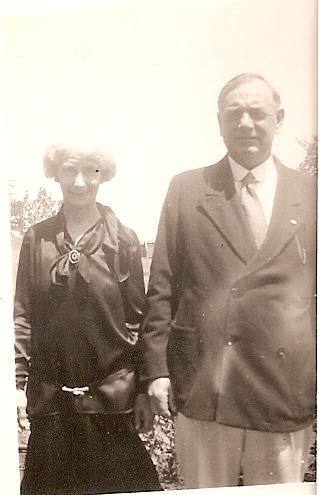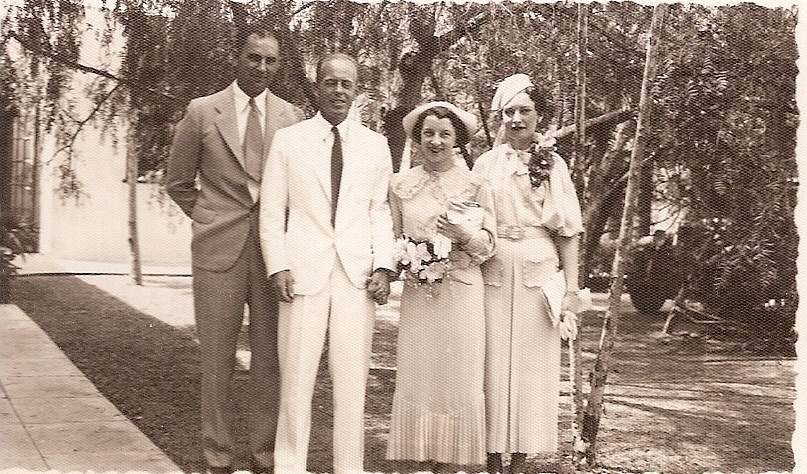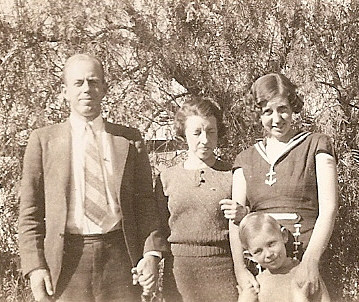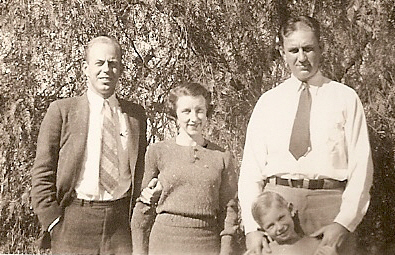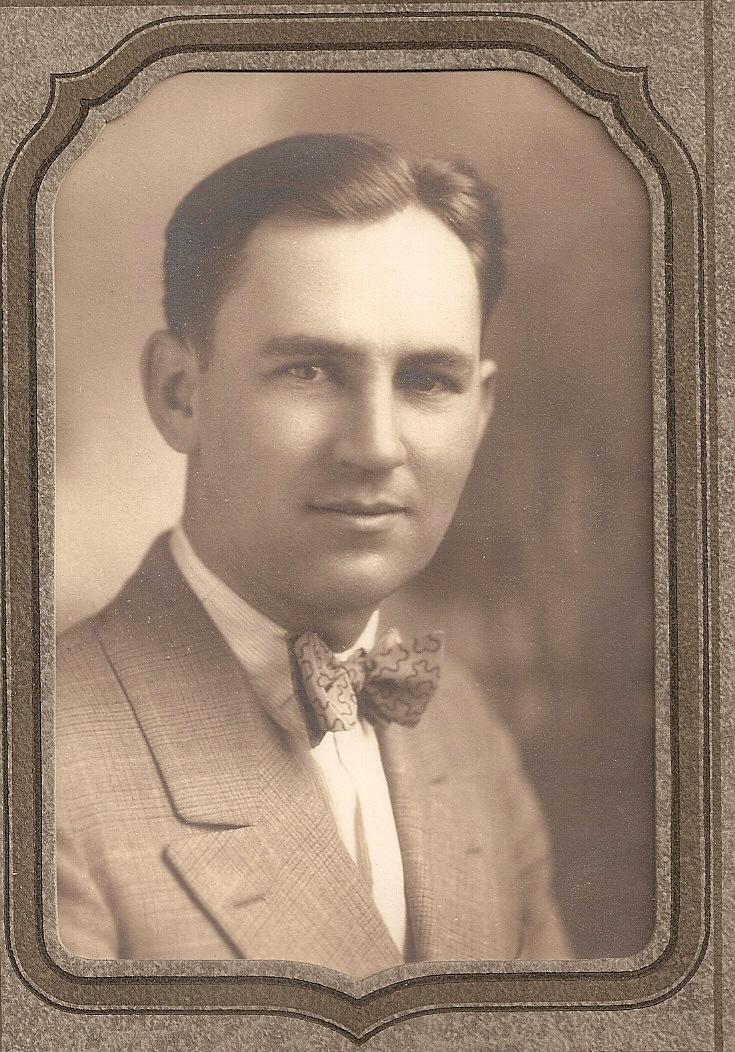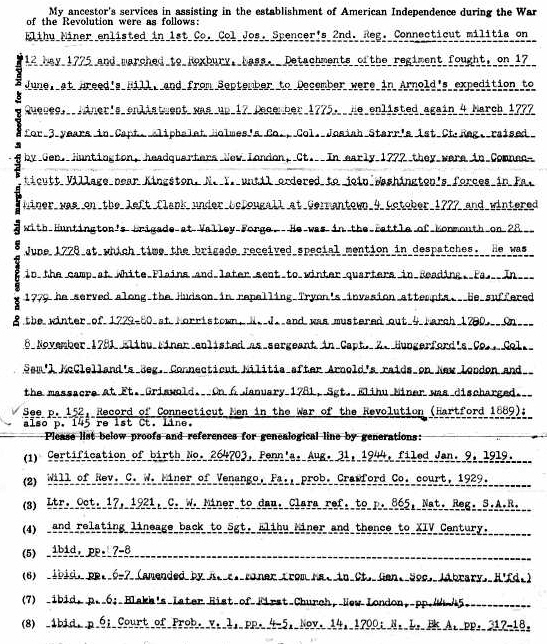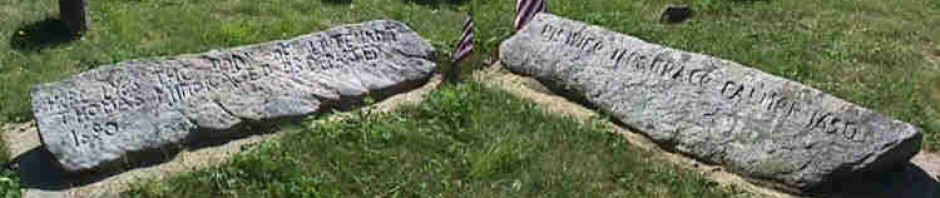
Guilford Dudley Coleman

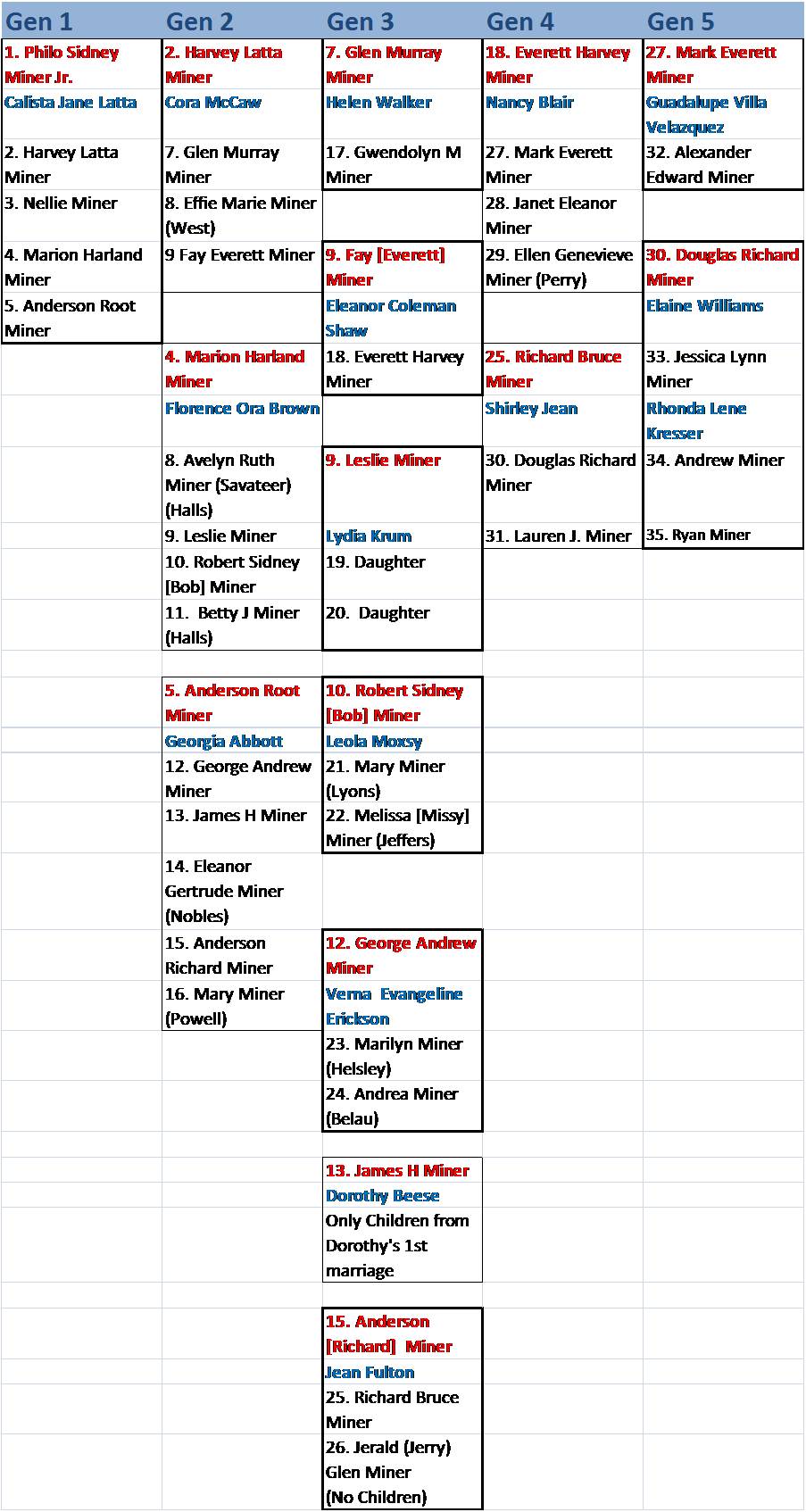
Guilford Dudley COLEMAN (1832 – 1903)  was Alex’s 3rd Great Grandfather, one of 16 in this generation of the Shaw line.

Guilford Dudley Coleman was born on 22 February 1832 in Vassalboro Maine.  His parents were Dudley COLEMAN and Cynthia RICHARDSON .  He married Ellen Celeste WEBBER (twin of Emma) on 9 October 1855 in Vassalboro Maine.  After Ellen died,   GD married Mary J. Woods (Aunt Molly) on 7 Feb 1884 at the age of 52 in Anoka Minnesota.  G.D. died on 30 Nov 1903 in Anoka Minnesota.
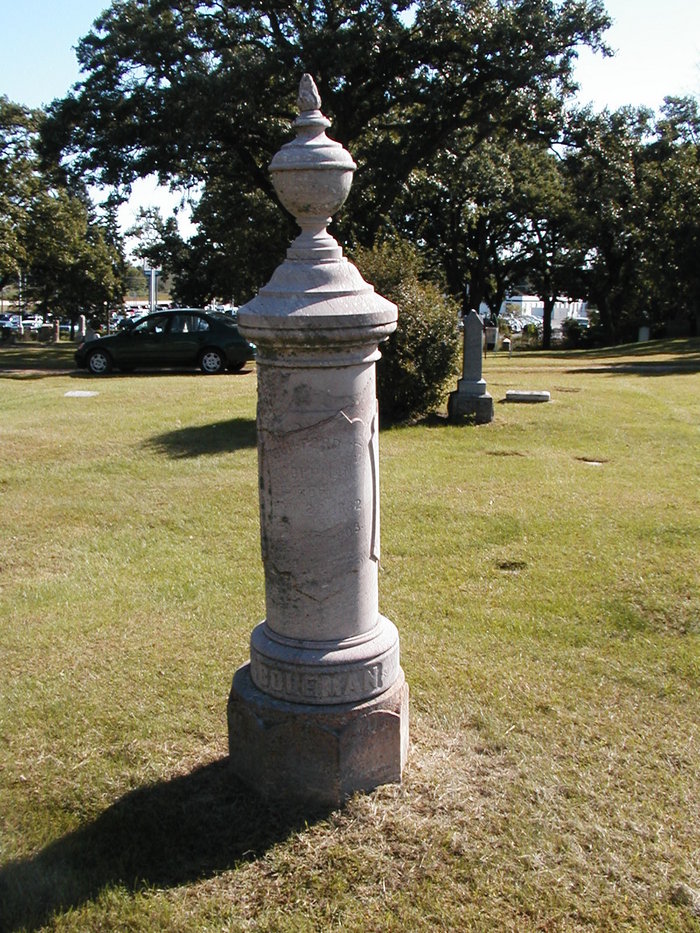
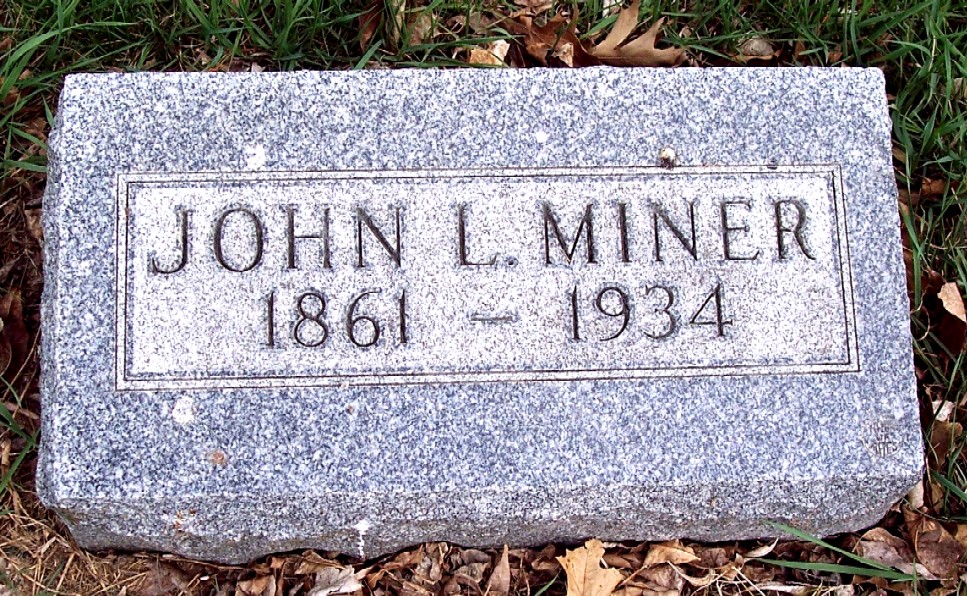
G D Coleman Gravemarker — Oakwood Cemetery ,Anoka, Anoka County, Minnesota
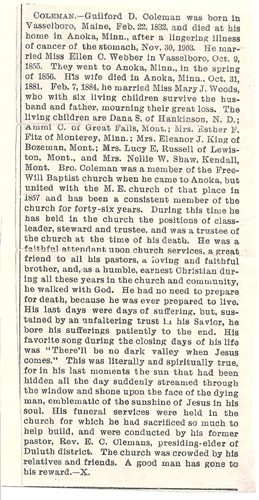
Guilford Dudley Coleman – Obit

Ellen Celeste Webber was born on 3 August 1835 in Vassalboro Maine.  Her parents were Oliver WEBBER and Abigail HAWES. Ellen died on 31 Oct 1881 at the age of 46 in Anoka Minnesota.
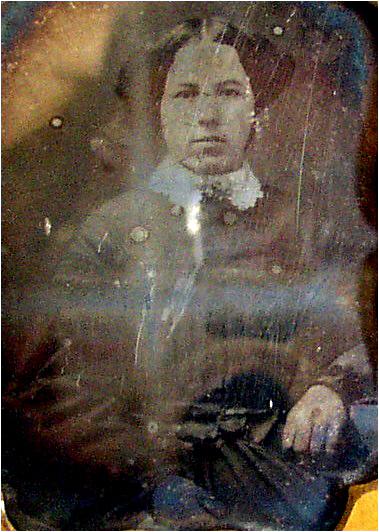
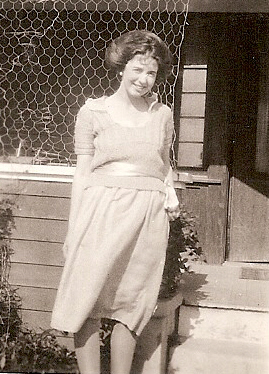
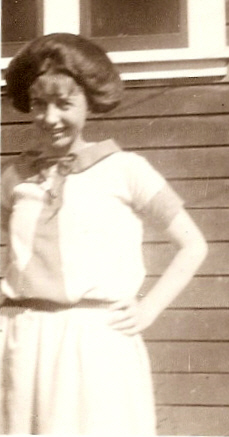
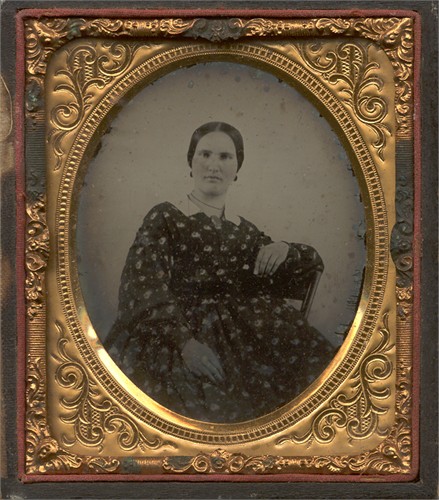
Ellen Webber, Vassalboro, ME ca.1850 2

Ellen Webber, Vassalboro, ME ca.1850 aged about 14 or 15.  This photo , is on a thick piece of metal. I’m not sure what the photo technique was called. Years ago Chuck Russell’s dad held the frame on the picture using rubber bands! Hence the shadow lines. Good thing they weren’t over her face!
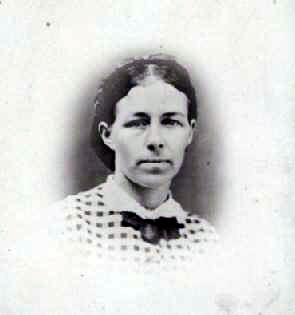
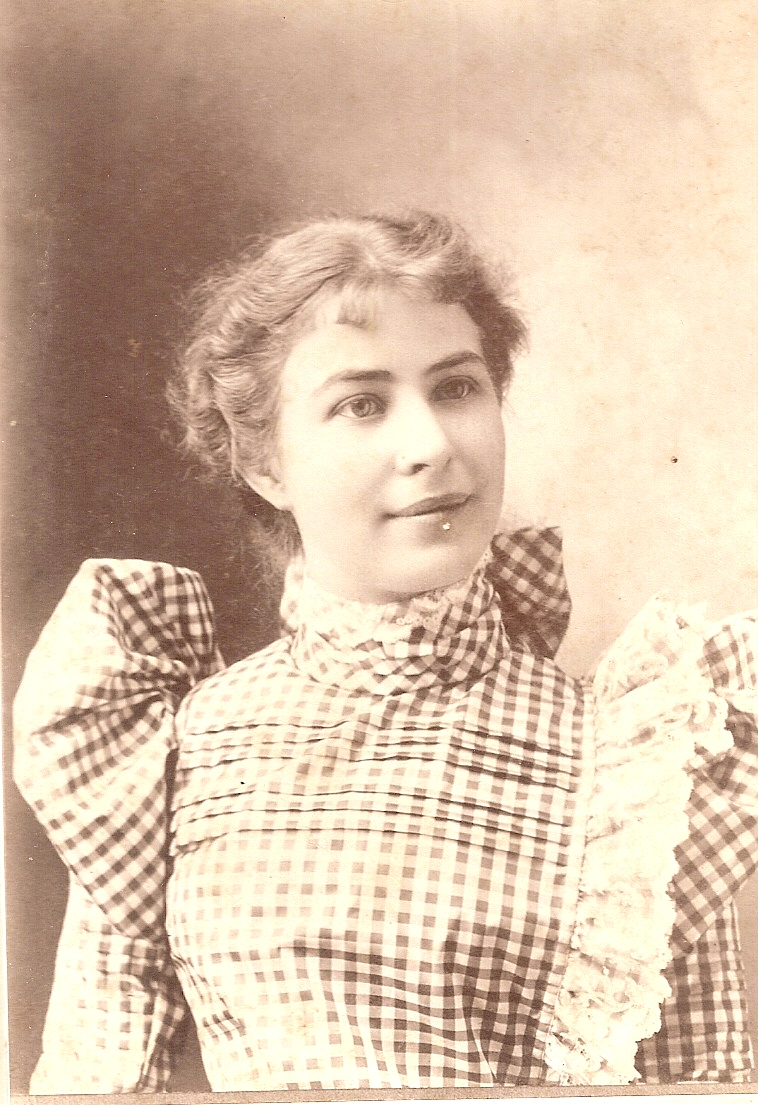
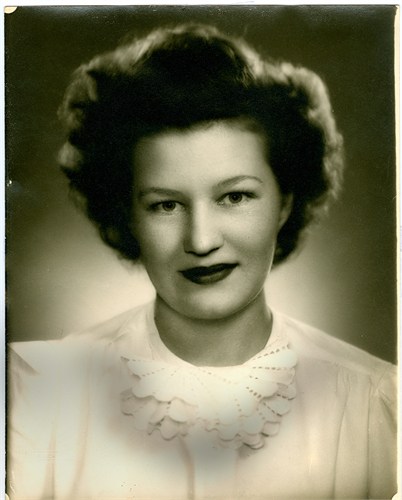
Ellen Celeste Coleman ca. 1870
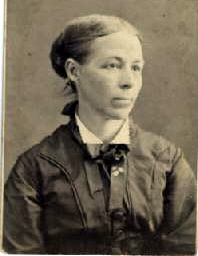
Ellen Celeste (Webber) Coleman. About 1880.

.
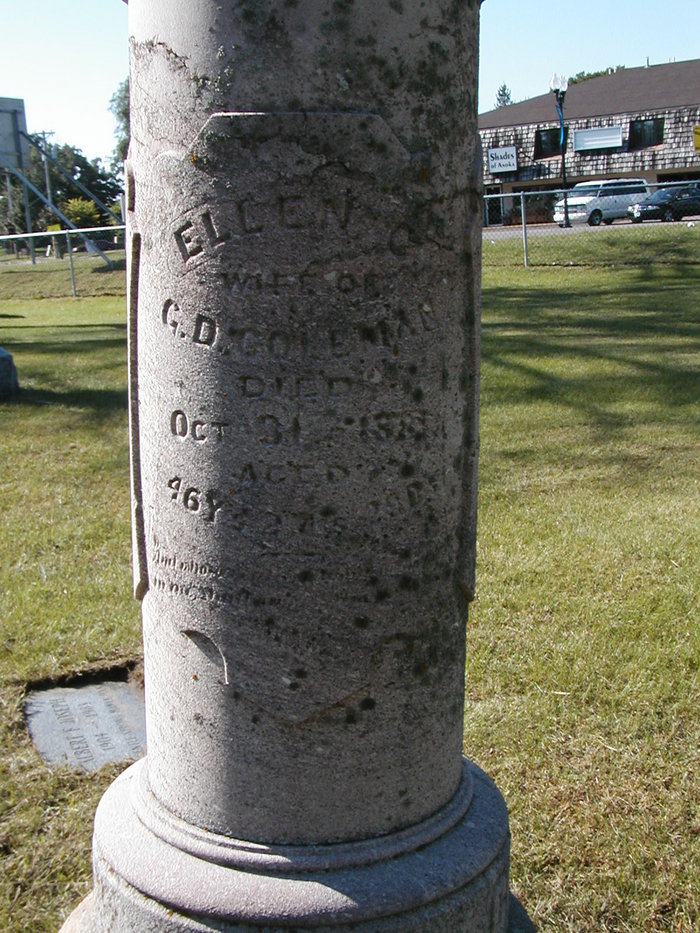
Ellen Celeste (Webber) Coleman – Gravemarker Oakwood Cemetery Anoka, Anoka County, Minnesota
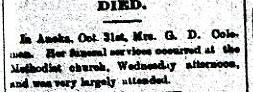
Mrs G D Coleman obit Anoka Oct 31
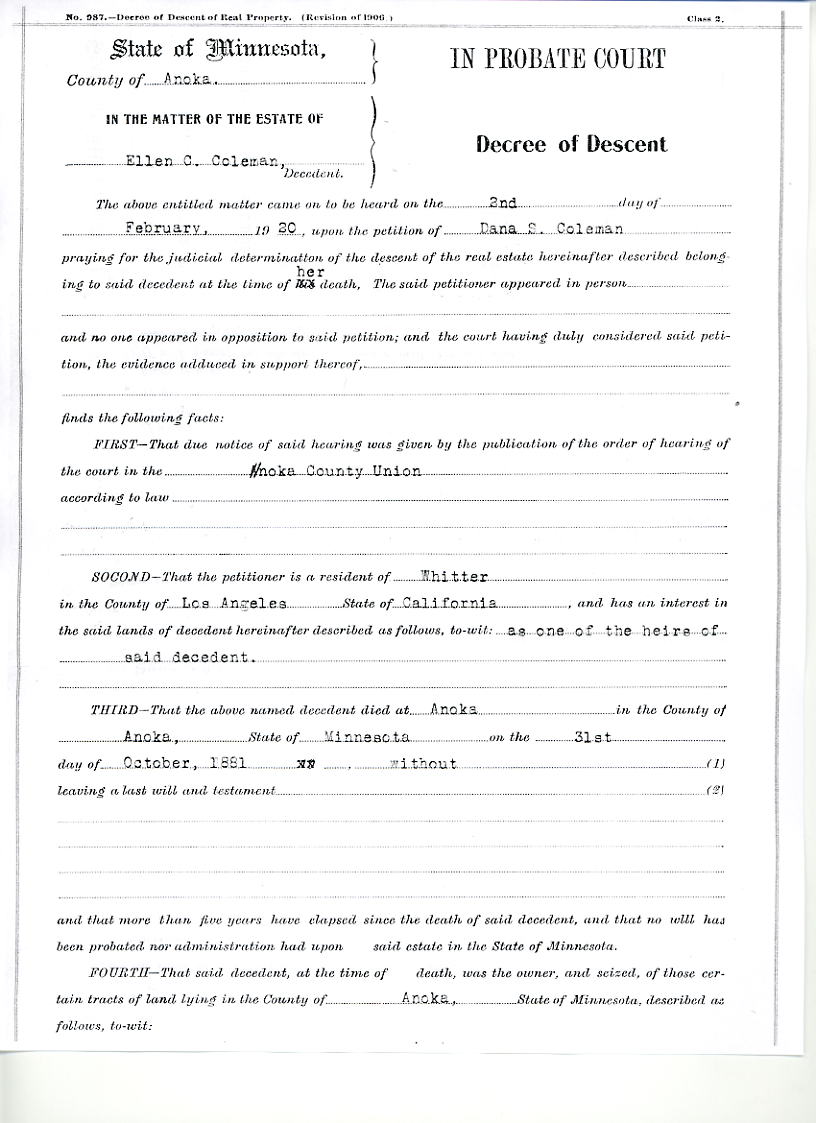
Ellen Coleman probate (1)
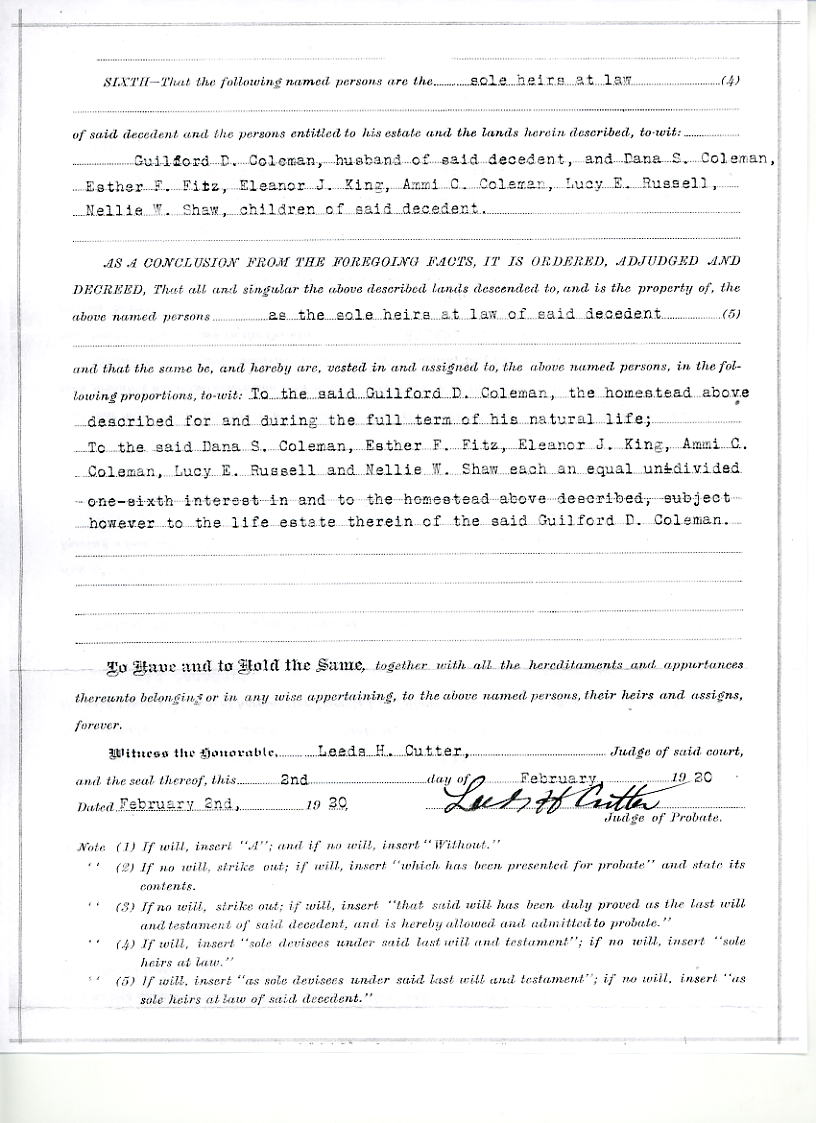
Ellen Coleman probate (2)
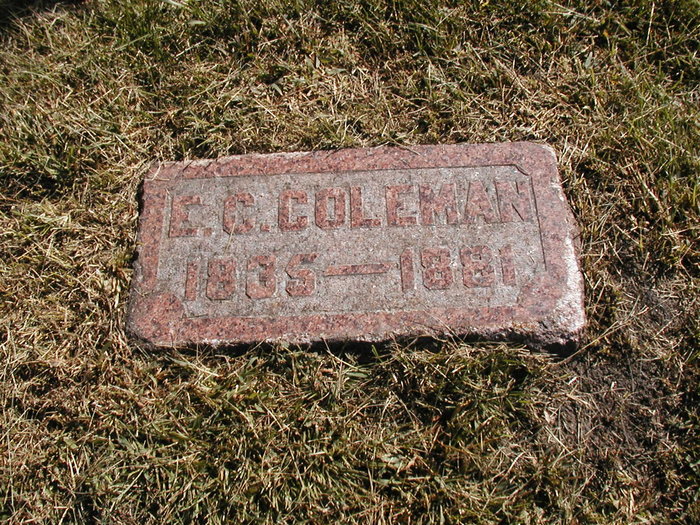
Ellen Celeste  Coleman – Oakwood Cemetery Anoka, Anoka County, Minnesota,

Molly Woods died 30 Mar 1926 in Boise, Idaho.
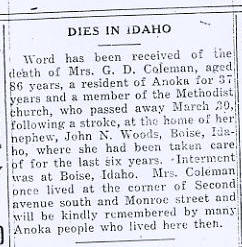
Mollie Woods Coleman obit. Anoka Union 14 Apr 1926

Children of Dudley and Ellen, all born in Anoka Minnesota

Name Born Married Departed
1. Dana Stowell Coleman 8 May 1857 Anna Maria Plank
28 Oct 1877 Anoka, MN
8 Feb 1928 Whittier CA
2. Esther Finnette Coleman 14 Mar 1861 Edgar Howard Fitz
12 Sep 1882 St. Paul MN
30 Apr 1923 Fairmont MN
3. Eleanor Jane Coleman 5 Jun 1865 Ernest Wight King
5 Nov 1885 Anoka MN
21 Dec 1955 Palo Alto CA
4. Ammi Cutter Coleman 16 Jun 1867 Never Married
“A very fine singer always”
28 Nov 1959 Whittier CA
5. Lucy Emma Coleman 19 Dec 1874 Dr. Aubrey Herbert Russell (dentist)
2 Jun 1900 Monterey MN
2 May 1952 Minneapolis MN
6. Nellie Webber COLEMAN 15 Sep 1876 Howard Irwin SHAW
4 Mar 1899 Lewistown, Montana
3 Jan 1947 Yerington, Nevada

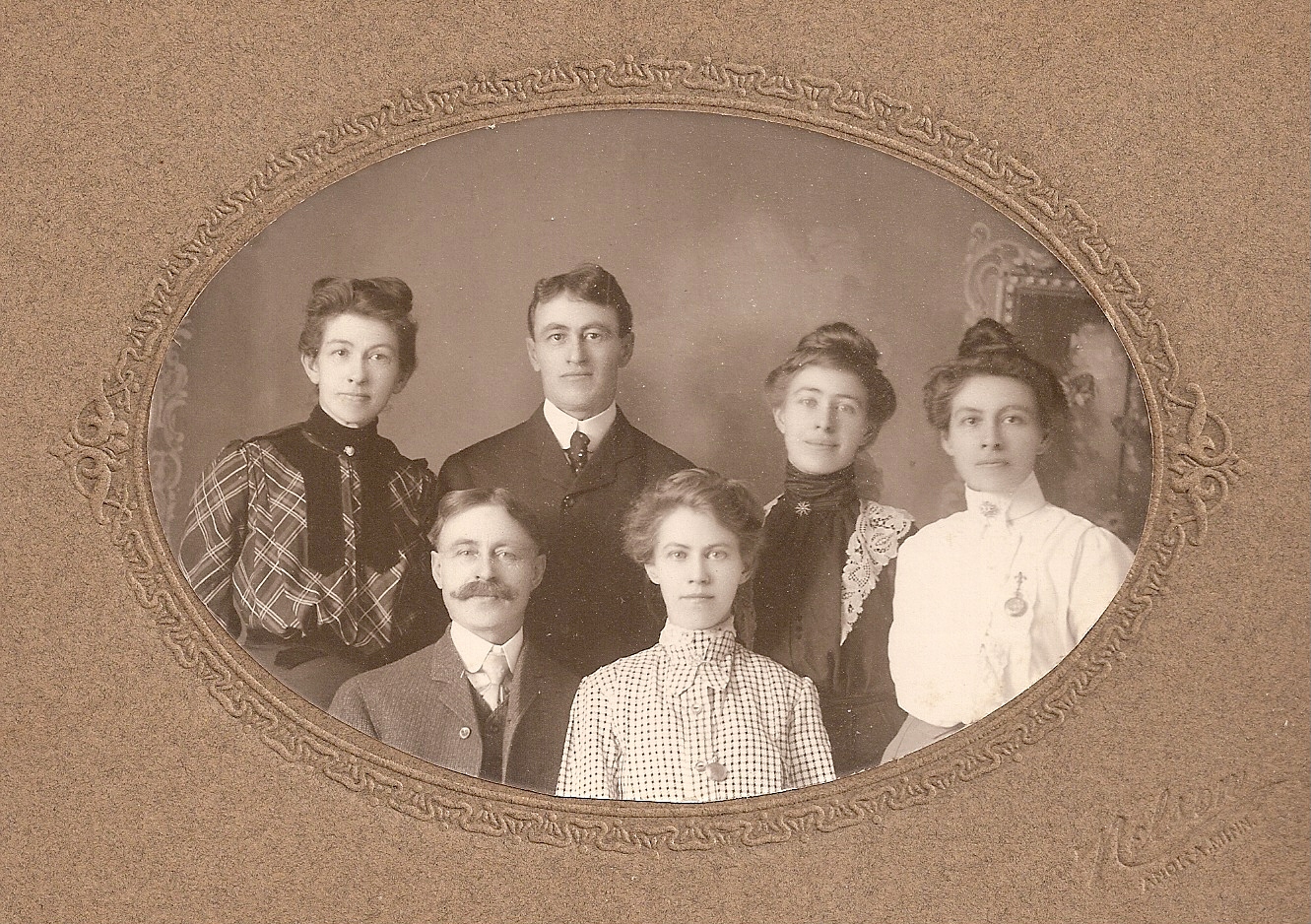
Coleman Children  Oct 1903 when they all got together shortly before G. D. Coleman died.      
 Back Row: Esther, Ammi, Nellie
Front Row: Dana, Lucy, Eleanor

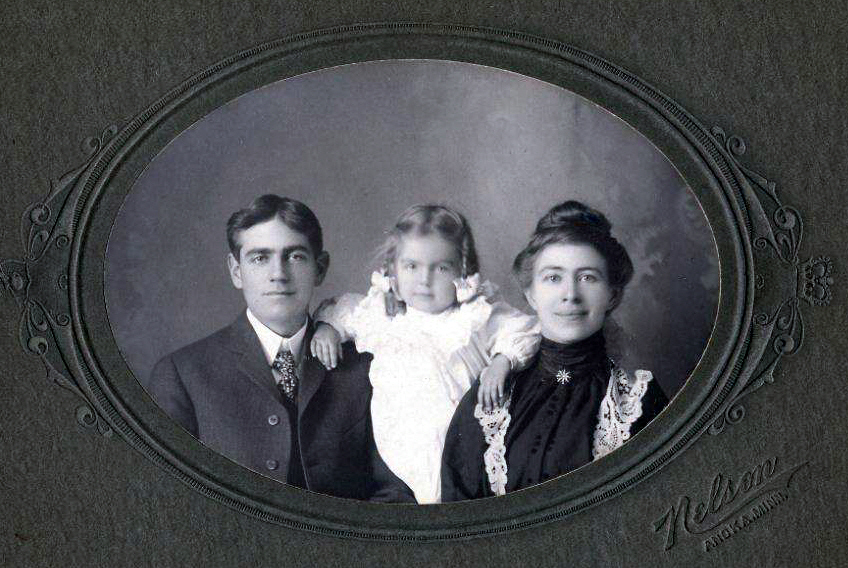
The Coleman brothers and sisters returned to Anoka in Oct 1903 as a reunion just prior to G. D. Coleman’s death.  You will notice that Nellie is wearing the same dress in her family photo with Howard and Eleanor and the photographer was the same, “Nelson, Anoka”  See (Howard Irwin SHAW’s page)

Guilford and Ellen must have known each other growing up in Vassalboro. Joseph Coleman, Guilford’s grandfather is listed next to Oliver Webber, Ellen’s father in the 1830 census.   Joseph is three families away from Oliver in the 1850 census and Guiford’s father Dudley is six familes away.

Ellen Celeste Webber Coleman was educated in a New England “Female Seminary” and wrote beautifully and expressed herself elegantly. Since her family disapproved of her marrying Guilford Dudley, my grandmother believed they eloped when they emigrated to Minnesota. He was young and poor. In Minnesota he was a farmer and a blacksmith.  He wrote in 1900 (age 68) that he couldn’t shoe 200 horses in four weeks like he used to.

Ellen was 18 years old when she wrote the letter below from Lowell, Mass May 18, 1854.  Within a few months, 9 Oct 1855 Vassalboro, Maine she was married to Guilford.

I think “Dear Friend Judith” was Judith Coleman, younger sister of her future husband Guilford.
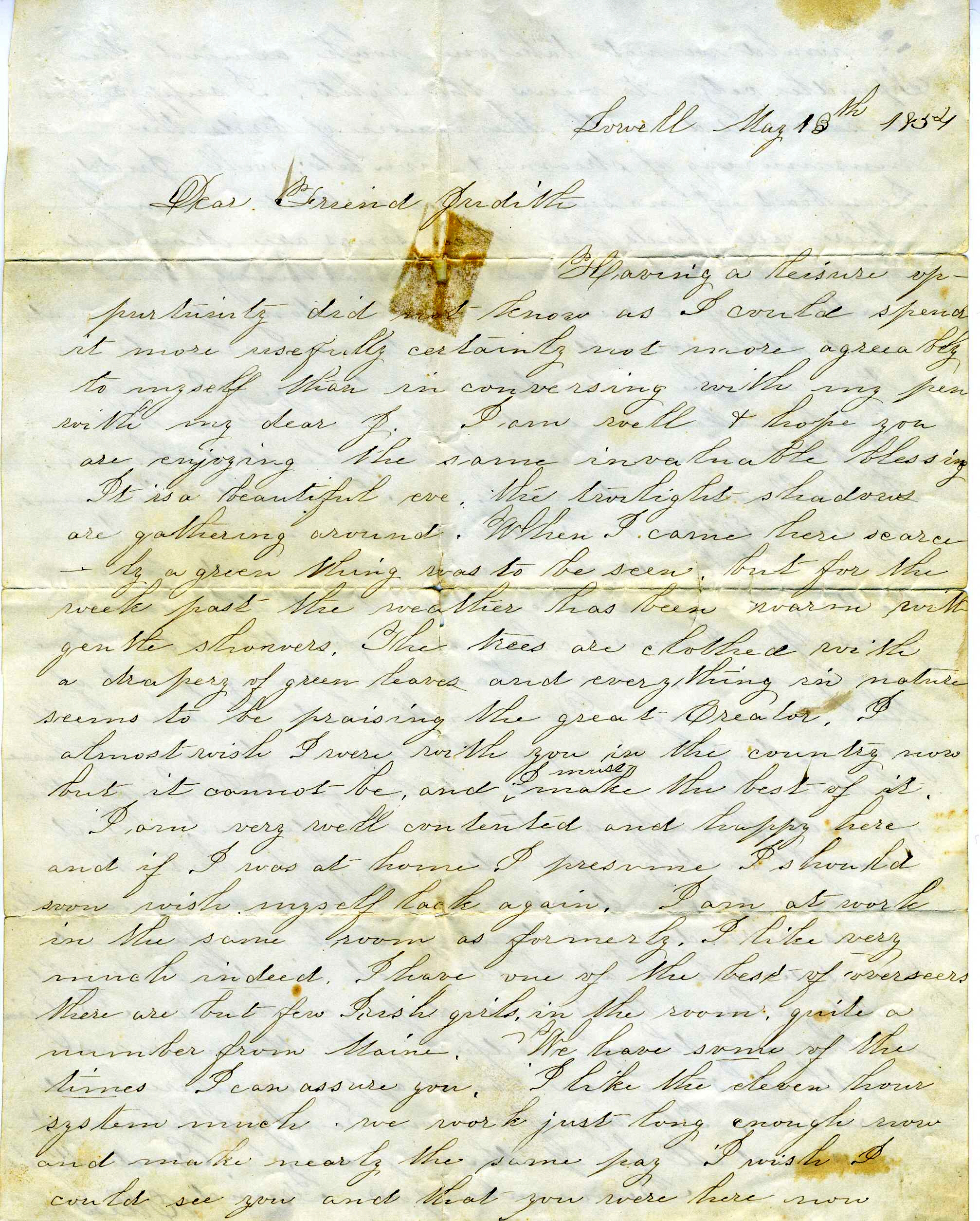
Ellen Coleman letter 1854 a

Ellen Coleman letter 1854 a

When Ellen says she is at work in the same room as formerly, she has the best of overseers, there are but few Irish girls in the room, and she likes the eleven hour system,  it sounds like she is working in a factory (and used to work twelve hours a day).

The mill workers, young single women called Mill Girls, generally came from the farm families of New England.   By the 1850s, Lowell had the largest industrial complex in the United States. The textile industry wove cotton produced in the South. In 1860, there were more cotton spindles in Lowell than in all eleven states combined that would form the Confederacy.

The “Lowell Mill Girls” (or “Factory Girls,” as they called themselves) were female workers who came to work for the textile corporations in Lowell, Massachusetts, during the Industrial Revolution.  The women initially recruited by the corporations were daughters of propertied New England farmers, between the ages of seventeen and twenty five. By 1840, the textile mills had recruited over 8,000 women, who came to make up nearly seventy-five percent of the mill workforce.
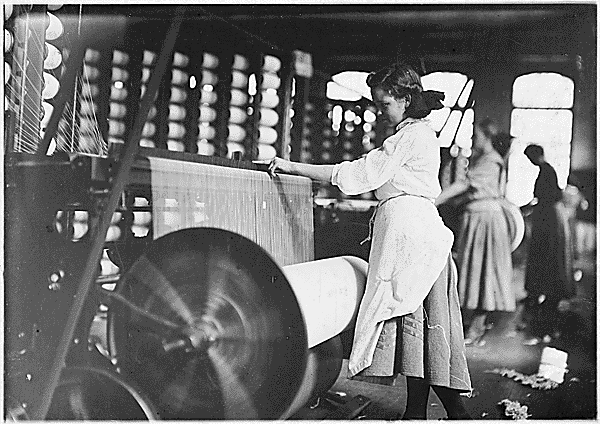
Lowell Mill Girls

Lowell Mill Girls

During the early period, women came to the mills of their own accord, for various reasons: to help a brother pay for college, for the educational opportunities offered in Lowell, or to earn a supplementary income for themselves. While their wages were only half of what men were paid, many were able to attain economic independence for the first time, free from the controlling influence of fathers and husbands. As a result, while factory life would soon come to be experienced as oppressive, it enabled these women to challenge the myths of female inferiority and dependence.

The Lowell System combined large-scale mechanization with an attempt to improve the stature of its female workforce and workers. A few girls who came with their mothers or older sisters were as young as ten years old, some were middle-aged, but the average age was about 24.  Usually hired for contracts of one year (the average stay was about four years), new employees were given assorted tasks as sparehands and paid a fixed daily wage while more experienced loom operators would be paid by the piece. They were paired with more experienced women, who trained them in the ways of the factory.

Conditions in the Lowell mills were severe by modern American standards. Employees worked from 5:00 am until 7:00 pm, for an average 73 hours per week.  Each room usually had 80 women working at machines, with two male overseers managing the operation. The noise of the machines was described by one worker as “something frightful and infernal,” and although the rooms were hot, windows were often kept closed during the summer so that conditions for thread work remained optimal. The air, meanwhile, was filled with particles of thread and cloth.

The English novelist Charles Dickens, who visited in 1842, remarked favorably on the conditions: “I cannot recall or separate one young face that gave me a painful impression; not one young girl whom, assuming it to be matter of necessity that she should gain her daily bread by the labour of her hands, I would have removed from those works if I had had the power”” However, there was concern among many workers that foreign visitors were being presented with a sanitized view of the mills, by textile corporations.

The investors or factory owners built hundreds of boarding houses near the mills, where textile workers lived year-round. A curfew of 10:00 pm was common, and men were generally not allowed inside. About 25 women lived in each boarding house, with up to six sharing a bedroom.    Trips away from the boarding house were uncommon; the Lowell girls worked and ate together. However, half-days and short paid vacations were possible due to the nature of the piece-work; one girl would work the machines of another in addition to her own such that no wages would be lost but they would be lost if they stopped working.

These close quarters fostered community as well as resentment. Newcomers were mentored by older women in areas such as dress, speech, behavior, and the general ways of the community. Workers often recruited their friends or relatives to the factories, creating a familial atmosphere among many of the rank and file.  The Lowell girls were expected to attend church and demonstrate morals befitting proper society. The 1848 Handbook to Lowell proclaimed that “The company will not employ anyone who is habitually absent from public worship on the Sabbath, or known to be guilty of immorality.”
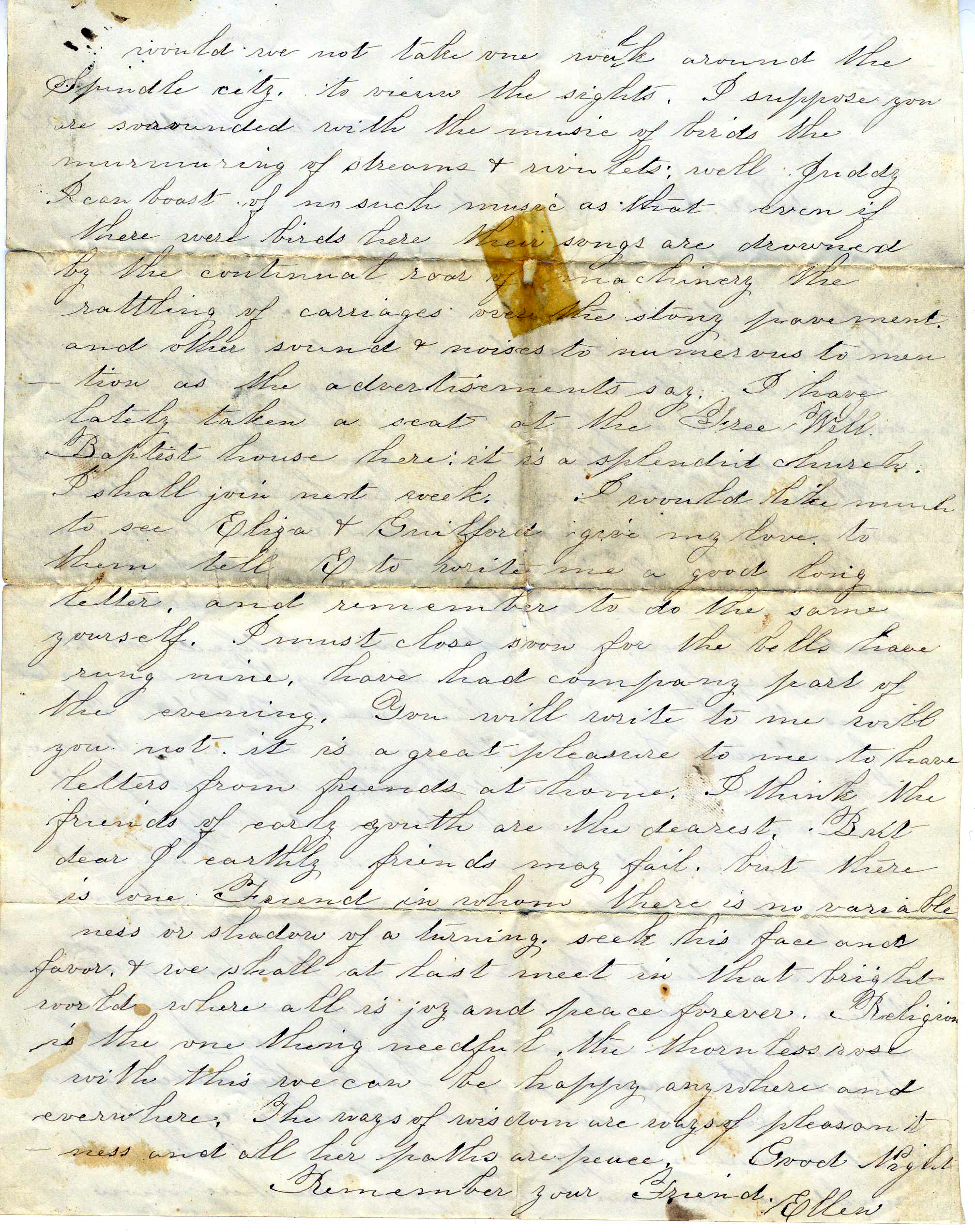
Ellen Coleman letter 1854 b

x

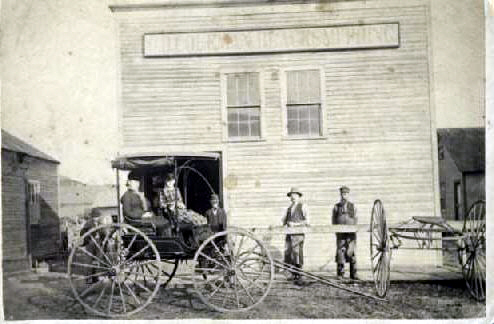
(I think the sign reads ” G D Coleman Blacksmithing”). Anoka, MN ~1880. Coleman on right. All others unknown

G.D. and Ellen emigrated from Maine to Anoka, Minnesota in 1856.   G.D. was a blacksmith and an owner and driver of fine horses.   He could drive his horse , Tony, by simple, quiet tones as “Turn to the left, Tony”, or “Turn to the right, Tony”.
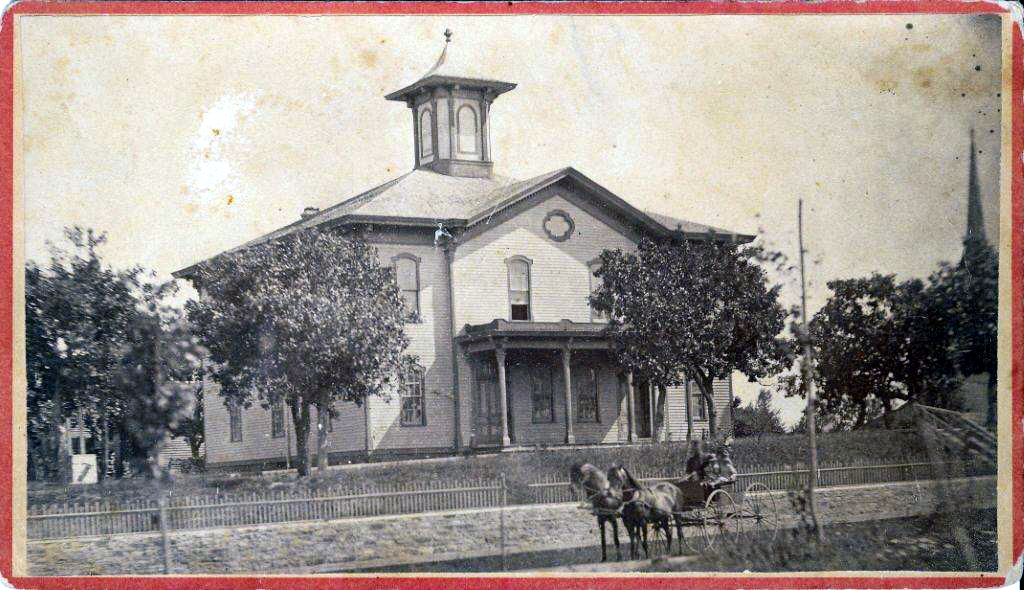
G. D. Coleman, Nellie and Lucy Coleman, Horses-Tony and Old Kit, Anoka High School 1880 or 1881

G. D. Coleman, Nellie and Lucy Coleman, Horses-Tony and Old Kit, Anoka High School 1880 or 1881
Photo thanks to Chuck Russell
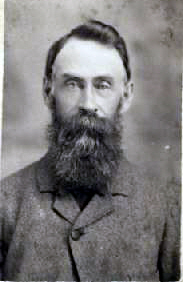
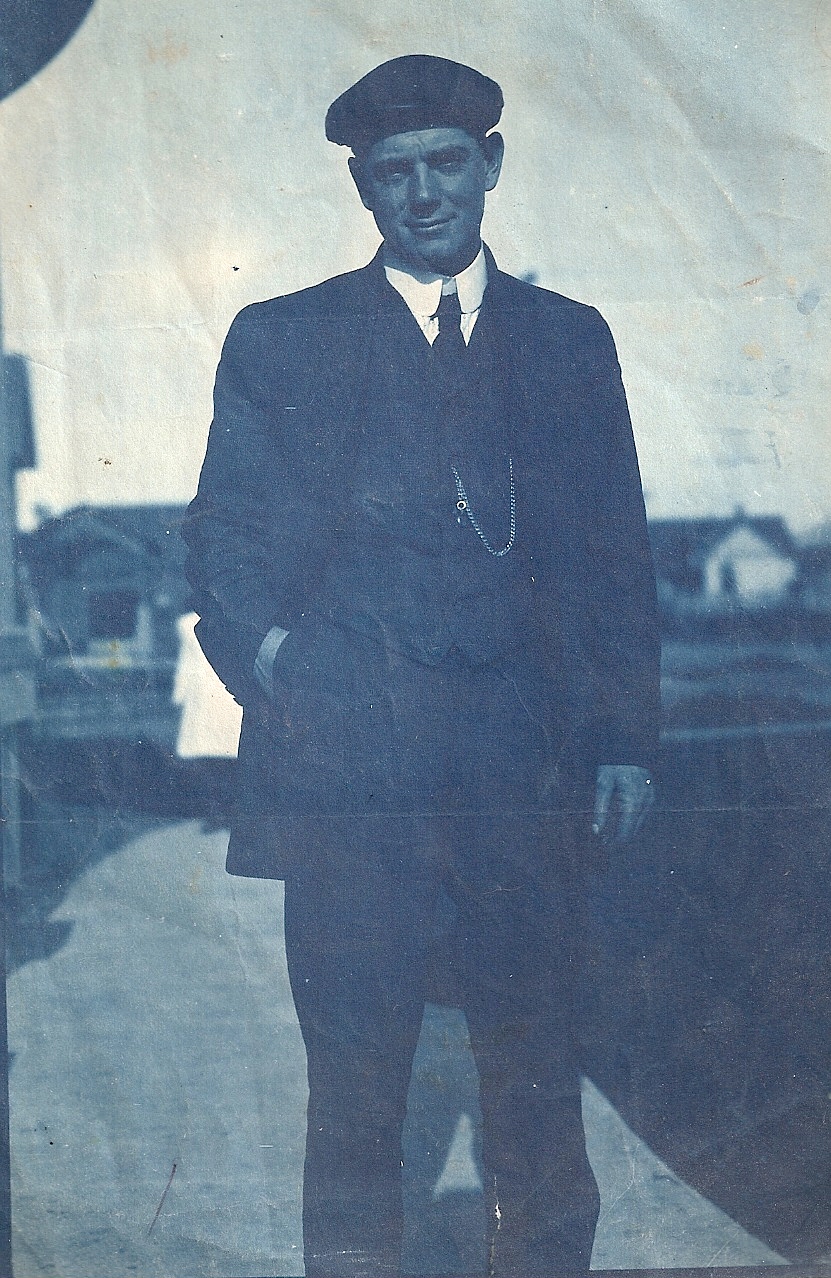
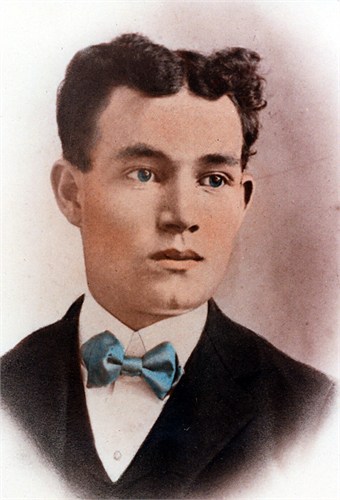
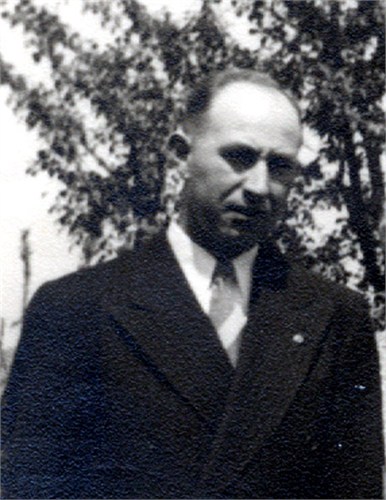
Guilford Dudley Coleman, Anoka, MN ca. 1880. Blacksmith
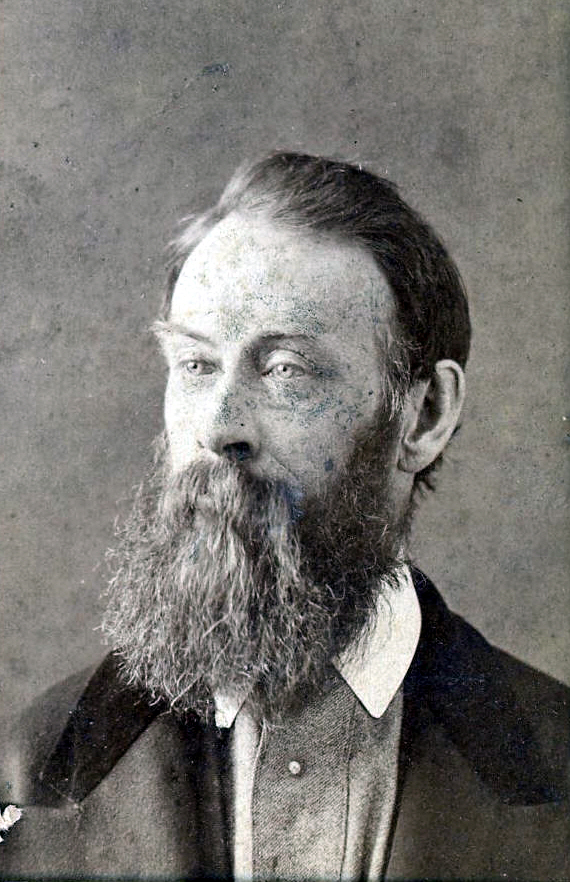
Guilford Dudley Coleman, Anoka, MN ca. 1880. Blacksmith  (Predates “Fear the Beard” Brian Wilson of the SF Giants by 130 years)

His grand daughter, Vera Mary Fitz wrote “We can be proud of our grandather.  Mother always praised him highly, so I have reverred his great physical and spiritual strength and integrity.”
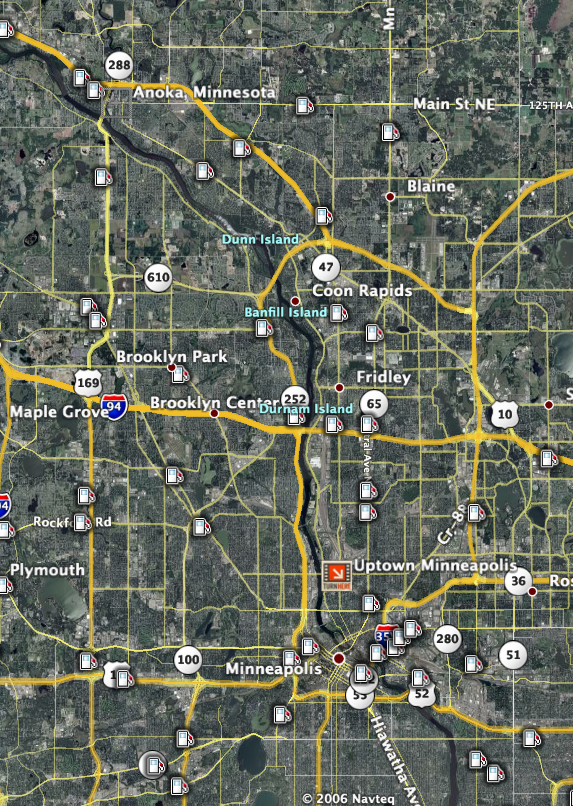
These days Anoka is a suburb in Minneapolis

Ellen came to Minnesota as a bride with several nice dresses.  Ellen’s sister Esther sent her a dress of her own, the beauty of which is rarely seen.  It was a changeable silk of grey and pink made in the mode of that period, tight bodice with very full skirt, flowing sleaves with fringe of the same shade.

Ellen had excellent taste and she loved nice things, but she didn’t have them in Minnesota as she had had as a girl in Vassalboro.  Guilford Dudley was a good man and did the best he could to provide for his family.   He told his daughter Eleanor once that the Webbers didn’t want her to marry him.  The reason perhaps was that he didn’t have much money.  For he was a fine man in every way we knew.

In the 1860 census, Guilford, Ellen and Dana were living in Anoka, Anoka, Minnesota where Guilford was a blacksmith.

1 Dec 1862 Anoka, MN, Extract of Letter from Ellen to her mother Abigail.  Ellen wrote beautifully and expressed herself elegantly, though it appears frontier life didn’t entirely agree with her.

The prices of dry goods and groceries in short, everything, we need are really frightfully high.  Common factory cloth is 35 cents a yard, prints $0.23, flannel $0.75 delaines $0.35 and $0.40, etc.

But business is very good and wages high.  Guilford had 40 dollars per month offered him to drive a horse team this winter in the pinery, but concluded he could do much better to attend to his own business.

We have no fears of the Indians now.  About 200 of the Sioux are at Fort Snelling now, think we shall go down and see them this winter.  Many of them have been tried, found guilty and sentenced to be hanged, but the President will not give his consent.  Petitions are being sent asking him that justice should be done if the civil authorities do not execute them, the people are determined to sweep them from the face of the earth.  An old acquaintance of ours, now a soldier, stopped two days with us two weeks ago.  He was just from the Indian Country and of course we made many questions to ask, he says there have been 2000 people killed by them and Oh they have been so cruel.

The Dakota War of 1862, was an armed conflict between the United States and several bands of the eastern Sioux (also known as eastern Dakota). It began on Aug 17, 1862, along the Minnesota River in southwest Minnesota. It ended with a mass execution of 38 Dakota men on Dec 26, 1862, in Mankato, Minnesota.

Throughout the late 1850s, treaty violations by the United States and late or unfair annuity payments by Indian agents caused increasing hunger and hardship among the Dakota. Traders with the Dakota previously had demanded that the government give the annuity payments directly to them (introducing the possibility of unfair dealing between the agents and the traders to the exclusion of the Dakota). In mid-1862 the Dakota demanded the annuities directly from their agent, Thomas J. Galbraith. The traders refused to provide any more supplies on credit under those conditions, and negotiations reached an impasse.

On Aug 17, 1862, one young Dakota with a hunting party of three others killed five settlers while on a hunting expedition. That night a council of Dakota decided to attack settlements throughout the Minnesota River valley to try to drive whites out of the area. There has never been an official report on the number of settlers killed, although as many as over 800 settlers have been cited.

Over the next several months, continued battles between the Dakota against settlers and later, the United States Army, ended with the surrender of most of the Dakota bands. By late Dec 1862, soldiers had taken captive more than a thousand Dakota, who were interned in jails in Minnesota. After trials and sentencing, 38 Dakota were hanged on Dec 26, 1862, in the largest one-day execution in American history. In Apr 1863, the rest of the Dakota were expelled from Minnesota to Nebraska and South Dakota an the United States Congress abolished their reservations.
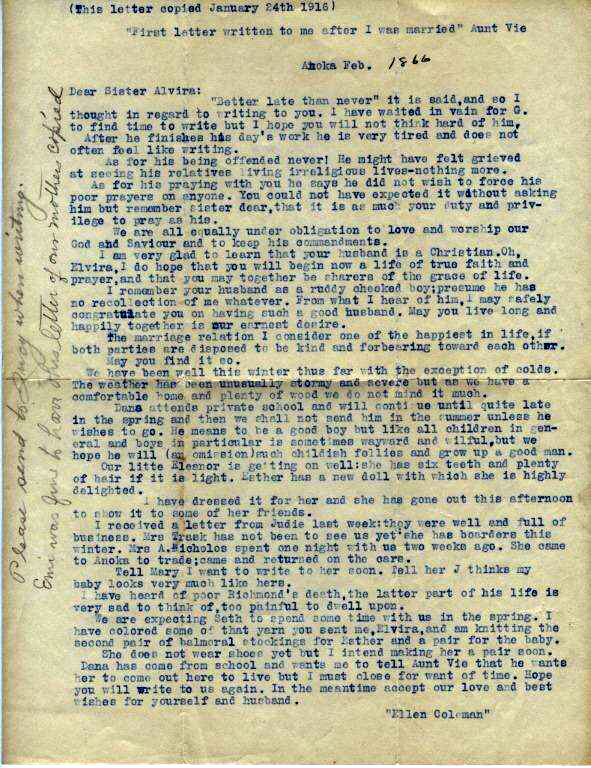
1866 letter from Ellen Webber Coleman to sister in law Elvira Coleman Gilbert copied 1916

1866 letter from Ellen Webber Coleman to sister in law Elvira Coleman Gilbert copied 1916 – Richmond was her brother who basically died of PTSD from the Civil War

Ellen was a wonderful bread maker.  She always made it with milk and her own yeast.  She was so generous towards those poorer than herself.
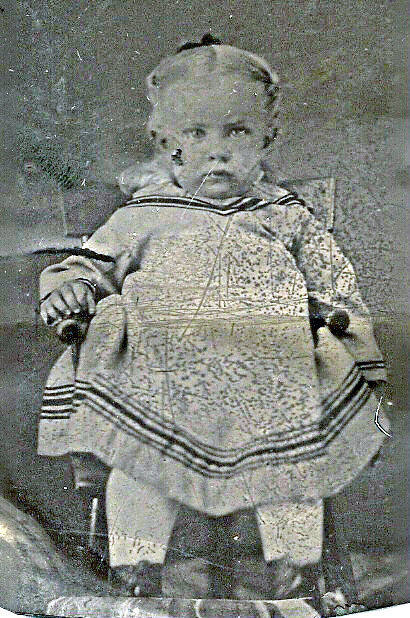
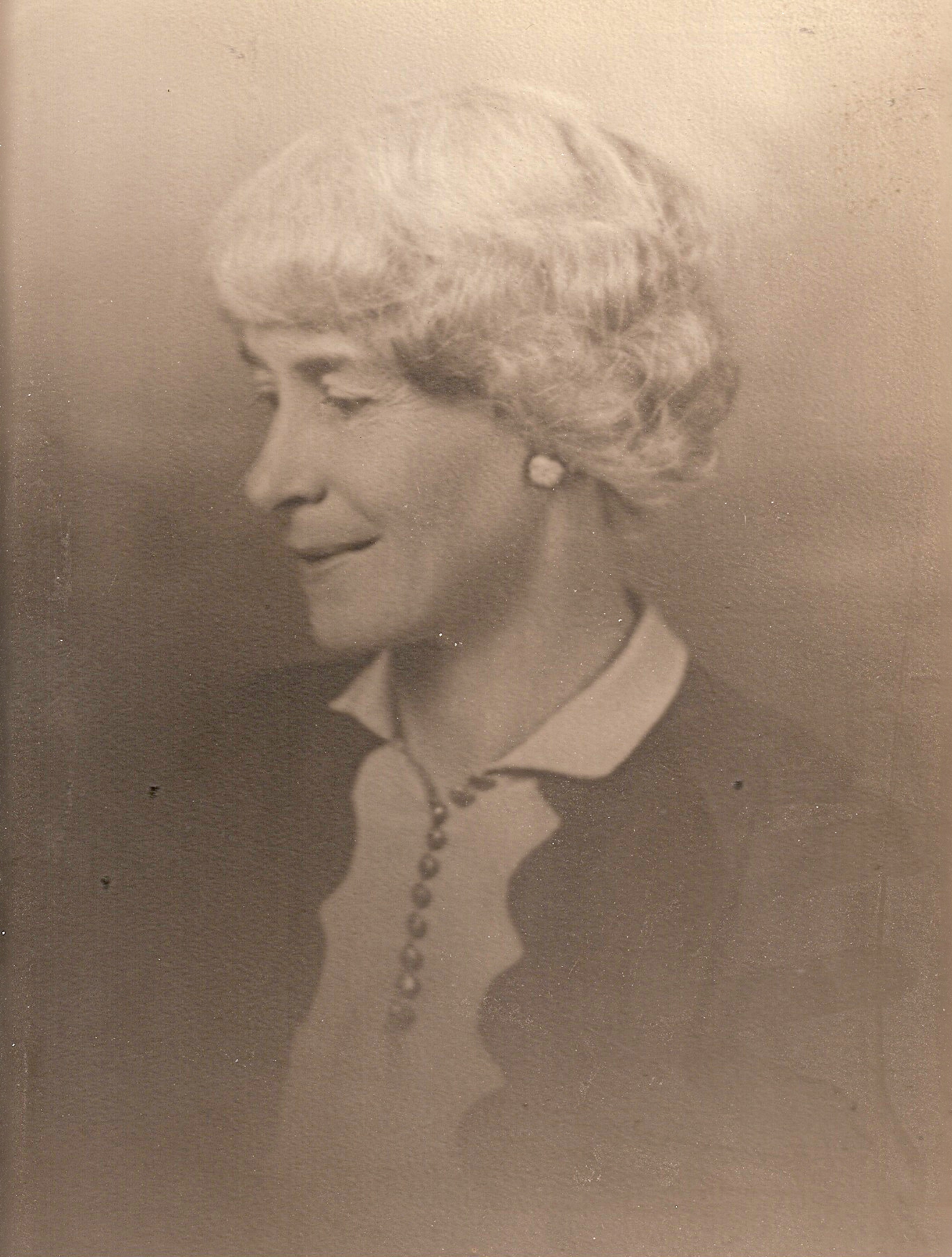
Nellie Coleman Shaw (My Great Grandmother) about 1879

Ellen had Nellie when she was 41 and died when Nellie was six.   According to Nellie’s niece, it was Nellie’s tender hearted, self sacrificing dispostion that made her believe her birth was the cause of her mother’s death.  Ellen was always delicate and after Guilford was struck by lightening she continued to fail in every way, even to losing her eyesight.  She played a game with the two little girls, feeling their hands and faces and guessing which was Lucy and which was Nellie.

After Ellen died, the older sisters played mother to the two littlest.  Eleanor taking Lucy and Esther taking Nellie.  Eleanor was already dating Ernest King.
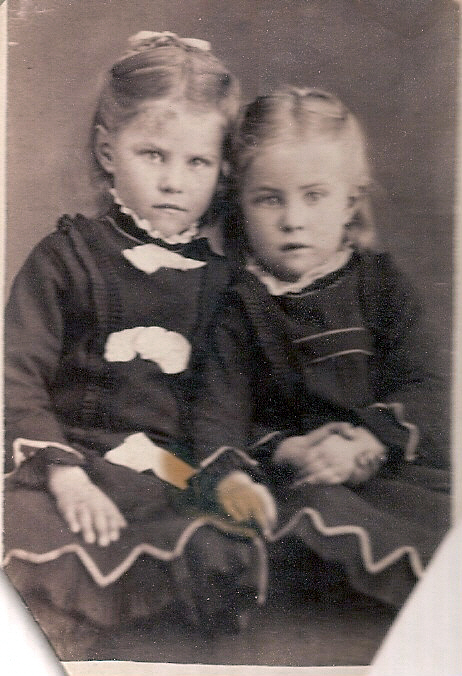
Lucy and Nellie were inseparable as children

The little sisters hung around the blacksmith shop much of the time listening to stories the men told to “brother Coleman.”  The Coleman homestead was just one block from the main downtown of Anoka, so Lucy and Nellie used to wander down the block.  Mary Wood had a millinery store a block away.  She took to asking the little girls in for some candy or wash their faces and hands and to comb their hair.  Lucy and Nellie were impressed and would go home with the good news of Mary Wood and what she did.  Guilford started thinking maybe sh would be a good mother for the little girls so he courted and married her only to find out she was a very jealous person and almost insanely jealous of the two little girls.
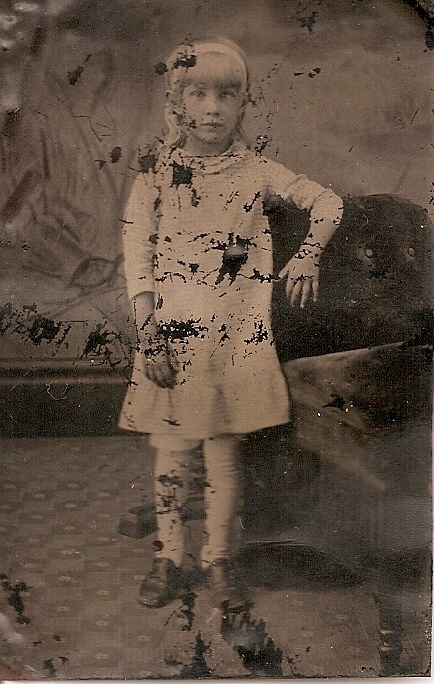
Nellie Coleman Shaw – About 1883

Upon riding one day to Mollie’s relations in a sleigh, Guilford suggested because it was bitter cold “let’s put the little girls in the middle to keep them ward.”  Mollie had been riding next to Guilford, she changed places, threw the buffalo robe over the girls and sat madly with nothing over her and Guilford didn’t say a word.

Guilford would buy candy for the girls and Mollie would cry because “you didn’t buy it for me.”  Once when he had brought the some fruit, she carried on, screaming and yelling at the girls, threatening to leave them so they wouldn’t have a mother and went outside telling them she would probably lay down and die.  They were so frightened and believed her and ran to the shop to tell “Papa, Mama’s laying near the ash pile and she’s going to die — quick, save her!”  Guilford said nothing for a few momemts — looked up the lawn to see Mollie and calmly and softly said “let her rot.”

When bedtime came, the little sisters were upstairs to their bedroom,  They slept in a front corner and small bedroom,  In the winter it was so cold they could draw on the frost accumulated on the walls.  They would lay in bed and hug to get warm and pray that “Mama” wouldn’t come up .  They’d listen for her footsteps and if she came up, they’d pretend to be asleep.  If they fooled her, they’d hug each other in glee.

x
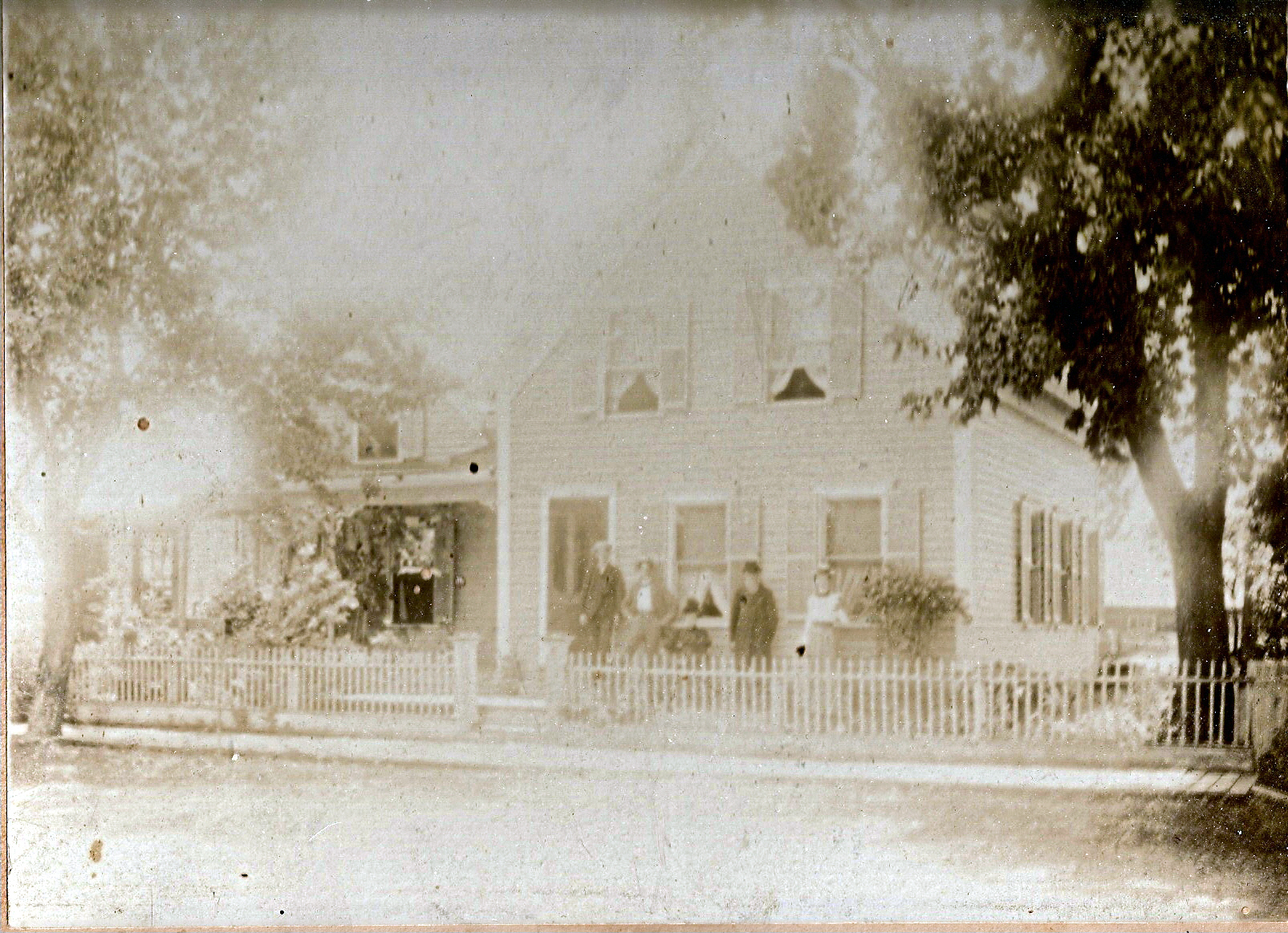
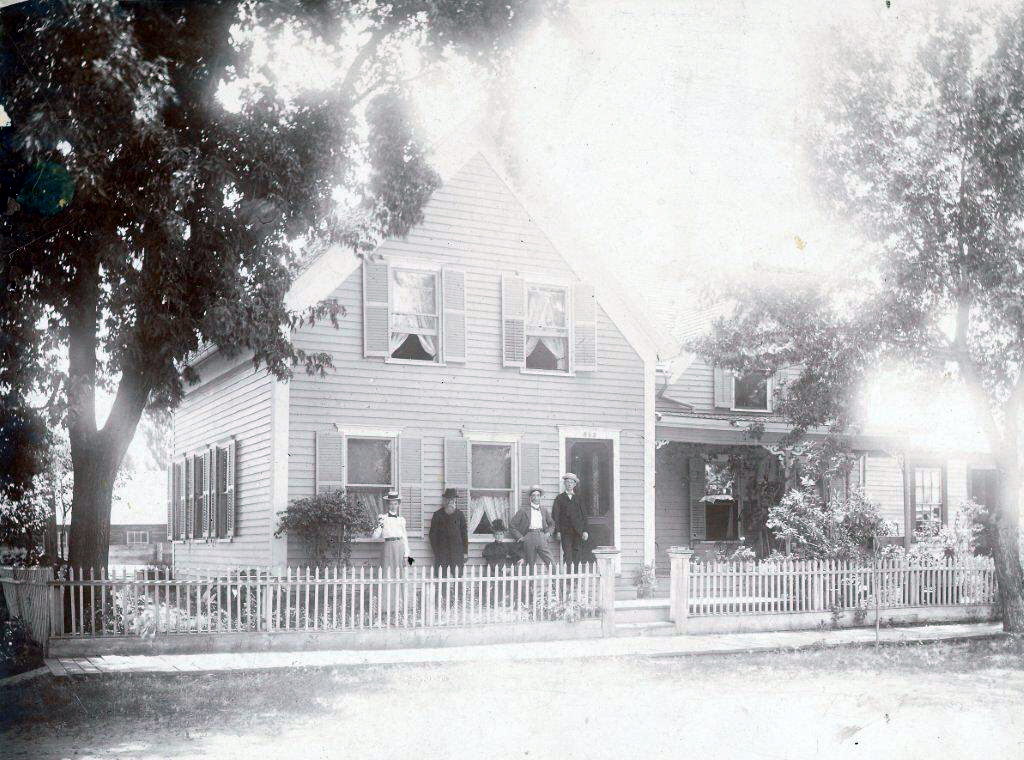
Coleman Family Home Anoka, MN –  left to right, Ammi Coleman, Dr. Aubrey Russell, Molly Woods Coleman (2nd wife of Guilford Coleman, seated), Guilford D. Coleman, Lucy Coleman Russell.

Here’s a better view courtesy of Chuck Russell.
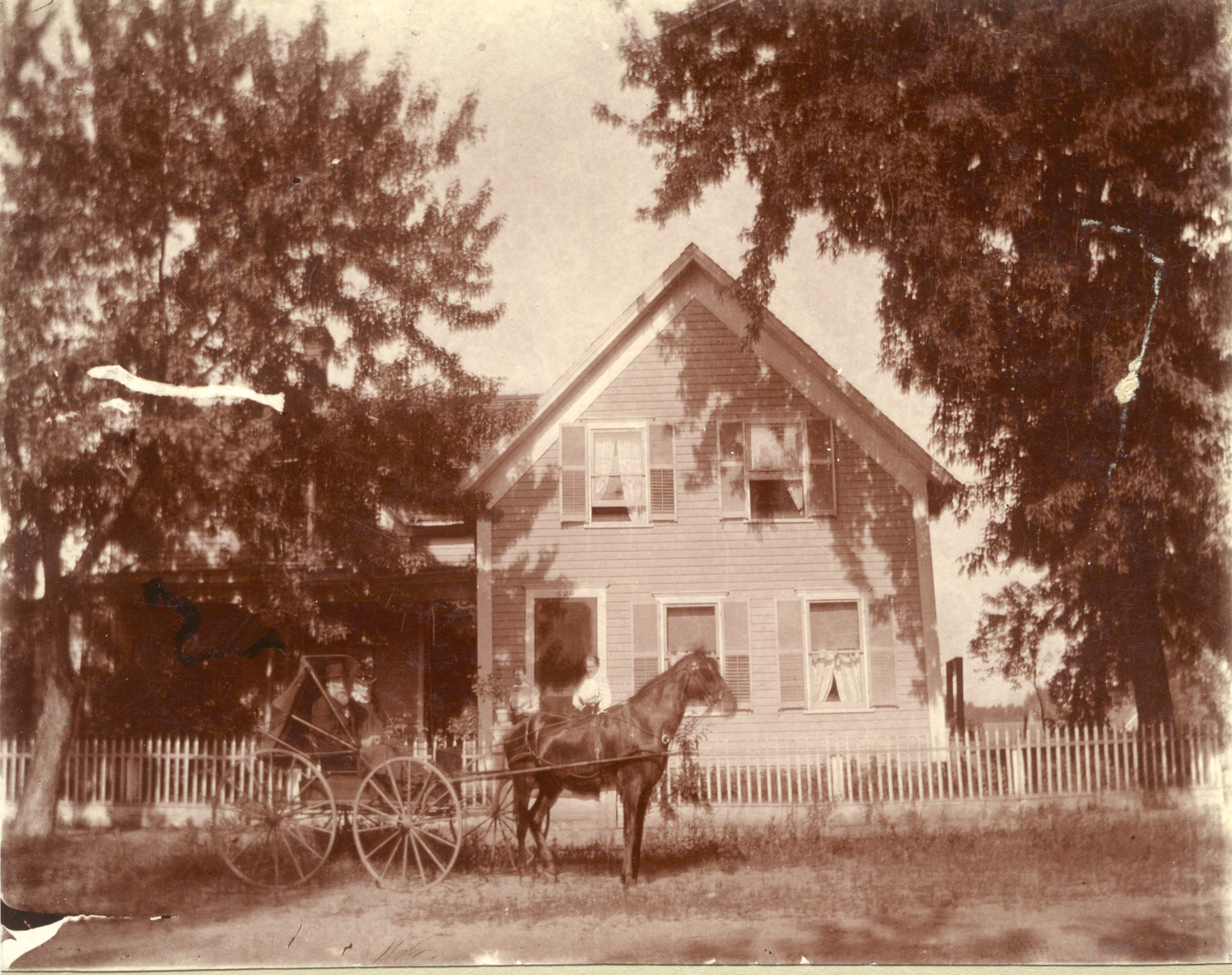
Coleman House, Anoka, MN ca.1900

Coleman House, Anoka, MN ca.1900
Photo thanks to Chuck Russell
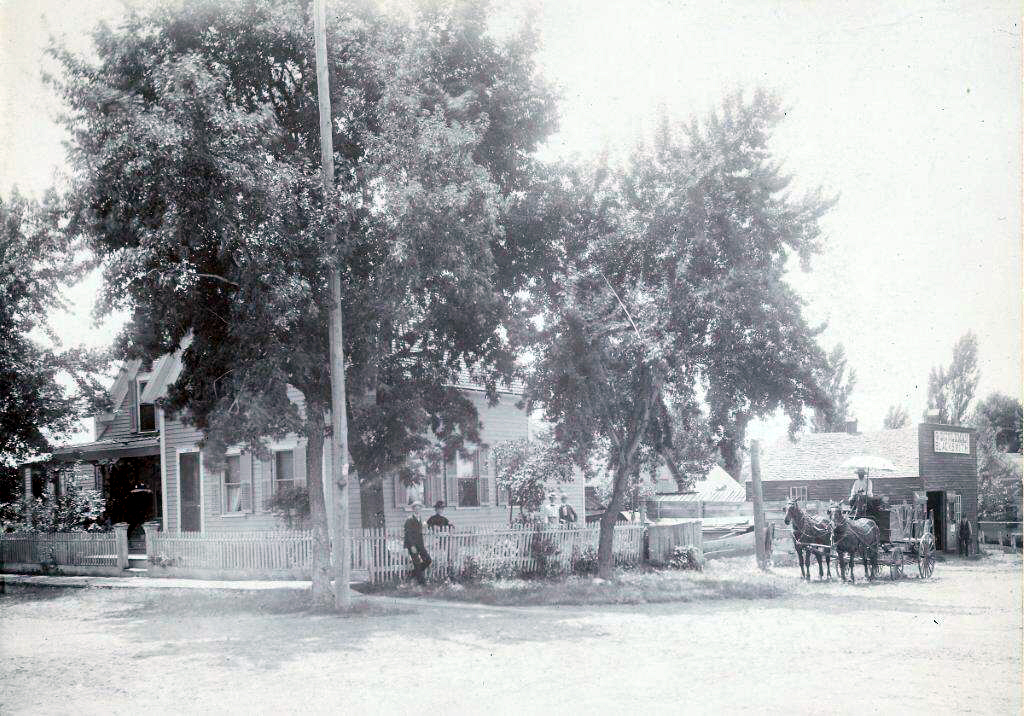
GD Coleman House and Blacksmith Shop, Anoka, MN 1900 far left-Ammi C. Coleman, Molly Woods Coleman, Lucy Coleman Russell, AH Russell, unknown man on wagon   Thank you to Chuck Russell

GD Coleman House and Blacksmith Shop, Anoka, MN 1900 far left-Ammi C. Coleman, Molly Woods Coleman, Lucy Coleman Russell, AH Russell, unknown man on wagon Thank you to Chuck Russell
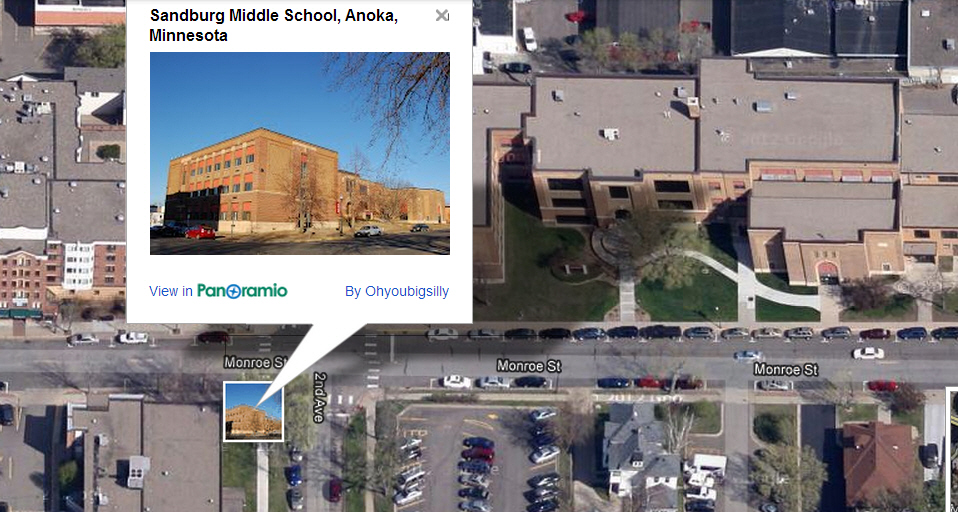
GD Coleman's home and blacksmith shop were located at 200 Monroe Street Anoka Minnesota, today across the street from the old Anoka High School, now Sandburg Middle School.

GD Coleman’s home and blacksmith shop were located at 200 Monroe Street Anoka Minnesota,  a couple of blocks from the Rum River and less than a miles from the Mississppi.   The  old Anoka High School, then Sandburg Middle School is across the street  I wonder when that home in the middle of the block was built?

Sandburg Middle School held its school closing celebration event on Saturday, May 1, 2010. Last I read, The 106-year-old building that housed a middle school was targeted for training and other uses.

Minnesota is getting older. Even in places like Anoka County – where the overall population is stable or increasing – the number of school-age kids is shrinking.  Anoka-Hennepin School District had 2,000 fewer students in 2010 than it did in 2005 a loss equivalent to one elementary school a year.

The first portion of the building (what is now the center section of Sandburg, with the brick archway) was built in 1904, [just one year after GD’s death], as Anoka High School to serve the growing number of secondary students, which up to that point attended school in the old four room Irving School.

The site served many other purposes through the years after the junior high moved. From 1969 to 1975, it once housed the district offices, carpentry shop, Teen Parent Program and served as an “annex” for Franklin, Northdale and Ramsey students until additions or new buildings could be completed.   

In 1976, the school became Sandburg Middle School, the first middle school in Anoka-Hennepin. It began with grades five through seven and then changed to grades six through eight in the fall of 1992.
A public meeting was held in March 1893 to discuss a proposed new high school to cost $35,000 and officials learned that the majority of voters opposed the project. Bond issues to build the building were defeated by voters in 1895 and 1897 before voters approved (587 to 11) a bond issue of $30,000 in 1904 to build a new high school. Additions were added in 1929, 1939, 1956 and 1961 to accommodate population growth.

In 1954, the school was converted into a junior high school (Anoka Junior High School) to serve the entire district when a new high school was built at the current Fred Moore Middle School Center for the Arts site (to become Anoka Middle School Center for the Arts in fall 2010). During the transition years (1968-71) to Anoka High School’s current site (which opened in 1971), the junior high was moved to the old high school (current site of Fred Moore) and was remaned Fred Moore Junior High School.

The site served many other purposes through the years after the junior high moved. From 1969 to 1975, it once housed the district offices, carpentry shop, Teen Parent Program and served as an “annex” for Franklin, Northdale and Ramsey students until additions or new buildings could be completed.   

In 1976, the school became Sandburg Middle School, the first middle school in Anoka-Hennepin. It began with grades five through seven and then changed to grades six through eight in the fall of 1992.

G. D. Coleman House, Ammi Coleman (dark suit), AH Russell, Molly Woods Coleman (seated), GD Coleman, Lucy Coleman Russell, Anoka, MN 1900

G. D. Coleman House, Ammi Coleman (dark suit), AH Russell, Molly Woods Coleman (seated), GD Coleman, Lucy Coleman Russell, Anoka, MN 1900

Their chores included taking a big pail upstairs and each morning they’d make the rounds of the “pots” emptying them one by one into the big pail.  Lucy being the oldest and strongest had to carry the pail downstairs and out to the little house in the rear.  The back stairway was a steep and narrow one and one morning Lucy fell head over heels, getting the urine all over the stairs, her dress, hair and even in her mouth, with no sympathy from anyone but Nellie and her sympathy was squealed in a hurry.

Their clothes were few and pathetic.  Lucy was given a white pinafore apron which she loved.  She was permitted to wear it to a school program.  After school she had been told to go to the Woods home and before supper a calf got loose and everyone excitedly chased it.  Lucy forgot about the white apron and joined in the chase.  She caught it on a fence and tore it.  She begged Mrs. Woods to go home with her and she did telling Mollie it wasn’t Lucy’s fault so be “gentle” with her.  So Mollie ripped it off, folded it, put it in a box and sent it to a relative.  Lucy was crushed and begged to keep it, but Mollie was firm and mean and said she’d sent it to someone who would appreciate it.

“Aunt” Mollie was known as a mean step-mother to little Nelly and Lucy.  Later in life, Lucy’s child, Ruth Russell, wrote:

Neither Aubrey nor I warmed up to her very big effort to have us love her.  I’m sorry now as she was a pathetic, lonely soul and my mother forgave her saying ‘being a step-mother would be a hard role.’  She no doubt has all the Coleman pictures and history with her when she went to live with her nephew John Woods in Idaho.  He got her money, agreeing to provide well for her and to bury her in Anoka.  He was mean and she couldn’t get even money for a hair net from him and he denied her request for burial in Anoka.

G.D. employed his younger brother Seth as an apprentice in the Anoka blacksmith shop.
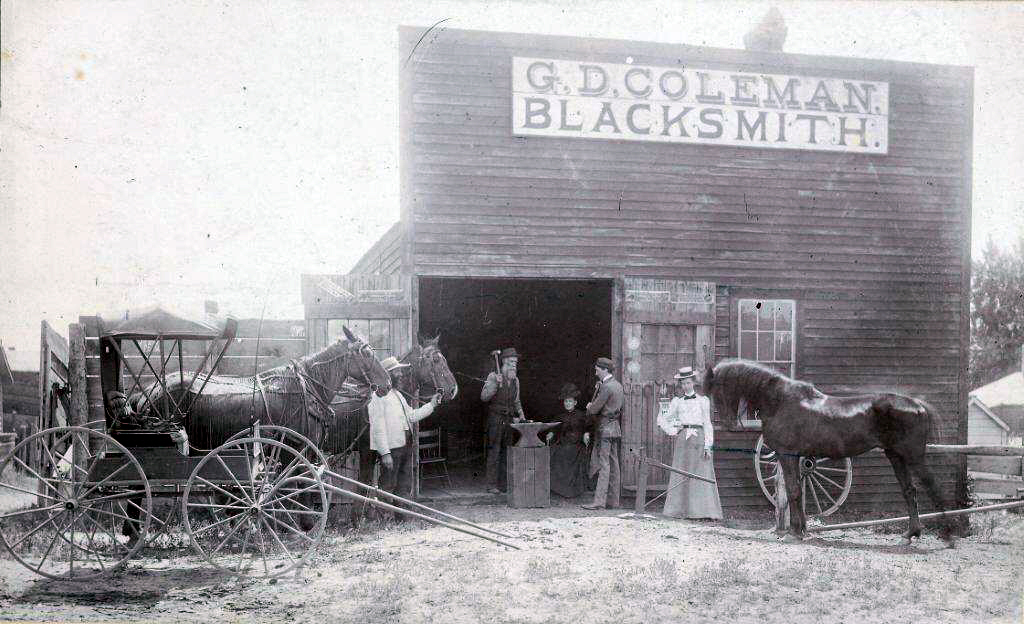
GD Coleman Blacksmith, Anoka, MN 1900 Unknown man, GD Coleman, Molly Woods Coleman, AH Russell, Lucy Coleman Russell and GD Coleman's favorite horse

GD Coleman Blacksmith, Anoka, MN 1900 Unknown man, GD Coleman, Molly Woods Coleman, AH Russell, Lucy Coleman Russell and GD Coleman’s favorite horse
Photo thanks to Chuck Russell

Children and Granchildren
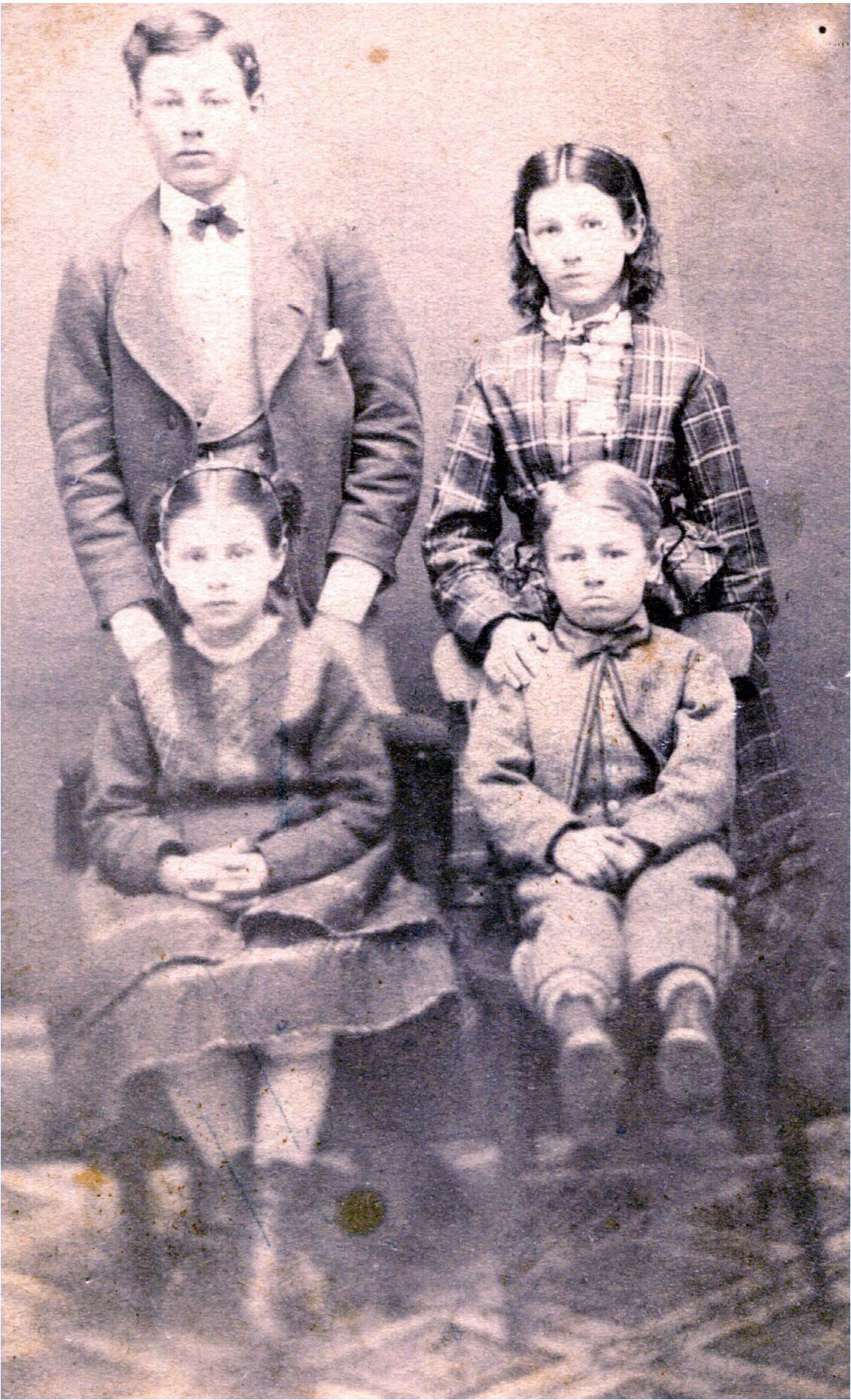
G. D. & Ellen Coleman Children ca. 1871 Anoka, MN

G. D. & Ellen Coleman Children ca. 1871 Anoka, MN (figuring Ammi to be about 5)
Standing: Dana, Esther; seated: Eleanor, Ammi.

1. Dana Stowell Coleman

Dana’s wife Anna Maria Plank was born5 Feb 1855 in Wolcott, Wayne, New York. Her parents were Lewis Plank and Ann Groat. Anna Maria died 1 Sep 1934 in Whittier, Los Angeles, California.

In the 1870 census, Anna was living with her parents in Waterloo, Iowa where her father worked as an insurance agent.  In the 1860 census, she was living  in Wolcott, Wayne, New York with her parents where her father was a farmer
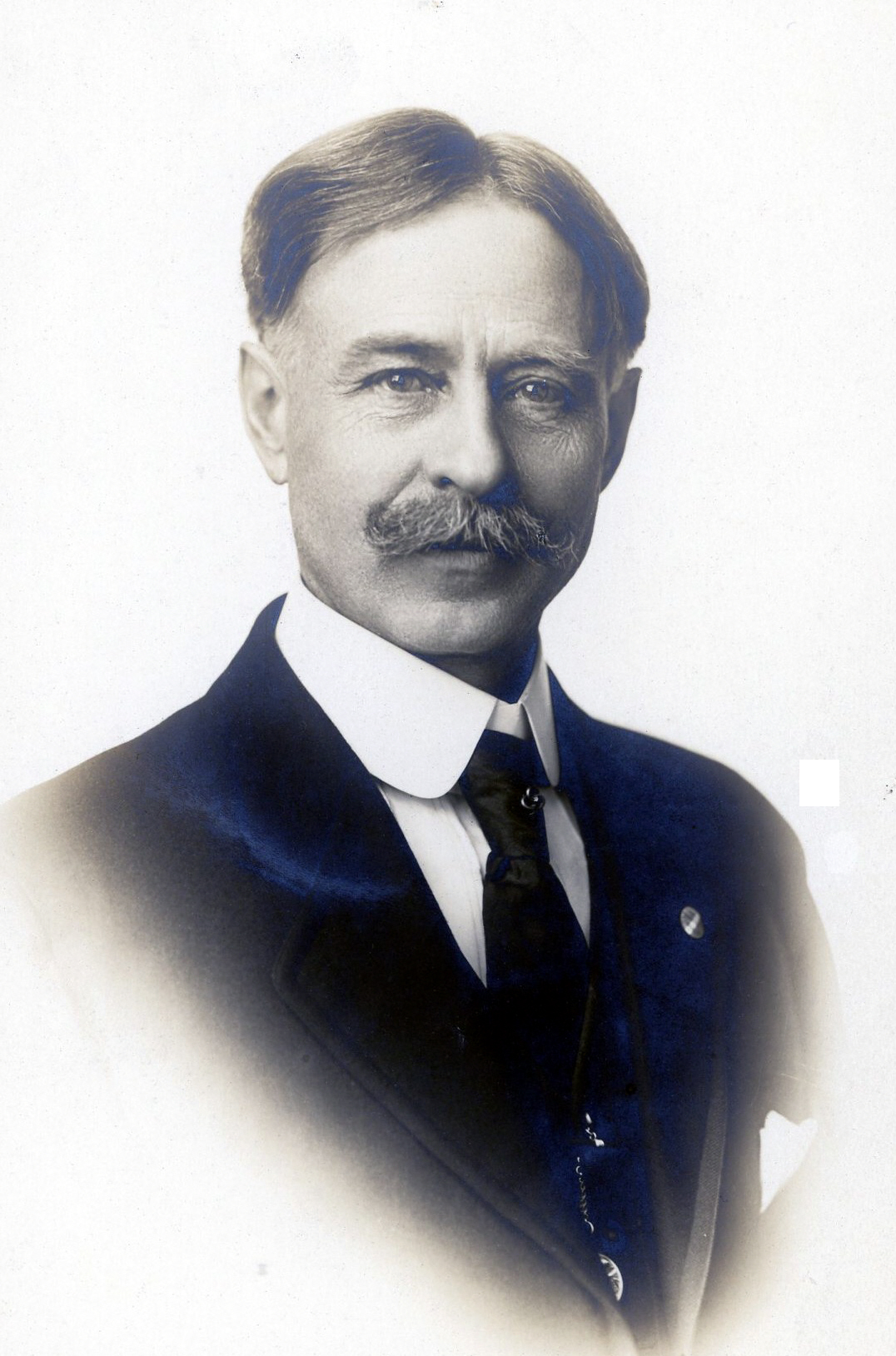
Dana Coleman (1857 – 1928)

In the 1900 census, Dana, Anna and Florence were living in Denver, Colorado where Dana was a lumberman.
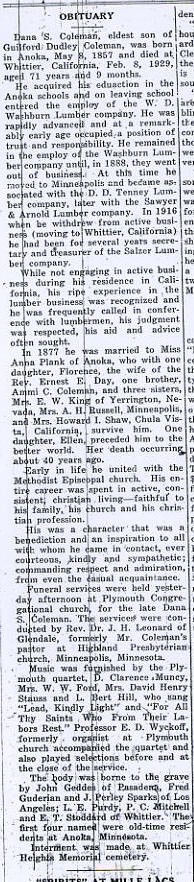
Dana Coleman obit. Anoka Herald feb 26 1929
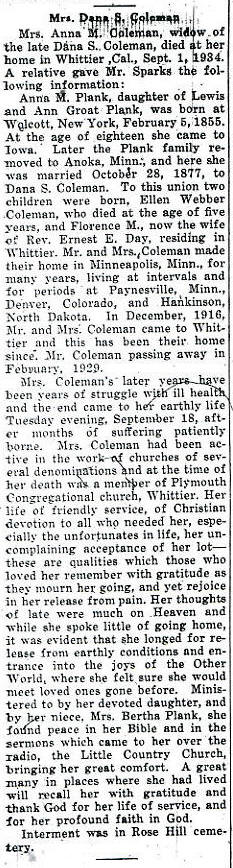
Anna Plank Coleman obit. Oct 3 1934 Anoka Union

Children of Dana  and Anna Marie Plank (5 Feb 1855 in Wolcott, Wayne, New York – 1 Sep 1934 in Whittier, Los Angeles, California)

i. Florence Maria Coleman  b. 8 Aug 1878 Anoka,  MN;  m. 20 Sep 1900 Denver CO to Ernest Ellsworth Day (6 Oct 1868 Mazepha, Minn – 12 Dec 1947 Whittier, Calif) (Congregational Minister)

In the 1910 census, Ernest and Florence lived in Cedar Falls, Black Hawk, Iowa where Ernest was a clergyman. They had moved to Whittier before the 1920 census. Ernest and Florence didn’t have children.
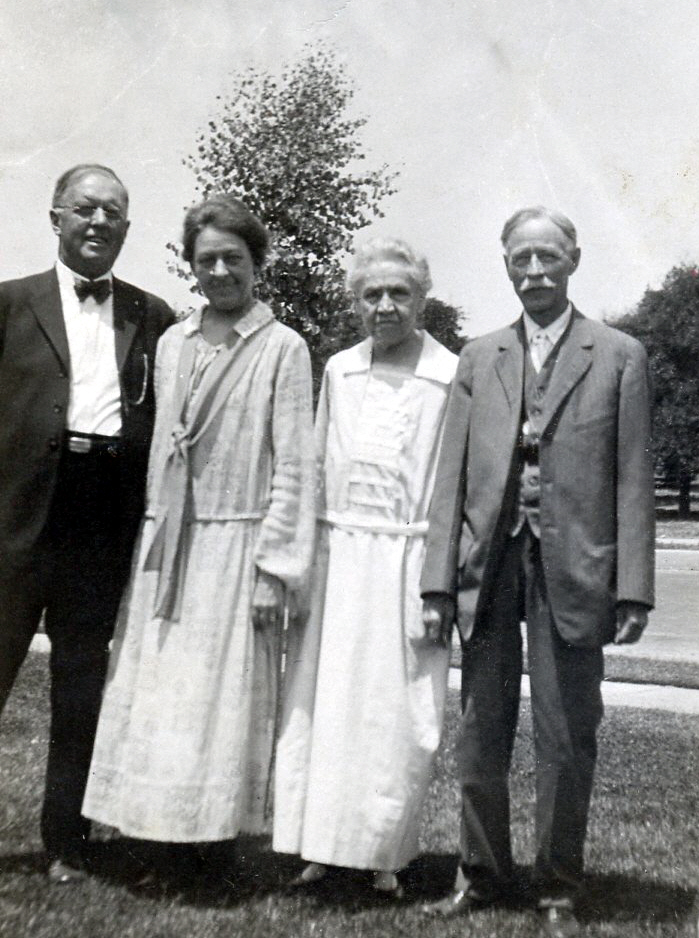
Aug 8 Ernest  and Florence Day with Anna and Dana Coleman
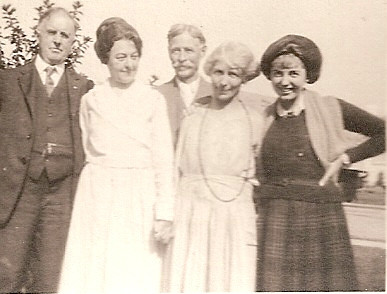
Ernest Day, Florence Day, Uncle Dana, Mama [Nellie], Eleanor [My grandma]
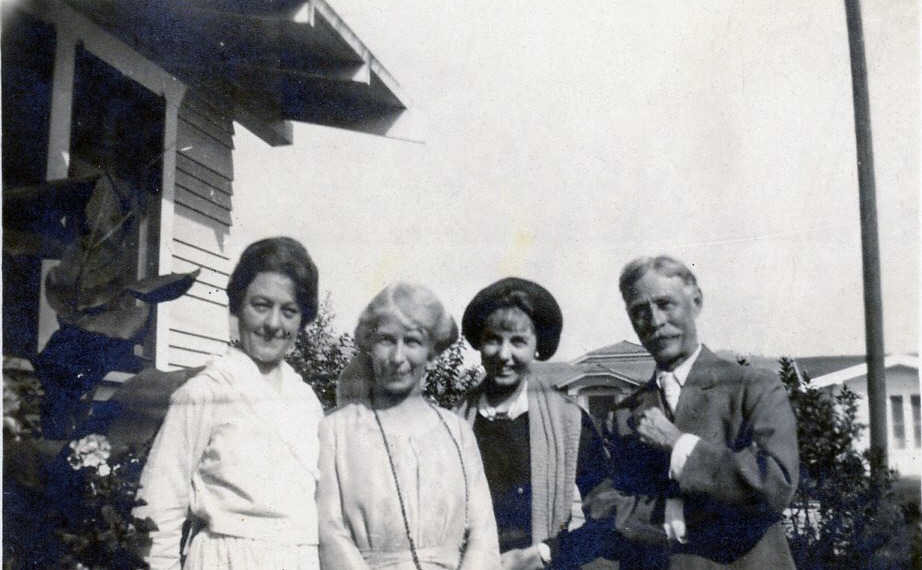
Florence Coleman Day, Nellie Webber Coleman Shaw, Eleanor King Shaw, Dana S. Coleman

ii.  Ellen Webber Coleman  b. 5 Feb 1883, Anoka, MN;  d. 1888 Pipestone, MN

Ellen Webber Coleman –             Age 2 1/2
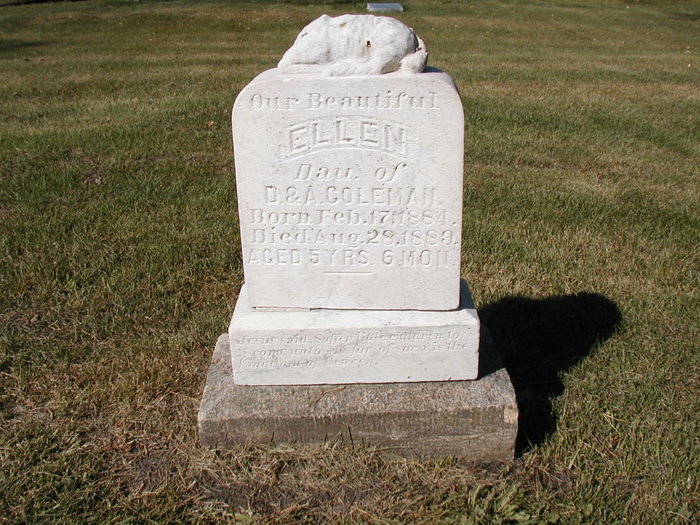
Ellen Webber Coleman – Figure on top is a Lamb  “Our Beautiful Ellen Dau. of D & A Coleman. Born Feb. 17. 1884.  Died Aug. 28. 1889.  Aged 5 YRS. 6 MON.  Jesus said: Suffer little children to come unto me for of such is the Kingdom of Heaven.”   Oakwood Cemetery Anoka, Minnesota a few feet from her grandparents

2. Esther Finnette Coleman

Esther’s husband Edgar Howard Fitz was born in Apr 1858 in Minnesota. His parents were Rudolph Herr Fitz and Elmina Forbes Howard.  Edgar died 16 Jan 1939 – Fairmont, Martin, Minnesota.

Edgar was  a civil engineer and architect from St. Paul, came to work on a bridge spanning the river at Anoka.  “He went on Sunday to the church” where he met Esther Coleman.  they made their home in St. Paul and when their first child, Essie, was six weeks old they attended the wedding of Grandfather Coleman to Miss. Mollie Wood.  She was always called “Aunt Mollie.”  Office work proved too confining for E.H. Fitz so a few months later they moved to the farm in Martin County, later known as Cedar Park Farm.  When Dudley was two years old the farm was rented for a year and the family went to Great Falls, MT to join the King family.

In the 1900 census, Ester and E Howard were farming in Cedar, Martin, Minnesota.

Children of Ester Finnette Coleman and Edgar Howard Fitz

i. Essie Mina Fitz  (12 Dec 1883 St. Paul MN – 4 Jan 1971 Mountain View Cemetery Longmont, Boulder, Colorado Plot: Block 46A, L057S2SP001 ); m. 12 Sep 1906 Monterey, Minn, Cedar Park Farm to John Carter Malchow (17 Aug 1883 Lakefield, Minn. – Aft. 1940 census) John’s father was from Germany and his mother from Norway.

In the 1930 census, John was a retail hardware salesman in Brush, Morgan, Colorado.

ii. Lura Dulcie Fitz  (8 Oct 1885 – Jun 1886 Martin Co., MN)

iii. Rudolph Guilford Fitz  b. 26 Aug 1887 Triumph, Martin, MN – 6 Oct 1973 in Kirkland, King, Washington); m. 22 May 1915 Bethany, Oklahoma to Lura Katherine Witten (13 Nov 1891 Clay County, Texas – )

But God gives a song: The story of Dr. and Mrs. R.G. Fitz, pioneer missionaries to China and Alaska (Missionary books) by Maxine Fitz Fritz (Unknown Binding – 1973) Children born in Norman, Oklahoma and Tamingfu, Hopei (now Hebei province) China

Randolph and Lura sailed for China on the Kashima Maru on Oct 4, 1920.

FAITHFUL: THE CHURCH OF THE NAZARENE IN NORTH CHINA Floyd T. Cunningham

For the Nazarenes, Bresee Memorial Hospital in Daming became an important ministry. The Women’s Foreign Missionary Society and California laypersons undertook the building project. C. J. Kinne, a Nazarene publisher who had spearheaded the fundraising, and who late in life married Susan Bresee, the daughter of Phineas Bresee, went to China to oversee the building’s construction. When completed in 1925, the hospital accommodated 100 beds. A nurses’ training school began soon after, with missionary nurses as instructors. The hospital was designed, as Kinne wrote, to be both a “‘Good Samaritan’ to relieve the sufferings of the people and an evangel of mercy to lead them to Christ.”

Both motives were there, both paradigms represented: that of ministering to people simply out of love, and that of evangelizing them through medicine. The social and evangelical components of the work were held in balance, though the hospital seemed to need to justify its existence in the years ahead by appealing to its evangelistic role. Despite fundamentalist pressures, the Nazarenes kept their medical, educational and other social work through the years in China.

Medical doctor R. G. Fitz arrived in 1920. He was in charge of the medical work for several years. But Fitz felt called to evangelism, and the mission secured other doctors, both Chinese and missionaries, to help him in the hospital.

The hospital’s workers were instrumental in initiating a revival that swept through the Nazarene mission in 1926-1927—right to the eve of a nationalist rebellion that swept the country.

Dr. C. E. West, in charge of the hospital during Fitz’s furlough, began to pray for revival while recuperating from smallpox.

Fitz returned to run the Daming hospital in the mid-1930’s.

In 1992 the government allowed the reopening of a church inside the city itself. About the same time, a Bible school led by former Nazarenes was opened in Handan. Eventually, as the Bible school graduates began to pass away, the children and grandchildren of these leaders continued and extended the ministry. They served as itinerant evangelists and Bible women, preaching and teaching holiness just as their fathers and mothers had done. A conservative estimate was that by that time there were 75,000 believers in the five Hebei Province counties in which the Church of the Nazarene had worked.

Wiese and Pattee, certain, though mistakenly, that the Nationalist government would soon defeat the Communists and open up the old field again, turned their attention toward the possibility of the church entering a new area. They contacted the National Christian Council in Shanghai about which sections of the country might be open for work. Upon the suggestion of the Council, the Nazarenes chose a field in southern Jiangxi Province around the cities of Ji’an and Kanhsien.

One strong factor in choosing this field was that Mandarin, the dialect the missionaries had learned in the North, was spoken in the area. Nazarenes beganwork in 1947. Katherine Wiese and Lillian Pattee soon joined their husbands. Others who arrived were R. G. and Lura Fitz and Mary Scott, from the old field, and newly-appointed missionaries Michael and Elizabeth Varro (daughter of the Fitzes) and Ruth Brickman.

In comparison to the work in the North, in which most of the converts were poor farmers, the membersin the southern field were from the business and professional classes. As the months wore on the missionaries sensed the political reality that the Communists would take over the entire country.

R. G. Fitz pioneered the Nazarene work in Alaska.

In retrospect, though Nazarene missionaries worked both closely and congenially with Chinese workers, the development of national leadership as a whole was slow. Missionaries held on to positions of leadership. In old China pastors had to petition for positions of responsibility in the field even after revivals and evangelistic fervor proved their spiritual worthiness and equality with the North American workers. Their advancement and the eventual indigenization of the entire work in mainland China was prompted by political and social necessities, not by deliberate act.

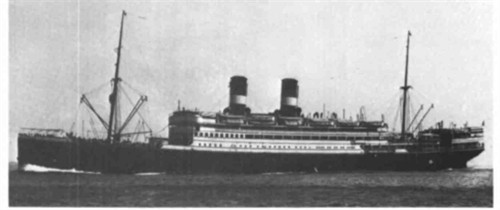
Lura arrived in Seattle from Shanghai in 15 Jun 1925 on the Empress of Russia.

Lura arrived in Victoria, Canada from Manila on the Empress of Canada on 22 Apr 1936.

In the 1940 census Rudolph G and Lura K were living at 1314 First Avenue, Fairbanks, Alaska where Randolph was a farmer with his own homestead. The address is in an industrial location, maybe a mailing address? The family was in China in 1935.

In his 1942 draft registration, Randolph was farming on Steel Creek Road Fairbanks, Alaska, about 5 miles northeast of town.

iv. Henry Dudley Fitz  (9 Oct 1889 Martin, MN – 19 Nov 1960 Farimount, MN); m. Pearl Iva Catlin (8 Nov 1885 in Minnesota – 11 Feb 1975 in Fairmont, Martin, Minnesota)

In the 1930 census, Dudley was purchasing agent at a gas engine factory in Fairmont, Martin, Minnesota.

v. Vera Mary Fitz  (8 Sep 1893 Martin Co, MN – 2 Feb 1972);  m. 16 Jul 1919 in Fairmont, Minn. to Clair Wilbur Musser (6 Mar 1898 – 4 Sep 1979)

In the 1930 census, Clair was an elevator manager in Fairmont, Martin, Minnesota.

vi. Howard Kenneth Fitz  (26 Jan 1897 Martin Co., MN – 24 May 1993 in Sioux Falls, Minnehaha, South Dakota) m1. 6 Dec 1920 Fairmount, Minn to Hazel V.  LaRoe (Larow) (b. 1902 Minnesota)  (one record states they divorced in 1927, but they were living together in 1930.)

In the 1930 census, Howard was a stock towman at Railway Motors in Fairmont, Martin, Minnesota.

In the 1940 census, Howard was living at 123 12th Street East, Fairmont, Martin, Minnesota and was married to Anna C. Groth  (b. Feb 1898 Illinois)  Her parents were John C L Groth  (immigrated from Germany in 1893) and Dora Hoeppen (immigrated from Germany in 1890).   There was a  eight year gap between Linnette b. 1926 and Doris b. 1934.

THANKSGIVING, 1917 Company E, 136th Infantry Camp Cody, Deming, New Mexico Howard K Fitz – Private First Class

vii. Irma Ruth Fitz  (15 Oct 1899, Martin Co., MN – 7 Oct 1969 in Fairmont, Martin, Minnesota) m1. 20 Jan 1917 Fairmount, Minn to Herman Henry Nordhausen (b. 16 Apr 1891  Illinois  – d. 13 Jun 1937 Fairmont, Minn) m2. 15 Mar 1938 Kimball Township, Jackson, Minn to Otto Bieberdorf (1 Mar 1896 in Oklahoma – 27 Nov 1985 in Fairmont, Martin, Minnesota)

In the 1930 census, Irma and Herman were farming in Kimball, Jackson, Minnesota.  Herman’s parents were born in Germany.

In the 1940 census, Irma and Otto were farming in Kimball, Jackson, Minnesota.  Otto’s parents were born in Russia and immigrated in 1891.

viii.  Nellie Coleman Fitz  (13 Aug 1901 Martin Co., MN – 22 Jun 1934 Fairmont, Minn); m. 12 Sep 1923 Fairmount, Minn to William Warren Carter (19 Aug 1899 Kansas City, Mo – 23 Apr 1980 in Minneapolis, Minnesota)

In the 1930 census, William was a printer in Fairmont, Martin, Minnesota

.

3. Eleanor Jane Coleman

Eleanor Jane’s husband Ernest Wight King was born 07 Dec 1861 in Neillsville, Clark, Wisconsin. His parents were John Franklin King (9 Apr 1831 Townton, Bristol, Mass – 10 Dec 1884 Neillsville City Cemetery, Neillsville, Clark County, Wisconsin, Plot: I-29) and Rozilla Marie Wight (1835  NY– Aft 1920). Ernest died 22 Nov 1931 in Yerington, Lyon, Nevada.

John enlisted Enlisted 26 Dec 1863 in Company I 14th Wisconsin Infantry Volunteer Regiment Four of its members received the Medal of Honor for service in the Battle of Corinth, October 3 and 4, 1862; among them the Color-Sergeant Denis J. F. Murphy (Green Bay), who, though wounded 3 times, continued bearing the colors throughout the battle.
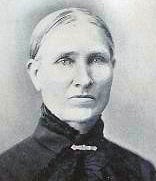
Eleanor’s mother-in-law Rozilla Wight (1835 – aft 1920)

Ernest had moved from his farm home near Neilleville, Wisconsin to Minnesota to work in a machine shop in Minneapolis and later to have a machine shop of his own in Anoka, Minnesota. They met on the ice and often enjoyed skating together.
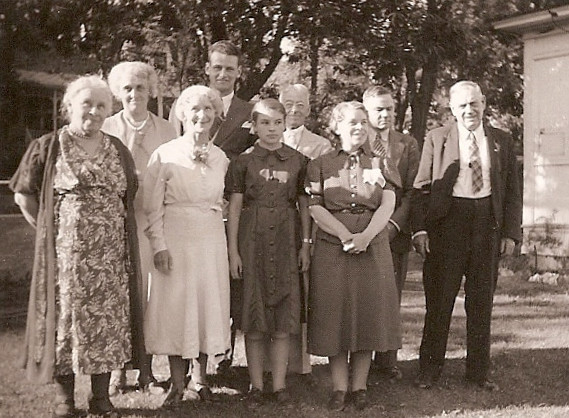
1938-From left – Aunt Lucy, Aunt Eleanor, Aunt Gladys, Nellie, Ben, Pheobe’s daughter Nellie Higgins, Uncle Ammi, Pheobe, Winn and Howard Shaw

Ernest W. King served in the Montana legislature while living in Lewistown and later while living in Bozeman. During the latter session he was Speaker of the House and was in line for nomination for Lieutenant Governor on the Republican ticket. However he became interested in the mining boom in Rawhide, Nevada, so left Montana to get in on that, his wife joining him later after Ruby and Gladys had been married and Dana graduated from High School. (Maybe around 1900??)

In the 1900 census, Ernest was a mine superintendent in Gilt Edge, Fergus, Montana. Guy S Hoisington, a school teacher was lodging with the family. Ernest and Eleanor had moved from Wisconsin before June 1893 when Dana was born.

In the 1910 census, Ernest was a mine owner in Bozeman, Montana.

In the 1920 census, Ernest was a foreman at a lead mine in Mina, Mineral, Nevada.

In the 1930 census, Ernest was a civil engineer in Yerington, Lyon, Nevada

Children of Eleanor and Ernest
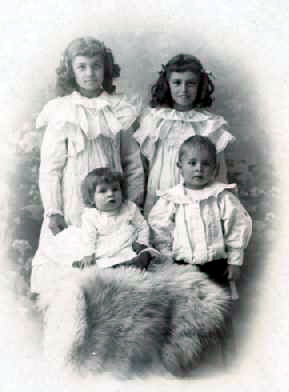
Children of Eleanor Jane (Coleman) and Ernest Wight King  Standing left  Ruby King, b.1886, Anoka, MN. Gladys King, standing right, b. 1888, Triumph, MN. Phoebe King, seated , b. 1895 Great Falls, MT. Dana Coleman King, b. 1892, Great Falls, MT.
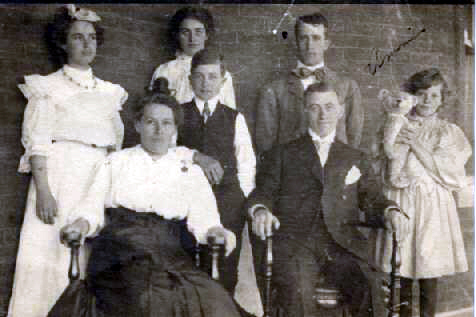
Far Left Gladys (King) Law, far left.  Ruby Ellen (King) Hogan, standing in middle.  Man on right unknown. Mother, Eleanor J. (Coleman) King, seated.  Ammi C. Coleman, Eleanor’s brother, seated. Brother, Dana Coleman King, standing in front of Ruby. Sister, Phoebe King, holding stuffed animal. Ca. 1907 Montana

i. Ruby Ellen King  (9 Oct 1886 Anoka MN – 9 Apr 1969 in Yellowstone, Montana);   m. 20 Feb 1910 Bozeman, Montana to George Riley Hogan (20 Feb 1910 Bozeman, MT. – 28 Sep 1971 in Billings, Yellowstone, Montana)   They are buried at Stanford Cemetery, Stanford, Judith Basin County, Montana.

In the 1930 census, George was a stock farmer in Lavina, Golden Valley, Montana.

ii. Gladys Molly King  (9 Jun 1888 Triumph MN –  12 Jan 1962 Boulder CO);  m. 30 Mar 1912 Bozeman, Montana to Benjamin Burton Law (17 Dec 1878 in Virginia – 14 Mar 1933 in Montana)

In the 1930 census, Benjamin was a District Court Judge in Bozeman, Montana.

– Benjamin Burton Law (12 Aug 1913, Bozeman, MT – 9 Apr 2001 in Menlo Park, California)

– Dana King Law (28 May 1915, Bozeman, MT – After 1992) Address: 712 26th Pl S, Arlington, VA, 22202 (1992)

– Carolyn Eleanor Law  b. 11 Jul 1919 Bozeman, MT;  m. Leonard Ernest Cordes 21 Jun 1941, Whittier, CA.   Eleanor Miner took  her niece Carolyn under her wing during World World II when Len was deployed in the Pacific.

– Dorothy Frances Law b. 26 Jan 1921, Bozeman, MT

In the 1940 census, Gladys, her daughters Carolyn and Dorothy and her mother Eleanor were living at 621 South Grand Avenue in Bozeman, Montana.

Inglewood 1944 – Len’s Sister, Leonard, Michael, Carolyn

iii. Dana Coleman King b. 12 Jun 1892 Great Falls, MT;  d. Aug 1915 Reno, NV (drowned while swimming) Dana went to Rawhide and worked in the mines for a year, preparatory to his college course of mining engineering at the University of Nevada in Reno.

iv. Phoebe Helen King  (20 Mar 1895, Great Falls, MT – 25 Apr 1971 in San Francisco, California)  m. 15 Dec 1919 to Winfield (Winn) Charles Higgins (10 Jan 1895 in Utah – 4 Apr 1971 in San Francisco, California)

Phoebe painted the landscapes that are in Nancy’s dinning room. In the 1930 census, Winn was a high school teacher in Ontario, Malheur, Oregon.

In the 1940 census, Winfield was  living at 857 North Virginia Street, Reno, near the University of Nevada campus and teaching vocational agriculture.  In 1935, the family had been living in Hot Springs, Arkansas.

By 1942, the family had moved to a new home also next to campus at 333 15th Street, Reno
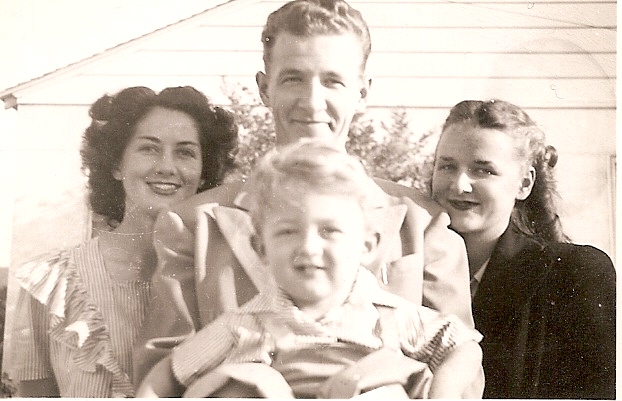
Eleanor and Ernest continued to live after their marriage (1885) till after Ruby was born (1886) when the father went west to Great Falls, Montana. After Gladys was born (1888) the mother traveled west with the two little girls and moved onto a homestead. After proving up on it the family moved to Great Falls where Ernest King served as superintendent of the water works and city engineer till he was asked to take charge of the Gilt Edge Mine where the family, now including Dana (1892) and Phoebe (1895) moved. After three years there, they moved to Lewistown, Montana, for better school facilities, and later to Bozeman where the Montana State College was located. Here Ruby and Gladys attended, Ruby graduating in Domestic Science and Gladys specializing in Music and Art. Ruby and Gladys were both married in Bozeman, having met George Hogan and Ben Law while living there.

Phoebe stayed in Bozeman with Gladys and Ben until she was graduated from high school when she went to Nevada and entered the University of Nevada a year after Dana had started his course there. At the beginning of his third year Dana was drowned while swimming in Manzanita Lake on the University of Nevada campus with some of his fraternity brothers.

Phoebe continued at the college, graduating from the Normal (teaching) course after which she taught school for two years in the one room country school east of Fernley, Nevada. Then she taught at the tiny school of three white children and two Indians at the Simon Mine where her parents were located. He father was in charge of the mine there.  She had become engaged to her college classmate, Winfield Higgins, just before he had gone into training at Camp Lewis, Washington and later went overseas to do his part in the war. (WWI) The armistice was signed when he was on his way to the front, so he did not have to see action in battle. He returned to the US the next spring, got busy on the homestead in Smith Valley and built the four room house where he would bring his bride. She was glad to give up her teaching job, so the pair traveled to Reno and were married (1919). They lived on the ranch for four years.

Win was asked to teach Agriculture and some other subjects in the high school in Wellington, Nevada, in Smith Valley where Phoebe’s parents now lived, having given up the pursuit of mining. (Ernest King would have been 62 years old then). The family moved in with Phoebe’s parents and a second daughter was born there.

E. W. King was made secretary of the Walker River Irrigation District, also secretary of the Lyon County Farm Bureau, so he and his wife moved to Yerington, Nevada where they lived till his passing on and where she lived a few years more till she went to Montana to live with her widowed daughter Gladys.

4. Ammi Coleman 

Never Married.  A fine singer always.  According to a letter written by his brother Dana, Ammi was named after a neighbor, Ammi Cutter. In the 1900 census, Ammi was a bookkeeeper at a water company in Great Falls, Montana. In the 1910 census, Ammi was a cashier at a miller in Great Falls Ward 1, Cascade, Montana. In the 1920 census, Ammi was a bookkeeper at a smelter in San Diego, California.
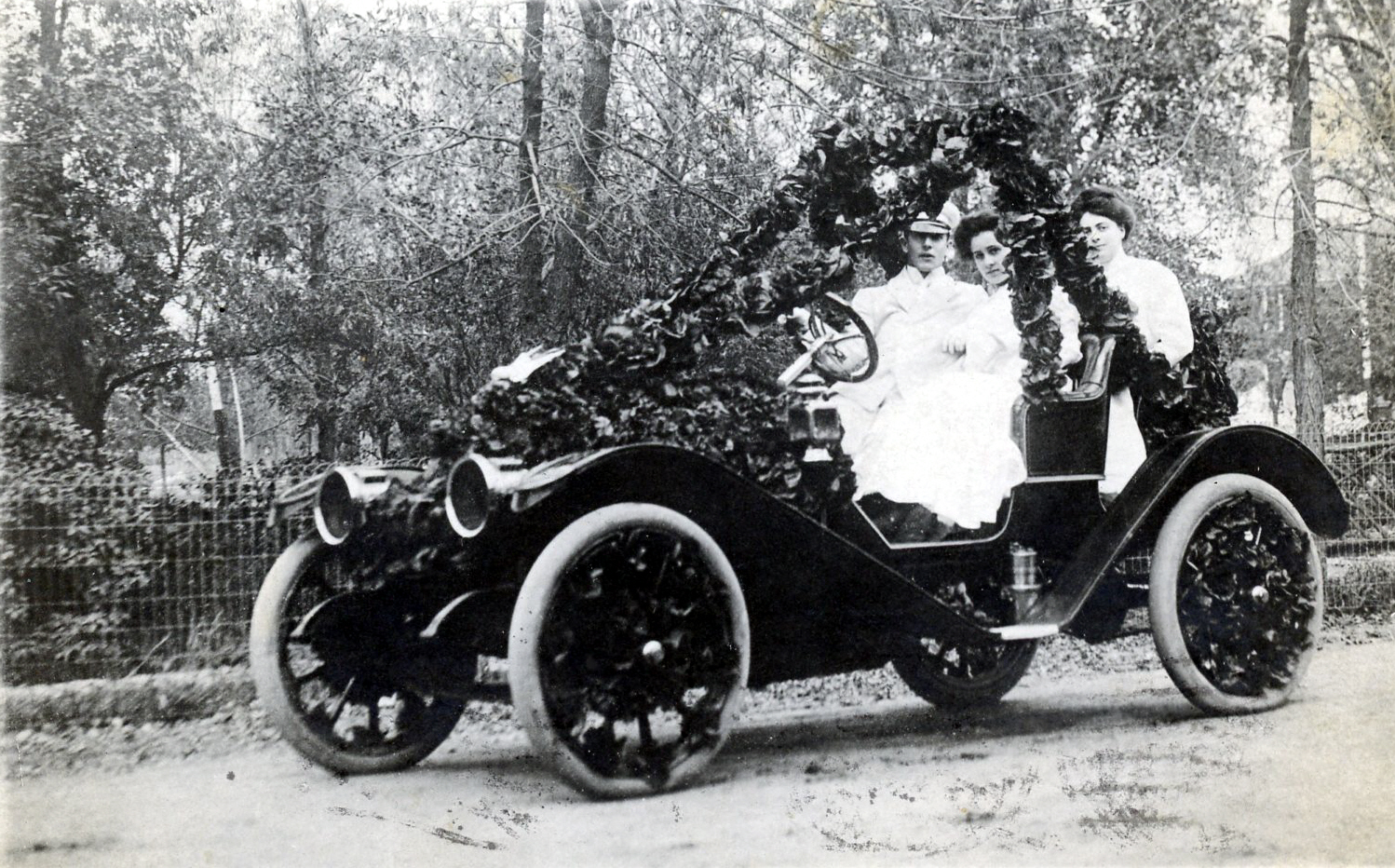
Ammi Coleman in Great Falls Montana Flower Parade.   His postcard says he cannot run the machine himself.

x
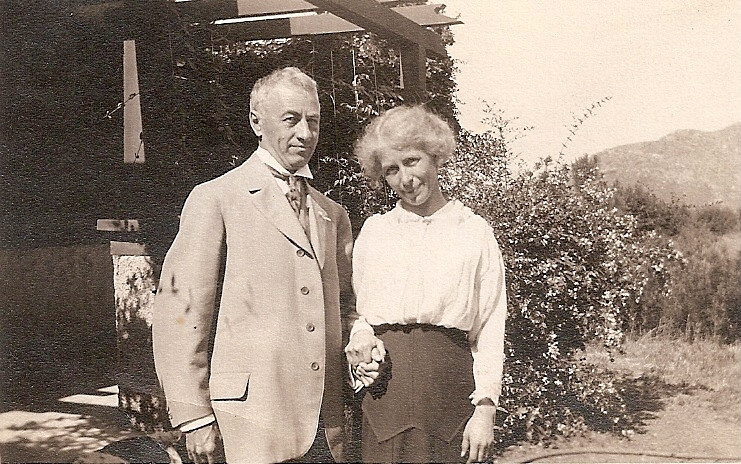
Uncle Ammi and Nellie – These pictures have been to Portland and Great Falls

5. Lucy Coleman

Lucy grew up in Anoka.   She returned to Anoka in 1912 with husband, Dr. A. H. Russell. Moved to Duluth in 1919, then to Minneapolis in 1922.
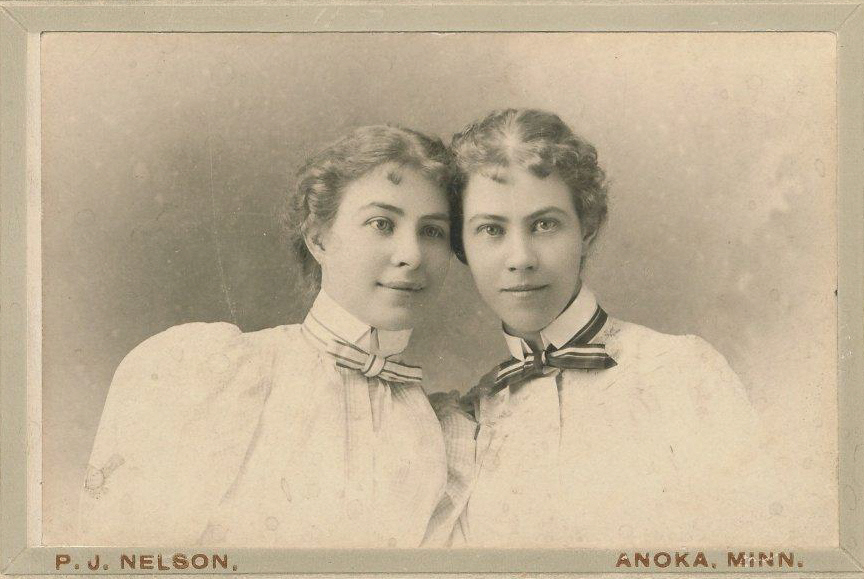
Nellie and Lucy Coleman, Anoka, MN 1898
Nellie and Lucy Coleman, Anoka, MN 1898

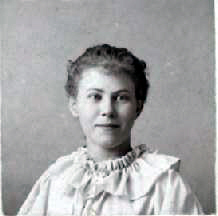
Lucy Emma Coleman Russell in 1893 when she would have been about nineteen
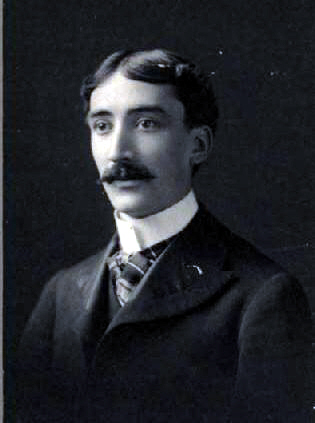
Aubrey Herbert Russell – Minneapolis 1899

Lucy’s husband Aubrey Herbert Russell was born 1 Apr 1876 in Hastings, East Sussex, England.  His parents were Francis T. Russell and Frances F. [__?__].  He emigrated with his family to Winnipeg, Canada in 1881. Then to Minneapolis in 1891.. Graduated from U of Minn, College of Dentistry in 1902. Practiced dentistry in Anoka 1912-1919. Office on Main St.  Aubrey died 19 Nov 1941 in Minneapolis.

Children of Lucy Emma Coleman and Dr. Aubrey Herbert Russell

i. Aubrey Herbert Russell  (8 Oct 1904, Minneapolis, MN – 4 Dec 2000, Bismark,North Dakota)  m1. Myrtie Virginia Rainey 29 May 1940 Minneapolis, MN  (divorced 7 Dec 1946)  m2. 10 Jun 1947 Mora, MN. to Ellen Florence Stromberg

In the 1940 census, Aubrey Jr. was living with his parents at 317 West 34th Street Minneapolis and working as a clerk in a railway office.

Aubrey Russell Jr., 96, Bismarck, died Dec. 4, 2000 in a Mandan care center. A private family service will be held on Wednesday, with the Rev. W. Kendall Johnson of St. George’s Episcopal Church, Bismarck, officiating. Burial will be in Lakewood Cemetery, Minneapolis.

Aubrey Herbert Russell was born Oct. 8, 1904 in Minneapolis, the son of Dr. Aubrey H. Russell, Sr. and Lucy (Coleman) Russell. He was raised in Deer Lodge, Mont. and Anoka and Duluth, Minn. He graduated from Duluth Central High School in 1922 and began employment that year with the Soo Line Railroad in Minneapolis. He also served on the Soo Line Credit Union’s auditing committee.

Aubrey married Ellen Stromberg on June 10, 1947 in Mora, Minn. They raised in Minneapolis, Bloomington and Edina, Minn. In 1969, he retired from the Soo Line as an auditor. He and Ellen moved from Edina to Bismarck in 1985.

Aubrey’s lifelong interests were classical music, reading, and the family’s pet cats and dogs.

Aubrey is survived by his wife, Ellen, Bismarck; one son, Dr. Chuck Russell and his wife, Cindi, Bismarck; two daughters, Vicki Gilmore and her husband, Rod, Mandan, and Beth Acuna, Eden Prairie, Minn.; three grandsons, Chris and Andy Russell, Bismarck, and Eric Scherrer, Sacramento, Calif.; one sister, Ruth Russell Joseph, Minneapolis; and a niece, Janyece Clausen, Richfield, Minn.

He was preceded in death by his parents; and one grandson, Christopher Scherrer.

The family prefers no flowers. (Eastgate Funeral Service, Bismarck)

ii. Ruth Nellie Russell  (7 Jun 1907 Deerlodge, MT – 29 Oct 2003 in Minneapolis, Hennepin, Minnesota);  m. 9 Sep 1934 Melrose, MN   Albert Francis Joseph (4 Mar 1904 Melrose, Minn. – 21 Mar 1983 in Hennepin, Minnesota)

In the 1930 census, Albert was living with his parents and was a clerk for a steam railroad in Minneapolis.  His father Albert Sr. was the yard master.  By 1940 Albert was still a clerk for the railroad.  He and Ruth were living at 3631 1st Avenue South, Minneapolis which is still standing today, a block west of the Interstate 35W freeway.

Ruth corresponded with my grandmother Eleanor Miner writing long letters for many years.  They only met once when the Russells came to their house in Inglewood on a trip west.  Ruth Joseph, might be last burial permitted at Oakwood Cemetery (2003)..

.

6.  Nellie Webber Coleman   (See Howard Irwin SHAW‘s page)

Sources:

Coleman Family Tree compiled 1958-1961

Guilford Dudley Coleman – Findagrave.com Added by: Chuck Russell

Ellen Celeste Webber Coleman -Findagrave.com Added by: Chuck Russell
Posted in -5th Generation, College Graduate, Historical Monument, Line - Shaw, Storied | Tagged , | 15 Comments

Howard Irwin Shaw

Howard Irwin SHAW (1874 – 1960) was Alex’s Great Great Grandfather; one of eight in this generation of the Shaw line.

Howard Irwin Shaw was born on 1 March 1874 in Dane County Wisconsin.  His parents were William SHAW and Ruth A FOSTER.  He married Nellie Webber COLEMAN on 4 Mar 1899 in Lewiston, Montana.   Howard died 7 Jun 1960 in San Diego, California.

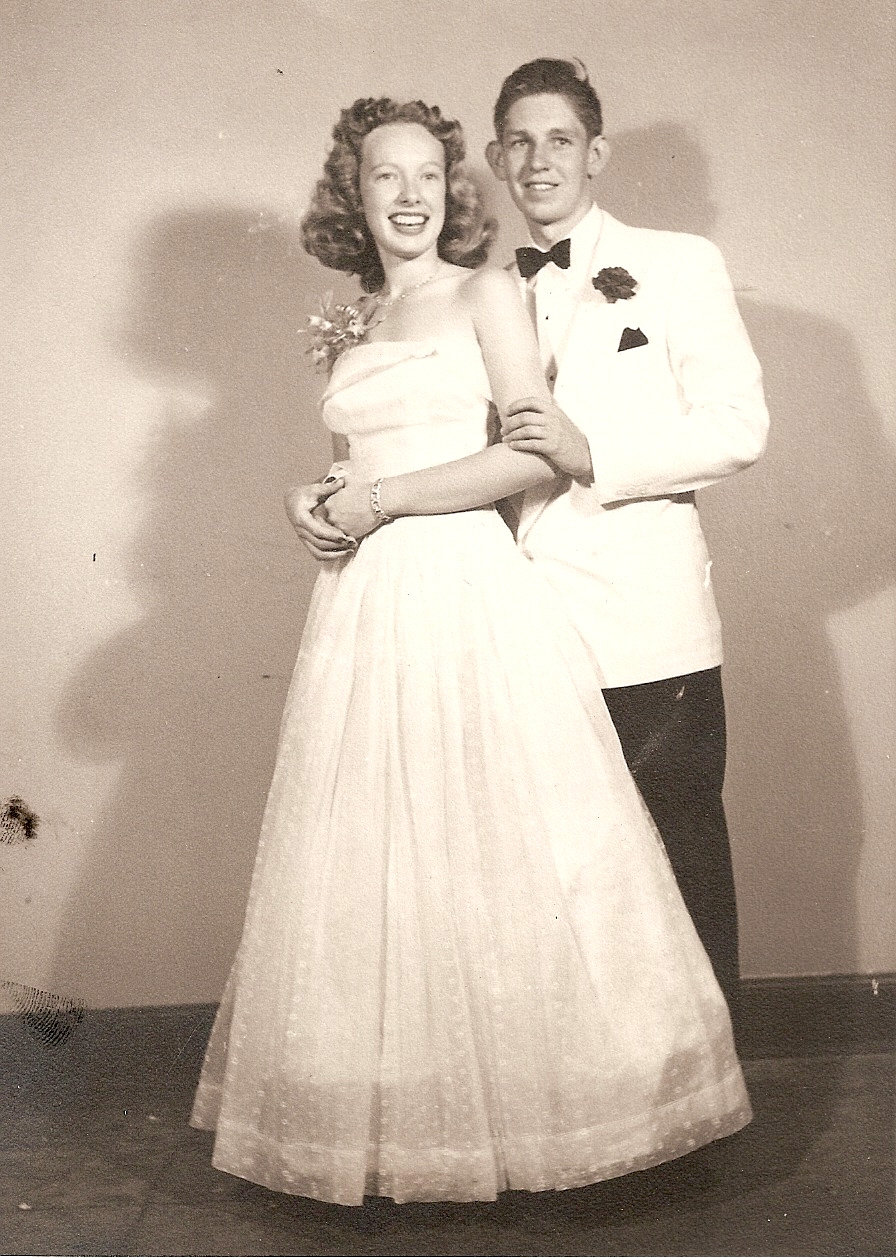
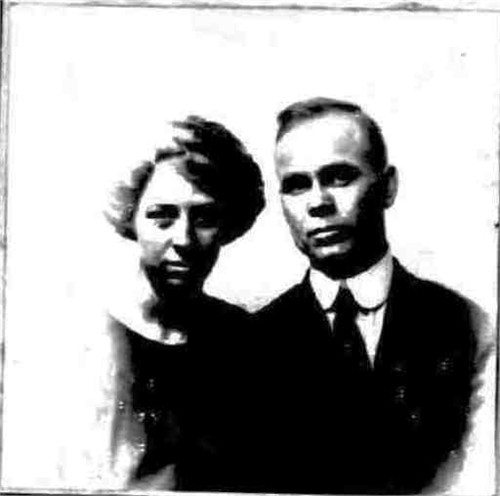
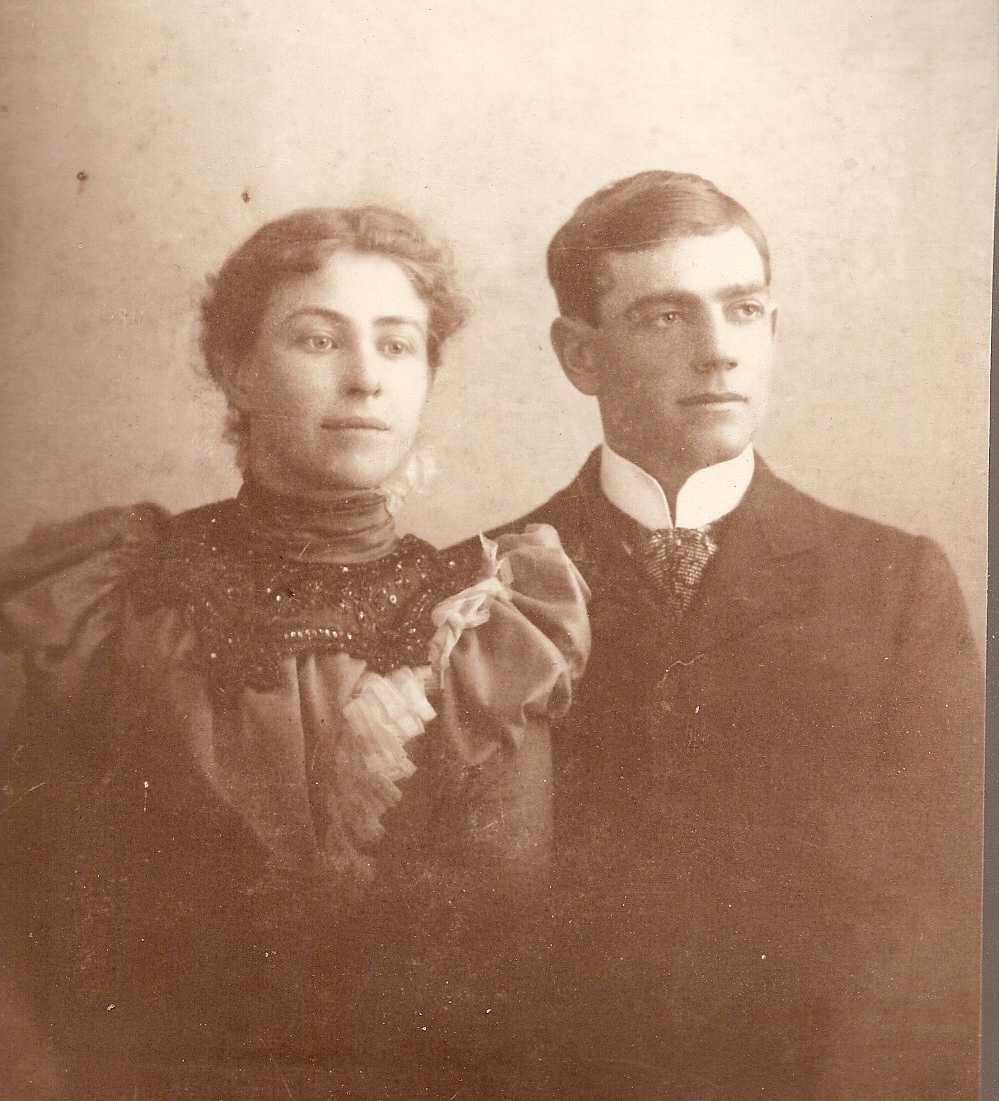
Howard and Nellie’s Wedding Picture 1899

Nellie Webber Coleman was bor 15 Sep 1876 in Anoka Minnesota.  Her parents were Guilford Dudley COLEMAN and Ellen Celeste WEBBER.  Nellie died 3 Jan 1947 in Yerington Nevada.

Nellie Coleman 1894 Age 18

Children of Howard and Nellie:

Name Born Married Departed
1. Eleanor Coleman SHAW 12 Jan 1900
Gilt Edge, Montana
Fay Everett MINER
30 Aug 1923
San Diego, CA
17 Sept 1982
San Diego
2. Howard Irwin (Buddy) Shaw Jr. 29 Jan 1906
Kendall, Montana
Betty Jean Botkin
2 Aug 1935
San Diego CA
9 May 1984 San Diego

Eleanor Shaw Gilt Edge Montana

Howard and his brother John (Grandma Miner’s Uncle Jack) were inseparable. They attended a Presbyterian Academy in Wisconsin.

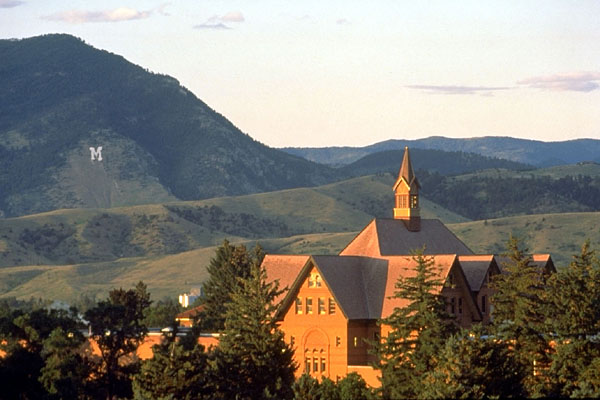
When Howard’s father died in Wisconsin in 1886, the family moved to Bozeman, Montana where Howard was a member of the first class at Montana State College.  MSU was founded in 1893 as the state’s land-grant college, and was first named the Agricultural College of the State of Montana.

MSU – Montana Hall built in 1896

After his education as a mining engineer, he went to work at the mines in Gilt Edge where he boarded at Eleanor and Ernest King’s house.  He met his future wife Nellie Coleman who was visiting her sister Eleanor.  Nellie used to eat her dinner on his plate after he left.   Howard and Nellie drove in a blizzard to Lewistown to be married.  The story of Gilt Edge is told on my Western Pioneers page.

27 Jan 1899 Anoka MN – Letter from Guilford Dudley Coleman to his new son-in-law

Dear Mr. Shaw,

I received a letter from you a few dayes since, was glad to hear from yourself.  Nellie had told me something of what had been happening and now yourself has told me with your pen, I am a believer in love and as you have been so free to tell me your great love for my Baby Nellie, I will say to you that I loved her Mother from a small Boy and it never grew less while life lasted.

And now it is my prayer that you both may love each other as long as you both may live and may the choicest blessings of God rest and remain with you son long as you live, should be very much pleased to see you shall hope to some time,,

I am 66 years old have worked at blacksmithing over forty-five years and still shoe horses every day.  Have been in this town most 43 years.

Please give my love to Nellie when you wright, we have had the grip at our house.  Most Coleman has been sick over a month.  It’s better now, please excuse me for not answering your letter before so will close good night yourse truely

G.D Coleman

Grandfather Shaw was a dreamer, forever running after instant riches. Mother considered him irresponsible, but called him Dear Poppa.

Shaw Family-Howard , Eleanor and Nellie - Thank you to Chuck Russell
Shaw Family-Howard , Eleanor and Nellie  October 1903 – Thank you to Chuck Russell
The Coleman brothers and sisters returned to Anoka as a reunion just prior to G. D. Coleman’s death in 1903.  You will notice that Nellie is wearing the same dress as in the family photo and the photographer was the same, “Nelson, Anoka”

Presentation to Supt. Shaw from Lewistown Newspaper

At a meeting of the stockholders of the Barnes-King Mining company at Lewistown [Montana] on Friday evening a most agreeable surprise was sprung upon Superintendent Howard Shaw when at the conclusion of the business session, E. W. King, president of the company presented hi with a magnificent gold watch and chain.

The watch is one of great beauty in both design and workmanship the monogram especially being most elaborate and ornate.  The watch is made entirely from gold from the Barnes-King mine and was designed by T.W. Humphrey,  The chain is made from the same gold and is the handiwork of Mr. Humphrey.

While the intrinsic value of the watch and chain runs into hundreds of dollars, it is the spirit which prompted its presentation that causes Mr. Shaw greatest satisfaction.  It is practically a testimonial of the high esteem in which Mr. Shaw is help by his employers and a token of their regard for his splendid services to the company.

Howard Irwin Shaw 1908 Bozeman, Montana

Everett says Nellie was the most loving person he has ever known. Not just with him, but with everyone. She tended to call people “precious”, which bothered him at the time. She lived without negative thoughts. She was never depressed. (As far as I know.) She was so optimistic that many people had a hard time dealing with her. Mother, I think. was one. In short she was not a realist. Her universe contained only unbounded love.   An Old English word applies: Fey, adjective. Giving the impression of vague unworldliness. Perhaps having supernatural powers.

Nellie came from a wealth family in Minnesota. Her sister had married a mine superintendent in Montana and Nellie went for a visit in the summer of 1898. She met Howard, who came to the mine in Gilt Edge to install an extraction process for the gold ore they were digging out of the hills.  When the mine petered out, so did the town and there is nothing left to see of Gilt Edge. Eleanor’s brother Howard Jr. was a couple of years younger and was always known as Buddy to the family.

Nellie Coleman Shaw

They made a good deal of money from that mine, and when the vein was exhausted, they went on to Rawhide Nevada, where they dumped all there gains into a dry hole.

Buddy Shaw Rawhide Nevada

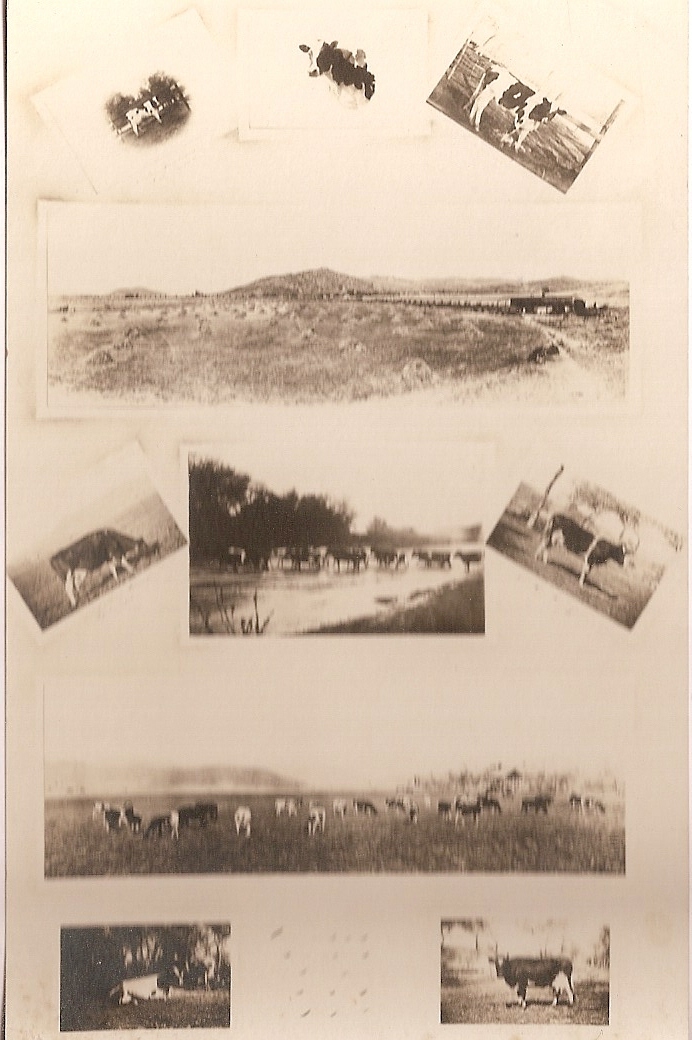
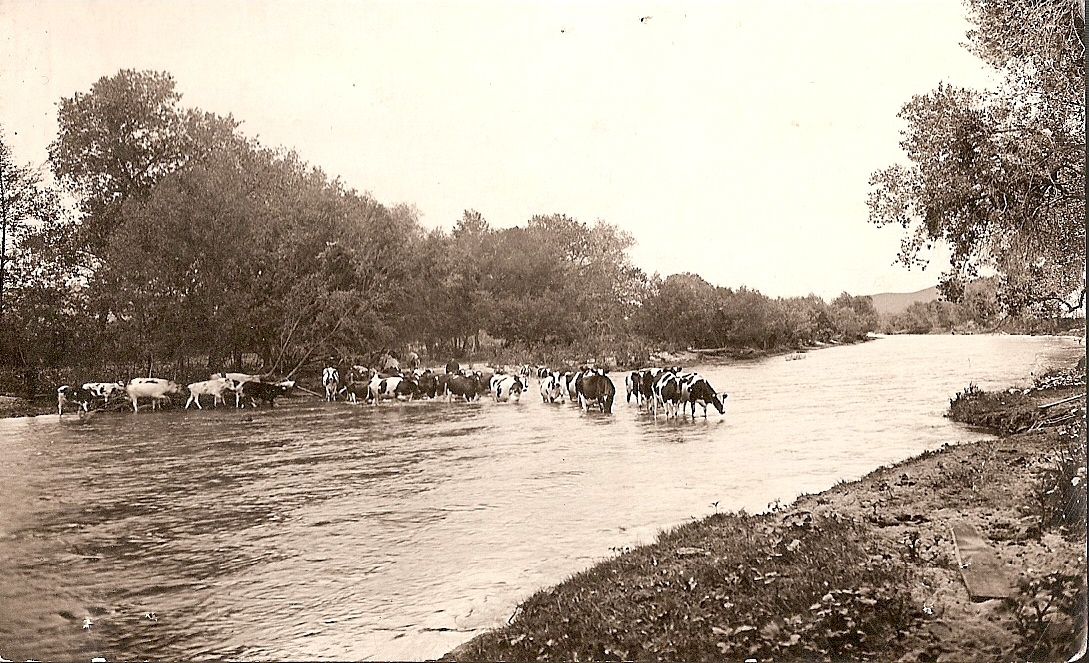
By 1910 they had moved on to San Diego County where they had established a dairy farm near Lakeside.

1915 Eleanor: Lakeside Farm – Caption – Our ranch where Bud and I grew up for ten years

1912 – Lakeside- From Right Mrs Gaston, Nellie Coleman Shaw, Eleanor, Howard Shaw (Bowsie), Buddy, Dorothy De Gaston

The flood of 1916 washed everything they owned down the San Diego River.

1915- Cows Crossing San Diego River Lakeside Ranch

Everet Miner Writing Project-

When I first met them they were Mama and Pop, Eleanor’s name for them. Nellie was a dear , fey, optimistic, loving person.  When I knew grandmother, and I am sure all of her life, she believed that she abided in a universe of pure love. Some would have said she was unworldly, perhaps even fey, but few would have criticized her unfailing optimistic view of the world. I don’t think she had a bad word to say about anyone or anything. She particularly liked me. I remember cringing when she called me ”precious“. Remembering now, it makes me smile. Pop was kind, gentle and unworldly. All this is a great deal more interesting to me now (3/4/2003) than it was when I had them or my mother around to ask about the details. She was proud of the fact that her family had been in North America well before the Revolutiobary War and that she was entitled to be a member of the DAR, although she had no intention of actualy joining. Family members had done extensive work on the family’s geneology, none of which was of interst to me at the time

1929 – Mama and Popa

Children

2. Bud Shaw 

Bud’s wife Betty Botkins was born 16 Aug 1905 in Randolph County, Indiana. Her parents were Thomas Botkins (1876 – 1932)  and Clara A West (26 Nov 1875 Indiana – 24 Apr 1969 San Diego, Calif.). Her parents were married 20 Mar 1901 in Delaware County, Indiana. In the 1910 census Thomas was the propriator of a dye works in Muncie, Indiana while his father Addison was a partner in a moving picture show.  In the 1920 census, Betty (who went by Mabel at the time) was living with her parents in San Diego where her father worked as an automobile tire training agent.  Her grandfather Addison Botkins lived next door and also worked as an automobile tire training agent.  In the 1930 census, Betty  a Bookkeeper in a Shoe Store was living with her mother who owned a Variety Shop in San Diego and sister Dorothea.   Betty died 16 Apr 1987 in San Diego, Calif.

“Buddy” or “Bud” Shaw attended the University of Oregon in Eugene, Oregon, like FE Miner, where he graduated with a degree in architecture.  Bud married Betty Jean Botkin 2 Aug 1935 San Diego CA

Bud’s Wedding – Ernie, Buddy, Betty, Ruth (Bettys sis)

Bud went to work for Frank Hope where he continued to work until his 80’s. Howard Irwin Shaw Jr. was an architect in San Diego.

Pine Valley – Bud, Betty, Eleanor, Everett Jr

Bud, Betty, F.E Miner. and EHM

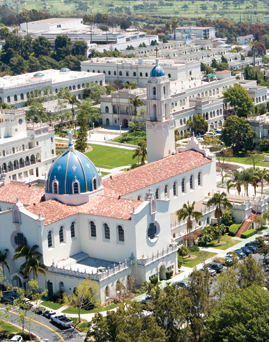
The University of San Diego Campus was a long term project for Frank Hope and Buddy.  Bud designed many buildings on the campus.

University of San Diego

On September 30, 2011, the University of San Diego was named one of the ten most beautiful college campuses by Slate Magazine.

Some campuses are an amalgam of styles; the University of San Diego sticks to just one, and what a glorious one it has chosen—the Spanish Renaissance, with its elaborate façades, delicate ironwork, and carved woodwork. Ocean views and palm-tree-lined courtyards only add to the paradise-on-campus appeal.

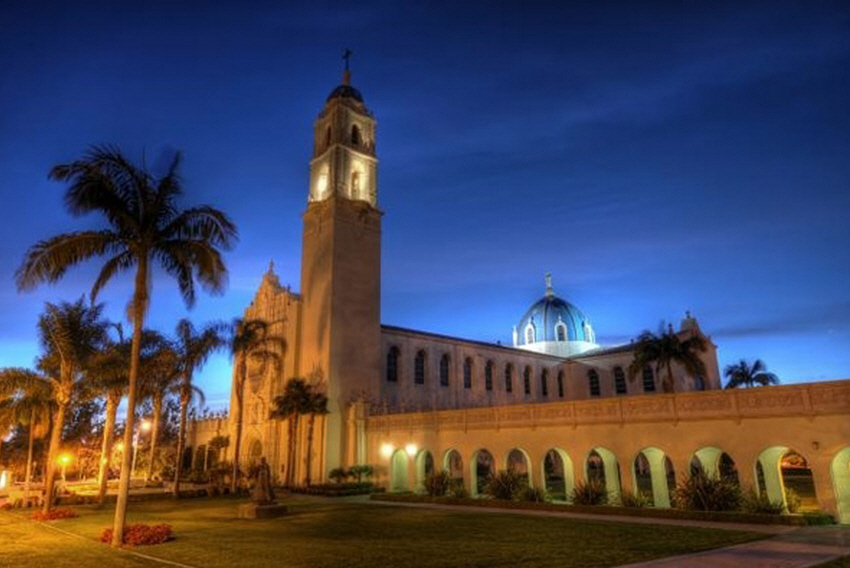
Photo-op: The Immaculata Chapel, with its piercingly blue dome, visible from much of the city.

To-Do List: A walk around the Garden of the Sea, behind the Joan B. Kroc Institute for Peace & Justice, and its serene reflecting pool and gardens overlooking Mission Bay and the Pacific Ocean.

USD – The Immaculata Chapel

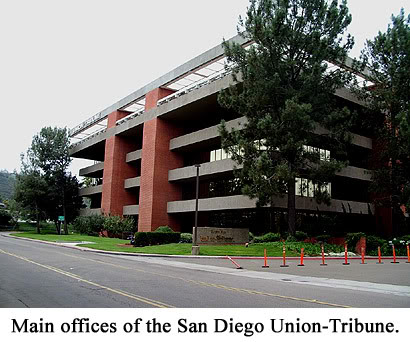
One of Bud’s last projects was the design of the San Diego Union Tribune building in Mission Valley

San Diego Union Tribune Building

Howard and Betty

Sources:

http://wc.rootsweb.ancestry.com/cgi-bin/igm.cgi?op=GET&db=janbotkin&id=I16209

Posted in -4th Generation, College Graduate, Line - Shaw, Storied | Tagged , | 11 Comments

Mark Everett Miner

Mark Everett MINER was born in 1959 in San Diego California. His father was Everton MINER and his mother was Nancy BLAIR.  He married Guadalupe Villia Velazquez Osnaya in  1986.

2014-12-04 16.24.18

Guadalupe Villa Velazquez Osnaya was born in 1960 in Mexico City, Mexico.  She moved to the United States in 1980 and became a citizen in 1987.

Children:

Name Born Married
1. Alexander Edward Miner 1988
Oakland CA

Facebook

Mark and Socorro - Valentine's 2015 Rose Garden, Berkeley, CA

Mark and Socorro – Valentine’s 2015
Rose Garden, Berkeley, CA

Mark

Mark, Robbie and Ryder

Mark, Robbie and Ryder

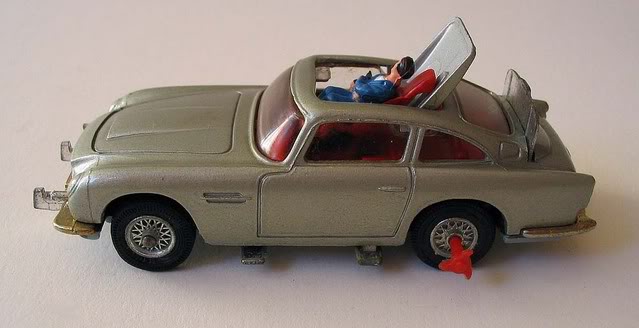
Saw Skyfall last night, one of the best Bonds yet. When Bond opened his storage locker, the audience gasped. I whispered to Socorro, “that was my favorite toy of all time” – 1964 Aston Martin DB5! Two of my toy’s features were used in the film, the ejector seat for witty repartee with “M” and the front bumper machine guns were put to effective use on the Scottish moor. No sign of the rear bullet proof shield or the hub and spoke knives (I don’t think my car had this last feature) Happy 50th James!

1964 Corgi Aston Martin DB5

Posted in -1st Generation, College Graduate, Immigrant - North America, Line - Miner, Public Office | Tagged | 22 Comments

Everton Harvey Miner

Everton Harvey MINER born in 1929 in El Centro California.  Family legend states that the doctor who delivered him lost everything a few days later in the stock market crash.  His parents were  Fay Everett MINER and  Eleanor Coleman SHAW.  He married Nancy BLAIR in 1951 at the age of 21.

Everett Miner 1947

Nancy Blair was born in 1930.    Her parents were  Horace Horton BLAIR and was Genevieve MILLER.

Nancy Blair Miner 1948

Children of Everett and Nancy:

Name Born Married
1. Mark Everett MINER 1959
San Diego, CA
Guadalupe VILLA VELAZQUEZ Osnaya
1986
Saucelito CA
2. Ellen Genevieve Miner 1963
San Diego
Scott Perry
1997
Seattle WA
3. Janet Eleanor Miner 1963
San Diego

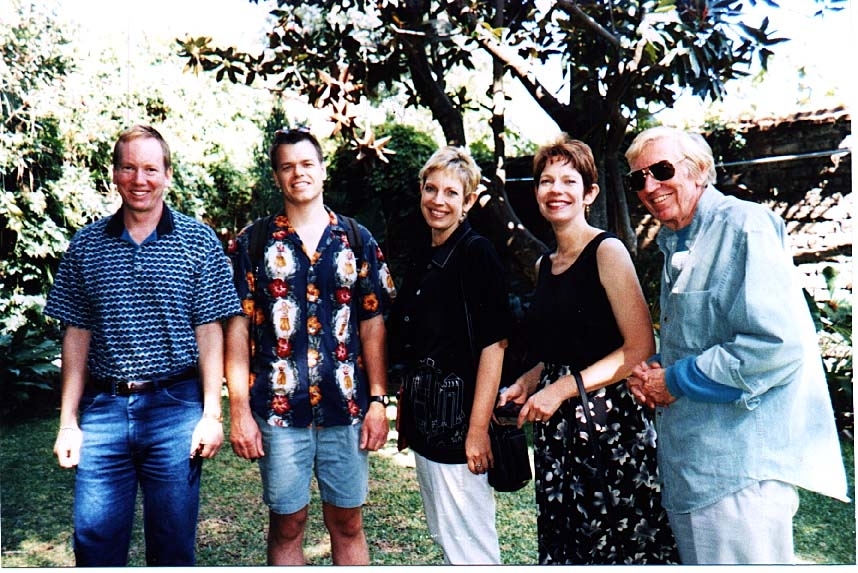
1999 Everett + Mark = 110, You Do the Math –  Mark, Scott, Janet, Ellen, Everett

2008 – Everett, Nancy, Ellen, Mark

Everett was named after his father, Everett, and his father’s father, Harvey.  He was never called Everton, the name on his birth certificate or even Everett when he was growing up.  He was Sonny!

Sonny

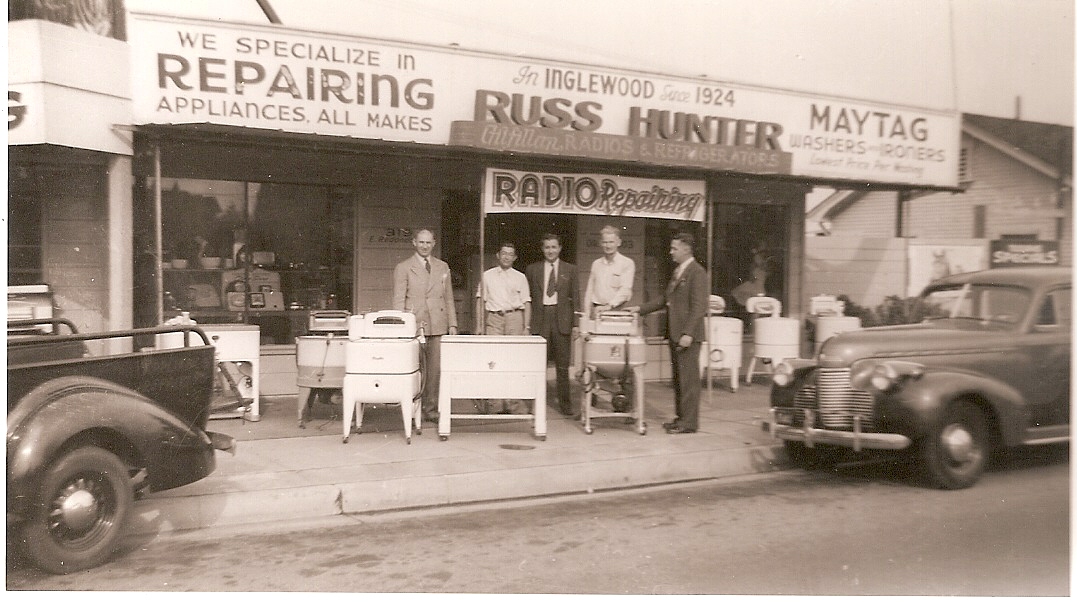
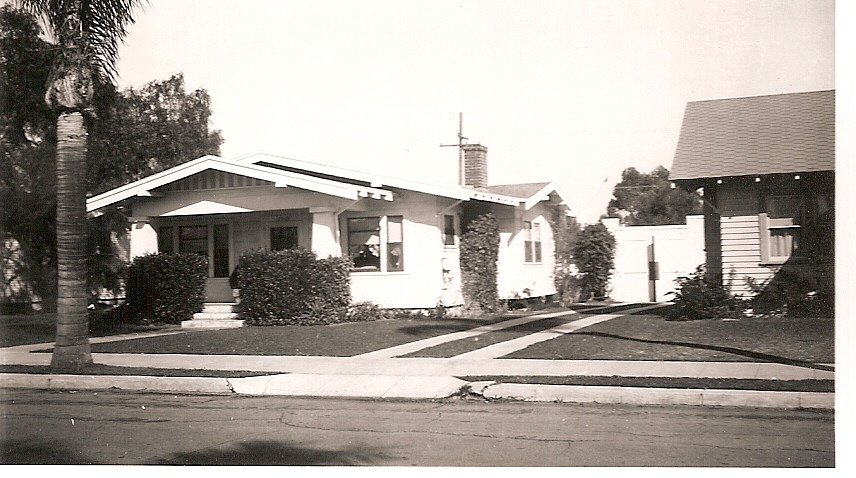
When Everett’s dad got the Maytag job, he rented a small cottage in Inglewood from a local Dentist. Two Bedroom and One Bath, Dining Room, Kitchen, and as Mother gloated, “a sunken Living room”  6″ lower than the adjoining hallway. The best part, as far as Everett was concerned was that the property included another lot to the east, vacant but landscaped with lawn, fruit trees, and space for a fort. There was a detached 1-1/2 car garage and a rear yard lined on the west with mature popular tress that managed to plug the sewer line every couple of years.  The lawn area on the adjacent lot was the neighborhood playground, acting as a football field, baseball diamond, and spear throwing area. (There was a stand of papyrus that offered plenty of spears. Mother hated that part)

Inglewood – Double Lot – Slattery’s house and our garden

The best days that Everett can remember occurred one winter when the rains came. Los Angeles had not yet installed it’s massive flood control channels, featured in Si-Fi movies for years. The rains came and the streets for miles around our home were flooded above the tops of the curbs.  The kids located flat bottomed vessels and coasted up and down the street, punting and yelling like crazy. The adults didn’t find the same joy that we did.

Several summers he traveled by train to San Diego to live in his grandparents’ house on the corner of 29th and Redwood and to become gainfully employed at the building materials business that H.L. managed. Initially doing janitorial chores, but later through High School and College as a Plumbing Apprentice.

1945 – Everett, Eleanor and Sonny – 2929 29th Street, San Diego

When Everett’s family returned to San Diego he attended San Diego High School all three years, 1945-1947. It was the same high school both his parents had attended 30 years earlier, but much bigger now. In fact it was very large with over 1,000 in my graduation class. So large that the school fielded two teams for their conference games during WWII. They would finish 1 and 2 at season’s end. High numbers meant a lot of talent on the field and off.

Band

1946

Everett and Dad

With such a large pool you might expect to have some standouts including the founder of Trader Joe’s   Joe Coulombe and the wife of William Rehnquist, Natalie Cornell. Everett joined with a group of 20 or so to form an illegal social club called “The Sheiks“, an off shoot of a Hi-Y school group. All but one attended college, and most graduated. Two doctors, one lawyer-engineer, and many other professionals. The one who didn’t was already a professional bowler and he made that his career.

High School

Nancy Sailing

Nancy Over the Shoulder

1948 – That Girl Again

At the Beach

Theta Chi Brothers on the way to the football game A frosh bennie it was, even though Everett was a Soph at the time. His Dad was wearing his Univ of Oregon beanie many many years later and shaved with it on.

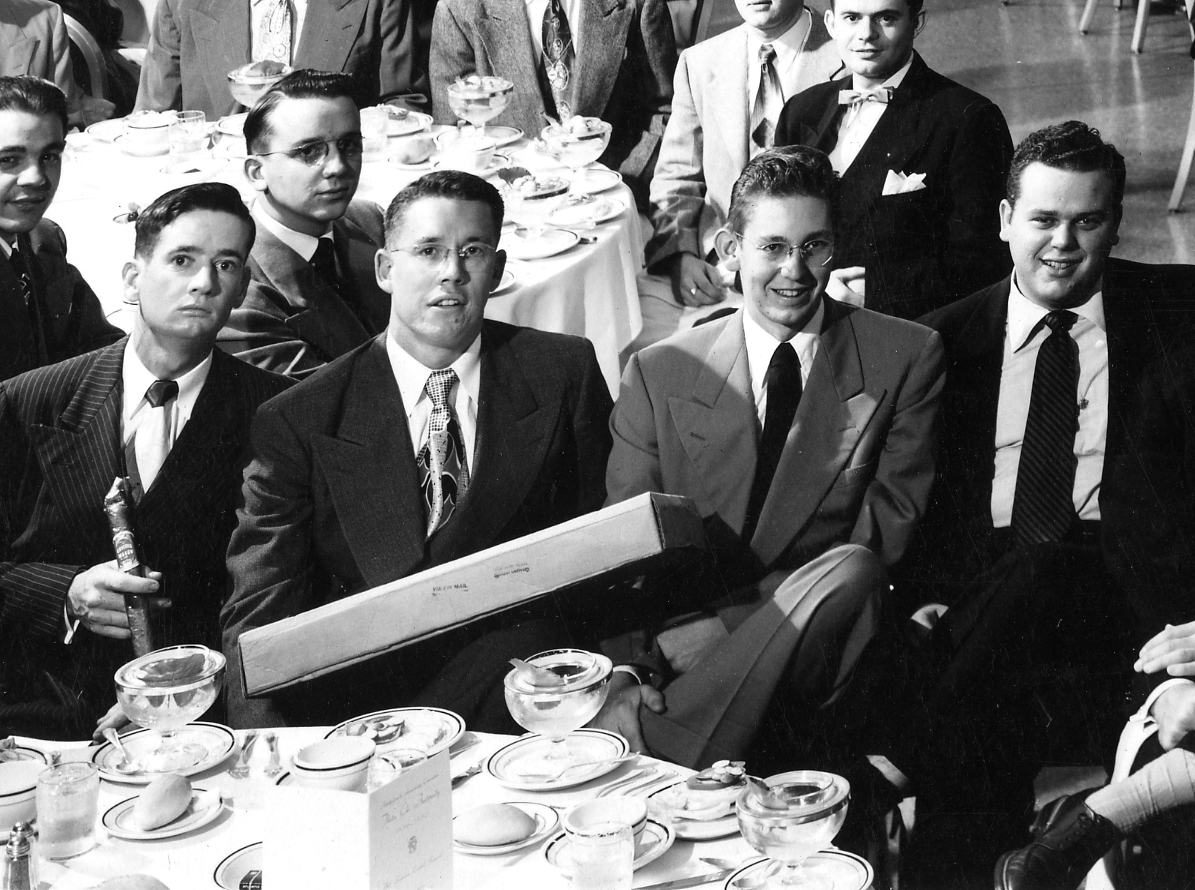
Theta Chi Founders Day Celebration Spring 1950 -  Bill with the box is the fraternity president. We will be Japan serving in the Army (Sasabo) concentrating on not crossing over to Korea. Our trip across the US waits for the summer. Nancy an I plan to marry in the coming January. If you couldn't tell, that's me in the light tan double breasted coat. I would graduate, work briefly for Sear's and be drafted into the Army a year after that. (Marriage tat is.) I would be in the Army nearly three years. I did not know then, or event suspect, what was just ahead, coming down the road. More white swans than black, but they are hard to identify when they first fly in.

Theta Chi Founders Day Celebration Spring 1950 – Bill Power with the box is the fraternity president.   Bill will be Japan serving in the Army (Sasabo) concentrating on not crossing over to Korea.  Everett and Bill’s trip across the US waits for the summer, and Everett’s and Nancy’s  wedding in the coming January.  Everett is to Bill’s left  in the light tan double breasted coat, would graduate, work briefly for Sear’s and be drafted into the Army a year after that.   He would be in the Army nearly three years.   He did not know then, or event suspect, what was just ahead, coming down the road. More white swans than black, but they are hard to identify when they first fly in.

.

Everett and Nancy

Dad’s Army Story
Situation in January of 1952
I graduated and my Selective Service deferment ended.
My Selective Service ranking was 1A
I had been accepted to Graduate School but doubted it world result in deferment.
I was Married and have been for 12 months, but that didn’t cut mustard with SS.
Hot Stuff was going on in the Far East Command. (FECOM)
Calculation of the odds of being drafted; 80-90%. Margin of error 2%.
The USN did not want short sighted Ensigns.

So I chose to Work and Wait.

Aside : An anxious waiting.

“Cut my orders” as in “we will make a stencil” so we can have a bunch of copies. I couldn’t just Cut out and ignore them. Actually, I thought of myself as a Cut above all that , but they were prepared to Cut me into the deal. I did not feel myself Cut out for the military, but better suited for the Cut throat competition of the business world. I looked for a short Cut out but found Cutting through the red tape daunting.

When I reported they told me they were not interested in Cut ups. It would not be a Cut away coat they would dress me in. I was cut to the quick. I viewed it as the unkindest Cut of all. Later they promised that if they liked the Cut of my Jib, they would promote me. It didn’t matter whether I chose to fish or Cut bait, to Cut to the heart of the matter I was just to Cut across any obstacles and Cut to the chase.”

I wasn’t willing to Cut corners, even if it might lead to my being Cut loose.

It Only took them 3 more months (April) to cut my orders and induct me with instructions to report to Fort Ord California (Monterey Peninsula)

TRAINEE INFANTRY
Fort Ord, California, alongside Monterey Bay, in the coastal fog belt, Vacation Land USA, soon to be homeland of the Monterey Jazz festival.

I didn’t expect I would be there for long. Predicting the future is ify. Basic Training went on forever it seemed, but it was probably only 16 weeks. Company I, 20th Infantry Regiment, contained three distinct groups of recruits who composed our unit.. One-Third were college graduates who had lost their exemptions, One-third Mormon boys who had probably joined up thinking they could get their missionary duties behind them and one-third African Americans from deep southern states. We segregated ourselves. It was 1952.

I finished that phase of the training knowing two things. Nearly all of us were bound immediately for FECOM and that there was nothing I had been trained to do that I much wanted to be associated with. There was an option, though not much of one.

Surprise. I didn’t go to FECOM along with the 68% who did and the 30% who went to Cooks and Bakers School” or “Truck Driver’s School”. I stayed to attend Leadership School where they would prepare me to be a squad leader.

Leadership school only lasted 6 weeks, but every little bit helps if you are working on a delay.. There would be another short leave at the end which get me home for another visit. An new option was offered near the end of that training. I could apply for OCS, “Officer Candidate School.” My expectations for that were low, I was still short sighted and was not hoping for a commission which would include more duty years. On a whim I applied, took another physical, was vetted by a board of review where I responded smartly, and was assigned Cadre duty with a training company while I waited any result. I mostly lead PT exercises. Any delay for FECOM was good. I was at Ord for a year.

Your wondering about the missing 2% unaccounted for. A few lucky recruits, with very special talents got other assignments. A friend from Basic, Leigh Weiner (wiki), was one such. Not because he was a College graduate which he was, but because he was a photographic stringer with the LA Times who had managed to win a Pulitzer prize for a picture he had taken. Leigh was assigned to be the official photographer for the Commanding General, Sixth Army, and he drove his Cadillac home to Beverly Hills on many weekends. Every now and then I got a ride.

Surprise Number 2. I wasn’t going to FECOM along with everyone else after all, but to Oklahoma, where I would given the opportunity to compete for a commission.

FALL 1951

When I finished Basic Training at Fort Ord assignment to the Far East Command seemed a sure thing. Infantry Private Miner would be going along with all the rest of his training company. however, I wanted to avoid Korea.

I chose to continue my training and signed up for a Leadership School. I was delaying the inevitable. I found I could apply for Officers Candidate School, and hopefully made my application. When asked which branch I would prefer I checked off a couple of non-combat branches. I took yet another physical, had my eyes retested, and was vetted by three officers who seemed interested in my understanding of world affairs. While I waited around to hear what the Pentagon would decide After Leadership School I was assigned as a cadre in a basic training company. Time slipped by.

The following March I got orders to Fort Sill, Oklahoma where I would be a Candidate in Officers Training School.. Fort Sill is all about artillery. Artillery is a combat arm but beggars should not be choosey. I didn’t see clearly that I was about to undertake one of my life’s more difficult of tasks.

SPRING 1952 – TRAINEE ARTILLERY

There are but two seasons in Lawton, Winter and Summer. I experienced 24 weeks of Summer less 1 day of Winter and I must admit one half day, the first, that felt Springlike. It was hot stuff and so were we, at least those of us who stood it. Over 100 degrees every day and most of the night too.

The 24 Weeks were composed of 2 weeks called hell weeks that did not include classes but were tacked on to begin the culling operation. Then 22 weeks of training, with the last four weeks as an upperclassman providing you were still around. We had a very large group to begin with. Four two story barracks full. Two barracks were designated Dog Battery 1, the other Dog Battery 2. I am guessing that we began with 128 candidates. There were a lot of resignations during hell weeks.

Then it began. Following six hours of sleep, we had 10 minutes to roll out of the sack, shower, shave, dress, and show up proudly in formation in front of the barracks, and we better look sharp.. Classes morning and afternoon when we were not exercising, marching around, or standing ridgedly at attention, chins tucked in, answering soul search questions fired from the mouths of three or more Tac officers. What could be better than that. The program kept us busy until lights out and a restful six hours of sleep before we could begin it all again.

Each of us was eventually selected for a mass public verbal hazing. I was lucky when they chose me while I was directing the battery in PT (Physical Training). They didn’t know I had experienced a lot of that at Fort Ord, and I appeared unruffled by the taunts. The reality was I was plenty ruffled, but they failed to recognize it and I was left alone from then on. Many of the other candidates ruffled.

They did have something special for me though, As the size of the Battery dwindled, I think during the 10th week, I was sent to Battery Headquarters for an interview with the Battery Commander. Capt. Shore, a very nice guy who informed me that my eyesight was 400/20, which I already knew. The Navy had told me that. And I had done a physical for them before I had been accepted, so I figured they knew that too. The Captain explained that forward observers were supposed to see clearly without glasses. I could not receive a commission in the Artillery, which was what the school was all about. I thought thanks a lot for 12 lousy weeks, but didn’t say it.

There was a choice. I could resign honorably or I could stay around and see if someone in the Pentagon would grant me a waiver. He didn’t think there was much chance but he said I could stay on until they decided. I opted to gut it out. It was an anxious time for the final 12 weeks.

Those who would finish the ordeal would be Forward Observers assigned to units on the line in Korea, so we had a lot of gunnery practice. The staff made sure that each of us failed at least one firing mission. I was the last in my class to fail. Not knowing the gun position I was sure if I made the proper range adjustment I would drop a round on the bunker we were hunkered down in. and In order to save us all I failed. No one cheered.

Why we were in constant hilarious merriment during that time I can not explain. Exhaustion? Lack of hope? Too much hope? Who can say. Attrition continued as more of us were asked to resign.

In the final four weeks we were elevated to upper classmen and were expected to run about harassing new candidates from other batteries. Yuk. I was the Candidate Battery Commander for a week and led the troops on our Friday afternoon parade review with band. I admit it. I really did like that part. By golly, we were a sharp looking group, even though we were looking diminished in numbers.

In the last weeks of training my wife drove from San Diego to Lawton and joined me. I got my second pass to go off base and we rented a one car garage for the duration of my stay, however long that would be. Two days before graduation I was told I would graduate with the other 36 survivors (28%). Although I was a top gun with a howitzer 105, I was getting a commission in Army Ordnance. The guys in my barrack are still wondering why I had been so up tight for the past 10 weeks. I never told them. I think it snowed the day I left Lawton.

Dog Battery occupied a two story barracks that initially housed 60 or so candidates. I was on the second floor, North Side, and Haynes Johnson (wiki) had the bunk next to mine. He was a New Yorker but had just graduated in Journalism from a school in Missouri. Father was a newspaper man and had won a Pulitzer feor coverage of the longshoremens union. On graduation day, after 24 weeks of abuse, there were only 4 of us left on our floor. I suppose Haynes and one other guy was off to Korea to perform as a forward observer. Burke, the fourth kid from Boston, was rather elegant and very good looking was going to be the aid to a General somewhere.

I got orders for Maryland, Aberdeen Proving Grounds, while the other graduates got orders to FECOM. So ended the most difficult, harrowing, anxious, and downright outrageously funny time of my life. Having done it, I figured I could do most anything. It was overconfidence, but it made me feel good if not brave.

Ay the last possible minute I had been elevated, photographed for the yearbook, (it seemed like a year), and fitted for my dress uniform. That was to be the only tailored coat I ever owned and I looked trim. There was a graduation ceremony, and a brief farewell. My former take hone pay had been 40.00, with monthly laundry expense of 44.00. My value was increased to 345.00 per month so I bought a new car.

The Mercury convertible that had been my fathers was dead and we traded it in on a new two-tone Mercury sedan in Lawton. We drove home to celebrate before reporting to new assignment in Maryland. More driving.

Car History Bought Volkswagen in Germany 9/54 Traded in Mercury Sedan and Bought Mercury Station Wagon 2nd Hand Sold Volkswagen and Bought Ford Mustang Bought Rambler Station Wagon Sold Mustang to Ted Craddock and Leased w/Company BMW 2002 Sold Mercury Station Wagon and Bought 2nd Hand Audi Sedan Sold BMW 2002 to Mark and Leased w/Company Mazda RX-7 Sold Audi to Ellen Sold RX-7 to Dorothy Oberlies and Bought Acura Integra Sold Acura to Mark

After a two week leave I was to report in Maryland. That meant a lot of driving first, Lawton to San Diego, and then San Diego via Highway 40 all across the country again to the Aberdeen Proving Grounds where I supposed they would A-Prove me. Officers got to take their wives along, the first perk.
The course I was scheduled to take, Ammunition Supply 1A, didn’t start for a couple of months so they found something to keep me busy, but not very. I was the Battalion mess officer in charge of the family Thanksgiving bash put on by the Battalion. We will now stand up and give three cheers for the mess Sergeant. And then three cheers more.

The Senator from Minnesota, loathsome McCarthy, was bashing the Army on TV and we gathered in the officers club to roundly condemn him. He remained unfazed. Who did he think the patriots were?

Nancy and I rented the upper floor of a two unit duplex from a lawyer in Haver de Graf who apparently owned well over a hundred rentals. We saw him every two weeks when on Saturdays he came to the door to collect the rent. In person. Two weeks at a time results in even bigger bucks than a monthly rate. This was our first winter. We didn’t know that the laundry hanging on the line froze solid. We made life time friends with the couple down stairs, timidly offering to share our tinsel at Christmas time. We were gone before Spring.

Surprise 4. I got orders for Germany while every single other graduate from the Ammunition School went off to the Far East. They were still shooting in Korea. I was embarking on another cross country drive, back to San Diego. Next, a plane to New Jersey’s Camp Kilmer. I was making a collection of Army Posts.

ETO BOUND
At Camp Kilmer I got my first look at a Volkswagon some officer was bring home with him. They would not be officially imported for several more years. I thought ugly, ridiculous, and could not understand why the owner would want it.

I should mention that it was then, in New Jersey, that I experienced my first real spring.

Junior, junior officers get to do fun stuff. I was the pay officer for all the troops bound for Europe. That took an extra couple of weeks. I was careful with their money, but somehow I found I had twenty dollars left over. One of the guys, one of several thousand, had been short changed. What would you do? That guy probably needed it more than I. I could post a notice on the bulletin board. Then of couse I could hang around a few more months answering questions about how I screwed up.

They flew me over, apparently anxious to get me started after two years of training. Understandable, no? Idlewild to Frankfort via Goose Bay and Shannon on board a C-57 loaded with dependents who each required a minimum of one child under the age of 2.
Then by train, Frankfort to Kaiserslaughtern in the South were my Ordinance Ammunition Battalion headquartered. My luck was holding. In spite of the fact that at lest six other young officers wanted it, I got it. Perhaps the Battalion commander wanted to keep those other guys around. Those guys wanted to get away from Battalion Headquarters, Who could blame them.

Germany was deeply into seasons, for me at least, a sparkling wonderful Springtime. The jeep ride to my new assignment was glorious. It would be a long time before I got another taste of it.

WILDFLECKEN
What did I get, you ask? I was off by Jeep to Wildflecken, Bavaria and my first command, Ammunition Supply Point #103. Well it was a detachment with a detachment attached. I would be 300 miles from my superiors which would be convenient because the Army telephone system was so good that opening the window and shouting was the best way to communicate. Yes, Sir. Right away, Sir.

Wildflecken had been an secret SS training area that went undetected by the allies during the war. Hidden in a dense pine forest, it did not show up on aerial photos. From April 1945 to 1951, the base was a displaced persons camp housing approximately 20,000 displaced persons (DPs), primarily Poles, operated first by UNRRA, then by IRO. Much of the surrounding pine was cut down for firewood.

After 1951, its range served as a US Army training base operated by the 7th Army Training Command in Grafenwöhr,and it was home station for several U.S.Army units to include Armored, Infantry (Mech), Military Intelligence and logistical units, primarily the 373d AIB of the 19th (later 4th) Armored Group. It was converted into one of three training areas for live ammunition firing exercises. Hence the need for me and my guys.

In summer we played softball until 10:30 at night, without lights. Sometime the sun was already up when we left the Gaust house. Winter comes around more often in Germany. We were on the same Longitude as Canada’s Hudson Bay. I learned to bank the fire in the coal burning stove in my BOQ room. I found I was an efficient banker, and paid my troops without withholding. Had to appear in Würzburg packing my Army Service 45 once a month to collect the cash.

Wurtzberg, big city that it was, had a Volkswagen dealer and I had gotten used to seeing such a beast. The big American cars that our soldiers were allowed to bring over to Europe with them seemed ungainly, and the traffic accidents were very frequent. You had to pick up your vehicle in Bremerhaven, way up north, and drive it many miles to bring it into the American Zone. Almost no one made the trip without incident. Sounds like rationalization, right? After I paid the dealer 1,155 dollars, all cash, and waited six weeks, I was told I could pick up mine. The color I selected was black, the only one offered and it had a sun roof, hence the 55 dollar extra. I drove it back to the base heroically. German roads were not laid out by highway engineers, so the radius of a curve could change continuously as you maneuvered through it. I managed to make the necessary corrections.

TOP SECRET CLEARANCE
Because the Army anticipated the Russian would be coming any time soon, they were 7 miles north east, across the Czech border, we unit commanders must be fully informed about the EVACUATION PLAN. This required vetting for Top Secret classification and took several months, I suppose the FBI talked to all my friends back home. Well those they could find that were not in FECOM. 1st Lt. McCray, who commanded the attached EOD squad, had no doubt read the document already, but then he wasn’t allowed to tell me what it contained. I waited. Finally I received clearance, and was allowed to find out what my responsibility would be.

I read through the pages carefully, notified my driver to get the jeep ready, and we proceeded to make a dry run on what was to be my units escape. To say I found flaws with the plan does not explain my amazement. None of it was even remotely possible. I had two and a half ton trucks for the transport of personnel, trucks with attached cranes raising high in the air, trucks that could not follow that escape route because they would have unable to enter or later leave those walled towns with their tiny gates. Drive around the towns you say. Nope. Too much mud. Not enough time either, as the time limits imposed by the plan could not be met. Even with just the two of us in a Jeep on a slow weekday we were hours behind schedule after 30 minutes.

This episode has suggested to me that all that classified material the government keeps secret, just for those that need to know, is farcical. If the rest of us knew that stuff too we would be unable to carry on. We would be incapacitated by laughter. I am now a OPEN-SOURCE-GUY.

2016-01-08 01.22.16

The Army would not transport my wife to Germany because I did not have enough time before my seperation. Nancy came, as they say, on the economy, and we rented a flat in Bad Kissingen, a summer resort area, but it was already winter. We shared both kitchen and bathroom facilities with two other couples. The trip over to the post every morning was harrowing, and probably couldn’t have done except I had a “People’s Wagon” that traveled icey snowy cobblestone roads with ease.

2015-12-26 21.50.31

August 28, 1954 – S.S. Olympia. “Got to pier at foot of 48th St at 8:30 am, Explored the ship till she sailed at 11.

This driving trip our black Volkswagon took us down the Main and Rhine rivers to Amsterdam, the into Belgium and Ostend, and thru Luxenburg to Paris. We stayed in a hotel facing the Arch de Triumph, on the second floor with a corner room whose balcony faced the monument. Folles Bergiere Versaille Notre Dame Isle de France Louvre Returned home in a blizzard, with a stop at Nancy where we were treated well by the restaurant staff.

In the winter of 1954 my term of military duty was winding down. My exalted command went to another eager Lieutenant from Battalion Headquarters and I was re-assigned to temporary duty at Company Headquarters in Vilseck. Side note right here : My spell checked changed exalted to exhausted, which I find offensive. I changed it back.

Truth was, I had a lot of leave time accrued, and we spent it traveling. Anyway the Mess Sergeant could do just as well without me. Mess officers tend to be mere figureheads. I spent most of my days hanging out with the Executive Officer, who didn’t have much to do either. As I recall he taught me to play chess, imperfectly, and dragged me outdoors for ice fishing, which I still consider a doubtful enterprise.

In our company there was a young lieutenant whose heart was not with our Ammo Company. He longed for duty with special forces. A high risk guy, he had been a professional race car driver in the states and consoled himself with the ownership of a Porsche, which he drove with daring. I hitched a ride with him to the PX one day. The route was on a winding 10 mile road the Germans had constructed to train their truck drivers. My fellow officer was not challenged, but I was. I had no idea at all that you could do that. I can report with pride that I did not throw up.

Nancy and I spent a week checking out Bavaria, Garmish, Innsbruck, Austria, and Switzerland. Very scenic and memorable. The hotel in Zurich was indeed modest but thankfuly didn’t burn down while we were there. There are a lot of bears in Bern. We even got to join in with a wedding party in Lucerne.

A little later we had even more time, and traveled up through Germany to the Low Countries, First Holland, Amsterdam and Rotterdam, where we found the first Europeans how were really fond of Americans. That was a treat after Germany, where we were invaders. Onward to Belgium where our welcome was somewhat muted. Brussels, Bruges, Oostende. Then and on to Paris.

In Paris we found a hotel on one corner of the Arc de Triomphe and we got a corner room on the second floor which had a small balcony. When we returned from diner the Arc was beautifully lit from all sides. What a picture! I set my Leica on its tripod, composed, adjusted the aperture and shutter speed after a careful analysis, pressed the shutter cautiously and the lights went out. What? No picture? Did I do that? I waited. Bummer.

The lights did not come back on. It was months later that I learned that the French has a coin operated monument. Put a coin in and you got so many minutes of lighting. It was only last week that I learned that access to the Arc was an underground passageway bypassing the six lane traffic circle that surrounded it. I’ll tell you about that in a minute.

We met for lunch with a State Department guy who was a friend of a friend. I mentioned the traffic circle, which seemed busy. He said, “Tell me about it. One of the guys he worked with was really upset by the French drivers, and since he had found a place to rent in the suburbs he had to deal with them twice a day. He thought they were just terrible, aggressive and reckless. What really bothered him was that it worked for them. Finally, on a night he maxed out on frustration he decided to do it their way. He sped forward, charging the lights, weaving through traffic to gain advantage. He was making excellent progress and enjoying cutting off the opposition when he noted a Frenchman following his every move. He was passing through signals that had already changed to red but the guy stayed with him. Finally, the light changed half a block before he got there, and the guy behind him pulled up beside him shaking his first. He rolled down the window to see if he might need to apologize. He could hear the guy shouting. He was saying ”MAG-NI-FIC, “MAGNIFIC“ and smiling.

We did the Folles Bergere, Notre Dame, Left Bank, the Louve. that stuff. It was cold and we did not dine outdoors on the sidewalk. We did not find the Parisians friendly. My children found them friendly twenty five years later but then they were there in the summer and perhaps the French had gotten over it by then. Maybe they were probably cold too,

We left in the late morning headed back toward Nancy. When we arrived at dusk we were starving and cold, and the restaurants were not open yet. We stood forlornly, collecting the snow flakes, and looking in the window of one that was serving diner to their staff before opening. When the proprietor saw us he took pity and allowed us into his warmth and served us one of my favorite all time meals. Those were real french fries

We I got back to Company Headquarters with a sigh of relief. We had charged through the night not much enjoying the blizzard. I told the Exec about lights out at the Arc. He said he knew about the Arc. Seems he had been a Sergeant in France right after WWII, and had been sent into Paris to bring back something or other. They drove their two and a half right into town and on to the circle around the Arc. Six lanes and eight intersecting side streets. Seems traffic was entering the circle from every side street and his driver was forced to move over left to avoid the aggressors. They couldn’t get out and were forced to the most inside of the lanes where they circled fruitlessly until they ran out of gas. Abandoning the truck, they hitch hiked back to their base where they explained that the truck had been stolen.

When equipment comes up missing in the Army someone must take responsibility. Someone should pay or have the responsibility officially forgiven. Forgiveness comes when the item is ”Surveyed“ off the books. They seldom survey a truck except following battle, but perhaps they considered traffic in Paris something of a war. Earlier I had had to survey a box of VT fuses which were worth only slightly less than a truck and much much more than my monthly salary. Hurray for survey.

My tour of duty was coming to an end and after a couple of months reassigned to Vilseck, Company Headquarters, to do mostly nothing, Nancy and I were sent to Bremmerhaven and U.S.N.S. General Maurice Rose to take home to New York. The cruise home was memorable for several reasons. My first one. (Nancy’s second.) We encountered ferocious Spring storms all across the Atlantic. And I was appointed Captain (of the head).
Above decks were 400 dependents and we dined together in an elegant dining hall. The food was terrific of course, and we were assigned permanent seats at a table for six. At the head of our table was a Major of transportation named Boatwright and his feisty Cherokee wife. He required, while we still in port, that we each promise on our honor to make it to each and every meal no matter what.

On the second day out we found our six alone at the dinner table as everyone else was busy being sick. In a couple of days a few others staggered back for a meal, but we six prevailed because we had promised the major.

Below decks, where my duties took me, all the troops were sick. The latrines were fore and aft where the pitching of the ship wallowing in high seas was most extreme, the ups and down were enormous. I don’t know how those guys stood it.

The Major had been stationed in France and had great stories about their training for a possible escape from an imagined Russian invasion. His five foot tall wife aboard a gigantic farm horse and armed with an army issue 45 caliber pistol racing across the countryside is a memorable image. We correspond with these couples for several years. Discharge from U.S. Army at the battery in New York City.

Post War 1950’s

After the army, Everett began work as a counterman, standing behind a U-shaped counter that customers approached to explain what they wanted. He had worked in a Sear’s Paint Department while waiting to enter the Army and was on firm ground there. He knew a bit about plumbing too as a result of many summers as an apprentice. The rest was a mystery to be deconstructed. Sash and Doors… what? Lumber, hardware, wallboard, cement. Do you have any idea how many possible questions can be asked about these products?

So he learned the answers, moved on to store manager, and near the end, manager of all the branches while understudying the Manager of the purchasing department. During this time he also bought a lot on Panorama Drive in La Mesa, had plans drawn by a fraternity brother for a house I couldn’t finance, sold it and bought another lot that I could finance, and built house designed by a high school buddy.

Dad and Dottie

Fractal Ev

Source:

Everett Miner Writing Project

2015-12-25 14.02.24.jpg

Nancy Snowmobiles through Yellowstone – 1997


“Here I am all suited up ready to go.  The corner of the building was our very cozy cabin.  Note the icicles was cold!   I’m wearing Ellen’s ski mask over my nose and mouth.  The faceguard of the helmet is still pushed up.   Our gear is packed into the saddlebag laid across the back seat.”


Posted in -2nd Generation, College Graduate, Line - Miner, Twins, Veteran | Tagged | 13 Comments

Fay Everett Miner

Fay Everett MINER (1900 – 1982) was Alex’s Great Grandfather, one of 4 in this generation.

Fay Everett Miner was born  19 Jun 1900  in Santa Ana California.  He didn’t like the name “Fay” (who would?) and  went by Everett or his initials F. E.  His parents were Harvey Latta MINER and Cora McCAW. He married Eleanor Coleman SHAW on 30 Aug 1923 in San Diego, California.  Everett died on 6 Oct 1982 in San Diego, California at the age of 82.

F E Miner 1920’s

Eleanor Coleman Shaw was born 12 Jan 1900 in Gilt Edge Montana.  Gilt Edge is now a ghost town (See my post Western Pioneers).   Her parents were Howard Irwin SHAW and Nellie Webber COLEMAN.  Eleanor died 17 Sep 1982 in San Diego, California at the age of 82.

1922 Caption: Guess

1922 – Eleanor

Children:

Name Born Married
1. Evereton Harvey Miner Oct 1929
El Centro, California
Nancy Blair
28 Jan 1951 San Diego

Everett Miner was born in 1900 in Santa Ann, California. There were very few native born Californians then. He had an older brother, Glenn, who I suppose he never much got along with. They relocated to Long Beach for a time, but moved to San Diego around the time he was 12 years old.

Everett seldom showed his feelings to anyone. He was withdrawn and private.   He was a gentle man, athletic, like his father quick witted, and people liked him. I suppose his frustration was turned inward and directed at himself. He acted-out passive-aggressively, like the big dog, paws on your shoulders, licking your face, peeing on your leg. He would buy a sporty car that he knew his father would disapprove of, leave the family firm to work for another company, or build a big home for himself against his father’s advice.

1920 – U of Oregon – Everett

He was tall, for his time, good looking and a fine athlete.  His son, also Everett. still has a key chain size gold basketball that was awarded to him as a member of a championship basketball team. He attended Oregon University on a scholarship to play basketball. He loved motorcycles and cars. He was very quick whited and smart, like his father.

F. E. Miner

He married Eleanor when he was 24-25. She was a month younger. I know nothing of there courtship, where and how they met, nor what was going on with him at the time.

1923 – North Park SD – Eleanor and Everett’s First House

Louise and Curtis Gorham, Everett

Photo Caption: San Diego, California

It seems certain that he went to work for his dad’s firm, and that very soon the moved to El Centro, California where he was installed as the store manager of a company branch. The Imperial Valley was booming with the water from the All American Canal, water from the Colorado. This was before agribusiness bought up all the small farms. Imperial County was booming then, growing over 200% in the teens and 40% more in the 1920’s.

Eleanor and Everett 1924

Everett and Eleanor

Eleanor lost her first pregnancy, and she may have blamed it on the heat and dust of of the desert. Her subsequent pregnancy was Everett (known as Sonny until he was old enough to say he didn’t like it any more)  Everett Sr was president of the Lion’s Club when Sonny was four, and that suggests that he had no trouble making friends, socializing and perhaps a little politics. He was no introvert, but his son always thought of him as a bit shy. In any case, people liked him.

1930 – El Centro House Sandalwood Drive- Designed by Bud

El Centro House

Photo Caption: 1931 – January – E and E’s House

You need to remember that in the 1930’s there was no air conditioning. A few had installed “swamp-coolers” on their roofs. Water dripping on excelsior and then evaporated by a fan blowing on it blew cooler and wetter air down on the house residents.

Dec 1932 – But one time it snowed in El Centro!

Everett was successful as a manager in El Centro. Not that business was great, the great depression was in full swing. Still the irrigation canals continued to allow profitable farming. He had many friends in the Valley, rancher’s, small business owners, professional folks, and was elected the President of the local service club, The Lions.

The firm, Whiting-Mead Co., had two branches in the Imperial county, one in El Centro and the other north in Brawley. They sold everything for building, lumber, hardware, electrical, plumbing, cement and even washing machines. My Dad remembers playing with the hand cranked adding machines and smelling the fir lumber in the covered area at the back of the store, which was on the main street of the town.

In 1935 he chose to resign.  Eleanor certainly hated the heat and dust. But were there other reasons too. He liked and respected the man who offered the job with the Maytag West Coast Company, a factory rep middleman for the Iowa firm.   Ernest Hahn owned with his brother the Maytag distributorship for California south of San Luis Obispo. I think he thought the job sounded challenging and maybe fun too. I am sure he knew his decision to leave would not please his father. He took it anyway. Eleanor celebrated leaving the desert.

Inglewood Store

1936: Everett and Eleanor

Everett’s “territory was the coast of California from Redondo Beach to San Luis Obispo, that’s 210 miles on contemporary highways. He was thirty-five years old. I believe he liked everything about his new job. He was good at it. He made regular calls on each of the Maytag dealers, which required lots and lots of driving in his new Oldsmobile two door, and he liked that too. Although the depression lasted until I was eleven and we were not rich and lived in a rented house, we did not suffer economically.

1941 Photo Caption: Eleanor and Sonny and their Mike doggie at Christmas Time

Inglewood House

Inglewood – Double Lot – Slattery’s house and our garden

He build this territory into a top flight producer of sales. But…

After seven years Tojo and Hitler changed all that. Maytag Iowa became an wartime factory of whatever the government wanted, and it wasn’t ironers or washing machines. Everett, now 41, was turned down for a naval commission, and finally found work on the swing shift at Northrop Aviation, a few miles south, and he hated everything about it. He did not complain, that was not in his nature. His father and his brother visited and Eleanor knew they were in negotiation with the Los Angeles CEO of their company to buy out the portion of the business in San Diego County, 7 branch stores.

It was Eleanor’s letter to H.L. telling of Everett’s misery that eventually got an offer to rejoin the firm in San Diego. HL bought a house for our family seven houses down from his own on 29th street. Everett would be the Sales Manager of a restructured firm struggling with the lack of product to sell. The War would continue for three more years. Everett’s relationship with his brother was cool.

Without Eleanor’s letter, the family might well have remained in the Los Angeles area.  They had talked of buying a home a block off Wilshire Boulevard near Sunset.

Everett’s father, who was always called Dad by the family, bought a house at 2929 29th down the street from his, without consulting   and gifted to them when they returned to San Diego and the Whiting Mead Company.  Eleanor was not pleased and no doubt neither was Everett.

2929 29th Street

29th Street is a couple of blocks from the Municipal Golf Course, Ninth Hole. We were located between Redwood and Palm. There was an alley, and the short cut to the streetcar was out the back, down the alley past three houses, a left turn and a block and a half to 30th. There was always another car coming. Downtown in 15 minutes. Everett Jr. took it to High School for three years. It was on the streetcar, trying to make out the advertising signs posted overhead that he discovered I was very nearsighted.

The house was modest: Two Bedrooms, One Bath, Kitchen, Dining Rooms and Living Room. There was a fireplace in the Living room and a front porch.  The garage was a single detached model that never contained any of Everett’s cars.

1944 – Mar – Eleanor and Everett

Everett does not deserve all of the credit for the amazing profitability of the firm following the war. There was a lot of pent up demand for housing and the tract builder would not arrived on the scene for some time, but he assembled the staff that put together the ultimate do it your self department.  “Build your own house, we will supply all the material and guidance for you to do it. In addition we will guarantee the completion with the bank, and they will lend you the money to do it.”  The business was more profitable than anyone could have imagined.

Everett traded up, acquiring a series of Ford products from Ford sedans to Thunderbirds and finally Lincoln. No standard Buicks for him. A rebel? He bought a lot from the developer son of one of their partners, and his brother-in-law designed a quite smashing home overlooking the Pacific. His brother was aghast at his audacity. Jealous too as it turned out. Everett was having less and less contact with his father, (except at work), brother, and sister. Who did he think he was? Big cars and now a fancy house.

Everett built a beautiful house on Hill Street in Point Loma, directly above Sunset View School.  The house had beautiful patios and gardens.  And one time we saw the green flash.

2016-01-08 01.25.23

December 18, 1953 – The new Merc. in front of the new house – top (and inside) aqua – body brown

2016-01-08 01.35.31.jpg

I still have this Crown of Thorns, 40 years later

2016-01-08 01.21.33.jpg

Hill Street Rose Garden

2016-01-08 02.05.03

Hill Street Picture Window – One time we saw the green flash

When Everett Jr. returned from the army in 1953 there were 5 branch stores in the county. Rail cars of finish lumber were spotted in the street adjoining the Mill. Most of the lumber, however arrived by barge in National City and was transported by straddle carriers from there. The 50’s were the most profitable years in the company’s history. There was a great demand for new housing following the war years and the Company arranged with banks to guarantee the completion of home construction by owners. In effect the company became the contractor and all materials were supplied by the company. Tract builders came along and owners no longer needed their “sweat-equity”.

Eleanor was a delicate, petite worrier.  She had escaped to UC Berekley for one glorious college year, but her mother’s rich, caring brother died in a hunting accident and his family withdrew their financial support.

1916 -High School front – Alma Griffith back – Eleanor with the dark tie

Eleanor made this organdy dress herself and wore it when she graduated from Junior College.

She was Co-dependent, stoic in her private pain, a loving martyr and practicing Christian Scientist. She miscarried an earlier pregnancy and was overjoyed when Everett arrived.

1929 Caption: First Picture

Click on Everett’s Baby Pictures for more snaps.  She showered him with love and affection.  He says he was a very high energy child, which he believed troubled her. She found herself alone in an alien enviornment with a very active boy baby, a withdrawn husband and an ambivalent family support group.

Eleanor and Everett

Eleanor would have been happier with a girl child who she would have understood better. When Everett Jr. suffered near fatal pneumonia and then was run over by a car, her fears were in a sense realized, and she exuded anxious desperation until we left the valley.

Things weren’t always so serious though – Eleanor Laughing

In the Valley Sonny made my first friends, learned how to ride a tricycle

1933 – Halloween (tee hee)

and to read. I was called “Sonny” by everyone, and I liked that. I thought of myself as weak, powerless and fragile and I didn’t like that. Years later, when I was in College, I had diner with a playmate from the Valley. She recounted endless reminiscences of our wonderful childhood together. I remembered none of it. She was terribly disappointed in me.

1933 – Easter Deane Clemons birthday Party, Sonny on wagon

H. L. died on 12 Mar 1958 in San Diego at the age of 86. The three children would receive equal shares of his estate. Because older brother Glenn already had the next largest percentage of the partnership he would have control. There were other partners too, all of them in their sixties and looking to retirement.

Glenn demanded that Everett resign, and the brothers never spoke again. Everett Kr had no stock and was fired, but negotiated the property settlement on his father’s behalf. We received the real estate that two branch store occupied together with lease back agreements, plus cash, so economically things didn’t work out too bad for us.

More than Twenty five years later Glenn’s daughter Gwen asked Eleanor if she could bring Glenn over to see if the brother’s could makeup. Eleanor didn’t know how to say no. The Glenn who came was in the late stages of senility, didn’t know where he was, and Everett made no effort to tell him.

Posted in -3rd Generation, Line - Miner, Storied | Tagged , | 9 Comments

Harvey Latta Miner

Harvey Latta MINER (1873 – 1958)  was Alex’s Great Great Grandfather, one of 8 in this generation.

Harvey Latta Miner always went by his initials H. L. , although in the Miner family, he was just “dad”.  He  was born on 26 Jan 1873 in Rock Bluff, Cass County Nebraska.  His parents were Philo Sidney MINER Jr. and Calista Jane LATTA.  He came to California as a young man, still in his teens.  He married Cora Lorena McCAW in Oct 1895 when he was 22 years old.    H. L. died on 12 Mar 1958 in San Diego California at the age of 86.

Harvey and Cora Miner Wedding Picture

Cora McCaw was born 29 Jul 1871 in Peculiar MO.  Cora’s parents were William McCAW and Margaret A. SMITH.

July 4, 1931 – H. L., Everett, Grandma Cora

Children:

Name Born Married Departed
1. Glen Murray Miner 27 Nov 1896 California Helen Walker some years before Dad’s marriage 7 May 1987 San Diego
2. Effie Marie Miner 15 Feb 1899 Long Beach, California Philip Russell West
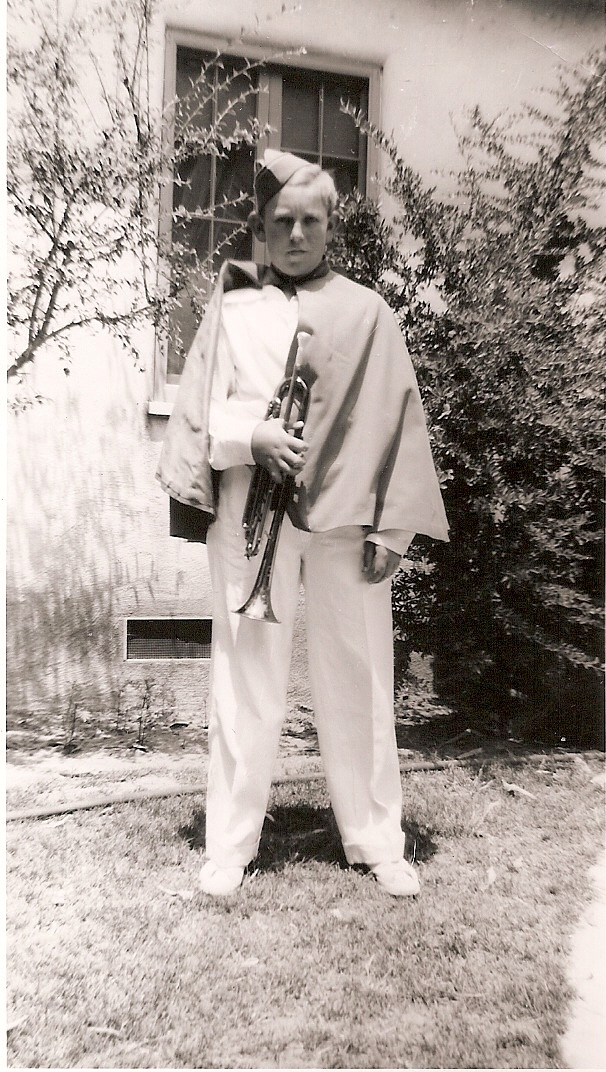
26 Aug 1922 California
11 Jul 1994 San Diego, California
3. Fay Everett MINER 19 Jun 1900
Santa Ana, CA
Eleanor Coleman SHAW
30 Aug 1923 San Diego
6 Oct 1982
San Diego
HL Miner Family

HL Miner Family about 1920

The minister of the town of Rock Cliff, Nebraska got H.L. a job in a lumber mill in Fowler, California, so he came out by himself as very young man.  His parents and brothers joined him in 1890.  He was one of a crew of men who carried the lumber on their shoulders (that was before the days of lift trucks)  His right shoulder was lower than the other, due to carrying lumber for years.  Later on he became boss with over 200 lumbermen working for his business.

H. L. and Cora Miner on the porch

Fragments of a poem written long years ago by HL Miner  (from his brother Anderson)

Petition to the Blinn Lumber Company

The names appearing here below
Are names of men whom you must know
For years have wabbled to and and fro
In your lumber yard

Our slower pace from week to week
The voices of our joints which squeek
Our palid faces all bespeak
The work is hard

(A couple of verses missing)

Now this is about all we have to say
Please give us now eight hours a day
And give us still our ten hours pay
We ask no more

We fully believe this extra rest
Will always keep us at our best
An that work will stand the test
With days of yore

H.L. (Harvey Latta Miner) was of average height, balding with large ears and formidable nose. He was heavy set, but not fat. Very strong hands.   Everett, his grandson,  always thought of him as powerful but just, and everyone who knew him thought very highly of him.

H. L. with Everett at 5 months

1930 – Family Portrait – H. L., Everett Jr., Everett Sr, Eleanor

He would have been 28 when my grandfather, a second son, was born in Santa Ana. At the turn of the 20th century Los Angeles was busy tearing down the old and rebuilding. H.L. worked for the Whiting-Mead Co. as an estimator/superintendent bidding on the task of demolishing older buildings, reclaiming the value parts, and arranging for the resale of this second-hand material by his company. He was very good at outbidding the competition because he had mastered the multiplication table through the 24’s. No pocket computers, he had it all very quickly in his head. Lumber is still sold by the board-foot and H.L. could do the numbers faster than anyone.

1900 Census – Orange, California – Foreman of lumberyard living with wife Cora L McCaw (28), son Glenn M (3) and daughter Effie Marie (1)

1910 Census – Bookkeeper for a laundry company living at 430 East 11th Street Long Beach, California with wife Cora L McCaw (38), son Glenn M (14), daughter Effie Marie (11) and son Fay E (9).

H.L. began working for worked for Mr. Mead and Mr.Whiting  in Los Angels before the turn of century. Dad had been born in Santa Ana in 1900.  Sometime between 1900 and 1912, they worked for the Company in Long Beach. Mr. Mead and Mr. Whiting started as wreakers of buildings and sellers of used building materials so generated. After spending some years in Long Beach, H.L, Cora his wife, Dad’s brother Glenn, his sister Effie and Dad (who would have been 12 years old.) moved to San Diego. H.L. went to San Diego to close down a faltering branch store operation in 1912. Instead he made it the most profitable branch operations. He stayed on to build a network of 9 stores which, when he purchased it from the Los Angeles parent company, was more profitable that the original.

Whiting Mead – 14th and K Store

What had been sort of a second hand business evolved into a large supplier of new and used building materials. (Plumbing fixtures, Roofing, Paint, Hardware, Sash and Doors, and of course Lumber.)

1920 Census – Manager of Whiting Mead building materials company renting at 3564 Georgia Street with wife Cora L McCaw (48), son Glenn M (24), daughter Effie Marie (21) and son Fay E (19)  According to HL’s 1918 draft registration, the business was located at corner of 1st Ave and “G” Street where today the Nordstrom’s at Horton Plaza is located.  Later, it moved to 14th and K which I remember from when I was little. (14th and K is slated to be under the new football stadium if that ever gets built)

1928 – Whiting Mead Picnic Program  Cover

1928 – Whiting Mead Picnic Program Interior

1930 Census – Living at 3045 29th Street with wife Cora L McCaw.

When his grandson, Everett was 11 or 12 HL insisted that he  come to San Diego for the summer.  He was to work at the store, (janitorial chores mostly, he painted the carrier blocks with the deep blue company colors). It was probably a vacation for his parents. There were 9 branch yards located in San Diego and Imperial counties, and perhaps 400 employees. There had been many more employees in the 30’s, perhaps twice that number, because during that time material handling equipment was not widely available, and everything was done by hand. H.L. was the man in charge and greatly admired by all of his fellow employees.

The man his grandson knew best was already 70 years old. Still vigorous, never missing a day at work. The first guy on the scene in the morning. Maybe the last one to leave. Driving down in a Buick which was the level of car ownership he felt comfortable with. World War II was in full swing and we were not yet winning. Supplies of all kinds were in short supply or unobtainable or rationed. H.L showed his farm raised roots during WWII. He had a Victory Garden which he was very proud of and where raised corn, tomatoes, string beans and squash. The back yard already had figs and guavas. Around in the side yard, which he called the south forty, was Indian Corn.

Everett never thought of him as an old man, though he was when I knew him. Much to powerful and forceful for that. Certainly a role model for me. Serious minded but with a fine sense of humor. A Christian man to the core. Church Elder. Grace before meals. He wrote in a diary every night for years and years. I would love to look in them to find him there, but perhaps he is not there.

He lived in a world that was just beginning to change rapidly. There were no automobiles when he was born. I am sure that they also had no telephones or indoor plumbing in Nebraska in 1873.

HL was the patriarch of his family and his 200+ employees. His people were god-fearing Presbyterians and Christianity was the corner stone of their every action. H.L controlled everything in God’s name; his family, his church, and his employees. He did it well, and was greatly admired. Those who yearned for a strong father figure loved him. He demonstrated compassion to many friends and strangers, but not to his youngest son., Fay Everett. H.L. was a righteous man, his family’s Hero, whose shame was that he did not truly believe he was worthy. He was also very intelligent and proud of his ability to out think everyone. He knew his multiplication table through the 24’s which gave him great advange in a computrerless world of quantities.

Cora was cold, manipulative and mean spirited. Maybe that’s why it took so long to find  genealogical records her her 🙂

This picture from 1925 from left: Everett, H L, Eleanor, Helen, Cora Miner.

Children and Grandchildren

1933 – Christmas

1. Glen Miner 

Helen Una Walker Miner (1898 – 1985) and her mother Elizabeth Johnson (Work) Walker (1863 – 1946) in Clear Creek, Colorado or Los Angeles, California

Glen’s wife Helen Una Walker was born 8 Sep 1898 in Clear Creek, Colorado, Her parents were Charles V Walker and Elizabeth H Work.  In the 1910 census Helen was living in Belvedere, Los Angeles, California with father Charles V Walker (43), mother Elizabeth H Work (47), brother Ross E (20), brother James O (18) and brother Frank (16). Father was a stationary engineer, brother Ross a fireman & brother James an apprentice tailor.Helen died 15 Jan 1985 in  San Diego, San Diego, California.

Child of Glen and Helen

i. Gwendolyn M Miner b. 24 Nov 1921; d. 21 Nov 2011  m1. George Adriance    m2.  14 Aug 1968  in San Diego to Thomas B. Sharkey  (b. about 1904 – )

SHARKEY, GWEN MINER Nov. 24, 1921 to Nov. 21, 2011 Memorial Service: Saturday, December 3, 2011, at 1:00 p.m. at Fletcher Hills Presbyterian Church, 455 Church Way, El Cajon, CA 92020. Memorial gifts to: Stonecroft Ministries, PO Box 9609, PO Box 9609, Kansas City, MO 64134. Published in San Diego Union-Tribune on December 1, 2011

1930 Census San Diego, CA
Glen M Miner 32
Helen Walker Miner 31
Gwendolyn M Miner 8
Elizabeth Walker 60

Glen, was the family Hero and Dad was the Scapegoat. Dad bested Glen in any competition. Dad was angry because he wasn’t allowed to lead his own life, but he hid that anger, except when he drove. Glen and Helan had a daughter, Gwen. Glen was the favored son, always pleasing his father. He and Everett (Dad) did not get along well, Everett feeliong that Glen was always telling him what to do.  Dad didn’t think Glen was very smart. Nether did I. He was a conformist. Afraid to take any risk. Endlessly analysing to discover why something should not been done.   Glen served in the Army during WWI.

Dad, Everett, Glen

Caption – Ezry and the Glen Miners – Everett’s brother visited us with this girl

Gwen, a nice person and caretaker, was dominated here whole life by her parents, living the life they wanted her to.

Gwenny

Gwen Miner Graduation

Caption on photo: Gwendolyn wears glasses all the time now

Glen and Helen’s daughter Gwen was too much older than Everett for him to have much contact with her.  Until recently, she was living in San Diego and saw Lou quite often.

2. Effie Miner

Effie’s husband Philip Russell West was born 20 Oct 1896 in Detroit, Michigan.  His parents were John D West (1857 – ) and Ada M Butler (1860 – ).  In the 1910 census, he lived at 290 25th Street San Diego w/ widowed mother Ada M. Butler (50), sister Florence (20), brother Carroll (12) and brother Merle (9). In the 1920 census, he was a finisher for cabinet maker living at 246 25th Street San Diego w/ 1st wife Vera C Boren (21) born in Kansas and with brother Carroll Orr West (22) who was a garage mechanic. Brother Merle (19) had enlisted in Navy as a baker & resided at base in San Francisco. Philip died 20 Feb 1979 in San Diego, California.
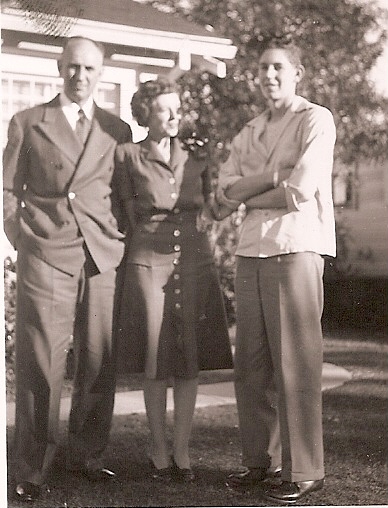
Philip West

Philip West

Vera Catherine Boren was born 16 Nov 1897 in Winfield, Cowley, Kansas. She married Phil West on May 11,1918.   Vera died in 1920 in San Diego, San Diego, California.

Vera Boren

Vera Boren

Children of Effie and Phil

i. Harvey West,  died of Malaria (at age 9) & it was in Ethiopia before they fled the Italians’ invasion.

ii.  John Orr West b. 12 Feb 1926  Gorei, Abyssinia (today’s Ethiopia) where his parents were missionaries;  Gorei is a place in the region of The State of Somalia in Ethiopia at 9°4’48” N 43°4’48” E    It is south and west of Djibouti, about 100 miles from the coast.  The nearest city with an airport Jijiga, about 30 miles to the NW was a major center of operations during the Second Italo-Ethiopian War,. (October 1935 -May 1936) which forced the Wests out of the country  .  Gorei is about 25 miles from Babile Elephant Sanctuary.  Conditions at this sanctuary are primitive, and it is not equipped for tourists.

University of Southern California, Keck School of Medicine MD 1952

Residency – Santa Fe Coast Line Hospital 1954

Residency – University of California San Diego Medical Center 1968

Board Certification Surgery – American Board of Surgery

iii. Lorena (Lou) West b. 1929 m. John Lundgren  (b. 17 Aug 1930 in Orem, Utah, Utah – d. 24 Apr 2005 in Spring Valley, San Diego)  His parents were John Gunard Lundgren (1895 – 1983) and Hazel Olsen (1904 – 1999).   Lou is living at Tooma St Apt 123 San Diego, CA.  Relatives of Lou: John T Lundgren, Latasha Williamson, Aaron N Murphy, Henry D Murphy, Mia E Lundgren, Aisha S Murphy, Daniel John Lundgren, Dec Murphy

John and Lou  were medical missionaries in Honduras flying from one small village to another providing dentistry care sponsored by a group of bush pilots called Mission(ary) Aviation Fellowship.

John Thomas Lundgren

John Thomas Lundgren

Effie met her husband, Philip West at a Bible College in Pennsylvania.   According to ancestry.com,  Philip married his first wife Vera C Boren in 1920.  Two months before Effie married Phil ( 22 Jun 1922)  she applied for a passport.   The planned sailing date is a month before their marriage so their plans changed a little.

Effie Marie Miner (1899-1994) in her Passport photo from 22 Jun 1922 before she married Philip Russell West (1896-1979) and sailed to Abyssinia to work for 4 years as a missionary
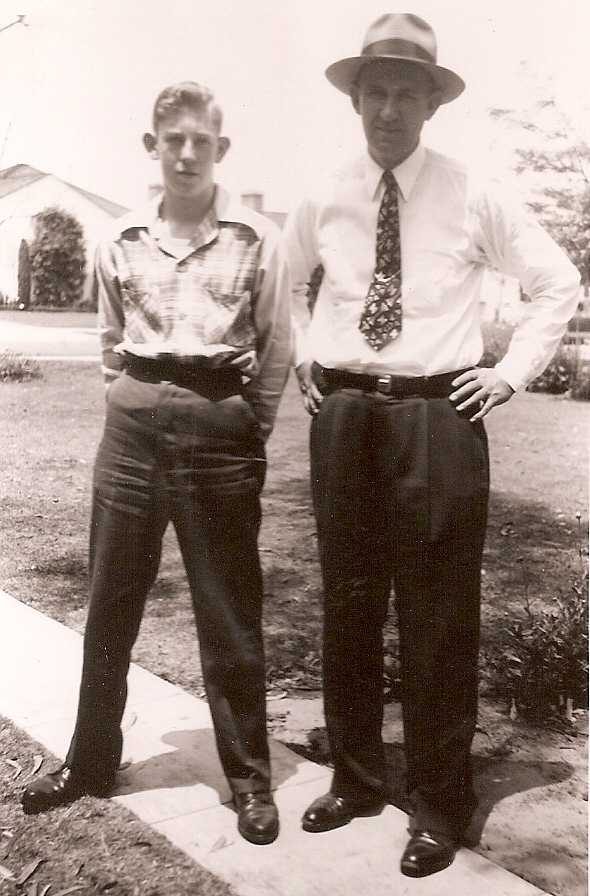
Teacher & unmarried living w/ father Harvey Latta Minor at 3045 29th Street San Diego at time of application for passport with intention to travel aboard the S.S. Patria on 13 Jul 1922 to Abyssinia via Italy & Egypt to do missionary work.

On 20 Jul 1927, Effie Miner West (1899 – 1994) sailed from Alexandria, Egypt, aboard the S.S. President Wilson bound for New York where he arrived on 11 Aug 1927 with her husband Philip and son John following 4 years of missionary work in Abyssinia.

After four years of missionary work in Abyssinia, Phil and Effie returned to America. I worked for American President Lines, the company that operated the President Wilson, for over 20 years.  Half a dozen times early in my career, when elderly people found out that I worked at APL, they would excitedly tell me about their marvelous passages on the President Wilson.  As I recall, the vessel was in a Westbound world wide Service sailing from the West Coast to Asia, through the Suez Canal, Europe, East Coast, Panama Canal and back to the West Coast, a real adventure.

By the 1930’s, they were missionaries in Ethiopia where they met Haili Selassi and had three chilrden.   The first child died, and when Mussolini ejected them from the country, and on the journey home, their first child, Harvey, died of a fever in Egypt. My mom always thought it was a poignant story that they had been helpers to others and then they had a crisis in a place where they knew no one.  They came back to San Diego with their kids John and Lureena (Lou).23 Sep 1937 Arrival New York, Missionary in Abyssinia returning to USA via Alexandria, Egypt, aboard the SS President Harrison with wife Effie Marie Miner (38), son John Orr West (11) & daughter Lorena West (8)

House of Hospitality San Diego – Sonny, Effie’s Lorena Lou and John

Phil went to work as the mill foreman for my great grandfather. He was a hands on kind of guy. If you got a sliver in your finger he was delighted for the opportunity of yanking it out. I think they had an aid clinic in Africa. No doubt an influence on John’s choices.

Passport Photo – Philip Russell West (1896-1979) was born in Detroit, Michigan. He married his 2nd wife Effie Marie Miner(1899-1994) on 26 Aug 1922 and on 2 Feb 1923 applied for a US passport with his 2nd wife planning to travel to Abyssinia where they would travel & do missionary work
John West served in the Army during WWII. 81st Airborne where he was a medic. After the war he went back to Medical School and then practiced his medicine as a medical missionary in Taiwan until his six children (three adopted Chinese) got ready for High School when he returned to San Diego so they could go to school in the U.S. Mostly he worked in the ER.

Caption on Photo: John West, Sonny Miner, Lorena Lou West

His sister Lou married a graduate of the Dental School at U.S.C. and they spent 15 years (mas ó menos) as flying dentist missionaries in Central America. Everett admires and respects the West clan.  They were and are generous, kind, and caring fundamentalists.

John Orr West with Friends – Ajijic Mexico

Sources:

Everett Miner writing project

Ancestry.com

Posted in -4th Generation, Line - Miner, Storied | Tagged , | 11 Comments

Philo Sidney Miner Sr.

Philo Sidney MINER Sr. (1811 – 1890) was Alex’s 4th great grandfather, one of 32 in this generation.

Philo Sidney Miner Sr. was born on 29 Sep 1811 in Andover, Toland County CT. His father was Selden MINER and his mother was Sally PEASE. He was living in Hebron, CT when he  married his first wife Sophia POLLEY on 14 October 1834 in Lisbon CT when he was 23 years old.   Philo died on 14 Aug 1890, in Bristolville, Trumbull, OH, age: 78 having outlived three wives.

Sophia L Polley (Polly) was born on 6 Aug 1811 in Lisbon CT.  Her parents were Joshua POLLEY and  Annie WELLS. She died on 27 Sep 1839 when our ancestor Sidney was only one year old.  She was buried in Kinsman, Trumbull, Ohio.

Philo married his second wife Mary Jackson, on 24 Sep 1840 in  Trumbull, Ohio. Mary was born on 4 Sep 1819. She died on 20 Feb 1842 in Kinsman, Trumbull, Ohio. They had one child, Mary Sofia

Congregational-Presbyterian Church in Kinsman built in 1831

Philo married his third wife, Charity Webber in Kinsman, Trumbull, Ohio. on 29 Feb 1844 in Kinsman, Trumbull, Ohio. Charity was born on 23 Mar 1820 in Ohio.  She died on 10 Jan 1868 in Kinsman, Trumbull, Ohio.

Child of Philo and Sophia:

Name Born Married Departed
1. Philo Sidney MINER Jr. 25 Mar 1838 Ohio Calista Jane LATTA
4 May 1869 Cass County Nebraska
13 Jun 1911 Fowler, Fresno County, California

Child of Philo and Mary Jackson

Name Born Married Departed
2. Mary Sophia Miner 4 Sep 1841 Kinsman, Ohio 20 Feb 1859

Children of Philo and Charity Webber

Name Born Married Departed
3. Henry Elliott Miner 11 May 1845 Kinsman Township, Trumbull County, OH 20 Jul 1845 Kinsman
4. Charlotte Valira Miner 8 Aug 1846 Kinsman David Colburn Wilbur
13 Jan 1870
13 Nov 1894
5. Austin B Miner 21 Dec 1848 Kinsman 20 Dec 1859 Kinsman
6. Augustus Elliott Miner 14 Mar 1851 Kinsman Julia Elizabeth Baldwin
20 Dec 1876 Bristolville, Trumbull, Ohio
4 Sep 1945
Churchill, Mahoning, Ohio
or
Bristolville, Trumbull, Ohio
7. Clement Wellington Miner 26 Mar 1854 Kinsman Agnes Ida Coulter
1882
Pennsylvania
6 Sep 1928 Vanago, Crawford, Pennsylvania
8. William H Miner 26 Feb 1858 Kinsman Julia A [__?__]
1893
After 1900 census
9. Walter Fayette Miner 17 Aug 1859 Kinsman 17 Oct 1899
10. John Lincoln Miner 10 Jan 1861 Kinsman, Trumbull, Ohio Mary Jane Hardy
1889 – Ohio
12 Apr 1934
Carroll, Carroll, Iowa

Philo was a carpenter and a joiner.

Philo must have emigrated to Kinsman, Trumbull County Ohio from Connecticut between his 1834 marriage to Sophia and 1838 when Philo Sidney Jr. was born. (It appears Philo Sidney Jr. went by Sidney)   Several of his siblings including Calvert, Selden, Edward Everett and Melissa also moved to Ohio from Connecticut.  When his father died in 1842, he went back to Connecticut and retrieved his mother and two youngest sisters to come live in Ohio.

Kinsman, Trumbull County, Ohio

Trumble County is named for Jonathan Trumbull, Sr. (12 Oct 1710 – 17 Aug 1785) was one of the few Americans who served as governor in both a pre-Revolutionary colony and a post-Revolutionary state. During the American Revolution he was one of a very few colonial governors who supported the American side.  Jonathan’s sister Mary married Joshua, the son of our ancestor Capt. Nathaniel FITCH.  Philo’s wife Sophia POLLEY was Nathaniel’s 2nd Great Granddaughter.

Trumbull County Ohio, Kinsman is in the Northeast corner

This part of Ohio is called the Connecticut Western Reserve.  Connecticut held fast to its right to the lands between the 41st and 42nd-and-2-minutes parallels that lay west of the Pennsylvania border. Within the state of Ohio, the claim was a 120-mile (190 km) mile strip between Lake Erie and a line just south of Youngstown and Akron. In 1796, Connecticut sold that land to investors, initially eight original purchasers, most of them from Suffield, Connecticut, who formed the Connecticut Land Company.

Connecticut Western Reserve

In the 1840 census,  Philo Sydney MINER Jr. (1811 – 1890) was single and between wives in Kinsman, Trumbull, Ohio.  There is no record of an infant in his household so maybe the two year old Philo Jr. had been farmed out to another family better equipped to take care of a toddler.  Philo’s census record directly follows Albert C Miner.  Both Philo and Albert are listed by themselves and 20 to 30 years old.  I had thought that Philo’s next door neighbor was his cousin Albert Miner (1809 – 1848)  (See his page for his interesting life story) who became one of the first Mormons, but no I’m not so sure.  It appears Albert and Tamma were 700 miles away in Lima, Illinois.   I haven’t figured out who else this Albert C Miner could be, but my closest guess is Albert Calvin Miner (b. 1815 or  1829) son of Calvin Miner and Keturah Nelson.

A distant cousin, Harris Miner also lived nearby with two girls and five boys.  Perhaps Harris Wesley Miner, (1808-1858) but this cousin seems to have lived in Stark County, Illinois in 1840 and was buried  26 Aug 1858 Toulon, Stark County, Illinois.  Simon A Polly and Ira Polly who might have been related to Sally Polly also lived close by.

Children:

1. Philo Sidney MINER Jr. married Calista Jane LATTA (See his page)

4. Charlotte Valira Miner

Charlotte’s husband David Wilbur was born 15 May 1848 in Johnston, Trumbell,  Ohio.  His parents were Joseph Cephus Wilbur and Clarinda Colburn.  David died 25 Jan 1905 Marshalltown, Marshall, Iowa.

In the 1870 census, Charlottte and David (age 22) were farming in Jackson, Boone, Iowa with David’s brother Jonathan (age 24) and his wife Anne.

In the 1880 census, David and Charlotte were living in Marshalltown, Marshall, Iowa where David owned a furniture store.

Child of Charlotte and David:

i. Fred Miner Wilbur (1883 Iowa – After 1930 census); m. 5 Jul 1905 to Edith R. Woodward (1888 Iowa – Aft. 1930 census) Fred graduated from Stanford University in 1904, attending 1901-1904. In the 1930 census, Fred and Edith were living in Marshalltown, Marshall, Iowa where Fred was working as a mortician at a mortuary.

6. Augustus Elliott Miner

Augustus’ wife Julia Elizabeth Baldwin was born in 1858 in Black Hawk County, Iowa.  Her parents were Marcus T Baldwin and Elizabeth Betsy Miller. Julia died 9 Dec 1929 Bristolville, Trumbull, Ohio.

In the 1900 census, Gust and Julia were farming in Bristol, Trumbull, Ohio with five children at home.

In the 1940 census, Augustus was living with his son Frank B Miner in Champion, Trumbull, Ohio.

Children of Augustus and Julia

i. Charles A. Miner (1878 Ohio – )

ii. Emma “Emily” Maria Miner (17 Sep 1879 Trumbull, Ohio – After 1930 Census Living at 37 Spring 4 Amherst, Massachusetts in 1938); m. Horace H Wolcott (1877 New York – After 1930 Census) In the 1910 census Horace and Emily were in Amherst, Hampshire, Massachusetts where Horace worked as a mail carrier.

iii. Walter Fayette Miner (30 Apr 1882 in Bristolville, Trumbull, Ohio – 21 Dec 1964 in Southern Pines, Moore, North Carolina); m1. 30 Jun 1904 in Saybrook, Ohio to Grace Adelia Pierce (4 Mar 1885 in North Bristol, Ohio – 18 Mar 1940 in Lima, Ohio); m2. Lena Williams.

In the 1930 census, Walter and Grace were living in Lima, Allen, Ohio where Walter was a telegraph operator for the Standard Oil pipeline,

iii. Alice Rachel Miner (17 Feb 1888 Ohio – 14 May 1958 in Ashville, North Carolina); m. 11 Sep 1915 to Wilbur Devendorf (28 Oct 1887 in Cicero, New York – 9 Oct 1968 Asheville, North Carolina) In the 1930 census, Alice and Wilbur were raising a family in Asheville, North Carolina where Wilbur owned and managed a hotel. When Wilbur died, his spouse was named Frances Field.

iv. Mabel Helen Miner (9 Feb 1891 in Bristolville, Trumbull, Ohio – 11 Apr 1972 Ashtabula County or Warren, Trumbull, Ohio) Never married. In the 1930 census, Mabel was a public school teacher in Warren, Trumbull, Ohio.

v. Frank Baldwin Miner (31 Oct 1893 Bristol Twp, Trumbull County Ohio – 6 Nov 1944 in Champion Heights, Ohio); m. 30 Jun 1917 to Mary L. Owen (1894 Ohio – After 1942) In the 1930 census,Frank and Mary owned their own home and were raising a family in Champion, Trumbull, Ohio where Frank worked as a milk truck driver. In the 1940 census, Frank owned a butcher shop in Champion, Trumbull, Ohio. His father Augustus was living with the family.

vi. James Harold Miner (25 Mar 1896 Bristolville, Ohio – 25 Jun 1973 in Ashtabula, Ashtabula, Ohio); m. 14 Jun 1937 to Julia H McKibben (b. 29 Oct 1904 in Garden Grove, Decatur, Iowa – d. 6 Feb 2004 in Cornelia, Habersham, Georgia just 9 months shy of the century mark.). Her parents were John Orman McKibben and Nellie A. Thomas. Julia graduated from Northern Iowa University, class of 1924.

James enlisted 1 Apr 1918 and served in World War I: 158 Depot Brigade to 25 Apr 1918; 45 Co TC to 14 March 1919; 44 Co TC 15 June 1919; 50 Co TC to Discharge Private American Expeditionary Forces 7 June 1918 to 4 July 1919. Honorable discharge 11 July 1919. In the 1930 census, James was not married and working as a gas station service man in Warren, Trumbull, Ohio. In his WWII Draft registration James was working at Copperwell Steel Company and living with Julia H. Miner in Warren, Ohio.

7. Clement Wellington Miner

After Charity died in 1868, Philo shipped his youngest children, Clement, William, Walter, and John out to other families.

In the 1870 census, Clement was living in Windsor, Fayette, Iowa with James Graham (b. May 1841 in NY) and Adaline A Wilbur (b. Feb 1845 in NY) I thought Adaline might be related to Clement’s brother-in-law David Colburn Wilbur, but haven’t found the connection yet. Adaline’s parents were Daniel Wilbur (b. 14 Oct 1797 Nelson, New York – d. 14 Dec 1881 Wisconsin) and Polly Buck (b. 23 Jun 1802 in Madison, New York – d. 26 Apr 1876) Adaline’s grandparents were Richard Wilbur (1770 – 1843) and Rhoda Miller (1775 – 1861).

Clement’s sister Charlotte Valira Miner married 13 Jan 1870 to David Colburn Wilbur. David Wilbur was born 15 May 1848 in Johnston, Trumbell, Ohio. His parents were Joseph Cephus Wilbur (b. 26 Aug 1807 in Preston CT – d. 10 Jun 1883 in Boone, Iowa) and Clarinda Colburn (b. 7 May 1813 in Plainfield, Otsego Co., NY – d. 19 Jan 1884 in Mecca Ohio). David died 25 Jan 1905 Marshalltown, Marshall, Iowa.

Clement was a delegate to the Phi Delta Theta convention in 1880.

Clement’s wife Agnes Ida Coulter was born 9 Oct 1856 in Venango, County, Pennsylvania. She was christened in Cambridge Springs, Crawford, Pennsylvania. She died on 12 Aug 1939 and buried in Venango, Crawford, Pennsylvania.

Register of alumni: Allegheny College Meadville, Pa. – Clement Wellington Miner, A. M., D. D., District Superintendent, Methodist Episcopal Church, Du Bois, Pennsylvania.

Clement Wellington Miner, A.M., D.D., District Superintendent Methodist Episcopal Church, 11 1 Milton St., New Castle, Pennsylvania

Founded in 1815, Allegheny College in Meadville, Crawford, Pennsylvania has about 2,100 undergraduate students. Since 1833, the college has been historically affiliated with the United Methodist Church, though it is currently non-sectarian.

In 1920 Clement was a Methodist minister living at 111 Milton Street, New Castle, Lawrence, Pensylvania with wife Agnes J (64), daughter Mary E (19), son James C (32), James’ wife Virginia (32) and their son Robert H (2). By the turn of the 20th century, New Castle was one of the fastest growing cities in the country as it became the tin plate capital of the world.

Clement and Ida had the following children:

i. Clara May Miner (1883 in Pennsylvania – 1971); m. Clement Spencer (1886 Pennsylvania – Aft. 1940 census 1916 Avondale Avenue, Charlotte, North Carolina). In the 1910 census, Clement was a roofer in Warren, Pennsylvania.

ii. John Lynn Miner (26 Dec 1885 Sherman Chautaingua, New York – Aft. 1940 census Overlock Drive, Greenwich, Fairfield, CT); m. Bess Burnham (1884 Pennsylvania – 19 Aug 1973 Maryland) In 1909 John lived in Punxsutawney, Pennsylvania when he applied for a passport.  In 1913 John sailed to Hamburg Germany on the President Lincoln.   In the 1920 census, John was Mount Pleasant, Westchester, New York and working as the headmaster at The Harvey School in Mount Pleasant, Westchester, New York.

The Harvey School was founded by Dr. Herbert Carter and his wife Mabel Carter in 1916 as a residential school for boys, enrolling students through the secondary grades. Dr. Carter, a New York City pediatrician, built the school at his farm in Hawthorne, New York. His intention was to provide a country environment and an educational program for his son, Herbert Swift Carter, Jr., who had some physical limitation due to scarlet fever as a child. The school was named for Sir William Harvey (1578-1657), personal physician of King Charles I, who claimed to be the first to describe the mechanics of blood circulation. Dr. Harvey’s discoveries and methods established him as one of the fathers of modern medical science.

John L. Miner was appointed as the school’s first headmaster when its doors opened in October 1916, with an enrollment of four boys. Mr. Miner served the school for ten years before leaving in 1926 to establish Greenwich Country Day School, originally known as The Harvey School of Greenwich.

John L Miner – 1921 Harvey Class School Photo

In September of 1926, forty-five boys assembled in a former barn near North Maple Avenue. They were there because a pair of Greenwich mothers, Dorothy Baker and Jane McClelland, were unhappy with the local boys’ schools and decided to start their own. They enlisted Florence Rockefeller and she had offered a building, one she had planned to use as a carriage house. On the first day of school there were 45 boys. The first headmaster was John Lynn Miner and the uniform was a black sweater with orange stripes with knickers. In 1927 G.C.D.S. moved to the Warner property and the house called the Chimneys and the Chimneys is now The Middle School. It started with 45 boys and now there are more than 800 children. G.C.D.S. is now the largest independent elementary school in the United States.

Greenwich Country Day‘s history spans a period of over 80 years, starting with the boom period of the 1920s and journeying through the Great Depression, World War II, the bomb paranoia of the 1950s, the radicalized political and educational thinking of the 1960s, the turmoil and change of the 1970s, and the growth and progressive thinking of the past two decades. Country Day’s decision to admit girls in 1942 was a touchstone moment for the school that enabled it to grow as a truly forward-thinking country day school.

Today the eighty-acre campus serves over eight hundred students. From simple beginnings, the school has grown to become one that is widely recognized as a leader in the education and development of today’s young people and one that has helped to shape the lives of thousands of people.

Notable alumni include George H. W. Bush, forty-first President of the United States Cameron and Tyler Winklevoss, Olympic rowers and social networking pioneers

In 1936 John L. Miner was a trustee along with Senator Prescott C. Bush. George Bush left Greenwich Country Day School in 1936, joining his older brother at Phillips Academy in Andover, Massachusetts.

Today, J.L. Miner is the second highest level of donations
The Orange and Black $25,000 and above
J.L. Miner Founder’s Council $15,000 and above
Webster Society $10,000 and above
Headmaster’s Circle $7,500 and above
Leadership Level $4,500 and above
Sustainer $2,500 and above
Participant $1 and above

George Bush: the life of a Lone Star Yankee By Herbert S. Parmet

Headmaster Miner was very exacting and a strong disciplinarian.  His office at the top of the stairs was off-limits to anyone without a prior appointment.  His aide Eve Collins, who was in charge of the lower school when the first Bush became a student, was described as very particular as she had to be in order to be working under Miner.  After [the middle school director] Grant became ill, the year Pressy Bush graduated, Miner was replaced by his assistant, an Englishman named George Meadows. [who appears to have been even more of an old fashioned disciplinarian than Miner] … The school was in effect a prep school for the prep schools the boys were destined for such as Choate, Hotchkiss and Andover…. All three [Bush] boys attended from the first through the ninth grades.

iii. James Carleton Miner (15 Sep 1886 in Sherman, Erie, New York – Nov 1973 in New Castle, Pennsylvania); m1. 2 Oct 1916 in Tuscaloosa, Alabama to Allie Virginia Hatch (2 Oct 1887 in Union City, Erie, Pennsylvania – 30 Sep 1946 in New Castle, Lawrence, Pennsylvania); m2. Helen McCracken in Dec 1965 in New Castle, Lawrence, Pennsylvania. In the 1930 census, James was a bank trust officer in New Castle, Lawrence, Pennsylvania.

iv. Ralph Miner (about 1887 in Pennsylvania – )

v. Clement Coulter Miner (22 May 1888 Cattaraugus, New York – Oct 1942); m. 23 Dec 1913 to Mary Curran Warfield (22 May 1888 – 1942) In the 1930 census, Clement was a mail carrier in Venango, Crawford, Pennsylvania. In Apr 1942, Clement and Mary were living at 566 S. Main Street in Cambridge Springs, Crawford, Pennsylvania.

vi. Mary Elizabeth Miner (26 Sep 1901 in Pennsylvania – Aft. 1941 marriage ); In the 1940 census Mary was single and a supervisor nurse for the WPA at 776 49th St. Akron, Ohio; m. 30 May 1941 to Harry M. Cook (b. 14 May 1899) His parents were Harry C Cook and Vanchie Davis.

.

8. William H. Miner

William’s wife Julia A [__?__] was born in Mar 1863 Ireland. She immigrated in 1866.  Julia died after 1930. In the 1940 census, Julia was living with her daughter Mildred Erickson in New Orleans.

After Charity died in 1868, Philo shipped his youngest children, Clement, William, Walter, and John out to other families.

In the 1870 census, William H. Miner  twelve years old and was living with John and Nancy Johnston relatives of his sister-in-law  Calista  Jane Latta in Kinsman, Trumbull, Ohio.  His mother Charity Webber had died in 1868.  Evidently, Philo wasn’t very good at taking care of children by himself.

John Johnston 56 Nancy J Johnston 54 Mary E Johnston 28 Emily Johnston 23 Malinda J Johnston 19 Amand(a) Johnston 13 William H Miner 12.

In the 1900 census, William and Julia were living in Union, Montgomery, Indiana where William was working as a horse trainer.

In the 1940 census, Julia was living at 3928 St Claude Avenue New Orleans with her daughter Mildred and son-in-law John Erickson. John owned a grocery.

Child of William and Julia:

i. Mildred M. Miner (Apr 1894 Ohio – After 1940 census); m. John Lawrence Erickson (1893 Louisiana – After 1940 census) In this WWI Draft registration, John was working as an oiler on a United Fruit Company ship. In the 1930 census, John and Mildred were living in New Orleans and John was working as a steamship engineer.

9. Fayette Walter Miner

After Charity died in 1868, Philo shipped his youngest children, Clement, William, Walter, and John out to other families.

In the 1870  census, Fayette was living with William Giddings (b. 10 Jan 1810 Ohio – d. 26 Dec 1887) Ohio and Maria Webber (b. 26 Jul 1812 – d. 19 Aug 1897) and their son Darwin (b. 1850 Ohio) in Williamsfield, Ashtabula, Ohio. William was Son of Elisha Giddings (1780 Hartford, CT- 9 Aug 1855 OH) and Philothea Fish (1782 Townsend, VT-24 Dec 1868 OH)

Walter’s wife Anna Elizabeth Churchill was born 19 Apr 1860 in Kansas. Her parents were Levi Churchill (1833 – 1906) and Rebecca Clemmons (1836 – 1902). Anna died 3 Feb 1949

In the 1900 census , Anna was a widow and was living with her parents and four children in Plattsmouth Ward 5, Cass, Nebraska.

In the 1910 census, Anna’s last name was now Rouse, but her husband was not at home. She, her four children,and her newphews Harry and Herman Royal were living in Lincoln, Nebraska

Children of Fayette and Anna:

i. Fayette (Fay) Wade Miner b. 11 Jan 1887 in Nebraska; d. 13 May 1971 in West Fork, Daniels, Montana; m. Nettie Osette Sterner (b. 1890 Nebraska – 16 Sep 1963); Her parents were George and Ella Sterner. In the 1930 census, Fay W and Nettie O were grain farmers in West Fork, Daniels, Montana.

Daniels County, Montana

As of 2000, Daniels County was considered the most rural county in the continental United States as measured by the Index of Relative Rurality. There is one K-12 school serving all of Daniels County. The county population has dropped from 5,553 in 1930 to 1,751 in 2010.

ii. Buelah Miner b. May 1889 in Nebraska; d. Aft 1910 census

iii. Sidney David Miner b. 28 Jan 1892 in Cass County, Nebraska; d. Dec 1973 in Peoria, Peoria, Illinois’ m. Elise Meyers (b. 1894 Iowa – d. Aft. 1940) Her father was born in Germany and her mother in France. In the 1930 census, Sidney was a salesman for Keystone Steel Wire Company in Peoria, Illinois his mother Anne was living with the family.

iv. Hugh Arnold Miner b. 6 Jul 1895 in Murray, Nebraska; m. Norah [__?__] (b. 1901 Missouri) In the 1925 Kansas census, Hugh and Norah were living in Kansas City, Kansas where Hugh worked as a butcher in a grocery.

10. John Lincoln Miner

After Charity died in 1868, Philo shipped his youngest children, Clement, William, Walter, and John out to other families. I haven’t found John in the 1870 census.

John’s wife Mary Jane Hardy was born 13 Sep 1865 in Ottowa, Illinois.  Her parents were T S Hardy and L N Baldwin. After John died, she married she married Charles A Webber Jan 13, 1937, at Long Beach.   Mary Jane died 24 Feb 1942 in Long Beach, California.

In 1880, John Lincoln Miner (20) was living with oldest brother Philo Sidney Miner (43) and his family in Rock Bluff, Nebraska.  In 1920  he was a commercial grocery salesman living at 1111 North Main Street, Carroll, Iowa with wife Jeanie M (53) and son John J Jr. (19).

Feb 25, 1942 – Carroll Times – Mrs. Charles A Webber of 813 Temple Avenue, Long Beach, CA, mother of Harry T and John L Miner of Carroll, died suddenly Tuesday according to a message received by her sons this morning. Funeral arrangements have not yet been made.

Mrs Webber was well known in Carroll where she had spent most of her life. Death claimed her at the age of 76 years. Mrs. Webber, whose maiden name was Mary Jane Hardy, spent her girlhood at Marshalltown, where she married John L Miner June 6, 1888. They came to Carroll to make their home in 1889. Mr. Miner, a veteran traveling salesman of Iowa, sold groceries in this territory for forty three years with Carroll as his headquarters. He passed away April 12, 1931.

He and his wife were the parents of four sons, two of whom preceded their mother in death. Paul Miner of Cedar Falls died in May 1937, and another son, Edward died on the day of his birth Sept 24, 1890. For some time after Mr. Miner’s death, his wife continued to make her home here, later going to California, where she married Charles A Webber Jan 13, 1937, at Long Beach. They have resided in Long Beach since that time.

Besides her two sons above named, Mrs. Webber is survived by her husband; three grandsons; and three granddaughters; and two sisters, Mrs Lydia Cole of Los Angeles and Mrs Nell Goodwin of Long Beach. One brother, Charles Hardy of Los Angeles and one sister, Mrs Ann McMahon of Amboy, Illinois are deceased.

Mrs Webber was an active member of the First Presbyterian church here. She still retained her memberhsip in Signet chapter No.1 Order of the Eastern Star, of which she was a past matron. She also belonged to the past Matrons Club of the local chapter.

John Lincoln Miner Headstone — Carroll City Cemetery Carroll Carroll County Iowa

Children of John and Jeanie:

i. Paul Sidney Miner (17 Jul 1889 in Marshalltown, Marshall, Iowa – 6 May 1937, Cedar Falls, Black Hawk County, Iowa); m. 16 Jun 1914 in Carroll, Carroll, Iowa. to Joy Wiona Pfiester (9 Apr 1891 in Audubon, Iowa – 29 Oct 1982 in Cedar Falls, Iowa) In the 1930 census, Paul was a plumber in Cedar Falls, Black Hawk, Iowa. In the 1940 census, Joy was a widow and a seamstress at 410 West 22th Street Cedar Falls, Iowa, four blocks from the University of Northern Iowa campus.

ii. Edward Miner (3 Aug 1890 in Carroll, Carroll, Iowa – 24 Aug 1890 in Carroll, Carroll, Iowa)

iii. Henry Thomas Miner ( 23 Aug 1891 in Carroll, Carroll, Iowa – 8 Dec 1953 in Long Beach, Los Angeles, California); m. 8 Feb 1919 in Lamont, Iowa to Freeda Emma Brown (20 Feb 1894 in Lamont, Iowa – 31 Jul 1985 in Gardena, California) In the 1930 census, Henry  and Freeda were living in Carroll, Carroll, Iowa where Henry was the proprietor of a plumbing shop.

iv. John Lincoln Miner Jr. (27 Jun 1900 in Carroll, Carroll, Iowa – 7 Apr 1980 in Carroll, Carroll, Iowa); m. 17 May 1923 in Carroll, Carroll, Iowa to Laura Leida Vaughan (2 May 1903 in Carroll, Carroll, Iowa – 7 Apr 1980 in Carroll, Carroll, Iowa) In the 1930 census, John and Laura were living in Carroll, Carroll, Iowa where John was a meter man in a light plant.

Sources:

http://trees.ancestry.com/owt/person.aspx?pid=6528318

Thomas Minor Family History

Thomas Minor Society

http://homepage.mac.com/jcrossley/wc/wc53/wc53_076.htm

http://www.rootsweb.ancestry.com/~ctclisb/barbourly.html

http://www.ifreeman.com/freeman/tree/dat2.htm

http://tmsociety.org/thomas/clement/aqwg52.htm#25788

Posted in -6th Generation, Line - Miner, Pioneer | Tagged | 9 Comments

Philo Sidney Miner Jr.

Philo Sidney MINER Jr. (1838 – 1911) was Alex’s 3rd Great Grandfather, one of 16 in this generation.

Philo Sidney Miner was born 25 Mar 1838 in Kinsman Township, Trumbull County, Ohio.  His parents were Philo Sidney MINER Sr. and Sophia L. POLLY.  It appears that Philo Sidney Jr went by Sidney.  Registered class 1 in the draft 1 Jul 1863, still living in Kinsman, Trumbull, Ohio. He married Calista Jane LATTA on 4 May 1869 in Cass County Nebraska.   Philo Sidney died on 12 Jun 1911 in Fowler, Fresno, California.

Calista Jane Latta was born on 11 Nov 1849 in Cincinnati Ohio.  Calista’s name is spelled a variety of ways in different censuses: Calista, Clystia, Christie, Celeste, Clista and Lista.   Her parents were  Robert McConaha LATTA and Letitia JOHNSTON. Calista was living in Township 4, Fresno County, California in the 1910 census.

Claista Jane Latta

Claista Jane Latta

Children of Sidney and Calista:

Name Born Married Departed
1. Harvey Latta MINER 26 Jan 1873
Rock Bluff, Cass, Nebraska
Cora McCAW
Oct 1895
12 Mar 1958
San Diego
2. Nellie Miner 15 Nov 1877
Rock Bluff
16 May 1879
3. Marion Harland Miner 13 Mar 1882
Murray, Cass, Nebraska
Florence Ora Brown
c. 1907
16 Dec 1985
Dinuba, Tulare, CA
4. Anderson Root Miner 31 Aug 1884
Murray, Cass, Nebraska
Georgia Abbott
bef. 1911
18 Jun 1974 Fresno CA

Miner descendents from Philo Sidney Miner Jr.

Miner Line from Philo Sidney Miner Jr.

In the 1870 census, entries for Philo and Calista Miner appear right after his father-in-law Robert McConaha LATTA.  They must have lived next door in Rock Bluff, Nebraska.  Philo was a farmer just starting out with a new 160 acre homestead.  The value of his real estate was $1600 and his persona estate was $600.  See my page Western Pioneers for a description of Rock Bluff.

In the 1877 Nebraska census, Calista’s youngest brothers were living with the Miner family in Rock Bluffs.  They were left orphans when both Calista’s parents died young.  Sidney’s mother died when he was only 1 year old, so I imagine they had a special bond.

Bertie Latta 7 Samuel Latta 11 Christie Miner 27 Harvey Miner 4 Sidney Miner 40

In the 1880 census,  Calista’s two youngest brothers were living with the Miner family in Rock Bluffs, Cass, Nebraska.  Their mother died in 1870  shortly after giving birth the Elbert and their father died in 1872.  Uncle Bert was like a brother to the three Miner kids – Harvey, Anderson and Marion.  Philo’s stepmother Charity died in 1868, Philo Sr.  shipped his youngest children, Clement, William, Walter, and John out to other families. John was living with his oldest brother in 1880.

Sidney Miner 42
Calista Miner 30
Harvey Miner 7
Elbert Latta 10
James Latta 20
John Miner 18

Philo Sidney Miner  moved with his family from Nebraska to Fowler California about 1890.  His son Harvey had come out to California first to work in a lumber mill.  Philo was a vineyardist and orchardist.   Fowler has a strong agricultural community, with lush grape vineyards and expansive farmland. Fowler is located 11 miles  southeast of downtown Fresno. Its post office opened in 1882 and it incorporated in 1908.  In 2009 it had a population of 5,586, two-thirds Hispanic.

Fowler, CA Map

FOWLER’S story began with the railroad, a state senator and the senator’s cattle. Thomas Fowler and Thomas Davis came west to California in 1853 with the intention of heading to the gold fields. Instead, they got into the cattle business. They purchased a large acreage along the Kings River near Minkler and Sanger. Their cattle carried the “76” brand and ranged across the valley.  As his empire and influence grew, Fowler decided to enter politics. In September of 1869, he was elected to the state senate.

When the Central Pacific Railroad began to lay track south of Fresno Station, Senator Fowler saw it as a perfect chance to find an efficient way to get his cattle to market. He arranged for a switch to be placed 10 miles south of Fresno. Fowler’s first shipment of cattle left Fowler Switch right after it opened in August of 1872.

As the area grew, people began talking about incorporating. In 1908, an election was held to decide the matter but there was one major issue — would alcoholic beverages be sold in Fowler or not! The campaign was heated. On election day, May 26, 1908, 97 percent of the voters in Fowler voted and incorporation passed. Two weeks later, the sale of liquor in Fowler was banned and remained so until 1933.

Children

Two son who settled in California’s Central Valley, raised large farming/ranching families, and lived long productive lives. Grandpa’s uncle Marion lived to be 103 years old. No one in this family divorced, until the 1980’s. All of them were Christians and teetotallers.

1. Harvey Latta MINER (See his page)

3. Marion Harland Miner

Marion Harland Miner - Age 20 about 1902

Marion Harland Miner – Age 20 about 1902

Marion Miner Portrait 1960's

Marion Miner Portrait 1960’s

Marion was a farmer in the Central Valley.  He lived to be 103 and died in Dinuba, Tulare County.  His brother Anderson wrote in 1972:

At his 90th birthday celebration that “ol boy” don’t look a day older than he did twenty years ago.  He does all of the irrigating and cultivating on 27 acres of vineyard and sems to thrive on it.  His daughter Avalyn lives close by and he gets some of his meals there, but most of the time, he lives there all alone.  Hope I can do that well.

Taken Close to his 80th Birthday, gramps often drove his Ford Tractor into town. Mom Bette, earlier bought him a dog, he ate the tractor seat among other items Gramps called the dog," Boucher"

Taken Close to his 80th Birthday, gramps often drove his Ford Tractor into town. Mom Bette, earlier bought him a dog, he ate the tractor seat among other items Gramps called the dog,” Boucher”

Grandpa Marion Muscats - 1969 , Crawford Ranch

Grandpa Marion Muscats – 1969 , Crawford Ranch

Marion’s wife Florence Ora Brown was born 3 Aug 1885 in Council Bluffs, Pottawattamie, Iowa.  Her parents were Thomas Lindsey Brown (1859, Monmouth, Wabash, Illinois – 1927 Fowler, Fresno, Calif) and Clara Florence McAfee (1860 Eugene, Iowa – 1922 Fowler, Fresno, Calif).  Florence died 4 Jan 1952 in Dinuba, Tulare, California.

Ora or ” Mommo”, Miner was famous for her pie baking and the secret was to add dried peach pits  to the wood burning stove at the right time to boost temps and deliver even high heat.

Florence Ora (Brown) Miner

Florence Ora (Brown) Miner

In the 1910 census, Marion (28) was a merchant of a general store living on 4th Street in Township 4, Fresno with wife Ora (24) and daughter Avelyn R (1)

In the 1920 census, Marion (38) was a farmer living in Township 8, Fresno with wife Florence Ora Brown (35), daughter Avelyn Ruth (11), son Leslie B (9) and son Robert Sidney (7).

In the 1930 census, Marion (48) was a farmer in Dinuba, Tulare, California with wife, Ora (43), Leslie Miner (19), Robert Miner (17), and Betty J Miner (8)

Marion’s obituary says he came west from Nebraska to Fowler in 1888.  He graduated from school in Fowler and was the town’s first mail carrier making his rounds by horse and buggy.  He married Ora Brown and moved with his family to Dinuba in 1914.  He was a elder of the Dinuba Presbyterian Church and sang in the choirs of both the Dinuba and Fowler Presbyterian Churches.  He was trustee of the South Mt. School District in the early 1900’s.

Marion Miner Barn 1930's

Marion Miner Barn 1930’s

Every late summer after harvest, the family The Family always tried to come over after harvest, to camp along the river, they even kept there fishing poles for them there and offered a lot at 40.00 installment plan payments. They often camped in Cottonwood pass before getting there, or waited at the windmill watering area in front of the Paso Roles Inn

Every late summer after harvest, the Miner family trekked over the Coast Range, to camp along the Cayucos river (between Morro Bay and Cambria).   The  Cayucos storekeeper kept their fishing poles waiting for their return.   Lots were offered  at $40.00 in installment payments. The family often camped in Cottonwood pass on the way, first to water the horse and later the Model T or waited for other families at the windmill watering area in front of the Paso Robles Inn

Children of  Marion and Ora:

Home was with Dad and the ranch there on Crawford Ave, Dinuba Early or Mid 70’s, Avalyn, Les, Bob, Bette Marion H. Miner

i. Avalyn Ruth Miner was born 10 Sep 1908 in Township 4 (Fowler), Fresno, California. She first married Clyde Savateer.   In 1947 she married Sidney Hurbert Halls.    Avalyn died 11 Apr 2010 at the age of 101!

Avalyn Ruth (Miner) Halls 1920's Dinuba

Avalyn Ruth (Miner) Halls 1920’s Dinuba

Published in Visalia Times-Delta and Tulare Adv-Register on April 21, 2010 Passed away on Sunday, April 11, 2010  Avalyn was last living in Sanger, California.  Memorial Service: April 29, 2010 at 11am at Dinuba Presbyterian Church. Arrangements by Dopkins Funeral Chapel.

Avalyn’s first husband Clyde Savateer was a member of the Championship Basketball team from Dinuba in 1926. He worked as a Dairymen in various cities Sanger, Dinuba, and Merced, and others. He died tragically of a burst appendix, penicillin not readily available at that time and could have made a difference. Shirley Savateer aunt lived in Sonora, CA. Sue, their only child born in 1936 in Merced married Roger Shoemaker of Linclon, Neb. Sue has done quite a lot of research on the early days in Nebraska. Sue’s and Roger’s children include: Deborah Lynn (b. 1961), Bruce (b. 1965), Glenn (b. 1968) and Elizabeth Anne (b. 1972)

Sue Savateer Shoemaker

Sue Savateer Shoemaker

Avalyn’s second husband Sidney Herbert Halls was born 27 Aug 1900 in Olinda, Shasta, California. Sidney died 12 Dec 1961 in Fresno, Fresno, California. His parents were Percy Langdon Halls (1871 – 1943) and Daisy Grace Maud Ford (1881 – 1974). In 1900, the family was living at 631 Post Street (at Taylor) San Francisco. For a holiday Percy would rent a horse team and wagon and travel to Walnut Creek to visit, relatives ( the English Family), and swim in the creek there. Sid’s brother Harold nearly died of Typhoid Fever when they were camping after the Earthquake.

April 18th, 5:12 am 1906, Percy and Daisy had a 1 year old, Doris, Harold , and the oldest Sidney 7, and lived in the city at 631 Post st.  at Taylor (near Van Ness) in S.F. Percy was working for Shrivers Jewelers, as a buyer and salesmen. Daisy had just purchased bolts of material from Paris for her corset making business, and had supplied Chapman’s Dept. store and private parties, when the Great Quake occurred. They had to evacuate, and their house was chosen to be dynamited to create a firebreak. One of the last items to be taken out was the Ford Family Bible and her Trophy, given presented to her by Queen Victoria for being the top performer at her school (Stockwell Infants School),in London when 7-8 yr.s old. this trophy, is with the Mustain Family in Sacramento(Gold River) Ca. Carol & Larry.

They stayed in a refugee tent camp in Twin Peaks. . for days, while Percy was waiting for the safe at Shrivers to cool so they could rescue the contents, Daisy toke the kids by row boat across the bay to Berkeley, and stayed in a basement for a week until they moved to Susuin Bay area where they contracted Malaria. A desperate Daisy took the advice of an Indain cure and rolled up resin balls and soaked them in turpentine, to use as pills for the cure, well it worked, along with some prayer.

They then hooked up with her sisters in close by Fairfield, and stayed with Ada Ford (English) on Abernathy St. near now Hwy 80. They later relocated in Berkeley.

He first married 18 Sep 1920 in Alameda County, California to Angelina Marie McGuinness (b. 1899 in Liverpool, England – d. 1973 in Oakland, Calif.)  Sid and Angelina had one son Richard Herbert Halls (b. 29 Jun 1921 in Oakland, California – d. 26 Jan 1985 in Fresno, Fresno, California) who later married Avalyn’s younger sister Betty (See his story below)

Angelina Marie McGuinness

Angelina Marie McGuinness

Marie as she was known, was light hearted.  Her laugh came easily.  She liked to move around probably due to her fathers dealings in building and selling homes there in Oakland.

Marie at s Bay Area beach

Marie at s Bay Area beach

She arrived in the United States Jun 10, 1910  — Age: 11 Vermont via Quebec Can. Final dest. Oakland, CA by train.    Marie  became a US citizen in 1943 and married  in 1944 in Oakland, California to John Phipps.

Marie McGuiness Halls Phipps

Marie McGuinness Halls Phipps

He next married 15 Sep 1928 in Reno, Nevada to Elizabeth Eleanor Halls (1906 – ) Sid and Elizabeth had one daughter Joan Halls Klenk (1935 – ). Elizabeth, the red head, had a temper that came out violently, but to be fair, Sid liked to drink more than his share of beer. Sid and Elizabeth divorced 27 Oct 1942.

Avalyn and Sid had one child Thomas Harland Halls (b. 1952 in Dinuba), Thomas married Barbara Lewis. Thomas and Barbara have three children: Nathaniel (b. 1977), Gabriel Lewis (b. 1980) and Isaac Ellsworth (b. 1985) (See Thomas’ bio below)

My life as I lived it
By Avalyn Halls(written 1989?)

I was born in Fowler Ca. on September 10, 1908 to Marian Miner and Ora Brown Miner. At the age of six we moved to a ranch in the Smith Mountain Area, corner of Porter and Floral. My brother and I attended Smith Mountain School with Mrs. Helen Elam as our teacher. We transferred to the Dinuba Schools when I was in the seventh grade at Washington. Riding a bicycle was hard work as the roads were not oiled, just sand. Three and a half miles was a real challenge. So I was given a drivers license at the age of 12 to drive the Model T Ford. I attended Dinuba High school and was active in athletics – baseball was the best – girls did not have much ‘help’ during those days. Our long full black bloomers did not help a ball player. I graduated form Dinuba High in 1926.

I attended Fresno State for a year and a half. I enjoyed my membership in the local Chapter of the Alpha Theta Sorority and later into National Kappa Alpha Theta. I served one semester as student secretary. At that time there were about 1,500 students at Fresno State. I had fun.

In June of 1928, I married Clyde Savateer and we had a daughter Sue. Clyde died in 1939. We were living in Merced at the time. He died of a ruptured appendix and this was before penicillin or sulfa were being used. I moved back to Dinuba and worked for Bank of America. Sue and I lived with Mom and Dad on Crawford Ave.

I became very active in my Presbyterian Church life. I had joined this church in 1921. I helped organize the Westminster Guild, a group for working women; served several times as President of the Presbyterian Women’s organization, helped with that groups “Valentine’s Teas”, “Here Comes the Bride” fashion shows, sang in the choir and taught Sunday School. I’ve been an elder many times, served on Presbyterian Committees
and Synod. Most of all I’ve enjoyed being the ‘Wedding Coordinator’ for our church for 35 years. These activities have been more rewarding to strengthen my faith in Christ.

In 1946 I married Sid Halls from Fresno. This was during wartime and housing was hard to find so we remodeled a small house on the ranch and Sid commuted to Fresno each day. He had a daughter Joan who came to live with us. She and Sue attended and graduated from Dinuba High School. In 1952 we built our home on the low corner of Dad’s ranch, namely Crawford and Saginaw. Our son Thom was born in February 1952, the reason for needing more room.

My mother died in January 1952. She had been very ill for several years and I was glad I was able to be near her and help. Her passing was a great loss to me because she was my best friend. She was a strong Christian woman with a great sense of humor. She and Dad gave us four kids a great heritage. I was blessed with two brothers Bob and Les and a sister Bette Jean. Mom’s sense of humor carried us through many tough times. Early in the 1930’s, (the Depression) we lost our 40 acres on Floral and Porter Avenues. Prices for raisins and peaches were so low we could not make the $1,500.00 owed on the ranch.

The A.T. White family rented a small house to the folks; Dad and the two boys pruned vines for .25 cents per hour and glad to get the work. In 1934 Dad bought the Mache (?) place on Crawford Ave. They soon started a small dairy and established the first “drive in” dairy in Dinuba. People would come with a gallon mayonnaise jar and exchange it for a full jar of Miner’s Milk. You could use the top cream for whipping cream. My how times have changed!

On Dad’s birthday in March 1953 I started a big birthday party for many of our families birthdays, we discovered there were at least eight with that month’s birthdays. This is the tradition that is still being carried on. My backyard served the purposes for many years with an attendance between 30 and 40 people. Now we meet at Thom Halls’ place in order to carry on the great gathering. We celebrated many happy birthdays with Dad as
he lived to 103 years old.

Sid died in 1961. Thom was nine years old at the time. Thom graduated from Dinuba High School (as did Sue and Joan) and went on to The College of the Sequoias in Visalia, then on to Cal Poly, San Luis Obispo with a degree in journalism. Sue and Joan both graduated from Fresno State. Joan taught school for many years in Hayward. Sue was a busy mother with four children.

I was busy all this time with several jobs as bookkeeper; I worked for Bob Hamilton for ten years and retired in 1973.

My church has filled a void in my life and I am very grateful for God’s care and protection. I also enjoyed the Dinuba Women’s Club and have been a member for over 50 years. Town Hall was always fun and a ‘day out’ as was the symphony orchestra. I have been greatly blessed.

Thomas Halls was born in 1952 in Dinuba, California. After graduating from Dinuba High School, Halls attended California Polytechnic State University in San Luis Obispo, where he majored in Graphic Arts. While attending CalPoly (1975), Halls worked part-time for the Morro Bay Sun Bulletin, and upon graduation, as a photographer for the San Luis Obispo Telegram-Tribune. In 1979, he returned to the San Joaquin Valley, where he worked at the Fresno Bee as a photographer, photo editor, and eventually Director of Photography.

Thom Halls (and his buddy James)

Thom Halls (and his buddy James)

In 2001, Halls left the newspaper world and began a new career, teaching at Fresno City College. Today Halls teaches various courses in photojournalism, photo editing and marketing, including self-publishing. To familiarize himself with the self-publishing process, Halls published a book using a small number of the waterfront images taken during his years spent in San Luis Obispo County.  A few of those images had been used in 1975 as a part of his Cal Poly senior project, others were published while he was with the Tribune. Most, however, had never been seen by anyone other than Halls; it was time to share, and Halls did so in The Harbor (2006). Halls’ work has been published in Time, Newsweek, U.S. News & World Report, Christianity Today, American Photographer, Black and White Magazine, Best of Photojournalism V, and major newspapers around the world, including the New York, Tokyo and London Times. He has received awards for photography and editing from the National Press Photographers Association, the Society of Newspaper Design, and an Honorable Mention from Prix De La Photographie Paris 2007 International Competition.

Go to Thom Halls Photography.com His work speaks for itself.

ii. Leslie Brown Miner  was born 16 Mar 1911 in Township 4, Fresno, California.  He married Lydia Krum.  Leslie died  16 Jan 2004 in  Fresno, Fresno, California.

Leslie Miner Age 36 -- Easter1936 , Crawford Ave Ranch, Dinuba,CA

Leslie Miner Age 25 — Easter 1936 , Crawford Ave Ranch, Dinuba, CA

Leslie B Miner

Leslie B Miner

No family runs like clock work. Leslie and Marion his father, did not get along all that well, and left the family setting early on but stayed in touch and was always apart of the family group. He worked for a Real estate office and the Railroad, lived on W. Vagedes , in Fresno, played a good game of golf, and was an expert woodsmith carving and making furnature and figures. Active in the church and a good father.

Lydia Krum still lives in Fresno and they had two daughters: Elaine Lee Miner (b. 1940) m.  1976 Carmel to Steve Shultz and Margaret Ann (Margo) Miner (b. 1943) m. Gene Burleson.

iii. Robert Sidney (Bob) Miner  was born 5 Mar 1913 in  Township 4, Fresno, California.  He married Leola Moxsy in 1942.  Bob died 5 Jan 2010 in Fresno, Fresno, California.

Bob Miner milking

Bob Miner milking

He had two daughters Mary Lyons of Orinda (b. 1949 exactly 10 years before me – we share a birthdate) (m. Irving (Bud) F. Lyons) and Melissa (Missy) Jeffers of Del Mar (m. Keith Jeffers) and  four grandchildren: Jennifer Lyons, Katherine Ashley Lyons, Lauren Stefanie Jeffers, and Scott Robert Jeffers.

Bud, Mary, Katie, and Jenny Lyons

Bud, Mary, Katie, and Jenny Lyons

Keith Missy(Miner) Lorin Scott Jeffers

Keith, Missy(Miner), Lauren, and Scott Jeffers

Bob visited my grandparents in Inglewood in 1939 on his way to a summer of biking in Europe.  My Dad thought he was a college student. his birthday made him 27, and he suspect he was already a school teacher.  A couple my Dad knew in Mexico who were from Fresno had a lot of nice things to say about Bob.

Bob was a very funny guy.  Very quick witted and personable, he had the winner attitude that propelled him to one of the top spots in education in Fresno County.

13 Mar 1942 – Enlisted as a single man at Fort Macarthur San Pedro, California

Education: 4 years of college

Occupation: Teachers (secondary school) and principals

Height: 5′ 9″   Weight: 183

Robert Miner

Fresno educator Miner known for kindness Posted at 12:35 AM on Thursday, Jan. 14, 2010 By Paula Lloyd / The Fresno Bee

Former educator Robert Sidney Miner of Fresno  died Jan. 5 at 96, but family members and friends say he will be remembered for his kindness and wit, and that he left a legacy that continues to educate teens.   Mr. Miner was hired as a teacher by the Fresno Unified School District in 1940. He was principal at Roosevelt High School from 1954-62 and retired as an assistant superintendent for the district in 1975.  After retirement, he went back to work as executive director of  the Fresno Regional Foundation from 1975-91.  He was survived by Wife Leola; sister Avalyn Halls; daughters Mary Lyons and Missy Jeffers; four grandchildren.

Leola Miner was born on June 5, 1918 in Fresno and passed away September 29, 2010 in Fresno at the age of 92.  Her parents were Leopold I. Moxsy and Clara Frowsing.  She was from a family of early pioneers who arrived in Fresno before 1885. She was not only a wonderful Teacher, but worked hard for various charities in Fresno.    She is survived by daughters Mary Lyons married to Bud of Orinda, Ca and Melissa Jeffers married to Keith of Del Mar, Ca.  A graveside service was held on Saturday, October 3, 2010 at Belmont Memorial Park at 1:00 pm. Arrangements under the direction of Lisle Funeral Home, Fresno, CA.

Leola Moxey Miner

Leola Moxey Miner

“Bob was a fine educator and very well known and liked by parents, other educators and students,” said Nancy Richardson, a former Fresno Unified school board member.

“He was very easy to talk to, very reasonable, down to earth and a good problem solver,” said Richardson, who met Mr. Miner when her children were in school.

Gary Renner of Fresno, a fellow member of the Rotary Club of Fresno, remembered Mr. Miner as “a warm, genuine man.”

Mr. Miner helped found the Rotary Club of Fresno’s Camp Royal program that trains high school student leaders. The program was so effective, it has spread to other Rotary Clubs in Kings, Tulare and Mariposa counties, Renner said.

Mr. Miner’s idea to have the students run Camp Royal, guided by adults, was “brilliant,” Renner said. “He really had a great idea. It has stayed just like he envisioned it, and it’s impacted lots of young people.”

Carol Hansen, principal of Duncan Polytechnical High School and a fellow Rotary member, said when Duncan students have attended Camp Royal, “they are forever changed in such a positive way. It’s so heartwarming.”

Hansen also recalls Mr. Miner’s kind and cheerful personality. “He always had a smile for everyone,” she said.

One of Mr. Miner’s daughters, Mary Lyons, said her father had “a gift for storytelling and joke telling. I just found a list of his 12 favorite jokes.”

Mr. Miner had a long list of stories and jokes memorized by number, she said. “We’d drive up to Shaver Lake and we’d say, ‘Dad, tell us number 27,’ and he would rattle it off. Or we’d say, ‘Tell us number 4,’ and he’d say, ‘I don’t like number 4. How about number 8?’

“In serious moments, there was a story that meant something. He had a gift that no one else in the family has. He was an extremely kind person. He invested in human beings, no matter what,” she said.

Mr. Miner was a longtime member of First Presbyterian Church.

“He was very intelligent, very thoughtful and very compassionate,” said Stan Cooper of Fresno, who attended a weekly Bible study with Mr. Miner. “He always had a twinkle in his eye. He was so positive.”

Bob’s Family Obituary

Robert Sidney Miner passed away on Tuesday, January 5, 2010. We were all shocked, and deeply saddened, we thought he would live forever. Dad was a true legend. He had impeccable integrity, a positive outlook on life, a fantastic sense of humor, a powerful work ethic, and was dedicated to his family and friends. He enjoyed being surrounded by people and had that rare gift of putting people at ease. His warm smile said it all.

Dad was born on March 5, 1913, in Fowler, Ca. He attended Dinuba High School and went on to Fresno State College where he served as Student Body President and was a member of the Sigma Alpha Epsilon Fraternity. He became a teacher and then WWII interrupted his life. He served in the U.S. Army and married Leola Moxsy, his college sweetheart, in 1942. After the war, Bob attended University of Southern California, where he earned his Masters in Education.

The couple returned to Fresno to serve education. Dad’s favorite years were as principal of Roosevelt High School. He made an impact on all who knew him and became active in American Field Service which brought many foreign students to Roosevelt and into our home. Even as he was promoted to Assistant Superintendent of Fresno Unified Schools, he was still the teacher.

Storytelling was his gift, as well as his use of an arsenal of jokes to illustrate a point or lighten a moment. He loved to make people laugh. Dad was a networker. He loved to help develop programs to bring out the best in people. In 1948 he joined the Fresno Rotary Club where he served on the board, served as president in ’58-’59, was a district chairman, and a Paul Harris Fellow. He was instrumental in the development and evolution of Camp Royal from 1969-1984. Rotary, and its principles, was extremely important in his life. He was active in the USC Trojan Alumnae Club, but his passion was Fresno State athletics. He followed all of the baseball, softball, basketball and was a season ticket holder, tail-gater and huge Bulldog football supporter. He also supported many other organizations including the Fresno Zoological Society, Valley Children’s Hospital, the Better Business Bureau and UNICEF.

He was a Presbyterian all his life, and a member of the First Presbyterian Church for over 60 years. He was a member of the Executive Club as well as a men’s Bible study group that met weekly. He donated to many causes and always felt that he could make a difference.

In 1975 Dad retired from the schools and enjoyed traveling the world, even leading tour groups which gave him that “teacher” role once again. He and Mom visited China, Europe, the Middle East, Scandinavia and Russia. Retirement didn’t suit him so he became the director of the Fresno Regional Foundation. Here he could really use his incredible people skills. He was instrumental in the development of the Metropolitan Museum.

At age 75 he retired again. For the past 20 years he has enjoyed his daughters and their families, and has attended all of the significant events in the lives of his grandchildren.

He has been dedicated to taking care of Leola. Bob is survived by his wife, Leola; sister, Avalyn Halls (age 101); daughter, Mary Lyons and husband Bud; daughter, Missy Jeffers and husband Keith; and four grandchildren who knew him as Bob-Bob, Katie Van Blois and husband Brad, Jenny Lyons, Lauren Jeffers and Scott Jeffers. A Memorial Service will be held at the First Presbyterian Church, 1540 M. St. on Thursday, January 14, 2010, at 10:00 a.m., reception at the church will follow. Remembrances and donations can be made to The Bull Dog Foundation at Cal State University Fresno – Athletics, 5241 N. Maple Ave, Fresno, CA 93701. LISLE FUNERAL HOME 1605 ‘L’ Street Fresno, Ca. (559)266-0666

Read more: http://www.legacy.com/obituaries/fresnobee/obituary.aspx?n=robert-miner&pid=138313710#ixzz1KBnNtfL6

Reflections about Bob Miner from 40th Anniversary of the Fresno Regional Foundation

Fresno Regional Foundation

“Historically, a foundation usually had to wait to get the first big gift,” said O. James Woodward III, the son of O. J. Woodward. The idea was that once the first big gift came in, the credibility of the organization would rise and other philanthropic citizens would be more likely to contribute. But major gifts don’t happen overnight-people need a certain comfort level to give. It would take contributions of a few well-known citizens to raise the awareness of the Foundation’s work. Bob Miner, Executive Director from 1976 to 1991, (see sidebar story above) was known to say, “All we need is a million dollars. A million would make two million.”

Then, in 1977, it happened. Lewis S. Eaton, a friend of O. J. Woodward and a longtime supporter of Fresno cultural arts, became aware that the old Fresno Bee building at Van Ness and Calaveras was to be torn down. Built in 1922, the 85,000 square-foot building had been abandoned when the newspaper moved to new quarters, but the McClatchy family still owned it. Eaton convinced the family to donate it to the Foundation to be turned into a cultural center.

Thus, in 1977, the Foundation’s assets topped $1 million. The conversion of the McClatchy Bee Building into what would become the Fresno Metropolitan Museum got the Foundation some badly needed press, and with heavy-hitting philanthropists like McClatchy, Eaton, William Lyles, and J. Delbert Crummey behind the cause, word about the Foundation spread.

Roosevelt football revved up for Pig Game – Riders gain inspiration from former player. Fresno Bee Nov 10 2010

Tom Sommers had a big year as Roosevelt High’s quarterback in 1959, but it was something that occurred on campus 50 years later that he treasures just as well.

Asked to give the Rough Riders’ football team a pep talk at a November dinner in the school cafeteria a few days before annual Pig Game against Fresno last year, Sommers brought with him his former school principal, the late Bob Miner.

Miner was 95 years old, and he would die two months later, but not before he was followed out of the cafeteria that night by a combination of about 15 Roosevelt players and cheerleaders, thanking him for his presence.

“I drove Bob home,” Sommers says, “and all he could talk about were those kids. He said, ‘Imagine that they came out and greeted me as if I did something big.’ We were so impressed with the great caliber of young people there.”

Sommers admittedly hasn’t been involved with his alma mater for “many years.” But so moved by the direction of the school and football program as led by Principal Bryan Wells and coach Mike Hobbie, he returned to give a repeat talk Monday night — two days before tonight’s 82nd Pig Game with Fresno at Sunnyside Stadium.

“Not all those kids who came out running to Mr. Miner have homes and parents,” Sommers says. “A lot of those kids are being taught that [appreciation] by coaches, teachers, Wells and Hobbie.

On the field, however, it promises never to be the same, given the dramatic shift of demographics at the southeast Fresno school.

And history supports that — the Riders last won a league football title in 1963 and a Central Section championship in 1953 (the year before Bob Miner became principal).

Section playoffs were suspended from 1957-66. Not long after they resumed, the city began experiencing white flight to the north, Clovis Unified exploded and athletic stability became an annual challenge at Roosevelt and its Fresno Unified brethren.

iv. Elizabeth (Betty) Jean Miner  was born 17 Dec 1921 in Dinuba, Tulare, California.   She married Robert Halls, son  of  her older sister Avalyn’s second husband, Sid Halls with his first wife.  Betty died 19 Jan 2002 in San Luis Obispo County, California

Elizabeth Jean Miner

Elizabeth Jean Miner

Bette - 1939 Majorette

Bette – 1939 Majorette

Bette and Marion 1969-70

Bette and Marion 1969-70
Bette and granddaughter Hayley 199 SLO

Bette and granddaughter Hayley 199 SLO

Betty’s husband Richard (Dick) Herbert Halls was born 29 Jun 1921 in Oakland, Alameda, California. His parents were Sidney Herbert Halls and Angelina Marie McGuinness.  Sid later married Betty’s sister Avalyn. (See their stories above).

Dick Halls Strolling during WWI maybe with Peal.

Dick Halls Strolling during wartime maybe with Peal.

Dick first married Pearl Laverna Sullivan and their infant baby girl born in El Paso, Texas in Mar 1946 was put up for adoption.  Dick and Pearl divorced 25 Jul 1946.  Dick and Betty married 31 oct 1947 in Dinuba, Tulare, CA.  They had one son, James Herbert Halls (b. 1949) and two infants that died young in 1951 and 1953.   Dick died 26 Jan 1985 in Fresno, Fresno, California.

Dick in Leyte PI WWII

Dick in Leyte PI WWII

WWII RH Halls Plane & Crew C-47.  Dick was very proud to be a pilot

WWII RH Halls Plane & Crew C-47 (Developed from on the DC-3). Dick was very proud to be a pilot

James Herbert Halls was born in 1949.   He first married Cynthia Lynn Carter. He married second to Leslie Wallis. James and Leslie have one daughter Hayley Elizabeth Halls  (b. 1999 in San Luis Obispo)

Dad and Haley

Dad and Hayley

James writes of one of the first hydrogen bomb tests:

 It was 4:00 o’clock in the morning when my father woke me up.  I was maybe 6 or 7.  He said  come on I want you to see something important.  We went out to the den area where the largest sliding glass door in Fresno faced to the east.  So we waited for a while, then my Dad said any minute,” now watch closely Jim.”  This was either the first or second testing of the Hydrogen Bomb outside Las Vegas Area 51, and when it went off it was amazingly bright, lit the entire sky like daylight,  you could make out the sierras silhouette sharp features.  Very, very bright and lasted for 3-6 seconds and then dimmed.   I was impressed, then later in 62′ during the Cuban Missile Crisis,  it became a awful reminder  of what could occur.

4. Anderson Root Miner

Anderson was also a farmer in the Central Valley.  He married Georgia Abbott before 1911.  He was a beekeeper in Fowler, Fresno County according to his  World War I draft registration.  My Dad remembers that Christmas packages always contained canned honey and canned raisins from “Miner’s” in Fresno.  Anderson lived to be 89 and died 13 May 1968 in Fresno California.

Miner's Honey

Miner’s Honey

Here’s a biography of his namesake Anderson Root, He shares the same ancestry as the Miners:  Connecticut, Trumbull Ohio, Scotch/Irish and Rock Cliff Nebraska.

Anderson Root was born 14 Aug 1842 in Kinsman, Trumbull, Ohio, the son of Charles T. Root (b. Feb 1818 in Canaan, CT) and Sally Ann Laughlin (b. 1819; d. 3 Mar 1851). He married Margaret Louise Snodgrass 7 Dec 1864 in Shenango, Crawford, PA.

Margaret Louise Snodgrass Root

Margaret was born 25 May 1842 in Jamestown, Mercer County, Pennsylvania. Her parents were Robert Snodgrass and Eliza Jane Thompson. Her maternal grandparents were William Thompson and Mary Latta.  Her maternal great-grandparents were William L LATTA and Elizabeth RANKIN.  Margaret died 9 May 1905 in Phoenix, Maricopa County, Arizona.  Her maternal grandparents were William Thompson and Mary Latta, were natives of Ireland, and of Scotch ancestry.   Mary Latta’s parents were our ancestors William L LATTA and Elizabeth RANKIN. 

She was the mother of Charles Thompson Root, Robert Snodgrass Root, Jennie Root Crabb and Ralph Roy Root and with her family was an early pioneer in Cartwright, Maricopa, Arizona Territory.

Anderson,  along with his brother Nelson, enlisted 22 Aug 1861 in Co. C, 2nd Reg. Ohio Cavalry and was a Civil War veteran. He went to Nebraska in Oct 1865 and farmed for seven years, then ran the State Agricultural Farm in Lincoln, NE for three years. He was a member of the Nebraska State Legislature from Cass County, NE. Anderson, his wife Margaret and three of his four children, Ralph, Jennie and Charles were pioneers to Cartwright, Maricopa, Arizona Territory where he died of heart failure 29 July 1896.

Anderson Root (1842-1896)

From History of Cass County, Nebraska. (the full story)

HON. ANDERSON ROOT, an ex-member of the Nebraska Legislature and one of the solid citizens of Cass County, is a gentleman of more than ordinary capabilities, kind-hearted, public-spirited and benevolent, possessing hosts of friends, and of that uniform and kindly temperament which carries a happy influence with him wherever he goes. He owns and occupies a fine farm on section 34, in Rock Bluff Precinct, comprising 220 acres, and gives his support to all enterprises having for their object the general welfare of his community. His family comprises an amiable and intelligent wife, and a group of bright and interesting children, the latter named respectively: Charles T., who is a student at the school of telegraphy, Janesville, Wisconsin: Robert S., Eliza J. and Ralph Roy are at home. Mr Root is a lifelong Republican politically, and he and his estimable wife are members in good standing of the United Presbyterian Church at Murray.

The subject of this sketch is a great-grandson of Dr. Anson Root, an eminent physician in the State of Connecticut, where his entire life was passed. His son, Anson L Root, grandfather of Anderson, was also a native of Connecticut, where he was reared, and where he married Miss Sally Brooks , also a native of that State. They remained in New England until the birth of their son, Charles T. , father of our subject, then emigrated to Trumbull County, Ohio, during the earliest settlement of the Buckeye State. There Grandfather Root battled successfully with the elements of the soil, and from the wilderness built up a good homestead, where he spent his last days. The grandmother later removed to Michigan, and spent the remainder of her life with her son, Nelson, in Berrien County, where her death took place December 16, 1857.

The father of the subject of this sketch was born in Connecticut, and went with his parents when they removed to Ohio. He stayed in that State but three years, however, and then removed to Newaygo County, Michigan, where he made his home until 1870, when he resolved to try his fortune in the new State of Nebraska, and come to Cass County.

He has been twice married, his first wife being Miss Sarah A. Laughlin, mother of our subject, who died in 1849. Mr. Root again married, but is again a widower, and is now engaged in farming in Cheyenne County, Nebraska.

The mother of our subject was a daughter of James Laughlin and his wife, whose maiden name was Rachel Matthews . The father of James and maternal great-grandfather of Anderson Root was Alexander Laughlin, a native of County Down, Ireland, where he was united in marriage with Sarah Gordon , of the same county. Prior to the War of the Revolution he emigrated to America, and settled in Western Pennsylvania, where he engaged in farming, and there reared a large family.

Tradition has it that he served in the Patriot Army for three years in the latter part of the Revolutionary War. He died June 25, 1822, at the age of fifty-nine years, and is buried in the Kinsman Cemetery, in Trumbull County, Ohio. Of the time of his wife’s death we have no record.

James Laughlin , son of Alexander, and grandfather of Anderson Root, was born in Beaver County, Pennsylvania, August 10, 1791. He became a farmer, and while yet a young man removed to Trumbull County, Ohio, where he was married to Rachel Matthews , and reared a large family. A man of unbounded enterprise and energy, he hewed out of the wilderness a good home, and acquired an ample competence for his declining years. On the breaking out of the War of 1812, imbued with the patriotic impulses of his sire, he enlisted as private in the United States Army, and served on the close of the war. Receiving an honorable discharge he returned to the pursuits of peace, died July 10, 1868, aged seventy-six years, eleven months and eighteen days. In politics Mr. Laughlin was originally a Whig, but on its formation joined the ranks of the Republican party, with which he ever after affiliated. He and his wife were both members of the Presbyterian Church.

Rachel Matthew’s, wife of James Laughlin, and grandmother of Anderson Root, was also a native of Beaver County, Pennsylvania and was a daughter of Deacon William Matthews , who was born in County Down, Ireland, and emigrated to America while a young man. With the innate love of liberty characteristic of the sturdy race from which he sprang, he entered the Continental Army, and for three years battled for the freedom of his adopted country. He fought until the close of the war, and with the return of peace and the assumed liberty of the Colonies, left the army, receiving an honorable discharge, and in the latter years of his life drew a pension. He had settled at Georgetown, near the mouth of the Little Beaver River, in Beaver County, Pennsylvania, to which he returned and there he was married and reared a numerous family. In 1804 the patriot soldier decided to go farther West and removed to a farm on what was then known as the “Center Road”, in Trumbull County, Ohio, where he lived until he had attained the ripe old age of eighty-three dying in 1834, full of years and honor. For many years in Ohio he had been Justice of the Peace, an important office in that day and country. In regard to this venerable old pioneer we extract the following from “Historical Collections of the Mahoning Valley, Ohio”, published in 1876: “The name of Deacon Matthews should be remembered and cherished, not only by his descendants, but by all the inhabitants of the township of Kinsman, Trumbull Co., Ohio, especially all those who are interested in its moral and religious improvement. In this regard his influence was greater and entered more deeply into the structure of society than that of any other of the assemblies of worship on the Sabbath, where there were no clergymen present, as there was not except occasionally until 1813, and he always conducted the meetings. His attendance was a fixed habit, no matter what the state of the weather or roads. Whether hot or cold, wet or dry, mud or snow, he was in his place promptly at the hour of service. His venerable appearance always commanded respect, and his meek and unostentatious manner and fervency of spirit gave all who knew him confidence in the sincerity of the religion he professed.”

From such stock on both sides our subject drew those inspirations which have been his guide through life; of sterling worth, these hardy pioneers were well fitted to become the progenitors of a race embracing all those attributes which go to make up the best type of American manhood and womanhood. Prominent among their characteristics were deep religious convictions, and an unflinching loyalty and patriotism shown by them and their descendants in three wars — the Revolution, 1812, and the great Rebellion. (Civil War)

Anderson Root was born August 14, 1842, in Trumbull County, Ohio, where he pursued his first studies in the district school, and became familiar with farming as carried on in the pioneer days. His education was completed by an attendance of one term at Jamestown (Pennsylvania) Seminary. On the 7th of December, 1864, he was united in marriage with Miss Margaret L Snodgras., daughter of Robert Snodgrass and Eliza J. Thompson. William Snodgrass, the paternal grandfather of Mrs. Root, was a native of Ireland, whence he emigrated to America when a small boy. He married Miss Margaret McMaster , and about 1800 located in Crawford County, Pennsylvania, when that portion of the Keystone State bore little evidence of civilization. He built the first farmhouse in his neighborhood, at a time when his nearest market was at Meadville, a distance of twenty miles away.

Upon the Crawford County farm there was reared a family of five children, and there the grandparents looked their last upon the scenes of earth. Their son Robert was the eldest born, and spent all his life at the old homestead, dying there in November, 1887. His wife, the mother of Mrs. Root, still lives there, and has now arrived at the age of seventy-four years. They were the parents of four daughters, Margaret L. being the second born. William Thompson and Mary Latta, the maternal grandparents of Mrs. Root, were natives of Ireland, and of Scotch ancestry.   Mary Latta’s parents were our ancestors William L LATTA and Elizabeth RANKIN. They came to the United States with their respected parents when mere children, and spent the remainder of their lives in Crawford County, Pennsylvania. They trace their progenitors to the Erskines, one of the best families of Scotland.

Mr. and Mrs. Root were married at the old Snodgrass homestead in Crawford County, Pennsylvania, and lived there until September, 1865. Then deciding to cast their lot with the pioneers of Nebraska Territory they came to this county and were residents of Rock Bluff Precinct seven years. Next they removed to the farm of the State Agricultural Society of Lincoln, over which Mr. Root had been appointed Superintendent, and there they lived three years. Mr. Root had in the meantime purchased 320 acres of land in Rock Bluff Precinct, to which he returned. Later he sold 100 acres of this, having now 220 acres, and is largely interested in the raising of cattle and horses.

The Root farm and its appurtenances indicates on all sides the thoroughness and skill with which the land has been cultivated, and the good management of the proprietor. A large portion of the land is necessarily devoted to pasture, and the barns and outhouses are furnished with all modern conveniences for the shelter and care of stock. The residence is in keeping with the taste and means of the proprietor.

During the late Civil War Mr. Root, in August, 1861, enlisted in the 2nd Ohio Cavalry, and journeyed with his comrades through Missouri, Kansas and the Indian Territory, under command of Gen. Blunt. In 1862 he was in the Indian expedition under Gen. Weir. He met the rebels in several hand-to-hand conflicts, but escaped wounds and capture. He was, however, injured by the accidental falling of his horse upon him while at Columbus, Ohio, recruiting his regiment both with men and horses, and was obliged to accept an honorable discharge March 11, 1863.

Mr. Root, upon coming to this section of country, was at once recognized as a valued addition to the community, and after filling many positions of trust, and otherwise indicating his ability for business and his integrity of character, was selected by the Republican party as their candidate for the State Legislature, and being elected, discharged his duties in a manner creditable to himself and satisfactory to his constituents. He has never indicated a desire for office, preferring the quiet of his farm and family. He cast his first Presidential vote for Abraham Lincoln,

The History of the United Presbyterian Church, Murray, Nebraska, 1860-1960 by Margaret Spangler Todd

The Rock Bluffs United Presbyterian Church building served the people well and the congregation prospered for a time. In the spring of 1878 the members and adherents of the U.P. Church held a meeting at the home of Anderson Root  for the purpose of reviving and reorganizing the congregation.  [Anderson must have been named after Mr. Root]

Georgia Abbott was born 12 Dec 1884 in Easton, California.  (Easton is less than 5 miles from Fowler.)  Her parents were Andrew Abbott (1854 – 1928) and Adelaide Barnes (1863 – ). According to the 1920 census, her father was born in Illinois and her mother was born in  California, they were married in 1883 so Andrew must have come to California as a young man.  Georgia died 13 May 1968 in Fresno, Fresno, California.

In 1999, our cousin Andrea Miner Belau entered this query into the Ancestry.com message board

beginning search for ANDREW ABBOTT b. 1854, Bloomington, McClean Co. IL; his parents, MILO J. ABBOTT m. ADELINE BURT (both could have been b. New Hampshire, dates unknown. Have located federal land purchases of Milo in McClean 8/26/1852 (Arch.vol.#237,pg.95) Thank you for any help. I will gladly share info from California descendants of Andrew.

Anderson liked to write poetry and wrote “I really get more enjoyment out of writing them than anything I ever tried to do and it takes time that otherwise might drag.

Anderson’s 12 Sep 1918 draft registration card shows his occupation to be Beekeeper in Fowler, California, tall, slender build with blue eyes and light hair

In 1910, Anderson and Georgia were married and living in Township 4, Fresno.

In 1920, Anderson’s family was living in Fowler, Fresno, California.  The family farm included a vineyard and bee hives. The census record was very faint and hard to read.  Anderson  (35), Georgia (33), [35]  Warren (9) [George Andrew], James (7), Eleanor (5), Anderson (3), [Richard 3 6/12], Mary (0)  [2 1/12]

In 1930, the family was living in Township 16, Fresno, California

In 1955, he sailed to Honolulu on the Matson ship Lurline with Georgia Miner.

Children of Anderson and Georgia:

i. George Andrew Miner b. 23 Jun 1910 in Fowler, Fresno, Calif; m.  Verna  Evangeline Erickson; d.  1 May 1995 in Kingsburg, Fresno, California.

Verna Evangeline Erickson was born 11 Apr 1914 in California.  Verna died 30 Apr 1995 in Fresno.  George and Verna had two daughters:  Marilyn Miner Helsley and Andrea Miner Belau

Residences include:

POB, Sanger, CA, 93657 (1975)

13254 E American Ave, Sanger, CA, 93657-9557

1574 Lewis St # 1, Kingsburg, CA, 93631-1920 (1981)

Marilyn Miner married Steve Helsley

Andrea Miner Belau is the organist at the Fowler Presbyterian Church.  She grew up in Sanger, where she began accompanying school choirs and Sunday school groups at age 13.  She earned a Bachelor’s degree from Frresno State and served congregations in Kingsburg and Selma before joining FPC’s staff in 1999.  She  views worship  music as an important way of bringing blessing to others and honor to the Lord.   Andrea teaches piano, is an active member of the American Guild of Organists, and enjoys any time with family.  She and her  husband , Larry — an oboist — live in Kingsburg and are the parents of three, grandparents of two.

ii. James H Miner b.  28 Oct 1912 in Fowler, Fresno, California; m. Dorothy Beese; d. 19 Jun 2005 in Fresno, Fresno, California

Dorothy Beese was born 15 Apr 1904 or 1905  in Wisconsin.  Her  parents, Herman Beese and Palina Graumann were both born in Wisconsin.  Dorothy died 20 Feb 1990 in Fresno 93727, Fresno, Calif at the age of 84.

 In 1910, she lived in Texas, Marathon, Wisconsin

In 1920, Dorethea, Doretha  lived in Merrill Ward 5, Lincoln, Wisconsin

In 1975, James H Miner lived at 5438 E Belmont Ave, Fresno, CA, 93727-2613 

1984  – Doc 0026167-00 03/16/1984

HOMESTEAD

Grantor MINER, DORATHY B

Grantor MINER JAMES H

1991 Doc 0006502-00 01/17/1991

COURT DEC, JDGT, ORD-DEC DISTR R MINER DORATHY B DECD

Grantee –  DORATHY B MINER TRUST|

Grantee – MINER JAMES H

Grantee –  MINER JAMES H TR

APN 46210-107

2004 0237446-00 10/21/2004

POWER OF ATTORNEY

Grantor – MINER JAMES H

Grantee  BELAU ANDRE

Grantee BELAU LARRY

Between 1935 and 1993 James lived at 1331 20th Ave, Kingsburg, CA, 93631-2014  Here’s a Street View of James’ house from Google Maps

Kingsburg is on Highway 99 halfway between Fresno and Visalia.  Kingsburg was established as a railroad town, its site set by the Central Pacific Railroad when it completed the Valley Line in 1873. In the early 1870s, Swedish natives settled in a railroad town called “Kings River Switch”. In 1874 the present town site was drawn up and the name was changed to “Kingsbury”. Two years later it became “Kingsburgh” and in 1894 took on its present spelling, “Kingsburg”, which was finally established as a town in 1908. By 1921, ninety-four percent of the population within a three-mile radius of Kingsburg was Swedish-American, giving the community the nickname of “Little Sweden”. To keep up with the town’s Swedish history they have most retail businesses designed in Swedish architecture

For much of the town’s history the fields around Kingsburg were mostly grape vineyards which produce mainly raisin and table grapes; however in 2002 a large surplus of raisins and grapes drove the price for these commodities down to an all time low. Subsequently, farmers were forced to replant the fields with stone fruit, or (particularly on the west side of town) sell their land to developers to help cope with the rising population. Kingsburg is the headquarters of Sun-Maid Growers of California, a producer of raisins and other dried fruits. Kingsburg is home to the world’s largest box of raisins,  built by students at California State University, Fresno.
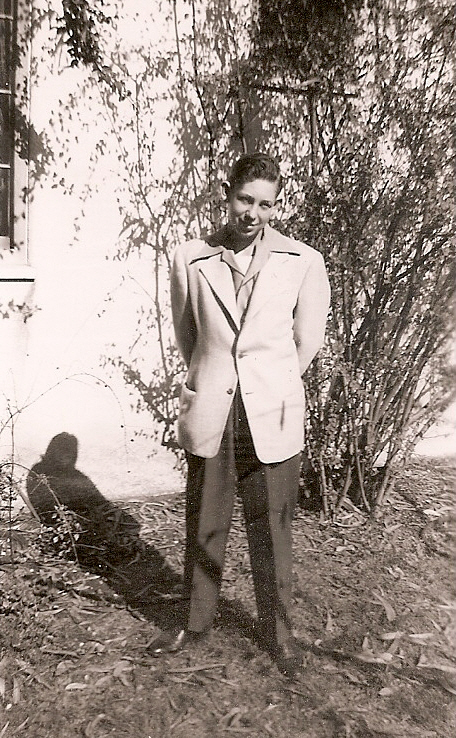
iii. Eleanor Gertrude Miner b. 14 May 1914 in Fowler, Fresno, California; m. Arthur Nobles;  d. 26 Dec 2004 in Bethel Lutheran Home, Selma, California.

Arthur Nathen Nobles was born 22 Apr 1909 in California.  In 1930, he was living with his parents Lenard W C Nobles (48) and Ida N Nobles (43) in Visalia, Tulare, California.  Arthur died 19 May 1996 in 93703  Fresno, Fresno, California

Eleanor Gertrude Miner Nobles

Eleanor Nobles passed away on Sunday, December 26, 2004, in Selma, CA. Mrs. Nobles is remembered for her fun-loving ways, elegant demeanor and gracious hospitality. Eleanor was born on May 14, 1914, in Fowler, to Anderson and Georgia Miner. In 1939, after graduating from Fresno State College, Eleanor wed Arthur Nobles of Visalia, a doctor of chiropractic. They moved to Fresno in 1967, and were active in People’s Church and other civic groups. The couple enjoyed 57 years together. Since 2001, Ms. Nobles resided at Bethel Lutheran Home in Selma.

Preceding her in death were her husband Arthur; and siblings, Mary Miner Powell, George Miner and Richard Miner.

Mrs. Nobles was survived by her brother, James Miner of Fresno; nephew, Bruce Miner; nieces, Andrea Miner Belau and Marilyn Miner Helsley. “Nornee” was dearly loved by great-nieces and great-nephews Douglas and Lauren Miner, Geoffrey, Sonja and Susan Belau, Christina, Lisa and Michael Helsley. Visitation will be held at Chapel of the Light Funeral Home on Wednesday, December 29, 2004, from 12:00 noon to 5:00 p.m. A Cryptside Service will be held at Chapel of the Light in Fresno on Thursday, December 30, 2004, at 9:30 a.m., followed by a Memorial Service at Pella Lutheran Church, 1505 Evergreen, Selma, CA 93662. The Family requests that remembrances be made to Bethel Lutheran Home, 2280 Dockery Ave., Selma 93662 or Pella Lutheran Church, 1505 Evergreen, Selma 93662.

iv. Anderson Richard Miner b.  4 Jun 1916 in Fowler, CA.  He went by his middle name Richard.  He was married four times, first to  Jean Fulton.  After their divorce, he married Elsie K. Lindegren, who had also been married before.  They resided in Fresno.   Upon Elsie’s death, (when he lived in Eugene OR) he  married Cleona _____?; after her death, he married Indamora _______?.  Richard died  23 Feb 2004  in Bellevue, King, Washington.

Richard and his first wife Jean had two sons, R. Bruce Miner and Jerald Glen Miner (9 Oct 1941 Fulton, Fresno, Calif. – 3 Nov 1996 San Francisco).  Richard Bruce Miner was born 25 Sep 1935 and lives in Eureka, Calif.   He and his wife Shirley have two children: Douglas Richard Miner of Silverdale WA  and Lauren J. Miner.  Douglas married Rhonda Lene Miner

Residences

1987 – Living at 137 Westbrook Way, Eugene, Oregon age 71?

1993 – Living in Apt 1113 at 350 Pearl Street, Eugene, Oregon age 77?

v. Mary Miner was born 8 Dec 1917 Fresno County, CA. She married Walter Milton Powell.  They had no children.  Mary died in April 1978.  Her last residence was  90277  Redondo Beach, Los Angeles, California. Her last benefit was  93657 Sanger, Fresno, California,

Sources:

Thomas Minor Family History

Ancestry.com US Census Records

http://trees.ancestry.com/tree/14930094/person/842292479

http://trees.ancestry.com/tree/27993940/person/5109712950

Posted in -5th Generation, 90+, Line - Miner, Storied | Tagged , , , | 9 Comments

Selden Miner

Selden MINER (1780 – 1842) was Alex’s 5th Great Grandfather;  one of 64 in this generation.

Selden Miner was born on 12 March 1780 in East Haddam, CT just like his fatherElihu MINER. His mother was Mrs. Mary DEAN.  He married Sally PEASE on 29 Nov 1810 in  Hartford, Connecticut when he was 30 years old. Selden died on 8 Sep 1842 at the age of 62.

Selden Miner was  born in  East Haddam CT

Sally Pease was born 9 Nov 1781 in Enfield, CT.   Her parents were Nathaniel PEASE III and [__?__].  When Selden died in 1842, her son Philo Miner went back to Connecticut and retrieved his mother and two youngest sisters to come live in Ohio.  In the 1860 census, Sally, age 75 [implying she was born in 1785  Barber’s Connecticut Genealogy lists a Sally Miner born 24 Apr 1786 in Lyme, Connecticut] was living with her son Edward in Williamsfield Township, Ashtabula, Ohio.  Sally died on 6 Jan 1871 in Mayfield, Cayuhoga County, Ohio at the age of 86.

1820 census – Hebron, CT:
1830 census – Hebron, CT
1860 census (Sally)- Kinsman, OH

Name Born Married Departed
1. Philo Sidney MINER Sr. 9 Sep 1811
Andover, Toland County, CT
Sophia L. POLLEY
14 Oct 1834 Lisbon, CT
14 Aug 1890, Bristolville, Trumbull, OH
2. Selden Harvey Miner 30 Jan 1815
Cahatham, Middlesex, CT
Anna Shepard
14 Feb 1838 Chatham, CT
17 Sep 1882
Mayfield, Cuyahoga, OH
3. Lorenzo Miner 19 Nov 1816 – Wexford, Hartford, CT 17 Nov 1818
4. Calvert Basset Miner 1 May 1817
CT
Elizabeth Ann Miner (Daughter of Horace Miner) 15 Mar 1864
(Living in Wayne, Ashtabula, Ohio 1850 Census)
5. Augustus Elliott Miner 27 Feb 1820 Jan 1849
6. Melissa Amanda Miner 9 Jul 1823
Andover, Tolland, CT
Ashahel Aiken (Asahel Akin, Aikens)
13 Jan 1848 Cuyahoga, Ohio
11 Jun 1895
Mayfield Heights, OH
7. Clarrisa (Clara) S Miner 14 Oct 1826 James Leroy Whiting 26 Sep 1903
Mayfield, Cayuhoga, Ohio
8. Edward Everett Miner 11 Dec 1832
Toland, New London, CT
Sybil Woodworth
10 Oct 1853
2 Jan 1898
Dunn, Wisconsin

Sally PEASE (Mrs. Selden MINER), came to Mayfield OH with from  Hebron, Conn., in 1843, the year after her husband died.   Some of her sons lived here, and after their father died, one of them went back for the mother and her two daughters, Melissa and Clara. According to reports at the time, she was a bright, capable woman.

Mayfield Township was organized in 1819, being split off from Chagrin Township. It existed until 1920, when the entire township was incorporated into several villages: Gates MillsHighland HeightsMayfield Village, and Riverside. Since then, these municipalities have changed: Mayfield Heights left Mayfield Village in 1925, Riverside joined Gates Mills in the late 1920s, and Lyndhurst annexed a small portion of the township.

When Cuyahoga County was founded, it was divided into civil townships for purposes of rural government, as were other Ohiocounties. By 1990, this county was the most urbanized county in Ohio, and as a result, most of its townships have been annexed by the city of Cleveland or one of the other municipalities in Cuyahoga County. In Ohio, when the entirety of a civil township has been annexed by one or more municipalities, it ceases to have governmental powers and becomes a paper township, existing on maps but possessing no governmental powers. Today, nineteen of Cuyahoga County’s townships are paper townships,

Mayfield is a village in Cuyahoga County, Ohio, United States. The population was 3,460 at the 2010 census and it is the headquarters for Progressive Auto Insurance. The village is officially named Mayfield, but is typically referred to as Mayfield Village.  Mayfield Village was rated the third best suburb of Cleveland by Cleveland Magazine for the second consecutive year and was once crowned the number one spot.

Mayfield, Cuyahoga, Ohio is situated about sixteen miles east of Cleveland. The Chagrin River winds through the town on its way to the lake.

Mayfield Township was in the northeast corner of Cuyahoga County, Ohio

Children

1. Philo Sidney MINER Sr.  (See his page)

2. Selden Harvey Miner

Selden’s wife Anna Shepard was born 11 Nov 1804 in Chatham, Middlesex, CT.  Her parents were George Shepard and Grace Hall. She was 11 years older than Selden

Selden Harvey Miner and his family were farming in Mayfield, Cuyahoga, Ohio in the 1850 census. His given name is listed as Sheldon.

In the 1860 census, Seldon, Anna, Isabella, William and Frederick were still farming in Mayfield.

In the 1880 census, Seldon and Anna were farming in Willoughby, Lake, Ohio and employed Adelia Damon age 34 as a house servant.

Children of Seldon and Anna

i. Isabella Miner b. 1838 Connecticut

ii. William A. Miner b. 1840 Connecticut;   m.  1884 to  Elizabeth (Libby)  C. [__?__] (b. 1850 New York)

William registered for the draft in 1863 in Mayfield, Ohio.  In the 1910 census, William and Libby were living in Cleveland, Ohio with their adopted daughter Edith E, Ormsby, now Edith Miner.

iii. Maria Miner b. 1841 Ohio; d. aft. 1850 census

iv. Frederick L. Miner b. 1846 Mayfield, Cuyahoga, Ohio; d. 11 Apr 1917  Mayfield, Cuyahoga, Ohio;   m. 17 Oct 1873 Mayfield to Nellie Cornelia Andrews (b. 1849 Wisconsin – d. 22 Apr 1925)  By the 1920 census, Nellie was widowed and living with their son Sterling Miner (b. 17 Aug 1874 Mayfield, Cuyahoga, Ohio) still in Mayfield, Ohio.

4. Calvert Basset Miner

Calvert’s wife Elizabeth Ann Miner was his 5th cousin.  She was born 20 May 1824 in Worthington, Mass., though some of her children’s census records state she was born in Vermont.   Her parents were  Horace Miner born 3 Feb 1801 and Elizabeth Brown.  Her ancestory is Horace 6, Nathan 5, Christopher 4, Thomas 3, Manassah 2, Thomas MINER 1

  • Her grandfather was Nathan Miner born 29 Mar 1771 d. 4 Jul 1854 Peru Mass.
  • Her great grandfather was Christopher Miner, born on 14 Jan 1743/44 in Stonington, CT.
  • Her 2nd Great Grandfather was Jonathan Miner, born on 25 Feb 1713/4 in Stonington, CT
  • Her 3rd Great Grandfather was Thomas Miner, born on 20 Sep 1683 in Stonington, CT
  • Her 4th Great Grandfather was Manassah Miner  born on 28 Apr 1647, the first white male child born in New London, CT.
  • Finally, her 5th Great Grandfather was Thomas Miner, born in Chew Magna, county of Somerset, England on 23 April 1608

Children of Calvert and Elizabeth

i. Ervin (Irvin, Irving) B. Miner b. Sep 1844 Ohio; d. betw. 1910 -1915 Ashtabula, Ohio.  m1. d Mary E [__?__] (b. 1845 Pennsylvania – d.  bef. 1900 census,) m2. 1902 to Betsy [__?__] (b. 1860 Ohio – d. Aft. 1930 census Geneva, Ashtabula, Ohio)  Betsy was previously married with one child.  In the 1880 census, Ervin was a peddler in Summit, Crawford, Pennsylvania. In the 1900 census, he was living in Geneva, Ashtabula, Ohio.  In 1915, Betsy was a widow living on 16 Eastwood Street, Geneva, Ashtabula.

ii. Eugene Calvert  Miner b. Jul 1847 Ohio; d. 10 Mar 1920, buried in Gustavis Township, Kinsman, Ohio; m. Sep 1869 to Alice Orinda [__?__] (b. May 1843 Ohio – ) In the 1900 census he was a farmer in Wayne, Ashtabula, Ohio.

iii. Minnie Miner b. 1855 Ohio; m. Thomas Ford (b. Sep 1845 Crawford, Pennsylvania – d. 29 Jan 1919 -Massillon, Stark, Ohio) His parents were Andrew M. Ford and Susana A. Boggs.  Thomas was an interesting character.  In the 1880 census, Thomas was a showman living with his mother-in-law Elizabeth in Wayne, Ashtabula, Ohio.   In the 1900 census, Thomas was a manager of a circus in Geneva, Ashtabula, Ohio. In the 1910 census, he was an inventor and manufacturer.

iv. Stiles L. Miner b. Apr 1857 Ohio   d. 3 Sep 1938 Geneva, Ashtabula, Ohio; m. 1885 to Jennie Minier (b. Oct 1863 in Pennsylvania; d. 1 Dec 1930 in Cleveland, Cuyahoga, Ohio.)  Her parents were Samuel G. Minier (1825 – 1903) and Amanda Morley (1833 – 1872).  In the 1920 census, Stiles was a house painter in Cleveland, Ohio.

v. Anna E Miner b. 29 May 1858 – Wayne Township, Ashtabula, Ohio; d. 25 Nov 1939 – Geneva, Ashtabula, OH;  Anna was living at home in the 1880 census.; m. 25 Dec 1886 Ashtabula County, Ohio to Dillon P. Wright (b. 17 Jan 1852 in Harpersfield, Ashtabula, OH – d. 02 May 1932 in Geneva, Ashtabula, Ohio) His parents were Jonathan Wright(1810 – 1884) and Lucretia Woolsey (1819 – 1906)

6. Melissa Amanda Miner

Melissa’s husband Asahel Akins was born 13 Jan 1825 in Euclid, Cuyahoga, Ohio. Early in our history, free form spelling was common, but was becoming more unsual by Asahel’s time.   He was baptized Aschel Pelton Aikins 24 Jun 1827 in the First Presbyterian Church, East Cleveland, Cuyahoga, Ohio.  I have seen Asahel, Ashael, Aschel, Asabel, Asahel, Asel and Akins, Aikens, and Akin.

His parents were Robert Akins and Anna Pelton.  In the 1900 census, he was living with his son Horton in Mayfield, Ohio.  Asahel died 24 Feb 1910 in age 85 in South Euclid, Ohio according to the Sandusky (Oh) (Daily) Register, Sandusky, Ohio of 26 Feb 1910

In 1896 it was reported Melissa (Miner) Aiken  was a noble Christian woman, interested in all works of charity and love, and although an invalid a good share of her life, her hands were never idle. Many will remember her “cheerful countenance, which doeth the heart good like a medicine.” Truly may it be said of her:

“The sweetest lives are those to duty wed,
Whose deeds, both great and small,
Are close-knit strands of one unbroken thread,
Where love ennobles all.”

Children of Melissa and Asahel

i. Francis Asahel Akins b. 2 Jan 1849 in Mayfield, Ohio. Francis attended Baldwin University of Berea, Ohio. He was a farmer and secretary State Grange. He was president of the state of Mutual Fire Insurance associations; in 1890 was elected secretary of the Ohio State Grange Patrons of Husbandry, and received the re-election for four successive terms.

ii. Estella (Stella) Aikens b. Feb 1850 Ohio In the 1880 census, Estella was living at home in Mayfield, Cuyahoga, Ohio and working as a seamstress.

iii. Horton Pelton Akins b. 11 Nov 1856 Ohio; d. 9 Oct 1912 Mayfield, Cuyahoga, Ohio; m. 1 Jan 1880 – Cuyahoga, Ohio to Ethel Iva Richmond (b. 17 Jun 1857 in Euclid, Cuyahoga, Ohio – d. 27 Jan 1924 in Cuyahoga, Ohio) Her parents were William W. Richmond (b. 1831) and Sophia J. Wenton (b. 1835). Horton was a farmer in Mayfield in the 1900 census

7. Clara S Miner

Clara’s husband James Leroy Whiting was born about 1822 in New York.  His parents were Samuel Whiting and Sarah [__?__].  In the 1850 census, he and Clara [listed as Clarisse] were farming with his parents in Mayfield, , Cuyahoga, Ohio. In the 1860 and 1870 censuses, the four were still farming together in Mayfield.  Leroy’s mother’s name is recorded as Sally for those years and his wife is listed as Clarissa in all three censuses. By the 1880 census, Leroy’s parents had passed on and Leroy and Clarissa’s only son Charles (b. 1852 in Mayfield, OH) was a 28 year old widower living at home. By the 1900 census, Charles had remarried to Lizzie B. [__?__] in 1896, Leroy had passed on and Clara was living with her son and daughter-in-law.  Charles and Lizzie didn’t have any children and continued to live in Mayfield through the 1920 census.

In 1896 Clara Mrs. Leroy Whiting had been a worker in the Sunday school for many years. A young lady in her class said: “She is one who will never grow old, for she is so in sympathy with young people.”

Children of Clara and James:

i. Charles L. Whiting b. Jul 1851 Mayfield, Ohio m1. [__?__] ( – v. 1880); m2. 1896 to Lizzie B. [__?__] (b. 1859 Ohio – After 1940 census)  d.  after 1930 census Mayfield, Ohio  Charles was a farmer.

8. Edward Everett Miner

Edward’s wife Sybil Woodworth was born 10 Jun 1831 in Ashtabula, Ohio. Her parents were Samuel Woodworth and Aurilla [__?__]. Sybil died 24 Apr 1927 in Ashtabula, Ohio.

Edward Everett Miner has a grave marker in Ninevah Cemetery, Rome Township, Ashtabula, Ohio even though he is interred in Wisconsin.  This cemetery is located on Callender Rd., off Crosby-Cook Rd,

Child of Edward Everett and Sybil

i.  Carrie Miner b. 1854 Ohio; m. 1871 to Samuel L Alexander (b. Feb 1846 in Pennsylvania – )  In the 1905 Wisconsin census, Sybil was living with Carrie and Samuel in Stanley, Chippewa, Wisconsin.  In the 1910 census, Carrie, Samuel and Sybil were living in Fond du Lac, Wisconsin where Samuel was the manager of a brickyard.

ii. Emma A Miner b. 27 Jan 1857 Ashtabula, Ohio; d. 18 Oct 1938; Ashtabula, Ohio; m. Winfred Eaton Rowland (b. 27 Aug 1853 in New Lyme, Ashtabula, Ohio – d. 27 May 1937 in Rock Creek, Ashtabula, Ohio)

iii. Frank Miner b. Jun 1860 Ohio  Frank was still living at home in the 1880 census. and like his father, working as a carpenter.

iv. Albert Miner b. 1870 Ohio Albert does not appear in the 1880 census.

Sources:

http://trees.ancestry.com/owt/person.aspx?pid=6637434&st=1

http://files.usgwarchives.net/oh/cuyahoga/history/Mayfield.txt

Thomas Minor Family HistorySelden Miner

Cuyahoga County Gen Web – 1896 Mayfield

Posted in -7th Generation, Line - Miner | Tagged , | 8 Comments

Sgt. Elihu Miner Jr.

Sgt Elihu MINER Jr. (1745 – 1821) is Alex’s 6th Great Grandfather, one of 128 in this generation.

Elihu Miner was born on 2 Sep 1745 in East Haddam, son ofElihu MINER Sr and Keziah WILLEY.  He married Mrs Mary DEAN about 1769 in Sharon, Litchfield, CT.  They lived in East Haddam, CT.  Elihu died 31 May 1821 in East Haddam CT.

Elihu was born and died in East Haddam, Middlesex, Connecticut

Mary [__?__] Dean was born about 1749 in Sharon, Litchfield, Connecticut.  Alternatively, Mary was born in East Haddam, CT.  Mary first married Israel Dean in 1763. Their first child, Amos Dean was born in 5 Aug 1764 in Marlborough, Hartford, CT and second child Lydia Dean was born 28 Feb 1767 in Salisbury, CT.   Mary belonged to the Hadlyme Congregation Church.  Mary died in 1782 in East Haddam, Connecticut.

Sharon, CT

Mary’s son Amos Dean married Marilvah Ingham on 5 Nov 1795 – Hebron, Tolland, CT.    Amos died 17 Sep 1844 in Marlborough, Hartford, CT.

Mary’s first husband Israel Dean (Israel Doane or Done?) was born about 1740 in Colchester, New London, CT.  His parents were Seth Dean (7 Apr 1697, Rehoboth, Bristol, Mass – 29 Nov 1758, Canaan, Litchfield, CT) and Ann Skinner (01 Oct 1700, Colchester, New London, CT – ).  Seth and Ann were married 29 Oct 1721 in Colchester, New London, CT.   In 1762, an Israel Dean was in the 2nd Connecticut Regiment commanded by Colonel  Nathan Whiting. Israel was in the 8th Company under the command of Capt. Samuel Elmer.  Israel died in 1768 in Salisbury, CT.

Children of Elihu and Mary all born in East Haddam, CT:

Name Born Married Departed
1. Molly Miner (twin) 15 Feb 1769/70
East Haddam, CT
before 1790
2. Sarah Miner (twin) 15 Feb 1769/70 before 1790
3. Israel Miner 4 May 1772 before 1790
4. Elihu Miner 1 Aug 1774 before 1790
5. Azel Miner 12 Sep 1777 Sylvia Munson
1 Jan 1802
Ontario, NY
21 Oct 1829
New London, Ohio
6. Selden MINER 2 Mar 1780 Sally PEASE
29 Nov 1810
Hartford, CT
8 Sep 1842
Connecticut
7. Chauncy Miner 31 Aug 1782 before 1790
    • Elihu enlisted 12 May 1775, 1st Company, Col Joseph Spencer‘s 2nd Connecticut Provincial Regiment

Elihu’s commanding officer Col Joseph Spencer

  • Served at the Siege of Boston,  Bunker Hill, and Arnold’s expedition to Canada.
  • He enlisted again 4 Mar 1777, in Capt Eliphalet Holmes 1st Connecticut Regiment, Col Jedediah Huntington‘s Brigade.
  • Dec 1777 – Jan 1778 On Command
  • Feb 1778 – On Command at Fishkill .  During the Revolution, Fishkill New York was the site of a large supply depot. The depot supplied the northern department of the Continental Army, who were responsible for securing the Highlands and keeping the British from moving north of New York City.
  • Mar 1778 – Sick at Fishkill
  • Apr – Jun 1778 – Tending Sick at Yellow Springs.     America’s first true military’ hospital constructed for that purpose was built at Yellow Springs, a popular health spa about 10 miles west of Valley Forge.  About 300 sick men were accommodated in the large three-story wood structure.

    Yellow Springs Revolutionary War Hospital

  • Washington once visited the Yellow Springs Hospital and stopped to exchange a few words with each patient. Dr. Bodo Otto, an elderly German and his two physician sons, ran the hospital until the end of the war.
  • Much of the sickness was traceable to unhealthy sanitation and poor personal hygiene. Washington constantly complained of the failure to clear the Encampment of filth, which included rotting carcasses of horses. The Commander-in-Chief even issued orders concerning the use and care of privies, but men relieved themselves wherever they felt.  In the absence of wells, water was drawn from the Schuylkill River and nearby creeks. Men and animals often relieved themselves upstream from where water for drinking was drawn.
  • Elihu enlisted third time as Sgt in Capt Zechariah Hungerford’s Company, Col. Samuel McClellan‘s Connecticut militia.
  • Elihu probably participated in the Battle of Groton Heights which was very near his home in East Haddam.
  • He filed for pension, S-36135, 14 Apr 1818 in Middlesex Co, CT.

Elihu Miner – Revolutionary War Pension


Mary belonged to the Hadlyme CongregationalChurch, and Elihu was confirmed in St. Stephen’s Episcopal Church, East Haddam.

Elihu is listed in the East Haddam CT census in 1790, 1800, 1810 and 1820

More About the Deans

Israel’ father Seth Dean’s birth is documented in “A Genealogical Dictionary of the First Settlers of New England” by James Savage, vol. 2, page 578. Supporting documentation comes from the John Ward Dean papers which include notebook with handwritten account of “John and William Dean of Dedham” in the NIHGS Archives at Boston, Massachusetts. This also agrees with the LDS Temple Ordinance Archive Record family sheet of William and Mehitable (Wood) Dean at Salt Lake City, Utah. His marriage to Ann Skinner is documented in the Colchester, Connecticut Vital Records, 1699-1850, Arnold Copy, Barbour Collection, FHL roll #0002968, citing Colchester vol. L(and)-1, p. 444. Further documentation is found in “Extracts from the Records of Colchester, Connecticut” by Michael Traintor, 1864, p. 85. According to records of Sylvia Dean Phillips, 1981, Seth and Ann (Skinner) Dean family lived in Hebron, Connecticut.

In an abstract from Cochester v. Hebron, Hartford Superior Court, 1761, 1764, relating to the cost of care for Joseph Dean, part of notes received by Ken Dean from Sylvia Dean Phillips of Medina, Washington: In 1740–Seth Dean was in the Oblong, while his family was in Colchester; 1742, spring–Seth and eldest son went away and left rest of the family in Hebron; 1743–Seth returned for his family; 1757(about)–They returned to Colchester from Salisbury; 1761, Sept.–Seth (Jr.) and Oliver Dean of Salisbury summoned as witnesses; also Abner Dean.

Ann Skinner (Wife) b. 1 Oct 1700 in Colchester, New London, CT.

Marriage: 29 Oct 1721 in Colchester, New London County, Connecticut

Children (Israel’s brothers and sisters)  Many of their spouses maiden names are also unrecorded, but we do have Jane Isham, Rachel Jones and Lydia Hills:

i. Seth Dean b. 8 Sep 1723 in Lebanon, New London, CT; d. Aft. 1786; m. Sarah [__?__] c.  1746

ii. Joseph Dean b. 13 Jun 1725 in Lebanon, CT; d. After. 1764

iii. Abner Dean b. 25 Aug 1729 in Lebanon, CT; d. 11 May 1821 in Marlboro, CT; m1. Jane Isham in 1752 ( b. 2 Feb 1733/34 in Colchester, New London, CT); m2. Mary Bliss

iv. Oliver Dean b. 1731 in Lebanon, CT; d. 19 Oct 1820 in Canaan, Litchfield, CT; m.Mary (Wife) (b. 1742 – )

v. John Dean b. About. 1733 in Colchester, New London, CT; d. 29 Apr 1827 in Canaan, Litchfield, CT;  m. Rachel Jones 1 Mar 1759 in Caanan, Litchfield, Connecticut (b. About. 1741 in Canaan, Litchfield, CT)

vi. Ann Dean b. 1736; d. 9 Oct 1738

vii. Uriah Dean b. 1738; d. 1738

viii. Esther Dean b. About. 1740 in Unknown

ix. Israel Dean b. About. 1740 in Unknown m.  Mary [__?__]

x. Amos Dean b. About. 1745 in Colchester, New London, CT; d. 10 Apr 1821 in Marlboro, CT; m. Lydia Hills about 1773 in Hebron, CT  (b. 13 Oct 1750 in Lebanon, CT – ) m2. Sybil Gates 10 Apr 1821 in Marlboro, CT (b. 3 Mar 1760 – )

xi. Isaac Dean b. Unknown in Unknown

.
Children

5. Azel Miner

Azel’s wife Sylvia Munson was born 18 Aug 1782 in Ontario, Wayne, New York. Her parents were Stephen Munson and Ann Cogswell.  Alternatively, her mother was Lucenia Russell.   Her brother Nathan also moved to New London, OH in 1817.  Sylvia died 6 Jan 1853 in New London, Ohio and is buried in Butterfield Cemetery , New London, Huron County, Ohio

In the year of 1815 Albert and his family moved from New York to New London, Huron County, Ohio.  In the 1820 census, Azel and Sylvia were living in New London, Huron, OH.  New London is part of the The Firelands or Sufferers’ Lands tract located at the western end of the Connecticut Western Reserve.   The land was set aside for residents of the Connecticut towns of Danbury, Fairfield, Greenwich, Groton, New Haven, New London, Norwalk, and Ridgefield who lost their homes in 1779 and 1781 due to fires set by British forces during the American Revolutionary War.

In 1792, the Connecticut legislature set aside 500,000 acres for the Sufferers at the western end of the Western Reserve, consisting of all of the present-day counties of Huron County and Erie County (except for a small piece in the west) as well as Danbury Township and part of Catawba Island Township in Ottawa County and Ruggles Township in Ashland County.
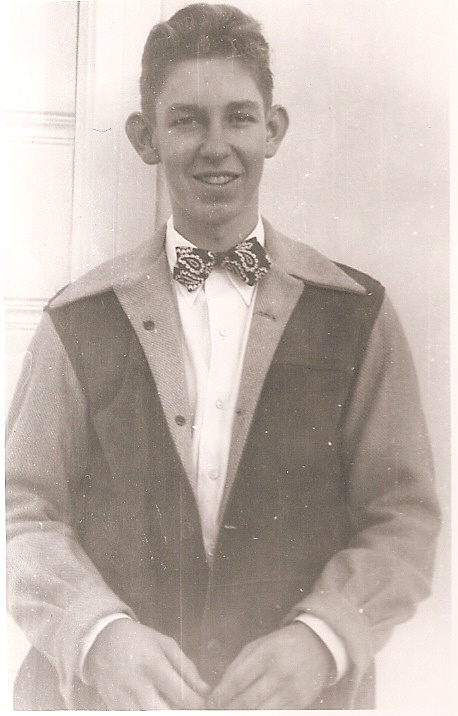
The Fire Lands, Huron County are on the left of this 1826 map  of the Western Reserve  Azel and Sylvia moved to New London township which is on the eastern border of Huron County, one township up from the southern edge.

About 30 towns, cities and villages ended up being situated in the Firelands near the southern shore of Lake Erie.

However, very few of the original “Sufferers” ever settled in the Firelands, as the land was not given for settlement until many years after the war. Even then, the land was not readily hospitable due to Indian hostilities prior to and during the War of 1812 and the necessity of clearing dense forests from most of the land so that it could be used for farming purposes.

On April 15, 1803, the Sufferers, or their heirs, legal agents, and purchasers of their deeds, formed a corporation to manage the lands to which they were entitled in the newly formed state of Ohio. The land was divided into 30 five mile square survey townships, which were further subdivided into 120 quarters, each containing 4,000 acres. (Note: Although the standard for U.S. survey townships in the Northwest Territory was six miles square at that time, the older standard for survey townships in the Western Reserve was employed.) A drawing was held to determine the land received by each individual. Many of the local communities and townships in the Firelands are named for locations in Connecticut.

In 1809, Huron County was formed from the entire Firelands. For the next 30 years, all of the Firelands would lie within – and therefore co-exist with – Huron County.
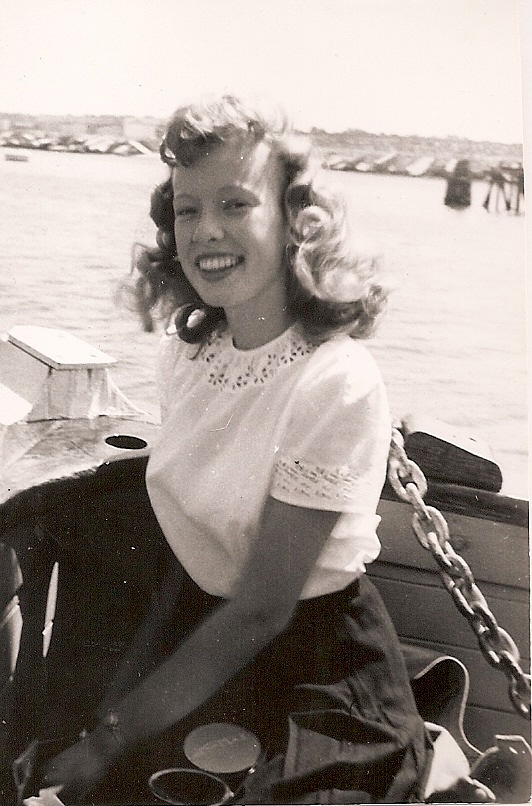
The population of New London, Ohio was 2,696 at the 2000 census. New London is thoroughly Midwestern, and the village’s economy is closely tied to agriculture and manufacturing. Although well within the Great Lakes region and arguably located at the center of the Rust Belt, significant influences from New England and the South have contributed to New London’s cultural identity. The village was founded by settlers from Connecticut  along with neighboring communities in the Firelands in the early nineteenth century. The village’s New England heritage is most evident in its architecture, the names of local families, and the presence of a village green (a common characteristic of many cities and towns in Northern Ohio).
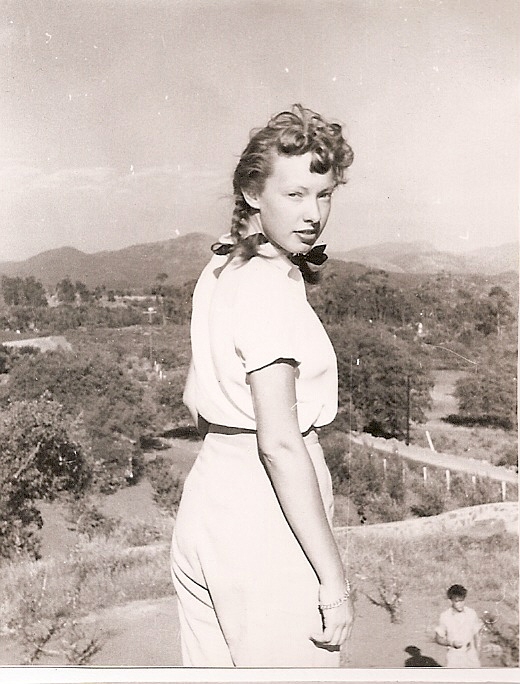
In the 1850 census, Silva was living with her son Asel in New London, Huron, Ohio.

Azel Miner Headstone — Butterfield Cemetery New London Huron County Ohio

Children of Azel and Sylvia

i. Polly Elmina “Emma” Miner b. 13 Sep 1803 Genesee County, NY.   The County was not fully organized so it remained under the supervision of Ontario County until it achieved full organization and separation during March 1803;  d. 11 Oct 1875 in Turtle Township, Beloit,  Rock County, Wisconsin;  m. 19 Sep 1821 New London, Huron County, Ohio to Philo Thomas Porter  (b. 23 Oct 1795 in Connecticut – d. 30 May 1876 in New London, Huron, OH)  His parents were Thomas Porter (b.1770) and Phebe Bassett (b. 1775)
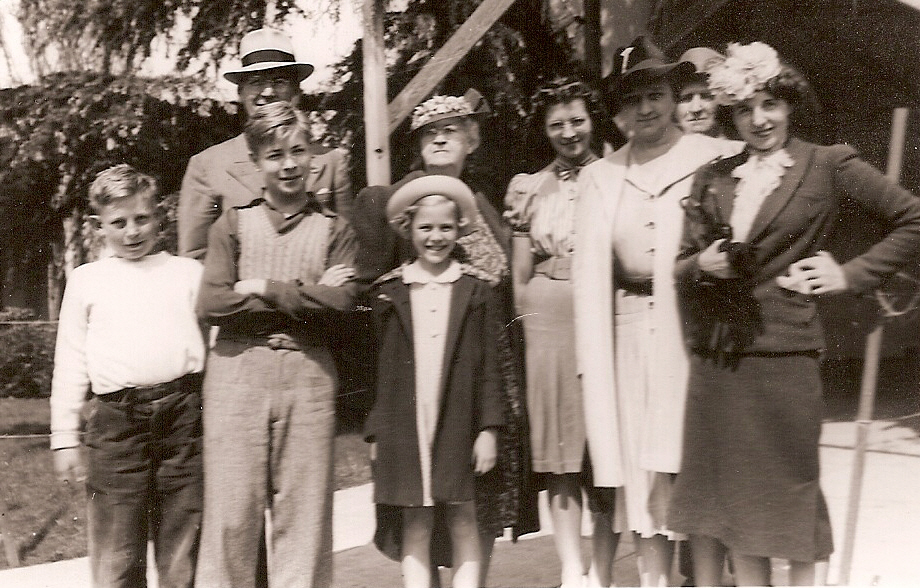
In the 1850 census, Philo T and Polly were farming in New London, Huron, Ohio with seven children at home ages 5 to 26.

ii. George Miner b. 13 Feb 1804  Jefferson County, NY; d. 25 Jul 1861 New London, OH; m1. ~1829 NY to Sarah Palmer (b. ~1808 New York), m2. ~1839 to Susan Nobles Stanley (b. 1810 NY)
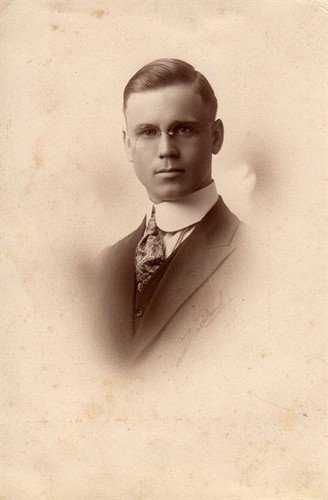
In the 1850 census, George was a widower farming in New London, Ohio with seven children at home

Blockquote>Amos (1830 – ?) m Nancy Saxton
Mahala (8 Sep 1832 – ?) m Alva Peck
Ira P (1836 – ?)
Edward (1808 – ?) m. Lydia Baker -> New London, OH
Lydia (1840 – ?)
Ann Elizabeth (5 Aug 1842 – 24 Mar 1922) m Alva Peck
Sarah A (1847 – ?) m David Crissey

iii. Almira Miner b. 20 Jan 1806 NY; d. 9 Jul 1809)

iv. Albert Miner b. 31 Mar 1809 NY; d. 3 Jan 1848 Selma, Van Buren County, IA; m. 9 Aug 1831 in New London, OH to Tamma Durfee (6 Mar 1813 – 30 Jan 1885)
Converted to Mormon in Feb 1832. Moved to Kirtland, OH in May 1832. Moved to IL in 1842. Tamma moved to Salt Lake in 1850 and married 2nd Enos Curtis on 20 Oct 1850. Tamma married 3rd John White Curtis in April 1857.  Albert was a personal body guard for Joseph Smith, but didn’t make it all the way to the promised land in Utah. See the dramatic story of Albert and his family in my post Albert Miner.

v. Amos Deen Miner b. 21 Jun 1812 NY; d. 17 Apr 1827

vi. Joel Miner b. 12 Feb 1816 in Genesse, New York; d. 10 Mar 1884 in Clinton, Rock, Wisconsin; m. 10 Mar 1838 – Genesse, Allegany, New York to Charlotte Adeline Treat (01 Jun 1819 in Angelica, Allegany, New York –  Aft. 1 Jun 1905 census Clinton, Rock, Wisconsin age 86)   Charlotte’s parents were Amaziah Treat (1790 – 1839) and Sally Colvin (1790 – 1854).  Joel and Charlotte had seven children born between 1839 and 1863.

Many genealogies say that Joel died in 1874, but I found a record for him and C. Adeline in Turtle, Rock, Wisconsin in the 1880 census.  They also say he was born in New London, Ohio, but the 1850, 1860, 1870 and 1880 censuses all show New York.

While they married in 1838 in New York, by the 1840 census, they had moved to Huron, Ohio and by 1845 to Wisconsin.  In the 1860 census, Joel and Adeline were farming in Turtle, Rock, Wisconsin.  Their daughter Jane (age 21) was teaching school.

vii. Asel Miner b. 19 Apr 1822 OH; d. 4 Mar 1910 New London, Huron County, Ohio; Burial: Grove Street Cemetery;  m. 28 Oct 1847 to Harriet Peck  (7 Jul 1831 New York – d. 23 May 23 1901 New London, Huron County, Ohio; Burial: Grove Street Cemetery)

In the 1860 census, Asel and Harriett were farming in New London, Huron, Ohio.

6. Selden MINER  (See his page)

Sources:

Elihu Miner Sons of the American Revolution Application

Thomas Minor Family HistoryElihu Miner

http://www.gencircles.com/users/ttuagr162/2/data/229680

http://www.genealogyofnewengland.com/b_m.htm

http://www.gencircles.com/users/ndenis/1/data/1123

Posted in -8th Generation, Line - Miner, Missing Parents, Twins, Veteran | Tagged , , , , , | 11 Comments