Thomas Harvey

Thomas HARVEY (1617 – 1651) was Alex’s 11th Great Grandfather; one of 4,096 in this generation of the Miner line.

Thomas Harvey was born in 1617 in Ashill, Somerstshire, England. His parents were Thomas HARVEY Sr. and Joan COLLIER.  He married Elizabeth ANDREWS. in 1642 in Taunton, Mass. Thomas died in 1651 in Taunton Mass., aged only thirty-four years.

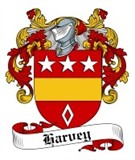
Harvey – Coat of Arms

Elizabeth Andrews was born in 1614 in Stoneham, Southampton, Hampshire, England. Her parents were Henry ANDREWS and Elizabeth BOND.   Elizabeth’s father emigrated to Dorchester, Mass in 1636, but returned to England and died in 1638 in Ashill, Somerset, England.  Alternatively, Elizabeth emigrated with her brother Henry Jr.   After Thomas died, she married (second) Francis Street, of Taunton, to whom she bore one daughter. She married (third) Thomas Lincoln, the miller, of Taunton on 10 Dec 1665. Lincoln died in 1683, and his widow in 1717, aged one hundred and three years.

Francis Street was born in 1612 in England. Francis died in 1665 in Taunton, Bristol, Mass.

There was a Thomas Lincoln born 28 Dec 1600 in Swanton, Morley, Norfolk, England. His parents were Thomas Lincoln (1576 – 1675) and Bridget Gilman (1582 – 1665). That Thomas Lincoln has a stone and death date in Swanton Morley of Dec 1614. Thomas Lincoln the miller’s lineage is unknown, as is his birthplace. This is supported by the fact that the Y-DNA type of his descendants is Haplogroup G2a, whereas the descendants of the Swanton Morley family are Haplogroup R1b, a completely different and unrelated type. The error that the miller was the Swanton Morley Thomas Lincoln has been around for many decades, and now is propagating on the internet, but is not true.
More info can be found at http://www.lincoln-family.com and at https://www.familytreedna.com/public/Lincoln/default.aspx  Our Thomas died 28 Sep 1691 in Taunton, Bristol, Mass.

Children of Thomas and Elizabeth:

Name Born Married Departed
1. Thomas Harvey 1643 Taunton Mass. Experience Harvey
(Thomas’ first cousin)
1726 in Taunton Mass
2. William Harvey 1645 in Taunton Mass.. [__?__]  1726
3. John HARVEY 1647 in Taunton, Bristol, Mass. Elizabeth WILLEY
1675 in Taunton, Bristol, Mass
18 Jan 1705 Lyme, New London, Connecticut.

Thomas arrived from England with brother William about 1636 and settled at Dorchester, MA.  In 1638 he moved to Chasset, Mass.  and from there to Cohannet (Taunton),  about 1640 where he and his brother was among the first settlers.  He deposed 8 Nov 1638, that he was aged twenty-one years, and between 1639 and 1642 he became a proprietor of Taunton. His name was on a list of those able to bear arms in 1643.


Taunton, Mass

Thomas Harvey was not one of the “first and ancient purchasers” of Cohannet, as his brother William was, in part because he was under age 21 at the time. But between 1639 and 1642 he and 13 others were admitted as “proprietors” of Taunton upon the payment of 12 shillings each. It was voted that these “12-shilling men” would have a right in future divisions of land.

In 1643, by order of the General Court, a list of “all the males able to beare Armes from 16 yeares old to 60 yeares,” was made. Taunton’s list contained 54 names, only one of the them being a Harvey — Thomas Harvey. (Brother William was living in Boston at the time).

Thomas Harvey appears on the list “able to bear arms from sixteen to sixty years” in 1643; was a sergeant in the army 1673; constable 1678; surveyor of highways 1681; Thomas Harvey and Thomas Harvey, jr., admitted as freemen in 1689.

Also among the purchasers of an important addition to the town in 1668 called the North Purchase, now including Norton, Easton and Mansfield, were Thomas Harvey, the elder, Thomas Harvey, jr, and his brother William Harvey.

Taunton was established March 3, 1639, from common land called Cohannett. The majority of the early settlers came from Dorchester in the Massachusetts Bay Colony. By 1640 the 46 original purchasers had adopted the name Taunton. The town expanded with the North and South Purchases, and eventually contracted as daughter towns became independent.

Perhaps the earliest industry here was the smelting of bog iron, which began in the mid-seventeenth century. Among the notable products of the town’s iron industry were anchors for ships including the U.S.S. Constitution. Metalworking has long been a major area of industry here, including iron products from shovels to locomotives, and silversmithing has at times been especially prominent.

The town’s locaion, at the head of navigable waters on the Taunton River, made it an inland seaport. That made possible local industries such as shipbuilding, shipping and coastal trade, and fishing. Water power from the river drove the growth of factories, including textile mills. Clays found in the area spawned brick and stoneware industries.

Taunton played a prominent role in King Philip’s War, and has distinguished itself in all American wars from the Revolution to this time. In 1774 the Liberty and Union Flag, which some regard as the first American flag, was raised on the Green in defiance of the English crown, and still flies in many places in the city today.

The town became the seat of Bristol County in 1746, and became a city in 1864. It has the largest land area of any city in the Commonwealth. It has grown from a population of 3,804 in the 1790 census to 55,976 in 2000.

Children

1. Thomas Harvey Jr.

Thomas Jr. was a restaurant owner.  He owned one of the first recorded “ordinary” or eating house in Taunton, Mass.    He married, in 1668, Experience, daughter of William Harvey (2), his uncle. Her brother Thomas married Elizabeth, daughter of Deacon John Willis, of Bridgewater.  Thomas  was an original owner of lot 77 in Taunton South Purchase;

Thomas was Sergeant  in the Taunton Military Company.  In 1673, raised to march against the Dutch in New York and New Jersey; was grantee in the Bradford deed of Taunton in 1689. He was impressed for service in King William’s war. He deeded to his son Ebenezer the homestead of four hundred acres, adjoining the farms of his sons Thomas and Ebenezer, on the highway leading to Brown’s Brook, in consideration of love, etc., and with the obligation to care for his sisters Experience and Mary, as well as his parents, while they lived. Thomas died in 1726; his wife in 1720.

2. William Harvey

William was impressed as a soldier in British Army on 25 July 1697.

Sources:

http://mysite.verizon.net/rjharvey2/hharvey/pafg06.htm#18530

http://familytreemaker.genealogy.com/users/b/r/y/Frank-Nicholas-Bryan/GENE1-0082.html

http://trees.ancestry.com/owt/person.aspx?pid=129438387

Genealogical and family history of the state of Maine, Volume 4 By Henry Sweetser Burrage, Albert Roscoe Stubbs

http://trees.ancestry.com/tree/13922105/person/19014490?ssrc=

Posted in 13th Generation, 90+, Immigrant - England, Line - Miner, Pioneer, Public Office, Veteran | Tagged , | 6 Comments

John Harvey

John HARVEY (1647 – 1705) was Alex’s 10th Great Grandfather; one of 2,024 in this generation of the Miner line.

John Harvey was born 1647 in Taunton, Bristol, Mass. His parents were Thomas HARVEY and Elizabeth ANDREWS. He married Elizabeth WILLEY 1675 in Taunton, Bristol, Massachusetts. John died 18 Jan 1705 in Lyme, New London, Connecticut.

Elizabeth Willey was born 1650 in Taunton, Bristol, Massachusetts. Elizabeth died 9 Jan 1705 in Lyme, New London, Connecticut.

Interestingly John, spouse Elizabeth, and twins all died within days of each other in January 1705. Perhaps there was a fire, Indian attack, epidemic????

Children of John and Elizabeth:

Name Born Married Departed
1. John Harvey
1676 Taunton, Bristol, Mass Sarah [__?__]
1709
Lyme, New London, CT
23 Dec 1767
North Lyme, CT
2. Thomas Harvey 1678 in Taunton, Abigail Smith
25 Nov 1702
Lyme, CT
Mar 1725
North Lyme, CT
3. Elizabeth HARVEY 1680
New London, New London, Connecticut.
John WILLEY II
16 Oct 1698 New London, CT.
1752 Hadlyme, Connecticut.
4. Mary Harvey 1682 Taunton, Bristol, Mas 10 Jan 1705
Lyme, CT
5. Sarah Harvey 1682 Taunton, Bristol, Massa 13 Jan 1705
Lyme, CT

From the Harvey book, O.J. Harvey, 1899

In December 1675, 1000 colonists marched to the settlement of the grouped Indians. They killed over 600 warriors, and well over 1000 women and chidlren. Any survivors of this raid were hunted down and killed. 200 of the colonist band died in this fight.

John Harvey was said to be wounded but not disabled in this fight.

In 1686, Mr. Harvey purchased land of Isaac WILLEY which lay mostly within the limits of Lyme, Conn.  This was in what is the present town of Salem, which was formed in 1819 out of portions of Lyme, Colchester and Montville.

From “A National Register of the Society, Sons of the American Revolution,” by the Sons of the American Revolution, and concerns the genealogy record of Edwin Clinton Harvey.

In November 1675, John Harvey enlisted from Charlestown, Massachusetts as a soldier in Major Samuel Appleton’s Battalion and marched with it from Dedham into the Narragansett country and was “wounded but not disabled,” at the ‘Great Swamp Fight.”

John was granted an island formerly known as Harvey Island (now Carey Island) by the town of Lyme on 14 Dec 1696.  John’s son John, held numerous local offices in Lyme, and as the eldest heir of his father was allocated two parcels of land in Narragansett township No. 1 (now Buxton, Maine), by order of the General Court of Massachusetts in recognition of his father’s services in the Indian Wars.

Children

1. John Harvey

John’s wife Sarah [__?__] was born 1684 in Lyme, New London, CT.  Sarah died 2 Oct 1754 in Lyme, New London,

2. Thomas Harvey

Thomas’ wife Abigail Smith was born 8 Sep 1682 in Lyme, CT  Her parents were Richard Smith and Elizabeth Lay.  Abigail died 2 Feb 1762 in East Haddam, Middlesex, CT.

3. Elizabeth HARVEY (See John WILLEY II‘s page)

Sources:

http://trees.ancestry.com/owt/person.aspx?pid=15234842&st=1

http://mdhervey.com/search.php?mylastname=Harvey&myfirstname=John&mybool=AND&search=Search

http://trees.ancestry.com/owt/person.aspx?pid=15188704

Posted in 12th Generation, Line - Miner, Missing Parents, Twins, Veteran | Tagged , | 7 Comments

John Willey II

John WILLEY II (1675 – 1754) was Alex’s 9th Great Grandfather; one of 1,024 in this generation of the Miner line.

John Willey was born 24 Feb 1675 in New London, New London, Connecticut. His parents were John WILLEY I and Miriam MOORE. He married Elizabeth HARVEY 16 Oct 1698 in New London, CT. John died 19 Jun 1754 in New London, New London, CT.

Elizabeth Harvey was born in 1680 in New London, New London, Connecticut. Her parents were John HARVEY and Elizabeth WILLEY.  Elizabeth died in 1752 in Hadlyme, Connecticut.

Children of John and Elizabeth:

Name Born Married Departed
1. John WILLEY III 24 May 1699 in East Haddam CT Sarah SAUNDERS
5 Apr 1722  East Haddam, CT
13 Nov 1743 in East Haddam, CT
2. Allen Willey 29 Sep 1700
East Haddam
Mehitable Richardson
7 May 1730 East Haddam
5 Feb 1780
East Haddam
3. Elizabeth Willey 29 Dec 1701
East Haddam,
Ebenezer Cone
1722
East Haddam
29 Aug 1767
East Haddam
4. Mary Willey 13 Dec 1703
East Haddam
3 May 1718
5. Joseph Willey 16 Apr 1705 in East Haddam Lucretia Holmes
22 May 1727 East Haddam
.
Rebecca [?] Aft. 1742
9 Jan 1790
East Haddam
6. Lydia Willey 15 Apr 1707
East Haddam
Daniel Bogue
29 Nov 1722 in East Haddam
1748
East Haddam
7. Phoebe Willey 6 Jan 1709
East Haddam
Arthur Scoville
1730
East Haddam
1772
8. Mehitable Willey 14 Sep 1711
East Haddam
John Millard
18 Mar 1736 East Haddam
2 Apr 1803
9. Benajah Willey 7 Jun 1713
East Haddam
Rachel Dutton
c. 1738
4 Feb 1752
10. Noah Willey 28 Aug 1716
East Haddam
Sarah Hart
1745 in East Haddam
5 Feb 1784
Hadlyme, New London, CT
11. Sarah Willey 1719
East Haddam
Joseph Beckwith
9 Oct 1737
East Haddam
3 Aug 1750
East Haddam
12. Rachel Willey 1728
East Haddam
Zachariah Willey (Son of Isaac WILLEY II)
1744
Connecticut
1751

Gravestone says John died 20 Jun 1754, aged 83. He was referred to as Serg’t John Willey. Joined church at Hadlyme on 18 May 1752, when his wife was baptized.

Isaac Willey of New London Connecticut and His Descendants states that John Willey’s parents were John Willey Jr.  and Elizabeth Harvey  instead of Isaac Willey and Rose Bennett.  John and Isaac were brothers.  According to the source, a gravestone in East Haddam cemetery, with the inscription ” I. W., D. Sep. 6, 1728,” perhaps records the death of the John Willey who was the son of Isaac.  John’s birth date is adjusted to be May 24, 1699 which fits him in as the first born before Allen who was born Sept. 29, 1700.  If these revisions are true, we have the following alternative ancestors
John Willey Jr. (1675 -1754)  and Elizabeth Harvey (1680 – 1752)
John Harvey ( 1647 – 1705)  and Elizabeth Willey ( 1650 -1705)
Thomas Harvey (1615 – 1651)  and Elizabeth Andrews ( 1614 – 1717)

The following ancestors would be incorrect
Isaac Willey II
Henry Bennett Jr.
Henry Bennett Sr.
Henry Champion

Genealogical and family history of western New York: a record of …, Volume 2 edited by William Richard Cutter 1912

John (2), son of John (1) Willey, was born at New London,  February 24, 1674-75. He and his wife joined the church in Hadlyme, Connecticut, May 18, 1752, when she was baptized and was called seventy-two years old. He died there June 19, 1754, according to his gravestone, while the church record says June 20, 1754, aged eighty-two. He received grants of land in 1727 and 1750, when he was called sergeant. He sold land to his son Allen in 1727 and to his son John in 1752, his house lot with house and twelve acres. He married, at East Haddam, in October, 1698, Elizabeth, daughter of John Harvey, of New London. She was born about 1680. Children, born at East Haddam: John, May 24, 1699; Allen, September 29, 1700; Elizabeth, December 29, 1701; Mary, December 13, 1703-04; Joseph, mentioned below; Lydia, April 15, 1707; Phebe, January 6, 1709; Mehitabel, September 14, 1711; Lucretia, June 7, 1713; Noah, August 28, 1716; Benajah, birth not recorded; Sarah, baptized at Hadlyme, April 10, 1748, being about twenty-two years old; Rachel, birth not recorded.

Children

1. John WILLEY III (See his page)

2. Allen Willey

Allen’s wife Mehitable Richardson was born 13 Sep 1709 in Stonington, New London, CT. Her parents were Lemuel Richardson and Mehitable Chapman. Mehitable died 5 May 1778 in East Haddam, CT.

3. Elizabeth Willey

Elizabeth’s husband Ebenezer Cone was born 18 Jun 1704 in Haddam, Middlesex, CT.  His parents were Ebenezer Cone and [__?__]. Ebenezer died 1 Feb 1788 in East Haddam, CT.

Elizabeth and Ebenezer’s son Timothy (1735 – 1800) was a Sergeant in the 6th Company, 25th Regiment of Connecticut Militia his commission signed by Governor Jonathan Trumbull and dated Mar 21, 1777

5. Joseph Willey

Joseph’s first wife Lucretia Holmes was born 14 Jul 1711. Her parents were John Holmes and Mary Willey.  She was less than sixteen years old at the time of her marriage to Joseph on 22 May 1727. Lucretia died between 1742 and 1746

Joseph’s second wife Rebecca [?] was born 1725 in East Haddam, Middlesex, CT. Rebecca died 2 Nov 1807 in Waterville, Caledonia, Vermont, aged eighty-two.

Joseph had eight children with Lucretia and nine with Rebecca or a total of 17 in all.

6. Lydia Willey

Lydia’s husband Daniel Bogue was born 3 Oct 1699 in East Haddam, CT. His parents were John Booge and Rebecca Walkley. Daniel died 11 Jul 1748 in East Haddam, CT.

7. Phoebe Willey

Phoebe’s huaband Arthur Scoville was born 1710 in Lyme, New London, CT. His parents were Stephen Scoville and Sarah Champion. Arthur died 1 Jun 1761 in East Haddam, CT.

8. Mehitable Willey

Mehitable’s husband John Millard was born 21 Jul 1713 in Wakefield, Mass. His parents were Thomas Millard and Rebecca Dutton. John died 2 Apr 1803 in North Egremont, CT.

9. Benajah Willey

Benajah’s wife Rachel Dutton was born  6 Nov 1727 East Haddam, CT. Her parents were Samuel Dutton and Rachel Cone. Rachel died after 1793 Millington, CT.

10. Noah Willey

Noah’s wife Sarah Hart was born 2 Jun 1714 in East Haddam, Middlesex, CT. Her parents were Samuel Hart and Phoebe Ivory. Sarah died 28 May 1794 in Hadlyme, NL, CT.

11. Sarah Willey

Sarah’s husband Joseph Beckwith was born 11 Dec 1715 in East Haddam, Middlesex, CT. His parents were Nathaniel Beckwith and Sarah Brockway. Joseph died 22 Feb 1809 in East Haddam, Middlesex, CT.

12. Rachel Willey

Rachel’s husband Zachariah Willey was born 24 Nov 1716 in Lyme, New London, CT. He was Rachel’s first cousin.  His parents were Isaac WILLEY II and Rose BENNETT. Zachariah died 3 Dec 1751 in East Haddam, Middlesex, CT.

Sources:

http://www.genealogyofnewengland.com/b_w.htm

http://trees.ancestry.com/owt/person.aspx?pid=15188704

http://www.mestephil.org/shortcards1/ps04/ps04_355.htm

Posted in 11th Generation, Line - Miner, Veteran | Tagged , , | 4 Comments

William Johnston

William JOHNSTON ( c. 1791 – 1873) is Alex’s  5th Great Grandfather, one of 64 in this generation of the Miner line.

William Johnston was born about 1791 in Ireland.  His parents were Alexander JOHNSON and Esther RANKIN.  He married Margaret MELLAN .  William died 5 Oct 1873, aged eighty-three.

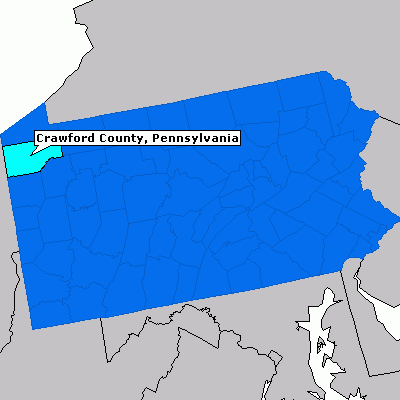
Margaret Mellan was born about 1792 in Ireland.  Margaret  died 4 Dec 1865 in Crawford, Pennsylvania

Children of William and Margaret:

Name Born Married Departed
1. Sarah Johnston c. 1816
Pennsylvania
Unmarried Unmarried in 1880 Census
2. John Johnston c. 1817  in Pennsylvania
3. James Johnston c. 1821
4. William B. Johnston c. 1825  in Pennsylvania
5. Son 1821 – 1825
6. Letitia JOHNSTON c. 1829 in Pennsylvania Robert McConaha LATTA
25 Jan 1849
17 Feb 1870
Rock Bluffs
Neb
shortly after giving birth to Elbert Johnston Latta
7. Margaret Johnston 18 Oct 1829
Conneaut, Crawford, Pennsylvania
John Kazebee
.
O. F. Bush
25 Dec 1879
Conneaut, Crawford, Penns.
8. Esther Johnston c. 1832  in Pennsylvania
9. Andrew Johnston Mar 1836 Conneaut, Crawford, PA Frances Spencer in 1869 3 Aug 1919
Sharpsville, Mercer, Penns

William Johnston, who settled on a farm, Crawford County, Pennsylvania in 1801. He came from Cumberland County, Penn.; was a soldier in the war of 1812, going to the front twice, for which he received two land grants and a pension.  He and his wife were charter members of the Presbyterian Church at Conneautville.

Crawford County, Pennsylvania

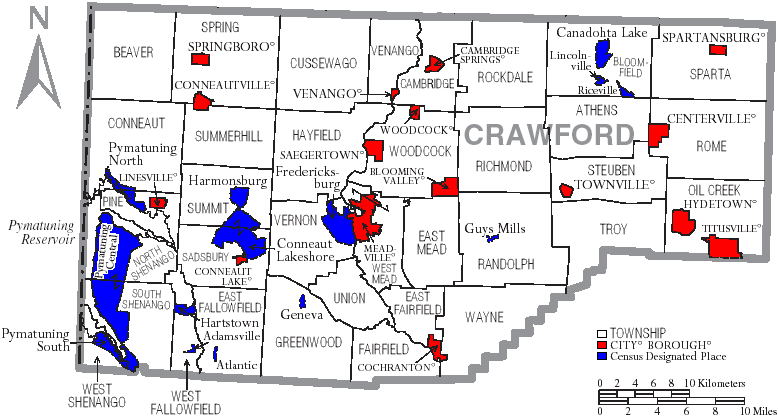
Conneautville was founded in 1814 by Alexander Power, a surveyor and engineer. Conneautville was first called Powerstown or made reference to as Power’s Tract. Power wanted it called Conneautville after the Indian name Conneaut or Conneautee, meaning Snow Place.  Conneautville is a borough in Crawford County, Pennsylvania, along Conneaut Creek,  the number one steelhead trout stream in the country.. The population was 848 at the 2000 census.

Crawford County Pennsylvania With Boroughs and Townships

1840 Census – Conneaut, Crawford, Pennsylvania

Males – 5 thru 9: 1 (Andrew)
Males – 10 thru 14: 1
Males – 15 thru 19: 1 (William)
Males – 20 thru 29: 2 (John, James )
Males – 40 thru 49: 1 (William)
Females – 5 thru 9: 2 (Esther)
Females – 10 thru 14: 1 (Margaret)
Females – 15 thru 19: 1 (Letitia?)
Females – 20 thru 29: 1 (Sarah)
Females – 40 thru 49: 1 (Margaret)
Total 12

1850 Census – Conneaut, Crawford, Pennsylvania

William Johnston 59  born c. 1791 in Ireland
Margaret Johnston 58 born c. 1792 in Ireland
Sarah Johnston 34 born c. 1816 in Pennsylvania unmarried in 1880 census
James Johnston 29 born c. 1821  in Pennsylvania
William B. Johnston 25 born c. 1825  in Pennsylvania
Margaret Johnston 20 born c. 1830  in Pennsylvania
Esther Johnston 18  born c. 1832  in Pennsylvania
Andrew Johnston 15 born Nov 1835  in Pennsylvania

1860 Census – Conneaut, Crawford, Pennsylvania.  John and Francis, not present in the 1850 census returned by 1860.

William Johnson 70 born c. 1790 in Ireland
Margaret Johnson 69
Sarah Johnson 45 (Servant)
John Johnson 43  born c. 1817  in Pennsylvania
William B Johnson 35
Francis (Frances) Johnson (female perhaps John’s wife?) 33 born c. 1827  in New York
Helen Johnson 10
Franklin Johnson 9
William Johnson 4

1870 Census – Conneaut, Crawford, Pennsylvania.  William was living with his son Andrew

Andrew Johnson 34
Frances Johnson 24
Wm Johnson 78
Wm B Johnson 42
Thurey Spencer 21 (Housework)

Children

1. Sarah Johnston

Unmarried in 1880 Census

3. James Johnston

I thought James married Rachel C. Wingate (b. 1834 in Pennsylvania – d. Nov 1910 in Roudolph, Wood, Ohio.), but it turns out this James was born in 1816 in Meadville, Crawford, Penns and was the son of Lancelot Johnston. The other James died in 1897.

Lancelot went from Ireland to England in the later part of the 18th Century and after a few years crossed the Atlantic locating first in Canada were several of the brother made permanent home and acquired considerable property. Lancelot and one brother came to the United States, the later locating in New York where he became a wealthy merchant. Lancelot Johnston took up his residence in Pennsylvania. While in Canada he had considerable property confiscated by the British government on account of his sympathy with the United States.

Children of (the other) James and Rachel

i. Emma C Johnston b. 1853 Penns; d. Meadville, Penns

ii. John Calvin Johnston b. 15 Sep 1855 Meadville, Crawford, Pennsylvania; d. 31 Dec 1935 Compton, Los Angeles, California; m. Ella Amelia Richmond (b. 28 Sep 1863 in Sanginaw, Michigan – d. 7 Mar 1941 in Downey, Los Angeles, California) John became an oil driller

iii. Ella J (Ellen) Johnston b. 1858 Penns.; m. Frank Thatcher

iv. William J (Wilson) Johnston b. 1859 Penns An oil man of Rudolph, Wood County.

v. George J Johnston b. 1866 Penns; d. After 1930 census; m. 1892 to Lydia E. [__?__] (b. May 1870 Penns – d. betw 1920-30) In the 1920 census, George was farming in Vernon, Crawford, Pennsylvania.

4. William B. Johnston

William wife Frances [__?__] was born in 1827 in New York. I’m not sure that she was really his wife, but she and the children appear immediately after William in the 1860 census.

In 1850 and 1860 William was living with his parents. In 1870, he was living with his brother Andrew. In 1880, he was living with his sister Margaret.

Children of William and Frances

i.  Helen Johnson b. 1850 Pennsylvania.

ii. Franklin Johnson b. 1851 Pennsylvania

iii. William Johnson b. 1856 Pennsylvania.

6. Letitia JOHNSTON (See Robert McConaha LATTA‘s page)

7. Margaret Johnston

Margaret was born October 18, 1829, on the farm where she lived in 1885s, and’is a daughter of William Johnston, who settled on this same farm in 1801. He came from Cumberland County, Penn.; was a soldier in the war of 1812, going to the front twice, for which he received two land grants and a pension. She was a member of the Presbyterian Church, of which her parents were charter members, at Conneautville.

Margaret’s first husband John Kazebee was born 14 Nov 1824 in New York, N.Y. His parents were Abraham Kazebee (1799 – 1838) and Catherine Carringer/Carrenger (1796 – 1860). John died 1859 in Conneaut Twp. Crawford County, Pa.

Margaret’s second husband O. F. Bush farmer and carpenter and joiner, P. O. Conneautville, was born in Oneida County, N. Y., June 20, 1812, son of Derrick and Rachael M. (Mcintosh) Bush, natives of Massachusetts, and parents of five children. They were members of the Baptist Church. Derrick Bush was a tanner and shoe-maker by trade, and in addition worked on a farm. He died at Linesville, Penn., October 25, 1867, aged seventy-nine years; his wife died November 20, 1820, aged thirty-two. Our subject, who is the third in the family, received a limited education. He learned the trade of carpenter and joiner when yovmg, and has worked at it for a considerable length of time. He was married December 16, 1833, to Solemy Beach, who bore him one son — Joseph C, proprietor of a wholesale tobacco business in Erie, Penn, She died April 28, 1877, and our subject then married, December 25, 1879, Mrs. Margaret Kazebee, widow of John Kazebee.

Mr. Bush owned at different times three farms in Crawford County, and cleared a large area of land. He built several houses in Linesville, toward which village he has probably done more than any other individual. He has held the offices of Justice of the Peace, Coroner and School Director, latter for twelve years. lu politics he was a Republican with strong temperance proclivities; traveled extensively in the Western States and along the Pacific coast, having spent the winter of 1871 in Oregon.

Linesville is a borough in Crawford County, Pennsylvania, United States. The population was 1,155 at the 2000 census. The town gets its name from its founders, which included William Line (the grandson of a Swiss immigrant), who migrated from Carlisle, Pennsylvania circa the early 1820s, and his relative, Amos Line who was the town’s surveyor and main proprietor. Amos Line “penetrated the western Pennsylvania wilderness as a member of the Pennsylvania Population Company in the early 1800’s.

Amos Line established a mill at the site in 1820. The village was laid out in 1825. It was first known as Line’s Mills, but the name was changed to Linesville Station in 1864. It was not known as Linesville until 1883. It was incorporated from Pine Township on March 22, 1862.

Another minor point of interest is at the main intersection of the town (at its sole traffic light). On the Maclaine Building at the northwest corner is a sign reading “<==CHICAGO: 500 miles NEW YORK: 500 miles==>”

One other point of interest in Linesville is The Knickerbocker Hotel which appeared on the A&E show, Paranormal State for its claims of paranormal activity.

At one time, Linesville was the onion capital of the United States, distributing its fragrant produce via the Erie & Pittsburgh Branch of the Pennsylvania Railroad.[4]

Linesville made national news in November 2005 when 18-year-old Christopher Seeley was elected mayor, one of the youngest mayors to serve in a U.S. city to date.

1870 Census – Conneaut, Crawford, Pennsylvania.  Margaret was a widow Hazebee and her sister Sarah was living with the family.
Margaret Hazebee 40
John W Hazebee 12
Margaret E Hazebee 10
Sarah Johnson 54

1880 Census – Conneaut, Crawford, Pennsylvania

D. F. Bush 67
Margrit Bush 50 (Wife) born 1830 Pennsylvania
Wilbert Kazebe 22
Sarah Johnson 64 (Sister-in-law)
Wm. B. Johnson 53 (Brother-in-law)

Children of Margaret and John Kazebee

i. John Wilbert Kazebee b. 1859 in Pennsylvania; d. After 1930 census; m. Mary Lola Ely (b. 1855 – ) In the 1910, 1920 and the 1930 census, John was a dentist with his own office in Cheyenne, Laramie, Wyoming.

ii. Margaret Eleanor (Ella M.) Kazebee b. 21 Nov 1859, Crawford, Penns.; d. After 1920 census; m. Oct 1877 to William Ransom Sprague (b. 2 Aug 1854 Summerhill Township, Crawford, Penns. – d. 3 May 1897) His parents were William Crittenden Sprague and Elizabeth Ransom. Ella and William divorced

9. Andrew Johnston

Andrew’s wife Frances A Spencer was born about 1846 in Pennsylvania. Her parents were John B. Spencer (1812 – 1849) and Lydia Ann Pratt (1817 – 1867). In the 1900 census, Andrew was farming in Conneaut, Crawford, Pennsylvania.

Andrew was a private in 2nd Regiment, Pennsylvania Cavalry (59th Volunteers)

Children of Andrew and Frances:

i. James G Johnston b. Jun 1880 Pennsylvania; m. Anna [__?__] (b. 1887) In the 1910 census, James was a polisher in a furniture factory in Conneautville, Crawford, Pennsylvania. Andrew (75) and Frances (65) were living with their son.

ii. Rollun A Johnston b. Jul 1882; m. Cora [__?__] (b.1886 NY) In the 1910 census, Rallan was a baker in Gloversville Ward 2, Fulton, New York.

Sources:

http://wc.rootsweb.ancestry.com/cgi-bin/igm.cgi?op=GET&db=:910136&id=I44205458

http://archiver.rootsweb.ancestry.com/th/read/CROCKETT/2001-01/0980401421

http://trees.ancestry.com/owt/person.aspx?pid=10658445

http://trees.ancestry.com/owt/person.aspx?pid=10664218

http://trees.ancestry.com/tree/1141649/person/1355338600?ssrc=

http://www.pa-roots.com/pacw/cavalry/2dcav/2ndcavorg.htm

History of Crawford County, Pennsylvania: Containing a History of the County …  By Samuel Penniman Bates, Robert C. Brown, John Brandt Mansfield 1885

Commemorative Historical and Biographical Record of Wood County …, Volume 2
By M. A. Leeson

Posted in -7th Generation, Immigrant - Scot-Irish, Line - Miner, Pioneer | Tagged | 4 Comments

Alexander Johnston

Alexander JOHNSTON (c. 1755 – 1810)  is Alex’s 6th Great Grandfather, one of 128 in this generation of the Miner line.

Alexander Johnston was born about 1755 in Ireland.  He married Esther RANKIN or Jan Peery.  Came to America in his parents in 1797, settling in Crawford County Pennsylvania in 1800. Caleb Luce, September 23, 1797, 100 acres in Conneaut, Crawford, Pennsylvania, settled under contract and deed granted Alexander Johnson, assignee of Luce.  Alexander died after 1810 in Crawford County, Pennsylvania.

Children of Alexander and Esther:

Name Born Married Departed
1. Esther Johnston 30 Nov 1779 Donegal, Ireland Thomas B. Crockett
16 Nov 1797 Carlisle, Cumberland Co., PA
1 Aug 1858 Conneaut, Crawford, Pennsylvainia
2. Mary Johnston 1782
Kilkenny, Ireland
Andrew Lopeman
c. 1800
Aft 1850 census, Wheeling, West Virginia
3. Jane Johnston 9 Nov 1787 Ireland James McDowell 11 Nov 1867 Conneaut township, Pa
4 William JOHNSTON c. 1791
Ireland
Margaret [__?__] After 1860 Census
5. John Johnston 1 Nov 1791 Ireland Nancy Work After 1860 Census
6. Sharon Johnston?

Except a narrow strip along the western line, which was owned by the American Land Company, the Conneaut Township was included within the domain of the Pennsylvania Population Company. The agent of this latter company was Jabez Colt, who, in order to stimulate immigration to these lands, in the summer of 1797, or earlier, engaged the services of a half dozen or more sturdy, young, unmarried immigrants and made an improvement alled Colt’s Station, in the eastern part of the township, and probably at the south end of the dividing line, between Tracts 710 and 711, or in Tract 715. For several years they remained here, but the place did not flourish and the land agent abandoned the settlement and made another improvement in what is now Pine Township.

The following statement shows the condition of the Population tracts in 1812, when the company closed its business – the number of the tract, name of settler, date of contract, number of acres, contracted for and its final disposition. Each tract contains an area slightly exceeding 400 acres. Tract 683, Ezekiel Murdock, Oct 27, 1797, 200 acres, deed granted Amos Line, assignee of Murdock; 684, Eliphalet Beebe, Nov 9, 1797, 200 acres, deed granted Amos Line, assignee of Beebe; 685, Samuel Hungerford, Nov 9, 1797, 200 acres, slightly improved, then abandoned; 686, David Smith, Nov 9, 1797, 200 acres, slightly improved, then abandoned; same tract, George Cook, Mar 27, 1805, 100 acres, abandoned; 687, Caleb Luce, September 23, 1797, 100 acres, settled under contract and deed granted Alexander Johnson, assignee of Luce. All the above, except the last named, were intruded upon in 1801, 1802 and 1803, but abandoned after a two or three years’ settlement.

The following were tax-paying residents of the Conneaut township in Crawford County Pennsylvania in  1810: Alexander JOHNSTON, William LATTA and Samuel LATTA, Robert Martin, John Parr, Samuel Potter, William and Samuel RANKIN, Samuel Brooks, Thomas Crockett, Henry Frey, Obed Garwood, William Hill, Thomas McGuire and Rebecca Paden.  Alexander Johnson was a native of Ireland, and settled on Tract 687, in the northeast comer of the township, where he remained till death, leaving five children: William, John, Mary (Lopeman), Jane (McDowell) and Esther (Crockett).

Children

1. Esther Johnston

Esther’s husband Thomas B. Crockett was born in 14 Nov 1770 in Donegal, Ireland.  Thomas died 27 Apr 1823 in Linesville, Crawford, Pennsylvania.  Esther and Thomas married  16 Nov 1797 in Cumberland, Pennsylvania.  Thomas Crockett was an Irishman, and settled on Tract 723, where his son then resided [see above]. He was a farmer, and was drowned near Linesville.

Children of Esther and Thomas:

i. Jane Crockett b: 15 Sep 1801 in Cumberland, Pennsylvania; d. 1 Apr 1871 in Crawford Co, Pa; m. Sam Garwood (b. 1797 in Of Crawford Co., Pennsylvania – d. 1849);  In the 1850 census, Jane was a widow in Conneaut, Crawford, Pennsylvania.

ii. Nancy Crockett b: 12 Nov 1804; d. 24 Apr 1888 in Conneaut Township, Crawford, Pa; m. William Graham (b. 1802 Pennsylvania – d. Mar 1870 of Consumption)  In the 1860 census, Nancy and William were farming in Conneaut, Crawford, Pennsylvania

iii. Mary Crockett b: 1806 in Crawford Co, Pa; d. 1845 in Crawford Co, Pa; m. 2 May 1818 – Crawford County (Crawford), Pennsylvania to Luman Laurence (b. 20 Aug 1798, Albany NY – d. 2 Nov 1867 – Crawford County, Pennsylvania) His parents were Oliver Lawrence and Patty Ann Waite.

iv. Margaret Crockett b: 28 Dec 1807 in Conneaut Township, Pa; d. 8 Mar 1893 in Crawford Co, Pa; m. Judah Warren  (b. 1799 Massachusetts – bef. 1860 census); In the 1850 census, Margaret and Judah were farming in Conneaut, Crawford, Pennsylvania.

v. William Crockett b: 2 Feb 1811 in Conneaut Township, Pa; d. 9 Nov 1852 in Dosset, Ashtabula, Ohio; m1. Rhoda [__?__] ( – d. 1844 in Crawford, Pennsylvania); m2. 4 Sep 1844 in Ashtabula, Ohio to Sally Ann Cadwell (b. 29 Dec 1814 in Farmington, Hartford, CT – d. 14 Feb 1885 in Dorset, Ashtabula, Ohio) In the 1850 census, William and Sally Ann were farming in Pierpont, Ashtabula, Ohio with five of their own children, four Cole children and Newell Hicks.

vi.  Esther Crockett b: 27 Mar 1813 in Conneaut Township, Pa; d. 17 Oct 1886 in Crawford Co, Pa; m. 1 Sep 1832 Crawford Co, PA to Joseph Samuel Garwood (b. 25 Aug 1805 in Conneaut Twp, Crawford Co, PA – d. 03 Jun 1887 in Crawford Co, PA). In the 1850 census, Joseph and Esther were farming in Summit, Crawford, Pennsylvania with eight children at home.

Esther Crockett Garwood Photo

vii. Sophia Crockett b: 6 Jul 1815 in Crawford Co, Pa; d. 20 Jan 1886 in Conneaut township, Pa; m. Merrick Thayer (b. 14 Mar 1812 – d. 9 Mar 1894 Conneaut Center Cemetery, Conneautville, Crawford County, Pennsylvania) In the 1870 census, Merrick and Sophia were farming in Conneaut, Crawford, Pennsylvania.

viii. Thomas B. Crockett Jr. b: 1820; d. 17 Oct 1889 in Crawford Co, Pa; m. Julia C. Homer (b. 7 May 1819 in Oneida, Onondaga, NY – d. Aft 1880 census) In the 1860 census, Thomas and Julia were farming in Conneaut, Crawford, Pennsylvania.

ix. Martha Ann Crockett b: Apr 1822 or 1818 in Crawford Co, Pa; d. 31 Mar 1873; m. 2 Jul 1846 to William Henry Broughton (b. 27 Apr 1823 in New York – d. Abt 1894) His parents were Zephon Broughton and Elizabeth Warriner. After Martha Ann died, he married

28 Sep 1873 to Ella Ephrasia Fowler (1854 – 1945) In the 1860 census, William and Martha were farming in Conneaut, Crawford, Pennsylvania.

2. Mary Johnston,

Mary and Andrew Lopeman had nine children:   Elizabeth, John, Alfred Arthur, Mary, Catherine Ann, Hugh A., Nancy Anne, Margaret and Jane.  Andrew Lopeman was born about 1780 in Franklin Co., Penn.  Andrew died 12 Dec 1834 in Kittanning, Armstrong Co., Pennsylvania. Some genealogies state that Mary also died in 1834 in Kittanning, but I found her living with her daughter Nancy A Acker in District 44, Ohio, Virginia [Wheeling, West Virginia] in the 1850 census.

Almost all of the Lopemans in the US, descend from Andrew Lopeman. Family lore suggests that Andrew was from Holland, or possibly Belgium, or less likely from Germany. The earliest record we have for him is the 1810 Franklin Co., PA, census.

One researcher and author of a genealogy book on Andrew has Mary’s last name as Crocker, but the consensus is that she was more likely Mary Johnston, born about 1780-1783 in Kilkenny, Ireland.

Andrew and Mary’s son John married a Crockett according to family legend. The sparse records we have on Andrew suggest that quite a few friends, neighbors and relatives were Irish, and some of us have speculated that, even if his family origins were Dutch, he might have come to the US via Ireland. We have also wondered if similar names such as Lohrman or Lowman are distant branches of the family.

From: Joan Miller, gggrand-daughter of Josiah Ralph Lewis. “The following was written on 18th Feb 1833 and recorded the 14th Dec 1844. I copied it as closely as possible from the original on microfilm.

The Last Will and Testament of Andrew Lopeman of Kittanning Township, Armstrong County. In the name of God, Amen. I, Andrew Lopeman of Kittanning Twonship, Armstrong county considering the uncertainty of life and beinf of sound mind, memory and understanding, altho weak of body, do make and publish this my Last Will and Testament in manner following to wit:

First, I commit my immortal and eternal soul into the hands of the All Mighty Jehovah who gave it, and my body to the Earth to be decently and in a Christian like manner interred. Secondly, I direct that my funeral expenses and just debts be paid. Thirdly, I give and bequeath unto my beloved wife Mary, all my real, personal and mixed estate or property whatsoeve where with it has pleased the almighty to help me in this world and I request said wife that she educate and raise our children and after her the….following two lines totally unreadable…

Page 2…and equitable among our said children.

Lastly, I do hereby nominate, constitute and appoint my said wife_________,_________and George (Brodhand??) executors of this my last will and testament declaring null and void all other wills heretofore made by me and pronouncing this to be my last will and testament.

Signed, sealed, published and dictated by the afore mentioned Andrew Lopeman to be his Last Will and Testament in the presence of us who at his request have here with subscribed our names as witnesses, this 18th Feby AD 1833 WM Johnston

Armstrong County PA

Befoe me John……. register for the probate of wills and granting letters of its administration in and for the county, personally came William Johnston of of the subscribing witnesses to the above and being duly sworn according to law… say that he was present and saw and heard the testament of Andrew Lopeman… (Cannot read any more)

Children of Mary and Andrew:

i. Rev. John Lopeman b. Abt 1803 in Franklin County, Pennsylvania; d. 1883 in Knox County, Illinois; m. 1827 to Elizabeth Crockett (b. 1800 in Somerset County, Pennsylvania – d. 1850 in Sugar Creek, Iowa) After Elizabeth died, he married Thankful Charlotte Gould (b. Jul 1818 in New York – ) Thankful had first married Lewis W. Jones (1814 – 1854)

Deeds and Leases 1805-1941 Armstrong County, Kitanning Township May 5, 1838 date of record. Vol. II, Page 41. Sale by John Lopeman to John King, on the 7th of April 1838, sale by John and Elizabeth, his wife, 25 acres for $200

In the 1850 census, John was farming in District 29, Lee, Iowa.

His farm was in Knox County. His church was in Fulton County, Illinois. Like its neighbor to the south, Fulton County, for its Spoon River Drive, Knox County is also known for a similar scenic drive fall festival the first two weekends in October, the Knox County Drive.

ii. Mary Lopeman (twin) b. 24 Sep 1808 in Somerset, Pennsylvania; d. 20 June 1871 in Northunberland, England; m. 17 Oct 1828 Pine, Armstrong, Pennsylvania to John Graham (b. 4 Apr 1805 in Pennsylvania – d. 26 Dec 1880 in Benton, New Lincoln, Oregon with his daughter Elmira) His parents were Robert Graham and Nancy Montgomery. In the 1850 census, John and Mary were farming in Pine, Crawford, Pennsylvania with ten children at home. In 1860, they had moved to Jennings, Crawford, Indiana.
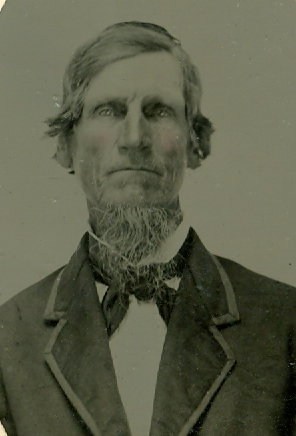
John Graham (1805-1880)

iii. Elizabeth Lopeman (twin) b. 24 Sep 1808 in Franklin County, Pennsylvania; d. 23 March 1896 in Metamora, Lapeer, Michigan. In the 1850 census, Elizabeth was living with her brother John in Lee, Iowa.

iv. Catherine Ann Lopeman, b. 18 Oct 1810, Franklin PA, d. 23 Mar 1896, Dryden, Lapeer County, MI; m. 02 May 1833 in Kittanning, Armstrong, PA  to Nathan Ellsworth Lewis (b. 18 Mar 1807 in Middlesex CT – d. 20 Feb 1888 in Dryden, Lapeer, Michigan), His parents were Nathan Andrew Lewis and Constant Butler.
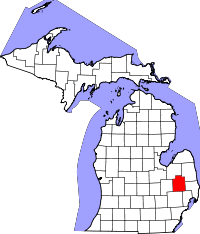
Catherine and Nathan moved to Lapeer County, Michigan in 1848.

Catherine Ann Lewis died March 23, 1896 of paralysis, the disease attacking her March 1. Funeral services for were held at Thornville Church, where Rev. Harper preached from Numbers, 23rd chapter and a part of the tenth verse. Undertaker Sissons, of Imlay City, laid the remains to rest in Thornville cemetery.

Catherine Ann was born Oct. 18, 1810, at Franklin, Penn., and was 85 years, 5 months and three days old. She married Nathan Ellsworth Lewis, May 2 1833, at Kittanning, Penn living there until May, 1839, when they moved to Bruce, Macomb Co. Mich. they moved again in 1848, to Dryden, Lapeer Co., and have lived since in the townships of Dryden, Attica, Goodland, and Metamora. Mrs Lewis leaves four sons and two daughters to mourn her loss: O. A. Lewis, of Metamora, at whose home she died; Wm I. of Dryden; Josiah R., of Deford; Samuel B., of Hunters Creek; Mrs Mary Utley, of Goodland, and Abigail R., of Deford. Two sons died in infancy. Her eldest son, Nathan Andrew, died April 5, 1889, at Deford and her fifth son, Edwin A., died Dec 13, 1893, at Marion, Mich, and was buried at Morice, Mich. She joined the christian church upwards of forty years ago, taking a letter some time afterward to Dryden M. E. church.

Nathan Ellsworth Lewis was about 7 years old when he moved with his parents to Pennsylvania and came four years later to Milam, Erie Co. Ohio. In 1832 he removed to near Pittsburgh, Penn and a year later married. In 1839 he and his family removed to Romeo Mich. and in 1848 to Dryden where he lived until one year of his death. He died at the home of his daughter Mrs Utley of Goodland.

In the 1860 census, Nathan E. and Catherine were farming in Dryden, Lapeer, Michigan.
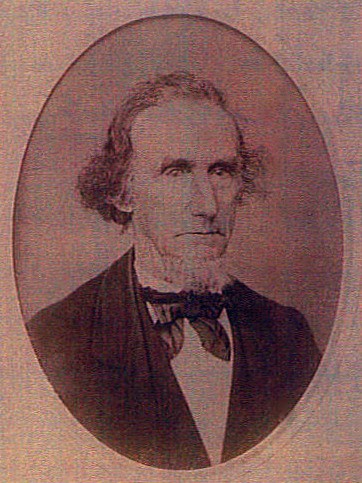
Nathan Ellsworth Lewis (1807 – 1888)

Although about 54 years old when the war broke out, he enlisted in the 7th Mich. Infantry. Aug. 1861. He was soon discharged on account of his age, but determined to serve in the army, he again enlisted Oct 26, 1861, in Co., H, 10th Regiment, Michigan Infantry. When he was hospitalized for illness it was discovered that he had lied about his age to join the service and was 56 years old at the time and transferred to Veterans Reserve Corps. He remained in service until Feb 6, 1865 when he was honorable discharged.

The Tenth Infantry was organized at Flint, completing its formation in February, 1862. It was composed of the following local companies, the “Byron Guard”, of Byron, the “Saginaw Rangers” of Saginaw, the “Orion Union Guard” of Orion, the “Sanillac Pioneers” of Sanilac, the “Scarret Guard” of Port Huron, the “Holt Guard” of Almont, the “Lum Guard” of Memphis, the “McClelland Guard” of Pontiac, the “Genesee Rangers” of Flint and the “Dickerson Guard” of Hillsdale.

The Regiment left the state April 22, 1862, under the command of Colonel Charles M. Lum, joining the army under General Hallock, at Pittsburg Landing, Tenn., being assigned to the Second Brigade, General Pope’s Division. The Tenth was in the presence of the Confederates the moment it reached its destination, commencing at once a series of marches and skirmishes that occupied every day, together with the hard work of building trenches and fortifications. When the Confederates retreated from Corinth the Tenth went into camp at that place, where it remained until June 20th, enjoying a much needed rest, when it was ordered to Tuscumbia, Ala. Detachment’s of the Regiment were sent out from this place to occupy certain positions and act as provost guard.

In September the Tenth marched to Nashville, where it was engaged in building fortifications, taking part in reconnaissances, guarding trains, all the while suffering severely from short rations. The Regiment was then assigned to the First Brigade, Second Division, Fourteenth Army Corp, Army of the Cumberland. During the winter the Regiment was constantly on duty, making many and long marches; but, met with no serious loss in battle. It had frequent contacts with the southern forces while guarding trains. losing a number of men in these engagements. In September, 1863, the Regiment was at Bridgeport, Ala, crossed the Tennessee River near Chattanooga, arriving at Chicamauga Station the 26th. It was constantly in motion, occupying a number of towns during the fall and summer.

The Regiment veteranized at Rossville, 335 men re-enlisting on the 6th of Feb. 1864, with the expectation of going home for a 30 day furlough. While anticipating such a pleasant event, orders were received for the regiment to move with the army in a general advance toward Dalton, Ga. At Buzzards Roost, Feb. 25th, the Confederates were found strongly fortified, and the Tenth was pushed upon the confederate works, meeting a storm of grape and canister, causing a loss of 13 killed, 35 wounded and 17 missing, for a total loss of 65 men.The following month the Regiment was returned to Michigan, arriving at Detroit, March 11th, and was furloughed for 30 days. May 11th., the Tenth was back in Chattanooga, thence to Georgia, marching by way of Dalton and Kenesaw Mountain, crossing the Chattahoochie River the 17th, then taking part in the Siege of Atlanta. The Tenth was a part of General Sherman’s army and participated in the march from Atlanta to the Sea, then after a number of skirmishes with the southern defenders, arrived before Savannah, December the 11th. When that city fell, the Tenth encamped there until Jan 20, 1865, when it started with the balance of the army on the campaign in the Carolinas. The Tenth crossed the Savannah River at Sister’s Ferry, Feb. 6th, then was engaged with the Confederates at Fayetteville, N.C., March 11th, crossing the Cape Fear River on the 12th. The Regiment skirmished heavily with southern forces at Averysboro, N.C. the 16th, then fighting in the battle at Bentonville on the 19th. The Tenth then marched on to Raleigh, reaching Goldsboro on the 23rd. The line of march was then continued to Richmond, Va., as that city had fallen into the hands of Union troops upon the Surrender of General Lee. On the 10th of May, 1865, the Regiment was marched to Washington, D. C., where it took part in the Grand Review with General Sherman’s army on the 24th.

The Regiment, then in command of Colonel Dunphy, started for Louisville, KY., where it was mustered out of service on July 19, 1865, returning to Jackson, Mich., on the 22nd, then on the 1st of August, 1865 was paid off and disbanded. The regiment suffered 7 officers and 95 enlisted men who were killed in action or motally wounded and 2 officers and 223 enlisted men who died of disease, for a total of 327 fatalities

v. Hugh Alexander Lopeman b. 11 Oct 1812 in Franklin County, Pennsylvania; d. 11 April 1865 in Leavenworth, Leavenworth, KS; m. 17 Oct 1839 Clarion County, Pennsylvania to Susannah Huffman (1815 – 1878)

Seller of the land to Hugh Lopeman, an Indenture for 102 acres and 7 perches for the price of $306.13. The land was purchased from Mr. George Kribbs and his wife, Susanah, and is dated April 22, 1851 – the land being part of a Tract laid off in 1806 to William Brown. The Document is 16 X 22 inches and in very good condition. When folded it is 4 X 8 ¼ inches and written on the outside is Geo. Kribbs to Hugh Lopeman.  This land lies in Clarion County, Penn. close to Venango County in N. W. Penn.

Later Hugh Lopeman and family would move to Iowa and then to Missouri. In the 1860 census, H A and Susannah were farming in Big Creek, Cass, Missouri. During the Civil War they would move to Delaware Township, Leavenworth, Kansas for protection.

Hugh enlisted as a Wagoner on 17 July 1863 at the age of 44 in Company M, 5th Kansas Cavalry Regiment. He died of disease Company M, 5th Cavalry Regiment Kansas on 11 Apr 1864 at Fort Leavenworth, KS. The regiment lost a total of 268 men during service; 2 officers and 45 enlisted men killed or mortally wounded, 2 officers and 219 enlisted men died of disease.

Hugh’s son Alexander (b. 1841) enlisted in Company H, Kansas 16th Cavalry Regiment on 08 Mar 1864.  Promoted to Full Private. Mustered out on 06 Dec 1865.

Hugh’s son Hugh Jr. b. 8 Nov 1840 in Pennsylvania; d. 26 Nov 1924 in Amoret, Mo.; m. 20 Dec 1866 in Missouri to Susan J. Colburn (b. 20 Jun 1847 in Missouri d. 7 Aug 1929 in Amoret, Missouri)
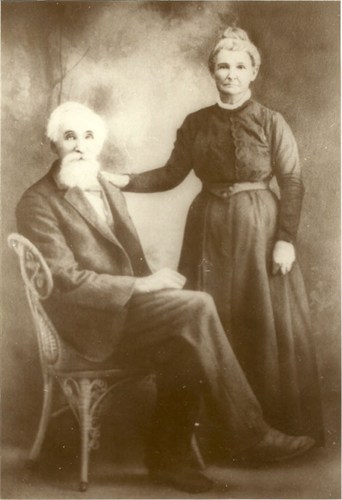
(Hugh) Alexander Lopeman Jr  (1840-1924) and Susan Colburn Lopeman (1847-1929)

Hugh’s son James A Lopeman Sr was born Mar 1853 in Pennsylvania. He married Forest Amos (b. 2 Jan 1864 in Iowa – d. 13 Aug 1916 Iowa) Family legend about a Cherokee wife may have stemmed from the land ownership in Enid, OK. James had a plant nursery there. Once oil was struck in the area, the rights belonged to the local Indians. In 1893 he married a woman named Mary, although he was already married to Forrest. He put Forrest in a mental institution in Iowa. In the 1900 census, James and Mary were living in North Enid, Garfield, Oklahoma, where John was a nurseryman. Based on these facts, some assume that he did that to gain the oil rights by marrying an Indian named Mary.  James died 12 Apr 1939 in Enid, Garfield, Oklahoma.
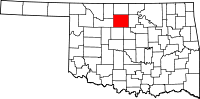
Garfield County, Oklahoma

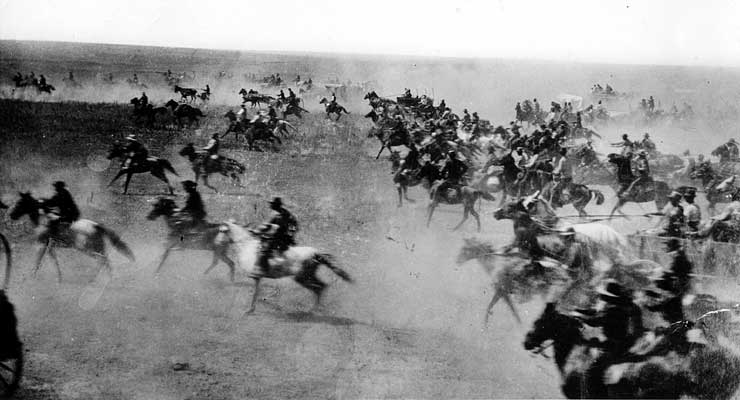
Prior to the Land Run of 1893, Garfield County was named O County and was part of the Cherokee Outlet, occupied by the Cherokee people following the Treaty of New Echota and the Cherokee trail of tears.  Historically, the area was a hunting ground for the WichitaOsage, and Kiowa tribe.

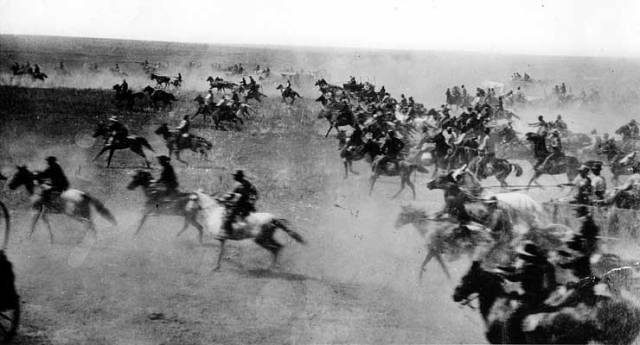
Horses rush forward during the 1893 run.

The Land Run of 1893, also known as the Cherokee Strip Land Run, marked the opening of the Cherokee Outlet to the public. The run happened on September 16, 1893 at noon with more than 100,000 participants hoping to claim land. The land offices for the run were set up in Perry, Enid, Woodward, and Alva with over 6.5 million acres  of land. It was the largest land run in United States history. 1893 was the same year James married Mary.

vi. Nancy Ann Lopeman b. Abt 1822 in Pennsylvania; d. 7 Feb 1899 in Akron Summit County, Ohio; m. 22 Oct 1846 Wheeling (West) Virgina to William Hood Acker (1822 – ) In the 1850 census, William and Nancy were living  with two young girls Elizabeth and Vandalia and Nancy’s mother Mary in District 44, Ohio, Virginia where William was a wagoner. After William died, Nancy married [__?__] Thomas.  In the 1880 census, Nancy Thomas was a widow living with her son-in-law and daughter John and Vandely Sinclair in Jamestown, Mercer, Pennsylvania. John was a harness maker.

vii. Jane Lopeman. b. Abt 1827 in Butler, Adams, Pennsylvania; m. 17 Aug 1848 Wheeling (West) Virgina to Thomas B. Hornbrook (b. 1816 England – d. bef. 1853) In the 1850 census, Jane and Thomas were living with her mother in District 44, Ohio, Virginia. After Thomas died, she married 22 Dec 1853 in Wheeling to William Loe. In the 1870 census, she was Jane Loe working as a milliner in Athens, Ohio with her sons William A Loe (b. 1855) and Francis M Hornbrook (b. 1849)

viii. Margaret Lopeman b. 1826 in Pennsylvania; d. 14 Jul 1826 in Kittanning, Armstrong, Pennsylvania

ix. Alfred Arthur Lopeman b. 12 Dec 1806 Franklin County PA; d. 27 Apr 1880 in Steubenville, Jefferson, Ohio; m. Sara H Stivenson; (b. 7 May 1812 Penn. – d. Aft 1880)

In the 1860 and 1870 census, Alfred and Sarah lived in Steubenville, Jefferson, Ohio.

Mary Elizabeth Lopeman, born 1835, daughter of Alfred Lopeman and Sarah Stiveson Lopeman. The Lopeman family were living in Armstrong County, Pennslyvania in 1850 in the township of Manor. Sarah Stiveson’s parents, Tobias and Jane, were also living in the county in 1850. It is unknown when the family first came to Armstrong County. Mary Elizabeth Lopeman married first to John Welsh who died in the Civil War. She married second William Boggs of Butler County. She died in 1920 and is buried in the Evans City cemetery.

Steubenville Daily Herald, Wednesday, April 28, 1880

FALLING LEAVES Alfred Lopeman Alfred Lopeman died at his residence on South Fourth street yesterday at eleven o’clock, in the 75th year of his age. Mr. Lopeman was born in Pennsylvania January 28th, 1806, he was married in 1832, and came to Steubenville about twenty-eight years ago. For some years past he has been too feeble to work, but until age came upon him, he was a most industrious man, having been employed in the nail mill for over twenty-five years. He was the father of thirteen children, nine of whom survive him. These are all married but two, and are living in various parts of the country. They are, Mrs. Mary Boggs, of New Brighton, Mrs. Sarah Burns, of Allegheny, Jefferson, of Martin’s Ferry, Edward of Portsmouth, O, Mrs. Katherine Manley, of Red Oak, Iowa, Gabriel A. of Bellaire and Mrs. Rebecca Canby, Mrs. Ann Sweetland and Miss Emma living in this city. There are thirty-seven granchildren and one great grand child. Mrs. Lopeman still survives her husband. Mr. Lopeman was a member of St. John’s Lutheran Church and was a man respected by all who knew him and trusted by his employers. He goes to rest after a long life, and his friends mourn but not without hope. The funeral took place at one o’clock, having been delayed two hours, waiting for the arrival of friends and relatives from distance. Rev. Theo. P Ebert was the officiating clergyman, and the pall bearers were Henry Schoenias, Henry Lucas, Sr., John Strott and Henry Noltemeier.

3. Jane Johnston

Jane’s husband James McDowell died before 1850.

In the 1850 census, Jane was living with her son James in Summerhill, Crawford, Pennsylvania.

In the 1860 census, Jane was living with her son John in Summerhill, Crawford, Pennsylvania

Children of Jane and James

i. John McDowell b. 1819 Pennsylvania; m. Eliza Stanley ( b. 1820 New York – d. 1896 in Crawford Co., Pennsylvania) In the 1870 census, John and Eliza were farming in Summerhill, Crawford, Pennsylvania with their son Bradford and daughter Arvilla.

ii. James P. McDowell b. 1822 Pennsylvania; d. bef. 1870 census; m. Mary Craig; ( b. 12 July 1818 Pennsylvania) In the 1880 census, Mary was a widow in Conneautville, Crawford, Pennsylvania keeping house with Rettie Mc Dowell (b. 1858) and Frank Kendel (b. 1861) Frank was a cheese maker.

ii. Caroline McDowell b. 1829 Pennsylvania In the 1850 census, Caroline was living with her brother James in Summerhill, Crawford, Pennsylvania.

4. William Johnston (See his page)

5. John Johnston

John’s wife Nancy Work was born c. 1793 in Pennsylvania.  She was the sister of Hon. Judge John Work, of Crawford County, her family being one of the first in the township.

John Johnston came to America with his father when six years of age, having been born in 1791. His father settled with his young family in the wilds of Vernon Township, and many are the bear and wolf stories told of those pioneer days. John and Nancy (Work) Johnston had ten children, seven of whom survived in 1885.

1840 Census – John Johnson was living in Vernon , Crawford, Pennsylvania.  No record for Alexander age 20 in 1850 or George age 15 in 1850.
Males – 5 thru 9: 1  (George)
Males – 10 thru 14: 1  (Patterson)
Males – 15 thru 19: 1 (Arthur)
Males – 20 thru 29: 2
Males – 40 thru 49: 1 (John)
Females – 5 thru 9: 2  (Letitia?)
Females – 10 thru 14: 1 (Martha)
Females – 15 thru 19: 1
Females – 20 thru 29: 1
Females – 40 thru 49: 1 (Nancy)

Total – All Persons  12

In the 1850 Census  John was farming in Vernon (North Part), Crawford, Pennsylvania

1860 Census  John was farming in Vernon, Crawford, Pennsylvania (Farm worth $9,000, personal estate $1,000) The children Arthur, Patterson, Martha and George were all still living at home.

Children of John and Nancy:

i. Mary Johnston

ii. John Johnston d. bef. 1885

iii. Nancy Johnston d. bef. 1885

iv. William W. Johnston b. 6 Apr 1821 Pennsylvania; d. Bef. 1900 census; m. 3 Jun 1847 to Adeline Stockton Cotton (b. Jul 1826 Pennsylvania – d. 25 Dec 1907 Denny Cemetery, Crawford County, Pennsylvania, Plot: Section C Lot 26) Her parents were Joseph Cotton and Eliza Beatty; one child has blessed this union — Sarah A. Mrs. Johnston was the second in her father’s family, which is one of the representative families of the township. Her great-grandfather fought in the Revolutionary war, and her grandfather in the war of 1812. Mr. Johnston was Assessor in 1855 and 1875, also Overseer of the Poor before the erection of the poor-house. Although he never signed the pledge, he was never drunk in his life. He has never been sued as he always promptly met his obligations. In the 1880 census, William and Adeline were farming in Vernon, Crawford, Pennsylvania. Adeline’s mother Eliza (b. 1801 Pennsylvania) was living with the family.

v. Arthur Johnston born 31 Mar 1823 in Crawford Pennsylvania; d. Bef. 1910 census;  m. 2 Jan 1862 to Ellen C Fuller (b. Dec 1837 New York – d. Aft 1920 census Vernon, Crawford, Pennsylvania). In the 1900 census, Arthur and Ellen were living in Vernon, Crawford, Pennsylvania. Arthur was a carpennter

Ellen C. Fuller was the daughter of Alonzo Fuller and Angeline Whiting, the eldest child in a family of nine. Arthur and Ellen had four children: John E. (d. bef 1885), Alonzo M. (d. bef. 1885), Jesse W.(b. 1867) and Arthur L (b. 1870). Arthur was a farmer in P. O. Watson Run. He filled the offices of School Director, Supervisor of Roads and other township offices. He was a Ruling Elder of the United Presbyterian Church and a consistent Democrat.

Watson’s Run United Presbyterian Church [13594 Harmonsburg Rd, Meadville, PA] was organized by Rev. J. B. Waddle, January 30, 1869, with a membership of thirty-two, nineteen females and thirteen males, the latter as follows: Arthur Johnston, M. A. Calvin, David Nelson, Thomas Nelson, Samuel Beatty, John Beatty, James Irvin, Jacob Work, Alexander Davis, Robert Montgomery, John McKay, William McKay and James Morrow. Arthur Johnston and M. A. Calvin were elected Ruling Elders. Seventy members have since been added, bat seventeen have died and twenty-five removed, leaving a membership of sixty in 1885. The church building, 35×55, was erected in the northwest part of the township on Tract 52, in 1870 at a cost of $2,200. The congregation had various supplies until June, 1873, when Rev. S. M. Black was ordained and installed pastor, remaining one year. Supplies again filled the pulpit until October 12, 1875, when Rev. Joseph McNabb was installed.

vi. Patterson Johnston b. 17 Mar 1825  in Crawford, Pennsylvania (Carpenter). (named after Gen. Patterson, an uncle); d. 22 Jan 1900; m.  26 Jun 1862 to Mary Elizabeth Miller (b. 1845 Pennsylvania – d. Aft 1910 census Hayfield, Crawford, Pennsylvania)  In the 1880 census, Patterson was farming in Hayfield, Crawford, Pennsylvania near his brother George

vii. James Johnston b. 31 Jan 1827 in Pennsylvania; d. bef. 1927; m. 11 Apr 1854 to Mary Matilda Lefever  (1829 Pennsylvania – 1890) In the 1880 census, James was farming in Summit, Crawford, Pennsylvania.

viii. Martha Johnston b. c. 1829 in Pennsylvania.

ix. Jacob Johnston d. bef. 1885

x. George Johnston b.   c. 1835 in Pennsylvania. m. Ellen [__?__] (b. 1845 Pennsylvania)

xi. Alexander Johnston   born c. 1830  in Pennsylvania (Farmer) ; d. Aft 1850 census, Vernon, Crawford, PA.

.

Here’s a clue towards Letitia’s parents.  In the 1870 census, William H Miner  twelve years old and was living with John and Nancy Johnston relatives of his sister-in-law  Calista Jane Latta in Kinsman, Trumbull, Ohio.  William’s mother Charity Webber had died in 1868.  Evidently, Philo wasn’t very good at taking care of children by himself.

John Johnston 56 (born c. 1814 Pennsylvania)  Nancy J Johnston 54 Mary E Johnston 28 Emily Johnston 23 Malinda J Johnston 19 Amand(a) Johnston 13 William H Miner 12

The Johns(t)on family were also living in Kinsman, Ohio, ten years earlier in the 1860 census:  All were born in Pennsylvania, except for the youngest Amand/Emma who was born in Ohio.  Addison Root was listed as a male domestic.

John Johnson born c. 1814 46
Nancy Johnson 44
Mary Johnson 19
Wm Johnson 17
Sarah Johnson 15
Emily Johnson 13
Malinda Johnson 9
Emma Johnson 3
Addison Root 18

Ten years earlier in the 1850 census, the Johns(t)on family were living in Greene , Mercer , Pennsylvania.  Mercer Township is in the Northwest corner of Mercer county and touches Crawford, County.

John Johnson 36
Nancy Johnson 34
Mary Johnson 10
Wm Johnson 7
Sarah Johnson 5
Emily Johnson 4
Amanda Johnson 1

In the 1840 census, there was a childless John Johnston couple in their 20’s living in West Salem, Mercer, Pennsylvania

Sources:

http://wc.rootsweb.ancestry.com/cgi-bin/igm.cgi?op=GET&db=:910136&id=I44205458

http://archiver.rootsweb.ancestry.com/th/read/CROCKETT/2001-01/0980401421

http://trees.ancestry.com/owt/person.aspx?pid=10658445

http://trees.ancestry.com/owt/person.aspx?pid=10664218

http://familytreemaker.genealogy.com/users/h/a/r/Nell-Lee-Hardy-Arkansas/WEBSITE-0001/UHP-1060.html

http://trees.ancestry.com/tree/26578338/person/1901276107

http://wc.rootsweb.ancestry.com/cgi-bin/igm.cgi?op=GET&db=:910136&id=I44205458
Posted in -8th Generation, Immigrant - Scot-Irish, Line - Miner, Pioneer | Tagged | 7 Comments

Crawford County, Pennsylvania

History of Conneaut Township
Tereasa_Guy added this on 28 Jan 2010
CONNEAUT TOWNSHIP was organized July 9, 1800, with the following boundaries: “Beginning at the northeast corner of Shenango Township; thence northwardly the breadth of eleven full tracts; thence westwardly the length of eight tracts, together with the breadth of one tract, to the western boundary of the State; thereto by the same northwardly to the northwest corner of Shenango Township, thence by the same to the place of beginning.” As thus constituted it was the middle one of the three original western townships of Crawford County, and included the south half of present Conneaut, the southwest corner of Summerhill, the western part of Summit and Sadsbury, all of Pine and most of North Shenango. By a re-formation of township lines, in 1829, Conneaut was reduced to its present limits. It is situated on the western line of the county, and is bounded on the north by Beaver and Spring Townships, on the east by Summerhill and Summit,. and on the south by Pine and North Shenango. Conneaut was the Indian term applied to the lake in Sadsbury Township. It signifies “The Snow Place,” and was so called, it is supposed, from the fact that the snow on the frozen lake lingered long after it had disappeared from the surrounding land. Though the lake was not within the original bounds of Conneaut Township, the latter doubtless received its name from this body of water, or from Conneaut Creek. The surface is level or gently rolling. Paden Creek flows southward through the western part, and Mill Creek through the eastern part, both entering Shenango Creek in Pine Township. Along the streams the soil is a gravelly loam, and beyond it is generally a clay. It produces good grass and grain; and dairying and stock-raising form the chief vocations of the people. Red and white oak, beech, hickory and other varieties of timber densely covered the surface. Hemlock grew in the southwest part. Its area is 24,492 acres. The population in 1850 was 1,807; in 1860, 1,867; in 1870, 1,729, and in 1880, 1,601. The population of the original township in 1820 was 562. Except a narrow strip along the western line, which was owned by the American Land Company, the township was included within the domain of the Pennsylvania Population Company. The agent of this latter company was Jabez Colt, who, in order to stimulate immigration to these lands, in the summer of 1797, or earlier, engaged the services of a half dozen or more sturdy, young, unmarried immigrants and made an improvement called Colt’s Station, in the eastern part of the township, and probably at the south end of the dividing line, between Tracts 710 and 711, or in Tract 715. For several years they remained here, but the place did not flourish and the land agent abandoned the settlement and made another improvement in what is now Pine Township. The following statement shows the condition of the Population tracts in 1812, when the company closed its business-the number of the tract, name of settler, date of contract, number of acres, contracted for and its final disposition. Each tract contains an area slightly exceeding 400 acres.

Tract 683, Ezekiel Murdock, October 27, 1797, 200 acres, deed granted Amos Line, assignee of Murdock; 684, Eliphalet Beebe, November 9, 1797, 200 acres, deed granted Amos Line, assignee of Beebe; 685, Samuel Hungerford, November 9, 1797, 200 acres, slightly improved, then abandoned; 686, David Smith, November 9, 1797, 200 acres, slightly improved, then abandoned; same tract, George Cook, March 27, 1805, 100 acres, abandoned; 687, Caleb Luce, September 23, 1797, 100 acres, settled under contract and deed granted Alexander Johnson, assignee of Luce.  All the above, except the last named, were intruded upon in 1801, 1802 and 1803, but abandoned after a two or three years’ settlement. 689, David Luce, September 23, 1797, 200 acres, settlement completed; 690, John Reed, November 7, 1797, 100 acres; 691, Sam Hunt, 200 acres, and 692, Samuel Hunt, Jr., 100 acres, November 9, 1797, settled three or four years and abandoned, intruded on in 1801, 1802 and 1803, and since abandoned; 693, Amos Line, November 9, 1797, 200 acres, settled and deed granted; 694, John Shotwell, November 20, 1797, improved but abandoned and settled by an intruder; 695, Daniel Casey, November 9, 1797, 200 acres, deed granted Casey April 11, 1804; 696, Isaac Hunt, November 9, 1797, 200 acres, settled and deed delivered to Amos Line, assignee of Hunt; 697, James Reed, November 7, 1797, 200 acres, settled under contract, and deed granted Ralph Martin; 698, Isaac Parr, November 9, 1797, 100 acres, settled under contract; 701, John Parr, November 9, 1807, 200 acres, settlement completed under contract; 702, small improvement under contract and abandoned; 703, William Burnsides, August 20, 1798, 100 acres, slightly improved and abandoned, intruded on and again abandoned; 704, Dennis Hughes, October 7, 1797, 200 acres, settled by an intruder; 705, Robert Martin, December 2,1809, 100 acres, settled under contract; 706 and 707, William LATTA, April 27, 1805, 100 acres each, settled under contract; 708, William Shotwell, Nov. 20, 1797, 200 acres, deed granted Sbotwell, but land settled by an intruder; 709, Joshua Duly, Oct. 4, 1799, 200 acres, settled three or four years, abandoned, then settled by intruder; 710 and 711, improved by company, cleared and settled by intruders three or four years, then abandoned by them; 712, Nathaniel Luce, September 23, 1797, 200 acres, settled under contract; 714, Jabez Colt, November 20, 1797, 200 acres, deed granted Colt; 715, improved for the company, eight acres cleared; 716, Thomas McGuire, September 28,1809, 100 acres, settled under contract; 717, Samuel Fuller, October 23, 1797, 200 acres, settled under contract; 718, William Shotwell, November 20, 1797, 200 acres, deed granted Shotwell; 719, John Wilderman, November 7,1797, 200 acres, settled, and deed granted Isaac Paden; 720, Samuel Hungerford, November 9, 1797, small improvement under contract settled by an intruder; 721, James Elliston, October 27, 1797, 200 acres, settled under contract and deed granted Isaac Paden; 722, Obed Garwood, October 27, 1797, 200 acres, deed granted Garwood; 723, Thomas Crocket, September 27, 1809, 100 acres, settled under contract; 724 and 725, Jabez Colt, November 20, 1797, 200 acres each, deeds granted Colt; 726, Moses McCay, November 20, 1797, 200 acres, deed delivered McCay; 727, Thomas Graham, August 20, 1798, 100 acres, settled under contract; 728, John Taylor, February 1O, 1810, 100 acres, settled under contract; 729, George Wilderman, October 19, 1797, 200 acres, deed delivered to William Shanks, assignee of Wilderman; 730 and 731, wholly unsold; 732, swamp; 735, Jacob Wilderman, November 7, 1797, 100 acres, small improvement under contract and abandoned, intruded on and abandoned; 736, Joseph Hayes, November 15, 1797, 200 acres, settled under contract and deed granted Henry Frey; 739 and 740, settled by intruders; 743, William McKibben, November 20,1797, 200 acres, deed granted George Davis, assignee of McKibben.

The large number of abandonments and assignments are particularly noticeable in this township. Pioneer privations were severe and continuous. The labor of clearing the timber was extremely arduous, and the soil was often found too low and wet to produce crops. In consequence, most of those who settled here either sold their claims for the small price they would command or abandoned them entirely and left the country. Difficulties with the Land Company also arose, and increased the discontent and emigration. Many were without means, but did not remove until they were literally starved out. In more than one instance planted potatoes were dug up and greedily devoured by these primitive settlers. The following were tax-paying residents of the township in 1810: Alexander Johnston, William and Samuel LATTA, Robert Martin, John Parr, Samuel Potter, William and Samuel RANKIN, Samuel Brooks, Thomas Crockett, Henry Frey, Obed Garwood, William Hill, Thomas McGuire and Rebecca Paden.  Alexander Johnson was a native of Ireland, and settled on Tract 687, in the northeast comer of the township, where he remained till death, leaving five children: William, John, Mary (Lopeman), Jane (McDowell) and Esther (Crockett). William LATTA, also a native of the Emerald Isle, was a hatter, settled near Penn Line and after a few years removed from the township. His brothers, Samuel, John and Thomas, were also here, and made improvements, then departed. Robert Martin, an Irishman, settled near Steamburg, and resided there till his earthly labors were ended by death. John Parr afterward removed from the township. Samuel Potter settled in the northern part about 1799. He came from Elizabethtown, N. J., with an ox-team, part of his journey lying through the woods, with only blazed trees as a guide. He put out crops, reared a cabin, then at the end of the season returned to New Jersey, and the following spring came again to his new home, where he remained till his death, at the age of ninety-three years. William and Samuel Rankin hailed from Ireland. The former located at Penn Line, where he cleared a large farm and remained till death. Samuel Brooks came in 1800 from Fayette County, and settled on a farm of 266 acres in the southeast part of the township. He brought his goods up French Creek on a flat-boat to Meadville, and thence by land to within a mile of where he settled. He remained here till death, and his descendants yet reside in the township. Thomas Crockett was an Irishman, and settled on Tract 723, where his son now resides. He was a farmer, and was drowned near Linesville. Henry Frey, of German extraction, came from York County in 1800. He was an ardent Methodist, a shoe-maker by trade, and had sixteen children, fifteen of whom attained maturity. He died on the farm he settled on, Tract 736, and his descendants still reside in the township. Obed Garwood, brother to Joseph Garwood, formerly of Summit Township, came from Fayette County. He was a farmer and millwright, and settled on Tract 722, where his sons now reside. William Hill settled on Tract 731 in the southwest part of the township, where he remained till death. Thomas McGuire settled on Tract 716, but did not remain long. Isaac Paden came early from Fayette County, and located in the southwest part, where he remained through life. Samuel Patterson, bailing from New Jersey, settled on the site of Steamburg, where he cleared a large farm and spent the remainder of his days. The township settled slowly. As late as 1830 there were still few settlers within its bounds, but as the lands were cleared the surface became drier and more tillable; settlers flocked in, and the well stocked and highly improved farms of to-day afford to the pioneer a striking contrast with the desolate appearance of the country fifty years ago. The first grist and saw-mill was built by Mr. Paden in the southwest part on Paden’s Run prior to 1810. The grist-mill was a small affair, having but one run of stone, and operated only at intervals, when a sufficient head of water had accumulated to run the mill. Obed Garwood also operated an early grist-mill. A carding-mill was formerly owned and operated for a number of years by Thomas Logan. Thomas McGuire, an Irishman, probably taught the first school about 1810, in a cabin which stood near the deserted Colt’s Station. A year or two later Samuel Garwood held a term in the southeast part of the township. Educational advantages, however, were extremely meager. A schoolhouse was built in 1818 two miles south of the center near the Crockett Schoolhouse. It was a log building 14xl6, with stick and mud chimney, fire place at one side, door on opposite side and hung on wooden hinges, puncheon floor, windows 20×30 inches, cut through the logs, with greased paper in place of glass, and the entire building constructed without iron nails. Messrs. Smith, Spaulding and Marshall were its early teachers. The wages averaged about $8 per month, and payment was made in pork, butter, potatoes and other commodities. In 1820 a similar house was built at Penn Line, and the year following another, a mile northeast of Summit Station. An early society of Friends or Quakers had existence in the township. It included in its membership Stephen and Joseph Fish, Cornelius Lawson, Amos Line, William Hill, David Ladner, Peter Thorn, Isaac Paden, John Rushmore, and others to about the number of thirty. Meetings were held at Mr. Lawson’s dwelling until about 1840, when a log church was erected in the northeast corner of Tract 724, where the church burial-ground is still preserved. A few years later the society disbanded. Frey’s Chapel is a Methodist Episcopal Church edifice, located in the south part of the township. The Class that worships here dates its origin back to about 1818, when it was organized with eight members. Meetings were held for many years at the cabin of Henry Frey and afterward in the schoolhouse, until 1851, when the present house of worship was erected at a cost of about $1,500. The class then belonged to Espyville Circuit. It is now a part of Linesville. The membership is about fifty. The First Congregational Church of Conneaut was organized with seven members, May 2, 1833, by Rev. Peter Hassinger. A house of worship was erected at Conneaut Center in 1841, which was superseded by the present structure, erected in 1873, at a cost of $2,500. The first pastor was Rev. Hart; the present one Rev. H. D. Lowing, who has been in charge many years. The membership is about twenty-five. The Methodist Episcopal Church at Steamburg was organized with about twenty members in 1867, by Rev. R. C. Smith, the first pastor. The frame church edifice was erected in 1870, at a cost of about $1,500. The membership is now quite small, not exceeding twenty. The society formerly was a part of Linesville Circuit, but in 1883 was attached to Spring. The Erie & Pittsburgh Railroad passes north and south through the eastern part of the township. Summit, the only station in Conneaut, is about midway between the north and south line of the township. A store and a cheese factory are found here, the latter owned by Charles Corey. Center Road Station Postoffice is located here. Penn Line Postoffice is a hamlet in the western part of Conneaut, consisting of about fifteen dwellings scattered along the road, from the State line eastward, for a distance of half a mile-a store, hotel, cheese factory, two blacksmith shops, shoe shop and schoolhouse. Steamburg Postoffice is a hamlet of similar size in the northern part, and contains a Methodist Church, schoolhouse, store, blacksmith shop and cheese factory.

Sources:

http://freepages.genealogy.rootsweb.ancestry.com/~fraber/conneauthist.htm

http://cvahs.org/conntwp.html

Posted in Research | 5 Comments

Anthony Lord

Anthony LORD (1592 – 1637) was Alex’s 11th Great Grandfather, one of 4,096 in this generation of the Shaw line.

Anthony Lord – Coat of Arms

Anthony Lord was  born 1592 in St. Gregory, Sudbury, Suffolk, England.  Sudbury and the surrounding area, like much of East Anglia, was a hotbed of Puritan sentiment during much of the 17th century. Sudbury was among the town’s called “notorious wasps’ nests of dissent.” During the decade of the 1630s, many families departed for the Massachusetts Bay Colony as part of the wave of emigration that occurred during the Great Migration.  He married  Katherine THOMPSON in 1610 in Essex, England. Anthony died 1637 in Salisbury, Essex, Massachusetts.

Katherine Thompson was born 1594 in St. Gregory, Sudbury, Suffolk, England.  Kathernine died 1650 in Salisbury, Essex, Massachusetts.

Children of Anthony and Katherine :

Name Born Married Departed
1. Alice Lord 1611
Essex, England.
1707
2. Jane Lord 1613
Essex, England.
3. Grace  Lord 9 Feb 1615 St. Gregory, Sudbury, Essex, England Robert Fitts 25 Apr 1684 Ipswich, Essex, Mass
4. Rachel Louisa  LORD 09 Feb 1615 St. Gregory, Sudbury, Essex, England William BARNES
1637 Amesbury, Essex, Mass.
09 Feb 1686 Salisbury, Essex, Mass
xxx. Robert Lord (maybe) c. 1603
Finchingfield, Essex, England
Mary Waite
11 Nov 1630
Filchingfield, Suffolk, England
13 Jul 1678 Charlestown, Suffolk, Mass
or
12 Aug 1683
Ipswich, Mass


xxx

Children

xxx. Robert Lord

Robert’s wife Mary Waite was born 1612 in Finchingfield, Suffolk, England. Her parents were Samuel Waite and Mary Ward. Mary died August 21, 1683 in Ipswich, Mass..

Some believe Robert Lord was the son of the widow Katherine Lord, who came with him to Ipswich about or perhaps earlier than 1635, but the commonly accepted date of birth, 1602 or 1603 is too early.   He was born in England and married there, about 1630, Mary Waite. His life was given largely to public service and by reason of this long connection with official duties he always has been regarded as one of the prominent early public characters in colonial history. He was made a freeman 1635-6; deputy to general court, 1637-8; a member of committee to fix county, town and farm lines, 1637-8; clerk of court at Ipswich, 1648; recorder, 1649; sealer of weights and measures, Ipswich, 1649; clerk of court in Salem, 1658; impowered to issue executions, 1652; searcher of coin, 1654; marshal or sheriff of Ipswich court 1648-60. He died on or before August 21, 1683.”

Children of Robert Lord and Mary Waite:

i. Hannah Lord, d. Nov 16, 1728, Ipswich, Massachusetts.

ii. Mary Lord, d. Oct 03, 1676, Newbury, Essex, Massachusetts.

iii. Thomas Lord, b. 1633, d. Jun 04, 1713, Charlestown, Suffolk, Massachusetts.

iv. Robert Lord, b. 1634, d. Nov 11, 1696, Ipswich, Essex, Massachusetts.

v. Samuel Lord, b. 1640, Ipswich, Essex, Massachusetts, d. May 27, 1696, Charlestown, Suffolk, Massachusetts.

vi. Abigaill Lord, b. 1646, Ipswich, Essex, Massachusetts, d. Jun 04, 1729.

vii. Sarah Lord, b. 1647, Ipswich, Essex, Massachusetts,d., Massachusetts.

viii. Susannah Lord, b. 1650, Ipswich, Essex, Massachusetts, d. Bet. Jan 1726 – 1727, Berkley Co, South Carolina.

ix. Nathaniel Lord, b. 1653, Ipswich, Essex, Massachusetts, d. Bet. Jan 18, 1732 – 1733, Ipswich, Essex, Massachusetts.

Sources:

http://trees.ancestry.com/owt/person.aspx?pid=8290430&st=1

http://www.straw.ws/jao/pub/jao/6662.htm

http://familytreemaker.genealogy.com/users/m/a/x/Janice-M-Maxwell/PDFGENE105.pdf

http://trees.ancestry.com/tree/14310180/person/88448232?ssrc=

http://familytreemaker.genealogy.com/users/l/o/r/Bruce-W-Lord/BOOK-0001/0002-0007.html

Posted in 13th Generation, Immigrant - England, Line - Shaw | Tagged | 4 Comments

Philip Call II

Philip CALL II (1659 – 1691) was Alex’s  9th Great Grandfather; one of 1,024 in this generation of the Shaw line.

Philip Call was born  7 Jan 1659 in Ipswich, Massachusetts Bay.  His parents were Philip CALL I and Mary Smith. Phillip died in  Jan 1690 in Portsmouth, New Hampshire.  His will was probated on 22 Apr 1691.

One source states that Philip died after 1732, Portsmouth, New Hampshire, but there was a probated will for a Philip Call in 1691 and the early date explains why Philip III might be an only child.

No record of Phillip’s wife or marriage so this connection is speculative.

Children of  Philip and [__?__]

Name Born Married Departed
1. Philip CALL III 1684 Newbury, Mass Sarah TRESWELL
20 Jan 1706/07 in Amesbury, Essex, Mass.
10 Aug 1757 either at Stevenstown, NH  or maybe at Ft. William. Henry in NY in battle.

Alternatively, (according to Genealogical and family history of the state of New Hampshire: a …, Volume 3 By Lewis publishing company, Chicago 1908)  ”Philip Call is said to have been one of two brothers who came to America from England.  Philip is known to have been at Contoocook (Boscawen), as early as 1733. He was the first settler in that township after the granting of the Masonian proprietors, and was subsequently made a grantee, as is shown by the records. ”  This is hearsay evidence from a hundred year old book, but Philip CALL II  has a spotty paper trail as well.

Sources:

http://capecodhistory.us/genealogy/wellfleet/Names51.htm#CALL

Posted in 11th Generation, Line - Shaw, Missing Parents | Tagged | 2 Comments

Peter Thacher

Peter Thatcher (1737 – 1802) may have been  Alex’s 6th Great Grandfather; one of 128 in this generation of the Shaw line.

Peter Thacher was born in 25 Nov 1737 in Yarmouth, Barnstable, Mass. His parents were Peter THATCHER and Anne LEWIS. He married Betsey HOWES 17 Jan 1765. Peter died 21 Sep 1802.

Betsey Howes  was born in 1740.  Her parents were James Howes and Lydia Hall. Her grand parents were John Howes (1664 – 1736) and Mary Matthews (1670 – 1746). Her great grandparents were Joseph Howes (1634 – 1694) and Elizabeth Mayo (1630 – 1701 and finally, her 2nd great grandparents were our ancestor Thomas HOWES and Mary BURR.  Betsey died  28 Jul 1820 in Yarmouth, Barnstable, Mass.

Children of Peter and Betsey:

Name Born Married Departed
1. Samuel Thatcher  1766  1766
2. Thankful Thacher 26 Mar 1768
Yarmouth, Mass
2 Dec 1849
Yarmouth, Mass
3. James Thacher 22 May 1771 Yarmouth, Mass Achsah Handy
14  April 1794.
Vassalboro, Maine
4. Peter Thacher  1772  1773
5. Peter Thacher 17 Jun 1774
Yarmouth, Mass
20 Sep 1853
Yarmouth, Mass.
6. Henry Thacher  1775  1776
7. Henry Thacher  1777  1777
8. Henry Thacher  4 Jul 1778
Yarmouth, Mass
Elizabeth Gray
25 Nov 1802
 30 Jul 1833
Yarmouth, Mass
9. Betsey Howes Thacher  1780 16 Jul 1780
aged 5 wks
10. Lewis Thacher  11 Sep 1781
Yarmouth, Mass
Sally Hallet
17 Aug 1805
11 Sep 1825
Yarmouth, Mass

Charles Webber Jr. was born in 1764 in Dresden, Maine. His parents were Charles WEBBER and Hannah CALL. He  married Ruth THATCHER 2 Apr 1792 in Yarmouth, Maine. He also may have married Mary Sturgis.

Vassalboro; Village Cemetery, North Vassalboro; and Webber Cemetery, Vassalboro,  respectively ( MOCA 4:2655 and 2684). Marriages/intentions in VR Vassalboro.

Charles Webber, Jr. m. Mary Sturgis and m. int. 2 April 1792 Ruth Thatcher of Yarmouth (p. 33)

Ruth Thatcher’s father was James Thacher, from Yarmouth, Cape Cod as were many of the early Vassalboro settlers.

Isaiah Hawes, born in 1827, is the only son in a family of twelve children of Isaiah and Desire (Collins) Hawes. Isaiah Hawes Sr. (1777- 1852), was the son of Ebenezer Hawes III (1735 – 1809)  and grandson of our ancestor Ebenezer HAWES JR, (1705 – 1741)  both of Yarmouth, Mass., and came to Vassalboro in 1809. His brother. Prince Hawes, father of Rev.’ Josiah T. Hawes, of Litchfield, came from Yarmouth, Cape Cod, in 1802. The present Isaiah Hawes married Lucy T. Hatch and has five children:
Edwin A., Delia C, William I. (now in California), Harry P. and Alice M. Their residence was built by Dea. James Thacher, on the farm where the original Charles Webber first settled.

Betsey and her siblings
1297 i. Betsey Howes,* born .
1298 ii. Sophia,* born ; died ; married William Lovejoy of Waterville, Me.
1299 iii. Almira,* born ; died ; married David Towne.

Peter’s  father  Peter Thacher  was born 24 Aug 1712 Yarmouth.  Peter died 22 Aug 1775 Yarmouth)

Peter’s mother Anna Lewis was born 3 Feb 1716 in Barnstable .  Anna died 17 Jan 1784 in Yarmouth.

Peter and his siblings:

Josiah Thacher M 25 Jul 1735 in Yarmouth,
Peter Thacher M 25 Nov 1737 in Yarmouth
Temperance Thacher F 22 Feb 1740 in Yarmouth
Lewis Thacher M 1743 in Yarmouth
Thankful Thacher F 28 Feb 1745 in Yarmouth
Anna Thacher F 2 Jul 1747 in Yarmouth
Sarah Thacher F 5 Jun 1749 in Yarmouth
George Thacher M 12 Apr 1754 in Yarmouth
Thomas Thacher M 20 Jan 1757 in Yarmouth

Children

2. Thankful Thacher

3. James Thacher

James’ wife Achsah Handy was born about 1772. Her parents were John Handy Jr (1713 – 1789) and Elizabeth Garrett (1728 – 1781). She married JAMES THACHER,JR., April 14, 1794. Achsah died in Vassalboro, Maine.

James Thacher (22 May 1771 Yarmouth – Vassalboro, Maine)
Deacon James Thacher (Peter,^ Lieut. Peter,^ Hon. Peter,* Hon. Col. John,^ Antony,^ Rev. Peter^), born Yarmouth, Mass., May 22nd, 1771 ; he lived at Yarmouth and removed to Vassalboro, Maine, and was a ship carpenter; he died , at Vassalboro, Maine. He married 14  April 1794, at , to Achsah Handy.   She was a daughter of John Handy (born , 1714; died ; married October 10, 1758) and his second wife, Eliza Garrett, of Sandwich, Mass. John Handy’s first wife was Keziah Eldred, whom he married March 6th, 1745/46.

Children of James and Achsah:

i. Betsey Howes Thacher b. 29 Sep 1794 in Barnstable, Barnstable, Mass

ii. Sophia Thacher b. 22 Oct 1797 in Wiscassett (Pownalborough), Lincoln, Maine; m. William Lovejoy

iii. Almira Thatcher b. 7 Aug 1801 in Hallowell, Kennebec , Maine; m. David Town
(b. 1798 in Litchfield, Kennebec , Maine – d. Aft 1870 census Vassalboro, Maine) His parents were Noah Town (1756 – 1841) and Ruth Burbank. In the 1850 census, David and Almira were living in Vassalboro, Kennebec, Maine with five children where David was a carpenter.

8. Henry Thacher

Henry’s wife Elizabeth Gray

10. Lewis Thacher

Lewis’ wife Sarah Hallett8 Thacher (Lewis,7 Peter,” Lieut. Peter,8 Hon. Peter,4 etc.), born June 8th, 1806, Sarah died  24 Oct  1839, at !married at Barnstable, Mass.

Olive Thatcher was born 2 Apr 1808 in Vassalboro, Maine. Her parents were    Lewis Thatcher and Sarah Hallett.  Olive Thatcher married Freeman Crowell Tobey, son of Thomas Howes Tobey and Thankful Crowell, on 14 October 1827 at Barnstable, Barnstable, Massachusetts. Olive Thatcher died on 30 May 1881 at Chelsea, Massachusetts,

Lewis Thacher (Peter/ Lieut. Peter,^ Hon. Peter,* Hon.

Col. John,^ Antony,^ Rev. Peter^), born at Yarmouth, Mass., September 7th (or nth), 1781 ; he resided at Yarmouth, Mass. ; Saco, Maine ; Vassalboro, Maine, and Hyannis, Mass. ; he was a prominent business man ; he died at Hyannis, Mass., September nth, 1825, in the 45th year of his age, and was buried in the Baptist Cemetery, Hyannis ; gravestone. He married at Yarmouth, Mass. (probably), 27 Aug 1805, to Sally Hallett, born at Yarmouth, Mass.,23 Sep 1787; died at Hyannis, Mass., 14 Nov 1873, aged 86 years, and was buried there in Baptist Cemetery; gravestone. She was a daughter of Jonathan Hallett (born June 13th, 1751; died December 27th, 1837, in 87th year; gravestone, Old Burying-ground, Yarmouth), and his wife, Sarah Hedge (born , 1751 ; died January 26th, 1828, in 77th year; gravestone. Old Burying-ground, Yarmouth) of Yarmouth, Mass.

Lewis Thacher went to sea when he was 17 or 18 years old. He was afterwards a clerk in the store of the Hon. George Thacher at Saco, Maine. He owned a store and farm and built a house at Vassalboro, Maine, where he lived 3 years before and 10 years after his marriage. He then removed to Yarmouth, Mass., and there built Peter Thacher’s house. Three and a half years later he removed to Hyannis, Mass., where he had a store, shipyard, baker shop, tin shop and blacksmith shop and carried on a fishing business.

Children : 8 (Thacher) 3 sons and 5 daughters.

i. Sarah Hallett Thacher b. 8 Jun 1806; died 24 Oct 1839; married Sylvester B Baxter, of Yarmouth, as his second wife.

ii. Olive Thacher b. 2 Apr 1808; d. 30 May  1881 ; married Freeman C Tobey, of Hyannis and Barnstable, Mass.

iii.  George Lewis Thacher b. 6 Nov  1809; died 9 May 1833; married Martha Baxter.

iv. Octavia Thacher b. 18 Jul  1811; d. 31 May  1866 (or August — , 1865) ; married, 1st, Capt.Henry Bacon Parker; married, 2nd, Veranus Harden (Harding) as his 3rd wife.

v. Rebecca Winslow  Thacher b. 27 Jul  1813; died ; married, 1st, Capt. Timothy B Crowell; married, 2nd, Capt. William Bearse (or Bearce).

vi. Peter Thacher b. 9 Jan  1816; d. 3 Dec 1831 ; not married.

vii. Betsey Howes Thacher b. 29 Apr  1818; d. 28 Sep  1820, aged 2 years, 4 months and 29 days, at Hyannis, Mass., and was buried there ; gravestone.

viii. Lewis Thacher b. 20 Sep  1824; d. 24 Feb  1825, aged 5 months, 24 days, at Hyannis, Mass., and was buried there in Baptist Cemetery; gravestone.

Other Thachers

52-140 Joseph Thacher Thacher, son of Colonel Joseph, was born May 19,1744, at Yarmouth, and died in the revolutionary army 1778, Kings Ferry, Cayuga, NY). He married Susannah Whelden (1742 Yarmouth – 1783).   Joseph Thatcher’s mother Ruth Hawes was the daughter of Ebenezer Hawes and Sarah Norton who were ancestors of Oliver Webber’s wife Abigail.  Their children were:

386  Mary (Polly) Thacher was born in 28 Oct 1766 in Yarmouth, Barnstable, Mass. She married Abiel Lovejoy Jr.. 8 Nov 1788  – Yarmouth, Mass. Polly died 5 Jan 1795 and Abiel remarried to Elizabeth Gray 16 Aug 1795 also in Barnstable, Mass.  Abiel Lovejoy was born 8 Feb 1764 in Dresden, Lincoln, Maine. Abiel died 3 Nov 1858 in Sidney, Kennebec, Maine.  His father Capt. Abiel Lovejoy was one of the first town officers in Vassalboro and quite a character.  It isn’t clear why Abiel Jr would have married Polly in Yarmouth.  His parents had moved to Dresden, Maine in 1761 and to Vassalboro in 1776

388 Joseph, born February 8, 1769; died August 30, 1790.

390  Ruth Hawes Thatcher, ( born August 5, 1771, married Philip Baker, September 24, 1793; died .

392 Ebenezer, born January 23, 1774; drowned in Saco River, Maine, aged 13.

394 Susannah, born June 19, 1776; married 358 James Thacher, of Yarmouth.

396 Jonathan .

The early settlers on the river front lots from the Augusta line to Isaiah Hawes’ present residence were: William Brown, Jeremiah and William Farwell, Charles Webber (who came in 1765 and whose daughter, Sarah, was the first white child born in town), Benjamin Brown, Jacob Faught, Thaddeus and William Snell, Mr. Fallonsbee, James, Jonathan and Heman Sturgis and their father, Edward, from Barnstable, Mass., about 1780; James Thatcher, from Cape Cod, and Isaiah Hawes, also from the Cape. These people lived on the river road and from south to north in substantially this order, beginning with William Brown on lot 51 of the first range.

Edmund Thacher (Deacon Josiah,^ Judah,* Hon. Col. John,^ Antony,^ Rev. Peter^), born 24 Mar 1774 Yarmouth, Mass., He received the tavern from his father and sold it to his brother Josiah^ Thacher and removed to Vassalboro, Maine, where he was a lumberman and rafter; he died , at ; he married 24 Jul 1799, at , to Polly Bassett, born 7 Aug 1779, at ; died , at . She was a daughter of Jonathan Bassett (born ; died ) and his wife Elizabeth Hallett (born Yarmouth, May 21st, 1754; died ), of Yarmouth, Mass., and removed to Kennebec, Me.

Children: 3 (Thacher), 1 son and 2 daughters.

i. Jonathan Thacher born 10 Feb 1800; died ; lived in Vassalboro, Me.

ii. Betsey Thacher born December 30th, 1801 ; died .

iii. Mary Ann Thacher born ; died

1810 Thatchers in Vassalboro Census

View Record Name Residence
(City,County,State)
Number of Slaves Number of Household Members Under 16 Number of Household Members Over 25 Number of Household Members Total
View Record Edmund Thatcher Vassalborough, Kennebec, Maine 4 2 6
View Record James Thatcher Vassalborough, Kennebec, Maine 3 2 9
View Record Lewis Thatcher Vassalborough, Kennebec, Maine 4 2 9


Sources:

http://trees.ancestry.com/owt/person.aspx?pid=5097468

http://trees.ancestry.com/owt/person.aspx?pid=5077894

http://trees.ancestry.com/tree/14566694/person/126230298?ssrc=

John Reynolds Totten. Thacher-Thatcher genealogy .. (Volume pt. 1-17). (

Genealogy, and biographical sketches of the descendants of Thomas & Anthony Thacher from their settlement in New England June 4th, 1635 (1872) by Allen, David W., f. 1872

Posted in -8th Generation, Line - Shaw, Research | Tagged | 1 Comment

Captain Abiel Lovejoy

Abiel Lovejoy (1731 – 1811) At one point I thought Abiel Lovejoy may have been Charles WEBBER Jr’s father-in-law and hence Alex’s 6th Great Grandfather; one of 128 in this generation of the Shaw line.  While that relationship didn’t pan out, I did discover that Abiel daughter Betsy married our ancestor Edward STURGIS’ son David.

Abiel was quite a character with many stories and myths so I’ve kept him in.

“Another old story familiar to Maine Lovejoys runs like this: one dark night as Captain Abiel was piloting his lumber boat down the river on the way to Boston the devil appeared on the water and demanded Captain Abiel’s soul in payment for his sins. The crew was terrified but Abiel took off the round garters which held up his long stockings and tossed them to Satan saying ” that is all you are going to get. Now be off with you.”

Abiel Lovejoy was born on 16 Dec 1731 at Andover, Essex, Mass. His parents were Hezekiah Lovejoy and Hannah Austin. He married Mary Brown on 14 Dec 1758 at Charlestown, Suffolk, Mass. Abiel died on 4 July 1811 at Sidney, Kennebec, Maine, at age 79 years, 6 months and 18 days and is buried in the Lovejoy Cemetery.

Mary Brown was born was born on 29 March 1734 at Charlestown, Suffolk, Mass. Her parents were Nathaniel Brown and Abigail Colesworthy. Mary died on 19 Jan 1812 at Sidney, Kennebec, Maine

Children of Abiel and Mary:

Name Born Married Departed
1. Nathaniel Lovejoy 8 Aug 1759 Charlestown, Suffolk, Mass Mary Roberts
17 June 1782 Vassalboro, Maine
15 May 1849
Vassalboro, Maine
2. Polly Lovejoy 30 Apr 1761 Charlestown, Suffolk, Mass Samuel Dinsmore 19 Nov 1780
3. Frances Lovejoy 12 Aug 1762
Pownalborough Maine
David Smiley
1783
Sidney, Kennebec, Maine
Apr 1823
Sidney, Kennebec, Maine
4. Abial Lovejoy Jr. 8 Feb 1764
Pownalborough Maine
Mary (Polly, Molly) Thacher
8 Nov 1788   Yarmouth, Mass.
.
Elizabeth Gray
16 Aug 1795  Barnstable, Barnstable, Mass
3 Nov 1858
Sidney, Maine
5. Thomas Lovejoy 18 Jan 1766
Pownalborough Maine
Nancy Burgess
3 Jun 1787 Vassalborough, Maine
1817
Sidney, Maine
6. Francis Lovejoy 13 Jan 1768
Pownalborough Maine
Betsey Smith
21 Mar 1798 Winslow, Kennebec, Maine
17 Feb 1841 Sidney, Maine
7. Abigail Lovejoy 1 Jan 1770
Pownalborough Maine
William Bacon
1 Dec 1794   Vassalboro, Kennebec, Maine
1858 Pembroke, Washington, Maine,
8. Sarah Lovejoy 12 Feb 1772
Pownalborough Maine
Matthew Lincoln
27 Jun 1789  Vassalboro, Kennebec, Maine
.
Dodivah Townsend
Sidney, Maine
9. Hannah Lovejoy 19 Nov 1773
Pownalborough Maine
Ebenezer Bacon Jr.
28 Nov 1793   Vassalboro, Kennebec, Maine
 1844 Waterville, Kennebec, Maine
10. Stephen Lovejoy 26 Apr 1776
Pownalborough Maine
Hannah Hastings
14 Jan 1798 in Vassalboro, Kennebec, Maine,
Dec 1860
Milford, Penobscot County, Maine
11. William Lovejoy 4 Aug 1778
Pownalborough Maine
Attai Etta Lovejoy
23 May 1800 Sidney, Maine
6 Jul 1872 Minneapolis, Minnesota
12. Jacob Lovejoy 31 Oct 1780
Pownalborough Maine
Sarah (Sally) Townsend
23 July 1818 Kennebec, Maine.
6 Mar 1871
Charleston, Penobscot, Maine
13. Betsy Lovejoy 23 Apr 1782
Pownalborough Maine
David Sturgis
19 Jun 1800 Vassalboro, Maine
10 Jul 1810
Sidney, Kennebec, Maine
14. Phebe Lovejoy 1 Oct 1785
Vassalborough (now Sidney) Maine
Ebenezer Morse
12 Sep 1803 Vassalboro, Kennebec, Maine
22 Feb 1871
Clinton, Kennebec, Maine

Captain Abiel LOVEJOY
Excerpt from Prouty & Heiken Genealogy

Captain Abiel LOVEJOY was born on 16 Dec 1731 in USA, Massachusetts, Essex Co., Andover.Lovejoy, Abiel, s. Hezekiah and Hannah, Dec. 16, 1731.

He died on 4 Jul 1811 in USA, Maine, Kennebec Co., Sidney. He appeared in the census.1800 LOVEJOY ABIEL, JUN. Kennebec County ME 1276 31010-20010-00 Federal Population Schedule ME 1800 Federal Census Index MES1a2022064
1781 LOVEJOY ABIEL Kennebec County ME 166 Pittston ME Early Census Index MES1a2022061
1800 LOVEJOY ABIEL Kennebec County ME 1276 00311-11202-20 Federal Population Schedule ME 1800 Federal Census Index MES1a2022058
“As a soldier, as a legislator in the Great and General Court or Assembly of the Massachusetts Bay Colony, as a ship-owner, trader, land-owner, mill proprietor and as the leading citizen in Maine, both before and after it was a separate state, Captain Abiel Lovejoy’s long life was crammed full of adventures and achievements.

Records are very clear that he was born in Andover, Mass., on Dec. 16, 1731 and baptized there three days later. His father died when he was about twenty years old and Abiel and his brothers were left dependant entirely upon their own resources. He had no “head start” in life.

Abiel is listed, as early as 1755, in the records of Massachusetts Colonial Soldiers. He first appears as a sergeant on a muster roll of Captain Goodwin’s Company which had been “scouting eastward and guarding stores of Fort Halifax.” This roll was dated at Boston Dec. 27, 1755 and sworn to Dec 31, 1755 in Suffolk County, Boston. In 1756 he is listed twice as a sentinel on “A Muster-roll of the Company in His Majesty’s Service Under the Command of Samuel Goodwin, Capt.” But by 1758 Abiel is listed as a captain. The muster roll of Colonel Nichols’ regiment has the names of the 12th, 13th, 14th, 15th, 16th, and 17th men listed on this roll shown as belonging to Captain Lovejoy’s company. In August 1771 a “List of Officers for the first Regiment of Militia in the County of Lincoln” has ” Abiel Lovejoy, captain” of the “2nd Company, in Pownalboro” It is therefore evident he obtained his captains commission before 1758 and held it for at least thirteen years in the Pownalborough company of the regiment assigned to Lincoln County, then in the state of Massachusetts Bay, but now in the state of Maine.

Just before his marriage in 1758 Abiel bought a negro slave called “Boston”. Abiel’s wife, Mary, also received from her father as a wedding present a young negress slave, who afterwards married Boston and who with Boston formed part of many true stories and legends. Mary probably accompanied her young husband on several cruises while he was still a ship captain, sometimes to Annapolis Royal on the Bay of Fundy and other times down the Coast and once or twice even to the West Indies. When in port they lived at Nathaniel Brown’s “Three Cranes Tavern” which stood on the spot now a public park in Charlestown Square.

In 1760 Captain Abiel (then termed “mariner of Charlestown’) purchased on Sept 29 of “Ann Spaulding, spinster” thirty-five acres of land in the newly incorporated town of Pownalborough, Me. formerly called “Frankfort Plantation.” Pownalborough was made the shire town in the new Lincoln County which before 1760 had been the eastern part of York County. The place was a frontier. Only one settlement Cobbisecontee (now Gardiner, Me.) was above Pownalborough on the Kennebec and that was settled only a year previous. In 1754 the entire country was unbroken wilderness between Fort Richmond, opposite Pownalborough, and Canada. In that year Fort Western, now Augusta, and Fort Halifax, now Winslow, Me, were built and occupied as defences and protection from attacks by the Indians who, spurred on by the French in Canada, were becoming more than usually hostile to the English settlers. The hardships, privations and suffering of these pioneers can never be fully understood by their descendants. Not until 1759 was the outlook encouraging for them. The capture of Quebec that year from the French by the Americans was the culmination of the fighting. There were no luxuries of civilization and very few comforts. Most settlers were extremely poor, lived in miserable huts, had no schools, no religious organizations, no ministers, and no teachers.

It was to Lot # 11 on the east side of the Kennebec River on a peninsula between Kennebec and Eastern Rivers and later within the limits of the town of Dresden, Me, that Captain Abiel and Mary moved with their two young children in 1761. He devoted himself to agriculture and mercantile pursuits. In May, 1761, he was, by his majesty’s court of General Session for the County of Lincoln, admitted an inn holder and licensed to sell tea and coffee. He bought more land along the Kennebec, and built a large house which was furnished “in a sumptuous manner,” richly and tastefully, with the help of gifts from his father-in-law who was prospering with his Charlestown tavern. Mary received from her father two more Negro slaves, Salem and Venus, and Mary also had as housekeeper and companion, an English woman, Elizabeth Millner.

In March 1762 he was made a selectman of Pownalborough as he continued becoming a leading citizen of the community. He owned Swan Island in the Kennebec, later the town of Perkins, Me., which when first discovered by white men was the home of Sebenoa, the Indian Sachem. In 1763 he was termed “merchant” but more frequently “gentleman.” He operated a ferry across the Kennebec and was regarded as the appropriate citizen to entertain those gentleman travelers who desired accommodations. He was made a selectman again in 1764 and acc. to Lincoln Co. records, was appointed guardian over several children by the probate judge. On Nov. 12, 1764 Captain Abiel and his father-in-law, Nathaniel Brown, purchased half of a saw mill and adjoining land and a half interest in a dam on a small stream eight miles above Fort Western. More and more Abiel began to buy large tracts of neighborhood land and to take first mortgages on parcels. His interests were many. He built a number of river ships which plied between Pownalborough and along the river and coast to Boston. he marketed his manufactured lumber in Boston. He owned several slaves and employed many other laborers as farmers, mill men and saw-men. His house on Lovejoy Landing, managed by his handsome, cultural wife, Mary, was widely known for its genial hospitality. At the time of the Pownalborough census, June 19, 1766, he owned a two-story house with 152 squares of glass, one chimney, three rooms with fire places, supported seven persons under sixteen years, and ten persons above sixteen years and he owned one other house one story high with 44 squares of glass and two fireplaces. The river near Lovejoy Landing was termed Lovejoy’s Narrows, a term still used. Early church services in the town of Pownalborough were held at the Lovejoy mansion, Rev. Jacob Bailey mentioning the fact in his diaries of 1772.

During 1776 Captain Abiel and Mary moved to Vassalborough, settling on the west side of the river on the farm which, when it passed out of Lovejoy hands some decades later, became owned by the Sherman family. They made this move from Pownalborough up the river to Vassalborough by packing their goods, etc. on flat boats and scows which were towed by row boats. One boat, on which was packed all the Lovejoy “best furniture,” was left for the night tied up to the bank but a severe storm of wind and rain before morning sank the boat and the furniture and valuable brocades were irreparably damaged. Captain Abiel sold out all his Pownalborough property to his father-in-law but proceeded to buy new tracts in Vassalborough.

The Vassalborough town records there show that Captain Abiel was on the Committee of Safety and Correspondence in 1776; a highway surveyor in 1776 and again in 1777; a grand juryman; in 1779 on a committee to settle with the women on account of supplies ordered to the soldiers families by the General Court; in 1780 moderator of town meetings; in 1781 town treasurer; in 1779-80 a selectman; in July 1779 a delegate to the Convention at Concord; in 1781 a delegate to the county convention at Wiscasset; in 1782 town collector, and surveyor of lumber; in 1787 and 1790 a selectman, in 1790 member of committee to divide the town into districts. After Sidney was set off from Vassalborough in 1792, Captain Abiel on May 7, 1792 was on a committee to settle with Vassalborough regarding the township of Sidney; in 1794 field driver, member of fish committee and collecting agent, also on committee to build a pound, in 1798 member of school committee for second district, also member of fish committee; in Sept 1777 he signed a petition to the Honorable Council and House of Representatives of the State of Massachusetts to abate the taxes of the inhabitants of Vassalborough. In 1777 he was one of three petitioners to the Massachusetts Government to extend the postal service to Thomaston and he was one of a committee of three authorized to agree with some suitable person to arrange for the postal service. The records of the Court of Common Pleas show he was plaintiff in a number of suits brought against men who owed him for goods from his Pownalborough store.

In 1781 he was appointed Justice of the Peace for the first time and solemnized a number of marriages thereafter. Henceforth he became known as Esquire or Squire. He assisted in building another saw mill at Vassalborough on the east side of the river and owned about 800 acres of land on both sides.

Captain Abiel Lovejoy was accused in 1781-2 by a handful of Sidney citizens, over whom he had probably triumphed in business and land transactions, of being “inimical” to the government, and his election was unsuccessfully contested. Captain Abiel had been elected year after year to the Great and General Court of the State of Massachusetts Bay but in 1781 – 1782 these elections were contested by some of his townsmen on the grounds that illegal votes were received, and also, that Lovejoy “was not friendly to the cause of America.” It was voted that the election of Abiel Lovejoy was not proved to be illegal and a trial as to his character would be held next session. Abial “settled” the affair with the principal petitioners, by agreeing that “he would not attempt to sit in the honorable House again.” No further proceedings took place. It will be noted that he was clearly and plainly elected and seated each of these years. The allegations were evidently not regarded in the House as of any great importance and they probably emanated from some business competitors or rival land owners. Moreover, the war had been in progress for more than six years, since 1775, and Captain Abiel, although an ex-soldier, might only have been expressing his hopes for an early peace instead of being outright “inimical.”

The true record throughout, shows him beyond question, to be a fiery American patriot. In 1774 the Church of England people and their missionary rector at Pownalborough were abused and annoyed by neighboring inhabitants over the matter of continuing allegiance to the British crown. In a letter in Oct. 1774, Rev. Jacob Bailey wrote of the “furious mobs” of American patriots who at the instigation of Captain Abiel Lovejoy directed their rage at several English loyalists including Parson Bailey because the British sympathizers opposed the colonies.

In Sept 1775 Benedict Arnold’s army passed up the Kennebec River on its perilous and ill-fated expedition to Canada. Many Lovejoys are familiar with the tradition that, when Arnold’s soldiers were at Pownalborough, Captain Abiel Lovejoy exchanged sums of “hard money” with a great number of them for the Continental paper money which would be of no value as currency when the soldiers reached Canada. He also changed a large sum of money for Colonel Arnold and other officers and was induced to accommodate these soldiers “first, because his patriotism was at flood tide at this period and, secondly, by the fact that the paper money was variously discounted to him.” Two years later it required $30 in these Continental paper money bills to equal one in “hard money” specie. It is, of course, an historical fact that the provincial government was not able to redeem this currency and the possessors were the losers. Captain Abiel Lovejoy lost some $30,000 this way and afterwards papered a room in the Lovejoy homestead with this “worthless money.”

On New Year’s Day, 1776, Parson Bailey wrote that men and boys at Pownalborough erected a liberty pole to express their defiance to the King and affront the parson and that Captain Lovejoy tried to insist that Parson Bailey, the British sympathizer, be forced to consecrate the pole by prayer. Hence, ample evidence is found to refute the allegations that Captain Abiel Lovejoy was “inimical”.
The housekeeper-companion, Elizabeth Millner, died in 1784, leaving her possessions for the most part to Captain Abiel and making him sole heir and executor. To Abiel’s children she bequeathed 13 pounds, to Nathaniel Lovejoy, 40 pounds for Stephen Lovejoy’s education; and to Sarah Lovejoy, she gave “my Green Damask Gown and Petticoat and red quilted Petticoat, and one pair of staves…” Captain Abiel erected a stone over her resting place on the farm that stood for many years.
That part of Vassalborough in the west side of the Kennebec was incorporated as Sidney in 1792 including his home farm, the saw mill and much of his timber land.

He was always described as a man of strong will with much determination and decision of character except that he used liberally intoxicating liquors as was the custom of the times in which he lived. Once he consulted physicians in Boston about his failing eyesight which rendered him blind about 1796 or 97 and he was admonished by them to abstain from anything more than a “very moderate use” of stimulants. It is related that not long afterward Captain Abiel poured out a glass of brandy one memorable day and holding it out at arm’s length and looking at it said “Good-bye, eyes” and drank it all.

On January 20, 1803 his sons, Nathaniel, Abiel, Thomas, Stephen, Jacob, William and his eldest daughter, Fanny Smiley, petitioned the judge of probate for Kennebec Co. to appoint a guardian for their father, giving as a reason for their request that “he was distracted in his mind or non-compose and incapable of taking care of himself or his property.” The selectmen were ordered to examine into his mental condition and, following their report, the judge appointed Abiel’ son-in-law, Samuel Dinsmore, as his guardian. In July, 1806, the guardian petitioned the judge to be relieved from the guardianship as he said “Mr. Lovejoy was restored to his reason and capable of taking care of his property.” The selectmen of Sidney were of the same opinion and the guardianship was removed.

In Aug. 1806 Captain Abiel deeded shares in two of his saw mills and 100 acres to his sons, Stephen and William, who were to care for Captain Abiel and his wife, Mary, alternatively, which arrangement continued as long as the parents lived. In 1808 Abiel and Mary deeded Lot #40 in Sidney to their son, Francis.

The exact date of Captain Abiel’s death is not definitely known but probably was 1811. It is thus described: – “One hot day in July he would sit out in the little entry where the wind blew on him and it was thought he might have taken a sudden cold the next day. All at once he was discovered to be breathing very hard. Some one went immediately to him but he was not conscious and was dead on July 4th.

Captain Abiel and Mary were buried on a plot on their farm in Sidney on the slope down to the Kennebec River, common field stones first being placed to mark the spot. An infant child, born and died 1784, was buried there and also their negro slaves, Boston and Venus, who died before them and Salem who died later. As similar stones marked the burial place of the negroes, it is impossible to know which are the graves of the master and mistress and which are the graves of their servants.
Many family stories and legends are told about Abiel Lovejoy. There is a familiar tradition that when a young man Abiel lived with the Indians for two or three years, hunting and trapping. After a time the Indians became suspicious that he was “over-reaching” them in their business transactions. They became jealous because he obtained more furs than they, and resolved to take his life. One old squaw, who had taken a fancy to Abiel, because she had lost a son about his own age, told Abiel they intended killing him when they were hunting together the following day but if no opportunity presented itself while hunting they intended to murder him that night while he was sleeping. Abiel consequently feigned illness the next morning, did not join the hunting party and started with all speed for the nearest white settlement. At nightfall he climbed a high tree concealing himself in the branches. The Indians, returning early from the hunt, started in pursuit, arrived at the foot of the same tree where he was hiding and they danced and yelled about all night, throwing their tomahawks at the tree and telling what they would do to him when they got him, all ignorant of the fact that he was over their heads. Later by another route he reached the white settlement and was safe.

A clipping from an old Sidney newspaper relates the story which is as follows: though the practice of keeping slaves was not generally prevalent in the early development of the Kennebec Valley, at least one settler, Abiel Lovejoy, owned a number of negroes and it is told that when he received word that Massachusetts had passed an act freeing the slaves he called two of the oldest, Salem and Venus, and offered them their liberty. They refused to leave and Salem’s answer to the Squire was “You’ve had all de meat, now pick de bones.”

Still another story is that Captain Abiel once went into the fields where his slaves and employees were cutting hay and carried a jug of liquor which was thought in those days to be quite indispensable. Criticizing the work, he demanded “Who mowed this swath?” Anxious to escape any censure some employees replied, “Boston” meaning the old negro slave. Captain Abiel demanded who mowed this and that and each reply was “Boston.” “Very well,” old Abiel said, “as Boston has done all the work, he shall have all the grog.”

Another Lovejoy slave once was attacked by wolves while driving a yoke of oxen and a load of hay. When they found the dead man, they also found the carcasses of seven wolves killed by his pitchfork showing how desperately the poor slave had fought for his life.

Children

1. Nathaniel Lovejoy

Nathaniel’s wife Mary Roberts was born 1763 in Charlestown, Middlesex, Mass. Her parents were William Robert and Mary (Polly) Webber.

Nathaniel was sent to Charlestown to be educated and later maintained the Lovejoy Ferry established by his father on the Kennebec at Sidney, Maine

2. Polly Lovejoy

Polly’s husband Samuel Dinsmore was born 30 Jul 1759 in Sidney, Kennebec, Maine. His parents were Thomas Dinsmore and Mary Merrill. Samuel died 18 Nov 1836 in Sidney, Kennebec, Maine.

3. Frances Lovejoy

Frances’ husband David Smiley was born 6 Jul 1756 in Pownalborough, Cumberland, Maine. His parents were Hugh Smiley and Mary Park. David died 1 Apr 1823 in Sidney, Maine.

4. Abial Lovejoy Jr.

Abial’s first wife Mary (Polly, Molly) Thacher was born 28 Oct 1766 in Yarmouth, Barnstable, Mass. Her parents were Joseph Thacher and Susannah Wheldon. Mary died 5 Jan 1795.
.
Abial’s second wife Elizabeth Gray was born 1765 in Barnstable, Barnstable, Mass. Her parents were John Thacher and Abigail Thacher Gray. She was a cousin of Abial’s first wife. Elizabeth died 29 Mar 1845 in Sidney, Kennebec, Maine.

5. Thomas Lovejoy

Thomas’ wife Nancy Burgess was born 1769 in Tisbury, Mass. Her parents were Robert Burgess and Ruth Weeks. Nancy died 27 Sep 1854 in New Portland, Maine.

6. Francis Lovejoy

Francis’ wife Betsey Smith was born 1778 in Waterville, Kennebec, Maine. Her parents were Eliab Smith and Abigail Lewis. Betsey died 16 Jan 1860 in Augusta, Kennebec, Maine.

7. Abigail Lovejoy

Abigail’s husband William Bacon was born 9 Mar 1768 in Vassalboro, Kennebec, Maine. His parents were Ebenizer Bacon and Abigail Farwell Richardson. William died Charleston, Penobscot, Maine.

8. Sarah Lovejoy

Sarah’s first husband Matthew Lincoln was born 28 Jul 1764 in Hingham, Mass. His parents were Matthew Lincoln and Susanna Gill. Sarah and Matthew divorced. Matthew died 18 Jan 1837 in Sidney, Kennebec, Maine.

Sarah’s second husband Dodivah Townsend was born 1768. His parents were Daniel Townsend and
Hannah Bibber. Dodivah had first married Sarah Hastings, daughter of Matthew Hastings and Mary Battle. Dodivah died 1 Apr 1833 in Kennebec, Maine.

9. Hannah Lovejoy

Hannah’s husband Ebenezer Bacon Jr was born 13 Sep 1765 in Vassalboro, Kennebec, Maine. His parents were Ebenezer Bacon and Abigail Farwell. He was the brother of William in 7 above. Ebenezer died 1847 in Fairfield Mass.

10. Stephen Lovejoy

Stephen’s wife Hannah Hastings was born 1780 in Maine. Her parents were Moses Hastings and Hannah March. Hannah died 1850 in Milford, Penobscot, Maine.

11. William Lovejoy

William’s wife Attai Etta Lovejoy was born 8 Oct 1780 in Amherst, New Hampshire. Her parents were lt. John Lovejoy and Martha O’Dell. Attai died 19 Apr 1859 in Minneapolis, Minnesota.

12. Jacob Lovejoy

Jacob’s wife Sarah “Sally” Townsend was born 9 Jan 1797 in Sidney, Kennebec Co., Maine. Her parents were Dodivah Townsend and Sarah Hastings. Dodivah would later marry Jacob’s siter Sarah. Sally died 22 Feb 1879 in Charleston, Penobscot Maine.

Sarah and Jacob appeared on the 1850 Federal Census of Charleston, Penobscot, Maine, enumerated 12 August 1850. Jacob was listed as a shoemaker. Their children, Loriston Hale, Abial and Laura Ann were listed as living with them.

13. Betsy Lovejoy

Betsy’s husband David Sturgis was born 10 Jan 1779 Yarmouth, Mass. His parents were Edward STURGIS and Mary BASSETT. David died 10 Sep 1854 Norridgewock, Maine or 6 Dec 1882 – Vassalboro, Maine.

Children of Betsy and David:

i. Laurana Sturgis b. 1800 –

ii. Olive Sturgis b. 1802 –

iii. Mary Sturgis b. 1804 –

iv. Beniah Sturgis b. 1806 – History of Penobscot County – Beniah Sturgis, brother of hotel keeper E. G. Sturgis traded in 1833-34 and seems to have been the first merchant in Mattawamkeag, Penobscot County, Maine. Asa Smith while connected with the hotel was also in trade

v. Edward G.? Sturgis b. 1806 – In 1834 Joseph L. Kelsey surveyed and lotted Mattawamkeag, leaving a mile square along that river for a village. He bought much of the desirable land, includ-

ing that where the hotel stood, and having enlarged the buildings, let his brother-in-law, Edward G. Sturgis, keep the hotel until 1835, when Kelsey sold the hotel and land to Asa Smith, who moved there from the forks of the Mattawamkeag, since called Haynesville, thirty miles nearer Houlton, where he had been keeping hotel for five years. In 1835 Kelsey and Sturgis left town, and only two other families alone remained.

vi. Betsey Sturgis b. 1808 –

14. Phebe Lovejoy

Phebe’s husband Ebenezer Morse was born xx. His parents were Samuel Morse and Betsy Gibbs.

Sources:

http://moorewilliams.blogspot.com/2010/05/captain-abiel-lovejoy-1731-1811.html

http://www.vandyke-smith-family.com/Smith-o/p22.htm#i880

http://www.rootsweb.ancestry.com/~mecsidne/newsletters/Sidney%20His%20Soc%202009-05.pdf

http://trees.ancestry.com/owt/person.aspx?pid=23546730

Posted in Missing Parents | Tagged | 7 Comments