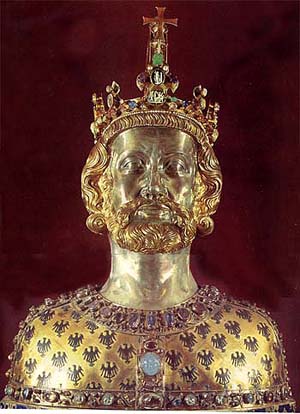
Solomon Johnson Sr.

Solomon JOHNSON Sr. (c. 1601 – 1690) was Alex’s 11th Great Grandfather, one of 4,096 in this generation of the Shaw line.

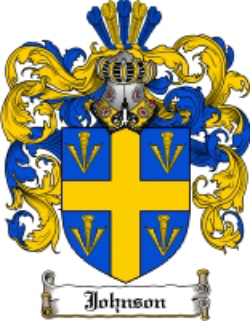
Immigrant Ancestor - Johnson Coat of Arms

Immigrant Ancestor – Johnson Coat of Arms

Solomon Johnson was born about 1601 in Clerkenwell, London, England. His parents were John JOHNSON and Hannah THROCKMORTON. He was christened in of Sudbury, Middlesex, Mass.  He married Elinor (Eleanor) CRAFT (Croft). Solomon died 28 JUL 1690 in Sudbury, Middlesex, Massachusetts.

Elinor  Craft (Eleanor Croft)  was born about 1611 in England.  Elinor died before 1654 in Marlborough, Middlesex, Massachusetts.

Children of Solomon and Elinor:

Name Born Married Departed
1. Solomon JOHNSON 6 Apr 1627
Middlesex, England
Hannah HOLMAN
1653 in Sudbury
.
Hannah Crafts
1 Feb 1687
Sudbury
26 Aug 1690 Sudbury, Mass.
2. John Johnson c. 1629
London, England
Deborah Ward
19 Nov 1657
4 May 1713
Marlborough, Mass
3. Joseph Johnson 3 Feb 1639
Sudbury
Susannah Joslin
19 Nov 1667
Apr 1668
4. Nathaniel Johnson 3 Feb 1639
Sudbury
Mary Plimpton
Marlborough
24 Jul 1718
Marlborough, Mass
5. Johannah Johnson 16 Feb 1641
Sudbury
John Barnes 29 Oct 1712
6. Jonathan Johnson 1642
Sudbury
Mary Kerley? 12 Apr 1712
7. Mary Johnson 23 Feb 1643
Sudbury
William Taylor
15 Nov 1671
Marlboro,  MA
11 Dec 1672
Marlboro, Mass.
or
28 Jul 1697
8. Increase Johnson 22 Nov 1644
Sudbury
9. Caleb Johnson 1 Feb 1645
Sudbury
3 Apr 1645
Watertown, Mass

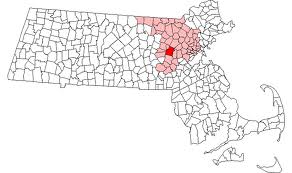
Solomon Johnson was an early pioneer of Sudbury, Mass.  The original Town of Sudbury was the third, Colonial, permanent, Inland Town within the 1639 borders of the Massachusetts Bay Colony.  Inland  means above the flow of tide waters from the Atlantic Ocean.  The first  (1635) was the original Town of Concord, then and now the immediate northern neighbor of Sudbury, and the second (1636) was the original Town of Dedham.  An inland location was a high risk location for the initial settlers of the original Town of Sudbury, since: there was no possibility of escape by ship if needed; emergency resources were about ten hours away in the Boston area; there was mainly wilderness beyond the southern and western borders of the Town.

Solomon first lived in Watertown, Mass.  The petition to “The Great and General Court of the Massachusetts Bay Colony” to establish the original Town of Sudbury was made by a group of Colonial residents of the original Town of Watertown.

The area within the original Town of Watertown extended west to the eastern border of the original Town of Sudbury.   The original Town of Watertown was much larger in area than the present Town of Watertown and also included the present Towns of Weston (the immediate eastern neighbor of Wayland) and Waltham.

Solomon Johnson became a freeman in 1651. He was twice married, his first wife, Hannah, dying in 1651. By this marriage he had three children, Joseph or Joshua and Nathaniel, who were twins (born Feb. 3, 1640), and Mary (born Jan. 23, 1644). He married for his second wife Elinor Crafts, by whom he had Caleb, who died young.  He assisted in the formation of the Marlboro Plantatation, and was assigned a house-lot of twenty-three acres there. He was selectman from 1651 to 1666.

Solomon Sr. was accidentally shot 4 May 1654, Watertown .

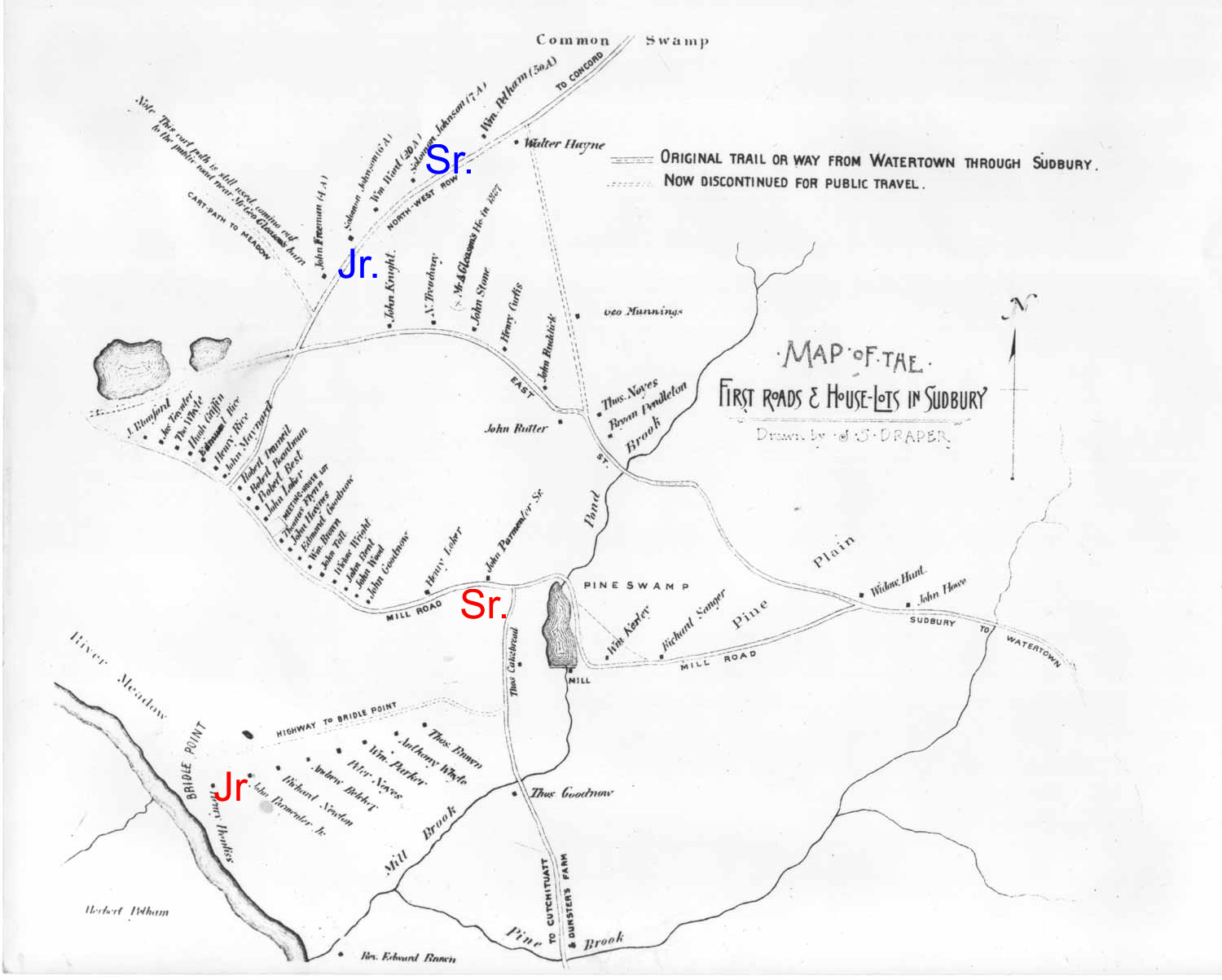
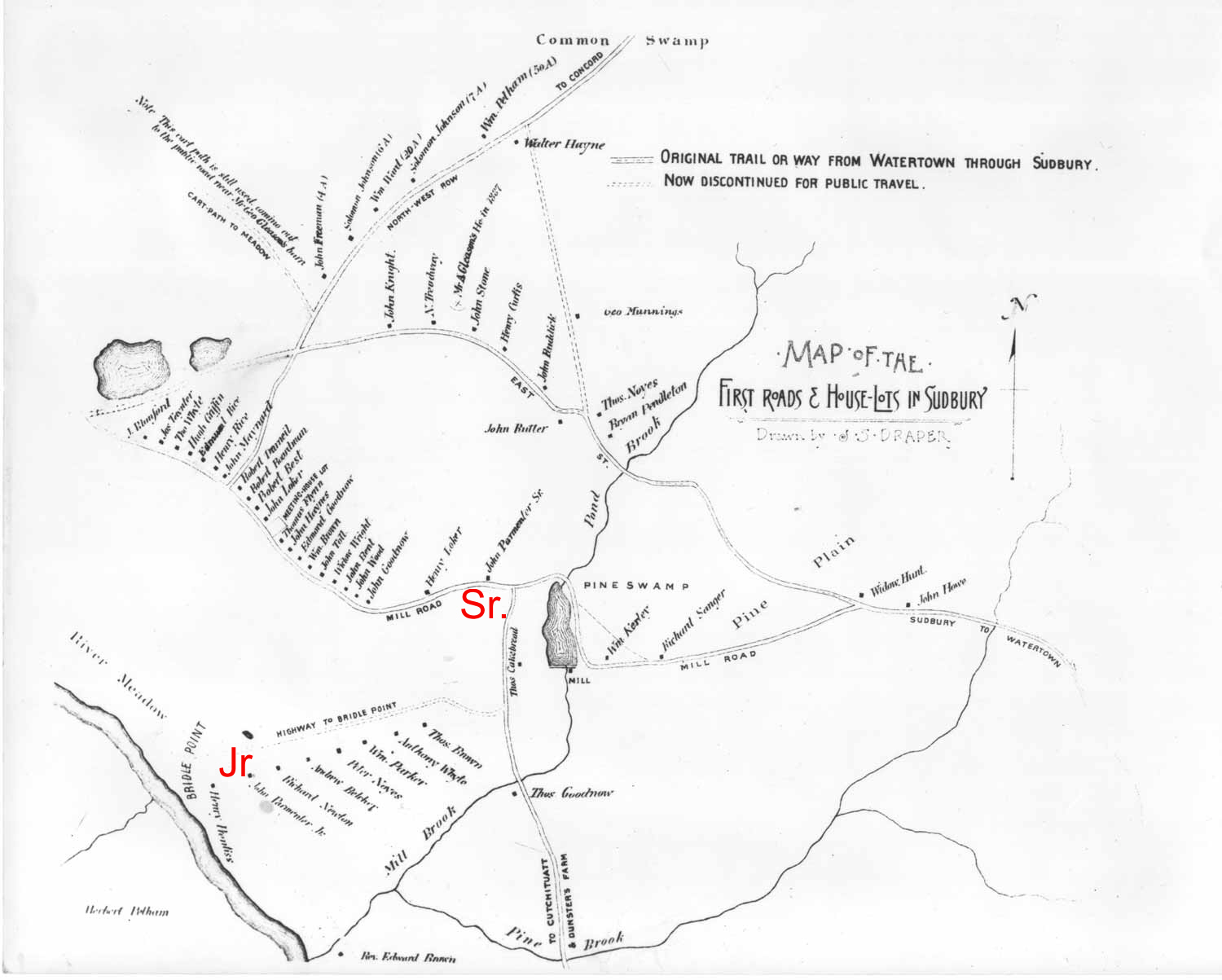
Solomon Johnson Sr and Solomon Johnson Jr. (in blue) were early pioneers in Sudbury, Mass. The lived on the Northwest Row, the road to Concord. Solomon Jr, married George Parmenter, son of John Parmenter Jr. (in red)

Midd. Deed III : 139) Dated 25 Apr. 1658. Solomon Johnson of Watertown sells land to his son Solomon Johnson Jr. of Sudbury.

(Midd. Deed III : 325) Solomon Johnson of Sudbury, Co. Midd., Junr., sells to Jeremiah Holman of Cambridge one moyty or halfe of land granted by my father Solomon Johnson Senr. called the new grant, 37th lot. Signed by markes of Solomon Johnson Junr. & Hannah Johnson 3 June 1664. In presence of Willia Bordman, Samuel Goffe. Ack. by both 23 June 1664. Rec. 25 Apr. 1666.

(Midd. P. Original Papers) Hannah Johnson relict widow of Solomon Johnson late of Sudbury, dec’d, and Caleb Johnson eldest son of said Solomon Johnson, granted adm. 2 May 1691, Charlestown.

Children

1. Solomon JOHNSON (See his page)

2. John Johnson

John’s wife Deborah Ward was born 1637 in Clerkenwell, London, England. Her parents were William Ward (1603 – 1687) and Elizabeth Whale (1613 – 1700). Deborah died 9 Aug 1697 in Marlborough, Middlesex, Mass.

(Midd. Co. Ct. Files Apr. 1686) Solomon Johnson aged fifty nine years or their about John Johnson aged fifty seven years or their about Testifieth and saith that in the yeare fifty one we together Did mow m’ Richard Brown then of Watertown in ye medow that doth ley upon the north of Charls River between Stony Broock and Wattertown plain that then was comonly called m’ Richard Browns medow which is y* medow now in controversy and we moued it for him as his own medow and furder saith not.
Sworn 6 Apr. 1686. (Case of Stone v. Bemis & al.).

4. Nathaniel Johnson

Nathaniel’s wife Mary Plimpton was born 19 Apr 1648 in Dedham, Norfolk, Mass. Her parents were John Plimpton and Jane Demant. Mary died 27 Nov 1736 in Marlborough, Middlesex, Mass.

5. Johannah Johnson

Johannah’s husband John Barnes was born in 1637 in Sudbury, Mass.

6. Jonathan Johnson

Some sources say that Jonathan married Mary Kerley, but a different Jonathan Johnson   who was born Jan 02, 1667/68 in Marlboro, Middlesex, Mass. married a woman of the same name a generation later.  His parents were Jonathan Johnson and Mary Newton. His grandparents were William Johnson and Elizabeth Story.  This Jonathan died Oct 12, 1708 in Marlboro, Middlesex, Mass. He married Mary Kerley Dec 24, 1689 in Lancaster, Worcester Co., Mass., daughter of Henry Kerley and Elizabeth White. She was born Oct 04, 1666 in Lancaster, Worcester Co., Mass., and died 1741.

7. Mary Johnson

Mary’s husband William Taylor was born in 1644 in England.  Williiam died 28 Jul 1706 in Marlboro,  Middlesex, Mass. He embarked aboard the ship Speedwell at Gravesend, England, arrived in Boston 27 May 1656 traveling with no Taylor relatives, age 11.

April 14, 1666 – Town of Sudbury votes to pay Dr. John Chamber of Roxbury, on behalf of Joseph Noyes,  for medical care to William Taylor, who injured his hand.  Q: Was William working for the town?  Why was he taken to Roxbury (Boston)?   Was Joseph Noyes William’s guardian/mentor?

Inhabitants of the Town of Marlboro in 1686: William Taylor, James Taylor, among others. probably buried in Spring Hill Cemetery, Marlboro (no markers, but this was the first burying ground.  The Old Common Grounds were not established until 1706)

William Taylor married first Mary Johnson [Tayler V.R.’s] who d: December 11, 1672 in Marlboro, Middlesex County, MA m: November 15, 1671 in Marlboro, Middlesex County, MA

Child of William Taylor and Mary Johnson:

i.  Samuel Taylor b: December 11, 1672 in Marlboro, Middlesex County, Ma., d: January 31, 1672/73 in Marlboro, Middlesex County, MA

William Taylor married 2nd Hannah Merriam b: July 14, 1645 in Concord, Middlesex County, MA, and d: 21 Jan 1679/80 in Marlboro, Middlesex County, MA, they m: July 16, 1677 in Marlboro, Middlesex County, MA. Daughter George Merriam and Susan Raven

William Taylor m 3rd Mary Cheevers, d: 28 Jul 1697 in Marlboro, Middlesex County, MA, m: 28 Nov 1683 in Cambridge, Middlesex, Mass.

William Taylor married 4th Sarah Wheeler Larkin, b: 1666, m: 3 Feb 1698/99 in Marlboro, Middlesex County, MA

Sources:

The history of Sudbury, Massachusetts. 1638-1889 By Alfred Sereno Hudson

http://familytreemaker.genealogy.com/users/p/e/t/Carol-Peters-New-York/GENE3-0024.html

http://worldconnect.genealogy.rootsweb.ancestry.com/cgi-bin/igm.cgi?op=GET&db=tsmith&id=I1342

http://freepages.history.rootsweb.ancestry.com/~historyofmarlborough/genitaylor.htm

http://www.sudbury.ma.us/departments/seniorcenter/services/custom/hal/sudbury.htm#Hist1

Posted in 13th Generation, Immigrant - England, Line - Shaw, Pioneer, Public Office, Twins | Tagged | 5 Comments

William Holman

William HOLMAN (1594 – 1653) was Alex’s 11th Great Grandfather, one of 4,096 in this generation of the Shaw line.
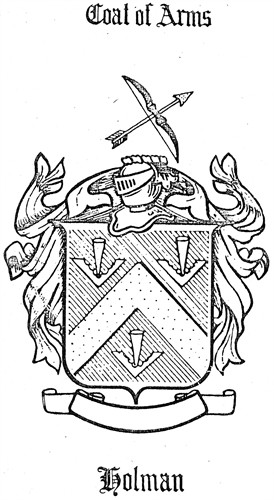
William Holman – Coat of Arms

William Holman was born on 29 Dec 1594 in Northampton, Northamptonshire, England. His parents were William HOLMAN and Margaret HALL.   He married Winifred HENCHMAN on 1 Nov 1626 in Preston Capes, Northamptonshire, England.  They sailed from London England, 10 Jun 1635 on the ship Defence.  They were accompanied on the journey by their 20 year old maid servant, Alice Ashbey, and their five children:  Hannah (age 8), Jeremy (age 6), Mary (age 4), Sarah (age 2) and Abraham (age 3 months).  William died 8 Jan 1653 in Cambridge, Middlesex, Massachusetts.
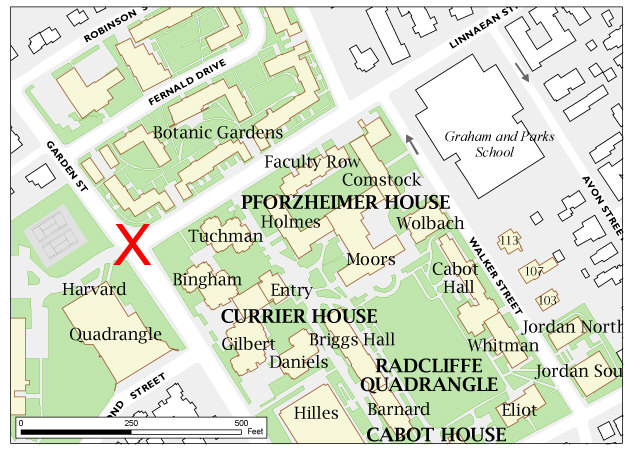
William Holman’s Cambridge home on Garden and Linnaean Street is now on the Harvard Campus

Winifred  Henchman was born 1600 in Preston Capes, Northamptonshire, England.  After Williams death, Winifred earned an meager living by caring for the sick.  One account said she bathe and massaged her patients, used herbs and spices and invoked the blessings of the Lord.   As described below, she was accused of witchcraft and only narrowly acquitted.   Winifred died 16 Oct 1671 in Cambridge, Middlesex, Massachusetts.

They had the following children:

Name Born Married Departed
1. Hannah HOLMAN bapt.
30 Nov 1627
All Saints, Northampton, Northamptonshire, England
Solomon JOHNSON Jr.
1653 Sudbury
4 Jun 1685 Sudbury, Middlesex, Massachusetts.
2. Jeremiah Holman bapt.
29 Mar 1629
England
Susannah [__?__]
1653
.
Mary (Mercy) Pratt
1666
Cambridge, Mass
30 Nov 1709
Cambridge, Mass.
3. Mary Holman bapt.
23 Feb 1631
All Saints, England
Jan 1674 Cambridge, Mass
4. Sarah Holman bapt.
13 Jan 1633
England
Samuel Parker
9 Apr 1657
19 Nov 1675
5. Abraham Holman bapt.
12 Feb 1635
England
Sarah Petts
21 Feb 1663 Hingham, Mass.
7 Jan 1712
6. Isaac Holman 1638
Cambridge
Mass.
12 Apr 1663
Cambridge, Mass
7. Seeth Holman 1641
Mass.
Thomas Ross
16 Jan 1661 Cambridge, Mass
5 Aug 1695 Billercia, Mass.
8. Elizabeth Holman 19 May 1644
Mass.
Deacon Jonathan Adams
1665 Medfield, Norfolk, Mass.

William Holman came from Northamptonshire, England, and settled in Cambridge, Mass., in 1635; the record of his arrival can be found in the (NEH & GR. XIV : 315), and also in Hotten’s Lists though the two records do not agree in every particular.

From the Register we quote as follows: ” More XXth 1635. In the Desire de Lond. Pearce, and Bond for New Eng. p’r Cert. fro. ij Justices of Peace & minister of All Saintes lionian (perhaps lining) in Northapton.
Wm. Hoeman husbm. 40
Winifred Hoeman his wife 35
Alice Ashbey, maid servant 20
Hannah Hoeman 8
Jeremy Hoeman 6
Mary Hoeman 4
Sarah Hoeman 2
Abraham Hoeman 1/4,

William and Winifred’s first home was located in Cambridge, Massachusetts, where three more children were born (Isaac born April 12, 1636; Seeth*2 born 1640; and Elizabeth born May 19, 1644), making a total of eight children; five girls and three boys.  The family later moved to Boston, Massachusetts where they took up residency at the corner of Garden and Linnean Streets where the Botanical Gardens now stand.

21 Sep 1639 – William Holman. Bought of Gen.ad (Hadden) A house with sixe Acres of planteing Ground in the Old west field. to ye Cowe Common South east, The highway southwest, William Beetlestone northwest, the highwaye to the new west field northeast. (Cambridge Proprietory Records)

William Holman Impr. In the west End one dwellings house with Three Acr of Land more or lesse, the Land Late William Bettlestons northwest, the Comon southeast, the highwayes to the great swampe southwest and northeast.

Itm. In the Westfield three Acr more or lesse, Elizabeth Isaacke southeast, John ffissenden northwest, the highwayes to the great swampe southwest & northeast.
Lands layd out on the south sied Charles River 1662. In the sixt division, Widow Holman . . . two acres.

27 Feb 1664 and 27 Mar 1665. The order of the lotts and the number of acres, together with the interest of each person in the Cow Comon is as followeth: Widow Holman . . . Ten acc’* & two comons.

In 1659, Winifred Holman, the widow of William Holman of Cambridge, was accused of witchcraft, because of her charitable desire to cure the sick with mental and spiritual suggestions, and by the ” blessings of God “.

The Holmans lived on the Northeasterly corner of Garden and Linnean streets, and opposite them, on Sparks and Garden streets, resided the family of John Gibson, consisting of his wife Rebecca, son John and daughter Rebbecca Stearnes.

Just what was the real cause of enmity, between the two families, does not appear from the records. Rebecca, the daughter of John and Rebecca Gibson, was born about the year 1635, and was the same age as Abraham, the son of Winifred Holman. The evidence showed that if ” Abraham ware aboute she [Rebecca] was well “. It is quite within the realms of possibility, that an intended marriage between Abraham Holman and Rebecca Gibson, had been interrupted by their parents, and the lady induced to become the second wife of Charles Stearns on the 22 June 1654.  Before 1657, Mrs. Stearns was afflicted with hallucinations, and became violently vindictive towards the mother and sister of Abraham Holman, making charges of witchcraft against them.

One day, Mary Holman asked why whe didn’t get some help and she answered that she had “used means by physicians and could have no help.”  Mary suggested her mother could cure her “with the blessing of God.”  Gibson was upset that Winifred and her daughter Mary had practiced their magical healing skills on his daughter and filed a complaint with the Constable of Cambridge.

The Gibsons, — weighed down with the sickness and distress of their daughter Rebecca, and unable to resist her repeated assertions that Winifred and her daughter Mary Holman, were the real authors of all their misery, — entered, in the year 1659, a serious complaint against them as witches, and had Mr. Thomas Danforth issue warrants for their arrest.

(Midd. Co. Ct. Files) Taken from Page’s History of Cambridge, Mass., as the original could not be found.

To the Constable of Cambridge. You are required forthwith to apprehend the persons of Widow Holman and her daughter Mary, and immediately bring them before the County Court Now sitting in Charlestown, to be examined on several accusations presented, on suspicion of witchcraft; and for Witnesses John Gibson and his wife; you are forthwith to bring them away, and not suffer them to speak one with another after their knowledge of this warrant, and hereof you are not to fail at your perill.

Dat. 21 June 1659. Thomas Danforth, R.

It will be convenient that you charge some meet person to bring away the mayd first, and then you may acquaint the mother also with this warrant respecting her also.

The records of the court make no further allusion to this charge of sorcery. Doubtless the grand jury were not impressed with the evidence presented, and failed to bring in an indictment. The Holmans, however, were not satisfied to rest their side of the case, and brought suit for legal damages in an action of defamation and slander against the Gibsons and Rebecca Stearnes.

At this second trial, the evidence to support the accusations of witchcraft were very slender, the testimonies demonstrate the bigoted mental attitude of those times. The quaint simplicity of the charges were in keeping with the mode of life and learning of the early settlers, yet teeming with insidious suspicions.

In defence of her character as an honest christian women, Mrs. Holman submitted two certificates, signed by two of the deacons John Bridge and Gregory Stone, and several members of the church:

We, whose names are underwritten, we do here testify that Winifret Holman, we having been acquainted with her this many years, she being near neighbor unto us, and many times have had occasion to have dealings with her, and we have not indeed in the least measure perceived, either by words or deeds, any thing whereby we could have any grounds or reason to suspect her for witchery or any thing thereunto tending. And this is evident unto us that she is diligent in her calling, and frequents public preaching, and gives diligent attention thereunto.
John Palfrey, Mathew Bridge, Richard Eccles, ffrancis Whitmor, John Greene, Nathaniell Green, William Diksone.

We, who have here subscribed our names, do testify that we have known this Winnefret Holman, widow, this many years, but never knew any thing in her life concerning witchery. But she hath always been a diligent hearer of any attender to the word of God.
Mary Patten, Mary Hall, Jane Willows, Anna Bridge, Elizabeth Bridg, Elizabeth Green, Jeane Diksonne, Elizabeth Winship, Thomas Fox, Ellin Fox, William Towne, Martha Towne, Mary Eccles, Isobell Whittmor, John Bridge, Rebekka Wieth, Gregory Stone, Lidea Stone.

Winifred Holman lost her suit on the ground that Rebecca Stearns was sick and not responsible for what she said, but Mary Holman gained her action against John Gibson Jr.

The testimonies, which follow, were contributed by members of the staff in the Middlesex County Court, at Cambridge.

To the Constable of Cambridg or his Deputy
You are hereby required to attach the goods or in want thereof the person of John Gibson Jun’ of Cambridge and take bond of him to the value of twenty pounds with sufficient surety or suretyes for his appearance att the next County Court holden att Cambridg upon the 3 day of Aprill next, then and there to answer the complaint of Mary Holeman of Cambridge in an action of Defamation and Slaunder, and so make a true return hereof under yo’ hand. Dated this 26 of March 1659 60

By the Court Samuel Green:
(Endorsed on back)
This attachment was served upon Joh Gibson Jun’ & securiety taken for his appareance at this Court to Answer there unto according to y* teano’ there of by me Franc Moore Const
26 March 1660

To the Constable of Cambridg or his deputy
You are hereby required to attach the goods and in want thereof the persons of John Gibson of Cambridg Sen’ and his wife, and take bond of them to the value of ten pounds with sufficient Surety or Suretyes for their appearance att the next County Court holden att Cambridg upon the third day of Aprill next then and there to answer the complaint of Winnifrid Holmane of Cambridge in an action of defamation and slaunder, hereof you are to make a true return under yo’ hand, dated this 28 of March 1660

By the Court Samuel Green:
(Endorsed on back)
I have served this Attachment upon John Gibson & taken bond of him to ye value of ten pounds for his appearance at ye Court to be responsall to ye Attachment according to y8 tean’ thereof:
by me Franc Moore
Const 29 1 mo 1660

To the Constable of Cambridg or his Deputy
You are hereby required to attach the goods or in want thereof the person of Rebeckah the wife of Charles Sternes of Cambridge and take bond of her to the value of ten pounds with sufficient Surety or Suretyes for her appearance att the next County Court holden att Cambridg, upon the third day of Aprill next then and there to answer the complaint of Winnifrid Holeman of Cambridg, in an action of defamation and slaunder, hereof you are to make a true return under your hand
Dated this 28 of March 1660
By the Court Samuel Green:
(Endorsed on back)

This Attachment was served upon Rebecka Stearnes & securytie taken for her appearance at this Court to answer thereto according to the teano’ thereof
by me Franc Moore Const
28.1.1660

The testimonies of Tho Andrews 17 years of age Daniell Andrews 16 years of age and Samuell Buck aged about 17 years do say being coming from meeting on the Lords day that they heard John Gibson say of Mary Holman that there cometh the young witch. And Daniell Andrews saith it is more then you know And John Gibson saied I am sure of it: 15 June dated 1659
Sworne in Court 4 (2) 60
as attests Th. Danforth R.

This is the testimony of Elizabeth Bowers aged 25 yeares saith that she hearde Rebekka the wife of Charles Sternes say that widow Holman is a witch at which time shee was in one of her rageing fits.
Sworne in Court
4 (2) 60. as attests.
Th. Danforth R.

Elisabeah Bowers being at Goode Gipsons house about ten days since and she heard Goode Gipson say her daughter did call another woman witch and shee reproved her daughter and sayd doo you know what you say and shee answereth her mother as she sayd that it was Ms Homan she ment then Abram Holman replied to Good Gibson doth your daughter know wl she sayeth and she sayeth sometime she doth and sometime she doth not.
Sworne in Court 4 (2) 60.
as attests. Th. Danforth. R.

Elizabeth Bowers aged 25 years
Wittneseth that shee being present heard Abraham Holman ask Goody Gibson if she did not say his mother was a witch and she sayd she would not say his mother was a witch but she had cause to suppect her for her daughter had been very grevously handled and she had sene her ask very strange things.  Abraham Holman and Jerimiah Holraan wittneseth the same
4 (2) 60. Sworne in Court.
as attests. Th. Danforth R.

The testimony of Abraham Holman & Mary Holman that they heard Rebeecha Stearns say: Mrs. Holman your chest is full of impes but whether shee was in her fitts, wly at Sunday service shee rageth, & is deprived of ye use of her reason, we dar not affirme to ye contrary.
Sworne in Court Anno 1659
4 (2) 60. as attests.
Th. Danforth R.

The testimony of Seth Holman is as followeth that she allso hearde Rebbekka Sternes say that Mrs. Holman is a witch and it was aboute wheate haraof — but whether shee was in one of her rageing fitts at ye tome she cannt tell.
Sworne in Court
4 (2) 60.
as attests. Th. Danforth, R.

An acusation of Charles Sternes against Mary Holman in that she cam into his house when he and his wife ware both absent and the child quiet in the creadle she medling with the child this child being a lusty, thriving child before as all our neighbors can witness and sune after this child did consume and waste away untill it dyed about 2 months after this Mary Holman did say that she would undertake to cure the child if we would put it into her hands these words were spoken to the wife of George Williams and the mother of the child Deacon Bridge and Daniel Foster will witness how the ribs of the child were bent in — being beiwed by ym and it was nearly dead.

A relation of the passages between Mrs Holman and her daughter Mary and the wife of Charles Stearnes now living in Cambridge / the first thing that makes us suspect them is that after she had 2 extraordinary strange fits which she never had the like before Mary Holman asked her why she did not get some helpe for them and she answered she could not tell what to doe she had used meanes by fisitions and could have no helpe and the sayd Mary sayd that hare mother sayd if she would put har selfe into her handes that she would undertake to cure her with the blessings of God

Our daughter telling us of it and we not suspecting them we wished her to goe to se what she would say to her / and she sayd her daughter was a prating wench and loved to prate / but yet she did prescribe some herbs to her that she should use in the springe.

After this my daughters child grew ill and Mary Holman coming in often asked her what her child ayled and she sayd morover that her mother and she take notice of it that the child declined ever since the 3d of January and will till it come to the grave but if you will put it into my hands I will undertake to cure it.

I cured one at Malden that had the reckets and if you will take a fooles counsell you may if you will not choase / she sayd also the child fell away in the lower part and yet she did not see the child opned she sayd also that Mrs Mecheles child had the reckets and it was easy to be seen for the face did shine but since Mrs Metchell sent to Lynn for a skillful woman to look on it and she could not se no such thinge.

After this Mary Holman borrowed a sclit of her and when she brought it home the child was asleep in the cradle and a boyc a rocking it and the mother of the child was gone for water and the boy sayd that Mary Holman came to the child as it was asleep and took it by the nose and made the blood come and set it a crying that the mother heard it and before she came in Mary was gone out over the still.

When she came in and saw the child in such a case she chood the boy for making the child cry and he sayd it was Mary Holman that did it and went away as fast as she could After this she was taken with her ordinary fits 2 nights and 2 days and was pretty well again and senseble one day and then she was taken with a strange raving and mavulus unquiet night and day for the space of 3 or 4 days and nights together and took no rest and it was observed that all this time Mrs Holman was walking along by her rayles stooping down and picking of the ground along as she went and both of them walking up and down and tooe and agayne that it was taken notice of by many and all this time she raged could not be quiet till the last day of the week in the after noone thay were gone both from home and then she was quiet and was fast asleepe till they cam home and sudenly she sprunge up out of har sleepe and cryed out with such rage agaynst Mrs Holman that she was a witch and that she must be hanged her mother being amased she went out and se her a coming towards the house and the nearer she came the more she raged and so she continued all night and in the morning Mary Holman cam in for fyer as as she did every morning and sometimes twice in a day as soone as she came in she cryed out on her that she was a witch so that we could not still her till my wife shooved her out of doors and then thay were out Mary asked my wife what har daughter ayled and sayd that she was a quiet woman another being by my wife answered she thought she was bewitched then sayd Mary Holman my mother sayd that she was not light headed nor har head did not ache but she continued so still and crying out to her mother and sayd Mrs Holman she was working wickedness on the lords day with that my wife looked out and saw Mrs Holman a pecking by the rayles as she did of other dayes

When folkes ware gone to meeting about halfe an hour after 2 of the clock she went to meeting yt is Mrs Holman and by that time she got to meeting as we gesed she lay still about halfe an hour and then fell asleep and of a suden she flinges up and cryed out of Mrs Holman my wife not thinking thay had been come from meeting looked out and sawe her at home Anon after Mary Holman cam to the house and sayd to my wife your daughter had a sleepe had she not And she answered her why do you aske and she sayd becase she sleept yesterday afore this time and so she did but how she should come to know it we canot tell for thay ware both times from horn on the second day in the morning Mary came for fyer and she cryed out on her as before and contineued raging allmost all that day on the 3 day Mary Holman was a cuminge agayne for fyer and my wife prayed me that if I sawe her cum that I would not let her come in and so I did I met with her at the still with a bright scilet in her hand and she asked me how my daughter did and I sayd she is not well and I asked her whether she went with that and she sayd for fyer but I tould har she should not have none here but bad hare goe to some other house / upon wich we tooke notice that that day she was very quiet and thire was such a sudden alteration to admiration to all that saw it and so continued but after she was more sensible of her weakness.

Some things were forgotten / that my daughter before she was taken with her fits put a pair of stockings to her and she kept them a great while and upon the last day of the week at night she sent them home / and she wore them on the Sabbath and that night she had her fits being free from them a great while before and as was sayd before when she had had them 2 dayes and 2 nights she fell into this Strang condition as before mentioned and all this time she cryed out of Mrs Holman and her daughter Mary that thay ware witches and thay must be found out and sayd you must not suffer a witch to live and she sayd Mr Danford was chosen a magestrate to find out Mrs Holman / and when my wife went to give hare sum refreshing she would not take it in she was so troubled with Mrs Holman that she must be found out That my wife told her that she would git the magestrate to find her out and it was taken notice of by my wife and others that her countenance was changed and did eate

Thus she lay taking on agaynst Mrs Holman and Mary to all that came to her that thay ware witches and must be hanged and so she told them to their faces and could not be settled and many times she flung up with such rage and cryed out with exeding earniestnes that Mrs Holman was at the rayles let me goe out and I will show you her and it was so for my wife and others looked out and saw her theare it semed to us very Strang for it was not posible that she could see her for she was kept so close on her bed and a couvring hanging before her and another before the window

The first great trouble that she had she was afrighted wit Satan and thought that she saw him stand by the beds side so that she cryed out with a lowd voice all night to the lord for help saying lord helpe me lord help me that she was heard a great way of The second great trouble she had she was likewise troubled with Satan appearing to her that she was set of a great trembling that she shook the bed she lay on and striving mightly with her body and fighting with her hands that 2 men ware fayn to hold her we asked her why she fought so and she sayd she fought with the devil / and ever and anon she called out of Mrs Holman and would have her sent for and one that sat by sayd what would you say to her and she sayd I will tell har that she is a witch / we then not suspecting her so to be we reproved her and wished her not to say so but the more we forbade her the more violent she was in so calling har and crying out of Mrs Holmans black chest and Mrs Holmans oake but what she ment by them we cannot tell but this last time she was troubled with Mrs Holman and her daughter Mary and concerning the child it does decline an fall away dayly according to Maryes words and yet we cannot perceive that it is sick at all but will suck and eat / and in the time of the mothers trouble the child is set quite crooked in the body which before was a straight thriving child / also it was taken notice of that in the time of my daughters trouble that hare hands ware set crooked that her husband could not git them open
(Endorsement on back)

These thinges that are written in thes papers I doe not present them as accusations but as considerations to the Court The last winter before this I was afflected with Mrs Holmans hens I could not keep them out of my barn from destroying my corn I being much troubled at it spake of it to my wife and she said it may be the poor woman cannot keep them at home I being thus afflected with them I flunge a stone at one of them and killed it and layd it upon a hovell that stood upon the common when my wife saw it she sent to Mrs Holmans to see if it were one of hers and her daughter fetched it home and after that they troubled me no more though thay went abroad still which we wondered at being so constantly there every day before after this my wife had a brood of chickens of fifteen which were like to doe well . . . and did thrive for the space of one fortnight and then they were taken with fits thay would turn their heads upward and turn round many times and run about the house as if thay were mald and sometimes picking towards the ground but not touch the ground and sometimes thay would be prety well and eat their meat but thay dyed 2 and 2 at a time till thay came to 4

Likewise Mrs Holman had a white cocke that went a grasing about the common every day in the summer time between the pond and the houses without any hens with him and we taking notice of him asked Mary Holman wherefor that cocke went so alone and she said that the hens did not care for him nor he cared not for them and she said moreover that he was 7 years old then we asked her why they would keep him and she sayd she could not tell her mother would keep him and soon after that we saw him no more

Also there was a bird that was taken notice of not only of us but of some others such a one as neither they nor we ever sawe before it was all milk white save only a little gray on the wings my sunn being tould of such a bird did looke to see if he could see it and did see it and threw stones at it but could not hit it although it ware very near him and when it rose up it did fly to Mrs Holmans house so likewise when those that sawe it first flung stone … at it would always fly thether and sometimes they sayd thay sawe it fly into the house thay had taken notice of it a week before we did and wh . . . sunne and I went to mend up the fence that was before my daughters house . . . bird was skipping about the rayles my sunne sayd here is the divilishest bird that ever I saw in my life and I asked him why he did say so and he sayd I never threw half so often at a bird in his life but he did hit it but but this I cannot hit and he flunge again at it but could not hit it and we both of us see it fly to Mrs Holmans house the same day my son and other persons saw it again and thay hunted it about and flung stones at it and it flying thether again one of them called out saying the bird was gone home and two of them resolved the next day to get their guns and see if thay could shoot it Mrs Holman came out of her house and looked on them and in liklyhood heard what thay sayd for they were near the house but since that time the bird have not been seen in this time my daughter Starnes going out of her house within evening saw this bird under her house sid she thought at first it had been a cat but she going towards it percived it was a white bird and it did fly along by the house sid and so away to Mrs Holmans it was sene another evening when it was tooe late for burds to be abroade betwin my daughters house and the rayles.

My wife have been much troubled with her wheel when she have set herself to spin for the necessity of her family sometimes she could not make no work of it she thought at first it might be out of kilter and we both used what means we could with it but it was never the better but was fayne to set it away and go about some other work and when she took it again it would go very well and thus it was very ofen and sometimes when she could make no work with it she would set it away and not so much as unband it and take it again and not alter it at all and it would goe very well one time amongst the rest she set herself to work and was much troubled that she could make no work of it she begun to fear that there might be something that might be the cause of it she set her wheel away and went out and found Mary Holman at the oake turning round and when she saw my wife she ketched up up a chippe and that caused her to fear that it might be by their meanes another time she was a spinning and as it was wonte so it did agayne that she was so affected with it that she could have cryed and sitting still with hare wheel be for har saying thus to har selfe lord thou hast comanded me to labour but I am hindered good lord if there by any hand of sattan in it prevent it with sum other words and went to spinning agayne.

And it went as well as ever at another time when my daughter was not very well my wife went out and saw Mary Holman siting on her knees at a holle of water she took up water in a dish and held it up a prety haith and drained it into another thing my wife went presently to her daughter and found her crying so immoderatly that the tears fell so fast from her eyes that my wife was fayne to stand and wipe them from of her face with her apron and her mother asked her wherefor she cryed and she sayd she could not tell but she sayd she could not forbeare concerning what our daughter have sene and felte in the time of her afflection she can declare if she be called to it

Awhile after we were at the Court she had another raging fit wherein she was carred with rage agaynst her parents and her brothers and sisters and we disered one of our bretherin to pray with her and she raged at him and had him get him home or she would throw something at his head and she was so outragous that we ware fayn to tye her hands and she cryed out and sayd a snake stunge her under her arms and when she was out of her distemper she sayd she sawe a thing like a greate snake cym into the house with a thing like a turtle upon the backe and came upon the bed to her and another time when one of our elders was at prayer she barked like a dog and though we held her mouth close with our hands yet she would speak saying that Mrs Holman and Mary Holman were witches and bewitched her and her child and sometimes she cryed out agaynst blood that it cryed and that it stuncke and we had her hold her peace but she sayd she must speake and conceianc must speak and at last she sayd there was a hoale of blood by the credell and there was many prayers made for her and it pleased God that suddenly she came out of it and was ravished at the sight of thinges how thay apered to her ever thay did before har mother being gone out she followed har and sayd mother I am well but she could not believe har but she sayd goe to work and she went about her work and she told her mother that she felt something come out of her at that presant and the next day she looked out of her window and saw Mary Holman rumning about as if she ware catching a bird and presantly she was taken sick almost struck dead as she thought and her mother gat her to bed and gave her something to refresh her and then she tould her this

The next night after being in her senses she called to her husband and said that Mrs Holman was here & she rose out of her bed and followed her to the window and then she told her husband that she was at the gate but he could not see her the next night after she cryed out and said her back was broake and felt as if a sword had ben thrust into her back and the next night the child was taken very sick.

A litle while after this Mr Danford came by and asked how the child did and we prayed him to come in and se it and he saw how crooked it was and how it was pined away and sayd he thought it could not live long but the child did eat well and suck well  and yet wasted away as Mrs Holman said it would do. The next day being the Lords day Mrs. Holman stayed at home in the forenoon and were folks were going to meeting she saw Mrs. Holman  Dnt thire house fits took her looking upon her 2 or 3 hours togither her mother observing of them and thire cariges as was not at other times but before her fites she was persuaded that mischief was at hand, and she begged prayers of har neybours and wished har husband to pray hard and that night she had 5 or 6 fites.

The 3 day after she was pretty well and went about her work till towards night that Mrs Holman cam out and sat down upon her knees to howe and continued upon her knees bowing near 2 hours as we conceive as soon as she begun to how the woman begun to be ill and was fayne to go to bed and begun to be distempered and when it was almost night her mother went to see what she had done and could not se no hole at all more then in any other place and she saw both of them stand in thire musterd when it was to dark to work and in the next morning thay were at the same place howing as long, and all that night and 2 or 3 nights after she could not sleepe but lay cring out that Mrs Holmans impes ware byting of her feete that she dirst not put them downe and when she was out of her beed we could not kepe har from Mrs Holmans but would goe thether and tell her that she had impes in a blacke chest

And this has been observed that when Mrs Holman and har daughter were gone abroad that she was prety quiet and would eat her  meat and when they came home she was distempered again and thus it was always when she was in her trouble It pleased God to move some of the church set a day apart to seeke God for her in her distemper and it pleased God to release her the next day and was well a  prety while but since she had another. fit but more modrate then before / befor which we sawe two strange the one was digging a hole . sand in a dish the one was  cloase by her rayles and the other was she having a greate heap of sand at her door she begun to carry it away in a great dish my wife going out in the morning
…. . saw Mrs Holman carrying sand called to me to see her and sayd she was persuaded our daughter was sicke / presently har son Abraham spake to her and she went in then my wife went to se har daughter and she had a fit and when Abraham was gone out wit his carte the ould woman cam out to caring sand and presently upon it she had another fit

And while she continued carrying sand her husband and her mother stood looking on hare till she went in and she kepte in all day and all that time Mrs Holman kept in she had no fit while it was dark and then her fits came agayne after this she fell into her distemper agayne but more moderate and slept well in the nights but she was afflected with fear and pain frighting out of her sleep twice in the night by Mrs Holman cuming in to har as she say or by some other thing by her meanes and this contineued 3 or 4 nights after she was in har perfecte senses she was so hurte in har body at those times that she was affrayd that she should be made to miscarry but in the daytime she felt no payne at all.  Concarning the child it  was  badly handled as creadable witneses can make it appeare how the ribbes were bent in and the breast ript up, and sum of our creetures being strangly afflected and strangly transported and thus it have been for a long time sumtim upon on and sumtim upon another

Another time my wife observing Mrs Holman doing som strange thinge my wife was much troubled for feare her daughter would be distracted on the 2 day night she had har ordinary fits and the next day she lay sicke all day when Mrs Holman was at home / on the wedensday and thursday Mrs Holman went abroade and then she was well and aboute her work on the next day of a suden she begun to be distempered and lay downe and har mother looked out and saw Mrs Holman doing as was sayd before and was sturred up to seke the Lord that if she be a working of wickednes that the Lord would be pleased to prevent har and presently Mrs Holman went away and of a suden she found such a change that she caled to har mother and sayd she was well and was freed from any further distemper at that time.

And this we have observed all alonge when she was in her distemper if Mrs Holman did but goe from home she Lords day  one of was Presantly m bar right mynd and if her Sonne Abraham ware aboute home she was well but if he ware from home and his mother cum home she presantly fall into har distemper agayne and this was observed that most parte of the last summer that one of them and sumtimes both kepte at home of the Lordes dayes This also have ben observed that the ould woman have ben sene to goe out toward night into swampes and by wayes: exam . . . why shee goeth out at night to swamps & high wayes

This winter time they have kept in we have ben well but the first time Mrs Holman went to meeting being of a lecture day she stood by our daughter looking on har very often and at night she had her fites and sine one of them will stand by her looking on her whereupon she is taken so sicke that she can scarce sit on her seat and so it was with the child upon her looking on it it would groane as if it would die presently

Another time Mrs Holman was seene going towards one of our neighbores house within her owe fence towards night it rained a pretty pase and walked two or three times close by the rayles as near the house as she could not having any  thing to do that We that Sawe her Could Derceive she stoood still and and when she sawe us she returned home and she was without any hatte on har heade and presantly house mother & upon it the woman was taken so sicke that she sent for har har husband to cum to har for this look on ym . . ——
there is 2 or 3 wittneses

The last fits she had were her ordinary fits for manner but more then ordinary for contineuanc formerly she had them one or tooe nights but now thay contineued almost a weeke together but her other distemper did not follow through   mearcy bar sences contineued unless it was when she was affeighted by Sattan appearing to har sum tims in one shape and sumtimes in another And this was observed that thes frites ware when Mrs Holman cam out of har house to doe sumthing in har loofte and when she went in agayne she was quieat and well my self e my wife and sunne can wit tries this Her going barfoot to y” meetings ware on evry day in a cold winter day or on horse backe —

Elisabeth Bowers being at the court this afternoone and hering that passage about powering the water out of a dish into another thing shee think shee is bound to speak to give lite to the court and jury shee had thought to speake here in court But shee was taken off But that which shee can say is shee have heard Mary Homan and her mother complayne for want of water and being so under suspertion shee could not well tell how to goe to a neaybors house for water least any thing should be made of her to some they sayd they weare faynt to get water any way with a dish her well being frossen up to the mude and to this purpose she spake and they sayd they could be content to cary a payle of water from my house home which was neer halfe a mile

Concerning the cocke which is the first we tooke notis of and what Mary sayd of it both my selfe my wife and my sunne can wittnes that she sayd it was 7 years ould and it went alone allwaye witout hennes when we sawe it and she sayd he cared not for the hennes nor the henes for him and we asked har why she kept it then and she sayd she could not tell har mother would kepe him and soone after this we sawe him no more
witnesses
John Gibson Seaner
Reback Gibson
John Gibson Juner

The wife of Charles Stearnes being in a great distemper so as we ware fayne to hould her down in her bed and she would not be quiet but we must send for Mrs Holman and we persuaded her to be quiet and we asked her what she would say to her and she sayd she would say that she is a witch and we sayd you must not say so but she continued so saying this was when we had not the least suspicion that way this our selves and many of our neibours can wittnes also she cryed out of Mrs Holmans blacke chest and Mrs Holmans oake

The next fit was an extreame raging and continued so from thursday at night to saterday towards night then she tooke a little rest but when night came she fell into a rage agian all that night and the next day till the after noone while folkes were gone to meeting and then she lay quietly and fell asleep till folkes cam home and then she flung up in a rage cring out that Mrs Holman and  M Holman ware divilishest witches then Mary  was asleep when Holman came in a sayd how do your daughter thay ware not at she have ben asleep have she not and my wife home sayd why doe you aske and she sayd becase she slept yeeterday afore this time This Sabboth  morning Mary Holman came in for fyer as she did every morning while her trouble was upon her my daughter fell a raging at her as before was named my wife bad har goe out and sayd I wonder you will cum thether seing she rages so at you and when she had shued har out Mary Holman sayd what ayle your daughter she use to be a quiet woman and my wife sayd one sayd he was per uaded she was bewitched or she is posesed with an evell spirit then Mary Holman sayd that har mother sayd she is not light headed nor har head doe not ake
witness
Benjeman Crackbone Rebak Gibson

These words ware spoken on the lordes day morning before Mr Chansy cam at har and owned at Charlestown Court also we found this for a truth that although she were long in her distemper and very grevous yet so sone as she was out of them her head was well and did not ache as her selfe can witness.

The next fit she did not ly by it but went up and and we could not kepe her from Mrs Holmans and she would tell her that she could not sleep for har cockes and and har cats but she came suddenly out of it she have been so afflected with a cocke and cattes that in the day time she could not endure to see neither cock nor cat The next fit which and towards her house was before the commencment Mrs Holman and her daughter came out and stood looking upon my daughter near 2 hours together and that night she had 5 or 6 fits being very well before witness to this
Reback Gibson
Reback Starnes

The next Thursday after in the after noon she cam towards my daughters house in har own ground and sat downe on har knees and howed an hour or 2 together and suddenly she was fayn to leave har work and ly downe on the bed and sent for her mother and so grew into her distemper and could not rest all night in the morning as soon as we were up we saw her one while a hewing and Mary another while and then she begun to talke saying Mrs Holmans impes lay at har feet all night that she could not sleepe for them
witnes for it John Gibson Sener
Rebak Gibson
John Gibson Juner

That Mrs Holman did apper upon the common sometimes in on sute of aparrell and sometimes in another 4 times in lesse than an after noone picking about the common she changed har habbets in a short tim
witness Joh Gibson Sener
Reback Gibson
John Gibson Juner

That in my daughters great troubl she cryed out of Mrs Holmans being at the rayles when she was in her bed and a covering hanged befor her at such times Mrs Holman was sene standing neare her own rayles w°h is her owne grounds wittnes Rebecka Gibson
Martha Belsher and the Marshalls
daughter
Bethia

That when my daughter was in her distemper if Mrs Holman and har daughter went from home she would be quiet and sumtimes go to worke but as soon as thay cam home agayne she was distempered
witness John Gibson Sener
Reback Gibson
John Ruggels

for our creturs one of my oxen taken wit Strang fits at 4 severall times and my dogge strangly handled so as we have not knowen the like and my wifes chickings and our yeare ould calfe strangely handled as we can all wittnes

Concerning the chickings the last that was taken thus strangly my wife bad on of our children through it into the fyer and did so and we went to our gate and saw Mrs Holman when she rose from husking she turned looking upon our house rise from stripin of corne and walked about and as sone as it was burnt she sat downe agayne That Mrs Holman and har daughter Mary did ordinaryly kepe at home sometimes on and sometimes both this last summer on the lordes dayes we can all witness

That Mrs Holman have been seen going into swam pes and by wayes towards evening
witness John Gibson Sener
John Gibson Jenner

Concerning the childs growing as if it would dy presantly upon Mrs Holmans looking on it / the grandmother and the mother can wittnes at meeting /
and them that sat by can wittness how she did groane

That we ware so constantly afflected with Mrs Holmans henes every day and after kiling one of them we ware troubled with them no more although thay went a broad as before we all can wittness
Concerning the bird the strangeness of it and being abroad at such times as is not usall for birds to be abroad and alwayes when scared up and flying to Mrs Holmans house and that we could never se it since
wittnesnes John Gibson Sener Rebeck Gibson
Charles Starnes Reback Starnes John Gibson Juner
Steven Franses John Franses

Jno. Gibson Sen’. Rebecca Sternes •1 4 — (2) 1660
Rebeccak Gibson Charles Sternes > Sworne in Court to y* re
Jno. Gipson Jun’ Steven Frances ) spective evidences
as attests Th. Danforth R.
Endorsed on back

Concerning the carriages of thes papers if thay had not thay ben such as we have not sen by any other nor by themselves at other times and if we had not alwayes sene what folowed constantly upon us we durst not have presented them to the magistrates but being so long aquainted with them that we could tell what we myght suddinly looke for and found it so without fayle as we can wittnes
At a Coun Court held at Cambridge.
Aprill 3th 1660.

Winifred Holman pt. agst Jno. Gibson sen’ & his wife, in an accon of deffamaccon, the Jury haveing heard their respective pleas & evidences p’sented in ye case, do bring in y’ verdict finding for the deffts. costs of Court fiften shill. & ten pence.
At a Coun Court held at Cambridge.
Aprill 3th 1660.

Winifred Holman pt. agst Rebecca the wife of Charles Sternes defft in an accon of deffamaccon. The Jury haveing heard their respective pleas & evidences p’sented in the case, & it appearing to the Court that ye defft. was by Gods hand deprived of her naturall reason when shee expressed those words charged on her, do bring in their Verdict finding for the defft. costs of Court. Eight Shill. & foure pence.
At a Coun Court held at Cambridge.
Aprill 3th 1660.

Mary Holman pt. agst Jno. Gibson, Jun’ defft. in an accon of deffamaccon The jury haveing heard the case do find, for the pt. an acknowledgt to be made in Court, to sattisfaccon, or otherwise to pay 5£ five pounds, & also to pay the costs of Court, one pound five shill. & ten pence.
The defft. made his acknowledgment in Court, to sattisfaccon, being on file wth y* Juryes verdicts.

(Page’s History of Cambridge, Mass.) Concerning the case between Mary Holman, plaintive, and John Gibson jun’., defendant, we find for the plaintive that the said John Gibson shall make acknowledgement that he hath wronged and scandalously slandered Marye Holman by speeches irregularly, rashly and sudden spoken, for which he desire to be humbled and sorry for the same; and if he refuse to make this acknowledgement in the present court, that then we do enjoin John Gibson to pay to the plaintive the full sum of five pounds; and we also give the plaintive cost of court.

John Gibson junior. acknowledged in court that, whereas he is legally convicted of a slanderous speech concerning Mary Holman, he is heartily sorry for his evil thereby committed against God, and wrong done to the said Mary Holman and her friends, and doth crave forgiveness of the said Mary Holman of this trespass.

(Midd. Co. Ct. R. I : 35) At a Co. Court held at Cambridge the 5 Apr. 1653. This Court doth order that Jeremiah Holman shalbe Servt to Tho: ffox for one yeare and be alowed for his yeares service, of his said M’ Seven pound. And the Townsmen of Cambridg to order and improve the estate of Winifred Holman his moother.

(Midd. Co. Ct. R. III : 8) Admstraccdn is granted to Jeremiah Holman and Abram Holman, vpon th* estate of their mother Winifred Holman deced, by Daniel Gookin Esq’ and Thomas Danforth Record’. 21 Oct. 1671.

(p. 17) An inventory of the Estate of Winifred Holman, widow, was presented in Court, & left on file attested by Jeremiah Holman her sonne and Admstrato’. Co. Court held at Charlestown. 19 Dec. 1671.

(Midd. III : 318) 23 Oct. 1671. An inventory of ye Goods of Winifred Holman of Cambridge widdow, late deceased by Jer. Holman. Valued at £62.09.7. Included the House & three Acrs of land . . . , three Acrs of Land in Westfield, two Acrs & half in . . . pond, one Acr of Salt Marsh, one Acr & half on ye fresh swamp, on ye south side Charles river in ye neere Division two Acrs for ye Far Division ten Acrs. Dated 20 Dec. 1671.

Children

1. Hannah HOLMAN (See Solomon JOHNSON Jr.‘s page)

2. Jeremiah Holman

Jeremiah’s first wife Susannah [__?__] was born xx.

Jeremiah’s second wife Mercy Pratt was born 1642 in Plymouth, Plymouth, Mass. Her parents were Phineas Pratt and Mary Priest. Mercy died 1703 in Cambridge, Middlesex, Mass

Purchased land from his brother-in-law Solomon Johnson Jr

Midd. Deed III : 325) Solomon Johnson of Sudbury, Co. Midd., Junr., sells to Jeremiah Holman of Cambridge one moyty or halfe of land granted by my father Solomon Johnson Senr. called the new grant, 37th lot. Signed by markes of Solomon Johnson Junr. & Hannah Johnson 3 June 1664. In presence of Willia Bordman, Samuel Goffe. Ack. by both 23 June 1664. Rec. 25 Apr. 1666.

4. Sarah Holman

Sarah’s husband Samuel Parker was born about 1630 in England. Samuel died 31 Dec 1678 in Dedham, Norfolk, Mass.

5. Abraham Holman

Abraham’s wife Sarah Petts was born 29 Dec 1641 in Hingham, Plymouth, Mass. Her parents were Edmond Pitts and Ann Cooke. Sarah died 1714 in Hingham, Plymouth, Mass.

7. Seeth Holman

Seeth’s husband Thomas Ross was born 1630 in Scotland. Thomas died 20 Mar 1695 in Billerica, Middlesex, Mass.
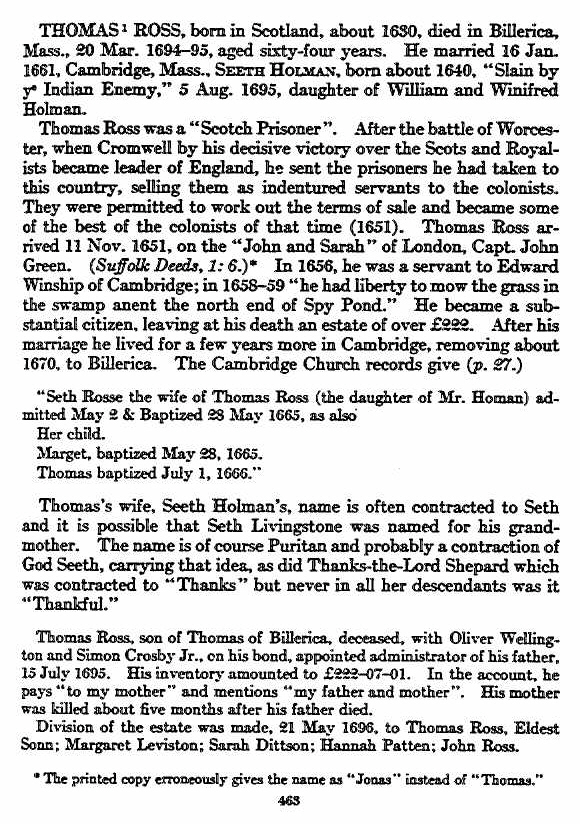
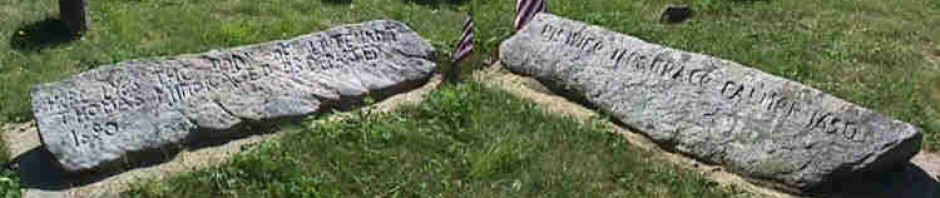
Thomas Ross 1 — Source: Ancestry of Charles Stinson Pillsbury and John Sargent Pillsbury (1938)
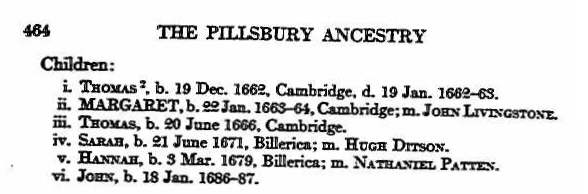
Thomas Ross 2

8. Elizabeth Holman

Elizabeth’s husband Deacon Jonathan Adams was born 1614 in Barton St David, Somerset, England. His parents were Henry Adams and Edith Squire. Jonathan died 28 Jul 1690 in Braintree, Norfolk, Mass.

Sources:
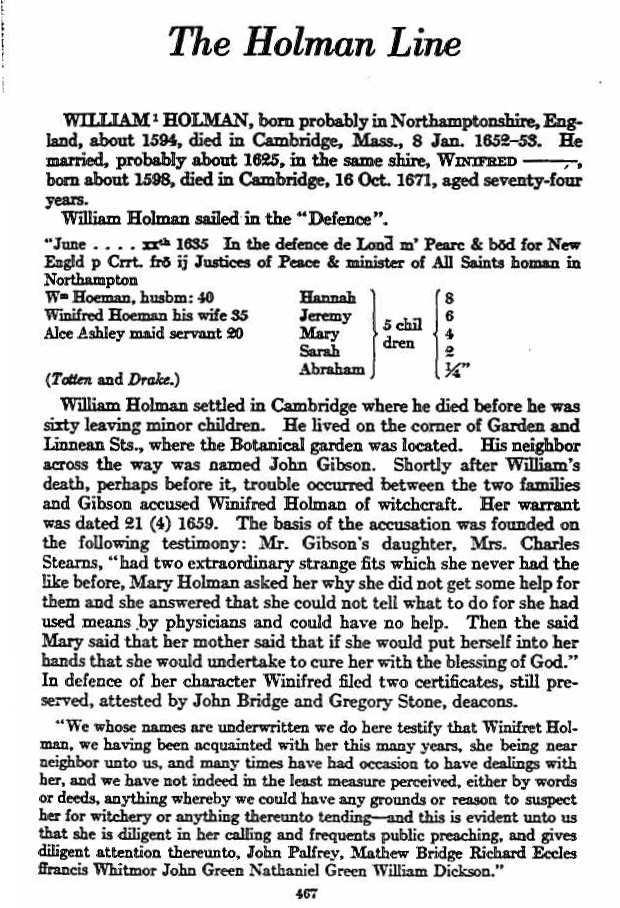
William Holman 1 — Source: Ancestry of Charles Stinson Pillsbury and John Sargent Pillsbury (1938)
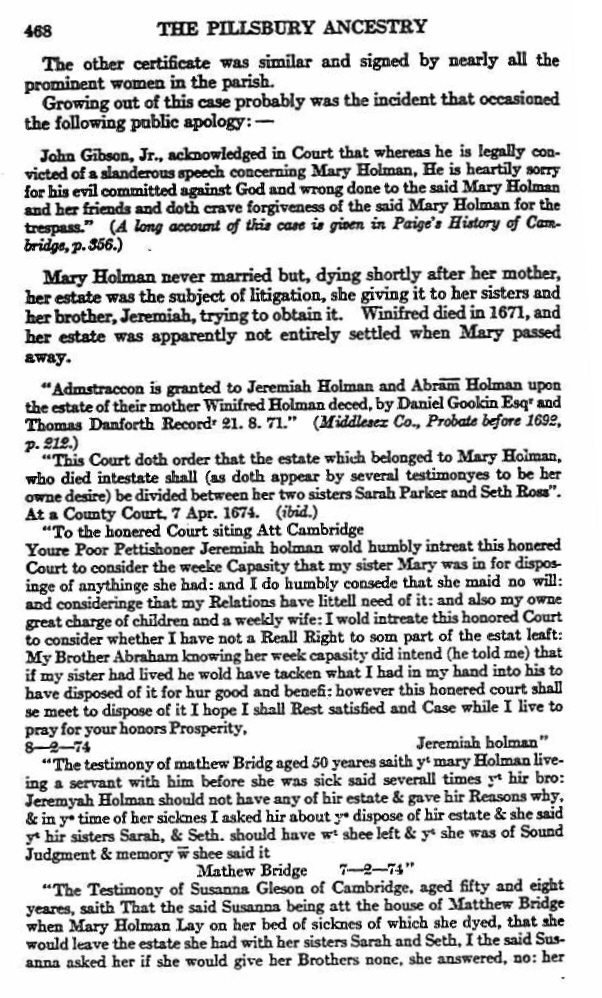
William Holman 2
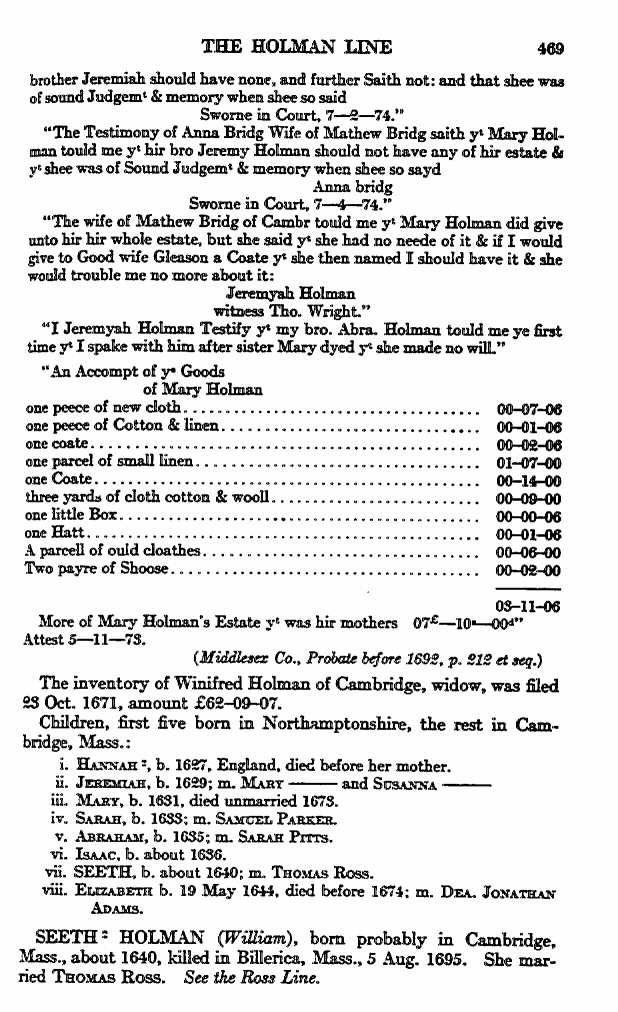
William Holman 3

http://trees.ancestry.com/owt/person.aspx?pid=1688349

http://freepages.genealogy.rootsweb.ancestry.com/~hwbradley/aqwg71.htm#26260

The history of Peter Parker and Sarah Ruggles of Roxbury, Mass. and their

Ancestry of Charles Stinson Pillsbury and John Sargent Pillsbury (1938) By Holman, Mary Lovering, 1868-1947; Pillsbury, Helen Pendleton Winston, 1878-1957
Posted in 13th Generation, Immigrant - England, Line - Shaw, Storied, Witch Trials | Tagged , , , , | 8 Comments

Solomon Johnson Jr.

Solomon JOHNSON Jr. (1627 – 1690) was Alex’s 10th Great Grandfather, one of 2,048 in this generation of the Shaw line.

Solomon Johnson was born 6 Apr 1627  in Middlesex, England. His parents were Solomon JOHNSON Sr. and Elinor CRAFT. He married Hannah HOLMAN on 1653 in Sudbury, Middlesex, Massachusetts. On 1 Feb 1687 in Sudbury, Middlesex, Mass, when he was 60 and she was 25, he married Hannah Crafts.  Many genealogies state that both Solomon and his father  died 26 Aug 1690 in Sudbury, Middlesex, Massachusetts.

Hannah Holman was christened 30 Nov 1627 in All Saints, Northampton, Northamptonshire, England.  Her parents were William HOLMAN and Winifred HENCHMAN.  Hannah died 4 Jun 1685 in Sudbury, Middlesex, Massachusetts.

Hannah Gross (or Crafts) was born 14 Dec 1662 in Roxbury, Suffolk, Massachusetts. After Solomon died, she married Thomas Frost 9 Jul 1691 in Sudbury, Mass. Hannah died 3 May 1712 in Sudbury, Middlesex, Massachusetts.

Children of Solomon and Hannah Holman:

Name Born Married Departed
1. Samuel Johnson 5 Mar 1654  Sudbury, Middlesex, Mass.
2. Hannah JOHNSON 27 Apr 1656 Sudbury George PARMENTER
20 Jan 1677/78 Sudbury, Mass.
16 Jun 1720 Sudbury
3. Caleb Johnson 31 Oct 1658
Sudbury
Agnes Bent 1 Dec 1715
Sudbury

Solomon was an early proprietor of Lancaster, MA, for in 1652, he deeded his forty acres in “Nashaway Plantation” to Stephen Day for the three hundred acres exchanged in 1658 for his father’s new Sudbury grant of one hundred forty acres upon which last he probably lived.  In 1664, he alienated a majority of this one hundred forty acres but in 1685 possessed the seventy acres remaining, as deed from Benjamin Crowe of Stowe to Joseph Rice of Marlborough recites that the land sold is bounded southward with the land of Solomon Johnson, Jr.

Solomon Johnson Sr and Solomon Johnson Jr. (in blue) were early pioneers in Sudbury, Mass. The lived on the Northwest Row, the road to Concord.  Solomon Jr, married George Parmenter, son of John Parmenter  Jr. (in red)

Solomon Johnson Jr. took the oath of fidelity (became a Puritan) in Sudbury in 1645.

Midd. Deed III : 139) Dated 25 Apr. 1658. Solomon Johnson of Watertown sells land to his son Solomon Johnson Jr. of Sudbury.

(Midd. Deed III : 325) Solomon Johnson of Sudbury, Co. Midd., Junr., sells to Jeremiah Holman of Cambridge one moyty or halfe of land granted by my father Solomon Johnson Senr. called the new grant, 37th lot. Signed by markes of Solomon Johnson Junr. & Hannah Johnson 3 June 1664. In presence of Willia Bordman, Samuel Goffe. Ack. by both 23 June 1664. Rec. 25 Apr. 1666.

(Midd. Co. Ct. Files Apr. 1686) Solomon Johnson aged fifty nine years or their about & John Johnson aged fifty seven years or their about Testifieth and saith that in the yeare fifty one we together Did mow m’ Richard Brown then of Watertown in y* medow that doth ley upon the north of Charls River between Stony Broock and Wattertown plain that then was comonly called m’ Richard Browns medow which is y* medow now in controversy and we moued it for him as his own medow and furder saith not.

Sworn 6 Apr. 1686. (Case of Stone v. Bemis & al.).

(Midd. P. Original Papers) Hannah Johnson relict widow of Solomon Johnson late of Sudbury, dec’d, and Caleb Johnson eldest son of said Solomon Johnson, granted adm. 2 May 1691, Charlestown.

Children

2. Hannah JOHNSON (see George PARMENTER‘S page)

3. Caleb Johnson

Caleb’s wife Agnes Bent was born 6 May 1661 in Sudbury, Middlesex, Mass. Her parents were John Bent Jr and Hannah Stone. Agnes died 4 Jun 1729.

Sources:

http://familytreemaker.genealogy.com/users/p/e/t/Carol-Peters-New-York/GENE3-0020.html

Posted in 12th Generation, Immigrant - England, Line - Shaw, Pioneer | Tagged | 3 Comments

Deacon John Parmenter Sr.

Deacon John PARMENTER Sr. (1588 – 1671) was Alex’s 11th Great Grandfather, one of 4,096 in this generation of the Shaw line.

John Parmenter – Coat of Arms

Deacon John Parmenter Sr. was born 12 Jan 1587/88 in Little Yeldman, Essex, England.  His parents were William de PARMENTER and Margery GARROLD.  He married Bridget DAVEYE on 12 Jun 1609 in Little Yeldman, Essex, Engalnd. In 1639 John Parmenter emigrated to New England with his wife Bridget and children Mary and John Jr; in his party were the widow Elizabeth Loker and her children.  The name of the ship or port of departure is not known.   John Parmenter was one of the original proprietors of Sudbury, and was assigned lands May 1640 by the General Court of the Massachusetts Bay colony.  Following the death of his first wife, he married Annis (Agnes or Ann) (Bayford) (Chandler) Dane on 9 Aug 1660 in Roxbury, Mass.  John died 1 May 1671 in Roxbury, Mass.

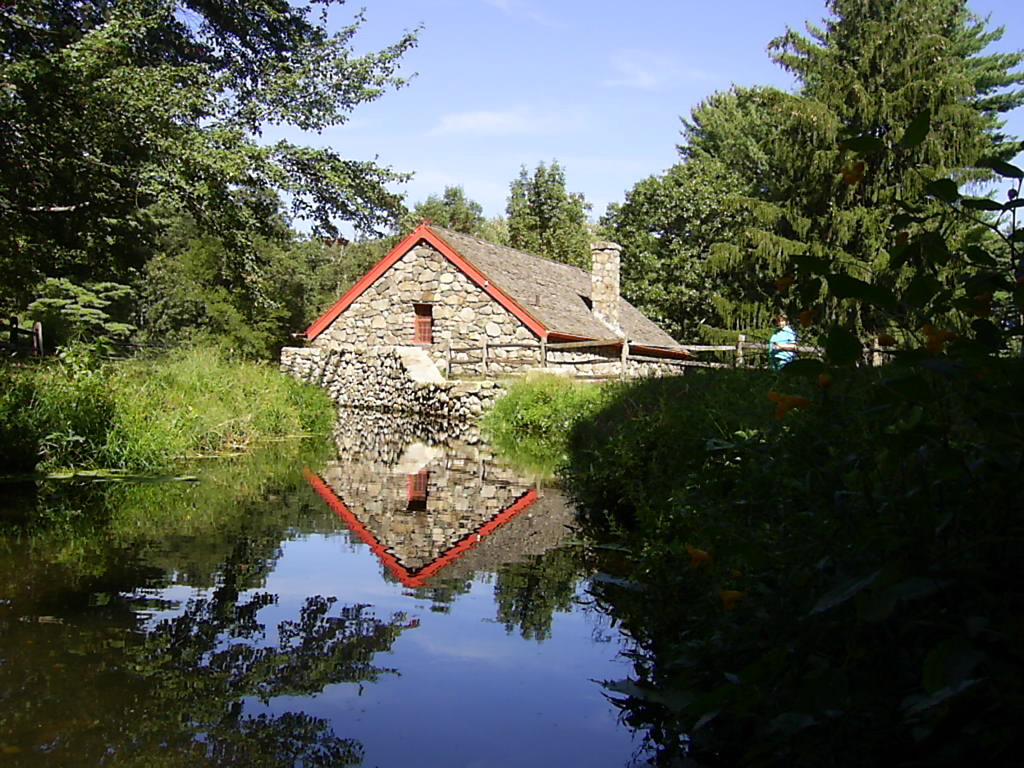
One of Sudbury’s historic landmarks, the Wayside Inn claims to be the country’s oldest operating inn, built and run by the Howe family for many generations opening in 1716. . Henry Wadsworth Longfellow wrote Tales of a Wayside Inn,   John Parmenter  his son John Jr and their descendents ran an inn in Sudbury from 1643 to about 1800

Bridget Daveye was baptized 12 Feb 1588/89 in Bures St. Mary, Suffolk, England.  Her parents probably were John DAVEYE and Mary BURGOYNE.   She was probably the sister of Elizabeth, wife of  their next door neighbor in Sudbury, Henry Loker.  Bridget and Elizabeth may have been daughters of William PERRY or of John SIMPSON, who both had daughters with their names baptized at Bures St. Mary between 1585 and 1593.  Bridget died 6 Aug 1660 in Roxbury, Mass.

Annis (Bayford) (Chandler) (Dane) was baptized at Farnham, Essex, England, 12 June 1603.  When they married, John would have been about 72, Annis 57. She was the widow of William Chandler, with whom she came to Massachusetts in 1637, and of John Dane, who was buried at Roxbury, 14 Sep 1658. She is an ancestor to President Rutherford B. Hayes through a child with her first husband. He died ten years later, and she survived him by ten more years, dying on March 15, 1683  in Roxbury.

Bridget was baptized in Bures St Mary’s

Children of John and Bridget:

Name Born Married Departed
1. Mary Parmenter c. 1610
Bures St. Mary, Suffolk, England
John Woods
10 Oct 1633
17 Aug 1690
Marlboro, Mass
2. John PARMENTER Jr. 16 Sep 1616
Little Yeldham, Essex, England
Amey EAMES
16 Oct 1637 in Little Yeldam, Essex, England
12 Apr 1666 Sudbury, Middlesex Co., Mass.

The: name of Parmenter is said to be of French, origin, and denotes a mountaineer.

John’s 3rd Great Grandfather was Guillaume Parmentin born about 1435 in France.

John’s father, William de PARMENTER, was born 7  Jan 1562/63 in Ovington, Essex, England.  He married Margery GARROLD 21 Jan 1582/83 in Ovington, Essex, England. William died before 4 Dec 1617 in Ovington, Essex, England.

Commissary Court of London for Essex and Herts [Somerset House], 1617, original will.

The Will of Willm Parmeter of Over [or Little] Yealdham, co. Essex, husbandman, 12 October 1613. To Margery my wife for life all my messuage and tenement where I now dwell called Tankerton, and after her decease reversion to Robert Parmiter my son, he paying to John Parmeter my son £5 one year after the decease of my wife;

and if the said John die before the sum be due, reversion to his children, equally divided. To Margery my wife for life all my copyhold land called Cowell alias Gowldwells, and after her decease it shall be sold by Robert Parmeter my brother, if he shall be living, and the money arising therefrom is to be equally divided among George Parmeter, Ursely Parmeter, Sara Parmeter, and Margaret Parmeter, my children;

and if my said brother be dead, then the land shall be equally divided among them. If my son George or my daughters Sara or Margaret shall die before said money be paid or land be possessed, reversion to my surviving children. My son Robert shall pay to John Parmeter, the son of John Parmeter my son, 6s. 8d. at the age of one and twenty years, and to Mary Parmeter, my son John’s daughter, 6s. 8d. at the age of one and twenty years. To my son George and my daughters Sara, Margarett, and Ursely certain articles of furniture [specified] after the decease of my wife Margery, whom I make executrix. [Signed] Sign’ Gulielmi Parmeter. Witnesses: Richard Hamon and George Bucher. Proved 19 January 1617 [1617/18].

John’s grandfather George PARMENTER married Alice HEDGINGHAM.

The Will of George P’menter thelder of Over [or Little] Yeldham. co. Essex, yeoman, 8 May 1591.

To be buried in the churchyard of Over Yeldham. To the poor people of Over Yeldham 3s. 4d. To the poor people of Tylberye 2s. To Alyce my wife and Robert my son the lease of my farm where I now dwell. To Alyce my wife for life my freehold and land in Over Yeldham called Madges, with reversion at her decease to my son Edward and his heirs.

Also to my said wife for life my copyhold lands and tenements lying in Tylbery, with reversion at her decease to my son Robert and his heirs, he paying to Chrystyan my daughter or her children £6,

to Katherine my daughter or her children £6,

to Jone my daughter or her children £6,

to Alyce my daughter or her children 40s.,

to George Parmenter my son or his heirs £4,

to Elizabeth daughter of Richard P’menter 20s.,

to Robert Page 6s. 8d.,

and to Jone Staniar dwelling with me 6s. 8d.

I give to Edward Parmenter and Susan Parmenter, son and daughter of my son Edward. 40s., to be paid by my son William [John’s father] a year after he shall enter into my land called Bushaleyes in Yeldham Pva.

To wife Alice for life said three and a half acres of land called Pushelyes [sic], which I bought last of John Browne of Yeldham Magna, with reversion at her decease to my son William. To my daughter Christyon a bullock.

To wife Alice all household stuff, money, and implements of household in my dwelling house. Residuary legatees and executors: wife Alice and son Robert. Supervisor: son George Parmenter, to whom I give 3s. 4d.

To wife Alice for life two acres of land lying in Dowries that I bought of George my son, with reversion at her decease to Richard my son. I have surrendered my copyhold lands in Tylberye into the hands of the Lord of the Manor by the hands of William Parmenter, in the presence of Mathewe Coldham [John P’ment his brother],* to the use of this my will.

To ray grandson William Parminter of Cavendysb eight bushels of barley. [Signed] George Pmenters marke. Witnesses: Edward Raynsford, Roger Barrow Jun., and John Hardyng. Proved 12 February 1591 [1591/2] by Alice Parmenter and Robert Parmenter. (Commissary Court of London for Essex and Herts [Somerset House], 1591, original will.

John’s mother,  Margery Garrold,  was baptized 18 Sep 1560 in Ovington, Essex, England. She was the daughter of George GARROLD.

John was an original proprietor of Sudbury, Middlesex, Mass

John Parmenter was one of the original proprietors of Sudbury, and was assigned lands May 1640 by the General Court of the Massachusetts Bay colony.  The original Town of Sudbury was the third, Colonial, permanent, Inland Town within the 1639 borders of the Massachusetts Bay Colony.  Inland  means above the flow of tide waters from the Atlantic Ocean.  The first  (1635) was the original Town of Concord, then and now the immediate northern neighbor of Sudbury, and the second (1636) was the original Town of Dedham.  An inland location was a high risk location for the initial settlers of the original Town of Sudbury, since: there was no possibility of escape by ship if needed; emergency resources were about ten hours away in the Boston area; there was mainly wilderness beyond the southern and western borders of the Town.

1639 Land Grant map showing John Parmenter Sr and his son John Parmenter Jr.’s lots.

Parmenter Story  by Roland A Dahir, at the 400th birthday of Dea. John Parmenter

Dea. John was born in Sible Hedingham County Essex, England on 12 Jan 1588; he m Bridget in Little Yeldham on 12 Jun 1609; she was born at Bures St. Mary, Country Essex on 12 Feb 1589. He was buried on 1 May 1671 in Roxbury, Suffolk, MA.  John and both children are mentioned in his father (William) Will in 1613, but he inherited no lands or tenements from his father. Following his father’s death in 1617 John moved to about eight miles from Little Yeldham into Bures St. Mary. John’s connection to Bures St. Mary can be seen in his association with Philemon Whale and Herbert Pelham, residents of Bures St. Mary who emigrated to Sudbury [The Puritan village, Sumner Chilton Powell, Appendix I, Wesleyan Univ. Press, 1963]

A comparison of the signature of John Parminter as a witness in the original will of Henry Loker of Bures St. Mary with an autograph signature of Dea. John Parmenter as a commissioner of Sudbury, MA, 6 Jan 1639/40 shows that the two signatures were made by the same hand. [Suffolk Co. Court files, Boston, NO.162004]

John was chosen early as a Selectman; then Deacon, and Commissioner; he desired to be made Freeman 13 May 1640 [NEHGS Reg. Vol 13, 261], and made freeman 10 May 1643.

The Parmenter Tavern, established by Deacon John in 1643, when a license for the “house of entertainment ” was issued 10 May 1643. This naturally provided a livilehood for the Deacon and his wife. Prior to opening this business Deacon John probably farmed along with his son John Jr.. When John Jr. took over the ownership and management of the Tavern is not presently known, but in 1653-4 another license was issued to John, Jr. This was seven years before Deacon John moved to Roxbury to marry his second wife in 1660.

This Google Map Street View shows the corner of Bow and Concord Road Today

John’s will was dated 25 Mar 1671, and proved 25 Jul 1671 names his second wife, son-in-law John Wood , grandson John Parmenter, and cousins Cheevers and John Stibbins.

Bridget may have been the sister of Elizabeth, wife of Henry Loker (Douglas Richardson, “The Riddlesworth alias Loker Family,” [Register, 143 (1989): 325-331, at 329]. The registers of Bures St. Mary show two pairs of sisters named Bridget and Elizabeth baptized within an appropriate time period: William Perry had daughters Elizabeth and Bridget baptized in 1586/7 and 1593 respectively, and John Simpson had Bridget baptized in 1585/6 and Elizabeth in 1588 (ibid). [NEHGS Reg., Vol 147, Oct 1993, 381]. She died on 6 April 1660 in Sudbury, Middlesex, MA.Henry Loker (Robert, John, Robert Riddlesdale alias Lokar) was baptized at Bures St. Mary 7 February 1576/7 as Henry Locar, and was buried there 25 February 1630/1 as Henry Loquar. He married, probably about 1610, ELIZABETH, who died at Sudbury, Massachusetts, 18 May 1648 (Vital Records of Shrewsbury, Massachusetts, to the Year 1850 [Boston, 1903], 314). Her maiden name has not been learned. They may have married in an adjoining parish, or perhaps at Bures St. Mary between 1602 and 1609, when a gap occurs in the parish registers there.

A likely guess is that Elizabeth was the sister of Bridget, wife of John Parmenter of Bures St. Mary and later New England; the Lokers and the Parmenters came to New England in the same year, settling in the same town, and John Parmenter was a witness to the will of Henry Loker. There were two pairs of sisters named Elizabeth and Bridget baptized at Bures St. Mary in the right time period: one William Perry had daughters Elizabeth and Bridget baptized in 1586/7 and 1593 respectively, and John Simpson had a Bridget baptized in 1585/6 and an Elizabeth in 1588.

Henry was a glover, not yet in his apprenticeship when his mother made her will in Feb  1592/93. Like his parents and grandparents, he lived in the southern part of the parish of Bures St. Mary which is in Essex. Apparently in his lifetime he dropped the surname Riddlesdale and began regularly using the alias Loker instead, a pattern which his children followed in New England. [NEHGR, vol 143, 329; Oct 1989]

Children

1. Mary Parmenter

Mary’s husband John Woods was born 6 Feb 1610 in England. His father was James Wood (1573 – 1628).  John died 10 Jul 1678 in Marlboro, Middlesex, Mass.

John was a pin-maker by trade, arrived in America at age 26 in 1635 aboard the ‘Hopewell,’ and first settled at Salem, MA, but removed to Sudbury, MA by 1638, becoming a proprietor there in 1639. He was admitted freeman on May 10, 1642, and received several Sudbury land grants through 1655. After Marlborough was formed in 1660, John sold his property at Sudbury and relocated to Marlborough, where he had been granted land and served in various town offices. On Apr. 4, 1664, he deposed that he was about age 54. His will, dated Nov. 26, 1677 and proved Oct. 1, 1678, names his wife Mary, his three sons, daughter Katherine, son-in-law John Bellows, and grandchild Hannah Levins. The inventory of his estate, on Jul. 19, 1678 at £303. 03. 07, mentions son-in-law Joseph Newton.

2. John PARMENTER Jr. (See his page)

Sources:

http://familytreemaker.genealogy.com/users/e/l/w/Robert-C-Elwell-MA/BOOK-0001/0002-0065.html

http://www.parmenter-fam-assn.org/DJP%20Cln%20091119/b16.htm#P14

http://familytreemaker.genealogy.com/users/c/a/v/Cristi-A-Cave/WEBSITE-0001/UHP-0449.html

http://familytreemaker.genealogy.com/users/c/a/v/Cristi-A-Cave/WEBSITE-0001/UHP-0847.html

http://familytreemaker.genealogy.com/users/e/l/w/Robert-C-Elwell-MA/BOOK-0001/0002-0073.html

http://wc.rootsweb.ancestry.com/cgi-bin/igm.cgi?op=GET&db=peterfreeman&id=I597

Elizabeth French, “Genealogical Research in England” (Boston: NEHG Reg., 1914, Vol 68, 262-273).

Ralph Parmenter Bennett, “Further Notes on the English Background of John Parmenter…” (Boston: NEHG Reg., 1993, Vol 147, 377-382).

http://stagge-parker.blogspot.com/2011/07/john-parminter-1588-1671.html

Posted in 13th Generation, Historical Church, Immigrant - England, Line - Shaw, Pioneer, Tavern Keeper | Tagged , , | 7 Comments

John Parmenter Jr.

John PARMENTER Jr. (1616 – 1666) was Alex’s 10th Great Grandfather, one of 2,048 in this generation of the Shaw line.

John Parmenter - Coat of Arms

John Parmenter Jr  was born 16 Sep 1616 in Little Yeldham, Essex, England.  His parents were John PARMENTER Sr. and Bridget DAVEYE. He immigrated with his parents in 1639, though the name of the ship is not known.  He married  Amey EAMES 16 Oct 1637 in Little Yeldam, Essex, England.  John died 12 Apr 1666 in Sudbury, Middlesex Co., Mass.

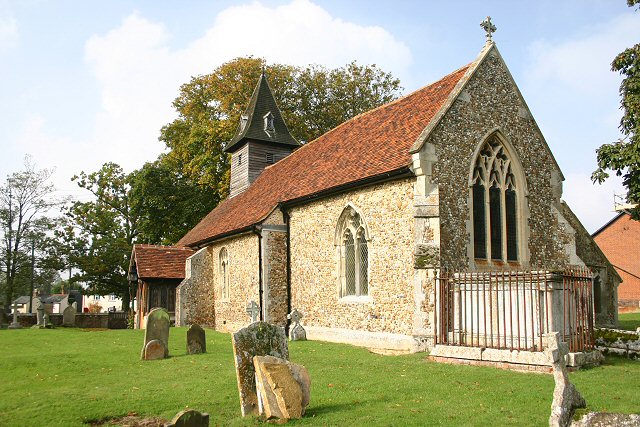
John was baptized and married in Little Yeldam Church

Amey Eames was  born 3 May 1614 in Little Yeldham, Essex, England.  Amey  died 21 Nov 1681 in Sudbury, Middlesex Co.

Children of John and Amey:

Name Born Married Departed
1. John Parmenter 16 Feb 1639/40
Sudbury
Elizabeth Cutler
c. 1667
Sudbury
18 Sep 1719
Sudbury
2. Joseph Parmenter 12 Mar 1641/42
Sudbury
21 Nov 1678
Sudbury
3. Mary Parmenter 10 Jun 1644
Sudbury
Christopher Bannister (never married, but had a daughter Abigail b 24 Apr 1665)
.
Richard Burke
24 Jun 1670
Sudbury
1727
4. George PARMENTER c. 1647
Sudbury, Mass.
Hannah JOHNSON
20 Jan 1677/78 Sudbury, Mass.
25 Oct 1727
Sudbury, Mass
5. Benjamin Parmenter c. 1650
Sudbury
Tamisen (Thomasine, Thompson) Rice
22 Sep 1680
Sudbury
1 May 1737
Sudbury
6. Lydia Parmenter 16 Oct 1655
Sudbury
Thomas Pratt
5 Jun 1684
Sherborn, Mass.
6 Feb 1740/41
Framingham, Mass

While he emigrated with his father, John Jr. can be considered the progenitor of the Parmenter name in America.  He was an only son and in only four generations,  of his four sons, one never married, while the other three produced 13 grandsons and 32 grandaughters, and these grandsons produced 29 great grandsons and 55 great grandaughters; and the great grandsons produced 63 great great grandsons- making a total of 108 male descendants.

John became a freeman in May 1642; His father established the Parmenter Tavern when a license for the “house of entertainment ” was issued 10 May 1643.  Prior to opening this business Deacon John probably farmed along with his son John Jr.. When John Jr. took over the ownership and management of the Tavern is not presently known, but in 1653/54 another license was issued to John, Jr. kept a tavern or ordinary, at which the committee of the Colonial Court and Ecclesiastical Council for the settlement of difficulties in Sudbury, in 1655, was held.  His will was proved in 1666, there is mention of money owed to him by Christopher Bannister as a result of a successful paternity suit, brought about by John Jr, (brother to Mary).

Sudbury 1639 Land Division Map - You can see from this map that Henry Loker and John Parmenter Sr. had rather large tracts of land compared to their neighbors farther west on Mill Road. The Parmenter Tavern was located on John Sr.'s land.

History of Sudbury by Hudson

John owned Parmenter Tavern, located at the corner of Bow and Concord Rd – (Google Street View), that is now in the settlement of Wayland, on a lot assigned in general allotments of 1639, little westerly of house occupied by the late Dana Parmenter.

At a public town meeting on 19 Feb 1654, it was agreed that John Parmenter Jr shall keep a house of common entertainment and that the court shall be moved on his behalf to grant a licence to him.

On 4 Jan 1655, at a selectmen’s meeting it was voted to take some means to get the new grants laid out; it was also agreed to keep a herd of cattle upon the land the next summer; a plan was adopted to divide the area into squadrons – southe-east to be the first, the north east the second, the north west the third and the southwest the fourth; included in the list of persons to receive land in the fourth squadron is John Parmenter, Junior.

A list of Officers and Soldiers of the first Foot company in Sudbury under the command of Capt. Moses Maynard, Lt. Joseph Curtis and En. Jason Glezen included John Parmenter Jr.

Capt. Nathaniel Maynard’s muster roll was read and the town voted to allow to each person expressed by name therin a sum set to his name in said muster roll, included is was John Parmenter Jr.

In 1707, a Petition was sent to Governor Dudley and the General Assembly by the people living on the West side of Sudbury; they wanted to divide the town into two precincts and two churches. A protest was presented at the next town meeting signed by East side inhabitants, one of which was Benjamin Parmenter.

Progeniter of the Parmenter line in America

It is presumed that after the initial distribution of meadow land to the 50 families that John Jr.  followed other families in cutting down trees to build his home on the assigned lot in the town. Since most of the families did not bring farming equipment, they had to depend on the practice in East Anglia of sharing equipment and horses in the community to plow the land for crops necessary to produce the food. Undoubtedly cattle and swine were purchased in Sudbury or Watertown to make that start – or possibly by offering grazing land on a share basis with those with cattle. Fish and game were undoubtedly an important food in these early days.

While John Jr.  never was elected or appointed to any of the higher offices held by his father, he was recorded as serving as a constable one term and three terms as Fence Viewer. In 1642 he bought Henry Prentice”s house lot in Sudbury and sold it in 1649 to John Goodenow. He was one of Major Willard’s Trooper at Dedham in 1654 serving as the Major’s “Man”. He was make Freeman three years after his father on 10 May 1643.
The Parmenter Tavern, established by Deacon John in 1643, when a license for the “house of entertainment ” was issued 10 May 1643. This naturally provided a livilehood for the Deacon and his wife. Prior to opening this business Deacon John probably farmed along with his son John Jr. When John Jr. took over the ownership and management of the Tavern is not presently known, but in 1653/54 another license was issued to John, Jr. This was seven years before Deacon John moved to Roxbury to marry his second wife in 1660.

If these dates are reasonably correct, John, Jr. operated the Tavern for ten years up to his death in 1666 at age of 54, which was five years before his father died in 1671. Who then took over the Tavern management? In his will, presented below, John Jr provided that at his wife’s demise “all the rest of my estate then remaining shall be equally parted amongst all my children then living”

At this time his oldest son John III was 25 – old enough to assume this responsibility. However, his mother did not die until 21 November 1681- or 15 years after John Jr. death. Probably she operated the Tavern with the help of John III and/or the other sons; Joseph 24, George 19, and Benjamin 15. Joseph never married and could logically have stayed on to help with the Tavern. John III married a year later in 1657. George married late at 31 in 1678 and likewise could have helped run the tavern in the interim. The actual final disposition of the Tavern is presently unknown, but surely a matter of future research. We do know it operated continiously until after 1800.

Estate probated 1666 [Middlesex county Probate record #16930]

WILL OF JOHN PARMENTER, JR.

I being in perfect memory, do make this my last will and testament–

Imprimis: I give my soul to Jesus Christ, my Redeemer, and my body to my friends to be by them decently interred.

For my estate, I dispose of it as followth;

1. I give to my beloved wife, Amee Parmenter, my housse and all my land and stock, all moveables whatsoever is mine during her natural life, after her death to be parted among my children by my overseers hereafter named. I give all my estate to her during her life; [except three pounds I give to my son John Parmenter, to be paid in three months after my decease], Also I give unto my son John, half an acre of land that lieth by Mr. Walker’s farm. In that three acres of land I give him liberty to choose half an acre where he pleases to build either house or shop upon. Also I give him liberty to cut what timber he shall use about the said building of my land.
2. I give my son Joseph Parmenter my young horse to be his at my deceace.
3. I give my son George, three pounds to ge paid him when he comes age of one and twenty.
4. I give to my daughter, Mary Parmenter, fifteen pounds and to be paid with the 1st payment is due me from Christopher Bannister, provided the child live until his time of payment be expired, which will be about fifteen pounds to be paid her at the fifteen months and as aforesaid.

At the end of my wife’s life my will is that all the rest of estate then remaining, be it more or less, be equally parted amongst all my children then living; but my will is that my son John shall have five pounds more than the rest of my children, also my will is that my sons then living shall have all my land then remaining equally parted among them.
For education of my younger children my will is that George and Benjamin be taught to write a legible hand and that the art of Arithmatick as far as the rule of three.

Also my will is that all my younger children not yet of age be brought up with my wife, except Benjamin, who, when he have learned to write cypher as aforesaid my will is that, if he be willing, my overseers hereafter exposed shall put him and apprentice to a taylor that is an honest man, a good workman and that it is to be done at a convenient time of his age. Now that this my will may be faithfully performed according to the tenor hereof I do charge and impower my beloved wife and my son John Parmenter to be my executors. I do intrust Deacon Haynes, Philemon Whale and John Grout to be my overseers: Without whose knowledge and consent my executors shall have no power to act; my executors with the consent of my overseers are to manage my estate very carefully and prudently so there may be no waste made nor strip and spoil of timber or anything else committed to their trust, also to receive and gatherin what debts are due to me and pay what debts I owe.
5. My will is that my son John shall have no power to sell or dispose of that half acre of land before mentioned during his Mothers life. In witness herof I have here unto set my hand this 16th day of August 1665.

John Parmenter
Witt: John Swinnerton
Philemon Whale
Elizabeth Whale

Father I will that one of my sons shall have their arms free for their silver, this was done at the same time the will was made.

Witt: Philemon Whale
John Swinnerton Cambe 19,4, 1666

Sworn by Philemon Whale and Elizabeth Whale that this John Parmenter’s last will by him signed and declared in perfect
memory. Before Capt. Cookuis and Thos Danforth, Jr.

Children

1. John Parmenter III

John’s wife Elizabeth Cutler was born 22 Jul 1646 Watertown, Middlesex, Mass. Here parents were James Cutler and Mary Barnard. Elizabeth died 13 Jul 1722.

John’s will was dated 8 Nov 1712; bequeathing to wife Eliza, son Joseph, dau Sarah Bouker, dau Hannah Grant, GGdau Eiza Bouker, dau Elizabeth Garfield, dau Mary Bennitt, son John. [Middlesex Co, Probate record 16929]

2. Joseph Parmenter

Joseph’s will dated 14 Nov 1678, proved 2 Jan 1679; bequeathed to loving mother Amey, to brothers George & Benjamin, to cousin Abigail daughter of my loving sister Mary Burt, when she comes of age or marries, to sister Lydia. After the death of Mother Amey, certain property is to be divided one third to each (Benjamin, George, & Lydia). If none of these three are living it is to go to children of sister Mary. [Probate record Middlesex Co #16930] Joseph served under Capt. Prentice at My Hope, RI campaign 27 Aug 1675 King Phillips, War 24 Jun 1676. Almost certainly buried in the Old North Cem.. located in what is now Wayland, Mass.

3. Mary Parmenter

Mary and Christopher Bannister were never married. Mary’s father’s will stated in part; “…Dau Mary is to receive 15 pounds to be paid with last payment due me from Christopher Bannister (the results of a paternity suit)…” [Middlesex Co Probate Rec. #16930]

Mary’s husband Richard Burke Sr was born in 1640 in Cambridge, England.  His parents were William Burke (1618 – 1657) and Mary [__?__] (1618 – 1669)  Richard purchased his land from Henry Loker, next to John Parmenter, Mary’s father.  I suspect the money he used to purchase this land came from John Parmenter when Richard married his daughter, Mary. You can see from this map that Henry Loker and John Parmenter had rather large tracts of land compared to their neighbors farther west on Mill Road.  Richard died in 1693 in Sudbury, Middlesex, Mass.

October 24, 1670 he bought one hundred and thirty acres of land in Sudbury, and March 1, 1685-86, he was granted by the town of Stow thirty acres upland and swampland for a house lot. July 26, 1687, he had another small grant of land in Stow.

Mary and Richard’s daughter Mary Burke  married her first cousin George Paramenter, son of George PARMENTER and Hannah JOHNSON.

4. George PARMENTER (See his page)

5. Benjamin Parmenter

Benjamin’s wife Thomasine Rice was born 2 FEB 1661 in Sudbury, Middlesex, Mass. Her parents were Henry Rich b: 13 FEB 1621 in Stanstead, Suffolkshire, England and Elizabeth Moore. Thomasine died 15 APR 1748 in Sudbury, Middlesex, Mass.

In 1696 Benjamin , in payment, had to sweep the meeting house for one year from April 1 to April 1 for ten bushels of Indian corn, or twenty shillings in money; which he chose and the party who engaged him is not known.  Will dated 12 Jun 1734, proved 1737. Benjamin credited with service in King Phillips War at Garrison in Marlborough, MA 24 Apr 1676.

6. Lydia Parameter

Lydia’s husband Thomas Pratt was born in 1656 in Framingham, Middlesex, Mass. His parents were Thomas Pratt and Susannah Gleason. Thomas died on 16 Feb 1741 in Framingham, Middlesex, Mass.

Thomas Gleason Jr. owned land adjacent to other land in Sudbury bought by Thomas Pratt 1678

Lydia and Thomas’ daughter Deborah Pratt married her first cousin Solomon Paramenter, son of George PARMENTER and Hannah JOHNSON.

Sources:

http://familytreemaker.genealogy.com/users/p/e/t/Carol-Peters-New-York/GENE3-0019.html

http://oook.info/geneal/jp2.htm

http://familytreemaker.genealogy.com/users/e/l/w/Robert-C-Elwell-MA/BOOK-0001/0002-0053.html

Posted in 12th Generation, Historical Church, Immigrant - England, Line - Shaw, Pioneer, Public Office, Tavern Keeper, Veteran | Tagged , , | 11 Comments

George Parmenter

George PARMENTER (1647 – 1727) was Alex’s 9th Great Grandfather, one of 1,024 in this generation of the Shaw line.

George Parmenter was born about 1647 in Sudbury, Massachusetts; His parents were John PARMENTER. Jr. and Amey EAMES. He married  Hannah JOHNSON 20 Jan 1677/78 in Sudbury, Mass.  George died 25 Oct 1727 in Sudbury, Mass.

Hannah Johnson was born 27 Apr 1656 in Sudbury, Mass.  Her parents were Solomon JOHNSON Jrand Hannah HOLMAN.  Hannah died 16 Jun 1720 in Sudbury, Middlesex Co., Massachusetts.

Children of George and Hannah :

Name Born Married Departed
1. Joseph PARMENTER 19 May 1681 Sudbury, Middlesex, Mass. not Mary GIBBS
c. 1700 Sudbury
18 May 1742 Sudbury
2. George Parmenter 5 May 1679
Sudbury
Mary Burke (Bent)
4 Dec 1701
Sudbury
After 1750
3. Solomon Parmenter 17 Jun 1683
Sudbury
Dorothy Goodnow
c. 1708
.
Deborah Pratt
1 Jul 1717
Framingham, Mass
24 Apr 1755
Sudbury
4. John Parmenter 17 Apr 1685
Sudbury
Abigail Burke
1 Jun  1709
Sudbury
11 Apr 1757 Framingham, Middlesex,
5. Daniel Parmenter 3 Aug 1688
Sudbury
Rebecca Adams
30 Mar 1713
Sudbury
12 May 1753
Sudbury
6. Amos Parmenter 12 Mar 1692/93
Framingham, Mass
Mary (Mercy) Woods
21 Dec 1715
24 Sep 1782
Sudbury
7. Hannah Parmenter 17 Jul 1696
Sudbury
Alexander Grant 29 Jul 1720
8. Abigail Parmenter 17 Feb 1702/03
Sudbury
20 May 1703
Sudbury

George Parmenter – History of Framingham p. 664

In his will, Digory Sargent (1651 – 1704) granted his entire estate to George Parmenter of Sudbury to dispose of as he saw fit to raise Digory’s children.   Digory was scalped and killed by the Indians in Worcester and buried somewhere on his land at the foot of an oak tree by his belated rescuers.  A committee divide the estate into six equal parts.Sixty arce lot and another 150 arces .  Sudbury where George lived is about 25 miles away from Worcester.  There must not have been very many close neighbors on the frontier in those days.

“digory sargent’s will.

” ‘ March the 17th day 1696. The last Will and Testament of Digory Sargent.
I, Digory Sargent, being in my health and strength and in my perfect memory, blessed be the Lord for it ; these few lines may satisfy whom it may concern, that I, Digory Sargent, do freely give unto my daughter, Martha Sargent, my house and land with all its rights and privileges there unto belonging: this house and four score acre lot of land lieth within the township of Worcester ; I likewise do give unto her all my goods ; one flock bed and boulster, with one rugg, and two blankets and two coverlets ; six froes ; one broad ax and one pujling ax and one hand saw; one frying pan ; one shave ; one drawing knife ; one trunk and a sermon book that is at Mrs. Mary Mason’s Widow, at Boston ; with one pewter pint pot ; one washing tub; one cow and calf; one [ — ] ; three iron wedges; two butte rings ; and if in case the Lord should see good to take away the said Digory Serjent by death, then I, the said Digory Serjent, do leave these things above written unto George Parmenter of Sudbury to be disposed of as – he shall see good to bring up the said Digory Serjent’s child ; and if in case that this child should die likewise, then I do freely give my house and land with all the goods above mentioned unto George Parmenter forever, and to his heirs, to look after these things and to dispose of them as he shall see cause. In witness whereof I have hereunto set my hand and seal the day and year above named. There is one gun too.

” ‘ Digory Serjent.
” ‘ Witnessed by John Keyes, John Wetherby.’

Mural of the Indian attack on the Digory Sargent Family in Worcester, Mass. This mural was painted by artist Will S. Taylor in the main entry of Vernon Hill School in Worcester, Mass.

Worcester is located approximately 40 miles  west of Boston, and 38 miles northeast of Springfield.

Worcester, Worcester Mass is located in the heart of the state.

Worcester was first settled by the English in 1673, along the Upper Boston Post Road.  The modest settlement of six or seven houses was burned to the ground during King Philip’s War on December 2, 1675, when settlers were either killed or driven off. The town was subsequently resettled and was incorporated in 1684. On Sep 10 of that year, Daniel Gookin and others petitioned to have the town’s name officially changed from Quinsigamond to Worcester.  However, its inhabitants were still vulnerable to attack, and some, such as Samuel Lenorson Jr., were taken hostage by natives during the 1690s. When Queen Anne’s War started in 1702, the town was again abandoned by its English inhabitants except for Diggory Sargent and his family.  In 1713, Worcester was resettled for the third time, permanently

In Feb 1703, Abenaki indians attacked the Sargent home, scalped Digory and killed him inside the home. They then took Digory’s wife and their 6 kids captive to Canada.   Supposedly the wife was to weak to travel and just outside town they scalped and killed her as well as the infant of the children. the 5 remaining siblings (John, Daniel, Martha, Mary, Thomas) were taken back to Canada. John, Thomas and Martha were ransomed back to the colony, while Daniel and Mary remained in Canada.

Digory Sargent was born 22 Jun 1651 in St Germans, Cornwall, England.. His parents were John Sargent and Martha Axford. In 1675-76 He was a soldier in King Philip’s War. He was first married by the famous Cotton Mather 13 Oct 1693 in Boston, Mass to Constance James. He married his second wife about 1796. She has traditionally been called Mary Parmenter.  However, we can find nothing to substantiate this claim. Her son Daniel, at his baptism in 1707, called her Mary or Marie Oben ; there is even less evidence to substantiate this. Digory was killed in an Indian attack 4  Feb 1703/04 in Worcester, Worcester, Mass.

Children of Digory and Mary  (Under George Parmenter’s guardianship

i. Martha Serjent b. 1696 in Westboro, Mass; Ransomed back to the colony. married Capt. Daniel Shattuck on 6 Apr 1719 in Westborough, Middlesex, MA and had a family that lived in southern Vermont and New Hampshire.

ii. John Sargent b. Jan 1697 in Worcester, Worcester, Mass.; d. 29 Mar 1748 in Fort Dummer, Pitney, Vermont, United States. Ransomed back to the colony. John married Abigail Jones on 4 Jul 1727 in Springfield, Hampden Co., MA and lived in southern Vermont.

iii. Daniel Sargeant b. Aug 1699 in Worcester, Mass.  He lived for a while with the Abenaki  Indians. It is said that they “gave” him to the governor, Philippe de Rigault Vaudreuil (or was perhaps “redeemed” by the him).

Philippe de Rigaud, Marquis de Vaudreuil (1643-1725) Governor General of New France (1703-1725)  redeemed Daniel Sargent from the Indians

He was baptized  6 Nov 1707 Age: 9 in  Notre Dame Basilique, Montreal, Quebec, Canada as Louis Phillippe Sargent.   This became corrupted to Serien, which is how it would have been pronounced.   He had been given by this time, by the governor, to Robert Poitier to raise and he grew up in Poitier’s household. Naturalized May 170 Age: 12 Quebec, Canada Louis Phillippe Sargent; Inventaire des Insinuations du Conseil Souverain de la Nouvelle France by Pierre Georges Roy.   Later in time he begain using a “dit” name of Langlais which is French for “The Englishman” and thats the name he passed on to his children. He lived in Riviere Ouelle, Kamouraska Co., PQ and his “Langlais” descendants in number probably far surpass that of his brother, John.

; m. 22 Jan 1718 Riviere Ouelle, Kamouraska, Quebec, Canada to Marguerite Lavoie (1693 – 1773); d. bef. 3 Aug 1728 in Rivière Ouelle, Kamouraska, Quebec, Canada

Qc Kamouraska.png

Daniel Sargent became Louis-Philippe Serien Langlois and raised a family in Kamouraska Quebec

iv. Mary Sargent b. 1700 in Worcester, Mass. No one has known what happened to Mary, although she is recorded as being with the Indians.

v. Thomas Sargent b. 1701 in Worcester, Mass.; Ransomed back to the colony There is no record of a marriage or children for Thomas.

vi. Baby Sargent b. 1703 d. 4 Feb 1703/04

During the attack, Digory was killed and his wife and children were carried off by the Indians to Canada.  Not too far away from their home, the Indians killed Digory’s wife who was weak and probably unable to continue for the long journey.  It was reported that a baby was killed too.

Children

1. Joseph PARMENTER (See his page)

2. George Paramenter

George’s wife Mary Burk was born September 25, 1680 in Sudbury MA. She was George’s first cousin and was the daughter of Richard Burke and Mary Parmenter. History of Framingham by Temple, and History of Framingham by Barry, both state that George Sr d. 1727, and that George Jr d. 25 OCT 1727, both in Sudbury. George Jr continued to sign deeds up to 1750.. (Vol 61 pg 536 East Cambridge).

3. Solomon Parmenter

Solomon’s first wife Dorothy Goodnow was born 1 on 17 Jan 1688 in Sudbury, Middlesex, MA. Her parents were Edmund Goodnew and Dorothy Mann. Dorothy died 2 on 20 Feb 1710 in Sudbury, Middlesex, MA

Solomon’s second wife Deborah Pratt was born 15 SEP 1694 in Sherborn, Middlesex, MA. She was his first cousin, her parents were Thomas Pratt and Lydia Parmenter.

4. John Parmenter

John’s wife Abigail Burke was born about 1696 in Stow, Middlesex, Mass. Her parents were Richard Burke, Jr. (1671 – Aft 1727) and Abigail Sawtell (1671 – 1716). Her grand parents were Richard Burke Sr and (John’s aunt) Mary Parmenter.  Does this make her first cousin once removed or second cousin once removed?   Abigail died 11 APR 1757 Framingham, Middlesex, Mass

5. Daniel Parmenter

Daniel’s wife Rebecca Adams was born 3 Feb 1681/82. Her parents were John Adams and Sarah Rice. Rebecca died 17 Jul 1735 in Sudbury, Mass.

6. Amos Parmenter

Amos’ wife Mary (Mercy) Wood was born 15 Nov 1698 in Concord, Middlesex, MA,  Her parents wereTomson Wood (1669 – 1725) and Martha [__?__] (1672 – 1728).  Mary (Mercy) died 21 Oct 1739 in Framingham, Middlesex, MA

7. Hannah Parmenter

Hannah Parmenter is listed in John Parmenter III will;: “…to my daughter Hannah Grant…”, some believed listing her was only an affectional entry of a niece (George’s dau)… However, Sudbury VRs p106 show Hannah Parmenter as the dau of George and Hannah (Johnson) Parmenter, b17 Jul 1696; and on p307 the death of Hannah Grant, d 29 Jul 1720. Existing documentation supports two separate Hannahs; not one: a dau of George, and a dau of John III. Therefor, until a more definitive documentation is developed two separate Hannahs will be listed, and the Hannah w/o Alexander Grant will be listed as the dau of John Parmenter III.

Sources:

http://familytreemaker.genealogy.com/users/p/e/t/Carol-Peters-New-York/GENE3-0016.html

http://trees.ancestry.com/tree/1620249/person/121181055

http://oook.info/geneal/gp.htm

http://www.usgennet.org/usa/vt/county/windham/digory.html

Posted in 11th Generation, Line - Shaw | Tagged , , , | 7 Comments

Charlemagne

Charlemagne (742 – 814) was King of the Franks and Emperor of the Romans He was Alex’s 43rd Great Grandfather, one of 243 in this generation of the Miner line.

Charlemagne

Charlemagne is believed to have been born in 742;  His parents were Pippin the Short ( Pepin the Younger or Pepin III) and Bertrada of Laon (Bertha Broadfoot) .

He was married to five different women throughout this lifetime. He also produced his fair share of children, which also came as a result to his relations with countless concubines. However, Charlemagne was known as a family man as he kept his family rather close to him. When campaigning in other countries, it was not uncommon to see his sons accompanying him on these journeys.   Charlemagne had twenty children over the course of his life with eight of his ten known wives or concubines. Nonetheless, he only had four legitimate grandsons, the four sons of his third son, Louis. In addition, he had a grandson (Bernard of Italy, only son of his third son, Pippin of Italy), who was born illegitimate but included in the line of inheritance. So, despite twenty children, the claimants to his inheritance were few.

Charlemagne died 28 Jan 814. He was buried on the day of his death, in Aachen Cathedral

Pepin’s father is named Carloman by the Chronicle of Fredegar, the chief source for his life.
47. Pepin I the Elder (c. 580 – 27 Feb 640) and his wife Itta.
Begga (615 — 17 Dec 693) and Ansegisel, son of Arnulf of Metz. That marriage united the two houses of the Pippinids and the Arnulfings which created what would be called the Carolingian dynasty.
46. Duke Pepin II (635/45 – 16 Dec 714)and his concubine Alpaida.
45. Charles Martel (c. 688 – 22 Oct 741),literally Charles the Hammer, His first wife was Rotrude of Treves, (690-724) (daughter of Leudwinus, Bishop of Trier).
44. Pippin the Short , (714 – 24 Sep 768) ( Pepin the Younger or Pepin III)  and Bertrada of Laon (Bertha Broadfoot) .
43. Charlemagne (742 – 814) (Charles I), King of Franks and Roman Emporer. Married the Schwabian Princess, Hildegaard of Savoy.
42. Louis I  The Pious (778 – 20 Jun 840), “le Debonnaire”, Roman Emporer. married Lady Judith, the fair maid of Bavaria, daughter of Guelph I, Duke of Bavaria.
41. Charles II “the Bald”, (13 Jun 823 – 6 Oct 877) King of France. Married Hermintrudis, daughter of Odo Count of Orleans.
40. Louis II  The Stammerer (1 Nov 846 – 10 Apr 879) “le Beque”, King of France. Married Adelheida.
39. Charles III The Simple, (17 Sep 879 – 7 Oct 929) King of France.  Married Edgina,  daughter of Edward the Elder, King of England, son of Alfred the Great, King of the West Saxons in England.
38. Louis IV “d’Outre Mer”,(10 Sep 920 – 30 Sep 954), King of France. Married Princess Gerberger, daughter of Henry I, Auceps, the Emporer.
37. Gerberger, (c. 913–5 May 984) Princess of France  married Albert I, Count of Vermandois, son of Herbert II, Count of Vermandois. (Actually Gerberger was her mother’s first marriage to Gilbert, Duke of Lorraine., but I won’t tell if you don’t)
36. Herbert III, (953 – 1015), Count of Vermandois. Married Ermengarde de Bourgones
35. Otto, (Eudes) Count of Vermandois. (29 Aug 979 – 25 May 1045) Married Princess Patra.
34. Herbert IV (1028 – 1080) Count of Vermandois. married Lady Adelaide of Valois.
33. Adelherd, (1062 – 1122) Countess of Vermandois. Married Prince Hugh Magnus, Count of Vermandois, son of Henry I, King of France.
32. Lady Isabel (Elizabeth) de Vermandois, (c. 1081 – 13 Feb 1131) Countess of Vermandois. Married Sir Robert de Beaumont, Count of Muellent, Earl of Leicester, Lord of Belloment.
31. Sir Robert de Beaumont II “le Bossu”, (1104 – 5 Apr 1168) Second Earl of Leicester, Lord of Bretuil and Poci. Married Lady Amica, daughter of Ralph de Gande (Waer) II, Lord of Breteine, Earl of Norfolk.
30. Sir Robert de Beaumont III, ( – 1190) Third Earl of Leicester, Knight, Steward of England. Married Lady Petronilla, daughter of Hugh de Grantmesnil.
29. Lady Margeret de Beaumont. Married Saire de Quincy, (1155 – 3 Nov 1219) Magna Charta Surety, Earl of Winchester.
28. Robert de Quincy. (1195? – 25 April 1265) Married Helen, eldest daughter and co-heiress of Alan, Lord of Galloway.  I’m not sure this is the right Robert de Quincy.  Our Robert de Quincy married Hawise of Chester, Countess of Lincoln (1180- 6 June 1241/3 May 1243), Helen’s Margaret de Quincy, married William de Ferrers, 5th Earl of Derby.
27. Our Margaret de Quincy. (c. 1206 – March 1266) Married  John de Lacy (c. 1192 – 1240) was the 1st Earl of Lincoln, of the fifth creation. Magna Charta Surety, Earl of Lincoln, Baron of Halton, Lord Pontefract and Blackburnshire.
26. Maud de Lacy, (25 Jan 1223- 1287/10 Mar 1289) Countess of Lincoln, Countess of Hertford and Gloucester  Married Richard de Clare, 5th Earl of Hertford, 6th Earl of Gloucester (4 Aug 1222 – 14 Jul 1262)
25. Gilbert de Clare, 6th Earl of Hertford and 7th Earl of Gloucester (2 Sep 1243 – 7 Dec 1295)  Married Princess Joan of Acre, daughter of Edward I King of England.
24. Margaret de Clare (1293-1342) married firstly Piers Gaveston (executed in 1312) and then Hugh de Audley.  (1289 – 10 Nov 1347) Earl of Gloucester.
23. Margaret de Audley (1318 – 7 Sep 1347)who was abducted as a wife by Ralph Stafford, 1st Earl of Stafford.  Baron of Stafford, original Knight of Garter.
22. Joan de Stafford. Married John de Cherlton,(c. 1336 – 1374) Baron of Cherlton, Lord Chamberlain to King.
21. Lady Isabel de Cherlton. married John de Sutton, Baron Sutton of Dudley. John Sutton III, (1339 – c. 1370) and Catherine de Stafford (1340–1361)
20. John Sutton IV (1361–1395), of Dudley Castle who wed Alice Despencer of Carlington. (John de Sutton, Baron Sutton of Dudley. Married Lady Joan Clinton.)
19. John de Sutton V (1380 – 29 Aug 1406) , Baron Sutton of Dudley. Married Constance Blount, daughter of Walter Blount..
18. John Sutton, 1st Baron Dudley (25 Dec 1400 – 30 Sep 1487) Baron Sutton of Dudley, Knight of the Garter. Married Lady Elizabeth (of) Berkeley, daughter of Sir John Berkeley of Beverstone.
17. Jane de Sutton, Married Thomas Mainwaring of Ightfield, Shropshire, son of William Mainwaring and his wife Margaret, daughter of John Warren.
16. Cecily Mainwaring (? – by 1516) Married John Cotton  (1464? – ?) Shropshire, Esquire, 1500, son of William Cotton and his wife Agnes, daughter of Philip Young.
15. Sir George Cotton  (1505? – 1545) Knight and Esquire of the Body to King Henry VIII, Grantee of Combermere, Cheshire, 1541. Married mary Onley, sister of John Onley of Catesby, Northampton.
14. Richard Cotton, (1539? – 1602?) Esquire of Combermere, Cheshire. married Jane Seylyard, daughter of William Seylyard of London, and his wife Jane, daughter of Sylvester Todd.
13. Frances Cotton (1573 – 1646) Married George Abell, Esquire of Stapenhill, Derby and of Hemington, Leisestershire, son of Robert Abell of Stapenhill, Derby.
12. Robert ABELL (c. 1605 – 1663)of Stapenhill, Derby and of Rehoboth, Mass. Emigrated to New England in 1630. He married Joanna [__?__] about 1639.
11. Joshua ABELL (c. 1649 – 1724)  He married Mehitable SMITH on 1 Nov 1677 in Norwich, CT
10. Anne Abell (2 Apr 1681 –  3 Jul 1728) She married Capt. Nathanial FITCH on 10 Dec 1701
9. John FITCH (1712 – 1742) He married Hannah SCOTT on 5 Nov 1734 in Lebanon, CT.
8. Azubah (Fenbor) Fitch (7 Apr 1742 – 26 Aug 1814) She married Oliver WELLS on 7 Feb 1760 in Norwich-Bozra, CT.
7. Annie C. WELLS (1774 – 21 Dec 1844) She married Joshua POLLEY before 1792 in Lebanon, CT.
6. Sophia L POLLEY (Polly) ( 6 Aug 1811 –  27 Sep 1839 when our ancestor Sidney was only one year old. )  Philo Sidney MINER Sr. (1811 – 1890)  on 14 October 1834 in Lisbon CT.
5. Philo Sidney MINER Jr. (1838 – 1911)  He married Calista Jane LATTA on 4 May 1869 in Cass County Nebraska
4. Harvey Latta MINER(1873 – 1958)  He married Cora Lorena McCAW in Oct 1895
3. Fay Everett MINER (1900 – 1982) He married Eleanor Coleman Shaw on 30 Aug 1923 in San Diego, California.
2. Everton Harvey MINER He married Nancy BLAIR
1. Mark Everett MINER.  He married Guadalupe VILLA VELASQUEZ Osnaya
Alex!

John de Sutton, Baron Sutton of Dudley.
Posted in Fun Stuff, Line - Miner, Royal Ancestors | 7 Comments

John Gibbs

John GIBBS (1662 – 1718) might have been Alex’s 9th Great Grandfather, one of 1,024 in this generation of the Shaw line.  However, there are too many holes to claim that Mary Gibbs was indeed his daughter; especially since Nathaniel Gibbs, Mary’s supposed brother, married Bathsheba Parmenter, Joseph and Mary’s daughter.

John Gibbs was born 1662 at Sudbury, MA.  His parents were Matthew GIBBS and Mary BRADISH. He married Anna Gleason on 27 Apr 1688.  After Anna died, he married Sarah CUTLER, 31 May 1694 in Reading, Mass.  John  died 2 Apr 1718 at Sudbury, MA.

Anna Gleason was born about 1667 in Sherborn, Mass.  Her parents were Thomas Gleason and Sarah [__?__].  Anne died about 1692 in Sudbury, Mass.

Sarah Cutler was born 15 Mar 1664/65 in Reading, Mass.   Her parents were Nathaniel CUTLER and Mary GOULD.  Sarah died 31 Aug 1725 in Sudbury.

Children of John and Anne Gleason:

Name Born Married Departed
1. Thomas Gibbs 19 Apr 1689 Brookfield, Mass Sarah Woolcott
13 Apr 1719 Brookfield, Worcester, Mass
1771
Greenwich, Worcester, Mass
2 John Gibbs 3 Aug 1691, Sherborn, Middlesex, Mass. 23 Nov 1732, Framingham, Middlesex, MA.
3. Mercy Gibbs 3 Aug 1691 15 Oct 1718, James Aikens Brookfield, Worcester Co., Mass

.
Children of John and Sarah:

Name Born Married Departed
4. Israel Gibbs 11 Jul 1706 Sudbury, Middlesex, Mass Mary Hamilton
18 May 1727 Hopkinton, Middlesex, Mass
5 Oct 1780
Blanford, Mass
5. Mary GIBBS 3 Aug 1691 Sudbury Joseph PARMENTER?
1700
Sudbury, Mass.
.
James Aikens
15 Oct 1718 in Brookfield, Worcester, Mass
6 Apr 1752
Sudbury
6. Nathaniel Gibbs 1695 in Sudbury Bathsheba Parmenter
(Joseph’s daughter)
26 May 1726 Sudbury
Sudbury
7. Isaac Gibbs 1700
Sudbury
Thankful Wheeler
1 Oct 1725 Sudbury
115 Sep 1785
Framingham, Middlesex, Mass
8. Sarah Gibbs 6 Dec 1701
Sudbury
Daniel Winch
4 Mar 1731 in Framingham,
2 Feb 1734
Framingham
9. Jacob Gibbs 25 Jun 1704
Sudbury
Martha Howe
1724 in Sudbury
17 Oct 1777
Sutton, Worcester, Mass
10. Ephraim Gibbs 12 Jun 1710
Sudbury
15 Aug 1710
Sudbury

x
Children

5. Mary Gibbs

Mary’s husband James Aikens was born 19 Jun 1692 in Montrose, Lanarkshire, Scotland. James died 10 Aug 1775 in Hardwick, Worcester, Mass.

Joseph Parmenter was born on 19 May 1681 in Sudbury, Middlesex, Mass. His parents were George PARMENTER and Hannah JOHNSON.   His wife’s name is not known.  He did not marry Mary GIBBS about 1700 in Sudbury, Middlesex, Massachusetts.  It was his son Joseph Paramenter Jr that married a Mary Gibbs.  Jospeh died 18 May 1742 in Sudbury, Mass.

Sources:

http://freepages.genealogy.rootsweb.ancestry.com/~batemanp/pilgrims/test0008.htm

http://trees.ancestry.com/tree/1620249/person/121183887

http://trees.ancestry.com/owt/person.aspx?pid=13388598

Posted in Research | Tagged | 4 Comments

Joseph Parmenter

Jospeh PARMENTER (1681 – 1742) was Alex’s 8th Great Grandfather, one of 512 in this generation of the Shaw line.

Joseph Parmenter was born on 19 May 1681 in Sudbury, Middlesex, Mass. His parents were George PARMENTER and Hannah JOHNSON.   His wife’s name is not known.  He did not marry Mary GIBBS about 1700 in Sudbury, Middlesex Co., Massachusetts.  It was his son Joseph Paramenter Jr that married a Mary Gibbs.  Jospeh died 18 May 1742 in Sudbury, Mass.

Joseph Parmenter was paid £14 by the town of Sudbury to build a school house to be ready for a the last of May, 1712.

Mary Gibbs was supposedly  wborn about 1682. There was a Mary/Mercy Gibbs who was born 3 Aug 1691 in Sudbury, Mass, but that would make her only 12 years old when Bathsheba was born. And that Mercy Gibbs married James Aiken 15 OCT 1718 Brookfield, Mass. That Mary Gibbs  parents were John GIBBS and Sarah CUTLER. Our Mary died 6 Apr 1752 in Sudbury.

Children of Joseph and Mary:

Name Born Married Departed
1. Bathsheba Parmenter 28 Jan 1703/04
Sudbury
Nathaniel Gibbs
26 May 1726
Sudbury
24 Oct 1746
Sudbury
2. Mary PARMENTER 25 Sep 1709
Sudbury, Mass
Joseph BALCOM
21 Mar 1733/34 Attleboro, Mass.
1752 Massachusetts.
3. Adonijah Parmenter 1 Nov 1715
Sudbury
14 Dec 1752
Sudbury
4. Joseph Parmenter 24 Nov 1718
Sudbury
Mary Bathsheba Gibbs
c. 1736
1774
Rutland, Worcester Co., Mass
5. Charles Parmenter 21 Sep 1721
Sudbury, Mass
Hannah [__?__]
bef. 1746
24 Feb 1802
Hubbardston, Mass
6. James Parmenter 30 Nov 1731 1732

In 1711, the town of Sudbury, Mass. voted to have but one school-house, and this school-house was to be built at “ye gravel pitt”. “Ye scool house” here mentioned was “to be 20 foot long, 16 foot wide, seix foot studd, nine foot arid a half sparrl. Ye sills to be white oak ye outside, to be borded., and ye bords to be feather edge. Ye inside to be birch and borded with Ruff bords, lower and uper flower to be bord and a brick Chemne, and two glass windows 18 :Enches square per window, and the Ruffe bo be borded and shingled.” It was to be ready for a school by the last of May, 1712. JOSEPH PARMENTER was to make it, and have for pay fourteen pounds.” [History of Sudbury, 282]

Children

1. Bathsheba Parmenter

Bathsheba’s husband Nathaniel Gibbs was born about 1695 in Sudbury, Middlesex, Mass. His parents were John Gibbs b: 1663 in Sudbury, Middlesex Co., MA and Sarah Cutler b: 15 MAR 1665/66 in Reading, Middlesex Co., Mass. Nathaniel died in Sudbury, Middlesex Co., MA.

2. Mary PARMENTER (See Joseph BALCOM‘s  page)

3. Joseph Parmenter

Joseph’s wife Mary Gibbs was born 23 APR 1716. She was Nathaniel Gibb’s brother her parents also John Gibbs and Sarah Cutler.

4. Charles Parmenter

Charles’ wife Hannah’s origins are not known.

Hubbarston, Worcester, Mass

Sources:

http://familytreemaker.genealogy.com/users/p/e/t/Carol-Peters-New-York/GENE3-0014.html

http://trees.ancestry.com/tree/1620249/person/121167393?ssrc=

http://www.parmenter-fam-assn.org/DJP%20Cln%20091119/b44.htm#P51

Genealogical and family history of the state of Maine, Volume 3 By Henry Sweetser Burrage, Albert Roscoe Stubbs

Posted in 10th Generation, Line - Shaw, Missing Parents | Tagged | 4 Comments

Nathaniel White

Nathaniel WHITE (1660 – 1691) was Alex’s 9th Great Grandfather, one of 1,024 in this generation in the Shaw line.

Nathaniel White was born about 1660 in Purpooduck (Now Downtown Portland), York, Maine.   His father was [Unknown] WHITE.  See his father’s page for the story of  Nathaniel’s nephew Rev. John White of Gloucester, Mass.  Nathaniel’s ear was cut off and he was later killed in Indians.  Nathaniel died after 1691

Lighthouse at Cape Elizabeth, formerly Cape Purpooduck, Maine

Children of Nathaniel White:

Name Born Married Departed
1. Mary White 1684 Richard Danforth
(John’s brother)
30 Jun 1702
Newbury, Mass
.
Jonathan Danforth
(John’s brother)
21 Jan 1704
2. Dorcas WHITE 1687 in Newbury, Mass. John DANFORTH
24 Nov 1713 in Newbury MA.
26 Mar 1778 in Newbury in her 91st year

At the beginning of King Phillip’s War in 1675, Falmouth, of which Cape Eliabeth was then an integral part, was enjoying a thrifty trade in fish, masts( for the King’s ships), spars, timber, and sawed lumber. In Cape Elizabeth (then including South Portland), just prior to the outbreak of hostilities, the settlements were few and far between. The largest grouping was at Purpooduck, the area later called Spring Point(in South Portland) and consisted largely of the families of John Wallis, Joseph Phippen, Thomas Stanford, Robert Stanford, John Skillings, Joel Madiver, Issac Davis, Ralph Turner, Nicholas White, and Samuel Penley. The name “Purpooduck” is of Indian origin, meaning a place that conspicuously juts out into the water, and is little frequented.  Falmouth was the name of the” Greater Portland “area including So, Portland, Cape Elizabeth and Scarboro.

Map of Falmouth, Maine 1690 – Purpoduck where Nathaniel and Josiah White lived is across the Casco River at the bottom of this picture.

At the southern tip of the promontory, Richmond Island was visited about 1605 by Samuel de Champlain and was the site of a trading post in 1628. John Smith explored and mapped New England in 1615, and gave names to places mainly based on the names used by Native Americans. When Smith presented his map to King Charles I, he suggested that the king should feel free to change any of the “barbarous names” for English ones. The king made many such changes, but only four survive today, one of which is Cape Elizabeth, which Charles named in honor of his sister, Elizabeth of Bohemia.

The first habitation by Europeans in the area was on Richmond Island. Without title, Walter Bagnall (called “Great Walt”) in 1628 established a trading post, dealing in rum and beaver skins. “His principal purpose appears to have been to drive a profitable trade with the Indians,” writes historian George J. Varney, “without scruple about his methods.” His cheating caught up with him in October of 1631, when he was killed by the Indians, who also burned down his trading post.

Two months later, the Plymouth Company granted Richmond Island to Robert Trelawney and Moses Goodyear, merchants of Plymouth, England, who made it a center for fisheries and trade. By 1638, Trelawney employed 60 men in the fisheries. The first settlers on the mainland were George Cleeve and Richard Tucker, who settled in 1630 on the shore opposite the island, and near the Spurwink River. They worked at planting, fishing and trading. Two years later they were driven off by John Winter, Trelawny’s agent. In 1636, Sir Ferdinando Gorges, Lord Proprietor of Maine, gave Cleeve and Tucker a grant of 1500 acres including the neck of land called “Machegonne” — now Portland. In 1643 English Parliamentarian Alexander Rigby bought the large existing “Plough” of “Lygonia” patent which included the entire area including Cape Elizabeth.

The Cape Elizabeth settlement located on the Fore River would be known as Purpoodock.   It was located where downtown Portland Maine is today.

It was attacked during King Philip’s War in 1675. During King William’s War, in Major Benjamin Church‘s second expedition a year later on 11 September 1690 he arrived with 300 men as Casco Bay. He went up Androscoggin River to the English fort Pejepscot Fort (present day Brunswick, Maine).  From there he went 40 miles up river an attacked a native village. 3-4 native men shot in retreat; Church discovered 5 english captives in the wigwams; six or seven prisoners butchered as an example;  nine prisoners taken. A few days later, in retaliation, the natives attacked Church at Cape Elizabeth on Purpooduc Point, killing 7 of his men and wounding 24 others.  On September 26, Church returned to Portsmouth, Maine.

During Queen Anne’s War, the town was destroyed in 1703. It would be resettled about 1719 or 1720.

Journals of the Rev. Thomas Smith, and the Rev. Samuel Deane: pastors of the First Church in Portland. By Thomas Smith, Samuel Deane 1849

24 July 1726- . (Sunday.) I preached here A. M. Mr. Tappan P.M. Mr. Fitch baptized the children, twenty-two in all, besides an adult person. Mr. White preached over to Purpoodock, A. M.

Probably Christopher Tappan, of Newbury; H. C. 1691; died July, 1747, aged 75. Mr. White was the Rev. John White, a connection of the old settlers at Purpoodock, of that name. He claimed his ancestor’s title in 1749. The original settlers were Josiah and Nathaniel, brothers, under whom White claimed; they lived at Maiden Cove. Nathaniel was killed by the Indians. John graduated at H. C. 1698. Nathaniel left but two children, Mary and Dorcas, married to Nathaniel and John Danford, of Newbury. Miriam, a daughter of Josiah, married Richard Suntay.

1726 – This fall came Isaac Savage and Mr. Pride, with their families; also Mr. White’s eldest son, who were sober and forehanded men The White was probably John, a connection of the Rev. John White, of Gloucester, if not his son; he had a daughter Lucy, born here December 1, 1732; his wife’s name was Jerusha. John and William White were admitted inhabitants April 22, 1728, paying £10 each. They were descendants, I think, of the old settler at Purpoodock, where they lived. William married Christian Simonton, 1736. The sons of the Rev. John White were born in Gloucester, as follows: John, 1704, William, 1709. There is therefore a doubt whether our settlers were his sons.

The history of Portland, from 1632 to 1864

We have also some doubt whether Josiah and Nathaniel White, who lived at Purpooduck, came until after the [King Philip’s in 1675] war

After the peace of 1698, a few of the old settlers straggled back to thoir cheerless places of residence, particularly at Purpooduck and Spurwink. The Jordan family, whose property lay in the latter neighborhood, collected upon their desolate possessions and began the world again ; they were probably the first who returned. In the spring of 1703, a number of persons had returned to Purpooduck Point and erected houses there. Their names were Michael Webber, Benjamin, Joseph, James, and Josiah Wallis, Joseph Morgan, Thomas Lovitt, Nathaniel White, and Joel Madeford; the latter had been an inhabitant before the first war. All these persons had families, and zealously entered upon the task of reviving the settlement.

Sibling

Josiah White

Josiah and his brother Nathaniel went early to Falmouth, had grants at Maiden Cove, and remained until they were obliged to flee from the Indians. Nathaniel was killed later by the Indians; he left two daughters, Mary and Dorcas, who were married respectively to Nathaniel and John Danford, of Newbury.

Josiah White, before 1703, had returned to Purpooduck with Michael Webber, Joseph Morgan, Thomas Loveitt, Joel Madford, and Benjamin, Joseph, James, and Josiah Wallis, sons to John Wallis. They built houses, brought their families there, and “engaged heartily in establishing of the Settlement;” but they were again driven away by the savages. Josiah White had two sons, John and Samuel,  his daughter Miriam was married to Richard Suntay or Sontag.*

While property purchase records are strong evidence the Rev. John White was the son of Josiah White of Falmouth, Maine, many sources state that his parents were Joseph White and Hannah Scarborough.

Joseph White was born 1642 in Watertown, Middlesex, Massachusetts. His parents who might have been Nathaniel’s as well were John WHITE (1620 – 1691) and Frances JACKSON (1625 – 1696). He died 10 Sep 1725 in Brookline, Norfolk, Massachusetts. Joseph married Hannah Scarborough on 1670 in Brookline, Norfolk, Massachusetts.

Hannah Scarborough was born 3 Dec 1643 in Roxbury, Suffolk, Mass. She died 21 Jan 1720 in Brookline, Norfolk, Mass.

“John White was living in Watertown whe the first inventory of estates was taken. This appeaars to have been as early as 1639. He then owned ‘An Homestall of seven acres more or less bounded the south and east with the highway, the north with the swamp and the west with William Paine, bought from Ephraim Child.’ (Watertown Records, Lands, Grants and Possessions, p. 53.)

“He remained in Watertown until 1650, when he moved to Muddy River (now Brookline), and bought from Thomas Oliver of Boston ‘50 acres upland 18 acres of marsh and six acres of fresh marsh in Muddy River … for & in consideration of … the full & just summe of one hundred & thirty pounds sterl. to be paid in good & merchantable corne & fatt cattle at prices current or as they shall be prized by two men indifferently chosen.’

“The deed conveying the property is dated ‘thirteenth day of the twelfth month one thousand six hundreth & ffifte.’ (Papers of the White Family of Brookline, 1650-1807. Published by the Brookline Historical Publication Society.)

“He afterwards bought other tracts of land in Brookline, and became a large proprietor. His will, dated April 13, 1691, names wife Frances and three sons.”

Child of Josiah White and xx.

i. Meriam White m.  Richard Suntay.

ii. Samuel White. m. Hannah [__?__] of Boston

ii. Rev. John White  was born about 1677 in Brookline, Norfolk, Mass. His first wife, whom he married about 1703, was Lucy Wise, daughter to “the excellent John Wise.” “MTM Lucy (wife of our Rev. past’ aged about 46 years) Dyed March 5, 1727,” in Gloucester. She was the mother of all his children. The marriage intention of “Rev. Mr John White & Miss Abigail Blague of Boston” was dated Aug. 26, 1727; there is no record of her death. His third wife was “Mrs. Alice Norwood,” to whom he was married June 1, 1749, by “Mr Bradstreet.” She survived her husband. Issue by first wife: I. John White, b. June 10, 1704, in Gloucester. He was a tanner, and lived at Cape Elizabeth on the present site of Fort Preble. He died in 1738; on Oct. 17, of that year, his widow, Jerusha (said to be daughter to Joshua Woodbury, though not mentioned in his will), was appointed administratrix of his estate. His inventory, presented June 25, 1739, amounted to ^1275 : 9: 6. On Nov. 17, 1740, Jerusha White was published to Benjamin Thrasher, a tanner of Cape Elizabeth. Issue by first husband: I. Lucy4 White, b. Feb. 1, 1731-32, at Falmouth ; she was mar. (intention April 13, 1751) to Aaron Chamberlain

John White and his wife Abigail, of Gloucester, in the County of Essex, “for love & parental affection,” conveyed “to my Sons John & William White of Falmouth . . . Tanner & Carpenter . . . fifty acres in Falmouth . . . adjoining to Maiden Cove it being the Fifty acres bought of the Heirs of Josiah White formerly of Falmouth and which were granted to him by said Town under Governor Danforth’s Settlement as by the Town Grant may farther appear or by living evidences of said Grant viz of an Hundred Acres between Maiden Cove Brook & Little Brook so called which Fifty acres William White has given to him Twenty acres Adjoining to the Fifty formerly given to him & to John White Thirty acres adjoining to said Williams Land & between that & Maiden Cove Brook.”

Witnesses: (Signed) “Samuel Stevens Junr “John White [seal] Abigail White Jun'” Abigail White “* [seal]

There appears to be no occasion to doubt (though it has been questioned) that the Rev. John White, of Gloucester, was son to Josiah White, one of the grantees of Falmouth in its first settlement. The Rev. John White, in the desire that his sons should profit by the land that had cost his father so dear, purchased, as he says, of the other heirs their interests at Maiden Cove. On February 16, 1724/25, he bought of “Hannah White, Relict of Samuel White in the Town of Boston,” for £10, one half of the grant of fifty acres formerly “laid out to and possessed by Josiah White of Falmouth … in Casco Bay . . . Situate on Papooduck;” it is evident that the other half already belonged to Rev. John White, as an heir.

On April 18, 1727, “ye Rever John White of ye Town of Gloucester in ye County of Essex Pastour,” bought of Nathaniel Danford, of Newbury, for £25, fifty acres “joining to little Brook near Maiden Cove … in Falmouth . . . Casco Bay.”  This was the land formerly granted to Nathaniel White, as deposed by one John Lane, in August, 1727. The said John Lane, aged seventy-three years, testified that about forty-two years ago [1685], “while I lived there the Town of Falmouth did grant unto Josiah White & Nathanael White one hundred Acres of Land lying between Little Brook so called & a Brook called Maiden Cove Brook,” which they divided equally and lived, “each on his Part,” several years. “Josiah died possessed of his Part of sd Land, and Nathanael White possessed his . . . until he was driven away from the same by the Indian War & he was afterward slain by the Indians.”  Besides these hundred acres, Rev. John White bought, for £40, on January 26, 1724/25, of James Wallis, of Gloucester, his tract of land “in papooduck, which he drew by lot near his brother Benjamin.”

Rev. John White assisted substantially the new settlement at Cape Elizabeth; he also organized the town of New Gloucester, Maine, and was moderator at the first meeting of the Proprietors of the new town, held in Gloucester, Massachusetts. In March, 1736/37, when the first division of lots at New Gloucester was made, “The Rev. John White ” had “lot N° 20” set off to him; “lot N° 21 ” was given to him for his son Thomas, who removed there.

New Gloucester was established under a grant from the Massachusetts Bay Colony. In 1736, the General Court of Massachusetts Bay Colony granted a six-square-mile tract of land in the Maine Territory to sixty inhabitants of the Gloucesterfishing village on Cape Ann. The first settlers followed the road newly bushed out from North Yarmouth and built cabins on Harris Hill between 1739 and 1742. The settlement was abandoned from 1744-1751 due to the heightened Indian attacks during King George’s War.

Settlers returned and in 1753 commenced work on a two story, fifty-foot square blockhouse with a palisade stockade 110 feet  on a side. This was home to twelve families for six years. The men worked at clearing the surrounding 60 acres (240,000 m2) of common land under the protection of two swivel guns manned by a garrison of six soldiers. One attack was made upon the fort, resulting in one scalping and two men captured. As the Indians gradually withdrew to Canada, the settlers moved out into their own newly built homes. The blockhouse continued to serve for worship and town affairs until the first meetinghouse was built in 1773. In 1788, the blockhouse was sold at auction for seven bushels of corn and moved to a farm in the intervale, where it was rebuilt as a hog house.

Probably no divine of his day was more sincerely revered for his learning and piety than Rev. John White. He was graduated from Harvard College in 1698, and was ordained April 21, 1703. The following notice of his death is in the Gloucester records : —

“The Revd. Mr John White who had been settled a minister in this town from the 21 day of October 1702 as appears by Votes of the Town on Record deceased in his chair about eleven of the clock in the forenoon on the 16 day of January 1760 being the 59 year after his beginning his ministry here and the eighty third year of his age.”

The will of the Rev. John White, J of Gloucester, “clerk [minister],” dated Aug. 4, 1758, was admitted to probate, at Ipswich, February 4, 1760* His wife Alice was to receive such part of his real and personal estate “as is proscribed in the Law of this Province.” The “four Daughters of my Son John [to] have each of them ten shillings. He having in his Life time received a double portion.” Following mention of his son Samuel, the Rev. John ordered, that after payment of debts, legacies, and funeral charges, “the whole of what remains both real & personal … be equally divided by the Heirs of my Son William and to my daughter Moodyes Heirs & to Abigail Allin, Hannah Haskel & Mary Allin . . . Sons in Law Deacon Haskell & Deacon Allin in conjuction with Doctor Samuel Plumer … to be Exequitors.”

Children

1. Mary White

Mary’s husband Richard Danforth was born in Newbury 31 Jan. 1679/80. His parents were William DANFORTH and Sarah THURLOW. He married there June 30, 1702, Mary White. No other particulars of this couple have been found. Removal to some distant region or the early death of Richard would seem to be the only explanation of the entire absence of their names from the documents in which we find references to the other children of William of Newbury.

Mary’s possible second Jonathan Danforth was born in Newbury18 May 1685; was living at the time of his brother Thomas’ death in 172324. It may be that he is the Jonathan Danford who became an early settler at Pennecook, N. H., along with other Newbury men. “Jonathan Danford, of Pennecook, carpenter,” bought land in Canterbury, N. H., Sept. 3 1733. “Jonathan Danford, of Canterbury, carpenter,” sold land in Canterbury, formerly the home lot of William Bussell, June 2, 1738.

2. Dorcas WHITE   (See John DANFORTH‘s page)

Sources:

http://trees.ancestry.com/tree/14640833/person/183904504

http://trees.ancestry.com/tree/13839616/person/897748

The history of Portland, from 1632 to 1864: with a notice of previous ... By William Willis

Descendants of Edward Small of New England, and the allied …, Volume 2 By Lora Altine Woodbury Underhill

Posted in 11th Generation, Line - Shaw, Missing Parents, Violent Death | Tagged , , | 5 Comments