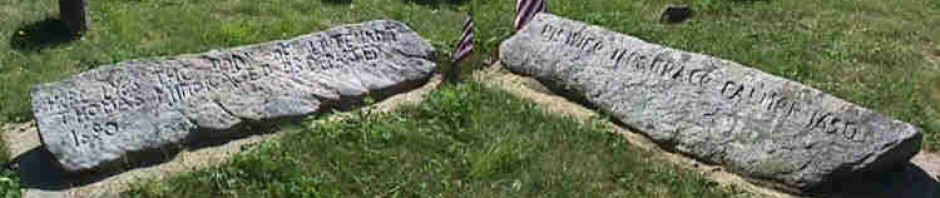
Adrianus Franciscusz De Langet

Adrianus Franciscusz De LANGET (1653 – 1699) was Alex’s 9th Grandfather; one of 1,024 in this generation of the Shaw line.

Adrianus Franciscusz  De Langet was born about 1653 at Noord, Sint Anthonis, Noord-Brabant, Netherlands.  He was also known as Ary Fransen, Ary Franz Langet, Adriaan Fransen De Langet, Arry DeLangen, Adriaan Franciscuzoon and Aryan Fransen.  His parents were Franciscus Adrianusz De LANGET and Anna SCHOONBROECKX. He emigrated to  New Amsterdam and eventually settled at Kingston in Dutchess, New York. He married Rachel Jansen PIER about 1679. Adrianus died 17 Apr 1699 in Kingston, NY.

Rachel Jansen Pier was born about 1657 in Amsterdam . Her parents were Jan Theunisson PIER and Marritje  JANS.   She had come from Amsterdam as a young child with her parents in 1661, sailing on the De Saint Jan Baptist.   Rachel Jansen Pier married a second time on to Allert Hendrickson Ploegh on 17 Apr 1699.   In the margin of their marriage entry is the following: –

In the presence of Ariaan Roos, Geesje Pier Maria Nucella and Mary Singer was Rachel Pier with her chemise over her clothes, married to Albert Hendricksen Ploeg, by me [Domine] Nucella.

There is also a footnote indicating that the bride’s strange attire was based on an erroneous belief that a widow, when married in this manner, relieved her new husband of all debts incurred by her previous spouse. The Kingston Court records indicate that Rachel’s first husband was often sued for non-payment so the ritual attire suggests he likely had significant outstanding debt(s) when he died.   Adrianus Franciscusz was also the former farming partner of the groom’s father, Hendrick Albertse and she was about 13 to 14 years older than her second spouse.  Rachel died 22 Apr 1705 in  Kingston, NY.

Children of Adrianus and  Rachel:

Name Born Married Departed
1. Willemtje De Lange c. 1679
New Amsterdam
Teunis Kool (Son of Barent Jacobsen KOOL)
22 Nov 1696
.
Hendrick Klaaz Schoonhoven
bans announced and withdrawn
4 Dec 1715
1716
Kingston
2. Capt. Frans DeLange 24 Apr 1681
Kingston
Maritje Van Schaick
6 Sep 1703 in Kingston, Ulster, New York
29 May 1755
Beekman, Dutchess, NY
3. Jannetje DeLange baptized
1 Jan 1683
Jochem Roelfse
10 Feb 1706
1716
4. Maritje DeLange baptized
19 Oct 1684
Jacob Keyser
30 Nov 1702
1719
5. Rachel DeLange baptized
7 Nov 1686
Kingston
Laurens (Lawrence) Losee 1727
6. Adriaantjen DeLange 7 May 1688
Rochester, NY
Jacob Kermer
18 Apr 1718 Kingston
.
Gysbert Van Garden
Geesjen
20 Sep 1723
.
Isaac Wieler
2 Feb 1733
7. Jan Johannes DeLONG 1690
Rochester, Ulster, NY
Anna Magdalena WEISER
29 Sep 1712 Kingston
1763
Greene, NY
8. Wyntje DeLong 12 Nov 1693
Kingston
Nicklass Schoonhoven (Schoonmaker)
15 Jun 1728 Kingston
.
Johannes Metler
17 Mar 1732/33
First Reformed Church of Fishkill
1735
9. Jonas DeLANGE 12 Jan 1696 Brabant (Kingston), Ulster County, NY Blandina PEERSON
15 Nov 1718
Aug 1739 in Poughkeepsie (Dutchess) NY
10. Geesje DeLange 1698
Ulster Co., NY
Theunis Pier 1713

.
Children of Rachel and Allert Hendrickson Ploegh:

Name Born Married Departed
1. Hendrick Ploegh bapt.
15 Sep 1700
2. Teunis Ploegh bapt.
28 Dec 1701
Sara Bros
1722

Family legend says that William Shaw’s wife Ruth was a descendant of the Marquis De Longe who was guillotined in the French Revolution. His wife and daughter escaped the country and his daughter married an American.

Adrianus Franciscusz  De Langet is the real first DeLong ancestor in America.  Abridged Compendium of American Genealogy says Aryan Fransen (Aaron the Frenchman) DELONG, Huguenot; fled to Holland; settled at Kingston, R.I.; m Rachel Jansen PYER.{{Virkus as Ref: There is absolutely no primary evidence to support the claim of Huguenot descent. This was a 19th Century gloss based on Americans’ desire to take everything possibly construed as French (e.g. the De) and claim it was so. As to our subject, he seems to have been good old Dutch Arie Frans.

The surnames  DeLong has undergone considerable variation and changes over a period of more than 100 years before the name was fairly consistently spelled as it is today.  Some of the most often seen variants are: De Langet, De Langen, Langen, De Langh, DeLonge, Langet, and De Laenge. In some cases the DeLong surname was dropped entirely with the person using their middle name instead.

The line of Adrianus’ father, Franciscus Adrianusz De Langet is still under study.  Franciscus is the progenitor of the New Brunswick families. He was born in 1634 in North
Brabant, The Netherlands and, one of his sons, using the method of those times in adopting the father’s given name as a surname, was called Adrianus Franciscusz De Langet.

Andrianus used various shortened forms of his name which made tracing his activities very difficult.  Some of the forms he employed were: Ary Fransen, Ary Franz Langet, Adriaan Fransen De Langet, Arry DeLangen, and Aryan Fransen.   Ary was probably born about 1655, since his first child, Willemtje, was born in New Amsterdam about 1679. His marriage to Rachel Jansen Pier occurred in 1678 or 1679.  The first documented evidence I have actually seen concerns their second child, Frans, who was baptized at Kingston,  New York on the 24th day of April in 1681.

The major part of the early family history of this particular DeLong family line centers in the Dutchess and Ulster counties of New York  and the towns of Fishkill, Kingston, and Poughkeepsie. Research by William Tufts of Ottawa, Ontario indicates that Westchester county is also involved.

To further complicate the research many of the DeLong names found in various areas may possibly be related to the line of Peter DeLong of Pennsylvania and who is said to be of German ancestry. It is also quite possible that all DeLong families could be of German ancestry having migrated down the Rhine to The Netherlands. Peter does appear in a list of the taxpayers for the town of Fishkill.

Arie Fransen may have come from Etten en Leur, Noord Brabent, in the Netherlands { or her he could also have been from Amsterdam. Sometime before 1680 he married Rachel Jansen Pier, who had come from Amsterdam as a young child with her parents in 1661. She sailed on a ship called De Saint Jan Baptist. Together Rachel and Arie had ten children, seven of whom are referred to in the Baptism Records of the Dutch Reformed Church.

Arie was first a tenant farmer, then a landowner. Frederick A. Virkus –

“Nothing is known of Arie Fransen’s (sometimes surnamed Langet or Langerth) birth and all we know he was living 1693-5 and dead by 1699…a birth ca 1650 is perhaps based on his being the Arian ffrancon of the militia in 1670. He could have been a different man and younger – his first known child was 1680 (or another possible 1678). Or he might have been the Arenk Franken who sailed for the New Netherlands Feb 12, 1659 on board the DeTrouw. This could throw his birth back to ca 1640 or even earlier.”

Surnames were just coming into common usage among the Dutch in Arie’s lifetime, in some but not all records, he is surnamed Langet and similar variations, probably a reference to his height and conveniently serving to distinguish him from a shorter Arie nearby though we have no reason to think it was another Arie Fransen. Thus he is found in either church or other documents as Ary Frans Langet, Ariaan France Lange and Arie Fransen Langerth, but in others simply as Aryan Fransen, Ary Frans, Arie Fransen, Ary Franze, Ariaan France, Adriaan Franzen etc. His children became DeLanges, his grandchildren became DeLongs. Such versions as France reflect solely the inconsistancy of spelling in this era but regrettably are the source of such mistranslations as “Aaron the Frenchman”. It is of course possible that he couldhave originated from a French Reformed (Huguenot) family, many of which did go into the Netherlands, but there is absolutely nothing existing in primary evidence which would confirm so.

1670 – Under yet another version if his patronymic, he appears as Arian Francon, one of a group of militiamen. (New York State Library #22:99, Minutes of Executive Council of Province of NewYork). Perhaps this is also the source of the statement he appeared this year on the muster roll of Captain Pawlings’s company. The Minutes apparently indicate he and others drew lots “the following day” at Kingston, Marbletown and Esopus. This is presumably the origin of the 32 acres he reportedly had at “ye roundout kill” which is Esopus. Thus he was in Ulster Co. by this date and likely earlier.

1671 – Adrian Fransen was witness in a knife assault (Versteeg’s NY Historical Manuscripts Dutch – Kingston Papers p.464).

1671 – …Appeared …Capt. Thomas Chambers (of the first part) and Hendrick Albertson and Adriaen Fransen of the second part, who declare having agreed in the following manner:

Capt. Chambers declares having let the aforesaid Hend. Alberts and Adraien Fransen having leased certain farm near “Wisquaemsickz”of the same extent as expressed in the deed existing of the same, for a period of ten consecutive years which shall commence immediately, Oct 7, 1671, and terminate Oct 7, 1681. The aforesaid Chambers is to furnish with the farm two good horses, mares with a stallion or gelding, two cows, a wagon and a plow. The natural increase of the horses and cows shall be equally divided, the risk shall be equally borne, but at the expiration of the lease they are to return the same number they have received. Also will return the wagon and the plow, at the expiration of the lease, in as good condition as they have received the same. The natural increase is to be divided every three years. The lessees are permitted at the expiration of thelease to sow, for their own benefit, ten morgens of land with winter grain. The lessees will yet receive two sows whichare tobe returned as big at the expiration of the lease. The buildings such as dwellings, barn or stack as also the fenceshall beappraised in the lessees’ behalf by impartial men, andthus bepaid for by the lessor at the expiration of the lease. The lessees shall pay nothing the first year, but during the other nine years shall pay for each year 140 sch. of wheat, in all grains, in proportion, as the value of the same shall be atthetime. In case war should break out, which God forbid, with the aborigines of this land, so that the animals should be destroyed, the losses shall be equally divided, and in case, on account thereof it should not be safe to cultivate the land, they shall during such a time pay no rent, but when at there-establishment of peace they can again cultivate the same, shall pay as per contract. Promise to comply with the above under obligation as per law and have, on both sides, subscribed to the same in the presence of Matthys Mattysen and Thomas Tonnesen Quick as witnesses invited for the purpose this October7, 1671, at Kingston (Ulster County, NY) (signed) Thomas Chambers, the mark X of Hendrick Albertsen, by himself, the mark X of Adriaen Fransen, by himself. (Signed) Matys Matysen, the mark X of Toomas Tonnesen Quick. To which certifies, (signed) W.Montagne, Secretary. (Ibid 703

1671/72 – Adriaen Fransen dues as debtor (Ibid 476)

1672 – Ordinary Session, December 3, 1672. Present…. Gorge Hal, Plaintiff vs. Adrian Fransen, Defendant.

Plaintiff demands as per obligation an amount of 32 sch. of wheat, for which Hendrick Jochemsen has surety. Adriaen Fransen admits the debt. Adriaen Fransen, Plaintiff vs Schout Grevenraedt, Defendant Adriaen Fransen says that the schout has dismissed Van der Coelen upon surety, without plaintiff’s permission. The schout says that Van der Coelen called on him and said that the court of sessions had ordered him to go to the schout to give bail, and took with him as surety Gerrit Cornelissen, whereupon the schout said, “Why does not the secretary write the bond?” He answered, “The secretary is so busy that he cannot possibly write the bond,”whereupon the schout said, “it is the same with me.” And Van der Coelen said, “I am about to depart. I have ‘Esenties.’ Won’t you believe it? The court will immediately be here.” Whereupon the schout wrote the bond and as soon as the same had been finished, it was shown to the court of sessions when they appeared at the schout’s house for the purpose of having dinner, and asked them whether the same was sufficient and was satisfactorily gotten up. And they answered, “Yes, “where- upon Van der Coelen took leave. –Hendrick Jochemsen and Jan Cornelissen request that the attachment shall be declared valid against certain moneys which are coming to Van der Coelen from Michiel Modt amounting to 2766 gldrs. –Schout Grevenraedt gives notice of an attachment levied against the money of Reynier Van der Coelen, laying on Wallerand DuMont’s loft.–Wallerand DuMont says that Van der Coelen owes him 18 sch. of wheat and says that Van der Coelen told him that he had to pay Hendrick Jochemsen 8 Sch. of wheat, and to pay it from his grain. –The hon. court, in case Adrian Fransen is not satisfied with the surety, refers him to the hon. court of sessions, because the judgment was pronounced by the hon. court of sessions. (ibid p. 488)

1672 – Appeared before me, William Montagne, secretary forthehon. court at Kingston, Adriaen Fransen and Dirck Hendricksen.

Dirck Hendricksen takes upon himself, and takes the place of Adriaen Fransen, in the share of the third farm which Hendrick  Albertsen and Adriaen Fransen had leased of Capt.Thoomas Chambers, but with the proviso that Adriaen Fransen shall receive his share of the grain which is just at present in the stack, and which had, last summer, been grown on the land. Dirck Hendricksen, with the consent of Capt. Thoomas Chambers, discharges Adriaen Fransen from the conditions and lease entered upon with said Capt. Chambers, so that Adriaen Fransen is released of the same, and Dirck Hendricksen is taken in full partnership under conditions as are fully specified in the proper form by the lease, and with which he is obliged to fully comply. And we, Hendrick Albertsen and Dirck Hendricks, being now present, declare to be partners, and are to comply as fully with the conditions of the lease as prior to this should have been done by Hend. Albertsen and Adriaen Fransen, and also declare having received of Capt. Chambers what said Chambers was obliged to furnish by virtue of the lease. Promise to comply with the foregoing, pledging person and estates, movable and immovable,  present and future, submitting them asper law. For the purpose of legalizing this we have suscribed to the same, in the presence of Jan Hendrick and Nicolaes Willem Stuyvesant, this November 5, 1672, at Foxhall. (Signed) the markX of Adriaen Fransen, the mark X of Dirck Hendericks, the mark X of Hendrick Alberts, Thomas Chambers. (Signed) Jan Heyndericksz,  N.W.Stuyvesant. To which testifies, (Signed) W. DlaMontagne,Secretary. (ibid 724)

1672/73 – Adrian Fransen sued as debtor  – Adraien Frans sued as debtor  – The court orders the officer to judicially enforce the judgment against Adrian Fransen in behalf of Mr. Hall

1674 – Schout Grevenraedt, plaintiff, vs Adriaen Fransen, defendant. Plaintiff says that defendant had been fighting with several persons, yea, ’till blood was shed, and was the cause of the quarrel. On this account, he demands a fine of 50 gilders,with the costs of the present. Defendant says heknows nothing about it, and requests the plaintiff shall pay the same. The hon. court condemns defendant to pay a fine of 30 gilders, with the costs of the present.

1674 – Hendrick Paeldin vs. Adriaen Fransen. Plaintiff demands of defendant a sum of 32 1/2 sch. of wheat for vendue, and further, for the mirror nine gilders, five staters. Defendant admits the debt.

1675 – Adrien Fransen a witness to lease of parcel of land called the Brabander’s thicket.  (Note a Jan Brabanterin1662 held the old lot #10 in Wilkwyck.)

16xx – Unreferenced correspondence reports he was skipper of a yacht. New Amsterdam Records 3:49 reports a suit by Werner Wessels vs. Derek Smitt which centers around 120 florins of tobacco asked of Arie Fransen. It seems Arie was to go to Virginia (as a skipper?) but didn’t, and Wessels was demanding payment of tobacco. (Year = ?)

1678 – Could he have had a first wife? Maria, daughter of Arie Freese was baptised at Hurley, Ulster County, September29; Subject Arie Fransen’s daughter Maritje baptised Kingston,Ulster County in 1684. Maritje is Dutch for Mary/Maria and the marriages of two distinct Maritje DeLangs are found inthe early 1700’s, both of whom are clearly associated with subject’s family.

1679-80 – He was married by this time to Rachel Jans (their son Frans born 1681).

15 Feb  1685 – Leanard Coale of Marbletown and Maryhiswife to Francis Rombout of the Citty of new york,” deeds for 10 shillings land over the Rideouts Kill or creek at Mombackes which Leonard hath let unto farme to Arien France of Mombackus..” (Early English Deeds, Ulster County 1:26) —

1687 – He was naturalized in Ulster County

1 Sep 1689 – Arrie France on list of Ulster County inhabitants (Early NY State Census Records)

1694/95 – “Tjercke Clase de witt of Kingston sells for 50 pounds to Cornelis Swits of Mombackus land at Mombackus to west of other lands of sd. (said) Tjerck de witt, now in possession of Jan de witt: and East of land of Mr. Frederick Philips, containing about 60 acres, and formerly sold to Tjerckde witt by Ariaan France and James Pemmits; with small peece of pasterland”.. Signed in Kingston Feb. 1694/95 (Early EnglishDeeds,Ulster County I:150)

1696-98 – Death of Arie occured during this period

Children

1. Willemtje De Lange

Willemtje’s first husband Teunis Kool was born 17 Aug 1653 in Manhattan, Kings, New York. His parents were Barent Jacobsen KOOL and Marretje Leenderts  DeGRAUW. He first married Marretje Gerrits (widow) in 12 Jan 1676. Teunis died about 1715 in Kingston, Ulster, New York

Willemtje did not marry Hendrick Klaaz Schoonhoven bans announced and withdrawn on 4 Dec 1715.

Kool evidently died before 1715 when the widow Willempje had an illeg. dau. Neeltjen bp. …” [Doherty, The Settlers of the Beekman Patent, 135; X39]

Marriage Notes for WILLEMJE LANGEN and HENDRICK SCHOONHOVEN:

“As widow of Teunis Cool bans were published for her 2nd marriage to Hendrick Class Schoonhoven. The church record notes the bans were registered 4 Dec. 1715 and withdrawn the same day. … Perhaps he found she was expecting a child [Neeltje] by another man. …” [Doherty, The Settlers of the Beekman Patent, 136; X40]

Willempje had an illegitimate daughter Neeltjen bapt. 19 Feb. 1715/16, no father named.

2. Capt. Frans DeLange

Frans’ wife Maritje Van Schaick was born 1685 in Kingston, Ulster, New York.  No doubt daughter or granddaughter of Claes Van Schaick of that place. Claes’ widow was born ca 1635. Their age difference argues for granddaughter, not daughter, yet Maritje named her second son Niclaas which in patronymic style would be for her own father. (Frans and Maritje followed patronymic procedures in naming oldest son for the paternal grandfather, but seemingly did not do so with their daughters. The first daughter was named for the father’s mother rather than the mother’s; it is unlikely an earlier daughter named for Jannetje could be fitted into the known chronology.)  Maritje died 1757 in Kingston, Ulster, New York.

      “Melwood Van Scoyac of Sarasota, Fla., Van Schaick genealogist, wrote in 1988 that little is known of Claes other than being father of Dominicus b. 1667 and Emanuel b. 1680. Other likely sons were Elias and Laurens of Kinderhook 1720, both of which names are found among Maritje’s children. ‘Jannetje Claas Beevers, or Van Schayk’s widow, about 94 years old’ died Kinderhook and buried there Feb. 10, 1829 (NYG&B Vol. 105 Jan. 1974)” [John D. Baldwin research, B22]

Jul 1711 – Frans served as a soldier in the Ulster Company of New York,  under Captain Wessel TenBroeck in that company’s Canadian expedition. “Capt. Frans DeLange in Beeckman Precinct” was a military officer from Dutchess County under Captain Barent Z Van Kleeck and was commissioned a Captain of the the Colonial Militia from Beekman, Dutchess County, New York, in 1739, and in that position, Frans DeLong captained the fourth division of that company, leading over 100 men.”

  “The DeLong family was one of the first families of Beekman [Patent, Dutchess County, New York]. They settled in Arthursburgh in the area where the present towns of Beekman, East Fishkill and LaGrange meet and played an important part in the early settlement of the Patent.” [Doherty, The Settlers of the Beekman Patent, 134; X39]

17xx – “Without giving a date, Doherty says Frans settled in Arthursburgh in the present town of LaGrange, probably on the farm that later belonged to Samuel and Enoch Dorland. The farm probably contained land on both sides of present day route 82 and included much of Clapp Hill Road.” [Baldwin, B23]

1714 — “Frans had crossed the Hudson River into Dutchess County, and is found in the 1714 census as 1/4/1. At this time he, to our knowledge, had only three sons but also one daughter, so perhaps 1/3/2 was intended.” [Baldwin, B23]

27 Feb or May 1715 — “A child [Jannetje] was baptised back across the river in Kingston, the Dutchess County church not being established until 1716.” [Baldwin, B23]

21 Nov 1715 — “‘Frans deLangen’ on list of military forces from Dutchess County under Captain Barend Z. Van Kleek [1.553, Annual Report]” [Baldwin, B23]

14 Mar 1716  — “Lott 8, Nine Partners, New York 1/2 of 1/2 Woolfert Weber of Bowery which Hendrick Van Schyk bought from Jacobus Dekey, merchant, and Sarah of New York City January 10, 1698/9 100 pounds.” [Baldwin, D23]

1717/18 — “taxed south Ward through 1738, then Beekman until June 1756, and last the estate taxed Feb, 1756.” [Baldwin, B23]

21 Jan 1718 — “Maritje joined the Fishkill DR Church … while Frans joined either at that time or on Oct. 27, 1731 (another interpretation is that they were both members at the earlier date according to a membership list of the latter).” [Baldwin, B23]

7 Apr 1719 – “Captain Frans DeLange with Peter Lassing was overseer of the Kings Highway in the South Ward” [Baldwin, B23]

1720 — “was paid 10 shillings for a wolf’s head” [Baldwin, B23]

5 Apr 1720 — “Elected overseer on the ‘Way from Pagquaick’ … Was road overseer in the South ward through 1736.” [Baldwin, B23]

1720/1721 and 1722 — Assessed £20 [Baldwin, B24]

1721 — “juror, Court of Common sessions” [Baldwin, B24]

16 Jan 1723/24 — Taxed on 23 pounds, 1 shilling, 3 pence [Baldwin, B24]

1724 and 1725 — Assessor at Fishkill [Baldwin, B24]

1726/1727 — “elected overseer of highways, South Ward. Appears same day in a deed from Catherine Brett to George Cooper near a place called Poughquaick about three English miles South from Frans DeLongs [D 1:63]” [Baldwin, B24]

17 Oct 1727 — “As juror France deLangs” [Baldwin, B24]

1731 — “Frans was one of fifteen men who called for a permanent pastor for the church.” [Baldwin, B24]

13 Dec 1734 — “road description … a high way Leading from ye land of Cornelius Wiltse over ye hills as ye roads now go’s as it is marked to ye Roade yt [which] goes from Capt. DeLongs to ye fish Kill …” [Baldwin, B24]

18 Sep 1736 — “road description … beginning by the house of Nicholas Du Langes and so along the fence of Arey De Lange and to runn as it is Now Mark’d to Capt Frans de Lange and so along the road to the Bridge that is upon the Meadow Whare the Roads Meet one another upon the Plains … […at east Noxon and Rymph Roads — FJD] [SBP 1:337]” [Baldwin, B24]

1737 — “Frances DeLang was captain of a company of 100 men [NY Annual Report 1869; 2:493]” [Baldwin, B24]

1738 — “jurors included France DeLangh and son-in-law Lowrence Lossy” and Frans “taxed at Beekman,” jurors in 1739 “Frans DeLangh and Simon Flagler whose sister married Arie;” juror in 1741 “Frans DeLangh” [Baldwin, B24]

1739 — “Capt. Frances DeLange of Beekman Pct (Dutchess Annual Report 2:500)” [Baldwin, B24]

About 1740 — “An early map … shows Frans DeLong just North of the Northwestern tip of the Poughquag purchase. His son Arie appears just Northeast of him. … Perhaps the same property was ‘The next settler west [of Johnsville] on the road leading to Fishkill village was Frances DeLangdon. The house that he built was taken down in 1844’ [Bailey: Local Tales and Historical Sketches p. 371; Fishkill 1874].” [Baldwin, B25]

1741 — Bail transactions and petitions for road changes indicate that Frans remains in Beekman Precinct. [Baldwin, B25]

23 Jul 1742 — “Capt. Francis DeLong Dr to a mare of myn he says to have sold to one Baeker at Pouguag for his wife & he accounts to me for four pounds ten shillings. …” Frans taxed 1742/1743 and 1743/1744 as “Captain” [Baldwin, B25]

2 Jun 1747 — “Henry Beekman paid Capt. Frans DeLong … for staying at his house for three nights at three shillings a night [ELP]” [Baldwin, B25]

1750 — Three court cases, Frans De Lang/DeLong/DeLange vs. John Simpson. In May, Frans receives 15 pounds satisfaction for a black roan stallion which had disappeared, only to turn up with Simpson. In the second case, Simpson is ordered into custody, and in the other Frans sues for 3 pounds, 15 shillings, 11 pence due from Simpson for “labours and services,” as well as 8 pounds Simpson had “refused to pay.” [Baldwin, B25]

9 May 1751 — Will : “Francis DeLang of Beakmans prect., Dutchess Co. Wife Mary all the estate, real and personal while she remains my widow. But if she be married to another, she to have what the law allows her. The rest to my children Arre, Rachel, Nicholas, Catherine, Elias, Gesgee and Egie. Real and personal property. Executors were the wife, Benjamin Hasbrouck and Peter Van DeWater. Witnesses were John Winslow and William Haff.” [Baldwin, B26]

1755 — “he died in the Spring, will proved May 29, Surrogate’s Court, New York City, before Matthew DuBois, Judge of Common Pleas, Bartholomew Noxon and William Davenport, justices (NYWF 106, WN-YHS V:243);” “estate taxed June 1755 through Feb. 1756” [Baldwin, B26]

3. Jannetje DeLange

Jannetje’s husband Jochem Roelfse was born xx.  His parents were Jochem Roloffson and [__?__]

4. Maritje DeLange

Maritje’s husband Jacob Keyser was baptized 3 Feb 1684 in Rosendale Ulster County, New York. His parents were Dirck Corneliszen Keyser (1645 Swe – ) and Agnietje Jacobs Coens (1642 Neth – ).

The Maritje married 1702 Jacob Keyser at which time she said she was born and resident of Mombachus, Dutchess County. Willemtje … was sponsor for one of their children. Perhaps one of the Maritjes was … Maria.” [John D. Baldwin research, B21]

1678, September 29 — “…baptised Hurley, Ulster County … daughter of Arie Freese. Might this be Arie Fransen? … the name of the mother was not recorded. Maria is rendered Maritje in Dutch, and two contemporary Maritjes appear in the records in association with the family of Arie Fransen. … One would be his daughter of 1684. … Perhaps the other is this Maria. … One married 1706 Johannes Bokee (Boke), 2d 1715 Jan Tomasse. She was born Esopus, Ulster County. Jannetje … and Frans … served as sponsors for some of her children. She was dead by 1719. The other Maritje married 1702 Jacob Keyser at which time she said she was born and resident of Mombachus, Dutchess County. Willemtje … was sponsor for one of their children. Perhaps one of the Maritjes was … Maria … ” [John D. Baldwin research, B21]

      “Some authorities … insist that there were two daus. in this family both named Mary. The Kingston Church book records a Maria born to Ary Freese with wife not named who was bp. 29 Sept. 1678 at Hurley … This Maria is purported to be the one who m. Jacob Kyser … Our personal belief is that the dau. Mary b. 1684 is the one who m. Kyser but we have decided to list them as put forward by [the genealogy column of the Boston Transcript newspaper]. We will call the early Mary the first child but we question whether she belongs to this family.” [Doherty, The Settlers of the Beekman Patent, 134; X39]

There were two Maritjes associated with the family of Arie Fransen. One married 28 Dec  1706 in New York City Dutch Reformed Church to Johannes Bokee (Boke), m2. 24 Apr 1715 to  Jan Tomasse. She was born Esopus, Ulster County. Jannetje … and Frans … served as sponsors of some of her children. She was dead by 1719.

5. Rachel DeLange

Rachel’s husband Laurens (Lawrence) Losee was born

Some DeLong family records claim [Rachel] married Jacob Ploeg. The Kingston church record notes at the baptism of her dau. Blandina 15 April 1707: ‘Illegally begotten and [Jacob Ploeg] named as Father, by the Judge, according to the Mother’s oath.'” [Doherty, The Settlers of the Beekman Patent, 136; X40]

6. Adriaantjen DeLange

Adriaantjen’s first husband Jacob Kermer was born

Some have Ariaantje’s birthplace as Monroe County. She married first, Thomas Pearson. Thomas was born in 1685 and died sometime before 1718. Ariaantje married second, 18 Apr 1718 in Kingston (Ulster) New York, Jacob Kermer. There were no known children from the second marriage.

Ariaantje and first husband Thomas had one child that we know of, there may be others

A Jan Kermer, born in Kingston married Lisabeth Van Campen at Deerpark 15 May 1751.” [Doherty, The Settlers of the Beekman Patent, 138; X41]

Adriaantjen’s second husband Gysbert Van Garden was born

Adriaantjen’s third husband Isaac Wieler was born

7. Jan Johannes DeLONG (See his page)

Option 1. Jacobus DeLange was baptized 12 Oct 1720 in Poughkeepsie, NY.  His sponsors were Jacobus  Van Den Boogaard and Grietjen de Mon.  His parents were Jan Johannes DeLONG and Anna Magdalena Weiser.

8. Wyntje DeLong

Wyntje’s first husband Nicklass Schoonhoven (Schoonmaker) was born about 1690 in Kingston (Ulster) New York, and died about 1730.

Wyntje’s second husband Johannes (Hannes)  Metlar was born 1680 in Ulster, New York, or about 1690 in Germany. Wyntje and Hannes had two children.

9. Jonas DeLANGE (See his page)

Option 2. Jacobus DeLange was baptized 6 Aug 1721 in Kingston, NY.  His sponsors were Henrik Bras and Geertruy Paarsen, probably maternal relatives..  His parents were Jonas DeLONG and Blanda (Blandina) PEERSON.

10. Geesje DeLange

Geesje married Theunis Pier. Some have her married to Isaac Weile, probably confused with the marriage of her niece (Rachel’s daughter) Geesjen to Isaac Wieler.

Sources:

http://trees.ancestry.com/owt/person.aspx?pid=1044826&st=1

http://familytreemaker.genealogy.com/users/p/e/t/Donald-P-Petro/GENE5-0001.html

http://www.stupakgen.net/Genealogy/Spencer/00748_dlon.htm

http://trees.ancestry.com/tree/8224872/person/-978574190

http://trees.ancestry.com/tree/2695852/person/-1699969829/story/8f7c9e3b-6080-4e76-9769-f3eec63f3240

http://freepages.genealogy.rootsweb.ancestry.com/~smithhouse/andergen/hunterfam/aqwg116.htm#2231

http://www.harpnfiddle.org/web/genealogy/delong/n8.htm#1I4029

Posted in 11th Generation, Huguenot, Immigrant - Continent, Line - Shaw, Sea Captain, Storied, Veteran | Tagged , , , , | 7 Comments

Jonas DeLange

Jonas DeLANGE (1696 – 1739) was Alex’s 8th Grandfather; one of 512 in this generation of the Shaw line.

Jonas DeLange was baptized 12 Jan 1696 in Brabant, Ulster County NY.  (Brabant was a local designation for part of the old town of Kingston, NY.)  His parents were Adrianus DeLANGE and Rachel Jansen PEER. He married Blandina PEERSON 15 Nov 1718 in New York.   Jonas died in Aug 1739 in Poughkeepsie (Dutchess) NY.

Blandina Peerson was born about 1696 in Brabant, Ulster, NY. Her parents were Peer  Jan HENDRICKS and Annetje MATTYSSEN. Blandina died 5 Dec 1765 in Dutchess County New York.

Children of Jonas and Blandina:

Name Born Married Departed
1. Arie DeLong 6 Sep 1719
Kingston, NY
Rachel Ferguson
1754
20 Jan 1798
Beekman (Dutchess) NY
2. Jacobus DeLANGE 6 Aug 1721
Kingston
Elizabeth BUCK
1748
Dutchess, NY
Aft 1766
Beekman, Dutchess, NY
3. Annetje (Anna) DeLong baptized
12 Apr 1724
Kingston
Johannes Emigh
7 Aug 1743
Fishkill (Dutchess) NY
1759
4. Maria DeLong 28 Aug 1726 Kingston 1773
5. Johannes DeLong 22 Sep 1728
Kingston
Anna Maria Brill
30 Dec 1759
Poughkeepsie (Dutchess) NY
Feb 1804
Beekman, NY
6. Catherine DeLong 1727
Brunswick, Rensselaer, NY
James Clayland
3 May 1756 in Pres Church, Poughkeepsie, New York
1790
Brunswick, Renns, New York
7. Jannetje DeLong 1729 Isaiah Essmond
28 Jan 1758
1791

The children are mostly seen as DeLong, so Jonas probably had changed the spelling of his name at some point. Both DeLong and DeLange are seen.

Children

1. Arie DeLong

Arie’s wife Rachel Ferguson was born 1737 in Fishkill, Dutchess, New York. Her parents were Richard Ferguson and Eleanor Green. Rachel died 9 Jun 1811 in Beekman, Dutchess, New York. Arie and Rachel had ten children.
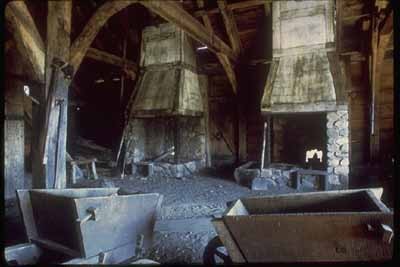
  This Arie was known as Arie B. since his middle name was Blandina, after his mother, and also as Arie Jonas, because of his father’s name.

“He was taxed in Beekman from Feb. 1759 through 1778 with an assessment of four pounds in 1760 and 1763, five pounds in June 1767, six pounds in June 1770 and seven pounds in 1775 and 1778.

He was on [Ancient Documents] … with Farrington Ferguson, probably his brother-in-law, in 1753 as Arie Sr. He and Ferguson owed Hannah Ter Bush, executor of the estate of John Ter Bush, 20 pounds. Arrie DeLong and Elijah Ferguson were witnesses to this bond.

He was very active in the local Beekman givernment and the town meetings were held at his house almost every other year until the mid 1780s. He was a constable and security for the collector in 1750 and in 1752 he was a constable and a collector. He was also appointed to attend May court that year to represent the precinct. The Colonial Legislature passed an act 7 December 1754 requiring that all elections for overseers of the poor in Beekman Precinct were to be held at the house of Arie Jonas DeLong.

His mark was recorded 1751 as a hollow crop on the right ear and his brand was AL. An action was filed against him in the May court 1756 by Lewis Hunt. DeLong was accused of taking a ‘brown cow, one red cow and one red eyed bull.’ Hunt was suing for damages of 20 pounds. … He was one of the men involved in collecting fines from the Quakers for refusal to bear arms ca. 1757. … Arie DeLong kept an active account at the Sleight store in Beekman and his unnamed son and his Negro were on the account from 1767-1771.

Aryn Jonas Langs was noted on a bond list for a 100 acre farm in lot 10 in 1759. There was no acreage listed and he owed no back rent. … He soon after took a lease near the Clove and the following land land records are from the [Edward Livingston Papers]: ‘Arie Jonas DeLong, in the Conveyance … This farm bears date the first day ofd May 1762. The lives therein are said DeLong, Rachel his wife & Charles his son. The yearly rent is 21 bushels, a couple of hens and one day’s riding. The farm contains 267 acres.’ In 1780, when the estate of Margaret Livingston was distributed, this farm was considered ‘good’, was valued at 300 pounds with anb assessment of 1600 pounds and the terms were ‘reneweable forever.’ The farm was ‘in good order.’

1774, Oct. 14. This day canceled the above lease & gave the above named Arie DeLong a new lease for his farm. Lives the same as in the old lease with a clause to put in a new life if the lesee applies within 3 months after the decease of any of the persons above mentioned. … Yearly rent in the new lease 22 bushels of wheat. …’ DeLong paid rents of 22 bushels … June 1787 and 13 bushels 28 Feb. 1788 …

On 14 Dec. 1790 Will Cockburn surveyed a parcel of land for Arie DeLong which was adjacent to his old farm …

  “Arie DeLong’s farm was mentioned in a mortgage of 5 June 1794, as was that of Richard DeLong. …

His farm was mentioned in a deed of 22 March 1802 … and in [a mortgage] 9 May 1816.

On 7 Sept. 1771 William Humphrey Esq. of Beekman took a bond from Peter Nostrant, the father of a natural child born to Margaret Dean at the house of Arie DeLong of Beekman. Margaret had sworn on 22 March 1771 that Peter Nostrant, carpenter of Rombout had the carnal knowledge of her body several times, ‘but in particular on or about the middle of August last in the barn of the widow Mary Bush in said precinct and that Norstrant was the only true father of the child.’ Margaret Dean was ordered to pay to the overseers of the poor of Rombout 9 pence per week if she refused to nurse her child. Area De Long and William Humphrey both signed the documents.

In Oct. 1773 a note was entered in the Beekman Precinct records: ‘Then taken up by Arie DeLong a three year old heiffer colored Brindle with ball’d face mark’d with a crop on the right ear.’ … He was an administrator of the estate of Jacob Stover of Beekman … proved 1781. … In January 1781 he filed a complaint against Albert Adriance of Beekman and Joseph Balding of Rombout for failure to pay 80 pounds they had borrowed 1 May 1776. …

He refused to sign the Association but was granted Land Bounty Rights for service in the 5th (Beekman) Regiment of Militia. In October 1776 he was sent to Exeter New Hampshire with other local Loyalists. While in New Hampshire he lodged at widow Clark’s with Michael Vincent of Clapp Hill in Beekman. He evidently spent several months in New Hampshire for we find him at the meeting of the [Committee on Conspiracies] of 27 February 1777:

‘Application having been made to this Board, in behalf of Arie DeLong, one of the disaffected persons sent to New Hampshire, & who is lately returned to this State by permission, & is now at home indisposed, and the Time limited for his return being Expired, Resolved, that Arie Delong be permitted to remain at home during his present indisposition, & that as soon as he shall be able to travel, he appear before this Board.’

He and his brother Johannes were among the Beekman men who signed a petition in behalf of James Essmond who was sentenced to death in 1778. … In Oct. 1786 Abel Hunt sued Arie and Rachel DeLong in the court of Common Pleas.

He was listed in Beekman in 1790 at 4-2-6 and 5 slaves and was between Herman Rozelle and Peter Sickler the 1st.

He wrote his will at Beekman 4 Feb. 1797 and it was proved 28 March 1798. He named his wife Rachel, sons Richard, Charles, Asa, James and heirs of dec’d sons Jonas and John. Also mentioned were daughters Elinor, Dinah and Hannah. Executors were the sons Richard and James, George Losee and Daniel Uhle. Witnesses were Nathaniel Conklin, Abraham and Anne Adriance and Kourt S. Van Voorhis. There was a codicil dated 18 Jan. 1798. …

      “Arie DeLong died 20 January 1798, in his 79th year and was bd. in a family ground in an orchard behind the old hotel in Beekmanville. This area was just east of the intersection of Beekman and Green Haven Roads. …” [Doherty, The Settlers of the Beekman Patent, IV, 171-174; X58-X59]

Children of Arie and Rachel:

i. Arie DeLong b. ~1756 NY – d. Canada) had descendants and is expanded below.

ii. Jonas DeLong b. 1757 in Dutchess Co, New York. He married in 1778 in Dutchess County, his cousin Rachel Losee (b. 9 Apr 1758) Rachel and Jonas are second cousins once removed, both being descended from 1496 Adrianus DeLANGE and Rachel PIER. Rachel’s parents were Frans Losee and Sarah Brown. (Some have Rachel’s sister Anna married to Jonas, we have Anna married to Jonas’ brother Richard. As we have no death dates for any of them, it is at least possible that Jonas and Anna could be a second marriage.) Jonas and Rachel had one child that we know of, Rachel (b. 1779)

iii. John DeLong b. 9 Apr 1759 in Dutchess, New York; m. Amy Sayres.

iv. Richard DeLong b. ~1761 Dutchess, New York; m. his cousin Anna Losee Anna’s parents were Frans Losee and Sarah Brown. Some have Anna married to Richard’s brother Jonas; this might be a second marriage, or simply an error. Anna and Richard are second cousins once removed, both being descended froma Adrianus DeLANGE and Rachel PIER. Richard and Anna had three children

v.Charles DeLong b. ~ 1763 in Dutchess, New York.

vi. Eleanor DeLong b. ~1764 NY; m. 11 Oct 1782 to Israel Vail (b. 1761 in Dutchess, New York = d. 1822 in Clinton, New York. Israel’s parents were Isaac Vail Sr. and Lavinia Ketcham. Israel and Eleanor had eleven children born between 1783 and 1801.

vii. Blandina “Dinah” DeLong b. Nov 1765 in Dutchess Co, New York; m. Hendrick Hegeman.

viii. Hannah W. DeLong b. ~1768 in Dutchess, New York; m. her cousin John F. Losee John’s parents were Frans Losee and Sarah Brown. John and Hannah are second cousins once removed, both being descended from 1496 Adrianus DeLANGE and Rachel PIER. Hannah and John had ten children born between 1788 and 1810.

ix. Rachel DeLong b. 21 Feb 1769 in Dutchess Co, New York.

x. James DeLong b. 1773 Dutchess Co, New York; m . 1 Jun 1800 in Hopewell, Dutchess, New York to his cousin Sarah Losee (b.1781 in Beekman, Dutchess, New York – d. 1832).Sarah’s parents were Frans Losee and Sarah Brown. Sarah and James are second cousins once removed, both being descended from 1496 Adrianus DeLANGE and Rachel PIER. James and Sarah had four children born between 1801 and 1805.

2. Jacobus DeLANGE (See his page)

3. Annetje (Anna) DeLong

Annetje’s husband Johannes (Hans Jury) Emigh was born 7 Apr 1717 or 30 Nov 1720 in Kingston, Ulster, New York. His parents were Johan Nicholas Emigh b. 1689 in Dannenfels, Nassau, Weiburgschen, Germany and Anna Catherina Mueller b 1693 Staudrum, Germany. The name appears to have originally been Eighme, from Palatine Germany, and is corrupted to Emigh, Emich and Amey.  Johannes died 29 Jan 1810 in Half Moon, Saratoga, New York.

Children of Anntje and Johannes:

i.Catherine Emigh b. 14 Apr 1744 in Dutchess, New York; d. ~ 1806; m . Peter Lane (b. 1740 – d. 19 Jul 1777.) Peter is said to have served in the Revolutionary War (Loyalist) in Capt Jonathan Jones’ Company under Lt Col Ebenezer Jessup. He died in the War. Catherine and Peter had one child that we know of, Elizabeth (b. 1765)

ii. Blandina Emigh was born 14 Jul 1745 in Dutchess Co, New York, and died 25 Nov 1836 in Ontario, Canada.

iii. John Emigh, also seen as John Amey, b. 1747 in Dutchess Co, New York; d. Ontario, Canada; m. Evah Stover I(b. 1751) Evah’s parents were Jacob Stover and [__?__].

John changed his name to Amey at some point — the children are usually seen with that spelling, though both forms are seen. Johannes Emigh was a Loyalist and served in the Revolutionary War on the British side. He moved to Canada after the Revolution. John and Evah had nine children born between 1770 and 1789.

iv. Nicholas Emigh was born 1 Dec 1748 in Dutchess Co, New York. He married Margaret Stover (b. 1749 in Dutchess, New York) Nicholas served in the Revolutionary War (Loyalist). Nicholas and Margaret had eleven children born in the 1770’s and 1780’s

v. Mary Emigh b. ~ 1750 in Dutchess Co, New York; d. 3 Apr 1827 in Rensselaer, New York; m. Michael Overacker (b. ~1750 Dutchess, New York – d. 4 Aug 1826 in Rensselaer, New York) Michael’s parents were Jurry Overacker and Maria Magdelena [__?__] Mary and Michael had ten children born between 1773 and 1792.

vi. Elizabeth Emigh b. ~ 1752 in Dutchess Co, New York; m. Michael Erring.

vii. Cornelia Emigh b. 15 Sep 1755 in Dutchess, New York; m. Francis Fritts.

viii. Rachel Emigh b. 1758 in Dutchess Co, New York; d. after 1801; m. Richard Vincent.

ix. Joseph Emigh b. ~ 1761 in Dutchess, New York. He married Charity [__?__]

5. Johannes DeLong

Johannes’ wife Anna Maria Brill was born May 1737 in Beekman, Dutchess, New York. Her parent were Dewald Brill  and Catherine Beck. Anna Maria died in 1804 in Beekman, Dutchess, New York.

Johannes was a lifelong resident of Beekman and was taxed there from Feb. 1759 through 1777 with an assessment of one pound in 1760, two pounds in June 1763, three pounds in June 1767 and June 1770, and five pounds in 1775 and 1778. He signed the Association in Beekman but later refused to lead his company of militia into battle.

He was charged by Catherine DeLong, single woman of Beekman, with having carnal knowledge of her body several times and she was expecting a child. … He was brought before William Humphrey, a Beekman justice, on 20 Aug. 1754, and posted a bond of £30 and his brother Arie posted one of £20. They were both listed as farmers of Beekman. … The Catherine DeLong involved remains unidentified. She was probably a first cousin.

Johannes was a Sleight store customer ca. 1770 and his brother’s son Jonas was on his account. …

Johannes was a Captain in the Colonial Militia and was ordered to assemble his troops by the Continental Congress in September 1775. A report made by Charles Platt noted: ‘Agreeable to the Resolves of Congress, the Committee of this Precinct has waited upon several Captains; Delong, Emaugh and Vincent, who all refused to call their several Companies on the occasion, upon which we gave them Proper Notice by advertising and on the days apppointed waited upon the Several Companies when the following persons were made Choice of Viz. …’ (etc.). Cornelius Van Wyck was appointed Captain in the place of Johannes DeLong, (and was killed just a year later in a skirmish at White Plains …)

John DeLong was paid $8.00 on 2 May 1781 for four days hire of a two horse team at $2.25/day; (eight shillings was deducted for shoeing).

Johannes DeLong was listed in the lease book as having taken over a farm of 226-1/2 acres in lot 22 that the Lane family had farmed for many years. He gave a bond for back rents on 23 May 1783 in the amount of 44 pounds. … The farm was … near the intersection of Dorn and Furnace Roads in present day Town of Beekman. Route 55 is just to the south of the farm.

He was probably the John DeLong who was a witness to the will of Bartholomew Noxon dated 12 Feb. 1784 in Beekman … He was listed in Beekman in 1790 at 2-4-6 and was between John Cornell and George Ralph. In 1799 he was taxed on $3987.50 worth of real property and on personal property valued at $236. In 1800 he was listed at 2-1-1-1-1 and 1-0-1-1-1 and was between Arie DeLong and James Mclees Jr.

His will was written 31 December 1803 and proved 7 Feb. 1804.

‘I Johannes DLong of Beekman town Dutchess County and State of New York being through divine favour of sound memory tho under some infirmity of Body do this thirty first day of the month called December in the year of our lord one thousand eight hundred and three make and publish this my last will and testament in manner and form following. That is my Will is that all my just debts and funeral charges be paid out of the crops of grain that may be on the ground and the hogs that may be then next after my decease depending and to be fattened out of the grain then depending then which the farm may produce in such year, which if such debts surmounts the proceeds of such crop and hogs the residue of such debts shall be payed by my two sons David and Peter. But if such crop and hogs so depending surmounts the debts that may be due my Will is that my sd two sons shall by amply paid by a deduction in such crop and hogs to be retained by them so far as to compensate them for their trouble and expense they may have at in rearing and raising such crops and hogs then depending. And the remainder if any to be reconed with my other moveables[.]

I give unto my wife Mary the full use and occupancy of any rooms she may choose in my dwelling house and to be reserved solely for her use an uninterrupted privilege as far as may be necessary and convenient in the Kitchen, Celler chamber and garden, and furthermore she is by my two sons aforementioned to be supported with everything necessary for food and drink befitting a person in her years and standing both in sickness and in health and all medical aid that may be necessary. Also a Girl she shall be put at liberty to keep and wait on her and to partake with her in her support free from expense. Also to provide and ____ ____ (as in original) redy cut and brought from time to time into the house a competency of fire wood. Also I give unto my Wife two good beds and bedding and as much household furniture as she may think right and necessary for her particular use, also two good milk cows and five sheep and the wool they produce and said number of cows and sheep to be kept good by my said two sons and supported both summer and winter equally well with their own stock of that kind[;] they shall likewisde supply her annually with twenty pounds of flax well dressed and furthermore if my Wife shall anytime choose to live with any other person, then my said sons shall annually pay her twenty pounds in such way and manner as that my son, who shall occupy the room and privileges she leaves shall pay as much more that the other as such room and privileges shall be judged by indifferent men right and reasonable. But in case she shall become so helpless that said twenty pounds is not sufficient for her comfortable support then my two sons shall make up such deficiency as may appear reasonable and right in such proportions as aforementioned.

Item; I give and bequeath to my two sons David and Peter all my landed property to be equally divided between them according to the real value and so as that each part shall be duly proportioned with timber, meadow and plow land including the value of the Buildings that [n]one of them may be advantaged before the other and the one to whom the orchard may fall in the division shall allow the other brother an equal right to and privilege of the orchard with himself as it respects the apples until a reasonable time is elapsed for an orchard to become sufficiently grown to produce fruit necessary for his families use and comfort. And further my Will is that the mare which is called the Crouse mare shall belong between them so that between them both they may with what they now possess have a team. My plough Waggon and harrow between them and to David I give a cow. Also that my daughter Catherine while unprovided with a home elsewhere that she have the privilege of house room as she has had and the liberty of keeping her children with her until they arrive at suitable ages to be put to trades but to be supported by her in other respects.

Item; all the residue of my moveable and personal property I give unto my for daughters Viz, Catherine, Dinah, Mary and Sarah to be equally divided between them, except the sum of twenty pounds to be raised out of my moveable property to be given to my Wife over and above what is above mentioned.

Item; my Will is that my two sons David and Peter within the time of five years next after my decease pay good and lawful money unto my daughter Catherine one hundred pounds[;] unto my Daughter Dinah fifty pounds, and to her son Robert fifty pounds, but if he die before he arrive of lawful age then his mother shall receive his portion[;] unto my daughter Mary one hundred pounds; unto my daughter Sarah one hundred pounds[;] unto my grandson Peter Dorland forty pounds[;] to my grandaughter Maria Noxon forty pounds but if either of them die under age then his or her share shall be equally divided amongst my Daughters except twenty shillings of each legacy I give to the parents of those children. Also in like manner as above I give unto my grandson John McAuly twenty pounds. I also direct my executors in aspect to the legacies here pointed out for Robert Vanderburgh and John McAuley that they use their discretion if they judge it unlikely that either of them or both will make a good use of it then they are authorized to put it into his or her mother’s hands. And it is my will that my two sons David and Peter retain the beds and bedding they now lodge on. Lastly I make constitute ordain and and (sic) appoint Peter Brill Senr., Peter Lossing and Thomas Humphrey to be my Executors in trust for the right distribution and arrangement of my said estate according to the true intent and meaning of this my last Will and testament. In witness whereof I the said Johannes DeLong have hereunto set my hands and seal the day and year first above written, 1803.’ (signed with his mark).

The following is a codicil to my last will and testament made this first day of the month called January one thousand eight hundred and four. Namely my will is that if my disposition should soon happen as there is a cow and calf designed for sale, that she and her calf shall go with the crop and hogs towards the discharge of my debts as mentioned in my will. …’

Peter Lossing and Rowland Ricketson were witnesses. … He died in Beekman 6 Jan. 1804 in his 76th year. The Poughkeepsie Journal noted ‘one of the earliest residents of said (Beekman) town.’ He has a DAR listing.” [Doherty, The Settlers of the Beekman Patent, IV, 175-178; X59-X61]

Their daughter Catherine DeLong was born 15 May 1763 in Beekman (Dutchess) New York, and died 12 Apr 1832 in Oxford Co (Ontario) Canada. She married first, John McAuley. John was born about 1760 in Beekman (Dutchess) New York, and died about 1785 in New York.

Catherine and John had one child, John McAuley was born 21 May 1783 in Dutchess Co, New York.

Catherine then had a child out of wedlock with Peter Vanderburgh. Peter was born 3 Feb 1763 in Beekman (Dutchess) New York, and died about 1845 in Greenport (Columbia) New York.  Peter was sued by Catherine for getting her pregnant and not marrying her (filed 16 Jan 1788 in Dutchess County).

Children of Johannes and Anna Maria:

i. Catherine DeLong b. 15 May 1763 in Beekman (Dutchess) New York; d. 12 Apr 1832 in Oxford, Ontario, Canada. m1. John McAuley (b. ~ 1760 in Beekman, Dutchess, New York – d. ~ 1785 in New York) Catherine and John had one child John McAuley (b. 1783)

Catherine then had a child out of wedlock with Peter Vanderburgh (b. 3 Feb 1763 in Beekman, Dutchess, New York – d. 1845 in Greenport, Columbia, New York). According to one web site, Peter was sued by Catherine for getting her pregnant and not marrying her (filed 16 Jan 1788 in Dutchess County). Catherine and Peter had one child Clyamon Vanderburgh (1787-1859)

m2. Henry Hulet (b. 31 Aug 1794 in Dutchess County, New York)\ Catherine and Henry had one child William Hulet

m3. Peter Lossing. Catherine and Peter had one child Ethalinda Lossing (1806-1889)

ii. Elizabeth DeLong b. ~1764 in Dutchess Co, New York’ d. 11 Oct 1793; m. 1790 to Thomas Dorland (b. 17 Apr 1759 in Beekman, Dutchess, New York – d. 6 Feb 1832 in Lennox & Addington Co (Ontario) Canada) Thomas’ parents were Samuel Dorland and Anna Esmond. . He had two children from a previous marriage to Tabitha Pugsley. Elizabeth and Thomas had one child Peter Dorland (b. 1791 in Beekman (Dutchess) New York)

iii. Blandina DeLong b. 7 Dec 1765 in Hopewell, New York; d. 8 Aug 1852 in Newark, New Jersey; m. Stephen Vanderburgh (b. 4 Jan 1765 in Beekman (Dutchess) New York -d. 7 Sep 1788 in Clinton. Middlesex, Connecticut) He was Dutch Reformed. Blandina and Stephen had two children, Robert Vanderburgh (b. 1782) and Esther Ann (b. 1785)

iv. Eleanor DeLong b. ~ 1770 in Dutchess Co, New York; d. ~ 1793 in Adolphustown, Ontario, Canada; m. James Noxon (b. 8 Apr 1765 in Beekman, Dutchess, New York – d. 28 Aug 1842 in Toronto, Ontario, Canada. Eleanor and James had one child Maria (b. 1791 in Ontario, Canada)

v. David DeLong b. 1771 in Dutchess Co, New York, and died about 1864 in Oxford Co (Ontario) Canada. m. Charlotte [__?__] David and Charlotte had two children that we know of, Jane (b. 1809) and William (b. 1821 Ontario Canada)

vi. Peter DeLong b. 8 Jan 1777 in Dutchess Co, New York; d. 26 Jun 1839 in Oxford, Ontario, Canada; m. Lois Bleach (b. Dec 1784 – d. 12 Mar 1818 in Dutchess, New York) Peter and Lois had eight children born between 1801 and 1815. They moved from Dutchess, NY to Ontario, Canada about 1810.

6. Catherine DeLong

Catherine’s husband James Clayland (also seen as Cleveland) was born xx.  His parents were xx.  James died Brunswick, Renns, New York.

Dutchess County NY tax records show a Robert Clayland in the Beekman patent area in the 1730s and 1740s.

Children of Catherine and James:

i. William Cleveland b ~ 1757; m. Elizabeth Lohnes (b. 1758)
William and Elizabeth had five children born between 1793 and 1799

ii. James Cleveland was born probably sometimes around 1760’s or 1770’s.

iii. John Cleveland was born probably sometimes around 1760’s or 1770’s.

iv. Robert Cleveland was born probably sometimes around 1760’s or 1770’s.

v. Polly Cleveland was born probably sometimes around 1760’s or 1770’s.

vi. Nancy Cleveland was born probably sometimes around 1760’s or 1770’s.

vii. Caty Cleveland was born probably sometimes around 1760’s or 1770’s.

viii. Lena Cleveland was born probably sometimes around 1760’s or 1770’s.

ix. Hannah Cleveland was born probably sometimes around 1760’s or 1770’s.

7. Jannetje DeLong

Some genealogies say that Jannetje was really the daughter of Jonas’ nephew (son of his older brother Frans) Arie Langet b. 1705 in New York City  and Annatje Dolson.

I can’t find any direct information about Jannetje’s husband Isaiah Essmond

Jannetje’s brothers Arie and Johannes were among the Beekman men who signed a petition in behalf of James Essmond who was sentenced to death in 1778.  Perhaps James was Jannetje and Isaiah’s son.

Children of Isaiah and Jannetje

  1. Anna Essmond
  2. Spencer Essmond

Sources:

http://www.stupakgen.net/Genealogy/Spencer/00748_dlon.htm

http://www.ark-internet.com/~tedpat/TXT\DeLong.txt

http://trees.ancestry.com/owt/person.aspx?pid=1044952

http://familytreemaker.genealogy.com/users/p/e/t/Donald-P-Petro/GENE5-0009.html

Posted in 10th Generation, Line - Shaw | Tagged , , , | 8 Comments

Jacobus DeLange

Jacobus DeLANGE (1721 -Aft 1766) was Alex’s 7th Grandfather; one of 256 in this generation of the Shaw line.

One Jacbous DeLong cousin baptized in 1720/21 died as an infant and the other lived to have a family.  Genealogists are divided about which is which so I’ll show it both ways.

1. Jacobus DeLange was baptized 6 Aug 1721 in Kingston, NY.  His sponsors were Henrik Bras and Geertruy Paarsen, probably maternal relatives..  His parents were Jonas DeLONG and Blanda (Blandina) PEERSON. He has been identified in no other record,and was not included with parents and siblings in 1739 land record.

2. Jacobus DeLange was baptized 12 Oct 1720 in Poughkeepsie, NY.  His sponsors were Jacobus  Van Den Boogaard and Grietjen de Mon.  His parents were Jan Johannes DeLONG and Anna Magdalena WEISER.

Jacobus was a baptism sponsor in 1742/43 with a Catherine DeLong who was probably his sister, not his first wife.  He married Elizabeth BUCK in 1748.  Jacobus was taxed in Beekman, NY from Feb. 1743/44 through June 1766.

Elizabeth Buck was born about 1725 in Dutchess, New York. Her parents were German Palatine refugees Martin BUCK and Maria Gertrude SCHMIDT.

Some sources say that Elizabeth was the daughter of Johannes Scherer and Elizabeth Leight.  While they were a frequent baptism sponsor in the area, they didn’t marry until 15 Sep 1741.

Children of Jacobus and Elizabeth:

Name Born Married Departed
1. Martinus DeLong 22 Apr 1749
baptized
30 May 1749
Dutchess, NY
2. Polly DeLong c. 1750
3. Jonas DeLong 1755
Dutchess, NY
Rachel Losee
1778
Hopewell, Dutchess, NY
4. Thomas DeLONG c. 1755
Dutchess, NY
Eleanor BORDEN? before 1850 in Caroline, Tompkins, NY
5. Johannes DeLong bapt.
15 Oct 1763
Abigail “Nabby” Follett
c. 1790
6. Daniel DeLong probably in the 1760’s.
7. James DeLong c. 1766
Kinderhook, Columbia NY
Hannah Jacoby
1797
Prattsville, Greene, NY

Jacobus lived in Beckman which is in the southeast section of Dutchess County

Dutchess County New York

Jacobus was taxed in Beekman, NY from Feb. 1743/44 through June 1766 with an assessment of two pounds in Feb. 1753. The DeLong Mss. claims that he removed to Greene Co. but the baptism of his son recorded 1763 in the Athens Church record was performed in Beekman with six other local children the same week.
“He took a lease in lot 21 on a farm of 295 acres on 15 Jan. 1750. This farm was located west of present state route 82, north of Noxon Road and south of Alley Road. Elijah Townsend later was on this farm. The lease was to Jacobus, his son Martinus DeLong Jr. (probably as Jr. because of [Martin b. 1748] son of Arie [b. 1705] …) and Johannes Scherer Jr.

Here is a Google Map of the location of Jacobus’ farm between Noxon Road and Alley Road in Dutchess County

Jacobus’ farm was within a mile or two of present day James Baird State Park near Poughkeepsie NY

It is possible that Elizabeth, the wife of Jacobus was a Scherer but the records of this family don’t seem to fit her in. The sponsors for Martin, son of Jacobus DeLong, b. 1749, were almost certainly Johannes Scherer, b. 27 April 1718 and his wife Elizabeth Light, and the Johannes Jr. on the lease was their son Johannes, b. 25 Aug., bp. 29 Sept. 1745 in Poughquag. The baptism took place at the home of the (step) uncle of Johannes Scherer. Andries Frederick Peck of Beekman, Johann Theobald Scherer, father of Johannes Scherer, m. in London England 7 Aug. 1709 Justina, step-sister to Andries Pick. … Johannes and Elizabeth (Light) Scherer were frequent sponsors for apparently unrelated neighbors.

“Jacobus DeLong … was a constable in Beekman in 1752 and the same year was a path master ‘for the lower part of Swago.’ We have no further records after the 1766 tax list. A Jacobus DeLong was on the tax roll for Kinderhook ca. 1766 or shortly thereafter. He was next to Marcus Dumond who was from Beekman. …

“A Jonas, John and a Thomas DeLong were in Roxbury Town, Delaware Co. in 1800, probably all his children.” [Doherty, The Settlers of the Beekman Patent, IV, 169-170; X56-X57]

Notes for ELIZABETH XXX:
“[Elizabeth] was poss. Elizabeth, bp. 1740 (prob. as an adult), dau. of Martin and Maria Gertrude (Schmidt) Buck of Beekman. …” [Doherty, The Settlers of the Beekman Patent, IV, 169; X56]

–[JDB] Jacobus was bpt. Poughkeepsie Oct. 12, 1720. Married Elisabeth by 1748.  I think Elizabeth may have been a Scherer because of inter-family associations but Frank Doherty thinks she does not fit into that family, and that they were just neighbors. They probably had a large family of whom only Martinus bpt. May 30, 1749 records of New York Lutheran Church and Johannes bpt, Oct. 15 1763, records of Zion Luth. Ch. Lunenburgh, NY are known. At one time, I had constructed a large theoretical family, being those persons in Greene Co. NY and immediately Westerly who could have gone there from Lunenburgh. But Doherty tells me the 173 baptism was down river in Dutchess by a travelling clergyman. So my “creative genealogy” had to be rescinded.  [AJB] From “The Valley of the Humber” by K. MacFarlane Lizars of Transitions & Enthusiasts Page 149 Survey 1798 Overseers of Highways and Fence, Jacob DELONG forth e Humber UVic call no. FC3095 H84L59 This Jacob and Jacob rin# 2404 are possible candidates for the above

Another Jacobus DeLong was baptised at Kingston 6 Aug 1721, sponsors Henrik Bras and Geertruy Paarsen, probably maternal relatives. Probably died young. He has been identified in no other record,and was not included with parents and siblings in 1739 landrecord. –[AJB] From “The Valley of the Humber” by K. MacFarlaneLizars of Transitions & Enthusiasts Page 149 Survey 1798Overseers of Highways and Fence, Jacob DELONG for the HumberUVic call no. FC3095 H84L59 This Jacob and the Jacob of rin #2447 are possible candidates for the above

Posted by: Michelle
Is anyone out there doing research on this DeLong family? I have a Jonas DeLong born abt. 1803-5 I am trying to verify as my gggggrandfather. He was listed on the NY Tompkins Cty, Ithica census for 1830 and the one I am trying to match is on the Chester PA Census in 1840 & 50, he was born in NY.

Roxbury, Delaware, NY

Roxbury was named from Roxbury, Conn., from which place many of the early settlers came. It was formed from Stamford, March 23, 1799. It occupies the extreme east portion of Delaware county. Its surface is a mountainous upland, forming a portion of the great plateau extending west from the Catskill Mountains. The declivities of the hills are steep and rocky and are mostly unfit for cultivation. The highest point on the N. and W. borders of the town are estimated to be 2800 feet above tide. The principal streams are the E. branch of the Delaware, flowing S.W. through the center of the town, Bear Kil in the E., Batavia Kil and Red Kil in the S., and numerous smaller creeks. The soil is a reddish clay loam. Roxbury (p.v.) lies on the Delaware, near the center of the town. .  The first settlement was made by John More, a Scotchman, on the site of Moresville, in 1786.  The first religious meetings were conducted by Rev. H. Myres.

John More, Israel Inman, Abm. Gould, Geo. Squiers, Josiah Pachin, Nehemiah Hayes, David Squiers, (most of them from Fairfield, Conn.) settled along the valley near the present village of Roxbury, in 1789.-Gould’s Hist. Del. Co., 197-98-99. The first child born was Charlotte, daughter of Nath’l Tiffany, in March, 1792; and the first male child born was John Gould, in Oct. of the same year. David Smith taught the first school, in the winter of 1794-95; Isaac Hardenburgh owned the first store, John More kept the first inn, and John Pierson built the first gristmill.

I don’t know how many DeLongs were in Roxbury, Delaware, NY in the early days. Here are a couple of potential relations:

INDENTURE dated 18 March 1829 between Rachel Delong, daughter of Marcus Delong; age 10 years and 11 months. And David Smith of Roxbury, Delaware Co, NY. To serve seven years and one month .

Signed Marcus (his Mark) Delong Rachel Delong / David Smith
Delivered in presence of James Smith / Jane Smith / Eliza M. Smith

.

Rachel DeLong b. 7 Feb 1787 in Germany; d. 1 Mar 1864 in Kent City, MI; m. Robert Patterson on May 21, 1804 in Roxbury Delaware, NY.

Children

“A Jonas, John and a Thomas DeLong were in Roxbury Town, Delaware Co. in 1800, probably all his [Jacobus’] children.” [Doherty, The Settlers of the Beekman Patent, IV, 169-170; X56-X57]

1. Martinus DeLong

“A Martin Delong was on the Canaan, Columbia Co. tax list in 1779 with a Jonas DeLong.” [Doherty, The Settlers of the Beekman Patent, IV, 170; X57]

3. Jonas DeLong

“Jonas; in Roxbury, Delaware Co. in 1800 at 0-0-1-0-1 and 0-1-1-0-0 between Jacob Patterson and Jonathan Scudder. He was seven before Thomas DeLong.” [Doherty, The Settlers of the Beekman Patent, IV, 170; X57] His wife was Rachel Losee.  After Jonas died, she married second Peter Shear (b. 1757 who married first Mary Engines (1750 – 1795).

Children of Jonas and Rachel:

i. Jacob Delong m. Elizabeth Dimond Jacobs wife was listed by the Roxbury Church in 1809 as Elizabeth Dimond. Jacob and Elizabeth had a son Rueben born about 1800 in Ulster, NY.

4. Thomas DeLONG (See his page)

5. Johannes (John) DeLong

Johannes’ wife Abigail “Nabby” Follett was born 18 Feb 1770 in Somers, Tolland, Connecticut.  Her  parents were  Robert Follett (b. 1739, Mass) and Ann Whipple (b. 1741, Connecticut).

“[Johannes] Perhaps m. Nabby Follett. He was probably the John DeLong in Roxbury, Delaware Co., NY in 1800 at 1-0-0-1-0 and 1-0-1-0-0 between Charles Flynn and Jonathan Weldon. He was two away from Thomas DeLong.” [Doherty, The Settlers of the Beekman Patent, IV, 170; X57]

Children of Johannes and Nabby

Note: some genealogies say that Eunice was born Dec 2, 1796 in New London, New London, Connecticut and John DeLong was born in Somers, Tolland, CT.  They agree, however that they moved to Dryden, Tompkins, NY. and that their son Orin was born in Delaware, NY in 1834.

i. John DeLong b. 1792 Roxbury, Delaware, NY d. abt. 1850 Roxbury, NY; m. Nancy [__?__]

ii. Eunice DeLong  b. 2 Dec 1796 in Roxbury, Delaware, NY; d. 19 Feb 1884 in Dryden, Tompkins, NY; Burial: Marathon Village Cemetery, Marathon, Cortland, New York; m. 19 Jan 1816 to Oliver Reed (b. 30 May 1791 in New London, CT (census says Mass.) – d. 23 Jan 1868 in Marathon, Cortland, New York) Oliver’s parents were William Reed, Jr.(1759 – 1789) and Polly Blackman. Eunice and Oliver had thirteen children between 1818 and 1836.

Eunice DeLong (1796-1884)

Eunice DeLong (1796-1884)

Oliver Reed, William’s eldest son, was born in New London, Conn. He came early to Delaware County, and hired a farm in Roxbury, where he married Eunice Dulong, daughter of John Dulong, a Delaware County farmer, who lived till the latter part of the nineteenth century. During the War of 1812 Oliver Reed did military duty for three months at Sackett’s Harbor. (See my post Battle of Sackett’s Harbor Later he removed to Cortland County, where he died at the age of eighty-four, his wife living to be three years older. Both were members of the Presbyterian church. He was at first a Democrat, but later became a Republican.

In the 1850 census, Oliver and Eunice were farming in Roxbury, Delaware, New York.

Oliver Reed (1791 - 1868)

Oliver Reed (1791 – 1868)

Eunice and Oliver had a large family of thirteen children, ten living to maturity. Esther Reed married a farmer named Abram Blumberg, and had four children. William Reed died in our Civil War, fighting bravely in the One Hundred and Sixty-fifth New York Regiment of Volunteers. John Dulong Reed lives with his family in Michigan. Aaron D. Reed became a physician, married Marian Hubbell, and died in Cortland County, New York, leaving two children. Lydia Reed married Peter Baljea, lives in Cortland County, and has two children. Phebe Reed is the wife of Loren Cole, a Michigan farmer. Dr. S. W. Reed is the subject of this sketch. [Smith W. Reed was born in Roxbury, June 21, 1830. He was educated in the Roxbury common schools, and in the Delaware Institute at Franklin. In the fall of 1850, when twenty years of age, he came to Margarettville, in order to study medicine with his elder brother Aaron, and subsequently received a diploma at the Vermont Medical College in 1854.] Polly Reed is married to Chapman Grinnell, a Tompkins County farmer. Orin C. Reed married Mary Ann Russell, and was killed in the Civil War, leaving one child. Sherman S. Reed married Miss Fanny Pierce, and lived in Tioga County.

Eunice and William's son Orrin C. Reed (1834 - 1865) was killed

Eunice and William’s son Orrin C. Reed died Mar 29 1865 in the Appomattox Campaign, the final battles of the Civil War

Orrin (b. 15 Oct 1834 Roxbury, Delaware, New York – 30 Mar 1865 Virginia) enlisted as a Private in Company G, 185th Infantry Regiment New York on 19 Sep 1864. Killed Company G, 185th Infantry Regiment New York on 29 Mar 1865 at Quaker Road, VA. Also known as The Battle of Lewis’s Farm, it was the opening of the Appomattox Campaign, in which Confederate General Robert E. Lee’s army was dislodged from their besieged lines around Petersburg, Virginia, and began a retreat that would lead them to surrender at Appomattox Court House. There were 381 Union casualties that day.

iii. Robert France DeLong b. 6 Mar 1808 Roxbury, Delaware, NY

6. Daniel DeLong

“Daniel; in Kingston, Ulster Co., NY in 1790 at 1-0-1 and between Patrick McDonald and William Van Gaasbeck.” [Doherty, The Settlers of the Beekman Patent, IV, 171; X57]

7. James DeLong

James’ wife Hannah Jacoby was born in 1771 Columbia, New York.  Her parents were xx.  Hannah died in 1797 in Prattsville, Greene, NY.

James and presumably Hannah moved to Steuben County NY by 1810.

A James DeLong was a Captain in the War of 1812.

Children of James and Hannah

i. Asa Delong

ii. Betsey Delong

iii. Catherine Delong

iv. John Delong b. 1801 in Steuben County, New York; m. Steuben, New York to Delany “Laney, Lena” Rarick (b. 7 Feb 1796 – Dutchess, New York) Delany’s parents were Wilhelm “William” Rarick (Rohrig Rorich Rohrich Roerich ) (1754 – 1830) and Charity (Gertchen, Gertruym, or Gertrude) Dorbusch (Terbusch, Bush, Busch, Tarbush, Terbush, or Fer Bush) 1760 – 1830 John and Lena had nine children born between 1821 and 1841 in Wayne, Steuben, New York.

In the 1850 census, John and Delany were living in Wayne, Steuben, New York where John was a mason.

v. Samuel DeLong

vi. Henry DeLong

vii. Martinus DeLong

viii. William DeLong

Sources:

http://www.stupakgen.net/Genealogy/Spencer/00748_dlon.htm

http://familytreemaker.genealogy.com/users/m/a/c/Doug-M-Maclellan/GENE2-0006.html

http://www.harpnfiddle.org/web/genealogy/delong/src3.htm

http://familytreemaker.genealogy.com/users/p/e/t/Donald-P-Petro/GENE5-0008.html

http://trees.ancestry.com/tree/20937476/person/1002985133

http://www.haileytucker.com/hailey/ghtout/gp245.htm

http://www.dcnyhistory.org/index2.html

Posted in -9th Generation, Line - Shaw, Public Office | Tagged , , | 17 Comments

Thomas DeLong

Thomas DeLONG (c. 1755 – bef. 1850) was Alex’s 6th Grandfather; one of 128 in this generation of the Shaw line.

Thomas DeLong was born about 1755 in Dutchess County, New York.   He married Eleanor [BORDEN?].  His parents were Jacobus DeLANGE and Elizabeth BUCK.     He was in  Roxbury, Delaware County, N.Y. in 1804. Thomas died before 1850 in Caroline, Tompkins NY.

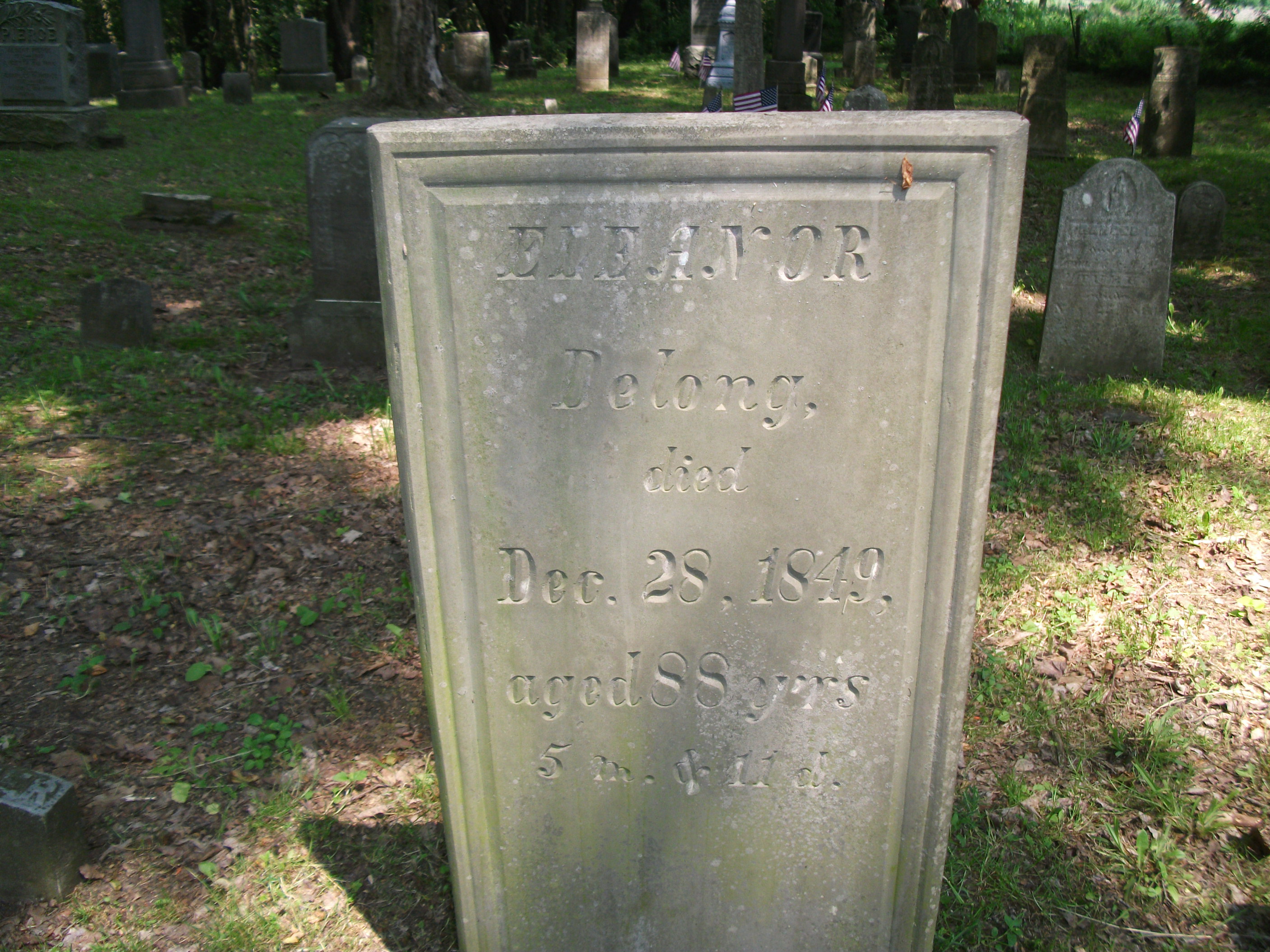
Eleanor [Borden?] was born  17 Jul 1761 [Calculated based on the inscription on her headstone]. Eleanor died 28 Dec 1849 in Caroline, Tomkins, New York and is buried in the  Central Chapel Cemetery/ Brooktondale, Tompkins, NY. “age 88 yrs., 5 mo’s 11 dy’s”   She is buried next to her daughter Mary DeLong TURK.

Eleanor DeLong Headstone – Central Chapel Cemetery Memorial Day 2012  —  – died Dec. 28, 1849 age 88 yrs., 5 mo’s 11 dy’s – She is buried next to her daughter Mary DeLong Turk.

Eleanor is buried at Central Chapel Cemetery, Caroline, Tompkins, NY Also known as: Schoonmaker and LeonardLocated on Central Chapel Road, about 2 miles south of Brooktondale. Cemetery is located near the intersection of Braley Hill Road. The first burial in this cemetery was Moses Schoonmaker, 1815 (per headstone inscriptions).

A family legend says that Mary’s grand daughter Ruth was a descendent of the Marquis De Longe who was guillotined in the French Revolution. The legend states his wife and daughter escaped the country and his daughter married an American.  Mary died 2 Sep 1866 in Caroline, Tompkins, New York.

Central Chapel Cemetery — Memorial Day 2012

Children of Cornelius and Mary:

Name Born Married Departed
1. Jacob DeLong 1778/79 Woodstock, Ulster, NY or Roxbury, Delaware, NY Hannah Walker
10 Nov 1801 Prob Roxbury, NY
Aug 1849
Tomkins County, NY
(Consumption)
2. Mary DeLONG 9 Jan 1782/[83?]
Saugerties or Woodstock, Ulster, NY
Cornelius TURK
bef. 1805
2 Sep 1866 Caroline, Tompkins, NY
3. Joseph DeLong 1783 Lydia Payne
bef. 1836
bef. Jun 1850
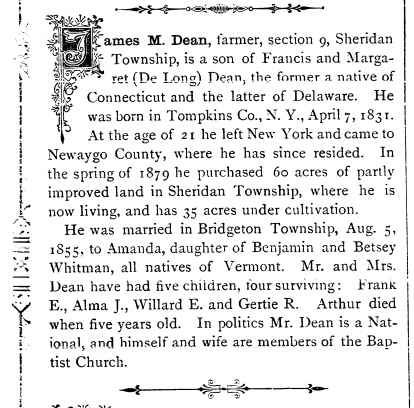
4. Margaret DeLong 1 May 1799 Delaware, NY Francis Dean 10 Mar 1870 New York

Doherty, The Settlers of the Beekman Patent, IV, 170-171; X57

“He was probably the Thomas of Woodstock Town in Ulster Co. in 1790 with 3-0-4 and next to Jeremiah Philips and Joshua Weight. He was only two away from Zachariah and Jacob Snyder who were prob. born in Beekman. He was in Roxbury town in Delaware Co., NY in 1800 at 1-0-0-1-0 and 3-2-0-1-0 between Jeremiah Dart and Matthew Noble. Thomas DeLong was in Seneca Co., NY in 1810 at 0-0-0-0-1and 1-2-0-0-1.”

In the 1790 census, a Thomas DeLong was living in Woodstock, Ulster, New York

In the 1810 census, a Thomas DeLong was living in Ovid, Seneca, New York with a wife and three young daughters.  The lack of boys makes me think he was not our Thomas.

The History of Delaware County – The Town of Roxbury by W.W. Munsell (1797-1880)

In 1788, while Israel Inman was on one of his hunting excursions, he came upon the broad and beautiful flats, as they seemed to him, of the east branch of the Delaware river, near its headwaters, and about two miles above the present village of Roxbury. The valley and hillsides were covered with the forests. To him this was just the place to pitch his tent, and he commenced a settlement, doing but very little clearing, for agriculture was not his “hobby,” as he was born and bred a hunter. John More had settled over east of the Grand Gorge, six miles east, some two years previous, but west of the gorge Inman was the pioneer, as far as Roxbury is concerned.

In 1789 a party of “land lookers,” consisting of some twenty families, came into Delaware county from Fairfield county, Conn., to explore and fix upon a favorable place for a permanent settlement. The party came by way of Catskill, over roads of a primitive sort, with a blaze upon a tree here and there for a guide, and with streams unbridged. After passing several small settlements, they arrived at Benjamin Barlow’s, in Stamford, some distance below the mouth of Rose brook, on the Delaware. As the “barn room” for horses was rather scarce, the horses were turned into the woods to browse. On the third day they were missing, and a searching party, composed of Abram Gould, George Squires and Josiah Patchin, was sent out with three days’ provisions to find them. Following the trail of the horses, the searchers were led up Rose brook, and at noon were at the top of the mountain, nearly where the road now crosses. They soon discovered the hunter Inman, who was a stranger to them. He had the day before taken up the horses, and was following up the trail to discover, if possible, the owners. The hunter immediately conducted the three strangers to his hospitable mansion in the valley, and with all the well known hospitality of a pioneer, treated them to a repast of venison steak. Ascertaining that they were in search of a good location for a permanent settlement, he volunteered his assistance, as he knew every inch of the ground. They went up what is now West Settlement brook, and decided upon that valley as the place of their future abode, and returned again to the rest of the party with the missing horses. They prevailed upon two others of the party to accompany them, namely, Nehemiah Hayes and David Squires. In moving into their new settlement they went by way of what is now Stamford and Moresville, thence along an Indian trail through the gorge, down the Delaware to the little clearing of Inman. Their journey was a laborious one. Their goods were left at Inman’s until they could prepare a place of their own, which was but a few days.

The land was measured off with a piece of rope. In “drawing cuts” the middle lot fell to George Squires, and on his lot they erected a rude cabin of crotches and poles, covered with elm bark. Their bedding was the boughs of trees, their chairs were blocks of wood, and their dishes large chips. The cooking was done in a large kettle suspended over a fire beside a huge maple log in front of the door. In this mansion in the forest they passed the remainder of the summer. In this primitive way commenced the settlement of the present flourishing village of Roxbury.

This town was formed from Stamford March 23rd, 1799. Unfortunately the leaf containing the proceedings of the first town meeting is missing from the clerk’s record-book. On a later page we have it recorded that “the subscribers, finding it necessary to lay out a road from Mantana kill [adopt] a westerly course, beginning at a heap of stones and running near the dwelling house of William Varmilya, and from thence by a line of marked trees to the dwelling house of Thomas Austin, to a beech tree marked H; the same being four rods wide.

In the 1850 census, Eleanor DeLong (age 89) was living “on the first day of June 1850” with the family of her grandson Isaac Turk in Caroline, Tompkins, New York .  Her daughter Mary (age 68) and son-in-law Cornelius Turk (age 70) were also living with Isaac   This conflicts with the Central Chapel Cemetery, Caroline, Tompkins, NY gravestone inscription above that an Eleanor DeLong of the same age died Dec 28, 1849. The census states that Eleanor was illiterate.   She was listed as 89 years old. Her origin is listed as unknown. She may have been from France, but there are a lot of DeLongs living in Caroline, NY. Residents of the household:

Isaac Turk 37
Cornelius TURK 70
Mary TURK 68
Rachel E Turk 22
Edwin Ruthven 3
Eleanor De LONG 89

From Dave Smith (2004, precancelsmith@aol.com):

Have been researching the Delong family of Tompkins county NY and noted your entries on Ancestry.com. I am descended from a Jacob Delong born 1780 who moved to Caroline in 1813. On Nov 10 1801 he married Hannah Walker, daughter of Philip Walker. He had a son Jacob Delong born in 1816 who is my ancestor. He was the only Delong head of house living in Tompkins County in the 1810 to 1830 US & NY Census.

In addition to Jacob, Thomas Delong had a son Joseph born about 1783, possibly in Dutchess County, NY, who was living in adjacent Tioga County in 1810. My own feeling based on known circumstances is that this Joseph Delong was the mystery Delong who married Lydia Paine. This opinion is shared by John Baldwin of Cleveland, OH who has done extensive work on all New York Delong families.

Granted, no solid proof. Do have the Delong ancestry back to the immigrant should you need it.

Posted by: Ann Hines (ID *****5409)

Looking for husband of Eleanor (maybe Borden) b.July 18, 1761

married ???? DeLong she is buried in Caroline,NY. 2 of her children are Jacob m.Hannah Walker, and Mary Ann DeLong b.1782 m. Cornelius Turk. They were in Roxbury, Delaware County, N.Y. in 1804.

Was wondering if anyone has the Roxbury Dutch Reform Church Book???

Thank You, Ann

Posted by: Michelle

Is anyone out there doing research on this DeLong family? I have a Jonas DeLong born abt. 1803-5 I am trying to verify as my gggggrandfather. He was listed on the Ithaca, Tompkins County, NY census for 1830 and the one I am trying to match is on the Chester PA Census in 1840 & 50, he was born in NY.  [Jonas and his wife were in their twenties and they had one daughter under 5.]

Children

1. Jacob DeLong

Jacob’s wife Hannah Walker was born in 13 Aug 1779 in Rehoboth, Mass. Her parents were Philip Walker (1751 – 1831) and Hannah Hall (1755 – 1790). Hannah died 10 Jul 1831 in Dryden, Tompkins, NY.

In the 1810 census, Jacob was living in Roxbury, Delaware, NY and already had two boys and one girl under 10 years old.

1813 – Jacob was a pioneer arriving in Caroline County New York, the same year as James Bishop, Thomas Haggan, Joel Hastings, Asa Leonard and Moses D. P. Schoonmaker.

In the 1820 census, Jacob was living in Caroline, Tompkins, NY with his wife and six children 4 boys and 2 girls.

In the 1830 census, Jacob was living in Caroline, Tompkins, NY.  His birth is shown as 1770- 1780 and his wife the same, with one daughter age 5 thru 9.

In the 1840 census, a Jacob DeLong was living in Dryden Township, Tompkins, NY, age between 40 and 49.  The implied birth (1790 – 1800) is between our guesses for him and his son.  This census also shows 1 woman age 40-49, 1 girl age 5-9, and 1 girl age 10-14.  Jacob was a carpenter.

Children of Jacob and Hannah

i. William F. DeLong b. 1804/1805 in Delaware, NY; d. 11 Nov 1870 in Trumansburg, Tompkins, NY ; m. Almira [__?__] (1804 – 1875) In the 1860 census, William and Almira were living in Covert, Seneca, New York where William was a sawyer.

ii. Joseph DeLong b: Btw. 1812 and 1813; m. 2 Oct 1832 in Caroline, Tompkins Co., New York to  Jane Sloughter (b. 1820 Caroline, Tompkins, NY)

iii. Has No Children Jacob DeLong , Jr. b: 16 Nov 1816 in Caroline, Tompkins, NY; d. 12 Sep 1900 in Ovid, Seneca, NY burial Grove, Trumansburg, Tompkins, NY; m1. 1835 in Covert, Seneca, NY to Ruth Woodworth (b. 11 Feb 1804 in Covert, Seneca, New York – d. 20 Mar in Covert, Seneca, New York) Her parents were Nehemiah Woodworth (1768 – 1846) and Mary (Polly) Ludlow (1762 – 1839)

Jacob DeLong (1816-1900)

Ruth Woodworth (1804-1870)

m2. 28 Jun 1871 in Bergen Genesee, NY to Eleanor Tompkins (b. 23 Apr 1830 in Enfield, Tompkins, New York – d. 26 Jun 1916 Seneca, New York)

Eleanor Tompkins DeLong Portrait

In the 1860 census, Jacob and Ruth were farming in Covert, Seneca, New York

In the 1880 census, Jacob and Eleanor were farming in Ovid, Seneca, New York

2. Joseph DeLong

Joseph’s wife Lydia Payne was born about 1793 in New York. Her parents were David Paine and Sarah Cornell. Lydia died after 1860 in Caroline, Tompkins Co., New York.

In the 1850 census, Lydia was living in Caroline, Tompkins, New York with her daughter Sarah, age 14.  Both were born in New York, no occupation or real estate noted.

In the 1860 census, Lydia was still living in Caroline New York.  Her occupation was “weaver” with real property of only $250 and $50 of personal property. Living with her was Ellis Doty, age 75 (called a “pauper” and perhaps a relation to her brother David’s wife) and a 6 year old boy named Lewis Perry.  They lived nearby to farmer David Pain, age 65, perhaps Lydia’s brother.

From the research of Robert Gerrity:

Lydia, b. NY abt 1793, d. aft. 24 April 1858 when named in her sister Sarah’s will [see below], m. prob. NY bef. 11 Dec. 1841 ______ DeLong who had likely d. bef. June 1860 (1860 census, Caroline Town, p. 764.) 

In the 1840 census of Caroline, we find Jacob DeLong, born 1790 – 1800. The census also shows 1 woman age 40-49, 1 girl age 5-9, and 1 girl age 10-14. (*The 2 young girls living with Jacob of Caroline are believed to be granddaughters as yet unidentified.)

Also, Joseph DeLong was living in Barton, Tioga Co. NY, b. 1810-1820 (age 20-29). Shown with a woman, b. 1810-1820, and a girl under age 5. (*Son of Jacob of Caroline. He was born 1812/13; he married Jane Sloughter of Caroline in Caroline, Oct 2 1832.)

Jonas DeLong was living in Candor, Tioga Co. NY; b. 1800-1810 (age 30-39.) Shown with a woman of the same age group, 2 boys 5-9, and 1 girl under 5.

There were also 3 families in nearby Steuben Co.

Children of Joseph and Lydia:

i. Has No Children Sarah DeLong b: BET 1835 AND 1836 in Caroline, Tompkins Co., New York

4. Margaret DeLong

Margaret’s husband Francis Dean was born in 1814 in Connecticut.

Posted by: marlea ramsey (ID *****3799) February 07, 2006 at 19:34:47

Looking for parents, siblings,and children, on a Margaret DeLong , born abt 1799,( d. abt. 1870) she married Francis Dean(e), They are in the 1840 census of Hector, Tompkins Co, NY, with eleven children, and a older man 70/80. 1850 census, no Francis.

Did he go to Michigan with son James M Dean? 1865 census of Steuben County, NY says Margaret had 14 children, and living with daughter Ellen Hauber ( Hober). Is she the Margaret Deane buried in Hauber Cemetery, Town of West Union, Steuben County, NY? Did Margaret have a sister Mary DeLong who married Cornelius Turk? Also from Tompkins Co, NY. Any help, greatly appreciated. Thanks in advance. Marlea

Posted by: Jeanne Swick (ID *****5241) Date: February 27, 2011 at 17:06:28

I am researching Fauver……..Sarah L. Fauver (perhaps nee Dean(e) is buried in Hauber Cemetery…listed as spouse of David. I think perhaps Sarah’s middle name was Louise and she may have been a sister to Ella (Deane) Hauber. Since you posted three years ago now, you may have more information by now. I have other information that I can share with you.

In the 1850 census, Margaret was living with five children in Hector, Tompkins, New York

Children of Margaret and Francis:

i. Thomas Dean b. Jan 1830 in Tompkins, NY; d. 20 Jul 1903 in Spring Mills, NY; m. Elsie (Elsy) Skillman (Jan 1850 NY – 1916) Her parents were Jesse Carr Skillman (1814 – 1879) and Anna Young (1818 – 1889).

In the 1880 census, Thomas and Elsie were farming in West Union, Steuben, New York

ii. James M Dean b. 7 Apr 1831 in Tompkins County, New York; d. 16 Nov 1909 Fremont, Newaygo, Michigan; m. 5 Aug 1855 Bridgeton, Newaygo, Michigan to Amanda Whitman (b. 25 Mar 1842 in Crown Point, New York – d. 10 Dec 1928 in Fremont, Newaygo County, Michigan) Her parents were Benjamin Whitman (1787 – 1880) and Elizabeth (Betsy) Monroe (1807 – 1876).

In the 1880 census, James was farming in Sheridan, Newaygo, Michigan

James M Dean Bio Source: History of Newyago County

iii. Mary J Dean b. 1832

iv. Ellen (Ella) Dean b. 17 Jul 1833 in Ulysses, Tompkins Co., NY; d. 18 Mar 1885 in West Union, Steuben Co., NY; Not with mother in 1850 census; m. 4 Feb 1855 to John Hauber (b. 27 Oct 1806 in Delaware Co., NY – d. 16 Dec 1893 in Rexville, Steuben, NY ) His parents were Frederick C Hauber and Phebe Conklin. John first married 18 May 1832 to Jane Katherine Hauber (b: 16 Apr 1813)

“West Union, the southeastern town in the county was formed from the southern half of Greenwood, April 5, 1845 and the election for the first officers was held at the house of John Hauber, on the present site of Rexford village May 6 the same year. The ballot box used at the 1st town meeting was an ordinary sugar box with a slot cut in the cover for receiving ballots. William B. Hauber was elected Constable.”

“John Hauber, in whose house the first election was held, was the first man married in the town, his marriage to Jane K. Hauber taking place 18 May 1832.” from ‘History of Steuben County, NY’

In the 1870 census, John and Ellen were farming in West Union, Steuben, New York

v. Sarah Louise Dean b. 1835 New York; d. 21 May 1862 Steuben, New York; m. abt. 1859 to David Claude Fauver (b. 1825 in New York – d. 19 Aug 1888 in Cambell co, LaCrosse, Wisconsin) His parents were Samuel B. Fauver (1797 – 1891) and Rebecca Nichols (1790 – 1852). After Sarah Louise died, he married Phoebe Richardson (b. 1842 Pennnsylvania)

In the 1880 census, David was a lumberman in North La Crosse, La Crosse, Wisconsin.

vi. Adaline Dean b. 1842

vii. John Dean  b. 2 Sep 1843 in Hector, Tompkins, NY; d. 13 Dec 1928 in Whitesville, Allegany, NY. He was buried in Rural Cemetery, Whitesville, Allegany Co., NY; m. 5 Jul 1864 in Rexville, Steuben, NY, to Hannah Elizabeth Trowbridge (b. 30 Apr 1850 Hornell, Steuben, New York – d. 28 Oct 1925 – Whitesville, Allegany, New York) Her parents were Aldrick Alaric Trowbridge and Elizabeth Liddard.

In the 1880 census, John and Elizabeth were farming in Birdsall, Allegany, New York.

John and Hannah Elizabeth Dean

Dec. 13, 1928 , Whitesville, NY Another Veteran Answers To “TAPS”

Suffered Shock on December 6th from which he was unable to Recover-Leaves Children, Grandchild and Great Grandchilden.

John Dean, aged 85 years last September, answered “Taps” for the last time on Thursday, December 13th, 1928, when he succumbed to the effects of a shock suffered just a week previous on Thursday, December 6th. He had been quite active up to that time and was often seen driving through the village. Mr. Dean was a verteran of the Civil war and next to the last of the local members of the G.A.R.

He enlisted in the Civil War army, Oct. 8, 1861 from Tompkins Co., NY, and was honorably discharged June 9, 1863 at the expiration of the term.  His marriage occcurred July 5th, 1864 at Rexville and he re-enlisted in Septemver of that year and was made corporal.  He served until he was wounded in the hip and was discharged March 31, 1865 at Elmira.

He was married to Miss Elizabeth Trowbridge who preceded him to the Great Beyond.  John and Elizabeth celebrated their 60th wedding anniversary July 5th 1925.  To them were born six children as follows: Mrs. Anna Elliott of Candor, NY, Ed Dean, Mrs. Lillian Teribuary (Teribury), and Mrs. Addie Crawford of Andover, Fred and Edwin (Erwin) of Whitsville. Beside the children he is survived by a large number of grandchildren and one great grandchild. His death breaks a familly of five generations.

The funeral was held from the late home just below the village on the Genesee road, Saturday, December 15, 1928, Rev. Engler officiating and Fred Wildman in charge. Interment was in the family plot in Rural cemetery.

Besides the immediate family with the exception of Mrs. Anna Elliott who was too ill to attend there were present at the last service Ed Elliott and Hobart Dean and family of Candor, Mr. and Mrs. Vet Dean of Elmer, Pa. beside the neighbors and friends.

5 July 1924 , The Dean Home on Cryder Creek Road, Whitesville, NY


Front Row: Mary Ella Dean, John Dean, Virginia Elliott, Dean Smith, Alice Dean, Ann Elliott, Donald Smith, Clarence Carson, Elizabeth Anna Teribury, Leola Teribury, Dale Smith, Donna Smith, Bessie Dean, Freda Dean, James Dean, Alberta Dean, George Elliot. Chairs: Hannah Elizabeth Trowbridge Dean and John Henry Dean. Back Row: Nellie Dean, Anna Carson, George Conley, Fred Dean, Cloyd Dean, Ed Elliott, Anna Elliott, Lunita Elliott, Lydia Slate Dean, George Elliott, Hobart Dean, Eddie Dean, Volney Smiths wife behind Addie Dean Crawford, Volney Smith, Elizabeth Dean Teribury, Truman Crawford, Ray Smith, Ervin Dean, Nellie Skillman Dean, Arthur Teribury, Jennie Carson Teribury, Violet Dean Smith, Grace Ellison Dean.

Sources:

http://trees.ancestry.com/owt/person.aspx?pid=80004545&st=1

http://www.carolinehistorian.org/

http://awtc.ancestry.com/cgi-bin/igm.cgi?op=GET&db=gungazo&id=I27096

Jacob DeLong Death Record – Ancestry.com

http://trees.ancestry.com/tree/20937476/person/1002985130

http://nytompki.org/cemeteries/centralcem.htm

http://www.findagrave.com/cgi-bin/fg.cgi?page=gr&GScid=1979033&GRid=27012880&

http://trees.ancestry.com/tree/20937476/person/1002985130

http://wc.rootsweb.ancestry.com/cgi-bin/igm.cgi?op=GET&db=040738-80&id=I17659

http://wc.rootsweb.ancestry.com/cgi-bin/igm.cgi?op=GET&db=gungazo&id=I27094

Posted in -8th Generation, Line - Shaw, Missing Parents | Tagged | 5 Comments

Peter Winne I

Pieter WINNE I. (1609 -1693 ) was Alex’s 10th Grandfather; one of 2,048 in this generation of the Shaw line.

Pieter Winne was born Mar 1609 in Ghent, Flanders, (now Belgium). He was baptized 14 Apr 1609 at St. Bavo’s Cathedral, Ghent, Belgium. His parents were Franciscus WINNE and Anna [__?__]. He married Aechie Jans Van SCHAICK in 1635 in Leeswarden, Vrieslandt, Netherlands.   After Aechie died, he married in Tannatje Adams in 1658 in Albany, NY.  Pieter died in Bethlehem, Albany County, NY sometime after 4 May 1690, when he witnessed the baptism of his grandson by his son Frans, and before 7 May 1693, when Tanneke remarried.

Peter was baptized at St. Bavo’s Cathedral, Ghent, Belgium in 1609.

Aechie Jans Van Schaick was born in 1613 in Leeuward, Netherlands.  Aechie died 1647 in Curaçao, West Indies.

Tannatje Adams was born about 1638 in Leeswarden, Vrieslandt, Netherlands. she was 29 years younger than Peter.  Her parents were Albert Adams and Aeltje Wygerts.    After Pieter died, she married Marten Cornelisz Van Buren.  Tannatje died in 1694 in Bethlehem, Albany, NY.

Marten Cornelise Van Buren was born 1638-1639 at Fort Orange, New York. In 1665 he married Marytjie Quackenbosch (born 1646 in Questgeest, near Leider, Netherlands) at Fort Orange.  Marten owned a house and barn in Bethlehem, NY, which he sold in 1662.  Marten leased half of Constapel Island from Teunis Spitsbergen, south of Albany, and Marytjie died there in December of 1683.  Peter  Winne bought the other half of the island in Jul 1675 so Tannatje and Marten shared an island before they shared a marriage. They also shared sons and daughters in law in 1682 when, Marten’s son Teuntje Martens Van Buren married Tannatje Adams: step-son, Levinus VanSchaick Winne.  In May 1693, Marten married a second time, to Tanneke Adams, widow of Pieter Pieterson Winne.  Marten died on 13 Nov  1703, in Kinderhook, New York.

In case you are wondering, Marten Cornelise Van Buren is indeed the ancestor of President Martin Van Buren.  The lineage goes like this:

3rd Great Grandfather = Cornelis Maessen Van Buren had come to the New World in 1631 from the small city of Buren, Gelderland, Dutch Republic.

2nd Great Grandfather = Marten Cornelise Van Buren (1638-1703) m1. Marytjie Quackenbosch  m2. Tannatje Adams Winne

Great Grandfather = Pieter Martense Van Buren (1670-1740) m. Judikje Barentse Meinderts

Grandfather = Marten Pieterse Van Buren (1701-1740) m. Dirkje Van Alstyne

Father = Abraham Van Buren (1737-1817) m. Maria Hoes.  He was a farmer, the owner of six slaves, and a tavern-keeper in Kinderhook, NY

8th U.S. President  – Martin Van Buren (1782-1862) m. Hannah Hoes, his childhood sweetheart and distant relative.  He was the first president born a citizen of the United States and was also the only President who spoke English as a second language.

8th President of the United States In office March 4, 1837 – March 3, 1841

Children of Pieter and Aechie:

Name Born Married Departed
1. Pieter WINNE II c. 1643 Curaçao, West Indies Jannetje ALBERTSE
1661 in Kingston, New York
6 Jul 1684 Albany, NY
2. Levinus VanSchaick Winne c. 1647
Curaçao, West Indies
Teuntje Martens Van Buren
c. 1682
Albany, NY
.
Willemtje Viele
20 Jun 1699
Albany, NY.
15 Nov 1706
Albany, NY

.

Children of Peter and Tannatje Adams:

Name Born Married Departed
3. Frans Pietersen Winne 1659
Bethlehem, Albany, New York
Elsje Gansevoort 12 May 1689 Albany, New York 1749
Albany, Albany, New York
4. Adam Winne 1663
Albany, NY
Annetje Loockermans 1691
Albany, NY
5. Aletta  (Allette) Winne 1666 or 1662 Caspar Leendertse Conyn
6 Jul 1684 in Albany, New York,
1730
Albany, NY
6. Kilian Winne 1668
Bethlehem, Albany, New York
6 Jul 1684
Albany, New York,
7. Catalyntje Winne 1670 Albany, New York, Hendrick Janse Witbeck 1682 in Claverack, Columbia, New York Sep 1707
Claverack, Columbia, New York,
8. Tomas (Thomas) Winne 1670
Bethlehem, Albany, New York,
Teuntje Janse Goes 20 Oct 1689 in Albany, New York  20 Oct 1705
9. Martin Pietersen Winne 1671
Albany, NY
Margreta Simonse Van Winkle
30 Oct 1697 Hackensack, Bergen, New Jersey,
8 Jul 1737
Bergen, Bergen, New Jersey
10. Eva Winne 1673 Bethlehem, Albany, New York John Woodart
7 Dec 1697 Albany, New York
 1703
New York,
11. Jacobus Winne  1676
Albany, NY
Maritje Bronk
7 Oct 1696 in Albany, Albany, New York,
25 Sep 1706
Albany,  New York
12. Rachel Winne 1677
Bethlehem, Albany, New York
Jellis Adam Fonda
11 Dec 1695 in Albany, New York
10 Jun 1727 Schenectady, Albany, New York
13. Daniel Winne 1678
Bethlehem, Albany, New York
Dirkje Van Ness
16 Mar 1698 in Albany, New York
1757
Renss Manor, New York

Peter first immigrated from Holland to Curaçao and lived their from at least 1643 when Peter II was born to 1652 when he arrived in Fort Orange.

Curaçao was occupied by the Dutch in 1634. The Dutch West India Company founded the capital of Willemstad on the banks of an inlet called the ‘Schottegat’.  Curaçao had been ignored by colonists because it lacked many things that colonists were interested in, such as gold deposits.  However, the natural harbour of Willemstad proved quickly to be an ideal spot for trade. Commerce and shipping — and piracy—became Curaçao’s most important economic activities

Pieter Winne was the founder and patriarch of the Winne family of early Albany. He was born in Ghent, Flanders (Belgium) in 1609, the son of Franciscus and Anna Winne.  He was 49 years old when he married Frieslander Tannetje Adams who was only 20 at time.  They had 12 children, so Pieter had a very active second half of life.

He brought that family to New Netherland during the 1650s where he became a tenant in the colony of Rensselaerswyck. His farm was in the southwestern part of the manor called Bethlehem where he also operated a sawmill . By the end of the decade he also was established in Beverwyck – where he owned a house and became a prominent fur trader.

Winne’s house and mill were situated on a creek named Vloman Kill, or Fleming’s Creek, in recognition of his Flemish origins. The Winne family continued to reside along the creek through the end of the nineteenth century.

Vloman Kill in Albany County, New York

For nearly 200 years, the Winnes were tenants of the Van Rensselaer family, the great patroons, or manorial lords, of the Albany region. Their one-million-acre estate was known as Rensselaerswyck. The Van Rensselaers lived in a grand manor house built 1765–69 in the English Georgian style. The Winnes’ rent varied over time. Until 1764, they ceded 10 percent of their annual produce to the Van Rensselaers. After that, they were required to pay a fixed rate of ten bushels of wheat per year. When Peter Winne first settled in Rensselaerswyck, his rent went to Jan Baptist Van Rensselaer.

Subsequently, Winne gravitated more to the countryside where he held substantial lands. For several decades, farmer and mill operator Pieter Winne was one of the principal personages of Bethlehem. He was also active in the Albany Dutch church – serving in a number of capacities.

He wrote a will in 1677 and another one in July 1684. In the second will, he characterized himself as a magistrate living in Bethlehem and that he was “sick in body but of sound memory and understanding.” It named his wife as sole heir during her widowhood. It also identified their twelve living children – whom he made his secondary heirs.

Founder of a large regional family, Pieter Winne lived into his eighties. He died during the early 1690s and his widow re-married in 1693. His descendants were mainline residents of colonial Albany and prominent throughout the region.

Pieter Winne (Winnen) is also referred to as Pieter de Vlamingh (the Fleming) and Vloman Kill in Albany is named for him.

Timeline

1652 – He arrived at Fort Orange  where he became a tenant in the colony of Rensselaerswyck and began paying rent and tithes for use of a farm near Bethlehem. His farm was in the southwestern part of the manor called Bethlehem where he also operated a sawmill along the Vloman Kill.

1652 – He was reimbursed by the Dutch Reformed Church for a cot he made for a sick person.

1652 thru 1 May 1655 – He was charged in the accounts with an annual rent of f375 and from stubble time, for a farm, apparently situated at Bethlehem,  also with two years’ rent of a sawmill, at f150 a year; and with two years’ hire of two horses for the mill at f60 a year. Included with the farm were three mares, one yearling mare, one stallion, one gelding, four cows, and one young bull.

10 Apri 1655 – The farm was taken over by Eldert Cruyff (or Gerbertsz).

11 May 1655 – He requested lot #5, toward the hill.

1672 – He was appointed a magistrate for Bethlehem. He served until October 1684 (age 73) when he was replaced.

1673 – Peter purchased a saw mill on the Bethlehem Kil from Stephan Van Cortlandt

Jul 1675 – Peter bought of Volkert Janse Douw one half of Constapel’s Island. The island lied over against de Paerde hoeck (Horse Point). The other half of the island was owned by Teunis  Spitsbergen and leased by Marten Cornelissen Van Buren. It included half a house, barn, and rick. The island was to be paid for in three installments, ending in 1677. The down payment was six beaver skins, and the three installments were 21 beaver skins each.

Also in 1677 – He bought of Nicholas Van Rensselaer a saw mill in Bethlehem, which formerly had been the property of Eldert Gerbertse Cruyff.

Peter Winne in Albany bought in 1677 one half of Constapel’s island.  It is also called Pachonakellick Island or Mahikander’s Island, (Mohegan in Dutch)  ‘obliquely over against Bethlehem.  At one time it was owned in partnership of Abraham De Truwe  with Andries Herbertsen Constapel, and hence sometimes call Constapel’s Island.   It’s not an island today, but you can see a likely candidate across the Hudson from Glenmont separated from the mainland by a wide ditch in this Google Satelite View.

The Island had been purchased from Indians 18 years before.

Pachonakellick Island Purchase 1

Pachonakellick Island Purchase 2

Also in 1677 Peter bought a saw-mill in Bethlehem, N.Y.,of Nicholaus Van Rensselaer.

28 Sep 1676 – Peter served on an “extraordinary court” convened by the governor and council of New York to resolve a dispute between Rev. Nicolaas Van Rensselaer and Dominie Gideon Schaets concerning some allegedly heretical declarations concerning doctrines made by Van Rensselaer in a sermon he preached on 13 Aug 1676. The decision of the court was “that Parties, shall both forgive and forget as it become Preachers of the Reformed Religion to do; also that all previous variances, church differences & provocations shall be consumed in the fire of Love; a perpetual silence and forbearance being imposed on each respectively; to live together as Brothers for an example to the worthy Congregation, for edification to the Reformed Religion, and further for the removal and banishment of all scandals.”

21 Jun 1681 – Harmon Jansen Lyndyarer gave Peter a deed to a house and lot in Albany. On 27 June of that year, he sold half his interest in the saw mill.

6 July 1684 – Peter made a will in which he stated that he was born in Gent in Flanderen. This will replaced one he had made on 1 June 1677. His final will was dated 31 December 1688.   Witnesses: Marten Gerritse and Cornelis van Dyck. Printed in Early Records of Albany, volume 4, 127-29. Letters of administration were granted to Casper Leendertse Conyn and Livinius Winne on February 22, 1696.

In the name of God, Amen. By the contents of this present public instrument know all men that in the year after the birth of our Lord and Savior Jesus Christ, one thousand six hundred and eighty-four, on the 6th of July, about midday, and in the thirty-sixth year of his majesty’s reign Charles the second, before me, Robert Livingston, secretary of Albany, colony of Renselaerswyk and Shinnechtady, etc., and before the hereinafter named witnesses, came and appeared the Honorable Pieter Winne, magistrate, born in the city of Gent in d Landeren, at present sick in body but of sound memory and understanding as is clearly apparent, who, considering the shortness and frailty of human life, the certainty of death and the uncertainty of the time and hour thereof, therefore wishing to dispose of his temporal effects to be left behind while he yet by God’s grace is able, and doing so of his own free will and motion, without the inducement or misleading of anyone, he now ordains and determines that his last will and testament in form and manner following:

First and foremost commending his immortal soul (whenever it shall be separated from his body) to the gracious and merciful hands of his Creator and Savior and his body to a Christian burial, likewise canceling and revoking and annulling thereby all and every such testamentary disposition and bequest as he before the date hereof may have made and executed, especially that will by himself and wife made under date of the first of June 1677, written by Mr. Adriaen van Ilpendam, notary public, holding the same null and of no effect and now making a new disposition, this testator declares that he has nominated and instituted, as he does nominate and institute hereby, his worthy and beloved wife Tannetje Adams as his sole and universal heir of all his lands, property real and personal, claims, credits, money, gold, silver coined and uncoined, jewels, clothing, linen, woolens, household furniture, etc., nothing excepted, so long as she remains in her widowed state, without her being called upon or annoyed by any one of the children, or anyone for them, for an inventory or anything appertaining to the estate and after her death shall his estate be equally divided among the children whom they have begotten together, share and share alike. But if his wife enters the marriage state again, then she shall be holden to divide and apportion the whole estate;

that is to say, a just half thereof as it then may be found to the behoof of the children whom he has begotten by his present wife aforenamed, namely Adam Winne, Livinus, Frans, Allette, wife of Casper Leendertse Tenyn, Killiaen, Tomas, Lyntje, Marte, Jacobus, Eva, Daniel, and Rachel Winne; and the other half to the behoof of his wife, and this reservation that she remain holden to the minor children to bring up in the fear of the Lord, and cause them to learn reading and writing and a trade or handicraft wherewith in due time they may, by God’s favor, and with honor obtain their subsistance, the legitimate portion of said minor children remaining so long in the hands of their mother aforesaid and the rents and profits thereof being by her received until they arrive at maturity and enter into matrimony, she giving good security that the portions of the minor children be not lessened; and to the other children who may be already married and have arrived at their majority to pay over their portion pro rata, as their shares in the estate may be, share and share alike, no more to the eldest than to the youngest; she being holden to deliver an inventory of the whole estate and confirm the same, if necessary, by oath. The testator wills and ordains hereby that after his death his oldest son Pieter Pieterse Winne, dwelling in the Sopus, shall out of the common estate receive once for all the sum of ten beavers in place of his legitimate portion and entire inheritance, wherewith he shall be content, without any more, not willing that he or anyone for him shall make the least claim any more upon the testator’s estate, directly or indirectly.

The testator further desires that if it please God the Lord both he and his wife to remove, both being now sick, the whole estate shall be kept together, without any division or partition, until the youngest child shall attain her majority or enter the marriage state, and then be divided among the aforesaid twelve children, share and share alike, the portion of that child or children who die in their nonage to go to the survivors.

The testator excludes herein the honored orphan masters (saving all honor and respect) and in their place requests and constitutes, as he hereby does Mr. Marte Gerritse and Mr. Cornelis van Dyck (who have accepted the same) to see the contents of this his last will and testament promptly and uprightly carried out in all its parts and provisions. All which he, the testator, declares to be his last will and testament, desiring the same after his death to have full force and effect whether as will, codicil, donation, gift in anticipation of death, or otherwise, as the same may be last maintained, notwithstanding that some formalities demanded by law or custom may not have been fully observed herein; desiring the utmost benefit hereof to be received, and one or more copies hereof to be made and executed as occassion may require. This done and executed at Bethlehem, lying in the county of Albany on Hudson’s river, two miles to the south of the city of Albany, at the house of the testator, which [will] he has signed and sealed in the presence of Mr. Marte Gerritse and Mr. Cornelis van Dyck, magistrates called as witnesses hereto, the year, month and day aforenamed.

Children

The order and exact birth dates of Pieter’s children is subject to interpretation as few baptism records seem to exist.

1. Pieter WINNE II (See his page)

2. Levinus Van Schaick Winne

Levinus’ first wife Teuntje Martens Van Buren was born 1644 in Albany, Albany, New York. Her parents were Marten Cornelise Van Buren and Marytjie Quackenbosch. Marten Cornelise Van Buren married Levinus’ step-mother, Tannatje Adams in May 1693.  Teuntje died 20 Jun 1699 in Albany, Albany, New York.

Levinus’ second wife Willemtje Viele was born 1664 in Fort Orange, Albany, New York. Her parents were Aernoudt Viele and Gerritje Gerritse. She was widow of Simon Schermerhorn. Willemtje died 1712 in Claverack, Albany, New York,

Levinus grew up at the family mill in Bethlehem and at his father’s trading house in Bevewyck/Albany. In 1684, he was left a share in his father’s extensive estate. By the early 1680s, he had married Teuntje Martens Van Buren.  By 1687, the marriage had produced four children who were baptized at the Albany Dutch church where he was a member and frequent baptism sponsor. However, Teuntje Martens died and Livinius married Willempie Viele (widow of Simon Schermerhorn) in June 1699. By 1705, three more children had been baptized in Albany. Livinius Winne was a tenant farmer in Rensselaersyck (probabaly on Castle Island) and in Albany where he owned houses and lots. He served on Albany juries and as firemaster. In 1699, he joined his Albany neighbors in swearing allegiance to the king of England. Livinius Winne died in November 1706″.

3. Frans Winne

Frans’ wife Elsje Gansevoort was born 1671 in Albany, New York. Her parents were Harmen Gansevoort and Commertje Leendertse Conyn. Elsje died 1728 in Albany, Rensselaer, New York.

4. Adam Winne

Adam’s wife Annetje Loockermans was born in 1664 in Albany, Albany, New York. Her parents were Pieter Janse Loockermans and Maria [__?__].. After Adam died, she married 18 Oct 1691 in Albany Reformed Dutch Church, Albany, New York to Jacob Teunise Van Woert (b. 1651 in Albany, New York; d. 1730 in Albany, New York) Annetje died in 1742.

5. Aletta (Allette) Winne

Aletta’s husband Caspar Leendertse Conyn was born 1657 in Albany, Albany, New York. His parents were Leendert Phillipse Conyn and Agnietje Casperse. Aletta died in 1727 in Claverack, Greene, New York.

Aletta and Casar’s daughter Anetje  married Gerrit Hendricksz Van Wie, son of Hendrick Gerritse Van WIE and Eytje ARIAANSZ.

7. Catalyntje Winne

Catalyntje’s husband Hendrick Janse Witbeck was born 2 Jul 1653 in Albany, New York. His parents were Jan Thomase Witbeck and Geertruyd Andrissen Van Doesburgh. Hendrick died in 1737 in Claverack, Columbia, New York.

8. Tomas (Thomas) Winne

Thomas’ wife Teuntje Janse Goes was born 1671 in Albany, Albany, New York. Her parents were Jan Tyssen Goes and Styntje Van Hoesen. Teuntje died in 1711.

9. Martin Pietersen Winne

Martin’s wife Margreta Simonse Van Winkle was born 4 Nov 1676 in Aquaannona, Essex, New Jersey. Her parents were Symon Jacobse Van Winkle and Annatje Arianse Sip. Margreta died 1 Dec 1730 in Elizabethtown, New Jersey.

10. Eva Winne

Eva’s husband John Woodart was born 1672 in Albany, New York. His parents were xx. John died in 1732.

11. Jacobus Winne

Jacobus’ wife Maritje Bronk was  born 1678 in Albany, Albany, New York. Her parents were Pieter Jonasson Bronck and Hilletje Tyssinck. Maritje died in 1780.

12. Rachel Winne

Rachael’s husband Jellis Adam Fonda was born 1670 in Albany, New York. His parents were Douwe Jellis Fonda and Rebecca Conyn. Jellis died 8 Sep 1737 in Schenectady, New York.

13. Daniel Winne

Daniel’s wife Dirkje Van Ness was born 1678 in Albany, Albany, New York. Her parents were Jan Cornelise Van Ness and Alltje Vanesch. Dirkje died in 1719.

Many genealogies say that Daniel, was born in 1663, but others say he was the youngest son, he did inherit his father’s property as youngest sons often did.  If he were born in 1675, he would have been 23 , slighltly older than his wife, 20 years old when he married.  If he was born in 1663, he would have been 35 unusually old for a first marriage in those days.

Pieter Winne I and his family were favored tenants on the manor. Kiliaen Van Rensselaer, son of the founder of Rensselaerwyck, and later the fifth patroon of Rensselaerswyck, was Daniel Pietersz’ tutor.

When young Daniel inherited his father’s life-tenancy on the land, his home, and his sawmill, he was granted additional land upstream, where, in turn, his son, Peter Daniel (1699–1759) and grandson, Daniel Peter (1720–1800), built homes; the former circa 1725 (the house still stands in present-day Bethlehem, New York, about five miles south of Albany) and the latter in 1751; Daniel Peter’s home was part of the last generation of houses built in the time-honored anchor bent framing tradition of the New York Dutch. Daniel also inherited the  property in Cedar Hill, along the Hudson, where the Winne dock was located in the 1800’s.

One of Daniel’s 1 other sons, Frans, married Agnietje Van Wie and had a farm that is marked by a roadside marker as “Winne farm” on Van Wie point, near Cedar Hill. It looks like the Winne’s were quite spread out in the Bethlehem area.

Their youngest son, Daniel Pietersz Winne, inherited the family farmstead. Before his death, Daniel Pietersz granted nearby land to his eldest son Peter Daniel.  Five years after his marriage to Rachel van Alan, he built the house now owned by Brian Parker.

Like his father, Peter Daniel settled his eldest son on land about a half mile away. Daniel Peter Winne married Jannetje de Forest in 1744 and six years later built a house almost exactly like his father’s. Their descendents lived in the house for the next two hundred years.

Threatened with imminent destruction in 2002, the 1751 Daniel Peter Winne house was purchased by the historic preservation firm of J. M. Kelley Limited, Niskayuna, New York, and subsequently sold to The Metropolitan Museum of Art.3 Superbly documented and meticulously dismantled, the main dwelling chamber was reconstructed on the third floor of the American Wing by the Kelley firm under the supervision of the curatorial staff, where it now joins two splendid English-style framed seventeenth-century New England rooms from Ipswich, Massachusetts, and Portsmouth, New Hampshire.

The Winne House had two rooms on the ground floor, with a half-story above and a cellar below. The Museum installed the larger of the two first-floor chambers, which was accessed through the dwelling’s front entrance, an iconic, two-section, Dutch door

The New York Dutch Room  in the New York Metropolitan Museum comes from a house built in 1751 in Bethlehem, New York, for Daniel Pieter Winne (1720–1800). The woodwork demonstrates the reliance on traditional Netherlandish building practices in late colonial New York. Dutch immigrants began settling the Hudson River Valley in the early seventeenth century but continued to construct houses and barns much as they had in the Netherlands through the end of the eighteenth century.

Another relative’s house was also reconstructed in a musuem. In 1925 the Brown-Pearl House, built by Cornelius BROWN Jr.  was acquired by the Boston Museum of Fine Arts and dismantled.  The living area was reconstructed as an exhibit hall – an example of colonial architecture and early domestic life.  It was taken down and stored 10 or 11 years ago when the museum began construction of the new Art of the Americas Wing. On Nov. 20th, 2010, the new wing was opened to the public and the Brown–Pearl Hall is again on display as a gallery in the lowest level of the new wing.

New York Dutch Room, Bethlehem, New York, 1751  (Too dark for photos when I visited)

Distinctive Dutch Joint (I took this one May 29, 2012)

Window detail (I took this one May 29, 2012)

The New York Dutch Room is presented as a decorative arts gallery rather than furnished as a period room. It features furniture, metalwork, ceramics, and glass distinctive to New York households of Dutch heritage.

This isometric drawing of the Winne Houses frame indicates the arrangement of the anchor-bent system typical of houses built in communities settled by the Dutch.

An artist’s rendering of Daniel Pieter Winne’s house suggests its original appearance. The dominant external feature of a Dutch home was its steep gable roof. It was constructed with a series of post-and-beam supports called “anchor bents.” The spaces between the bents were filled with locally manufactured bricks—known as “nogging”—and then covered with pine clapboards. The interior face of the nogging was plastered and whitewashed. The smoothly planed posts and beams and clean white walls would have enhanced the natural light entering the room from the casement windows.

Metropolitan Winne House

The Winne House had two rooms on the ground floor, with a half-story above and a cellar below. The Museum installed the larger of the two first-floor chambers, which was accessed through the dwelling’s front entrance, an iconic, two-section, Dutch door

1751 Winne House NY Metropolitan Museum – The main chamber of a colonial Dutch dwelling was the setting for a wide variety of activities. As suggested by the hearth, one of its primary functions was food preparation, but it was also used for sleeping, socializing, and storing and displaying ceramics, metalwork, textiles, and clothing.  ———–   Notice how open the hearth is. The docent said fire was the number two cause of death for colonial women.

Detail of hearth tile. The docent said the bible stories on the hearth tiles were used to educate the children  (May 24, 2012 hard taking shots in the dark)

This room contained an open, or “jambless,” fireplace with a broad hood to draw smoke up the chimney. The mantel was typically draped with a fabric valance as it is displayed today. The mantel, windows, doors, and shutters are reproductions, as the originals were removed over the course of the nineteenth and twentieth centuries.

New York Metropolitan –  New York Dutch Room  by Matthew Thurlow
Department of American Decorative Arts, The Metropolitan Museum of Art.

The New York Dutch Room comes from a house built in 1751 in Bethlehem, New York, for Daniel Pieter Winne (1720–1800). The woodwork demonstrates the reliance on traditional Netherlandish building practices in late colonial New York. Dutch immigrants began settling the Hudson River Valley in the early seventeenth century but continued to construct houses and barns much as they had in the Netherlands through the end of the eighteenth century. The New York Dutch Room is presented as a decorative arts gallery rather than furnished as a period room. It features furniture, metalwork, ceramics, and glass distinctive to New York households of Dutch heritage.

Dutch settlement of the New World originated on the island of Manhattan, then rapidly moved northward along the Hudson River to present-day Albany, where a thriving community developed through farming and trade with Native American tribes. Winne’s great-grandfather Pieter Winne (d. 1692), the progenitor of the family in America, left Ghent, in the province of Flanders (part of modern-day Belgium), and arrived in New Netherlands in 1652 after a brief stay in Curaçao, a Dutch colony in the Caribbean. Through farming and the operation of saw- and gristmills, Pieter Winne acquired a modest estate. He was able to provide his thirteen children with a comfortable upbringing. Winne’s house and mill were situated on a creek named Vloman Kill, or Fleming’s Creek, in recognition of his Flemish origins. The Winne family continued to reside along the creek through the end of the nineteenth century.

For nearly 200 years, the Winnes were tenants of the Van Rensselaer family, the great patroons, or manorial lords, of the Albany region. Their one-million-acre estate was known as Rensselaerswyck. The Van Rensselaers lived in a grand manor house built 1765–69 in the English Georgian style (28.143). The Winnes’ rent varied over time. Until 1764, they ceded 10 percent of their annual produce to the Van Rensselaers. After that, they were required to pay a fixed rate of ten bushels of wheat per year. When Peter Winne first settled in Rensselaerswyck, his rent went to Jan Baptist Van Rensselaer. The Museum owns a painted glass window (52.77.46) that Van Rensselaer commissioned in 1656 for the First Dutch Reformed Protestant Church of Beverwyck (present-day Albany). After the church was demolished in 1805, the window was installed at the head of the staircase in the family’s manor house.

An artist’s rendering of Daniel Pieter Winne’s house suggests its original appearance. The dominant external feature of a Dutch home was its steep gable roof. It was constructed with a series of post-and-beam supports called “anchor bents.” The spaces between the bents were filled with locally manufactured bricks—known as “nogging”—and then covered with pine clapboards. The interior face of the nogging was plastered and whitewashed. The smoothly planed posts and beams and clean white walls would have enhanced the natural light entering the room from the casement windows.

The wrought iron hardware produced for Dutch houses in upstate New York followed a utilitarian aesthetic. The door hinges found in the New York Dutch Room feature a swelling, or nail pad, at the end closest to the doorjamb (49.117.46). The swelling accommodated additional nails and thus strengthened the hinge’s attachment to the door.

The Winne House had two rooms on the ground floor, with a half-story above and a cellar below. The Museum installed the larger of the two first-floor chambers, which was accessed through the dwelling’s front entrance, an iconic, two-section, Dutch door (NYDR.2003.1). This room contained an open, or “jambless,” fireplace with a broad hood to draw smoke up the chimney. The mantel was typically draped with a fabric valance as it is displayed today. The mantel, windows, doors, and shutters are reproductions, as the originals were removed over the course of the nineteenth and twentieth centuries

Two kasts are in the New York Dutch Room. A distinctive type of cupboard strongly architectural in design, the kast is an icon of seventeenth- and eighteenth-century Dutch-American domesticity. One is a rare example of joined oak furniture from seventeenth-century New York (1988.21). The painting on its surface simulates stone—a highly unusual effect. On the other kast, the doors feature grisaille-painted pomegranates and quinces, symbols of fertility (09.175). Considered a householder’s most important piece of furniture, it was used for storing linens and was often presented as a dowry gift.

Although substantial in size, kasten were often constructed in several pieces and could be easily taken apart for a move. Craftsmen in areas settled by the Dutch in New York and New Jersey made kasts in a range of sizes and quality, while wealthier Dutch New Yorkers owned elaborate examples imported from the Netherlands, which incorporated exotic woods that would have been difficult to obtain in the colonies. A seventeenth-century Dutch genre painting (1975.1.144) features an example with veneers of South American rosewood and African ebony.

The New York Dutch Room installation includes two singular pieces of furniture that suggest the intermingling ofEnglish and European craft traditions in colonial New York, a city that supported a diverse population of artisans and patrons. The late seventeenth-century turned armchair (41.111) was originally owned by Dutch immigrants living in the New York City area. There is no doubt the desk-on-frame (44.47) was also made locally. It was discovered in Brooklyn and incorporates gumwood, a regional resource. Moreover, an inscription inside the lid records a business transaction involving one of the numerous Schenck families of Kings County, New York. The double-arched moldings that frame the pigeonholes of the interior can be dated stylistically to about 1700. However, no comparable piece is known.

Also in the New York Dutch Room are a variety of silver vessels manufactured in colonial New York. Two-handled bowls chased into six equal panels, such as the example by Jacob Boelen (24.105), are a form peculiar to early New York silver. Their design represents a crossbreeding of northern European and English sources, with deeper roots in the Italian Renaissance, but their function closely followed Dutch practice of passing a communal beverage at ceremonial events.

Sources:

http://trees.ancestry.com/owt/person.aspx?pid=35442617

http://www.nysm.nysed.gov/albany/bios/w/piwinne8568.html

http://wc.rootsweb.ancestry.com/cgi-bin/igm.cgi?op=GET&db=branagak&id=I7951

http://www.rnw.nl/english/article/old-winne-place

http://www.metmuseum.org/toah/hd/dutc/hd_dutc.htm

http://www.antiquesandfineart.com/articles/article.cfm?request=959

http://www.simonhoyt.com/thumbz/Van%20Wie/Winne-Van%20Wie%20Home%20to%20Metropolitan%20Museum,%20NY%20City.txt

http://freepages.genealogy.rootsweb.ancestry.com/~winnwilcox/pwinne.html


Posted in 12th Generation, Artistic Representation, Historical Site, Immigrant - Continent, Line - Shaw, Place Names, Public Office, Storied | Tagged , , , , | 27 Comments

Pieter Winne II

Pieter WINNE II. (1643 – 1705) was Alex’s 9th Grandfather; one of 1,024 in this generation of the Shaw line.

Pieter Winne was born about 1643 in Curaçao, West Indies. His parents were Pieter WINNE I and Aechie Jans Van SCHAICK.  Pieter was baptized on 20 Nov 1661 in Kingston, NY.  A transcription error in his baptism record led genealogists to think that there was another short lived Pieter Winne with an otherwise unknown wife named Jannetje Albertse.   (See discussion below) He married Jannetje Arentse PIER on 5 Jan 1681/82 in Kingston, New York. Pieter died in 1705 in Bethlehem, Albany, NY.

Pieter was born in Curaçao in 1643.  Willemstad Harbor shows a unique combination of Dutch and Spanish style

In the Dutch Settler’s Society yearbook there is a genealogy of the Winne family honoring one of the founding members of the society – Mr. Charles Knickerbacker Winne, which shows that Pieter1 had a son Pieter2 (b.c. 1643 in Curacao, West Indies) by his first wife Aechie Jans. Aechie died and Pieter1 remarried a Jannetje Adams. Pieter2 supposedly married a Jannetje Albertse in Kingston and had one child, a son, Pieter3 who later married a Jannetje Arents.

I always thought it was strange that Pieter2 only had one child. We know that Pieter1 lived in the West Indies before he settled near Albany, NY. So, his son, Pieter2, was probably born there. There is a baptism record in the Kingston reformed church for a Pieter Winne bp. 20 Nov, 1661, born in Curacao. The baptism record has as parents Pieter

Winne and Jannetje Albertse and the sponsors as Nicholas and Rebecca Alberts.

This has led to the mistaken belief that the parents were Pieter2 and his wife. However, there is no record of a marriage of Pieter2 to a Jannetje Albertse. Pieter2 would only have been 18 at the time of the baptism (so, about 17 at the time of his marriage?). That’s too young. Additionally, the only Pieter Winne we know of that was born in Curacao is Pieter2 – so this was probably an adult baptism with the parents being Pieter1 and his stepmother, Tannetje Adams (transcribed incorrectly as Alberts). Pieter2 did eventually marry Jannetje Arents Pier in 1682 and they had a daughter Aechie (after his mother) and a son Pieter, after his father, as well as other children.

page 129 of the Early Records of Albany contains Release by Pieter Winne, junior, eldest son of Pieter Winne, senior in Sep of 1689.  Second will has Pieter living in Sopus (Kingston) in 1684. Only one Pieter Winne is listed in Oath of Allegiance in the County of Ulster on 1 Sep 1689.

Jannetje Arentse Pier was baptized 12 Jul 1664 in Kingston, NY.  In this version of the story she was much younger than her husband just as were Pieter’s mother and step-father.  Her parents were Arent Teunisse PIER and Giesjen JANS. Jannetje died after 2 Jan 1702  in Albany, NY.

Children of Pieter and Janetje:

Name Born Married Departed
1. Aegje Winne 22 Jul 1683
Kingston, NY
Johannes Traphagen
10 Oct 1708
Ulster, NY
1718
Kingston
2. Geesje Winne 21 Mar 1686
Kingston
3. Goetje Winne 23 Sep 1688
Kingston
4. Pieter WINNE III baptized
4 Oct 1691 Kingston, NY
Anna Barbara Muller
10 Mar 1716/17 Kingston
.
Antje MERKEL
20 Nov 1720 in Kingston
1771
5. Rachel Winne? 3 Jun 1694
Kingston
Wouter (Walter Barheit) Barhert
28 Mar 1715
Albany, NY
6. Catherine Winne 7 Mar 1697
Kingston
Ritsert Green 1754
7. Arent Winne 24 Dec 1699
Kingston
8. Gepje Winne c. 1703 Hendrick Kort
6 Nov 1724
Kingston, NY

Pieter was born in Curaçao about 1643 and lived there until the 1650’s when his family moved to Rensselaerswyck. (Albany) New Netherlands .  Curaçao was occupied by the Dutch in 1634. The Dutch West India Company founded the capital of Willemstad on the banks of an inlet called the ‘Schottegat’.  Curaçao had been ignored by colonists because it lacked many things that colonists were interested in, such as gold deposits.  However, the natural harbour of Willemstad proved quickly to be an ideal spot for trade. Commerce and shipping — and piracy—became Curaçao’s most important economic activities. In addition, the Dutch West India Company made Curaçao a center for the Atlantic slave trade in 1662. Dutch merchants brought slaves from Africa under a contract with Spain called Asiento. Under this agreement, large numbers of slaves were sold and shipped to various destinations in South America and the Caribbean.

14 Sep 1689 – Release by Pieter Winne, junior, of his share of his step-mother’s estate

I, the undersigned, Pieter Winne, junior, eldest son of my father Pieter Winne, senior, acknowledge and declare that in love and friendship, without persuasion or deceit, I have well and truely agreed with my aforesaid father respecting the inheritence from my mother deceased; also that after my said father’s death neither I, nor any of my heirs or assigns shall make any further claim thereto, either directly or indirectly, with or without legal proceedings, inasmuch as I acknowledge that I have received from my aforesaid father all that was heretofore agreed upon. I therefore thank him for good payment and release him and his heirs from all claims, the provision heretofore made in my father’s will regarding that portion of the inheritence that was to come to me being hereby canceled and annulled. In witness of the truth of which, I have subscribed and sealed this without fraud or deceit, on the fourteenth day of September at Albany, 1689, being in the first year of the reign of our sovereign majesties of Great Britan, William and Mary.

Was signed:
Pr. Winne Junr. (L.S.)
Signed, sealed and delivered in our presence,
Dirk Wessels } Albt. Ryckman } Justices of ye Peace

There is a Winne gravesite across Creble Road from the Pieter 2 Winne house, up on the hill. I wonder if there might not be a gravesite at the Daniel 2 Winne house also, or any sign of an old saw mill.

On 9W, about a hundred yards south of the church is a dip where the road goes over the Vloman Kill. There is a blinking light there. Take a right and you are on Creble Rd. About 100 yard up on the left, some old homes begin. 20 years ago, several of them were in rather poor shape. Another Winne house off Creble Road adjacent to the Vlomankill (shown as “Old Peter Winne on the Bleecker map of 1767) was under restoration in 2003 by a private owner and can be easily seen from Creble Road near Route 9W. The whole valley of the Vlomankill seems to have been inhabited by Winnes early on. The Vloman Kill flows not far behind the row of houses.

Peter Winne II Home 1

x

Peter Winne II Home – Near Selkirik, NY

Children

1. Aegje Winne

Aegje’s husband Johannes Traphagen was born 1659 in New York City. His parents were Willem Jansen Traphagen and Aeltje Dircks Meerman. Johannes died in 1727 in New York City.

4. Pieter WINNE III (See his page)

5. Rachel Winne

Rachel’s parents might be Thomas Winne b: c. 1670 in Bethlehem, Albany, NY and Teuntje Janse Hoes b: ABT 1670 who are not closely related to our Winnes.

Rachel’s husband Wouter (Walter Barheit) Barhert was baptized  4 AUG 1691 Albany RDC, Albany, Albany Co., NY. His parents were Jeronimus Janse Barheit and Rebecca Pels b: in Kingston, Ulster, NY.

6. Catherine Winne

Catherine’s husband Ritsert (Richard) Green was born

8. Gepje Winne

Gepje’s husband Hendrick Kort was born in  1700 in New Castle, Delaware. Aka Henry Short, his parents were Adam Short (1666 – 1748) and Martha Metcalf ( – 1748).

Sources:

http://trees.ancestry.com/owt/person.aspx?pid=748898

http://familytreemaker.genealogy.com/users/m/c/n/Nancy-Mcnicol/PDFGENE22.pdf

http://trees.ancestry.com/tree/15988137/person/560991892?ssrc=

http://wc.rootsweb.ancestry.com/cgi-bin/igm.cgi?op=GET&db=shirleyfarone05&id=I05484

http://freepages.genealogy.rootsweb.ancestry.com/~winnwilcox/pwinne.html

Posted in 11th Generation, Immigrant - North America, Line - Shaw | Tagged , | 6 Comments

Peter Winne III

Pieter WINNE III (1691 – 1771) was Alex’s 8th Grandfather; one of 512 in this generation of the Shaw line.

Pieter Winne was baptized on 4 Oct 1691 in Kingston, NY.  His parents were Pieter WINNE II and Jannetje Arentse PIER. He first married Anna Barbara Muller on
10 Mar 1716/17 Kingston.  After Anna died, he married Antje MERKEL on 20 Nov 1720 in Kingston. Pieter died in 1771.

Anna Barbara Muller was born about 1695 in German Palatinate. Anna died before 1720 in New York.

Antje Merkel was born 21 Dec 1701 in Haßloch, Bad Durkheim, Rheinland-Pfalz, Germany. Her parents were (Johann) Friedrich MERKLE and Anna Barbara ALMAN. Antje died 23 Jan 1763 i or 1781 in Ulster, NY.

Children of Pieter and Antje:

Name Born Married Departed
1. Pieter Winne 10 Sep 1721 Ariantje Van Etten
20 Jan 1748/49 Kingston
18 Sep 1796
Rhinebeck, Dutchess, NY
2. Frederick Winne 23 Sep 1723 Anna Maria DeWitt
30 Nov 1759 Kingston
1757
New Kingston, Delaware, NY
3. Arent Winne 5 Sep 1725 Kingston Annatje Langendyke
2 Feb 1753 Kingston
3 May 1802 Saugerties, Ulster, NY
4. Lourens Winne 4 Jun 1727 Catherine Bakker
27 Dec 1756 Kingston
5. Johannes Winne 18 May 1729 Kingston Rachel Hendrickse
26 Feb 1753
Rhinebeck, Dutchess, NY
3 May 1802 Saugerties, Ulster, NY
6. Annetje Jannetje WINNE Sep 1733 Kingston, NY Cornelius BRINK
17 Mar 1751 Kingston, NY
1853 Saugerties, NY
7. Christian Winne 12 Oct 1735 Kingston Maria DeWitt
10 Apr 1757 Katsbaan, NY
New Kingston, Delaware, NY
8. Matthew Winne c. 1739 Margarietje Hendrickse
22 Nov 1754 Rhinebeck, Dutchess, New York, Kingston
.
Maria Boon
2 Feb 1761 Katsbaan, NY
3 May 1802 Saugerties, Ulster, NY
9. Jannetje Winne c. 1742 Adam Schart
12 Jul 1756 – Ulster, NY
1781
Ulster, NY

x

Children

1. Pieter Winne

Peter’s wife Ariantje Van Etten was born 24 Jul 1726 in Kingston, Ulster, New York. Her parents were Jacobus Van Etten and Catrina Kool. Ariantje died in Marbletown, Ulster, New York

2. Frederick Winne

Frederick’s wife Anna Maria DeWitt was born 30 Apr 1730 in Athens, Greene, New York. Her parents were Peek De Witt and Maria Teunis.

After Frederick died, she married 13 May 1758 in Kingston, Ulster, New York to Jan Lucas Dewitt (b. 4 May 1731 in Kaatsban, Ulster, New York; d. 18 May 1803 in Saugerties, Ulster, New York.  Jan was a Captain is the Revolution. He was a Captain in Col Johannes Snyder’s 1st Regiment.   He was a Captain in Col. Johannes Hardenburgh’s 4th Regiment of Ulster County. His stone house was fortified and he stored arms for the patriots. Anna Maria died 1 Apr 1814 in Saugerties, Ulster, New York

3. Arent Winne

Arent’s wife Annatje Langendyke was born 1731 in Kingston, Ulster, New York. Her parents were Cornelis Langendyck and Jannetje DeWitt. Annatje died 27 Dec 1800

4. Lourens Winne

Lourens’s wife Catherine Bakker was born 1736 in Kingston, Ulster, New York. Her parents were Zacharias Baker and Catrina Hommel.

5. Johannes Winne

Johannes’ wife Rachel Hendrickse 1729 in Rhinebeck, Dutchess, New York. Her parents were Arie Hendricks and Catrina Van Der Bogart. Rachel died 4 Sep 1799 in Saugerties, Ulster, New York

Children of Johannes and Rachel

i. Peter J Winne b. 27 Dec 1760 in Saugerties, Ulster New York; d. 1819; m. Margaret Grietje Wolven (b. 1770 in Saugerties, Ulster, New York – d. 11 May 1817 in Saugerties); m. Margaret was Peter’s first cousin once removed. Her parents were Johannes Wolfen (1744 – 1796) and Mareitje Brink (1761 – 1841) Her grandparents were Cornelius BRINK (1730 – 1793) and Peter’s aunt Annetje Jannetje WINNE

6. Annetje Jannetje WINNE (See Cornelius BRINK‘s page)

7. Christian Winne

Christian’s wife Maria DeWitt was born 16 Feb 1735 in Catskill, Greene, New York. Her parents were Jan DeWitt and Ariantje Osterhoudt.

8. Matthew Winne

Matthew’s first wife Margarietje Hendrickse was born 1737 in Kingston, Ulster, New York. Her parents were Arie Hendricks and Catrina Van Der Bogart.

Matthew’s second wife Maria Boon

9. Jannetje Winne

Jannetje’s husband Adam Schart was born 8 Aug 1725 in Kingston, Ulster, New York.  He was Jannetje’s first cousin. His parents were Henry Short (aka Hendrick Kort) (1704 – 1806) and Gepje Winne (1704 – 1735). Adam died in 1773 and is buried at Finger Ground, Mount Marion, Ulster County, New York,

This name has been massacred in the church records, from, seemingly Kort, to Schaart, Scort, Short, Schort, Schat. Schaert. You name it, it’s been spelled that way.

Sources:

http://trees.ancestry.com/owt/person.aspx?pid=40812028

http://familytreemaker.genealogy.com/users/m/c/n/Nancy-Mcnicol/PDFGENE22.pdf

http://trees.ancestry.com/tree/15988137/person/560991892?ssrc=

http://swgdezign.com/wirtgriesbach/images/Winne.pdf

Posted in 10th Generation, Immigrant - Continent, Line - Shaw | Tagged , | 6 Comments

Martin Cornelisz Ysselsteyn

Martin Cornelisz YSSELSTEYN (1634 – 1705) was Alex’s 10th Grandfather; one of 2,048 in this generation of the Shaw line.

Martin Cornelisz Ysselsteyn – Coat of Arms

Martin Cornelisz Ysselsteyn was born in 1634 in Ysselsteyn, Utrecht, Netherlands. His parents were Cornelisse Van YSSELSTEYN and [__?__]. He married Mayke Cornelise BARNAVELT in 1659 in Holland. They emigrated to New York in 1675/76. He was one of the first settlers of Schenectady; after residing here about six years he sold his farms and removed to Claverack, NY.  He and Mayke made a joint will on 12 Jan 1676/77 when they were both then living in Claverack.   Martin died in 1705 in Claverack, Columbia, New York.

Mayke Cornelise Barnavelt (Maeycke Cornelis) was born in 1640 in Barneveld, Barneveld, Gelderland, Netherlands.   Her parents were Cornelius Van BARNAVELT and Adraen Inges Van Der JACHT.  Alternatively, her name was Zarrevelt.   Mayke died in 1699 in Claverack, Columbia, New York.

Children of Martin and Mayke:

Name Born Married Departed
1. Jannetje Martinse Esselstyne 1658
Claverack, NY
Hendrick C. Bogaert
1679
Kingston
9 May 1716
Marbletown, Ulster, NY
2. Cornelisse Marten Van Esselsteyn 1660
Albany, NY
Cornelia Van Vredenberg
23 Feb 1686
Kingston
18 Jan 1749
Claverack,
3. Geertje Van Ysselsteyn 1662
Claverack
4. Oeertje (Gertrude) Ysselsteyn 1666 Jacob Bruyn
.
Jacobus Delamater (De la Mater)
23 Sep 1688
Kingston
27 Aug 1763
Marbletown, NY
5. Machtel Van Ysselsteyn 1670 Johannes Smeddes as early as 1682
6. Jacobus Middagh Van Ysselsteyn 1674
7. Cornelia Martinsen Van YSSELSTEYN 1676
Claverack, Ulster, NY
Jan POST
29 Mar 1702 Kingston, NY
1758
New York
8. Jacobus Martens VanYsselsteyn 1677
Claverack
Catalyntje Van Deusen
5 Dec 1699 – Kingston
May 1718
Perth Amboy, Middlesex, NJ
9. Marritje Martens Van Ysselsteyn 1678
Claverack
Joris Aertse Middagh
22 Apr 1696
Marbletown
1727
Marbletown

Descendents have changed the Ysselsteyn name to many different forms: Esselstyn, Yasel, Yazel, Yazell, Yazel, Yeasell, Yeasel, Yeazel, Yeazell and Yeazle.

Claverack Map

The Ysselsteyn family  lived in Claverack, Columbia, New York.  The town was formed in 1778 from the older “District of Claverack.” The town name is a corruption for the Dutch word for “Clover Fields” or “Clover Reach”.  In 1782, the town lost some of its land to the new Town of Hillsdale. The town was reduced again in 1785 to form the City of Hudson. In 1779 Washington Seminary was founded in the town by the local Dutch Reformed pastor. Prominent former students at the school include U.S. President Martin Van Buren. In the nineteenth century the school was renamed in Claverack College, and it closed in 1902.

Martin Cornelisz was one of the first settlers of Schenectady; after residing here about six years he sold his farms and removed to Claverack. His residence was upon his hindmost farm near the site of Mr. John D. Campbell’s house in Rotterdam.

When first encountered by Europeans, the area that is now Schenectady was the land of the Mohawk nation of the Iroquois Confederacy. When Dutch settlers arrived in the Hudson Valley in the 17th century, the Mohawk called the settlement at Fort Orange (present day Albany, NY) “Schau-naugh-ta-da”, meaning “over the pine plains.” Eventually, this word entered the lexicon of the Dutch settlers, but the meaning was reversed, and the name referred to the bend in the Mohawk River where the city lies today.

Schenectady was first settled by Europeans in 1661 when the area was part of the Dutch colony of New Netherland. Settlement was led by Arent van Curler, a prominent figure in the colony who had emigrated from Nijkerk in the Netherlands, after purchase from the Mohawk Nation. Additional land was purchased from the Mohawks in 1670 and 1672. In 1664 the English seized the Dutch colony and renamed it New York. Twenty years later (1684) Governor Thomas Dongan granted letters patent for Schenectady to five trustees.

13 Apr 1668 – Martin Cornelisz’ farms are thus described in a patent:

“Two parcels of land at Schenectady both marked No. 8;—one lying on the second piece of land to the west of No. 7,—to the east of the creek [Poenties kil*], a line cutting between No. 7 [and No. 8] from the creek or kil to the woods south-west somewhat more southerly; —in breadth 36 rods containing about 22 acres or 11 morgens;—the other being upon the hindmost piece of land on the woodside, to the west of No. 9, to the east of No. 7, a line being run as before from the creek IDove gattl to the woods south-west by west,—breadth 56 rods, containing about 24 acres or 12 morgens and 130 rods, as granted June 16, 1664, by Governor Stuyvesant to said Cornelise.”

The Erie Canal, Schenectady, N.Y. crosses Martin’s Schenectady Farm

The Erie Canal crosses their Schenectady farm.  In its passage across the bouwland was made over a series of dove gats or dead holes containing dead water, once doubtless the ancient bed of an arm of the river. One of these dove gats (called “Maritje’s Gat”) near the junction of the Prince town and river roads, of great breadth and depth, was enclosed by the two banks of the canal and called “Navarino Bay.”—M’M.

23 Oct 1668 –  Van Esselstyn sold the hindmost lot to Claas Frederickse Van Petten and Cornelise Viele, “together with the house, barn, 3 ricks, 4 horses, 5 cows, 8 hogs, wagon, plough and barrow.”

23 Jan 1704/05 –  ” Cornelis Martense, eldest son and heir of Marten Cornelise Van Isselstyn, deceased, of Claverac,” confirmed the sale of farms No. 8, to Claas Van Petten.5

Marten Cornelise Van Ysselsteyn removed to Claverack, in what is now Columbia County, New York. He was a resident of that place in January, 1677 when he made his will, but it is not certain whether he removed thence immediately after the sale of his Schenectady property. Several of his children were born at Claverack. In 1687 “Martinus Cornelissen Van Elsensteyn” was a sponsor at the baptism of one of his grandchildren, as we learn from the register of the old Dutch Reformed Church at Kingston.  The original homestead which he occupied at Claverack has been continuously held by male descendants, bearing his surname, to the present time [1908], or for seven or eight generations, and is now owned by Mr. Everett J. Esselstyn, lawyer, of New York City.

Upon this estate is the only family graveyard, where members of the family found sepulcher for several generations, and it is believed that in this private cemetery lie the bones of the founder of this family in America, together with those of his good “vrouw,” Mayke or Maria Cornelise.. In their joint-will, executed “in the year after the birth of our Lord and Saviour Jesus Christus, 1676/[77], on the 12th day of the month of January,” they are described as “the worshipful Marten Cornelissen  born in the Town of Ysselsteyn, and his wife, Maekcke Cornelis, born at Zarrevelt, living both on the Claverrack.

* The Poenties kil crosses the river road on the west side of the old Van Ens place and is usually dry now at that point, the water having been diverted into Willem Teller’s killetje, which also crosses the river road about a quarter of a mile east of the Poenties kil. All these streams have failed of water of late years, though this kil comes from the sand.—M’M.

Children

1. Jannetie Martens

Jannetie’s husband Hendrick Cornelisse van den Bogaert was born in 1656 in Hypick, Vianen, Holland. His parents were Cornelius Corneliszn Bogaert and Dirkje Pieterse Colymans.  After Jannetie died, he married 15 Sep 1703 in Marnletown, Kings, New York, to Ruth Waldron b. 10 May 1657 in New Amsterdam; d. 1707 in New Harlem, New York. Hendrick died 9 May 1716 in Marbletown, Ulster, New York.

Jannetie and Hendrick’s marriage record calls him a young unmarried man from Hypick, in the District of Vianen (Province of Utrecht, Holland), then residing at Kingston, N. Y. The birthplace of the bride is not given in the marriage record, but she is described as a young unmarried woman then “residing at the Klaverrack.” The first publication of their marriage banns occurred November 16, 1679, and they were given a certificate to be married at Albany. Three of their children were baptized at Kingston: Marten, October 3, 1686; Rebecca, April 4, 1697; and Rachel, May 4, 1701.

2. Cornelis Martens Van Ysselsteyn

Cornelis’ wife  Cornelia van Vredenburg was born14 Dec 1667 in New York, New York. Her parents were Willem Isaacsen Van Vredenburgh and Apollonia Barents Kool. Her grandparents were Barent Jacobsen KOOL and Marretje Leenderts  DeGRAUW. Cornelia died in 1711 in Claverack, Rensselaer, New York.

The first publication of the banns being on the 23d of February, 1685 (old style). He is described as a young unmarried man, ” of Albanien “—which probably refers to his birth-place—” residing at the ClaverRack” at the time of his marriage, while his bride is described as a young unmarried woman “of N. Jorck, residing in Kingston.” In a deed referred to above, he is spoken of as “Cornelis Martense, eldest son and heir of Marten Cornelis Van Isselstyn, deceased, of Claverack.” He resided at the latter place on the Van Ysselsteyn homestead, and was prominent in the organization of the Dutch Reformed Church of Claverack, in 1727, and in the erection of its edifice, being the member of the Building Committee who took active charge of the affair. The present church building [in 1908]  stands on the original site. His death occurred about the close of the year 1748, as is indicated by the fact that his will, dated June 21, 1740, was proved January 16, 1748/49.  He had the following children: William; Bataah, baptized at Kingston, August 7, 1687, her paternal grandfather, “Martinus Cornelissen Van Elsensteyn,” being a sponsor, as was Appolonia Van Vredenburgh, her maternal grandmother, no doubt; Tobias, baptized at Albany, August 3, 1690; Isaac, at Kingston, January 1, 1696; Johannes, at Kingston, November 6, 1698; Jacobus, at Kingston, May 26, 1701; Abraham, at Albany, January 8, 1704; and David, at Albany, October 28, 1705.

4. Oeertje (Gertrude) Ysselsteyn

Oeertje’s husband Jacob Bruyn was born in 1645 in Norway.   Jacob died about 1684 in Ulster, New York.

Oeertje and Jacob had a son, Jan, baptized at Kingston, October 6, 1678. She and her first husband were sponsors, November 26, 1682, at the baptism of their niece, Gertrude, daughter of Johannes Smeddes and Machtel Van Ysselsteyn.

Oeertje’s second husband Jacobus de la Mater was born 1665 in Harlem, New York. His parents were Claude Le Maistre and Hester Du Bois. Jacobus died 1741 in Marbletown, Ulster, New York

Jacobus and was then residing at Kingston, as was his bride. He was the youngest son of Glande de la Mater, ancestor of the family of that name in America. Gertrude Van Ysselsteyn had, by her second husband, the following children, baptized at Kingston: Glandi, January 28, 1692; Isaac, June 3, 1694; Martha, November 8, 1696; Jacobus, May 18, 1699; Maarten, May 4, 1701; Bata, December 24, 1703; Hester, August 11, 1706; and Jannetje, April 1, 1711.

Pons Van Ysselsteyn, a sponsor at the baptism at Kingston, October 6, 1678, of Jan, son of Jacob Bruyn and Gertrude Ysselsteyn. This is the only reference to him known to the writer. Here his name appears as “Pons Ysselstein,” while “Willemtie Willems”—perhaps his wife—was a witness at the same time.

?. William Van Ysselsteyn, who was sponsor at the baptism of his nephew, Willem, eon of John Smeedes and Machtel Van Ysselsteyn, at Kingston, August 31, 1684. This is the only certain reference to him known to the writer. His name appears as “Willem Iselsteyn,” the other witness being ” Maria Iselsteyn.”

5. Machtel Ysselsteyn

Machtel was married to Johannes Smeddes as early as 1682, as is indicated by the baptism of two of their children at Kingston: Gertrude, November 26, 1682, the sponsors being “Gertruyd Essensteyns” and Jacob Bruyn; and Willem, August 31, 1684, sponsors, “Willem Iselsteyn” and “Maria Iselsteyn.”

7. Cornelia Van Ysselsteyn (See Jan POST‘s page)

8. Jacobus Van Ysselsteyn

Jacobus’ wife Cathalyntje van Deusen was born1677 in Claverack, New York. Her parents were Teuwis Abrahamsen Van Deursen and Helena Roberts. Cathalyntje died in 1798.

Cathalyntje is described on her marriage record as a young unmarried woman, born in Claverack and residing there. Van Ysselsteyn is described as a young unmarried man, “born in Claveraack, and residing here “—i. e., in Kingston. He removed to New York City, and eventually to Amboy, N. J., and is the ancestor of the branch of the family which flourished in that colony prior to the Revolution. Among his children were the following: Marten, baptized at Kingston, August 11, 1700; Matheus, baptized at New York, October 16, 1715; Isaac; Helena, baptized at New York, March 28, 1703; and Bata, baptized at New York, December 26, 1705.

9. Marritje (Maria) Martens Van Ysselsteyn

Marritje’s husband Joris Aertsen Middag was born 24 Dec 1662 in Hykoop, Netherlands. His parents were Aert Teunissen Middag (1640 – 1687) and Breckje Hansen Bergen (1642 – ). Joris died 7 Dec 1730 in Marbletown, Ulster, New York.

Marritje was born under the jurisdiction of Albany, according to the record of her marriage, which occurred April 22, 1696, while at the time of the latter event she was residing at Marbletown, as was also her husband, Joris (George) Midagh.   She is described as a young unmarried woman, and Joris Middagh as a young unmarried man, “born at Hycoop, in Holland.” The antecedents of her husband are traced in the monographs on the families of Middagh, Bergen and de Rapalje, while an account of the children of Joris Middagh and Marritje Van Ysselsteyn will be found in connection with the Middagh Family, the line of descent of special interest to the present investigation being still further traced in connection with the families of Beatty, Haff and Crall.

Sources:

http://trees.ancestry.com/owt/person.aspx?pid=10187268

http://trees.ancestry.com/tree/257394/person/19585533

The ancestry of Leander Howard Crall: monographs on the Crall, Haff, Beatty … By Frank Allaben 1908

http://www.genforum.genealogy.com/yazel/messages/71.html

http://www.schenectadyhistory.org/resources/patent/vanesselsteyn.html

‘Albany Deeds, Vol II., p. 542. The Indian name for this tract of land was corrupted into Schenectady.

*” A History of The Schenectady Patent in the Dutch and English Times; being Contributions toward a History of the Lower Mohawk Valley,” by Prof. Jonathan Pearson, A. M., and others. Edited by J. W. MacMurray, A. M., U. S. A., Albany, N. Y., 1883, p. 13. For Van Curler’s letter see Albany Records, Vol. XXI., p. 137.

Posted in 12th Generation, Immigrant - Continent, Line - Shaw, Pioneer | Tagged , | 2 Comments

Francois LeSueur

Francois LeSUEUR (1625 – 1671) was Alex’s 11th Grandfather; one of 4,096 in this generation of the Shaw line.

Francois LeSueur was born in 1625 in Challe Mesnil, (3 miles south of Dieppe, Seine-Maritime, Haute-Normandie, France).  I couldn’t find Challe Mesnil, but I did find Colmesnil-Manneville, A small farming village situated in the Pays de Caux, eight miles south of Dieppe.  In the 17th century, Dieppe was the premier port of France.   At the Revocation of the Edict of Nantes in 1685, Dieppe lost 3,000 of its Huguenot citizens, who fled abroad.

His parents were Jean LeSEUER and Marye GRUIER. He emigrated with his sister Jeanne  to New Amsterdam on 10 Apr 1657. He settled in Flatbush, Long Island, New York in 1657.  He married Jannatie HILDEBRAND PIETERSEN, on 12 Jul 1659 in Dutch Church, New Amsterdam, New York.   He left Harlem about 1663 and went to Esopus, accompanied by his sister Jeanne, who maried Cornelis Viervant. Both she and her husband later returned to Harlem. Francois was living in 1670, but it is recorded that on Nov. 30, 1671 his widow bound out her son Willenbrand who was then 8 years old so Francois must have died in 1671 in Harlem, New York.

One repeated rumor states that Francois explored the upper reaches of the Mississippi and he was a civil engineer, but I can find no support for this claim.

Another false conclusion is that the artist Eustache Le Sueur (19 Nov 1617 – 30 Apr 1655) was Francois’ brother. Eustache, one of the founders of the French Academy of Painting, was born in Paris, where he passed his whole life.

The artist Eustache Le Sueur (1617 – 1655) was NOT Francios’ brother

Jannatie (Jannetie) Hildebrand Pietersen was born in 1639 in Amsterdam. Her parents were Hildebrand PIETERSEN and Femmetje ALBERTSE. After Francois died, she married Antoine Tilba.  Jannatie died in 1678.

Antoine Tilba

Children of Francois and Jannatie:

Name Born Married Departed
1. Jannetje LOZIER baptized
22 Aug 1660 in Ulster, NY
Jan Jansen POSTMAEL
1675 in Haarlem, New Amsterdam
aft 1688
2. Hillebrand (Willenbrand) Lozier baptized
4 Nov 1663
Esopus
Elsie Jurians Tappan
11 Mar 1686/87
Esopus
1689
3. Jan Lozier baptized
26 Jul 1665
Dutch Reformed Church, Kingston
Rachel Smedes
1 Oct 1686
Dutch Reformed Church, New York City
Kingston
4. Jacob Lozier baptized
26 Jul 1665
Dutch Reformed Church, Kingston
5. Nicholas (Claes) Lozier baptized
10 Jun 1668
Esopus, NY
Tryntie Slot
10 May 1691
Bergen County, NJ
.
Antie Banta
26 Jun 1709
Dutch Reformed Church, Hackensack, Bergen County, NJ
Estate Probated
8 Apr 1761
Hackensack, NJ

The name LeSueur was well established at Challe Mesnil in Terre de Caux, Normandy, France, of which, Dieppe was the capitol. For the previous century, The LeSueur’s were cloth makers of Rauen, France. “LeSueur” means “to toil”. Alternate spellings are, LeSeur, DeLachaire, LaCheer, LeJere, Lessieur, Lesier.

The LeSueurs were French Huguenots and were more accepted by the Dutch colonists than by the English.   They moved to New Haarlem in 1661 where he completed the engineering for the town of Haarlem. Due to high taxes, he moved to Esopus early in 1663 and was a soldier in the Esopus Indian War. As his health failed, he returned to New Haarlem with his family about 1670 and died the next year. His enlistment was with Capt. Pawling’s Company.

Since the seventeenth century, Huguenots have been commonly designated “French Protestants,”. By the end of the 17th century, roughly 200,000 Huguenots had been driven from France during a series of religious persecutions. They relocated primarily in England, Switzerland, the Dutch Republic, the German Electorate of Prussia, the German Palatinate, and elsewhere in Northern Europe, as well as South Africa and North America.

Francois’ brother-in-law, Cornelis Arentsen Viervant, was probably born in Lexmond, Utrecht, South Holland, Netherlands. Cornelis married Jeanne Le Sueur in 1668. Jeanne was probably born in Colmênil, Normandy, France. She came with her brother, François, from France to Manhattan in about 1657. They moved to Harlem, New York, leaving in 1662, and later in Esopus, Ulster, New York, where Jeanne married Cornelis. Afterwards, Cornelis and Jeanne moved to Harlem. Cornelis leased land at Fordham,(“ford by the hamlet”)  Bronx, New York in 1669 and 1671. Old Fordham Village is a section of Fordham that dates back to New England Colonial Days, when it was part of the Town of West Farms, Westchester County, New York. It is centered on the intersection of the Grand Concourse and Fordham Road.  Cornelis died in 1675 in Fordham, New York.

From Harlem: its origin and early annals, New York, by James Riker, 1881.

“Le Sueur was born at Challe-Mesnil or Colmenil, a small borough or market town three miles south of Dieppe. His name-taking such forms with his descendants as Leseur, Lesier, Lazear, and Lozier-was well established in Caux, and a century previous had figured among the cloth makers of Rouen.”

“JEAN GERVOE and FRANCOIS LE SUEUR went out at near the same date (as David du Four sailed for Manhattan in 1657)…Le Sueur, the Lozier ancestor, was from Colmenil, in Normandy, and was attended by his young sister Jeanne, neither being married.”

p. 209-10
“The three years allowed them (the people of Harlem settling on Montagne’s Flat) in which to pay for their lands had nearly expired, and with not a few it became a difficult problem how they should provide the 8 gl. per morgen which the government must have…It was plainly owing to the difficulty of raising this morgen-money, or morgen-gelt, as called…that a number of persons quit the town during this year (1662), to try their fortunes elsewhere; as well landholders as well others designing to become such. Of these were Coerten, De Pré, Du Four, Gervoe, and Le Sueur.”

p. 217
“FRANÇOIS LE SUEUR, who left the town early in 1663, was the ancestor of the families of Leseur and Lozier, now mostly seated in N. Y. City and Bergen Co., N. J. François first lived in Flatbush after coming to Manhattan, and in 1659 m. Jannetie, dr. of Hildebrand Pietersen, of Amsterdam; in which year Jannetie’s brother, Pieter Hillebrands, was captured by Indians at Esopus, but this did not deter her from removing there with her thus. Before going from H. he sold some of his effects, and his wife bought “a little bed,” etc. at Sneden’s sale. Le Sueur’s sr. Jeanne went with them to Esopus, and there m. Cornelis Viervant, with whom she returned to Harlem.  Le Sueur was living in 1669, but on Nov. 30, 1671, his widow bound out her son Hillebrand, eight years old. He was engaged by the deacons in 1673 to ring the bell at 3 gl. a year. Afterward the wid. m. Antoine Tilba, and by him had chn. also…”

Francois seems to have been a tough guy
From the Court Minutes of Esopus (now Kingston, NY):

Page 278, 2 Mar 1666
Harmen Hendericks requests in a petition,…Also that Francois Le Cheer may also for the last two years assist in contributing towards the preacher’s salary,…
To which is replied: …also that Frncois Le Cheer shall assist in contributing one-third of the last two years…

Page 357, 29 Jun/9 Jul 1667
…Jannetje Hillebrants, wife of Francois LeCheer, delares having heard at the house of Henderick Martensen, he being about to depart, that Hendrick Jochemsen should have said, “Why should not Beeckman’s son watch as well as my son?” not knowing to whom Hederick Jochemsen should have said the same…

8 Nov 1667 – Schout Beeckman, Plaintiff vs. Francoys Le Schier, Defendant

Plaintiff says that defendant has behaved very badly agaianst Michiel Verbruggen, and has badly pushed and beaten him, and has hurt his ribs, on which account he has lodged a complaint, and demands a fine, in consequence of 100 gldrs. Defendant admits having beaten Michiel Verbrugge with a stick so that he fell to the ground. The hon. court orders defendant, for his insolence committed against Michiel Verbrugge, to pay a fine of 50 gldrs.

Michiel Verbrugh, Plaintiff vs. Francoys Le Schier, Defendant

Plaintiff demands payment for doctor’s fee, pain, and lost time for seven days, on account of the maltreatment committed against him without reasons. Also demands wages for having taken care of the cows, alone, for seven days at six gldrs. per day. Defendant also demands proof of his having killed Hend. Aertsen’s calf, of which plaintiff accuses him. Plaintiff says that he did not say that he killed said calf, but that he hung up the pieces of a skin. Defendant agrees to prove his assertion. Plaintiff is ordered to bring in a specified account of the doctor’s bill at the next session.

Children

1. Jannetje LOZIER (See Jan Jansen POSTMAEL‘s page)

2. Hillebrand (Willenbrand) Lozier

Hillebrand’s wife Elsie Jurians Tappan was born 1665 in Kingston, Ulster, New York. Her parents were xx.  After Hillebrand died, she married1692 in Kingston Ulster, New York to Abraham Delamater (b. 1656 in Flatbush, Long Island; d. 20 Nov 1734 in Kingston, NY.). Elsie died 3 Feb 1736 in Kingston, Ulster, New York.

3. Jan Lozier

Jan’s wife Rachel Smedes was born 26 Dec 1666 in New Amsterdam, Manhattan Island, New York. Her parents were Johannes Smedes and Elizabeth Vandershur. Rachel died 1 Oct 1686 in Kingston, Ulster, New York.

5. Nicholas (Claes) Lozier

Nicholas was baptised on June 10, 1668. His witnesses were Jacob Barentszen Kool and Marritie Simons.

Nicholas’ first wife Tryntie Slot was born 6 Aug 1671 in New York City. Her parents were Peter Jansen Slot and Marretje Jacobs Van Winkle. Tryntie died Oct 1708 in Hackensack, Bergen, New Jersey.

Nicholas’ second wife Antie Banta was born 1684 in Hackensack, Bergen, New Jersey. Her parents were xx. Antie died 26 Jan 1769 in Hackensack, New Jersey

Nicholas was about three years old when his father Francois died.  Nicholas was raised by his Dutch mother and her relatives who imparted Dutch customs to him.  Nicholas later took the name ‘ Lozier’ ( Dutch phonetic pronunciation of ‘Le Sueur’). When Nicholas married, he moved from Harlem to Hackensack, NJ to farm. He purchased the farm from agents of King George of England. It remained in the Lozier family until 1930. It is shown on the Erskine maps used by Gen. Geo. Washington as “Lurziers” house and “Lurziers Hill”

Nicholas was admitted to the church at Dutch Reformed Church, 4 Apr 1702. He became a deacon at Dutch Reformed Church, 1713  and elder in 1723. On 23 Dec 1730 signed for Rev. Mancius to become pastor of the church at Schraalenburg (now Dumont), New Jersey.  He left a will in 1745. He was a farmer and shoemaker.  Nicholas was a founder of the First Reformed Church in Hackensack, NJ, and purchased a farm in Teaneck, NJ, His will was probated April 8, 1761 in New Jersey.

Sources:

http://trees.ancestry.com/owt/person.aspx?pid=8696593

http://trees.ancestry.com/tree/8993201/person/3814735?ssrc=

http://trees.ancestry.com/tree/7436837/person/-1094072685/story/02197b51-2188-4f85-98d7-bee0e9c5a38f

http://familytreemaker.genealogy.com/users/c/a/n/William-J-Canfield-sr/GENE11-0016.html

http://www.conovergenealogy.com/ancestor-p/p133.htm#i35534

http://familytreemaker.genealogy.com/users/e/b/n/Grace–Ebneter/PDFGENE5.pdf

http://wc.rootsweb.ancestry.com/cgi-bin/igm.cgi?op=GET&db=dmn4211&id=I1283

Posted in 13th Generation, Huguenot, Immigrant - Continent, Line - Shaw, Twins, Veteran | Tagged | 12 Comments

Jan Jansen Postmael

Jan Jansen POSTMAEL (1655 – 1693) was Alex’s 10th Grandfather; one of 2,048 in this generation of the Shaw line.

Jan Jansen Postmael was born in 1655 in Harlingen, Harlingen, Friesland, Netherlands. His parents were Jan BARENTSENand Nieltje Von BRENCKELEN. He married Jannetje LOZIER in 1675 in Haarlem, New Amsterdam. Jan died in 1693 in Kingston, NY.

Jan Postmael , was born at Harlingen, in Friesland and he was a Postman by trade.  At the baptism of his first child ( Jan Post) , he was known as Jan Janszen Van Harlingen.  When he was confused with another person of the same name, people fell into the habit of calling him Postmaelm which he seems to have accepted without demur.  Jan decided to adopt the name of his profession.   After the birth of his second son, he removed to Kingston from Harlem ( New York)  and in the record of the baptism of his other children, his name was there recorded, except that the last two letters  of his name were omitted so he was called”Postma” . Later, the family shortened their name to “Post”.

Jannetje Lozier (Lesier) was born 22 Aug 1660 in Ulster, NY.  Her parents were Francios LeSUEUR and Jannatie Hildebrand PIETERSEN.  After Jan died, she married Thomas Ennis  after 1688. Most genealogies say Jannetje died in 1789, but that does leave time for her children to be born.  She died  after 1700.

Thomas Ennis was born about 1664 in Taunton, Bristol County, Mass. His parents were Alexander Ennis   b: BEF 1632 in Scotland and Catherine Ennes b: 1635 in Ireland. (See their dramatic story below)

Thomas’ brother William Ennis married Jannetje Lozier’s cousin Cornelia Viervant

Children of Jan and Jannetje:

Name Born Married Departed
1. Jan POST 27 Mar 1680 Harlem, NY Cornelia Martinsen VAN YSSELSTEYN
29 Mar 1702 Kingston, NY
1708
New York
2. Abraham Post 3 Mar 1682
New York
Elizabeth Van Dans
1704
1710
3. Annetje (Anna Catryn) Post 6 Apr 1684
Kingston
Jan Peersen (Son of Peer Jan HENDRICKS )
1701
1707
4. Elsie Post 1686
Kingston
5. Anthony Post 9 Sep 1688
Kingston

.

Children of Jannetje and Thomas Innis (Ennist):

Name Born Married Departed
6. Jannetje Ennis 18 Aug 1695
Kingston, NY
Hendrick Cortright
6 Nov 1724
7. Rachel Ennis bapt.
9 Jan 1698
Kingston, NY
8. Helena Ennis bapt.
3 Mar 1700
Kingston, NY

x

The Harlem waterfront as it appeared in 1765. The steeple of the Reformed Low Dutch Church can be seen at the far right. Just below are what appear to be headstones.

Jan first settled in Haarlem, New York where he leased a farm from Laurens Jansen on 23 Apr 1679, and in 1684 moved to Kingston, New York where his wife‘s family lived and remained there until his death.

Battle of Dunbar

Alexander Ennis, the father of Jannetje Lozier’s second husband, came to America as a prisoner of war after the Battle of Dunbar. The Battle of Dunbar (3 Sep 1650) was a battle of the Third English Civil War. The English Parliamentarian forces under Oliver Cromwell defeated a Scottish army commanded by David Leslie which was loyal to King Charles II, who had been proclaimed King of Scots on 5 February 1649.

As a result of the destruction of the Scottish army, Cromwell was able to march unopposed to Edinburgh. He quickly captured the Scottish capital, although Edinburgh Castle held out until the end of December. The prisoners taken at Dunbar were force-marched south towards England in order to prevent any attempt to rescue them. The conditions on the march were so appalling that many of them died of starvation, illness or exhaustion.

By 11 September, when the remnants arrived at Durham Cathedral where they were to be imprisoned, only 3,000 Scottish soldiers were still alive. If Sir Edward Walker’s statement that 6,000 prisoners were taken and 5,000 of them were marched south was correct, then 2,000 captives perished on the way to Durham.

Once Alexander and the other prisoners reached Durham, they were shut up in the city’s cathedral. They were starving and exhausted but the ordeal was not over.

Hasselrigge later wrote,

“I wrote to the mayor and desired him to take care that they wanted for nothing that was fit for prisoners. I also sent them a daily supply of bread from Newcastle . . . but their bodies being infected, the flux increased.”

He wrote to the Parliament that the prisoners were given“pottage made with oatmeal, beef and cabbage—a full quart at a meal for every prisoner” and that his officers set up a hospital, where the wounded were fed “very good mutton broth, and sometimes veal broth, and beef and mutton boiled together. I confidently say that there was never the like of such care taken for any such number of prisoners in England.”

It may have been that this was what he was told by his officers, he being back in Newcastle and not actually in Durham. The general consensus among historians is that he believed what he wrote and had no idea what was really going on. However, whether or not he knew the true situation in the cathedral, his information was false.

The jailers blackmailed the prisoners, withholding the food and coal meant for the Scots. Desperate for warmth and food, the prisoners resorted to anything they could. They traded anything valuable that they had actually retained. The Neville family tomb was ransacked, probably mainly by those looking for valuables to trade. The woodwork in the church, some of it dating from medieval times, was torn down and broken into bits for firewood. Murders were also reported to have taken place. Apparently informed of the prisoners’ and not the guards’ behavior, Hasselrigge reported, “They were so unruly, sluttish and nasty that it is not to be believed. They acted like beasts rather than men.”

The death rate was at an average of 30 men a day and may have reached over a hundred a day. The dead were unceremoniously buried in a mass grave outside the church without coffins or Christian burial. At the end of October, 1,400 of the original 5,000 prisoners were still alive. More had died on the march and in the cathedral than had died fighting at Dunbar.

While thousands of Scotish prisoners died in Durham Cathedral, Alexander Ennes survived

It is not known exactly how long Alexander stayed in the cathedral. It may have been little over a week. However, he certainly left before 23 October as will be seen below.

While the prisoners were dying at alarming rates, the Parliament was discussing what to do about them. Stephen P. Carlson, in the Scots of Hammersmith, reported, “The disposition of such a large number of prisoners presented the English authorities with a dilemma: to maintain them as prisoners would prove costly, and to release them could prove dangerous to the security of the Commonwealth.” A committee appointed by the English governing body, the Council of State informed Hasselrigge that he was to send a number of prisoners to the coal mines. Hasselrigge sold some of the Scots as workers in various trades.

Petitions were sent to the Council to send prisoners overseas to be sold as indentured servants. On 18 Sep 1650, Hasselrigge was ordered to send 150 Scots, “well and sound, and free from wounds,” (Calendar of State Papers, Domestic Series, 1650) to John Becx and Joshua Foote to be shipped to New England. Becx and Foote would be allowed to sell or consign the Scots in America at a cost to them of about £5 per man. The Scots were to be indentured (involuntarily) for a term of seven years. These men were mainly between the ages of nineteen and twenty-five in 1650, according depositions made during their lifetimes. Although these 150 men all seemed healthy, Hasselrigge shipped them to London by water, fearing “they are all infected”.

According to Carlson, “By October 23, when the Council ordered the project stopped ‘until assurance be given of their not being carried where they may be dangerous,’ the Scots were awaiting passage to America in the Thames.” On November 11, Augustine Walker of the Unity received sailing orders from the Council “as their ship is ready and the place is without danger”.

What followed was probably an unpleasant ocean voyage that would have taken about six weeks. Carlson stated that while the Unity’s size is not known, it “would have been far from spacious” for the prisoners. It is also unknown how many did not make the journey from London to Boston, as no lists survive. The death rate is estimated at ten percent.

Becx and Foote consigned seventy-seven to eighty-seven men to two businesses in Maine and Massachusetts in which Becx had interest. The rest were sold to local residents for £20-30. Sixty-two of the consigned men, including Alexander Ennis, were sent to the Saugus Ironworks at Lynn, Massachusetts.

Saugus Ironworks was the first ironworks in North America, a great technological achievement in that time and place. It was built about 1646, closed by 1675, and was built near some ore deposits, as well as the Saugus River, which provided power to the ironworks. The site included a dam that provided power for forging, a blast furnace with a bellows, a reverbatory furnace, a trip-hammer forge, and rolling and slitting mills. It produced both cast and wrought iron.  One item produced there was nails, which were especially vital because so many new settlements were being built in the wilderness. They milled thin strips of wrought iron, slit these strips, and sold them. The customers then cut the nails and shaped the heads and points. The ironworkers formed a community there known as Hammersmith.

Saugus Iron Works, Saugus, MA

The Scots arrived in Lynn from Boston by boat. The initial payments for food for the Scots is recorded in the record books of John Giffard, the agent for the undertakers of the iron works, in April of 1651. This indicates that they arrived there around that time. There were also payments recorded for medicine and medical help, suggesting that they were in poor health. One death was recorded.

Once there, some were sold elsewhere. Alexander Ennis was evidently among those who remained at Saugus. He was listed on an inventory of the iron works dated November 1653. The inventory was a result of lawsuits resulting from financial diffulties. The Scots were valued at £10 each, though Giffard protested that they were worth twice that amount and some of the Scots more than that.

The indentured Scots were employed in a variety of tasks, including acting as forge hands, assisting the colliers (who produced the charcoal for the iron works), and even keeping Hammersmith’s cattle. Giffard was directed to use most of the Scots as woodcutters to supply the colliers. Some were taught the trades of “smiths, colliers, carpenters, sawyers, finers, and hammerman” (according to Carlson). Giffard stated that these men “would neare have managed the Compa(ny’s) business themselves, and have saved them many hundreds of pounds in a yeare.” Carlson stated, “The Scots of Hammersmith were for the most part unskilled laborers. Yet, they played a major role in the support of the skilled iron workers.” If not for the debts that affected business, he says, these Scots would have taken over more and more of the skilled positions there.

Working Forge Hammer at Saugus Ironworks (cover your ears!)

Most of the Scots lived in the “Scotchmen’s house”, a single building one mile from the iron works. This house is believed to have had two rooms around a central chimney with a cellar oven. There were eleven beds and bolsters there and twice that number of coverlets and blankets, suggesting that the Scots slept two to a bed. Others lived with non-Scottish workers, although there is some indication that the company may have had other quarters built for them beside the house.

The company provided the Scots with food, clothing, and tools. Payments were recorded as having been received by local craftsmen and ironworker’s wives for shoes and clothing. Food was either grown on the company farm or purchased by Giffard for the Scots. The latter consisted of “malt, hops, bread, mackerel, wheat, peas, beef, and pork”, according to Carlson. Apparently, the undertakers thought that Giffard fed the Scots too well. They complained, “As for the dietting of the Scotts men:I have advised with some of the Company and they tell me that 3s. 6d. per weeke is a sufficient allowance for every man: Considering the cheapnes of provision thaire…you haveing ther plenty of fish, both fresh and salte and pidgions and venison and corne and pease at a very cheape Rate.” (A Collection of Papers Relating to the Iron Works at Lynn…, Baker Library, Harvard University, Cambridge, MA) Apparently, he was spending 6s. a week for each man on food. Some of the tools used by the Scots had been shipped with the Scots. Others were made by a local blacksmith. They were even supplied with “strong Waters” and tobacco at the expense of the Company.

Tools in Saugus Ironworks Forge Building

Meanwhile, some claimed the Scots were not receiving their full portion. There were complaints that food and soap meant for the Scots went to other workers and even to the Giffard family.

The Scottish workers were not isolated from Lynn’s community, though it was an “alien environment”. Many married local women both before and after their indentures were finished. In addition, “all Scotchmen, Negroes, and Indians inhabiting with or servants to the English” were to be included in military training, by the order of the colony’s General Court in May 1652. (Dow, George Francis, ed., The Probate Records of Essex County, Massachusetts, Salem, MA, 1920, I, p. 354-5, also A Collection of Papers Relating to the Iron Works at Lynn.

However, William Saxbe, Jr. noted in his article that, “Relations with the surrounding Puritan communities were not always smooth:a local observer noted that ‘At the Iron Works wee founde all the men wth smutty faces and bare armes working lustily…The headmen be of substance and godlie lives. But some of the workmen be young, and fond of frolicking, and sometimes doe frolicke to such purpose that they get before the magistrates. And it be said, much to their discredit that one or two hath done naughtie workes with the maidens living thereabouts.’

Financial difficulties at the iron works led it to be handed over to creditors. The Scots were transferred over along with all of the iron works’ property. Most served the remainder of their terms at Lynn “in a plant that saw little activity conducted until the latter part of the decade” (Carlson).

Catherine Ennis

Carlson records that Alexander Ennis “had moved to Taunton by late 1656, later moving to Block Island, Rhode Island.” By this time, Alexander married a woman by the name of Catherine either in the area of Lynn or in Taunton. Her last name and date and place have not been found but her country of origin is known:“an Irish woman named Katheren Aines (Innes)”, according to Plymouth records found by Saxbe. Saxbe also put forth the theory that she was captured and deported by Cromwell and sent with several hundred other Irish to Marblehead, near Lynn, in 1654.

According to Catherine O’Donovan, “Cromwell and his army of well trained and experienced soldiers, called Ironsides, came to Ireland in August 1649 with the intention of subduing the rebellion and stamping out all opposition to parliament. Cromwell, a Puritan, ‘believed he was an instrument of divine retribution for (alleged) atrocities committed by Catholics against Protestants in 1641 and he accordingly gave orders to deny mercy to Catholics.’ His campaign was savage and is remembered for the slaughter of women and children as well as unarmed captives.” Cromwell returned to England in May of 1650 and his son-in-law and another general continued the campaign. The Irish surrendered in 1652.

Several historians have noted that after the wars, the English exiled large numbers of Irish to the colonies in America and the West Indies. Robert West wrote, “At the end of the war, vast numbers of Irish men, women and children were forcibly transported to the American colonies by the English government. (Sir William Petty, Political Anatomy of Ireland, London, 1719, p. 19) These people were rounded up like cattle, and, as Prendergast reports on Thurloe’s State Papers (John Thurloe, Letter of Henry Cromwell, 4th Thurloe’s State Papers, London, 1742), “In clearing the ground for the adventurers and soldiers (the English capitalists of that day)… To be transported to Barbados and the English plantations in America…J. Williams provides additional evidence of the attitude of the English government towards the Irish in an English law of June 26, 1657:‘Those who fail to transplant themselves into Connaught (Ireland’s Western Province) or (County) Clare within six months… Shall be attained of high treason… Are to be sent into America or some other parts beyond the seas…’ (Joseph J. Williams) Those thus banished who return are to ‘suffer the pains of death as felons by virtue of this act, without benefit of Clergy.’ (Ibid.)…Emmet asserts that during this time, more that ‘100,000 young children who were orphans or had been taken from their Catholic parents, were sent abroad into slavery in the West Indies, Virginia and New England, that they might lose their faith and all knowledge of their nationality, for in most instances even their names were changed… Moreover, the contemporary writers assert between 20,000 and 30,000 men and women who were taken prisoner were sold in the American colonies as slaves, with no respect to their former station in life.’ (Thomas Addis Emmet, Ireland Under English Rule, NY & London, Putnam, 1903)”

Life in Taunton – The Irish Catherine and Scottish Alexander clashed with the Puritans of Taunton on at least one occasion. Saxbe writes, “‘an Irish woman named Katheren Aines’ was brought before the court at Plymouth in February, 1656/57, ‘vpon suspision of comiting adultery.’ The trial was the following month, and justice was swift and harsh:‘Att this Court, William Paule, Scotchman, for his vnclean and filthy behauiour with the wife of Alexander Aines, is centanced by the Court to bee forthwith publickly whipt…which accordingly was p(er)formed…Katheren Aines, for her vnclean and laciuiouse behauior with the abouesaid William Paule, and for the blasphemos words that shee hath spoken, is centanced by the Court to bee forthwith publickly whipt heer att Plymouth, and afterwards att Taunton, on a publicke training day, and to were a Roman B cutt out of ridd cloth and sowed to her vper garment on her right arme [for blaspheme]; and if shee shalbee euer found without it soe worne whil shee is in the gou(vern)ment, to bee forthwith publickly whipt…Alexander Anis, for his leauing his family, and exposing his wife to such temptations, and being as baud to her therin, is centanced by the Court for the p(re)sent to sitt in the stockes the time the said Paule and Katheren Ainis are whipt, which was p(er)formed…’

Rhode Island -Understandably, the Innes family moved sometime within the next few years. In 1659, Alexander is found in the records buying land in Portsmouth, Rhode Island, fifteen miles south of Taunton (Clarence S. Brigham, Early Records of the Town of Portsmouth (Providence: E.L. Freeman &Sons, 1901), 379). In 1664, Block Island became part of Rhode Island and a group of Scots settled there.

Robert Guthrie, whom the Scots saw as a leader, wrote a letter which is believed by Saxbe to have been addressed to Alexander (as it began with the greeting “Country Man” and was found in the New Shoreham (Block Island) Town Book with two deeds having Alexander as grantee; also a deed in 1678/79 with Alexander as grantor called his land “a gift from the Propriators & Inhabitants of Blockisland.”. In this letter, he promised six acres of free land and the option to buy 40 more and a home lot.

Alexander Innes died in 1679 at the home of his supposed daughter Elizabeth “Enos”, the wife of William Harris, on Block Island, Rhode Island. He made a nuncupative will  in the presence of Robert Guthrie and two others from Block Island, naming William Harris as his heir (New Shoreham Town Book 1:52). Catherine most likely died between 1664 and 1679.

Children

1. Jan POST (See his page)

2. Abraham Post

Abraham’s baptism sponsors were Joost Van Borsunm and Sara Roelofs Cammais.

His wife Elizabeth Van Dans (Dansich?)  was born in 18 Apr 1683.  Elizabeth died after 1710.

Abraham returned from Kintston to Harlem before he was  twenty and was known as Abraham Postmael, but before or about 1709 he was commonly known as Abraham Post. Weschester Posts are descended from Abraham.

3. Annetje (Anna Catryn) Post

Annetje’s husband Jan Peersen was born 2 Sep 1683 Kingston.  His parents were Peer Jan HENDRICKS and Annetje Matthyssen Jansen Van KEUREN.  Jan died 1750 Kingston.

5. Anthony Post

Anthony’s baptism sponsors were Klaes Legier and Rachel Smedes

Sources:

http://trees.ancestry.com/tree/14246087/person/81660843

http://familytreemaker.genealogy.com/users/s/o/l/John-O-Solis/BOOK-0001/0228-0001.html#IND56REF2

http://wc.rootsweb.ancestry.com/cgi-bin/igm.cgi?op=GET&db=ppfha1&id=I5700

http://www.boydhouse.com/darryl/ennis/alexander/alexanderinnis.html

http://familytreemaker.genealogy.com/users/w/i/c/Lisa-Wicking-/WEBSITE-0001/UHP-0604.html

Posted in 12th Generation, Immigrant - Continent, Line - Shaw | Tagged , , , , , | 10 Comments