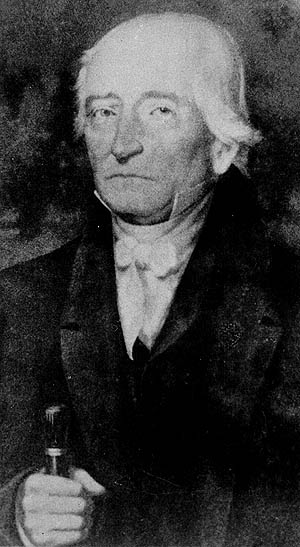
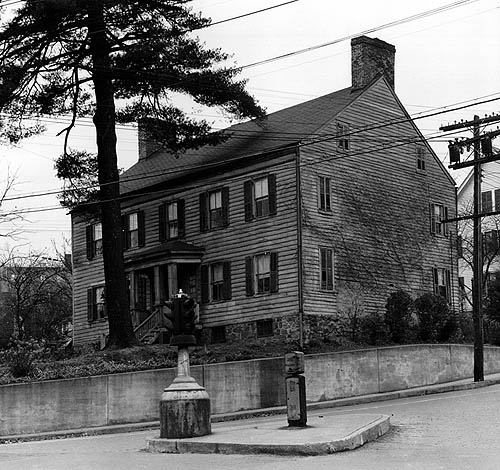
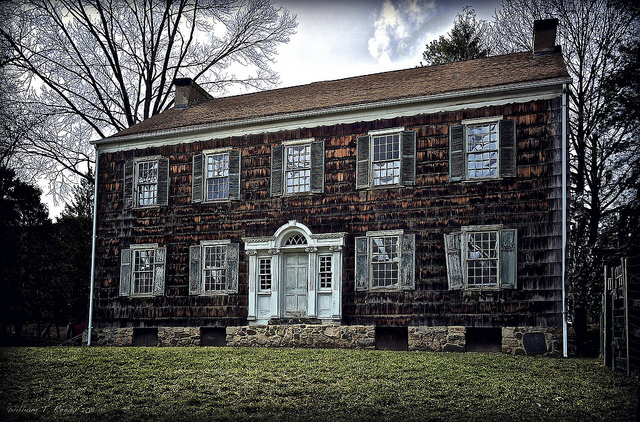
Jonah Parke

Jonah PARKE (1716 – 1785) was Alex’s 7th Great Grandfather; one of 256 in this generation.

Jonah Parke was born in 1715 in Alexandria Township, Hunterdon County, New Jersey.  His father was  Roger PARKE Jr.   His mother was NOT Susannah ROBINSON. He may have married Elizabeth PARLEE, a previously unknown daughter of our ancestor Jean Parlee.  If this Elizabeth was indeed his wife, then his son Nathaniel married his first cousin.  Jonah died about 1785 in Alexandra Township, Hunterdon County, NJ and is burried in Kingwood Township,  Hunterdon, NJ.

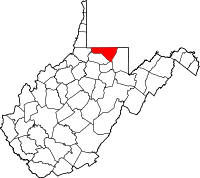
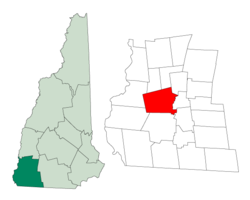
Map of New Jersey highlighting Hunterdon County

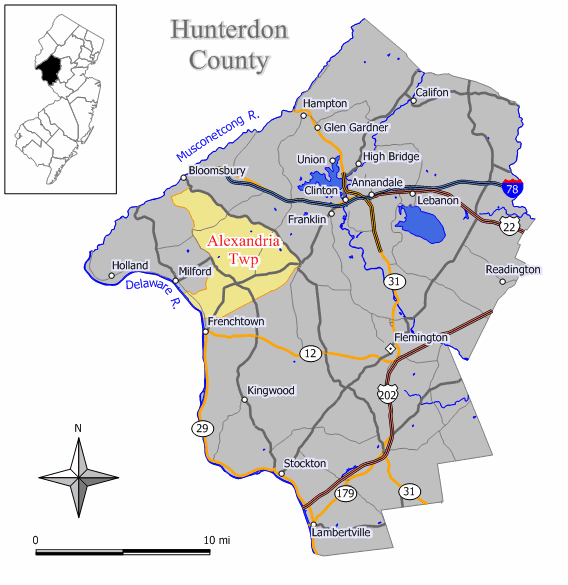
Alexandria Township in Huntington County, NJ

Elizabeth Parlee may have been born about 1712.  Her parents were Jean PARLEE II and Anne REZAEU. Her brother Jean PERLIER is also our ancestor.  Elizabeth died in 1754.

One source states that Jonah married [unknown] Stout around 1738, but the only Stout/Parke marriage I could find was between his sister Grace Parke and Jacob Stout.  Here is the most complete Stout site – http://familytreemaker.genealogy.com/users/s/t/o/William-R-Stout/GENE9-0002.html

Children of Jonah

Name Born Married Departed
1. Nathaniel PARKS c. 1738 in Kingwood Township, Elizabeth PARLEE
1760 Canaan, Connecticut
1818 in New Brunswick, Canada
2. David Parks 1740
Hunterdon, NJ
Went to Greene Co. Pennsylvania
3. Jonas Parks 1742
Hunterdon, NJ
Phebe Price
c. 1769
4. Sarah Parks 1745
Hunterdon, NJ
Joshua Hunt
1765
Mercer, NJ
1822
Fayette City, Fayette County, PA
or Greene County, PA
Burial: Garards Fort Cemetery, Garards Fort, Greene, PA
5. Joshias Parks 1747
Hunterdon, NJ
6. Jonathan Parks 1749
Hunterdon, NJ
7. Jonah Parks 1752
Hunterdon, NJ
8. Roger Parks 1755
Huntingdon, New Jersey
Elizabeth Dallas
6 Sep 1774 Shelburne Parish, Loudoun, Virginia.
6 Nov 1813 Quebec City, Canada
British POW
Buried at Anglican Cathedral in Quebec City
9. Ozias Parks 27 Aug 1756 in Hunterdon, New Jersey Jane Robbins Dec 1824 in Hunterdon, New Jersey

Jonah and his predecessors spelled his name Parke, but in the historical record, his son Nathaniel is consistently referred to as Parks.

During the Revolution, Jonah was fined for refusing to take oath but he would have been too old to enter the Army.  His son Nathaniel and grandson Joseph entered the Loyalist Army.

Much of this information comes from the Roger Parke, Book by Cecilia B. Parke page 60. She has the general consensus of various reseachers on Nathaniel Parke of Kingwood, is that he was probably the son of Jonah Parke of Alexandria and Kingwood Township, Hunterdon Co., N.J. Jonah has already been established as the brother of Joseph Parke (Will 1752, Greenwich Township, Morris Co., NJ) who died in 1754, Sussex Co., NJ. Jonah was named executor of the Will. The Will was witnessed by two of Joseph’s friends, the Lanning brothers formerly from Hopewell, Hunterdon Co., NJ.

Children

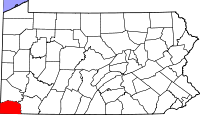
Three of Jonas’ children David, Sarah and Roger all moved to Greene County, Pennsylvania in the southwest corner of the state.

Greene County, Pennsylvania

1. Nathaniel PARKS (See his page)

2. David Parks

David moved to Greene County, Pennsylvania.

David Park appears as a witness in his brother-in-law Joshua Hunt’s 1810 Green Co., Pennsylvania Will and was probably the same David Park(s) who was living in Franklin Twp., Fayette Co., PA in 1800-20.

3. Jonas Parks

Jonas’ wife Phebe Price was born about 1746. Her parents may have been Nathan Price and Pleasant Smith. Phoebe died 1783 in Virginia.

The Huntingdon tax list of 1778-97 shows both Jonas Parkes Jr and Jonas Parkes Sr eligible for the Militia (18-45) age group, born between 1735-62.

Phoebe Price, a Quaker, was dismissed from the Quaker faith at Quakertown, for marrying “out of meeting.” Her family were some of the original residents of Quakertown, Bucks, Pennsylvania.

There was a Lt Jonas Parks in the Dutchess County Militia

Children of Jonas Parke and Phoebe Price

i. Jonas Jr. Parke, b. abt 1770

ii. Mary Parke, b. 1771

iii. Sarah Parke, b. abt. 1773; m. [__?__] Carey; buried in the Quaker Cemetery, Quarkertown, NJ,

iv. Roger Parke, b. 27 May 1775, Hunterdon Co, NJ; d. 15 Mar 1865; m. Deborah Parke,( b. 24 Mar 1778);  m2. [__?__] Hunt.,

v. Phoebe Parke., b. 9 Jan 1795, Hunterdon Co., NJ; d. 6 Oct 1856, Guernsey Co., Ohio.; m. 6 Sep 1817 to David Bunting Hartley (b. 28 Sep 1786 in Pennsylvania – d. 1845 in Terre Haute, Indiana)

4. Sarah Parks

Sarah’s husband Joshua Hunt was born in 1745 – Hunterdon, New Jersey. His parents were John Hunt (1688 – 1740) and Sarah Ely (1697 – ). Joshua died Dec 1810 Burial: Garards Fort Cemetery, Garards Fort, Greene County, Pennsylvania in Dunkard, Greene, Pennsylvania. Findagrave has pictures of the gravestones of four of Sarah and Joshua’s children.

Joshua is believed to have been captured in an attempt to reach the British lines and was freed on condition he join the Revolutionary Army.

The family moved to the extreme southwest corner of Pennsylvania next to West Virginia before 1800. They farmed in Dunkard Township, Greene County, remaining there until their deaths in 1810 and 1820.

Will of Joshua Hunt

“.I, Joshua Hunt,being weak in body but sound in memory & understanding have made this my last will and testament in the following manner First of all that my lawful debts & my funeral expenses be paid. I bequeath unto by beloved wife Sarah my real estate and my personal property to be for her use during her life time & after her death my real estate is to be equally divided between my sons Jonos & Joshua Hunt my personal estate to be equally divided between my Sons & Daughters which is John Hunt, Margaret Ilef (Iliff), Roger Hunt, Samuel Hunt, William Hunt, Jonos Hunt, Sarah Denny, & Joshua Hunt.

I do constitute and appoint ‘Jonos’ & Joshua Hunt to – my Exers & confirming this to my last will & testament as witness my hand & Seal this eleventh day of Jany 1810.” Joshua Hunt signed with his mark “8”Witnessed by Nichs. Blake, David Parks, John Thomas Registered 26 Dec 1810 and Jonas & Joshua Hunt appointed executors same day..

Children of Sarah and Joshua:

i. John Hunt b. 1765 New Jersey; d. 21 Mar 1826 Hopewell, Mercer County, New Jersey; Burial: Pennington Presbyterian Church Cemetery, Plot: Row 8 Grave 10, Pennington, Mercer, NJ; m. 16 Feb 1784 – Hunterdon, New Jersey to Rhoda Reed (b. 1762 Hopewell, Mercer, NJ – d. 21 Dec 1809 Hopewell; Burial: Pennington Presbyterian Church Cemetery Plot: Row 8 Grave 11)

ii. Margaret Hunt b. 1767 in Alexandria, Hunterdon, New Jersey m. 1778 Sussex County, New Jersey to Thomas Iliff (b. 1764 in Bucks County, Pennsylvania) Thomas’ parents were James Iliff (1733 – 1777) and Elizabeth Calvin (1739 – 1777). Margaret and Thomas had seven children born between 1788 and 1800.

iii. Roger Hunt b. 1769 in Alexandria, Hunterdon, New Jersey; d. 29 April 1845 in Jackson, Greene, Pennsylvania; m. ~1800 to Catherine Carmichael (b. 1775 – d. aft. 1825) Alternatively, m. Catherine Michael (b. 1779 in Maryland – d. 1813 in Maryland)

Roger appeared in the 1793 Alexandria Twp.HunterdonNJ Militia Lists. Served War of 1812?.

In 1800, he was living in Springhill Twp., Fayette County, PA.

In a Monongalia Co., VA Deed dated Apr 15 1806, Roger purchased 100 acres for $200.00 Virginia money from Samuel Brawn’s Fayette Co., PA Estate(V. OS 3,p.420). In a Monongalia Co., VA Deed of Sale of Mar 13 1812, ‘Rodger’ & Catherine Hunt then of Greene Co., PA sold by marking ‘X’ this same land to Jacob Feather for $250.00(V.OS 5,p.302). He last appears in the 1830 Greene Twp., Greene Co. PA Census & is probably buried in Wood Cemetery, Jackson Twp.(Center.Twp), Greene Co., PA.

iv. Samuel Hunt b. 1771 in Alexandria, Hunterdon, New Jersey; d. 1809; m. Hazel [__?__]

v. Jonas Hunt b. 6 Jul 1774 in Alexandria, Hunterdon, New Jersey; d. 7 Dec 1839 in Morgantown, Monongalia, West Virginia; Burial: Hunt-Eckhart Cemetery, Morgantown; m. 29 May 1809 Dunkard, Greene, Pennsylvania to Jane Seaton (b. 12 Jun 1782 in Greene, Pennsylvania – d. 25 Apr 1858 in Clayton, Iowa) Jane’s parents were James Seaton (1751 – 1830) and Mary Clark (1758 – 1826). both buried in the Old Seaton Cemetery Carmichaels, Greene County, PA. Some genealogies say Janes’ mother was Mariah Cunningham with the same vital dates. Jonas and Jane had eight children born between 1810 and 1828. After Jonas died in 1839, Jane followed her children to Clayton County, IA around 1850.

Jane’s father James Seaton III had served in the Revolution with the Washington County PA militia and was on infrequent  duty on guard against British aided Indians. He and Mary had survived numerous Indian raids into the area during the 1780’s and 1790’s although neighbors were casualties. In 1782 he was listed as an owner of one slave. On April of 1786, he surveyed 300 acres in Washington County, Pennsylvania which is presently Greene Co. On July 10, 1789, he patented the triangle of land extending from Little Whiteley Creek & extending north in Cumberland Twp., Greene County, Pennsylvania. In the 1798 is listed as the owner of a two story frame dwelling near Carmichaels, Greene, PA of ten windows & 104 lights valued at $250, with a kitchen building of logs with eight windows setting on a two acre lot.

Family Researcher H. Andrew Brown found deeds showing that Jonas Hunt purchased 18 acres of land at ‘White Oak Flat’ on Nov 13 1826, later left to his son Joshua. On Dec 6 1836, Jonas and Jane Hunt sold 72 acres and buildings from White Oak Flat for $1,000.

Subsequently, they moved across the line to Monongalia Township, east Monongalia County, Virginia (later West Virginia). The land was astride the road from Morgantown to Coffin’s Ferry. Greene County is in the extreme southwest corner of Pennsylvania with the Monongahela River running down the east side of the county north forty miles to Pittsburgh. West Virginia was formed in 1863, and Morgantown is the county seat of Monongalia County.

Jonas Hunt is found on an 1810 Census of Greene County, Pennsylvania in Dunkard Township–Dunkard Township on the Virginia border. The family fits into the Dunkard Township, Greene County, Pennsylvania 1820 census. On the 1830 census, they are located closer to the River in Monongahela Township– After 1837, they were locating across the border to Virginia.

“The last will and testament of Jonas Hunt of Monongalia township, Greene County.

I Jonas Hunt considering the uncertainty of this mortal life and being of sound mind (blessed be Almighty God for the same) do make and publish this my last will and testament in manner and form following (that is to say) first I give and bequeath unto my beloved wife Jane Hunt all my persinal (sic) and real property during her life of widow Hood and the and at the expiration of widow hood or at her death I wish all of my property both real and personal sold at the expiration of that time, and the money divided equally among my children which is as follows James, Matilda, Sally, Mary, Billy, Betty, and Joshua. Item I wish my children to be educated (say common education Reading writing and arrithmatic).”

“I hereby appoint my beloved wife Jane Hunt my executrix and James Seaton, Jr. my executor of this my last will and testament hereby revoking all former wills by me made. In witness hereunto set my hand and seal the sixth day of July in the year of our Lord one thousand eight hundred and twenty six.

Signed: Jonas Hunt Witnesses: James Seaton, Jr. & Thomas P. Seaton

Although his mother and Uncle James Seaton, Jr. were executrix and executor, James S. Hunt did an estate appraisal, itemized in Brown’s work. The real estate including the 130 acre farm with personal property was valued at $2,431, with cash and two notes raising the amount to $2,477.

Jane Hunt never remarried. She and most of her family eventually settled in Clayton County, northeast Iowa, or Clarke County south and westerly of Des Moines, Iowa.

vi. William Hunt b. 16 Nov 1780 in Alexandria, Hunterdon, New Jersey; d. 29 Apr 1845 in Greene, Greene, Pennsylvania

vii. Sarah Hunt b. 1782 in Alexandria, Hunterdon, New Jersey; d. Mar 1850; m. 1805 – Pennsylvania to
Daniel Denney (b. 1779 in New Jersey)

viii. Joshua Hunt b. 7 Jul 1785 in Alexandria, Hunterdon, New Jersey; d. 23 Jul 1875 in Maidsville, Monongalia, [West] Virginia; Burial: Bethel Cemetery, Morgantown; m. Sarah “Sallie” Robbins (b. 1784 – d. 1864 in Monongalia, West Virginia Burial: Bethel Cemetery, Morgantown)

In the 1850 census, Joshua and Sarah were farming in District 37, Monongalia, Virginia.

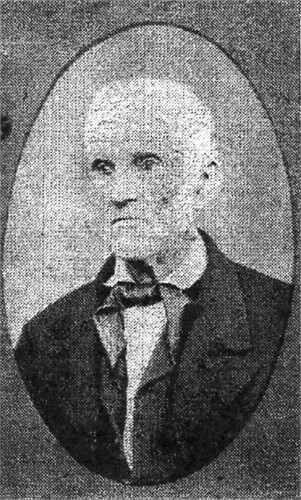
Likeness of Joshua Hunt printed when he was 74 years of age.

5. Joshias Parks

Joshias was arrested and forced to join the Revolutionary Army.

8. Roger Parks

Roger’s wife Elizabeth Dallas was born in 1755 in Loudoun, Virginia. Her parents were Dennis Dallas and Mary [__?__]

Roger’s birth information is from his war records.

He was married to Elizabeth Dallas on the 6th day of September, 1774 by Rev David Griffin of Shelburne Parish, Loudoun Co., VA. They were listed for 9 years in Loudon Co., paying tithes to Cameron Parish from 1774-1783. Roger Parke was living beside William Parke and Andrew Buckalew in Cameron Parish.

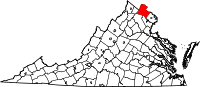
Roger and his family lived in Loudon County, Virginia

1777 – 1783 – 4th Regiment of Virginia; Roger (Rodger McPark, pvt, later records, Roger M Parke, Corporal.) Muster Roll & Pay Roll served with Capt Abraham Kirpatrick’s Company on the 3rd-4th-8th-12th Cont Line.

The 4th Virginia Regiment was raised on Dec 28, 1775 at Suffolk Court House, Virginia for service with the Continental Army. The regiment saw action at the Battle of TrentonBattle of PrincetonBattle of BrandywineBattle of GermantownBattle of Monmouth and the Siege of Charleston. Most of the regiment was captured at Charlestown, South Carolina on May 12, 1780 by the British and the regiment was formally disbanded on January 1, 1783.

In 1785, records find Roger & Elizabeth in Springhill Township, Fayette Co., Pennsylvania, were their first child of record, John R. Parke, was born.

Records five years later, in 1790, Monongalia Co., VA/WV, son, George W. was born (spelled Monongehala, Levi Parke Family Letters) and in 1791 son, Joseph. A daughter, Mary Polly, was born in 1793. She was called Polly as a child and continued to use the name in her adult years. Jonathan, was born in 1796.

Roger had a 400 acre land grant ca 1785-1796 when the Monongalia Co., Court House Burned in 1796. In 1803 Monongalia Co., records, Roger Parke sold 400 acres on Indian Creek, to James Williamson who later sold to Charles Boyes.

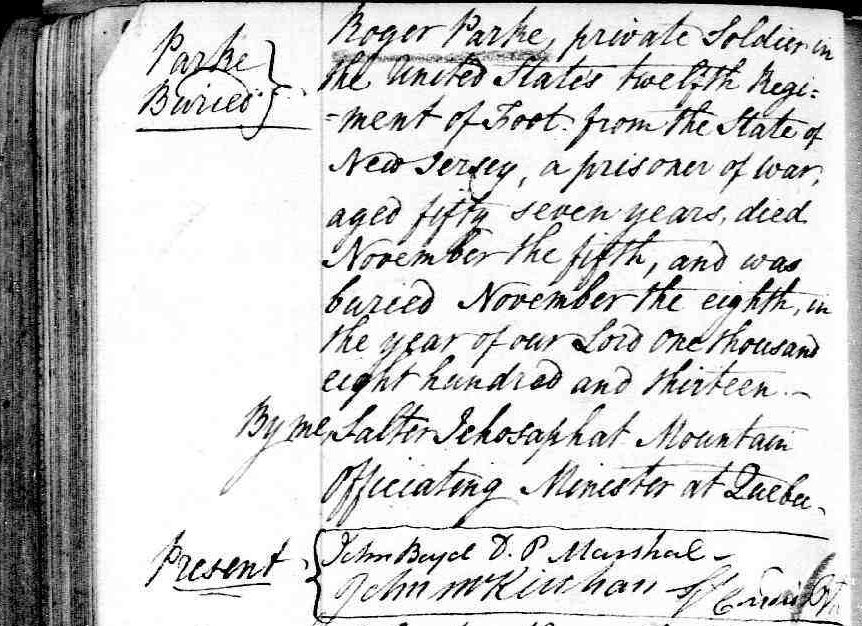
In the War of 1812, at the age of 57, Roger enlisted in Capt. Willoughby Morgan’s 2nd Company Monongalia Co., VA/WV. He was captured Sep 5, 1813 and POW records show he died two months later on Nov 6, 1813 from wounds receivved at Ft Erie, NY on the Canadian border.   He was buried at The Anglican Cathedral in Quebec City, Canada.

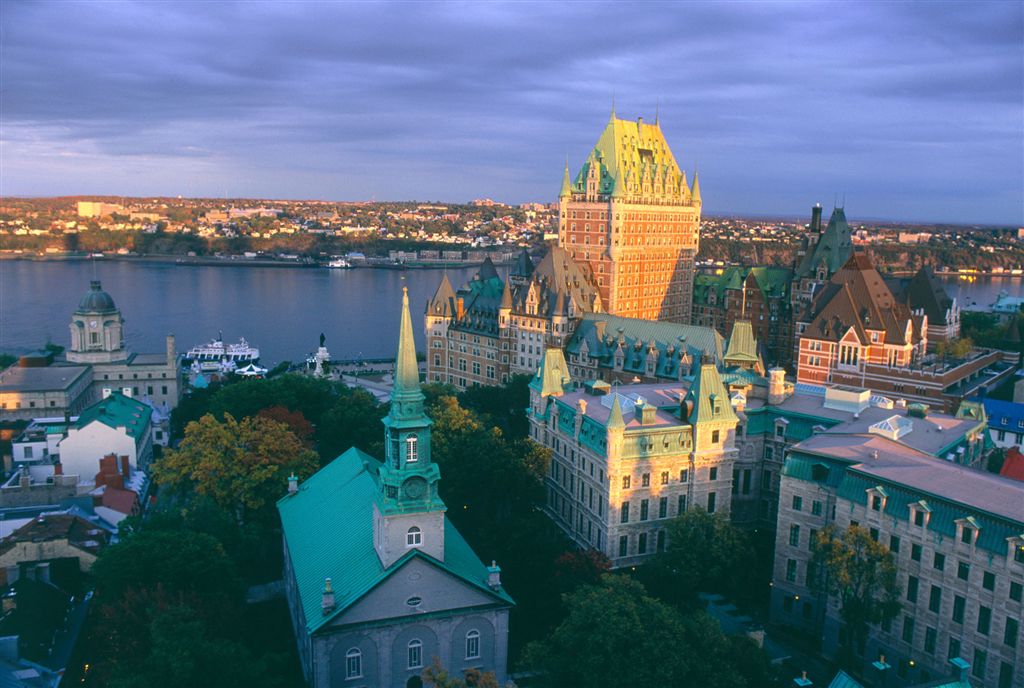
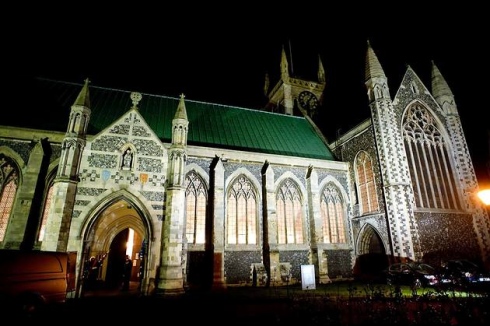
he Cathedral of the Holy Trinity in Quebec City became the first Anglican cathedral built off the British Isles, when it was completed in 1804

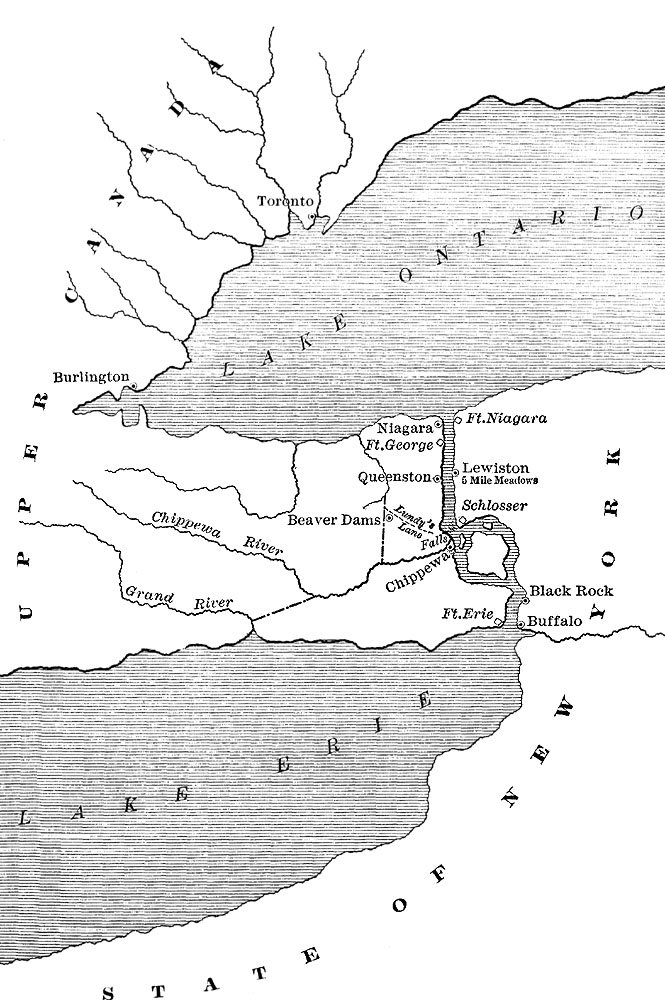
Roger was probably captured in one of the Skirmishes at Ball’s Farm, Upper Canada (July 8 – September 6, 1813): A series of skirmishes that occurred just west of Niagara, Upper Canada, between the American and British lines during the blockade of Fort George (July 1 – October 9, 1813).

Blockade of Fort George, Upper Canada (July 1 – October 9, 1813): A British attempt to reoccupy Fort George following their victories at Stoney Creek (June 6, 1813) and Beaver Dams (June 24, 1813). There were frequent skirmishes (Ball Property) and raids (Black Rock) during this period. The blockade was lifted in order to redeploy troops in response to developments elsewhere along the American-Canadian border, especially Wilkinson’s Campaign on the St. Lawrence, which began in October, and the British defeat at Moraviantown in Upper Canada, which occurred on October 5.

1813 – POW Roger Parke Quebec Canada Source: The Anglican Cathedral in Quebec City, Canada.

Monongalia Co., VA/WV court records 1821, Roger Parke’s son in law, Jehu Lash, is assigned as administrator to his estate.

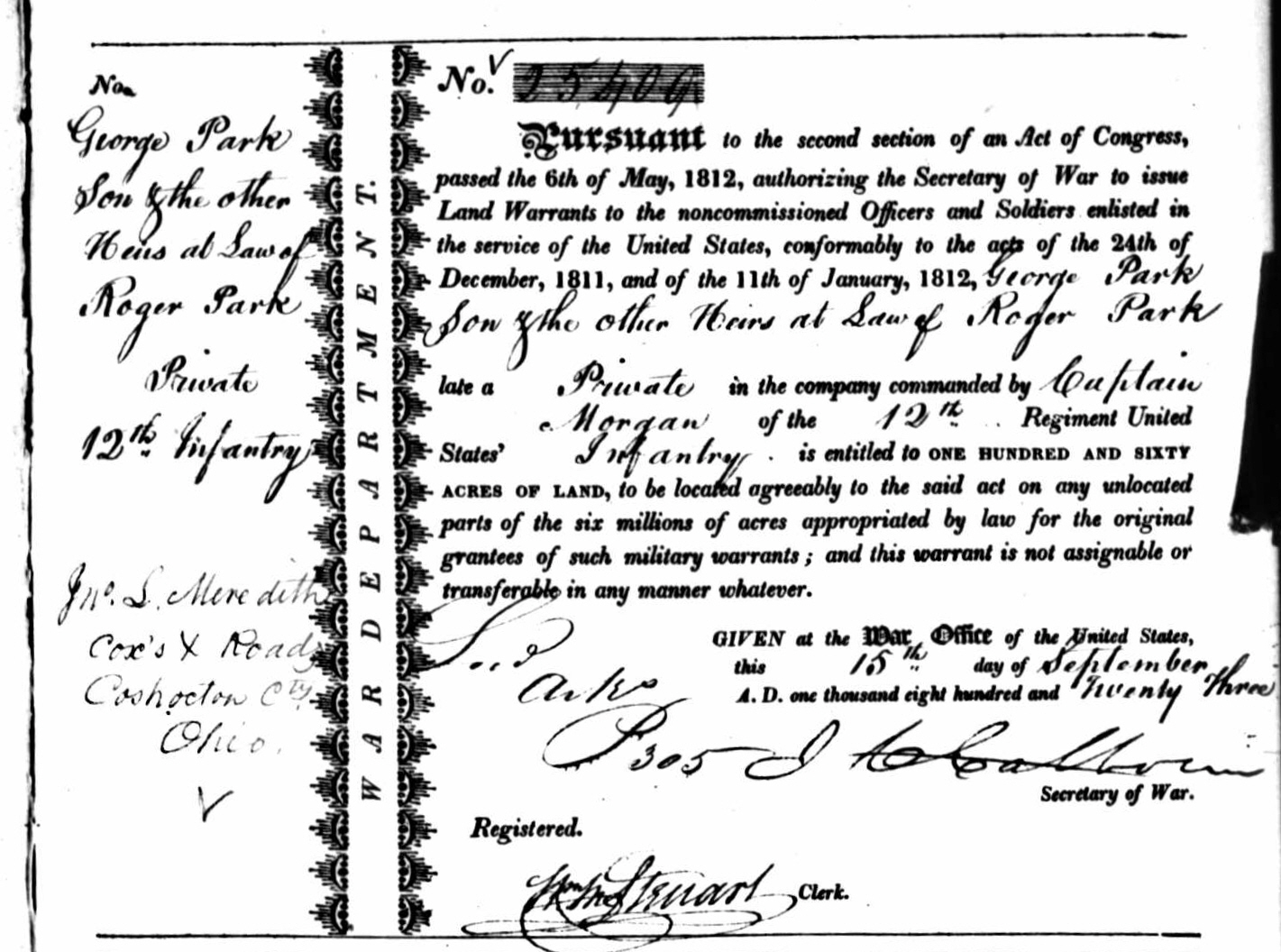
Roger Park Revolutionary War Grant 15 Sep 1823

1823 Coshocton Co Oh Court records, two sons of Andrew Buckalew swore in Court they knew Roger Parks, father of George Parks, personally.

1823 Recorded list of heirs of Roger Parks were named; John, George, Joseph, Jonas, Mary/Polly Lash, Deborah, David, Jonathan & Joshua Parks

Roger’s sons George and Joseph enlisted in the War of 1812 Monongalia Co. VA/WV under Capt. Willoughby Morgan at the same time as their father.  Younger brother Jonathan enlisted Monongalia Co. in 1814 after his father’s death.  George and Joseph were captured at the Battle of Frenchman’s Creek at Ft. Erie 28 Nov 1812 and sent to a Quebec POW camp.. They remained there until the War was over in 1815. Their father Roger Park was captured 5 Sept 1813 and died a few weeks later 6 Nov 1813 buried at the Anglecian Cathedral in Quebec City, Canada.  See my blog post the Battle of Frenchman’s Creek Nov 28, 1812 for more of the exciting story.

Since I started writing about it on this page, here’s a lot of the basics.

During the war, the Americans launched several invasions into Upper Canada (present-day Ontario). One section of the border where this was easiest (because of communications and locally available supplies) was along the Niagara River. Fort Erie was the British post at the head of the river, near its source in Lake Erie.

In 1812, two American attempts to capture Fort Erie were bungled by Brigadier General Alexander Smyth. Bad weather or poor administration foiled the American efforts to cross the river.

The Battle of Frenchman’s Creek took place in the early hours of November 28, 1812, in the Crown Colony of Upper Canada, near the Niagara River. The operation was conceived as a raid to prepare the ground for a larger American invasion. The Americans succeeded in crossing the Niagara and landing at both of their points of attack. They achieved one of their two objectives before withdrawing but the invasion was subsequently called off, rendering useless what had been accomplished. The engagement was named, “the Battle of Frenchman’s Creek” by the Canadians, after the location of some of the severest fighting. To contemporary Americans, it was known as, “the Affair opposite Black Rock”.

After the American defeat at the Battle of Queenston Heights, command of the U.S. Army of the Centre on the Niagara Frontier passed from Major General Stephen Van Rensselaer of the New York Militia to his second-in-command, Brigadier General Alexander Smyth of the Regular U.S. Army. Smyth had deeply resented being subordinated to a militia officer and this was the opportunity for which he had been waiting. He immediately planned to invade Canada with 3,000 troops. Assembling his forces at Buffalo, he directed a two-pronged attack in advance of his main invasion. Captain William King, with 220 men, was to cross the Niagara and spike the batteries at the Red House, beside Fort Erie, in order to enable Smyth’s main invasion force to land without facing artillery fire. At the same time, Lieutenant Colonel Charles Boerstler, with 200 men, was to land in Canada between Fort Erie and Chippawa and destroy the bridge over Frenchman’s Creek in order to hinder the bringing-up of British reinforcements to oppose Smyth’s landing.

Two of Roger Parke’s sons were captured at the Battle of Frenchman’s Creek

The British commander-in-chief in North America, Lieutenant General Sir George Prevost, had forbidden any offensive action on the Niagara Frontier. This left the local British forces with no alternative but to wait for the Americans to make the first move and try to counter any attempt at invasion. The regular troops were distributed among the defensive outposts and supplemented with militia and Native American forces.

In a floridly worded proclamation, published on 10 November and addressed “To The Men of New York”, Smyth wrote that, “in a few days the troops under my command will plant the American standard in Canada” and he urged New Yorkers not to “stand with your arms folded and look on in this interesting struggle” but to “advance…to our aid. I will wait for you a few days.” Smyth’s statement of intent appears to have attracted no attention from his opponents across the border.

Captain William King of the 13th U.S. Regiment of Infantry was detailed to attack the Red House with 150 troops and 70 U.S. Navy sailors under Lieutenant Samuel Angus. King’s soldiers came from Captain Willoughby Morgan’s company of the 12th U.S. Regiment of Infantry [the Parke brother’s company] and Captains John Sproull and John E. Wool’s companies of the 13th Regiment.

Lieutenant Colonel Charles Boerstler was directed against Frenchman’s Creek with 200 men of his own 14th U.S. Regiment of Infantry. Colonel William H. Winder, commander of the 14th Regiment, was in reserve, with 350 of his own regiment.

Captain King’s force landed at the Red House under fire from the defenders and charged Lieutenant Lamont’s detachment of the 49th Regiment. Angus’s sailors, armed with pikes and swords, closed in for hand-to-hand fighting. Lamont’s troops drove back the attackers three times but King made a fourth assault which hit the British left flank and overwhelmed them; capturing Lamont and killing, taking or dispersing all of his men. The victorious Americans set fire to the post, spiked the guns and set off back to the landing-point, where they expected their boats to have re-landed in order to evacuate them. However, in the moonless darkness, King’s force became dispersed and split into two parties: one led by King and the other by Lieutenant Angus. Angus returned to the landing-point and found only four of the party’s ten boats there. Unaware that the six missing boats had not in fact landed, Angus assumed that King had already departed, and he re-crossed the river in the remaining boats. When King’s party reached the landing-point, they found themselves stranded. A search downriver found two unattended British boats, in which King sent half of his men, and the prisoners that he had captured, over the Niagara while he waited with his 30 remaining men for more boats to come from Buffalo and pick him up.

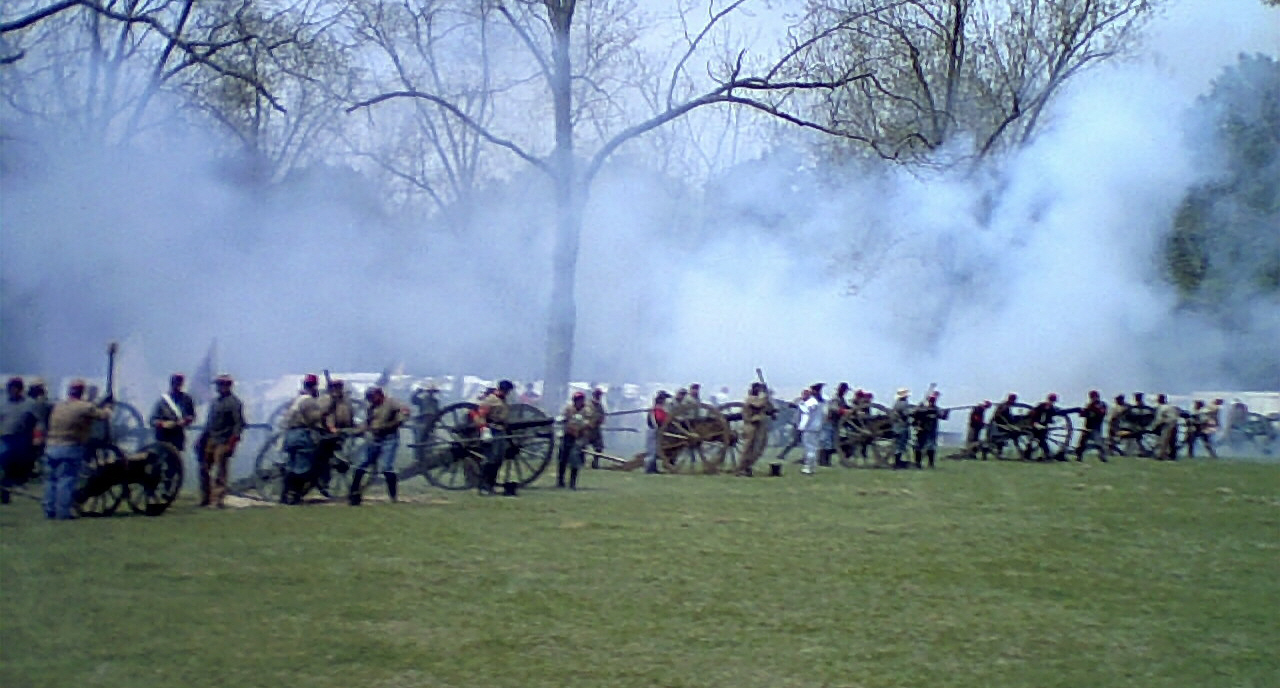
Battle of Frenchman’s Creek Reinactment The big Commemoration is coming up Nov 28, 2012

Lieutenant Colonel Boerstler made for Frenchman’s Creek but four of his eleven boats, “misled by the darkness of the night or the inexperienced rowers being unable to force them across the current, fell below, near the bridge and were forced to return”. Nevertheless, Boerstler’s seven remaining boats forced a landing, opposed by Lieutenant Bartley and his 37 men of the 49th Regiment. Boerstler led the attack, shooting with his pistol a British soldier who was about to bayonet him. Bartley’s outnumbered force retired, pursued to the Frenchman’s Creek Bridge by the Americans, who took two prisoners. Boerstler’s men were then attacked by Captain Bostwick’s two companies of Norfolk Militia, who had advanced from Black Rock Ferry.

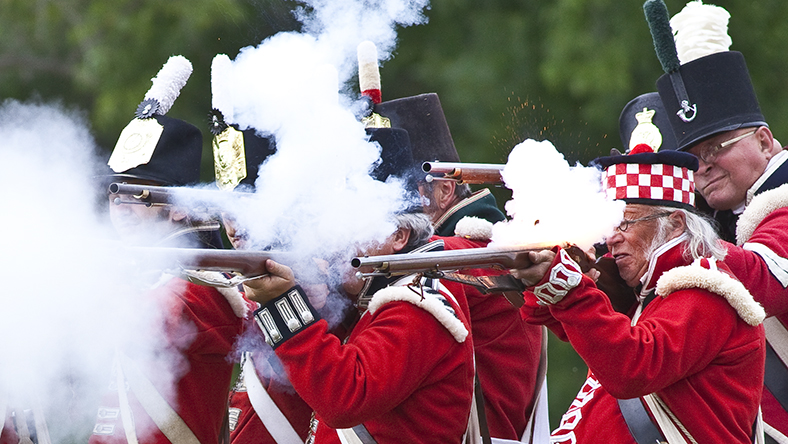
Battle of Frenchman’s Creek Reinactment June 24, 2012 – British Fire Back Source: http://1812news.wordpress.com

After an exchange of fire in which Bostwick’s force lost 3 killed, 15 wounded and 6 captured, the Canadians retreated. Boerstler now encountered another problem: many of the axes provided for the destruction of the Frenchman’s Creek bridge were in the four boats that had turned back and those that were in the seven remaining boats had been left behind when the Americans fought their way ashore. Boerstler dispatched eight men under Lieutenant John Waring to “break up the bridge by any means which they could find”. Waring had torn up about a third of the planking on the bridge when it was learned from a prisoner that “the whole force from Fort Erie was coming down upon them”. Boerstler quickly re-embarked his command and rowed back to Buffalo, leaving behind Waring and his party at the bridge.

In response to the attack, Major Ormsby advanced from Fort Erie to Frenchman’s Creek with his 80 men of the 49th Regiment, where he was joined by Lieutenant McIntyre’s 70 light infantrymen, Major Hatt’s Lincoln Militia and some British-allied Native Americans under Major Givins. Finding that Boerstler’s invaders had already gone, and being unable to determine any other enemy presence in the pitch dark, Ormsby’s 300 men remained in position until daybreak, when Lieutenant Colonel Bisshopp arrived from Fort Erie. Bisshopp led the force to the Red House, where they found Captain King and his men still waiting to be evacuated. Outnumbered by ten-to-one, King surrendered and the Parke brothers were captured.

When the news arrived in Buffalo that King had spiked the Red House batteries, General Smyth was overjoyed. “Huzza!” he exclaimed, “Canada is ours! Canada is ours! Canada is ours! This will be a glorious day for the United States!” and he dispatched Colonel Winder with his 350 men across the river to evacuate King and the rest of his force. Winder collected Lieutenant Waring and his party and then landed. However, he had only disembarked part of his force when Bisshopp’s 300 men appeared. Winder ordered his men back to their boats and cast off for Buffalo but his command came under a severe fire as they rowed away, costing him 28 casualties.

According to U.S. Army records, Captain King’s troops had 15 killed and wounded; Lieutenant Colonel Boerstler’s command had 8 killed and 9 wounded; while Colonel Winder had 6 killed and 22 wounded

In spiking the guns at the Red House battery, the Americans had accomplished the more important of their two objectives: an invading force could now land between Chippawa and Fort Erie without facing artillery fire. However, subsequent events would render their service useless.

With the Red House batteries out of action, Smyth immediately pressed on with his invasion plans. However, attempts to embark his 3,000 men ended in chaos; with only 1,200 men managing to board because of a shortage of boats and the artillery taking up an unexpected amount of space on board. Amid torrential rain and freezing cold, a council of war headed by Smyth decided to postpone the invasion pending more thorough preparations that would enable the embarkation of whole force.

On November 31, Smyth tried again, ordering his men to embark two hours before dawn in order to avoid enemy fire. This time, the embarkation was so slow that, two hours after daylight, only 1,500 men were on board. Rather than attempt an amphibious landing in broad daylight, Smyth once again postponed the invasion. By this time, morale in Smyth’s command had plummeted: “all discipline had dissolved; the camp was a bedlam”. This, and widespread illness among the troops, persuaded a second council of war called by Smyth to suspend all offensive operations until the army was reinforced.

After arguing with Brigadier General Peter B. Porter, Alexander Smyth challenged him to a duel, but both men went unscathed. The historian John R. Elting wrote of the duel, stating “Unfortunately, both missed.”

The Army of the Centre went into winter quarters without attempting any further offensive operations and General Smyth requested leave to visit his family in Virginia. Three months later, without Smyth resigning his commission or facing a court-martial, his name was dropped from the U.S. Army rolls by President James Madison.

After the war, Smyth resumed the practice of law, and again became a member of the Virginia House of Delegates in 1816, 1817, 1826, and 1827. He was elected to the Fifteenth United States Congress and reelected to the Sixteenth, Seventeenth, and Eighteenth Congresses, serving from March 4, 1817 to March 3, 1825. He was elected again to the Twentieth and Twenty-first Congresses, serving again from March 4, 1827 until his death.

Smyth died in Washington, D.C., and was interred in the United States Congressional Cemetery. Smyth County, Virginia is named after him.

In 1813, the Americans won the Battle of Fort George at the northern end of the Niagara River. The British abandoned the Niagara frontier and allowed Fort Erie to fall into American hands without a fight. The Americans failed to follow up their victory, and later in the year they withdrew most of their soldiers from the Niagara to furnish an ill-fated attack on Montreal. This allowed the British to recover their positions and to mount raids which led to the Capture of Fort Niagara and the devastation of large parts of the American side of the Niagara River.

A Commemoration of thew Battle of Frenchman’s Creek is planned for November 28, 2012 at 1:00 pm. More details to come. Contact events@discover1812.com for more info.

After being released, George and Joseph both returned to Virginia and started their own families. On April 12, 1816, George W. married Margaret Morris in Monogalia Co., VA[WV]. Thier first child Roger, born January 11, 1819, was named after George’s father. Zadock Parke, their second child, was born February 1820 and was named after Margaret’s father, Zadoc Morris, b 1759 Monongalia Co., VA.

The War of 1812 and the death of their Father had a strange effect on this family. George changed the spelling of his last name to Parks moved to Coshocton Co OH in 1820, receiving 160 acres for his Fathers service in the War of 1812. Joseph always spelled his name Park and moved to Wood/Wirt Co in 1819.

Children of Roger and Elizabeth

i. David Parke?  b. 1775 in Loudoun, Virginia; d. 1850 in Virginia, Coshocton, Ohio

Roger and Elizabeth were listed for 9 years in Loudon Co., paying tithes to Cameron Parish from 1774-1783. Some sources say there are no records found during this time on the birth of children. Roger Parke was living beside William Parke and Andrew Buckalew in Cameron Parish.

ii. John Parke b. 1785 in Springhill, Fayette, Pennsylvania; d. 1860 in Marion County, Virginia

iii. George Washington Parke b. 1790 in Monongalia, [West] Virginia; d. 1864 in Putnam, Ohio; m. Margaret Morris (b. 1792 in Monongalia, [West] Virginia) Margaret’s parents were Zadock Morris (1750 – 1842) and Ellen “Polly” Evans (1760 – 1801). George and Margaret had seven children born between 1816 and 1833.

Monongalia, West Virginia — The name Monongalia may be a misspelling of Monongahela. Alternatively, the conventional Latinate ending “-ia”

George enlisted in the War of 1812 Monongalia Co. VA/WV under Capt. Willoughby Morgan at the same time with his father Roger and brother Joseph.  Younger brother Jonathan enlisted Monongalia Co. in 1814 after his father’s death.  George was captured at the Battle of Frenchman’s Creek at Ft. Erie 28 Nov 1812 and sent to a Quebec POW camp along with his brother Joseph. They remained there until the War was over in 1815.

After being released, George and Joseph both returned to Virginia and started their own families. On April 12, 1816, George W. married Margaret Morris in Monogalia Co., VA[WV]. Thier first child Roger, born January 11, 1819, was named after George’s father. Zadock Parke, their second child, was born February 1820 and was named after Margaret’s father, Zadoc Morris, b 1759 Monongalia Co., VA.

15 Sep 1823 – Roger’s son George received a grant of 160 acres in Coshocton County, Ohio for Roger’s service in the War of 1812.  The grant was signed by the famous John Calhoun, then Secretary of War.

Roger’s heirs received a grant of 160 acres in Coshocton County, Ohio for his service in the War of 1812.

(Levi Parke Family Letters; beginning page of this letter is missing to Frank E Parke from Martin T. Parke) more pleasant and much better if some of your Brothers and Sisters were living with or near you. I am a great fellow for home, but I want some body else there also no Baching for me. Our orange crop will be small. We still have a few on the trees yet to eat. Our figs will be ripe about July 1st. The peach crop here is good and are beginning to ripen and in two or three weeks the Trains will be loaded down with peaches in trainsit for the hungry North. Well! Dinner is ready wish you could be with us for dinner. The little I know of the family lineage I have by asking your Father in 1890. To my questions here is his reply. ‘My Father, George Parke and my Mother, Margaret Morris (her maiden name) was born in Monongehala County Va. My Grand Father’s name on my father’s side of house was Roger Parke and on my mother’s side my Grand Father’s name was Zadock Morris.’ Our uncle Zadock and my Father was born in Va. Your Father was born in Ohio soon after emigrating from Va. I have three letters written by your father to me. Did he ever get his Pension? Let me know. Your Father certainly wrote a good steady hand for his age. Now write again. Yours truly M. T. Parke

In the 1850 census, Roger was a physician living in Monroe, Coshocton, Ohio with his daughter Maria and son Andrew. The census states that Roger was born in Maryland.

iv. Joseph Park b. 23 Oct 1791 in Fayette City, Fayette, Pennsylvania; d. 2 Feb 1861 in Wirt, West Virginia; Burial: Rector Cemetery, Wirt County, West Virginia Joseph was the husband of Bridget Park. The inscription shows his age at death as 69 years, 10 months, & 10 days; m. 1819 – Burning Springs, Wirt,, West Virginia to Bridget Stanley (b. 22 Mar 1800 in Wood County, West Virginia – d. 8 Aug 1858 in Wirt County, West Virginia). Joseph and Bridget had eleven children born between 1822 and 1841.

Burning Springs takes its name from the natural gas which bubbled up through the spring and would burn when lit. In the early 19th century, wells were drilled at the springs to produce brine which was evaporated to produce salt. Some petroleum was produced along with the salt brine. By 1836, the salt wells were producing 50 to 100 barrels per year of oil that was sold as illuminating oil.[1] The wells at Burning Springs produced and sold petroleum many years before the Drake oil well at Titusville, Pennsylvania. The first well at Burning Springs drilled to obtain oil rather than salt was begun in 1859, after the Drake well.

Joseph enlisted at the same time with his father Roger and brothers, George, Joseph.  Joseph enlisted in the War of 1812 Monongalia Co. VA/WV under Capt. Willoughby Morgan. He was captured at Ft. Erie 28 Nov 1812 and sent to a Quebec POW camp along with his brother George. They remained there until the War was over in 1815.

In the 1850 census, Joseph and Bridget were living in District 70, Wirt, Virginia where Joseph was a blacksmith.

As of the 2010 census, the population of Wirt County was 5,717, the least of any county in West Virginia. The population 160 years before in 1850 was 3,353.

v. Jonas Parke b. 1792; d. 1850 in Washington, Decatur, Indiana

vi. Mary “Polly” Parks b. 1793 in Monongalia County, Virginia; m. 30 May 1810 Monongalia, Virginia to Jehu (Jehue or John) Lash (b. 2 Dec 1786 Virginia) Jehu’s parents were Dr. Jehu Lash and Phebe Morgan. (b. 20 Sep 1762, in Berkeley County, VA – d. 15 May 1824, in Marion County, VA) Phebe and Jehu were not married. Phebe had another illegitimate child Hyram Thompson (b. May 14, 1801, VA)

Phebe’s father Colonel Morgan Morgan (wiki) ( 1688 — 1766) is traditionally believed to have founded the first permanent white settlement in present day West Virginia at Cool Spring Farm, and he is credited with founding the first church in what is now West Virginia.

Morgan Morgan had eight children by his wife, the former Catherine Garretson. One son, David Morgan, became famous as an Indian fighter due to an encounter with Delaware natives at his homestead. David developed the area now known as Fairmont, West Virginia. Another son, Zackquill, founded Morgantown, (Home of the Mountaineers). Francis Harrison Pierpont, governor of Virginia and later West Virginia, was a descendant of Colonel Morgan. Morgan Morgan held military and civil positions in colonial VA which entitled his female descendants to membership in the Colonial Dames of America. In addition to settling West Virginia, Morgan’s descendants founded Marion CountyFairmont and Morgantown.

Between 1810-1820 Polly and John had three children while living in Monongalia Co., VA. The family relocated to Preston Co., VA. in the 30’s & 40’s.

Jehu Lash grew up in the Marion County area, and on August 6, 1819, purchased the first lot sold in Middletown (now Fairmont West Virginia). This lot (half an acre) was located on the south side of Madison Street at Hull Alley; [two blocks from the Monganahela River] Lash paid Boaz Fleming $27.00 for it.

In 1814, Jehu Lash, Jr. was said to have found a huge bone, thought to be the leg-bone of a mastodon, in the little swamp that still lies by Benoni Avenue just below Seventh Street, in Fairmont.

In 1820 Jehu was a resident of Western Division, Monongalia, Virginia

Monongalia Co., VA/WV court records 1821 show Roger Parke’s son in law, Jehu Lash (married to Mary/Polly) was assigned as administrator to his estate.

“Jehu Lash shot a Middletown tax-collector in the foot in 18–? At his trial Jehu took oath that the tax-collector was stealing his chickens. The tax-collector was later sued by a Middletown lovely for breach-of-promise. After this he became disgusted with life and took a job selling farm-gates, and moved to Milford (now Rivesville).”

vii. Deborah Parke b. 1794 [West] Virginia

viii. David Parke b. 1795 [West] Virginia

ix. Jonathan Parke b. 1796 in Monongalia County, [West] Virginia; d. 1836 in Monongalia County, [West] Virginia

Jonathan enlisted in Monongalia Co. in 1814 after his father’s death and his brothers’ capture.

1837 Monongalia Court Records Jonathan Parke Estate. Monday 23 Oct 1837 This day it was proven to the satisfaction of the court, that John, George, Joseph, Mary (the wife of Jehu Lash) and Joshua Parks are the only heirs at law and legal representatives of Jonathan Parks dec… who was a soldier in the late war with Great Britain in Capt, Thomas Sangsters company of infantry and 12th regimant, which is ordered to be certified.

xi. Joshua Parke b. 1798 in Monongalia County, [West] Virginia

9. Ozias Parks

Ozias’ wife Jane Robbins was born 17 Mar 1753, Hunterdon County, New Jersey. Jane died in 1796.

Ozias was found in the same area with Jonah Parke in Kingwood Township, Hunterdon, NJ. Jonah has not been confirmed as the father but Ozias was most likely the son of Jonah or one of his brothers.

Ozias was arrested and forced to join the Revolutionary Army.

Children of Ozias and Jane:

i. Rev. Joseph Parke was born 27 May 1787, Hunterdon, NJ; d. 1866 in Van Buren Township, Shelby County, Ohio; m. 9 Jun 1808 to Hannah Hartpence (Hortpence) (b ~1790 in Hunterdon, New Jersey – d. Aft 1870 census Troy, Miami, Ohio). Joseph and Hannah had nine children born between 1809 and 1832.

In the 1850 census, Joseph and Hannah lived in Van Buren, Shelby, Ohio where Joseph worked as a hatter and taxonomy.

ii. John Parke b. 3 Sep 1790 in Hunterdon, New Jersey; d. 2 Oct 1864 – Pusheta, Auglaize, Ohio; m. 2 Nov 1816 to Charlotte Byron (b. ~1793 New Jersey)

In the 1850 census, John and Charlotte were farming in Washington, Morris, New Jersey. By 1860, they had moved to Pusheta, Auglaize, Ohio.

iii. Ozias Parke b. 27 Sep 1792 in Hunterdon, New Jersey; d. 5 May 1877 in Delaware, Hunterdon, New Jersey; Burial: Lower Amwell Graveyard, Sergeantsville, Hunterdon; Inscription: 84y 7m 8d; m. 20 Jun 1822 Hunterdon, New Jersey Age: 29 to Margaret Moore (b. 18 Feb 1801 in Hunterdon, New Jersey – d. 28 Mar 1889 in Raritan, Hunterdon, New Jersey Inscription: 88y 4m 15d) Margaret’s parents were William Moore (1765 – 1849) and Margaret [__?__] (1764 – 1857).

In the 1850 census, Ozias and Margaret were farming in Delaware, Hunterdon, New Jersey.

iv. Jonathan Parke b. 17 Aug 1794 in Hunterdon, New Jersey; d. 16 Jul 1865 in Logan, Ohio; m1. ~1819 to Mary [__?__] (d. bef. 1850) ; m2. 3 Nov 1853 Clark County, Ohio to Martha Stephenson (b. ~1796 in Bath, Virginia – d. 1873 in Quincy, Logan County, Ohio) Jonathan and Mary had seven children born between 1819 and 1836.

In the 1860 census, Jonathon and Martha were living in Quincy, Logan, Ohio where Jonathon was a carpenter. Mary wasn’t present in the 1850 census, so maybe she was a second wife.

v. Mary Parke b. 20 Sep 1796 in Hunterdon, New Jersey; m. 27 Jan 1810 – Hunterdon, New Jersey to John Hummer (b. ~1793 New Jersey)

Sources:

http://www.barney.org/family/wga44.html#I7872

http://trees.ancestry.com/owt/person.aspx?pid=27633286

http://genforum.genealogy.com/parke/messages/412.html

“Descendants of Roger Parke,” compiled by Cecilia B. Parke This book can be purchased from Cecilia Parke 7162 Cambridge St. Spring Hill, FL 34606 for $45.00.

http://1812news.wordpress.com/2012/06/24/battle-of-frenchmans-creek-honoured/

Posted in -9th Generation, Line - Miller, Missing Parents | Tagged , , | 6 Comments

Nathaniel Parks

Nathaniel PARKS (1738-1818) was Alex’s 6th Great Grandfather; one of 128 in this generation of the Miller line.  While we had 15 ancestral families who immigrated to and from Canada, the Parks were the only clan who were actually resettled loyalists.  When I was growing up, I thought all our American/Canadian/American ancestors were loyalists, but most just went to Canada for an opportunity.   See my post New England Planters in New Brunswick.

Nathaniel and his son Joseph fought in South Carolina against some other of our ancestors.  Almost all our ancestors are northerners, but we do have one group of Scotch/Irish Presbyterian Seceder ancestors who immigrated to  Ninety-Six District, later Abbeville County, and Chester County South Carolina in the late 1700′s, just in time for the Revolutionary War.  Our branch followed their minister Alex. Porter to Preble County, Ohio in the early 1800′s, supposedly to avoid contact with the institution of slavery, but before they left, the second generation fought in the Revolution.   For more details, see my post Carolina in the Revolution.

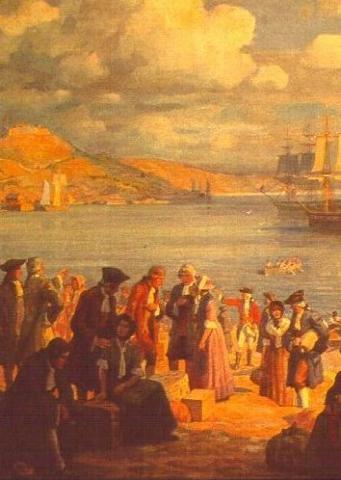
Loyalist Landing in Parrtown – The Harriet Irving Library at the University of New Brunswick in Fredericton, N.B. is a repository of Loyalist resources which is unique in Canada. The Loyalist Collection is a special collection on microfilm of North American colonial and early Canadian primary sources from approximately 1760 – 1840. The chief focus is directed toward the American Revolution and the early years of Loyalist settlement in British North America

Nathaniel Parks was born c. 1738 in Kingwood Township, Hunterdon Co., New Jersey His parents were Jonah PARKS and perhaps  Elizabeth PARLEE . He married Elizabeth PARLEE in 1760 some sources say in Canaan, Connecticut.    Nathaniel and his son Joseph enlisted in the loyalist 3rd Battalion, New Jersey Volunteers (known as Skinners Greens) on 6 June 1778.  Nathaniel was 40 when he enlisted and his son was 18 years old.  The N.J. Volunteers were relocated to Canada arriving in Parrtown New Brunswick  in Oct 1783 aboard the Duke of Richmond (Parrtown was renamed Saint John in 1785.  “Saint” is written out to distinguish it from St. John’s Newfoundland.).Both Nathaniel and Joseph are on the battalion land grant list for King’s County, New Brunswick on 14 July 1784.Nathaniel died in 1818 in New Brunswick, Canada

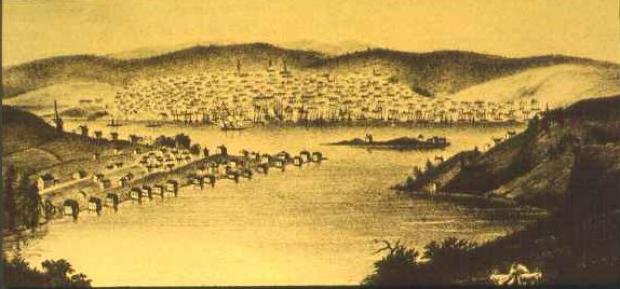
St John

Elizabeth Parlee was born in 1740 in Hunterdon, New Jersey.  Her parents were Jean PERLIER III and Abigail JONES. The Perlier family were from Staten Island, but, after the father’s death in 1723, the family, like many of their neighborns removed to New Jersey. They came by way of Perth Amboy, the Raritan and Millstone Rivers, and thence the branches of said rivers into Hunterdon Co. The Perliers were found in Amwell Township, and this probably is where Nathaniel met and married Elizabeth Perlier.  Her brother Peter Perlier, also, met and married Lydia Robbins in Amwell, as the Robbins family lived there also.  Elizabeth died in 1815 – Saint Martins, New Brunswick, Canada

Children of Nathaniel and Elizabeth, all born in Kingwood Township, Hunterdon County New Jersey

Name Born Married Departed
1. Joseph Parks c.1760 Along with his father, Joseph was one of the 73 participants in the four acre St. John River island rights grant.
2. John Parks 1765 Mary Dean
17 Aug 1799 Gagetown Anglican Church, NB
29 Aug 1854 St. George, Charlotte Co, NB
3. Jonathan PARKS 1767 Sarah Hannah BRADLEY
17 Jul 1793 Woodstock Anglican Church, Carleton, New Brunswick
1855
Easton , Aroostook Co, Maine
4. Sarah Parks 1768 or 1763 Josiah Foster
Mill Cove, Queens Co. NB 1783
or shortly before as her 1838 petition says she came to NB with her husband
1844
New Brunswick, Canada
5. David Parks 1770 Phoebe Ellis
15 Mar 1796 Gagetown Anglican Church, NB
between 1854 and 1861
St. George, Charlotte, NB
6. Mary Parks c. 1773 Henry Belyea
c. 1799
Oromocto, York, New Brunswick
4 Feb 1849 Greenwich Parish, New Brunswick
7. Nathan Parks 10 Jun  1775 Mary MacDonald
22 Jan 1802 Kings County NB
31 Dec 1843 St. Martins, New Brunswick, CA
8. Rachel Parks 1777 Silas Titus
27 Dec 1794 Gagetown Anglican, NB
After 1817

Historians’ best estimates put the proportion of adult white male loyalists somewhere between 15 and 20 percent. Approximately half the colonists of European ancestry tried to avoid involvement in the struggle — some of them deliberate pacifists, others recent immigrants, and many more simple apolitical folk. The patriots received active support from perhaps 40 to 45 percent of the white populace, and at most no more than a bare majority.

The largest number of loyalists were found in the middle colonies: many tenant farmers of New York supported the king, for example, as did many of the Dutch in the colony and in New Jersey. The Germans in Pennsylvania tried to stay out of the Revolution, just as many Quakers did. Highland Scots in the Carolinas stayed loyal to the king.

The Loyalists rarely attempted any political organization. They were often passive unless regular British army units were in the area. The British, however, assumed a highly activist Loyalist community was ready to mobilize and planned much of their strategy around raising Loyalist regiments. The British provincial line, consisting of Americans enlisted on a regular army status, enrolled 19,000 loyalists (50 units and 312 companies). Another 10,000 served in loyalist militia or “associations.” The maximum strength of the Loyalist provincial line was 9,700 in December 1780 . In all about 50,000 at one time or another were soldiers or militia in British forces, including 15,000 from the main Loyalist stronghold of New York.

Nathaniel Parks was a sergeant in Captain Thatcher’s company of the 3rd Battalion of the New Jersey Volunteers, which was commanded by Lt. Col. Isaac Allen. (The battalion was redesignated as the 2nd Battalion after a regimental reorganization in 1781.)  This battalion served in the New Jersey/New York area until it was ordered south to join in the Southern Campaign. Col. Allen’s battalion served with distinction at the siege of Fort Ninety Six, South Carolina, and later participated in the bloody battle of Eutaw Springs, SC.

During and following the end of the American Revolutionary War in 1783, Loyalists (especially soldiers and former officials) could choose evacuation. Loyalists whose roots were not yet deeply embedded in the New World were more likely to leave; older people who had familial bonds and had acquired friends, property, and a degree of social respectability were more likely to remain in the US.

Approximately 10 to 15 % left (about 62,000 white Loyalists, or about 2 % of the total US population of 3 million in 1783). Many of these later emigrants were motivated by the desire to take advantage of the British government’s offer of free land, but many also were disillusioned by the continuing hostility to Tories and eventually decided to leave the new Republic.

Nathaniel’s eldest son, Joseph, served in the same outfit as his father and attained the rank of Corporal. For his service he was granted 200 acres in Sunbury County, New Brunswick, on 24 Feb 1785. Along with his father, Joseph was one of the 73 participants in the four acre St. John River island rights grant.

About 46,000 went to British North America. Of these 34,000 went to Nova Scotia, 2,000 to Prince Edward Island and 10,000 to Ontario.   7,000 went to Great Britain and 9,000 to the Bahamas and British colonies in the Caribbean.  The 34,000 who went to Nova Scotia, where they were not well received by the residents who were mostly descendants of New Englanders settled there between the Arcadian expulsion (1755-1763) and the Revolution. In 1784, the colony of New Brunswick was separated from  Nova Scotia for the 14,000  loyalists who had settled in those parts.

On May 18, 1785 the two towns of Carleton and Parrtown amalgamated to form the City of Saint John – Canada’s first incorporated city.

With the arrival of the Loyalist refugees in Parrtown (Saint John) in 1783, the need to politically organize the territory became acute. The newly arrived Loyalists felt no allegiance to Halifax and wanted to separate from Nova Scotia to isolate themselves from what they felt to be democratic and republican influences existing in that city.

They felt that the government of Nova Scotia represented a Yankee population which had been sympathetic to the American Revolutionary movement, and which disparaged the intensely anti-American, anti-republican attitudes of the Loyalists. “They [the loyalists],” Colonel Thomas Dundas wrote from Saint John, New Brunswick, Dec 28, 1786, “have experienced every possible injury from the old inhabitants of Nova Scotia, who are even more disaffected towards the British Government than any of the new States ever were. This makes me much doubt their remaining long dependent.  These views undoubtedly were exaggerated but there was no love lost between the Loyalists and the Halifax establishment and the feelings of the newly arrived Loyalists helped to sow the seeds for partition of the colony.

The British administrators of the time, for their part, felt that the colonial capital (Halifax) was too distant from the developing territories to the west of the Isthmus of Chignecto to allow for proper governance and that the colony of Nova Scotia therefore should be split. As a result, the colony of New Brunswick was officially created with Sir Thomas Carleton the first governor on Aug 16, 1784.

New Brunswick was named in honour of the British monarch, King George III, who was descended from the House of Brunswick (Haus Braunschweig in German, derived from the city of Braunschweig, now Lower Saxony). Fredericton, the capital city, was likewise named for George III’s second son, Prince Frederick Augustus, Duke of York.

The choice of Fredericton (the former Fort Anne) as the colonial capital shocked and dismayed the residents of the larger Parrtown (today’s Saint John). The reason given was because Fredericton’s inland location meant it was less prone to enemy (i.e. American) attack. Saint John did, however, become Canada’s first incorporated city and for a long time was one of the dominant communities in British North America. Saint John also found itself home to the American traitor Benedict Arnold; whose questionable local business dealings meant that the local Loyalists also came to despise him.

Nathaniel Parks Timeline

Before the War – Nathaniel Parks was found living on a 50 acre plantation in Kingwood Township, Hunterdon County, New Jersey with his father Jonah Parks who also had 50 acres.  It is quite possible the children were all born there.

1760 – Nathaniel Parkes married Elizabeth Perlier/Parlee.

1767 – Nathaniel and Elizabeth living in West Jersy. Jonathan’s petition for land states he was born in West Jersey.

1777/78 – Nathaniel Parkes paid taxes on land in Kingwood Township, but, no deed has been found. However, he may have had a deed, not registered, and as a result of Nathaniel joining the King’s army his property would be confiscated. see Nov. 22, 1777 ‘Congress recommended the confiscation of all Loyalist estates.’

1778 – Nathanile Parkes joined 2d NJ Vol., as a Sargent. Joseph Parkes, eldest son of Nathaniel Parkes joins the same regiment on the same day.

6 June 1778 – Nathaniel Parks was enlisted by Captain Peter Campbell for his company in the 3rd Battalion, New Jersey Volunteers (known as Skinners Greens) on  Joseph Parks enlisted as a sergeant in the same company and battalion and on the same date, except that he was enlisted by Lieutenant Bartholomew Thatcher. Both Campbell and Thatcher were from Hunterdon County, New Jersey and the dates of enlistment of the men in their company suggest that the men were enlisted during the British march from Philadelphia to Sandy Hook.

1778 – Sargent, Capt. Bartholomew Thatcher’s Co., 3rd NJV commanded by Lt. Col. Isaac Allen, Staten Island.

In the muster of 31 Aug 1778 however, Nathaniel Parks is listed as the sergeant and Joseph Parks as a private, in now Captain Bartholomew Thatcher’s Company. This was the same company as before, except Peter Campbell did not have the command, as there was much confusion over his eligibility for rank.

Oct 1778. Sargent, Capt. Bartholomew Thatcher’s Co., 3rd NJV commanded by Lt. Col. Isaac Allen, Staten Island.. Staten Island.

29 Dec 1778 – Both Parks sailed with the expedition to take Savannah, Georgia  They subsequently took part in the Franco- American Siege of that city in Sep/Oct 1779.

29 Nov 1779 – They were both listed as sick in quarters, Joseph now promoted to corporal, both still serving in the same company and battalion. Sargent, Capt. Bartholomew Thatcher’s Co., 3rd NJV commanded by Lt. Col. Isaac Allen, Staten Island.. Savahnah.

Both Parks continued in this situation through 1780 and into 1781.

July 1780 – The battalion march in  from Savannah to Augusta, Georgia, and shortly thereafter to Ninety Six, South Carolina. At Ninety Six there were numerous small expeditions and skirmishes, which they may have taken part in. Ironically, another of our ancestors, James McCAW lived in the Ninety Six area and fought for the American side in the South Carolina campaign, see his page for an account of the battles.

May and Jun 1781 – Nathaniel and Joseph took part in the Siege of Ninety Six by the Rebel forces under [our possible relative]  General Nathanael GREENE  , and the immediate evacuation of that post after the lifting of that event.

8 Sep 1781 – They also took part in the very bloody Battle of Eutaw Springs, South Carolina,.  Though half the British forces were killed, wounded or captured, the Parks survived apparently unscathed. At this time they were serving in the same company but the battalion had just been renumbered to the 2nd. This was due to the “old” 2nd battalion being under strength and drafted into the 1st and late 4th battalions.

25 Oct  – 24 Dec 1781. Sargent, Capt. Bartholomew Thatcher’s Co., 3rd NJV commanded by Lt. Col. Isaac Allen, Staten Island.. Charlestown.

25 Apr  – 24 Jun 1782. 2nd NJV. Capt. Bartholomew Thatchers Co.

The two Parks were in their same situation, company and battalion at Charlestown in the April 1782 muster. They would continue there until the city was evacuated by the British in Dec 1782, when they sailed back to the British garrison at New York. Joseph Parks was sent with an advance party of the battalion to Nova Scotia with the fleet in the Spring of 1783.  There he remained until joined by Nathaniel and the rest of the battalion that did not take their discharge at New York.

24 Jun  – 27 Aug 1783. 2nd NJV. Commanded by Major Robert Drummond. Sick in quarters.

25 Aug – 24 Oct 1783. 2nd NJV. Commanded by Lt. Col. Isaac Allen.

10 Oct 1783 – The battalion was disbanded and they were discharged on that day.

A Plaque that represents the Landing of the Loyalists which is at the mouth of the St John River in St John New Brunswick. At the time of the landing this area was known as Nova Scotia.

Oct 1783 – Came to Canada on ship, ‘Duke of Richmond’.

Parks, Nathaniel Source: LLC w: Elizabeth Parlee. Child: John, Jonathan, David, Mary, Nathan, Sarah, Rachel. Fr: New Jersey ? Stl: St. Martins, NB, CA Reg: Sargent in 2nd, NJ Volun.

The N.J. Volunteers arrived in Parrtown in Oct  1783 aboard the 865 ton warship Duke of Richmond, captained by Richard Davis.

14 Jul 1784. – Both are on the battalion land grant list for King’s County, New Brunswick.

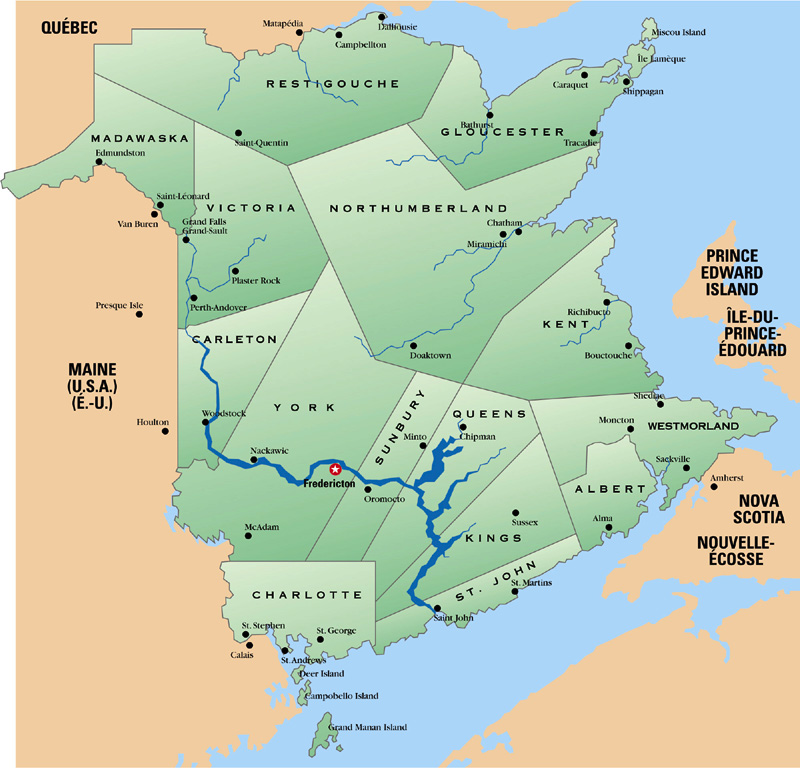
New Brunswick Counties

21 Jul 1784 – Grant #113, Kingsclear, Sunbury Township, Block 2 (for NJV).

1784 – Loyalist Settlement List Return of People, near Long’s Creek, 2nd NJV:

Parks, Nathaniel: 1 man, 1 woman, 6 children over 10, 1 under 10.

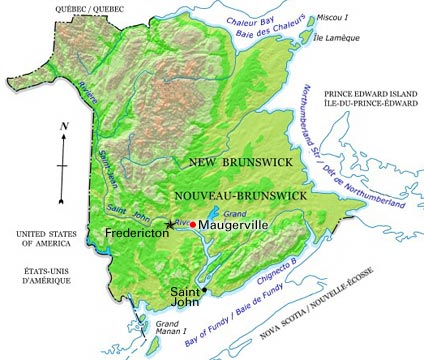
24 Feb 1785 – Nathaniel received a grant of 600 acres in Sunbury County, NB on He was also one of 73 individuals who were granted four acres, designated as “Island Rights”, on an island in the St. John River, NB. This grant was dated 08 Aug 1789. I believe the island in question is in the vicinity of Frederickton.

1 Feb 1788 – Petition #282, land purchased from William Mills lying between Thomas Nay and Phillis Creek.

3 Aug 1789 – Grant #201, islands in Saint John River, Fredericton. Grant recalled and regranted 1 Feb 1793.

23 Oct 1790 – purchased lot #10, Dibbles Survey, 3rd range, Queens County. Witnessed by David Parke.

4 Oct 1799 – Grant recalled and regranted.

9 Jan 1802 – sale of lot #10 Dibbles Survey, 3rd range.

26 Feb 1823 – Named in petition #1121, John MacDonald, regarding land on road to Belleisle from Washademoak.

Children

1. Joseph Parks

1778 – Nathaniel Parkes joined 2d NJ Vol., as a Sargent. Joseph Parkes (age 18), eldest son of Nathaniel Parkes joins the same regiment on the same day.

6 Jun 1778 – Nathaniel Parks was enlisted by Captain Peter Campbell for his company in the

3rd Battalion, New Jersey Volunteers (known as Skinners Greens) . Joseph Parks enlisted as a sergeant in the same company and battalion and on the same date, except that he was enlisted by Lieutenant Bartholomew Thatcher. Both Campbell and Thatcher were from Hunterdon County, New Jersey and the dates of enlistment of the men in their company suggest that the men were enlisted during the British march from Philadelphia to Sandy Hook.

In the muster of Aug 31, 1778 however, Nathaniel Parks is listed as the sergeant and Joseph Parks as a private, in now Captain Bartholomew Thatcher’s Company.

Oct 1778 – Joseph Parks participated in the successful raids on Egg Harbor, New Jersey under Captain Patrick Ferguson and the subsequent surprise of Pulaski’s Legion.

Both Parks sailed with the expedition to take Savannah, Georgia, which was effected on 29 Dec  1778. They subsequently took part in the Franco- American Siege of that city in Sep/Oct 1779. They were both listed as sick in quarters on Nov  29, 1779, Joseph now promoted to corporal, both still serving in the same company and battalion.

Both Parks continued in this situation through 1780 and into 1781. During that period the battalion march in July of 1780 from Savannah to Augusta, Georgia, and shortly thereafter to Ninety Six, South Carolina. At Ninety Six there were numerous small expeditions and skirmishes, which they may have taken part in. Ironically, another of our ancestors, James McCAW lived in the Ninety Six area and fought for the American side in the South Carolina campaign, see his page for an account of the battles. Nathaniel and Joseph took part in the Siege of Ninety Six by the Rebel forces under [our possible relative] General Nathanael GREENE through May and June of 1781, and the immediate evacuation of that post after the lifting of that event. They also took part in the very bloody Battle of Eutaw Springs, South Carolina, on 8 Sep 1781, surviving apparently unscathed. At this time they were serving in the same company but the battalion had just been renumbered to the 2nd. This was due to the “old” 2nd battalion being under strength and drafted into the 1st and late 4th battalions.

The two Parks were in their same situation, company and battalion at Charlestown in the April 1782 muster. They would continue there until the city was evacuated by the British in Dec 1782, when they sailed back to the British garrison at New York. Joseph Parks was sent with an advance party of the battalion to Nova Scotia with the fleet in the Spring of 1783.  There he remained until joined by Nathaniel and the rest of the battalion that

did not take their discharge at New York. The battalion was disbanded on 10 Oct 1783 and they were discharged on that day.  Both  are on the battalion land grant list for King’s County, New Brunswick on 14 Jul 1784.

Along with his father, Joseph was one of the 73 participants in the four acre St. John River island rights grant.

Nothing more about Joseph has been published. Perhaps he died soon after.

2. John Parks

John’s wife Mary Dean was born about 1775. She married John 17 Aug 1799 in Anglican Church, Gagetown, New Brunswick, Canada. Mary died in 1871 in Charlotte, New Brunswick, Canada.

23 Oct 1790 – Purchased lot 10 Dibbles Survey, 3rd Range, Queen’s Co., NB This was witnessed by David Parke. On Jan 9, 1802 this lot was sold.

John was living next to his brother David in St. George’s Parish, St. Charlotte County in the 1851 census.
Parks John M Head 86 N.B. Farmer Infirm
Parks Mary F Wife 66 N.B.
Parks John M Head 28 N.B. Labourer
Parks Ann F Wife 28 N.B.
Parks Mary Jane F Daughter 8 N.B.
Parks Nathaniel M Son 6 N.B.
Parks Abilgail F Daughter 4 N.B.
Parks Louisa F Daughter 1 N.B.

Children of John and Mary

i. John Parks b. 1823; d. 1859; m. 8 Nov 1841 Saint George, Charlotte County, New Brunswick to Mary Ann Hatt (b. 1823 – d. 1881)

3. Jonathan PARKS (See his page)

4. Sarah Parks

Sarah’s husband Josiah Foster was born 11 Jun 1758 in Elizabeth, New Jersey (this may be a baptism as he is given as b. in St. John’s Church). His parents were Ebenezer Foster (b. 1731 Woodbridge, New Jersey – d. 10 Dec 1787 Kings, NB) and Mary Beach (b. 1729). His grandparents were Stephen Foster and Martha Van Galen. Josiah died 9 Nov 1833 in Waterborough Parish, Queens, New Brunswick, Canada.

Ebenezer was of Dutch descent.t. He was a Loyalist. His Property in Middlesex Co., New Jersey confiscated 1 May 1787. He obtained land on an island in the Long Reach called the ‘Isle of Pines’. This later became known as Foster’s Island.’ “Ebenezer Foster was a member for Kings county in the first house of assembly.”

Owned lots 3,4,5 Mill Cove, Parish of Waterborough, Queens Co. xxx

Josiah was a Corporal in the 2nd New Jersey Volunteers, came to New Brunswick with his regiment on the Duke of Richmond bound for the River Saint John.  According to one of Sarah’s petitions for widow’s benefits, he served for seven years. He received a grant of land above Fredericton, only to have it escheated ( a common law doctrine which transfers the property of a person who dies without heirs to the crown or state). Josiah Foster, Nathaniel Parks and Joseph Parks in a list of names of officers and men of the 2nd Battalion, New Jersey Volunteers, who received grants of land in King’s County, New Brunswick. Dated 14 July 1784

Josiah married Sarah Park and had nine children so states her petition for assistance in 1839, this was a pension given to ‘Old soldiers and widows of the soldiers of the Revolutionary War’. (RS566 I2/1 1839)

Josiah later received three lots of land on the Grand Lake, very near to where some of the Parke family settled. This property had a nice stream running through it, so Josiah built the firs saw mill in the area and the village became known as ‘Mill Cove‘. The saw mill later burned and then Josiah built a grist mill on the same site.

Josiah and Sarah’s family scattered and the property was sold, the will probate only lists five children. Some may not be living at that time

17 Jan 1838 – Petition of Sarah Foster, widow of the late Josiah Foster who ???? with Revolutionary War pray my for Legislation aid. Discharge and certificate of character enclosed.

To His Excellency Major General, John Harvey RCH and CB Lieutenant Govenor and Commander in Chief of the Province of New Brunswick, To the Honorable President and Member of Her Majesties Legislative Council and the Humble Speaker and Members of the House of Assembly. Humbly herewith,

That your Petitioner is the widow of Corporal Josiah Foster who served for the term of the Seven Years in the 2 Batt NJ Volunteers during the American Rebellion as by reference to the annexed discharge will more fully appear that your Petitioner came to this Province with her Late husband with the Loyalists, that she had reared a family of nine children, that she is now upwards of seventy four years of age and is living on the affectionate bounty of one of her sons. She therefore humbly trusts that the liberality of the Legislature will be extended to her that may be afforded to ???? in her situation and as in duty bound with every way. Sarah Foster. X for her mark.

I hereby certify that my mother has lived with me since the death of my late father and belive that the above petition to be correct. Signed John Foster

Children of Sarah and Josiah (In her pension petition, Sarah claimed she had nine children so there were three more in addition to those listed below)

i. Samuel Foster m. 27 Aug 1801 to Anne Sims. Samuel Foster and Anne Sims of Waterborough Parish, Queens Co., NB were married probably in Gagetown Anglican Church.

It is assumed here, because of the time and location, that Samuel was Josiah’s son. This assumption may not be correct. A Samuel Foster petitioned for land in Queens Co. with Patrick O’Hara in 1804; and alone in 1818. Other petitions were in 1822 in Kings Co. and in 1857 in Kings Co. The 1822 petition seems to have been granted, resulting in 200 acres in Sussex Parish granted to Samuel Foster 18OCT1822. In 1868, in Carleton Co., Samuel Foster with: Jerusha Foster, John B. Foster, Maria Foster, Maude Foster and Sarah Foster petitioned for land.

ii. Joshua Foster b. ca. 1792.

With Josiah Foster and William Peters, a Joshua Foster petitioned for land in Queens Co. in 1815; and in Queens Co. in 1820, with Josiah Foster, William Peters, Charlotte Peters and James Brittain. In 1824, Joshua Foster applied for land in Queens Co. with Josiah Foster, Cushi Hatheway, James Brittain and William Peters. It is not clear if this Joshua was Josiah’s son, or the uncle of the same name. Joshua Foster petitioned alone in Queens Co. in 1847.

iii. John Foster b. ca. 1794, d. 1860 Mill Cove, Waterborough Parish, Queens Co., NB

A John Foster m. Westfield Parish, Kings Co., NB 3 Apr 1825 Catherine Armstrong. Both were of Westfield Parish. Whether this is the same John is uncertain. Another, or the same, John Foster m. 22 Nov 1832 Sarah Tufts. Again, both were of Westfield Parish. Witnessed his mother’s receipt for her £10 pension in Queens Co., NB in 1839.

iv. Stephen Foster b. ca. 1794, m. 25 Feb 1812 St. John’s Anglican Church, Gagetown, NB (or in Wickham Parish, Queens Co., NB) to Catherine Evans.

Stephen Foster, presumably s/o Josiah, Ebenezer’s son, was apparently living in Waterborough Parish, Queens Co., NB in 1816, with a wife, Catherine, when his son, William Josiah Foster (b. Sep 1814) was baptized in Gagetown in 1816. Obviously, this William was too young to be the one we seek, but suggests we are on the right track. Clues suggest that it may be Stephen’s will of 1833 (rather than Josiah’s) that mentioned that his brother (after whom he may have named his son), William, pre-deceased him. (Hence, that William d. before 1833.)

v. William Foster b. ca. 1794, d. before 1833. Possibly William Josiah Foster m. Elizabeth Flewelling.

vi. Frances Foster b. ca. 1801, m. 30 Oct 1829 Grand Lake, Queens Co., NB to Dr. James Wood (b. Canning Parish, Queens Co., NB ca. 1804)

vii. Elizabeth Foster b. 1813 in New Brunswick; d. Aft. 1881; m. 27 Oct 1831 Wickham Parish, Queens, New Brunswick, Canada to her first cousin Benjamin Titus (b. 1808 in NB Canada; d. 1876) (son of Silas Titus and Rachel Parks See below)

In March, 1829 Benjamin was twice sued. Jonathan Yerxa of Douglas Parish [York Co., NB] asked to be paid £15 for diverse goods he had furnished, while John Simpson of Fredericton demanded £44 payment for the same from Benjamin and George Titus.

After their marriage, Benjamin Titus, Jr. purchased land on the Den Road in Cambridge parish. He and his sons were listed as farmers there in 1861. Benjamin Titus died sometime between 1871, when he was still living with his family in Cambridge, and 1881 when Elizabeth was enumerated as a widow, supported by the labor of her sons Benjamin and Charles, still resident on the homestead. She died before 1891, when the family disappears from the Queens County census, probably before 1884, when her sons moved to Saint John.

5. David Parks

David’s wife Phoebe Ellis was born 1769. Her parents were William Ellis and Margaret [__?__]. Phoebe died in New Brunswick, Canada

13 Mar 1802 – Complaint against David Parks by John Watson re lot #11, Queens Co.

22 Mar 1802 – memorial for lot #11, SE side Washademoak Lake, Queens County.

7 Jun 1803 – Quitclaim lot #11 from David Park to John Watson.

11 Jun 1804 – Quitclaim for lots #10, 11 & 12 at Washademoak Lake, Queens Co.

29 Dec 1818 – Petition for land, Parish of Waterborough. (same lot as brother Nathan: alloted to Samuel Fairweather, Jr.)

24 May 1819 – Signed a document in support of the building of Holy Trinity Church, Springfield, Kings Co.

4 Sep 1824 – Petitoned for 400 acres in the Parish of Wickham.

16 May 1827 – Bought lot #4, Parish of Wickham.

26 May 1846 – Sold lot #4, Parish of Johnston (same lot as above).

David was living with his son Jonah and next to his brother John in St. George’s Parish, St. Charlotte County in the 1851 census.
Parks Jonah M Head 41 N.B. Cooper
Parks Mary Ann F Wife 33 N.B.
Parks George M Son 5 N.B.
Parks Mary F Daughter 2 N.B.
Parks Phoebe Ann F Lodger 10 N.B.

Parks David M Father 81 N.B.

Children of David and Phoebe:

i. Mary Parks b. 20 Sep 1797 in Wickham, Queens, New Brunswick, Canada; 1 Feb 1877 Queens, NB; m. 28 Oct 1817 in Queens, NB to Daniel Slocum (b. 22 Feb 1797 in Hamstead, New Brunswick – d. 12 Jun 1885 in Queens, NB) His parents were Ebenezer Slocum and Esther Corey. Daniel and Mary had 8 children.

ii. Hannah Parks b. 23 Oct 1798 in York, New Brunswick, Canada; d. 29 Aug 1836 Kingston, New Brunswick, Canada; m. 29 Mar 1819 in Queens, NB to Jesse Cromwell (b. 1 May 1797 in Springfield, Kings, New Brunswick, Canada – d. 1860 in Johnston Parish, Queens, New Brunswick) Hannah and Jesse had nine children. After Hannah died, Jesse married Hannah Redstone (b. Devon, England on 1814) and had 5 more children.

iii. Nancy Parks b. 1802 in Queens, Canada; m. 4 Sep 1825 in Queens, NB to James Mullin (b. 1789 in Springfield, New Brunswick, Canada – d. 22 Dec 1855 in Wickham, New Brunswick, Canada) Nancy and James had had 6 children. After Nancy died, James married Susanna Hurder and had another child.

iv. William Parks b. 1807 in Moose Island, Main River; d. 3 Jan 1881 Cambridge Narrows, New Brunswick; m. 23 Jul 1835 in Queens, NB to Harriett Knight (b. 17 May 1817 in Burton, Sunbury, New Brunswick, Canada – d. 24 Jul 1898 in Cambridge Narrows, New Brunswick) She was Phoebe’s sister. Her parents were Samuel Knight and Sophia Holland. William and Harriet had 6 children.

v. Jonah Parks b. 1810 in Queens, NB; d. 30 Sep 1878 York, NB; m. 11 May 1845 in Queens, NB to Mary Ann Parks (b. 1818) Jonah and Mary Ann had 4 children

vi. Frances Amelia Parks b. 1811 in Queens, Canada; d. 1871; m. 30 Sep 1840 in St John, New Brunswick to David Mansfield Wort (b. 1815 in Saint John, New Brunswick – d. 1881 in New Brunwsick) His parents were Henry Wort and Esther Slocum. Frances and David had 6 children.

vii. Sarah Parks b. 25 Jul 1815 in Springfield, Kings, New Brunswick; d. 1901 New Brunswick

viii. Daniel D Parks b. 1818 in Waterborough, Queens, Canada; d. 1886 Union Settlement, New Brunswick; m. 29 Jul 1840 in Queens, NB to Phoebe Knight (b. 22 May 1821 in Burton, New Brunswick – d. May 1912 in Union Settlement, New Brunswick) She was Harriet’s sister. Her parents were Samuel Knight and Sophia Holland. Daniel and Phoebe had 15 children

6. Mary Parks

Mary’s husband Henry (Hendrick) Belyea was born 1766 in Cortland Manor, Westchester, New York. His parents were Hendrick Belyea and Engeltje Storm. Henry died 1851 in Greenwich Parish, New Brunswick.

Bilyea, Belyea, Bulyea are just three of the family names of descendants of Louis Boulier (born 1672 in Saintonge, France), a French Huguenot who fled religious persecution in France and ended up becoming part of the early Dutch community in what is now New York. We know very little about Louis, other than that he may have lived in the Netherlands before coming to North America.

Henry’s grandfather, father and brothers were tenant farmers at Philipsburg Manor in Tarrytown NY. Philipsburg Manor is open to tourists today.

Henry and his four brothers served with the British Army during the American Revolution. One of them was taken prisoner. The family lost all of its property and farms in New York because they sided with the losing forces, so the British paid to resettle them in Canada. On April 26, 1783, a fleet of twenty ships carried 7,000 Loyalists from New York City to Nova Scotia.

A legacy of the family lives on in New Brunswick in the form of “Belyea’s Cove” [covered with ice in this Google Maps Satellite View]. in the Saint John River Valley on Washademoak Lake. There is also a Belyeas Point in NB. Belyea’s Point Lighthouse, an 11 metre tall landfall lighthouse located along the Saint John River, near the community of Morrisdale, was built in 1881.

Henry owned land in Parish of Greenwich, Kings Co.

Children of Mary and Henry

i. Robert Belyea b. 1 Jul 1793 in Greenwich, Kings, New Brunswick, Canada; d. 19 Aug 1877 Greenwich, Kings, New Brunswick; m. 22 Nov 1822 in Kings, New Brunswick to Margaret A Hawthorne (b. 1800 in Ireland – d. 13 Jul 1888 in Kings, NB) Robert and Margaret had eight children born between 1824 and 1840.

ii. Henry Belyea b. 1796 in Greenwich, Kings, New Brunswick, Canada; d. 18 Apr 1879 Oak Point, Kings, New Brunswick or Petersville Parish, Queens County, New Brunswick

m1. 18 Oct 1819 in Saint John, Saint John County, New Brunswick to Mary Ann Day or Archibald (b. 1799 – d. 1829); Henry and Mary Ann had five children born in Kingston, Kings, NB between 1820 and 1828.

m2. 10 Jan 1831 in Greenwich Parish, Kings County, New Brunswick to Elizabeth Jane Belyea (bapt. 23 Jan 1803 Greenwich Parish, Kings County, New Brunswick – d. 17 Oct 1882 in Petersville, Queens, New Brunswick) Elizabeth Jane’s parents were Robert Belyea (1 Jul 1765 in Van Courtland, Westchester County, New York – d. 6 Sep 1830 Greenwich Parish, Kings County, New Brunswick) and Prudence Holly (b: 1770 in New York – d. 2 Feb 1861 Long Reach, Greenwich Parish, Kings County, New Brunswick) Prudence was one of the company of Loyalist who came to this country at the commencement [sic] of the American Revolution. Henry and Elizabeth Jane had eight children between 1831 and 1846.

iii. Elizabeth Belyea b. 1798 in Greenwich, Kings, New Brunswick, Canada; m. 8 Jun 1845 in Kings, NB to Richard Graves (b. 1797 in New Brunswick, Canada)

iv. Nathaniel Parks Belyea b. 7 May 1800 in Kings, NB; d. 12 Nov 1857 Lincoln, Sunbury, New Brunswick, Canada; m. 18 Sep 1824 in York, NB to Abigail Kinney (b. 1810 in Oromocto, Sunbury, New Brunswick, Canada; d. 1881 in Carleton, NB) Her parents were Stephen Kenney and Merab Ives. Nathaniel and Abigail had 13 children between 1825 and 1856. After Nathaniel died, Abigail married William Seeley (1821 – 1880)

v. Sarah Belyea b: in Oak Point, Kings County, New Brunswick Province, Canada c: 8 Aug 1802 in Greenwich Parish, Kings County, New Brunswick Province, Canada; m. 8 Nov 1827 in Kings County, New Brunswick to Frederick Pace (b. 27 Jan 1806 in Loudon County, Virginia or Rawdon, Hants County, Nova Scotia – d. 1879)

Frederick’s parents were Darius Pace (ca 1750 Georgia – 1823 Musquodoboit, Halifax, Nova Scotia) and Dorothy Raines (b. 1768 Wales – d. 1873 Nova Scotia). In July, 1784, the Paces arrived in Nova Scotia via Florida from Georgia They lived at Rawdon, Hants County, Nova Scotia which may be where Frederick’s birth of “Loudon Virginia” comes from. The first settlers in the Rawdon Township, Nova Scotia were United Empire Loyalists who had to flee their home in Ninety Six, South Carolina. The Rawdon loyalists as well as members of the 2nd American Regiment, were relocated from South Carolina to Rawdon, Nova Scotia after their defeat by General Nathanael GREENE in the Siege of Ninety-Six in th American Revolution (See my post Carolina in the Revolution).

James was a Loyalist who migrated to Nova Scotia and Darius followed his older brother. Because of James’ political opinion during the Revolutionary period, all of his personal and real property was confiscated, he was convicted of treason, his arrest was authorized by the Georgia Council for Safety on 12 January 1776, and he was exiled from Georgia for life.

Darius followed his loyalist brother James to Nova Scotia. James Pace left Georgia with wife, Aurelia and three of his children, Willis, Drury and Thomas, destination Nova Scotia where James died shortly thereafter. Darius and Dorothy Raines of Wales were the parents of 10 children: Frederick, James, Sarah A., Richard, Darius, George, Edward, Charlotte, Shadrach and Jack. Descendants of James and Darius are scattered throughout the United States and Canada. The history of James and Darius, PACE, A FAMILY HISTORY AND LINEAGE, covers a period from ca. 1778 to Frederick Augustus Clouter, 1991.

Many genealogies say the Frederick died 22 Aug 1891 in Port Huron, St Clair, Michigan, but that Frederick was born in New Jersey to Michael William Pace and Anna Eveland. His wife from 1850 to 1880, Penelope [__?__] was born in 1818 in Canada or New York. They were married in Ontario and their list of 15 children is completely different.

vi. Rachael Belyea b. 1805 in Kings, NB; m. 17 Sep 1832 in Saint John, NB to Alexander Beckett (b. 1805) Rachel and Alexander had two children.

vii. Nancy Ann Belyea b. 1808 in Greenwich, Kings, New Brunswick, Canada; m. 2 Jan 1832 in Queens, NB to Alexander Cochrane (b. 1796) Nancy Ann and Alexander  may have had around 8 children.

viii. Isaac P Belyea b. 1812 in Greenwich, Kings, New Brunswick, Canada; d. Mar 1888 Monticello, Maine; m. 6 Mar 1836 in Queens, New Brunswick to Elizabeth Jane Barnett (b. 1818 in Ireland – d. 5 May 1877 in Greenwich, Kings, New Brunswick) She was Margaret’s sister. Her parents were George Barnett and Jane Burke. Isaac and Elizabeth Jane had 11 children between 1837 to 1856.

ix. John Yerxa Belyea b. 1817 in Greenwich, Kings, New Brunswick, Canada; d. 1 Feb 1874 Greenwich, Kings, New Brunswick;

m1. 28 Sep 1835 in Queens, NB to Margaret Barnett (b. 1816 in Ireland – d. 1845 in New Brunswick) She was Elizabeth Jane’s sister. Her parents were George Barnett and Jane Burke. John and Margaret had 5 children.

m2. Rhoda Ann Gower (b. 1826 New Brunswick – d. Greenwich, Kings, New Brunswick, Canada) John and Rhoda had eight children between 1847 and 1861.

x. Edward Belyea b. 1818 in Greenwich, Kings, New Brunswick, Canada; d. Greenwich Parish, Kings, New Brunswick; m. Clarissa [__?__] (b. 1827) Edward and Clarissa had two children.

7. Nathan Parks

Nathan’s wife Mary MacDonald was born 20 Sep 1781 in Glasgow, Scotland. Her parents were John MacDonald and Rebekah [__?__]. Mary was baptized by Rev. David Crandall at Upham Baptist Church about 1836. She was mother of 12 children, 8 sons and 4 daughters – all but one listed. She had 47 grand children and two great grandchildren when she died in 1856. Mary died 13 Oct 1856 St. Martins or West Quaco as it was called then by Rev. W. Jackson who preached the funeral sermon.

John was a school teacher of superior education being qualified to teach eight different languages, ancient and modern. He taught in the Old Madras School, or National School, at Fredericton, NB, which had been established there in 1820. These schools were supported by the Society for the Propagation of the Gospel, the National Society in England, the Church of England, and the New Brunswick government. In order to keep costs to a minimum, a system of monitors was used by which a large number of students could be taught by a few teachers. The instructors worked directly with the older children who then passed on the lessons they had learned to the younger ones. Although there was some concern over the control exerted by the Church of England in these schools, it was the most effective educational system in the province prior to the passage of the Common Schools Act of 1871. Madras schools were to remain in operation in New Brunswick until 1900.

Nathan and Mary lived in Burton, New Brunswick for 12 years then moved to Upham, New Brunswick

Lived 12 years in USA after their 1802 marriage.

1810 on census, 4th Parish, Newbury, Mass

1814 re-entered New Brunswick, Kings Co.

10 Dec 1818 – Petiton for land, Parish of Springfield, Kings Co.

2 Dec 1819 – follow up of same petition.

c 1836 – Bapt. Mary, Baptist Church, Upaham, Kings Co., by Rev. David Crandall.

31 Dec 1843 – Nathan died in St. Martins.

Children of Nathan and Mary:

i. John Parks b. 12 Dec 1803 in Newbury, Mass; d. 6 May 1873 in St. Martins, NB, Canada; m. 17 Oct 1826 in New Brunswick to Hannah Doherty (b. 24 Dec 1809 – d. Bef. 1861) John and Hannah had 10 children born between 1828 and 1849.

ii. Charles Parks b. 16 Sep 1806 in Newbury, Mass; d. 20 Jul 1807 in Newburyport, Mass.

iii. Charles Parks b. 8 Jul 1808 in Newbury, Mass.; d. 13 Sep 1816

iv. Mary Parks b. 5 Mar 1811 in Newbury, Mass.; m. 6 May 1831 in St. Martins, NB to George Jackson (1807 – )

v. Archibald Parks b. 8 Mar 1814 in Newbury, Mass.; d. 14 Jun 1889 in St. Martins, NB; m1. m. 5 May 1837 in St. Martins, NB, Canada to Lucy Davidson (1818 – 18 May 1862 – St. Martins, NB, probably of complications of child birth) Archibald and Lucy had 14 children between 1838 and 05 Apr 1862); m2. Sophia Berry (b. 1820 – d. 21 Apr 1884 in St. Martins, NB)

Ships and Vessels built by Archibald Parks & Sons at St. Martins, New Brunswick (1869 to 1883)

Rig Name of Vessel Month Year Tons
Schooner Vincent White 09/30/1869 140
Brig Laura B. 04/04/1870 278
Bark W.J. Whiting 06/19/1872 633
Bark Exile 11/20/1873 Fast 934
Bark General Wolseley 08/04/1874 760
Full Rig Ship A. MacKenzie 11/10/1875 1000
Ship F.M. Stokes 04/31/1876 1300
Ship Lord Lytton 08/21/1876 1350
Schooner Nettie Parks 01/27/1877 1390 91/100
Bark Leffey 08/21/1877 Cpt. McKellar 933
Bark Venezuela 06/16/1879 1100
Schooner Ethel B. 05/02/1882 944
Schooner J.F. Whittaker 04/26/1883 1050

(Copied from Record kept by Wallace Parks, a Son of Archabald (Archabald is the spelling in this) Parks Ship Builder of St. Martins, New Brunswick (also known as Quaco or West Quaco) by A.K.M. Parke .. Wife of Melvin Parke son of Wallace Parks (Parke)

vi. Lydia Parks b. 6 Sep 1816; m. 30 Mar 1837 to James Davidson (*1812 – )

vii. William H Parks b. 30 Sep 1818; d. 4 Sep 1891 in St. Martins, NB; m. 8 Jul 1846 in St. Martins, NB, Canada to Mary Jane Mosher (1825 – )

viii. Nathan Parks b. 17 Mar 1821 in St. Martins, NB; m. 3 Jul 1845 in St. Martins, NB to Elizabeth Fanjoy (1813 – 1893)

ix. Rebecca Parks 19 Mar 1824 in St. Martins, New Brunswick; d. 10 Feb 1901 in Everett, Mass.; m. 20 Jan 1843 in St. Martins, New Brunswick to Caleb Templeman (b. 18 Mar 1821 in St. Martins, New Brunswick – d. 08 Jun 1869 in Chatham Head, New Brunswick) Rebecca and Caleb had nine children born between 1844 and 1864. After Caleb died, Rebecca immigrated to the United States in 1871.

In the 1900 census, Rebecca was living in Townsend, Middlesex, Mass with her son-in-law Warren D. Hinds.

x. Jonathan Parks b. 10 Jan 1826; d. 19 May 1841

xi. George Parks b. 15 Mar 1828 in St. Martins, NB, Canada

8. Rachel Parks

Rachel’s husband Silas Titus was born 1765 in New York. His parents were Benjamin Titus and Ruth Bryan. Silas died in 1817 in New Brunswick, Canada.

When the Loyalists drew lots in 1784, Silas Titus received 100 acres of land at Lorneville, Saint John County, but he did not settle on his grant and it reverted to the government. Instead he followed his family to Queens County and in 1794 he married Rachel Parks at St. John’s Anglican Church, Gagetown.

Early in 1794, Silas Titus and Thomas Creighton were sued by Reuben Williams for an unpaid debt of £10, and appears to have lost the suit. Shortly thereafter Silas Titus sold Lot 25 on Greater Musquash Island, which belonged to his father, probably to pay his debt. After his father went to Canada, in 1802 Silas Titus filed a petition for Lot 8 on the southeast side of the Washademoak Lake, but because the government was not issuing grants during that period, the petition stalled. It is likely that Silas and Rachel Titus lived during the early years of their marriage in proximity to her family near Fredericton. Titus appeared in court records again in 1813, when he was sued by Alexander Nevers and Ezekial Sloot of Fredericton for a promise of £22.

Although only two children can be attributed to their marriage with certainty, there are several others suggested by circumstance. Abigail Titus who married in 1816 at Fredericton, Mary Titus who married there in 1822, Olivia Titus, who married in 1824 at Douglas, and Frances Titus who married in Douglas in 183… may be daughters. Allan and Benjamin Titus appear at different times in court documents between 1824 and 1836, mostly for small debts incurred at Fredericton and Douglas, and may be sons. On one occasion, in 1829, Benjamin Titus was named with George Titus for a combined debt of £44 to the merchant John Simpson of Fredericton, for “divers goods, wares, and merchandize.” There is no doubt that George Titus was a son of Silas and Rachel. George Titus was a lumberman and later lived at Edmundston.

Silas and Rachel Parks were still living in New Brunswick in 1817, residing in St. Mary’s parish, York County, when their daughter Andelina Titus was baptized at Gagetown. This is the only child for whom a baptismal record has yet been found.

29 Sep 1784 – Grant of land between Musquash and Saint John, Saint John Co.

4 Jul 1794 – Sale of lot #25, Upper Musquash Island, Saint John Co.

1802 – Memorial for land on Washademoak Lake, Queens Co.

Children of Rachel and Silas

i. Mary Titus b. 17 Sep 1796 in Fredericton, New Brunswick, Canada; d. Nov 1855 in Fredericton, New Brunswick, Canada; m. 2 Jun 1822 to Isaac Vivian Hutchinson Segee (b. 18 Mar 1801 in New Maryland, York, New Brunswick, Canada – d. 15 Apr 1837 in Fredericton, New Brunswick, Canada) Mary and Isaac had four children born between 1825 and 1833.

Some genealogies say Mary that married Issac was born in 1803, died in 1837 and was the daughter of Benjamin Titus (1771-1812) and Elizabeth Clark (1775-1798).

ii. Allan Titus b. 1797 in New Brunswick, Canada;

In 1824 Allen Titus was sued by Fredericton merchants William McKeen and Benjamin Blyther to recover £20 for diverse goods and merchandise. He was a defendant again in 1829 when another Fredericton merchant demanded payment of an £11 promissory note.

iii. Abigail Titus b. 1798 in New Brunswick, Canada d. 1822; m. 16 Nov 1816 in Fredericton, NB, Canada to Joseph Treat (*1793 – )

iv. Olivia “Olivea” Day Titus b. 1804 in New Brunswick, Canada; d. aft. 1851 census York, NB; m. 3 Oct 1824 in Douglas Parish, York County, NB. to William Blyther (b. 1806 Douglas Parish, York, NB – d. Aft 1871 census St Ann’s Ward, York, New Brunswick) Olive and William had eight children born in York, New Brunswick between 1826 and 1848.

Some genealogies say that William Blyther was born Feb 1804 Rockland, New York and died 25 Apr 1882 in Newark, New Jersey, but I only see 1851 and 1871 St Ann’s Ward, York, New Brunswick census records for William Blyther. I think this other man was the son of William Felter and Maryann Stephenson, and married 20 Sep 1829 – Westchester, New York to Asenath Delamater

v. Benjamin Titus b. 1808 in NB Canada; d. 1876; m. 27 Oct 1831 Wickham Parish, Queens, New Brunswick, Canada to his first cousin Elizabeth Foster

Benjamin Titus was a witness to the marriage of Olivia Day Titus in 1824. In March, 1829 he was twice sued. Jonathan Yerxa of Douglas parish asked to be paid £15 for diverse goods he had furnished, while John Simpson of Fredericton demanded £44 payment for the same from Benjamin and George Titus.

In 1831 Benjamin married his cousin Elizabeth Foster, daughter of Josiah Foster and Sarah Parks. After their marriage, Benjamin Titus Jr. purchased land on the Den Road in Cambridge parish. He and his sons were listed as farmers there in 1861.

Benjamin Titus died sometime between 1871, when he was still living with his family in Cambridge, and 1881 when Elizabeth was enumerated as a widow, supported by the labour of her sons Benjamin and Charles, still resident on the homestead. She died before 1891, when the family disappears from the Queens County census, probably before 1884, when her sons moved to Saint John.

vi. George Titus b. 1812 in New Brunswick, Canada m. 1 Feb 1859 in Eglise de St. Basile, Claire, Madawaska Co., NB to Bridget Gallagher (~1811 New Brunswick – d. 20 Dec 1863 Edmundston, Canada). Bridget first married William Clancy.

George Titus first appears in the archival record in 1829 when he and Benjamin Titus were sued for a combined sum of £44 by Fredericton merchant John Simpson, who claimed an outstanding debt for “diverse goods, wares and merchandize.” In 1833 George was again sued, this time in partnership with John Segee, for an unpaid promissory note made to James Balloch for £15. The court later reduced the debt to £13, acknowledging that Titus and Segee had begun payment by delivering “two scow loads of hay.”

George Titus reappears in 1859 in Victoria County, (which then also included all of what is now Madawaska County.) Having converted to Catholicism he married Bridget, widow of William Clancy. George and Bridget resided at Edmundston, where they were enumerated in the 1861 Census.

George Titus died 15 Dec 1863 and his wife Bridget died five days later, presumably from the effects of flu or pneumonia. There were no children implicated in the ensuing probate, and there was no mention of known relatives. George Titus’ real estate was valued at £100, and he owned sixty-four tons of birch timber valued at £355. His personal estate was appraised at £60 and included the following: one horse, one horse sled and cart, one cow, one hog, a hayrake, an auger, two scythes, some rope, a hand saw, three axes, a pair of wooling cards, a spinning wheel, a milk strainer, pails, a churn, a stove, a flat iron, a tea kettle, candlesticks, two tables, seven chairs, three chests, wearing apparel, two pair of men’s boots, two watches, a rifle with powder and shot, and sundry promissory notes. Three tons of hay were in the barn and a barrel of pork lay in storage. Against the estate was his outstanding account at Costello’s store, where over the previous year he had purchased homespuns, boots and a parka, as well as bolts of cotton, some flour, sugar and tea, several gallons of strong rum, and oats for his horse

vii. Frances Titus b. 1814 in New Brunswick, Canada; d. 18 Apr 1895; m. George Brewer (b. 1806 New Brunswick – ) His parents were John Brewer and Elizabeth Yerxa. Frances and John had seven children born between 1837 and 1849.

viii. Andelina Titus b. 28 May 1816 in St. Mary’s Parish, York Co., NB; m. 17 Jan 1828 in Waterborough, Queens Co., NB to Richard Stephens (~1795 – 1878) Andelina and Richard had eight children born between 1834 and 1852.

Sources:

http://www.barney.org/family/wga44.html#I7872

http://trees.ancestry.com/owt/person.aspx?pid=27664129

http://www.uelac.org/Loyalist-Info/detail.php?letter=p&line=68

http://automatedgenealogy.com/censusnb51/SurnameSearch.jsp?surname=Parks&geosort=

http://wc.rootsweb.ancestry.com/cgi-bin/igm.cgi?op=GET&db=crystalinda22&id=I119017

http://wc.rootsweb.ancestry.com/cgi-bin/igm.cgi?op=GET&db=jloops&id=I26575

http://minervamorganbc.tripod.com/john_flewelling_of_halton_county__ontario.htm

Posted in -8th Generation, Immigrant - North America, Line - Miller, Storied, Veteran | Tagged , , , | 16 Comments

John Bradley

John BRADLEY (1738 – bef. 1830) was Alex’s 6th Great Grandfather; one of 128 in this generation of the Miller line.

John Bradley was born 17 Aug 1738 in Haverhill, MA. John was a twin. His twin sister Susannah Bradley married Philbrook Colby 13 Jul 1758 Haverhill. Susannah died 2 Aug 1778 in Pembroke or Weare, NH. His parents were John BRADLEY Sr and Susannah STAPLES.    He married Mary Lucy HEATH on 21 Mar 1760 in Haverhill, Mass. They immigrated to New Brunswick between 1764 and 1765, about the same time as the Estey clan.   John died before 1830

The Bradleys were not Loyalists, they were New England Planters, see my post New England Planters in New Brunswick for their historical story.

In our imaginations, Mary’s father might have been  Chief CROOKED KNIFE. In reality, Mary Heath was born 16 Jan 1739 in Haverhill, Mass.  Her parents were David HEATH and Ann STAPLES.  Mary died before 1824 in New Brunswick.

Children of John and Mary:

Name Born Married Departed
1. David Bradley 15 Dec 1760
Haverhill, Mass.

2. Mary Bradley 15 Sep 1764 Haverhill John Shaw
1783 in Sunbury, NB
3. John Prince Bradley 1766
Saint John, New Brunswick
Mary Heath Green
16 Nov 1790 in Christchurch, Maugerville, Sunbury, New Brunswick
1830
4. Rebecca Mariah Bradley? c. 1768
5. Oliver Bradley? c.1770
6. Sarah Hannah BRADLEY 1771
Woodstock, New Brunswick Canada
Jonathan PARKS
17 Jul 1793 Woodstock Anglican Church, Carleton, New Brunswick.
c. 1861 in Caribou Maine.
7. Moses Bradley?
8. Olive Hannah Bradley 1782
Maugerville
Thomas Sewell
18 Dec 1800
Maugerville
21 Oct 1860
Carleton County, NB
9. Margaret Bradley?

My mother has some letters her mom wrote documenting her efforts in the 60’s to track down info about the Esteys.  She and my grandfather went on a trailer trip to the east coast and New Brunswick and Ontario.(also Wisconsin–interesting letters) Seems there was a family story that Mary Estey had Indian antecedents (the”estey eyes” were almond shaped and slightly slanted) and she was trying to track it down.. In New Brunswick she found the custodian of the land grant records who was a gold mine of info. When she said there was a legend Mary Estes (her spelling) had Indian blood, the woman was horrified and said “Oh, no-the Estes were all most respectable. They came from Massachusetts and brought their wives with them.”

A Haverhill, Mass marriage was recorded between John Bradley and Mary Heath. And so the following is presented merely as legend and — although it is a wonderful tale — totally unverifiable.

A man named John Bradley who was born in 1753 in Vermont became the first permanent white settler in this area (Washburn). A tall strong man with a fiery temper, he joined Ethan Allenand the Green Mountain boys in Vermont. When the Revolutionary war began, Bradley was with Ethan Allen at the capture of Ft Ticonderoga.

The Flag of the Green Mountain Boys is still used by the Vermont National Guard

When Benedict Arnold started his march through Maine, Bradley was chosen as a scout and hunter. Arnold expected to find enough wild game to feed his men, but game was scarce. After hunting all day, Bradley returned with only one partridge. Arnold sent for him and called him a worthless loafer. Bradley talked back to the commander who then drew his sword, which Bradley knocked from his hand. The fighting continued and Aaron Burr came with a file of soldiers and had Bradley arrested and bound to a tree. A man had been shot that morning and Bradley had no doubt that he would also be shot. He finally managed to twist the straps free from his wrists and attempted to escape. A guard tried to stop him and he killed the guard. Bradley had no weapons and his enemies were behind him as he ran into the woods.

Vermont legend says Mary Heath’s father was Abenaki Chief Crooked Knife

He had not traveled far when he found himself surrounded by the St Francois (Abenaki) Indians, members of a scouting party watching the white men. As two of the Indians understood English, Bradley told the story and was untied and given food. The next day, two of the Indians took him and started toward the village of Washburn. When they arrived he was taken to see Chief Crooked Knife, who liked him.

The chief promised him his life if he could prove himself of greater strength than any man in the village. After he had outjumped and bested all the strongest of the braves, Chief War Knife adopted him and gave him his only daughter for a wife. The old chief was a hunchback and, also, a very intelligent temperance crank who drilled temperance in the daughters of his tribe.” (Note: from Boston Library resource)

Bradley could not return to the country he had left for he had killed a man and would surely be hanged for his crime, and he didn’t want the Indians to kill him so he was happy to become a member of the tribe. Some years later Bradley went with some Indians up river on a bear hunt and never returned. The Indians said he was killed by a bear in a trap. He left a large family of children and many of his ancestors live in Aroostook today.

Back to the real John Bradley

William Hazen, one of the Newburyport firm, afterwards removed to St. John. Hannah Hazen of nearby Rowley married our ancestor Richard ESTEY and immigrated to New Brunswick about the same time.  It is likely they are related.  In 1765, Simonds, White and Hazen received from the government of Nova Scotia a grant of a very extensive tract of land at the mouth of the St. John River.

This grant embraced on the east side of the harbor all the land from Union Street, St. John, north to the Kennebeccasis, and on the west side what is now known as the Parish of Lancaster. This last tract was then designated the Township of Conway. A return made to Major Studholm, who commanded at Fort Howe, on the 8th July, 1783, gives the names of the settlers who had cleared land and made improvements in the Township of Conway, under agreements with the grantees up to that date. The return may be summarized as follows:—
Name Amount Cleared and Improved.
Hugh Quinton 15
Peter Smith 10
Thomas Jenkins 12
Samuel Peabody 55
Jonathan Lovet 60
William McKeene 45
Daniel Lovet 30
James Woodman 5
Elijah Esterbrook 7
John Bradley 4
Zebedee Ring 3
Gervis Say 10

Nearly all these people had been driven off their land by raiding parties from Machias, Maine during the Revolutionary war, and compelled to seek shelter up the river. These raids will partly serve to account for the extremely backward state of the settlements at the mouth of the St. John, prior to the arrival of the Loyalists.

The immediate result of Israel Perley’s report of the state of the lands up the St. John River was the removal of a large number of families to them from Massachusetts in 1763. According to Moses H. Perley’s statement, there were about two hundred families, numbering eight hundred souls, in this band of settlers and they were brought in four vessels under the charge of Israel Perley. The number, however, is probably exaggerated and perhaps four hundred would be nearer the truth. That at all events was the estimaed number of the settlers on the St. John in 1764, and a census taken in 1767 showed that there were but 261 persons in Maugerville, the principal township.

This township had been surveyed in 1762, at the instance of Capt. Francis Peabody, who was the father-in-law of both Simonds and White and also of Jonathan Lovet. This man, from his age and character, as well as from the active part he took in the work of settling the River St. John, must be justly regarded as the founder of Maugerville and Gagetown and the most prominent and influential person on the river, while he lived. He took our ancestor Zebulon ESTEY from Massachusetts to New Brunswick.

“The River St. John” by Rev. Wm. Raymond published in 1910, pages 334-5:

“On 15 January 1765 on Captain Francis Peabody’s schooner, came Zebulon ESTEY to Maugerville. He paid 12 shillings passage money from Newburyport to St. John and 13s 6d for `his club of Cyder’ on the voyage. Richard ESTEYand Thomas Barker built a saw-mill on a small creek near Middle Island. (After 1765.) They sold it in 1779 – near Maugerville. Richard Estey signed a church covenant for a distinct church society. Many moved from Maugerville due to the annoyance of the spring freshets. [A sudden overflow of a stream resulting from a heavy rain or a thaw]  Zebulon Estey moved to Gagetown. Some went across the river to the township of Burton. These included Israel Estey, Moses Estey and Amos Estey.”

The township of Maugerville was on the east side of the St. John River and began at a point about five miles below Fredericton. Its northerly line was at right angles with the river and its depth along the river was sixteen miles in an air line. It embraced, therefore, the present parishes of Maugerville and Sheffield. Opposite to it was the township of Burton and below the latter, Gagetown. The three townships were all more or less settled prior to 1770, but, except in the case of the Maugerville immigration of 1763, it is not now possible to determine the date of the arrival of the settlers. It is certain, however, that some of those who came with Perley in that year settled at Gagetown, amongst others, Edward Coye, one of whose daughters was said to be the first female child born of English speaking parents on the River St. John.

Nearly all the settlers on the river were from Massachusetts, and the vast majority of them from a single county, Essex. Thus the Perleys were from Boxford, the Burpees from Rowley, while other families were from Haverhill, Newburyport, Ipswich, Gloucester, Salem and other towns of this ancient county which antedates all others in Massachusetts with the single exception of Plymouth. These settlers were therefore, for the most part of Puritan stock and all, or nearly all, were members of the Congregationalist churches of New England.

Instead of the barren soil of New England, they had their choice of the noble intervale lands of the St. John River, which have their fertility renewed every spring by the overflowing of that great stream. And this land they received for a price so small as to be merely nominal. The township of Maugerville was divided into one hundred lots, each with a  frontage on the river and a width of about fifty rods. Four of these lots were reserved for public purposes: one for a glebe for the Church of England, one for the Dissenting Protestants, one for the maintenance of a school and one for the first settled minister. Nearly all the Maugerville lots were taken up immediately after the first immigration, and the population of the township in 1767 was, as before stated, 261 souls. All these people were natives of America, with the exception of six English, ten Irish, four Scotch and six Germans. The enormous preponderance of the native New England element gave a tone to the character of the settlement, which it never lost until the arrival of the Loyalists.

On the 24th of May, 1776, a meeting of the inhabitants of the River St. John was held at Maugerville, at which a committee was appointed “to make immediate application to the Congress or General Assembly of the Massachusetts Bay for relief under their present distressed circumstances.” This rebel committee consisted of twelve persons, ten of whom were prominent in the church. Jacob Barker, who presided at the meeting, was a Justice of the Peace and a ruling elder of the church. Pheneas Nevers and Israel Perley were also justices, and both were church members. Daniel Palmer, Edward Coy, Israel Kinney and Asa Perley were ruling elders. Moses Pickard, Thomas Hartt and Hugh Quinton were church members.

This committee drafted several resolutions which were passed by the meeting, the most important of which was “that it is our minds and desire to submit ourselves to the government of Massachusetts Bay, and that we are ready with our lives and fortunes to share with them the event of the present struggle for Liberty however God in His Providence may order it.” The meeting also voted “that we will have no dealings or connection with any person or persons for the future that shall refuse to enter into the foregoing or similar resolutions.” Under this threat these resolutions were hawked around the country with a result which is thus stated by the rebel committee:— “If it be asked what proportion of the people signed the resolutions, it may be answered there is 125 signed and about 12 or 13 that have not, 9 of whom are at the river’s mouth.”   Our ancestors are among the minority who refused to sign: — William Hazen, Thomas Jenkins, James Simonds, Samuel Peabody, John BRADLEY, James White, William McKeene, Zebedee Ring, Peter Smith, Gervas Say, Lewis Mitchill, ———— Darling, John Crabtree, John Hendrick, Zebulon ESTEY, John Larlee, Joseph Howland, Thos. Jones and Benj. Atherton.

The people of Machias who were all great patriots, made an easy living during the
war by plundering the farmers and fishermen of Nova Scotia. The settlers at the mouth of the St. John were constatnly exposed to the depredations of these raiders from the summer of 1775 until the garrison at Fort Howe was established under Major Studholm, in the summer of 1778. The conduct of these raiders must have been bad indeed to draw forth a remonstrance from so notorious a rebel as Colonel John Allan, who, in a letter to the Massachusetts Council, was constrained to say: “I am extremely sorry privateers are so encouraged this way. Their horrid crimes is too notorious to pass unnoticed.”

Most of the farmers settled at the mouth of the St. John were compelled to abandon their homes and remove up the river in consequence of the visits of the Rev. Seth Noble’s friends, the thieves and plunderers of Machias.

Children 

2. Mary Bradley

Mary’s husband John Shaw was born 26 Jan 1761 in Abington, Mass. His parents were John Shaw and Mary Burrell. He immigrated to Maugerville, New Brunswick as a young child before 1763 when his brother Ziba Shaw was born in New Brunswick. John died in Clinton, Maine, some say in 1778, but there are children born after that.

John Shaw, Jr., is mentioned in the 1783 Studholm Report: “John Shaw, Jr., has a wife but lives with his father, has a house but no land cleared. Claims also some land in New town in consequence of clearing three fourths of an acre of land in that township. Gave intelligence to the rebels at Oak Park that the King’s troops were pursuing them up the river, in consequence of which they escaped.”

John moved to Penobscot, Maine with his wife and her family three years after the Loyalists arrived. Since the Loyalists arrived in 1783, this would mean that they moved to Maine in 1786.

By or about 1790, John & his family came to Hallowell (now present-day Clinton), Maine and settled north of what is now known as Noble Ferry.

In 1797, John Shaw & his family lived on a 128-acre farm in Clinton—they had 6 children & owned 2 cows.

Children of Mary and John:

i. Nancy Shaw b. 23 Mar 1785 in Burton, Sunbury, New Brunswick, Canada

ii. John P. Shaw b. 4 Dec 1787 in Penobscot, Hancock, Maine; d. Aft 1870 census Maxfield, Penobscot, Maine; m. Sarah “Sally” Dudly (b. 1790 Maine – d. Betw. 1850-1860 census)

In the 1860 census, John P and Sally were living in Chester, Penobscot, Maine where John was a miller.

John and Sally’s son LeBaron (b. 1838) enlisted in Company D, Maine 11th Infantry Regiment on 23 Aug 1862. LeBaron mustered out on 05 Dec 1862 on a disability discharge.

iii. Elizabeth “Betsy” Shaw b. 19 Jun 1790 in Clinton, Kennebec, Maine; m. 14 Jan 1807 in Clinton, Kennebec, Maine to John Nelson (b. 1789)

iv. Advardus “Vardis” Shaw b. 25 Jul 1792; m. 1814 in Clinton, Kennebec, Maine to Mercy Chase (b. 28 Jul 1796) Advardus is a name unique to the Shaw family. Advardus and Mercy had six children born between 1814 and 1820.

Another Vardis Shaw was the grandson of our ancestor Thomas HAWES.   His parents were Joshua Shaw and Sarah Hawes.. This Vardis Shaw b. 22 Dec 1798 in Plainsfield, Mass. d. 24 Mar 1863 in Lambs Creek, Pennsylvania; m. 1852 to Eleanor Clark (1802 – 1859) In the 1850 census, Vardis was farming in Richmond, Tioga, Pennsylvania.

Advardus served as a private in Capt. John Moore’s Co. in Infantry of the Clinton militia as part of the war of 1812 the British threatened to attack the Maine coastline in 1814 and the Clinton militia was called into active service.

On Dec 19, 1822 a number of Master Masons met at the house of Advardis Shaw in Sebec, Maine to discuss the expediency of establishing a lodge of Free Masons in that vicinity, and there were present at that meeting the following named brethren, Advardis Shaw, Eben Greenleaf, Josiah Towle, Moses Greenleaf, Jason Hassell, Col. Wm. Morrison, Eben Weston, Esq., Daniel Chase, Esq., John W. Thompson, Jonathan Robinson, Moses Morrill and Capt. Ephraim Moulton. These brethren came together again on Jan 2, 1823, and it was voted that they thought it expedient to organize the formation of Piscataquis Lodge, No. 44 Advardis Shaw was raised to Master Mason on Mar 22, 1826

v. Sarah Shaw b. 23 Mar 1794 in Clinton, Kennebec, Maine; m. 1 Jun 1819 – Sebec, Piscataquis, Maine to Herbert “Hurbert” Crommitt (b. Oct 1798 – d. 2 Feb 1882 Howland Cemetery, Penobscot County, Maine AE 83 yrs. 4 mos.)

In the 1860 census, Harbard and Sarah were farming in Howland, Penobscot, Maine. Nathaniel B Shaw (b. 1802 Maine) and John Shaw (b. 1788 Maine) were also living in the household.

vi. Mary “Polly” A Shaw b. 0 Nov 1796 in Clinton, Kennebec, Maine;

vii. Charles Shaw b. 30 Jul 1798 in Clinton, Kennebec, Maine; d. 23 Aug 1874 Carleton County, New Brunswick; m. 16 Aug 1817 – Fredericton, York, New Brunswick to Margaret Bradley (b. 1796 Fredericton, NB – d. 1878) Margaret’s parents were Oliver Bradley and Margaret Smith.

3. John Prince Bradley

John’s wife Mary Heath Green was born 15 Nov 1765 – Elizabeth, Union, New Jersey. Her parents were Richard Green (1735 – ) and Elizabeth Woolverton (1736 – 1766). Mary died 15 Sep 1865 – New Brunswick, Canada.

Children of John and Mary:

i. Nancy Ann Bradley b. 28 Sep 1791 in Deerfield, Franklin, Massachusetts,; d. 30 Jan 1856 in Covington, Wyoming, New York

ii. Henry Bradley b. 1792 – New Brunswick, d. 1848 – New Brunswick, Canada; m. 21 Oct 1817 to Abigail Freeman (b. 1798 in New Brunswick – d. Norfolk, Ontario, Canada). Abigail was Sarah’s sister. Her parents were Mark Freeman (1757 – ) and Susanna Young (1765 – ) Henry and Abigail had eight children born between 1817 and 1840. In the 1852 and 1861 census, Henry and Abigail lived in Norfolk County, Ontario on the north shore of Lake Eire.

Children: Henry; Angus; Sarah, married Jacob Sailor; Mary ; Amelia, married Ebenezer Bolstridge, ; Dorcas, died young.

iii. Mary Ann “Miriam” Bradley b. 17 Sep 1793 in Upper Saint John River, New Brunswick; d. 1891 in New Brunswick; m. 8 Dec 1813 Tobique River, Victoria, New Brunswick to James Giberson (b. 3 Jul 1791 Wakefield, Carleton, New Brunswick) His parents were John Giberson (1762 – 1842) and Elizabeth Brown (1770 – 1844). Mary Ann and James had twelve children born between 1814 and 1840.

According to Nadine Giberson Nyborg’s notes, James Giberson is said to have been 7 feet tall

iv. Oliver Bradley b. ~1795 Woodstock, Carleton, New Brunswick, Canada; d. ~1835 Tobique Rocks, Victoria, New Brunswick, Canada or St John River York New Brunswick; m. 18 Jun 1818 Anglican Church Woodstock to Sara Freeman (b ~1799 Woodstock Carleton New Brunswick – d. abt 1829 in Southampton New Brunswick) Sarah’s parents were Mark Freeman (1757 – ) and Susanna Young (1765 – )

Family legend tells that Oliver was murdered in Tobique Rocks and his children were sent to York County, NB to live with Sara Freeman’s family.

Oliver and Sarah had at least three children:

(1.) Caroline Bradley (b. 25 Oct 1825, Fredericton, New Brunswick – d. 10 Oct 1913, Woodland Center, Aroostook County, Maine; m. Nathaniel Bubar

(2.)Jarvis Bradley (b. 7 Jan 1824 or 1828 in Tobique, Victoria, New Brunswick; d. aft 1901 in Hastings, Ontario; m. 20 Jul 1850 in St. Rose Mission, Lynn, Essex Co., Mass. to Mary McKeen or McKenney (b. 18 Oct 1826 in Tyrone, Ireland – d. 18 Jul 1913 in Lynn Essex Mass)

(3.) Patience Bradley m. Zeferade Beardsley (b. 1815) Zeferade and Patience are found in the 1881 census parish of Brighton along with son Enoch Beardsley. Enoch was married to Ursula Shaw.

(4.) Ward Bradley

(5.) Abigail Bradley.  m. John Christian Fox, had numerous children.

(6.) Mary Ann Bradley

6. Sarah Hannah BRADLEY (See Jonathan PARKS ‘s page)

8. Olive Hannah Bradley

Olive’s husband Thomas Sewell was born 01 Feb 1767 in Yarmouth, Nova Scotia, Canada. His parents were Dominicus Sewell and Sarah (Mary) Thorndike. Thomas died 04 Apr 1846 in Carleton, New Brunswick, Canada

Children of Olive and Thomas

i. Mary Sewell b. 6 Sep 1804 New Brunswick; d. 11 Jul 1898 New Brunswick; m. 23 Dec 1824 Sunbury County, N.B. to Herbert Sewell (b. 03 Jun 1802 in Maugerville, Sunbury, New Brunswick – d. 03 Jul 1898 in New Brunswick) Herbert’s parents were Nicholas Sewell (1762 – 1851) and Eunice Hawthorne (1770 – 1851) Mary and Herbert were first cousins. They shared grandparents Dominicus Sewell (1735 – 1822) and Sarah Thorndyke (1736 – 1815). Mary and Herbert had 11 children.

ii. Elizabeth Ann Sewell b. 10 Aug 1807 in Maugerville, Sunbury, N.B.; d. 18 Aug 1901 in Coldstream, Carleton, New Brunswick; m. 23 Sep 1848 Brighton, Carleton, N.B. to William Hayward (b. 08 Oct 1810 in Lincoln Parish, Sunbury County, New Brunswick – d. 01 Feb 1886 in Rockland, Carleton County, New Brunswick)

iii. Gideon Sewell b. Abt 1808 in N.B.; d. 29 Oct 1894 Blaine, Aroostook, Maine; m1. Elizabeth Clark (1827 – ); m2. 27 Apr 1845 to Elizabeth Emily Rideout (b. 1827 in New Brunswick)

iv. Thomas Justus C. Sewell b. Abt. 1811 in Carleton County, N.B.; d. 29 Jan 1875 in Upper Brighton, Carleton, N.B.; m. 31 Jul 1851 Carleton County, N.B. to Jane Bubar (b. 25 Apr 1816 – d. 14 Apr 1883 in Upper Brighton, Carleton Co, New Brunswick)

v. Miriam Amelia Sewell b. 12 Nov 1812 Carleton, New Brunswick; d. 2 Jan 1869 Carleton, New Brunswick; m. 19 May 1827 Sunbury County, N.B. to George Hayward (b. 17 Mar 1806 in Carleton Co, New Brunswick – d. 14 Mar 1891 in Ashland, Carleton Co. New Brunswick) Miriam and George had seven children born between 1830 and 1851.

vi. Olive Jane Sewell b. abt. 1817; m. 22 Nov 1838 Carleton County, N.B. to James Whitfield Clarke (b. 1811 in New Brunswick y – d. 29 Dec 1883 in Peel, Carleton, New Brunswick) Olive and James had eight children born between 1839 and 1860.

vii. Charlotte Sewell b. 24 Jun 1820 New Brunswick

viii. John Milton Sewell b. 1822; d. Bef. 1871; m. 23 Jan 1851 Carleton County, N.B. to Mary I. McBurney (b. 25 Mar 1828 – d. Aft. 1901) John and Mary had five children.

ix. Glorianna Sewell b. ~1823; d. 1891; m. Charles Day (b. 15 Aug 1819 – d. 04 Dec 1879) Glorianna and Charles had twelve children born between 1847 and 1868.

Sources:

http://www.barney.org/family/wga9.html#I1477

http://www.a-trails.com/Surnames/thomas.html

http://www.bradleyfoundation.org/genealogies/Bingley/tobg25.htm#18155

http://trees.ancestry.com/owt/person.aspx?pid=30589943

http://www.rootsweb.ancestry.com/~nbsunbur/maugervillesettlement.htm

The Maugerville Settlement 1763 – 1824 James Hannay – [Published in Collections of the New Brunswick Historical Society Vol. 1, 1894]

Posted in -8th Generation, Immigrant - North America, Line - Miller, Storied, Twins, Veteran | Tagged , , | 20 Comments

Jonathan Parks

Jonathan PARKS (1767 – 1855) was Alex’s 5th Great Grandfather; one of 64 in this generation of the Miller line.  While we had 15 ancestral families who immigrated to and from Canada, the Parks were the only clan who were actually resettled loyalists.  He moved to Aroostook Maine in 1826 and his difficulties with the New Brunswick authorities foreshadow the Aroostook War.

Jonathan Parks was born  1767 in Kingwood Township,  Hunterdon Co., New Jersey.  His parents were Nathaniel PARKS and Elizabeth PARLEE.   He was removed to New Brunswick with his loyalist parents in 1783.   He married  Sarah Hannah BRADLEY on 17 Jul 1793 in Woodstock Anglican Church, Carleton County, New Brunswick.   Jonathan died in 1855 in Easton Grant, Aroostook, Maine.

Woodstock, New Brunswick

Sarah Hannah Bradley was born in 1771 in Woodstock, New Brunswick Canada. Woodstock was settled by Loyalists following the American Revolution,  Her parents were  John BRADLEY Jr. and Mary HEATH.  Hannah died about 1861 in Caribou Maine.

Children of Jonathan and Sarah Hannah

Name Born Married Departed
1. Mary (Polly) Parks 1796
Upper Kent, Carleton Co, NB, Canada
Ferdinand Armstrong
14 Oct 1823 Carleton, New Brunswick, Canada
15 Oct 1886
Fort Fairfield, Aroostook, Maine
2. Harriett PARKS 5 Nov 1798
Waterborough, NB
Isaac MILLER
31 Jul 1815 Woodstock, NB, Canada
29 Jan 1873 in Pickett, Wisconsin
3. Moses Parks c. 1801
Upper Kent
4. Sarah Almira Parks 22 Dec 1804 Woodstock, NB Isaac Thomas
7 Aug 1872 Upper Kent, NB
3 Sep 1879 Presque Isle, Aroostook, Maine
5. Elisabeth Ann Parks 13 Jul 1807 Woodstock, NB Lawrence Kelley
17 Oct 1822 Upper Kent, NB
Jun 1880
Fort Fairfield, Maine
6. David Owens Parks 23 Dec 1809
Woodstock, New Brunswick
Nancy Hagerty
17 Jul 1840 Fredericton, New Brunswick
25 Mar 1890
Caribou, Maine
7. Olive Jane Parks 23 Sep 1812
Woodstock, New Brunswick
Alexander Cochrane
8. Hannah Parks 13 Apr 1815
Woodstock, New Brunswick
9. George F Parks 4 Jun 1819
Upper Kent, New Brunswick
Rebecca Bubar
20 Mar 1840 Eaton Grant, Aroostook, Maine
6 Aug 1864
of Disease while enlisted in the Civil War
Washington, DC
10. John Parks 4 Jun 1819
Upper Kent, New Brunswick

1798 – petitioned for lots 12 and 13 Micheau’s 3rd Survey, SE side Grand Lake.1803 – petitioned for a lot Presque Isle, E. side St. John River, Parish of Wakefield, Carleton County.

“Presqu’isle, St. John River”, 20 July 1807, blue, grey and black wash over pencil by George Heriot. Credit: Library and Archives Canada/C-012724.

Presque Isle – Located in the Middle of the St. John River only minutes from the Longest Covered Bridge in the World in Hartland, New Brunswick Canada Situated just a short way from the longest covered bridge in the world in the beautiful St. John River, is a piece of property that was acquired a couple of years ago. And what a unique place it is. Have not really developed it much yet , but the possibilities are endless.We’ve never owned an island before – 25 acres of nature’s beauty at it’s best. Trees that two men cannot get their arms around; wild grape vines; trees and flowers of so many different kinds with the seeds deposited from the river. Eagles and waterfowl of all descriptions are to be found when exploring the island. If you are ever in the area and want to explore or pitch a tent and stay awhile, please give us a call or drop us a line. You will certainly find Little Presque Isle Island to be very unique and memorable.

1806 – Sale Lot 79, E. side St. John River, Parish of Wakefield, to Lt. William Turner. Signed by Jonathan and Hannah Parke.

1809 – Petition lot W. side St. John River, Parish of Wakefield, Carleton County.  Wakefield Parish abuts Maine.

1815 – Traded William Hunter for lot above Florenceville, Carleton County map 91-c No 94. William Hunter had lot near Beechwood map 81.

New Brunswick Counties

DEPOSITIONS

Report of Charles S. Daveis Esq. Agent appointed by the Executive of the State of Maine to inquire who and report upon certain acts relating to aggressions upon the rights of the State and of individual citizens thereof by inhabitants of the province of New Brunswick. January 31, 1828 p. 189

CORRESPONDENCE AND DOCUMENTS RELATIVE TO THE NORTHEASTERN BOUNDARY Vol. I. Part 2 1825, 1827 & 1828

Documents accompanying the Report of Mr. Daveis.

Correspondence and Documents Relative to the North Eastern Boundary v.1 pt. 1 c.1

No. 18 page 341

I, Jonathan Parks do testify and say that I am a settler on the Aroostook west of the Boundary lind between the Province of New Brunswick and the United States, that in the month of May or June last George Morehouse Esq. holding his appointment in the Province aforesaid forbid my ……………………put up an advertisement forbidding all persons trespassing on Crown land and that if they did he said they would be prosecuted by the Kings attorney general.

For the month of July last I was served with a summons by Daniel Craig under sheriff of the Province aforesaid whereby I was commanded to appear at a ? before the Supreme Court to answer to such things and should be objected against me. ……..

After I had been there three days and not called on or any notice of me. The sheriff told me that I had better go home. I live one hundred thirty miles from Fredericton and was gone from home fourteen days. I — that sheriffs / and surveyors of the — frequently visit the this place and do business in their — capacity and — Dec. 24 1824 Jonathan Parks

I Jonathan Parks a settler on the Aroostook and living about seven miles west of the Boundary line between the Provice of New Brunswick and the United States also testify and say that in 1803 or 1804 I assisted Charles Turner Jr. and Park Holland Esquire in locating and lotting Marshill [Mars Hill] Township situated eight or nine miles to the south of the Aroostook River and on the boundary line as it is now seen.

“Mars Hill”, 1832, watercolour by Joseph Bouchette. Mars Hill was a pivotal reference point in the boundary dispute between New Brunswick and Maine in the 1820s. Forty miles from the source of the St. Croix River (not far from Woodstock), the British argued that it marked the “highlands” referred to in the Treaty of Ghent, at which the border line drawn due north from the source of the St. Croix should terminate. Credit: Library and Archives Canada/C-047011.

I was born in the State of New Jersey, Huntinton county, and removed into the Province of Nova Scotia now Province of New Brunswick in 1783. I removed to the Aroostook 1826 and I have ever since confined myself with the limits of the United according to the Treaty of 1783, which treaty I have often read. — residence here. Officers holding their authority under the Province of New Brunswick, and often sent here to serve writs and to collect debts. I have been served three times since I have lived here and the writs served on me by British officers. I did not move here to get rid of paying honest debts. I left one thousand dollars which was due me in the Province when I came here and a considerable part of the above sum is due me now in good hands. Two of the above suits I consider to be oppressive and unjust for I have forever been willing and am now able to pay my honest debts. In 182(4or6) I let Ferdinand Armstrong, a son in law of mine, have some provisions to make his family comfortable and in order to ? me (secure?) he delivered me a cow, but I let the cow remain with him for the benefit of his family. In March 1829 William Anderson, living in the Province of New Brunswick holding a note against Armstrong my son in law, came to me and said that Armstrongs wife was willing to have the cow delivered to him to pay the note if I would consent. I delivered the cow to Anderson and gave him a bill of sale of her, Anderson then delivered the cow to Armstrong’s wife and told her that he would not take the cow away from her till July and if he did not receive his pay by that time he would call for the cow and give up the note to Armstrong.

When I delivered the cow to Anderson, he delivered her to Armstrong’s wife. Anderson forbid me to meddle or have anything to do with the cow afterwards. The above transaction was done before witnesses now living. Anderson did not call for the cow at the time nor has he since but sued me before George Morehouse, Esq in two months after after the time was out to call for the cow for Armstrongs debt. I stood trial. I had witnesses to know the above facts, but Morehouse gave the judgment against me for five pounds debt and costs amounting to about fourteen shillings. Anderson still holds the note against Armstrong and Armstrong keeps the cow. I expect Execution to be issued every day and my property sold at vendue to satisfy this debt and costs. I have good reason to think that there is a hardness entertained on the British side against the Aroostook settlers and that we do not always have justice done for us.

I lived about three miles above Fredericton in 1784 when Governor Parr granted a tract of land to the Second Battalion of the New Jersey Volunteers lying next above Le…minster? and expanding? twelve miles up the river (now called Kingsclear) St. John. On this block of land there was at this time a number of Leveret? settlers. Those lands were all taken away from them except two hundred feet front and extending back from the river as far as their improvements. They could not subsist on so small a piece of land. They therefore were obliged to leave their unwelcome neighbors and seek refuge in the wilderness. They ?planted themselves at Madawaska one hundred sixty miles above Fredericton, and this is the way that the British got possession of settlers Madawaska if it deserves that name. Paul Munni– was one of the first settlers and Mitchel ? and Simon Martin. I visited Madawaska about the year of 1787 and I should judge I have seen fifteen families settled there at that time. They were very [__?__] of provision. I could not obtain even a loaf of bread. They ………….. for many years after they settled there and suffered very much on account of their distance from any other settlements.

[Today 90% of the residents of Madawaska County now speak French.  It was at the center of the bloodless Aroostook War. The final border between the two countries was established with the Webster-Ashburton Treaty of 1842, which gave Maine most of the disputed area, and gave the British a militarily vital connection between the province of Québec and the province of New Brunswick. Unfortunately, many families were left divided after the settlement]

I have been in the habit of hunting more or less every year since I first arrived into the Province of New Brunswick and have explored the country lying North of the Schoodic Lake. I -?- of the St. River as far north as the A—– and its tributary at the -?-. I have expended all the means of note to their s— leading into the St. Johns in the above mentioned tract and confidences a body. I think the land is extraordinary good, and in an agricultural point of view —s any within my knowledge. There are large and extensive ridges of good land — with — — maple, birch beach ?basswood and elm and in many places butternut white ash and — ash. On the banks of the Aroostook there are extensive trails of the very best of intervail and many large islands. I think that the land on the Aroostook offers to young and enterprising men the greatest — of — in farming. There are also many excellent mill sites and plenty of pine for building. and considerable for market. The soil is natural to the growth of wheat rye oats, barley, peas, potatoes, turnips and flax and they generally come to maturity. —-and I confident the land in dispute worth contending for.

June 21 1828 Jonathan Parks

Lumber was at the heart of the Aroostook War. The Madawaska territory had it, and everybody wanted it. The treaty ending the American Revolution in 1783 had not clearly defined the boundary between New Brunswick and what is now Maine.

    “From the northwest angle of Nova Scotia, to wit, that angle which is formed by a line drawn due north from the source of the St. Croix river to the highlands, along the said highlands which divide those rivers that empty themselves into the St. Lawrence, and those which fall into the Atlantic ocean, to the northwestern most head of the Connecticut river…”

The dispute worsened after Maine finally wrestled its statehood from Massachusetts in 1820. Surveyers were quickly dispatched to the St. John Valley, where they were surprised to find a thriving Acadian community on both banks of the St. John River.

Maine Boundary Controversy

The lands on the south bank of the St. John Valley would be critical in determining whose lumber mills would receive the the lumber from the vast pine forests of the region — would the rivers flowing north into the St. John be used (favoring the Canadians), or those flowing south into the Penobscot watershed (which favored the Americans).

Determined to have American settlers on the land, the Maine state government chose to ignore British claims, and began granting land to settlers in the area. The King of the Netherlands was asked to arbitrate the dispute, but the U.S. Senate, in 1832, rejected his determination of the St. John River as the boundary — a boundary the British were at the time willing to accept (interestingly, this arbitration would have given Maine more territory than the final negotiated settlement in 1843.

General Winfield Scott was rushed to the area to broker a deal before things got out of hand between the Maine “Red Shirts” and the New Brunswick “Blue Noses.” He suceeded in arranging for a compromise agreement to be made between Congressman Daniel Webster and Lord Ashburton. The border dispute became known as the “Bloodless Aroostook War” and legend has it that the only casualty was either 1) a pig that wandered across the border into Canada; or 2) a cow, shot by mistake, while rustling around outside the Ft. Kent blockhouse. Can’t speak for either story, but the records do indicate that, in 1827, Joseph Arnold’s cow was taken hostage by the magistrate of Kent, New Brunswick, before being freed by the local “militia.” It’s an interesting coincidence that Jonathan Park complained about the British and a cow too.

Actually, a number of Americans died as a result of this conflict.

For example, most Maine school children could tell you about Pvt. Hiram T. Smith. Smith, of Company F, is buried in Haynesville, on U.S. Route 2 (the Military Road to Houlton), and is frequently cited as “the only casualty of the Aroostook War“. Unfortunately, no one knows how he died, although there are a number of legends about it.

The Webster-Ashburton Treaty gave over 7,000 square miles of the disputed area, including the Aroostook valley, to the United States, and several critical waterways, including the all-important east-west passage of the St. Johns River, were opened to free navigation by both countries. The Treaty also accomplished a number of other things: it settled the U.S.-Canada border dispute in the Great Lakes region; it provided for cooperation in the suppression of the slave trade; and it arranged for a system for mutual extradition of criminals. Essentially, the Treaty served as a precedent for peaceful settlement of disputes between the United States and Canada — a critical issue given the length of their shared border (today it is the longest demilitarized boundary on Earth – post 9/11 note: This is changing, sadly)

Children

1. Mary Parks

Mary’s husband Ferdinand Amesley Armstrong was born 1796 in Wilmot, Annapolis, Nova Scotia, Canada. His parents were Richard Armstrong and Catherine E Shafner. Ferdinand died 17 Jul 1860 in Ft Fairfield, Aroostook, Maine.

In the 1850 census, Ferdinand and Mary farming in Aroostook, Maine with a large family.

Ferdinand Armstrong Gravestone Union Cemetery Fort Fairfield, Maine

Mary Parks Armstrong Gravestone — Union Cemetery, Fort Fairfield, Aroostook County, Maine

Children of Mary and Ferninand

i. Jonathan Armstrong b. 1823 in New Brunswick, Canada; d. 14 Apr 1872 Ft Fairfield, Aroostook, Maine; In the 1860 and 1870 censuses, Jonathan was working on his parents farm in Maysville, Aroostook, Maine.

ii. Catherine Armstrong b. 1824 in New Brunswick, Canada; d. 1905 Ft Fairfield, Aroostook, Maine; m. James Ashby (b. 1821 England). In the 1880 census, Catherine was farming in Fort Fairfield, Aroostook, Maine.

iii. Ann D Armstrong b. 1827 in Ft Fairfield, Aroostook, Maine; d. 1882; m. James Johnson

iv. Bertha Armstrong b. 1831; d. 1921; m. Jacob B Weeks (b. 1829 Ft Fairfield, Maine – d. 7 Feb 1910 Presque Isle, Aroostook, Maine). In the 1870 census Jacob and Bertha were farming in Maysville, Aroostook, Maine

v. Ferdinand Armstrong b. 22 Jan 1833 in Ft Fairfield, Aroostook, Maine; d. 17 Feb 1913 Peshtigo, Marinette, Wisconsin; m1. 14 Jun 1860 in Ft Fairfield, Aroostook, Maine to Marie Theresa Harris (b. 1836 in Ft Fairfield, Aroostook, Maine – d. 22 Oct 1881 in Beaver Dam, Wisconsin); m2. Kathrine Bransfield (b. 1850); In the 1880 census, Ferdinand was a lumberman in Peshtigo, Marinette, Wisconsin.

vi. Hiram J. Armstrong b. 15 Nov 1835 in Ft Fairfield, Aroostook, Maine; d. 1870 Menominee, Menominee, Michigan; m. Philena Morrison (d. Jun 1916 in Menominee, Menominee, Michigan) In the 1870 census, Hiram was single and working in the sawmill in Menominee, Menominee, Michigan.

vii. Moses F. Armstrong b. 1836 in Ft Fairfield, Aroostook, Maine; d. 11 Jan 1907 Peshtigo, Marinette, Wisconsin; m1. Abigail True (b. 1838); m2. 1898 to Louisa Gagnon (b. 1858 Wisconsin – d. 7 Apr 1906 Menominee, Menominee, Michigan) In the 1880 census, Moses was a single laborer and farmer in Peshtigo, Marinette, Wisconsin.

viii. Flora Etta Armstrong b. 1839 in Maysville, Maine; d. 5 Apr 1918 Richmond, Sagadahoc, Maine; m. 15 Jun 1858 in Presque Isle, Maine to John W Bishop (b. 30 Sep 1833 in Bairdsville, Carleton, New Brunswick – d. 19 Apr 1920 in Richmond, Maine) In the 1880 census, Flora and John were farming in Maysville, Aroostook, Maine.

ix. Wilmot Allan Armstrong b. 8 Jul 1844 in Ft Fairfield, Aroostook, Maine; d. After 1920 census, Estacada, Clackamas, Oregon; or Iron River, Iron, Michigan m. 1868 Washington to to Laura E [__?__] (b. 1846); m2. Alice Mary Nichols (b. 1846); In the 1880 census, Wilmot was a lumberman in Hamilton, Ravalli, Montana

x. Warren Armstrong b. 1845 in Ft Fairfield, Aroostook, Maine; d. 1863 Washington DC; Died of Typhoid fever at 18 7th Regiment Maine Volunteers, Company B.

2. Harriett PARKS (See Isaac MILLER‘s page)

4. Sarah Almira Parks

Sarah’s husband Isaac Thomas was born 20 Nov 1787 in Bar Harbor, Hancock County, Maine. His parents were Nicholas Thomas (1753 – 1838) and Lucy Somes (1759 – 1792). He moved to northern Maine/New Brunswick prior to his marriage to Sarah in 1821. Isaac died 12 Jun 1856 – Presque Isle, Aroostook, Maine.

In the 1850 census, Isaac and Sarah were farming in Letter G Range 2, Aroostook, Maine with nine children at home.

Sarah Almira Parks Gravestone — Johnson Cemetery, Presque Isle, Aroostook County, Maine

Children of Sarah and Isaac:

i. Leonard Jarvis Thomas b. 1822 New Brunswick; d. 20 Mar 1896 – Presque Isle, Aroostook, Maine; m. 18 Oct 1847, in Maysville Maine, by the Rev. William Johnston to Deborah Shelia Brown (b. 18 Mar. 1828 New Brunswick – d. 13 Apr 1890, Presque Isle, Aroostook County, Maine). In the 1870 census, Leonard was farming in Maysville, Aroostook, Maine.

ii. Almira Thomas b. 16 Jul 1825 in New Brunswick; d. 4 Aug 1884; m. 22 Oct 1854 to William B Waite (b. 11 Jun 1825 in Minot, Androscoggin, Maine – d. 28 Jan 1915 in Medway, Penobscot, Maine) Almira and William had six children born between 1855 and 1868.

In the 1870 census, William was a millman in Pattagumpus, Penobscot, Maine

iii. Nathaniel A. (Matthew) Thomas b. 20 Nov 1828 – Aroostook, Maine; m. Adelade (b. 1841 Maine) In the 1880 census, Nathaniel was farming in Ellsworth, Hancock, Maine.

iv. David Thomas b. 23 Dec 1829 in Maine; m. Martha or Rebecca [__?__] (b. 1838 in Maine)

v. Irene (Mona) Thomas b. 10 Feb 1833 Maine

vi. Gilbert Gilbert Thomas b. 23 Aug 1834 Maysville, Maine; d. 2 Nov 1885 – Presque Isle, Aroostook, Maine; m. Elsie Adeline McDougal (b. 1841 – 12 Apr 1907 Presque Isle, Aroostook County, Maine; Gilbert and Elsie had nine children born between 1861 and 1884.

In the 1880 census, Gilbert was farming in Maysville, Aroostook, Maine.

vii. Moses (Mark) Thomas b. 16 Jun 1837 Presque Isle, Aroostook, Maine; d. 1898 in Vanceboro, Maine m. Mary J. Preble  (1832 – 1882) Moses and Mary had seven children born between 1859 and 1877.

In the 1880 census, Moses was a laborer in Vanceboro, Washington, Maine.

After Mary died, Moses took his son into the woods where the had a piece of property that bordered Spednick Lake. He developed pneumonia and was taken by horse-drawn sled into Vanceboro where he died.

Mary J. Preble Portrait

Moses Thomas Portrait

Moses S Thomas Portrait

viii. Isaac Ruben Thomas b. 1839; d. 19 Nov 1850  in Presque Isle, Maine

ix. Augustus Granville Thomas b. 13 Dec 1841 – Aroostook; d. Jul 1913 – Richmond, Sagadahoc, Maine; m. 29 Apr 1867 – Augusta, Kennebec, Maine to Martha Elizabeth Britt (b. 1858 in Augusta, Kennebec, Maine – d. 1916 in Richmond, Sagadahoc, Maine).

In the 1880 census, Augustus was a log collector in Richmond, Sagadahoc, Maine.

x. Charles Thomas b. 20 Dec 1848 Maine; m. 8 Jun 1873 Augusta, Kennebec, Maine to Catherine Hemmium Britt (b. Feb 1850 Maine)

5. Elisabeth Ann Parks

Elizabeth’s husband Lawrence Kelley was born 1799 in Newfoundland and Labrador, Canada. His parents were John Patrick Kelly and Mary Walen. Lawrence died in 1870 in Fort Fairfield, Maine.

In the 1850 census, Lawrenece and Elizabeth were farming in Eaton Grant, Aroostook, Maine with a large and still growing family.

Fort Fairfield township, Aroostook, Maine is on the Canadian border

Children of Elizabeth and Lawrence

i.  Walter Kelly b. 1823 in Upper Kent, New Brunswick, Canada; d. 1870 Caribou, Maine; m. 19 Oct 1850 in Caribou, Maine to Elizabeth Montgomery (b. 1827 Maine) In the 1880 census, Walter was farming in Caribou, Aroostook, Maine.

ii. Thomas Kelly b. 1827 in New Brunswick; d. 10 Mar 1899, Canton, Aroostook, Maine; m. Elsie [__?__] (b. 1830 in New Brunswick, Canada – d. 16 May 1914 Caribou, Aroostook, Maine) In the 1860 census, Thomas was farming in Eaton Plantation, Aroostook, Maine.

iii. Catherine Kelly b. 1828 in Upper Kent, Carlton, New Brunswick; d. Presque Isle, Maine; m. Patrick Connelly

iv. Elizabeth Kelly b. 1828 in Upper Kent, Carlton, New Brunswick;

v. Patrick Kelley b. 1830 in Easton Grant, Aroostook, Maine; d. 9 Jul 1907 Lyndon, Maine; m. 18 May 1853 in Caribou, Maine to Elizabeth Brown (b. 1838 Maine) In the 1870 census, Patrick was farming in Lyndon, Aroostook, Maine.

vi. Amos Kelley b, 6 Jun 1832 in East Lyndon, Aroostook, Maine; d. 29 Sep 1912 Caribou, Maine; m. 30 Jun 1855 in Woodstock, Carleton, New Brunswick, Canada to Mariah A Drake (b. 9 Apr 1839 Jacksontown, Woodstock, New Brunswick – d. 1 Jan 1912 Caribou, Aroostook, Maine) In the 1870 census, Amos was farming in Lyndon, Aroostook, Maine.

vii. Sarah Bridget (Sally) Kelley b. 14 Mar 1834 in Lyndon, Maine; d. 18 Jul 1916 Caribou, Maine; m. 1 May 1853 in Caribou, Maine to James Calkins (b. 1831 Maine – d. 6 Nov 1895 Caribou, Maine) In the 1880 census, Sarah and James were farming in Caribou, Aroostook, Maine.

viii. Henriette (Harriett) Kelley b. 1838 in Eaton Grant, Maine; d. 24 Dec 1869 Caribou, Maine; m. Jul 1866 in Caribou, Maine to Samuel Wallace Sands (b. 1830 in Carleton, New Brunswick, Canada – d. 20 Jun 1908 in Caribou, Maine)  After Henriette died, Samuel married  in 1870 to Maria Rogers (2 Sep 1854- 12 Nov 1916)

Samuel enlisted in Company D, Maine 30th Infant1ry Regiment on Dec 1 1864. Received a disability discharge on 23 May 1865, the same day as the Grand Review of the Armies May 23–24 in Washington, DC.

Samuel was admitted to the U.S. National Homes for Disabled Volunteer Soldiers Jan 1, 1885 and discharged January 23, 1891.

Soon after the close of the Red River campaign, the regiment was sent north to Virginia. In August and the early part of September it moved with the Army of the Shenandoah, but did not share in the battles and victories of Gen. Sheridan in September and October, as the brigade was detached from its division until Oct. 26. On Nov. 9, 1864, it took up a position between Kernstown and Newton and on Dec. 30 went into winter quarters at Stephenson’s depot, 4 miles north of Winchester, but a few  days later moved to Winchester. After the recruits from the 13th Me. joined the regiment at Winchester it was formed into seven companies and retained its field and staff officers without change. The new companies from the 13th were lettered B, H and K in the new organization. The 30th remained at Winchester until April 10, 1865, when it went to Washington, where it participated in the grand review of the Army of the Potomac on May 23, and on June 2 was transferred to the 2nd brigade, 1st division, 19th corps, which it accompanied to Savannah, Ga., the place of their muster out. On Aug. 24 it arrived in Portland, where the men were finally paid and discharged.

ix. Mary Marie Kelley b. 10 Jun 1840 in Eaton Grant, Maine; d. 20 Oct 1914 Caribou, Maine; m. 1857 in Caribou, Maine to Jean Vital Ayotte (b. 24 Apr 1833 St Basile, Victoria, New Brunswick, Canada – d. 23 Feb 1893 Caribou, Maine)

x. Joanne Kelley b. Jul 1843 in Caribou, Maine; d. 1850 Caribou, Maine

xi. Lawrence E Kelley b. 1846 in Eaton Grant, Maine; d. 1860 Eaton Grant, Maine,

xii. Talman (Tolman) Hugh Kelley b. 21 Jul 1849 in Eaton Grant, Maine; d. 29 Oct 1927 Eaton Grant, Maine; m. 19 Feb 1877 in Caribou, Maine to Lavina Proulx (b. 1856 – d. 1922) In the 1900 census, Tolman was farming in Caribou, Aroostook, Maine.

xiii. Ruth Kelly b. 17 Mar 1855 in Caribou, Maine;

xiv. Melvin Kelly b. 17 Mar 1855 in Eaton Grant, Maine; d. 28 May 1936 Ft Fairfield, Maine; m. 15 Nov 1888 in Caribou, Maine to Emily Trumbel (b. 1859) In the 1910 census, Melvin was xx in Fort Fairfield, Aroostook, Maine.

xv. Arrilla (Orvilla) Kelly b. 1858 – Caribou, Aroostook Co, ME

6. David Owens Parks

David’s wife Nancy Hagerty was born in Jul 1825, Donegal, Donegal, Ireland. Nancy died 4 Apr 1892 in Caribou, Maine.

In the 1850 census, David and Nancy were farming next to his brother George in Eaton Grant, Aroostook, Maine.

David enlisted as a Private on 6 January 1864 at the age of 44 in Company H, 30th Infantry Regiment Maine under Captian Jonathan P. Fall. . His enlistment lists him from Forrestville, which is now Caribou. He was assigned special duty January 9, 1864 and mustered out on January 1, 1865. His brother George, also in his 40’s, enlisted that same month and died six months later.

David Parks was thought to be Town Clerk of Eaton Grant. (Before it joined with several other small communities to become Caribou, ME).

David Parks according to Caribou Centinnel Papers say he settled on the south side of Aroostook River at Eaton Grant in the year 1827.

Maine, Epitaph: ‘Preserve Me Oh God for in Thee, do I put my trust’. David’s age 80y 3m 2d at death.

David O Parks Headstone

Children of David and Nancy

i. Sarah Ann Parks b. 31 Aug 1841 in Madawaska, New Brunswick, Canada; d. 24 Nov 1931 Washburn, Maine; m. 5 Apr 1860 to Zachariah Doody (b. 25 Oct 1838 in Victoria, New Brunswick – d. 2 Oct 1925 in California Settlement, New Brunswick) Sarah and Zachariah had 13 children including Amy, a foster child, who as a baby was left on the door step of Zechariah and Sarah’s home

Rev Zachariah Doody

ii. Charles Parks b. 1842; d. Bef. 1850 census

iii. Patrick John Parks b. Mar 1843 in Caribou, Maine; m. 1864 to Marie Fleurine Violette (b. 23 Apr 1844 Maine – d. 8 Feb 1922) Patrick and Marie had 15 children, 11 still living in 1900. In the 1900 census, Patrick was farming with his son Fred in Cyr Plantation, Aroostook, Maine.

iv. David Parks b. 1844; d. Bef. 1850

v. Louisa A. Parks b. 30 Oct 1845 in Maine; 8 Oct 1921 California Settlement, New Brunswick, Canada; Unmarried

vi. Lucinda Parks b. 19 Sep 1847 in Maine; d. Aft. 1860

vii. Nancy Parks b. 17 Apr 1849; d. Aft. 1860

ix. George Albert Parks b. 21 Jun 1849 in Maine; d. aft 1860 Calais, Washington, Maine

xiii. Elizabeth (Lizzie, Betsy) Mabel Parks b. 1853 in Maine; m. 20 Jul 1872 in Caribou, Maine to Nathaniel Langley (b. 1848 NB). In the 1880 census, Nathaniel was farming in Caribou, Aroostook, Maine.

x. Teresa Parks b. Mar 1855; d. Aft. 1860

xi. Mary Jane Parks b. 30 Jun 1857; m. William Wright (b. 1862 Canada) In the 1920 census, Mary Jane and William were living in Limestone, Aroostook, Maine. William was laboring in a flour mill.

xii. Margaret Parks b. 12 Jun 1860; m. 20 Dec 1897 in Ft Fairfield, Maine to Hubert Kelley (b. 1865)

xiii. Moses Frederick Parks b. 7 May 1864 in California Settlement, New Brunswick, Canada; d. 13 Aug 1936 California Settlement, New Brunswick, Canada; m. 9 Sep 1885 in Limestone, Maine to Agnes Olive Montgomery (b. 29 Mar 1871 – d. 4 Dec 1929 in California Settlement, New Brunswick)

xiv. Allen Wilmont Parks b. 17 Feb 1865 New Brunswick; d. 8 Apr 1945 Caribou, Maine; m. 1888 to Susan Hamilton (1686-1936); Immigrated to US in 1899.

The many friends of Mrs. Allen Parks of Caribou were grieved by her sudden death which occurred at her home, Jan 9, 1936 in Caribou, Aroostook, Maine, Thursday evening at 4:30 o’clock. Mrs. Parks was born in Limestone July 4, 1868, the daughter of Mr. and Mrs. Henry Hamilton She was married to Allen W. Parks in 1888 and resided in Ft. Fairfield for fourteen years, and then moved to Caribou. She is survived by her husband; one son, Harry; three grandchildren, Halson, Philip and Ruth Parks; two sisters, Mrs. Holden Turner of Portland, and Mrs. Chas. [Pheobe] Borden of Washburn. Funeral services were held [at the home] on Sunday afternoon. Rev. J. R. Mac Gorman officiated. Three hymns were rendered by Joseph Doody, David Doody, and Mrs. Cecelia Cheney. There was a large gathering of relatives and friends and a profusion of beautiful flowers were the silent tributes of the high esteem in which she was held. The bearers were Oscar Olson, Henry Cunningham, Cleve and Ivory Harmon. Interment was in Evergreen Cemetery in Caribou.

xv. Jarvis L Parks b. 20 Aug 1869 in New Brunswick, Canada; d. 8 Aug 1923 in Fort Fairfield, Aroostook, Maine; m.22 Aug 1904 Fort Fairfield, Aroostock, Maine to Ida G Weaver (b. 1877); Jarvis was a veterinarian.

Had to throw in this dashing picture, Jarvis was a veteran of the Spainsh Mexican War, 13th Minnesota Volunteer Infantry Regiment, Minneapolis, Minnesota

David’s son Jarvis L Parks (1869-1909) served in Cuba in the Spanish American War

7. Olive Jane Parks

Olive’s husband Alexander Cochrane was born 1803 in Cork, Ireland. Alexander died 16 Nov 1864 in Caribou, Aroostook, Maine.

In the 1850 census, Alexander was farming in Letter H Range 2, Aroostook, Maine. Alexander and Olive had 11 children at home.

Children of Olive and Alexander

i. Ann Cochrane b. 1833 Maine

ii. William A. Cochrane b. 1835 Maine; d. After 1910; m. 1866 to Emma D. [__?__] (1844 – 1924) In the 1900 census, William was a teamster in Eau Claire Ward 7, Eau Claire, Wisconsin.

iii. James Cochrane b. 1836 Maine ; m. Susan [__?__] (b. 1841 New Brunswick) In the 1860 census, James was farming in Forestville Plantation, Aroostook, Maine

iv. George Cochrane b. 1838 Maine; In the 1860 census, George was farming in Forestville Plantation, Aroostook, Maine.

v. Martha Cochrane b. 1839

vi. Richard Cochrane b. 1841

vii. Matilda Cochrane b. 1845

viii. Thomas Cochrane b. 1845 Maine;

ix. Henry Cochrane b. 1847;

x. Herman Cochrane b. 1849

9. George F Parks

George’s wife Rebecca Bubar was born 1827 in New Brunswick, Canada. Her parents were William Bubar and Rebecca Mills. Rebecca died in 1880 in Caribou, Maine.

In the 1850 census, parents Jonathan (age 85) and Hannah (age 75) were living with George and Rebecca in Eaton Grant, Aroostook, Maine. Hannah was still living with her son in the 1860 census.

George enlisted as a Private on 26 Jan 1864 at the age of 42 in Company G, 15th Infantry Regiment Maine.  George was still enlisted in  Company G, 15th Infantry Regiment Maine when he died of disease on 7 Aug 1864 in Washington, DC.

George left his wife and children in 1864 and enlisted in the Northern Army during the Civil War in the United States because he would receive $300. He died at the Armory Square Hospital in Washington, D.C. of wounds on August 6, 1864. He is buried at Arlington National Cemetary on Longfellow Walk.
George was listed as 37 years old in the 1850 Eaton Grant Census – this would make him born in 1823. He was also listed as a farmer, his father Jonathan is in his household age 85 years. George F. Parks was born in Canada but came with family in 1826 to the banks of the Aroostook River. He married Rebecca Bubar, daughter of one of the Treaty lot settlers. From the union of Rebecca and George, there were a total of seven children.

Eva never did see her father, George F. Parks. She was born on October 6, 1863 but earlier in that same year George left his family on the banks of the Aroostook and went to Augusta to enlist in the Civil War, because he had been promised a bounty of $300. Hard cash dollars to this family meant an awful lot. He went, I’m sure reluctantly, but feeling the war would not last much longer, he took that chance. He was sworn in at Augusta, January 26, 1864 and went to Virginia. He was a member of Company (3 15th Maine Volunteers, under the command of Captain Elbridge J. Pattee. From Virginia he participated in the Louisiana Red River Campaign and was wounded there, he died from his wonds at the Armory Square Hospital in Washington, DC on August 6, 1864. He is buried in Grave No. 772 1, Section 13 on Double Day Walk, Arlington National Cemetery. He was 45 years old at the time of his death.

Early survey records show that George Parks had Lot Number 6, with 15 acres of cleared ground, a log house and barn. His brother, David had Lot number 8, 30 acres of cleared ground, log house and barn and their father had Lot number 7, with 20 acres cleared, a log house and barn..

Another relative, this time from my dad’s side of the family also died in the Civil War while serving in the Maine 15th. Dudley COLEMAN‘s son-in-law Charles Plummer.

On 31 Jan 1862 Chalres enlisted in Company D, 15th Infantry Regiment Maine. He was promoted to Full Musician in 1862.  Company D, 15th Infantry Regiment Maine mustered out on 5 Jul 1866, but I don’t think that Charles was included. On 5 Sep 1863, Mrs. Roxannah Plummer married Charles R. Church in Augusta, Maine.

Battle of Pleasant Hill Reenactment

George participated in the Red River Campaign,  a series of battles fought along the Red River in Louisiana  from March 10 to May 22, 1864. The campaign was a Union initiative, fought between approximately 30,000 Union troops under the command ofMaj. Gen. Nathaniel P. Banks, and Confederate troops under the command of Lt. Gen. Richard Taylor, whose strength varied from 6,000 to 15,000.

The campaign was primarily the plan of Union General-in-Chief Henry W. Halleck, and a diversion from Lt. Gen. Ulysses S. Grant’s plan to surround the main Confederate armies by using Banks’s Army of the Gulf to capture Mobile, Alabama. It was a dismal Union failure, characterized by poor planning and mismanagement, in which not a single objective was fully accomplished.

While at Matagorda peninsula in Texas, from Jan. 17 to Feb. 28, 1864, three-fourths of the original members of the Maine 15th regiment reenlisted for another term of three years. Returning to New Orleans in March, the regiment formed a part of Gen. Banks’ Red river expedition, during which it marched more than 700 miles in two months, and participated in the battles of Sabine cross-roads [Battle of Mansfield], Battle of Pleasant Hill, Cane river crossing [Battle of Monett’s Ferry] and Mansura plains [Battle of Mansura]. In June, 1864, it was ordered to New Orleans, and on July 5 embarked on transports for Fortress Monroe, Va., where it arrived on the 17th. Six companies were then ordered to Bermuda Hundred, and the remaining companies participated in the campaign up the valley in pursuit of Early’s army. The command was reunited at Monocacy Junction, MD, Aug. 4, when the veterans of the regiment who had reenlisted received a 35 days’ furlough, returning to the field Sept. 27.

Battle of Mansfield Reenactment

Children of George and Rebecca:

i. Jonathan Parks b. 17 Mar 1842 in Caribou, Aroostook, Maine; d. 15 Jun 1930 Caribou, Aroostook, Maine; m. Mary F. Violette (1844 – 1922)

ii. Amanda Parks b. 1846 in Caribou, Aroostook, Maine;

iii. David Byron Parks b. 1849 in Caribou, Aroostook, Maine;

iv. Sidney S. Parks b. 6 Jan 1853 in Caribou, Aroostook, Maine; d. 1933 Hamilton, Ravalli, Montana

In 1881, Sidney sold his 77 acres and moved to Montana. He lived there for the rest of his life as a sheep rancher.

v. James Parks b. 14 Jul 1855 in Caribou, Aroostook, Maine; d. Ozark, Michigan; m. 1885 to Mary Helen Hitchcock

vi. Barney Parks b. 29 Jul 1856 in Caribou, Aroostook, Maine;

vii. George William Parks b. 29 May 1860 in Caribou, Aroostook, Maine; d. after 1920 census Aroostook, Maine; m1. Alice Maude Simmons (1857 – 1882); m2. Jennie Weaver (b. 1871 Maine)

viii. Laurie Ellen Parks b. 10 Jan 1862 in Caribou, Aroostook, Maine; After 1880 census

ix. Eveline (Eva) G Parks b. 6 Oct 1863 in Caribou, Aroostook, Maine; d. 1943 Caribou, Aroostook, Maine; m. 1886 in Caribou, Aroostook, Maine to Israel Doak (b. 30 Mar 1864 in Ft Fairfield, Maine – d. 10 Jan 1937 in Caribou, Maine)

Sources:

http://www.barney.org/family/wga43.html#I7799

http://trees.ancestry.com/owt/person.aspx?pid=27609884

http://members.tripod.com/scott_michaud/Aroostook-War.html

Posted in -7th Generation, Immigrant - North America, Line - Miller, Storied, Twins | Tagged , , , , , , , , | 33 Comments

Isaac Miller Jr.

Isaac MILLER Jr (bet 1767/1770 – 1837) was Alex’s 4th Great Grandfather; one of 32 in this generation of the Miler line.

Isaac Miller was born  between 1767 and 1770 in Cornwallis, Nova Scotia.   His parents were  Isaac MILLER Sr.and Deborah NEWCOMB.  His father died when he was little and his mother moved to New Brunswick with her father and brother and remarried.  Isaac first married Susannah Gallop on 10 Dec 1793 in Northampton or Woodstock, York County, New Brunswick Canada and they had six children. After Susannah died, he married Harriett PARKS on 31 Jul 1815 in Woodstock, New Brunswick Canada.  Isaac and Harriett were married by Parson Frederick Dibblee of the Society for the Propagation of the Gospel, in 1814  marriage Bann 31 July 1815 in Northampton, Carleton Co., N.B.  Samuel Gallop and Albert Smith; were the witnesses.  They had 10 more children including our ancestor George Miller. Isaac died about  1837 in York or Carleton Co., New Brunswick, Canada

Susannah Gallop was born between 1776 and 1778 in Nova Scotia, Canada.  Her parents were Nathaniel Gallop and Hannah Parent.  Nathaniel was likely Isaac’s mother Deborah’s third husband, so she was probably Isaac’s step-sister.  Susannah died about 1814 in New Brunswick Canada.

Harriet Parks was born 15 Nov 1798 in Waterborough (Grand Lake area), Queens Co, New Brunswick, Canada.   Her parents were Jonathan PARKS and Sarah Hannah BRADLEY.  Harriet was more than 30 years younger than Isaac and there were 39 years between Isaac’s oldest and youngest children.   Harriet was a widow with 8 of her 10 children living, beside seven or eight of her 13 step children, when she married  Tristram Winslow Hillman in 1846.  He was referred to in family history as “that queer duck Hillman.”   Harriet died  29 Jan 1873 in Pickett, Winnebago County, Wisconsin.

Harriet Parks Miller Hillman

 Tristram Winslow Hillman was born 6 Oct 1800 in New Brunswick, Canada. His parents were Edmund Tristram Hillman (1778 – 1878) and Catherine Tompkins (1781 – 1824).  He first married 25 Oct 1827 in Sunbury, New Brunswick to Mary Foster.  In the 1870 census, Tristam and Harriet were living in Utica, Winnebago, Wisconsin., In the 1880 census, Tristam was living with his son Leonard in Utica.  Tristam died in 18 Jul 1885 in Winnebago County, Wisconsin.

Children of Isaac’s first marriage with Susannah Gallop

Name Born Married Departed
1. Isaac Miller abt. Dec 1795
Northampton, York, NB
Mary Jane Nesmith
31 Mar 1831 Northampton
.
Harriet Nelson
13 Apr 1842 Woodstock, Carlton, NB
30 Jun 1873, Jacksontown, Carleton Co., NB
2. Ira Miller 16 Dec 1796 Southampton, York, NB Salome Hartley
6 Apr 1821 Northampton, NB
27 Feb 1886 Wicklow Tracey Mills, Centreville, Carleton, NB
3. Oliver Miller 1799
York, New Brunswick
Sarah (Sally) Hartley
21 Aug 1824 York, NB
29 Apr 1886, Canterbury, York County, NB
4. Phoebe Miller c. 1800
York, NB
Mark Tracy
26 Aug 1830 York, NB
25 Aug 1875 Parish of Wicklow, Carleton, NB
5. Lydia Miller c. 1800
York, NB
John Rudiment Patterson
15 Jul 1817 York, NB
6. Mary (Polly) Miller c. 1804
York, NB
George Hillman
3 Aug 1830 Northampton, York, NB
 26 Jan 1887
7. Nancy Ann Miller 1807
York, NB
John Clynick
30 Aug 1825 York, NB
 4 Apr 1882

.
Children of Isaac Miller and Harriett Parks

Name Born Married Departed
8. George MILLER 21 Jun 1817 York County, New Brunswick Mary ESTEY
29 Aug 1838 [New Brunswick Royal Gazette]
7 Sep 1860 Winnebago County, Wisconsin
9. Deborah Maria Miller 5 Mar 1819 York Co., NB George Estey
(Mary Estey’s brother)
1892
1860 Census: Nepeuskun, Winnebago, WI
1870 Census: Rock, MN
10. Hannah Miller 3 May 1820 Northampton New Brunswick, Canada John Grant (1811 – 1889) 30  May 1885
Kasota Hill Cemetery, Le Sueur County Minnesota
11. Colin Miller 1821
York Co, NB
23 May 1863
Siege of Vicksburg, Mississippi
12. Abner Miller 23 May 1824 York Co., NB Hulda Dickinson
1847
New Brunswick
22 Oct 1898
Winneconne, WI
13. Harriett Miller Unknown Died Young
14. Sarah Miller Unknown Died Young
15. Richard Miller 10 June 1829 York Co., NB Esther Schriver
24 Oct 1849
16 Aug 1864
Admire, Lyon County, Kansas.
16. John Allan Miller 4 Jun 1832 York Co., NB Phydella Roberts
13 Apr 1864 Niagara, New York
15 Dec 1916 Christopher or Thomas, King County Washington
17. Leonard Jarvis Miller 1835
New Brunswick
Mary Ann Benedict
17 Nov 1865 Omro, Winnebago, Wisconsin
3 Nov 1900
Utica, Winnebago County, Wisconsin
Burial: Liberty Prairie Cemetery
Pickett, Winnebago County

Isaac’s son John Allan Miller letter, Aug. 8, 1908.

“Mother’s first husband had 13 children and for about 17 years she was a mother to them and she always spoke lovingly of them all. Then for perhaps 20 years she was father and mother to her own ten. Then for more than ten (or two?) years she cared for her second husbands eight children and then later on she was grandmother to her grandchildren whose name was legion.”

“Mother was left with all of us eight children, almost destitute. She had 100 acres of dense forest, a few acres cleared, a small log house, and a good frame barn. I think the barn was and remains a building 26 x 36 and sixteen feet high. The land was covered with a heavy growth of hardwood timber. The soil was exceedingly poor; it would only produce two crops of grain then it had to be seeded to grass, which it would produce for a few years and then it was entirely exhausted. Each year we had to fell a few acres, as much as we able to clear, and so on as long as we lived there. When mother went on this place George was fifteen and Leonard a nursing babe. [That would make it about 1835.  Isaac’ death is recorded as  1837].

All of us to be fed and clothed. How she ever did it has always been a mystery to me. I think we had enough to eat always. Our clothing Mother literally took from the sheep’s back and fashioned into our garments. George soon became of age and started for himself, thus Colin was to the fore. Then I remember we fared pretty well but when he left and Abner was the head of the family we were up against it sure enough. He was rather, we will say erratic. Everything went to the dogs. Mother had to expel him. That left Richard the oldest at home. He was about fourteen, John about eleven, and Leonard about nine. Us three kids just had to wrest a living out of that wilderness and we did and did it well. I remember after the first year we had plenty, even a surplus. We had things to sell. The third year we had our barn full to the rafters and plenty of meat and vegetables. Then Mother married her second husband, Tristrem (?) Hillman. Richard then left home and worked in the lumber woods. The winter of ’47 and ’48 he boarded at Abraham Schriver’s and went to school. Later on when he was nineteen he married Esther Schriver and moved to Wisc. in 1850 or 1851.  He got some land and built a house and Esther and I passed the winter in it. I was with them about six months and became very attached to Esther. My recollections of her are all pleasant. I never saw Richard after March, 1852, when I went to California.”

After Isaac Miller died, Harriet Parks Miller remained single for a while and several of the children assumed the role of male head of household. Then she married Tristram Winslow Hillman, who was born Oct. 6, 1800. He had as many as 9 children by a previous marriage. Harriet was a devoted mother to these children as well as her own children and the step children fathered by Isaac Miller.

In the 1850 census, Harriett and Tristam were living in Utica Wisconsin with a combined family right next to George MILLERs and Abner Miller’s families.  Actually seven of the children were Tristam’s and only one was Harriett’s.

Tristam Hillman Age 50 Laborer
Harriette Hillman Age 53
Caleb Hillmon (21) b. 1829
Catherine Hillmon (20) b. 1830 .
Mary Hillman (18) b. 1832
Frederick Hillman (17) b. 1833
George Hillman (15) b. 1835
Jarvis Hillman (13) b. 1837
Charles Hillman (10) b. 1840
Leonard Jarvis Miller (14) b. 1835

Harriet died  29 Jan 1873 in Pickett, Winnebago County, Wisconsin. and is buried beside her son George Miller in Picketts, Wisconsin.

Children

1. Isaac Miller Jr.

m1. 31 March 1831 to Mary Jane Nesmith of Northampton, Witnesses: David Cronkhite and John Clynic  She was born 1810 in of Northampton, formerly York, Now Carleton Co.,NB, and died Bef. 1842;

m2. 13 Apr 1842 in Woodstock, Carleton County, NB to Harriet Nelson (1825 – 30 Jun 1873, Jacksontown, Carleton Co., NB or 18 Jan 1883 in Williamstown, Carleton Co.,New Brunswick) Her parents were William Neslon and Ann Burtt.

Child of Isaac Miller and Mary Nesmith

i. Elizabeth Jane Miller (Abt. 1832 – June 12, 1886, (age 54) Prob. Jacksontown, NB. area.); m. 09 Dec 1867 in Parish of Wakefield, Carleton County, NB to William Nelson Jr. (Abt. 1832 – 6 May 1897) He was also son of William Nelson and Ann Burtt. Elizabeth “Nelson” is on the 1876 list of members of the Jacksontown Church along with many other members of the Miller family including Harriet, Stephen, William, etc. The death of “Elizabeth Nelson” is recorded on this list as June 12, 1886.

.

Children of Isaac Miller and Harriet Nelson:

ii. Stephen Miller (17 April 1844, Prob.Jacksontown or Waterville New Brunswick – 09 July 1920); m.19 Dec 1865 in Canterbury, York County, NB to Emeline Patterson (Abt. 1844 in Prob. Parish of Canterbury, York Co.,New Brunswick – 31 Aug 1869); m2. 01 Jun 1871 in Wakefield, Carleton Co., New Brunswick to Susan Palmer (26 Sep 1849 in Prob. Jacksontown or Waterville New Brunswick – Aft. 1911)

iii. Lucy Miller (Abt. 1845, New Brunswick, Canada – Unknown.; m. 15 Jan 1861 in Parish of Wakefield to Isaac Tracy (Abt. 1827 in New Brunswick – Unknown)

iv. William Miller (4 Jan 1846, New Brunswick, Canada – 26 May 1939 Jacksonville, Carleton, New Brunswick, buried Waterville); m. 1869 to Elizabeth “Lizzie” Jane Westall (25 May 1847 Upper Woodstock, NB, Canada. – 6 Oct, 1921 Jacksonville, Carleton, New Brunswick)  Her parents were William Westall (1821 – 1888) and Margaret Ann (Mary) Brooks (1822 – 1895)

1851 Census of New Brunswick Carleton County, Wakefield Parish, page 23
Isaac Miller M Husband 55 Native Farmer (Propr) Birth 1796
Harriett Miller F Wife 26 Native Birth 1825
Elizabeth Jane Miller F Daughter 19 Native Birth 1832
Stephen Miller M Son 8 Native Birth 1843
Lucy Miller F Daughter 7 Native Birth 1844
William Miller M Son 5 Native Birth 1846
John Prior F Hireling 22 English Farmer servant June 1830 1829

2. Ira Miller

Ira married April 06, 1821 in Florenceville, Carleton Co., New Bunswick to Salome Hartley (Oct 1797 in Parish of Woodstock,York, New Brunswick – 27 Feb 1886, Wicklow Tracey Mills Centreville Carleton, New Brunswick)

Ira’s wife Salome Hartley was born Oct 1796 in Woodstock, New Brunswick, Canada. Her parents were Abigail Estey and George Adkin Hartley. Her grandparents were Richard ESTEY II and Hannah HAZEN. Salome died 8 Nov 1865 in Wicklow Tracey Mills Centreville Carleton, New Brunswick, Canada

Land Petition – 1818 Ira Miller: “That your petitioner as a native of the Province and has ever resided therein. That he is a single man and has never received any grant or allotment from the Crown – pray your excellency will be pleased to grant the vacant lot at Woodstock next above the lot received for a Pickle and marked in the plan by the letter ‘C’. It contains about 360 acres and is included a short distance above Falls Island – that the said land is in its natural un-occupied state. that the petitioner to the Royal Instructions – and also that he has not directly or indirectly bargained or acquired for the sale or transfer of the same to any person or persons what-so-ever and is bound prayer forever. signed Ira Miller.” Also, “on the 18th day of November 1818, Grant Cooper, one of his Majesty Justices of the Peace, for the County of York – appear personally before me the above named person Ira Miller and made under oath that the several matters and things in the aforesaid are true. The petition has been described is vacant, same applied for in 1814 by an Estey but not improved by him. I verify that Ira Miller is my son and the age of 22 years, signed Issac Miller.”

Also: “Land Petition – 1834 Ira Miller. To Major General Archibald Campbell – Lt Governor of New Brunswick,” as shown above with the exception that the lot 14 is in the 5th tier (not the 6th tier) and is dated 2 Sept. 1835. There is a note: Lot already given to Snodgrass. Also, “Deed – county of York Book 21 page 339, Ira Miller to Levi Grant. I Ira miller and Salome my wife in the Parish of Wicklow, County of Carleton for 150 lbs. to Levi Grant – Parish of Southampton, Dumfies – now York Co. – easterly corner of Lot ‘D’ – formerly Parish of Woodstock – granted to me in a grant dated 20 Sept. 1820 – description is SE corner of St. John River at eastern corner of Lot “D” granted to John Dow – 360 acres in aforesaid Grant. .lot ‘D’, dated 8 Nov. 1836, signed by Ira Miller and Salome Miller.”

Children of Ira and Salome:

i. Jarvis R. Miller (20 Mar 1824 Southampton, York Co., New Brunswick, Canada – Aft. 1901 census Carleton, NB); m. 2 Dec 1848 in Woodstock, Carleton Co., N.B., Canada to Mary Jane Foster (9 Dec 1827 in Southampton, York Co., New Brunswick, Canada – 14 Jun 1911 in New Limerick, Aroostook, Maine)

ii. Zebulon Burpee Miller (7 Feb 1826 New Brunswick – 6 Oct 1885, Tracey Mills, Carleton, New Brunswick); m1. 22 Nov 1855 in Woodstock,New Brunswick, Canada, to Sarah Jane Barrett (August 1827 in New Brunswick – 25 May 1857 Tracy Mills, Carleton, New Brunswick. age 29 years, 9 mos.); m2. 25 Dec 1860 in Florenceville or Woodstock, NB to Ruth Arlaine Steeves (23 Feb 1845 in Pedicodiac, Westmoreland County New Brunswick – d. 21 May 1931 in Tracy Mills, Carleton County, New Brunswick)  Her parents were Enoch Steeves and Emma Turner.

iii. Mary P. Miller (16 May 1828, New Brunswick – Aft. 1901); m. 8 Feb 1850 in Carleton County, New Brunswick to Samuel Jamieson (20 Jan 1825 in New Brunswick – 21 Aug 1907)

iv. Esther Jewell Miller (11 Jul 1831, New Brunswick – 3 Sep 1904); m. William West (1 Mar 1826 – 11 Mar 1873)

v. Isaac Miller III (Abt. 1833, New Brunswick – ) He may have emigrated to Wisconsin as did others of the Miller family.

In the 1880 census, an Isaac Miller (b. 1833 Canada)  was a saloon keeper in 6th Ward, Fond Du Lac, Fond Du Lac, Wisconsin .  His wife was Agnes [__?__] (b. 1847 New York)

vi. Ira Miller (5 Jul 1835, New Brunswick – 27 Oct 1909, Tracey Mills, Carelton County,New Brunswick,Canada); m. 13 Jan 1861 in Florenceville , NB to Lucy Ann Turner (12 Apr 1840 in Simonds Parish, Carleton Co., N.B. – 29 Nov 1907 in Tracey Mills, Carelton County, New Brunswick)

One Hundred Years Of A Country Church. Royalton Reformed Baptist Church 1889-1966 Royalton Wesleyan Church 1966-1989 By Erma G Crawford-Macaulay

“On January 1,1889, a group of Royalton residents met at the home of Ira Miller for the purpose of organizing a Church. Following that, Ira Miller donated a parcel of land from his farm for “the purpose of worship and for the promotion of scriptual holiness”.(Rev. J. A. Owens) The first pastor was Rev. Bamford Colpitts who served for three months.

The land which was consecrated to the glory of God, was originally a portion of a 500 acre grant of land, given by the Crown, to Maria McDonald Snodgrass on June 11, 1836. Ira Miller bought the grant in 1866, and sensing a spirtual need, donated a parcel of the whole for the Royalton Reformed Church in 1889.

The Royalton Reformed Church was one in a series to be organized by Rev. G. T. Hartley (see notes elsewhere on G.T. Hartley). “They have enjoyed visits from a number of brethen in the ministry…..spirtually the Church is in good standing, and enjoys much of the love of God. They are now building a Church.” Reformed Baptist Alliance Minute Book.

The first corresponding secretary, (clerk) was Mrs. Almon Jones who started the record keeping in June 1889 for the Alliance meeting. L.N. Beckwith was a delegate for the Alliance meeting.

In June 1890, Ira Miller was a delegate to the “Alliance”. The corresponding secretary reported:”The Royalton Church reports the regular services of the Church are well sustained with some increase in strength. A mission society and Sabbath School is sustained by the Church. The Alliance fund is $3.50.”

vii. Edward W. Miller b. 2 Mar 1838, Tracy Mills, Carleton Co., N.B., Canada; d. 3 Sep 1913; m. 20 Jul 1861 in Woodstock, New Brunswick,Canada to Luantha “Loretta” Margison (16 Nov 1842 – 4 Oct 1914)

viii. Charles H. Miller b. 21 Sep 1840, Parish of Wicklow, Carleton Co., New Brunswick; d. 12 Jul 1904, Tracey Mills; m1. 12 Jul 1863 in Wicklow Parish, Carleton Co., New Brunswick, Canada to Susannah H. Wheeler (14 Aug 1844 in Tracey Mills, Carleton Co., New Brunswick, Canada – 25 Jan 1880 in Wilmot, Carleton County,New Brunswick); m2. 13 Mar 1901 in Centerville, Car. Co., New Brunswick, Canada to Nancy J. Nickerson (27 Dec 1844 – 15 Oct 1924).

1851 Census of New Brunswick Carleton County, Wicklow Parish, page 6
Isa Miller M Parent 54 Farmer 1797
Siloma Miller F Parent 54 1797
Zebulon Miller M Son 25 1826
Esther Miller F Daughter 20 1831
Isaac Miller M Son 18 1833
Edwan? Miller M Son 13 1838
Chas Miller M Son 10 1841

Jarvis Miller M Parent 25 Farmer 1826 (Living next door to his father)
Mary Miller F Parent 22 1829
Madeline Miller F Daughter 1 1850

3. Oliver Miller

Oliver’s wife Sarah Sally Hartley was born in 1801 in Woodstock, Carleton, New Brunswick.   Her parents were Abigail Estey and George Adkin Hartley. Her grandparents were Richard ESTEY II and Hannah HAZEN. Sally died 15 Nov 1875 in Lower Meductic, York County.

Oliver is described as a long suffering man in his brother John Allan Miller’s 8 Aug 1908 letter. Oliver lived near Canterbury, about 20 miles southeast of Woodstock, three miles from where John was raised.

“He, Oliver was a model man, very few as good ever lived. He was a robust man, mentally and physically, and he needed it all, no other man born to a woman ever did or ever could have endured what he did and never complain — always good and cheerful, endured all of his wife’s idiosyncracies. This name was legion, Sally Miller. Sally Miller — the name revives a thousand memories. She was not bad, that is, wicked. No, she had some good qualities. Perhaps I might say several or even many good qualities. What good sausage she did make, none ever half as good. The taste still lingers with me after all these years, and her raspberry jam was fit for angles and Johnny always was sure of a generous slice of well-buttered bread thickly spread with her delicious jam. But her ability to be troublesome, trying, tormenting, and all that to poor patient long-suffering Oliver. They had five children: Jemima, Keziah, Karonpapieche (?), Christina, and George Isaac. Ain’t those names the limit? (Here follows a short sentence I cannot read, but it it seems to mention one or two of those children died in early childhood.) But I suppose this does not interest. Writing of them just started the trains of thought, and you can consider it so much surplus age. I will give you one example of Sally’s eccentrisities. For some small matter of difference with Oliver, she, while in fair health, lay in bed seven years and had to be waited the same as a helpless invalid. After that she labored two years grading a road to the spring.”
Canterbury, NB Land Grant Map – Oliver Millers 200 acres are on the right side of this map

Children of Oliver and Sally:

i. Jemima A. Miller b. Abt. 1826, Of Dumfries, York Co., NB; d.After 1881 Census; m. 08 Oct 1846 in Queensbury,York Co., New Brunswick to William H. Anderson ( Unknown in Of Dumfries,York Co.,NB – Bef. 1881) In the 1881 Canadian Census, Jemima was a Free Baptist Store Keeper in Canterbury, York, New Brunswick

ii. Casia Miller (Abt. 1832 – ) “Casia” age 19 in 1851 York Co., Dumfries Parish.

iii. George Isaac Miller b. 9 Nov 1834, Prob. Parish of Dumfries, York Co., New Brunswick; d. 31 Jan, 1918, Near Canterbury, York Co., New Brunswick; m. H25 Jun 1863 to Celesta Ann Smith (18 Aug 1842 Parish of Woodstock, Carleton County, NB – 02 Jun 1913 in Near Canterbury, York Co., New Brunswick)

iv. Christina Miller b. 7 Apr 1837, New Brunswick; d26 May 1907; m. James W. Smith (12 Sep 1834 in New Brunswick – 19 Jan 1907) In the 1881 Census, James is a Scottish Presbyterian Farmer in Canterbury, York, New Brunswick. Interestingly, Christina and her parents who were living with the family are listed as Dutch Calvinist Baptists , evidence Isaac MILLER Sr. indeed came from the Netherlands.

v. Karonpapieche (?) Miller, b. Unknown; d. Unknown. Calvin Miller notes: Karonpapieche (?) was not listed in 1851 census. I have no idea what the proper spelling, or what this name is supposed to be. It was quoted from the writings of John A. Miller.

.

1851 Census of New Brunswick York County, Dumfries Parish, page 41
Oliver Miller M Head 52 Farmer 1799
Sarah Miller F Wife 50 1801
Casia Miller F Daughter 19 1832
George Isaac Miller M Son 17 1834
Christiana Miller F Daughter 14 1837

4. Phoebe Miller

Phoebe married 26 Aug 1830 in York Co., New Brunswick to Mark Tracy

Mark Tracy was born about 1807 in New Brunswick. His parents were Solomon Tracy and Mary Phillips. Mark died 14 Dec 1861 in Parish of Wicklow, Carleton County, NB. See John Allan Miller letter, Aug. 8, 1908. “They lived thirty miles from us. I doubt if I ever saw her. Decent respectable people, however.” In the 1851 census, Mark is listed as a Mill Owner.

Saint John Newspaper Religious Intelligencer

Mark Tracy departed this life Saturday, 14th Dec., 1861, age 54. He professed religion when but a youth. He united himself with the Free Baptist Church in Wicklow (Carleton Co.), (see verse)

A History of Tracey’s Mills begins – ” Around the year 1824 Mark Tracy and wife, Phoebe Miller moved from Jacksontown with their infant son James Frederick. He was Vernet Tracey’s Grandfather.” Today, Traceys Mills is just 2 miles from the United States on highway 110.

Children of Phoebe and Mark:

i. Jonathan Tracy b. 1825; d. May 31, 1867; m1. Sophronia Cronkhite (c. 1822 – 22 Nov 1855) Cronk Settlement (Carleton Co.) December 14, 1855 22nd ult., of consumption Mrs. w/o Jonathan Tracy and d/o late Elder Cronkhite, age 33 member of Free Baptist Church; m2. 20 Oct 1857 in Carleton County, New Brunswick to Mary Mahettabel West (1831 – 1889) After Jonathan died, Mary married Acie Cronkhite. According to Rev. John Arthur Owens, JR, in the book 100 Years In A Country Church by Emma G. Crawford-Macaulay, “Acie (Cronkhite) married a woman named Mary Mahettabel West, who later became my Grandmother……………”.

The name Royalton was eventually evolved at a barn raising that was conducted for the benefit of Will West, a brother to Mary Magetabel West. At the barn raising, they petitioned the government through the Royal Gazette to change the name Cronk Settlement to Royalton. It was signed and the petition was heard and acted upon and thus the new name of Royalton was established. This happened somewhere near the turn of the century.”

ii. Mary Tracy (Abt. 1828 – 1828, 4 Weeks) Cemetery: Tracey Mills, Carleton County

iii. James Frederick Tracy (18 May 1831, Jacksontown, Carleton Co,New Brunswick – 6 Jul 1902); m. 11 Nov 1852 to Suannah S. Hovey (25 Feb 1834 Nashwaak, NB – 02 Sep 1923)

iv. Isaac Tracy b. 1832, New Brunswick; d. 02 Mar 1890, age 58; m. Jan 1858 in Carleton County, New Brunswick to Melinda Good (c. 1841 – ) 1871 Census, Parish of Wicklow,1881 Canadian Census, Parish of Wilmot.

v. Nehemiah Tracy ( Abt. 1835; d. Unknown); m. 02 Jun 1860 Carleton, Woodstock, NB to Mary Jane Whitney

vi. Susannah Tracy b. 13 Aug 1835; d. 04 Oct 1909; m. Isaac Franklin Adams (28 Feb 1819 – in New Brunswick – 24 Feb 1895) Centreville (Carleton Co.) Feb. 23rd 1895 – At Tracey Mills, Sunday morn., Isaac Adams departed this life in the 76th year of his age, leaving a widow, two sons and two daughters. He was a worthy member of the F.B. Church. His first wife was a d/o late Edward Barratt and his widow was a d/o late Mark Tracy. In every enterprise or the support of the gospel and the benefit of mankind he was ready to scrifice time and money. He was captain of a volunteer company to defend his country. He was leader of the Baptist choir for 45 years. He was entrusted with many important offices in connection with the expending of public money. He was buried at Tracey Mills, the funeral occasion being improved by the pastor, Rev. Currie

vii. David Tracy (c. 1836 – 30 Jul 1852, Age 16)

viii. Edward T. Tracy (29 Aug 1838, New Brunswick – 12 Oct 1919 Butte, SilverBow, Montana); m1. 21 Jul 1859 in Houlton, Aroostook, Maine to Harriet A. Gilkey (28 Jun 1838 New Brunswick – 1866 New Brunswick) Her parents were William Gilkey and Sarah Lindsey. m2. in 1869 to Almeda (Alameda) Estey (26 Oct 1851 Houlton, Arrostook County, Mainen – 27 Dec 1929 in Butte, SilverBow, Montana.). Her parents were Hiram Estey and Mary Kenny.

In the 1880 census, Edward was a laborer in Lions City, Beaverhead, Montana.  Once a mining camp and now a ghost town.   Here’s today’s satellite view

Lion City was the second community founded in the Bryant Mining District, following the formation of the town named Trapper City. As Lion Mountain proved to be rich in ores, the residents moved their homes and businesses closer to the mining activity. The first post office in the area was at Trapper City and was referred to as the Burnt Pine Post Office. As the mines owned by the Hecla Consolidated Mining Company began to close in the early 1900s, the residents slowly trickled out of the area. Lion City’s neighbors, in Hecla, were often surprised with snowslides that destroy almost everything in thier path. Businesses included, grocers, dry goods, saloons, blacksmith shops, stage operators and brothels.
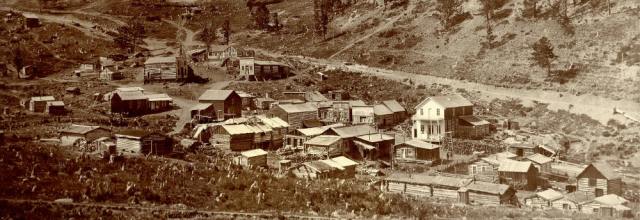
Lion City Montana

The townsite of Lion City has long been abandoned. It is located about 12 miles west of Melrose at the head of the Trapper Creek drainage, adjacent to Hecla. On your way, you will pass through the old townsite of Glendale, which housed the smelting facilities for the mining district. One should prepare for a slow ride to the site as the road is very primitive and accessible with a 4WD or ATV.

REMAINS: About 15 stuctures remain in the Lion City area.

For more pictures, see my post Cousins of the Golden West
Lion City Today

ix. Phebe Burby Tracy (c. 1840 – Not in 1851 Census)

x. Nancy Tracy (c. 1848 – Bef. 1851, Age 2 yrs 6 mo.)

1851 Census of New Brunswick Carleton County, Wicklow Parish, page 22

Children v. through x. are not listed in the 1851 census
Mark Tracy M Parent 43 Native Mill Owner 1808
Phebe Tracy F Parent 46 Native 1805
Frederick Tracy M Son 20 Native 1831
Isaac Tracy M Son 19 Native 1832

.

5. Lydia Miller

Lydia married 15 Jul 1817 in York County to John Rudiment Patterson

John Rudiment Patterson was born in 1788 in York, New Brunswick. His parents were Lott Mill Patterson and Jannet [__?__]. John died Aug 1844 in Southampton, York Co., New Brunswick.

John Allan Miller letter, Aug. 8, 1908.”John and Lydia raised a large family of bright intelligent children. Their home joined Hillman, both farms fronting on the St. John’s River. I believe only three of the children are still living. Walter, the third son, is now living on the Patterson’s farm. He married his cousin, Jane Hillman, and their son lives on the Hillman farm. Walter is a very bright man. He is two years older than I, that is 78.”

Calvin Miller notes: John R. Patterson, sons including Walter, and grandsons are buried at the Lower Meductic cemetery. Lydia is mentioned as the mother of Duncan but her name is not on John’s stone, nor is any other spouse named. I’m thinking Lydia remarried after John’s death and is buried elsewhere. However, there is what appears to be the remains of a tombstone beside John which is extremely weathered and possibly once vandalized. It can be hardly recognized as a tombstone.

Children of Lydia and John:

i. Alfred Patterson (10 Nov 1820 New Brunswick – ); m1. Jerusha Lenentine (c. 1822 New Brunswick – ); m2. Lydia [__?__] (c. 1832 – )

1851 Census of New Brunswick York County, Dumfries Parish, page 23
Alfred Patterson M Head 30 Farmer 1821
Jerusha Patterson F Wife 29 1822
Emmilius Patterson F daughter 7 1843
Martha Patterson F daughter 5 1846
Sarah Jane Patterson F daughyer 3 1848
Walter Patterson M lodger 24 1827

ii. James Frederick Patterson (c. 1826 – Feb 1893); m1. Mary [__?__] (c. 1840 – 17 Jun 1869); m2. Victoria Anne Pike

iii. Walter H. Patterson (19 Feb 1828 – 5 May 1912); m. 2 Sep 1858 in Woodstock, Carleton, New Brunswick to his cousin Mary Jane Hillman (16 Aug 1838 – 8 Mar 1908). Her parents were George Hillman and Mary Miller.

iv. Duncan M. Patterson (1830 – 20 Aug 1859, Age 29) Buried Lower Meductic cemetery.

.

.

6. Mary “Polly” Miller

Polly is buried at Hillman Cemetery, Ritchie, York Co., New Brunswick. She married 3 Aug 1830 in Northampton, York Co. to George Hillman, her stepfather Tristam Hillman’s brother.

George Hillman was born 15 Nov 1803 in New Brunswick. His parents were Edmund Tristam Hillman and Catherine Tompkins. George died 14 Aug 1874 in York, New Brunswick. See John Allan Miller letter, Aug. 8, 1908. “George and Polly had father Isaac’s old homestead where John Allan was born, six miles from Woodstock. John did not like George.”

Children of Polly and George:

i. Edmund “Edward Libby Hillman (10 Nov 1831 Canterbury(Parish?), York, New Brunswick – 23 Mar 1914); m. 19 Jul 1863 in Canterbury, York, NB to Jerusha N. Dow (8 Mar 1843 in York County, NB – 21 Apr 1922) Her parents were Moses Dow and Nancy Cummings.

ii. Snelan Hillman (1835 – )

iii. George N. Hillman (Aug 1836 – 23 Oct 1842) Aged 6 Years 2 Months – Marble monument

Cemetery: Ritchie Extension, York County

iv. Mary Jane Hillman (16 Aug 1838 – 8 Mar 1908); m. 2 Sep 1858 in Woodstock, Carleton, NB to her cousin Walter H. Patterson (19 Feb 1828 – 5 May 1912). His parents were John Patterson and Lydia Miller.

v. Salome Hillman (1840 – ); m. Nathan Grant (13 Apr 1836 – ) Salome was Nathan’s second wife. He had six children with his first wife, Teressa Patterson.

vi. Jeremiah “Jared” M. Hillman (1 Oct 1841 – ); m. 5 Jul 1866 in Wakefield, Carleton, NB to Harriett E. Clark (9 Dec 1842 – 9 Dec 1898) Jarad was a Baptist farmer in Southampton, York NB in the 1881 Canadian Census.

vii. Lizzie Hillman (1842 – )

viii. Daniel A. Hillman (1851 – ); m. Lizzie [__?__]

.

7. Nancy Ann Miller

Nancy married 30 Aug 1825 in York County, NB to an immigrant from England John Clynick

John Clynick was born in 1800 in England. John died 1 May 1843. Apparently there were several spellings used for the surname Clynick/Clynich/Clynic/Clinch. See John Allan Miller letter: “Nancy was the youngest of my half-sisters and the best. She married John Clynich, an Englishman. He was an all-round good man and all of us boys thought everything of him, but Nancy was our best friend, we fairly worshiped her. John died in middle life and left her the poorest farm in the place. How she made a living is a mystery, but she did raise her family of six. Three of them were living in 1908.” In the 1881 census, Ann is listed as Dutch.

Calvin Miller Notes: If my research is correct, John and Ann had nine children in all. Near as I can determine there were in fact, as John Miller stated, three living in 1908 that I have found. two of these died in 1909 and 1910.

Children of Nancy Ann and John:

i. John Clynick, Jr. (20 Jan 1826 – 26 Sep 1829) Cemetery Lower Meductic, York County

ii. Ira Clynick b. 10 Sep 1833 New Brunswick; d. 21 Feb 1919 – Martin, Minnesota; m. Anne Elizabeth Ingraham (30 Apr 1835 New Brunswick – d. 7 Jan 1906 Nashville, Martin, Minnesota. Anne’s parents were born in Germany. Ira immigrated to Minnesota in 1858.

See John Allan Miller letter, Aug. 8, 1908. “Ira is a wealthy farmer, lives near Winnebago City, Minnesota. His post office is Granalla (?), Minn. I met him in California three years ago. He and I visited your cousins in that we took a shy at the sights in San Francisco then went to Portland and took the fair in. Then we visited more of your cousins in Clarke Co., Wash., then to Seattle and met more of your relatives. Ira has six children, three of each sex. He gave each of them fifteen hundred dollars. They all live near him. His wife died two years ago. Since then he has lived with one of his daughters. [Ira was living with his son George in 1910] Ira and I were great friends in our boyhood days. I enjoyed every minute of the time we were together here. I think he is the very best man on earth and the most innocent and unsophisticated. I wish I could see him again — probably will not unless I can get him to visit the Fair next year in Seattle.”

In the 1880 census, Ira and Anne were farming in Nashville, Martin, Minnesota

iii. James Clynick (bef. 1834 – ); m. 13 May 1851 to E. E Wright

14 Jan 1893 Newspaper Carleton Sentinel – James Clynick left Thursday eve. for Oberlin, Ohio to take two years course at the college there.

iv. Sarah Clynick (c. 1834 – )

v. George H. Clynick (11 Feb 1834 – 26 Sep 1909); m1. 24 Dec 1862 in Canterbury, York County, NB. to Lorana Hannah Lutwick (24 Jul 1838 – Aft. 1901 Canada Census);

February 8, 1890 Carleton Sentinel – d. 21st Jan., of consumption, Amanda M. Clynick d/o George Clynick and Lorena Clynick of Southampton (York Co.) age 24.

March 22, 1890 Fredericton Gleaner – Southampton (York Co.) March 17th – Since our last writing, death has removed one of our young ladies, Miss Amanda Clynick, teacher of our school.

George’s son George Horace Clynick was born Aug 1853 in New Brunswick. He married 10 Mar 1874 in Woodstock, Carleton, NB to Mariam Lee. Mariam’s father was John Lee. Sometimes this marriage is attributed to George Sr. George died 3 Jan 1918 in Missoula, Montana.

April 26, 1888 Saint John Daily Telegraph – Woodstock – Among those starting for the west was Geo. H. Clynick, who had been foreman for the Wood Working Co. for several years. He has accepted an offer in a similar establishment [B B M] in Missoula, Montana.

July 6, 1889 Saint John Daily Telegraph – Drowned in the Blackfoot River, Bonner, Montana, 14th ult., John Franklin Clynick, age 9 years 10 mos., second s/o George H. CLYNICK and Miriam Clynick, formerly of Woodstock, N.B.

March 3, 1894 County Carleton Sentinel – The wedding of Miss Clynick to William Esmay at Missoula, Montana is announced. Miss Clynick is a d/o Mr. and Mrs. G.H. Clynick, formerly of Woodstock, N.B., now of Bonner, Mon. The ‘Western Democrat’ says Mr. Esmay is the popular stenographer of the office of the M.M. Co.

In the 1900 census, George was assistant foreman in Hell Gate, Missoula, Montana.

vi. Lydia Ann Clynick (c. 1836 – 26 Mar 1907); m. 7 Jan 1860 to Rev. Elijah B. Gray (1826 – 18 Feb 1900 Pembroke, Carleton County, NB) Elijah was a clergyman. Apparently Elijah and Lydia never had any children. Her nephew Horace “Clenock” (Clynick) (see above) is listed in this household in the 1871 census.

vii. Susannah Clynick (c. 1837 – 18 Dec 1860); m. 2 July 1857 to Daniel H. Hartley (c. 1837 New Brunswick – bef. 1901) His parents were Charles Hartley and Susan Foster

viii. Peter Clynick (Nov 1842 – 16 Feb 1845), Age 2 years,3 months Cemetery Lower Meductic, York County

ix. Maria Clynick (? – bef. 1878 when Preston Tracey was born to Odber’s second wife); m. 24 Jun 1863 Upper Woodstock, Carleton County, New Brunswick to Odber D. Tracy (7 Mar 1842 – ) In the 1901 Census, Odber was married to Emerenza (Emma) F Shaw (26 Aug 1859 – 1942)

Press Newspaper June 4, 1900 – The house of Odber Tracey at Waterville was struck by lightining during the storm Thursday night, but was not very badly damaged, no one in the house was injured.

8. George MILLER (See his page) George and his sister Deborah married brother and sister George and Mary Estey and immigrated together by wagon train to Wisconsin in 1845.

9. Deborah Maria Miller

Deborah’s husband George Dow Estey was born 27 Dec 1813 in York Co, New Brunswick. His parents were Abraham ESTEY and Ruth DOW. George died 17 June 1863

Waukau Cemetery, Winnebago, Wisconsin.

George Dow Estey and Deborah Maria Miller immigrated to Palmyra, Jefferson County, Wisconsin on 1 Sep 1845.  8. George MILLER and Mary ESTEY (Deborah’s brother and George’s sister) accompanying them on the trip by wagon train to Wisconsin.

George Dow Estey – Headstone Burial: Liberty Prairie Cemetery Pickett, Winnebago County, Wisconsin Plot 85

Children of George and Deborah:

i. Huldah “Huldy” Marie Estey (14 Nov 1839 New Brunswick – 3 Jan 1929 in Butte, Montana) m1. 1864 in Waukau, Wisconsin to Thomas Lowe (4 Dec 1831, Lindale, Cumbria England – 12 May 1866, Waukau, Wisconsin age 34) m2. aft. 1867 to Dell Bradford; m3. abt. 1880 to William H. Carter (30 Jan 1832 England – 13 May 1911)

In the 1880 census, William was working as a blacksmith in Rushford, Winnebago, Wisconsin.

ii. Nathan Cyrus Estey b. 21 Nov 1840 New Brunswick; d. 26 Mar 1903 Veteran’s Home, Leavenworth, Kansas; m1. 1 Jan 1868 to Julia Jenkins (11 Feb 1853, Ohio – 22 Apr 1878, Luverne, Montana at age 25 of the measles);  m2. 25 Oct 1879 in Springwater, New York to Estella Catherine Hobbes (5 Jan 1861, Clayton County, Iowa – 12 Jun 1942, Des Moines, Polk County, Iowa)

Nathan enlisted in Company A, 1st Wisconsin Volunteer Cavalry Regiment on 15 Aug 1861. Mustered out on 01 Sep 1864. The regiment suffered 6 officers and 67 enlisted men killed or died from wounds in action, and 7 officers and 321 enlisted men who died of disease, for a total of 401 fatalities

This regiment was organized at Camp Fremont, Ripon, and Camp Harvey, Kenosha, in the summer and fall of 1861, 600 men having been enrolled at the former place up to the time of the change of location in November. It was mustered in March 8, 1862, and left the state on the 17th for Benton barracks, St. Louis, for equipment.

On April 28 1862 it moved to Cape Girardeau, thence to Bloomfield, where companies were detached to various points in Missouri and Arkansas for scout and train guard duty. The companies were in several engagements, frequently with superior forces, and were generally successful, though at Jonesboro in August a small detachment was compelled to surrender to greatly superior numbers.

At L’Anguille Ferry, Ark., occurred one of the fiercest engagements of the war, when Maj. Eggleston, with 130 men, was attacked by 500 Texas Rangers, the enemy overwhelming the little company and only about 20 escaping. The regiment with the exception of detachments moved towards Helena and reached its destination early in August.

It was ordered back to Cape Girardeau in September after terrible hardships, wading through swamps, without adequate supplies, drinking foul water, burdened by sick members, and being finally reduced to nearly half its original strength. It was ordered to Greenville in early October and on the 19th to Patterson, where it was stationed during November and December, engaged in dispersing guerrillas, picking up small bodies of the enemy and foraging.

On Dec. 28 a small party of foragers was picked up by 400 of the enemy, and 200 infantry and 80 cavalry, including Cos. D and M, started in pursuit. The cavalry dashed into the Confederates and scattered their pickets in every direction. Co. D dismounted and drove the enemy for some distance.

The regiment was stationed at West Plains, Pilot Knob, St. Genevieve and Cape Girardeau, successively, from Jan. 7 to May 31, 1863, and was engaged with the enemy at Chalk bluff in March. At Whitewater bridge Capt. Shipman and 40 men on guard were surrounded by 300 of the enemy, but they cut their way out with a loss of 6 killed, 9 wounded and 10 taken prisoners.

The regiment was in the battle of Cape Girardeau, where it supported a battery, and pursued the enemy in his retreat. In June it was ordered to join the cavalry corps of the Army of the Cumberland.

It reached Nashville June 15, took part in the movement toward Chattanooga, and was stationed at various points during the summer. It participated at Chickamauga, where it was engaged with the cavalry in holding the extreme right on the second day, and covered the retreat of the army.

It was in a lively engagement near Anderson’s gap in October, routing Wheeler’s command and taking numerous prisoners, and it was also in a skirmish at Maysville Ala. It then marched to Winchester, Alexandria and New Market Tenn., engaging the enemy at the last named place and driving him across Mossy creek. In this action the regiment carried the enemy’s position and captured a number of prisoners.

In December it again repulsed a force which had advanced on Mossy creek, and it participated in the battle at Dandridge in Jan. 1864. It was also in the engagement near Sevierville, and was then stationed at Marysville, Motley’s ford, Madisonville and Cleveland until May 3.

It was in a severe engagement near Varnell’s station with Wheeler’s forces, was in the advance on Dallas, and as skirmishers, was under a fierce fire from the enemy’s batteries intrenched in a spur of the Allatoona hills, being forced to fall back.

A detachment under Capt. Comstock routed a force at Burnt Hickory, and held its position against the attack of a body of cavalry until reinforced. A battalion under Capt. Harnden charged a heavy Confederate force guarding a supply train, andforced a way through the enemy’s ranks, but was compelled to fall back to the reserves, where the enemy was checked. This dash has been referred to as the most brilliant of the campaign.

A detachment defeated a force at Acworth and occupied the place. A few days later the regiment was in a skirmish at Big Shanty, and it was in frequent engagements about Lost Mountain until the enemy’s retreat across the Chattahooches River.

In the 1880 census, Nathan was a general merchant in Cavour, Beadle, Dakota Territory.

Beadle County, named in honor of Brigadier General William Henry Harrison Beadle, was created by the Dakota Territory Legislature in 1879 and formally organized in 1880 with the appointment of three county commissioners by Governor Nehemiah G. Ordway. The first town within Beadle County was Cavour, but Huron was named the county seat when the county commissioners first met there in July 1880. From 1880 until the capital was permanently located at Pierre in 1904, Huron was in the thick of the fight for the honor of being the capital city. Huron is the site of the South Dakota State fair and the birthplace of Hubert Humphrey and Cheryl Ladd.

In the 1900 census, Nathan and Estella were farming in Fitzgerald, Irwin, Georgia.

Nathan Cyrus Estey – Headstone Leavenworth National Cemetery, Leavenworth, Kansas) Plot: Sec 17, Row 12, Site 23

iii. Ruth Elizabeth Estey (15 Feb 1843, York County, New Brunswick – 28 Aug 1927 Portland, Oregon); m. John H. Ferguson (c. 1841 in New York – Bef. 1900 census )

In the 1880 census, John was a lumberman in Colby, Clark, Wisconsin.

iv. Amos Elijah Estey b. 25 Feb 1845 Saint John County, New Brunswick, Canada; d. 11 Oct 1925 San Diego, San Diego County, California; m. bet 1900-1910 to Caroline Cowan (b. 1858 Oregon – d. Aft 1920) in 1886 Caroline first married George Larkin

Amos enlisted in Company B, 21st Wisconsin Infantry Volunteer Regiment on 20 Aug 1862. Mustered out on 08 Jun 1865.

Amos was taken prisoner of war at Battle of Chickamauga, fought September 19–20, 1863. The regiment arrived at Chickamauga in time to take part in the second day’s fight. It “never faltered during the whole day, but often the second line would have to face about and drive away the rebels from the rear.” On being ordered to retire it fell back “only to the second line of works, where, still fighting, surrounded by the enemy, Lieut.-Col. Hobart and about 70 officers and men were captured.”

The Battle of Chickamauga marked the end of a Union offensive in southeastern Tennessee and northwestern Georgia called the Chickamauga Campaign. The battle was the most significant Union defeat in the Western Theater of the American Civil War and involved the second highest number of casualties in the war following the Battle of Gettysburg.

In the 1900 census, Amos and his brother Orville were growing fruit in Jocko, Flathead, Montana. Caroline, Amos’ future wife was living in Jocko too, with her first husband George Larkin.

The Jocko Valley (Google Satellite View) is located in western Montana, 30 miles north of Missoula on land of the Flathead Indian Reservation.

In the 1910 census, Amos and Caroline and Caroline’s 17 year old daughter Leona were living in Seattle where Amos was a contracting carpenter.

In 1926, Caroline was living at 3539 Fairmount Ave, San Diego, California.

v. Sarah Malvina Estey (10 July 1847, Nankaw, Winnebago, Wisconsin – 20 Feb 1848)

vi. Colin John Estey b. 15 Mar 1849, Nankaw, Winnebago, Wisconsin; d. Apr 1902 Pocahontas County, Iowa; m1. 3 Apr 1874 Mankato, Blue Earth, Minnesota to Henretta C. [__?__] (b. 1839 Pennsylvania- d. Aft 1910 census ); m2. abt 1900 to Minnie C [__?__] (b. Jan 1872 Iowa) Her father was born in Denmark and her mother in Illinois.

Henrietta had first married Edward DeForce (b. 1834 New York) Edward enlisted in the Pennsylvania 1st LA Batty E Light Artillery Battery on 29 Dec 1863. Mustered out on 14 Jun 1865. In the 1870 census, Edward and Henrietta were living in Spring, Boone, Illinois where Edward was a laborer.

In the 1880 census, Henrietta and Colin were living in Beaver, Guthrie, Iowa with two children from her first marriage and two from her second, while Edward was living in Houston, Texas with his brother Samuel. On 2 Mar 1888 Houston Texas, Edward remarried to Amanda Hassell Huntsman (17 Oct 1851 – 8 Jan 1914 Crockett, Houston County, Texas)

In the 1900 census, Colin was a carpenter and a farmer in Rolfe, Pocahontas, Iowa with his new wife Minnie. Henrietta was living with her daughter Ada and son-in-law John Tucker in Grant, Page, Iowa. She is listed as widowed, but it looks like they were really divorced.

vii. Orville C. Estey (6 Jul 1852 Oshkosh Winnebago County, Wisconsin – 26 Apr 1926 Kalispell, Flathead County, Montana); m. Margaret I. Grant (18 Mar 1865 Pictou, Nova Scotia – 4 Apr 1950 Deer Lodge County, Montana)

Mrs. Estey came to the Flathead in 1899 and lived on the East Lake Shore until 1921 when she moved to Kalispell. She and her sister, Mrs. J. C. Wood, planted the first cherries on the East Lake Shore shortly after coming here. She was the first teacher at Woods Bay school.

In the 1920 census, Orville still had a fruit farm in Jocko, Flathead, Montana.

viii. Alvord P. Estey b. 21 May 1856, Nankaw, Winnebago, Wisconsin; d. 13 April 1894, Hunter Hol, Montana; m. 12 Apr 1879, West Prairie, Vernon, Wisconsin to Ella Araminta Mitchell (8 Jan 1861, Pike County, Missouri – 6 Dec 1935Kalispell Flathead County Montana) After Alvord died, Ella married Philip Wilson Smith (b. 5 Jan 1836 Missouri – d. 28 Apr 1917 Kalispell, Flathead, Montana) Philip was a Confederate soldier (Private) in the 1st Missouri Infantry, Co C.

Ella had 5 children with Alvord, including: Mabel, Bessie, Bertie and Cassie. She had two children with Philip, aptly named Philip W. and Ella A.

In the 1880 census, Alvord, Ella and Ella’s mother Lucinda Mitchell was farming in Brookings, Dakota Territory [Now South Dakota].

In the 1900 census, Ella and Philip were farming in Kalispell, Flathead, Montana.

ix. Bion Arthur Estey b. 17 Mar 1859, Nankaw, Winnebago, Wisconsin; d. 7 May 1920 Brentford, Spink, South Dakota; m. 1890 to Eleanor Kean (b. Sep 1868 Iowa – 2 Jul 1919 Brookings, South Dakota) Eleanor’s father was from English Canada and her mother from Ireland.

In the 1910 census, Bion was working as a grocer in La Prairie, Spink, South Dakota.

.

10. Hannah Estey

Hannah’s husband John Grant was born 3 Aug 1809 or 1811 in Northampton, New Brunswick. His parents were William Grant and Ann Maidstone Hillman. John died 7 Aug 1889 Le Sueur, Le Sueur County, Minnesota.

They lived in Canterbury before immigrating to Wisconsin and Minnesota by covered wagon in 1848. John was a Tanner and farmer. It was reported that two of his sons were such large men, they were obliged to make their own boots. On their journey westward, John and Hannah visited for some time with her mother, Harriet, and stepfather Tristram Hillman in Utica, NY.   Tristram and Harriet are found on the 1850 census of that town. All of Hannah’s brothers and sisters also moved to the U.S. about this time. The Grants second stop was at Lemonweir Wisconsin before moving on to Winnebago, Martin County, Minnesota in 1862. John Grant died August 07, 1889  in Blue Earth Minn. He and Hannah are buried in Kasota, Minn.”

How far do you think an oxen could pull your wagon in a typical day?
Canterbury NB  Mile 0
Utica NY Mile 638
Lemonweir WI  Mile 1578
Winnebago, MN Mile 1813
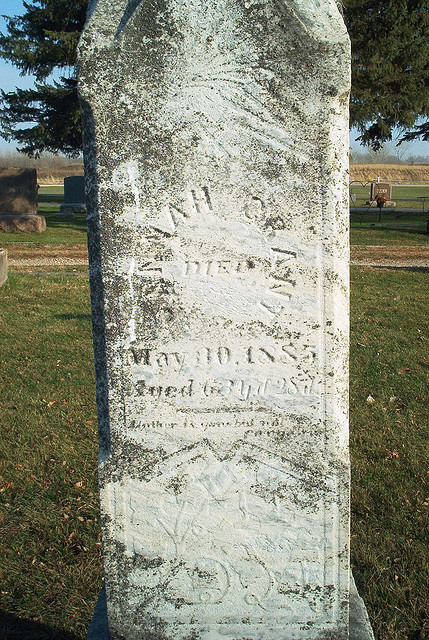
Hannah Miller Grant Headstone – This stone has Hannah on one side and John on the other. Kasota Hill Cemetery, Kasota Le Sueur County, Minnesota, Plot: Section C

Children of Hannah and John

i. Howard Grant (c. 1839, New Brunswick – 15 Feb 1862, Kenosha, Wisconsin) Howard was listed as age 12 in the 1851 York Co. census, parish of Dumfries. Howard reporetedly died in a Civil War camp somewhere in the USA. Wisconsin Volunteers, 1St. Regiment Calvary, Company D.  No residence given, Private, enlisted 20 Aug 1861

In the 1860 census, Howard was working for A J Thrall in Utica, Winnebago, Wisconsin.

ii. Mariah Grant (1841 in Canterbury, New Brunswick – Aft 1880 census) m1. 1865 in Minnesota to Frank Durant (1844 – ); m2. Henry (Elias) Belnap (b. 1820 New York)

In the 1870 census, Mariah Durant was living next to her father John Grant in Nashville, Martin, Minnesota with three small children and no husband at home.

iii. Willard Randolph Grant (4 Mar 1843 Canterbury, New Brunswick – 18 Mar 1923 Kasota, Le Sueur County, Minnesota); m. 1885 to Ulrika (Eureka) Swensen (May 1856, Sweden – 21 Nov 1930, Le Sueur County, Minnesota) LDS Ancestoral file names Willard’s spouse: Rika Paulson, b. 1845, New Brunswick.

Willard immigrated in 1860 and Ulrika in 1881.

In the 1900 census, Willard and Ulrika were living in Kasota, Le Sueur, Minnesota where Willard was a teamster.

iv. Leonard Jarvis Grant (21 May 1845 Fredericton, Canterbury, New Brunswick – 30 Jul 1926 Terry, Prairie, Montana); m. 10 Jun 1873 in Kasota, Le Sueur, Minnesota to Alwilda (Polly) Shaw (24 Oct 1856 in Messina, Saint Lawrence, New York – 27 Apr 1937 in Terry, Prairie, Montana)

In the 1900 census, Leonard and Allie were farming in Cordova, Le Sueur, Minnesota

The site where Terry is located was first called Joubert’s Landing, in recognition of the man who built a supply point along the Yellowstone River for freighters traveling from Bismarck, Dakota Territory, to Miles City, Montana Territory. When the Northern Pacific Railway’s transcontinental rail line arrived in 1881, the town was renamed for Alfred Howe Terry, a General in the Union Army who commanded an 1876 expedition in connection with George Armstrong Custer’s campaign against Native Americans, specifically in the west.

Obiturary dated 8-12-1926 Mr grant was born May 1847 at Canterbury Parish, New Brunswick, Canada. He came to the United States in 1859 and to Minnesota in 1862. He was married to Polly Shaw abut 50 years ago. He leaves 5 children, four sons, Noah, Willard, Roy and Ray of Terry Montana and one daughter Mrs Peter Henderson of Northfield MN also one sister of St Paul. Mrs Bertha Boyden and 21 grandchildren. His funeral services were held August lst at his home.

v. Melissa Harriet Grant b. 1849 in Canterbury, New Brunswick – 8 Oct 1930 Nicollet, Minnesota); m.1869 in Minnesota to John Robbins (22 Dec 1840 Crosby, Ontario, Canada. – 25 Nov 1919 Winnebago, Faribault County, Minnesota, )

Melissa Harriet Grant Robbins

John was a farmer in the Russian River (West Windsor, Sonoma, California in the 1910 census.

John H Robbins

Melissa was a widow living at the Russian River, Sonoma, California in the 1920 census. See John Allan Miller letter, Aug. 8, 1908.

John and Melissa were living in Windsor, Sonoma County, California in 1908. I include the following quotation because it is so colorful and characteristic. “She is a crank on temperance and religion. They destroyed a fine vinyard because grapes could be made into wine. To be consistent they should not raise any crop that had starch in it, for starch is the source of all alcohol. She is powerful in prayer. She is everlastingly nagging at Divine Providence for every good thing in sight and giving the Creator of the Universe pointers how to manage things in general. But she don’t hanker after giving any good things to the needy, not much. Their house is large (they bought it) and absolutely bare of everything but the cheapest indispensables.

She put me to sleep in an unfurnished room, save an old ramshackle bedstead with a straw mat on it and some blankets, then turned me over to God to do the rest. On general principles I can sleep well almost any old way, and the food she gave was well blessed and needed it, but I did not note that it improved it very much. It was the same rusty sowbelly all the same, but the particular thing happened the last time I was there. You see I am giving myself away. I was there twice, but it was necessary. I had to see Ira Clynick. You see, it was this way. I left Eugene Miller at 9 AM, had to change cars at Santa Rosa. My watch was slow so I missed the train, and the next one only went within four miles so I had that distance to walk, and arrived at the Robbins’ place at one PM, hungry clear down to my feet. There was no sign of dinner and nothing said; two o’clock, three, and then four. I ‘sot’ and ‘sot’ on that old lounge, prehistoric, antediluvian, a first cousin to the old one-horse shay. All of those long hours, each minute adding new pangs to my all-consuming hunger. It makes me hungry to write about it — I must have lunch.

There, I feel better.) At five, she got me a lunch. she must have noticed I was being rapidly consumed with hunger and might at any moment be wafted away in the thinnest air. She talked to God a little about that lunch, but bless you I just waded in. I had to, I could not help it. I don’t remember what the lunch was, whether it was hot or cold, cooked or raw. It came just barely in time to save my life. By morning I was so far recovered that I was able to hit the road swiftly through sweltering billows of dust. I just wafted away from the Robbins ranch, leaving a hole through the dust like a tunnel and numerous left-handed blessings. Goodbye, Melissa, I guess you are sure to get all that’s coming to you in this world and maybe in the next.”

vi. Albertha J. Grant (22 Jun 1851 New Brunswick, Canada – 9 Mar 1948 at the home of her daughter Bertha at St. Paul, Minnesota, aged 96 years, 8 months and 17 days Her remains were returned to Cumberland, and buried beside those of her husband in Lakeside Cemetery.) m. 29 Nov 1874, Blue Earth Co., Minn to Millard Boyden (b. 7 Feb 1845, in Rochester, New York – d. 23 Feb 1903 in Cumberland, Wisconsin.)

Millard was buried in the family plot in Lakeside Cemetery. His military style gravestone is inscribed “Mill’d Boyden Co. A. 3 Wis. Inf.” Their children of whom the first four were born in Minn. and the last in Wis., were: William Jay, b. 1 Jul 1877; Harrison Ernie, b. 14 Dec 1878; Hannah Mable, b. 8 Jul 1880; Bertha Elizabeth, b. 4 Sep 1886; & Lee Morton, b. 26 Mar 1889, in Cumberland

In the 1900 census, Alberta and Millard were living in Cumberland, Barron, Wisconsin wher Millard was a railroad laborer.

vii. Nelson Grant (1853 in Canterbury, New Brunswick, Canada – ) m. 1872 to Emma [__?__] (1852 Michigan – )

1851 Census of New Brunswick York County, Dumfries Parish, page 48
John Grant M Head 30 Farmer 1821
Hannah Grant F Wife 26 1825
Howard Grant M Son 12 1839
Maria Grant F Daughter 11 1840
Willard Grant M Son 8 1843
Leonard Grant M Son 6 1845
Harriet Grant F Daughter 2 1849

.

11. Colin Miller

Isaac’s son Colin never married . He became the head of the family after brother George left and the family fared well.  He traveled across the plains with John Allan Miller in 1852 and they were together in California for four years.

Colin joined the 14th Wisconsin Infantry in 1861 was 1st Lt., Company C,  and was killed on 23 May 1863 during the Siege of Vicksburg, Mississippi.  His brother John writes, Colin was a broad gauge man, had many sterling qualities. Was universally loved and respected. I knew him better than I did any of my other brothers, and I felt his loss for many year.
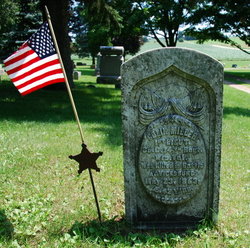
Isaacs son Colin – Liberty Prairie Cemetery 
Pickett, Winnebago County, Wisconsin,, Plot: Plot 85.

12. Abner Miller

Abner’s wife Hulda Dickinson was born about 1831 in New Brunswick. Hulda died 30 Jan 1880 Morris County Kansas)

Abner Miller Repeating from John Miller’s letter “…George soon became of age and started for himself, thus Colin was to the fore. Then I remember we fared pretty well but when he left and Abner was the head of the family we were up against it sure enough. He was rather, we will say erratic. Everything went to the dogs. Mother had to expel him.[about 1843 when Abner was about 19] That left Richard the oldest at home. He was about fourteen, John about eleven, and Leonard about nine. Us three kids just had to wrest a living out of that wilderness and we did and did it well …”

See John Allan Miller letter, Aug. 8, 1908. Moved to Wisc. in 1850. ” He was a very robust, powerful man and intellectually the peer of anyone. Owing unfortunate environment his talents were somewhat misdirected. He had a large family.”

In the 1880 census, Abner was a widower farming in Neosho, Morris, Kansas.

Obituary of Isaac’s son Abner Obituary from the Winneconne Cemetery List.

“Mr. Abner Miller, one of the oldest residents of this village and county, died of cancer, Saturday, October 22, 1898, after a long and painful illness, aged 73 years, 4 months and nine days. Mr. Miller was born May 23 1825, in York County, New Brunswick, where in 1846 he was married to Miss Huldah Dickinson, and in 1850 they moved to Winnebago county, Wis., and settled on a farm in the town of Rushford. In 1851 he commenced lumbering and after a few years removed with his family to the village of Butte des Morts where he resided until 1872, meantime continuing the business of lumbering on the Wolf River. In the last mentioned year he removed to Morris county, Kansas and settled on a farm. Soon after the death of his wife, which occurred in 1880, he returned and settled in this village and resided here until his death.

Abner Miller – Headstone Winneconne Village Cemetery, Winnebago County, Wisconsin Plot: Sec 3, Plot 43

He was the father of ten children whom he raised to maturity, eight of whom survive him. The oldest, Mrs. Melissa Riley, and also Mrs. Lavina Stannard have passed away, and those who mourn his death are, W. L. Miller of Oshkosh; Mrs. Ellen Myler of Grand View, Idaho, W.H. Miller of this village; Mrs. Linvie Sanford of Fayetteeville, Ark.; Mrs. Clara Karr of Omro; Mrs. Addie Donovan of this village; H. C. Miller of Caroline, Wisc. and F. P. Miller of Oshkosh.

He also leaves two brothers, L. J. Miller of Utica, this county, and John Miller of California, besides a large circle of friends throughout the county and state who knew him for his honesty, justness, and devoution to his family. His funeral was held Sunday afternoon from the Free Baptist Church of the village and was conducted by Rev. J. M. Kayser of Allenville, assisted by Rev. H. B. Hemmerly, pastor of the above church, and Rev. Angus Sillars, pastor of the Presbyterian church. The large edifice was filled to overflowing with those who had known the deceased and who followed his remains to the village cemetery”.

Children of Abner and Huldah Dickinson

i. Melissa Jane Miller (13 May 1848 in Canterbury, York county, New Brunswick – 10 Mar 1896 in Winneconne, Winnebago, Wisconsin); m. Matthew (Or Patrick) A. Riley (29 July 1841 in Town of Belturbet, County Cavan, Ireland – 1924 in Winneconne, Wisconsin)

ii. Walter L. Miller (c. 1850 New Brunswick – Bet. 1898 – 1900);  m. 2 Jun 1874 in Winnebago, Wisconsin to Frances “Franky” McCabe (Jul 1853 in Wisconsin, – Apr 1905)

I find Frances in the 1900 Census listed as Widowed. Daughter Jesse Miller b. apr 1877, son Chester E. Miller, b. June 1883, and Niece Gladys Miller, b. May 1891. Gladys is Wilmot Miller’s daughter. Abner’s obituary states that among those left to mourn him are W. L. Miller of Oshkosh. Apparently Walter died shortly after his father, between Nov. 1898 and prior to June 1900 when this census record was taken.

Obituary: Winnebago County, Wisconsin: Frances MILLER
Daily Northwestern April 17, 1905 p.1
Death of Frances Miller
Sunday morning at her home, 16 Tennessee street, occurred the death of Mrs. Frances Miller at the age of fifty-two years. The cause of death was heart disease. Complete funeral arrangements have not as yet been made. Interment will occur at Winneconne. The husband of the deceased, Walter L. Miller, formerly was an assemblyman. The family formerly lived in Winneconne.

iii. Lovina A. Miller (Mar 1852 in Wisconsin – Bef. 1898); m. married Ransom Stannard (b. Mar 1848 in Illinois – d. 28 Nov 1922 in Oshkosh Wisconsin) His parents were Abner Stannard and Orpha [__?__]. On 11 Sep 1890 in Allenville Wisconsin Ransom married Amanda Miller (b. 1869 Wisconsin)
,

Home in 1880: Manistee, Manistee, Michigan

In the 1910 census, Ransom and Amanda were farming in Vinland, Winnebago, Wisconsin.

iv. Wilmot Henry Miller (12 Apr 1853 Rushford, Winnebago County, Wisconsin – 4 Feb 1908 Oshkosh, Winnebago County. Wisconsin); m. 1876 to Ella C Kelly (8 Oct 1856 – 10 Apr 1898 Winneconne, Winnebago County, Wisconsin) Ella’s parents were born in Prussia;  m2. 25 Jun 1902 to Ernestine Edwards. (b. 3 Jul 1872 in Winneconne, Winnebago, Wisconsin – d. 17 Feb 1942 in Winneconne, Winnebago, Wisconsin)

Wilmot was a wealthy lumberman with large interests in Washington state, the foundation of which was built when he started working in a lumber camp at the age of eleven. In the 1905 Wisconsin census, Wilmot’s occupation is listed as “capitalist.”

In the 1900 census, Wilmot was a widowed real estate dealer in Winneconne, Winnebago, Wisconsin.

Wilmot H Miller Portrait from Obit

Newspaper article: The Stevens Point Journal, Publication: 15 Feb 1908 – Stevens Point, Wisconsin – Lumberman W. H. Miller Dead – Retired Oskosh Merchant Succumbs To Bright’s Disease.
Oskosh- Wilmot H. Miller, a retired Lumberman, reputed to be worth $500,000, well known throughout Northern Wisconsin, is dead of Bright’s Disease [Nephritis]. He was [5]4 years of age. The basis of the fortune of Mr. Miller was laid in the lumbering camps of Wisconsin. In recent years he had operated extensively in the State of Washington, and it was there that the bulk of his estate was accumulated. Wilmot Henry Miller was born in Rushford, April 12, 1853. When he was two years old he was taken to Butte Des Morts village, where he spent most of his life up to the time when he was 20 years old. When he was 20 he moved to Winneconne, and engaged in logging for himself, handling cedar posts for several years and doing general logging business. He lived in Winneconne until last year. For some time Mr. Miller had been a partner in the Firm of Russell & Miller of Winneconne, dealing in wood and coal, his associate being Charles A. Russell.

v. Ellen Miller (Dec 1855 Wisconsin – After 1910 census); m. 1876 to William Myler (1841 in Indiana – Aft 1910 census)

William was a doctor working in Chicago in the 1900 census. Living in Homedale or Grand View, Idaho on their son Frank’s farm in 1908.

vi. Olinda Viola Miller (Aug 1857 Wisconsin – ); m. 1875 to Samuel Safford (Mar 1852 England – ).

Samuel was a wagon maker in Parker, Morris, Kansas in the 1880 census. Samuel and Olinda were living in Fayetteville, Arkansas in the 1900 census.

vii. Clara “Bird” Miller (Feb 1859 Wisconsin – Omro, WI); m. 1876 to Winfield Clarence Karr (1853 Ohio – 18 Apr 1919 Portland, Oregon)

Winfield was a lumber dealer in Omro, Winnebago, Wisconsin in the 1900 census. Winfield was a timberman in Portland, Oregon in the 1910 census.

viii. Adaline (Addie) Eudora Miller (6 Apr 1866 Butte des Morts, Winnebago County, Wisconsin – 24 Jan 1908 Seattle, Washington) m. 27 Jul 1884 to Joseph E. Donovan Six sons and a daughter

See John Allan Miller letter, Aug. 8, 1908. “Addy died in abject poverty and all her life suffered every hardship, every privation.Addy was an angel.”

Obituary from the Winneconne Cemetery List.

“The remains of the late Mrs. Jos E. Donovan arrived here wednesday from Seattle, Wash., accompanied by her husband and little daughter Ethel, and funeral services were held thursday from the Presbyterian church, conducted by Rev. Angus Sillars and interment was made in the village cemetery. Mrs. Donovan formerly resided in this village where she was widely known and esteemed, and her death has caused a shock in a wide circle. She was a daughter of the late Mr. and Mrs. Abner Miller, her maiden name being Adaline Eudora, and was born at Butte des Morts, April 6 1866. She was married July 27, 1884 to Mr. Donovan and was the mother of six sons and a daughter who with her husband are left in sorrow. When a child her parents moved to Kansas where she lived for some time and after her marriage she resided in this county until January 29, 1907 when she and her husband and family removed to Seattle, Wash. Six months ago she was taken seriously ill and after two months became blind partially recovering her sight two months previous to her death which occurred at 12:30 a.m. Friday jan 24, 1908 a year after removing from here. Her children who survive are Guy, Leo, Clifford, Earl, Floyd, Hugh, and Ethel. Besides these she is survived by her brothers and sisters Wilmot H. of shkash, Herbert C. of Marion, Floyd P. of Vancouver Wash., and Mrs. Clara Karr of the same place, Mrs Linna Sanford of Fayetteville, Ark. and Mrs Ellen Myler of Idaho. Mr. Floyd C. Miller and Mrs. Karr were with their sister much of the time during her illness to assist in soothing her suffering. Mr Herbert C. Miller arranged the funeral here and was present at the ??????? with his wife. He was the only member of her parent’s family present, Mr. W. H. Miller being in very poor health”

ix. Herbert C. Miller (Jun 1868 in Leopolis, Shawano, Wisconsin – I cannot find Herbert in 1910); m. 5 Jun 1893 Pella, Shawano, Wisconsin to Mary C Brunner ( Mary was a dressmaker. She was born in Oct 1870 in Leopolis, Shawano, Wisconsin. Her parents Anton J Brunner and Mary Tichacek were from Bohemia. Herbert was a school teacher in Grant, Shawano, Wisconsin in the 1900 census. Herbert was living in Marion, Wisconsin in 1908.

See John Allan Miller letter, Aug. 8, 1908. “Herbert was living in Marion, Wisc. in 1908, had taught school about 16 years and was principal of a city school. In 1900 “he lost all his children, four in number, with diphery (I have not spelled that word correctly) and I believe there are four more now. Herbert is a very bright man and of powerful physique and unusually well equipped mentally.”

x. Floyd Miller (1874 Kansas – After the 1930 census); m. Jeanette Horr (abt 1875 Wisconsin – )

Floyd was living in Vancouver, Washington in 1908. Floyd had an orchard in Lake Shore, Clark, Washington in the 1920 census.

See John Allan Miller letter, Aug. 8, 1908. Floyd “is a man you would be proud to know. He had poor advantages when a boy but he managed to take a pretty thorough course in a business college. He has an excellent wife and three children and lives at Felida, Clark Co., Wash. He is in the employ of the Weyerhauser Timber Co., and two years ago his salary was $1500 a year. He is a log scaler and honest, the only honest scaler I ever saw or ever heard of. When he took charge of the scaling he saved the company about $100,000 a year by not stealing like his predecessor, and by preventing others from stealing.”

According to his father’s obituary, in 1898, Floyd was living in Oshkosh, WI. When his sister Adaline died in 1908, he was living in Vancouver, Washington. He is found in the 1920 US Federal Census; Lake Shore, Clark Co., Washington.

.

15. Richard Miller

Richard’s wife Esther Schriver was born 1 Feb 1830 in Woodstock, New Brunswick. Her parents were Abraham Sherwood Schriver and Eunice Hillman. Eunice was Richard’s stepfather Tristam Hillman’s sister. Esther died 8 Mar 1880 in Admire, Lyon County, Kansas.

Shortly after his mother’s marriage to Tristam Hillman in 1846, Richard left home and worked in the lumber woods. The winter of ’47 and ’48 he boarded at Abraham Schriver’s and went to school. Later on when he was nineteen he married Esther Schriver and moved to Wisc. in 1850 or 1851. He got some land and built a house and Esther and I passed the winter in it. His younger brother John writes: “I was with them about six months and became very attached to Esther. My recollections of her are all pleasant. I never saw Richard after March, 1852, when I went to California.”

Richard was born in 1829. Shortly after his marriage he came to the United States in 1849 or 1850, and after living five years in Wisconsin moved to Osage County, Kansas, in 1855 and in 1856, the year Herbert Miller was born, established a home on the frontier in what is now Lyon County, but was then Breckenridge County. He died there, after some years of activity as a farmer and stockman, in 1864. After becoming a citizen of the United States he voted the whig party until the organization of the republican party, and was a loyal adherent of that political faith. He was a strong temperance advocate before that cause was so popular as it is now, and was an active member of the Methodist Church. Though past the age for military service, he was a member of the Kansas State Militia during the Civil war, and was once called out during Price’s raid into Missouri. Richard Miller married Esther Schrivner.

More about Richard’s Lyon County Kansas State Militia. “The first military company to leave for the seat of war was the “Emporia Guards” in May, 1861. They numbered 50 men and had been drilled by W. F. Cloud, a veteran of the Mexican war. The company took part in the engagement at Wilson’s creek, Mo., in August. A. J. Mitchell raised a company of artillery numbering 47 men. L. T. Heritage recruited a company for duty within the state, which became Company B of the Eighth regiment. In the fall of 1862, in response to President Lincoln’s call for more troops, 150 Lyon county men immediately offered their services. They were recruited by P. B. Plumb and formed a company in the Eleventh regiment. Soon afterward they were engaged in a battle at Prairie Grove, where several were killed. In 1864, when Gen. Price threatened Kansas, 300 more answered the call to repel the invasion. They were in active duty about a month. Besides this the men of Lyon county played their part in protecting their homes and in driving out hostile Indians in the west and southwest and the bushwhackers in the south.”

Richard Miller – Monument – Ivy Cemetery Admire Lyon County Kansas

Children of Richard and Esther

i. Albion Miller (10 Nov 1850 in Wisconsin – 27 Jul 1899 in Lyon County, Kansas); m. Mary Elizabeth Roberts (17 Jul 1855 in Indiana or N Danville, Vermont – 28 Sep 1934 in Admire, Kansas) The name Albion is common in the Schriver family. Albion died at the age of forty-five years on his large farm and stock ranch in Lyon County.

Albion Miller – Monument Ivy Cemetery Admire Lyon County Kansas

ii. Adeline “Addie” Amelia Miller (3 Apr 1852 Winnebago, Wisconsin – 5 Jan 1933 Emporia, Kansas); m. 21 Sep 1875 to William “Wil” John Wayman (15 May 1850 in Willingham, Camb, England, and died 3 Nov 1932 in Emporia, KS) Wil was president of the State Bank of Admire, and one of the very successful and influential farmers, bankers and business men of Lyon County, is one of the comparatively few men who have passed their sixtieth birthday and who can claim nativity in the commonwealth of Kansas

iii. Herbert Miller (Feb 1856 Admire, Osage, Kansas – 1 Jun 1936 Admire, Kansas); m. 1881 to Ellen Moore (Dec 1854 New York or Pennsylvania – 12 Feb 1935 in Admire, Kansas)

Herbert was a bank president in Ivy, Lyon, Kansas in the 1900 census.

A Standard History of Kansas and Kansans, written & compiled by William E. Connelley, Secretary of the Kansas State Historical A Standard History of Kansas and Kansans, written & compiled by William E. Connelley, Secretary of the Kansas State Historical Society, Topeka. Chicago: Lewis Publishing Company, copyright 1918

Herbert Miller grew up on his mother’s farm in Lyon County and was only eight years old when his father died. His education came from the public schools, and with the exception of nine years, from 1887 to 1895, spent in Chautauqua County, his home and activities have been in Lyon County all his life. After attending the public schools he was a student for two years in the State Normal School at Emporia, but left that institution for practical work in 1878. From that year until 1894 he was a farmer and his interests are still largely agricultural. He now owns 600 acres of farm and pasture land in Morris County, a fine farm of 240 acres in Lyon County, and adjoining his residence at Admire is a completely equipped farm of eighty acres.

Since 1894 he has been identified with the State Bank of Admire, and is its president, while his son-in-law, H. T. Chatterton is cashier. This bank was established in 1890 as a private bank, and took a state charter in 1894. The modern bank building is situated at the corner of Main and West streets and was erected in 1905. The bank has a capital of $12,500 and the surplus is an equal amount.

Politically Mr. Miller has always acted with the republican party. His work and influence have gone in the direction of public improvements and the civic welfare, and for a number of years he served as treasurer of the township and has filled the post of treasurer in the local school board for a long time. He is a member of the Kansas Bankers Association and is affiliated with the Modern Woodmen of America at Admire. In Lyon County in 1880 Mr. Miller married Miss Ellen Moore, who was born in Pennsylvania. They have two daughters. Esther is the wife of H. T. Chatterton, cashier of the Admire State Bank. Maude graduated from the high school at Colorado Springs, Colorado, and attended Colorado College of that city, later graduated from the Greeley Normal School in Colorado, is now a teacher in the public schools at Colorado Springs.

iv. Fremont Miller (Mar 1859 Kansas – 1949); m. Loua Patty (1866 Kansas  –  )

In 1905 Fremont was in the real estate business in Emporia, Kansas. In the 1920 census, Fremont was Treasurer of Lyon County Kansas and Loua was Assistant Treasurer.

Fremont Miller – Headstone – Ivy Cemetery, Admire,  Lyon County, Kansas

v. Collin Miller (20 Dec 1862 Admire, Lyon, Kansas – 31 Jul 1864, Admire, Lyon, Kansas) Died at the age of three years –

vi. Madison Richard Miller (6 Dec 1863 – 27 Jul 1864 Admire, Lyon, Kansas)

vii. Alice Miller (30 Mar 1864 – 9 Oct 1882 Admire, Lyon, Kansas) Alice died at the age of eighteen while attending the State Normal School at Emporia and after some practical experience as a teacher”.

.

16. John Miller

John’s wife Phydella Mary Ann Roberts was born 31 May 1842 in Niagara, New York. Her parents were Marvin Roberts and Palina Porter. Phydella died 22 Aug 1878 Jackson, Oregon.

John went to California in Mar 1852.  He was a widower farming in O’Neal Township (Stockton), San Joaquin County in the 1880 census.  He had three teenage children and a chinese named Ah See in his household.

See John Allan Miller letter, Aug. 8, 1908. John’s letters written to Admire, Kansas were said to be from Thomas, Washington. Thomas is a settlement between Kent and Auburn, eighteen miles south of Seattle in southwest King County, Washington.

“I am living alone here on my little farm and very comfortable and well contented with my chickens and my berries, etc., etc. Don’t feel that I am neglected, I do it from choice. I want a home of my own. I visited for five years and was not contented a single minute although I was mostly very welcome. I carried a small set of carpenter’s tools in my grip and many useful and /or ornamental were left behind me with one of your cousins, a female. I was — but that is another story. I will only say she badly addicted to temperance and religion and bad cooking.

” The mill where my son is is 1 1/2 miles distant. I go there often and I have plenty of near neighbors all good. One old lady, Mrs. Foy, the handsomest and best old lady in the world, often meets me at her gate with something nice to eat. I am at this moment munching some of her nice cookies. She is from York State I suppose accounts for her pleasant ways.”

Children of John and Phydella:

i. Earnestine M Miller (1 Jun 1865, Niagara, New York – 07 May 1952 in Fresno, CA); m.7 Sep 1883 in Oakland, California to Lilibourne Alsip Winchell (9 Oct 1855 in Sacramento, California – After 1930 Census) In the 1920 census, Lilibourne was a retired farmer in Fresno.

ii. Stella Miller (24 Aug 1866, Niagara, New York – ) m. 10 May 1883 in Fresno, California to Roderick Waldegrave Riggs

iii. Leon Raymond Miller (6 Oct 1871, Dade, Missouri – Aft 1930 ); m. Elsie Louise Bennett (Apr 1880 in Minnesota – )

In the 1920 census, Leon and Elsie were living in Seaside, Clatsop, Oregon where Leon was a foreman in a logging camp.

17. Leonard Miller

Leonard’s wife Mary Ann Benedict was born 14 Aug 1848 in Wisconsin. Mary Ann died in Jul 1905.

Isaac’s son Leonard was Sgt. in Company B, 21st Wisconsin Volunteer Infantry. Enlisted in Company B, Wisconsin 21st Infantry Regiment on 13 Aug 1862.

Promoted to Full Sergeant.

Mustered out on 08 Jun 1865 at Washington, DC.

John Allan Miller letter, Aug. 8, 1908.

“It is a pleasure to write of Brother Leonard. He was an all round good man. I am sure your mother has often told you of him. What good things I could say of him would fill many pages. He served four years in the Army, was badly wounded at the Battle of Resaca .His company had orders to charge the Rebel breastworks, he was the only man to obey and charged alone. The Rebs put a gun over the breastworks and shot him in the left chest. The bullet was extracted from his right hip. It went just under the vein in his neck and broke two ribs in its course. He soon recovered and went with Sherman to Washington in ’65.”

Leonard recovered enough to rejoin his regiment at Goldsboro. He was mustered out on June 8, 1865 and was receiving a pension of $4 per month for wounds to his face and side in 1883. He represented the town of Utica WI for several terms on the county board. He was one of the originators of the Utica Fire Insurance Company and was secretary of that organization nearly twenty-one years. He also served as assessor for fifteen consecutive years and as Justice of the peace several terms.

Source: The Union Army, vol. 4, p. 58
Regiment: 21st Infantry Regiment Wisconsin
Date of Organization: 5 Sep 1862
Muster Date: 8 Jun 1865
Officers Killed or Mortally Wounded: 5
Officers Died of Disease or Accident: 3
Enlisted Killed or Mortally Wounded: 117
Enlisted Died of Disease or Accident: 180
Regimental Soldiers and History: List of Soldiers

Twenty-first Infantry. — Cols., Benjamin J. Sweet, Harrison C Hobart, Michael H. Fitch, Majs., Frederick Schumacher, Michael H. Fitch, Charles H. Walker.

This regiment was organized at Camp Bragg, Oshkosh, and was mustered in Sept. 5, 1862. It left the state Sept. 11, being sent to Covington, Ky., for the defense of Cincinnati.

It participated in the Battle of Perryville in the 28th brigade, and after a march of 12 miles on the day of the battle, was placed by mistake in an exposed position alone, subject to the fire of both friend and foe. It escaped utter destruction by breaking ranks, then rallied and took position in line of battle. It lost 179 in killed, wounded and missing, Maj. Schumacher being among the killed.

It performed guard and provost duty at Mitchellville until Dec. 7, when it was ordered to Nashville. With its brigade it repulsed an attack on the supply wagons by 3,500 of Wheeler’s cavalry at Jefferson, the burden of the attack falling on the 21st. Gen. Rousseau said: “This regiment, led by its efficient commander (Hobart), behaved like veterans.”

It went into the Battle of Stone’s River the following day, was sent to the extreme front, and for 3 days held position under a heavy fire. It encamped at Murfreesboro during the winter and spring, moved south with the Army of the Cumberland in June into Alabama and Georgia and arrived at Chickamauga in time to take part in the second day’s fight. It “never faltered during the whole day, but often the second line would have to face about and drive away the rebels from the rear.” On being ordered to retire it fell back “only to the second line of works, where, still fighting, surrounded by the enemy, Lieut.-Col. Hobart and about 70 officers and men were captured.”  Of the major battles of the Civil War, Stones River had the highest percentage of casualties on both sides.

The regiment was in reserve at Missionary Ridge and then was stationed on the summit of Lookout Mountain until the spring of 1864. It was in the advance on Resaca in May, 1864, and was the last to retire in the evening. At Dallas it remained for 6 days under fire, its skirmishers being within 50 paces of those of the enemy.  The regiment followed Johnston in his retreat from Dallas to Kennesaw Mountain, where it charged the enemy’s skirmish line and gained position within 150 paces of the main line of Confederate works.  Leonard  was badly wounded at the Battle of Resaca .  His company had orders to charge the Rebel breastworks, he was the only man to obey and charged alone. The Rebs put a gun over the breastworks and shot him in the left chest. The bullet was extracted from his right hip. It went just under the vein in his neck and broke two ribs in its course.

It was in siege, fatigue and guard duty until the fall of Atlanta, took part in the battle of Jonesboro, and then went into camp at Atlanta.

On Oct. 1 it was attached to the 1st brigade 1st division, 14th army corps, and pursued Gen. Hood northward. It then rejoined Sherman’s army, took part in the march to the sea the siege of Savannah, the Carolina campaign and the march to Richmond. It participated in the grand review at Washington and was mustered out there on June 8, 1865.

Its original strength was 1,002. Gain by recruits, 169; total, 1,171. Loss by death, 288; desertion, 40; transfer, 99, discharge, 261; mustered out, 483.

Leonard’s Regiment was busy – Battles Fought:

Fought on 8 Oct 1862 at Perryville, KY.
Fought on 8 Oct 1862 at Chaplin Hills, KY.
Fought on 10 Oct 1862.
Fought on 15 Oct 1862 at Crab Orchard, KY.
Fought on 1 Dec 1862.
Fought on 26 Dec 1862 at Nolensville, TN.
Fought on 30 Dec 1862 at Jefferson, TN.
Fought on 31 Dec 1862 at Stones River, TN.
Fought on 2 Jan 1863 at Stones River, TN.
Fought on 24 Mar 1863.
Fought on 19 Sep 1863 at Chickamauga, GA.
Fought on 20 Sep 1863 at Chickamauga, GA.
Fought on 2 Oct 1863.
Fought on 24 Feb 1864 at Buzzard’s Roost, GA.
Fought on 14 May 1864 at Resaca, GA.
Fought on 25 May 1864 at New Hope Church, GA.\
Fought on 28 May 1864.
Fought on 31 May 1864 at Dallas, GA.
Fought on 2 Jun 1864 at Allatoona, GA.
Fought on 7 Jun 1864.
Fought on 18 Jun 1864 at Kenesaw Mountain, GA.
Fought on 21 Jun 1864 at Kenesaw Mountain, GA.
Fought on 4 Jul 1864 at Marietta, GA.
Fought on 6 Jul 1864 at Chattahoochee River, GA.
Fought on 20 Jul 1864 at Peach Tree Creek, GA.
Fought on 7 Aug 1864 at Atlanta, GA.
Fought on 8 Aug 1864 at Atlanta, GA.
Fought on 9 Aug 1864 at Atlanta, GA.
Fought on 23 Aug 1864 at Atlanta, GA.
Fought on 6 Sep 1864.
Fought on 5 Oct 1864 at Allatoona, GA.
Fought on 14 Nov 1864.
Fought on 22 Feb 1865.
Fought on 3 Mar 1865.
Fought on 7 Mar 1865 at Rockingham, NC.
Fought on 10 Mar 1865.
Fought on 19 Mar 1865 at Bentonville, NC.
Fought on 20 Mar 1865 at Bentonville, NC.
Fought on 23 Mar 1865.
Fought on 24 Mar 1865.
Fought on 25 Mar 1865.

Fought on 14 Apr 1865.

Leonard Miller – Headstone – Liberty Prairie Cemetery Pickett Winnebago, Wisconsin, : Plot 142

Obituary Info; Oshkosh Daily Nortwestern- Monday, Nov. 5,1900, page 2

Prominent Resident Passes Away Sunday Morning At His Home

Leonard J. Miller died at his home in the town of Utica, Sunday morning, of general debility, at the age of sixty-six years, having been a partial invalid for three years. Mr. Miller was born in York Co., New Brunswick, in 1834, in which place he came to Wisconsin in 1849. The next few years of his life were spent in securing a common school education, after which he engaged quite extensively in the lumber business in northern Wisconsin.

In the spring of 1862 he enlisted in the twenty-first regiment, Wisconsin Volunteer infantry, participating in several of the most important engagement of the civil war. He received a severe wound at the battle of Resaca, from which he recovered sufficiently to rejoin his regiment at Goldsboro and take part in the closing scenes of the war.

Mr. Miller was married in this county in 1865 to Miss Mary A. Benedict, since which time he has been a resident of the town of Utica. He is survived by his wife, a daughter, Mrs. T. R. Lewellyn of Utica, a son, Warren A. Miller, Principal of Park School, Kaukauna, and a brother, John A. Miller, of the state of Washington. Desceased has always been prominent in the affairs of his town and county, having for several terms represented the town on the county board. He was one of the originators of the Utica Fire Insurance Company and was secretary of that organization nearly twenty-one years. He also served as assessor for fifteen consecutive years and as Justice of the peace several terms. As a neighbor, citizen and friend, the life and character of Mr. Miller were without reproach. By his genial nature and sterling, manly qualities he has won a host of friends who sincerely mourn his loss.

The funeral will be held at the house Wednesday at 1:30 p.m. and from the Elo Methodist Church, of which desceased was a member, at 3 p.m. The services will be conducted by Rev. W. J. Ferry, assisted by Rev. R. Montague and A. H. Griffith. The interment will take place at the cemetery in Picketts. Phil Sheridan post, G.A.R., will have charge of the services at the grave for their dead comrade.

From the Omro Union newspaper – Omro, WI – November 24, 1865

MARRIED – At the Union House in this village on the 17th inst. By N. Frank Esq. Mr. L. J. Miller and Miss Benedict, both of Butte des Mortes, Wis.

Civil War Veterans of Winnebago Co., Wisconsin, Vol 11 by David A. Langkau

Miller, Leonard J. -Sgt., Co B, 21st Regt., Wis Vol Inf

Leonard was born in 1834 at York Co., New Brunswick, Canada. He was the son of Isaac and Harriet Miller. They came to Winnebago County in 1850. Leonard received a common school education and was engaged in farming. He was also engaged in the lumbering business in northern Wisconsin.

Leonard listed his residence as Winneconne when he enlisted on Aug. 13, 1862. He was assigned as above and was promoted to Corporal and then Sergeant in that company. Leonard was wounded at Resaca, Georgia and recovered enough to rejoin his regiment at Goldsboro. He was mustered out on June 8, 1865.

Leonard was married in 1865 to Mary A. Benedict. The records of marriage for Winnebago County list her as Mary A. Cross and provide a marriage date of Nov. 17, 1868. After their marriage, Leonard and Mary moved to a farm at Utica.

They had three children: Winifred; Warren A.; and Della M. Miller. He was listed in 1883 at P.O. Elo. Leonard was then receiving a pension of $4 per month for wounds to his face and side. He was listed in the 1890 federal census as residing in the town of Utica at P.O. Elo. Leonard reported that he suffered a gunshot wound to his face, neck, and side.

He died at his home in Utica on Nov 3, 1900. Leonard was survived by his wife, a daughter, Mrs. T.R. Lewellyn of Utica, a son, Warren A. Miller, principal of Park School at Kaukauna, and a brother, John A. Miller of Washington State. Mary A., his widow, was listed in 1905 as residing on 80 acres of section 16 in the town of Utica.

Children of Leonard and Mary Ann

i.Winifred “Winnie” Miller (Aug 1866 Winnebago, Wisconsin – After 1930 census); m. Thomas R. Llewellyn (1867 Wisconsin – Before 1920 census) Thomas’ parents were from Wales. In the 1910 census, Thomas was an engineer at a mill in Puyallup Ward 2, Pierce, Washington.

ii. Warren Amos Miller (c. 1870 Winnebago, Wisconsin – 3 Nov 1900) principal of Park School at Kaukauna, Wisconsin.

iii. Della M. Miller (c. 1877 Winnebago – 20 Dec 1896 Winnebago County

Wisconsin)

Sources:

New Brunswick Estey

http://www.barney.org/family/wga39.html#I704

http://www.findagrave.com/cgi-bin/fg.cgi?page=gr&GRid=54605968

http://trees.ancestry.com/owt/person.aspx?pid=6161114

http://familytreemaker.genealogy.com/users/m/i/l/Calvin-Miller/GENE1-0002.html#CHILD2

http://genforum.genealogy.com/gallop/messages/27.html
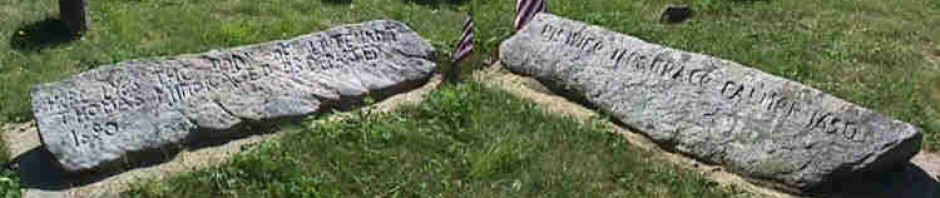
Posted in -6th Generation, Artistic Representation, Be Fruitful and Multiply, Historical Monument, Line - Miller, Place Names, Storied | Tagged , | 8 Comments

Jeffrey Estey

Jeffrey ESTEY (1586 -1657) was Alex’s 10th Great Grandfather; one of 2,048  in this generation of the Miller line.

Jeffery Estey was born in 1586 in Woolverstone Parish in Freston or Hinglesham, Suffolk County, England. Jeffery’s parents were Christopher ESTEY (Born c. 1552) and Ann ARNOLD (born 1 May 1586) Jeffery married Margaret POTT (Pote, Pett, Pitt, Pete) on May 29, 1606 in Freston, Suffolk, England.  Jeffery moved the family to Salem, Massachusetts,  in 1636 where he was granted 20 acres of land.  Jeffery died on 4 Jan 1657 in Huntington, East Neck, New York.

Jeffery Estey - Coat of Arms

Margaret Pott was born 29 May 1606 in Ipswich, Essex, England.  Margaret died in 1688 in Salem, Mass.

Children of Jeffery and Margaret

Name Born Married Departed
1. Mary Estey 16 Feb 1625
Freston, Suffolk, England
1657
Massachusetts
2. Isaac ESTEY c. 1627
Fenton Parish, Huntingdonshire,  England
Mary TOWNE
1655 Topsfield MA
11 Jun 1712
Topfield, Mass
3. Catherine Estey c. 1629 Henry Scudder (Son of Thomas Scudder)
1637 in Southold, NY
.
Thomas Jones
Huntington, NY
4 Jan 1658 Massachusetts

Jeffrey’s grandfather was  Jeffrey Estie ( born c. 1515 ) of Freston, County Suffolk, England.

Jeffery was admonished “for sleeping on the Lord’s day in time of exercise.” In February, 1645, he paid five shillings for being discharged from training.

Jeffery sold his home in Salem on 23 Aug 1651, and moved with his daughter Catherine and her husband to Southold, Long Island, New York.

In 1657 he moved with his daughter again to Huntington, Long Island, New York, where he died.

His will was probated on January 23, 1657. His will included the provision ” . . . My great bible shall remain to young Jeffrey Esty, the son of Christopher Esty, if his father bring him up to learning…or for default thereof, so to remain to one of the rest of the kindred that can read and that it not be sold out of the kindred.”

Jeffrey’s granddaughter Mary Towne Easty, was among the last of the ‘witches’ to be executed at Salem during the infamous trials.

Children

2. Isaac ESTEY (See his page)

3. Catherine Estey

Catherine’s first husband Henry Scudder was born 1615 in Daruth, Kent, England. Henry died 1661 in Huntington, Long Island, New York.  His parents were Thomas Scudder and Elizabeth Lowers.  Henry died 14 Nov 1690 Huntington, Long Island, New York.

Catherine’s second husband Thomas Jones was born about 1629 in Norfolk, England. His parents were Rowland Jones and Elizabeth Martin. Thomas died 16 Feb 1669 – Huntington, Suffolk, New York.

Sources:

New Brunswick Esteys

http://www.anamericanfamilyhistory.com/Estey%20Family/EsteyIsaac1627.html

http://trees.ancestry.com/owt/person.aspx?pid=16202591&st=1

Posted in 12th Generation, Immigrant - England, Line - Miller | Tagged | 4 Comments

Zebulon Estey

Zebulon ESTEY (1742 – 1806) was Alex’s 6th Great Grandfather; one of 128 in this generation of the Miller line.

Zebulon was born 14 Dec 1742 in Rowley, Mass.  Zebulon was one of Jacob’s sons in the Bible.  He had a twin brother, John who also grew to adulthood passing in 12 Oct 1824.   Their parents were Richard ESTEY I and Ruth FISKE.   He married Mary (Molly) BROWN on 8 Aug 1765 in Newburyport, Mass.  Zebulon died on 10 Oct 1806 in Canning Parish, Queens County, New Brunswick, Canada. 

The Esteys resided in Rowley, Mass until 1764 when they relocated to a settlement on the St John’s River in New Brunswick Canada called Maugerville.  See my post New England Planters in New Brunswick for their history. Zebulon made the trip the next year with his new bride and was one of the signers of the original covenant of the Congressional Church. Zebulon’s daughter Molly ESTEY married her first cousin Amos ESTEY so many of our direct ancestors made the trip.

  • Grandfather Richard ESTEY – age 58,
  • son Richard ESTEY II age 36, wife Hannah HAZEN age 37 and his son Amos ESTEY age 5
  • son Zebulon ESTEY age 22 and his new bride Molly BROWN
  • Zeb’s twin brother John and sister Sarah who married Thomas Barker also made the trip.

Mary (Mollie) Brown was born 14 Feb 1743 in Newbury, Mass.  Her parents were Francis BROWN II and Mercy LOWELL.   Another possibility for Mollie’s parents is Nehemiah Brown and Mary [__?__] of Ipswich, Massachusetts.  Mary died on 9 Aug 1835 in Upper Gagetown, NB

Aug 12 1835 Fredericton Newspaper The New Brunswick Royal Gazette T – d. Gagetown, Sunday 9th inst., age 93, Mary relict of late Zebulon Estey Esq. of Queens Co. NBC

Children of Zebulon and Mary:

Name Born Married Departed
1. Mary (Molly) ESTEY 3 Jul 1767 Sheffield, Sunbury Co. NB Amos ESTEY (Mary’s first cousin)
25 Nov 1787 Maugerville, New Brunswick
5 Jun 1844 in Kings Clear, York Co. NB
2. Susanna Estey 2 Apr 1769 Sheffield, NB Nathaniel Wright
3. Nehemiah Brown Estey 11 Feb 1771 Sheffield, NB Mary Jane (Polly) Ring
13 Jan 1796 Gagetown, Sunbury, New Brunswick
.
Margaret MacAdam
before 1817
11 Feb 1855 Douglas, York, NB
4. Elizabeth Brown Estey 11 Nov 1772 Sheffield, NB Samuel Upton
7 Oct 1790 in Maugerville, Nova Scotia
5. Dorothy (Dolly) Estey 23 Mar 1774 Sheffield, NB David Currie (Joshua’s uncle)
9 Jan 1791 Gagetown Anglican Church By Rev. Richard Clarke.
14 Aug 1843 Upper Gagetown, NB
6. Ruth Fiske Estey 11 Aug 1775 Sheffield, NB Abraham Brown
14 Jul 1795 Gagetown, NB
9 Feb 1848
7. Zebulon Estey 13 Jul 1778 Sheffield, NB Sarah Bridges
3 Jun 1801 Sunbury, New Brunswick,
c. 1807
8. Lucy Estey 7 Nov 1780 Canning, NB Richard Barker
12 Oct 1797 Gagetown, NB
.
Israel Oakes
6 Jul 1818
9. Thomas Estey 9 Feb 1784 Sheffield, NB Elizabeth Ring
17 Oct 1805 Gagetown, NB
7 Mar 1808 Lincoln, Sunbury, New Brunswick
10. Phoebe Estey 3 Feb 1787 Lincoln, Sunbury, New Brunswick Joshua Curry (David’s nephew)
14 Mar 1809 Gagetown, NB
23 Aug 1879

“The River St. John” by Rev. Wm. Raymond published in 1910, pages 334-5:

“On 15 January 1765 on Captain Francis Peabody’s schooner, came Zebulon Estey to Maugerville. He paid 12 shillings passage money from Newburyport to St. John and 13s 6d for `his club of Cyder’ on the voyage. Richard Estey and Thomas Barker built a saw-mill on a small creek near Middle Island. (After 1765.) They sold it in 1779 – near Maugerville. Richard Estey signed a church covenant for a distinct church society. Many moved from Maugerville due to the annoyance of the spring freshets. [A sudden overflow of a stream resulting from a heavy rain or a thaw]  Zebulon Estey moved to Gagetown. Some went across the river to the township of Burton. These included Israel Estey, Moses Estey and Amos Estey.”

Gagetown, New Brunswick

About the year 1760, before the landing of the Loyalists, a settlement was ade at Majorville by a company of New Englanders.   Zebulon Estey  came five years later in 1765. He was one of the few magistrates of New Brunswick when the Loyalists arrived in 1783.   He got this appointment in an interesting way. The story is that he had built a mill on a brook near Gagetown, when someone tried to wrest it from him on grounds that he had no claim to the land on which the mill stood. At that time, New Brunswick was not a separate province, but was a part of Nova Scotia. Acordingly Estey had to go to Halifax to gain redress. The governor kindly listened to his grievance and not only gave him a title to the land for which he asked, but added much more to it. He inquired of Estey if there were no magistrates on the St. John river. On being answered in the negative he then and there appointed him a justice of the peace.

Plan of Maugerville, Including Sheffield

The above plan of the river shows the locations of the early settlers of Maugerville; in order ascending the river.

The lower ten lots of the township and Mauger’s Island were granted to Joshua Mauger. Just above were the lots of Gervas Say, Nehemiah Hayward, John Russell, Samuel Upton, Zebulon ESTEY, John Estey, Richard ESTEY I and Edward Coy.

At the head of Mauger’s Island were the lots of Matthew Wason, Samuel Whitney and Samuel Tapley.

Between Mauger’s Island and Middle Island the lots were those of Jeremiah Burpee, Jonathan Burpee, Jacob Barker, Daniel Jewett, Ezekiel Saunders, Humphrey Pickard, Moses Pickard, Jacob Barker, jr., Isaac Stickney and Jonathan Smith.

Opposite Middle Island, in order ascending, were Thomas Barker [Richard ESTEY’s son-in-law], John Wason, Daniel Palmer, Richard Kimball, Joseph Garrison, Samuel Nevers, Peter Mooers, Richard ESTEY Jr., Jabez Nevers, Enoch DOW and Hugh Quinton.

Between Middle and Oromocto islands were Thomas Christie, Elisha Nevers, Jedediah Stickney, Stephen Peabody, Capt. Francis Peabody and William McKeen.

Opposite Oromocto Island were Israel Perley (at the foot of the island), Lt.-Col. Beamsley P. Glasier, John Whipple, Nathaniel Rideout, Capt. Francis Peabody, Alexander Tapley, Phineas Nevers, Joseph Dunphy, William Harris, Ammi Howlet, Samuel Peabody and Oliver Peabody.

Above Oromocto Island we find the lots of Asa Perley, Oliver Perley, George Munro, James Simonds, Joseph Buber, Joseph Shaw, Benjamin Brawn, Daniel Burbank, Thomas Hartt and the Widow Clark. Thence to the upper boundary of the township, a distance of two miles, there were at first no settlers, but in the course of time Richard Barlow, Nehemiah Beckwith, Benjamin Atherton, Jeremiah Howland and others took up lots.

By the time the LOYALISTS arrived in 1783, Grimross, as it was then known, had a population of some 200. It was laid out in grid pattern as a possible site for the provincial capital, but Governor Carleton chose St Anne’s [Fredericton] and Gagetown became the shire town of Queens County.

During the 19th century it was the most important centre between Fredericton and SAINT JOHN and a prosperous farming and lumbering community. The establishment of GAGETOWN CFB after WWII stripped the village of its hinterland, and the abolition of county government in the 1960s deprived it of its importance as the shire town. Today the village is undergoing a growth in tourism in addition to its apple industry. It is also a popular destination for boaters.

Excerpt from “The Studholme Report – 1783”

“Zebulon Esty has a wife and 8 children. Has been on about 5 years; built a house and grist milland has about 3 acres of cleared land. Went on in consequence of an agreement with Mr. John Crabtree acting as attorney for Capt Jades, and was promised a lease for ever on paymeny of a small acknowlegement yearly. Said Esty is a good man, his character very loyal and we beg leave to recommend him to be confirmed in his possessions”

Zebulon was a deacon in the Baptist Church, at Maugerville, York Co., New Brunswick

Letter written by Zebulon Estey as Clerk to the Senior Calvinist Baptist Church Waterborough to church member to restore them to attending regular church meetings Dec 31 1803

Zebulon signed a will on 8 Sep 1806 in Gagetown, Queens Co., NB. Proven 1 Nov 1806

Wife Molley use of two rooms in my house, all household furniture and the profits of one-third of my land and stock.

Son Nehemiah 10 shillings as I have given him” two hundred and fifty acres of land in Queen’s borough and part of a Lot of Land in Sheffield and the benefit of a trade and tools.”

Son Zebulon 50 pounds in a Sloop.

To his sons Samuel and Hollon Estey 5 pounds each or one cow when they reach age 14.

Son Thomas the other two-thirds of my land and stock, together with his mother’s third at her decease, and my blacksmith tools, he paying his sisters the sums I shall hereafter mention.

Each of my daughters 40 pounds including what they had a their marriage and since a true statement may be found of what they have had and what remains to be paid in a sheet annexed to this will.

Son Thomas Estey and David Currie executors. Witness John Clark, Silvanus Plumer, Elijah Estabrook. attachment to the will list balances to Molley Estey, who married AMOS Estey 7-12-6, Susannah Estey who married Nat WRIGHT, 4-5-0, Bettey Brown Estey who married Samuel Upton 16-3-6, Dolley Estey who married Abraham Brown nothing, Lucy Estey who married Richard Barker 8-14-10. Phebe Estey 40 pounds when she wants it or when she is married.”

Inventory of real and personal estate dated 11 Dec 1806, valued at 1, 107 pounds by Benjamin Newcomb and James Cowperthwaite.

Zebulon Estey Will 1

Zebulon Estey Will 2

Zebulon Estey Will 3

Children

1. Mary (Molly) ESTEY (See Amos ESTEY‘s page)

2. Susanna Estey

Susanna’s husband Nathaniel Wright was born after 1760. Since Nathaniel Wright came in 1783 as a single man on the “Two Sisters”, with Uriah Wright (with a wife and 7 children) I would suspect he was Uriah’s son. Uriah was granted Lot 790 in Parr Town, and land in Bellisle. Wright’s book claims that from there, he moved to Queen’s County. Uriah returned to the United States and died 21 Aug 1797 in Hollis, New Hampshire. Since they were from New York; I would suspect they were connected with the Westchester Co. Wright’s; especially around North Castle. Uriah, however, seems to have come from South East or Frederick Precincts, Fishkill, Dutchess Co., NY. However, in an indictment against him and others (20OCT1776), the others include names: Brundage, Merritt, Fowler, Theal and ‘Dickeson’, which I would associate with Westchester Co.

There is little information about Susannah and Nathaniel Wright’s marriage.  Nathaniel petitioned for land in Sunbury Co (1785 twice) and in Queens Co. (1791, 1793, 1802.) In 1791, he petitioned with Nehemiah ‘Easty’, whom, was probably Susannah’s brother. It would seem that Nathaniel Wright at least knew the family of Zebulon Estey; and there is some opinion that he married Zebulon’s daughter; so it seems reasonable to suspect; if location and timing seem right, that Zebulon may have been named after his maternal grandfather.

In his claim filed from Bellisle Bay on 18th Jan., 1787, Uriah stated that he was the son of Dennis Wright. He was from Norwalk, Fairfield Co., Conn., and left there fourteen years ago. Went to Dutchess County, N.Y.

I am guessing that one of his children was Nathaniel, who also arrived on the Two Sisters with Company One, and was a single man. Both Nathaniel and Uriah signed a petition, along with other Kingston Inhabitants, seeking means of maintenance for a clergyman in 1786. (Dan Johnston’s newspaper vital stats)

I have noted that there were many Connecticut people living in Kingston at the time, as Uriah’s neighbours. I wonder if there are any family connections? I also see that there were Peters families close by, who would be parents/sibblings to Uriah’s wife, Elizabeth. I think that Elizabeth Peters MAY be a second marriage, but am still exploring that possibility.

I’m wondering if anyone could provide names of Uriah’s children, or make any connections to other Wright loyalists who came to New Brunswick?

I’m wondering, for instance, if the Phoebe Wright who recieved land in Bellisle, is connected? Or the Elizabeth Wright, who recieved land on the Kennebecasis,is a relative? Solomon Wright was a Loyalist from Greenwich, Conn., and was probably a close relative to a William Wright (m. Susannah Hunt)

3. Nehemiah Brown Estey

Nehemiah’s first wife Mary Jane (Polly) Ring was born 8 Aug 1776 in Salisbury, Essex, Mass. Polly’s sister Elizabeth married Nehemiah’s brother Thomas. Her parents were Zebedee Ring and Hannah Estabrooks. Polly died 12 Mar 1817 in Gagetown, Queens, New Brunswick, Canada

Nehemiah’s second wife Margaret MacAdam was born about 1791. Margaret died on 22 Oct 1853 in Douglas, NB.

Children of Nehemiah and Polly:

i. William Shepherd Estey b. 04 Oct 1797 Queensbury, York Co, NB.; d.  20 Jul 1881, at Fredericton, New Brunswick; m. 29 Oct 1818 in Fredericton to Lucretia Estabrooks (b. 21 Nov 1796 – d. 26 Feb 1870 Fredericton, New Brunswick) Her parents were Joseph Estabrooks and Lucretia Handy, and her grandfather was Elijah Estabrooks.

William was a blacksmith when younger and later a general dealer, census enumerator and lumber surveyor.

William and Lucretia’s children were: Mary Jane, Harris Shepherd, Elizabeth Ann, Caroline Lucretia, Luantia, Joseph Nehemiah, Isabel Maria, Julie Sophia, William Ludlow, and Frederick William Estey, mostly born in Lincoln, downriver of Fredericton.

ii. Hannah Estey b. 1799 Queensbury, York Co, NB.; m. 12 Nov 1817 to her first cousin once removed William T. Estey (b. 1 Jan 1787 Kingsclear, York, New Brunswick – d. 16 Jun 1870 in Kingsclear Parish, York, New Brunswick) William’s parents were John Estey (1742 – 1824) and Mary Hartt (1742 – 1825). His grandparents were Richard ESTEY I and Ruth FISKE.

iii. Mary Brown Estey b. 09 Jul 1800, d. 13 Aug 1866 McKinley Ferry, York, New Brunswick,; m. 1 Jan 1829 to Joel Everett (b. 27 Aug 1802 in Kings Clear, York Co. NB. – d. 31 Jan 1887 in Kings Clear, York Co. NB). Joel’s parents were Thomas Everett and Mary Wiggins. Mary and Joel had 7 children.

iv. Matilda Jane Estey b. 18 Sep 1803 Queensbury, York, New Brunswick; d. 1819 in Queensbury, York, New Brunswick

v. Zebedee Estey b. 10 Apr 1805 Queensbury, York Co, NB; d. 11 Dec 1879; m1. his second cousin Charlotte Estey (b. 29 May 1815 – d. 14 Jan 1850 in Douglas, NB) Charlotte’s parents were Endicott Estey (1777 – 1848) and Hannah Churchill, her grandparents were John Estey (1742 – 1824) and Mary Hartt (1742 – 1825) and her great grandparents were Richard ESTEY I and Ruth FISKE.; m2. Joanna McKeen (b. 16 Apr 1816 – d. 3 Jan 1900).

Jan 7 1880 Saint John Newspaper Christian Visitor – “At his residence Mactnaquack (York Co.) 11th Dec., Deacon Zebedee Estey, 73rd year, Deacon in Mactnaquack Church, left widow and children.”

The valley was flooded in 1968 when the Mactaquac Dam was completed.

vi. Thomas Estey b. 13 Feb 1808 New Brunswick; d. 4 Jun 1874; m. Matilda Ann Churchill (b. 17 Dec 1814 in Yarmouth, Nova Scotia – d. about 1897) Her parents were Nathaniel Churchill and Elizabeth Green.  Thomas and Matilda had 6 children.

vii. Frances Maria Estey b. 22 Jul 1810 Mactaquac, New Brunswick; d. 2 Feb 1890 Coldstream, Carleton, New Brunswick; m. 24 Mar 1831 to James Everett (b. 3 Apr 1808 Kingsclear, York, New Brunswick – d. 5 Jul 1890 in Carleton Co, NB). James parents were Thomas Everett and Mary Wiggins. Frances and James had nine children.

viii. Theophilus Ring Estey b. 27 Oct 1813 Fredericton, York, New Brunswick,; d. 23 May 1857 Fredericton, York, New Brunswick,; m. 21 Feb 1839 in St. George, Charlotte Co. NB. to Clarissa Jane Seeley. (b. 30 Mar 1821 St George, Charlotte, New Brunswick – d.  23 Feb 1860 in E. Cambridge, Mass. of Typhoid Fever)

Children of Nehemiah and Margaret:

ix. Matilda Ann Estey b. 29 Dec 1819; d. 8 Jan 1903 in Lower Queensbury, NB.; m. 18 Jan 1838 to Joseph Hatfield Dykeman. Joseph was born in 1805. He died on 27 May 1873.

x. Elizabeth Jane Estey b. 31 Jan 1822; d. 27 Apr 1851 in Kings Clear, York Co. NB.; m. 30 Dec 1841 to Benjamin Kilburne (1818 – ) His parents were Francis Isaac Kilburn and Mehetable McKeen. Eliza and Benjamin had 2 children. After Eliza died, Benjamin married 5 Jan 1853 – York, NB to Margaret Price Cliff

Saint John Newspaper – New Brunswick Courier – d. Kingsclear(York Co.) Sunday 27th ult., Eliza Kilburn w/o Benjamin Kilburn and youngest d/o Nehemiah Estey, age 28, left husband, two children

Benjamin Kilburn (b. 1818 – )

xi. Daniel Allen Estey b. 21 Dec 1824 Queensbury, York, New Brunswick; d. 8 May 1897 New Brunswick; m. 22 Jul 1847 Queens, New Brunswick to Julia Ann Dykeman (b. 22 Jul 1827 Bright Parish, York, New Brunswick – d. 27 Sep 1887) Her sister Matilda married Daniel’s brother Nehemiah. Julia Ann’s parents were Jacob D Dykeman and Margaret Hanselpacker. Daniel and Julia Ann had 7 children; m2. Margaret J. Lee

xii. Nehemiah Paul Estey b. 26 May 1831; d. 5 Apr 1905; m. 31 Jan 1854 to Matilda Jane Dykeman (b. 30 Aug 1831 – d. Oct 1907) She was Julia Ann’s sister. Her parents were Jacob William Dykeman and Margaret Hanselpacker.

4. Elizabeth (Betsey) Brown Estey

Elizabeth’s husband Samuel Upton 8 Dec 1770 in Maugerville, New Brunswick, Canada. His parents were Samuel Upton and Rebecca Spinney. Samuel died 14 Aug 1834 in Sheffield, New Brunswick, Canada

Children of Elizabeth and Samuel:

The Samuel Upton (b. 1793) that married 31 Oct 1816 – Sheffield, New Brunswick to Mary Dwyer was the son of John Upton and Rebecca Smith

The Mary S. Upton (b. 27 Sep 1808) that married 9 Aug 1821 to Enoch Barker was the daughter of Asa Upton and Sarah Perley

i. Zebulon Upton b. 1792 in Maugerville, Sudbury, County, NB; d. 9 May 1868 French Lake, Sudbury, New Brunswick; m. 1810 to Elizabeth Stickney (b. 6 Jul 1792 – d. Feb 1869) Settled at French Lake, Burton Parish, Sunbury County.

ii. Asa Upton b. 1793 in Canning Parish, Newcastle, New Brunswick, Canada; d. Dec 1870 in Newcastle Bridge, New Brunswick, Canada; m. 13 Jan 1823 at Sheffield, NB to Olive Porter (1803 Sheffield, New Brunswick – 1885 French Lake, Sunbury County, NB) Asa and Olive had eight children born between 1822 and 1839.

iii. Anna Upton b. 1795/1801 in Sheffield, Sunbury, New Brunswick, Canada; d. 1880/88; m. ~1813 to her first cousin John Currie (b. 16 Dec 1798 in Upper Gagetown, Queens, New Brunswick – d. 26 Jan 1877 in Gagetown, Queens, New Brunswick), John’s parents were David Currie and Dolly Estey. (See his story below) John and Anna settled at Gagetown and had eight children

5. Dorothy (Dolly) Estey

Dorothy’s Aug 11, 1843 death was announced in the New Brunswick Courier Newspaper. The spelling of the Curry/Currey/Currie surname is of constant error. In this recording it is Correy

Dorothy’s husband David Currie was born 29 Apr 1767 in Peekskill, New York. Curry can be spelled Currie, Currey, Corey, or Corry. His parents were Joshua Currey and Eunice Travis. His nephew Joshua married Dolly’s sister Phoebe. He left Peekskill with his loyalist parents, sailing to Gagetown in 1783. David died 12 Aug 1827 in Upper Gagetown, New Brunswick, Canada.

When the American Revolution broke out, Joshua Curry took up arms for the British. His neighbors were on the side of independence, and he had to flee from home under cover of night. Three hundred miles lay between him and the nearest British camp; however, he reached there in safety, and enlisted as a soldier. Before long he was promoted to Lieutenant. His family supposed he was dead as they did not her from him till the war was over. In the fall of 1783, rather than be disloyal to England, he, with his family, left his beautiful home in Peekskill New York and went to New Brunswick, landing at the mouth of the St. John river, in November. They spent the winter there, and in the spring went up the river and purchased land in the parishes of Gagetown and Canning.”

David and Dorothy took up their abode in Canning, and God prospered them exceedingly. They owned nearly two thousand acres of land on both sides of the river. There were born to them ten sons and two daughters. The fifth son, whose name was John, and who was born in 1788, married Ann Upton and had nine children. He carried on a large tanning business and was quite wealthy. He died in 1876. His brother George is the only surviving member of the family (1897) and he has lived to see seven generations, both ancestors and descendants.

Dorothy Estey – David Currey Memorial– Upper Gagetown Cemetery , Gagetown, New Brunswick — Source: Findagrave Memorial# 62241537 – Thanks to Clarinda604 for the photo

Inscription:
In
memory of
DAVID CURREY
WHO DIED
Aug. 12, 1827
Aged 60 Yrs.

ALSO HIS WIFE
DOROTHA
WHO DIED
Aug. 11, 1843
Aged 69 Yrs.

Children of Dolly and David

i. Stephen E. Currey b. 20 Oct 1791 in Upper Gagetown, Queens, New Brunswick; d. 31 Oct 1849 in Kent, Carlton County, New Brunswick; m. 2 Mar 1819 Waterborough, Gagetown, Queens County, New Brunswick to Jane Titus (b.1804 (1800) (1807) in Queens, New Brunswick – d. 1881 in Tobique, Victoria, New Brunswick) Jane’s parents were Jonathan Titus (1776 – 1856) and Deborah Springer (1781 – 1838) Stephen and Jane had nine children between 1822 and 1848

ii. Richard Estey Currie b. 9 Apr 1793 in Upper Gagetown, Queens, New Brunswick; d. 10 Apr 1831 in Upper Gagetown, Queens County, New Brunswick; m. Margaret Gidney (b. 1797 in New Brunswick -d. 5 June 1854 in Jemseq, Queens County, New Brunswick) Her parents were Joseph Gidney and Deborah Birdsill. Margaret was the sister of Sarah “Sallie” Gidney that married Richard’s brother Daniel. Richard and Margaret had two children Mary Ann (b. 1829) and Joseph David (b. 1830).

iii. Zebulon Currie b. 12 Feb 1795 New Brunswick – d. 1861, Fredericton, New Brunswick; m1. 8 Mar 1821 to Lavinia Turney (b. Burton, Sunbury County – d. 19 Feb 1856 Plot: 3, Old Burial Ground, Fredericton, New Brunswick) Zebulon and Lavinia had five children; m2. 30 Jul 1857 Kingsclear to Mary W. Barker. Her father was Thomas Barker. First settled in Fredericton and later at Prince William, York County

March 23 1861 Carleton Sentinel – Woodstock, Carleton County – We regret to announce the death of Zebulon Currie, father of Rev. D.D.[Duncan Dunbar] Currie which took place at Fredericton on Wednesday. He belonged to the Baptist denomination, age 66.

The following records of the Currie family have been copied from a copy of the Bible (Oxford, 1810) in the possession of the Nebraska State Historical Society. This Bible was found in a house in Lincoln, tucked away in the attic, where it had been left by some former owner. The family records are written on both sides of the title-page of the New Testament. On the flyleaves is written (signed Z. Currie) an ecclesiastical history of the Province of New Brunswick, in which are named the various ministers who preached there prior to 1841. On the title-page is written “Zebulon Currie, His Bible, March 1825 Fredericton, New Brunswick”.

Zebulon Currie born 12 February 1795, in Waterborough

Lavenia Currie born 6 Oct. 1798, in Burton

Margaret Ann Currie born 25 July 1822, in Gagetown died 17 Oct. 1825, buried in Fredericton.

Duncan Currie born 9 Nov 1824 in Fredericton.

Thomas Currie born 18 Aug 1826 in Fredericton.

Charles Zebulon Currie born 4 Apr 1829 in Fredericton [the “Charles” has been added in the same hand but at a later date]

Adelaide Currie born 5 Nov 1831 in Fredericton.

Elizabeth Anna Currie born 10 May 1834 in Fredericton.

Emer [Emma] Caroline Currie born 18 Jan 1837 in Fredericton, died 17 Jan 1900 in Fredericton.

iv. Rev. David Currie b. 19 Oct 1796 in Gagetown, Sunbury & Queens, New Brunswick, Canada; d. 15 Apr 1886 in Wolverton, Oxford, Ontario 89 years 5 months 27 days, New Brunswick, cause – old age 4 days, retired clergyman, infm – Charles K. Currey of Wolverton, Blenheim Twp ; m. 26 Feb 1824 Otnabog, NB to Hannah Slipp (b. 6 July 1797 in Otnabog, New Brunswick – d. 28 Feb 1874 in Wolverton, Oxford, Ontario) Hannah’s parents were Leonard Slipp and Elizabeth Ryson.

In the 1850 census, David and Hannah Curry were living in Porter, Niagara, New York with six children at home ages 13 to 23. David was a Baptist Minister.

v. John Currie b. 16 Dec 1798 in Upper Gagetown, Queens, New Brunswick; d. 26 Jan 1877 in Gagetown, Queens County, New Brunswick, m.his first cousin Anna Upton (b. 1801 in Sheffield, Sunbury, New Brunswick -d. 1888) Anna’s parents were Samuel Upton and Betsey Estey (See above). John and Anna settled at Gagetown and had eight children.

John carried on a large tanning business and was quite wealthy.

May 2 1826 – John Currey is appointed to Church Office of the Calvinist Baptist Church of Waterborough, to act as a “clerk” and Mr Hoben is voted to Office of Treasurer.

Jun 17 1830 – Elder Marsters preached on the Obstaining from every appearance of evil particularly the evil of intoxication after which was formed a Society as “Abstanance Society”. They chose the President to be Elder Marsters, John Currey as Secretary and David Currey as Treasurer.

Aug 7 1830 – Two months later Elder John C Marsters, John Currey, Jarvis Estabrooks and James Jones met the Branch of the Canning Church in Cumberland Bay. There they held a meeting concerning a grievance that Peter Day and Thomas Wasson were labouring for some time past.

Jan 28 1833 – The Members of the Calvinist Baptist Church of Waterborough, Queens County held a Church meeting. They chose “Brother” Jarvis Davis to act as a Moderator and then proceeded with the Church Business at hand. The first thing that was brought to attention in the meeting was that “Brother” John Currey had been in the “repeated habit of talking against Elder John Marsters” in a way not becoming a man of the word much more a Deacon of the Church to the great dishonour of himself and the cause of Christ which charge John Currey owned to be true. So the majority of the members decided by vote that his conduct was not justifiable and it was moved by the moderator whether or not they would considering the past conduct of Brother John Currey be for the Glory of God and good of the Church to hold him as a Deacon of Christ any longer. The vote was voiced unanimously against John Currey that he should no longer hold the office of Deacon and remain under the displeasure of the church till he gave satisfaction for his past conduct and then to be recieved as a private member.

Feb 4 1833 – Church meeting was held shortly after John is dismissed and after the opening of singing and prayer Elder Brother Coy was choosen to act as the Moderator. During the meeting it was moved to know whither the Church considered Elder John Marsters to be a member of this church or not and so a vote was taken, there were twelve nays and not one yea. Further it was agreed that Brother John Currey should be restored to his office of Deacon and a further agreement to request the assistance of the sister Church’s Elder Joseph Crandall, Titus Stone and the Church at Fredericton.

With the help of the new assistance John Currey was restored and a vote was taken to dismiss Elder Marsters on July 29 1832.

After this dispute which the cause is not clearly stated in the records the church is thrown into great difficulty and this is recorded in their records on March 27 1834.

March 15th 1855 (MF#F7833 Baptist Church, Waterborough, Page 88)

Recorded: Nothing of importance took place till March 15 1855. Rev W.D. Fitch, William Estabrook and Thomas Babbit came to the house of the writer requesting to know if I was willing that there might be a church organized in their places. I told them I was and if it was in a way that I could unite I should join it , that was upon these articles, which was examined and compared to the third chapter of Acts and acknowledged to be correct.

On the 20th met at our meeting house in Gagetown George Coy, John Curry, William Estabrooks and Thomas Babbit to arrange matters.

John and his wife Ann, Indenture on May 14 1856; land to their son Charles W Currie for the sum of 147 pounds 10 shillings paid in hand for Lot#79 in Upper Gagetown. After the death of her husband John, Ann is found living on this land in the 1881 census with her son Charles and his family.

vi. Daniel Currie b. 19 Jul 1801 in Upper Gagetown, Queens County, New Brunswick; d. 28 May 1880 in Columbia, Tuscola, Michigan; Burial Columbia Township Cemetery Plot: Blk 1 Lot 34; m1. Sarah “Sallie” Gidney( b. ~1803 in New Brunswick – d. 11 Oct 1845 in Seneca, Ontario) Sarah’s parents were James Gidney and Deborah Birdsall. Sallie was the sister of Margaret Gidney that married Daniel’s brother Richard. David and Sarah moved to Seneca, Ontario; Daniel and Sarah had ten children born between 1824 and 1845;

Sometime after Sarah’s death the family moved to New York. They can be found in the 1850 Census for Lewistown, Niagara, New York. Shortly after this they moved to Paris, Ontario, Canada.

m2. 1851 to Francis Elizabeth Townsend (b. 1820 New Brunswick – d. Aft 1880 census Bay City, Bay, Michigan) and had three more children

Daniel and Francis immigrated once again in 1860. In the 1870 census, Daniel and Francis Currey were retired in Columbia, Tuscola, Michigan with one son Samuel age 11 at school.

vii. Rev. Thomas Currey b. 10 Sep 1803 in Upper Gagetown, Queens, New Brunswick; d. 8 Jul 1854 in Alligan, Michigan; m. Ester [__?__] (b. 1808 in New Brunswick – d. Mar 1860 in Allegan, Allegan, Michigan) Thomas and Esther had six children born between 1831 and 1846.

In the 1850 census, Thomas was a Baptist Minister in Porter, Niagara, New York,

viii. Samuel Currie b. 12 Oct 1806 in Upper Gagetown, Queens, New Brunswick; d. 28 Feb 1878 in Providence, Providence, Rhode Island; Did not marry The Library of Samuel Currey was sold at auction, in Providence in 1878. It is said that he signed his name in his books on page 96, to show his ownership.

Historical Catalogue of Brown University 1764-1914

CURREY, SAMUEL, A. B. 1866;
Principal University Grammar School 1835-36;
admitted to bar 1837;
Lawyer. Providence, Rhode Island. 1837-1878
Member Rhode Island House of Representatives for two years;
Rhode Island: Senate – seven years
P B K [Phi Beta Kappa]

“Reminiscences of the Rhode Island Bar”, by Abraham Payne, 1885 pages 90 – 96

“…in 1836 he was a rather mature student in the office of Attorney General Greene, and might be seen on Westminster street, towards the close of a pleasant afternoon, resting himself after his morning studies in pleasant intercourse with the young ladies, …. At this time Mr. Currey was a bit of a dandy; he parted his hair in the middle, and wore a blue coat with brass buttons, with a buff vest and yellow kid gloves. He came out of college in 1835 without a degree, because he and his classmates were to conscientious to permit any distinction among their number in the assignment of parts at Commencement. He intended at one time to enter the ministry, and, in fact, was a licensed preacher and well grounded in the doctrines of his denomination. He was a Calvinistic Baptist……

Not long after he came to the bar, the movement in favor of an extension of suffrage was started in the State, and Mr. Currey early took a prominent position on the side of Law and Order. He was a native of New Brunswick and a naturalized citizen of the United States. He took great pride in his fidelity to the institutions of his adopted country and State. In what was known as the Dorr war, in 1842, he joined a military company and attained the rank of sergeant; but while most of the young lawyers of the Law and Order Party attained military rank which entitled them to ride about on horseback, I do not think that Sergeant Currey was ever mounted. He was for many years secretary of the T. R. I. A. O. E. A. O. F., a sort of debating society, …..

Mr. Currey acquired much distinction by his able defense of Nicholas Gordon, indicted as accessory to the murder of Amasa Sprague. He afterwards for many hears occupied a high position at the bar as counselor and advocate. He was engaged in much of the important litigation in the State during his active professional ife. He rendered valuable and important service as counsel of the Hartford, Providence and Fishkill Railroad Company. He was one of the counsel engaged in the contest over the will of the late Colonel Thomas Halsey. …..

Mr. Currey was not a popular orator, but he was an earnest, clear and powerful speaker. I often said of him during his life that he was the most ‘sure-footed’ member of the bar. Give him an opportunity for full examination of a question of law upon principle and authority, and he rarely, if ever, made a mistake. I doubt if his deliberate judgment was ever overruled by the tribunal of last resort. If it was, I should be inclined to say, so much the worse for the tribunal. In the examination of such questions, I think he derived much benefit from his early theological training. His mind worked with the logical force and precision of an old Puritan divine of the seventeenth century. Mr. Currey was a careful student of English constitutional history, and while he adhered to the opinions in the Church and State inherited by him and his Baptist brethren from Roger Williams, he was no believer in the doctrines commonly called democratic. He was of the Hamilton rather than of the Jeffersonian school of politics. As a man, Mr. Currey was amiable and generous to a fault. Like all the rest of us, he had some weaknesses, among them a morbid sensitiveness. He liked to say pleasant things, and he like to have pleasant thenigs said to him, and anything like ridicule or neglect stung him to the quick. But he was the most placable of men……

At length there came to Mr. Currey failing health, as the years drew nigh in which he could say, ‘I have no pleasure in them.’ He was rather a lonely old man; but kind friends were about him to the last, notably Henry C. Whitaker and William W. Hoppin. After his death, religious services were held in the vestry of the First Baptist church, and his pastor, the Rev. E. G. Taylor, D. D., spoke of his many good qualities, and especially of the confident faith which sustained him in the mortal hour. His friend, Governor Hopin, spoke in warm terms of eulogy, and commended his virtues to the imitation of his professional brethren who were present. His remains were taken to New Brunswick, and he sleeps among his kindred.”

In the 1870 census, Samuel Currey was a lawyer living in a lodging house in Providence Ward 2, Providence, Rhode Island.

Samuel Currie (1806-1878) Gravestone — Upper Gagetown Baptist Church Cemetery, Gagetown, New Brunswick

ix. Eunice Currie b. 19 Apr 1807 in Upper Gagetown, Queens, New Brunswick; d. 24 Sep 1880; m. 9 Mar 1837 Waterborough to Charles Hoben. His parents were Reuben Hoben (b. 1 Aug 1769 in Cornwallis Township, NS 1 – d. 1850) and Elizabeth Ebbett (b. 1791, d. 1845) Eunice and Charles had three children

x. Mary Jane Currie b. 15 May 1810 in Upper Gagetown, Queens, New Brunswick; d. 5 Nov 1861; m. Samuel Coy (b. 25 Oct 1803 Gagetown, New Brunswick – d. 28 Jun 1882 Gagetown New Brunswick) Samuel’s parents were Rev. Benjamin Coy and Sarah Cottle. Mary Jane and Samuel had 5 children. He second married 7 Jan 1864 – Fredericton, York, New Brunswick to  Ruth Amelia Estey (16 Dec 1824 – 30 Sep 1881.)   Samuel had 9 more children with Ruth and died at the age of 78.

Ruth was Mary Jane’s second cousin.  Her parents were Jonathan Estey (b. 12 Mar 1781 ) and Ruth Amelia Hartt. Ruth’s grandparents were John Endicott Estey(b: 14 Dec 1742 in Rowley, Mass) and Mary “Molly” Hartt (b: 6 Nov 1750 in Mass.)  Ruth’s great grandparents were Richard ESTEY I and Ruth FISKE.

ix. George William Currie b.19 Apr 1813 in Gagetown, Queensbury, York Co., New Brunswick; d. 19 Nov 1890 in Welsford, Queens County, New Brunswick; m. 4 May 1840 Kingsclear, York County, New Brunswick to Susan Elizabeth Sutherland (b. 1815 in New Brunswick – d. 5 Aug 1886 in Springhill, Kingsclear, York County, New Brunswick) Her parents were George Sutherland (1784 – 1874) and Hannah Wasson (1786 – 1868) George and Susan had seven children born between 1841 and 1856.

Looking from Springhill to Mouth of Keswick

George lived and worked with his father in law George Sutherland. The family sapped the trees for Maple syrup to sell at market along with wool, produce, dairy and meat. They also worked with tanning, carpentry, growing grain and in the 1871 Hutchenson Directory and 1871 census it shows George Currie owned and operated a Grist Mill in Springhill, Kingsclear Parish, York County, New Brunswick. By the end of his life he was considered an Esquire, noted by his daughter Clarinda Amelia who took care of her father in his last years at the home in Fredericton, New Brunswick. George would travel to Larchmont, New York where his son George Emery and son Duncan Currie were living.

The Local people of the Kingsclear Parish in York County, New Brunswick say that a Dam was built in the St John River which flooded a burial ground close to the Currie Land. Some of the stones were placed elsewhere in the area and those who did not claim their Ancestors were left under what is now called The Head Pond. The Memorial stone for the children of David and Dorothy Currie includes George W Currie. Perhaps this is where his body was moved however a record of this needs to verify this fact. George and Susan Currie’s daughter Clarinda Amelia married Jacob William Babbitt and after her father’s death the Babbitt family headed west to Alberta. From there Clarinda’s trail goes cold and she may have died and was buried in Alberta.

x. James Robert Currie b. 20 Dec 1815 in Upper Gagetown, Queens, New Brunswick; d. 8 May 1897 in Upper Gagetown, Queens, New Brunswick; m. 13 Oct 1850 at Canning, NB to Sarah Amelia Hoben (b. 25 Nov 1833 in New Brunswick – d. 1920) Sarah’s parents were Reuben Hoben and Rebecca Hawes/Humes. James and Sarah settled at Gagetown and had six children.

James was admitted as an Attorney June 11, 1846 and then admitted as a Barrister June 13, 1848. He practiced in Gagetown and was the registrar of probates, and clerk of the Queens county court. He was appointed Way Officer June 13, 1856.

The family can be found in the 1871 census for Gagetown Parish: Curry James R., 50, NB, Baptist, English, Lawyer; Curry Sarah A., 38, NB, Baptist, Irish; Curry Eliza, 19, NB, Baptist, English; Curry Lemuel A., 14, NB, Baptist, English; Curry Helen M., 12, NB, Baptist, English; Curry Sarah V., 10, NB, Baptist, English; Curry Augusta F, 10m, NB, Baptist, English, b May

James was instrumental in the founding of The Grand Orange Lodge in the Province of New Brunswick, which was organized, April 10, 1875.

Quoted from the Queen’s County Historical Society News Letter, Vol. 4, #3, pages 4 & 5: “It is an easy transition of thought from one of New Brunswick’s oldest schools, to the oldest university in the province, – the University of New Brunswick, which form many years has been preparing public leaders for their careers, here or in distant fields. A study of the “Register of Former Students and Graduates of U.N.B” issued in 1924, shows that a large proportion of Queens County students entered U.N.B. from the Gagetown Grammar School, and in many cases provided Canada with outstanding leaders in law, in the Church, the field of medicine, as teachers, and more recently as engineers.

First student from Gagetown ….. and James Robert Currey, who became an attorney in 1848. Law was a favorite field for Gagetown students. The J.R. Currey mentioned above, had a son, Lemuel Allan Currey, D.C.L., 1895. J.R. Currey’s grandson, Adrian B. Gilbert, B.A. 1916, M.A. 1919, was a Rhodes Scholar, and a B.C.L. of Oxfod University in 1922. He is a well-known Saint John lawyer. His brother, Lemuel Allan Gilbert, received his B.A. in 1914 and M.A. in 1918, and his B.C.L. from King’s College in 1922. He is a High School teacher in Vancouver.”

James R Currey – Barrister cir 1880 , New Brunswick, Canada

6. Ruth Fiske Estey

Ruth’s husband Abraham Brown was born in 1772. Abraham died 15 Jun 1853 in Andover, Victoria, New Brunswick

Children of Ruth and Abraham

i. Deborah Brown

ii. Jonathan Brown b. abt 1790 in Queensbury, York, New Brunswick, Canada; m. 30 Oct 1815 to Mary P. Cliff (b. 23 Nov 1794 in Queensbury, York, New Brunswick – d. 06 Aug 1852) Mary’s parents were John Cliff and Margaret Price.

7. Zebulon Estey

Zebulon’s wife Sarah Bridges was born 1780. Her parents were Samuel Bridges and Sarah Stickney. Sarah died 16 Oct 1847 in Sheffield, Sunbury, New Brunswick, Canada

Children of Zebulon and Sarah:

i. Samuel Bridges Estey b. Abt 1806; m. 04 Jan 1828 to Phoebe Cowperthwaite (b. 1800 – 1877) Her parents were James Cowperthwaite and Lydia Newcomb. Samuel and Phoebe had 12 children.

ii. John Hollan Estey b. 28 Nov 1804.; m1. Caroline Ring (b. 1807 Saint John, NB – d. 1828); Her parents were Rev. Jarvis Samuel Ring and Sarah Sarah Estabrooks Hart.

m2. 04 Jun 1834 to Mary Ann Raymond (b. 18 Nov 1815 in New Brunswick – d. 31 Dec 1887 in Woodstock Her parents were Jesse Raymond and Hannah Bostwick. John and Mary Ann had had 6 children born between 1836 and 1849 in Wicklow, NB.

8. Lucy Estey

Lucy’s first husband Richard Barker was born 26 Mar 1778. He was Lucy’s first cousin. His parents were Thomas Barker and Sarah Estey. His maternal grandparents were Richard ESTEY and Ruth FISKE.

Lucy’s second husband Israel Oakes was born about 1776. Ref RSchaffer, JCHatt J. Hatts records have Sarah Estey’s and Thomas Barker’s marriage as September 12, 1761. This record continues with Sarah having a second marriage to an Isreal Oakes on July 6th, 1816. This raises some questions about the marriage of an Isreal Oaks to a Lucy Esty on July 6th 1818 which is from R. Schaffer’s Estey data. I can’t find another reference to Israel Oaks.

9. Thomas Estey

Thomas’ wife Elizabeth Ring was born 1788 in New Brunswick, Canada. Elizabeth’s sister Polly married Thomas’s brother Nehemiah. Her parents were Zebedee Ring and Hannah Estabrooks.

Children of Thomas and Elizabeth:

i. Thomas W. Estey b. 17 Apr 1804 New Brunswick; m. Anna C. [__?__]

ii. Zebulon Estey b. Abt 1807, d. 20 Dec 1863; m. Maria [__?__]

10. Phoebe Estey

Phoebe’s husband Joshua Curry was born 24 Aug 1788.  His parents were Richard Currie (1765 – 1857) and Rebecca Dykeman (1767 – 1816.) His grandparents were Joshua Curry and Eunice Travis. His uncle David married Phoebe’s sister Dolly. (See David’s section for the story of loyalist Joshua Curry Sr.)  Joshua died 25 Dec 1867.

In 1833 Joshua was marked excluded from the Kingsclear Baptist Church, this could mean many several things. He may have disagreed with some policies or he may be attending another branch.

Children of Phoebe and Joshua:

i.Rebecca Ann Currie b. 28 Feb 1810 in Gagetown, York County, New Brunswick, Canada; d. 9 Dec 1891 in Gibson, York County, New Brunswick, Canada; m. 1830 to Alexander Howard (b. 1808 in York County, New Brunswick – d. 1886 in Gibson, York Co., New Brunswick) His parents were John Howard (1770 – 1854) and Rebecca [__?__] (1775 – ) Rebecca and Alexander had 13 children between 1832 and 1854.

ii. Thomas Gilbert Currie b. 10 May 1811 in Gagetown, New Brunswick, Canada; d. 26 Dec 1886 in Fredericton, New Brunswick, Canada; m. Abt 1841 – New Brunswick, Canada to Patience Yerxa (b. Jul 1822 in Douglas Parish, York Co., New Brunswick – d. ~ 1906 in Cambridge Mass.) Her parents were Abraham Yerxa (1775 – 1857) and Barbara Green (1780 – 1857). Thomas and Patience had eight children born between 1844 and 1861. The Currie Book by Philip Horne states he is a grocer and contractor. Residence is in Keswick, NB. Thomas and Patience had ten children born between 1842 and 1868.

1871 Census of Fredericton, York County, NB.

Thomas G Currie age 58, Trader & Merchant & wife Patience age 47, John J. Currie,age 23, Medical Student, Isadore Currie, age 18, Herbert Currie, age 16, Willard Currie, age 10, are sharing a house with Israel E Smith.

iii. Richard Dudley Currie b. 10 Feb 1813 in Parish of Queensbury, York County, New Brunswick’ d. 06 May 1893 in McNally’s Ferry, Parish of Queenbury, York Co. New Brunswick; m. 8 April 1841 Parish of Douglas, York County, New Brunswick to Alice Sloat (b. 1816 in Macnaquac, Douglas, York County, New Brunswick – d. 13 Jan 1904 in McNally’s Ferry, Queenbury, New Brunswick)

iv. Nehemiah E Currie b. 7 May 1817 in Parish of Douglas, York County, New Brunswick, Canada; d. 9 Feb 1904 in Bright Parish, York County, New Brunswick, Canada; m. his first cousin Charlotte Augusta Currie (b. 14 March 1817 in Upper Jemseg, Queens County, New Brunswick – d. 1907 in Bright Parish, York County, New Brunswick) Charlotte’s parents were Gilbert Currie (1794 – 1879) and Mary Camp (1801 – 1863) and her grandparents were Richard Currie and Rebecca Dykeman. Nehemiah and Charlotte had eight children born between 1842 and 1859.

v. Mary Elizabeth Currie b. 30 Apr 1820 in Mactaquac, New Brunswick, Canada; d. 2 Apr 1895 in Lower Queensbury, New Brunswick, Canada; m. 19 Jan 1853 New Brunswick, Canada to James W Brown (b. 9 Oct 1818 in Lower Queensbury, New Brunswick – d. 2 Mar 1877 in Lower Queensbury, York County, New Brunswick) Mary and James had four children born between 1856 and 1863.

vi. Zebulon John Currie b. 6 May 1823 in Parish of Queensbury, York Co, New Brunswick, Canada; d. 13 Apr 1890 in Woodstock, New Brunswick; m. 9 Aug 1856 Queensbury, York, New Brunswick, Canada to Mary Ann Thompson (b. 11 Apr 1828 in Parish of Douglas, York County, New Brunswick – d. 29 May 1902 in Woodstock, Carlton County, New Brunswick) Zebulon and Mary had three children born between 1858 and 1865.

vii. Deacon George Currie b. 5 May 1824 in Parish of Queensbury, York Co, New Brunswick, Canada; d. 17 Jul 1896 in Wicklow Parish, Carleton County, New Brunswick, Canada; m1. 14 Aug 1875) – Centreville, Carleton, New Brunswick, Canada to Isabella Wright (b. 1827 in New Brunswick – d. 26 Nov 1874 in Centreville, Carleton, New Brunswick); George and Isabella had five children born between 1851 and 1870.

m2. 14 Aug 1875 Centreville, Carleton County, New Brunswick, Canada to Mrs. Nancy J Jones (b. 1845 New Brunswick) George and Nancy had one child George Miles Currie (b. 1879 – )

viii. David Currie b. 6 Mar 1826 in York County, New Brunswick, Canada; d. 1903 in MacTaquac, NewBrunswick

ix. Phoebe Ann Currie b. 26 Apr 1828 in York County, New Brunswick, Canada; d. 27 Sep 1896; m. 16 May 1867 to Abraham John L. Brown (b. 20 Jan 1816 in Lower Queensbury, New Brunswick – d. 23 Apr 1903 in Mactaquac, York, New Brunswick) Phoebe and Abraham had three children born between 1868 and 1875. Phoebe and David married late in life and dating by the age of the mother and father one can wonder if the children were biological or perhaps adopted

10 Dec 1879 Saint John Newspaper Christian Visitor – d. 4th Nov., Elmer BROWN, age 8 years 7 mos.; 10th, Alice Maud Mary BROWN, age 4 years 6 mos.; 12th, Ella Bertha BROWN, age 10 years 5 mos., children of Abraham BROWN and Phebe BROWN. Thus our sister had to part with all her children in eight days.

x. Judson Joshua Currie b. 11 Jan 1832 in Macnaquac, York County, New Brunswick, Canada; d. 26 Sep 1910 in Hartland, New Brunswick, Canada; m. 3 Nov 1864 – New Brunswick to Lydia Brown (b. 17 Jun 1843 in Prince William, York Co., New Brunswick) Judson and Lydia had eleven children born between 1865 and 1886.

Sources:

New Brunswick Esteys

The New York genealogical and biographical record, Volume 49

http://www.myfamilyhistory.com/Towne/pafg14.htm#124

http://trees.ancestry.com/owt/person.aspx?pid=22778870

http://boards.ancestry.com/localities.northam.canada.newbrunswick.sunbury/272.3/mb.ashx

http://trees.ancestry.com/tree/14809323/person/1249985571

http://trees.ancestry.com/tree/8404457/person/43519001

Posted in -8th Generation, 90+, Be Fruitful and Multiply, Immigrant - North America, Line - Miller, Pioneer, Twins | Tagged , | 17 Comments

William Towne

William TOWNE (1599 -1673) was Alex’s 10th Great Grandfather; one of 2,048  in this generation of the Miller line.

Towne Coat of Arms

William Towne was baptized on 18 Mar 1598/99 in St. Nicholas Parish Church, Great Yarmouth, Norfollk, England.  His parents were John TOWNE and Elizabeth CLARKE.  Others say his parents were Richard TOWNE and Ann DENTON.    He married Joanna BLESSING 25 Apr 1620 in St. Nicholas Church, Great Yarmouth England.  He and his wife remained at Yarmouth, and six children were born to them there, but they emigrated to New England before 1640, perhaps in Apr 1637 on the Rose of Yarmouth, and settled at Salem, Massachusetts.  William died about 1673 in Topsfield, Mass.

William and his children were baptized in Great Yarmouth Minster

Joanna Blessing was born in 1594 in Great Yarmouth, Norfolk, England.    Alternatively, she was born in 1595 in Somerleyton, Suffolk, England. She was daughter of John BLYSSYNGE and Joan PREASTE .  Joanna died 22 Jun 1674 in Topsfield, Mass.

Children of William and Joanna:

Name Born Married Departed
1. Rebecca Towne 13 Feb 1621/22
Great Yarmouth, England
Francis Nurse 24 Aug 1644
Salem, Mass.
19 Jun 1692 [age 61] Salem MA Hanged for Witchcraft
2. John Towne bapt.
16 Feb 1622 Great Yarmouth England
Phebe Lawson
1648
Salem, Mass.
1672
3. Susanna Towne 20 Oct 1625
St Nicholas  Great Yarmouth
Thomas Hayward
1632 Bridgewater, Mass
29 Jul 1672
Bridgewater, Mass
4. Edmund Towne 22 Jun 1628 Great Yarmouth Mary Browning 1652 before 3 May 1678
5. Jacob Towne bapt.
11 Mar 1631/32
Catherine Symonds
26 Jun 1757 Topsfield
22 Nov 1704 Topsfield
6. Mary TOWNE bapt. 24 Aug 1634
Great Yarmouth
Isaac ESTEY
1655 in Topsfield,, Mass
22 Sep 1692 [age 58] Salem MA Hanged for Witchcraft
7. Joseph Towne 3 Sep 1639 Salem MA Phebe Perkins
1665
Topsfield
21 Feb 1713
Salem, Mass
8. Sarah Towne 1642
Topsfield
Edmund Bridges
1 Jan 1659/60 Topsfield, MA
.
Peter Cloyes
1682
1703
Framingham, Mass

William Towne
William lived in Topsfield, Mass which is about 11 miles north of Salem.

At Salem, on October 11, 1640, the town “Graunted to William Townde a little neck of land right over against his howse on the other side of the riuer to be sett out by the towne.” This grant was part of the Division of the North Field – Salem, Mass. Many of our ancestors lived in the same neighborhood.  See the link for a map to their original lots.

In June and July, 1640, he had brought an action of debt against John Cook, at Salem.  William and Francis Nurse asked the town for a grant of land on March 20, 1647, and it was then ordered that the land be surveyed before a decision should be made as to granting it. In 1652 he removed to Topsfield, Massachusetts, where he purchased forty acres of land, and made further purchases in 1656.

The English had settled within the bounds of modern-day Topsfield by 1643. They originally named their settlement New Meadows.  Tradition has long held that the Agawam called the place “Shenewemedy”, meaning “the pleasant place by the flowing waters.” More recent historians believe that “Shenewemedy” was how the Agawam pronounced New Meadows, rather than a word in their own language.

Many Topsfield residents were accused of witchcraft until the hysteria ended in May 1693. While the causes of the 1692 witchcraft episode continue to be the subject of historical and sociological study, there is a consensus view that land disputes and perhaps economic rivalry among factions in Salem, Salem Village and Topsfield fueled animosity and played an underlying role.

In 1652 William he sold his land at Salem. He was listed among those to share in the common lands at Topsfield in 1661. In 1663 he gave his son, Joseph Towne, two-thirds of his property at Topsfield, reserving only a third share for himself. He died at Topsfield in 1673, and administration on his estate was granted to his widow, June 24, 1673. His widow died in or about 1682, and on January 17, 1682, the six children signed a petition for the settlement of her estate.

William Towne Bio 1 By Walter Goodwin Davis 1927

William Towne Bio 3

William Towne Bio 4

Children

In 1692, all three Towne sisters lived along the road that traversed through Salem Village, from Salem Town to Topsfield, known as High Street in Topsfield.  Rebecca and Mary were in Salem Village, Rebecca near the Salem Town line, and Mary near the Wenham line.  Sarah lived in Topsfield near the center of town.

1. Rebecca Towne (Wiki) 19 Jun 1692 [age 61] Salem MA Hanged for Witchcraft

Rebecca’s husband Francis Nurse was born 18 Jan 1618 in Wenhaston, Suffolk, England. His parents were Edward Norris and Elinor [__?__].  Francis died 22 Nov 1695 in Salem, Essex, Mass.

Francis was a “tray maker” by trade, who likely made many other wooden household items. Due to the rarity of such household goods, artisans of that medium were esteemed. Nurse and her family lived on a vast homestead which was part of a 300-acre grant given to Townsend Bishop in 1636. Francis originally rented it and then gradually paid it off throughout his lifetime. Together, the couple bore eight children: four daughters and four sons. Their names were Rebecca Nurse (born 1642), Sarah Nurse (born 1644), John Nurse (born 1645), Samuel Nurse (born 1649), Mary Nurse (1653 – June 28, 1749), Elizabeth Nurse (born 1656), Francis Nurse (born 1660/1661), and Benjamin Nurse (born in 1665/1666). Nurse frequently attended church and her family was well respected in Salem Village; Francis was often asked to be an unofficial judge to help settle matters around the village. In 1672, Francis served as Salem’s Constable. It was later written that Rebecca had “acquired a reputation for exemplary piety that was virtually unchallenged in the community,” making her one of the “unlikely” persons to be accused of witchcraft.

Rebecca is a central character in Arthur Miller’s play The Crucible as well as many other dramatic treatments of the Salem Witch Trials

Rebecca Nurse as played by Elizabeth Lawrence in the Crucible

The Nurse  family had been involved in a number of acrimonious land disputes with the Putnam family. On March 23, 1692, a warrant was issued for Rebecca’s arrest based upon accusations made by Edward and John Putnam. Upon hearing of the accusations the frail 70 year old Nurse, often described as an invalid, said,

“I am innocent as the child unborn, but surely, what sin hath God found out in me unrepented of, that He should lay such an affliction on me in my old age.”

There was a public outcry over the accusations made against Rebecca, as she was considered to be of very pious character. Thirty-nine of the most prominent members of the community signed a petition on Nurse’s behalf.  At age 71, she was one of the oldest accused. Her ordeal is often credited as the impetus for a shift in public opinion about the validity of the witch trials.

The above drawing illustrates a scene in John Musick’s book, The Witch of Salem, in which Rebecca Nurse is brought in chains to the meeting house where the Rev. Nicholas Noyes pronounces her excommunication before the congregation

Rebecca’s trial began on June 30, 1692. By dint of her respectability, some testified on her behalf including her family members. However the young Ann Putnam and her siblings would break into fits and claim Nurse was tormenting them. [See my post Witch Trials – Accusers for more about Ann Putnam]  In response to their outbursts Nurse stated, “I have got nobody to look to but God.” Many of the other afflicted girls were hesitant to accuse Nurse.

In the end, the jury ruled Nurse not guilty. Due to public outcry and renewed fits and spasms by the girls, the magistrate asked that the verdict be reconsidered. At issue was the statement of another prisoner “[she] was one of us” to which Nurse did not reply, probably because of her loss of hearing. The jury took this as a sign of guilt and changed their verdict, sentencing Nurse to death on July 19 1692.

The demise of Rebecca Nurse, Susannah Martin, Elizabeth Howe, Sarah Good, and Sarah Wildes

Many people labeled Nurse “the woman of self dignity”, due to her dignified behavior on the gallows. As was the custom, after hanging Nurse’s body was buried in a shallow grave near the gallows, along with other convicted witches, who were considered unfit for a Christian burial. Nurse’s family secretly returned after dark and dug up her body which they interred properly on their family homestead.

Rebecca Nurse Memorial

In July 1885, her descendants erected a granite memorial over her grave in what is now called the Rebecca Nurse Homestead cemetery in Danvers (formerly Salem Village), Massachusetts.

Rebecca Nurse's Homestead is a tourist attraction today

Her accuser, Ann Putnam, Jr., publicly apologized to the Nurse family for accusing innocent people. In 1711, the government compensated the Nurse family for Rebecca’s wrongful death. The Nurse family homestead fell into the hands of Putnam family descendant Phineas Putnam in 1784. The Putnam family maintained control of the property until 1908. Today, it is a tourist attraction that includes the original house and cemetery, on 27 of the original 300 acres

2. John Towne

John’s wife Phebe Lawson was born 1625 in England. Her parents were William Lamson and Sarah Ayers Phebe died in 1645.

In a sad turn of events, John’s granddaughter Rebecca Towne, who was 24 at the time, became one the “afflicted girls” who testified against her great aunt Mary Estey in court. Rebecca Towne also testified against her other grandaunt, Sarah Cloyes as well. Both Rebecca’s father and grandfather had passed away well before the trials; her father died when she was only 10 years old. Perhaps this shameful act would not have occurred had either men been alive.

3. Suzanna Towne

Susannah’s husband Thomas Hayward was born 1 Jan 1601 in Aylesford, Essex, England. His parents were Thomas Hayward and Agnes Beaumon. Thomas died 15 Apr 1686 in Bridgewater, Plymouth, Mass.

4. Edmund Towne

Edmund’s wife Mary Browning was born 7 Nov 1637 in Salem, Mass. Her parents were Thomas Browning and Mary Hindes. Mary died 16 Dec 1717 in Topsfield, Mass.

Edmund Towne Bio 1 - By Walter Goodwin Davis 1927

Edmund Towne Bio 2

5. Jacob Towne

Jacob’s wife Catherine Symonds was born 18 Apr 1630 in Salem, Essex, Mass. Her parents were John Symonds and Ruth Fox.  Catherine died 1704 in Topsfield, Essex, Mass.

6. Mary TOWNE (See Isaac ESTEY‘s page)

7. Joseph Towne

Joseph’s wife Phebe Perkins was born 1644 in Salisbury, Essex, Mass. Her parents were Thomas Perkins and Phebe Gould. Her grandparents were our ancestors John PERKINS and Judith GATER. Phebe died in 1680

8. Sarah Towne

Sarah’s first husband Edmund Bridges was born 1637 in Topsfield, Essex, Mass. His parents were Edmund Bridges and Alice [__?__]. Edmund died 24 Jun 1682 in Salem, Essex, Mass

Sarah’s second Peter Cloyes was born in 1667 in Wells Maine or Framingham, Mass. Peter died 18 Jul 1708. Peter had been an Indian fighter in the 1675-76 King Philip’s war and lived in Wells, Maine, and was likely a rough and tumble woodsman of necessity.

Edmund, a lawyer, was part owner of a wharf on the Salem waterfront and had also procured a license to sell alcohol. According to McMillen, “Sarah became involved with running the waterfront tavern while her husband carried on with his legal practice, often appearing in Salem quarterly courts as attorney, arbitrator and witness.” The Bridges lived in Salem Town and had 7 or 8 children, but Edmund died 1682 at the disappointing age of 45. This was a difficult year for Sarah as both her mother and husband died.

Even worse, three months after her husband’s death, “The widow of Edmund Bridges and her children were ordered out of Topsfield by the constable, September 12, 1682.” We don’t know why they were ordered out of Topsfield but it is reasonable to assume that in an impoverished condition she had returned to her family there after the death of her husband in Salem Town.

Sarah quickly remarried to Peter Cloyes in 1682, at the age of 40, a second marriage for them both. Although records differ, it is believed they had either no children, or none who survived to adulthood. They lived on Peter Cloyes’s farm in Salem Village near Wenham.

In 1692, Sarah was 50 or 53 years old. The Cloyes were members of the Salem Village congregation of Rev. Parris. Like the Nurse family, the Cloyes were also displeased with issues revolving around the Parris ministry and by 1692 were also “absenting” themselves from Sabbath. On April 3rd, Sarah walked out of a sermon by Parris when he announced his text as, “Have not I chosen you Twelve, and one of you is a Devil.” She felt he was maligning her sisters. The wind caught the door as she left, slamming it.

The following day a complaint of Witchcraft was brought against Sarah, and she was arrested on April 8th. She was examined and refused to confess. She was fitted with hand and leg irons and placed in Salem jail with her sister Rebecca. Later she was removed to a Boston prison, and then with her sister Mary to Ipswich, and then back to Salem again.

Two weeks after Rebecca’s execution in July, a charge of 20 pounds sterling was presented by the blacksmith “for making fouer payer of iron ffetters and tow payer of hand Cuffs and putting them on to ye legs and hands of Goodwife Cloys.”

Sarah’s grandniece Rebecca Towne testified against her, just as she testified against Mary, and an indictment followed.

“On the following day an indictment was made out against Sarah Cloyes, wife of Peter Cloyes of Salem, in the County of Essex, husbandman, that ‘in and upon the ninth day of September — in the year aforesaid and divers other days and times as well before as after, certain detestable arts called witchcraft and sorceries, wickedly, maliciously and feloniously hath used practiced and exercised… in, upon and against one Rebecca Towne of Topsfield in the County of Essex aforesaid Rebecca Towne… was and is tortured, afflicted, consumed, pined, wasted, tormented, and also for sundry other acts of witchcraft by the said Sarah Cloyes.”

Mary was executed in September two weeks following Sarah’s indictment, as the wheels of injustice remorselessly ground away.

However, unlike her elder sisters Rebecca and Mary, Sarah’s husband did more then just gape at their “witch” wives in amazement at the trials. Peter was truly devoted and toiled diligently for her release. Danvers Church records note his devotion to her that summer: “……Brother Cloyse hard to be found at home being often with his wife in Prison in Ipswich for Witchcraft….”

When all the legal maneuvers failed, with Sarah’s sisters having been hung as witches, Peter did the only intelligent thing as the shadow of the hangman’s rope drew near in the new round of trials of January 1693. He broke Sarah out of jail and fled south.

Framingham historian Stephen Herring adds in 1999 that “it’s known that she somehow escaped from a makeshift ‘jail’ in Ipswich – probably a farmer’s shed – and made her way with her husband towards Danforth’s property,” a safe area in what is now Framingham.

Certainly Peter had been petitioning for a recognizance for his wife and it is always possible they simply skipped bail.

However they managed Sarah’s escape, it was deep in a New England winter that they made their way southwest to Framingham, then known as the Danforth Plantation, and marked in old records of the times as “the wilderness.” This is full 40 miles as the crow flies, but they did not undertake such an unlikely journey on speculation. They knew somehow they had a safe (albeit cold) haven waiting at Danforth Plantation in the wilderness. Perhaps the friends that helped smuggle Sarah out were part of a wider but fledgling “underground railway” out of Salem.

The only cross-country roads in 1693 were the early bridal paths which followed the old Indian trails. The only such path going southwest towards Framingham was the Old Connecticut Path. This wound its way from Watertown southwesterly through the wilderness lands until eventually reaching the shores of the Connecticut River near Hartford. Peter knew Old Connecticut Path, having grown up in Watertown. It was the main path southwest. In fact, it was the only path southwest. He had probably walked the eastern end extensively as young man.

Old Connecticut Path Trailhead just Northeast of Boston at Watertown, Danforth Plantation is marked in Green

The Cloyes would have carefully picked their way to Boston by night, avoiding encounters. It is unlikely they would have been able to manage this portion of the trek without the assistance of the friends who helped smuggle Sarah out of Ipswich jail. For one thing, Sarah wasn’t well.

Having reached Boston safely, they would have gone west to Watertown and picked up the trailhead of the Old Connecticut Path. The Cloyes traveled this path southwesterly for about ten miles, entering the eastern side of the new Town of Sudbury (now Wayland), following the lower contour of Reeve’s Hill, well above the icy wet river meadows, and then crossing the frozen Cochituate Brook at the ancient wading place. Shortly thereafter they would have entered what is now the northeast corner of Framingham, crossing the Sudbury River at an ancient fordway, and then preceding southwest, a five mile journey as the crow flies from Wayland and arrived at Danforth Plantation.

Danforth Plantation where the Cloyes sought asylum was owned by one of the early Judges at the Salem Witch Trials. Deputy Governor Thomas Danforth had sat on the early Tribunal. But he had left the tribunal in May, several months before the hangings began, harboring a secret disgust and ill-ease with the proceedings. In fact, Judge Sewall, a prominent witch trial judge, wrote in his diary that Danforth had done much to put an end “to the troubles under which the country groaned in 1692.”

Danforth had acquired at least 16,000 acres of land in Colonial government grants between 1660 and 1662. This was originally known as Danforth Farm or Plantation, and later renamed Framingham. Danforth may have been the secret “guardian angel” who helped the Cloyes, and more than a dozen other escaping Salem area families who were “all related by blood or marriage,” to find refuge on his Plantation.

Danforth subsequently turned over more than 800 acres to Salem families seeking asylum and safety, including the Towne, Nurse, Bridges, Easty, and Cloyes families. The new settlement quickly became known as Salem End Road. They came fearing for their lives, seeking a safe haven, and found it on Danforth’s Plantation, living in safety on his land as a reparation for their treatment in Salem.

Danforth seems to have been one of those and afterwards made it his business to take in and see to the welfare and reparations of the surviving Towne sister’s families, starting with Sarah (Towne) Cloyes herself. Ironically, in Arthur Miller’s play The Crucible, Danforth was unflatteringly portrayed as a “Black-robed paragon of Puritan rectitude.”

It is unknown exactly where the Cloyes spent that first bitter winter in Danforth Plantation. But local legend has always claimed it was in a network of small boulder caves in a steep cliff face (Witch Cliffs) on the Framingham-Ashland line. These caves have always been called Witch Caves. (GPS coordinates: 42.27630N, 71.46930W.)

Sarah Cloyes spent the winter of 1692/93 in in a network of small boulder caves in a steep cliff face (Witch Cliffs) on the Framingham-Ashland line. These caves have always been called Witch Caves. (GPS coordinates: 42.27630N, -71.46930W.)

Sarah was hardly in good health when she escaped Ipswich. She was over 50 years old, and had spent nine months in various jails routinely shackled in irons, in unheated quarters, subsiding only on what her family was able to provide her. She emerged from jail that cold winter night a sick and fragile woman. She was very lucky to have survived the ensuing winter in the caves.

Having survived the winter in the caves, the spring of 1693 brought new hope and a new start for the Cloyes. Danforth gave them permission to build a house on his land and that year they constructed a new house for themselves on Plantation property. (See below for efforts to save the house)

Three Sovereigns for Sister Sarah -- American Playhouse 1982

She pressed charges for her unlawful arrest and the killing of her sisters. She received three gold sovereigns for each of them. The  1985 PBS American Playhouse movie, Three Sovereigns For Sister Sarah is about this event.  Vanessa Redgrave plays Sarah. Kim Hunter plays Mary ESTEY.

The Sarah Clayes House is in disrepair

After the court of Oyer and Terminer was dissolved, and all the witchcraft cases cycled through by May of 1693, the processes of petitioning for compensation and overturning the earlier verdicts began.     It took almost 20 years, but on October 17, 1710, the General Court passed an act that, “the several convictions, judgments, and attainders be, and hereby are, reversed, and declared to be null and void.”   Sarah received 3 gold Sovereigns, each worth ¼ of a pound.  Sarah retrieved them herself, in her first and only return to Salem.

Gold Sovereign - 643 Charles I 60 shilling piece

The initial trickle of escapees intensified to a migration, and by 1700 when Peter signed the township petition for Framingham, at least 50 people related to the Towne sisters had re-settled from the Salem Village area to the Salem End Road district, with more than 800 acres given away to them by Danforth.  Among the new arrivals included the families of Sarah’s two sons from her first marriage, Caleb and Benjamin, Benjamin arriving in the spring of 1693, with Caleb following shortly thereafter.

Rebecca’s youngest son Benjamin Nurse also relocated with his family in 1693, as did Mary’s son John’s Easty and his family a few years later.

The Towne family was also represented early in the migration.  Lt. John Towne and his son Israel Towne both relocated their families by 1698 and built on Danforth-gifted land.  Lt. John, one of Framingham’s original selectmen, was the son of the Towne sister’s brother.  Needless to say, grandniece Rebecca (Towne) Knight did not join them in Salem End Road.

The Nurses changed the spelling of their name to Nourse to distance themselves from Salem, and if you examine Framingham’s Old Burying ground, you will find many Towne, Nourse, Bridges, Easty, and Cloyes names represented throughout the years.

Cloyse House Framingham, Mass.

The house Sarah and her husband built in Framingham a year later remains, but it is damaged and deteriorating, and has an unknown future. Its windows are boarded up, there are holes in the wall and water is seeping in. Ownership belongs to a bank.

“It’s in deplorable shape. But it’s salvageable,” said Annie Murphy, director of the Framingham History Center which held a history roundtable at Edgell Memorial Library in January 2010. The roundtable topic, the Sarah Clayes House, drew about 40 people – from this area to as far away as Connecticut – to discuss the house’s significance and the story of its earliest inhabitants.

“It’s here in Framingham where the healing began,” said Glenn Mairo, trustee and educator of the Danvers Historical Society. Mairo was drawn to the roundtable because of the Clayes’ story, (they changed their name from Cloyce after leaving Salem Village), which begins in his town and ends at the house in Framingham, at 657 Salem End Road.

Today water is infiltrating the historic structure, now the property of a bank. “When I first saw it and walked through it, it was in bad shape, but it’s in really bad shape now,” says Janice Thompson, who lives in nearby Ashland, Mass., and attended the Jan. 14 meeting. “It’s not only the weather but it’s vandalism. … It’s just a crime to let the house go.”

With the help of a lawyer, Thompson and others plan to approach the bank and perhaps form a nonprofit. They hope to raise $2 million to buy and restore the Clayes House, and then raise another $2 million to establish an endowment that would support a house museum.

Saving the Clayes House has been a challenge because it was previously owned by a couple who divorced. “Unclear title chain makes purchase and restoration extremely difficult,” says Erin Kelly, assistant director of Preservation Massachusetts, which placed the Clayes House on its 2006 list of the state’s most endangered historic places. “The unique history and wonderful architecture of this property are an incredible local resource.”

Sarah Cloyes House is in disrepair

Click here for the Sarah Cloyes House Facebook Page

Sources:

William Towne

http://www.myfamilyhistory.com/Towne/pafg01.htm#97

Wikipedia – Rebecca Nurse

Wikipedia – Sarah Cloyce

Descendants of William Towne

http://www.genealogyofnewengland.com/b_t.htm

The ancestry of Lieut. Amos Towne, 1737-1793, of Arundel (Kennebunkport), Maine. Portland, Me. by Davis, Walter Goodwin, Southworth Press, 1927.

http://www.boudillion.com/witchcaves/witchcaves.htm

http://freepages.genealogy.rootsweb.ancestry.com/~sunnyann/framinghamclayes-01.html

http://www.facebook.com/pages/The-Sarah-Clayes-House/156139991116692

Posted in 12th Generation, Artistic Representation, Historical Church, Immigrant - England, Line - Miller, Storied, Wikipedia Famous, Witch Trials | Tagged , , , , , , , | 16 Comments

Isaac Estey I

Isaac ESTEY I (1627 – 1712)  was Alex’s 9th Great Grandfather; one of 1,024 in this generation of the Miller line.

Isaac Estey [also spelled Esty, Easty, Eastey, or Estye] was born 17 Nov, 1627 in Freston, Suffolk, England and was christened on 27 Nov 1727 in St. Peter’s church.  His parents were Jeffrey ESTEY and Margaret POTT.  Isaac emigrated to Salem in 1636 with his parents when he was 9 years old. He married Mary TOWNE around 1656.  Isaac died 11 Jun 1712 in Topsfield Mass.

Isaac & Mary Estey Homestead site, Topsfield

Mary Towne was born 14 Oct 1656 (alternatively 24 Aug 1634) in  Great Yarmouth, Norfolk,  England.  Her parents were William TOWNE and Joanna BLESSING. One of eight children, she and her family moved to America around 1640. Mary was a victim of the Salem witch trials of 1692. Mary’s sisters, Rebecca Nurse and Sarah Cloyce, were also accused of witchcraft; Rebecca was executed, but Sarah was not. Mary was tried and condemned to death on September 9 1692.  She was hanged on September 22, along with Martha CoreyAnn Pudeator, Alice Parker, Mary ParkerWilmot Redd, Margaret Scott, and Samuel Wardwell. On the gallows she prayed for an end to the witch hunt.

Mary Towne Estey - Gravemarker

Children of Isaac and Mary:

Name Born Married Departed
1. Joseph Estey 2 May 1657/58
Topsfield, Mass
Jane Steward
2 Jun 1682 in Topsfield
25 Oct 1739
Stoughton, Mass
2. Sarah Estey 30 Jun 1660
Topsfield
Moses Gill
1685  Salisbury, Mass
29 Jun 1749
Amesbury, MA.
3. John Estey 2 Jan 1661/62 Mary Dorman
31 May 1688
.
Hannah [_?_]
1694
12 Feb 1720
Topsfield, Essex, Mass
4. Isaac ESTEY II 1662 Topsfield, Mass. Abigail KIMBALL
14 Oct 1689
Topsfield
1714
Topsfield, Mass
5. Hannah Estey 1667
Topsfield, Mass
George Abbot 21 Jul 1707 Topsfield, Mass 5 Nov 1741
Topsfield, Mass
6. Benjamin Estey 29 Apr 1669
Topsfield
Elizabeth Goodhue
9 Apr 1702 Topsfield
.
Mary Holland
13 Dec 1716
28 Mar 1750
Stoughton, Mass.
7. Samuel Estey 25 Mar 1672 Unmarried 1708
8. Jacob Estey 4 Jan 1673/74
Topsfield
Lydia Elliott
25 Mar 1709 Topsfield
3 Oct 1732
Topsfield, Mass
9. Joshua Estey 2 Jul 1678
Topsfield
Abigail Stanley
Bef 1701 Topsfield, Mass.
25 Apr 1718
10. Jeffery Estey c. 1680
Topsfield
11. Mary Estey c. 1680 19 May 1673
Salisbury, Mass

Mary Estey

Like her sister Rebecca, Mary was a pious and respected member of Salem, and her accusation came as a surprise. During the examination on April 22, 1692, when Eastey clasped her hands together, Mercy Lewis, one of the afflicted, imitated the gesture and claimed to be unable to release her hands until Eastey released her own. Again, when Mary inclined her head, the afflicted girls accused her of trying to break their necks. Mercy claimed that Eastey’s specter had climbed into her bed and laid her hand upon her breasts. When asked by magistrates John Hathorne and Jonathan Corwin how far she had complied with Satan, she replied, “Sir, I never complyed but prayed against him all my dayes, I have no complyance with Satan, in this….I am clear of this sin.”

This statue depicts Rebecca Towne Nurse, Mary Towne Esty, and Sarah Towne Cloyse, wearing shackles, being under arrest for witchcraft. The statue is located in the Salem Wax Museum of Witches and Seafarers, Salem.

For reasons unknown, Eastey was released from prison after two months, and discharged on May 18. However, on May 20, Mercy Lewis claimed that Eastey’s specter was afflicting her, and was supported by the other girls. A second warrant was issued that night for Eastey’s arrest. She was taken from her bed and returned to the prison; Lewis’s fits ceased after Mary was chained. Eastey was tried and condemned to death on September 9. The following is Mary’s petition to the judges:

The humbl petition of mary Eastick unto his Excellencyes S’r W’m Phipps to the honour’d Judge and Bench now Sitting in Judicature in Salem and the Reverend ministers humbly sheweth

That whereas your poor and humble petitioner being condemned to die Doe humbly begg of you to take it into your Judicious and pious considerations that your Poor and humble petitioner knowing my own Innocencye Blised be the Lord for it and seeing plainly the wiles and subtility of my accusers by my Selfe can not but Judge charitably of others that are going the same way of my selfe if the Lord stepps not mightily in i was confined a whole month upon the same account that I am condemned now for and then cleared by the afflicted persons as some of your honours know and in two dayes time I was cryed out upon by them and have been confined and now am condemned to die the Lord above knows my Innocence then and Likewise does now as att the great day will be know to men and Angells—I Petition to your honours not for my own life for I know I must die and my appointed time is sett but the Lord he knowes it is that if it be possible no more Innocent blood may be shed which undoubtidly cannot be Avoyded In the way and course you goe in I question not but your honours does to the uttmost of your Powers in the discovery and detecting of witchcraft and witches and would not be gulty of Innocent blood for the world but by my own Innocency I know you are in this great work if it be his blessed you that no more Innocent blood be shed I would humbly begg of you that your honors would be plesed to examine theis Afflicted Persons strictly and keep them apart some time and Likewise to try some of these confesing wichis I being confident there is severall of them has belyed themselves and others as will appeare if not in this wor[l]d I am sure in the world to come whither I am now agoing and I Question not but youle see and alteration of thes things they my selfe and others having made a League with the Divel we cannot confesse I know and the Lord knowes as will shortly appeare they belye me and so I Question not but they doe others the Lord above who is the Searcher of all hearts knows that as I shall answer att the Tribunall seat that I know not the least thinge of witchcraft therfore I cannot I dare not belye my own soule I beg your honers not to deny this my humble petition from a poor dying Innocent person and I Question not but the Lord will give a blesing to yor endevers.

Robert Calef, in More Wonders of the Invisible World, described Eastey’s parting words to her family “as serious, religious, distinct, and affectionate as could be expressed, drawing tears from the eyes of almost all present.”

In November, after Eastey had been put to death, Mary Herrick gave testimony about Eastey. Herrick testified that she was visited by Eastey who told her she had been put to death wrongfully and was innocent of witchcraft, and that she had come to vindicate her cause. Eastey’s family was compensated with 20 pounds from the government in 1711 for her wrongful execution. Her husband Isaac lived until June 11, 1712.

Isaac Estey

Isaac Estey was a cooper. In 1661, he was one of the commoners appointed to share in the Topsfield common land on the south side of Ipswich river.  Isaac’s reaction to the arrest, trial and conviction of his wife Mary is not recorded save for his life long crusade to have her conviction reversed. He eventually won renumeration on behalf of his family for their loss.

In 1664 he was rated at 19s 6d, which was the minister’s rate for that year and entitled him to a proportionate share in the division of the common land. In the casting of lots he was given the 15th share.

In 1672, with Deacon Howlet, Lieutenant Peabody, Joseph and Edmund Towne and Thomas Baker he was granted

all the swamp meadow, lying upon Ipswich river, extending from the lower part of the Governor’s meadow down to the bridge that goes over the river below old Goodman Towne’s for a consideration of fifty pounds.

He was one of the selectmen of the town in 1680, 1682, 1686 and 1688. In 1681, 1684 and 1685, he was chosen as a juryman in Ipswich, and in 1691 and 1696, he was chosen grand juryman. He also served as tything man, surveyor of highways and fences, and was a member of different committees of the town.

After the court of Oyer and Terminer was dissolved, and all the witchcraft cases cycled through by May of 1693, the processes of petitioning for compensation and overturning the earlier verdicts began.   At the fore of this effort was Mary’s husband, Issac Estey.  It took almost 20 years, but on Oct 17, 1710, the General Court passed an act that, “the several convictions, judgments, and attainders be, and hereby are, reversed, and declared to be null and void.”  Further, on Dec 17, 1711, Governor Dudley issued a warrant awarding Isaac 20 pounds sterling in compensation for the injustice of the 1692 verdict against Mary.

Isaac died 11 Jun 1712 in Topsfield Mass.

Children

1. Joseph Estey

Joseph’s wife Jane Steward was born Nov 1654 in Ipswich, Essex, Mass. Her parents were Duncan Stewart and Ann Winchurst (Winehurst). Jane died 1702 in Stoughton, Norfolk, Mass.

Joseph “was surveyor of highways in 1683.

About 1705 the family moved to a new settlement in Dorchester, which is now known as Stoughton. He was one of the signers of the original covenant of the church where the Reverend John Davenport was minister. In 1706 he obtained land from the Indians, some of which is now located in the town of Canton.

In 1712, when his father died, he only inherited half of his father’s clothes because of

“what I have already Done for him about building or in Cattle or in purchasing Land which hath been Considerable he shall have half of my wearing apparel at my Decease.”

2. Sarah Estey

Sarah’s husband Moses Gill was born 26 Dec 1656 in Salisbury, Essex, Mass. His parents were John Gill and Phebe Buswell. Moses died 1 Mar 1690 in Ipswich, Essex, Mass.

On her marriage she received “her full propotion out of my estate upon her marriage in Cattle bedding or otherwise

Before her father’s will was written, Sarah’s married a man named Ireland.

In 1712 when her father died she did not inherit, since she had already received her share, but her daughter Sarah received ten pounds.

3. John Estey

John’s first wife Mary Dorman was born 18 Dec 1667 – Topsfield, Essex, Mass. Her parents were Thomas Dorman and Judith Wood. Mary died 1693 in Topsfield, Essex, Mass

John’s second wife Hannah [_?_] was born

They moved to Will’s Hill from Topsfield in 1698. It was part of Salem Village that became Middleton.

When his father died in 1712, he did not inherit

“he hath already what I intended for him in full & hath signified the same by writing under his hand.”

4. Isaac ESTEY II (See his page)

5. Hannah Estey

Hannah’s husband George Abbot was born 28 Jan 1658/59 in Andover, Essex, Mass. His parents were George Abbot and Sarah Farnum. He first married 13 Sep 1689 in Andover, Essex, Mass to Elizabeth Ballard (b. 1666 in Andover, Essex, Mass. – d. 6 May 1706 in Andover, Essex, Mass.) Elizabeth’s parents were Joseph Ballard and Elizabeth Phelps. George died 24 Jan 1724 in Andover, Essex, Mass.

George was a shoemaker.

Hannah was 25 years old at the time of her mother, Mary Towne Estey’s trial for witchcraft. She stayed with the family to take her mother’s place. She did not marry George Abbot until age forty.

Elizabeth died at age forty, leaving George with young children to raise. Hannah and George did not have any children, but Hannah was step-mother to his nine children. George’s father, Joseph, charged his neighbors with witchcraft believing they caused his wife, Elizabeth’s, illness.

In 1692, more people from Andover were accused and arrested for witchcraft than from any other town in New England. 80% of the town’s residents were drawn into this witch hunt. Andover also holds the dubious distinction of having the most confessed witches, and the highest number of children arrested. Through petitions that eventually turned public opinion against the trials, Andover led the campaign that brought them to an end. Before the madness was over, however, 3 adults had been hanged and one woman perished in jail.

In 1712 when her father died, Hannah only inherited 20 pounds since she had already received her portion (7 pounds and 10 shillings) on her marriage.

As for my daughter Hannah I have on her marriage with George Abbot of Andover payed her ye full of wt I intended for her excepting twenty pounds in pay which I thought she should have at my decease payd her by my son Jacob, but inasmuch as my son Jacob hath payd her about seven pounds & ten shillings of ye twenty pounds already there remains only about twelve pounds ten shillings in pay due to her by my son Jacob at or before or within one year of my decease and in testimony of ye

Hannah became a widow when George died January 24, 1723/24. After his death, she lived with her “cousin,” John Perkins in Topsfield. John was the son of Elisha Perkins and Catherine Towne He married Mary Estey the daughter of Isaac Estey and Abigail Kimball. He was her nephew-in-law.

6. Benjamin Estey

Benjamin’s wife Elizabeth Goodhue was born 1675 in Ipswich, Essex, Mass. Her parents were Joseph Goodhue and Sarah Whipple. Elizabeth died 18 Jul 1713 in Dorchester, Mass.

Benjamin’s second wife Mary Holland was born 1673 in Topsfield, Essex, Mass

Benjamin was a bricklayer.

In 1705 they moved to Dorchester/Stoughton where he purchased land from the Indians. Elizabeth died following the birth of her last child on July 18, 1713.

In 1712 he inherited the proceeds from the sale of the house and land that had been meant for Joshua and two cows that he already had. Joshua did not inherit because his father had had to pay some debts for him.

In 1727 he settled in Sharon.

8. Jacob Estey

Jacob’s wife Lydia Elliott was born 1688 in Topsfield, Essex, Mass. Her parents were John Elliott and Naomi Tewksbury. Lydia died 1767 – Royalston, Worcester, Mass.

He was appointed by his father in 1710 to take the petition to court for damages in his mother’s death.

When his father died in 1712, he inherited the Estey homestead. That included the house, barn, other buildings, orchards, fields, pastures and meadows. It also included farming and barrel making tools and the road.

“As for my son Jacob, my will is yt he & his heirs forever have my now dwelling house, together with barn, and other buildings with my orchards, plow lands pasture lands and meadows not already otherwise disposed of together with all my Implements of husbandry, weaving or Copering also my will is yt my son Jacob have ye whole of my movable estate yt shall be left at my decease he taking off & discharging my funeral expenses whom I do appoint sole Executor of this my last will . . . also my son Jacob and his heirs forever shall have all my right in cart or drift way as expressed by deeds.”

He was selectman in 1725.

After Jacob died in 1732, Lydia moved to Vermont with her son, Isaac.

His aged mother came to town with him, rode in a chaise which it required several men to steady and help over the obstructions of the way, and was the first adult female that died in Royalston.

9. Joshua Estey

Joshua’s wife Abigail Stanley was born 6 Aug 1688 in Topsfield, Essex, Mass. Her parents were Samuel Stanley and Johanna [__?__]. Abigail died 1 Sep 1746 in Topsfield, Essex, Mass.

Joshua only inherited half of his father’s clothes when his father died in 1712. He did not inherit since his father had had to pay some debts for him.

“As for my son Joshua for whom I procured a trade and payde some debts for him, my will is yt besides what I have already done for him he have at my decease yt other half of my wearing apparel equally dividing ye same with brother Joseph which is all I can do for him.”

Sources:

New Brunswick Esteys

http://www.myfamilyhistory.com/Towne/pafg02.htm#6

Wikipedia – Mary Eastey

“Examination of Mary Easty” The Salem Witchcraft Papers, Verbatim Transcriptions of the Court Records.

“Petition of Mary Easty” The Salem Witchcraft Papers, Verbatim Transcriptions of the Court Records. Retrieved 2007-12-10.

Isaac Estey Sr.

http://www.anamericanfamilyhistory.com/Estey%20Family/EsteyIsaac1627.html

http://www.boudillion.com/witchcaves/witchcaves.htm

Posted in 11th Generation, Artistic Representation, Historical Monument, Immigrant - England, Line - Miller, Public Office, Storied, Wikipedia Famous, Witch Trials | Tagged , , , , | 20 Comments

Isaac Estey II

Isaac ESTEY II (1656 – 1714) was Alex’s 8th Great Grandfather; one of 512 in this generation of the Miller line.

Isaac Estey was born  in 1656 in Topsfield Mass.  His parents were Isaac ESTEY I and Mary TOWNE.  He married Abigail KIMBALL on 14 Oct 1689. His mother was hanged for witchcraft in 1692 when Isaac was 30 years old.   Isaac died in 1714 in Topsfield MA at the age of 52.

Women of the Topsfield Parish memorial located in the town common in Topsfield Massachusetts where Isaac lived his whole life

Abigail Kimball was born 22 Mar 1666/67 in Ipswich MA.  She was the daughter of John KIMBALL and Mary BRADSTREET. Reseachers differ on whether her mother’s maiden name was Bradstreet or Jordan.  Abigail married her second husband, William Poole of Reading on 25 Apr 1718.  There is conflicting information about this subsequent marriage.  The Gay Estey Bangs account has Abigail Kimball being married to William Poole on the same date as Abigail Stanley Wife of Joshua son of Mary Town and Isaac is noted to be married to William Poole.  The marriage to Abigail Stanley seems unlikely as Joshua and Abigail moved south to Rochester Mass. before that time and had children in Rochester. This error persists however because of the reliance on the Bangs article.  Abigail died 12 Feb 1760 in Topsfield, Mass.

William Poole was born 1667 in Ipswich, Essex, Mass. His parents were Jonathan Poole and Judith [__?__]. Jonathan Poole, of Reading, was the son of John and Margaret, and was born (probably at Cambridge) in 1634. His father was one of the first settlers of Reading, a large land owner, and doubtless was the wealthiest of the settlers. The family homestead was on the present site of the “Wakefield Rattan Works,” and to this and other large tracts of land Jonathan succeeded upon the death of his father in 1667 

Children of Isaac and Abigail

Name Born Married Departed
1. Mary Estey 15 Feb 1690/91
Topsfield, Mass.
John Perkins
10 Sep 1713 Topsfield MA
22 Jun 1750 Topsfield  MA
2. Abigail Estey 8 Jan 1692/93
Topsfield
Joseph Cummings
22 May 1712
Ipswich, Mass.
10 Jan 1729/30 of smallpox. Their children were placed under guardianship.
3. Sarah Estey 4 Oct 1694 Captain Joseph Cummings
1 Dec 1714
Topsfield, Mass.
(Joseph lived to be 102 years old)
Bef. 1751
4. Isaac Estey 20 Nov 1696
5. Aaron Estey 16 Feb 1697/98
Topsfield
Esther Richards
1723
Lynn, Mass.
21 Apr 1783 Topsfield
6. Jacob Estey 28 Jun 1700
Topsfield
7. Hannah Estey 18 May 1702
Topsfield
Isaac Cummings
5 Jan 1720/21
Topsfield
23 Jun 1743 Sutton, Mass.
8. Richard ESTEY I 7 Apr 1706
Topsfield
Ruth FISKE
7 May 1728
26 Mar 1791
Sheffield New Brunswick Canada
9. Rebecca Estey 8 Aug 1709
Topsfield
Preserved (Preservit) Tucker
12 Nov 1729
Topsfield, Mass.
.
Matthias Puffer
7 Apr 1743 Stoughton, MA
22 Feb 1777
Sharon, Mass
10. Moses Estey 1712
Topsfield
Eunice Pengilly (Penguille) 8 Sep 1736 Suffield, CT They died in Black River which is now Long Valley, Morris County, New Jersey

Isaac Jr was lived in Topsfield records as a husbandmen. He inherited the “House on the Hill” from his parents. He remained in Topsfield until he died. Some of his children moved south to Stoughton, MA with their uncle Joseph, His son Richard emigrated to the Maugerville Settlement in Nova Scotia (Now New Brunswick)

Some of his children moved south to Stoughton, MA with their uncle Joseph. Lived south of the river on what was later part of the Pierce farm. (History of Topsfield) Military service: King Phillips War

Isaac’s name appeared with others who took the oath of allegiance and fidelity to Charles II in January, 1677. In 1681 his minister’s rate was seven shillings and one penny.

In 1689 and 1691, he was chosen one of the surveyors of highways.

In 1694, Issac was chosen constable. In 1696 he was one of the selectmen of the town. In 1699 “Ephraim Dormand and Isaac Easty iunr are chosen to sarue on ye Jury of trialls at ye next court to be houlden at ipswich.”

“At a Lawfull meeting of ye Town of Topsfield the 2 day march 1702/8. . . Isaac Estey Junr and Samuel Stanley are Chosen Selectmen for the year Insuing

When his father died in 1712 he inherited about 40 acres of upland and 4 of meadow that he was already living on. The land was on the south side of the Ipswich river

He left a will dated Mar. 16, 1713/14, which was probated May 3, 1714. He died in 1714 in Topsfield, Massachusetts.

“My will is yt my son Isaac have all ye land which he is already posest of being on ye south side of Ipswich river which I reckon to be about forty acres of upland and four of meadow be it more or less. My will is yt he & his heirs forever have ye land aforesaid togather with what he hath had of my movable estate.”

Children

The Historical Collections of the Topsfield Historical Society, Volume 7 By George Francis Dow 1901 has an interesting report dated May 17, 1762 which shows where everyone in town was seated in the Meeting House. From the Elders Seat to the Mens First Seat Below all the way to the Women’s Back Pew the South Side of the door, the whole social hierarchy of the plan is laid out. Many of Isaac’s children and grandchildren are included.

1. Mary Estey

Mary’s husband John Perkins was born 12 Aug 1685 in Topsfield, Essex, Mass. He was Mary’s second cousin. His parents were Elisha Perkins (1656 – 1741) and  Catherine Towne ( – 1714). His paternal grandparents were Deacon Thomas Perkins and Phebe Gould and his great grandparents were our ancestors John PERKINS and Judith GATER. His maternal grandparents were Jacob Towne and Catherine Symonds. Three of Jacob’s sisters were accused of witchcraft and two were hung. His great grandparents were William TOWNE and Joanna BLESSING.  John died 22 Jun 1750 in Topsfield, Essex, Mass.

John was a house carpenter.

When Mary’s aunt, Hannah Estey Abbot became a widow in January, 1723/24. She lived with John and Mary.

When her sister, Abigail Estey Cummings, died on January 10, 1729/30, she became her niece, Abigail Cummings Sibley’s guardian.

“John Perkins, house carpenter, and Joseph Perkins, husbandman, of Topsfield, sell one third part of the estate of their father, Elisha Perkins, late deceased, to their brother Jacob.” Joseph Perkins had died when the deed was acknowledged, March 26, 1751.

Children of Mary and John:

i. Elisha Perkins, b. 21 Dec 1714 Topsfield, Essex, Mass; d. 5 Apr 1752 Topsfield; m. 6 Mar 1751 – Wenham, Essex, Mass to Lucy Tarbox (b. 25 Oct 1722 in Wenham – d. 29 Aug 1806 Topsfield) Lucy’s parents were Capt. Thomas Tarbox (1684 – 1774) and Esther Edwards (1681 – 1766) Elisha and Lucy had one child Elisha (b. 24 Mar 1752 Topsfield – d. 4 Apr 1752 Topsfield) After Elisha died, Lucy married 3 Jan 1753 Topsfield to Deacon Daniel Gould (1699 – 1766) Lucy and Daniel had seven children born between 1753 and 1766. After Daniel died, Lucy married a third time 31 May 1768 Topsfield to Asa Gould (1736 – 1816)

ii. Isaac Perkins b. 17 Sep 1717 in Topsfield, Essex, Mass; d. 21 Oct 1802 Salem, Essex, Mass; m. 30 Aug 1742 to Elizabeth Perkins (b. 7 Jun 1723 – d. 15 Jan 1781) Elizabeth’s parents were Robert Perkins (1697 – 1750) and Elizabeth Towne (1697 – 1772) Isaac and Eliabeth had eight children born between 1744 and 1762.. After Elizabeth died, Isaac married 6 Sep 1787 Boxford to widow Mary Curtis.

Isaac removed from Topsfield to Salem and resided in Derby’s Neck Farm.

iii. John Perkins b. 19 Feb 1720 Topsfield, Essex, Mass.; d. 1790 – Topsfield; m. 14 Feb 1737 Topsfield to Jemima Averil (b. 25 Apr 1715 in Topsfield – d. 2 Mar 1749 in Topsfield) Jemima’s parents were Ebenezer Averill (1669 – 1717) Mehitable Foster (1675 – 1740) John and Jemima had five children born between 1739 and 1749.

iv. Thomas Perkins b. 26 Jan 1723/24; d. 1757 “died in ye war”; m. pub. 24 Nov 1751 to widow Martha Williams of Ipswich Thomas and Martha had two children: Elisha (b. 1753) and Sarah (b. 1755)

Thomas died intestate and his widow was appointed to administer on his estate; in her account rendered to the court, she mentions the bringing up of two young children, and calls herself, Martha Bradstreet, late Perkins. She had married 9 Mar 1758 to Elijah Bradstreet ( – 14 Jan 1760). She married 20 oct 1762 to her fourth husband, Anthony Potter of Ipswich.

Thomas Perkins was a farmer and very probably a weaver, as a weaver’s tools, etc. were among his effects at his death. He is mentioned in a private journal as being at Cap Britten in the army.

v. Moses Perkins b. 17 Dec 1732 in Topsfield, Essex, Mass.; d, 7 Aug 1807 Topsfield; m. 11 Apr 1754 in Topsfield to Anna Cummings (b. 20 Oct 1734 in Topsfield – d. 9 Feb 1825 in Topsfield) Anna’s parents were Cornet David Cummings (1698 – ) and Anna [__?__] Moses and Anna had seven children born between 1754 and 1773.

Moses was a private in Captain Joseph Gould’s Company. On April 19, 1775 the two companies of the Topsfield Militia left their plows in midfurrow and galloped off to Lexington and Concord to help drive the Redcoats back to Boston. They did not see active service on that day, however, as they arrived after the battle was over.

Moses had a gift for music as we learn from the church records that “Moses Perkins is chosen to set ye psalm & sit in ye elder’s seat – Mar 13 1764”

He was a cooper by trade

2. Abigail Estey

Abigail’s husband Joseph Cummings was born 26 Jan 1690 in Topsfield, Essex, Mass.  Joseph’s brother Isaac married Abigail’s sister Hannah.    Their parents were John Cummings and Susannah Towne.  Joseph  was also second cousin to his brother-in-law also named Joseph Cummings who married Abigail’s sister Sarah.  Joseph died 24 Dec 1729 in Topsfield, Essex, Mass. and Abigail died a few days later 10 Jan 1729/30 of smallpox. Their children were placed under guardianship.

They shared the “Hobbs-Bell” house with his brother John according to the provisions of his father’s will.

Their children were placed under guardianship. Thomas Potter of Ipswich was appointed guardian of Joseph, Jacob Peabody of Ipswich was appointed guardian of Jacob, Joseph Cummings of Ipswich of Moses, Aaron Estey of Topsfield of Daniel, and John and Mary (Estey) Perkins were guardians of Abigail.

Joseph and Abigail Cummings

Children of Abigail and Joseph:

i. Joseph Cummings b. 27 Jul 1713 in Topsfield, Essex, Mass;; m. 23 Sep 1739 in Ipswich to widow Martha Hodgkins (b. 1713 – ) Joseph and Martha had four children born between 1740 and 1749.

When their parents died in 1729/30 of smallpox, Thomas Potter of Ipswich was appointed guardian of Joseph. Joseph was a cooper.

ii. Jacob Cummings b. 12 May 1717 in Topsfield, Essex, Mass; d. 13 Oct 1814 Sutton, Worcester, Mass; m. 21 Jan 1741 in Sutton to Mary Marble (b. 4 Apr 1721 in Sutton – d. 10 Jul 1799 in Sutton) Mary’s parents were Freegrace Marble (1682 – 1775) and Mary Sibley (1684 – 1773).   Jacob and Mary had eleven children born between 1743 and 1763.

When their parents died in 1729/30 of smallpox, Jacob Peabody of Ipswich was appointed guardian of Jacob.

iii. Abigail Cummings b. 16 Dec 1721 in Topsfield, Mass; d. Sutton, Worcester, Mass; m. 25 Aug 1740 in Sutton to Ebenezer Sibley (b. 28 Feb 1717 in Sutton) Ebenezer’s parents were John Sibley (1687 – 1741) and Zeruiah Gould (1694 – 1741). Abigail and Ebenezer had three children born between 1745 and 1749.

When their parents died in 1729/30 of smallpox, Abigail’s brother-in-law and sister,  John and Mary (Estey) Perkins were appointed guardians of Abigail.

iv. Daniel Cummings b. 4 Dec 1724 in Topsfield, Essex, Mass; d. 11 Oct 1812 Gray, Cumberland, Maine; m. 8 Feb 1746 in Topsfield to Mary Williams (b. 4 Jul 1727 in Cape Ann, Mass. – d. 1768 in Gray, Cumberland, Maine) Mary’s parents were George Williams (1695 – ) and Sarah Gilbert (1698 – ). Daniel and Mary had twelve children born between 1747 and 1770.

When their parents died in 1729/30 of smallpox, Abigail’s brother Aaron Estey of Topsfield  was appointed guardian of Daniel.

Daniel was in the Louisberg Expedition of 1745 under Capt. Thomas Pike.

v. Moses Cummings b. 9 Oct 1726 in Topsfield, Essex, Mass; d. New Hampshire; m. pub. 2 Nov 1754 in Ipswich, Essex, Mass to Esther Adams (b. 9 Oct 1726 in Ipswich) Esther’s parents were Caleb Adams ( – 1783) and Esther Brown (1699 – 1730)

When their parents died in 1729/30 of smallpox,  Joseph Cummings of Ipswich was appointed guardian of Moses,

3. Sarah Estey

Sarah’s husband Captain Joseph Cummings was born 1 Sep 1692 in Woburn, Middlesex, Mass. Joseph  was second cousin to his brother-in-law also named Joseph Cummings who married Sarah’s cousin Abigail.   His parents were  Abraham Cummings and Sarah Wright. After Sarah died in 1750, Joseph married 10 Nov 1751 to Priscilla Lamson (b. 25 Feb 1713/14 in Ipswich – d. 19 Aug 1780) Priscilla’s father was John Lamson, son of John Lamson and Martha Perkins. Joseph died 22 Apr 1794 in Topsfield, Essex, Mass, living to be 102 years old!

Captain Cummings bought and sold real estate. Between 1719 and 1763 as many as twenty-three deeds were recorded for his transactions.

Mrs. Susanna Randall said that the day he was a hundred years old, he put his foot in the stirrup from the ground, seated himself in the saddle, rode to Andover on a cold wintry day to visit his grandson, Stephen, my father, and about that time Stephen had a son born whom he named Joseph for his grand-sire.” (The Cummings Memorial, p. 32)

From the Obituary of Captain Joseph Cummings Salem Gazette, May 13

In early life he made a public profession of religion, and, by a uniform piety, integrity, temperance, cheerfulness and benevolence, he supported an amiable and unblemished character.

He was not favored with the advantages of education; but strong mental powers, inquisitive turn of mind, and a tenacious memory had enabled him to acquire and retain a good knowledge of the principal events and public transactions of the last hundred years. Possessed of a rich fund of interesting and entertaining anecdotes, he was a living history of nearly a century.

Within his memory the people in his neighborhood were in fear of the Indians, and he had himself stood sentry at a small fortress in the town. Employed from his youth in cultivating a valuable farm, not with excessive labor, but steady industry–living in a plentiful, but plain and simple manner–and enjoying a uniform cheerfulness–the powers of his body and mind continued in great vigor to a very advanced age. When nearly a hundred, he would readily mount his horse from the ground; and his reason continued to his last moments. Satisfied with living, and with little appearance of any other disease than senility, he closed this mortal scene, in the cheering hope of a blessed immortality. His descendants were 2 children, 23 grandchildren, 116 great-grandchildren, and 32 great-great-grandchildren, total, 173.

Captain Cummings bought and sold real estate. Between 1719 and 1763 as many as twenty-three deeds were recorded for his transactions.

When her Sarah’s sister, Abigail Estey Cummings, died 10 Jan 1729/30, Sarah became the guardian of her nephew Moses Cummings.

Children of Sarah and Joseph:

i. Capt. Thomas Cummings b. 15 Jul 1716 in Ipswich, Essex, Mass; d. 3 Sep 1765 Ipswich; m1. 17 Jul 1736 in Ipswich to Lydia Richardson (b. 27 Sep 1714 in Dracut, Middlesex, Mass. -d. 26 Mar 1753 in Ipswich); Lydia’s parents were Josiah Richardson (1691 – 1776) and Lydia Colburn (1692 – 1737). Thomas and Lydia had nine children born between 1737 and 1755.

m2. 28 Mar 1754 in Andover, Essex, Mass to Anna Kettel (bapt. 11 Jan 1719 in Charlestown, Suffolk, Mass. – d. 10 Apr 1792 in Topsfield, Essex, Mass.) Anna’s parents were Richard Kettell (1693 – 1761) and Anna Lord (1699 – ). Anna first married  6 Dec 1736 to Asa Johnson (1716 – 1749) and had five children from her first  marriage.   Her new husband had six living children.  Thomas and Anna had six  more  children born between 1756 and 1763.

Lt. Thomas was at the capture of Louisburg.

ii. Sarah Cummings b. 20 Aug 1720 in Topsfield, Essex, Mass; d. 7 Nov 1756 Ipswich, Essex, Mass; m. 18 Sep 1736 in Essex, Mass to Benjamin Lamson  (b. 8 Apr 1710 in Ipswich – d. 1753 in Ipswich) Benjamin’s parents were William Lamson (1675 – ) and Lydia Porter. Sarah and Benjamin had six children born between 1737 and 1744.

4. Isaac Estey

The Isaac Estey that married  Sarah Gould (1710 – 1743), daughter of Zacheus Gould and Elizabeth Curtis, was born in 1715 and was the son of Jacob Estey and Lydia Elliot.

5. Aaron Estey

Aaron’s wife Esther Richards was born 7 Jul 1705 in Southboro, Mass. Her parents were Crispus Richards (1681 – 1763) and Sarah Collins (1678 – 1774). Esther died 17 Jul 1805 in Topsfield, Mass., ten days after her one hundredth birthday!

In 1729 Aaron and Esther became the guardians of Aaron’s sister, Abigail Estey Cumming’s son, Daniel Cummings.

Topsfield town records show that on December 6, 1749, Ceesar, a Negro servant who belonged to Aaron Estey died.

In 1754 Esther Richards who was born on February 25, 1744/45 came to live with them. She was the daughter of Joseph and Mary [Bowden] Richards of Southborough. Her father died when she was an infant, and at the age of ten she was brought by her mother, in accordance with her father’s wish, to live with his sister’s family.

DIED.–At Topsfield, Mrs. Esther Estey, aged 100, relict of the late Mr. Aaron Estey. Early in her youth she became devoted to religion, and was a distinguished member of Christ’s Church, for about eighty years. During which time she maintained a character comporting with her profession. As a wife she was kind, prudent and virtuous; she was an affectionate and instructive parent, a humane and indulgent mistress, a generous and obliging neighbor, and a faithful hospitable friend, at whose habitation wine and oil were poured into the wounds of the afflicted, and the indigent were not sent empty away. As a Christian she was humble and submissive yet zealous and active, placing all confidence in the merits of Jesus. She stood with loins girt about, and her lamp trimmed and burning, waiting with patience for that glorious day, when her Lord should call her from this vain world to shout forth ceaseless praises to her redeemer, in his kingdom of unfading felicity.

The Topsfield Historical Collections Volume 7, recorded that on May 20, 1760, the town of Topsfield appointed a committee of twelve men to seat the townsfolk in the meeting-house “according to there Best Skill and Judgement.” Seated in the “The Mens First Seat Below [the elders] were Mr. Aaron Easty, Mr. David Balch. [Esther Estey Balch’s husband], and, Mr. John Perkins [Mary Easty Perkins’s husband]. Daniel Easty was seated in “the front back pew with Bartw Dwinell. Mr. Aaron Esty’s wife [Esther Richards Estey] was in the women’s first seat with the widow Mary Dwinel. Mr. David Balch’s wife [Esther Estey Balch] was in the women’s third seat.”

In the 1771 list for May 16, 1771, Aaron Estey had moved up to the elder’s seat. Mr. William Estey appeared in “the mens second seat in the frunt gallery.”

At least three Estey sons (Isaac, Daniel, and William) were in the militia during the Revolution.

Children of Aaron and Esther:
Mary Dwinnell, Esther Balch, and William and Isaac Estey all moved to Keene, New Hampshire. Daniel stayed and appears in the 1790 census. Aaron moved to Vermont and Hannah to New Hampshire.

Keene, Cheshire, New Hampshire

Keene, Cheshire, New Hampshire

i. Isaac Estey b. 23 Jan 1723/24; d.  as an infant.

ii. Aaron Esty b. 18 Jan 1725 Topsfield, Mass; d. 1745 French War;

iii. Hannah Esty b. 14 Apr 1726 Topsfield, Essex, Mass; d. 1790 Hillsborough, New Hampshire; m. 2 Feb 1753 in Topsfield to  Eneas “Enos” Towne (b. 18 Nov 1729 in Topsfield –  d. 1795  Hillsborough, NH) Enos’ parents were Philip Towne (1707 – 1781) and Dinah Hobbs (1702 – 1741)

In 1793 The History of Hillsborough lists Enos as a tavern owner.

According to The Annals of the Town of Hillsborough, in 1793, Enos Towne was the representative from Hillsborough to the state legislature.

iv. Mary Estes b. 1 Jun 1730 Topsfield, Essex, Mass; d. 5 Mar 1820 Keene, Cheshire, New Hampshire; m. 25 Feb 1750 in Topsfield to  Benjamin Dwinnell (b. 10 Nov 1726 in Topsfield – d. 29 Jul 1805 in Keene, NH) Benjamin’s parents were Michael Dwinell (1670 – 1761) and Elizabeth Fisk (1704 – 1729). Benjamin’s maternal grandparents were Joseph FISKE and Susannah WARNER. Mary and Benjamin had ten children born between 1751 and 1772

Benjamin and at least two of their older sons, Jonathan and Thomas, served in the American Revolution. In 1777 the Benjamin Dwinnell family moved to Keene, New Hampshire, so they were there for the majority of the American Revolution. Their children moved with them.

Benjamin was a private in Captain Joseph Gould’s Company. On April 19, 1775 the two companies of the Topsfield Militia left their plows in midfurrow and galloped off to Lexington and Concord to help drive the Redcoats back to Boston. They did not see active service on that day, however, as they arrived after the battle was over.

v. Isaac Estey b. 30 Sep 1731 Topsfield, Essex, Mass; d. 15 Nov 1807 Readsboro, Bennington, Vermont; m. 2 Sep 1755 in Topsfield to Hannah Smith (b. 13 Oct 1734 Boxford, Massa – d. 15 Mar 1807  Readsboro) Hannah’s parents were John Smith (1706 – 1792) and Hannah Peabody ( – 1759) Isaac and Hannah had six children born between 1756 and 1774.

Isaac served in the Militia of Citizens under Governor John Wentworth before the Revolution. He was a sergeant in the Keene Foot Company and a freemason.

vi. Abigail Esty b. 1734 Topsfield, Essex, Mass; d. 11 Jun 1759

Esther Estey b. 1736; d. Young

vii. William Esty b. 1737 Topsfield, Essex, Mass; d. 13 Mar 1745 Topsfield

viii. Daniel Esty b. 4 May 1739 Topsfield, Essex, Mass; d. 23 Jul 1830  Topsfield at the age of 91 of an accidental wound;  He is buried with his wife in South Side Cemetery in Topsfield; m. 30 Oct 1765 in Topsfield to Hannah Towne (b. 8 Dec 1739 in Topsfield – d. 26 Feb 1802 Topsfield). Hannah’s parents were Richard Towne (1700 – 1765) and Hannah Bixby (1699 – 1760) Daniel and Hannah had eight children born between 1766 and 1786

Daniel was a private in Captain Joseph Gould’s Company at Lexington. He enlisted on September 22, 1776 and was discharged on November 16, 1776. His service was two months, seven days including travel time.

ix. Esther Esty b. 29 Jun 1741 Topsfield, Essex, Mass; d. 28 Feb 1783  Keene, Cheshire, New Hampshire; m. 12 Nov 1761 in Topsfield to David Balch (b. 4 Jan 1741 in Mass. – d. 31 Jul 1801 in Keene, NH) David’s parents were John Balch (1715 – 1774) and Rebecca Smith (1715 -1794). Esther and David had seven children born between 1762 and 1783.  After Esther’s  death, David married 6 Mar 1783 to  the widow Mary Clark.

David  was a cordwainer and yeoman.  A cordwainer  made shoes from fine, soft leather. There was a distinction between a cordwainer, who made shoes, and a cobbler who repaired them.

He serve as a soldier in the French and Indian War in 1758.  In the Revolution, he was in Captain Joseph Gould’s Company.

x. Aaron Esty b. 18 Jan 1746 Topsfield, Essex, Mass; d. 31 Jul 1844 Leicester, Vermont; m. 23 Oct 1766 in Lynn, Mass. to Mary “Molly” Hooper (b. 8 Jan 1744 in Marblehead, Mass. – d. 1820 in Leicester, Worcester, Mass.)  Molly was  an orphan who was raised by Zaccheus Gould and Rebecca Symonds.  Aaron and Molly had three children born between 1767 and 1771.

They moved to Rindge, New Hampshire about 1770 and a few years later to Shrewbury, Vermont and finally to Leicester, Vermont.

xi. William Esty b. 2 Aug 1748 Topsfield, Essex, Mass; d. 1819 Keene, Cheshire, New Hampshire; m. Phebe Dwinell (b. 17 Jun 1755 in Topsfield – d. 18 Feb 1835 in Keene, NH) Phebe’s parents were Jacob Dwinnell  (1715 – 1784) and Kezia Gould ( – 1798). William and Pheve had twleve  children born between 1774 and 1798.  They moved from Topsfield to Keene and lived on Beech Hill. Their first six children were born in Topsfield and the last six in Keene.

William served in the Revolution. He served in Joseph Gould’s Company. He was also in Captain John Dodge’s company, Colonel Jacob Gerrish’s regiment of guards. He enlisted in that company on Nov 12 1777 and served until Apr 3 1778. He was at Cambridge and Charlestown. He was a sergeant in the same company and regiment according to the muster roll for February, 1778. At Winter Hill his company detached from the militia to guard Lieutenant General Burgoyne’s army.

The Esteys moved from Topsfield to Keene, and lived on Beech Hill,

7. Hannah Estey

Hannah’s husband Isaac Cummings was born 25 Dec 1695 in Topsfield, Essex, Mass. Isaac’s brother Joseph married Hannah’s sister Abigail.  Their parents were John Cummings and Susannah Towne. Isaac died 1752 in Sutton, Worcester, Mass.

Hannah died on June 17, 1743 in Stoughton, Norfolk County, Massachusetts. Her death was recorded in the diary of the Reverend Morse of Canton. “Our sister, Hannah Cummings, wife of Isaac, of Sutton, Mass., died about a month after they moved there of lung fever.”

Isaac may have married Susanna Holden born March 13, 1743-44 in Sutton. Their daughter, Susanna, was born Apri. 14, 1746.

Isaac bought lands in Douglas on April 23, 1752. He was the first selectman in Douglas.

Children of Hannah and Isaac:

i. Hannah Cummings b. 26 Oct 1721 in Stoughton, Norfolk, Mass; m. 23 Mar 1744 in Dorchester, Mass to Phineas Rice (b. 4 Aug 1724 in Westborough, Worcester, Mass. – d. 7 Jul 1777 in Barr, Worcester, Mass.)

ii. Isaac Cummings b. 12 Feb 1723 in Stoughton, Norfolk, Mass; d. 19 Dec 1745 Cape Brettian

iii. Mary Cummings b. 30 Sep 1726 in Stoughton, Norfolk, Mass;

iv. Mehitable Cummings b. 8 Aug 1730 in Stoughton, Norfolk, Mass; d. 1776 Gloucester, Rhode Island; m. 30 May 1749 in Douglas, Worcester, Mass to Joseph Jepherson (b. 1725 in Dedham, Norfolk, Mass. – d. 28 Mar 1751 in Gloucester, Rhode Island) Joseph’s parents were Thomas Jepherson (1690 – ) and Susannah Bullard (1692 – 1766)

v. Rebecca Cummings b. 7 Aug 1735 in Stoughton, Norfolk, Mass; d. 1817 Duanesburg, Schenectady, New York; m1. 20 Apr 1756 in Acton, Middlesex, Mass to Francis Chaffin (b. 25 Jan 1730 in Littleton, Middlesex, Mass. – d. 28 Jan 1778 in Valley Forge, Chester, Pennsylvania) Francis’ parents were Robert Chaffin (1695 – 1745) and Abigail Davis (1699 – 1752) Rebecca and Francis had seven children born between 1757 and 1772.

Francis Chaffin Revolutionary Service

Francis Chaffin Revolutionary Service

A Rebecca Cummings married 4 Jun 1752 in Glouchester, Rhode Island to Ichabod White (b. 28 Feb 1729 in Uxbridge, Mass. – d. 10 Oct 1810 in Duangsburg, New York) Ichabod’s parents were John White (1702 – 1770) and Rachel Benson (1707 -1776) Rebecca and Ichabod had six children born between 1754 and 1768.

I haven’t figure out which of these marriages is correct.

vi. Ebenezer Cummings b. 17 Jun 1738 in Stoughton, Norfolk, Mass;

vii. Sarah Cummings b. 17 Jul 1740 in Stoughton, Norfolk, Mass;

viii. Noah Cummings b. 14 Sep 1742 in Stoughton, Norfolk, Mass;

8. Richard ESTEY I (See his page)

9. Rebecca Estey

Rebecca’s first husband Preserved (Preservit) Tucker was born 1708 in Stoughton, Mass. His parents were Joseph Tucker and Judith Clapp (1680 – 1728). Preserved died 7 Apr 1743 in Stoughton, Mass.

Rebecca’s second husband Matthias Puffer was born 1708 in Topsfield, Essex, Mass. His parents were Eleazer Puffer (1684 – 1727) and Elizabeth Talbot (1687 – 1759). Matthias died 1806 in Sharon, Norfolk, Mass.

Children of Rebecca and Preserved

i. Judith Tucker b. 11 Oct 1730 in Stoughton, Mass ; m. 30 Mar 1749 in Canton, Mass or Sharon, Mass to Caleb Johnson (b. 1730)

ii. Uriah Tucker b. 4 Aug 1733 – Easton, Bristol, Mass; d. 11 May 1817 – New Milford, Litchfield, CT; m. 2 Feb 1762 New Milford to Eunice Dayton (b. 21 Dec 1743 in New Milford – d. 8 Feb 1820 in New Milford) Eunice’s parents were Abraham Dayton (1719 – 1780) and Abiah Beardsley (1725 – 1780)

iii. Joseph Tucker b. 1736

iv. Preservit Tucker b. 24 Apr 1739 in Stoughton, Mass

Children of Rebecca and Matthias

v. Matthias Puffer b. 11 Mar 1743/1744 Sharon, Norfolk, Mass; d. 13 Sep 1806 in Society Land, Hillsboro, CT; m. 7 Nov 1764 – Sharon, Norfolk, Mass. to Olive Boyden (b. 2 Feb 1743/44 in Walpole, Norfolk, Mass. – d. 13 Feb 1790). Olive’s parents were John Boyden (1702 – 1756) and Prudence Leach ( 1717 – 1759) Mattias and Olive had seven children born between 1765 and 1784.

vi. Mary Puffer b. 11 Mar 1743/1744 Sharon, Norfolk, Mass; d. 10 Dec 1750 – Sharon, Norfolk, Mass

vii. Rebecca Puffer b. 1745; m. 7 Apr 1774 Milton, Mass to Joseph Smith?

viii. Abigail Puffer b. 3 Apr 1748 in Sharon, Norfolk, Mass

ix. Isaac Puffer b. 15 Jul 1750 Sharon, Norfolk, Mass

x. Benjamin Puffer b. 9 Sep 1753 in Stoughton, Norfolk, Mass; d. Hobart, Delaware, New York

10. Moses Estey

Moses’ wife Eunice Pengilly (Penguille) was born in 1712 in Topsfield, Essex, Mass. Her parents were John Pengilly and Mary Granger. Eunice died 1753 in Black River, New Jersey.

Moses was a tailor.

Moses moved to Enfield, Connecticut in 1752 and to Bucks County, Pennsylvania in 1756 and later to New Jersey. They died in Black River which is now Long Valley, Morris County, New Jersey.

Children of Moses and Eunice:

i. Moses Estey b. 1738 in Minebrook, Somerset, New Jersey; d. 4 Feb 1836 – Morristown, Middlesex, New Jersey;

ii. Eunice Este b. 19 Oct 1739 in Enfield, Hartford, CT; d. 5 Oct 1742;  burial Old Center Cemetery, Suffield, Hartford, CT

iii. Mary Estey b. 18 Feb 1742 in Enfield, Hartford, CT

iv. Eunice Estey b. 17 Jan 1743 in Enfield, Hartford, CT; d. 1820 Upper Darby, Pennsylvania;  m. 1767 to Lt. Col.  Benjamin Brannon (b. 1739 in Upper Darby, Chester, Pennsylvania – d. 9 Apr 1825 Burial: Laurel Hill Cemetery, Philadelphia)

Sub- Lieutenant (Lieutenant Colonel), 3rd Battalion, Chester County, Pennsylvania Militia.

Benjamin Brannan - Source: History of Chester County, Pa with Genealogical & Biographical Sketches

Benjamin Brannan – Source: History of Chester County, Pa with Genealogical & Biographical Sketches – 1881

Benjamin Brannan 2
Benjamin Brannan 3
Benjamin Brannan 4Saltpetre is the essential ingredient of gunpowder,

” To the Inhabitants of the County of Chester :
” Pursuant to the recommendation of the Committee of Safety for the Province of Pennsylvania, to the Committee for Inspection for the County of Chester, Benjamin Brannan, Walter Finney, and John Beaton were appointed to attend the saltpetre manufactory in the City of Philadelphia, in order to perfect themselves in said art : We having complied therewith do hereby give notice to all those whose public virtue and patriotic spirit would excite them to such a valuable and necessary undertaking at this crisis of time; that attendance will be given at the house of Benjamin Brannan in Darby, on the 23rd and 24th of February [1776]; at the house of Mr. Cochran in East Fallowfield on the 27th and 28th ; at the house of Mrs. Whitby [Withy] in the borough of Chester, on the lst and second of March; at the house of Mr. Hood in Oxford, on the 4th and 5th; at the house of Mr. Miller in Birmingham on the 6th and 7th : at the house of Mr. Powell in Newtown on the 8th and 9th ; at the house of Mr. Bell in Kennet on the 12th and 13th, and at the house of Walter Finney in New London on the 14th and 15tb of said month, in order to teach and instruct all persons who may please to apply at the times and places above mentioned.

“Benjamin Brannan,
“Walter Finney.

Benjamin Brannan was commissioner of Chester County, PA in 1779 and assessor in 1782.

v. Sarah Estey b. 26 Mar 1746 – Enfield, Hartford, CT;

vi. Abigail Estey b. 20 Feb 1748 Enfield, Hartford, CT;

viii. Hannah Estey (twin) b. 7 Jan 1752 Enfield, Hartford, CT

vii. Moses Estey (twin) b. 7 Jan 1752 Enfield, Hartford, CT; m1. Elizabeth Fearcio (1760 – 1783 of consumption); m2. 1784 to Anne Kirkpatrick (1764 Somerset, New Jersey – 1809) Anna’s parents were Andrew Kirkpatrick (1722 – 1777) and Margaret Gaston (1728 – 1795). Moses and Anne had seven children born between 1783 and 1801.

Two of the daughters, Hannah and Sarah, married well-known men. Hannah married David G. Burnet (wiki), who became the first president of the Republic of Texas, and Sarah married Lewis Mills, a prominent Morristown citizen. During the 1830s, Sarah and Lewis owned the family home in Morristown. One son, David Kirkpatrick Estey, became a judge of the Supreme Court of Ohio and lived in Cincinnati. He married a daughter of President William Henry Harrison.

The story of Moses and his family is interesting, but his Revolutionary pension and exploits of his children and sons-in-law is too verbose for this page.   I’ve given him his own page.  To see more of his story, click on Moses Estey.

Moses Estey Portrait

Moses Estey Portrait

Moses Estey was elected lieutenant of militia 1774 and was promoted captain. He served on tours of duty, guarding prisoners and stores. He was at the battle of Monmouth where he was wounded. In 1832 he was placed on the pension roll for service of captain, New Jersey line.

Captain Moses Estey built the Moses Estey house in Speedwell, News Jersey, after a fire had destroyed his earlier house on the same site in January, 1786. Estey, a chairmaker by trade, had at one time a chair factory in the back of his residence.

Este, Moses, Capt NJ Militia; wounded at Monmouth, 28 June 1778

Moses Estey House

Moses Estey House at original location Water and Spring Streets

The Estey House is two-and-a-half stories high over a basement and has a spacious entrance hall flanked by two rooms on each side. The second floor has a similar plan. All eight rooms have fireplaces and the house has two chimneys on both sides. Each pair of chimneys has been brought together in the attic to appear as a single chimney above the roof. Double recessed arches on opposite sides of the cellar support the massive stonework for the fireplaces. The stairway in the front hall is obviously of a later date than 1786 and was probably built as an auxiliary to the original box stair still remaining.

Capt Moses Estey House – American Historical Buildings Survey

Although the Estey House has undergone some renovations over the years, its structural integrity remains intact. Visitors to Historic Speedwell admire its elegance and the classical harmony of its lines.

Moses Estey House  Morristown, New Jersey

Moses Estey House Morristown, New Jersey

The Moses Estey House was removed from its location on the corner of Spring and Water Streets  in Morristown when it faced demolition by an urban renewal project. Three late 18th- and early 19th-century Morristown houses threatened with demolition were moved to Speedwell – the Gabriel Ford CottageMoses Estey House and L’Hommedieu-Gwinnup House. The Speedwell Village made the same agreement with H.U.D. as made for the L’Hommedieu-Gwinnup House. Since then, the roof has been repaired and the chimneys capped. Awaiting restoration.

Sources:

New Brunswick Estey

http://www.genealogyofnewengland.com/b_e.htm

Isaac Estey Jr.

Isaac EsteyJr. and Mary Kimball

http://www.myfamilyhistory.com/Towne/pafg04.htm#7

http://trees.ancestry.com/owt/person.aspx?pid=22776805&st=1

http://www.anamericanfamilyhistory.com/Estey%20Family/EsteyIsaac1656.html

The family of John Perkins of Ipswich, Mass. 1889

Posted in 10th Generation, Line - Miller, Public Office, Veteran | Tagged , , | 10 Comments