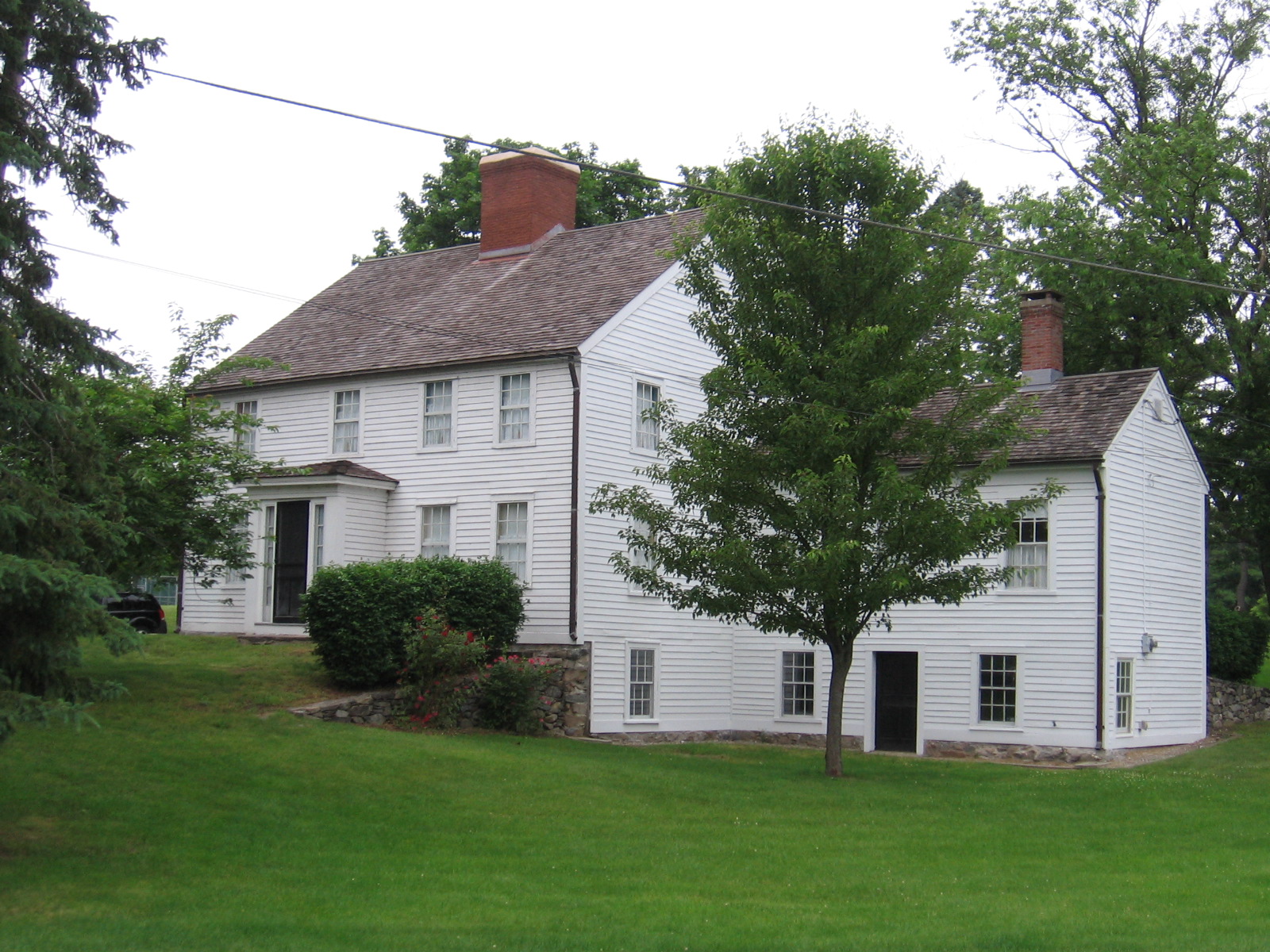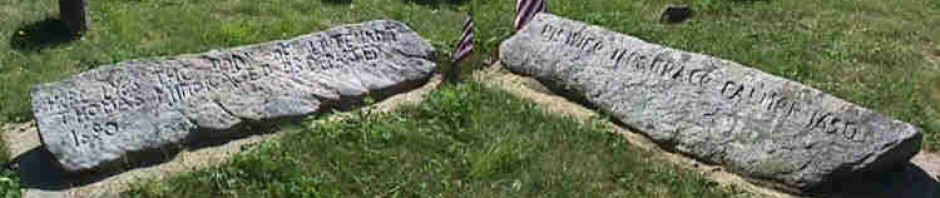
William Hilton Sr.

William HILTON Sr. (1591- 1656) was Alex’s 12th Great Grandfather, one of 8,192  in this generation of the Shaw line and one of 8,192 in the Miller line.  (See his great great grandson Thomas BROWNE for details of the double ancestors)
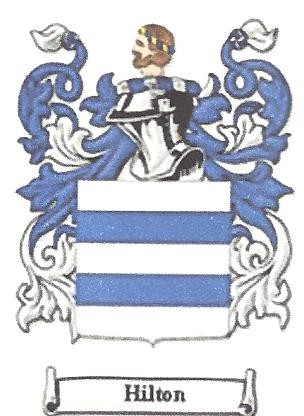
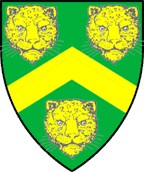
William Hilton - Coat of Arms

William Hilton was born about 1591 in Northwich, Cheshire, England. His parents were Captain Mark Roger HILTON and Ellen MAINWARRING. He married Mary [__?__] by 1616 and had four children. William arrived in Plymouth Colony with his brother Edward in 1621 on the Fortune. His wife and two children joined him in the summer of 1623 arriving on the Anne.  His first residence was Plymouth then moved to Piscataqua, Dover in 1628, then to Kittery in 1648 and York in 1651.  Mary died by 1636 and he married about that time Frances Hayward in Dover, Strafford County, NHand had four more children. William died between June 28, 1655, and June 30, 1656.

Frances Hayward was born 7 Jun 1600 in Ixworth, Suffolk, England Her parents were Francis Hayward and [__?__]. Alternatively, her father was Bartholomew Hayward. After William’s death Frances married Richard White by June 30, 1656.  Administration of the estate of William Hilton was granted 30 June 1656 to Richard White, “the said Whitte having married his widow,” Frances. White posted a £100 bond as administrator. Frances died 1688 in Kittery, York, Maine.

Children of William and his first wife:

Name Born Married Departed
1. Elizabeth Hilton 27 Jun 1616
Northwich,
England
1 Aug 1616
Northwich
2. William HILTON 22 Jun 1617
Northwich,
England
Sarah GREENLEAF
by 1641
.
Mehitable Nowell
16 Sep 1659 Charlestown.
1675
3. Alice Hilton 1618
Northwick, Cheshire, England
George Walton
1642
Exeter, NH
1685
New Castle, New Hampshire
4. Mary Hilton Baptized at Northwich on May 11, 1619 She apparently came to Plymouth Colony in 1623, but nothing further is known.
5. John Hilton 1624
Plymouth
26 Nov 1640
Dover, NH

.

Children of William and Frances Hilton:

Name Born Married Departed
6. Magdalene Hilton 1636 James Wiggin
by 1656
.
Henry Kenning
14 May 1698 – Newbury, Essex, Mass
7. Mainwaring Hilton c. 1646 Mary Moulton
1671
4 Jul 1671
8. Agnes Hilton c. 1647 Arthur Beale
1667
9. William Hilton c. 1653 Ann Parsons
by 1678
1699
York, Maine

Around what was probably the turn of the 16th/17th century, decades before the Mayflower sailed for Plymouth, the Hylton family appears to have had quite a large and successful fishing fleet, fishing in the north sea and off New Foundland. Eric Lamberton says that “both William and Edward Hilton were north sea fishermen operating out of both Monkwearmouth (where the fishing grounds are) and London.  William and Edward are believed to have been amongst the first English fishermen fishing off Newfoundland in the early part of the 17th century. The Hyltons had a monopoly on salt production in Elizabethan England; salt was needed to preserve the catch on its voyage back to England where it was sold at the Billingsgate fish market. Edward was a member of the Fisherman’s Guild of London.”
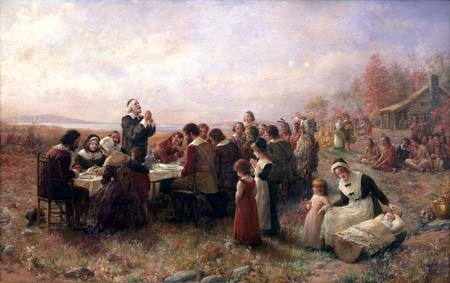
William Hilton arrived in Plymouth right after the first Thanksgiving in 1621

William and Edward Hilton came to Plymouth aboard the “Fortune” in 1621, the year after the “Mayflower” arrived in America. The “Fortune,” a small ship carrying only 35 passengers, left England in July 1621 and didn’t arrive at Plymouth until November 10th of that year. On arrival they found that half the “Mayflower” passengers had not made it through their first winter in Plymouth and had died. The “Fortune” sailed back to England carrying a “cargo of good clapboard as full as she could stow, and two hogsheads of beaver and other skins” which showed the great potential for settling in America, and the hopes of selling this cargo and ensuring future settlement at Plymouth. Unfortunately, before reaching port in England, the ship was stopped by the French who seized the cargo and that intended profit for the small colony back in Plymouth was lost.

Shortly after arriving in Plymouth, Hilton wrote a letter, later included in Captain John Smith’s account of New England, to a cousin in Old England. In this letter, Hilton spoke enthusiastically of life in the new colony, saying in part,“I know not anything a contented mind can here want.”

Loving Cousin,

At our arrival at New Plymouth, in New England, we found all our friends and planters in good health, though they were left sick and weak, with very small means; the Indians round about us peaceable and friendly; the country very pleasant and temperate, yielding naturally, of itself, great store of fruits, as vines of divers sorts, in great abundance. There is likewise walnuts, chestnuts, small nuts and plums, with much variety of flowers, roots and herbs, no less pleasant than wholesome and profitable. No place hath more gooseberries and strawberries nor better. Timer of all sorts you have in England doth cover the land, that affords beasts of divers sorts, and great flocks of turkeys, quails, pigeons and partridges; many great lakes abounding with fish, fowl, beavers, and otters. The sea affords us great plenty of all excellent sorts of sea-fish, as the rivers and isles doth variety of wild fowl of most useful sorts. Mines we find, to our thinking; but neither the goodness nor quality we know. Better grain cannot be than the Indian corn, if we will plant it upon as good ground as a man need desire. We are all freeholders; the rent-day doth not trouble us; and all those good blessings we have, of which and what we list in their seasons for taking. Our company are, for the most part, very religious, honest people; the word of God sincerely taught us ever Sabbath; so that I know not any thing a contented mind can here want. I desire your friendly care to send my wife and children to me, where I wish all the friends I have in England; and so I rest

Your loving kinsman,

William Hilton

In the 1623 Plymouth division of land, William Hilton received one acre as a passenger on the “Fortune” and William Hilton’s wife and two children received three acres as passengers on the “Anne”.

In 1624, he had a child baptized by Reverend John Lyford  (Sarah Oakley Lyford HOBART’s first husband, see her page for the story of Lyman’s nefarious life) although he was not a member of the church.  This action was one of the first in the controversy between Lyford and the Plymouth government. Hilton and his family left Plymouth Colony soon thereafter.
He may have joined his brother Edward on the Piscataqua directly.

The controversy over the baptism of this child by the Rev. John Lyford supposedly started the problems whereby John Lyford and John Oldham were expelled from the Colony after setting up a separate (Anglican) church from that of the Pilgrims. There is an account of Plymouth Colony’s trails and tribulations with Rev. John Lyford to be found in William Bradford’s book “Of Plymouth Plantation.”

When another child was born to the ‘young’ William Hiltons, it could not be baptized at Plymouth, unless the parents joined the Pilgrim Church, which they were not disposed to do, being staunch Anglicans. They appealed to Rev. John Lyford, and arranged a private baptism according to the rites of the Church of England. This precipitated the Lyford-Oldham crisis, and Rev. Lyford was forced to take his family and leave the Plymouth settlement.” Jill goes on to say “It was this issue, along with problems with the church’s ‘Separatists’ that was behind the family’s migration first to the Piscataqua River, and later to join his brother Edward to help found Dover, New Hampshire.”

William was in Dover by 1628, later moving to Kittery (1648) and York (1651). He served in various official capacities,including juror and committeeman, in Dover, and York. While in Kittery he was a tavern keeper and ferry operator.

Sometime before March 1639, William Hilton had participated in an exploratory expedition up the Merrimack.

Merrimack River at Sunset

Edward Hilton settled on the Piscataqua sometime between 1625 and 1628, and it is possible that William settled there at the same time. One posssibility, then, is that William Hilton left Plymouth in later 1624 or early 1625, after the baptism incident, and joined his brother Edward about that time in settling what would become Dover.” This scenario would not require any additional place of residence between William’s moving from Plymouth and Dover.

On the other hand, Noyes, Libby and Davis state that Hilton “left Plymouth and joined [David] Thomson at Little Harbor with the purpose of starting salt works,” and apparently did this in partnership with Gilbert Winslow.  This would provide William Hilton and his family with a home prior to the arrival of Edward Hilton, assuming the latter did not come so early as 1625.”

John T. Hassam “demonstrated that the immigrant William Hilton had two sons by that same name. The deposition of 1660 was made by the elder of these two sons, who lived in Newbury and Charlestown. A deposition of 1683 proves the younger son William of the immigrant William, for on 30 May 1683 two men testified that ‘William Hilton now resident in York…was commonly known, & reputed, to be the son of William Hilton Senior deceased, & formerly lived in York’ ”

Noyes, Libby and Davis note “that ‘(b)esides the wife who followed him to Plymouth, and Frances, possibly a widow with children when he married her about 1651, there may have been others, suggesting that if one of his wives should prove to have been a Winslow it would explain his letter writing with Edward Winslow, his association with John Winslow, his removal to Piscataqua with Gilbert Winslow and the marriage of two of John Winslow’s sons to his relations”

“There is no date of death for the first wife of William Hilton, and we do not know when he married Frances, so the distribution of his children among his wives is difficult. We assume here that the first wife did not survive long in this country, and that the last four children were all with Frances. Magdalene, who calls Frances her mother, need not have been a Hilton, but since this name also suggests a Winslow connection, and since Libby makes such a point of the low social status of Frances, one might question the exact nature of this relation as well.

As of 1628, William Hilton had removed from Plymouth to Piscataqua, Dover, New Hampshire and in 1648 to Kittery, Maine, and then in 1651 to York, Maine.

On 31 May 1660 Massachusetts Bay General Court, in “answer to a petition of William Hilton, humbly craving the Court’s allowance & confirmation of a deed of gift of six miles square of land lying on the River Pennieconaquigg, being a rivulet running into the River Penacooke, with two miles of the best meadow lying on the northeast side of Pennacook, given to his father & him in the year 1636 by Tahanto, the sagamore there; & the Court, having considered the contents of this petition, judge meet not to grant the same, but considering the petitioner’s grounds for the approbation of the Indian’s grant, do judge meet to grant that three hundred acres of the said land be set out to the petitioner by a committee chosen by this Court, so as that it may not prejudice any plantation; and this as a final end of all future claims by virtue of such grant from the Indians.”

On 19 May 1642, “Mr. W[illia]m Hilton was among the residents of York who on 22 November 1652 subjected themselves to Massachusetts Bay government and took the freeman’s oath”

It is thought that William Hilton was somewhat educated as he wrote several competent, if poorly spelled, letters

William’s listed occupations while living in Kittery are as a tavern keeper and ferry operator. He seemed to appear quite often in court for one thing or the other; a few cases while in Kittery: On 27 June 1648 “Mr. William Hilton being licensed for to keep the ordinary at the mouth of the river of Pascataquack and that none other shall keep any private ordinary there, nor to sell wine, beer nor liquor upon any pretence.” On 16 October 1649 “Mr. William Hilton presented [in court] for not keeping victual and drink at all times for strangers and inhabitants, admonished.” On 15 October 1650 “for as much as the house at the river’s mouth where Mr. Shapleigh’s father first built and Mr. William Hilton now dwelleth; in regard it was first house there built and Mr. Shapleigh intendeth to build and enlarge it, and for further considerations, it is thought fit it should from time to time be for a house of entertainment or ordinary with this proviso, that the tenant be such a one as the inhabitants shall approve of”

While living in Dover and York William held numerous offices:
“Deputy for Dover to Massachusetts Bay General Court, 7 March 1643/4, 29 May 1644,
and 14 May 1645 (disguised as “William Heath”)
Grand jury, 11 Mar 1651, 28 Jun 1655
Jury, 25 Nov  1650
Committee to divide land, 19 Mar 1651/2, 28 Jun 1655
York Alderman, 1652
York selectman, 1653, 1654

William Hilton and Frances were brought to court on 16 Oct 1649 in Kittery, York County, Maine. Mrs. Hilton was presented and admonished for fighting and abusing her neighbors with her tongue. At the same court, Mr. William Hilton was presented for breach of the Sabbath in carrying of wood from the woods and for failing to keep food and drink on hand for strangers and inhabitants.

William Hilton and Frances were brought to court on 15 Mar 1649/50 in York, York County, Maine. Mr. William Hilton brought cases against Hatevell Nutter, Thomas Hanscom and Robert Mendam. He was still suing Hanscom and Mendam on 11 March 1651/2. On 15 Oct 1650, Mr. William Hilton and Frances his wife were sued by Mr. Georg Moncke for slander. On 11 Mar 1651/52, Jeremy Sheires reviled Mr. William Hilton when Hilton was foreman of the jury, and Sheires was fined £2. On 14 Oct 1651 Mr. William Hilton posted bail for Clement Campion, sued Thomas Way for debt, and sued Michaell Powell for debt.

On 30 Jun 1653 in York, York County, Maine, “William Hilton Senior” sued Samuell Allcocke for cutting and carrying away his timber. On 25 Oct 1653, Mr. William Hilton Senior sued Ann Mason of London and, in a separate action, sued Sir Ferdinando Gorges, for damge done against him.

On 28 Jun 1655 in York, York County, Maine, the court found Frances Hilton, the wife of William Hilton, guilty of “railing at her husband and saying he went with Joane [sic, John in the blotter] his bastard to his three halfe penny whores and that he carried a cloak of profession for his knavery.” For this offense she was sentenced to have “twenty lashes upon the bare skin, only the execution thereof upon her husband’s request to be respited upon her good behavior until the next county court, except any just complaints come in against her. In the meantime, which if they do unto authority then the punishment to be inflicted upon her by order of the commissioners of York at what time they shall see cause to order it.” Who knows what the outcome of this offense was — did Frances get her twenty lashes or did William die before that next county court came up to check whether she had been on her good behavior. Maybe Frances drove William to an early grave!

Children

2. William HILTON (See his page)

3. Alice Hilton

Alice’s husband George Walton was born 1615 – England. George died 20 Feb 1686 -New Castle, Rockingham New Hampshire,

6. Magdalene Hilton

Magdalene’s first husband James Wiggin was born 1619 – Cheshire, England. James died 1698 – Scarborough, Cumberland, Maine

Magdalene’s second husband Henry Kenning was born xx. Henry died 2 Nov 1731) – Salem, Essex, Mass.

7. Mainwaring Hilton

Mainwaring’s wife Mary Moulton was born 25 Jan 1652 – Rockingham, Maine. Her parents ere Thomas Moulton and Martha Page. Mary died 19 Sep 1694 – York, York, Maine or Nov 1725 – York, York, Maine.

8. Agnes Hilton

Agnes’ husband Arthur Beale was born 5 Oct 1638 in Devonshire, England. His parents were Arthur 1 Beale and Elizabeth Watt. Arthur died 1711 – York, Maine.

9. William Hilton

William’s wife Ann Parsons was born 1657 in York, York, Maine. Her parents were Mark Parsons and
Elizabeth [__?__]. Anne died 1737 in Boston, Suffolk, Massachusetts.

Sources:

http://www.genealogyofnewengland.com/b_h.htm

http://genforum.genealogy.com/cgi-bin/print.cgi?hilton::1883.html

http://kerrysdavis.home.comcast.net/~kerrysdavis/p18.htm#i177

http://www.geni.com/people/William-Hilton/6000000001688012223

http://www.newenglandancestors.org/research/services/articles_william_hilton.asp

Posted in 14th Generation, First Comer, Immigrant - England, Line - Miller, Line - Shaw, Pioneer, Public Office, Sea Captain, Tavern Keeper | Tagged , , , , , , | 35 Comments

William Hilton Jr.

William HILTON Jr (1617 – 1675) was an explorer who mapped Cape Fear  eventually leading to the founding of Wilmington NC which has a large port in on the Cape Fear River.  He named Hilton Head SC after himself. He was Alex’s 11th Great Grandfather, one of 4,096  in this generation of the Shaw line and one of 4,096 in the Miller line.  (See his great grandson Thomas BROWNE for details of the double ancestors)


Map of the Cape Fear River drainage basin

William Hilton was born in on 20 Jun 1617 in Northwich, Cheshire, England.  His parents were William HILTON Sr. and Mary [__?__]. William’s father arrived in Plymouth Colony in 1621.  William Jr., his sister and mother joined joined him in the summer of 1623. The family settled in Piscataqua. As an adult the Hiltons lived in Newbury and Charlestown in the Massachusetts Bay Colony.  He married Sarah GREENLEAF in 1640 or 1641 in Newbury, Mass.  He married  Mehitable Nowell on 16 Sep 1659, at Charlestown. William died on 07 Sep 1675 in Charlestown, Mass.

Sarah Greenleaf was born 26 Mar 1620 in Ipswich, Suffolk, England.    Her parents were Edmund GREENLEAF and Sarah Moore [Note Sarah Dole, see Edmund’s page for details.] Sarah died in 1655 in Newbury, Essex, Mass.

Mehetabel Nowell was born 2 Feb 1638 in Charlestown, Suffolk, Mass.  She was the daughter of Increase Nowell, a former secretary of Massachusetts Bay Colony.  Mehitable died 29 Sep 1711 in Charlestown, Mass.

In 1663, Captain William Hilton sailed on the Adenture from Barbados to explore lands granted by King Charles II of England to the eight Lords Proprietor. In his travels, he identified a headland near the entrance to Port Royal Sound. He named it “Hilton’s Head” after himself.He stayed for several days, making note of the trees, crops, “sweet water” and “clear sweet air”

Upon their arrival in the vicinity of St. Helena Sound and the Combahee River they discovered the English castaways being held captive by the local American Indians. During negotiations with the local natives for the release of the castaways, he learned much about the local culture.

Children of William and Sarah :

Name Born Married Departed
1. Hannah Hilton 12 Feb 1649 Newbury Capt. Jonathan Woodman (Son of Lt. Edward WOODMAN)
2 JUL 1668
Newbury
15 Nov 1706
Newbury
2. Mary HILTON 1635 in Newbury Mass Thomas Sears
11 Dec 1656 in Newbury Mass

Abel HUSE
25 May 1663
Newbury, Mass.
1714 in Newbury
3. Charles Hilton Jul 1643
Newbury
4 Feb 1684
Newbury

14 Aug 1662 –  Hilton set sail from Charlestown on his first voyage to explore the Carolinas, commanding the Adventurer. He returned in November with enough information for Nicholas Shapley, a Charlestown navigator, to draw a detailed map of Cape Fear.

10 Aug 1663 – Engaged by a group of businessmen from New England, London, and Barbados, Hilton embarked on a second exploration of the southeastern coast. Again commanding the Adventurer, he set out from Speights Bay with Captain Anthony Long and Peter Fabian. Upon their arrival in the vicinity of St. Helena Sound and the Combahee River they discovered the English castaways being held captive by the local American Indians. During negotiations with the local natives for the release of the castaways, he learned much about the local culture. After sounding the entrance to Port Royal Sound, he set out for Cape Fear, but the ship was blown off course toward Cape Hatteras. On October 12, the crew of the Adventurer finally arrived at the entrance to the Cape Fear River and explored the area until December.

1664 – Hilton published a book about this expedition called A Relation of a Discovery Lately Made on the Coast of Florida, which spurred interest in colonizing the area. A colony established on the Cape Fear river in 1664 led to the establishment of Charles Town (later Charleston, South Carolina) nearby on the Ashley and Cooper rivers.

William Hilton died in 1675

Excerpts from Report from Commissioners Sent from Barbadoes to Explore the River Cape Fear in 1662 – Captain William Hilton – Quoted in John Lawson, New Voyage to Carolina (1709). I made paragraph breaks by week to improve readaabilty.

From Tuesday the 29th of September, to Friday the 2d of October, we rang’d along the Shoar from Lat. 32 deg. 20 min. to Lat. 33 deg. 11 min. but could discern no Entrance for our Ship, after we had pass’d to the Northward of 32 deg. 40 min. On Saturday, Octob. 3. a violent Storm overtook us,

the Wind between North and East; which Easterly Winds and Foul Weather continu’d till Monday the 12th; by reason of which Storms and Foul Weather, we were forced to get off to Sea, to secure Ourselves and Ship, and were driven by the Rapidity of a strong Current to Cape Hatteras in Lat. 35 deg. 30 min.

On Monday the 12th aforesaid we came to an Anchor in seven Fathom at Cape-Fair Road, and took the Meridian Altitude of the Sun, and were in Latitude 33 deg. 43 min. the Wind continuing still easterly, and foul Weather, till Thursday the 15th; and on Friday the 16th, the Wind being at N. W. we weigh’d and sail’d up Cape-Fair-River, some 4 or 5 Leagues, and came to an Anchor in 6 or 7 Fathom, at which time several Indians came on board, and brought us great Store of fresh Fish, large Mullets, young Bass, Shads, and several other Sorts of very good well-tasted Fish. On Saturday the 17th, we went down to the Cape, to see the English Cattle, but could not find ‘em, tho’ we rounded the Cape:

And having an Indian Guide with us, here we rode till Oct. 24. The Wind being against us, we could not go up the River with our Ship; but went on shoar, and view’d the Land of those Quarters. On Saturday, we weigh’d, and sail’d up the River some 4 Leagues, or thereabouts.

Sunday the 25th, we weigh’d again, and row’d up the River, it being calm, and got up some 14 Leagues from the Harbour’s Mouth, where we mor’d our Ship. On Monday Oct. the 26th, we went down with the Yawl, to Necoes, an Indian Plantation, and view’d the Land there. On Tuesday the 27th, we row’d up the main River, with our Long-Boat, and 12 Men, some 10 Leagues, or thereabouts. On Wednesday the 28th, we row’d up about 8 or 10 Leagues more. Thursday the 29th, was foul Weather, with much Rain and Wind, which forc’d us to make Huts, and lie still. Friday the 30th, we proceeded up the main River, 7 or 8 Leagues. Saturday the 31 st, we got up 3 or 4 Leagues more, and came to a Tree that lay cross the River; but because our Provisions were almost spent, we proceeded no farther, but return’d downward before Night,

on Monday the 2d of November, we came aboard our Ship. Tuesday the 3d, we lay still, to refresh ourselves. On Wednesday the 4th, we went 5 or 6 Leagues up the River, to search a Branch that run out of the main River towards the N. W. In which Branch we went up 5 or 6 Leagues; but not liking the Land, return’d on board that Night about Midnight, and call’d that Place Swampy-Branch. Thursday, November the 5th; we stay’d aboard. On Friday the 6th, we went up Greens-River, the Mouth of it being against the Place at which rode our Ship. On Saturday the 7th, we proceeded up the said River some 14 or 15 Leagues in all, and found it ended in several small Branches (A league is 3 miles so they explored about 45 miles); The Land, for the most part, being marshy and Swamps, we return’d towards our Ship, and got aboard it in the Night.

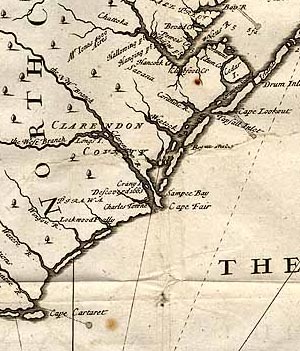
This map of North Carolina’s coast, drawn in 1709, refers to Cape Fear by its original name, “Cape Fair.

John Lawson. A New Voyage to Carolina; Containing the Exact Description and Natural History of That Country: Together with the Present State Thereof. And a Journal of a Thousand Miles, Travel’d Thro’ Several Nations of Indians. Giving a Particular Account of Their Customs, Manners, &c.
London, 1709.

Sunday November the 8th, we lay still, and on Monday the 9th, went again up the main River, being well stock’d with Provisions, and all things necessary, and proceeded upwards till Thursday noon, the 12th, at which time we came to a Place, where were two Islands in the Middle of the River; and by reason of the Crookedness of the River at that Place, several Trees lay cross both Branches, which stop’d the Passage of each Branch, so that we could proceed no farther with our Boat; but went up the River side by Land, some 3 or 4 Miles, and found the River wider and wider. So we return’d, leaving it, as far as we could see up a long Reach, running N. E. we judging ourselves near fifty Leagues North from the River’s Mouth. In our Return, we view’d the Land on both Sides the River, and found as good Tracts of dry, well-wooded, pleasant, and delightful Ground, as we have seen any where in the World, with abundance of long thick Grass on it, the Land being very level, with steep Banks on both Sides the River, and in some Places very high, the Woods stor’d every where, with great Numbers of Deer and Turkies, we never going on Shoar, but we saw of each Sort; as also great Store of Partridges, Cranes, and Conies, in several Places; we like-wise heard several Wolves howling in the Woods, and saw where they had torn a Deer in Pieces. Also in the River we saw great Store of Ducks, Teal, Widgeon; and in the Woods, great Flocks of Parrakeeto’s.

The Timber that the Woods afford, for the most part, consists of Oaks of four or five Sorts, all differing in Leaves, but each bearing very good Acorns. We measur’d many of The Oaks in Several Places, which we found to be, in Bigness, some Two, some Three, and others almost Four Fathom in Height, before you come to Boughs or Limbs (A fathom is 6 feet) ; forty, fifty, sixty Foot, and some more; and those Oaks very common in the upper Parts of both Rivers; also a very tall large Tree of great Bigness, which some call Cyprus, the right Name we know not, growing in Swamps. Likewise Walnut, Birch, Beech, Maple, Ash, Bay, Willow, Alder, and Holly; and in the lowermost Parts innumerable Pines, tall and good for Boards of Masts, growing, for the most part, in barren and sandy, but in some Places up the River, in good Ground, being mixt amongst Oaks and other Timbers. We saw Mulberry-Trees, Multitudes of Grape-Vines, and some Grapes which we eat of. We found a very large and good Tract of Land, on the N. W. Side of the River, thin of Timber, except here and there a very great Oak, and full of Grass, commonly as high as a Man’s Middle, and in many Places to his Shoulders, where we saw many Deer, and Turkies; one Deer having very large Horns, and great Body, therefore call’d it Stag-Park. It being a very pleasant and delightful Place, we travell’d in it several Miles, but saw no End thereof. So we return’d to our Boat, and proceeded down the River, and came to another Place, some twenty five Leagues from the River’s Mouth on the same Side, where we found a Place, no less delightful than the former; and as far as we could judge, both Tracts came into one. This lower Place we call’d Rocky Point, because we found many Rocks and Stones, of several Sizes, upon the Land, which is not common.
We sent our Boat down the River before us; ourselves travelling by Land, many Miles. Indeed we were so much taken with the Pleasantness of the Country, that we travell’d into the Woods too far to recover our Boat and Company that Night.

The next day being Sunday, we got to our Boat; and on Monday the 16th of November, proceeded down to a Place on the East-Side of the River, some 23 Leagues from the Harbour’s Mouth, which we call’d Turky-Quarters, because we kill’d several Turkies thereabouts; we view’d the Land there, and found some Tracts of good Ground, and high, facing upon the River about one Mile inward, but backwards some two Miles, all Pine Land, but good Pasture Ground: We return’d to our Boat, and proceeded down some 2 or 3 Leagues, where we had formerly view’d, and found it a Tract of as good Land, as any we have seen, and had as good Timber on it. The Banks on the River being high, therefore we call’d it High-Land-Point. Having view’d that, we proceeded down the River, going on Shoar in several Places on both Sides, it being generally large Marshes, and many of them dry, that they may more fitly be calld Meadows. The Wood-Land against them is, for the most part, Pine, and in some Places as barren, as ever we saw Land, but in other Places good Pasture-Ground.  On Tuesday, November the 17th, we got aboard our Ship, riding against the Mouth of Green’s River, where our Men were providing Wood, and fitting the Ship for the Sea: In the interim, we took a View of the Country on both sides of the River there, finding some good Land, but more bad, and the best not comparable to that above. Friday the 20th was foul Weather; yet in the Afternoon we weigh’d, went down the River about two Leagues, and came to an Anchor against the Mouth of Hilton’s River, and took a View of the Land there on both sides, which appear’d to us much like that at Green’s River.

Port of Wilmington, NC

Because the Cape Fear River — unlike North Carolina’s other major rivers — empties directly into the Atlantic Ocean, it provided the colony’s best natural port. Today, the Port of Wilmington remains the state’s largest port.

Monday the 23d, we went, with our Long-Boat well victuall’d and mann’d, up Hilton’s River (Apparently the name didn’t stick, but Hilton Head did!) ; and when we came three Leagues, or thereabouts, up the same, we found this and Green’s River to come into one, and so continu’d for four or five Leagues, which makes a great Island betwixt them. We proceeded still up the River, till they parted again, keeping up Hilton’s River on the Larboard side, and follow’d the said River five or six Leagues farther, where we found another large Branch of Green’s River to come into Hilton’s, which makes another great Island. On the Starboard side going up, we proceeded still up the River some four Leagues, and return’d, taking a View of the Land on both sides, and then judg’d ourselves to be from our Ship some 18 Leagues W. and by N. One League below this Place, came four Indians in a Canoe to us, and sold us several Baskets of Acorns,which we satisfy’d them for,and so left them; but one of them follow’d us on the Shoar some two or three Miles, till he came on the Top of a high Bank, facing on the River; and as we row’d underneath it, the Fellow shot an Arrow at us, which very narrowly miss’d one of our Men, and stuck in the upper edge of the Boat; but broke in pieces, leaving the Head behind. Hereupon, we presently made to the Shoar, and went all up the Bank (except Four to guide the Boat) to look for the Indian, but could not find him: At last, we heard some sing, farther in the Woods, which we look’d upon as a Challenge to us, to come and fight them. We went towards them with all Speed; but before we came in Sight of them, heard two Guns go off from our Boat; whereupon we retreated, as fast as we could, to secure our Boat and Men. When we came to them, we found all well, and demanded the Reason of their firing the Guns: They told us, that an Indian came creeping along the Bank, as they suppos’d, to shoot at them; and therefore they shot at him at a great distance, with small Shot, but thought they did him no Hurt; for they saw him run away. Presently after our Return to the Boat, and while we were thus talking, came two Indians to us, with their Bows and Arrows, crying Bonny, Bonny. We took their Bows and Arrows from them, and gave them Beads, to their Content; then we led them, by the Hand, to the Boat, and shew’d them the Arrow-head sticking in her Side, and related to them the whole Passage; which when they understood, both of them shew’d a great Concern, and signify’d to us, by Signs, that they knew nothing of it; so we let them go, and mark’d a Tree on the Top of the Bank, calling the Place Mount-Skerry.

We look’d up the River, as far as we could discern, and saw that it widen’d, and came running directly down the Country: So we return’d, viewing the Land on both sides the River, and finding the Banks steep in some places, but very high in others. The Bank-sides are generally Clay, and as some of our Company did affirm, some Marl. The Land and Timber up this River is no way inferiour to the best in the other, which we call the main River. So far as we could discern, this seem’d as fair, if not fairer, than the former, and we think runs farther into the Country, because a strong Current comes down, and a great deal more Drift-Wood. But, to return to the Business of the Land and Timber: We saw several Plots of Ground clear’d by the Indians, after their weak manner, compass’d round with great Timber Trees, which they are no-wise able to fell, and so keep the Sun from Corn-Fields very much; yet nevertheless, we saw as large Corn-stalks, or larger, than we have seen any where else: So we proceeded down the River, till we found the Canoe the Indian was in, who shot at us.
In the Morning, we went on Shoar, and cut the same in pieces. The Indians perceiving us coming towards them, ran away. Going to his Hutt, we pull’d it down, broke his Pots, Platters, and Spoons, tore the Deer-Skins and Matts in pieces, and took away a Basket of Acorns; and afterwards proceeded down the River 2 Leagues, or thereabouts, and came to another Place of Indians, bought Acorns and some Corn of them, and went downwards 2 Leagues more.
At last, espying an Indian peeping over a high Bank, we held up a Gun at him; and calling to him, Skerry, presently several Indians came in Sight of us, and made great Signs of Friendship, saying Bonny, Bonny. Then running before us, they endeavour’d to persuade us to come on shoar; but we answer’d them with stern Countenances, and call’d out, Skerry, taking up our Guns, and threatning to shoot at them, but they still cry’d Bonny, Bonny: And when they saw they could not prevail, nor persuade us to come on shoar, two of them came off to us in a Canoe, one paddling with a great Cane, the other with his Hand. As soon as they overtook us, they laid hold of our Boat, sweating and blowing,and told us, it was Bonny on shoar, and at last persuaded us to go on shoar with them.
As soon as we landed, several Indians, to the Number of near 40 lusty Men, came to us, all in a great Sweat, and told us Bonny: We shew’d ‘em the Arrow-Head in the Boat-Side,and a Piece of the Canoe we had cut in Pieces: Whereupon, the chief Man amongst them made a long Speech, threw Beads into our Boat, which is a Sign of great Love and Friendship, and gave us to understand, that when he heard of the Affront which we had receiv’d, it caus’d him to cry; and that he and his Men were come to make Peace with us, assuring us, by Signs, that they would tye the Arms, and cut off the Head, of the Fellow who had done us that Wrong; And for a farther Testimony of their Love and Good-Will towards us, they presented us with two very handsome, proper, young Indian Women, the tallest that ever we saw in this Country; which we suppos’d to be the King’s Daughters, or Persons of Distinction amongst them.
Those young Women were so ready to come into our Boat; that one of them crowded in, and would hardly be persuaded to go out again. We presented the King with a Hatchet and several Beads, and made Presents of Beads also to the young Women, the chief Men, and the rest of the Indians, as far as our Beads would go. They promis’d us, in four Days, to come on board our Ship, and so departed from us. When we left the Place, which was soon after, we call’d it Mount-Bonny, because we had there concluded a firm Peace. Proceeding down the River 2 or 3 Leagues farther, we came to a Place where were 9 or 10 Canoes all together. We went ashoar there, and found several Indians; but most of them were the same which had made Peace with us before. We staid very little at that Place, but went directly down the River, and came to our Ship, before day. Thursday the 26th of November, the Wind being at South, we could not go down to the River’s Mouth; but on Friday the 27th, we weigh’d at the Mouth of Hilton’s River, and got down a League towards the Harbour’s Mouth.

On Sunday the 29th, we got down to Crane-Island, which is 4 Leagues or thereabouts, above the Entrance of the Harbour’s Mouth. On Tuesday the Ist of December, we made a Purchase of the River and Land of Cape-Fair, of Wat-Coosa, and such other Indians, as appear’d to us to be the chief of those Parts. They brought us Store of fresh Fish aboard, as Mullets, Shads, and other sorts very good. This River is all fresh Water, fit to drink. Some 8 Leagues within the Mouth, the Tide runs up about 35 Leagues, but stops and rises a great deal farther up. It flows at the Harbour’s Mouth, S. E. and N. W. 6 Foot at Neap-Tides, and 8 Foot at Spring-Tides. The Channel on the East side, by the Cape-Shoar, is the best, and lies close aboard the Cape-Land, being 3 Fathoms at high Water, in the shallowest Place in the Channel, just at the Entrance; But as soon as you are past that Place, half a Cables Length inward, you have 6 or 7 Fathoms, a fair turning Channel into the River, and so continuing 5 or 6 Leagues upwards. Afterwards the Channel is more difficult, in some Places 6 or 7 Fathoms, in others 4 or 5, and in others but 9 or 10 Foot, especially where the River is broad. When the River comes to part, and grows narrow, there it is all Channel from side to side, in most Places; tho’ in some you shall have 5, 6, or 7 Fathoms, but generally 2 or 3, Sand and Oaze.

We view’d the Cape-Land, and judg’d it to be little worth, the Woods of it being shrubby and low, and the Land sandy and barren; in some Places Grass and Rushes, in others nothing but clear Sand: A Place fitter to starve Cattle, in our Judgment, than to keep’em alive; yet the Indians, as we understand, keep the English Cattle down there, and suffer them not to go off of the said Cape, (as we suppose) because the Country Indians shall have no Part with them; and therefore’tis likely, they have fallen out about them, which shall have the greatest Share. They brought on board our Ship very good and fat Beef several times, which they sold us at a very reasonable Price; also fat and very large Swine, good and cheap; but they may thank their Friends of New-England, who brought their Hogs to so fair a Market. Some of the Indians brought very good Salt aboard us, and made Signs, pointing to both sides of the River’s Mouth, that there was great Store thereabouts. We saw up the River, several good Places for the setting up of Corn of Saw-Mills. In that time, as our Business call’d us up and down the River and Branches, we kill’d of wild Fowl, 4 Swans, 10 Geese, 29 Cranes, 10 Turkies, 40 Ducks and Mallards, 3 dozen of Parrakeeto’s, and 6 dozen of other small Fowls, as Curlues and Plover, &c.

Audubon’s Painting of the Carolina Parakeet

The Carolina Parakeet was once a locally abundant resident of mature sycamore-dominated bottomlands and bald cypress swamps of the southeastern and midwestern states. A bird of brilliant green, yellow, and orange coloration.  It was adapted to cold weather and  was the only native representative of the Psittacidae in its range, and it moved about in large, fast-flying flocks, adding a dramatic and seemingly tropical touch to the landscape. The Seminoles knew the species as “puzzi la nee” (literally “head of yellow”) or “pot pot chee,” while the Chickasaws called it “kelinky.” European settlers christened it with numerous variants of “parrot” and “parakeet,” ranging from “paroquet” and “paraqueet,” to “parrotkite, parrakeeto, parrowceat” and “parrot queet.” Noisy and conspicuous, the species was unlikely to be overlooked in any location where it regularly occurred.

Although generally regarded with favor by early settlers, the parakeet was also known locally as a pest species in orchards and fields of grain, and was persecuted to some extent for crop depredations. Its vulnerability to shooting was universally acknowledged and was due to a strong tendency for flocks not to flee under fire, but to remain near wounded conspecifics that were calling in distress.  Unfortunately, with no confirmed reports of its continued existence in more than 60 years, the Carolina Parakeet is now generally presumed extinct.

Whereas there was a Writing left in a Post, at the Point of Cape-Fair River, by those New-England-Men, that left Cattle with the Indians there, the Contents whereof tended not only to the Disparagement of the Land about the said River, but also to the great Discouragement of all such as should hereafter come into those Parts to settle: In answer to that scandalous Writing, We, whose Names are underwritten, do affirm, That we have seen, facing both sides the River and Branches of Cape-Fair aforesaid, as good Land, and as well timber’d, as any we have seen in any other Part of the World, sufficient to accommodate Thousands of our English Nation, and lying commodiously by the said River’s Side. On Friday the 4th of December, the Wind being fair, we put out to Sea, bound for Barbados; and, on the 6th of February, 1663/4, came to an Anchor in Carlisle-Bay; it having pleas’d God, after several apparent Dangers both by Sea and Land, to bring us all in Safety to our long-wish’d for and much desir’d Port, to render an Account of our Discovery; the Verity of which we do assert.
Anthony Long.
William Hilton.
Peter Fabian.

Sources:

http://www.genealogyofnewengland.com/f_155.htm#45

http://genforum.genealogy.com/cgi-bin/print.cgi?hilton::1883.html

http://www.learnnc.org/lp/editions/nchist-colonial/1899

http://www.newenglandancestors.org/research/services/articles_william_hilton.asp
Posted in 13th Generation, Immigrant - England, Line - Miller, Line - Shaw, Pioneer, Place Names, Public Office, Sea Captain, Storied | Tagged , , , , | 19 Comments

Abell Huse

Abell HUSE (1602 – 1690) was Alex’s 10th Great Grandfather, one of 2,048  in this generation of the Shaw line and one of 2,048  in the Miller line.  (See his grandson Thomas BROWNE for details of the double ancestors)

Immigrant Ancestor

Abell Huse was born about 1602 in Wiltshire, England.  His parents were Abell HUSE and [__?__].  He married first Eleanor (Elinor/Elnor) Bird on 5 Jul 1635 in Salisbury St. Edmund Parish.  Eleanor died 27 Mar 1663.  He married Mary HILTON on 25 May 1663 in Newbury, Mass.   Abel died on 29 Mar 1690 in Newbury Mass.

Elinor Bird was born in 1602 in London, London, England. Elinor died 27 Mar 1662 in Newbury, Essex, Mass.

Mary Hilton was born in 1635 in Newbury Mass.  Her parents were William HILTON and Sarah GREENLEAF.   Before she married Abel, Mary had two children with Thomas Sears whom she married  on 11 Dec 1656 in Newbury Mass.  Mary died in 1714 in Newbury, Mass.

Thomas Sears was born in 1615 in Cheshire, England.

Children of Mary and Thomas Sears

Name Born Married Departed
A. Mary Sears 30 OCT 1659 Salisbury, Mass. James Carr
14 Nov 1677 – Newbury, Essex, Mass
27 Feb 1741 Newbury, Essex, Mass
B. Rebecca Sears 5 NOV 1661 Newbury, Mass Jacob Garland
17 Jun 1682 – Essex, Mass
1731 – New Hampshire

.

Children of Abel and Mary:

Name Born Married Departed
1. Ruth HUSE 25 Feb 1663/64 in Newbury John BROWNE
27 Aug 1683
Newbury
1697 Newbury
2. Abel Huse 19 FEB 1664/65 Newbury Judith Emery
1694
Newbury
11 MAR 1758 Newbury
3. Thomas Hughes 9 Aug 1666
Newbury
Ann Webster
1690
Newbury
7 NOV 1733 or 1734 Newbury
4. William Huse 12 OCT 1667 Newbury Ann Russell
17 AUG 1699 Boston, Mass
5. Sarah Huse 8 DEC 1668
6. John Huse 20 JUN 1670
7. Amy Huse 8 SEP 1673

Huse can also be spelled Hewes and Hughes.

Abell’s name appears on the proprietor’s book of records, folio forty-four. The record is dated December 1642 and is the first known list of the first Settlers of Newbury.

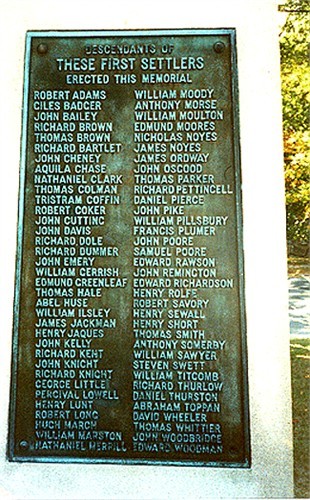
Abell Huse’s name is included on the Newbury Settlers Monument

Abell was about 70 years old when his last child was born.

Many people think that the father of Mary HILTON Downer Sears Huse was William HILTON.  But she may have been too young to be the daughter of William Hilton Sr. and too old to be the daughter of William Hilton Jr,.  Her parentage remains a mystery.” citation: The Great Migration Begins, Vol 2, pg 955.

In this same volume of Great Migrations, on page 947, we are introduced to Edward Hilton, fish monger from Dover, England. His child list by his first marriage to [__?__] contains 6 children with b. dates from 1629 to about 1642. There is a gap from abt 1633 to 1640. Wife [__?__] dies after about 1642. He marries (2) Katherine Shapleigh, widow of James Treworgy. Some say that she was born about 1599 and didn’t give Edward any further children. She already had a large family by Mr. Treworgy.

QUESTION: Does anyone have evidence that Edward  Hilton and [__?__] gave birth to Mary Hilton in the time gap provided in the child list?

Children

1. Ruth HUSE (See John BROWNE ‘s page)

2. Abel Huse

Abel’s wife Judith Emery was born 5 Feb 1672 in Newbury, Essex, Mass. Her parents were John Emery and Mary Webster. Judith died 24 Apr 1753 in Newbury, Essex, Mass.

Abel and Judith Huse Gravestones — Sawyer’s Hill Burying Ground, Newburyport, Essex, Mass

3. Thomas Hughes

Thomas’ wife Ann Webster was born 2 Jul 1672 in Newbury, Essex, Mass. Her parents were Israel Webster and Elizabeth Lunt. Ann died 2 Apr 1737 in Newbury, Essex, Mass

4. William Huse

William’s wife Ann Russell was born about 1673 in Essex, Mass. Ann died 02 June 1733 in Mass.

Sources:

The descendants of Abel Huse of Newbury (1602-1690) by Harry Pinckney Huse

1) “Phillimore’s Parish” marriage registers
(2) Searchable website for the above:http://www.familyrelatives.com/search/search_parishrecords.p
hp

Full record via the above:

Groom’s Name: Abell Huse
Date of Marriage: 5 July 1635
Bride’s Name: Elnor Bird
County: Wiltshire
Parish: Salisbury St. Edmund

http://www.genealogyofnewengland.com/b_h.htm

The Old Families of Salisbury Mass

Posted in 12th Generation, Historical Monument, Immigrant - England, Line - Miller, Line - Shaw, Missing Parents | Tagged | 13 Comments

John Johnson

John  JOHNSON (1609 – 1683) was Alex’s 11th Great Grandfather, one of 4,096 in this generation of the Shaw line and one of 4,096  in the Miller line.  (See his great grandson Thomas BROWNE for details of the double ancestors)

Johnson Coat of Arms

John Johnson was born in 1609 in Herne Hill, Kent, England, a few miles west of Canterbury. His parents were  William JOHNSON and Susan PORREDGE.  He married Susanna ASHERST in Herne Hill.  He came with his wife Susanna from Herne Hill, Kent, England.  He arrived in New England probably about 1630, and came possibly first to Charlestown with Capt. Edward Johnson who later went to Woburn. They were probably brothers.   John died soon after 12 Sep 1683 in Andover, Essex, Mass.

John Johnson - Modern Memorial Old burying grounds Andover, Mass

Susanna Asherst was born in 1611 in Herne Hill, Kent, England. Susanna died 12 Sep 1683 in Andover, Essex, Mass.

Children of John and Susanna:

Name Born Married Departed
1. Lt. Thomas Johnson 1631
Probably in Charleston, Mass
Mary Holt
5 Jul 1657
Andover, Mass
.
Damaris Marshall,
14 Jul 1703 Andover, Mass.
15 Feb 1718
Andover, CT
2. Elizabeth Johnson ca. 1632 Peter Calloway
26 Mar 1667
Andover, Mass
16 Nov 1721
Andover, Mass
3. Timothy Johnson ca. 1634
Ipswich
Rebecca Aslett
15 Dec 1674
Andover, Mass
15 Dec 1674
Ipswich, Mass
4. Hannah Johnson ca. 1636 Samuel Hutchins (Son of John HUTCHINS)
24 Jun 1662 Boston
5. Mary JOHNSON 1638 Andover, Mass Francis BROWN I
21 Nov 1653
Newbury, Mass.
4 Apr 1679 Newbury.
6. Stephen Johnson ca. 1640
Ipswich, Mass
Elizabeth Dane
5 Nov 1661 Andover
30 Mar 1690
Andover, Mass
7. Joanna Johnson 1641
Ipswich
Moses Haggett
23 Dec 1671 Andover, Mass
1715
Ipswich
8. Joseph Johnson ca. 1643
9. Susanna Johnson 1646
Andover, Mass
Walter Wright
26 Feb 1668 Andover, Mass
3 Jun 1684
Andover, Mass
10. Returne Johnson 25 Apr 1648
Andover, Mass
Mary Johnson
17 Sep 1673 in Andover, Mass
15 Mar 1707
Medfield, Mass
11. Caleb Johnson 1650
Ipswich
12. William Johnson ca. 1652 Sarah Lovejoy 1678 16 Apr 1727

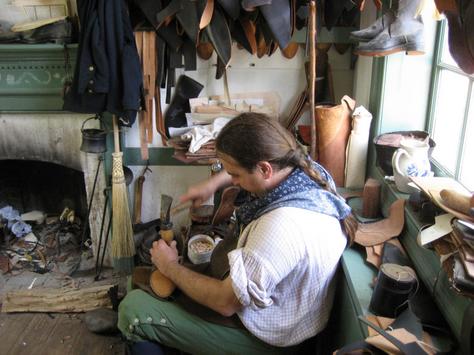
John Johnson was a Shoemaker

John was among the first settlers who went to Agawam (afterwards Ipswich) in 1632. The first mention of him at Ipswich was in 1635, when his name appears on the list of “Earliest Settlers.” There he had a “Commonage Right,” which also indicated that he was one of the original proprietors.

He moved with his family in about 1648 to Andover, Massachusetts after the settlement of that town, and he became one of the proprietors there. Lots were assigned to him and to his son Thomas in 1657. He was one of a coroner’s jury called 21st day, 11th month, in 1664 [21 JAN 1664 New Style] to hold an inquest on the body of Peter Allyn, who was found dead in the Shawsin river. He took the oath of allegiance 11 FEB 1678. His name is on the list of taxpayers in the south end, found in the first Assessor’s book, in 1679. He was a shoemaker. He probably died (soon after his wife’s death in 1683-S1) at Andover, Essex, Massachusetts.

Children

1. Lt. Thomas Johnson

Thomas’ first wife Mary Holt was born 06 Oct 1638 in Newbury, Essex, Mass. Her parents were Nicholas Holt (1602 – 1685) and Elizabeth Short (1606 – 1656) Mary died 15 Nov 1700 in Andover, Essex, Mass.

Thomas’ second wife Damaris Marshall was born about 1650 in Essex, Mass. Damaris died 5 Apr 1728 – Andover, Essex, Mass.

John’s son Thomas is tied to him thorugh a deed dated 12 Sep 1715, which identified Thomas Johnson, “son and heir” to John Johnson, dec’d. The deed conveyed commonage in Ipswich originally granted to John in 1635. The other children attributed to John were not tied to him through primary sources as of the 1892 book, and a more recent account is not available at NEHGS. They are, however, generally accepted as his children because they are the only Johnsons in Andover at the time, and the timing of the marriages fits a generational pattern.

2. Elizabeth Johnson

Elizabeth’s husband Peter Calloway was born before 1640. Peter died about 1715 in Somerset County, Maryland.

3. Timothy Johnson

Timothy’s wife Rebecca Aslett was born 6 May 1652 in Andover, Essex, Mass. Her parents were John Aslett and Rebecca Ayer. Her grandparents were John AYER and Hannah EVERED (WEBB).  Rebecca died 17 JUN 1728 in Ipswich, Essex, Mass.

4. Hannah Johnson

Hannah’s husband Samuel Hutchins was born 1645 in Newbury, Essex, Mass. His parents were John HUTCHINS and Frances ALCOCK. Samuel died 18 Jan 1713 in Haverhill, Essex, Mass.

Samuel’s mother Francis Hutchins was arrested on the 19th August 1692 as a result of a witchcraft complaint filed by Timothy Swan, Ann Putnam, Jr., and Mary Walcott. She was imprisoned until the 21st December 1692 when she was released on bond posted by Samuel Hutchins and John Kingsbury.

5. Mary JOHNSON (See Francis BROWN I‘s  page)

6. Stephen Johnson

Stephen’s wife Elizabeth Dane was born about 1640 in Essex, Mass. Her parents were Francis Dane and Elizabeth Ingalls. Elizabeth died 15 Apr 1722 in Andover, Essex, Mass.

Stephen Johnson and Elizabeth his wife were fined upon their presentment for fornication before marriage, they having confessed.

Elizabeth, three of her children, her sister Abigail (Dane) Faulkner (1652- 1730) her sister-in-law Deliverance Dane,  two of her nieces, and a nephew, were all accused of witchcraft and arrested during the Salem witch trials in 1692.  Some were convicted, but none were executed.

Elizabeth’s father Francis Dane matriculated from King’s College at the University of Cambridge in Easter term 1633 and emigrated to Massachusetts with his parents, John Dane and Frances (Bowyer) Dane in 1636.  Dane became the second pastor of the North Parish Andover, Massachusetts in 1649. During that time, he founded a school for Andover youth.  In 1658 when the subject of witchcraft first came to his attention, he came down decidedly against the concept. When John Godfrey was charged with injuring the wife of Job Tyler by “Satanic acts,” Francis Dane judged against the probability.

Around 1680, when Francis Dane was about sixty-five years of age, church members became concerned about his ability to fulfill his role leading the church and requested that a younger minister be sent to them. In January 1682, Rev. Thomas Barnard, a recent graduate of Harvard, arrived.

Shortly following Barnard’s arrival, Francis Dane’s salary was stopped. Dane petitioned the General Court in Boston to have it reinstated. The town complied, but split the salary of 80 pounds a year so that Dane received thirty pounds and Barnard received fifty. Neither man was pleased with the solution.

Salem Witch Trials Begin

Dane had lived in Andover for forty-four years, and he was seventy-six years old when the Salem Witch Trials began.

On October 18, 1692 Francis Dane, Thomas Barnard, and twenty-three others wrote a letter to the governor and to the General Court public condemning the witch trials. Dane and his family were in danger as half a dozen family members stood accused, including Francis Dane himself. Another minister, George Burroughs, had been hanged, and thus Dane’s status did not guarantee protection. He warned that his people were guilty of blood for accepting unfounded accusations against covenanted members of the church..

In the frenzy that followed,  Elizabeth Johnson’s sister Abigail Faulkner was convicted and sentenced to death, but her execution was delayed due to pregnancy Before she gave birth, Faulkner was pardoned by the governor and released from prison.

Faulkner was soon accused of witchcraft by neighbors who claimed she had “afflicted” their children.  On August 11, she was arrested and taken to Salem, where she was interrogated by Jonathan CorwinJohn Hathorne and Captain John Higginson.

Most of her accusers were young women from Salem, among them, Ann Putnam and Mary Warren. An exception to this, was the middle-aged William Barker, Sr., who stated under examination that he had been afflicted for three years by the devil.  He confessed that he had signed the devil’s book, and that Satan had promised to “pay all his debts” and allow him to live in luxury.  He stated that George Burroughs was the “ringleader”, but claimed that Faulkner and her sister, Elizabeth Johnson Sr., were his “enticers to this great abomination.”

When Faulkner entered the room, her accusers would fall down to the floor in hysterics. She held a handkerchief in her hands while she was examined, and whenever she would squeeze or twist the cloth, her accusers would have “grievous fitts.”  When magistrates demanded to know why she harmed the girls, asking her to look at their distress, Faulkner told the magistrates that she was “sorry the girls were afflicted,” but that she had not afflicted them, “it is the devil [who] does it in my shape.” The magistrates responded by asking, if she was innocent, why did Faulkner shed no tears over the girls’ suffering. She refused to confess, insisting “God would not have her confess that [which] she was not guilty of.”

At one point during the examination, Mary Warren fell into “fitts”, and was “pulled under the table,” apparently unable to come out from under it, but after receiving “a touch of said Faulkner” she was freed.

Faulkner was reexamined the next day in prison, still insisting that she had never consorted with the devil, nor signed his book, she did admit to feeling animosity toward her family’s accusers.  She suggested that the devil had taken advantage of this, in essence framing her for the crime of witchcraft.  She had been “angry at what folks said” when her niece was “taken up” for witchcraft. Neighbors had crowded round the Johnson home, laughing, taunting Faulkner, telling her that soon her sister would also be arrested for witchcraft:

“and she [Faulkner] did look with an evil eye on ye afflicted persons consenting that they should be afflicted because they were the cause of bringing her kindred out, and she did wish them ill, that her spirit being roused, she did pitch her hands together. She knew not but that the devil might take advantage, but it was the devil, not she, that afflicted them.”

Things came to a head in early August 1692, when Elizabeth Johnson’s daughter and namesake, was accused of witchcraft and arrested.  Elizabeth Jr. quickly confessed, telling her examiners on August 10, that she had consorting with the devil, meeting him at a gathering of “about six score”.

Elizabeth Johnson, Jr., known as Betty, was an accuser in the Andover witchcraft trials. See In the Devil’s Snare by Mary Beth Norton published in 2002 by Alfred Knopf. On page 255 the author states that, in 1692, Betty Johnson was 22 years old, the daughter of Elizabeth Dane Johnson, daughter of Rev. Francis Dane. Betty was accused by the children of Martha Carrier of being a witch and in turn confessed to being a witch herself. Betty then stated that she had attended a “Mock Sacrament” in Andover. She saw at this event over 70 witches including George Burroughs [hung], Mary Toothaker [husband died in prison] and  Mary Toothaker’s daughter, Martha Carrier, Captain John Floyd and Daniel Eames of Boxford.  Betty’s grandfather, the Reverend Francis Dane of Andover, later in a petition to stop the madness calls Betty “simplish at best.” She seems to have not married. .

On August 29, Elizabeth’s eleven-year-old daughter and fourteen year-old son, Abigail and Stephen Johnson, were also arrested on charges of witchcraft.

On August 31,  Elizabeth Johnson and her son Stephen confessed to witchcraft.  They testified that they had attended a gathering where they were baptized by the devil, who promised them “happiness and joy”, and that at the devil’s behest, they had afflicted Martha Sprague and several people in Andover.  They refused to implicate anyone else in their activities.

On September 8, Faulkner’s sister-in-law, Deliverance Dane, confessed to witchcraft under examination, though she would later recant insisting that she had “wronged the truth” by confessing.  Faulkner’s nine-year-old daughter Abigail was accused of witchcraft and arrested on September 16. The next day her twelve-year-old daughter Dorothy was arrested on the same charge.  Faulkner’s young daughters confessed soon after their arrest, and were persuaded to condemn their mother as a witch.

One day later, Ann Putnam testified that she had been “afflicted” by Faulkner on August 9, 1692, and that she had witnessed Faulkner or her specter tormenting two other young women.

Faulkner’s sentence read:

The Jury find Abigail Faulkner, wife of Francis Faulkner of Andover, guilty of ye felony of witchcraft, committed on ye body of Martha Sprague, also on ye body of Sarah Phelps. Sentence of death passed on Abigail Faulkner.

Faulkner was pregnant when brought to trial, and for this reason, her execution was delayed.  Gov. William Phips reprieved Abigail, releasing her because of insufficient evidence and her pregnancy. Hers was the only special pardon he issued. But the record still listed her as a convicted, pardoned witch, and on June 13, 1706 she appealed to the General Court for her record to be erased.

Elizabeth’s children Stephen and Abigail Johnson were released from prison in October 1692, along with their cousins Faulkner’s daughters, on a 500 pound bond paid by Nathaniel Dane and John Osgood.  Elizabeth’s daughter Elizabeth Johnson Jr., was found guilty of witchcraft, and sentenced to death in January 1693.   Her death warrant was signed by William Stoughton.  Elizabeth, like her aunt, managed to escape the gallows due to the intervention of Governor Phips.    Elizabeth Johnson Sr., was acquitted and released in January 1693, but her attainder was never reversed.  Faulkner’s sister-in-law, Deliverance Dane, was released in December 1692, when the case against her was dismissed.

Warrant for Arrest of Elizabeth Johnson, Sr. and Abigail Johnson )

Essex:/ To the Constable of Andivor
Complaint being made this day to us by Sam’ll. Martin of Andivor & Moses Tyler of Boxford, against Elizabeth Johnson widow and Abigall Johnson Singleweoman of Andivor that they the Said Elizabeth Johnson & Abigall Johnson hath greviously, afflicted and abused Martha. Sprage of boxford & Abigall Martin of Andivor Singleweomen by witchcraft contrary to the Peace of our Sover’ne Lord & Lady William & Mary King & Queen of England &c & to their Majesties Lawes in that case provided, and Said Sam’ll Martin & Moses Tyler haveing given Sufficient bond to prosecut their Said Complaint to Effect These are therefore to require you in their Majesties name forthwith to apprehend & seize the Bodys of the Said Elizabeth Johnson widow & Abigall Johnson her dauter Singlewoeman of Andivor & them Safely, convey to Salem before us their Majesties Justices of the Peace to be examined & proceded with according to law, forw’th. this shall be your warrant.
Dated in Salem 29: August 1692.
*Bartho Gedney
* John Hathorne
*John Higginson
Just’es. Peace
(Reverse)
in obedenc to this writ I have seased the bodies of Elizabeth jonson widow and abigall jonson hur [torn] Both of andover this 30 day of agust 1692
By me *John Ballard constable of andover

1692 Eliz’th Johnson Examined Before the Justices of Salem August 30th 1692 —

Eliz’th Johnson you are hence Charged for acting Witchcraft Come tell how long you have ben a witch A I cannot tell butt Since my Daught’r Came heither & Stopt —

Q. w’t the Divel Come to You did he not A yes —

Q. was it in the Day A no in the night when I was asleep & awaked me & S’d he would goe & afflict in my Shape but I never Sett my hand to his book — Come be thorow in all lickly hood — you have been long in this Snare the Sundry years She S’d & Pray for me for it is true I have bin long in this Snare but yett would owne but 3 Year or not above 4 — w’t Shape did the Divel appear to you at first A a white bird wel what would he have you to doe A Serve & worship him well that time Then you Signed to his book how did you doe it A w’th my finger

Q w’t Spott did itt Make a black & what bignes was the book A pretty big —

Q. did you promise to Serve & worship him A yes —

Q. when & where did the bird appear to You — A In the day time in my owne house —

Q. has he not apeared to you like a black man A Yes he mostly apears to me like a black man Was you alone when he appeared to you A yes I have been to much alone. how long has the Child that Is here been a witch a 5 yeares I suppose [for] lived at Goody Carriers A that time who came w’th the Divel when he came to you first did W’m. Bark’r No he has not been oh Soe long it was my Sister Abigail Falkner — who stands before you now is it not the Sister falkner A Yes She Threattens to Tear me in peices if I confses

Q. how long hath She ben one A no longer then I Where did the Divel baptize you A at 5 mile pond who ware baptized when you was A My Sister falkner & a great many more — Jeames How was one how many times have you been at the witch metting at the Village A butt once Unlese I was Their in my Spirit.

Q how did you goe thither one Horse back as far as I know but after wards S’d She was Carried thither upon a pole & that her sister falkner was there & William Barker others She new not for She did not know folk

Q but did you give the Children to the Divel A No I do not know that this Girle is a witch w’t number of witches be there in all. A it may be I doe not know w’t did they agre to doe at the metting at the Village A to afflict people & make as many witches as they Could [as they Could] how many have you made witches A none

Q. was they to Sett up the divels Kingdome A yes but why doe they afflict now they [doe] they are daly brought out A the Divel makes them doe it

Q. how many was their at that Metting at Chandlers A 20 or 30 I dont know how many what did you doe their A drink wine, where did you gett Your wine A from Boston I think butt I doe not know how brought it Mr Busse was Their did you drink A yes how did it tast A it has been bitt’r to me I am Sure butt who were the Company A I do not know any but them that are brought out

Q. was Martha Emerson there A I know not Was Dan’ll Eames of the Comp’y A yes he was She S’d also Hannah Mary & Susana Posts were baptized when She was & that the Divel dipt there heads in the watt’r & s’d thou art now Soul & body Come you that have been a witch Soe long you doe not Thouroly Conffess you know who you have afflicted She owned She had afflicted Sarah Phelps & 3 of Martins Children & that her Sister & Sarah parker Joyned w’th her in afflicting them

Q then doe you know Sarah parker to be witch A I know She afflicted those or Else I afflicted none She owned She had afflicted Rose Fostter but I know not that I have afflicted Martha Sprauge I know not what my Spirit did

Q how are you when your Spirit is Gone out of you A in A Cold Dampish Mallancolly Condition she would not own she had afflicted Swan She was askt how she knew She Should be Sent for A my Son Told me I should be Sent for yesterday She owned he had afflicted Martin & Martha Sprauge Yesterd’y & that the actions of — body that she Used to afflict was the pinching her hands & that the Divel had Made her promis to renounce god & Christ & she did Soe & being ask how long she had ben a witch she said She knew nott, butt She was 30 Years old when She was Married & now She was 51 & when She had had 3 Children the Divel came to her & it might be a 25 years & that the Divel Appeared to her like a bird a black bird & then She did not signe butt @ a year after She Signed & that the Divel came alone when She Signed She S’d her Sister Abig’l had been a witch as long as She, She would not own that She was baptized before the time fornamed nor that she had been baptized by him above ever nor that she had set her Seal to the book but She had Set her hand to the book at Salem Village when the Combination was she owned [she] had Eat & drink at the Mett’g at Chand’s butt no where Else She s’d Burroughs & Buss ware at the Village Metting & Buss was at the Mett’g at Chand’s & bid them Stand to the faith & truth She s’d the Divel propounded 30 Years to her to Serve him & he had promised her al glory & happines & Joy But as yett performed nothing — She S’d her familliar was like a Browne puppee & that he also Sucks her breast She also Confess’d She was afrayd her Son Stephen was a witch butt She did not Ceartainly know it but Conffesed his apperance was then before her & that was the young man the afflicted Saw before Her & before She had Conffesed of her Son She could not Shake w’th afflicted but after ward She could.

This is the Substance of Eliz’th Johnsons Sen’rs Conffession & Examination out of my Carrecter

Attest Simon[d] Willard.

Sep 1, 1692 – The Examination & Confession of Steph’n: Johnson aged 14 Yeares —

In the time of his Examinat’n he afflicted Martha: Sprauge Mary lacy & Rose fostt’r: by looking on them & Recovered them again by laying his hand Upon there Rist or arme & at last Conffesed thus — that @ hilling time this Su[mbar ] being alone he Saw a Speckled bird not soe big as a pigeon which Spake to him & the Next day he Saw a black Catt & after that Came a black man who told him he must Set his hand to a book & Soe [pbar ]rsented him a Single paper to which he Sett his hand being asked after w’t maner he did it he Said he prickt his fing’r: & blood Came out & he Stampt his fing’r: Upon the paper & made a red Mark He S’d that he was also to Serve the Black man one Year & his Servis was to afflict prsons & further that the Divel asked him to give up him Self Soul & body to him & Soe he did & thinks also that the Divel was to Have him at the Years End being asked w’t he was to have of the Divel for his Service s’d a pair of french fall Shouses w’ch he never yett had He Saith also that he was baptized at Shaw Shim River alittle after he Saw the Divel the first time. The Ma[nbar ]er was thus having ben at work at Benja: abbotts he went alone in the Evening to Swim In the Watt’r: & there mett w’th: the black Man who told him he must be his Servant & must be also baptized & Soe the black man took him Up & flung in his Whole body over the bank into the Watt’r: being Ready Stript before to goe in him Self, & [then] then this black man told him he must be his & must Renounce his first baptizime & Soe he did he Saith their was also a couple of Mades & 2 Men he Conffess that Yersterday he afflicted Martha Sprauge & that he did it by Squeezing his hands together he Conffesses also that he and the Rest of his Comp’y: did Daunce at Moses Tylers House & Made Martha Sprauge Sing he Says he is Sorry for w’t he has done Renounces the Divel & all his Works & then Could Take the afflicted by the Hand w’th out hurting of them —

Stephen Johnson Signed & owned the above S’d Examination & Conffesion

The Marke of Stephen Johnson 
15 Sept: 92.
Before Me *Jno Higginson Just’e peace .

7. Joanna Johnson

Joanna’s husband Moses Haggett was born between 1639 and 1650 in Ipswich, Essex, Mass. His parents were Henry Haggett (b: ABT 1594 in Suffolk, England) and Anne [__?__] (b: 1613 in England)

9. Susanna Johnson

Susanna’s husband Walter Wright was born in 1642 in Andover, Essex, Mass. His parents were John Wright (b: ABT 1616 in Warwickshire, England) and Alice Neway ( b: 1619 in Warwickshire, England.) Walter died 26 OCT 1712 in Andover, Essex, Mass.

10. Returne Johnson

Return’s wife Mary Johnson was born 11 FEB 1657/58 in Andover, Essex Co., Mass. Mary died in 1713 in Medfield, Norfolk, Mass.

12. William Johnson

William’s wife Sarah Lovejoy was born 11 APR 1653/54 in Andover, Essex, Mass. Her parents were John Lovejoy (b: 18 JUN 1622 in London, Middlesex, England) and Mary Osgood (b: 17 MAR 1632/33 in Marlborough, Wiltshire, England). Sarah died 22 FEB 1705/06 in Andover, Essex, Mass.

Sources:

http://www.sharedtree.com/descendants.php?person_id=51142

http://www.theharmons.us/harmon_t/names51.htm#JOHNSON

http://www.jowest.net/genealogy/jo/sargent/Johnson.htm

http://www.themorrisclan.com/GENEALOGY/JOHNSON%20John%20F7188.html

http://wc.rootsweb.ancestry.com/cgi-bin/igm.cgi?op=GET&db=dowfam3&id=I79818

http://salem.lib.virginia.edu/texts/tei/BoySal2R?div_id=n82

http://salem.lib.virginia.edu/texts/tei/BoySal2R?div_id=n85

http://worldconnect.genealogy.rootsweb.ancestry.com/cgi-bin/igm.cgi?op=GET&db=pjmpjm&id=I50051

Posted in 13th Generation, Historical Monument, Immigrant - England, Line - Miller, Line - Shaw, Pioneer, Witch Trials | Tagged , , , , , | 5 Comments

Thomas Brown Sr

Thomas BROWNE (ca. 1607 – 1687) was Alex’s 11th Great Grandfather, one of 4,096 in this generation of the Shaw line and one of 4,096  in the Miller line.  (See his great grandson Thomas BROWNE II for details of the double ancestors)

We have five separate Brown lines and seven different Brown immigrant ancestors, by far the most of any surname.  When the surname is of English origin it is derived from a nickname concerning the complexion of an individual, or the colour of their hair. Brown is derived from the Old English brunbrūn; Middle English brunbroun; or Old French brun.

1. John BROWNE Sr. (Swansea). (1583 Hawkedon, Suffolk  – 1662 Swansea, Mass)
John BROWN Jr.  (1620 -1662 Rehoboth, Mass)

2. John BROWN (Hampton) (1589 London – 1677 Salem, Mass)

3.  Nicholas BROWN (1601 Inkberrow, Worcester – 1694 Reading, Mass)

4. James BROWNE (1605 Southhampton, Hampshire  -1676 Salem, Mass.)

5. Thomas BROWNE (1607 Christian Malford, Wiltshire – 1687 Newbury, Mass.)
Francis BROWN I (1633  Christian Malford, Wiltshire – 1691  Newbury, Mass.)

Thomas was born about 1607 in Christian Malford, Wiltshire, England.  He married Mary ENDOE at Christian Malford on 20 Aug 1632 or 26 Jun 1631 in Salisbury, Wiltshire, England.  His parents were Joseph BROWNE and Sarah [__?__]. Thomas Brown and his wife sailed from Southampton 05 April 1635 on the ship James, William Cooper-Master, arriving in Boston, Ma on 03 June 1635.The manifest of the ship “James” shows only “Thomas Brown-Weaver”. It is assumed that his wife Mary and their first born child, Francis, was with him on this journey.  Thomas died from a fall on 8 Jan 1686/87 in Newbury, Mass.

Thomas Brown - Coat of Arms

Mary Endoe was born 1610 in Christian Malford, Wiltshire, England.  Alternatively, her surname was Healy.   Mary died 2 Jun 1655 in Newbury, Essex, Mass.

Children of Thomas and Mary:

Name Born Married Departed
1. Francis BROWN I Bapt,
1 Jan 1633
Chritian Malford, England
Mary JOHNSON
21 Nov 1653 Newbury, Mass.
.
Mary Woodhouse
Newbury
31 Dec 1679
1691 in Newbury
2. Mary Brown 1635
the first white child to be born in Newbury
Peter Godfrey
13 MAY 1656 Newbury
16 APR 1716 Newbury
3. Isaac Brown ca. 1638 Rebecca Bailey
22 AUG 1661 Newbury
13 MAY 1674 Newbury
4. Nicholas Brown ca. 1645 Mary Linforth
27 Jan 1670
Haverhill, Mass
5 Jun 1705 – Newburyport, Essex, Mass

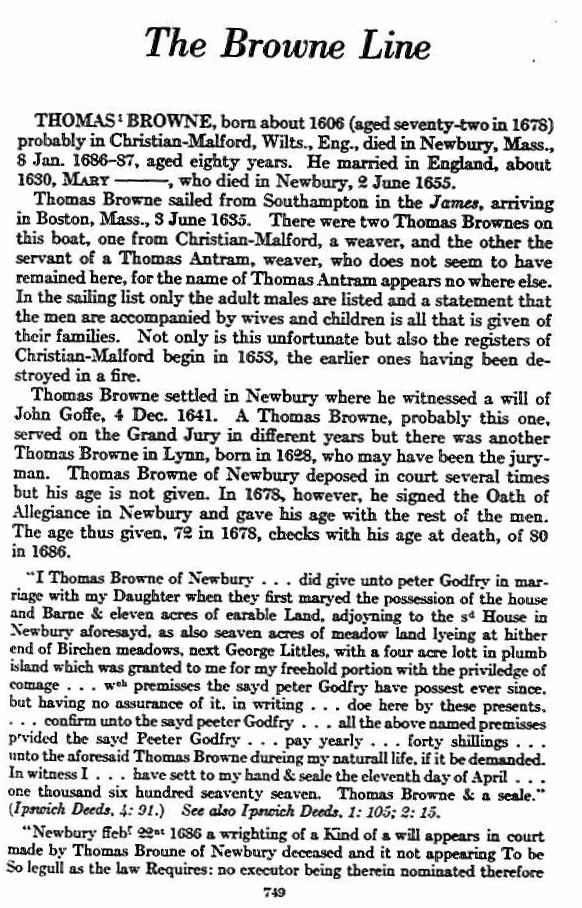
Thomas Brown was a weaver by trade. The manifest of the ship “James” actually reflected two entries for “Thomas Brown-Weaver”. The second entry noted him as being a servant of one Thomas Antram.  As the name “Thomas Antram” does not appear in other records, there is some doubt as to the viability of our Thomas Brown being “a servant of Thomas Antram”.

Judging by the appraised value of his two sons’ estates, i.e. son Sargent Francis at £661,17s and son Isaac at £369,8s, we can assume that our Thomas Brown was a fairly successful weaver and an investor in property.

He and his wife settled in Newbury, Ma. He was admitted to the Newbury Church prior to 22 May 1639 at which time he was designated a Freeman. Thomas Brown being able to clearly sign his name was a man of some education. He witnessed the will of John Goffe on 4 Dec 1641. He served on the Grand Jury in different years and he disposed in court many times. Thomas Brown’s name is on the list of members of the church of Newbury in April 1671. He signed the Oath of Allegiance in Newbury in 1678.

Prior to 1652, Thomas Brown (and others) agreed to surrender land that had been granted to them on the on the left side of the Merrimack Ridge in Newbury, on condition that they be granted elsewhere three acres for every two previously granted.

26 Mar 1652 –  “Henry Short of Newbury, yeoman, as agent and in the behalf of Stephen Dumer, late of Newbury aforesaid, gentleman,” sold to “Thomas Brown & George Little of the aforesaid town and county, yeomen, all that farm of upland and meadow which was granted unto the said Stephen Dumer by the town of Newbury, being three hundred acres, sixty acres whereof is meadow”.

23 May 1660 –  Thomas Brown of Newbury, yeoman, sold to Henry Sewall of Newbury, gentleman, eight acres of meadow lately laid out and given to Henry Sewall in the Birchen Meadows in Newbury.

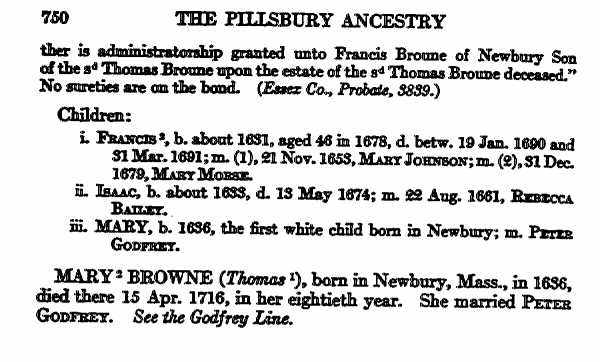
11 Apr 1677 –  Thomas Brown executed a deed wherein he confirmed transfer of property and land to his son-in-law, Peter Godfrey who married his only daughter Mary. This included “the possession of the of the house and barn and eleven acres of arable Land, adjoining to the said house in Newbury aforesaid, as also seven acres of meadow land lying at hither end of Birchen meadows, next George Little’s, with a four acre lot in Plumb Island which was granted to me for my freehold portion with the privilege of commonage–which the said Peter Godfrey has possessed ever since I did give unto Peter Godfrey in marriage with my Daughter, but having no assurance of it in writing–doe here by these presents, confirm unto the sayd peter Godfrey–all of the above named premisses provided the said Peter Godfrey pay yearly forty shillings unto the aforesaid Thomas Browne during my natural life, if it be demanded”.

22 Feb 1687 – A writing of a Kind of a will appears in court made by Thomas Brown deceased and it is not appearing to be so legal as the law requires: no executor being therein nominated therefore there is administratorship granted unto Francis BROWN of Newbury son of the said Thomas Brown upon the estate of the of the said Thomas Brown deceased” . Judging by the appraised value of his two sons’ estates, i.e. son Sargent Francis at £661,17s and son Isaac at £369,8s, we can assume that our Thomas Brown was a fairly successful weaver and an investor in property.

Children

1. Francis BROWN I (See his page)

2. Mary Brown

Mary was the first white child to be born in Newbury

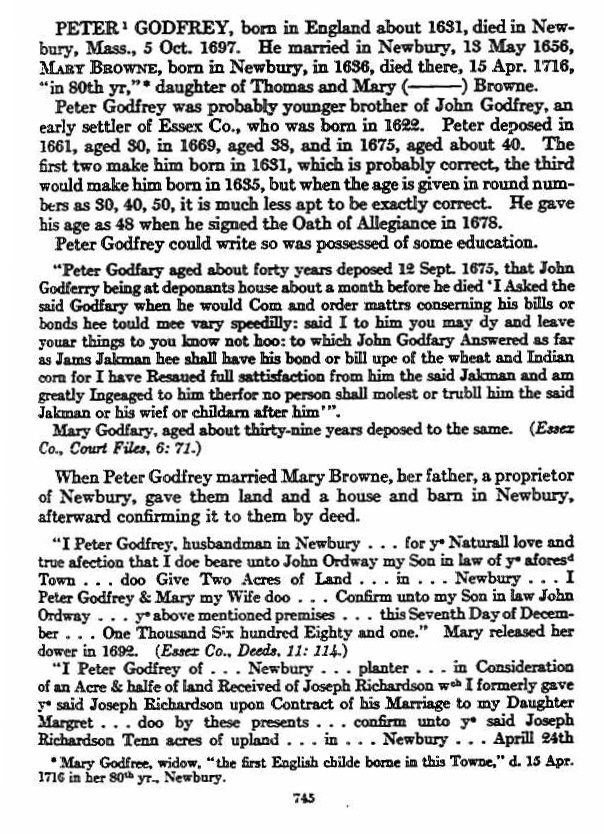
Mary’s husband Peter Godfrey was born in England about 1631.  Peter died in Newbury, Mass 15 Apr 1716 in his 80th year. Alternatively, Peter died 5 Oct 1697 in Newbury, Essex, Mass.

Peter Godfrey 1 -- Source: Ancestry of Charles Stinson Pillsbury and John Sargent Pillsbury (1938)

Peter Godfrey 2

3. Isaac Brown

Isaac’s wife Rebecca Bailey was born 24 Nov 1641 in Salisbury, Essex, Mass. Her parents were John Bailey and Eleanor Emery. Rebecca died 13 May 1764 in Newbury, Essex, Mass.

4. Nicholas Brown

Nicholas’ wife Mary Linforth was born about 1647. Mary died 4 Jun 1717 in Haverhill, Essex, Mass.

Sources:

Thomas Browne 1 -- Source: Ancestry of Charles Stinson Pillsbury and John Sargent Pillsbury (1938)

Thomas Browne 2

http://trees.ancestry.com/owt/person.aspx?pid=17787571

http://www.genealogyofnewengland.com/b_b.htm

http://stanleyhistory.net/descnarratives/ThomasBrowne.htm

Ancestry of Charles Stinson Pillsbury and John Sargent Pillsbury (1938) By Holman, Mary Lovering, 1868-1947; Pillsbury, Helen Pendleton Winston, 1878-1957

Posted in 13th Generation, Immigrant - England, Line - Miller, Line - Shaw | Tagged , , | 16 Comments

Francis Brown I

Francis BROWN  I (ca. 1632 – 1691) was Alex’s 10th Great Grandfather, one of 2,048 in this generation of the Shaw line and one of 2,048  in the Miller line.  (See his grandson Thomas BROWNE for details of the double ancestors)

We have five separate Brown lines and seven different Brown immigrant ancestors, by far the most of any surname.  When the surname is of English origin it is derived from a nickname concerning the complexion of an individual, or the colour of their hair. Brown is derived from the Old English brunbrūn; Middle English brunbroun; or Old French brun.

1. John BROWNE Sr. (Swansea). (1583 Hawkedon, Suffolk  – 1662 Swansea, Mass)

John BROWN Jr.  (1620 -1662 Rehoboth, Mass)

2. John BROWN (Hampton) (1589 London – 1677 Salem, Mass)

3.  Nicholas BROWN (1601 Inkberrow, Worcester – 1694 Reading, Mass)

4. James BROWNE (1605 Southhampton, Hampshire  -1676 Salem, Mass.)

5. Thomas BROWNE (1607 Christian Malford, Wiltshire – 1687 Newbury, Mass.)

Francis BROWN I (1633  Christian Malford, Wiltshire – 1691  Newbury, Mass.)

Francis Brown was baptized 1 Jan 1633 in Chritian Malford, Wiltshire, England.  His parents were Thomas BROWN and Mary HEALY.  Alternatively, his mother’s maiden name was Mary Endoe.   Francis sailed with his parents  from Southampton 5 April 1635 on the ship James, William Cooper-Master, arriving in Boston on 3 June 1635. The manifest of the ship “James” shows only “Thomas Brown-Weaver”, but it is assumed that his wife Mary and their first born child, Francis, was with him on this journey.

Francis married Mary JOHNSON on 21 Nov 1653 in Newbury, Mass.  He married second, Mary Woodhouse, at Newbury on 31 Dec 1678. Francis died in 1691 in Newbury.  The appraised value of his estate was  £661, 17s so he was a successful investor in property.

Mary Johnson was born in 1638 in Andover, Mass.  Her parents were John JOHNSONand Susanna [__?__] Mary died 4 Apr 1678 in Newbury.

Mary Woodhouse was born on 14 Jan 1638/39 in Boston, Suffolk, Mass. Her parents were Richard Woodhouse and Mary [__?__]. She first married in 1659 to George Pierce.  After George died, she married in 1667 in Newbury, Essex Co, MA to Joseph Morse (b. 1634 in Marlborough, Wiltshire, England – d. 15 Jan 1678 in Piscataqua, NH.) Joseph was the son of Anthony MORSE and Ann COX.    Finally, she married Francis Brown on 31 Dec 1678 in Newbury, Essex, Mass.  Mary died 30 Sep 1679 in Boston at the age of 40.

Children of John and Mary:

Name Born Married Departed
1. Elizabeth Brown 17 OCT 1654 Newbury David Perkins
ca. 1675 Hampton, Rockingham, NH.
14 JUL 1735 Bridgewater, Mass.
2. Mary Brown 15 APR 1657 Newbury 4 APR 1659 Newbury
3. Hannah Brown 1659 Newbury 1659 Newbury
4. Mary Brown ca. 1661 Newbury William Elliott
10 JUN 1681 Newbury
5. Sarah Brown 10 MAY 1663 Newbury Hugh Pike
17 JUN 1685 Newbury
1691
Newbury
6. John BROWN 13 May 1665 in Newbury Ruth HUSE
27 Aug 1683 Newbury,
18 Sep 1729 in Newbury
7. Thomas Brown 1 JUL 1667 Newbury 2 MAR 1688/89 Newbury
8. Joseph Brown 28 SEP 1670 Newbury Sarah [__?__] 18 OCT 1732
9. Francis Brown 17 MAR 1673/74 Newbury ca. 1701
10. Abigail Brown ca. 1676 1691
11. Benjamin Brown 22 APR 1681 Newbury

Modern day Turkey Hill Road, Newburyport view from Google Maps. The farm is less than half a mile from I95.    View Larger Map

7 May 1659 – Newbury General Town Meeting.

Francis Brown proposed to Exchang about an hundred acres of his farme that lyeth in or about the Owle swamp to be laid out upon the southwesterly part of Turkey hill. The Towne Granted it, and appointed Richard Knight. Archelaus Woodman. William Titcomb & John Bayley to veiw it and to lay it out so it be not prejuditiall for the Towne.

According to the order of the Towne May 7″‘ 1659 we have veiwed ffrancis Brownes land by Turkey hill, and we find at the Swamp called the Owle Swamp a parcell of land joyning to Georg Littles on the west and so Joyning unto the Co1iion on the other Quarters.

Which in Consideration of ffrancis Browne his resigning up into the Townes hands one hundred and three acres of Land in the place afore said, which he doth by these presents. We have laid out unto ffrancis Browne an hundred and three acres of land as followeth (that is to say): begining by a Marked tree by a stake on the side of Turkey hill and so rufling on a south west poynt unto a wall nut tree by a Brooke one hundred and twenty Rod, being in all on the Northwest poynt two hundred and twelve Rods, and from thence rufiing easterly an hundred and twelve rods unto an other marked tree, and from thenc rufiing Northerly eighty rods unto a white oak marked uppon a little Hill by the Birchen meadows, and from thenc runing over the meadow to the old bounds, and so rufiing to a poynt wher we began.

Richard Knight
Archelaus Woodman
W1ll1am Titcomb
John Bayley

Children

1. Elizabeth Brown

Elizabeth’s husband David Perkins was born 28 Feb 1653 in Hampton, Rockingham, New Hampshire. His parents were Abraham Perkins and Mary Wyeth. His grandparents were John PERKINS and Judith GATER. David died 1 Oct 1736, aged 88 in Hampton, Rockingham, New Hampshire.

David settled in Beverly about 1675.  His wife was admitted to the Church there 29th 5 mo 1683.     He was a blacksmith.  He bought lands in Beverly in 1677 and 1680, one parcel of which was an orchard, bought of John Smpson, bounded on land of Mr. Hale, and “Cow Lane,” south and west by land formerly Richard Haines, being eight rods below the “Great Rock.”  He was a juryman at Salem, 1688, and had sold the most of his lands in Beverly prior to that time. He Moved to Bridgewater (South) in 1688, and bought lands of the sons of Solomon Leonard.  In 1694 he built the mill in Bridgewater (South).  This mill was situated where Lazell, Perkins & Company’s mill was in 1840.

He was a man of great influence and high character, and in his time the most noted man of the town.  He was the first Representative from Bridgewater to the General Court of Massachusetts, after the union of the two Colonies, 1692, 1694, and from 1704 to 1707.  His wife Elisabeth was dismissed from the church in 1735, aged 80 (g.s.).

In his will of June 17,1736, he names sons David, Abraham, Thomas sole executor, and Nathan deceased; grandsons David and Jonathan, Nathan, Timothy, James and Solomon, and granddaughters Martha and Silence.”.

4. Mary Brown

Mary’s husband William Elliott was born 1 Jan 1655 in East Coker, Somerset, England. His parents were Andrew Eliot and Grace Woodier. William died 19 Feb 1721 in Beverly, Mass

5. Sarah Brown

Sarah’s husband Hugh Pike was born 1657 in Newbury, Essex, Mass. After Sarah died, he married 19 Dec 1692 in Salisbury, Essex, Mass. to Mary Pierce (b. 20 Jun 1660 in Boston, Suffolk, Mass. – d. 1717 in Newbury) Hugh died 22 Dec 1727 in Newbury, Essex, Mass.

Hugh seemed to have acquired both land and goods. He had an interest in a sloop called “Hopewell,” of which he bequeathed to each of his children a fifth part of his interest; besides which he gives his son Hugh “his biggest gun, half his wearing apparel, and one hundred acres of land at Cock’s Hall, so called.”

Hugh was carpenter or housewright.  Soldier in King Philip’s War, in 1676. He was at the defence of Hatfield in April, and at Hadley in September of the same year; took oath of allegiance and fidelity in 1676, aged twenty-one, showing him to have been a foreigner and a mere youth when he went to help fight the Indians in 1676.

He signed a will on 10 Jun 1694:

To son Joseph, his least gun, one hundred acres of land at Cock’s Hall and half his wearing apparel.

Gives son Solomon one-half of all his housings and land in Newbury; he to pay daughter (grandaughter ?) Nancy Springer, and Sarah French, twenty shillings in bills of credit, within six months.

Gives son Joshua Pike the one-half of housings and lands in Newbury; he to pay son Solomon one-half of what Solomon has paid out on same within four years in bills of credit, etc.

Gives daughter Mary French half his household stuff not disposed of elsewhere, one-half of all provisions in the house and half his swine.

Gives daughter Hannah Springer same as Mary French, also a cow.

Gives granddaughter Nancy Pike one feather bed with bedding and furniture belonging thereto.

Gives grandchildrern one hundred acres of land at Cock’s Hall, to be equally divided between them.

The three hundred acres at Cock’s Hall appears to have been purchased by him for a valuable sum (not named) from one John Burnham, “being part of a tract of land which myself and divers others purchased of Mr. Harlakenden Symonds, of Ipswich, which tract of land is six miles in length and four in breadth, known by the name of Cock’s Hall, in ye County of Yorkshire, in ye Province of Maine.” This is the present town of Lyman, Maine, about twelve miles from Saco.)

6. John BROWN (See his page)

8. Joseph Brown

Joseph’s wife Sarah [__?__]

Sources:

http://www.genealogyofnewengland.com/b_b.htm

http://stanleyhistory.net/descnarratives/ThomasBrowne.htm

http://www.bereanonline.com/ipb.htm#Brown

http://freepages.genealogy.rootsweb.ancestry.com/~colby/colbyfam/b78.html

http://trees.ancestry.com/owt/person.aspx?pid=10660158&st=1

Posted in 12th Generation, Immigrant - England, Line - Miller, Line - Shaw | Tagged , | 7 Comments

John Browne (Newbury)

John BROWNE (1665 – 1729) was Alex’s 9th Great Grandfather, one of 1,024  in this generation of the Shaw line and one of 1,024  in the Miller line.  (See his son Thomas BROWNE for details of the double ancestors)

We have five separate Brown lines and seven different Brown immigrant ancestors, by far the most of any surname.  When the surname is of English origin it is derived from a nickname concerning the complexion of an individual, or the colour of their hair. Brown is derived from the Old English brunbrūn; Middle English brunbroun; or Old French brun.

1. John BROWNE Sr. (Swansea). (1583 Hawkedon, Suffolk  – 1662 Swansea, Mass)
John BROWN Jr.  (1620 -1662 Rehoboth, Mass)

2. John BROWN (Hampton) (1589 London – 1677 Salem, Mass)

3.  Nicholas BROWN (1601 Inkberrow, Worcester – 1694 Reading, Mass)

4. James BROWNE (1605 Southhampton, Hampshire  -1676 Salem, Mass.)

5. Thomas BROWNE (1607 Christian Malford, Wiltshire – 1687 Newbury, Mass.)
Francis BROWN I (1633  Christian Malford, Wiltshire – 1691  Newbury, Mass.)

John Brown was born 13 May 1665 in Newbury, Mass.  His parents were Francis BROWN I and Mary JOHNSON.   He married Ruth HUSE on 27 Aug 1683 in Newbury, Mass.  John died 18 Sep 1729 in Newbury, Mass.

Ruth Huse was born on 25 Feb 1663/64 in Newbury, Mass.  Her parents were Abel HUSE and Mary HILTON.  Ruth died about 1697 in Newbury.

Children of John and Ruth:

Name Born Married Departed
1. John Brown 27 Oct 1683 Newbury Susan Dutton
.
Elizabeth Dole
20 Jan 1713 Newbury
16 Nov 1724
Newbury
2. Isaac Brown 4 Feb 1685 Newbury 7 Oct 1695 Newbury
Killed in an Indian attack at his home
3. Henry Brown ca. 1686 Newbury, Mass. Died Young before 1695
4. Thomas BROWN 1 Jan 1687/88  Newbury, Mass. Ann CHUTE
3 Dec 1712
21 Dec 1745
Newbury, Mass.
5. Joseph Brown 5 Nov 1690
Newbury
Abigail Hills
26 Dec 1723 Newbury
Before Aug 1728 Newbury
6. Abel Brown 4 Nov 1693 Newbury 10 Jun 1705 Newbury
7. Ruth Brown 16 Jul 1695 Newbury John Butler
16 Mar 1714/15 Stonington, CT
1744
Newbury

John Brown lived with his father on the farm on the southwesterly side of Turkey Hill.   Here’s today’s street view of Turkey Hill Road in Newburyport from Google Maps, less than half a mile from I95.
View Larger Map

7 Oct 1695 – In the afternoon, a party of Indians, not more than five or six in number, secreted themselves near John Brown’s house; and, after the male members of the family had departed with a load of farm produce, the Indians left their place of concealment, and, stealthily approaching the house, tomahawked a girl standing at the front door, seized such articles of household furniture and wearing apparel as they could conveniently take away, and hastily departed with nine captives, all women and children. The names and ages of the children of John and Ruth Brown at this time were as follows:

John, born Oct. 27. 1683, twelve years old.
Isaac, born Feb. 4. 1685, ten years, eight months old. (died on that date)
Thomas, born Jan. 1, 1689, five years, ten months old.
Joseph, born Nov. 5, 1690, nearly five years old.
Abel, born April 4, 1693, two years, six months old.
Ruth, born July, 1695, three months old.

Only one inmate of the house, a girl, escaped capture; and, after the departure of the Indians, she gave the alarm. Colonel Daniel Pierce, of Newbury, immediately notified Colonel Appleton and Colonel Wade, of Ipswich, that assistance was needed, and requested that men be sent to range the woods toward Bradford and Andover, to prevent the escape of the Indians, if possible.

According to tradition, the captives were recovered on the northwesterly side of Pipe Stave Hill, near a small stream that empties into the Merrimack, now known as Indian River. The number killed or seriously injured is somewhat uncertain, as the reports of the attack and pursuit are contradictory and confusing.

Cotton Mather, in volume 2, book 7, article 23, of the ” Magnalia,” says : —

The Indians entered the house of one John Brown at Newbury, carrying away nine persons with them. Captain [Stephen] Greenleaf, [grandson of Edmund GREENLEAF] pursuing the murderers, was wounded by them, but retook the captives. The Indians, however, had beaten them so unmercifully that they all afterward died except one lad who was only hurt in the shoulder. Some of them lingered for six months, and some for more than a year, suffering from their wounds.

Judge Samuel Sewall in his diary says :  Oct. 7, 1695. Jn” Brown’s family of Turkey hill are led captive. All are brought back save one boy that was killed; knock’d the rest on the head, save an infant.

Rev. John Pike in his journal says, “The captives were all retaken, but some died of their wounds.”

Oct. 8, 1695, Colonel Thomas Wade wrote from Ipswich as follows: —

Honored Sir,
Just now Captain Wicom brings information that the last night Captain Greenleaf with a party of men met with the enemy by the river side, have redeemed all the captives but one, which they doubt is killed. Three of the Indians got into a canoe and made escape, and the other two ran into the woods. Captain Greenleaf is wounded in the side and arm, how much we know not, which is all at present from your servant.
Thomas Wadk.

On the 5th of March, 1695-6, Captain Greenleaf [grandson of our ancestor Capt. Edmund GREENLEAF] addressed the following petition to the General Court:

To the Honh1* William Stoughton Esqr Lieu’ Governr &c. the Council and Representatives of his Ma*” Province of the Massachusetts Bay in New England, convened in General Assembly, March 5″‘ 1695-6.
The Petition of Cap* Stephen Greenleafe of Newbury Humbly sheweth That upon the 7″‘ of October last, about three o’clock in the afternoon, a party of Indians surprised a Family at Turkey hill in sd town, captivated nine persons, women and Children, rifled the house, carrying away the Bedding and other Goods. Only one person in the House escaped; and gave notice to the next Family and they to the Town. Upon the Alarm your Petr with a party of men pursued after the Enemy, endeavoring to line the River Merrimack to prevent their passing over, by which meanes the Captives were recovered and brought back.
The Enemy lay in a Gully hard by the Highway, and about nine at night made a shot at your Petitioner and shot him through the Wrist between the bones, and also made a large wound in his side, Which wounds have been very painful and costly to your Pet’ in the cure of them and have in a great measure utterly taken away the use of his left hand, and wholly taken him off from his Imployment this Winter.
Your Petitioner therefore humbly prayes this HonrI,K’ Court that they would make him Such Compensation as shall seem fit, which he shall thankfully acknowledge, and doubts not but will be an Encouragemen’ to others speedily to relieve their Neighbours when assaulted by so barbarous an Enemy.
And your Petr shall ever pray, &c.
Stephen Greenleaf.*

In answer to this petition a vote was passed and approved March 7, 1695-6, and embodied in Chapter 63 of the Laws of the Province of Massachusetts Bay, as follows: —

Upon reading the petition of Capt” Stephen Greenleaf of Newbury, lately wounded and maimed in his maj’-vs service, praying some allowance and compensation for his smart, cure, loss of time and of the use of his left hand,—
Voted, a concurrance with the representatives, that the said Captain Stephen Greenleaf be paid, out of the province treasury, the sum of forty pounds, which shall be in full of what he hath been out upon cure and what yearly pension he might have expected had not this been granted.

Coffin, in his History of Newbury, says, “This is the only instance in which the Indians either attacked, captivated, or killed any of the inhabitants of the town of Newbury.

Children

1. John Brown

John’s first wife Susan Dutton

John’s second wife Elizabeth Dole was born 16 Aug 1692 in Newbury, Essex, Mass. Her parents were John Dole and Mary Gerrish. Elizabeth died 31 Jan 1731 in Newbury, Essex, Mass.

4. Thomas BROWN (See his page)

5. Joseph Brown

Joseph’s wife Abigail Hills was born 27 Jun 1695 in Newbury, Essex, Mass. Her parents were Samuel Hills and Abigail Wheeler.

7. Ruth Brown

Ruth’s husband John Butler was born in 1688 in Connecticut. His parents were Daniel Butler and Margaret [__?__]. John died in 1758 in Connecticut.

Sources:

http://www.genealogyofnewengland.com/b_b.htm

Ould Newbury: Historical and Biographical Sketches By John James Currier 1886 – Story of Indian attack

http://trees.ancestry.com/owt/person.aspx?pid=12227710

Posted in 11th Generation, Line - Miller, Line - Shaw, Storied, Violent Death | Tagged , , , , | 11 Comments

Thomas Brown II

Thomas BROWN II (1688 – 1745) was Alex’s 8th Great Grandfather two times over, two of 512 in this generation.  Son Francis married into the Miller line.  Daughter Ann married into the Shaw line.

Thomas Brown was born 1 Jan 1687/88 in Newbury, Mass.  His parents were John Brownand Ruth HUSE.  He married Ann CHUTE on 3 Dec 1712 in Newbury, Mass.  Thomas died 21 Dec 1745 in Newbury, Mass.

Ann Chute was born 19 Oct 1679 in Ipswich, Mass.  Her parents were James CHUTE and Mary WOOD.  Mary’s first marriage was to Ichabod Cheney on 5 Jan 1707/08. He died about 1711.   Mary died 10 Sep 1750.

Ichabod Cheney was born 27 Sep 1685 in Newbury, Essex, Mass. His parents were Peter Cheney and Hannah Noyes. His grandparents were John CHENEY and Martha PARRATT. Ichabod died 1708 in Newbury, Essex, Mass

Children of Thomas and Ann:

Name Born Married Departed
1. Francis BROWN II 14 Nov 1716
Newbury, Mass
Mercy LOWELL
5 May 1741
Newbury, Mass
2. Anne Brown
Died young
3. John Brown 1720
Ipswich
4. Ann BROWN 2 Apr 1724
Newbury, Mass
Benjamin COLEMAN
5 Jul 1743
Newbury, Mass
26 Apr 1776
Newbury, Mass
5. Daniel Brown 1725
Ipswich
6. Ruth Brown 1728 Ipswich

On Oct 7 1695, when Thomas was five years old, he and his family were captured by Indians.  See the story on his father’s page.  A party of Indians, not more than five or six in number, secreted themselves near John Brown’s house; and, after the male members of the family had departed with a load of farm produce, the Indians left their place of concealment, and, stealthily approaching the house, tomahawked a girl standing at the front door, seized such articles of household furniture and wearing apparel as they could conveniently take away, and hastily departed with nine captives, all women and children.

From the Brown’s Spring Farm on the main road near Newbury.

Sources:

http://www.genealogyofnewengland.com/b_b.htm

Thurston genealogies pg 425 By Brown Thurston

Posted in 10th Generation, Double Ancestors, Line - Miller, Line - Shaw | Tagged , , , | 17 Comments

Thomas Fitch

Thomas FITCH (1590 – 1633) was Alex’s 11th Great Grandfather, one of 4,096  in this generation of the Shaw line.  He was also Alex’s 10th great grandfather, one of 2,048 in this generation of the Miner line.

Thomas Fitch - Coat of Arms

Thomas Fitch was born on 13 June 1590 in “Brazen Head”, Bocking, near Braintree, Essex, England. His parents were George FITCH and Joan THURGOOD.  He married Anna REEVE on 6 Aug 1611 in St. Mary’s Bocking, Essex, England. Thomas died on 18 Jan 1632/3 in Bocking, Essex, England and was buried in Sawbridgeworth, Co Hertfordshire, England.

St Marys Bocking, Essex Exterior

St Mary's Bocking Essex Interior

Anna Reeve was born about 1590 in Garret Manor, Bocking, Essex, England.   Her parents were John REEVE and Mary BROCK. Other info shows her birth in 1593 in Gosfield, Essex, England.  Son James and maybe John too must have approached their mother, and his brothers about settling in America, and in about 1650, Anna Fitch and her sons Thomas, Samuel and Joseph sailed from England, to join James. Anna died on 20 Jan 1667/68 in Norwalk, CT

Children of Thomas and Anna:

Name Born Married Departed
1. Capt. Thomas Fitch 14 Oct 1612 Bocking, England Anne Stacie
16 Nov 1632
Bocking, England
.
Ruth Clark
1662 in Milford, New Haven, CT
14 Apr 1704 Norwalk, Fairfield, CT
2. Elizabeth Fitch 3 Apr 1614 Bocking, England 11 Nov 1615 Bocking, England
3. Capt. John FITCH 16 Jul 1615 Bocking, England. Ann Hillier
England

Mary SUTTON
ca. 1645
Probably Rehoboth,
Mass.
21 Jan 1697/98 Rehoboth, Mass.
4. Anna Fitch ca. 1616 Bef. 1630
5. Zachary Fitch ca.  1617 Bocking, England Mary [_?_]
1638
Bocking, Essex, England
9 Jun 1662
Reading, Mass
6. Rev. James FITCH 24 Dec 1622 Bocking, England Abigail Whitfield
18 Oct 1648 Guilford, New Haven, CT

Priscilla MASON

2 Oct 1664 Windham, CT
18 Nov 1702 Lebanon, New London, CT
7. Nathaniel Fitch 26 Dec 1623 Bocking, England 8 Mar 1649 Prittlewell, Essex, England
8. Jeremy Fitch 5 Aug 1625 Bocking, England 28 Dec 1651 Bocking, England
9. Samuel Fitch 9 Nov 1626 Bocking, England Susanna Goodrich (widow of William Whiting)
2 Jan 1651 Hartford, CT
1659
Hartford, CT
10. Capt. Joseph Fitch 24 Dec 1627 Bocking, England Mary Stone
1660
Hartford, CT
26 Jun 1727
Windsor, Hartford, CT.
11. Mary Fitch Mar 1629 Bocking, England. Thomas Sherwood
1641 in Stamford, CT
.
John Banks
6 Jan 1694 in Rye, Westchester, NY
12. Ann Fitch 6 Aug 1630 Bocking, England. 17 Apr 1704 Hartford, CT
13. Sarah Fitch 24 Jul 1631 in Bocking, England. Thomas Crosby
1662
Eastham, Mass
.
Jehu Burr
1672
Jun 1719
Fairfield, CT

Thomas Fitch was a cloth manufacturer in Bocking, Essex, England.  He was mentioned in his father’s will in 1605 as “my eldest son.” He inherited an estate near Braintree, Essex, England.   He was involved in a number of land transactions. His will was dated Dec. 11, 1632, proved Feb. 12, 1632/33.

The Fitch family traces its first settlement in England to the era of the Norman Conquest A.D. 1066. Morant’s “History of County Essex, England,” says that ‘Robert Gernon or de Gernon came from France along with William the Conqueror and that he was a relative of the Conqueror and of the House of Bologne. One of his sons took the name of de Montfitchet, or de Montifiquet – the name is written these three ways in the Doomsday Book.

Thomas Fitch Bio

Thomas Fitch Bio 2

Ancestry

Thomas’ grandparents were Roger FITCH & Margery [__?__]  Roger, will 12 Jan. 1558/59; d. Panfield, Essex; will proved Consistory Court, London 22 Feb. 1558/59;  m. Margery[__?__].  Admitted tenant of Hartshede, his mother’s lands in Lindsell, 25 Sep 153

Thomas’ great grandparents were Thomas FITCH & Agnes ALGER  Thomas Fitch was born about 1465 at Fitche Castle?, Essex, England, because he was said to be three years old at the time his father’s death was reported at the manor court of Widdington on 9 April 1468.  He was admitted to his inheritance at Widdington court 9 Nov 1487, i.e., when he was about 21 years old.  Thomas married Agnes Algore before 22 Dec1490 when they received land from her parents, Robert and Margaret Algore.  Agnes was the only child and heiress of her father. She brought Brazen Head Farm in Lindsell, Essex, to the marriage. In the same year, Agnes received more land when her mother, Margaret Algore, died. In 1497, Thomas received an additional grant of land at the manor court of Lindsell Hall, and in Nov 1505, he took possession of land, which his father John had left in custody of his widowed mother, Juliana.

Thomas and Agnes Fitch are commemorated in a stained glass window at the Church of St. Mary the Virgin, Lindsell, Essex, England (Don't tell anyone this might be Thomas' son William)

Thomas died, 21 April 1514, as commemorated on a brass in the Church of St. Mary the Virgin, Lindsell. Agnes died before 3 May 1527.  Beneath them on the brass are images of eleven children ~ six sons and five daughters.

Thomas & Agnes Fytch

On the floor before the chancel arch is a well engraved and perfectly preserved brass of the Fytch family inscribed:

“Here lie Thomas ffytch and Agnes his wife which same Thomas died the 21st day of April in the year of our Lord 1514. On whose souls may God have mercy.”

A good description of the brass is provided by Christy:

“The male figure (16 1/2 inches in height) has a half-turn to the left; is bare-headed, his long hair falling upon his shoulders; and his upraised hands, instead of being placed together as usual, are held apart. He is attired in the long gown of a civilian, beneath which his broad round-toed shoes are just apparent. It is open and turned back at the neck and down the front, showing the lining of the fur, which is also apparent at the wrists, where the extremely wide, open sleeves are turned back into cuffs. The female figure (16 1/2 inches in height) has a half-turn to the right, and the hands are placed together. Her long gown, cut low at the neck, fur-trimmed at the bottom, and having tight sleeves, turned back at the wrists into broad cuffs, which are fur covered, is loosely confined at the waist by a girdle, of which the ornamentally embroidered end falls nearly to the ground. She wears the pedimental head-dress.

The six sons (about 4 3/4 inches in height) are placed beneath their father,

Fytch Sons

while the five daughters (about 4 1/2 inches in height) are placed beneath their mother.

Fytch Daughters

The former have a half-turn to the left: the latter, to the right. Both wear costumes almost exactly similar to those of their parents, except that the gowns of the sons lack fur trimming, while the costumes of the daughters lack both fur trimming and the ceinture, and their head-dresses, having no backs, allow their long hair to fall down their backs to far below the level of the waist.” The inscription (on a plate 17 by 2 1/2 inches) immediately below the principal figure reads: Translated: Here lies Thomas Fytche and Agnes his wife, which same Thomas died the twenty-first day of April, in the year of our Lord 1514; on whose souls may God have mercy.”

Thomas and Agnes are also commemorated in a stained glass window in the same church.  This window, and a second showing their son William and his first wife, Elizabeth, were probably paid for by William, who had the advowson of the church (the right to be the patron of the church and to recommend its clergyman) from King Henry VIII.

Except for Thomas’ and Agnes’ second son, William, who prospered and had three knighted descendants, the other children were somewhat less prosperous. According to Wagner, By the early seventeenth century they had included apothecaries, clothiers and cloth makers [like our Thomas], staplers and leather sellers, several clergymen and a naval surgeon.

Church of St. Mary the Virgin, Lindsell, Essex

Thomas’ great-great grandparents were John FYCHE and Juliana [__?__].  John FYCH, FYCCHE, FYTCHE (William) was born no later than 1437, because in 1467 he was said to be “aged 30 years and more” First mentioned on a Court Plea in 1458, which said he was “of Wykyn.”[2] On 14 May 1467, he was again acknowledged as son and next heir and admitted to his father’s estate; and, on the same day, he received additional grants of land. He married Juliana ______. John’s death was reported at the court session of 9 April 1468, at which time it was stated that “Thomas is his son and next heir and aged three years.”   Custody of the land was given to Juliana, who later married Richard Westley.  She probably died about 1475, because a 1505 court record indicates that at that time she had been dead for 30 years.

Thomas’ 3rd Great Grandfather was  William FECCHE, FICCHE, FYCCHE, FICHE, FYCHE, FYTCHE, FITCHE* of Wicken Bonhunt, Essex Co., England. First mentioned on the Plea Rolls of 1428. Received grants of land at the manor court of Widdington in 1440/1 and in 1458/9. Death reported at Widdington court on 24 April 1466.[2] Wife’s name unknown. The court post mortem inquisition stated that “John Fytche is son and next heir of the same William.”

Anna’s great grandparents were John BROCK & Agnes WISEMAN
Anna’s grandparents were William BROCK & Margery BEDELL

Children

1. Thomas Fitch

Thomas’ first wife Anne Stacie was born 1611 in Essex, England. Her parents were William Stacie and Anne Garrold. Anne died 20 Jan 1686 in Fairfield, Fairfield, CT.

Thomas’ second wife Ruth Clark was born 20 Feb 1641 in Milford, New Haven, CT. Her parents were George Clark and Sarah Northrup Ruth died 1709 in Woodbury, Litchfield, CT.

Thomas Jr. served in the Parlimentary Wars in England [1642-1646 and 1648] attaining the rank of Captain.  He immigrated about 1649 to  Connecticut  with his mother and two of his brothers.

  • He was one of the founders of Norwalk, Connecticut in 1650 and was well known, very wealthy and intellegent man.
  • He resided 1654 in Norwalk, Fairfield, Ct. He was counted in a census in 1673 in Norwalk, Fairfield, CT.
  • Thomas was the wealthiest citizen in Norwalk, CT in 1663 .
  • He was confirmed by the court as Recorder of Laws in 1659 and became King’s Commissioner in 1669, an office which he held for twenty-five years.
  • Thomas was also Deputy to the General Court as well as Deputy Governor of Connecticut.
  • From a line of 3 generations, each bearing the same surname, descended Thomas Fitch, Gov. of the Colony., 1754-60.

Children of Thomas and Anna:

i. Captain Thomas Fitch   III, b: 1633 in Bocking, England; d. 1684 in Norwalk, CT; m. 1662 to  Ruth Clark

Thomas had a home lot in Norwalk, CT in 1656 and was made freeman in May 1657. He married Ruth shortly thereafter. Thomas served as an ensign in 1670, and Captain in King Philip’s War. Thomas had four children in a list of “children in the town” of Norwalk in Feb 1672. (Find extra child) He is referred to as “Thomas Fitch II” in town records during this time. Thomas was on the committee to oversee the work to build a meeting house in 1678, as was his father.

ii. John Fitch , Sr. b: 1635 in Bocking, England; m. 3 Dec 1674 to Rebecca Lindall b: ABT 1640

iii. Ann Fitch b: 1638 in Bocking, England; m1. Stephen Hart , Jr. b: ABT 1633; m2. John Thompson b: ABT 1633

iv. Mary Fitch b: 1644 in Hartford, CT; d. 25 DEC 1730 in Fairfield, CT; m. ca. 1673 to Matthew Sherwood , Sr., Captain b: 1644 in Stratford, Conn.

v. Sarah Fitch b: 1647; m. 1659 to John Burr b: 1633 in Roxbury, Mass.

3. Capt. John FITCH (See his page)

6. Rev. James FITCH (See his page)

9. Samuel Fitch

Samuel’s wife Susanna Goodrich was born 1630 in Bocking, Essex, England.   Her parents were William Goodrich and Sarah Martin.  She first married William Whiting.   Susannah died 8 Jun 1673 in Middletown, Middlesex, CT.

Samuel  immigrated about 1649 to Connecticut. He was employed as school teacher

Children of Samuel and Susannah

i. Thomas Fitch , Sr. b: ABT 1652 in Wethersfield, CT.

ii. Samuel Fitch , Jr. b: ABT 1654

10. Joseph Fitch

Joseph’s wife Mary Stone was born about 1633 in Hertford, Hertfordshire, England. Her parents were Samuel Stone  and Hope Fletcher.  Mary died 1663 Windsor, Hartford, CT.

Joseph immigrated about 1649 to Connecticut.   He bought land in 1662 in Hartford, Hartford, CT. He moved before 1672 to Windsor, Hartford, CT.

Children of Joseph and Mary

i. Nathaniel Fitch b: 17 MAR 1668/69 in Hartford, CT; m1. Abigail Buttolph b: 3 APR 1683 in Wethersfield, CT; m2. 1718 to Susannah Hill b: ABT 1680

11. Mary Fitch

Mary’s first husband Thomas Sherwood was born 1586 in Sherwood Forest, Nottinghamshire, England.  He first married 21 Oct 1604 in England to Alice Seabrook (b. 23 Apr 1587 in Wingrave, Buckinghamshire, England – d. 1640 in Fairfield, Fairfield, CT).  Thomas died 21 Jul 1655 in Stratford, Fairfield, CT.

Mary’s second husband John Banks was born 1620 in England. John died 12 DEC 1684 in Rye, Westchester, New York.

Sources:

http://www.angelfire.com/journal2/skylark3/page64.html

http://www.theharmons.us/harmon_t/names32.htm#FITCH

http://vesterfamily.org/pafg09.htm

http://dgmweb.net/FGS/F/FitchThomas-AnnaReeve.shtml

http://treetreetree.org.uk/Fitch.htm#James1

http://trees.ancestry.com/owt/person.aspx?pid=15170739&st=1

http://homepages.rootsweb.ancestry.com/~mhmills/html-woodward/grpf1226.html

http://www.baronage.co.uk/bphtm-01/fitch-1.html

http://stepneyrobarts.blogspot.com/2010/10/lindsell-essex.html

Posted in 13th Generation, Artistic Representation, Double Ancestors, Historical Church, Immigrant - England, Line - Shaw | Tagged , , | 39 Comments

John Sutton

John SUTTON (1593 – 1672) was Alex’s 11th Great Grandfather two ways, he was two of 4,096  in this generation of the Shaw line through his daughters Mary and Margaret.

Immigrant Ancestor

John Sutton was born in 1593 in Attleborough, Norfolk, England.  One source shows is birthplace as Rehoboth, Bristol, England.  John’s parents were Henry SUTTON  and  Sarah TILDEN. He was the grandson of Theron SUTTON. He was an only child. He married Juliana ADCOCKE about 1616 in Attleborough, England. He arrived with his family in 1638 on the ‘Diligent‘. John died on 1 Jun 1672 in Rehoboth, Mass.

Alternatively, John’s parents were  George SUTTON and [__?__].

Julian Adcocke was born in Great Ellingham, Norfolk, England. She was  baptized on 11 Feb 1598/99 at the Assumption of the Blessed Virgin Anglican Church in Attleborough, Norfolk, England.  Her parents were John ADCOCKE and Elizabeth ELDRE. Juliana was buried 4 Jun 1678 in Rehoboth, Mass.

Juilian was baptized at Assumption of the Blessed Virgin Church, Attleborough, Norfolk, England

Some sources say John’s wife was Juliana Little who was born around 1595 and her father was Francis Little.    In addition, some think that John may have had another wife before Julian, for the time period between the birth of John, Jr., (1617) and the next child, Esther (1625) is eight years.  (For what it’s worth, there are also 6 years between Anna and Margaret)   In addition, Hannah (1637-1642) is sometimes omitted from the list of children.  This omission could possibly mean that her birth date was really 1638, after the family’s arrival in Massachusetts.

Children of  John and Julian:

Name Born Married Departed
1. John Sutton ca. 1617
Attleborough, England
Elizabeth House
1 Jan 1661/1662
Scituate, Mass
After
12 Nov 1691
Scituate, Mass
3. Mary SUTTON ca.1626
Attleborough
England.
John FITCH
ca. 1645
4 Nov 1703  Rehoboth, Mass.
4. Nathaniel Sutton
2. Esther Sutton ca. 1625
Attleborough
England.
Richard Bowen
4 Mar 1656/57
Rehoboth
Buried
6 Nov 1688 Rehoboth
5 Anne Sutton ca. 1629
Attleborough
England.
John Daggett 23 Sep 1651
Rehoboth
1673
6. Margaret SUTTON ca. 1638
Hingham, Mass
Joseph CARPENTER
25 Nov 1655 in Rehoboth, Plymouth Colony
Before
4 Oct 1676 Swansea, Mass
Buried in 100 Acre Cove, Barrington, Mass
7. Hannah Sutton ca. 1638
Hingham, Mass
Oct 1642
Hingham, Masse

Daniel Cushing, a contemporary of John SUTTON’s at Hingham, records that Sutton, with a wife and four children, came from Attleborough on the Diligent in 1638.  Immediately above the Sutton entry, Cushing lists Stephen Paine and his family, from Great Ellingham [adjacent to Attleborough, in  Norfolk], as passengers on the same ship. The will of former Attleborough resident John ADCOCKE of Great Ellingham, dated 12 October 1638, names (among others) “Stephen Payne my sonn in lawe” and grandchild Elizabeth Sutton.

Among Adcocke’s children were daughters Julian and Neele, baptized at Attleborough in
1598/99 and 1602/03, respectively. Rehoboth vital records list the death in 1660[/61?] of Neele Paine, wife of Mr. Stephen Paine, and the burial in 1678 of Julian SUTTON. On 3 June 1673 letters of administration were “graunted unto Julian Sutton, widdow, the late wife of John Sutton, of Rehoboth, deceased”. It is thus apparent that Neele Paine and Julian Sutton were sisters, both of them daughters of John and Elizabeth (Eldred) Adcocke.

Without explanation, the distinguished genealogist Mary Lovering Holman describes Julian [__?__] as John Sutton’s second wife but fails to mention a first wife. Holman undoubtedly knew that Charles E. Banks had identified Sutton’s Diligent-passenger wife’s forename as Elizabeth.  In attempting to reconstruct the identities of Sutton-family passengers, however, Banks mistakenly used Scituate, Plymouth Colony, records of John Sutton’s namesake son, his wife (Elizabeth House), and four of their children.  Julian Adcocke married John Sutton early enough to have had daughter Elizabeth with him by 1638. Although this does not guarantee that she was also the mother of his daughter Margaret (birth/baptismal date unknown), it does make it likely. John Adcocke’s granddaughter and legatee Elizabeth Sutton was presumably named after his wife (Julian’s mother). Since grandparents’ names were usually given to children early in the birth order, Elizabeth was probably older than Margaret. If so, logic dictates that Julian was also Margaret’s mother. Nevertheless, the name Julian does not appear among any of John Sutton’s known or supposed children and grandchildren.

(Thanks to Eugene Cole Zubrinsky for this research. For more details, see his article “Julian  Adcocke, Wife of John1 Sutton of Hingham and Rehoboth, Massachusetts, and Their  Family,” forthcoming in The New England Historical and Genealogical Register.).

Journey to the Colonies

In 1638 while Hannah was still a baby (or perhaps not yet born) and John, Jr., was already a man of 21 years, the Suttons decided to move to America.  They were part of a group of 133 passengers who traveled to Ipswich, the capital of Suffolk County in SE England, and booked passage on the ship Diligent, captained by John Martin of Ipswich.  (The ship’s passenger list is one reason for confusion about the children. The ship lists John, wife, and four children.  Hoping to provide specifics, early biographers went to other sources for the children’s names.  At least one or more listed John, Jr.’s, children as John, Sr.’s, offspring.  John, Jr., at age 21 would probably not have been listed as a child on the ship. In addition, his marriage took place in America; he did not bring children or a wife with him on the Diligent.

It is interesting that the Suttons left the Hingham area of Norfolk County, in SE England to come to Hingham, Suffolk County, in SE Massachusetts, New England.

Geographically Hingham was a little less than half way between the two older settlements of Plymouth and Massachusetts Bay, and wisely it tried to maintain that separation in other ways, too. Settlers from around the town of Hingham, in Norfolk Co, England where the Sutton family had lived, had been coming to New England and settling near each other since 1633. No doubt these people had written to their friends and relatives in their former home. Their new settlement in Massachusetts was originally called Bare Cove [not Bear Cove] because that was how the area looked; almost its entire harbor was exposed at low tide.   By 1635 enough colonists had come to the Bare Cove settlement for the place to need some supervision. Hence, the May court of that year swore in Joseph Andrews as constable of the place, and the town passed a resolution officially changing the name from Bare Cove to Hingham.

The town kept some records of the people arriving, receiving lands, and settling in the area. In 1638 John Sutton and his family were included in the list of yearly arrivals. The third clerk of the town of Hingham wrote:

The number of persons who came over in the ship ‘Diligent,’ of Ipswich, in the year 1638, and settled in Hingham, was one hundred and thirty-three. All that came before were forty-two, making in all one hundred and seventy-five. The whole number that came out of Norfolk (chiefly from Hingham, and its vicinity) from 1633 to 1639, and settled in this Hingham, was two hundred and six.

Modern historians say that there was a much larger number of settlers here [in Hingham] in 1639 than would appear from [the clerk’s] estimate….Many of the first settlers removed to other places during the militia difficulties which occurred within a few years after the settlement of the town; and a considerable number had previously obtained lands at Rehoboth.

In addition, a possible (and major) reason for the discrepancies might be that Mr. Cushing, the clerk who made the ship’s list for the town records, was 19 years old when the ship Diligent arrived; however, he was in his 60’s when he attempted to make a complete list of those on board.

The town of Hingham gave John Sutton four acres of land for his family. (Had they gone to VA, PA, or SC, the Suttons would probably have received 50 acres per family member.) We may assume that after receiving their land, the family built a house and began farming, for years later, after John, Sr.’s, death, John, Jr., sold the house the family had built on the four-acre lot. Public records for Suffolk Co in 1653 state:

John Sutton junior of Cittuate in New England Carpinter. . . conveys to Mathew Cushen Senior of Hingham. . . my house & all my house lott Containeing fower accres of land . . . wch was giuen by the Town of Hingham to John Sutton my father. [original spelling retained.]

The fact that John Sutton, Jr., is identified as “carpinter” is significant in that carpentry was a skill often used by colonists who did not have a lot of money to buy land. Perhaps both he and his father supplemented the family income through carpentry, though I was unable to find John, Sr., identified as a carpenter. One reason that John, Jr., may have chosen to take his family to Scituate after his father died was that that town had a blossoming ship building trade. As a carpenter, John, Jr.’s, skills would have been valuable there. (Later John, Jr.’s, sister Margaret married Joseph Carpenter, who, fittingly, was a carpenter/joiner by trade.)

Because of Puritan religious intolerance, Hingham’s location outside Plymouth and outside Boston (Massachusetts Bay Colony) made it even more attractive, especially for those Separatists, Brownists, Baptists, and,  Quakers—who might find themselves in jeopardy. (Brownists were followers of Robert Browne, founder of the Congregational church.)

When Roger Williams was thrown out of Plymouth in 1635, he searched for land where he and his followers could be free to worship as they chose. They wanted land outside the boundaries of Plymouth and Massachusetts Bay. He went first to today’s Rehoboth/Seekonk area, on the east shore of Narragansett Bay and the Pawtucket River. He purchased land there from the Indians, but Plymouth claimed the land he had purchased and threw Williams and his followers out. All the people who came after Williams suffered the same fate. They would buy Indian land and then would be thrown off the land by either Plymouth or Massachusetts Bay. Finally, Williams was forced to move across the river to Providence where he established Providence Plantations, and there in 1639 he established what is generally recognized as the first Baptist church in America.

John Sutton and his family arrived in Hingham in 1638, one year before Providence was founded. They remained in Hingham until 1642. Their move coincided with the recent founding of Rehoboth in 1641. In that year both Plymouth and Massachusetts Bay raised concern “about ‘wickedness’ and ‘offenses against churches.’” That concern is probably what prompted the Rev. Samuel Newman to ask Plymouth Colony for permission to settle and to purchase the right to settle north of the area Roger Williams had originally chosen. Some modern historians believe the Plymouth government did not really understand just which land was involved. Newman was not as controversial as Roger Williams. He was, however, “a thorn in the side of the Plymouth Colony,” and they were probably glad to get rid of him. He was “strong minded and intelligent” and had a group of followers who agreed with his views which were “somewhat different than the established church.”

When Newman acquired the land near the Pawtucket River, he named it Rehoboth. This name is mentioned three times in the Bible—the most fitting being in Genesis 27:22 which speaks of disputed land. “And he [Isaac] moved away from there, and he dug another well, and they did not quarrel over it; so he named it Rehoboth, for he said ‘ At last the Lord has made room for us, and we shall be fruitful in the land.’” Newman and his followers purchased the land (approximately a square mile) together as a proprietary body. Each congregation member had a definite land allotment as part of that proprietary body. After laying out the property lines, the church members drew lots to decide fairly who would receive which parts of the land the group had bought.

When John and his family moved to Rehoboth in 1642, it is believed that he was probably a follower of Rev. Newman, but there might have been other reasons for the family’s move. In 1643 after the move, John, Sr., deeded his house in Hingham to his son John, Jr. John, Jr., had remained in Hingham where he married and had a family of his own. He and his family lived on his father’s former property. Esther, Anna, and Margaret remained with their parents until they married. Hannah was 5 years old when the family moved. She died that year and was buried in Rehoboth. Many researchers note that ”John, his wife, and one daughter were buried in Rehoboth.”

Children

1. John Sutton, Jr.

John’s wife Elizabeth House (Howse) was born in 1636.  Her parents were Samuel House (Howse) and Alice Lloyd.  Elizabeth died in 1679.

The couple had eight children:  John, Mary, Sarah, Hannah, Hester, Benjamin, Nathaniel, and Nathan.   Elizabeth and all eight children are named in John, Jr.’s, will.  After selling his father’s house, John and Elizabeth moved to Scituate, Plymouth Co., MA where they remained until John, Jr’s., death 12 Nov 1691.  Elizabeth, it is said, moved to Rye, NY where she died.  She may have remarried.  Son Benjamin would change the family name to Sitton.

2. Esther Sutton

Esther’s husband Richard Bowen was born in 1624.  His parents were Richard Bowen and Ann Born of Swansea, Glamorgan, Wales [or of Llwyngwair, Pembrokeshire, Wales]   Richard died in 4 Feb 1675 in Rehoboth, Bristol, Mass

Richard and Esther had nine children:  Richard, Hester, Sarah (1), Sarah (2), Obadiah (1), William, Thomas, Mary, John, Obadiah (2).  Sarah (2) and Obadiah (2) were named after siblings who died at an early age.  Richard died and was buried in Rehoboth.  Esther’s date of death and place of burial are unknown.

3. Mary Sutton (See Capt. John FITCH‘s page)

4. Anna Sutton

Anna’s husband John Daggett/Doggitt was born in 1626 in England.  His parents were  John Daggett and Bethsheba Pratt . (Some sources give John and Hepzibah Brotherton Doggitt as John’s parents.  The elder Daggett was married twice.) John died 9 Sep 1707 in Rehoboth, Bristol, Mass.

Anna and John had at least one son named Nathaniel who was born (Aug 1661), married (24 Jun 1686), died (14 Dec 1708), and was buried (1708) in Rehoboth.  Nathaniel’s wife was Rebecca Miller (1661-1711), daughter of John and Elizabeth Millard.  (No info on why Rebecca changed her name from Millard to Miller.)

The Daggett House is an historic house in Slater Park in Pawtucket, Rhode Island. The house is the oldest house in Pawtucket, and one of the oldest surviving buildings in the state.

Daggett House Musuem Slater Park Pawtucket Rhode Island — 16 2nd St, Pawtucket, RI 02861 Between Empire St and Federal St

The large farmhouse was built around 1685 for John Dagget, Jr. on the site of an earlier 1643 house which was burned by Native Americans during King Phillip’s War. According to his diary, George Washington allegedly stopped at Daggett House while travelling between Newport and Boston.

The house is supposed to have passed by inheritance in 1707 from its original owner to his eldest surviving son, Joseph Daggett, a doctor of medicine, a wheelwright, and a miller. Joseph married Jonah PALMER‘s daughter Mary. The farm was presumably inherited by Joseph’s son Israel, a cooper, in 1727.

5. Margaret Sutton (See Joseph CARPENTER‘s page)

6. Hannah Sutton (1637-1642) died as a five-year-old in Rehoboth.

Sources:

Our Sutton Family History

http://my.att.net/p/s/community.dll?ep=87&subpageid=143784&ck=

Descendants of John Sutton

Generation No. 1

1. JOHN3 SUTTON (HENRY2, THERON1) was born Abt. 1593 in Attleborough, England, and died June 01, 1672 in Rehoboth Island, RI. He married JULIAN LITTLE Abt. 1616 in Attleborough, England, daughter of FRANCES LITTLE. She was born Abt. 1595 in England, and died June 04, 1678 in Rehoboth Island, RI.

Notes for JOHN SUTTON:
In my ten years of research on the Suttons, I have accumalated a small Sutton library that consists of 14 Sutton notebooks, census records, Sutton histories, probate records, wills, death and birth certificates, CD’s, books, and various Sutton lineages. I have made a study of various Sutton branches to determine how each one connects. By no means am I an authority on the Suttons. My claim on Sutton knowledge is based on my research and the documents I have collected.

I have two Sutton lines in my family. I married a Sutton from Arkansas, and my mother’s maiden name is Sutton. This Sutton history is from my mother’s Sutton family. I have come to the conclusion, after ten years of research, that John Sutton and Julian Little are my mother’s Sutton ancestors.

This paragraph was listed as a Footnote at the bottom of page 62 in ” The New England Historical and Genealogical Register, Volume XCI, 1937.” It reads: ” On page 151 of ” My Children’s Ancestors, ” 1913, by Rev. R. T. Cross, it is stated that John Sutton was the son of Henry Sutton, who was the son of Theron Sutton, and that he came from Attleborough England. Four children, John, Ester, Anna ( who married John Daggett ), and Margaret are given. No authorities for this English ancestry are given, and it remains for futher search to determine its accuracy.”

John Sutton arrived in the port town of Hingham, Mass. in 1638 from the town of Attleborough, England. He arrived on the HMS Diligent of Ipswich. The Master was John Martin of said Ipswich. This passage can be found on page 62 of, “The New England Historical and Genealogical Register, Volume XCI, 1937.

I have found during my research three other passages that give different listings on John Suttons’ arrival to Hingham, Mass. (1) In the “History of the Town of Hingham” vol. 3 p. 227, states: “John Sutton, his wife and four children came from Attleburaye and settled in New Hingham, 1638,” (Cushings MS). (2) In the “Planters of the Commonwealth,” by Charles Edward Banks, p. 193, Ships Passenger List, states: “John Sutton, Mrs. Elizabeth Sutton, Hannah Sutton, John Sutton, Jr., Nathaniel Sutton, and Elizabeth Sutton.” (3) In the “Topographical Dictionary of 2885 English Emigrants,” by Charles Edwards Banks, Baltimore Genealogical Publishing Co., 1957, p. 115, states: “John Sutton arrived in Hingham, Massachusetts in 1620.”

After checking over the records, I have found that the, “History of the Town of Hingham” is the most accurate. In the two passages from Banks’, he gives different information each time. In Banks’, “Planters of the Commonwealth,” he has listed: John Sutton, Mrs. Elizabeth Sutton, Hannah Sutton, John Sutton, Jr., Nathaniel Sutton, and Elizabeth Sutton” on the Ships Passenger List. This family is the Family of John Sutton, Jr., Elizabeth House, and their children. He has confused the family of John and Elizabeth house Sutton with that of John Sutton and Julian Little. I have a copy of John Sutton Jr.’s will. The will names his wife as Elizabeth Sutton, and his children as: John Sutton, Nathaniel Sutton, Nathan Sutton, Hannah Sutton, Elizabeth Sutton, Sarah Sutton, and Hester Sutton.

The town of Hingham, Mass. gave John and his family 4 acres of land. This was printed in ” The New England Historical and Genealogical Register, Volume XCI, 1937.” It reads: ” To all Xpian people to whom these prnts shall Come John Sutton junior of Cittuate in New England Carpinter. . . conveys to Mathew Cushen Senior of Hingham. . . my house & all my house lott Containeing fower accres of land . . . wch was giuen by the Town of Hingham to John Sutton my father.” This conveyance was made 2 Dec. 1653 and acknowledged before ” Jo: Endecott Govr the 22th day of December.” 1660.” ( Suffolk Deeds, Vol. 3. pp. 401-403. )

John Sutton, the passenger on the Diligent, who removed in 1643 to the town of Rehoboth, a place of religious tolerance, died there 1 June 1672 ( Vital Records of Rehoboth, p. 879; Mayflower Decendant, vol. 19, p. 165). This passage can be found on p. 62, 63 of, “The New England Historical and Genealogical Register,” volume XCI.

In, “The New England Historical and Genealogical Register,” volume XCI, 1937, Published by The Society, 9 Ashburton Place, Boston states this passage on page 65: “George Sutton, as far as it is known, was not related to John Sutton.”

Notes for JULIAN LITTLE:
1. Julian Sutton’s will is mentioned on page 63 of ” The New England Historical and Genealogical Register, Volume XCI, 1937,” It reads: ” Cf. “Inventory of the estate ( totaling L 27-16-02 ) of the widow Julian Sutton taken by the subscribers the 18th of June 1678. exhibited to the Court holden at Plymouth te fift of July 167- on the oath of John Ffitch of Rehoboth. Peter Hunt, Nicholas Peeke, Daniel Smith, William Carpenter, (Plymouth County Deeds (Wills), vol. 3, pt. 2. p. 207 ) and ” An inventory of the Goods and Chattles , ( totaling L 55-03-00 ) of John Sutton of Rehoboth deceased the first of June 1672 taken by Liettenant Peter Hunt, Ensigne Henery Smith and William Carpenter.” ( sb, vol. 3. pt. 1. p. 55 )

2. ” In the Rehoboth records will be found the burial of Julian Sutton, his widow, 4 June 1678, whom Savage ( vol. 4, p. 254 ) mistook for a man and stated that ” no more is known of him.” This passage can be found on page 63 of, ” The New England Historical and Genealogical Register,” Volume XCI, 1937.

More About JOHN SUTTON and JULIAN LITTLE:
Marriage: Abt. 1616, Attleborough, England

Children of JOHN SUTTON and JULIAN LITTLE are:
2. i. JOHN4 SUTTON, b. 1617, Attleborough, England; d. 1691, Scituate, Mass.
ii. ESTER SUTTON, b. 1625; m. RICHARD BOWEN.
iii. MARY SUTTON, b. 1626; m. (1) JOHN FITCH; m. (2) THOMAS ARMSBEE.
iv. ANN SUTTON, b. 1627; m. JOHN DAGGETT.
v. MARGARET SUTTON, b. 1630; m. JOSEPH CARPENTER.
vi. HANNAH SUTTON, b. 1637, Attleborough, England; d. October 1642, Rehoboth Island, RI.

Generation No. 2

2. JOHN4 SUTTON (JOHN3, HENRY2, THERON1) was born 1617 in Attleborough, England, and died 1691 in Scituate, Mass.. He married ELIZABETH HOUSE January 01, 1660/61 in Scituate, Mass., daughter of SAMUEL HOUSE and ELIZABETH HAMMOND. She was born October 23, 1636 in Eastwell, England.

More About JOHN SUTTON and ELIZABETH HOUSE:
Marriage: January 01, 1660/61, Scituate, Mass.

Children of JOHN SUTTON and ELIZABETH HOUSE are:
i. ELIZABETH5 SUTTON, b. October 20, 1662, Scituate, Mass; m. RICHARD MANN.
3. ii. JOHN SUTTON, b. February 28, 1663/64, Scituate, Mass.
iii. MARY SUTTON, b. January 23, 1664/65, Scituate, Mass; d. Haverhill, Mass; m. JOHN GUILE.
iv. SARA SUTTON, b. November 03, 1667, Scituate, Mass.
v. HANNAH SUTTON, b. November 03, 1669, Scituate, Mass.
vi. HESTER SUTTON, b. October 25, 1671, Scituate, Mass.
4. vii. BENJAMIN SITTON, b. March 22, 1673/74, Scituate, Mass.
viii. NATHANIEL SUTTON, b. July 31, 1676, Scituate, Mass; m. MARY RAY.
ix. NATHAN SUTTON, b. August 06, 1679, Scituate, Mass; d. 1715; m. ABIGAIL.

http://homepages.rootsweb.ancestry.com/~sam/sutton.html

http://www.ancestryregisters.com/booth/00004Booth_web/SUTTON00004.htm

http://familytrees.genopro.com/PHYLLBEACH/EDDY/default.htm?page=family-JOHNFITCHandMARYSUTTON-fam07476.htm

http://huskey-ogle-family.tripod.com/ancestorarchives/id46.html

http://www.genealogyofnewengland.com/b_c.htm

http://carpentercousins.com/Joseph3_Rehoboth&Swansea.pdfJOSEPH3 CARPENTER (WILLIAM2–1) OF REHOBOTH AND SWANSEA, MASSACHUSETTS
by Eugene Cole Zubrinsky, FASG Ojai, California, 2008 Last revised 18 October 2011 Prepared for Carpenters’ Encyclopedia of Carpenters 2008 Update.

http://wc.rootsweb.ancestry.com/cgi-bin/igm.cgi?op=GET&db=jbbullock&id=I8500

http://huskey-ogle-family.tripod.com/ancestorarchives/id46.html

http://trees.ancestry.com/owt/person.aspx?pid=12586447

Posted in 13th Generation, Double Ancestors, Historical Church, Immigrant - England, Line - Shaw | Tagged , | 14 Comments