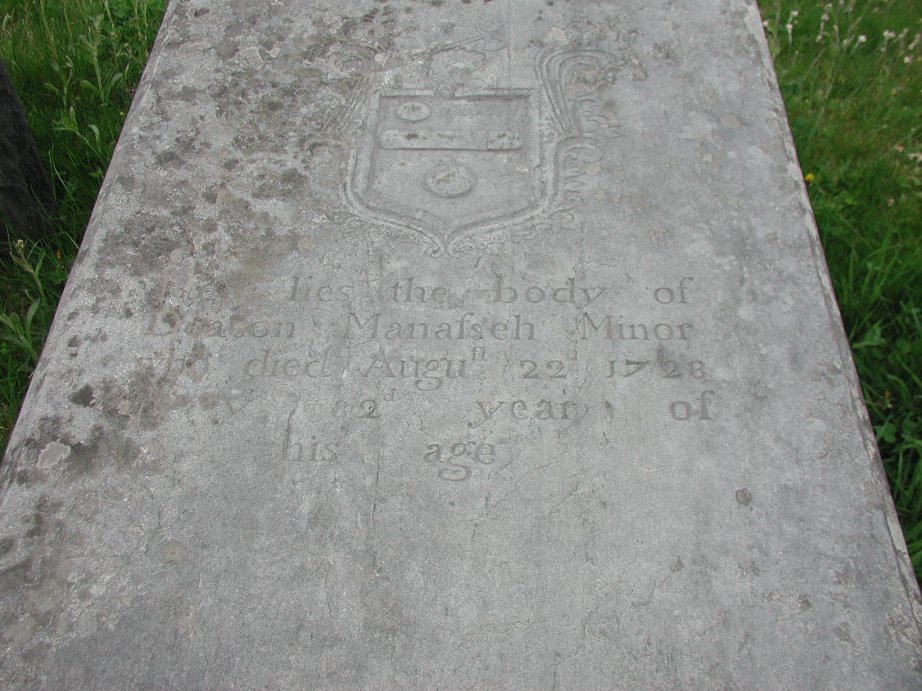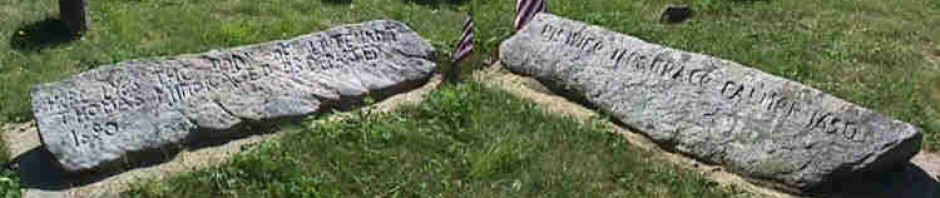
Elihu Miner Sr.

Elihu MINER (1722 – 1807) is Alex’s 7th Great Grandfather, one of 256 in this generation.

Elihu Miner was born 13 May 1722 in Lyme, CT, son of William MINER and Sarah BECKWITH. He married Keziah WILLEY on 21 Mar 1745 in East Haddam, CT.  Elihu Miner was baptized and joined the church  there 18 Aug 1751.  The Thomas Minor Family history states that he died before the 1790 census, but other sources show the date as 3 March 1807.

Keziah Willey was was born on 26 Mar 1723 in East Haddam, Middlesex, Connecticut. She was christened on 18 Aug 1751 in East Haddam, Middlesex, Connecticut.  Her parents were  John WILLEY and Sarah SAUNDERS.   Widow Keziah Miner joined the church at HL.  4 Jul 1790, and died in Millington 29 Mar, 1807, “aged 85.”

Children of Elihu and Keziah:

Name Born Married Departed
1. Elihu MINER Jr. 2 Sep 1745 in East Haddam CT Mrs Mary DEAN 31 May 1821 East Haddam CT
2. Asa Miner 20 Feb 1747 in East Haddam Lois [Munson? or Pearl?]
14 Jan 1772 Sharon, CT
21 Oct 1829 Ontario, NY
3. Jabez “James” Miner 10 Oct 1748
East Haddam
Lucy Stebbins  (Daughter of Sarah Miner )
15 Sep 1771 – New London, New London CT
.
Hannah Howard (daughter of Lucy Miner)
17 Jan 1784 East Haddam, Middlesex, CT
1797 in  Gilead section of Waterford, CT
4. Sarah Miner 3 May 1750 East Haddam Joshua Gates Jr.
30 May 1770
East Haddam
Bef. 1774 when Joshua remarried
5. David Miner 22 Aug 1752 Lucy Jewett
1776
East Haddam, CT
1799
6. Jonathan Miner 7 Aug 1754 East Haddam ? 1783
7. Deliverance Miner 18 Feb 1756 East Haddam ? ?
8. Nathan Willey Miner 29 Oct 1757 East Haddam ? ?
9. Mehetable Miner 28 Jun 1759 East Haddam Unmarried? 9 Apr 1842 Old North Cemetery
Woodbury
Litchfield
CT (Not sure if this is our Mehetable, but inscription reads “Age 83 yrs.”
10. Timothy King Miner 17 or 20 Apr 1762 East Haddam Polly Ames
4 Nov 1789
East Haddam, Middlesex, CT or Lempster, Sullivan, New Hampshire
26 Sep 1813 or 26 Mar 1816
Dunstable, NH while traveling Burial: East Lempster Cemetery
11. Abigail Miner 4 Apr 1766 East Haddam William Fengar(s) Dec 1815 in Waterford, New London, CT

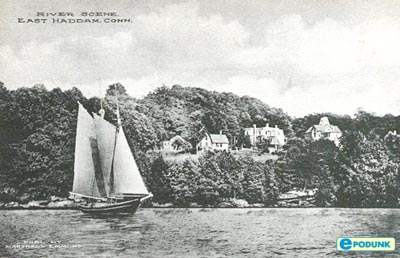
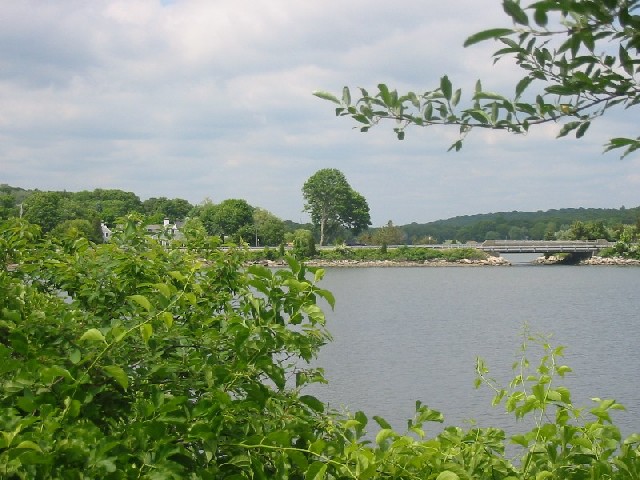
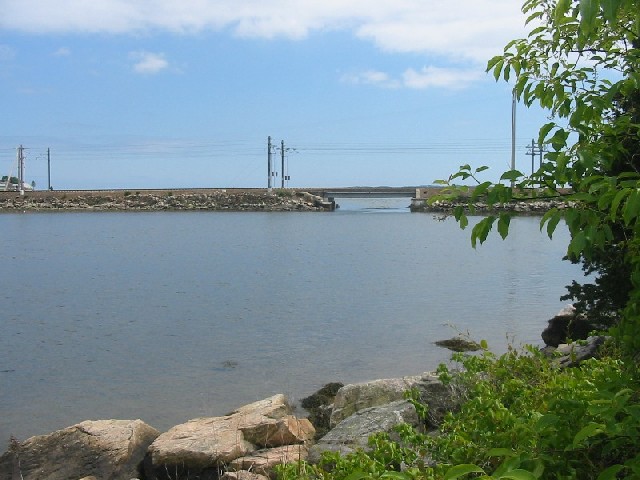
River Scene, East Haddam CT

1790 census – East Haddam, CT: 0-0-1 (Caziah)

Children were recorded in East Haddam (LR 3p10):

Children

1. Elihu MINER Jr.  (See his page)

2. Asa Miner

Asa’s wife Lois [__?__] was born 1757 in Sharon, Litchfield, CT. Lois died 1789 – New London, New London, CT. Most genealogies say her last name was Munson, but I can not find any evidence of her parents. Lois’ daughter-in-law was Sylva Munson.

Another theory is that she was Lois Pearl (b. 21 Apr 1753 in Willington, Tolland, CT – d. 15 Jul 1788 in Willington, Tolland, CT) Her parents were Capt Timothy Pearl (b. 1723 – 1789) and Dinah Holt (1725 – 1806).

Capt. Timothy Pearl: In May 1760 Timothy was appointed Lieutenant of the 8th Company, 5th Regiment of Connecticut. In Oct 1763 he was commissioned Captain in the same unit. Between 1764 & 1771 he served five years in the General Court as Deputy from  Willington, Tolland, CT

1790 census – Salisbury, Litchfield, CT: 3-5-4

Children of Asa and Lois

i. Asa Miner b. 1 Feb 1777 in Sharon, Litchfield, CT; D. 7 Oct 1851 in Westfield, Medina, Ohio; m. Ruth Barrass (Barrows) (b. 20 Dec 1778 in Sharon, Litchfield, CT – d. 1851 in Westfield, Medina, Ohio)

Asa’s oldest son Ransom Stiles was born in 1800 in Milton, Saratoga, New York.
1810 census – Milton, Saratoga Cty., NY: 30020-20011
1820 census – Truxton, NY: 101210-01010
1830 census – Medina, OH

In the 1850 census, Asa and Ruth were living with their son Asa in Westfield, Medina, Ohio

Asa Miner Headstone — Canaan Bend Cemetery, Creston, Wayne, Ohio

h/o Ruth Miner
age 74-8-6

Asa Miner Headstone Reverse – Findagrave # 27881369 Created by: Peggy Babbs

ii. Azel Miner b. 1 Feb 1777 in Sharon, Litchfield, Connecticut; d. 21 Oct 1829 in New London, Huron, Ohio; Burial: Butterfield Cemetery; m. 1 Jan 1802 Ontario County, New York to Sylva Munson (b. 18 Aug 1782 in Newalk, Licking, Ohio – d. 6 Jan 1853 New London, Huron County, Ohio; Burial: Butterfield Cemetery) Her parents were Stephen Munson (1742 – ) and Ann Cogswell (1742 – 1830). Azel and Sylvia had eight children born between 1803 and 1822.

iii. Darius Miner b. 10 Nov 1778 Sharon, CT; d. 1850 – Twin, Darke, Ohio; m.30 May 1802 to Abigail Bosworth (b. 3 Apr 1782 in Sandisfield, Berkshire, Mass. – d. 07 Oct 1829 in Rootstown, Portage, Ohio) Abigail’s parents were John Bosworth (1751 – 1832) and Hannah Smith (1756 – 1813).

1810 census – Milton, Saratoga Cty., NY p235: 10010-20010
1820 census – Gorham, NY: 001301-32110

iv. Rev. Sylvester Miner b. 12 Sep 1780 Sharon, CT; d. 30 Jul 1868 in Pittsford, Hillsdale Co. Michigan; Burial Locust Corners Cemetery; Inscription: Aged 82 Yrs, 3 Ds; m. Ruby Bennett (b. 1783 in Litchfield, Litchfield, CT – d. 17 Dec 1850 in Pittsford, Wheatland, Hillsdale, Michigan; Burial Locust Corners Cemetery) Her parents were Elijah Bennett (1753 – 1812 and Penelope [__?__] (1755 – 1814) Sylvester and Ruby were the parents of eight children, named Herkimer B., Homer L., Mary A., James H., Lorinda L., John N., Cornelia V., and George W.born between 1808 and 1830 in Otsego County, NY.

Sylvester was engaged the most of his life in teaching, both in the common branches and singing. In early life was united in marriage to Miss Ruby Bennett, and soon after removed to Otsego Co., N. Y., where he remained until 1819, and then removed to Ontario County, in the same State. He relocated from Farmington, Ontario, New York to Pittsford, Hillsdale Co, Michigan in 1839 where he died at age 83, having survived Ruby by 18 years.

1810 census – New Lisbon, NY: 20010-10010
1820 census – Farmington, NY: 220010-11011

v. David Willey Miner b. 3 Sep 1782 Salisbury, CT m. [__?__]

1810 census – Greenfield, Saratoga Cty., NY: 30010-20100
1820 census – Greenfield, Saratoga Cty., NY: 300110-12110

vi. Laura Miner b. 27 Sep 1784 Salisbury, CT ; d. 24 Apr 1868 in Gibson, Mercer, Ohio; m. ~1804 Nathan Scranton (b. 1781 Rhode Island – d. Bef. 1868 in Fort Recovery, Mercer, Ohio) Nathan and Laura had eleven children born between 1805 and 1836. Norman came 15 years after the next youngest. Their first children were born in Saratoga, New York. Before 1815, they moved to Truxton, Cortland, NY and to Westfield, Medina, Ohio before 1821.

In the 1850 census, Nathan and Laura were farming in Gibson, Mercer, Ohio with two children Lucy (b. 1818 NY) and Normon L (b. 1836 Ohio)

vii. Jerusha Miner b. 10 Jan 1787 Salisbury, CT

viii. Henry Miner b. 14 Aug 1789 Salisbury, CT; d. Feb 1828 in Stonington, CT

3. Jabez Miner

Jabez was often called James.

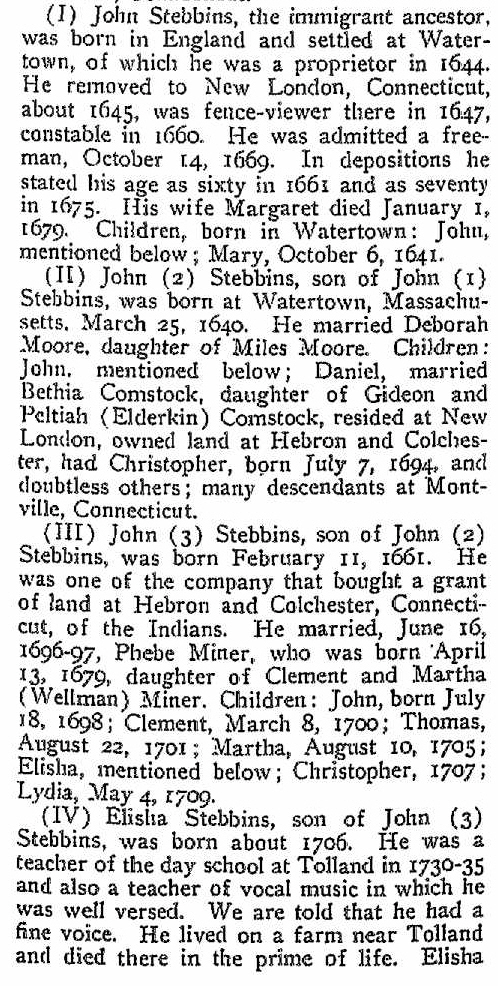
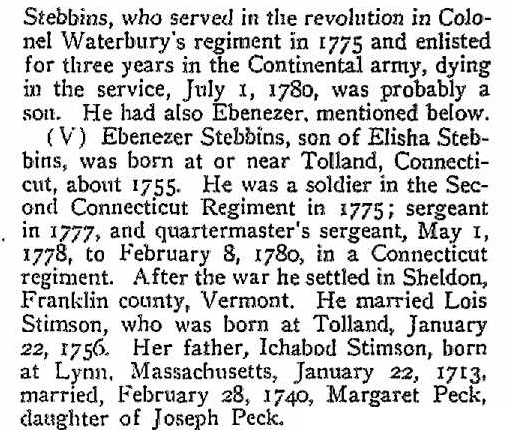
The Miner and the Stebbin families were very close and had many intermarriages.

Jabez’ first wife Lucy Stebbins was born 25 May 1755 in New London, CT. Lucy was Jabez’ second cousin. Her parents were John Stebbins and Sarah Miner. Her paternal grandparents were Clement Stebbins and Sarah Miner.  Her paternal great grandparents were John Stebbins and Phebe Miner.   Phebe’s parents were Clement MINER and Martha Wellman. Her maternal grandparents were Joseph Miner and Jemima Cady. Her maternal great grandparents were William MINER and Sarah BECKWITH. Lucy died about 1784 in New London.

Jabez’ second wife Hannah Howard was born 11 Jan 1754 – New London or East Haddam CT Hannah’s parents were Nathan Howard (1720 – 1777) and Lucy Minor (1723 – 1761). Hannah’s maternal grandparents were Clement Miner and Abigail Turner. Her maternal great grandparents were Clement Miner and Martha Mould. Her second great grandparents were Clement MINER and Frances BURCHAM.

Children of Jabez and Lucy

i. Joseph Miner b. 2 Feb 1772; d. 1803 Connecticut, one source says “at sea”; m. 1792 to Olive Prentis (b. ~1772 – d. 6 Apr 1841 in Connecticut) Olive’s parents were John Prentis (1736 – 1801) and Bridget Rogers (1742 – )

1800 census – New London, CT: 20010-10010
1810 census – New London, CT: 10000-00010 (Olive)

Jospeh and Olive had four children born between 1793 and 1800 in New London, CT:

ii. Lucy Miner b. 20 Mar 1776

iii. Jonathan Miner b. 23 Jun 1778; died young

iv. Clement Miner b. 20 May 1780

v. Capt. John Benjamin Minor b. 14 Feb 1781 New London, CT; d. 24 Nov 1861 Rochester, NY; m1. 29 Jun 1804 Glastonbury, Hartford, CT to Rebecca Hollister (b. 26 Jan 1781 in Glastonbury, CT – d. 1823 in Penfield, Monroe, New York) Rebecca’s parents were Sgt. Joseph Hollister (1752 – 1848) and his cousin Patience Hollister (1755 – 1826). m2. Abigail [__?__] (b. 1788 Mass.) John and Rebecca had five children born between 1804 and 1814 in Rochester, NY.

In the War of 1812 Benjamin was a Captain in John T. Van Dalfsen’s 12th Regiment of New York Militia of Coeyman’s, Albany County. The fourth brigade comprised the 10th, 11th, 12th and 13th regiments in the Mohawk valley, and was under the command of General Richard Dodge, of Johnstown.

According to Documents of the Senate of the State of New York, Volume 10  Jonathan also served as

  • Lieutenant in Lt Col Elihud Davis’ Saratoga County Regiment
  • Captain in Lt Col David Rogers Saratoga County Regiment
  • Lieutenant in Capt. John Harris’ Company, Lt. Col Augustus Cleveland’s 9th Regiment, Gen.  Ransom Noble’s 40th Brigade of Infantry of Essex County [halfway between Albany & Montreal]

At this period the State of New York along the Canadian frontier was to a great extent an almost unknown wilderness, and communications and transportation were still slow and laborious. The Mohawk river, slightly improved in its natural course by the Inland Lock Navigation Company, was the only route, except the rough highways, for the westward conveyance of cannon, which were loaded upon the Durham boats.

Apart from the regular army regiments authorized in June 1812 (as war was being declared) there were another 10 authorized in January 1812. So only the 1st to 7th regiments were actually veteran regulars, the rest were all being drafted in 1812. Most were far below establishment and extremely green. Throughout 1812 their leaders considered the militia to be the better soldiers.

None of the New England states allowed their militia to serve in the war. All invasions of Quebec had to start from the west side of Lake Champlain, because the New York militia were available and the Vermont militia were not.

In the 1830 census, Jonathan had a huge household of middle aged men in Gates, Monroe, New York. If anyone knows why, please let me know!
Males – 5 thru 9: 1
Males – 20 thru 29: 6
Males – 30 thru 39: 6
Males – 40 thru 49: 9
Females – 10 thru 14: 1
Females – 15 thru 19: 1
Under 20: 3
Persons – 20 thru 49: 21
Total Free White Persons: 24

In the 1850 and 1860 census, John and Abigail were living in Rochester Ward 4, Monroe, New York. Those are the only references I can find to Abigail.

vi. Jabez Miner b. 25 Dec 1783

Children of Jabez and Hannah

vii. David Miner b. 1785 New London; d.24 Feb 1864 New London; m. 28 Jun 1821 to Naomi Thomas; m 28 Jun 1821 New London to Naomi Thomas (b. 1801 CT – d. betw. 1850-1860). The only reference I can find to Naomi Thomas is the Barbour Collection marriage record. David and Naomi had three children born between 1824 and 1831.

In the 1850 census, David and Naomi were living in New York Ward 7 District 2, New York. Abigail Mason (b. 1777 Connecticut) was living with the family. In 1860, Ward 7 District 2 was a 2 square block area bounded by Catherine St., Market St., Henry St., Monroe St. (Just east of City Hall between the Brooklyn Bridge and Manhattan Bridge – which hadn’t been built yet)

In the 1860 census,David was a widowed Sea Captain  living with four grown children in Ward 7 District 4 New York City.  Naomi (b. 1825 CT) was a tailoress, David T. (b. 1833 CT) was a silver burnisher. William W. (b. 1841 CT) was a mason’s apprentice.    I don’t think Naomi or David ever married.  They lived together in the 7th Ward in the 1870 and 1880 census working as a dressmaker and silver burnisher.

7th Ward
--------
NB on Catherine St from East River to Division St; then EB on Division St to Grand St; then EB on Grand St to East River.

viii. Nathaniel C Miner b. 26 Feb 1788; d. 17 Sep 1870; m. 29 Nov 1810 New London to Elizabeth Thomas (b. 1789 CT). Nathaniel and Elizabeth had seven children born between 1812 and 1828 in New London.

There was another Nathaniel Minor (20 Apr 1788 – Litchfield, CT – d. 15 Mar 1861 Woodbury, Litchfield, CT) who married Althia Martin. His parents were Solomon Miner and Mary Root)

In the 1850 census, Nath’l and Elizabeth were living in New London, New London, CT. Nathaniel and his son George (b. 1814 PA) were masons.

In the 1855 city directory, Nathaniel Miner lived at 143 Main St New London, Connecticut. George had moved next door to 127 Main Street.  Interestingly, all the Miners in New London spelled their name with an “er”, not an “or”.

In the mid-1970s, after much local controversy, Main Street was renamed Eugene O’Neill Drive. O’Neill spent his summers in New London.  O’Neill and his friends frequently gathered in Dr. Joe Ganey’s living quarters above his office at 8 Main Street, the source of the name the Second Story Club.
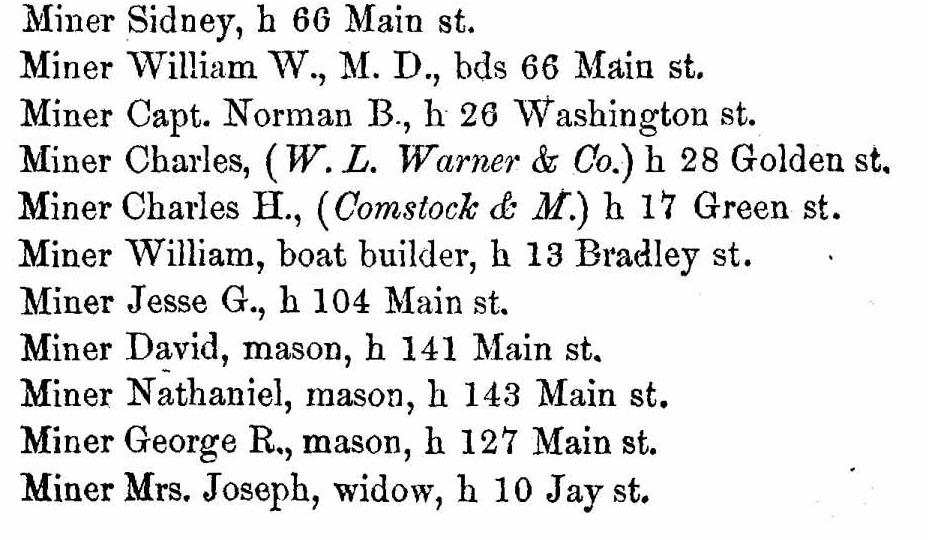

New London City Directory 1855

ix. Joshua Miner b. 29 Aug 1791 New London, CT; d. 1 Jun 1859 Wilkes-Barre, PA of Consumption; m. 2 Dec 1813 Wilkes-Barre, PA to Fanny Hepburn (b. 1790 CT  – d. 18 Apr 1869 Wilkes-Barre, PA; burial First Presbyterian Church)  Fanny’s parents were Lewis Hepburn (1764 – 1819) and Hulda Hotchkiss (1765 – 1864).   Joshua and Fanny had between four children born between 1814 and 1825 in Wilkes-Barre.

1820 census – Wilkes-Barre, PA: 101110-20010

In the 1850 census, Joshua and Fanny were living in Wilkes-Barre, Luzerne, Pennsylvania where Joshua was a stone mason.  Their daughter Janett (b.  1820 CT) had the same name as my sister,  Janette Parsons Miner did not marry and became a school teacher.

x. Hannah Howard Miner b. 29 Dec 1793 New London, CT; m. 20 Jun 1813 New London to Samuel Culver (b. 8 Jun 1789 New London, CT ) Samuel’s parents were Samuel Culver and [__?__] Buckmaster.

In the 1850 census, Samuel and Hannah were living in Norwich, New London, CT with five children at home ages 13 to 24. Samuel was working as a mason/

xi. Grace Miner b. 20 Jul 1796; m. [__?__] Elliott

4. Sarah Miner

Sarah’s husband Joshua Gates was born 19 Oct 1737 [many years before the 1746 usually estimated] in East Haddam, Middlesex, CT. He was baptized 21 Dec 1740 in East Haddam.  His parents were Joshua Gates Sr. and Lydia Brainerd. After Sarah died, he married second Feb 1774 to Eunice Fuller, daughter of Nathan Fuller. Joshua died 9 Mar 1781 in East Haddam and was buried at the First Church Cemetery. His grave is listed in Abstracts of Graves of Revolutionary Patriots by Patricia Law Hatcher.

Sarah only lived to have one child Celinda Gates, baptized by Rev. Judah Champion in East Haddam, July 19, 1772. Celinda married, Feb 23, 1796 to Ruel Eddy, a blacksmith of East Haddam. They moved to North Adams, Berkshire County, MA and had several children. Their second son was named Dyer Eddy and he “cut his ankle badly,” April 1, 1816

Joshua marched for the relief of Boston in the Lexington Alarm, April 19, 1775 and was on the roll of Captain Eliphalet Holmes Company of Minute-Men which was raised in May 1776. D. Williams Patterson said he was a sergeant in the Revolutionary Army. After his death, his widow resided for some time with her son Franklin in Warren, Herkimer County, NY, but in 1816 she was residing with her stepdaughter Celinda Eddy in North Adams, Berkshire County, Mass.

5. David Miner

David’s wife Lucy Jewett was born 1756 in East Haddam, Middlesex, CT. Her parents were Capt. Joseph Jewett (1732 – 29 Aug 1776 Flatbush, Queens, New York) and Lucretia Rogers (1740 – 1836). Lucy died in 1784 – East Haddam, Middlesex, CT.

Lucy’s father was a captain in the revolutionary army, serving in Colonel Huntington’s regiment. He was in the Battle of  Long Island, and, being taken prisoner, surrendered his sword to a British officer, who instantly plunged it though his body. (One record gives date of death August 31, 1776.)

His family is of the good old New England stock, his parents Josiah and Sophia Skinner having moved to Moravia, NY. Capt. Joseph Jewett was a hero of the war of the Revolution. In one of the battles about New York, he was surrounded and compelled to surrender after defending himself with great bravery. After his surrender he received several bayonet thrusts from the dastardly foe. His cruel treatment coming to the knowledge of the higher officers measures were taken to alleviate his sufferings, but he died of his wounds.

Deacon N. Richards, one of his non-commissioned officers, reported: “Capt. Joseph Jewett of Huntington’s Regiment, an officer much respected and beloved, of elegant and commanding appearance and unquestionable bravery, was murdered in cold blood, having surrendered his sword when demanded, the British officer, on receiving it, instantly plunged it through his body.” (Vermont Chronicles)

The other version is a statement of Lt. Jabez Fitch, who was in Capt. Jewett’s Company and was taken prisoner at the same time. He says that the Captain was three times wounded by bayonet stabs “after he had surrrendered,” but makes no mention of his having been run through by a British officer with his own sword.

Also known as the Battle of Brooklyn or the Battle of Brooklyn Heights, the Battle of Long Island, fought on August 27, 1776, was the first major battle in the American Revolutionary War following the United States Declaration of Independence, the largest battle of the entire conflict, and the first battle in which an army of the United States engaged, having declared itself a nation only the month before. The result was a decisive British victory, though Washington saved his army to fight another day.
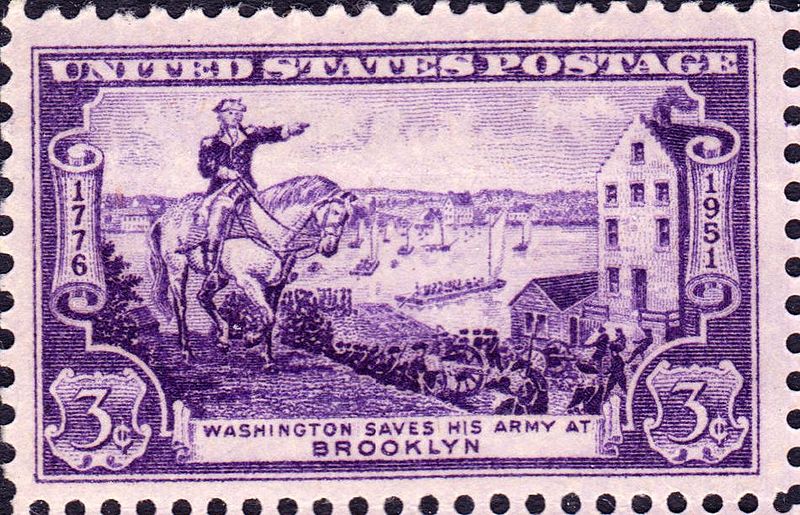
Washington evacuating Army 175th Anniversary Issue of 1951. Accurate depiction of Fulton Ferry House at right. Flat bottom ferry boats in East River are depicted in background.

Child of David and Lucy

i. William Miner b. ~ 1775 East Haddam, CT; d. Charlestown, South Carolina; m. in Georgia

10. Capt. Timothy King Miner

Timothy’s wife Polly Ames was born 28 Jul 1772 in East Haddam, Middlesex, CT. Her parents were Benajah Ames and Luce Scovell. Polly died 14 Apr 1864 in Lempster, Sullivan, New Hampshire, over 50 years after her husband.

Timothy was a tanner, currier and shoemaker. He hired his future son-in-law Alvah smith as apprentice, but died in 1814 during Alvah’s first year of service, the young apprentice was retained in business by Mrs. Miner, and served his time. On arriving at his majority he contracted for the tannery and shoe-shop, and was eminently successful, in time building up a large business, giving employment to one hundred employees; new dwelling-houses were erected, and a store opened for the accommodation of his employees. Alvah married Timothy’s fourth daughter Arethusa in 1820.

Timothy lived in Lempster, New Hampshire, a bit north of Gilsum and well west of Concord, NH in the 1790, 1800, 1810 and 1820 censuses.

Location in Sullivan CountyNew Hampshire

First granted by colonial governor Jonathan Belcher in 1735 as Number 9 (ninth in a line of forts to guard against Indian attacks), it was regranted in 1753 as Dupplin, after Sir Thomas Hay, Viscount Dupplin, by Governor Benning Wentworth. The town was re-granted one final time in 1767 as Lempster, after one of the titles of a Sir Thomas Farmer of “Lempster” (presumably Leominster in England), and incorporated in 1772.
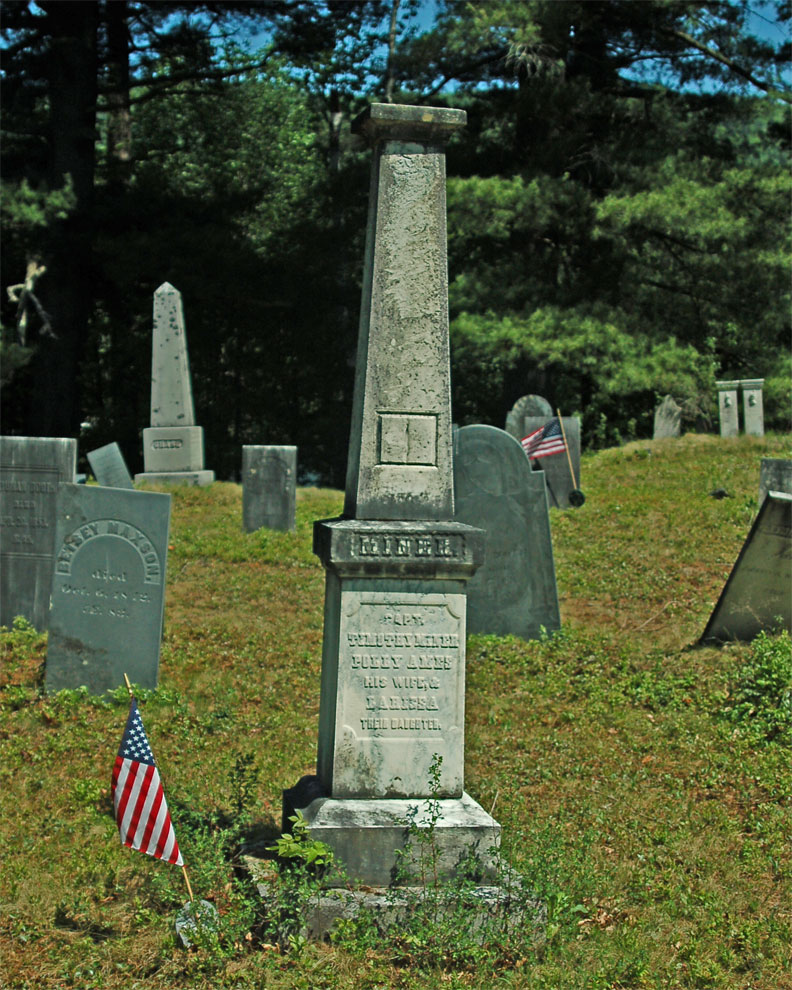
Timothy Miner Monument — East Lempster Cemetery, East Lempster, Sullivan County, New Hampshire,
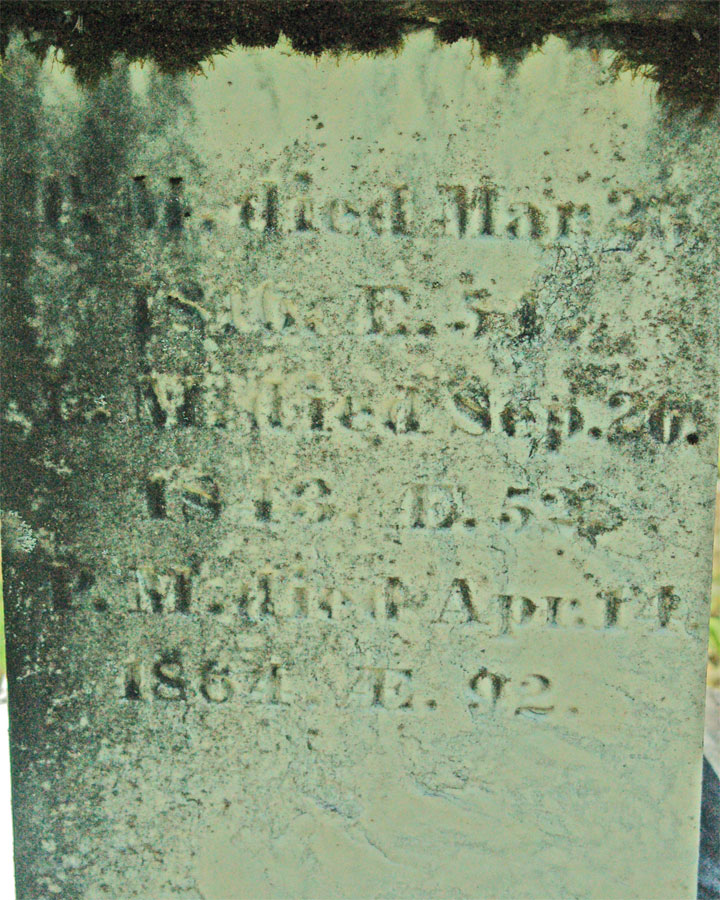
Timothy Miner Detail – The stone is very difficult to read. Most genealogies say Timothy died 26 Mar 1816, but this looks more like 26 Sep 1813 to me. Also age 52 matches in 1813 Timothy’s 1762 birth.

In the 1850 census and the 1860 census Polly was living with her widowed daughter Sarah Hutchinson in Lempster, Sullivan, New Hampshire.

Children of Timothy and Polly:

i. Larissa Miner b. 30 Nov 1791 in Lempster, Sullivan, New Hampshire; d. 26 Sep 1843 East Lempster, Sullivan County, New Hampshire; Burial: East Lempster Cemetery

ii. Polly Miner b. 27 Dec 1793 Lempster, Sullivan, New Hampshire; d. 23 Mar 1870 Williamstown, Orange, Vermont of Chronic Bronchitis; m. 25 May 1815 Lempster to Lewis Spencer (b. 1787 in Claremont, Sullivan, New Hampshire – d. 24 Oct 1849 in Randolph, Orange, Vermont) Lewis’ parents were Reuben Spencer (1751 – 1804) and Alice Ainsworth (1740 – ) Polly and Lewis had eleven children born between 1816 and 1839.

Randolph, Orange, Vermont

With Randolph’s productive soil for cultivation, farming became an intensive industry. By 1830, when the population reached 2,743, between twelve and thirteen thousand sheep grazed its pastures. Randolph was noted for its good butter, cheese and mutton. Two branches of the White River provided water power for watermills. By 1859, the town had three gristmills, one oil mill, and one carding mill. In 1848, the Vermont Central Railroad opened service through the town.

In the 1850 census, Polly was a widow in Randolph, Orange, Vermont with five children at home ages 10 to 32.

iii. Senah “Sarah” Miner b. 24 Aug 1796 Lempster, New Hampshire; d. 18 Nov 1874 Lempster, New Hampshire; m1. 2 Jun 1822 to Truman Bingham (b. 29 May 1796 – Lempster – d. 18 Oct 1825) Truman’s parents were James Bingham (1758 – 1826) and Mary Willey James Bingham was for several years was a representative for Lempster in the General Court of the State. He was also a selectman; m2. 14 Dec 1836 or 13 Dec 1837 Lempster to Rev. William Hutchinson (b. 04 Apr 1794 in New Hampshire – d. 24 Apr 1842 in Plainfield, Cheshire, NH); William first married 1823 in St Johnsbury, Caledonia, Vermont to Mary Abbot (b. 23 Nov 1802 in Haverhill, Grafton, New Hampshire – d. 1835)

In the 1850 census Sarah was a widow living with her mother Polly, daughter Helen Bingham (b. 1823 NH) and step-daughter Martha Hutchinson (b. 1831 NH) in Lempster, Sullivan, New Hampshire. Senah, Polly and Helen were still living together in the 1860 census.

iv. Arethusa Miner b. 19 Nov 1800 Lempster, New Hampshire; d. 15 Jun 1877 Lempster, New Hampshire; m. 8 Mar 1820 Lempster to Alvah Smith (b. 17 Jan 1797 in Lempster – d. 7 Aug 1879 in Lempster) His parents were Jacob Smith (1766 – 1837) and Asenath Hurd (1766 – 1853). Arethusa and Alvah had eight children born between 1822 and 1838.

In the 1850 census, Alvah and Arethusa were living in Lempster where Alvah was a tanner and currier.

Alvah’s early education was limited to the district school, never attending in summer after his ninth year, remaining at home until eighteen, freely lending his assistance in the maintenance of the family, his father being in feeble health, with limited means, pecuniarily, but rich in the love and devotion of a wife and eight children. Young Alvah, arriving at the age of eighteen, was apprenticed to Captain Timothy Miner, tanner, currier and shoemaker. He dying the first year of service, the young apprentice was retained in business by Mrs. Miner, and served his time. On arriving at his majority he contracted for the tannery and shoe-shop, and was eminently successful, in time building up a large business, giving employment to one hundred operatives; new dwelling-houses were erected, and a store opened for the accommodation of his employees.

He made sales in Vermont, Massachusetts, New York and Illinois, and some of the time work was sent to the Southern States via Boston. It was in his tannery that calf-skins were first tanned with the hair on, the first one being an experiment by Joseph Marshall, one of Mr Smith’s earliest apprentices, to oblige a townsman. This soon became quite a lucrative business, the skins thus tanned being made into overshoes and boots, which, being impervious to the water and very warm, found a ready market.

On Nov 19, 1854, the shoe-shop and tannery were burned by an incendiary, involving a loss of thirty thousand dollars. The business being so necessary to the interests of the town, the people lent their aid in rebuilding it on a large scale, adding the modern appliances and improvements. In April of 1863 this building was burned, having been ignited by a spark from the furnace chimney, and was never rebuilt.

In all these years of business activity Mr. Smith neglected no opportunity for the improvement of his mind, but spent all leisure moments in gaining information both as to political and religious movements. Not infrequently the morning light revealed the scorched newspaper, telling all too plainly that Morpheus had been robbed of rightful hours.

His fellow townsmen were not slow in appreciating his business capacities, bestowing upon him the honors of office in their gift. He was town clerk from 1826 to 1880; Representative from 1830 to 1832; for some years selectman and superintending school committee, and often chosen to administer on and settle estates. While being thus favored by his town, he was made justice of the peace and quorum; two years member of the Governor’s Council and of the board of trustees of the Insane Asylum; one of the directors and agents of the Cheshire Mutual Fire Insurance Company from its inception, retaining both until two years before his death, when he relinquished the agency.

In 1856 he received the appointment of Probate judge, retiring in 1867 at the age of seventy, having fulfilled the trust with honesty and fidelity. He was also delegate to the Presidential Convention in Philadelphia in 1856.

Alvah Smith Portrait (1797 – 1879) Photograph, taken at the age of sixty-nine

At the annual election in 1871 he received a few votes on the temperance ticket for New Hampshire State Senate in District No. 10. The person elected to that office (a Democrat) died before the Legislature met, and according to the Constitution, “the vacancy must be filled by joint vote of Legislature, for one of the two highest candidates voted for at the annual election ; ” he therefore became a candidate. The Democrats and Labor-Reformers united were a majority in the Legislature, and hoping he might feel under obligation to go with them if elected by them, elected him. Although offered any office in the gift of the Legislature or Governor and any amount of money if he would vote with them in their revolutionary movements (as he held the balance in the Senate), he stood aloof from all their offers, and remained firm and true to the principles of liberty and equality he had ever supported from early manhood.

A precious heirloom in the old home is a gold-headed ebony cane, bearing the following inscription: “Presented to Senator Alvah Smith, for his unwavering fidelity to principle and right, by Republican members of the Legislature, June session, 1871.”

He was State pension agent for four years, which would have proved a more lucrative position had not the infirmities of years made it necessary for him to employ extra help in the office. His well-known sound judgment procured him many calls as referee in difficult cases, not only in town, but in others in the county; and after mature deliberation he was always ready to give his opinion, except in cases where the differing parties were man and wife, where he considered a third party like the “fifth wheel to a coach,” and advised for both forbearance and conciliation.

Making himself well acquainted with points of law, he was many times solicited to enter the bar, but knowledge of his own acquirements modestly forbade. Although the law would have exempted him from military duty, he was induced to take command, in early life, of a volunteer company in the militia; from which he rose in military gradation to the office of inspector, and performed the duty of inspecting the whole of the then Third Division of New Hampshire Militia, as reviewed by Governor David Morrill and General William Carey, a fellow townsman.

In early days he was a Whig, and so great was the influence that went out from his manufactory that it obtained the name of “Whig Fort.” At the birth of the Free-Soil party, at the Buffalo (N. Y.) Convention, to which he was sent as active delegate, he adopted Free-Soil principles as best suited to carry out his ideas of right, from which he could not be moved. His firm principles made him proof against political bribery, though the temptation once came when in straitened circumstances and declining years. When told at the time, “It is said every man has his price,” he made quick reply, “One man has not.”

Feeling from his own experience the disadvantages arising from a limited education he was thoroughly awake in educational matters, giving his children every help in his power, not only patronizing the district and select schools of his own town, but giving them academical advantages. He was much interested in the “Teachers’ Institutes ” in the county, and used his influence in their favor; also was ever ready to procure the latest and most approved text-books for his family, and it was rarely that a book or map agent received from him the “cold shoulder” if his wares promised assistance in gaining knowledge. Being “fully persuaded by what he read by his own observation and experience, that there was no nourishment in alcohol, and that an individual could do more and better work without it than with it,” he early espoused the cause of temperance, becoming one of its most earnest advocates.

His shop, raised in 1831, was the first building in town raised without rum. When he proposed the idea to the master-workman, he at once said “It cannot be done.” “Then,” replied Mr. Smith, ” It shall not be raised.” The day came and with it scores of people, some from out of town, fully expecting a failure; but, contrary to all expectation, every joist, beam and brace came in position with no other stimulant than hot coffee. It was a success in every respect and was not the last building raised on temperance principles. Mr. Smith was known throughout the county and State as an earnest temperance man, and was sent as county delegate to the World’s Temperance Convention in New York in 1853.

He avoided the formation of bad habits. Being ordered by his physician at one time to smoke, as soon as he realized he was becoming a slave to the vile weed, he at once and forever abandoned its use; and, as an instance of his self command, he laid pipe and tobacco where he would see it each day. At another time he forsook the use of morphine, given to ease the pain of a fractured hip, although it cost him more than a week of sleepless nights. It is said by those who knew him from his earliest days that no profane or indelicate word passed his lips, and rarely an expletive, obeying the Scriptural injunction, “let your communication be yea, yea, and nay, nay,” etc.

His great willpower, guided by Christian principles, enabled him to keep in control a naturally violent temper.

Their son Alvah Smith Jr. enlisted as a Private on 29 March 1864 at the age of 18 in Company B, 1st Cavalry Regiment New Hampshire. Promoted to Full Corporal on 1 Jul 1865. Mustered Out Company B, 1st Cavalry Regiment New Hampshire on 15 Jul 1865 at Cloud’s Mills, Virginia.

v. Maria Louisa Miner b. 1 Jun 1810 Lempster, New Hampshire; d. 5 Nov 1873; m. 3 Jul 1832 Lempster to David Warren Dexter (b. 1806)

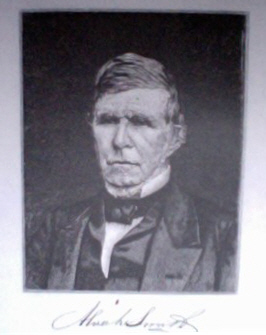
11. Abigail Miner

Abigail’s husband William Fengar was born in 1757 in Monmouth, New Jersey. William died Feb 1818 – Waterford, New London, CT.

Children of Abigail and William

i. Matilda Seabury Fengar b. 1 Dec 1793 in New London CT; d. 25 Oct 1865 in Washington, D.C.; m. Almon Baldwin (b. 29 Dec 1791 in Litchfield, Litchfield, CT – d. 3 May 1874 residing at 451 D Street NW, Washington, D.C.) Almon’s parents were Charles Baldwin and Rachel Mason.

Almon enlisted in the war of 1812, and served through the war in the 37th US Infantry. He rose from private to Sergeant Major. After the war, he went to Alexandria, Virginia, and about 1835, to Washington, D.C., where he d. July 3,1874 residing at 801 E. Street, N.W [a block from the National Portrait Gallery and around the corner from the Intl Spy Musuem]. Reference: Baldwin gen. by Chas. Candees Baldwin. Cleveland, 1881. (974p.):541, 57

In the 1850 census, Almon and Matilda were living in Washington DC Ward 5 with six children ages 14 to 25. Almon was a carpenter.

ii. Grace Fengar b. Jan 1795 in New London, New London, CT – d. Jul 1872 in Washington DC; Burial: Glenwood Cemetery; m. 30 Jun 1819 New London to Charles Calvert (b. 24 Nov 1793 in Kingston upon Hull, East Riding of Yorkshire – d. 13 Sep 1880 in Washington DC; Burial: Glenwood Cemetery Plot: Sec Q Lot 134 Site 3) Charles parents were John Calvert and Ann Allsop. Charles moved his family to Washington DC before 1830. Grace and Charles had 16 children born between 1820 and 1848!

In the 1850 census, Charles and Grace were living in Washington DC with a large family. To feed all those mouths, Charles was working as a government clerk.

iii. George Fengar b. 1800; d. 1831; m. 23 Mar 1823 to Fannie Bolton (b. 10 May 1807 in New London, New London, CT – d. 1 Sep 1877 in New London) After George died, Fanny married Oct 30, 1841, by Abel T. Sizer to Joseph P. Mason.

iv. Thomas J Fengar b. ~1801 Waterford, New London CT; d. 5 Aug 1877 Waterford; Burial: East Neck Cemetery; m1. ~1822 to Louisa Beebe (b. ~1804 in Waterford – d. 7 Jan 1826 in Waterford Burial: East Neck Cemetery); m2. Lucretia Brooks (b. ~ 1801 in Connecticut – d. 3 Nov 1863 in New London, New London, CT; Burial: East Neck Cemetery )

v. William Fengar d. 1830. On Mar 24, 1820 William enlisted as a private in the Engineers for a term of five years. S.A.M.R. Jun 30 1820 West Point present; S.A.M.R. Dec 31 1820 present; Musician attached to Corp of Cadets.

vi. Henry Fengar d. 1847

vii. Mary Fengar

viii. Matilda Fengar

ix. Miranda “Morinda” Fengar m. 28 Feb 1828, by Rev. Le Roy Sunderland to George Tiller,

x. Nancy Fengar

Sources:

Thomas Minor Family HistoryElihu Miner

http://trees.ancestry.com/owt/person.aspx?pid=6620196

http://familytreemaker.genealogy.com/users/m/c/a/David-P-Mcauliffe/GENE2-0006.html#CHILD25

http://www.ourfamilyancestry.info/histories/gates/georgegatesdescendants.pdf
http://trees.ancestry.com/tree/11697457/person/-407472846

Posted in -9th Generation, Line - Miner | Tagged , | 8 Comments

Lt. William Miner

Lt. William MINER (1670 – 1725) was Alex’s 8th Great Grandfather, one of 512 in this generation.
William Miner was born on 6 Nov 1670 in Niantic, CT near Lyme and New London. He was son of Clement MINER and Frances BURCHAM.   He married Sarah BECKWITH, of Lyme CT c. 1693.  William died on 18 Apr 1725 at the age of 55 and was buried in Old Stone Church Cemetery in East Lyme.

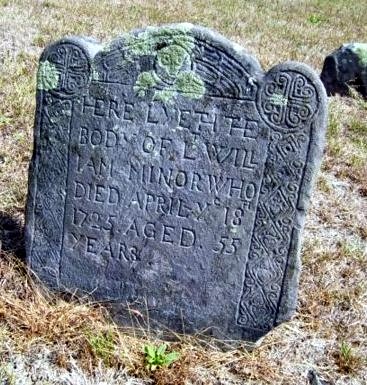
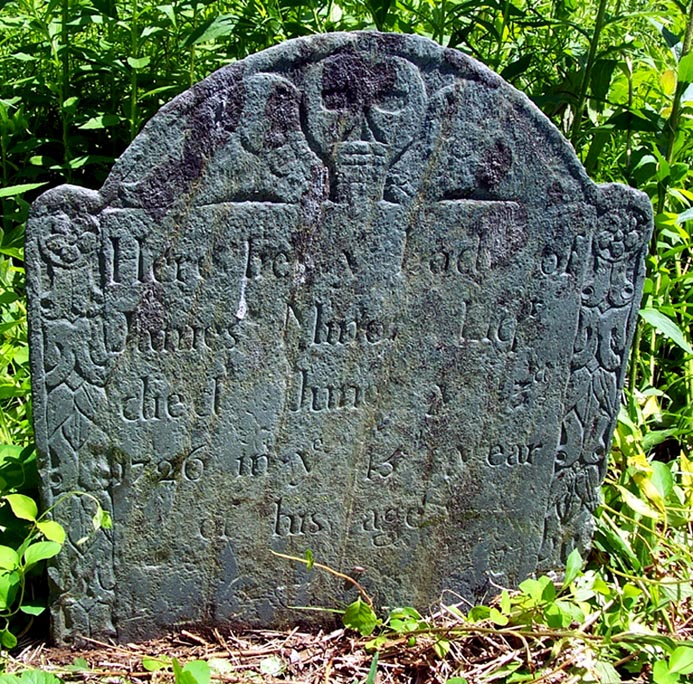
William Miner Headstone – Old Stone Church Burial Ground East Lyme, New London, Connecticut

HERE LYETH THE
BODY OF LT WILL
IAM MINOR WHO
DIED APRIL YE 18TH
1725 AGED 55
YEARS

Sarah Beckwith was born on 14 Apr 1677 in Lyme, CT.   She was baptized in New London, CT at the age of 8 on 15 Jul 1685 .   Her parents were Joseph BECKWITH and Susanna TALLMAN of Lyme, CT.   Sarah died in New London  on 24 Mar 1722/23; when she was 45 perhaps in child birth from our ancestor Elihu.

A wife of a William Miner died 9 Nov 1732 in Lyme, CT; perhaps a second wife of this William?

Children of William and Sarah  recorded in Lyme, CT .

Name Born Married Departed
1. William Miner 27 Apr 1694 Lyme CT Abigail [_?_]
1714
1 Oct 1746 Lyme CT
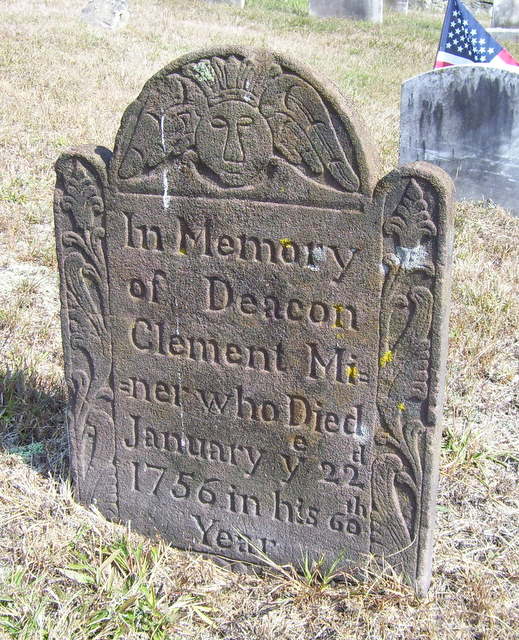
2. Deacon Clement Miner 12 Feb 1695/6 Lyme Esther Lee.
Her parents home, (the Thomas Lee house still stands)
31 Oct 1722 East Lyme, CT
22 Jan 1756 East Lyme CT
3. Joseph Miner 12 Dec 1697 Lyme Jemima Cady
19 Jan 1721 Old Lyme, New London, CT
.
Hannah [_?_]
bef. April 1758 when Hannah married Clement Miner
4. Susanna Miner 14 Sep 1699 Lyme John Brown
4 Dec 1729
Old Lyme, CT
25 Apr 1741 Stonnington CT
5. Christopher Miner 17 Apr 1701 29 Mar 1724
6. Thomas Miner 5 Jan 1702/3 Lyme Martha Stebbins
21 Nov 1727 New London
9 Dec 1746
7. Sarah Miner 26 Jul 1704 Lyme Clement Stebbins
25 Nov 1727   Lyme, CT
after 1743
8. Stephen Miner 9 Apr 1706 Lyme Athaliah Updyke (Updike)
1733
Maidenhead (now Lawrenceville) NJ
8 May 1750 Winchester VA
9. Samuel Miner 26 Jul 1708 Lyme Hannah Douw
Somerset NJ
9 Mar 1740 Lyme,  CT
11 Oct 1745 Pennsylvania
10. Anne Miner 6 May 1710 Lyme Samuel Leach
6 Feb 1728 New London, CT
after 1750
11. John Miner 15 Apr 1712 Unmarried 25 Mar 1741
12. Sylvester Miner 3 Jun 1714 Lyme Lydia Stebbins
.
Lydia Chadwick may have been a second wife by 1762.
after 1771
13. Elihu Miner 16 Oct 1716 3 Mar 1719
14. Elihu MINER Sr. 13 May 1722 Lyme Keziah WILLEY
21 Mar 1745 East Haddam, CT
before 1790 or
29 Mar 1807 East Haddam CT

In May 1713 he was commissioned Lieutenant of the second Lyme  company.  He was a representative to the General Assembly of Connecticut in 1717.

William served in some of the early colonial wars and received the title of Lieutenant.  The Sons of Colonial Wars placed a Louisburg cross on his gravestone in the old Stone Cemetery in East Lyme on the 24th of June, 1924.

Children

1. William Miner

William’s wife Abigail [__?__] origins are not known.

Children of William and Abigail

i. William Miner b. 1719 Old Lyme, New London, CT; m. 28 Jul 1737 to Abigail Biggs (b. 1716 Lyme, New London, CT – ) Abigail was called “of Saybrook” in Connecticut marriage records. Some marriage records spell William name “Minot”

ii. Elizabeth Miner b. 1722 Old Lyme, New London, CT

iii. Katherine Miner b. 1725 Old Lyme, New London, CT;

2. Deacon Clement Miner

Clement’s wife Esther Lee was born 18 Aug 1703 in Lyme, New London, CT. Her parents were Thomas Lee and Elizabeth Graham.  Esther died 6 Jun 1765 in Lyme, New London, CT.

Headstone reads:
“Here
Lies the Body of
Esther Miner Relict
of Dea[co]n Clement
Miner who Depar[te]d
this Life June y 6
1765 in the 62d
year of her Age.”

Clement is called Deacon in the Connecticut, Deaths and Burials Index, 1650-1934

Clement and Esther were married at her parents home, (the Thomas Lee house still stands)

Clement Miner and Esther Lee were married in 1722 in her parents home, the Thomas Lee House in Lyme, CT

The Thomas Lee House in the Niantic section of East Lyme, Connecticut, was constructed between 1660 and 1664. It is one of the oldest wood frame houses in Connecticut still in its primitive state. The original dwelling consisted of a post and beam timber frame erected on six 2-story wall posts, with the Judgment Hall below and the Chamber above. A steeply pitched roof covered a spacious attic over the chamber. A small stone walled partial cellar pit under part of the hall was reached through a trap door. A massive fireplace with timber lintel spanned most of the west wall. Around 1700, the West Parlor and West Chamber were added as a free standing structure framed on its own four corner posts. About 1765, the lean-to with the Kitchen and its adjoining rooms were added. The West Parlor was plastered, the summer beam and chimney girt were sheathed, and the paneling formerly on the plastered walls was reused in the lean-to. New paneling, with four flute pilasters was added on the fireplace wall.

Today the house is a historic house museum operated by the East Lyme Historical Society, and furnished as it would have been in the 18th century.

Clement Minor Gravestone - Old Stone Church Burial Ground  East Lyme New London -- Find A Grave Memorial# 27555261

Clement Minor Gravestone – Old Stone Church Burial Ground East Lyme, New London — Find A Grave Memorial# 27555261

In May 1745, Clement was commissioned lieutenant in the 2nd company in Lyme and captain in October 1745.

Clement’s footstone reads:

French and Indian War
Clement Miner
1st Company, 4th Regiment,
Died Jan. 20 1756
AE 59

Children of Clement and Esther:

i. Lucretia Minor b. 22 May 1724 Lyme, New London, CT; d. 23 Feb 1757; m. 1740 Lyme, New London, CT to Rueben Ely (b. 12 Jan 1710 West Springfield, Mass. – d. 22 Feb 1799 Hancock, New Hampshire; Burial: Noah Ely Cemetery, Hancock, Berkshire, Mass.) Ruben’s parents were Deacon John Ely (1678 – 1758) and Mercy Bliss (1680 – 1763) Lucretia and Ruben had five children born between 1747 and 1757. After Lucretia died, Ruben married 14 Sep 1763 Somers, Tolland, CT to Sarah Kibbe (1726 – 1822) and had two more children.

ii. Christopher Miner b. 23 Feb 1726 Lyme, New London, CT;  d. 2 Jan 1767  Burial: Old Stone Church Burial Ground  East Lyme.

Inscription:
French Indian War
Christopher Miner
5th Co., 3rd Regt.
Died Jan. 2, 1767
AE 40

m1. 1749 Lyme to Lucretia Beckwith (b. 1728 New London, New London, CT – d. 9 Aug 1775 Lyme, New London, CT); Lucretia’s parents were Oliver Beckwith (1691 – 1759) and Martha [__?__] (1691 – 1759) Christopher and Lucretia had eight children born between 1750 and 1773.

m2. possibly 28 May 1758 Lyme to Abigail Way (b. 1728 Lyme – d. 1792 Longmeadow, Hampden, Mass.)

iii. Andrew Miner b. 26 May 1728 Lyme, New London, CT; d. 1783 Tolland, Tolland, CT; m. 4 Nov 1750 Norwich, New London, CT to Priscilla Bosworth (b. 16 May 1731 Killingly, Windham, CT – d. Williston, Chittenden, Vermont) Priscilla’s parents were David Bosworth (1699 – 1747) and Priscilla Shaw (1702 – 1728). Andrew aned Priscilla had eleven children born between 1750 and 1769.

iv. Elisha Miner b. 24 Aug 1730 Lyme, New London, CT; d. 15 Feb 1792 Burial: Old Stone Church Burial Ground East Lyme; m. 22 Oct 1755 Lyme to Ruth Robbins (b. 17 Feb 1730 Lyme – d. 26 Oct 1805 East Lyme) Ruth’s parents were Edward Robbins (1693 – 1731) and Ruth Smith (1695 – 1733) Elisha and Ruth had three children.

v. Sabra “Seabury” Miner b. 2 Oct 1732 Lyme, New London, CT; d. 16 Apr 1788 West Springfield, Hampden, Mass; m. 4 Oct 1751 Springfield, Hampden, Mass. to Benjamin Stebbins (b. 8 Mar 1727 Springfield, Hampden, Mass. – d. 6 Sep 1803 West Springfield; Burial: Park Street Cemetery, West Springfield) Benjamin’s parents were Benjamin Stebbins (1702 – 1783) and Mary Day (1706 – 1796). Sabra and Benjamin had ten children born between 1752 and 1774.

Benjamin was a private in the Massachusetts Militia in the Revolution. Capt. Nehemiah May’s company, Col. David Leonard’s regiment.; entered service May 6, 1777; discharged July 8, 1777; service, 72 days, at Ticonderoga, including travel (200 miles) home; company raised for 2 months. Roll dated South Brimfield.

Sabra Stebbins Gravestone --Park Street  Cemetery West Springfield

Sabra Stebbins Gravestone –Park Street Cemetery West Springfield — Find A Grave Memorial# 58072189

Inscription:
In memory of Mrs. Sabra Stebbins wife of Mr. Benjamin Stebbins who died April 16, 1788 in the 56 year of her age….Dear friends be wise/In time to know/The fading state/of things below/I seek the Lord with /every breath/And always be prepared/for death

vi. Deborah Minor b. ~1732 Lyme, New London, CT; d. 1805 Connecticut; m. 1753 Lyme to Amos Fox (b. 1730 Lyme – d. 1785 Lebanon, Grafton, New Hampshire) Amos’ parents were Benjamin Fox (1688 – 1745) and Azubah Tuttle (1692 – 1728). Deborah and Amos had seven children born between 1755 and 1766.

vii. Zenas Minor b. 1735 Lyme, New London, CT; d. 1738 Lyme,

viii. Samuel Miner b. 21 Aug 1738 Lyme, New London, CT;

This Samuel was NOT the Samuel who married Jane Latimer on 13 Nov 1789. That Samuel is probably from the Maynard family. Jane was born on 13 Apr 1763 in Lyme, CT, daughter of Nathan Latimer.

ix. Elys Miner b. 1740 Lyme, New London, CT

x. John Miner b. 25 Mar 1742 Lyme, New London, CT; m. 1763 Lyme to Martha Bolles (b. 1746 Lyme); m2, ~1776 to Deborah Rogers. John and Deborah had three children.

xi. Joel Minor b. 25 Feb 1744 Lyme, New London, CT; d. 1755 Lyme

xii. Parnel Miner b. 1750 Lyme, New London, CT; d. 1 Jan 1772 Lyme; m. 6 Dec 1770 Lyme to Tillie Merrick (b. Sep 1743 West Springfield, Hampden, Mass. – d. 1836) Tillie’s parents were Joseph Merrick and Mary Leonard.

3. Joseph Miner

Joseph’s first wife Jemima Cady was born 23 Jun 1708 in Pomfret, Wingham, CT. Her parents were first cousins Ezekiel Cady and Abigail Cady.   Ezekiel’s parents were Daniel Cady (1659 – 1734) and Mary Green ( – 1736).  Abigail’s parents were James Cady (1655 – 1690) and Hannah Barron (1658 – ) Jemima died 27 Sep 1739 in Old Lyme, New London, CT.

Joseph died before April 1758 when his second wife Hannah [__?__]   married Joseph’s cousin Clement Miner.

Clement Miner Jr. was born on 14 Dec 1700 New London, CT. His parents were Clement Miner and Martha Mould. His grandparents were Clement MINER and Frances BURCHAM. On 9 Jan 1721/22, he married Abigail Turner, daughter of Ezekiel Turner and Susanna Keeney. Complicating this tangled family web, Susanna married Clement Jr’s Uncle Joseph after Ezekiel died.

Clement and Abigail had 10 children; the first 8 were born in New London, and the last 2 were recorded in Norwich. She died on 23 Sep 1756. He married second Hannah, widow of Joseph Miner, on 20 April 1758. He died on 9 Aug 1775 and was buried in Bill Hill Cemetery in Lyme, CT.

Clement Miner III Headstone — Headstone inscription not legible in June of 2009. Grave located using Charles Hale’s Collection of cemetery inscriptions for Bill Hill Cemetery (310-3) completed in 1934. Clement’s stone is located between that of John M Miner and Rev. Daniel Miner. In 1934 the inscription in memory of Clement Miner read: “Clemant Miner, died Aug. 9, 1775, age 73.” Today the Bill Hill Cemetery in Lyme, CT is largely overgrown and in disrepair.

Children of  Joseph and Jemima

i. Mary Miner

ii. Daniel Miner b. 28 Jun 1724 New London, CT; d. 1763; m. 1752 to Esther Prentice (b. 7 May 1728 – d. 14 Apr 1813 East Lyme, New London, CT) Esther’s parents were Joseph Prentice and [__?__] Daniel and Esther had six children.

iii. Sarah Miner b. 1726 East Lyme, New London, CT; m. 18 Jul 1754 New London to her first cousin John Stebbins (b. 16 Oct 1732 New London – d. New London) John’s parents were Clement Stebbins and Sarah Miner (See below). Sarah and John had six children born between 1755 and 1767.

iv. Lydia Miner b. 1732 Lyme, New London, CT; m. 25 Jan 1753 Lyme to Joshua Rogers (b. 10 Sep 1711 East Lyme – d. 28 Dec 1756 East Lyme) Joshua’s parents were Rowland Rogers (1680 – 1712) and Mary De Wolf (1684 – 1733) Joshua first married 14 Feb 1732 East Lyme to Experience Lanphere (b. Jan 1711 Westerly, Washington, Rhode Island – d. 11 Aug 1752 East Lyme) and had six children. Joshua and Lydia had two children 1755 and 1756.

v. John Miner b. 1734 Lyme, New London, CT

vi. Elizabeth Miner b. 1736 Lyme, New London, CT

4. Susanna Miner

Susanna’s husband John Brown was born in 1700 in Stonington, New London, CT. He was her second cousin. His parents were John Browne and Elizabeth Miner.  His maternal grandparents were Ephraim Miner and Hannah Avery.  His great grandparents were Thomas MINER  and Grace PALMER.  John died in 1727.

Children of Susanna and John

i. Jedediah Brown b. 21 Mar 1728 New London, New London, CT; d. 31 May 1782 New London; m1. 9 Aug 1753 Canaan, CT to Phebe Way (b. 3 Sep 1727 Wallingford, CT – d. 1799 Canaan, Litchfield, CT) m2. 1762 New London to his first cousin Sarah Stubbins (b. 1732 New London – d. 1762 New London) Sarah’s parents were Clement Stubbins and Sarah Miner (See below)

ii. John Brown b. ~1732 Old Lyme, New London, CT

iii. Ephraim Brown b. ~1736 Old Lyme, New London, CT

6. Thomas Miner

Thomas’ wife Martha Stebbins was born 10 Aug 1705 in New London, New London, CT. She was Thomas’ first cousin. Her parents were John Stebbins and Phebe Miner. Her maternal grandparents were Clement MINER and Martha Wellman.  Martha died in 1755 in Lyme, New London, CT.

This Thomas has been confused with another Thomas,  son of Clement Miner and Martha Mould.  He may be the Capt. Thomas Minor who was buried on 9 Dec 1746 (Hempstead Diar  p473).
and reportedly an “old bachelor” that had a sawmill.

Children of Thomas and Martha baptized at the First Church of Christ at New London:

i. Phebe Miner b. 17 Aug 1727 New London, New London, CT; m. 11 Feb 1748 New London to Andrew Mynard (b. 12 Dec 1724 Connecticut) Andrew’s parents were David Minard (~1702 – ) and Rebecca Richards

ii. Darius Miner b. 31 Mar 1729 New London, New London, CT;

iii. Jerusha Miner b. 5 Dec 1731 New London, New London, CT; d. 28 Dec 1732 New London

iv. Naaman Miner (twin) b. 19 May 1734 Lyme, New London, CT

Naaman  was a commander of the armies of Ben-Hadad II in the time of Joram, king of Israel. He is mentioned in 2 Kings 5

v. Naoma Miner (twin) b. 19 May 1734 New London, New London, CT; m. 1754 to William Dixon (b. 1731 Connecticut)

Naoma is a variant of Naomi.

vi. Christopher Miner b. 13 Jan 1736 New London, New London, CT; m. 1758 Abigail Way (b. ~1738 Connecticut – 1794 Massachusetts)

vii. Jerusha Miner b. 8 Oct 1738 New London, New London, CT; d. 30 Jun 1741 New London

viii. Rebecca Miner b. 23 Jul 1740 New London, New London, CT; d. 1742 – New London,

ix. Grace Minor b. 1742 Lyme, New London, CT; d. 6 Feb 1743 – Lyme, New London, CT

x. Thomas Miner b. 2 Jun 1745 Lyme, New London, CT; d. 1812 Nassau, Rensselaer, NY; 1771 – New London to Hannah Irish (b. 1750 Stonington, New London, CT) Hannah’s parents were John Irish (1720 – 1801) and Mary Peckham (1724 – 1799)

He is believed to be the Thomas of Colebrook, CT from 1786 (on grand jury) through about 1813 (deed says he is of NY) when he probably went to live with his daughter, Martha in Rensselear County, NY. His first wife not proven – aged above 45 in 1800 census. She may be Hannah Irish, daughter of John Irish of Stonington, CT. (John Irish died in 1801 leaving a will that mentions his daughter Hannah, wife of a Thomas Miner.) Thomas was still married to a Hannah as mentioned in a lease dated 10 Jan 1810, but she seems to be a younger woman aged 26-45 in 1810 census. Census counts indicate he had as many as 10 children.

1790 census – Colebrook, Litchfield, CT: 2-7-3
1800 census – Colebrook, CT: 11011-00201
1810 census – Colebrook, CT: 10011-20010
Children probably from first wife and born in Colebrook:

xi. Grace Minor b. 30 Aug 1747 New London, New London, CT

xii. Susanna Minor b. 30 Jul 1749 in New London, New London, CT

7. Sarah Miner

Sarah’s husband Clement Stebbins was born 8 Mar 1701 in New London, New London, CT.  She was Clement’s first cousin. His parents were John Stebbins and Phebe Miner.  Her maternal grandparents were Clement MINER and Martha Wellman.  Clement died in 1784 in New London, CT.

Children of  Sarah and Clement

i. Sarah Stebbins b. 25 Jan 1728 New London, New London, CT; d. 15 Oct 1736

ii. John Stebbins b. 16 Oct 1732 New London, CT; d. New London’ m. 18 Jul 1754 New London to his first cousin Sarah Miner (b. 1726 East Lyme, New London, CT) Sarah’s parents were Joseph Miner and Jemima Cady (See above) John and Sarah had six children born between 1755 and 1767.

iii.Sarah Stubbins b. 25 Jul 1734 New London, New London, CT; m. int. pub. 23 Jun 1754 to her first cousin Jedediah Brown (b. 7 Sep 1733) Jedediah’s parents were John Brown and Susannah Miner (See above)

iv. Ann Stebbins b. 18 Jul 1736 New London, New London, CT; buried 15 Oct 1736

v. Christopher Stebbins b. 28 Jan 1738 New London, New London, CT; d. 23 Apr 1739

vi. Joseph Stubbins b. 20 Aug 1740 New London, CT; d. 1814 – Shelby, Kentucky; m. 31 May 1764 New London to Elizabeth Beckwith (b. 1745 New London) Elizabeth’s parents were John Beckwith III (1718 – 1790) and Elisabeth Mayhew (1720 – 1790). Joseph and Elizabeth had seven children between 1765 and 1785.

It appears that the entire Stubbins family moved to Orange County, NC around 1784; several of Joseph’s children married there. However, Joseph Stubbins died in Shelby CO, Kentucky after 1814.

1810 Census Shelby, Kentucky
Joseph Stubbins,
Elizabeth
Son (10-16)

vii. Rebecca Stebbins b. 1741 New London, New London, CT

viii. Ann Stubbins b. 8 Jul 1743 New London

8. Stephen Miner

Stephen’s wife Athaliah Updyke (Updike) was born 1716 in Mercer, New Jersey. Her parents were Lawrence Updyck and Agnes [__?__]. Athaliah died in 1759 in Winchester, Frederick, Virginia.

Children of Stephen and Athaliah:

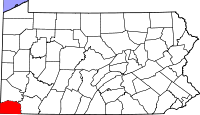
Stephen's sons William and John moved to Greene County, Pennsylvania about 1765

Stephen’s sons William and John moved to Greene County, Pennsylvania about 1765

i. Capt. William Minor b. 1735 Burlington, New Jersey or Frederick County, Virginia; d. 24 Oct 1804 Greene, Pennsylvania, Monongahela Hill Cemetery, Greensboro

Inscription:
“In Memory Of / Cols. John & William Minor / Soldiers In The Revolutionary War / Among The First Settlers In This / Section Of Pennsylvania”

m. 1759 Green County, Pennsylvania to Frances Ellen Phillips (b. 5 Jan 1739 Maidenhead, Hunterdon, New Jersey – d. 13 Dec 1802 Greene, Pennsylvania) Frances’ parents were John Phillips (1720 – 1794) and Anne Tindall (b. 1720), William and Frances had nine children born between 1760 and 1779 Greene County:  Stephen, John, Joseph, Phillip, Theophilus, Frances(f), William, Samuel and Noah.; m2. Hannah Beighley (Burghley)

Most of the descendants in the Marshall/Wetzel area descend from son, Samuel, born 26 Jun  1777, and died in Monongalia County, VA/WV, 1 August 1851. Samuel was married to Susannah Clegg, taken prisoner by Indians as a child. His second wife was Permelia Lancaster. During these two marriages, Samuel fathered 21 children.

William and his brother, John, went into western Pennsylvania from Virginia about 1765.

That William was a Wood Ranger Captain in the Revolutionary War is supported by Josiah Prickett’s pension application from Clermont Co. Ohio August 1, 1832, which states that Prickett was hired by Capt. William Minor, on the authority of Col. Williams of Cross Creek, to spy on the Indians who were commiting damage on Dunkard Creek.

Prickett declares that he was among 35 men hired by William Minor of Dunkard’s Creek who was authorized by Col. Williamson to do so, at 5 shillings per day for six months, as a spy, to guard these forts and notify them if any Indian attacks were contemplated.   Prickett also declared that Major Carmichael commanded the militia, but not the spies.

According to the Thomas Minor Society, William was a Colonel in the Revolutionary War, serving in the Battle of Eutaw Springs, though Captain is probably correct.    DAR Patriot Index says “Cdr”.

William  was a bit less prominent in the settlement of Greene Co. than his younger brother Col. John Minor. William became one of Christopher Gist’s settlers on the east side of the Monongahela River in 1763. Some say Blacksville  [West Virginia right next to Greene County], but that’s more than 20 miles from the river.

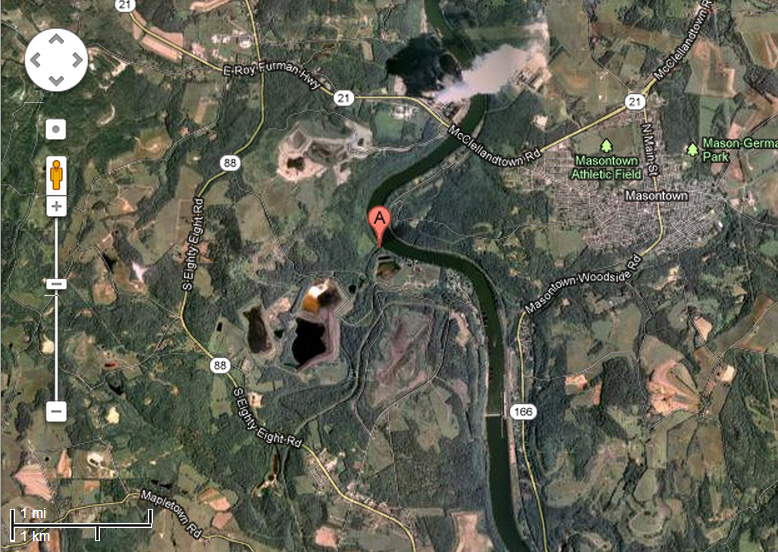
In 1766, William moved to the west side of the Monongahela, locating with his brother Col. John, at the mouth of Big Whiteley Creek. In 1767, he tomahawked a tract of land in the Monongahela Township, where he lived for many years.

Mouth of Big Whiteley Creek, Monongahela, Pa

In 1766, William and John Minor removed to the Mouth of Big Whiteley Creek, Monongahela, PA, across from today’s Masontown.  The steam in the photo is from Hatfield’s Ferry Coal Power Plant’s 700 foot high smokestack.  It looks like there’s an industrial holding pond on the Minor’s property.

http://www.monriver.org/history.htm “When the first pioneers saw the Monongahela River after their long trek from the East Coast across the densely forested mountains, they may have been able to walk across it, especially during dry periods in August and September.

Because of a series of dams built by the Corps of Engineers, the Mon today is deep enough for tow boats with barges to navigate. The dams maintain at least a 9-foot channel for boats. In its natural state, though, the river would be much shallower. So when you think about the river from an historical view, think shallow, which was the same condition of the Ohio River, formed by the Mon and Allegheny rivers at today’s Pittsburgh.

Several attempts were made to establish permanent settlements along the Mon during in the  1700’s,  but hostile tribes destroyed them in defense of their claims. The first permanent settlements came shortly after the close of the French and Indian War (1763), but the Upper Mon remained a bloody frontier for three decades.

Relations between the pioneers and the Native Americans were generally hostile, and the pioneers built many forts to protect themselves during the “bloody season,” the summer months when attacks were most likely. Pricketts Fort, just north of Rivesville and accessible from the Mon, is a reconstruction of such a fort. Two of the early settlements were at Dunkard’s Creek (near Point Marion) in 1757 and at Decker’s Creek (Morgantown) in 1758.

Navigation on the river began with canoes, pirogues and bateaux, but as settlements along the Mon grew, pioneers needed means to send goods down-river to Pittsburgh and ports in the south, even as far away as New Orleans. At first, they built flatboats, square cigar-box-shaped vessels about 15 feet wide and 50 feet long that could carry up to 50 tons of cargo. Many settlers traveled further west on such vessels, which were also called Kentucky boats because that was often their goal.

Flatboats could only go down river and were often sold at their destination as lumber or used to build the settlers’ new cabin. Later,keelboats were built. Between 40 and 80 feet in length and about 10-15 feet wide, these vessels traveled both down and up river, propelled by a crew who pushed the boat with long poles. Mike Fink of Pittsburgh was a legendary keelboat character. One of the area’s principal early agricultural products exported by way of the Mon using flatboats and keelboats was Old Monongahela Rye Whiskey.”

In 1772 a meeting was called at Fort Harrod in the interest of making a settlement in Kentucky. Among others, William was present to hear Daniel Boone and George Rogers Clark review the many opportunities of a permanent settlement in Kentucky or Illinois, William elected not to go to Kentucky.

In 1773, he was polled for Virginia and paid the full twenty shillings’ tax to that colony for the year 1772.

In July 1775, Capt. Michael Cresap opened a recruiting station at Fort Teagarden, and issued a call for volunteers for his rifle corps. 80 men were chosen on their ability to shoot a dead center shot at a distance of 300 yards. Every last one of this company was able to sign their own name to the register sheet. This was the first company of soldiers raised west of the Allegheny mountains and the second company in the colony of Virginia to serve in the Revolutionary War. The munster roll contained the name of William Minor.

Cresap’s company was one of nine companies in the Maryland and Virginia Rifle Regiment  —four from Maryland and five from Virginia. The two-state composition of the new unit precluded it from being managed through a single state government, and it was therefore directly responsible to national authority as an Extra Continental regiment.

Maryland and Virginia Rifle Regiment, most commonly known as Rawlings’ Regiment in period documents, was organized in June 1776 as a specialized light infantry unit of riflemen in the Continental Army.  The American rifle units complemented the predominant, musket-equipped, line infantry forces of the war with their long-range marksmanship capability and were typically deployed with the line infantry as forward skirmishers and flanking elements. Scouting, escort, and outpost duties were also routine. The rifle units’ battle formation was not nearly as structured as that of the line infantry units, which employed short-range massed firing in ordered linear formations. The riflemen could therefore respond with more adaptability to changing battle conditions.

Because most of the newly formed regiment surrendered to British and German forces at the Battle of Fort Washington on Nov  16, 1776, the service history of the unit’s surviving element is complex. Although modern and contemporaneous accounts of the battle convey the impression that it marked the end of the regiment as a combat entity, a significant portion of the unit continued to serve actively in the Continental Army throughout most of the remainder of the war. Elements of the regiment served with George Washington‘s Main Army and participated in the army’s major engagements of late 1776 through 1778. After the death of Captain Michael Cresap, General Washington transferred the Cresap Rifle Corps over to General  Daniel Morgan‘s elite Provisional Rifle Corps at its inception in mid-1777.   The Maryland and Virginia Rifle Regiment was reorganized in January 1779 and was initially stationed at Fort Pitt, headquarters of the Continental Army’s Western Department, in present-day western Pennsylvania primarily to help in the defense of frontier settlements from Indian raids.

William was the commandant at Fort Statler in 1780, which was one of the most important of the frontier outpost protecting Monongalia County.

About 1774 Stephen Statler moved to Dunkard Creek, just south of the later Pennsylvania-Virginia borderline, in what is now Clay District, Monongalia County, WV. Statler’s Fort  was built upon his settlement claim.  Near the fort, a few years later, enemy Indians killed one [perhaps two] of Stephen’s sons. The settlement on Dunkard Creek, much exposed to the Indians, was virtually abandoned during the latter part of the Revolution and for a few years afterward.

Report of the Commission to Locaate the Site of the Frontier Forts of Pennsylvania 1896 Statler’s Fort has sometimes been located in Greene county. Dunkard creek, upon which it was located, flows sinuously along the division line of the two states. The following is from the History of Monongahela county, West Virginia, by Samuel T. Wiley, p. 742: “Statler’s Fort—This fort has been located at different points along Dunkard creek. It was on lands now owned by Isaac Shriever. The writer, on visiting the place, found the fort to have stood on the bottom below the graveyard, on a slight elevation above the Dunkard creek bottom. Mrs. Shriever was positive that this was the location, she having heard Mrs. Brown (who was a Statler) tell of being in the fort when twelve years old and who said that this was the spot where it stood. It was but a short distance below Brown’s mills.” It would thus appear that it is properly located in Monongalia county, West Virginia.

William  served as Captain of his company of Virginia militia  at the Battle of Eutaw Springs, Sep 9, 1781. (for more see my post Carolina in the Revolution)

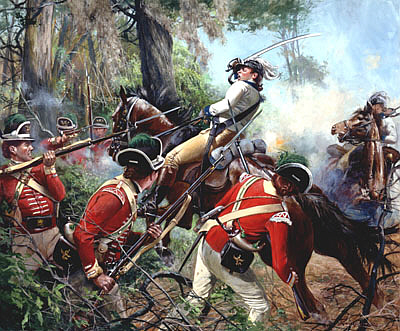
At Eutaw Springs, Nathanael Greene, with around 2,200 men, came across a British camp under Lieutenant-Colonel Alexander Stewart. The American force formed up in two lines, with the militia in the front line, North Carolina, Maryland and Virginia regulars in the second. A British bayonet charge broke the centre of the American first line. The situation was temporarily restored by the North Carolina Continentals until they too were broken by a British charge, but the Virginia and Maryland troops were sent into the breach and not only repelled the British camp, but forced a general retreat, with the British in some disorder.

Battle of Eutaw Springs - 1781 Colonel William Washington is unhorsed during bitter fighting by Don Troiani

Battle of Eutaw Springs – 1781 Colonel William Washington is unhorsed during bitter fighting by Don Troiani

The Americans now came into the British camp, where most of them now stopped to plunder the British supplies. The tables now turned again. At the north-east corner of the camp was a strong brick house now defended by the remaining British battalion, commanded by Major John Marjoribanks. This battalion had driven off the American cavalry before pulling back to the brick house. Attempts to capture the house failed, and Marjoribanks was able to restore some order to the rest of the British force. With the newly restored force he was able to drive the American loots from the British camp. One American battalion now returned the favour, and delayed the British advance, allowing the American army to retreat without suffering a rout. The British held the field, and suffered less casualties than the Americans – 85 killed compared to 138 American dead and 41 missing.

Despite the military victory, overall the result of Greene’s operations was to force the British to abandon most of their conquests in the South, leaving them isolated in Charleston and Savannah. The British attempt to pacify the south with the aid of the Loyalists had failed, even before the surrender at Yorktown.

William’s first son Stephen Minor, b. 8 Feb 1760 Greene County, Pennsylvania, first ventured to New Orleans, Louisiana, in 1779. He joined the Spanish army and participated in a military expedition against Fort Charlotte, located near Mobile in British West Florida. Arriving in the Natchez District in the early 1780s, Minor received a commission as a captain in the Spanish army, and he served as the adjutant of Fort Panmure at Natchez. During this time, Minor also assisted Spanish governor Manuel Gayoso de Lemos in various administrative duties. He also provided the Anglo-American settlers and Natchez Indians of the district liaison with the Spanish officials, who often referred to him as “Don Esteban.” After Gayoso was appointed as governor of Louisiana, Minor briefly served as acting governor until the Spanish evacuated Natchez prior to April of 1798, when the Mississippi Territory was created by the United States Congress.

Minor was next appointed as one of the Spanish commissioners responsible for establishing the boundary between Florida and the United States during 1798 and 1799. He was in command of the Spanish forces in Vidalia, Louisiana, when the United States acquired this territory with the Louisiana Purchase in 1803. Minor was also a Spanish boundary commissioner for Louisiana during 1804 and 1805.

Owning plantations on Sandy and Second creeks in Adams County, Minor initially produced indigo and tobacco. Following the example of Governor Gayoso, he began planting cotton around 1795, and by 1797, just one of his plantations was yielding twenty-five hundred bales of cotton annually. Minor also owned forty thousand acres of land east of the Pearl River in Louisiana.

For the story of Stephen’s family of wealthy plantation owners who were ostracized due to their loyalty to the Union, see my post – Stephen Minor – last Spanish Governor of Natchez

ii. Lawrence Minor b. 11 Dec 1737  Mansfield, Burlington, NJ; d. Feb 1819 Burlington, Burlington, New Jersey; m. 8 Dec 1760 in Burlington to Elizabeth Platt (b. 25 Jan 1745 Burlington, New Jersey – d. 15 Jan 1822 Burlington) Elizabeth’s parents were Thomas Platt ( – 1768) and Sarah Dennis (1720 – 1804)

Burlington is just across the Delaware River from Philadelphia.

iii. Samuel Minor b. 20 Nov 1739 Maidenhead (now called Lawrenceville), NJ; d. 19 Jan 1826Uniontown, Fayette, Pennsylvania; Great Bethel Baptist Church Cemetery, Uniontown;

Inscription:
Aged 86 years.
“God will watch my sleeping, dust until he bids it rise, to dwell with him & the just forever above the skies.”

m. 19 Jan 1766 Winchester, Frederick, Virginia to Anna Tindall (b. 10 May 1748 Fayette, Pennsylvania – d. 6 Feb 1830 Uniontown, Fayette, Pennsylvania) Anna’s parents were John Tindall (1721 – 1793) and Elizabeth Hutchinson (1722 -1769) Samuel and Anna had ten children likely born in New Jersey.

Samuel served as a private in Capt. William Huston’s Cumberland County Company for 26 days in 1781.

Samuel served as ensign in the 8th Company of the 3rd Regiment  Franklin County, Pennsylvania Militia between 1791 and 1817.

Samuel traveled with his family to VA and on the death of his father to MD. He returned to NJ and married Ann. They settled in Fayette Co., PA by 1809 when he appears in land records.
1810 census – Union township, PA: 01101-00111
1820 census – Union, Fayette, PA: 110102-20211

iv. Sarah Minor b. 1743 Winchester,  Frederick, Virginia; d. 10 Jan 1810 Jollytown, Pennsylvania; Burial: Eakin Cemetery, Jollytown; m. 1768 Middlesex, New Jersey to Andrew Dye (b. 1744 Cranberry, Middlesex, New Jersey – d. 5 Jul 1835 Stillwater, Miami, Ohio; Burial Pleasant Hill Cemetery , Pleasant Hill (Miami County))   Andrew’s parents were James Dye and Sarah [__?__].  Sarah and Andrew had ten children between 1771 and 1791.  After Sarah died, he married Ann Lamb Evans  (1767 – 1843).

Andrew was born in Middlesex County, NJ in either 1744, which agrees with his tombstone, or 1748 based on a record that he was baptized in Christ Church, Shrewsbury, Monmouth County, NJ, 3 Jan 1749, age seven months.

Andrew and his family came to PA in 1771. On 28 Mar 1780 he was recommended as first lieutenant in the Yohogania Co. militia, but there is no further mention of his position, since by the fall of 1780, Andrew had resettled across the Monongahela on Big Whitely Creek, where in May 1785, he had warranted to him a tract of land under the title “Sparrows Nest.”

During the Revolution he was soldier in the Pennsylvania Line (Penna. Arch. Series VI Vol 3, pp 1367) for which service he received a pension.

1790 census for Washington County, PA: 1-4-4
1800 census for Whiteley Twp, PA: 12101-01201

v. Stephen Minor b. 1743 Winchester, Frederick, Virginia; d. Winchester, Frederick, Virginia

Was perhaps the one in the 1800 census of Greene, PA: 01001-00111, and in Union township, PA in 1810: 00001-00011

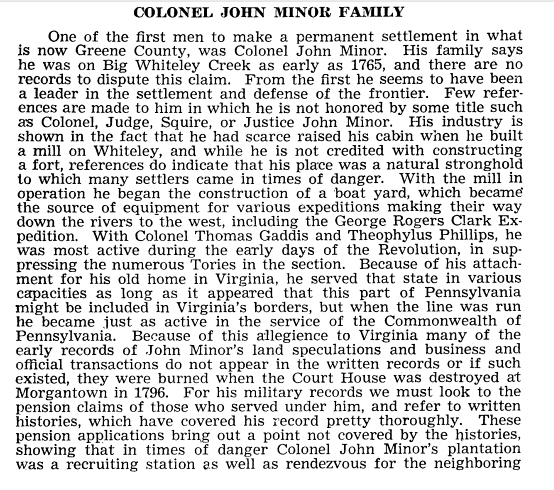
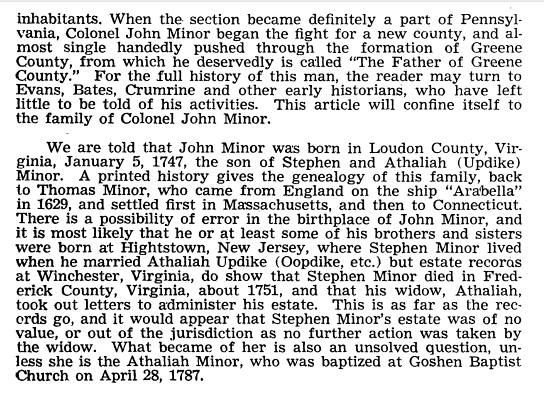
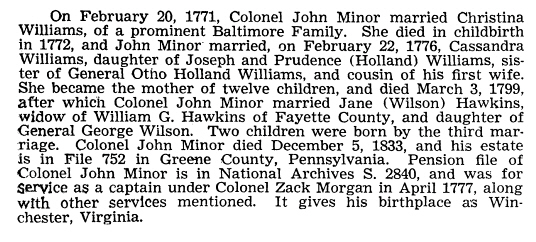
vi. John Minor b. 5 Jan 1747 Winchester, VA;  d. 5 Dec 1833 Greene, Greene, PA and was buried in Monongahela Cemetery, Greensboro, PA; Note this is not the site of his or William’s grave but rather their monument in their name.

Inscription:
“In Memory Of / Cols. John & William Minor / Soldiers In The Revolutionary War / Among The First Settlers In This / Section Of Pennsylvania”

m1. 20 Feb 1771 to Christina Williams ( – 1772),  the sister of General Otho Holland Williams, who was a distinguished officer under George Washington acquired high distinction for his gallantry at the battles of Guilford, Hobkirk’s Hill, and Eutaw.

m2. 22 Feb 1776 Washington Greene, Pennsylvania to Cassandra Williams (b. 1750 Greensburg, Westmoreland, Pennsylvania – d. 3 Mar 1799 Greene, Pennsylvania); Cassandra’s parents were Joseph Williams (1720 – 1768) and Prudence Holland (1719 – 1764). John and Cassandra had eleven children born on the farm near Greensboro, PA between 1776 and 1798.

m3. 1800 Greene, Pennsylvania to Jane Wilson (b. 27 Apr 1761 Staunton, Augusta, Virginia – d. 13 Jun 1839 Greene, Pennsylvania) Jane’s parents were Gen. George Wilson (1728 – 1777) and Elizabeth C McCreary. Jane was widow of William G Hawkins. John and Jane had two children Lawrence Lewis(b. 1801) and Sarah Minerva (b. 1803)

John and his brother, William, went into western Pennsylvania from Virginia about 1765.

History of Greene County, Pennsylvania,” – 1888 – About the year 1765, Jeremiah Glassgow, who had been the companion of John Minor in settling at Redstone, hoping to better his condition, crossed the Monongahela and traveled through the forests and thickets which cumbered all the valley of this placid stream, until he came to the neighborhood of Mount Morris, in what is now Perry Township. On the goodly lands which here border Dunkard Creek he selected as pleased his fancy, and toilsomely blazed his tract. At winter time he returned to his former home in Maryland. On returning in the spring he found that a giant of the forest by the name of Scott had, in his absence, taken possession of his tract, and would not be persuaded to give it up to the rightful, or rather original, claimant. Who was the rightful owner was yet to be determined, not by the Marquis of Queensbury rules, but by those of the backwoodsman. It was accordingly agreed that the two should fight for possession, and he who proved himself the better man should have it. Accordingly Glassgow chose his friend John Minor, who had accompanied him from Redstone and had taken lands at Mapletown, as his second, or best friend, and the contestants stripped for the trial.

Glassgow was much the smaller man, though well built. In the first encounters Glassgow was worsted; but practicing wily tactics, in which he seems to have been skilled, he grappled with his antagonist and threw him heavily to the ground. The giant was soon up, but no sooner up than he was again tripped and came heavily to the ground. This was repeatedly practiced until the big man found himself so bruised and exhausted that he could not shake off his assailant. Glassgow was now easily able to give him all the punishment he desired, and when he called for a cessation of the battle, the two arose, shook hands and agreed that the land belonged to Glassgow. Thus in true Horatian and Curatian style was the dispute settled, and Glassgow held the ground which his blood had moistened. Disputes like these were not unusual in those early days of settlement, and we may -learn by this example how the land was originally acquired.

John and Cassandra lived on Whiteley Creek near Greensboro in what is now Greene County, PA.

After Indian troubles had ceased, and peace prevailed in Western Pennsylvania, and the true location of Washington County had been defined and settled, Colonel Minor was three times elected as a member of the Legislature from that county. He procured ultimately the passage of a law which authorized the organization of the county of Greene out of the territory which belonged to Washington County. Subsequently, he held several offices in the new county of Greene, and for several times served as an associate judge of the Court of Common Pleas.

13 Jul 1796 – John Minor was commissioned Associate Justice of Greene County. Some doubt having been entertained by Judge Addison, as to whether the commission issued to Judge Minor on March 17tth, 1796, was constitutional, the same was communicated by him to the Governor, who, to remove such doubt, (the Attorney-General being of the same opinion with Mr. Addison) issued a new commission to Judge Minor, dated the 28th of February,1797. John Minor’s resignation accepted Oct. 7, 1833

1790 census – Washington County, PA: 1 – 3 – 7
1800 census – Greene, PA: 41401-31300
1810 census – Greene, PA: 13001-11111
1820 census – Greene, PA: 000101-00201

Holding a commission as colonel from the governor of Virginia, all South-western Virginia (sic) being then regarded as within the boundaries of Virginia, he was thus recognized by the settlers as commander-in-chief of the militia in that region of the country.

Under the instructions of General Zack Morgan he built stockade forts, and appointed spies and rangers, to insure, as far as possible, protection to settlers against the depredations of the Indians. The cabins of himself and his brother were fortified stockades, and were known as the Minor forts, to which settlers resorted when dangers were apprehended from the approach of the treacherous Indians.

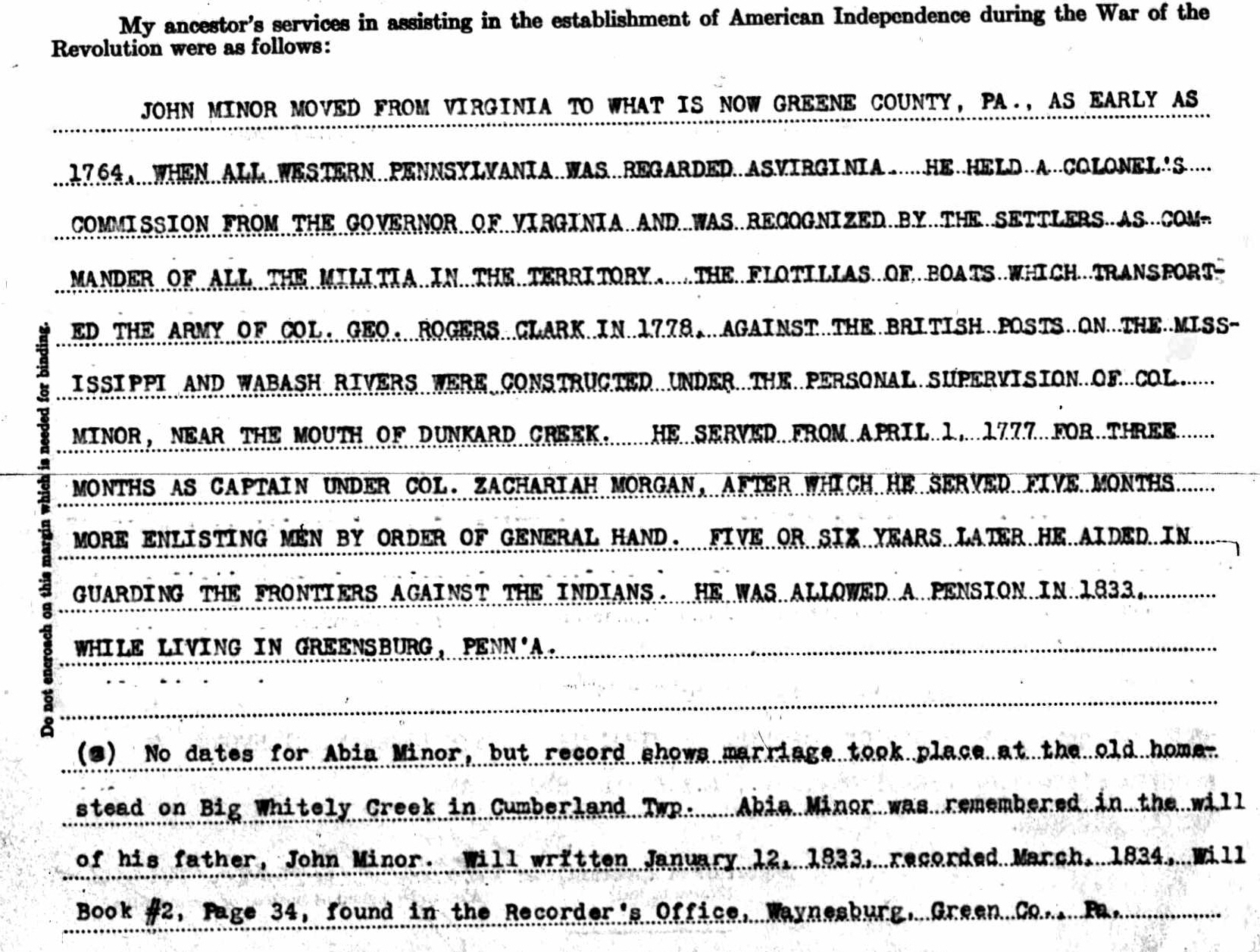
Colonel Minor, under orders, built the flotilla of boats designed for the transportation of the regiment of enlisted soldiers under the command of General George Rogers Clark, who descended the Ohio River with a view of reaching British posts on the Wabash and on the Mississippi. The boats were constructed at the mouth of Dunkard Creek, in Greene County, under the immediate supervision of Colonel Minor. Their completion was greatly retarded by the raids of Indians, which Colonel Minor had to repel by organized companies of flying militia, under his command.

John Minor Sons of American Revolution Application

John Minor Sons of American Revolution Application

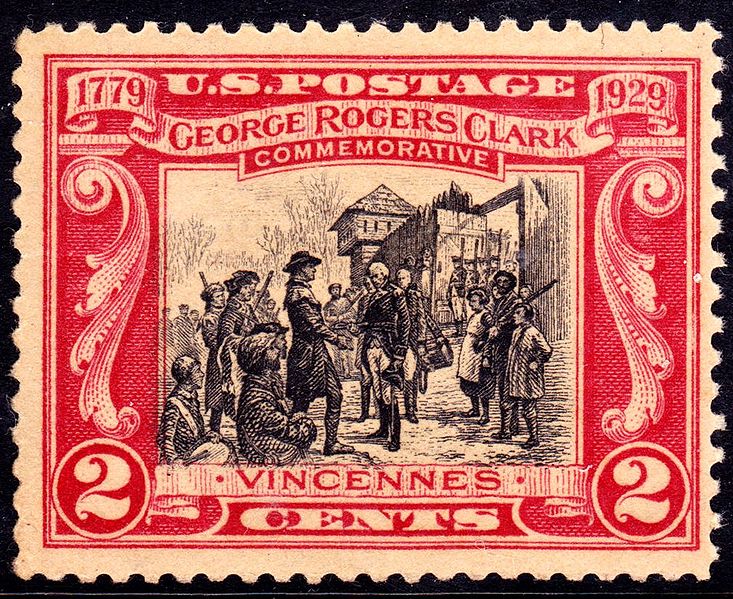
George Rogers Clark (1752 – 1818) was a soldier from Virginia and the highest ranking American military officer on the northwestern frontier during the Revolutionary War. He served as leader of the Kentucky (then part of Virginia) militia throughout much of the war. Clark is best known for his celebrated captures of Kaskaskia (1778) and Vincennes (1779), which greatly weakened British influence in the Northwest Territory.

George Rogers Clark recaptured Fort Sackville in the February 23, 1779 Battle of Vincennes without losing a single soldier

George Rogers Clark recaptured Fort Sackville in the February 23, 1779 Battle of Vincennes without losing a single soldier

Because the British ceded the entire Northwest Territory to the United States in the 1783 Treaty of Paris, Clark has often been hailed as the “Conqueror of the Old Northwest.”  His younger brother William, one of the leaders of the Lewis and Clark Expedition.

John Minor Bio - The Tenmile Country and Its Pioneer Families  By Howard L. Leckey, Leckey 1977

John Minor Bio – The Tenmile Country and Its Pioneer Families by Howard L. Leckey, 1977

John Minor Bio 2
John Minor Bio 3

9. Samuel Miner

Samuel’s wife  Annatie “Hannah” Douw was born 1719 Lyme, New London, CT.  Her parents were Andries Douw (1662 – 1751) and Adriana Vandergrift.

Children of Samuel and Hannah:

i. William Minor b. 1740 Hunterdon, New Jersey; m1. 1765  Hunterdon to Catherine Harsac  (Hartog) (b. 29 Apr 1744 New Jersey)  Catherine’s parents were Hendrik Wilhelm Herzog and Anna Marie Kleckenar (1722 – ) William and Catherine had four children born between 1765 and 1772.

m2. 11 Dec 1777 New Jersey to Charity “Gertrude” Prost and moved to Seneca Co., NY. Samuel and Gertrude had five children born between 1780 and 1788.

William was a soldier in the French and Indian War.

ii. Bertha Miner b. Bridgeport, Gloucester, New Jersey; m. Mr Symondson of NJ

iii. Samuel Miner bapt. 20 Oct 1745 Hunterdon. NJ

iv. Lydia Miner bapt. 23 Feb 1746 Hunterdon, NJ

10. Anne Miner

Anne’s husband Samuel Leach was born 21 Feb 1707 in New London, New London, CT.

Children of Anne and Samuel:

i. Abigail Leach bapt. 31 Mar 1730 First Congregational,  New London CT; m. 1751 New London to Thomas Daniels (b. 1728 New London, CT)

ii. Sarah Leach bapt. 29 Aug 1731  ?

iii.Susanna Leach bapt. 7 Nov 1734; m. 23 Mar 1749 New London, New London, CT to Samuel Atwell (b. 1723 New London – d. 1773 New London) Samuel’s parents were Samuel Atwell Sr. (1682 – 1752) and Hannah Baker ( – 1725)

iv. Samuel Leach (twin) bapt. 28 Aug 1737; d. 12 Feb 1761 St Lawrence River

v. Ann Leach (twin) bapt. 28 Aug 1737

vi. Mary Leach bapt. 3 Jul 1739; m. 28 Sep 1758 New London, New London, CT to Michael Mathason (b. 1737 New London, CT)

vii. Elizabeth Leach bapt. 17 May 1741

viii. Lucretia Leach bapt. 17 Jul 1743; m. 5 Apr 1762 Lebanon, New London, CT to Richard Stanton (b. 1739 New London, CT)

ix.Esther Leach bapt. 2 Jun 1745; m. 13 May 1764 New London to John Friend (b. 1743 New London)

x. Lucy Leach bapt. 10 May 1747; m. 12 Feb 1766 New London to John Foster (b. 1745 New London, CT)

xi. John Leach bapt. 23 Jul 1749; m. 3 May 1770 to Mary Gray (b. 1751 New London)

xii. Thomas Leach bapt. 24 Feb 1750/51; m. 14 Oct 1773 to Lois Webb

12. Sylvester Miner

Sylvester’s first wife Lydia Stebbins was born 4 May 1709 in New London, New London, CT. She was Sylvester’s first cousin. Her parents were John Stebbins and Phebe Miner.  Her maternal grandparents were Clement MINER and Martha Wellman.  Sylvester died in 1762.

Sylvester’s second wife Lydia Chadwick was born in 1740

Children of Sylvester and Lydia Stebbins:

i. Jonathan Minor b. 1749 Old Lyme, New London, CT; m. 22 May 1786 New London, New London, CT to Sarah Holt (b. 1765 New London) Jonathan and Sarah had seven children born between 1787 and 1798.

A Jonathan Minor was taken prisoner at the Battle of Fort Griswold, fought on Groton Heights near the close of the Revolutionary War, September 6, 1781.

ii. [__Son?__] Minor d. 8 Oct 1753

iii. [__Daughter?__] Minor b. 14 Oct 1753 Old Lyme, New London, CT; d. 14 Oct 1753 Old Lyme

iv. Sylvester Miner b. ~ 1756 New London, CT; d. 24 Aug 1832 Preston, Chenango, New York; m. 1792 to Susan Stanley (1754 Goshen, CT – 20 Dec 1835), Susan’s parents were Timothy Stanley and Mary Bailey. Sylvester and Susan had three children born between 1793 and 1799.
1790 census – Waterford, CT: 1 – 1 – 1
1800 census – Burlington, NY: 20010-10010
1810 census – Preston, NY: 01101-00101
1820 census – Preston, NY: 000001-00001

v. Stephen Minor b. 1759 New London, New London, CT; d. 9 Feb 1835 Waterford, New London, CT; m. 3 Mar 1790 New London to Mary Crocker (b. 1768 – 14 Mar 1851) Both buried in Jordan Cemetery, Waterford, CT. Stephen and Mary had six children born between 1792 and 1804.
1790 census – Waterford, CT: 1 – 0 – 1
1800 census – Waterford, CT: 20010-20010

vi. Christopher Minor b. 1760 New London, New London, CT; d. 30 Mar 1823 Waterford, New London, CT and was buried in Mullen Hill Cemetery.; m. 7 May 1790 to Rebecca Brooks (b. 1768) Christopher and Rebbeca had three children born between 1792 and 1795.

Children of Sylvester and Lydia Chadwick:

vii. Rebecca Minor b. 1762 Lyme, New London, CT; d. 1829; m. 26 Dec 1779 New London to Louis Manierre (b. 1755 in France  – d. 23 Mar 1794 – New London, CT) Rebecca and Louis had six children born between 1780 and 1792.

1790 census for New London County: 2-3-4
1810 census for New London: 20010-20010

Some say Rebecca Miner/Minor who married Louis Manierre was not a true Miner, but rather, a member of the Maynard/ Minerd family, some of whom changed the spelling to Miner.

According to the “History of New London, CT.” by Frances Manwaring Caulkins (1895), Louis Manierre (Sr.), a French Protestant, settled in the town (New London) in 1785.

According to the family history of the family Miner, held at the Florence Griswold Museum, Old Lyme, CT., Rebecca Miner, born 1762, married Louis Manierre, a hugenot from France who served under Lafayette in the RevWar.

14. Elihu MINER Sr. .(See his page)

Sources:

http://trees.ancestry.com/owt/person.aspx?pid=6565623

Thomas Minor Family HistoryWillam Miner

Pane-Joyce Genealogy

http://mdah.state.ms.us/manuscripts/z1876.html

Posted in 10th Generation, Be Fruitful and Multiply, Historical Monument, Line - Miner, Public Office, Veteran | Tagged , | 11 Comments

Lt Clement Miner

Lt Clement MINER (1638 – 1700) is Alex’s 9th great grandfather – one of 1,024 grandfathers in this generation of the Miner line.

Clement Miner was baptized on 4 Mar 1638 in Hingham, MA.  His parents were: Thomas MINER and Grace PALMER. He moved to New London, CT in 1645 with his father and remained there after his father moved on to Stonington, CT.   He married Frances BURCHAM on 26 Nov 1662.  Frances died on 6 Dec 1672, shortly after the birth of Ann, and he married second Martha Wellman,  on 20 Feb 1672/73.  He married third Joanna [__?__].  Clement died on 8 Oct 1700 in  New London, CT.  and is buried in the Ancient Burying Ground where there is a stone slab marked “C M 1700”.

Clement Miner – Ancient Cemetery New London, Connecticut

Clement Minor – Headstone,  Ancient Cemetery, New London, CT

Frances Burcham was born c. 1644 in Lynn MA.  She was daughter of Edward BURCHAM of Lynn, Mass and Katherine MASON.   She first married 8 Jun 1660 in Boston, Suffolk, Mass to Isaac Willey Jr. (b. 2 Aug 1640 in Boston, Mass – d. Aug 1662 in New London, CT). (Isaac’s brother John WILLEY is also our ancestor)  Frances died on 6 Dec 1672 shortly after the birth of Ann.

Martha Wellman was born in 1652. Her parents were William Wellman and Elizabeth Spencer.  Martha died on 5 Jul 1681.

Joanna [__?__] was born 1638 in Stonington, New London, CT. Joanna  died on 10 Oct 1700.

Thomas Miner Diary July 1681

Children by Frances Burcham recorded in New London, CT and baptized on 30 April 1670 at First Church Congregational. Anne baptized 22 December 1672.

Name Born Married Departed
1. Mary Miner 29 Jan 1663/4 New London Thomas Leach
10 Oct 1725 New London, New London, CT
3 Dec 1706
New London, CT
2. Joseph Miner 6 Aug 1666 New London Elizabeth Comstock
12 Mar 1689   New London
.
Susanna Keeney
30 Aug 1706 New London, CT
.
Mrs Mary Bushnell
2 Oct 1750 Woodbury, Litchfield, CT
6 Apr 1752
New London
3. Lt. Clement Miner 6 Oct 1668 New London Martha Mould
4 Aug 1698   New London
8 Apr 1740
New London
4. William MINER 6 Nov 1670 Niantic CT Sarah BECKWITH
1693
Lyme, CT
18 Apr 1725
East Lyme CT
5. Ann Miner 30 Nov 1672 After 16 May 1683

.

Child by Martha Wellman baptized at First Church Congregational on 26 Jul 1674

Name Born Married Departed
6. Phebe Miner 13 Apr 1674
New London
John Stebbins
17 Jun 1697 New London
17 Jul 1751
New London, CT

Lieutenant Clement Miner went to Nameaug (New London), CT in 1658 with his father’s family. When his father moved from New London to Quiambog and Togwonk in Stonington, Clement remained behind and became a permanent resident of New London.  He received a grant of land near to that of Walter Palmer’s whose land it abutted on the south. In Sept 1669, Clement applied for a house lot next to that of Grace Chappell. He was a very active man and held many public offices in the town.

1 Jul 1669  New London Town Meeting

“Alexander Piggin hath given him [Clement Miner] some land at the head of Mill Cove, enough to make three or four pitts for dressing of leather amongst the springs. It is voted and agreed that Clement Miner have sold him sixe acres upland ovev against his house upon the north side the highway that goes to Miantick [East Lyme], and 8 acres of swampy land near Goodman Houghs, which land is for consideration of 8 wolves by him killed. And the towne doth order the Townesmen to give him a deed of sale for the same.”

Clement was a Lieutenant in the Militia which was a considerable honor in his day. In the records of New London, Clement is mentioned as “Deacon” or “Ensign”, but the record of his appointment as Ensign has not been found. With his father and brothers, he served in King Philip’s War in 1676, and as a volunteer, was granted a lot in Voluntown, Connecticut. (See Great Swamp Fight – Aftermath for details)

28 Nov 1669 New London Town Meeting

” Wm. Hough, John Stebbins, Clement Miner, and Isaac WILLEY to lay out the King’s highway between New London and the head of Niantick river.

In October 1692, and in May 1696, Clement served as a Deputy for New London in the Connecticut General Court.

On April 30, 1691 he joined the First Congregational Church at New London. It is thought that his election to the office of Deacon was soon after the death of Deacon Hough, 10 Aug 1683. Shortly after this date, the Pastor, Rev. Bradstreet, died, and this probably explains why no record of Clements election of the Deaconate was made.

At a town meeting on 19 Dec 1683, Clement and several others formed a committee to seek advice in securing a minister for the town to replace Rev. Bradstreet. Ensign Clement was one of those appointed to assign seats in the meetinghouse.

At a Towne meeting November ye 19, 1683.

” Voted, that Maj. John Winthrop, Maj. Edward Palmes, Capt. James Avray, Mr, Daniel Wetherell, Mr. Christo. Christophers, Tho. Beebe, Joseph Coite, John Prentis Sr., Clement Miner, Charles Hill, are appointed a committee in behalf of the towne to send a letter by Capt. “Wayne Winthrop to the reverend Mr. Mather and Mr. Woollard (Willard) ministers at boston for there advice and counsell in attayueing a minister for the town to supply the place of Mr. Bradstreet, deceased, and that the sd Capt. Winthrop shall have instructions from the sd Comittee to manadge that affaire with them.”

Clement saw service in King Philip’ War when he would have been about 37 years old.  As a volunteer, he was granted a lot in Voluntown, Connecticut.

Children

1. Mary Miner

Mary’s husband Thomas Leach was born 1652 in Portsmouth, Rockingham, New Hampshire. His parents were James Leach and June Turpin. He first married Abigail Haughton (b. 1662 in New London, New London, CT – d. 1706 in New London, New London, CT)   Thomas died in 1732 in New London, New London, CT

2. Joseph Miner

Joseph’s first wife Elizabeth Comstock was born 9 Jun 1665 in Lyme, New London, CT. Her parents were John Comstock and Abigail Chappel. Elizabeth died 3 May 1692 in New London, New London, CT.

Joseph’s second wife Susanna Keeney was born 6 Sep 1662. She first married in 1685 to Ezekiel Turner (1651 – 1704) son of John Turner and Mary Brewster. Susanna died 13 Dec 1748.

Joseph’s third wife Mrs Mary Bushnell died 30 Oct 1752 after two years of marriage with Joseph

3. Lt. Clement Miner

Clement’s wife Martha Mould was born 25 Dec 1674 in New London, New London, CT. Her parents were Hugh Mould and Martha Coit. Martha died 2 Aug 1743 in New London, New London, CT.

Clement and Martha were the parents of eleven children, all born in New London. Clement was commissioned Ensign of the 1st New London Company in May 1708, and he was chosen as Lieutenant on May 25, 1715. Thus, he is often referred to as Lt. Clement Miner. According to Joshua Hempstead’s diary, “Lt Clement Miner aged 71 & more died of a plursie” April 8, 1740, in New London. He was probably buried in the town’s ancient burial grounds where his father was buried in 1700, but no record of his burial has been found.

Clement’s oldest son, Clement III died 9 Aug 1775, Norwich New London, CT.

Clement Miner III Headstone — Headstone inscription not legible in June of 2009. Grave located using Charles Hale’s Collection of cemetery inscriptions for Bill Hill Cemetery (310-3) completed in 1934. Clement’s stone is located between that of John M Miner and Rev. Daniel Miner. In 1934 the inscription in memory of Clement Miner read: “Clemant Miner, died Aug. 9, 1775, age 73.” Today the Bill Hill Cemetery in Lyme, CT is largely overgrown and in disrepair.

4. William MINER (See his page)

5. Ann Miner

Child by Martha Wellman baptized at First Church Congregational on 26 Jul 1674

6. Phebe Miner

Phebe’s husband John Stebbins was born 11 Feb 1666 in New London, New London, CT. Her parents were John Stebbins (1640-1707)   and Deborah Moore (1643-1696).  His maternal grandparents were Miles MOORE and Isabell JOYNER. John died 16 Sep 1756 in New London, New London, CT.

Our branch of the Miner and Stebbins families became very close with several intermarriages in the next generations.

John’s grandparents John Stebbins (1602-1685) and Margaret Riggs (1615-1679) are believed to have been born and raised and married in about 1633 in England.  They immigrated to America in the 1630s when John Stebbins (1602-1685) came to be a proprietor at Watertown, Massachusetts where their 3 children were probably born.  John Stebbins (1602-1685) was among the first settlers in 1645 in Pequot Country (what became New London, Connecticut) when he moved to Upper Mamacock.  It officially became New London, Connecticut on 06 May 1646.  John Stebbins (1602-1685) had homelot #5 of 36 in 1647 at New London and his family soon joined him there.  John Stebbins (1602-1685) was a New London fence-viewer in 1647 and a New London constable in 1660.  John Stebbins (1602-1685) was a Freeman on 14 Oct 1669.

John Stebbins - Cutter 3

John Stebbins - Cutter 4

Source: New England Families, Genealogical and Memorial – Edited by William Richard Cutter

Children of Phebe and John:

i. Elisha Stebbins b. 1706

Sources:

http://trees.ancestry.com/owt/person.aspx?pid=6593343

http://www.findagrave.com/cgi-bin/fg.cgi?page=gr&GRid=7158544

Thomas Minor Family History

http://familytreemaker.genealogy.com/users/g/u/s/Carol-Anne-Houst/WEBSITE-0001/UHP-0191.html

http://cybergata.com/roots/5291.htm

History of New London county, Connecticut, with biographical sketches of many of its pioneers and prominent men (1882) by Hurd, D. Hamilton (Duane Hamilton) (Story of founding of Voluntown)

Posted in 11th Generation, Historical Monument, Line - Miner, Public Office, Veteran | Tagged , , | 12 Comments

Thomas Miner

My Paternal American Ancestor, Thomas MINER (1608 –  1690) was a founder of Charlestown and Hingham Mass and  New London and Stonington, Connecticut, and the author of one of the few diaries to survive 17th Century New England. The Diary of Thomas Minor is a lasting memorial. Although the entries are terse and never give details, they do give us a glimpse into his daily life and community activities. He  is Alex’s 10th Great Grandfather, one of 2,048 grandfathers in this generation in the Miner line.

Thomas Miner – Monument Inscription: Leut. Thomas Minor born in Chew Magna Somerset County England, April 23, 1608. He was first by the name of Minor to migrate to this Country coming on the ship Arabella which reached Salem harbor June 14, 1630. He married Grace, daughter of Walter Palmer in Charlestown April 28, 1634. He took up his permanent abode at Quiambaug  in 1653 or 1654. There he lived till his death Oct 23, 1690. One of the founders of New London and Stonington: prominent in public office: an organizer of the church.

Thomas Miner was born in Chew Magna, England, on April 23, 1608. His parents were Clement MINOR Sr. and [__?__].  He emigrated to Salem, Massachusetts in 1629, aboard the Lyon’s Whelp (See the story of the voyage here). He quickly moved to Watertown, and then on to Charlestown, after typhus fever broke out in Salem.  He married Grace PALMER on 23 Apr 1634 in Rehoboth, Plymouth, Mass.   In 1636, the Miners moved to Hingham.  After several years in Hingham, the family moved south to the Wequetequock area of present-day Stonington, Connecticut, where Miner and his son Ephraim helped found the Road Church. In about 1653, Miner bought land west of Stonington, across Quiambaug Cove near present-day Mystic, and built a house for his family. His diary covers  the years 1653 to 1684 and was published in book form in 1899. Thomas died on 23 Oct 1690 in Stonington, CT. He is buried with his wife Grace in Stonington’s Wequetequock Cemetery. The founders monument in Stonington has one side dedicated to him.

Thomas Miners wolfstone marker in Wequetequock cemetery.  Thomas Miner had selected this stone himself from his farm at Quiambaug. Here lyeth the body of Lieutenant Thomas Minor, aged 83 years. Departed 1690

Thomas wrote back to England  about 1683,  in investigation of his ancestory and received

A (False) Herauldical Essay Upon the Surname of Miner

Grace Palmer was born 9 May 1612 in England.   Her parents were Walter PALMER and Ann Elizabaeth SHORT. The first record we have of Grace Palmer is found in the “Record Book of the First Church in Charlestown” (Mass) when she, her father and her step-mother were admitted to membership on 1 June 1633.  Until her father married Rebecca Short in 1633, Grace, being the oldest child and daughter, probably was “mother” to her three younger brothers and one sister.  The name “Grace” was not one used often in the days of her birth and it is thought by some that she may have been named for her Aunt Grace Palmer, wife of Abraham Palmer,  who some believe was a brother to Walter, though no proof of that relationship has been found.  Grace died two weeks before her husband on 12 Oct 1690 in  Stonington,  CT.

Grace Palmer Gravestone

Thomas Miner – Wequeteduock Burial Ground

Children of Thomas and Grace:

Name Born Married Departed
1 John Minor 30 Aug 1635 Charlestown, MA Elizabeth Booth
19 Oct 1658 Stratford, CT
17 Sep 1719 Woodbury, Litchfield, CT
2.
Clement MINER 4 Mar 1637/38 Hingham MA Frances BURCHAM (Widow of Isaac Willey)
26 Nov 1662
.
Martha Wellman
20 Feb 1672/73
.
Joanna [_?_].
8 Oct 1700 New London, CT
3.
Thomas Miner 10 May 1640 Hingham MA Unmarried 19 April 1662 Narragansett, RI
4. Ephraim Minor 3 May 1642 Hingham Hannah Avery
20 Jun 1666 Stonington, CT
16 May 1724 Stonington, New London, CT
5.
Dr. Joseph Miner 25 Aug 1644 Hingham Mary Avery
23 Oct 1668 New London
.
Bridget Chesebrough (Widow of William Thompson)
7 Dec 1709 Stonington, CT
1 Feb 1712 Stonington, New London
6.
Judah Miner ca. 1646 Listed in books and the essay but unconfirmed in records
7.
Manassah Miner 28 Apr 1647 New London Lydia Moore (Daughter of our ancestor Miles MOORE)
26 Sep 1670 New London
.
Frances West
20 Apr 1721 Stonington
22 Aug 1728 Stonington
8.
Ann Miner 28 Apr 1649 New London 13 Aug 1652 Stonington (the first registered death in Stonington)
9.
Mary Miner 5 May 1651 New London 24 Jan 1660/61 Stonington
10.
Samuel Miner 4 Mar 1652/53 Stonington Marie Lord
15 Dec 1681
Jul 1682
11.
Hannah Miner 15 Sep 1655 Stonington Thomas Avery
22 Oct 1677 Stonington
about 1692

Miner was active in public affairs in both New London and Stonington. He and his sons fought in King Philip’s War.

1632 –  Thomas was a founder of the First Church of Charlestown, his name appearing 34th on the roll. Two years later he was granted four acres of land at the line of Newtown, now Cambridge, and by 1637 owned a 10 acre plot.  Thomas Minor received lot 18 in the first division of land at Mystic side, now Charlestown, MA. on the sixth of the first month 1637. His future father-in-law Walter PALMER, receiving lot 15.

4 Mar 1633/34 – Thomas was made a freeman in Charlestown, Mass.

1636 –   The young couple moved once again, settling in Hingham, MA where they remained until 1645.  Thomas’ first child, John, was baptized in 1635 before they moved to Hingham.  During their years in Hingham, their sons Clement, Thomas, Ephraim and Joseph were born.

1645 – Thomas joined John Winthrop Jr.’s colony of Massachusetts Puritans in the settlement of New London, CT.   During the years that Thomas lived in New London, his son Mannassah and his daughters Ann and Mary were born.  Manassah was the first white child born in New London.

May 1649 – At the session of the General Court,  the following regulations were made respecting Pequot:

1. The inhabitants were exempted from all public country charges — i.e., taxes for the support of the colonial government — for the space of three years ensuing.

2. The bounds of the plantation were restricted to four miles each side of the river, and six miles from the sea northward into the country, ” till the court shall see cause and have encouragement to add thereunto, provided they entertain none amongst them as inhabitants that shall be obnoxious to this jurisdiction, and that the aforesaid bounds be not distributed to less than forty families.”

3. John Winthrop, Esq., with Thomas MINER and Samuel LOTHROP as assistants, were to have power as a court to decide all differences among the inhabitants under the value of forty shillings.

4. Uncas and his tribe were prohibited from setting any traps, but not from hunting and fishing within the bounds of the plantation.

5. The inhabitants were not allowed to monopolize the corn trade with the Indians in the river, which trade was to be left free to all in the united colonies.

6. ” The Courte commends the name of Faire Harbour to them for to bee the name of their Towne.”

7. Thomas MINER was appointed ” Military Sergeant in the Towne of Pequett,” with power to call forth and train the inhabitants.

May 1649 – By Colonial appointment Thomas Minor served as Magistrate or Justice, in the town of New London,

Sep 1650 – Thomas Minor and Jonathan Brewster were made the first deputies to the General Court (the Legislature) from Pequot, now New London, CT.

1652 –   Thomas moved to Pawcatuck, now Stonington, CT, and became a founder of the town with three associates:  William Chesebrough, Thomas Stanton, and his father-in-law, Walter Palmer.  On the grounds of Wequetequock Cemetery there is a monument honoring these four men.  In Stonington, Thomas built a house on land granted to him, which he later relinquished to Walter Palmer, there having been some confusion during which time the land was also granted to someone else who sold it to Mr. Palmer.

Stonington Map c. 1680

1652 –  A general apprehension existed throughout the country that the Indians were preparing for hostilities. The Narragansetts were especially regarded with suspicion, and preparations were made in the frontier towns to guard against surprise. At Pequot the town orders were peremptory for arming individuals and keeping a vigilant eye upon the natives. Watchmen were kept on the look-out both night and day. A fresh supply of ammunition was procured and the following directions published :

” July 8, 1652.

” Forfeiture of false raising of an alarum, £10.

” Forfeiture of not coming when an alarum is raised, £5.

” Forfeiture of not coming to there pticnlar squadron, £5.

“It is agreed y’ it shall be a just alarum when 3 gunnes are distinctly shot of, and the drum striking up an alarum.

“If the watchmen here a guun in the night, they well considering where the gunn was firing if they conceive to be in the Towne may raise an alarum.

” For the seting of a gunn for a wolfe they y* set a gunn for that end shall acquaint the constable where he sets it that he may acquaint the watch.”

Three places in the town were fortified, the mill, the meeting-house, and the house of Hugh Caulkins, which stood at the lower end of the town, near the entrance of Cape Ann Lane. The inhabitants were divided into three squadrons, and in case of an alarm Sergt. Miner’s squadron was to repair to Hugh Caulkins’, Capt. Denison’s to the meeting-house, and Lieut. Smith’s to the mill.

Severe restrictions were laid upon the trade with the Indians in the river, which was to be confined to Brewster’s trading-house. No individual could go up the river and buy corn without a special license, which was only to be given in case of great scarcity. Happilv no alarm occurred, and all fear of ‘an Indian war soon died away. But Mr. Brewster was allowed for several years to monopolize the Indian trade. This granting of monopolies was perhaps the greatest error committed by the fathers of the town of Stonington in their legislation.

1653 – Thomas then bought some land situated on Quiambaug Cove from Cary Latham.  In his diary, Thomas tells of his building his house at Quiambaug.  His first published month, November 1653, and the following month, December of the same year, indicate very clearly his life in Stonington.  During the following months, one can follow the building of his home:  “I had 9 peeces to hew”,  “I made an end of hewing of timber”, “goodman redfield was making our backe for our Chimbloy and wensday the 22nd our backe of our Chimbly was ended goodman Redfild has 22 s and 6 d for doing the stone walle”, “I had newly raised my roofe of my house”.

Quiambaug Cove looking North from the rocky point – the site of the original Miner farm is where the house in the photo is.  Part of the cove wraps around to the west(left), making this point a bit of a promontory – a great place to fish from.

Looking South from the same Quiambaug Cove location – the main channel passes right near this point, a few feet to the left.

Click Here to See Google Maps Satellite View of Thomas Miner’s Quiambaug Homestead

The current house (the third one on this site) on the location of the original Miner farm.

From 1658 to 1662 Thomas was a party to a dispute whether Stonington was part of Connecticut or Massachusetts.

Stonington was now settled, albeit somewhat sparsely. Stanton was on the Pawcatuck River, Walter Palmer on the east side of Wequetequock Cove, Chesebrough in Wequetequock and Stonington Point, Amos Richardson at Quanaduck, Hugh Calkins owning Wamphassuc Point, Isaac Willey owning Lord’s Point, Minor in Quiambaug, John Mason owning Mason’s Island and adjoining mainland up to Pequotsepos Brook, Denison in Pequotsepos, Gallop on the Mystic River, and Park in Mystic. Nearly all of the waterfront was taken, showing the keen interest of the settlers in seafood, salt marsh hay, and trading.

The inhabitants now faced difficulties: being accepted as a town by either Connecticut or Massachusetts, settling the old boundary disputes, deciding how to treat the remnants of the defeated Indian tribes, and providing for their own religious needs.

The settlers of Stonington, who had received various grants from Connecticut and New London, had no government and had resolved their affairs by discussions among themselves. They wanted a body of laws to guide them in their decisions and they also felt that the community needed the protection of a colony. Under the leadership of Chesebrough, who had been New London deputy to the Connecticut Court for several years, they petitioned the Court to be recognized as a township and also to permit them to establish a separate church. It was defeated, largely because of the opposition of New London, which wanted the town to extend eastward to the Pawcatuck. A second petition was likewise defeated.

Thwarted in their ambitions by Connecticut, the inhabitants of Mystic and Pawcatuck petitioned Massachusetts for the privilege of a township, twenty families now being settled in this place. This petition was backed by Captain George Denison, who had influential friends in Boston. This also failed. A second application was made and denied, with the suggestion that the matter be referred to the Commissioners of the United Colonies and that in the meantime they manage their own affairs. In 1658 the Massachusetts General Court resolved that the territory between the Mystic River and the Pawcatuck River be named Southertown and belong to Suffolk County, Massachusetts. The plantation was to extend into the interior eight miles from the mouth of the Mystic River. Captain George Denison and five others were appointed to manage prudential affairs; Captain Denison, William Chesebrough, and Thomas Minor were appointed commissioners to handle small causes. Walter Palmer was appointed constable.

In 1662 Governor John Winthrop, Jr., obtained a new charter for Connecticut from Charles II. It set the eastern boundary of Connecticut at the Pawcatuck River, putting Southertown back in Connecticut. William Chesebrough was elected the first deputy from Stonington to the Connecticut General Court. The name Southertown was changed to Mystic and shortly thereafter to Stonington. The old boundary dispute was finally settled; future disputes would arise between Connecticut and Rhode Island.

Stoington History

Oct 1664 and May 1665 – By Colonial appointment Thomas Minor served as Magistrate or Justice, in the town of  Stonington

May and Oct 1665; Oct, 1677;  Oct 1670;  Oct 1672;  May, 1677;  May and Oct, 1679; May, 1680: and Oct 1689 – Thomas served as deputy to the Connecticut General Court from Stonington.    He was selected Commissioner in dealings with the Indians and settlers inasmuch as he had mastered the language of the Indians so he could act as interpreter in dealings between them and the white settlers.

May, 1666 – Thomas received a Colonial grant of 100 acres of land and in October, 1667, 50 acres more; such grants were made to those who had performed distinguished public service.  His last two children, Samuel and Hannah, were born 4 March 1652 and 15 Sept 1655, respectively.

“This 24th of Aprill, 1669, [From his diary]  I thomas Minor am by my accounts sixtie one yeares ould I was by the towne & this yeare Chosen to be a select man in the Townes Treasurer The Townes Recorder The Brander of horses by the generale Courte Recorded in the head officer of the Traine band by the same Courte one of ffoure tht have the charge of the milischia of the whole Countie and Chossen and sworne Commissionor and one to assist in keeping the Countie Courte”.

1675 – Thomas was a lieutenant in the Narragansett Campaign of King Phillip’s War in  1675-76.  He reportedly took part in the “Great Swamp Fight” near Kingstown, RI even though he would have been 67 years old.  Almost all of the able-bodied men of Stonington were engaged in the Indian wars of their time.   Thomas was appointed Member of a Court Martial to meet in New London, January 2, 1676.

Jul 1685 –  Appointed Chief Military Officer of the Mystic Trainband.  During King Phillip’s War, Thomas served as a Lieutenant and was referred to that title in February and in April of 1676.  In August, 1676, he was called Captain, although in later years, he usually is mentioned as Lieutenant.

Sometime during the mid 1600s, perhaps about 1683, Thomas Miner wrote back to England to answer the question whether the surname should be spelled with an “e” or an “o”,  In return, he received the this linked manuscript. It purports to explain the origin of the name by noting that a Henry Miner of the Mendip Hills in Somerset was given a coat of arms by Edward III for his services for the up-coming war with the French.

The reason (as Garcillasso sayeth, page 432) is this: Edward the third going to make warre against the French took a progress through Somersett and coming to Mendippe Colles Minerary, Mendippe Hills in Somersett, where lived one Henry MINER [1] his name being taken both a denominatione loci et ab officio, who with all carefullness and loyalitie having convened his domestic and menial servants armed with battle axes, proffered himself and them to his master’s service, making up a complete hundred.

This Henry was said to have been a miner, or mine operator; therefore, the name should be spelled with an “e.”  Since receieving the scroll in 1683, our line of Miners have used an “e'”  The essayist went on to give the descent from Henry (said to have died in 1359) to Thomas and cited Thomas’s children. The coat of arms is colorfully displayed at the top of the scroll.

For over a period of perhaps some three hundred years, descendants of  Thomas Minor, as well as students and writers of history and genealogy, have accepted a certain coat of arms and the seventeenth-century essay detailing Thomas’s heritage as fact.

Parish Church of St Andrew where Thomas Miner was christened in 1608

The authenticity of the scroll and the coat of arms remained unquestioned until the fall of 1979 when some 75 descendants journeyed to Chew Magna, Somerset, England, Thomas’s birthplace, to commemorate the 350th anniversary of his departure for America. To recognize the occasion, a marble plaque honoring Thomas Minor was affixed to an inner wall of St. Andrew’s Church where he was baptized in 1608. His coat of arms was to have been placed above the plaque, but this was delayed pending approval by the bishop following the customary search and recommendation of the College of Arms.

Thomas Miner – Commemoration Plaque St Andrews Church Chew Magma England

In late November 1979, the Chester Herald, D. H. B. Chesshyre, M.A., F.S.A., of the College of Arms sent a letter to the Vicar of St. Andrew’s Church, stating he had “found no references to the Miners of Chew in any of the Herald’s visitations to Somerset and, thus, no confirmation of the arms which appeared to be very similar to those of a family of Mynors of Uttoxeter – but with a different crest.” Accordingly, he would not recommend the display of the arms in question. Details are described in “The Curious Pedigree of Lt. Thomas Minor”. Much the contents of this document and the coat of arms it presents are FALSE.  If a family history has been a fiction for 327 years doesn’t that become real for us?   Plus, we have a story to tell when people want to spell our name with an “o”!

1980 – Christams Greetings from Chew Magma

1980 – Christmas Greetings St Andrew Church Chew Magma

1980 – Greetings from the Vicar and People of Chew Magma

Children

1. John Minor

John’s wife Elizabeth Booth was born 10 Sep 1641 in Stratford, CT. Her parents were Richard Booth and Elizabeth [__?__]. Elizabeth died on 24 Oct 1732. John and Elizabeth were the 4GG of General and President Ulysses S. Grant. (See lineage below)

John spelled his name Minor and so did most of his descendants. On 23 Sep 1654, John Stanton and John Minor were selected for teachers of the Gospel to the Indians. Both young men, however, left their studies. About a year later John moved to Stratford, CT where on 19 Oct 1658 he married Elizabeth.

A dispute over the replacement of the first pastor, the aging Mr Blackman, arose. The followers of Israel Chauncey remained in Stratford while the followers of Zechariah Walker received permission to start a new plantation at Woodbury, Litchfield, CT in May of 1672. John Minor settled in what is now Woodbury in the spring of 1673 where he was town clerk for about 30 years before dying there on 17 September 1719. Elizabeth died on 24 October 1732.  John served as Deputy for Stratford, Oct 1676, and for Woodbury Nov 1683.

John Minor was a founder of Woodbury, Litchfield, CT. The center of Woodbury is distinctive because, unlike many New England towns, it is not nucleated. In Woodbury, the older buildings are arrayed in linear fashion along both sides of a road that stretches for over a mile.

History of New London county, Connecticut, with biographical sketches of many of its pioneers and prominent men (1882) by Hurd, D. Hamilton

The commissioners of the United Colonies were in 1650 appointed agents of the Society for Propagating the Gospel among the Indians in New England ; in pursuance of which, in 1657, they proposed to Rev. Richard Blinman to become the missionary of the Pequots and Mohegans, offering him a salary of twenty pounds per annum which he declined.

The same year they employed the Rev. William Thompson, son of the Rev. William Thompson of Braintree, Mass., to preach to the Pequots at a salary of twenty pounds per annum.

He came to Southertown in 1658, and began his labors with Harmon Garret’s company, and was assisted by Thomas Stanton as interpreter. He continued to preach to the English and Indians for about three years, and then went to Virginia.

After this the commissioners, in 1662, invited the Rev. Abraham Pierson, of Bradford, Conn., to remove his habitation to Southertown, and to apply himself in a more special way to the work of preaching the gospel to the Pequots, but he declined.

Previous to this, and in the year 1654, the commissioners of the United Colonies, at the request of the Connecticut members thereof, provided for the education of Mr. John Miner with the Rev. Mr. Stone, who was to fit him as a teacher and missionary to the Pequot Indians.

Soon after Mr. Thompson left the commissioners, in 1664, instructed the Connecticut members to employ this Mr. John Miner to teach the Pequots to read ; but whether he was so employed or not does not appear. The commissioners also, in 1654, offered, at the expense of the Society for the Propagation of the Gospel, to educate Thomas and John Stanton, sons of Thomas Stanton, the interpreter-general at Cambridge, Mass. The object was to fit them as teachers for such Indian children as should be taken into college to be educated. They accepted the commissioners’ offer and entered college, but did not remain long enough to graduate, nor does it appear that either of them was ever engaged in teaching the Indians.

The efforts of the English to civilize and Christianize the Pequots were not very successful, the reasons for which may be more easily imagined than described. The agents of the London Missionary Society did not wholly neglect them, for as late as 1766 they employed Mr. Hugh Sweatingham to teach the Pequots, at their school-house at Mashantuxet, at twelve pounds per annum. They also employed Mr. Jacob Johnson to preach to them at five shillings elghtpence per sermon.

Children of John and Elizabeth:

i. John Minor b. 9 Sep 1659 Stratford, Fairfield, CT; d. 14 Mar 1730/31 Stratford, Fairfield, CT; m. bef. 1686 in Woodbury to Sarah Rose (b. Aug 1664 in Woodbury, Litchfield, CT – d. 1731 in Woodbury)

ii. Thomas Minor b. 29 May 1662 Stratford; d. 15 Jun 1722 Woodbury; m. Hannah Curtiss. Her parents were Israel Curtiss and Rebecca [__?__]. There were three marriages between these siblings. Hannah’s sister Rebecca married Thomas’ brother Ephraim and Hannah’s brother Stephen married Thomas’ sister Sarah.

iii. Hannah Minor b. 2 Oct 1664; d. May 1683

iv. Elizabeth Minor b. 16 Jan 1666/67; d. 19 Dec 1749; m. Zechariah Walker (bapt. 22 May 1670 in Stratford, Fairfield, CT – d. 21 Dec 1753 in Woodbury) Zechariah’s parents were Zechariah Walker and Mary Prudden. Their nine children were born in Woodbury, CT and baptized there at the First Congregation Church

v. Grace Minor b. 12 Sep 1670 Woodbury; d. 16 Apr 1753 East Windsor, Hartford CT; m. 11 Apr 1688 in East Windsor, Hartford CT to Samuel Grant (b. 20 Apr 1659 in Windsor, Hartford CT – d. 8 May 1710 in East Windsor) Samuel’s parents were Samuel Grant, Sr (b. 12 Nov 1631 in Dorchester, Suffolk County, Mass) and Mary Porter (b. 1 Oct 1637 in Messing, Essex, England) He first married 6 DEC 1683 in East Windsor, Hartford CT Anna Filley. On 2 Sep 1684 Anna had triplets: Anna, Hannah and Sarah.

Their son Capt. Noah Grant (b. 11 Dec 1693 in Windsor, Hartford, CT – d. 10 Oct 1727 in Tolland, CT) married Martha Huntington (1696 – 1779)

Their grandson Noah Grant (b. 12 Jul 1718 in Tolland, Tolland, CT – d. 20 Sep 1756 in CT) narried Susanna DeLano (1724 – 1806)

Their great grandson Noah Grant (b. 20 Jun 1748 in Tolland, Tolland, CT – d. 14 Feb 1819 in Maysville, Kentucky) married Rachel Kelly (1774 – 1860)

Their 2nd great grandson Jesse Root Grant (b. 23 Jan 1794 near Greensburgh, PA – d. 29 Jun 1873 in Covington, Campbell, KY) married Hannah Simpson (1821 – ) Jesse was a self-reliant tanner (leather producer) and businessman from an austere family.

Their 3rd great grandson was Ulysses Hiram “Simpson” Grant (27 Apr 1822 in Point Pleasant, Ohio – d. 23 Jul 1885 in Mount McGregor, Saratoga County, New York)

Ulysses Grant (1870-1880) 18th President of the United States

Raised in a Methodist family devoid of religious pretentiousness, Ulysses prayed privately and was not an official member of the church. Unlike his younger siblings, Grant was neither disciplined, baptized, nor forced to attend church by his parents. Grant is said to have inherited a degree of introversion from his reserved, even “uncommonly detached” mother (she never took occasion to visit the White House during her son’s presidency). Grant assumed the duties expected of him as a young man at home, which primarily included maintaining the firewood supply; he thereby developed a noteworthy ability to work with, and control, horses in his charge, and used this in providing transportation as a vocation in his youth. At the age of 17, with the help of his father, Grant was nominated by Congressman Thomas L. Hamer for a position at the United States Military Academy at West Point, New York. Hamer mistakenly nominated him as “Ulysses S. Grant of Ohio.” At West Point, he adopted this name with a middle initial only. His nickname became “Sam” among army colleagues at the academy, since the initials “U.S.” stood for “Uncle Sam”. The “S”, according to Grant, did not “stand for anything”, though Hamer had used it to abbreviate his mother’s maiden name

vi. Joseph Minor b. 4 Mar 1672/73 Stratford, CT; d. 30 Oct 1774 in Woodbury aged 101 years, 7 months, 26 days; m. Susanna Roots (b. 13 May 1678 in Fairfield, CT – d. 26 Apr 1738.) Susanna’s parents were John Root and Dorcas Abbott.

Joesph served the town of Woodbury in many capacities for many years and achieved the military rank of Colonel.

vii. Sgt. Ephraim Minor b. 24 Oct 1675 Stratford, CT; d. 16 Sep 1762 Woodbury; m. 21 Aug 1701 to Rebecca Curtiss ( b. d. 13 March 1763) Her parents were Israel Curtiss and Rebecca Beardsley. There were three marriages between these siblings. Rebecca’s sister Hannah married Ephraim’s brother Thomas and her brother Stephen married Ephraim’s sister Sarah.

viii. Sarah Minor b. 19 Jun 1678; m. Stephen Curtiss. His parents were Israel Curtiss and Rebecca Beardsley. There were three marriages between these siblings. Stephen’s sister Hannah married Sarah’s brother Thomas and his sister Rebecca married Sarah’s brother Ephraim.

ix. Abigail Minor b. 6 Feb 1680/81 Woodbury, CT; d. 10 Aug 1759; m1. John Treadwell (b. 11 Feb 1673/4 – d. 15 Aug 1716 in Stratford, CT); m2. 22 Nov 1721 to Samuel Miles (b. 23 Mar 1671/72 – d. 5 Jul 1756) on

x. Joanna Minor bapt. 29 Jul 1683 Woodbury, CT; d. 24 May 1741 and was buried Gaylordsville Cemetery Litchfield.; m. 12 Feb 1706/07 in Woodbury to William Gaylord (b. 16 Jan 1675 – d. 25 Oct 1753).

2. Clement MINER (See his page)

3. Thomas Miner

Thomas MINER Diary — “Thomas first fell sick at Narraganset as he was looking the mares … Thomas departed (this life) sabath being 20 he buried the 22 [April] 1662. [age 21]

4. Ephraim Minor

Ephraim’s wife Hannah Avery was born 11 Oct 1644 in Gloucester, Essex, Mass. Her parents were Capt. James Avery and Joanna Greenslade. Hannah died 22 Aug 1721 in Stonington, New London CT and is buried in the Old Taugwonk Cemetery.

Hannah Avery Minor Gravestone — Old Taugwonk Cemetery, Stonington, New London, CT

Ephraim went with his father’s family to Pequot (later New London) in 1645 and in 1653 they moved to Quiambog Cove in Stonington. That place remained in possession of their descendants until a few years before 1981.

Ephraim lived at Stonington, CT, was a farmer, freeman, 1669, deputy to the general court, 1676, 1677, 1681, 1690-93, 1699, 1701-05, 1713; lieutenant of train band. He served in the King Philip war and for his service received arable land and cedar swamp in Voluntown, CT.  (See Great Swamp Fight – Aftermath for details) Ephriam was thirteen years old when his family left Hingham. There he had known eleven year old Hannah Avery, daughter of James Avery. Ten years later they were married after the Averys moved to Groton. He faught in King Philip’s War when he was thrity-three. He left ten children, and was buried at Taugwonk.

Ephraim Miner – Gravestone – Burial:Old Taugwonk Cemetery StoningtonNew London Connecticut,

Children of Ephraim and Hannah:

i. Hannah Minor b. 5 Apr 1667; d. 26 May 1667

ii. Capt. Ephraim Minor Jr. b. 22 Jun 1668; d. 19 Feb 1739/40 Stonington, New London, CT; Burial:Old Taugwonk Cemetery; m. 24 May 1694 in New London to Mary Stevens (b. 8 Jun 1672 Taunton, Bristol, Mass. – d. 27 Sep 1748 Stonington, New London, CT; Burial Old Taugwonk Cemetery) Mary’s parents were Richard Stevens and Mary Lincoln of Taunton, Mass.  Ten Children: Ephraim Minor IIIThomas MinorMary Minor Wheeler, Henry Minor, Rufus MinorBridget Minor Grant, Simeon Minor, Stephen Minor, Hannah Minor Punderson, and Samuel Minor.

Ephraim was a sergeant when promoted to a lieutenant in May 1704 of the New London County Troop, a lieutenant of the North Stonington Company Oct 1707, and a captain of the Stonington 2nd Company Oct 1715. He was a deputy from Stonington to the General Court for many years

iii. Thomas Minor b. 17 Dec 1669; d. 8 Sep 1688

iv. Hannah Minor b. 20 Apr 1671 Stonington; d. Bef. 1710 in Stonington; m. 6 Jan 1691/92 in Stonington to Samuel Frink (b. 14 Feb 1667/68 in Stonington – d. 12 Oct 1713 in Stonington) Samuel’s parents were John Frink (b: 20 Aug 1639 in Malborough, Devon, England) and Grace Stevens (b: 24 Jan 1632/33 in Chepstow, Monmouthshire, England) Samuel and Hannah had nine children born between 1693 and 1708. After Hannah died, Samuel married ~1709 in Stonington to Dorothy Stanton (bapt. 24 Apr 1682 in Stonington) and had three more Frinks.

v. Rebecca Minor (twin) b. 17 Sep 1672 Taugwonk, Stonington; d. 15 Jan 1746/47 Stonington, New London, CT; Burial Old Taugwonk Cemetery; m. 8 Jul 1696 Stonington, CT to Josiah Grant (b. 19 Mar 1668 Windsor, Hartford, CT – d. 28 Mar 1732 Stonington, New London, CT; Burial Old Taugwonk Cemetery) Josiah’s parents were Samuel Grant and Mary Porter.

Inscription:
In Memory of
Rebecca ye Spouse of
Mr. Josiah Grant died
Janr. ye 15 A.D. 1746
in ye 75th Year of
Her Age

Josiah and Rebecca joined the First Congregational Church of Stonington on August 27, 1699.

Children: Josiah Grant JrJohn GrantOliver Grant, Noah Grant*, and Miner Grant.

(* NOTE: Noah Grant married Hannah Minor, daughter of Thomas Minor and Hannah Avery Minor, as evidenced by the 1762 will of Hannah Avery Minor.)

vi. Deborah Minor (twin) b. 17 Sep 1672 Taugwonk, Stonington; d. bef. 15 Apr 1676 in Taugwonk, Stonington

vii. Elizabeth Minor b. 30 Apr 1674; d. 19 Jan 1736 Stonington, New London CT; Burial: Old Taugwonk Cemetery ; m. 16 Oct 1692 Stonington to John Brown (b. 1664 Lynn, Essex, Mass. – d. Aug 1733 Stonington; Burial: Old Taugwonk Cemetery) John’s parents were  Thomas Brown (1626 – 1693) and   Mary Newhall  (1637 – 1694).  His grandparents were our ancestors Nicholas BROWN and Elizabeth LEIDS. Elizabeth and John had ten children born between 1693 and 1716.

John moved to North Stonington as a young man. He built his residence west of the site of the old Roswell Brown Tavern years before the New London and Providence Turnpike was built. On the preceding track of land described is one of the old burying grounds in the town. Before the turnpike was built, a road passed by this ancient burying ground but after the turnpike the road was abandoned. No internments have been made for many years. Many settlers including John are buried here but no headstones remain.

viii. Samuel Minor b. 9 Dec 1675 Taugwonk, Stonington; d. bef. Aug 1681

ix. Deborah Minor b. 15 Apr 1677 Taugwonk, Stonington; d. 19 Sep 1678

x. Deborah Minor bapt. 30 Mar 1679 Stonington; d. 8 Sep 1697 in Westerly, Washington, Rhode Island of Complications from child birth; m. 8 Jul 1696 in Westerly to Joseph Pendleton (29 Dec 1661 in Sudbury, Middlesex Mass – d. 18 Sep 1706 in Westerly) Joseph’s parent were James Pendleton (b. ~1628 in City of London) and Hannah Goodenow (b: 28 Nov 1630 in Sudbury, Mass.). After Deborah died, he married 11 Dec 1700 in Westerly to Patience Potts (b: 12 Aug 1683 in Groton, Middlesex, Mass.)

Joseph took oath of allegiance to the Colony of Rhode Island at Westerly Sep 17, 1679, elected constable of the town 1697, tax assessor 1698, 1699, 1704 and 1705, admitted to the Church of Stonington May 24, 170 2, elected town clerk of Westerly for six consecutive years, he styled “Ensign” 1703, and elected grand juryman 1706.

xi. Ensign Samuel Minor b. 28 Aug 1680 Stonington, New London CT; d. 8 Dec 1717 Stonington; Burial: Old Taugwonk Cemetery; m. 1 Apr 1702 at Stonington to Anna Denison (b. After Samuel died, Anna married Mar 2, 1717/18 at Westerly,RI, her cousin Edward Denison, an innkeeper at Westerly,RI, as his second wife.

Oct 1716 an ensign in the 2nd Company, Stonington

xii. James Minor b. Nov 1682 Stonington, New London CT; d. 3 Jun 1726 Stonington; Burial: Old Taugwonk Cemetery; m1. Abigail Eldredge (b. 19 Aug 1688 Kingston, Washington, Rhode Island – d. 13 Aug 1720 Stonington; Burial: Old Taugwonk Cemetery buried also a new born baby) Abigail’s sister Mary married James’ brother John. Her parents were Capt. Daniel Eldredge (  ?  – 1726) and Mary Phillips; m2. 4 May 1721 Stonington to Sarah Ayers.

In May 1720, James became lieutenant of the 3rd Company, Stonington. He was later elected or appointed deputy to the Connecticut General Court (State legislature)

Children(by first marriage): James Minor Jr, Charles Minor, Zerviah Minor, Daniel Minor, Abigail Miner Fanning (1714 – 1777), Sarah Minor, Freelove Minor Hilliard, Anna Minor Fanning, and an infant daughter.

Children(by second marriage): Sarah Minor Shaw and Eunice Minor Jones. [These are children attributed to this James Minor in Avery and Minor genealogies. They are more likely attributable to James Minor Jr, who married Sarah Breed in 1724.]

Abigail Miner Fanning was the wife of John Fanning . and mother of three sons, Nathan, Roger & Thomas– Officers in the U.S. Navy of the Revolutionary War, lost, with their father in that service.

x

James Minor Headstone — Stonington; Burial: Old Taugwonk Cemetery

xiii. Grace Minor b. Sep 1683 in Stonington; m. 10 Jan 1701/02 in Stonington to her first cousin once removed William Palmer (bapt. 25 Apr 1678 in Stonington – d. 1729 in Pun-hun-gue-nuck, North Stonington) William’s parents were Gershom Palmer (b: 14 Apr 1644 in Rehoboth, Bristol, Mass.) and Ann Denison (b: 20 May 1649 in Roxbury, Suffolk, Mass.) His grandparents were  Walter PALMER and Ann Elizabaeth SHORT.

xiv. John Minor b. 19 Apr 1685 Stonington; d. 8 Feb 1716/17 Stonington; Burial: Old Taugwonk Cemetery; m. 5 May 1709 in Stonington to Mary Eldredge (b. 6 Dec 1691 in Groton, New London, CT) Mary’s sister Abigail married John’s brother James. Her parents were also Daniel Eldredge (b. 1663 in Wickford, Washington , RI) and Mary Philips (b: 1665)

John Minor Headstone — Old Taugwonk Cemetery, Stonington

xv./xvi. Twins b. 22 Mar 1687; d. 23 Mar 1687

5. Joseph Miner

Joseph’s first wife Mary Avery was born 19 Feb 1648 in Gloucester, Essex, Mass. Her parents were James Avery and Joanna Greenslade. Mary died 2 Feb 1708 in Stonington, New London, CT and is buried in the Old Taugwonk Cemetery.

Joseph’s second wife Bridget Chesebrough was born 25 Mar 1669 in Stonington, New London, CT. Her parents were Nathaniel Chesebrough and Hannah Denison. She first married 7 Dec 1692 in Stonington, New London, CT. to William Thompson (b. 9 Apr 1664 in Stonington, New London, CT – d. 13 Jun 1705 in Stonington, New London, CT) Bridget died 28 Nov 1720 in Stonington, New London, CT.

Joseph removed from Nameaug to Southertown, Massachusetts to what later became Stonington, Connecticut with his father’s family. Joseph was a farmer and physician. He became a freeman 1669; deputy to the general court, 1696, 1706; selectman, 1694-98, 1704, 1709, 1719. He served in King Philip’s War and for his services received arable land cedar swamp in Voluntown, Connecticut. (See Great Swamp Fight – Aftermath for details)

Thomas MINER records in his diary, March, 1667/8: “wensday the 18, we made an End between Jossepth and Marie Averie.”

On the Stonington town books in the following:

Joseph, son of Thomas Minor and Marie, daughter of James Averie of New London, married the 23d of October [1668] by Lieut. James Averie.

Joseph Miner – Headstone – Old Taugwonk Cemetery, Stonington, Connecticut

Children of Joseph and Mary

i. Joseph Minor b. 19 Sep 1669 Stonington; d. 8 Feb 1739/40 Stonington; Burial: Old Taugwonk Cemetery; m. Sarah Tracy (b. 17 Dec 1677 Preston, New London CT – d. 24 Nov 1758 Stonington Burial: Old Taugwonk Cemetery) Joseph’s sister Sarah married Sarah’s brother Nathaniel. Sarah’s parents were Sgt. Thomas Tracy and Sarah [__?__].

ii. Marie Minor b. 6 Oct 1671; d. 29 Nov 1704 Stonington; Burial: Old Taugwonk Cemetery; m. Elisha Chesebrough (b. 4 Apr 1667 Wequetequock, New London CT – d. 1 Sep 1727 Stonington; Burial: Chesebrough Cemetery)  His parents were  Samuel Chesebrough (1625 – 1673) and   Abigail Ingraham Holmes (1636 – 1714)

iii. Mercy Minor b. 21 Aug 1673; d. 6 Sep 1751 Tolland, Tolland CT; Burial: South Yard Cemetery; m. 20 Dec 1696 at Preston, Conn. (by Samuel Mason, Assistant) to Francis West (b. 13 Dec 1669 Duxbury, Plymouth, Mass. – d. 12 May 1731 Tolland, Tolland CT) His parents were Samuel West and Tryphosa Partridge.

iv. Benjamin Minor bapt 25 Jun 1676; d. 28 Feb 1711 Stonington; Burial: Old Taugwonk Cemetery ; m. Mary Saxton (b. 4 Sep 1681 Stonington – d. 17 Oct 1750 Stonington) After Benjamin died, Mary married Joseph Page (b. 31 Dec 1679 Watertown, Middlesex, Mass.)

v. Sarah Minor bapt. 30 Mar 1679; d. 24 Nov 1753 Preston, New London, CT; Burial: Palmer Cemetery ; m. Nathaniel Tracy (b. 19 Dec 1675 Preston – d. 12 Mar 1751 Preston; Burial: Palmer Cemetery) Sarah’s brother Joseph married Nathaniel’s sister Sarah. Nathaniel’s parents were Sgt. Thomas Tracy and Sarah [__?__].

vi. Joanna Minor b. 12 Dec 1680; d. 15 Jan 1725/26 Stonington; Burial: Richardson Grave; Inscription: ye wife of Mr. Stephen Richardson, in the 47th year of her age; m. Stephen Richardson

vii. Christopher Minor b. 28 Dec 1683 Stonington, CT; d. 11 Dec 1707; m. 9 Mar 1703/04 to Mary Lay Her parents were Robert Lay and Mary [__?__].   After Christopher died, Mary married Joseph Page on 12 April 1709.

viii. Prudence Minor bapt. 6 May 1688; d. 17 May 1726 Stonington, Burial: Old Taugwonk Cemetery; m. Joseph Denison (b. 1681 Westerly, Washington, Rhode Island – d. 18 Feb 1724 Stonington; Burial: Old Taugwonk Cemetery) Joseph’s parents were George Denison and Mercy Gorham. His grandparents were our ancestors Capt. John GORHAM and Desire HOWLAND.

Children of Joseph and Bridget

ix. Bridget Minor b. 1 Jan 1710/11; d. 23 Apr 1766 Stonington; Burial: Wequetequock Burial Ground; m Jonathan Chesebrough (b. 13 Feb 1699 Stonington – d. 16 Nov 1764 New London CT; Burial: Wequetequock Burial Ground, Stonington)

7. Manassah Minor

Manassah was the first white child born in New London, Connecticut.

Manassah’s first wife Lydia Moore was born 6 Oct 1644 in Stonington, New London, CT.  Her parents were our ancestors Miles MOORE and  Isabell JOYNER.   Lydia died 12 Aug 1720 in Stonington, New London, CT.

Lyde Moore Minor Gravestone — Wequetequock Burial Ground, Stonington, New London, CT

Manassah’s second wife Frances West (Werden)  was born about 1650.

Manasseh Minor – Gravestone – Wequetequock Burial Ground Stonington, New London, Connecticut

Children of Manassa and Lydia

i. Elnathan Miner b. 5 Oct 1671 New London

ii. Lt. Elnathan Miner b. 28 Ded 1673 in Quiambog Cove, Stonington, New London, CT; d. 11 Oct 1756 Stonington; m1. 21 Mar 1694 to Rebecca Baldwin (b. 22 Jun 1668 Stonington – d. 19 Feb 1740 Stonington Burial: Wequetequock Burial Ground). Her parents were John Baldwin Sr. (bapt. 28 Oct 1635 in Aston Clinton, Buckinghamshire, England – d.  19 Aug 1683 Stonington) and Rebecca Palmer (bapt. 7 Jul 1647 in Rehoboth, Mass.)  Her grandparents were .Walter PALMER and Rebecca SHORT.  

Elnathan and Rebecca had 4 children born in Stonington, CT. Rebecca died on 12 Mar 1700/01, and he married second 21 Mar 1694 to Prudence Richardson, daughter of Amos Richardson and Mary Smith and widow of Capt. John Hallam, (b. 166 Barbados – d. 20 Nov 1700 Stonington) on 17 Mar 1702/3. They had 1 child born in Stonington. She died on 6 Aug 1716 and is buried in Wequetequock Burial Ground,Stonington.  Elnathan married third 14 Oct 1718 to Tamsen Wilcox. They had 1 child born in Stonington.

Elnathan was elected or appointed Stonington Town Clerk for many years. He was elected or appointed OCT 1705 Deputy for Stonington.

iii. Samuel Miner b. 20 Sep 1674; bapt. 15 Nov 1674; d. 17 Nov 1693

iv. Hannah Miner b. 1 Dec 1676; d. 22 Aug 1751 Stonington; Burial: Wequetequock Burial Ground; m. 4 Jul 1698 in Stonington to Elihu Chesebrough (b. 3 Dec 1668 in Wequetequock, New London CT – d. 28 Jun 1750 in Stonington Burial: Wequetequock Burial Ground). His parents were Elisha Chesebrough and Rebecca Palmer.   His grandparents were Walter PALMER and Rebecca SHORT

A portion of an extract of Elihu’s estate (from the Wildey book with minor punctuation changes for clarity):

In an Inventory of Mr. Elisha Chesebrough’s Estate, which is quite long, dated Nov. 25, 1769, among “silver buckles, leather breeches, horses, mares, sheep and lambs, hogs and cattle” t he next after “12 calves at 12s each” is:

£/ s
A Negro Man named Jeremiah 400/
Do named Prince 400/ 40 00
Do named Africa 500/
Do named Jack 900/
A negro boy named Cuffee 700/ – 105 00
Do named Negro 700/
Do named Cato 600/
A Pigeon Net 5/
Wheat riddles 3/ – 65 08

v. Lydia Miner bapt. 17 Aug 1679; d. 21 Apr 1707; Stonington from complications with the birth of her son John Baldwin  m. Sylvester Baldwin (b. 4 Mar 1676/77 in Stonington)  His parents were John Baldwin Sr. (bapt. 28 Oct 1635 in Aston Clinton, Buckinghamshire, England – d.  19 Aug 1683 Stonington) and Rebecca Palmer (bapt. 7 Jul 1647 in Rehoboth, Mass. – d.  2 May 1713 Stonington)  His grandparents were Walter PALMER and Rebecca SHORT. After Lydia died, Sylvester married 9 May 1724 in Stonington by Rev. James Hillhouse to Lydia’s cousin Elizabeth Avery (b. 9 Dec 1691 in Norwich, New London, CT – d.. 17 Jul 1728 in Stonington) Elizabeth’s parents were Thomas Avery and Hannah Miner (See below).

vi. Thomas Miner b. 20 Sep 1683 Stonington; d. 9 Apr 1739 Stonington; buried  12 Apr 1739   at Wequetequock Cemetery under a large carved slab. He left a will dated 9 Apr 1739.; m. Hannah Avery m. 26 Dec 1706, he married his first cousin Hannah Avery ( 4 May 1686 Stonington – d. 9 Dec 1762 Stonington;buried in Thomas Miner Cemetery, Stonington). Hannah’s parents were Thomas Avery and Hannah Minor (see below).

10. Samuel Miner

Samuel was born 4 March 1652/53. His father wrote to Winthrop 17 January 1652/3 “at this time think meet to acquaint you with the present trouble that I and my wife is in though an unfit time to trouble her in the condition she is in.”

11. Hannah Miner

Hannah’s husband  Thomas Avery was born 6 May 1651 in New London, New London, CT. His parents were James Avery and Joanna Greenslade. Thomas died 5 Jan 1736 in Montville, New London, CT.

Thomas served in King Philip’s War and was a successful Indian interpreter. During the latter part of his life he removed to Montville, Conn.

The following items are taken from Thomas MINER’s diary:

    • 1655, Oct. ‘Satterday the 15 my wife was delivered of hana’
    • ‘Tho: Averie and Hanah Minor was maried the 22 of october 1677.’
    • 1679, April. ’20 day Hanah son was borne.’
    • 1680, Nov. ‘Monday the 15, hanahs second sonn was borne.’
    • The second of October 1682 Tho: Averys daughter was borne.’
    • 1684, Aug. ‘Tuesday the 12, Thomas Avery his childe was buried.’
    • Hanah Avery her children. Tho Avery Samuell Avery Ephriam Avery Hanah Avery.’ This last item has no date but must have been written shortly before his death.

Thomas Avery may have for a short time at Stonington, but most of his life was spent at New London, first on the east side of the river in what is now Groton, and later in the North Parish, now called Montville. May 12, 1681, he was made a freeman of New London; May, 1693, he was commissioned captain of the train band on the east side of the river, New London; in 1694, he was deputy of the general court.

It is evident that James Avery and Thomas Minor had a clear understanding concerning the marriage portions to be given to their children. One the twenty-sixth of December, 1677, Captain James Avery and his wife, Joanna, executed a deed which was owned and subscribed before Thomas Minor as commissioner. The deed ran as follows:

This prsnt writing witnesseth to all it doe or may concerne that I James Avery of the couonty of New London, in ye Collony6 of Connecticott for divers good reasons & considerations known to myself and with my wife Joane Avery’s consent fully give to my sonn Thomas Avery and his wife Hannah Avery my whole right of my parcell of land that I borght of Amos Richardson of Stonington be it more or less wh formerly was laide out and bounded to Mr. Obadiah Bruen of New London and also thirtie acres of upland upon Poquanys Plaine as it was formerly bounded to me from the swamp to the river, moreover one halfe of one hundred acres of upland and meadow as it was carried out and bounded and recorded to me at Pachauge next to Mr. Thomas Stanton, sen., his land. Also a piece of land joyning to Mr. Nehemiah Smith his playne lying betwixt Nehemiah Smiths land & ye comon I say all and every of these tracts and parcels of land I I doe give grant pass over alyeanate & confirm all my whole right and title to my sonn Thomas Avery & his wife Hannah Avery with all the privilledges & appurtenances to them belonging to them their heirs, executors and assigns forever to have & to hold possess & enjoy to use & improve for their best advantage provided that if either he or she shall have occasion to sell any one or more of these particular tracts or parcells of land they shall first make tender of it to the said Thomas Avery’s Brothers and if they accept of the profer to give a rational price for it to sell it to no other person I doe hereby bind my other sonnes to make him or her the like tender upon the same terms and to the ture performance of and to every particular hereof we set our hands & seals this 26th of December, 1677.

Signed seaaled and delivered in the presence of
James Avery
William Mead                        Joane Avery
Jonathan Avery
(New London Deeds.)

Thomas Minor and Grace his wife had already deeded, Dec 17, 1677, 150 acres of land to their daughter Hannah and her husband, Thomas Avery:

 To daughter Hannah Avery, during her natural life and to her husband Thomas Avery during his natural life although my said daughter should die before him and in case my daughter shall have any child or children at the time of her departure then living it shall be theirs forever to have and to hold possess and enjoy to use and improve with all the meadows joining to it, I say all the one hundred and fifty acres of upland and meadow as it was laid out to me with all the privileges & appurtenance belonging thereunto. And in case my daughter should die without any child then she shall have by deed full power to dispose of it to any one or two of my son Clement Minor, his sonnes as she shall see meet. Provided it shall not prevent her husband of it during his natural life if she die before her husband. I say my one hundred and fifty acres of upland and meadow lying at Anagomenacunuck as it was laid out to me and bounded and recorded at Hartford and in Stonington books of records. And hereinto we set our hands and seals this seventeenth day of December one thousand six hundred and seventy and seven.

Witness
James Noyes                         Thomas Minor
Samuel Avery                        Grace Minor
Acknowledged before James Avery Commissioner.

Thomas Avery was in the King Philip war of 1675, and, for his services, hat lot No. 10 of arable land and lot No. 154 of cedar swamp allotted to him in Voluntown.

Thomas was in the ill fated Fitz-John Winthrop expedition of 1690 which was to advance from Albany by way of Lake Champlain to Montreal.  For details on the campaign, see my post Battle of  Quebec 1690. In his diary, Winthrop gives an account of the difficulties that they encountered. Under the date of Aug. 4, 1690, is found the following:

“I consulted with the officers & twas concluded to march forwards, & then devided our provition, wch was about 35 cakes of bread for each souldr, besides pork, which was scarce eatable. At this post (Saratoga) i left Liut Tho. Avery with some souldrs to gaurd our provition to us wch was coming up the river”. (The Winthrop Papers, Massachusetts Hist. Col., Fifth Series, 8:314).

For an account of this expedition, see Avery’s “History of the United States and Its People,” vol. 3, pages 263, 264.

The latter part of his life he lived near the Mohegan Indian reservation. On the 22d of June, 1720, Capt. Thomas Avery and his brother Capt. James Avery were appointed interpreters for the Mohegans in a suit then pending before the governor and council. In 1721, Caezer, the sachem of the Mohegans, conveyed to Thomas Avery 160 acres of land in consideration of the kindness shown them by Captain Avery and his family. Upon this land Thomas Avery lived; the house he built there is still standing. [though there is another Thomas Avery house in the neighborhood built in 1845]. About ten years before his death, in consideration of love and good will and on account of the infirmities of age, he conveyed this land to his son, Abraham.

The last entry of accessions to the church of New London during Mr. Bradstreet’s ministry reads: “Sept. 10, 1682, Thomas Avery and wife were added to the Church.” They were among the organizers of the church of the North Parish, afterward called Montville. Their names appear first on the list of original covenanters. Before the North Parish could enjoy religious services, a long-standing quarrel had to be settled. October, 1721, the parish petitioned the general court for liberty to form a separate church.

Children of Hannah and Thomas:

i. Thomas Avery , Jr  b. 20 Apr 1679 in New London, New London, CT; d. 25 Nov 1712 in Montville, New London, CT; m. 12 Jun 1704 in Montville to Ann Shapley (b: 31 Aug 1685 in New London, New London County, CT – d. 17 Jun 1751 in Groton) Ann’s parents were Benjamin Shapley (b: Sep 1645 in Boston) and Mary Pickett (b: btw. 1652 and 1654 in New London) After Thomas died, Ann married 21 Nov 1712 in Groton to Jonathan Rosse and a third time after Jonathan died, 24 Jun 1729 to James Morgan.

ii. Samuel Avery b: 15 Nov 1680 in Groton, New London, CT; d. 25 Feb 1749/50 in Montville; m. 23 Jun 1702 in Groton to Elizabeth Ransford (b: ~1682 earliest record Boston – d. 9 Sep 1761 in Montville). Her parents were Jonathan Rainsford , Jr (b: 26 Jul 1661 in Boston) and Martha Raymond (b: ~1666 in New London)

In 1710 he bought land on north side of Saw-mill Brook in Mohegan section of Montville, CT. In his will dated Feb 22, 1749/50, New London, North Parish, Samuel Avery mentioned wife, Elizabeth; sons, John and Ephraim; daughters, Martha, Elizabeth, Alethea, Hannah, Anna and Mary; son Ransford deceased and his son Samuel who now lives with me.

iii. Hannah Avery b: 2 Oct 1682 in Groton; Burial: 12 Aug 1684 Groton

iv. Jonathan Avery , Sr, (twin) b: Nov-Dec 1683 in New London; m. 11 Apr 1703 in Groton to Elizabeth Bill (b: 1686 in Groton – ) Elizabeth’s parents were Philip Bill (b: 1658 in Ipswich, Mass.) and Elizabeth Lester (b. ~1660) Jonathan and Elizabeth had ten children born between 1703 and 1724.

v. William Avery , (twin) b: Nov-Dec 1683 in New London; d. 12 Aug 1684 in New London

vi. Ephriam Avery bapt. 18 Oct 1685 in Stonington; d. 5 Nov 1776; m. ~1708 in Stonington to Abigail Mason (b: 3 Feb 1688/89 in Stonington – d. 25 Aug 1717). Abigail’s parents were Daniel Mason and Rebecca Hobart. Her grandparents were our ancestors John MASON and Ann PECK.

vii. Hannah Avery b: 4 May 1686 in Stonington;  d. 9 Dec 1762 Stonington; buried in Thomas Miner Cemetery, Stonington; m.  26 Dec 1706 to her first cousin Thomas Miner (b. 20 Sep 1683 Stonington; d. 9 Apr 1739 Stonington; buried  12 Apr 1739   at Wequetequock Cemetery under a large carved slab. He left a will dated 9 Apr 1739). Thomas’ parents were Manassah Minor and Lydia Moore (See above)

viii. Mary Avery b: 1688 in Stonington; m. ~1708 to Benjamin Baker (b: ~1686 earliest record Fairfield, Fairfield, CT)

ix. Abraham Avery bapt. 6 Mar 1691/92 in Stonington

x. Elizabeth Avery b: 9 Dec 1691 in Norwich, New London County, CT;  m. Sylvester Baldwin (b. 4 Mar 1676/77 in Stonington)  His parents were John Baldwin Sr. (bapt. 28 Oct 1635 in Aston Clinton, Buckinghamshire, England – d.  19 Aug 1683 Stonington) and Rebecca Palmer (bapt. 7 Jul 1647 in Rehoboth, Mass. – d.  2 May 1713 Stonington)  His grandparents were Walter PALMER and Rebecca SHORT Sylvester first married Elizabeth’s cousin Lydia Miner (bapt. 17 Aug 1679; d. 21 Apr 1707; Stonington from complications with the birth of her son John Baldwin) Lydia’s parents were Manassah Minor and Lydia Moore.

Sources: –

  1. Thomas Minor Family History
  2. Thomas Miner Wikipedia Entry
  3. The Miner Branch of the Hubbards
  4. Biography of Walter Palmer“. Walter Palmer Society.
  5. Miner, John A. and Miner, Robert F. “The Curious Pedigree of Lt. Thomas Minor“. New England Historical and Genealogical Register Sources: New England Historic Genealogical Society. July 1984, pg 182-185.
  6. An Herauldical Essay Upon the Surname of Miner“. In possession of the Connecticut Historical Society. Hartford, Connecticut.
  7. Stonington Historical Society “In Search of the First Settlers” by Geraldine A. Coon (From Historical Footnotes, November 1999)
  8. http://qb.mindhenge.org/
  9. http://www.packrat-pro.com/stevens/min.htm
  10. http://www.worldlingo.com/ma/enwiki/en/Thomas_Miner
  11. http://qb.mindhenge.org/ – History of Quiambaug Cove
  12. History of New London county, Connecticut, with biographical sketches of many of its pioneers and prominent men (1882) by Hurd, D. Hamilton
  13. http://wc.rootsweb.ancestry.com/cgi-bin/igm.cgi?op=GET&db=lanastl&id=I00294
Posted in 12th Generation, Historical Church, Historical Monument, Historical Site, Immigrant - England, Immigrant Coat of Arms, Line - Miner, Pioneer, Public Office, Storied, Veteran, Wikipedia Famous | Tagged , , , , , | 59 Comments