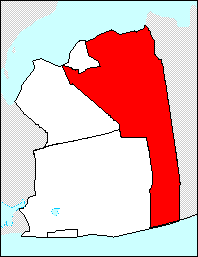
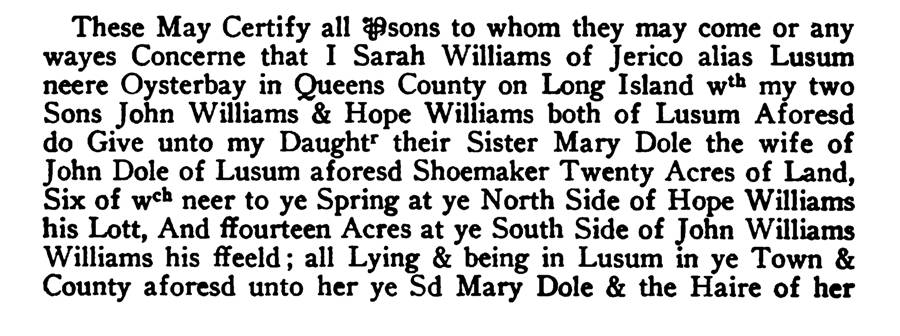
Michael Metcalf Jr.

Michael METCALF Jr. (1620 – 1654) was Alex’s 10th Grandfather; one of 2,048 in this generation of the Shaw line.

Michael Metcalf Jr was baptized 29 Aug 1620 in St. Benedicts, Norwich, Norfolk, England.  His parents were Michael METCALF Sr. and Sarah ELWYN.  In 1637 at age 17 he emigrated with his father and family to New England and settled at Dedham, Mass. (on the SW edge of Boston) with his family.  They  sailed from Ipswich in the “John & Dorothy” or the “Rose” (both ships passenger lists were recorded together)  He married Mary FAIRBANKS on 2 Feb 1644 in Church of Christ at Dedham, Mass.  Michael died  24 Dec 1654 in Dedham, Mass.  leaving Mary with 5 small children: ages 9, 7, 5, 3 & 10 mos.

Michael Metcalf Jr’s side of the foursided monument erected by descendants of Jonathan Metcalf (Jonathan2, Michael1) to Michael and his family in Center Cemetery, Lebanon, CT

Mary Fairbanks was born 18 APR 1622 in Sowerby, Yorkshire, England.  Her parents were Jonathan FAIRBANKS and Grace LEE She emigrated with her parents in 1633.  After Michael died, she marred Christopher Smith on 2 Aug. 1654 in Church of Christ when 32 years old.  Mary died 3 Oct 1676 (or 4 Jun 1684).

Children of Michael and Mary:

Name Born Married Departed
1. Michael Metcalf 21 JAN 1645 Dedham, Mass. Elizabeth Fuller
17 SEP 1672
1 SEP 1693 Dedham
2. Mary Metcalf 16 AUG 1646
Mass.
John Ware (Robert’s brother)
10 DEC 1668 Dedham, Mass
1677 Dedham, Mass
3. John Metcalf 21 JAN 1648
Mass.
Mary Bowers 21 Dec 1676 in Medfield, Norfolk, Mass.
.
Sarah Turner
30 Dec 1708 Medfield, Norfolk, MA
27 Sep 1676
Dedham, Mass ?
or
26 Sep 1738 – Medfield, Norfolk, Mass.
4. Sarah METCALF 7 Dec 1648 in Dedham Robert WARE
4 Jun 1677 Dedham, Mass.
13 Apr 1718 Dedham or Wrentham, Mass.
5. Dec. Jonathan Metcalf 21 SEP 1650 Dedham Hannah Kendrick
10 APR 1674 Dedham
27 MAY 1727 Dedham
6. Dec. Eleazer Metcalf 2 JAN 1653 Dedham Meletiah Fisher
9 APR 1684
Wrentham
10 MAY 1704 Wrentham, Mass

Michael took the Oath of Allegiance May 13, 1640 and was admitted a freedman at Dedham, May 13, 1642.

Jonathan Fairbanks witnessed the will of Michael Metcalf, Sr. in 1664.
A court record spoke of Michael Metcalf’s saw mill.

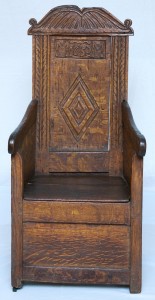
The Metcalf Great Chair owned by Michael Metcalf (a teacher in Dedham) and made in 1652 is the oldest American-made chair inscribed with a date. It is displayed at the Dedham Historical Society in Dedham, Mass.

Metcalf Chair 1652

This chair is also mentioned in the book “The American Promise: A History of the United States to 1877” on page 76.

Children

1. Michael Metcalf

Michael’s wife Elizabeth Fuller was born 1 Apr 1648 in Dedham, Norfolk, Mass. Her parents were Thomas Fuller and Hannah Flower. She first married 29 Nov 1666 in Dedham (Norfolk), MA to John Kingsbury (b. 15 Feb 1643 in Dedham; d. 12 JUL 1669 in Dedham) and had a young daughter when she married Michael 29 Nov 1666.  Elizabeth died 24 Oct 1732 in Dedham, Norfolk, Mass.

2. Mary Metcalf

Mary’s husband John Ware was born 6 Oct 1646 in Dedham, Norfolk, Mass.  He was Robert’s brother and his parents were Capt. Robert WARE and Margaret HUNTING. After Mary died, he married Joanna Gay (widow of Nathaniel Whiting) on 24 Mar 1678/79 and Dorothy Wood Nicholas on 21 Dec 1709.  John died 7 Apr 1718 in Wrentham, Norfolk, Mass.

John settled in Wrenthan in 1671, two years before it was incorporated as a town. In March, 1676, the town was deserted by the settlers on account of the Indians, and they did not return until 1680, after King Philip’s war was over. John Ware built his house, it is thought, as early as 1668 on the south slope of Knockings Hill. The farm was later occupied by Richard Dimond. His brothers, Robert and Nathaniel, also settled in Wrentham. John was one of the first board of selectmen of the town. He was lieutenant and captain of the first military company. His commission as lieutenant of the First Company of Militia in the town of Wrentham, signed by Governor Stoughton, is still extant. He seems to have served as lieutenant from 1689 to 1704 and as captain till 1715. He was engaged in King Philip’s war and led his men in attack against the Indians at Indian Rock, in the eastern part of what is now Franklin, Massachusetts.

3. John Metcalf

John’s wife Mary Bowers was born 1646 in Medfield, Norfolk, Mass. Her parents were John Bowers and Mary [__?__]. Mary died 26 Oct 1707 in Medfield, Norfolk, Mass.

John’s second wife Sarah Turner was born 18 Nov 1663 in Medfield, Norfolk, Mass. Her parents were John Turner (1628 – 1697) and Mary [__?__]. She first married 1688 to Ichabod Holbrook, then 28 Feb 1697 to John Plympton and finally to John Metcalf. Sarah died 12 JAN 1738 in Medfield, Norfolk, MA

John’s data is inconsistent.  Either his marriage or his 1675 date of death is incorrect.

4. Sarah METCALF (see Robert WARE‘s page)

5. Deacon Jonathan Metcalf

Jonathan’s wife Hannah Kendrick was born 20 Mar 1652 in Newton, Middlesex, Mass. Her parents were John Kendrick and Anne Smith. Hannah died 23 Dec 1731 in Dedham, Suffolk, Mass.

1686 – Jonathan was named Tythingman in Dedham, Mass.

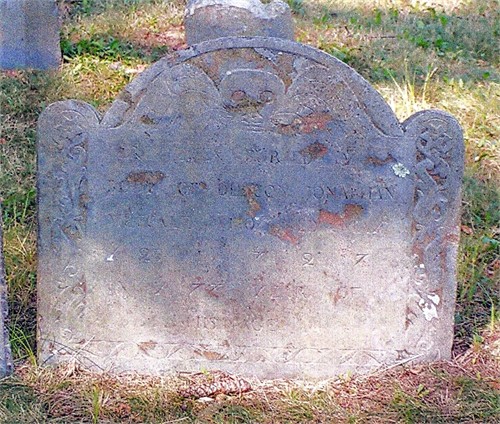
Jonathan Metcalf Headstone — Old Village Cemetery Dedham, Norfolk, Mass.

HERE LYES BURIED ye
BODY OF DEACON JONATHAN
METCALF WHO DIED MAY
ye 23D 1727
IN ye 77 YEAR OF
HIS AGE

Jonathan’s side of the Metcalf Monument in Center Cemetery Lebanon New London County Connecticut

Jonathan’s Great Grandson Samuel Huntington (1731-1796) signed the Articles of Confederation as a member of the Continental Congress. Later he signed the Declaration of Independence as Governor of Connecticut and served as President of the Continental Congress from 1779 to 1781.

Because Huntington was the President of the Continental Congress when the Articles of Confederation were ratified, some amateur historians and civic groups in Connecticut have claimed that Huntington was actually the first President of the United States.

Samuel Huntington 18th Governor of Connecticut

While not known for extensive learning or brilliant speech, Huntington’s steady hard work and unfailing calm manner earned him the respect of his fellow delegates. As a result, when John Jay left to become minister to Spain, Huntington was elected to succeed him as President of the Continental Congress on September 28, 1779. The President of Congress was a mostly ceremonial position with no real authority, but the office did require Huntington to handle a good deal of correspondence and sign official documents

1. Jonathan Metcalf (1650-1727)
Son Jonathan Metcalf (1675-)
Granddaughter Hannah Metcalf (1702-1791)
Great Grandson Samuel Huntington (1731-1796)

6. Deacon Eleazer Metcalf

Eleazer’s wife Meletiah Fisher was born on 1 May 1667 in Dedham; bap. on 5 May 1667 in Dedham when four days old. Her parents Samuel Fisher (son of Thomas Fisher and Elizabeth _____) and Melatiah Snow (dau. of Thomas Snow and Melatiah Kelway). Meletiah died on 23 Sep 1719 in Wrentham, 52 years old.

Sources:

http://trees.ancestry.com/owt/person.aspx?pid=31299409

http://wc.rootsweb.ancestry.com/cgi-bin/igm.cgi?op=GET&db=merrygo&id=I4961

http://dedhamhistorical.org/collections/

http://twopats.tripod.com/index-games.html

Posted in 12th Generation, Immigrant - England, Line - Shaw | Tagged , , , , | 7 Comments

Robert Ware

Robert WARE (1653 – 1724) was Alex’s 9th Grandfather; one of 1,024 in this generation of the Shaw line.

Robert Ware was born in Aug 1653 in Dedham, Mass. His parents were Capt. Robert WARE and Margaret HUNTING. He married Sarah METCALF in 4 Jun 1677 Dedham, Mass. After Sarah died, he married Elizabeth Holbrook 26 Feb 1719/20 at Wrentham.  Robert died 16 Sep 1724 in Wrentham (Franklin), Norfolk County, Mass.

Sarah Metcalf was born 7 Dec 1648 in Dedham, Mass. Her parents were Michael METCALF Jr. and Mary FAIRBANKS. Sarah died 13 Apr 1718 in Dedham or Wrentham, Mass.

Elizabeth Holbrook was born 25 Feb 1651 in Weymouth, Norfolk, Mass. Elizabeth died 28 Jul 1723 in Mass.

Children of Robert and Sarah:

Name Born Married Departed
1. Ebenezer Ware 15 Mar 1676/77 Dedham, Mass. Bethia Fisher
1708 Wrentham, Mass.
26 Apr 1750 Wrentham, Mass.
2. Robert Ware Jr. 6 Dec 1680 Wrentham Elizabeth Wight
1709
9 Jan 1731/32 Wrentham
3 Michael Ware 11 Jun 1683 Wrentham Jean Wight
4 Dec 1707 Wrentham
4. Margaret WARE 6 Jun 1685 Wrentham, Mass Maj. John FOSTER
4 Jun 1677 Dedham, Mass
4 Nov 1761 Attleborough, Mass.
5. Jonathan Ware 28 Feb 1687 in Wrentham (Franklin), Norfolk Co, Mass. Melatiah Fisher
13 Jan 1731/32 Wrentham, Mass.
20 Apr 1740 Wrentham
6. Sarah Ware 4 Mar 1689/90 Wrentham Francis Nicholson
6 Jun 1722 Wrentham, Mass.
5 Aug 1729
7. Esther Ware 7 May 1693 Wrentham Hezekiah Hawes
17 Dec 1718 Wrentham
14 Sep 1745
8. Elizabeth Ware 30 Sep 1697 Wrentham Bef. 26 Aug 1724

Robert was “impressed by virtue of a warrant from ye Major” in Dedham to serve in King Philip’s War in 1675.

Taken at Dedham the 9th Day of Xber, L675, for Capt. Samuell Mossely’s Company; Saml Colburne, John Day, Robt Weare, Abra. Hartway, Henry Ellitroop.”

He was a soldier in the Wrentham company in 1689, and deputy in 1703.

He was on the committee about the Meeting House, 1669. In 1671 he agreed with others to settle Wollomonopoag. In 1702 his tax was 12-10. He was one of the executors of the will of his brother-in-law, Rev. Samuel Man, in 1718.

Wrentham, Norfolk, Mass

Wrentham was first settled by the English in 1660 and officially incorporated in 1673. It was burned down during King Philip’s War 1675-1676. For a short time, it was the residence of the educational reformer Horace Mann. It is also known as one of the residences of Helen Keller.

Will of Robert Ware, Senior, of Wrentham.

In the Name of God Amen the twenty eight day of August Anno Domini one thousand seven hundred and twenty tour in the Eleventh year of the Reigne of our Sovereigne Lord King George ouer Great Britine, I Robert Ware Senior of Wrentham in the County of Suflfolke and Province of the Massachusets Bay in New England, Husbandman, being weeke in bodie But of sound minde and memory praised be Almighty God for the same yet Knowing the uncertanty of this present life and being Desirous to Settle that owtard Estate the Lord hath lent me, Do therefore make and order this my last will and Testament in maner and forme following,

That is to say, First and Prinsipally I commend my Soul into the hands of Almighty God my Creator, hoping to Receive full pardon and Remition of all my sins and Salvation through the alone merits of Jesus Christ me Redemer and my bodie to the earth to be decently intered according to the Decresion of my Exeqrs hereafter Named in hopes of A glorious Rezection unto Etarnal life. And as touching such temporal estate the Lord of his bounty hath lent me my will and mind is the same shall be imployed and bestowed as hereafter iii and by this my Will is expresed hereby Reuounsing and making Null and Voyde all wills and Testaments by me heretofore made Declaring and Appoynting this to be my last Will & Testament wherein is Contained the Same.

Imp rs , I will that my funeral expences be taken out of my Estate and further my Minde and will is that all my true and just Debts be well and truly payed or Ordered to be payed in Conveniant time Next after my Decease by the person herein after Named.

Item. Whereas many years ago I gave to my Eldest son Ebenezer Ware and his heires in a deed of Gift under my hand of house and Land in Wrentham on portion accounte to the Value of Sixty pounds, I doe now further give unto him and his heires the sume of five Shillings and allso one fourth part of all my waring appariell and one fourth part of all Debts, bills & bonds dew to my Estate and these with what he hath already Received shall be his whole share in my whole Estate.

Item. Whereas I have formarly given to my son Robart Ware and his heires, Deeds of Gift under my hand of land in Wrentham upland and Swampy Land on portion accounte, my son Robart Ware Having the price or valuation of the sd lands in the deeds or Instruments, I doe now further give unto him and his heires the sume of ten Shillings and allso one fourth part of all my waring Appariell and one fourth part of all Debts, bills & Bonds dew to my Estate and these with what he hath already Received shall be his whole share in my whole Estate.

Item. Whereas I have formerly given to my son Michel Ware and his heires in a Deed of Gift under my hand of house and land in Wrentham on portion accounte to the value of fifty pounds, I doe now further give unto him and his heires the sume of five Shillings and allso one fourth part of all my waring Appariell and one fourth part of all Debts, bills & Bonds dew to my Estate and these with what he hath already Received shall be his whole Share in my whole Estate.

Item. To my son Jonathan Ware my mind and Will is and I give to him and his heires all my Housing and lands in Wrentham or elsewhere in New England not heretofore disposed of by me, upland, Medow land & Swampy laud whatsoever with all appurtenances belonging to the housing and lands and further I give to my son Jonathan Ware and his heires my Teame and all tacklin belonging to it and all my Husbandry tooles and one fourth part of all my waring Appariell and one fourth part of all Debts, bills & bonds dew to my Estate and allso all provition left by me in my Dwelling House and Barn of all sorts whatsoever both for man and beast and allso my minde and will is that my son Jonathan Ware shall pay all my true and just Debts, Only funeral charges to be taken out of my Estate as before expresed.

Item to my three Daughters and my minde and will is that they Namely my Daughter Margriet and her heires and my Daughter Sarah and her heires and my Daughter Easter and her heirs shall be equall in what they have Received or shall Receive of my Estate Referance being had to my book of Accounts of what they or any one of them have already Received and further my minde and will is that my son Jonathan Ware shall pay thirty Pounds two and amongst my three Daughters within four years next after my Decease, and allso my mind and will is that all my movable Estate not heretofore disposed of by me after funeral charges taken out shall be devided two and amongst my three Daughters and finally my mind and will is that my son Jonathan Ware shall pay every perticular sume_to the persons unto whome they are herein given by me.

In Testamony whereof I have hereunto setl my hand and Srah- tin- day and year first above written Appoynting and Ordering my two Bona Michel Ware and Jonathan Ware to be the Exqrs  to this my last Will and Testament.
Robert Ware (Seal)

Signed, Sealed, Published and Declared by the sd Robart Ware Senior as and for his last will and Testament.
Ebenezer Fisher, Anthony Hancock,  Thomas Fisher, John Gay.

Children

1. Ebenezer Ware

Ebenezer’s wife Bethia Fisher was born 10 Dec 1681 in Medway, Norfolk, Mass. Her parents were Josiah Fisher and Meletiah Bullen. Bethia died 17 Jun 1756 in Medfield, Norfolk, Mass.

2. Robert Ware Jr.

Robert’s wife Elizabeth Wight was born 28 Jun 1692 in Wrentham, Norfolk, Mass. Her parents were Jonathan Wight and Elizabeth Hawes. Elizabeth died 5 Sep 1769 in Wrentham, Norfolk, Mass.

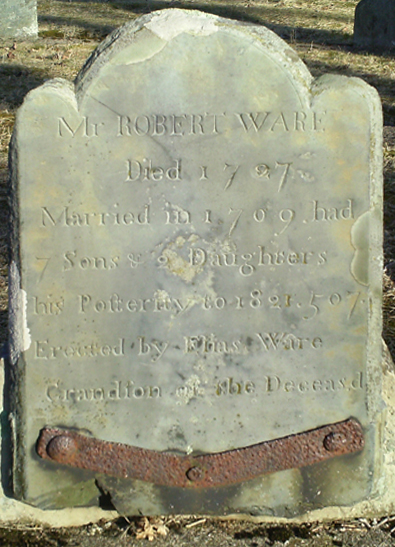
Robert Ware Headstone  erected by his grandson Elias Ware (1754-1841) — Wrentham Center Cemetery Wrentham Norfolk County Mass.  Date of death is 4 years earlier the 1732  normally reported in genalogies

3. Michael Ware

Michael’s wife Jean Wight was born 6 Sep 1688 in Wrentham, Norfolk, Mass. Her parents were Jonathan Wight and Elizabeth Hawes. Jean died 26 Apr 1754 in Wrentham, Norfolk, Mass.

4. Margaret WARE (See Maj. John FOSTER‘s page)

5. Jonathan Ware

Jonathan’s wife Melatiah Fisher was born 6 Oct 1705 in Wrentham, Norfolk, Mass. Her parents were Ebenezer Fisher and Abigail Ellis. She first married 14 May 1741 in Wrentham, Norfolk, Mass to Jonathan’s first cousin Benjamin Ware b. 8 Jul 1688 in Wrentham  d. 16 Jul 1744 in Wrentham. Melatiah died 3 Oct 1758 in Norton, Bristol, Mass.

Jonathan Ware Headstone — Center Cemetery, Wrentham, MA

WARE, Jonathan, Esq., Apr. 20, 1740. The first Justice of the Peace in Wrentham. In his 54th y.

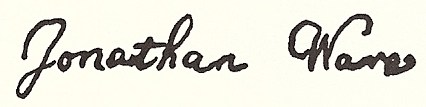
Jonathan Ware Signature

6. Sarah Ware

Sarah’s husband Francis Nicholson was born 15 Nov 1684 in Wrentham, Norfolk, Mass .  Francis died 7 Dec 1753.

7. Esther Ware

Esther’s husband Hezekiah Hawes was born 22 Nov 1688 in Wrentham, Norfolk, Mass. His parents were Daniel Hawes and Abiel Gay. Hezekiah died 2 Jul 1777 in Wrentham, Norfolk, Mass.

Sources:

Ware genealogy : Robert Ware of Dedham, Massachusetts, 1642-1699, and his lineal descendants (1901) By Ware, Emma Forbes, 1838-1898

http://trees.ancestry.com/owt/person.aspx?pid=8704386

http://www.genealogyofnewengland.com/b_w.htm

http://trees.ancestry.com/tree/1143206/person/-1988435365/story/dca7e46d-0d52-46c5-9a99-138e15cc1659?src=search

http://wc.rootsweb.ancestry.com/cgi-bin/igm.cgi?op=GET&db=merrygo&id=I9439

http://www.warefamilyassociation.com/html/MA_RWgrandch.htm


Posted in 11th Generation, Historical Monument, Line - Shaw, Public Office, Veteran | Tagged , | 10 Comments

Thomas Jansen Van Dyke

Thomas Jansen Van DYKE (1580 – 1665) was Alex’s 12th Grandfather; one of 8,192 in this generation of the Shaw line.

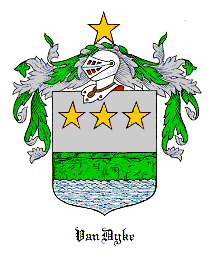
Thomas Jansen Van Dyke Coat of Arms

Thomas Jansen Van Dyke was born in 1580 in Holland, Reusel-de Mierden, Noord-Brabant, Netherlands. His parents were Jans VAN DYKE and [__?__].  He married Sytie DIRKS in 1604. He emigrated from Amsterdam to New Amsterdam in 1642.  In 1661 he and his wife were enrolled as members of the Reformed Dutch Church in Brooklyn. He died in 1665 in New Utrecht (the last of six towns to be founded in what is today the borough of Brooklyn).

Sytie Dirks was born in 1584 in Holland, Reusel-de Mierden, Noord-Brabant, Netherlands. Her parents were Dirck DIRKS and [__?__]. Sytie died between 1620 and 1679 in Brooklyn, Kings, New York.

Children of Thomas and Sytie:

Name Born Married Departed
1 Sgt. Jan Thomasse Van Dyke 1605
Amsterdam, Noord-Holland, Netherlands
[__?__]
.
Tryntje Achias Haegen
1642
Amsterdam, Noord-Holland, Netherlands.
bet. Aug and Sep 1673
Breuckelen (Brooklyn),
New Utrecht, Livingston, New York,
2. Claes Nicklas Thomasse Van Dyke 1607 in Ofadrian, Amsterdam,
3. Hendrick Thomasse Van DYKE 1609 Holland, Reusel-de Mierden, Noord-Brabant, Netherlands Duvertje Cornelisse BOTJAGERS
c. 1635
Utrecht, Holland
.
Magdalena Jacobse Rysens
30 May 1675
New York City
.
Neeltje Adriaens,
widow of Jan Lauwrensz, of New Utrecht
7 Sep 1679
1687
New York City
He is burried at  Old St. Marks Cemetery, Albany, New York
4. Tierck Van Dyke
1610 in Reusel-de Mierden, Noord-Brabant, Holland
5. Ann Van Dyke 1620 Lt. Nicholas Stillwell
1641
New Amsterdam, New York
1686
Long Island City, Queens, New York

Thomas’ sons held farms at Yellow Hook, fronting on New York Bay in Brooklyn, and at New Utrecht.

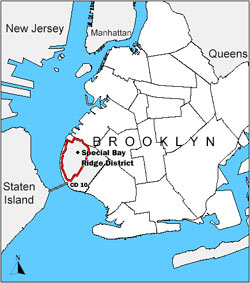
Bay Ridge, Brooklyn was originally known as Yellow Hook for the hue of the yellowish soil observed by the original Dutch settlers. This name was changed in 1853 after yellow fever struck the area and residents realized what an ill fit it was, given the circumstances. The new name was given due to the proximity of the neighborhood to New York Bay, excellent views of which were visible from the ridge that has now become Ridge Boulevard.

Bay Ridge Brooklyn

Bay Ridge is  in the southwest corner of  Brooklyn bounded by Sunset Park on the north, Seventh Avenue and Dyker Heights on the east, The Narrows Strait, on the west and 86th Street and Fort Hamilton on the south.

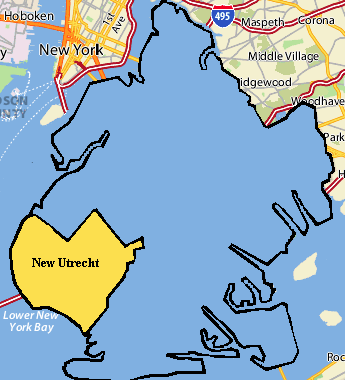
Town of New Utrech in Brooklyn

New Utrecht was the last of six towns to be founded in what is today the borough of Brooklyn in New York City. It was named after the city of Utrecht, Netherlands. In 1652 Cornelius van Werckhoven, a surveyor born in Utrecht and a principal investor in the Dutch West India Company, began purchasing land from the Canarsee and Nyack tribes. Upon his death in 1655 Jacques Cortelyou received permission to sell lots of the land to create a town.

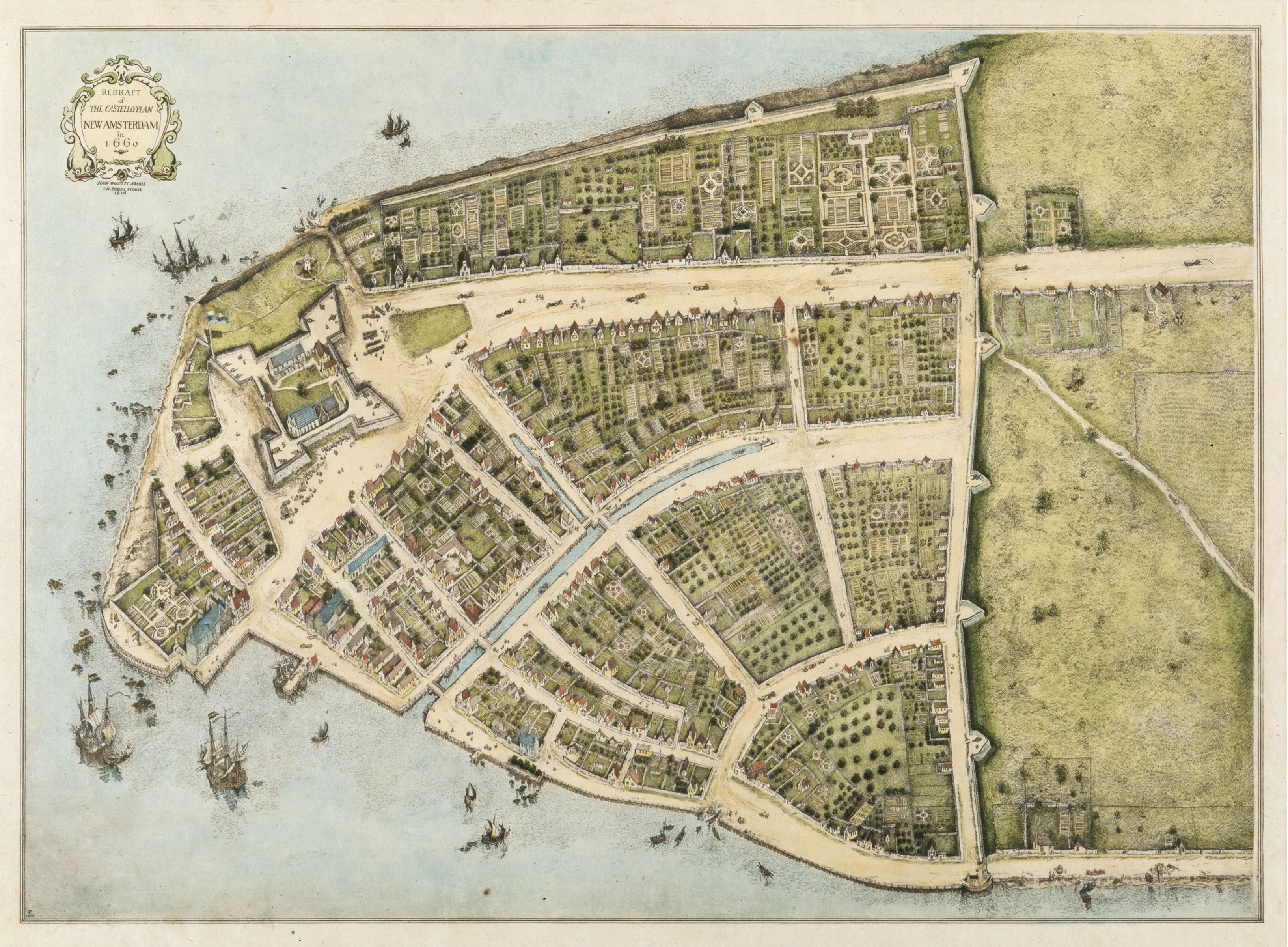
Twenty lots were laid out; Nicasius di Sille, an attorney from Arnhem in the Netherlands, was one of the first to purchase a lot and build a house using locally available stone and red roof tiles imported from Holland. He was employed as an advisor to Petrus Stuyvesant and as a “schout fiscal“, a combination of sheriff and district attorney. In 1660 di Sille’s List of the Inhabitants of Nieuw Amsterdam was completed at the behest of Stuyvesant. The names and addresses on the list correspond to the houses drawn on the Castello Plan.

In 1657 New Utrecht was granted status as a village and received its charter in 1661, when the entire region was part of the Dutch colony of New Netherland. New Netherland later came under British rule in 1664 as the colony of New York.

Children

1. Sgt. Jan Thomasse Van Dyke

Jan’s second wife Tryntje Achias Haegen  was born in 1618 in Reusel-de Mierden, Noord-Brabant, Netherlands. Her parents were Achias Haegen b. 1590 Amsterdam d. 1620 and Vronwtje Jans Oltmans b. 1580 Amsterdam d. 1 Apr 1646. After Jan died, she married on August 11, 1678 to  Tileman Jacobsz Van der Hard, who came to America from Kamerik, Utrecht, Holland.  Tryntje died in May 1695 in New, Kings, New York.

Thomas’ son Jan Thomas Van Dyke  was accompanied to the New Netherlands in 1652 by his second wife, Tryntje, and six children. on the good ship “De Bonte Kou” ( “The Spotted Cow”).

16 Jan 1657 – He was one of the founders of New Utrecht, where Director-General Peter Stuyvesant had permitted the establishment of a town, comprising about one thousand acres divided into farms of fifty acres each.  Jan Thomasse Van Dyke was the owner of one of these farms and in 1659 added to it a tract of meadow land extending toward what is now called Coney Island.

16 Jan 1657 – The founders of New Utrecht were granted patents by the Governor and Council at Fort Amsterdam on were Jacques Cortelyou; the Lord Counsellor and Fiscal Nicasius de Sille ; Peter Buys ; Johan Zeelen ; Albert Albertsen (Terhune) ; Willem Willemse (Van Engen) ; Jacob Hellickers (alias Swart); Pieter Jansen; Huybert Hoock; Jan Jacobson; Yinker (or Squire) Jacobus Corlear; Jan Thomasse Van Dyke; Jacobus Backer; Rutgert Joosten (Van Brunt); Jacob Pietersen; Pieter Roeloffse; Claes Claessen (Smith) ; Comelis Beeckman and Teunis Joosten.

2 Oct 1659 – The Director- General and Coundl at Fort Amsterdam made the following proclamation: “The Director- General and Council notify the inhabitants of the Town of New Utrecht to keep good watch and for the purpose of keeping good order they have appointed and set as in other cases the person Jan Thomassen to the office of Sergeant, they therefore order the inhabitance of the Town of New Utrecht to obey and acknowledge as Sergeant the above named Jan Thomassen [Van Dyke].”

Jan Thomas was active in the affairs of the Colony from the beginning, he soon received honors and appointments under its government.   For many years he was a magistrate of Fort Orange and New Utrecht, and on 18 Aug 1673, was appointed by Governor Colve one of the schepens or judges. He died soon after, and his successor was named 16 Oct 1673. In 1675 his heirs sold at auction his old farm at New Utrecht for 2,500 guilders, and his two lots in the village to his son, Hendrick Janse, for 750 guilders. At the same time his new farm was sold for 2,000 guilders.

Nicholas Thomasse Van Dyke is often listed as a son of the senior Thomas Jansen Van Dyke, but actually he was the son of Sgt. Jan Thomasse Van Dyke and the senior Thomas Jansen’s grandson.

Nicholas was born 11 Aug 1669 in Brooklyn, Kings, New York. He first married Tryntje Rinerse Arends 20 Apr 1689 After Tryntje died, he married Fransyntie Hendricks 4 Jun 1692.  He moved to New Jersey and finally to Delaware where his grandson played a key political role.  Nicholas died 19 Nov 1729 in St Georges Hundred, New Castle, Delaware.   Hundreds were once used as a basis for representation in the Delaware General Assembly, and while their names still appear on all real estate transactions, they presently have no meaningful use or purpose except as a geographical point of reference.

Jan Thomasse’ great-grandson Nicholas Van Dyke (1738 – 1789) was an American lawyer and politician from New Castle, Delaware. He served in the Delaware General Assembly (1776-1777), as a Continental Congressman from Delaware (1777-1782), and as President of Delaware (1783-1786).  He signed the Articles of Confederation for Delaware.

In an attempt to solve one problem resulting from the war, Van Dyke proposed and carried out a plan to pay Delaware’s portion of the war debt. Another difficult unresolved war problem was the fate of loyalist Cheney Clow. Arrested in 1778, tried for and acquitted of treason in 1782, he was then charged with the murder of a member of the posse sent to capture him in 1778. Though there was no evidence that Clow actually killed the man, in May 1783 a jury convicted him and sentenced him to death. Unable politically to pardon Clow, but aware that many responsible people, including Caesar Rodney‘s brother, Thomas Rodney, believed the man innocent, Van Dyke postponed the execution indefinitely.

Van Dyke returned to the State Senate for single session tenures in 1786/87 and briefly until his death in the 1788/89 session, when he was the Speaker. His son, also Nicholas, would later represent Delaware in the U.S. House and U.S. Senate. His New Castle home, now known as the Amstel House, still stands on Fourth Street in New Castle and is open to the public.

3. Hendrick Thomasse Van DYKE (See his page)

5. Ann Van Dyke

Ann’s husband Nicholas Stillwell was born 1603 in Surrey, England. His parents were Nicholas Stillwell and Alice [__?__]. Nicholas died 28 Dec 1671 in Staten Island, New York.

Nicholas went to Virginia around 1639 and moved to Manhattan Island in New York. He married twice, and died in 1671 in Staten Island, New York.

By 1639, Nicholas Stillwell was well established as a tobacco planter on the York River between King Creek and Sandy Point in Virginia. For political reasons, Nicholas has left England for the new world in the year 1634-35. Records show that in the early 14th century, the Stillwells had “considerable estate” in the county of Surrey near Farnham, south of London.

Because of the lack of protection from the Indians between the York and James Rivers at this time, it was necessary to have an armed force in constant readiness. Nicholas Stillwell was a Lieutenant in this army.

There was also trouble with the Dutch over Fort Nassau. The Dutch had abandoned the fort, but when the Virginians occupied it in 1635, the Dutch attacked and recaptured it along with several prisoners including Lt. Stillwell. The prisoners were taken to New Amsterdam but returned to Virginia soon after.

The Kent Island matter proved more serious. Kent Island, along with some other Virginia territory, was granted by the King to Lord Baltimore and included by him as a part of Maryland.  William Claiborne, acting for the Governor of Virginia, was holding the territory.  In 1635, a Maryland commissioner named Thomas Cornwallis swept the Chesapeake for illegal traders and captured one of Claiborne’s pinnaces in the Pocomoke Sound. Claiborne tried to recover it by force, but was defeated; although he retained his settlement on Kent Island. These were the first naval battles in North American waters, on 23 April and 10 May 1635; three Virginians were killed.

William Claiborne Secretary of State for the Virginia Colony (626–1634) Parliamentary Commissioner and Secretary of the Virginia Colony (1648–1660)

The chaos of the English Civil War in the early 1640’s gave Claiborne another opportunity to reclaim Kent Island. The Calverts, who had received such constant support from the King, in turn supported the monarchy during the early stages of the parliamentary crisis. Claiborne found a new ally in Richard Ingle, a pro-Parliament puritan merchant whose ships had been seized by the Catholic authorities in Maryland in response to a royal decree against Parliament. Claiborne and Ingle saw an opportunity for revenge using the Parliamentary dispute as political cover, and in 1644 Claiborne seized Kent Island while Ingle took over St. Mary’s. Both used religion as a tool to gain popular support, arguing that the Catholic Calverts could not be trusted.

By 1646, however, Governor Leonard Calvert had retaken both St. Mary’s and Kent Island with support from Governor Berkeley of Virginia, and, after Leonard Calvert died in 1648, Cæcilius Calvert appointed a pro-Parliament Protestant to take over as governor. The rebellion and its religious overtones was one of the factors that led to passage of the landmark Maryland Toleration Act of 1649, which declared religious tolerance for Catholics and Protestants in Maryland.

Claiborne left Lt. Stillwell, who had served with him in the Indian Wars, in charge at Kent Island. Finally, the Governor, finding himself in an untenable position, ordered Stillwell to return. Stillwell refused and having liked what he had seen of New Amsterdam, decided to abandon his plantation and possessions in Virginia and go to New Amsterdam. This was 1645-46.

Stillwell bought land on Turtle Bay but  [today, midtown Manhattan where the UN is today, but then far from town] the Indian situation became so dangerous that he had to abandon it. He next settled at Gravesend [The only English chartered town in what became Kings County and was designated the “Shire Town” when the English assumed control, as it was the only one where records could be kept in English], where he bought a farm for his son, Richard, for 900 weight of tobacco. In 1659, he was elected Magistrate and served in this capacity for several years thereafter. In 1654, he was elected president of the Court Martial for trying pirates.

In 1663, Peter Stuyvesant, Governor of New Amsterdam, engaged Lt. Stillwell as an officer to “assist in protection and security of the Province” requiring a “good and expert person speaking the English language”. Two officers, Stillwell and Capt. Marshall had been credited with ending the Indian War which doubtless influenced Governor Stuyvesant.

Connecticut began to claim Long Island and sent a man named James Christie to stir up the people against the Dutch. Stillwell arrested Christie and returned him to New Amsterdam for trial. There was an attempt to hold Stillwell as hostage but he escaped. The unrest continued for a while.

In 1664, English ships came into the harbor and captured New Amsterdam for England. Stillwell sold his plantation and bought another on the southeastern shore of Staten Island, where he died in 1671. He was survived by his wife, Anne and sons, Richard, Nicholas, Jeremiah and Joseph Stillwell.

Nicholas’ Will:

In the Name of God Amen.I Nicholas Stillwell of Staten Island with in the Territoryes of his Royall Highnesse James Duke of Yorke in America Husbandman being Sick and weake in Body, but of perfect and sound understanding thanks be rendered to Almighty God for the same, do make & ordaine this my last will and Testament, in manner and Form following (vizt.)

Imprimis, I give and bequeath my Soul into the hands of Almighty God who gave it, in hopes to be saved in and thorow ye Passion, merits and mediacon of Jesus Christ, my only Saviour and redeemer, and my Body to the Earth, to be Buried in decent and Christian like Buriall, according to the discrecon of my Executrix here after named.

Item, I give and bequeath unto my youngest Sonn Jeremiah One Iron Gray Mare of about foure yeares old, to run upon the Island for his use.

Item, I give and bequeath unto my welbeloved and affectionate wife Ann Stilwell, all my whole Estate, consisting of Land, Housing, Cattle, Corne, Oxen Kine, Horses, Mares, Sheepe, Swine, be they of what nature or kinde soever, As also all manner of Household Goods, moveables and immoveables whatsoever lying and being upon Staten Island aforesaid, or elsewhere, Together with all manner of Debts whatsoever, and of right belonging unto mee; And I do also hereby constitute and appoint my said wife to be my full and Sole Executrix of this my last will & Testament, revoking all wills and Testaments, by mee formerly made; In witness where of I have here unto set my hand & Seal the 22th daymof December in Anno 1671.

Sealed & delivered in presence of A Meyer

His son, Nicholas Stilwell II, was a Captain in the militia in New York. He lived in Gravesend on Long Island, New York, when his father moved to Staten Island. He owned property at Jamaica, Long Island and may have lived there during his first marriage. He was married three times. In 1675 he became Constable of Gravesend. He also served as a member of the New York Colonial Assembly and as a magistrate. He died between Jan. 19, 1715, when he wrote his will, and March 5, when the will was proven.

Sources:

Distinguished families in America, descended from Wilhelmus Beekman and Jan Thomasse Van Dyke (1912) by Aitken, William Benford, 1867-

http://reckinger.tripod.com/family/pafg201.htm#8099

http://www.politicalfamilytree.com/samples%20content/members/signers/Van%20Dyke-DE-1.pdf

http://www.genealogy.com/users/s/m/i/Michael-J-Smith/BOOK-0001/0157-0001.html

Posted in 14th Generation, Immigrant - Continent, Line - Shaw | Tagged , | 6 Comments

Hendrick Thomasse Van Dyke

Hendrick Thomasse Van DYKE (1610 – 1688) commanded an attack in Kieft’s War in 1643,  occupied several high official positions in the colony of the New Netherlands,  While his unenviable reputation for starting the Peach Tree War (1655-1660) by shooting a Native American woman picking peaches on his property may be an exaggeration of the actual events, he did have a gruff personality and was often involved in controversy both with Director General Stuyvesant  and the Indians. He was Alex’s 11th Grandfather; one of 4,096 in this generation of the Shaw line.

Hendrick Thomasse Van Dyke was born in 1609 in Holland, Reusel-de Mierden, Noord-Brabant, Netherlands.  His parents were Thomas Janse Van DYKE and Sytie DIRKS.   He married Duvertje Cornelisse BOTJAGERS about 1635 in Utrecht, Holland.  Hendrick died in 1687 in New York City, NY.  He is burried at  Old St. Marks Cemetery, New Amsterdam, New York.

Hendrick sailed from Amsterdam, 25 May 1640, in the ship ‘WATERHONDT‘, bearing a commission of ‘Ensign Commandant’ in the service of The Dutch West India Company, and accompanied by a company of foot-soldiers to reinforce the garrison of Fort Amsterdam.  Hendrick was also accompanied by his wife and daughter, Ryckie [our ancestor].   Due to a disaffection arising between him and Director Kieft, he returned home with his family in 1644. The West India Company, in response to complaints of the New Netherland colonists, eventually recalled Director Kieft, and reorganized the colonial government by appointing Petrus Stuyvesant, First Director; Lubbertus Van Dincklagen, Vice Director; and Hendrick Van Dyck, “Schout Fiscal“, a combination of Sheriff and District Attorney.. Hendrick and his family thus returned to New Netherland on 11 May 1647.  Hendrick and Stuyvesant were instant enemies starting on the passage over. (See the story below.)
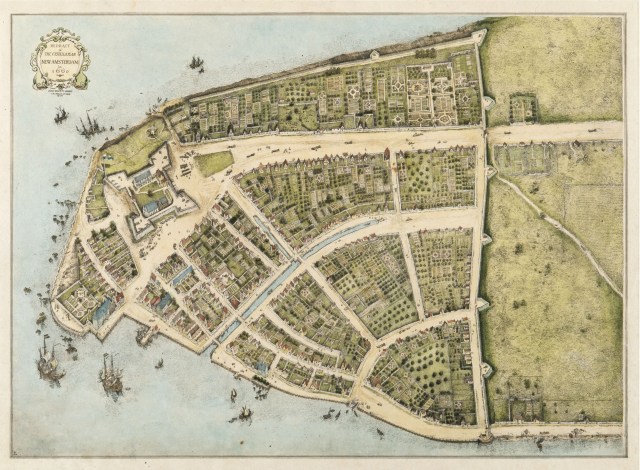
Castello Plan of 1660 New Amsterdam Revised 1916

After Duvertje died, Hendrick married Magdalena Jacobse Rysens on 30 May 1675 in New York City. He married a third time to Neeltje Adriaens, widow of Jan Lauwrensz, of New Utrecht on 7 Sep 1679.

Duvertje Cornelisse (Dwertje Cornelise) Botjagers was born about 1615 in Utrecht, The Neterlands.  Duvertje died about 1673 in New York City, NY.

Magdalena Jacobse Rysens was born about 1640 and died in New Amsterdam before Sep 1679.

Children of Hendrick and Duvertje:

Name Born Married Departed
1 Ryckje Ulrica Van DYCK c. 1636 in Utrecht, Holland Jan DARETH
1 Nov 1654
Reformed Dutch Church New Amsterdam
.
Jacob de Hinsse
1671
.
Jacob Staats
Sep 1709
2. Dr. Cornelis Van Dyck 10 Mar 1641/42 New Amsterdam Elisabeth Laekens
c. 1663
Albany, NY
.
Elizabeth Beck
Apr 1682
New York City DRC
1686 in Beaverwyck  (Albany), NY
3. Lydia Van Dyck c. 1646 Nicolaas de Meyer
(9th Mayor of New York  Wikipedia)
06 Jun 1655, New Amsterdam DRC
c. 1688
New York
4. Jannetje Van Dyck 1646, Euckhuysen on the Zuider Sea or
1647
New Amsterdam
Johannes Coely
22 Mar 1664/65 in New York DRC

The Dutch surname of VAN DYK was a locational name ‘the dweller by the ditch or dyke’ from residence nearby. Local names usually denoted where a man held his land, and indicated where he actually lived. The medieval dyke was larger and more prominent than the modern ditch, and was usually constructed for purposes of defence rather than drainage.

“Colonial New York,” by George W. Schuyler (2 vols., New York, 1885). –

VAN DYKE, Hendrick, pioneer, born in Holland about 1599; died in New York in 1688. He came to this country in 1636 or in 1640, in the service of the West India company, as ensign commander of their troops. He, was sent by Governor William Kieft on several expeditions against the Indians, and in 1643, under his orders, destroyed a large Indian village on Long Island sound, killing about 500 persons. He returned to Holland on 25 June, 1645, was appointed fiscal or attorney-general of the New Netherlands, and in 1646 sailed for New Amsterdam with Peter Stuyvesant, the new governor of the province. During the voyage he offended Stuyvesant, and when they reached New Amsterdam the governor excluded him from the council for twenty-nine months, and succeeded in depriving him of all his influence and dignities. In 1650 he made an earnest protest to the home government “against the excesses of Director Stuyvesant,” but the latter influenced his dismissal in March, 1652. In 1655, at a time when the citizens were entirely unprepared for an attack, the Indian tribes that surrounded New Amsterdam landed within the city limits with 500 warriors, broke into houses, abused the people, and among others wounded Van Dyke, who was seated peacefully in his garden. The citizens rushed to the fort, a struggle ensued, and three Indians were killed. The say-ages took to their boats, but in revenge laid waste the farms on the New Jersey coast, killed 50 of the inhabitants of Staten island, and took 100 prisoners. This uprising is almost universally explained by historians on the theory that Van Dyke had killed an Indian woman who was stealing fruit from his garden” but the statement is not substantiated by the earliest and most reliable authorities. His closing years were passed in retirement. He is described as a “thrifty man, dealing in real estate, and loaning money.” In 1675 he married the widow of Jacob Van Couwenhoven.

Colonial New York: Philip Schuyler and his family By George Washington Schuyler 1885 [In a 21st Century edit to this 19th Century text, I replace the word “savages” with “Indians” except for one direct quote.]

Came to New Netherland, in 1639 or 1640, in the service of the West India Company as ensign commandant of their troops. Under the unwise administration of Kieft, the Indians became very troublesome and hostile. Early in the year 1642, Kieft determined to chastise them, and for that purpose organized an expedition to penetrate their country and destroy their villages. Van Dyck was placed in command of eighty men, and with a guide marched into what is now Westchester County, where he was assured that he should find the enemy. Before he reached the Indian village, a dark and stormy night closed around him. The guide lost his way, and Van Dyck his temper; a halt was ordered, and finally a retreat. He returned to New Amsterdam without having seen an Indian, and apparently without result. Not so, however, for the Indians soon discovered how narrowly they had escaped destruction, and made overtures for peace.

Kieft was not satisfied with his abortive attempt to chastise the Indians for their alleged perfidy and atrocities. The next year these same Indians, and others living farther north, were driven from their villages by a raid of the Mohawks. They fled to the Dutch for safety, and encamped at Corlaer’s Hook and at Pavonia. Kieft, believing that his time had come for vengeance, without giving any notice to the farmers and outlying settlements, and against the advice of the best men in New Amsterdam, directed two detachments of citizens and soldiers to fall on the unsuspecting Indians in the night and butcher them in their sleep. A large number of Indians—men, women, and children—were killed at both encampments. This perfidy against a people who in time of peace had sought protection and safety, aroused the anger of the neighboring tribes, and they combined to exterminate the Dutch. In a brief time the farms and plantations were burned, and the people who were not killed or captured fled for safety under the guns of Fort Amsterdam. The Indians were bold and watchful, keeping their enemies shut up in narrow limits. Van Dyck, while stationing the guard not far from the fort, was shot and wounded in in the arm, narrowly escaping death, the bullet having grazed his breast.

The next year, 1644, was made memorable by the slaughter of large numbers of the Indians on Long Island and on the eastern borders of Westchester County.

After a raid against the Indians on Long Island, in which over a hundred of them were killed, one hundred and thirty troops were put under the command of Captain Underhill, of New England, now in the Dutch service, as he had been years before in Holland, and of Ensign Van Dyck, with orders to penetrate into the country on the borders of this province and Connecticut, and to destroy a large Indian village said to be situated a few miles north of the sound. They landed at Greenwich, and the next day took up their line of march to the interior. Their guide was faithful, and conducted them straight to the Indian camp. They cautiously approached it on a bright, moonlight night, but, being discovered, they rushed forward and completely surrounded it before the Indians had time to fly. The Indians fought with desperation, and in a brief time one hundred and eighty of their warriors lay dead upon the snow outside their cabins. The torch was then applied, and the village, with its living occupants—men, women, and children—was burned to the ground. Five hundred Indians were killed—some writers place the number at seven hundred ; only eight escaped. The loss of the Dutch was slight, fifteen being wounded.

This severe chastisement lowered the pride of the Indians , and they sued for peace. Kieft lent a willing ear to their solicitations, and in the following year concluded with all the Indian tribes a peace which continued until 1655. Meantime Van Dyck returned to Holland, and on June 28, 1645, was appointed fiscal of New Netherland. Kieft had proved himself incompetent, and the Company resolved to recall him. Petrus Stuyvesant was appointed to his place. But there were various delays, and the new officials did not sail from Holland until the close of the year 1646. On the voyage, for some unknown reason, Stuyvesant treated Van Dyck rudely and impolitely. At one time, when Van Dyck proposed to take his seat with the Council on shipboard, Stuyvesant repulsed him with the remark, “Get out! When I want you I’ll call you.” At Curacoa he confined him on board the ship for three weeks, while others, even the meanest soldiers, were allowed to land. Van Dyck believed that this was done, lest he, by virtue of his office and according to his instructions, should interfere in some business which Stuyvesant preferred to do alone. On their arrival at Manhattan the director-general pursued the same course of treatment. He did not consult him as member of Council, except when it suited his pleasure or convenience. He interfered with the higher duties of his office, and assigned him work which a slave could perform, and in various other ways made his official life a burden.

When Adrian Van der Donck was in Holland, as representative of the people of New Netherland, to solicit a better government, he sharply assailed the acts and characters of the colonial officials—none more than those of Stuyvesant and his secretary, Van Tienhoven, and said of Van Dyck, in July, 1649:

“Director Stuyvesant excluded him twenty-nine months from the Council board, for the reason among others, as his Honor stated, that he could not keep a secret. He also declared that he was a villain, a scoundrel, a thief. All this is well known to the Fiscal, but he dare not adopt the right course in the matter; and in our opinion, ’tis not advisable for him to do so ; for he is a man wholly intolerable alike in words and deeds. His head is a trouble to him, and his Screw is loose, especially when surrounded by a little sap in the wood.”

Stuyvesant, apparently to justify his treatment of Van Dyck, accused him of drunkenness and inattention to the duties of his office, which called out a rebuke from the Company, in which they allude to his ” respectable friends.” Van Dyck, forbearing as he was, and, above all things, desiring peace and harmony in the official family, at last began to feel that he was being pushed to the wall by his enemies without cause. He had held aloof from the opposition against the director-general, and had not united with Van der Donck and other leading men in their celebrated remonstrance on the condition and misgovernment of New Netherland. But now, in 1650, he joined the vice-director, Van Dincklage, in an energetic protest against the “excesses of Director Stuyvesant.” For this, although other reasons are assigned, he was arbitrarily dismissed from his office on March 29, 1692.

The long-suffering fiscal was now fairly aroused. In his Defence, a very able paper, addressed to the States General, he assails the administration of Stuyvesant as autocratic and arbitrary to the last degree. With bitter sarcasm he exposes Stuyvesant’s pretensions of having dismissed him “for the good of his Lords Superiors,” and then having appointed such a man as his secretary, Van Tienhoven, in his place.  He denies that he was the author of the lampoon which was made the excuse for his dismissal, and asserts that it was concocted in the office of Van Tienhoven by himself and clerk for this very purpose. He denies the testimony of certain witnesses against him, and charges, as can be proven, that they were the creatures of the director-general and his secretary, and unworthy of belief. As Stuyvesant had reported that he was dismissed on account of misbehavior, by the advice and consent of the select-men whose names were signed to the paper notifying him of his dismissal, he asserted that the select-men had held a meeting in August, at which they declared by resolution that “no complaints were ever made to them by the commonalty of misbehavior, and they themselves had nothing to say against him or his conversation.” They also said that they refused their consent to his dismissal, and did not sign the paper.

Van Dyck sent with his Defence sworn statements as to the immorality and general bad character of Van Tienhoven, which must have made a profound impression on the Lords Superiors. They directed Stuyvesant to dismiss him from office, and when at a later period they found that he was still retained, they wrote to Stuyvesant: “We are greatly surprised you can plead his cause so earnestly. This has displeased us; and our displeasure must increase, if, contrary to our instructions and orders, you continue to employ him for any purpose whatever.” Van Tienhoven soon after disappeared. It is supposed that he drowned himself.

Van Dyck closes his defence with a letter from the Company to him, written before their knowledge of Stuyvesant’s action in his case, in which they give him some sharp rebukes for his alleged delinquencies; and his reply. In this letter he gives conclusive evidence that his “screw” was not loose, or surrounded by “sappy wood.” It is keen, incisive, ironical. His Defence is long and able. It shows him to have been a man of more than ordinary ability and of good education. He does not deny that he has faults, but exonerates himself from the charges preferred against him, and places Stuyvesant and his friend,  Van Tienhoven, on their defence. The proofs against the latter were so full and convincing that the Company ordered him to be dismissed from his employments. Stuyvesant was retained, and Van Dyck was not restored. Henceforth he did not ” trouble himself with the cares of office,” but lived many years in private life as an “honorable gentleman.”

The Indian invasion of New Amsterdam in 1655 was the occasion of bringing Van Dyck‘s name again into prominence. Historians, from O’Callighan and Brodhead to Mrs. Booth and Mrs. Lamb, in their narratives of that disastrous war, have made him the responsible cause. While Stuyvesant was on his expedition against the Swedes of Delaware, the Indians living on the river to the north formed an encampment on Manhattan Island, and early in the morning of September 15, 1655, five hundred warriors landed from sixty-four canoes near the fort, within the city limits, and began a search for ” Indians from the North.” (More likely they were searching for rum.) They broke into houses before the occupants were out of their beds, and in some instances abused the people by words and blows.

La Montagne and Van Tienhoven, to whom Stuyvesant had committed the government in his absence, sent for the chiefs to meet them in the fort. During the conference, which does not seem to have been unfriendly or exciting, the Indians promised to withdraw to Nutten Island, that collisions with the citizens might be avoided. But, being joined by another detachment of two hundred, they did not keep their promise, but lingered in the streets and on the river-shore until evening. It is quite certain that they did not remain a whole day, in a town where rum was kept in every house and place of business, without getting more or less intoxicated.

Between eight and nine o’clock they made a rush up Broadway, and passing the house of Paulus Leendertsen Van der Grist, who was standing with his wife before the door, threatened to kill him, but passing on they wounded Van Dyck with an arrow, as he was standing in his garden gate. They were evidently on a drunken frolic, caring little for consequences. Their assault on Van Dyck and his neighbor caused an alarm, and the cry was raised, “The savages are murdering the Dutch !” when the citizens, seizing their arms, hastily assembled at the fort. The Indians, after their rush through the streets, returned to their landing-place. The armed citizens were then permitted to leave the fort and assault them, and in the conflict which ensued two Dutchmen and three Indians were killed. The Indians took to their canoes, and, smarting under their loss, they passed over the river and attacked the Dutch, whom they now looked upon as enemies. They laid waste the farms on the New Jersey shore and on Staten Island, killing fifty of the inhabitants and making more than an hundred prisoners. The loss in property of the Dutch was estimated at more than 200,000 guilders.

Several historians, in their narratives of these events, apparently without consulting the original records, attribute the invasion to Hendrick Van Dyck as the cause, but cite no authority. They say that he killed a squaw whom he caught stealing peaches from his garden, and that he shot her as he would a dog. The story is embellished with incidents according to the imaginations of the several writers. Some relate that the Indians, to the number of nineteen hundred or two thousand, landed from sixty-four canoes, for the purpose of taking vengeance on Van Dyck for the murder of the Indian woman. Most confine themselves to the fact of wounding him with an arrow, but one, more daring than the rest, says that they killed him.

1 Not one of the numerous authors telling the story, whose books I have read, give their authority; not one refers to the records. The charge against Van Dyck may be true, but I have failed to find the proof.

2 These canoes must have been much larger than the average to hold thirty persons each. Few would accommodate more than ten individuals each ; the more usual size would not hold as many. “Two thousand warriors in sixty-four canoes” discredits the story.

The accounts given by the actors and their contemporaries are doubtless more trustworthy than those of writers two hundred years afterwards. La Montagne and Van Tienhoven, members of the Council, were on the spot, and active participants in all that occurred before the Indians passed to the west shore of the river. The latter was a bitter enemy of Van Dyck’s, and had no reason to shield him from blame or responsibility. In their letter to the director-general, written the day after the affair, they say that many Indians from the upper and lower Hudson had made an assault on the Dutch, and had “wounded Hendrick Van Dyck, standing in his gardengate, with an arrow, but not mortally, and came very near cleaving Paulus Leendertsen’s head with an axe as he stood by his wife.” No reason is assigned for the sudden outbreak or for the assault. If they were seeking Van Dyck to kill him, why did they try to kill his innocent neighbor, and only slightly wound him, the offender? If it were Van Dyck they were after, why did they not seek him out during the day, and after killing him depart? He did not seem conscious of their hate or of his own danger, or he was brave thus to expose his person at his garden-gate. Perhaps he was watching his peaches!

On receipt of this disastrous intelligence, Stuyvesant hastened his return from the Delaware to console and encourage the poor people, “his subjects.” After he had had abundant time to investigate all the circumstances relating to the invasion on October 31st, he and his Council wrote to the States-General and the Company, giving a detailed statememt of the irruption, in which they say: “On September 15th, at a very early hour, sixty-four canoes full of Indians arrived in the neighborhood of the city,” and then go on to relate the occurrences of the day, including the wounding of Van Dyck and the threatening of Leendertsen, but do not refer to the number of the Indians or the cause of the sudden outbreak, except that it was “in keeping with their insolence and treachery ever since the peace of 1645, having killed ten persons and destroyed much property.”

A few days later the director-general submitted to the Council, for their written opinions, the question of immediate war against the Indians, the community being divided on the subject—some urging a war of extermination to begin at once, while others were in favor of delay for thorough preparation. Stuyvesant, as was his custom, gave his own views and conclusions on the questions submitted, in which he says: “We agree with the general opinion, that the Indians upon their first arrival had no other intentions than to fight the Indians on the east end of Long Island, and that careless watching and all too hasty inconsiderateness of some hot-headed individuals diverted them and gave them a cause for their subsequent actions.”

La Montagne thought that there was sufficient cause for war, “by the unseasonable gathering here of nineteen hundred Indians, of whom eight hundred were already here, to attack fifty or sixty,” but they had “given more than sufficient cause heretofore by murdering ten of our people.”

Van Tienhoven believed there was cause for war for several reasons, but more especially “because that on September 15th, early in the morning, five hundred of them, all in arms, landed from sixty-four canoes within the city limits, and, being joined during the day by two hundred more, they ran through the streets in crowds, searching houses, beating the people, wounding Van Dyck, and threatening to kill Paulus Leendertsen.”

De Sille was absent with the Delaware expedition, and had little to say except to agree with the director-general in his opinion. All agree, however, that it was not a fitting time to begin hostilities, as there should be time given in which to make preparations and receive an answer to their appeal to the States-General and the Company. There is not an intimation by any one, that the Indians came to wreak their vengeance on Van Dyck, or that he was the cause of a visitation which proved so disastrous. Considering his relations with Stuyvesant and Van Tienhoven, it is remarkably strange that, had he been the responsible cause, they should not have arraigned him in their letters, or in their own confidential communications with each other.

That Stuyvesant did not hold him culpable further appears from a letter of the Company in reply to one of his, under date of December 19, 1656. Referring to Van Tienhoven, they say: “Any one who will reflect upon his late transactions as to the Indians will confess that, being very drunk, he was the chief cause of that doleful massacre. It is quite clear he might have prevented it.” How should the Company have spoken so emphatically, unless they had received reliable information from Stuyvesant or some one else? Such must have been the sentiment of the community at the time.

In a postscript to the same letter, they write: “We understand, from letters and oral reports brought to us by private persons, that the late Attorney-General (Fiscal) Van Dyck was the first cause of this deplorable massacre, by murdering a squaw who stole some peaches or other fruits from his garden. If this is the truth, then we are greatly surprised it was not mentioned in your letters, not even with a single word—much more so, that he was not punished as a murderer. To this we call your prompt attention, and recommend his execution.” It will be noticed that the Company say, if these reports are true, Van Dyck should be punished, but they do not recall or modify their charge against Van Tienhoven as the responsible party.

In the light thrown upon the subject by these letters and records, there can be little doubt that the Indians did not visit New Amsterdam with hostile intentions, but merely stopped on the war-path against their enemies on Long Island for refreshments or other purposes. Van Dyck may have killed a squaw, as charged, for Indian life, from the beginning, in New England and elsewhere on the continent, until now, has been considered cheap; nor could the Indians have seriously blamed him, judging him by their own law of retaliation. They would have been likely to have thought the woman’s death was some compensation for the ten lives of Dutch men and women they had wantonly taken since the peace. I cannot but think that the accusation against Van Dyck was an afterthought of the real culprit to shift the responsibility from his own shoulders.

As to the number of the invaders, it is clear that the authors who have placed them at nineteen hundred or two thousand are in error, and particularly those who term them warriors all armed. It is true, La Montague says “nineteen hundred gathered here, of whom nearly eight hundred were already here.” This sentence can only be explained or understood by supposing the “here” first used to mean Manhattan Island, and the second “here ” to mean New Amsterdam. This interpretation is sustained by Van Tienhoven, who expressly declared “there landed from sixty-four canoes about five hundred men,” and adds, “in the evening they were joined by two hundred more,” making the whole number “nearlyeight hundred,” as estimated by La Montagne. The conclusion is, that they formed an encampment on the island of Manhattan belonging to the Dutch, “without previous notice,” of nineteen hundred men, women, and children, whence their warriors, in detachments of five hundred and two hundred, started on an expedition against the Long Island Indians. It is surprising that anyone should have put the number of the invaders at ” about two thousand armed warriors in sixty-four canoes;” equally marvellous that, in the face of the records and all other authors, it should be said that they “killed Van Dyck.” One cannot but wonder that, if there were nineteen hundred, coming with hostile intent, they should have been driven off by ” fifty or sixty” citizens; for these were all, capable of bearing arms, who had been left by Stuyvesant to defend the city.

Van Dyck was living at least thirty years afterward, having survived his great opponent, Stuyvesant, many years, and nearly all the associates of his early life. After the death of his wife, Deivertje, he married, in May, 1675, the widow of Jacob Van Couwenhoven. In 1680 he made a deed of a part of his Broadway property to his son Cornells. He was not idle when out of politics, but was known as a thrifty man, dealing in real estate and loaning money. If he had loved the bottle, as Stuyvesant charged, he reformed and became a good citizen, living to a good old age. In his will, dated August 13, 1685, and proved March 20, 1688, he mentioned one son and three daughters. His son Cornelis was a physician, and settled in Albany. He died at an early age, leaving two sons, both of whom adopted the profession of their father. Their descendants are numerous, and it is now difficult to distinguish them from those of the same name, whose ancestors settled, one in Delaware, and another on Long Island. Vol. IL—20
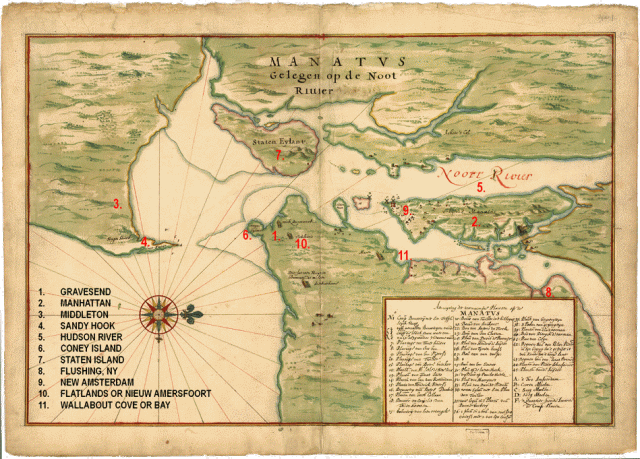
map of the New York City area as it was seen and drawn in 1639 by Johannes Vingboon who was the cartographer for the Prince of Nassau, and prepared a number of maps of portions of the east coast of North America. A zoomable version of this map is available at American Memory.    It shows the location of settlements, both Dutch and Native American. Apart from a few homes hugging the shoreline along the East River, and an isolated homestead deeper into the Island, Vingboon’s map shows the forest wilderness broken only by the occasional Indian villages.

Kieft’s War, also known as the Wappinger War, was a conflict (1643–1645) between settlers to the nascent colony of New Netherland and the native Lenape population in what would later become the New York metropolitan area. It is named for Director of New Netherland Willem Kieft, who had ordered an attack without approval of his advisory council and against the wishes of the colonists.Dutch soldiers attacked camps and carried out a massacre of native inhabitants, giving rise to unification among the regional  Algonquian tribes against the Dutch, and precipitating waves of attacks on both sides. This was one of the earliest conflicts between Native Americans and European settlers. Because of the continuing threat by the Algonquians, numerous Dutch settlers returned to the Netherlands, and growth of the colony slowed.

Displeased with Kieft, the Dutch West India Company recalled him. He died on the journey and was succeeded by Peter Stuyvesant.  As noted above, Hendrick returned home with his family in 1644 due to a disaffection arising between him and Director Kieft, and returned to New Netherland on 11 May 1647 taking part in the Stuyvesant administration as Fiscaal, or Treasurer, and Attorney General.

Kieft War Background

Appointed director by the Dutch West India Company, Willem Kieft arrived in New Netherland in April 1638. Without obvious experience or qualifications for the job, Kieft may have been appointed through family political connections. The year before, the English colonies Massachusetts Bay, Providence Plantation, and Hartford, allied with the Mohegan and Narragansett nations, had annihilated the Dutch-allied Pequot Nation. (see: Pequot War and Mystic Massacre) The Pequot defeat eased the way for an English takeover of the northern reaches of New Netherland, along what is now called the Connecticut River. Two weeks before Kieft’s arrival, Peter Minuit, a former director-general of New Netherland, established a rogue Swedish settlement (New Sweden) in the poorly developed southern reaches of the colony, along what is now called the Delaware River.

Wilhelm Kieft

Along the Hudson, New Netherland had begun to flourish despite years of being hamstrung by the West India Company’s monopoly and mismanagement.The company continued to run the settlement chiefly for trading, with the director-general exercising unchecked corporate fiat backed by soldiers [including a company commanded by Hendrick.]  New Amsterdam and the other settlements of the Hudson Valley had developed beyond company towns to a growing colony. In 1640, the company finally surrendered its trade monopoly on the colony and declared New Netherlands a free-trade zone. Suddenly Kieft was governor of a booming economy.
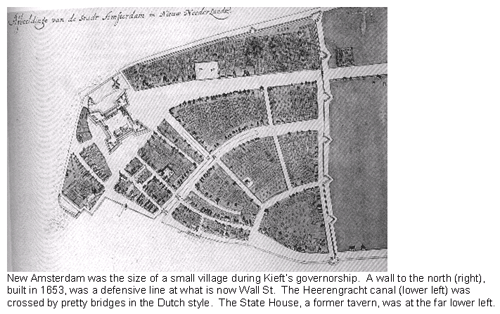
New Amsterdam was the size of a small village during Kieft’s governorship. A wall to the north (right), built in 1653, was a defensive line at what is now Wall St. The Heerengracht canal (lower left) was crossed by pretty bridges in the Dutch style. The State House, a former tavern, was at the far lower left.

The directors of the Dutch West India Company were unhappy. Largely due to their mismanagement, the New Netherlands project had never been profitable. The company’s efforts elsewhere, by contrast, had paid handsome returns. The directors were anxious to reduce administrative costs, chief among which was providing for defense of the colonies. Within this category were land “purchase” agreements with the Native American nations who historically had inhabited the lands. (These were payments for recognition of common rights to use of the land, in return for friendly relations and mutual defense.)

Kieft’s first plan to reduce costs was to raise taxes on the tribes living in the region. Long-time colonists warned him against this course, but he pursued it, to outright rejection by the local chiefs. Determined to force more deference, Kieft seized on the pretext of pigs stolen from the farm of David de Vries to send soldiers to raid a Raritan village. His forces killed several Raritan. When the band retaliated by burning down de Vries’ farmhouse and killing four of his employees, Kieft “put a price on their heads”. He offered bounty payment to rival Native American tribes for the heads of Raritan.(Later, colonists determined de Vries’ pigs were stolen by other Dutch colonists.)

In August 1641, Claes Swits, an elderly Swiss immigrant, was killed by a Weckquaesgeek of his long acquaintance.Swits ran a popular public house, frequented by Europeans and Native Americans. It was in what is today the Turtle Bay neighborhood of Manhattan [Site of the UN and the Chrysler Buildings]. The murder was said to be a matter of the native’s paying a “blood debt” for the murder of his uncle. He had been the sole survivor of an ambush of Weckquaesgeek traders by Europeans 15 years before. Kieft was determined to use the event as a pretext for a war of extermination against the tribe.

Kieft War

The colonists resisted Kieft’s Indian initiatives and he tried to use the Swits incident to build popular support for war. He created the Council of Twelve Men, the first popularly elected body in the New Netherlands colony, to advise him on retaliation. But, the council rejected Kieft’s proposal to massacre the Weckquaesgeek village if they refused to produce the murderer. The colonists had lived in peace with the Native Americans for nearly two decades, becoming friends, business partners, employees, employers, drinking buddies, and bed partners. The Council was alarmed about the predictable consequences of Kieft’s proposed crusade.

The Native Americans were far more numerous than the Europeans and could easily take reprisals against European life and property. As importantly, the Native Americans supplied the furs and pelts that were the economic lifeblood and the raison d’etre of the colony. With David de Vries as its President, the council sought to persuade Kieft away from war. They also began to advise on other matters, using the new Council as a means to press colonist interests with their corporate rulers. They called for establishing a permanent representative body to manage local affairs (as was traditional by then in the Netherlands). Kieft responded by dissolving the council and issuing a decree forbidding them to meet or assemble.

Kieft sent a punitive expedition to attack the fugitive’s village, but the militia got lost. He accepted the peace offerings of Weckquaesgeek elders.On 23 Feb 1643, two weeks after dismissing the Council, Kieft launched an attack  on camps of refugee Weckquaesgeek and Tappan. Expansionist Mahican and Mohawk in the North, armed with guns traded by the French and English, had driven them south the year before, where they sought protection from the Dutch. Kieft refused aid despite the company’s previous guarantees to the tribes to provide it. The refugees made camp at Communipaw (in today’s Jersey City) and Corlaers Hook (Lower East Side Manhattan). In the initial strike, since called the Pavonia Massacre, 129 Dutch soldiers descended on the camps and killed 120 Native Americans, including women and children. Having opposed the attack, de Vries described the events in his journal:

“Infants were torn form their mother’s breasts, and hacked to pieces in the presence of their parents, and pieces thrown into the fire and in the water, and other sucklings, being bound to small boards, were cut, stuck, and pierced, and miserably massacred in a manner to move a heart of stone. Some were thrown into the river, and when the fathers and mothers endeavored to save them, the soldiers would not let them come on land but made both parents and children drown…”

Historians differ on whether Kieft had directed the massacre or a more contained raid. All sources agree that he rewarded the soldiers for their deeds. The attacks united the Algonquian peoples in the surrounding areas against the Dutch to an extent not previously seen.  I

In the fall of 1643, a force of 1,500 natives invaded New Netherland, where they killed many, including Anne Hutchinson, the notable dissident preacher and sister of our ancestor Katherine Marbury SCOTT. They destroyed villages and farms, the work of two decades of settlement. In retaliation that winter, Dutch forces killed 500 Weckquaesgeek.  Because Hendrick was rewarded after the war and Kieft was disgraced, Hendrick probably did not participate in the initial massacre, though I found a record that he commanded an attack on the Weckquaesgeek.   As New Amsterdam became crowded with destitute refugees, the colony moved to open revolt against Kieft.

They flouted paying new taxes he ordered, and many people began to leave by ship. Kieft hired the military commander Underhill, who recruited militia on Long Island to go against the Natives there and in Connecticut. His forces killed more than 1,000 Natives. After their private letters requesting intervention by the directors of the Dutch West India Company and the Republic produced no result, the colonists banded together to formally petition for the removal of Kieft.

We sit here among thousands of wild and barbarian people, in whom neither consolation nor mercy can be found; we left our dear fatherland, and if God the Lord were not our comfort we would perish in our misery.

– Excerpt from the petition

For the next two years, the united tribes harassed settlers all across New Netherland. The sparse colonial forces were helpless to stop the attacks, but the natives were too spread out to mount more effective strikes. The two sides finally agreed to a truce when the last of the eleven united tribes joined in August of 1645.

Kieft’s War Outcome

The native attacks caused many Dutch settlers to return to Europe. The Dutch West India Company’s confidence in its ability to control its territory in the New World was shaken. Recalled in 1647 to the Netherlands to answer for his conduct, Kieft died in a shipwreck near Swansea, England before he reached the Netherlands. The company named Peter Stuyvesant as his successor, and he managed New Netherland until it was ceded to the British.

In proportion to the colonial population at the time, Kieft’s War had a high rate of fatalities: the militia and mercenary soldiers killed hundreds of natives. In 1642 New Amsterdam had a population of only about 800, estimated to be half Dutch.A relative peace lasted until the 1650s. Growing competition for resources contributed to the Esopus Wars.

Council of Nine

In May 1645 Peter Stuyvesant was selected by the Dutch West India Company to replace Willem Kieft. He arrived in New Amsterdam on 11 May 1647. Stuyvesant was a company man, selected to protect the interests of the WIC. The approach of ruling firmly for the profit of the WIC came in direct conflict with the New Netherlanders.   In August 1647 Stuyvesant authorized the election of eighteen men, from whom he chose the Board of Nine Select Men. Three were chosen from among the merchants, three from among the general citizens, and three from among the farmers. The board of Nine Men had some legislative authority—it was to be consulted in matters of taxation and had an advisory role in any civil matters. The board also functioned as a court, with three of the Nine Men, in regular rotation, forming a court of arbitration in civil cases. The court’s decisions were binding upon the parties, with an appeal to the Director and Council.

The Council of six included Vice Director Dincklage, La Montagne, and the schout-fiscal Hendrick Van Dyck, who was usually ignored by Stuyvesant and drank heavily. Stuyvesant retained the unpopular Van Tienhoven as secretary and George Baxter as secretary for English affairs. The Nine rejected Stuyvesant’s first request for money to repair the fort. They wanted a school and believed the fort was the Company’s business. The Indian chiefs called Stuyvesant the big sachem with the wooden leg and confirmed their peace treaty with him.

Within two years, Stuyvesant was in open conflict with not only the board of Nine Men, but also with the schout fiscal, Van Dyck, and the Vice-Director,Van Dinclage. Adrian Van der Donck, president of the Board of Nine Men started a journal documenting the conditions in the colony and the actions of the Director-General. Stuyvesant seized the journal and had Van der Donck jailed. On March 15, 1649, the Council, acting as a Court of Impeachment, released Van der Donck but expelled him from the board of Nine Men.

In Sep 1650, Stuyvesant attended a conference at Hartford and agreed to a border between New England and New Netherland that recognized territories according to who was living in them. The eastern portion of Long Island thus became part of New England. Because he had given up territory, Stuyvesant refused to speak of the agreement and delayed sending a copy to the States for years. The next year he would not allow fifty English settlers from New Haven passing through New Amsterdam to go to Delaware. Stuyvesant disregarded the Nine and refused to publish the order from the States General.

When Van Dyck joined Van Dincklage and Van der Donck in writing a long protest of the General’s policies in 1651, Stuyvesant expelled Van Dincklage from the Council and put him in the guardhouse for several days. Van Tienhoven, who was married and had three children, returned to America with a woman he had told he was single. Stuyvesant dismissed Van Dyck and made the hated Van Tienhoven sheriff. In 1652 the States ordered New Amsterdam to elect a municipal government. Stuyvesant was recalled, but the Amsterdam directors got this order revoked in May.

However, the protest letter was signed, and three of the signers sailed to Holland to deliver it to the States General. Upon his arrival in Holland, Van der Donck appeared before the States General “at great length and with great effect.” Stuyvesant sent Cornelis van Tienhoven, the secretary of the province, to present his side of the controversy to the Company. He took with him a large number of exculpatory documents. Under pressure from the States General, the Company agreed to establish “burgher government” in New Amsterdam.

With the introduction of burgher government, New Amsterdam officially became the
City of New Amsterdam, and had municipal officers and a municipal court of justice. The
Company order mandated that the citizens of New Amsterdam elect a schout, two burgomasters and five schepens. In addition to their work as legislators, these officials were to sit as a municipal Court of Justice. Stuyvesant complied with the order, but instead of allowing elections, he appointed the burgomasters and schepens and delegated the Company’s New Netherland schout to act for the city.

Peach Tree War

Hendrick is also notable for starting the Peach Tree War (1655-1660) by shooting a Native American woman picking peaches on his property.   The shooting was the pretext for the Susquehannock attack, but  the recapture of New Sweden by the Dutch at the direction of Peter Stuyvesant was the deeper cause of the war. The Indians were allies of the Swedes, who were their trading partner. The Indians wanted to take revenge on the Dutch for their lost trading partner who they thought of as being the weaker and needing Indian protection. Patroon Adriaen van der Donck is believed to have been killed at the outset of this war, so ironically Stuvesant’s actions directly led to his nemesis, van der Donck’s death, although Stuvesant did not connect his actions with the Swedes with the Indian attacks.

The Peach Tree War, is the name given to a large scale attack on the Dutch colony of Pavonia, across from New Amsterdam, and surrounding settlements by the Susquehannock Nation and allied Native American tribes on 15 Sep 1655.

In March 1638 colonists led by Peter Minuit and sailing for the Swedish crown landed in what is today Wilmington, Delaware proclaiming the west bank of the Delaware River to be “New Sweden.” The area had previously been claimed by both the English and the Dutch but, in part because of their inability to come to terms with the dominant power in the area, the Susquehannock Nation, neither had managed more than marginal occupation. As the founding (but dismissed) director-general of the Dutch West India Company’s New Netherland colony, Minuit was familiar with the terrain and with Native American customs and quickly “purchased” the land (really, the right to settle) from the Susquehannock. At the time, the Susquehannock, who had always been mistrustful of the Dutch due to their close alliance with the Susquehonnock’s rivals The Iroquois Confederation, had lost their English trading partner when the new colony of Maryland had forced out William Claiborne trading network centered on Kent Island. The Susquehannock quickly became New Sweden’s main customers for European and imported goods and the colony’s main suppliers of furs and pelts. In the process New Sweden became a protectorate and tributory of the Susquehonnock nation, which was perhaps the leading power on the Eastern seaboard at the time.

The English and the Dutch both rejected Sweden’s right to their colony, but the Dutch had greater reason for concern since they had already discovered that the Delaware River ran north to a latitude above their New Amsterdam colony.When Sweden opened the Second Northern War in the Baltic by attacking the Polish-Lithuanian Commonwealth, the Dutch moved to take advantage of the moment and sent an armed squadron of ships to seize New Sweden. A few weeks later, the Susquehannock retaliated with “The Peach War” assault on New Amsterdam and environs.

Peach Tree Attack

The Susquehannock’s dominant political and military position among the Native American Nations of the area allowed it to assemble an army of warriors from multiple allied and neighboring tribes. An army of six hundred warriors landed in New Amsterdam itself, wreaking havoc through the narrow streets of the town which was mostly undefended as the bulk of the garrison was in New Sweden. Homesteds at Pavonia (Jersey City), on Staten Island, throughout Manhattan and on the mainland above were raided and burned, forcing settlers there to abandon their farms.One hundred fifty hostages were taken and held at Paulus Hook (Jersey City) and ransomed a few weeks later by New Netherlands director-general Peter Stuyvesant who had led the assault on New Sweden but had hurried back to his capital on news of the attack. When later ransomed most of the hostages moved to New Amsterdam and the settlements on the west shore of the river were de-populated.

Impact and Aftermath of the Peach Tree War

Ironically, the Susquehannock’s retaliation may not have been understood as such by the New Amsterdam colony at the time, (although the records show that the Swedes of the Zuydt Rivier (Delaware Bay) did). The attack was motivated by the murder of a young Munsee woman who was killed by  Hendrick Van Dyke for stealing a peach from his tree, an incident that had raised inter-cultural tensions shortly before the attack.

The Indians killed more than forty colonists, capturing a hundred women and children, destroying 28 farms and killing or taking 600 cattle. Forty houses on Staten Island were burned down. By the end of October 1655  seventy captives were returned, but the rest were ransomed over the next two years. Stuyvesant came back and blamed Van Tienhoven for having attacked Indians after Van Dyck was wounded. The attorney Nicasius de Sille had been sent as a possible successor to Stuyvesant, and he was appointed to the Council. However, Stuyvesant and Van Tienhoven had three votes each while De Sille and La Montagne had only two each. De Sille wrote to his friend, the Company director Hans Bontemantel, that Stuyvesant should be replaced by an unselfish governor. Van Tienhoven was dismissed, and De Sille became sheriff.  After ransoming the hostages at Paulus Hook, Stuyvesant re-purchased the right to settle the area between the what is now the Hudson and Hackensack rivers from the Native Americans and established the fortified hamlet of Bergen.

One of the farms known to have been raided and burned was that of democratic reformer and champion of local self-rule Adriaen van der Donck (at the sight of present day Van Cortland Park in Bronx, NY). Records show Van der Donck to have been alive in August and dead by the following January and indicate that there was some sort of inquiry into the sacking of his home in the raids. As a consequence, it has been speculated that he may have died in, or as a consequence of the “war,” although there is no definitive record of his manner of death. If so, this would be ironic both because Van der Donck was a respectful pioneer in Native American ethnography and linguistics and because he was the political nemesis of director-general Stuyvesant (who led the capture of New Sweden in the first place).

Children

1. Ryckje Ulrica Van DYCK (see Jan DARETH‘s page)

2. Dr. Cornelis Van Dyck

Cornelis’ first wife Elisabeth Laekens was born about. 1638 in New York, and died before 1682 in Beaverwyck (Albany), Albany County, New York

Cornelis’ second wife Elizabeth Beck (Beeck)  was born about 1636 in Albany, Albany County, New York. Her parents were Pieter Beech and Aaltje Wilkins. She was the widow of [__?__] Salisbury. After Cornelis died, she married a third time.  Elizabeth died 1701 in New York.

Cornelis received a surgeon’s certificate in 1661 from Dr. Jacob D’Hinse, with whom he studied for four years. Cornelis is referred to by many genealogists as the founder of the Albany or Up-State branch of the family. He came from New Amsterdam to Beaverwyck at the early age of fifteen; there he married, raised a family, and continued to reside until the end of his days.

About 1663, he married Elizabeth Lakens. The marriage produced at least two sons before her death. In April 1682, he married the widow Elizabeth Beeck Salisbury at the New York City Dutch Reformed church. That marriage produced at least two daughters who were baptized in the Albany Dutch church where he was a member

His basic education came under Adrian Janse Van Ilpendam. Then he was trained in medical practice. By 1661, he had served a four year apprenticeship under Jacob D’Hinsse – the surgeon at Beverwyck and husband of Van Dyck’s sister.

Although only twenty-three-years-old, in 1665 Cornelis Van Dyck was accepting his own apprentice surgeons. Dr. Van Dyck

He was also was known as a merchant and magistrate. He served for many years as the physician for the almshouse. By 1679, his house was an Albany landmark. He was active on the Albany real estate market and also acquired acreage beyond the stockade.

Cornelis Van Dyck died in 1686 and his widow re-married. His son succeeded him in medical practice in Albany

3. Lydia Van Dyck

Lydia’s husband Nicolaas de Meyer  was born 10 Jul 1635 in Hamburg Germany.  He is known to have been married twice, once to Lydia Van Dyck and once to Sarah Kellnar.   Nicolaas  died 19 Mar 1690/91 in New York City.

He was  one of the most enterprising traders of the province.   At one time, DeMayer was described as “the second wealthiest man in the New Netherlands” He and Lydia were members of the Reformed Church of Harlem. Their 1655 wedding was a most notable event. The Van Dyck mansion, on Broadway, was brilliantly lighted and filled with the elite of the city

Nicholas was the 9th Mayor of New York  (Wikipedia) serving from 1676 to 1677.

Due to the various means of spelling his name, and the nonstandard bookkeeping practices of the time, DeMayer’s name has been found in many forms:

  • Nicholaes DeMeyer
  • Nicholas de Meyer
  • Nicholas de Meyer Van Holstein
  • Nicholas Meyer Van Hamborg
  • Nicholas DeMayer
  • Nicholas Meyer
  • Nicholas DeMeirt
  • Nicholas Demeyrt
  • N.D. Meijer

Will of Nicholas De Meyer,

Page 355.–NICHOLAS DE MEYER. “In the name of God, Amen. I, Nicholas De Meyer, merchant in New York, being in good health, do make and declare this to be my last will and testament. I leave to Wilhelminus De Meyer in full of consideration that he is my eldest son. I leave to my wife Sarah, late widow of John Weekstein, all that I have signed to in our marriage contract. I leave to my 5 children, Wilhelminus, Henricus, Anna Catharine, Deborah and Elizabeth, all the rest of my estate that I have or in England or Holland or elsewhere. Makes his son Henricus, and “my son-in-law Thomas Crundell, husband of my daughter Deborah,” and my trusty friend Jacob De Key, executors. Proved before Governor Richard Ingoldsby, March 30, 1692, by oaths of Samuel Staats and Jacobus Provost, witnesses.

Nicholas’ house and lot is now No. 41, 43, 45, Stone Street. [Google Satellite View] He also owned a windmill and lot, which are very conspicuous in early maps and views of the city, and stood very near the site of the Baptist Church on Oliver street [now Mariner’s Temple is a Baptist church at 3 Henry Street, a mile northeast of Nicholas’ house now in the Five Points Neighborhood]. The Jews burying ground was bounded on one side by it. The daughter Anna Catherine married Jan Williense Neering of New Castle, Delaware, and afterwards John Williams. Elizabeth married Philip Schuyler. Deborah married Thomas Crundell, and afterwards Thomas Tyndall, and afterwards Wm. Anderson. He also owned a lot on Queen Street (now Pearl). Platt Street now occupies this lot.–W. S. P.]

4. Jannetje Van Dyck

Jannetje’s husband Johannes Coely was born about 1645 in The City of London, London, England.  His will was dated 22 January 1688 and proved 22 March 1709 in New York City.

Johannes was a blacksmith.  They had eleven children, at least six of whom grew to marry.


Other Children

Williamje Van Dyck

Sometimes another daughter, Williamje Van Dyck is attributed to Hendrick and his second wife  Magdalena Jacobse Rysens.  Williamje Van Dyck was born 1681 Albany, NY and married Christiansen Barentsen van Horn.

Actually, Williamje was the daughter of Hendrick’s nephew, son of his brother Jans.   Her real parents were Hendrick Jans Van Dyck b. 02 Jul 1653, New Utrecht, Long Island, New York; d. Aft. 1701, Bucks County, Pennsylvania; and Jannetje Hermanse Van Borklow b. Abt. 1655 who were married 29 Feb 1679/80,

Sources:

http://familytreemaker.genealogy.com/users/o/l/s/Patricia-A-Olson/GENE7-0021.html#CHILD134219267

http://familytreemaker.genealogy.com/users/f/l/a/Carl-E-Flanagan/PDFGENE15.pdf

http://reckinger.tripod.com/family/pafg200.htm#11166

http://www.san.beck.org/11-5-Colonies1643-64.html#4

http://www.courts.state.ny.us/history/essay/Illustrated%20Essay%20with%20edits%20and%20endnotes.pdf

http://jerrievanhorn.com/VanhornWebsite.pdf

http://freepages.genealogy.rootsweb.ancestry.com/~rclarke/page1/coely2.htm
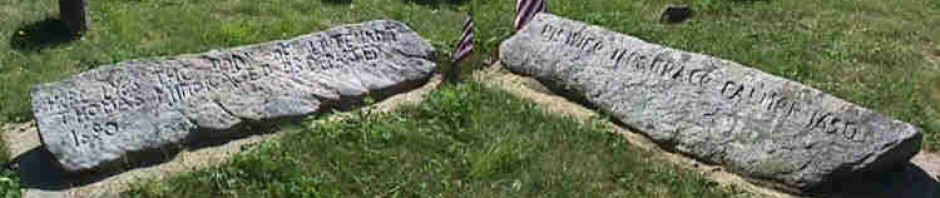
Posted in 13th Generation, Immigrant - Continent, Line - Shaw, Storied | Tagged , , , , | 15 Comments

Jan Dareth

Jan DARETH (1636 – 1669) was Alex’s 10th Grandfather; one of 2,048 in this generation of the Shaw line.

Jan Dareth was born about 1636 in Utrecht, Holland.  He married Ryckje Ulrica Van DYCK after 1 Nov 1654 at the Reformed Dutch Church in New Amsterdam. In 1657 he bought a house and lot in Beverwyck, where he became a permanent resident.  Jan died before 10 May 1669 in Beaverwyck (Albany), NY.

Ryckje (Ryckie) Ulrica Van Dyck was born about 1636 in Utrecht, Holland. Her parents were Hendrick Thomasse Van DYCK and Divertje Cornelise BOTJAGERS. She sailed with her parents from Amsterdam, 25 May 1640, in the ship ‘WATERHONDT‘, her father bearing a commission of ‘Ensign Commandant’ in the service of The Dutch West India Company, and accompanied by a company of foot-soldiers to reinforce the garrison of Fort Amsterdam.  After Jan died, she married Jacob de Hinsse in 1671. De Hinsse did not live too long either and before too long, she married Jacob Staats and had two children by him. Ryckje died in Sep 1709.

Children of Jan and Ryckje:

Name Born Married Departed
1 Jannetje De RAEDT (Dret) 1655 in  Phillipsburg, Westchester, New York. Johannes Paulusen JUROKSEN (Johannes Paulus Jurcks)
9 Jul 1681 at the (Phillips Manor, Westchester NY) or  Reformed Dutch Church, New York, NY
1692 in New

Jan Dareth was a gunstock maker, trader and interpreter.

Power of attorney from Jan Dareth to Cornelis Jacobsen van Oostsanen and Wilhem van Dyck to sell his right to an annuity

This day, the 17th of September 1661, appeared before me, Dirck van Schelluyne, notary public, and before the hereinafter named witnesses, Mr Jan Dareth, trader here in Beverwyck, and declared that he hereby constituted and appointed Cornelis Jacobszvan Oostsanen, also a trader here, who proposes to depart for Holland, and Mr Wilhem van Dyck,1 dwelling at Vuytrecht, jointly and severally his attorneys especially to sell to the best advantage of the principal to the Honorable Wilhelm Vincent, lord of Wittenhorst, etc., a certain life-annuity or vicarage attached to the manor of Nieuwenroode,2 amounting to eighty guilders a year, which the principal holds according to the proofs thereof in

1 Wilhem van Dyck was probably a brother , of Jan Dareth’s wife, Ryckje van Dyck, who in the register of marriages of the Reformed Dutch Church of New York, under date of November I, 1654, is entered as from Uytrecht, the same as Dareth himself.  Ryckje’s father was Hendrick van Dyck, the schout-fiscal of New York, who arrived in 1640, and who was also from Utrecht.

Lijffrente off vicarye gefondeert op de Heerlicheyt van Nicuwenroode. Nieuwenroode refers to the manor of Nijenrcde, near Rreukelen, in the province of Utrecht, which on the death of Beernt van den Bongaard, in October 1641, was left to his widow Wilhelmina van Bronkhorst, she to have the use fruict thereof as long as she remained unmarried. On her marriage to Willem Vincent, baron of Wittenhorst, the estate reverted to Anna van den Bongaard, the sister of the said Beernt. The castle, which was accounted one of the finest in the province, was destroyed by the French in 1673, but afterwards rebuilt by Johan Oritt. See A. J. van der Aa. Aardrijkskundig Woordenbock der Nederlanden, 8:201-3; and picture of the castle in Robide van der Aa,Oud Nederland.

While the term vicarye indicates that the annuity must have grown out of an endowment for religious purposes, probably in the form of a benefice in connection with the manor chapel, it is not to be supposed that Jan Dareth’s father ever performed any religious functions, as all vicarages in the province of Utrecht, except as a designation of certain kinds of church property, ceased to exist in 1580, when the exercise of the Roman Catholic religion was prohibited. Upon the secularization of this church property, the provincial states as a rule appropriated one-third of the income of the former vicarages to the maintenance of ministers, sehoolmasters and sextons and allowed the remaining two-thirds to be paid out to such beneficiaries as were presented to them, subject to their approval, by the donors, or their successors, the collators so-called. In cases where the benefice consisted of a life interest in land, this land was generally sold and an annuity equivalent to the income from the land was paid instead. The annuity mentioned in the above power of attorney was probably of that nature.

Jan Dareth House Purchase 1657

x

Jan Dareth 1659

I wonder what prevented Jan from returning to Holland like he planned.

Jan Dareth Deed

La Montagne, Clerk at Fort Orange.

Appeared before me Johannes La Montagne, in the service of, etc., in the presence of the honorable Philip Pieterse Schuyler and Adriaen Gerritse [Papendorp,] commissaries of the same jurisdiction, the honorable Jan Dareth, inhabitant of the aforesaid place, who declares that he has granted and conveyed as by these presents he does grant and convey in real and actual possession to and for the behoof of Jacob Joosten Van Covelens, his heirs or assigns, a lot for a house and a garden lying in the village of Beverwyck, to the east of the road, length, six rods, to the west, Tomas Pouwel, length, six rods, to the south, the plain, breadth three rods, according to the patent given to him, the grantor, by the Heer director general and council of New Netherland, of date the 5th February, A.D., 1660; and the grantor, promises to free said lot from all demands, claims, or pretensions which may hereafter arise, on pledge of his person and estate, real and personal, present and future, submitting the same to the authority of all laws and judges.

Done in Fort Orange the 2d of February, 1662.

Jan Dareth.
Philip Pietersen,
Andriaen Gerritsen.

Jan Dareth Interpreter 2

xx

Jan Dareth Interpreter

Acknowledged before me, Johannes Provoost, Secretary.

Appeared before me Johannes Provoost, secretary of the jurisdiction of Albany, in the presence of Capt. John Manning, (Sheriff of New York) one of the Mohican Indians, named Wattawit, owner of a certain parcel of land lying behind Kinderhook, who declared in the presence of Jan Dareth, interpreter, that he had sold, granted and conveyed to Evert Luycasse [Backer],1 as by these presents he does [grant and convey] his aforesaid land lying on the east side of the kil, being the half of the middle piece; the other half he declared he gave to Volckert Janse [Douw], and had presented it to him as a token of his friendship and in satisfaction of an old debt for maize ; also the grantor waives his [claim] to said middle piece on the east of the kil, declaring Evert Luycasse and Volckert Janse to be the rightful owners of the same, and acknowledges that he has had of Evert Luycasse perfect satisfaction for his part, and [promising] to free it from all claims and demands which hereafter may be [made against the same]. Done in Fort Albany the 6th of May, A. D. 1665, old style.

This is the mark of Wattawit — —** with his own hand set.
Musquaemseeck *^V3? ‘ut mark with his own

hand set, as witness.
Oramp Q his mark made with his own hand set, as witness.

Jan Dareth.
John Manning.
Acknowledged before me,

Jan Dareth Deed – June 1670 Albany

Sources:

http://trees.ancestry.com/tree/6864028/person/-411744726

http://www.familysearch.org/Eng/Search/PRF/individual_record.asp?recid=1331888872

http://familytreemaker.genealogy.com/users/b/u/r/Alexandra-Burgener/WEBSITE-0001/UHP-0522.html

History bulletin, Issue 10 By New York State Library

Early records of the city and county of Albany and colony of Resselaerswyck By Albany County (N.Y.)

Collections on the history of Albany: from its discovery to the present time edited by Joel Munsell

Beverwijck: a Dutch village on the American frontier, 1652-1664 By Janny Venema

Early records of the city and county of Albany: and colony of Resselaerswyck By Albany County (N.Y.)

Posted in 12th Generation, Immigrant - Continent, Line - Shaw | Tagged , , | 4 Comments

Jan Janse

Jan JANSE (1603 – ) was Alex’s 11th Grandfather; one of 4,096 in this generation of the Shaw line.

Pijnacker Coat of Arms

Jan Janse was born about 1603 in Pijnacker, Zuid Holland, Netherlands. His parents were Jan GOOSENS and Elbelken HERMANS.  Jan died in New Netherlands.

Children of Jan and [__?__]

Name Born Married Departed
1. Christina Styntie JANSE 1632
probably in Holland
Paulus JURCKSE
1652
New York
1708 in New York

Many genealogies repeat that Christina was born in Esopus Town, Ulster, New York.  However, Esopus (now Kingston) was not settled until 1651.

Jan’s brother also emigrated. Auke Jans Van Nuys was born about 1621, Holland,Netherlands He died about 1698, Flatbush,Kings Co,,N.Y. He married first Magdalena Pieters. He married second : Geertie Gysbrechts Bef 17 JUL 1681, Probably, Long Island, N.Y.

Sources:

http://www.geni.com/genealogy/people/Jan-Janse/6000000000128971418

http://trees.ancestry.com/tree/11896024/person/10603123?ssrc=

http://www.ristenbatt.com/genealogy/html/d0013/g0001390.htm#I1994

Posted in 13th Generation, Immigrant - Continent, Line - Shaw | Tagged | 3 Comments

Paulus Jurckse

Paulus  JURCKSE (Yurckse) (1630 – 1682) was Alex’s 10th Grandfather; one of 2,048 in this generation of the Shaw line.

Paulus Jurckse (Yurckse) was born about 1630 in Texel, Noord-Holland, Netherlands. He may have only departed from Texel because that’s where all boats to the “New Land” left from in those days. He probably was born in Friesland, a northern province in the Netherlands.  His parents were Goris JURCKXEN and [__?__]. The Jurckse family originated from Texel, the largest island in the West Frisian Islands across the Waddensee from the mainland of Holland. Paulus was seen in Rensselaerwyck, New York, (on the east bank of the Hudson River, south of Albany) on 13 Aug 1642.  Paulus was a servant for the  Maichael Jansz family for several years before coming to America.  He married a daughter of the Jansz family Christina (Syntie) JANSE in 1652 in Esopus, Ulster, New York.   He certainly lived in Esopus in 1658 and later, Albany.   Paulus died in 1683 in Kings, New York, New York.

Christina Styntie Janse was born in 1632 probably in Holland.  Many genealogies state she was born in Esopus, Ulster, New York, but Esopus was not settled until 1651. Her parents were Jan JANSE and [__?__]. In 1686 Styntie is listed in Reformed Dutch Church NY census as a widow living in a Poor House on S. Broad Street.   Christina died in 1708 in New York

Children of Paulus and Christina:

Name Born Married Departed
1. Mynno Jemima Jurckxen c. 1655
Albany, NY
Willem Hoppe
29 Nov 1679 Dutch Reformed Church, NY, NY
.
Deacon Abraham de Veaux
c. 1688
1733
Philipsburg, NY
2. Johannes Paulusen JUROSEN
(Johannes Paulus Jurcks)
c.  1658 Esopus (Kingston?), Ulster, New York. Jannetje De RAEDT (DRET)
9 Jul 1681
(Phillips Manor, Westchester NY) or  Reformed Dutch Church, New York, NY
.
Antje Jochems Van Wert
1697 Haverstraw, Orange, NY
c. 1701
Dobbs Ferry, (or Wysquaqua) Westchester, NY.
3. Antje Jurckse c. 1662
Albany, NY
Matthys Adolphus Hoppe
2 May 1683 Bergen, NJ
12 Feb 1718
New York
4. Hilletje Jurcks Jurckxen c. 1664
Kingston, Ulster, New York
Lubbert Westervelt
14 Mar 1679/80
Bergen, NJ
.
Jan Loots
1692
New Jersey
5. Cornelis Jurckse c. 1666
N Albanien, NY
Janeltie (Jannetje) Andries van Breuckelen
12 Nov 1696
New Jersey
6. Wyntje Jurckse c. 1672
Kingston, Ulster, New York
Casper Melcherts Springsteen
9 Aug 1693 Dutch Reform Church, NY, NY
12 Feb 1718
New York
7. Dirk (Dirik) Jurcks Jurckxen c. 1674
Bergen, NJ
Fytje Hartmanne Vreeland
30 Jul 1699
Bergen, NJ
8. Christina Jurckse c. 1677
Bergen, NJ
Johannes Marynus
c. 1703
Hackensack, NJ
1758
New York, NY
9. Eegie (Jurckse) Yurckse c. 1677
Bergen, NJ
Jacob Jacobs van Winkel
11 APR 1703 in Acquackanonk (Passaic Aft 1837), Bergen, NJ

Paulis and Christina had 5 children, 3 girls and 2 boys  They were Johannis (1653), Mynno Jemima (1655), Antje (1657), Cornelius (1662), and Wyntie (1664).

From Albany the family moved to New Jersey, and then back to Haverstraw area and across the Hudson into the Philipsburgh area.

Paulis was at the christening of his grandchildren on January 1681 and April 1682.

In August of 1682, Paulis and Styntie are listed as members of the RDC.

Paulus was listed as a Freeholder in NYC on October 22, 1683 and died shortly thereafter,

It is believed that Janneke Jurckse (Yurckse) who married Laurens Ackerman is the aunt of Paulus Yurckse.

The spelling of the Jurcksen name was eventually changed in English records, to Yorks/Yerks/Yerxa/Yerex, all lines of which exist today. The family settled primarily in the Tarrytown area, with many of them attending the Old Dutch Church at Sleepy Hollow and many buried in that cemetary. The Reformed Dutch Church NY census of 1686 has Styntie,widow of Paulus Jurxen, living at the Deacons House for the Poor on Broad Street in NY City. There are several Court Records for Albany, Rensselaerwyck and Schenectady for Paulis and Styntie in the 1660s and 1670s. Descendents of the Yerks line still reside in the Tarrytown/Ossining area of NY. The family with the Yerxa name were Loyalists who moved to Canada after the Revolutionary War and then back into the US through Eastern Maine. Some of the Yorks line moved west across the Hudson to Haverstraw and later into Ulster County, then migrated, after the Civil War, to Ohio and Michigan

Children

1. Mynno Gemima Jurckxen

Mynno was christened in the Albany Dutch Reform Church, Albany, NY.

Mynno’s first husband William Hoppen  was baptized 29 Mar 1654 in New Amsterdam. His parents were Andries Willemszen Hoppe and Geertje Hendricks.  William died about 1690.

Mynno and William had five children:  Christina (1681), Gertrude (1682), Beletie (1684),  Andrew (1686), and   Paulis (1687).They lived in Hackensack, NJ. William died in 1687 and Mynno married Abraham DeVoe in 1690.

Mynno’s second husband Abraham DeVoe was born in 11 Jun 1668 in Mannheim, Baden, Germany. His parents were Nichalas DeVaux and Maria See. They arrived in New Netherlands in 1674. Mynno and Abraham also had five children: Maritje (1691), Wyntie (1696), Rachel (1698), Susanna (1701), and Johannes (1700).

2. Johannes Paulusen JUROSEN (See his page)

3. Antje (Anna) Jurckse

Antje’s husband Matthys Adolphus Hoppen  was born on March 3, 1658 in New Amsterdam. He died 1715. They were members of the RDCNY of Hackensack. They had five children: Andries, Christina, Lea, Rachel, and Johannes.

4. Hilletje Jurcks Jurckxen

I think Hilletje’s marriage information may belong to a different woman.

Hilletje’s first husband Lubbert Westervelt was born 1660 in Meppel, Netherlands. His parents were Lubbert Westervelt, The Immigrant and Gesie Roelofse. He married Hilletje Pouluse on Mar 14, 1679/80 in Bergen, NJ. Lubbert died about 1694 in Hackensack, Bergen, NJ.  Some sources say that Hilletje’s father was Peiter Pouluse.  I haven’t found details of Lubbert from a Jurckse perspective, so perhaps this is a different Hilletje.

This Hilletje’s married second Jan Loots   intentions Oct 12 1695 Hackenskack.   Jan Loots was from Norwich England

This Hilletje’s parents were Paulus Pietersen, b ca 1630 Merven, Stift Cologne and was buried at Bergen December 18, 1702. He married (int) Sept 1 1658 NewAmsterdam Trijntje Martens, b ca 1632 at Aken in Gulickerland. Treyntje was buried March 5, 1702 at Bergen.

5. Cornelis Jurckse

Cornelis’ wife Janeltie (Jannetje) Andries van Breuckelen was born 1667 in Albany, Albany, New York.

6. Wyntje Jurckse

Wyntje’s husband Casper (Ghaspar) Melcherts Springsteen was born about 1664 in Boswycj, Long Island, NY Casper died 21 May 1729 probably in Brooklyn, NY.

7. Dirk (Dirik) Jurcks Jurckxen

Dirk’s wife Fytje Hartmanne Vreeland was born 21 Feb 1683 in Aquackanonk, Passaic, New Jersey.  Her parents ere Hartman Vreeland and Metje Dirckse Braecke.

8. Christina Jurckse

Christina’s husband Johannes Marynus was born 1675 in Bergenfield, Bergen, New Jersey.

9. Eegie (Jurckse) Yurckse

Eegie’s husband Jacob Jacobs van Winkel was baptized 20 SEP 1676 Bergen,Bergen,NJ. His parents were Jacob Jacobse Van Winkle b: Bef 16 OCT 1650 in New Albany, Albany, New York c: 16 OCT 1650 in Reformed Dutch Church New Amsterdam and Aeltje Daniels b: 1655

Sources:

http://trees.ancestry.com/owt/person.aspx?pid=10436972&st=1

http://trees.ancestry.com/tree/6864028/person/-740815677

http://familytreemaker.genealogy.com/users/e/n/f/Jerry-A-Enfield-Richmond/GENE1-0025.html

http://www.familysearch.org/Eng/Search/PRF/individual_record.asp?recid=1331888865

http://genforum.genealogy.com/yerex/messages/78.html

http://wc.rootsweb.ancestry.com/cgi-bin/igm.cgi?op=GET&db=pikepaf1&id=I2559

http://familytreemaker.genealogy.com/users/m/c/g/Judith-L-Mcgregor/WEBSITE-0001/UHP-0123.html

http://listsearches.rootsweb.com/th/read/Dutch-Colonies/2001-09/1000744543

http://archiver.rootsweb.ancestry.com/th/read/Dutch-Colonies/2001-09/1000732800

http://archiver.rootsweb.ancestry.com/th/read/Dutch-Colonies/2001-09/1000744543

Posted in 12th Generation, Immigrant - Continent, Line - Shaw | Tagged | 14 Comments

Johannes Paulusen Juroksen

Johannes Paulusen JUROKSEN (1658 – 1701) was Alex’s 9th Grandfather; one of 1,024 in this generation of the Shaw line.

Johannes Paulusen Juroksen (Johannes Paulus Jurcks)  was born about 1658 in Esopus (today’s Kingston), Ulster, New York. His parents were Paulus JURCKSE (Yurckse) and  Christina Styntie JANSE.  He came to New York in 1642 on a ship named Den Houttuyn.    He married Jannetje DE RAEDT (DRET) 9 Jul 1681 at the (Phillips Manor, Westchester NY) or  Reformed Dutch Church, New York, NY . After Jannetje died, he married Antje Jochems Van Wert in 1697 in Haverstraw, Orange, New York.  Johannes died in  1701 in Dobbs Ferry, Westchester, NY.

A view of The Strand in the old town of Rondout at night under a full moon

Jannetje De Raedt (Dret) was born in 1655 in  Phillipsburg, Westchester, New York.  Her parents were Jan DARETH and Ryckie Ulrica Van DYCK.   Jannetje died in 1692 in New York.

Antje Jochems Van Wert was born about 1674 in Long Island, Suffolk, New York.  Her parents were Jochem Van Wert Wouterszen and Christina Styntje Jans.  After Johannes died, she married Samuel Conkling on May 4, 1701 and had a daughter Rachel Conklin b. 1702 in Haverstraw, Rockland, New York. Antje died about 1709 in Phillipsburg, Westchester, New York.

Children of Johannes and Jannetje:

Name Born Married Departed
1 Paulus Jurckse 26 Apr 1682
Dobbs Ferry, Westchester, NY
Tryntie (Triente, Theuntje) Crom
27 Dec 1719
1747
Rockland County, NY
2. Greitje (Margrietje) Jurckse 12 Mar 1684 David Abrams Ackerman
20 Sep 1707
Hackensack, Bergen, NJ
1760
Tarrytown, NY
3. Johannes Jurckse 1686
Haverstraw, Orange, New York
 1686
4. Jurck Jurckse 1687
Wysquaqua, New York
 1687
5. William Jurkse 1690 Died young
6. Harmen Jurckse 12 Jan 1692
Wysquaqua (now Dobbs Ferry), Dobbs Ferry, NY
Maritje Storm
15 May 1714
Tarrytown, NY
15 May 1769
Phillipsburg, Westchester, NY
7. Maritje Jurckse (Maraitje Jurkse) 1693 in Haverstraw, Orange, NY Robert WILLEMS
28 Mar 1714 in Philipsburg (Tarrytown), Westchester, NY
before 28 Aug 1723

Children of Johannes and Antje Jochems Van Wert

Name Born Married Departed
8. Jacobus Jurckse 1695
Haverstraw, Rockland, New York
Elizabeth Courten
5 Sep 1724
Haverstraw, Rockland, New York
9. Johannis Jurckse bapt.
24 Nov 1700
Haverstraw, Rockland, NY
Rachel Willems
(Daughter of Robert WILLEMZE)
5 Oct 1723
Tarrytown, NY
bef. 1750
Haverstraw, NY

The village of Dobbs Ferry takes its name from  the John Dobbs family,which operated a ferry on the east side of the Hudson River. Ferry operation began with either John in 1698 or his son William, in 1730, departing from an Indian village called Wysquaqua, later Dobbs Ferry.  In either case, the route of Dobbs Ferry across the Hudson River is recognized as one of the earliest of the Hudson ferry routes.

Dobbs Ferry

The Jurckse family moved from Wysquaqua to Haverstraw about 1693.

Children

1. Paulus Jurkse

Paulus’ wife Tryntie (Triente, Theuntje) Crom  was born 1682 in Flatbush, Livingston, New York.  Her parents were [__?__] and Lena Ariaens Smidt. Tryntie first married 24 Jun 1713 in Tappan, New York to Hendrick Hogencamp b. 3 Mar 1682 in Bushwick, Long Island, New York; d. 1716 in Tappan, Rockland, New York.   Tryntie died in 1715

2. Greitje (Margrietje) Jurkse

Greitje’s husband David Abrams Ackerman was born May 1684.  His parents were David Ackerman and Aeltie Van Laer.  New Amsterdam Baptisms – 1684 May 11; Abraham Ackerman, Aeltie Van Laer; David; Laurens Ackerman, Anna Maria Deckers

6. Harmen Jurckse

Witnesses to Harmen’s baptism were were Jan Hermanszen and Lysbeth van Gilder.

Harmen’s wife Maritje Storm was born in 1693 in Philipsburgh, Westchester, New York. Her parents were David Storm and Engeltje Van Dyke. Martije died 1771 in Tarrytown, Westchester, New York,

7. Maritje Jurckse (Maraitje Jurkse) (See Robert WILLEMS‘ page)

8. Jacobus Jurckse

Jacobus’ wife Elizabeth Courten was born 1703 in Haverstraw, Rockland, New York. Her parents were Harmon Courten and [__?__]. She was the widow of Ary Crom.

His last name became Yorcksen. They lived in Rockland County, NY. They had 2 children: Johannis (John Yourks) and Harmen.

9. Johannis Jurckse

Witnesses to Johannis’ baptism were Abraham Devoe and Gemima Juckes Devoe

Johannis’s wife Rachel Wilems was born 24 Nov 1700 in Philipsburg, New York.   Her parents were Robert WILLEMZE and Greesje CERANT.  Rachel died 30 Aug 1761 in Dutchess Co. NY.

Joannis and Rachel were godparents to Sybout Crancheyt and Jesyntie Gardenier’s daughter Rachel; baptized 23 Apr 1723 in the Sleepy Hollow DRC.

Sources:

http://trees.ancestry.com/owt/person.aspx?pid=28105238

http://trees.ancestry.com/tree/6864028/person/-740815677

http://www.familysearch.org/Eng/Search/PRF/individual_record.asp?recid=1331888865

http://familytreemaker.genealogy.com/users/b/u/r/Alexandra-Burgener/WEBSITE-0001/UHP-0522.html

http://aleph0.clarku.edu/~djoyce/gen/report/rr08/rr08_287.htm#P21970

http://www.ancestralcurios.com/tmp_sleepy_hollow_baptisms.htm

Posted in 11th Generation, Line - Shaw | Tagged , | 6 Comments

William Washburne

William WASHBURNE (1601 – 1658) was Alex’s 12th Grandfather; one of 8,192 in this generation of the Shaw line.

William Washburn Coat of Arms

William Washburn was born in 9 Nov 1601 in Bengeworth, Worcestershire, England and was christened at the parish church of St. Peter, Bengeworth, Wickenford Parish, Worchestershire, England. His parents were John WASHBOURNE and Martha TIMBRELL.  He married Jane NICHOLS  in 1621 in Worcester, Worcestershire, England.  Evidence includes the will of William’s son John which mentions “my uncle Isaac Nichols.”

It is often reported that William  married Jane Whitehead.   In 1653 he purchased land in Oyster Bay on Long Island. Dan Whitehead was one of the other purchasers and there is evidence that he was the brother-in-law of William Washburn giving some to believe that his wife’s name was Jane Whitehead.

He was first found in 1647 in Stratford, Connecticut, where he was one of the thirty five men who accepted the invitation of the first seventeen settlers to join them. Later, he removed from Stratford to Hempstead, Long Island as his name appears as a “free holder”  in 1647.  William died 30 Oct 1658 in Hempstead, Queens, NY.

Washburn Map

Jane Whitehead was born in 1603 in Bengeworth, Worcestershire,  England. Jane died in
1713 in New York.

Jane Nichols was born 3 Nov 1603 in Bengeworth, Worcester, England. Her parents were Francis NICHOLS and Frances WIMARKE. Jane died 16 Feb 1667 in Hempstead, Long Island, New York.

Children of William and Jane:

Name Born Married Departed
1 Sarah WASHBURNE 26 Mar 1626
Bengeworth, Worchester, England
Robert WILLIAMS
c. 1646
1693 or 1695
Queens County, Long Island, NY
2. John Washburn 1627
Bengeworth, Worchester, England
Mary Butler
7 Jun 1655 Stratford, Fairfield, CT
30 Oct 1658
Hempstead, NY
3. Mary Washburn 1629 Bengeworth, Worchester, England. Richard Willitts
1649 Hempstead, Nassau, NY
17 Nov 1713 Hempstead, Long Island, NY
4. Agnes Washborne? (See below) 1631 Bengeworth, Wickenford Parish, Worchestershire, England. Robert Jackson
c. 1647
1659
5. Martha Washburn 1631 1631
6. Phebe Washburn 1633 John Ashman
1654 Hempstead, Nassau, NY
1664
New York
7. Hope Washborne 1636 Mary Stiles 1696
8. Martha Washbourne 18 Dec 1637
Bengeworth, Worcestershire, England
Edmund Titus
(Son of Robert TITUS)
bef 29 Sep 1657 Westbury, NY
17 Feb 1727 Westbury, NY
9. William Washborne 1641 1731
10. Patience Washborne 1643
Bengeworth Par Evesham, Worcester, England
11. Hester Washborne 1645
12. Margaret Washborne? (See below) 1646
Stratford, Fairfield, CT
Isaac Nichols??
25 Feb 1646 or 1656
Strafford, CT
1675
Stratford, CT

The proof of his lineage was supported by the research of the eminent British family historian, Sir John Bernard Burke (1814-1892) who listed OUR William Washbourne as the second son. He was christened on 09 November 1601 in St. Peter Church, Bengeworth, England. He became heir in his father’s will on 04 Aug. 1624 in Bengeworth, Worcestershire, England. Strangely, William Wahbourne was NOT named in his mother’s will dated 29 Sept 1625.

In December 1637 he was still living in Bengeworth, Worcestershire, England where is daughter Martha was baptised at St. Peter’s. He moved to London sometime after this date. He was living in London the decade before 1647. He owned property in London, England at the time of his death in 1658 while he was a resident on Long Island Sound.

William Washbourne left London, England and emigrated to America before 1647 to first live in Massachusetts and then moved to Connecticut by 1647. William probably first came to live with his brother, John Washbourne VIII who was living in Plymouth Colony. He had land recorded as Proprietor of Oyster Bay in 1647 in Oyster Bay, Long Island, New York.

According to Long Island historian, Mary Bunker, “William and Jane Washbourne were among the earliest settlers of the Town of Hempstead.” Their daughter Mary married Richard Willett on Long Island before 1650. Land records indicate the Washburn/Washbourne family were on Long Island by 1647.

Hempstead has been previously settled by a colony of English from Wethersfield and Stamford, Connecticut.  The town was first settled around 1644 following the establishment of a treaty between English colonists, John Carman and Robert Fordham, and the Indians in 1643. Although the settlers were from the English colony ofConnecticut, a patent was issued by New Amsterdam after the settlers had purchased land from the local natives. This transaction can be seen in a mural in the Hempstead Village Hall, reproduced from a poster commemorating the 300th anniversary of Hempstead Village.

Washburne, William ; came to L. I. with Rev. Mr. Leverich ; 1653,  he, with John and Daniel at Oyster Bay ; 1653, witness to Indian  deed, Oyster Bay ; 1654-5, signed petition with others ; Memb. of  Assembly at Hempstead ; 1654, of Hempstead, in court at New
Haven.

In 1653, delegates from each of the eight English towns on Long Island met and drew up a protest against Peter Stuyvesant’s tyrannical methods. William and John Summers signed for Hempstead. In a Provincial Convention called in New Amsterdam, by writ of Governor Stuyvesant, December 11, 1653, John Seaman and William Washburne were Representatives.

William also acquired land in Oyster Bay and was appointed magistrate in 1653.

Washburn – Oyster Bay Deed

William made his will on 29 September 1657.

“The 29 of September 1657 – I William Washborne doe appoint my welibeloved friends and faithfull (sic. “wife,” evidently, is left out) to be my Ouerseeres of this my Will and testament J giue to my Sonn Hope my Six Oxen and fower Cowes and one horse one mare, and all my Land and deuisens (sic.Illegible. Perhaps “devisions,” the “u” used for “v”) with the meadowes belonging thereto, and Barne and home-lott (written on two lines with a hyphen) with all Instruments of husbandry Except one third part of a meadow yt my Son John please to haue, then he shall paying (sic.) . . . eates (sic. Probably “costs.”
A few words are illegible) for ye same: Allsoe I giue him two sowes, allsoe I giue to my daughter Patience three Cowes or Steeres, allsoe I giue to my daughter Hester three cowes or Steeres, and one mare between them bothe. Allsoe I giue to my daughter Phebe three kowes or three steeres, these to be paid at their day of mariage yf they Carry to ye Likeing of these my ouerseeres (yt not) to be at theire Disposeing. Allsoe I giue to my Sonn Robert Williams Children ye like And to Edward Titus the like, Allsoe I giue to Sara the daughter of Robert Jackson one yearling heyfer J giue to my Sonn John Washborne one yearling and my morter & pestell at my death, or my wiues I giue to my beloved wife all ye rest or remainder of my Cattle, wth my house and household goods to be at her disposeing, wth this Condition that yf shee remaine unmarried, But yf shee marry, then this is my will that these things shallbe (sic.) at my ouerseeres disposeing then this is my will, that she shall haue fower Cowes, these Cowes to be wintered and Summered Free But not ye Increase to remaine to her It (sic. At edge of page and torn. Perhaps “Item.”) I doe glue her one mare & foale, and this how (torn) or another built, Allsoe her fire-wood Cut and bro (torn. Probably “brought”) home, Fit for the fire free chardge. I giue her th (torn. Probably “thirty,” “thirteen” or “three”) bushells of Come, fifteene of wheate, and fifteen of Indian, and halfe an Accre (acre) of flax sowne and brought home, this to be donn yearly as long as she doth live, Allsoe she shall have all the householde goods at her disposeing, this gift to my Sonn Hope as yf he carry well & to ye Likeing of my ouerseeres My ouerseeres that I appoint in this bueseines of wright is, mr Leuerege: (Leverich) my Loveing wife, John (evidently an error for “Jane.” At the beginning of the will it is also stated that the testator’s friends and his “faithfull”—the word following evidently should be “wife,” which, however, is left out of this old copy of the will made by the clerk.) Washborne, My sonn Robert Williams, Richard Willets my Sonnes- in law, J hope you will all of you accept of it, And be Careful! yf God take mee Away by death : yf Hope accept of this gift from me he must be careful! [“carefull” marked out] be bound to Mannag the things for his mother. I giue to my son John twoe ox pasture (sic.) in the pasture, with five gates in the neck: This my will is not to Stand in force till they heare of my death, this I acknowledge to be my owne will & testament.
(No signature appears.)
Witnes: Michael Chadderton, Richard Willets, John Washborne

The aboue written will was brought vnto mee by mrs Washborne about Te (sic.an illegible word at edge of the page nd torn.) weeke (This may be “weeks.”) after ye decease of her husband and it was made vp & sealed in the forme of A letter, and vpon ye Supscrip (sic. Incomplete, at edge of the page.) was written: This is my Will: William Wash- borne : I did then breake vp ye seale And did reade the aboue written Will in ye heareing of Mrs Washborne aforesd & Richard Willets : And this I testify to be ye very truth: Approued & recorded by ordre of Court before Specefyed June ye 11th 1659 teste
John James.

William departed this life on Wednesday, 30 October 1658 at Town of Hempstead, Long Island, New Netherlands. His will was probated on 5 June 1659.

After the death of her husband, William, Jane is sued in court by several persons.

l) Thomas Hicks, 2nd husband of Mary Butler, widow of her son John for the inheritance that belonged to John Washburn Jr. (grandson of William).
2) Richard Style sued for money that William had agreed to pay him for work done when he hired Richard away from a Mr. Seaman.
Richard Butler, father of Mary Butler at one time also demanded of William what he had done with the Washbourne land in England. William said in effect that it was none of his business and he would dispose of it as he wanted. William had said that the land would go to his son Hope but , in fact, it was given to John, the son of John (his grandson and step son on said Richard Style)

Children

Washburn – Children

1. Sarah WASHBURNE (See Robert WILLIAMS‘s page)

2. John Washburn

John’s wife Mary Butler was born 1635 in Cambridge, Suffolk, Mass. Her parents were Richard Butler and Elizabeth Bigelow.  After John died, she married Thomas Hicks. Mary died 12 Sep 1689 in Wethersfield, Hartford, Connecticut.

John purchased land in Oyster Bay in 1653. In 1655, he was a resident of Hempstead.

Richard Butler, father of Mary Butler at one time also demanded of William what he had done with the Washbourne land in England. William said in effect that it was none of his business and he would dispose of it as he wanted. William had said that the land would go to his son Hope but, in fact, it was given to John, the son of John (his grandson )

Thomas Hicks sued his wife’s ex-mother-in-law Jane Washburne for the inheritance that belonged to John Washburn Jr. (grandson of William).

3. Mary Washburn

Mary’s husband Richard Willitts was born 1618 in England. His parents were Andrew Willett and Jacobina Goad. Richard died 9 Jun 1665 in Hempstead, Long Island, New York.

Alternatively, Richard married Mary’s sister Martha Washburne.

Richard Willits, the emigrant and founder of the Willits family in America, resided, in the year 1657, in the town of Hempstead, on Long Island, althought he was probably there at an earlier period.  In 1659 he was surveyor of highways.  Richard   died about 1664, and in all probablility never was a “Friend.”  In fact, in 1658 and 1659 he was connected with the court that enforced the laws enacted to suppress the spread of Quakerism.  After his widow, who survived him mnay years, removed with her children to Jericho.  She became a “Friend” and a minister, and reared her children in that faith.  Mary died 17 Nov 1713, aged about eighty-four years.

4. Agnes Washborne

Agnes’ husband Robert Jackson was born 1620 in Scrooby, Nottinghamshire, England. His parents were Richard Jackson and Isabella Maltby. Robert died 1684 in Hempstead, New York.

In many genealogies found on the web and in published works as well, Agnes Washbourne is given as a wife of Robert Jackson. This has been found to be an error and was analylized very effectively by Harry Macy Jr. From his work it has been made clear that Robert married a daughter of William Washbourne (no first name ever mentioned) who died leaving Robert as a widower. He then married Agnes, the widow of Robert Pudington. William Washbourne, in his will, mentions his deceased daughter, wife of Robert Jackson. Robert, in his will mentions his wife, Agnes. Public records of New Hampshire and Hempstead, Long Island establish that Robert’s wife, Agnes, is the widow of Robert Pudington.

Robert was among the first settlers of Hempstead where he was a large land owner. It is not known whether he was married when he reached Long Island or brought her with him. No matter, the name of his first wife has not been discovered.  They had 4 children.   Robert married 2nd Miss (?) Washbourne, circa 1653 at Town of Hempstead, Long Island, New Netherlands. He and (?) were blessed with 2 children, one not named. Robert married 3rd widow Agnes Puddington before 10 April 1660. He is found on rate lists in 1662 & 1666. Robert made his will on 25 May 1683 at the Town of Hempstead, Queens County, Long Island, New York. He left to his wife, Agnes, half the home lot next to George Hewlett, goods, etc. 4 pounds to son, Samuel, a gift to his wife, and each of his children a piece of eight. Live stock to Nathaniel Cole, Jr., a son of my daughter, Martha, deceased. Residue to son, John, who is executor. Witnesses: John Carman, John Smith, Samuel Embree & Joseph Smith. Robert died before 13 October 1685 at Hempstead Town, Nassau County, Long Island, New York. His will was probated on 13 Oct 1685 at the Court of Sessions.

6. Phebe Washburn

Phebe’s husband John Ashman was born 1626 in Westbury, Nassau, New York or maybe in England. His parents were xx. John died in 1686.

7. Hope Washborne

Hope’s wife Mary Stiles was born 1640 in Stratford, Fairfield, Connecticut. Her parents were Francis Stiles and Sarah [__?__]. Mary died 12 Jan 1712 in Derby, New Haven, Connecticut.

8. Martha Washbourne

Martha’s husband Edmund Titus was born 1630 at St. Catherines, Herts, England. His parents were Robert TITUS and Hannah CARTER.  Edmund died 7 Feb 1715 Westbury, NY.

Edmund came to the colonies at an early age before reaching his majority and apparently lived with his brothers in Seaconk. When he came of age about 1650, he removed to Long Island.  He settled in Hempstead, Nassau Co., NY by 1658 when he was given 10 acres on a list compiled on Nov. before moving to Westbury, Nassau Co., NY.  The land that he settled on in Westbury remained in the hands of his descendants, all bearing the name of Titus, at least until 1860.

Edmund was living in Hempstead as early as 1658 and took up a 200 acre tract of land on the north of Hempstead Plains where he lived until his death. He is said to have suffered from being a Quaker [he became one early]. His last words, “I have put away all my filthyness and superfluity of Haughtness. I have received the meekness ye engrafted word that is able to save the Soul.”

31 Aug 1698 – An unknown person and his wife, [ROF:Hempstead Town] were listed on the Hempstead Town Census. Enumerated in this household were Edmund Titus, Martha, Peter, Silas, Hannah, Patience. Edmund departed this life the 7th day of the 2nd month 1715 at age 85 years at Hempstead Town, Nassau County, Long Island, New York. Edmund was laid to rest in Hempstead Town, Nassau County, Long Island, New York.

Martha and Edmund were married in a Quaker wedding ceremony in Westbury, New York.  The Westbury Friends continue to meet today at 550 Post Avenue Westbury, NY 11570 (On the corner of Post Avenue and Jericho Turnpike And 1/4 mile north of Northern State Parkway Exit 32.)

The first worship in 1671 in the homes of Henry Willis & Edmund Titus; first Meetinghouse built in 1702, second built in 1801, burned & rebuilt in 1902.

The Westbury Friends first met in the home of Edmund Titus. Today’s meeting house was built in 1902.

As described in the book, Adam and Anne Mott, Their Ancestors and Descendants,

“A meeting had been established at Westbury, when the place was still called Plainedge, on the 25d of 3d month, 1671. The meeting was to begin on the 25th of 4th month, and so every fifth First day, and was held at Westbury or ‘Plainedge,’ at the house of Edmond Titus. Other meetings were held on the intervening First days at other Friends’ houses in other neighbourhoods at Jericho, Bethpage, &c. After the coming of Henry Willis in 1677, the meetings were sometimes held at his house instead of the house of Edmond Titus in Westbury. In 1697, the Monthly Meeting revised the rule, and it was directed that ‘a meeting shall be held every five weeks, on the First day, to begin at Edmond Titus’, the next First day at Jerusalem, the next at Bethpage, next at Jericho, and next at Hempstead. Traveling ministers, when they reached Westbury, usually stopped at the house of Edmond Titus, and after the coming of Henry Willis they sometimes stopped with him.

References to Westbury/Westbury meeting house in early Friends Minutes:

{Verso of p. 141, refers to p. 142:} This is believed to be the earliest minute extract in America.   Sandwich (Mass.) Monthly Meeting has minutes from 25th of 4th Month {June} 1672.

In a cramped irregular hand. In writing of Henry Onderdonk Jr. “Woodedge i.e. Westbury”

at a mens meet the 23d day of 3d month {May} 1671.  It was agreed that the first dayes meetings be one day at oysterbay and another day at Matinacock: to begin at or about the 11th houre: and the weekly meeting to begin about the first houre in the aftertoone

It <was> allSo ageeded <agreed> ther Shall bee a meetting keept at the wood edege <Westbury> the 25th of the 4th {June} month and Soe ever {every} 5th first day of the weeke

At a Yearely meeting held at the meeting house in Flushing, beginning this 24th day of the 3 month {May} 1701

It wass spoken at this meeting concerning the Quarterly meeting that wass formerly at Henry Willisis [in Westbury]; it wass concluded that the Same meeting Should Contenew [continue] at Same plase Until Friends should See a Service in Removing the Same. It hath beane farther Spaken t[o] at this meeting Concening bulding a Meeting house Ne[ar the] Same plase which thing Is left to [the] next Quarterly meeting

Martha departed this life the 17th day of the 2nd month 1727 at Hempstead Town, Nassau County, Long Island, New York. She had been bedridden for several years prior to her death. Martha was laid to rest in Hempstead Town, Nassau County, Long Island, New York.

Genealogies of Long Island Families From the New York Genealogical & Biographical Record, Volume II: pages 346-347 – [New York Genealogical & Biographical Record, 1876, page 42]

In 1650, [Edmund] moved to Hempstead & a short time later to old Westbury. “Edmund Titus, one that Received ye truth many years since and lived and dyed in it. In his later days his Eyes grew dim that he could not see and thick of hearing, all which he bore very patiently. In the time of his last sickness his daughter Phebe field standing by him, he said, my Life is in Christ my God, with many more comfortable words. His last words were these: – I have put away all filthiness & superfluity & Hautiness. I have Received with meekness ye engrafted word that is Able to save the soul & soon departed this life in a quiet frame of Spirit senseable to the last ye 7d. 2d. mo., 1715 aged near eighty five years.” “His wife survived him twelve years and died the 17th of 2d mo., 1727 in ye ninetieth year of her age. Some years before her death she was helpless and kept her bed. Her natural faculties became much impaired; yet she retained a lively sense of the Divine goodness, and many times near her door, feeling the fresh springs of Divine life to well up in her soul, she would exhort her children and others to wait upon God, that they might there by be maid senseable of the workings of Truth in their hearts which was the way through obedience thereunto to find peace with God.”

10. Patience Washborne 

From William’s 1658 will … Allsoe I giue him two sowes, allsoe I giue to my daughter Patience three Cowes or Steeres,

11. Hester Washborne

From William’s 1658 will …  allsoe I giue to my daughter Hester three cowes or Steeres, and one mare between them bothe

12. Margaret Washborne

I have my doubts whether Margaret was really William Washburne’s daughter.  Margaret was not mentioned in her father’s 1658 will.  Many sources state that Margaret married Isaac Nichols either 26 Feb 1646 or 26 Feb 1656 in Stratford, Connecticut.  I don’t think this is possible because Margaret would be too young (a newborn or 10 years old) and Isaac was her Uncle.  He was baptized 27 Dec 1617 in England. His parents were Francis NICHOLS and Frances WIMARK. Isaac died 1695 in Stratford, Fairfield, Connecticut.

Sources:

http://mccurdyfamilylineage.com/ancestry/p182.htm#i31043

http://trees.ancestry.com/tree/12152806/person/41823926

http://www.theharmons.us/harmon_t/names95.htm#WASHBURN

http://www.westburyquakers.org/qt/archive/files/ACF113C.htm

http://trees.ancestry.com/owt/person.aspx?pid=43827230&st=1

Posted in 14th Generation, Dissenter, Historical Church, Immigrant - England, Line - Shaw, Public Office | Tagged , | 12 Comments

Robert Williams

Robert WILLIAMS (1622 – 1680) was Alex’s 11th Grandfather; one of 4,096 in this generation of the Shaw line.

Robert Williams Coat of Arms

Robert Williams was born about 1622 perhaps in Wales.  He was an original purchaser of Hempstead, Nassau, NY.  Some sources say Robert had a brother, Thomas, who came with him to Hempstead, but I haven’t found definite evidence of a brother.  He married Sarah WASHBURNE about 1646.  He was listed as one of the early proprietors of Hempstead, Long Island, New York, in 1647.  In 1645-6 he purchased from the Indians a large tract of land centered at what is now Hicksville. Thus he was well established in the Hempstead area for at least eight years before he appeared on the Oyster Bay purchase deed.  Robert died in 1680 in Long Island City, Queens, New York.

I haven’t seen direct evidence that Robert Williams was a member of the Society of Friends, but there is a lot of indirect evidence that he was at least a sympathizer.  Thompson in the “History of Long Island” states that he was a close relative of the celebrated Roger Williams. His son-in-law, John Dole was a Quaker.  Robert’s homestead became the foundation of the Quaker settlement of Jericho, New York, he disposed of 1/3 of his property in Jericho to his wife’s sister, Mary (Washburne), widow of Richard Willets; in 1667 — thus paving the way for many pleasant Ancestral homes in that vicinity.   Mary appears on Friends records as active in 1682.  A Friends Meeting house was built in 1788 in Jericho that is still used today.

Hempstead, Nassau, New York

Sarah Washbourne was born on 26 March 1626 in Bengeworth, Worcestershire, England.    Her parents were William WASHBURNE and Jane WHITEHEAD. Sarah died in 1693 in Hempstead, Long Island, New York.

Children of Robert and Sarah:

Name Born Married Departed
1. John Williams c. 1648 Hempstead, Nassau, NY Leah Townsend 1680Jericho, New York
2. Hope WILLEMZE c. 1650 in Hempstead, Nassau, NY Mary [__?__]1668
Oyster Bay, Nassau County, NY
9 Aug 1704 Cape May, NJ
3 Sarah Williams c. 1652Hempstead, Nassau, NY John Champion1673 Hempstead 9 Nov 1720Newton, Gloucester, NJ
4. Patience Williams 1654Hempstead, Nassau, NY Samuel Barnes9 Nov 1676
New York
1716 Cohansey, NY
5. Mary Williams c. 1656Hempstead, Nassau, NY Thomas Jessup23 Nov 1683
Fairfield, Connecticut
.
John Dole
26 Jan 1688 in Long Island, Kings
1714Newton, Gloucester, NJ
6. Esther Williams c. 1658 Hempstead, Nassau, NY Thomas Cock
7. Phebe Williams 1660 in Of Hempstead, Nassau, NY John TownendFeb 1681
Oyster Bay Long Island, New York
9 Aug 1704
Townsends Inlet, Cape May, NJ

The original deed from the Indians to Robert Williams for the Plains in Oyster Bay, was executed on the 20 of May, 1648.

Oyster Bay, Nassau, New York

20 May 1648, only five years after the earliest purchase, Robert Williams bought nine square miles of land from Pugnipan, sachem (chief) of the Matinecock tribe originally known as the Williams Plantation. He paid Pugnipan in Trading Cloth There were no definite boundaries stated in the purchase. This tract included about nine square miles and is what we now call Jericho,  Hicksville,  Plainview, and  Syosset. In old Town of Oyster Bay records the area was originally referred to as “Lusum,” “Lussum,” or “Lewseem.” Some sources say this was a derivative of “Lewisham,” the area in England where the Williams family originated, although other sources indicate lusum is an Indian word meaning “the farms.”

The first families who settled in Jericho built their homes around the natural spring pond that provided an abundant supply of fresh water. This was also near an established Indian trail that began in New Netherland (now known as Manhattan) and ran all the way to the eastern end of Long Island. Originally frequented by Indians this trail, now known as Jericho Turnpike, has evolved into a major route for travelers and commerce.

Deed to Lesum

Be it known to all men at these pressants that I pugnipan Sacham of Toninnacik do for my selfre and in beehalfe of Nanamorous and Neponhew and pocipupon bargin and Sell and make over unto Robert Williames, of Himstead parte of the grete pleains lying northeast from Hemsted, or there abouts beegining At A Pointe of t res called by the Indians Ciscascate or Cantiag at A whit oake marked by me puginipan and from thence uppon a South line to the Middel of the plaine and from thence uppone A eat line to the end of the plaine, bounded with wodes one of the Este and Northeste and North or there aboutes all which tract of Lande I the sayed Pugnipan do for miselfe and in beehalfe of Nanamorrouas and Neponhew and Pocipupon bargin and sell and macke over unto the sayed Robert Williames his ares executores administrators and Asines for teme (them) pesaubly to ingay forever from us our ares and sucksessors for ever allso wee the boue sayed do acknolyeg in Trading Clothe for the fore menchaned tract of Plains lan in witness unto wee have set ouerbandes this twentieth day of May in the Yere of one Thousand Sixhundred forty eight

Pugnipan X his marke
Nanamorrouas X his marke
Neponhew X his marke
Pocipupon X his marke

witness
Richard Willets
John Washburn
rasaocume Sachem X his marke
Ponanegan X his marke
Maschacur X his marke
Perawes X his marke
Nannuttung X his marke

Entered in the office of records at New York the I2th day of ffebry I666
Mathias Nicolls, Sec’y

“A true coppy taken from the original (both in substance and ortography) and entered by order of the proprieters. Revised and compaired by me Samuel Willis Recorder.”

The following copy was struck off later and certified by Matthias Nicolls, secretary of Governor Andros:

“Bee it knone to all men at these presants that I Pugnipan sacham of Matinnacock do for my selfe and on the beehalfe of Nanamorrouas and Neponhew and pocipupon bargain and sell and make over unto Robert Williams of Hempstead parts of the grete pleains lying northeast from hemstead or there abouts beginning at A points of Tres called by the Indians as Cescascats or Cantiag at A which oake marked by mee pugnipan and from thence uppon a South line to the Middel of the plains and from thence uppon A: Est line to the End of the plaine bounded with the wodes one of the Este and Northest and North or there aboutse all which tract of Long Island. The sayed Pugnipan do for mislife and on the beehalfe of Nanomorrous and Neponhew and pocipupon bargal nsell and macke ouver, unto the Sayed Roberte Williams his ares Executors Arministrators and Asiner for teme pesaubly to ingay fowever from us our ares and Suckeseres for ever allso wel the bove sayed do ackknolyeg that wee have reserved fulle sattisfacktion of Roberte Williames in Trading Clothe for the fore menchoned Tract of plaine Land in witness hereunto we have Set over handes this twentieth day of May in the yere on Thousand Six Hundred Forty Eight.” Witness

Richard Willets
Pugnipan X his mark
John Washburne
Nanamarrous X his mark

Robert did not record his deed with the Dutch.

Oyster Bay was originally part of the colony of New Amsterdam and settled by some Dutch in 1632. In 1639, the Dutch West India Company made its first purchase of land on Long Island from the local Indians. The Dutch did not dispute English claims to what is now Suffolk County, but when settlers from New England arrived in (present-day) Oyster Bay in 1640, they were soon arrested as part of a boundary dispute.

In 1643, Englishmen purchased land in the present-day Town of Hempstead from the Indians that included land purchased by the Dutch in 1639. Nevertheless, in 1644, the Dutch Director granted a patent for Hempstead to the English. The Dutch also granted other English settlements in Flushing, Newtown, and Jamaica. In 1650, the Treaty of Hartford established a boundary between Dutch and English claims at “Oysterbay”, by which the Dutch meant present-day Cold Spring Harbor (to the east) and the English meant all of the water connected to present-day Oyster Bay Harbor. Meanwhile, the government of England came under the control of Cromwell as a republic, and smugglers took advantage of the unresolved border dispute.

In 1653, Robert Williams along with Rich Houlbrock and Daniel Whitehead he purchased six square miles in the Huntington area from Assiapum of the local Matinecock tribe. In this purchase he is mentioned as a resident of Oyster Bay. The three purchasers then assigned their purchases to the people of Huntington.

“Anno Dni one thousand Six hundred & fifety th[ree] This writing witnesseth yt Asiapum alias Mohenes have sold unto Peter Wright, Samuell Maio, William Leuerich, Their heyrs Executors administrators, & assignes all his Land Lyeing & Scituate upon Oyster Bay & is bounded by oyster River to ye east side, & Papaguatunk river on ye west side with all ye woods, rivers marshes uplands, ponds & all other the appurtenances lying betweene the bounds afore named, with All ye Islands Lying to ye Sea ward excepting one Island Comonly Called Hog Island & bounded neere Southward by a point of trees called Canteaiug. In Consideration of which bargaine & sale he is to receave as full satisfaction six Indian Coates, Sixe Ketles, Sixe fathom of wampum, sixe Hoes, sixe Hatchetts; three pair of stocking[s] thirty Auln-blades or Muxes [heads for eel spears], twenty Knives, three shirts, & as much peage [black wampum] as will amount to ffoure pounds sterling In witness whereof he hath set to his marke in ye prsence of

William Washborne, Anthony Wright, Robert Williams, Asiapum or Mohenes X his mark on the back is the following:

we within named Sam: Maio, Peter Wright & William Leuerich, doe accept of as joynt purchasers with ourselves ye persons under specified to the like right privileidgs as we ourselves in ye Lands purchased of Asiopum & particularly mentioned in ye writeing made & subscribed by himselfe & other Indians respectively interessed & in the names of such as were absent acted by him & them all: witnes our hands: joynt purchasers with us

Mr. Washbourne, William Leuerich, Tho: Armitage, Samuell: Mayo, Dan: Whitehead, Anth: Wright, Rob: Williams, Joh: Washbourne, Ric: Holbrooke

With this document, still preserved in the town clerk’s office at Oyster Bay, opens the history of the village. There were ten men present, four of whom, Peter Wright and his brother, Anthony, Samuel Mayo and the Reverend William Leverich came from Sandwich, Massachusetts. Of the others, Robert Williams, Daniel Whitehead, Thomas Armitage, and William and John Washbourne had already settled on Long Island at Hempstead. Richard Holbrooke came from Springfield, Massachusetts.

Also in 1653 Robert appears along with his father-in-law as witness to the deed from the Indians for the purchase of Oyster Bay by Peter Wright, Samuel Mayo and William Leverich. In the recording of that deed in 1667 by Mathew Nicolls, Secretary, Williams is mentioned as “a jont purchaser with us by William Leverich and Samuel Mayo.”

The monarchy was restored in England in 1660, and in 1644 King Charles gave Long Island (and much else) to his brother James, leading to the Dutch relinquishing control of all of New Amsterdam. In 1667 the settlement at Oyster Bay received its charter from the new English colony of New York, becoming the Township of Oyster Bay. By 1687, the last piece of land was sold by the Indians, and few remained by 1709.

23 Jan 1657 – Robert appears with others as a signer to a letter to Governor Stuyvesant, listing his address as of Oyster Bay.

13 Dec 1660 – He is again mentioned when Daniel Whitehead sells to Alexander Bryant a house and land previously purchased from Robert Williams of Oyster Bay. Had Robert moved to Oyster Bay? If so When? Miss Seaman mentions that Robert lived in Hempstead until 1659. Yet again, in 1662, in a sale of land by Robert to Robert Forman of Oyster Bay, he lists his residence as of Hempstead.

1667 – Robert made over a part of his plains purchase to his sister-in-law, Mary Willis, and states his residence as Oyster Bay. From this evidence it may be said that he probably left Hempstead for Oyster Bay in the early 1660’s. The move was due to the need for his personal presence on his land holdings in the centre-Island section.

1664 – The Indians brought complaints before Governor Nicolls that they had not sold the Matinecock lands to Hempstead.

And finally, in 1677, the Indians owners executed deeds conveying to Robert Williams, William Hudson and others each a specified tract of upland and an undivided one-seventh of adjacent salt meadows. As his share Williams received four acres of East Island. Again in 1664 he adjusted his original Indian patent tract line with the Town of Oyster Bay. By 1665 he was admitted as a freeholder in the Town of Oyster Bay. This, then, becomes the definite proof that at that date he resided in Oyster Bay.

Once Robert had become a substantial citizen of Oyster Bay, and after his successful settlement of his boundary line with the town, he worried about the ability to protect his early plains purchase to such a degree that, on February 13, 1666, he obtained a patent confirming his Indian purchase of 1648 from Governor Nicolls. This patent gave him the free liberty to sell to and plant so many families as need, but not to exceed the agreement reached with Oyster Bay. The Oyster Bay agreement limited him to six families of which Hope Washburne was one. Since he had had to journey to New York City to obtain his grant from the English who had taken New Amsterdam from the Dutch two years earlier, he probably increased his influence by contact with the new officialdom. In Governor Andros’ patent to the Town of Oyster Bay, he mentions the Williams’ purchase as an accepted patent. (1668)

By 1668, during the French and Indian Wars, Robert obtained for the families on his plains plantation the right for one man in each family to be exempt from military duty because of the distance from Oyster Bay. Again the need for personal attention to his land forced him to move his own family from Oyster Bay to his plains land. This can be gathered from a deed given to Frances Weekes on January 24, 1668, in which he states his residence as of “Lewseem”. Just where in Lusum he settled is undetermined, but in a deed given by his widow in 1682, she mentions her old house, located off the East Side of the highway and against Ye hill. This would seem to locate the house on the east side of the Hicksville-Jericho Road and a little north of the Spring Pond. Robert Seaman tells of an old house situated on such a spot, which was torn down about 1928.

As far as the records show, for the next eleven years Williams remained at his Lusum residence. His children were grown, so his interests probably were centered on getting them settled. His last recorded land sales were made on September 12, 1679: one to John Robbins of Mattinecock and one to John Fry.

Robert Williams probably died in 1681, while in Maryland. A copy of his will shows that it was drawn at St. Mary’s Kent County, Maryland. It mentions that Robert Williams was “of Long Island”, indicating that his residence was still listed as being here. The will was also admitted to probate in Maryland and bears the signature of Philip Calvert. Among the executors of his estate, John Bowne of Flushing, an outstanding advocate of religious toleration, is mentioned. What the circumstances of Robert’s death were is unknown. Whether he was buried in Maryland is also a mystery, though conditions of the times would indicated that he was buried close to the place at which he passed away. It is known that in January, 1683, Sarah Williams signed a deed as “widow of Robert Williams.”

In all of Williams’ deeds to others his boundaries are indefinite; such phrases as “20 acres of plains and 20 acres of woodland” abound. These indefinite land grants could only lead to much legal dispute over lines and eventually did. His wife and sons continued this same indefinite granting, so that by 1745 something had to be done to correct the vagueness.

Sarah, his wife, continued to enjoy health and lived in the old Williams’ homestead until her death in 1692. On June 11, 1687, she was commanded to appear at the next Court of Sessions to answer differences of (boundary) lines with the Town of Oyster Bay. In September, 1692, in a suit still pending, the Town of Oyster Bay named Nathaniel Coles, Edward White, and Job Wright to make an agreement with the Williams’. Sarah’s name appears in several other legal documents. On November 30, 1692, also, she and her son, Hope, signed a deed to Thomas Cook. Finally, on September 22, 1693, John Williams confirmed the aforementioned deed, stating that his mother is deceased. Thus, while no record of Sarah’s death can be found among the Lusum records, the deed above show that Sarah died in the later part of 1692 or early 1693.

Robert appears to have resided a part of the time in Hempstead, was living there in 1659. The Indian Deed for Oysterbay was executed in 1653 to Robert Williams and others, he was one of the patentees of Dosori’s, O. B. in 1668.

Some accounts say that Robert was born in Wales, and was a brother of Richard Williams, of Huntington, and a near relative of Roger Williams, of R. I., all of which may be true; I have not seen any of it verified, suffice it he was our Ancestor, and disposed of 1/3 of his property in Jericho to his wife’s sister, Mary (Washburne), widow of Richard Willets; in 1667 — thus paving the way for many pleasant Ancestral homes in that vicinity.

Mary Washburn Willetts appears on Friends records as active in 1682.

Jericho is located mainly in the Town of Oyster Bay with a small part in the Town(ship) of Hempstead.   Jericho was part of the Robert Williams Plantation in 1648. The English families who settled in Jericho were, or soon became, Quakers, members of the Society of Friends. Many fled from persecution in England and in the New England Colonies. They sought a peaceful existence as farmers. The name of the area was changed in 1692 from Lusum to Jericho after the town in the Middle East near the Jordan River mentioned in the Bible as part of the Promised Land

Thompson says that “Robert Williams was a near relative of Roger Williams, also a relative of Cromwell, a Welshman, and like his kinsman, a man of intelligence and great moral worth.”

Documentary Colonial History by Fernow gives in 1668 “An order for the absence of one man from each farm on Robert Williams Plantation….Whereas the familyes seated upon Robert Williams plantation are at so great distance from the Towne of Oysterbay to which they are related, that it may prove unsafe for all their men to be absent from home at times appointed for trayning which they are by Law required to attend” certify “that I thought fitt that one man in each farm on the plantation shall be free and exempted.” Sept. 10, 1668 at Fort James in New York.

Robert Williams’ will  2 Dec 1680 Written.  23 Apr 1682 Proven

Mentions grandson Robert Williams who would be a son of Hope or John.

Will of Robert Williams, of Oyster Bay “know yee that I Robert Williams of Long Island near Oyster Bay, now being sick.” Leves to his wife Sarah “all myh Plantation, with orchards, pastures and what wood land she may make use of, during her life, if she keepe herself a widow”

Leaves to son John Williams 100 acres of land, more than I have given him already.

To my grandson, Robert Williams, 40 acres in some convenient place.

“If my daughters marry and they want land, if their husbands will come and dwell upon mine, they shall goe to my overseers, and they shall give them land to live on, for them and their heirs.”

” If any of my sons or daughters doth walk disorderly, according to the truth; they shall have no part or parcel in this my will.”

Makes his wife Sarah, and Samuel Spicer and John Bowne overseers.

Leave to his son Hope Williams, 100 acres of land, which he hath already.

Sarah Washborne  outlived her husband and, as the “widdow Williams” did a great deal of real estate business. Robert Williams’ land is so loosely described that the later generations require a great deal of arbitration to settle their boundaries. The most capable and prominent citizens from as far as Flushing and Huntington were called on to ride the bounds and settle the differences. It was one of their outstanding qualities that they chose this method instead of law suits, and there were many such “arbitrations” in a little haircloth trunk in the garret of the Ketcham house at Jericho where some trusted “squire” must have lived in each generation and had the neighborhood papers for safekeeping.

Sarah Washborn Williams Will

1692 The Wills of the Washborne sisters and inventories are of interest, showing in the case of Sarah Williams the very primitive household furnishings “my great brass kettle” is of first importance. There is much pewter, flagons, and basins, brass ladles and bell-metal skellet, all precious because irreplaceable in the wilderness. It is interesting to note her treatment of her slave. She leaves to a daughter “my Neger man for the term of six years.” Then “sd Neger man shall have free liberty to choose his Master with whom it shall please him best for to Live with.” To a son Hope “all my horses wherever he can find them.”

Children

1. John Williams

John’s wife Leah Townsend was born about 1653 Hempstead, Nassau, New York.  Her parents were Richard Townsend and his first wife Deliverance Cole. Leah died in Long Island City, Queens, New York.

John and Leah Williams had two daughters, co-heirs of their father’s property.

His two sons, Hope and John, stayed on in Lusum until the early 1700’s and then moved to Cold Spring Harbor and Oyster Bay respectively. From their various land transfers it may be assumed that they got along well together. At one time, however, John refused to sell Hope his share in his mother’s orchard. John was chosen collector for Lusum on March 3, 1701, and again on March 7, 1709 for one year terms. This choice by his townspeople denotes his service to them. On June 20, 1703, John deeded land in Jericho to his daughter Temperance, wife of Daniel Seaman, and thus the Seaman family name came into the purchase area.

John had three children: Hannah, whose husband John Seaman is the ancestor of the present Seaman family in Jericho; Temperance, who married David Seaman; and Thomas, who in later life moved to Cold Spring Harbor and became it’s Highway Commissioner. One of the latter’s children, Martha, married Jacob Willis of Jericho.

2. Hope WILLEMZE (See his page)

3. Sarah Williams

Sarah’s husband John Champion was born 1647 in Hempstead, Nassau, New York. His parents were Thomas Champion and Frances Jacocks. John died in 1727 in Waterford, Gloucester, New Jersey.

4. Patience Williams

Patience’s husband Samuel Barnes was born 1647 in Southampton, New York. His parents were Joshua Barnes and Amy [__?__]. Samuel died 21 Feb 1693 in Southampton, New York.

5. Mary Williams

Mary’s first husband Thomas Jessup 1656 in Hempstead, Nassau, New York. His parents were John Jessup and Mary [__?__].   Thomas died 12 Sep 1684 in Oyster Bay, Lewis, New York,

Mary’s second husband John Dole was born in England.  The John Dole born 10 Aug 1648 in Newbury, Essex, Mass was a different person. His parents were Tobias Dole and Sarah [__?__].  Tobias Dole was born in 1630 in Rangeworthy, Gloucestershire, England and died in 1717 in Bristol, England. LDS baptism records that say he lived and died in Dublin, Ireland are incorrect.

Tobias was the brother of Richard Dole that removed to Newbury and the son of William Dole and Joane Hale of Rangeworthy, Gloucestershire, England.  Tobias was a Quaker and lived in Bristol England as a shoemaker. His son, John, a shoemaker, and daughter, Sarah both removed to America from Bristol, England in 1682 on different ships. Both were Quaker and landed in the Philly area. Both John and Sarah are listed by the Welcome Society.

Sarah came as an indentured servant and latter married Andrew Griscom, a master builder for the new city who emigrated from England in 1680.  . Andrew and Sarah are the great grandparents of Elizabeth Griscom Ross, (Betsy Ross).  Betsy She learned to sew from her great-aunt Sarah Elizabeth Ann Griscom.

I don’t know why John Dole removed to the Long Island area, but I suspect there were some kinship/Friends ties to the group around Oyster Bay. John and Mary Williams Jessup Dole thern removed to present Camden Co, Old Gloucester Co, NJ by 1694.

Many genealogies say his parents were Tobias Dole and Hannah Rolfe, but there was a Richard Dole (1622 – 1705) and Hannah Rolfe (1626 – 1678) whose son John Dole (10 Aug 1648 Newbury – 3 Oct 1699 in Newbury) married 23 Oct 1676 in Newbury to Mary Gerrish  (1658 – 1695).

One World Tree says our John Dole also married Christina Spaeth. John died 30 Nov 1714 in Newton, Gloucester, New Jersey.

John Dole’s will names  Wife Mary, Sons—John and Joseph, heirs and executors of real and personal estate.  Home farm, land on Deleware River, between  brother-in-law john Kaighin and Jonathan Deckinson.  Witnesses–John Kaighin and James Sommers, Jacob Badcock.  Proved 22 June 1715.

lib. 2, page 8 – Calendar of New Jersey Will Vol I 1670-1730 Part 1

08 Feb 1715 Inventory of the personal estate 117 pounds, –10, proclamation money: made by Thomas Sharp and John K.

6. Esther Williams

Esther’s husband Thomas Cock was born 15 Oct 1658 in Southold, Long Island, New York. His parents were James Cock and Sarah Clarke. Thomas died 1691 in Jericho, Long Island, New York.

Daughter Esther, who married Thomas Cook of Lusum, and her children, John and Charity, are mentioned in 1691 as receiving land in a deed from Sarah, Hope and John Williams. This family was prominent in Lusum for some time.  The name of the area was changed in 1692 from Lusum to Jericho, New York after the town in the Middle East near the Jordan River mentioned in the Bible as part of the Promised Land.

From Sarah’s Will –

To my youngest daughter Hester Cock, my Great Brass Kettle, but to lend it to her brothers and sisters on account of boiling cider, Also my house in the orchard during her widowhood, also  “my Neger man for the term of six years and then to be appraised and given to whatever master he chooses and who will pay for him,  Hester is to have the wheat on the ground and one-fifth of the stock and moveables.

7. Phebe Williams

Phebe’s husband John Townend was born 1658 in Nassau, Livingston, New York. His parents were Richard Townsend and his second wife Elisabeth Wicks.  After Phebe died, he married Mercy Langdon 1707 in Haddonfield M M Newton, New Jersey. John died 5 Jan 1721 in Townsends Inlet, Cape May, New Jersey.

Daughter Phebe Townsend and her husband, John, requested land as indicated in the transaction below, dated 30 Jan 1692:

“Whereas John Townsend ye Husband of my Daughter Phebe having often times requested of me Land in Right of his wife according to ye Last Will and Testament of my Husband Robert Williams deceased, and Consulted w(th) John Bowne one of my Husbands Overseers concerning ye Matter, wee do Mutally agree in Consideration of ye Necessity of ye Sd John Townsend, And in order to ye ffulfilling of ye Will of ye Sd Robert Williams, according to ye true Intent & Meaning, as also ye exp(r)sse words of ye Sd Will, We ye Sd Overseers of ye will aforesd, Have Given and Granted unto ye Sd John Townsend Husband of ye aforesd Phebe Townsend daughter of ye Sd Robert Williams Aforesd ffifty Acres of Wood Land and one Hundred Acres of Plaine Land for him ye Sd John Townsend & his Heires to possesse and enjoy forever, ffor ye Sd John Townsend to take up by ord(r) Und(r) our hands Deputing men to Lay out ye Same where ye Sd John Townsend Shall Judge Meet near & Convenient for him in any of ye Sd Robert Williams Land untaken up; But if either John or Hope Williams Sons of ye Sd Robert Williams Should obstruct the taking up of ye Sd Land & plaine in ye very place where ye Sd John Townsend Shall at ffirst Judge ffitt, Meet, Convenient, as Claiming right to take up ffirst, by virtue of a former grant or Gift by their ffathers Will; that then it Shall & may be Lawfull for ye Sd John Townsend in pursuance of this our Grant to take up the Sd Wood Land & plaine Land in any place whereever he Shall please throwout the whole Tract of ye Sd Robert Williams Wood & plaine Land whereever he Shall Se Cause it being Land not already taken up, To w(ch) wee Set our hands and Seales this thirtyeth Day of ye Eleventh Month, one Thousand Six hundred Ninety and two

Signed Sealed & dd in P(r)sence of us John Bowne, Mare (W) Willitts marke, James Townsend, Richard Willitts”

The mark of Sarah (S) Williams

Sources:

http://trees.ancestry.com/owt/person.aspx?pid=10596889&st=1

http://longislandgenealogy.com/ligwilliams.html

http://longislandgenealogy.com/Surname_Pages/williams.htm

http://www.theharmons.us/harmon_t/b1957.htm#P9142

http://www.theharmons.us/harmon_t/b1956.htm#P9060

http://wc.rootsweb.ancestry.com/cgi-bin/igm.cgi?op=GET&db=:2915873&id=I577069130

http://www.westburyquakers.org/qt/archive/files/ACF113C.htm

http://www.rootsweb.ancestry.com/~nynassa2/Bios/rwilliams.htm

http://www.jerichoschools.org/hs/library/community/history.htm

Posted in 13th Generation, Immigrant - England, Line - Shaw, Pioneer | Tagged , , , | 11 Comments