Jan Post

Jan POST (1680 – 1708) was Alex’s 9th Grandfather; one of 1,024 in this generation of the Shaw line.

Jan Post was born 27 Mar 1680 in Harlem, NY. His parents were Jan Jansen POSTMAEL and Jeane LESUER. He married Cornelia Martinsen VAN YSSELSTEYN 29 Mar 1702 in Kingston, NY. Jan died 1708 in New York.

Cornelia Martinsen Van Ysselsteyn (Ysselsteen) was born in 1676 in Claverack, Ulster, NY.   Her parents were Martin Cornelisz YSSELSTEYN and Mayke CORNELISE. Cornelia died in 1758 in New York.

Children of Jacob and Antje:

Name Born Married Departed
1. Annatje (Antje) POST baptized
7 Mar 1703 at the Dutch Reformed Church in Kingston, NY
Jacob Cornelisse BRINK
17 May 1722 the Dutch Reformed Church in Kingston, NY
1732
Kingston, Ulster NY
2. Jan Post 17 Mar 1706
Kingston, NY
3. Abraham Post 24 Oct 1708
Kingston
Maria Schut
c.1730
Saugerties, NY
Feb 1798
4. Marthen (Martin) Post 9 Dec 1711
Kingston
Marytjen Schoonmaker
28 Aug 1731
Kingston
5. Ysaak (Isaac) Post 19 Dec 1714
Kingston
Hanna Dekker
7 Jan 1737
Kingston
6. Jannetjen Post 9 Feb 1718
Kingston

Cornelia Van Ysselsteyn, who married, March 29, 1702, Jan Post, a young unmarried man, born in Harlem, but residing at Kingston at the time of marriage. Her name appears as “Cornelia Martinsen Ysselsteen,” and she is described as a young unmarried woman, born at Claverack and residing at Kingston. They had the following children, baptized at Kingston: Antje, March 7, 1703; Jan, March 17, 1706; Abraham, October 24, 1708; Marthen, December 9, 1711; Isaac, December 19, 1714; and Jannetje, February 9, 1718.

Children

1. Annatje (Antje) POST (See Jacob Cornelisse BRINK‘s page)

2. Jan Post

His grandmother Jannetie Francoise appears as a witness (together with Jan Lesier) at his baptism  on March 17, 1706, at Kingston, Ulster, New York

3. Abraham Post

Abraham’s baptism witnesses were Abram Post, Elisabet Van Dans— [torn]

His wife Maria Schut was baptized 16 Sep 1709 Kingston RDC, Kingston, Ulster County, NY. Her parents were Myndert Schutt b: 1674 in Kingston, Ulster NY and Sara Janse VAN Steenbergen b: 1675 in Kingston, Ulster NY.

4. Marthen (Martin) Post

Marthen’s baptism Witnesses were Joris Middag andAaltjen Bogaar

wife Marytjen Schoonmaker was born about 1711 in Kingston, Ulster NY. Herparents were Hendrick Hendricksen Schoonmaker b: 1665 in Kingston, Ulster NY and Geertruy DeWitt b: 1668 in Kingston, Ulster NY

5. Ysaak (Isaac) Post

Yssak’s baptism witnesses were Adriaan Nieuw Kerk and Cateleyntjen Ten Broek

His wife Hanna (Johanna) Dekker was born 3 Apr 1713 in West Camp in Saugerties, Ulster County, NY and baptized 7 Apr 1713 St. Pauls Ev. Lutheran Church, West Camp, Ulster County, NY. Her parents were Jurian Decker b: 1680 and Maria (Hees) Hoes b: 1680 in Livingston, Columbia Cty, NY.

6. Jannetje Post

Jannetje’s baptism witnesses were Thomas Jansz and Maayke Bogaard

Sources:

http://www.hopefarm.com/brink.htm

http://trees.ancestry.com/tree/19593968/person/826502165

The ancestry of Leander Howard Crall: monographs on the Crall, Haff, Beatty … By Frank Allaben 1908

http://wc.rootsweb.ancestry.com/cgi-bin/igm.cgi?op=GET&db=ppfha1&id=I5307

Posted in 11th Generation, Line - Shaw | 3 Comments

Egbert Meynderse

Egbert MEYNDERSE (1635 – 1684) was Alex’s 10th Grandfather; one of 2,048 in this generation of the Shaw line.

Egbert Meynderse (Meynderts, Meindersle, Meyndertsen) was born in 1635 in Amsterdam, Amsterdam, Noord-Holland, Netherlands.  He married Jaepe (Jacobje) JANS in Holland, He emigrated with his wife, child and servant in Feb 1659 on De Trouw (the Faith) from the Netherlands to New Amsterdam; sailed on 12 Feb 1659, arrived New Amsterdam before 5 May 1659.   Egbert died in 1684 in Kingston, NY.

Jaepe Jans was born in 1645 in the Netherlands. Her parents were probably not Roeloff JANS (1602 – 1638) and Anneka [WEBBER?] (1605 – 1663) because Roeloff died about 1637.  However, the Jans family has an interesting legend about the descent of Anneke Jans from the Royal Line of William the Silent (see below).  There is also a family legend to lost title to 63 acres of Manhattan real estate which I tell on Thomas WEBBER‘s page.  Jaepe died in Kingston, NY.

Children of Cornelis and Jaepe:

Name Born Married Departed
1. Marijken Egbertse MEYNDERSE 27 Apr 1661
New Amsterdam, Queens, NY.
Cornelis Lambertsen BRINK
23 Apr 1685
Kingston, NY
8 Mar 1726 in Kingston, Ulster, NY
2. Jannetje Egbertsen 11 Jan 1663/64
New York City
Andries Dewitt
7 Mar 1681/82 Kingston, NY
23 Nov 1733
Hurley, NY
3. Meyndert Egbert 3 Jul 1667
Kingston, NY

In 1663, Egbert leased a house on Bridge Street in New Amsterdam.  Today,  Bridge Street is a street located in the lower part of the New York City Borough of Manhattan and runs two blocks between State Street and Broad Street, and is split in two by Whitehall Street.

Click Here for Google Maps Satellite View of Bridge Street

In the 17th century city of New Amsterdam, the Dutch created two canals, one at present day Broad Street (then called “Princegracht” or Prince Canal) and one at present day Beaver Street (then called “Heeregracht” or Gentleman’s Canal). One of the three bridges crossing the “Prince Canal” at that time was at the end of Bridge Street (Dutch: Brugstraat), thus giving the street its name.

CITY CLERK, CITY OF NEW YORK. Translation of Register of Walewyn van der Veen Notary Public of New Amsterdam 1662-1664, p. 68]:

This day, the 30 March 1663, before me Walewyn van der Veen, Notary Public, admitted by the Right Honble Director General and Council, residing at Amsterdam in New Netherland, and before the undernamed witnesses, appeared the worthy Anthony Jansen van Fes, called van Salee, to me the Notary known, who declared to have leased, as he hereby doth, his house and lot standing and situate in the New Bridge Street, between the houses of Hendrick Kip and Hendrick Jansen Smit, to Egbert Meyndersen who also appeared and accepted the said lease, and that for the term of two consecutive and following years, beginning the first of May 1663, and ending on the same date 1665, for which lease the tenant shall be bound to cover the said house with good tiles at his own expense, to wit:

He shall defray the expense of the tiles and back thereunto required together with the labor-wages, on condition that the tenant shall, over and above his occupation, receive from the lessor thereto, in January of the coming year 1664, one hundred and sixty-two guilders, ten stivers, payable in wampum or corn in the value thereof, and fifteen vuyren plank; further, the wood work and dependencies with the builder’s wages belonging to the frame of said roof shall be at the expense of the lessor.

It is therefore conditioned that the lessor shall enjoy at his convenience in said house a suitable sleeping place, and may store therein one or two Chests; all which aforesaid the appearers promise each for himself punctually to perform and observe under bond of their respective persons and properties, submitting the same to all courts and judges. Thus done and executed at the city aforesaid, in the presence of Resolvit Waldron and Jacobus van de Water, witnesses hereunto invited who have subscribed these presents with the appearances and me the Notary on the date as above:

This is the mark made by the own hand of ANTHONI JANSEN VAN FES, EGBERT MYNDERS, RESOLVERT WALDREN, JACOBS VAN DE WATER.
12 June 1663 gave engrossed copy hereof to Anthony Jansen.

5 Sep 1664 – Egbert Meynderse signed a “Remonstrance of the People of New Netherland to the Director-General and Council,” advising the Dutch of the colonists’ intention to surrender to the English who were about to invade. Soon afterwards, the English seized control of what is now known as New York.

Roelof Janse was born in Maesterland (now Marstrand), Norway, about 1602, and died in New Amsterdam about 1637. Anneke Jans was born in Vleckere, Norway (now Flekkerøy, Flekkerøy Is., Vest Agder, Norway), in 1605, and died in Beverwyck (now Albany, New York), on February 23, 1663. She was buried in the churchyard, Beaver and Hudson Street. They were married in Amsterdam Reformed New Church, Amsterdam, Holland, on Friday, April 18, 1623. She took the name Anneke Janse. She is the daughter of Jonas/Johan and Tryntje (Roelofs) _____.. They had six children

My GRANDMOTHER wrote:

I wish I remembered more about Oliver WEBBER [her great-grandfather (1797 – 1862)].  He had merchant ships, my mother referred to him as “merchant prince” wich was a typical Maine expression.  He was of Dutch descent and his family were early citizens of Manhattan Island when it was Dutch.  The Webber family throughout the country had a long and involved lawsuit over property in that area.  My Uncle Dana COLEMAN gave money to that for years (Unsuccessful)

Thomas WEBBER, our first Webber immigrant really did have merchant ships, though he was English, not Dutch and was not related to Wolfort Webber or Anneke Webber Jans, though they were real people.

Not only are the blood lines sketchy at best, but the stories of riches from William the Silent and title to hundreds of millions of dollars of prime Manhattan real estate are all false legends anyway.  I wonder how much money Uncle Dana put into this scheme.

Anneke Jans Bogardus Story

Most authors of historical manuscripts, articles and books on the early settlement of New Amsterdam have seldom discussed her family origin, but some have cautiously implied that she was descended from William the Silent (1533 – 1584), Prince of Orange, who later became William the Tenth of Orange and William I of Holland.

William the Silent of Orange portrayed by Adriaen Thomas Key (ca. 1570–1584)

William the Silent was born in 1533 and married four times. In addition to the legitimate children by each of his wives, he is known to have had a mistress named Eve Elincx and a son educated under the name of Justin of Nassau, but the “legend of Anneke Jans” also claims that he also had a morganatic wife, Annetgen Coch, by whom two children were born whom he named Sara and Wolfert Webber. Then, supposedly, Wolfert married Tryntje Roelofs (or Jonas) and had three or four children: Wolfert (b. 1602), Marritje (b. 1603), Anneke (b. 1605), and perhaps Ariaentje.   Records have proven that Marritje was a sister of Anneke but there is no evidence to prove that she had a brother Wolfert or a sister Ariaentje.  Even further, claims have been made that there is a long-lost bank account with a vast balance that was created for Sara and Wolfert, now simply awaiting discovery by their heirs.

A morganatic wife was a woman of inferior social status who married a man of royalty or nobility with the understanding that any children would be legitimate and acknowledged as his, but that neither she nor they would have any claim to his rank or property. It was common and acceptable for at least high royalty to have morganatic wives.

It is then claimed that Anneke Webber married Roelof Jansen and thereafter was known as Anneke Jans. Numerous published items have unwittingly and without proof thus woven an intricate and detailed family relationship among early Webber-Sybrant-Selyns-Cocks-Wallis families to conveniently strengthen the legendary, yet spurious, descent of Anneke Jans from the Royal Line of William the Silent.

There is not any credence whatsoever to this fabrication , and it is hoped future generations of Anneke Jans’ descendants will view this legend as “early American folklore”. There is not a single thread of evidence to support the descendancy of Anneke Jans from William the Silent.

The Central Bureau of Genealogy in The Netherlands, which is regularly pestered by Americans seeking information about their “royal” ancestor, Anneke Jans, attributes the origin of the myth to a book written in 1894 by Charles H. Browning: Americans of Royal Descent. Some people regard this book as a valuable genealogical tool while others claim that some of the lineages were purposely concocted mislead people, supporting such scams as the Trinity Church/Anneke Jans land claim which lined the pockets of several generations of unscrupulous lawyers.

Notwithst anding the foregoing, Anneke Jans was indeed a very real person, although her fame is not due to any personal degree of importance during her lifetime. It should also be noted, incidentally, that there was a considerable number of Jans, Janse and Jansen families of this time period —with many daughters named Anneke or Annetje—but there is no evidence of any relationship to Anneke who is the subject of this book. Nevertheless, millions of Anneke’s descendants have become mesmerized by the illusions of great wealth which surfaced long after her death in 1663, stemming from the disputed title to 62 acres of land she inherited from Roelof Jansen in early New Amsterdam and now the heart of New York City and compounded by stories of fortunes found in European banks left by her royal grandfather to her seventh generation descendants.

Yet the questions remain: “Who was Anneke Jans? Where did she come from? And what was her station in life?” From the Amsterdam (Holland) Reformed Oude Kerk marriage intentions of April 1, 1693, it is recorded that Roeloff Janssoon, born in Maesterland (Marstrand, on the island of the same name, Goteburg Och Bohus, Sweden— but in Bohuslan, Norway until 1658), a seaman, aged 21 years, having no parents (to grant parental permission), assisted by Jan Qerritsz., his nephew, residing three and a half years at the St. Tunis gate, on the one part: and Anna Jans, born in Vleckere, Norway Flekkeroy, on the island of the same name, Vest Agder, Norway), aged 18 years, assisted by Trijn Roeloffs, her mother, residing at the same place, of the second part. The marriage record of Roelof Janz (hereafter cited as Jansen) and Anna Jars was dated April 18, 1623 in the records of the Amsterdam Reformed Niew Kerk. it has been concluded by some that the give name of the father of Anneke Jans was therefore Johan. Jan oriohannes. The first three children of Roelof Jansen and his wife Anneke Jans are recorded as being baptized in the Amsterdam Lutheran Church as follows: Lijntje, baptized July 21, 1624, witnesses: Annetgen Jans, Stijntgen Barents, Sara, baptized April 5, 1627, witnesses: Assueris Jansen, Stijntje Barents, and Trijntje, baptized June 24,1629, witnesses Cornetis Sijverts, Trijntgen Siewerts.

Roelof Jansen was among the first immigrants to New Amsterdam and in 1630 was commissioned to farm land in the new colony of Rensselaerswyck for $72 a year. Roelof and Anneke, together with their two children, a party of colonists and probably Anneke’s mother and sister, set sail on March 21, 1630 from the Texel for New Amsterdam aboard the ship “Eendracht”, arriving on May 24, 1630. While at Rensselaerswyck, Roelof and Arneke were parents to two additional children, namely: Sytje, born about 1631 on de [aets Burg” farm and Jan, born about 1633 at the same place. The family resided and worked at Rensselaerswyck until about 1634, or later, when they moved to New Amsterdam. Their sixth child, Annetje, was born about 1636 in New Amsterdam and probably died as a child sometime after 1642.

Children

1. Marijken Egbertse MEYNDERSE (See Cornelis Lambertsen BRINK‘s page)

2. Jannetje Egbertsen

Jannetje’s husband Andries DeWitt was born in 1657 in New Amsterdam. His parents were Tjerck Claessen DeWitt and Barbara Andriessen. Andries died 22 Jul 1710 in Kingston, Ulster, New York.

Sources:

http://www.hopefarm.com/brink.htm

http://trees.ancestry.com/owt/person.aspx?pid=1254038&st=1

http://trees.ancestry.com/tree/7103948/person/145365305

http://www.olivetreegenealogy.com/ships/nnship31.shtml

Posted in 12th Generation, Immigrant - Continent, Line - Shaw | Tagged , | 3 Comments

Lambert Huybertsen (Brink)

Lambert Huybertsen (BRINK) (1629 – 1702 ) was Alex’s 10th Grandfather; one of 2,048 in this generation of the Shaw line.

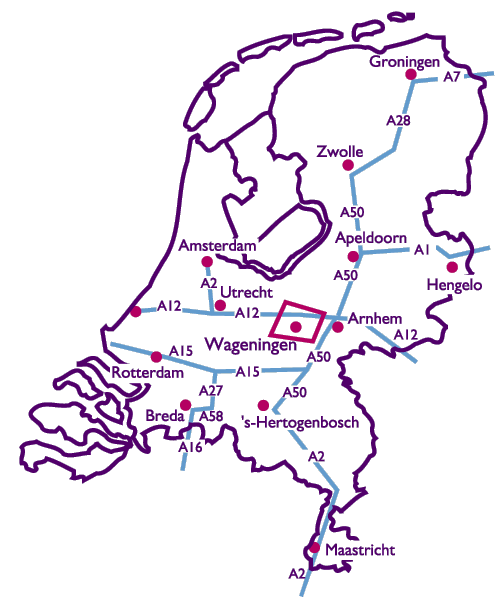
Lambert Huybertsen (Brink) was born in 1629 in Wageningen, Wageningen, Gelderland, Netherlands. His family did not use “Brink” until after immigration to America, but it is used here to clarify family lines. His parents were  Huybert LAMBERTSE and Jantsen JOOSTEN.  He married Hendrickje CORNELISSE about 1654 while in the Netherlands and before his emigration to America. The Brink Family in America are descended from Lambert who with his wife Hendrickje and children Huybert and Jannetje left The Netherlands 23 Dec 1660 aboard “de Trouw” (Faith). The entry upon the ship’s books is

” Lambert Huybertsen from Wagening [Wageningen], wife and two children.” To these must be added a son, Cornelius, born on the voyage.

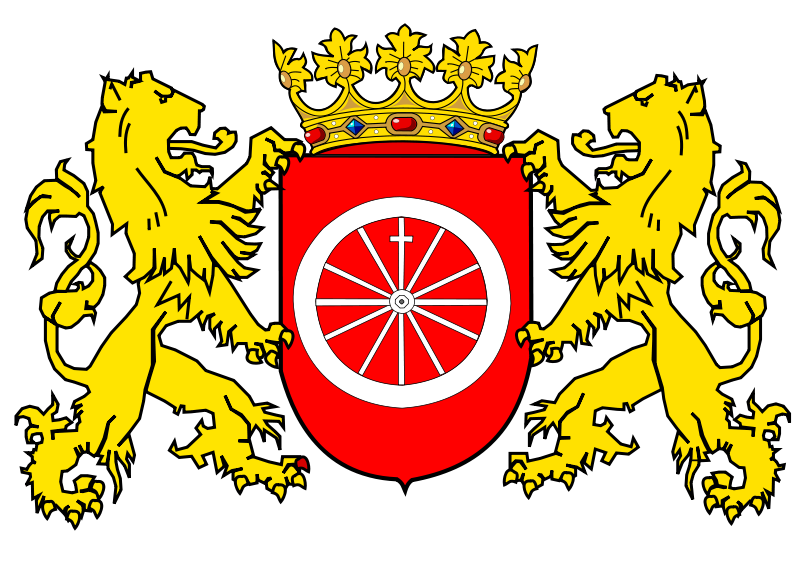
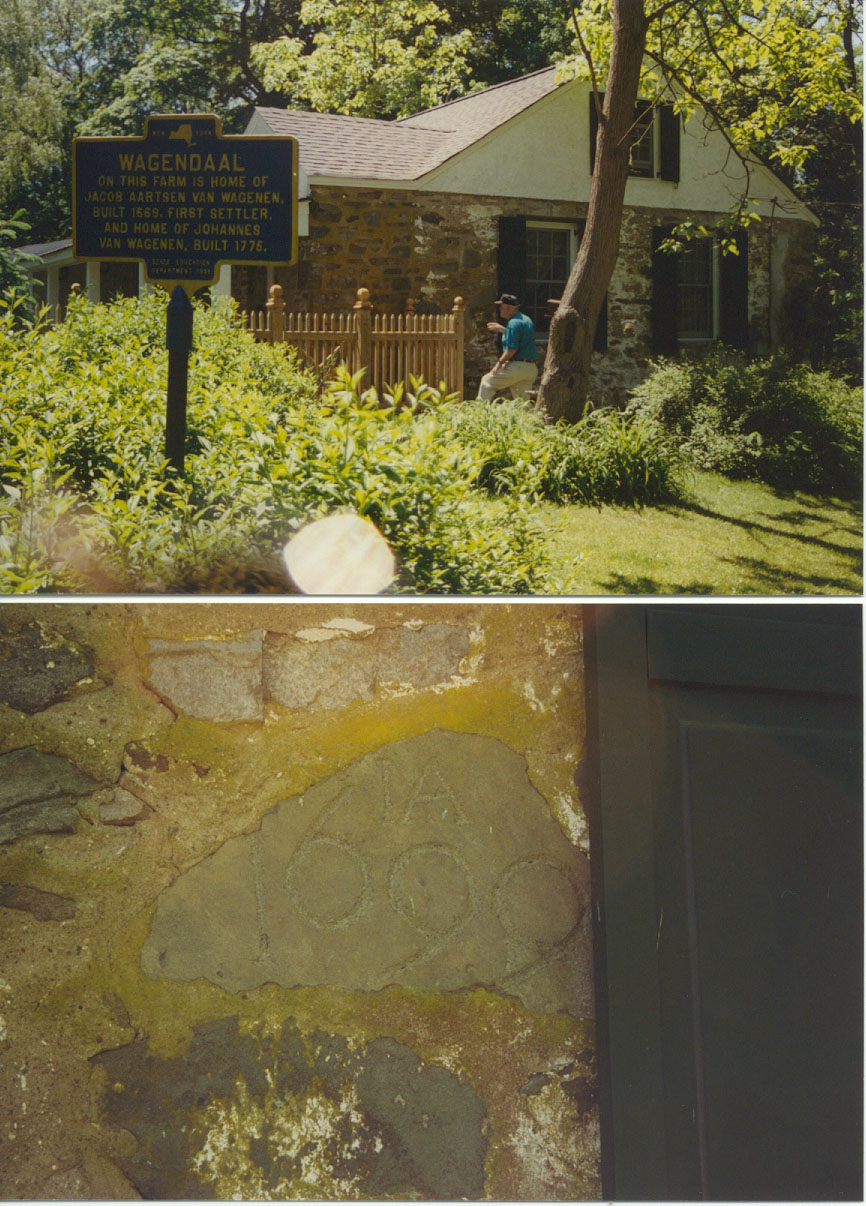
Wageningen is a town on the right bank of the Rhine in Gelderland. It is about twelve miles from Arnhem. It contains the state agricultural college and the school for forestry. These are beautifully situated on a bluff. Our Van WAGENEN family came from this town and take their name therefrom. Lambert died 1702 in Hurley, Ulster, NY.

Wagenengin, Gelderland, Holland

Hendrickje Cornelisse was born in 1639 in Reusel-de Mierden, Noord-Brabant, Netherlands. Her parents may have been Cornelis Barentsen Van de CUYL and Lysbeth ARENTS, however, they look to be too young to me. Her parentage is disputed and other possible family lines for her to have born into include , Vernooy, Osten, and Van Duyn. Hendrickje died in 1702 in Hurley, NY.

Children of Lambert and Hendrickje:

Name Born Married Departed
1. Huybert Lambertsen (Brink) c. 1655
Wageningen, Gelderland
Hendrickje Swartwout
16 Mar 1679
Hurley, NY
1719
Hurley, NY
2. Jannetje Lambertse (Brink) c. 1657
Wageningen
Cornelis Teunissen Kool
1680
Kingston
7 Sep 1736
Hurley, NY
3. Cornelis Lambertsen BRINK born on the ship as his parents and two siblings were coming to the new world
baptized New Amsterdam 4 May, 1661
Marijken Egbertse MEYNDERSE Kingston
23 Apr 1685
1725 in Hurley, Ulster, NY
4. Hendrick Lambertse (Brink) Hurley, NY;
baptized
5 Dec 1663
Kingston, NY
Gcesje Jansen
1692
Kingston
1695
Claverack, Columbia, NY
5. Lysbet Lambertse (Brink) Hurley; baptized Kingston
14 Feb 1666
Arien Gerretsen Nieuwkirk (Newkirk)
17 Oct 1686
Kingston
1721
Kingston
6. Gerret Lambertse (Brink) 1668
Hurley
Antje Hoogland
1691
Ulster, NY
1703
Marbletown, NY
7. Pieter Lambertse (Brink) Born in Hurley; baptized Kingston
26 Jun 1670
Geertruy Matthysen Teunissen (Newkirk)
1686
Kingston
2 May 1757
Minisink, Sussex, NJ

Lambert Huybertsen [Brink]’s father, Huybert Lambertsen [Brink], owned a home and farm at Dolderbrink which was just ouside the walled city of Wageningen, Netherlands and he raised tobacco and sheep. This farm was sold 28 Nov 1660 after Huybert Lambertsen [Brink]’s death by his heirs (wife Jannetje and children Lambert, Gysbertje, Pieter). Many immigrants to America took their last place of residence as their surname when surnames became required and Lambert Huybertsen’s family took “Brink”

A correspondent of Olde Ulster writes from Holland that the father of Lambert Huybertsen (Brink) must have died within a year after the emigration of his son to America as he finds a protocol on record of which he sends the following translation

“Protocol van Vestenisse Wageningen 1660. Enjoined at the Archives of the Kingdom at Arnhem.

“Jantsen Joosten, widow of Huybert Lambertse, assisted by Claes Jansen, chosen by her as her representative in rights, for one moiety, and Lambert Huyberts, Peter Huyberts and the above named Claes Jansen as the husband and the representative in right of his wife Gysbertjen Huyberts and also representing the minor brothers and sisters of his wife, all heirs of the late Huybert Lambertse, their father, for the other moiety, declare to have sold, transported and given in plain possession to Gerrit Hindercamp and Aeltjen Foenissen, his wife, and their heirs, a certain house and garden situated on Dolderbrinck, in the neighborhood of Wageningen, etc.” Here follows the description. It is declared to be a free and heired estate.” It is dated 28 November, 166o.

The Lambert Huyberts mentioned must have been the one who emigrated to America during the previous year. The family seems to have come to Wageningen from Harderwyk, in the same province of Gelderland, a score or more miles north.

The word Brink means ” park, square or village green.” and the Brink family is very numerous in the Netherlands. The name is in various forms as van den Brink (of the Brink); van Brink (of Brink); Ten Brink (the Brink); Brinkhuis (Brink house); Brinkhorst (Brink grove); Brinkenberg (mount Brink); Brinkerhoff (a paved square); Dolderbrink (valley Brink).  There are many country seats and villas in Holland with the name de Brink or den Brink, among others a magnificent country seat near Arnhem called de Brink (the park).

Frederik de Brincke and his sister Christina gave goods to the church of Keppel, in Gelderland, in 1349. Lambert Brinck is mentioned in a charter of Duke Arnold of Guelder in 1437. In 1503 another Lambert Brinck was master of the Sanct Crucis Guild at Harderwyk. This family dwelt in the 15th, 16th and 17th centuries principally at Harderwyk, and several members were Burgomasters there.

Ernst Brink was the son of Dr. Alphert and was a very learned man and celebrated antiquarian. He was born in Harderwyk in 1581. From 1612-15 he was the secretary of the Dutch embassy at Constantinople, and from 1618-48 librarian of the University of Harderwyk. His sister Elizabeth married Lambert van Domselaer.” The name of Lambert was a favorite one in the family.

The arms of the family are thus described:

“d’argent an boeuf de gueules, corne’d’or, marchant surune terrassede sinople. Bourlet et lambrequens d’argent et de gueules. Cinier: une corbeille d’or en sortent des flamines de feu.”

Arriving at New Amsterdam Lambert Huybertse (Brink) had the son born at sea baptized Cornelis and then his family traveled up the Hudson River to the Esopus (name of river and Algonquin Indian tribe) area to Wiltwyck (soon Kingston).   He was one of the first settlers at Nieuw Dorp (soon Hurley) and in 1662 signed a five year lease with the Dutch West India Company (GWC) Director Stuyvesant on land there west of the creek.

In the Spring of 1662, Peter Stuyvesant, Dutch Governor of Niew Amsterdam, established the village of Niew Dorp on the site of an earlier Native American Settlement. On 7 Jun 1663, during the Esopus Wars the Esopus Indians attacked and destroyed the village, and took captives who were later released. England took over the Dutch Colony on 6 Sep 1664. On 17 Sep 1669, the village, abandoned since the Esopus Indian attack, was resettled and renamed Hurley. It was named after Francis Lovelace, Baron Hurley of Ireland.

After Director Stuyvesant declared war on the Esopus Indians and attacked and killed and captured and shipped some out as slaves, the Indians retaliated with the 7 Jun 1663 destroying of Nieuw Dorp [Hurley] and Wiltwyck in which they burned and killed and took captives including Lambert’s wife Hendrickje (pregnant) and children Hytbert, Jannetje, and Cornelis who were rescued after about 3 months.

In 1667 at the end of his land lease agreement, Lambert  purchased the land he had leased and more land also from the English who had taken over in 1664 (and mandated surnames) and the deed was dated 5 Aug 1667 and was filed at Kingston, NY. Nieuw Dorp, at that time, included parts of present-day Rosendale, Marbletown, Woodstock, and New Paltz.  The area was settled around 1669 but received its patent (to Henry Beekman, Thomas Garton, and Charles Brodhead) only in 1703. The community of Marbletown once served briefly as the state capital. The Town of Marbletown is near the center of Ulster County, southwest of the City of Kingston.

Lambert  was one of the Dutch settlers to protest their treatment by the British military in the “mutiny at the Esopus” in 1667. The Wiltwyck document concerning this was signed by 31 men including Lambert on 28 Apr 1667.

Lambert Huybertsen Brink was a soldier in Henry Pawlings company in 1670.

Lambert’s name frequently appears in the records of the Schout’s Court in various capacities.  His name is signed as witness twice to the renewals of the celebrated Indian treaty negotiated in 1665 by Governor Nicolls. He was one of the protesting burghers at what Governor Nicolls called “the mutiny at the Esopus” in 1667.

He  is a Witness to the Indian treaty made in Hurley in 1677, purchasing parts of present-day New Paltz, Rosedale, Esopus, and Lloyd, upon which the New Paltz Patent is based. New Paltz was founded in 1678 by French Huguenots, including Louis DuBois, who had taken refuge in Mannheim, Germany, for a brief period of time before coming to America.

Lambert was one of the inhabitants of the Esopus who petitioned Governor Sir Edmond Andros in 1680 that a minister be sent there.

He had charge, for some time, of the lands in the Esopus of Director Petrus Stuyvesant, and at one time leased one of his farms there. The homestead farm of Lambert Huybertse Brink was the farm of the late Peter P. Brink, west of the creek at Hurley, and during these two hundred and forty-four years since it came into the possession of the family has never passed out of it. Across the road lies the farm of the late James D. Wynkoop which, like the Brink lands, has never passed from the family since 1662.

On 27 April 1689 Lambert Huybertsen Brink “makes over” to sons Huybert and Pieter 324 acres at Hurley and on 09 March 1702 “makes over” to son-in-law Cornelis Cool (husband of daughter Jannetje) 63 acres at Hurley, NY.

On 12 Feb 1696, Lambert Huybertse (Brink) made and executed his last will and testament, which will was proved on 11 Apr 1702.   Son Hendrick was not in the will and is presumed to have died before it was written. Son Gerrit was not in the will and this is a mystery to researchers as is the fact that his descendants went by the surname “Terpenning”.  Lambert is believed to have been buried at the Dutch Reformed Bruial Ground at Hurley, but no proof had been found.The old cemetery in Old Hurley contains some very ancient slabs of redstone adjacent to the graves of generations of the family on which may be traced initials of the early members of the family dying more than two hundred years ago.  The will is written in Dutch from which the below is translated.

Be it known hereby to everybody, that to-day, the 12th day of February in the year of our Lord 1695/6, I, Lambert Huybertse, of Hurley in the county of Ulster; well in body and in full power and use of my mind and memory, (praised be the Lord), considering the shortness and frailty of human life, the certainty of death and the uncertain hour thereof, and desiring to set everything in order, make this my last will and testament, in manner and form as follows: Revoking, annulling, declaring null and void, all and every testament and testaments, will and wills, heretofore made and passed, either verbally or in writing, and this alone to be taken far my last will and testament and no other.

First, I commend my soul to God Almighty, my Creator, to Jesus Christ, my Redeemer, and to the Holy Spirit my Sanctifier, and my body to the earth, whence it came, to be buried in a Christian manner, and there to, rest until my soul and body shall be reunited on the last day and enjoy the eternal joy of immortality, which God in his grace has promised and prepared by the only merits of our Saviour, for all who truly repent and believe in him. Concerning such wordly state of houses, lands, money, goods. accounts or what further belongs to my estate, which the Lord has been pleased to grant me beyond my merits, I order, give, and dispose thereof in form and manner following:

First, it is my wish and will, that all my honest debts shall, in due time, be paid.

Secondly, I give to my youngest son, Pieter Lambertse two horses, also, that the house in which he lives, shall be finished in garret, floor doors, win- dows, &c., out of my estate without anything being paid therefor to my other heirs. I further give to my said son, his order, heirs, or administrators, one just fifth part of my whole estate.

Thirdly, I give to my sons, Huybert Lammerse and Cornelis Lammerse, and to my sons-in-law, Cornelis Cool and Arien Gerretsen, one just fifth part of my whole estate, to dispose, each for himself, of said fifth part of my estate, as he pleases, only under this condition, that Arien Gerretsen shall have and enjoy the just fifth part of my land, lying next to the land belonging to him, and that in consideration of the fertility of this land my other four heirs shall have and enjoy in ownership my house, barn, &c., without paying therefor anything to said Arie Gerretse. but they shall divide in equal shares all other movable estate among themselves

Fourthly, I appoint as executors of this my last will and testament my said heirs, to-wit, Huybert Lammertse, Cornelis Lammerse, Pieter Lammerse, Cornelis Cool, and Arie Gerretse, demanding this my foregoing testament shall be fully obeyed and carried out. Thus done at Kingston on the day and year as above.

Before signing and passing this it is my wish that my son-in- law Cornelis Cool shall have in one piece two shares of the land occupied by me, to wit, the one now made over to him, and the other bought by him from my son Lammert Huybertse.

LAMMERT HUYBERTSE Signed, sealed and published by Lammert Huybertse as being his last will and testament in our presence. WESSEL TEN BROECK, JACOBIS LAMETER, ARIE ROOSE. [Proved 11 April 1702].

Children

1. Huybert Lambertsen (Brink)

Huybert’s wife Hendrickje Swartwout was born 8 Jun 1658 in Wiltwick, Ulster, New York. Her parents were Roeloff Swartwout and Eva Albertse Bradt. Hendrickje died 28 May 1699 in Hurley, Ulster, New York.

Huybert  was in Captain Gorsonnes company of footmen along with his father and brother Cornelis. On 27 April 1689 Huybert Lambertsen Brink’s father “makes over” to he and brother Pieter 324 acres of land at Hurley, NY and Huybert Lambertsen Brink inherited and stayed on the home farm there. In 1710 Huybert Lambertsen Brink was taxed at Hurley for 1 chimney and 1 stove and 1 slave. In 1711 Huybert Lambertsen Brink volunteered for a military expedition to Canada under Captain Ten Broek and there is no more in the colonial records after this pertaining to Huybert Lambertsen Brink. Huybert Lambertsen Brink’s is the oldest grave marker still identifiable at the Dutch Reformed Church Burial Ground at Hurley .

2. Jannetje Lambertse (Brink)

Jannetje’s husband Cornelis Teunissen Kool was born 1655 in Holland. His parents were Teunis B. Kool and Marretje Gerrets VanLookere.. Cornelius died 7 Sep 1736 in Hurley, Ulster, New York.

3. Cornelis Lambertsen BRINK (See his page)

4. Hendrick Lambertse (Brink)

Hendrick’s wife Geesje Jansen was born 1653 in Hurley, Ulster, New York. Her parents were Jan Lambertszen and Grietjen Jansen. Gessje died in 1707.

5. Lysbet Lambertse (Brink)

Lysbet’s husband Arien Gerretsen Nieuwkirk (Newkirk) was born 1663 in Midwout, New York.  His father was Gerretse, grandfather Cornelisse. Arien died in 1704.

In the 1663 Esopus War, Albert Gerretson was wounded and his house was burned. Barent Gerritsen was murdered snd Mattys Gerretsen is mentioned, among others.(These were evidently brothers of Arien.)

Arien was a Justice of the Peace and Judge of the Ulster County Probate Court before 1725

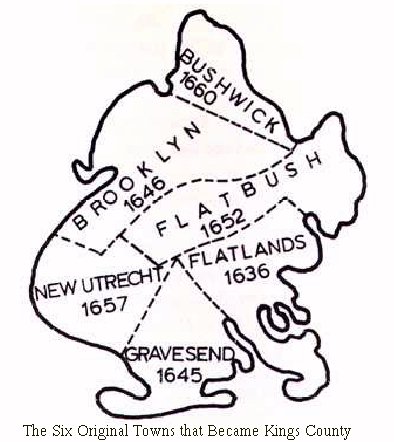
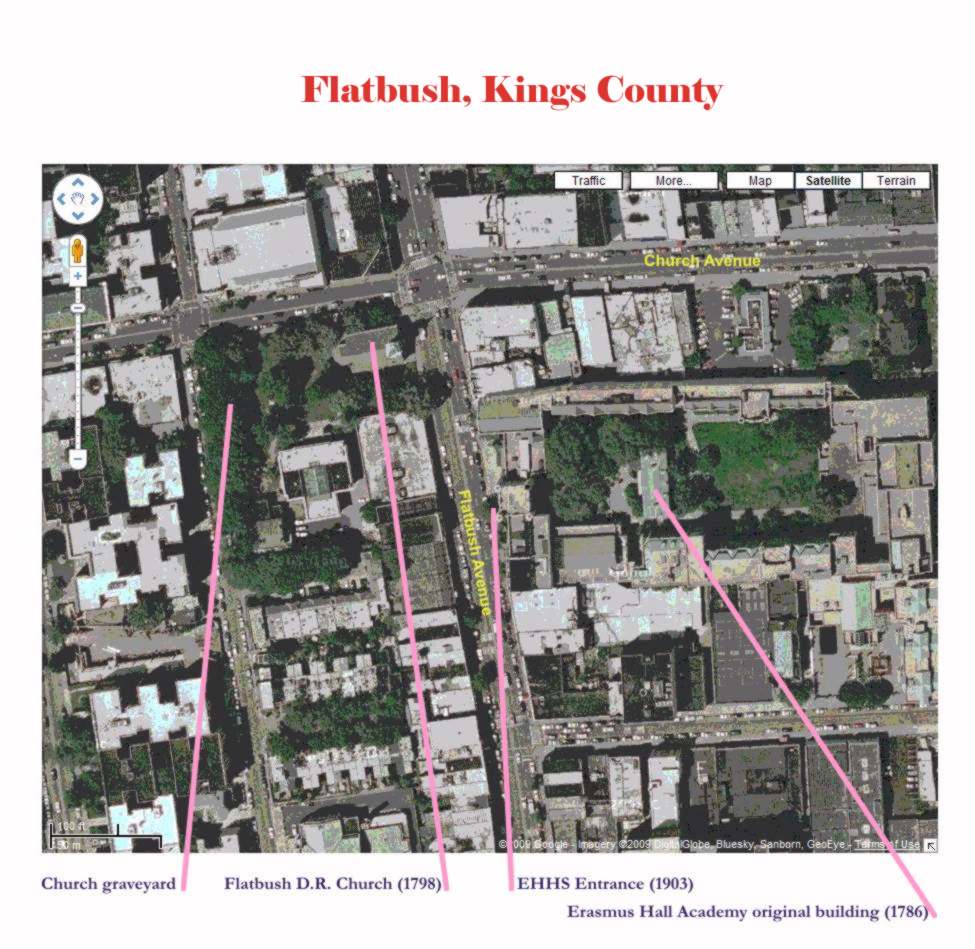
The area is now Midwood, Brooklyn, derived from the Dutch word, “Midwout” (middle woods), the name the settlers of New Netherland called the area of dense woodland midway between the towns of Boswyck (Bushwick) and Breuckelen (Brooklyn). Later, it became part of old Flatbush, situated between the towns of Gravesend and Flatlands.

6. Gerret Lambertse (Brink)

Gerret’s wife Antje Hoogland was born 1663 in Bedford, Long Island, New York. Her parents were Dirck Hooglandt and Anneken Bergen. Antje died 1703 in Marbletown, Ulster, New York.

7. Pieter Lambertse (Brink)

Pieter’s wife Geertruy Matthysen Teunissen (Newkirk) was born 18 Sep 1671 in Bergen, New Jersey. Her parents were Mattheus Cornelisse Van Nieuwkercke and Anna Lubi. Geertruy died 20 Feb 1759 in Minisink, Sussex, New Jersey.

Historically, the name Minisink, which dates to the mid 17th century, has applied to a much larger area than the current town, running as far north as Minisink Ford, twenty miles northwest of present day Minisink, south to the Delaware Water Gap, thirty miles southwest of present day Minisink, and from the Kittatinny Ridge to the east to the Poconos to the west.  The Minisink Patent, granted in 1704, was a somewhat smaller area, but still far larger than the present town, which was given its present boundaries in 1800. Adding to the confusion is the fact that the New York – New Jersey border was previously seven or eight miles north of its present location: Minisink, now in New York used to be in New Jersey.

Sources:

http://www.hopefarm.com/brink.htm

http://trees.ancestry.com/owt/person.aspx?pid=1633060&st=1

http://trees.ancestry.com/tree/19593968/person/826502165

http://trees.ancestry.com/tree/14071817/person/59785660/story/b2907c21-7c45-4458-b6c3-a1f34c8d91fb

Posted in 12th Generation, Immigrant - Continent, Line - Shaw, Pioneer, Veteran | Tagged , , , , , | 10 Comments

Cornelis Lambertsen Brink

Cornelis Lambertsen BRINK (1661 – 1725) was Alex’s 9th Grandfather; one of 1,024 in this generation of the Shaw line.

Cornelis Lambertsen Brink was born on the ship as his parents and two siblings were coming to the new world.   His parents and siblings Huybert and Jannetje left The Netherlands 23 Dec 1660 aboard “de Trouw” (Faith). The entry upon the ship’s books is

” Lambert Huybertsen from Wagening [Wageningen], wife and two children.” To these must be added a son, Cornelius, born on the voyage.

Cornelis was baptized in New Amsterdam 4 May, 1661.  His parents were Lambert Huybertse BRINK and Hendrickje CORNELIS. Cornelius  He was captured, with his mother and his brother and sister by Indians. They were held three months before their release.  It was his children that started to use the name Brink. He married Marijken Egbertse MEYNDERSE in Kingston 23 April, 1685. Cornelis purchased a tract of land between the Esopus and Plattekill creeks in the south part of the present town of Saugerties on 6th of February, 1688. He thus became one of the earliest permanent settlers of that town. Cornelis died in 1725 in Hurley, Ulster, NY.

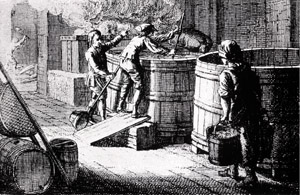
The village land of “Saugerties” was obtained from Esopus Indian Kaelcop, chief of the Amorgarickakan Family. Governor Andros purchased the land on April 27, 1677, for the price of a piece of cloth, a blanket, some coarse fiber, a loaf of bread, and a shirt. The village was incorporated in 1831 as “Ulster,” but it changed its name to “Saugerties” in 1855. In 1710, during the Palatine immigration, over 3,000 German Palatines were sent here by the English Crown to manufacture naval stores, tar, and turpentine.

Marijken Egbertse Meynderse was born 27 April, 1661 in New Amsterdam, Queens, NY. Her parents were Egbert MEYNDERSE and Jaepe JANS. Marijken died 8 Mar 1726 in Kingston, Ulster, NY

Children of Cornelis and Marijken:

Name Born Married Departed
1. Hendrickje Lambersen (Dolderbrink) 19 Apr 1686 Theunis Klaarwater
10 Feb 1716
Kingston, NY
2. Egbert (Heberth) Brink 26 Dec 1681
Marbletown, NY
Elsjen Kok
7 Jul 1715
Kingston, NY
 9 Jun 1775
Marbletown, Ulster, NY
3. Lambert Brink 13 Oct 1689 Rachel DuMond
19 May 1723
Kingston, NY
4. Hendrick Brink 28 Jan 1692 Grietjen Osterhoud
19 May 1721
Kingston, NY
5. Jacob Brink (twin) 3 Jun 1694 bef. 1696
6. Rachel Brink (twin) 3 Jun 1694 Arend Ploeg
30 Jun 1720
Kingston, NY
1737
Ulster, New York,
7. Jacob BRINK baptized
5 Jan 1695/96 Saugerties, Ulster County, NY
Antje POST
17 May 1722 at the Dutch Reformed Church in Kingston, NY
.
Maria Elisabeth Merkel
22 Dec 1732
.
Mareitje Elich  of West Camp 25 Nov 1735
24 Oct 1757 Kingston, NY
8. Mynert Brink 1 May 1698 1700
Saugerties, Ulster, New York
9. Janneke Brink 7 May 1699 Samuel Burhans
16 Dec 1720
.
Walrand DuMond
5 Oct 1734
1 Jul 1782
Kingston, NY
10. Lysbert (Elizabeth) Brink 23 Mar 1701 Jan Pietersz Oosterhoud
20 Jun 1724
Kingston, NY
15 Mar 1758
Kingston, Ulster, NY
11. Annatie Brink 24 Mar 1706

The earliest known sale of land in the region of the Esopus involved a parcel sold by the Esopus Indians to Thomas Chambers, a carpenter and farmer residing at that time in Rensselaerswyck. The patent was confirmed on 5 Jun 1652. Though out the early history of the settlement, the presence of the Indians cast an ominous pall over the whole community. They were particularly vulnerable in their scattered houses and were often at fault for the bad relations. Director-General Peter Stuyvesant recognized the danger to them, and at his urging the settlers signed a bond on 31 May 1658, agreeing to erect a palisaded village and demolish their separate dwellings. Then on the night of 20 Sep 1659, a group of settlers and soldiers senselessly shot three Indians, killing one of them. The result was the First Esopus War, which did not end until the signing of a peace treaty on 15 Jul 1660.

Despite the war and the uneasiness of the ensuing peace, the population of the community continued to grow. By 2 May 1661, the hamlet had been named Wildwyck by Stuyvesant. About May of 1662 a second community was established nearby, called Nieuw Dorp (New Town) [now Hurley] which was settled by former residents of Beaverwyck and Wildwyck. The farmland bought by Evert Pels was between Wildwyck and Nieuw Dorp.

The fragile peace ended on 7 Jun 1663, when the Indians burned Nieuw Dorp and attacked Wildwyck.  On that morning a number of Esopus Indians entered Wildwyck [now Kingston] to sell their produce, corn and beans to the settlers, between 11 and 12 in the forenoon, some people on horseback, rushed thru the Mill gate, from the New Village, crying out “the Indians have destroyed the New Village.” Upon hearing this, the Indians fired a shot and attacked the settlers at each house with axes, tomahawks, rifles and pistols. Sixteen settlers were killed and a number were carried off as prisoners including Cornelis’ mother Hendrickje (pregnant) and her children Hytbert, Jannetje, and Cornelis who were rescued after about 3 months.

1 Sep 1689 – Oath of Allegiance, Ulster County, NY

6 Feb 1688 – Cornelis Lambertse purchased a tract of land between the Esopus and Plattekill creeks in the southern part of the present town of Saugerties, NY. He was the first permanent settler of that town

30 Dec 1701 – Cornelis Lammertse signed the “Petition of the Protestants of New-York to King William III” complaining of injustices in the English government of New York.

21 Jul 1706 -Cornelis Lambertse and Marytie Ekbertse appear as witnesses at the baptism of Margery, daughter of Saomon Schut and Jannetie Chissam  at Kingston, Ulster, NY.

Children

1. Hendrickje Lambersen (Dolderbrink)

Hendrickje’s husband Theunis Klaarwater was born May 1690 in Marbletown, Ulster, New York and baptized in Kingston 25 May, 1690.  His parents were Theunis Jacobsen Klaarwater and Marretie Hansen Vos.  Theunis died in 1760 in Ulster, New York.

2. Egbert (Heberth) Brink

Egbert’s wife Elsjen Kok  was born 3 Jun 1694 in Marbletown, New York. Her parents were John Kok and Madalena Wood. Elsjen died 1732 in Kingston, Ulster, New York.

Egbert was the first of the American Brink family to abandon the custom of using his father’s name as a surname, and resume the family name of the Netherlands. Egbert Brink was one of the assistant trustees of the town of Marbletown in 1738 and his name appears as one of those who organized the Reformed Dutch Church of Marbletown in 1743. He lived to be one of the signers of the Articles of Association of the patriotic citizens of Ulster county on the 9th of Jyne, 1775. Preceding his residence in Marbletown he lived in the town of Hurley where he served as one of the 146 trustees of that town in 1727. He was an elder in the Marbletown church in 1747.

3. Lambert Brink

Lambert’s wife Rachel Du Mond was baptized 5 Jun 1698 in Kingston Dutch Church. Her parents were Walron Du Mond and Catrina Ter Bosch (Bos).

Lambert Brink was the collector of the town of Hurley in 1727.

4. Hendrick Brink

Hendrick’s wife Grietjen Osterhoud was baptized 3 Oct 1697. Her parents were Pieter Oosterhout and Hyltje Schut .

6. Rachel Brink (twin)

Rachel’s husband Arend Ploeg was born 1692 in Kingston, Ulster, New York. His parents were Hendrik Albertse Ploeg and Tryntje Pieterzen. Arend died 1737 in Ulster, New York.

7. Jacob BRINK (See his page)

9. Janneke Brink

Janneke’s first husband Samuel Burhans was baptized 3 Jun 1694 in Kingston, Ulster, New York. His parents were Jan Burhans and Helena Traphagen. Samuel died 16 Oct 1732.

Janneke’s second Walrand DuMond was born 15 Aug 1693 in Kingston, Ulster, New York. His parents were Walrond DuMond and Catrina Ter Bosch. Walrand died 14 Feb 1783 in Kingston, Ulster, New York,

10. Lysbert (Elizabeth) Brink

Lysbert’s husband Jan Pietersz Oosterhoud was baptized 16 Apr 1699 in Kingston, Ulster, New York. His parents were Teunis Oosterhout and Hyltje Schut. Jan died 1742 in Ulster, New York

Sources:

http://www.hopefarm.com/brink.htm

http://trees.ancestry.com/owt/person.aspx?pid=21487842&st=1

Posted in 11th Generation, Line - Shaw, Pioneer, Twins | Tagged , , , | 12 Comments

Jacob Cornelisse Brink

Jacob Cornelisse BRINK (1696 – 1757) was Alex’s 8th Grandfather; one of 512 in this generation of the Shaw line.

Jacob Brink was baptized 5 Jan 1695/96 in Saugerties, Ulster county, NY. His parents were Cornelius Lambertsen BRINK and Markjen Egertse MEYNDER. He married Annatje POST 17 May 1722 at the Dutch Reformed Church in Kingston, NY. After Antje died, he married second Maria Elisabeth Merkel, 22 Dec 1732. He married, third, Mareitje Elich  of West Camp 25 Nov 1735. Jacob died 24 Oct 1757  in Kingston, NY.

Annatje Post was baptized 7 Mar 1702/03 at the Dutch Reformed Church in Kingston, NY.  Her baptism witnesses were Cornelis Bogard and Antje Post. Her parents were Jan POST and  Cornelia Martinsen YSSELSTEYN . Annatje died in 1732 in Kingston, Ulster NY

Maria Elisabeth Merkel was baptized at West Camp 24 February, 1713.  Her parents were our ancestor Johann Frederick MERKEL and Barbara Alman.  We descend from Maria’s sister Antje who married Peter WINNE IV. Maria died before 1735.

Mareitje Elich was born about 1714 in West Camp, Ulster County, NY.

Children of Jacob and Antje:

Name Born Married Departed
1. Jan Brink 17 Mar 1723 1727
2. Marretjen Brink 23 Aug 1724 Wilhelmus Burhans
3 Jan 1746
Kingston, Ulster, NY
Bef 1753
Saugerties, Ulster, NY
3. Jan Brink 24 Sep 1727 Grietjen Wolfin (Wolven)
28 Mar 1749
Saugerties, Ulster, NY
4. Corneluis BRINK 25 Jan 1730 in Kingston, NY. Annetje Jannetje WINNE
17 Mar 1751 Kingston, NY
7 Sep 1793
Marlborough, NY

Children of  Jacob and Mareitje Elich:

Name Born Married Departed
5. Andries Brink bapt.
Oct 1736
def. 1751
6. Jacob Brink bapt.
22 Apr 1739
Margaret Oosterhout
7. Marretjen (Marciche) Brink bapt.
18 Oct 1741
Lt. Petrus Osterhoudt
9 Oct 1762 – Kingston, NY
1836 Kingston, Ulster, New York
8. Annatje Brink bapt.
28 Oct 1744 Kingston DRC:
Benjamin Snyder
7 Nov 1767 Ulster, New York
Jun 1831
Cayuga, NY
9. Christian Brink bapt.
8 Nov 1747
10. Rosina Brink bapt.
26 Dec 1748
11. Andries Brink bapt.
5 Oct 1751
 1751

Jacob Brink was listed as a soldier in the foot company of the Militia of the Corporation of Kingston in 1738. He is listed in 1755 as owning three slaves: Dick, Charles, and Peg.

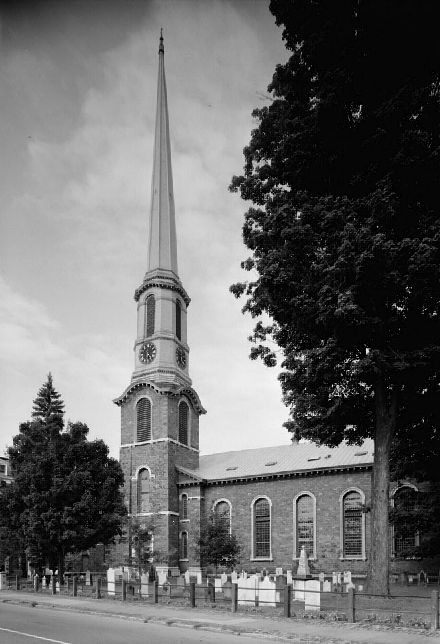
The spire at the Dutch Reformed Church in Kingston, New York was even higher when Jacob and Annatje were married there in 1722.

Jacob and Annatje were married at the The Old Dutch Church, officially known as the First Reformed Protestant Dutch Church of Kingston,  located on Wall Street in Kingston, New York, United States. Formally organized in 1659, it is one of the oldest continuously existing congregations in the country. Its current building, the fifth, is an 1852 structure by Minard Lafever.. The church’s 225-foot steeple, a replacement for a taller but similar original that collapsed, makes it the tallest building in Kingston and a symbol of the city,

Children

2. Marretjen Brink

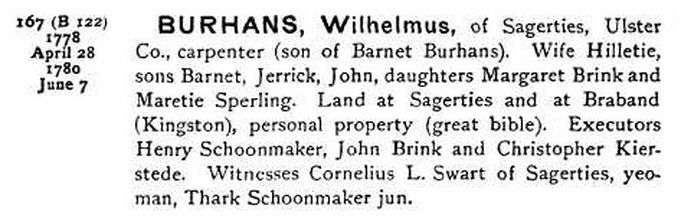
Marretjen’s husband Wilhelmus Burhans was born Jun 1717 in Saugerties, Ulster Cty, NY. His parents were Johannes Burhans (1682 – 1726) and Margriet Legg (1684 – ). After Marretjen died, he married 2 Feb 1753 Age: 35 in Kingston, NY to Hilletjen Schoonmaker.  Wihelmus died 7 Jun 1780.

Wilhelmus Burhans Will

3. Jan Brink

Jan’s wife Grietjen Wolfin (Wolven) was born 3 Oct 1725 in Kingston, Ulster County, New York. Her parents were Johannes Wolven and Anna Margaretta Spaan.

4. Corneluis BRINK (See his page)

6. Jacob Brink

Jacob’s wife Margaret Oosterhout was born 11 Nov 1739 in Kingston, Ulster County, New York.  Her parents were Hendricus Oosterhout (1714 – 1775) and Annatje DeWitt (1717 – 1753).

7. Marretjen (Marciche) Brink

Marretjen’s husband Petrus Osterhoudt was born 8 Mar 1741 in Plattekill, New York.  His parents were Petrus Oosterhout (1711 – 1751) and Lisabeth Burhans (1712 – ). Petrus died 5 Jan 1821 in Pine Brush, New York.

Petrus was an officer in the Revolutionary War.  When Snyder’s Regiment was
officered, Oct. 25, 1775,  He was first lieutenant in the Ulster County Militia in Captain John L DeWitt’s 4th Company of Kingston.  Petrus Brink, possibly his wife’s nephew and son of our ancestor Corneluis BRINK was his ensign =.

On May 1, 1776, the regiment was reported ready. It was under the command of Col.
Snyder. The company of Capt. DeWitt was now numbered the second, and consisted of a
captain, two lieutenants, one ensign, eight non- commissioned officers and fifty privates. This company was raised in the south part of the present town.

8. Annatjen Brink

Annatjen’s husband Benjamin Snyder was born 24 Nov 1742 in Kingston, Ulster, New York. His parents were Martinus Henry Snyder (1698 – 1778) and Annah Deanuite Backer (1703 – 1787). Benjamin died 12 Sep 1831 in Mentz, Cayuga, New York.

Benjamin Sold a sloop to the Continental forces to be used as a fire boat and sent into the midst of the British fleet as they came up the Hudson.

He was a Schoolteacher; Surveyor; Justice of the Peace; Ran sloops on the Hudson; 1st Supervisor of Saugerties

The Kingston Daily Freeman, Saturday, July 4, 1874
REMARKABLE LONGEVITY IN AN OLD ULSTER FAMILY
THE SNYDERS OF SAUGERTIES

Benjamin’s father Martin Snyder was born at Hackenburg, in Germany, June, 1698, and was brought up at the same place and there married to Anna Deanuite Backer. They had one son born to them named Henry, August 10th, 1723; they then emigrated to Ulster, New York, about the year 1723, and settled in the town of New Paltz. They remained there some time—then moved into the town of Kingston, now Saugerties, in the neighborhood known to this day by the name of Churchland, and there settled, after the German manner, in a small cluster of seven families, near a small stream known to, this day as the Mud Kill.

They afterwards separated and settled on separate farms. Somewhere about this time Martin Snyder’s dwelling house was burned down. He then, or in the year 1750, built a stone house, which is still standing and occupied by one of his descendants. During this time and after he came to this country he had thirteen children born to him, first three daughters, then ten sons, making in all fourteen. Henry, the first-born, died about the age of twenty-two. The names of the rest are as follows: Anna, Margaret, Catherine, Zachariah, Johannes, William, Jeremiah, Christian, Benjamin, Henry, Martin and last, in 1750, Abraham and lsaac,twins —said Martin Snyder died June 26th, 1778, aged 80 years, and was followed to his grave by his ten surviving sons. His wife survived him over nine years, and died September 10th, 1787, aged about 80 years.

There were 98 grandchildren born to said Martin Snyder: 49 males and 49 females, and out of the 98 but 4 died in.their minority; the remaining 94 coming to years of maturity, males and females still of equal numbers. Of the children of Martin Snyder, Anna died in 1760, age 28, Margaret at the age of 60, Catherine at 80, Zachariah at 88, Johanues at 76, and William at 88.

Jeremiah, in the year 1780, with, his oldest son Elias, was taken prisoner by the Indians, his buildings burned down, and they carried captive into Canada. Remaining in captivity two years and five months, they then escaped from the Island Jesus, near Montreal, through an unsettled country, and as they fled had but a poor chance to obtain provisions for so long a journey, mainly through a wilderness. They were twelve days without seeing any human being but their own party, five in number. It was in the fall of the year, and after suffering from the wet, cold, and hunger for several days, and three days without anything to eat, they arrived at an inhabited country, when they soon recovered. Then returning home, his family being scattered, he got them together and rebuilt his homestead. He died in 1828, aged 89 years and 10 months.

Christian died aged 87 years; Benjamin at 89 and 10 months; Henry at 80; Martin at 82 and 11 months; Abraham at 83. Isaac was a farmer, and lived at the old homestead of his father. He died in 1829 aged 78 years. His son Zachariah succeeded him in the old homestead, and was succeeded by his son Isaac, who now owns and lives on the old farm, the old house being in a good state of preservation, and the barn, said to have been built previous to 1750, is also in a good condition.

Of the 98 grandchildren only three are left, Martin Snyder, farmer, who lives at Flatbush in this town and was 95 years of age February 3rd last; Peter I Snyder, farmer of this place, was 85 years of age May 13th last, and Simon P Snyder of West Hurley, who is 78 years old. We visited the old homestead one day last week. Mr Isaac Snyder and his son Thomas kindly entertained us, escorted us around the farm, and showed us every place of interest.

We first visited the barn, which is truly a marvel worth seeing in this age of architectural botches. The frame of the building is of white wood, and the timbers are about twenty by twenty four inches square. The floor is of solid twoluch oak, fastened with immense iron spikes. Mr Snyder says it has never been relaid within his recollection, and he is a mau over fifty years of age. The hinges on the main doors are of oak, and in length are the full width of the door, and they have never been renewed within his recollection, and probably have been there since the barn was built, something over a huudred and twenty-four years ago. We then walked up to tbe house, which is finely situated on a little rise of ground near Mount Marion. The view from here of the surrounding fields covered with fruit and grain is fine. Just over the front entrance and cut in the stones is the date of its erection 1750—and the following letters, W S, I S, J S, Mr S. and A S, the initials of those who assisted in the putting up of the building. The beams overhead in the sitting room are 17×10 inches in width. In this room there is one of those old-fashioned clocks that reach from the floor to the ceiling. It has been in the house since it was built; it keeps first-rate time and never has been repaired but once within Mr Snyder’s recollection. We were shown a sword used by Zachariah Snyder; a Quartermaster in the war of 1812; it is made of the finest of steel, and can be bent double. After partaking of an excellent supper with our hospitable friend we bade himself and family good night.

i. Annatje Hannah Snyder b. 29 Sep 1770 in Saugerties, Ulster, New York; d. 1872 in Saugerties, Ulster, New York; m1. 9 May 1790 Kingston DRC to Paulus Sax (b. 1762 in Athens, Greene, New York – d. 1804 in Saugerties, Ulster, New York) jm, of Catskill; Annatien and Paulus Sax had 2 sons, John P. and Benjamin Sax; m2. 4 Dec 1804 to Petrus “Peter” Dewitt (b. 24 Mar 1770 in Athens, Greene, New York – d. 1827 in Chippewa, Ontario, Canada) Peter’s parents were Evert DeWITT and [__?__].

Peter partitioned for land in Sunbury Co. New Brunswick in 1785, 1789, and 1793 and in York Co. in 1786. His father and brothers were also included on most partitions. There are no records of any land being granted to Peter while his father and brothers were all granted land.

Peter died Aug. 18, 1827 in a house fire in Salmon River, NB. The following death announcement was in Volume 3, No. 1137 of The New Brunswick Royal Gazette, Fredericton, York County, NB on Aug 28, 1827:

d. 18th inst., Salmon River, house fire, Peter DeWitt.

The following announcement regarding the settlement of Peter’s estate was in Volume 3, No. 1248 of The New Brunswick Royal Gazette, Fredericton, York County, NB on Oct 30, 1827:

Est. Peter DEWITT, Burton (Sunbury Co.) Admin. Abraham DEWITT John BROWN, 26 Oct. 1827

ii. Peter Snyder b. 13 Feb 1772 in Saugerties, Ulster, New York; m ~1800 to Annatje Ham (b ~ 1775 in New York – d. 1820 in New York)

iii. Maria B Snyder b. 5 May 1774 in Katsbaan, Ulster, New York; d. 28 Mar 1794 in Saugerties, Ulster, New York; Burial: Myer Family Ground; Mt Marion NY

iv. Rosina Snyder b. 13 Feb 1777 in Katsbaan, Ulster, New York; d. 21 Feb 1796 in Saugerties, Ulster, New York

v. Martin Snyder b. 3 Feb 1779 in Saugerties, Ulster, New York; d. 15 Nov 1876 in Flatbush, Ulster, New York; m. his half cousin once removed Sarah “Sally” Brink (b: 4 Nov 1790 in Saugerties, Ulster, New York – d. 27 Mar 1881 in Flatbush, Ulster) Sarah’s parents were Adam Brink (1763 – 1843) and Catharina Snyder (1760 – 1805) and her grandparents were Cornelius BRINK and Annetje Jannetje WINNE

vi. Rachel Snyder b, 18 Nov 1781 in Katsbaan, Ulster, New York; d. Ulster, New York

vii. Sarah Snyder b. 18 Nov 1781 in Saugerties, Ulster, New York

viii. Catharine Snyder b. 4 Jan 1784 in Kingston, Ulster, New York

ix. Jacob Snyder b. 4 Mar 1788 in Saugerties, Ulster, New York; d. 11 Jan 1867 in Saugerties Burial: Mountain View Cemetery, Saugerties; m1. Nelly [__?__] (b. 1786 – d. 25 Oct 1851; m2. Selina Gillespy (b. 1812 – d. 23 Mar 1860)

Sources:

http://www.hopefarm.com/brink.htm

http://trees.ancestry.com/tree/19593968/person/826502165

The early history of Saugerties, 1660-1825 (Volume 2) Benjamin Myer. [from old catalog] Brink.

http://www.threerivershms.com/nyrevulster-1.pdf

Posted in 10th Generation, Line - Shaw, Veteran | Tagged , , | 8 Comments

Cornelius Brink

Cornelius BRINK (1730 – 1793) was Alex’s 7th Grandfather; one of 256 in this generation of the Shaw line.

Cornelius Brink was born 25 Jan 1730 in Kingston, NY. His parents were Jacob BRINK and Annetje POST. He married Annetje Jannetje WINNE 17 Mar 1751 in Kingston, NY. Cornelius died 7 Sep 1793 in  Plattekill or Marlborough, NY.

Cornelius lived the last part of his life in Marlboro New York

Annetje Jannetje Winne was born Sep 1733 in Kingston, NY. Her parents were Pieter WINNE and Antje MERKEL. Annetje died in Saugerties, NY.

The village land of “Saugerties” was obtained from Esopus Indian Kaelcop, chief of the Amorgarickakan Family. Governor Andros purchased the land on April 27, 1677, for the price of a piece of cloth, a blanket, some coarse fiber, a loaf of bread, and a shirt. The village was incorporated in 1831 as “Ulster,” but it changed its name to “Saugerties” in 1855. In 1710, during the Palatine immigration, over 3,000 German Palatines were sent here by the English Crown to manufacture naval stores, tar, and turpentine.

In 1730, a subdivision of the town called “Katsbaan” was established. The Palatine settlers and Dutch settlers built a stone church in Katsbaan in 1732.

13 Children of Cornelius and Annetje:  baptized at the Katsbaan Church, and one at Kingston, for a total of 14 children.

Name Born Married Departed
1. Cornelis  Brink 4 Jul 1752 Ulster, NY Maria Hommel
26 Apr 1778
19 May 1820
2. Jacob Brink 15 Apr 1754 Christina Longyear
Ulster, NY
30 Dec 1843 Lake Katrine, Ulster, NY
3. Antje Brink 27 Dec 1755 Baltes Kiefer
4 Aug 1776 Ulster County NY
16 Jun 1841 Saugerties, NY
4. Pieter Cornelius Brink 20 Nov 1757 Kingston, NY Lena (Helena) Whitaker
14 May 1778 Kingston RDC, Kingston, Ulster County, NY
.
Catharina Burhans
18 May 1805 Kingston, NY
22 Jan 1839 Saugerties
5. Jannetie BRINK 5 Sep 1759 Saugerties, Ulster, New York Hendrik TURK
1778
Ulster County, NY
before 1801 in Kingston, Ulster, New York
6. Mareitje Brink 3 Oct 1761 Johannes Wolfen
17 Apr 1779 – Ulster, New York
16 Jun 1841 Saugerties
7. Jan Brink 7 Feb 1763 Katsbaan (Saugerties), Ulster, NY Catharina Hommel
28 Apr 1782 Kingston, Ulster, NY
15 Jan 1843
8. Adam Brink 7 Feb 1763 Katsbaan (Saugerties), Ulster, NY Catharina Snyder
8 May 1783 Katsbaan (Saugerties), Ulster, NY
30 Jun 1843 Ulster
9. Annatien Brink Jun 1765 William France “Wilhelmus Frans or Franz”
17 Jul 1784 Katsbaan / Saugerties, Ulster County, NY
6 Mar 1852 Ulster County, NY
10. Isaack (Isaac) Brink 21 Apr 1767 Rachel Blackwell
15 Feb 1787 Kingston
.
Maria Folant
5 Dec 1805
11. Catharina Brink 1 Jun 1769
12. Zacharias Brink 2 Feb 1773
13. William Brink 29 Nov 1775 Harriet Post
25 Jan 1801 Kingston
or
Maria France (Frans or Franz)
20 Apr 1806 Kingston, NY
6 Sep 1831
14. Cornelia Brink 25 Apr 1778 George Jensen
9 Jun 1798 – Kingston, Ulster, NY
.
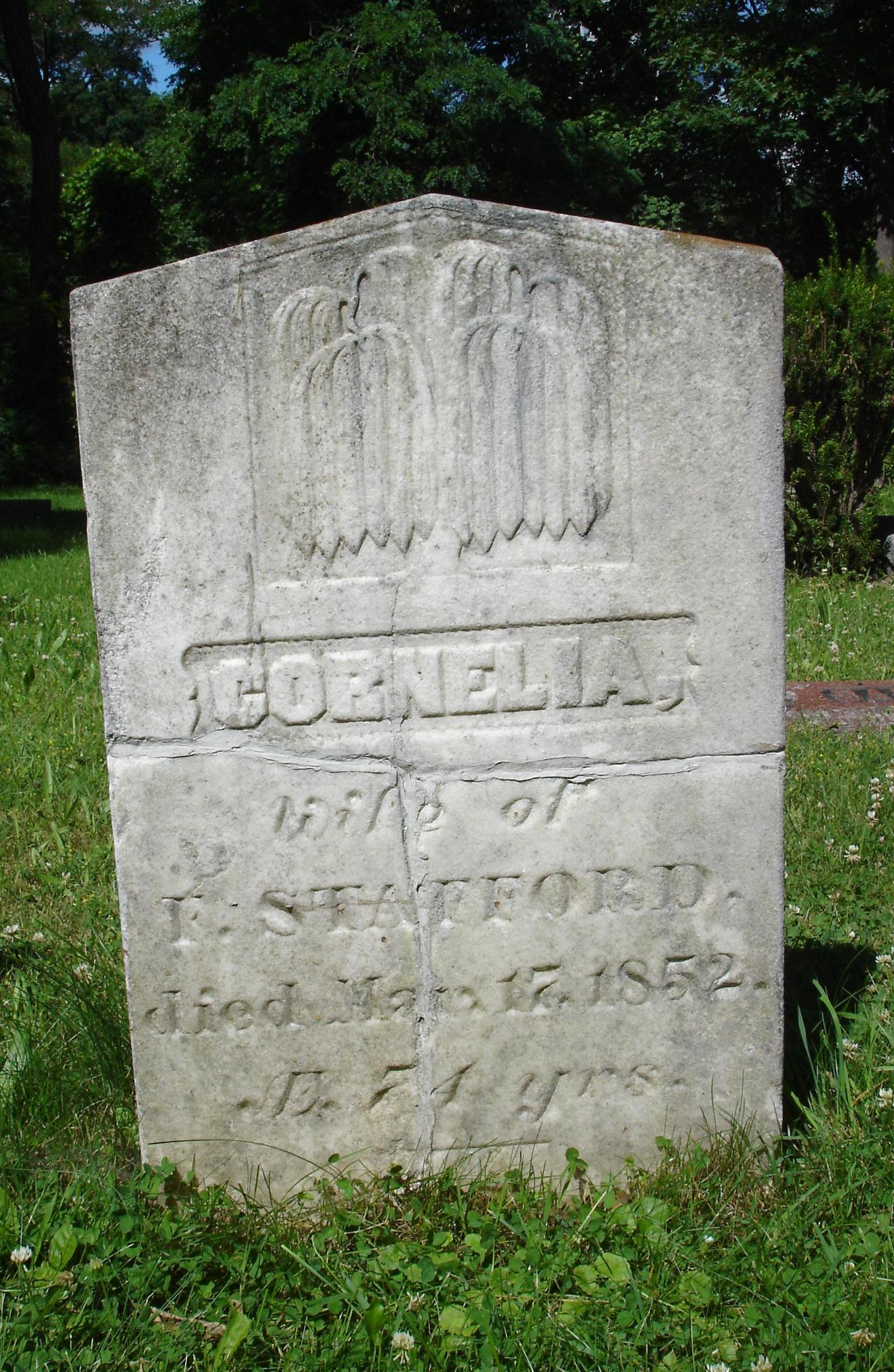
Frederick Stafford
16 Apr 1812
17 Mar 1852 Toronto, Ontario, Canada

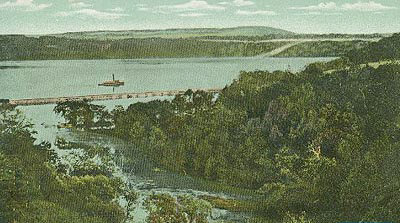
The Hudson, at Marlboro, NY

Several members of the Brink family signed this agreement to maintain constitutional rights dated at Kingston this 1st day of July 1775 by order of the Committee

General association signed by the freeholders and inhabitants of Kingston, Ulster County, being similar to that adopted and signed by the members of the Provincial Congress, including the delegates from Ulster County—to wit: James Clinton, Johannis Hardenbergh, Egbert Dumond, Christopher Tappen, John Nicholson, and Jacob Hoornbeek.

Persuaded that the salvation of the rights and liberties of America depends, under God, on the firm union of its Inhabitants in a vigorous prosecution of the measures necessary for its safety; and convinced of the necessity of preventing the anarchy and confusion which attend the dissolution of the powers of Government we the Freemen Freeholders and Inhabitants of the town of Kingston Ulster County being greatly alarmed at the avowed design of the Ministry to raise a revenue in America, and shocked by the bloody scene now acting in the Massachusetts Bay do in the most solemn manner, Resolve never to become slaves; and do associate under all the ties of Religion, honour and love to our country, to adopt and endeavor to carry into execution whatever measures may be recommended by the Continental Congress, or resolved upon by our Provincial Convention, for the purpose of preserving our Constitution, and opposing the execution of the several arbitrary and oppressive acts of the British Parliament until a reconciliation between Great Britain and America on constitutional principles (which we most ardently desire) can be obtained and that we will in all things follow the advice of our General Committee respecting the purposes aforesaid the preservation of Peace and good order and safety of individuals and private property.

John Brink, John Brinck, Jr.; Petrus Brinck, Cornelis J. Brink, Cornelis C. Brink, Jacob Brink, Petrus C. Brink,

Cornelius’ sons-in-law also signed Baltus Kiever, Hendrick Turk, and Johannis Wolfin, Jr

Several members of the Winne family also signed Laurence Winne, Peter A. Wiune, Arent Whine, Benjamin Winne,

In pursuance of a resolve of the Provincial Congress of the Colony of New York dated the 29th day of May 1775 we the committee of the Corporation of Kingston in the County of Ulster, do hereby certify that the above list or roll contains all the persons’ names who have signed the General Association within the Corporation of Kingston; also annexed list returned to us, containing the names of a troop of horse, who reside in different parts of the said County; and also a list on the back hereof of the persons’ names who have refused to sign the said Association. All which, with humble submission, we herewith return to the Provincial Congress aforesaid.

Children

1. Cornelis C. Brink

Cornelis’ godparents were Frederich Wenne and his wife Anna Maria Dewit.

Cornelis’ wife Maria Hommel was baptized  6 Oct 1753 Saugerties, Ulster Cty, NY. Her parents were Johannes Hommel (1714 – ) and Antje Maria Snyder (1714 – 1760). Maria died 12 Feb 1837 in Woodstock, NY

In the Revolutionary War, a Cornelius P. Brink is listed as an Ensign and Lieutenant in Ulster County regiments.  Not sure if he is our Cornelius.

Children of Cornelis and Maria:

i. Frederick Brink b. 1 Jul 1779 in Saugerties, Ulster, New York; d. 16 Jun 1852 in Saugerties; m. 21 Dec 1800 Kingston, Ulster, NY to Catherine Meyer (bapt. 28 Jul 1782 Kingston – d. 1 Apr 1861 Plattekill, Ulster, NY) Catherine’s parents were Petrus Meyer (1754 – 1827) and Barbara Longyear (1752 – 1828).

In the 1850 census, Frederick and Catherine were living in Saugerties, Ulster, New York.

ii. Abraham Brink b. 28 Jan 1787 in Saugerties, Ulster, New York; d. 1819 in Saugerties; Burial: Mount Marion Cemetery. Saugerties m. Mariah France (b. 1786 – d.1881 Saugerties, Ulster, New York)

In the 1850 census, Mariah was living alone in Saugerties, Ulster, New York

iii. Antje Brink b. 1792 in Saugerties, NY; m. Tjerck Burhans (b. 27 Jan 1787 in Katsbaan NY – d. 23 Dec 1854 in Kingston, NY) Tjerck’s parents were Tjerck Burhans (1759 – 1832) and Catharina Dederick (1764 – 1835 ) After Antje died, Tjerck married about 1820 to Anna Eckert (b. 1797)

In the 1850 census, Tjerck and Anna were living in Kingston, Ulster, New York where Tjerck was a laborer

2. Jacob Brink

Jacob’s godparents were Jacob Brink and his wife Mareitje Elig.

Two 19th Century applications for Sons of the American Revolution Membership say that Jacob’s parents were Cornelius Brink (b. 1722) and Marretje (Bettis) Beatty and his grandparents were Egbert Brink (b. 1685) and Elsjen “Alice” Kok (b. 1686) Egbert was the first of the American Brink family to abandon the custom of using his father’s name as a surname, and resume the family name of the Netherlands. Egbert Brink was one of the assistant trustees of the town of Marbletown in 1738 and his name appears as one of those who organized the Reformed Dutch Church of Marbletown in 1743. He lived to be one of the signers of the Articles of Association of the patriotic citizens of Ulster county on the 9th of Jyne, 1775. Preceding his residence in Marbletown he lived in the town of Hurley where he served as one of the 146 trustees of that town in 1727. He was an elder in the Marbletown church in 1747.

However, today’s sources say that Cornelius and Marretje’s son Jacob (1764-1843) married Elizabeth DuBois (1766 – 1847)

Our Jacob’s wife Christina Longyear was baptized 21 Jun 1761 Kingston, Ulster NY. Her parents were Jacob (Langjaer) Longyear b: in Netherlands and Maria (Cock) Cox b: 1711 in Ammerstol, South Holland, Netherlands. Christina died 17 Oct 1836 in Ulster County, New York and is buried in Oosterhoudt Grounds, near Lake Katrine, Ulster, NY.

In the Revolutionary War, Jacob enlisted in Snyder’s Regiment known officially as  the First Regiment of Ulster County Militia. The city of Kingston was burned by the British on Oct 16, 1777.

Children of Jacob and Christina

i. Andreas Brink b. Jan 1780 in Kingston, Ulster, New York; d. 2 Oct 1859 in Ulster, New York; Burial: Pine Bush Cemetery Kerhonkson, Ulster, NY; m. 25 May 1806 Kingston, Ulster, NY Reformed Dutch Church to his third cousin Maria Brink (b. 1782) Maria’s parents were Soloman Brink (1755 –) and Sarah Van Keuren (1753 – ) Her grandparents were Cornelius Brink (1724 – 1782) and Elsje Van Benschoten (1725 – ). Her great grandparents were Lambert Cornelis Brink (1689 – ) and Rachel DuMond (1698 – ). She and Andreas shared 2nd great grandparents : Cornelis Lambertsen BRINK (1661 – 1725) and Marijken Egbertse MEYNDERSE . Andreas and Maria had four surviving children born between 1806 and 1824.

In the 1850 census, Andrew and Maria were living in Kingston, Ulster, New York with David and Hellen Carle and Jacob and Jane E. Brink.

ii. Jacob J. Brink b. 24 Aug 1781 in Plattekill (Saugerties), Ulster, New York; d. 20 May 1859 in Ulster; Burial: Mt. Marion Cemetery, Saugerties, Ulster, New York (77 yrs – 8 mos – 26 dys ; m. 24 Jun 1802 DRC, Katsbaan, Ulster, New York to Sarah Carle (b. 26 Dec 1780 in Plattekill, Ulster, New York – d. 12 May 1868 in Plattekill). Sarah’s parents were George Frederick “Jurry” Carle (1740 – 1810) and Narytje’ “Maria” Dederick (1746 – 1810)

In the 1850 census, Jacob and Sarah were farming in Saugerties, Ulster, New York

iii. Christofel “Christopher” Brink b. 20 May 1790 in Kingston, Ulster, New York; m. 10 Jul 1808 – Ulster, New York to Sarah Graham (b. 20 Apr 1788 New York). Christopher and Sarah had six children born between 1809 and 1826.

In the 1850 census, Christopher and Sarah were living in Kingston, Ulster, New York.

iv. Willem “William” I. Brink b. 23 Jun 1794 in Saugerties, Ulster, New York; d. 5 Mar 1857 Burial: Pine Bush Cemetery, Lake Katrine, Ulster County, New York; m. 1815 to Antje “Ann” Keiffer (b. 31 Jan 1799 – d. 25 Oct 1873 Burial: Pine Bush Cemetery) Ann’s parents were Willem “William” Kieffer (1777 – ) and Mareitje Swart (1779 – ).

In the 1850 census, William and Ann were living in Kingston, Ulster, NY with four children ages 15 to 26)

v. Lazarus Brink b. 1796 in Ulster, New York; d. 10 Dec 1843 in Saugerties, Ulster, New York; Burial: Mount Marion Cemetery; Inscription: ae 47 yrs 8 mos 24 dys; m. Maria Catherine Whittaker (b. 25 Dec 1794 Ulster, NY – d. 28 Jun 1884 Burial: Mount Marion Cemetery Saugerties Inscription: ae 89 yrs 6 mos 3 dys) Maria’s parents were Abraham (Whittaker) Whitaker (1761 – ) and Annatje Swart (1771 – ) Lazarus and Maria had seven children born between 1817 and 1831

In the 1870 census, Maria was living with her son Henry in Kingston, Ulster, NY.

vi. Antje Brink bapt. 3 Feb 1799 Kingston, Ulster, NY Reformed Dutch Church

3. Antje Brink

Antje’s godparents were Christian Wenne and Jannetje Wenne

Antje’s husband Baltus Kiefer was baptized 19 Jan 1752 – Kingston, New York, witnesses were his grandparents Baltus Kiefer and Christina Muller (a Palatine Refugee).  His parents were William Kiever (bapt. 1729) and Elizabeth Swart. Baltus died 16 Jun 1841 and is buried in Lake Catrine Cemetery, New York.

In the Revolutionary War, Baltus enlisted in Snyder’s Regiment known officially as  the First Regiment of Ulster County Militia. The city of Kingston was burned by the British on Oct 16, 1777.

Baltus and Antje had children, but I haven’t seen any identified.  In 1921, a descendant, Mrs. Anne. M. Kieffer said she had a pistol with the initials BK on it and Baltus was in the White Horse Brigade.

In the 1800 census, Baltus had a household of six in Kingston, Ulster, New York.

In the 1810 census, he had a household of nine including two slaves.

4. Pieter Cornelius Brink

Pieter’s godparents were Pieter Wenne, and his wife Arriantje van Etten.

Pieter’s first wife Lena (Helena) Whitaker was born 10 May 1755 in Catskill, Greene County, NY.  Her parents were Samuel Whitaker (b: 1715 in Kingston) and Catherine “Catryna” Burhans (b: 1714 in Kingston)

Pieter’s second wife Catharina Burhans was born 15 Oct 1777 in Kinderhook. She was baptized 1 Jan 1778 Kingston RDC, Kingston, Ulster County, NY. Her parents were Jan Burhans (b: 1726 in Kingston) and Sarah Van Aken (b: 1740 in Kingston)

In the Revolutionary War, Pieter enlisted in Snyder’s Regiment known officially as  the First Regiment of Ulster County Militia. The city of Kingston was burned by the British on Oct 16, 1777.  Peter first received his pension 4 Mar 1831 and was placed on the pension role 15 Dec 1832.

In the 1830 census, he was living in Kingston, NY.

Peter is buried at Finger Ground, Mount Marion, Ulster, New York.

5. Jannetie BRINK (See Hendrik (Henry) TURK‘s page) Jannetie’s godparents were Adam Schaart and his wife Jannetje Wenne

6. Mareitje Brink

Mareitje’s godparents were Jacob Brink, Marretje Brink.

Some sources say that the Marretje Brink that married Johannes Wolfen was born Sep 1753 Kingston, Ulster, New York, not 3 Oct 1761. They say she was the daughter of Hendrick Lambertsen Brink (1693 – 1765) and Susanna DuBois (1713 – 1785), granddaughter of Pieter “Peter” Lammbertsen Brink (1670 – 1757) and Geertruy Matthewssen Teunissen Newkirk (1671 – 1759) and great granddaughter of our ancestors Lambert Huybertse BRINK (1629 – 1702 ) and Hendrickje CORNELIS (1639-1702).

As you can see, when Marretje was born, Hendrick would have been 60 and Susanna 40, not impossible, but much older than usual.   Her grandparents Pieter and Geertury removed from Kingston to Montague, New Jersey.

Mareitje’s husband Johannes Wolfen was born 26 Mar 1744 in Saugerties, Ulster, New York. His parents were Godfried Wolven (1700 – 1780) and Sarah DuBois . He first married Anna Margaretta Spaan and had 4 children.  Johannes died 26 Sep 1796 – Saugerties, Ulster, New York.

Children of Mareitje and Johannes:

i. Margaret Grietje Wolven b. 1770 in Saugerties, Ulster, New York;d. 11 May 1817 in Saugerties; m. 23 Apr 1797 Ulster, NY to Peter J Winne (b. 27 Dec 1760 in Saugerties – d. 1819) Peter was Margaret’s first cousin once removed. His parents were Johannes Winne (1729 – 1802) and Rachel Hendricks (1729 – 1799) His grandparents were Pieter WINNE III (1691 – 1771) and Antje MERKEL (1701 – 1781)

ii. Saartjen “Sally or Sarah” Wolven b. 1772 in Saugerties, Ulster, New York; d. 8 Feb 1822 in Ulster, Ulster, New York; m. Jacob Beare (b. 5 Jul 1785 in Saugerties – d. 9 Mar 1860 in Saugerties)

In the 1850 census Jacob Bear was livin in Saugerties, Ulster, New York with Sarah [__?___ (b. 1793 New York) and five Bear children John (31), Adam (29), William (26), Catharine (16) and Arietta (1).

iii. Andrew Wolven b. 1775 in Ulster, Ulster, New York; m. Hannah Osterhoudt (b. ~1820 in New York A girl Hannah was born 7 Nov 1784 in Kingston to Benjamin Osterhoudt (1741 – 1777) and Helena “Lena” Burhans (1756 – ) Andrew and Hannah had four children between 1808 and 1821.

iv. Annatje Brink Wolven b. 1777 in Saugerties, Ulster, New York; d. 20 Aug 1836 – Ulster, Ulster, New York; m. 30 Jan 1800 – Saugerties to Cornelius Post (b. 5 Nov 1775 in Ulster, Ulster, New York – d. Ulster, Ulster, New York) Cornelius’ parents were Jacobus Post (1741 – ) and Lydia Whitaker (1742 – ) or Elizabeth Viele (b. 1743 in Kingston, Ulster NY)

v. Henricus Wolven b. 1780 in Saugerties, Ulster, New York

vi. Weintje “Lavina” Brink Wolven b. 15 Feb 1786 in Saugerties, Ulster, New York; d. 25 Aug 1848; m. 16 Jul 1814 to Joel Osterhoudt VanOrden Overpaugh (b. 11 Jan 1792 in Saugerties, Ulster, New York – d. 16 Dec 1863 in Cobleskill, Schoharie, New York) Joel’s parents were Jeremiah Hahn Overbagh (1759 – 1813) and Sara Loveridge Osterhoudt VanOrden (1758 – 1840) Joel and Lavina had nine children born between 1815 and 1829.

vii. Jan Wolven b. 5 Sep 1794 in Saugerties, Ulster, New York

7. Jan Brink

Jan’s godparents were Jan Brink and Grietje Woelfin “twin”

Jan’s wife Catharina “Catherine” Hommel was born 7 Jan 1759 in Ulster County, New York and baptized 16 Apr 1759 Saugerties, Ulster Cty, NY. Her parents were Johannes Hommel (b: 1714 in Kingston, Ulster NY) and Antje Maria Snyder. Catharina died 15 Jan 1845 in Ulster County, New York.

There were five John Brinks  in Snyder’s Regiment in the Revolutionary War (Jr, and middle initials A, C, G, and T).  I’m not sure if our Jan was one.

John Brink was a soldier of the American Revolution through the whole war, nearly. He was a member of the Regiment of the Levies under the command of Colonel Albert Pawling and served in the Fifth Regiment of the Line (the Continentals) under Colonel Lewis DuBois.

John Brink and his twin brother, Adam enlisted together. At a dinner given fifty years after the close of the Revolution in Kingston, NY, on September 10, 1832, both of these brothers were present, having come to celebrate together.

Children of John and Catherine:

i. Joel Brink bapt. 13 Feb 1785 in Katsbaan, Ulster, NY; d. Aft. 1816; m. 2 Feb 1806 – Saugerties, Ulster, NY to Elisabet “Elizabeth” Rightmeyer (b: 1 Nov 1787 Saugerties – d: Aft 1816) Elizabeth’s parents were Hermanus Rightmyer (1754 – 1835) and Elizabeth Allen 1757 – 1846). Joel and Elizabeth had four children born between 1808 and 1816.

ii. Frederick Brink bapt. 12 Aug 1787 in Katsbaan, Ulster, New York d: 1 Apr 1855; m. Marie Roosa (Rose) (b: ~1791 bapt. 10 Apr 1793 Woodstock, Ulster, NY; d: 17 Jul 1875 Woodstock, Ulster County, New York) Maria’s parents were Benjamin Rosa (1768 – ) and Maria Bart (1773 – ) Frederick and Maria had seven children born between 1814 and 1836.

iii. Zacharias Brink b: 13 Jan 1794 Katsbaan, Ulster, NY; d. 1857 in Ulster, Ulster, New York; m. 7 Sep 1822 Kingston, NY to Anna Maria Krom (b. 28 Aug 1803 in Kingston, Ulster, New York – d. 1872) Anna Maria’s parents were Jacobus “James” Krom (1780 – 1832) and Abigail “Abbe” Brown (1782 – 1832) Zacharias and Abbe had three children between 1823 and 1828.

iv. Antje Brink b. 30 May 1796 in Katsbaan, Ulster, New York; m. 30 Nov 1826 in Kingston RDC to her first cousin Solomon A. Brink (bapt. 10 Jan 1789). Solomon’s parents were Adam Brink and Caharina Snyder. Another version is that Solomon married Margaret Whitaker (b: 30 Jul 1804 Ulster, Ulster, NY – d: 13 Mar 1888 Ulster, Ulster, NY) Antje and Solomon had six children between 1818 and 1836.

In the 1850 census, Solomon and Ann were living in Woodstock, Ulster, New York with their two youngest children Phebe (b. 1828) and Samuel (b. 1836) still at home.

v. Abraham Brink b: 11 Feb 1802 Saugerties, Ulster, NY; bapt. 10 Mar 1802; d: 7 Oct 1858; Burial: Chase Burial Ground, Sawkill, Ulster, NY; m. Jane Eliza Van Keuren (b: 1806 Ulster, NY d: 20 Aug 1836 Saugerties) Jane’s parents were Hezekiah Van Keuren (1765 – 1832) and Sarah “Sally” Meyer (1783-1850).

In the 1850 census, Abram Brink was living in Kingston, Ulster, NY with relatives.

8. Adam Brink

Adam’s godparents were Adam Woelfin and Annatje Brink “twin”

Adam’s wife Catharina Snyder was baptized 27 Dec 1760 Saugerties, Ulster Cty, NY. Her parents were Jeremiah Snyder b: 8 Aug 1738 in Churchland, Ulster, NY and Catherina Hally.

Catharina’s father Jeremiah Snyder was a captain in the First Regiment, Ulster County Militia, commanded by Colonel Johannes Snyder. Captain Snyder was captured by the Tories and Indians in a raid into the town of Saugerties on Saturday, May 6th, 1780 and carried into Canada, where he was a prisoner for more than two years. The story of his capture, captivity and escape has been told a number of times, particularly in ” The Early History of Saugerties.”

Adam Brink was a soldier of the American Revolution through nearly the whole war. He was a member of the Regiment of the Levies under the command of Colonel Albert Pawling and served in the Fifth Regiment of the Line (the Continentals) under Colonel Lewis DuBois.

Adam Brink and his twin brother, John C., enlisted together. At a dinner given fifty years after the close of the Revolution in Kingston, NY, on September 10, 1832, both of these brothers were present, having come to celebrate together.

Adam was placed on the Revolutinary War pension roll 11 Mar 1833 his pension commenced 4 Mar 1831.

Children of Adam and Catherine:

i. Solomon A. Brink bapt. 10 Jan 1789; d. Aft. 1860 census; m. 30 Nov 1826 in Kingston RDC, Kingston, Ulster County, NY to Margaret Whitaker (b: 30 Jul 1804 Ulster, Ulster, NY – d: 13 Mar 1888 Ulster, Ulster, NY) Another version is that Solomon married his first coushin Antje Brink (b. 30 May 1796 in Katsbaan, Ulster, New York). Antje’s parents were Jan Brink and Catherine Hommel. Solomon and Antje had six children between 1818 and 1836.

In the 1850 census, Solomon and Ann were living in Woodstock, Ulster, New York with their two youngest children Phebe (b. 1828) and Samuel (b. 1836) still at home.

In the 1860 census, Solomon was widowed and living with Phebe and his son-in-law Abner Chase in Kingston.

ii. Sarah “Sally” Brink b: 4 Nov 1790 in Saugerties, Ulster, New York; d. 27 Mar 1881 in Flatbush, Ulster, New York; m. her half cousin once removed Martin Snyder (b: 3 Feb 1779 in Saugerties – d. 15 Nov 1876 in Flatbush) Martin’s parents were Benjamin Snyder (1742 – 1831) and Annatjen Brink (1744 – 1831). His grandparents were Jacob BRINK (1696 – 1757) and his second wife Mareitje Elich (1710 – 1751)

iii. Cornelius Brink b. 4 Jun 1793 in Saugerties, Ulster, New York; d. Jun 1860 in Otsego, Otsewo, New York of fever; m. Tammy [__?__] (b. 1803 NY – d. 24 Feb 1867 Age 43y 11m w/o Cornelius ) Flax Island Cemetery Otego) Flax Island dates read by Alma P. Slawson, Oneonta NY in June 1965 Re-Typed by Annette Campbell. Birth year from 1850 census. Something in Tammy’s statistics is off by exactly twenty years. Since her oldest son Moses was born about 1826, I guess that her age at death was 63y 11m.

In the 1850 census, Cornelius and his wife Tammy were living in Otego, Otsego, New York with six children ages 9 to 24.

There was another Cornelius Brink born in 1794 New York whose parents were Johannes Brink (1758 – 1821) and Blandina Westfall (1760 – 1848) from Deerpark, Orange, New York. Some say this Cornelius was the one who married Tammy and died in Otego.

There was a Cornelius C. W. Brink born about the same time in New York to John Brink and Dantha [__?__] who died 11 May 1877 in Thornapple, Michigan He married Sarah [__?__] (b. 1798 NY). Could Dantha and Blandina be variations of the same name>

9. Annatien Brink

Annatien’s godparents were Petrus Brinck and Annatien Brinck.

Annatien’s husband Wilhelmus “William” France (Frans) was born 16 Sep 1754 in Ulster County, New York. His parents were Johann Jakob Franz and Catharina Freet or  Anna Eva Wagner.  William died 13 Jul 1848 in Ulster County, New York and is buried Plattekill, Ulster County, New York.

Children of Annatien and William

i. Jacobus France bapt. 15 May 1785 Katsbaan/Saugerties, Ulster, NY; d. 1843 Burial: Mount Marion Cemetery Saugerties; m. 1817 to Elizabeth Dewitt (b. 1787 – d. 1871 Burial Mount Marion Cemetery Saugerties

In the 1850 and 1870 census, Elizabeth was living with her son William H France in Kingston, Ulster, New York.

ii. Antje France bapt. 28 Apr 1787, Katsb)aan/Saugerties, Ulster County, NY; m. 6 May 1815, Katsbaan/Saugerties, Ulster County, NY to Jacob Hommel (b. 7 May 1790 in Ulster, Ulster, New York – d. 6 Feb 1846) Jacob’s parents were Hermanus Hommel (1740 – 1828) and his cousin Maria Hommel (1767 – 1837)

iii. Jannetje France b. 1789 Kingston, Ulster County, New York

iv. Cornelia France bapt. 3 Sep 1791 Katsbaan/Saugerties, Ulster County, NY; m. 31 Dec 1812 (RDC Katsbaan-Worden) to Jacob Dewitt of Saugerties

v. Frederick France b. 22 Jun 1794; bapt. 20 Jun 1794 Katsbaan/Saugerties, Ulster; m. Catherine Delamater Roosa (b. 8 Jul 1805 in Rochester (Accord), Ulster, New York) Catherine’s parents were David Roosa (1783 – 1846) and Annetje “Henrietta” Osterhought (1784 – )

In the 1850 census, Frederick and Catherine were living with his cousin Abram Brink in Kingston, Ulster, New York.

vi. Maria France b. 9 Feb 1797; bapt. 19 Feb 1797 Katsbaan/Saugerties, Ulster, NY; m. 3 Sep 1814 in Katsbaan to Nicholas Dick (b. 1771 in New York – d. 16 Apr 1846 in Walton, Delaware, New York)

vii. Petrus “Peter” Brink France bapt. 16 Jun 1799 Katsbaan/Saugerties, Ulster County, NY; d. 1806 Katsbaan/Saugerties

viii. Wilhelmus “William” France b. 5 Apr 1801, bapt. 3 May 1801 Katsbaan/Saugerties, Ulster, NY; d. 16 Mar 1885 in Walton, Delaware, New York; m. 21 Apr 1824 to Rachel Roosa (b: 4 Aug 1803 in Delaware, New York – d. 24 Oct 1880 in Walton, Delaware, New York) Rachel’s parents were Benjamin Roosa (1768 – 1844) and Maria Polly Baird (Bart) (1773 – 1854) William and Rachel had five children born between 1825 and 1843.

In the 1870 census, William and Rachel were farming in Walton, Delaware, New York

ix. Catharina France b. 17 Sep 1803; bapt. 2 Oct 1803 Katsbaan/Saugerties, Ulster, NY’ d. 5 Feb 1896 Walton, Delaware, NY; m. aft. 1863 to Jacobus “James” Roosa (Rosa or Rose) (b. 01 Mar 1802 in Saugerties, Ulster, NY) James’ parents were Benjamin Roosa (1768 – 1844) and Maria “Polly: Bart (1773 – 1854). James first married Polly (Brink?) Bunte (1805 – 1866)

x. Peter Brink France b. 1806, KingstonUlster County, New York.

10. Isaac Brink

Isaac’s godparents were Isaac Post and Hanna Decker.

Isaac’s wife Rachel Blackwell was baptized 12 Nov 1769 in Kingston, Ulster, NY.  Her parents were Gerrit Blackwell (Blekvil) and Annatjen Whitaker.  Rachel died about 1705.

11. Catharina Brink 

Catharina’s godparents were Lourentz Winne and Catharina Becker.

12. Zacharias Brink

Zacharias’s godparents were Petrus Eygenaer and his wife Neeltjen Laucks

13. William Brink

William’s godparents were Petrus Osterhout and his wife Marytje

Two William Brinks married in the early 1800’s in the Kingstone RDC. One married Harriet Post 25 Jan 1801 and the other married Maria France 20 Apr 1806. Since Harriett was living with her sons James and Cornelius in the 1850 census, it seems to me that these were two different men. Some genealogies have one wife and others have the other, I haven’t seen proof one way or the other. I would guess their ten children are a combination of the two marriages. Any input is appreciated.

Harriet Post was born 2 May 1779 – Kingston, Ulster, New York. Her parents were Jacobus Post (b. 1741) and Lydia Whitaker (b. 1742). Harriett died 27 Feb 1858.

Maria France (Franz or Frans) was born in 1793.

Children of William and Maria:

i. Moses Brink b. bapt. 10 Sep 1801 Kingston, Ulster, NY

ii. Mary Ann Brink b. 9 Feb 1803 Kingston, Ulster, New York; d. 28 Nov 1875 in Saugerties, Ulster, New York; m. Andrew Simmons (b. 27 Jun 1799 in Dutchess, New York – d, 11 Feb 1868 in Saugerties, Ulster, New York) Andrew’s parents were Johannes Simon (1749 – ) and Catherine Funck (1749 – ) Mary Ann and Andrew had three children.

iii. David Brink bapt. 29 May 1805 Kingston RDC, Ulster County, New York

iv. Zachariah Brink bapt. 16 Jun 1807; d. 1 Aug 1855 in Ulster County, New York; m1. 30 Dec 1829 Age: 22 Dutch Reformed Church, Katsbaan, NY to Hyletje Snyder (b. 19 Feb 1811 in New York – d. 21 May 1834 in New York) Zachariah and Hyletje had two children Rachel Jane (b. 1831) and Hillietje Jane (b.1833) before Hyletje died at age 23.

m2. Mariah Braizee b. 5 Feb 1815 in New York; d. 1886 in Saugerties, New York, United States Zachariah and Mariah had five children born between 1837 and 1848.

v. William W Brink b. 15 Jul 1809; d. 14 Jul 1895; m. 01 Mar 1834 Kingston, Ulster, NY to Sarah Ariatta (Ann) Post (b. 15 Sep 1814 – d. 27 May 1881)

In the 1870 census, Wm W and Sarah A were living in Saugerties, Ulster, New York with one son Edward (b. 1855 NY) In the 1880 census, William was a Boot & Shoe Maker

vi. Jane Cathrine Brink b. 25 Jul 1813

vii. James Brink b. 1814

In the 1850 census, James was living with his mother Harriet and brother Cornelius in Saugerties, Ulster, New York.

viii. Cornelia Brink b. 27 Oct 1816

ix. Cornelius Brink b. 1822

In the 1850 census, Cornelius was living with his mother Harriet and brother James in Saugerties, Ulster, New York.

x. Nicholas De Meyer Brink or Nicholas Daniel Meyer b. 6 Feb 1823 in Flatbush, Ulster, New York; d. 5 Feb 1883 Glenerie, Ulster N.Y. buried Mountain View Cemetery; m. Charlotte Milliken (b. ~ 1827 – d. 15 May 1902 ) Charlotte’s parents were Hezekiah Milliken (1791 – 1838) and Mary Peary (1787 – 1841) Nicholas and Charlotte had eight children born between 1847 and 1866.

In the 1850 census, Nicholas D M and Charlotte were farming in Saugerties, Ulster, New York.

14. Cornelia Brink

Cornelia’s godparents were Martinus Post and Arriantje Post

Cornelia’s first husband George Jansen was born about 1778.

Cornelia’s second husband Frederick Stafford was born about 1773 in New Hampshire. His parents were Abel Stafford (b. 1748 – 1841) and Rebecca Short (b. 1750 – ). Frederick died 29 Sep 1848 and was buried 11 Oct 1848 in St. Peter’s Anglican Church Cemetery in Mississauga, Ontario.

Cornelia and Frederick moved to Canada soon after their marriage. Their first daughter Martha was born 19 Jun 1816 in Gainsborough Twp., Lincoln Co., Ontario,

Cornelia Brink Headstone – St. Peter’s Toronto, Canada

Children of Cornelia and Frederick:

i. George Stafford b. 1815 in Toronto Tp Peel Co, Ontario; d. 13 Apr 1890 in Grey, Ontario, Canada; m. 29 Mar 1842 Home District, Ontario to Jane Small (b. 1825 in Cornwall, England – d. 14 Jul 1901 in Grey, Ontario) Jane’s parents were Thomas Small (1793 – 1873) and Mary Andrews (1803 – 1879). George and Jane had seven children born between 1843 and 1858.

ii. Martha Stafford b. 19 Jun 1816 in Gainsborough Township, Lincoln County, Ontario; d. 31 Dec 1903; m. 1836 Wentworth, Ontario, Canada to William B Stewart (b. 1810 in Belfast, Ireland or Albany, New York – d. 31 Jan 1893 Burial: Cline Family Cemetery, Elfrida, Saltfleet, Wentworth, Ontario) William’s parents were Capt. Robert Stewart (1776 – ) and Nancy Montgomery (1778 – ) Martha and William had nine children born between 1837 and 1864.

iii. Hannah Stafford b. 17 Feb 1817 in Toronto Twp, Peel, Ontario, Canada; d. 12 Nov 1905 in Saltfleet, Wenworth, Ontario; m. 21 Mar 1842 Home District, Ontario, Canada to John Pettit Cline (b. 18 Jan 1817 in Saltfleet, Wentworth, Ontario, Canada – d. 18 Jan 1901 in Saltfleet) John’s parents were Henry Cline (1790 – 1864) and Sarah Pettit (1791 – 1839)

iv. Ira Stafford b. 15 May 1821 in Ontario, Canada; d. 20 Sep 1885 in Ontario, Canada; Unmarried

v. Cornelius Stafford b. 1824 in County Peel, Ontario; d. 21 Jun 1906 in Wentworth, Ontario; m. 13 Jun 1850 – Erindale, Ontario, Canada to Caroline Clements (b. 1823 in Yarmouth, Hampshire, England – d. 25 Nov 1883 in Ontario, Canada) m2. 3 Oct 1883 Age: 59 Wentworth, Ontario, Canada to Abigail Cowell (b. 1840 in Wentworth, Ontario – d. 1 Nov 1902 in Elgin, Ontario, Canada)

vi. Frederick Stafford b. 1825 in Ontario, Canada; d. Jan 1898 in Harriston Twp, Wellington Co, Ontario; m. Christy Ann Martin (b. 1831 in Canada – d. 1914 in Wellington Co, Ontario) Frederick and Christy had six children born between 1852 and 1869.

Sources:

http://trees.ancestry.com/tree/12795042/person/172468984

http://boards.ancestry.co.uk/localities.northam.usa.states.newyork.counties.ulster/3880.2.1.1/mb.ashx

http://cujamison.home.comcast.net/~cujamison/genhtm/genfrance.htm

http://trees.ancestry.com/tree/16129003/person/423507172

http://wc.rootsweb.ancestry.com/cgi-bin/igm.cgi?op=DESC&db=ppfha1&id=I8197

http://wc.rootsweb.ancestry.com/cgi-bin/igm.cgi?op=DESC&db=ppfha1&id=I5552

The history of Kingston, New York: from its early settlement to the year 1820 By Marius Schoonmaker

http://familytreemaker.genealogy.com/users/s/o/l/John-O-Solis/BOOK-0001/0055-0001.html

Posted in -9th Generation, Line - Shaw, Twins | Tagged , | 6 Comments

Evert Pels

Evert PELS (1624 -1686 ) was Alex’s 10th Grandfather; one of 2,048 in this generation of the Shaw line.
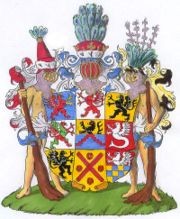
Evert Pels - Coat of Arms

Evert Pels (Pells, became Pultz) was born on 5 Jun 1624 in Stettin (Szczecin), Pomerania, Pressen, Germany [now Poland].  Stettin was a main residence of the Duchy of Pomerania until the Treaty of Stettin (1630) put the town under Swedish control, though its population remained predominantly German.  After the last Griffin duke had died during the Thirty Years’ War in 1637, the duchy was partitioned between Brandenburg-Prussia and Sweden. Maybe that’s why the Pels left town.

His parents were Schepen Evert PELS (1600 – 1680) and Jannetje SCHEPMOES. He married Jannetje SYMONDS on 15 Dec 1641 in Amsterdam. The witness to the marriage was Evert’s uncle Pieter Smits of Amsterdam.  The “banns”, dated 31st November 1641 stated the intent of Evert Everts Pels, old 29 years and Jannetje Symonsdr., old 18 years, to get married. Evert was accompanied by his uncle and Jannetje by her mother. This means that Evert must have born around 1612. It could also mean that Evert’s parents were dead or unable to attend (living in Germany) and most likely that Jannety’s father was dead. It also stated that Evert was a sailor.

Huwelijks Aangifte (Marriage Intentions for all Dutch Reformed Churches in the City of Amsterdam), Film 113201, Vol. 475

Compareerden als voren Evert Everts Pels van Statijn varensgezel out 25 jaren wonende in de Hasselaersteeg, geen ouders, geassisteert met zijn oom Pieter Smit, en Jannetje Sijmonsdr. out 18 jaren wonende als voren geassisteert met haer moeder Claertje. Den 31 November 1641.

Appeared as before Evert Everts Pels from Statijn, sailor, aged 25 years, living in the Hasselaersteeg, having no parents (living in Amsterdam), accompanied by his uncle Pieter Smit, and Jannetje Sijmon’s daughter, aged 18 years, living in the same place, accompanied by her mother Claertje. 31 November 1641.

De 15th Dito heft D. Holbekijus getrout als volgt:  Evert Everts Pels met Jannetje Sijmons.

The 15th of the same (December 1641) Dominie Holbekijus married as before:  Evert Everts Pels with Jannetje Sijmons.

Evert died on 29 Jun 1686 in Esopus, (Later Kingston), Ulster County, New York. He was buried in Greenbush NY.

Evert Pels, from Stettin, Pomerania, his wife and a servant came from Amsterdam, Holland, to the colony of Rensselaerswyck in 1642. While still in Amsterdam, on 5 Jun 1642, he was engaged as a brewer for the term of six years, they were to travel to the Colony of Rensselaerswyck to work the Patroon, Kiliaen Van Rensselaer, who remained in Holland but had engaged others to administer the Colony for him and his partners, who formed a Board of Directors for the Colony.  Evert Pels, his wife and a servant came on the ship Den Houten. and landed in New Amsterdam, now New York City. They then went up the Hudson River to Beaverwyck, now Albany, New York.

Evert Pels contracted to be a Brewer for his first six years in Rensselaerswyck

Evert Pels was a freeman. He paid his own way to the Colony and was therefore not indentured to the patroon for a number of years as were those who bound them selves as servants to the patroon for a number of years in exchange for passage to the Colony. The document, dated 3 Jun 1642, that gives the details of Evert Pels emigration does not give the name of his wife, Jannetje Symons, but we now know that she is the wife who came with him from Amsterdam. Nor does the memo give the name of the servant who came with them.

Jannetje Symons was born 22 Sep 1624 in Amsterdam, Holland.  Her parents were Symon FLORISZEN and Claertje ARENTS.     Her parents were NOT Symon Florizen Groot (1602 – 1699) and Rebecca De  Trieux (c. 1636 – 1689) as is often reported.  That couple did not marry until over 20 years after Jannetje was born and Rebecca is a decade younger than Jannetje. THAT Symon came to New Netherland about the year 1645, as boatswain of the ship Prince Maurits (120-2), and purchased a house of Jacob Roy in New Amsterdam. About ten years later he became a resident of Beverwyck where he purchased a house lot and remained until 1663, when he hired a bouwery of 25 or 30 morgens at Schenectady of Gerrit Bancker and Harmen Vedder. (120-3)  He married Rebecca, daughter of Philip Du Trieux of New Amsterdam, and had six sons and four daughters; of whom Symon, Abraham, Philip, Dirk and Claas were captured by the French and Indians and carried away to Canada in 1690. Symond and Rebecca were away from home in Albany for a baptism.  The year following they were redeemed.

Jannetje died on 2 Sep 1683 in Kingston, Ulster, New York.

Jannetje’s sister Marretje Simons Schepmoes was baptized 12 October 1632 in the Nieuwkerk (New Church), Amsterdam, North Holland, Netherlands to Sijmon Floriszen and Claertje Arents.   There were five sisters, Lijsbet, Machtelt, Marij (who probably died young), Marretje and Jannetje, and three brothers, Floris, Arent (who probably died young), and Arent.

Marretje seems to have arrived from the Netherlands as an indentured servant to Pieter Pietersen Harder “in the city of New Amstel, on the South River”.

Evert PELS, the husband of her sister Jannetje, paid for the remainder of her indenture in 19 February 1659. Marretje married Jacob Barensten Cole, son of Barent Jacobsen KOOL after 1660 in Kingston, New York.  The Cools lived in Wildwyck/Esopus (now Kingston, Ulster, New York) where he worked for Juriaen Westfael, a farmer, and Marritje also worked, probably as a laundress. They moved to New Amsterdam (New York City) in 1667, where Jacob became a porter in the Weigh house and a beer and wine carrier like his father. By 1689, they had returned to Ulster County, where Jacob took an oath of allegiance.

Children of Evert and Jannetje:

Name Born Married Departed
1. Hendrick Vosberg Pels c. 1643
Renselaerwyck, NY
Indian Girl
2. Annatje Pels c. 1646
Renselaerwyck
Hendrick Cornelisse Van Ness
21 Oct 1663.
16 Nov 1688
3. Evert Evertse (Evertszen) Pels Jr. c. 1648 Papscanee Island, NY Brechtje Elswaert (Bridget Elsworth)
13 Sep 1670 New York City
bef. 30 May 1678
4. Clara Pels baptized
10 Sep 1651 New Amsterdam
Gerret Aertse Van Wagenen (brother of Jacob Aerstsen)
5. Marie Evertsz Pels c. 1655
Greenbrush, NY
Capt. Arie Heymansse Roosa
27 Oct 1679
Hurley, Ulster, NY
After 1714
Rhinebeck, Dutchess, NY
6. Elizabeth Evertsz Pels c. 1657
Greenbrush
Jochem Engelbertz Van Namen
3 Nov 1676 Old Dutch Church, Kingston
.
Cornelius Masten
7. Sara PELS 3 Jul 1659
Greenbrush
Jacob AERSTSEN Van Wagenen
25 Feb 1677
8. Rebecca Pels 13 Nov 1661
Esopus (Kingston) NY
Jeronimus Hans Barheit
9 Apr 1684 Albany
9. Symon (Simon) Evertsz  Pels 29 Mar 1665 Esopus Maritie Hendrix
1 Jan 1683 Old Dutch Church, Kingston

Evert Pels was an enterprising man. After his 6 year contract as a brewer was finished; on 28 Feb 1648, he leased a farm on Papscanee Island for six years, at f560 a year, but after building a new house and barns, he transferred the lease 14 Jan 1649, to Juriaen Bestvall and Jochem Kettelheym.  Both Bestvall and Kettelheym  had come to the New Netherlands on the same ship as Evert.  These two men had come to the colony by contracting with the patroon to work for 6 years as laborers. Their time was now served and they were able to lease a farm and work for themselves. Evert Pels turned the farm over to them on 25 Mar 1649.

18 Nov 1649, he leased jointly with Willem Fredericksz (Bout), a farm in Greenbush, for which he is charged in the accounts with an annual rent of f400, from 1 May 1649 until 1661 when he moved to the Esopus; the same day they also leased the saw and grist mill in Greenbush, for which he is charged with an annual rent of f125, from 1 May 1649, till 1 May 1658.

Both Papacanee Island and Greenbush are a couple miles south of present day Albany. Today, a part of the island has been set aside as the Papscanee Island Nature Preserve, drawing birdwatchers, hikers, kayakers, and picnickers. Scenic trails cover seven miles and include interpretive signs to educate visitors about the island’s plants, trees, and shrubs.  Greenbush was part of the Manor of Rensselaerswyck, and Albany County prior to Rensselaer County’s creation in 1791. Early settlement along the Hudson River shoreline occurred around 1628/29 and in 1669 a fort was built on Papscanee Island.

PapscaneeIslandNaturePreserve

Evert's farm is now Papscanee Island Nature Preserve

With rich soil and abundant water, Papscanee Island has long been home to farmers, beginning with the Mohican (Mahikan) Indians and then Dutch settlers. Actually a peninsula that stretches out into the eastern side of the Hudson River, Papscanee Island, named for a high-ranking Mohican chief, can be seen from the steps of the capitol in Albany, six miles away.

Today, a part of the island has been set aside as the Papscanee Island Nature Preserve, drawing birdwatchers, hikers, kayakers, and picnickers. Scenic trails cover seven miles and include interpretive signs to educate visitors about the island’s plants, trees, and shrubs.

Evert also owned a sloop on the river and a lot on Broadway in Manhattan, which he sold in 1656. In 1657 he sent down to New Amsterdam 2100 beaver skins. He advised the Director of the colony on Horses and other farm animals.

In the Colony of Rensselaerswyck, they were living on a frontier. The village of Beaverwyck was adjacent to Fort Orange, which was established to conduct the fur trade with the Indians. Even the name Beaverwyck reflects that the fur trade with the Indians was the main purpose for the settlement at Albany. There were fewer than 1000 settlers living from New Amsterdam to Fort Orange.

The settlement went as far north as Albany for two reasons, one, because the level of the Hudson River, raises one foot there at high tide, and that is as far as the sailing ships could travel up the river to bring trade goods and supplies from Holland and to transport the fur pelts down the river to New Amsterdam; and two, The Mohawk River flows into the Hudson River near Albany; and this allowed Indians from western New York to bring furs more easily. Traders did not travel about the Indian nations to trade for furs. Instead, the Indians brought their furs to Beaverwyck and the trading was conducted there. Goods coming from Europe were unloaded from the ocean going ships at New Amsterdam (now New York) and reloaded on a river yacht for transport up the river to Beaverwyck.  The trip up river took several days.

The colonists were living in the midst of several Indian nations. The settlements did not go very far inland from the river. Their surrounding were really primitive. They lived in Log houses and the town was surrounded by palisades.

The Manor of Rensselaerswyck was originally deeded by the Dutch West India Company in 1630 to Kiliaen van Rensselaer, a Dutch merchant and one of the company’s original directors. Rensselaerswyck lay on both sides of the Hudson River near present-day Albany and included parts of the present New York counties of Albany, Columbia, Greene, and Rensselaer.

The patroonship lasted successfully for more than two centuries, dying with its last patroon, Stephen van Rensselaer III in 1839. At his death, van Rensselaer’s land holdings made him the tenth richest American in history to date.The manor was split between Stephen III’s sons, Stephen IV and William. Farmers began protesting the feudal system and the anti-rent movement was eventually successful, causing Stephen IV and William to sell off most of their land, ending the patroonship in the 1840s.

Ever Pels and his Family moved to the Esopus in April, May, or June of 1661.  As mentioned above,  he, his family and a number of friends bought land in the Esopus, the region around the Esopus river where Kingston, New York is now located.

The earliest known sale of land in the region of the Esopus involved a parcel sold by the Esopus Indians to Thomas Chambers, a carpenter and farmer residing at that time in Rensselaerswyck. The patent was confirmed on 5 Jun 1652. Though out the early history of the settlement, the presence of the Indians cast an ominous pall over the whole community. They were particularly vulnerable in their scattered houses and were often at fault for the bad relations. Director-General Peter Stuyvesant recognized the danger to them, and at his urging the settlers signed a bond on 31 May 1658, agreeing to erect a palisaded village and demolish their separate dwellings. Then on the night of 20 Sep 1659, a group of settlers and soldiers senselessly shot three Indians, killing one of them. The result was the First Esopus War, which did not end until the signing of a peace treaty on 15 Jul 1660.

Despite the war and the uneasiness of the ensuing peace, the population of the community continued to grow. By 2 May 1661, the hamlet had been named Wildwyck by Stuyvesant. About May of 1662 a second community was established nearby, called Nieuw Dorp (New Town) [now Hurley] which was settled by former residents of Beaverwyck and Wildwyck. The farmland bought by Evert Pels was between Wildwyck and Nieuw Dorp.

The fragile peace ended on 7 Jun 1663, when the Indians burned Nieuw Dorp and attacked Wildwyck.  On that morning a number of Esopus Indians entered Wildwyck [now Kingston] to sell their produce, corn and beans to the settlers, between 11 and 12 in the forenoon, some people on horseback, rushed thru the Mill gate, from the New Village, crying out “the Indians have destroyed the New Village.” Upon hearing this, the Indians fired a shot and attacked the settlers at each house with axes, tomahawks, rifles and pistols. Sixteen settlers were killed and a number were carried off as prisoners.

Everts Pels’ son Hendrick was one of those who were carried off. He was not found until a year and a half later; by that time he had married an Indian girl and had a child. He lived among the Indians for the rest of his life.

The resulting loss of life, concern for settlers taken hostage, and heavy loss of property had a long-lasting effect upon the community. A peace treaty was concluded on 15 May 1664.

New trouble came to the Esopus from a new source. English forces sent by the Duke of York seized New Amsterdam on 8 Sep 1664; and on the 25th Wildwyck was placed under the authority of the Duke. New Netherlands and New Amsterdam were renamed New York and Beaverwyck became Albany. The name Wildwyck fell into disuse, the new community was generally referred to as the Town of Esopus. Peter Stuyvesant retired to the life of a private citizen and the residents of Esopus struggled to adjust to the change in rule.  It was not easy. All the problems of life under an occupation force faced the settlers. They were compelled to board soldiers in their homes and to suffer insults and abuse from the armed troops. Reaction against such treatment culminated in the Esopus Mutiny of 4 Feb 1667. This armed threat to English rule subsided after a few hours . Governor Richard Nicholls wisely chose to mete out punishment to soldiers as well as civilians, but incidents continued to occur (See Esopus Mutiny for more details)

The court of Esopus assigned that original settler Thomas Chambers and Evert Pels to meet with the British to try to settle the matter as follows:

“Thomas Chambers, Captain and overseer, and Evert Pels overseer, are hereby authorised, by the Court to acquaint Captain Broadhead, the answer of the Inhabitants, that Cornelis Barentsen Sleight by him Imprisoned, might be Relaxed, out of his Imprisonment, for to prevent further trouble and danger; and in Case the afore said Cornelis Barentsen Sleight, hath offended the said Captain Broadhead, that the said Broadhead (:according to the Governors Order:) Should sue him to the Court, for to be Examined and Corrected, dated in Wiltwyck this 4/14 of Feb. 1667. Wm Beeckman, Jan Joosten, Roelof Swartwout”

“In answer to this above standing, Captain Broadhead Replyes, that he will keepe Cornelis Sleight in apprehension, as Longe he thincks good, and in Case the Inhabitants will fetsh him by force, that he Would Waight uppon them, dated in Wiltwyck this 4/14 off Feb. 1667″
Thomas Chambrits
Evert Pels

On 6 Apr 1668, Governor Nicolls granted land in a new patent at the Esopus to a number of his soldiers. A village was established there, which ; under his successor, Francis Lovelace, was name Marbletown on 17 Sep 1669. On the same day Nieuw Dorp was renamed Hurley, and on 25 Sep, Esopus became Kingston.

The war in Europe between England and the Netherlands reached New York when a Dutch force; under Anthony Colve recaptured New York City on 30 Jul/9 Aug 1673. The Esopus was reduced by the Dutch on 5 Aug.  Colve became Governor General on 9 Sep and reestablished Dutch rule. Among other changes Kingston was renamed Swaenenburgh. However, under the Treaty of Westminster, the colony was returned to English control on 31 Oct 1674. Edmund Andros became Governor on that day, and Swaenenburch became Kingston once again.

Instructions of Evert Pels, A. Jansen, court messenger, and R. Gouldsberry.

1.) They shall immediately depart for the purpose of learning the condition of affairs at New York, because we have been informed that there are some Holland vessels there for the purpose of taking the country. 2.) They shall sail in a boat until they shall meet some yacht or Christians whom they shall ask how things are in New York, and having received trustworthy information shall return immediately and report to us. August 5, 1672, at Kingston, by the honorable court at Kingston, (Signed) W. LaMontagne, secretary.

5  Aug 1672, it was resolved to dispatch Evert Pels and Robbert Gouldsberry to New York for the purpose of receiving information about the state of affairs at New York. And each of them shall receive a sch. of wheat per day for their trouble. It was also resolved that a man shall watch at the Ronduyt. It was also resolved that Capt. Chambers, at the least report, shall call the burghers here to arms in the village, and then to send delegates to the troops, and in the meantime to act in accordance with re reply we shall expect from them.

We the magistrates, burghers, and residents of the village of Kingston and Jurisdiction of the same, declare under oath that, owing to the surrender of the country hitherto called New York, on account of which we have be discharged from the oathe of allegiance taken to his majesty of Great Britain, we absolutely submit to the authority of their High Mightinesses the Lords States General of the United Netherlands and his serene Highness the Prince of Orange, to be true and faithful to them , and at the least written notice of him to shall be here in …

The early history of the Esopus, then, could hardly have been more dramatic. Two Indian wars and three changes of allegiance in twenty-three years formed a tumultuous backdrop against which to attempt to develop a stable social and economic community.  These events tended to retard development, discouraging immigration and settlement. The problems were intensified by the existence of four non-integrated ethnic groups: Indians, Dutch, English, and French. Each of these groups sought to preserve its language and customs. The resulting tensions among these groups were not resolved until long after 1675.

Evert Pel’s Arrival in the New World

3 Jun 1642 In Amsterdam – Memorandum from Kiliaen van Rensselaer for De Johannes Megapolensis

His reverence will please look after my people and goods who in the name of God now go over in the ship den Houttuyn. The persons who sail are the following:
De Johannes Megapolensis Jochim Kettelheun
Machtelt willems, his wife Johan Helms van barlt 49
Hillegont, dirrick, Jan. and Johan Carstensen van barlt
Samuel, his children Juriaen bestvael van Luijderdorp
Abraham Staes, surgeon Claes Jansen van zuaelwijck
_______ _______his servant Paulus Jansen van Geertruijdenbergh
Evert Pels, beer brewer,
his wife Hans vos van badens, h
is servant Juriaen Pauwelsen van sleswyck Cornelis Lambertsen van doorn 50
Hendrick albertsz van londen, 29 years old Geertruijt dries van doesburch, his Wife, 23 years Old
hendrick dries, 21 years old, her brother

It is to be remembered that the said hendrick ablertsen for his three, abraham Staes for his two, Evert Pels for his three must pay the skipper, adriaen dircksen, for their board in the same manner as all the other freemen, but that the board of the farm hands is to be charged to me.”

This memorandum shows that Evert Pels came from Amsterdam to the colony of Rensselaerswyck in 1642, and that he was a freeman and had paid his own way and was therefore not indentured to the patroon for a number of years as were those bound to the patroon. The document does not name Everts Pels’ wife. A marriage record from Holland, printed in the New York Genealogical and Biographical Record, assures us that Jannetje Symons was the wife who came with him from Amsterdam. Nor does the memo give the name of the servant who came with them.   Evert Pels befriended a lot of people in New Netherlands, it would be of interest to know if one of them came over with him as his servant and if he or she was a relative of Evert or of his wife.

Johannes Megapolenis was the first Protestant missionary to the Indians, preceding John Eliot by three months, and the second that was sent by the classis of Amsterdam. Having learned what he called the “heavy language of the Mohawks,” he preached fluently in it, received many converts into the church, and soon exerted a visible influence in restraining the immoralities of frontier life.  Megapolensis was going to Beaverwyck [now Albany]; to be the pastor of the Dutch Reformed Church. He was to head up the contingent of colonists being sent by the Patroon.

Abraham Staes was engaged to be the doctor of the colony of Rensselaerswyck.   Kiliaen van Rensselaer, the Patroon, was a very wealthy jewel merchant in Amsterdam. He never did come to his colony in America. He and his partners obtained a charter from the Dutch West India Company to establish a Colony in New Netherlands. It seems that the Government in Holland recognized that in order to keep their colony of New Netherlands, that they must populate it their own people or the English colonists in New England would overwhelm them. (The population of New England was estimated to be about 10,000 when New Netherlands had but about 1,500.)

The Patroon and the Dutch West India Company seemed to have a love-hate relationship with the colonists. It was necessary to have a population base of farmers and tradesmen to have a strong colony, but the opportunity to make real money was in the fur trade with the Indians. The Patroon and the Company wanted to reserve the profits from the fur trade for themselves. The colonists keep trying to get into trade and business rather than just farming and working as tradesmen. The Charter of the Dutch West India Company and the Freedom and Exemptions Act which authorized the Patroonships gave very sweeping powers to the company and to the Patroons.

We return now to the memorandum to see what arrangements the patroon had made for the colonist’s journey and to see his point of view.

“N. B. The bookkeeper in the colony must regularly see to it that the board of the freemen is charged to their account, as Director Kieft sometimes charges it with that of other people in one lump to the patroon.

He shall take a little care that these persons may get on board and, on their arrival with God’s help at the Manhatans, obtain from the honorable Director Kieft that they, and also my goods, be sent to the colony at the first opportunity and at my expense supplied with food.

On the arrival of these persons in the colony, he shall first see to it that they present themselves to Commis Arent van Corler that he may register them and, with the advice of Officer Adriaen van der donck, assign them to their. work. If the latter should need the two boys from bredael he may take them; otherwise, as the farmers quite unreasonably object to the payment of 16 guilders a year for each servant for my expenses and risk, my proposition subject to further examination there, is that the aforesaid farm hands, or at least some of them, be provided by the commis with board and lodging and the wages which they are to receive charged to me and that then the farmers or others for whom they shall work shall pay their wages to me at such rates as they pay others or at discretion or according to the ability of the persons employed, for in this way I remain master of them to employ them where they are most needed, to wit, for farm or other work with the farmers, between seasons with the tobacco planters, in the saw and grist_mill or wherever else they may be needed, especially in the winter to help the farmers thrash and do what is necessary.

But above all things, as there are few carpenters, my proposition is that some of these fellows who are the most capable be employed to fell trees at the proper season and place and, as far as they are able, to cut them into logs and hew them, so as to lighten the work for the carpenters; and that Halls vos van badens who has been a gamekeeper, be employed at the proper seasons to shoot game for food supply and at other seasons to fell trees as he says that he can do that also, and if necessary to help the farmers of whose work he has good knowledge also.

But everything must be well considered and done as is most profitable to me for I see that everyone seeks his own advantage and not mine. If things are done as here described, I remain master of my people to employ them in the way which is most profitable to me. I also consent that some be turned over to the farmers who are most faithful to me provided they pay me yearly the 16 guilders; but if they dispute this fair arrangement they will do themselves the greatest harm and make me unwilling to send them laborers, De Megapolensis having seen what care, expense and trouble it is to me.

Maurus Jansen van brockhuijsen, who came home before his time was up on a passport from the officer without bringing his accounts with him, and to whom, upon his telling me that some money was still due to him, I paid 50 guilders on condition of repayment if it proved that they were not due, must repay the same with the usual advance. I offered him the liberty to trade in furs up to a certain number, just as obraham Staes, at 20 st a skin he would give only 15 st; perhaps he will seek to trade indirectly in the colony. If he does this, proceedings must be instituted against him according to the contract, which he made with me, his bounden time not expiring till April 1643 and this being at servant’s wages unless be accepts the terms of the farm on which he has been, just as they are. He must do one of two things, either accept my terms as they are without dispute or serve out his bounden time, he has no choice but to adopt one course or the other.

Harry Albertsen, who also came home before his time was up, has consented to pay me a guilder on each skin by way of duty but I have not been able to come to an agreement with him regarding the quantity of the tobacco which he is to give me in addition to the tithes which he conceded. He has been treating with me for the place of ferryman, putting his house near the bevers kil, in order to ferry the people from there to the church neighborhood and back, as the church, the house of the minister, that of the officer and further those of all the mechanics must hereafter be built there, just as Abraham Staes and Evert Pels, beerbrewer, have agreed to settle there, for I do not in any way wish or consent that, with the exception of the farmers and tobacco planters who must have their houses near their farms or plantations, any people following other trades shall hereafter and on the expiration of their years of service settle anywhere but in the church neighborhood, according to the accompanying order and plan, for if everyone lived where he saw it they would be too far separated from one another and in case of sudden attack be in peril of their lives, as sad experience near the…

The patroon had received reports that one of his agents was engaged in questionable behavior and in this memo asks the new Pastor to use his influence to help reform the man’s behavior. We now quote from the memo.

“ I shall not fail to contribute thereto as much as is in my power and to discharge such people as are unserviceable to me if I can get better ones. Good people are few and far between and even if they are good they are easily corrupted there. If Corler should leave there, let him settle as many accounts as possible and turn over all papers, with an inventory thereof, to Anthonie de Hooges, likewise all the merchandise, charging the said de hooghes to take good care of the latter. But if Corler does not leave, hold this order back till his departure occurs or till I issue another order. Every effort ought to be made to stop the excessive drinking and now that there is a public brewer [Evert Pels] I hope that private brewing will cease. Some regulation might be made regarding the beer brewed by him , but as he has not taken a brew kettle with him I do not know what he is going to do.

On page 679 of the Van Rensselaer Bowier Manuscript is a copy of the licence granted by the patroon to Evert Pels to brew Beer in the colony.

EVERT PELS
June 5, 1642
Another The patroon of the colony of Rensselaerswyck, understanding that several people in this colony outside of their trade occupy themselves with the brewing of beer, which not only hinders the said people in their ordinary work but exposes the houses of the patroon to the danger of fire and in addition causes the said beer to be sold there in an irregular manner at very extravagant and high prices, to wit, at 20 guilders a barrel, to the burden of the community, and wishing to make provision in this matter, has thought advisable and fit for the service of his subjects, to license and authorize, as he does hereby, Evert Pels van Statijn, who is well acquainted with brewing, for the space of six consecutive years, etc.
Finally, he must govern himself according to the laws and ordi nances of the lord patroon or his commissioners and submit
himself to all the clauses and articles relating to the freemen or colo nists of the colony for so far as they do not conflict herewith and which have been read to him, for that purpose, under special pledge and obligation more fully expressed therein. Done at Amsterdam
the 5th of June 1642. Below was written: Evert Pels.

The patroon furnished the animals for the farms which he leased to his Tenant Farmers. In 1651 an inventory was taken of the animals which he had shipped to the various farms of the colony.

Inventory of animals in the colony sent over by Johan Baptist van Rensselaer . Animals found on the farm of Evert Pels, the 10th of February 1651
Horses Years Cattle Years
1 bay gelding, called _ 1 old cow with a blaze
pingsterblom 1 ditto called Kromhoorn
1 stallion, called konning I red cow with a star 8
1 black stallion, called dick kop 1 red heifer 2
I old mare, called de valck 1 bull 3
2 bay mares 3 3 heifer calves 1
I black filly 1 8
“Literally translated, the names of these animals are: Pinkster Bloom, King, Thick Head, The Falcon, Crooked Horn.”’

Evert got in trouble in 1648

Court Proceedings, October 15, 1648
Evert Pels, for having beaten Claes Tyssen, offers to pay the fine provided [by law].
Claes Tyssen declares here before the court and Broer Cornelis that Evert Pels, having with his Cornelis Teunis called him a rascal and a thief.
(35) Evert Pels, appearing on account [ ] …[ ] offers now [ ] but remains [ ] {the brackets indicate that material is missing in the original document, which was damaged in the Capitol fire in Albany.}
(47)
[16v] 12 December 1648 Evert Pels summoned on account of wounding Tomes Jansz. Also because he, or his servant, took another man’s cow with out his consent. Also on account of beating Claes Tyssen. Also on account of his delivered grain which he received from Broer Cornelis for his labor and which was delivered to Evert Pels, as he, Pels, admitted on the aforesaid date. Said Pels was summoned also on account of wages earned by Claes Tyssen and on account of the damage of the pease. Finally, E. Pels was summoned also on account of the abusive language used by his wife in addressing the directory, for all of which together he must make an answer on Thursday next, being the 17th of this month.

Court Proceedings, October 15, 1648

The honorable director, plaintiff, against Evert Pels, defendant for having wounded Thomas Jansz in the head with a piece of wood and drawing blood. Demands condemnation according to the ordinance of the Hon. Chartered West India company at the Manhatans, or of Amsterdam, and as Evert Pels had his servant get the canoe of Thomas Jansz without his knowledge or consent, the plaintiff maintains that Evert Pels has forfeited the sum of 25 guilders according to the former ordinance, all cum expensis.

The same, against the wife of Evart Pels. Whereas she slandered the Honorable director and the other members of the court in General, the honorable plaintiff concludes that she is liable to a fine of 300 guilders in accordance with the ordinance, and demands that she be fined five times six guilders, cum expenis.
[19] Evert Pels is ordered to pay and satisfy the 26 guilders which he owes Claes Tyssen, in money or goods, as stipulated, cum expenseis, saving his claim against Cornelis Teunisz.

(54) [20] Extraordinary session, December 19, anno 1648
Resolved that the honorable director shall once more summon Evert Pels to pay the wages of Claes Tyssen within twice twenty-four hours, it being found that he has given two summer skins, valued at 16 guilders, which is not acceptable. And in case he refuse to pay, the director is to advance the money, subject to the restitution of double the amount.
On the 21st ditto, notice was served on Evert Pels in the presence of Mr Hoogens, by affixing said notice to the door.

Jannetje was a witness in an assault case in 1667.

Vol. I, Page 365-366, 15/25 Oct 1667
Madaleen Dircx, Plaintiff vs. Annetie Adriaens, Defendant
“Plaintiff complains that defendant yesterday came to her house with the intention of making trouble, whereupon she was told to leave the house. She not being willing to do so, plaintiff took hold of her sleeve, and said to her that she should go outside, whereupon defendant [that is, ourAnnetje] attacked her [Madaleen], and beat her so that her flesh became discolored in her house.Defendant says that she came to her house for the purpose of paying Jannetie Pels for a sch.[sic – I don’t know what that is, a measurement of some sort] of apples, and that then a few words were said which caused the trouble. Vol. I, Page 365-366, 15/25 Oct 1667
Madaleen Dircx, Plaintiff vs. Annetie Adriaens, Defendant
“Plaintiff complains that defendant yesterday came to her house with the intention of making trouble, whereupon she was told to leave the house. She not being willing to do so, plaintiff took hold of her sleeve, and said to her that she should go outside, whereupon defendant [that is, ourAnnetje] attacked her [Madaleen], and beat her so that her flesh became discolored in her house.Defendant says that she came to her house for the purpose of paying Jannetie Pels for a sch.[sic – I don’t know what that is, a measurement of some sort] of apples, and that then a few words were said which caused the trouble. Jannetie Pels and Henry Palingh declare, at the request of plaintiff, that they were at the house and that they saw and heard that plaintiff did not treat defendant badly, or give her cause for the assault. The hon. court recommends parties to keep the peace, or else it will be obliged to punish according to law.” and Henry Palingh declare, at the request of plaintiff, that they were at the house and that they saw and heard that plaintiff did not treat defendant badly, or give her cause for the assault. The hon. court recommends parties to keep the peace, or else it will be obliged to punish according to law.”

Children

1. Hendrick Vosberg Pels

Evert’s son Hendrick Evertsz Pels, born about 1643-44 probably in Greenbush, Nineteen or twenty years later, on the morning of June 7, 1663, a number of Esopus Indians entered Wildwyck [now Kingston] to sell their produce, corn and beans to the settlers, between 11 and 12 in the forenoon, some people on horseback, rushed thru the Mill gate, from the New Village, crying out “the Indians have destroyed the New Village.” Upon hearing this, the Indians fired a shot and attacked the settlers at each house with axes, tomahawks, rifles and pistols.

The houses were plundered, then set on fire, but a change in the wind saved a part of the village. The villagers rallied and after a desperate struggle succeeded in routing their foe. The total number of missing was seventy, forty-five of whom, mostly women and children, were taken into captivity. Twelve dwellings in Wiltwyck were destroyed, and not a house was left standing in the new village except the mill.  Sixteen settlers were killed and a number were carried off as prisoners. Hendrick was one of those who were carried off. He was not found until a year and a half later. By that time he had married an Indian girl and had a child. He lived among the Indians for the rest of his life.

Note Evert’s boy is not given a name in the records I have seen so the name Hendrick Vosberg may be an invention. In the book “Documents relative to the history and settlement of the towns along the Mohawk” by B. Fernow, Vol. XIII and on page 143, there is a letter written by Derck Smit, Ensign, describing a try to ransom the boy of Evert Pels. It mentions that “the boy has a wife there and the wife is with child, who will not let him go and he will not leave her” It was written Feb. 24, 1660 at Esopus. He was taken captive Sept. 21, 1659. The announcement of the try at ransom would be five months later. So sometime in that time frame, there was a ceremony and then a conception.

The story of the Esopus Chief’s daughter saving the life of (Hendrick?) Pels is virtually identical with Pocahontas saving the life of Captain John Smith.

2. Annatje Pels

Jannetje’s husband Hendrick Cornelisse Van Ness was born circa 1638 at Vianen in South Holland. His parents were Cornelis Hendricksz Van Ness b. circa 1600, d. after 12 November 1684 and Maeyken Hendricks Van Den Burchgraeff b. circa 1605, d. circa 1664 He came to New Netherland with his parents in 1641 and grew to adulthood at Greenbush in Renselaerswyck.  After Annatje died, he married 25 Nov 1688 to Catrina Van Dam. Hendrick died in 1717.

A marriage record in Kingston reads as follows.”Hendrick Cornelisse, vanNes, j.m. of Nieudenderlant in the Colony of Rinsselaerswyck, resid. in the Grenebos [Greenbrush], and Anneken Evers, j.d., of Nieuderlant, in the Colony of Rinsselaerswyck, resid. in Wiltwyck. First publication of Banns 30 Sep. marriage date 21 Oct 1663.”

He came to New Netherland with his parents in 1641 and grew to adulthood at Greenbush in Renselaerswyck.

On October 4, 1673 Hendrick Van Ness was appointed a magistrate of Renselaerswyck and retired from that position on October 27, 1684. He was appointed on September 25, 1683 a deputy of the court of Assizes at N.Y.

Hendrick Van Ness and others, received a patent for 70,000 acres of land in Hoosick northeast of Albany.

3. Evert Evertse (Evertszen) Pels Jr.

Evert’s wife Brechtje Elswaert (Bridget Elsworth) was born

4. Clara Pels

Clara’s husband Gerret Aertse Van Wagenen was born 2 Sep 1648 Albany, NY
baptized 10 Sep 1651.  He was the brother of Jacob Aerstsen and his parents were Aert JACOBSEN (Van Wagenen) and Annetje Gerritse VanDen BURG.  Gerrit died 9 Mar 1723 in Ulster Co., NY.

Maria, who married Arie Roosa who would later join with Gerrit Aertsen and Jan Elting to purchase the Kipsbergen Patent (In the Town of Rhinebeck, directly across the Hudson River from Kingston).

20 Feb 1688 –  Gerrit was granted a tract of 26 acres south of the Esopus Kill, by the trustees of the Village of Kingston.

The tract of land purchased by Gerrit, Arie Roosa, and Jan Elting, consisted of about 1500 acres along the Hudson River, and that tract, with another tract adjacent to it, owned by others, are covered by a patent recorded at Albany in Book 6 of Patents, at pages 328, 329, and 330. A more detailed description of the transaction is found on page 252 of the “History of Dutchess County” by James H. Smith, published in 1882. It is noted that the first deed for lands, in what was later to be Rhinebeck Township, was granted by the Indians on June 8, 1686, and is a transfer on the part of Aran Kee, Kreme Much, and Korra Kee, all Indians, to Gerrit Artsen, Arie Rosa, and Jan Elton, for 6 buffaloes, 4 blankets, 5 kettles, 4 guns, 5 horns, 5 axes, a tin can of powder, 8 shirts, 8 pair of stockings, 40 fathoms of wampum, 5 gallons of rum, 2 drawing knives, 2 adzes, 10 knives, and a frying pan. This land, called “Mausakenning” by the Indians, was a meadow and separate parcel of land that was an outright gift from the Indians.

It later became known as “Jacomyntie’s Fly”, probably named for the wife of Jan Elton (Elting), one time owner of the “Fly”, who sold it to Henry Beekman in 1689. Jan and Jacomynte Elting had a daughter named Aaltje, who later married Gerrit Aertsen’s son Aart Gerritse (Van Wagenen) (#3017). Further information regarding these lands will be found on the following pages, under the heading of “Linwood, Wildercliff and Ellerslie”.

The following are just a few examples of early Dutch justice as written in Kingston Court records:

24 Jun 1673 –  Between Gerrit and Tierck Claesen, a request that Claesen close the fence because of damage suffered. Answered that it was erected prior on the farm of Jacob Hop.

27 Feb 1674 –  Gerrit “asks for payment for the confiscated lumber of Mr. Lavall. Court orders Schout Grevenraedt to pay out of the effects of Mr. Lavall”.

24 Apr 1674 – Between Gerrit and Tierck Claesen, “complainant’s say that defendant made his children break through their fence for the purpose of driving his horses through the same. Answer: That he can only get off his land through the aforesaid fence. He took out the rails, led the horses through, and put back the rails. Jacob Jansen testifies that said children broke the fence, drove the horses through and left the same open. Requests that no one shall drive through. Court orders Claesen not to use the fence. Claesen requests that each shall erect one‑half. Court denies request.

1 Apr 1678 – “Partition and division between heirs of estate of Annetie Gerritsen, widow of AerdtJacobsen”.

20 Mar 1679 – Between Gerrit and Mattue Blansjan, Sr. “Debt. 120 scheples of wheat”.

30 Apr 1679 – Between Gerrit and Tierck Claesen “complains that he has been forbidden to use the road. Court orders that the road shall be used by everybody”.

5. Marie Evertsz Pels

Birthdate of daughter Maria in doubt, is usually shown as 1655 but that seems a bit late since she was supposed to have married in July of 1669. Have further difficulty believing that a couple married in 1669 would have no children recorded until 1679, or that none would be discovered by some means or other, it could be that instead of her birthdate being awry it is the marriage date that has been misreported.

Marie’s husband Capt. Arie Heymansse Roosa was born 03 Jun 1643 in Herwijen, Gelderland, Netherlands. His parents were Albert Heymanse Roosa and Wyntje Ariens JeJong. Arien had four brothers, Heiman, Jan, Aert, and Guert (died young), and five sisters, Eyke, Jannetje, Neeltie, Marritje, and Annetje.   Arie died 1699 in Rhinebeck, Dutchess, NY.

On 16 April 1660,  with his parents and 7 siblings aged 2 to 17 sailed for New Netherland aboard de Bonte Koe. They settled in Wildwyck (later Kingston, Ulster, New York).

Three years later, in 1663, the village was attacked by Native Americans and Arien’s eldest sister and another of the Roosa children were taken prisoners. Nevertheless, Arien and his brother, Jan, ventured out to work in the fields without permission and were caught and fined by the Schout (sheriff). Arien was still a minor at that point.   At least one of the children, Arien’s eldest sister , was held captive until the end of the year. During her captivity, Arien’s father Albert and another man reacted by threatening to shoot two Wappinger Indians who were being questioned by the Dutch and had been promised safety. He was accused of challenging a member of the court at Thomas Chambers’ house on November 6, threatening to fight those who were friends to the Indians. Albert, however, denied the accusation. He was also brought to court for insulting a commissary over the issue of horses provided for the expedition against the Indians.

New Netherland was taken over by the English and tensions ran high between the English soldiers and the Dutch burghers throughout the colony. In 1664, Arien, his father, and Ariaen Huybertsen got into a fight with the English guard over a canoe that belonged to the Roosas. Neither party could speak the other’s language very well and the conflict became physical. In 1665, Arien’s father was summoned to court and many residents thought he would be arrested. A crowd, including Arien, assembled but the situation ended peacefully. Arien told the court that he was on his way to the minister with a message, saw something going on at the guardhouse, stopped briefly, and then continued his errand.

The next incident occurred on 28 April/3 May 1666, when Albert took a broken coulter (part of a plow) and went to the home of Louis Dubois to find the blacksmith to have it repaired. There were a number of inhabitants and soldiers drinking at the Dubois home. One of these soldiers, Francois Vreeman came out of the house and attacked Albert. Albert fought back, throwing part of the coulter at him and fighting him off with a stick. Four other soldiers joined the fight. Albert went underneath one soldier’s sword and took hold of him but Albert was wounded by the other soldiers. Ariaen Huyberts testified that he tried to run to his uncle and was also attacked by the soldiers. He was arrested and said that one soldier beat him in the guardhouse.

Governor Nicolls attempted to ease the tensions between burgher and soldier by replacing the garrison’s commander at Kingston with one Captain Brodhead. Brodhead, however, only worsened the problem with his favoritism towards the soldiers and abusive behavior towards the Dutch. The Dutch openly rebelled when Henderick Cornelissen, the ropemaker, was killed by an English soldier and when Brodhead assaulted, then arrested Cornelis Barentsen Slecht, one of Albert’s former colleagues. A large number gathered together in what became known as the Esopus Mutiny. The burghers refused to obey Brodhead’s order to disperse and Brodhead, in turn, refused to listen to the magistrates’ pleas to compromise peacefully by allowing Slecht to be tried in the burgher court. Afterwards, Nicolls wishing to keep control of his colony by making an example out of those who assembled, ordered the “principal Incendiaries” to be tried in Kingston and sent to New York City for sentencing. Albert and his son Ariaen were among these and were found guilty of “rebellious and mutinous Riot”. In New York City, Nicolls felt the defendants were deserving of death but, at the advice of the Council and the petition of the inhabitants of Kingston, he gave these men a less drastic punishment. Albert, an apparent leader in the “mutiny”, was given life banishment from the colony, as well as confiscation of property. Ariaen was given a shorter term of banishment out of Albany, New York, and the Esopus. Shortly afterwards, however, when the English possession of New Netherland was confirmed, Nicolls granted them amnesty

6. Elizabeth Evertsz Pels

Elizabeth’s first husband Jochem Engelbertz Van Namen was born in 1650.1646 in Heusden, Heusden, Noord-Brabant, Netherlands. His parents were Engelbert Van Namen (1622 – ) and [__?__]. Jochem died 1706 in Kingston, Ulster, New York.

7. Sara PELS (See Jacob AERSTSEN Van Wagenen‘s page)

8. Rebecca Pels

Rebecca’s husband Jeronimus Hans Barheit was born about 1660.  Jeronimus died 29 Jul 1733 in Albany, New York.

9. Symon (Simon) Evertsz Pels

Symon’s wife Maritie Hendrix Aertsen was born 1666 –

Sources:

http://donahoe.org/donahoege/donahoege/pafg33.htm#3384

http://familytreemaker.genealogy.com/users/m/i/l/Dennis-D-Miller/GENE5-0047.html

http://freepages.genealogy.rootsweb.ancestry.com/~wilsey/pafg376.htm

http://trees.ancestry.com/tree/4412992/person/-1516455779

http://www.usgennet.org/usa/ny/county/orange/legends/mutiny.htm

http://newsarch.rootsweb.com/th/read/Dutch-Colonies/2000-05/0957318043

http://www.boydhouse.com/michelle/roosa/evertpels.html
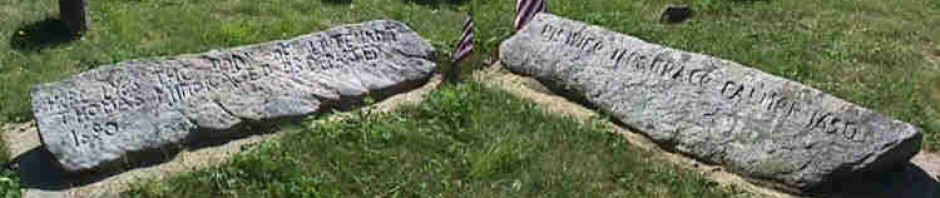
Posted in 12th Generation, Immigrant - Continent, Line - Shaw, Pioneer, Public Office, Sea Captain, Storied | Tagged , , , , , , , , , | 23 Comments

Aert Jacobsen (Van Wagenen)

Aert JACOBSEN (Van Wagenen) (1620 –  bef. 1668) was Alex’s 10th Grandfather; one of 2,048  in this generation of the Shaw line.

City of Wageningen Coat of Arms

Aert (Aart) Jacobsen was born in 1620 in Wagenengin, Gelderland, Holland.

Wagenengin, Gelderland, Holland

He is  the ancestor of all the families mentioned in the earliest town and church records of Ulster and Dutchess Counties, NY., under the names of Van Wageninge and Van Wagenen, came from [Van in Dutch meaning “from” or “of”] Wageningen, a town near the Rhine, ten miles west of Arnheim in Guelderland. Later his children, in accordance with the custom of the early Dutch settlers, adopted the name of that town (Wageningen) as a surname.  Interestingly, he his called Van van Achtienhoven in a 1663 bond and his daughter Neeltje was said (in her marriage record) to have been born in the small village of Achtienhooven (meaning “eighteen farms”) in South Holland, a few miles northwest of Woerden (there is another village of the same name just north of Utrecht. )  Maybe he lived in both places.

His father was Jacob Aertse AERTSE Wagenaar. He married Annetje GERRITS VanDen BURG in 1648 in Achtienhooven, Holland.

The records of the Reformed people of Achttienhoven in the province of Utrecht are to be found in the Westbroek church books. The marriages records do exist for the time frame 1611-1666 in Westbroek.  Up to 1640 the book of Westbroek is hard to read, but we’re very lucky, because: “den 31. Maij 1640 Aert Jacobs j.g: van Acht-thienhoven EV.  Annetien gerrits van Schaijck j.d: mede van Acht-thienhoven tot West broeck bevesticht den 21. Junij 1640.” (DTB Westbroek 197/53).   According to the church book, they both lived in Achttienhoven and married on June 21st 1640 in Westbroek.

Aert arrived from Holland, probably about 1650.  He was the first of definite record, 21 May 1653, when with Evart PELS (his son Jacob’s father-in-law) and others he took the oath of allegiance to the patron at Fort Orange. He purchased land in Esopus, 17 Sep 1660.  Aert died before 1668 in Kingston, New York

Annetje Gerritse VanDen Burg was born in 1624 in Wageningen, Gelderland, Holland.  She died about 1666 in New York.

Children of Aert and Annetje:

Name Born Married Departed
1. Neeltje Aartsen 1646
Achtienhooven, South Holland
Cornelis Fynhout
6 Jun 1667
2. Gerrit Aertsen 2 Sep 1648 Albany, NY
baptized
10 Sep 1651
Clara Pels
(sister of Sara Pels)
9 Mar 1723 in Ulster Co., NY
3. Grietje Aertsen probably  Utrecht, Holland however  baptized
1649 in Greenbush, NY
Jacobus Van Elmendorp
26 Feb 1688
Kingston, NY
9 Mar 1723
4. Jacob AERTSON (Van Wagenen) 14 Feb 1652/53 probably in  Rensselaerwyck, NY. Sara PELS
25 Feb 1677
1715 Esopus (Kingston), Ulster, NY.
5. Elizabeth Aertsen c. 1656 in Greenbush, NY Cornelis Masten

Aert’s father Jacob Aertsen Wagenaar was born about 1612. He sailed from the Textel aboard the “Calmer Sleutel” (Calm Water) at the age of 25, in 1637, and arrived at New Amsterdam on August 4, 1642. That same year, he moved to Rensselaerswyck (Albany, NY) with Evert PELS and others. He was probably the father of Aert Jacobsen Van Wagenen (Wageningen), the ancestor of the Van Wagenen family of New York. In the general notes from the records of the Corporation of Kingston, the 1st volume of those minutes open with the Indian Treaty made on Oct.7, 1655 between Governor Nicolls and certain Sachems (Indian Chiefs), and the name of Jacob Aertsen is listed as in attendance.

Aert Jacobsz; occupied apparently as early as 1648, a farm at Bethlehem which was destroyed by fire before May 1654.  Bethlehem is just south of Albany.   He then leased for 12 years a farm in Greenbush, north of Cornelis Hendricksz van Nes.  The word Greenbush is derived from the Dutch “Greenen Bosch,” referring to the pine woods that originally covered the land. The first settlement of the land now known as East Greenbush was made by tenants under Patroon Kiliaen van Rensselaer around 1630.

Bethlemhem, New York

The first appearance of the Van Wagenen name after its adoption as a family name is in the baptismal records of the Dutch church at Kingston. which commence in 1660. There it is given as Van Wageninge, from about 1675 to 1700. After this it appears as Van Wagenen and at present. there are a good many variations in the name, as Van Wagner, Van Wagoner, etc., among some branches of the family.

Aert Jacobsen leased a farm from the Patroon (Killian Van Rensselaer or one of his heirs.) Under this arrangement the Patroon owned the buildings, stocked the farm with animals and owned the land. The patroon collected the rent, tithes, and recieved half the increase from the animals.

About 1661 Aert moved to the Esopus. On Sept. 17, 1660, Aert purchased a piece of land in Esopus (Kingston, NY) from Johanna Delaet, the wife of Jeronimus Ebbinck. This land was bounded by the lands of Jans Schoon, Aert Pieterse Tack, and Tjerck Claessen (De Witt).

Aert Jacobsen and his wife Annetje Gerrits were received as members of the Dutch Church at Kingston, 24 Jun 1661.

More About Bethlehem

It would appear that Andries de Vos built the first mill on the Vloman Kill. A court ruling of 21 January 1649 states that Andries de Vos is to pay the patroon’s dues on his mill at Bethlehem to the sum of f62:10 (62 guilders and ten stuivers) a year. This is the earliest use in the records of the name Bethlehem. The first patroon had divided Rensselaerwyck into districts, calling the area south of Fort Orange — roughly the town of Bethlehem as it would be formed in 1793 — Byler’s dal in honor of his first wife, Hellegond van Byler. The general assumption has been that not long after the patroon’s death, someone renamed Byler’s dal as Bethlehem. But Bethlehem in the 17th century was limited to a much smaller area, comprising only the two farms adjacent to what was then called Bethlehem’s Kil (the present Vloman Kill), together with the offshore islands. In terms of today’s topography, allowing for changes in the shoreline caused by landfill and dredging of the river channel, the area would include Bear Island, Parda Hook, the Putney property, Henry Hudson Park, the sewage treatment plant, the Nicoll-Sill property, the cemetery lot, and Schermerhorn Island.

After Andries de Vos, the next farmer north of the Vloman Kill was AERT JACOBSEN. It is in connection with him that the name Bethlehem occurs for the second time in the records: Gerrit van Wencom declares that a certain Mahican, whom he (found) at Aert Jacobsen’s, at Bethlehem, on Wednesday, the 8th of December 1649, said Indian being quite drunk with anise water, assaulted an fell upon him in cold blood and almost strangled him, in such a way that his head was extremely swollen, but that he was accidently released by another Indian. This was the fourth assault on the deputy schout that year, but perhaps the greater annoyance to van Wencom was Aert Jacobsen’s refusal to sell him liquor on credit, which was why he had gone there in the first place. In that same month Jacobsen’s wife defied an order to turn over one of Rensselaerwyck’s heifers to Jan Reyers. A second order, which included a penalty of “three guilders for each day’s delay after sight hereof”, seems to have ended the squabble.
(Bethlehem Revisited, A Bicentennial Story, 1793-1993, the Bicentennial History Committee, Floyd I. Brewer, Sr. Editor, Feb 1993, ISBN 0-9635402-0-3)

The following is from the records of the colony which were sent to the Patroon, as recorded on the indicated page of the VAN RENSSELAER BOWIER MANUSCRIPTS.

“Aert Jacobsz accupied apparently as early as 1648, a farm at Bethlehem, the house of which was destroyed by fire shortly before February 3, 1654. May 1654, he leased for 12 years a farm in Greenbush, north of Cornelis Hendricksen. In 1661, he moved to the Esopus, after having, on September 12th of that year, adjusted accounts with Jeremias van Rensselaer, at which time he signed a bond for fl 471:1, for rent due, which he promised to pay in whole or in part in March 1662, or, in case of his failure to do so, with 10% interest from the month of March 1662. He died before December 1662, when his widow delivered on account a gelding valued at fl.192. In 1667, there was still due, in principal and accrued interest, fl.306.9.”

Memorandum of Farms in the Colony  1651

A farm used by Evert Pels, adjoins the pine grove, has 2 sawmills, 7 horses, 8 cows
A farm used by Aert Jacobsz, on the mainland called Bethlehem; poor. The west side is a good farm. Will clear 3 morgens more at his own expense. Behind these 2 farms lies a sawmill which does not work for lack of watrer. 5 horses, 12 cows  f250 16 4 12

The patroon furnished the animals for the farms which he leased to his Tenant Farmers. In 1651 an inventory was taken of the animals which he had shipped to the various farms of the colony.

Inventory of animals in the colony sent over by Johan Baptist van Rensselaer .  page 736, Animals found on the farm of Aert Jacobsen, 14th of February 1651

Horses Years Cattle Years
1 bay mare, called block 16 1red cow, with a star about 10
1 brown mare with a star about 10 1 brindled cow 7
1 ditto called raeuen [raven] 6 1 cow with a blaze 6
1 black stallion with a star 7 2 red heifers 2
1 brown stallion 2 1 red spotted ditto 2
1 bay mare with a star 2 2 bull calves with blazes 1
1 bay stallion with a star 1 —

page 763, LEASE OF FARM IN GREENBUSH, NORTH OF THE FARM OF CORNELIS HENDRICKSZ VAN NES, TO AERT JACOBSZ

May 1, 1654
Mr. Johan Baptista van Rensselaer, director of the colony of Rensselaerswyck, has agreed and contracted with Aert Jacobsz, about the lease of a certain tract of land lying tin the aforesaid colony in ‘t Greenebos, north of the farm of Cornelis van Nes, on the following conditions.

The lessee shall have the use of the aforesaid tract of land for 12 successive years, commencing on the first of May 1654, and may enlarge and clear the said land as much as he is able, but without prejudice or detriment to the adjoining farms or any one else, provided that he shall alone defray all expenses of whatever nature they may be and that at the expiration of the lease he must turn over the cleared land to this honor aforesaid or this successor, freely and without receiving any compensation therefor, with the exception of the fence, for which he shall be paid or compensated according to the appraisal of impartial persons.

As to the rent, the lessee shall have the use of the land which is clear during the first two years without paying any rent or tithes, but the stipulated toepacht he must pay each year of the lease; during the other 10 years the lessee shall for the use of the said land pay an annual rent of 25 guilders besides the tithes [20% of the crop], in merchantable [grain] or other current form of payment. The lessee may keep as many hogs as the can without damage to any one else. The lessee may keep two cows on the aforesaid land without paying anything for their pasturage. The lessee promises that during the term of the lease he will conduct himself as an obedient and humble colonist, submitting himself to the honorable court of the aforesaid colony and to tis laws and ordinances. In confirmation whereof, Mr Johan Baptista van Rensselaer and Aert Jacobsz, together with Schout Gerard Swartt and Cornelis van Nes, as witnesses thereto invited, have ratified this with their signatures Done in the aforesaid colony on the date above written. Was signed Johan Baptist van Rensselaer, Aert Jacobsen. As Witnesses: G: Swart, Cornelis van Nes. Below was written : Executed to my knowledge, Anthonio de Hooges Secretary. This copy agrees with the original which I Certify, D: V: Hamel, Secretary.

The size of this farm was later enlarged as indicated by this reference from the Correspondence of Jeremias van Rensselaer, page 227. Dated June 3-6 1660 “To Aert Jacobsz, in the Gene Bos, I have also granted a piece of land, above, in the high wood, behind his land, which he is busy clearing,”

Page 774, ADJUSTMENT OF FIRE LOSSES ON FARM OF AERT JACOBSZ AT BETHLEMEN

September 10, 1658
On the date underwritten, mr Jan Baptista van Rensselaer, in his capacity of director of the Colony of Rensselaerswyck, on the one side and Aert Jacobsen, on the other side, have amicably agreed and come to an understanding about the accident of the burning of the house, barn and barracks on the farm at Bethlem heretofore occupied by the aforesaid Aert Jacobsz. It is contracted and agreed that the aforesaid Aert Jacobsz shall pay once and for all for the aforesaid damage to the director or his representative the sum of 300 guilders in Merchantable wheat at 10 guilders a mudde, in two instalments, one half each winter after the date hereof. It is further expressly stipulated and provided that the aforesaid Aert Jacobsz shall be free to recover all his interest and claims arising from the damage suffered by the fire on the aforesaid farm, either at law or in friendship or in such other manner as Aert Jacobsz shall see fit from Pieter WINNE or his partners or the people with whom he has made a contract, and hereby all claims which might be made on account of the said damage in the name of the patroon and the codirectors are declared null and void, including the claims of the servant Dirck de Grooyer, and said claims shall at no time be renewed. Not included in this agreement is the farm debt which Aert Jacobsz must pay according to his account. In testimony of the truth the contracting parties have signed these with their own hands under pledge according to law. Thus done and passed in the Colony of Rensselaerswyck, this 10th day of September 1658.
Was signed: J: B: van Rensselaer, Aert Jacobsz.
This copy agrees with the original, which I certify. D: V: Hamel, Secretary.

Bond of Teunis Dircksen van Vechten to Aert Jacobsen van Achtienhoven

On this day, the 24th of January 1663, Theunis Dircxsz van Vechten acknowledges that he is well and truly indebted to AERT JACOBSZ van ACHTIENHOVEN in the sum of 77 guilders in beavers, growing out of the matter of the balance of purchase money for a house, fences and outbuildings upon the land called Groenendal, lying (at the south end where the descent is toward the island of Paepskene, in the Greyne bos in the colony of Rensselaerwyck, which said sum he…promises to pay in the month of June next in good, merchantable beavers at 8 guilders each…Done in the colony of Rensselaerwyck, dated as above.
This mark + was made by Thuenis Dircxsz van Vechten
(Early Records of the City and County of Albany and Colony of Rensselaerwyck, Vol 3, Notorial Papers 1 and 2, 1660-1696, translated from the original Dutch by Jonathan Pearson, revised and editited by A. J. F. van Laer; Albany, The University of the State of NY, 1918)

Collections on the History of Albany, From its Discovery to the Present Time, with Notices of its Public Institutions, and biographical Sketches of Citizens Deceased, Vol. IV., Albany, NY, J. MUnsell, 82 State Street, 1871

Appeared before me, Johannes La Montagne, in the service of, etc., Madame (Juffrou), Johanna De Laet, wife of Jeronimus Ebinck, who declares in presence of the afternamed witnesses, on the one side that she has sold, and Aert Jacobsen on the other side, that he has bought, a certain piece of land lying in the Esopus in New Netherland, adjoining on the northeast side the land of Jan Schoon and Aert Pieterse Tack, on the northwest side Tjerck Classen (De Witt), southwest the hill, containing forty-seven morgens and two hundred and fifteen rods, for the sum of six hundred guilders, half beavers and half wheat at market price, in three installments, to wit in June, 1661, the third part of said sum, in June 1662, another third, and the remaining third part in June, 1663, the said Madame promising to free said lot from all demands and pretensions which may come against said land, the respective parties for mainnenance of said contract pledging their persons and estated, real and personal, present and future, and submitting the same to all laws and judges (as the acceptant also does his person).

Done in Fort Orange the 17th of October, 1660, in presence of Jan Pieterse Muller and Geurt Hendrikse as witnesses.

JOHANNA DE LAET
AERT JACOBSEN

Jan Pieterse Mulder, Geurt Hendrycksen
Acknowledged before me, Clerk at Fort Orange. *Tuesday, 25

Oct 1661 – Jacob Joosten, plaintiff, vs. Aert Jacobsen. Default.

Tuesday, 14 Feb 1662 –

Albert Gysbertsen, plaintiff, demands from Aert Jacobsen payment of the value of 3 beavers, wages earned for making a plough. The defendant answers he owes no more than 2 beavers and a half. the Commissaries find that plaintiff is entitled to his full wages, and thereupon defendant is ordered to satisfy the plaintiff.

Jan Janse Brabander, plaintiff, demands from Aert Jacobsen, defendant, payment of the value of 10 schepels of oats. The defendant admits the debt and promises to pay the oats.

Tuesday, 28 February 1662

Aert Pietersen Tack, plaintiff, demands from Aert Jacobsen payment of the amount of 81 schepels of oats. Defendant admits the debt, but says he is now unable to pay. Requests time. Commissaries order defendant to pay the plaintiff 20 schepels of oats every 2 weeks until the debt is paid.

*Tuesday, 2 May 1662

Cornelis Jansen van Dost, plaintiff, demands from Aert Jacobsen payment of the amount of 61 guilders, zeewant, for wages earned. Defendant admits the debt but says he carted a load of stone for 6 guilders, zeewant. The Commissaries order the defendant to pay plaintiff 55 guilders, zeewant, within 14 days.
In the matter of the elections, the Schout and Commisaries have decided to nominate the following persons to govern us hereafter, subject to the approval to the Very Noble Honorable Lord Dirctor General and the Lord High Councillors: Thomas Chambers, Jan Willemse, Tjirick Classen de Wit, Albert Gysbertsen, AERT JACOBSEN.

The Noble Lord Director General and High Councillor Gerret Decker were this day here present. The Lords Director General and Councillor continued Evert Pels and Aldert Heymanse Roose as Commissaries, and from the Moninees above mentioned appointed Alberty Gysbertsein and Tjirick Classen de Wit.
*There follow several other instances of Aert Jacobsen being ordered to remit payments to various plaintiffs.

Tuesday 9 October 1663

Roelof Swartwout, Schout, plaintiff, vs. Aert Jacobsen and Gerrit Aertsen, his son, Aert Jacobsen’s daughter, Aert Jacobsen’s servant, Andries, defendants. Plaintiff demands from the aforesaid defendants, for their violation of the ordinance dated 4 August last, that no one should venture out to mow without consent and a proper convoy, a fine, from Aert Jacobsen, of 75 gldrs; from Gerrit Aertsen, of 75 gldrs.; from Aert Jacobsen’s daughter, 25 gldrs.; from Andries, his man, 25 gldrs.

Defendants answer they are not liable for the payment of the above fines and request copy of the judgement. The Court orders defendants to pay plaintiff the full amount of the fines.

Roelof Swartwout, Schout, plaintiff, vs. Aert Jacobsen, defendant. Plaintiff complains to this court that defendant said that the Lord God would some time avenge himself upon the Lords who are here on the bench. Defendant does not deny having said so, and the Commissaries Albert Gysbertsein and Gysbert van Imborch also confirm they heard him say so at the house of Schout Roelof Swartwout, and once at the bridge. The Court orders defendant to submit, at its next session, his reasons for saying that revenge should be called down upon it.

Roelof Swartwout, Schout, plaintiff, vs. Aert Jacobsen, defendant. Plaintiff accuses defendant of being a desecrater of the Sabbath, he having on that day taken a load of beer to this house, for which plaintiff seized defendant’s wagon and beer, and that, notwithstanding the seizure, the defendant fetched the wagon and beer to his house. Defendant denies having attempted to take a wagon load of beer home on a Sabbath or Sunday, but offers to prove that the Sabbath had expired. The Court allows defendant time until the next session to prove the above.

Tuesday 23 October 1663

Roelof Swartwout, Schout, plaintiff, vs. Aert Jacobsen, defendant. Defendant is asked by plaintiff what he has to say to the Honorable Court, in view of the record of the previous session of 9 October — handing him the papers. Defendant humbly asks forgiveness, saying that, if he said anything which unguardedly escaped his lips, may the Honorable Court pardon him therefor. Plaintiff demands that defendant be punished for the aforesaid words, either by a money fine of one thousand guilders, or that he be referred in this matter to the Director General and Council of New Netherland. The Honorable Court, having heard the Schout’s demand and also the humble repentance of defendant, besides his confession, sentences defendant, Aert Jacobsen, to pay a fine of 25 gldrs., with costs, the fine to be applied as usual. Plaintiff requests an appeal hereupon, which is granted by the Court.

Roelof Swartwout, Schout, plaintiff, vs. Aert Jacobsen, defendant. Plaintiff appears against the defendant for desecrating the Sabbath, having appeared against him on 9 October, and having handed him a copy of the papers. The defendant appearing, says he has nothing to offer, in view of the foregoing papers, to prove that the Sabbath had expired. The Honorable Court sentences the defendant to pay the plaintiff a fine of one pound Flemish (six guilders or $2.40), in this case.

Tuesday 18 November 1664

Aert Jacobsen requests a lot at Wildwyck for the purpose of building a house, barn, and loft, because he has rented his land to someone else. Refused.

Wednesday 4 February 1665

Aert Jacobsen and his wife Annetje Gerrets complain about violence committed against them in their house on this day, by Christoffel Berrisfort and five English soldiers who entered their house fully armed and took from them by violence a ham, which the aforenamed wife wanted to prevent and was wounded in the arm by Daniel Botterwout while he was cutting loose the ham in the presence of the court-messenger Jacob Joosten. Said Botterwout furthermore drew his sword for the purpose of resisting those who would prevent him from taking the ham with him. Aforesaid Aert Jacobsen declares that on 29 January last he provided his soldier, Tomas Marcham, with provisions for a whole week, and that he asked him if he wanted more; he said he had enough. Said soldier, the day before yesterday on 2 February, sent Samuel Olivier for bread which plaintiff gave him, and further asked him whether the aforenamed soldier wanted meat or pork, to which he answered, not to have orders from him concerning the same. Thereupon, yesterday, another soldier, Tomas Elger, coming to their house for meat and pork, they refused the same to him because, before this, while their soldier was stationed at the redoubt, another also came, by his authority, for meat and pork which was sent to him, and when he was relieved from the redoubt and came back home, he said that he had had enough food and had given no orders to get more…Juriaen Westphael and his wife complain of the same Daniel Botterwout entering their house on the same day, fully armed, and demanding meat and pork.

Mr. Berrisfort was talked to about the violence committed against Aert Jacobsen in his house by him and 5 soldiers, and at the same time shown the evils which might ensue from similar violence. He is therefore requested to conduct all the English soldiers abour 8 o’clock tomorrow before the hon. court for the purpose of again reading to them the instructions given to the hon. court here by the hon. Ld. Governor of New York thus to prevent any disasters.

Aert Jacobsen’s Will

To all Christian people to whome this present writing shall or may come GERRIT AARTSEN of the Corporation Kingstown in the County of Ulster—JACOB AARTSEN of Wagendaal in said County of Ulster, GRIETIE ELMENDORP of Kingstown aforesaid, widdow, and ARENT FYNHOUT son and hiere of NEELTIE AARTSEN deceased send greeting. Whereas AART JACOBSEN Late of Kingstown aforesaid deceased–Did by his Last Will and Testament give & bequeath his whole estate unto his five children the above named GERRIT AARTSEN, JACOB AARTSEN, GRIETIE ELMENDORP, NEELTIE AARTSEN Mother of said ARENT FYNHOUT, And to ELIZABETH MASTON wife of CORNELIS MASTON of Kingstown aforesaid. And whereas they have devided theire said fathers farme or Bowery Scituate Lying & being in the bounds & limits of the Corporation of Kingstown aforesaid on the north side of the Esopus Creek of kill on the great piece And the Lott No four by said devision is fallen unto said ELIZABETH MASTON Now know yee that the said GERRIT AARTSEN, JACOB AARTSEN, GRIETIE ELMENDORP, and ARENT FYNHOUT for Divers good Cause & Vallid Considerations them there unto moving but more and especially for the avoyding and putting aside all strife and difference that hereafter might arise about said farme or bowery Have given granted Released Rattified and Confirmed And by these presents do for themselves and theire heires freely Clearly & Absolutely give and Release Rattifie and Confirme unto the said ELIZABETH MASTON her heires & assigns for ever All that aforementioned Lott of Land No four being bounded Northeasterly by the Lott No three belonging now unto BARENT VAN BENTHUIZEN Assigne of said ARENT FYNHOUT, Southeasterly by the Land of said GRIETIE ELMENDORP Called Creupelbush, Southwesterly by Lott No five belonging unto said JACOB AARTSEN and Northwesterly by the great hill So as the same was Layd out & Stones Sett. To have and to hold the said Lott of Land being No four together with and all Singular the benefits advantages Commoditys profits priviledges hereditaments and appurtenances there unto belonging or in any wise appurtaining unto her the said ELIZABETH MASTON her heires and assigns for ever and to the only proper use benefitt & behoffe of her the said ELIZABETH MASTON her heires and assigns for ever. In Wittness whereof the said GERRIT AARTSEN, JACOB AARTSEN, GRIETIE ELMENDORP and ARENT FYNHOUT have hereunto interchangably put their hands and seals in Kingstown this sixth day of November Anno Dom 1710.

Sealed and delivered                  GERRIT AARTSEN  S
In presence of us:                        JACOB AARTSEN  S
HENDRICK PRUYN                  GRIETIE ELMENDORP   S
W. NOTTINGHAM                      marke of    ARENT FYNHOUT   S
In Presence of me
A. GAASBEEK CHAMBERS Justiceo of peace
A True Coppy Examined pr W. NOTTINGHAM, Clark

Children

1. Neeltje Aartsen

Neeltje was said (in her marriage record) to have been born in the small village of Achtienhooven (meaning “eighteen farms”) in South Holland, a few miles northwest of Woerden (there is another village of the same name just north of Utrecht).

According to their marriage record, Neeltje’s husband Cornelis Fynhout was at Fort Orange (Albany, NY) in 1645. 1645 in Fort Orange (Albany), NY. . Their marriage banns were also recorded at the Shawangunk Reformed Dutch Church on May 21, 1667 with his name written as “Cornelis Tynhout.” It is believed that his second wife was Maria Schempmoes. Cornelis died in 1713 in Kingston, NY

Translated by Dingman Versteeg, New York Historical Manuscripts: Dutch, Kingston Papers, (The Holland Society of New York, 1976), p350, “On May 27/June 6 of the year 1667 were legally married by the schout and commissaries at Wildwyck, Cornelis Aertsen Fynhout, young man, and Neeltje Aertsen, young daughter of Aert Jacobs, deceased.”

2. Gerrit Aertsen

Gerrit Aertsen is sometimes believed to have been Jacob’s twin.

Gerrit’s wife Clara Pels (sister of Sara Pels) was baptized 10 Sep 1651 New Amsterdam.  Her parents were Evart PELS  and Jannetje SYMONDS .

30 Dec 1666 -Received as member of Kingston Dutch Church

19 May 1687 – A trustee of the Corporarion of Kingston

Owned a slave named “Jack”

On 8 Jun 1686 Gerrit purchased about 1600 acres of land from the Indians in Dutchess County at what is now Rhinebeck. On 20 Feb 1688, the trustees of Kingston conveyed “to Gerrit Aertse, a tract South of the Esopus Kill, to the west and North of Tjerck Claes Dewitt, and East of Grietje Elmendorf, containing about 26 acres.”‘

20 Feb 1688 –  Gerrit was granted a tract of 26 acres south of the Esopus Kill, by the trustees of the Village of Kingston.

The tract of land purchased by Gerrit, Arie Roosa, and Jan Elting, consisted of about 1500 acres along the Hudson River, and that tract, with another tract adjacent to it, owned by others, are covered by a patent recorded at Albany in Book 6 of Patents, at pages 328, 329, and 330. A more detailed description of the transaction is found on page 252 of the “History of Dutchess County” by James H. Smith, published in 1882. It is noted that the first deed for lands, in what was later to be Rhinebeck Township, was granted by the Indians on June 8, 1686, and is a transfer on the part of Aran Kee, Kreme Much, and Korra Kee, all Indians, to Gerrit Artsen, Arie Rosa, and Jan Elton, for 6 buffaloes, 4 blankets, 5 kettles, 4 guns, 5 horns, 5 axes, a tin can of powder, 8 shirts, 8 pair of stockings, 40 fathoms of wampum, 5 gallons of rum, 2 drawing knives, 2 adzes, 10 knives, and a frying pan. This land, called “Mausakenning” by the Indians, was a meadow and separate parcel of land that was an outright gift from the Indians.

It later became known as “Jacomyntie’s Fly”, probably named for the wife of Jan Elton (Elting), one time owner of the “Fly”, who sold it to Henry Beekman in 1689. Jan and Jacomynte Elting had a daughter named Aaltje, who later married Gerrit Aertsen’s son Aart Gerritse (Van Wagenen) (#3017). Further information regarding these lands will be found on the following pages, under the heading of “Linwood, Wildercliff and Ellerslie”.

The following are just a few examples of early Dutch justice as written in Kingston Court records:

24 Jun 1673 –  Between Gerrit and Tierck Claesen, a request that Claesen close the fence because of damage suffered. Answered that it was erected prior on the farm of Jacob Hop.

27 Feb 1674 –  Gerrit “asks for payment for the confiscated lumber of Mr. Lavall. Court orders Schout Grevenraedt to pay out of the effects of Mr. Lavall”.

24 Apr 1674 – Between Gerrit and Tierck Claesen, “complainant’s say that defendant made his children break through their fence for the purpose of driving his horses through the same. Answer: That he can only get off his land through the aforesaid fence. He took out the rails, led the horses through, and put back the rails. Jacob Jansen testifies that said children broke the fence, drove the horses through and left the same open. Requests that no one shall drive through. Court orders Claesen not to use the fence. Claesen requests that each shall erect one‑half. Court denies request.

1 Apr 1678 – “Partition and division between heirs of estate of Annetie Gerritsen, widow of AerdtJacobsen”.

20 Mar 1679 – Between Gerrit and Mattue Blansjan, Sr. “Debt. 120 scheples of wheat”.

30 Apr 1679 – Between Gerrit and Tierck Claesen “complains that he has been forbidden to use the road. Court orders that the road shall be used by everybody”.

Ulster County Deed Books p154

To all Christian people to whom this presents shall or may come, Tjerck de Witt of Kingstowne in the County of Ulster sendeth greeting.

Whereas the said Tjerck de Witt for divers good causes and considerations him thereunto moving but more and especially for and in consideration of and acknowledged gerrt(?) hereafter reserved, hace given granted alenated assigned and sett over, and by these presents doe give, grant, alienated, enfeofed, assigned and sett over unto Gerrit Aertse of Kingstowne aforesaid a certaine tract or parcell of upland scituate lying and being in the Corporation Kingstowne abovesaid, to __ southerd of the Esopus Kill or Rever with a direct line to the Horly path, that is to say as the land of the said Tjerck d’Witt & Gerrit Aertse at the Northe__ of the said Kill is devided that soe uppon a stright line to __ southerd of said Kill to the pathe of Horly aforesaid shall for ever remaine the bounds between them and from said bounds alond said path and rover to the land of Gerret Aertse and Grietie Elmendorp.

To have and to hold the said tract of land with all and every its appurtanance thereunto belonging…the said Gerrit Aertse and his heirs and assignes for ever paying therefore yearely and every yeare unto the said Tjerck d’Witt his heirs and assignes for ever, three dung bill fowle, and likewise that the said Gerrit Aertse is tho make & maintaine the Ring fench as for as land, and obligdged to make & maintaine the halfe of the middle fench when the said Tjerck d’Witt or Gerrit Aertse will improve their land.

In testimony whereof the said Tjerck d’Witt have hereunto sett his hand and affixed his seal in Kingstowne this 22th day of April 1695.

Signed sealed and delivered Tjerck Clasen de Witt——S
in the presence of Jan Ffocke+Heermans
his marke
W: D’Meyer, Clarq In the presence of mee–
Henr. Beeckman, Juste of the Peace
May 30th 1695
A True Copy Examined by Mee–W: D’Meyer, Clarq

Will of Gerrit Aartse, of Kingston, “Landtman”  Dated 17 Dec 1715, and written in Dutch Proven 9 Mar 1722/23, Long religious preamble.

To my worthy wife Claartie Aartse one third of the income from my whole estate for life, she to have the right to live in the house I now occupy.

My youngest son Simen van Wageninge shall have all my land north of Esopus Kill, as the same was inherited by me from my father, Aart Jacobse, as well as conveyed to me by Sweer Teunissen. He shall also have my pasture land and farm south of said Kill with house and barn, he and his heirs to be bound to pay for the same to my other heirs the sum of £600 in five years, one fifth each year.

As heirs to my whole estate, I apppoint my eight children, begotten by my said wife, by name Evert can Wageninge, Barent can Wageninge, Goosen van Wageninge, Jacob van Wageninge, Simen van Wageninge, Jannetie wife of Barent van Benthuysen, Annetie wife of Henricus Heermans, and Neeltie van Wageninge as well as Gerrit van Wageninge, son of my eldest son Aart van Wageninge, deceased. Gerrit van Wageninge shall have, in advance, a sum of £50.

3. Grietje Aertsen

Grietje was probably born at Utrecht, however she was baptized at Albany in 1647.

Groetje’s husband Jacobus Van Elmendorp (Elmendorf) was born xx,

Jacobus, who was a trustee of the Corporation of Kingston (1710 – 1712), made out his will (written in Dutch) on August 27, 1685, and appears to have died before 1688. “Gertie Van Elmendorf” made out her will (also written in Dutch) on November 13, 1699. Her will was proved at Kingston on October 16, 1714, and was confirmed by Governor Hunter on December 13, 1714.

4. Jacob AERTSON (Van Wagenen)(See his page)

5. Elizabeth Aertsen

There are no records of her prior to the baptism of her first child, Johannes, at Kingston on March 31, 1678.

Elizabeth’s husband Cornelis Masten was born

Sources:

http://vanwagenenbeginnings.blogspot.com/

http://www.hlol.com/Van_Wagenen.htm

http://www.stonehouse.ca/tree/p677.htm#i33822

http://freepages.genealogy.rootsweb.ancestry.com/~degroff/pafg30.htm#851

Family of Jacob Aertsen Van Wagenen and Sara Pels
Carl S. Van Wagenen in 1994, published THE GENEALOGY OF JACOB AERTSEN VAN WAGENEN, he had access to an old Van Wagenen Family bible which was passed through several Generations beginning with Jacob Aertsen Van Wagenen. The dates of the marriage of Jacob Aertsen and the dates of the birth of his children come from this bible. He gives the complete list of persons, events and dates on pages 14 and 15 of the above book

http://freepages.genealogy.rootsweb.ancestry.com/~degroff/pafn30.htm

http://familytreemaker.genealogy.com/users/h/a/r/Patricia-V-Harrison/GENE14-0001.html

Posted in 12th Generation, Immigrant - Continent, Line - Shaw, Public Office | Tagged , , , | 9 Comments

Jacob Aertsen (Van Wagenen)

Jacob AERTSEN (Van Wagenen) (1653 – c. 1715) was Alex’s 9th Grandfather; one of 1,024 in this generation of the Shaw line.

Jacob Aertsen Van Wagenen was born 14 Feb 1652/53 probably in Rensselaerwyck, NY.  His parents were Aert JACOBSEN Van Wagenen) and Annetje Gerritse VanDen BURG.  He married Sara PELS on 25 February 1677.

Jacob moved to Wagendale, [It was renamed Creek Locks in 1825 when the Delaware and Hudson Canal was built.  It’s located in Rosendale Ulster County, NY about five miles southwest of Kingston] with his parents about 1660.  Jacob died in 1715 at Esopus (Kingston), Ulster, NY.

Sara Pels was born 3 Jul 1659 at Esopus (Kingston) NY.. Her parents were Evert PELS and Jannetje SYMONS.

At the time the children of Jacob and Sara  listed below were baptized the family did not have the surname Van Wagenen, the closest they had to a surname was Aartz, Aertsen, Aertse, Aartzen, etc.  His third son Benjamin was first in this line to use the surname Van Wagenen.

Name Born Married Departed
1. Annetie Van Wagenen 10 Sep 1678 Kingston, NY Jan Heermans Jr. [Heromans]
2. Aert Van Wagenen 15 Oct 1679 Kingston, NY Marytje Lowe [Banns published] 14 Oct 1704 Kingston 10 Jun 1740
3. Evert Van Wagenen 12 Apr 1681 Hillegond Van Heyningen c. 1709 Poughkeepsie, NY
4. Gerrit Van Wagenen 2 Nov 1682 17 Nov 1709
Ulster, New York
5. Rebecca Van Wagenen 11 Apr 1685 Jan Freer 17 Sep 1706
Esopus (Kingston NY)
6. Geertie Van Wagenen 1 Sep 1686 Jachob Gerritse Decker
17 Sep 1709
Dutch Reformed Church, Esopus (Kingston)
7. Jannetje Van Wagenen 4 Apr 1688 Died as an infant
8. Jannetjen Van WAGENEN (Wageningen) 10 Apr 1689 Kingston, Ulster, NY Johannes TURK
1 Nov 1711 Kingston, Ulster, NY
 1749
9. Gerrit Van Wagenen 5 Feb 1691 Theuntje Van Den Burg
7 Dec 1709
19 Nov 1709 after being struck by a limb being felled by his father.
10. Symon Van Wagenen 19 Nov 1692 Sara Du Bois
17 Nov 1720
Esopus (Kingston, NY)
27 Jan 1759
11. Jacob Van Wagenen 5 Jan 1695
12. Benjamin Van Wagenen 28 Dec 1696 Elizabeth van den Berg
26 May 1726
the Old Dutch Church of Kingston, NY
13. Abraham Van Wagenen 4 Feb 1699 Hillegond Crispell
26 Feb 1726
7 Jun 1787
New York
14. Sarah Van Wagenen 1 Dec 1701 Solomon Hasbrouck 7 Apr 1721
Esopus (Kingston, NY)
3 Apr 1753
Kingston, NY
15. Isaac Van Wagenen 14 Aug 1703 Kingston, NY Catrina Freer
Mar 1723

Aert, or, Aart Jacobsen., the ancestor of all the families mentioned in the earliest town and church records of Ulster and Dutchess Counties, N Y., under the names of Van Wageninge and Van Wagenen, came from [Van in Dutch meaning “from” or “of”] Wageningen, a town near the Rhine, ten miles west of Arnheim in Guelderland.

Later his children, in accordance with the custom of the early Dutch settlers, adopted the name of that town (Wageningen) as a surname. The first appearance of the name after its adoption as a family name is in the baptismal records of the Dutch church at Kingston. which commence in 1660. There it is given as Van Wageninge, from about 1675 to 1700. After this it appears as Van Wagenen and at present. there are a good many variations in the name, as Van Wagner, Van Wagoner, etc., among some branches of the family. Jacob’s brother Benjamin was first in this line to use the surname Van Wagenen.

New York State Historic Marker #71 Ulster County

Wagendall Creeklocks Road, Rosedale, NY – On this farm is home of Jacob Aartsen Van Wagenen, built 1669, first settler and home of Johannes Van Wagenen, built 1775

Jacob Aartsen Van Wagenen House

x

Jacob Aertsen Van Wagenen House – The house is on the Roundout, along with two other Van Wagenen stone houses.

x

Jacob Aertsen Van Wagenen House – Plate from from “Dutch Houses in the Hudson Valley Before 1776”, Helen Wilkinson Reynolds, Dover Publications, Inc., NY 1929


Aert Jacobsen maintained a family bible, in Dutch, which has survived through these past 300 years,  and on four pages within this bible are recorded the births and deaths of the first five generations of  his family. A portion of these bible pages are transcribed below. The “Groote Bible” (Great Bible) was until 1987 in the  possession of Mrs. Mae Lockwood Van Wagenen of High  Falls, NY, the widow of Victor Van Wagenen (1891-1972), it  having been passed down from father to son through  succeeding generations as follows: (1) Aert Jacobsen (2) Jacob Aertsen (3) Aert Van Wagenen (4) Jacob Aertse Van Wagenen (5) Johannis J. Van Wagenen (6) Johannis Artse Van Wagenen (7) John Andrew Van Wagenen (8) Jacob D. Van Wagenen (9) Victor Van Wagenen Upon the death of Mae Van Wagenen, the bible passed into the possession of her niece who in turn  donated it to the Old Dutch Church at Kingston, NY. Within this very large tome are four loose pages,  written mostly in “old Dutch”, and upon which are recorded five generations of births, marriages and  deaths. (from the Genealogy of “Jacob Aertsen Van Wagenen of Wageningen, Holland” by Carl S. Van Wagenen, Heart of the Lakes Publishing, Interlaken, NY 14847-0299.

Jacob Aertsen (Van Wagenen) – Bible First Page

The following is concerning the age of myself, JACOB AARTSEN, and also my wife, SARA PELS; also our marriage day, and the  birthdays of my sons and daughters: 1652, Feb 14 : I was born (old style) 1659, July 3 : My wife was born 1677, Feb 25 : I was married to my wife 1678, Sept 10 : Was born our first daughter, annatje, about  2 o’clock A.M. 1679, Oct 15 : Between Wednesday and Thursday, about midnight,  our first son, AERDT, was born. 1681, April 12 : About one hour before sunrise on Tuesday, our  second son, EVERT, was born. 1682, Nov 2 : Our third son, GERRIT, was born, about 7 in  the morning. 1685, April 11 : Was born our second daughter, REBECKA, about  7 in the morning. 1686, Sept 1 : Was born our third daughter, GEERTJE, about  10 in the evening. 1688, April 4 : Was born our fourth daughter, JANNETJE, about  7 in the morning. 1689, April 10 : Was born our fifth daughter, JANNETJE, about  11 in the morning. 1691, Feb 5 : Was born our fourth son, GERRIT, about midnight. 1692, Nov 19 : Between Saturday and Sunday, about midnight, was born our fifth son, SYMON. 1695, Jan 5 : Our sixth son, JACOB, was born about 9 in the  evening. 1696, Dec 28 : Our seventh son, BENJAMIN, was born, about 7 in the evening.

Bible – Second Page

1699, Feb 5 : Our eighth son, ABRAHAM, was born between 1 and 2 o’clock in the morning. 1701, Dec 1 : Our sixth daughter, SARA, was born, between 1  and 2 o’clock in the morning. 1703, Aug 14 and 15 : Our ninth son, ISAAC, was born, about 12  o’clock at night. 1709, Nov 17 : Was my son, GERRIT, struck on his head by a limb or branch, which was torn by me from another, and died the 19th, on Saturday, about an hour and a  half before sunset, and on Tuesday was buried here. 1685, Dec 18 : My wife MARIA LOW is born. 1733, June 20 : On Wednesday afternoon about 6 my wife MARIA died. 1740, June 10 : AERT VAN WAGENEN died.

As the oldest son Aert received the Great Bible from his Father and passes it to his eldest son. This is the bible which contains all the birth and marriage records cited here. The winter of 1683/84 was extremely severe.  Crops had been short the preceding summer because of dry weather, and the people were complaining.  One day Captain Thomas Chambers met Henry Pawling on the road, and they talked over their grievances.  When Pawling reached Slecht’s mill he met some neighbors and they discussed  a propositon he made that they petition the governor for a redress of grievances, as Chambers had proposed.  The suggestion took, and a meeting was called for 26 Jan 1684, at the house of William de Myer.  The following paper was drawn and 63 of the inhabitants of Kingston, Hurley and Marbletown signed it.  It is given as worded in the antique phraseology and spelling of the day:

To the Right Honorable Coll. Thomas Dongan, Governor General of all his royal highnesses territory in America: The humble petition of the inhabitants of Esopus in the county of Ulster: That, whereas, the inhabitants of Esopus, in the county of Ulster, for the owne part, having bought and paid for of ye Indyans their land to the full satisfaction of the same, and peaceable possesss for severall yeares, and then it pleased God there was a combination among the Indyans and they made wars and it fell upon these our parts, killed severall of the inhabitants took severall prisoners and burned our dwellings to ye great losse of goods and blood and spoyle of our place we seedes dured three weekes and soe thorrow God’s assistance we beat them of and then were forced to plowe, seew, moow, and all other worke with a great guarde at our owne chage, no receiving monies or relief of any other part of the country to the repairing of our lossess, and since the settlement of the government by his royal highness it pleased Governor Nicholls and Governor Lovelace to settle severall of the soldiers amongst us  in the town of Marble to be governed among the rest by the laws of his royal highness, and we have allways yielded our allegiance and obedience to the same rendering and paying such duties as were required by us both to the governors, or to his royal higness customs:  Therefore, your honor’s petitioners humbly pray that wee may have the liberty by charter to this county to choose our own officers to every towne court by the major vote of the freeholders, and that they may decide all actions of debt to the value of five pounds or more, it being very prejudicall to this county it moste among the poor farmers  and charges of higher courts will prove very burdensome for such small summes; and that wee may make such orders among ourselves in every towne court in this county for the preservation of the corn fields, meadow ground, goods and chattels according as ye concenience of ye yeare and place doe require, and that all such fines levyed by the towne courts may be for the use of the same, not exceeding twenty shillings according to the laws of his Royall Highnesses.  And further that wee may have liberty to transport all grayns, flower, beefe, porke, and all other such produce as are now or hereafter maybe within this county, rendering and paying all such dues and customs as required by the lawes of this government. “And honors petitioners as in duty bound, shall ever pray and etc.”

Governor Dongan was full of wrath when this petition was presented.  He immediately ordered the petitioners to be arrested as rioters.  The orders were placed in the hands of sherrif who carried it out with due speed.  No court having jurisdiction would sit until June.  So they had the alternative of giving bail until June, or of being locked up.  They choose the former. On June 6th Matthias Nicoll, of New York, came up as presiding judge and opened court by charging the grand jury to indict each prisoner.  This was done.  All were put upon trial at once.  William de Myer was tried first, as he was a leader and had circulated the petition.  His indicted recited that:

On or about the 26th day of January, in the 35th reign of the yeare of the reign of our sid Lord the king; by force of arms at Kingston, tumultously and seditiously endeavoring and wholly intending the laws, and customs and usages of this county of Ulster to subvert and destroy, and new laws and customs and usage instead of them to serve and bring in tumultously and seditiously a certain petition containing the subversion of the well settled laws and peace of our said Lord the King in the county.

He maede no defense, but pleaded guilty, and was fined five pounds, with four pounds, four shillings costs.  Nicholas Anthony, Matthys van KEUREN, Moses DePuy, and Henry Pawling pleaded guilty and received like judgment. Jacob Rutsen, Jan Foeken, Cornelis Hogeboom, William de la Montgne, Robert Bickerstaff, Jacob Jansen, Jan Elting, Johannes de Hooges, Cornelis Cole, and Jan Willemse Hooughteling were arraigned together and fared no better. Wessel Ten Broeck, Jan Hammel, Mattys Slecht, Thomas Quick, Roeloff Kierstede, Severyn ten Hout, Cornelis Slecht, Peter Cornelissen, Hendrick van Weyen, Hendrick ten Eyck, Jan Laurens, Abraham de la Meter, Benjamin Provoost, Harmen Hendricks Rosencrans, Jan Matthyse van Keuren (Matthys’ son), Jacobus Elmendorf, Jacob AERTSON (Van Wagenen), Jan Hendrix, Tjerck Claese DeWitt, Claes Teunisse, Jan Albertse Roosa, Mattyse Ten Eyck, Heyman Albertse Roosa, Arian Albertse Roosa, Matthys Blanchan, Gysbert Krom, Henry Albertse and France Goderis were let off with three pounds less because they were neither civil or military officers. Egbert Hendricks, Claes Juriense, Abel Westphalen, Jan Schut, Simon Cole, Hendrick Kipp, Bruyn Hendricks Gysbert van Garden, Arent Teunisse, Johannes Westphalen, Peter Barent Cole (son of Barent Jacobsen KOOL), Lodewyck Ackerman, Peter Peterson, William van Vredenburgh, Matthew Blanshan, Jan Peterse Tack, Hendrick Aertsen, and Cornelis Ten Hout confess the fact, plead their ignorance to have done an ill act but, in regard of their poverty were only condemned to pay cost.

Thomas Chamebrs chose a bolder and more independent course.  They accused him of originating, inciting, abetting, and alluring divers and manu evil affected persons to the number of 62 disturbers of the peace in the 10th day of February 1684, at which time he addressed a meeting of citzens held in the town hall, in the village of Kingston.  He did not deny or affirm this, but claimed the rights of Englishmen and put himself on his country.  This compelled the judge to order the sheriff to empanel a jury, when the court adjourned until the next day.

In the morning Edward Whitaker, Peter Lossing, Evert PELS, Anthony Telba and Gerrit Aertse van Wagenen of Kingston (Jacob’s brother); Roeloff Swartwout and Thomas Swartwout of Hurley; Jeremiah Kettle, Willem Schutt, Jan Decker, Arian Gerritse and Gerrit van Vliet of Marbletown were sworn as juryman and the trial proceeded.  The attorney for the crowns produced witnesses, among them Henry Pawling, through whom he proved that as early as December, 1663, and at divers other times, Chambers had talked to them over the distressed condition of the times, the want of proper laws to suit the locality the laxity in the administration of justice, the partiality of officers, and at the same time suggesting a remedy, through a petition to the governor for a dedress of grievances.  It was also shown that he drew up the petition, circulated it and induced Pawling and others to do likewise; that on the 10th of February he addressed a large meeting as herinbefore stated; and at the same time used language derogatory to the laws and crown.

In answer, Thomas Chambers, pleading for himself, acknowledge his signature, and that he not only drafted the seditious paper, but tried to and did get others to sign it; that it did not contain a word derogatory to the crown, but only asked for the abatement of evils incidental to new countries, but which strangers could not understand, therefore, could not abate.  He thought it was not insulting, nor tumultous, nor riotous, for subjects of the British crown to respectfully state their desires and ask for a remedy.  It was a born right of an Englishmen.  As to the charge of having spoken in public he averred that he was not the only one who did; Pawling and others did likewise, but he did not offer this in mitigation, for he had only done as he had seen others do at home.  He was an Englishmen.

This incontrovertible argument illustrates how the desires for self-government had its inspiration in the hearts of men, here as elsewhere, at this early period in our colonial history.  But it did not free Chamber.  He was found guilty on charge of the court, and fined fifty pounds, which he promptly paid, and then became surety for those who had confessed judgment and placed themselves at the mercy of the court. Considering the boldness of his stand, Chambers came out much easier than might have been expected but he was a titled lord (of a manor) by letters-patent, and had earned his title by being the founder of Esopus, its bravest soldier, its wisest counssellor, and most successful financier.  This with an acquaintanceship with the judge doubtless saved him froma worse penalty.  His promptness in paying, as well as the fame of his principles was not without its immediate good results, for Governor Dongan remitted the fines under the admonitions of Royalty.  This was the last time the right of petition was denied our citizens, for the assembly, which had but just been organized, took upon itself the defense of the people.

1686…The History of Ulster County, New York by Alphonso Clearwater. Chapter III. Pioneer Settlements and Patents. (page 48+, edited). In Colonial History, and in the record of land papers at Albany are the following entries: 1686 April 29. Description for 8 acres in Kingston, also a house-lot lying upon ye west street in Kingston, laid out for Jacob Aretson.

1694…(page 145). Sijmon Kool of K. for certain sume of money sells to Jacob Aertse of same, tutor and overseer of ye children of Sijmen Pels, late of Kingston, deceased, for ye proper account of ye children, house and lott in Kingston betwixt the house and ground of Jacob Milbourne and Boudewijn d’Witt. Condition, if grantor pays grantee for account of ye children 125 sch. wheat 01 January 1696/7 deed to be void. Signed in Kingston, 28 Jan 1694/95, Symon Kool. Wits: Dirck Schepmoes, WD Meyer, Clarq. Tho. Garton, justice.

Will of Jacob Aartsen, of Wagendal. Dated Oct. 5, 1714, written in Dutch.

In case of death, the survivors to dive the property, except the property devised to the youngest son, Isaac, which in case of his death shall go to his other brothers equally, and except the property devised to the youngest daughter, Sara, which shall go to the other sisters.

(My beloved wife, Sara to remain in full possession of my entire estate, and if she should happen to marry, she shall have one third of the income and profit of my entire estate. To my eldest son Aart my great bible and a confirmation-bookwith the name of Petrum de Witte, and my gun; if he should die, then all to go to his eldest son Jacob. To my youngest son Isaac my great chest which I inherited from my father and all my clothing of my body. My youngest daughter Sara shall immediately after her mother’s death have her mother’s clothing, a new clothing chest, and a new table which Thomas Beekman made, and a tin comb, two iron-pots, a large one and a small one, and my house-mirror which we now use, and two milk-cows, and a new Sunday dress, which I give for my daughter Sara’s marriage-outfit. Sara Kook, daughter of Symon Kool, shall have a bed with belongings and a new Sunday dress, and a milk-cow. To my daughter Rebecca, wife of Jan Ffrere, a certain piece of land, situated to the northwest and northeast of the wood-land, conveyed to Jan Ffrer and southwest to Ronduyts Kill, from there running with a straight line to a stone in the ground in said farmland near a little moat (or ditch), and from there to a small marked oak tree with moldy bark standing at a little kill, which is the boundary of said wood-land, round the Ronduyts kill, then along the same to the first mentionede stone. Also a piece of land, situated on the southeast side of Ronduyts Kill, running from a certain little outlet, which runs form the mountain to the kill in a north-eastern direction, adjoining the kill and the land of William West and the land of Coll. Henricus Beekman, to have the free privilege to cut wood and haul stone. Also to said daughter 1/12 part of my entire estate, except what has been previously devised. To my other children (named above, of thich Geertie was wife of Jacob Decker, Jannetie wife of Johannis Turk), my entire estate.)

J. HARDENBURGH
TJERCK MATTYSEN
CORNELIS D. LAMETTER
PITTRE WAMBOMEZ

Major Johannis Hardenbergh, Tjerck Mattysen & Cornelis De La Matter appeared before the Court on March 7, 1716/17, proving the will of “Major Jocob Aertsen, late of the Corporation Kingston deceased.”

Children

1. Annetie Van Wagenen

Annetie’s sponsors were sponsors were Anthony Van Schajeck and Engeltje Schuylers’

Her husband Jan Heermans jr. [Heromans] was born xx.  His parents were Jan Focke Heermans and Engeltje Breetede.

2. Aert Van Wagenen

Aert’s sponsors were Jan Willemsse Hooghtaelingh and Barber Jans

His wife Marytje Lowe was born 18 Dec 1685 at Esopus (Kingston), Ulster, New York. Her parents were Peter Cornelisen Louw and Elizabeth Blanshan. Marytje died on 20 June 1733 at age 47.

3. Evert Van Wagenen

Evert’s sponsors were Gerrit Aertsen and Clara Pels.

His wife Hillegond Van Heyningen was baptized 14 Nov 1686 in of Ulster, New York.  Her parents were Claes Jansen van Heyningen (Tuynier) and Jaanneken Kiersen.

Evert moved to Poughkeepsie, Dutchess County, NY about 1712. He owned 60 acres of land in the city, and he also owned 770 acres of land to the south of the city which they sold to John Conklin and John Boeckhout on May 25, 1725. Evert was the Collector of the Middle Ward from 1717 to 1719. He was an Assessor from 1720 to 1722. He was a Collector and a Constable from 1723 to 1724. He died at Poughkeepsie, NY.

5. Rebecca Van Wagenen

Rebecca’s sponsors were Levinus van Schaik, Mary Pels, Robbert Chiese, and Cornelis Hoogeboom

Her husband Jan Freer was born  16 Apr 1682 at Esopus (Kingston), Ulster, New York. His parents were Hugue (Hugo) Frere and Jannitje Wibau.

6. Geertie Van Wagenen

Geertie’s sponsors were Willem J. van Tongeres and Neeltie Aartz

Her husband Jachob Gerritse Decker was born born 1684 in Marbletown, Ulster Co., NY. His parents were Gerrit Janse Decker and Magdalena Willemse Schut. Jacob was born at Marbletown, and was a resident of Shawangunk, NY

8. Jannetjen Van WAGENEN (See Johannes TURK‘s page)

9. Gerrit Van Wagenen

Gerrit’s sponsors were Jacob Rutzen and a woman named Maartje

His wife Theuntje VanDen Burg was born in 1684 at Marbletown, Ulster, New York. His parents were Gerrit Jansen Decker and Magdalena Willemz Schut.

Gerrit was killed on November 19, 1709 when his father cut down a branch of a tree which “struck on his head.” He died “on Saturday about an hour and a half before sunset and on Tuesday was buried here.”

10. Symon Van Wagenen

Symon’s sponsors were Coenraad Elmendorp and Grietje Aartsen

His wife Sara Du Bois was born before 11 Feb 1699/1700 under the jurisdiction of New Paltz, NY. Her parents were Solomon DuBois and Tryntje Gerritsen Focken.

11. Jacob Van Wagenen

A gravestone in the Wagendal cemetery is inscribed “J.V.W. d. 1720.” This may be him, but it is unproven.

12. Benjamin Van Wagenen

Benjamin’s sponsors were Evert Wyncoop and Geertje Elmendorp

His wife Elizabeth van den Berg was born xx.  Her parents were Gysbert Vandenberg and Dievertje Masten.

13. Abraham Van Wagenen

Abraham’s sponsors were Cornelis Masten and Elisabeth Masten.

His wife Hillegond Crispell was born 17 Apr 1704, Hurley, Ulster County, New York.  Her parents  John Crispel and Grietje Janse Roosa.  Hillegond died 22 Feb 1774, Kingston, Ulster County, New York .

Hillegond was born at Hurley, and was a resident there. Abraham was a resident of Kingston (Wagendal). Abraham’s stone house in Wagendal (Rosendale) still stands and is designated a NY State Historical Landmark. He signed the Articles of Association from the Town of Hurley. He was the master of two slaves named “Mingo” and “Nane” in 1755. Abraham died on June 07, 1787.

New York State Historic Marker in Ulster County #55

Home of Abraham van Wagenen – Creeklocks Road, Rosendale, New York, An original settler built 1725-1730

14. Sarah Van Wagenen

Sarah’s sponsors were Mathys Blansjan and Margriet Blansjan.

Her husband Solomon Hasbrouck was born 6 October 1686 at Esopus (Kingston), Ulster, New York,.  His parents were Abraham Hasbrouck and Maria Deyo. Solomon died on 3 April 1753 at Mannheim, Baden, Rhineland-Palatinate, Germany, at age 66.

15. Isaac Van Wagenen

Isaac’s sponsors were Jan Heromansen, junior and Annetje Heromansen.

His wife Catrina Freer was born was born at and a resident of New Paltz

Sources:

http://vanwagenenbeginnings.blogspot.com/

http://www.hlol.com/Van_Wagenen.htm

http://www.stonehouse.ca/tree/p468.htm#i23352

http://www.biblerecords.com/vanwagenen.html Family of Jacob Aertsen Van Wagenen and Sara Pels Carl S. Van Wagenen in 1994, published THE GENEALOGY OF JACOB AERTSEN VAN WAGENEN, he had access to an old Van Wagenen Family bible which was passed through several Generations beginning with Jacob Aertsen Van Wagenen. The dates of the marriage of Jacob Aertsen and the dates of the birth of his children come from this bible. He gives the complete list of persons, events and dates on pages 14 and 15 of the above book

http://familytreemaker.genealogy.com/users/h/a/r/Patricia-V-Harrison/

http://freepages.genealogy.rootsweb.ancestry.com/~degroff/pafg30.htm

Posted in 11th Generation, Be Fruitful and Multiply, Historical Site, Line - Shaw | Tagged , , | 7 Comments

Barent Baltus Van Kleeck

Barent Baltus Van Kleeck (1606 – 1659) was Alex’s 11th Grandfather; one of 4,096 in this generation of the Shaw line.

Barent Baltus Van Kleeck was born in 1606 in Lippstadt, Westphalia, now North Rhine and Westphalia, Germany.  He never used the name Van Kleeck which started in 1683 with his son Baltus.   I would prefer to call him Barent Baltus Van Der Lipstadt based on his place of birth, but I think Barent’s descendants are Van Kleecks and it is the more common usage. His parents were Baltus BALTHAZAR and Jenntje  [__?__].  He first married Sara Pieters on 18 May 1631 in Haarlem. There was one child from this marriage, Pieter Barentsen, (b. 7 Mar 1633 Haarlem, Holland  m. Abigail James 1651 in Ouderkerk, Holland; d. Haarlem, Holland )

After Sara died, he married Mayken (DE QUITERS or Deguiltjers) Laurense de GUYTER on 29 Jan 1636 in Haarlem, North Holland, Netherlands.

Lippstadt Map

He emigrated with his wife and daughter and by 1654 was living in Flatbush.  Finally after Mayken died, he married Aechtie (Agatha) Powlese on 2 Nov 1647 at Ouderkerk aan de Amstel in Holland and there were no children from this marriage.  In 1647 Barent was listed as a coopman or drayman.  Barent died 19 Nov 1659 in Flatbush, New York, NY.

Barent is probably buried in the Churchyard of the Dutch Reformed Church in Flatbush 

Sara Pieters was baptized 18 March 1612 at Haarlem Reformed Church.  She died 17 December 1634 just nine months after giving birth to her son Peter.

Mayken (Maria) ( de Quiters or (Deguiltjers) Guyter was baptized on 17 Aug 1611 in Haarlem, Noord Holland,Netherlands.  Her parents were Laurense De GUYTER and Catalyntie CALAWAERT of  Zurikee, Schonwen Island, Zeeland.  After giving birth to seven children in ten years,  Mayken died 20 Oct 1647 in  Haarlem, Holland.

Aechtie (Agatha) Powlese was born in Amsterdam in 1609.  She married 2nd to Isaac Classen in Nov 1659.

Children of Barent and Mayken:

Name Born Married Departed
1. Catalyntje Van KLEECK 18 Jan 1637  Haarlem, Holland, Netherlands Paulus Martense Van BENTHUYSEN
31 Aug 1660 in Albany, NY
23 Mar 1722 Albany, New York
2. Jannetjen Van Kleeck 1 Sep 1638
Haarlem
Jan Guisthout Van de Linden
22 Feb 1659 New Amsterdam
.
Jan Peterson Bosch
20 Oct 1663 Gulickerlant, Netherlands
31 Jul 1727
Albany, NY
3. Mayken van Kleeck 25 Dec 1639
Haarlem
Jan Harberdink
25 Dec 1667 New York City
1728
New York City
4. Elsie van Kleeck 11 Aug 1641
Haarlem
Robert Sanders
1664
Albany, NY
28 Dec 1734
Albany, NY
5. Sara van Kleeck 1643
Haarlem
Benjamin Provoost
11 Jun 1670 New York City
Mar 1671
New York City
6. Baltus Barent van Kleeck 25 Nov 1644 Haarlem Catryntje Tryntje Jans Buys
1676
Albany
9 Apr 1717 Poughkeepsie, Dutchess County, New York
7. Anna van Kleeck 10 Apr 1647
Haarlem
1647

BARENT BALTUS Van der Lippstadt (from Lippstadt, Prussia – NOW North Rhine in Westphalia) was born about 1606 – 1610 at Lippstadt.  He came to the Netherlands at an early age, as he was a fluent writer in the Dutch language.  He was taxed in Haarlem, North Holland in 1628.

Flatbush Map

Barent his wife and children and several of his sisters came to New Amsterdam by 1654, or perhaps earlier.  It is not known what ship they came on – it’s possible that it was his own ship.

Barent Baltus owned a large house just south of the Dutch Reformed Church in Flatbush (now a part of Brooklyn).

Barent Baltus seems to have been a ‘jack of all trades’ having been identified at one time or another as a tailor, a ribbon-weaver, a tobacco merchant, and a coachman or drayman. With his first six children of his second marriage (the seventh is presumed to have died young since there is no record after the birth in 1647, the year that Mayken died), he came to Flatbush (now Brooklyn) New Netherland about 1652. While living there, he may have been involved with a shipping or maritime business. It was thought that the first appearance of the name ‘VAN KLEECK’ was in early records some time about 1683, when the name was associated with some of his children and was carried on by subsequent generations.

The origin of the name VAN KLEECK is unknown. It is not a familiar surname in Holland and does not appear to be associated with any town, village, diocese or locality as might be expected. E. R. VAN KLEECK proposed that “the original name may have been Van Kleve (pronounced with “a” as in ache) or Van Kleef (Cleef). Kleve (Clave) is in present Germany not far from the Dutch-German boundary and just east of Nijemegen in the Dutch province of Gelderland. …. no evidence of relationship can be found in New Netherland between Barent Baltus and Jan Van Kleef, the progenitor of the latter family in America”. E. R. also suggests: “In Killiaen’s sixteenth century Dutch-Latin dictionary ‘kleeck’ is given as meaning a crack or klick, a slap or blow. It may possiby have some association with a crack in a dike but this is purely surmise”.

Children

1. Catalyntje Van KLEECK (See Paulus Martense Van BENTHUYSEN‘s page)

2. Jannetjen Van Kleeck

Jannetjen’s first husband Jan Guisthout Van de Linden was born 1636 in Brussels, Belgium. Jan died in 1660.

Jannetjen’s second husband Jan Peterson Bosch was born 1636 in Gelderland, Holland. His parents were Peter Bosch and [__?__]. Jan died in 1722 in New York City.

3. Mayken van Kleeck

Mayken’s husband Jan Harberdink (Harberding) was born 1636 in Haarlem, Noord Holland, Netherlands. His parents were xx. Jan died in 1723 in New York City.

4. Elsie van Kleeck

Elsie’s husband Robert Sanders was baptized 10 Nov 1641 in New York Dutch Church. His parents were Thomas Sanders and Sarah Cornelise Van Gorcum. Robert died 1703 in New York City.

Like his father a silversmith, he shared Thomas Sanders’ business and assets on Manhattan and upriver in Beverwyck.

The site of Poughkeepsie was purchased from Native Americans in 1686 by Robert Sanders, an Englishman, and Myndert Harmense Van Den Bogaerdt, a New Netherland-born Dutchman. The first settlers were the families of Barent Baltus Van Kleeck and Hendrick Jans van Oosterom. The settlement grew quickly and the Reformed Church of Poughkeepsie was established by 1720

About 1665, he married Elsie Barentse Van Kleeck in New York. Shortly thereafter, the couple settled in Albany while the enteprising Sanders tended to family interests in New York and other locations as well. By 1683, the marriage had produced eleven children. His father probably had died before 1669 when Robert Sanders paid for the Albany burial of his mother.

Although not a prominent fur trader himself, Robert Sanders gained repute as an interpreter and frontier diplomat. During the 1680s, he served the new village/town of Albany as juror, assessor, firemaster, constable, acting sheriff, and justice. He was rewarded for these services with access to land in Dutchess County, north of the eastern part of Rensselaerswyck (Lansingburgh), and elsewhere in the province of New York. By the end of the century, he had sold most of those holdings which were the basis of the family fortune.

Although partially of English or Scottish ancestry, like his wife he was a member and supporter of the Albany Dutch church. His first ward home was an Albany landmark referenced by the term “Robert Sanders gate.”

In June 1695, the city council agreed with Sanders to provide lodging for Capt. Weems.

For almost four decades, Robert Sanders was a prominent businessman, landholder, attorney, and public servant in Albany and to some extent in New York where he probably spent the last decades of his life.

Robert Sanders had filed a joint will with his wife in 1673. He filed another will on his own in September 1702. He died in 1703 and was buried in New York City.

5. Sara van Kleeck

Sara’s husband Benjamin Provoost was born at Fort Good Hope which later became Hartford, Connecticut.   His parents were David William Provoost and Margaretta Ten Waert.

Fort Huys de Goede Hoop was a settlement in the seventeenth century colonial province of New Netherland that eventually developed into Hartford, Connecticut.

In 1623, the   Dutch West India Company (GWC) 1621-1793   built a fortified trading house of the Roman Castra design with a praetorium, castra ways, and gates. Fort Hoop was located on the south bank of the Little River (now Park River), a tributary river of the Versche or Fresh River (now the Connecticut River). The directors at Fort Orange (now Albany) and Fort Amsterdam (now New York City) had planned Fort Hoop to be the northeastern fortification and trading center of the GWC.  

The land on which Fort Huys de Goede Hoop was situated was part of a larger tract purchased on June 8, 1633, by Jacob van Curleron behalf of the company from the Sequins, one of the clans of Connecticut Indians.  Curler added a block house and palisade to the post while New Amsterdam sent a small garrison and a pair of cannons.

Its presence, and that of the tiny contingent of Dutch soldiers that were stationed there, did little to check the English migration. The English built their own fort a short distance away. When the Dutch explorer David de Vries ventured into the region in 1639, he found the House of Hope manned by only fourteen or fifteen soldiers. Just opposite it, meanwhile, he saw that the English had the beginnings of a town. The English governor hospitably asked him to dinner, and de Vries took the opportunity to complain on behalf of the Dutch that the English were trespassers. “He answered that the lands were lying idle,” de Vries later wrote in his journal, “that, though we had been there many years, we had done scarcely anything; that it was a sin to let such rich land, which produced such fine corn, lie uncultivated; and that they had already built three towns upon this river, in a fine country.”

English settlers from other New England colonies moved into the Connecticut Valley in the 1630s. In 1633, William Holmes led a group of settlers from Plymouth Colony to the Connecticut Valley, where they established Windsor, a few miles north of the Dutch trading post. In 1634, John Oldham and a handful of Massachusetts families built temporary houses in the area of Wethersfield, a few miles south of the Dutch outpost. In the next two years, thirty families from Watertown, Massachusetts joined Oldham’s followers at Wethersfield. The English population of the area exploded in 1636 when clergyman Thomas Hooker led 100 settlers, including Richard Risley, with 130 head of cattle in a trek from Newtown (now Cambridge) in the Massachusetts Bay Colony to the banks of the Connecticut River, where they established Hartford directly across the Park River from the old Dutch fort. In 1637, the three Connecticut River towns—Windsor, Hartford, and Wethersfield—set up a collective government in order to fight the Pequot War.

Benjamin’s father David Provoost was baptized 11 Aug 1611 in the Oudekerk, Amsterdam, North Holland, Netherlands, the son of Wilhelmus Provoost and Jenne Eerdewijns. He had three brothers, two older, Guilliame and Elijas, and one younger, Benjamin, and two sisters, one older, Maijke, and one younger, Janneke. As a young man, David arrived for the first time in America, in the service of the West India Company but later returned home.

David married Margriet Gillissen ten Waert 10 August 1637 in Amsterdam, North Holland, Netherlands. Margriet was baptized 17 Dec 1617 in Amsterdam, North Holland, Netherlands. She was the daughter of Gillis Jochimsz and Beijken Schuts. She had four older sister, Margriet (died young), Agniet (who married David’s brother, Elijas), Barbara, and Elijsabeth, two younger brothers, Jochem (died young) and Jochem, and one younger sister, Cornelia. At the time of their marriage, David was a winedealer living on the Heerenmarkt in Amsterdam and Margriet was living in the Harnde alley in Amsterdam.

David and Margriet moved to New Netherland in about 1635. Here, David served as a commissary of provisions for the West India Company in 1638 and, in the winter of 1639-40, he was appointed as an inspector of tobacco. He, however, lost his place as a commissary. In 1643, they were still living in New Amsterdam, when David was granted a lot there.

David was commissioned “to take possession of the Mouth of the Fresh River in the sound having under his command about fifty or sixty soldiers”, building a fort in what is now Connecticut. Controversy came in 1646, when the Dutch accused the English at the Colony of New Haven of encroaching on their territory. An argument ensued in which the English complained that the Dutch at Fort Good Hope had harbored a runaway slave and that, when the English sent a watch to retrieve her, David Provoost had “resisted the guard, drew his rapier against them, and broke it on their arms; after which he withdrew into the fort, where he defended himself, successfully, against these invaders, of what he considered, his just jurisdiction.”

After about seven years at the fort, David and Margriet returned to New Amsterdam, where David became a notary public, in which capacity he served until his death. In 1653, he was a sergeant in the Burgher Corps of New Amsterdam. He was made the first schout (sheriff) of Breukelen (now Brooklyn) and remained so until 1656. He also served as an attorney. According to his grandson, he “was an Extraordinary writer and penman”, excelled in cartography, received a liberal education, and “spoke Latin, French, & Dutch Equal”. David died 12 May 1657, according to his grandson, David Provost, presumably in New Amsterdam.

Benjamin and his twin brother Elias were baptized at the DRC of NY on 22 or 17 June 1646. Sponsers were Secretary Cornelius Van Tienhoven , Olof Stephenszen Van Courtland , Anneken Lockermans, Jillis Van Brug, Arent Koos and wife (maybe Arent Corssen Stam and wife Agniet Jillis Ten Waert).

David Provoost was the head of a French Huguenot family, who came from near Rouen in Normandy, in 1638, to New Amsterdam. After Sara died, Benjamin married 5 Nov. 1671 to Elsie Alberts of New York.   Benjamin died 8 May 1725 in Albany, Albany, New York,

6. Baltus Barent van Kleeck

Baltus’s wife Catryntje Tryntje Jans Buys was born 1657 in Bergen, New Jersey. Her parents were Jan Cornelise Jans Buys and Eybetje Lubberts. Catryntje died 1731 in Poughkeepsie, Dutchess, New York.

While it Is true that many Dutch family names are similar to the names of the towns from whence they came, this does not apply to the name Van Kleeck. The origin of the name is unknown. There can be found no town, village, diocese or neighborhood in Hollard bearing such a name or anything resembling it. In Kiliaen’s sixteenth Dutch-Latin dictionary “kleeck” is defined as a crack or a “klick” meaning slap or blow, but this still fails to account for the adoption of the surname. It is possible, of course, that some association with a dike may be responsible for the selection.

Van Kleeck as a surname first appeared at the baptism of the son of Baltus Barentse, the only son of Barent Baltus, in Bergen, New Jersey, October 6, 1685, the child’s name appearing in the record as Peter Van Kleeck. Two years earlier at the burial of Maeckje, their daughter, on June 22, 1683, the father’s name was stated as Baltus Barentsen.

Their son  Colonel Barent van Kleeck was born 1677 Albany, Albany County, New York. He married Antoinette Parmentier (b. 27 July 1684 Bushwick, Long Island, New York; d. 1753 Poughkeepsie, Dutchess County, New York.) Col. Barent died Sep 1756 La Grange, Dutchess County, New York

Sources:

http://trees.ancestry.com/owt/person.aspx?pid=2613740

http://www.mathematical.com/lipstadtbarent1610.htm

http://familytreemaker.genealogy.com/users/a/l/l/Cindy-Allers-2/PDFGENEO1.pdf

http://www.klink.net/~fab/dutchcon.html

http://freepages.genealogy.rootsweb.ancestry.com/~treebz65/momside/vankleeck/vkbook1.html

http://wc.rootsweb.ancestry.com/cgi-bin/igm.cgi?op=GET&db=treebz65&id=I0552

http://trees.ancestry.com/owt/person.aspx?pid=2613740&st=1

http://www.boydhouse.com/michelle/caudebec/benjaminprovoost/benjaminprovoost.html

http://www.boydhouse.com/michelle/caudebec/davidprovoost/davidprovoost.html

Posted in 13th Generation, Immigrant - Continent, Line - Shaw | Tagged , | 4 Comments